FM 4-25.12 UNIT FIELD SANITATION TEAM (January 2002) - page 5
FM 4-25.12
3.
The measures to prevent heat injuries.
4.
Computing the WBGT Index.
B. Closing Statement: Directing heat injury prevention measures in your unit requires that you
know the signs and symptoms of heat injury. You must also be able to inform the soldiers in your unit of
the factors that influence heat injury and encourage them to follow the basic guidelines of prevention. In
addition, you should be able use the information obtained from the wet bulb globe thermometer to establish
reasonable work/rest schedules and determine the water needs for the soldiers in your unit.
LESSON 12PREVENTING COLD INJURY
(2 hours)
COURSES PRESENTED TO: Field Sanitation Team Members.
PLACE: Classroom.
REFERENCES:
FM 21-10, FIELD HYGIENE AND SANITATION, 21 June 2000.
FM 4-25-12, UNIT FIELD SANITATION TEAM.
TB MED 81, COLD INJURY, 30 September 1976.
RELATED SOLDIERS MANUAL/MOS TASKS: None.
STUDY ASSIGNMENT: None.
STUDENT UNIFORM AND EQUIPMENT: Uniform of the day.
TOOLS, EQUIPMENT, AND MATERIALS: None.
PERSONNEL: One instructor.
INSTRUCTIONAL AIDS: None.
TROOP REQUIREMENTS: None.
TRANSPORTATION REQUIREMENTS: None.
RISK ASSESSMENT: Low.
SAFETY REQUIREMENT: None.
METHODS OF INSTRUCTION: Conference, 2 hours.
A-80
FM 4-25.12
I.
INTRODUCTION (3 minutes).
A. Opening Statement: Provide a motivational opening appropriate to your student population
such as the following. As you know, soldiers are subject to exposure to all climates and weather conditions.
For example, deployment may take a soldier from an area with a temperate climate to one of extreme cold.
Since well never be able to avoid deploying to the cold weather climates altogether, there are things that we
should learn to do to prevent the harmful effects the cold has on our bodies.
B. Objectives.
1.
Terminal Learning Objective: Inform the students of the terminal learning objective for
this lesson: Given classroom instruction, FM 21-10 and FM 4-25.12, direct cold injury prevention practices
IAW FM 21-10 and FM 4-25.12.
2.
Enabling Learning Objectives: Inform the students of the enabling learning objectives
for this lesson.
(a) Define the types of cold injury.
(b) Select the factors that influence cold injury.
(c) Select the measures to prevent cold injuries.
(d) Determine the windchill temperature.
II.
EXPLANATION (90 minutes).
A. Cold Injuries. Cold injury is defined as tissue damage caused by extreme cold. The type of
injury sustained depends upon three factors; the degree of cold to which the body is exposed, the duration of
the exposure, and the environmental factors present at the time of exposure. When speaking about specific
cold injuries it is important to remember that cold injury can occur at both freezing and nonfreezing
temperatures. Thus, cold injuries are classified as either freezing or nonfreezing.
NOTE: Remember, it is up to the medical specialist to recognize the signs and symptoms of all forms of
cold injury. Your role as a member of the FST is to enforce individual PMM and make recommendations
to the commander regarding the implementation of your units preventive medicine measures. Understanding
the conditions under which cold injury occurs will allow you to make informed recommendations that will,
in turn, keep the soldiers in your unit healthy and combat ready.
1.
Category 1Freezing.
(a) Frostbite.
(b) High altitude frostbite.
A-81
FM 4-25.12
2.
Category 2Nonfreezing.
(a) Chilblain.
(b) Hypothermia.
(1)
Hypothermia can be classified as mild, moderate, or severe.
(2)
Hypothermia can occur in temperatures above freezing, especially in cold
water. When it occurs in temperatures below freezing, it is often accompanied by frostbite.
(c) Trench foot.
(1)
Trench foot is associated with immobilization, usually standing; and in
situations where there is a high dependence on the lower extremities, such as in long walks or marches.
(2)
Trench foot is likely to occur when soldiers wear cold, wet boot and socks for
prolonged periods.
(d) Immersion foot.
(e) Snow blindness.
(f)
Dehydration.
QUESTION: When does hypothermia occur?
ANSWER: When the body loses heat faster than it can produce it.
QUESTION: What are the two cold injury categories?
ANSWER: Freezing and nonfreezing.
DISCUSSION: This is important to remember because it serves as a reminder that cold injury can occur in
temperatures well above freezing.
NOTE: Continue to query the students about the important points of each cold injury. Continue when the
students have an understanding of these cold injuries.
B. Influencing Factors. There are certain factors that influence the incidence, prevalence, type
and severity of the injuries that occur as a result of exposure to the cold. Cold injury is very predictable in
that there are certain factors that, when present together, can result in cold injury. Its the combination and
severity of these factors that will dictate the amount and type of injury sustained.
1.
Agent factors. There is only one agent factor. It is the cold. While the effects of cold in
cold injury are apparent, determining them is difficult. The effects of cold are considered in terms of body
A-82
FM 4-25.12
heat loss. Also, because of the ways that various host and environmental factors modify the rate of body
heat loss, you can not assume that a certain type of injury will be sustained in a certain temperature.
2.
Environmental factors.
(a) Weather.
(1)
Wind.
(2)
Temperature and humidity.
(b) Combat action.
(1)
Because of their potential for immobility, soldiers on guard duty should
exercise greater awareness of cold injury prevention.
(2)
Soldiers on active defense or offense have an increased likelihood of sustaining
cold injury. This may be due to several factors including immobility while under fire, prolonged exposure,
lack of opportunity to rewarm and change clothing, inability to perform basic personal hygiene practices,
fatigue, or a lack of nutrition.
(c) Clothing.
(1)
Clothing that becomes wet from perspiration loses much of its insulating
value. Therefore, care must be taken when performing high-activity tasks to prevent perspiration from
accumulating in the clothing.
(2)
Clothing must be kept clean and in good repair to prevent the loss of insulation
against the cold.
(3)
A standard number of layers can not be prescribed for universal wear during
winter months. Therefore, follow the guidelines when determining clothing requirements and making
clothing recommendations.
(4)
Clothing should be flexible enough to allow outer layers to be removed for
comfort and to permit the escape of perspiration during periods of increased physical exertion or in higher
temperatures.
(5)
Clothing must be loose enough to avoid constriction.
QUESTION: What are the relationships between weather and cold injury?
ANSWER: Effects of windchill increase the rate of body heat loss, low temperatures combined with low
humidity increase likelihood of frostbite, high temperatures combined with high humidity increase the
likelihood of trench foot.
A-83
FM 4-25.12
QUESTION: What factors make a soldier on active offense more likely to sustain cold injury?
ANSWER: Many factors include immobility while under fire, prolonged exposure, lack of opportunity to
rewarm and change clothing, inability to perform basic personal hygiene, fatigue, or a lack of nutrition.
NOTE: Continue to query the students about the environmental factors that influence cold injury until they
demonstrate a thorough understanding of them.
3.
Host factors.
(a) Rank.
(b) History of cold injury.
(c) Level of fatigue.
(1)
Mental weariness may lead to apathy which may cause a soldier to neglect his
physical needs for survival.
(2)
Frequent rotation of troops from the front line can lesson the impact of
fatigue.
(d) Discipline, training, and experience.
NOTE: This is the one host factor over which FST members can have a profound impact. The PMM
necessary for survival in the cold must be continuously stressed to the troops to enable them to cope with
cold injury problems.
(e) Psychosocial factors.
(1)
Cold injury tends to occur more often in individuals who have a passive or
negative attitude.
(2)
Soldiers who display little muscle activity or those who dont feel it necessary
to carry extra footwear or change out of their wet socks are also at a higher risk.
(f)
Geographical origin.
(g) Race.
NOTE: Be aware that it is more difficult to detect the changes in skin color associated with the progression
of frostbite with dark complexions. This fact makes it even more important for small unit leaders and battle
buddies to frequently check their soldiers status in cold weather operations.
(h) Poor nutrition.
A-84
FM 4-25.12
NOTE: Soldiers who wear adequate clothing and are properly protected from the cold will not require
additional calories during cold weather operations. Each of these soldiers can exist on the military rations
provided whether they are A-rations, UGR, or MREs.
(i)
Soldiers activity level.
(1)
Overactivity, which causes rapid breathing, can result in large amounts of
body heat loss.
(2)
Immobility causes decreased heat production, increasing the danger of damage
to the extremities.
(j)
Drugs and medications.
(1)
Tobacco and alcohol decrease peripheral circulation and make a soldier more
susceptible to frostbite.
(2)
Blood pressure medications reduce the circulation making the soldier more
susceptible to injury to the extremities.
QUESTION: What is important about a soldiers geographical origin?
ANSWER: Soldiers from warm climates are more susceptible to cold injury.
QUESTION: What are the host factors that influence cold injury?
ANSWER: Rank; history of cold injury; level of fatigue; discipline, training and experience; psychosocial
factors; geographical origin; race; poor nutrition; activity level; and drugs and medications.
NOTE: You may have noticed that age was not mentioned as a host factor. Because combat soldiers
tend to be in the prime of their life, it makes age much less significant than the other factors listed here.
C. FST Role in Prevention.
1.
Meteorological data.
(a) Weather conditions for each 12-hour period are typically predicted using meteoro-
logical data in conjunction with the existing weather conditions.
(b) The commander may use this data to determine the necessity of shortening exposure
times of individuals engaged in patrols, on guard, or in motor movement of unheated vehicles.
(c) This data is also used to ensure that the proper clothing is provided for the
anticipated weather conditions.
A-85
FM 4-25.12
2.
The cold injury officer. Each platoon or comparably sized unit should have a cold injury
officer or NCO. In many cases, this may be an FST member. This person is selected for their leadership
interest and ability to supervise others in simple, but constant, PMM. Frequent observation of the soldiers
in the unit is the most important role of the cold injury officer. There are many roles the cold injury officer
should expect to perform.
(a) Look at soldiers exposed skin and extremities for early signs and symptoms of cold
injury.
(b) Check all soldiers daily for good personal hygiene, especially of the feet. Remind
the soldiers to change their socks at appropriate intervals and do wheat they can to keep them clean and dry.
(c) Encourage soldiers to avoid constricting their extremities by wearing tight-fitting
clothes or footgear.
3.
The buddy system.
WARNING: Do not ignore the initial signs of frostbitecessation of the sensation of cold or discomfort
followed by a pleasant feeling of warmth.
NOTE: Blanching is evidenced by skin that loses its natural color.
(a) If blanching is recognized on the fingers, rewarm them by holding the fingers
against the skin of the abdomen or in an armpit. Hold the blanched area until the skin rewarms and returns
to its normal color.
(b) If blanching is noticed in the toes, hold them against your buddys bare chest or
abdomen while protecting your toes from the wind.
WARNING: Rewarming should ALWAYS be done by holding, NOT rubbing, the blanched area.
4.
Clothing.
(a) Clothing should be layered.
(b) Soldiers should ventilate the body during physical activity to avoid the accumulation
of sweat in the uniform.
(c) Clothing should be kept as clean and dry as possible.
(d) Clothing and footgear should not constrict.
(e) Clothing and footgear should be inspected daily for holes and rips.
(f)
Ground forces personnel in cold areas should be equipped with insulated rubber
combat boots.
A-86
FM 4-25.12
NOTE: Although sweating in these boots does not cause a loss of insulation, it does lead to the softening of
the soles of the feet. Trauma to the soles, which can be produced simply by walking, can lead to skin loss
and may require hospitalization.
5.
Individual PMM. Soldiers should be instructed as to how they can protect themselves
from the ill effects of the cold.
(a) Make sure soldiers wear or carry adequate clothing for the anticipated weather
conditions.
(b) Remind soldiers of the benefits of layering loose-fitting clothing.
(c) Advise soldiers to keep their hands well protected. Mittens offer better protection
against the cold than gloves.
NOTE: Keeping the hands well insulated is important because it takes a long time to recondition the hands
to normal usage levels. Therefore, soldiers should be warned against lengthy exposure of the bare hands
and wrists that may cause stiffening and reduce the blood circulation.
WARNING: Soldiers should never touch metal, snow, or other cold objects with their bare hands.
(d) Tell soldiers to do what they can do to avoid immobility in the cold. They should
walk around or do some sort of light exercise periodically.
NOTE: Inform soldiers that in situations where they must sit or stand for long periods, it is beneficial to
find some cardboard or other insulating material to sit or stand on to insulate themselves from the cold
surface.
(e) Remember that certain groups of individuals require greater protection from the
cold. Identify them, and supervise these people closely to ensure they are safe from cold injury.
NOTE: The groups of soldiers you need to concern yourself with are the fatigue group, the racial group,
the geographical origin group, the negative attitude group, and the group of individuals with previous cold
injury.
NOTE: Query the students about the individual preventive medicine measures that can be taken to protect
soldiers from cold injury. Continue with the lesson when they have a thorough understanding about their
role in cold injury protection as it pertains to individual PMM.
D. Windchill.
1.
Windchill chart.
(a) Notice that the maximum wind speed on the chart is forty miles per hour.
(b) Along the top is the thermometer reading in degrees Fahrenheit.
A-87
FM 4-25.12
(c) Within the body of the chart are three categories and their associated descriptions.
Your recommendations will be made based upon the level of threat of cold injury represented by each of
these categories.
2.
Determine the windchill. It is important to note that you, as an FST member, will not
be issued a thermometer. In addition, the exact temperature may not be known by anyone in your unit.
(a) Locate the wind speed in the left-hand column.
(b) Locate the temperature along the top of the chart.
(c) Locate the point on the chart where these two numbers intersect.
CAUTION: This chart is only good for predicting frostbite to exposed flesh. Any clothing or material that
stops or reduces the wind will give a degree of protection to the covered area. UNDER NO CIRCUM-
STANCES should you try to predict the amount of protection offered by such clothing when using the
windchill chart. You could end up putting your soldiers at additional risk.
NOTE: Another important fact is that wet clothing or boots results in heat loss nearly equal to that of
exposed flesh.
NOTE: Provide the students with a number of scenarios to give them practice at determining the windchill
temperature. Conclude the lesson when they have a thorough understanding of the effects of windchill and
determining the windchill temperature.
III
SUMMARY (2 minutes).
A. Review the Main Points.
1.
The types of cold injury.
2.
The factors that influence cold injury.
3.
The measures to prevent cold injuries.
4.
Determining the windchill temperature.
B. Closing Statement: Directing cold injury prevention measures in your unit requires that you
know the circumstances under which cold injury is likely to occur. You must also be able to inform the
soldiers in your unit of the factors that influence cold injury and encourage them to follow the basic
guidelines of prevention. In addition, you should be able use the information obtained from the windchill
chart to provide your commander with appropriate guidance aimed at preventing cold injury to the soldiers
in your unit.
A-88
FM 4-25.12
LESSON 13CONTROLLING TOXIC
INDUSTRIAL MATERIALS
(3 hours)
COURSES PRESENTED TO: Field Sanitation Team Members.
PLACE: Classroom.
REFERENCES:
FM 21-10, FIELD HYGIENE AND SANITATION, 21 June 2000.
FM 4-25.12, UNIT FIELD SANITATION TEAM.
FM 100-14, RISK MANAGEMENT, 23 April 1998.
RELATED SOLDIERS MANUAL/MOS TASKS: None.
STUDY ASSIGNMENT: None.
STUDENT UNIFORM AND EQUIPMENT: Uniform of the day.
TOOLS, EQUIPMENT, AND MATERIALS: None.
PERSONNEL: One instructor.
INSTRUCTIONAL AIDS: None.
TROOP REQUIREMENTS: None.
TRANSPORTATION REQUIREMENTS: None.
RISK ASSESSMENT: Low.
SAFETY REQUIREMENT: None.
METHODS OF INSTRUCTION: Conference, 1 hour.
I.
INTRODUCTION (5 minutes).
A. Opening Statement: Provide a motivational opening appropriate to your student population
such as the following. The chance of US soldiers being exposed to Toxic Industrial Materials (TIM) during
operations increases each year as the world becomes more and more industrialized. Many operations in
recent history involve US units deploying into urban areas devastated by civil unrest and war. These areas
A-89
FM 4-25.12
are filled with industrial production and storage facilities that have been damaged or destroyed in the
conflict. Our soldiers may be exposed to harmful and potentially deadly chemicals that have been spilled or
released either by accident or intentionally. The US has agencies like the Environmental Protection Agency
and the Occupational Safety and Health Administration to ensure such TIM are kept away from the
population. But in most war-torn areas there are no such agencies available to protect the civilian population
or US soldiers from these TIM. The Army has Preventive Medicine experts who can help to protect our
soldiers from exposure to TIM, but there is a relatively small number of these technical experts.
Accordingly, the FST needs to be able to identify areas of possible contamination and recommend actions to
reduce exposure of their units troops as well as request PVNTMED support to evaluate the possible TIM
hazards.
B. Objectives.
1.
Terminal Learning Objective: Inform the students of the terminal learning objective for
this lesson: Given classroom instruction, recommend actions to reduce your units exposure to toxic
industrial materials (TIM) IAW FM 21-10, FM 4-25.12, and FM 100-14.
2.
Enabling Learning Objectives: Inform the students of the enabling learning objectives for
this lesson.
(a) Classify toxic industrial materials according to their physical states.
(b) Identify the routes of entry of toxic industrial materials into the body.
(c) Identify the biological effects of toxic industrial materials.
(d) Identify the toxic industrial materials threat and their sources.
(e) Identify the harmful effects of carbon monoxide, hydrogen chloride, bore/gun
gases, and solvents, greases, and oils.
(f)
Describe the risk management process as it pertains to toxic industrial materials.
(g) Describe the preventive medicine measures necessary to protect personnel from the
exposure to toxic industrial materials.
(h) Describe the individual preventive medicine measures necessary to protect personnel
from the exposure to toxic industrial materials.
II.
EXPLANATION (2 hours, 45 minutes).
A. Physical States of TIM.
1.
Gas.
A-90
FM 4-25.12
(a) A state of matter in which the material is in a gaseous phase at room temperature.
(1)
Carbon monoxide.
(2)
Hydrogen chloride.
(3)
Bore/gun gases.
(b) Gases expand and contract significantly in response to changing temperature and
pressure. By increasing pressure and decreasing temperature, gases can be changed into either a liquid or
solid state.
(c) Gases mix easily with other gases and uniformly distribute themselves throughout
work areas or other contaminated areas.
CHECK ON LEARNING. Ask questions that allow students to demonstrate their understanding of gas as a
physical state of matter.
2.
Liquid.
(a) The state of matter in which a substance is free flowing and formless at room
temperature.
(b) Capable of existing in three forms.
(1)
Water.
(2)
Vapor.
(a) Finely separated particles of gas floating in air.
(b) Normally seen as fog or smoke.
(c) TIM existing in the form of vapor can be inhaled deeply into the lungs.
(3)
Mist.
(a) A suspension of liquid droplets generated by condensation from the
gaseous to the liquid state.
(b) Breaking up a liquid into a dispersed state can also cause mist.
NOTE: Explain that an example of mist would be spraying water from a household spray bottle. (If
possible, demonstrate this.)
A-91
FM 4-25.12
CHECK ON LEARNING. Ask questions that allow students to demonstrate their understanding of liquid
and its various states.
3.
Solids.
(a) Solids include fumes such as those from lead soldering, welding and brazing.
(b) Dust is another form of a solid that is very common to most soldiers.
CHECK ON LEARNING. Ask questions that allow students to demonstrate their understanding of solids as
a physical state of matter.
B. Routes of Entry into the Body.
1.
Inhalation.
(a) The most significant route of entry into the body.
(b) Frequency and duration of exposure effect onset of symptoms.
(c) Inhaled TIM enter the bloodstream through the gas exchange region of the lungs.
(d) Symptoms of TIM inhalation.
(1)
Instant effects.
(a) Cough.
(b) Burning in throat or chest.
(2)
Delayed effects may develop in periods as short as 24 hours or as long as
several years.
NOTE: An example would be asbestosis, from inhaling asbestos, or other chronic lung disorders.
2.
Absorption.
(a) Local effects.
(b) Systemic effects.
NOTE: An example is cancer of the liver caused by absorption of carbon tetrachloride.
3.
Ingestion.
(a) The result of eating or smoking with contaminated hands or utensils.
A-92
FM 4-25.12
(b) Accidental ingestion may occur if toxic materials are stored with food or beverages.
4.
Injection.
(a) Normally accidental. May occur from the rupture of high-pressure air or liquid
lines.
(b) Toxic materials may enter the body through a traumatic injury such as a puncture
wound or laceration.
CHECK ON LEARNING. Ask questions that allow students to demonstrate their understanding of the
various routes of entry of TIM into the body.
C. Biological Effects of TIM.
NOTE: There is no way to have a detailed discussion of all of the biological effects of the TIMs that
soldiers may encounter. Explain that this lesson will cover only the general biological actions of TIM.
1.
Irritation.
(a) Caused by irritants such as sulfur dioxide, acetic acid, formaldehyde, sulfuric acid,
iodine, ozone and oxides of nitrogen.
(b) Symptoms include inflammation of the mouth, nose and lung tissue.
2.
Asphyxiation.
(a) Caused by asphyxiants such as nitrogen, nitrous oxide, hydrogen, helium, methane,
ethane, carbon monoxide and cyanide.
(b) Asphyxiants do not damage the lungs; they displace oxygen or cause the body to
become incapable of using oxygen.
3.
Anesthesia.
(a) Results from exposure to chemical solvents such as acetone and trichloroethylene.
NOTE: Both of these chemicals are commonly used as degreasing agents in motor pool operations.
(b) Biological effect is a depressant effect on the brain and central nervous system.
(c) The degree of anesthetic effect depends on the type of contaminant as well as the
concentration and amount you are exposed to.
4.
Systemic poisoning.
A-93
FM 4-25.12
(a) May occur from exposure to organic solvents such as methylene chloride and
carbon tetrachloride.
NOTE: These chemicals are found in many paints, degreasers and propellants.
(b) Damage internal organs such as the liver, kidney, central nervous system and the
cardiovascular system.
5.
Cancer.
CHECK ON LEARNING. Ask questions that allow students to demonstrate their understanding of the
biological effects of TIM.
D. Medical Threat to Soldiers.
NOTE: Explain that the discussion will be limited to the three TIM that soldiers are likely to encounter on
a day-to-day basis, carbon monoxide, hydrogen chloride and bore/gun gases.
1.
Carbon monoxide poisoning.
NOTE: Explain that carbon monoxide is a by-product of the incomplete burning of carbon substances such
as coal, gasoline, jet fuels and natural gas. Understanding where and how carbon monoxide is produced is
a critical step in avoiding exposure to it.
(a) Sources of carbon monoxide.
(1)
Internal combustion engines.
(a) Vehicle enginesexhaust is a significant source.
(b) Generators.
(2)
Space heaters.
(3)
Dynamite and other explosives.
(b) Carbon monoxide hazard.
(1)
Because it is odorless, colorless and tasteless its presence may go undetected.
(2)
By the time the presence of carbon monoxide is detected, you may be too
overcome to remove yourself or your soldiers from the area.
CHECK ON LEARNING. Ask questions that allow students to demonstrate their understanding of the
threat posed by carbon monoxide.
A-94
FM 4-25.12
2.
Hydrogen chloride.
(a) Sources of hydrogen chloride.
NOTE: During recent years, the development and use of better rocket systems has increased the incidence
of exposure to hydrogen chloride.
(b) Hydrogen chloride hazard.
CHECK ON LEARNING. Ask questions that allow students to demonstrate their understanding of the
threat posed by hydrogen chloride.
3.
Bore/gun gases.
(a) Sources of bore/gun gases.
(1)
Tank guns.
(2)
Artillery cannons.
NOTE: When conventional weapon systems are fired, the ammunition propellant produces toxic gases.
(b) Bore/gun gas hazard. Gases produced when weapons are fired include carbon
monoxide and oxides of nitrogen.
NOTE: The ventilation systems on tanks and artillery cannons reduce the chances of exposure to these
gases. When conducting preventive maintenance checks and services (PMCS) on these weapon systems
soldiers must ensure that the ventilation systems are working at peak efficiency.
CHECK ON LEARNING. Ask questions that allow students to demonstrate their understanding of the
threat posed by bore/gun gases.
4.
Solvents, greases and oil. Used in the maintenance of vehicles, aircrafts, and weapon
systems, these are the most prevalent TIM and pose a significant risk to soldiers.
NOTE: Most of these substances are used in liquid form. Due to their properties, these substances
evaporate into vapor readily and the vapors can easily be inhaled into the body.
(a) Most substances in this category are organic compounds. Organic compounds pose
a hazard due to their ability to cause cancer and other medical problems.
(1)
Solvents.
(a) Carbon tetrachloride.
(b) Trichloroethylene.
A-95
FM 4-25.12
(c) Weapons cleaning solvents.
(2)
Fuels.
(a) Gasoline (MOGAS).
(b) Diesel fuel.
(3)
Lubricants.
(a) Oil.
(b) Grease.
NOTE: Other organic compounds commonly found are the pesticides used to control rodents and arthropods.
(b) Hazards. The widespread use of these substances in day-to-day military operations,
both in peacetime and war, put soldiers at a significantly increased risk of exposure. Many times soldiers
can be exposed to TIM most unexpectedly.
NOTE: Relate the following story involving US soldiers deployed to Bosnia, to the students:
Deployed soldiers were tasked to remove cardboard boxes from an abandoned warehouse. The warehouse
was not well ventilated and was very warm, the soldiers removed their BDU tops as they worked. As the
detail went on, many of the soldiers arms became red and started to itch, eventually blisters developed.
When Preventive Medicine personnel were called to evaluate the situation, they determined that the boxes
had been treated with a fungicide to prevent the cardboard from deteriorating. Since the boxes were not
manufactured in the US, there were no controls on how much fungicide should be applied to the boxes.
During storage, the fungicide had condensed and formed crystals on the outside of the boxes. In this
concentrated form, the fungicide had become a blistering agent. As the soldiers worked, the concentrated
fungicide mixed with their perspiration, was absorbed into the skin causing the blisters. Although no
obvious hazardous material was seen, the hazard was there.
CHECK ON LEARNING. Ask questions that allow students to demonstrate their understanding of the
threat posed by solvents, greases and oils.
E. Harmful Effects Caused by Exposure To TIM.
1.
Symptoms of carbon monoxide poisoning.
(a) Headache.
(b) Sleepiness.
(c) Coma.
A-96
FM 4-25.12
(d) Death.
NOTE: The symptoms of carbon monoxide poisoning do not reverse themselves quickly. If you remove
yourself and your soldiers from the exposure source and your health conditions do not improve, you cannot
assume that it is not carbon monoxide poisoning. Ventilate the area completely before returning.
2.
Symptoms of hydrogen chloride exposure.
(a) Irritation of the eyes, throat and lungs.
(Caused by the action of hydrochloric acid
on the mucous membranes.)
(b) Cough.
(c) Acid burn.
(d) Flu-like symptoms.
NOTE: These flu-like symptoms may actually indicate the presence of lung disease.
3.
Symptoms of bore/gun gas exposure.
(a) Watch for symptoms of carbon monoxide poisoning.
(b) Lung irritation (oxides of nitrogen).
4.
Symptoms of exposure to solvents, greases and oils.
(a) The most common symptoms are skin irritations.
(1)
Rashes.
(2)
Burns.
(3)
Abnormally dry skin.
(4)
Infections.
(b) Occupational skin diseases account for the greatest number of reported occupational
diseases.
(1)
May temporarily limit ability to work.
(2)
Normally not severe enough to cause permanent disability.
(3)
Healthy skin cells provide natural protection from injury due to exposure to
many chemicals.
A-97
FM 4-25.12
(4)
Cracked, dry or otherwise irritated skin provides less protection.
(5)
Type and severity of skin disorders due to exposure to TIM depends on the
chemical involved and the duration of exposure.
(c) Other effects.
(1)
Organ involvement such as liver and/or brain.
(2)
Permanent damage including cancer.
CHECK ON LEARNING. Ask questions that allow students to demonstrate their understanding of the
harmful effects caused by exposure to TIM.
F. Managing Risks Associated with TIM.
1.
Identify the sources of toxic chemicals in your unit and maintain an up to date list of all
chemicals used in the unit for quick reference.
2.
Maintain Material Safety Data Sheets (MSDS) for all chemicals used.
(a) Up to date health information.
(b) Hazardous properties.
(c) Control methods.
3.
Include risk assessment in planning at all levels.
(a) Incorporate risk management into all operations including training.
(b) Five steps of risk management (FM 100-14).
(1)
Identify hazards.
(2)
Assess hazards to determine risks.
(3)
Develop controls and make risk decisions.
(4)
Implement controls.
(5)
Supervise and evaluate.
NOTE: Time permitting, allow students to practice performing risk assessments using various TIM.
A-98
FM 4-25.12
CHECK ON LEARNING. Ask questions that allow students to demonstrate their understanding of the risk
management process as it applies to TIM.
G.
Unit Preventive Medicine Measures for Toxic Industrial Materials.
1.
Carbon monoxide.
(a) Prevent accumulation of engine exhaust.
(1)
Run engines outside.
(2)
When engines must be run inside, use tailpipe extensions.
(b) Provide adequate ventilation of work/sleep areas in which space heaters are being
used.
2.
Hydrogen chloride (from rocket systems).
(a) Position soldiers upwind from rocket systems.
(b) Use respirators designed to protect personnel from these gases.
3.
Bore/gun gases (tanks, cannons).
(a) Use on-board ventilation systems.
(b) Ensure proper maintenance and function of bore evacuators.
4.
Solvents, greases and oils (liquid chemicals).
(a) Environmental controls.
(1)
Minimize exposure of soldiers.
(2)
Substitute a safer, less toxic substance for the more toxic substance being
used.
NOTE: The use of Stoddard solvents is recommended. A Stoddard solvent is a chemical preparation that
gives you the advantage of a solvent without the hazards present in gasoline, kerosene, etc.
(b) Ensure personal protective devices/clothing are available.
(1)
Gloves.
(2)
Goggles.
A-99
FM 4-25.12
(3)
Respirators.
NOTE: Ensure soldiers are fit tested for respirators.
(c) Medical controls. Medical controls refer to programs such as periodic physical
exams and/or medical surveillance of soldiers to detect early signs of occupational disease.
CHECK ON LEARNING. Ask questions that allow students to demonstrate their understanding of PMM
as they apply to TIM.
H. Individual Preventive Medicine Measures for Toxic Industrial Materials.
1.
Adhere to the following guidelines.
(a) Run engines outside or use tailpipe extensions.
(b) Ventilate work/sleeping areas when space heaters are in use.
(c) Do not use vehicle engines as a heat source.
(d) Use/maintain vehicle ventilation systems.
(e) Properly maintain bore evacuator systems.
(f)
Substitute harmful solvents with safer Stoddard solvents.
(g) Use protective equipment/clothing.
2.
Practice good personal hygiene.
CHECK ON LEARNING. Ask questions that allow students to demonstrate their understanding
of
individual PMM as they apply to TIM.
III.
SUMMARY (10 minutes).
A. Review of Main Points.
NOTE: Ask/answer student questions to ensure understanding of the material presented in this lesson.
1.
Physical states of TIM.
2.
Routes of entry of TIM into the body.
3.
Biological effects of TIM.
A-100
FM 4-25.12
4.
The threat posed by TIM and their sources.
5.
The harmful effects of carbon monoxide, hydrogen chloride, bore/gun gases, solvents,
greases and oils.
6.
The risk management process as it pertains to TIM.
7.
Preventive medicine measures to protect soldiers from exposure to TIM.
8.
Individual PMM to protect soldiers from exposure to TIM.
B. Closing Statement. The loss of personnel due to injury or illness caused by non-NBC
chemicals, or TIM, can have a serious impact on a units ability to accomplish its mission. Awareness and
the use of simple preventive measures can prevent most injuries caused by these substances. One of your
jobs as a member of the FST will be to assist the commander in identifying these hazards and implementing
the preventive measures necessary to protect your fellow soldiers.
LESSON 14NOISE HAZARDS AND NOISE MANAGEMENT
(1 Hour)
COURSES PRESENTED TO: Field Sanitation Team Members.
PLACE: Classroom.
REFERENCES:
FM 21-10, FIELD HYGIENE AND SANITATION, 21 June 2000.
FM 4-25.12, UNIT FIELD SANITATION TEAM.
RELATED SOLDIERS MANUAL/MOS TASKS: None.
STUDY ASSIGNMENT: None.
STUDENT UNIFORM AND EQUIPMENT: Uniform of the day.
TOOLS, EQUIPMENT, AND MATERIALS: None.
PERSONNEL: One instructor.
INSTRUCTIONAL AIDS: None.
TROOP REQUIREMENTS: None.
A-101
FM 4-25.12
TRANSPORTATION REQUIREMENTS: None.
RISK ASSESSMENT: Low.
SAFETY REQUIREMENT: None.
METHODS OF INSTRUCTION: Conference, 1 hour.
I.
INTRODUCTION (3 minutes).
A. Opening Statement. Provide a motivational opening appropriate to your student population
such as the following. We are so used to a sound filled environment, that a lack of sound can be disturbing.
However, too much sound can literally be deafening. Certain noises can have profound physical and
psychological effects on humans. Noise induced hearing loss, the most prevalent health hazard in the
military, is a disability that is, in most cases, preventable. While hearing conservation programs are a
command responsibility, the Army Medical Department is responsible for ensuring these programs are
established and effective. As a member of the Field Sanitation Team, you will play an active role in this
program in your unit. In this lesson you will study how to recognize the types and effects of noise, protect
against noise, plan for control of noise hazards, and enforce individual and mission noise protection
measures. This is valuable information for you since, in your FST duties, you will be able to protect your
fellow unit soldiers hearing loss, which can affect combat efficiency. You will also be able to help to
decrease the most prevalent health hazard in the military, noise-induced hearing loss.
B. Objectives.
1.
Terminal Learning Objective. Inform students of the terminal learning objective for this
lesson: Given classroom instruction, FM 21-10 and FM 4-25.12, direct individual and unit noise protection
measures IAW FM 21-10 and FM 4-25.12.
2.
Enabling Learning Objectives. Inform the students of the enabling learning objectives for
this lesson.
(a) Define the two types of noise.
(b) Recognize the effects of noise on the individual and on the mission.
(c) Identify the preventive medicine measures necessary to protect personnel from
exposure to noise.
(d) Identify the individual preventive medicine measures necessary to protect personnel
from exposure to noise.
(e) Identify the noise management measures necessary to protect personnel from
exposure to noise.
A-102
FM 4-25.12
II.
EXPLANATION (45 minutes).
A. Types of Noise. Noise is simply defined as unwanted sound whether it is a pure tone, a
complex of tones, or unwanted speech or music. The term is usually applied to sounds that contain a large
number of separate frequency components, extend over a wide range of frequencies and which are not
normally generated to convey meaning or information.
1.
Impact, or impulse noise.
(a) Small arms fire.
(b) Cannon fire.
2.
Steady noise.
(a) Field generators.
(b) Personnel carriers, tanks, trucks and aircraft.
CHECK ON LEARNING. Ask questions that allow students demonstrate their understanding of the types
of noise.
B. Effects of Noise.
1.
Effects of noise on individuals.
(a) Immediate reactions.
(1)
Ringing in the ears.
(2)
Temporary loss of hearing (muffling of sound) which may last minutes to
hours.
(3)
Pain, which may indicate the eardrum, is broken.
(b) Long term reactions.
(1)
Usually leads to permanent loss of hearing.
(2)
No known treatment for this type of hearing loss.
2.
Effects of noise on unit mission.
(a) Inability to hear important sounds.
A-103
FM 4-25.12
(1)
Twigs snapping.
(2)
Metal rattling.
(3)
Vehicles/aircraft approaching.
(b) Loss of hearing may cause a units mission to be impaired if positions are overrun
or soldiers are caught by surprise.
CHECK ON LEARNING. Ask questions that allow students demonstrate their understanding of the effects
of noise.
C. Preventive Medicine Measures (PMM). Units must take certain steps to protect soldiers from
noise exposure.
1.
Personal protective devices to lessen the risk of hearing loss such as earplugs or earmuffs
should be available to soldiers.
2.
Leaders must in sure that vehicle or aircraft crew members wear the specifically designed
helmets that are equipped with protective devices.
3.
Realistic combat training includes the use of artillery simulators and blank ammunition.
4.
Leaders should be aware that short-term exposure to noise will effect a soldiers ability to
hear combat significant sounds.
(a) Listening posts/observation posts (LP/OP) should be manned by soldiers who have
not suffered injury from exposed to noise.
(b) Consider using night vision devices or audible alarms to increase security around
the LP/OP.
CHECK ON LEARNING. Ask questions that allow students demonstrate their understanding of the
preventive medicine measures used to protect soldiers from the effects of noise.
D. Individual Preventive Medicine Measures (PMM).
NOTE: Read the following excerpt from the Fall 1995 issue of The NCO Journal, by SGM Kevin Skelly.
If I could change one thing from the past twenty years, it would be the constant ringing in my ears I live
with nowall because I didnt wear hearing protection when I should have. The only thing I can change
now are the batteries in my hearing aids.
1.
The most important PMM to protect your hearing is to wear the protective devices
provided.
A-104
FM 4-25.12
(a) Ear plugs.
(b) Ear muffs.
(c) Both (combination).
2.
Do not remove protective inserts from CVC or aviators helmets.
NOTE: If soldiers complain that these are uncomfortable, advise them to have the helmet checked for
proper size.
3.
Avoid exposure to noise.
NOTE: If noise exposure is unavoidable, limit exposure to mission essential times.
4.
Keep hearing protection devices clean (to prevent ear infection).
(a) Wash with soap and water.
(b) Dry before replacing in case.
CHECK ON LEARNING. Ask questions that allow students demonstrate their understanding of the
individual preventive medicine measures used to protect soldiers from the effects of noise.
E. Hearing Protectors.
1.
General principles.
(a) When worn properly, earplugs will create a good seal.
NOTE: Medical personnel are responsible for fitting soldiers for earplugs.
(b) Ear plugs tend to work loose as a result of talking or chewing.
(c) You should have little difficulty understanding conversation when your earplugs are
worn, if the speakers voice is raised slightly above the normal level.
(d) Ear plugs are part of your personal issue and are to be taken with you when you
PCS.
(e) Well designed, properly fitted earplugs will reduce noise levels by 15 decibels in
the lower frequencies and up to 35 decibels in the higher frequencies.
NOTE: At this point, solicit volunteers to demonstrate the proper wear of each type of hearing protection
device as you walk the students through.
A-105
FM 4-25.12
2.
Proper wear of triple-flange earplugs.
(a) Place stem of earplug in inserter (top of earplug case).
(b) Straighten ear canal by pulling gently backward on ear.
(c) Insert smallest flange in ear canal, push and twist plug into place.
NOTE: If you cant get a good seal, the earplug is probably the wrong size. Triple-flange earplugs are
available in three sizes.
3.
Proper wear of single-flange earplugs.
(a) Straighten ear canal.
(b) Hold tab and insert by pushing and twisting.
(1)
Insure a good seal is made.
(2)
Tab should be toward rear.
NOTE: If you cant get a good seal, the earplug is probably the wrong size. Single-flange earplugs are
available in five sizes.
4.
Proper wear of cylindrical earplugs (foam).
(a) Roll the earplug between the thumb and forefinger until it is shaped like a small
cone.
(b) Insert the small end into the ear canal and hold.
(1)
Allow the earplug to expand.
(2)
Insure a good seal is made.
5.
Proper wear of earmuffs.
(a) Adjust headband to insure earcup seals are in complete contact with the head.
(b) Personnel wearing eyeglasses must insure that the earcup seals fit well around the
temples of the eyeglasses.
NOTE: If the seals have become hard or damaged, they must be replaced. Even a small leak eliminates the
protection provided by the earmuffs.
A-106
FM 4-25.12
6.
Regardless of the type of hearing protector used, the only effective one is the one that is
worn consistently. Hearing damage becomes progressively worse with each exposure; you must be able to
convince your fellow soldiers of the importance of wearing their hearing protection.
CHECK ON LEARNING. Have students practice proper wear of the various types of hearing protectors.
Provide necessary guidance and answer any questions.
F. Noise Management Measures.
1.
Identify noise hazards in the unit.
NOTE: In garrison, mark noise hazard areas with signs indicating that hearing protection is required.
2.
Leaders should insure that soldiers are medically fitted for, and issued multiple sets of
hearing protectors.
NOTE: Leaders should include hearing protectors in periodic inspections such as basic issue layouts.
3.
Units should insure that medical support personnel maintain an adequate supply of
replacement hearing protectors.
4.
Train soldiers to avoid noise whenever possible.
(a) Limit exposure to the time necessary to perform mission essential tasks.
(b) Insure that soldiers who are exposed to noise wear proper hearing protection.
5.
Take steps to control noise sources, for example, sandbagging generators.
CHECK ON LEARNING. Ask questions that allow students demonstrate their understanding of the noise
management measures.
III.
SUMMARY.
A. Review of the Main Points.
1.
Types of noise.
2.
Effects of noise.
3.
Preventive medicine measures to protect soldiers from noise.
4.
Individual PMM to protect soldiers from noise.
A-107
FM 4-25.12
5.
Noise management measures.
B. Closing Statement. Your continued ability to hear and the success of your unit to accomplish
its mission are directly dependent on soldiers using hearing protectors in noise areas. Without adequate
noise protection, you and your fellow soldiers could lose your lives, and your unit could be destroyed. The
FST members play a vital role in ensuring hearing conservation procedures are followed.
LESSON 15FIELD SANITATION TEAM EQUIPMENT AND SUPPLIES
(1 Hour)
COURSES PRESENTED TO: Field Sanitation Team Members.
PLACE: Classroom.
REFERENCES:
FM 21-10, FIELD HYGIENE AND SANITATION, 21 September 2000.
FM 4.25.12, UNIT FIELD SANITATION TEAM.
RELATED SOLDIERS MANUAL/MOS TASKS: None.
STUDY ASSIGNMENT: None.
STUDENT UNIFORM AND EQUIPMENT: Uniform of the day.
TOOLS, EQUIPMENT, AND MATERIALS: None.
PERSONNEL: One instructor.
INSTRUCTIONAL AIDS: None.
TROOP REQUIREMENTS: None.
TRANSPORTATION REQUIREMENTS: None.
RISK ASSESSMENT: Low.
SAFETY REQUIREMENT: None.
METHODS OF INSTRUCTION: Conference, 1 hour.
A-108
FM 4-25.12
I.
INTRODUCTION (3 minutes).
A. Opening Statement. Provide a motivational opening appropriate to your student population
such as the following. We have covered all the major DNBI threats and the Preventive Medicine Measures
you will be responsible for in combating those threats. But, just like maintaining your weapon or vehicles,
the FST supplies and equipment must also be maintained to ensure mission capability. Many a mission has
been impeded by a lack of equipment or supplies due to them being unserviceable or not on-hand at all. In
this lesson you will learn of the equipment and supplies required to accomplish your mission. You will
learn who shares responsibilities for your supplies and equipment, some of the maintenance, storage,
hazardous handling and transportation requirements for certain key items, and reordering considerations.
B. Objectives.
1.
Terminal Learning Objective: Inform the students of the terminal learning objective for
this lesson: Given classroom instruction, direct the quality control and reordering procedures for FST
equipment and supplies IAW FM 21-10 and FM 4.25-12.
2.
Enabling Learning Objectives: Inform the students of the enabling learning objectives for
this lesson.
(a) Identify FST member, supply sergeant, and unit commander responsibilities for
reordering FST equipment and supplies.
(b) Identify those FST supplies that have special handling requirements.
(c) Determine the FST supplies and equipment required to support a deploying unit.
II.
EXPLANATION (45 minutes).
A. Responsibilities.
1.
FST Member.
(a) Inspect FST supplies and equipment. Its a good idea to establish a schedule for
checking your supplies. Talk to your commander and have quarterly inspections placed on the training
schedule.
(1)
Check for cleanliness and serviceability.
(a) WBGT kit.
(b) Food service thermometer.
(c) Mouse/rat traps.
A-109
FM 4-25.12
(d) Insecticide sprayed.
NOTE: Inform students that maintenance of this equipment was covered in the lessons on Heat Injury
Prevention, Food Service Sanitation, and Arthropod Management.
(2)
Check shelf-life items for expiration dates.
(3)
If the expiration date has passed set the item aside for proper disposal and
make a note to order a replacement.
(4)
Check the condition of containers.
(a) Leaks.
(b) Breaks.
(5)
Check to insure you have sufficient quantities of supplies.
(b) Order replacements for missing, damaged or outdated supplies.
(1)
Make an order list containing name, stock number and quantity required.
NOTE: Stock numbers and authorized quantities can be found in Appendix B.
(2)
Give the order list to the Supply Sergeant.
2.
Supply Sergeant responsibilities. It is the supply sergeants responsibility to complete the
necessary paperwork, order the required items and inform you when the items are available.
3.
Commander responsibilities.
(a) Overall responsibility.
(b) Ensure FST is trained, equipped and on orders.
(c) Ensure FST supplies are included in out-load plans.
(d) Ensure FST supplies are available during all phases of deployment.
CHECK ON LEARNING. Ask questions that allow students to demonstrate their understanding of personnel
and their responsibilities for FST supplies and equipment.
B. Special Considerations. Most of these FST supply items can be stored in a sealed metal chest
or footlocker. The metal chest is included in the authorized supply list. However, by nature of their
properties, some items like calcium hypochlorite, insecticides and rodenticides require special handling and
storage.
A-110
FM 4-25.12
1.
Calcium hypochlorite.
CAUTION: Calcium hypochlorite is an oxidizer that will supply oxygen to support combustion if it is
combined with organic materials such as fuels. Additionally, at high temperatures, it gives off poisonous
gases.
(a) Store away from organic materials.
(b) Store 6 oz. bottles in individual zip-lock bags placed in a serviceable ammunition
can marked with a Department of Transportation Oxidizer label.
2.
Rodenticides, insecticides and insect repellents.
(a) Do not prestock rodenticide baits Talon-G or Maki pellets due to their short shelf
life. Order these items on a priority basis prior to an anticipated deployment.
(b) Insect repellents, insecticides and rodenticides require special handling and labeling
when being shipped. Unit supply NCO can assist you in preparing these items for shipment.
3.
General.
(a) Keep FST materials in original packaging when possible.
(b) Repackage in fiberboard or plywood boxes when necessary.
(c) Store all supplies in a cool, dry, well-ventilated area.
NOTE: Inform students to always wash their hands after handling the supplies and always refer to a
products label directions for any special protective measures.
CHECK ON LEARNING. Ask questions that allow students to demonstrate their understanding of the
special considerations that must be taken for certain FST supplies.
C. Required Quantities.
NOTE: This is a demonstration. Provide students with a copy of Appendix B. Walk them through the
procedures of determining the required quantities of FST supplies and equipment. Answer any questions
they may have.
D. Prepare a Field Sanitation SOP.
NOTE: Provide students with a copy of the generic SOP. Refer to it as you explain each area. Remind
students that their SOP should be tailored to their units mission.
1.
Define individual responsibilities.
A-111
FM 4-25.12
(a) Commander.
(b) Unit.
(c) Individual soldier.
2.
Define the responsibilities of the FST.
(a) FST make-up.
(b) Food service sanitation.
(c) Field water supply.
(d) Field waste disposal.
(e) Personal hygiene.
(f)
Prevention of heat and cold injuries.
(g) Arthropod and rodent management.
3.
Provide reference information for unit soldiers in appendices. These appendices should
include information on unit and individual preventive medicine measures for avoiding disease and nonbattle
injuries.
CHECK ON LEARNING. Ask questions that allow students to demonstrate their understanding of the
Field Sanitation SOP.
III.
SUMMARY (2 minutes).
A. Review of the Main Points.
NOTE: Ask/answer student questions to ensure understanding of the material presented in this lesson.
1.
Responsibilities.
2.
Special considerations.
3.
Required quantities.
4.
Field sanitation SOP.
B. Closing Statement. As you can see, planning for the prevention of disease and nonbattle
injuries begins long before your unit deploys. It needs to be part of your normal garrison routine. Just as
you maintain your weapon to ensure it is combat-ready, you need to perform maintenance and quality
control checks on your units field sanitation equipment and supplies to ensure they are ready if and when
your unit deploys.
A-112
FM 4-25.12
APPENDIX B
CHECKLIST OF EQUIPMENT AND MATERIALS FOR
FIELD SANITATION TEAM TRAINING
B-1. Equipment and Materials to be Supplied
a. Chalkboard with chalk and eraser.
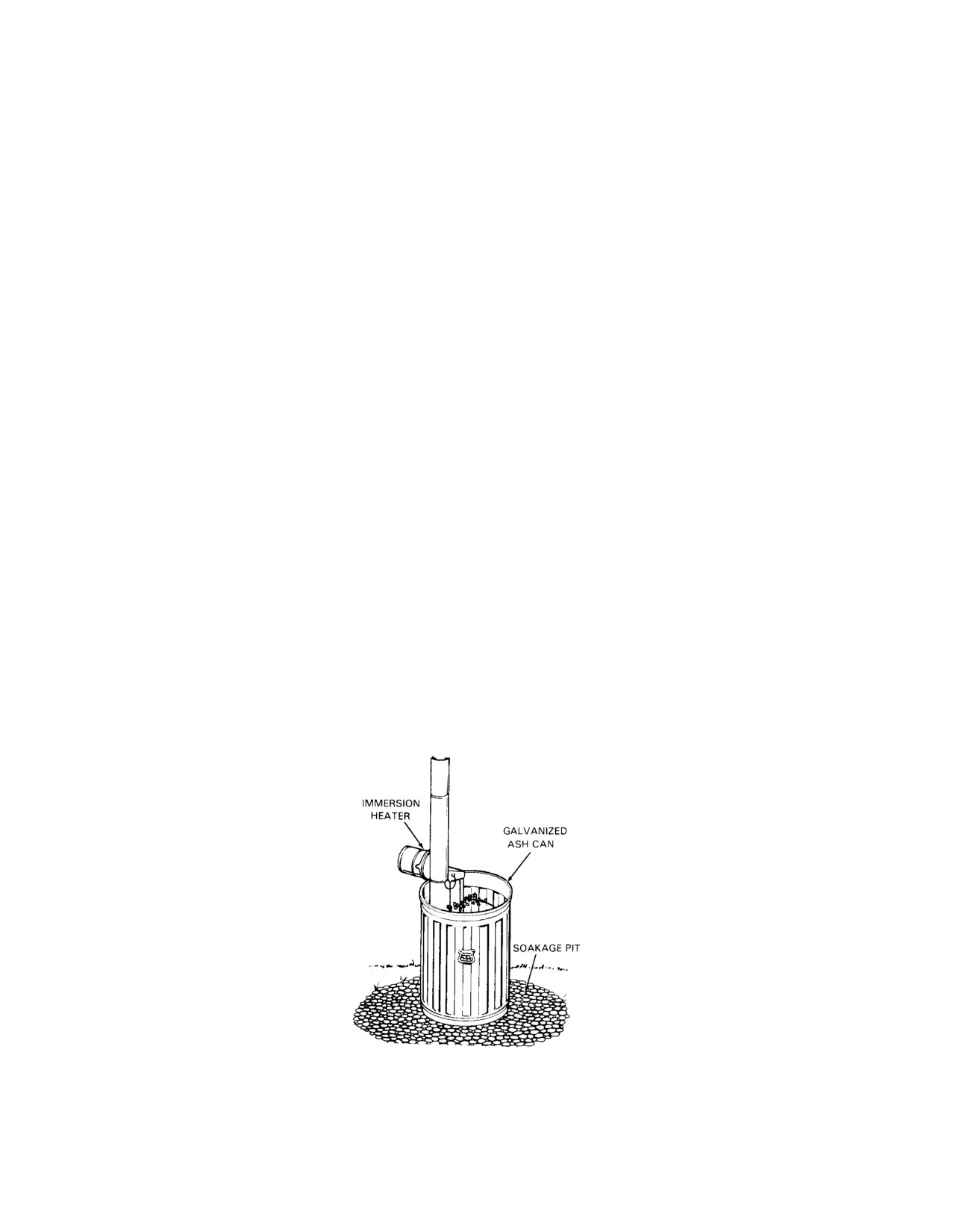
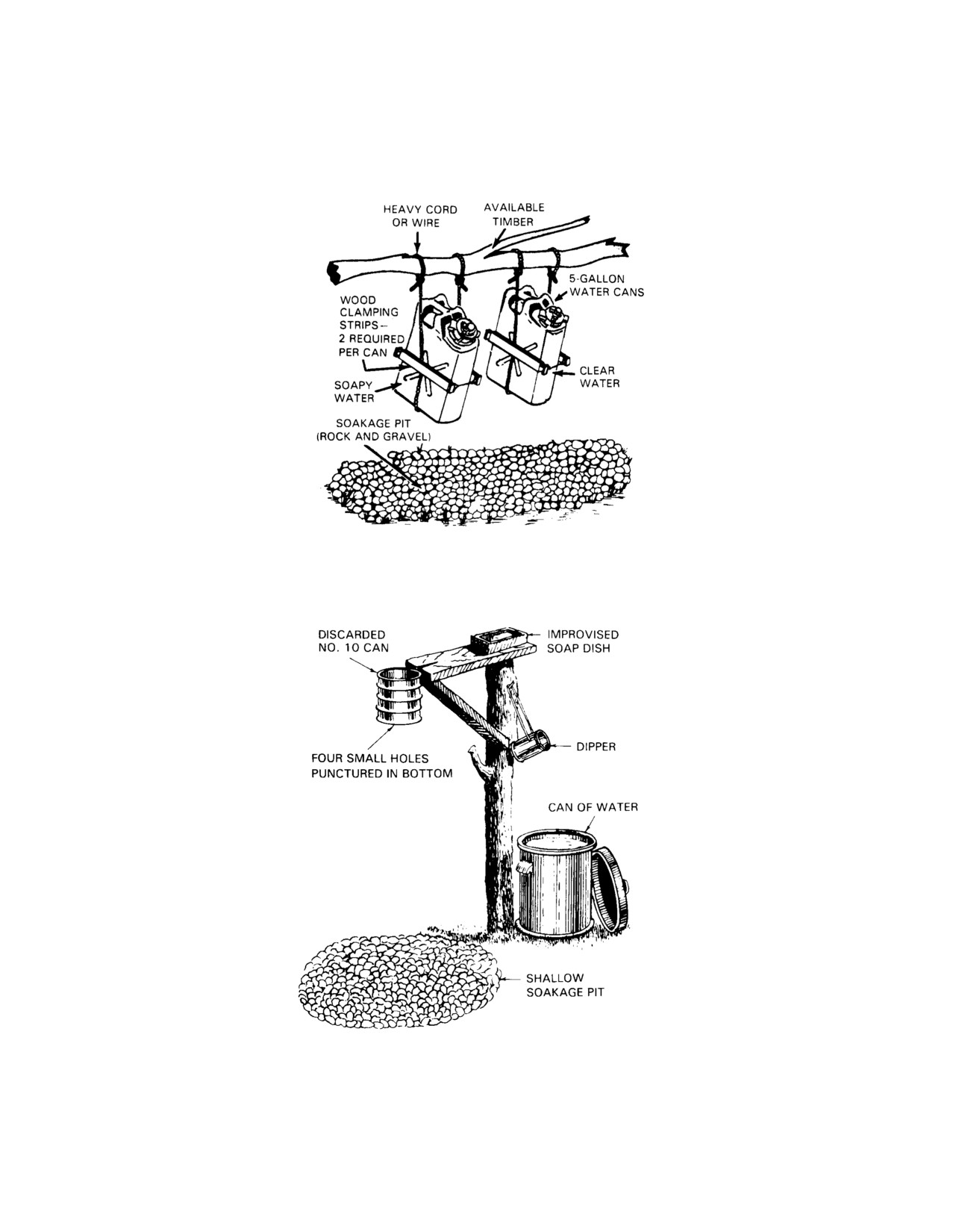
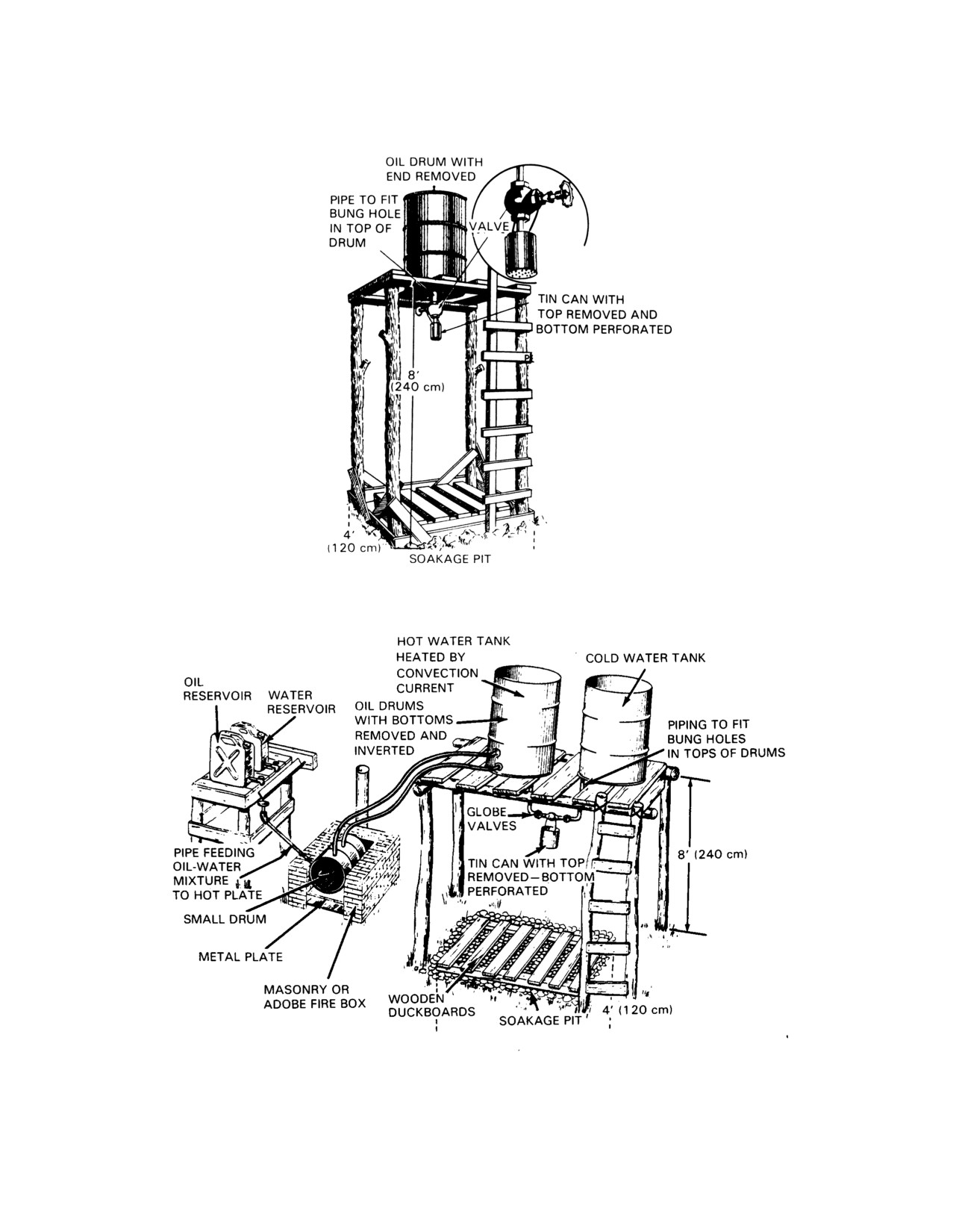
b. Devices for handwashing, showering, and shaving (Figure B-1 through B-5).
c.
Water trailer, 400 gallons with water.
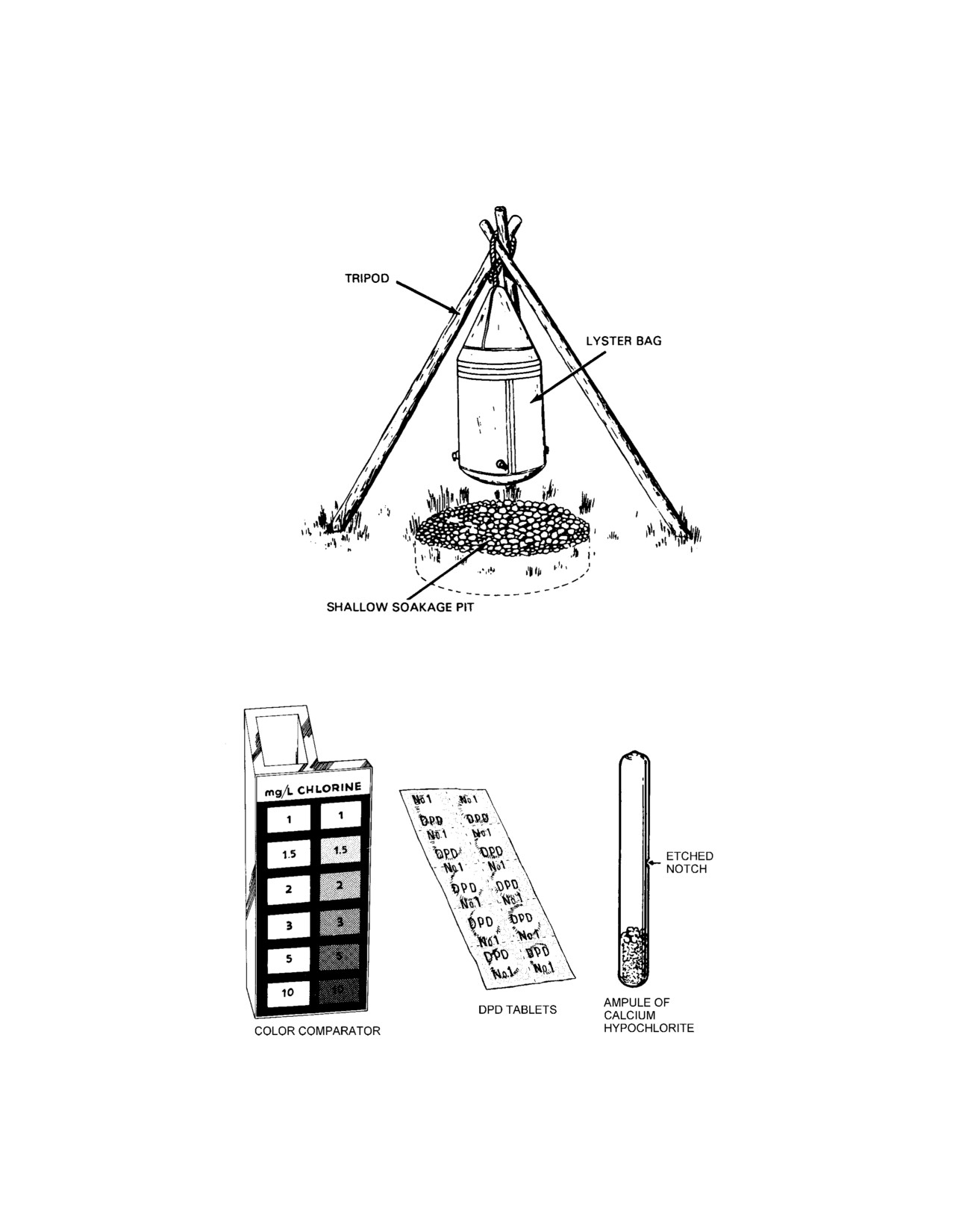
d. Lyster bags with tripods and clean sticks (one for 1 to 10 students) (Figure B-6).
e.
Chlorination kits for water purification (one for 1 to 10 students) (Figure B-7).
f.
Iodine tablets (1 bottle of 50 tablets for 1 to 10 students).
g. Canteen with cup.
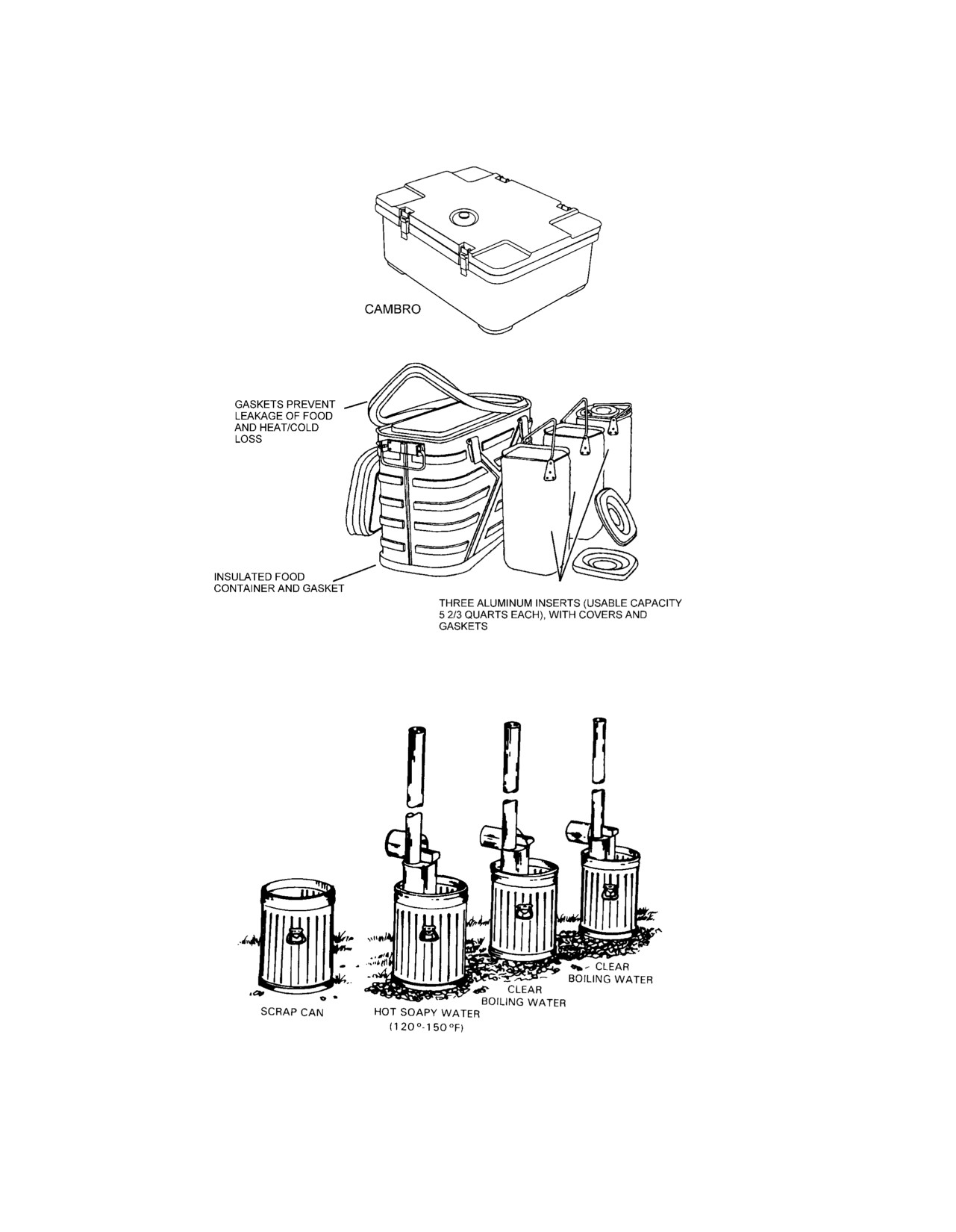
h. Insulated food container (Figure B-8).
i.
Mess kit laundry (Figure B-9).
j.
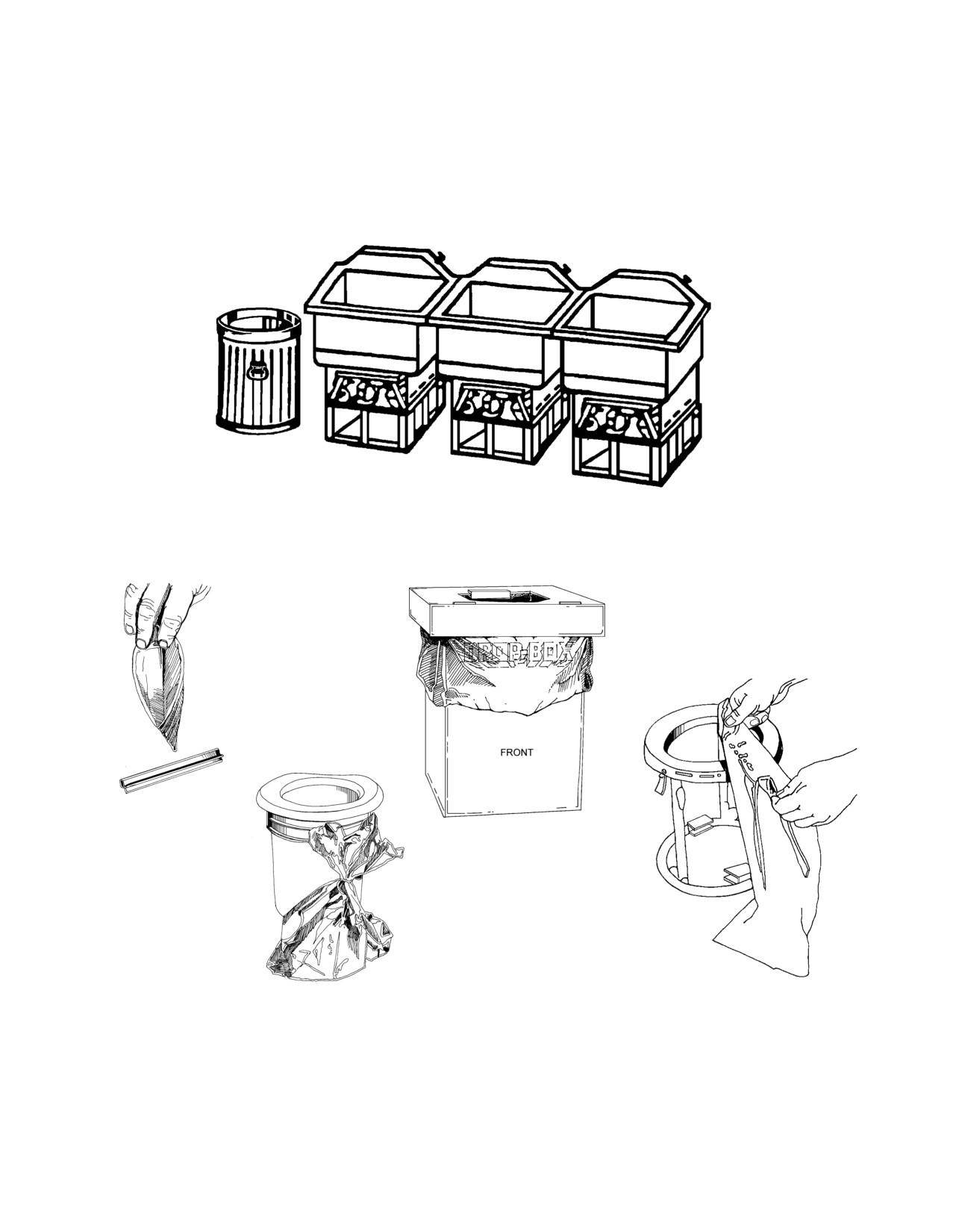
Sanitation Center (Figure B-10).
k.
Field food service facilities.
l.
Field waste disposal facilities or sanitary demonstration area (Figure B-11 through B-30).
m. Displays of specimens of arthropods of medical importance in the various stages of their life
cycles (10 or more sets).
n. Container, 15- to 20-gallon (75 liter) capacity.
o. Insect repellent.
p. Pail (2-gallon capacity).
q. Fatigues (1 pair).
r.
Field cot with air mattress and blanket.
s.
Insect bar (T-bar and net).
t.
Needle (large) and thread.
B-1
FM 4-25.12
u. Insecticide dispenser (aerosol).
v.
Insecticide hand sprayer (2-gallon capacity).
w. Water to simulate pesticide authorized for unit use (sufficient quantity for instructor and
students to prepare sprayers for use).
x.
Rodent snap traps (one for each student and one for the instructor).
y.
Bait stations (one for each student and one for the instructormade from available materials).
z.
Anticoagulant poisonsimulated (1/2 pound [224 grams] for students and the instructor).
aa. Suitable food item for bait (sufficient quantity for all students and the instructor).
bb. Food thermometers.
B-2. Equipment and Materials which the Student is to Bring to Class
a. Notebook and pencil.
b. Field Manual 21-10.
c.
Canteen with cup.
d. Each team provides a sprayer for training purposes.
e.
MRE spoon.
Figure B-1. Clear boiling water for shaving.
B-2
FM 4-25.12
Figure B-2. Handwashing devicetipping 5-gallon cans.
Figure B-3. Handwashing device.
B-3
FM 4-25.12
Figure B-4. Showersolar heated.
Figure B-5. Showeroil-water flash burner.
B-4
FM 4-25.12
Figure B-6. Lyster bag setup.
Figure B-7. Items in the DPD chlorination kit.
B-5
FM 4-25.12
Figure B-8. Insulated food containers.
Figure B-9. Mess kit laundry.
B-6
FM 4-25.12
Figure B-10. Sanitation center.
BRIEF RELIEF
(INDIVIDUAL)
INDIVIDUAL SERVICE
MEMBER FIELD TOILET
DROP-BOX
DISPOSA-JOHN
TOILET
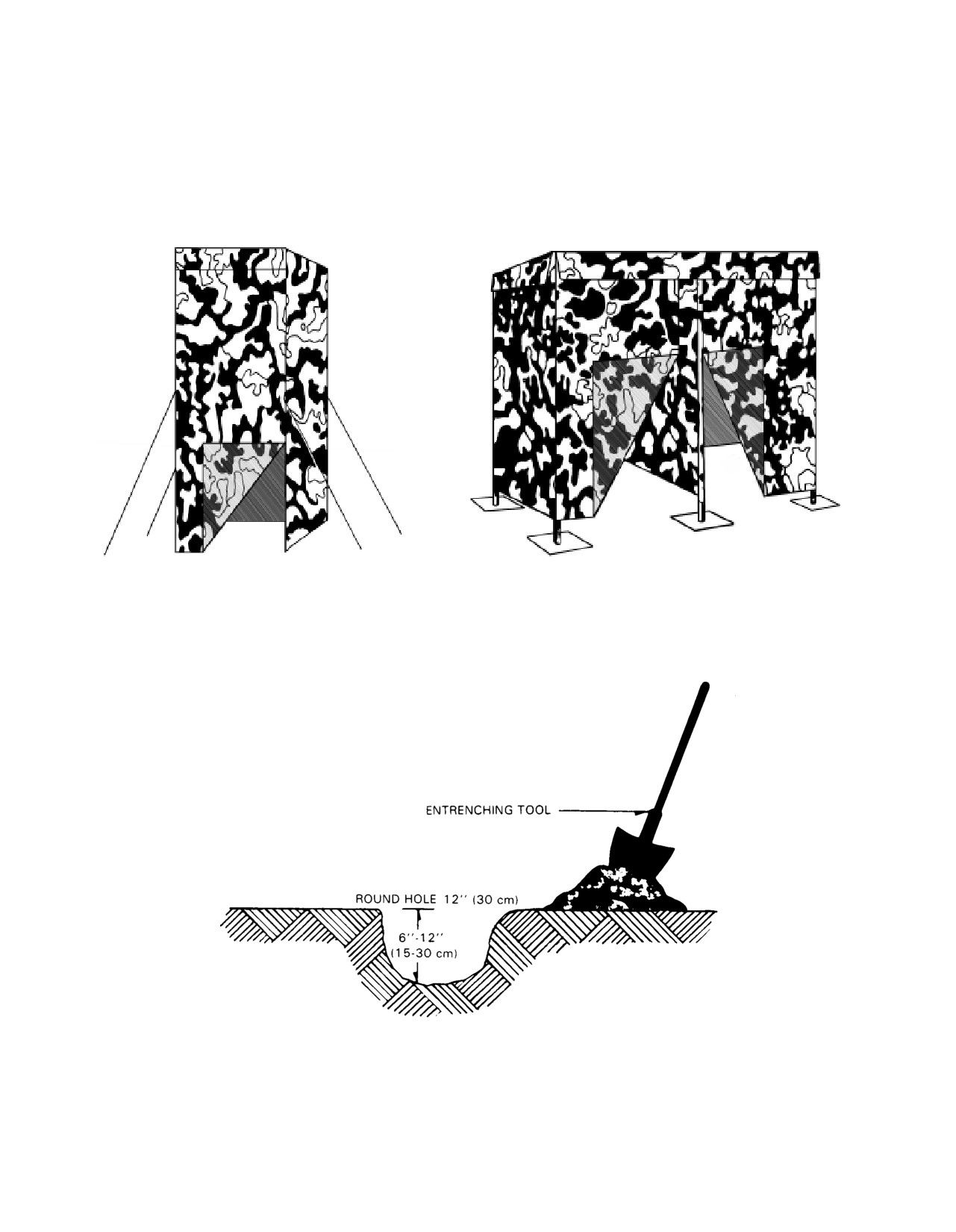
Figure B-11. Chemical toilets.
B-7
FM 4-25.12
INDIVIDUAL TENT LATRINE
SCREEN LATRINE
Figure B-11. Chemical toilets (continued).
Figure B-12. Cat-hole latrine.
B-8