FM 4-25.12 UNIT FIELD SANITATION TEAM (January 2002) - page 2
FM 4-25.12
b. Arthropods (insects, ticks, mites, spiders, scorpions, and the like) make up over 75 percent of
all animal species. Less than 1 percent of the 750,000 species of arthropods are potentially dangerous to
humans. However, their impact is significant due to their high numbers and the negative results of their
activities. The impact is direct injury and disease transmission to man and other animals; damage to crops;
infestation of stored products; and destruction of wooden structures. Still, many species are beneficial as
pollinators, predators of other pests, scavengers of waste, manufacturers of food, and a part of the natural
balance of nature. However, the economic damage and medical disorders caused by a few arthropods make
some pest management practices necessary to control the problem pests. Protection of the soldier from
arthropods and arthropodborne diseases is essential to mission accomplishment. Methods of arthropod
control are discussed in Section VI.
2-29. Direct Arthropod Affects on Human Health
In addition to disease transmission, arthropods can cause direct injuries to man. Bites, stings, and allergic
reactions are three major categories of injuries caused by arthropods. Arthropods also affect man by
annoying and disturbing him. The sound of a single mosquito buzzing around your head while your are
trying to sleep is annoying. Standing guard with gnats buzzing around your face can be disturbing. Also,
finding cockroaches or other insects or parts of insects in your food is disturbing. The problems of
arthropod injury and the exaggerated fear of arthropods can even result in psychiatric problems.
a. Biting Arthropods. Arthropods bite to feed, probe (taste), or defend themselves. Most
penetrations of human skin are made by mouthparts that are developed for ingesting blood, tissue, and
tissue fluids of animals or plants. These bites usually result in the arthropod injecting salivary fluids or
regurgitating its digestive tract products into the man or animal. Some biting arthropods can also produce
skin injuries. Each individuals reaction to arthropod bites can be very different. Biting arthropods are
grouped according to the duration of host contact as (short-term) or prolonged (long-term).
(1) Short-term host contact. Most arthropods that bite man have only short-term host
contact. Bloodsucking arthropods are frequently winged or highly mobile. This accounts for their ability to
quickly attack and escape capture or detection. Some arthropods hide in structures close to the host and
only feed when the host is nearby. Others that bite may not have intended to attack, but did so in defense or
by mistake. Arthropods can bite in several stages of their development; that is, adult, larvae, or nymph
stages. The mouthparts are generally classified into chewing or sucking types. Chewing mouthparts are
generally not used for skin penetration. Usually, injuries of this type are not reported, but secondary
infections may occur due to bacterial contamination. Sucking mouthparts are structured for skin penetration.
(a) Bloodsucking (hematophagous) arthropods. Blood, normally from warmblooded
animals (including man), is used both for life support and growth and/or egg development. The mouthparts
of sucking arthropods vary greatly in structure from arthropod-to-arthropod. For example, adults of the
order Diptera (two-winged insects) have the most diverse mouthparts. Only the females of the mosquitoes,
black flies, biting midges, horseflies, and deer flies are bloodsuckers, while both males and females of tsetse
flies and stable flies are bloodsuckers. The mouthparts are different within each of these families of
Diptera, but the goal of a blood meal is the same. Other examples of arthropods that are short-term are
fleas, true bugs (conenose bugs and bedbugs), and soft ticks.
2-32
FM 4-25.12
(b) Nonbloodsucking (nonhematophagous) arthropods. Some plant-feeding arthropods
and some arthropod predators have piercing/sucking mouthparts, which are capable of penetrating the
human skin. Bites from these arthropods can be as painful as bloodsuckers, if not more so. Bites from
these arthropods are usually an act of defense.
(2) Long-term host contact. Some biting arthropods require a considerable time on the host
to complete a normal life cycle. Since a continuous food supply is available on one host, the search for
another host is reduced. Most of these arthropods are categorized as parasites. They are classified as either
ectoparasites or endoparasites. Ectoparasites (those living outside the host body) may be flat (fleas) or thin
(lice) which allows them to travel easily through a hairy environment. Their feet are specialized for holding
on to hair. The mouthparts of ticks and mites are designed to anchor their bodies to the host. Endoparasites
(those living inside the host body) are usually soft-bodied (fly larvae, mites) without legs or with very short
legs; their bodies usually have specially arranged spines or hairs.
b. Stinging Arthropods. Some arthropods affect man by injecting venom (insect toxins) through
stingers, fangs, modified front legs, or spines. An arthropods injection of poison is in defense or to kill
prey. Usually, man is envenomized by arthropods in defense of themselves and their nest or eggs.
(1) Venoms from bites. Spiders and centipedes are arthropods in the category that uses
mouthparts for envenomization. Most spiders use venom to kill prey. Man is not part of a spiders diet.
The fangs of many spiders cannot penetrate the human skin. Some species have venom that is more
poisonous than other venomous animals, including snakes. Fortunately, most spiders are not aggressive,
but will defend themselves and their eggs and/or webs. Antivenom has been developed for the venom of
some species of spiders, but they may not be immediately available for use. Some of the more toxic spiders
are night hunters, and by day, they hide in clothing and boots that were left on the floor or in tents on the
ground. Less common are the bites of centipedes that are also night hunters. In the tropics, some species of
centipedes reach 25 centimeters in length; a bite by such a large specimen could be serious.
(2) Venoms from stings. The number of soldiers seeking medical assistance because of
arthropod bites is far fewer than those seeking aid because of bee, wasp, hornet, or ant stings. Stings from
these arthropods are frequently the result of defensive action. A single sting to an allergic person can be
fatal. Even to a person who is not strongly allergic, medical complications due to swelling can occur with
stings to the face, neck, or throat. Stings usually occur during daylight hours. However, night maneuvers
can result in individuals running into paper wasp nests and being stung by wasps trying to protect their
nests; or an individual may stand on an anthill and receive numerous stings from the ants trying to protect
their nest. Therefore, individuals who are highly sensitive or have severe reactions to stings should carry an
emergency first aid kit for stings as prescribed by a physician. Obviously, high-risk persons should use
extreme caution in tropical areas. Another venomous arthropod with a potent sting is the scorpion.
Scorpions are active at night. During the day scorpions are usually well-hidden from the light; they hide
under rocks or in piles of debris outside and in clothing, cabinets, boxes, and footwear indoors. Stings
often are the result of individuals walking barefoot or in stocking feet, or because they use their hand to
move the object where the scorpion is hiding. Also, stings occur when individuals put on clothing or
footgear without first shaking the item to make sure that it is free of unwanted arthropods. Some scorpion
venoms are very painful or they may be deadly, while others are not. The absence of initial pain is not
always an indication of no problem. The lack of or the nonavailability of antivenom and the possible
2-33
FM 4-25.12
medical problems associated with the use of antivenoms, even if they were on hand, are additional reasons
for avoiding scorpion stings.
c.
Allergy. Allergic reactions are caused by both the bites and stings of arthropods. Additionally,
arthropod parts (live or dead) and their body fluids can cause allergic reactions. Allergic reactions are
extremely variable in different people ranging from very mild to severe reactions. Highly sensitive persons
should be prepared to deal with their problems in case they are bitten, stung, or exposed to other arthropod
allergens.
2-30. Arthropodborne Diseases
Diseases transmitted to man by arthropods are some of the most serious known to man. Uncontrolled, these
illnesses can cripple or destroy military forces. The effect of these diseases on man can range from a very
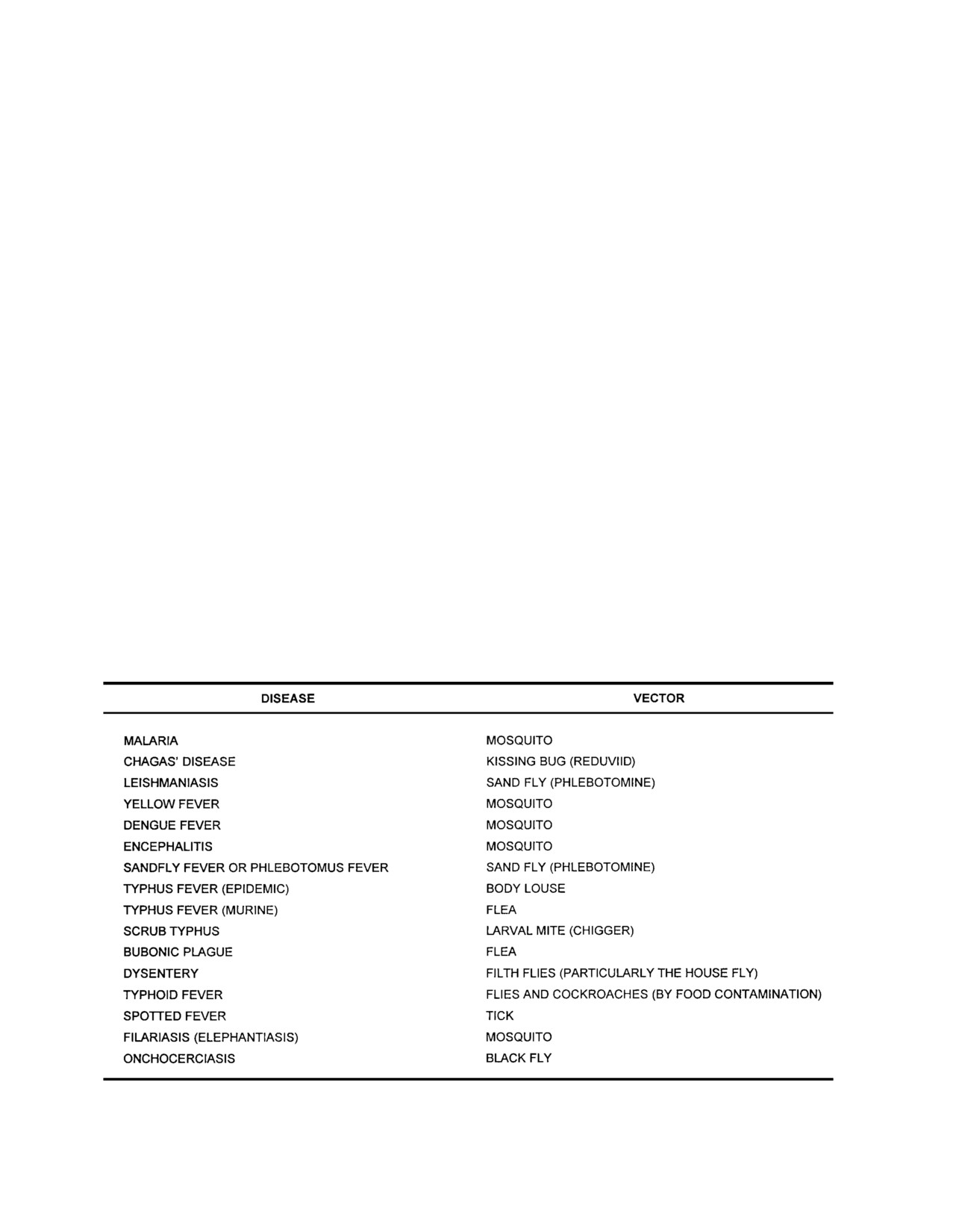
mild illness to death. For examples of arthropodborne diseases and their vectors see Table 2-1. House flies
and other flying insects that are attracted to human wastes or other organic material can spread disease
organisms to food and water. The disease organisms or parasites of humans are carried from diseased
humans or animals (reservoirs) by arthropods (vectors) to other humans or animals (hosts). By employing
individual PMM, soldiers can stop arthropodborne diseases from being a factor in their lives and in their
units mission accomplishment. The most common arthropodborne diseases that affect combat troops are
discussed below.
Table 2-1. Arthropodborne Diseases and Their Vectors
2-34
FM 4-25.12
a. Malaria. Malaria is a serious disease occurring most commonly in tropical and semitropical
regions. It is caused by a microscopic parasite carried by the Anopheles mosquito. This parasite destroys
blood cells and causes chills, fever, weakness, and anemia. If untreated, malaria can cause death.
b. Yellow Fever. Yellow fever is a viral disease transmitted by the Aedes mosquito. It occurs in
tropical Africa, Central America, and tropical South America. Symptoms are fever, headache, backache,
jaundice, and internal bleeding. If untreated, yellow fever can result in death.
c.
Dengue Fever. Dengue viruses of multiple types are now endemic throughout most tropical
areas of the world and are highly endemic in Southeast Asia, the Philippines, West Africa, and northern
Australia. Like yellow fever, it is transmitted by the Aedes mosquito. Symptoms are fever (lasting about
5 days), intense headaches, skin rash, and muscle pain which can be severe; for this reason, another name
for dengue fever is breakbone fever. The disease seldom results in death, but the recovery time is usually
long and the victim may be fatigued and depressed.
This section implements and/or is in consonance with
STANAG 2048.
Section VI. ARTHROPOD CONTROL
2-31. General
Bivouac sites are selected according to well-defined guidelines. The ideal location for a bivouac site is on
high, well-drained ground at least 1 mile (1.6 kilometers) from breeding sites of flies and mosquitoes and
1 mile (1.6 kilometers) from native habitations. It is not always possible to bivouac in the ideal location. A
unit commander may be faced with unusual arthropod control problems in the vicinity of his campsite. An
effective program for arthropodborne disease prevention should consist primarily of sanitation measures,
but may include the use of individual PMM, such as bed nets, as well as the application of pesticides.
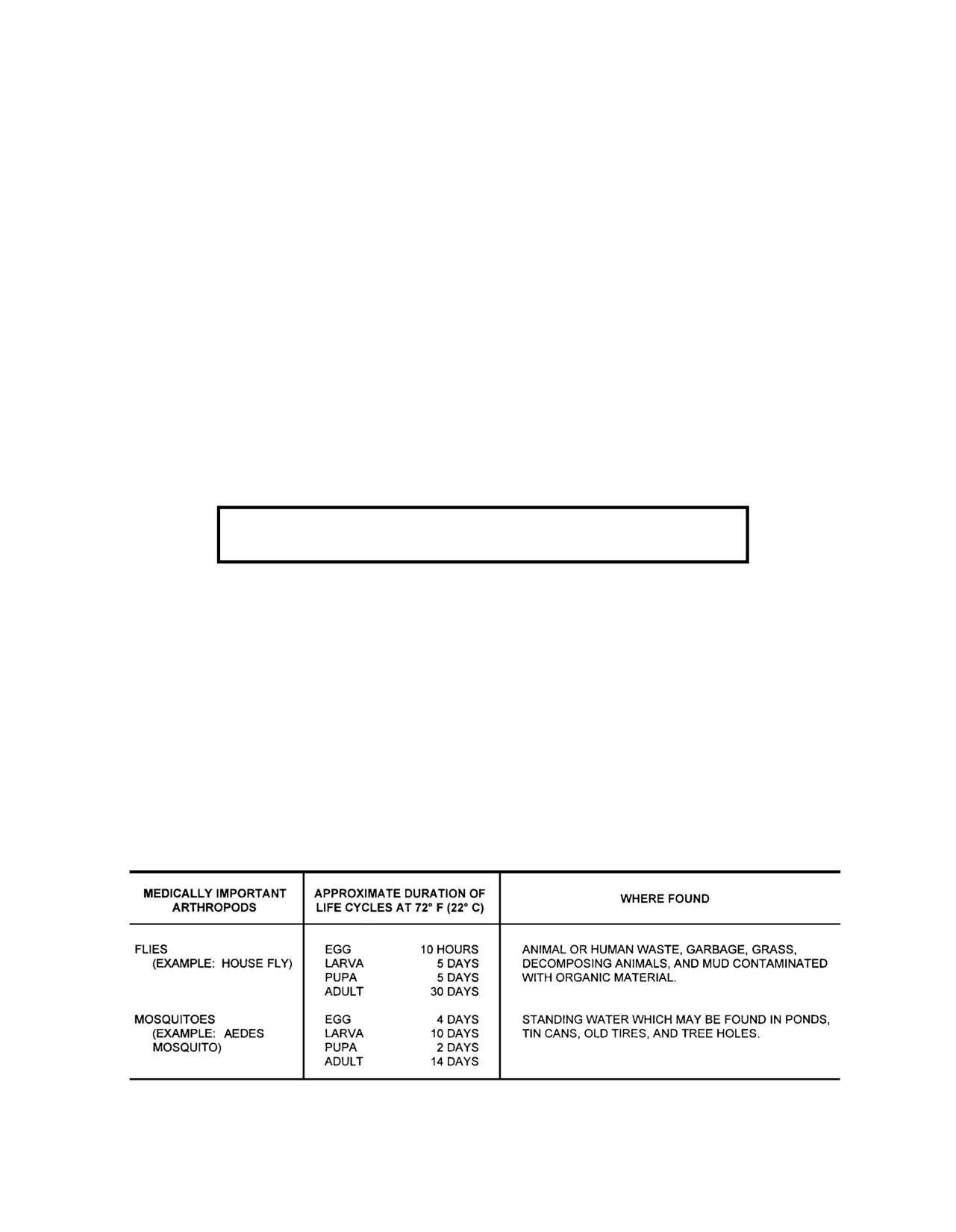
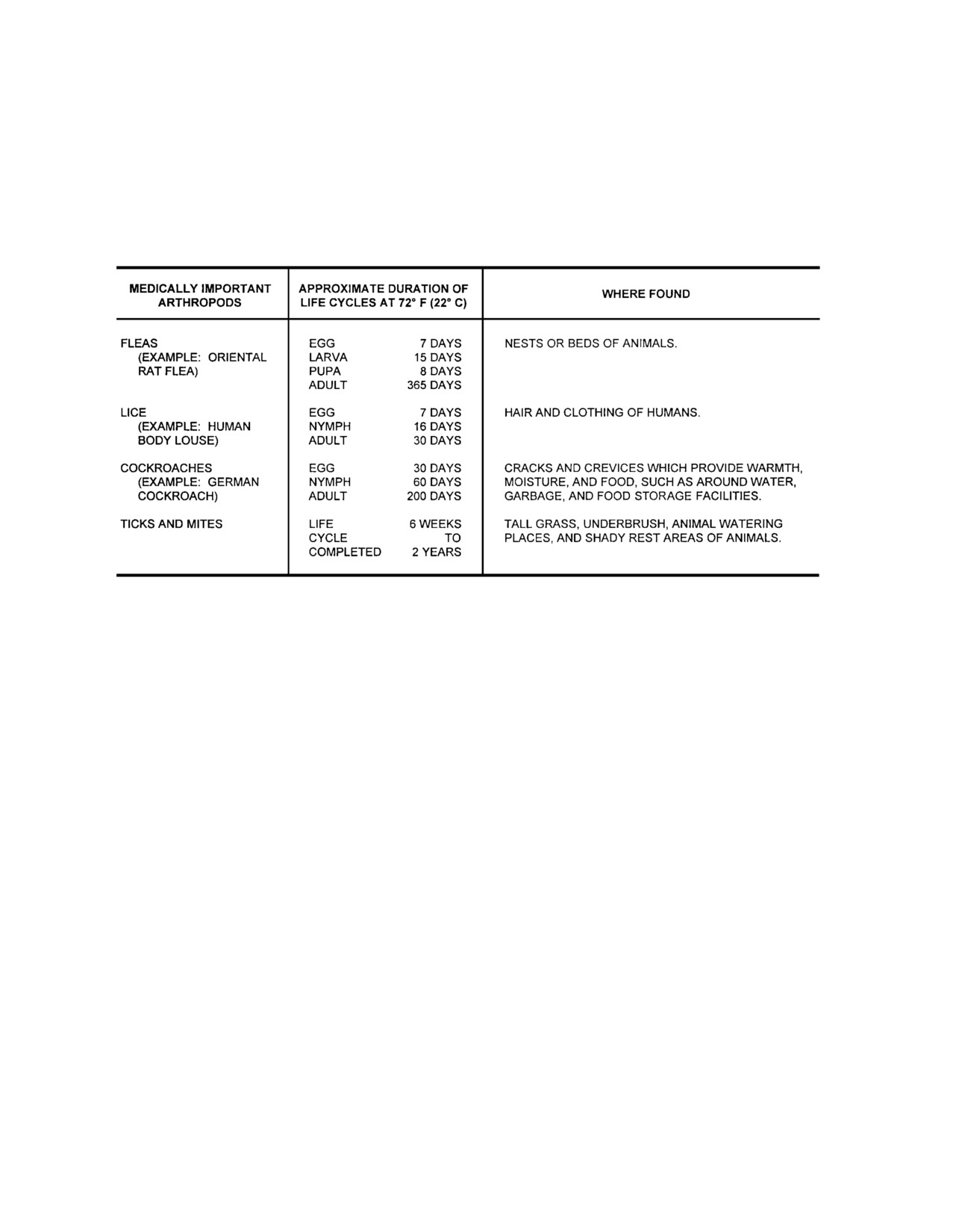
Essential to the operation of an effective control program is an understanding of the life cycles of medically
important arthropods and a knowledge of where they can be found in nature. For examples of life cycles of
arthropods, see Table 2-2.
Table 2-2. Life Cycles of Arthropods
2-35
FM 4-25.12
Table 2-2. Life Cycles of Arthropods (Continued)
2-32. Preventive Medicine Measures
Individual PMM are those which must be used by each soldier. Often they are the only preventive measures
available for soldiers in the field. Had the regiment which lost 403 men to scrub typhus in Dutch New
Guinea during World War II used individual PMM, its history would have been different. Those PMM can
be accomplished by the soldier at work and at rest.
a. The Department of Defense Insect Repellent System. The best strategy for defense against
insects and other disease-bearing arthropods is use of the DOD Insect Repellent System. This system includes
the application of extended duration 33 percent DEET repellent to exposed skin, the application of permethrin
to the field uniform, and a properly worn uniform. When used, the DOD Insect Repellent System can provide
nearly complete protection from arthropodborne disease. It is important to note that not all arthropod species
are equally repelled by a particular repellent so one should not discontinue using repellents if some bites are
received as other species that are present are still likely to be repelled. Further, some insect species bite
primarily during the day whereas others only at night. This is true even within a pest group like mosquitoes so
that a lack of bites during the day does not mean that protective measures will not be needed at night.
NOTE
The DOD Insect Repellent System is a concept that brings the three
components discussed below into a unified approach to protection.
Without implementing the DOD Insect Repellent System concept, the
use of the three components independently will provide inferior pro-
tection. See Armed Forces Pest Management Board Technical
Information Memorandum No. 36.
2-36
FM 4-25.12
b. Preventive Medicine Measures for the Soldier at Work.
(1) Clothing. The battle dress uniform worn loosely with the pants tucked into the boots
without blousing rubbers and with the sleeves down and buttoned increases protection for the soldier.
Wearing the uniform in this way makes it more difficult for mites and ticks to get under the clothing. A
mosquito can bite through the clothing only when it is worn tightly against the skin.
(2) Clothing repellent application. Repellents are available that have been designed
specifically for use on uniforms and other cloth items. Clothing repellents are able to withstand repeated
launderings or wettings without losing their repellent properties and so protect soldiers against mosquitoes,
chiggers, ticks, and other pests. Detailed directions for use of these materials vary with the specific item
and with the type of clothing being treated. The clothing repellent available for use is permethrin. The
product label instructions must be carefully followed.
(3) Personal use or skin repellent application. The repellent for personal use, applied
directly to the skin, is
33 percent DEET (NSN 6840-01-284-3982) which provides protection against
mosquitoes, other biting Diptera, and fleas and is relatively effective against ticks and chiggers. It is
important that DEET is used when exposed to the threat of arthropodborne disease. Usually, a small
amount of the military issue repellent rubbed between the hands and spread evenly over the face, neck, and
hands, and other exposed skin areas offers protection for many hours.
CAUTION
Be careful to keep the repellent out of the eyes.
The repellent is lost from the skin by washing, abrasion, absorption, and evaporation and must be reapplied
as required. The effectiveness of the DEET is lost more rapidly in hot, humid climates where profuse
sweating occurs. If clothing repellents are not available, personal repellents can be applied to the shoulders
and other areas of the clothing where the cloth fits tightly against the body to reduce insect bites. However,
permethrin clothing repellents are the products of choice for providing protection from bites through
uniform items (see previous paragraph).
c.
Preventive Medicine Measures for the Soldier at Rest.
(1) Screened billets. Screened billets are a desirable protective measure, but it is not always
possible to provide them in the field.
2-37
FM 4-25.12
(2) Bed net. The bed net is a necessity even if the billets are screened. This device is
composed of four support poles and a net. One pole is attached to each corner of the bed and the net is
suspended from, not draped over, the poles, and tucked securely under the mattress except for an entrance
port. The net is then inspected for holes and repaired as needed. After crawling through the entrance port,
the occupant tucks the remainder of the edge of the net under the mattress. Care must be taken not to come
in contact with the net, as insects can bite through it. Nets must be inspected daily for tears and holes; any
damage must be repaired before use. Permethrin clothing treatment should be applied to bed nets to protect
against very small biting insects that can pass through the netting mesh.
(3) Aerosol insecticide. Use of the aerosol insecticide is the last line of defense. Before
getting under a bed net, the occupant sprays the insecticide inside the net according to label instructions.
2-33. Chemical Control (Pesticides)
Pesticides are valuable aids in the control of arthropods. They are used to augment, not replace, field
sanitation and individual PMM.
a. Properties. Pesticides are chemical substances. In sufficient quantity, they will kill any
animal including man. Sound judgment must, therefore, be exercised in the use of these chemicals. Not
only are the chemicals poisonous but other ingredients such as solvents mixed with the chemicals may make
them more hazardous. For example, kerosene or fuel oil that is used as a solvent for many modern
pesticides makes them more hazardous for humans. The human skin repels water but absorbs oil; therefore,
the pesticide is absorbed with the oil. Refer to the pesticide label for specific protective clothing
recommendations and safety precautions.
b. Precautions. Some liquid pesticides issued to FSTs are flammable; they must not be used
around or stored near an open flame. Be sure only authorized, trained personnel use pesticides, and that
they observe all label instructions/directions. Use the Material Safety Data Sheets (MSDS) issued with
each chemical. The MSDS gives the details on the danger associated with chemicals. It also provides
information on safety, the way to handle the chemicals, emergency response techniques (see FM 8-500 for
chemical hazards), health effects, and storage and proper disposal information. For additional information
on precautions see FM 8-500.
c.
Arthropod Resistance. Some arthropods, particularly those that reproduce rapidly, often
become resistant to the pesticide that is being used. When this is suspected, PVNTMED personnel should
be notified. Evidence of pest resistance to insecticides is that despite the fact that chemicals are applied
properly, proper sanitation is in effect, and pest exclusion practices are used, a pest population is not
controlled.
d. Disposal. All pesticides, pesticide containers, and pesticide-related waste will be disposed of
in accordance with product label instructions. The label instructions comply with Environmental Protection
Agency requirements. In the event a product is found without label instructions, consult supporting
PVNTMED personnel for guidance.
2-38
FM 4-25.12
Section VII. THE BIOLOGY AND CONTROL OF RODENTS
2-34. General
Throughout history, the effects of rodents have played an important and often decisive role in mans
development. Plague, a disease transmitted from rodents to man by fleas, caused the death of approximately
one-fourth of the European population in the Middle Ages. In more recent times, it is estimated that, in the
US alone, damage to crops caused by rodents amounts to millions of dollars each year.
a. Rodents consist of a large and varied group of animals including rats, mice, squirrels,
chipmunks, and prairie dogs. Rodents are commonly identified by the presence of two sets of chisel-like
incisor teeth and the absence of canine teeth. This arrangement of teeth facilitates the rodents eating habits.
Rodents are almost exclusively herbivorous or seedeaters. The exceptions to this are domestic rats and
house mice, which eat almost any type of available food.
b. During recent times, three rodent species have associated themselves with man for their
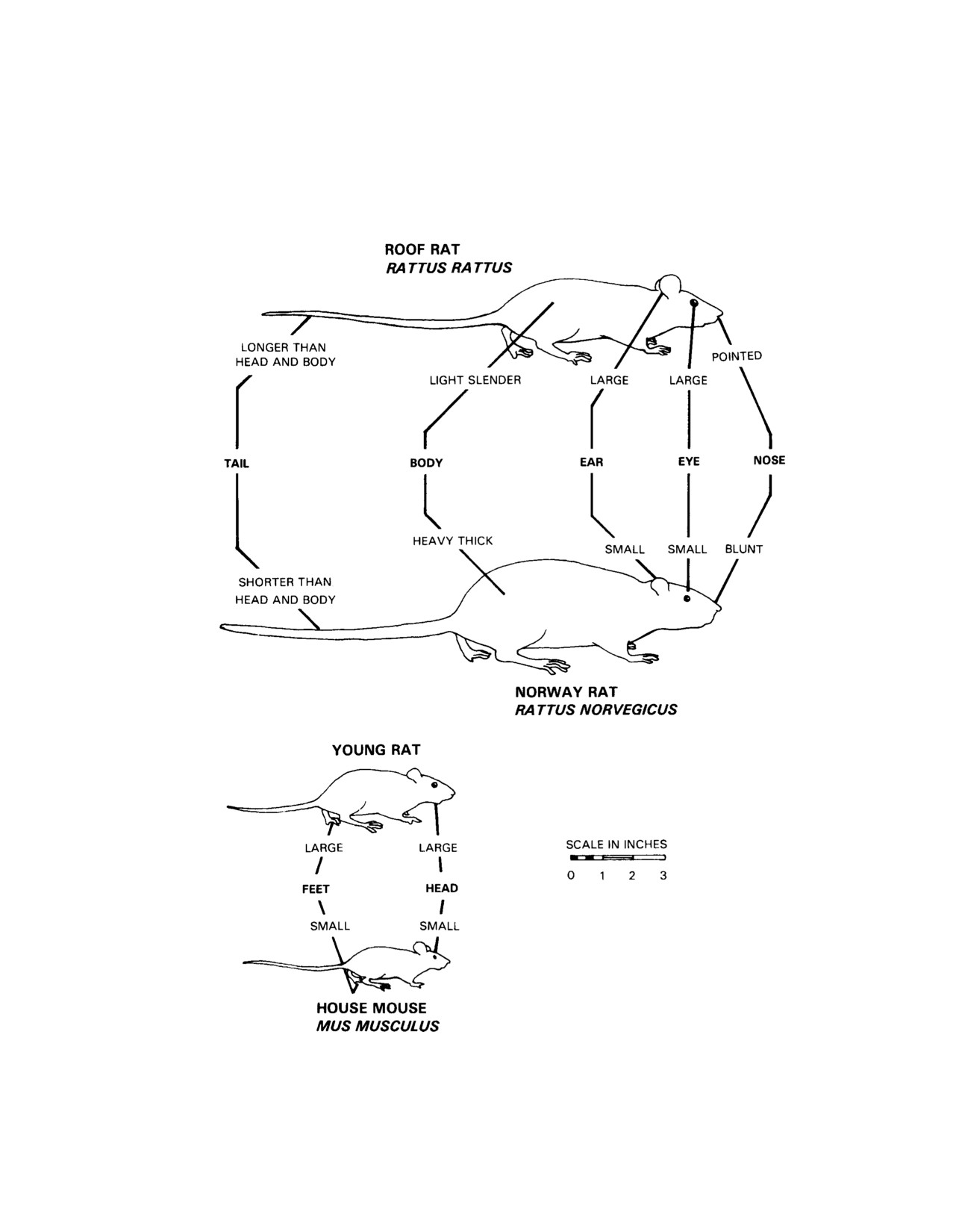
primary requirements of food and shelter. These are the Norway rat, the roof rat, and the house mouse. A
pictorial key for field identification of these three domestic rodents is provided in Figure 2-3.
2-35. Rodents and Human Disease
Rats are especially harmful to man and domestic animals as carriers of disease. The more important
diseases are discussed below.
a. Plague. The bacillus Yersinia pestis causes plague. It is primarily a rodent disease transmitted
by fleas. Man acquires the disease through contact with infected fleas or animal tissue. The disease is
found in many parts of the world including the western US.
b. Murine Typhus. Murine typhus is a rickettsial infection (Rickettsia mooseri) transmitted by
infected flea feces. Itching from fleabites causes the victim to scratch, thereby rubbing flea feces into
the skin.
c.
Leptospirosis. Ratborne leptospirosis is caused by a spirochete, Leptospira icterohemorrhagia,
which lives in the rats kidneys and is shed in the urine. Man contracts the disease by swimming in
contaminated water; by contacting moist infected soil; by touching rat smears which contain infected urine;
or by coming in contact with infected animal tissues.
d. Salmonellosis. Rats and mice are most commonly infected with Salmonella typhimurium and
Salmonella enterocolitis. These diseases are spread to man through the infected feces and urine of rats and
mice. Infection most commonly occurs as the result of contaminated food or food preparation on
contaminated surfaces. Mice are probably more important than rats in the transmission of these diseases.
Mice and rats can mechanically transmit other types of pathogens from waste to food.
2-39
FM 4-25.12
Figure 2-3. A pictorial key of domestic rodents.
2-40
FM 4-25.12
e.
Rickettsialpox. Rickettsialpox is a mild infection caused by Rickettsia akari which is transmitted
from mice to man by the bite of the house-mouse mite, Liponyssoides sanguineus.
f.
Hantavirus. Hantavirus infects rodents worldwide. Several species have been known for
some time to infect humans with varying levels of severity. Their primary effect is on the vascular
endothelium and results in increased vascular permeability, hypotensive shock, and hemorrhagic
manifestations.
2-36. Norway Rat
a. The Norway rat, Rattus norvegicus, has been incriminated in the transmission of a number of
diseases to man. They are also capable of damaging large quantities of stored products and transmitting
various kinds of food poisoning through contamination with urine or feces.
b. The life span of the Norway rat is approximately 1 year; however, it may live up to 4 years in
a laboratory. At 3 to 5 months of age, the rat becomes sexually mature. The gestation period is about
22 days. Therefore, about seven litters can be produced yearly. Normally, a litter will consist of from 8 to
12 young, thus giving a single female a potential of 84 young per year. Fortunately, only about 20 young
are actually weaned each year. Due to its close contact with man, the Norway rat has developed an affinity
for mans food; therefore, it prefers meat, fish, and garbage. This species normally eats from 3/4 to 1 ounce
of food a day and requires about 1/2 to 1 ounce of water. In its search for food, the Norway rat will travel
100 to 150 feet from its harborage. Because it is heavier and less agile than other domestic rodents, the
Norway rat is usually found on ground levels. However, these rats are capable of climbing and can jump up
to 30-inches (77-centimeters) high and 47-inches (120-centimeters) along the ground. Normally, they
burrow into the ground for harborage.
c.
The physical characteristics of the Norway rat include the
Tail is shorter than the head and body.
Body is thick with a blunt nose.
Adult rat weighs approximately 16 ounces.
Eyes and ears are small.
Droppings are about 3/4-inch (19-mm) long with blunt ends.
2-37. Roof Rat
a. The roof rat, Rattus rattus, is also involved in the transmission of disease and the contamination
and destruction of stored products. The Norway rat is generally found in temperate regions, whereas the
roof rat is normally restricted to tropical and subtropical locations. The life span of the roof rat is about 1 year.
2-41
FM 4-25.12
At about 3 to 5 months of age, the female becomes sexually mature. It is capable of producing six litters of
six to eight young annually; however, only about 20 of these are actually weaned. Although the roof rat
will eat various types of human food, it prefers vegetables, fruits, or grain. The home range and food and
water requirements of this rodent are similar to those of the Norway rat. As opposed to the Norway rat, the
roof rat does not burrow in the ground but is found in attics, between walls of buildings, and may nest in
trees. These rats can jump up to 30-inches (77-centimeters) high and 59-inches (150-centimeters) along the
ground.
b. The physical characteristics of roof rats include the
Tail is longer than the head and body.
Body is slender.
Adult weighs 8 to 12 ounces.
Eyes and ears are large.
Droppings are about 1/2-inch (13-mm) long with tapered ends.
2-38. House Mouse
a. The house mouse, Mus musculus, adapts itself to a variety of living conditions and is found
throughout the world in close association with man. Although it prefers houses and outbuildings, it has
been known to nest in holes gnawed in frozen beef carcasses in storage lockers. The house mouse has a life
span of about 1 year and is sexually mature at about 6 weeks. Up to eight litters may be produced each
year, with six to eight young per litter. Only about 35 are actually weaned. The house mouse will eat any
food available; however, it tends to prefer grain or grain products. It requires about 1/10 of an ounce of food
and about 1/20 of an ounce of water each day. The house mouse can jump about 12-inches (30-centimeters)
high and about 18-inches (46-centimeters) along the ground. It will travel no more than about 30-feet
(10-meters) from its home in search of food.
b. The physical characteristics of the house mouse include the
Body is small.
Tail is as long as the body and head.
Adult weighs 1/2 to 3/4 ounce.
Droppings are about 1/4-inch (6-mm) long with tapered ends (cockroach droppings are
slightly smaller and have ridges running along their length).
c.
Rodents like to travel along walls, containers, and so forth. Traps should be placed against
such structures with the trigger end against the wall so the animals can be trapped no matter which way they
2-42
FM 4-25.12
approach the trap. Rats are more cautious than mice. Pre-baiting rat traps (bait traps, but do not set them)
for a few days before setting them makes rats comfortable eating safely from them and therefore increases
trapping success.
2-39. Equipment Used in Pesticide Applications
Two items of equipment are authorized for use by the FST in applying pesticides (AR 40-5). These items
are the rodent bait station and the hand pressure sprayer.
a. Rodent Bait Stations. The rodent bait station is used to apply rodent bait as part of the rodent
control program.
b. Hand Pressure Sprayer. The hand pressure sprayer (1- or 2-gallon capacity) is used for most
pest control operations. Various makes of this sprayer are available. The instructional manual furnished
with each sprayer must be retained and followed concerning its operation and maintenance.
(1) Sprayer preparation for use.
(a) Fill the sprayer with the insecticide and water mixture, but do not exceed 2 gallons
(7.5 liters) and screw the filler cap hand-tight. This permits air space for building up air pressure.
(b) Insert the appropriate nozzle for the desired application.
(c) Unlock the pump by turning the handle 90 degrees to the left.
(d) Pressurize the tank to approximately 40 to 60 pounds per square inch (275 to 415 kilo-
grams per area). If the sprayer does not have a pressure gauge, approximately 30 to 35 pump strokes will
usually be sufficient.
(e) To increase pump efficiency and ease of operation, put a few drops of lubricating
oil on the pump rod at the beginning of each days operation. No other lubrication is required.
(2) Sprayer operation. Operation of the sprayer consists primarily of manipulating the wand
of the sprayer to produce an even spray. When a team member is able to cover all of a designated surface
with pesticide without it running off the surface, he has mastered the spraying technique. This technique is
mastered by means of observation and practice. All pesticide in the sprayer should be used up on the job.
Never pour excess pesticide on the ground or down the drain.
(3) Sprayer maintenance. Proper maintenance of the sprayer is essential to effective control
operations.
(a) Cleaning the sprayer. A most important aspect of maintenance is keeping the
sprayer clean.
2-43
FM 4-25.12
1.
After each use, flush and triple-rinse the sprayer with water and wipe off the
exterior of the sprayer to prevent the pesticide from crystallizing. The crystals will corrode metal, jam the
valves, deteriorate the gaskets, and cause the nozzles to malfunction.
2.
Clean the tank and strainers thoroughly any time that the sprayer fails to
function properly. Remove the in-line strainer and nozzle strainer; then clean and rinse them thoroughly
with water.
(b) Replacing worn parts.
1.
To replace the piston cup, first remove the pump assembly by pulling the
pump handle until the piston rod comes out of the cylinder; then remove the piston-cup screw and retainer
and replace the cup with a new one. Place the piston rod into the cylinder, taking care not to damage the
piston cup. Replace pumps assembly and tighten securely.
2.
To replace the pump cylinder valve, first remove the pump assembly. Remove
the valve if worn and replace with a new one. The valve is a push-on, pull-off type construction. Check for
sand, soil, or other material under the valve and clean if needed. Replace the pump assembly and pump it to
check for pressure leaks and buildup. If leaks are found, remove assembly and repair as needed.
3.
To repair the hose, first remove the hose by loosening the hose clamp. Cut
off the broken portion from the hose. Put the end of the hose through the hose clamp and on the hose
adapter; then screw the hose clamp securely into position. A new hose cut to proper length can be installed
by removing both hose clamps and following the procedure outlined above.
2-40. Control Measures
a. Rodent Surveys. Rodents can be a problem in any structure that soldiers inhabit, especially
where there is food, water, and shelter (harborage) present. An active rodent survey program should be
conducted to look for signs of rodent infestations. These signs include sightings of live or dead rodents,
droppings, smudge marks, tracks, gnawings, burrows/holes, nests, sounds, and odors. The earlier an
infestation is detected, the easier it is to eliminate.
b. Eliminate Food.
(1) Deny access to garbage by using cans with tight-fitting lids, secured to prevent dislodging
by animals. Dispose of garbage regularly, and clean garbage cans regularly.
(2)
Store foodstuffs in rodent-proof containers and require unit personnel to store personal
food in tightly covered containers.
(3) Clean up all spilled foods.
2-44
FM 4-25.12
c.
Eliminate Water.
(1) Repair leaking water trailers.
(2) Drain low spots where runoff forms puddles.
(3) Eliminate water-holding items such as old tires, cans, and other refuse.
d. Eliminate Harborage. Rodents rely on concealment for protection while traveling, feeding,
and resting. They avoid well-lighted and open spaces as much as possible.
(1) Clean up debris, rubble, building materials, and trash.
(2) Thin or remove dense vegetation; keep fence lines clear of thick growing vines and shrubs.
(3) Minimize weeds, shrubs, and grass adjacent to buildings and tentage.
(4) Trim tree limbs that overhang roofs.
(5) Keep areas free of clutter and debris.
(6) Stack stored materials away from walls.
(7) Deny access to potential nesting materials such as paper, cloth, and straw.
e.
Trap Rodents.
(1) Snap traps can be used to kill rodents in situations where poison baits cannot be used
(such as around food) and where rodent infestations are not excessive. Effective trapping depends on
putting the traps where rodents will contact them. The best locations are against walls, behind or under
objects, and other places where rodents may hide. Based on the range of these rodents, rats traps should be
placed about 15 to 30 feet (4.5 to 9 meters) apart.
(2) Meat baits, such as hot dogs or bacon, are effective for Norway rats, while nuts and
dried fruits may be best for roof rats. Peanut butter, plain or mixed with grain (rolled oats), works well for
house mice and all species in general. Testing a variety of baits can aid in determining bait preference and
increasing trap success.
(3) Large numbers of traps placed in or near rodent runways, for a short period are more
effective than a few traps over a longer time. Bait must be securely fastened to the trap trigger mechanism.
Traps must be checked and reset daily.
f.
Chemical Rodent Control. Chemical control is another method that can be used to control
rodent infestations. The FSTs will not use chemicals in food areas for rodent control. Personnel with
2-45
FM 4-25.12
specialized training must perform this work. Also, chemicals will not be stored near food. Instances have
occurred where rodent control baits (rodenticides) were mistaken for food and were consumed by humans.
Both single and multiple dose baits are available for use by the FSTs. Single dose baits remove dominant
rats that prevent others from feeding at the bait station. They should be used initially for about 2 days, then
switch to multiple dose baits for best overall control. Repeat this pattern weekly until control is achieved.
Apply baits in locations out of reach of children, pets, domestic animals, and nontarget wildlife. Bait pellets
must be placed in containers, NOT scattered over an area. These compounds are considered the safest
rodenticides for general use. The action of multiple dose rodenticides is cumulative; rodents must feed on
the anticoagulant-treated bait for several days with not more than 48 hours between feedings. Adequate
supplies of toxic bait must be kept available until control is achieved. Notify PVNTMED personnel if
rodents are not accepting the bait.
g. Rodent Bait Stations. Proper placement of bait is very important. Place bait in rodent travel
ways or near their burrows and harborage; the best of these locations is in the rodents normal line of travel.
Baits should be placed in containers. Such containers should be placed next to walls or in places where the
rodents will intercept them. Some bait boxes may be large enough so that both water and dry baits can be
placed inside. They may be constructed of wood, plastic, or metal. The containers should be made
tamperproof to prevent people and other animals from tipping them over and spilling the bait. If properly
placed, bait containers provide a secure place for rodents to feed. All bait station containers must be labeled
with the statement, CAUTION! POISON. A field expedient method for using bait pellets is to place the
right amount in small paper packets (rodents can easily smell and chew through the paper) to keep the bait
from being spread over a large area and to make application easier. Make and use these packets only when
bait stations are not available, where children and nontarget animals will not get them, and where they will
not be exposed to precipitation or runoff.
(1) Bait stations must be labeled with the statement, CAUTION! POISON.
(2) Label must be in both English and the local language.
h. Disposal of Dead Rodents. All traps and bait stations must be checked early each morning for
dead rodents. The following self-protective measures are essential in disposing of the dead rodents:
(1) Spread the extended duration DEET insect repellent on your hands and sleeves. Next,
apply DEET to the front of your clothing to repel any fleas or other pests which may transmit disease which
may attempt to leave the rodent as they are removed from the traps or stations. Do not assume that all pests
have already left the rodents.
(2) Using a shovel, or long-handled tongs and rubber gloves, pick up the dead rodents from
the traps and place them in double plastic bags or a metal container that has a tightly fitted lid.
(3) Dispose of dead rodents according to local regulations or the unit SOP.
(4) Contaminated/dirty snap traps must be sanitized in a 5% hypochlorite solution (household
bleach strength) prior to reuse to reduce the chances of spreading rodentborne diseases.
(See Table 2-3 for
preparation of hypochlorite solution.)
2-46

FM 4-25.12
Table 2-3. Preparation of Hypochlorite Solution
HTH GRANULES
HTH GRANULES
HOUSEHOLD
OUNCES
MRE SPOONFULS
BLEACH
48
40
FULL STRENGTH
Section VIII. HEAT INJURIES
2-41. General
a. The Human Body. The human body temperature is regulated within extremely narrow limits,
although there may be marked variations in the environmental temperature. Exposure to a high
environmental temperature produces stress on the body that may lead to a heat injury. The conditions
which influence the heat equilibrium of the body and its adjustments are the air temperature; the temperature
of surrounding objects; the suns radiant heat; the vapor pressure of the water in the air (relative humidity);
the air movement; and the amount and type of clothing worn. Another important factor that influences the
heat equilibrium is the metabolic heat produced by the body because of physical activity.
b. The Environmental Factors that Affect Body Heat Loss.
(1) The rate and direction of heat flow from (or to) the body depends on the temperature of
the environment. When the environmental temperature is much below body temperature, the rate of heat
loss is large. This rate falls as the environmental temperature reaches body temperature and stops when
these temperatures are equal. As the environmental temperature rises above body temperature, the only
way for the body to lose heat is by sweating.
(2) The wind is another important environmental factor in heat regulation. As the wind rate
increases, the warm air cooled by the body through conduction is blown away and replaced by additional
warm air that increases body heat. If the air is warmer than the skin, it may still help cool the body by
evaporating sweat. Of course, with a high wind rate, mechanical forces (windburn) which will decrease
body heat loss may injure the skin.
(3) Air humidity is yet another important heat loss factor. The air, at any given temperature,
can hold only a certain amount of water vapor. As the environmental humidity (the measurement of how
much water vapor there is in the air) rises, smaller amounts of sweat can evaporate, and heat loss by
evaporation slows. This is the main difference between the heat of the desert (low humidity) and the jungle
(high humidity). Because of the limitation of evaporation, heat injuries occur at lower environmental
temperatures in the jungle or in any area where the humidity is high. For sweating to be effective, it must
evaporate from the skin surface. Sweat that drips or is wiped off does not aid in body heat loss.
2-47
FM 4-25.12
(4) Radiant energy is also an important environmental factor. If objects, such as tanks,
surrounding a human body are hotter than the body, they will radiate heat to the body. In warm weather,
and especially outdoors in the sun, the radiant heat load is high, and the body cannot lose heat by radiation.
Shade and light colored clothing block absorption of the radiant energy of the sun by the body.
2-42. Predisposing Factors Leading to Heat Injury
a. Several human factors come into play, which increase the heat load on the body and make the
likelihood of injury more prevalent. Individuals who are not acclimatized are much more likely to be
injured. Recruits are particularly vulnerable to heat injury. The individual who has been living in a cool
climate does not handle heat stress well. In fact, a person who is acclimatized to heat and who moves to a
cool area for 1 month loses most of his acclimatization to heat.
b. Overweight and fatigue impair the bodys heat-losing mechanisms. It takes work on the part
of the body to lose heat, and an already tired body cannot perform this function well.
c.
Heavy meals and hot foods and drinks (coffee and tea) add heat to the body and put unnecessary
stress on the body. Hot meals add heat which must be eliminated. Heavy meals direct blood flow to the
digestive tract.
d. Use of alcoholic beverages, especially amounts resulting in hangovers, will decrease the
ability of the body to deal effectively with heat stress.
e.
Fever increases the amount of heat to be dissipated by the body. Fever is usually the result of
disease processes, but can also be induced by man. Many of the immunizations that are administered
produce fevers.
f.
Drugs that inhibit sweating, such as atropine, antihistamines, some tranquilizers, cold
medicines, and some antidiarrheal medications, markedly impair heat loss when temperatures are high.
g. Tight clothing is detrimental to heat loss from the body. Clothing should be loose so as not to
restrict circulation or impede movement of air over the skin.
2-43. Types of Heat Injury
Three distinct clinical syndromes of heat injury may occur, depending on the manner of breakdown in the
individuals heat adjustment. These syndromes are heat cramps, heat exhaustion, and heatstroke. The three
conditions produce distinctive signs and symptoms, which should be recognized at once not only by the
medical officer, but also by other soldiers and small unit leaders if the casualty is to receive proper care and
attention. All military personnel must be familiar with the preventive measures for these conditions.
a. Heat Cramps. Painful cramps of the voluntary muscles may occur following exposure to heat.
Heat cramps result primarily from excessive loss of salt from the body. The muscles of the extremities and
of the abdominal wall are usually involved and the cramps may be of great severity. Heat cramps can occur
2-48
FM 4-25.12
alone or in the presence of heat exhaustion. Body temperature is normal unless heat cramps are accompanied
by heat exhaustion.
b. Heat Exhaustion. Heat exhaustion occurs as the result of peripheral vascular collapse due to
excessive salt depletion and dehydration. This syndrome is characterized by profuse sweating, headache,
tingling sensations in the extremities, pale face, shortness of breath, palpitations, loss of appetite, and
occasionally, nausea and vomiting. Neuromuscular disturbances with trembling, weakness, and lack of
coordination coupled with cerebral signs ranging from slight clouding of the sensorium to momentary loss
of consciousness complete the classical picture. The skin is cool and moist. The pulse rate is rapid (120 to
200 beats per minute), and the blood pressure may be low. The oral temperature may be subnormal (as in
cases where hyperventilation is present) or slightly elevated, but the rectal temperature is usually elevated.
c.
Heatstroke. HEATSTROKE IS A MEDICAL EMERGENCY, with a high death rate.
Whereas heat exhaustion may be regarded as the result of overactive heat-balance mechanisms that are still
functioning, heatstroke results when thermos-regulatory mechanisms are not functional and the main avenue
of heat loss (cooling by evaporation of sweat) is blocked. There may be early signs such as headache,
dizziness, delirium, weakness, nausea, vomiting, and excessive warmth; however, sweating may or may
not be absent. Although the casualty may first progress through the symptoms of heat cramps or heat
exhaustion, the onset of heatstroke may occur with dramatic suddenness with collapse and loss of consciousness.
Profound coma is usually present and convulsions may occur. In the early stage, the casualtys skin is usually
hot, red, and dry. The presence of sweating does not exclude this diagnosis. The best sign of this injury is a
high body temperature, more than 106°F (41°C). A rectal temperature exceeding 108°F (42°C) is not
uncommon and indicates a poor prognosis. The casualtys condition deteriorates rapidly; therefore, treatment
must begin immediately. One attack of heatstroke predisposes to a second attack; care should be taken by the
individual to avoid a second exposure to the precipitating condition. An alternative view is that the individual
is a member of a susceptible population and remains susceptible.
2-44. Prevention of Heat Injuries
Successful prevention of the adverse effects of heat depends largely on education of personnel, including
personnel exposed to heat, especially those charged with the supervision of such personnel. Specifically,
prevention of heat injury involves the development of procedures to alert individuals to the existence of
dangerous heat stress levels, the application of measures to reduce both the severity and duration of exposure,
and adoption of techniques to increase the resistance of exposed persons. Resistance is increased by the
gradual acclimatization of individuals to hot environments, or at least the graduated introduction of the
required work level in a hot environment; by replenishing water and salt losses from the body as they occur;
and by the maintenance of the optimum physical condition of personnel. Heat stress is decreased by reducing
the workload and by introducing any measure that will protect the individual from the hot environment.
a. Water.
(1) The human body is highly dependent on water to cool itself in a hot environment. By
sweating, an individual may lose more than 1 quart of water per hour. These losses must be replaced or a
rapid decrease in the ability to work, a rise in body temperature and heart rate, deterioration of morale, and a
2-49
FM 4-25.12
heat injury may occur. Water loss should be replaced by frequent intake of small amounts of water throughout
the work period. Personnel must be encouraged to drink water and be given time to do so, since normal thirst
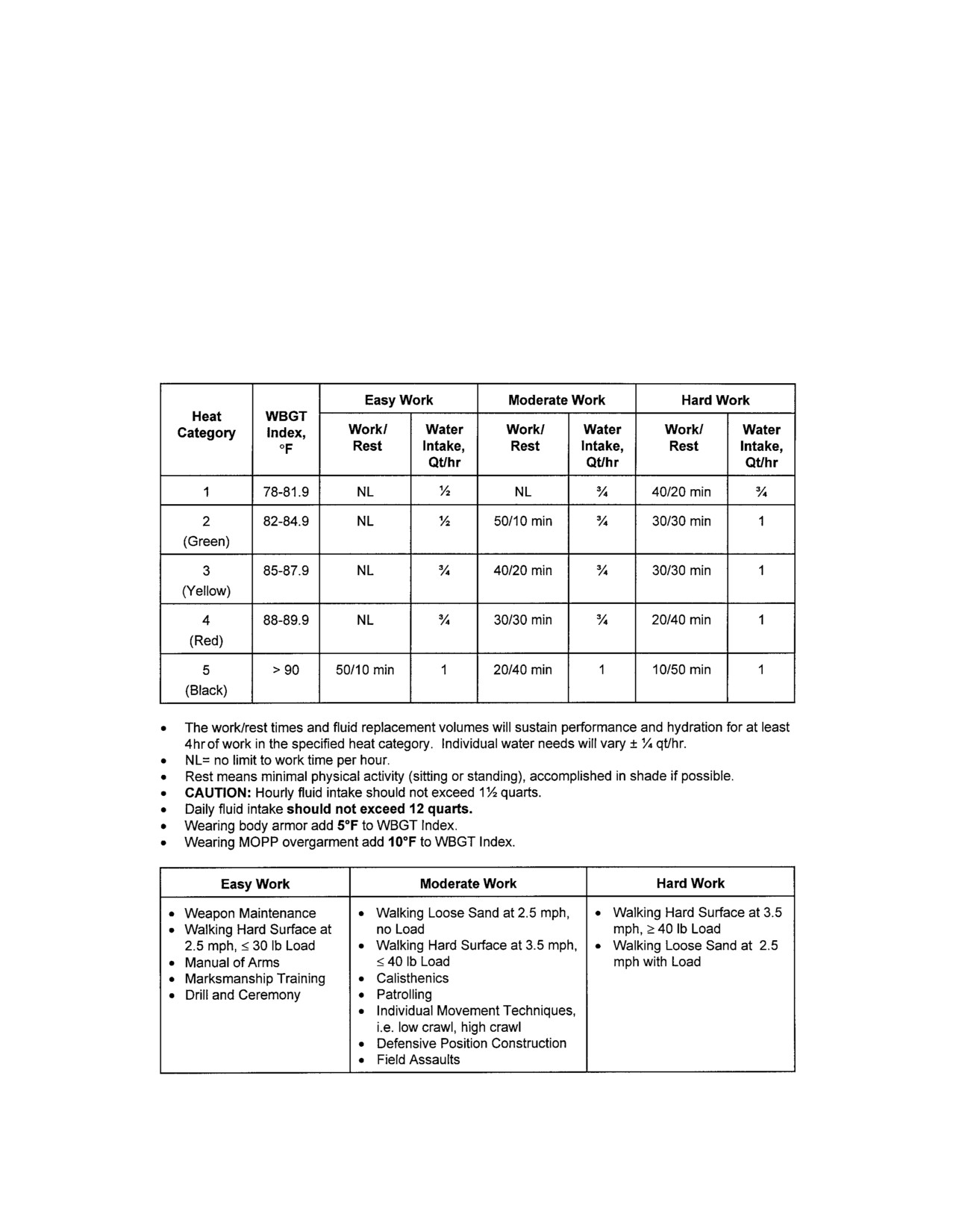
does not serve as a true indication of the bodys need for water. Table 2-4 may be used as a guide to estimate
the drinking water requirements for personnel exposed to heat. This table should be used for planning and
procurement purposes only and should not be used as a yardstick for water intake of any individual.
Table 2-4. Heat Injury Prevention
2-50
FM 4-25.12
(2) During periods of moderate activity, with moderate conditions prevailing, water
requirements will be 1 pint or more per hour per man. This is best taken at 20- to 30-minute intervals. As
activities or conditions become more severe the intake increases accordingly. When water is in short
supply, significant water economy may be achieved by limiting physical activity to the early morning, late
evening, and night hours when the heat load is less and sweating is reduced. The optimum temperature of
drinking water is between 60° and 70°F.
(3) The belief that men can be taught (toughened up) to adjust to decreased water intake is
incorrect. Man cannot live or work in heat without sufficient water.
b. Salt.
(1) In addition to water, sodium chloride is lost in the sweat. The military diet usually
provides adequate salt.
(2) A convenient method of providing adequate salt intake is to encourage the addition of salt
to food at mealtime. This, along with salt in cooking and in bread, will meet most requirements. Excess
intake of salt should be avoided; it may cause increased thirst and intestinal disturbances.
CAUTION
Due to the high salt concentration in field rations, caution must be
taken to maintain a high water intake.
c.
Acclimatization.
(1) Training programs for personnel who are climatically and/or physically unseasoned to
heat should be limited in intensity and time. A period of approximately 2 weeks should be allowed for
acclimatization with progressive degrees of heat exposure and physical exertion. If personnel are required
to perform heavy physical work before being acclimatized, the work is poorly performed; development of
the capacity to effective work is retarded; and the risk of heat injury and disability is high. A period of
acclimatization (10 to 14 days) is necessary regardless of the individuals physical condition, although the
better the physical condition, the quicker acclimatization is completed.
(2) Acclimatization to heat begins with the first exposure and is usually well developed by
the end of the first week. Individuals who are unusually susceptible to heat will require additional time for
acclimatization. Full acclimatization (the ability to perform a maximum amount of strenuous work in the
heat) is attained more quickly by gradually increasing work in the heat. Resting for 3 or 4 days in the heat,
with activity limited to that required for existence, results in only partial acclimatization. Physical work in
the heat must be accomplished for development of full acclimatization to that work level in a given hot
2-51
FM 4-25.12
environment. A day or two of intervening cool weather will not interfere significantly with acclimatization
to a hot environment.
(3) A schedule should be established which provides for alternating work and rest periods.
Although advantage should be taken of the cooler hours in accomplishing a portion of the work, the
schedule should include gradually increasing exposure during the hotter parts of the day rather than
complete exclusion of work at that time. Table 2-4 provides work/rest cycles. These cycles may be
modified to be consistent with local conditions. The work period should be divided so that a man works and
rests in alternating periods. When necessary to accomplish a given task, two details can be arranged to
work in sequence. The schedule is based on work equal to that of marching with a 20-pound pack at the
rate of 2.5 miles per hour. Lighter work may be carried out for longer periods of time and heavier work for
shorter periods. During the midday period, personnel should rest and keep in the shade as much as
possible. Peak wet bulb globe temperature (WBGT) conditions usually occur between 1200 and 1600
hours. Local and regional variations may warrant modifications of the above schedule. Acclimatization
schedules for unseasoned individuals should be scaled down to their tolerance.
(4) Adequate water must be provided at all times. Personnel cannot learn to do without water.
(5) Once acclimatized, the soldier will retain his adaptation for 1 week after leaving the hot
environment, but if not exposed to work in high temperatures, the acclimatization will then decrease at a
variable rate, the major portion being lost within 1 month.
(6) Acclimatization to a hot, dry (desert) environment markedly increases the ability to work
in a hot, moist (jungle) environment; however, for proper acclimatization to the latter, residence in such an
area with regulated physical activity is required. Whereas carefully and fully developed acclimatization
increases resistance, it does not provide complete protection against ill effects of heat, especially moist heat.
(7) Under conditions of heat stress, meals should be cool rather than hot. The heaviest meal
should be served in the evening rather than at noon. An hour of rest following the noon meal is beneficial.
NOTE
This does not relieve units from the responsibility of maintaining
proper food service time-temperature requirements for potentially
hazardous foods.
d. Physical Condition. The general physical condition of the individual has a significant bearing
on the individuals reaction to heat stress. A large number and a variety of conditions may enhance
individual susceptibility to heat. Among these are infections, fevers, immunization reactions, heat rash,
sunburn, fatigue, overweight, and a previous case of heatstroke. The risk of heat injury is much higher in
overweight, unfit persons than in those of normal weight. Special care should be exercised when such
2-52
FM 4-25.12
persons are exposed to high temperatures. An individual once affected should, therefore, be exposed to
heat stress with caution. Predisposition is not developed in the case of heat exhaustion and heat cramps.
e.
Work Schedules. Work schedules must be tailored to fit the climate, the physical condition of
personnel, and the military situation. Close supervision by medical personnel and commanders is essential
in achieving maximum work output with minimum hazard. Several principles must be considered:
(1) The amount of heat produced by the body increases directly with increasing work;
therefore, reduction of workload markedly decreases the total heat stress.
(2) Workloads and/or duration of physical exertion should be less during the first days of
exposure to heat and should be gradually increased to allow for acclimatization.
(3) Decisions to modify work schedules must be governed by the local situation; heavy work
should be scheduled for the cooler hours of the day such as early morning or late evening.
(4) Alternate work and rest periods may prove desirable. Under moderately hot conditions,
5-minute rest periods in the shade, alternating with 25 minutes of work in the sun may be desirable. Under
severe conditions, the duration of rest periods should be increased.
(5) Exposure to high temperature at night, as well as in the daytime, will decrease the
amount of work that can be performed effectively.
(6) Workloads must be reduced at high temperatures when dehydration resulting from excess
sweating and lack of water replacement occurs. When water is in short supply, working in the early
morning and late evenings will allow for the accomplishment of much more work for the expenditure of a
given amount of water than working during the hottest hours of the day.
(7) Work in the direct sun should be avoided as much as possible on hot days.
(8) Unnecessary standing at attention in the heat should be avoided because continued
standing places an added burden on the bodys circulatory system.
(9) When the temperature is very high, physical work should be curtailed or, under extremely
severe conditions, even suspended. The temperature at which work should be curtailed or suspended
depends on the humidity, heat radiation, air movement, character of the work, degree of acclimatization of
personnel, and other factors. Heat casualties may be expected at WBGT indices of 75°F (23.9°C) and
above unless PMM are instituted. Overexertion can cause heat injury at even lower temperatures, especially
if body armor or vapor impermeable protective clothing is worn.
f.
Protection from the Environment. Except when exposed to the suns rays, an individual in a
hot environment is better off wearing the least allowable amount of clothing. Clothing reduces the exposure
of the body surface to solar radiation, but at the same time decreases the movement of air over the skin. To
2-53
FM 4-25.12
take full advantage of its benefits and minimize its disadvantages, clothing should be loose fitting especially
at the neck, wrists, waist, and lower legs to allow air circulation. Protection from the environment also
includes such simple but frequently overlooked things as marching troops over grass rather than concrete
and operating in the shade, if available.
g. Education. Prevention of heat casualties depends largely on the education of personnel
exposed and especially upon supervision by informed leaders. Every individual exposed to high temperatures
should be informed of the potentially serious results of heat injury, the general nature of these conditions,
and how they can be prevented. Supervisors must be able to identify environmental conditions under which
adverse heat effects are likely to occur. They should recognize the earliest signs of heat injury and take
action to prevent the development of cases. All personnel should be able to apply effective first aid. Mental
confusion and overactivity usually precede collapse from heatstroke. Supervisors must be alert to detect
this condition, enforce rest, and obtain medical assistance promptly. Medical personnel should assist
commanders in the development of local programs for heat injury prevention.
h. Wet Bulb Globe Temperature Index. The WBGT index serves as a guideline for making
recommendations to the commander when hot weather conditions are hazardous for the soldiers. With this
information, decisions can be made regarding soldier activity in hot weather. The WBGT index can be
obtained from PVNTMED or the military meteorological service. It is the units responsibility to monitor
the WBGT and determine the heat category. If the unit does not have the WBGT, it can be obtained from
PVNTMED personnel. The heat index will establish the work/rest cycles and the amount of water
consumption to minimize heat injuries.
2-45. Use of the Wet Bulb Globe Temperature Index in the Control of Physical Activity
It should be emphasized that the measurements must be taken in a location that is the same as, or closely
approximates, the environment to which personnel are exposed.
a. When the WBGT index reaches 82°F (27.77°C), discretion should be used in planning heavy
exercise for unseasoned personnel.
b. When the WBGT reaches 85°F (29.4°C), strenuous exercises, such as marching at a standard
cadence, should be suspended for unseasoned personnel during their first 2 weeks of training. At this
temperature, training activities may be continued on a reduced scale after the second week of training.
c.
Outdoor classes in the sun should be avoided when the WBGT exceeds 85°F (29.4°C).
d. When the WBGT reaches 88°F (31.1°C), strenuous exercise should be curtailed for all
recruits and other trainees with less than 12 weeks training in hot weather. Acclimated soldiers, after
having been acclimatized each season, can carry on limited activity at WBGT of 88° to 90°F (31.1° to
32.2°C) for periods not exceeding 6 hours a day.
e.
When the WBGT index is 90°F (32.2°C) and above, physical training and strenuous exercise
should be suspended for all personnel (excluding essential operational commitments not for training purposes,
where the risk of heat casualties may be warranted).
2-54
FM 4-25.12
f.
Wearing body armor or mission-oriented protective posture adds 10°F to the measured WBGT.
Limits should be adjusted appropriately.
Section IX. COLD INJURIES
2-46. General
Cold injury is defined as tissue injury produced by exposure to cold. The type of injury depends upon the
degree of cold to which the body is exposed, the duration of the exposure, and the environmental factors
responsible for injuring the body.
(See FM 21-10.) Cold injury can occur at nonfreezing and at freezing
temperatures. Pathologically, all cold injuries are similar. Nonfreezing cold injury is associated with
exposure to water and cold. Chilblain, immersion foot, and trench foot are the three common terms applied
to nonfreezing cold injury; a description of each appears below. However, these three terms apply to the same
basic injury. The other injury, frostbite, is an injury caused by freezing cold. Hypothermia is a condition
caused by prolonged cold exposure and body heat loss.
a. Chilblain results from intermittent exposure to temperatures above freezing, in high humidity.
b. Immersion foot results from prolonged exposure, usually more than 12 hours, in water at
temperatures usually below 50°F (10°C). It is not limited to the feet, but may involve other areas of the
body following immersion. Exposure for several days in water at 70°F in tropical latitudes has produced
severe injury.
c.
Trench foot results from prolonged exposure to coldand usually wetnessat temperatures
from just above freezing to 50°F (10°C). It is often associated with immobilization of the lower extremities.
The average duration of exposure resulting in trench foot is 3 days.
d. Frostbite is produced by exposure at temperatures of freezing or below. Depending upon the
air temperature, the time of exposure varies from a few minutes to several hours. High altitude frostbite
results from exposure at high altitudes to temperatures varying from -20° to -80°F (-28.8° to -62.2°C). At
these very low temperatures, severe injury may be instantaneous, especially to exposed parts such as
fingers, ears, and the nose.
e.
General hypothermia is an acute problem resulting from prolonged cold exposure and body
heat loss. If an individual becomes fatigued during physical activity, he will be more prone to heat loss, and
as exhaustion approaches, sudden blood vessel dilation occurs with resultant rapid loss of body heat.
2-47. Predisposing Factors
Cold injury, as it involves a military population, behaves in general according to accepted epidemiological
principles. A specific agent is present and a variety of environmental and host factors influence the
incidence, prevalence, type, and severity of the injury. Three main factors are involved in cold injury:
2-55
FM 4-25.12
a. Agent Factors. Cold is the specific agent in cold injury and is the immediate cause of tissue
damage without respect to the influence of modifying factors. If the effect of cold is considered in terms of
body heat loss, the effect of moisture as a conductor of heat is readily apparent; also, the ways in which
various host and environmental factors modify the extent and severity of cold injury become clear.
Therefore, the effect of cold cannot be evaluated in direct relation to air temperature alone.
b. Environmental Factors.
(1) Weather is a predominant factor in cold injury. Temperature, humidity, precipitation,
and wind modify the rate of body heat loss. Low temperatures and low relative humidity favor development
of frostbite. Higher temperatures (just above freezing to 50°F [10°C]), together with moisture, are usually
associated with trench foot. Wind velocity accelerates body heat loss under conditions of both coldness and
wetness. The effect of low temperatures is intensified as air movement passing the body increases. This
can be the result of wind against the body or the effect of a body moving rapidly through the air, such as in
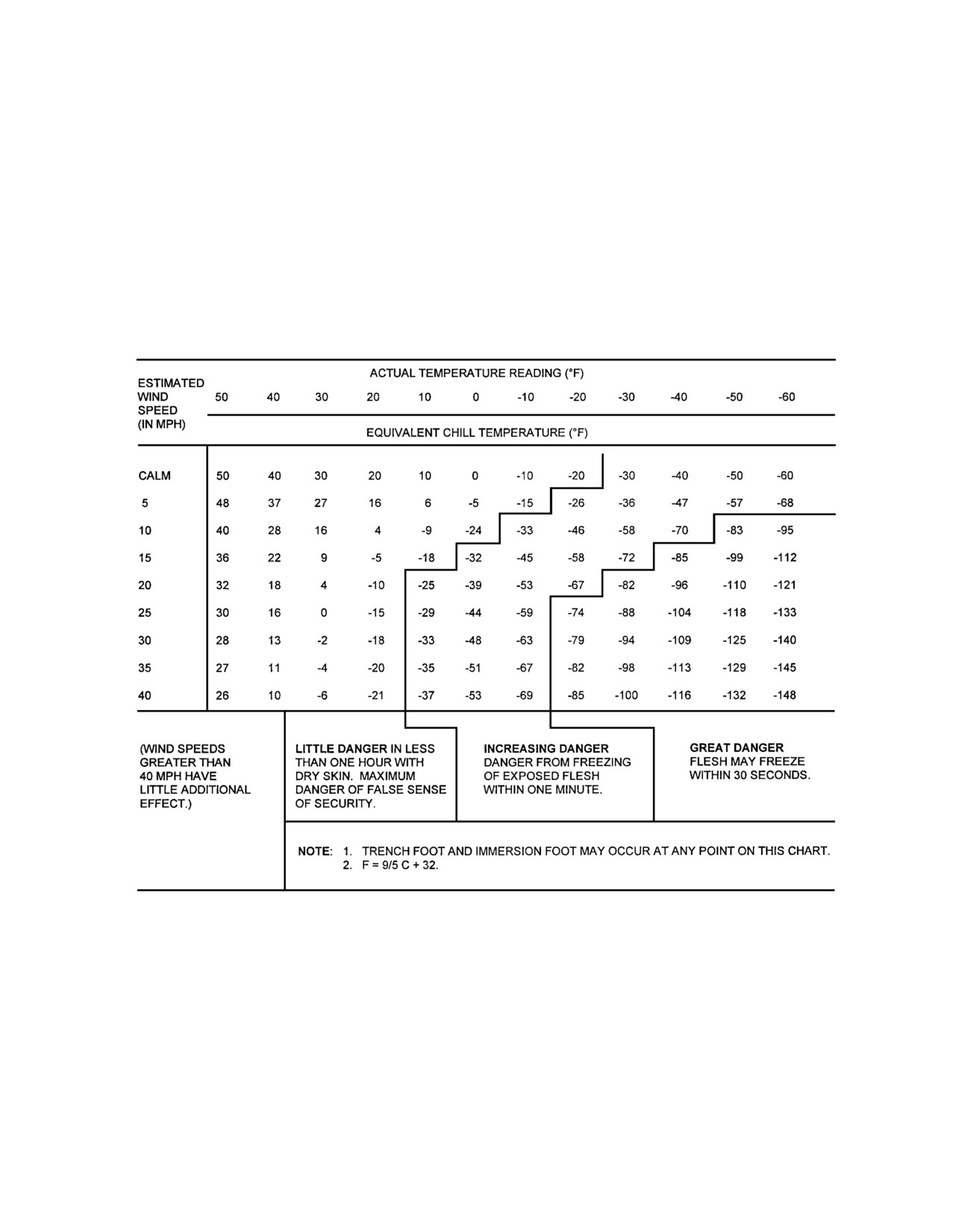
running, skiing, or riding in an open vehicle. The effects of wind speed on chilling the body are illustrated
in Table 2-5.
(2) The incidence of cold injury varies greatly according to the type of combat action. Units
in reserve or in rest areas have relatively few cases of cold injury. On holding missions or on static defense,
exposure is greater and a moderate increase in incidence is expected. On active defense or offense, marked
increases in cold injuries usually occur. Immobility under fire, prolonged exposure, lack of an opportunity
to rewarm and change clothing or carry out personal hygienic measures, fatigue, and a lack of nutrition may
be involved.
(3) Adequate clothing properly worn is essential to survival. Clothing for cold weather
combat has been designed to be worn as an ensemble for protecting the head, torso, and extremities.
Failure to wear the total ensemble and inadequate supplies of properly sized clothing are important factors
leading to cold injury. The ensemble depends upon the layering principle to conserve body heat.
Accordingly, loose layers of clothing with airspace between and under an outer wind- and water-resistant
garment provide maximum protection. It is flexible because outer layers may be removed for comfort and
efficiency to permit escape of perspiration in higher air temperatures or during strenuous physical exertion.
Clothing wet by perspiration loses much of its insulating value. Therefore, care must be taken to prevent
perspiration from accumulating in the clothing. In all forms of cold injury, preventing body heat loss by
proper protection of the body is as important as wearing efficient head, hand, or footgear. All articles of
clothing must be loose enough to avoid constriction.
c.
Host Factors.
(1) Age. Within the usual age range of combat personnel, age is not significant.
(2) Rank. Trench foot and frostbite injuries are higher for soldiers who perform duties in
environments with increased exposure to colder temperatures and moisture because they have greater
exposure. The decreased incidence of cold injury among higher ranks is because of a combination of
factors, such as experience, leadership, receptivity to training, and significantly less exposure.
2-56
FM 4-25.12
(3) Previous cold injury. A previous episode of trench foot, frostbite, or immersion foot
greatly increases the individuals risk of another cold injury to the same area.
Table 2-5. Windchill Chart
(4) Fatigue. Fatigue contributes to cold injury because as personnel become exhausted they
fail to carry out simple preventive measures. This occurs more frequently in personnel who have been in
combat for 30 days or more without rest. Mental weariness may cause apathy leading to the neglect of
needs vital to survival. Frequent rotation of troops from the front lines for even short periods lessens the
effects of fatigue.
(5) Discipline, training, and experience. Individual and unit discipline, training, and
experience are closely related as they influence the incidence of cold injury. Well-trained and well-disciplined
2-57
FM 4-25.12
men profit from combat experience in the cold. They are better able to care for themselves through
personal hygiene, care of the feet, change of clothing, exercise of the extremities in pinned-down positions,
and similar simple, but effective measures. Preventive measures necessary for survival in the cold must be
continuously stressed to the troops, enabling them to cope with these problems.
(6) Psychosocial factors. Cold injury tends to occur in passive, negativistic, or
hypochondriacal individuals, who display little muscular activity and who are prone to pay less attention to
carrying extra footwear; changing socks when needed; and reducing smoking under combat conditions
where cold injury is a threat.
(7) Race. In terms of numbers at risk and independent of geographic origin, some racial
groups appear to be more vulnerable to frostbite than are others.
(8) Geographic origin. The geographic origin of the individual seems to be a significant
factor among Caucasians in the incidence of cold injury. Origin from warmer climates of the United States
(including Puerto Rico) where the mean minimum January temperature is above 20°F (-6.6°C) predisposes
cold injury.
(9) Nutrition. Poor nutrition contributes to susceptibility to cold injury. Adequately clothed
and protected personnel living and working in cold climates do not require an increase in caloric intake
above that normally provided in the military ration. Individuals who do not eat regularly or do not eat
complete, balanced meals are more susceptible to injury.
(10) Activity. Too much or too little activity can contribute to cold injury. Overactivity with
rapid and deep breathing can cause the loss of large amounts of body heat. Perspiration trapped in clothing
markedly reduces the insulating quality of the clothing. On the other hand, immobility causes decreased
heat production with the danger of resultant cooling, especially of extremities.
(11) Drugs and medications. Personnel should be made aware of the effects of smoking in
decreasing peripheral circulation and of alcohol ingestion in dilating peripheral vessels. Persons on
peripheral vasodilator medications may be at added risk of cold injury due to reduced circulation. Both
tobacco and alcohol should be avoided when the danger of cold injury exists.
2-48. Prevention of Cold Injuries
a. General. Cold injuries are preventable except in unusual situations. Successful prevention
requires vigorous command emphasis; prior planning in such activities as cold-weather training; and the
provision of cold-weather clothing and equipment. Specific preventive measures are directed toward
conserving body heat and avoiding unnecessary exposure of personnel to cold, moisture, and activities or
factors favoring cold injury.
b. Meteorological Data. All commanders must be familiar with the use of meteorological data
such as humidity, temperature, wind, and ground surface conditions that influence the risk of cold injury.
The windchill chart (Table 2-5) can help the soldier and his commander judge the severity of the
2-58
FM 4-25.12
environment. Some weather conditions require shortening the exposure time of individuals engaged in
patrols, guards, or motor movements in unheated vehicles despite the adequacy of their clothing and
equipment. These can frequently be anticipated by using meteorological data and existing weather conditions
to predict the hazard for the next 12-hour period.
c.
Cold Injury Control. Each platoon or comparable-sized unit should appoint someone in the
unit to monitor factors for cold injury. This individual may be an officer or noncommissioned officer
(frequently, the FST member), who is selected on the basis of leadership, interest, and ability to supervise
others in simple but constant preventive activities. He should frequently check clothing supplies; inspect
personnel daily for personal hygiene and care of their feet, as well as early signs and symptoms of cold
injury, and ensure that socks are changed at appropriate intervals and that all reasonable efforts are made to
keep the feet clean and dry; encourage efforts to exercise even if only their extremities; and ensure that
constriction of extremities by clothing, equipment, and footgear is avoided.
d. The Buddy System. Personnel should be taught to observe their buddy for evidence of cold
injury. If blanching of the skin is noted, immediate care will usually prevent the development of cold
injury. Holding (not rubbing) a warm hand on the blanched area until it returns to normal color will
rewarm a buddys ear, nose, or cheek. Fingers can be warmed against the skin of the abdomen or in the
armpit. Toes can be rewarmed by holding them against a buddys bare chest or abdomen, care being taken
to provide protection from the wind. A symptom of incipient frostbite on fingers and toes is the sudden and
complete cessation of the sensation of cold or discomfort in the part. This is often followed by a pleasant
feeling of warmth. If these danger signals are instantly heeded, cold injury can be prevented.
e.
Personal Measures.
(1) Wear or carry adequate clothing for the weather to be encountered. Remove excess
layers of clothing before perspiration starts so that clothing does not become wet. Avoid getting clothing or
footgear wet, since moisture causes loss of insulating quality.
(2) Wear clothing and footgear in loose layers to permit layers of air to provide good
insulation and to permit good circulation of blood to all parts of the body. Tailored, tight-fitting uniforms
are dangerous in cold climates.
(3) Keep hands well protected; mittens are more protective than gloves. Avoid lengthy
exposure of bare hands and wrists that will cause stiffening and reduce circulation, since it takes a long time
to recondition the hands to normal use. Do not touch metal, snow, or other objects with bare hands.
(4) Avoid immobilization in the cold. If the situation permits, walk about and exercise
periodically to generate and maintain body heat. If unable to walk about, shift positions frequently,
especially move the toes, feet, legs, fingers, and arms. Sit or stand on insulating material such as wood,
cardboard, or other poor cold conductors rather than on cold or wet ground or snow.
(5) Remove excess clothing when near a fire or in a warm enclosure; otherwise, the body
adjusts to the warm temperature and excess clothing. Upon returning to the cold air, the body will adjust
2-59
FM 4-25.12
more slowly to the cold and excessive amounts of body heat will be lost. The result will be the loss of more
heat than the body gained during warming, with an increased susceptibility to cold injury.
f.
Clothing. The Extended Cold Weather Clothing System (ECWCS) will provide protection of
the head, torso, and extremities from 40° to -60°F (4.4° to -51.1°C). The ensemble uses the layering
principal to conserve body heat. Loose layers of clothing with air space between them, under an outer
wind- and water-resistant garment, provide maximum protection. The ensemble is generally comprised of
four layers:
Polypropylene undershirt/drawers.
Fiber pile shirt/pants.
Polyester batting coat and trouser liner.
Extended cold weather (GORE-TEX®) camouflage parka and trousers.
See Table 2-6 for further information on suggested clothing layering for physical training and work.
(1) A standard number of layers of clothing cannot be prescribed for universal wear during
winter months. Flexibility must be provided for local conditions. Some basic principles are important,
including ventilating the body during physical activity, the cleanliness and repair of clothing to prevent loss
of insulation, and the avoidance of constriction produced by snug-fitting socks, boots, underwear, sweaters,
jackets, and trousers.
(2) Ground forces personnel in cold areas should be equipped with insulated rubber combat
boots. Frequent changes of socks is important with these boots because of increased sweating, retention of
sweat, and a lowered resistance to fungal infections. Although sweating in these boots does not contribute
to the loss of insulation, it does lead to softening the soles of the feet by the retained sweat. Trauma to
macerated tissues, produced by walking, results in a loss of skin from the soles of the feet which may
require hospitalization. Cold injuries to the feet have been reported when wearing the insulated boot.
These injuries usually result from inactivity and dependency of the feet, which can occur with prolonged
sitting or standing without foot or leg movement. Periodic exercise, plus good foot hygiene and dry socks,
will help prevent such injuries. The insulated boot should be inspected periodically for punctures. A hole
in the boot renders it ineffective and may cause cold injuries.
(3) In all types of footwear, feet perspire more and are less ventilated than other parts of the
body, so that moisture accumulates in socks, decreasing their insulating quality. Because of this and the fact
that the feet are susceptible to cold injury and less frequently observed than the remainder of the body,
special foot and sock care is essential. Extra socks should be carried by all personnel. Socks damp from
perspiration will dry if carried unfolded inside the shirt; they should be changed daily and washed whenever
the opportunity permits. Socks and other clothing soiled with dirt, grease, or mineral salts from perspiration
will conduct heat more rapidly, thus affording less protection against the cold.
g. Unusually Susceptible Groups. Individuals with host factors listed in paragraph 2-47c require
greater protection and supervision of preventive measures in order to prevent cold injury.
2-60
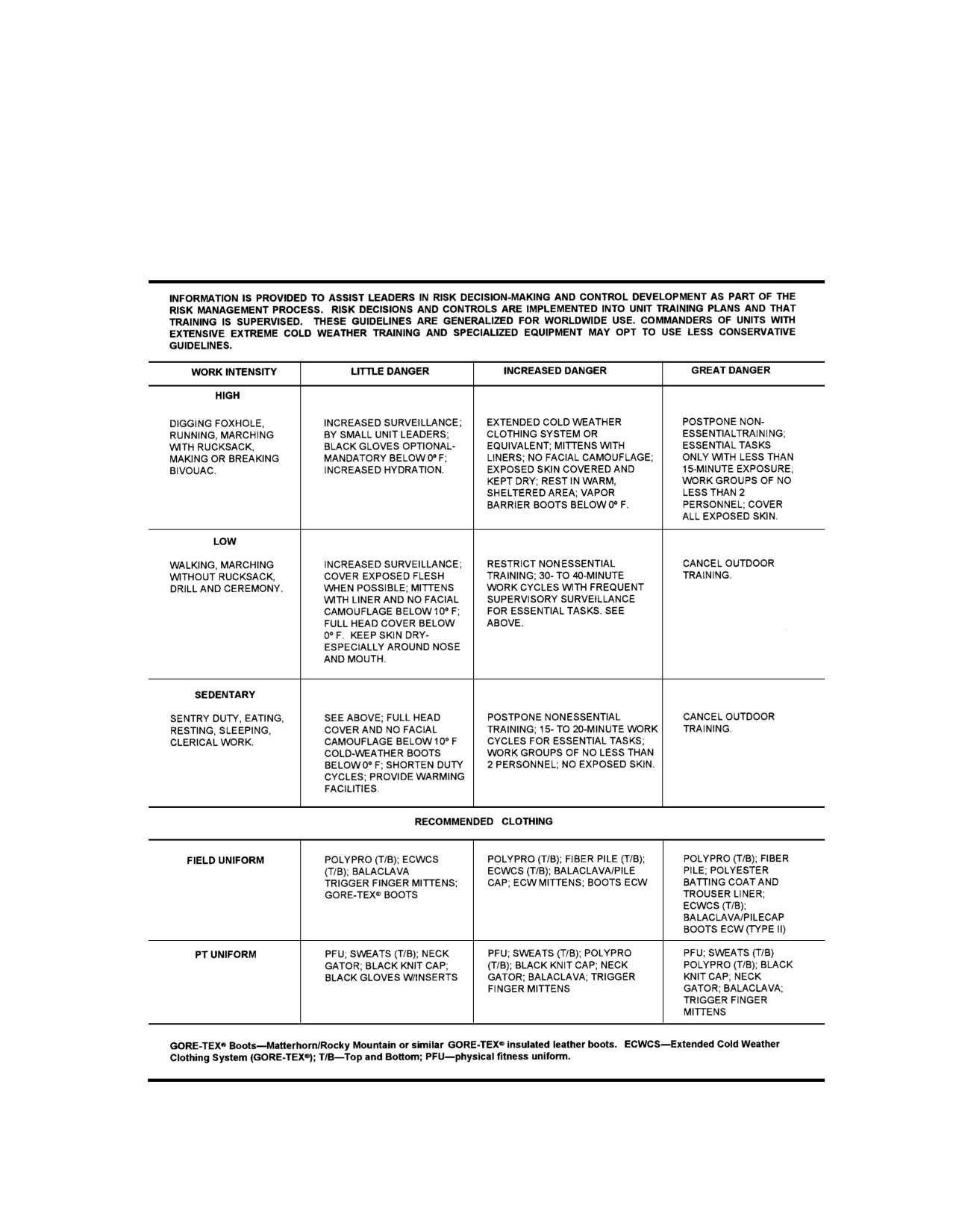
FM 4-25.12
Table 2-6. Leader's Guide For the Prevention of Cold Injuries
Due to Exposure to Temperatures Below 50°F
2-61
FM 4-25.12
Section X. TOXIC INDUSTRIAL CHEMICAL HAZARDS
2-49. General
Occupational hazards may be classified as chemical, physical, or biological. Chemicals are found in many
areas where toxic industrial materials (TIM) are produced, used, and stored, or may appear as by-products
or impurities in otherwise safe substances. These chemicals may produce injury or death in all situations
including combat. The loss of key personnel during combat may have a serious impact upon a units ability
to accomplish its mission. This nonbattle injury and death is preventable.
2-50. Routes of Entry
Toxic industrial chemicals can enter the body by various routes. The bodys response to any TIC may vary
markedly depending on the specific route of entry.
a. Inhalation. Inhalation is the most important route of entry. Some toxic chemicals may
produce acute effects that are quickly recognized by the exposed person. Other chemicals may cause
chronic effects that take many years to develop, such as asbestosis from asbestos exposure.
b. Absorption. The most common occupational disease seen is dermatitis. Contact dermatitis
may be caused by irritation or allergic sensitization. Systemic poisoning can also result from skin absorption.
c.
Ingestion. Ingestion occurs as a result of eating or smoking with contaminated hands,
contaminated utensils, or in contaminated areas.
d. Injection. Accidental injection may occur from the use of high-pressure air or from liquid
lines rupturing, or from puncture wounds caused by contaminated objects.
2-51. Toxic Industrial Chemical Classifications
Toxic industrial chemicals are classified according to their physical state or chemical characteristics.
Classification is important in determining the route of exposure.
a. Gas. A state of matter in which material has a very low density and viscosity can expand and
contract greatly in response to changes in temperature and pressure; is easily diffused into other gasses; and
is readily and uniformly distributed throughout any container. A gas can be changed to a liquid or a solid
state only by the combined effect of increased pressure and decreased temperature.
b. Liquid. A state of matter in which the substance is a free-flowing, formless fluid. A liquid
takes many forms depending on environmental conditions.
2-62
FM 4-25.12
(1) Vapor. The gaseous form of substances which are normally in a solid or liquid state at
normal room temperature and pressure.
(2) Mist. Suspended liquid droplets generated by condensation from the gaseous to the
liquid state or by a liquid breaking up into a dispersed state by splashing, foaming or atomizing.
c.
Solids.
(1) Fume. Airborne dispersion consisting of minute solid particles arising from heating a
solid such as lead. This physical change is often accompanied by a chemical reaction, such as oxidation.
Fumes flocculate and sometimes coalesce.
(2) Dust. Solid particles generated by handling, crushing, grinding, impacting, detonating,
and decrepitating materials. Dust does not tend to flocculate, except under electrostatic forces. These
particles do not tend to diffuse in the air, but settle under the influence of gravity.
CAUTION
Failure to carefully check MSDS or labels for danger when using
chemicals may cause injury to unit personnel.
2-52. Chemical Actions and Effects
A detailed discussion of all biological actions of all the chemicals that you may encounter is impossible.
Instead, chemicals will be discussed according to their general biological actions. Check MSDS or labels
for dangers associated with chemicals.
a. Irritants. These materials cause inflammation of mucous membranes with which they come in
contact. Many irritants are strong acids or alkalis that are corrosive to nonliving things; however, they
cause inflammation to living tissue. Examples are sulfur dioxide, acetic acid, formaldehyde, formic acid,
sulfuric acid, iodine, ozone, and oxides of nitrogen.
b. Asphyxiants. Asphyxiants are materials that deprive the respiratory tissues of oxygen; they do
not damage the lungs. Simple asphyxiants are gases, which when present in sufficient quantities, exclude an
adequate oxygen supply. Examples are nitrogen, nitrous oxide, carbon dioxide, hydrogen, helium, methane,
and ethane. Chemical asphyxiants are materials which have the ability to render the body incapable of using
an adequate oxygen supply. Two classic examples are carbon monoxide and cyanide.
2-63
FM 4-25.12
c.
Anesthetics. The main toxic action of these materials is their depressant effect upon the central
nervous system, particularly the brain. The degree of anesthetic effect depends upon the effective
concentration in the brain as well as upon the specific makeup of the contaminant.
d. Systemic poisons. These materials cause damage to internal organs such as the liver, kidney,
central nervous system, or the cardiovascular system. For example, carbon tetrachloride produces necrosis
of the liver.
e.
Carcinogens. These materials have demonstrated they cause cancer or are suspected of
causing cancer based upon animal studies.
CAUTION
The Ml7 or M40 series protective masks are not designed to
protect you from most TIC hazards.
2-53. Carbon Monoxide
a. Sources of Exposure. Carbon monoxide is produced whenever fossil fuels are burned in the
presence of insufficient oxygen to transform all the carbon to carbon dioxide. Carbon monoxide is
produced in the incomplete combustion of coal, gasoline, natural gas, and other carbon-containing
substances. It is produced in the explosion of dynamite and nitroglycerine and in the operation of blast
furnaces and internally lubricated compressors. Automobile exhaust contains 5 to 10 percent or more
carbon monoxide. Carbon monoxide occurs in small traces in natural gas, but incomplete burning of
natural gas can produce greater amounts. Since gasoline, oil, coal, and gas are used in virtually all jobs, the
potential for exposure to carbon monoxide is widespread. Carbon monoxide is a deceptive hazard, in that it
is odorless, colorless, tasteless, and nonirritating, and its presence may go undetected.
b. Bodily Effects. Carbon monoxide interferes with the supply of oxygen to the tissues of the
body. Normally, inhaled oxygen is transferred in the lungs to hemoglobin, which is present in all red blood
cells. Hemoglobin then transports oxygen, by way of the bloodstream, to the tissue cells where transfer
takes place. The affinity of hemoglobin for carbon monoxide is 250 times greater than it is for oxygen.
When carbon monoxide combines with hemoglobin, the transport of oxygen to the tissue cells is blocked.
Without oxygen, cells cannot live, and when the concentration of carbon monoxide is great enough, death
occurs.
c.
Prevention. The most common and most easily recognized potential exposure to carbon
monoxide is in the motor pool maintenance shops and in quarters and office areas where space heaters are
used. Whenever vehicle engines are operating, a method of disposing of the carbon monoxide-laden
exhaust must be used. This is best accomplished by a combination of natural ventilation and mechanical
2-64
FM 4-25.12
tailpipe extension systems that carry the exhaust outside the structure. Any space heated by a carbon fuel
heater must be ventilated by fresh air; ensure that windows are slightly open.
2-54. Hydrogen Chloride
a. Source of Exposure. Hydrogen chloride is produced as an exhaust from rocket systems, such
as a shoulder-fired rocket, or from vehicle-mounted rocket systems. The development and use of these
highly mobile weapon systems has greatly increased the potential for exposure to this hazard.
b. Bodily Effects. Hydrogen chloride is a highly irritating gas that forms with water to produce
hydrochloric acid. This acid will irritate the mucous membrane, particularly the eyes, throat, and lungs. It
can cause a tissue burn and flu-like lung injury.
c.
Prevention. The most common exposure to hydrogen chloride occurs during the firing
process of these weapon systems. Remaining upwind of the exhaust emission and, when necessary, holding
your breath until the gas cloud passes will limit your exposure.
2-55. Bore/Gun Gases
a. Source of Exposure. Conventional weapon systems, such as tanks and artillery, can produce
large quantities of toxic gases when fired. The propellants produce carbon monoxide gas, lead fumes, and
other toxic by-products.
b. Bodily Effects. Effects on the body from this exposure will be much the same as effects
produced from exposure to hydrogen chloride and carbon monoxide.
c.
Prevention. Exposure will be greatly reduced by using on-board ventilation systems and
keeping the bore evacuator on larger weapon systems well maintained.
2-56. Liquid Chemicals
a. General. The most widespread, and some of the most dangerous, occupational hazards are
created by liquid chemicals, such as solvents. These chemicals may present hazards from the use of the
liquid itself, as a vapor of the liquid, or as a mist of the liquid. The vast majority of liquid chemicals found
in the industrial workplace are organic compounds; these compounds contain carbon. They are found in
plant and animal tissues and in materials, such as petroleum and coal, which result from the breakdown of
living substances. Lubricants, solvents, fuels, and many insecticides are but a few of the hundreds of
different compounds in use and new ones are constantly being produced. These chemicals are used in the
course of most industrial-type jobs. Because of their widespread use and their harmful properties, organic
compounds present significant military occupational hazards.
b. Source of Exposure. It would be virtually impossible to list all the possible occupations or
industrial-type operations in which exposure to liquid chemicals occur, since so many occupations or
2-65
FM 4-25.12
industrial processes use these chemicals in one way or another. There are many military situations in which
individuals are exposed to potentially hazardous organic compounds in liquid form. Many different
solvents and fuels are used in military operations. Vehicle and weapons maintenance requires grease, oil,
and other lubricants. Field sanitation teams use premixed insecticides. Engineers and PVNTMED personnel
handle insecticide concentrates.
c.
Bodily Effects.
(1) General. The bodily effects of liquid chemicals vary widely, depending on the chemical
involved. The effects on the skin, nervous system, liver, and those leading to cancer are discussed below.
(2) Skin disease. In terms of numbers, occupational skin diseases (dermatoses) are by far the
most important of the occupational diseases. Although occupational skin conditions may cause considerable
loss of time from work, usually they are not severe enough to cause permanent disability.
(a) The healthy skin has certain barriers against injury. The dead surface cells resist
most chemicals, while the oily secretions of the skin form a protective covering against some chemicals.
Deeper skin cells prevent the loss of water from the skin.
(b) The occurrence of occupational dermatosis depends mainly on the specific chemicals
to which the skin is exposed and the length of the exposure. The presence of other skin diseases lowers
resistance to exposure. Personal cleanliness is important, since failure to wash the skin or to remove dirty
clothing increases the length of exposure. The type of skin is an important factor, too. People with oily
skin are more likely to develop infected sweat glands, whereas those with dry skin are more affected by
drying agents such as detergents. Skin disease is more prevalent in the summer than in the winter due to the
fact that less clothing is worn and to the presence of sweat.
(c) Chemicals on the skin may cause either an irritant effect, a sensitizing effect, or
both. A chemical that is classified as a skin irritant will cause irritation to any individuals skin, if left in
contact with the skin long enough. Most organic compounds are considered skin irritants, although they
vary greatly in strength. Chemical agents which do not cause skin disease on first contact but do so after
5 days or more of continuous or repeated contact are called sensitizing chemicals. This is a type of allergy
which develops only in a small number of exposed people, depending on the chemical involved and the
individuals sensitivity to that substance. Examples of chemicals capable of sensitizing are the explosives,
photographic developers, epoxy mixtures, some insecticides, and some fungicides.
(3) Nervous system effects. It is difficult to summarize the toxic effects of organic solvents,
since they vary greatly in their effects on human tissue. There is one property, however, which is common
to practically all organic solvents. It is their ability to produce a loss or disturbance of sensation and
sometimes a loss of consciousness. Sudden large exposures to concentrated vapors of some solvents can
lead to instant unconsciousness and even death. With lower levels of exposure, less severe symptoms will
be experienced. Headaches, dizziness, nausea, vomiting, and convulsions may occur. Even lower exposures
may produce enough drowsiness to create an accident hazard under certain conditions. The insecticides are
good examples of these toxic properties; for example, the insecticide, malathion, an organic compound,
exerts its toxic action on that part of the nervous system which controls breathing, digestion, muscle
strength, vision, and sweating. Thus, excessive exposure to these chemicals results in respiratory difficulty,
2-66
FM 4-25.12
vomiting, muscle weakness, blurry vision, and excessive sweating, which are but a few of the many
symptoms. No attempt will be made to describe the toxic effects of each specific chemical in this group.
(4) Cancer-producing liquid chemicals. Some liquid chemicals can cause cancer. As early
as 1775, cancer of the scrotum in chimney sweeps was recognized as a hazard of that occupation. Since that
time, skin cancer has been found in many other occupations in which exposure to coal tar and pitch exists.
Soldiers who handle certain organic dyes must exercise caution by following the directions for their use.
2-57. Prevention and Control
a. General. Measures for the prevention and control of illnesses arising from exposure to liquid
chemicals fall into three groups: environmental control, personal control, and medical control. By far the
most effective category is environmental control; this type of control involves designing the work area and
associated equipment to minimize the exposure of the worker to liquid chemical, its vapors or its mists.
Environmental control also includes one of the most basic control measuressubstituting a less toxic
substance for the more toxic substance in use. Preventive medicine measures are not as effective as
environmental measures; they are limited to the use of protective clothing and respirators. Medical control
refers to programs encompassing preplacement physical examinations and medical surveillance of workers
to detect early signs of occupational disease.
b. Occupation Dermatosis Prevention. The best prevention against occupation dermatosis is to
use measures that decrease, as far as possible, contact of soldiers with the dermatitis-causing chemicals.
When complete avoidance is impossible, PMM are used. These include protective clothing, protective
ointments, and personal cleanliness. Protective clothing should cover every part of the body exposed to the
irritating or hazardous chemical. This protective clothing, and in some cases, underclothing, must be
changed and laundered daily. Contaminated work clothing should never be worn away from the workplace.
Personal cleanliness is the best protective measure against occupational dermatosis. If strong irritant
chemicals come into contact with the skin, they should be removed immediately with water. Washing
facilities should always be readily available. Soldiers should be encouraged to consult a medical officer at
the first sign of dermatosis. Delay in treatment of these conditions may result in more serious conditions
requiring extensive medical treatment and evacuation. The impact of lost manpower, especially during
shortage of critical military occupational specialties, may be detrimental to the units combat mission.
Section XI. NOISE HAZARDS
2-58. General
We live in a world of sound 24-hours each day. Even while we are sleeping, the clock ticking or the air
conditioner whirring may be part of our environment. In our waking hours, we are immersed in sound:
passing automobiles, overhead aircraft, weapons firing, equipment operating, people talking, and radios
playing. A total lack of sound can in itself be disturbing; too much sound can be literally deafening.
Exposure to certain noises can have profound physical and psychological effects on the individual. To
2-67
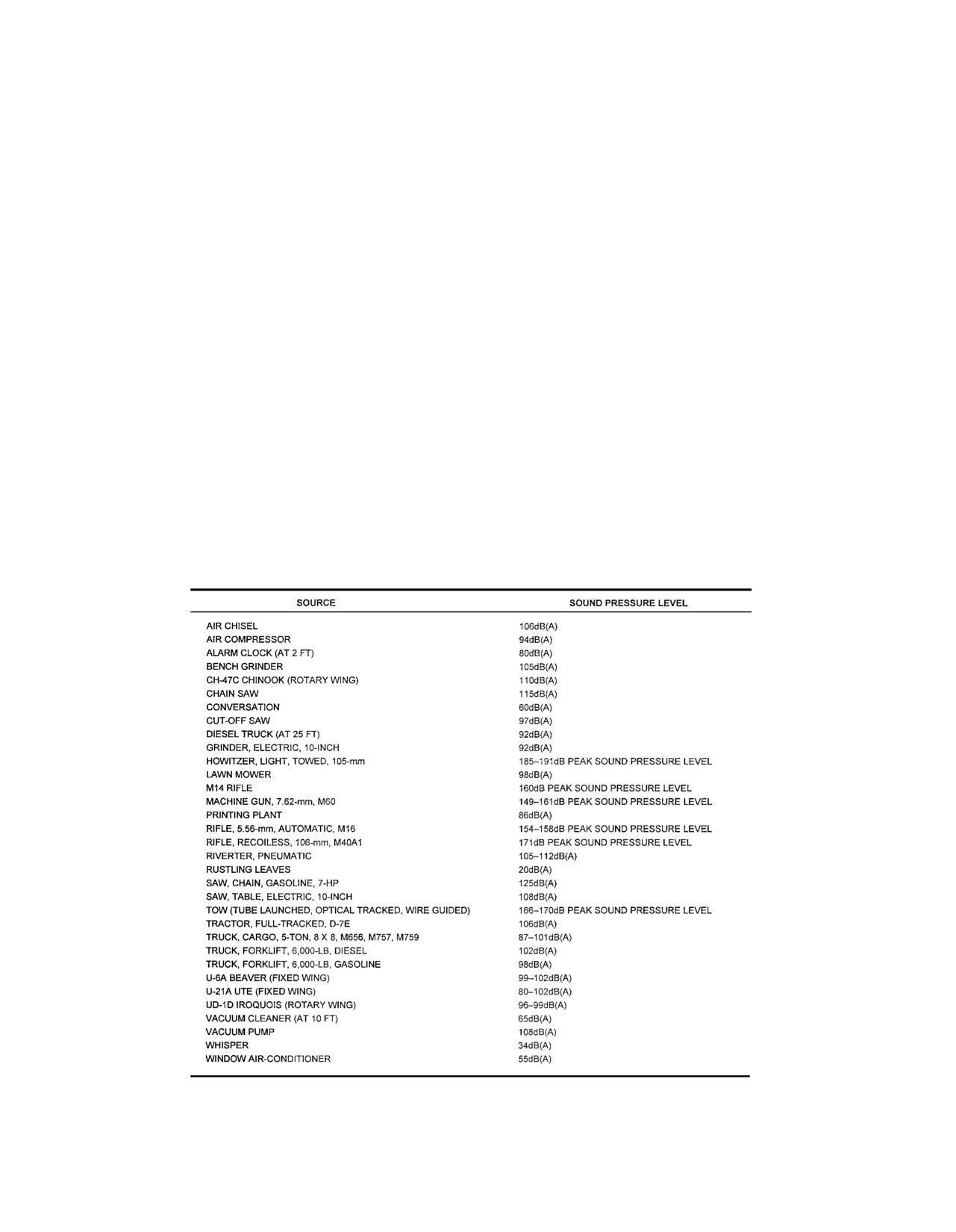
FM 4-25.12
protect personnel against these effects, hearing conservation programs are planned and implemented at all
Army installations. Management of such programs is a command responsibility. As an FST member, you
will play an active role in the hearing conservation program. If you have to raise your voice to be heard,
you are in a noise hazard area.
a. Noise. Noise is simply defined as unwanted sound, whether it is a pure tone, a complex of
tones, or unwanted speech or music. In actual practice, the term is usually applied to sounds which have a
complex character acoustically, such as those containing a large number of separate frequency components that
extend over a wide range of frequencies and which are not normally generated to convey meaning or information.
b. Steady Noise. This is noise that does not significantly change in intensity or frequency with time.
c.
Impulse or Impact Noise. Noise characterized by a sharp rise in intensity followed by a rapid
decline in intensity, such as that produced by gunfire. It cannot be measured accurately with an ordinary
sound-level meter.
d. Sound Levels. Examples of sound levels for various types of equipment are shown in Table 2-7.
Table 2-7. Examples of Sound Levels
2-68
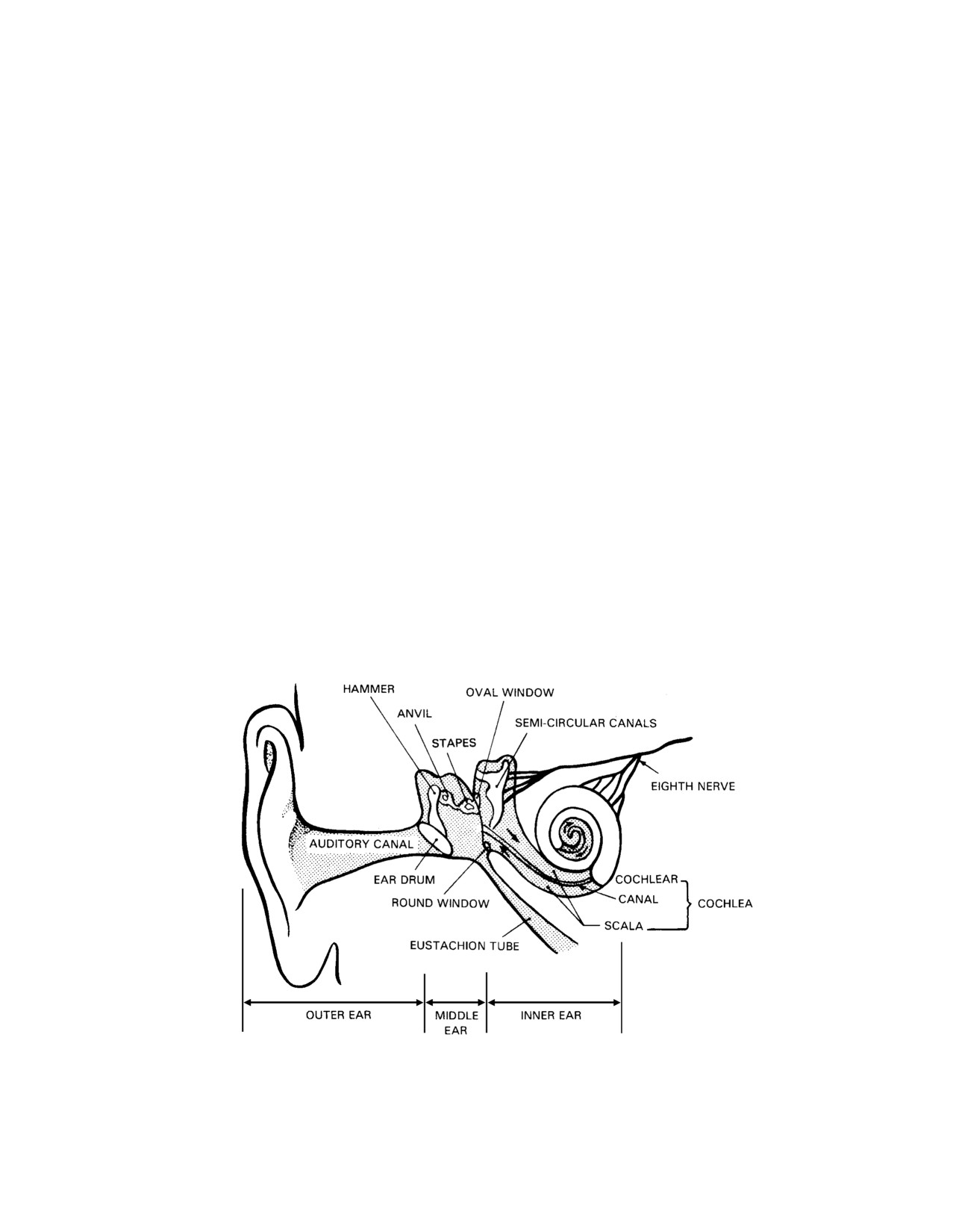
FM 4-25.12
2-59. Factors Determining the Degree of Hazard
There are four properties or characteristics of noise which determine whether a given noise is likely to be
hazardous to workers hearing.
a, Frequency. The frequency of a noise determines its pitch, which is that attribute of an
auditory sensation in terms of which sounds may be ordered on a scale extending from low to high. High-
frequency (high-pitched) noises are more dangerous to hearing than low-frequency (low-pitched) noises.
b. Intensity. The relative loudness of the noise, expressed in decibels (dB), will play a large part
in determining the degree of hazard; the louder the noise, the greater its potential for causing hearing loss.
c.
Nature of the Noise. Noise may be continuous or intermittent. It may be steady, or made up
of a series of impact or impulse noises.
d. Exposure Duration. The longer the exposure, the greater the damage to the hearing
mechanism. Exposure duration is usually expressed in terms of a time-weighted average, which takes into
account both intensity of noise and duration of the exposure.
2-60. The Mechanics of Hearing
The human ear (Figure 2-4) is composed of three major sections: the external ear, the middle ear, and the
inner ear. Each section has a distinct function in the hearing process.
Figure 2-4. Anatomy of the human ear.
2-69
FM 4-25.12
a. The external ear captures and funnels the sound waves to the middle ear where they strike the
eardrum (tympanic membrane).
b. The middle ear consists of the eardrum and the space and structures just inside. The space
within the middle ear is filled with air. There is a chain of small bones in the middle ear, called the malleus,
the incus, and the stapes. One end of this chain rests against the eardrum, while the other end is connected
to the inner ear.
c.
The inner ear consists of a spiral tube filled with fluid. The spiral tube contains the organ of
Corti, which consists of many sensory cells with delicate hairs or hair cells projecting into the fluid. As the
eardrum vibrates, the chain of bones is set in motion. These motions, in turn, cause the fluid in the inner
ear to vibrate. When the fluid vibrates, the hair cells are stimulated, sending impulses to the brain.
2-61. The Effects of Noise on the Ear
a. Exposure to excessive noise for extended periods of time overactivates the hairs and hair cells
in the inner ear, causing injury or destruction. Such injury to the organ of Corti usually leads to permanent
loss of hearing. There is no known treatment for such hearing loss. However, depending upon the duration
of the exposure to excessive noise, hearing loss may only be temporary in nature. This acute partial loss of
hearing has the most significant possible impact to the combat mission.
b. Overexposure to high frequency noise causes more significant hearing loss than overexposure
to low frequency noise of the same intensity. During initial exposure, most of the hearing impairment is in
the frequency range above those important to understanding speech. As a result, early damage is seldom
noticed by individuals. Detection of losses in these ranges by the medical officer is important, as these early
losses may be danger signs of further extensive hearing loss. Continued exposure will lead to progressively
greater damage, including loss of the speech frequencies, which, if allowed to reach an advanced stage, will
cause a severe handicap.
c.
Other physiological effects, which are produced by excessive exposure to noise, include
nausea and headaches. In many cases the reflex responses of the individual are affected.
d. Psychological stress from noise may be manifested in the form of fatigue, inability to function,
annoyance, and distraction.
2-62. Preventive Medicine Measures
a. Personal protective devices to lessen the risk of hearing loss consist of earplugs and earmuffs
(Table 2-8 and Figures 2-52-10, pages 2-712-73). Whichever device the exposed individual can wear com-
fortably and consistently is an important element in selecting the device to be worn. In exposures to extremely
high, steady-state noise levels (120 dB and above), earplugs and earmuffs must be worn together. Table 2-9
(page 2-74) gives a list of earplugs and earmuffs available through medical and/or regular supply channels.
2-70
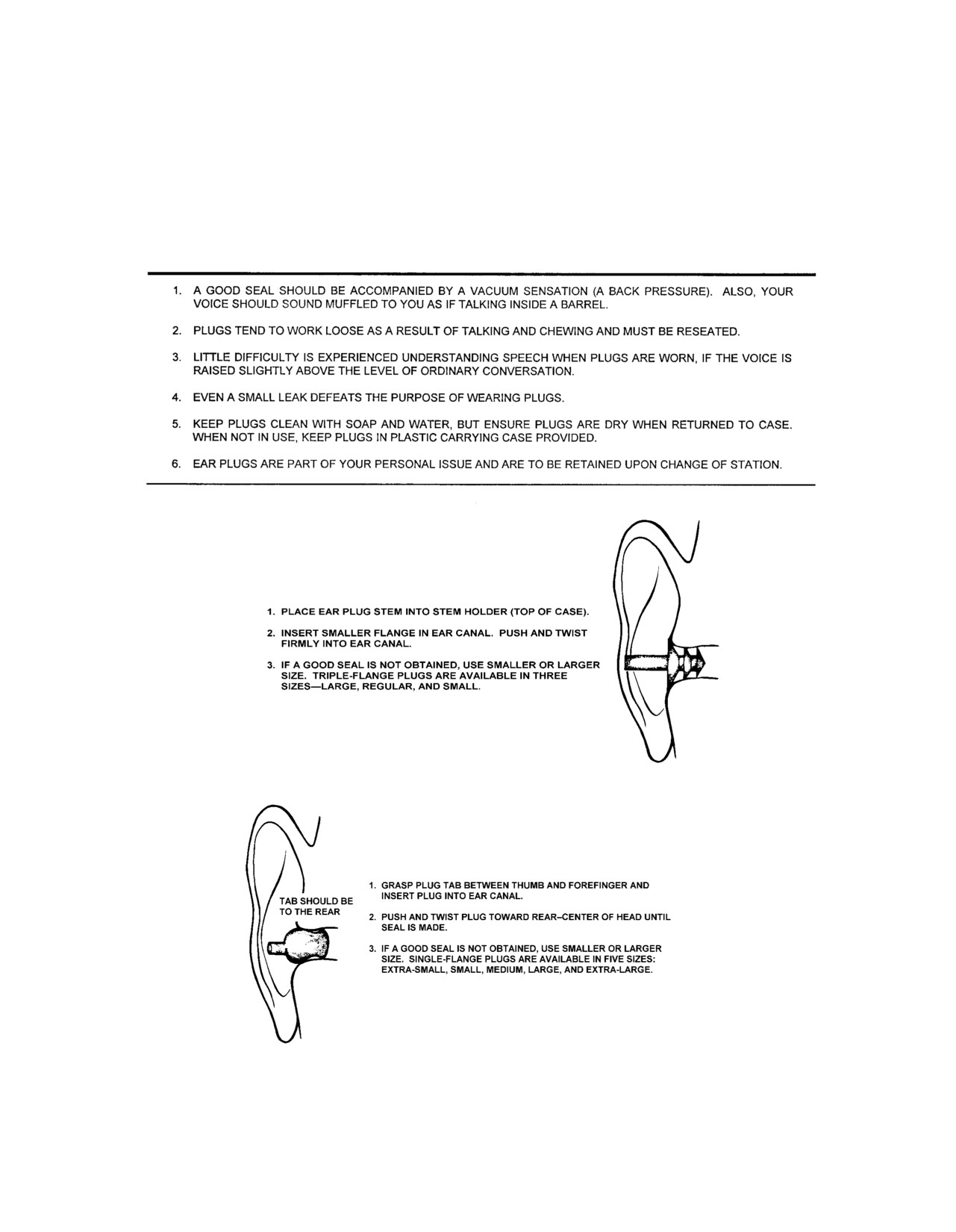
FM 4-25.12
Table 2-8. General Information on Using Earplugs
Figure 2-5. Insert triple-flange earplugs.
Figure 2-6. Inserting single-flange earplugs.
2-71
FM 4-25.12
Figure 2-7. Use of earmuffs.
Figure 2-8. Earplugs and carrying case.
2-72