FM 3-11.34 MULTISERVICE PROCEDURES FOR NUCLEAR, BIOLOGICAL, AND CHEMICAL (NBC) DEFENSE OF THEATER FIXED SITES, PORTS, AND AIRFIELDS (SEPTEMBER 2000) - page 5

Appendix I, Annex 1
Low-Level Chemical Agent Detectors
1.
Low-Level Chemical Agent Detectors
Low-level chemical agent detectors are those detection devices that can provide
detection capability and alarm for concentrations below the detection thresholds of
currently fielded detectors used by most DOD units and organizations. Current detection
capabilities include 0.003mg/m3 for mustard, 0.0001mg/m3 for GA/GB, and 0.00001mg/m3
for VX. Examples include bubblers, DAAMS, ACAMS, and real-time monitor (RTM).
Table I-1-1 provides available detectors and their corresponding sensitivities and response
times.
2.
Low-Level Chemical Agent Alarms
Low-level chemical agent alarms are devices used in conjunction with a low-level
monitor or detector, which produce audible sounds when a predetermined level of detection
below the AEL is obtained. Examples include ACAMS, MINICAMS, and RTAP. Table I-1-
1 provides available detectors and their corresponding sensitivities and response times.
These detectors/alarms are used primarily at USA chemical depots and activities.
Remember that AEL is based on 8-hour TWA; therefore, sensitivity levels and response
times shown allow alarms to respond before the AEL is reached.
Table I-1-1. Low-Level Chemical Agent Detectors, Sensitivities, and Response Times
Detector
Response
Agent Sensitivities (mg/m3)
Type
Time
L
H
GA
GB
GD
VX
2-4 hrs
0.005
0.003
0.0001
0.0001
0.00003
0.00001
Bubbler
8 hrs
0.003
DAAMS
1 hr
N/A
0.003
0.0001
0.0001
0.00003
0.00001
ACAMS*
3-5 min
N/A
0.003
0.0001
0.00001
RTM
8-12 min
N/A
N/A
0.0001
0.00001
MINICAMS*
< 15 min
N/A
0.003
0.0001
0.00001
RTAP*
< 15 min
N/A
0.003
0.0001
0.00003
0.00001
NOTES:
Information from DA PAM 385-61.
*Detectors have alarm capability.
I-1-1
Appendix J
NBC PROTECTION OPTIONS
1.
NBC Protection
There are two components of NBC protection, individual and collective. NBC
protection is needed when the chance of contamination from NBC weapons is anticipated
or unavoidable. Fixed site commanders must ensure their personnel have adequate
protection against NBC hazards and the means to sustain continuous operations
throughout the hazard’s duration.
a.
Individual NBC Protection. Individual protective measures are taken by
personnel to survive and continue the mission with a minimal loss in efficiency. At a
minimum, personnel at fixed sites must have IPE against NBC hazards. This individual
protection consists of protective mask, suit, gloves, and boots. Individual protection levels
are referred to as MOPP. There are various levels of MOPP adopted by the armed forces.
These levels are designed to allow commanders to increase or decrease the level of
protection rapidly without providing long explanations. A commander determines the
initial level of MOPP based on MOPP analysis, which finds the balance between reducing
the risk of casualties and accomplishing the mission. The level is adjusted as NBC risks
change. Remember, degradation in efficiency will occur for personnel placed in heightened
individual protection for extended periods. Although IPE provides for survival, both
individual and collective protection are necessary to maintain continuous operations.
In many cases, fixed site mission support functions may not allow the benefit of
working inside a TFA. Basic IPE provides the required protection but produces significant
performance degradation. Additionally, certain work activity places the integrity of the
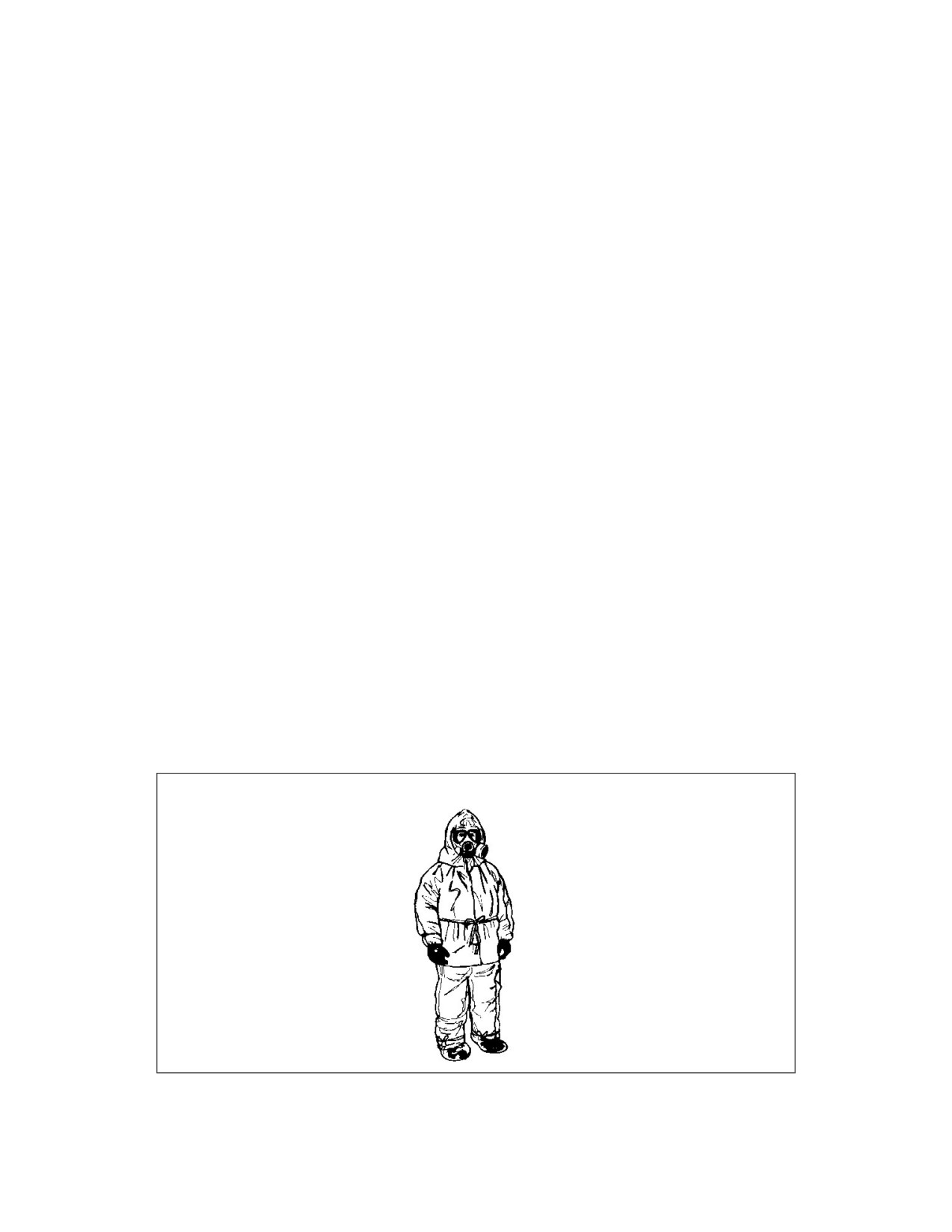
protective overgarment at risk. The SCALP shown in Figure J-1 provides an impermeable
disposable cover to protect (less respiratory tract and eye protection) and enhance the
protective capabilities of IPE.
•
LIGHTWEIGHT,
•
PRIMARY USERS
IMPERMEABLE SUIT
•
PERSONNEL IN
•
WORN OVER THE
COLLECTIVE
CP OVERGARMENT
PROTECTION (FOR
PERSONNEL
•
PROTECTS CP
EMERGING FOR
OVERGARMENT FROM
SHORT DURATIONS
GROSS LIQUID
[1 HOUR OR LESS]
CONTAMINATION
LESSENS REENTRY
TIME)
•
LIQUID AGENT
•
DECONTAMINATI
•
POL AND
ON PERSONNEL
DECONTAMINANTS
•
INEXPENSIVE
•
WATER
AND DISPOSABLE
Figure J-1. Suit, Contamination Avoidance and Liquid Protective
J-1
Selected personnel performing hazardous duties or requiring long hours in a contaminated
environment can use special encapsulating suits where no collective protection exists for
rest and relief (for example, heavy maintenance bays). This special suit is connectable to
portable cooling stations, is operable without the protective mask, and is a system with
very high protection factors for extremely hazardous conditions. For more details on
MOPP and IPE, see corresponding service doctrine and regulations.
b.
Collective Protection. Collective protection is an important aspect of fixed
site NBC defense. Ideally, it provides a contamination-free environment for personnel,
allowing relief from continuous wear of MOPP equipment. The basic concept applied for
collective protection is overpressure and filtration. By filtering incoming air and
maintaining higher internal air pressure than external pressure, the contaminated
external air is prevented from infiltrating the shelter and results in a TFA for work and
relief. The human factor is the most variable input of the collective protection equation
due to potential contamination inside the shelter as a result of poor entry procedures.
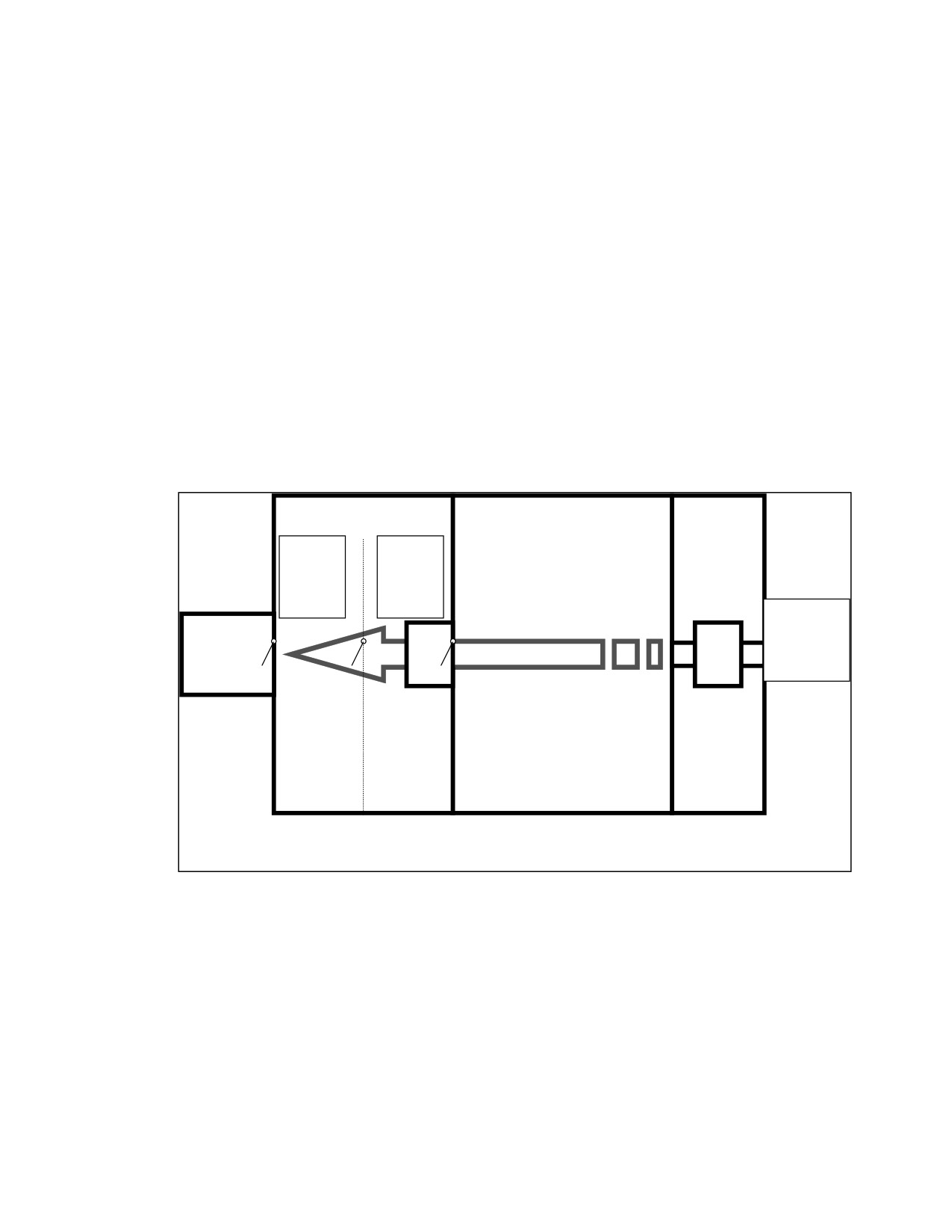
Figure J-2 shows the basic areas required to ensure the TFA remains safe for its
occupants.
Contamination Control
Toxic Free Area
Optional
Area (CCA)
Mechanical
Liquid
Vapor
(TFA)
Room
Hazard
Hazard
Area
Area
(LHA)
(VHA)
Blast
Blast
Protected
Protected
Air-
Filter
Air
Air Flow
Main
Lock
Unit
Inlet
Entrance
General Layout for an NBC Shelter
Figure J-2. Basic Shelter Design
Collective protection supports three primary areas that quickly erode in an NBC
environment: personnel rest/relief (breaks and sleeping), work relief (C4I, maintenance,
supply, medical treatment, etc.), and protection of logistics storage areas (for example, war
and theater reserve materiel storage sites). Based on different mission requirements, each
fixed site requires customized collective protection. For example, personnel perform C4I
J-2
and light maintenance operations more efficiently in some form of collective protection
than when encumbered by high MOPP levels and IPE. Because of the large machinery and
frequent need to breach the building’s air integrity, personnel performing heavy
maintenance and supply operations may have to endure IPE and use collective protection
for rest and relief. Fixed sites can use a combination of permanent, mobile, or temporary
collective protection shelters. Subsequent discussion addresses permanent modifications to
existing structures and expedient/temporary modifications to provide collective protection.
Refer to service-specific technical manuals and regulations for details on integrated
vehicular collective protection systems.
c.
Training. Fixed site personnel must demonstrate proficiency in all individual
and collective protection measures and rehearse before, during, and after NBC attack
actions. Commanders with a predominantly civilian work force may encounter extensive
training program requirements in this area. Frequent drills conducted during different
shifts and during shift changes help prepare the fixed site to minimize the potential
impacts of NBC weapons or TIM on fixed site operations.
2.
NBC Collective Protection
The selection and application of NBC collective protection techniques can be classified
into the following four categories:
a.
Class I: full integration. Permanent modifications are made to the
building(s), and NBC filter units are fully integrated with existing heating, ventilating, and
air conditioning (HVAC) system(s). Dampers controlling ventilation openings
automatically actuate when filter units turn on. There are permanent accommodations for
a CCA.
b.
Class II: partial integration. Permanent modifications and sealing measures
are made to the building or a portion of it, and partial integration of HVAC filter units or
alternate collective protection systems allows heating/cooling. Manual dampers control
outside air and exhaust. The CCA may be permanent or temporary (e.g., a tent).
c.
Class III: expedient. Selected portions of the building are sealed by
temporary measures such as plastic sheeting and tape. Transportable filter units are
temporarily mounted to the building. Heating/cooling systems may or may not be
employed. A temporary CCA is established.
d.
Class IV: secondary enclosure. The building is not tight enough to
economically maintain pressurization, but it is suitable for using portable internal
enclosures or liner systems such as M28 or M20 collective protection equipment. The
system allows use of the existing HVAC or alternate system. Examples include
warehouses, hangers, and deployable medical-systems-equipped hospitals and
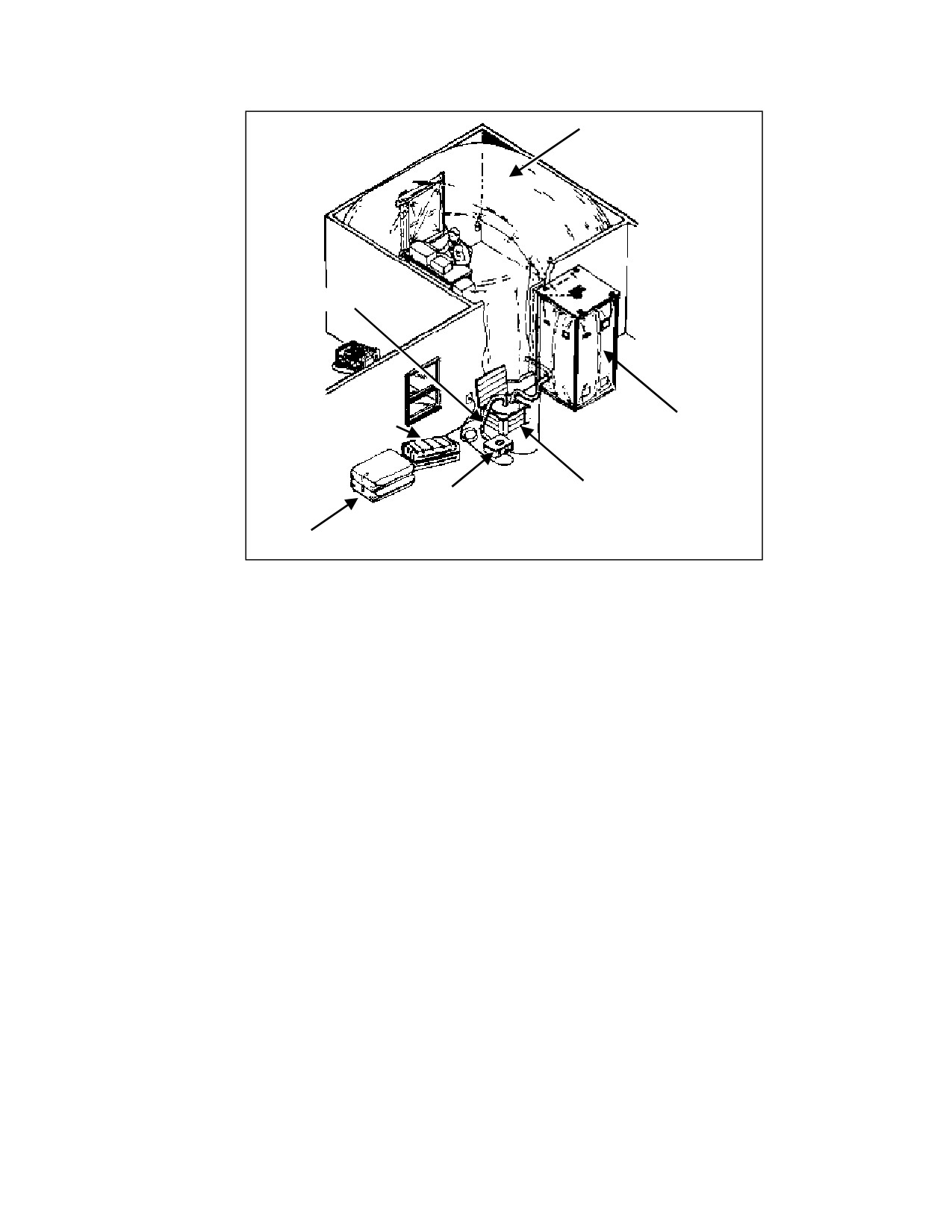
maintenance bays. Figure J-3 shows the M20 SCPE used to provide a TFA for a command
post.
J-3
ROOM LINER
AIR DUCT
PROTECTIVE
SUPPORT KIT
ENTRANCE
FILTER
BLOWER
CANISTER
LINER
HERMETICALLY
CONTAINER
SEALED
Figure J-3. M20 SCPE
3.
Considerations for Applying Collective Protection to Existing Buildings
The following considerations help determine suitability or choice of collective
protection applied. For more detail on specific engineering and equipment specifications,
contact the Joint Service Collective Protection Assessment Team through the Edgewood
Research, Development, and Engineering Center (ERDEC); the Army Corps of Engineers,
Omaha; or Pacific Air Forces.
a.
Tightness of Selected Building. Building tightness (ability to maintain
pressure) can vary greatly with the condition of the building and its hidden defects such as
unsealed construction openings hidden by drop ceilings or false walls. Fan-pressurization
(blower door) testing is the most common technique used for measuring tightness. There is
no specific level of leakage that disqualifies a building from collective protection
modifications; however, “tighter is better” due to air filtration unit costs and potential
heating/cooling costs. The average expected leakage reduction from weatherizing measures
is about 25 percent.
b.
Methods of Tightening the Building. Each time a collectively protected
building is pressurized, its protection envelope must be tightened by closing all intentional
openings (e.g., outside air vents, exhaust vents, windows, and doors). Other openings (e.g.,
cracks, crevices, joints, and penetrations for pipes and cables) must be closed to the
maximum extent feasible using permanent means such as caulking and weather stripping.
J-4
c.
Integration of Filter Units with HVAC System. HVAC systems in most
buildings are ill-suited for the integration of positive pressure collective protection. The
least costly approach is often to shut off the HVAC system and block the supply and return
vents to the protected envelope when the system is pressurized. Such measures may
require alternate heating or cooling methods. Short of major modifications to the HVAC
system, the user may have to accept uncomfortable conditions in winter and summer.
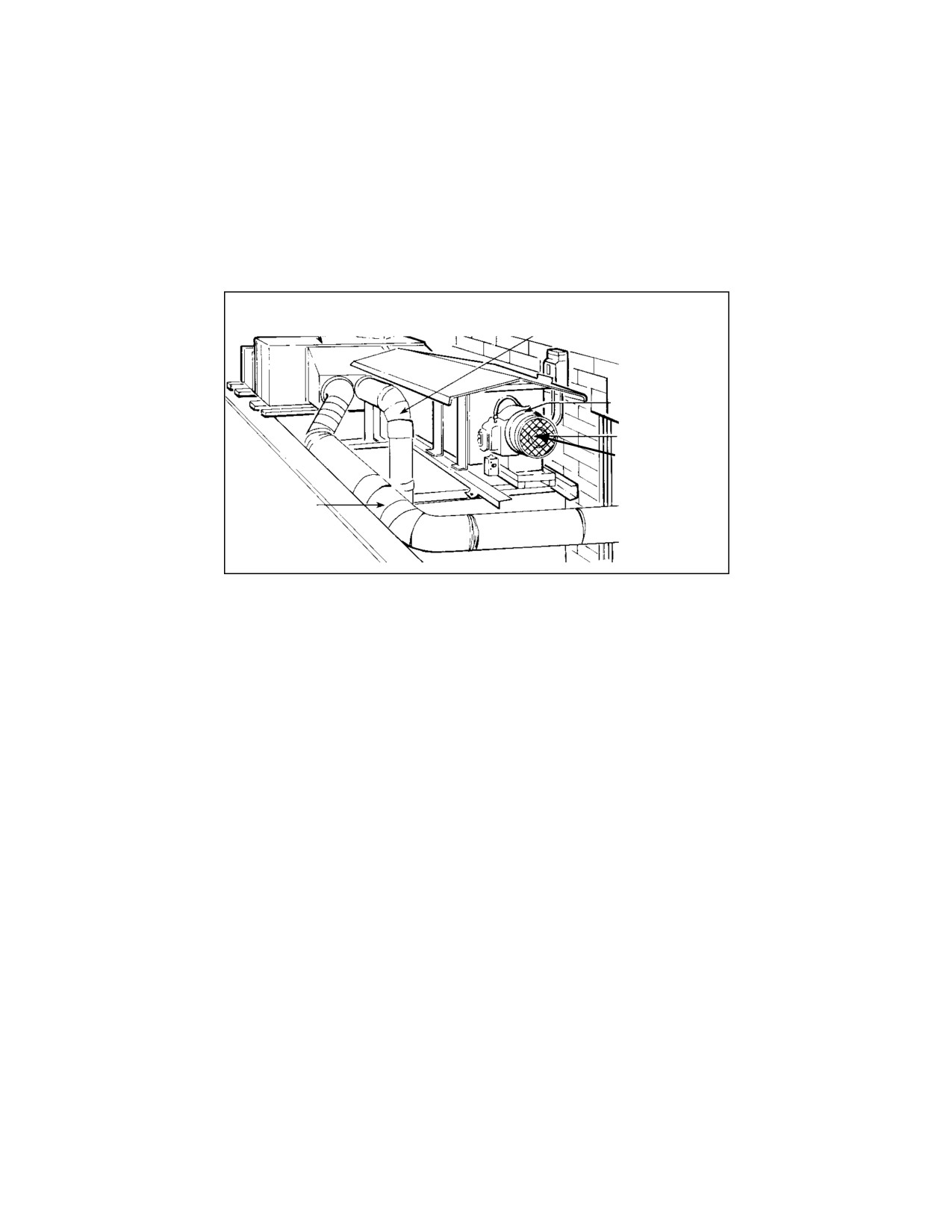
Figure J-4 shows a modification of an existing environmental control unit with a gas
particulate filter.
Environmental
Control Unit
Air Return
Gas Particulate
Filter Unit
Unfiltered
Air Input
Filtered
Air
Output
Figure J-4. Modified Environmental Control Unit
d.
Overpressure Levels. The minimum overpressure recommended for
stationary collective protection shelters is 0.1 inches water gage (iwg) or 25 Pascal, based
on preventing air infiltration at ambient wind speeds greater than 15 mph. At 15 mph, the
wind reduces the concentration and dosage of mustard evaporating from the ground by
about 98 percent, compared with calm conditions. When preparing buildings and
conducting test measurements, it is advisable to provide for a higher pressurization (0.2
iwg) to ensure 0.1 iwg is still achieved over time, as sealing measures and building
structures may deteriorate.
NOTE: When overpressure is applied to a hospital, the operating rooms must
have overpressure at least 0.2 iwg higher than the rest of the hospital; this
provides increased positive pressure in the area and prevents infectious
organisms from being introduced into the operating room suites from the rest of
the hospital.
e.
Filter Units. The Joint Collective Protection Assessment Team evaluations and
methodologies established in 1997 recommend the Fan Filter Assembly (FFA) 580-filter
unit for collectively protecting buildings. This 600 cubic feet per meter (cfm) filter unit is
also integrated into the Survivable Collective Protection Shelter-2 (SCPS-2) shown later in
Figure J-9. The FFA 580 employs the Modular Collective Protection Equipment Filter Set,
which is the most widely used filter set among the USA, USN, and USAF. Where the
building would require more than 10 FFA 580 units, employ the M49 Filter Unit or a large-
capacity, commercial filter unit built to military specifications.
J-5
f.
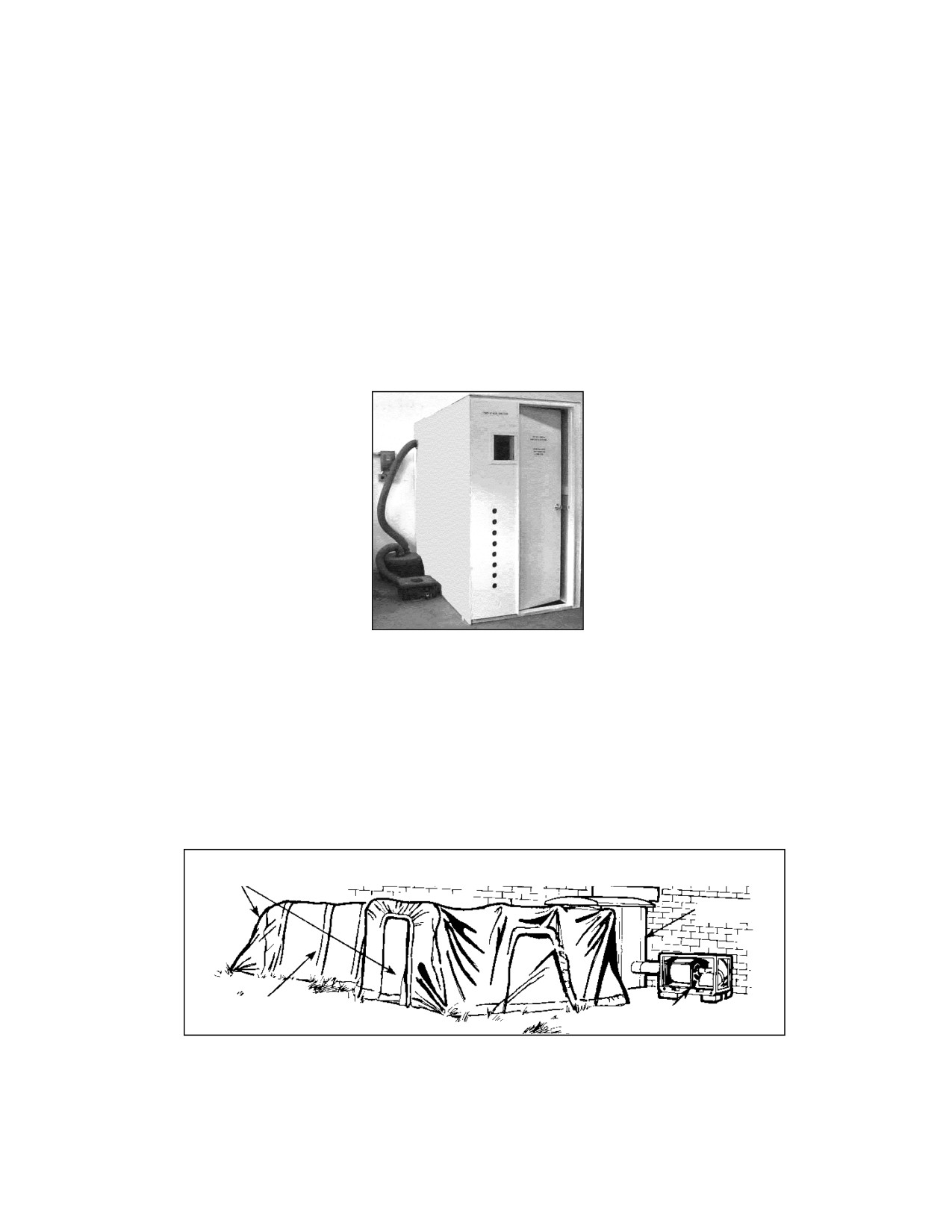
Airlock(s). An airlock is a transition enclosure—a protected entryway in which
people wait for a period of 3-5 minutes before entering or exiting the TFA. The main
function of the airlock is to prevent direct vapor transport into the TFA. During the airlock
purging period, the flow of filtered air through the airlock flushes out airborne
contaminants introduced with the opening of the outer door. The airlock also ensures that
TFA overpressure is not compromised during entry or exit. For filtered, pressurized air,
the airlock may rely on TFA airflow and pressurization that creates a variable demand on
the TFA pressurization. Using a dedicated filter unit for the airlock reduces the variable
demand on the TFA and helps maintain TFA integrity. Figure J-5 shows a locally
fabricated airlock with a dedicated filter unit from the M20/M28 CPE set as constructed by
ERDEC.
Figure J-5. Fabricated Airlock with Filter-Blower Unit
g.
Contamination Control Area. The CCA and airlock allow people to transition
from individual protection to collective protection without introducing contaminants into
the TFA. Personnel remove contaminated outer garments in the CCA before entering the
airlock. Permanent or interior CCAs have a filtered airflow rate sufficient to suppress
vapor concentrations from contaminated garments worn into the CCA. Open-air CCAs
have high air flow rates, but the air may not be clean, filtered air. Figure J-6 shows a tent
used as a CCA and attached to the airlock.
Entrance/Exit
Airlock
CCA
Figure J-6. Tent Used as CCA
J-6
Vapor sorption or the adherence of agent vapors to surrounding materials/objects is
the primary problem in most CCA. Recent studies indicate CCA procedures require
improvements in four areas: integration of chemical detectors, CCA decontaminant
requirements, use of exchange masks, and reuse of protective garments.
(1)
Integration of chemical detectors. The agent vapors in the open-air
CCA can actually adhere to the individual after doffing the overgarment and before entry
into the airlock. There are four options for detecting and dealing with this problem:
(a) Halt entry processing if vapor hazards are detected outside the
shelter.
(b) Use a CAM to screen/halt entry candidates with desorbing vapor.
(c)
Require removal of all garments if CAM or exterior monitors detect
vapor and issue new or temporary garments inside the TFA.
(d) Combine showers with the previous option.
NOTE: Using M8 paper to check for contamination prior to shelter entry is
undesirable as a preentry screening tool unless driven by operational
requirements.
(2)
CCA decontaminant requirements. Recent reports indicate unless
under extreme liquid contamination conditions (10 g/m2), use of decontaminants/sorbents
(e.g., diatomaceous earth or bleach) inside the CCA have little effect on reducing the
desorption of vapor inside the TFA.
(3)
Use of exchange masks. The requirement to maintain eye/respiratory
protection throughout the transition process from individual to collective protection and to
have masks inside the TFA is common to all services. Due to logistics constraints, the USA
procedures do not include an exchange mask, but rather the partial decon and bagging of
the individual mask remains with the owner. Other options being considered include
disposable eye respiratory protection and neck-dam emergency escape masks. Units with
the M40-series protective mask might consider modifying doff procedures to include
disposal of the quick-doff hood and lens outserts, which would be replaced inside the TFA.
(4)
Reuse of protective garments. Protective overgarments are not issued
in quantities allowing discard each time a person enters a collective protection shelter.
The SCALP shown in Figure J-1 provides a low cost option that would allow discard of the
outer SCALP while avoiding the discard or reuse of a contaminated protective
overgarment.
h. Shelter operating instructions. Ideally, a collective protection system
requires only a single power switch to activate the entire system. Except for closing doors
and windows, Class I systems function this way. Other systems rely on operator action to
close intentional openings not always obvious to the operator. For example, a Class III
modified dormitory may require covering over 100 toilet fan grilles. Written operating
J-7
instructions are therefore essential and should take two forms: a checklist permanently
mounted by the control panel and a set of detailed, written instructions for operations,
troubleshooting, and maintenance. Figure J-7 provides an example instruction card for
Class II or III operations.
Chapter I Class II or III Instructions
Turn on the NBC filter unit(s).
Close and lock all windows and exterior doors.
Turn off and close normal outside air fans and dampers.
Turn off and close all exhaust fans and dampers.
Mount protective window covers.
Turn off and cover window air conditioners.
Seal all entries except airlock with duct tape.
Turn off heating/cooling system.
Close covers for supply diffusers and return registers (only for
buildings where HVAC can not be used with NBC system).
Install airlock and turn on filter unit.
Place CCA decontaminant supplies at main entrance.
The designated shelter manager for this building is:
________________________ ; phone ________________.
Detailed instructions for this collective protection system are
located at:______________________________.
Figure J-7. Example Shelter Checklist
i.
Shelter preparation time, manpower, and training. For large buildings,
transition to collective protection may require substantial time and manpower. These
factors become considerations for deciding which buildings to modify as Class II and III
shelters. Training and manning SMTs require a focused and well-supervised effort to
ensure personnel execute shelter management tasks to standard and without delay. To
avoid personnel turnover problems, consider assigning SMTs by position and conducting
frequent training/drills. Ensure shelter management candidates will not be diverted to
other missions when the NBC threat requires shelter operations. Additionally, plan
shelter management assignments to provide 24-hour manning, and anticipate additional
support requirements due to changes in shelter occupant loads.
j.
Other shelter considerations. In Class I, II, and III shelters, mission
equipment, toilet facilities, drinking water, and stored supplies are accessible without
requiring additional manpower and preparation time; all of which are planning factors
required for Class IV shelters. Table J-1 provides a summarized listing of the major design
elements and considerations for NBC shelters.
J-8

Table J-1. NBC Shelter Elements
MAJOR DESIGN ELEMENTS AND REQUIREMENTS FOR NBC SHELTERS
ELEMENT
REQUIREMENT
Air Filtration
Integration of gas/particulate filter unit w/existing HVAC.
Ventilation
10 cfm of filter air/occupant.
Positive Pressure
Minimum 0.2 iwg w/alarm to warn of low over-pressure.
Area w/overhead cover for removal, storage, decontamination and/or disposal of IPE.
Entry Facility (CCA)
Decontaminants for mask, hood, and gloves. Instructions for entry procedures.
Airlock entry (sealed, pressurized, filtered ventilation) is preferred but not required.
One between the CCA and the TFA with purging flow of filtered air (multiple airlocks
for high entry rates). Timer to indicate completion of purge cycle, and pressure
Airlocks
gauges to indicate proper pressure.
30-35 ft2/person. Showers near airlock are desirable. Recirculation filters are
TFA
desirable.
Detector for monitoring entries and TFA air. A MICAD-linked detector network is
Detection
desirable.
Communication
Intercom or phone between TFA and CCA. Communication linkage w/C4I networks.
Blast Protection
Essential for filter inlets and TFA windows. Blast doors at main entrance.
Toilet Facilities
1/20 personnel.
IPE Storage
1 ft2/person.
Potable Water
100 liters/person.
Electrical Power
Backup generator w/reserve fuel.
Emergency Masks
Rapid access to personal mask or transient mask for emergency exits.
Food Storage
Reserve Meals Ready to Eat (MRE)/person.
4.
Expedient NBC Protection
Expedient protection includes steps taken to provide immediate protection of
personnel/materiel and to enhance protection of mission-essential facilities in the event of
an NBC attack or TIM incident. These procedures are often included in emergency action
discussions of “protection in place.” The following discussion focuses on four basic
concepts.
a.
Sealing Air Infiltration Points. Sealing the inside of a building/room must be
done prior to the attack or incident. Particular care must be taken to ensure that all
openings that can possibly be sealed are ready for immediate sealing at first warning.
Precut sealing materials for doors and position materials so that final sealing requires
minimum response time. Once an attack occurs, this door is no longer usable; label the
door as being sealed. Based on weather, preseal windows and other openings. Seal all
HVAC vents and ducts leading to the inside/outside. Materials should be precut and
positioned, ready for use. Some openings lend themselves to a sealing/packaging material
generically referred to as “Foam-In-Place” (Figure J-8.); packaging systems are available
through local procurement.
J-9
“Foam-In-Place” is a generic term for a commercially available packaging/sealing material that
expands when sprayed onto a surface/into an enclosed area (such as window openings,
spaces between wall studs etc.). The system consists of 120- to 300-gal drums (two containers
of equal size are required), two hoses, a gun assembly, and an oxygen bottle. The foam
consists of two chemicals that are added to the drums and are mixed in the gun assembly as
the mixture is sprayed through the gun.
Figure J-8. Foam-In-Place
CAUTION: Since air circulation and ventilation are restricted using these
techniques, execution relies on early warning and rapid action to complete
“sealing” and dissipation of the vapor hazard and/or personnel evacuation.
b.
Using NBC or Expedient Covers. Keep supplies indoors if possible, but
always keep them covered whether stored indoors or outdoors. Uncover supplies only long
enough to retrieve needed items. When practicable, cover all equipment. When not in use,
park equipment under overhead cover. See Appendix B for protective covers suitable for
equipment. If insufficient covers are available for the amount of equipment/supplies to be
covered, prioritize by need and availability to determine which supplies and equipment will
be covered.
c.
Using NBC or Expedient Shelters. Designate and prepare shelters prior to
an attack/incident and routinely use them during exercises. These shelters may include
approved NBC shelters from various countries or expedient measures. In addition, there
are currently several mobile, transportable shelter systems under evaluation and/or
procurement by the various services. These systems are self-contained and require
minimal set-up time. Examples of this type of equipment are the CBPS, the CP
DEPMEDS, the Chemically Hardened Air-Transportable Hospital, and the Transportable
Collective Protection System, as described in Appendix B.
d.
Using Multilevel Buildings (Vertical Separation). Chemical agents tend to
be heavier than air (blood agents excluded). Prepare alternate C2 and medical facilities to
use floors above ground level to avoid the full impact of chemical agents. Prepare and use
sealing techniques as well.
NOTE: These procedures are offered primarily for hard-to-protect facilities and
unprotected HN facilities/residences. DOD agencies should strive to provide
approved NBC collective protection at designated critical facilities.
Train all personnel where, when, and how to protect themselves and equipment
under NBC conditions. Follow up with exercises and drills to reinforce and sustain
training proficiency. Postattack actions should also be addressed during attack/incident
exercises. Establish and enforce protective postures for required civilians, as well as
military forces. Establish and maintain protective equipment serviceability programs IAW
specific items’ technical references. Table J-2 is designed to assist the commander in
providing protection-in-place.
J-10

Table J-2. Protection-In-Place Options
PROTECTION-IN-PLACE OPTIONS
For This
Use These Items:
With This Guidance:
Function:
•
Place plastic around inside of windows and doors.
•
Close holes and windows with plywood; seal using items
•
Plastic Canvas
shown and duct tape.
•
Plastic Sheeting
•
Spray foam into doorways and windows, overlapping all
•
NBC-PC
Sealing Air
sills and openings. Foam spray will not work well on
•
Foam-In-Place
Infiltration
overhead horizontal surfaces.
•
Gasket forming materials
Points
•
Spray foam into all air intakes and exhausts.
(silicon, rubber gaskets, foam
•
Cut and fit plastic as necessary; use duct tape to hold in
sealing materials)
place.
CAUTION: Turn off HVAC systems before sealing air
intakes/exhausts.
•
Cut plastic sheet, plastic canvas, and NBC-PC 1.5 times
•
Plastic Sheet
taller and wider than the individual using it. Use as cover
•
Plastic Canvas
to provide protection-in-place for personnel caught in the
•
NBC-PC
open.
•
Military/Civilian Wet Weather
Individual
•
Make rain suits/ponchos part of daily work uniform, use in
Gear/Rain Suits (Rubber)
Covers
conjunction with plastic sheet, plastic canvas, and NBC-
•
Ponchos
PC.
•
Modular Chemically Hardened
•
Pre-position MCHT and TEMPER throughout fixed sites,
Tent (MCHT)
concentrate on areas with few approved shelters, but high
•
TEMPER
personnel concentrations.
•
Plastic Sheeting
•
Plastic Coated Canvas
•
Cut and fit as necessary, use duct tape to hold in place.
Materiel
•
NBC-PC
•
Place covered material under shade systems or shelters
Covers
•
Large Area Shade Systems
for additional protection.
•
Large Area Maintenance Shelter
•
Place CONEX/MILVAN at regular intervals around fixed
sites. Attach plastic sheet/NBC-PC to front of
•
Container Express (CONEX)
CONEX/MILVAN of sufficient size to cover the opening
•
Military-Owned Demountable
and to act as a liquid barrier. Attach weight (piece of
Container (MILVAN)
wood/iron bar, etc) to bottom edge of plastic to hold in
Shelters
•
MCPS
place when being used.
•
Modular General Purpose Tent
•
Erect MCPS/MGPTS at specified intervals (based on
System (MGPTS)
personnel concentrations).
•
Use these measures in conjunction with individual and
materiel covers.
•
Plastic Sheeting
•
Move operations to upper floor/levels.
Vertical
•
Plastic Coated Canvas
•
Block entryways and openings with multiple sheets of
Separation
•
NBC-PC
plastic. Place a plastic sheet at foot of stairs, another
partway up the stairs, a third at the top of the stairs, etc.
CAUTION: The duration of protection using these measures is not quantified and
is provided for emergency situations only. This table does not preclude using
other expedient measures afforded by available materials and common sense.
For example, plan and provide hospital treatment facilities temporary protection by
sealing all windows, doors, and other outside openings with tape and plastic sheeting;
turning off the air conditioners/heaters; and establishing an airlock-type entry/exit. This
procedure can increase time for the hospital staff to provide the patients with individual
protection. They require patient protective wraps or MOPP for protection or during
evacuation to another medical treatment facility. The hospital gains extended protection
by applying the above procedures, plus adding air handlers with CB filters. The air
handlers can provide overpressure, thus preventing CB agent infiltration into the facility.
Training, resourcing, and executing plans to this level of detail requires active, aggressive
planning and implementation.
J-11
5.
Collective Protection Examples
The following discussion provides graphic examples of various forms/modifications for
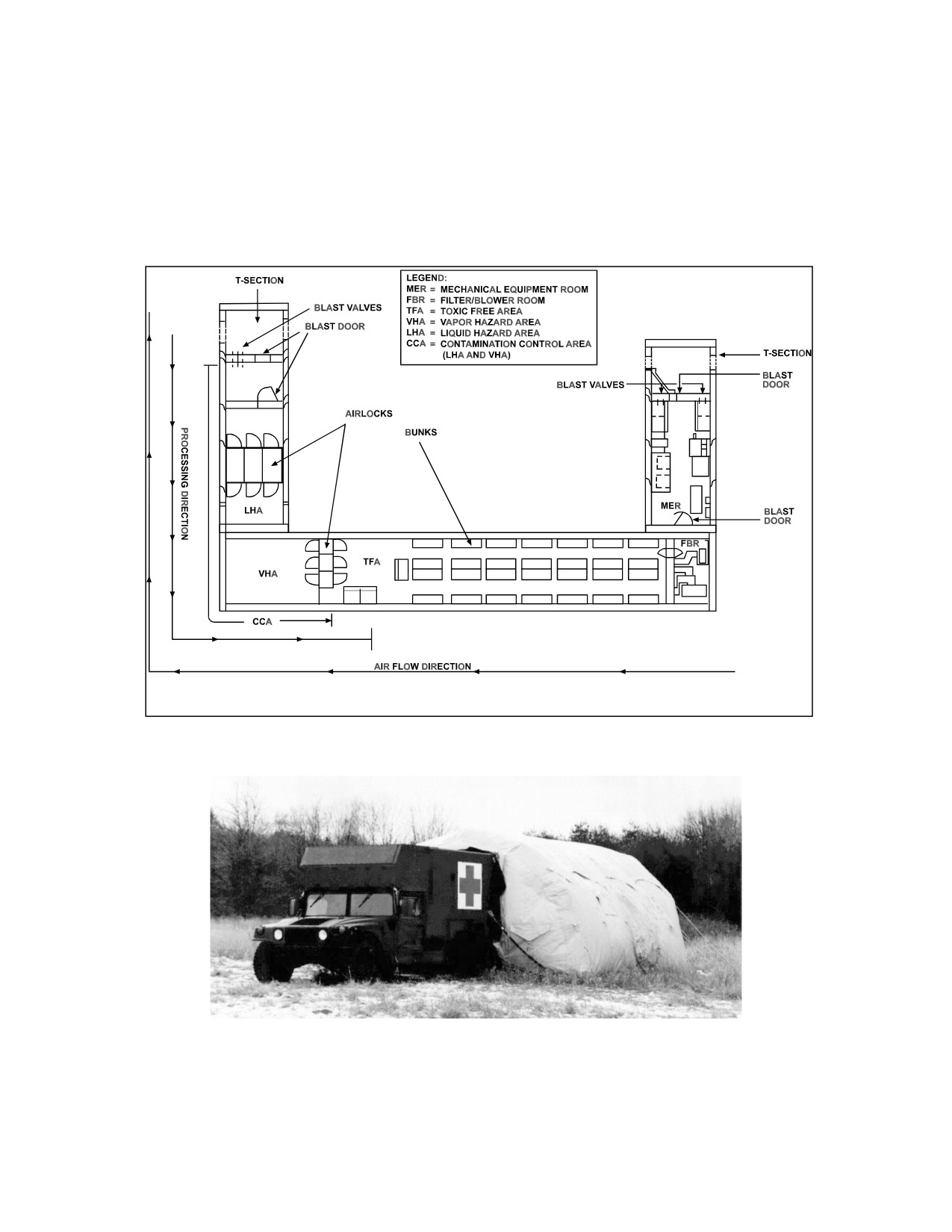
collective protection. Figure J-9 depicts the SCPS-2, and although intended as a
permanent shelter, several were moved from Germany during recent DOD realignments.
Figure J-10 shows the CBPS used for medical support in an NBC environment.
NOTE: This typical Survivable Collective Protection System-2 (SCPS-2) is easily turned into a Command and Control (C2) Center by
removing the bunks and installing equipment necessary for C2 operations (e.g., desks, chairs, maps, communication equipment).
Figure J-9. Survivable Collective Protection System-2 (SCPS-2)
Figure J-10. Chemical Biological Protective Shelter (CBPS)
J-12
REFERENCES
NOTE: Since inception of this doctrinal revision process, joint and service
doctrinal literature numbering hierarchies have undergone major revisions. If
searching for a listed reference, try searching by the document’s title without the
numerical designation if unsuccessful using only the numerical designation.
Department of Defense
DOD Directive 32025.14, Protection and Evacuation of US Citizens and Certain Designated
Aliens in Danger Areas Abroad, 5 Nov 90 w/change 2, 13 Jul 92.
Joint
Joint Pub 0-2, Unified Action Armed Forces (UNAAF), 24 Feb 95.
Joint Pub 1-01, Joint Publication System: Joint Doctrine and Joint Tactics, Techniques,
and Procedures Development Program, 14 Sep 93.
Joint Pub 1-02, DOD Dictionary of Military and Associated Terms, as amended through
6 Apr 99.
Joint Pub 2-0, Doctrine for Intelligence Support to Joint Operations, 5 May 95.
Joint Pub 2-01.2, Joint Doctrine and Tactics, Techniques, and Procedures for
Counterintelligence Support to Operations, 5 Apr 94.
Joint Pub 2-01.3, JTTP for Joint Intelligence Preparation of the Battlespace (JIPB) (Second
Draft), 4 Feb 98.
Joint Pub 3-0, Doctrine for Joint Operations, (First Draft), 30 Mar 99.
Joint Pub 3-02, Joint Doctrine for Amphibious Operations, 8 Oct 92.
Joint Pub 3-07, Joint Doctrine for Military Operations Other Than War, 16 Jun 95.
Joint Pub 3-07.2, JTTP for Antiterrorism, 17 Mar 98.
Joint Pub 3-07.6, (Preliminary Draft) JTTP for Foreign Humanitarian Assistance
Operations, 16 Jun 97.
Joint Pub 3-07.7, (Preliminary Draft) JTTP for Domestic Support Operations, 20 Aug 97.
Joint Pub 3-09, Doctrine for Joint Fire Support, 12 May 98.
References-1
Joint Pub 3-10, Doctrine for Joint Rear Area Operations, 28 May 96.
Joint Pub 3-10.1, JTTP for Base Defense, 23 Jul 96.
Joint Pub 3-11, Joint Doctrine for Nuclear, Biological, and Chemical Defense, 10 Jul 95.
Joint Pub 3-13.1, Joint Doctrine for Command and Control Warfare (C2W), 7 Feb 96.
Joint Pub 3-33, (Final Coordination Draft) Joint Force Capabilities, 5 Aug 98.
Joint Pub 3-52, Doctrine for Joint Airspace Control in the Combat Zone, 22 Jul 95.
Joint Pub 3-53, Doctrine for Joint Psychological Operations, 10 Jul 96.
Joint Pub 3-54, Joint Doctrine for Operations Security, 24 Jan 97.
Joint Pub 3-57, Doctrine for Joint Civil Affairs, 21 Jun 95.
Joint Pub 3-58, Joint Doctrine for Military Deception, 31 May 96.
Joint Pub 4-0, (Preliminary Draft), Doctrine for Logistic Support of Joint Operations, 14
Dec 98.
Joint Pub 4-01.3, JTTP for Movement Control, 21 Jun 96.
Joint Pub 4-02, (Second Draft) Doctrine for Health Service Support in Joint Operations,
30 Mar 99.
Joint Pub 4-04, (First Draft) Joint Doctrine for Civil Engineering Support, 4 Feb 99.
Joint Pub 4-06, JTTP For Mortuary Affairs in Joint Operations, 28 Aug 96.
Joint Pub 6-0, Doctrine for C4 Systems Support to Joint Operations, 30 May 95.
Multi-Service
AFJMAN 24-204, Preparing Hazardous Materials For Military Air Shipments, 1 Mar 97.
FM 3-3/MCWP 3-37.2A, Chemical and Biological Contamination Avoidance, 16 Nov 92.
FM 3-3-1/MCWP 3-37.2B, Nuclear Contamination Avoidance, 9 Sep 94.
FM 3-4/FMFM 11-9, NBC Protection, 29 May 92.
FM 3-5/MCWP 3-37.3, NBC Decontamination, 17 Nov 93.
References-2
FM 3-6/FMFM 7-11-H/AFM 105-7, Field Behavior of NBC Agents (Including Smoke and
Incendiaries), 3 Nov 86.
FM 3-7, NBC Field Handbook, 29 Sep 94.
FM 8-284 (NAVMED) P-5042/AFMAN(I) 44-156/MCRP 4-11.1C, Treatment of Biological
Warfare Agent Casualties, 17 Jul 00.
FM 8-33/NAVMED P-5038, Control of Communicable Diseases Manual (16th Edition),
9 Apr 96.
FM 3-9/NAVFAC P-467/AFR 355-7, Potential Military Chemical/Biological Agents and
Compounds, 12 Nov 90.
FM 3-14, NBC Vulnerability Analysis, 12 Nov 97.
FM 8-9/NAVMED P-5059/AFJMAN 44-151, NATO Handbook on the Medical Aspects of
NBC Defensive Operations, 1 Feb 96.
FM 8-10-7, Health Service Support In a Nuclear, Biological, and Chemical Environment,
22 Apr 93 w/change 1, 26 Nov 96.
FM 8-285/NAVMED P-5041/AFJMAN 44-149/FM FM 11-11, Treatment of Chemical Agent
Casualties and Conventional Military Chemical Injuries, 22 Dec 95.
FM 34-81/AFM 105-4, Weather Support for Army Tactical Operations, 1 Aug 89.
FM 100-19/FMFM 7-10, Domestic Support Operations, 1 Jul 93.
FM 101-5-1/MCRP 5-2A, Operational Terms and Graphics, 30 Sep 97.
Army
AR 385-61, The Army Chemical Agent Safety Program, 28 Feb 97.
DA Pamphlet 385-61, Toxic Chemical Agent Safety Standards, 31 Mar 97.
FM 1-111, Aviation Brigades, 27 Oct 97.
FM 3-7, NBC Field Handbook, 29 Sep 94.
FM 3-19, NBC Reconnaissance, 19 Nov 93.
FM 5-116, Engineer Operations: Echelons Above Corps, 9 Feb 99.
FM 8-500, Hazardous Materials Injuries - A Handbook for Pre-Hospital Care (HTA
Edition), 17 Jan97.
References-3
FM
9-6, Munitions Support in Theater of Operations, 20 Mar 98.
FM
9-207, Operation and Maintenance of Ordnance Materiel in Cold Weather, 20 Mar 98.
FM
10-64, Mortuary Affairs Operation, 16 Feb 99.
FM
19-1, Military Police Support for the Air Land Battle, 23 May 88.
FM
21-10, Field Hygiene and Sanitation, 22 Nov 88.
FM
21-11, First Aid For Soldiers, 27 Oct 88 w/change 1, 28 Aug 89 & w/change 2, 4 Dec 91.
FM
33-1, Psychological Operations, 5 May 94.
FM
34-1, Intelligence and Electronic Warfare Operations, 27 Sep 94.
FM
34-37, Echelons Above Corps Intelligence and Electronic Warfare Operations, 15 Jan 91.
FM
34-60, Counterintelligence, 3 Oct 95.
FM
34-130, Intelligence Preparation of the Battlespace, 8 Jul 94.
FM
41-10, Civil Affairs Operations, 11 Jan 93.
FM
55-10, Movement Control in a Theater of Operations, 9 Feb 99.
FM
55-80, Army Container Operations, 13 Aug 97.
FM
63-3, Corps Support Command, 30 Sep 93.
FM
63-4, Combat Service Support Operations: Theater Army Area Command, 24 Sep 84.
FM
100-5, Operations, 14 Jun 93.
FM
100-7, Decisive Force, the Army in Theater, 31 May 95.
FM
100-16, Army Operational Support, 31 May 95.
FM
100-22, Installation Management, 11 Oct 94.
FM
101-5, Staff Organization and Operations, 31 May 97.
FM
5-116, Engineer Operations: Echelons Above Corps, 9 Feb 99.
References-4
Air Force
AFI 10-212, Air Base Operability Program, April 1994.
AFI 32-4001, Disaster Preparedness Planning and Operations, 1 May 98.
AFMAN 32-4004, Emergency Response Operations, 1 Dec 95.
AFMAN 32-4005, Personal Protection and Attack Actions, 1 Mar 99.
AFI 32-4007, Camouflage, Concealment, and Deception, 7 Mar 94.
AFMAN 32-4013, Hazardous Material Emergency Planning and Response Guide, 1 Aug 97.
AFH 32-4014, Volume 1, USAF Operations in a Chemical and Biological (CB) Warfare
Environment, Planning and Analysis, 1 Mar 98.
AFH 32-4014, Volume 2, USAF Operations in a Chemical and Biological (CB) Warfare
Environment, CB Hazards, 1 Dec 97.
AFH 32-4014, Volume 3, USAF Operations in a Chemical and Biological (CB) Warfare
Environment, Defense Equipment, 1 Feb 98.
AFH 32-4014, Volume 4, USAF Ability to Survive and Operate Procedures in a Nuclear,
Biological, and Chemical (NBC) Environment, 1 Mar 98.
AFMAN 32-4017, Civil Engineer Readiness Technician’s Manual for Nuclear, Biological,
and Chemical Defense, 1 Jun 98.
AFPAM 32-4019, Chemical-Biological Warfare Commander’s Guide, 1 Apr 98.
AFD 41-317, Compendium of Aeromedical Evacuation Terminology, 1 Aug 96.
Marine Corps
MCWP 3-41.1, MAGTF Rear Area Security, May 1991.
MCWP 3-1, Ground Combat Operations, April 1995.
MCWP 3-34.1, Employment of Military Police in Combat, February 1992.
MCWP 3-37, MAGTF NBC Defense Operations, 28 Sep 98.
References-5
Navy
NWP 3-20.31, Surface Ship Survivability, May 1997.
NWP 4-02.4 Part A, Deployable Health Service Support Platforms—Fleet Hospitals, August
1996.
OPNAVINST 3400.10 (F), Chemical, Biological and Radiological Defense (CBR) Defense
Requirements Supporting Operational Fleet Readiness, 22 May 98.
OPNAVINST 3440.16 C, Naval Civil Emergency Management Program, 10 Mar 95.
NAVFACINST 3440.17 B, Chemical, Biological, and Radiological Warfare Defense (CBR-
D) Material and Equipment Allowance for Naval Shore Activities 8 May 95.
NATO Standardization Agreements (STANAG) and Publications
STANAG 2002 Edition 8, Warning Signs for the Marking of Contaminated or Dangerous
Land Areas, Complete Equipments and Supplies, 29 Jan 99.
STANAG 2047 Edition 7, Emergency Alarms of Hazards or Attack, 24 Jul 98.
STANAG 2083 Edition 5, Amendment 4, Commander’s Guide on Nuclear Radiation
Exposure of Groups, 24 Jun 94.
STANAG 2103 Edition 7, Amendment 4, Reporting Nuclear Detonations, Radioactive
Fallout, and Biological and Chemical Attacks and Predicting Associated Hazards—ATP-45,
14 Jan 98.
STANAG 2104 Edition 7, Amendment 1, Friendly Nuclear Strikewarn, 28 Jun 95.
STANAG 2111 Edition 4, Target Analysis—Nuclear Weapons, 18 Sep 98.
STANAG 2133 Edition 1, Amendment 5, Vulnerability Assessment of Chemical and
Biological Hazards, 11 Sep 95.
STANAG 2150 Edition 5, NATO Standards of Proficiency for NBC Defense, 13 Jun 97.
STANAG 2352 Edition 4, NBC Equipment Operational Guidelines, 9 Feb 98.
STANAG 2353 Edition 3, Evaluation of NBC Defense Capability, 24 Jun 94.
STANAG 2426 Edition 1, Contamination Control Policy, 2 Aug 95.
STANAG 2451 Edition 2, Doctrine for the NBC Defence of NATO Forces, 23 Oct 98.
STANAG 2500 Edition 4, NATO Handbook on the Medical Aspects of NBC Operations,
2 Nov 97.
References-6
STANAG 2984 Edition 4, Graduated Levels of NBC Threat and Minimum Protection,
24 Jul 95.
STANAG 3946 Edition 1, Amendment 4, Maximum Dosage of Nerve Agent Vapour to the
Eyes Acceptable for Aircrew, 8 Jul 97.
STANAG 4192 Edition 2, Amendment 1, Design Criteria and Construction Parameters for
CCAs Associated with COCs and PBFs on Air Force Installations, 8 Feb 96.
NATO AmedP-6(B), NATO Handbook on Medical Aspects of NBC Defensive Operations,
Jul 94.
Other Sources
29 CFR 1910.119 series (OSHA).
Applying Collective Protection to Existing Buildings at Osan Air Base and Kunsan Air
Base, Korea: A Report of the Joint Service Collective Protection Assessment Team, W. K.
Blewett, et al, 10 January 1998.
Jane’s NBC Protection Equipment, Tenth Edition, 1997-98.
Physiological and Psychological Effects of the NBC (P2NBC2) Environment and Sustained
Operations on Systems in Combat Report, Extended Operations in Chemically
Contaminated Areas, numerous reports, '85-'95.
Inviting Disaster, “How Weapons of Mass Destruction Undermine US Strategy for
Projecting Military Power” by Greg Weaver and J. David Glaes, USACMLS, Material
Systems Division, DCD Briefing.
1996 North American Emergency Response Guidebook (NAERG), developed under the
supervision of the Office of Hazardous Materials Initiatives and Training, Research, and
Special Programs Administration, U.S. Department of Transportation.
2000 Emergency Response Guidebook, developed jointly by Transport Canada, the US
Department of Transportation, and the Secretariat of Transport and Communications of
http://www.tc.gc.ca/canutec/en/guide/guide-e.htm.
References-7
GLOSSARY
PART I—ABBREVIATIONS AND ACRONYMS
A
AC
hydrocyanic acid-blood agent
ACADA
automatic chemical agent detector alarm
ACAMS
automatic chemical agent monitoring system
ACPG
advanced chemical protective garment, Navy term for JSLIST
ACR
armored cavalry regiment
AEL
airborne exposure limit
AFDC
air force doctrine center
AFI
air force instruction
ALSA
air land sea application center
AO
area of operations
APOD
aerial port of debarkation
AR
Army Regulation
ASCC
army service component command
ATK
attack
ATP
allied tactical publication
B
BCOC
base cluster operations center
BDO
battle dress overgarment
BDOC
base defense operations center
BE
battlefield environment
BIDS
biological integrated detection system
bio
biological
BPL
betapriopiolactone
bubblers
absorption air samplers
BW
biological warfare
C
C2
command and control
C4I
command, control, communications, computers, and intelligence
CAM
chemical agent monitor
CANA
convulsant antidote nerve agent
CB
chemical/biological
CBIRF
chemical/biological incident response force
CBPS
chemical/biological protective shelter
CBRD
chemical, biological, and radiological defense
CBR-N
chemical/biological, radiological - nuclear
CCA
contamination control area
CCD
camouflage, concealment, and deception
Glossary-1
CCIR
commander’s critical information requirements
CCT
contamination control teams
CDE
chemical defense equipment
CDM
chemical downwind message
CDR
commander
cfm
cubic feet per meter
CG
phosgene (choking agent)
chng
changing
CINC
commander of a combatant command; commander in chief
CJCS
Chairman of the Joint Chiefs of Staff
CJCSM
Chairman of the Joint Chiefs of Staff Manual
CK
cyanogen chloride
CLS
contractor logistics support
cm
centimeters
cmd
command
cml
chemical
CN
chloroacetophenone
COA
course(s) of action
ColPro
collective protection
COM
chief of mission (US Ambassador to host nation)
COMMZ
communication zone
CONEX
container express
CONOPS
concept of operations
CONUS
continental United States (contiguous United States)
CP
command post, chemical protective
CPC
command post computer
CPE
chemical protective ensemble
CP DEPMEDS
Chemically Protected Deployable Medical Systems
CPU
chemical protective undergarment
CRAF
Civil Reserve Air Fleet
CSD
civil support detachment
CTA
common table of allowances
CW
chemical warfare
D
DA
Department of the Army; diphenylchloroarsine (vomiting agent)
DAAMS
depot area air monitoring system
DED
detailed equipment decontamination
DNBI
disease and nonbattle injury
DOD
Department of Defense
DODESB
Department of Defense Explosives Safety Board
DOS
Department of State
DOT
Department of Transportation
DPO
disaster preparedness officer
DS2
decon solution number 2
DS
direct support
DSN
defense switched network
Glossary-2
DTG
date-time group
DTRA
Defense Threat Reduction Agency
E
ED
ethyldichloroarsine (blister agent)
EDM
effective downwind message
EOD
explosive ordnance disposal
EMP
electromagnetic pulse
EPA
Environmental Protection Agency
ERDEC
Edgewood Research, Development, and Engineering Center
ERT
emergency response teams
F
FFA
fan filter assembly
FFBAT
unit type code designator (AF)
FFGLA
unit type code designator (AF)
FFGLB
unit type code designator (AF)
FFGL1
unit type code designator (AF)
FFGL2
unit type code designator (AF)
FFHA1
unit type code designator (AF)
FFHA5
unit type code designator (AF)
FM
field manual; titanium tetachloride
FMFM
fleet marine force manual
FOX
NBC reconnaissance system (NBCRS)
freq
frequency
ft
feet
G
g
grams
G1
Army or Marine Corps component manpower or personnel staff officer
(Army division or higher staff, Marine Corps brigade or higher staff)
G2
Army or Marine Corps component intelligence staff officer (Army
division or higher staff, Marine Corps brigade or higher staff)
G3
Army or Marine Corps component operations staff officer (Army
division or higher staff, Marine Corps brigade or higher staff)
G4
Army or Marine Corps component logistics staff officer (Army division
or higher staff, Marine Corps brigade or higher staff)
G5
Army or Marine Corps component civil affairs staff officer (Army
division or higher staff, Marine Corps brigade or higher staff)
G6
Army or Marine Corps component communications staff officer (Army
division or higher staff, Marine Corps brigade or higher staff)
GA
tabun (nerve agent)
gal
gallons
GB
sarin (nerve agent)
GD
soman (nerve agent)
Glossary-3
gph
gallons per hour
gpm
gallons per minute
GPS
global positioning system
GS
general support
H
H
mustard gas (blister agent)
ha
hectares
HAZCAT
hazardous material category
HAZMAT
hazardous materials
HD
distilled mustard (blister agent)
HL
mustard-lewisite mixture (blister agent)
HMMWV
high mobility multipurpose wheel vehicle
HN
host nation; nitrogen mustard (blister agent)
HQ
headquarters; mustard agent
hr
hour
HTH
high test hypochlorite
HVAC
heating, ventilating, and air condition system
I
IAW
in accordance with
IBADS
interim biological agent detection system
ID
identification
IDLH
immediately dangerous to life and health
in
inches
IPB
intelligence preparation of the battlespace
IPE
individual protective equipment
IR
intelligence requirements, infrared
IRF
initial response force
ISSA
inter-service support agreement
iwg
inches water gage
J
JA
unit designator, has no basis in a code
JBPDS
joint biological point detection system
JCS
Joint Chiefs of Staff
JFC
joint force commander
JIPB
joint intelligence preparation of the battlespace
JOA
joint operations area
JP
joint publication
JRA
joint rear area
JRAC
joint rear area coordinator
JRSOI
joint reception, staging, onward movement, and integration
JSLIST
joint service lightweight integrated suit technology
JTF
joint task force
Glossary-4
JSOTF
joint special operations task force
JWARN
joint warning and reporting network
K
km
kilometers
kmph
kilometers per hour
L
L
lewisite (blister agent)
lb
pound
LB
unit designator, has no basis in a code
LDS
lightweight decontamination system
LOC
lines of communication, logistics operations center
LR-BSDS
long range biological standoff detection system
LU
link-up
M
m
meters
MCCDC
Marine Corps Combat Development Command
MCHT
modular chemically hardened tent
MCPS
modular command post system
MCWP
Marine Corps warfighting publication
MD
Maryland , methyldichloroarsine (blister agent)
MDS
modular decontamination system
MET
meteorological
METL
mission-essential task list
METT-T
mission, enemy, terrain and weather, troops and support available,
time available
mg
milligrams
MHE
material handling equipment
mi
miles
MICAD
multipurpose integrated chemical agent detector
MILVAN
military-owned demountable container
min
minutes
MINICAMS
miniature continuous air monitor
mm
millimeters
MOA
Memorandum of Agreement
MOPP
mission-oriented protective posture
MOU
memorandum of understanding
mph
miles per hour
MSDS
material safety data sheets
msn
mission
MTF
medical treatment facility
MTTP
multiservice tactics, techniques, and procedures
Glossary-5
N
NAAK
nerve agent antidote kit
NAERG
North American Emergency Response Guidebook
NAI
named area of interest
NAPP
nerve agent pyridostigmine pre-treatment
NATO
North Atlantic Treaty Organization
NBC
nuclear, biological, and chemical
NBCC
NBC control center
NBC-PC
NBC protective covers
NBCRS
NBC reconnaissance system (FOX)
NBCRSE
NBC retrograde support element
NBCWRS
NBC warning and reporting system
NCO
noncommissioned officer
NEO
noncombatant evacuation operation
NET
network
NK
grid identifier (nonspecific)
NSF
national strike force
NWDC
Navy Warfare Development Command
O
OCONUS
outside the continental United States
OIC
officer-in-charge
O/O
on order
OP
operational
OPCON
operational control
OPLAN
operation plan
OPORD
operation order
ops
operations
OPTEMPO
operational tempo
P
P3I
pre-planned product improvement
PATS
protection assessment test system
PB
pyridostigmine bromide
PD
phenyldichloroarsine (blister agent)
PDDA
power-driven decontaminating apparatus
PIR
priority intelligence requirements
pkg
package
PLT
platoon
POD
port of debarkation
POL
petroleum, oil, lubricants
PSU
port security unit
Glossary-6
Q
qt
quart
R
R&S
reconnaissance and surveillance
RAD
radiation absorbed dose
RADIAC
radiation detection identification and computation
RCA
riot control agents
ROTA
release other than attack
ROWPU
reverse osmosis water purification unit
RSCAAL
remote sensing chemical agent alarm
RSE
retrograde support element
RTAP
real-time analytical platform
RTM
real-time monitor
RV
radius of vulnerability
S
S1
battalion or brigade manpower or personnel staff officer
(Army; Marine Corps battalion or regiment)
S2
battalion or brigade intelligence staff officer (Army; Marine Corps
battalion or regiment)
S3
battalion or brigade operations staff officer (Army; Marine Corps
battalion or regiment)
S4
battalion or brigade logistics staff officer (Army; Marine Corps
battalion or regiment)
SBCCOM
US Army Soldier and Biological Chemical Command
SCALP
suit contamination avoidance liquid protective
SCBA
self-contained breathing apparatus
SCPE
simplified collective protection equipment (NBC)
SCPS-2
survival chemical protection system-2
SCUD
surface-to-surface missile system
SMT
shelter management team
SN
strategic national
SOF
special operations forces
SOP
standing operating procedure
SPOD
seaport of debarkation
SRD
secret restricted data
ST
strategic theater
STANAG
standardization agreement
STB
super tropical bleach
T
TA
tactical, theater army
TACON
tactical control
Glossary-7
TAI
target of interest
TAP
toxicological agent protective
TBM
theater ballistic missile
TEMPER
tent extendable modular personnel
TFA
toxic-free area
TGD
thickened nerve agent GD
TIM
toxic industrial material(s)
TMD
theater missile defense
TPFDL
time-phased force deployment list
TRADOC
Training and Doctrine Command (Army)
TTP
tactics, techniques, and procedures
TWA
time weighted average
U
UJTL
universal joint task list
US
United States
USA
United States Army
USACMLS
US Army Chemical School
USAF
United States Air Force
USCG
United States Coast Guard
USDA
United States Department of Agriculture
USMC
United States Marine Corps
USN
United States Navy
USPHS
United States Public Health Services
USTRANSCOM
United States Transportation Command
UTL
universal task list
UTM
universal transverse mercator
UV
ultraviolet
V
VAC
volts alternating current
VAT
vulnerability assessment tool
VX
no common name - nerve agent
W
WMD
weapons of mass destruction
WMDT
wartime medical decontamination team
Z
ZULU
time zone indicator for universal time
Glossary-8
PART II—TERMS AND DEFINITIONS
antiterrorism. Defensive measures used to reduce the vulnerability of individuals and
property to terrorist acts, to include limited response and containment by local military
forces. Also called AT. (JP 1-02)
area air defense commander. Within a unified command, subordinate unified
command, or joint task force, the commander will assign overall responsibility for air
defense to a single commander. Normally, this will be the component commander with the
preponderance of air defense capability and the command, control, and communications
capability to plan and execute integrated air defense operations. Representation from the
other components involved will be provided, as appropriate, to the area air defense
commander’s headquarters. Also called AADC. (JP 1-02)
area command. A command that is composed of those organized elements of one or more
of the armed services, designated to operate in a specific geographical area, which are
placed under a single commander. (JP 1-02)
area damage control. Measures taken before, during or after hostile action or natural or
manmade disasters, to reduce the probability of damage and minimize its effects. (JP 1-02)
area of operations. An operational area defined by the joint force commander for land
and naval forces. Areas of operation do not typically encompass the entire operational area
of the joint force commander, but should be large enough for component commanders to
accomplish their missions and protect their forces. (JP 1-02)
area of responsibility. 1. The geographical area associated with a combatant command
within which a combatant commander has authority to plan and conduct operations. 2. In
naval usage, a predefined area of enemy terrain which supporting ships are responsible for
covering by fire on known targets or targets of opportunity and by observation. Also called
AOR. (JP 1-02)
base. 1. A locality from which operations are projected or supported. 2. An area or
locality containing installations which provide logistic or other support. 3. Home airfield
or home carrier. (JP 1-02)
base cluster. In base defense operations, a collection of bases geographically grouped for
mutual protection and ease of command and control. (JP 1-02)
base cluster commander. In base defense operations, the senior officer in the base
cluster (excluding medical officers, chaplains, and commanders of transient units) with
responsibility for coordinating the defense of bases within the base cluster and for
integrating base defense plans of bases into a base cluster defense plan. (JP 1-02)
base cluster operations center. A command and control facility that serves as the base
cluster commander’s focal point for defense and security of the base cluster. (JP 1-02)
base commander. In base defense operations, the officer assigned to command a base.
(JP 1-02)
base defense. The local military measures, both normal and emergency, required to
nullify or reduce the effectiveness of enemy attacks on, or sabotage of, a base to ensure that
the maximum capacity of its facilities is available to US forces. (JP 1-02)
Glossary-9
base defense forces. Troops assigned or attached to a base for the primary purpose of
base defense and security, and augmentees and selectively armed personnel available to
the base for base defense from units performing primary missions other than base defense.
(JP 1-02)
base defense operations center. A command and control facility established by the
base commander to serve as the focal point for base security and defense. It plans, directs,
integrates, coordinates, and controls all base defense efforts. It also coordinates and
integrates into area security operations with the rear area operations center/rear tactical
operations center. (JP 1-02)
base defense zone. An air defense zone established around an air base and limited to the
engagement envelope of short-range air defense weapons systems defending that base.
Base defense zones have specific entry, exit, and identification, friend or foe procedures
established. Also called BDZ. (JP 1-02)
biological agent. A microorganism that causes disease in man, plants, or animals, or
deterioration of materiel. (JP 1-02)
casualty. Any person who is lost to the organization by having been declared dead, duty
status-whereabouts unknown, missing, ill, or injured. (JP 1-02)
centers of gravity. Those characteristics, capabilities, or localities from which a military
force derives its freedom of action, physical strength, or will to fight. (JP 1-02)
civil affairs. The activities of a commander that establish, maintain, influence, or exploit
relations between military forces and civil authorities, both governmental and
nongovernmental, and the civilian populace in a friendly, neutral, or hostile area of
operations in order to facilitate military operations and consolidate operational objectives.
Civil affairs may include performance by military forces of activities and functions
normally the responsibility of local government. These activities may occur before, during,
or after other military actions. They may also occur, if directed, in the absence of other
military operations. (JP 1-02)
civil-military operations. Group of planned activities in support of military operations
that enhance the relationship between the military forces and civilian authorities and
population and which promote the development of favorable emotions, attitudes, or
behavior in neutral, friendly, or hostile groups. (JP 1-02)
coastal sea control. The employment of forces to ensure the unimpeded use of an
offshore coastal area by friendly forces and, as appropriate, to deny the use of the area to
enemy forces. (JP 1-02)
collective nuclear, biological, and chemical protection. Protection provided to a
group of individuals in a nuclear, biological, and chemical environment which permits
relaxation of individual nuclear, biological, and chemical protection. (JP 1-02) (Also
referred to as collective protection.)
combatant commander. A commander in chief of one of the unified or specified
combatant commands established by the President. (JP 1-02)
combat service support. The essential capabilities, functions, activities, and tasks
necessary to sustain all elements of operating forces in theater at all levels of war. Within
the national and theater logistic systems, it includes but is not limited to that support
Glossary-10
rendered by service forces in ensuring the aspects of supply, maintenance, transportation,
health services, and other services required by aviation and ground combat troops to
permit those units to accomplish their missions in combat. Combat service support
encompasses those activities at all levels of war that produce sustainment to all operating
forces on the battlefield.
(JP 1-02)
combat support elements. Those elements whose primary missions are to provide
combat support to the combat forces and which are a part, or prepared to become a part, of
a theater, command, or task force formed for combat operations. (JP 1-02)
command and control. The exercise of authority and direction by a properly designated
commander over assigned and attached forces in the accomplishment of the mission.
Command and control functions are performed through an arrangement of personnel,
equipment, communications, facilities, and procedures employed by a commander in
planning, directing, coordinating, and controlling forces and operations in the
accomplishment of the mission. (JP 1-02)
communications zone. Rear part of theater of operations (behind but contiguous to the
combat zone) which contains the lines of communication, establishments for supply and
evacuation, and other agencies required for the immediate support and maintenance of the
field forces.
(JP 1-02)
concept of logistic support. A verbal or graphic statement, in broad outline, of how a
commander intends to support and integrate with a concept of operations in an operation
or campaign. (JP 1-02)
contaminate. To introduce an impurity; for instance, a foreign microorganism placed in a
culture or environment. Clothing containing microorganisms is contaminated. (FM 3-4-1)
contamination. 1. The deposit and/or absorption of radioactive material or biological or
chemical agents on and by structures, areas, personnel, or objects. 2. Food and/or water
made unfit for consumption by humans or animals because of the presence of
environmental chemicals, radioactive elements, bacteria, or organisms. 3. The by-product
of the growth of bacteria or organisms in decomposing material (including food substances)
or waste in food or water. (JP 1-02)
coordinating authority. A commander or individual assigned responsibility for
coordinating specific functions or activities involving forces of two or more military
departments or two or more forces of the same service. The commander or individual has
the authority to require consultation between the agencies involved, but does not have the
authority to compel agreement. In the event that essential agreement cannot be obtained,
the matter shall be referred to the appointing authority. Coordinating authority is a
consultation relationship, not an authority through which command may be exercised.
Coordinating authority is more applicable to planning and similar activities than to
operations. (JP 1-02)
counterintelligence. Information gathered and activities conducted to protect against
espionage, other intelligence activities, sabotage, or assassinations conducted by or on
behalf of foreign governments or elements thereof, foreign organizations, or foreign
persons, or international terrorist activities. Also called CI. (JP 1-02)
Glossary-11
deception. Those measures designed to mislead the enemy by manipulation, distortion,
or falsification of evidence to induce him to react in a manner prejudicial to his interests.
(JP 1-02)
decontaminant. Any substance used to break down, neutralize, or remove a chemical,
biological, or radioactive material posing a threat to equipment or personnel. (FM 3-
100/MCWP 3-37.1)
decontamination. The process of making any person, object, or area safe by absorbing,
destroying, neutralizing, making harmless, or removing chemical or biological agents, or by
removing radioactive material clinging to or around it. (JP 1-02)
dispersal. Relocation of forces for the purpose of increasing survivability. See also
dispersion. (JP 1-02)
dispersion. (1) The spreading or separating of troops, material, establishments, or
activities which are usually concentrated in limited areas to reduce vulnerability. (2) The
dissemination of agents in liquid or aerosol form. (JP 1-02)
effective US control. Merchant ships, majority owned by US citizens or corporations
that are operated under Liberian, Panamanian, Honduran, Bahamian, and Marshall
Islands registries. These ships are considered requisitionable assets available to the US
government in time of national emergency and therefore under the effective control of the
US government. (JP 1-02)
electromagnetic pulse. The electromagnetic radiation from a nuclear explosion caused
by Compton-recoil electrons and photoelectrons from photons scattered in the materials of
the nuclear device or in a surrounding medium. The resulting electric and magnetic fields
may couple with electrical/electronic systems to produce damaging current and voltage
surges. May also be caused by nonnuclear means. Also called EMP. (JP 1-02)
essential elements of information. The critical items of information regarding the
enemy and the environment needed by the commander by a particular time to relate with
other available information and intelligence in order to assist in reaching a logical decision.
Also called EEI. (JP 1-02)
evacuation. 1. The process of moving any person who is wounded, injured, or ill to and/or
between medical treatment facilities. 2. The clearance of personnel, animals, or materiel
from a given locality. 3. The controlled process of collecting, classifying, and shipping
unserviceable or abandoned materiel, United States and foreign, to appropriate
reclamation, maintenance, technical intelligence, or disposal facilities. (JP 1-02)
fixed site. Developed real estate (facilities and supporting equipment) required to
accomplish an operational mission. For example: C4I, SPOD, and APOD sites; ammunition
storage points/depots; hospitals; supply depots; maintenance sites; bridges; etc. Fixed sites
can be further categorized as permanently or operationally fixed. (Proposed in JP 3-11
revision and FM 3-4-1)
frustrated cargo. Any shipment of supplies and/or equipment which while en route to
destination is stopped prior to receipt and for which further disposition instructions must
be obtained. (JP 1-02)
Glossary-12
host nation. A nation which receives the forces and/or supplies of allied nations and/or
NATO organizations to be located on, to operate in, or to transit through its territory. (JP
1-02)
host-nation support. Civil and/or military assistance rendered by a nation to foreign
forces within its territory during peacetime, crises, emergencies, or war based on
agreements mutually concluded between nations. (JP 1-02)
immediate decontamination. (1) Aim - minimize casualties, save lives, and limit the
spread of contamination. (2) When - conducted as soon as someone suspects they have
been contaminated. (3) Who - individual. (4) What - skin, personal clothing, and
equipment. (AFI 32-4001)
joint base. For purposes of base defense operations, a joint base is a locality from which
operations of two or more of the military departments are projected or supported and
which is manned by significant elements of two or more military departments or in which
significant elements of two or more military departments are located. (JP 1-02)
joint force commander. A general term applied to a combatant commander, subunified
commander, or joint task force commander authorized to exercise combatant command
(command authority) or operational control over a joint force. Also called JFC. (JP 1-02)
joint logistics. The art and science of planning and carrying out, by a joint force
commander and staff, logistic operations to support the protection, movement, maneuver,
firepower, and sustainment of operating forces of two or more military departments of the
same nation. (JP 1-02.)
joint movement center. The center established to coordinate the employment of all
means of transportation (including that provided by allies or host nations) to support the
concept of operations. This coordination is accomplished through establishment of
transportation policies within the assigned area of responsibility, consistent with relative
urgency of need, port and terminal capabilities, transportation asset availability, and
priorities set by a joint force commander. (JP 1-02)
joint rear area. A specific land area within a joint force commander’s operational area
designated to facilitate protection and operation of installations and forces supporting the
joint force.
(JP 1-02)
joint rear area coordinator. The officer with responsibility for coordinating the overall
security of the joint rear area in accordance with joint force commander directives and
priorities in order to assist in providing a secure environment to facilitate sustainment,
host nation support, infrastructure development, and movements of the joint force. The
joint rear area coordinator also coordinates intelligence support and ensures that area
management is practiced with due consideration for security requirements. Also called
JRAC. (JP 1-02)
joint rear area operations. Those operations in the joint rear area that facilitate
protection or support of the joint force. (Approved for inclusion in the next edition of JP 1-
02.)
joint rear tactical operations center. A joint operations cell tailored to assist the joint
rear area coordinator in meeting mission responsibilities. Also called JRTOC. (JP 1-02)
Glossary-13
lines of communication. All the routes—land, water, and air—which connect an
operating military force with a base of operations and along which supplies and military
forces move. Also called LOC. (JP 1-02)
logistics. The science of planning and carrying out the movement and maintenance of
forces. In its most comprehensive sense, those aspects of military operations which deal
with design and development, acquisition, storage, movement, distribution, maintenance,
evacuation, and disposition of materiel; movement, evacuation, and hospitalization of
personnel; acquisition or construction, maintenance, operation, and disposition of facilities;
and acquisition or furnishing of services. (JP 1-02)
logistics-over-the-shore operations. The loading and unloading of ships without the
benefit of fixed port facilities, in friendly or nondefended territory, and, in time of war,
during phases of theater development in which there is no opposition by the enemy. (JP 1-
02)
military capability. The ability to achieve a specified wartime objective (win a war or
battle, destroy a target set). It includes four major components: force structure,
modernization, readiness, and sustainability. Force structure—numbers, size, and
composition of the units that comprise our defense forces; e.g., divisions, ships, air wings.
Modernization—technical sophistication of forces, units, weapon systems, and equipment.
Unit readiness—the ability to provide capabilities required by the combatant commanders
to execute their assigned missions. This is derived from the ability of each unit to deliver
the outputs for which it was designed. Sustainability—the ability to maintain the
necessary level and duration of operational activity to achieve military objectives.
Sustainability is a function of providing for and maintaining those levels of ready forces,
materiel, and consumables necessary to support military effort. (JP 1-02)
MOPP. Mission-oriented protective posture; a flexible system for protection against a
chemical or biological attack devised to maximize the unit’s ability to accomplish its
mission in a toxic environment. This posture permits maximum protection from chemical
or biological attack without unacceptable reduction in efficiency. (FM 101-5-1/MCRP 5-2A)
MOPP gear. Protective clothing and equipment worn appropriate to the threat, work rate
imposed by the mission, temperature, and humidity. (FM 3-3/FMFM 11-17)
movement control. 1. The planning, routing, scheduling, and control of personnel and
cargo movements over lines of communications. 2. An organization responsible for the
planning, routing, scheduling, and control of personnel and cargo movements over lines of
communications. Also called movement control center. (JP 1-02)
naval advanced logistic support site. An overseas location used as the primary
transshipment point in the theater of operations for logistic support. A naval advanced
logistic support site possesses full capabilities for storage, consolidation, and transfer of
supplies and for support of forward-deployed units (including replacement units) during
major contingency and wartime periods. Naval advanced logistic support sites, with port
and airfield facilities in close proximity, are located within the theater of operations but not
near the main battle areas and must possess the throughput capacity required to
accommodate incoming and outgoing intertheater airlift and sealift. When fully activated,
the naval advanced logistic support sites should consist of facilities and services provided
by the host nation and/or augmented by support personnel located in the theater of
operations. Also called ALSS. See also naval forward logistic site. (JP 1-02)
Glossary-14
naval coastal warfare. Coastal sea control, harbor defense, and port security, executed
both in coastal areas outside the United States in support of national policy and in the
United States as part of this nation’s defense. Also called NCW. (JP 1-02)
naval coastal warfare area. An assigned geographic area of operations which includes
offshore waters, harbor approaches, harbors, ports, waterfront facilities, and those internal
waters and rivers which provide access to port facilities. (Approved for inclusion in the
next edition of JP 1-02)
naval coastal warfare commander. An officer designated to conduct naval coastal
warfare missions within a designated naval coastal geographic area. Also called NCWC.
(JP 1-02)
naval forward logistic site. An overseas location, with port and airfield facilities
nearby, which provides logistics support to naval forces within the theater of operations
during major contingency and wartime periods. Naval forward logistic sites may be located
in close proximity to main battle areas to permit forward staging of services, throughput of
high priority cargo, advanced maintenance, and battle damage repair. Naval forward
logistic sites are linked to in-theater naval advanced logistics support sites (ALSSs) by
intratheater airlift and sealift, but may also serve as transshipment points for intertheater
movement of high-priority cargo into areas of direct combat. In providing fleet logistic
support, naval forward logistic site capabilities may range from very austere to near those
of a naval advanced logistic support site. Also called FLS. See also naval advanced
logistic support site. (JP 1-02)
nongovernmental organizations. Transnational organizations of private citizens that
maintain a consultative status with the Economic and Social Council of the United
Nations. Nongovernmental organizations may be professional associations, foundations,
multinational businesses, or simply groups with a common interest in humanitarian
assistance activities (development and relief). “Nongovernmental organizations” is a term
normally used by non-United States organizations. Also called NGO. (JP 1-02)
operational control. Transferable command authority that may be exercised by
commanders at any echelon at or below the level of combatant command. Operational
control is inherent in combatant command (command authority). Operational control may
be delegated and is the authority to perform those functions of command over subordinate
forces involving organizing and employing commands and forces, assigning tasks,
designating objectives, and giving authoritative direction necessary to accomplish the
mission. Operational control includes authoritative direction over all aspects of military
operations and joint training necessary to accomplish missions assigned to the command.
Operational control should be exercised through the commanders of subordinate
organizations. Normally this authority is exercised through subordinate joint force
commanders and service and/or functional component commanders. Operational control
normally provides full authority to organize commands and forces and to employ those
forces as the commander in operational control considers necessary to accomplish assigned
missions. Operational control does not, in and of itself, include authoritative direction for
logistics or matters of administration, discipline, internal organization, or unit training.
Also called OPCON. (JP 1-02)
Glossary-15
operational decontamination. (1) Aim - minimize contact or transfer hazard and
sustain operations. (2) When - conducted when operations require. (3) Who - individuals,
crews, teams, or units. (4) What - specific parts of operationally essential equipment,
material, work areas, and exchange of individual protective equipment. (AFI 32-4001)
operational environment. A composite of the conditions, circumstances, and influences
which affect the employment of military forces and bear on the decisions of the unit
commander. Some examples are: permissive environment—operational environment in
which host country military and law enforcement agencies have control and the intent and
capability to assist operations that a unit intends to conduct; uncertain environment—
operational environment in which host government forces, whether opposed to or receptive
to operations that a unit intends to conduct, do not have totally effective control of the
territory and population in the intended area of operations; and hostile environment—
operational environment in which hostile forces have control and the intent and capability
to effectively oppose or react to the operations a unit intends to conduct. (JP 1-02)
operationally fixed sites. Facilities transportable or mobile, but due to ongoing
operational constraints, they are not moved. Examples include the movement of field
hospitals or critical communications nodes just prior to commencing offensive operations.
(FM 3-4-1)
permanently fixed sites. Facilities than cannot move. These include preexisting
facilities such as ports, airfields, railheads, and hospitals. If war or conflict comes to these
facilities, they may be abandoned, but not moved. Additionally, if WMD make these
facilities unusable, they are abandoned at least until transition to post-conflict operations.
(FM 3-4-1)
port. A place at which ships may discharge or receive their cargoes. It includes any port
accessible to ships on the seacoast, navigable rivers, or inland waterways. The term
“ports” should not be used in conjunction with air facilities which are designated as aerial
ports, airports, etc.
(JP 1-02)
port security. The safeguarding of vessels, harbors, ports, waterfront facilities, and cargo
from internal threats such as: destruction, loss, or injury from sabotage or other
subversive acts; accidents; thefts; or other causes of similar nature. (JP 1-02)
presumptive identification. The identification process using aerosol samples collected
in a liquid medium to detect unique chemical antibody markers to determine the presence
of a specific antigen (e.g., BW agent).
private voluntary organizations. Private, nonprofit humanitarian assistance
organizations involved in development and relief activities. Private voluntary
organizations are normally United States-based. “Private voluntary organization” is often
used synonymously with the term “nongovernmental organizations.” Also called PVO. (JP
1-02)
psychological operations. Planned operations to convey selected information and
indicators to foreign audiences to influence their emotions, motives, objective reasoning,
and ultimately the behavior of foreign governments, organizations, groups, and
individuals. The purpose of psychological operations is to induce or reinforce foreign
attitudes and behavior favorable to the originator’s objectives. Also called PSYOP. (JP 1-
02)
Glossary-16
rear area. For any particular command, the area extending forward from its rear
boundary to the rear of the area assigned to the next lower level of command. This area is
provided primarily for the performance of support functions. (Approved for inclusion in the
next edition of JP 1-02)
rear area operations center/rear tactical operations center. A command and control
facility that serves as an area/sub-area commander’s planning, coordinating, monitoring,
advising, and directing agency for area security operations. (JP 1-02)
reception. 1. All ground arrangements connected with the delivery and disposition of air
or sea drops. Includes selection and preparation of site, signals for warning and approach,
facilitation of secure departure of agents, speedy collection of delivered articles, and their
prompt removal to storage places having maximum security. When a group is involved, it
may be called a reception committee. 2. Arrangements to welcome and provide secure
quarters or transportation for defectors, escapees, evaders, or incoming agents. (JP 1-02)
reconstitution. Those actions that commanders plan and implement to restore units to a
desired level of combat effectiveness commensurate with mission requirements and
available resources. Reconstitution operations include regeneration and reorganization.
(FM 101-5-1/MCRP 5-2A)
reconstitution. Decontamination that involves: (1) Aim - eliminate contamination to
restore mission critical resources to a condition which permits unrestricted use, handling
or operation, and release from military control. (Decontaminate to the national standard of
the location to which the resources will be sent. If no national standards are available, use
US standards.) (2) When - conducted after hostile actions have terminated, when the
commander determines it is in the unit’s best interest, or when directed by higher
authority. (3) Who - units or wings with external support. (4) What - mission-critical
aircraft, equipment, material, work areas, and terrain. (AFI 32-4001)
reconstitution site. A location selected by surviving command authority as the site at
which a damaged or destroyed headquarters can be reformed from survivors of the attack
and/or personnel from other sources, predesignated as replacements. (JP 1-02)
recovery and reconstitution. Those actions taken by one nation prior to, during, and
following an attack by an enemy nation to minimize the effects of the attack, rehabilitate
the national economy, provide for the welfare of the populace, and maximize the combat
potential of remaining forces and supporting activities. (JP 1-02)
redeployment. The transfer of a unit, an individual, or supplies deployed in one area to
another area, or to another location within the area, or to the zone of interior for the
purpose of further employment. (JP 1-02)
remediation. The act or process of remedying [correcting or counteracting].
response force. A mobile force with appropriate fire support designated, usually by the
area commander, to deal with Level II threats in the rear area. (JP 1-02)
restoration. The systematic removal of pollution or contaminants from the environment,
especially from the soil or ground water, by physical, chemical, or biological means.
Restoration is also known as remediation or environmental cleanup. (FM 101-5-1/MCRP 5-
2A)
Glossary-17
restoration operations. Measures taken to return personnel and units to near-normal
operating capability after NBC attack. (Joint Services Integration Group, Joint Concept for
NBC Force Protection)
retrograde cargo. Cargo evacuated from a theater of operations. (JP 1-02)
retrograde movement. Any movement of a command to the rear, or away from the
enemy. It may be forced by the enemy or made voluntarily. Such movements may be
classified as withdrawal, retirement, or delaying action. (JP 1-02)
rules of engagement. Directives issued by competent military authority which delineate
the circumstances and limitations under which United States forces will initiate and/or
continue combat engagement with other forces encountered. Also called ROE. (JP 1-02)
security. 1. Measures taken by a military unit, activity, or installation to protect itself
against all acts designed to impair its effectiveness. 2. A condition that results from the
establishment and maintenance of protective measures that ensure a state of inviolability
from hostile acts or influences. 3. With respect to classified matter, it is the condition that
prevents unauthorized persons from having access to official information that is
safeguarded in the interests of national security. (JP 1-02)
status-of-forces agreement. An agreement defining the legal position of a visiting
military force deployed in the territory of a friendly state. Agreements delineating the
status of visiting military forces may be bilateral or multilateral. Provisions pertaining to
the status of visiting forces may be set forth in a separate agreement, or they may form a
part of a more comprehensive agreement. These provisions describe how the authorities of
a visiting force may control members of that force and the amenability of the force or its
members to the local law or to the authority of local officials. To the extent that
agreements delineate matters affecting the relations between a military force and civilian
authorities and population, they may be considered civil affairs agreements. Also called
SOFA. (JP 1-02)
subordinate command. A command consisting of the commander and all those
individuals, units, detachments, organizations, or installations that have been placed
under the command by the authority establishing the subordinate command. (JP 1-02)
supporting forces. Forces stationed in, or to be deployed to, an area of operations to
provide support for the execution of an operation order. Combatant command (command
authority) of supporting forces is not passed to the supported commander. (JP 1-02)
sustainability See military capability. (JP 1-02)
tactical combat force. A combat unit, with appropriate combat support and combat
service support assets, that is assigned the mission of defeating Level III threats. (JP 1-02)
tactical control. Command authority over assigned or attached forces or commands, or
military capability or forces made available for tasking, that is limited to the detailed (and
usually local) direction and control of movements or maneuvers necessary to accomplish
missions or tasks assigned. Tactical control is inherent in operational control. Tactical
control may be delegated to, and exercised at, any level at or below the level of combatant
command. Also called TACON. (JP 1-02)
thorough decontamination. (1) Aim - reduce contamination to the lowest possible
levels, to permit partial or total removal of IPE and maintain operations with minimum
Glossary-18
degradation. (2) When - conducted when operations, manning, and resources permit. (3)
Who - units or wings, with or without external support. (4) What - personnel, equipment,
material, or work areas (may include some terrain beyond the scope of operational
decontamination). (AFI 32-4001)
time-phased force and deployment data. The Joint Operation Planning and Execution
System data base portion of an operation plan; it contains time-phased force data, non-
unit-related cargo and personnel data, and movement data for the operation plan,
including in-place units, units to be deployed to support the operation plan with a priority
indicating the desired sequence for their arrival at the port of debarkation, routing of
forces to be deployed, movement data associated with deploying forces, estimates of non-
unit-related cargo and personnel movements to be conducted concurrently with the
deployment of forces, and estimate of transportation requirements that must be fulfilled by
common-user lift resources, as well as those requirements that can be fulfilled by assigned
or attached transportation resources. Also called TPFDD. (JP 1-02)
unit type code. A five-character, alphanumeric code that uniquely identifies each type of
the armed forces. (JP 1-02)
weapons of mass destruction. In arms control usage, weapons that are capable of a
high order of destruction and/or of being used in such a manner as to destroy large
numbers of people. Can be nuclear, chemical, biological, and radiological weapons, but
excludes the means of transporting or propelling the weapon where such means is a
separable and divisible part of the weapon. (JP 1-02)
Glossary-19