FM 3-01.16 TMD IPB MULTISERVICE TACTICS, TECHNIQUES, AND PROCEDURES FOR THEATER MISSILE DEFENSE INTELLIGENCE PREPARATION OF THE BATTLESPACE (MARCH 2002) - page 3
(4) HPTs. HPTs are those targets whose loss to the enemy will
significantly contribute to the success of the friendly COA. Identify HPTs by
correlating the HVT list with the selected friendly COA. In accordance with the
commander’s intent, the operations and targeting staff may also select HPTs that
are not on the TMD IPB HVT list. The end result is a list of HPTs that must be
successfully attacked in order to successfully accomplish the friendly
commander’s mission.
e. Identify Initial Collection Requirements. After identifying the set of
potential TM COAs, determine which one will be adopted. Initial collection
requirements aid in this identification. To identify these requirements, predict
specific areas and activities that when observed will confirm which COA the TM
force has chosen. NAIs are the areas, routes, and points where key events are
expected to occur. NAIs can be—
♦ Large areas, such as brigade or battalion field operating areas; often
referred to as “SCUD boxes” or “TM operating areas.”
♦ Normal or focused areas, such as terrain, over which TM units are
expected to move and suitable field operating areas (that is, launch and hide
sites).
♦ Linear routes, such as roads or waterways.
♦ Point locations, such as road intersections and fixed facilities.
NAIs are typically hierarchical in nature. A large area NAI may include many
area, linear and point NAIs. Linear NAIs, such as roads, may contain point NAIs,
such as road intersections. Indicators are the activities that identify the selected
COA (see Appendix B, Figure B-43, for an aid in documenting NAIs).
(1) The Event Template. The differences between the NAIs, indicators,
and COA phases of operations form the basis of the event template (Figure V-4).
The event template (see Appendix B, Figure B-44) is a guide for collection,
reconnaissance, and surveillance planning. It aids in determining which COA
the TM force has adopted by showing where to collect the information. Since
single TMD event templates may not be practical, considerable cooperation
amongst all the friendly TMD intelligence elements within a multiservice TMD
environment is needed. One method is to produce multiple event templates at
the strategic, operational, and tactical levels and for the TMD operation they are
supporting (that is, active defense, passive defense, and attack operations).
Evaluate each COA to identify its associated NAIs. It is important to mentally
wargame execution of the COA and note places where activity must occur if that
COA is adopted. Pay particular attention to times and places TM HVTs enter or
use areas, so that they can be easily acquired and engaged. These areas evolve
into NAIs and together with the correct use of DPs and timelines can support
targeting. Allow enough time from the verification of an NAI activity and the
decision to target to asset identification and strike mission. Consider those
places the TM force expects to take certain actions or make certain decisions. An
NAI can be a specific point, a route, or an area and can match obvious natural
terrain features or arbitrary features, such as engagement areas. Make NAIs
large enough to encompass the activity that indicates the TM COA. Compare and
contrast COA associated NAIs and indicators with each other and identify any
differences. Place emphasis on the differences that most reliably confirm or deny
V-8
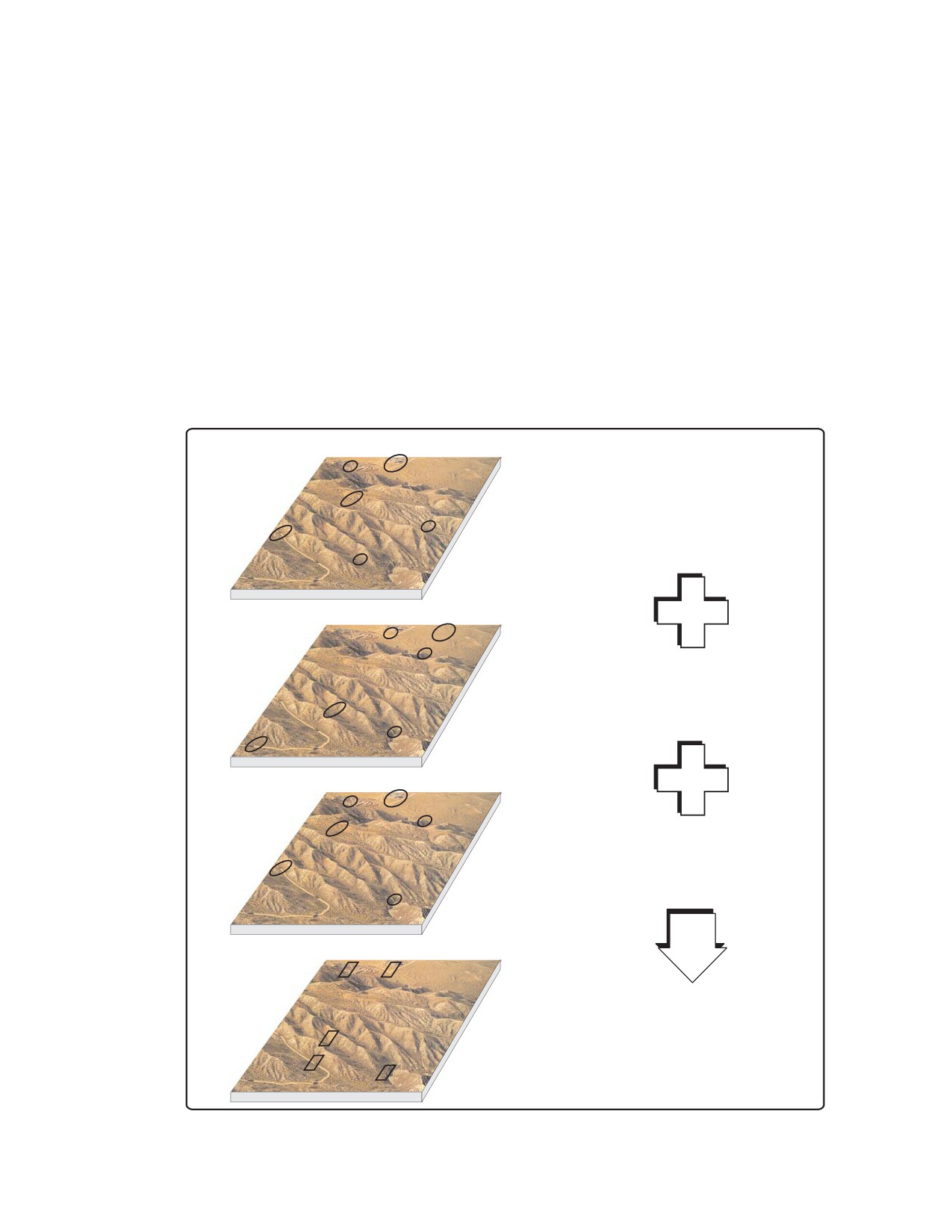
the adoption of a COA. Mark the selected NAIs on the event template. The
initial event template focuses only on identifying which of the predicted COAs
the TM force has adopted. Later, it will be updated and refined to support
friendly decisions identified during staff wargaming.
(2) The Event Matrix. The event matrix supports the event template by
providing details on the type of activity expected in each NAI, the times the NAI
is expected to be active, and its relationship to other events in the battlespace. It
plans intelligence collection and serves as an aid to situation development (see
Appendix B, Figure B-45). Examine the events associated with each NAI on the
event template and restate in the form of indicators. Enter the indicators into
the event matrix along with the times they are likely to occur. By using the
situation template’s phases of operations or the COA description, establish the
expected times in the event matrix. If there is a latest-time-information-of-value
timeline, based on the expected flow of events, record it into the event matrix as
a guide for the collection manager (Figure V-4).
Hide Site
FOL Site
Launch
Site
Hide Site
Situation Template 1
Launch
Site
Hide Site
Hide Site
FOL Site
Hide Site
Situation Template2
Launch
Site
Hide Site
Launch
Site
Hide Site
FOL Site
Hide Site
Launch
Site
Situation Template 3
Launch
Site
Hide Site
NAI 4
NAI 1
Event Template
NAI 5
NAI 3
NAI 2
Figure V-4. Event Template Concept
V-9
(3) Additional Considerations. To identify initial collection requirements
consider the following:
(a) Differences between COAs can consist of different TPLs or
indicators associated with a particular NAI but are usually reflected in different
NAIs.
(b) TM deception can affect the reliability of each event as an
indicator.
(c) During staff wargaming, a decision support template (DST) can
incorporate NAIs to support decisions by the commander and track HPTs.
Develop additional NAIs from potential NAIs identified on the situation
templates and the results of decisions made during friendly COA wargaming.
TM COA models drive friendly COA wargaming and aid in the construction of
the command’s DST and other staff synchronization tools used during mission
execution. Disseminate these TM COA models as widely as possible.
The event template and event matrix, once completed, form the basis for
planning collection strategies, synchronizing intelligence with friendly
operations, and preparing the collection plan. In some cases, the event template
might be disseminated in the form of a collection graphic to support intelligence
planning and collection by other units. The collection plan, based on the event
template and matrix, determines the types, quantity, and quality of future
intelligence fed into the TMD IPB process. The ability to improve the TMD IPB
process and output depends on the quality of the event template and matrix.
f. Identify Target Nominations. After identifying potential TM COAs and
establishing initial collection requirements, identify as many targets as possible
for attack operations. To identify HVTs, predict specific points, areas,
equipment, and activities which, when observed from established collection
requirements, reveal TM targets for attack operations. The result is an HVT
nomination list, an event template, and an event matrix. Develop the event
template and matrix using the same guidelines as those for identification of
initial collection requirements but focus on HVTs. The completed event
template and matrix aid in target planning for attack operations. Certain HVTs
are nominated during the command staff wargaming process to become HPTs and
make their engagement an integral part of the friendly COA under
consideration. HVT graphic and targeting materials may also be required (see
Appendix B, Figure B-46). The TMD IPB process produced a number of graphics,
textual descriptions, and imagery products, some of which are used within target
folders. Package and give these and any updated products to the target planners
as some targets may not have target folders built or may have only partial target
folders.
V-10
Appendix A
COMMON TMD IPB PROCESSES
1. Introduction
There are several common processes used throughout the TMD IPB process.
It requires a great deal of discipline, but it is essential that the basics are
followed in order to complete and maintain an adequate TMD IPB for the
command.
2. Graphics and Templates
a. Graphics are basic to TMD IPB analysis and best communicate the
intelligence picture. They assist but do not replace battlespace analysis and the
intelligence estimate and are the basis for intelligence and operational planning.
Currency is maintained through graphic renewal or update. Currently, the
majority of IPB analysis is done manually—a time and manpower intensive
process. Exploit automated graphical analysis and display of IPB—it is worth
the investment of time and resources. Automated tools are particularly useful
when dealing with time critical targets (TCT)/time sensitive targets. Use
available automation, time, resources, and personnel to produce the graphics
that are most beneficial to the command and distribute TMD IPB products to
subordinate units when feasible. This maximizes unit efficiency and permits
subordinate units to expand on higher level TMD IPB products or produce others
unique to their unit mission.
b. Adversary evaluation and integration is achieved by templating.
Templates are normally graphical illustrations but can be in a matrix, tabular,
textual, or other format. Templates provide a visualization of the intelligence
databases and have numerous purposes and functions. Terrain and weather
factor overlays; for example, depict the effects of terrain and weather on
potential TM COAs. Templates graphically depict TM force capabilities; TM
force characteristics (that is, force dispositions, weapons, and equipment) predict
probable TM force COAs and confirm or refute predictions. Templates need to
be dynamic and continuously updated to maintain a current assessment of the
TM force status. The TMD IPB process normally produces 4 types of templates:
(1) General - Provides general information (terrain, weather, etc.) not
fitting into the next 3 types of templates and not related to specific TM force
operations.
(2) Doctrinal - Provides unconstrained weather and terrain TM force
TTP. Depicted information includes depths, composition, formations, TO&E, and
HVTs.
(3) Situation - Depicts how the TM force might deploy and operate when
constrained by weather and terrain. These templates normally depict TM force
COAs.
A-1
(4) Event - Depicts where critical events and activities are expected to
occur and critical targets expected to appear. Depicted information includes
NAIs and HPTs.
Establish a consistent format for all templates. The particular format is not
as important as consistency. The format depends greatly on whether the
templates will be distributed electronically, hardcopy, or both. Electronic
templates look and feel very different than hardcopy templates. They also vary
depending on the type of software and computer. For example, commercial off
the shelf (COTS) software may impose limitations on a consistent format but
have benefits generally not available in non-COTS software.
Note: This TTP illustrates only hardcopy template formats using a 2-part
concept. The first part/page is the template cover page and provides valuable
overview and classification information (see Appendix B, Figures B-1 and B-2).
The second part/follow-on page(s) is the body/analytical content of the template
(see Appendix B, Figures B-3 through B-46). The templates and formats are
illustrative and can be freely used for actual TMD IPB development but are not the
only suitable formats. Tailor formats to the needed product, customer, and unique
situation(s). The rest of this TTP shows only the second part/follow-on page(s) of
the illustrative and blank example template(s).
3. Knowns Versus Assumptions
TMD IPB development distinguishes between what is known with
confidence (based on the situational facts and adversary) and what are untested
assumptions. Intelligence can be an observed fact or a conclusion based on facts
of such certainty that it is considered to be knowledge. It can also be conclusions
and estimates deduced from incomplete sets of facts or deduced from potentially
related facts. Make and maintain these distinctions when using intelligence for
operations. The commander may decide objectives and operations based on
whether the intelligence is “fact” or assumption, its confidence level, and the
particular logic used to develop the intelligence estimate.
Adapt an internal methodology for tracking the reliability and credibility of
TMD IPB intelligence analysis and conclusions and for presenting consistent and
uniform information to decision makers. The intelligence community uses 3
methodologies, which can be used independently or in conjunction with each
other, to assess information validity. The 3 methodology scales are confidence
level, source reliability, and information credibility. The latter 2 are typically
used with HUMINT information but are equally applicable to many other types of
information.
a. Confidence-Level Scale:
(1) HIGH PROBABILITY (CONFIRMED) - >95 percent.
(2) PROBABLE - 75-94 percent.
(3) LIKELY - 50-74 percent.
(4) LOW PROBABILITY (UNLIKELY) - 5-49 percent.
(5) VERY LOW PROBABILITY (VERY UNLIKELY or DOUBTFUL) -
<4 percent.
A-2
b. Source Reliability Scale:
(1) A - COMPLETELY RELIABLE.
(2) B - USUALLY RELIABLE.
(3) C - FAIRLY RELIABLE.
(4) D - NOT USUALLY RELIABLE.
(5) E - UNRELIABLE.
(6) F - CANNOT BE JUDGED.
c. Information Credibility Scale:
(1)
1 - SEVERAL CONFIRMATIONS.
(2)
2 - PROBABLY TRUE.
(3)
3 - POSSIBLY TRUE.
(4)
4 - DOUBTFUL.
(5)
5 - IMPROBABLE.
(6)
6 - CANNOT BE JUDGED.
4.
All Source Approach
Evaluate, correlate, and integrate information and intelligence from all
sources into TMD IPB products to present the most complete, accurate, and
objective views possible. In particular, joint operations require complete and
composite views of the situation and TM forces. Using and having access to all
information and intelligence sources is essential to understanding the actual
situation, because single-source intelligence analysis may lead to incomplete
assessments. Use of the all-source concept and methodology reduces the risks of
deception, and all-source collection and analysis help to identify and frustrate an
adversary’s deception and denial attempts. All-source intelligence fusion begins
with collection and production planning. Each source can provide useful
information and cues for other source collection and exploitation.
a. Sources. The intelligence community divides sources into several distinct
categories; each with a unique contribution to the TMD IPB process. They are
imagery intelligence (IMINT), SIGINT, HUMINT, MASINT, open source
intelligence, scientific and technical (S&T) intelligence or technical intelligence,
and counterintelligence.
A multitude of sensors are available to perform the many intelligence
collection missions. They vary in their technical performance (weather plays a
limiting role) and capabilities. The same sensor can vary in performance when
used in different ways. For example, the range and angle that a sensor is
employed greatly affects the resolution of its product. To understand basic
advantages, disadvantages, products, and timeliness of different sensor types,
see Tables A-1 and A-2 for a basic matrix of general sensor type characteristics.
A-3
b. Classification of Sources. The all-source approach stresses using all
available intelligence to include sources classified up to and including TOP
SECRET (TS) sensitive compartmented information (SCI). Overall, most source
reports are classified TS/SCI, but a lot of the information is classified at the
collateral level. Valuable information that is not collateral can usually be
sanitized to the collateral level. When information has to remain at the TS/SCI
classification level, distribute separate TS/SCI TMD IPB products to those with
the proper clearances and need to know.
c. Typical Types of Intelligence Reports. Reports are verbal or written
explanations of intelligence information and are generally prepared by
reconnaissance aircrews or by imagery analysts who glean information from
reconnaissance imagery. Each of the various intelligence reports possesses
unique characteristics of timeliness and precision, and the intelligence requester
needs to know them to tailor requests to actual information needs. See Table A-2,
JP 2-01, Joint Intelligence Support to Military Operations, and the following
paragraphs for descriptions of typical intelligence reports.
(1) In-flight Report (INFLTREP). Aircrews and unmanned aerial vehicle
(UAV) operators use the INFLTREP to report mission results or other sighted
tactical information of such importance and urgency that the delay (if reported
by normal debriefing) would negate the usefulness of the information. The
INFLTREP is a voice-only message.
(2) Reconnaissance Exploitation Report. This provides an abbreviated
imagery interpretation report for tactical reporting. It is normally transmitted
within 45 minutes of reconnaissance platform recovery but may take several
hours depending on the sensor, film type, processing, and quality of image sensor
reading.
(3) Mission Report. This reports mission results and items of intelligence
interest in all tactical roles.
(4) Imagery Interpretation Report. This is a single-message format for
sending either the Initial Phase Interpretation Report (IPIR) or the
Supplemental Photographic Interpretation Report (SUPIR). The IPIR provides
the results of first-phase exploitation of imagery. IPIRs are normally
transmitted within 15 minutes of imagery receipt. For a mission, all IPIRs are
normally completed within 24 hours of reconnaissance platform recovery. The
SUPIR provides results of second-phase exploitation of imagery and may take
hours or days to complete based on the detail of the requested information.
(5) RFI . This is the message format used to reply to RFI/production
requirement. It is used to advise requesters that a previously transmitted
message (reference the message) contained the requested information.
(6) Tactical Reports. Tactical reports are of immediate interest to
commanders and operators of tactical units at all levels. The intent of tactical
reports is to get perishable, concise information to units in time for it to be acted
upon. Tactical reports include the tactical report, the tactical ELINT report, and
the operations report.
A-4

Table A-1. Matrix of General Sensor Types to Intelligence
Advantages and Disadvantages
Sensor/Intelligence Matrix
SENSOR TYPE
ADVANTAGES
DISADVANTAGES
PRODUCTS
TIMELINESS*
IMINT Other than Visible Spectrum
Forward looking
Both day and night
Stand off range
Video report
>1 hour
infrared
Weather obscuration
INFLTREP
Near real time
Field of view
Resolution
Dusk/dawn crossover
Rain washout
Infrared linescanner
Both day and night
Stand off range
Hardcopy
>4 hours
High resolution
Weather obscuration
Video report
>4 hours
Field of view
INFLTREP
Near real time
Resolution
Dusk/dawn crossover
Rain washout
Ultraviolet linescanner
High resoultion
Day only
Hardcopy
>4 hours
May “see thru” camouflage
Weather obscuration
Video report
>4 hours
View time
INFLTREP
Near real time
Field of view
Multi-spectral fusion
Both day and night
Weather obscuration
Video report
>4 hours
sensors
Medium resolution
Field of view
INFLTREP
Near real time
IMINT Visible Spectrum
Image-intensified video
Night
No day capability
Video report
>4 hours
Medium resolution
Standoff
IINFLTREP
Near real time
Framing camera - wet
Resolution
Timeliness
Textual report
1-2 hours
film
Standoff range
View time
Photos
12-24 hours
Weather obscuration
Oblique
Information dissemination
Vertical
Day only
Panoramic
Framing camera -
Standoff
Resolution
Textual report
>1 hour
digital
Timeliness
Viewtime
Photos
>1 hour
Weather obscuration
Oblique
Vertical
Panoramic
Framing camera -
Standoff
View time
Textual report
>1 hour
electro- optical
Timeliness
Weather obscuration
Photos
>1 hour
Resolution
Oblique
Vertical
Panoramic
Video
Timeliness
Resolution
Videotape
>1 hour
Weather obscuration
Textual report
>1 hour
Day only
INFLTREP
Near real time
Information dissemination
* Measured from moment of collection to availability for analysis
A-5

Table A-1 (Continued). Matrix of General Sensor Types to Intelligence
Advantages and Disadvantages
Sensor/Intelligence Matrix
SENSOR TYPE
ADVANTAGES
DISADVANTAGES
PRODUCTS
TIMELINESS
IMINT - Radar
Side-looking airborne radar
Area coverage
Requires interpretation
Video
<1 hour
All-weather
Textual
<1 hour
Day and night
report
<1 hour
Dry film
Near real time
INFLTREP
Inverse synthetic aperture
High resolution
Requires interpretation
Video
<1 hour
radar
Range independent
Textual
<1 hour
Standoff range
report
Near real time
Best for maritime targets
INFLTRPT
Synthetic aperture radar
Moving target indicator
Requires interpretation
Video
<1 hour
Best for land targets
Textual
<1 hour
Range independent
report
<1 hour
Standoff range
Dry film
Near real time
INFLTRPT
Forward looking airborne
Standoff range
Resolution
Video
<1 hour
radar
Small target detection
Target classification
Textual
<1 hour
report
Near real time
INFLTRPT
Ground surveillance radar
Timeliness Resolution
Range
Report
Near real time
Visual Intelligence
Surface-aggressive (cavalry)
Direct observation
Possible loss of
Report
Near real time
reconnaissance asset
Limited range
Field of view
Surface-stealth (cavalry/
Direct observation
Limited range
Report
Near real time
reconnaissance)
Field of view
SOF
Direct observation
Limited range
Report
Ranges from
Field of view
near real time
Need for clandestine
to
insertion/extraction
considerable
delays
Aircrew
Direct observation
Limited view
Report
Near real time
Time
Standoff
Reference for information
SIGINT
ELINT
Passive detection of non-
Target must emit in order
Report
Near real time
communications radiation
to collect intelligence
Communications intelligence
Passive detection of
Target must emit in order
Report
Near real time
communications
to collect intelligence
Foreign instrumentation
Passive detection of telemetry
Target must emit in order
Report
<1 hour
signals intelligence
and other data
to collect intelligence
MASINT
MASINT
Passive detection
Requires interpretation
Report
<1 hour
Measures specific emitter data
Acoustic
Active acoustic
Timeliness
Thermal layer blockage
Report
Near real time
Able to work subsurface
Standoff
Possible loss of sensor
platform
Passive acoustic
Timeliness
Thermal layer blockage
Report
Near real time
range
A-6

Table A-2. Typical Intelligence Reports
Intelligence Category
Intelligence Products
Visual
Textual
Verbal
– Written report
- INFLTREP over the radio
Imagery
Visual
Verbal/Textual
- Imagery prints
– Accompanying reports
- Video
– Digital imagery
Signal
On-line
Textual
Verbal
- TIBS display
- ELINT reports
- Tactical reports
–Special information systems/voice product net
- Tactical reports
Weather
Visual
Verbal
- Charts
- INFLTREP reports
– Imagery
- Weather briefings
(a) Tactical Report. This provides the most urgent, perishable
information of tactical significance to tactical unit commanders. It alerts them to
immediate threats and provides enhanced situational awareness. Though the
report can be either a free-flow voice report or a hardcopy computer-formatted
message, send it via message precedence commensurate with its content.
Examples of the voice format and the hardcopy report are in JP 6-04, United
States Text Formatting Program.
(b) Tactical ELINT Report. This reports time-critical operational
ELINT and parametric information and may be used for indications and warning,
database maintenance, orders of battle, and strike planning.
(c) Operations Report. Any unit can use the Operations Report-3 to
provide the joint force commander and other appropriate commanders with
immediate notification of an incident or event where national interest is not
indicated or has not been determined.
(7) Tactical Information Broadcasting System. This is a satellite
broadcast of intelligence and combat information. It is used during contingency
and exercise operations and provides near-real-time data on adversary force
disposition and array and friendly elements. This transportable system can be
placed with battle managers or other C2 nodes. It links intelligence producers
with consumers and allows selected users to query collectors for data during
operations. Data is filtered by software and displayed either graphically or as
text.
(8) Special Information System/Voice Product Net. This is a secure ultra
high frequency (UHF) KY-58 voice link between intelligence producer and
consumer. It is used to pass the tactical report and situational awareness
information based on pre-mission tasking or on-scene dynamic tasking.
5. Establishing Collection Requirements
a. Collection Management. Collection management is the process of
converting intelligence requirements into collection requirements, establishing,
tasking or coordinating with appropriate collection sources or agencies,
monitoring results and retasking, as required. It is a staff activity that focuses
on decisions and choices that concern collection requests and RFI. There are
many ways to task the intelligence community to get needed information for
A-7
operational use. A variety of collectors, ranging from humans to airborne
collectors (controlled manually or software-driven), are tasked to fulfill
intelligence requirements. Intelligence support personnel at the unit level need
to determine the direction and flow of intelligence information. Intelligence
needs, referred to as requirements, are registered based on time sensitivity.
Requirements satisfied by airborne platforms are defined as follows:
(1) Time Critical Requirements - Requester needs the intelligence either
in near-real-time or based upon the requester’s LTIOV but no later than 24
hours. Typically the timeliness required is “upon recognition.”
(Example: A
location request for a SCUD TEL that recently launched a missile is a time
critical requirement.)
(2) Routine Requirements - Requester needs in 24 hours or more. It
supports routine combat operations and is addressed through the collections
process (for example, creation of collection targets to search for specific
adversary units not yet located in the AO).
(3) Standing Requirements - Established before a contingency arises and
provides a baseline for the intelligence problem set (that is, request to monitor
TM operating areas for operational activity).
b. Collection Requirements. Always state intelligence requests clearly and
include precise parameters (desired and minimum required) and a written
justification statement. Parameters include suspense dates, frequency of
coverage, resolution/level of information, and specific viewing angles/direction
(IMINT).
(1) Requirement Identification. Ensure collection managers are aware of
TMD IPB objectives, information needs (quality, quantity, frequency, etc.), and
the constraints and limitations imposed on the TMD IPB process. Inform the
collection manager as soon as possible of tasked targets.
(2) Collection Priorities. A target’s value changes. Keep the collection
manager informed so collection priorities can be adjusted, if needed. Establish
requirements and their associated priorities for peacetime target surveillance,
crisis monitoring, and combat support. Prioritize and monitor all targets on a
routine basis. Higher priority targets are normally collected with greater
expediency and frequency than lower priority targets. Mobile targets present a
specific collection problem because their data is extremely perishable and
current data is essential to target analysis.
(3) Frequency. Establish collection requirements through the collection
management process and for any frequency (daily, twice weekly, weekly, every 2
weeks, monthly, every 2 months, quarterly, semiannually, annually, or until
satisfactorily acquired). The specific time of collection may also be requested.
(4) Exploitation Requirements. Targeting must also identify the EEI
needed from imagery and all-source analysts. The 2 types of EEI are generic and
specific. If generic EEIs are requested, the imagery and all-source analysts
reports all activity and identifies all structures on or in the target area. Generic
EEIs are listed as part of the overall command objectives and may vary in
A-8
different commands. If information on specific activity/observations is needed,
provide specific EEIs with the RFI.
c. Collection Operations (Systems). The collection manager is responsible
for managing the assets and choosing the most efficient methods and sensors to
satisfy requirements. Overall theater sensors are more flexible and can react
faster to collection requirements. National collection platforms are not as
flexible and have set times and locations where they collect on a target area.
National assets collect on targets within their specific collection ground tracks.
Dissemination of national system products relies on primary and secondary
dissemination methods and equipment in theater. If communication lines cannot
handle intelligence dissemination, the product will not be responsive to theater
needs.
6. Target System Development
a. The Target System Concept. The target system concept is important
because almost all targeting is based on targeting systems. A target is composed
of components, and components are composed of elements. A single target may
be significant because of its own characteristics, but often its importance lies in
its relationship to other targets. Usually the effect of a strike or attack mission
upon an adversary can be determined only by analyzing the target in the overall
adversary’s target system. JP 1-02, DOD Dictionary of Military and Associated
Terms, states that a “target system includes all the targets situated in a particular
geographic area and functionally related; or a group of targets which are so
related that their destruction will produce some particular effect desired by the
attacker.” Targeteers normally focus on functionality.
“Functionally related”
means that all targets in the system have the same activity or that each makes
one or more parts of a particular product or type of product. Usually the effect of
an attack upon an adversary can be determined only by analyzing the adversary’s
target systems combined with their relationship(s) with the adversary’s
warmaking or warfighting capability.
b. Target System Characteristics. All target systems are goal, objective, or
purpose oriented and composed of individual parts called components, through
which they perform activities to achieve their goals. Survival is fundamental for
all systems and they adapt to survive. Systems are complex. System components
are interdependent and a change in one component causes change in or to other
components. Each system is a component of a larger, more inclusive system.
c. Target System Activity. Do not focus the targeting process on the system
or its components but on the activity of the system or its components. Identify
and nominate important target systems and target system components for strike
by determining which activity is to be modified or affected by friendly forces. On
a lesser scale, perform this same analysis for individual targets. Identify key and
vulnerable elements of each target for attack. A comprehensive analysis of the
system and its component parts is essential to understand the activities of the
entire system.
d. Target System Analysis. This is a systematic approach to determine
adversary target system vulnerabilities and exploitable weaknesses. It
determines what effects will likely be achieved against target systems and their
A-9
associated activities. Review the functions and interactions between components
and elements of a target system, to determine how the target system works. The
analysis helps to determine what effects are likely to be achieved by attacking
the system, where the system must be attacked, and how long the attack will
disrupt adversary plans or operations. By reviewing probabilities of damage and
arrival for a weapon system, targeteers can evaluate the effects of attacks on
different components and isolate relevant elements to plan the disruption or
neutralization of an entire target system.
7. Recording Information
Recording information makes evaluation and analysis easier and more
accurate. It provides a useful source for historical data during and after
operations are concluded and is essential for supporting the lessons learned
process. Recording means and techniques must permit timely information and
intelligence dissemination and the means must adequately handle the volume of
information and intelligence received and serve the needs of those who must
have access to it. Some common recording techniques are TMD IPB templates,
intelligence journals, intelligence community databases, and local TMD IPB
databases.
Intelligence community and local TMD IPB databases are typically fully
automated and require trained personnel to operate them. The TMD IPB
process generates the templates. An intelligence journal is an official,
permanent, and chronological record of received and transmitted reports and
messages, important events that have occurred, and actions taken in response.
Since the journal will be referenced during the TMD IPB process, accuracy and
completeness are essential. The journal covers a specified time period, usually
24 hours, and entries should accurately and concisely state the message, report,
or event (meeting purposes, subjects, and conclusions, TMD IPB organizational
or personnel changes, TM force incidents or movements, etc.); note the sender or
individual making the report (include unit and unit duty position); note the
receipt or dispatch time and method of transmission; and any actions taken as a
result (disseminating reports, other internal TMD IPB recording, actions taken
based on TM force activities).
8. Lessons Learned
During development of the TMD IPB, systematically identify, evaluate, and
apply intelligence lessons learned. It is important to benefit from significant
operations, training, and intelligence experiences. Use the Joint Universal
Lessons Learned System to document intelligence lessons learned.
9. Geospatial Information and Products
a. Geospatial Information. Geospatial information is found on maps and
charts, and spatial imagery (mapping, charting, and geodesy, imagery, and
IMINT). It gives physical and cultural phenomenon characteristics, properties,
and locations associated with the earth’s natural and man-made environment.
NIMA’s global geospatial information and services (GGI&S) provide geospatial
information in four information classes; hard copy (traditional GGI&S products
produced as paper products), digital raster data, digital vector, and digital
composite. Definitions can be found on the NIMA home page.
A-10
b. GGI&S and TMD IPB Development. For TMD development, GGI&S is
divided into commonly used digital/hardcopy GGI&S (Table A-3), other vector-
based/digital GGI&S (TableA-4), and other raster-based/hard copy GGI&S (Table
A-5).
Table A-3. Commonly Used Digital/Hardcopy GGI&S Products
Arc Second Raster Chart Digitized Raster Graphic
Bathymetric Navigation Chart
Compressed Arc Second Raster Chart Digitized Raster Graphic
Controlled Image Base
Digital Bathymetric Database
Digital Chart of the World
Digital Feature Analysis Data
Digital Terrain Elevation Data
Joint Operations Graphic
Nautical Chart or
Hydrographic Chart
Operational Navigation Chart
Tactical Pilotage Chart
Topographic Line Map
Vector Map Level 0
Vector Map Level 1
Vector Map Level 2
Vector Map Coverages (boundaries, data quality, elevation, hydrography, industry, physiography,
population, transportation, utilities, vegetation, political entities, place names)
World Vector Shoreline
Table A-4. Other Vector-Based/Digital GGI&S Products
Anaglyph
Arc Second Raster Chart Digital Raster Imagery
Compressed Aeronautical Chart
Compressed Raster Graphic
Digital Cities Data Base
Digital Aeronautical Flight Information File
Digital Elevation Model
Digital Line Graph
Digital Line Graph-Enhanced
Digital Topographic Data
High Speed Digital Chart
Digitized/Digital Point Positioning Database
Interim Terrain Data
Planning Terrain Analysis Database
Relocatable Target Assessment Data
Probabilistic Vertical Obstruction Data
Tactical Terrain Data
Tactical Terrain Analysis Database
Vertical Obstruction Data
Video Point Positioning Database
World Mean Elevation Data
Table A-5. Other Raster-Based/Hardcopy GGI&S Products
Approach Chart
Antisubmarine Warfare Prediction Area Chart
Bathymetric Navigation Planning Chart
Bathymetric Recovery Area Chart
Bottom Contour Chart
City Graphic
Coastal Chart
Current Chart
Gazetteer
Harbor and Approach Chart
Harbor Chart
Hydrographic Chart or Nautical Chart
Hypsographic or Hypsometric Map (or Chart)
Ice Chart
Instrument Approach Chart
Magnetic Anomaly Detection Planning Chart
Magnetic Anomaly Detection
Operational Effectiveness Chart
Military Installation Map
Modified Cacsimile Chart
Naval Operating Area Chart
Non-Submarine Contact List
Pilot Chart
Precise Bathymetric Navigation Zone Chart
Point Positioning Database
Provisional Map
Sound Surveillance Systems Charts (SOSUS)
A-11
10. Target Materials
Target materials are graphic, textual, tabular, digital, video, or other
physical and quantitative presentations of target intelligence. These products
locate, identify, and describe potential targets with enough accuracy to attack
designated targets by one or more weapon systems. Current target materials
suitable for TMD IPB production are basic target graphics, automated tactical
target graphics, operational target graphics, quick response graphics, and
operational support plans graphics.
11. Locational Information
a. TMD IPB and Locational Information. TMD IPB relies on and generates a
large amount of locational information. Locational information is defined by
coordinates that are linear or angular quantities that designate the position that
a point occupies in a given reference frame or system. The use of cartographic
techniques to derive coordinates is suitable for cueing but cannot provide the
precise coordinates needed for many of the newer weapon systems. Because it is
easy to make locational errors, it is important to have a basic working knowledge
of coordinate systems, datums, and other accuracy measures.
b. Errors and Mismatches. Data errors or mismatches can occur when mix-
ing locational data from multiple sources. For example, database locations taken
and placed on a map can lead to severe errors unless the locations’ coordinates
use the same scale and datum as the map. However, if the locations’ coordinates
use different scales and/or datums, large errors can result ranging from several
meters to several kilometers. Another example, 2 objects, such as roads, taken
from different databases and placed on a map can result in mismatches (do not
intersect on the map where they are suppose to join) if different scales and/or
datums are used. In some cases, the intersection can be off as much as several
kilometers. When the same road exists in 2 databases and both are plotted on a
map, a set of nearly parallel roads may result from the differences in the scale
and/or datums. It is important to use identical scales and datums, but when this
is not possible, understand and account for the resulting errors in the locational
information. It is easy to make errors when using digital terrain data and since
most of the data uses the same datum, it is usually a scale error. Remember, if
locational data information is incorrect and not accounted for, the terrain
analysis results are confusing and useless.
c. Coordinate Reference System. Coordinate reference systems are a
shorthand means of communicating earth surface locations. The most familiar
coordinate reference system uses latitude, longitude, and elevation, while the
Universal Transverse Mercator (UTM) and Universal Polar Stereographic (UPS)
grid systems are two-dimensional. They identify a location without the lengthy
description of latitude and longitude degrees, minutes, and seconds by placing
grids on maps. The Military Grid Reference System is an alphanumeric short-
hand for expressing UTM and UPS coordinates with fewer numbers. A coordinate
reference system always connects to a datum that defines its reference frame and
point of origin; when the datum changes, so do the position coordinates.
d. Datums. A critical consideration often overlooked in using coordinates is
the geodetic datum upon which the coordinates and stated accuracy are based. A
datum is a regional or global coordinate reference system. It includes a refer-
ence ellipsoid (a mathematical representation of the earth’s size and shape) and a
specific origin point. Coordinates within the same geodetic datum are directly
A-12
related to the same origin point. Coordinates within different datums must be
converted to a common reference before they can be used. The World Geodetic
System (WGS) provides the basic reference frame and geometric figure for the
earth, models the earth gravimetrically, and provides the means for relating
positions on various local geodetic systems to an earth-centered, earth-fixed
(ECEF) coordinate system. World Geodetic System-1984 (WGS 84) is the ECEF
system officially authorized for use by the Department of Defense. WGS
represents NIMA’s modeling of the earth from a geometric, geodetic, and
gravitational standpoint. It was developed using new and more extensive data
sets and improved computer software and is constantly upgraded.
e. Coordinate Conversion/Transformation. NIMA has a computer-based
program to convert and transform coordinates. This program is called
GEOTRANS and is very useful for accurately converting coordinates from one
datum or coordinate system to another. NIMA maintains an INTELINK page for
converting datums and coordinates online.
f. Measures of Accuracy. Geospatial data cannot be more accurate than its
original source, and sources vary in accuracy. Furthermore, each step in the
production process can introduce position or elevation errors because of
production hardware and software limitations, human factors, and inherent
product characteristics (that is, chart size and scale or the digital data
specification accuracy). If not accounted for, significant accuracy errors will
occur from mixing products and data of different scale. Error distribution
assumes that systematic errors and blunders have been removed and only
random errors are left. Systematic errors need to be detected before they can be
removed from positional information and one method is to compare the
positional information against given control. If systematic errors are not
removed, they will affect, for example, geodetic and photogrammetric
measurements and the resulting positional information. Statistical techniques
are used to measure and identify errors. The measures express an accuracy
confidence level of the NIMA data to the user. Depending on the data’s intended
use, geospatial accuracy is normally expressed in absolute and/or relative
accuracy terms. Absolute accuracy is how close each feature or data point is to
the specified higher standard and includes all random and systematic errors.
Relative accuracy is how close the measured distance or elevation is between two
features or data points over a specified distance within standard and includes
only random errors. Geospatial position accuracy is traditionally measured in
feet or meters of linear error for heights, and feet or meters of circular error for
horizontal position, both at 90 percent probability. Spherical error is the three-
dimensional (3-D) combination of horizontal and vertical errors at 90 percent
probability and is increasingly used as the geospatial fidelity measure. Target
location error is the difference between the target’s actual and expected location.
g. Precision and Accuracy. There is an important difference between the
terms precision and accuracy. Precision is the closeness with which repeated
measurements made under similar conditions are grouped together, and
accuracy is the closeness of the best-estimated measured value to the measured
quantity’s true value. Precision is affected only by random measuring process
errors, while accuracy is affected by precision as well as the existence of
unknown or systematic errors. Measurements may be both precise and
inaccurate, but they cannot be accurate unless they are precise. Developed,
transmitted, and used coordinates should support measurements down to a
precision equal to DDD MM SS.SSS. At the equator, these coordinates would be
A-13

precise within 3 centimeters. State the associated coordinates’ accuracy so that
the user can determine the usefulness of the coordinate data. Not all coordinates
must be to that level of precision or positions to that level of accuracy. For
example, an object’s measurements may determine the precise location within 6
inches, while the object’s positional accuracy may only be within 100 feet. If the
objective is to measure the object, this precision may suffice, but if the objective
is to verify and bomb the object, this precision is unneeded and the accuracy may
or may not be adequate based on the bombing scenario. Table A-6 compares
precision with scale and coordinate resolution and lists some products used
during the TMD IPB process.
Table A-6. Geospatial Precision and Accuracy Comparisons
Starting Unit, Scale, and/or Precision
Resulting Precision/Resolution
Coordinate
Scale
Precision
DDD MM SS.SSS
meters
m/inch
Example Product
DDD
111,120
DDD MM
1,852
DDD MM SS
30.87
DDD MM SS.S
3.087
DDD MM SS.SS
0.3087
DDD MM SS.SSS
0.03087
1:25,000
635
City Graphic
Topographic Line Map
1:50,000
1,270
Vector Smart Map Level 2
1:100,000
2,540
Topographic Line Map
Joint Operations Graphic
1:250,000
6,350
Vector Map Level 1
1:500,000
5,080
Tactical Pilotage Chart
Operational Navigation
Chart
1:1,000,000
10,160
Vector Map Level 0
Digital Chart of the World
1:2,000,000
20,320
Jet Navigation Chart
1:5,000,000
127,000
Global Navigation Chart
100 m
000 03 14.384
DTED Level 1
30 m
000 00 58.315
DTED Level 2
DTED Level 3
Controlled Image Base
10 m
000 00 19.438
Space Imaging’s Ikonos
Satellite
Land satellite and SPOT
DTED Level 4
Controlled Image Base
5 m
000 00 09.719
Space Imaging’s Ikonos
Satellite
DTED Level 5
Controlled Image Base
1 m
000 00 01.944
Space Imaging’s Ikonos
Satellite
Horizontal
Vertical Linear Error
Scale
Circular Error
Example Product
90%
90%
1:25,000
50 m
± 20 m
City Graphic
Topographic Line Map
1:50,000
50 m
± 20 m
Vector Map Level 2
1:100,000
50 m
± 20 m
Topographic Line Map
Joint Operations Graphic
1:250,000
250 m
± 100 m
Vector Map Level 1
1:500,000
1,000 m
± 150 m
Tactical Pilotage Chart
Operational Navigation
Chart
1:1,000,000
2,000 m
± 650 m
Vector Map Level 0
Digital Chart of the World
Note: Approximate for longitude at the equator
A-14
h. Precise Geopositioning Capability. Coordinate derivation is the process
of generating geodetic coordinates that precisely identify the position of a point
or target. Accuracy in describing position or desired mean point of impact within
a common reference system is an important element in the TMD IPB function.
Point positioning data base (PPDB) are sets of geodetically controlled
photographic materials, accompanying data, and computer programs that enable
trained personnel to derive accurate coordinates for any identifiable ground
feature within the database area. PPDB accuracy is estimated for the entire
coverage. To derive PPDB target or point coordinates, use the manual Analytical
Photogrammetric Positioning System (APPS) or automated RAINDROP software
for mensuration and geopositioning. The operator selects the appropriate stereo
pair, locates the target optically, and determines the point’s geoposition. NIMA
began phasing out hardcopy PPDB production in FY96, so APPS and PPDB use is
decreasing. Digital point positioning database (DPPDB) is a classified image
product consisting of high-resolution digital stereo image pairs and replaces the
hardcopy PPDB. The DPPDB provides warfighters with a deployable product.
Digital exploitation workstations with stereo capability quickly and accurately
derive latitude, longitude, and elevation. The DPPDB consists of 3 main
components: imagery support data, a digital map graphic for reference, and
stereo imagery. The nominal DPPDB area coverage is a rectangle, called the
product rectangle, measuring 60 nautical miles on each side. At the equator, a
product rectangle is a 1-degree x 1-degree geocell and is bounded by 1-degree
parallels on the north and south and by 1-degree meridians on the east and west.
Smaller DPPDBs unconstrained by geocell boundaries can also be produced.
Ground coordinates derived using the DPPDB rational function model are
referenced to the WGS ellipsoid. The DPPDB absolute and relative accuracy is
consistent with the rigorous triangulation performed by NIMA’s Digital
Production System. The computed absolute and relative accuracy values, which
vary from product to product, are provided as part of the imagery support data.
Basic DPPDB imagery viewing and point mensuration can be performed on a
suitably equipped workstation using NIMA’s RAINDROP software.
12. Required Intelligence Databases for TMD IPB Production
a. Modernized Integrated Database. The MIDB is a standardized
intelligence data system providing data exchange between national to tactical
level intelligence and operational consumers. The database contains a baseline
source of intelligence on installations, military forces, population concentrations,
C2 structures, significant events, and equipment.
b. Basic Encyclopedia (BE). This manual of MIDB installation intelligence is
the most inclusive of all installation lists. It describes every identified
installation with an active function or of valid interest to intelligence agencies,
particularly to the unified command operational and planning staffs. The BE
contains basic data on the identification, location, and function of each
installation. It can be used to select potential fixed targets for ground, sea, or air
attack or to identify installations (such as public utilities and hospitals) to be
spared from attack. The BE lists installations in Eurasia, Western Europe, Latin
America and the Atlantic, Middle East and Africa, and Southeast Asia and the
Western Pacific.
A-15
c. Military Equipment and Parameters Engineering Database. This is a
standardized intelligence data system providing data exchange between national
to tactical level intelligence and operational consumers. The database contains a
more baseline source of intelligence on military equipment than the MIDB to
include engineering level parameters.
d. NIMA Exploitation System (NES). NES is a standardized intelligence
data system designed to provide for data exchange between national to tactical
level intelligence and operational consumers. The database contains a baseline
source of intelligence on overhead imagery and information on available
overhead imagery. Imagery reports within NES are textual and contain a brief
imagery analysis by NIMA.
e. Standard Coding System Functional Classification Handbook. This
handbook contains guidance and procedures for using functional category codes.
The classification system uses a 5-digit numeric character code to classify
installations by function and indicate the products, capability, or activity
associated with the installation.
13. How TMD IPB Relates to Everything Else
IPB and its products are essential elements of the intelligence cycle. The
intelligence cycle and its functions (procedures, organizations, and equipment
that collect, process, store, and disseminate intelligence) respond to the
commander’s intelligence needs. IPB products aid the intelligence staff in
processing volumes of information and exploiting modern technology. They focus
collection systems, so that sufficiently accurate near-real-time information can be
used to directly target TCTs. IPB enables a staff to put steel on target and also
helps to prioritize and maximize targeting effects; it plays a critical role in the
decision-making process. The commander leads the IPB effort and the entire
staff executes the IPB process.
A-16
Appendix B
SUGGESTED TMD IPB TEMPLATES
The TMD IPB templates and tables in this appendix are initial starting
points for building a TMD IPB. They are not meant to represent the entire
spectrum of TMD IPB products. Use them as the situation requires (reproduce
as is, modified, and/or discarded). Many can be used with current or future
intelligence and operational automated systems. Figures B-1 and B-2 are
suggested cover pages for completed or in development TMD IPB templates.
Figures B-3 through B-46 are suggested templates for developing the TMD IPB
and are organized in the TMD IPB 4-step process order.
B-1
Appendix C
AUTOMATED TOOLS AND EXAMPLE ARCHITECTURES
1. Selected Automated Tools
Table C-1 lists selected automated tools that assist in TMD IPB development.
At a minimum, use the Joint Deployable Intelligence Support System (JDISS),
GALE, and joint services workstation (JSWS).
2. Current TMD IPB Automated Tool Architecture Examples
Each organization tasked with conducting TMD IPB is uniquely configured to
accomplish that mission. Because of this diversity, there is no one-way to
construct a doctrinal TMD IPB architecture. Instead, the following examples
serve to illustrate how 2 real-world organizations are configured to perform the
TMD IPB mission.
a.
32d Army Air and Missile Defense (AAMDC) Brigade. The 32d AAMDC is
the Army Forces and Joint Forces Land Component Commander’s organization
that performs critical theater air and missile defense planning, integration,
coordination, and execution functions. The 32d AAMDC coordinates and
Table C-1. Selected Automated Tools
ASAS-RWS:
DESCRIPTION: Provides collateral intelligence processing capabilities to Army, corps, and division J-/G-2s; disseminates a
collateral picture of the all-source database to tactical commanders for battlespace situational awareness; produces ground battle
situation analysis through adversary integration; rapidly disseminates intelligence information; provides target identification and
nominations; and provides intelligence collection management.
Current Capability
POC: United States Army
ASAS-Light:
DESCRIPTION: Same as for the ASAS.
Current Capability
POC: United States Army
JDISS:
DESCRIPTION: Receives, processes, and displays tactical, theater, and national level intelligence and imagery to support TMD
IPB; provides rapid data exchange, primarily IPB products and databases at the joint level for time-sensitive targeting, TMD nodal
analysis and collaborative planning; and the means to share critical combat information and intelligence to coordinate courses of
action and develop common TTPs.
Current Capability
POC: Defense Intelligence Agency
GALE:
DESCRIPTION: Performs suitability modeling and location assessments against the TMD adversary and projects probable
adversary mobile and stationary missile launcher operating locations. Assists in terrain analysis by using digital mapping data;
provides terrain delimitation features to conduct detailed slope, road/rail, line of sight, and terrain analysis.
Current Capability
POC: Defense Intelligence Agency
JSWS:
DESCRIPTION: Provides MTI/SAR information and initiates RSR. Depth of tracking in AOR limited by adversary SAM threat to
sensor.
Current Capability
POC:
MCS:
DESCRIPTION:
Current Capability
POC:
ABIS (MSTS):
DESCRIPTION: Provides real-time high-resolution 3-D imagery, flight following, and adversary displays (TIBS and TRAP
broadcast feeds). Allows the commander to “stand on” or “fly over” the terrain in his AO.
Current Capability
POC:
C-1
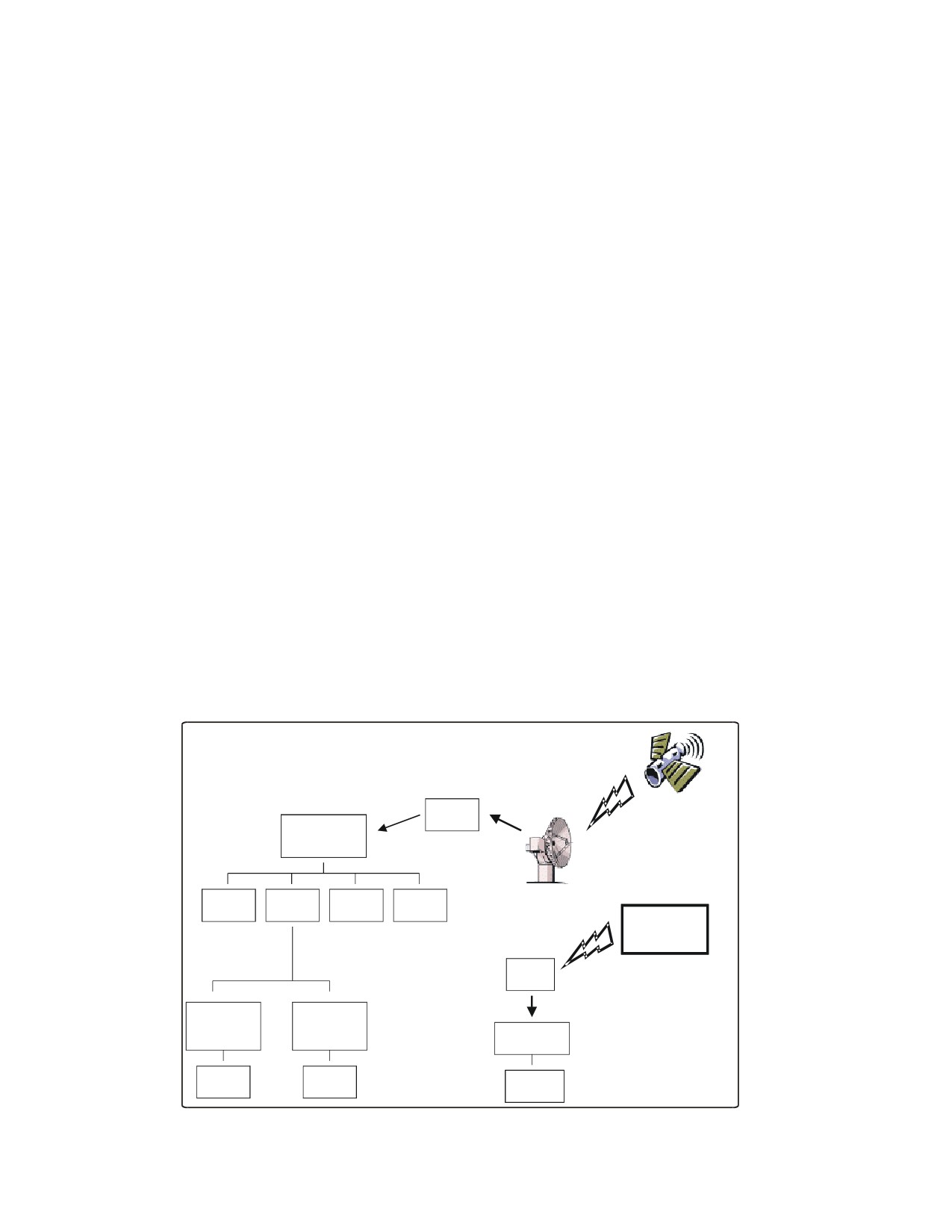
integrates the 4 operational elements of the TMD mission. Its G-2 section is
responsible for all current and future TMD IPB operations. Figure C-1 depicts
the internal architecture that supports the G-2 section in the tactical operations
center (TOC).
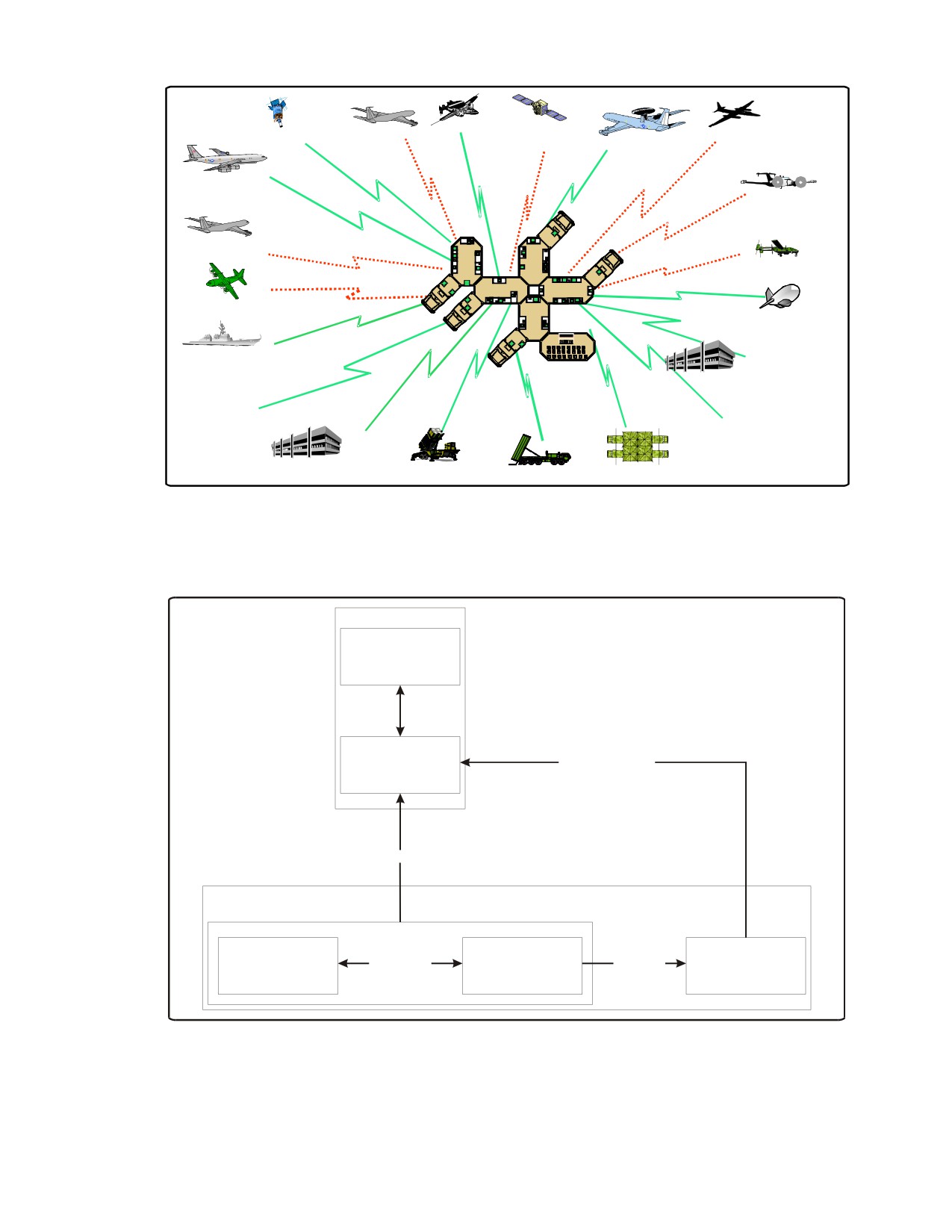
Although an Army organization, the AAMDC plays a critical role in the joint
TMD mission arena. The AAMDC commanding general is usually assigned as the
deputy, area air defense commander and is responsible for facilitating the overall
air and missile defense mission. Supporting this task is a robust ISR
coordination function residing in the AAMDC TOC. Figure C-2 depicts some of
the external agencies that feed information to the TOC.
b.
7th Air Force TMD Intelligence Team. Another real-world organization
performing TMD IPB is the 7th Air Force TMD Intelligence Team. This team is
responsible for US Forces, Korea’s (USFK) TMD IPB. It supports the execution
of attack operations, active defense (PATRIOT), and passive defense. The team
directly inputs into the integrated tasking order; dynamically retasks ISR assets;
plans active defense; and cues the retasking of attack assets. The 607th Air
Intelligence Squadron mans and the 32d AAMDC augments the TMD intelligence
team. A simplified relationship diagram is shown in Figure C-3.
The TMD intelligence team is located in a small office space with about 14
workstations and a large plexiglas map display area. Networks available to the
team are TDDS, Pacific Command automated data processing server site - Korea
(PASS-K) high, Joint Worldwide Intelligence Communication System (JWICS),
PASS-K low, SECRET internet protocol router network (SIPRNET), and 7th Air
Force SCI wide area network/JWICS. Major available applications are applix
e-mail, INTELINK, GALE, automated message handling system, JSWS, direct
UAV video, contingency theater automated planning system, and other PASS-K
applications (virtually identical to JDISS applications). The team also has secure
32d AAMDC
TOC
ROUTER
DOWNLINK
TIBS/TRAP
BOX
QUADNET/
BROADCAST
CTT
ASAS
GALE
MSTS
JSTARS
2.3
SECURE
SERVER
ROUTER
EAC BDEs
BOX
35TH
11TH
ADA BDE
ADA BDE
SIPRNET
ASAS
ASAS
2.3
2.3
JDISS
Figure C-1.
32d AAMDC Brigade G-2 TOC
C-2
E2C
DSP / SBIRS
NATIONAL
RIVET
U2
SENSOR
AWACS
JOINT
JSTARS
GUARDRAIL
COMMON SENSOR
COBRA BALL
UAV
ABCCC
JLENS
AEGIS
THEATER
NBCCC
SIPRNET
ACE
DOCC
PATRIOT
THAAD
AOC / BCD
Figure C-2.
32d AAMDC External Information Sources
CP TANGO
CFC / USFK
J-2
CINC
Consolidated RFIs
CFC / USFK
607th Air Intelligence Squadron INTSUMs
7th Air Force
HTACC
TMD Flight
TMD
TMD
607th AIS
ITO Inputs
TMD RFIs
Operations
Dynamic Restasking
Intelligence
Collection
Team
Team
Management
Figure C-3. TMD Flight Simplified Organizational Relationships
C-3
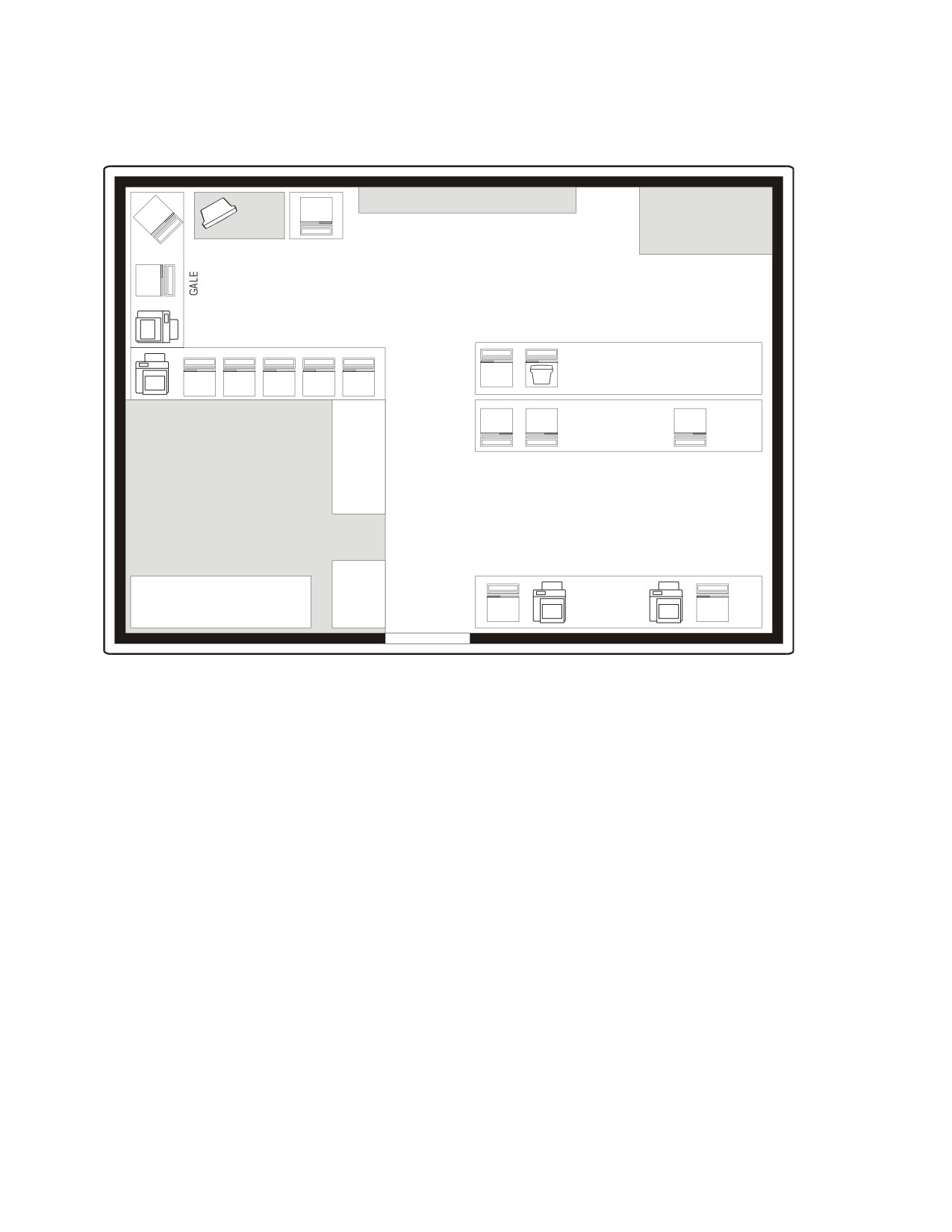
telephone unit-III connectivity. Figure C-4 shows the team’s physical layout.
Minimal manning for the TMD intelligence team is 9 operators/analysts and each
has a specific function as shown in Table C-2.
The Big Board (Map Display Board)
V
L
7
Air Conditioning Unit
Map Case
H = PASS-K High (USFK SCI US Only WAN + JWICS)
L = PASS-K Low (CFC/USFK SECRET/SI RELROK WAN)
7 = 7th Air Force SCI (7th Air Force SCI US Only WAN + JWICS)
H
S = SIPRNET (DoD SECRET US Only WAN)
U = Unclassified (Standalone - No Connectivity)
V = Video Feed (UAV, CINC Briefs, Other)
JSWS JSWS
AMHS
GALE GALE
H
H
H
H
H
TMD
Intelligence
S
Cell
CTAPS
CTAPS
Electronic Threat
Assessment Center
(ETAC)
Not Part of TMD Cell
U
S
Figure C-4. Physical Layout of the 7th Air Force TMD Intelligence Team
C-4

Table C-2. Specific 7th Air Force TMD Intelligence Team Functions
IPB Analyst
JSWS Analyst
Fuses all-source intelligence.
Analyzes moving target indicator data; exploits
Predicts adversary courses of action.
“replay” function to track activity.
Recommends potential targets and collection to
Coordinates with GALE operator/analyst.
team chief.
Provides interpretation to IPB analyst.
Primary ADP system: JSWS (SIPRNET).
Primary ADP system: PASS-K high.
Research Analyst
Collection Analyst
Operates message handling system.
Receives and evaluates IPB collection requests.
Builds queries to retrieve information on TBM and
Submits requirements to collection management.
NBC activities.
Tracks requests and reports results to IPB
Passes collection summaries and battle damage
analyst.
assessment (BDA) reports to team members.
Primary ADP system: PASS-K low and
Maintains message files.
SIPRNET.
Primary ADP system: PASS-K high.
Target Analyst
Combined Unconventional Warfare Task
Force (CUWTF) Liaison Officer (LNO)
Receives target nominations from IPB analyst.
Builds target submission worksheet for team chief’s
Coordinates tasking and reporting of CUWTF
approval.
operations.
Submits coordinated targets to TMD execution cell.
Focal point for training on CUWTF assets and
Tracks mission status and BDA reporting.
their tactics.
Primary ADP system: PASS-K high.
Point of contact for CUWTF TMD named areas
Of interest.
Primary ADP system: laptop computer at the
SECRET level with no connectivity.
Weapons of Mass Destruction Analyst/Reporter
Team Chief and Non-commissioned Officer in
Charge (NCOIC)
Monitors reporting on TBM activities.
Tracks activity at NBC chemical facilities.
Directs and coordinates activities of team
Drafts TMD intelligence team input to 607th AIS
members.
INTSUM.
Ensures TMD execution cell intelligence
Builds slides for TMD execution cell briefing.
requirements.
Primary ADP system: PASS-K high.
Approves target nominations, collection
requests, intelligence summaries (INTSUMS),
and pit briefings.
Primary ADP system: PASS-K high.
GALE Operator
Receives missile launch data via TDDS.
Performs terrain analysis to determine ground
movement limitations.
Provides interpretations to IPB analyst.
Primary ADP system: PASS-K high (GALE).
C-5
Appendix D
TMD IPB CHECKLIST AND DEVELOPMENT PLAN
1. TMD IPB Checklist
Figure D-1 is a template for a suggested TMD IPB checklist. Use it to
quickly organize the TMD IPB process and determine the detail required. This
checklist aids in identifying the depth of coverage needed to support current
TMD IPB data requirements and analysis. Break each sub-step out further as
required for the situation. Prioritize them using a simple 1-2-3-priority scheme
or a more complex one if desired. Use the checklist for recurring requirement,
assigned level of detail, and current status and to define the TMD IPB process
required for the current command mission. By initially skimming the checklist
and then reevaluating the requirements based on available time and resources,
the entire TMD IPB process is more effectively balanced. Use the checklist as a
guideline for all the steps and as intelligence requirements are filled; use it to
monitor and maintain their status. The checklist is not meant to be
comprehensive. It is a basis for starting, guiding, and tracking the TMD IPB
process and starting the collection process.
2. IPB Development Plan
Develop a plan to help organize, guide, and track the TMD IPB development.
A checklist is a good starting point for developing the plan. Give start and
expected completion times to checklist items and make links between checklist
items to show dependencies and information and product flow. As the checklist
items progress, track them on the development plan. The development plan acts
as a management tool to show the TMD IPB development’s progress and status.
Tailor the development plan to a particular situation’s requirements. A plan for
creating a new TMD IPB looks significantly different than one for a completed,
but monitored TMD IPB. In a wartime situation, the TMD IPB development plan
will be highly dynamic to keep it synchronized with combat operations. Figure
D-2 is a TMD IPB development plan example for a completed TMD IPB that is
being maintained. There are many computerized tools to help develop these
plans; Microsoft Project is one such program.
D-1

DTG: ___________________________
Classification: _________________________________________________________________
Page: ___ of: ___
TMD IPB Checklist -- All Steps Template (U)
Priority
Time
Detail
Status
#
Checklist item
(1,2,3)
Criticality
(1,2,3)
(G,Y,R)
Consumer
Notes
01
Step 1 - Define the Battlespace Environment
02
1.1 - Analyze the Command’s Mission in Relation to TMD
03
1.1.1 - Summarize the Command’s Mission and Objectives
04
1.1.2 - Summarize the Commander’s Guidance
05
1.2 - Identify the Limits of the TMD AO, AOIs, and Battlespace
06
1.2.1 - Assess TM Force Coverage
07
1.2.2 - Assess Potential TM Force Deployment Area
08
1.2.3 - Assess TMD Passive Defense AO and AOI
09
1.2.4 - Assess TMD Active Defense AO and AOI
10
1.2.5 - Assess TMD Attack Operations AO and AOI
11
1.2.6 - Assess TMD Composite AO and AOI
12
1.2.7 - Assess TMD Battlespace
13
1.3 - Determine the Significant Environment Characteristics of the AO
14
1.3.1 - Assess Geopolitical and Regional Threat
15
1.3.2 - Assess TM Force General Capabilities
16
1.3.3 - Assess TM Force Active Defense Suppression Capabilities
17
1.3.4 - Assess Major Terrain Features
18
1.3.5 - Assess Major Lines of Communication
19
1.4 - Identify the Amount of Detail Required & Feasible within the Time Available
20
1.4.1 - Create or Update IPB Checklist and Development Plan
21
1.5 - Evaluate Existing Databases and Identify Gaps
22
1.5.1 - Assess TMD IPB Holdings, Databases, Sources and Links
23
1.5.2 - Evaluate TMD IPB Information Sources
24
1.5.3 - Establish TMD IPB POCs
25
1.6 - Collect Material & Intelligence Required For Further TMD IPB Analysis
26
1.6.1 - Collect Recommended PIRs/EEIs/RFIs
27
1.6.2 - Search For Information by Key Word and Equipment & Category Codes
28
Step 2 - Define the Battlespace Effects
29
2.1 - Analyze the TM Battlespace Environment
30
2.1.1 - Assess Terrain
31
2.1.1.1 - Assess Surface Configuration
32
2.1.1.2 - Assess Vegetation
33
2.1.1.3 - Assess Surface Materials
34
2.1.1.4 - Assess Obstacles
35
2.1.1.5 - Assess Transportation and LOC Infrastructure
36
2.1.1.6 - Assess Urban Areas
37
2.1.1.7 - Assess Cover
38
2.1.1.8 - Assess Concealment
39
2.1.1.9 - Assess CCM
40
2.1.1.10 - Assess Observation/LOS
41
2.1.1.11 - Assess Key Terrain
42
2.1.1.12 - Assess Electromagnetic Spectrum
43
2.1.2 - Assess Weather Effects on TM Operations
44
2.1.2.1 - Assess TM Force Climatology
45
2.1.2.2 - Assess Current and Forecast Weather
46
2.1.3 - Assess Other Characteristics of the Battlespace
47
2.1.3.1 - Assess TM Infrastructure
48
2.1.3.2 - Assess TM Facility/Area
49
2.1.3.3 - Assess TM Infrastructure HVTs
50
2.2 - Assess Battlespace Effects on TM Force Capabilities and Broad COAs
TMD IPB Template -- 18 March 2000
Classification: _________________________________________________________________
Local Reproduction Authorized
Figure D-1. TMD IPB Checklist (1 of 2)
D-2

DTG: ___________________________
Classification: _________________________________________________________________
Page: ___ of: ___
TMD IPB Checklist -- All Steps Template (U)
Priority
Time
Detail
Status
#
Checklist item
(1,2,3)
Criticality
(1,2,3)
(G,Y,R)
Consumer
Notes
51
2.2.1- Assess Area Limitation
52
Step 3 - Evaluate the TM Force
53
3.1 - Create TM Models
54
3.1.1 - Assess TM Organizational/C4I Structure
55
3.1.2 - Assess TM Equipment
56
3.1.3 - Assess TM TTPs
57
3.1.4 - Assess HVTs
58
Step 4 - Determine TM COAs
59
4.1 - Identify Likely TM Objectives and Desired End State
60
4.2 - Identify the Full Set of TM COAs
61
4.3 - Evaluate and Prioritize Each Specific TM COA
62
4.4 - Expand Each COA in the Amount of Detail Time Allows
63
4.4.1 - Develop Situation Template and Assess HVTs
64
4.5 - Identify Initial Collection Requirements
65
4.5.1 - Develop Event Template and Matrix
66
4.6 - Identify Target Nominations
67
4.6.1 - Assess Current Situation and Weather Data
68
4.6.2 - Assess NAI Intelligence Collection Results
69
4.6.3 - Assess Most Likely TM Force COA
70
4.6.4 - Assess PIRs
Notes:
Abbreviations and Codes
All
Consumers
NA - Not Applicable
All - All
UNK - Unknown or Unassessed
T - TMD IPB Function
TBD - To Be Determined
L - TMD IPB Function Leadership
Priority
G - General Analysis
1 - High (Required, Can Not Do Without)
T - Terrain Analysis
2 - Medium (Required, but Can Accept Some or Loss of Detail)
I - Infrastructure Analysis
3 - Low (Desirable, but Not Required)
D - Adversary/Threat Modeling Analysis
Time Criticality
C - COA Analysis
First Digit - Recurrance
S - Situational Analysis
1 - One Time
S - Semi-Annually
E - External to TMD IPB Function, but Within the Command or Units Attached to the Command
D - Daily
A - Annually
C - Commander and/or Immediate Staff
W - Weekly
C - Biannually
2 - J2, C2, G2, A2, N2, or S2 and/or Staff
M - Monthly
E - On Demand
3 - J3, C3, G3, A3, N3, or S3 and/or Staff
B - Bimonthly
R - As Required
5 - J5, C5, G5, A5, N5, or S5 and/or Staff
Q - Quarterly
O - Other
J - JFACC and/or Immediate Staff
Second Digit - Timeliness (from Receipt of Sufficient Data)
A - AOC
1 - Critical, Less Than 8 Hours (1 Shift)
5 - Weeks
E - External to TMD IPB Function and the Command or Units Attached to the Command
2 - Immediate, Less Than 16 Hours (2 Shifts)
6 - Months
N - NMJIC
3 - High, Less Than 24 Hours (3 Shifts)
7 - Years
M - NMCC
4 - Days
O - Other
Other
Detail
Z - ________________________________________________________________
1 - High, Must Have High Level of Detail to Meet TMD IPB Requirements
Y - ________________________________________________________________
2 - Medium, A Medium Level of Detail is Acceptable to Meet TMD IPB Requirements
X - ________________________________________________________________
3 - Low, A Low Level of Detail is Acceptable to Meet TMD IPB Requirements
W - ________________________________________________________________
Status
V - ________________________________________________________________
G - or GREEN for Complete or Acceptable in Meeting TMD IPB Requirements
U - ________________________________________________________________
Y - or YELLOW for Partially Complete, but Meets Some TMD IPB Requirements
R - ________________________________________________________________
R - or RED for Incomplete or Unacceptable for Meeting TMD IPB Requirements
Q - ________________________________________________________________
TMD IPB Template -- 18 March 2000
Classification: _________________________________________________________________
Local Reproduction Authorized
Figure D-1 (Continued). TMD IPB Checklist (2 of 2)
D-3

DTG:
___________________________
Classification: _________________________________________________________________
Page: ___ of: ___
TMD IPB Development Plan -- All Steps Template (U)
Jan
Feb
Mar
Apr
May
Jun
Jul
Aug
Sep
Oct
Nov
Dec
#
Checklist item
Year:__________
01
Step 1 - Define the Battlespace Environment
02
1.1 - Analyze the Command’s Mission in Relation to TMD
03
1.1.1 - Summarize the Command’s Mission and Objectives
04
1.1.2 - Summarize the Commander’s Guidance
05
1.2 - Identify the Limits of the TMD AOs, AOIs, and Battlespace
06
1.2.1 Assess TM Force Coverage
07
1.2.2 - Assess Potential TM Force Deployment Area
08
1.2.3 - Assess TMD Passive Defense AO and AOI
09
1.2.4 - Assess TMD Active Defense AO and AOI
10
1.2.5 - Assess TMD Attack Operation AO and AOI
11
1.2.6 - Assess TMD Composite AO and AOI
12
1.2.7 - Assess TMD Battlespace
13
1.3 - Determine the Significant Environment Characteristics of the AO
14
1.3.1 - Assess Geopolitical and Regional Threat
15
1.3.2 - Assess TM Force General Capabilities
16
1.3.3 - Assess TM Force Active Defense Suppression Capabilities
17
1.3.4 - Assess Major Terrain Features
18
1.3.5 - Assess Major Lines of Communication
19
1.4 - Identify the Amount
of Detail Required & Feasible within the Time Available
20
1.4.1 - Create or Update IPB Checklist and Development Plan
21
1.5 - Evaluate Existing Databases and Identify Gaps
22
1.5.1 - Assess TMD IPB Holdings, Databases, Sources and Links
23
1.5.2 - Evaluate TMD IPB Information Sources
24
1.5.3 - Establish TMD IPB POCs
25
1.6 - Collect Material & Intelligence Required For Further Analysis
26
1.6.1 - Collect Recommended PIRs/EEIs/RFIs
27
1.6.2 - Search for Information by Key Word and Equipment and Category Codes
28 Step 2 - Define the TM Battlespace Environment
29
2.1 - Analyze the TM Battlespace Environment
30
2.1.1 - Assess Terrain
31
2.1.1.1 - Assess Surface Configuration
32
2.1.1.2 - Assess Vegetation
33
2.1.1.3 - Assess Surface Materials
34
2.1.1.4 - Assess Obstacles
35
2.1.1.5 - Assess Transportation and LOC Infrastructure
36
2.1.1.6 - Assess Urban Areas
37
2.1.1.7 - Assess Cover
38
2.1.1.8 - Assess Concealment
39
2.1.1.9 - Assess CCM
40
2.1.1.10 - Assess Observation/LOS
41
2.1.1.11 - Assess Key Terrain
42
2.1.1.12 - Assess Electromagnetic Spectrum
43
2.1.2 - Assess Weather Effects on TM Operations
44
2.1.2.1 - Assess TM Force Climatology
45
2.1.2.2 - Assess Current and Forecast Weather
46
2.1.3 - Assess Other Characteristics of the Battlespace
47
2.1.3.1 - Assess TM Infrastructure
48
2.1.3.2 - Assess TM Facility/Area
49
2.1.33 - Assess TM Infrastructure HVTs
50
2.2 - Assess Battlespace Effects on TM Force Capabilities and Broad COAs
TMD IPB Template -- 18 March 2000
Classification: _________________________________________________________________
Local Reproduction Authorized
Figure D-2. TMD IPB Development Plan (1 of 2)
D-4
DTG: ___________________________
Classification: _________________________________________________________________
Page: ___ of: ___
TMD IPB Development Plan -- All Steps Template (U)
Jan
Feb
Mar
Apr
May
Jun
Jul
Aug
Sep
Oct
Nov
Dec
#
Checklist item
51
2.2.1 - Assess Area Limitation
52
Step 3 - Evaluate the TM Force
53
3.1 - Create TM Models
54
3.1.1 - Assess TM Organizational/C4I Structure
55
3.1.2 - Assess TM Equipment
56
3.1.3 - Assess TM TTPs
57
3.1.4 - Assess HVTs
58
Step 4 - Determine TM COAs
59
4.1 - Identify Likely TM Objectives and Desired End State
60
4.2 - Identify the Full Set of TM COAs
61
4.3 - Evaluate and Prioritize Each Specific TM COA
62
4.4 - Expand Each COA in the Amount of Time and Detail Time Allows
63
4.4.1 - Develop Situation Template and Assess HVTs
64
4.5 - Identify Initial Collection Requirements
65
4.5.1 - Develop Event Template and Matrix
66
4.6 - Identify Target Nominations
67
4.6.1 - Assess Current Situation and Weather Data
68
4.6.2 - Assess NAI Intelligence Collection Results
69
4.6.3 - Assess Most Likely TM Force COA
70
4.6.4 - Assess PIRs
Notes:
Legend
Gray bar represents planned start to finish length of step from scratch
Black internal bar represents the estimated percentage of completion of the step to
meet TMD IPB requirements
Q
Event marker, Q is for quarterly review meeting and T is for today or the last date
the plan was updated (other codes can be used as required)
Indicates flow of data from one step to another, only used for significant data flow
or dependency
TMD IPB Template -- 18 March 2000
Classification: _________________________________________________________________
Local Reproduction Authorized
Figure D-2 (Continued). TMD IPB Development Plan (2 of 2)
D-5
Appendix E
TMD IPB INTERNET LINKS
1.
Intelligence Organizations
Central Intelligence Agency: http://www.cia.gov
Defense Intelligence Agency: http://www.dia.mil
Missile and Space Intelligence Center: http://www.msic.dia.mil
National Imagery and Mapping Agency: http://www.nima.mil
National Security Agency: http://www.nsa.gov
Office of Naval Intelligence: http://www.odci.gov/ic/ni.html
2. Joint Military Organizations
Air Land Sea Application (ALSA) Center: http://www.dtic.mil/alsa
Department of Defense (DOD): http://www.defenselink.mil/
DOD Directives and Records: http://www.dtic.mil/whs/directives
Joint Doctrine: http://www.dtic.mil/doctrine
Joint Electronic Library: http://www.dtic.mil/doctrine/jel/index.html
US Space Command: http://www.spacecom.af.mil/usspace
3.
Air Force
Air Force Space Command: http://www.peterson.af.mil/hqafspc/index.htm
Air Intelligence Agency: http://www.aia.af.mil
4. Army
Homepage: http://www.army.mil/
Doctrine and Training Digital Library: http://www.adtdl.army.mil
Space and Missile Defense Command: http://www.smdc.army.mil/default.html
US Army Intelligence and Security Command: http://www.inscom.army.mil
5.
Marines
6.
Navy
NavyOnLine: http://www.ncts.navy.mil
Naval Space Command: http://www.navspace.navy.mil
7.
US Government Agencies
Congressional Record: http://www.access.gpo.gov/su_docs
Defense Information Systems Agency: http://www.disa.mil/disahomejs.html
Department of Justice: http://www.usdoj.gov
Department of State: http://www.state.gov
Department of Treasury: http://www.ustreas.gov
Embassies: http://www.embassy.org
Federal Bureau of Investigation: http://www.fbi.gov
Federal Communications Commission: http://www.fcc.gov
E-1
Federal Emergency Management Agency: http://www.fema.gov
Library of Congress: http://www.loc.gov
National Archives and Records Administration: http://www.nara.gov
US Agency for International Development: http://www.info.usaid.gov
US Department of State, Office of International Information Programs (IIP):
White House: http://www.whitehouse.gov/
8.
International Organizations/Databases
European Line: http://www.europeonline.com
France Defense: http://www.ensmp.fr/~scherer/adminet/min/def/
International Laws and Treaties: http://www.jura.uni-sb.de (contains German
and European codes)
North Atlantic Treaty Organization: http://www.nato.int/
United Nations: http://www.un.org
Office of the High Representative: http://www.ohr.int/
9.
Think Tanks
Center for Defense Information: http://www.cdi.org/
Center for Nonproliferation Studies: http://cns.miis.edu/
Center for Strategic and International Studies: http://www.csis.org/
Centre for Strategic Studies: http://www.vuw.ac.nz/css/
Institute for the Advanced Study of Information Warfare:
Jaffe Center for Strategic Studies: http://www.tau.ac.il/jcss/
RAND Corporation: http://www.rand.org/
Stockholm International Peace Research Institute: http://www.sipri.se/
Strategic Studies Institute: http://carlisle-www.army.mil/
10. News Organizations
Cable News Network: http://www.cnn.com/
China News Digest: http://www.cnd.org
CNET: http://www.cnet.com (a news and information service)
Early Bird: http://ebird.dtic.mil/
New York Times: http://www.nytimes.com
US News and World Report: http://www.usnews.com
USA Today: http://www.usatoday.com/
11. Miscellaneous Links
IntelWeb: http://intelweb.janes.com/
Weather Information: http://www.nws.noaa.gov or
12. Search Tools
E-2
References
Joint
DIA NAIC-1061-0789-97, Theater Missile Defense Intelligence Preparation of the
Battlespace Methodology (U), Aug 1997, Pub Classification: SECRET.
JP 1-02, DOD Dictionary for Military and Associated Terms, Jan 2000.
JP 2-0, Doctrine for Intelligence Support to Joint Military Operations, Mar 2000.
JP 2-01, Joint Intelligence Support to Military Operations, Nov 1996.
JP 2-01.3, Tactics, Techniques, and Procedures for Joint Intelligence Preparation of
the Battlespace, May 2000.
JP 3-01, Joint Doctrine for Countering Air and Missile Threats, Oct 1999.
JP 3-01.5, Doctrine for Joint Theater Missile Defense, Feb 1996.
JP 6-04, US Message Text Formatting Program (U), Oct 1992, Pub Classification: SECRET.
DDB-2600-312-88, Target Intelligence Handbook Annex A, Category Assignment
Responsibility List (U), Sep 1988, DIA, Pub Classification: Confidential/NOFORN.
Multiservice
FM 2-01.3 (FM 34-130)/MCRP 2-12A, Intelligence Preparation of the Battlefield,
Jul 1994.
FM 90-43/MCRP 3-42.1A/NWP 3-01.13/AFTTP(I) 3-2.24, JTMTD, Multiservice
Procedures for Joint Theater Missile Target Development, Oct 1999.
FM 90-36 (FM 3-60.1)/ MCRP 3-16.1F/ NWP 2-01.11/AFJPAM 10-225, TARGETING
The Joint Targeting Process and Procedures for Targeting Time-Critical Targets,
Jul 1997.
FM 6-99.1 (FM 101-5-1)/MCRP 5-2A, Operational Terms and Graphics, May 1997.
Army
FM 2-33.201 (FM 34-81-1), Battlefield Weather Effects, Dec 1992.
FM 3-0 (FM 100-5), Operations, Jun 1993.
FM 3-09.24 (FM 6-20-10) Tactics, Techniques, and Procedures for the Targeting
Process, May 1996.
FM 3-25.31 (FM 21-31), Topographic Symbols, Jun 1961.
FM 3-34.33 (FM 5-33), Terrain Analysis, Jul 1990.
FM 6-99 (FM 101-5), Staff Organization and Operations, May 1997.
Air Force
AFPAM 14-118, Aerospace Intelligence Preparation of the Battlespace, 5 Jun 2001.
References-1
Glossary
PART I—ABBREVIATIONS AND ACRONYMS
A
AAA
antiaircraft artillery
AADC
area air defense commander
AAMDC
Army Air Missile Defense Command
AB
airbase
ABCCC
airborne battlefield command and control center
ABL
airborne laser
ACE
all-source collection element (US Army)
ACINT
acoustical intelligence
ACP
army country profile
AD
air defense
ADA
air defense artillery
ADP
automated data processing
AEGIS
Airborne Early Warning Ground Environment
Integration Segment
AFGC
Armed Forces General Command
afld
airfield
AFMIC
Armed Forces Medical Intelligence Center
AIS
air intelligence squadron
Al
aluminum
ALCM
air-launched cruise missile
ALE
area limitation environment
AMEWS
Automatic Mobile Electronic Warfare System
AMHS
automated message handling system
AO
area of operations
AOC
air operations center
AOI
area of interest
AOR
area of responsibility
AP
ammonium percholate
APPS
analytical photogrammetric positioning system
AR
artillery rocket
ARC
arc-second raster chart
ARH
antiradiation homing
ARM
antiradiation missile
ASAS
All Source Analysis System
ASCII
American Standard Code for Information Interchange
ASCM
antiship cruise missile
ASM
air-to-surface missile
ASSC
Air Standardization Coordinating Committee
ASW
antisubmarine warfare
AUAV
attack unmanned aerial vehicle
B
BDA
battle damage assessment
BDE
brigade
Glossary-1
BE
basic encyclopedia
BMCT
beginning morning civil twilight
BMNT
beginning morning nautical twilight
BMDO
Ballistic Missile Defense Organization
BTG
basic targeting graphic
BN
battalion
BW
biological warfare
C
C
Celsius
C2
command and control
C3
command, control, and communications
C3I
command, control, communications, and intelligence
C4
command, control, communications, and computers
C4I
command, control, communications, computers, and
intelligence
C4ISR
command, control, communications, computers,
intelligence, surveillance, and reconnaissance
CADRG
compressed ARC digitized raster graphics
CAT
category
CBR
chemical/biological/radiological
CBW
chemical and biological warfare
CCD
camouflage, concealment, and deception
CCM
cross-country movement
CD-ROM
compact disc read-only memory
CEP
circular error probable
CFC
Combined Forces Command, Korea
CG
cruiser
CI
counterintelligence
CIA
Central Intelligence Agency
CIB
controlled image base
CINC
commander in chief
CM
cruise missile
COA
course of action
COMINT
communications intelligence
COMSEC
communications security
CONOPS
concept of operations
CONPLAN
operation plan in concept format
COTS
commercial off the shelf
CP
command post
CTAPS
contingency Theater Air Control System automated
planning system
CTT
commander’s tactical terminal
CUWTFL
combined unconventional warfare task force
CW
chemical warfare
D
D&D
deception and denial
DA
Department of the Army
DAL
defended asset list
Glossary-2
DBDB
digital bathymetric data base
dBsm
decibels per square meter
DCW
Digital Chart of the World
DD
destroyer
DDG
guided missile destroyer
DF
direction finding
DFAD
Digital Features Analysis Data
DIA
Defense Intelligence Agency
DIRD
defense intelligence reference document
DMOB
defensive missile order of battle
DNC
digital nautical chart
doc
document
DOCC
deep operations coordination cell
DOI
date of information
DP
decision point
DPPDB
digital point positioning data base
DSN
Defense Switched Network
DSP
Defense Satellite Program
DST
decision support template
DTED
digital terrain elevation data
DTG
date time group
DTM
digital target materials
DTOP
digital topographic data
DTRA
Defense Threat Reduction Agency
E
E
east
EA
electronic attack
EC
electronic combat
ECCM
electronic counter-countermeasures
ECEF
earth-centered, earth fixed
ECM
electronic countermeasures
EECT
end of evening civil twilight
EEI
essential elements of information
EENT
end of evening nautical twilight
EL
erector launcher
ELINT
electronic intelligence
EM
electromagnetic
EMP
electromagnetic pulse
EO
electro-optical
EP
electronic protection
ERS
early release of submunitions
ES
electronic warfare support
EW
electronic warfare
EWCO
Electronic Warfare Company
F
5D
demand driven direct digital dissemination
FAE
fuel air explosive
fax
facsimile
Glossary-3
FCV
fire control vehicle
FEBA
forward edge of the battle area
FFD
foundation feature data
FISINT
foreign instrumentation signals intelligence
FM
field manual
FOA
forward operating area
FOB
forward operations base
FOL
forward operating location
FOUO
for official use only
Frag
fragmentation
FSU
Former Soviet Union
FY
fiscal year
G
G-2
Army or Marine Corps component intelligence staff
officer
G&C
guidance and control
GA
Tabun, a nerve agent
GALE
generic area limitation environment
GB
group buffer, Sarin, a nerve agent
GCC
Gulf Cooperation Council
GCCS
Global Command and Control System
GCI
ground control intercept
GD
Soman, a nerve agent
GEOTRANS
geographic translator
GF
a nerve agent
GGI&S
global geospatial information and services
GHz
gigahertz
GLCM
ground-launched cruise missile
GLONASS
Global Navigation Satellite System
GNC
global navigation chart
GPS
global positioning system
GSE
ground support equipment
H
HCV
horizontal checkout vehicle
HE
high explosive
HET
heavy equipment transporter
HF
high frequency
HH
hour, hour
HOIS
hostile intelligence service
HPT
high payoff target
HTACC
Hardened Theater Air Control Center
HTML
Hypertext Markup Language
HTPB
Hydroxyl-Terminated PolyButadiene
HUMINT
human intelligence
HVT
high value target
Glossary-4
I
i.e.
that is
IBIS
Integrated Battlefield Intelligence System
ICOD
intelligence cutoff data
ICWM
International Committee on Weights and Measures
ID
identity
IESS
Imagery Exploitation Systems
IG
intelligence group
IMINT
imagery intelligence
INFLTREP
in-flight report
INS
inertial navigation system
INTELINK
intelligence link
INTSUM
intelligence summary
IPA
intelligence production agency
IPB
intelligence preparation of the battlespace
IPIR
Initial Phase Interpretation Report
IPL
integrated priority list
IR
infrared
IRBM
intermediate range ballistic missile
IRFNA
inhibited red fuming nitric acid
IRINT
infrared intelligence
ISMD
integrated suppression of missile defense
ISR
intelligence, surveillance, and reconnaissance
ITO
integrated tasking order
IW
information warfare
J
J-2
intelligence directorate of a joint staff
JAADC
joint area air defense commander
JCSP
Joint Chiefs of Staff Publication
JDISS
joint deployable intelligence support system
JFACC
joint force air component commander
JFC
joint force commander
JIC
joint intelligence center
JISE
joint intelligence support element
JLENS
Joint Land Attack Cruise Missile Defense Elevated
Netted Sensor System
JMEM
Joint Munitions Effectiveness Manual
JNC
joint navigational chart
JOG
joint operations graphics
JOG-A
joint operations graphics-air
JOG-G
joint operations graphics-ground
JOG-R
joint operations graphics-radar
JP
joint publication
JRA
joint rear area
JSOA
joint special operations area
JSTARS
Joint Surveillance Target Attack Radar System
JSWS
joint services work station
Glossary-5
JTF
joint task force
JTIDS
Joint Tactical Information Distribution System
JWICS
joint worldwide intelligence communication system
K
kg
kilogram
km
kilometer
km2
square kilometer
kph
kilometers per hour
L
LACM
land attack cruise missile
LAN
local area network
LASINT
laser intelligence
LIMDIS
limited distribution
LNO
liaison officer
LOAC
law of armed conflict
LOC
line of communications
LOS
line-of-sight
LR
long range
LTIOV
latest time information is of value
M
m
meter
M/IRBM
medium/intermediate range ballistic missile
Mar
March
MARV
maneuvering reentry vehicle
MASINT
measurement and signature intelligence
Mbyte
megabyte
MC&G
mapping, charting, and geodesy
MCOO
modified combined obstacle overlay
MCS
military capabilities study
MEL
mobile erector launcher
MEPED
Military Equipment and Parametrics Engineering
Database
METT-T
mission, enemy, terrain and weather , troops and support
available, time available
MGRS
Military Grid Reference System
MHz
megahertz
mi
statute mile
MIDB
modernized integrated data base
MIIDS/IDB
Military Intelligence Integrated Data System/Integrated
Database
mm
millimeter
mmm
month, month, month
MOB
missile order of battle
MOU
memorandum of understanding
MP
mission planning
MRBM
medium range ballistic missile
Glossary-6
MRL
multiple rocket launcher
MRV
multiple reentry vehicles
m/s
meter(s) per second
MSI
multi-spectral imagery
MSIC
Missile and Space Intelligence Center
MSTS
multi-source tactical system
MTCR
Missile Technology Control Regime
MTI
moving target indicator
MTTP
multiservice tactics, techniques and procedures
N
N
north
N/A
not applicable
NAI
named area of interest
NAIC
National Air Intelligence Center
NATO
North Atlantic Treaty Organization
NBC
nuclear, biological, and chemical
NBCCC
nuclear, biological, chemical coordination center
NCOIC
noncommissioned officer in charge
NES
NIMA Exploitation System
NGIC
National Ground Intelligence Center
NIIRs
National Imagery Interpretability Rating Scale
NIMA
National Imagery and Mapping Agency
NIST
National Intelligence Support Team
NM
nautical mile
NMCC
National Military Command Center
NMJIC
National Military Joint Intelligence Center
NOFORN
not releasable to foreign nationals
NORAD
North American Aerospace Defense Command
NSA
National Security Agency
NUCINT
nuclear intelligence
O
OA
operational area
OB
order of battle
ONC
operational navigation chart
ONI
Office of Naval Intelligence
OOB
order of battle
OPLAN
operations plan
OPORD
operation order
OPSEC
operations security
ORCON
dissemination and extraction controlled by originator
OS
operating system
OSINT
open-source intelligence
OTE
operational threat environment
P
PG
patrol combatant
PGM
precision-guided munitions
Glossary-7
PHOTINT
photographic intelligence
PIR
primary intelligence requirements
POC
point of contact
POL
petroleum, oils, and lubricants
PPDB
point positioning database
PS
permanent snowfield
PSYOP
psychological operations
PV
petroleum, oils, and lubricants vehicle
Q
Q-fever
an infectious disease caused by rickettsia
QUADNET
quadruple network
R
R&D
research and development
RADINT
radar intelligence
RCS
radar cross section
RDA
research, development and acquisition
RDT&E
research, development, test and evaluation
REC
radioelectronic combat
recce
reconnaissance
RF
radio frequency
RFI
request for information
RHAW
radar homing and warning
RINT
unintentional radiation intelligence
RK
bedrock
ROE
rules of engagement
RPH
remotely piloted helicopter
RPV
remotely piloted vehicle
RST
resupply trailer
RSTA
reconnaissance, surveillance and target acquisition
RSV
resupply vehicle
RWS
remote workstation
S
S
south
S&O
systems and operations
S&T
scientific and technical
S&TI
scientific and technical intelligence
SA
selective availability (GPS)
SAFE
secure analyst file environment
SAM
surface-to-air missile
SAP
semi-armor piercing
SAR
synthetic aperature radar
SATCOM
satellite communications
SATNAV
satellite navigation
SBIRS
space-based infrared system
SCI
sensitive compartmented information
Glossary-8