FM 3-01.16 TMD IPB MULTISERVICE TACTICS, TECHNIQUES, AND PROCEDURES FOR THEATER MISSILE DEFENSE INTELLIGENCE PREPARATION OF THE BATTLESPACE (MARCH 2002) - page 2
Generally, the AO is evaluated in more detail than the AOI. The focus also
varies for different TMD mission areas. For example, an active defense only IPB
analysis would reduce the urgency for a detailed missile infrastructure analysis.
The battlespace is not homogeneous because certain areas or sub-sectors will
affect various types of operations in varying degrees. During the evaluation,
identify those areas that favor each type of operation and consider traditional
operations (defense and offense) as well as operations associated with any
specific operational factors (launch, transload, etc.). The following discussion
focuses on adversary capabilities and effects, but the processes are also required
for analysis of friendly TMD operations.
a. Step-2.1 - Analyze the TM Battlespace Environment. The detail in which
the battlespace environment is analyzed varies depending on the command's
mission, the general TM forces' capabilities, and each battlespace dimension's
relative significance or importance to the specific command operation being
planned. Military planning requirements generally require a more detailed
evaluation of the AO than the AOI. Since the battlespace is not homogeneous,
various air, land, and maritime areas may require greater or lesser analysis
depending on the relative geographical complexity of the region. Each
battlespace dimension's environment is analyzed for its military aspects and
evaluated for its effects on military operations. In the case of SLCM, air-
launched cruise missiles (ALCMs), and ASMs, give special consideration to
analyzing the maritime and air dimensions and their effects on TM operations.
Weather is considered in terms of its ability to modify each dimension's
environment and as a separate factor capable of directly affecting military
operations. For example, heavy rainfall modifies the land environment by
swelling streams and degrading/reducing soil trafficability, but it can also
directly impact military operations across the spectrum of all battlespace
dimensions by reducing visibility.
(1) It is important to focus the analysis, because performing a detailed
terrain analysis is generally unrealistic for very large areas. TMs normally
operate over much more constrained geographic areas. An assessment is made to
define a TM force's field operating areas and to focus terrain and weather
analysis to only those areas from which the TM force is likely to operate. If time
allows, expand the analysis areas to where TM operations could take place.
(2) Maritime Dimension Considerations. The maritime dimension of the
battlespace is the environment in which all naval operations take place to
include SLCM operations. The maritime dimension is influenced both by the sea
and the littorals. When conducting IPB against SLCMs, examine the effects of
maritime geography on the battlespace for both the AO and AOI. Key military
aspects of the maritime dimension include maneuver space and chokepoints,
natural harbors, anchorages, ports, naval bases, sea LOCs, and the hydrographic
and topographic characteristics of the ocean floor and littoral land mass. Base
the evaluation of these key aspects on the degree to which they control or
dominate SLCM operations. Evaluate the location of adversary naval bases in
relation to how well they support SLCM operations. Identify adversary axes and
avenues of approach, high-risk areas, low-risk areas, and potential naval
engagement areas. The end result is an evaluation of how the maritime
environment helps or hinders SLCM operations. Identifying potential SLCM
launch locations is the ultimate goal. Identifying these areas is problematic and
III-2
depends largely on factors such as friendly target locations, SLCM ranges, and
the specific launch platform (that is, surface combatant vice submarine). For
example, analyze bottom composition and fathom curves to determine the
possible locations of subsurface threats (particularly quieted diesel submarines)
within SCLM range of potential targets.
(3) Air Dimension Considerations. The air dimension of the battlespace
is the environment in which ALCM and ASM operations are conducted. IPB
against these threats is also focused on the launch platforms more so than the
missile itself. Give special consideration during the IPB process in analyzing
how the air dimension affects these platforms. When conducting TMD IPB
against ALCMs and ASMs, analyze air avenues of approach. Likely approaches
are those that protect the launch platforms from detection and engagement
(masking terrain) while still allowing maneuver and providing adequate line-of-
sight (LOS) to the target. Other factors that affect ALCM/ASM platforms include
attack profiles, ordnance, point of origin, and ground control radar positions.
Ordnance or payload may affect range and altitude and will probably influence
the avenues of approach. Adverse weather may also affect the enemy's ability to
employ these air-breathing launch platforms. The air dimension is analyzed in a
2-step process that analyzes the various military aspects of the environment and
then evaluates how the environment affects military operations. The first step is
to identify and locate friendly assets that are potential adversary targets. This is
followed by identifying adversary airfields from which air attacks might be
launched and that are within range of the previously identified target areas. The
surface and air environment located between these adversary airfields and
friendly targets are then analyzed to determine likely air avenues of approach
and to determine any other characteristics of the air dimension that may
influence ALCM/ASM launch operations. The ultimate purpose of this type of
analysis is to determine the optimal air attack heading and profile in effect, the
ALCM/ASM forward operating locations.
b. Step-2.1.1 - Terrain Assessment. The best TMD IPB terrain analysis
technique is a combined approach using automated terrain analysis tools
supplemented by reconnaissance and manual techniques using high-resolution
maps and imagery. A comprehensive TMD IPB terrain analysis integrates data
developed during TMD IPB Steps 1, 2, and 3 and is iterative throughout the
effort.
(1) Analysis of Military Terrain Aspects. To conduct this analysis, break
down the elements of the battlespace terrain and analyze each aspect. Key
aspects are—
(a) Surface configuration (includes land, sea and littoral).
(b) Vegetation.
(c) Surface materials.
(d) Obstacles.
(e) Transportation and LOC infrastructures.
III-3
(f) Urban areas.
(g) Cover.
(h) Concealment.
(i) Cross-country movement (CCM).
(j) Observation/ LOS.
(k) Key terrain.
(l) Electromagnetic (EM) spectrum.
Consider all of these factors when analyzing terrain but focus on the ones most
relevant to the specific situation and the commander's needs. Evaluate the
factors in the order that best supports the analysis. Each terrain analysis
template has its own requirements for either digital data and/or hard copy maps/
charts (Appendix B, Table B-1). In most cases, only limited types of digital data
and hard copy maps/charts will be available.
(2) Terrain Feature Data. Terrain feature data is used throughout the
terrain analysis process. NIMA's foundation feature data (FFD) classifies terrain
features data across multiple GGI&S products. Appendix B, Figure B-17
provides a suggested template for identifying terrain FFD codes, attributes, and
values.
(3) Terrain Reconnaissance. Identify the terrain knowledge gaps that
analysis cannot satisfy. Use these gaps as a guide for reconnaissance planning
and focus the reconnaissance on the areas most important to the mission. When
feasible, supplement the predeployment terrain analyses with actual
reconnaissance.
(4) Terrain Analysis and Weather. Terrain analysis must always consider
weather effects. The terrain analysts should work closely with the weather
detachment or staff weather officer to ensure that the analysis incorporates the
effects of current and projected weather. Terrain analysis is a continuous
process and changes in the battlespace environment may alter the evaluations of
its terrain-derived effects. For example, if built-up areas are reduced to rubble
or LOCs are destroyed in battle, reevaluate the mobility characteristics of the
AO. Similarly, if weather conditions change, reevaluate the terrain's impact on
military operations. Finally, TM unit operations use organic engineering
capabilities to develop hide and launch locations in areas previously judged
unsuitable.
(5) Terrain Analysis and TM Force COAs. Evaluating terrain effects
identifies the battlespace areas that affect each TM force's COA. For example,
terrain effect evaluation helps identify areas best suited for launch sites/areas,
airfields, ports, fire control sites, hide sites, transloading areas, forward
operating locations (FOLs), and forward storage areas.
(6) Terrain Analysis Templates. There are 12 basic types of terrain
analysis templates applicable to TMD IPB development. See Appendix B, Figure
B-18 for a suggested checklist to determine which ones apply to a particular
III-4
TMD IPB development. Templates provide a good method for tracking the status
of the terrain analysis. Use USA FM 3-34.33 (FM 5-33), Terrain Analysis, as the
primary source for terrain analysis techniques and analytical procedures. The
following sections provide the primary terrain analysis steps and resultant
templates. Step-1 is identical for each section.
(a) Surface Configuration. A surface configuration template depicts
the terrain's slope by using degrees or percent of slope. Terrain slope affects
area suitability for TM force operations (launch, missile handling, field storage,
and radar siting). The surface configuration template helps determine cross-
country mobility. Use the following terrain analysis steps to produce the land
surface configuration and bathymetric surface configuration templates.
• Step-1. Retrieve available data. Depending on the type of FFD
available (see Appendix B, Figure B-17), use automated terrain analysis tools or
manual terrain analysis techniques (see USA FM 3-34.33 [FM 5-33] for the
remaining steps).
• Step-2 (Optional for land surface configuration). Plot elevation/
depth contours. Select an appropriate contour interval for the current TMD IPB
development. Five, 10, and 20 meters (m) are typical values for contour
intervals.
• Step-3 (Optional). Plot identified (see Appendix B, Figure B-17)
surface drainage features. Label the outlined areas with a W.
• Step-4 (Optional). Plot dissected terrain (pits, quarries, dumps,
piles, landfills, ravines, gorges, etc.). Most of these features are easily recognized
on topographic maps.
• Step-5. Define, plot, and code label the desired slope categories (see
Appendix B, Figure B-19).
(b) Vegetation. A vegetation overlay shows the natural and cultivated
vegetated areas. It helps determine LOS, cover, concealment, and the capability
of the TM force's equipment to move cross-country. Use the following terrain
analysis steps and USA FM 3-34.33 (FM 5-33) to produce the vegetation template:
• Step-1. Retrieve available data. Depending on the type of FFD
available (see Appendix B, Figure B-17) use automated terrain analysis tools or
manual terrain analysis techniques (see USA FM 3-34.33 [FM 5-33] for the
remaining steps).
• Step-2 (Optional). Plot identified surface drainage features (see
Appendix B, Figure B-17). Label the outlined areas with a W.
• Step-3 (Optional). Use available imagery or human intelligence
(HUMINT) resources to identify vegetation areas by type that are not in the
vegetation FFD. Use the dominant (60 percent or greater) vegetation in the area
to type an area with mixed vegetation. Digitize previously unavailable data and
add it to the available local vegetation FFD.
III-5
• Step-4. Plot the boundaries and areas of all identified vegetation
types using the vegetation FFD and overhead or HUMINT from Step-3. Label
and code each type of vegetation (see Appendix B, Table B-2). Use additional
user defined codes as required.
Note: After completing each of the following steps through Step-7, apply step
results to Step-8. Digitize the previously unavailable data and add it to the
available local vegetation FFD.
• Step-5 (Optional). Determine the canopy closure and mean height
to the canopy top for each forested area using the coding standard in Appendix
B, Table B-2. Add the canopy closure and height results to Step-4.
• Step-6 (Optional). Determine the tree crown diameter for each
forested area. Tree crown diameter is the distance across the spread of a tree
crown and is measured in meters.
• Step-7 (Optional). Determine the mean stem diameter and the stem
spacing for each forested area. Tree stem diameter is the diameter of a tree at
1.4 m above the ground. Stem spacing is the distance from the center of one tree
to the center of the nearest adjacent tree.
• Step-8 (Optional). Estimate the vegetation roughness factor (VRF)
for each vegetation area. The VRF is a numerical estimation of vehicular speed
degradation when moving over flat terrain and through a particular type of
vegetation. The factor decreases from 1.0 (no speed degradation) to 0.00
(vegetation roughness does not permit off-road mobility). For example, grassland
with little slowdown effect has a VRF of 1.0 to 0.9 but virtually impassable
swamp with dense ground vegetation, fallen branches and trees, and exposed
stumps has a VRF of 0.1. The VRF designated to a vegetation category is
subjective and designated by the terrain analyst.
(c) Surface Materials. A surface materials’ template shows the
natural and cultivated vegetated areas. It helps determine LOS, cover,
concealment, and the capability of the TM force's equipment to move cross-
country. Use the following terrain analysis steps and USA FM 3-34.33 (FM 5-33)
to produce the surface materials’ template.
• Step-1. Retrieve available data. Depending on the type of FFD
available (see Appendix B, Figure B-17) use automated terrain analysis tools or
manual terrain analysis techniques (see USA FM 3-34.33 [FM 5-33]) for the
remaining steps.
• Step-2 (Optional). Plot identified surface drainage features (use
Figure B-17). Label the outlined areas with a W.
• Step-3 (Optional). Plot built-up area features using completed
Figure B-17. Label the outlined areas with an X.
• Step-4 (Optional). Plot permanent snowfield features using
completed Appendix B, Figure B-17. Label the outlined areas with a PS.
III-6
• Step-5 (Optional). Plot salt evaporators and salt encrustation
features using completed Appendix B, Figure B-17. Label the outlined areas
with an EV.
• Step-6 (Optional). Use available imagery or HUMINT resources to
identify any surface material areas by type that are not contained in the available
surface material FFD. Use the dominant (60 percent or greater) surface material
in the area to type an area with mixed types Digitize previously unavailable data
and add it to the available local surface materials FFD.
• Step-7 (Optional). Plot exposed bedrock features or those void of
surface materials using completed Appendix B, Figure B-17. Label the outlined
areas with a RK.
• Step-8. Plot the boundaries and areas of all identified surface
material types using surface materials FFD and overhead or HUMINT from Step-
6. Label each surface material type using the codes in Appendix B, Figure B-17.
A 3d digit is used with the Unified Soils Classification System (USCS) (see
Appendix B, Table B-3). The 3d through 6th digit indicates the surface
roughness factor from the next step. Do not assign a surface roughness factor to
the USCS codes RK, PS, EV, X, and W. Use additional user defined codes as
required. See Appendix B, Table B-4 for landforms and commonly associated
soils to assist in identifying surface materials.
• Step-9. Estimate surface roughness factors and compute the degree
to which a vehicle's speed is degraded by surface characteristics (boulder fields,
gullies, and rugged bedrock). Factors can be any number from 0.00 to 1.00 in 0.05
increments. The surface roughness factor of 1.00 indicates no vehicle speed
degradation while a 0.80 factor indicates a degradation by 20 percent. In
estimating the factor, consider all physical characteristics of the feature as well
as vehicle characteristics (ground clearance, wheel size, etc.). Estimate surface
roughness factors for the primary TM force vehicle or create a surface materials
template for each important TM vehicle type.
(d) Obstacles. An obstacle template depicts the location and type of
man-made or natural movement obstacles. It is used with the other terrain
analysis templates to produce cross-country movement overlays. Use the
following terrain analysis steps to produce the land obstacles and nautical
obstacles templates:
• Step-1. Retrieve available data. Depending on the type of FFD
available (see Appendix B, Figure B-17) use automated terrain analysis tools or
manual terrain analysis techniques (see USA FM 3-34.33 [FM 5-33]) for the
remaining steps.
• Step-2 (Optional). Use available imagery or HUMINT resources to
identify any obstacles by type that are not contained in available surface material
FFD. Start with the LOC infrastructure and search along its infrastructure.
Digitize previously unavailable data and add it to the available local obstacle
FFD.
III-7
• Step-3. Plot existing obstacle features (see Appendix B, Figure B-17)
using the appropriate military symbology.
(e) Transportation and LOC Infrastructures. Transportation and
LOC infrastructure templates show the 2 infrastructures. Transportation is all
the routes (land, sea, and air) within the operating area of a TM force. Air
transportation includes all of the routes for air delivered TMs from the operating
base to the targets. LOCs are all the supply and equipment routes (land, sea, and
air) that connect an operating military force with a base of operations. Use the
following terrain analysis steps to produce the road transportation and LOC
template; railroad transportation and LOC template; air lanes and LOC
template; and port transportation, inland waterways and LOC template:
Note: To perform the labeling and coding in the following steps, use the symbology
and coding in USA FM 3-25.31 (FM 21-31), Topographic Symbols, USA FM 3-34.33
(FM 5-33) and Appendix B, Figure B-20. After completing each of the steps,
digitize the previously unavailable data and add it to the available local
transportation and LOC FFD.
• Step-1. Retrieve available data. Depending on the type of FFD
available (see Appendix B, Figure B-17) use automated terrain analysis tools or
manual terrain analysis techniques (see USA FM 3-34.33 [FM 5-33]) for the
remaining steps.
• Step-2. Use available imagery or HUMINT resources to perform an
analysis of the terrain to locate all appropriate transportation and LOC features.
Restrict the transportation and LOC analysis to the transportation
infrastructure operating areas and the LOC infrastructure routes connecting the
field operating areas and fixed locations. This step is necessary since most
NIMA GGI&S products are either incomplete, out-of-date, or lack the resolution
to support TMD IPB transportation and LOC analysis.
Note: For each unique segment of the transportation and LOC infrastructures, do
the following steps:
• Step-3 (Optional). Identify and label the surface material of the
roads.
• Step-4 (Optional). Determine the minimum road width and number
of lanes. Each segment is assigned a minimum width value (see Appendix B,
Table B-5 for military map lane widths). Always use a decimal point to record
the segment width (5 m = 5.0 m) and place that number parallel to the segment.
Note and label every point at which a change in width occurs and place a
segment symbol at each.
• Step-5 (Optional). Determine the gradient, degree, or percent of
slope when it exceeds a predefined value (less than or equal to 17 or 25 degrees)
based on the equipment templates from TMD IPB Step-3. Place an arrowhead
symbol at each end of the gradient with the flat end of the arrowhead at the
bottom of the grade and the point of the arrowhead at the top.
III-8
• Step-6 (Optional). Depict constrictions when the segment narrows
to less than a predefined value (default of 3 m) based on the TMD IPB Step-3
equipment templates. Indicate the width measurement adjacent to the
arrowhead symbol.
• Step-7
(Optional). Depict all sharp curves with a radius in meters of
a predefined value (default of 30 m) based on TMD IPB Step-3 equipment
templates. Indicate the width measurement adjacent to the arrowhead symbol.
• Step-8 (Optional). Depict all features that are currently under
construction with the circled symbol "UC."
• Step-9 (Optional). Determine and label each bridge segment's length
and width and height clearances in meters and its military load classification in
tons.
• Step-10. Determine each bridge segment's bypass potential within a
2 km distance from the bridge. Rate and label the bypass potential as either
easy, difficult, or impossible.
• Step-11. Determine and label each segment's under-bridge width
and height clearance in meters.
• Step-12. Determine and label each tunnel segment's length, width
and height clearances, and overburden depth in meters.
• Step-13. Determine each tunnel segment's bypass potential within a
2 km distance from the tunnel. Rate and label the bypass potential as either
easy, difficult, or impossible
• Step-14 (Optional). Estimate and label each fording location's length
and width and each ferry location's length and capacity.
• Step-15. Plot each runway outline to show which way it is oriented.
Determine its length, width, and surface material. Label the facility as either
airfield, heliport, or both.
• Step-16 (Optional). Determine and label all railroad segment track
gages and any point a change occurs.
(f) Urban Areas. An urban areas template depicts built-up areas that
could conceal TM equipment and forces. Use the following terrain analysis steps
to produce the urban areas template:
Note: To perform the labeling and coding in the following steps, use the symbology
and coding in USA FM 3-25.31 (FM 21-31), USA FM 3-34.33 (FM 5-33) and
Appendix B, Table B-6. After completing each of the steps, digitize the previously
unavailable data and add it to the local obstacle or transportation FFD.
III-9
• Step-1. Retrieve available data. Depending on the type of FFD
available (see Appendix B, Figure B-17) use automated terrain analysis tools or
manual terrain analysis techniques (see USA FM 3-34.33 [FM 5-33]) for the
remaining steps.
• Step-2 (Optional). Use available imagery to identify any built-up
areas which are not contained in available surface material FFD. Start with the
LOC infrastructure and search along it.
• Step-3. Plot and label all built-up area boundaries.
• Step-4 (Optional). Divide and label the urban areas by dominant (60
percent or greater) building type into smaller areas.
(g) Cover. A cover template depicts locations and terrain features
which can provide the TM force cover from friendly attack operations. Use the
following terrain analysis steps to produce the land cover and nautical cover
templates.
• Step-1. Retrieve available data. Depending on the type of FFD
available (see Appendix B, Figure B-17) use automated terrain analysis tools or
manual terrain analysis techniques (see USA FM 3-34.33 [FM 5-33]) for the
remaining steps.
• Step-2. Determine the potential friendly attack assets and their
capabilities from the commander's guidance and command OPLANs. Information
on the general types of weapon systems and capabilities that penetrate and
destroy hardened targets is needed. Information from higher should suffice for
this step.
• Step-3. Using Step-2 information, examine each terrain feature
found in all previous templates and determine which terrain features provide
potential cover from the command's TMD attack assets. Plot and label features.
If the command has a fully deployed air capability with significant assets
allocated to TMD attack operations, very few terrain features may provide cover.
For example, current precision-guided munitions can penetrate significantly
hardened targets and only deep tunnels may be capable of providing cover.
Consider all factors when determining a terrain feature's potential for providing
cover.
(h) Concealment. A concealment template depicts potential TM force
hide locations. Concealment is protection from friendly observation. Use the
following terrain analysis steps to produce the friendly air defense and TMD
radar masking template; friendly airborne radar masking template; and friendly
surface radar masking template.
• Step-1. Retrieve available data. Depending on the type of FFD
available (see Appendix B, Figure B-17) use automated terrain analysis tools or
manual terrain analysis techniques (see USA FM 3-34.33 [FM 5-33]) for the
remaining steps.
III-10
• Step-2. Determine the potential friendly intelligence, surveillance,
reconnaissance (ISR) assets and their capabilities from the commander's guidance
and command OPLANs. Information on the general types of ISR systems and
capabilities used to observe TM forces is needed.
• Step-3. Using information from Step-2, examine each terrain feature
found in all previous templates and determine which terrain features provide
potential concealment from the command's TMD ISR assets. Plot and label using
USA FM 3-25.31 (FM 21-31) and FM 3-34.33 (FM 5-33). Consider all relevant
factors when determining a terrain feature's potential for providing concealment.
(i) CCM. A CCM template depicts the mobility of a TM force. Also
referred to as an avenue of approach overlay, the CCM template depicts the
mobility corridors and best off-road routes TM vehicles can use to get to an
objective. It also shows the terrain that these vehicles cannot cross. It relies on
many of the previously produced templates, such as surface configuration and
obstacle templates and vegetation and surface materials templates. CCM analysis
is a very manually intensive process; when possible, use automated terrain
analysis tools. Use the following terrain analysis steps to produce the CCM
template:
• Step-1. Retrieve available data. Depending on the type of FFD
available (see Appendix B, Figure B-17) use automated terrain analysis tools or
manual terrain analysis techniques (see USA FM 3-34.33 [FM 5-33]) for the
remaining steps.
• Step-2. Determine the types of vehicles and conditions (dry, wet or
both) for which CCM templates will be developed. Several templates may be
required to support a TMD IPB development. The following is typical for a TBM
case in an environment with both a dry and wet season:
•• TBM transporter erector launcher (TEL) dry season CCM template.
•• TBM TEL wet season CCM template.
•• TBM GSE vehicles dry season CCM template.
•• TBM GSE vehicles wet season CCM template.
• Step-3. Retrieve and consider the below factors for each overlay.
Estimate the ones that can not be calculated (see USA FM 3-34.33 [FM 5-33] to
calculate) and ignore those with insufficient data. Most of the factors are on the
previously constructed templates (surface configuration and vegetation). If
required, consider and use additional factors. Use Appendix B, Figure B-21 to
gather all the factors and start the CCM template production. The standard
terrain analysis factors are—
•• Road slope versus maximum vehicle speed. Express in kilometers
per hour (kph).
•• Off-road slope versus maximum vehicle speed (express in kph).
III-11
•• Slope-intercept-frequency. This is the number of times the ground
surface changes between positive and negative slopes over a 1 km distance.
Express as a factor between 0.00 and 1.00.
•• Dry soils. Express as a factor between 0.00 and 1.00 for each soil
type.
•• Wet soils. Express as a factor between 0.00 and 1.00 for each soil
type.
•• Surface roughness. Express as a factor between 0.00 and 1.00.
•• VRF. Express as a factor between 0.00 and 1.00 for each
vegetation type.
•• Vegetation. This is the combination of VRF, vehicle factor, vehicle
clearance factor, and vehicle override. Express as a factor between 0.00 and 1.00.
• Step-4. Establish vehicle speed categories (go, no go, restricted,
severely restricted, and not evaluated) using Appendix B, Figure B-21.
Note: After completing Steps 5 and 6, digitize previously unavailable data and
add it to the available local transportation FFD.
• Step-5. Determine each unique area's slope. Multiply all of the
factors together and then remultiply using the road or off-road slope speed.
• Step-6. Assign a speed category to each unique area's terrain as
established in Step 4 and Appendix B, Figure B-21.
• Step-7. Plot all unique areas, mark their speed categorization, and
code each area with shading, color, or alphanumerically.
(j) Observation/LOS. An observation/LOS template depicts the ability
to see the adversary or for the adversary to see friendly TMD operations visually
or with surveillance devices. Factors that limit or deny observation include
concealment and cover. Use the following terrain analysis steps to produce the
friendly overhead ISR and TMD radar template; friendly standoff ISR and TMD
radar template; friendly surface ISR and TMD radar template (includes special
forces [SF]); adversary air defense and TMD radar coverage template; adversary
overhead ISR template; adversary standoff ISR template; adversary surface ISR
template (includes SF).
• Step-1. Retrieve available data. Depending on the type of FFD
available (see Appendix B, Figure B-17) use automated terrain analysis tools or
manual terrain analysis techniques (see USA FM 3-34.33 [FM 5-33]) for the
remaining steps.
• Step-2. Retrieve and plot the locations and sensor coverage
capabilities for all friendly ISR and TMD radar assets assigned to the command.
Take into account the effects of terrain masking. If an ISR or radar asset is
III-12
mobile (that is, Airborne Warning and Control System or Joint Surveillance
Target Attack Radar System [JSTARS]), plot the areas of coverage for which 100
percent coverage will be available. Mark other visible areas as less than 100
percent coverage. If feasible, develop a variable scale areas with 100, 75-100, 50-
75, 25-50, and 0-25 percent coverage.
• Step-3. Retrieve and plot the known locations and sensor coverage
capabilities for all adversary ISR, air defense radar, and TMD radar assets. Take
into account the effects of terrain masking. If an ISR or radar asset is mobile
(that is, overhead imagery satellite and aerial surveillance radar), plot the areas
of coverage for which 100 percent coverage will be available. Mark other visible
areas as less than 100 percent coverage. If feasible, develop a variable scale for
areas with 100, 75-100, 50-75, 25-50, and 0-25 percent coverage.
(k) Key Terrain. A key terrain overlay depicts terrain features that
afford a marked advantage to either combatant if seized, retained, or controlled.
Use the following terrain analysis steps to produce the key terrain template;
• Step-1. Retrieve available data. Depending on the type of FFD
available (see Appendix B, Figure B-17) use automated terrain analysis tools or
manual terrain analysis techniques (see USA FM 3-34.33 [FM 5-33]) for the
remaining steps.
• Step-2. Examine each terrain feature found in all previous
templates and determine which terrain features are key terrain to either the
adversary TM force or friendly TMD operations.
• Step-3. Plot and outline each key terrain feature's location. Label
each as key terrain for the adversary TM force and/or friendly TMD operations.
(l) EM spectrum. A TM force EM spectrum template depicts the
potential EM emissions from a TM force. It keys friendly signals intelligence
(SIGINT) operations to locate and/or directly target TM force assets. New
measurement and signature intelligence (MASINT) technologies may permit the
detection of generator (and other similar equipment) EM energy; therefore, the
generator becomes the transmitter. The TMD analyst needs to carefully check
the sensor technologies available and adjust the intelligence targets accordingly.
Use the following analysis steps to produce the EM spectrum template.
• Step-1. Retrieve available data. Depending on the type of FFD
available (see Appendix B, Figure B-17) use automated terrain analysis tools or
manual terrain analysis techniques (see USA FM 3-34.33 [FM 5-33]) for the
remaining steps.
• Step-2. List all of the TM force types of equipment that transmit in
the EM spectrum (retain this information for further analysis in TMD IPB Step
3). Include the equipment's basic transmitter type, frequency limits, antenna
pattern characteristics, and antenna pointing capabilities.
• Step-3. Plot the frequency limits of each transmitter type using a
logarithmic scale.
III-13
• Step-4. Plot and code label all the known transmitter locations.
• Step-5. Plot the coverage of each transmitter not included in an
observation/LOS overlay template.
c. Step-2.1.2 - Assess Weather Effects on TM Operations. Weather analysis
evaluates the weather's direct effects on TM force operations. Terrain and
weather analyses are inseparable. The weather assessments needed to support
TMD IPB are climatology, current weather, and forecast weather.
(1) Climatology Assessment. Climatology assessment is statistical
weather data collected or calculated for an area. It focuses on mean weather
conditions likely to affect peacetime readiness planning phases and/or future TM
force operations. Favorable TM climatology factors obscure observation of TM
force operations (that is, cloud cover) and detrimental factors impede TM force
operations (that is, precipitation, thunderstorms, temperature extremes, high
winds [surface and at flight altitudes], inversion, and humidity). Climate/
weather can have the following effects on TM force operations:
(a) Impacts the tempo of operations by reducing missile crew
efficiency.
(b) Adversely affects technical performance of the missile system and
associated support equipment, particularly if the adversary is denied access to
current meteorological data.
(c) Enables the adversary to tactically exploit its effects on friendly
TMD.
(d) Impacts the effectiveness and likely use of chemical and biological
weapons, both negatively and positively. Climatology data is assessed for each
TM operating area. Appendix B, Figure B-22 depicts sample climatology data for
a given TM operating area. The first source for this data is the local weather
unit and if unavailable, the Air Force Combat Climatology Center at 151 Patton
Avenue, Room 120, Asheville, North Carolina.
(2) Current and Forecast Weather. Current and forecast weather are
used during combat operations. Current assessment is used to support active
missions and operations. Forecast assessment is used for mission planning and
TMD IPB development out to 5 to 7 days. To focus weather analysis, begin with
available weather trend information or climatology-based overlays for specific
TM operational locations within the AO, and analyze each military weather
aspect. Evaluate the aspects that have the most bearing on TM missile
operations (that is, visibility, precipitation, and winds). Weather has both direct
and indirect effects on missile operations. Integrate the effects of the different
weather aspects into a single template to provide current and forecast effects on
missile operations (see Appendix B, Figures B-23 and B-24). Use it in
conjunction with other terrain analysis products to further refine estimates of
CCM and when operations may occur. Use local climatology data and then fine-
tune with more current information. Military weather aspects significantly
impacting TM operations are—
(a) Visibility. Low visibility benefits TM operations because it
conceals TM unit movement and field deployed activities and enhances the
III-14
possibility of surprise. Consider all aspects when evaluating visibility.
Precipitation and other obscurants have varying effects. For example, cloud
cover can negate friendly overhead reconnaissance of TM. A major factor in
evaluating visibility is the amount of available light. Consider phases of the
moon, times associated with sunrise, sunset, moonrise, and moonset. Night or
low visibility operations can screen launches and limit TEL and GSE visual
signatures (during DESERT STORM, the majority of Iraqi missile launches
occurred at night). In future conflicts, TM forces are likely to conduct missile
launch operations at night or during periods of reduced visibility and cloud
cover. During periods of poor flying weather, missile operations degrade the
ability of TMD attack operations to visually search for missile equipment.
Extreme darkness can cause crew disorientation and slow TM unit movement.
Movement would probably be in closed column formation, transit speeds reduced,
and vehicle spacing less than 100m.
(b) Winds. Winds can affect TM operations by reducing crew
efficiency in performing transloading operations, reducing crew efficiency in
performing prelaunch missile operations (that is, launch site setup and missile
erection and alignment), and degrading missile accuracy if the wind's effects are
not accounted for during the prelaunch operations (particularly for certain types
of warheads). Wind-generated blowing sand, dust, rain, or snow reduces the
effectiveness of friendly TMD systems (that is, radar and communication
systems). Strong winds hamper the efficiency of directional antenna systems by
inducing antenna wobble and can detrimentally impact friendly attack
operations.
(c) Precipitation. Precipitation affects visibility and soil trafficability
and can hamper TM crew performance at the launch, transloading, and fueling
sites. Combined with lightning, it would likely stop launch activity. It can
degrade the functioning of electro-optical systems. Heavy snow cover can reduce
mobility, affect communication systems, and degrade the effects of many
munitions and air operations.
(d) Temperature and Humidity. Temperature and humidity extremes
reduce personnel and equipment capabilities and may require the use of special
personnel shelters or equipment. Missile range performance is slightly sensitive
to temperature conditions. Temperature extremes can reduce the maximum
range performance of liquid propellant systems by 5 percent under severe
conditions (<-30° Celsius (C) and >50° C). Nominal operational conditions
(0°-30° C) generally do not impact the performance. Solid propellant missiles are
more sensitive to temperature and humidity constraints. The missiles are stored
at nominal temperature ranges of 5-25° C. Environmental covers on the TEL or
heating cloths placed on the missile maintain missile temperature. Maintaining
solid propellant motors within nominal temperature bounds decreases the
variation in propellant burn rate and corresponding variation in delivered
thrust. High temperatures will increase burn rate (and delivered thrust), while
cold temperatures will significantly degrade missile delivered thrust.
Unexpected thermal variations may adversely impact accuracy.
d. Step-2.1.3 - Assess Other Characteristics of the Battlespace. This
includes other TMD related terrain aspects. Normally, fixed TM force facilities
have a specific assessment area while mobile TM force operations have a wider
III-15
geographical area assessment. An important limitation in countering mobile TM
force operations is the lack of TM infrastructure information. This can be
partially overcome by using broad area imagery of National Imagery
Interpretability Rating Scale 4.0 quality or better to classify a TM force
infrastructure and related terrain features; prioritizing the manpower and time
intensive identification and cataloging of a confirmed or potential TM force
infrastructure and related terrain features; and using the detailed imagery-based
cataloging technique to enhance TMD IPB.
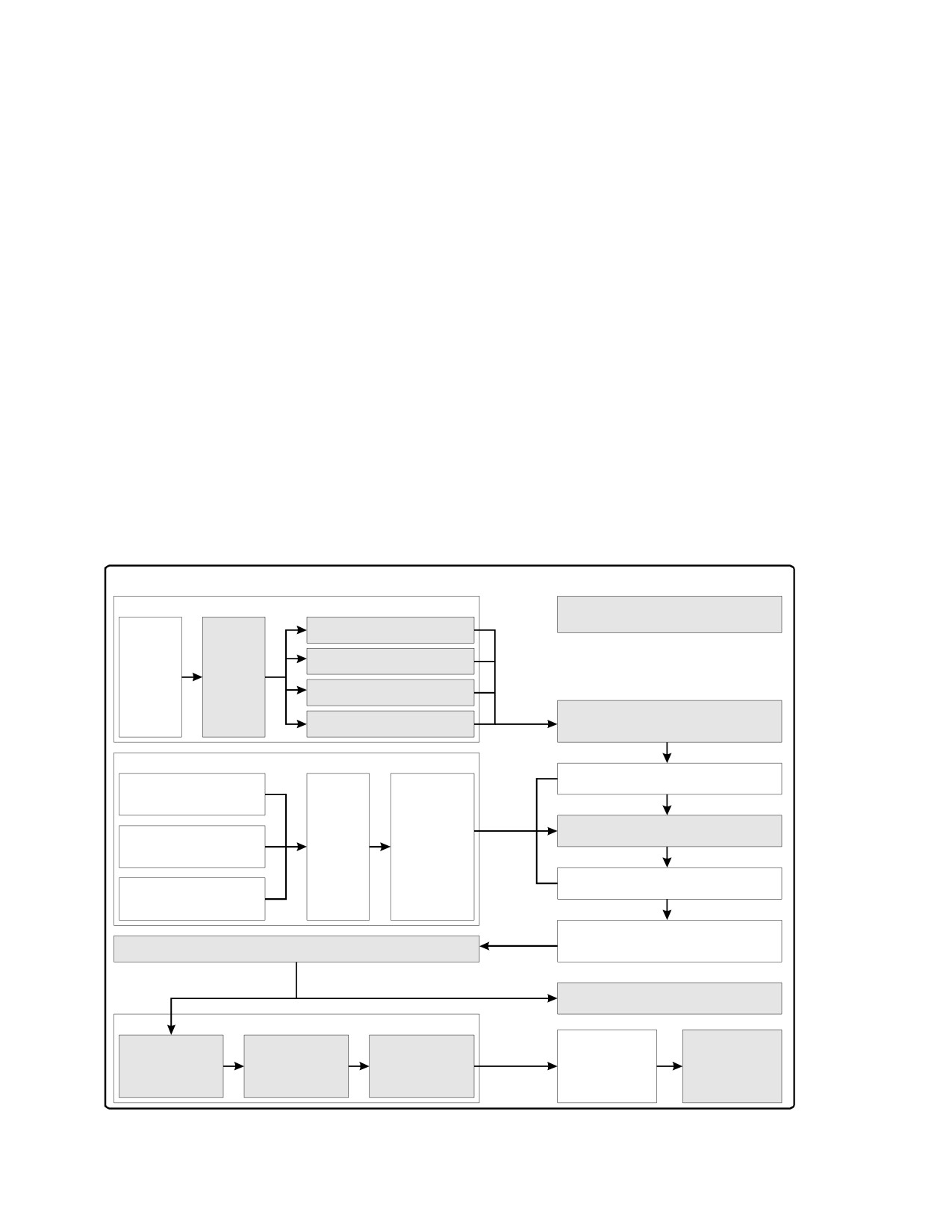
To analyze a TM force's infrastructure, see Figure III-2 for the general
process and Appendix B, Figures B-25 and B-26 for example templates used
during the process. Known TM force infrastructure typically consists of RDT&E
and production facilities, fixed operational facilities, and assessed field operating
areas.
(1) RDT&E and Production. A country's TM RDT&E and production
infrastructure represents a long-term investment in specialized manufacturing,
test equipment, and facilities. TMD IPB analysis against this infrastructure
provides specialized support to potential strike missions intended to disrupt,
degrade or destroy a country's capability to produce ballistic missile systems. To
support this objective, elements of the infrastructure that are unique and
difficult to reconstitute are identified and a detailed IPB of the infrastructure
Adversary TM Force Infrastructure Assessment Process
Assess Required TM Force Infrastructurer
Gray shaded boxes indicate a TMD IPB template should
be generated for this part of the process
Assess required RDT&E infrastructure
Assess required production
TM Force
Decompose
TO&E
each element
Infrastructure
[from TMD IPB
of the TO&E
Assess required national level
Step-3]
by function
operational infrastructure
Assess required field/tactical level
Integrated TM force required infrastructure list
operational infrastructure
Assess Identified/Located TM Force Infrastructures
Correlate identified TM force infrastructure with
Query MIDB for TM force fixed
assessed required infrastructrue
Coordinate
facilities infrastructure using
Integrate and
integrated
functional category codes
deconflict
identified/located
search results
TM force
to develop
Identify unlocated TM Force infrastructure
Query ALE for TM force fixed
infrastructure list
integrated
facilities infrastructure using key
with: JIC, DIA,
identified/
words and MIDB search
country analysts,
located TM
responsible NIMA
force
Assess potential locations for unlocated TM force
imagery office,
Query other hardcopy and on-line
infrastructure
infrastructure
MSIC, NAIC, and
data bases using key words and
list
ONI
MIDB search results
Coordinate integrated TM force infrastructure list with:
JIC, DIA country analysts, responsible NIMA imagery
Current Integrated TM Force Infrastructure List
office, MSIC, NAIC, and ONI
Field operating area assessment
Assess Facility/Area in Detail
HVTs/critical
elements/critical
Equipment located
Perform target system
General facility/area
Facility/area physical
nodes/center(s) of
within the facility/area
analysis of assessed
assessment
structures assessment
gravity of TM force
assessment
TM force infrastructure
infrastructure
assessment
Figure III-2. Adversary TM Force Infrastructure Assessment Process
III-16
during the readiness phase is performed. This analysis is a primary function of
DIA, Missile and Space Intelligence Center (MSIC) and National Air Intelligence
Center (NAIC) and requires specialized engineering expertise and databases.
(a) When developing a detailed IPB of missile-associated RDT&E and
production infrastructure—
• Use all available intelligence resources to determine system
component stockage, associated manufacturing processes and subsystems that
impact on missile operations.
• Identify the critical nodes within the RDT&E and production
complexes such as difficult to replace manufacturing facilities requiring long lead
development time, controlled manufacturing equipment and technology, one-of-a-
kind or high value production or test equipment, and component and system
integration/test points.
• Correlate specific RDT&E and production functions with specific
buildings in a complex. Use MSIC and NAIC assessments of system components,
production flow, manufacturing techniques/processes to develop candidate
facility signatures to support correlations.
• Identify potential RDT&E and production elements that would most
directly impact the conduct of the war. For example, identify facilities that
might support a production surge to increase operational inventories or high
priority weapons modification/development efforts in response to the TMD
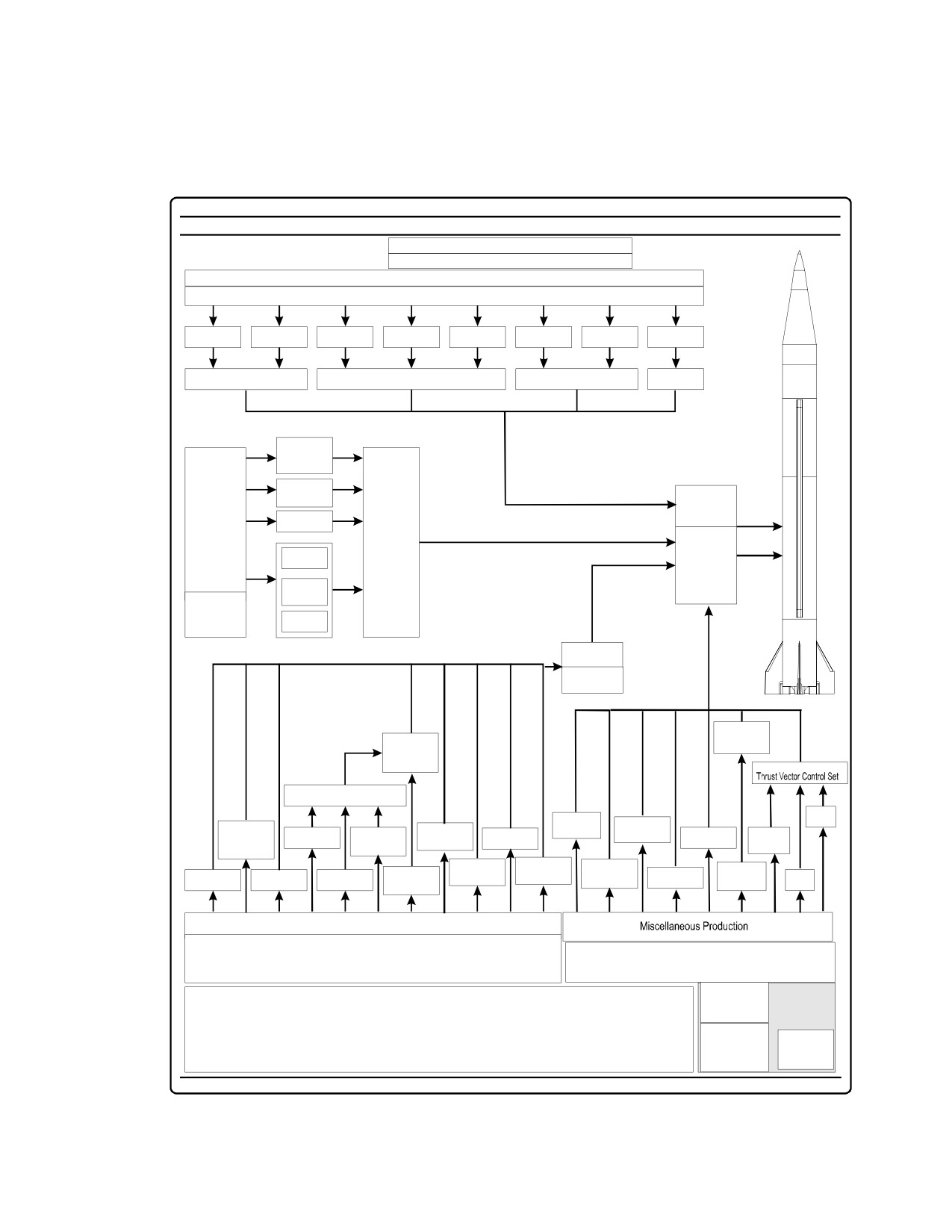
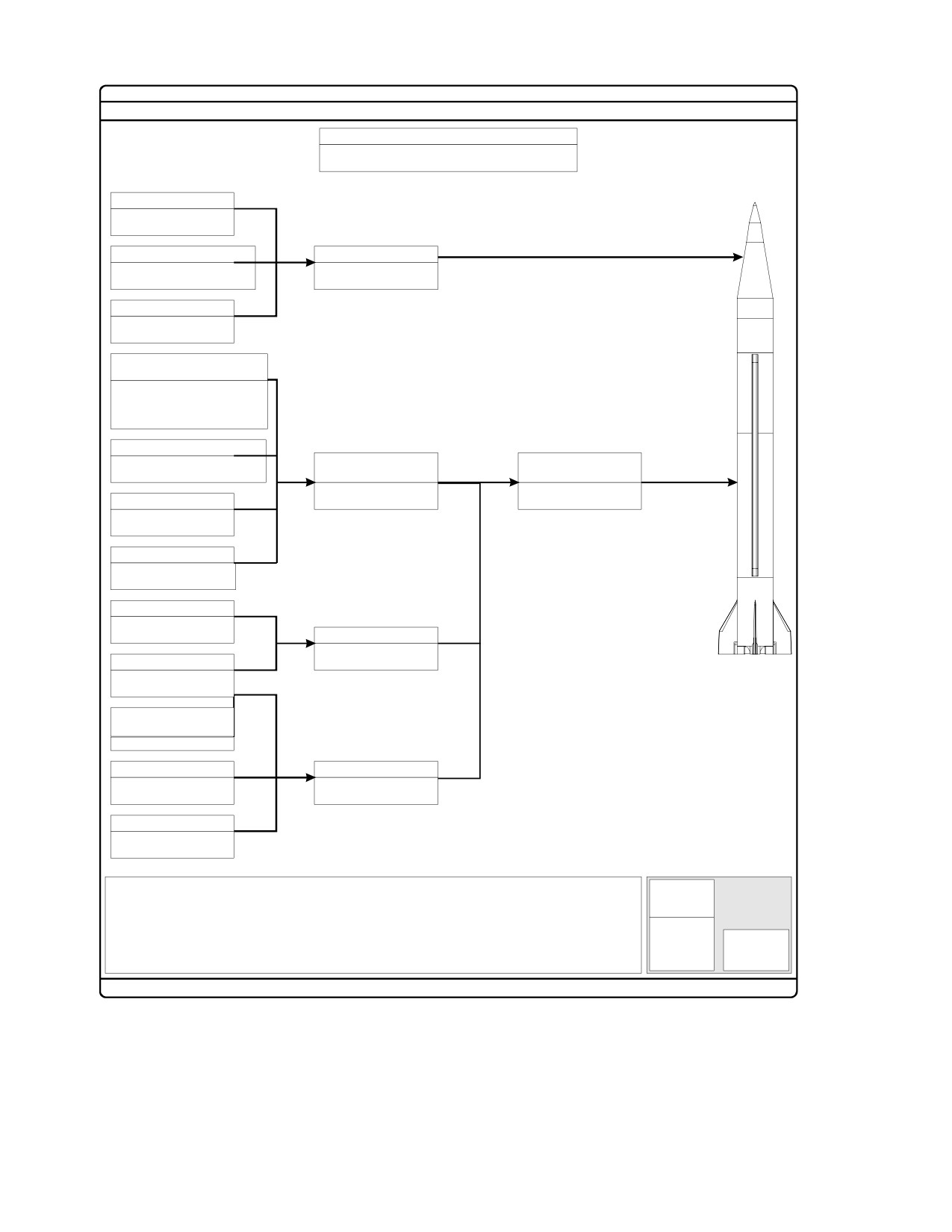
battle. See Figure III-3 for a sample infrastructure and production
decomposition assessment template.
(b) The level of RDT&E and production infrastructure within a
country depends upon the degree to which indigenous production of TMs is
underway. The 5 levels of missile production capability are—
• Complete dependence on import of assembled ballistic missile
systems; the RDT&E and production infrastructure is minimal with few
facilities. Focus on missile logistics and off-the-shelve modifications (that is,
extended range Al Hussein).
• Assembly of missile systems from semi-knock down kits (major
components preassembled); the RDT&E and production infrastructure is
minimal with few final integration and flight test range facilities.
• Assembly of missile systems from complete-knock down kits (missile
shipped in parts with all major components disassembled); the RDT&E and
production infrastructure is significant with multiple component assembly and
test facilities for specialized and critical assembly and test equipment.
• Indigenous production (missile entirely manufactured in-country
from country's raw materials and general products); the RDT&E and production
infrastructure is extensive with multiple component assembly and test facilities
for specialized and critical manufacturing equipment.
• Indigenous development (missile designed and manufactured in-
country from country's raw materials and general products); the RDT&E and
production infrastructure is comprehensive with complete design and test
capability and multiple component assembly and test facilities for specialized
and critical manufacturing equipment.
III-17
(c) Production is characterized by manufacturing functions and
processes. A facility's specific usage varies from country to country. The
following factors will influence a country's actual facility layout and organization:
• Missile system hardware decomposition.
• Production functions such as metal forming and working (rolling,
extruding, stamping/pressing, casting, cutting, milling, machining, etc.), metal
treating and finishing (heat treating, chemical treating, painting, coating/
preparation for storage, etc.), and electronics fabrication (board manufacture,
soldering, component manufacture, cable/harness manufacture, etc.).
• Production labor craft skills (that is, technicians and engineers of
various types, administration and support personnel, etc.).
• Production environments and fit-to-process including but not limited
to general industrial (rolling, welding, etc.), toxic (chemical treatment, etc.),
explosive hazard (explosive loading, etc.), clean (precision fabrication,
manufacturing, etc.).
• Overall production flow (time and motion efficiency and common
sense).
• Test areas.
The desired production rate dictates the degree of parallelism in facilities. For
example, a single machine shop could manufacture all the machined parts in the
TM system; however, actual production is likely grouped by manufacturing
function (part type, size, materials) system component or assembly, etc.
(2) Fixed Operational Infrastructure. During the employment/
sustainment phase, TMD IPB operational infrastructure analysis confirms
operational status, identifies structures, equipment, and functions, tracks and
analyzes deployment patterns, and tracks unit and equipment movements. A
complete analysis of the operational infrastructure involves TMD IPB Steps-2
and -3. Operational infrastructures of interest to the TMD IPB process at all
levels (national, strategic, operational, tactical) are C4I, TM garrisons and ports,
storage areas/maintenance/logistics/depots, training garrisons, and training
areas. At the national/strategic level, flight test areas/sites are of interest. At
the operational/ tactical levels, field operating areas or deployment areas, field
launch areas/sites, field support areas/sites (functions such as—warhead mating,
fueling, and transloading) and field hide areas/sites are of interest.
Infrastructure analysis develops a functional evaluation of facilities and/or areas
(see Appendix B, Figure B-27 for a suggested template.) This functional
evaluation and the mapping of its results for the entire operational
infrastructure helps to develop the critical node analysis of the fixed operational
infrastructure.
(3) Assessed Field Operating Areas. The operational deployment of units
and missile equipment begins from missile garrison and storage areas/depots.
The missile garrison houses the missile force (typically a brigade level unit) with
its associated GSE. It may also have missile and warhead storage areas that
primarily maintain the original missile condition and reliability by controlling
the missile's environment and performing scheduled maintenance and
operational checks. Peacetime deployment areas maintain alert force
operations, hence reveal characteristic terrain and doctrinal practices, which
III-18
probably apply to wartime models. Training areas are good readiness phase
TMD IPB targets to understand enemy practices regarding the use of terrain and
overall threat capabilities. See Appendix B, Figure B-28 for a suggested field
operating area assessment template.
(a) WMD Infrastructure Analysis. In the context of TMD IPB, WMD
infrastructure analysis is limited to those facilities that support production, test,
and storage of chemical, biological, and nuclear warheads for TMs. This
infrastructure is a subset of the overall WMD infrastructure and may include
basic resource and development (R&D), agent production, weapons development,
testing, storage and disposal for delivery systems other than ballistic missiles.
TMD IPB must draw information from the national level agencies (DIA, CIA,
Armed Forces Medical Intelligence Center, etc.) that have the primary
responsibility for this area. Analyze the WMD infrastructure to—
• Locate and monitor operational status of potential warhead storage
facilities and correlate with TMD IPB.
• Locate missile assembly and fueling facilities.
• Determine primary LOCs and establish named areas of interest
(NAIs).
• Determine specific chemical and biological warfare agents available
for TMs and specific warhead types (unitary or sublimation).
• Identify unique TMD indicators (for example, unique canisters)
associated with WMD.
(b) TM Command, Control and Communications (C3) Infrastructure.
A primary function of joint and service (National Security Agency, Joint Warfare
Analysis Center, Air Force Information Warfare Center ["Links and Nodes"
analysis under the CONSTANT WEB program], DIA [MIDB], published
intelligence studies, and TIBS/TRAP broadcasts) information warfare analysis
efforts is detailed analysis of the C3 infrastructure. TMD IPB must use these
intelligence sources and focus on identifying the communications infrastructure
supporting TM operations and correlating the C3 infrastructure location with
other battlespace factors (for example, terrain, fixed infrastructure). C3 data
vital to the TMD IPB are—
• National command centers.
• Locations where the adversary TM target list is developed and
maintained.
• Brigade command posts.
• Landline communications and radio or microwave relay networks.
• Satellite communications (SATCOM) nodes.
• Intercepted mobile high frequency/very high frequency (HF/VHF)
radio communications.
These targets are normally high priority information warfare targets, and it is
vital to receive updates about their status throughout a conflict. A C3 overlay
needs to be built for use in Step-2.2's area limitation analysis.
III-19
(4) Conclusion. As with terrain and weather, express other battlespace
characteristics in terms of their effects on adversary missile and friendly TMD
COAs. The graphic depictions of the other battlespace characteristics developed
during TMD IPB Step-2 provide a template to annotate broad COA text
assessments. Some examples are—
(a) On the operational TM infrastructure graphic, show COA indications
such as—
• The adversary missile force requires prepositioned equipment or
depends on long logistics LOCs to maintain deployed operations.
• The adversary has 3 primary deployment routes from this missile
garrison.
(b) On the probable adversary target set graphic, show implied missile
operations areas to highlight the closest target sets.
e. Step-2.2. - Assess Battlespace Effects on TM Force Capabilities and Broad
COAs. Once the effects of terrain, weather, and the other battlespace
characteristics have been evaluated and defined, combine them into an integrated
product. For TMD IPB this critical integration step is referred to as area
limitation analysis.
(1) Area Limitation Analysis. The area limitation analysis produces a
detailed area limitation product providing a graphic overlay of likely missile
operations areas delineating C4I, TM garrisons and ports, storage areas/logistics/
maintenance/depots, operating areas or deployment areas, field launch areas/sites,
field support areas/sites (functions such as—warhead mating, fueling, and
transloading and terms such as FOL, forward support element, forward operating
base, and transload site), and field hide areas/sites. Also desirable are graphical
overlays that correlate key infrastructures (fixed missile infrastructure, probable
TM target sets, communication networks (landlines, SATCOM, etc.), road
networks, and air defense coverage areas. Automated terrain analysis tools assist
in performing area limitation. See Appendix B, Figure B-29 for example area
limitation assessment inputs.
(2) Automated Terrain Analysis Tools. Automated terrain analysis tools
assist in rapidly evaluating terrain for TMD IPB by integrating features and
general military information that facilitate movement modeling and locational
assessment of mobile targets (see Appendix C). This process combines analytic
assumptions regarding the movement of a target (that is, speed, direction,
destination, and hold times) with the inherent terrain suitability analysis (that is,
road accessibility, elevation, slope, distance from support sites, etc.). Automated
TM terrain analysis is affected by 3 primary factors:
(a) Limited potential TM related operational infrastructure (hide sites,
potential launch sites, etc.) databases.
(b) Limited available digital terrain materials (that is, terrain elevation
data, digital mapping products, digital road network, and features data, etc.).
(c) Difficulty in correlating operational restrictions with existing
terrain databases and determining COAs since TM operations favor use of diverse
terrain.
III-20
Even with automated terrain analysis, some factors may have to be
evaluated through map analysis supplemented by reconnaissance and imagery.
NIMA and DIA produce specialized maps, overlays, and databases to aid in map
based evaluations.
180600Z MAR 00
UNCLASSIFIED
Page 1
Infrastructure Functional Decomposition Assessment
Production Functional Decomposition For:
RED Type 1 TBM
Airframe Production
Stamping
Rolling
Casting
Finishing
Welding
Machining
Rings, Stringers,
Bulkheads &
Rings, Stringers,
Rings, Stringers,
Rings, Stringers,
Panels
Main Structure
Panels
& Brackets
Skirts
& Brackets
& Brackets
& Brackets
Aft Section Structure
Middle (Tank) Structure
Instrument Section Structure
Fins
Meteorological
Data System
Power
Switching
Missile Final
Instrument
Assembly
Section &
Range Unit
Test
Precision
Instrument
Mechanical
Production
Section:
Electrical
Delivery
Computer
Inertial
Checkout
Paint/
Preparation
Inertial
Packing
Electronic
Instruments
Electrical
Miscellaneous
Servos
Precision Parts
Engine Final
Assembly
Mechanical
Checkout
Air Supply
Thrust
System
Chamber
Assembly
Head Assembly
Servos
Conduit
Solid
Heat
Squibs
Propellant Gas
Oxidizer Dome
Injector
Mount
Pneumatics
Tanks
Jet Vane
Exchanger
Assembly
Assembly
Generator
Miscellaneous
Lines & Tubing
Miscellaneous
Manifold
Turbo Pump
Gas Generator Fuel Manifold
Thrust
Valves & etc.
Valves
Cables
Lines
Chamber
Valve
Engine Production
Extruding
Stamping
Matching
Heat Treating
Rolling
Casting
Finishing
Chemical Treating
Extruding
Stamping
Matching
Heat Treating
Explosive Loading
Rolling
Casting
Finishing
Chemical Treating
Major
Notes:
Component/
RED Type I TBM is a SCUD Class TBM employing a liquid propellant single stage design. The guidance, navigation, and
Key
Function
control system employs simple inertial instruments. The high explosive warhead uses a mixture of trinitrotoluene and
Production
cyclotrimethylenetrinitramine.
Lesser
Processes or
Component/
Location
All manufacturing processes use simple 1960’s era technologies available on the open world market.
(BE Number)
Function
TMD IPB Template -- 18 March 2000
UNCLASSIFIED
Local Reproduction Authorized
Figure III-3. Infrastructure Functional Decomposition Assessment
Template (1 of 2)
III-21
180600Z MAR 00
UNCLASSIFIED
Page 2
Infrastructure Functional Decomposition Assessment
Production Functional Decomposition For:
RED Type 1 TBM
Warhead Case Fabrication
RED Machine Shop*
(BE 0555AA009)
Explosives Casting & Repacking
Warhead Assembly
RED National Explosives Plant
Joe’s Warheads ‘R’ Us
(BE 0555AA009)
(BE 0555AA019)
Fuze Assembly
Unlocated
Gyro & Accelerometer Fabrication,
Integration, & Calibration
RED National Gyro Plant
(BE 0555AA001)
John’s Gyro Plant
(BE 0555AA002)
Electronics/Sensor Manufacturing
RED National Electronics Plant
Instrument Section
Missile Final Assembly
(BE 0555AA005)
Assembly
Unlocated
RED National Missile Plant
Precision Machine Shop
(BE 0555AA018)
RED National Machine Shop
(BE 0555AA003)
Flight Battery Fabrication
RED National Battery Plant*
(BE 0555AA007)
Airframe Rolling/Welding
Smith’s Welding and Rolling
(BE 0555AA012)
Airframe Assembly
RED National Missile Airframe
Airframe Casting/Machining
Plant
RED Machine Shop*
(BE 0555AA009)
Engine
Stamping/Rolling/Casting
Unlocated
Engine Machining
Engine Assembly
RED Machine Shop*
RED National Missile Engine
(BE 0555AA009)
Plant
Engine Subassembly
Unlocated
Notes: Facilities with an asterisk are assessed and not confirmed to be performing the assessed production function.
Major
Component/
Function
Key
Production
Processes
Lesser
Or
Component/
Location
function
TMD IPB Template -- 18 March 2000
UNCLASSIFIED
Local Reproduction Authorized
Figure III-3 (Continued). Infrastructure Functional Decomposition Assessment
Template (2 of 2)
III-22

Chapter IV
STEP-3: EVALUATE THE TM FORCE
1. What Is It?
a. Definition. Step-3 determines TM force capabilities and the doctrinal
principles and tactics, techniques, and procedures (TTP) TM forces prefer to
employ.
b. Desired End Effect. The desired end effect of Step-3 is to know the TM
force capability given the current situation. This is achieved by developing
models that accurately portray how TM forces normally execute operations and
how they have previously reacted in similar situations.
2. How To Create TM Models
Evaluating an adversary involves creating models and identifying
capabilities and uses the common understanding of the battlespace established in
TMD IPB Step-2. TM models depict how TM forces prefer to conduct operations
under ideal conditions and are based on the TM force's normal or "doctrinal"
organization, equipment, doctrine, and TTP. They result from a detailed study of
the TM force and address both its temporal and spatial factors. The model
construction can involve in-depth analysis requiring data and expertise from
national and theater intelligence organizations. Construct models before
deployment and include both graphical depictions and text descriptions of the
TM tactics and employment options. Continue to evaluate the TM force after
deployment and update the TM models as required. TM models consist of
doctrinal templates, description of preferred TTP and options, and high value
target (HVT) identification (Figure IV-1).
Step 3 - Evaluate the TM Force
Step
Products
Major Consumers
TM Organizational/C4I Assessment
Command Intelligence
Staff
TM Equipment Assessment
Command Operations
Staff
Step-3.1
Create TM Models
Collection Management
Staff
JFACC and Immediate
TM TTP Assessment
Staff
AADC and Immediate
Staff
HVT Assessment
Figure IV-1. Step 3 - Evaluate the TM Force
IV-1
3. Doctrinal Templates
Doctrinal templates illustrate the TM force's deployment pattern and
disposition when not constrained by battlespace environmental effects. They are
scaled graphic depictions of TM force dispositions for a particular type of
standard operation and are constructed through an analysis of the intelligence
database and an evaluation of the TM force's past operations. To develop
doctrinal templates, determine how the TM force organizes for combat and how
it deploys and employs its units and various TM assets. Observe patterns in task
force organization, timing, distances, relative locations, groupings, and use of the
terrain or weather. Focus on major elements as well as individual HVTs.
Conduct a comprehensive analysis/OB of TM force capabilities (organization,
equipment, TTP, and the temporal and spatial factors) by breaking the
capabilities down into the following components:
♦ Composition - Identification and organization of TM units.
♦ Disposition - Physical location of TM units.
♦ Strength - Unit description in terms of personnel, weapons and equipment.
♦ Tactics - Force and unit level tactical doctrine.
♦ Training - Individual and unit level.
♦ Logistics - Supplies and LOCs.
♦ Combat Effectiveness - Abilities and fighting quality of a unit.
♦ C4I OB - Unit network, equipment, and personnel makeup and array.
♦ Miscellaneous Data - Additional intelligence needed to "know your enemy."
Use the MIDB to begin the analysis but thoroughly evaluate all available
databases and published defense intelligence reference documents (DIRDs), and
directly interface with national intelligence organizations throughout the
process. Doctrinal templates integrate a mixture of graphic adversary
representations for both the force and unit level combined with descriptive text
(that is a force level coordinated attack plan is expanded by a template subset of
individual TEL units deployed throughout the battlespace). Tailor doctrinal
templates to the type of friendly TMD mission being pursued. Templates for an
active defense mission focus on potential and likely TM launch areas, likely TM
targets, raid size, maximum and minimum number of missiles per target, types of
warheads, and so forth. Templates for an attack operation mission focus on an
adversary's TM marshalling areas, likely launch areas, TELs, and C2 facilities
supporting TM operations.
To develop the set of TMD IPB templates, start at the TM force level and
work down to the individual TM firing battery. Modify generic template sets to
fit the particular TM force and the available intelligence data by adding new
unique templates and omitting or adding data fields as required. If a crisis
IV-2
occurs and templates are not available before deployment, develop a minimum
subset of the most critical templates for the deploying or deployed TMD unit.
See Figure B-30 to determine which templates are the most critical for each
specific TMD mission.
Once deployed, continually update templates with the latest intelligence.
The following describes example doctrinal templates, including attributes,
contents, and instructions. These templates provide a graphic overview of the
TM organizational structure and force level OB. This helps visualize both the
organizational structure and the national through lowest TM unit C2 structure.
There are no prescribed steps for doing these templates. Use intelligence
databases and expertise from responsible organizations (DIA, MSIC, NAIC, and
National Ground Intelligence Center [NGIC]).
a. TM Organizational/C4I Templates. These templates define the
composition and strength of the TM force and define the C4I system used to
control those units.
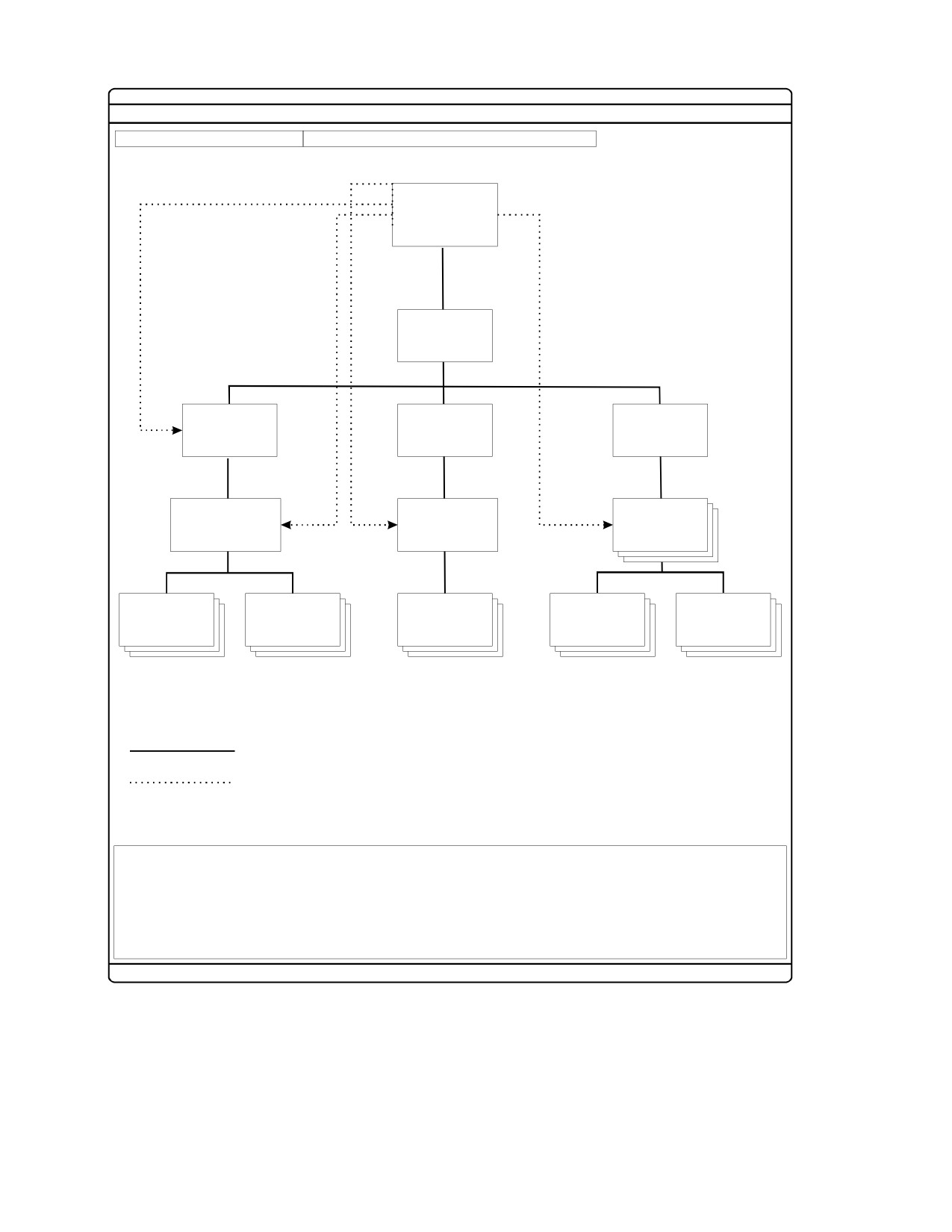
(1) The first template in this series is a national level TM organizational
structure (Figure IV-2). The organizational structure delineates the flow of
control for peacetime and crisis/wartime. Since most countries control TMs as
strategic assets, the line of control begins at the highest level of execution
authority in the country and extends to the lowest TM unit level. If known, write
key individuals' names, unit designators, skip echelon communication, unit
composition, etc., on the graphic.
(2) The second organizational template graphically depicts the brigade
level table of organization and equipment (TO&E) by providing a functional
representation of the TM force, annotating strength in terms of personnel and
equipment, and providing detail on specific units assigned at the brigade,
battalion, and battery levels (Figure IV-3 for a battalion level example). Include
known specific unit designators and locational data, if available. TM units
worldwide use a high level of operations security (OPSEC) and communications
security (COMSEC) that limits available intelligence and hinders construction of
this template. Initiate and maintain the database for this template using the
"facilities, units, and equipment views" in the MIDB and supplement with all-
source analysis. One of the most important techniques in constructing the
template is a detailed imagery review of the TM unit's home garrisons and
supporting depots. The garrison worksheet (TMD IPB Step-2) provides a guide
for confirming the functional and equipment status of TM units. Identify the
status of those functions and equipment as confirmed, probable, likely, possible,
or doubtful as defined in Section-3 of Appendix A. In addition, consider potential
modifications, such as a special weapons storage function being accomplished by
a TM force. Compile results into a new template representing the current
assessment of the particular TM force under analysis.
(3) The final template provides a graphical C4I breakout of the
operational communications structure from the national level down to the
battery execution level. It is important to graphically depict the communications
connectivity throughout the brigade equivalent structure. As with the other 2
templates, write as much detail as possible on the template.
IV-3
180600Z MAR 00
UNCLASSIFIED
Page 1
TM National Level Organization and C2 Template
Descriptive Title:
National Level Organization and C2
RED NCA
President for Life
Zodda
RED General Staff
General of the Army
General Bilyeu
RED Army
Air Force
RED Navy
Chief of Staff
Chief of Staff
Chief of Staff
General Kirmse
General Campbell
Admiral Woodard
Air Force TM
TM Headquarters
Army TM Headquarters
Headquarters
TM Squadron
TM Brigade Commander
TM Group Commander
Commander Navy
Colonel Patykula
Colonel McManus
Captain Lucas
93rd TBM Battery
101st TBM Battery
1st TM Flight
22nd TM Flight
1st TM Flight
Headquarters
Headquarters
Headquarters
Headquarters
Headquarters
Major Caruso
Major Starkey
Major DeLong
Commander Romano
Commander Jenkins
TM Battery Commander
TM Battery Commander
TM Flight Commander
TM Flight Commander
TM Flight Commander
Normal C2 Path
Skip Echelon C2 Path
Notes:
1. President for Life Zodda can use skip echelon communications to bypass national and service level headquarters in the event
those elements become inoperable.
2. All target selections require RED Presidential written signature
3. Targets are typically preassigned during peacetime and require 24 to 48 hours from decision to execution during wartime.
4. Targets not preassigned during peacetime require additional national level staff and field targeting staff work and take an additional
12 to 24 hours over the standard targeting cycle of 24 to 48 hours.
TMD IPB Template -- 18 March 2000
UNCLASSIFIED
Local Reproduction Authorized
Figure IV-2. TM National Level Organization and C2 Template
IV-4
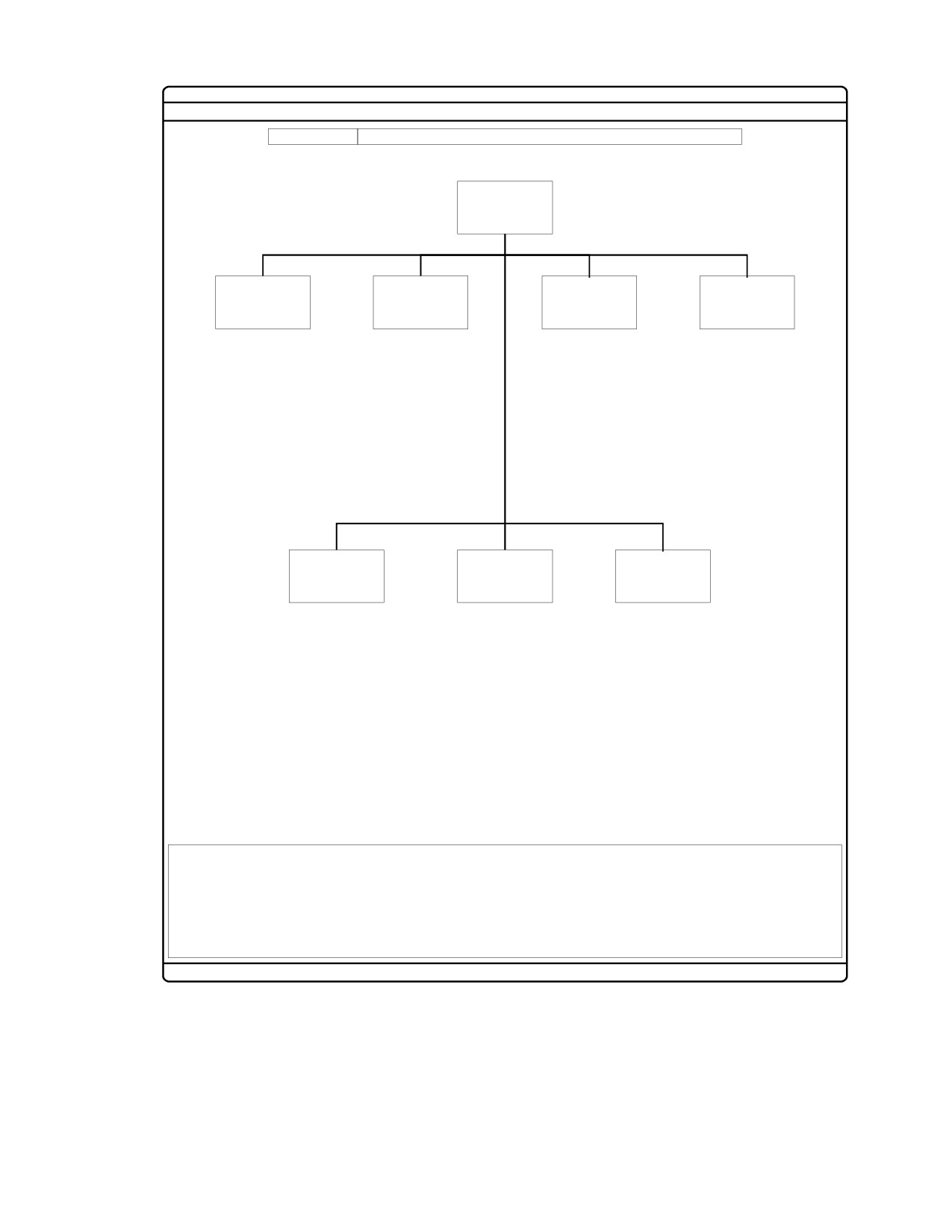
180600Z MAR 00
UNCLASSIFIED
Page 1
TM Unit Level Organization and C2 Template
Descriptive Title:
1st RED TM Battery TO&E
1st RED TM
Battalion
Headquarters
Engineer
Technical Support
Supply / Services
Company
Company
Company
Company
Equipment
Equipment
Equipment
Equipment
1 Fire Control Van
1 Bulldozer
1 Resupply Vehicles
2 Radio Vans
2 Radio Vans
2 Trench Machines
2 Radio Vans
2 Utility Vehicles
1 Survey Vehicle
1 Survey Vehicle
2 Utility Vehicles
1 Security Vehicle
2 Utility Vehicles
2 2-ton Cargo Trucks
5 5-ton Cargo Trucks
4 Water Trucks
1 Security Vehicle
1 5-ton Cargo Trucks
1 Security Vehicle
3 Field Kitchens
4 Generator Trailers
8 5-ton Cargo Trucks
ALPHA
BRAVO
CHARLIE
Firing Battery
Firing Battery
Firing Battery
Equipment
Equipment
Equipment
3 Missile Launchers
3 Missile Launchers
3 Missile Launchers
1 Resupply Vehicle
1 Resupply Vehicle
1 Resupply Vehicle
1 Fire Control Van
1 Fire Control Van
1 Fire Control Van
1 Radio Van
1 Radio Van
1 Radio Van
1 5-ton Cargo Truck
1 5-ton Cargo Truck
1 5-ton Cargo Truck
2 Utility Vehicles
2 Utility Vehicles
2 Utility Vehicles
1 Security Vehicle
1 Security Vehicle
1 Security Vehicle
Notes:
1. Field medical services are provided by the brigade
2. The headquarters company is capable of assuming control of any of the firing batteries if required.
TMD IPB Template -- 18 March 2000
UNCLASSIFIED
Local Reproduction Authorized
Figure IV-3. TM Unit Level Organization and C2 Template
IV-5
b. TM Equipment Templates. In terms of equipment, a TM force has a
missile system, launcher, fire control, and GSE. Equipment template detail
varies significantly depending on mission requirements and the time and depth
of the TMD IPB analysis. They address composition, strength, logistics, and
force effectiveness factors from the OB analysis. To meet this requirement,
develop a set of quick reference templates for the most critical data. More
detailed templates may be developed later for all other equipment areas.
(1) Missile Data System. This template provides a quick reference format
for key TMD mission parameters and addresses critical information
requirements for the TMD IPB. Required missile system data varies between
TMD mission areas (see Appendix B, Figure B-31). Typical data is photograph,
external line drawing with dimensions, internal line drawing annotated with
propellant type and number of stages, key performance, parameters/
characteristics, warhead data including mass and type, flight trajectories
(maximum, 2/3 maximum, and minimum ranges), nominal reaction times, and
median in-flight signature data. Tailor the data template to the specific country
of interest (for example, available warhead types), and augment with textual data
such as missile descriptions and operational status. MSIC, NAIC, and Office of
Naval Intelligence (ONI) are responsible for developing detailed missile
engineering data. This data is distributed in missile handbooks, detailed systems
reports, engineering reference documents, and spot reports. Data and missile
expertise is also accessible through on-line sources such as INTELINK.
Published DIRDs or direct interface with the appropriate intelligence center
provide the highly detailed missile design information (see missile R&D
infrastructure discussion in TMD IPB Step-2) needed for detailed peacetime IPB.
There are 2 TMD IPB critical analysis areas that go beyond the general
information requirements covered by the quick-reference missile equipment
template. The first area is evidence of modified or improved missile system
capabilities discovered during the TMD IPB. It is unlikely that an adversary
could develop and deploy a new missile system for which there is no intelligence
data. However, it is possible that an adversary may be able to integrate
modifications or improvements to an operational missile for use during a crisis
or conflict that have gone undetected by intelligence systems. The primary
modification concerns are performance (changes to an existing missile's range/
payload capability), lethality (change or development of new warhead options),
and defense penetration (changes to the missile's nominal operation, signature,
or tactical employment). Defense penetration operations are likely to include
TM tactics and missile equipment changes, thus will become critical TMD IPB
issues. Integrate MSIC, NAIC, and ONI technical expertise into the TMD IPB
process to address missile technical issues.
The second important missile consideration for TMD IPB, particularly for
the active and passive defense missions, is the specific warhead options available
to a country. Specific warhead options are defined within the intelligence
databases and reference sources supporting the TMD IPB. However, because of
the particular importance of this area for the TMD IPB, consider the following
questions:
(a) Has the adversary weaponized nuclear, biological, or chemical
(NBC) warheads for TMs?
IV-6
(b) Does the adversary have multiple warhead options? Which ones
are better suited for specific targets?
(c) Does the adversary have advanced warhead options (that is
terminal or anti-radiation homing)?
(d) Do a specific country's warhead systems have any unique
employment constraints?
(2) Launchers and GSE. It is vital to analyze certain TM vehicles for
function, value, mobility characteristics, signatures, imagery keys, and other
purposes. This aids in determining HVTs and identifying TM force activity in
imagery searches. In some cases, such characteristics provide visual, infrared,
and radar recognition guides for attack operations assets. Begin template
development (time and resources dictate scope) by identifying the TM force
vehicle complement (see Appendix B, Figure B-32). Vehicle types to consider in
the analysis are missile launcher, missile handling equipment, missile checkout
equipment, missile support equipment, missile fueling equipment, and site
survey equipment. Collect data from applicable DIA reference documents, the
MIDB "equipment view" and the responsible analysts at DIA, NGIC, MSIC,
NAIC, and ONI. A suggested vehicle template is provided at Appendix B, Figure
B-33. Insert data and applicable graphics as needed.
The most important vehicle for TM operations is the missile launcher.
There are three primary types of TM launchers:
(a) TEL - Self-powered vehicle with integrated launcher erector
mechanism and on-board equipment compartments and possible internal launch
control capability
(b) Mobile Erector Launchers - Separate towing vehicle required;
typical configuration is missile erector-launcher on flatbed trailer; mobility is
generally more restrictive than a TEL.
(c) Launch Platforms - Aircraft (cruise missiles and TASMs) and naval
vessels (cruise missiles) are the primary launch platforms available for launching
TMs.
A critical missile launcher issue is the possibility of the adversary
employing launcher systems not previously included in intelligence estimates.
This employment could take the form of a country having a larger number of
launchers of a known type—either indigenously developed or purchased—than
previously estimated or indigenously developing a previously unidentified
launcher system. Such systems could span the spectrum from a simple fixed
launcher or a simple TEL system to more sophisticated TELs. Analysts should
also consider the potential use of vehicles modified to support missile operations
such as one that integrates missile checkout equipment into a single vehicle
specifically to reduce the number of support vehicles used in missile operations.
Communications between these support vehicles and TM launchers are usually
via tactical wire. TM forces may also use radio frequency communications that
increases the possibility of detection by intelligence sources. Some TM missiles
IV-7
(ASCMs and TASMs) use radar systems and require at least a search/surveillance
radar; others require a tracking and fire control radar. Radars are detectable
when they emit, which allows them to be geographically located for attack
operations assets. Their locations also imply operating areas for the launchers
and other supporting functions. The destruction or disruption of these radars
will severely impede a TM unit's operations.
Some TM units employ organic or local air defense equipment in support
of TM operations. Depending on the situation, the inclusion of air defense
equipment templates is important to identify these assets for attack operations.
Use standard air defense equipment data (available in the MIDB or within
standard references) as a data source.
c. TM TTP. TM TTP templates show the deployment pattern, disposition,
tactics, training, and logistics OB factors in graphic, matrix, and text form. They
describe the major operations, associated timelines, and options should an
operation fail (branches), or subsequent operations should it succeed (sequels).
Doctrinal TTP template development for TM operations is vital in the IPB
process. Depict a TM force's preferred TTP graphically and include text
descriptions. This aids in mentally wargaming the operation's duration during
TM COA and situation template development. Displaying the functions of an
operation in time-event charts to show how the TM force normally conducts an
operation is another technique. For example, while it is difficult to depict a large
scale TMD operation graphically, the time relationships between the various
elements and their normal composition can easily be described in a time-event
chart, narrative, or matrix format. The description addresses characteristic
signatures, timelines and phases of the operation (operations, movement, and
support), points where units transition from one formation to another, and how
the different types of TM equipment contribute to the operation's success.
Describe equipment in enough detail to allow later identification of HVTs and
high priority targets (HPTs). Since the target's value usually varies with its role
in each phase of the operation, ensure that each phase is separately examined.
The description of the TM force's TTP is developed from an evaluation of its
doctrine and past or current operations. Include a description of the branches
and sequels normally available to or preferred by the TM force should the
depicted operation succeed or fail. Examine the basic scheme of operations and
for each, check how each type of equipment 'fits in' or provides support. Tag key
events or positions on the template (that is, describe the TM force's normal
reaction to a friendly attack operation).
(1) TM Attack Objectives. Consider political and military factors, TM
weapons system and warhead capabilities, and intelligence available to the TM
force to guide target selection when analyzing TM attack objectives. TMD IPB
Step-2 summarized the important factors impacting the analysis of TM attack
objectives. The suggested attack objective worksheet (see Appendix B, Figure
B-34) assists in systematically addressing the important issues impacting TBM
employment. Available intelligence rarely supports stating TM objectives as
facts, so qualify assumptions with standard confidence levels (confirmed,
probable, etc.).
(2) TM Tactics. Developing a detailed assessment of the TM force's
tactical operations concept is a critical factor in separating the individual
activities within the battlespace. The aspects of the TM tactics model are—
IV-8
(a) Functions Doctrinal Template. It provides a graphic
representation of TM operations (see Appendix B, Figure B-35) and begins with
the missile garrison and the missile/warhead storage depot (fixed
infrastructure). It illustrates the multi-axes movement to the deployment area
where operations are geographically dispersed. Dispersing versus centralizing
operations enhances TM survivability at the force, brigade, and battalion level.
The generic operation template implies the following functions:
• C2
• Storage
• Missiles, warheads, propellants.
• Missile transporter loading and fueling at the FOL.
• TEL loading, TEL hide, launch site setup, launch operations, fire
control.
• Support and services, security/defense.
• Movement and transportation and engineering support (optional).
Breaking down TM operations helps in understanding TM
dispositions. A deployed TM force is typically brigade-sized and spread out into
battalion-sized deployment areas. Functions are normally redundant within the
battalion-sized deployment areas in order to minimize concentration of units,
scatter the vehicle movement pattern and increase the effectiveness of
camouflage, cover and concealment measures.
The functions template is based on the TM force, in line with
operational doctrine, dispersing throughout the battlespace to enhance
survivability and effectiveness. The variation in the model shows functions
centralized in one location. For example, some countries will centralize some
missile support functions (storage, transloading, refueling, etc.) in large
underground facilities (UGFs). This tactic significantly reduces the number of
vehicles deployed in the battlespace, but gives attack forces a greater
opportunity to significantly disrupt operations if the centralized location is
successfully identified and attacked. Examine existing historical exercise data
and focus on the employment of support assets as well as the launcher. Support
asset exercise and training indicate a TM force's preference toward either field-
dispersed or centralized operations. Terrain and infrastructure analysis (TMD
IPB Step-2) also indicate battlespace suitability for 1 model or the other. The
basic model can serve as a starting point for other missile systems, such as solid
propellant systems, that eliminates the need for propellant storage and fueling
functions.
(b) Dispersed Deployment Estimate. Develop this estimate for the
operational brigade level. Determining the distances between units/functions
requires all source analysis, terrain delimitation and tactical judgement. Focus
all-source analysis on doctrinal information, typically contained in human or
communications intelligence data, combined with exercise/training pattern
analysis. Draw terrain factors supporting dispersed deployment doctrine from
the integrated terrain analysis (TMD IPB Step-2).
IV-9
(c) Time-phased Factors. Analyze the time-phased factors of the TM
operation. Develop timelines for all TM operational phases in order to correlate
the time and distance factors for TM functions being executed on the battlespace.
The TM force's objectives impact the TM time-phased factors. The worksheet at
Appendix B, Figure B-36 includes time-phased factors and target/weapon/
warhead correlation. Important TM time-phased factors are—
• Time-of-day considerations.
• Missile launch and arrival timelines.
• Execution timelines for specific operations.
Definition of these 3 elements requires detailed analysis of the
adversary's doctrinal and technical capabilities. To examine time-phased
execution, time-event charts and time-pattern analysis charts are useful
techniques. Time-event charts, depict the sequential flow of the steps needed to
execute a specific operation and are constructed for any level of execution. For
instance, a time-event chart shows the broad sequential steps a TM force takes to
deploy from garrison. For a much more specific operation, such as a missile
setup and launch, the sequential steps would be much more detailed. The
purpose of defining steps to this level of detail is to have a technical
understanding of the operational requirements, that drive the timelines. This
understanding will support estimating minimum timelines, pacing events, and
potential areas where changes to or omission of specific steps could impact
timelines and/or performance. Examples of detailed time-event charts are
provided at Appendix B, Figures B-37 and B-38. The second technique, a time-
pattern analysis chart, supports specific operation scheduling and timing
analysis, such as the pattern associated with missile launch history. It is an
analysis tool to estimate when specific operations need to occur in order to meet
the pattern of observed launch activity.
(3) Operation Doctrinal Templates. These templates show the
relationships between the TM types of operations. Begin template development
with comprehensive operation branches and sequels diagram (see Appendix B,
Figure B-39). This diagram forms the basis for doctrinal template development
of specific operations. An alternative to the branches and sequels technique is to
detail the conditions for possible variations to the basic operation doctrinal
template. Use the TM functions doctrinal template and identify a series of
possible TM operations. Next, graphically and in text form depict the specific
operations required to perform the function onto doctrinal templates.
These templates represent the entire TM deployment sequence. Develop
operation templates at the lowest individual unit level required to perform the
particular function. Breakdown to this level is required in order to identify
specific signatures associated with the TM operations and the HVTs required for
the operations. Integration of these operation templates into a TM battlespace
situation template is done in TMD IPB Step-4 for specific COAs. Use all-source
intelligence analysis to develop operation doctrinal templates and accurately
depict times and relative distances. Notations describe the activity and
associated characteristic signature patterns and help to identify HVTs and their
locations in time and space. Several combat operations TTP templates may be
needed. Begin development of TM operation doctrinal templates with a specific
IV-10
missile system and perform detailed analysis of the required operations and
characterize each basic operation. Integrate terrain and equipment information
particular to the specific operation. Missile specific manuals (foreign material
exploitation information), the intelligence center responsible for the missile
system, and country exercise data (missile system operation and employment
requirements-based assessments) are good sources of information.
Tailor generic missile system templates to the country of interest.
Integrate terrain factors (TMD IPB Step-2) that dictate changes to the generic
template. Overlay country-specific TO&E data to identify specific variations in
support equipment and consider different technical capabilities of the
equipment. The basic components are a graphical depiction of the operation, a
functional description, and characteristic signatures addressing site
configuration, surrounding environment, accessibility, equipment, and movement
patterns. To illustrate, a series of generic TBM templates follow:
(a) TBM Garrison and Missile/Warhead Storage Depot. Operational
employment begins at the TM garrison and storage depot. The TM garrison is
normally the peacetime location of the personnel, the brigade's launchers and
GSE and can vary significantly in composition. Most TM garrisons include
hardened storage bunkers or tunnels to house critical equipment, particularly
launchers, and vehicle maintenance and small unit training areas. Normally,
missile systems and warheads are not stored at the garrison (except for some
training and emergency alert supplies), but maintained in storage depots. A
typical storage depot includes hardened bunkers for separate airframe and
warhead storage and assembly/checkout areas for routine and major
maintenance.
(b) TBM Field Deployed Storage Sites. TM units usually use
dispersed storage locations for field operations. Missile systems are normally
stored unfueled (liquid propellant only), but in a ready condition with only
limited additional checkout required. Missiles are normally stored on missile
transporters or triple carry frameworks. Warheads, especially NBC types, are
usually stored separately. Propellant is stored in prepositioned storage
containers, or storage containers carried on cargo trucks. Liquid-propellant is
stored in standard-sized containers or oversized storage tanks.
(c) TBM FOL. Missile preparation in the field is done at the FOL,
which is typically a deployed area of operations. The FOL site is normally
dispersed for increased security and vehicles use cover, concealment, and
camouflage. It can encompass several square km, though consolidating the FOL
functions into a single location (a UGF or an above ground building or cleared
area), is an alternate possibility. The primary field preparation activities are
missile and warhead mating, limited missile checkout/maintenance, missile
transporter loading (direct TEL loading at FOL is also possible), and missile
fueling operations (liquid-propellant systems only).
(d) TBM Transloading Area. This is the location where fueled, ready
missiles are loaded onto the TEL. TEL loading can be done at the FOL, but for
OPSEC reasons the doctrinal template depicts this function performed at a
separate field location or UGF. Develop a separate timeline template for the
transloading operation detailing specific steps.
IV-11
(e) TBM Hide Site. The TM hide site refers to TEL cover and
concealment positions with the most important locations being those that
support hiding pre- and post-TEL launches. Based on general operational
practices, these sites are located within a few km and several minutes travel
time of a launch site. This pattern analysis helps to establish the current
position of the TEL after a launch. Use analysis of wartime launch activity to
revalidate or modify patterns and distance/time estimate. TM forces also employ
long-term hide sites that are at greater distances from the launch areas but
usually within tens of km from support areas. Routine TEL maintenance is
probably performed at long-term hide sites.
(f) TBM Launch Site. The TM fire position is referred to as the
launch site. TMD IPB uses terrain analysis to determine potential launch sites.
Characteristic signature guidelines provide constraints for the area limitation
analysis of potential launch areas. However, the combination of broad TM
flexibility and limited fidelity terrain data make classification of launch sites a
difficult and tenuous process.
(g) TBM Launch Operations. An actual missile launch operation
takes less than a minute once all prelaunch set activity is complete, though
terrain, weather and TTP constraints can impact the launch procedure. Cable
and hoses connecting the launcher to the missile are normally replaced after
each launch, so it takes minimally several minutes before the launcher can begin
travel. Preparing the launcher for travel can be an automated sequence.
(h) TM Support and Services. Combat service support is the total
logistical and administrative effort required to maintain the TM capability to
fight. Its functions include missile, warhead and propellant (if applicable)
storage, vehicle maintenance support, medical, mess, supply, etc. Very little
missile maintenance occurs in the field.
(i) TM Security/Defense. Security/defense measures that deployed
missile units primarily use are passive defense measures (against visual and
electronic detection), physical site security, and air defense (either through
organic or non-organic assets). Protection of TM assets against sensors and air
and ground attack assets, including SF, is a high priority because of their
strategic value. A TM unit's inherent small unit mobility, dispersed operational
modes, and passive and active defense measures (camouflage, concealment, and
deception (CCD) techniques) help provide missile force survivability. Analysis of
terrain cover and concealment factors (TMD IPB Step-2) impact missile
operating area selection. Planned movement under conditions of low visibility,
equipment siting, and light and noise discipline complicate visual detection. A
wide range of camouflage techniques (paints, nets, covers, and obscurants) are
integrated into missile operations. The use of decoy launchers, radar corner
reflectors, and other techniques vary in fidelity and scale. Integrate analysis of
OPSEC CCD practices throughout the doctrinal template development process.
TM units, lightly armed, perform physical security against US and allied SF
operations with security patrols, defensive perimeters and possibly listening/
observation posts.
COMSEC is a demonstrated strength of TM forces worldwide because
they use landlines and couriers and avoid radio communications in wartime.
IV-12
When they do use electronic communications equipment, they employ directional
antennas, low power VHF radios, unscheduled transmission patterns of short
duration and coded messages.
d. HVT Identification. HVTs are assets that the adversary commander
requires for successful completion of the mission. Identify HVTs from database
evaluation, doctrinal and TTP templates, supporting narrative, and the use of
tactical judgement. Develop the initial list of HVTs by mentally wargaming and
thinking through the operation. Consider how the TM force will use each type of
equipment to accomplish specific operational functions. Use target relative
value matrices to evaluate HVTs. Target value matrices measure a target's
relative worth, gives the rationale for attacking each type of target, and the
resulting effects on the operation.
First rank order the operational functions the TM force is performing (see
Appendix B, Figure B-40). This identifies assets that are key to executing the
primary operation or are needed to satisfy decision criteria or initial adoption of
branches and sequels. Next, determine how the TM force might react to the loss
of each identified HVT and consider its ability to substitute other assets or adopt
alternate branches and sequels to the operation. To develop target sets, group
important assets into the following categories:
(1) C3.
(2) Fire support (includes missiles, TELs, and support).
(3) Air defense.
(4) Engineer.
(5) RSTA.
(6) NBC (includes support elements and weapons).
(7) Radio electronic combat or EW assets.
(8) Bulk fuels (storage and refueling assets).
(9) Missile and warhead storage/distribution points.
(10) Maintenance and repair units.
(11) Transportation.
(12) LOCs (roads, bridges, railheads, transloading facilities, airfields,
choke points).
Finally, rank order the identified HVT set with regard to each HVT's
relative worth to the TM force's operation. Record as part of the adversary
model. The value of HVTs usually vary over the course of an operation. Identify
the changes in value by operational phase and make annotations.
IV-13
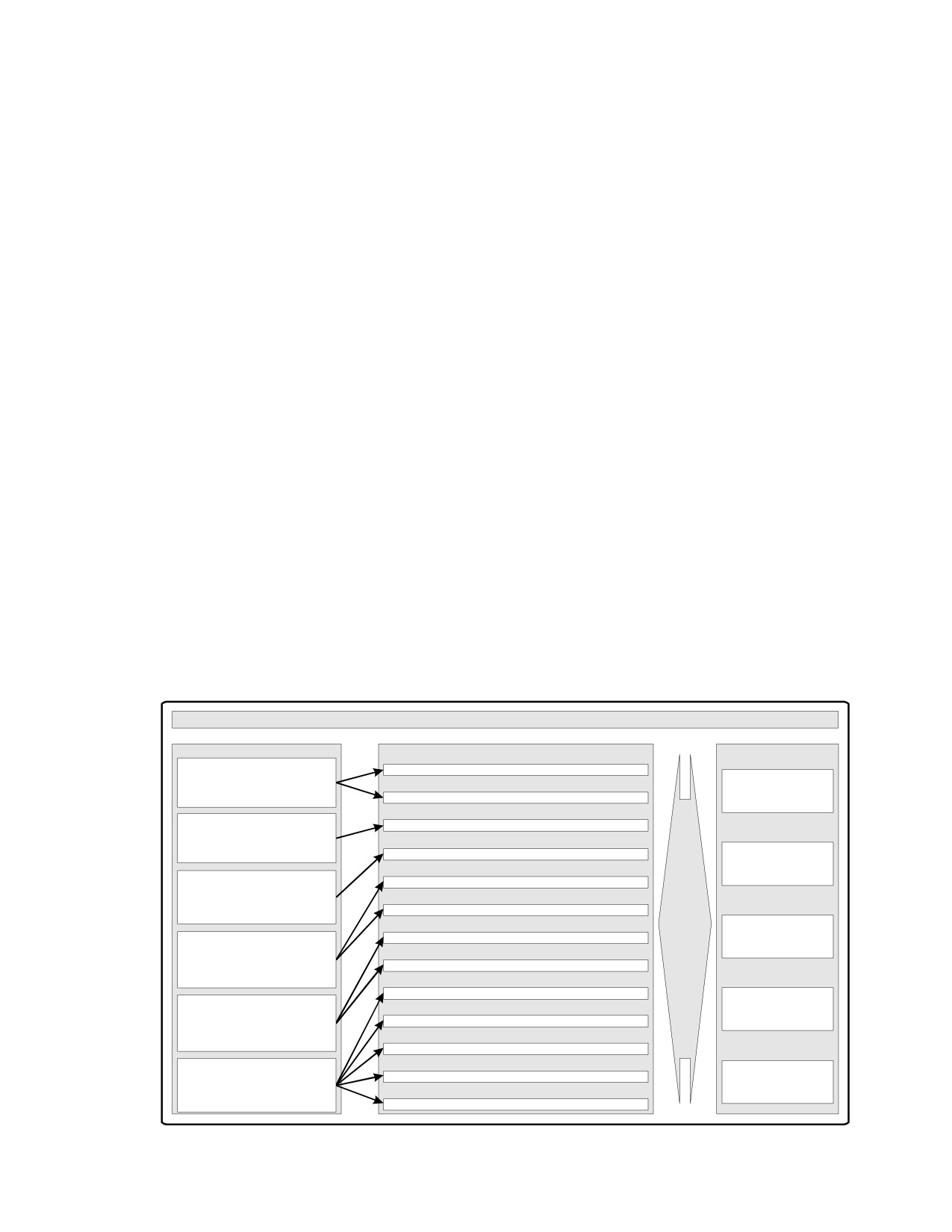
Chapter V
STEP-4: DETERMINE TM COURSES OF ACTION
1. What Is It?
a. Definition. Step-4 identifies and develops likely TM COAs that will
influence accomplishment of the TMD mission.
b. Desired End Effect. The desired end effect of Step-4 is to replicate the set
of specific COAs that the TM commander and staff are executing and
considering. All specific COAs that will influence the friendly TMD mission
need to be identified including NAIs, HVTs, and TM COA branches and sequels.
2. How To Do It
The primary steps in Step-4 are shown in Figure V-1. Step-4 is a general
process for developing and determining TM force COAs (Figure V-2). One
example of a TM COA is for an adversary’s TM forces to deploy from their
peacetime garrison locations to their wartime forward operating locations to
target airfields and port facilities to prevent allied forces from completing their
lodgment phase operations. Another TM COA—used unsuccessfully by the Iraqis
in the Gulf War—is to target a third party nonbelligerent with the goal of forcing
that country to enter into the conflict with resultant political consequences.
a. Identify Objectives and Desired End States. State these in simple, 1-line
bullet statements and ensure that confidence levels are clearly identified.
Rarely is sufficient intelligence available to state the objectives and desired end
state as facts. Even during noncombat operations, the TM force has objectives,
such as maintaining combat readiness while remaining in cover.
Step 4 - Determine TM COAs
Steps
Products
Major Consumers
Step-4.1
Likely TM Objectives Assessment
Identify Likely TM
Command Intelligence
Objectives and Desired End State
Desired TM End State Assessment
Staff
Step-4.2
Full Set of TM COAs Assessment
Identify the Full Set of TM COAs
Full Set of TM COAs Prioritization
Command Operations
Staff
Step-4.3
Situation Template Development
Evaluate and Prioritize Each
Specific TM COA
HVT Assessment
Event Template Development
Collection Management
Step-4.4
Staff
Expand Each COA in the Amount
Event Matrix Development
of Detail Time Allows
Current Weather Data Assessment
Step-4.5
JFACC and Immediate
Identify Initial Collection
Current Situation Assessment
Staff
Requirements
NAI Intelligence Collection Results Assessment
Step-4.6
Most Likely TM Force COA(s) Assessment
Identify Target Nominations
AADC and Immediate
Staff
PIR Assessment
Figure V-1. Step 4 - Determine TM COAs
V-1
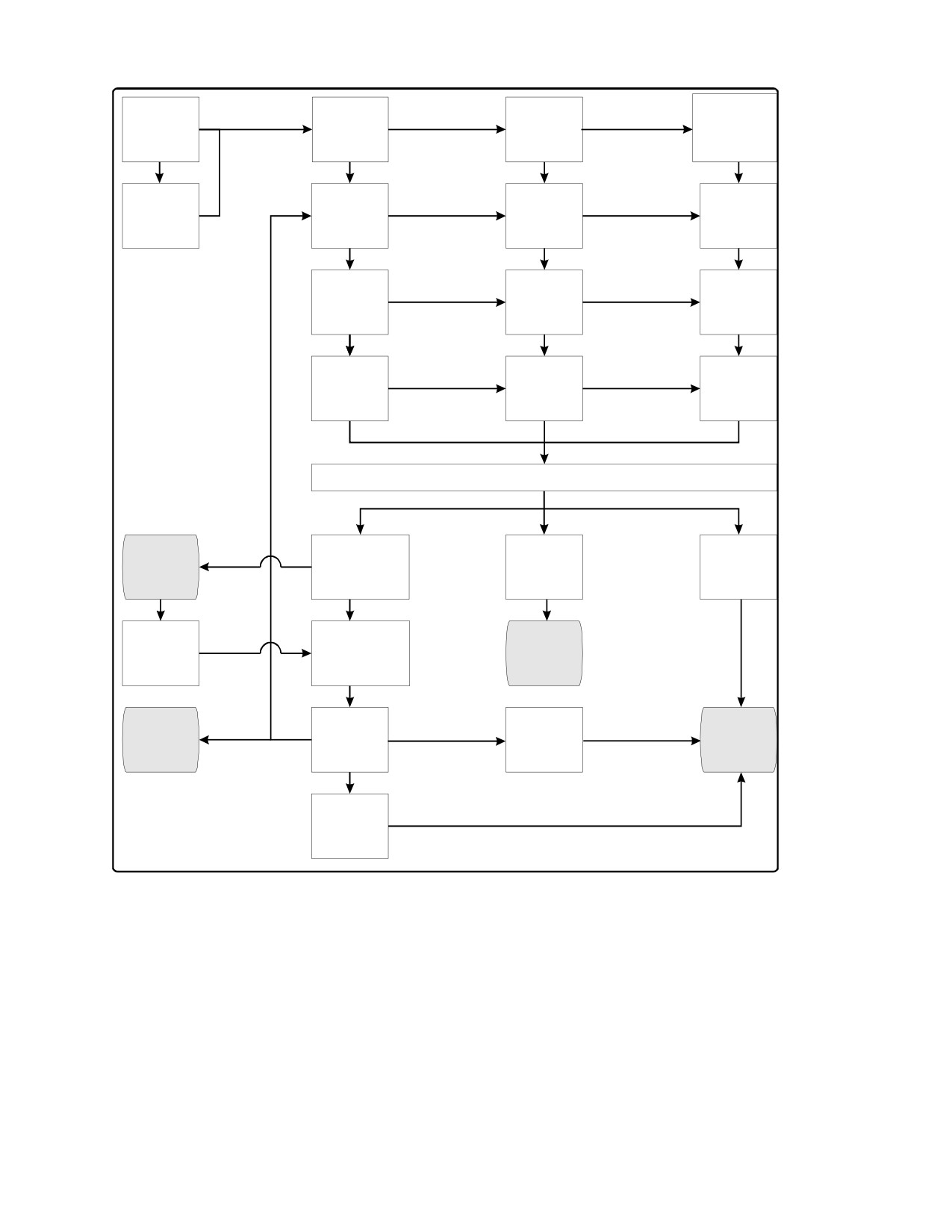
Receive
Build a list of
Build a list of tactical
Build a list of
command IPB
national level TM
level TM force COAs
operational level
adversary
force COAs for
for each adversary
TM force COAs for
national level
each adversary
operational level TM
each adversary.
COA.
COAs.
national level
Assess the likely
Evaluate and
TM force
Evaluate and
Evaluate and
prioritize each
objectives and
prioritize each TM
prioritize each TM
adversary TM
desired end
force COA.
force COA.
force COA.
states.
Develop a
Develop a detailed
Develop a detailed
detailed COA
COA assessment
COA assessment
assessment for
Adversary TM COA
for each TM force.
for each TM force.
each TM force
Development
COA.
and
Implementation
Produce a
Produce a
Produce a
Process
situation template
situation template
situation template
from each detailed
from each detailed
from each detailed
TM force COA
TM force COA
TM force COA
assessment.
assessment.
assessment.
Integrate all of the situation templates into an Integrated event template and matrix.
Transmit the event
Develop and
Transmit the event
Command
template and matrix to
forward
template and
Collection
the command
recommended
matrix to the
Management Staff
Collection Management
command TMD
Command
Staff.
related PIRs.
Targeting Staff.
Receive collected/
Correlate observed NAI
processed ISR
activities with expected
Command
data on TM force
NAI activities from the
Intelligence Staff
activities at event
event template and
template NAIs.
matrix.
Command
Assess possible
Recommend
Command
Intelligence and
TM force COAs
immediate/TCT
Targeting Staff
Operations Staff
under execution.
nominations.
Recommend non-
TCT nominations.
Figure V-2. Adversary TM COA Development Flow Process
b. Identify the Full Set of Available COAs. Consider the following when
developing—
(1) The probable doctrinal COAs given the current situation and the
likely objectives. This requires understanding the adversary’s decision-making
process and perception of the current situation.
(2) The TM COAs that could significantly influence the command’s
mission, even if doctrine considers them infeasible or “suboptimum” under
current conditions. Consider any indirect or “wildcard” COAs that the TM force
is capable of executing.
V-2
(3) The TM COAs indicated by recent activities and events. To avoid
surprise from an unanticipated COA, consider all possible explanations for the
TM activity in terms of possible COAs.
(4) Asymmetric and asynchronous threats that could impact TMD
operations.
Consider each COA subset independently to avoid forming biases that
restrict the analysis and evaluation. Once subsets have been evaluated
separately, combine them to eliminate redundancy and minor variations.
Compare the consolidated list to TM capabilities (TMD IPB Step-3) to eliminate
any nonexecutable COAs. Based on the capabilities evaluation, select TM models
that will accomplish the likely TM objectives. The effects of the battlespace
(TMD IPB Step-2) influence their application as COAs. Typically terrain,
weather, and other characteristics of the battlespace environment “offer” a
limited set of COAs, encouraging some while discouraging others. Start with
general COAs open to the adversary, such as “deploy to field,” “maintain combat
readiness in the field,” and “multiple missile combat operations.” Define each
general COA further as a set of specific COAs by integrating the TM models
from Step-3 with the description of the battlespace’s effects from Step-2. For
example, a general COA such as “single missile combat operations” might be
further defined as a set of specific COAs such as “with SCUD Bs from a specific
geographic area using chemical warfare warheads . . . against the enemy
command center.” TM factors to consider are intent or desired end state and
likely attack objectives; effects of the battlespace environment on operations and
broad COAs; vulnerabilities or shortages in equipment or personnel and current
dispositions; and location of main and supporting efforts and perception of
friendly forces and efforts to present an ambiguous situation or achieve surprise.
Each identified COA should meet the following criteria:
(a) Suitability. A COA must have the potential for accomplishing the
TM force’s likely objective or desired end state. If the COA is successfully
executed, will it accomplish the objective?
(b) Feasibility. To determine the feasibility of a COA, consider the
time and space, resources, and physical means required to successfully execute
the COA. Force compositions or other factors might indicate the lack of means to
accomplish likely TM objectives. Consider all actions that could create the
conditions needed for success before discounting the COA completely. For
example, the adversary might conduct economy of force operations in some
sectors in order to generate sufficient combat power for offensive operations in
others. A lack of resources might force the TM force to violate its own doctrine
in order to accomplish its objective. Avoid surprise, consider any seemingly
radical measure that may be taken to create the conditions for success.
(c) Acceptability. Consider the amount of risk a TM force will accept
in adopting the COA. Can it afford the resource expenditure for an uncertain
chance at success? This is a subjective judgement based on knowledge of the TM
force and its doctrine. Sometimes the TM force might undertake otherwise
unfavorable COAs, if they are the only means to accomplishing its objective.
(d) Uniqueness. Each COA must be significantly different from the
others or else consider it a variation rather than a distinct COA. Consider the
following factors to determine if a COA is “significantly” different:
V-3
• Its effect on the friendly mission.
• Exposure of force assets and location.
• Employment concept and task organization.
(e) Consistency with Doctrine. Each COA must be consistent with
TM doctrine. The evaluation of consistency is based on written doctrine and
observations of the TM force’s past application of that doctrine. Check the
intelligence database and templates from TMD IPB Step-3 for this information.
Do not overlook TM efforts to achieve surprise by deviating from known doctrine
or using “wildcard” COAs.
(f) Additional Considerations. Consider the following guidelines to
identify the full set of available COAs:
• Account for the effect of or the TM force’s perception of friendly
dispositions, when determining the available TM COAs. Conduct a “reverse IPB”
by replicating the process that the TM force is using to discern friendly COAs.
• Focus on those COAs that will affect accomplishment of the friendly
command’s mission. Include indications that the TM force might adopt a COA
that favors accomplishment of the command’s mission. This prepares the
commander to take advantage of opportunities that might arise.
• Identify the full set of COAs available to the TM force. History
repeatedly demonstrates that those who predict only one COA are often
surprised by the adversary.
c. Evaluate and Prioritize Specific COA. The resulting set of COAs depicts
the full set of options available to the TM force. It is not possible to predict with
complete accuracy which of the COAs the TM force will employ because the
identified TM force COAs are predictive, not exclusively facts. The templates at
Appendix B, Figures B-41 and B-42, assist in listing COAs and prioritizing them.
The commander and staff need to develop a plan targeted at one of the COAs,
while still allowing for contingency options if the TM force chooses another COA.
Therefore, evaluate and prioritize each COA according to its likely adoption by
the TM force. An initial priority list allows the staff to plan for friendly COAs.
Even after the commander selects a friendly COA, continue to reorder the TM
COAs according to the situation and any change in the adversary’s perception of
friendly forces.
In developing TM COAs for TMD, focus on the types of COAs the TMD
command may execute based on the adversary’s predicted targeting strategy and
the terrain and weapon limitations. For instance, the TMD unit wants to use
TMD systems to their best advantage over adversary missile launches. Specific
details on TM launch areas, targets, attack structure, flight azimuths, etc., allow
adjustment of TMD radar systems. Similarly, the attack operations unit wants to
quickly react to TM activity when on SCUD hunting missions. Focus COA
development on those data elements that provide the highest leverage for TMD
commanders. To prioritize each TM COA—
(1) Analyze each to identify its strengths and weaknesses, centers of
gravity, decisive points and risk factor.
V-4
(2) Evaluate how well each meets the criteria of suitability, feasibility,
acceptability, uniqueness and consistency with doctrine.
(3) Evaluate how well each takes advantage of the battlespace
environment.
(4) Consider that the TM force may choose the second or third “best” COA
while attempting a deception operation portraying acceptance of the “best” COA.
(5) Analyze recent TM activity to determine if there are indications that a
specific COA is being adopted. Do current dispositions favor one COA over
others?
d. Expand Each COA in the Amount of Detail Time Allows. Once the
complete set of TM COAs has been identified, evaluated, and prioritized, develop
each COA with as much detail as the situation requires and time allows.
Develop each in the order of its priority and the commander’s guidance. Each
COA should answer the following 5 questions:
♦ WHAT (the type of operation [that is, deploy, attack, or maintain])?
♦ WHEN (the time the action will begin [state this in term of the earliest
time that the TM force can adopt the COA under consideration])?
♦ WHERE (the COA sectors, zones, direction of attack, and objectives)?
♦ HOW (the method [that is, dispositions, location of main effort, the scheme
of maneuver, and how it will be supported] the TM force uses to employ its
assets)?
♦ WHY (the TM objective or end state)?
Time permitting, the final product should consist of a comprehensive,
detailed set of TM COAs. Each developed TM COA has the following 4 parts:
(1) Situation Template. Situation templates are graphic depictions of the
expected TM dispositions should a particular COA be adopted. Several
templates represent different “snapshots in time” and start with the TM force’s
initial array of forces. They depict points where the TM force might adopt
branches or sequels to its main COA, places where the TM force is especially
vulnerable, or other key points in the battlespace (that is, initial contact or TM
operations against friendly forces). Use situation templates to support staff
wargaming and to develop event templates and event matrices.
Begin construction of a situation template with the TM model from TMD
IPB Step-3, representing the operation under consideration. Overlay the
doctrinal template on the products that depict the battlespace environment’s
effects on operations from TMD IPB Step-2. Use the integrated area limitations
product to build the situation template (Figure V-3). This approach combines the
TM force’s doctrine for fighting (TMD IPB Step-3 ) with the environment
(integrated area limitation product) from TMD IPB Step-2, and the current
intelligence situation. Using judgment and knowledge of TM tactics and doctrine
(see TM model), account for battlespace environmental effects and adjust the
dispositions portrayed on the doctrinal template. There will be many options, so
consider the situation from the TM commander’s point of view when selecting
from among them.
V-5
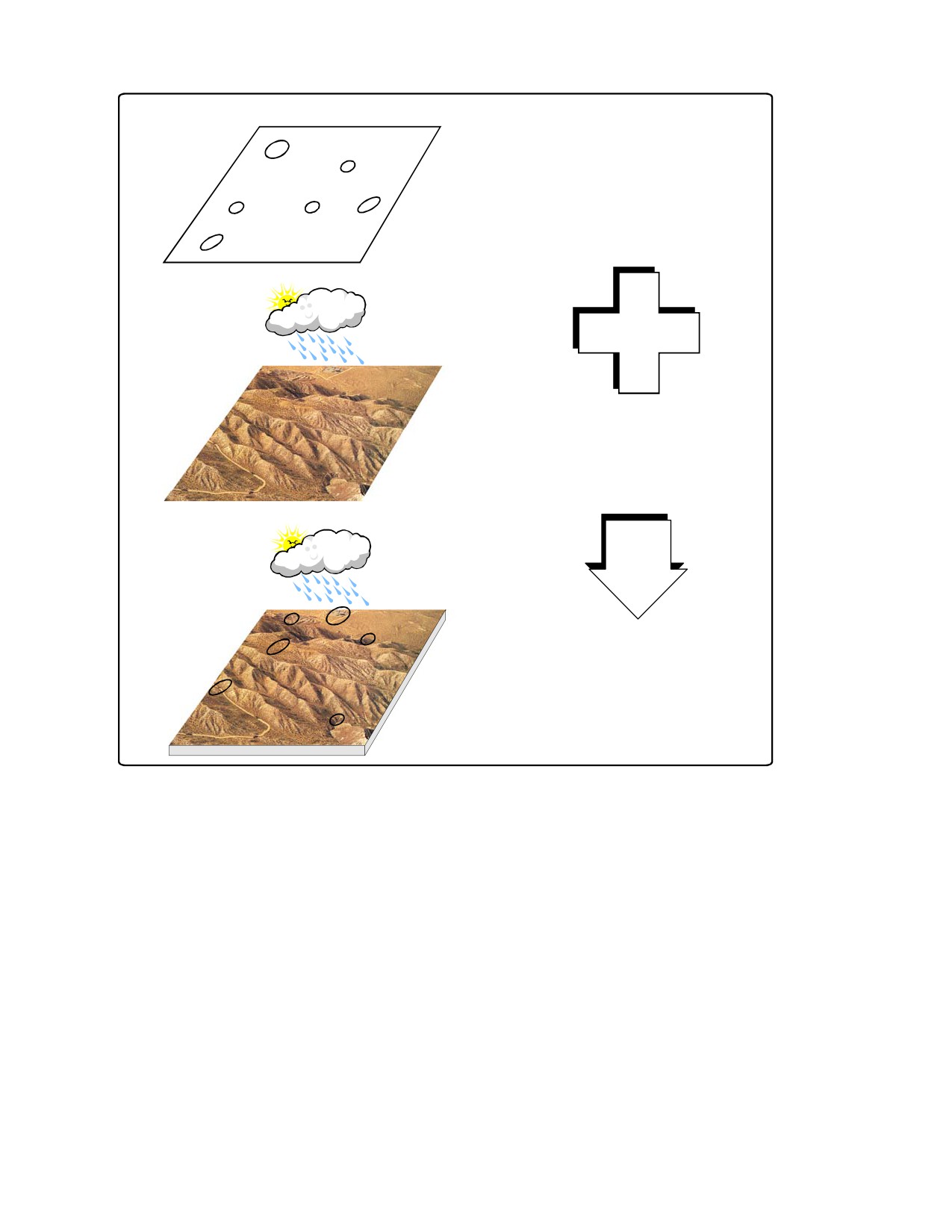
FOL Site
Adversary Standard
Hide Site
Operating Procedures
for Fighting
Hide Site
Hide Site
Launch
(Step-3 - Adversary TM Model)
Site
Launch
Site
Environment
(Step-2 - Terrain,
CCM, Weather, etc.l)
Hide Site
FOL Site
Hide Site
Launch
Site
Adversary TM
Launch
COAs
Site
(Step-4 - COAs)
Hide Site
Figure V-3. Situation Template Concept
The situation template is a checkpoint to ensure that all the major assets
have been accounted for, and that none have been inadvertently duplicated. This
ensures that the template reflects the main effort identified for this COA.
Compare the depicted dispositions to the known TM doctrine, checking for
consistency. Always consider the TM force’s desire to present an ambiguous
situation and achieve surprise. Include as much detail as the time and situation
warrant in the template. For example, if the TM force is conducting multiple
missile combat operations, identify the operations’ likely launch and hide sites,
FOLs, and transloading areas. Depict the locations and activities of the HVTs
listed in the TM model. Next, using preferred TM TTP (accompanies the
doctrinal template), evaluate the COA’s scheme of maneuver. Visualize how the
TM force transitions from its current positions to those depicted on the template
and consider its scheme of maneuver through the COA’s success or failure.
Identify points where forces will transition from one formation to another,
potential hide sites, etc. After working though the scheme of maneuver,
determine how each of the TM systems “fits in” and supports the operation.
V-6
The command level and type of operation have a direct bearing on the
detail that goes into each situation template. At strategic levels, situation
templates might focus on the shift of TM forces from garrison to field
deployment, as well as political and economic developments that may indicate an
adversary’s intent to use TMs. NAIs highlighting these actions can sometimes
encompass large regions. At operational levels, the situation template might
focus on groups of TM vehicles, operating areas, and LOCs. Operational NAIs
may be large operating areas or logistical support areas. At tactical levels, the
focus may be on individual vehicles in TM dispositions. These NAIs are often
“pinpoint” locations such as road junctions or small unit battle positions. Tailor
the situation templates to the factors that are important to the commander or
mission area. For example, if the important factor is TM launchers, focus on
them when determining and developing TM COAs and produce a situation
template that shows only the location and movement routes TM launchers, their
likely employment areas and NAIs.
Depicting TM movement by evaluating time and space factors develops
time phase lines (TPLs). TPLs are drawn on the template to depict the expected
progress of the operation and are based on the doctrinal TM rates of movement,
with some modification. Evaluate and compare actual database movement rates
with written doctrine. Consider battlespace environmental effects on mobility by
using terrain analysis systems, such as generic area limitation environment
(GALE). Some situation templates can be presented in a matrix format. For
example, a situation template in matrix form could show one COA for a TM
strike against friendly targets. The timeline could indicate spacing between the
various elements as well as the time each element is expected within each NAI.
(2) Description of the COA and Options. Describe TM activities and
systems depicted on the situation template either in text form or with a detailed
“synchronization matrix.” Address timelines to include the earliest time the TM
force COA can be executed, phases associated with the COA, and probable TM
command decisions made during and after COA execution. Use the TM COA
depiction and timeline to support staff wargaming and to develop event template
and supporting indicators. As the TM force approaches friendly decision points
(DP), record each decision and its timeline into the TM COA depiction. DPs are
points in space and time where the commander anticipates making a decision
concerning the specific friendly COA. These decisions are usually triggered by
specific threat force activity and are normally associated with one or more NAIs.
This is the basis for developing TM branches or sequels, if they are needed to
support friendly planning. Record any decision criterion that is associated with
a DP.
(3) HVTs. As the situation template is prepared and mentally wargamed,
note how and where each TM force activity and asset provides critical support to
the COA. This leads to HVT identification. The list of HVTs in the TM model
serves as a guide and may not be all-encompassing. Determine the COA effect of
losing each HVT and identify likely TM responses. Each HVT’s relative worth
varies depending on the specific situation and COA execution. Identify times or
phases in the COA when the target is most valuable to the TM commander and
make appropriate notations on the HVT list. Transfer the refined and updated
HVT list to the situation template. The list supports staff wargaming and the
targeting process. Note on the situation template where HVTs must appear or
be employed to make the operation successful. Highlight these locations at or
just before the times they are most valuable.
V-7