FM 3-01.16 TMD IPB MULTISERVICE TACTICS, TECHNIQUES, AND PROCEDURES FOR THEATER MISSILE DEFENSE INTELLIGENCE PREPARATION OF THE BATTLESPACE (MARCH 2002) - page 1
FM 3-01.16
MCWP 2-12.1A
NTTP 2-01.2
AFTTP(I) 3-2.36
FM 3-01.16
US Army Training and Doctrine Command
Fort Monroe, Virginia
MCWP 2-12.1A
Marine Corps Combat Development Command
Quantico, Virginia
NTTP 2-01.2
Navy Warfare Development Command
Newport, Rhode Island
AFTTP(I) 3-2.36
Air Force Doctrine Center
Maxwell Air Force Base, Alabama
04 March 2002
TMD IPB
Multiservice Tactics, Techniques, and Procedures
for Theater Missile Defense Intelligence Preparation of the
Battlespace
TABLE OF CONTENTS
Page
EXECUTIVE SUMMARY
ix
CHAPTER I OVERVIEW
Scope
I-1
TMD Mission Areas
I-1
TMD IPB Overview
I-4
TM Threat Forces
I-5
Phases of TMD Operations
I-8
Who Conducts IPB
I-8
CHAPTER II STEP-1: DEFINE THE BATTLESPACE ENVIRONMENT
What Is It?
II-1
How To Do It For TMD
II-1
CHAPTER III STEP-2: DEFINE THE BATTLESPACE EFFECTS
What Is It?
III-1
How To Do It For TMD
III-1
iv
CHAPTER IV STEP-3: EVALUATE THE TM FORCE
What Is It?
IV-1
How to Create TM Models
IV-1
Doctrinal Template
IV-2
CHAPTER V STEP-4: DETERMINE TM COURSES OF ACTION
What Is It?
V-1
How To Do It
V-1
APPENDIX A COMMON TMD IPB PROCESSES
A-1
APPENDIX B SUGGESTED TMD IPB TEMPLATES
B-1
APPENDIX C AUTOMATED TOOLS AND EXAMPLE ARCHITECTURES
C-1
APPENDIX D TMD IPB CHECKLIST AND DEVELOPMENT PLAN
D-1
APPENDIX E TMD IPB INTERNET LINKS
E-1
REFERENCES
References-1
GLOSSARY
..................................................................................................... Glossary-1
INDEX
.......................................................................................................... Index-1
FIGURES
1
Continuous 4-Step TMD Process
ix
I-1
TMD IPB and TMD Operations
I-4
I-2
Multiple Dimensions of the TM Threat
I-6
II-1
Step 1 - Define the Battlespace Environment
II-1
II-2
AO and AOI Assessment Process for TMD IPB
II-6
II-3
Composite AOI Assessment Process
II-6
II-4
Potential TM Force Coverage Template
II-7
II-5
Potential TM Force Deployment Area Assessment
Template
II-8
II-6
AO and AOI Assessment for TMD Active Defense
Operations Template
II-9
II-7
AO and AOI Assessment for TMD Passive Defense
Operations Template
II-10
II-8
AO and AOI Assessment for TMD Attack Operations
Template
II-11
II-9
Composite AO and AOI Assessment Template
II-12
II-10
TMD Battlespace Assessment Template (1 of 2)
II-13
II-10
TMD Battlespace Assessment Template (2 of 2)
II-14
II-11
Geopolitical and Regional Threat Assessment Template
II-17
II-12
Adversary TM Force Capabilities Assessment
Template (1 of 2)
II-18
II-12
Adversary TM Force Capabilities Assessment
Template (2 of 2)
II-19
II-13
Major Terrain and LOC Overview Template
II-20
III-1
Step 2 - Define the Battlespace Effects
III-1
III-2
Adversary TM Force Infrastructure Assessment Process ... III-16
v
III-3
Infrastructure Functional Decomposition Assessment
Template (1 of 2)
III-21
III-3
Infrastructure Functional Decomposition Assessment
Template (2 of 2)
III-22
IV-1
Step 3 - Evaluate the TM Force
IV-1
IV-2
TM National Level Organization and C2 Template
IV-4
IV-3
TM Unit Level Organization and C2 Template
IV-5
V-1
Step 4 - Determine TM COAs
V-1
V-2
Adversary TM COA Development Flow Process
V-2
V-3
Situation Template Concept
V-6
V-4
Event Template Concept
V-9
B-1
TMD IPB Template Cover Sheet - Example
B-2
B-2
TMD IPB Template Cover Sheet
B-3
B-3
Command Mission(s) Objective(s) Summary Template
B-4
B-4
Command Mission(s) Objective(s) Worksheet Template
B-5
B-5
Command Mission(s) Guidance Worksheet Template
B-6
B-6
AO/AOI/ Battlespace Assessment Template
B-7
B-7
Geopolitical and Regional Threat Assessment Template
B-8
B-8
TM Force General Capabilities Assessment
Template (1 of 2)
B-9
B-8
TM Force General Capabilities Assessment
Template (2 of 2)
B-10
B-9
Major Terrain and LOC Overview Template
B-11
B-10
TMD IPB Holdings, Database, Sources, and Links
Assessment Template (1 of 3)
B-12
B-10
TMD IPB Holdings, Database, Sources, and Links
Assessment Template (2 of 3)
B-13
B-10
TMD IPB Holdings, Database, Sources, and Links
Assessment Template (3 of 3)
B-14
B-11
TMD IPB Information Sources Evaluation
Template (1 of 2)
B-15
B-11
TMD IPB Information Sources Evaluation
Template (2 of 2)
B-16
B-12
TMD IPB POC Template
B-17
B-13
Recommended PIR/EEI/RFI/Other Requirement Request
Worksheet Template (1 of 2)
B-18
B-13
Recommended PIR/EEI/RFI/Other Requirement Request
Worksheet Template (2 of 2)
B-19
B-14
TMD IPB Key Word Search Template (1 of 4)
B-20
B-14
TMD IPB Key Word Search Template (2 of 4)
B-21
B-14
TMD IPB Key Word Search Template (3 of 4)
B-22
B-14
TMD IPB Key Word Search Template (4 of 4)
B-23
B-15
DIA Standardized Functional Category Code Information
Search Template (1 of 2)
B-24
B-15
DIA Standardized Functional Category Code Information
Search Template (2 of 2)
B-25
B-16
DIA Standardized Equipment Code Information Search
Template (1 of 4)
B-26
vi
B-16
DIA Standardized Equipment Code Information Search
Template (2 of 4)
B-27
B-16
DIA Standardized Equipment Code Information Search
Template (3 of 4)
B-28
B-16
DIA Standardized Equipment Code Information Search
Template (4 of 4)
B-29
B-17
Feature Class Data to Terrain Analysis Template Cross
Reference Template (1 of 5)
B-33
B-17
Feature Class Data to Terrain Analysis Template Cross
Reference Template (2 of 5)
B-34
B-17
Feature Class Data to Terrain Analysis Template Cross
Reference Template (3 of 5)
B-35
B-17
Feature Class Data to Terrain Analysis Template Cross
Reference Template (4 of 5)
B-36
B-17
Feature Class Data to Terrain Analysis Template Cross
Reference Template (5 of 5)
B-37
B-18
Terrain Assessment Checklist and Status Template
B-38
B-19
TMD IPB Slope Categories Template
B-39
B-20
Transportation and LOC Legend Symbols
B-45
B-21
CCM Overlay(s) Worksheet Template (1 of 2)
B-46
B-21
CCM Overlay(s) Worksheet Template (2 of 2)
B-47
B-22
Climatology Assessment Template
B-48
B-23
Weather Effects on Adversary TM Force Operations
Template
B-49
B-24
Current/Forecasted Weather Effects on TM Force
Operations Template
B-50
B-25
TM Force Required Infrastructure Assessment Template.. B-51
B-26
Integrated TM Force Infrastructure List Template (1 of 2)
B-52
B-26
Integrated TM Force Infrastructure List Template (2 of 2)
B-53
B-27
General Facility/Area Assessment Template (1 of 4)
B-54
B-27
General Facility/Area Assessment Template (2 of 4)
B-55
B-27
General Facility/Area Assessment Template (3 of 4)
B-56
B-27
General Facility/Area Assessment Template (4 of 4)
B-57
B-28
Field Operating Area Assessment Template
B-58
B-29
Area Limitation Worksheet Template
B-59
B-30
Doctrinal Template Requirements Template
B-60
B-31
TM Equipment Template
B-61
B-32
TM Equipment List Template
B-62
B-33
TM System Ground Vehicle Equipment Template
B-63
B-34
TM Force Attack Objectives Worksheet Template
B-64
B-35
TM Unit Functional Doctrinal Template
B-65
B-36
TM Force Employment Worksheet Template (1 of 2)
B-66
B-36
TM Force Employment Worksheet Template (2 of 2)
B-67
B-37
Time-Pattern Analysis Template
B-68
B-38
Date-Pattern Analysis Template
B-69
B-39
TM Operational State Doctrinal Template
B-70
B-40
TM HVT Relative Value Matrix Template
B-71
B-41
TM COA Assessment Template
B-72
B-42
TM COA Situation Matrix Template
B-73
vii
B-43
NAI and HVT Assessment Template (1 of 2)
B-74
B-43
NAI and HVT Assessment Template (2 of 2)
B-75
B-44
TM COA Situation/Event Template (1 of 2)
B-76
B-44
TM COA Situation/Event Template (2 of 2)
B-77
B-45
TM Event Matrix Template
B-78
B-46
Recommended Target Nominations and TAIs Worksheet
Template
B-79
C-1
32d AAMDC Brigade G-2 TOC
C-2
C-2
32d AAMDC External Information Sources
C-3
C-3
TMD Flight Simplified Organizational Relationships
C-3
C-4
Physical Layout of the 7th Air Force TMD Intelligence
Team
C-4
D-1
TMD IPB Checklist (1 of 2)
D-2
D-1
TMD IPB Checklist (2 of 2)
D-3
D-2
TMD IPB Development Plan (1 of 2)
D-4
D-2
TMD IPB Development Plan (2 of 2)
D-5
TABLES
I-1
TMD Mission Areas, Objectives, and Associated TMD
IPB Requirements
I-2
I-2
Some Organizations and Intelligence Roles and
Responsibilities in Support of TMD
I-9
A-1
Matrix of General Sensor Types to Intelligence Advantages
and Disadvantages
A-5-6
A-2
Typical Intelligence Reports
A-7
A-3
Commonly Used Digital/Hardcopy GGI&S Products
A-11
A-4
Other Vector-Based/Digital GGI&S Products
A-11
A-5
Other Raster-Based/Hardcopy GGI&S Products
A-11
A-6
Geospatial Precision and Accuracy Comparisons
A-14
B-1
Overlays, Doctrinal Templates, and GGI&S Products
Supporting Terrain Analysis
B-30-32
B-2
Vegetation Type Codes
B-40
B-3
Unified Soils Classification System and Associated Rating
Cone Index Values
B-41
B-4
Landforms and Commonly Associated Soils
B-42-44
B-5
Lane Widths Typical of Current Military Maps
B-44
B-6
Urban Area Building Type Codes and Descriptions
B-44
C-1
Selected Automated Tools
C-1
C-2
Specific 7th Air Force TMD Intelligence Team Functions
C-5
viii
EXECUTIVE SUMMARY
TMD IPB
Multiservice Tactics, Techniques, and Procedures for Theater
Missile Defense Intelligence Preparation of the Battlespace
Theater missile defense intelligence preparation of the battlespace (TMD IPB) is
a systematic, continuous process of analyzing the adversary theater missile (TM)
force and environment in a specific geographic area and the battlespace around it.
By determining the likely adversary TM force courses of action (COAs) and their
associated branches and sequels and by describing the environment where TM forces
are operating, this TMD IPB process helps the commander and staff selectively
apply and maximize combat power at critical points in time and space in the battle-
space. Applied properly, TMD IPB provides for the timely and effective suppression
and/or destruction of a TM force, while minimizing the use of friendly assets for the
TMD mission. This provides the commander and staff with a cost-effective method
for providing force protection from an adversary’s TM force. A large number of
adversary countries possess or are trying to acquire TMs for prestige and/or military
purposes. TMs have the potential to give adversaries military advantages against
the United States (US) and allied forces. The TM threat these adversaries present is
a complex multi-dimensional intelligence problem. To develop potential adversary
TM COAs, the TMD IPB procedures concept decomposes and correlates the “who
and what (equipment and units); where (infrastructure); when, why, and how
(operations).” Typically TM forces are equipped, organized, trained, and employed
differently. Many of these differences are relatively minor, while some are more
dramatic. TMD IPB uses templating to standardize the process of analyzing
adversary TM forces. Templates can be in the form of text, tables, forms, or
graphics. Templates in this publication provide a starting framework for analysis
and development. They are not meant to be all encompassing, and they should be
adapted for a particular geographic area or situation. TMD IPB is a continuous
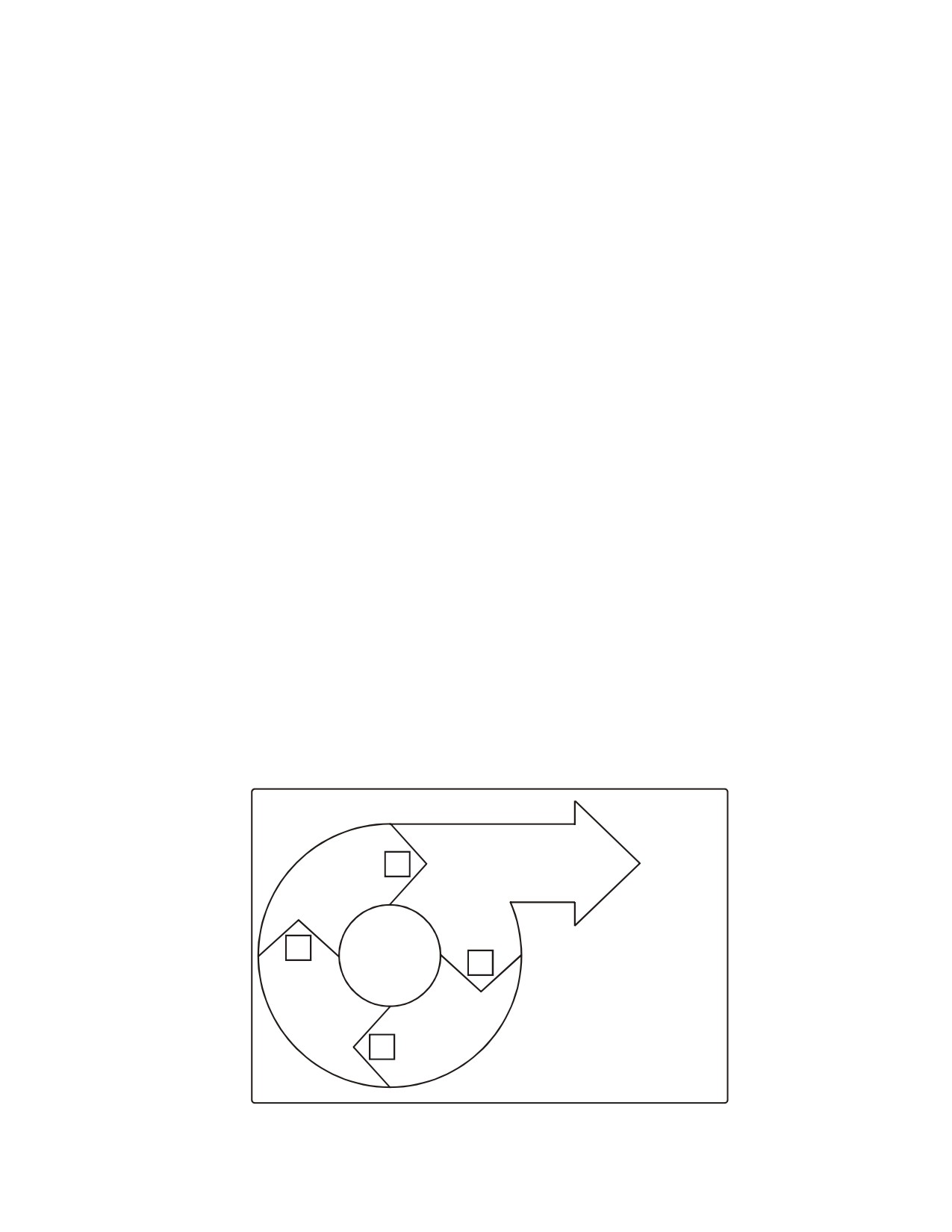
process consisting of four major iterative and parallel steps (Figure 1).
Continuous Four Step Process
Combat
Evaluate
3
Operations
the
Determine
Execution
TM Force
TM
COAs
2
4
Define the
Battlespace
Integrates with Operations and
Effects
Define the
Supports Peacetime through
Battlespace
Combat Operations Execution
1
Environment
Figure-1. Continuous 4-Step TMD IPB Process
ix
STEP-1 — Define the Battlespace Environment (Focus). This step focuses
the initial intelligence collection efforts and the remaining steps of the TMD IPB
process. It identifies battlespace characteristics requiring in-depth evaluation of
their effects on adversary TM force operations, such as terrain, weather, logistical
infrastructure, and demographics. The initial effort is oriented on defining the
limits of the area of operations (the geographic region where TM forces operate and/
or where TMD operations will be conducted) and area of interest (the area from
which information and intelligence are required). Defining the significant charac-
teristics of the battlespace environment aids in identifying and filling current intel-
ligence data gaps.
STEP-2 — Define the Battlespace Effects (Influences). This step evaluates
the environment's effect on adversary TM force operations. This assessment exam-
ines terrain, weather, and other battlespace characteristics (that is, adversary TM
force infrastructure) to determine how these characteristics may limit or provide
opportunities for TM force operations. The objective is to integrate these effects into
a terrain analysis designating the most probable adversary TM force operations
areas.
STEP-3 — Evaluate the TM Force (Operational Model). This step examines
in detail how the adversary TM force normally organizes for combat and conducts
operations under ideal conditions. The evaluation is portrayed in a threat model of
the TM force that includes doctrinal templates depicting how the TM force operates
when unconstrained by the effects of the battlespace environment. TM force threat
models are depicted graphically (doctrinal templates) supplemented by high-value
target matrices and simple narratives.
STEP-4 - Determine TM COAs (Integrate). This step integrates the results of
the previous steps into a meaningful conclusion. Given what the adversary TM force
normally prefers to do, and the effects of the environment it is currently operating
in, this step attempts to define the likely objectives and COAs available to the TM
force. This is accomplished by creating event templates and matrices focusing on
intelligence collection aimed at identifying the COA the TM force will most likely
execute.
TMD IPB is a complicated and time-consuming process. Automated intelligence
and terrain analysis tools greatly assist this process. Currently, several core intelli-
gence systems are being developed and fielded that will greatly enhance the TMD
IPB process. To more efficiently solve the threat TM problem, continued emphasis
on these current and future automated TMD IPB techniques is essential. However,
equally important is the emphasis placed on development of the intelligence data
needed for the TMD IPB. It is critical to begin the TMD IPB process during the
prehostilities phase, with well-developed intelligence databases, in order to success-
fully impact US and allied TMD operations.
x
PROGRAM PARTICIPANTS
The following commands and agencies participated in the development of this
publication:
Joint
Ballistic Missile Defense Organization, Pentagon, Washington, D.C.
Joint Theater Attack Analysis Center, Kirtland AFB, Albuquerque, NM
Joint Theater Air and Missile Defense Office, Pentagon, Washington, D.C.
Unified
USSTRATCOM, Joint Intelligence Center, Offutt AFB, NE
Army
32d Army Air and Missile Defense Command, Fort Bliss, TX
United States Army Intelligence and Security Command, Fort Belvoir, VA
United States Army Intelligence Center, Fort Huachuca, AZ
Marine Corps
Marine Corps Combat Development Command, Quantico, VA
Navy
Naval Surface Warfare Center, Dahlgren, VA
Naval Strike and Air Warfare Center, Fallon, NV
Navy Warfare Development Command (Norfolk Detachment), Norfolk, VA
PEO-Surface Warfare Combatants, McLean, VA
Air Force
7th Air Force, Osan Air Base, Korea
612 Air Intelligence Squadron, Davis-Monthan AFB, Tucson, AZ
Air Combat Command/XOIP, Langley AFB, Hampton, VA
Air Combat Command/XOFR, Langley AFB, Hampton, VA
Headquarters, Air Intelligence Agency/DOOQ, Kelly AFB, San Antonio, TX
Other
Anteon Corporation, Arlington, VA
Pacific-Sierra Research, Arlington, VA
SPARTA Corporation, Huntsville, AL
xi
Chapter I
OVERVIEW
1. Scope
This publication gives multiservice tactics, techniques, and procedures
(MTTP) for conducting intelligence preparation of the battlespace (IPB) analysis
in support of theater missile defense (TMD) operations. "Joint theater missile
defense is an integral part of counterair operations
which integrates both
offensive and defensive operations from all components to counter the air and
missile threat." (This quote can be found in Joint Publication (JP) 3-01, Joint
Doctrine for Countering Air and Missile Threats, Chapter I, page I-2.) TMD IPB is
a systematic and continuous process for analyzing adversary theater missile (TM)
capabilities, weather, terrain, and related infrastructure in a specific geographic
region to support friendly TMD operations. Although this MTTP focuses
specifically on the manual method of performing IPB, Appendix C lists some
supporting automated tools. This basic TMD IPB methodology is derived from
the steps, functions, and the structure established by the United States Army
(USA) Field Manual (FM) 2-01.3 (FM 34-130), Intelligence Preparation of The
Battlefield, JP 2-01.3, Joint Tactics, Techniques, and Procedures for Joint
Intelligence Preparation of The Battlespace, and JP 3-01.5, Doctrine for Joint
Theater Missile Defense. This document is derived from authoritative and field-
tested concepts. It addresses unique aspects of the TM threat such as—
a. Encompass the strategic, operational, and tactical levels of war.
b. Operate theater-wide and significantly impact on a wide array of friendly
operations.
c. Operate noncontinuous, nonlinear, and asymmetric in time and space and
over large nonlinear geographic areas.
d. Do not require direct contact with friendly forces.
e. Are a highly diversified target system including infrastructure,
movement, and highly mobile tactical target elements.
f. Move and launch using TM specific unit patterns.
g. Conceal and camouflage easily.
h. Are capable of employing weapons of mass destruction (WMD).
i. Have geopolitical implications.
2. TMD Mission Areas
Joint TMD is the integration of joint force capabilities to destroy enemy TMs
in-flight or before launch or otherwise disrupt the enemy's TM operations. This
is accomplished through an appropriate mix of mutually supportive command,
control, communications, computers, and intelligence (C4I) activities; active
attack operations; active missile defense operations; and passive missile defense
operations. TMD incorporates several missions requiring IPB. Table I-1 shows
the correlation between TMD missions and their required TMD IPB.
I-1

Table I-1. TMD Mission Areas, Objectives, and Associated TMD IPB Requirements
Mission
Area
Include
Associated TMD IPB Requirements
• Timely and accurate data
TM probable operating areas.
Adversary TM targeting process.
and systems to plan, monitor,
TM countermeasures.
TM probable targets and target
direct, control, and report
areas.
TMD operations.
TM WMD capabilities.
TM attack timing and numbers.
• Integrated systems of
TM warhead types.
TM TTPs.
doctrine, organizational
Threat employment COAs.
Meteorological effects on TM
TMD C4I
structures, facilities,
operations.
communications, computers,
TM OB.
Adversary knowledge of TMD
supporting intelligence, and
deployment.
missile warning and cueing
TM system signatures.
Defense suppression threat
by sensors and ground
capabilities.
stations.
• OPSEC.
TM RDT&E infrastructure.
TM production infrastructure.
TM field operating areas.
TM Fixed operational
infrastructure.
• Destruction, disruption, or
Probable hide sites/launch sites.
TM TTPs.
Attack
neutralization of TM launch
TM equipment.
Meteorological effects on TM
Operations
platforms; supporting C3;
operations.
logistics; and platforms.
Threat employment COAs.
TM OB.
TM system signatures.
TM WMD infrastructure.
Air defenses supporting TMs.
TM system C2 nodes.
TM probable operating areas.
Adversary TM targeting process.
• Multi-tiered defense in-
Probable TM targets.
TM attack timing and numbers.
depth via multiple
TM flight characteristics.
TM countermeasures.
engagements using land, sea,
TM WMD capabilities.
TM warhead types.
air, space, and special
Active
Threat employment COAs.
Meteorological effects on TM
operations forces.
Defense
operations.
• Active EW to disrupt
TM OB.
Adversary knowledge of TMD
remote or on-board guidance
deployment.
systems.
Defense suppression threat
• Information Operations.
capabilities.
• Deception.
• NBC protection.
• TM early warning.
TM time of flight.
Adversary TM targeting process.
• EW.
TM accuracy.
TM probable targets and target
• OPSEC.
areas.
Passive
• Countersurveillance.
TM OB.
TM attack timing and numbers.
Defense
• Recovery and
TM WMD capabilities.
Threat employment COAs.
reconstitution.
TM warhead types and effects.
• Camouflage and
Meteorological effects.
concealment.
• Mobility, dispersal, and
hardening.
a. TMD C4I. Command and control (C2) for joint TMD operations is a
commander's exercise of authority and direction over forces assigned joint TMD
missions. Use existing joint and service C4I systems and resources to efficiently
accomplish C4I for joint TMD missions. This integrates other operational
functions and optimizes the use of scarce resources. The C4I system links
passive defense, active defense, and attack operations to provide timely
assessment of the threat (to include IPB); rapid dissemination of tactical
warning; and mission assignment, targeting data, and poststrike assessment to
the appropriate joint TMD element. For each operational element, the C4I
system must provide rapid communications among intelligence assets, the fusion
and decision-making facilities, and the warning and weapon systems, to include a
capability for rapid coordination with supporting combatant commanders. Space
assets and information operations are critical to attack operations, active
I-2
defense, and passive defense because they provide launch warning, launch point
prediction, launch point detection, threat type determination, impact point
prediction, weapon systems cueing, communications, and related intelligence.
Joint TMD C4I capabilities must support the principles of centralized planning,
decentralized execution, and coordinated efforts by forces assigned joint TMD
tasks.
b. Attack Operations. Attack operations are characterized by offensive
actions intended to destroy and disrupt adversary TM capabilities before, during,
and after launch. Attack operations prevent TM launch or additional TM
launches by attacking critical elements (that is, launch platforms,
reconnaissance, surveillance, and target acquisition [RSTA] platforms, C2 nodes,
missile stocks, and infrastructure) of the overall system. The preferred method
of countering adversary TM operations is to attack and destroy or disrupt TMs
before their launch. Attack operations can be preemptive or reactive as part of
counterair, strategic attack, interdiction, fire support, maneuver, antisubmarine
warfare, antisurface warfare, strike warfare, amphibious, or special operations.
Attack operations are challenging because TM systems are generally hard to
detect and are normally dispersed, mobile, electronically quiet, and redundant.
Thus, the detection, acquisition, identification, tracking, and attack tasks are
highly dependent on a near-real-time C4I process and rapid targeting capability.
c. Active Defense. The role of active defense operations is to protect
selected assets and forces from attack by destroying TM airborne launch
platforms and/or TMs in-flight. Active defense must consist of defense in-depth
against all classes of TMs. When destruction of the TM launch platform before
launch is not possible or successful, TMs should be engaged by all means
available throughout their entire flight profile. Defense in-depth provides
multiple opportunities to negate the TMs with differing capabilities, increases
probability of kill, and prohibits the enemy from being able to counter the
defensive system with a single technique. Active defense also includes those
actions that mitigate the effectiveness of targeting and delivery systems through
electronic warfare (EW) against remote or on-board guidance systems.
d. Passive Defense. Passive defense is necessary to provide essential
individual and collective protection for friendly forces, population centers, and
critical assets. Passive defense measures should be planned whenever United
States (US) forces might face a TM threat. By examining various combinations of
TM warhead accuracy and effects, numbers of available missiles, and the
adversary targeting process, the likelihood and timing of an attack may be
predicted and passive measures selected for employment before, during, and
after a TM attack.
e. Mission Focus. The different mission areas of TMD require different
types of IPB products. For instance, the C4I mission requires a focus that
addresses the adversary's use of ISR assets and how to counter them. Attack
operations need IPB products that highlight vulnerable nodes in the adversary's
TM infrastructure and launch complexes. Active defense missions require IPB
products that highlight the adversary's targeting process and probable targets.
Passive defense missions require IPB data on the accuracy of adversary TMs and
probable warhead selection. The intelligence analyst should focus the friendly
IPB process to best support the commander's specific TMD mission.
I-3
A good IPB is essential if the operators are to understand how the threat is
likely to operate, to get sensors in the most effective configuration and to react to
subtle TM activity indicators. The IPB information helps sort out real TM
information from the distracting background traffic.
Joint Theater Missile Defense - Attack Operations Test Force, 1997
3. TMD IPB Overview
a. What is TMD IPB? TMD IPB is a systematic, continuous process of
analyzing the adversary TM force and environment in a specific geographic area.
The process is designed to support planning and decision making by commanders
and staffs. It allows them to selectively apply and maximize combat power at
critical points in the battlespace.
b. What are the objectives of TMD IPB? TMD IPB identifies facts and
assumptions about the battlespace environment and the TM threat. TMD IPB
determines likely TM courses of action (COAs), their associated branches and
sequels, and describes the operating environment for TM operations. This
supports commander and staff planning and the development of friendly COAs.
TMD IPB provides the basis for intelligence collection, synchronization, and
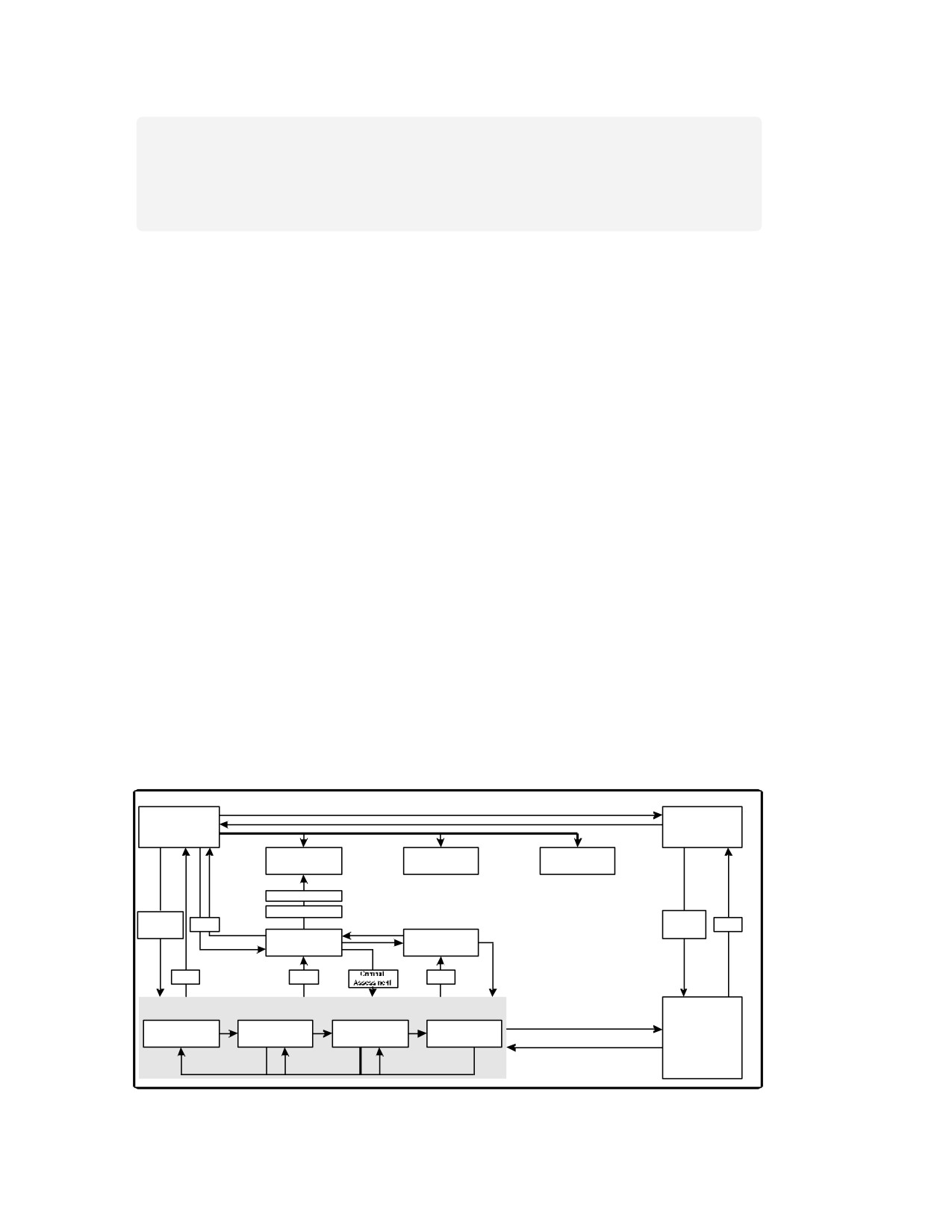
target development to support the commander's chosen COA. (Figure I-1).
c. TMD IPB contains the following 4 major iterative and parallel steps:
(1) Step-1 - Define the Battlespace Environment. Step-1 focuses the
command's initial intelligence collection efforts and the remaining TMD IPB
steps. To focus the remaining steps, the analyst should identify the battlespace
characteristics affecting TM force operations. Generally these characteristics
include terrain, weather, lines of communications (LOCs), infrastructure, and
demographics. To limit the analytical and intelligence collection efforts to the
geographic areas significant to the command's mission, the joint force
commander (JFC) will establish the limits of the area of operations (AO) and the
TMD
Commander
C4I
and
Staff
Attack
Active
Passive
Operations
Defense
Defense
Planned Targets
Immediate Targets
Commander’s
Commander’s
Objectives
TAIs
Objectives
COAs
Targeting
ISR
COAs
TAIs
NAIs
TMD IPB
Define the
Define the
Evaluate
Determine
Theater Level
Battlespace
Battlespace’s
the
TM
IBP
Environment
Effects
TM Force
COAs
Figure I-1. TMD IPB and TMD Operations
I-4
area of interest (AOI) for the TMD IPB process. The AO and AOI limits are
dynamic and based on the location and characteristics of the battlespace
influencing the operation. Defining the significant characteristics of the
battlespace environment aids in identifying gaps in current intelligence holdings
and the specific intelligence required to fill them. Similarly, the TMD IPB
identifies gaps in the analyst's knowledge of the TM force and its current
situation. Once approved by the commander, the specific intelligence required to
fill gaps in information regarding the battlespace environment and adversary TM
force disposition becomes the commander's TMD priority intelligence
requirements.
(2) Step-2 - Define the Battlespaces Effects. Step-2 evaluates
environmental effects impacting adversary TM forces. The analysis performed in
this step examines terrain, weather, and other battlespace characteristics (that
is, the adversary's use of the electromagnetic spectrum and their TM force
infrastructure) to determine how these characteristics may limit or provide
opportunities for TM force operations. The objective is to integrate these effects
into an analysis that designates the most probable adversary TM force operating
areas. This integrated analysis provides key pieces of information for evaluating
COAs by focusing on how the environment impacts on TM capabilities.
(3) Step-3 - Evaluate the TM Force. In Step-3, TMD IPB focuses in detail
on how the TM force normally organizes for combat and conducts operations
under ideal conditions. When facing a well-known adversary, the TMD IPB
process can rely on historical databases and well-developed threat models.
When operating against a new, changing, or less well-known adversary, the
analyst may need to develop intelligence databases and threat models
concurrently. The TM force evaluation is portrayed in a threat model that
includes doctrinal templates depicting how the TM force operates when
unconstrained by battlespace environmental effects. Threat models are depicted
graphically (doctrinal templates) supplemented by high-value target matrices
and simple narratives.
(4) Step-4 - Determine TM COAs. Step-4 integrates the results of the
previous steps into a meaningful conclusion. Given what the TM force normally
prefers to do and the effects of the specific environment in which it is now
operating, this step assesses adversary objectives and available TM COAs. In
addition, Step-4 includes preparation of event templates and matrices that focus
intelligence collection on identifying which COA the TM force will execute for
each phase of operations. The TM COA models developed in Step-4 are the
products that the command staff will use to portray the TM force in their
decision-making and force management processes. These models can only be
produced effectively if a good foundation has been established during the first 3
steps of the TMD IPB process.
4. TM Threat Forces
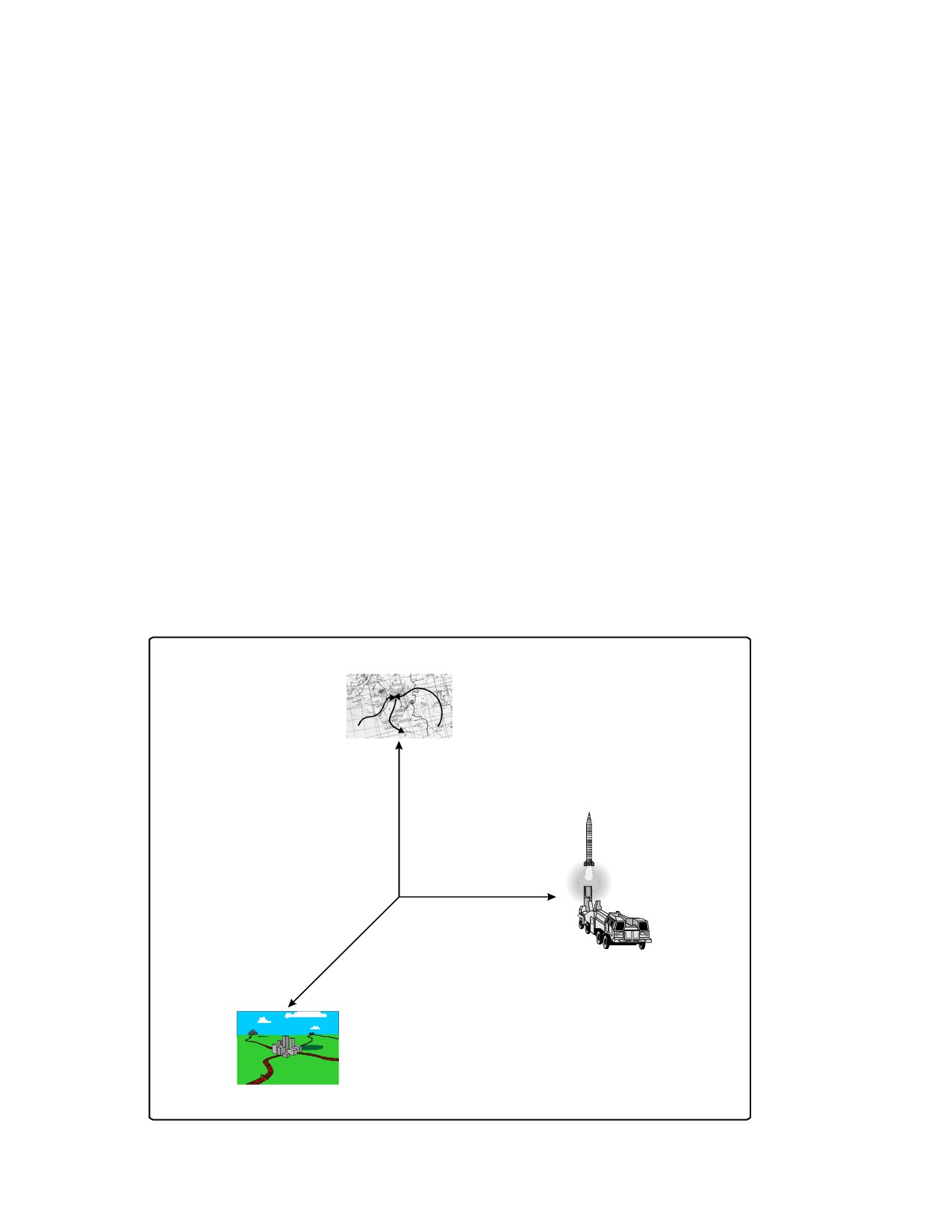
a. The TM Threat. The TM threat is a complex multidimensional
intelligence problem, as illustrated in Figure I-2. TMD IPB aims to decompose
and correlate the "who, what (equipment and units), where (infrastructure), when,
why, and how (operations)" in order to develop potential TM COAs for the
operational planning process. Each TM force is equipped, organized, trained,
I-5
and employed with various degrees of difference. Many of these differences are
relatively minor, while some are more dramatic. TMD IPB encompasses all
dimensions of the threat. Because of the gravity of the TM threat, TMD IPB
focuses on developing this information to allow for the best possible choice of
friendly COAs.
b. TM Systems. There is a wide range of TMs currently deployed and
available to adversary countries. JP 3-01, Joint Doctrine for Countering Air and
Missile Threats, defines the following major categories as—
(1) Theater ballistic missiles (TBMs) with range capabilities of less than or
equal to 3500 kilometers (km).
(a) Short range ballistic missiles (SRBMs) with range capabilities of
less than or equal to 1000 km.
(b) Medium range ballistic missiles (MRBMs) with range capabilities
between 1000 and 3000 km.
(c) Intermediate range ballistic missiles (IRBMs) with range
capabilities between 3000 and 3500 km.
(d) Sea-launched ballistic missiles (SLBMs) with range capabilities of
less than or equal to 3500 km.
OPERATIONS
(When, How, and Why?)
Training
CCD
COMSEC/OPSEC
Movement Models
Flight Characteristics
Logistics
Timelines
Targeting
C2
TTP
Doctrine
Missiles
Launchers
LOC
Fire Control
RDT&E
Support Equipment
Production
Communications
Depots
Organization
EQUIPMENT and UNITS
Air Defense
OB
(Who and What?)
Garrisons
TO&E
Communications
Hide Sites
Launch Sites
INFRASTRUCTURE
(Where?)
Figure I-2. Multiple Dimensions of the TM Threat
I-6
(2) Cruise Missiles (CMs).
(a) Land attack cruise missiles (LACMs) including sea, underwater,
air, and land launched types.
(b) Antiship cruise missiles (ASCMs) including sea, underwater, air,
and land launched types.
(3) Air-to-surface missiles (ASMs) or tactical air-to-surface missiles
(TASM). ASM as defined in JP 3-01 excludes short-range, nonnuclear, direct fire
missiles, bombs, and rockets such as Maverick or wire-guided missiles. This
definition does not adequately define the boundaries of what should be or should
not be considered when addressing ASMs. To provide boundaries, this
publication will exclude ASMs with less than a 30-km range capability.
c. TMD IPB Focus. The examples used in this publication focus on the TBM
threat. This focus is based on the inherent complexities involved in TBM
operations. In short, there are more steps involved in launching a TBM vice
launching a CM or ASM. By using the TBM threat as an example, this
publication attempts to provide a more complete TMD IPB methodology. This
focus does not imply a lesser importance to the CM or ASM threat. These
systems are, and will continue to be, a credible threat to friendly operations.
However, the methodology for conducting IPB against a ground-launched CM
threat is sufficiently similar to the IPB against a TBM threat that the procedures
described are applicable for either system. The IPB against a sea-launched
cruise missile (SLCM), an air-launched cruise missile, or an ASM is sufficiently
different in that it is much more platform-centric. In these cases, the focus of the
IPB is more on the launch platform and the different environments in which they
operate. With these systems, the IPB process must focus on the physical
maritime and air battlespace environments. These system specific differences
are discussed further in Chapter III.
d. Deployed TM Systems. Technologically, TM systems span a spectrum of
sophistication that has direct implications for the IPB process.
(1) The most widely deployed TMs today are systems with technologies
(guidance and control (G&C), liquid-propellant propulsion, and airframe) dating
from the 1940s through the 1960s. Operationally, the surface-to-surface missile
system (SCUD) TBMs and SILKWORM ASCMs representative of this class are
the most widely deployed and continue to be improved and proliferated. They
are manpower and equipment intensive when compared to modern systems.
(2) Advanced TM systems are currently deployed in fewer numbers and
include solid-propellant propulsion, improved G&C with digital flight computers
and global positioning systems (GPSs), improved airframe, and modern ground
support equipment (GSE) technologies. These more modern technologies result
in improved quick reaction times, accuracy, lethality, and a need for less support
vehicles and operational support. Operationally these systems require
significantly less manpower and integrate automation in erector-launchers and
other GSE. Although limited in number, these systems pose a growing threat to
TMD operations.
I-7
5. Phases of TMD Operations
US military operations can be broken into 5 major phases: prehostilities,
lodgment, decisive combat and stabilization, follow-through, and posthostilities
and redeployment.
a. Prehostilities Phase. The prehostilities phase encompasses normal day-
to-day peacetime operations and offers the highest leverage for TMD IPB
preparation. During this phase, TMD IPB development can draw upon the
distributed production assets of the intelligence community (national, theater,
and service organizations), which have the responsibility for providing the key
data needed for TMD IPB development. To optimize the value of these sources,
the analyst should begin TMD IPB development as early as possible and
continually refine to provide as much depth as possible given available
intelligence data.
b. Lodgment Phase. The lodgment phase involves the movement and
buildup of a decisive combat force in the operational area. It may include initial
strikes from outside the theater as well as holding or defensive actions from
units already in-theater. During this phase, TMD IPB plays an important role in
TMD deployments, initial planning for TMD attack operations, options for
passive defense, and overall command COA development to mitigate the effects
of an adversary's TMs. Joint or component level units assigned TMD IPB
responsibilities should acquire as much TMD IPB data as possible before
deployment. Links should be established with appropriate national intelligence
organizations to provide support to TMD intelligence operations as required.
c. Decisive Combat and Stabilization Phase. This phase initially focuses on
the continuing rapid buildup of joint force capabilities. The goal is to deter
hostilities, but if deterrence fails, to conduct decisive combat operations. In this
phase, the TMD IPB should be updated and refined based on observed and
anticipated adversary combat operations and used to plan and execute active
defense operations, attack operations, and passive defense measures.
d. Follow-Through Phase. The follow-through phase aims to bring the
conflict to a successful conclusion. In this phase, TMD IPB will be updated based
on observed adversary combat operations. TMD IPB will be used to optimize
active defense deployments, attack operations, passive defense, and the
command's COAs.
e. Posthostilities and Redeployment Phase. This phase includes closing the
campaign with a coordinated withdrawal while maintaining theater integrity.
TMD IPB will again be updated based on observed adversary combat operations
and used to establish posthostility defensive COAs.
6. Who Conducts IPB
Organizational Roles and Responsibilities. Many organizations have the role
and responsibility to support the integrated TMD IPB effort; Table I-2 lists some
of these through the execution level. One important aspect not depicted in the
table is the essential relationship between the intelligence and operations staffs.
That relationship must be 2-way for the TMD IPB process to work properly. It is
I-8

properly. It is essential that the intelligence staff understands the current
operations situation and plan in order to facilitate a smooth and efficient TMD
IPB. It is also essential that the intelligence staff performing the TMD IPB
function adequately convey the TMD IPB information to the operations staff in a
timely manner. In essence, neither operations nor intelligence can function
properly without each other. Teamwork is essential for TMD IPB and TMD to
succeed.
Table I-2. Some Organizations and Intelligence Roles and
Responsibilities in Support of TMD
Some Organizations and Intelligence Roles and Responsibilities in Support of TMD
Roles and Responsibilities
Organization
Subordinated To
in Support of TMD
National Level
DIA
Secretary of Defense
General Military Intelligence
NSA
Secretary of Defense
SIGINT and ELINT
CIA
President
General Military Intelligence
Central MASINT Office
DIA
MASINT
USAF Director ISR
USAF/Deputy Chief of Staff
General Military Intelligence on Threat
Air and Space Operations
TM Forces
USA Deputy Chief of Staff for Intelligence
Chief of Staff USA
General Military Intelligence
USN Chief of Naval Intelligence
Chief of Naval Operations
General Military Intelligence
USMC Assistant Chief of Staff C4I
Commandant of the USMC
General Military Intelligence
Joint Information Operations Center
US Space Command
Information Operations
US Strategic Command JIC
CINC Strategic Command
General Military Intelligence on Ballistic
Missiles
US Space Command CINC NORAD J-2
US Space Command CINC
TBM Indications and Warnings
NORAD
MSIC
DIA
DIA executive agent for TMD IPB, S&TI
on SRBMs and Air Defense Systems
NAIC
USAF
S&TI on M/IRBMs, Aircraft, and Cruise
Missiles
NGIC
USA Deputy Chief of Staff
S&TI on Ground Systems, ELs, and GSE
for Intelligence
Armed Forces Medical Intelligence Center
DIA
S&TI on CBW
Office of Naval Intelligence
Chief of Naval Operations
S&TI on SLBMs, Ships, and ASCMs
NIMA
Secretary of Defense
Overhead Intelligence Collection &
MC&G Support
Defense Special Missile and Astronautics
DIA
Foreign Missile/Space Activity
Center
Indications & Warning
Department of State Intelligence
Secretary of State
Arms Control and Political
Considerations
Theater Level
National Military JIC
Secretary of Defense
National Level Intelligence Point of Entry
for JTF
J-2 & JISE
Combatant Command CINC
The CINC’s Immediate Intelligence Staff
JTF J-2 and JISE
JFC
The JFC’s Immediate Intelligence Staff
NIST
JFC and NMJIC
National Level Augmentation to JTF J-2
& JISE
USAF Theater Intelligence Elements
JFC and Air Force Forces
USAF Theater Intelligence Elements
USA Theater Intelligence Elements
JFC and Army Forces
USA Theater Intelligence Elements
USN Theater Intelligence Elements
JFC and Navy Forces
USN Theater Intelligence Elements
USMC Theater Intelligence Elements
JFC and Marine Forces
USMC Theater Intelligence Elements
I-9
Chapter II
STEP-1: DEFINE THE BATTLESPACE ENVIRONMENT
1. What Is It?
a. Definition. Step-1 of the TMD IPB process identifies for further analysis
specific features of the environment or activities within it that affect the
battlespace for both adversary and friendly operations.
b. Desired End Effect.
(1) Focus the IPB effort on the battlespace areas and characteristics that
influence the command's mission.
(2) Acquire the intelligence needed to complete the TMD IPB process to
the degree of detail required to support the decision-making process.
(3) Save time and effort by focusing only on those areas and features that
influence TMD operations. Information must be to a level of detail required to
support the command's decision-making process.
2. How To Do It For TMD
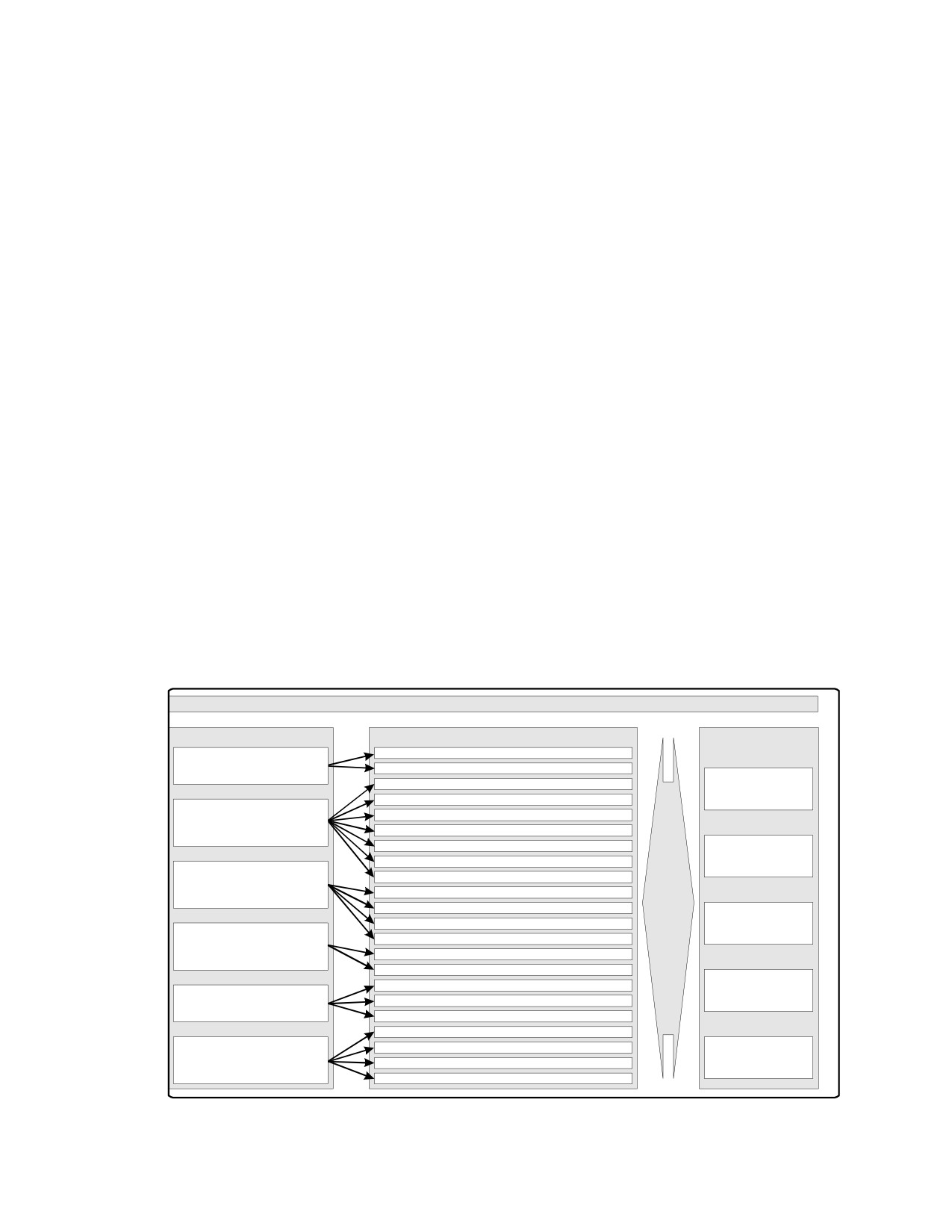
The primary sub-steps are shown in Figure II-I. The products are a series of
templates used to direct, focus, and feed the analytical efforts of Steps-2, -3, and
-4 with intelligence data/information.
Step 1 - Define the Battlespace Environment
Steps
Products
Major Consumers
Step-1.1
Commander’s Mission(s) & Objective(s) Summary
Analyze the Command’s Mission
Commander’s Mission(s) Guidance Summary
in Relation to TMD
TM Force Coverage Assessment
TMD IPB Function
Potential TM Force Deployment Area Assessment
Step-1.2
AO and AOI Assessment for TMD Passive Defense Operations
Identify the Limits of the
AO, AOI,
AO and AOI Assessment for TMD Active Defense Operations
and Battlespace
AO and AOI Assessment for TMD Attack Operations
JFC J-2 and Staff
Composite AO and AOI Assessment
Step-1.3
Determine the Significant
TMD Battlespace Assessment
Characteristics of the
Geopolitical and Regional Threat Assessment
AO Environment
TM Force Overview Assessment
Adversary Active Defense Suppression Threat Assessment
Collection Management
Step-1.4
Staff
Major Terrain and LOC Overview
Identify the Amount of Detail
Required and Feasible Within the
TMD IPB Checklist - All Steps
Time Available
TMD IPB Development Plan - All Steps
JFACC
TMD IPB Holdings, Data Bases, Sources, and Links Assessment
Step-1.5
and
Evaluate Existing Databases and
TMD IPB Information Source Evaluation
Immediate Staff
Identify Gaps
TMD IPB POCs
Recommended PIR(s) / EEI(s) / RFI(s)
Step-1.6
Key Word Information Search
AADC
Collect the Material and
and
Intelligence Required to Support
DIA Standardized Category Code Information Search
Immediate Staff
Further TMD IPB Analysis
Equipment Code Information Search
Figure II-1. Step 1 - Define the Battlespace Environment
II-1
a. Step-1.1 - Analyze the Command's Mission in Relation to TMD. The TM
mission is determined by understanding provided objectives and guidance.
Objectives and guidance identify what is to be achieved and under what
conditions and parameters. This is an important stage in the TMD IPB process.
Without a clear understanding of what is to be achieved, it is impossible to
achieve efficient TMD IPB development. Objectives and guidance begin at the
national level as broad concepts and should end as short-term, well-defined
mission objectives at the appropriate command level.
(1) Objectives. An objective must be understandable, attainable,
measurable, and allow room for a solution. It defines the specific TMD IPB
problems to be solved. When possible, identify the specific starting and ending
times for the objective as knowledge of the timing is critical to providing TMD
IPB support. If possible, estimate latest time information is of value (LTIOV).
This is the time by which information about the objective must be delivered in
order to provide decision makers with timely intelligence. Another significant
part of an objective is identifying the area in which to affect the adversary
activity. This information narrows the geographical scope and simplifies the
TMD IPB analyst's job.
(a) Relationship of Objectives. The 3 broad levels of objectives are
national, theater, and component. The objective levels are intertwined and each
successive level down becomes more detailed and specific. The component
commander's objectives are based on the objectives set by the theater
commander, the assigned mission(s), the resources available, adversary
characteristics, and the military characteristics of the AO. Components normally
supplement operation and contingency plans. The theater commander sets
objectives for the theater of operations, which are contingent upon the national
objectives. Operation/contingency plans normally specify the command
objectives, commander's concept of operations, the threat, and forces available.
The President and Secretary of Defense are responsible for setting the very
broad national objectives, which generally outline the overall desired outcome of
the campaign. There should be no conflicting objectives among the levels and the
TMD IPB developers must be cognizant of all objectives.
(b) Objectives Template. A simple questionnaire worksheet can
provide a template for evaluating and recording mission objectives. Once a
complete set of objectives is defined, summarize them in a list form. First
develop the objectives for the command's overall mission if not already obtained
from higher headquarters. Next evaluate TMD specific mission objectives. See
Appendix B, Figure B-3 for suggested template examples of an objectives
summary template and Figure B-4 for an objectives worksheet template. The
objectives worksheet template should be completed for each identified objective.
(2) Guidance. Guidance provides the framework to achieve the objectives
and establishes the force employment scope and restrictions.
(a) Types. The law of armed conflict (LOAC) (also referred to as law of
armed war) is that portion of international law that regulates the conduct of
armed hostilities. The LOAC includes treaties, conventions, international
agreements and customary international law. Ratified treaties, conventions, and
II-2
international agreements, as well as applicable customary international law
legally bind the US. Rules of engagement (ROE) are directives issued by
competent military authority that delineate the circumstances and limitations
under which US forces will initiate and/or continue combat engagement with
other forces encountered. The ROE can change within each conflict, based on
directives issued by competent military authority.
(b) Command Guidance. Command guidance comes in many forms and
can entail a broad range of subjects, from approved tactics for active TMD to
proper behavior in local establishments. A template for recording the command's
mission and TMD mission guidance is at Appendix B, Figure B-5. List each of
the identified command guidance, ROE, and applicable LOAC on the worksheet
and describe each in as much detail as needed.
Note: Objectives and guidance are the cornerstones of the TMD IPB process.
They guide the 4 major steps of the TMD IPB process and should be clear and well
defined. Once developed, theater and command objectives are constantly reviewed
to assure they accurately reflect the current command TMD mission. Everyone
involved in the TMD IPB process should fully understand the commander's
objectives and guidance or request further clarification. A starting point for
receiving and assessing the commander's objectives and guidance follow:
♦ Operations Plan (OPLAN).
♦ Operations Order (OPORD).
♦ Warning Order.
♦ Alert Order/Deploy Order.
♦ Planning Order.
♦ Air Tasking Order/Integrated Tasking Order.
♦ Fragmentary Order.
♦ Operation Plan in Concept Format (CONPLAN).
♦ Concept of Operations (CONOPS).
♦ Time-Phased Force and Deployment List.
♦ Defended Asset List (DAL).
♦ Standing ROEs.
b. Step-1.2 - Identify the Limits of the AO, AOI, and Battlespace for the TMD
IPB Process. To assist in the coordination and deconfliction of joint action, JFCs
may define operational or joint areas. For operations limited in scope (such as
TMD) geographic combatant commanders can designate operational areas such
as joint operation areas, joint special operations areas (JSOAs), joint rear areas
II-3
(JRAs), amphibious objective areas, or AOs. An AO is the geographical area
where a commander is assigned the responsibility and authority to conduct
military operations. An AOI is based on operational factors and the command's
concept of operations, as defined by higher headquarters. The intelligence cell
recommends the AOI to the commander based on IPB.
(1) AO for TMD IPB. To save time and focus the IPB effort on the areas
and characteristics of the battlespace that most directly affect the command's
mission, the intelligence analyst will limit the analysis to the geographical areas
supporting troops and capabilities that can influence TMD operations. This
publication refers to that geographical area as the AO. AOs for TMD IPB are
those geographical regions analysts use to define missile threat envelopes, the
locations where TM forces operate, and/or where TMD operations will be
conducted. Note: The Army and Marine Corps use the term area of operations
(AO) in their IPB manual [FM 2-01.3/MCRP 2-12A] whereas the Air Force uses
operational area (OA) in their IPB pamphlet. For the purpose of TMD IPB, these
terms are analogous. Both references define these terms as “that portion of an
area of conflict necessary for military operations.” This publication uses the term
AO; however, the definition differs from that in JP 1-02. The use of AO in this
publication does not infer that a specified AO commander, as defined in JP 1-02,
has responsibility and authority for TMD operations, nor does it limit the size of
the geographical area or limit it to only naval or land commanders. This term
only defines a geographical area necessary to focus the IPB process for the
intelligence analyst. The maximum attack depth of the commander's available
TMD attack operations assets usually limits the AO for TMD IPB. The evaluation
of the battlespace's effects in the AO is generally more thorough and detailed
than it is within the AOI. The AO for TMD IPB is derived from the DAL,
OPLAN, OPORD, CONPLAN, and/or CONOPS. Remember that the DAL
requires an analysis, which includes several IPB products, of the adversary's
targeting strategy. Generally the DAL is established based upon what the
friendly commander wants to protect that may leave possible targets
unprotected.
(2) AOI for TMD IPB. The TM operations battlespace defines the AOI for
TMD IPB. To plan and successfully conduct the TMD mission, AOI information
and intelligence are required. The limits of the TMD composite AOI are based
on the ability of the adversary to project power or move TM forces into the AO.
Geographical locations of other activities (for example, terrorists) or
characteristics of the environment that might influence COAs or the
commander's decisions, are also considered. Because the limits of the TMD
composite, AOIs are based on threats to mission accomplishment rather than
strictly terrain considerations; they might cross into other countries. For
example, if political developments in a neutral country might influence the
accomplishment of the command's mission, that country should be included in
the TMD composite AOI. Likewise, if another country provides a base of support
for the adversary country's TM force, it should be included within the TMD
composite AOI. The following templates should be created for defining the AOs
and AOIs for TMD IPB:
II-4
♦ Potential TM Force Coverage.
♦ Potential TM Force Deployment Area(s).
♦ TMD Active Defense AO and AOI Template.
♦ TMD Passive Defense AO and AOI Template.
♦ TMD Attack Operations AO and AOI Template.
♦ Composite AO and AOI Template.
Two basic considerations the TMD IPB analyst should keep in mind are
division of AO and AOI templates into multiple sets and knowledge of TM force
infrastructure data. Depending upon the situation, it may be beneficial to divide
the AO templates into multiple areas based upon TM force weapon system
category. For example, there are significant differences between TBMs and
ASCMs. In most cases, it is better to build a set of AO templates for TBMs and
another set of AO templates for ASCMs. Some countries have many more SRBMs
than MRBMs. Because of the differences between missiles, this is a case when
separate AO templates may again be better. Each situation is different, and the
TMD IPB analyst will have to use the best judgement in determining how to
divide the AO templates. One final consideration is the extent of knowledge of
the adversary TM force infrastructure data. If the TM force operating areas are
unknown, then assume that the TM force (air, land, or sea-based) can operate
from any part of the adversary's battlespace. This can include occupied portions
of neighboring countries such as Kuwait for Iraq during the Gulf War of 1991.
(3) TMD Battlespace. The AO and AOI are geographic areas that can be
defined not only in three-dimensions (height, width, and depth) but in other
dimensions as well. In determining other dimensions of the TMD battlespace,
the TMD intelligence function must move beyond addressing only the concrete,
physical aspects of the geographic environment. The TMD battlespace includes
all elements of the environment that are relevant to the command's TMD
mission. The TMD forces use of the electromagnetic spectrum (for example,
radios and radars); the capabilities of the TMD force to use satellites for
communications and intelligence gathering; and TMD force information systems
capabilities and vulnerabilities, both inside and outside the TMD IPB AO, are
examples of other environment elements that must be considered when
determining the dimensions of the command's TMD battlespace. Figure II-2 and
Figure II-3 provide the basic processes for assessing the AO/AOI for TMD IPB.
Using these processes, Figures II-4 through II-10 provide illustrative examples of
assessing the AO, AOI, and battlespace for TMD IPB. See Appendix B, Figures
B-6 through B-9 for correlating blank templates.
II-5
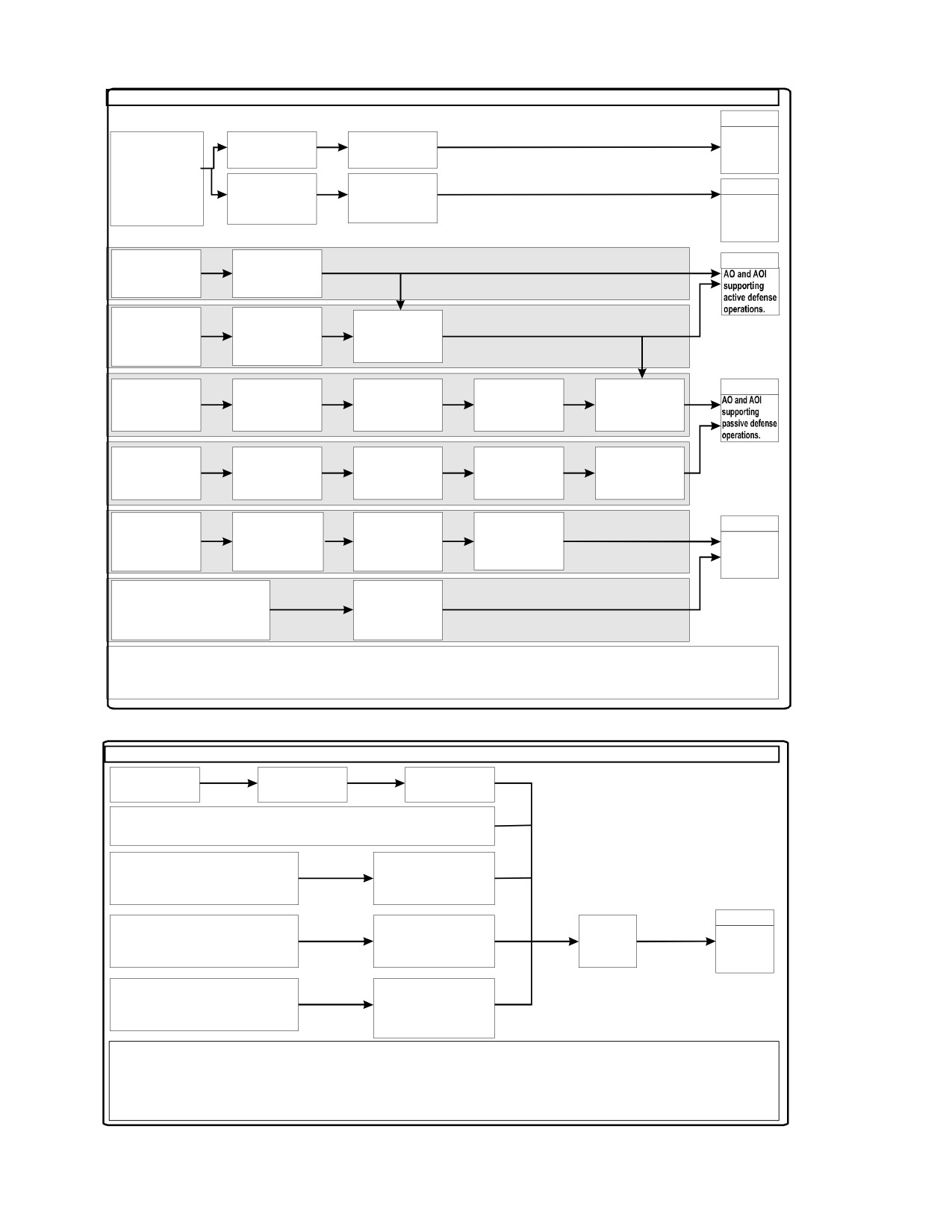
AO and AOI Assessment Process for TMD IPB
Template
Select adversary
Calculate forward
Select union of
Potential TM
country border(s) for
adversary TM
forward range arcs
force
land-based TMs
and/
force range arcs.
with AO.
coverage.
or
coastlines for
sea-based Tms and/
Calculate reverse
Select union of
Template
or known/assessed
adversary TM
forward range arcs
TM operating
force range arcs
Potential TM
with AO.
from border(s).
force
areas/bases.
deployment
area.
Query active defense
Plot active defense
Template
planners for active
coverage by TMD
defense areas and
weapon system
coverages.
type.
Calculate forward
Plot known locations
Select union of
adversary TM
of adversary TM
forward range arcs
force range arcs
force operating
with AO
from operating
bases and areas.
and AOI.
areas.
Plot potential
Query
Select Union of
Template
Query sources
Plot potential
adversary TM force
command staff
Targets/DAL with
for adversary TM
adversary TM force
force targeting
targets from TMD IPB
for DAL/critical
forward Range
targets and DAL.
doctrine.
Step-3 if available.
asset list.
Arcs and AO.
Plot potential
Query
Select Union of
Query sources
Plot potential
adversary TM force
command staff
Targets/DAL with
for adversary TM
adversary TM force
targets from TMD IPB
for DAL/critical
Forward Range
force targeting
targets and DAL.
Step-3 if available.
asset list.
Arcs and AOI.
doctrine.
Plot known locations
Plot known
Plot known
Template
Plot current and
of adversary TM
locations of adversary
locations of
planned operating
force RDT&E and
TM force operational
adversary TM force
Attack
areas for attack
production
infrastructure or the
LOC infrastructure
operations
operation sensors.
infrastructure.
reverse range arc.
and choke points.
AO and AOI.
Plot all potential airspace and
Plot coverage of
geographic areas attack operations
adversary air
forces may use in moving the attack
defense system
operations AO (this is typically all of
which can threaten
the adversary and occupied territory).
attack operations.
Notes: If operating areas are unknown, use adversary country borders (or the borders of occupied territory) to calculate the AO for active defense TMD IPB. For any
of the templates, the AOs can be divided into multiple areas. For example, the AO for active defense TMD IPB can be subdivided into a SRBM applicable AO and an
MRBM applicable AO. This can be useful to highlight parts of an AO based on weapon systems with significantly different capabilities. Another example would be to
separate different classes of TM weapon systems from each other, such as TBMs from ASCMs.
Figure II-2. AO and AOI Assessment Process for TMD IPB
TMD Composite AOI Assessment Process
Plot
Plot
Plot
active defense
passive defense
attack operations
AOs and AOIs
AOs and AOIs
AOs and AOIs
Identify other geographic areas of the adversary country and occupied territory currently not
part of the TMD AOs which could support the development
and maintenance of the adversary’s TM force
Identify other countries currently not
If possible, identify activities
part of the TMD AOs which may be
and locations within these
supporting the development and
countries providing the
maintenance of the adversary’s TM force
support and plot its locations
If possible, identify activities
Template
Identify other countries currently not part
Combine all
of the TMD AOs which are currently
and locations within these
influencing
countries providing the
Composite
neutral but may become hostile or
areas into
support and plot its locations
TMD AOI
support the adversary in the future
a single plot
Identify friendly and neutral countries
If possible, identify activities
currently not part of the TMD AOs
and locations within these
which the adversary may threaten with
countries which the adversary
TM forces to influence the TMD Aos
would target with its TM
force and plot their locations
Note: Gross identifications of areas may be required. This may result from a less than complete understanding of factors
influencing the TMD AO. For example, other areas within an adversary’s occupied territory capable of supporting TM force
operations should be analyzed as well as the legitimate areas of the adversary country. Another example, outside
influences may be entire countries, but if particular targets, development facilities and activities, production facilities and
activities, ports of departure, and LOCs can be identified they should be plotted.
Figure II-3. Composite AOI Assessment Process
II-6

180600Z MAR 00
UNCLASSIFIED
Page 1
Potential TM Force Coverage
Su-24 FENCER + AS-17 ARM (500 km)
Ocean
YELLOW
TBM (300 km)
BLUE
RED
PG Operating Area
SLCM (300 km)
GRAY
PG Launched ASCM (300 km)
Ocean
SLCM Operating Area
Notes:
1. Patrol combatant (PG) operating area is known.
2. SLCM operating area is known.
3. TBM and ARM operating areas are unknown.
4. TBM and ARM range arcs are based on forward range arcs from the borders of the combined territory of RED and GRAY.
5. ARM coverage is based on a maximum launch range of 400 km for the Su-24 FENCER and an additional 100 km for the AS-17
after launch. The combined range coverage is 500 km.
TMD IPB Template -- 18 March 2000
UNCLASSIFIED
Local Reproduction Authorized
Figure II-4. Potential TM Force Coverage Template
II-7
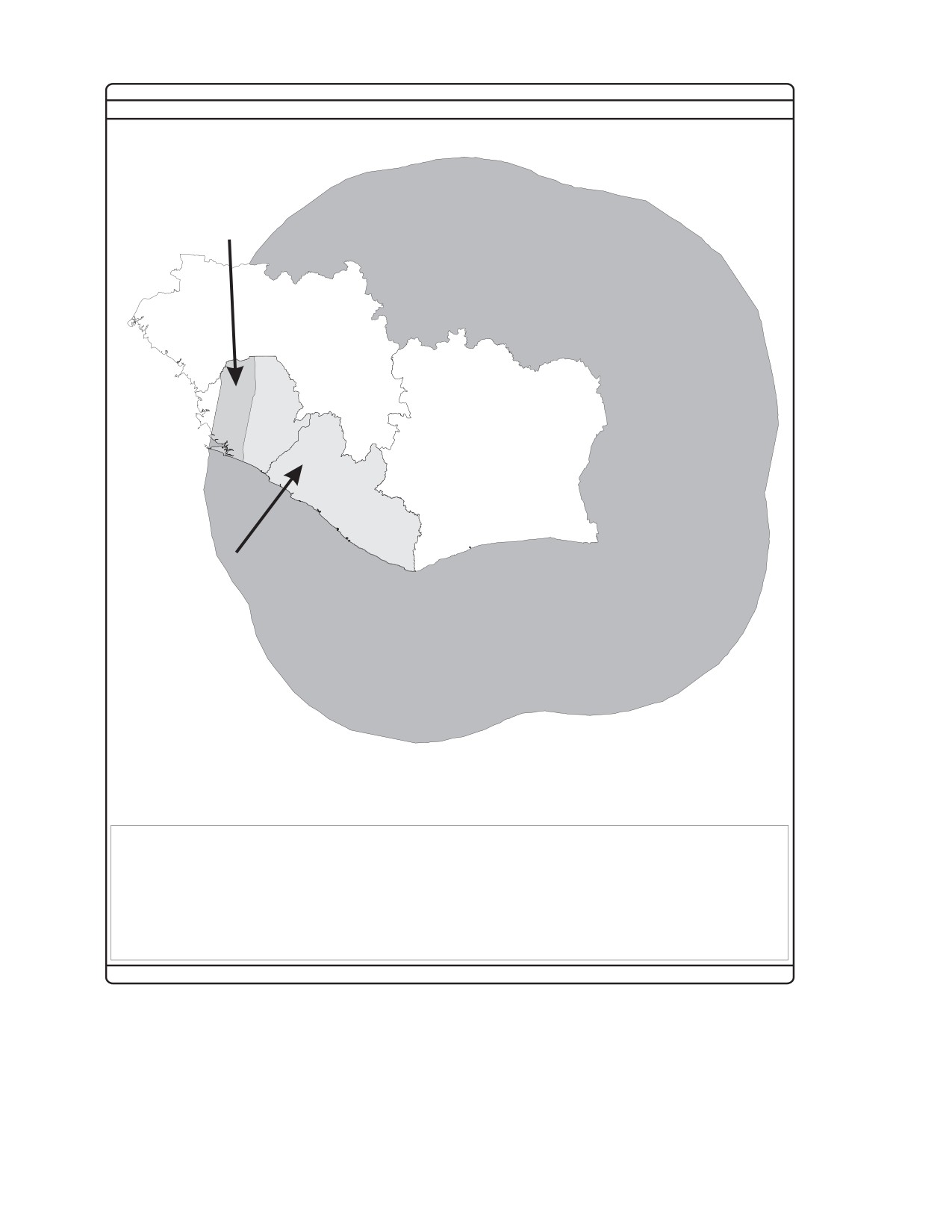
180600Z MAR 00
UNCLASSIFIED
Page 1
Potential TM Force Deployment Area Assessment
Ocean
Potential ARM deployment areas
(reverse 500-km range arc)
YELLOW
RED
BLUE
GRAY
Potential TBM deployment areas
(reverse 400-km range arc)
Potential SLCM deployment areas
Ocean
(reverse 500-km range arc)
Notes:
1. Reverse range arcs are from the BLUE country border and represent the maximum potential deployment areas.
2. GRAY is currently occupied by RED forces and has to be considered as a potential area for deployment of RED forces.
3. The potential ARM deployment area includes all airfields capable of supporting Su-24 FENCER operations within the shaded area.
4. RED PGs under continuous patrol have a maximum range of 2,000 km at 25 kph. This range covers the entire command AO and more. Since the PGs
are not blue water capable, they have not been plotted. Refer to the TM Force Coverage Assessment Template for their deployment area.
TMD IPB Template -- 18 March 2000
UNCLASSIFIED
Local Reproduction Authorized
Figure II-5. Potential TM Force Deployment Area Assessment Template
II-8
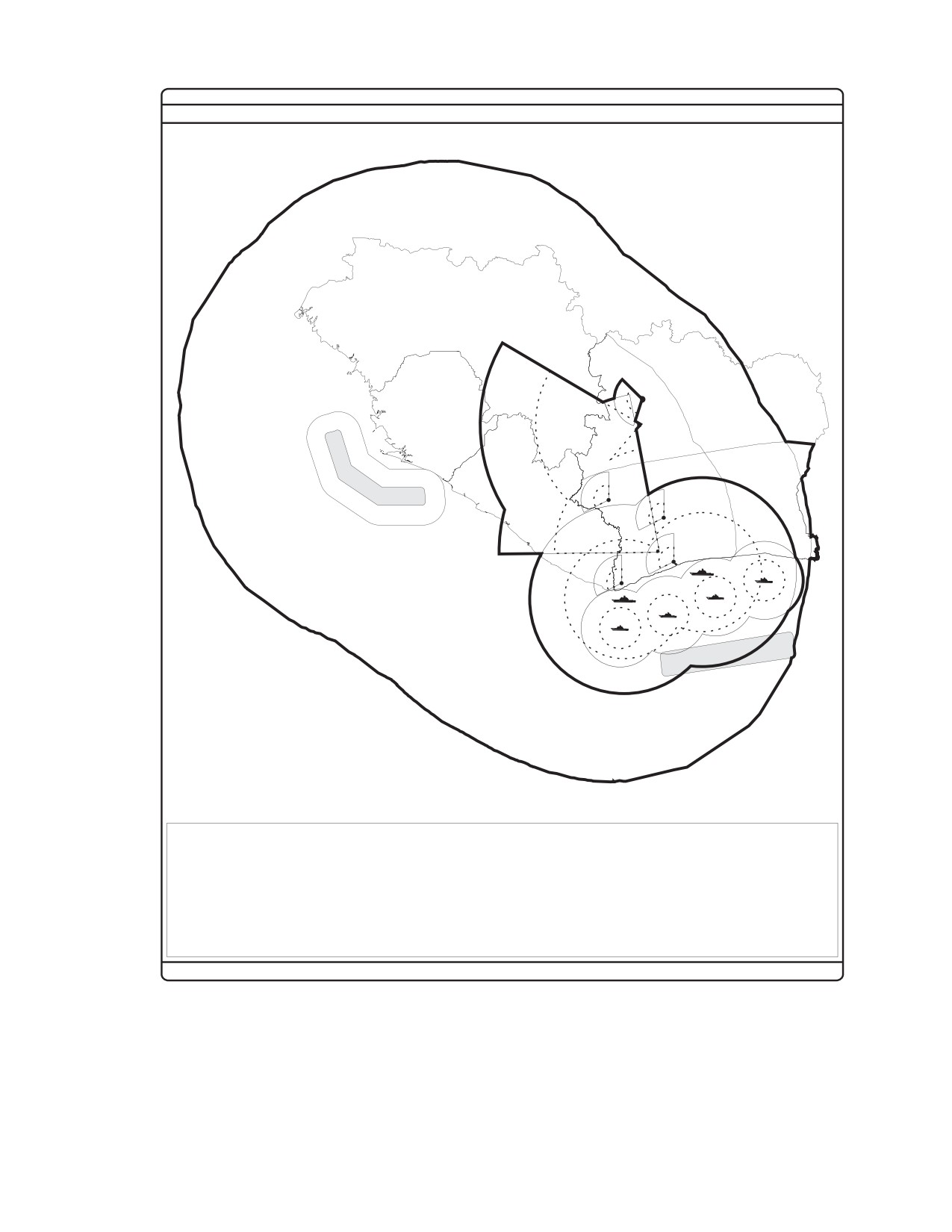
180600Z MAR 00
UNCLASSIFIED
Page 1
AO and AOI Assessment for TMD Active Defense Operations
Ocean
Su-24 FENCER + AS-17 ARM (500 km)
Outlined area is the
AOI for TMD IPB
supporting active defense
operations
YELLOW
TBM (300 km)
PATRIOT
BLUE
PG Operating Area
RED
THAAD
SLCM (300 km)
PATRIOT
PATRIOT
GRAY
PG Launched ASCM (300 km)
PATRIOT
THAAD
PATRIOT
Navy Theater Wide
SM-2 Block 4
SLCM Operating Area
Ocean
Notes:
1. Dashed lines represent nominal interceptor coverages.
2. Solid lines represent nominal radar coverage.
TMD IPB Template -- 18 March 2000
UNCLASSIFIED
Local Reproduction Authorized
Figure II-6. AO and AOI Assessment for TMD Active Defense Operations Template
II-9
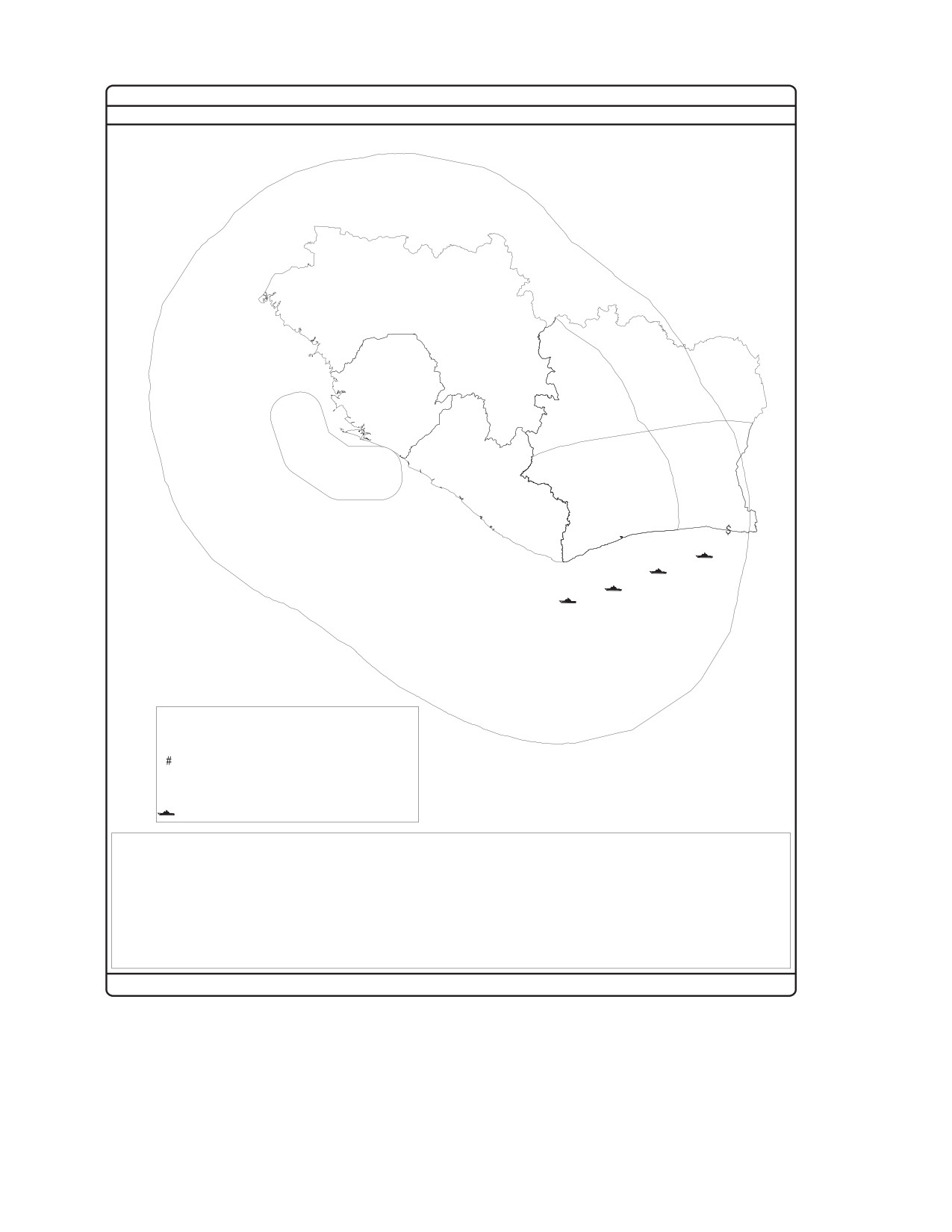
180600Z MAR 00
UNCLASSIFIED
Page 1
AO and AOI Assessment for TMD Passive Defense Operations
Su-24 FENCER + AS-17 ARM (500 km)
Passive defense
AO
is defined by the
solid black symbols
Ocean
YELLOW
#
TBM (300
km)
BLUE
RED
SLCM (300 km)
^^^
^^
^
^
^
GRAY
^
PG Launched ASCM (300 km)
^
$
#
Ocean
Passive Defense
AO Symbols
Both DAL and Potential RED Target List
^
DAL Only
$
Potential RED Target List Only
Potential Mobile Naval Targets
Notes:
1. Passive defense AOs are points or small areas represented by the passive defense AO symbology.
2. There are no passive defense AOIs. An example of a passive defense AOI is potential adversary targets or DAL targets
outside of the current command AO. A specific DESERT STORM example is potential Iraqi targets within Israel prior to Iraq
launching its first TBMs at Israel, which then became part of the passive defense AO.
TMD IPB Template -- 18 March 2000
UNCLASSIFIED
Local Reproduction Authorized
Figure II-7. AO and AOI Assessment for TMD Passive Defense Operations Template
II-10
180600Z MAR 00
UNCLASSIFIED
Page 1
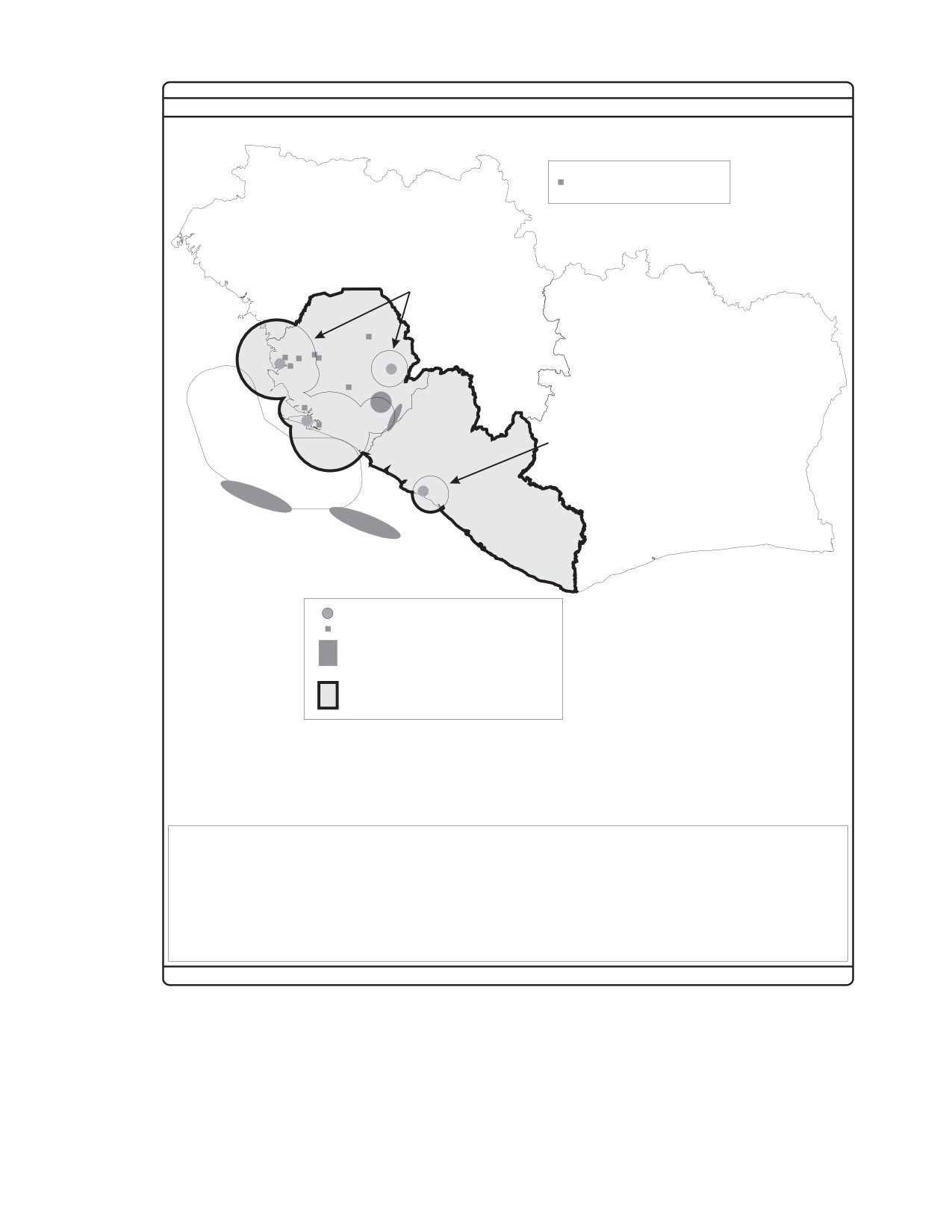
AO and AOI Assessment for TMD Attack Operations
RED TM force RDT&E and
production infrastructure
Ocean
YELLOW
RED Air Defense Coverage
Su-24 Airfield
RED
TBM Operating Area
#
PG Port
BLUE
Predator Orbit
RED Air Defense Coverage
Su-24 Airfield
JSTARS Orbit
GRAY
Advanced synthetic
aperture radar orbit
Symbols and Black Shaded Areas
Denote Attack Operations
AO
Ocean
Gray Shaded Areas Denote Attack
Operations AOI
Notes:
1. Given the capabilities of US aircraft to approach targets from all aspects and at any range, the entire countries of RED and
GRAY are considered an AOI for attack operations.
2. Only the targets and RED TM force operating areas are considered as the attack operations AO.
3. Given the capabilities of US aircraft to approach targets from all aspects and at any range, ingress and egress routes/areas
are not considered as part of the attack operations AO.
TMD IPB Template -- 18 March 2000
UNCLASSIFIED
Local Reproduction Authorized
Figure II-8. AO and AOI Assessment for TMD Attack Operations Template
II-11
180600Z MAR 00
UNCLASSIFIED
Page 1
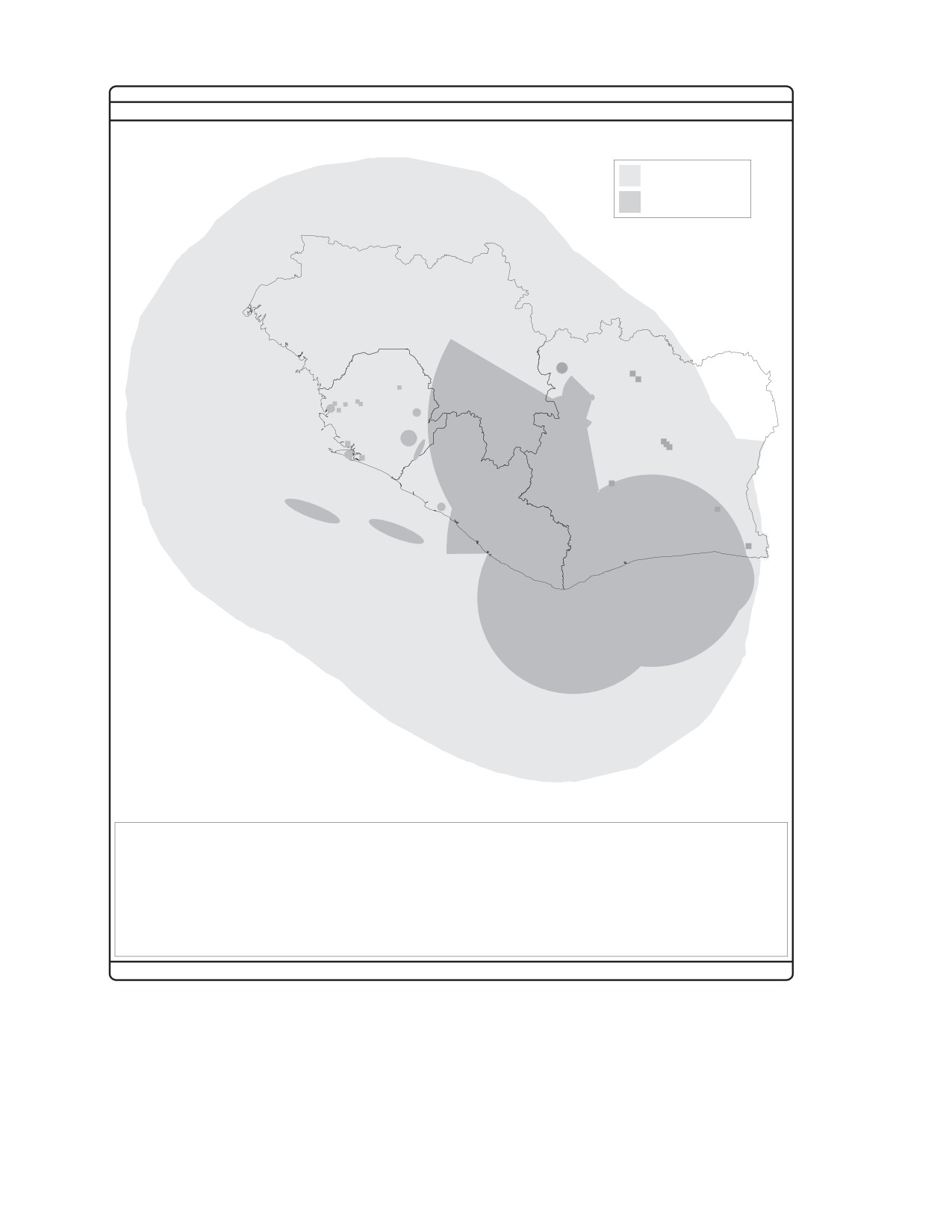
Composite AO and AOI Assessment
Composite of All AOs
Composite of All AOIs
YELLOW
BLUE
RED
GRAY
Note:
The country YELLOW is contained in the composite AOI because YELLOW is supplying RED with complete TM systems and production capabilities. The
whole country represents an AOI while the small circles denote identified facilities within YELLOW known to be supporting RED.
TMD IPB Template -- 18 March 2000
UNCLASSIFIED
Local Reproduction Authorized
Figure II-9. Composite AO and AOI Assessment Template
II-12
180600Z MAR 00
UNCLASSIFIED
Page 1
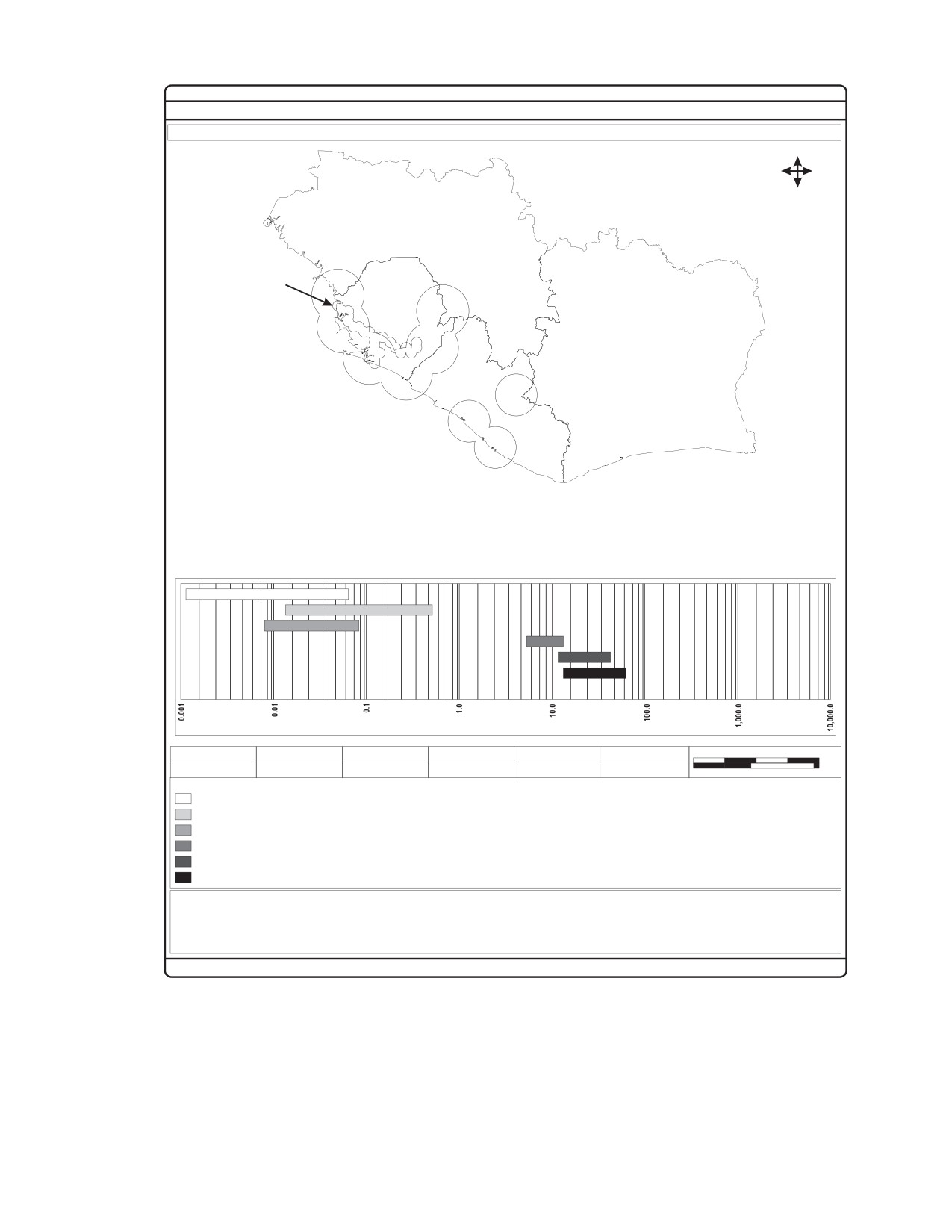
TMD Battlespace Assessment
TMD Related Radio Frequency Battlespace
North
West
East
South
YELLOW
Cellular
Telephone
Coverage
RED
BLUE
Mobile Air
Surveillance
GRAY
Fixed Air
Radar Coverage
Surveillance
Radar Coverage
Mobile Air
Surveillance
Radar Coverage
Therefore Spectrum in Hertz
Map Sheet Name
Map Sheet Series
Map Sheet Number
Map Sheet Edition
Map Sheet Scale
Horizontal/Vertical Datum
0
5
10
15
20
Km
Scale
NA
NA
NA
NA
NA
NA
0
5
10 Nm
Legend / Key / Symbols / Scale
Fixed Air Surveillance Radar
Mobile Air Surveillance Radar
ARM Passive Radar Seeker
Cellular Telephone Communications
Voice / Data RED Imagery Satellite
Data RED Imagery Satellite
Notes:
TMD IPB Template -- 18 March 2000
UNCLASSIFIED
Local Reproduction Authorized
Figure II-10. TMD Battlespace Assessment Template (1 of 2)
II-13
180600Z MAR 00
UNCLASSIFIED
Page 2
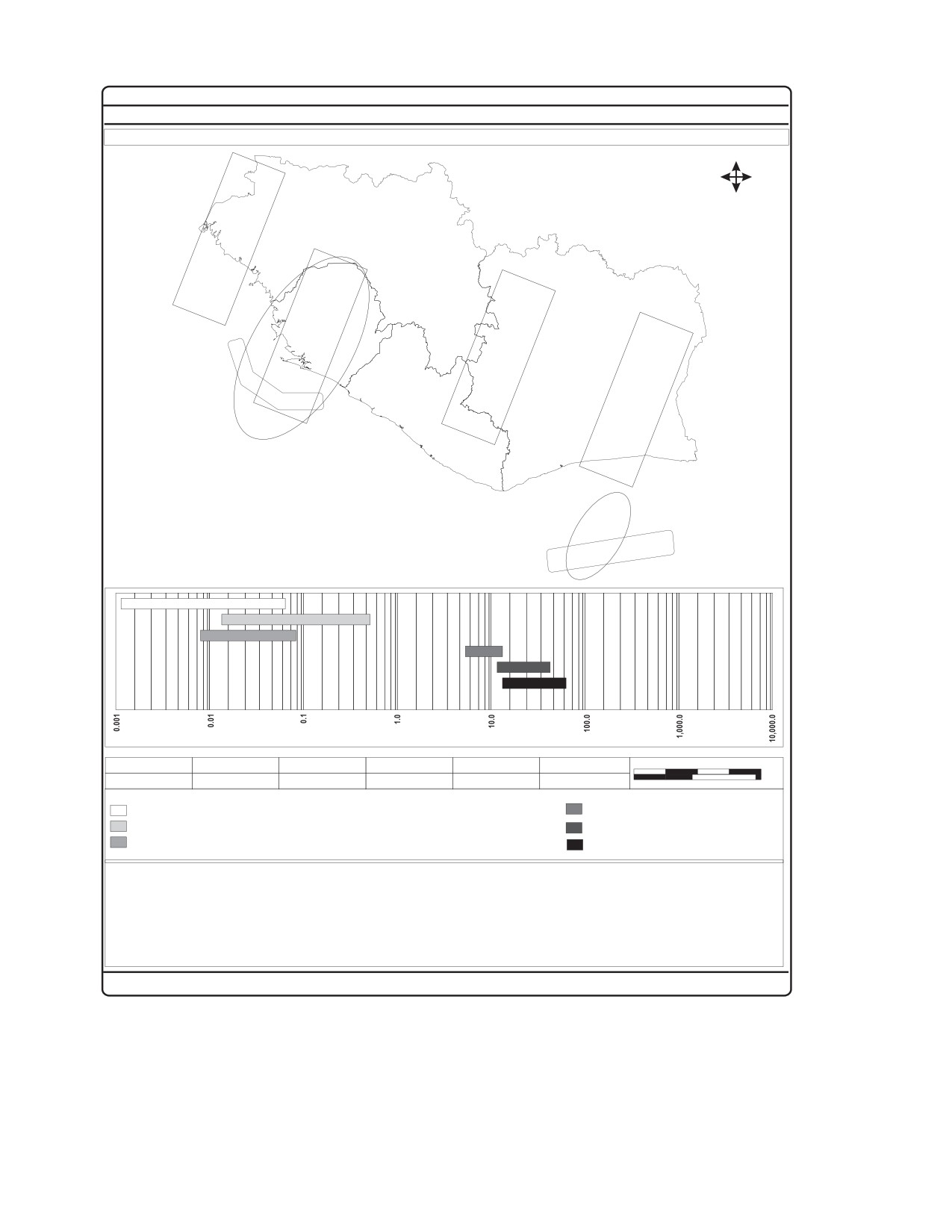
TMD Battlespace Assessment
TM Force Related Satellite Battlespace
North
End
Time
West
East
1237z
South
18 MAR00
RED
YELLOW
Imagery
Satellite
Coverage
End
Time
1107z
End
Start
Time
Time
1233z
0937z
18 MAR00
RED
End
PG operating area
Imagery
18 MAR00
Time
Satellite
RED
RED
0817z
Coverage
Imagery
Satellite
BLUE
Coverage
18 MAR00
Start
RED
Time
GRAY
Imagery
1103z
Start
Satellite
Time
Coverage
0933z
RED Communications
Start
Satellite Coverage
Time
0813z
RED Communications
Satellite Coverage
SLCM Operating Area
Therefore Spectrum in Hertz
Map Sheet Name
Map Sheet Series
Map Sheet Number
Map Sheet Edition
Map Sheet Scale
Horizontal/Vertical Datum
0
5
10
15
20
Km
Scale
NA
NA
NA
NA
NA
NA
0
5
10 Nm
Legend/Key/Symbols/Scale
Fixed Air Surveillance Radar
Cellular Telephone Communications
Mobile Air Surveillance Radar
Voice / Data RED Imagery Satellite
ARM Passive Radar Seeker
Data RED Imagery Satellite
Notes: The RED communications satellite is capable of supporting 2 simultaneous footprints with 20 2.6 to 3.2 GHz bent pipe
transponders per footprint for both uplink and downlink. Each transponder can support 50 multiplexed voice channels or ten 500
kilobits per second data channels. The RED communications satellite has no store-dump or EP capabilities.
The RED imagery satellite makes 4 passes over the AO every five days with a west to east ground track walk. The RED imagery
satellite has a best ground resolution of 15 m and has no off-axis imaging capability (i.e. vertical imaging only). Downlink is through
a 2 megabits per second link at 2.8 GHz and only downlinks within LOS of the RED downlink site which requires 2 to 5 minutes for
acquisition and 15 to 25 minutes for image transfer. The RED imagery satellite has no store-dump capability.
TMD IPB Template -- 18 March 2000
UNCLASSIFIED
Local Reproduction Authorized
Figure II-10 (Continued). TMD Battlespace Assessment Template (2 of 2)
II-14
c. Step-1.3 - Determine the Significant Environmental Characteristics of the
AO. Battlespace characteristics that affect the commander's decisions or the
available command or adversary COAs are of special significance in the TMD IPB
process. For TM operations include—
(1) Geopolitical and Regional Threat Assessment. An assessment of the
geopolitical and regional situation (Figure II-11) is useful in developing a
framework in which TMs will likely be employed. This definition should address
national security goals, regional factors, and relations with the US and allies, and
be condensed into short bulletized statements. Use the theater level IPB,
military capabilities study (MCS), and Defense Intelligence Agency (DIA) as
sources and supplement as appropriate where gaps exist.
(2) General TM Force Capabilities. A general understanding of the TM
force's capabilities helps orient the TMD IPB process. To develop an
understanding, determine, at a minimum, the following TM force parameters:
(a) TM role/missions/targeting.
(b) Historical use.
(c) Order of battle (OB) data.
• Missile and launcher types and numbers.
• WMD capabilities and numbers.
• Known or potential mobile (that is, field operating areas) and fixed
TM infrastructures, (that is, research, development, test and evaluation
[RDT&E], production and operational garrisons/storage).
• Performance data (that is, basic flight trajectory and accuracy and
lethality data). Examine each characteristic in general terms to identify those of
significance to the command and mission. Further evaluation of characteristic
effects occurs later in the process. Figure II-12 provides an example template.
(3) TM Force Active Defense Suppression Capabilities Assessment.
Assessing the adversary's intent and capability to suppress active TMD
operations provides valuable inputs to active TMD operations and security
planning. Consider the following information when doing this assessment
(template at Figure II-12):
(a) Historical use of suppression against theater air and missile
defenses.
(b) Distinction between theater air defense and TMD.
(c) Motivation and intent to suppress active TMD operations.
(d) Capability to suppress TMD operations.
• TMs to suppress TMD operations.
• TM tactics to penetrate active TMD operations.
• TMs configured with penetration aids (signature reduction, decoys,
jammers, etc.).
II-15
• Aircraft to suppress active TMD operations.
•ASCMs to suppress ship-based TMD elements.
• Antiradiation missiles and/or electronic combat to suppress TMD
radar and C4I elements.
• WMD, special operations forces, terrorist and insurgent forces,
combined arms tactics, and/or conventional ground and naval forces (artillery,
armor, infantry, naval surface warfare, underwater warfare, etc.) to suppress
TMD operations.
• Capabilities to locate TMD assets for suppression.
(4) Major Terrain and Environment. An understanding of the general
terrain environment is gained by completing TMD IPB Step-1. For TMD IPB
Steps-1 and -2, review and update the current hard copy, digital global geospatial
information and services (GGI&S) databases, and imagery. The National Imagery
and Mapping Agency (NIMA), a primary source for this data, can provide terrain
maps depicting surface configuration (plains, hills, and mountains) and
vegetation (forested area, scrub, swamps, desert and open grassland). Figure II-
13 is an example of a Central Intelligence Agency (CIA) produced map showing
an analysis of terrain. Digital chart of the world (DCW) II can provide an
alternative view. TMD IPB Step-2 addresses terrain and environmental effects
on TM operations in detail.
(5) Major LOCs. Defining the LOCs (road, rail, and telecommunication
networks) is important for the detailed area limitation analysis in TMD IPB
Step-2. TMD IPB Step-1 defines and uses the primary road/rail network as an
overlay when determining the AO and AOI. Rail networks will typically be less
significant for TM operations in most countries. An overlay is not needed if its
TM force does not use a particular adversary country's rail network. Also, an
overlay for telecommunication networks should be developed. The military
telecommunications network is more important than the civilian network,
though in many countries the military uses the civilian network. Landlines are
of particular importance to TM operations. Use MCS, country studies, or digital
intelligence databases to obtain information. Available data within DCW-II and
commercial GGI&S systems generated the example (Figure II-13) of a kind of
graphic needed for this step.
d. Step-1.4 - Identify the Amount of Detail Required and Feasible Within the
Time Available. Understanding the TMD IPB development process is essential
in order to collect the required information and to deliver that information in a
timely manner. Failing to get the right information to the right place at the right
time can result from trying to do too much. Yet, doing too little results in getting
the wrong information to the right place at the right time. To avoid this, develop
a TMD IPB checklist to gauge the amount and detail of work that needs be
accomplished, then build a TMD IPB development plan to schedule the work
identified in the TMD IPB checklist (Appendix D). This helps in focusing the
development effort to get the right information to the right place at the right
time.
II-16
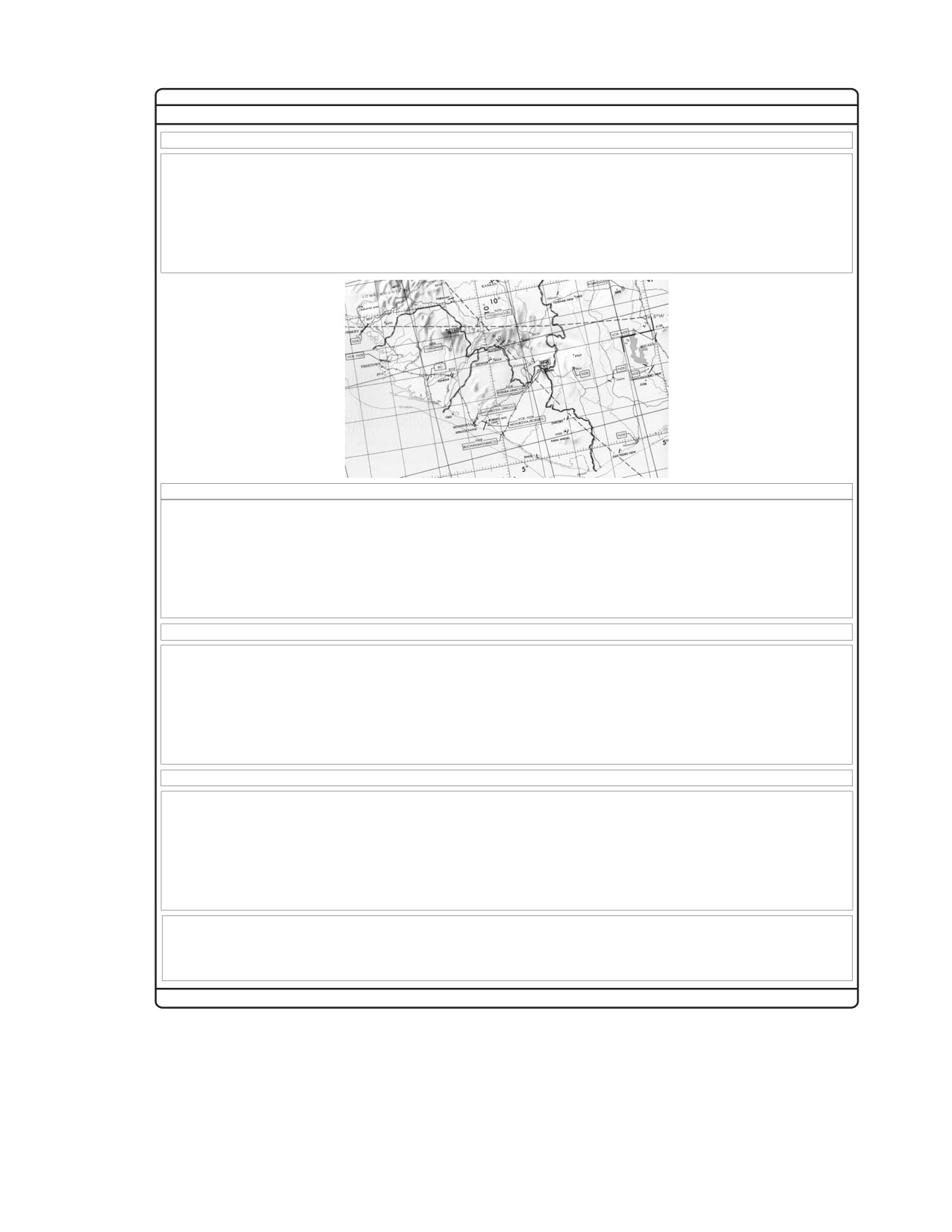
180600Z MAR 00
UNCLASSIFIED
Page 1
Geopolitical and Regional Threat Assessment
Adversary National Security Goals and Desired End State
• Ensure survival of current political regime
• Limit foreign, primarily US and Allies, influence in the region
Adversary Regional Strategic Vulnerabilities
• RED has a weak, but stable economy
• RED has a long- standing dispute with GRAY over border, claims GRAY is their fourth province
• RED has engaged in armed conflict with GRAY twice and BLUE once within the last 50 years
• YELLOW has sold 250 TBMs to RED over the last five years
• YELLOW is assisting RED in establishing a TBM production capability
• YELLOW has sold 150 ASCMs to RED over the last two years
• YELLOW has sold an additional 100 ASCMs to RED for delivery over the next three years
Principal Strategic and Operational Objectives
• Absorb GRAY into RED
• Dominate BLUE
• Deter perceived GRAY and BLUE aggressions
Intent and Strategic Concept of Operations
• RED views US economic and military aid to GRAY and BLUE as a direct threat to RED’s national security
• RED views strong US and Blue economic ties as a threat to RED economic security
• Annex GRAY through military invasion
• Force the removal of US and allied forces in the region through the annexation of GRAY and military intimidation of BLUE
• Dominate BLUE through the continued intimidation of BLUE
Notes:
TMD IPB Template -- 18 March 2000
UNCLASSIFIED
Local Reproduction Authorized
Figure II-11. Geopolitical and Regional Threat Assessment Template
II-17
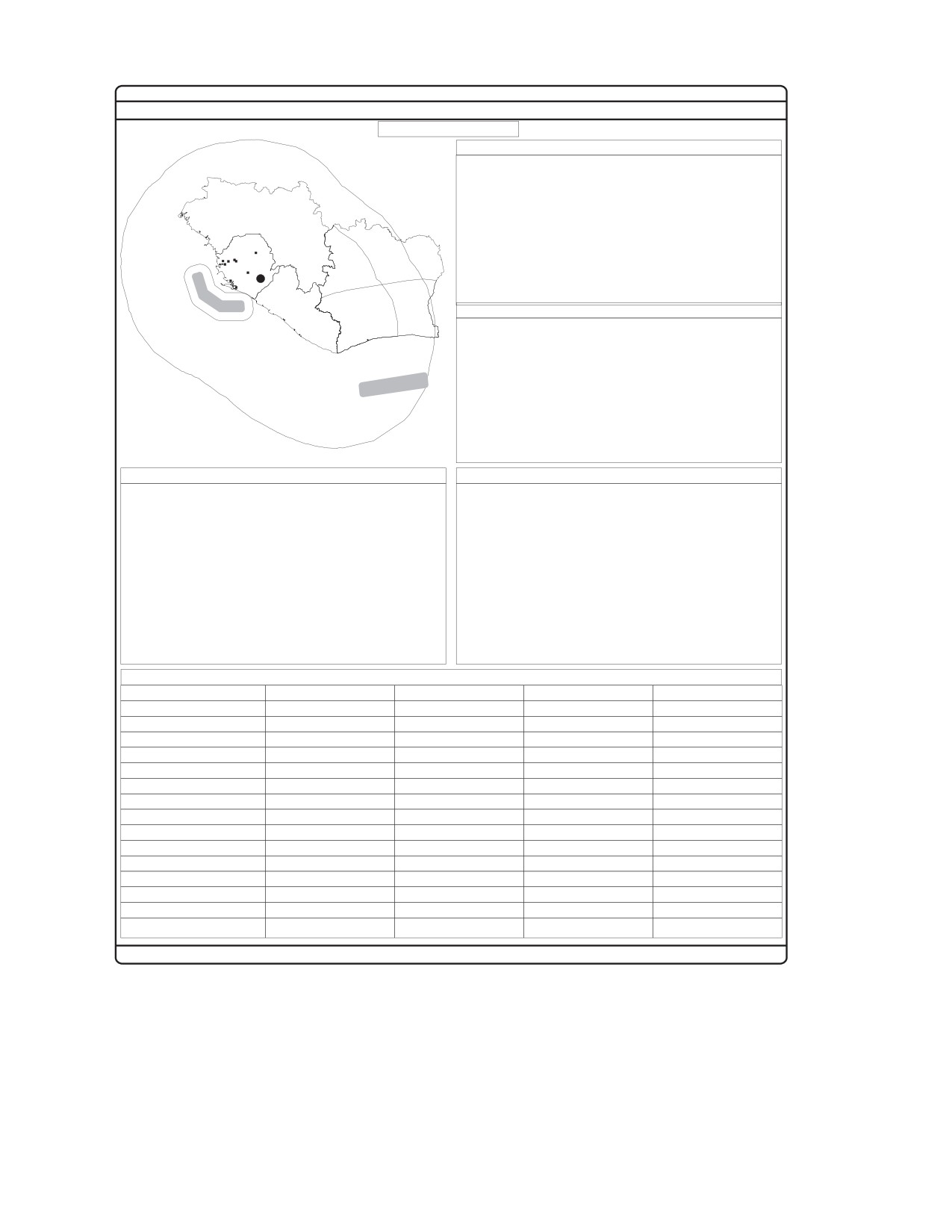
180600Z MAR 00
UNCLASSIFIED
Page 1
Adversary TM Force Capabilities Assessment
General Capabilities
Types and OB of TMs
Su-24 FENCER+ AS-17 ARM (500 km)
ASMs
None
ARMs
72 x Russian AS-17a
Ocean
12 x Launch Platform - Russian Su-24D FENCER
YELLOW
ASCMs
96 xYELLOWSSY-N-4
8xLaunchPlatforms-RussianOSAIIPG
TBM (300 km)
LACMs - SLCMs
120 xYELLOWSSY-N-2
PG Operating Area
#
#
SLCM (300 km)
2xLaunchPlatform-FrenchAgostaSS
RED
TBM s- SRBMs
#
400 x YELLOW SSY-6
#
BLUE
18 x Launch Platform - MAZ-543
Ocean
#
GRAY
Role/Mission/Targeting of TM
TBMs, LACMs, and SLCMs
PG Launched ASCM (300 km)
Strategic weapons - foundation for regional military influence
Primary deep strike weapons
Key military airfields, key C4I nodes, air defense/TMD sites, and large fixed military
logistics/materials sites
Possible nuclear and CW dimension, no biological weapon capability
ASCMs
Coastal defense
SLCM Operating Area
Large surface group formations, aircraft carriers and other major capital and amphibious
ships
ARMs
Defense suppression of air and TMD
PATRIOT radars, THAAD radars, and possibly AEGIS radars
Historical Use
Employment Concepts
Known Flight Tests/Training Launches (successes/failures)
TBMs
AS-17a ARMs (15/5), SSY-N-4 (35/6), SSY-N-2 SLCMs (6/0), and SSY-6 TBMs (22/3).
Deploy before conflict initiation to conduct mobile field operations.
1980 RED-GRAY War
Launchers move into hide sites, then to launch sites and launch.
6 SSY-6s - used against GRAY airfields.
After launch, launchers move to different hide site, then to transload site.
1988 RED-BLUE War
Missiles/fuel/warheads move from field storage sites to transload sites.
2 BLUE frigates attacked with 8 RED SSY-N-4 ASCMs.
Transload site prepares and reloads missile/reload launchers upon arrival.
1 frigate sunk and one severely damaged.
After reload, launchers move to new hide site. Cycle repeats.
1992 RED-GRAY War
SLCMs
12 AS-17a ARMs used in three separate attacks.
Deploy to operating area off BLUE coast
prior to conflict initiation.
AS-17a targeted Russian-supplied GRAY SA-2 radars.
ASCMs
46 SSY-6 TBMs used against key GRAY airfields.
Deploy to operating area off RED coast/capital port prior to conflict initiation.
12 SSY-6 TBMs used against key GRAY C4I nodes.
Conduct defensive operations against hostile navy attacking capital.
4 SSY-N-4 ASCMs used against a GRAY PG.
ARMs Operate from home airfields.
SSY-N-2 SLCM never used in combat.
Su-24D FENCERs fly to BLUE border and launch ARMs.
RED never used WMD in combat.
Primary target: THAAD and then PATRIOT radars.
TM Characteristics and Performance
Parameters
AS-17a
SSY-N-4 ASCM
SSY-N-2 SLCM
SSY-6 TBM
Propulsion Type
Turbojet
Turbojet
Turbojet
Single Stage Liquid
Length (m)
5
5
4.5
12
Diameter (m)
0.35
1
0.75
1
Wing Span (m)
1.2
2
1.75
1.8
(tail-fin span)
Maximum Range (km)
100
50
500
300
Minimum Range (km)
5
2
50
30
Accuracy (circular error probable) (m)
2
5
200
500
Maximum Range Apogee (m)
120,000
(lofted profile)
NA
NA
100
Nominal Launch Altitude (m)
500 - 25,000
Sea-level
Sea-level to -90
Ground-level
Nominal Cruise Altitude (m)
Loft-dive or direct descent
25
100
32,000
(burnout altitude)
Nominal Cruise Speed (mach)
2.5
- 3.2
0.75
0.80
1,700 m/s (burnout velocity)
Maximum Time of Flight (minutes)
5.5
25
270
16
Payload Mass
100
500
500
1,000
Warhead Mass
90
400
425
850
Unitary HE, CW, & Nuclear
Payload Options
Semi-Armor Piercing
Semi-Armor Piercing
Unitary HE, CW, & Nuclear
HE & CW Submunitions
TMD IPB Template -- 18 March 2000
UNCLASSIFIED
Local Reproduction Authorized
Figure II-12. Adversary TM Force Capabilities Assessment Template (1 of 2)
II-18
180600Z MAR 00
UNCLASSIFIED
Page 1
Adversary TM Force Capabilities Assessment
Active Defense Suppression Capabilities
Motivation and Intent
Motivation -US and allied TMD and TAD forces can destroy or at a minimum neutralize RED theater air and missile forces, effectively rendering them useless.
Intent -
Given RED priority for TM forces and historical use of SEAD, RED is assessed to be highly motivated to conduct active defense suppression of US and
allied TMD forces. Therefore, it is assessed that RED intent is to suppress active defenses with available military forces when operationally feasible.
Historical Use of Suppression of Active Air or TMD
TAD Versus TMD
During the 1992 RED-GRAY war, RED conducted 3 separate SEAD attacks
RED places a higher strategic value on its TBM and SLCM force and is
against GRAY SA-2 radars. In each attack, RED used 2 Su-24 FENCER Ds,
therefore assessed to place at least the same priority on countering US and
with each launching 2 AS-17a ARMs.
allied TMD as on countering US and allied TAD forces. However, defense
against air attack by the US and allied air forces is first priority for the RED air
force.
Capability to Locate TMD Assets for Suppression
The primary intelligence asset available to RED will be indigenous personnel sympathetic to RED and inserted intelligence covert operations. These in-place
agents will likely blend in with the local populace to avoid detection. They may carry still or video cameras, as well as small hand-held GPS receivers for recce in
support of targeting US and allied TMD assets by other RED forces. They are not expected to carry laser ranging equipment, laser designators for PGMs, or
weapons.
The use of SOF teams is possible, but will likely have difficultly in being inserted in a timely fashion. If inserted, they are not expected to present a physical threat
unless RED perceives that hostilities are a direct threat to the current political regime. The SOF teams will likely conduct recce to support targeting by other RED
forces. SOF teams may include laser designators for directing PGMs onto US and allied TMD assets.
RED has 6-8 French built Mirage III fighters configured for recce and could use them against US and allied TMD assets. However, their survival against US and
allied TAD is questionable. See doctrinal templates for these recce configured Mirage IIIs and details on deployment, performance, characteristics, and tactics.
RED operates a handful of mobile ELINT vehicles; however, their range is limited to less than 50 km, placing them out of range of the current deployment for US
and allied TMD assets.
Suppression Capabilities
Suppression Capability
Applicable To:
TMs in Suppression Role -
Probable against land-based TMD assets and very
PATRIOT, THAAD, and TMD equipped AEGIS CGs and DDGs.
probable against sea-based TMD assets using ASCMs
TM Penetration Tactics
- Only salvo launch is expected with 6-12 TBMs or
PATRIOT, THAAD, and TMD equipped AEGIS CGs and DDGs.
SLCMs against a single target within a 1-minute time span.
TM TMD Countermeasures - Only simple RCS reduction expected.
PATRIOT, THAAD, and TMD equipped AEGIS CGs and DDGs.
Aircraft - Very probable if aircraft can survive to weapon release points.
PATRIOT, THAAD, and TMD equipped AEGIS CGs and DDGs.
ASCMs to Suppress TMD Capable Ships -Very probable
TMD equipped AEGIS CGs and DDGs.
ARMs - Very probable if aircraft can survive to weapon release points.
PATRIOT, THAAD, and TMD equipped AEGIS CGs and DDGs.
Information Warfare (Including EC) -Very unlikely, no known capability
PATRIOT, THAAD, and TMD equipped AEGIS CGs and DDGs.
WMD -Not expected in a active defense suppression role
PATRIOT, THAAD, and TMD equipped AEGIS CGs and DDGs.
SOF -Medium probability in an intelligence collection role and very low probability
PATRIOT and THAAD.
for physical attack role
Terrorist and Insurgent Forces - Very probable for intelligence collection role
PATRIOT and THAAD.
and very low probability for physical attack role.
Conventional Ground Forces -Very unlikely
PATRIOT and THAAD.
Conventional Naval Forces - Unlikely.
TMD equipped AEGIS CGs and DDGs.
Combined Arms Tactics - Unlikely.
PATRIOT, THAAD, and TMD equipped AEGIS CGs and DDGs.
TMD IPB Template -- 18 March 2000
UNCLASSIFIED
Local Reproduction Authorized
Figure II-12 (Continued). Adversary TM Force Capabilities Assessment
Template (2 of 2)
II-19
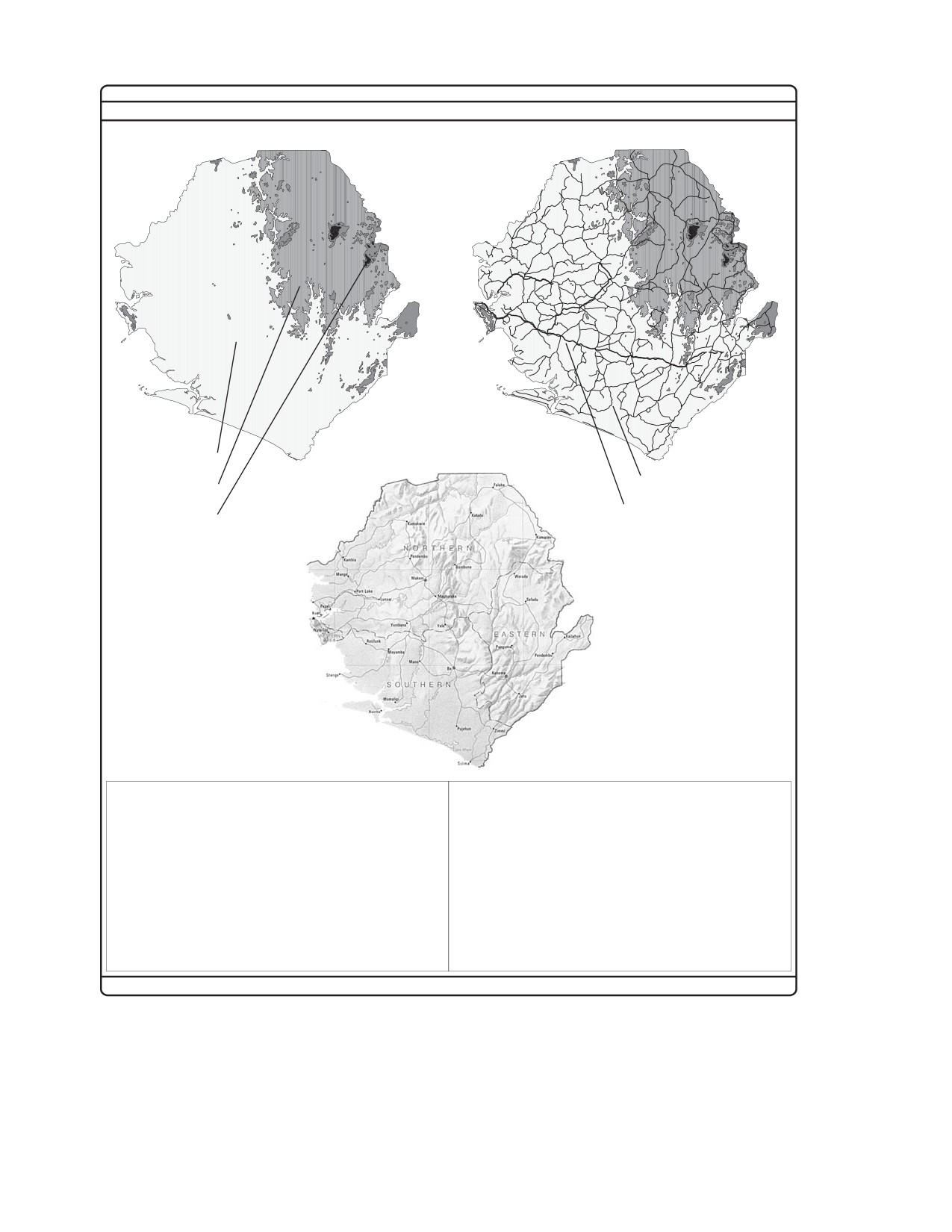
180600Z MAR 00
UNCLASSIFIED
Page 1
Major Terrain and LOC Overview
Major Terrain Features
Major LOC Features
0 -300 meters
Roads
300 - 900 meters
Railroads
900 - 2,100 meters
CIA Physical Map of RED
2
Area:
Total:
71,740 km
Terrain:
Coastal belt of mangrove swamps, wooded hill country, upland plateau,
Land Only:
71,620 km2
and mountains in the east
Water Only:
120 km2
Elevation Extremes: Lowest Point:
0 meters (Ocean)
Area-Comparitive:
Slightly smaller than South Carolina
Highest Point:
1,948 meters (Loma Mansa)
Land Boundaries:
Total:
958 km
Border with GRAY:
306 km
Land Use:
Arable Land:
7%
Border with YELLOW:652 km
Permanent Crops:
1%
Coastline:402 km
Permanent Pastures:
31%
Forests and Woodland:
28%
Maritime Claims:
Other:
33% (1993 estimate)
Territorial Sea:200 km
Continental Shelf:200-m depth or to the depth of exploration
Irrigated Land:
290 km2(1993 estimate)
TMD IPB Template -- 18 March 2000
UNCLASSIFIED
Local Reproduction Authorized
Figure II-13. Major Terrain and LOC Overview Template
II-20
e. Step-1.5 - Evaluate Existing Databases and Identify Gaps. The TMD IPB
database will not have all the intelligence and information required to evaluate
the effects of each battlespace characteristic and each TM force. Databases only
contain a fraction of the information required to support TMD IPB development.
Hardcopy reports are still very valuable sources of information. Maps are
essential and digital maps are required. Valuable on-line sources include
intelligence link (INTELINK) and near real time links (that is, tactical related
applications [TRAP] data dissemination service [TDDS], tactical information
broadcast service [TIBS], Joint Tactical Information Distribution System, and
moving target indicator feeds). Open source resources include books,
periodicals, academia and industry. Identifying intelligence gaps early allows for
data collection operations before the start of combat operations. In many cases,
support from other intelligence organizations is needed to obtain and analyze
data to fill gaps. Identifying gaps that cannot be filled within the time allowed is
equally important in developing the TMD IPB. Maintain communication with the
command staff regarding the gaps not expected to be filled and formulate
reasonable assumptions. Identify gaps by identifying organizational sources and
points of contact (POCs); identifying current, on-order, and desired information
holdings and connectivity to sources (Appendix B, Figure B-10); evaluating the
identified sources; and assess the critical gaps in the information relative to the
TMD IPB steps (Appendix B, Figure B-11).
(1) IPB Holdings and Database Assessment. It is good practice to
maintain a log of the information holdings. Each organization handles this
function differently. Some organizations use a library function to keep a log of
information holdings and others find it more efficient to develop and maintain
ones own log. Appendix B, Figure B-10 shows one way to catalog the information
holdings. Ideally, maintain the catalog within a computerized database
accessible over a network.
(2) POCs. No single organization can accomplish the TMD IPB process
alone and support is needed from outside organizations. To develop a complete
and accurate TMD IPB, it is important to identify and establish national through
theater level POCs early. Establish a POC for each of the organizations
identified in the organizational sources template (Appendix B, Figure B-10). A
general purpose computerized personal information manager or contact manager
is very useful in managing POCs. See Appendix B, Figure B-12, to build a list of
POCs manually.
f. Step-1.6. Collect the Material and Intelligence Required to Support
Further TMD IPB Analysis. Collecting intelligence and incorporating it into the
TMD IPB process is a continuous effort. The TMD intelligence team fills
intelligence gaps by initiating collection operations through priority intelligence
requirements (PIRs), essential elements of information (EEIs), and requests for
information (RFIs). Additional intelligence data is applied to the appropriate
steps to allow updating of all TMD IPB products.
(1) PIRs, EEIs, and RFIs. PIRs represent the commander's most
important intelligence requirements that are prioritized according to relative
value. PIRs are single requirements, typically in the form of a single question
II-21
and oriented towards identifying the COA an adversary is executing.
Recommended PIRs are typically submitted to the command's intelligence
collection manager who submits them and other command PIRs to the
commander for approval. The collection manager is then responsible for
submitting the PIRs to the appropriate intelligence functions for collection.
EEIs identify information needed to support a wide variety of standing
information requirements and may duplicate PIRs. The TMD IPB team typically
submits EEIs to the command's intelligence collection management that then
racks and stacks them with other command EEIs to form the command's
collection requirements. RFIs are used to request any needed information that
does not fall into the PIR or EEI categories and range from simple to very
complex requests. See Appendix B, Figure B-13 for a PIR, EEI, and RFI
worksheet.
(2) Information Searches. Appendix B, Figures B-14 through B-16 assist
in developing initial information search profiles for documents, text message
retrieval, digital databases (INTELINK, modernized integrated database [MIDB],
National Exploitation System), and other digital information sources. Conduct
information searches early, as they are useful for performing parts of TMD IPB
Step-1. After the initial search is complete, review the data for relevancy and
accuracy. This review refines the search profiles that is critical to retrieving the
appropriate information. A narrow search profile results in missed information,
while a wide search profile results in information overload. The search profile is
relatively static during peacetime. During crisis, it needs to be dynamic to keep
up with changing adversary and friendly situations. The information retrieval
specialists are essential to getting the search criteria correct for the current
situation, because each search system is different and requires different filtering
criteria to achieve the desired results. The key is to interact frequently with the
information retrieval specialists.
II-22
Chapter III
STEP-2: DEFINE THE BATTLESPACE EFFECTS
1. What Is It?
a. Definition. Step-2 determines how the battlespace environment affects
adversary TM and friendly TMD operations.
b. Desired End Effect. The desired end effect is the identification of how
the battlespace environment influences adversary TM and friendly TMD
operations. Terrain plays an important role because TM systems are so mobile.
By focusing on terrain suitability for TM and TMD operations based on
geography, weather, and the technical characteristics of the TM equipment and
forces, the terrain assessment process analyzes the military aspects of the
terrain. Two primary objectives of the TMD IPB terrain assessment are—
identification of potential mobility areas within TM force operating areas and
identification of exploited terrain for countering mobile TM operations. Terrain
analysis is not the end product of the TMD IPB process. It is the means to
determine which friendly COAs best exploit the terrain and how the terrain
affects the adversary's available TM COAs and friendly forces ability to defend
against them.
2. How To Do It For TMD
Step-2 is concerned with the evaluation and integration of the various
environmental and infrastructure factors affecting adversary TM force
operations. The primary steps in Step-2 are shown in Figure III.
Step 2 - Define the Battlespace Effects
Steps
Assessment Products
Major Consumers
Step-2.1
Surface Configuration
Analyze the TM Battlespace Environment
Command Intelligence Staff
Vegetation
Step-2.1.1
Terrain
Surface Materials
Assessment
Obstacle
Command Operations Staff
Transportation and LOC Infrastructures
Urban Areas
Step-2.1.2
Assess Weather Effects
Cover
on TM Operations
Targeting Staff
Concealment
CCM Movement
Observation/LOS
Collection Management Staff
Step-2.1.3
Assess Other Characteristics
Key Terrain
of the Battlespace
Electromagnetic Spectrum
TM Force Climatology
JFACC and Immediate Staff
Weather Effects on TM Force Operations
TM Infrastructure
Step 2.2
TM Facility/Area
Assess Battlespace Effects
AADC and Immediate Staff
TM Infrastructure HVT
on TM Force Capabilities
and Broad COAs
Area Limitation
Figure III-1. Step 2 - Define the Batllespace Effects
III-1
///////////////////////////////////////