FM 3-11.34 MULTISERVICE TACTICS, TECHNIQUES, AND PROCEDURES FOR INSTALLATION CBRN DEFENSE (NOVEMBER 2007) - page 4

Table E-2. Establishing an SIP Program
NOTE: The Facility Manager and the installation or tenant emergency management point of contact
complete this as a joint effort.
Determine the maximum number of people for SIP planning.
• Number of personnel assigned.
• Additional personnel routinely in the area.
Identify potential SIP rooms.
Look for:
• Accessibility during duty hours.
• Centrally located.
• Handicapped accessible.
• Communication.
o Phone (minimum).
o Computer with E-mail access.
o Fax.
o Cable TV.
• Water and food available.
Avoid:
• Rooms facing major roads.
• Rooms facing likely targets.
• Rooms with many windows.
Calculate occupancy of SIP rooms.
• Compare the planned occupancy to the maximum number requiring SIP protection.
• Add rooms as needed.
Develop SIP plans for each SIP room.
• Refer to “Sample SIP Procedures.”
Brief the SIP proposal to the commander and obtain approval of—
• Location of SIP rooms.
• Procedures.
• Resourcing for SIP supplies.
Gather items for the SIP kit (one for each SIP room) (sample listing).
• SIP plan.
• Plastic Sheeting (6 mil minimum).
• Duct Tape (10 mil minimum).
• Radio.
• Flashlights.
• Batteries.
• Scissors.
• Bath towels, if needed (one per door).
• Water, if needed (1 gallon per towel).
• First aid kit.
Put together a kit for each SIP room.
• Precut the plastic sheeting to cover windows, doors, vents, etc.
• Clearly identify and place the SIP kit inside each SIP room.
Post SIP information in common areas of the facility. Information should include—
• Identify.
o Facility manager.
o POC.
• Location of the closest SIP room.
• Actions to take upon notification.
6 November 2007
FM 3-11.34/MCWP 3-37.5/NTTP 3-11.23/AFTTP(I) 3-2.33
E-7

Table E-2. Establishing a SIP Program (continued)
Train personnel by providing an overview of SIP.
NOTE: This is a coordinated effort between the facility manager and the emergency management POC.
• What is SIP.
• Why SIP.
• Location of SIP rooms.
• Actions to take upon notification.
o Make sure everybody knows of the emergency .
o Seal your office area and the building as you head toward your SIP room. Close windows, vents,
and doors. Turn off heating and air conditioning systems.
o Proceed to the nearest SIP room (assist those who need help).
o Follow detailed instructions.
• Actions to take once in the SIP room.
• Warning and notification.
Exercising.
• Practice on a regular basis.
o At different times of the year.
o Conduct some drills when people have opened windows and doors for ventilation.
o If the facility operates at night or on weekends, conduct drills at those times also.
• Participate in installation-wide exercises.
• Get feedback from the participants and incorporate the lessons learned into your plan.
d.
SIP Notification and Response Actions. See Table E-3 for sample
guidance on establishing SIP procedures for a facility that includes background,
notification, and response actions.
Table E-3. SIP Notification and Response Procedures
Background
SIP is used for an airborne hazard when it is safer to stay indoors rather than risk your life by going outside.
SIP is for short-duration protection, normally less than 2 hours.
Facility managers have identified SIP rooms, stocked them with SIP kits and instructions.
The installation commander will decide if SIP will be used during an emergency.
Notification
The facility concerned will notify the installation operations center of the emergency.
The installation operations center will notify the installation commander about the incident and the requisite
notifications will occur via communications measures such as Mass E-mail or Phone calls to directorates.
Those who are notified should ensure that everyone is aware of the emergency by any means available.
E-8
FM 3-11.34/MCWP 3-37.5/NTTP 3-11.23/AFTTP(I) 3-2.33
6 November 2007

Table E-3. SIP Notification and Response Procedures (continued)
Response
Facility Manager - Turn off HVAC systems and exhaust fans.
All Personnel Will Respond Immediately
Ensure that everyone remains indoors and inside the identified SIP area.
Seal the SIP room using available material.
a. Remove contents from shelter kit.
b. Post SIP signs (see Figure E-1) and secure the outer doors.
c. Turn off all thermostats and air controls.
NOTE: Air recirculation will continue after HVAC systems are turned off if the thermostats are left on.
d. Check vents to see if air is still being circulated. If air is still coming out, seal these vents immediately!
e. Seal vents and doors using plastic sheets; seal edges with long strips of duct tape.
NOTE: Precut plastic sheets are identified for doors and vents.
If necessary to help seal the room, wet a towel with water and place it at the bottom of doors.
On your way to the SIP room:
a. Close windows, vents and outside doors.
b. Lock up or secure classified material and funds if possible.
c. Stay away from outer walls and windows when possible.
d. Assist people in need of help.
e. Perform self-aid and buddy care as needed.
f.
Create a list of personnel inside the SIP room and supply it upon request.
Follow the detailed instructions located in each SIP room.
Brief the facility manager on the status of SIP room using available communications means (e.g., phone, radio).
Sample SIP Status Report
• Location
Northwest corner of the lower level.
• Responsible Facility Manager
Installation Logistics Office
• Planned Occupancy
100
•
# of personnel being sheltered
•
Time when SIP Room was sealed
•
Contact information
Phone
______
Fax
______
E-Mail
______
•
# of non-life-threatening injuries
o
Description of injuries
Do not allow personnel to exit the SIP area until directed to do so.
Maintain communications with the installation operations center or other designated POC for further directions.
When the “all clear” is announced, remove the plastic sheets and follow further instructions.
6 November 2007
FM 3-11.34/MCWP 3-37.5/NTTP 3-11.23/AFTTP(I) 3-2.33
E-9
Figure E-1. SIP Sign for Posting Outside Rooms or Buildings
E-10
FM 3-11.34/MCWP 3-37.5/NTTP 3-11.23/AFTTP(I) 3-2.33
6 November 2007
Appendix F
SPLIT MISSION-ORIENTED PROTECTIVE POSTURE
OPERATIONS
1.
Background
MOPP is not a fixed or rigid system. Commanders can place all or part of their
installations in different MOPP levels (i.e., split-MOPP) or authorize variations within a
given MOPP level. Based on postattack CBRN operational and health risk
assessments, the commander could direct the use of different MOPP levels (e.g., split
MOPP) in the different sectors or zones of the installation.
2.
Base Sectoring Operations
a.
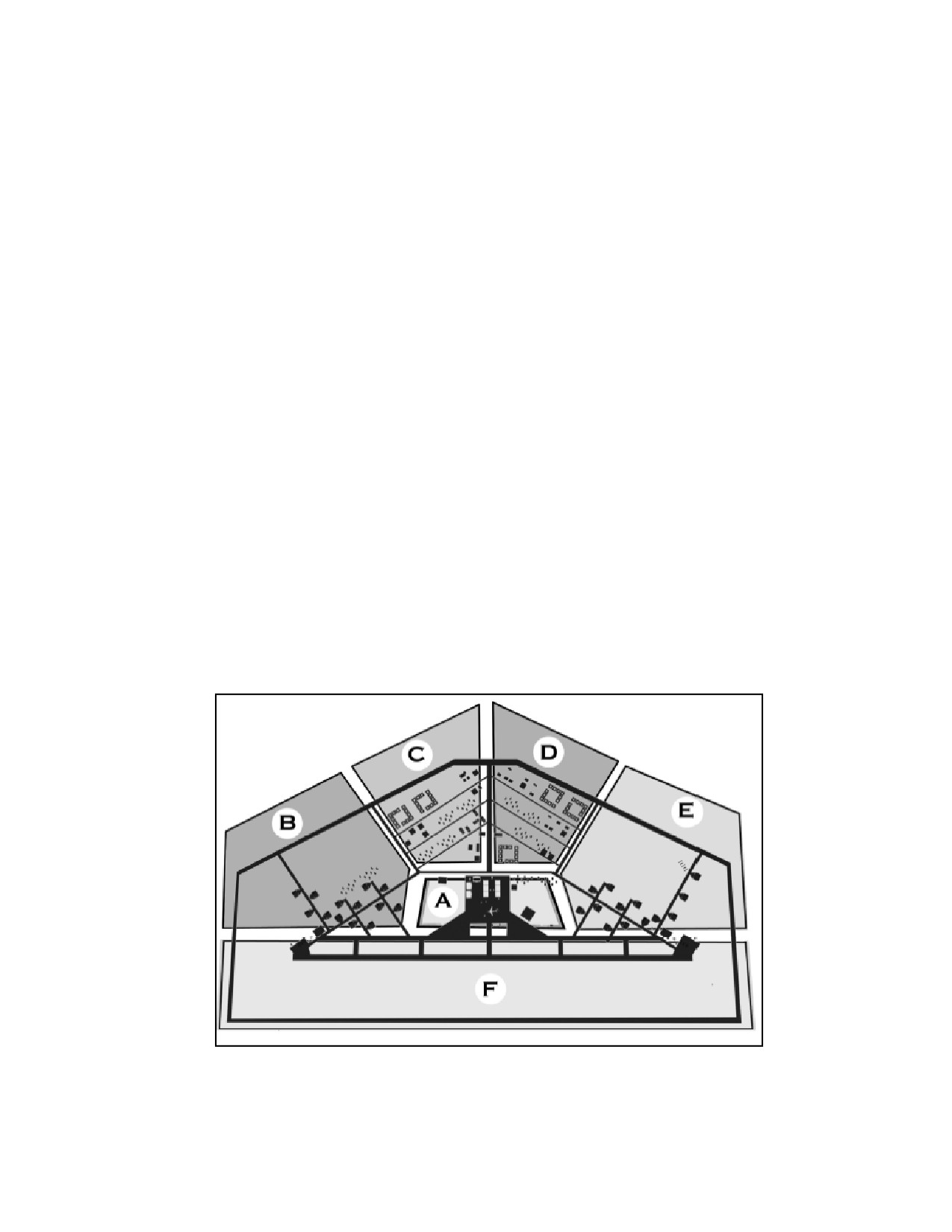
When directed, or as a vulnerability reduction measure, the installation
operations section must identify zones or sectors appropriate for the site geography and
mission (Figure F-1). Installation planners consider factors such as work center
disposition, physical features of the installation/site, and accessibility for movement
between sectors or zones. If possible, planners use the same sector or zone
identifications used by the security forces to identify defense sectors. This simplifies
preparation, training, and use by the base population and operations section staff. It
also reduces map clutter and the potential for confusion if multiple terms and actions
are used for the same areas. The objective is to develop easily discernible sector or zone
boundaries to simplify understanding by planners, C2 personnel, and the base populace.
Once planners develop the sectors, training must be conducted to ensure that all
personnel fully understand and are able to execute their responsibilities.
Figure F-1. Sector or Zone Identification (Notional Example)
6 November 2007
FM 3-11.34/MCWP 3-37.5/NTTP 3-11.23/AFTTP(I) 3-2.33
F-1
b.
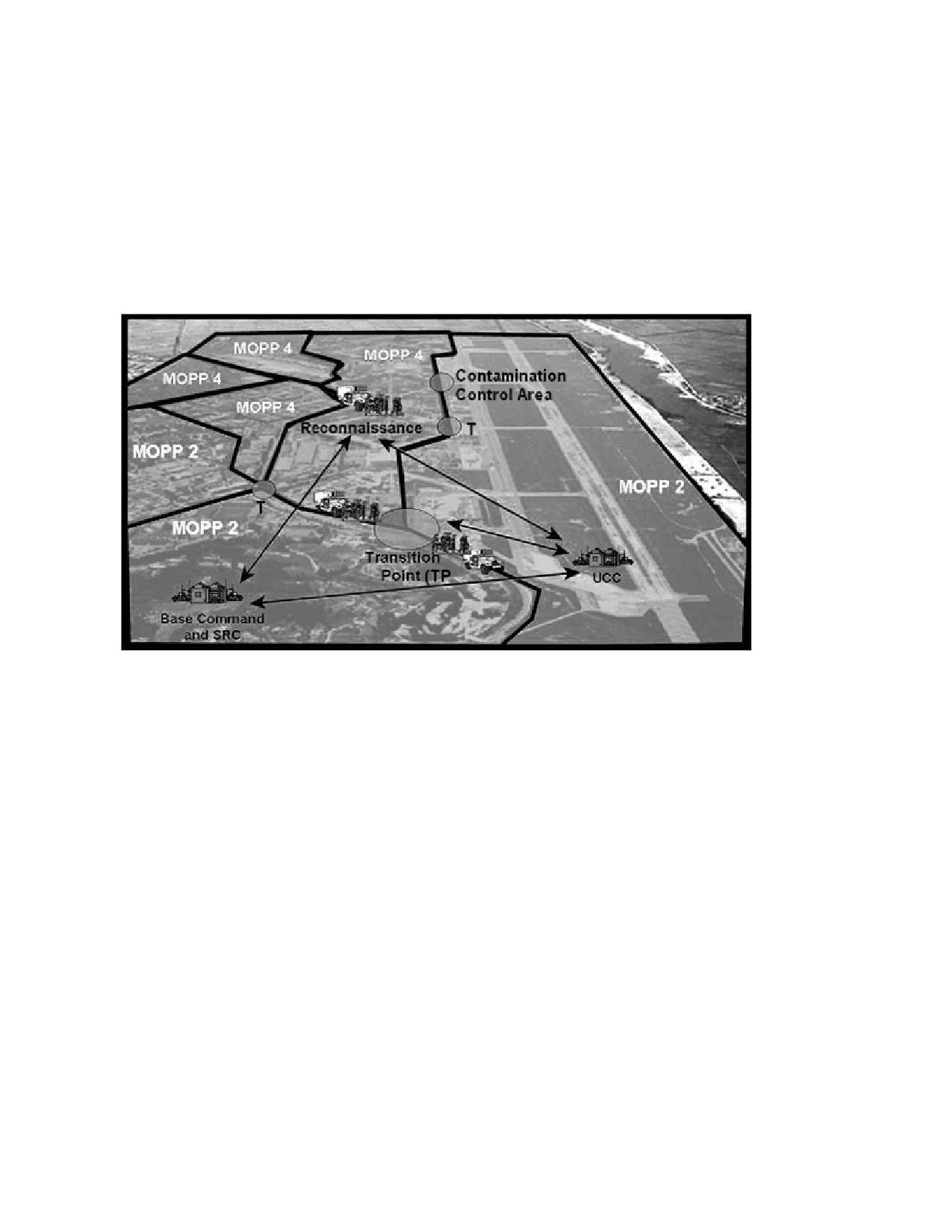
Base sectoring is used to divide the installation into multiple sectors or
control zones and assigns threat-based protective actions and MOPP to each individual
sector/zone (Figure F-2). Assigning different MOPP levels to different sectors/zones is
also known as split-MOPP. It provides the commanders with the flexibility to respond
to threats in specific areas and continue operations within areas unaffected by the
incident or at lower risk from the threat. Effective operations require an assured, base-
wide communications system, a well-trained base population and C2 element, and
senior leadership that understands the limitations, as well as the opportunities
provided by this technique.
Figure F-2. Sample Base Sectoring with Split MOPP Levels
c.
Once a split-MOPP capability is established, the commander can rapidly
implement defensive actions in areas where threats are present and reduce mission-
degrading protective actions in other sectors/zones. The need for increased mission
accomplishment capability must outweigh the potentially high risk of split-MOPP
implementation.
d.
Split-MOPP implementation is sequential. It requires a chain of events that
provides the commander with the opportunity to implement the tactics described. It
also requires that the CBRN control center understand mission priorities and provide
COA recommendations to the commander. The CBRN control center must continually
monitor weather conditions and use input from CBRN reconnaissance teams to assess
report inputs such as reports of actual contamination. Installation planners use these
assessments to recommend sector or zone MOPP changes.
e.
Each installation must assess its own requirements in terms of deciding how
many sectors or control zones they should establish. The number and size of the zones
can be based on the following factors.
•
Providing grouping of similar functions or work center disposition within a
sector.
•
Identifying zone or sector boundaries should be easily discernable.
F-2
FM 3-11.34/MCWP 3-37.5/NTTP 3-11.23/AFTTP(I) 3-2.33
6 November 2007
•
Grouping similar surface areas (concrete and asphalt for example versus
concrete and sand) into major portions of a sector or zone.
•
Considering designating the sector boundaries along topographical lines such
as higher elevation features because the higher elevations will typically have
lesser vapor concentrations in an extended post-attack environment.
•
Providing clear access routes in to and out of sectors/zones. Whenever
possible, these access points should have a relatively large work area in the
immediate vicinity.
•
Providing compatibility with established or developing ground defense
sector/zone designations.
3.
Split Mission-Oriented Protective Posture Procedures
a.
Split-MOPP is the concept of maintaining heightened protective posture
(MOPP4) only in those areas (or zones) that are contaminated, allowing personnel in
uncontaminated areas to continue to operate in a reduced posture (MOPP2). The
reasons behind this idea are to reduce the impact on personnel and to enhance mission
accomplishment.
b.
There are challenges in using split-MOPP.
(1)
One of these challenges is the fact that many individuals may
routinely move from one area of an installation to another in performing their duties.
Split-MOPP should be done on a zone-by-zone basis. An installation can use transzone
operations (via transition points) to move personnel from one zone or sector to another.
Transzone procedures will enable the reduction of a person’s MOPP level (e.g.,
transitioning from MOPP 4 to MOPP2).
(2)
Another challenge confronting use of split-MOPP involves detection of
chemical agents and toxic industrial chemicals (TIC). Some chemical agents and TIC
may not be detectable with standard detectors; or there may be residual low-level
contamination present that is below the detection threshold for available detectors.
Representative risk mitigation actions could include leaving contaminated equipment in
the same zone and/or allowing weather to decrease the level of contamination.
4.
Transzone Operations
a.
Transzone operations describe the process whereby some personnel must
transit across zone boundaries to sustain mission-critical functions. Those who may be
required to transit across zones during split-MOPP include units such as security forces,
firefighters, medical response teams, maintenance teams, communications teams,
explosive ordnance disposal (EOD) teams, and CBRN reconnaissance personnel.
b.
The largest volume of transzone travel typically occurs during a scheduled
shift change. If a shift change occurs during a period of split-MOPP, much of the site
populace may need to transit zone boundaries to return to their rest and relief area.
Thus, the challenge for transzone operations is maintaining sufficient awareness of
contamination status so personnel can adopt the appropriate MOPP for whatever CBRN
zone personnel are in and take appropriate actions.
c.
Materials to facilitate transzone operations at transition points should be
readily available. This includes stocks of M8 paper, M291/M295 kits, mops and buckets
6 November 2007
FM 3-11.34/MCWP 3-37.5/NTTP 3-11.23/AFTTP(I) 3-2.33
F-3
of 5 percent chlorine solutions or other decontaminants as designated by the service
(e.g., use of towelettes), hand and boot troughs with 5 percent chlorine solutions, hand
troughs with clear water, plastic sheeting, contaminated waste disposal receptacles,
surveyor’s tape, chalk, chemical signs from the CBRN marking kit, and sealed water
containers (preferably full canteens with M1cap attached). If sufficient chemical agent
monitors (CAMs) are available and are able to be matched with trained attendants,
these chemical detectors should also be available at the transition area.
d.
The number of transition areas into a particular sector should be a balance
between mission requirements and control. Also, the availability of transition area
attendants provides a means to help check that proper procedures are being followed.
An attendant should help to reduce any cross-contamination during the transiting
through the transit ion zone.
(1)
Commanders should assign at least one attendant for each transition
area and establish a rotation plan for the transition point (based on workload and
weather conditions).
(2)
If sufficient individual chemical agent monitors (ICAMs) and personnel
are available, commanders should also consider assigning a second attendant to
transition areas to also help minimize the risk of contamination. While effectively
preplaced M8 paper can support detection of liquid agent, chemical vapor detectors at
transitions points can reduce contamination risk further by detecting contamination
that was not shown by M8 Paper.
e.
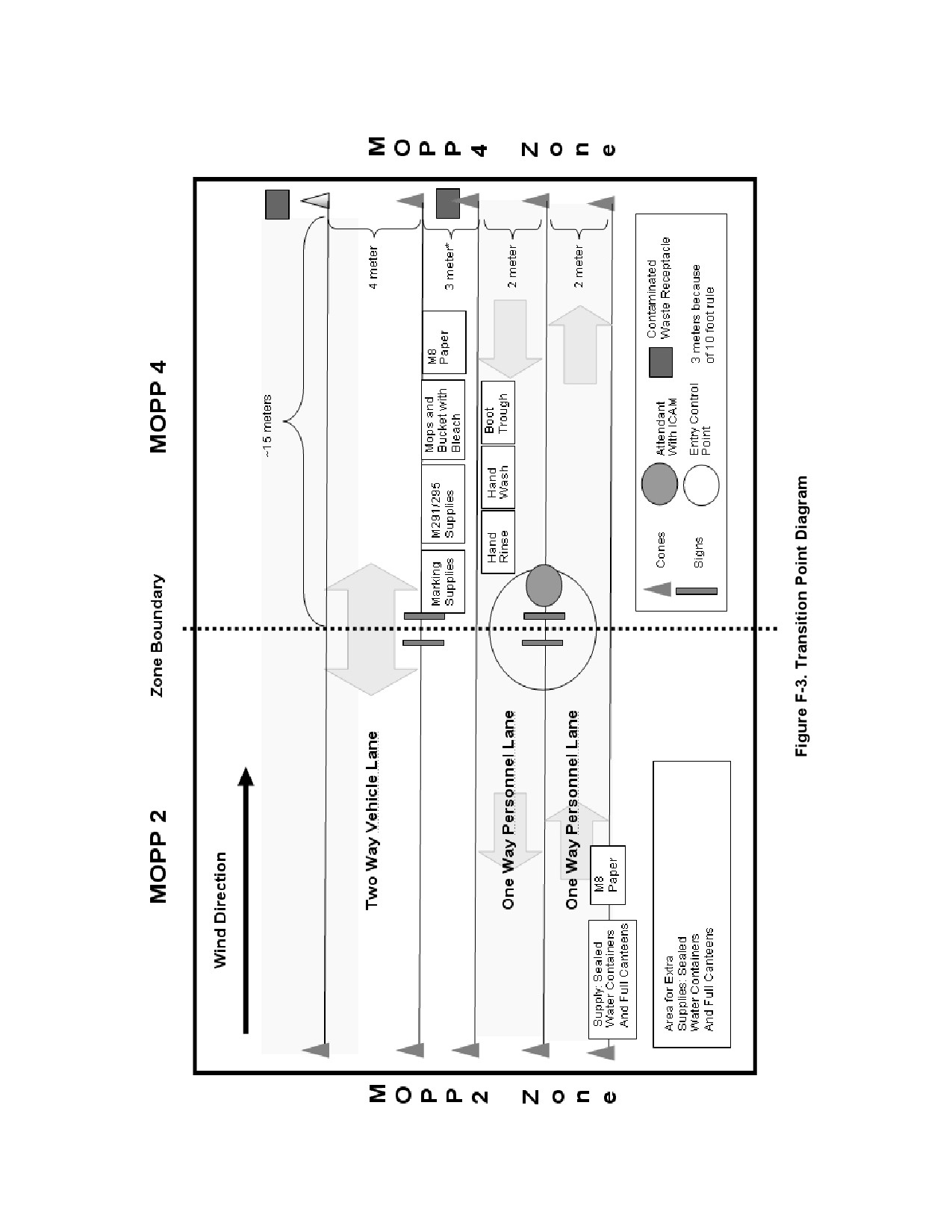
Personnel should take the following actions at transition areas before exiting
a contaminated area. See Figure F-3, page F-6, for a transition point diagram to
support movement from a higher to a lower level of MOPP.
(1)
At a transition point, a determination occurs whether a person should
use transition point procedures or be directed to a Contamination Control Area (CCA).
See Table F-1, page F-7, for representative guidance on when an individual should be
directed toward a CCA for processing versus going through a transition point. The
preparation of Table F-1 has been derived through use inputs from joint service-
sponsored experiments and input from major commands such as Agility to Survive and
Operate (ATSO) guides.
(2)
Also, the transition point diagram is adaptable to whether one or two
attendants are present. At the transition point, the following representative actions are
taken:
•
Thoroughly check the vehicle and cargo for contamination. If the items
are contaminated, verify they must be taken out of the area for critical
mission operations. Leave contaminated assets within the
contaminated zone. Some chemical agents and TIC may not be
detectable with standard detectors; or there may be residual low-level
contamination present that is below the detection threshold for
available detectors.
•
Accomplish operational decontamination of the asset as required.
F-4
FM 3-11.34/MCWP 3-37.5/NTTP 3-11.23/AFTTP(I) 3-2.33
6 November 2007

•
Identify the asset as contaminated using installation instructions (e.g.,
mark contaminated items using CBRN marking kit signs, surveyor’s
tape).
•
Accomplish a thorough self-decontamination regardless of whether
chemical contamination is visible. Use M291/M295 kits for the IPE.
Use two hand troughs (one with 5 percent chlorine followed by another
clear water rinse) for glove decontamination and a boot trough for
protective boot decontamination.
•
If an attendant and ICAM are available, have them verify the
effectiveness of decontamination. There are limitations on the use of a
chemical detector such as an ICAM (i.e., ICAM as a nerve and blister
agent detector and detection thresholds); however, decontamination at a
transition point should generally be sufficient to decrease contamination
below negligible risk. However, if a reading of “zero” bars can’t be
obtained, report to one of the installation’s contamination control
area/toxic free area (CCA/TFA) points for suit exchange prior to
reducing MOPP below MOPP 4.
•
Replace or refill individual canteen.
Table F-1. Processing Through a CCA
Situation
Description of Residual Hazard
Process
Through
CCA?
Direct contact with liquid on suit (positive M9)
High contact and vapor; suit
Yes
jeopardization
Direct contact with liquid on suit (negative M9)
Unknown contact, limited vapor, suit
Yes
jeopardization
Direct contact with liquid contaminated asset (positive
Unknown contact, limited vapor,
Yes
M8 paper on item)
unknown, suit jeopardization
Known exposure to vapors in contaminated area >4
Limited vapor
Yes
hours
Known exposure to vapors in contaminated area <4
Minimal vapor
No
hours
Direct contact with asset exposed to vapors (negative
Minimal vapor
No
M8 paper on item)
Direct contact with liquid (boots only), transited through
Limited contact (neutralized if boot
No
grass within 5 hours from declaration of Alarm Black
troughs were used)
Direct contact with liquid (boots only); transited
Limited contact (neutralized if boot
No
through, on, or over concrete asphalt within 2 hours
troughs were used)
from declaration of Alarm Black
No exposure
None
No
6 November 2007
FM 3-11.34/MCWP 3-37.5/NTTP 3-11.23/AFTTP(I) 3-2.33
F-5
F-6
FM 3-11.34/MCWP 3-37.5/NTTP 3-11.23/AFTTP(I) 3-2.33
6 November 2007
Appendix G
CIVILIAN AND CONTRACTOR CHEMICAL, BIOLOGICAL,
RADIOLOGICAL, AND NUCLEAR DEFENSE CONSIDERATIONS
1.
Background
a.
DOD guidance (i.e., DODI 2000.16) directs commanders at all levels to take
appropriate measures to protect DOD personnel, families, facilities, and materiel, and
reduce their vulnerability to terrorist use of WMD. To support this requirement, threat
assessments for potential terrorist use of CBRN weapons or material are conducted at
the strategic, operational, and tactical level to support multiple users, including
installation level commanders, CONUS, and OCONUS. Reports through the
chain-of-command are disseminated immediately when significant information is
obtained identifying organizations with CBRN capabilities.
b.
Additional DOD guidance directs commanders (at all levels) to be prepared to
provide incident response capabilities to support emergency lifesaving and rescue
functions, to provide protection to DOD personnel and property, and, when appropriate,
to conduct/support criminal investigations. All installation CBRN defense contingency
plans need to account for civilians, contractors and in-transit units. Installation
commander emergency response preparations should include measures to obtain
current residential location information for all assigned DOD personnel and their
dependents, when stationed OCONUS, including territories and possessions in
moderate, significant, and high terrorism threat level areas. Additionally, any
installation emergency response plans should address measures for enhanced security
and/or possible evacuation of DOD personnel and their dependents. Also, installation
commanders in moderate, significant, and high terrorism threat level areas provide
assessments on options for special security arrangements to protect DOD personnel and
their dependents living on the civilian economy. Training is a measure that
commanders can use to increase the preparedness of civilian personnel within their area
of operation. For example, DOD guidance also provides guidance that indicates the
following:
(1)
Combatant commanders, and/or services and/or DOD agencies shall
ensure that every family member accompanying DOD personnel overseas are made
aware of the need (e.g., Level I AT awareness training as part of their predeparture
requirements) to maintain vigilance for possible terrorist actions and employ
appropriate AT TTP.
(2)
Commander should encourage family members to receive Level I AT
awareness training prior to any OCONUS travel (i.e., leave).
6 November 2007
FM 3-11.34/MCWP 3-37.5/NTTP 3-11.23/AFTTP(I) 3-2.33
G-1
2.
Unique Considerations Depending Upon Operational Environment
Varied and unpredictable challenges can exist when considering CBRN protection
of civilian and/or contractor personnel within either the international security
environment or within any domestic setting. CBRN FP requirements for civilian and
contract personnel must be included in any installation’s overall CBRN defense
framework. Key policy documents such as DODI 3020.41 , Contractor Personnel
Authorized to Accompany the U.S. Armed Forces, should be reviewed as these CBRN
defense plans are formulated.
a.
Foreign Installations—Permissive Environment. Each component of CBRN
emergency response plans at both overseas theater operational areas and associated
intermediate staging bases need to have civilian and contractor personnel requirements
embedded within.
(1)
Planning Measures. Emergency response plans must take into account
both the locations and the CBRN self defense capabilities of contingency contract
personnel performing essential services. Additionally, as part of any cyclic review
process, established CBRN emergency response plans should receive a review by the
applicable government point of contact responsible for contractor operation to ensure
that recent changes in contractor support have been considered.
(2)
Preparatory Measures. Representative preparatory measures should
include providing orientations and briefings to civilian and contractor personnel,
providing appropriate IPE as directed, and conducting training and exercises.
(a) Providing orientations or briefings for contingency contractor
organizations (personnel) should address key survival measures that may include
identifying:
•
Warning and alarm signals.
•
Shelter locations.
•
Decontamination locations.
•
Mission oriented protective posture requirements.
•
Required CBRN actions (preattack, during attack, post attack).
•
Reporting requirements.
•
Translation requirements.
(b)
DODI 3020.41 states that in many contingency operations, the
Government may decide it is in its interests to provide selected life, mission, and
administrative support to some contingency contractor personnel. When necessary, and
as determined by the Component Commander, according to the geographic Combatant
Commander guidance, contingency contractor personnel may be issued military
individual protective equipment including chemical defensive gear and other personal
protective equipment according to applicable Military Department regulations, and the
terms of the contract. See the Multiservice Tactics, Techniques, and Procedures for
Chemical, biological, radiological, and nuclear Protection for those individual protective
measures that should be undertaken during an attack. This equipment shall typically
G-2
FM 3-11.34/MCWP 3-37.5/NTTP 3-11.23/AFTTP(I) 3-2.33
6 November 2007
be issued before deployment to the AOR at the deployment center and must be returned
to the Government, otherwise accounted for, or purchased, after use. DODI 3020.41
further states that the Military Departments shall plan and source individual protective
equipment as required by the Component Commander and the terms of the contract.
Protective equipment of any type will not be procured for Category 2-4 personnel unless
required in writing by the theater Combatant Commander or higher authority. These
personnel are categorized as follows:
•
Category 2. Other U.S. personnel, including—
o U.S. military family members living on and off a military
installation.
o Non-emergency-essential US military personnel, military
civilian employees.
o DOD contractor (and subcontractor) employees other than
those performing emergency-essential contractor services.
o Employees of other U.S. Government agencies.
o Other U.S. Government contractor (and subcontractor)
employees.
•
Category 3. Other personnel supporting U.S. military operations,
including—
o Personnel (non-U.S. citizens) who are employees of a
military Service or a DOD contractor (or subcontractor),
and who are not included in Categories 1 or 2.
o Foreign military personnel employed by the host-nation
government or by contractors of the host-nation
government.
•
Category 4. Allied/coalition nation personnel, including host-
nation personnel and third country nationals that the U.S. may
assist pursuant to an international agreement or as directed by the
Secretary of Defense, such as allied/coalition military forces,
government officials, and emergency response personnel.
(c)
Conducting exercises can support assessments of the CBRN
readiness of contingency contract personnel. The CBRN assessment could include
inspections of training readiness on the ability of contractor personnel to perform CBRN
or first aid tasks. See Tables G-1 and G-2, page G-4. for sample CBRN and first aid
tasks that should be considered for assessment. Additionally, if an installation is
tasked to operate a joint reception center, the installation may be required to train
contingency contract personnel on CBRN and first aid tasks such as those sample tasks
identified below in Tables G-1 and G-2.
6 November 2007
FM 3-11.34/MCWP 3-37.5/NTTP 3-11.23/AFTTP(I) 3-2.33
G-3
Table G-1. Sample CBRN Tasks
• Decontaminate your skin and personal equipment using an M258A1 decontamination kit
• Protect yourself from CB injury/contamination while eliminating body waste when wearing MOPP4
• Identify chemical agents using M8 detector paper
• Protect yourself from CBRN injury/contamination with MOPP gear
• React to a nuclear hazard
• React to CB hazard/attack
• Detect chemical agents using M9 detector paper
• Protect yourself from CBRN injury/contamination when changing MOPP gear
• Replace canister on your M40 series protective mask
• Protect yourself from CB injury/ contamination using your M40-series protective mask with hood
• Maintain your M40-series protective mask with hood
• Decontaminate your skin using the M291 SDK
• Decontaminate your individual equipment using the M295 IEDK
• Protect yourself and others from CB injury/contamination by using (entering or exiting) a collective
protection shelter
Table G-2. Sample First Aid Tasks
• Evaluate a casualty
• Clear an object from the throat of a conscious casualty
• Prevent shock
• Give first aid for burns
• Give first aid for heat injuries
• Give first aid for frostbite
• Put on a field or pressure dressing
• Put on a tourniquet
• Apply a dressing to an open abdominal wound
• Apply a dressing to an open chest wound
• Administer nerve agent antidote to self (self-aid)
• Administer first aid to a nerve agent casualty (buddy-aid)
• Apply a dressing to an open head wound
• Split a suspected fracture
• Perform mouth-to-mouth resuscitation
G-4
FM 3-11.34/MCWP 3-37.5/NTTP 3-11.23/AFTTP(I) 3-2.33
6 November 2007
(3)
Response Measures. Response measures for civilian and contract
personnel are basically be the same as those actions taken by uniformed DOD
personnel.
(4)
Recovery Measures. Recovery measures for civilan and contractor
personnel will likely include the operation of evacuation centers (see Figure G-1).
Multiservice Tactics, Techniques, and Procedures for Chemical, biological, radiological,
and nuclear Protection provides guidance for evacuation operations within the context of
noncombatant evacuation operations (NEO). CBRN-related aspects that should be
considered during each step of an evacuation operation include:
(a) Processing. Evacuee processing should be located in a building or
other appropriate place that provides SIP or COLPRO capabilities. The area should be
staffed with security, interpreters, local immigration, embassy, support liaison, CBRN
and medical personnel. Factors to consider include:
•
Processing should organize evacuees and provide age-appropriate
applicable CBRN awareness level briefings.
•
Procedures for minimum evacuee processing should integrate the
potential need for decontamination support prior to
implementation.
(b) Reception. Reception station personnel collect all available
information, including information on the CBRN situation, from the marshalling teams
who escort evacuees. Information from marshalling team log books is especially
valuable because it may provide important CBRN SA data. Briefings for incoming
evacuees may include information on CBRN awareness or other CBRN-related
avoidance, protection and decontamination measures.
(c)
Registration. Accuracy, speed and safety are key requirements
during this phase of processing. Safety considerations integrate CBRN defense
measures as part of the emergency response effort.
(d) Debriefing. Each evacuee should be debriefed to obtain information
(e.g., CBRN data) that may affect the evacuation force, its mission, the evacuees, or
other USG activities in the country. AOIs might include the following:
(e) Medical Treatment. The medical station provides emergency
medical treatment (e.g., CBRN-related treatment) and immunizations, as required by
the safe haven country. Injured, ill, or contaminated evacuees proceed through medical
stations for first-aid and to identify medical conditions that may have an impact on the
evacuation process.
(f)
Transportation. Transportation personnel prepare each group of
evacuees for embarkation aboard aircraft, ships, or surface vehicles to minimize
exposure and the spread of contamination. The comfort station is a temporary waiting
area for evacuees until they board evacuation aircraft. Comfort stations should also
integrate CBRN avoidance, protection, and decontamination considerations.
6 November 2007
FM 3-11.34/MCWP 3-37.5/NTTP 3-11.23/AFTTP(I) 3-2.33
G-5
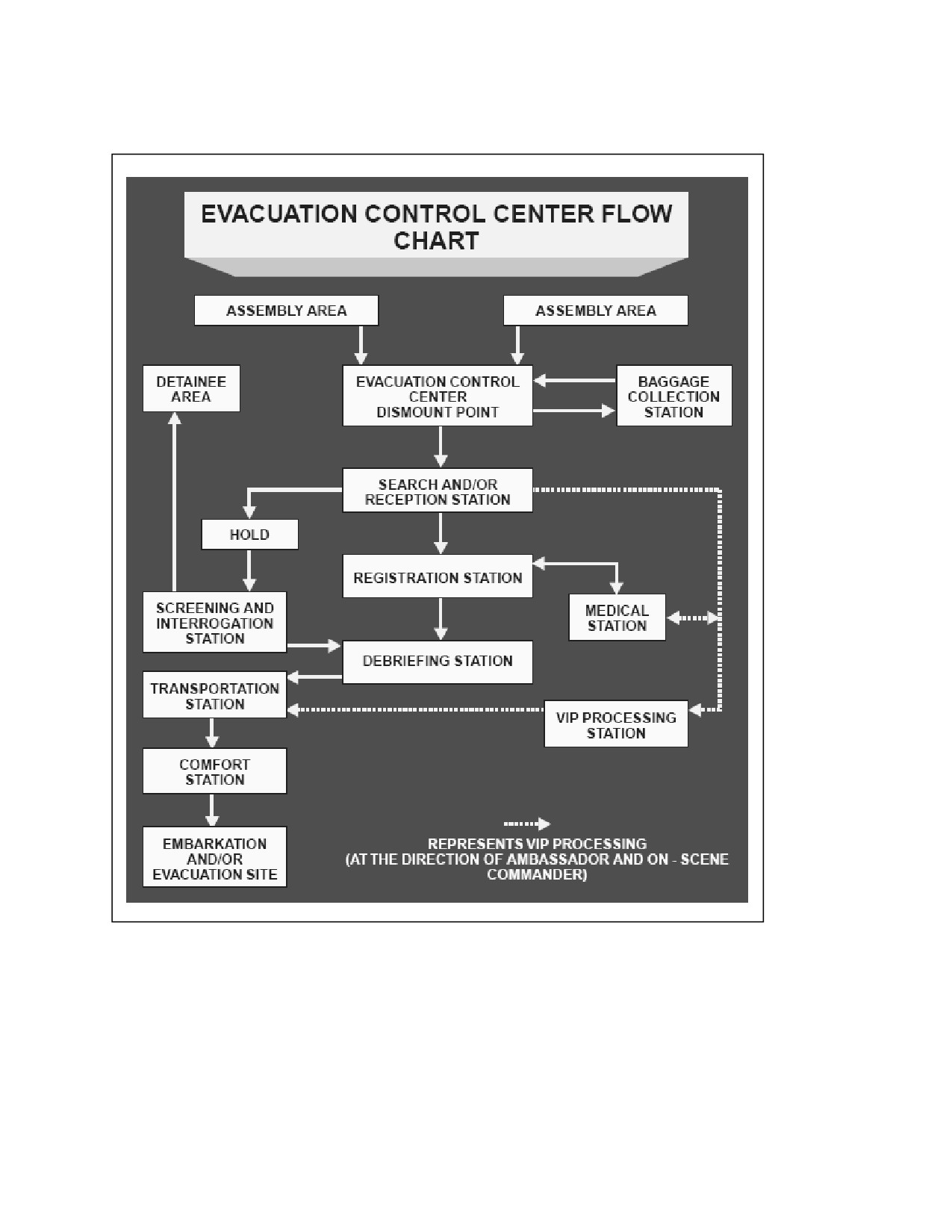
Figure G-1. Evacuation Processing Flow of Personnel
G-6
FM 3-11.34/MCWP 3-37.5/NTTP 3-11.23/AFTTP(I) 3-2.33
6 November 2007
b.
Domestic Installations.
(1)
Commanders of forces and facilities in the United States must assess
threats and vulnerabilities that may compromise peacetime operations. A number of
state and nonstate adversaries may choose to employ CBRN devices and weapons
against the US civilian population and infrastructures as well as military forces and
facilities to impede execution of mission-essential tasks.
(2)
Applicable awareness-level and AT briefings and training should be
considered for civilian personnel and contractors as well as military personnel. Any
advanced training or equipping of civilian personnel for CBRN protection would
generally be as an exception to policy, unless there is an otherwise specified
requirement. Peacetime planning, training, equipping, and supporting actions must
include plans to understand threats, minimize vulnerability, and mitigate the effects of
CBRN attacks in order to maintain required force preparedness.
(3)
Commanders must coordinate with civilian authorities and agencies to
prevent and, if necessary, mitigate and manage the consequences of deliberate or
accidental CBRN employment or similar toxic material events in the United States.
Detailed interagency processes guide the Armed Forces of the United States in
providing military support to civil agencies to cope with such events.
(4)
CONUS military installation commanders may be tasked to operate
Continental United States Replacement Center. These are processing centers at
selected military installations through which individual personnel will be processed to
ensure that personnel readiness processing actions have been completed prior to
reporting to the aerial port of embarkation for deployment to a theater of operations.
Based on guidance from an applicable combatant commander, the replacement center
may be tasked with providing CBRN training and equipment to applicable contract
personnel.
3.
Unique Terminology Associated With Contractor Operations
Five key definitions from DODI 3020.41 are provided below to help establish a
framework for information discussed within this appendix:
•
Contingency Operation. A military operation that is designated by the
SecDef as a contingency operation or becomes a contingency operation as a
matter of law (10 USC 101[a][13]). It is a military operation that is
designated by the SecDef as an operation in which members of the Armed
Forces are or may become involved in military actions, operations, or
hostilities against an enemy of the United States or against an opposing
force.
•
Contingency Contractor Personnel. Defense contractors and employees
of defense contractors and associated subcontractors, including US citizens,
US legal aliens, third country nationals (TCNs), and citizens of HNs who are
authorized to accompany US military forces in contingency operations or
other military operations, or exercises designated by the geographic
combatant commander. This includes employees of external support, systems
6 November 2007
FM 3-11.34/MCWP 3-37.5/NTTP 3-11.23/AFTTP(I) 3-2.33
G-7
support, and theater support contractors. Such personnel are provided with
an appropriate identification card under the Geneva Conventions.
•
Contractors Deploying with the Force (CDF). A subcategory of
“contingency contractor personnel” defined above. CDF are employees of
system support and external support contractors, and associated
subcontractors, at all tiers, who are specifically authorized in their contract to
deploy through a deployment center or process and provide support to US
military forces in contingency operations or in other military operations, or
exercises designated by a geographic combatant commander. CDF includes
forward-deployed system support and external support contractors
designated to remain in place in theater when a contingency is declared.
Such personnel are provided with an appropriate identification card under
the Geneva Conventions. CDF usually work for the US military forces under
a deployable contract agreement in peacetime and in many cases have a long-
term relationship with a specific unit. They usually live with and provide
services directly to US military forces and receive government-furnished
support similar to DOD civilians. CDF do not include TCN or local national
personnel hired in theater using local procurement (e.g., day laborers).
•
Essential Contractor Services. A service provided by a firm or an
individual under contract to the DOD to support vital systems in support of
military missions considered of utmost importance to the US mobilization
and wartime mission. The services, which shall be designated in the
contract, are essential because the DOD components may not have military
or DOD civilians to perform these services immediately or the effectiveness of
defense systems or operations may be seriously impaired, and interruption is
unacceptable when those services are not immediately available. Most
support under the external support and systems support contracts falls into
this category as well as some support under theater support contracts.
•
Joint Reception Center (JRC). The center established in the operational
area (as directed by the joint force commander), with responsibility for the
reception, accountability, training, and processing, of military and civilian
individual augmentees upon their arrival in the operational area. It is also
the center where augmentees will normally be outprocessed through upon
departure from the AO.
G-8
FM 3-11.34/MCWP 3-37.5/NTTP 3-11.23/AFTTP(I) 3-2.33
6 November 2007
Appendix H
RESPONSIBILITIES FOR INSTALLATION CBRN DEFENSE
1.
Installation Commander
a.
The responsibilities of installation commanders in all operational
environments include—
•
Developing a CBRN emergency response plan that integrates use of
installation, tenant, and transient resources into one coordinated
document; and ensuring that the CBRN defense plan is synchronized with
the overall installation emergency response plan. See Appendix A for a
sample template that can be used to support a CBRN defense plan.
•
Exercising the CBRN emergency response plan on a periodic basis across
all functional activities on the installation (to include tenant and
transient units) using methods that range from table-top to full-scale
exercises.
•
Directing installation activities to provide resources (e.g., personnel,
equipment) that support the installation CBRN defense plan.
•
Directing the periodic update of the installation CBRN defense plan based
on multiple inputs - exercise after action reports (AARs), change in
capabilities, etc.
•
Designating a commissioned officer, noncommissioned officer (NCO), or
civilian staff officer as the CBRN defense officer/element (i.e., emergency
disaster planning officer) with installation CBRN defense and emergency
response program management responsibilities.
•
Assigning the CBRN Officer (i.e., emergency disaster planning officer) the
responsibilities for installation CBRN defense and emergency response
plan coordination and any supporting staff needed.
•
Designating an installation intelligence focal point. If the installation
does have a dedicated intelligence specialist assigned, the duty can be
assigned on a collateral duty basis.
•
Establishing an installation intelligence fusion cell.
•
Creating a CBRN emergency response-working group (WG) within the
installation force protection committee, and receiving periodic updates
and recommendations from the WG. The WG provides recommendations
on how to improve the planning, training, and exercising of the
installation CBRN defense program. For small installations such as Air
6 November 2007
FM 3-11.34/MCWP 3-37.5/NTTP 3-11.23/AFTTP(I) 3-2.33
H-1
Force bare bases, the WG may be an ad hoc organization with CBRN,
operations, intelligence, personnel, and logistics representatives.
•
Directing inspections and assessments of installation CBRN readiness
and preparedness.
•
Executing applicable memorandums of agreement (MOAs) or
memorandums of understanding (MOUs) with activities such as tenant
units or local civilian jurisdictions that will provide mutual aid.
b.
Installation commanders in a foreign operational environment include the
following additional requirements:
•
Providing an assessment (to the applicable higher command) on the
coordinated and combined capabilities of installation and HN CBRN
emergency response capabilities to support the installation. This VA
assesses the CBRN readiness of the installation’s personnel, equipment,
and training.
•
Integrating installation and HN emergency response capabilities to the
degree needed to support sustainment of installation capabilities (e.g.,
casualty decontamination, CBRN hazard assessment, postattack
reconnaissance). Integrated training and planning between U.S. and HN
resources supports increased installation readiness.
•
Coordinating installation CBRN defense and emergency response plan
measures with the respective area or base cluster commander to address
measures such as security and/or possible evacuation of DOD personnel
and their dependents.
•
Receiving briefings on Status of Forces Agreements (SOFAs) and other
international agreements affecting CBRN response and HN emergency
response capabilities appropriate to the installation.
•
Identifying interoperability requirements and mitigation measures to
help meet emergency response requirements. For example, mitigation
measures could range from communications hardware, or nozzle
connections between hoses and HN fire hydrants.
•
Monitoring, supporting negotiations and/or implementing MOUs and/or
MOAs with HNs, as necessary, to support obtaining HN CBRN defense
and emergency response assistance.
•
Coordinating training opportunities with supporting HN resources that
will periodically exercise existing MOUs and/or MOAs.
•
Reviewing and approving exercise scenarios for CBRN exercises that are
consistent with the regional threat assessment.
H-2
FM 3-11.34/MCWP 3-37.5/NTTP 3-11.23/AFTTP(I) 3-2.33
6 November 2007
•
Identifying CBRN-related mission-essential Universal Joint Task List
(UJTL) and associated Service-level tasks that support installation
emergency response readiness requirements.
2.
Installation Staff
The installation staff is responsible for—
•
Developing, implementing, and supervising the organizational CBRN
defense program.
•
Coordinating with the appropriate command’s intelligence section to help
ensure awareness of the CBRN and TIM threat. The intelligence section
disseminates threat information to the installation and coordinates the
with local, state, federal or HN law enforcement and intelligence agencies
to maintain an updated CBRN threat analysis.
•
Assessing the installation’s CBRN readiness and vulnerabilities based
upon the threat.
•
Developing the installation’s CBRN defense plans (plan can be an annex
to the existing antiterrorism [AT]/FP plan) and training guidance.
•
Coordinating and tracking execution of installation CBRN defense
training to include Awareness, Operations and HAZMAT Technician
qualification.
•
Identifying, tracking and conducting follow up on CBRN defense logistical
requirements.
•
Participating in the installation’s AT WG.
•
Including CBRN vulnerabilities in the annual installation threat
assessment.
•
Providing an installation CBRN threat analysis as part of the Installation
VA.
•
Integrating installation CBRN emergency response initiatives into
installation resource planning.
•
Identifying and prioritizing resource shortfalls and providing options on
how to mitigate installation CBRN emergency response requirements.
•
Ensuring that the installation’s CBRN emergency response plan is
integrated with local emergency response plans, as necessary, including
tenant and transient units.
6 November 2007
FM 3-11.34/MCWP 3-37.5/NTTP 3-11.23/AFTTP(I) 3-2.33
H-3
•
Ensuring that the installation develops plans and conducts appropriate
training for the general installation population (including tenant and
transient unit personnel) and CBRN emergency response teams and
personnel.
•
Conducting inspections to determine the current status of the
installation's capabilities to include strengths and weaknesses of the
CBRN emergency response program.
•
Conducting periodic installation CBRN VA to determine installation
shortfalls and vulnerabilities to CBRN attacks.
•
Coordinating meetings, as necessary, with emergency responders on and
off the installation on steps such as establishing emergency evacuation
routes.
•
Incorporating observations and lessons learned from VAs.
•
Incorporating in the CBRN defense plan, measures to mitigate the
vulnerability of critical infrastructure nodes on the installation and
possible support, as appropriate, to critical infrastructure nodes off the
installation that may affect an installation's ability to conduct its mission.
The assessment may include measures to mitigate vulnerabilities for
building heating ventilation and air conditioning (HVAC) systems (e.g.,
train building personnel on HVAC system use to stop the external flow of
air into the building) or preparing building SIP kits.
•
Incorporating a communication guideline for standing operating
procedures with designated sequences of call signs for coordination with
mutual aid partners whenever possible.
•
Conducting periodic reviews of CBRN emergency response program and
plans (at least annually) to facilitate program enhancement and to ensure
compliance with DOD standards.
•
Integrating all the various activities and units on the installation into all
installation CBRN and AT/FP exercises, as appropriate.
•
Conducting liaison with tenant and transient units and providing them
with the information required so they become familiar with installation
requirements such as warning and reporting. See Appendix C for a
sample checklist that could be used for exchange of information between
installation and tenant or transient units.
H-4
FM 3-11.34/MCWP 3-37.5/NTTP 3-11.23/AFTTP(I) 3-2.33
6 November 2007
3.
CBRN Responders
The responsibilities of CBRN Responders include activities having responsibility for
installation response report and update their status and capabilities to respond to a
CBRN incident to the installation staff. The installation staff, knowing the capabilities
of the available responders, will then include them into the CBRN Defense plan as
appropriate.
4.
Tenant Units
a.
Tenant units report and update their status and capabilities to respond to
a CBRN incident to the installation staff. The installation staff, knowing the
capabilities of the tenant units, will then include them into the CBRN defense plan, as
appropriate.
b.
Also, according to the installation response plan, commanders of tenant
units provide the applicable staffing and resources. The tenant unit commander also
provides the requisite training for their personnel and liaison personnel to support
coordinated and sustained operations.
5.
Transient Units
Transient units must report their status and capabilities to respond to a CBRN
incident to the installation staff when arriving at an installation. The installation staff,
knowing the capabilities of the transient units, can then include them into the CBRN
defense plan as appropriate.
6 November 2007
FM 3-11.34/MCWP 3-37.5/NTTP 3-11.23/AFTTP(I) 3-2.33
H-5
This page intentionally left blank.
Appendix I
CHEMICAL CONTAMINATION CONTROL FOR AIRLIFT
OPERATIONS
1.
Introduction
a.
Successful airlift operations in a chemical environment are dependent on
how contamination avoidance and control are performed. Commanders must be aware
that contamination control and decontamination may only reduce the hazard and not
eliminate it altogether. Once an aircraft is contaminated, it is very difficult to
decontaminate completely due to the various materials used in its construction, the
ability of some chemical substances to penetrate these materials, and the interior of the
aircraft. Contamination avoidance is the best way to deal with this hazard.
b.
Units need to have effective procedures that emphasize contamination
avoidance. When contamination occurs the priority changes from "avoidance" to
"contamination control". The final priority should be decontamination. During
decontamination operations, the primary objective is to reduce the contamination
hazard to the lowest possible level to enable a reduction in individual protection and to
prevent transfer of contamination. To ensure the least degradation of operational
effectiveness, commanders will need to apply risk-management to all contamination
control procedures.
2.
Threat
Airlift operations may be threatened directly or indirectly by the use of chemical
weapons. A similar threat exists from toxic industrial chemicals (TICs) from direct
attack or through release other than attack (ROTA). Dependent on the substance
involved, areas may become contaminated and remain so for extended periods of time.
3.
General
a.
Purpose. To help personnel and commanders to better control chemical
contamination of aircraft, aircrew members and payloads. To this end, principles are
being provided that apply to fixed and rotary wing cargo aircraft and supporting
environment.
b.
Relation of Chemical Contamination Control for Airlift Operations to
Mission Priority. The extent of required contamination control actions is based on a
range of movement priorities represented by three operational scenarios: Mission
Essential, Mission Support, and Retrograde. As operational priorities change so will the
contamination control procedures that influence the movement of payloads and the
priority for decontamination.
(1)
Mission Essential Payloads. This cargo will be moved regardless of
contamination. There will be severe shortages of time, materials, and/or personnel to
6 November 2007
FM 3-11.34/MCWP 3-37.5/NTTP 3-11.23/AFTTP(I) 3-2.33
J-1
conduct contamination control activities. The aircraft's interior may become
contaminated.
(2)
Mission Support Payloads. Some contamination control measures
are taken before the cargo is loaded. Limited time, materials, and/or personnel are
available to execute contamination control activities. Payloads with liquid hazards will
not be loaded. Payloads with vapor hazards are loaded if necessary. The aircraft
interior may become a vapor hazard area.
(3)
Retrograde Payloads. Adequate time, materials and personnel
exist to complete maximum contamination control. No payloads with field detectable
vapor or contact hazards will be loaded. The aircraft interior remains contamination
free.
4.
Contamination Avoidance
Contamination avoidance in airlift operations aims at ensuring the
sustainability of such operations by putting into effect those principles that will protect
personnel and material resources from becoming unnecessarily contaminated as well as
marking of this contamination. Its principles encompass—
•
Make every effort, if at all possible, to avoid conducting airlift operations
in a chemically contaminated environment. If however, it is essential to
conduct operations in such an environment, liquid contamination inside
the aircraft should be avoided.
•
Practice contamination avoidance procedures around suspected
contaminated payloads and areas.
•
Prepare, cover, or protect required materials before a chemical attack.
(e.g. by using Chemical Agent Resistant Material (CARM), plastic
sheeting, or placing under cover).
•
Avoid contact with wet or moist areas to include water puddles, outer
building walls, trees, leaves, and grass that may contain contamination.
•
Use contaminated materials in contaminated areas only and keep
uncontaminated materials covered when in use around contaminated
materials and areas to preclude cross contamination.
•
Mark contamination.
5.
Contamination Control
Contamination control in airlift operations aims at managing the contamination
in order to minimize its impact on such operations. Its principles encompass:
•
When performing contamination control, the command authorities must
balance the need for decontamination against the risk of contaminating
the interior of the aircraft.
J-2
FM 3-11.34/MCWP 3-37.5/NTTP 3-11.23/AFTTP(I) 3-2.33
6 November 2007
•
The aircraft commander must ensure aircrew members and passengers
accomplish contamination control procedures when operationally feasible.
•
Extreme care must be taken to prevent contamination of the aircraft
interiors during ground operations.
•
Once chemical contamination has been confirmed, consider the aircraft
interior at least a vapor hazard area and the environment outside the
aircraft, to include the aircraft itself, to be at most a liquid hazard area.
•
Robust aircraft entry and exit procedures must be in effect to prevent
cross contamination.
•
Contaminated payloads should be positioned in the aircraft to minimize
the vapor hazard to the aircrew as well as to payloads. Rotary wing
aircraft should consider transporting contaminated cargo externally.
•
Payload should be as clean as operationally possible when presented for
loading. This is the responsibility of the owner/operator.
6.
Decontamination
Decontamination in airlift operations aims at reducing or rendering harmless,
temporarily or permanently, the contamination for the purpose of sustaining such
operations and minimizing the requirement for both individual and collective protection
measures. Its principles encompass:
•
Equipment that cannot be fully containerized should be decontaminated
such that it does not present a contact hazard. Further decontamination
beyond this point is desirable.
•
Personnel should be decontaminated such that they do not present a
contact hazard. Further decontamination beyond this point is desirable.
•
Maximum use of opportunities to weather both contaminated aircraft and
payloads should be made.
•
Decontamination measures should not damage or interfere with aircraft
or payloads so as to compromise the airlift operations.
•
Extensive decontamination is labor and resource intensive and may not
always be verifiable.
•
If contamination avoidance and control measures were not successful or
could not be applied, in-flight decontamination can be considered as an
option.
6 November 2007
FM 3-11.34/MCWP 3-37.5/NTTP 3-11.23/AFTTP(I) 3-2.33
J-3
7.
Avoidance Considerations for Airlift Operations
a.
Nonessential Items. All items not required or which may be rendered
unusable in a contaminated environment should be removed from the aircraft. This
should be done prior to flying into a contaminated area, prior to flying under CBRN
Threat Level High conditions, and/or before uploading contaminated payload. Plan
minimum time for aircraft ground operations under chemical conditions. Plan for the
flight deck to remain isolated throughout operations in a chemical environment, or with
contaminated payload, to prevent the physical transfer of liquid contaminants onto it.
b.
Pre-flight Crews. If already in a contaminated environment use pre-flight
crews, if available, to prepare the aircraft for flight and load aircraft while the crew is in
crew rest. Aircrews should complete pre-departure preparations to the maximum extent
possible prior to leaving shelters. To aid in decontamination, consider crew members
double bagging all personal effects and professional gear prior to leaving the shelter.
c.
Information Flow. Be prepared to pass chemical contamination
information through approved command and control channels. This information may be
used to make divert decisions and prepare for possible contamination control operations.
d.
Disposition of Aircraft Equipment. Any aircraft items such as chocks,
safety pins, or engine covers that were contaminated during ground operations should
be disposed of or placed in clean plastic bags and sealed to restrict aircraft
contamination. Ensure these items are labeled as contaminated. Report these
contaminated items upon landing.
e.
Ground Transportation. Upon arrival at the contaminated aerodrome,
request transportation if aircrew must deplane. To minimize aircrew exposure do not
deplane until ground transportation is ready for immediate boarding. Aircrew should
wear appropriate IPE when deplaning into a contaminated environment. Aircrews will
be transported to the aircrew contamination control area each time they deplane or
transit a contaminated area.
8.
Contamination Control Considerations for Airlift Operations
a.
Contamination control procedures will be dependant on the mission
priority and, as such, the level and nature of contamination control can be tackled using
a tiered approach. Those mission priorities are defined as—
•
Mission-essential payloads.
•
Mission support payloads.
•
Retrograde payloads.
b.
Prior to loading, the payload will need to be processed. This should be
done through a Contaminated Payload Control Area (CPCA).
J-4
FM 3-11.34/MCWP 3-37.5/NTTP 3-11.23/AFTTP(I) 3-2.33
6 November 2007
9.
Contaminated Payload Control Area (CPCA)
a.
Design.
(1)
General Considerations. Coordinated aerodrome planning is
necessary to identify required contamination control areas, contaminated waste disposal
areas, associated equipment and to develop specific CPCA set up and operating
procedures. Aircrew and their professional equipment should be handled in accordance
with STANAG 2426. Aircrew contamination control operations may best be established
separate from other operations to avoid cross contamination.
(2)
Contaminated Payload Control Area Layout. CPCA layout should
be application specific. The CPCA has an entrance, liquid hazard area (LHA) and vapor
hazard area (VHA). The LHA is further divided into decontamination and weathering
zones. The marshaling and loading zones, as well as the interior of the aircraft, must be
considered at least a VHA. Routinely check for contamination spread between these
areas and decontaminate as necessary. A line should clearly separate the LHA and
VHA. If required, use areas that provide splinter and liquid contaminant protection to
establish these zones. Instructional signs, decontaminants, containers, and other
equipment and supplies used in the CPCA vary according to the CPCA design,
processing rates, and supply availability. Specific considerations for each zone may be:
•
Entrance zone. In this area payload is monitored for
contamination. The area must be downwind from aircraft loading
sites (Marshaling Zone), but cross wind from the decontamination
zone. Check the payload for contamination at the entrance to the
CPCA. Clean payloads should continue to the marshaling zone and
contaminated payloads go to the decontamination or weathering
zones. Decontaminable items with liquid contamination should
proceed to the decontamination zone. Vapor hazard only payloads
should go to the marshaling or loading zone only after maximum
weathering.
•
Decontamination zone. Liquid contaminated items that can be
decontaminated without being damaged should proceed to the
decontamination zone. This site must be established downwind
from the Marshaling and Loading Zones. If a liquid contaminated
item cannot be pressure or hand decontaminated without being
damaged, it should remain in the weathering zone.
•
Weathering zone. In the weathering zone contaminated payload
may be allowed to aerate for as long as possible. Areas should have
maximum ventilation, sunlight and temperature appropriate for
the payload. Aeration time depends on the temperature, amount
and contaminant type, humidity, airflow, and the structure
characteristics of the underlying material (its porosity and/or
resistance against a contaminant penetration). Accordingly
contaminated items should be monitored before removing them
6 November 2007
FM 3-11.34/MCWP 3-37.5/NTTP 3-11.23/AFTTP(I) 3-2.33
J-5
from the weathering area. If available, set aside a vapor
concentration/vapor trap area to concentrate vapors for monitoring
purposes. Cover or containerize cargo when weathering is
complete and load when appropriate.
•
Marshaling zone. Clean cargo is moved from the Entrance Zone
and Decontamination Zone to the Marshaling Zone to await
aircraft upload. The marshaling zone is considered a payload
overflow area where payloads await movement to the loading area.
Clean cargo should be covered or containerized to avoid cross
contamination and protected from future contamination.
•
Loading zone. The loading area is where all aircraft uploading
takes place. All payloads in this area are ready for immediate
upload, using standard aircraft loading procedures. This area must
be established upwind from all other sites
•
Aircraft interior. Maximum efforts should be taken to keep the
aircraft interior from becoming contaminated with liquid chemical
compounds. Once contaminated with liquids, the aircraft interior
would be extremely difficult to decontaminate.
(3)
Contaminated Waste Disposition. Use containers and identify
areas to collect contaminated waste and items removed in the CPCA. Provide a waste
container in each zone of the CPCA. As a minimum, use containers to hold liquid
contaminated items. Liners are recommended for all containers to help remove and
store or dispose of their contents. Sealing plastic bags containing contaminated items
will significantly reduce vapor levels in the CPCA and ultimately in the aircraft. The
number of containers and plastic bags needed depends on the CPCA design, amount of
contamination and the CPCA processing rate.
(4)
Aircraft Loading. Ideally CPCAs should be laid out to
accommodate simultaneous loading of passengers and cargo and inhibit cross-
contamination of the aircraft.
b.
Duties. The commander will determine the manpower needed for CPCA
duties, dependant on CPCA size, design, and processing rate. CPCA duties may
include—
•
Supervisor. The CPCA supervisor would be a pre-designated, CBRN-
trained logistician responsible for CPCA management. More than one
supervisor may be needed for the decontamination, weathering and
loading areas depending on the CPCA design and processing rate.
•
Assistants. CPCA assistants, if used, are people selected to help operate
the CPCA. They would perform assigned CPCA support tasks as directed
by the CPCA supervisor. They should have basic CBRN and payload
handling knowledge.
J-6
FM 3-11.34/MCWP 3-37.5/NTTP 3-11.23/AFTTP(I) 3-2.33
6 November 2007
10.
Mission-Essential Payloads
a.
Owner/Operator. Owner/operators should ensure the payload is
decontaminated as much as possible before being packed or containerized.
b.
Ground Marshaling Personnel. Before cargo is palletized or containerized,
ground marshaling personnel should monitor for vapor and liquid contamination to
determine the extent of contamination. The payload should then be allowed to weather
as long as possible, decontaminated, then covered or containerized to reduce
contamination as much as possible.
11.
Mission Support Payloads
a.
Owner/Operator. The owner/operator should ensure that the payload is
decontaminated as much as possible before being packed or containerized.
b.
Ground Marshaling Personnel. Before cargo is palletized or
containerized, ground marshaling personnel should monitor for vapor and liquid
contamination to determine the extent of contamination. The payload should then be
allowed to weather as long as possible, decontaminated, then covered or containerized to
reduce the contamination to a vapor hazard.
(1)
Liquid Hazard Areas/Vapor Hazard Areas. The entrance and
decontamination areas are considered liquid hazard areas. For planning purposes
consider the payload waiting and loading areas as vapor hazard areas.
(2)
Non-Decontaminable Materials. All liquid contamination must be
reduced to a negligible risk level. Surfaces such as fabrics, plastics, and wood that
cannot be reduced to this level should be covered, removed, discarded, or containerized.
(3)
Moving Payloads. After the liquid hazard is removed, the ground
crew is to move the payload to the payload waiting or loading area. Loading operations
may require using forklifts and similar devices that require decontamination after use.
12.
Decontamination Considerations for Airlift Operations
These decontamination considerations are generic in nature and ground
personnel will need to modify procedures to fit specific aircraft and payloads. Crews
should perform normal periodic aircraft interior/exterior wash procedures and chemical
spill clean up procedures according to published technical orders and local guidance.
a.
Decontamination Preparation. Remove surfaces such as fabrics, plastics,
and wood that may be damaged by decontamination actions (weathering, high pressure
wash, hand brushes, or heat) or decontaminants. Preparation of payload will be
dependant on its nature.
b.
Decontamination Methods. Choose a decontaminant and method of
decontamination based on the hazard and possible effects of decontamination. Refer to
aircraft technical orders/regulations when choosing a decontaminant. Some aircraft and
payloads may be decontaminated by high pressure wash, while others are damaged by
6 November 2007
FM 3-11.34/MCWP 3-37.5/NTTP 3-11.23/AFTTP(I) 3-2.33
J-7
anything more than a slow detailed hand washing. If in doubt, use the hand washing
method. Vapor contamination hazards may continue depending on the amount of
contamination that has been absorbed. Ensure hazardous run-off is controlled and
disposed of appropriately. Decontamination, being a time-consuming process, will only
be executed if mission essential. In this case, carry out operational decontamination in
order to release the aircraft as soon as possible for future missions.
(1)
High Pressure Water Washing. When using high pressure
equipment, consideration must be given to the run off produced by this method, as it
will contain contamination; contaminated run off will need to be managed, which will
steer the decontamination procedures.
(2)
Hand Washing. Hand wash aircraft and payloads that cannot be
decontaminated by high pressure water systems. Apply the decontaminant with a
broom, brush, mop or rag.
(3)
Weathering. Weathering is an excellent alternative to washing and
should be considered. The use of forced air can aid this process. Any of these methods
will reduce the decontamination requirements of the receiving aerodrome.
c.
System Checks. Perform system and equipment checks to identify damage
or corrosion caused during decontamination operations. Annotate in the aircraft
maintenance forms the type of decontaminant and manner of decontamination used.
Include other information directed by technical manuals.
d.
Effective maximum payload decontamination conducted prior to loading
the aircraft, may allow selected passengers and crew members to remove some
protective equipment, thus reducing the IPE heat burden. However, depending on the
situation, keeping the aircraft contamination free may not be a realistic alternative.
13.
Guidance on Retrograde Payloads
a.
Allowable Contamination Levels. The inside of the aircraft will be
considered a negligible risk area. Complete all decontamination actions prior to loading
payload on the aircraft.
b.
Owner/Operator Responsibilities. The owner/operator should use
weathering, decontaminants and washing procedures as necessary to reduce
contamination to a negligible risk level.
c.
Airlift User Responsibilities. Troops at forward airheads must make
every effort to minimize contamination of their retrograde payloads at the originating
site.
d.
Use the following guidance to determine if a lower level of in-flight
chemical protection can be used with a decontaminated payload.
(1)
In-Flight Monitoring. Check for chemical vapors after reaching
cruise altitude. Vapor levels may take time to build up to detectable levels and periodic
or continual monitoring will be required. Length of flight may render vapor
J-8
FM 3-11.34/MCWP 3-37.5/NTTP 3-11.23/AFTTP(I) 3-2.33
6 November 2007
concentration and off-gassing insufficient to recommend removing chemical protective
gear. Aircraft commanders must weigh negligible benefits of short in-flight
decontamination against other flight considerations.
(2)
Monitoring Areas. As a minimum, the aircrew will monitor the
aircraft cargo compartment, flight deck, and any area where a change in protective gear
is desired. Vapor levels are likely to be highest in the cargo compartment.
(3)
Risk Management. Aircrew should not remove eye/respiratory
protection. Other personnel may only remove the protective mask to eat and drink only
after performing unmasking procedures. Once immediate needs are satisfied, personnel
should don eye/respiratory protection. Aircrew members and/or passengers exposed at
any time to a contact hazard, should remain in their complete IPE until processed
through an approved contamination control area.
14.
Guidance on In-Flight Decontamination
a.
Risk Management. The aircraft commander must judge the need to
decontaminate the payload in flight against the effects this will have on the mission.
In-flight decontamination is not a standard method of decontamination and is only used
when absolutely necessary.
b.
Maximum Decontamination. If the primary concern is in-flight
decontamination of payload, the aircraft commander should consider:
(1)
Departure.
(a)
During departure, use standard smoke and fume
elimination procedures and maximum allowable heat, to purge the aircraft after leaving
a contaminated area.
(b)
Purging may require an intermediate leveling off at a safe
altitude to permit depressurization while conducting these procedures.
(2)
Enroute.
(a)
Minimizing Vapor Hazards. Consider keeping the payload
and the cargo bay at the lowest possible temperature for the duration of the flight to
minimize vapor build up. Isolating the flight deck area by use of an expendable barrier
(plastic sheeting) or keeping the flight deck door closed will minimize the vapor build up
in the flight deck area.
(b)
Ventilation. Consider using all ventilation options to
reduce vapor contamination in the aircraft.
(c)
Minimizing Contact Hazard. Consider decontaminating any
aircraft surfaces that are contaminated by the payload.
6 November 2007
FM 3-11.34/MCWP 3-37.5/NTTP 3-11.23/AFTTP(I) 3-2.33
J-9
Minimum Contamination of Aircraft
Use auxiliary ventilation procedures and keep the aircraft as cold as possible throughout
the flight using environmental systems and flying at an appropriate altitude.
Purge aircraft using standard
smoke and fume elimination
and maximum allowable heat.
Is contamination level
No
information needed?
Yes
Continue purge. All personnel remain in full IPE.
Check with chemical monitor
after concentrating time.
Contaminated?
No
Selected people may remove IPE.
Yes
Purge aircraft.
Monitor after concentrating
time.
Still contaminated?
Yes
No
NOTE: Purging and
concentration times will depend
on national standards and
Selected people may remove
aircraft type.
some IPE.
Figure I-1. Basic Flowchart for In-Flight Decontamination
J-10
FM 3-11.34/MCWP 3-37.5/NTTP 3-11.23/AFTTP(I) 3-2.33
6 November 2007
15.
CONSIDERATIONS FOR TACTICAL AIRLIFT AND AIRDROP
CONTAMINATION CONTROL
a.
Scenarios. There are four possible scenarios by which aircraft may be
exposed to contamination:
(1)
Attack. While on the Ground. To minimize the effect of an attack,
the following precautions should be taken, when practicable, whenever the aircraft is
shut down on the ground. Hangar aircraft or park close to and downwind of trees and
buildings. Close doors and windows. If doors and windows have been removed then
alternative covers should be considered. Cover tires and canopy/window with perspex or
a similar material.
(2)
Fly-Through Contamination. Flight through liquid/particles falling
to the ground is extremely unlikely but flight through a vapor hazard may take place.
Aircrew and passengers should wear individual protection and, when possible, doors
and windows should be closed. Close all non-CBRN air vents, where this is practicable,
as a measure against the ingress of chemical substances. If closure is not possible, some
form of external over-taping may be appropriate.
(3)
Land on Contaminated Ground. When landing a aircraft on
contaminated ground or helicopter hovering close to it, the re-circulation of spoil by the
prop/rotor wash will result in a significant spread of contamination to the aircraft,
people, and area. It may even penetrate to the interior of the aircraft. Aircrew and
passengers should wear individual protection and, when possible, doors and windows
should be closed. Close all non-CBRN air vents, where this is practicable, as a measure
against the ingress of chemical substances. If closure is not possible, some form of
external over-taping may be appropriate.
(4)
Carry Contaminated Cargo/Personnel. The primary consideration
when required to carry contaminated cargo/personnel is to employ contamination
avoidance/control procedures to the maximum extent possible. Use of external loads
should also be considered, when practical. Flying with doors and windows open will
increase the rate of weathering if carrying contaminated troops. When having to carry
contaminated personnel or cargo, personnel could undergo a suit change and the cargo
could be containerized. Protecting the floor with covers will aid subsequent
decontamination but tears in the fabric could increase the risk of contamination behind
floorboards and may present a flight safety hazard.
b.
Planning. As part of the planning process, the commander should apply
risk-management and should assess the likely threat including the risk of exposure to
contamination. He will seek to reduce the risk and maximize operational capability by
determining levels of aircrew protection and establishing procedures for the
decontamination of aircraft and equipment. Commanders should be aware that,
depending on the extent of contamination, once any aircraft is contaminated by
chemical substances, it may take an unacceptable amount of resources and time, to
remove all contamination due to the intrusive and penetrative nature of the substances
6 November 2007
FM 3-11.34/MCWP 3-37.5/NTTP 3-11.23/AFTTP(I) 3-2.33
J-11
involved. During this decontamination, aircrafts would not be supporting ground forces,
their major role, which may be unacceptable. Consequently, commanders may have to
accept, in the spirit of risk management, operating contaminated aircrafts in the
knowledge that the risk to crews and passengers has been reduced to operationally
acceptable levels. The following factors should be considered:
•
Time for which aircrew must wear IPE.
•
Type of mission.
•
Capabilities of unit CBRN personnel.
•
External support available from CBRN units.
•
Decontamination assistance available from the supported unit.
•
Support available to detached elements.
•
Designation of a decontamination site.
•
Employing hazard avoidance whenever possible within the context of the
mission.
•
Selection of optimum sites and landing techniques minimize airframe and
underslung load contamination.
•
Availability of a toxic free area.
•
The availability of CBRN warning and report information.
c.
Detection. Detection and alarm equipment will usually provide adequate
warning of many chemical hazards to aircraft sites although it may take some time to
assess the precise nature and likely duration of contamination. In the air, visual
detection of liquids is possible using chemical detection paper attached to the
windscreen of the aircraft and chemical alarms may also be fitted. Where adequate
stand-off chemical detection technologies exist, not interfering with the payload of the
aircraft, nations should consider their employment as a means of advanced warning of
chemical hazard to safeguard aircrews and their passengers.
(1)
On-board the aircraft, CBRN equipment may be used to detect,
identify and monitor levels of chemical hazard; however, chemically sensitive papers
will only detect and identify liquid chemical agents.
(2)
On-board CBRN detection is unlikely to provide aircrew or
passengers sufficient warning time to mask up when in flight to protect them against
the effects of the threat substance. This is especially the case with nerve agents where
equipment would be required to detect minute quantities to prevent the aircrew from
suffering from miosis.
d.
Contamination Avoidance.
(1)
Commander should have access to CBRN Warning and Reporting
information to inform them of hazard areas. CBRN reconnaissance and survey will deny
or confirm hazard areas.
(2)
If aircraft must land in contaminated areas, consider the tactical
situation and if possible pick landing zones that will have a reduced transfer effect.
J-12
FM 3-11.34/MCWP 3-37.5/NTTP 3-11.23/AFTTP(I) 3-2.33
6 November 2007
(3)
Contaminated crews should conduct airframe inspections without
touching or shaking items (when possible). Many points can be inspected visually.
(4)
If possible, provide overhead cover for parked aircraft. Ensure
engine plugs, fly away gear and hatches are in place whenever possible.
(5)
Apply adhesive detection paper to the landing gear of the aircraft.
Groundcrew should monitor the aircraft for contamination before servicing and after
sorties. Another piece of adhesive detection paper can be placed on the windscreen
where the aircrew can see it.
(6)
During terrain flight, areas of heavy vegetation should be avoided
because vapor is dispersed less quickly where the wind is blocked. Open areas or high
ground afford the best opportunity to evade this hazard.
(7)
Artillery impact areas should be avoided as chemical munitions
may have been used.
e.
Contamination Control.
(1)
Ground crews could conduct operations without requiring the
aircrew to exit the aircraft.
(2)
Limit the number of aircraft that must operate in a contaminated
area or use aircraft already contaminated.
(3)
When carrying contaminated personnel or casualties, lining the
troop compartment with a chemically resistant material is a field expedient way to limit
the spread of contamination. Additionally, such material can be fastened between the
troop compartment and the flight compartment to limit vapors from entering the
compartment.
(4)
In addition, any servicing or turn around of aircrafts suspected of
being contaminated must be accompanied by CBRN monitoring.
f.
Levels of Decontamination. Once a aircraft is contaminated it is difficult
to decontaminate it completely. The tactical situation and the availability of aircraft will
determine the degree of decontamination attempted. The goal of all decontamination
efforts will be to reduce the hazard to the lowest possible level. Only specialist
decontamination units, usually established in the rear area, will be able to conduct
thorough decontamination to permit a reduction in protective clothing. It may be
necessary to continue to operate aircrafts in a contaminated condition before they too
can be subjected to decontamination procedures, but, in this event, all who may come
into contact with contaminated aircrafts must be suitably attired and made aware of the
conditions they face. Routine flight and ground operations with rotors turning help to
decontaminate exterior surfaces of the aircraft; however, this could result in the ground
contamination being transferred back onto the aircraft in a self-defeating process. The
use of weathering should be applied whenever possible. Care must be taken not to
spread contamination to clean parts of the aircraft. There are three options to be
considered:
(1)
Immediate Decontamination. The purpose of immediate
decontamination is to save lives and minimize casualties. Initial effort will, therefore, be
concentrated on personnel.
6 November 2007
FM 3-11.34/MCWP 3-37.5/NTTP 3-11.23/AFTTP(I) 3-2.33
J-13
(2)
Operational Decontamination. To enable operations to be
sustained for longer periods it will be necessary for units to carry out operational
decontamination of aircrafts in order to reduce further risks to personnel. Unit
commanders should select sites dedicated to the decontamination of aircraft and
organize them to take account of aircraft type, mission, terrain and wind conditions. If
necessary, operational decontamination may be accomplished in two stages:
(a)
Stage 1. Selected areas of the aircraft that are likely to be
touched by personnel (landing gear, fuel ports, doors, steps, and hand holds) are
decontaminated to limit the transfer and spread of contamination. Wash exterior
surfaces with decontaminants to flush off contamination. Fuel, surfactant, and water
are most commonly used. Ensure run-off is contained, appropriately marked and
disposed of as contaminated waste.
(b)
Stage 2. As soon as time and resources permit, all external
and accessible internal surfaces may be decontaminated. The primary concern is to
wash contaminants from the aircraft exterior and, as a minimum, the internal cabin
floor. Ensure run-off is contained, appropriately marked and disposed of as
contaminated waste.
(3)
Thorough Decontamination. Thorough decontamination of
aircrafts are best accomplished at sites in the rear area established by CBRN
specialists. Thorough decontamination is a lengthy process, the aim of which is to
reduce contamination to the lowest possible levels, thus permitting the partial or total
removal of individual protection and the continuation of operations with minimum
degradation. After deplaning of personnel and removal of role equipment, all parts of
the aircraft including engine, transmission and equipment compartments must be
checked and cleansed. Some panels and equipment will have to be removed and the
aircraft must, therefore, be shut down.
g.
Decontamination Guidance. Equipment will vary by nation but large
quantities of water will be required. The most common decontamination procedure is to
wash with hot water containing a surfactant followed by a clear water rinse, avoiding
spraying water on electrical components. Water pressure should be adjusted to avoid
damaging the aircraft. Hot air, if available, should be directed onto sensitive
components that cannot be washed. Only approved cleaning compounds should be used.
If pressurized water is used, all blanking plates should be in position and vulnerable
apertures should be sealed.
(1)
Standard Decontaminates. No effective chemical compound is
available for full aircraft decontamination. Some decontaminants are not considered
safe for use on aircraft. Units should exercise caution when selecting decontaminates.
(2)
Expedient Decontaminates. Soap and water, kerosene, aircraft fuel
and diesel fuels are approved as decontaminants on selected parts of the aircraft. Fuel is
effective in removing some agents from aircraft skin and components; however, it does
not neutralize the agents. If water is available, personnel should use it to rinse off the
fuel. Many parts of the aircraft are delicate and cannot stand high pressure water or
extreme hot air.
J-14
FM 3-11.34/MCWP 3-37.5/NTTP 3-11.23/AFTTP(I) 3-2.33
6 November 2007

h.
Site Requirements. The decontamination site must be capable of
accommodating the appropriate aircraft type in the required numbers.
(1)
It should be relatively secure but close enough to refueling and
rearming points to permit a reasonably quick turn around if required.
(2)
The site should have sufficient terrain flight routes to facilitate
entry and exit.
(3)
A slight slope to the terrain is desirable but must remain within
aircraft limits.
(4)
It is preferable to sequence groups of aircraft through the
decontamination site to prevent arriving or departing aircraft interfering with
decontamination operations.
(5)
Depending on personnel and resources available, it may be
possible to cleanse several aircraft simultaneously.
Table I-1. Generic Matrix for Aircraft/Payload Handling
Payload
Essential
Support
Retrograde
Payload contamination status
Clean
LH
VH
Clean
LH
VH
Clean
LH
VH
Aircraft status
Clean
Detection
X
X
X
X
X
X
X
X
X
Decontamination
X1
X
X
Weathering
X1
X
X
X
X
X
Containerizing
X1
X
Loading
X
X
X
X
X
X
X
X2
X2
Aircraft status
Contaminated
Detection
X
X
X
X
X
X
X
X
X
Decontamination
X
X
X
Weathering
X
X
X
X
Containerizing
X1
X
X
X
X
Loading
X
X
X
X
X
X
X
X2
X2
1Time permitting
2Only clearance (level 4) decontaminated
6 November 2007
FM 3-11.34/MCWP 3-37.5/NTTP 3-11.23/AFTTP(I) 3-2.33
J-15
Supervisor Checklist
Set up the CPCA areas and post instructions.
Ensure decontaminant (e.g., filled shuffle box or pit) is at the entrances and exits of all areas.
Ensure equipment (e.g. boxes or chairs) is available to allow decontamination of the underside of
payload.
Ensure containers are filled with expedient decontaminant.
Ensure containers and liners are in each area for removed and/or discarded items.
Identify the areas designated for contaminated waste and trash disposal, weathering, and
pressure/hand decontamination.
Ensure the areas where CPCA equipment and supplies are kept and the locations of all the
CPCA areas are clearly marked.
Ensure equipment and decontaminants are available to decontaminate the CPCA as necessary
Establish a clean route to and from each area. Post instructions as needed.
Coordinate with command and control authorities for required assistants:
3 Brief assistants and provide them with checklists.
3 Set work, rest, and replacement cycles for assistants.
3 Supervise assistants.
Monitor and prompt CPCA users to:
3 Follow instructions.
3 Use contamination avoidance procedures whenever possible.
3 Maintain a steady processing flow.
Restock the CPCA supplies.
Decontaminate and clean the CPCA; remove contaminated items regularly.
Figure I-2. Sample Supervisor Checklist
J-16
FM 3-11.34/MCWP 3-37.5/NTTP 3-11.23/AFTTP(I) 3-2.33
6 November 2007
Assistant Checklist
Check payload for liquid contamination at CPCA entrance area.
Segregate and move uncontaminated and vapor hazard only payload to waiting/loading area as
appropriate for the situation.
If liquid contaminated—
3 Move items to the LHA weathering area.
3 Place items for weathering far enough apart to allow all sides to aerate.
3 Remove tape, labels, and other disposable contaminated items from weathering equipment
and sort as needed to ease a load identification.
3 Depending on payload, situation, and available equipment, routinely check for liquid
contamination. Move to waiting/loading area as appropriate.
3 Clean the weathering area and remove trash.
Move items that can be pressure or hand decontaminated using local resources to the
pressure/hand decontamination area.
Decontaminate liquid hazards with any available decontaminant. Apply with mops, brooms,
brushes, or rags as appropriate. Avoid contact with contamination.
3 Monitor for liquid contamination.
3 Continue to decon as necessary. If no liquid contamination is found, remove payload to
weathering, waiting or loading area according to the situation. Avoid contamination transfer.
Rinse or brush off excess decontaminant.
Clean, monitor, and decontaminate the LHA. Remove trash and contaminated items as
necessary
Keep decontaminant containers filled.
Collect, bag, and dispose of contaminated waste items as appropriate.
Figure I-3. Sample Assistant Checklist
6 November 2007
FM 3-11.34/MCWP 3-37.5/NTTP 3-11.23/AFTTP(I) 3-2.33
J-17