FM 4-20.197 Multiservice Helicopter Sling Load: Basic Operations and Equipment (FM 4-20.197) - page 3
Cargo Slings
Store the sling sets in the aviator’s kit bag that is furnished with each sling set. Store the
sling sets in a dry area that has good air circulation. Do not store the sling sets in direct sunlight
or on concrete floors. Store them on wooden pallets if possible, because air can circulate under
and around the slings.
z
Product Quality Deficiency Report. Misuse or poor workmanship can cause equipment to
break or malfunction. To help identify these problems, the user must inform the materiel
developer/procurer of any malfunctions using the Product Quality Deficiency Reporting
(PQDR) web site at http://aeps.ria.army.mil/aepspublic.cfm. All services should submit reports
on equipment failures and/or recommendations for improvements to the sling sets or any
associated equipment.
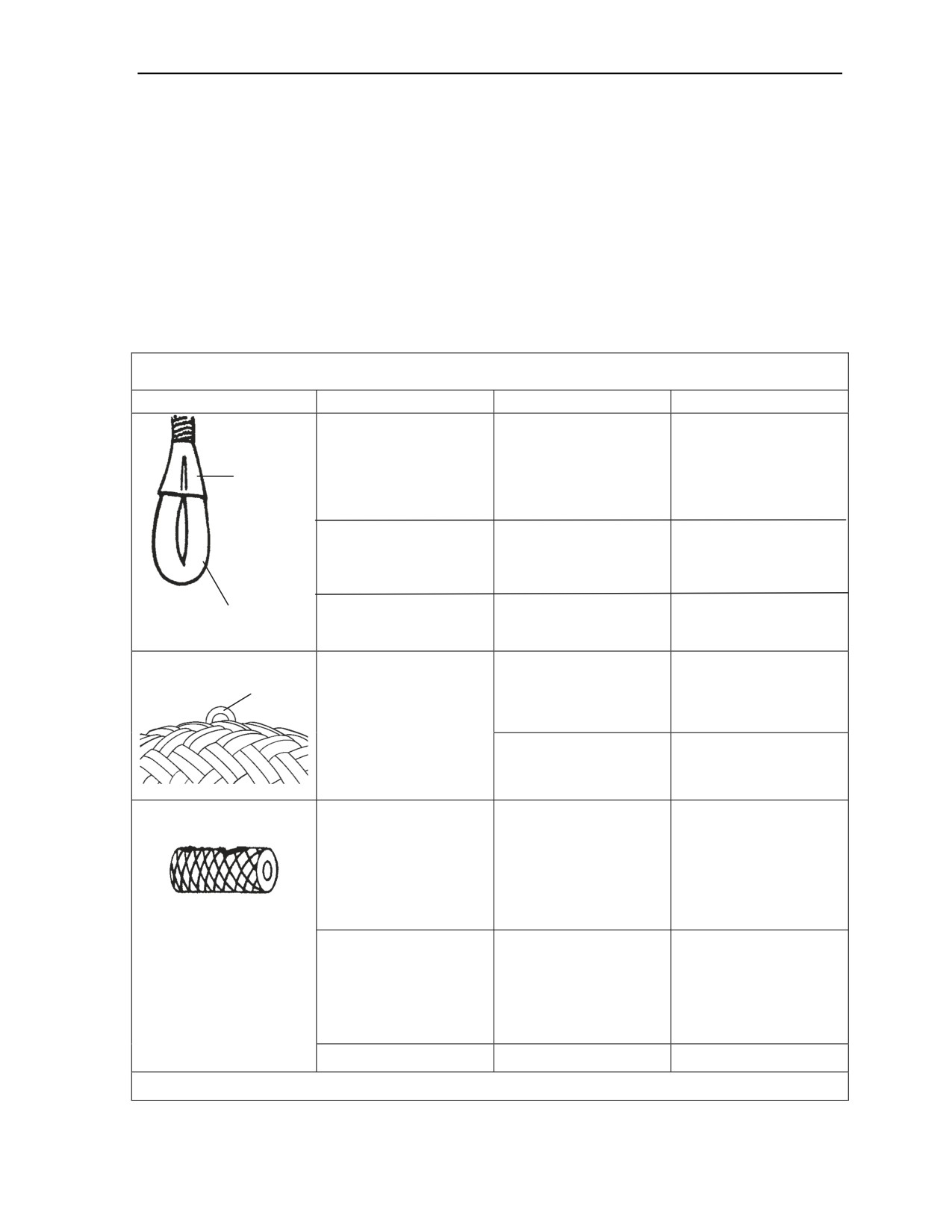
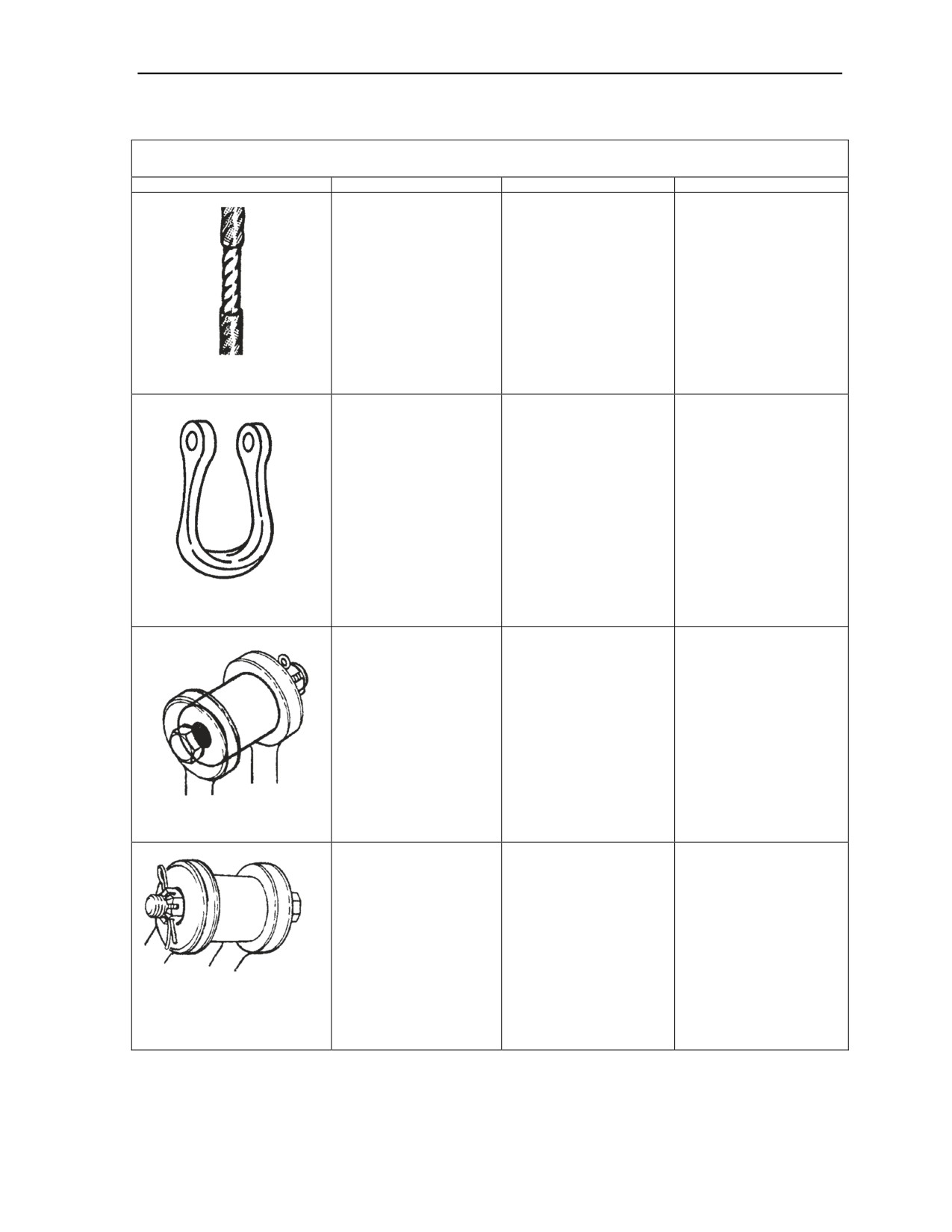
Table 6-3. Damage Criteria Chart
DAMAGE CRITERIA
(10,000 and 25,000 pound sling set)
COMPONENT
TYPE OF DAMAGE
EXTENT OF DAMAGE
CORRECTIVE ACTION
Cuts, cracks, splits,
Any cracks, splits,
deformation, distortion or
deformation, distortion, or
separation on potted
separation on potted
Replace leg
POTTED
cone
cone
CONE
Cuts exposing the outer
braid
Cuts or rubs in
No set amount or
Inspect closely for
damage to rope.
polyurethane coating.
distance of cut. This
tubing is meant to keep
the eye clean.
POLYURETHANE
Outer braid is visible
Outer braid is exposed.
Refer to outer braid
COATING
through polyurethane
inspection
Snag or pull
Yarns or strands pulled
Work yarn or strand back
OUTER BRAID
out of position on outer
into original position.
SNAG
braid.
Yarns or strands cannot
Replace sling leg.
be worked back into
original position.
OUTER BRAID
Rubbed, worn down, or
Strands 50% worn
Replace if damage
frayed strand
through on each yarn
exceeds criteria.
thickness over 3" on 10K,
5" strands on 25K sling
leg.
Crimped, kinked,
Any crimped, kinked,
Apply slight tension: If
crushed, or dented
crushed, or dented area.
damage remains replace
sling leg.
Remove slight tension: If
damage returns replace
sling leg.
Hard or burned areas
Any hard or burned area.
Replace sling leg.
FM 4-20.197/MCRP 4-11.3E, VOL I/NTTP 3-04.11/
20 July 2006
AFMAN 11-223 (I), VOL I/COMDTINST M13482.2B
6-15
Chapter 6
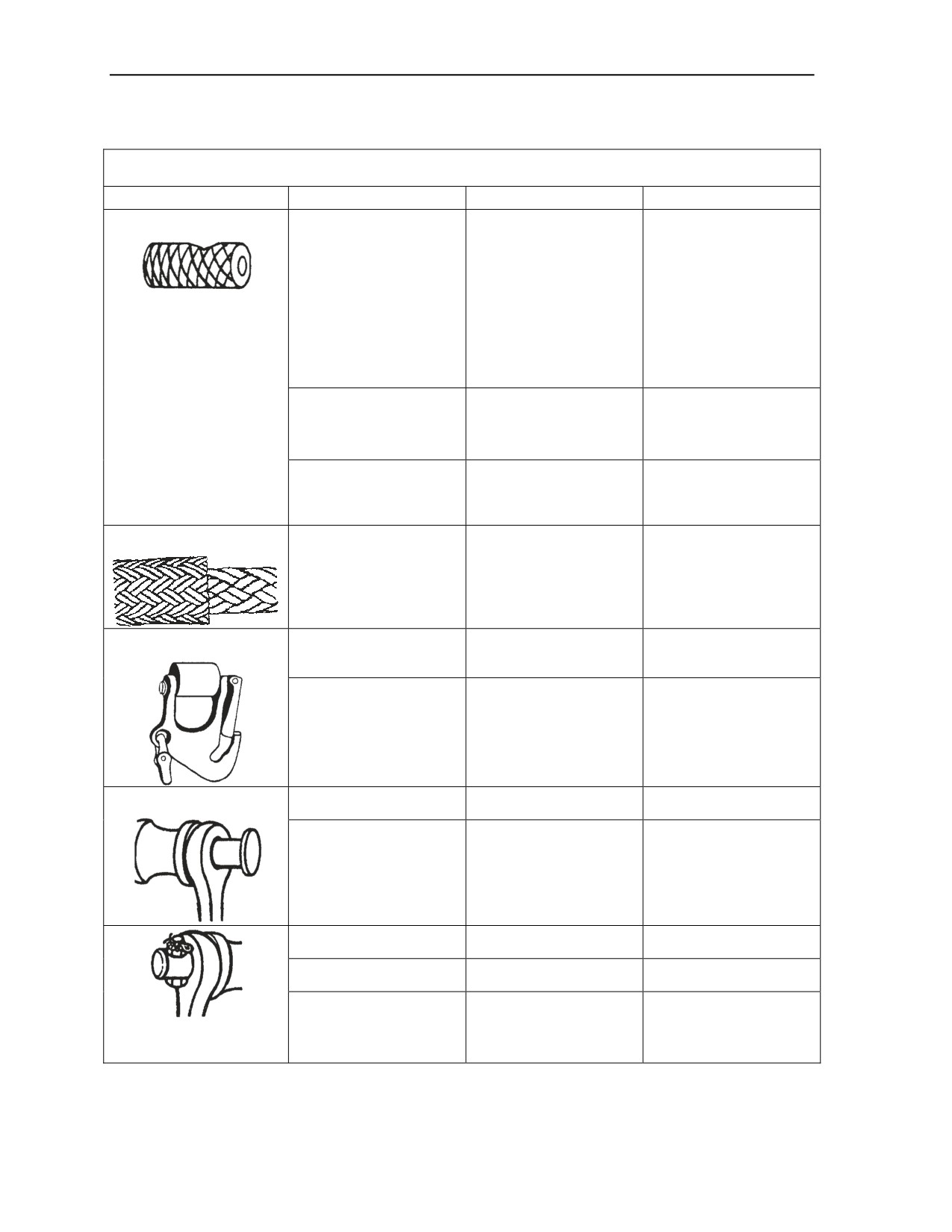
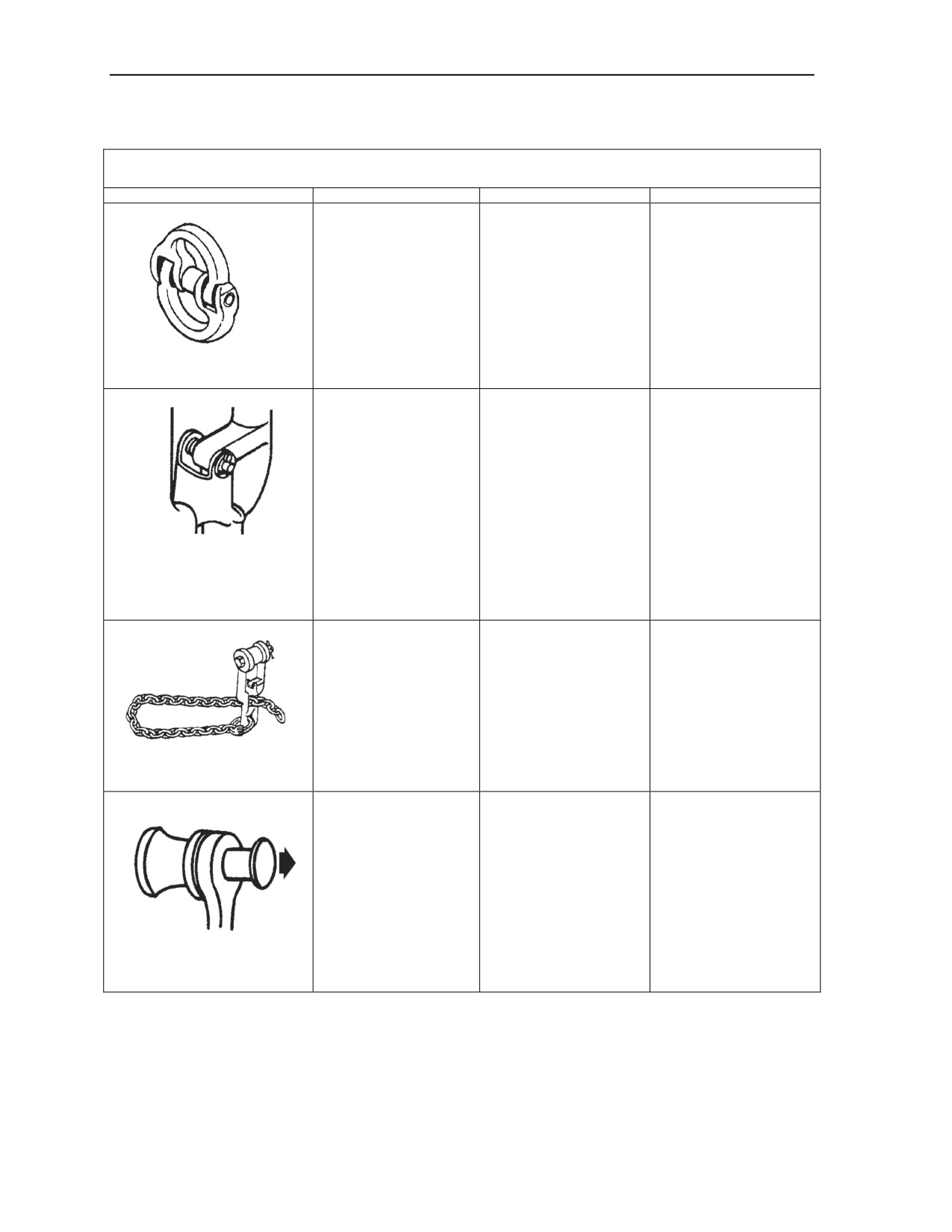
Table 6-3. Damage Criteria Chart
DAMAGE CRITERIA
(10,000 and 25,000 pound sling set)
COMPONENT
TYPE OF DAMAGE
EXTENT OF DAMAGE
CORRECTIVE ACTION
OUTER BRAID
Uniform excessive wear
25% of the strands along
or fuzziness
the length of the sling leg
are worn away.
Outer braid is worn more
Replace sling leg.
than 10% of the
circumference of the
rope.
Severe surface
roughness, or nylon
slivers/splinters present.
Rust stains or other
Any rust stain or other
Replace sling leg.
stains.
stains of unknown origin.
Cuts on external braided
Not exceeding 3 strands
Replace if damage
rope.
cut through over the
exceeds criteria.
length of the sling leg.
CORE
Deep cut or other
No damage to core is
damage through outer
allowed.
Replace sling leg.
braid into core.
Core exposed.
GRABHOOK
Spreading of the chain
No allowable damage.
Replace grabhook.
hook.
Bending the chain hook.
No allowable damage.
Replace grabhook.
SECURING PIN
Bent
None
Replace.
Burred
None
Replace or file burrs.
Bolt bent or broken.
None
Replace.
Nut missing.
None
Replace.
Cotter pin missing or
None
Replace.
SECURING PIN
broken.
CASTELLATED NUT
DRILLED BOLT
FM 4-20.197/MCRP 4-11.3E, VOL I/NTTP 3-04.11/
6-16
AFMAN 11-223 (I), VOL I/COMDTINST M13482.2B
20 July 2006
Cargo Slings
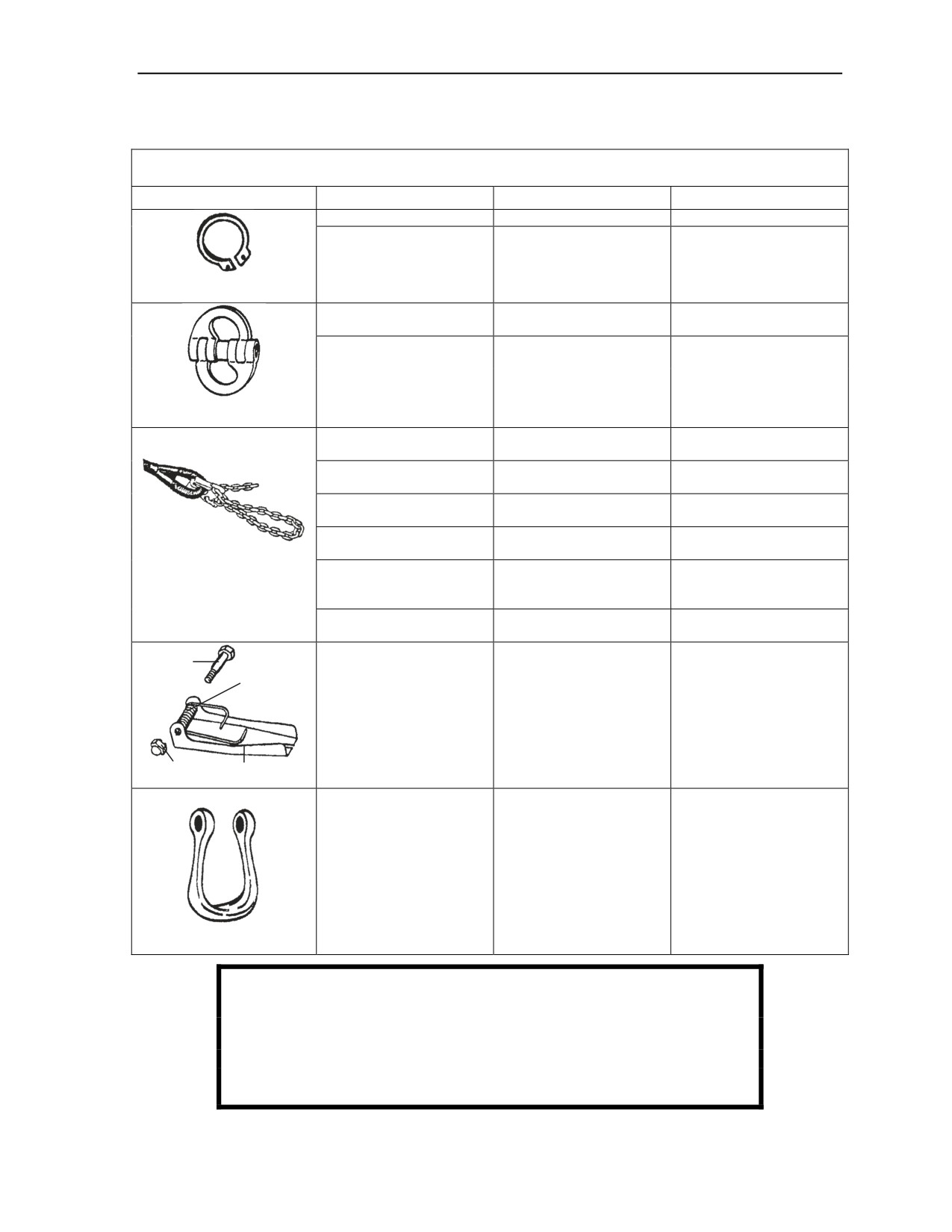
Table 6-3. Damage Criteria Chart (Continued)
DAMAGE CRITERIA
(10,000 and 25,000 pound sling set)
COMPONENT
TYPE OF DAMAGE
EXTENT OF DAMAGE
CORRECTIVE ACTION
Broken or bent.
None
Replace.
Not fully seated.
None
Replace.
SNAP RING
Pin loose or burred.
None
Replace.
Locking spring broken.
None
Replace.
COUPLING LINK
Dent
1/8 inch
Replace chain.
Bent link.
None
Replace chain.
Burred.
Outside of link only
File burrs.
Worn
1/16 inch
Replace chain.
CHAIN
Stretched
If chain length exceeds
Replace chain.
8 foot 3 inches
Short
Any amount less than
Replace chain.
specified
BOLT
Keeper bent or broken.
None
Straighten or replace.
SPRING
NUT
KEEPER
Bent.
1/8 inch maximum depth.
File small burrs smooth.
If burrs exceed 1/8 inch
replace apex.
APEX
WARNING
Do not use sling legs that are known to have been severely
overloaded or shock loaded, such as the remaining legs of a sling
set after one leg has been broken.
FM 4-20.197/MCRP 4-11.3E, VOL I/NTTP 3-04.11/
20 July 2006
AFMAN 11-223 (I), VOL I/COMDTINST M13482.2B
6-17
Chapter 6
15,000-POUND CAPACITY NYLON AND CHAIN MULTILEG SLING
SET
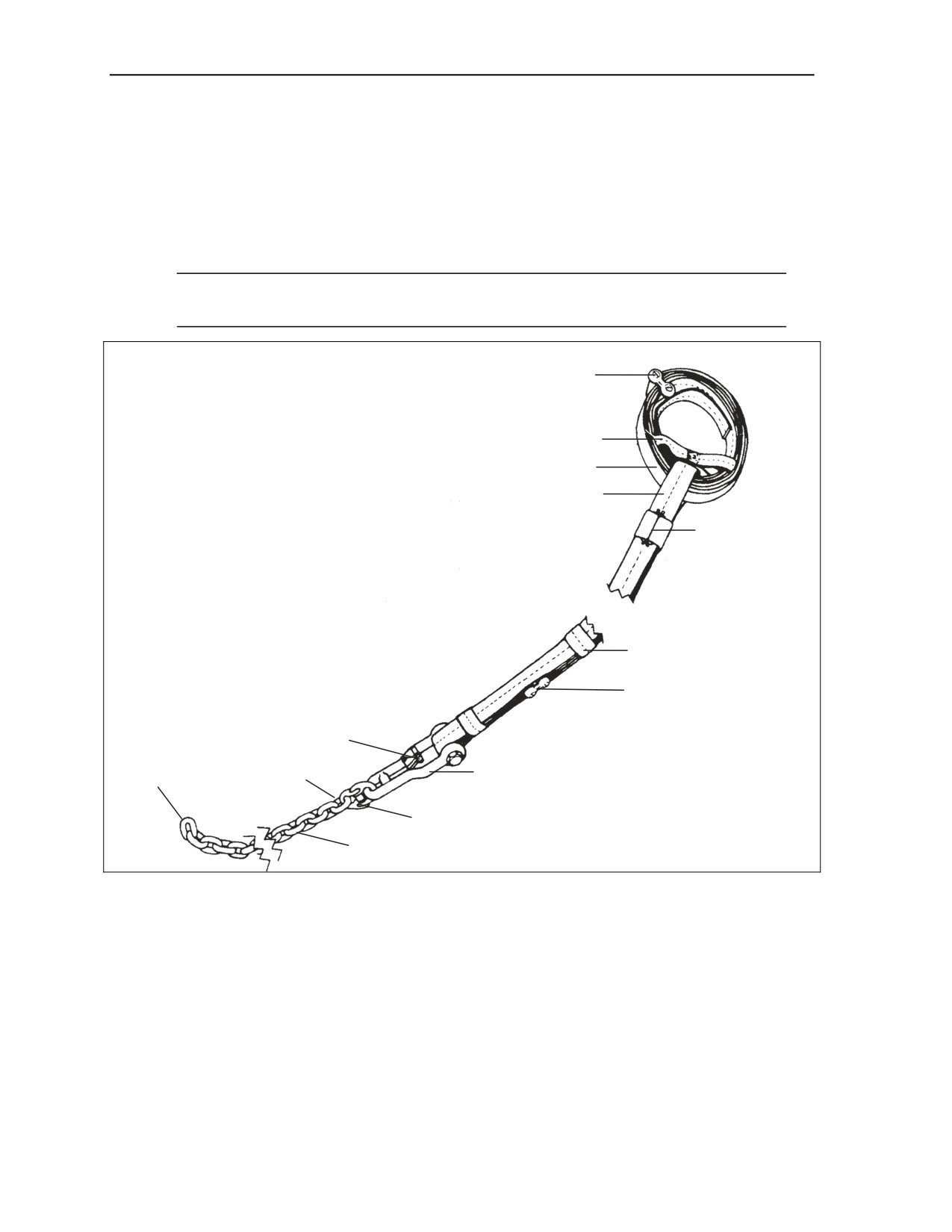
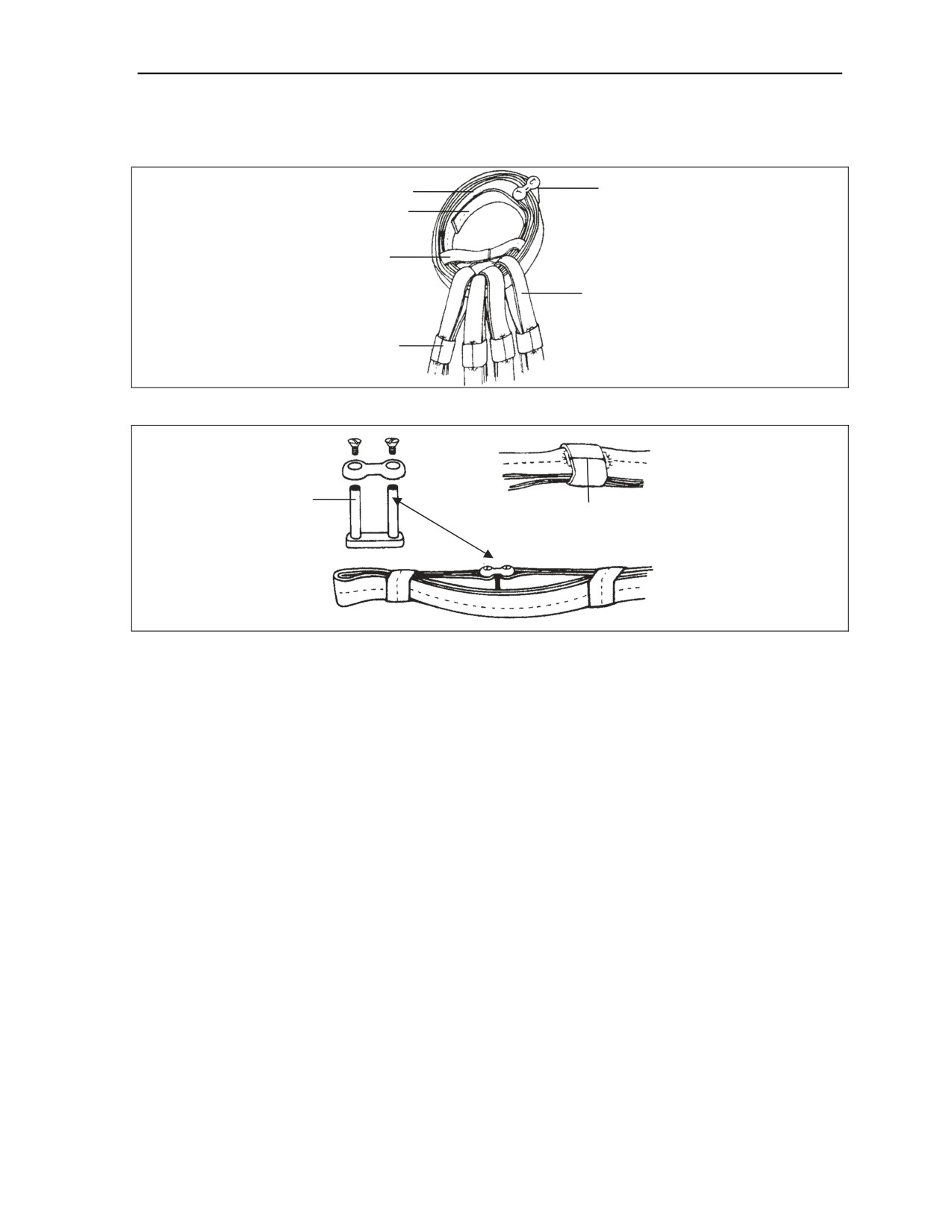
6-3. The 15,000-pound multileg cargo sling (nylon and chain leg) has four sling legs (Figure 6-22). Each
sling leg is comprised of 15 feet of nylon strap, a grab link, and 6 feet of chain. At one end of the nylon
leg is a nylon web ring which attaches the sling set to the aircraft cargo hook. All four sling legs are held
together by the nylon web ring. Legs may be added or removed as necessary. It is important that you
become familiar with each part of the sling set and where it is located.
Note: Army units using multileg sling sets are required to obtain a wavier from: Director,
Aerial Delivery and Field Services Department, 710 Adams Avenue, Ft. Lee, VA 23801-1502.
CONNECTOR LINK
RETAINER STRAP
WEB RING
NYLON LOOP
WEB KEEPER
FLOATING KEEPER
CONNECTOR LINK
SPRING KEEPER
GRAB LINK
LINK # 1
LINK # 64
COUPLING LINK
CHAIN LEG
Figure 6-22. 15,000-Pound Capacity Multileg Sling Set
z
Nylon Web Ring. The nylon web ring has a maximum capacity of 15,000 pounds. Figure 6-23
shows that the web ring is held together by a connector link. A cotton/nylon buffer, sewn on the
inside of the nylon web strap, helps prevent wear to the ring. There are also cotton/nylon
buffers sewn to the inside of each end of the sling leg. Figure 6-23 shows the four legs attached
to the web ring. Notice how the nylon loops of the sling leg are positioned under the retainer
strap to prevent the legs from moving around the web ring.
z
Nylon Sling Leg. The maximum capacity of each sling leg is 5,560 pounds. Each sling leg is
made from a 15 foot long nylon web loop that is connected to itself by a connector link
(Figure 6-24). The connector link is the same type link that is used on the web ring. The
separate nylon plies are held together by five web keepers. Three of the keepers are sewn to the
nylon loops and the other two are called floating web keepers. The floating web keepers are
FM 4-20.197/MCRP 4-11.3E, VOL I/NTTP 3-04.11/
6-18
AFMAN 11-223 (I), VOL I/COMDTINST M13482.2B
20 July 2006
Cargo Slings
located at either end of the nylon leg where they can slide back and forth to act as a cinch. All
web keepers are held together by a no-sew fitting as shown in Figure 6-24.
WEB RING
CONNECTOR LINK
COTTON BUFFER
RETAINER STRAP
SLING LEGS
KEEPER
Figure 6-23. Legs Assembled on Web Ring
CONNECTOR LINK
NO-SEW FITTING
Figure 6-24. Connector Link
z
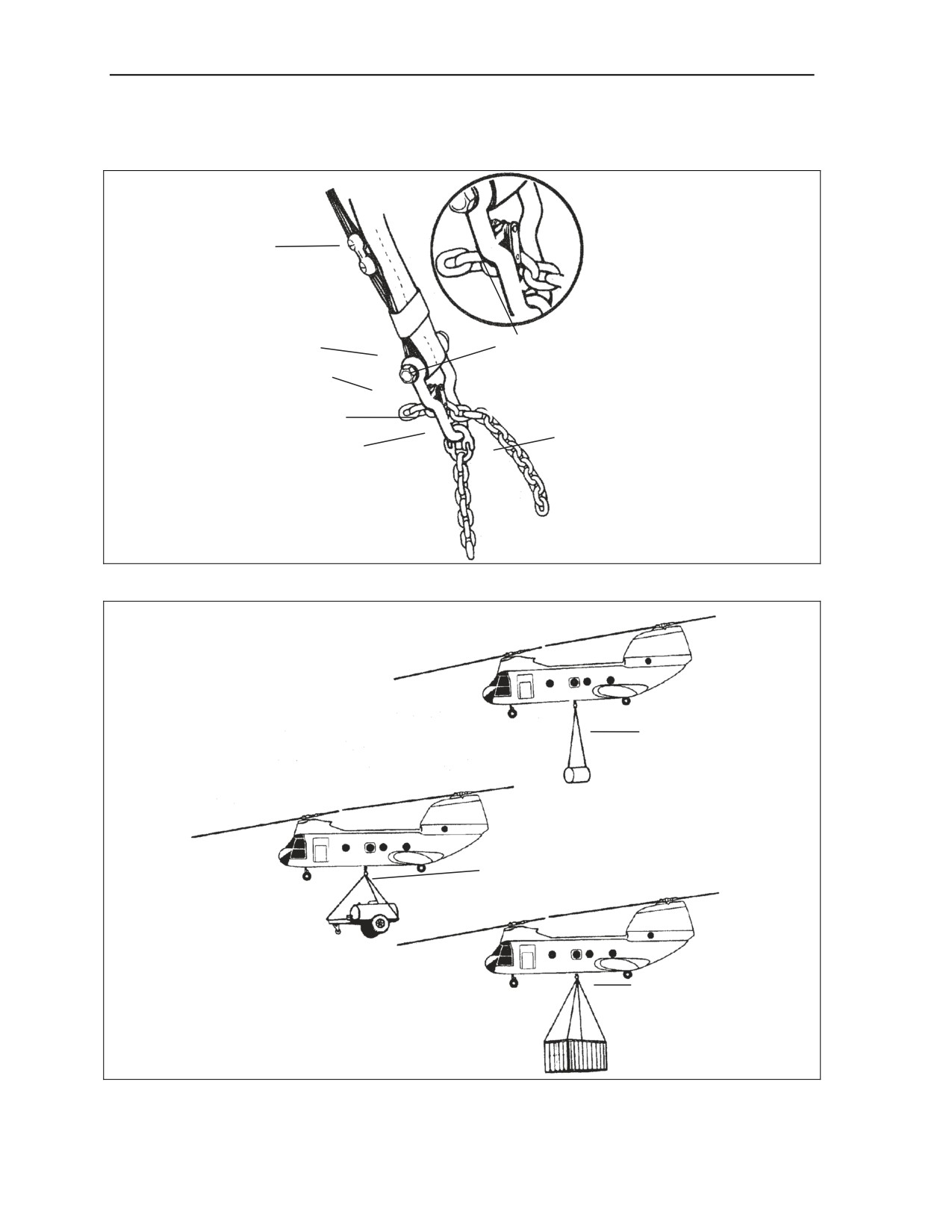
Grab Link Assembly. The next item on the sling set, the metal grab link, is attached to the
lower end of the nylon web sling leg. This grab link is equipped with a spring-loaded keeper as
shown in the inset of Figure 6-25. At the lower end of the grab link you will see the coupling
link that is used to connect the chain leg to the grab link.
z
Chain Assembly. The last part of the sling set is the 6-foot chain which has 64 links. These
links are used to vary the length of the sling legs. To accommodate the load, leg length is
adjusted by passing the free end of the chain through the attachment point on the load and then
through the wide end of the grab link until the desired length is obtained. Then the chain link
that is in the grab link is slipped past the spring keeper and into the narrow end of the grab link.
The chain is held in this position by the locking action of the chain links on either side of the
grab link and prevented from slipping out of the grab link by the spring keeper. The leg length
is determined by counting the number of links from the free end of the chain and fastening this
link in the grab link.
z
Making the Sling Set Fit the Load. A complete nylon and chain sling consists of four legs.
However, legs may be removed to make a two- or three-legged sling (Figure 6-26). The safe
working capacity of a two-, three-, and four-legged sling set is 11,120, 15,000 and 15,000
pounds respectively. The capacity of the multileg sling set is different from other sling sets
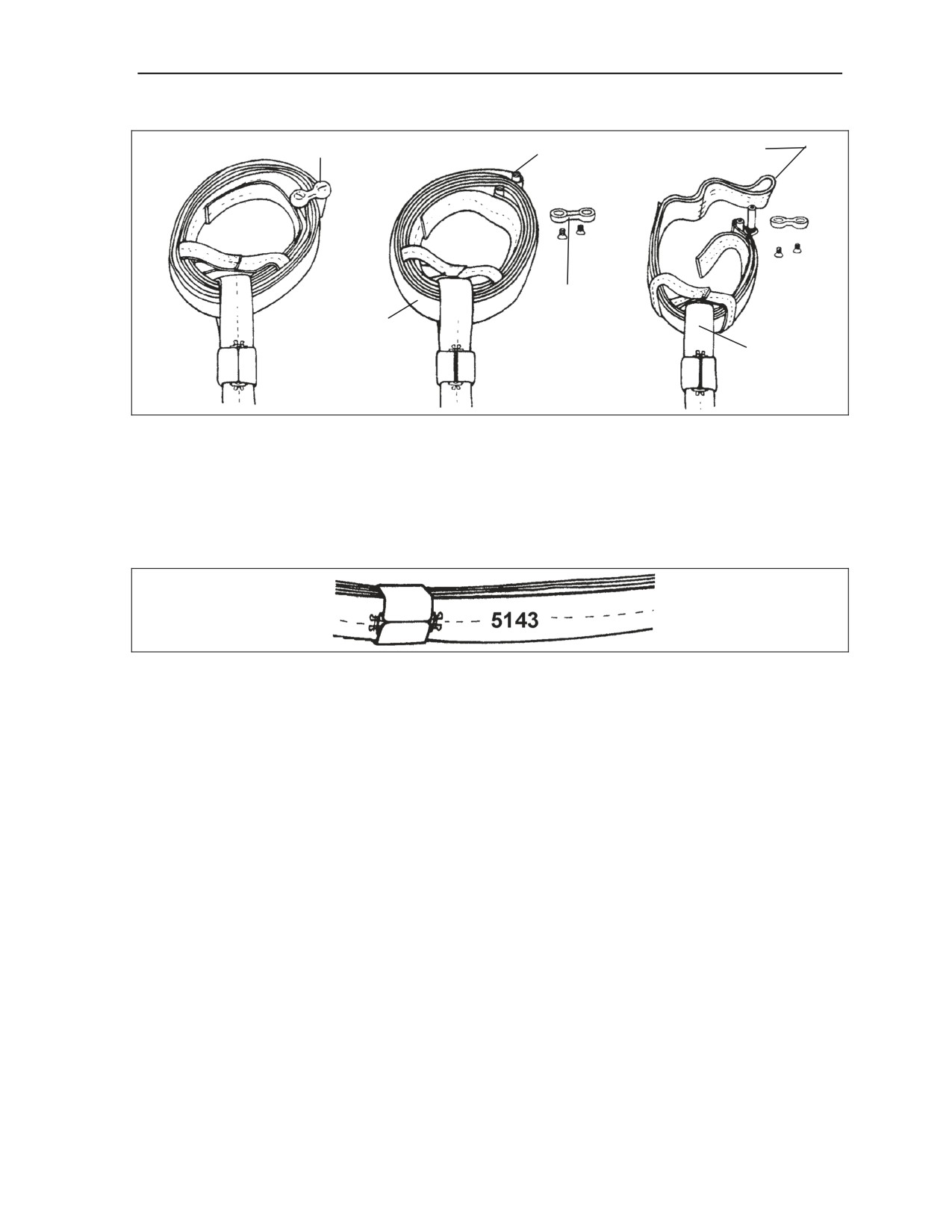
because of the sling leg design. The six steps for adding or subtracting a sling leg are as
follows:
Remove the two screws and end bar from the web ring connector link (Figure 6-27).
Remove the two free ends of the web ring strap and unwind the web strap.
Remove the retainer strap and add or remove sling legs as required.
Install the retainer strap over the web strap.
FM 4-20.197/MCRP 4-11.3E, VOL I/NTTP 3-04.11/
20 July 2006
AFMAN 11-223 (I), VOL I/COMDTINST M13482.2B
6-19
Chapter 6
Place the free ends of the web strap over the open posts of the connector link.
Install the end bars and tighten the two screws.
CONNECTOR LINK
GRAB LINK
SPRING KEEPER
LINK # 1
COUPLING LINK
CHAIN
LINK # 64
Figure 6-25. Grab Link with Spring Keeper
TWO-LEGGED SLING
THREE-LEGGED SLING
FOUR-LEGGED SLING
Figure 6-26. Slings with Two, Three, and Four Legs
FM 4-20.197/MCRP 4-11.3E, VOL I/NTTP 3-04.11/
6-20
AFMAN 11-223 (I), VOL I/COMDTINST M13482.2B
20 July 2006
Cargo Slings
REMOVE SCREWS
REMOVE FREE FREE AND
END ON OPEN
DISCONNECT
POSTBAR
REMOVE END
UNWIND WEB
BAR
ADD OR
STRAP
REMOVE
LEGS
Figure 6-27. Ring Taken Apart
z
Inspection. The unit can conduct its own inspection. Each nylon and chain multileg sling must
be marked with 1-inch letters showing the date that the set was first placed in use (Figure 6-28).
This means the first day the sling is used, not the day of issue. The marked date is used in
determining when the next required inspection is due. Although the slings are routinely
inspected before and after each use, they must be thoroughly inspected every 6 months.
Figure 6-28. Sample of Inspection Date Marking
If the sling is found satisfactory for further use, the old date is marked over and the new date
applied. The date can be the calendar date or Julian date as shown in Figure 6-28. The dates
will be applied using either orange-yellow parachute marking ink, orange tube-type marker,
strata blue parachute marking ink, or strata blue tube-type marker. If the old date was marked
with strata blue, mark over the area with strata blue ink and apply the new date using orange-
yellow ink. Do just the opposite if the old date was marked with orange-yellow ink. Only one
date should appear on the sling. An alternate method for recording the inspection date is to
attach a metal tag to the sling set to identify the last inspection date.
If the sling is unserviceable, stencil "unserviceable" on it and dispose of it through supply
channels. The sling set is unserviceable if one of the following defects is found:
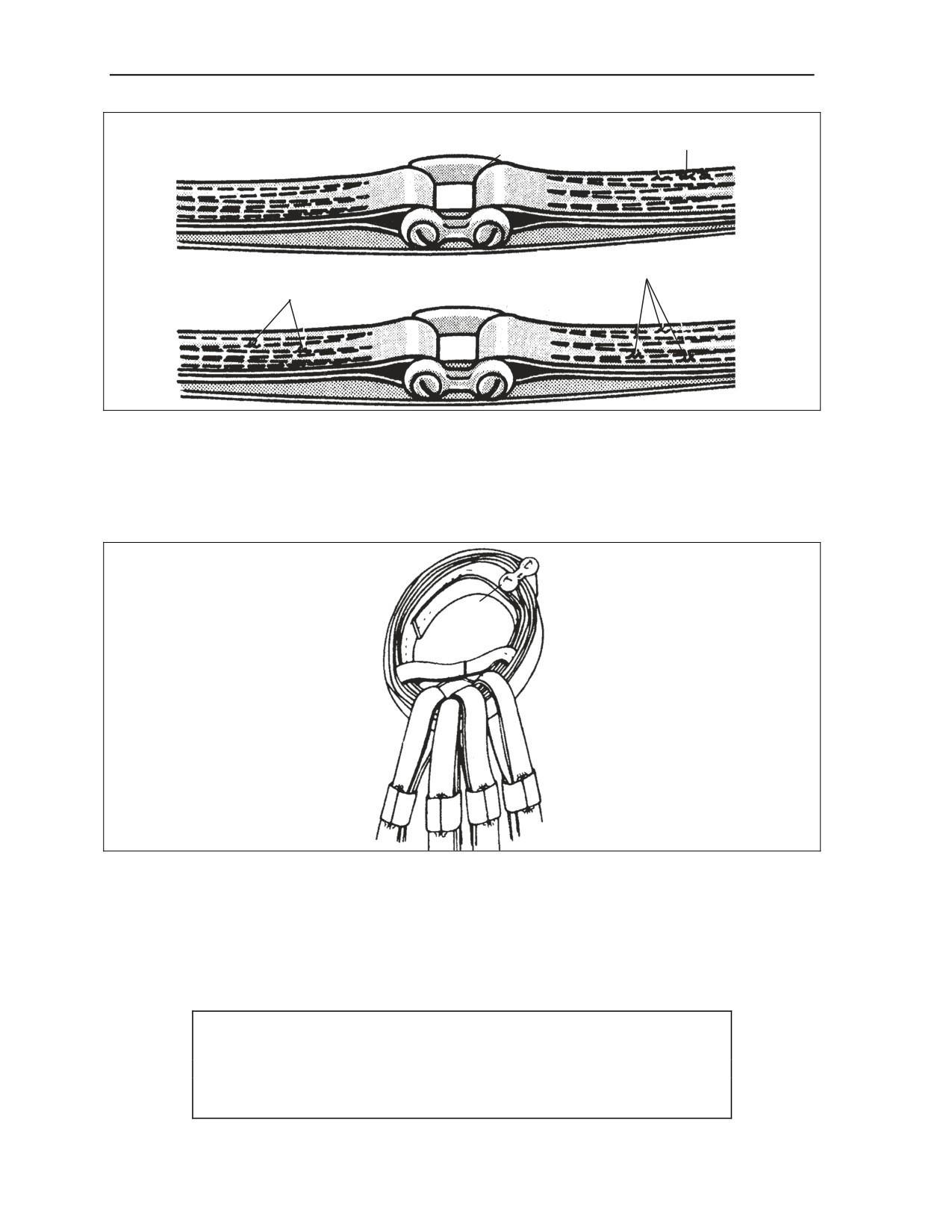
─ Three or more consecutive broken and/or loose stitches (Figure 6-29).
─ Five or more broken and/or loose stitches on a sling leg.
─ Foreign matter such as rust that cannot be removed.
─ Fraying, including broken webbing strands.
─ Excessive wear or fusing indicated by unusual hardening or softening of webbing
fibers.
─ Cuts or broken strands of the nylon webbing.
─ Any heavy oil stains or mildewed areas.
─ Any missing parts such as buffers, sliding keepers, or permanent keepers.
─ Metal items should be inspected for rust, corrosion, cracks, bends, distortion, burrs,
sharp edges, grease, or any other foreign matter. Any bends, cracks, or distortions
will render that item unserviceable.
FM 4-20.197/MCRP 4-11.3E, VOL I/NTTP 3-04.11/
20 July 2006
AFMAN 11-223 (I), VOL I/COMDTINST M13482.2B
6-21
Chapter 6
3 CONSECUTIVE BROKEN STITCHES
BROKEN STITCHES
BROKEN STITCHES
Figure 6-29. Sling with Broken and Loose Stitches
Numbering the Sling Legs. The sling legs are numbered to allow easy identification of each leg in
the sling set (Figure 6-30). This numbering sequence is designed to prevent the legs from crossing
each other and causing the load to twist during flight. The correct positioning of the sling legs, legs
1 and 2 to the front and 3 and 4 to the rear, will help stabilize the load during flight.
2
1
3
4
Figure 6-30. Sling Leg Numbering Sequence for Multileg Sling Set
Maintenance. The sling set has no predetermined service life.
z
Repair. Normal repair will consist of removal and replacement of damaged or defective
components. Defective components will be removed from the sling assemblies and maintained
at the unit supply until a complete unserviceable sling assembly is constructed for survey.
Components salvaged from damaged multileg sling assemblies will be inspected, and if found
serviceable, used to construct a serviceable sling.
CAUTION
Do not attempt to repair any part of the sling, other than removal and
replacement of components.
FM 4-20.197/MCRP 4-11.3E, VOL I/NTTP 3-04.11/
6-22
AFMAN 11-223 (I), VOL I/COMDTINST M13482.2B
20 July 2006
Cargo Slings
z
Cleaning. Spot clean the slings by gently brushing or rubbing the soiled area with a soft bristle
brush or clean cloth dampened with Everblum Gold (NSN:
7930-01-506-9885). Rinse the
soiled area by repeating the procedure with more of the solvent and then allow the sling to air
dry. Do not wring out the rinsed area. If Everblum Gold is not readily available, the slings may
be spot cleaned with a solution of 1/2 cup of hand washing detergent dissolved in 1 gallon of
warm water. Rinse the area thoroughly by repeating the procedure with fresh clean water and
then let it air dry. Do not wring out the area or try to heat the slings to reduce drying time. This
could damage the sling. Remove all grease, oil, rust, corrosion, or foreign matter on sling metal
parts by brushing or wiping them with a cloth or fine emery cloth. File all burrs and sharp edges
smooth.
z
Storage. Store the sling sets in a dry area protected from direct sunlight, in a manner to
prevent rust, corrosion, or contact with sharp abrasive objects and the ground.
z
Quality Deficiency Report. Anyone discovering a deficiency with the multileg sling set should
submit SF 368 (Product Quality Deficiency Report) to Commander, Defense Industrial Supply
Center (Code DISC-OIBE/XC), Philadelphia, PA 19111.
Note: USMC should submit QDR in accordance with MCO 4855.10B.
40,000-POUND CAPACITY SLING SET
6-4. The Marine Corps and Navy heavy lifting sling is the 40,000-pound capacity sling set. The sling
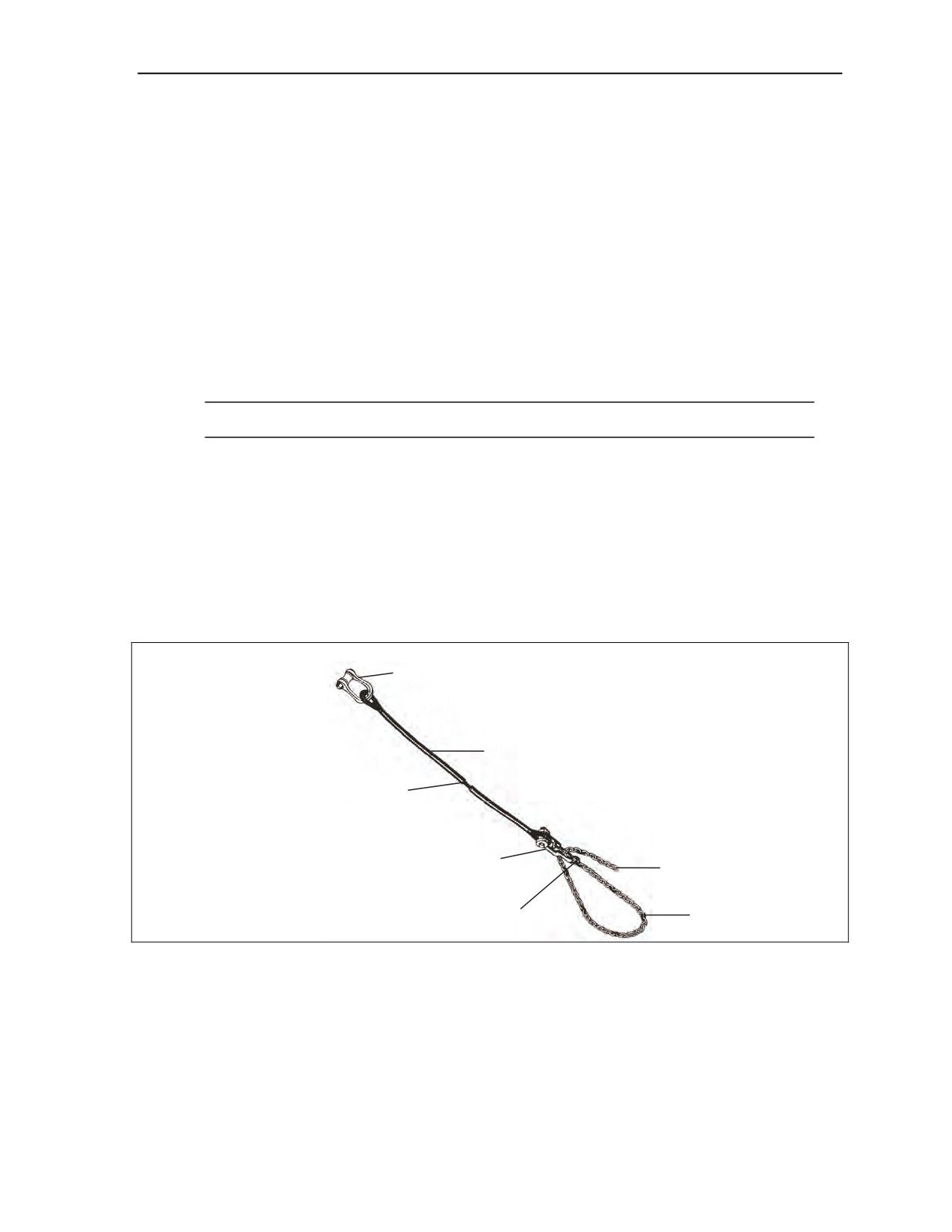
assembly consists of three major subassemblies: apex shackle, four Kevlar sling legs, and four grab links.
The chain section and coupling are considered part of the sling leg subassembly. Figure 6-31 shows one
sling leg for clarity. For detailed technical information on the 40,000-pound sling set, refer to USMC
TM 3940-15/1, Operations and Maintenance, Sling, Multileg, Helicopter, External Lift, 40,000-pound
capacity.
APEX FITTING
POLYESTER COVERING
KEVLAR ROPE
GRAB LINK
LINK # 1
CHAIN
Figure 6-31. 40,000-Pound Capacity Sling Set (One Leg)
FM 4-20.197/MCRP 4-11.3E, VOL I/NTTP 3-04.11/
20 July 2006
AFMAN 11-223 (I), VOL I/COMDTINST M13482.2B
6-23
Chapter 6
Note: Due to low stretch characteristics, do not use the 40,000-pound capacity sling set with the
CH-47. However, one leg may be used as a vertical pendant when connected to a nylon sling
and the load weighs less than 10,000 pounds.
z
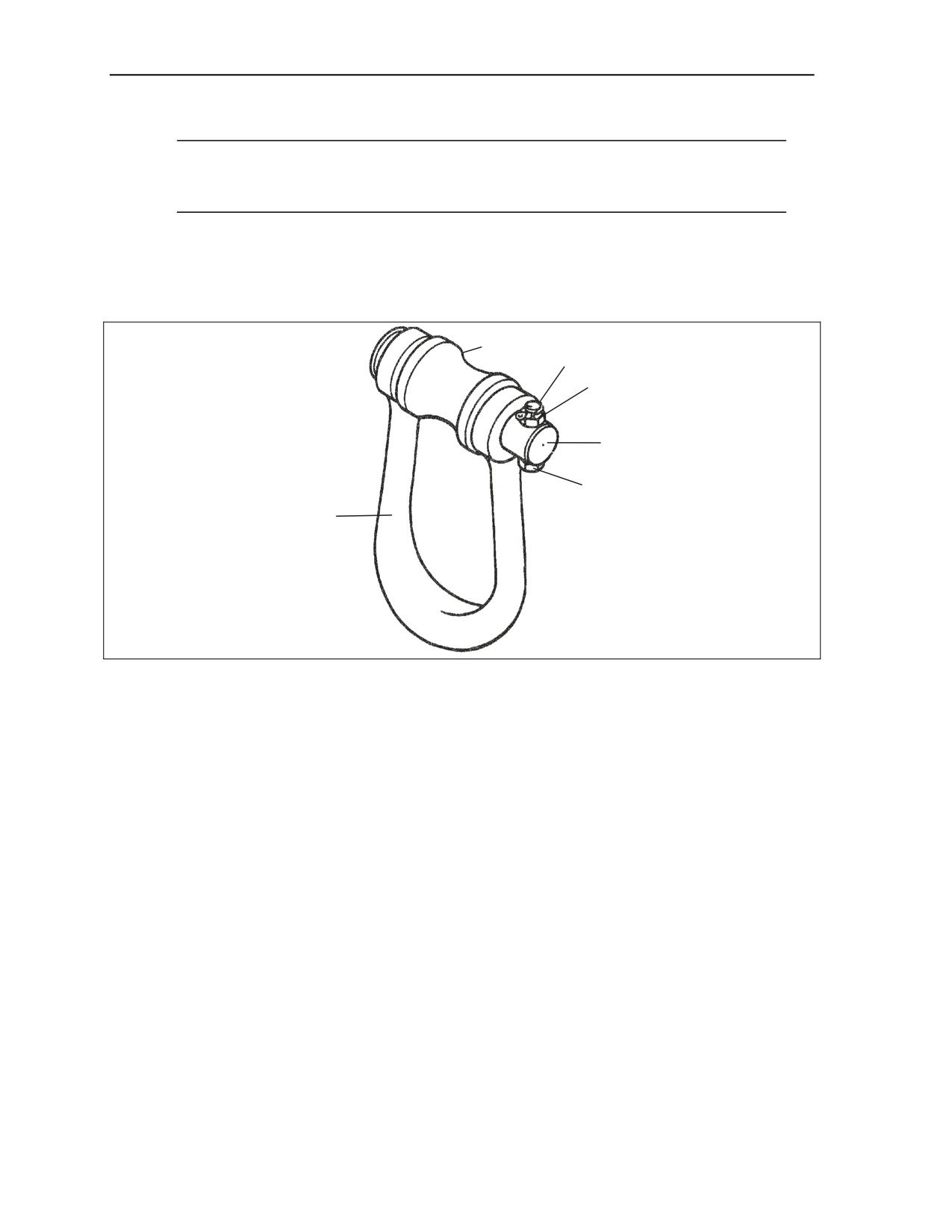
Apex Shackle Fitting. The 40,000-pound capacity steel apex shackle fitting holds the sling leg
assemblies and attaches directly to the helicopter cargo hook (Figure 6-32). The apex fitting can
be easily disassembled to allow for the removal or addition of sling legs as necessary. The
spacer helps to center the apex fitting on the cargo hook.
SPACER
COTTER PIN
SLOTTED NUT
KEVLAR ROPE
BOLT
APEX
Figure 6-32. 40,000-Pound Capacity Apex Shackle Fitting
z
Sling Leg Assembly. Each 12-foot sling leg is a 1 1/8-inch diameter, 3-strand, right-regular, 3
x 37 Kevlar 29 rope covered with Type 77, 9000 denier, white Dacron polyester. The entire leg
assembly is protected by a blue, 1 1/2-inch diameter polyolefin heat shrink tube. The eye sock
of the sling leg is reinforced by a .36 Dacron carrier braid with a blue or white adhesive
application. Each leg is rated at a 10,000-pound maximum capacity. Each sling leg is marked
with the manufacturer’s code number, month and year of manufacture, serial number, and load
capacity. If a sling leg is removed from the apex fitting, the maximum capacity of the sling set
decreases 10,000 pounds for every sling leg removed. For example, a three-legged sling set can
carry a maximum of 30,000 pounds. Even if more than four legs are used, the maximum
capacity of the sling set is 40,000 pounds because of the apex shackle capacity.
z
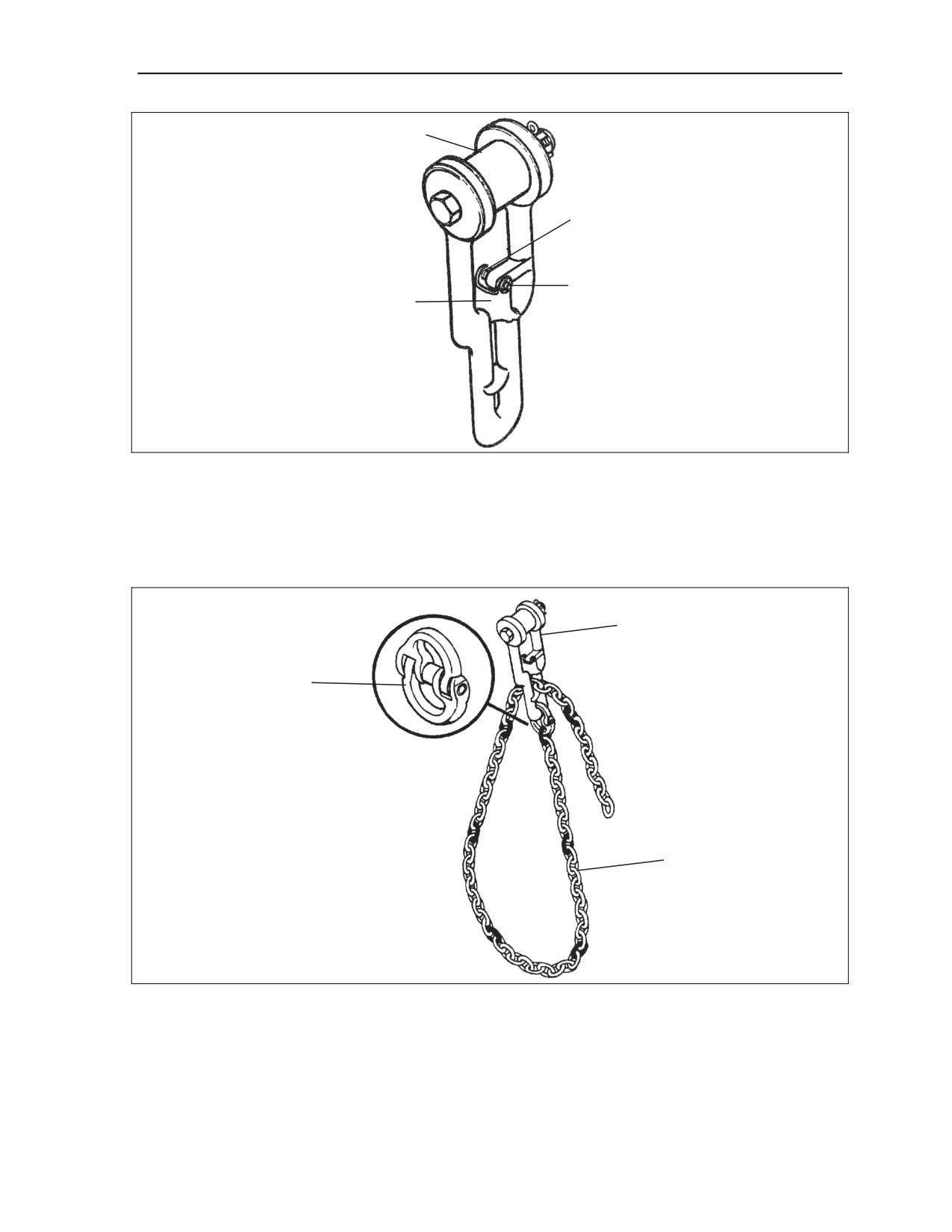
Grab Link. Each sling leg has a grab link (Figure 6-33) connected to the lower eye of the sling
leg. The grab link attaches the sling leg to the chain section and permits varying the length of
the chain. The grab link is attached to the lower eye of the sling leg with a bolt and spacer
which are held in place by a castellated nut and cotter pin. The bottom of the grab link has an
eye through which a coupling link is inserted to attach the chain leg. The length of the chain is
varied by passing the chain through the lifting provision, back through the center opening of the
grab link, and inserting the chain link that matches the desired leg length into the slot below the
keeper. The keeper is not a load bearing component, but only serves to keep the chain in the
grab link under a no-load condition. The chain leg is held in position by the locking action of
the chain link in the slot under the grab link keeper.
FM 4-20.197/MCRP 4-11.3E, VOL I/NTTP 3-04.11/
6-24
AFMAN 11-223 (I), VOL I/COMDTINST M13482.2B
20 July 2006
Cargo Slings
SPACER
SPRING
PIN
KEEPER
Figure 6-33. Grab Link
z
Chain Assembly. The 8-foot chain assembly has 70 links. Starting from the free end, every
tenth link is painted olive drab to help in counting links. If additional lengths of chain are
necessary, they can be joined to the existing chain leg using a coupling link. The chain link
identified in the rigging procedures is inserted in the slot of the grab link (Figure 6-34).
GRAB LINK
COUPLING LINK
CHAIN
Figure 6-34. Chain Assembly
z
Life Expectancy. Active sling assemblies (those in use) have a life expectancy of 5 years.
Inactive sling assembles (those maintained in storage at Marine Corps Logistics Base [MCLB] )
have a life expectancy of 7 years. Sling assemblies issued to the Fleet Marine Force (FMF)
from storage have a total life expectancy (storage plus active) of no more than 7 years.
FM 4-20.197/MCRP 4-11.3E, VOL I/NTTP 3-04.11/
20 July 2006
AFMAN 11-223 (I), VOL I/COMDTINST M13482.2B
6-25
Chapter 6
z
Serialization. Each
40,000-pound capacity sling set is assigned a serial number by the
manufacturer. The manufacturer’s identification code and part number is permanently marked
on metal parts (except chain links) of the sling set by etching, metal stamping, or raised
characters. Metal parts include the apex shackle, shackle pin and spacer, grab link, and coupling
link. The sling legs are rubber stamped or stenciled with the manufacturer’s identification code,
part number, serial number, and date of manufacture.
z
Inspection. Inspect all 40,000-pound capacity sling sets annually during their manufacture
anniversary month for proper cleaning, storage, damage to components, and defects or missing
components. Annual inspections and load testing will be conducted and recorded in accordance
with USMC TM 3940-15/1. Requirements for annual load testing of slings will be deleted
based on manufacturer’s testing requirements, life expectancy for active and/or inactive sling
assemblies, and because the only authorized repair is by replacement of tested components.
Custodial commands have the option to randomly load test sling assemblies in accordance with
MIL-S-29398 (USMC) and extend the life expectancy beyond the 5 to 7 year time period, if
deemed appropriate as a result of inspections.
z
Maintenance. If these sling assemblies are inspected and maintained according to the
requirements of the damage and corrective action criteria listed in Table 6-4, there should be no
fear of dropping a sling load through failure of the slings or components. Third echelon level of
repairs are authorized in the field at the General Support Maintenance Company (GSM Co),
Force Service Support Group
(FSSG) by replacement of components or entire assembly
(Appendix B, page B-1) obtainable through the Marine Corps Logistics Base (Code 838-2),
Albany, GA 31704.
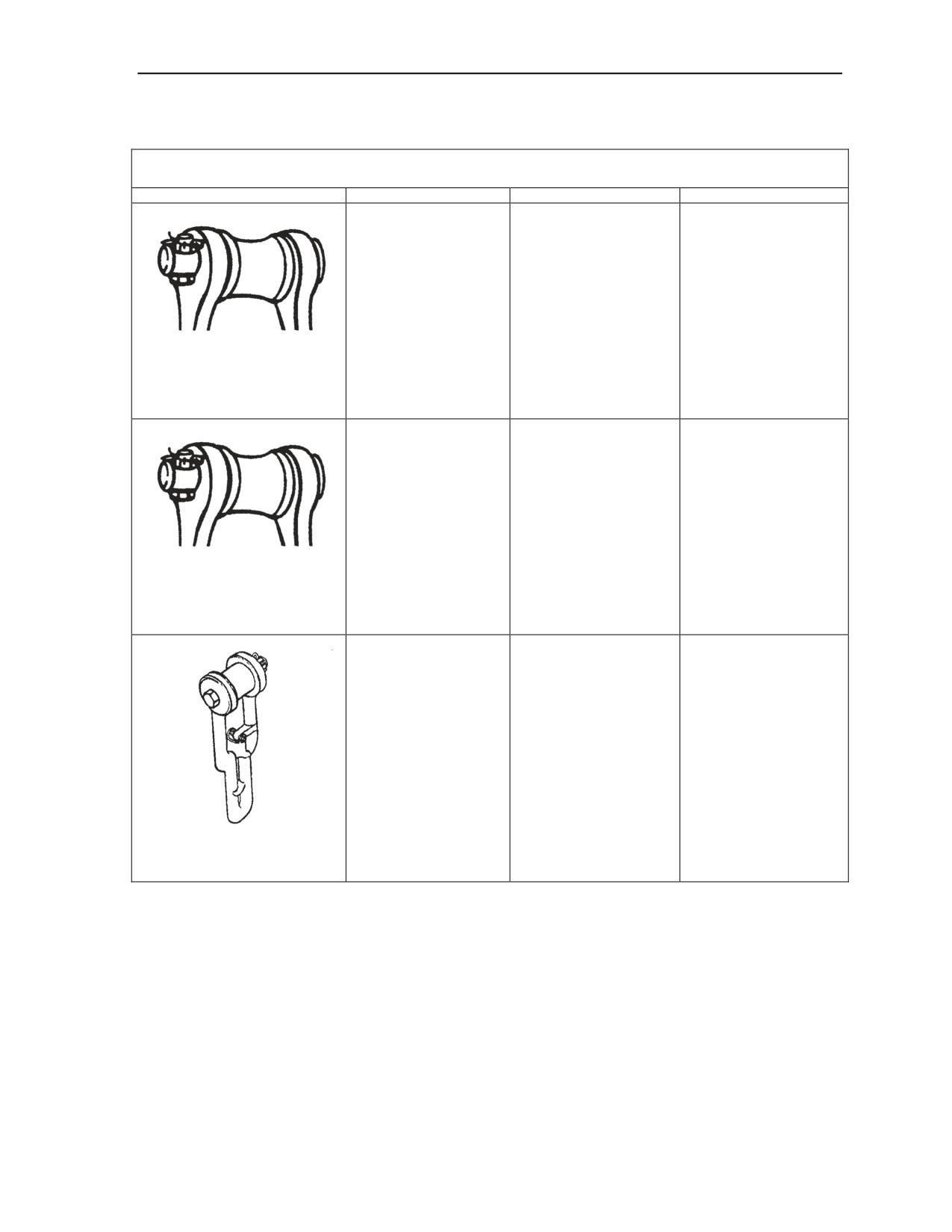
Table 6-4. Damage Criteria Chart
DAMAGE CRITERIA
(40,0000 pound sling set)
COMPONENT
TYPE OF DAMAGE
EXTENT OF DAMAGE
CORRECTIVE ACTION
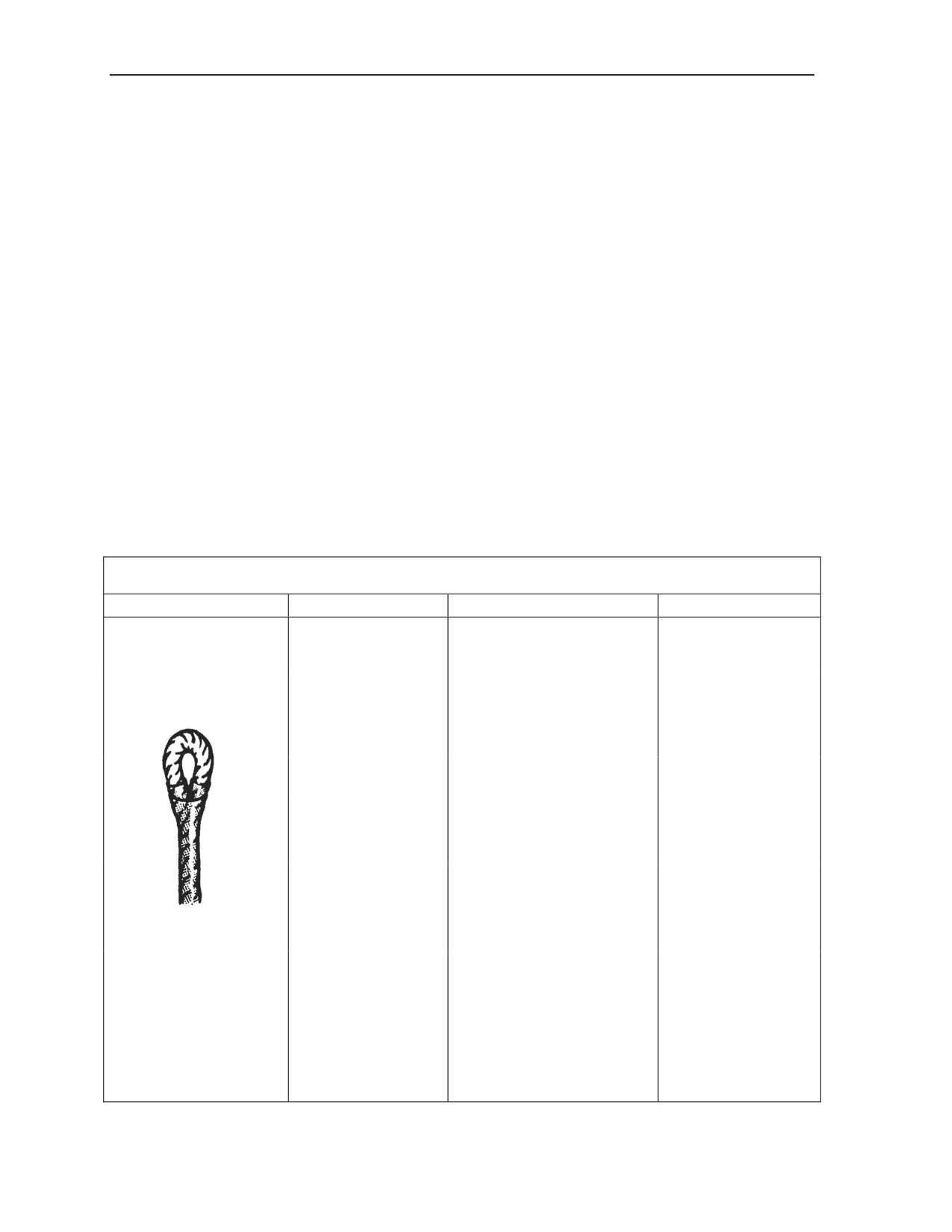
Abrasion of the eye.
Abrasion through eye sock and
Replace sling legs (4).
into polyolefin heat shrink
tubing jacket.
Severe deformation
Deformation/creasing to the
Replace sling legs (4).
extent that the eye is visibly
and physically weakened, and
is no longer stiff.
Cut of the eye sock.
Yellow Kevlar fibers
Replace sling legs (4).
Discolored/dirty/
White or blue color is still
Clean with warm soapy
soiled.
discernible.
water and/or Everblue
Gold.
White color eye tacky or sticky.
Clean with warm soapy
water and/or Everblue
SLING LEG EYE
Gold and powder with
talc.
No white or blue discernible.
Clean with warm soapy
water and/or Everblue
Gold to determine if
abrasion through eye
socket exists. If
abrasion exists through
eye socket, replace
sling legs (4).
FM 4-20.197/MCRP 4-11.3E, VOL I/NTTP 3-04.11/
6-26
AFMAN 11-223 (I), VOL I/COMDTINST M13482.2B
20 July 2006
Cargo Slings
Table 6-4. Damage Criteria Chart (Continued)
DAMAGE CRITERIA
(40,0000 pound sling set)
COMPONENT
TYPE OF DAMAGE
EXTENT OF DAMAGE
CORRECTIVE ACTION
Cuts on or abrasion of
No set amount; cut or
Tape the cut or abrasion
the sling leg.
abrasion is through heat
with rubber electrical
shrink tubing, but does
tape after thorough
not cut the yellow Kevlar
cleaning with warm,
fibers/cords
soapy water or Everblue
Gold.
Cut or abrasion has
loosened or broken
Replace sling legs (4).
three or more yellow
SLING LEG BODY
Kevlar fibers/cords.
Burred, bent, or
No damage to pin,
File burrs or replace
cracked.
spacer, pin bolt, nut, and
apex shackle.
cotter pin
Damage affects only
Replace affected
some of the other
components as required.
components of the apex
shackle assembly.
Damage to shackle
Replace apex shackle
affects all other
subassembly.
APEX SHACKLE
components.
Burred, bent, or
No damage to grab link
File burrs or replace
cracked.
body, bolt, nut, cotter
spacer.
pin, and keeper
assembly.
Damage affects only
Replace affected
some of the other
components as required
components of the grab
link subassembly.
SPACER, GRAB LINK
Damage affects all other
Replace grab link
components.
assembly.
Burred, bent, cracked,
No damage to grab link
File burrs or replace bolt,
or missing.
body, spacer, and
nut, cotter pin, or all
keeper assembly.
three items as required.
Damage affects only
Replace affected
some of the other
components as
components of the grab
required.
link subassembly.
BOLT, NUT, COTTER
PIN, ON GRAB LINK
Damage affects all
Replace grab link
other components.
subassembly.
FM 4-20.197/MCRP 4-11.3E, VOL I/NTTP 3-04.11/
20 July 2006
AFMAN 11-223 (I), VOL I/COMDTINST M13482.2B
6-27
Chapter 6
Table 6-4. Damage Criteria Chart (Continued)
DAMAGE CRITERIA
(40,0000 pound sling set)
COMPONENT
TYPE OF DAMAGE
EXTENT OF DAMAGE
CORRECTIVE ACTION
Pin loose; body burred,
All
File burrs or replace
bent, cracked, or
coupling link.
broken.
COUPLING LINK
Loose, bent, cracked,
No damage to grab link
Replace entire damaged
broken, or missing.
body, spacer, bolt, nut,
keeper assembly, or
or cotter pin.
individual components
as required.
Damage affects only
Replace affected
some of the other
components as
components of the grab
required.
link subassembly
KEEPER ASSEMBLY
Damage affects all other
GRAB LINK
components.
Replace grab link
subassembly.
Burred, cracked,
All
File burrs or replace all
broken, or distorted
four (4) chain legs.
links.
CHAIN 70-LINK
SLING LEG
Burred, bent, or
No damage to shackle,
File burrs or replace pin.
cracked.
spacer, pin bolt, nut, and
cotter pin.
Damage affects only
Replace affected
some of the other
components as
components of the apex
required.
shackle subassembly.
PIN, APEX SHACKLE
Damage to pin affects
Replace shackle
all other components.
subassembly.
FM 4-20.197/MCRP 4-11.3E, VOL I/NTTP 3-04.11/
6-28
AFMAN 11-223 (I), VOL I/COMDTINST M13482.2B
20 July 2006
Cargo Slings
Table 6-4. Damage Criteria Chart (Continued)
DAMAGE CRITERIA
(40,0000 pound sling set)
COMPONENT
TYPE OF DAMAGE
EXTENT OF DAMAGE
CORRECTIVE ACTION
Burred, bent, or
No damage to shackle
File burrs or replace
cracked.
pin, pin bolt, nut, and
spacer.
cotter pin.
Damage affects only
Replace affected
some of the other
components.
components of
subassembly.
SPACER, APEX
SHACKLE
Damage to spacer
Replace apex shackle
affects all other
subassembly.
components.
Burred, bent, cracked
No damage to shackle,
File burrs or replace
or missing.
pin, and spacer.
bolt, nut, cotter pin, or
all three items as
required.
Damage affects only
Replace affected
some of the other
components as
BOLT, NUT, AND
components of the apex
required.
COTTER PIN, APEX
shackle assembly.
ASSEMBLY
Damage affects all other
Replace apex shackle
components.
subassembly.
Burred, bent, or
No damage to bolt,
File burrs or replace
cracked
spacer, nut, cotter pin,
grab link body.
and keeper assembly.
Damage affects only
Replace affected
some of the other
components as
components of the grab
required.
link subassembly.
Damage affects all other
Replace grab link
subassemblies.
components.
GRAB LINK BODY
z
Preventive Maintenance Checks. Before and after using the sling set, check metal parts for
rust, corrosion, cracks, bends, distortions, burrs, sharp edges, and signs of wear and tear. Look
for dirt, grease, oil, and any other foreign matter on the components. Clean, protect, and
properly store the sling set when it is not in use. See USMC TM 3940-15/1 for detailed
information on preventive maintenance checks and services, storage, and surveying procedures.
z
Maintenance Materials and Procedures. Procedures and materials used for field maintenance
of the sling set are as follows:
Use a brass-bristle wire brush to clean apex shackle and grab link.
Use mild detergent to clean sling assembly.
Rinse thoroughly and air dry to protect metal parts.
Use lubricating oil to protect metal parts.
FM 4-20.197/MCRP 4-11.3E, VOL I/NTTP 3-04.11/
20 July 2006
AFMAN 11-223 (I), VOL I/COMDTINST M13482.2B
6-29
Chapter 6
Use polyolefin preservative to protect sling legs.
z
Storage. After performing preventive maintenance checks and necessary cleaning, place the
sling assembly in a sturdy container and store in a dry area away from direct sunlight.
CAUTION
Keep the sling set away from direct sunlight during storage. The
polyolefin sling leg cover protects the sling leg from ultraviolet light.
Ultraviolet light will weaken the Kevlar fibers. Always ensure that the
polyolefin sling leg cover is complete and damage free.
z
Quality Deficiency Report. Anyone finding a deficiency in the 40,000-pound sling set should
submit an SF 368 to CG, Marine Corps Logistics Base (Code 838-2), Albany, GA 31704.
Note: USMC should submit QDR in accordance with MCO 4855.10B.
NYLON FLAT-WEB SLINGS
6-5. The Type XXVI nylon flat-web slings used to rig loads for airdrop may not be used to rig loads for
sling load unless authorized on specific loads in FM
10-450-4/MCRP
4-23E, VOL II/NWP
3-
04.12/AFJMAN 11-223, VOL II/COMDTINST M13482.3A and FM 10-450-5/MCRP 4-23E, VOL
III/NWP 3-04.13/AFJMAN 11-223, VOL III/COMDTINST M13482.4A. Appendix H is a listing of flat-
web slings used to aerial deliver Tactical Air Command shelter systems.
z
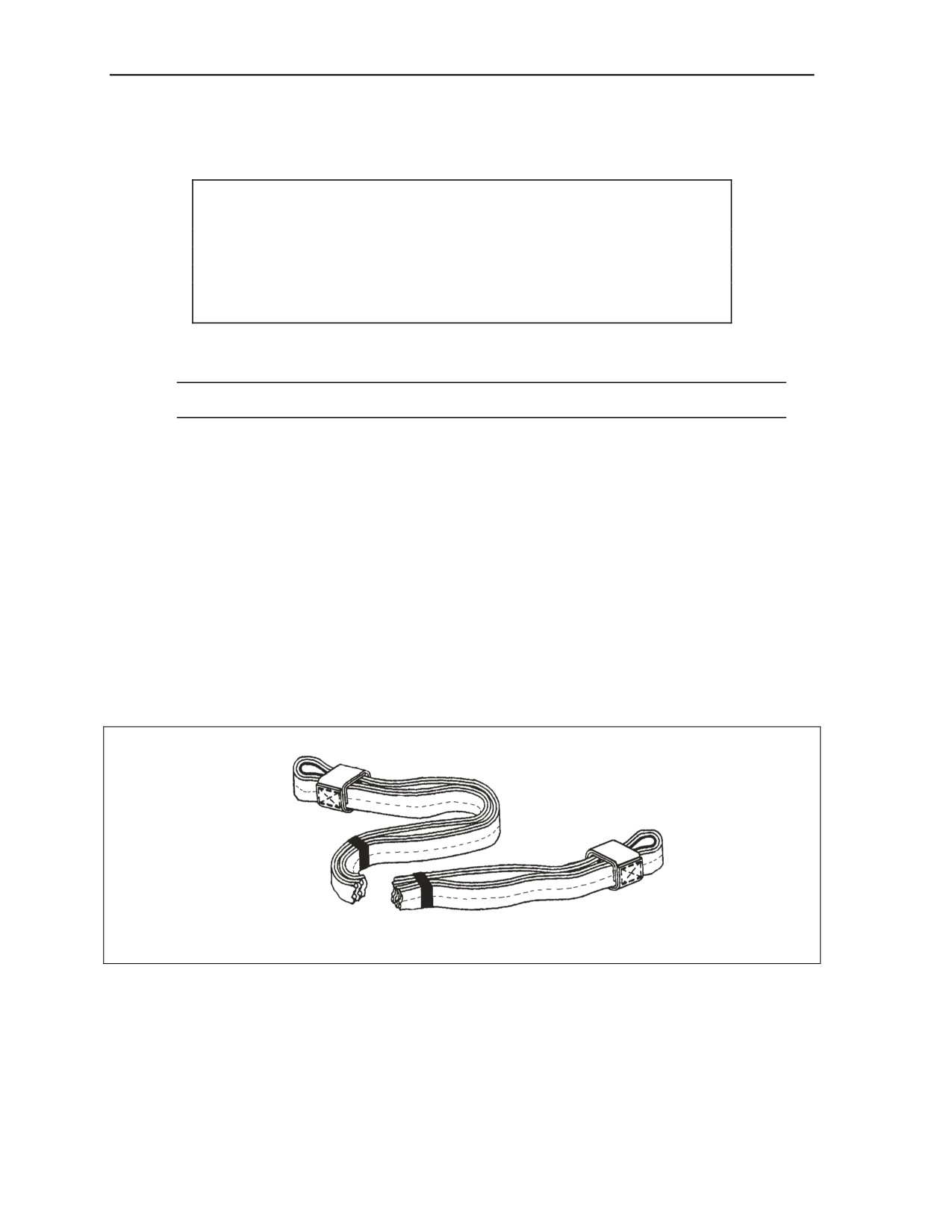
Type XXVI Nylon Multi-Loop Lines. The Type XXVI nylon multi-loop lines are available in
3-, 9-, 11-, 12-, 16-, and 20-foot lengths (Figure 6-35). Each multi-loop line is constructed of
two or four concentric loops. See appendix B, page B-1, for NSN information. The two-loop
Type XXVI nylon multi-loop line’s maximum rated capacity is 5,600 pounds when rigging a
sling load. The maximum capacities for a four-loop multi-loop line is 11,200 pounds. A
colored thread stitched lengthwise along the middle of the strap identifies the sling as a Type
XXVI nylon multi-loop line.
Figure 6-35. Two-Loop , Type XXVI Multi-loop Line
z
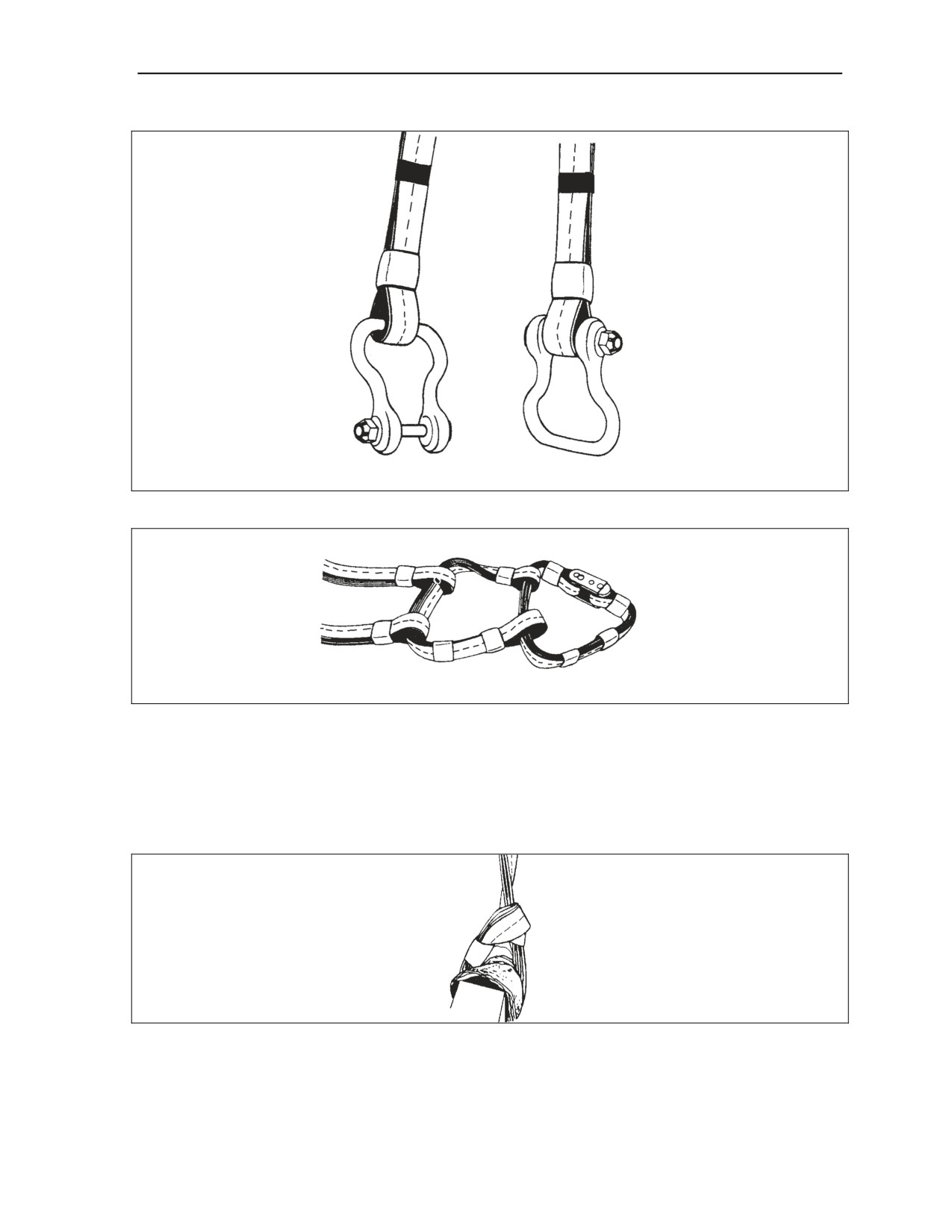
Attachments and Hitches. Slings are attached to the loads using one of the following methods:
The most common form of load attachment is the vertical hitch (sling-to-clevis) attachment
shown in Figure 6-36. This method is preferred because it is the quickest and easiest to remove.
The basket hitch (Figure 6-37) attaches sling legs to the load or to the ring. It is easy to
remove this hitch from the load after a lift and to separate the sling legs.
FM 4-20.197/MCRP 4-11.3E, VOL I/NTTP 3-04.11/
6-30
AFMAN 11-223 (I), VOL I/COMDTINST M13482.2B
20 July 2006
Cargo Slings
Figure 6-36. Vertical Hitch Attachment (Sling-to-Clevis )
Figure 6-37. Basket Hitch
A choker hitch (Figure 6-38) connects one end of the sling to a frame member or similar
structure on a load. Do not use a choker hitch around an item with a circumference of less than
8 inches or a diameter smaller than 2 1/2 inches. The uneven tension placed on the sling when a
choker hitch is used around smaller diameter items, such as a lifting ring, may cause sling
failure. The disadvantage of this hitch is that it draws up tightly and is difficult to remove.
Figure 6-38. Choker Hitch
z
Rigging a Load. The type and quantity of slings used to rig loads are given in the rigging
procedures of the specific sling load field manual for the load being lifted.
FM 4-20.197/MCRP 4-11.3E, VOL I/NTTP 3-04.11/
20 July 2006
AFMAN 11-223 (I), VOL I/COMDTINST M13482.2B
6-31
Chapter 6
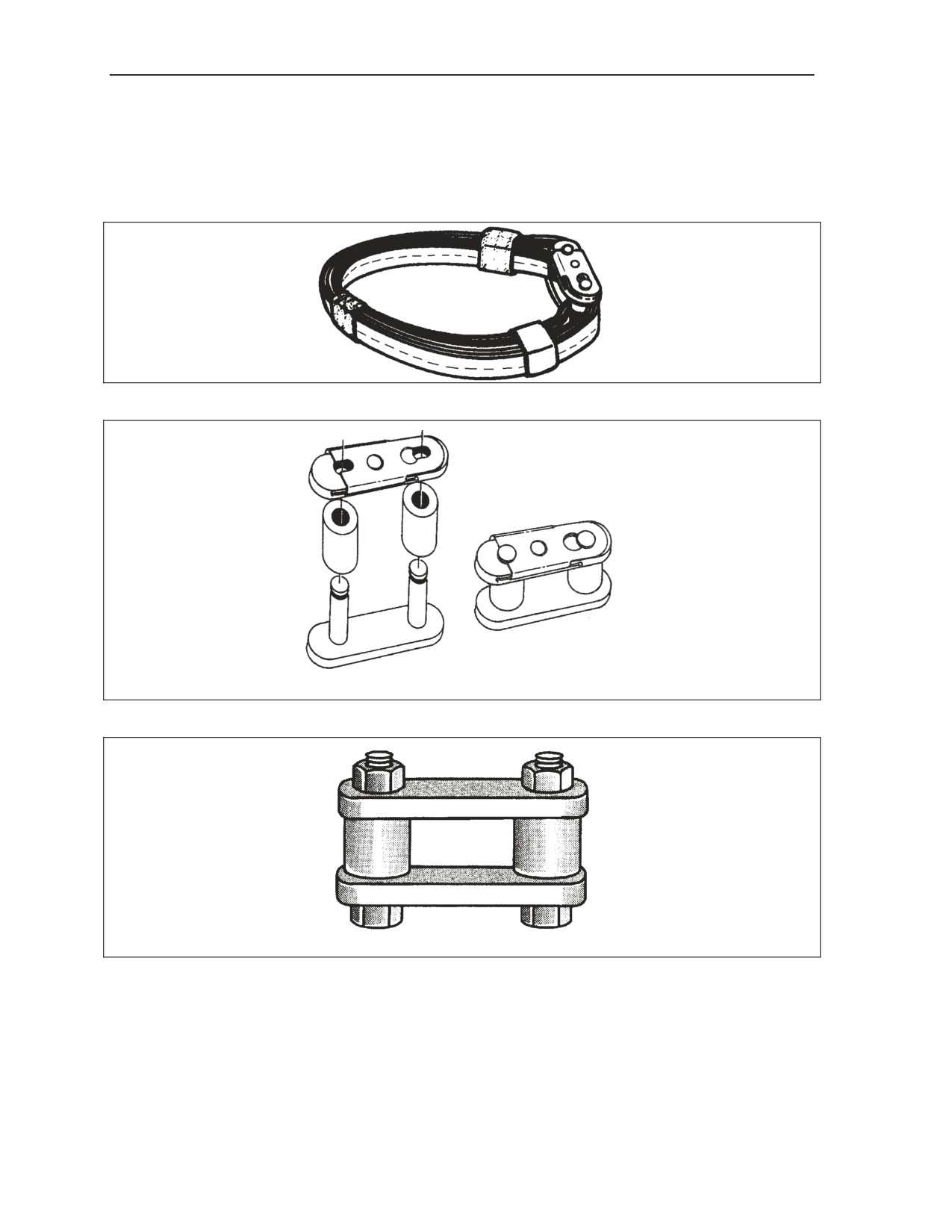
The apex ring (Figure 6-39) may be used to connect the apex fitting of a sling set to the
cargo hook of a UH-1H helicopter. The apex ring is made by joining the two ends of a 3-foot
sling with either a Type IV connector link
(Figure
6-40) or a two-point link assembly
(Figure 6-41). An apex ring made from a two-loop Type XXVI nylon sling has a maximum
capacity of 10,000 pounds.
Figure 6-39. Three-Foot Apex Ring
Figure 6-40. Type IV Connector Link
Figure 6-41. Two Point Link
When rigging the load, make one complete twist of the sling for each 3 feet of sling length.
The twists tend to hold the sling loops together better, which keeps the slings from flapping in
the wind and setting up a vibration that could cause damage. Hitches should be made as small
and neat as possible.
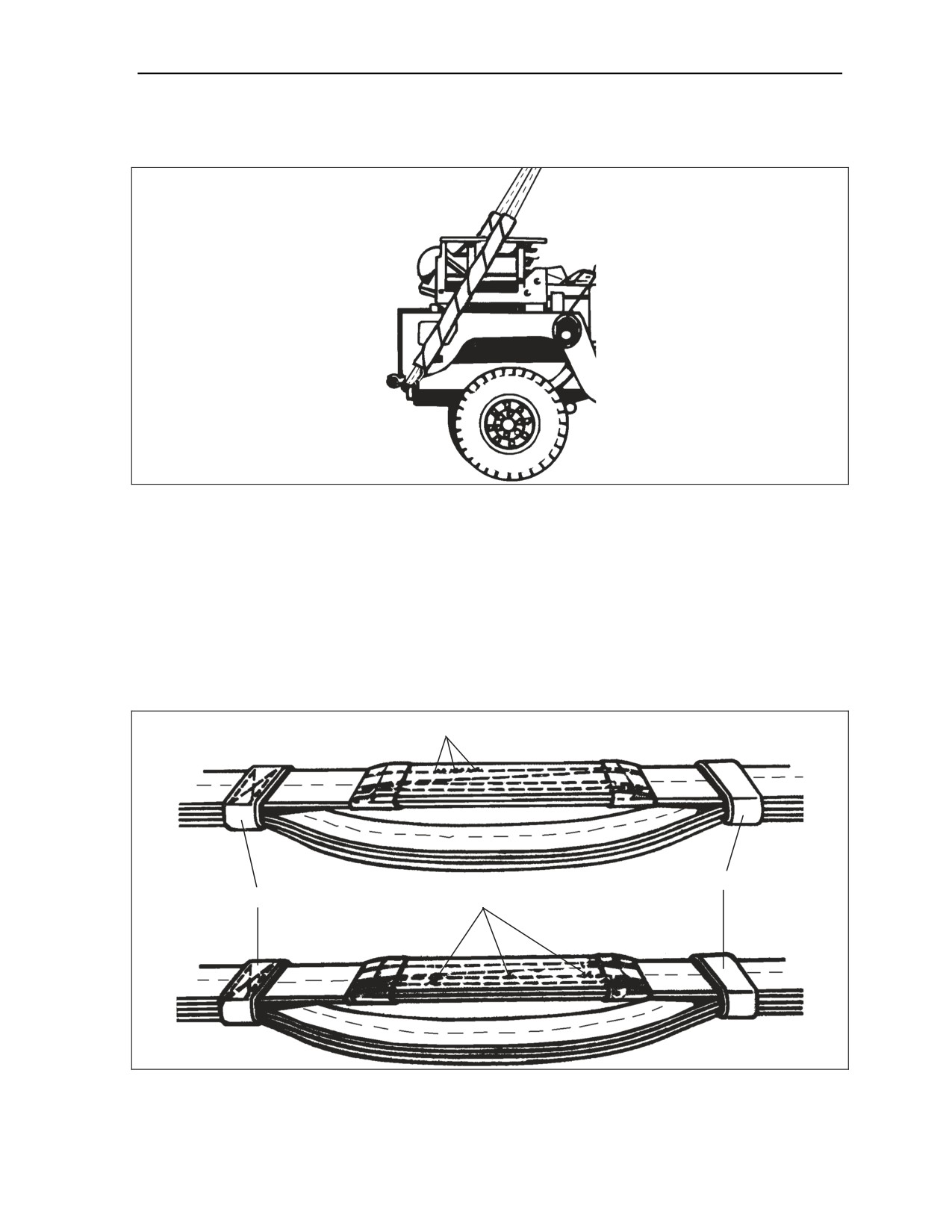
To prevent damage to slings during helicopter sling load operations, any sling connected
next to or resting against an abrasive surface should be wrapped with padding or cushioning
FM 4-20.197/MCRP 4-11.3E, VOL I/NTTP 3-04.11/
6-32
AFMAN 11-223 (I), VOL I/COMDTINST M13482.2B
20 July 2006
Cargo Slings
material (such as felt sheets or cellulose padding). Secure the padding to the sling with tape or
nylon cord (Figure 6-42).
Figure 6-42. Padded Sling Leg
Sling legs should be tied together (breakaway technique) to prevent fouling or entanglement
of the slings during hookup. Type I 1/4-inch cotton webbing, 80-pound breaking strength, is
used to temporarily hold the slings in place until the helicopter puts tension on the slings as it
begins to lift the load. The webbing then breaks, preventing the slings from becoming entangled
with the load.
z
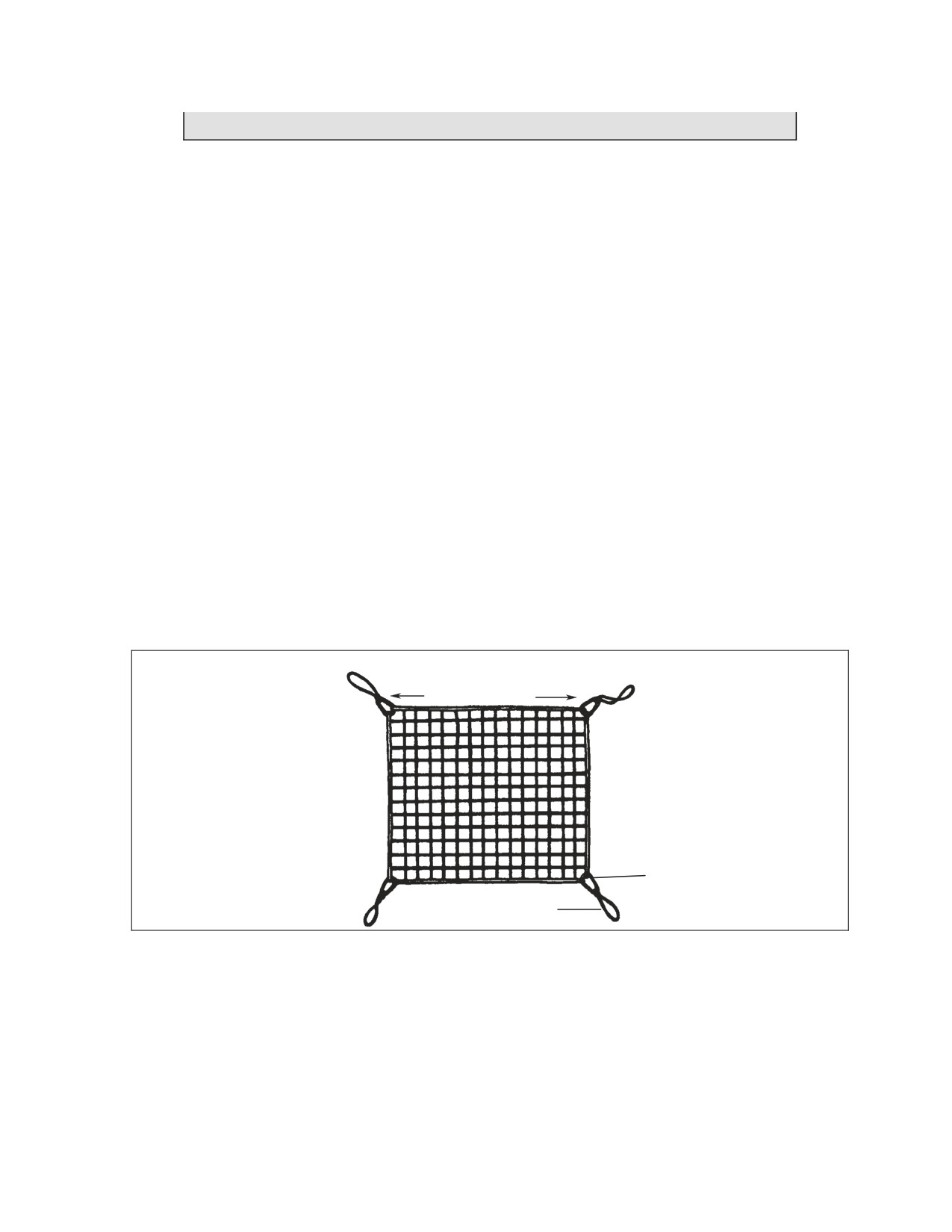
Inspection, Maintenance, and Storage. The two ends of each loop of nylon flat-web slings
are sewn together. Figure 6-43 illustrates the sewn splice and how to inspect for broken or loose
stitches. Use the requirements and criterion of the 15,000-pound multileg sling set when
marking, inspecting, cleaning, and storing the aerial delivery slings and multiloop lines.
3 CONSECUTIVE BROKEN STITCHES
SLIDING KEEPERS
PERMANENT
BROKEN STITCHES
Figure 6-43. Sling with Broken or Loose Stitches
FM 4-20.197/MCRP 4-11.3E, VOL I/NTTP 3-04.11/
20 July 2006
AFMAN 11-223 (I), VOL I/COMDTINST M13482.2B
6-33
THIS CHAPTER IMPLEMENTS STANAG 2950
Chapter 7
Cargo Nets
INTRODUCTION
7-1. This chapter covers the flat-web nylon cargo net, along with the 5,000- and 10,000-pound capacity
knotless nylon cord cargo nets. These nets are used to carry supplies, equipment, and loose cargo. The
characteristics of each net are discussed in detail.
FLAT-WEB NYLON CARGO NET
7-2. The flat-web nylon cargo net was designed to carry loose cargo when loading or offloading ships. It
was not designed nor tested for helicopter sling loading, although it is commonly used during sling load
operations. The net weighs 50 pounds and has a flat surface area measuring 14 feet x 14 feet. The mesh
size is 8 inches square. A 10 foot x 10 foot and 12 foot x 12 foot net are also available. The rated capacity
of the net is 2,500 pounds (Figure 7-1), downgraded from 4,500 pounds due to an increased safety margin.
The net has four steel hoist links with one link attached to each corner of the net. A 7-foot loop of nylon
rope may be attached to each link to help the riggers spread out the net. Refer to Chapter 9 when using the
net during vertical replenishment operations. It is important to position the load diagonally at a 45-degree
angle to the sides of the net so that the corners of the net are positioned at the sides of the load. Rig the net
using the following procedures:
14 FEET
WEIGHT - 50 lb
MESH SIZE - 8 in
STEEL HOIST RING
7-FT NYLON ROPE
Figure 7-1. Flat-Web Nylon Cargo Net
z
Spread the net evenly on the ground or other flat surface. If the load has sharp edges that could
damage the net, place a piece of canvas on the net so the load cannot shift and tear the net.
z
Place the heavier items of cargo in the center of the net so that the net will ride evenly.
z
Arrange the cargo so the net covers at least three-fourths of the height on all sides of a single
item or the entire height of a mixed load.
FM 4-20.197/MCRP 4-11.3E, VOL I/NTTP 3-04.11/
20 July 2006
AFMAN 11-223 (I), VOL I/COMDTINST M13482.2B
7-1
Chapter 7
z
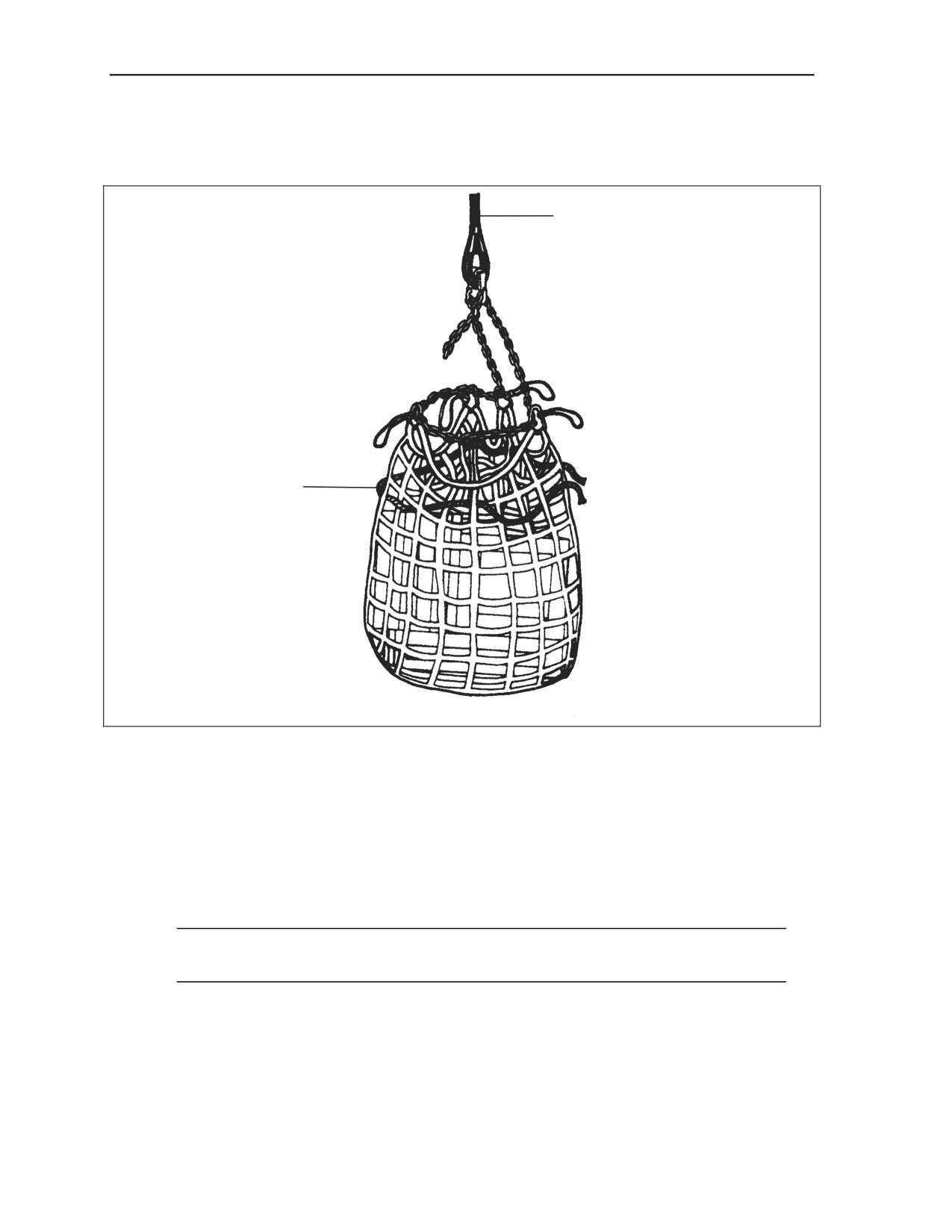
Tie the net around the top of the cargo with nylon cord (Figure 7-2) or other material by routing
the cord through the net mesh. Tighten and secure the cord to prevent the net from hanging
loose and cargo falling out.
NYLON LEG
NYLON CORD
Figure 7-2. Rigged Loaded Net
z
Use one, two, or four sling legs to suspend the loaded net below the helicopter. Loop the chain
end of the sling leg through one or more steel hoist links and insert link 3 into the grabhook/grab
link.
z
If one sling leg is used, loop the chain end through all four hoist links. If two sling legs are
used, loop each chain through two steel hoist links. If four sling legs are used, loop one chain
through each steel hoist link. Remember, do not exceed the rated capacity of the sling leg.
z
An alternate method is to place a medium clevis or apex fitting through each steel hoist link and
attach the desired cargo sling to the clevis or apex fitting.
Note: Never use the nylon rope attached to hoist link as part of the sling attachment system.
The rope is only used to handle and spread the net.
z
When sling loading several nets together, try to adjust the chain end of the sling leg so that the
nets are picked up and set down at about the same time.
FM 4-20.197/MCRP 4-11.3E, VOL I/NTTP 3-04.11/
7-2
AFMAN 11-223 (I), VOL I/COMDTINST M13482.2B
20 July 2006
Cargo Nets
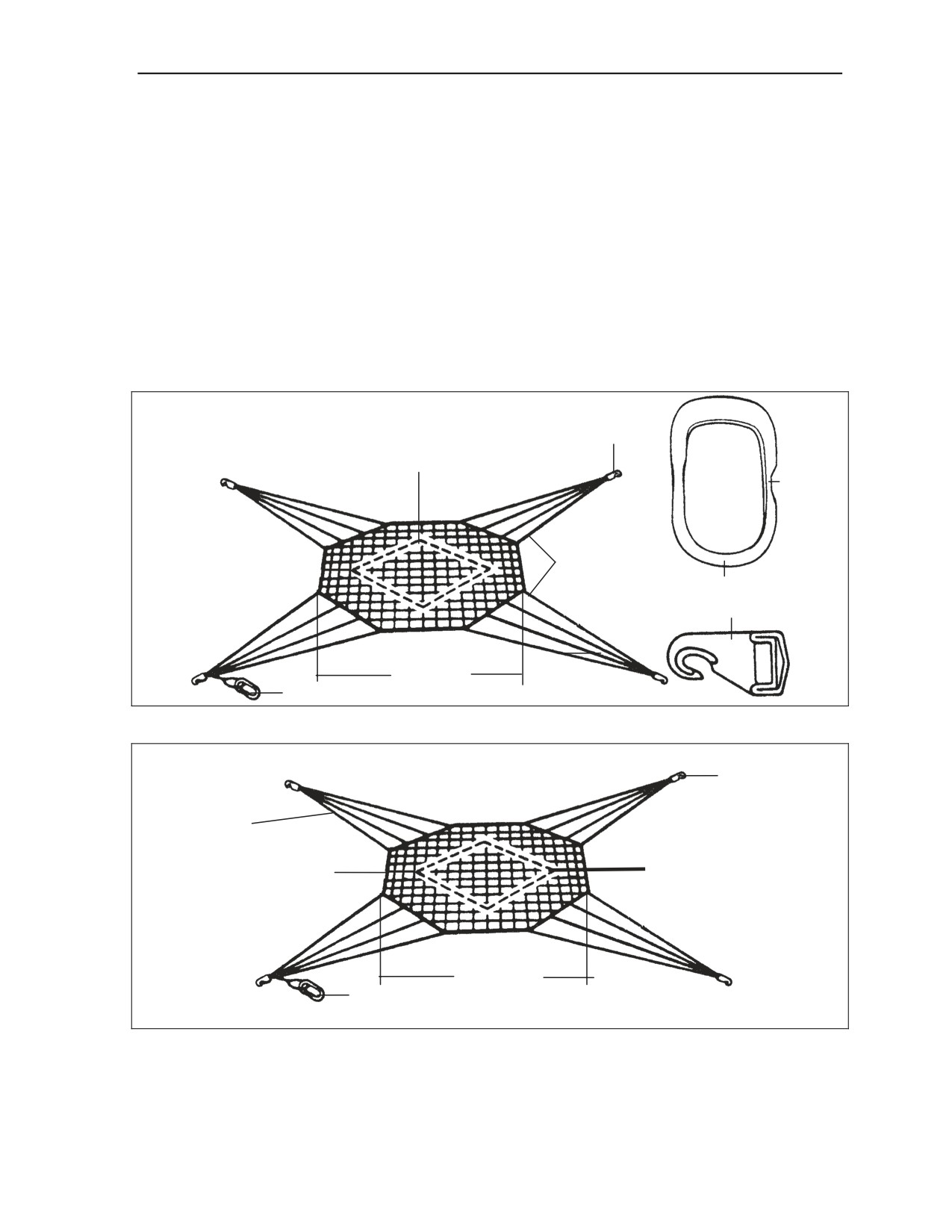
5,000- AND 10,000-POUND CAPACITY KNOTLESS NYLON CORD
CARGO NETS
7-3. The 5,000- and 10,000-pound capacity octagon-shaped cargo nets are constructed from interwoven
nylon cord. Each set of four lifting legs has a hook that attaches to the apex fitting that is connected
directly to the aircraft cargo hook. The apex fitting is attached by a tether cord to the set of lifting legs
with the net identification tag. The other ends of the lifting legs are attached to the net’s outer border cord.
A square-shaped load zone area is marked by a yellow cord interlaced with the net mesh. This zone marks
the center of the net and is used as a guide to place the load. When positioning the load, the sides of the
load can extend beyond the load zone, but the overhang should be the same on each side. The olive drab
body of the 5,000-pound capacity cargo net is 15 feet wide (Figure 7-3). Mesh size is 6 inches and the net
weighs 58 pounds. Volume capacity is 125 cubic feet. The 10,000-pound capacity cargo net is black and
the body is 18 feet wide (Figure 7-4). It is constructed from a heavy weave nylon braid cord with 7 1/2
inches between mesh. The net weighs 96 pounds and has a volume capacity of 380 cubic feet.
WEIGHT - 58 lb
5-FT SQUARE LOAD
HOOK
ZONE AREA MARKED
MESH SIZE - 6 in
BY YELLOW CORD
NOTCH
LIFTING
LEGS
APEX FITTING
HOOK
15 FEET
APEX FITTING
Figure 7-3. 5,000-Pound Capacity Cargo Net
WEIGHT - 96 lb
HOOK
MESH SIZE - 7 1/2 in
LIFTING
LEGS
6-FT SQUARE LOAD
ZONE AREA MARKED
OUTSIDE CORE
BY YELLOW CORD
DOUBLED
18 FEET
APEX FITTING
Figure 7-4. 10,000-Pound Capacity Cargo Net
z
Inspecting the Nets. Inspect the cargo nets as shown in TM 10-1670-295-23&P.
FM 4-20.197/MCRP 4-11.3E, VOL I/NTTP 3-04.11/
20 July 2006
AFMAN 11-223 (I), VOL I/COMDTINST M13482.2B
7-3
Chapter 7
z
Preparing The Cargo Net. When preparing to rig a net, remember the following rules:
Never exceed the weight limits of the net.
Do not sling load cargo having sharp edges or protrusions without first protecting the edges
so they will not damage the net.
Do not carry small items that could slip through the mesh. Place small objects in a canvas
liner.
Note: When carrying loads that are not palletized, it is suggested that you weave the top portion
of the border cord with Type III nylon cord or like item to prevent items from falling out of the
net (weave and tie).
z
Rigging The Cargo Net. Follow these instructions when rigging the cargo net:
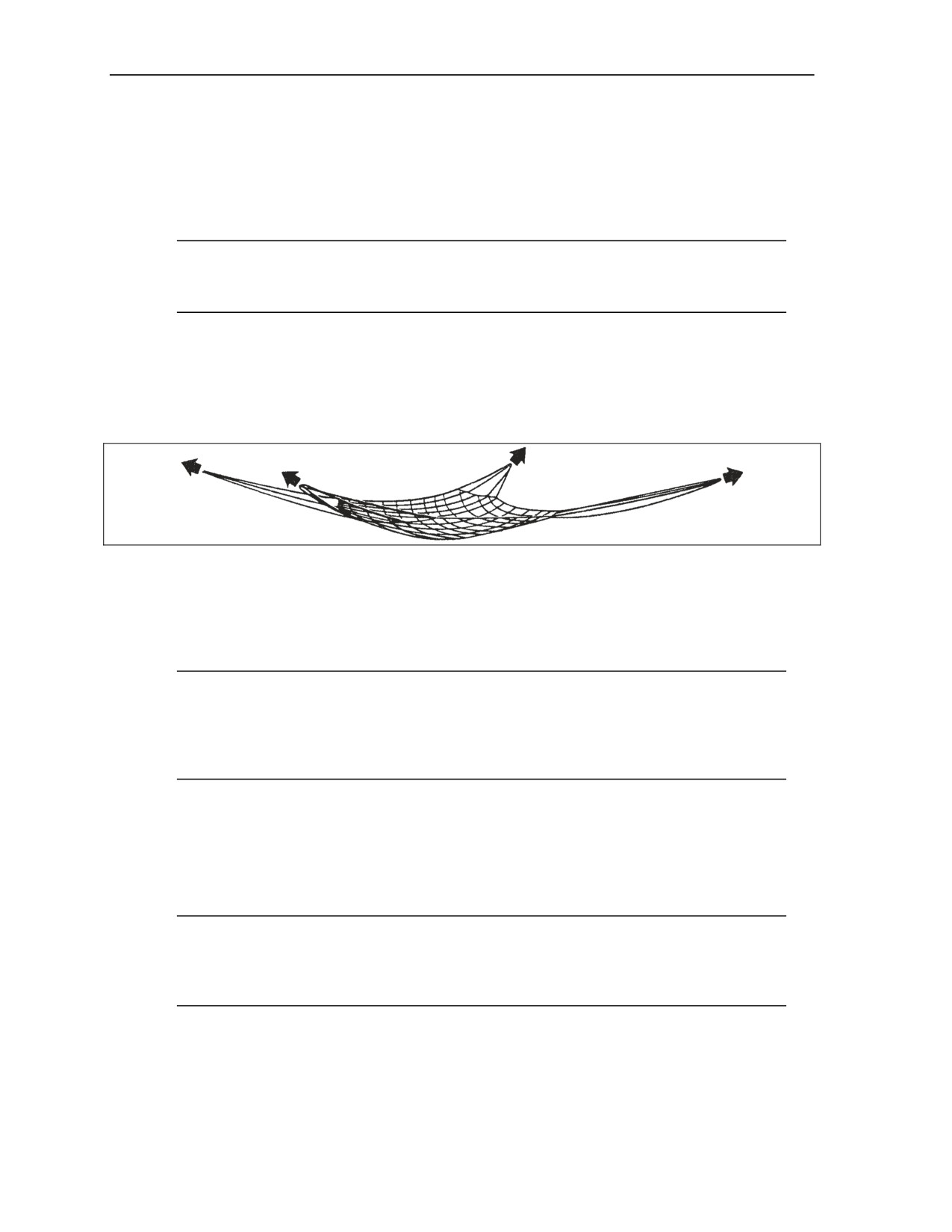
Spread the net out on the ground. Have four persons pull evenly on each of the four lifting
legs to open the net to its fullest extension over the spot where the net is to be loaded
(Figure 7-5). This will prevent the net from shifting under the pallets or load when the
helicopter lifts the net.
Figure 7-5. Fully Extended Net
Inspect the net. Repair as necessary. Inspect the pallet or load and make sure that the
banding material and pallet frame will not puncture, cut, or tear the net. Tape over sharp edges
with pressure-sensitive tape.
Note: When forklifts are used to move pallets onto the nets, move the lifting legs to one side so
that they will not be damaged by the tires. Do not allow the pallet or the undercarriage of the
forklift forks to drag on the net surface. The forklift forks could tear the net and pull it out from
under the load. If the net is pulled out, the load may not be centered or could be unstable in
flight.
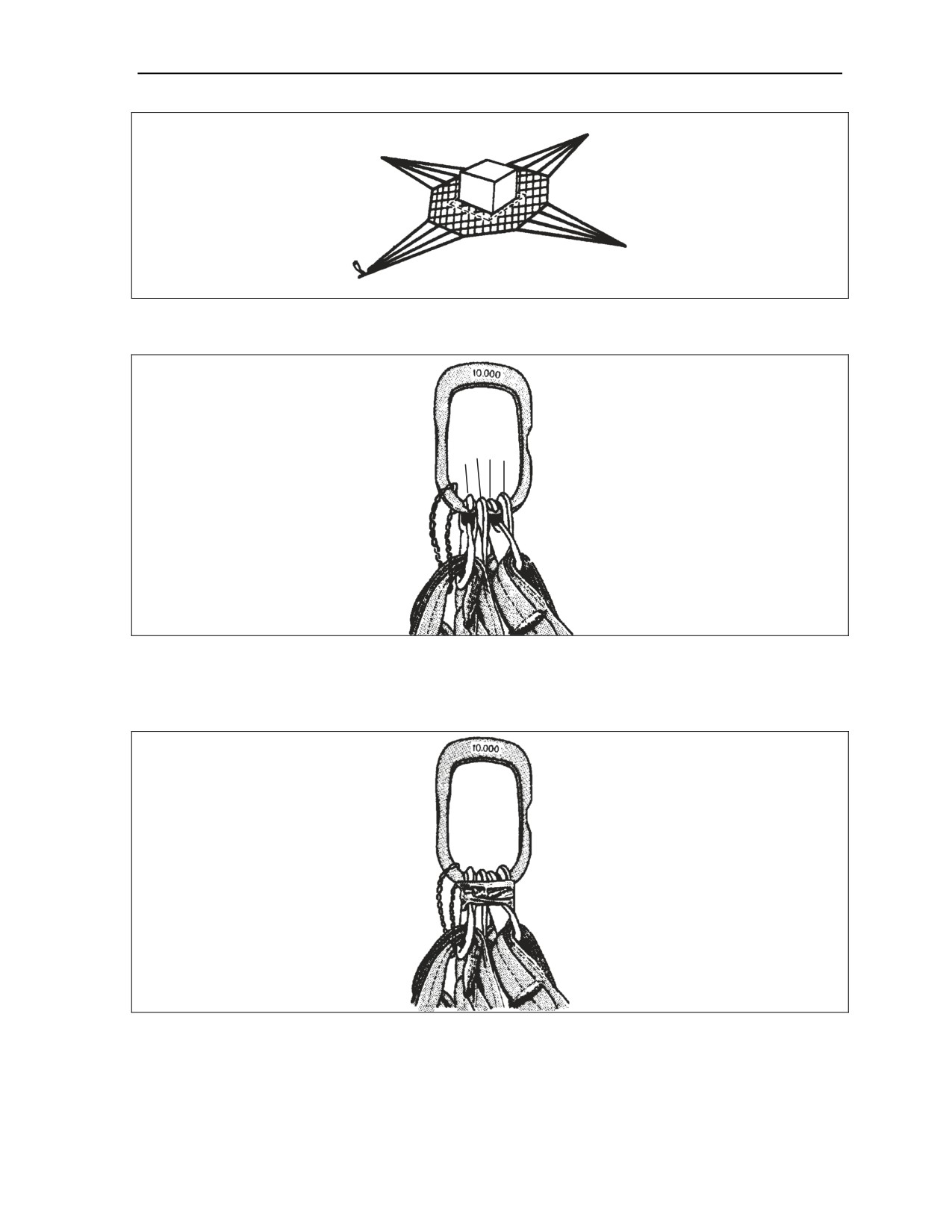
Align the load on the net so that the sides of the load are parallel with the yellow cord
(Figure 7-6). The load may overlap the yellow cord if the load is bigger than the yellow cord
marked area. If the load is placed correctly, the load’s center of gravity will be near the center
of the net. The lifting legs will be on the side of the load, not on the corners. If the load is loose
cargo, place the cargo on the net with the heaviest items in the center and the lighter items
toward the sides or on top of heavier items.
Note: If two or more pallets will be carried in one net, place the pallets side by side so that the
final load is more square in shape than if they were placed end to end. If pallets are placed on
top of each other, make sure the pallets are stable so the hookup team has a safe platform to
stand on.
Position one person on top of the load. Connect the legs to the apex fitting in the following
sequence: 1, 3, 2, and 4, or 1, 3, 4, and 2 to provide equal lift on all legs (Figure 7-7). Hooks
should be alternated on the apex fitting.
FM 4-20.197/MCRP 4-11.3E, VOL I/NTTP 3-04.11/
7-4
AFMAN 11-223 (I), VOL I/COMDTINST M13482.2B
20 July 2006
Cargo Nets
3
4
2
1
Figure 7-6. Aligned Load
1 3 2 4
Figure 7-7. Legs Hooked in Sequence
After connecting all four hooks to the apex fitting, tape or tie the four hooks together to
prevent them from coming unhooked when the apex is laid down (Figure 7-8).
Figure 7-8. Taped Hooks
All four sides of the net are now ready to be pulled up around the load. Begin by having the
person on top of the load hold the apex up and another person tie all 16 lifting legs together at 3-
to 4-foot intervals until no more slack can be pulled up on the legs. If the load is small, you may
FM 4-20.197/MCRP 4-11.3E, VOL I/NTTP 3-04.11/
20 July 2006
AFMAN 11-223 (I), VOL I/COMDTINST M13482.2B
7-5
Chapter 7
have to tape or tie the net together above the load. The tighter the net is around the load, the less
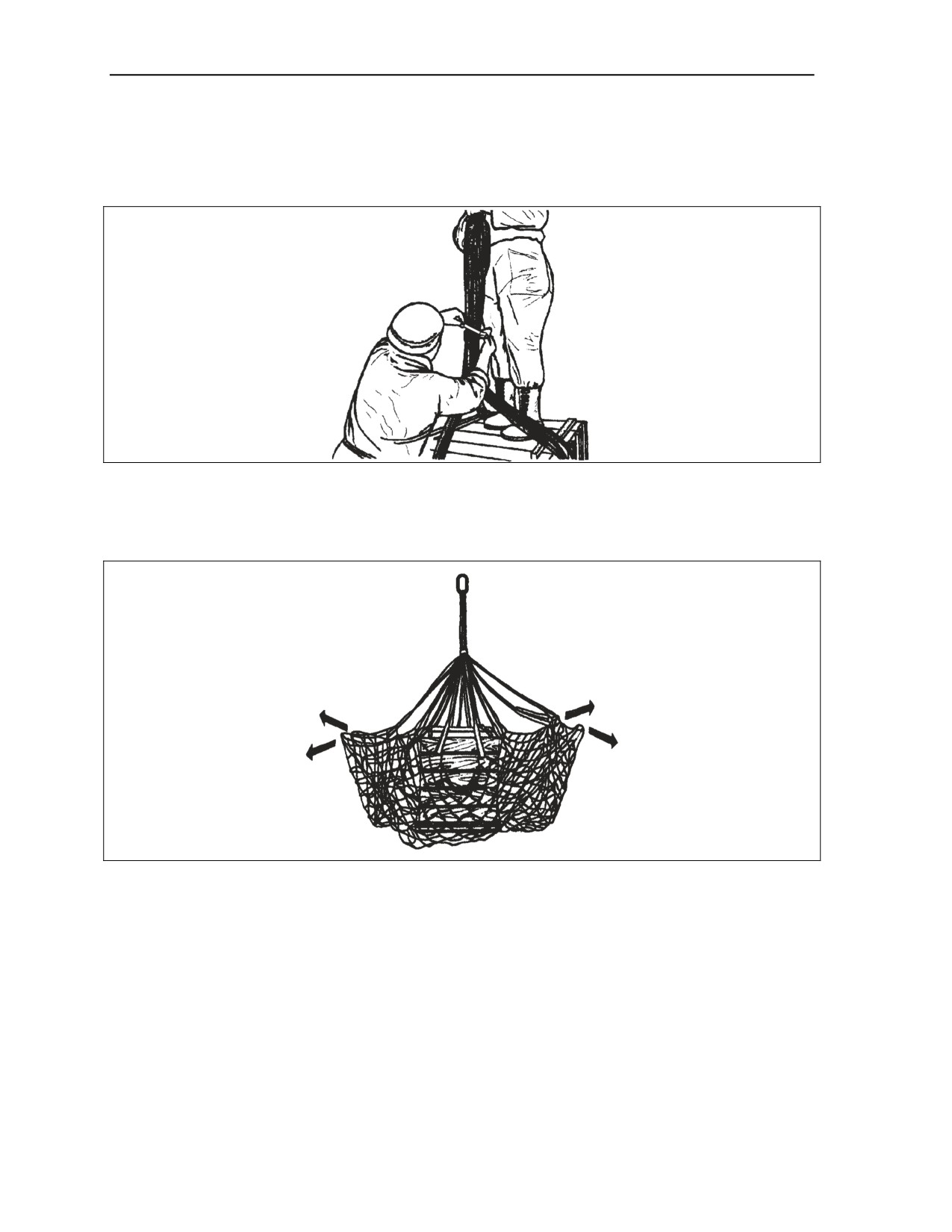
possibility there is of damage to the net. Tie the legs and net so that the net does not snag on the
load as the helicopter lifts the net (Figure 7-9). Use breakaway technique so that the tie can
break after the slack is removed from the legs and net.
Figure 7-9. Tied Lifting Legs
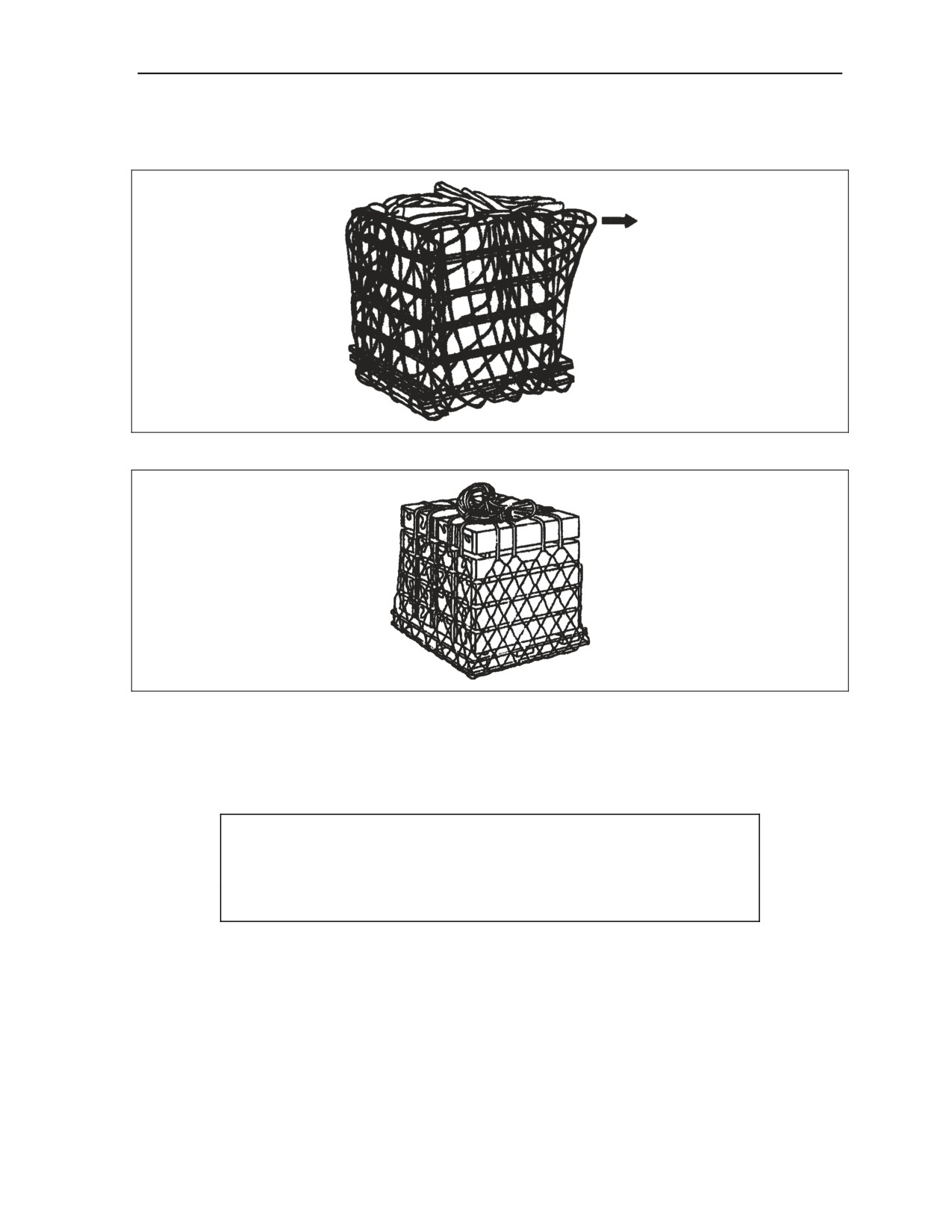
Lift the sides of the net up while taping the legs so that the net does not get caught on the
pallet or load protrusions (Figure 7-10).
Figure 7-10. Net Pulled Outward from the Load
After you finish tieing the legs and net on top of the load, pull the net outward at each
corner, grasp the border cord from each side near the corner of the load, and tape them together
to tighten the sides of the net. Take the excess netting at the corner and tape to the adjoining
side. At each side, pull the net up as high as possible and tie it to itself (breakaway technique
see cotton webbing, paragraph 8-9, page 8-20) to prevent it from snagging on the load and
tearing the net (Figure 7-11). Use only enough tape to hold the net in place on the load.
Coil the lifting legs on top of the load. The net is now ready for hookup to the helicopter
(Figure 7-12). If the load must be moved after it is rigged, carefully guide the forklift forks
through the net and into the pallet slots. Pallets can be stored temporarily with nets rigged
around them. However, they should not be stored on concrete. Placing an empty pallet on the
FM 4-20.197/MCRP 4-11.3E, VOL I/NTTP 3-04.11/
7-6
AFMAN 11-223 (I), VOL I/COMDTINST M13482.2B
20 July 2006
Cargo Nets
concrete surface and setting the rigged net on top of the empty pallet helps to reduce the
possibility of damage from the net sliding on the concrete when the helicopter lifts the load.
Figure 7-11. Excess Net Taped to Itself
Figure 7-12. Lifting Legs Coiled on Top of Load
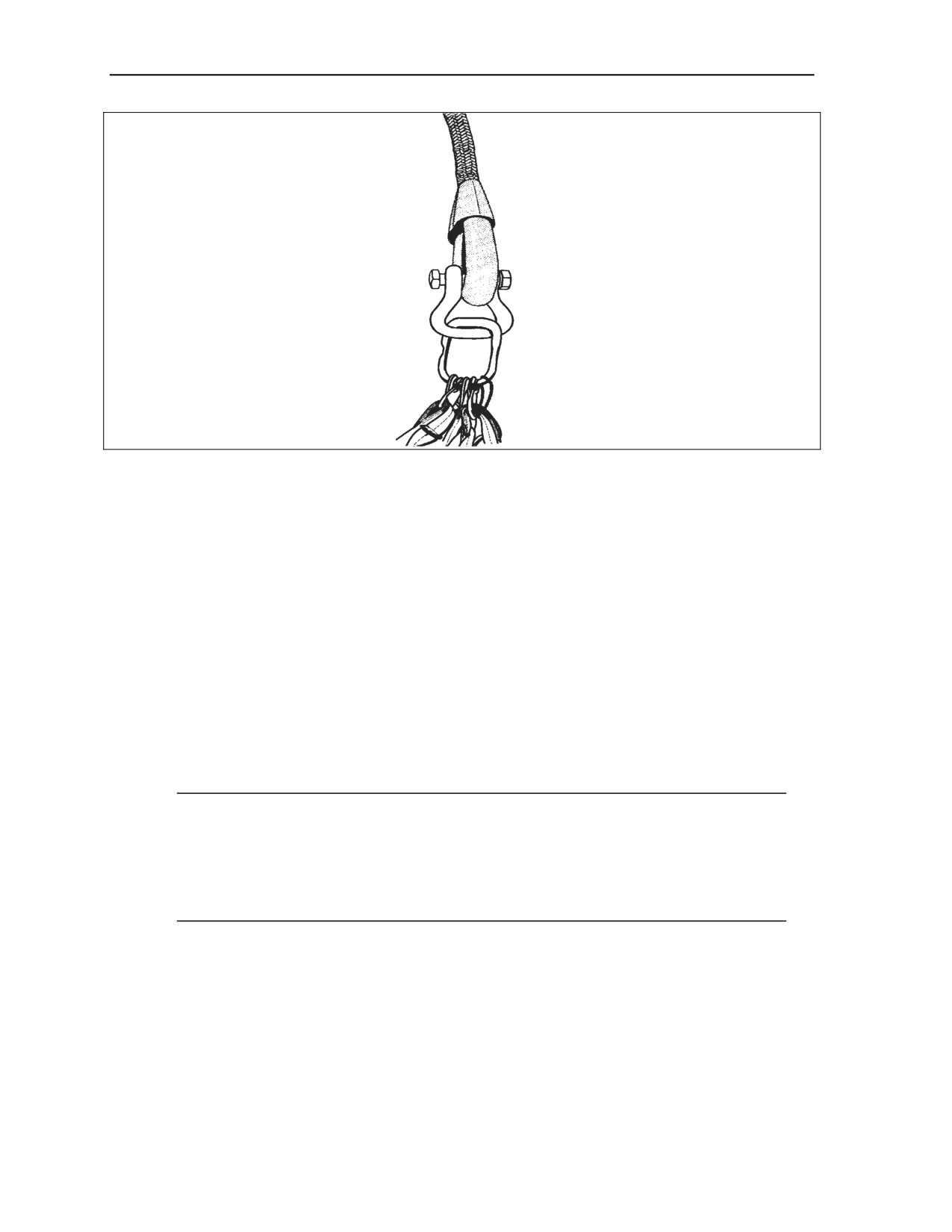
Normally the net apex fitting is directly attached to the cargo hook. If the load is a large
one, the lifting legs may not be long enough to allow the hookup man to perform a safe hookup
to the aircraft. If you cannot lift the apex fitting at least 6 feet above the top of the load, add an
appropriate size sling leg, a reach pendant, or vertical pendant (Figure 7-13).
CAUTION
Do not attach vertical pendants directly to the net apex fitting. Use a
large clevis to attach vertical pendants to the net apex fittings.
FM 4-20.197/MCRP 4-11.3E, VOL I/NTTP 3-04.11/
20 July 2006
AFMAN 11-223 (I), VOL I/COMDTINST M13482.2B
7-7
Chapter 7
Figure 7-13. Vertical Pendant Added
Before hookup to the aircraft, make a final inspection of the apex fitting, netting, and taping
to ensure the net and the load are still secure.
z
Repairing the Nets. All repairs will be accomplished according to procedures in TM 10-1670-
295-23 &P.
PLACING ALL NETTED LOADS FOR PICKUP
7-4. Loads for sling load pickup should be arranged in the landing site for ease of pickup. Loads should
be placed on level ground, away from obstacles (see chapter 4), and prearranged for the type of aircraft
being used. Multiple net loads can be carried up to the helicopter’s capability. If a sling set is used to
carry a cargo net, route the sling chain through the net apex fitting, and insert link 3 in the sling grabhook.
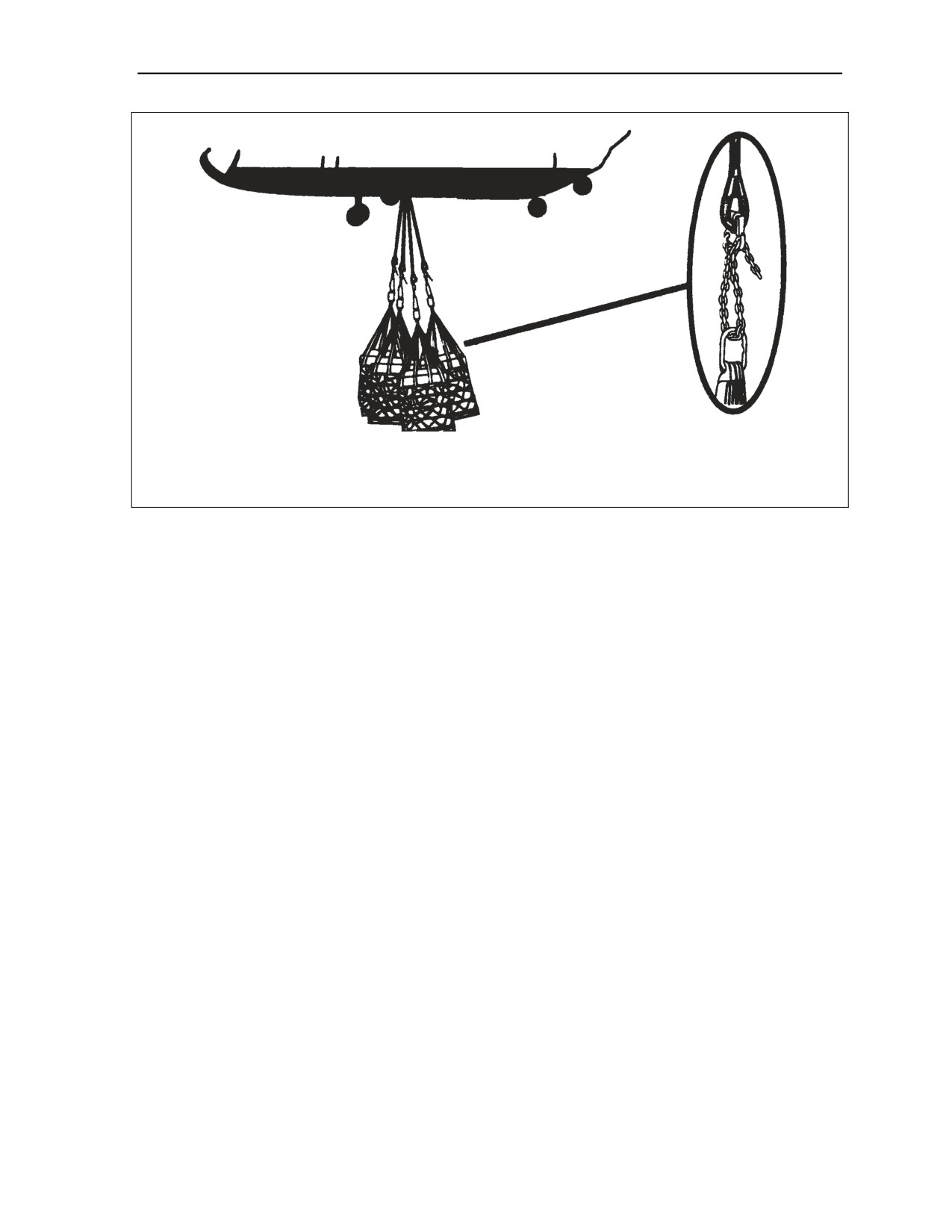
Remember that the weight of the load determines the number of sling legs attached to each net. Figure 7-
14 shows how more than one 5,000-pound cargo net could be carried by a 25,000-pound sling set. The
weight of the load must not exceed the capacity of the sling leg(s). For example, a fully loaded 10,000-
pound cargo net can be carried by all four sling legs from a 10,000-pound sling set or two sling legs from a
25,000-pound sling set.
Note: When using an aircraft equipped with multiple cargo hooks, several combinations of
slings and nets may be used depending on the situation. Make sure the loads will fit under the
helicopter. Load oscillation will cause the loads to bump against each other if they are too close.
If you are unsure of how to arrange the loads in the landing site, contact the supporting aviation
unit operations department/section for additional information. USMC units contact HST
personnel.
FM 4-20.197/MCRP 4-11.3E, VOL I/NTTP 3-04.11/
7-8
AFMAN 11-223 (I), VOL I/COMDTINST M13482.2B
20 July 2006
APEX RING USED
IN SLING LOAD
Figure 7-14. Typical Mixed Load
FM 4-20.197/MCRP 4-11.3E, VOL I/NTTP 3-04.11/
20 July 2006
AFMAN 11-223 (I), VOL I/COMDTINST M13482.2B
7-9
Chapter 8
A-22 Cargo Bags, Pallet Slings, Pendants, and
Supplemental Equipment
INTRODUCTION
8-1. This chapter discusses the components of an A-22 cargo bag, the double A-22 cargo bag, the stretch
A-22 cargo bag, pallet slings, sling leg pendants, reach pendants, and their rigging procedures. It also
discusses equipment used with slings and other lifting devices.
A-22 CARGO BAG
8-2. The A-22 cargo bag is an adjustable cotton duck cloth/nylon and nylon webbing container consisting
of a sling assembly, cover, and four suspension webs (Figure 8-1). The bag is used to deliver palletized
loads, loose cargo, ammunition, drums, and other general cargo. Maximum weight capacity is 2,200
pounds. The weight of the A-22 is 58 pounds. You may rig the cargo in the bag with or without the cover.
Inspect the container for serviceability in accordance with Table 2-1, Preventive Maintenance Checks and
Services, in TM 10-1670-298-20&P. The best way to learn about this carrying device is to rig and derig it
several times. The following steps and Figures 8-2 through 8-6 explain how to rig an A-22 cargo bag:
D-RINGS
SUSPENSION
SUSPENSION WEB
D-RING
SNAP TAPED
CANVAS COVER
LATERAL STRAPS
LACING CORD
Figure 8-1. A-22 Cargo Bag
z
Sling Assembly. Spread the sling assembly on the ground near the cargo to be delivered. Make
sure the lateral straps are facing the ground. The fat lip portion of the friction adapter on the
suspension web assembly must be face down to ensure correct rigging when the cover and
suspension assembly are folded up around the load.
z
Cover Assembly. Center the cover (lacing loops/eyelets down) on the sling assembly, making
sure that the cover edges are even with the scuff pad of the suspension web assembly.
FM 4-20.197/MCRP 4-11.3E, VOL I/NTTP 3-04.11/
20 July 2006
AFMAN 11-223 (I), VOL I/COMDTINST M13482.2B
8-1
Chapter 8
z
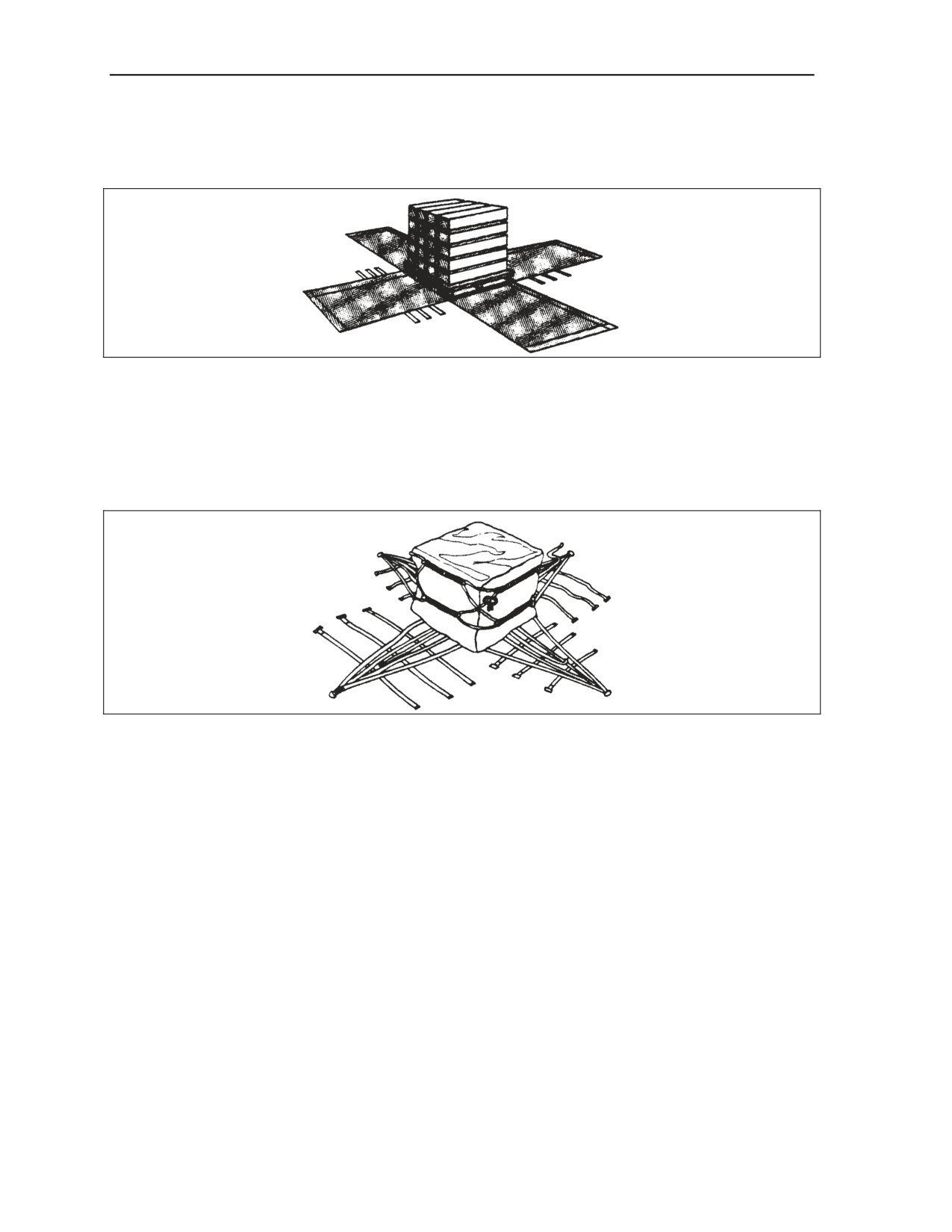
Positioning the Load. Center the load on the canvas/nylon cover (Figure 8-2). Place the load
so that any sharp corners or objects are toward the center of the load if possible. Use cushioning
material to protect the cover, if necessary.
Figure 8-2. Centered Load
z
Closing the Cover. Fold the panels of the canvas/nylon cover over the top of the load. Fold
any excess cover material under the top flap. Using lacing cord or Type III nylon cord, secure
the cover at each corner by running the cord through the lacing loops in a figure-eight design
(Figure 8-3). Tie the cord ends with a bow knot and secure. The purpose of the cord is to
tighten the cover around the load so that small items cannot fall out.
Figure 8-3. Cover Secured with Lacing Cord
z
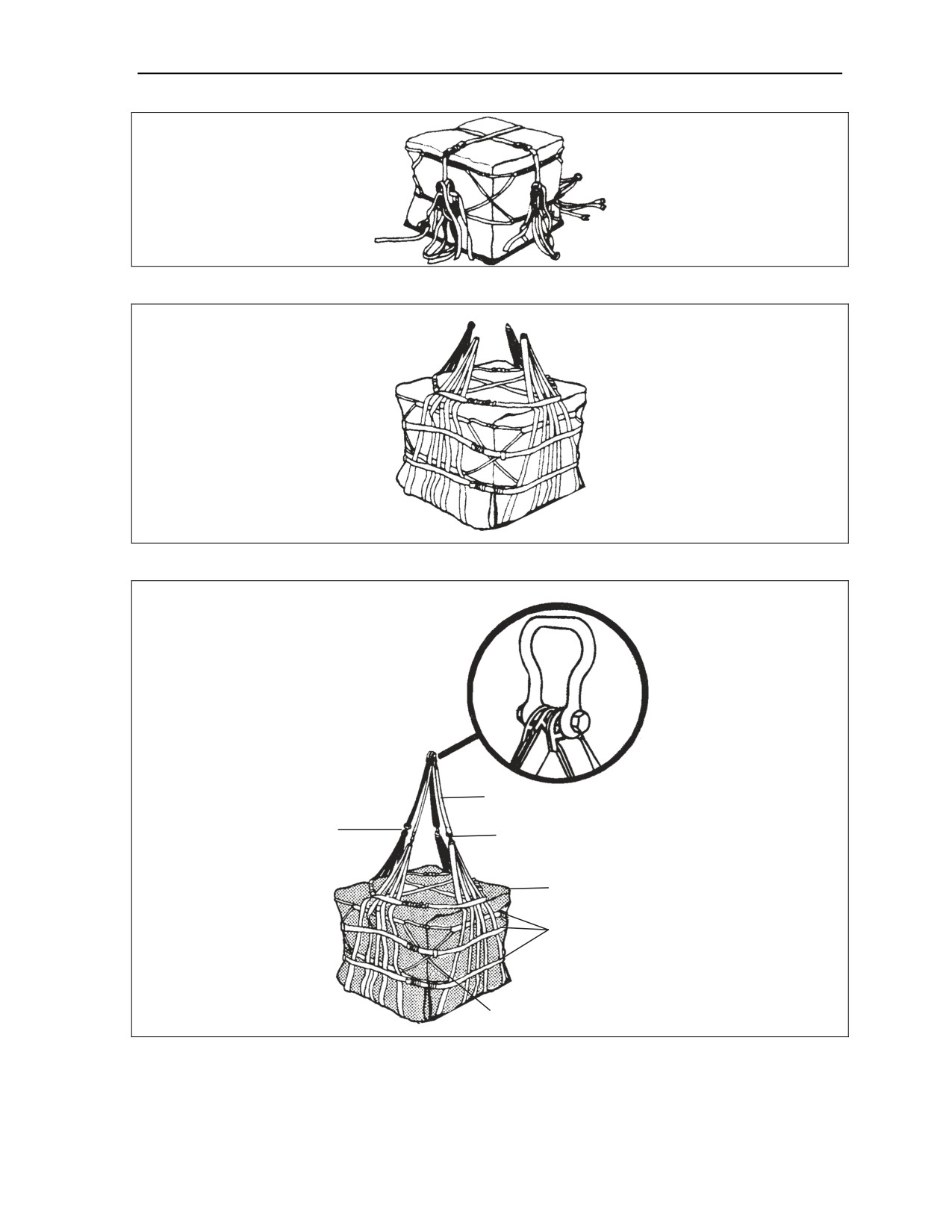
Closing the Sling Assembly. Route the 188-inch strap over top of the load. Route the free end
under the floating safety bar (smooth side) and back over the friction adapter (rough side).
Tighten the strap, fold in 4 to 5 inch loops, and secure (Figure 8-4). Pull the lower lateral straps
to the corners of the load. Route the free end under the floating bar and back over the friction
adapter. Attempt to tighten all four lower lateral straps equally. Repeat this step using the
middle lateral straps. Fasten the upper lateral straps in the same manner as in Figure 8-5. If the
load is not high enough for the upper lateral straps to go around the side of the load, pull the
suspension webs to their full height and fasten the upper straps diagonally across the top corner
of the load. Strap fasteners should be tightened to within 4 to 5 inches of the upper lifting legs.
z
Attaching the Suspension Webs. Connect the four snap fasteners on the 24-inch suspension
web straps to the sling assembly D-rings. Make sure the open or hook side of each snap is
facing inward. Tape each snap to prevent the hooks from becoming entangled on the nylon cord
or straps.
z
Attaching the Suspension Clevis. Attach the four suspension web strap D-rings to a medium
clevis in a clockwise sequence. Tape the nut with pressure-sensitive tape. Each strap can have a
maximum of one quarter twist to connect to the clevis (Figure 8-6).
FM 4-20.197/MCRP 4-11.3E, VOL I/NTTP 3-04.11/
8-2
AFMAN 11-223 (I), VOL I/COMDTINST M13482.2B
20 July 2006
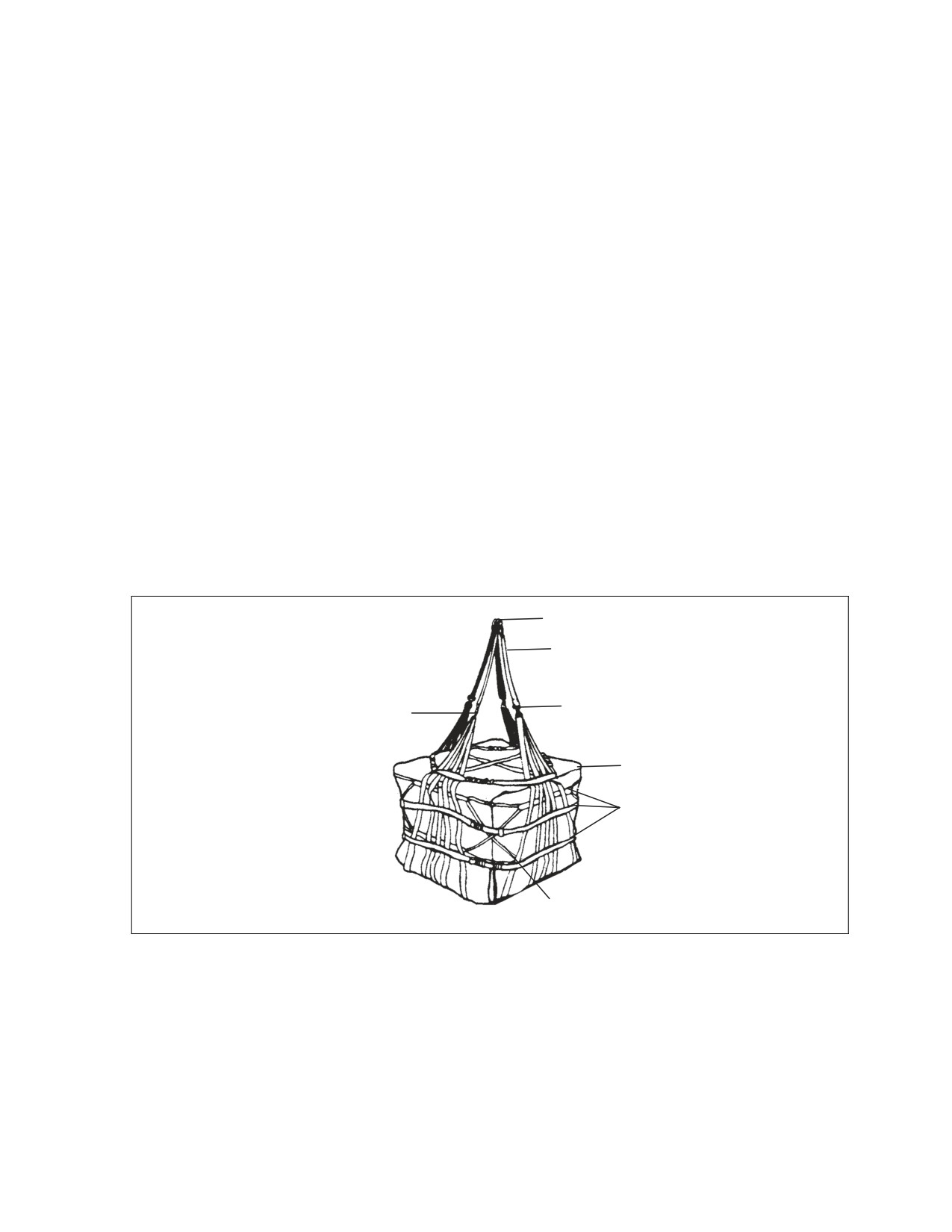
A-22 Cargo Bags, Pallet Slings, Pendants, and Supplemental Equipment
Figure 8-4. Strap Secured
Figure 8-5. Upper Lateral Straps Fastened
SUSPENSION
D-RING
SUSPENSION WEB
SNAP TAPED
CANVAS COVER
LATERAL STRAPS
LACING CORD
Figure 8-6. Suspension Webs and Medium Suspension Clevis
z
Adjusting the Lateral Straps. Adjust all straps until the sling assembly fits snugly around the
load. Fold and secure any excess webbing.
FM 4-20.197/MCRP 4-11.3E, VOL I/NTTP 3-04.11/
20 July 2006
AFMAN 11-223 (I), VOL I/COMDTINST M13482.2B
8-3
Chapter 8
z
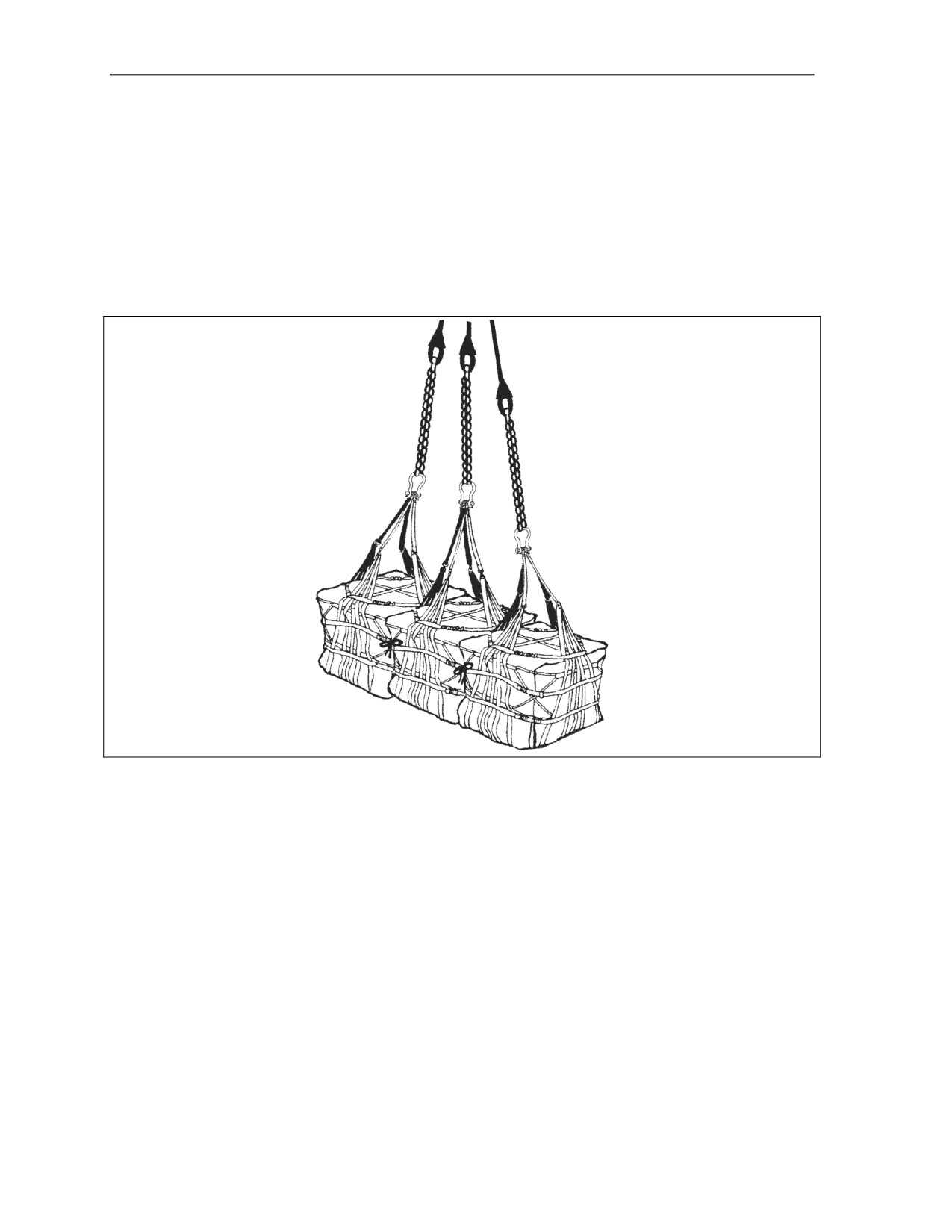
Preparing the Load for Pickup. Prepare the load for pickup by looping the chain end of a
sling leg through the medium clevis and inserting link number 3 in sling grabhook. Several A-
22 cargo bags can be carried at the same time (Figure 8-7). Secure the bags together with a
temporary tie of Type III nylon cord around the upper lateral straps of each container at the
inside corner where they meet. Attach slings or sling legs to each container through the medium
clevis. Adjust the sling leg lengths so that all the bags are carried at the same level. Usually
link number 3 is placed in the grabhook. This will make pickup and release easier since all
loads will leave the ground at the same time. To derig the A-22 cargo bag, remove the sling legs
and clevis assemblies. Untie or cut the taped or tied strings. Unfasten the web straps and spread
out the cover.
Figure 8-7. Single-point Load Consisting of Three A-22 Cargo Bags
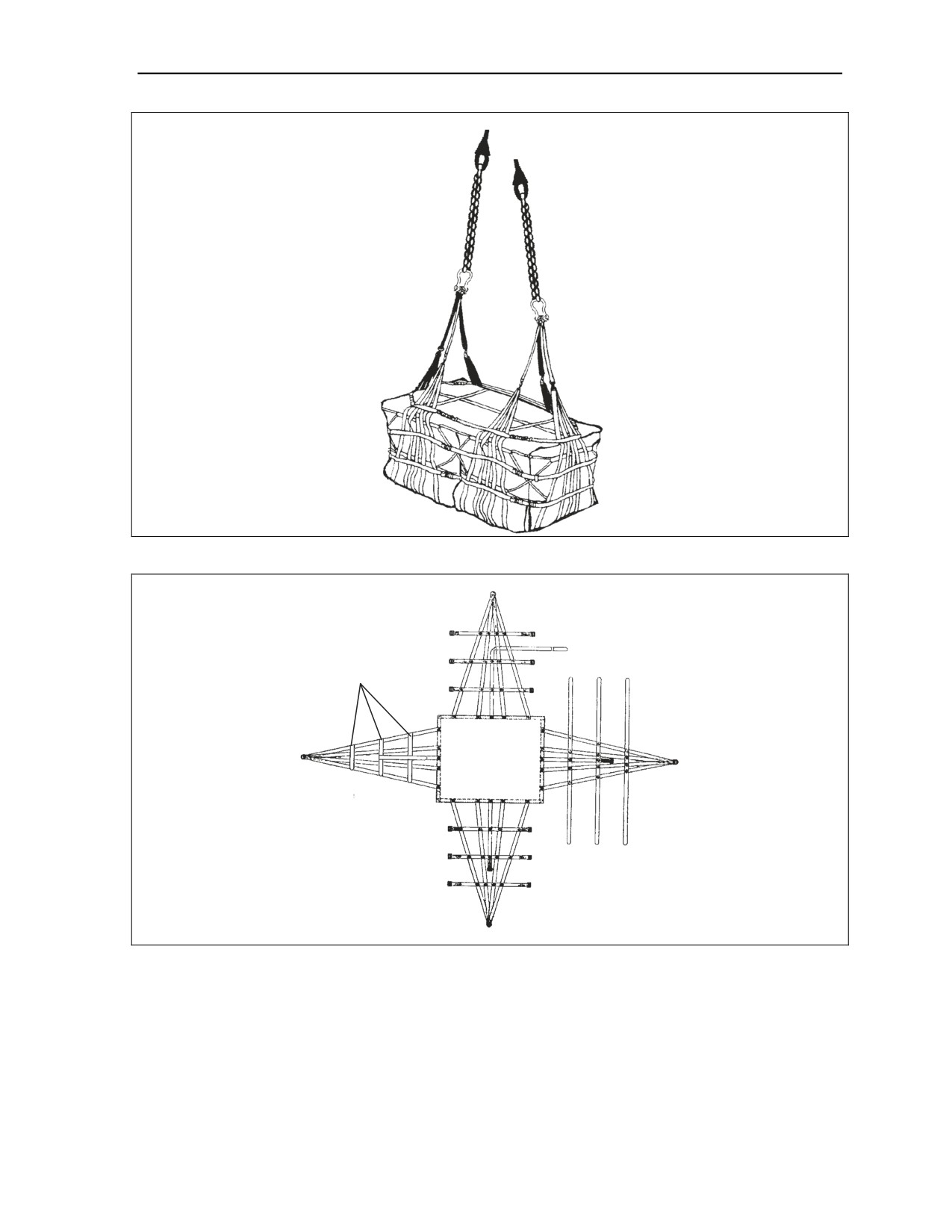
DOUBLE A-22 CARGO BAG
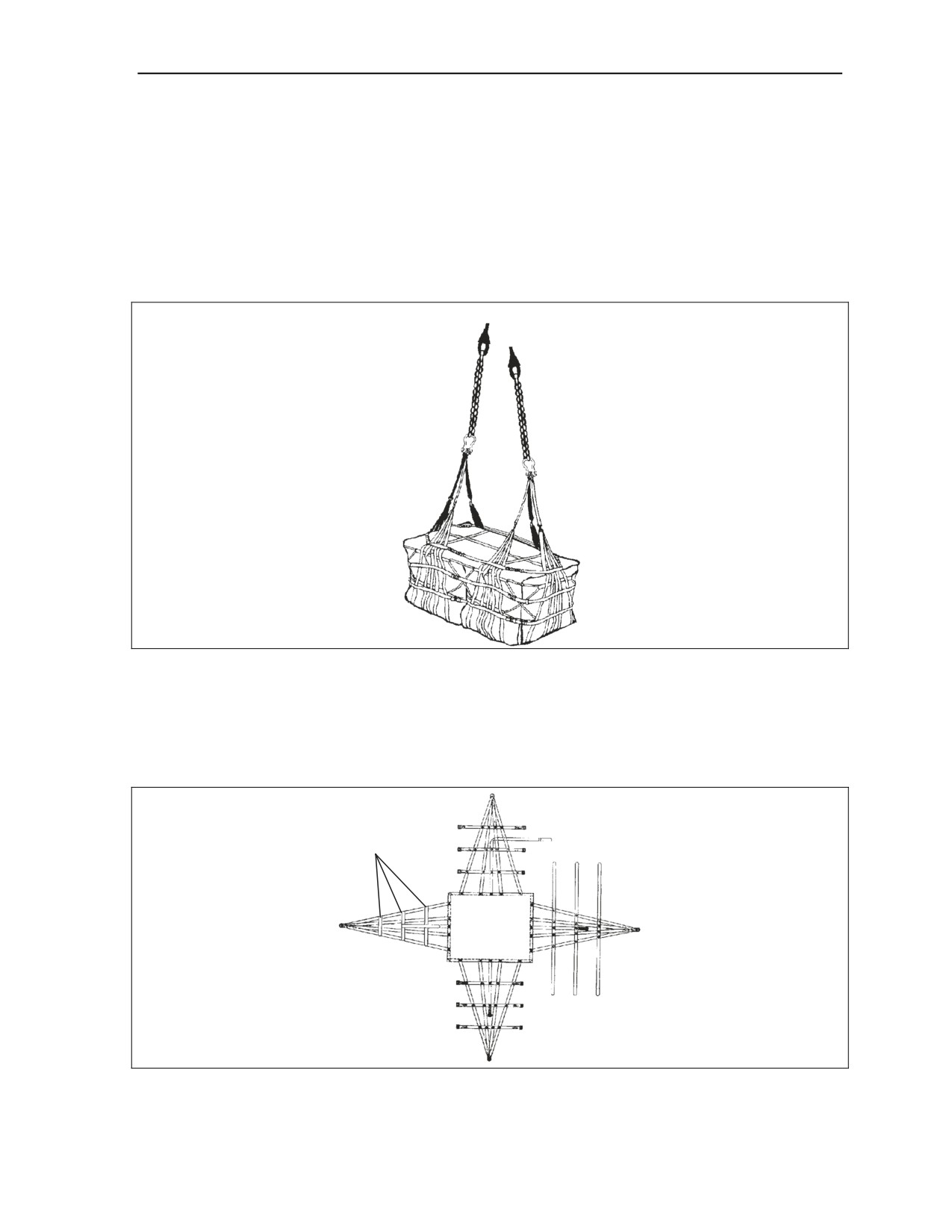
8-3. The double A-22 cargo bag is two adjustable cotton duck cloth/nylon and nylon webbing containers
consisting of two sling assemblies, two covers, and six suspension webs (Figure 8-8). The bag is used to
deliver loads that are longer than the standard A-22 load. The cover is optional. The double A-22 has a
weight capacity of 900 - 2,200 pounds. Inspect the container for serviceability in accordance with Table 2-
1, Preventive Maintenance Checks and Services, in TM 10-1670-298-20&P. The best way to learn about
this carrying device is to rig and derig it several times. The following steps and Figures 8-9 through 8-16
explain how to rig a double A-22 cargo bag:
z
Sling Assemblies. Place two A-22 sling assemblies on the ground.
Place one A-22 sling assembly with the lateral straps facing down on the ground. Extend
all lateral straps and support webbing.
Fold and place all lateral straps on top of the rear support web (Figure 8-9).
Place the second A-22 sling assembly on the rear support web of the first A-22 sling
assembly. Extend all lateral straps and support webbing.
FM 4-20.197/MCRP 4-11.3E, VOL I/NTTP 3-04.11/
8-4
AFMAN 11-223 (I), VOL I/COMDTINST M13482.2B
20 July 2006
A-22 Cargo Bags, Pallet Slings, Pendants, and Supplemental Equipment
Figure 8-8. Single-point Load Consisting of a Double A-22 Cargo Bag
LATERAL STRAPS FOLDED
REAR
FRONT
Figure 8-9. First A-22 Sling Assembly Positioned
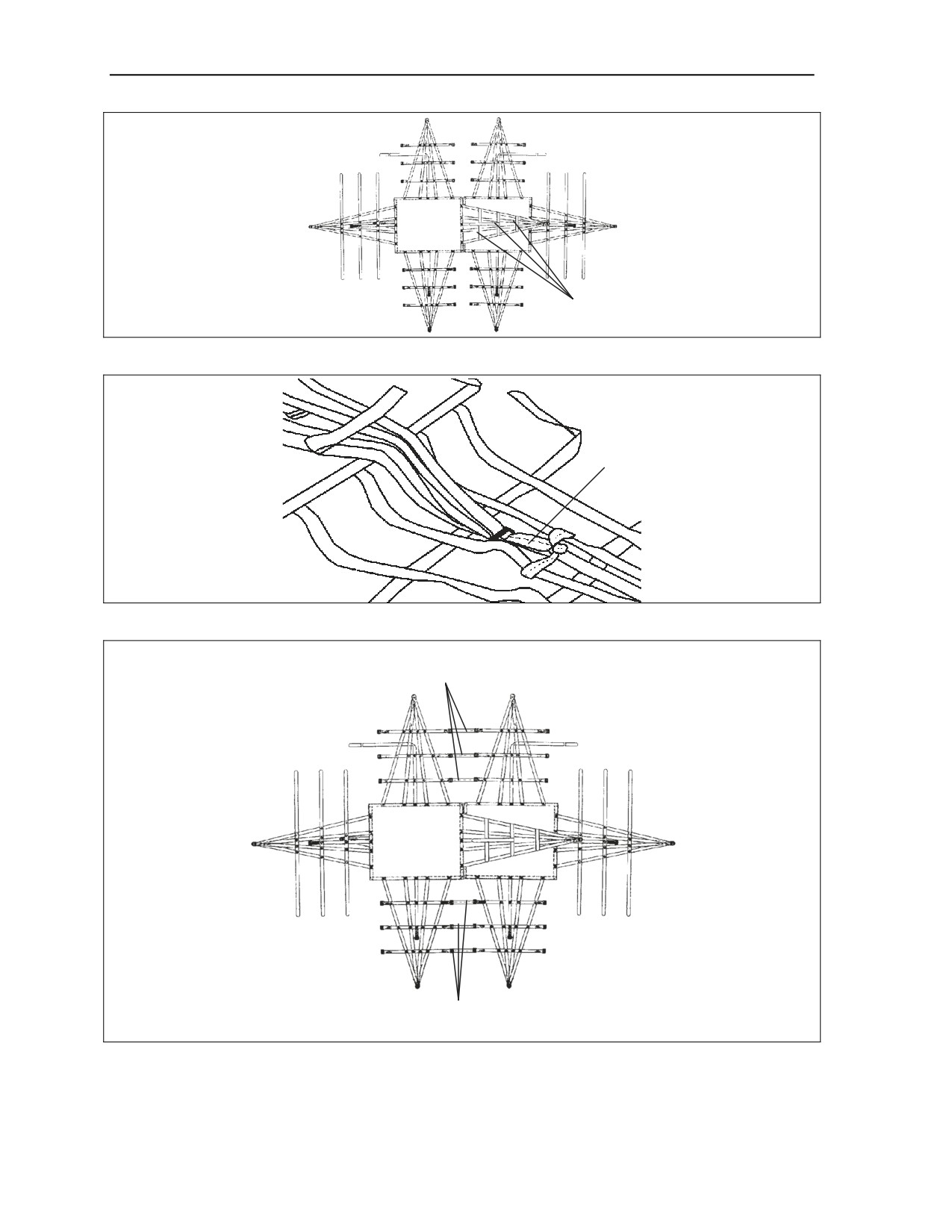
Fold and place all lateral straps on top of the front support web (Figure 8-10).
Use a length of Type VIII nylon webbing to tie the support web D-rings exposed at the
front and rear of the load to the other A-22 sling assembly as shown in Figure 8-11.
Cut six lengths of Type VIII nylon webbing. Route one length through each set of friction
adapters at the midsection of the load as shown in Figure 8-12. Do not apply tension at this
time.
FM 4-20.197/MCRP 4-11.3E, VOL I/NTTP 3-04.11/
20 July 2006
AFMAN 11-223 (I), VOL I/COMDTINST M13482.2B
8-5
Chapter 8
REAR
FRONT
LATERAL STRAPS FOLDED
Figure 8-10. Second A-22 Sling Assembly Positioned
TYPE VIII NYLON WEBBING
Figure 8-11. D-Ring Tied to Sling Assembly
TYPE VIII NYLON WEBBING
TYPE VIII NYLON WEBBING
Figure 8-12. Type VIII Nylon Webbing Routed Through Friction Adapters
FM 4-20.197/MCRP 4-11.3E, VOL I/NTTP 3-04.11/
8-6
AFMAN 11-223 (I), VOL I/COMDTINST M13482.2B
20 July 2006
A-22 Cargo Bags, Pallet Slings, Pendants, and Supplemental Equipment
z
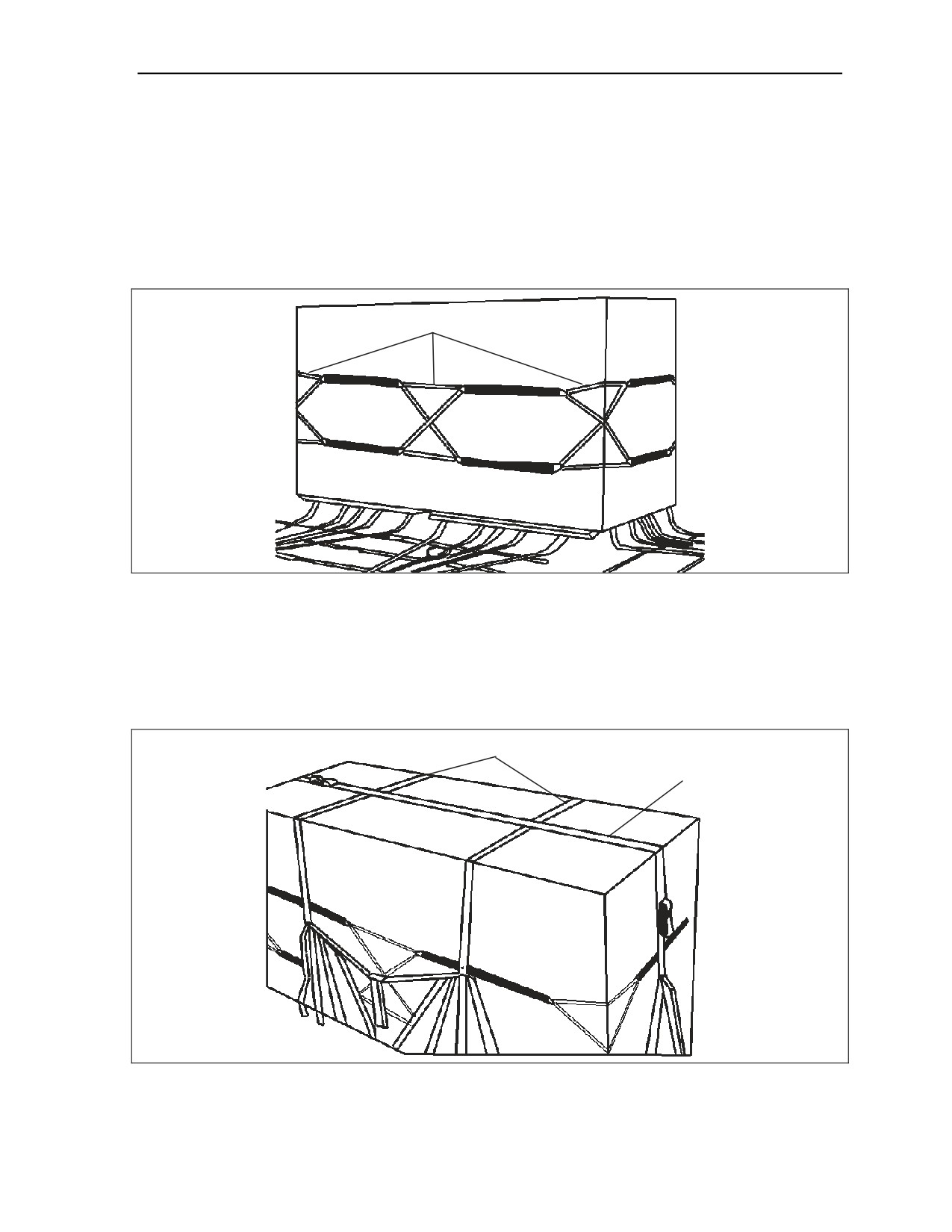
Cover Assemblies. Place two cover assemblies on top of the A-22 sling assemblies.
Center two covers on the skid pads of the A-22 with the lacing loops down. Center the load
so the weight is evenly distributed on the A-22 sling assemblies. Pad and secure the equipment
as required to prevent damage and shifting of the load. Fold the covers over the front and rear
first, then the sides over the top. Fold under the excess side covers (not shown).
Use six lengths of 1/2-inch tubular nylon webbing to lace the cover closed. Pull the
webbing tight and tie the running ends in a surgeon’s knot and bow knot. Tape the excess and
knots leaving one running end slightly exposed to allow rapid derigging (Figure 8-13).
TYPE VIII NYLON WEBBING
Figure 8-13. Cover Ties Installed
z
Close The Sling Assemblies. Close the sling assemblies using the following procedures:
Run the side tie-down straps through the friction adapters and apply tension to the straps. If
necessary, attach a 36- or 60-inch nylon webbing strap to either the front or rear tie-down strap
and route the running end through the friction adapter on the opposite end. Apply tension and
fold and secure the excess strap with 1/4-inch, Type I cotton webbing (Figure 8-14).
SIDE TIE-DOWN STRAPS
FRONT TIE-DOWN STRAP
Figure 8-14. Front, Rear, and Side Tie-down Straps Installed
FM 4-20.197/MCRP 4-11.3E, VOL I/NTTP 3-04.11/
20 July 2006
AFMAN 11-223 (I), VOL I/COMDTINST M13482.2B
8-7
Chapter 8
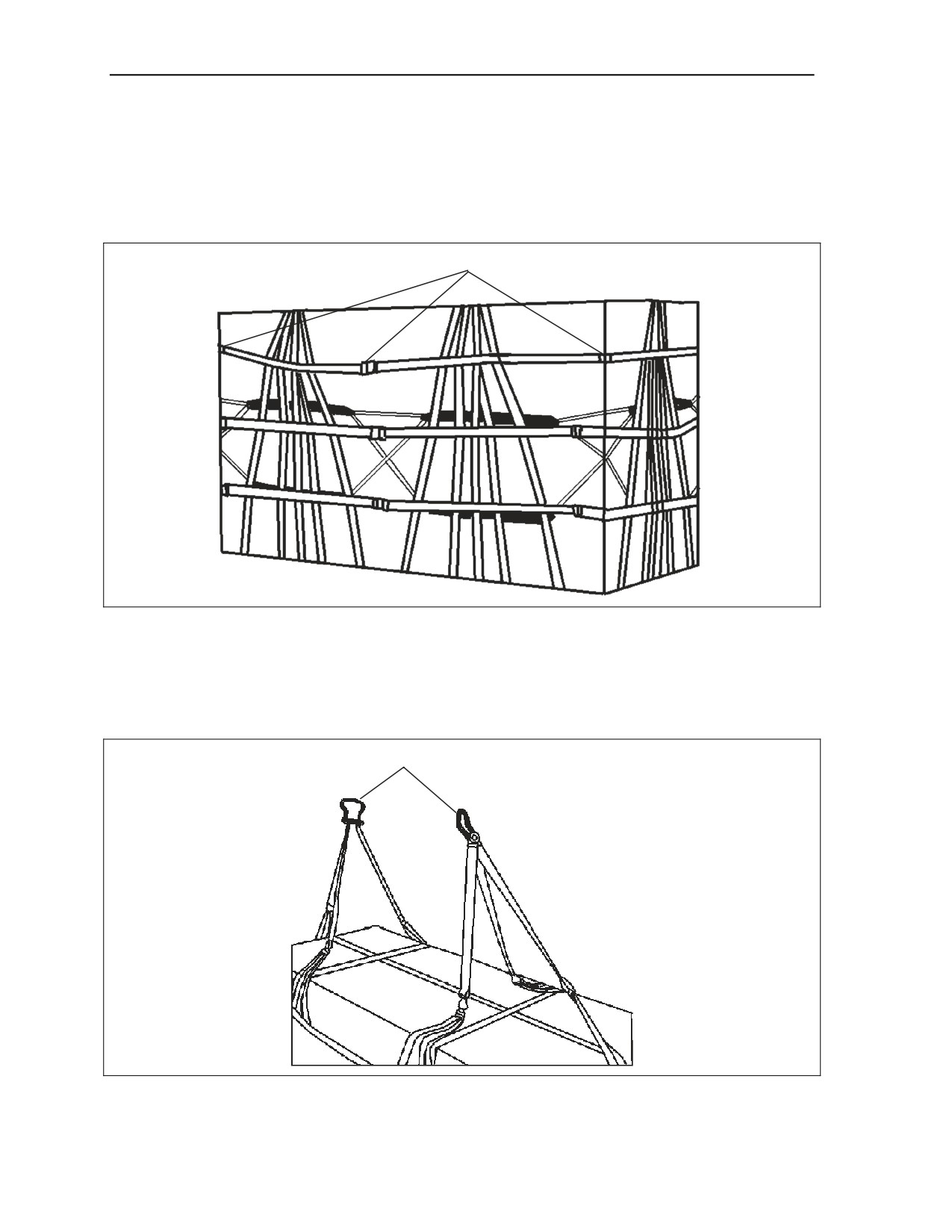
Lay the remaining portions of the sling assemblies over the load. Route the lateral straps
through the friction adapters. Tighten the center friction adapters and Type VIII nylon webbing
so the middle suspension web on each container is vertical. Install a knot in the running ends of
the Type VIII nylon webbing about 3 inches from the friction adapters. Apply equal tension on
the remaining lateral straps. Fold and secure the excess webbing with 1/4-inch, Type I cotton
webbing (Figure 8-15).
FRICTION ADAPTERS FASTENED
REAR
FRONT
Figure 8-15. Sling Assemblies Fastened
Attach a suspension web to each of the six D-rings of the sling assembly. Attach a medium
suspension clevis to the front set of three suspension web D-rings and a medium suspension
clevis to the rear set of three D-rings (Figure 8-16).
MEDIUM SUSPENSION CLEVISES
Figure 8-16. Suspension Webs and Clevises Installed
FM 4-20.197/MCRP 4-11.3E, VOL I/NTTP 3-04.11/
8-8
AFMAN 11-223 (I), VOL I/COMDTINST M13482.2B
20 July 2006
A-22 Cargo Bags, Pallet Slings, Pendants, and Supplemental Equipment
STRETCH A-22 CARGO BAG
8-4. The stretch A-22 cargo bag is two adjustable cotton duck/nylon cloth and nylon webbing containers
consisting of two sling assemblies, two covers, and six suspension webs (Figure 8-17). The bag is used to
deliver loads that are longer than the standard A-22 load but shorter than a double A-22. The cover is
optional. The stretch A-22 has a weight capacity of 900 - 2,200 pounds. Inspect the container for
serviceability in accordance with Table 2-1, Preventive Maintenance Checks and Services, in TM 10-1670-
298-20&P. The best way to learn about this carrying device is to rig and derig it several times. The
following steps and Figures 8-18 through 8-22 explain how to rig a double A-22 cargo bag.
Figure 8-17. Stretch A-22 Cargo Bag
z
Sling Assemblies. Place two A-22 sling assemblies on the ground.
Place one A-22 sling assembly with the lateral straps facing down on the ground. Extend
all lateral straps and support webbing.
Fold and place all lateral straps on top of the rear support web (Figure 8-18).
LATERAL STRAPS FOLDED
REAR
FRONT
Figure 8-18. First A-22 Sling Assembly Positioned
FM 4-20.197/MCRP 4-11.3E, VOL I/NTTP 3-04.11/
20 July 2006
AFMAN 11-223 (I), VOL I/COMDTINST M13482.2B
8-9
Chapter 8
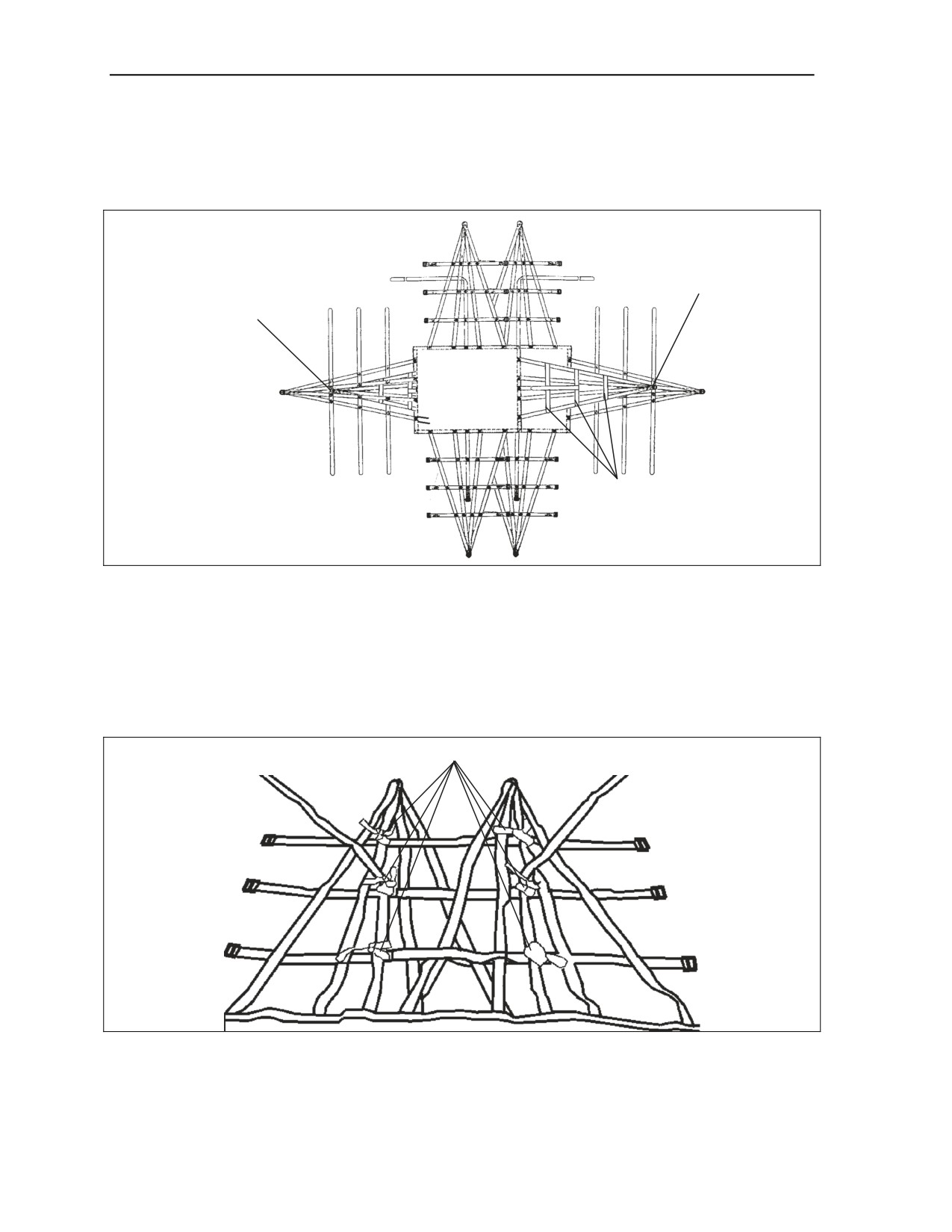
Place the second A-22 sling assembly on the rear support web of the first A-22 sling
assembly. Ensure the D-ring on the front support web reaches the top lateral strap on the first
sling assembly. Extend all lateral straps and support webbing.
Fold and place all lateral straps on top of the front support web (Figure 8-19).
D-RINGS TIED TO TOP
LATERAL STRAP
D-RINGS TIED TO TOP
(FRONT AND REAR)
LATERAL STRAP
(FRONT AND REAR)
FRONT
REAR
LATERAL STRAPS FOLDED
Figure 8-19. Second A-22 Sling Assembly Positioned and Tied
Use a length of Type VIII nylon webbing or two turns of 1-inch tubular nylon webbing to
tie the support web D-rings exposed at the front and rear of the load to the top lateral strap of the
other A-22 sling assembly as shown in Figure 8-19.
Use a length of Type VIII nylon webbing or two turns of 1-inch tubular nylon webbing to
tie the friction adapters diagonally around the intersection of the short tie-down strap and the
corresponding lateral strap of the other sling assembly (Figure 8-20).
TYPE VIII NYLON WEBBING
Figure 8-20. Friction Adapters Tied to Lateral Straps
FM 4-20.197/MCRP 4-11.3E, VOL I/NTTP 3-04.11/
8-10
AFMAN 11-223 (I), VOL I/COMDTINST M13482.2B
20 July 2006
A-22 Cargo Bags, Pallet Slings, Pendants, and Supplemental Equipment
z
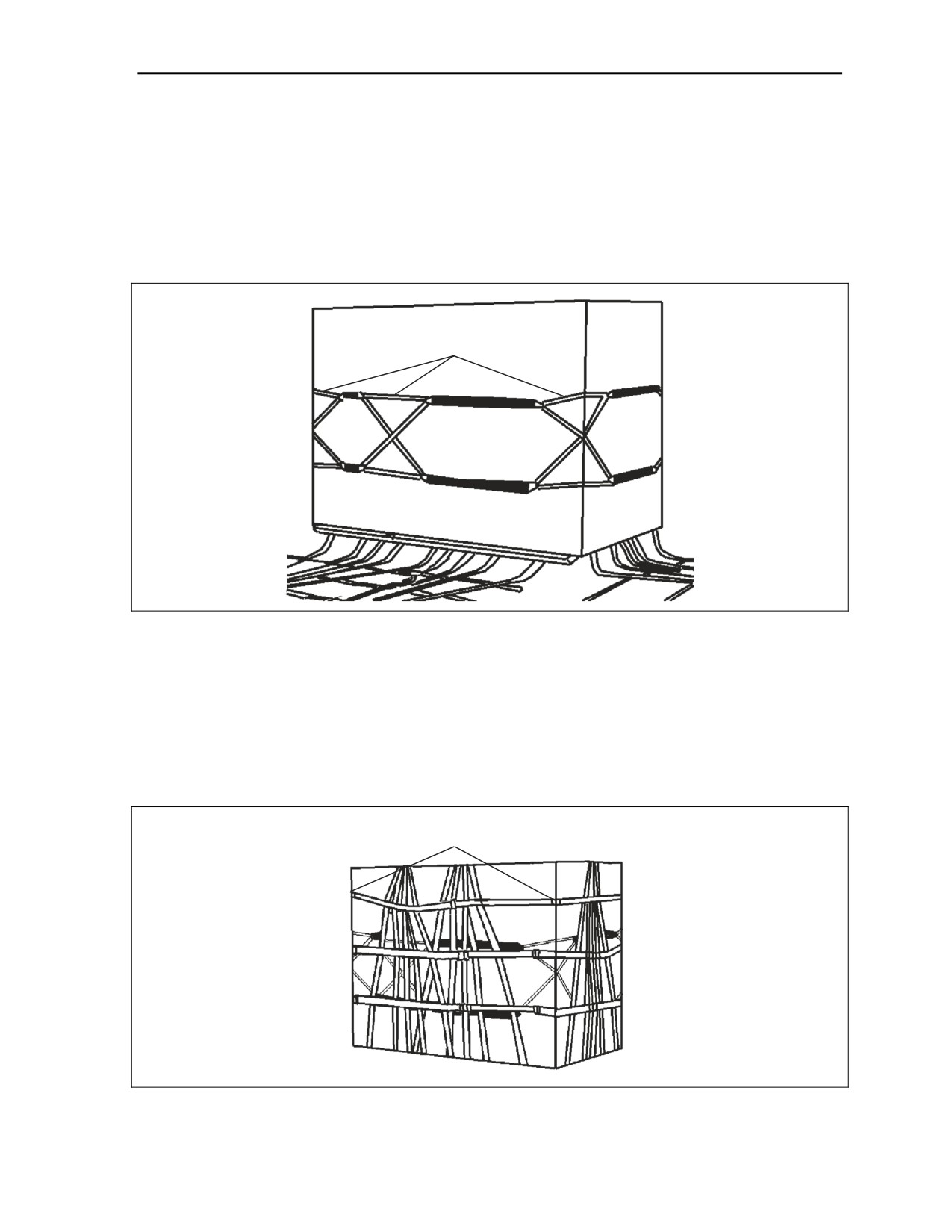
Cover Assemblies. Place two cover assemblies on top of the A-22 sling assemblies.
Center two covers on the skid pads of the A-22 with the lacing loops down. Center the load
so the weight is evenly distributed on the A-22 sling assemblies. Pad and secure the equipment
as required to prevent damage and shifting of the load. Fold the covers over the front and rear
first, then the sides over the top. Fold under the excess side covers (not shown).
Use six lengths of 1/2-inch tubular nylon webbing to lace the cover closed. Pull the
webbing tight and tie the running ends in a surgeon’s knot and bow knot. Tape the excess and
knots leaving one running end slightly exposed to allow rapid derigging (Figure 8-21).
½-INCH TUBULAR
NYLON WEBBING
Figure 8-21. Cover Ties Installed
z
Close The Sling Assemblies.
Run the side tie-down straps through the friction adapters and apply tension to the straps. If
necessary, attach a 60-inch nylon webbing strap to either the front or rear tie-down strap and
route the running end through the friction adapter on the opposite end. Apply tension and fold
and secure the excess strap with 1/4-inch, Type I cotton webbing (Figure 8-14).
Lay the remaining portions of the sling assemblies over the load. Route the lateral straps
through the friction adapters. Apply equal tension on the remaining lateral straps. Fold and
secure the excess webbing with 1/4-inch, Type I cotton webbing (Figure 8-22).
FRICTION ADAPTERS FASTENED
Figure 8-22. Sling Assemblies Fastened
FM 4-20.197/MCRP 4-11.3E, VOL I/NTTP 3-04.11/
20 July 2006
AFMAN 11-223 (I), VOL I/COMDTINST M13482.2B
8-11
Chapter 8
Attach a suspension web to each of the six D-rings of the sling assembly. Attach a medium
suspension clevis to the front set of three suspension web D-rings and a medium suspension
clevis to the rear set of three D-rings (Figure 8-16).
PALLET SLINGS
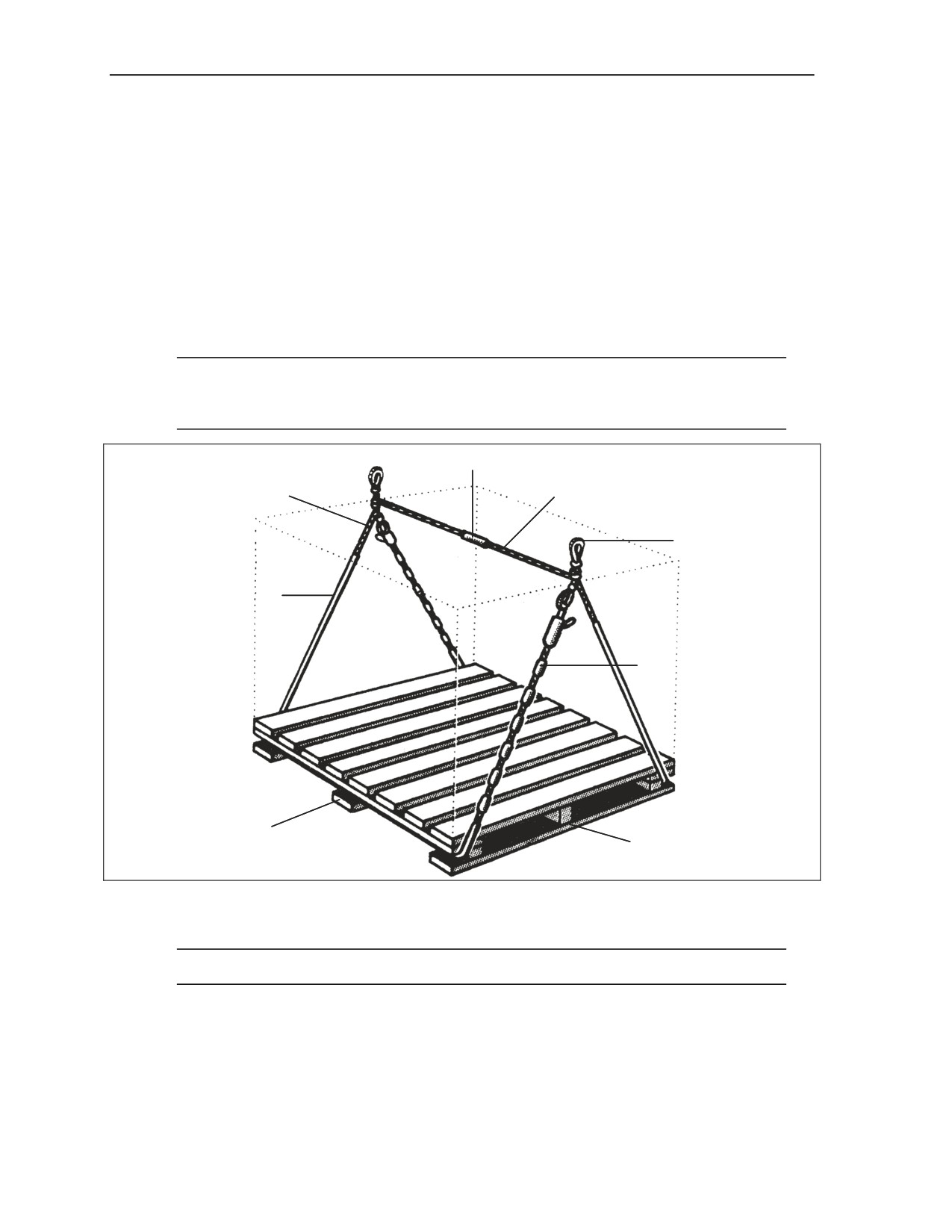
8-5. A pallet sling has a 4,000-pound carrying capacity, weighs about 14 pounds, and carries a standard
40- x 48-inch pallet (Figure 8-23). The two most common models of pallet slings are the Mk100 and the
Mk86. The only difference between the two is how high you can stack the cargo on the pallet. The Mkl00
carries a pallet with a load height of 48 to 70 inches and the Mk86 carries a pallet with a load 29 to 40
inches high. Figure 8-23 identifies the parts of a pallet sling. Become familiar with each part and where it
is located. The tubing on the cable between the two lifting eyes is color coded to identify the pallet model.
Black designates the Mk86 and yellow designates the Mkl00.
Note: Make sure the load extends at least to the edge of the pallet wing. If the load does not
extend to the end of the pallet, the cable lifting on the unsupported board ends may cause the
boards to break resulting in loss of the load.
COLOR CODE TUBING
BRIDLE POSITIONED PARALLEL
BASKET LEGS
TO PALLET WING
LIFTING EYE
CHAFE PROTECTIVE
TUBING
SWAGE STOPS
PALLET
ANY WINGED PALLET
WOOD OR METAL
Figure 8-23. Pallet Sling
z
Rigging Pallet Slings. Take the following steps when using a pallet sling to carry a load:
Note: Wear leather gloves when handling the cable to protect your hands.
Place the bridle across the load perpendicular to the pallet boards and parallel to the pallet
wings.
Route the plastic covered wire rope under the pallet wing formed by the upper boards on the
sides of the pallet. Pull the ends of the cable containing the swage stops through the tensioner
(Figure 8-24).
FM 4-20.197/MCRP 4-11.3E, VOL I/NTTP 3-04.11/
8-12
AFMAN 11-223 (I), VOL I/COMDTINST M13482.2B
20 July 2006
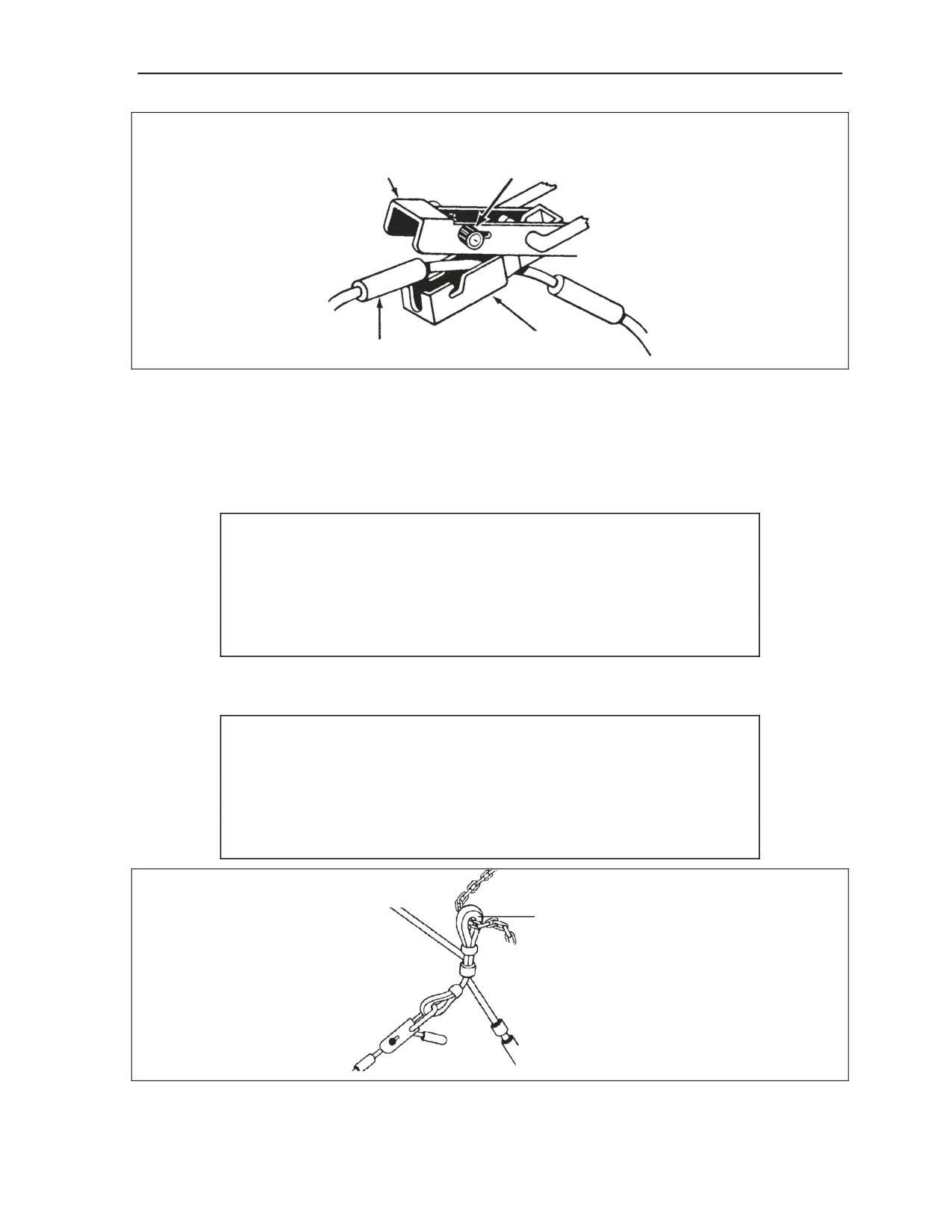
A-22 Cargo Bags, Pallet Slings, Pendants, and Supplemental Equipment
LATCH BAR
RELEASE KNOB
STIRRUP
SWAGE STOP
Figure 8-24. Tensioner
Feed the swage stops (adjusting beads) on the cable basket leg through the tensioner to
tighten the plastic covered wire ropes against the underside of both pallet wings. Keep the
bridle centered on top of the load.
Snap shut the latch bar on the tensioner stirrup while keeping the basket leg tight against the
pallet wings.
CAUTION
Position the plastic covered wire ropes tightly under the pallet wings. If
they are not under the pallet wings, the pallet sling could slip off the
pallet when it is lifted. Secure the cargo to the pallet to prevent any of
the items from sliding off in flight.
Loop the chain end of a sling, such as the 10,000-pound capacity sling set, through each
sling lifting eye as shown in Figure 8-25.
CAUTION
The last swage stop on the end of the basket leg (wire rope leg) is a
safety stop and must not be used for adjustment. Two pallets may be
carried at one time using all four legs of the sling set as shown in
Figure 8-26.
LIFTING EYE
Figure 8-25. Connecting Sling Leg Lifting Eye
FM 4-20.197/MCRP 4-11.3E, VOL I/NTTP 3-04.11/
20 July 2006
AFMAN 11-223 (I), VOL I/COMDTINST M13482.2B
8-13