FM 3-90.31 MANEUVER ENHANCEMENT BRIGADE OPERATIONS (FEBRUARY 2009) - page 5
MEB Command Post
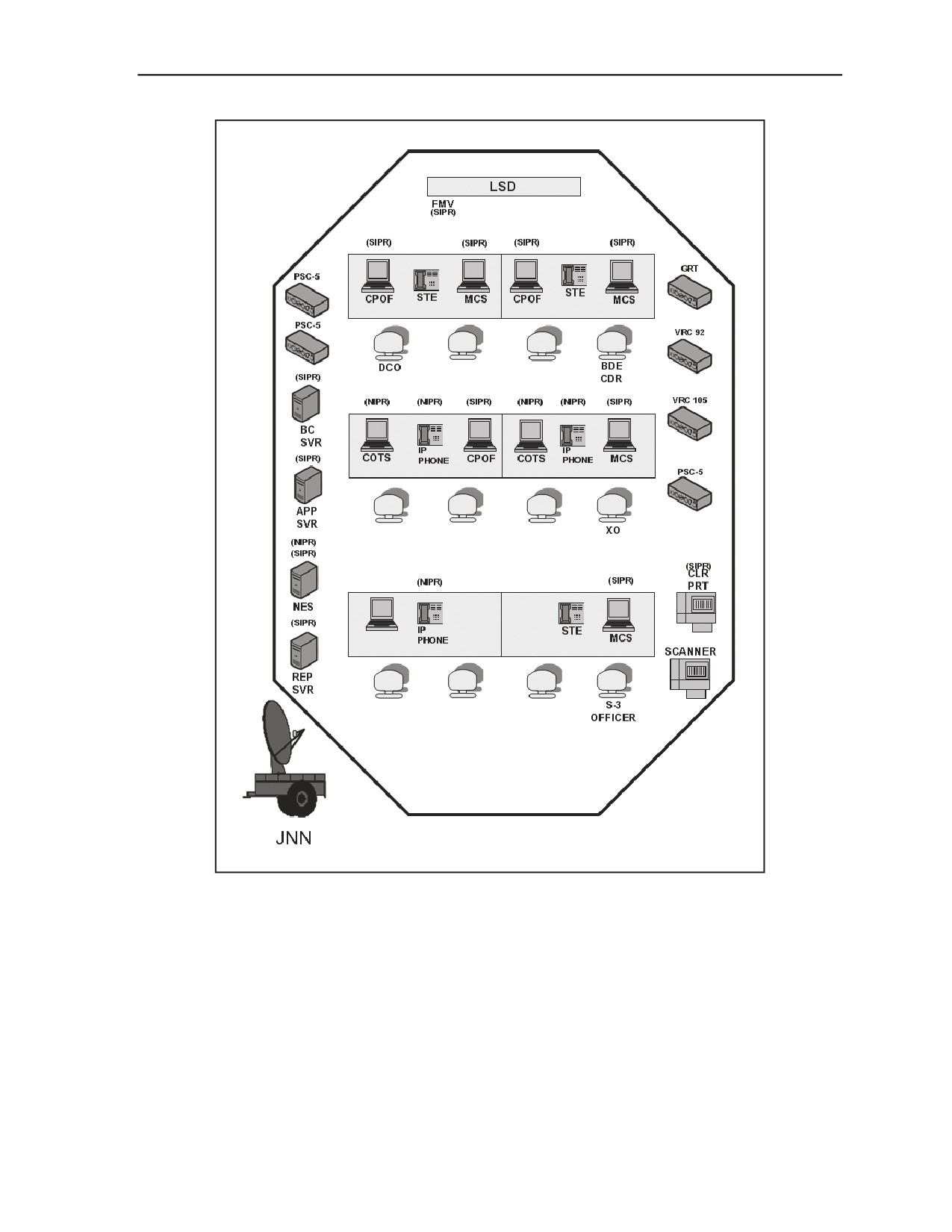
Figure B-3. Current operations cell number 1
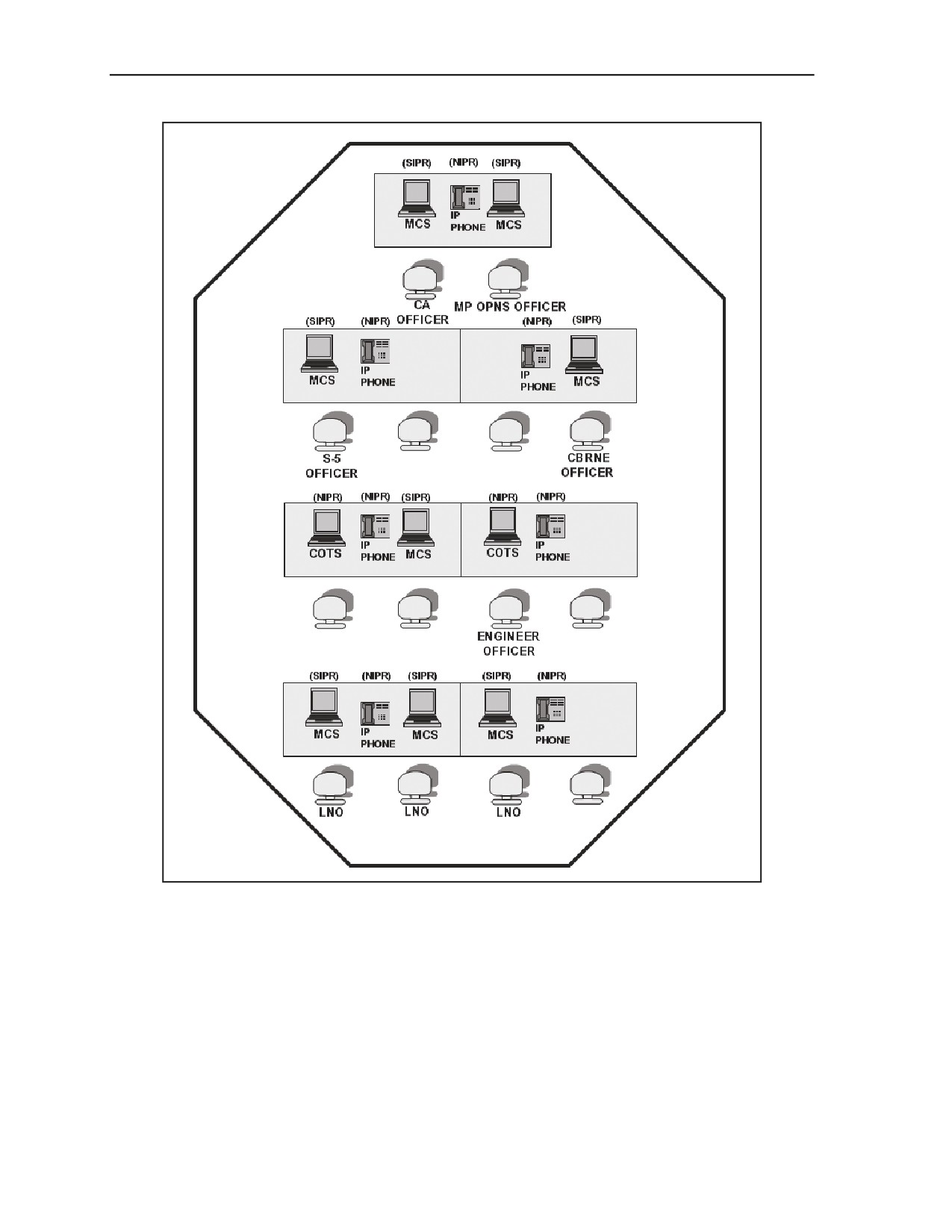
B-15. Figure B-4, page B-6, highlights the remainder of the current operations cell not shown in figure B-
3. Included in this SICPS are the engineer operations cell, CBRNE operations cell, MP operations cell,
civil-military plans and operations, plans section, and the liaison teams.
26 February 2009
FM 3-90.31
B-5
Appendix B
Figure B-4. Current operations cell number 2
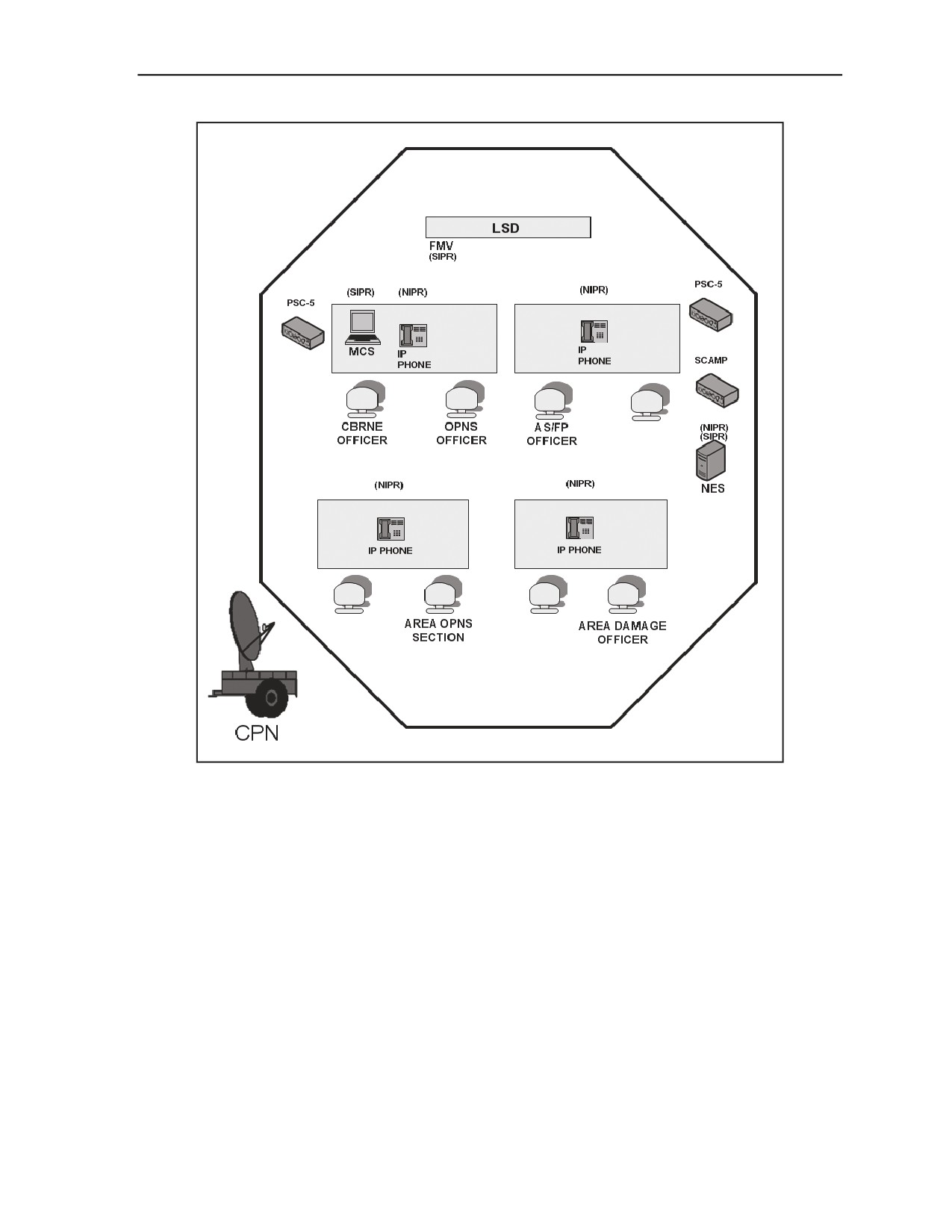
B-16. Figure B-5 highlights the area operations section. This is where the second LSD is positioned in this
example to facilitate the responsibilities associated with conducting support area operations.
B-6
FM 3-90.31
26 February 2009
MEB Command Post
Figure B-5. Area operations section
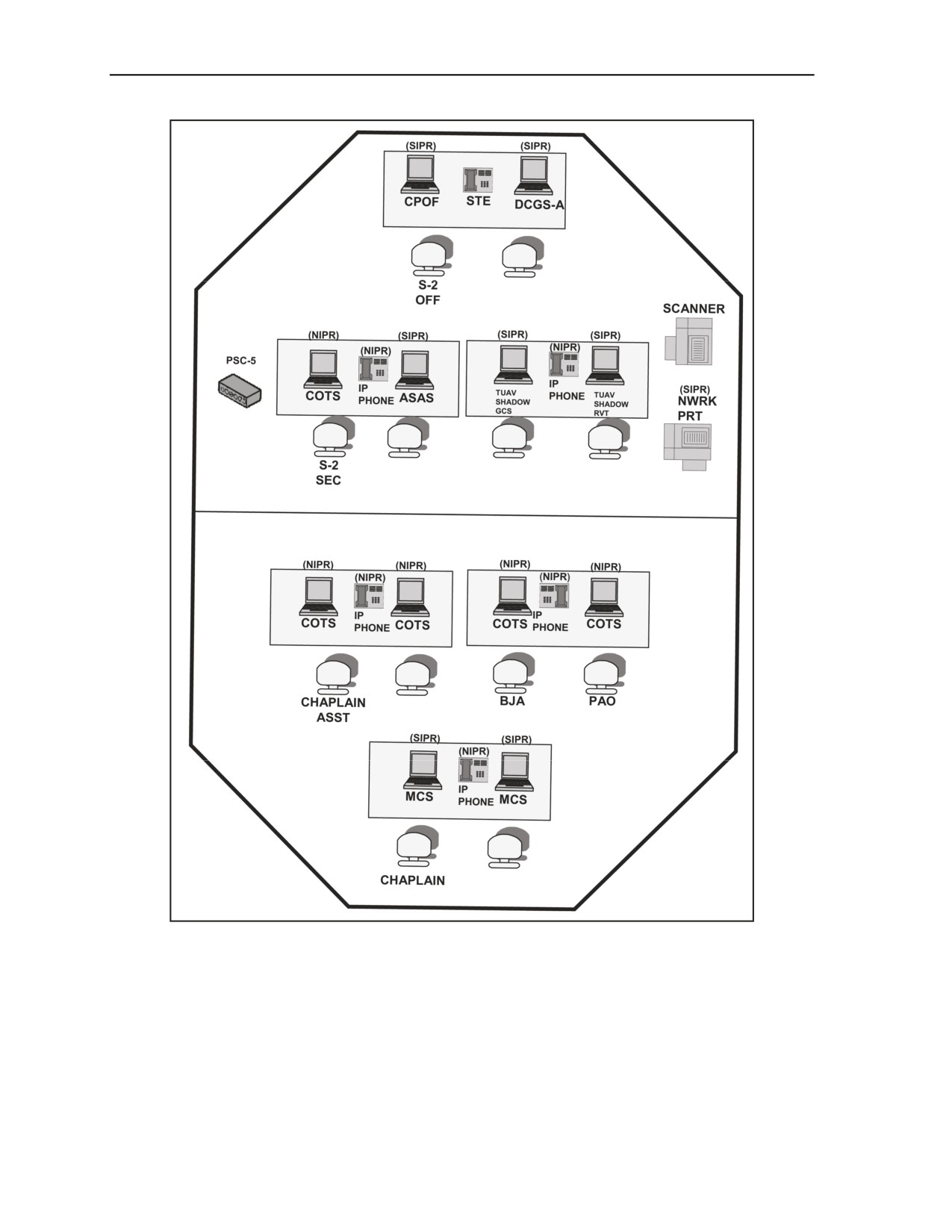
B-17. Figure B-6, page B-8, highlights the intelligence cell. It includes not only the intelligence cell but
also other staff (the public affairs section, brigade legal section, and brigade unit ministry team) that has
been included in the lower half of this SICPS but may need to be positioned in a different SICPS if there is
room.
26 February 2009
FM 3-90.31
B-7
Appendix B
Figure B-6. Intelligence cell and other staff
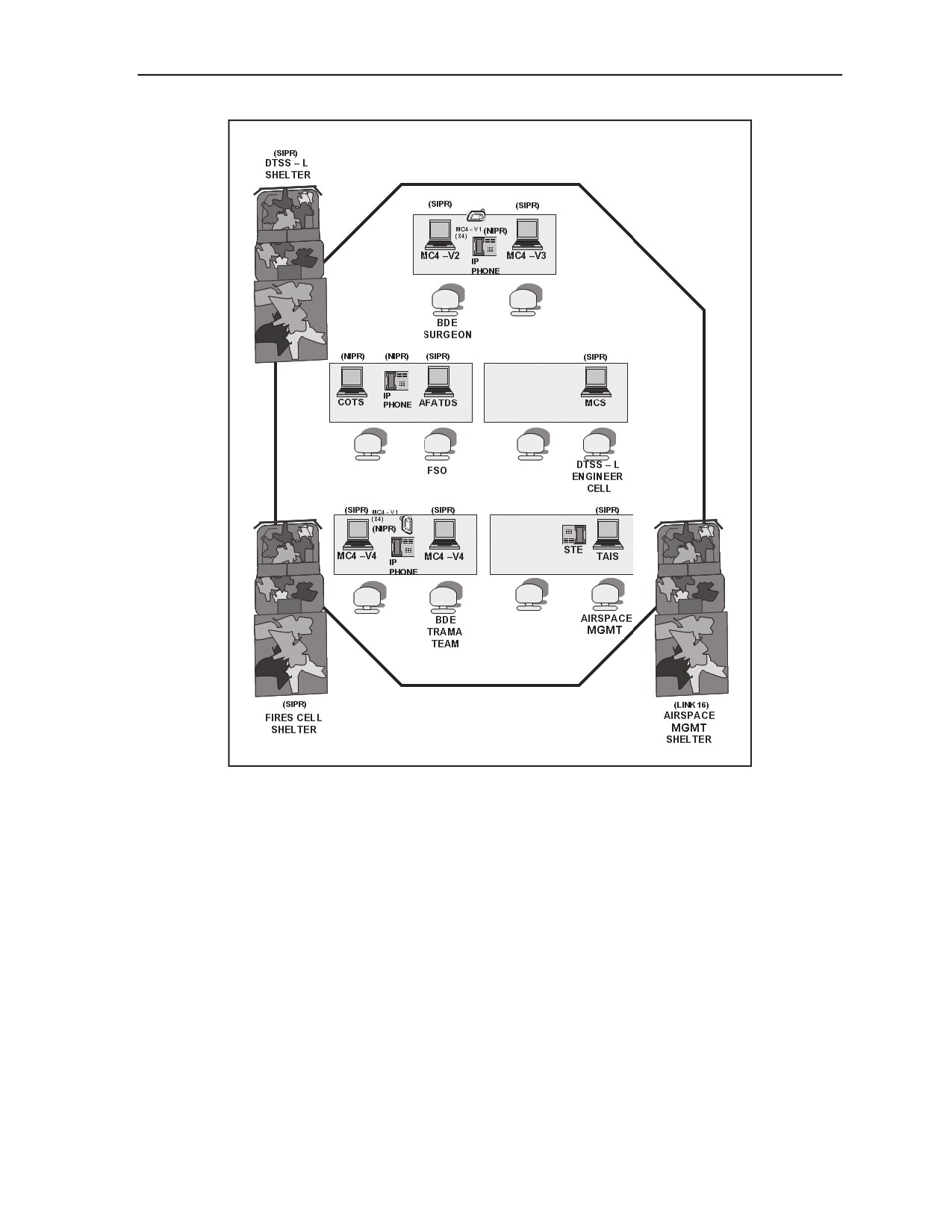
B-18. Figure B-7 highlights the fires cell. This SICPS includes the fires cell, airspace management section,
geospatial portion of the engineer operations cell, brigade surgeon section and medical treatment team (the
surgeon section and medical treatment team should usually be in the sustainment cell if there is room for
them). Note the three shelters that are linked to this SICPS.
B-8
FM 3-90.31
26 February 2009
MEB Command Post
Figure B-7. Fires cell
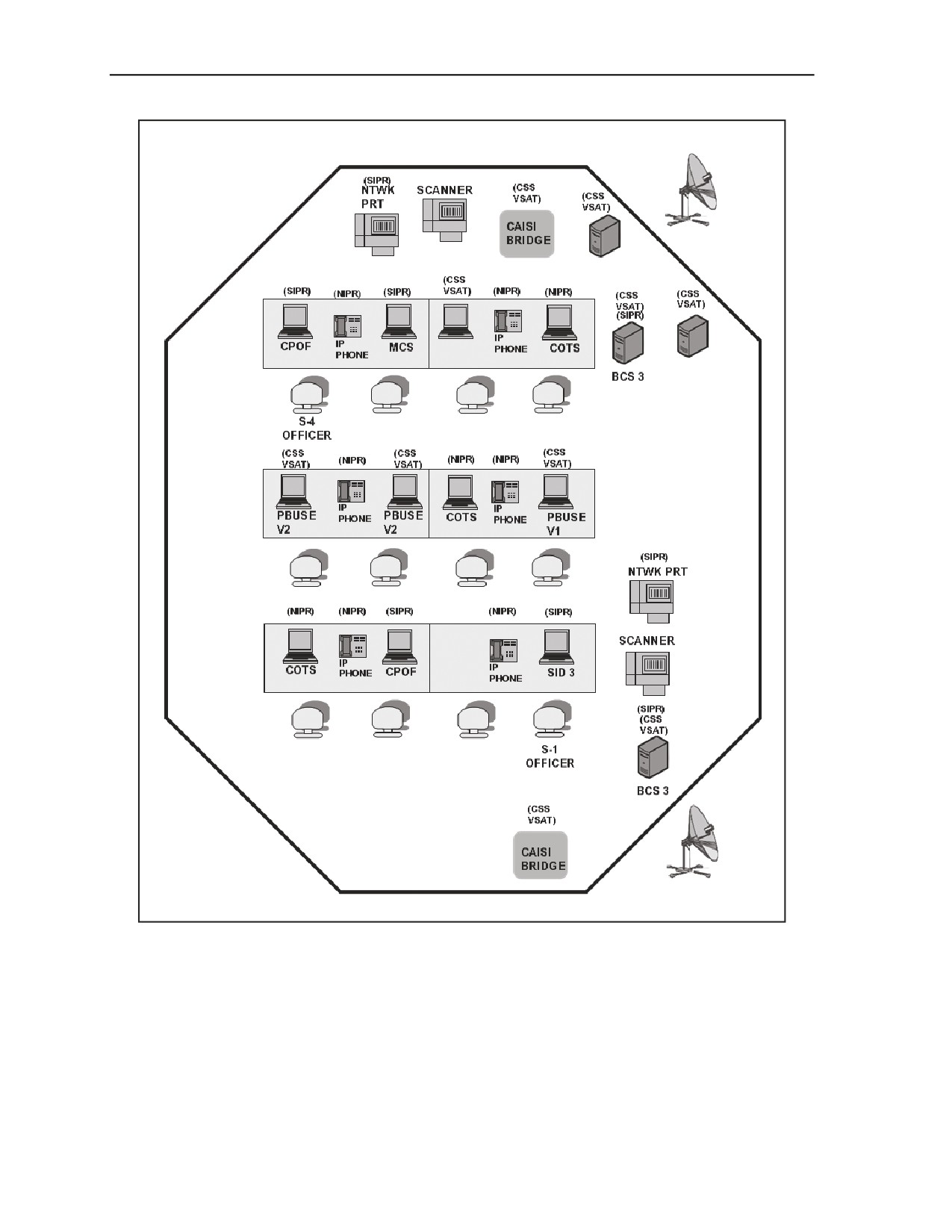
B-19. Figure B-8, page B-10, highlights the sustainment cell. This SCIPS includes the personnel section
and the logistics section. The CAISI bridge for the main CP is located in this SICPS.
26 February 2009
FM 3-90.31
B-9
Appendix B
Figure B-8. Sustainment cell
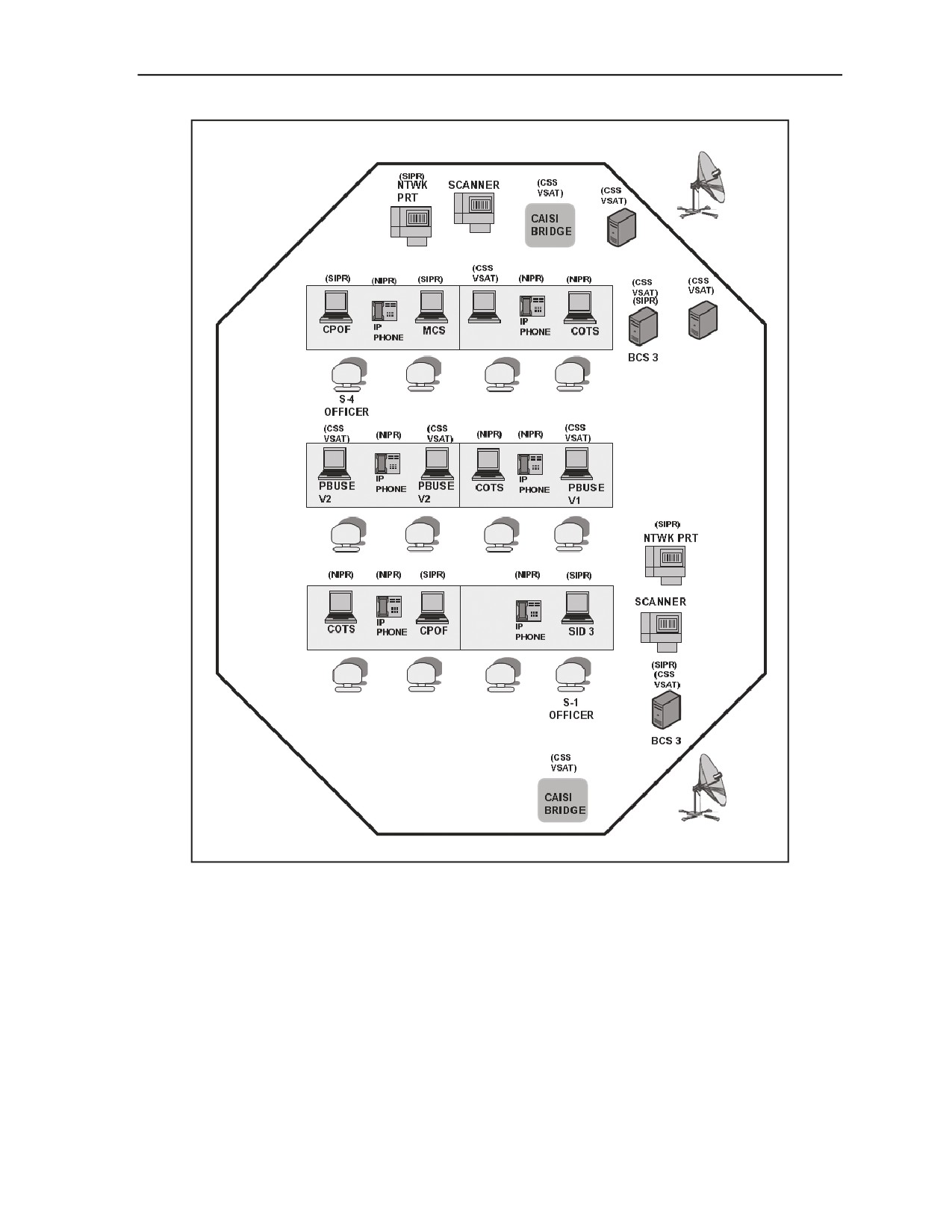
B-20. Figure B-9 highlights the command, control, communication, and computer operations cell and the
communications section. Note the two shelters that are linked to this SICPS.
B-10
FM 3-90.31
26 February 2009
MEB Command Post
Figure B-9. Network operations cell
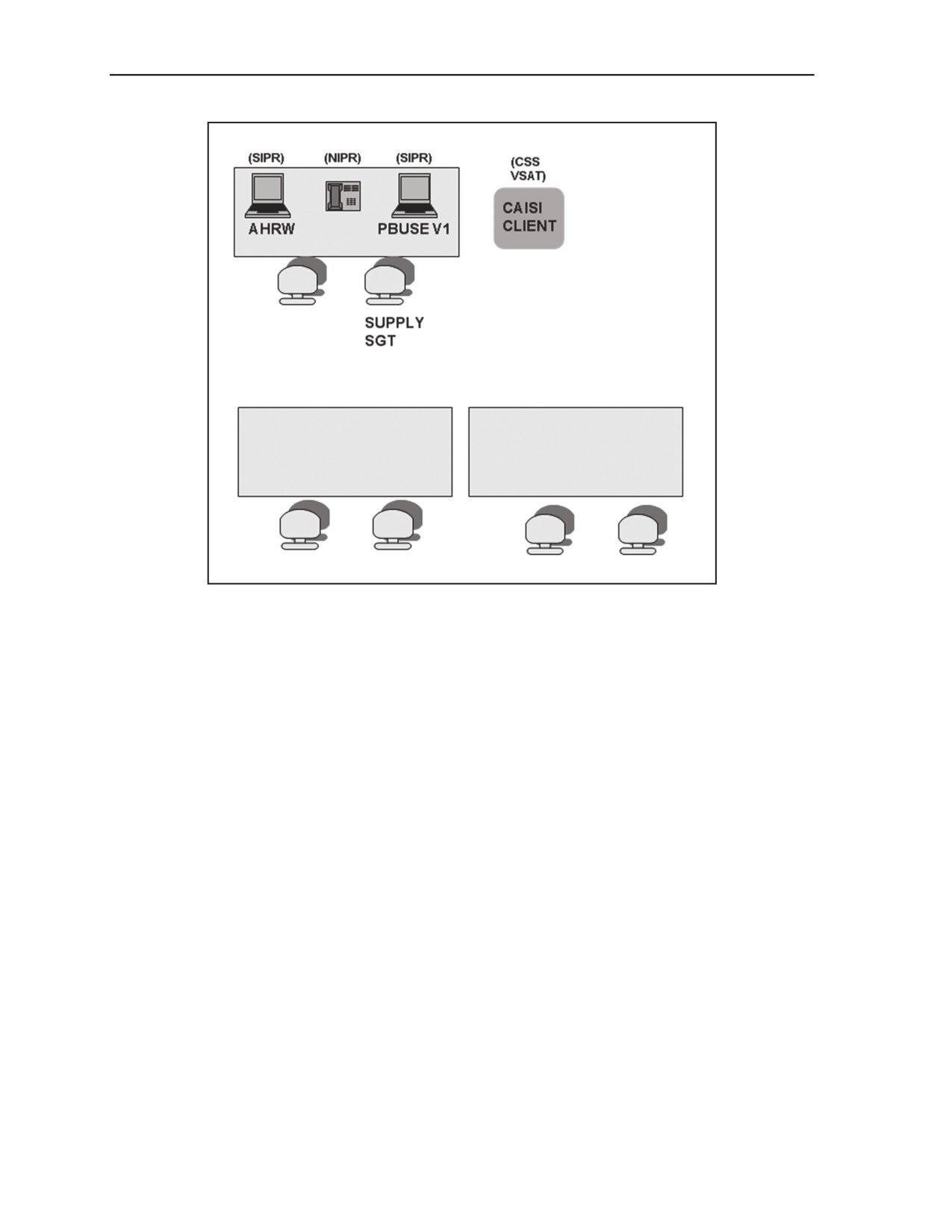
B-21. Figure B-10, page B-12, highlights the company headquarters tent. This tent will typically be located
in proximity to the main CP. This tent is not a SICPS.
26 February 2009
FM 3-90.31
B-11
Appendix B
Figure B-10. Company headquarters tent
B-12
FM 3-90.31
26 February 2009
Appendix C
Army Battle Command System
IS is the advantage derived from the ability to collect, process, and disseminate an
uninterrupted flow of information while exploiting or denying an adversary’s ability
to do the same. Information systems are the equipment and facilities that collect,
process, store, display, and disseminate information. This includes computers—
hardware and software—and communications as well as policies and procedures for
their use (FM 3-0). The MEB is equipped with portions of the ABCS to help give it
significant advantages in collecting technical information, and distributing
information and intelligence rapidly. The ABCS enables commanders to rapidly gain
reliable information and therefore, achieve information dominance in their OE. The
ABCS satisfies two critical battle C2 requirements—interoperability and SA. ABCS
employs networks that are interoperable with theater, joint, and combined C2
systems.
MEB C2 SYSTEMS
C-1. The ABCS consists of 10 battlefield automated systems, which comprise the core for ABCS and
provide the capabilities that support the Military personnel’s mission needs. Each system aids in planning,
coordinating, and executing operations by providing access to a horizontally integrated C2 network and
passing of information it.
C-2. The ABCS 6.4 provides a net-centric data management capability on a dedicated server. This ABCS
version differs from earlier versions due to the incorporation of the centralized information server. The
addition of the ABCS information server (AIS) to the tactical operations center (TOC) structure enables
horizontal information exchange. Also, the AIS employs a publish and subscribe server methodology. The
AIS helps the ten ABCS systems interoperate as one thus, ABCS is called a system-of- systems
C-3. The MEB may use seven current primary C2 systems. These systems are linked to the global C2
system—Army (GCCS-A), creating seamless connectivity from brigades to corps. Five systems correspond
to five battlefield functional areas—maneuver, fire support, AMD, intelligence and electronic warfare
(IEW), and battle command sustainment support. The functional staff sections and units assigned to the
MEB will have a range of other automated systems; some will stand alone and other must be integrated
into the MEB C2 system.
C-4. Current C2 systems include—
z
Maneuver control system (MCS)-usually found in the S-3 section.
z
Advanced field artillery tactical data system (AFATDS)-usually found in the fires section.
z
Air and missile defense workstation (AMDWS)-usually found in the area denial artillery
munitions (ADAM) section.
z
Distribute Command Ground System —Army (DCGS-A)-usually found in the S-2 section.
z
Battle command sustainment support system (BCS3)-usually found in the S4 section.
z
Force XXI battle command brigade and below (FBCB2).
z
Command post of the future (CPOF).
26 February 2009
FM 3-90.31
C-1
Appendix C
MANEUVER CONTROL SYSTEM
C-5. The MCS provides tactical commanders and staffs with an automated, near real time capability for
planning, coordinating, monitoring, and controlling tactical operations. MCS operators can tailor the
applications to graphically display the picture of the AO they choose. A combination of systems
automatically feeds data to the MCS to produce the view of the AO. These ABCS sources can be local and
remote. The MCS is primarily used for creating and sending OPORDs in a CP. It also is equipped with
digital collaborative tools that commanders and staffs use to plan future operations and review past
operations.
C-6. MCS-light (MCS-L) is a laptop computer system that interfaces with the MCS workstation. MCS-L
is a lightweight, user friendly, inexpensive, and operationally flexible workstation that augments the large
desktop. MCS-L is used to enhance and shorten the decision-making process, enhance planning operations,
and supervise the execution of operations.
ADVANCED FIELD ARTILLERY TARGET DATA SYSTEM
C-7. The AFATDS provides the Army and United States Marine Corps (USMC) automated fire support
(FS) command, control, and communications portion of the ABCS. AFATDS provides integrated
automated support for planning, coordinating, and controlling all FS assets such as field artillery, mortars,
CAS, naval gunfire, attack helicopter, and offensive electronic warfare
(EW). It also provides for
counterfire, interdiction, and suppression of enemy targets. The AFATDS enables the maneuver
commander to plan and attack using the optimal weapon-target pairing combinations. AFATDS can
display FS systems, target types, command guidance, available munitions, and weapons status so that FS
planners can make informed decisions based on the commander’s guidance.
AIR AND MISSILE DEFENSE WORKSTATION
C-8. The AMDWS is the C2 component of the AMD planning and control system (AMDPCS). It is the
staff planning and SA tool used to integrate sensors (for example, Sentinel radar), air defense fire units
(such as Avenger, Patriot), and CPs from the air defense artillery (ADA) battery to theater echelons. AMD
planners use AMDWS to display AMD plans, and air SA to ABCS and commanders at all echelons. It is
also the AMD planning and control link to joint/multinational C2 systems. It provides visibility of air
breather tracks (such as aircraft, UAS, cruise missiles), and tactical ballistic missiles (such as launch point,
impact point, and current location).
DISTRIBUTE COMMAND GROUND SYSTEM
C-9. The DCGS-A is the ABCS intelligence fusion system that provides a timely, accurate, and relevant
picture of the enemy situation to Military personnel. DCGS-A provides graphic representations of the
enemy situation to ABCS. It provides leaders all source intelligence to support visualization of the AO, and
more effectively conduct the land battle. The system capabilities enable the Soldier to collaborate with
other systems, process and analyze all source intelligence, support nonstructured threat analysis, provide
predictive analysis, produce a correlated ground picture, disseminate intelligence products, and provide
target nominations. It also supports management of intelligence, surveillance, reconnaissance assets,
intelligence collection, provision of combat intelligence/OPSEC mission support, provision of EW support,
and protection. The DCGS-A interoperates with organic IEW sensors; ABCS; joint, theater, and national
sensors and preprocessors; as well as other service intelligence processors.
C-10. DCGS-A provides intelligence processing on a laptop computer. DCGS-A users (for example, S-2s)
are primarily users of preprocessed intelligence information and graphic IPB products received from MI
units.
BRIGADE COMMAND SUSTAINMENT SUPPORT SYSTEM
C-11. The brigade command sustainment support system (BCS3) is the Army’s maneuver sustainment C2
system that provides a concise picture of unit logistics requirements and support capabilities. It provides a
C-2
FM 3-90.31
26 February 2009
Army Battle Command System
running estimate of evolving logistics situations, including an assessment of current combat power that is
essential for Military personnel to assess their units’ capabilities to complete their mission. The BCS3
integrates the logistics common picture as well as in-transit visibility, enabling the Military personnel to
view material in the logistics pipeline. Ultimately, BCS3 will be able to provide automated future combat
power assessments, (such as projecting changes in asset status in 24-, 48-, and 72-hour representations).
FORCE XXI BATTLE COMMAND BRIGADE AND BELOW
C-12. The FBCB2 is the mobile INFOSYS that provides a battle command capability for units operating at
the tactical level. FBCB2 integrates with the ABCS subsystems, and can transmit SA and provide C2
messaging. FBCB2 operates using two forms of communication. FBCB2-terrestial uses a radio-based
tactical mobile network and FBCB2 blue force tracker (BFT) uses satellite communications. FBCB2 is
found on platforms down to platoon level and on key leader platforms at battalion and brigade. Current
software enables terrestrial and BFT units to share SA. Future software will enable the exchange of some
C2 messaging between terrestrial and BFT units.
Force XXI Battle Command Brigade and Below-Terrestial
C-13. FBCB2-terrestrial is part of the lower TI. It uses the EPLRS, and the single channel ground and air
radio system-advanced system improvement program (SINCGARS-ASIP).
Force XXI Battle Command Brigade and Below-Blue Force Tracker
C-14. FBCB2-BFT uses a light band (L-band) satellite link for communications. FBCB2-BFT shares SA
(such as blue position reports and geospatial reports) with terrestrial units and ABCS systems that use
reach back tunnels found in regional operation centers. Both secure and unsecure system messaging is
available using ABCS.
SUPPORTING C2 SYSTEMS
DIGITAL TOPOGRAPHIC SUPPORT SYSTEM
C-15. The digital topographic support system (DTSS) provides automated support for terrain mapping and
analysis, and creation of topographic products within the timeframes required by today’s Army. DTSS
provides S-3 engineer sections with the capability for geospatial data generation, collection, and
management; geospatial information processing, presentation, and analysis; and engineer survey and map
reproductions for C2 terrain visualization. DTSS manages the digital topographic database for ABCS. It
can also create annotated image maps from scanned or digital imagery.
INTEGRATED METEOROLOGICAL SYSTEM
C-16. The integrated meteorological system (IMETS) is a tactical, automated weather data receiving,
processing, and dissemination system. It provides timely weather and environmental effects, forecasts,
observations, and decision aid information to commanders through ABCS. Selected S-2 sections are
fielded with IMETS to provide near real time weather data to conduct IPB. Additionally, IMETS provides
information to all ABCS battlefield functional areas.
TACTICAL AIRSPACE INTEGRATION SYSTEM
C-17. The tactical airspace integration system (TAIS) provides a digitized, integrated, and automated
system to provide AC2 and air traffic services. TAIS provides the ADAM section with a link to the Joint
force air component commander’s theater battle management core systems (TBMCS) for total Army
airspace integration into the joint fight. TAIS interfaces with joint TBMCS and civil airspace control
agencies, and provides input to ABCS.
26 February 2009
FM 3-90.31
C-3
Appendix C
GLOBAL COMMAND AND CONTROL SYSTEM-ARMY
C-18. The GCCS-A is the interface between the tactical ABCS systems found at brigade and higher levels.
The system architecture links users via the SECRET Internet protocol router network (SIPRNET) for
worldwide communication. GCCS-A provides COP and associated friendly and enemy status information.
It also provides force employment planning and execution tools such as, receipt of forces, intratheater
planning, readiness, force tracking, onward movement, and execution status. GCCS-A is not usually
fielded to the MEB, but could be found there in contingency operations.
COMMAND AND CONTROL PERSONAL COMPUTER
C-19. The command and control personal computer (C2PC) enables staff sections to interface with
GCCS-A using a LAN within the CP. It depicts current locations of friendly and enemy units; creates,
imports, and exports maps overlays; and shares overlays and message traffic. C2PC is not a formal part of
ABCS, but is used in some units.
COMMAND POST OF THE FUTURE
C-20. The command post of the future (CPOF) is a decision support system, providing situational
awareness and collaborative tools for tactical decisionmaking, planning, rehearsal and execution
management from battalion through Army service component at the command level. The commander can
use CPOF to collaborate with other commanders and key staff to share critical situational awareness
information and plan accordingly. CPOF currently relies on several ABCS systems for information feeds
and co-hosts MCS on CPOF hardware.
CBRN AUTOMATED SYSTEMS
C-21. The joint CBRN networked applications provide situational awareness and contribute to the COP for
incidents involving the intentional or accidental release of CBRN hazards.
C-22. The JWARN provides the MEB and joint forces with a common capability to collect, analyze,
identify, locate, report and disseminate warnings about CBRNE or toxic industrial chemicals/toxic
industrial materials
(TIC/TIM) events. JWARN is employed by CBRN defense specialists and other
designated personnel in C2 centers at the appropriate levels of the MEB. JWARN draws data automatically
from actual detectors and sensors, and provides commanders with analyzed data to support operational
decisionmaking in a CBRN environment. JWARN adds capabilities for data processing, production of
plans and reports, and access to specific CBRNE information in order to augment the MEB’s CBRN
personnel and assets.
C-23. The joint effects model provides a single, validated capability to predict and track CBRNE and
TIC/TIM events and effects. The joint effects model resides in MEB C2 information systems and interfaces
with warning systems, and geospatial information and weather data and messages. It supports deliberate
planning and analysis for operational use. The joint effects model interfaces with JWARN to support
plotting and analysis of CBRNE and TIC/TIM events and effects.
C-24. Joint operational effects federation (JOEF) is a joint planning capability that provides operational
modeling and simulation for commanders and staffs to accurately predict chemical/biological effects upon
personnel, equipment and operations. JOEF determines operational effectiveness and supports
development of CBRN operational requirements. JOEF also supports TTP doctrine and contingency
operations development and planning; new technology and concept evaluation; specific training; and near
real-time decisionmaking as a Battle Management Information System in a combat environment. JOEF
interfaces with JWARN to support the analysis of and response to CBRNE and TIC/TIM events and
effects.
C-4
FM 3-90.31
26 February 2009
Glossary
SECTION I - ACRONYMS AND ABBREVIATIONS
Acronym/Term
Definition
ABCS
Army Battle Command System
AC2
airspace command and control
ACP
air control point
ACR
armored cavalry regiment
ADA
aerial damage assessment
ADAM
area denial artillery munition
ADC
area damage control
ADP
automated data processing
AFATDS
Advanced Field Artillery Tactical Data System
AFSB
Army field support brigade
AHRW
Army human resource workstation
AHS
Army Health System
AIS
Army Battle Command System information server
ALO
air liaison officer
ALT
acquisition, logistics, and technology
AMD
air and missile defense
AMD PCS
Air and Missile Defense Planning and Control System
AMDWS
air and missile defense workstation
AMEDD
Army Medical Department
AO
area of operation
AOR
area of responsibility
APOD
aerial port of debarkation
APOE
aerial port of embarkation
APP SVR
application server
ARFOR
Army forces
ARNG
Army National Guard
ARNGUS
Army National Guard of the United States
AS/FP
area security/protection
ASA (ALT)
Assistant Secretary of the Army for Acquisition, Logistics and
Technology
ASCC
Army service component command
ASCOPE
areas, structures, capabilities, organizations, people, and events
ASIP
advanced system improvement program
ASR
alternate supply route
AT
antiterrorism
26 February 2009
FM 3-90.31
Glossary-1
Glossary
BAO
brigade ammunition officer
BC SVR
battle command server
BCOC
base cluster operations center
BCS3
Battle Command Sustainment Support System
BCT
brigade combat team
BDE
brigade
BDF
base defense force
BDOC
base defense operation center
BFSB
battlefield surveillance brigade
BFT
blue force tracker
BJA
brigade judge advocate
BLS
brigade legal section
BLST
brigade logistics support team
BP
battle position
BSA
brigade support area
BSB
brigade support battalion
BSS
brigade surgeon section
BSTB
brigade special troops battalion
C2
command and control
C2PC
command and control personal computer
CA
civil affairs
CAF
contractors accompanying the force
CAISI
Combat Service Support Automated Information System Interface
CAS
close air support
CBRN
chemical, biological, radiological, and nuclear
CBRNE
chemical, biological, radiological, nuclear, and high yield explosive
CCIR
commander’s critical information requirement
CCT
contingency contracting team
CI
criminal intelligence
CIC
combat information center
CJCSI
Chairman, Joint Chiefs of Staff instruction
CLR PRT
color printer
CM
consequence management
CMO
civil-military operations
CMOC
civil-military operations center
COA
course of action
COL
colonel
COMSEC
communications security
CONPLAN
concept plan
CONUS
continental United States
Glossary-2
FM 3-90.31
26 February 2009
Glossary
COP
common operational picture
COR
contract officer representative
COSC
combat and operational stress control
COTR
contract officer technical representative
COTS
cargo offload and transfer system
CP
command post
CPOF
command post of the future
CPT
captain
CRM
composite risk management
CSB
contracting support brigade
CSC
convoy support center
CSM
command sergeant major
CSSAMO
combat service support automation management office
CW2
chief warrant officer 2
CW3
chief warrant officer 3
DA
Department of the Army
DC
dislocated civilian
DCG
deputy commanding general
DCO
deputy commanding officer
DCGS-A
Distribute command Ground System—Army
DHA
detainee holding area
DHS
Department of Homeland Security
DOD
Department of Defense
DOS
Department of State
DS
direct support
DS LAP
Direct Support Logistics Assistance Program
DSCA
defense support of civil authorities
DSS
division surgeon section
DTMS
Digital Training Management System
DTO
division transportation office
DTSS
Digital Topographic Support System
DTSS
Digital Topographic Support System
EAD
echelon above division
EECP
early-entry command post
EOC
emergency operations center
EOD
explosive ordnance disposal
EPLRS
Enhanced Position Location Reporting System
EPW
enemy prisoner of war
ESC
expeditionary support command
ESF
emergency support function
26 February 2009
FM 3-90.31
Glossary-3
Glossary
EW
electronic warfare
FBCB2
Force XXI Battle Command Brigade and Below
FC
fires cell
FCM
Foreign Consequence Management
FHA
foreign humanitarian assistance
FHP
force health protection
FM
field manual
FMI
field manual interim
FMV
full motion video
FP
protection
FRAGO
fragmentary order
FS
fire support
FSC
forward support company
FSCM
fire support coordination measure
FSCOORD
fire support coordinator
FSE
fire support element
FSMT
Forward support medical evacuation team
FSO
fire support officer
G-1
assistant chief of staff, personnel
G-2
assistant chief of staff, intelligence
G-3
assistant chief of staff, operations
G-4
assistant chief of staff, logistics
G-5
assistant chief of staff, plans
G-6
assistant chief of staff, communication
G-7
assistant chief of staff, information engagement
G-9
assistant chief of staff, civil affairs
GCC
geographical combatant commander
GCCS-A
Global Command and Control System - Army
GCS
ground control station
GMET
general misson essential task
GRT
ground receiver terminal
GS
general support
HBCT
heavy brigade combat team
HHC
headquarters and headquarters company
HHD
headquarters and headquarters detachment
HLS
Homeland Security
HN
host nation
HQDA
Headquarters, Department of the Army
HR
human resources
HSS
health service support
Glossary-4
FM 3-90.31
26 February 2009
Glossary
HVA
high value asset
I/R
internment and resettlement
IBP
intelligence preparation of the battlefield
ICS
incident command system
IED
improvised explosive device
IEW
intelligence and electronic warfare
IM
information management
IMETS
integrated meteorological system
INFOSYS
information systems
IP
internet protocol
IPB
intelligence preparation of the battlefield
IS
information superiority
ISR
intelligence, surveillance, and reconnaissance
JCOB
joint contingency operations base
JDOMS
Joint Director of Military Support
JFC
joint force commander
JNN
joint network node
JOEF
joint operational effects federation
JP
Joint publication
JSA
joint security area
JSAO
joint security area operations
JTF
joint task force
JWARN
Joint Warning and Reporting Network
L&O
law and order
LAN
local area network
LAP
Logistics Assistance Program
LCMC
Life Cycle Management Command
LNO
liaison officer
LOC
line of communications
LOGCAP
Logistic Civil Augmentation Program
LOGNET
logistics data network (aray)
LSD
large screen display
LT
lieutenant
LTC
lieutenant colonel
LZ
landing zone
MAJ
major
MANSCEN
Maneuver Support Center
MANSPT
maneuver support
MBA
main battle area
MCB
movement control board
26 February 2009
FM 3-90.31
Glossary-5
Glossary
MCO
major combat operation
MCS
Maneuver Control System
MCS-L
Maneuver Control System-Light
MCT
movement control team
MDMP
military decision-making process
MDSC
medical deployment support command
MEB
maneuver enhancement brigade
MEDBDE
medical brigade
MEDEVAC
medical evacuation
MEF
Marine expeditionary force
METT-TC
mission, enemy, terrain and weather, troops and support available,
time available, civil considerations
mgmt
management
MI
military intelligence
MMS
maneuver and mobility support
MOE
measure of effectiveness
MOP
measure of performance
MOS
military occupational skill
MP
military police
MSG
master sergeant
MSO
mission staging operation
MSR
main supply route
MTOE
modified table of organization and equipment
NAI
named areas of interest
NCO
noncommissioned officer
NES
national education super computer
NGO
nongovernmental organization
NIMS
National Incident Management System
NIPR
NIPRNET internet protocal router network
NRF
National Response Framework
NSC
network support company
NWRK
network printer
O-4
major
O-5
lietuenant colonel
O-6
colonel
OE
operational environment
OIC
officer in charge
OP
observation post
OPCON
operational control
OPLAN
operations plan
OPLOGPLN
operations logistics planner
Glossary-6
FM 3-90.31
26 February 2009
Glossary
OPORD
operational order
OPSEC
operational security
PA
public affairs
PAO
public affairs office
PBUSE
property book unit supply enhance
PEO
program executive office
PFC
private first class
PIO
police intelligence operations
PM
provost marshal
PME
peacetime military engagement
PMESII
political, military, economic, social, information, infrastructure
PMESII-PT
political, military, economic, social, information, infrastructure,
physical environment and time
PSC
AN/PSC-S satellite radio
PSYOP
psychological operations
PTA
patterns, trends, and associations
PVNTMED
preventive medicine
PWS
performance work statement
QA
quality assurance
QC
quality control
RAA
redeployment assembly area
RDSP
rapid decision-making and synchronization process
RI
relevant information
ROC
rear operations center
ROE
rules of engagement
ROI
rules of interaction
S-1
personnel staff officer
S-2
intelligence staff officer
S-3
operations staff officer
S-4
logistics staff officer
S-5
plans staff officer
S-6
signal staff officer
S-7
information operations staff officer
S-9
civil affairs staff officer
SA
situational awareness
SCAMP
single channel antijam manportable
SCOE
software center of excellence
SE
site exploitation
SEMA
state emergency management agency
SFC
sergeant first class
SGM
sergeant major
26 February 2009
FM 3-90.31
Glossary-7
Glossary
SGT
sergeant
SICPS
Standard Integrated Command Post System
SID
standard installation and division personnel reporting system
SIF
strategic internment facility
SINCGARS
single-channel ground and airborne radio
SIPR
SIPRNET secure internet protocol router network
SIPRNET
SECRET Internet Protocol Router Network
SMC
support maintenance company
SOF
special operations forces
SOP
standing operating procedure
SOW
statement of work
SPC
specialist
SPO
support operations officer
SRC
special reporting code
SSG
staff sergeant
STAMIS
Standard Army Management Information System
STE
secure terminal equipment
SU
situational understanding
TAA
tactical assembly area
TAC
tactical
TAC CP
tactical command post
TACON
tactical control
TACSAT
tactical satellite
TAIS
Tactical Airspace Integration System
TBMCS
Theater Battle Management Core System
TCF
tactical combat force
TDA
table of distribution and allowance
TF
task force
TI
tactical Internet
TIC
toxic industrial chemical
TIF
theater internment facility
TIFRC
theater internment facility reconciliation center
TIM
toxic industrial material
TLP
troop-leading procedure
TM
team
TO
theater of operations
TOC
tactical operations center
TOE
table of organization and equipment
TRADOC
United States Army Training and Doctrine Command
TRP
target reference point
Glossary-8
FM 3-90.31
26 February 2009
Glossary
TSC
theater sustainment command
TTP
tactics, techniques, and procedures
U.S.
United States
UAS
Unmanned Aircraft System
UMT
unit ministry team
UN
United Nations
USACE
United States Army Corps of Engineers
USAMC
United States Army Materiel Command
USAR
United States Army Reserve
USG
United States Government
USMC
United States Marine Corps
VRC
vehicle radio communication
VSAT
very small aperture terminal
WARNO
warning order
WMD
weapon of mass destruction
XMSN
transmission
XO
executive officer
SECTION II - TERMS
antiterrorism
(DOD) Defensive measures used to reduce the vulnerability of individuals and property to terrorist
acts, to include limited response and containment by local military and civilian forces. (JP 3-07.2) See
FM 3-07.
area damage control
(DOD, NATO) Measures taken before, during, or after hostile action or natural or manmade disasters
to reduce the probability of damage and minimize its effects. (JP 3-10) See FM 3-07.
area of influence
(DOD, NATO) A geographical area wherein a commander is directly capable of influencing
operations by maneuver or fire support systems normally under the commander’s command or control.
(JP 1-02)
area of interest
(DOD) That area of concern to the commander, including the area of influence, areas adjacent thereto,
and extending into enemy territory to the objectives of current or planned operations. This area also
includes areas occupied by enemy forces who could jeopardize the accomplishment of the mission. (JP
2-03)
area of operations
(DOD) An operational area defined by the joint force commander for land and maritime forces. Areas
of operations do not typically encompass the entire operational area of the joint force commander, but
should be large enough for component commanders to accomplish their missions and protect their
forces. (JP 3-0)
area security
A form of security operation conducted to protect friendly forces, installation routes, and actions
within a specific area. (FM 3-90)
26 February 2009
FM 3-90.31
Glossary-9
Glossary
assessment
(Army) The continuous monitoring and evaluation of the current situation, particularly the enemy, and
progress of an operation. (FM 3-0)
base
(DOD) 1. A locality from which operations are projected or supported. 2. An area or locality
containing installations which provide logistic or other support. 3. Home airfield or home carrier. (JP
1-02)
base cluster
(DOD) In base defense operations, a collection of bases, geographically grouped for mutual protection
and ease of command and control. (JP 3-10)
base cluster operations center
(DOD) A command and control facility that serves as the base cluster commander’s focal point for
defense and security of the base cluster. (JP 3-10)
base defense
(DOD) The local military measures, both normal and emergency, required to nullify or reduce the
effectiveness of enemy attacks on, or sabotage of, a base, to ensure that the maximum capacity of its
facilities is available to United States forces. (JP 1-02)
base defense operations center
(DOD) A command and control facility, with responsibilities similar to a base cluster operations
center, established by the base commander to serve as the focal point for base security and defense. It
plans, directs, integrates, coordinates, and controls all base defense efforts. (JP 3-10)
base defense reaction forces
Forces comprised of personnel or elements of units assigned to a specific base with the responsibility
to rapidly bolster base defenses or react to an unforeseen threat. (FM 3-90)
battle command
The art and science of understanding, visualizing, directing, leading, and assessing forces to impose
the commander’s will on a hostile, thinking, and adaptive enemy. Battle command applies leadership
to translate decisions into actions—by synchronizing forces and warfighting functions in time, space,
and purpose—to accomplish missions. (FM 3-0)
brigade special troops battalion
A subordinate unit to a brigade combat team that provides command and control to the engineer,
military intelligence, network support (signal), and headquarters companies. Found only in the heavy
and infantry brigade combat teams.
combat power
(DOD, NATO) The total means of destructive and/or disruptive force which a military unit/formation
can apply against the opponent at a given time. (JP 1-02) (Army) The total means of destructive,
constructive, and information capabilities that a military unit/formation can apply at a given time.
Army forces generate combat power by converting potential into effective action. (FM 3-0)
combined arms
(Army) The synchronized and simultaneous application of the elements of combat power to achieve an
effect greater than if each element were used separately or sequentially. (FM 3-0) (Marine Corps) 1.
The full integration of combat arms in such a way that to counteract one, the enemy must become
more vulnerable to another. 2. The tactics, techniques, and procedures employed by a force to integrate
firepower and mobility to produce a desired effect upon the enemy.
command
(DOD) The authority that a commander in the Armed Forces lawfully exercises over subordinates by
virtue of rank or assignment. Command includes the authority and responsibility for effectively using
Glossary-10
FM 3-90.31
26 February 2009
Glossary
available resources for planning the employment of, organizing, directing, coordinating, and
controlling military forces for the accomplishment of assigned missions. It also includes responsibility
for health, welfare, morale, and discipline of assigned personnel. 2. An order given by a commander;
that is, the will of the commander expressed for the purpose of bringing about a particular action. See
FM 6-0. 3. A unit or units, an organization, or an area under the command of one individual. See FM
6-0. (JP 1)
command and control
(DOD) The exercise of authority and direction by a properly designated commander over assigned and
attached forces in the accomplishment of the mission. Command and control functions are performed
through an arrangement of personnel, equipment, communications, facilities, and procedures
employed by a commander in planning, directing, coordinating, and controlling forces and operations
in the accomplishment of the mission. (JP 1) (Army) The exercise of authority and direction by a
properly designated commander over assigned and attached forces in the accomplishment of a mission.
Commanders perform command and control functions through a command and control system.
(FM 6-0)
command and control system
(Army) The arrangement of personnel, information management, procedures, and equipment and
facilities essential for the commander to conduct operations. (FM 6-0)
command group
The commander and selected staff members who accompany commanders and enable them to exercise
command and control away from a command post. (FMI 5-0.1)
command post
(DOD, NATO) A unit’s or subunit’s headquarters where the commander and the staff perform their
activities. [Note: the Army definition ends here.] In combat, a unit’s or subunit’s headquarters is often
divided into echelons; the echelon in which the unit or subunit commander is located or from which
such commander operates is called a command post. (JP 1-02) See FM 6-0.
commander’s intent
(DOD) A concise expression of the purpose of the operation and the desired end state. It may also
include the commander’s assessment of the adversary commander’s intent and an assessment of where
and how much risk is acceptable during the operation. (JP 3-0) (Army) A clear, concise statement of
what the force must do and the conditions the force must establish with respect to the enemy, terrain,
and civil considerations that represent the desired end state. (FM 3-0)
consequence management
(DOD) Actions taken to maintain or restore essential services and manage and mitigate problems
resulting from disasters and catastrophes, including natural, manmade, or terrorist incidents. (JP 3-28)
control
(DOD) 1. Authority that may be less than full command exercised by a commander over part of the
activities of subordinate or other organizations. (JP 1-02) See FM 3-0. 2. In mapping, charting, and
photogrammetry, a collective term for a system of marks or objects on the Earth or on a map or a
photograph, whose positions or elevations (or both) have been or will be determined. (JP 1-02) See
FM 3-25.26. 3. Physical or psychological pressures exerted with the intent to assure that an agent or
group will respond as directed. (JP 1-02) 4. An indicator governing the distribution and use of
documents, information, or material. Such indicators are the subject of intelligence community
agreement and are specially defined in appropriate regulations. [Note: see AAP-6.] (JP 1-02) See FM
2-0. (Army) 1. In the context of command and control, the regulation of forces and warfighting
functions to accomplish the mission in accordance with the commander’s intent. (FM 3-0) 2. A tactical
mission task that requires the commander to maintain physical influence over a specified area to
prevent its use by an enemy. (FM 3-90) 3. Action taken that eliminates a hazard or reduces the risk
from that hazard. Part of the third step in risk management. (FM 5-19) 4. In the context of stability
mechanisms, to impose civil order. (FM 3-0)
26 February 2009
FM 3-90.31
Glossary-11
Glossary
counterintelligence
Information gathered and activities conducted to protect against espionage, other intelligence
activities, sabotage, or assassinations conducted by or on behalf of foreign governments or elements
thereof, foreign organizations, or foreign persons, or international terrorist activities. [Note: see AAP-
6.] (JP 2-0) See FM 3-13. (Marine Corps) The active and passive measures intended to deny the
enemy valuable information about the friendly situation, to detect and neutralize hostile intelligence
collection, and to deceive the enemy as to friendly capabilities and intentions.
defense support of civil authorities
Civil support provided under the auspices of the National Response Plan. (JP 3-28)
force health protection
(DOD) Measures to promote, improve, or conserve the mental and physical well-being of Service
member. These measures enable a healthy and fit force, prevent injury and illness, and protect the
force from health hazards. (JP 4-02)
force projection
(DOD) The ability to project the military instrument of national power from the United States or
another theater in response to requirements for military operations. (JP 5-0) See FM 3-0.
full spectrum operations
The Army’s operational concept: Army forces combine offensive, defensive, and stability or civil
support operations simultaneously as part of an interdependent joint force to seize, retain, and exploit
the initiative, accepting prudent risk to create opportunities to achieve decisive results. They employ
synchronized action—lethal and nonlethal—proportional to the mission and informed by a thorough
understanding of all variables of the operational environment. Mission command that conveys intent
and an appreciation of all aspects of the situation guides the adaptive use of Army forces. (FM 3-0)
information superiority
(DOD) The operational advantage derived from the ability to collect, process, and disseminate an
uninterrupted flow of information while exploiting or denying an adversary’s ability to do the same.
(JP 3-13) See FM 3-0.
information system
(DOD) The entire infrastructure, organization, personnel, and components for the collection,
processing, storage, transmission, display, dissemination, and disposition of information. [Note: see
AAP-6.] (JP 3-13) (Army) The equipment and facilities that collect, process, store, display, and
disseminate information. This includes computers—hardware and software—and communications, as
well as policies and procedures for their use. (FM 3-0)
initiative (individual)
The willingness to act in the absence of orders when existing orders no longer fit the situation or when
unforeseen opportunities or threats arise. (FM 3-0)
major operation
(DOD) A series of tactical actions (battles, engagements, strikes) conducted by combat forces of a
single or several Services, coordinated in time and place, to achieve strategic or operational objectives
in an operational area. These actions are conducted simultaneously or sequentially in accordance with
a common plan and are controlled by a single commander. For noncombat operations, a reference to
the relative size and scope of a military operation. (JP 3-0) See FM 3-0.
maneuver
(DOD) 1. A movement to place ships, aircraft, or land forces in a position of advantage over the
enemy. 2. A tactical exercise carried out at sea, in the air, on the ground, or on a map in imitation of
war. 3. The operation of a ship, aircraft, or vehicle, to cause it to perform desired movements.
Glossary-12
FM 3-90.31
26 February 2009
Glossary
4. Employment of forces in the operational area through movement in combination with fires to
achieve a position of advantage in respect to the enemy in order to accomplish the mission. (JP 3-0)
*maneuver support operations
Integrate the complementary and reinforcing capabilities of key protection, movement and maneuver,
and sustainment functions, tasks, and systems to enhance freedom of action.
measure of effectiveness
(DOD) A criterion used to assess changes in system behavior, capability, or operational environment
that is tied to measuring the attainment of an end state, achievement of an objective, or creation of an
effect. (JP 3-0)
measure of performance
(DOD) A criterion to assess friendly actions that is tied to measuring task accomplishment. (JP 3-0)
mission
(DOD) 1. The task, together with the purpose, that clearly indicates the action to be taken and the
reason therefor. See FM 5-0. 2. In common usage, especially when applied to lower military units, a
duty assigned to an individual or unit; a task. See FM 5-0. 3. The dispatching of one or more aircraft to
accomplish one particular task. See FM 3-04.111. [Note: see AAP-6.] (JP 1-02)
mission command
The conduct of military operations through decentralized execution based upon mission orders.
Successful mission command demands that subordinate leaders at all echelons exercise disciplined
initiative, acting aggressively and independently to accomplish the mission within the commander’s
intent. (FM 3-0)
mission orders
A technique for developing orders that emphasizes to subordinates the results to be attained, not how
they are to achieve them. It provides maximum freedom of action in determining how to best
accomplish the assigned missions. (FM 3-0)
mobile security force
A dedicated security force designed to defeat level I and II threats on a base and/or base cluster. (JP 3-
10)
movement and maneuver warfghting function
See warfighting function.
movement control
(DOD, NATO) 1. The planning, routing, scheduling, and control of personnel and cargo movements
over lines of communications. 2. An organization responsible for the planning, routing, scheduling,
and control of personnel and cargo movements over lines of communications. [Note: the Army
definition adds “Organizations responsible for these functions are movement control teams, movement
control centers, and movement control activities.”] (JP 3-10)
*movement corridor
A designated area established to protect and enable ground movement along a route.
mobile security force
A dedicated security force designed to defeat level I and II threats on a base and/or base cluster. (JP
3-10)
mutual support
(DOD, NATO) That support which units render each other against an enemy because of their assigned
tasks, their positions relative to each other and to the enemy, and inherent capabilities. (JP 3-31) See
FM 3-90.
26 February 2009
FM 3-90.31
Glossary-13
Glossary
operational environment
(DOD) A composite of the conditions, circumstances, and influences which affect the employment of
military forces and bear on the decisions of the commander. (JP 3-0)
operational theme
The character of the dominant major operation being conducted at any time within a land force
commander’s area of operations. The operational theme helps convey the nature of the major operation
to the force to facilitate common understanding of how the commander broadly intends to operate.
(FM 3-0)
personnel recovery
The sum of military, diplomatic, and civil efforts to prepare for and execute the recovery and
reintegration of isolated personnel. (JP 3-50)
protection warfighting function
See warfighting function.
reorganization
Action taken to shift internal resources within a degraded unit to increase its level of combat
effectiveness. (FM 100-9)
reserve
(DOD) 1. Portion of a body of troops which is kept to the rear or withheld from action at the beginning
of an engagement, in order to be available for a decisive movement. See FM 3-90. 2. Members of the
Military Services who are not in active service but who are subject to call to active duty. 3. Portion of
an appropriation or contract authorization held or set aside for future operations or contingencies and,
in respect to which, administrative authorization to incur commitments or obligations has been
withheld. (JP 1-02)
response force
(DOD) A mobile force with appropriate fire support designated, usually by the area commander, to
deal with level II threats in the rear area. (JP 3-10)
route reconnaissance
(Army/Marine Corps) A directed effort to obtain detailed information of a specified route and all
terrain from which the enemy could influence movement along that route. [Note: see AAP-6.]
(FM 3-90)
running estimate
A staff section’s continuous assessment of current and future operations to determine if the current
operation is proceeding according to the commander’s intent and if future operations are supportable.
(FM 3-0)
sensitive site
A geographically limited area with special diplomatic, informational, military, or economic sensitivity
to the United States government. (JP 3-31)
sensitive site exploitation
A related series of activities inside a captured sensitive site to exploit personnel documents, electronic
data, and material captured at the site, while neutralizing any threat posed by the site or its contents.
(JP 3-31)
situational obstacle
An obstacle that a unit plans and possibly prepares prior to starting an operation, but does not execute
unless specific criteria are met. It provides the commander flexibility for emplacing tactical obstacles
based on battlefield development. (FM 90-7)
Glossary-14
FM 3-90.31
26 February 2009
Glossary
situational understanding
The product of applying analysis and judgment to relevant information to determine the relationships
among the mission variables to facilitate decisionmaking. (FM 3-0)
stability operations
(DOD) An overarching term encompassing various military missions, tasks, and activities conducted
outside the United States in coordination with other instruments of national power to maintain or
reestablish a safe and secure environment and provide essential governmental services, emergency
infrastructure reconstruction, and humanitarian relief. (JP 3-0) See FM 3-0.
strong point
(DOD, NATO) A key point in a defensive position, usually strongly fortified and heavily armed with
automatic weapons, around which other positions are grouped for its protection. (Army) A heavily
fortified battle position tied to a natural or reinforcing obstacle to create an anchor for the defense or to
deny the enemy decisive or key terrain. (FM 3-90)
support area
Is a specific surface area designated by the echelon commander to facilitate the positioning,
employment, and protection of resources required to sustain, enable, and control tactical forces.
(FM 3-0.1)
survivability operations
The development and construction of protective positions, such as earth berms, dug-in positions,
overhead protection, and countersurveillance means, to reduce the effectiveness of enemy weapon
systems. (FM 3-34)
sustainment
The provision of logistics and personnel services required to maintain and prolong operations until
successful mission accomplishment. (JP 3-0)
sustainment warfighting function
See warfighting function.
tactical combat force
A combat unit, with appropriate combat support and combat service support assets that is assigned the
mission of defeating level III threats. (JP 3-10) See FM 3-90.
task organizing
(DOD) The act of designing an operating force, support staff, or logistics package of specific size and
composition to meet a unique task or mission. Characteristics to examine when task-organizing the
force include, but are not limited to: training, experience, equipage, sustainability, operating
environment, enemy threat, and mobility. (JP 3-05) (Army) The act of designing an operating force,
support staff, or logistics package of specific size and composition to meet a unique task or mission.
Characteristics to examine when task-organizing the force include, but are not limited to: training,
equipage, sustainability, operating environment, enemy threat, and mobility. For Army forces, it
includes allocating available assets to subordinate commanders and establishing their command and
support relationships. (FM 3-0)
unified action
(DOD) The synchronization, coordination, and/or integration of the activities of governmental and
nongovernmental entities with military operations to achieve unity of effort. (JP 1)
unmanned aircraft system
That system whose components include the necessary equipment, network, and personnel to control an
unmanned aircraft. (JP 1-02)
26 February 2009
FM 3-90.31
Glossary-15
Glossary
warfighting function
A group of tasks and systems (people, organizations, information, and processes), united by a common
purpose, that commanders use to accomplish missions and training objectives. The six warfighting
functions are: a. command and control - the related tasks and systems that support commanders in
exercising authority and direction; b. fires - the related tasks and systems that provide collective and
coordinated Army indirect fires, joint fires, and command and control warfare, including nonlethal
fires, through the targeting process; c. intelligence - the related tasks and systems that facilitate
understanding of the operational enviironment, enemy, terrain, and civil considerations; d. movement
and maneuver - the related tasks and systems that move forces to achieve a position of advantage in
relation to the enemy. Direct fire is inherenet in maneuver, as is close combat; e. protection - the
related tasks and systems that preserve the force so the commander can apply maximum combat
power; f. sustainment - the related tasks and systems that provide support and services to ensure
freedom of action, extend operational reach, and prolong endurance. (FM 3-0)
Glossary-16
FM 3-90.31
26 February 2009
References
SOURCES USED
The following sources are either quoted or paraphrased in this publication.
ARMY PUBLICATIONS
AR 40-3, Medical, Dental, and Veterinary Care, 22 February 2008.
AR 40-5, Preventive Medicine, 25 May 2007.
AR 40-66, Medical Record Administration and Health Care Documentation, 17 June 2008.
AR 165-1, Chaplain Activities in the United States Army, 25 March 2004.
FM 1-05, Religious Support, 18 April 2003.
FM 2-0, Intelligence, 17 May 2004.
FM 3-0, Operations, 27 February 2008.
FM 3-04.111, Aviation Brigades, 12 July 2007.
FM 3-05.40, Civil Affairs Operations, 29 September 2006.
FM 3-05.401, Civil Affairs Tactics, Techniques, and Procedures, 5 July 2007.
FM 3-06 (90-10), Urban Operations, 26 October 2006.
FM 3-07, Stability Operations, 6 October 2008.
FM 3-11, Multiservice Tactics, Techniques, and Procedures for Nuclear, Biological, and Chemical
Defense Operations, 10 March 2003.
FM 3-11.21, Multiservice Tactics, Techniques, and Procedures for Chemical, Biological, Radiological
and Nuclear Consequence Management Operations, 1 April 2008.
FM 3-13, Information Operations: Doctrine, Tactics, Techniques, and Procedures, 28 November 2003
FM 3-19.1, Military Police Operations, 22 March 2001.
FM 3-19.4, Military Police Leader’s Handbook, 4 March 2002.
FM 3-19.17, Military Working Dogs, 6 July 2005.
FM 3-19.50, Police Intelligence Operations, 21 July 2006.
FM 3-34, Engineer Operations, 2 January 2004.
FM 3-34.2, Combined Arms Breaching Operations, 31 August 2000.
FM 3-34.210, Explosive Hazards Operations, 27 March 2007.
FM 3-34.230, Topographic Operations, 3 August 2000.
FM 3-34.400, General Engineering, 9 December 2008.
FM 3-52, Army Airspace Command and Control in a Combat Zone, 1 August 2002.
FM 3-90, Tactics, 4 July 2001.
FM 3-100.4, Environmental Considerations in Military Operations, 15 June 2000.
FM 3-100.21, Contractors on the Battlefield, 3 January 2003.
FM 4-0, Combat Service Support, 29 August 2003.
FM 4-01.30, Movement Control, 1 September 2003.
FM 4-02, Force Health Protection in a Global Environment, 13 February 2003.
FM 4-02.1, Combat Health Logistics, 28 September 2001.
FM 4-02.2, Medical Evacuation, 8 May 2007.
26 February 2009
FM 3-90.31
References-1
References
FM 4-02.4, Medical Platoon Leaders' Handbook Tactics, Techniques, and Procedures, 24 August
2001.
FM 4-02.12, Health Service Support in Corps and Echelons Above Corps, 2 February 2004.
FM 4-02.17, Preventive Medicine Services, 28 August 2000.
FM 4-02.21, Division And Brigade Surgeons' Handbook (Digitized) Tactics, Techniques, And
Procedures, 15 November 2000.
FM 4-02.51, Combat and Operational Stress Control, 6 July 2006.
FM 5-0, Army Planning and Orders Production, 20 January 2005.
FM 5-19, Composite Risk Management, 21 August 2006.
FM 5-103, Survivability, 10 June 1985.
FM 6-0, Mission Command: Command and Control of Army Forces, 11 August 2003.
FM 6-20, Fire Support in the Airland Battle, 17 May 1988.
FM 6-20-10, Tactics, Techniques, and Procedures for the Targeting Process, 8 May 1996.
FM 6-22, Army Leadership, 12 October 2006.
FM 6-22.5, Combat Stress, 23 June 2000.
FM 7-0, Training for Full Spectrum Operations, 12 December 2008.
FM 7-1, Battle Focused Training, 15 September 2003.
FM 7-15, The Army Universal Task List, 31 August 2003.
FM 8-55, Planning for Health Service Support, 9 September 1994.
FM 22-51, Leaders' Manual for Combat Stress Control, 29 September 1994.
FM 34-10, Division Intelligence and Electronics Warfare Operations, 25 November 1986.
FM 34-60, Counterintelligence, 3 October 1995.
FM 34-130, Intelligence Preparation of the Battlefield, 8 July 1994.
FM 63-2, Division Support Command, Armored, Infantry, and Mechanized Infantry Divisions, 20 May
1991.
FM 71-100, Division Operations, 28 August 1996.
FM 90-7, Combined Arms Obstacle Integration, 29 September 1994.
FM 100-8, The Army in Multinational Operations, 24 November 1997.
FM 100-9, Reconstitution, 13 January 1992.
FM 100-10-2, Contracting Support on the Battlefield, 4 August 1999.
FMI 3-0.1, The Modular Force, 28 January 2008.
FMI 3-90.10, Chemical, Biological, Radiological, Nuclear, and High Yield Explosives Operational
Headquarters, 24 January 2008.
FMI 4-93.41, Army Field Support Brigade Tactics, Techniques, and Procedures, 22 February 2007.
FMI 5-0.1, The Operations Process, 31 March 2006.
JOINT PUBLICATIONS
JP 1, Doctrine for the Armed Forces of the United States, 14 May 2007.
JP 1-02, Department of Defense Dictionary of Military and Associated Terms, 12 April 2001.
JP 2-0, Joint Intelligence, 22 June 2007.
JP 2-03, Geospatial Intelligence Support to Joint Operations, 22 March 2007.
JP 3-0, Doctrine for Joint Operations, 17 September 2006.
JP 3-05, Doctrine for Joint Special Operations, 17 December 2003.
JP 3-07.2, Antiterrorism, 14 April 2006.
References-2
FM 3-90.31
26 February 2009
References
JP 3-07.6, Joint Tactics, Techniques, and Procedures for Foreign Humanitarian Assistance, 15
August 2001.
JP 3-08, Interagency, Intergovernmental Organization, and Nongovernmental Organization
Coordination during Joint Operations Vol I, 17 March 2006.
JP 3-10, Joint Security Operations in Theater, 1 August 2006.
JP 3-10.1, Joint Tactics, Techniques, and Procedures for Base Defense, 23 July 1996.
JP 3-13, Information Operations, 13 February 2006.
JP 3-28, Civil Support, 14 September 2007.
JP 3-31, Command and Control for Joint Land Operations, 23 March 2004.
JP 3-33, Joint Task Force Headquarters, 16 February 2007.
JP 3-34, Joint Engineer Operations, 12 February 2007.
JP 3-35, Deployment and Redeployment Operations, 7 May 2007.
JP 3-40, Joint Doctrine for Combating Weapons of Mass Destruction, 8 July 2004.
JP 3-41, Chemical, Biological, Radiological, Nuclear, and High-Yield Explosives Consequence
Management, 2 October 2006.
JP 3-50, Personnel Recovery, 5 January 2007.
JP 3-52, Joint Doctrine for Airspace Control in the Combat Zone, 30 August 2004.
JP 3-57, Civil-Military Operations, 8 July 2008.
JP 3-57.1, Joint Doctrine for Civil Affairs, 14 April 2003.
JP 5-0, Joint Operation Planning, 26 December 2006.
MULTI-SERVICE PUBLICATIONS
FM 1-02, Operational Terms and Graphics, 21 September 2004.
FM 3-11.21, Multiservice Tactics, Techniques, and Procedures for Chemical, Biological,
Radiological, and Nuclear Consequence Management Operations, 1 April 2008.
FM 3-34.170, Engineer Reconnaissance, 25 March 2008.
FM 3-90.12, Combined Arms Gap-Crossing Operations, 1 July 2008.
FM 3-100.4, Environmental Considerations in Military Operations, 15 June 2000.
FM 4-30.16, Multi-Service Tactics, Techniques, and Procedures for Explosive Ordnance Disposal in a
Joint Environment, 27 October 2005.
DOCUMENTS NEEDED
These documents must be available to the intended users of this publication.
DA Form 1156, Casualty Feeder Card.
DA Form 3953, Purchase Request and Commitment.
Executive Order 13139, Improving Health Protection of Military Personnel Participating in
Particular Military Operations, 30 September 1999.
READINGS RECOMMENDED
These readings contain relevant supplemental information.
FM 3-19.40, Internment/Resettlement Operations, 4 September 2007.
FM 3-90.6, The Brigade Combat Team, 4 August 2006.
FM 3-90.61, The Brigade Special Troops Battalion, 22 December 2006.
26 February 2009
FM 3-90.31
References-3