FM 5-434 Earthmoving Operations (JUNE 2000) - page 4
FM 5-434
OPERATION OF COMPRESSORS
9-6. Air compressors should always be located upwind from the work to keep
foreign material out of the air intake. When operating under extremely dusty
conditions, take precautions to protect the units from as much dust as
possible. Other factors to consider are as follows:
• Open all drain cocks to drain condensation after each 8 hours of
operation, thus eliminating the possibility of rusting or freezing.
• Close the side panels of the compressor housing when it is being
operated in cold weather.
• Block the wheels and engage the hand brake of the trailer mount
before operation.
• Ensure that the receiver tank is drained of air when operations are
complete.
COMPRESSED-AIR USES
9-7. Compressed air is used extensively on construction projects. In many
instances, compressed air is the most convenient method of operating
equipment and tools.
ASPHALT PLANTS
9-8. Air compressors are frequently used in asphalt plants for fuel atomization
of the dryer burner. Compressors are also used to clean up the plant, to power
various tools at the paving site, and to dedrum.
CONCRETE OPERATIONS
9-9. At the batch plant, vibrators may be used on the aggregate hopper to
prevent bridging. Air-driven pin drivers and cleaning devices for cleaning
sawed joints are used at the paving site.
PNEUMATIC TOOLS
9-10. The military uses pneumatic paving breakers, nail drivers, saws, drills,
pumps, and a variety of other pneumatic tools. Pneumatic tools can be
powered by either a reciprocating-percussion or a rotary-vane air motor.
• Reciprocating-percussion air motor. The reciprocating-percussion
air motor is used when a hammering action is desired. It employs a
free-floating piston moving in a cylinder. When the throttle is opened,
a set of valves introduce air alternately to the ends of the cylinder,
driving the piston back and forth. The force of the piston is
transmitted to the tool, which does the work.
• Rotary-vane air motor. The rotary-vane air motor is employed
when a rotary motion is desired. The motor employs a cylinder having
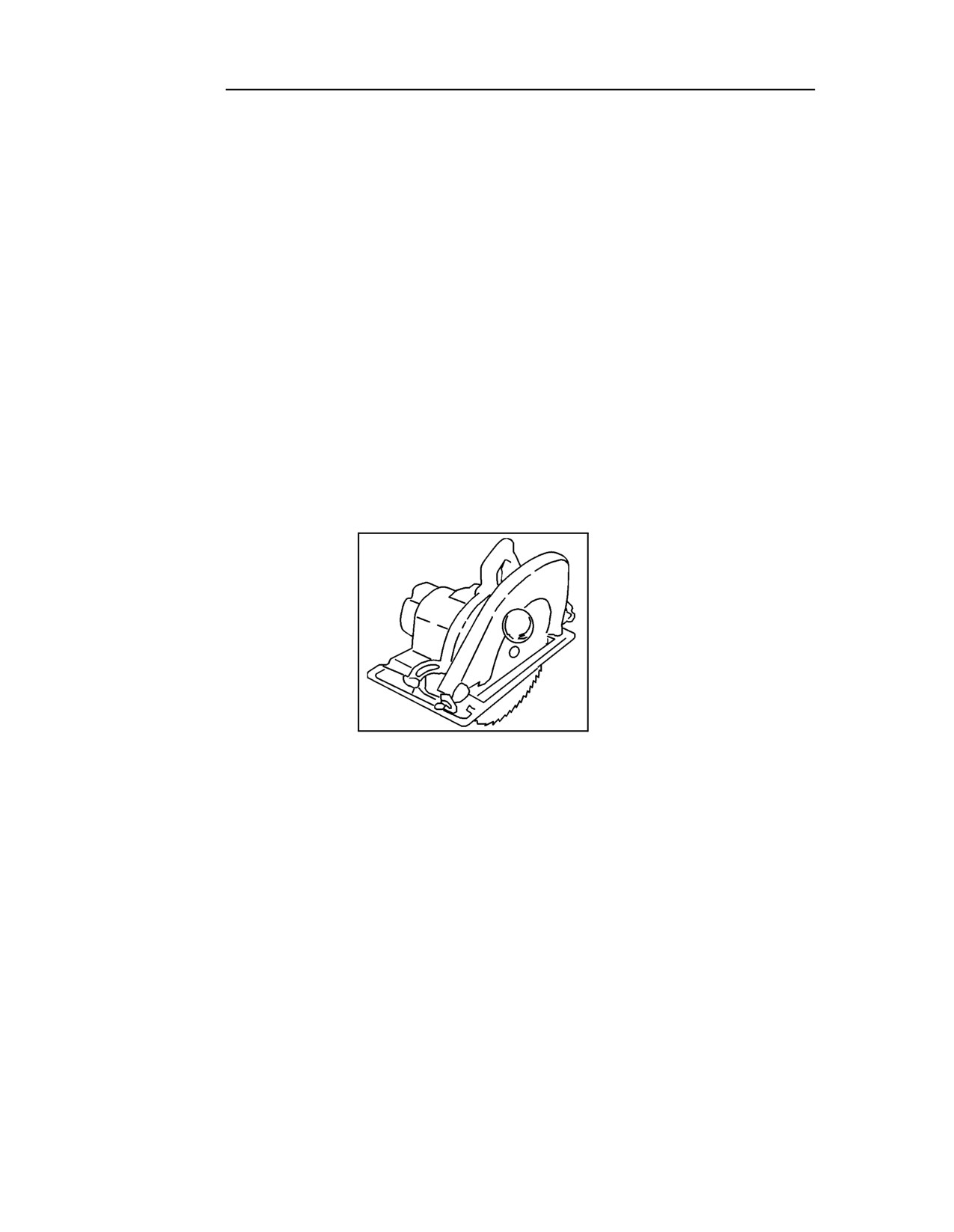
an eccentrically mounted slotted rotor, with each slot containing a
spring-loaded vane. When the throttle is opened, compressed air
enters a small compartment. Pressure on the vanes causes the rotor to
turn in the direction of a larger compartment. A gear train transmits
the rotation to the attachment, which does the work.
9-4 Air Compressors and Pneumatic Tools
FM 5-434
9-11. Two important factors that affect the condition of a pneumatic tool are
lubrication and air pressure.
• Lubrication. To check for proper lubrication of a pneumatic tool,
pass a piece of paper in front of the tool exhaust port. If a thin film of
oil accumulates on the paper, the tool is being properly lubricated. If
drops of oil appear on the paper or if oil foams around the exhaust
port, the tool is over-lubricated. If no oil appears, the lubrication
device should be checked immediately.
• Air pressure. Each tool requires a specified volume of air at a specific
pressure. If the volume of air or pressure is allowed to drop
excessively, considerable damage will result. Check for air leaks in the
hose and around the air connections. Listen to and observe the tool
when it is operating. If a tool appears to be operating sluggishly or
appears to be surging (erratic operation), it has either too much or too
little pressure. The tools should never be operated with less than 70-
or more than 100-psi pressure at the tool. If the air-pressure gauge on
the air compressor continually remains below 70 psi, the unit is
overloaded (too little pressure at the tool).
9-12. Most pneumatic tools are heavy and create a considerable amount of
vibration. A difficulty sometimes encountered with their use is operator
fatigue. This is a particular problem with inexperienced operators. Careful
attention should be given to the selection of operators to ensure that they are
in good physical condition and strong enough to operate the equipment.
AIR MANIFOLDS
9-13. Many construction jobs require more compressed air per minute than
any one compressor will produce. An air manifold is a large-diameter pipe
used to transport compressed air from one or more air compressors without a
detrimental friction-line loss.
CONSTRUCTION
9-14. Manifolds can be constructed of any durable pipe. Compressors are
connected to the manifold with flexible hoses. A one-way check valve must be
installed between the compressor and the manifold. This valve keeps the
manifolds back pressure from possibly forcing air back into a compressor’s
receiver tank. The compressors that are grouped to supply an air manifold
may be of different capacities, but the final discharge pressure of each should
be coordinated at 100 psi. Compressors of different types should not be used
on the same air manifold. The difference in the pressure control systems of a
rotary and a reciprocating compressor could cause one compressor to become
overloaded while the other compressor idles. The Army commonly constructs
air manifolds of 6-inch-diameter invasion piping. Air may be used at any point
along the manifold by installing outlet valves for connecting air lines and
pneumatic tools.
COMPRESSED-AIR DISTRIBUTION SYSTEM
9-15. The purpose of installing a compressed-air distribution system is to
provide a sufficient volume of air to the work site at pressures adequate for
efficient tool operation. Any drop in pressure between the compressor and the
point of use is an irretrievable loss. Therefore, the distribution system is one
Air Compressors and Pneumatic Tools 9-5
FM 5-434
of the most important elements of the total system. Observe the following
general rules in planning a compressed-air distribution system:
• Pipe sizes should be large enough so that the pressure drop between
the compressor and point of use does not exceed 10 percent of the
initial pressure.
• Each header or main line should be provided with outlets as close as
possible to the point of use. This permits shorter hose lengths and
avoids large pressure drops through the hose.
• Condensate drains should be located at appropriate places along the
headers or main lines.
FRICTION LOSSES
9-16. The hose or pipe connecting the tool to the air compressor resists the
flow of air. Consequently, the pressure at the tool end of the line is less than at
the compressor end. The air-line friction increases as the diameter of the hose
or pipe decreases or as the length of the hose or pipe increases. Through
practice, it has been determined that a 200-foot-long, 3/4-inch-diameter hose
is the maximum length and diameter to which a handheld tool can be
connected and operated efficiently. Standard tables (Tables 9-3 and 9-4) are
available for calculating the friction loss in a pipe or hose.
AIR-LINE HOSE
9-17. Air-line hose is a rubber-covered, pressure-type hose used for
transmitting compressed air. Hose with a 3/4-inch inside diameter is used
with hand-operated tools and hose with a 2-inch inside diameter is used with
a crawler-mounted drill. Hose is usually furnished in 50-foot lengths and
equipped with quick-acting fittings (for attaching a tool, a compressor, or
another hose). Leader hose is made of oil-resistant neoprene rubber and has
end attachments. It is used between the air-line oiler and an air tool. Sections
of leader hose are usually 12 or 25 feet long and 1/2 or 3/4 inch in diameter.
AIR-LINE OILER
9-18. The air-line oiler is a reservoir which is placed in the air line directly in
front of the air tool for the purpose of lubricating the tool. As the air passes
through the oiler, it picks up the oil which is carried into the tool. An
adjustable needle controls the amount of oil entering the air stream. There are
both directional and nondirectional oilers. The arrow should be pointed in the
direction of the airflow when it is connected to the air line.
PNEUMATIC TOOLS
9-19. Pneumatic tools are simpler in design than similar gasoline or electric-
powered tools and require less maintenance. A pneumatic tool with
nonsparking attachments can be operated around petroleum products or
explosive materials without presenting a fire hazard.
9-6 Air Compressors and Pneumatic Tools
FM 5-434
Table 9-3. Loss of Air Pressure Due to Friction in a Pipe1
(in psi per 1,000 Feet of Pipe With 100-Pound-Gauge Initial Pressure)
Cubic Feet
Nominal Pipe Diameter (Inches)
of Free Air
Per Minute
1
1 1/4
1 1/2
2
2 1/2
3
3 1/2
4
4 1/2
100
27.9
6.47
2.86
0.77
0.30
—
—
—
—
125
48.6
10.20
4.49
1.19
0.46
—
—
—
—
150
62.8
14.60
6.43
1.72
0.66
0.21
—
—
—
175
—
19.80
8.72
2.36
0.91
0.28
—
—
—
200
—
25.90
11.40
3.06
1.19
0.37
0.17
—
—
250
—
40.40
17.90
4.78
1.85
0.58
0.27
—
—
300
—
58.20
25.80
6.85
2.67
0.84
0.39
0.20
—
350
—
—
35.10
9.36
3.64
1.14
0.53
0.27
—
400
—
—
45.80
12.10
4.75
1.50
0.69
0.35
0.19
450
—
—
58.00
15.40
5.98
1.89
0.88
0.46
0.25
500
—
—
71.60
19.20
7.42
2.34
1.09
0.55
0.30
600
—
—
—
27.60
10.70
3.36
1.56
0.79
0.44
700
—
—
—
37.70
14.50
4.55
2.13
1.09
0.59
800
—
—
—
49.00
19.00
5.89
2.77
1.42
0.78
900
—
—
—
62.30
24.10
7.60
3.51
1.80
0.99
1,000
—
—
—
76.90
29.80
9.30
4.35
2.21
1.22
1,500
—
—
—
—
67.00
21.00
9.80
4.90
2.73
1Compressed Air Handbook, Compressed Air and Gas Institute, 1947.
Table 9-4. Loss of Air Pressure Due to Friction in a Hose1
(in psi per 50 Feet of Hose With 100-Pound-Gauge Initial Pressure)
Cubic Feet of Free
Nominal Hose Diameter (Inches)
Air Per Minute
1/2
3/4
1
1 1/4
1 1/2
20
0.6
0.2
—
—
—
30
2.0
0.4
0.1
—
—
40
4.3
0.6
0.2
—
—
50
7.6
1.0
0.2
—
—
60
12.0
1.4
0.4
—
—
70
17.6
2.0
0.5
0.1
—
80
24.6
2.7
0.6
0.2
—
90
33.3
3.5
0.8
0.2
—
100
44.5
4.4
1.0
0.3
—
110
—
5.4
1.2
0.4
—
120
—
6.6
1.5
0.4
0.1
130
—
7.9
1.8
0.5
0.2
140
—
9.4
2.1
0.6
0.2
150
—
11.1
2.4
0.7
0.2
1Compressed Air Handbook, Compressed Air and Gas
Institute, 1947.
Air Compressors and Pneumatic Tools 9-7
FM 5-434
PAVING BREAKER (JACKHAMMER) (80-POUND)
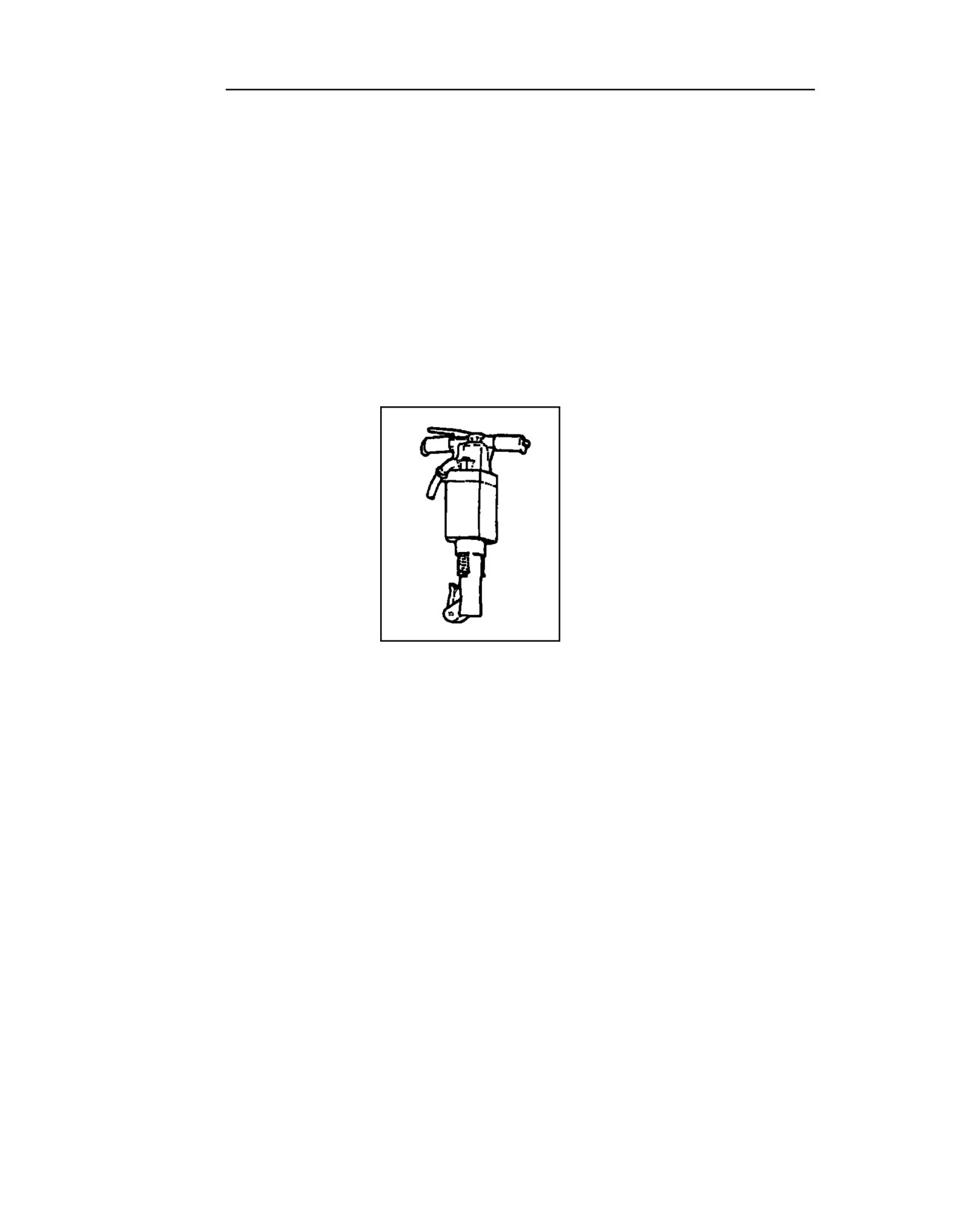
9-20. The pneumatic paving breaker (80-pound weight class) (Figure 9-3) is
used for heavy-duty demolition work on concrete, brick, asphalt, and
macadam. It is also used for demolishing walls, columns, piers, and
foundations and for general rock breaking. A variety of attachments may be
used with this tool, depending on the type of work. This tool is a member of
the reciprocating percussion family of air tools. It weighs 87.5 pounds, uses a
3/4-inch-diameter hose, and requires 65 cfm of air at 80 to 100 psi. It is
constructed so that it may be separated into three major groups of parts: the
back head, the cylinder, and the front head. The back-head group contains the
air controls, the oil reservoir, and the handle. The cylinder group consists of
the cylinder, the piston, and the automatic valve assembly. The front-head
group provides the means for holding the tool steel or any attachment.
Figure 9-3. Paving Breaker (80-Pound)
Attachments
9-21. Four primary attachments are issued with this paving breaker. They are
the moil point, the chisel point, the tamper, and the sheeting driver.
• The moil point is a 20-inch-long piece of 1 1/4-inch-diameter hexagonal
tool steel that is pointed at one end and has a retainer collar 6 inches
from the opposite end. It is used to break through concrete, stone, or
other material having a similar high-abrasive and high-density
character.
• The chisel point is similar to the moil point except that it has a 3-inch-
wide working edge that is used to cut macadam, frozen ground, or
extremely hard earth. It can be used for making a marking line to
serve as a guide when cutting concrete.
• The tamper is a 5- to 7-inch-diameter steel pad, mounted on a 1 1/4-
inch-diameter hexagonal tool steel. It is used to compact loose
material.
• The sheeting driver is made of two steel angles and an impact pad
that transmits the blow to the wood or metal sheeting that is being
driven.
9-8 Air Compressors and Pneumatic Tools
FM 5-434
Production
9-22. Since job-site conditions and the mechanical condition of the air
compressors and the pneumatic tools vary on each project, it is not possible to
predict the work output of pneumatic tools on all jobs. In nonreinforced, 6- to
8-inch-deep concrete using a moil point, the average work output will range
from 50 square feet per hour in large areas to 12 square feet per hour in
narrow cuts. In reinforced concrete, production may drop to 50 square feet per
8-hour shift.
Operation
9-23. Hold down the paving breaker while it is in operation, but use only
sufficient pressure to guide the tool and keep it in place. Leaning heavily on
the paving breaker will shorten the stroke of the tool attachment and result in
less work output. Breakers can best be operated in tandem. Only small bites
(4 to 8 inches behind the working face) should be taken when breaking hard
materials. If a moil point becomes stuck, use a second breaker to break the
material binding the point. If the point becomes stuck when using a single
breaker, take the paving breaker off and use another point to break the stuck
point free. Other important operating precautions are as follows:
• Wear double hearing protection.
• Wear goggles to protect eyes from chips and dust.
• Ensure that the shank of each attachment is the correct size.
Improper shank sizes will reduce the effectiveness of the blow and will
cause damage to the paving breaker.
• Keep the points of the attachments sharp.
• Keep all nuts tight. The air hose to the paving-breaker connections
should be checked frequently to ensure that no air is escaping.
• Provide a clear work area for efficient tool operation.
Maintenance
9-24. Maintenance problems inherent with the paving breaker are caused by
improper use of the attachments. Too often, attempts are made to drill holes
with the moil point. The moil point is a breaking device. Attempting to drill
holes with it will break the point. The chisel point is designed for cutting
asphalt and soft materials. If it is used for breaking concrete, the point will be
damaged beyond repair. A frequent source of trouble with the paving breaker
is breakage of the tool-latch retainer bolt. The cause of this is the operator not
shutting off the tool when the moil point breaks through the material. The
front head bounces on the concrete and causes the retainer bolt to break.
PAVING BREAKER (CLAY DIGGER) (25-POUND)
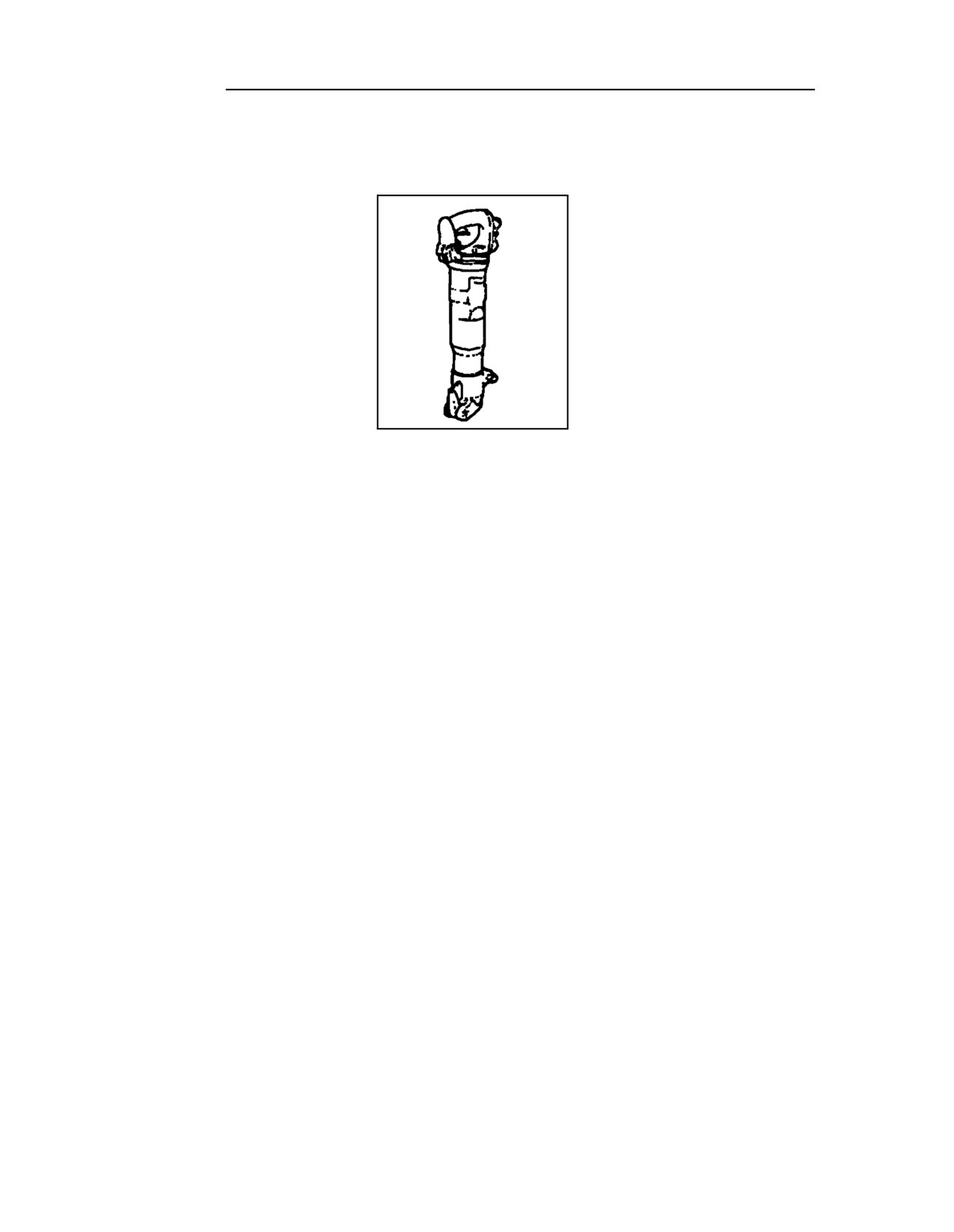
9-25. The pneumatic paving breaker (25-pound weight class) (Figure 9-4, page
9-10) is a medium-weight tool made for spading, trimming, cutting, or picking
clay, hardpan, or frozen ground. It weighs 25.2 pounds, uses a 1/2-inch-
diameter hose, and requires 35 cfm of air at 80 to 90 psi. It is constructed so
that it may be separated into three major groups of parts: the back head, the
cylinder, and the front head. The back-head group includes the handle. The
cylinder group constitutes the main body of the tool. It includes the hammer,
Air Compressors and Pneumatic Tools 9-9
FM 5-434
which is driven against the shank of the tool by the air pressure. The front-
head group is the tool retainer.
Figure 9-4. Paving Breaker (25-Pound)
Attachments
9-26. The three primary attachments normally issued with this breaker are
the moil point, the pick, and the spade. A metal, drum-ripping tool may be
issued for opening 55-gallon drums.
9-27. The moil point consists of a 15-inch straight length of 1-inch-diameter
tool steel that is pointed on one end. It is used as a light demolition tool on
masonry, concrete, or other dense material.
9-28. The pick’s blade is 3 inches wide by 8 inches long with a pointed cutting
end. It is used for digging into frozen ground, cemented gravel, or other
materials too hard to be penetrated by the spade.
9-29. The spade (shaped like a garden spade) is 5 1/2-inches wide by 8-inches
long. It is used for digging trenches, preparing footings or foundations, digging
caissons, driving tunnels, or doing any general digging that is too difficult and
slow for an ordinary hand spade.
9-30. The metal, drum-ripping tool has a 1-inch-wide cutting blade, topped by
a 5/8-inch-thick, extended snubnose. The Army has the following two types—
• Type I is used to cut heads from metal drums. The nose of this ripping
tool is curved to allow it to easily follow the curvature of the head on
the drum.
• Type II is used to split metal drums lengthwise. It has a straight nose
and is capable of opening 20 to 30, 55-gallon drums per hour.
Production
9-31. The attachment used most frequently with the 25-pound breaker is the
clay spade. About 12 cubic yards of tough clay can be loosened per 10-hour
shift.
9-10 Air Compressors and Pneumatic Tools
FM 5-434
Operation
9-32. Operators should merely guide the tool, never ride or lean on it. The tool
is designed for trimming or digging, not for prying.
Maintenance
9-33. Give particular attention to the tool’s retainer assembly. Dirt and other
abrasive materials will enter the bottom of the retainer and cause excessive
wear. This wear can be prevented if the tool is not allowed to penetrate past
the wide portion of the clay spade.
NAIL DRIVER
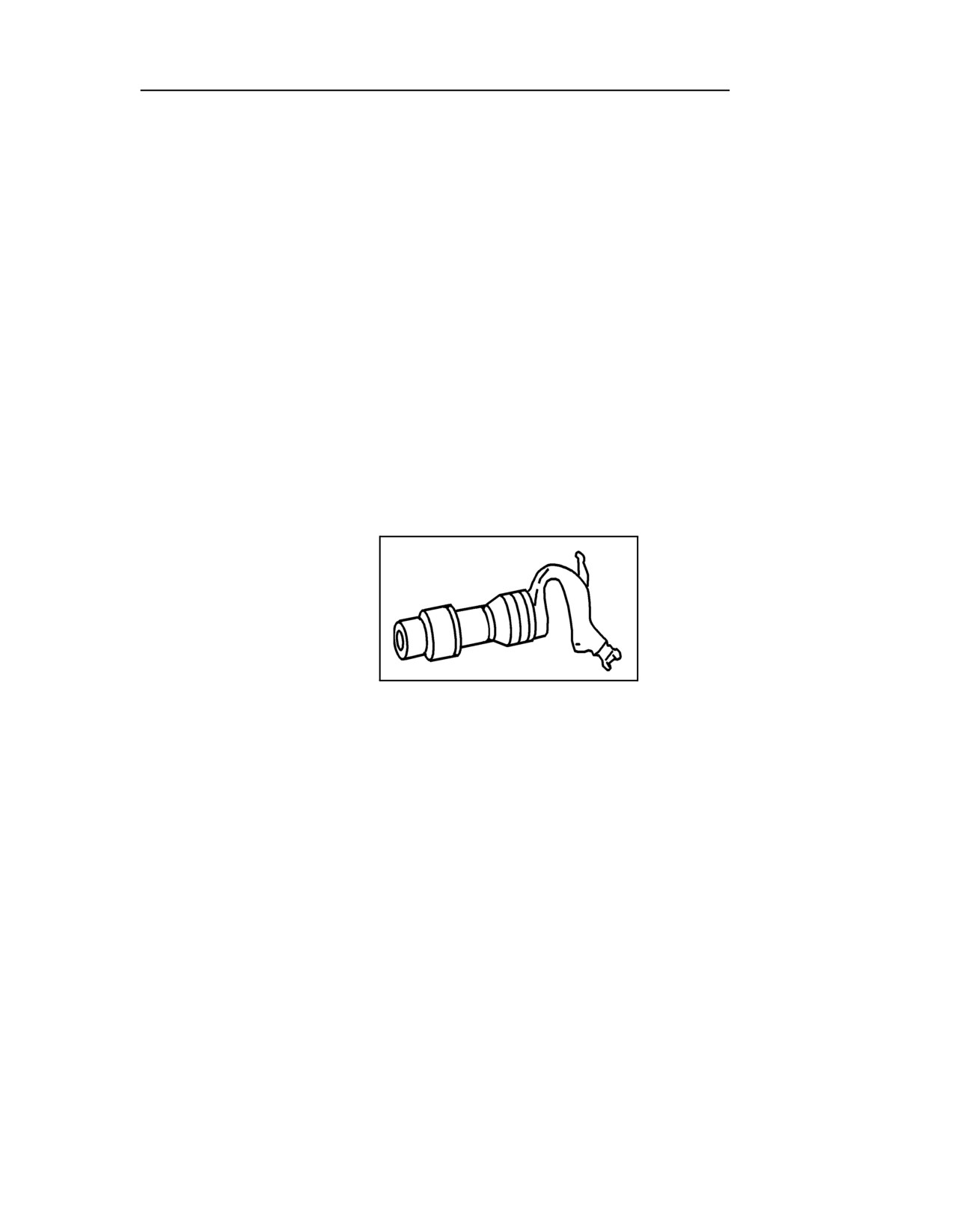
9-34. The pneumatic nail driver (Figure 9-5) is a long-stroke, piston-action
riveting hammer. The nail driver is designed for driving heavy drift pins and
spikes. It weighs 24 pounds, uses a 1/2-inch-diameter hose, and requires 30
cfm of air at 90 psi. The handle is formed to fit the hand, with a thumb-
operated throttle lever that controls the admission of air. The barrel of the
driver houses the valve mechanism, the piston, and the nail set. A sleeve on
the end of the nail set prevents the tool from sliding off the head of the nail. A
safety set retainer screws onto the nozzle end of the barrel and holds the nail
set in the tool at all times.
Figure 9-5. Nail Driver
Attachments
9-35. The nail driver is issued with 1/2- and 3/4-inch nail sets and a rivet
buster.
Production
9-36. Used as a nail driver, 250 60-penny nails can be driven per hour (after
the nails have been started by hand).
Operation
9-37. Always start the nails or spikes with a handheld hammer. The nail
driver must be in line with the nail or spike being driven and should strike the
nail or spike squarely to minimize the possibility of bending.
Maintenance
9-38. The retainer housing on a nail driver often breaks because the operator
fails to keep the nail set against the work. Any attempt to countersink a nail
will result in a broken retainer spring.
Air Compressors and Pneumatic Tools 9-11
FM 5-434
CIRCULAR SAW
9-39. The pneumatic circular saw (Figure 9-6) may be used for ripping and
crosscut tasks. It weighs 32 1/2 pounds, uses a 1/2-inch-diameter hose, and
requires 75 cfm of air at 80 to 100 psi. The handle assembly includes a D-
shaped handle with a trigger-type throttle and a thumb-operated plunger
lock. The body contains a rotary-vane air motor with a flyball governor that
limits the motor speed to 2,400 rpm. A fixed blade guard is attached to the left
side of the body to protect the operator. The top handle (above the body) is
used to control and guide the saw. The foot is hinged to the front of the upper
blade guard through a sector. By loosening a wing nut on this sector, the foot
can be tilted for bevel cuts up to 45°. At the back of the foot a second sector,
secured by a wing nut, permits adjustment of the depth of cut from 2 3/8 to 6
inches. Two V-shaped notches on the front of the foot simplify cutting along a
line. The deeper V-notch is in line with the blade for right-angle cuts, while
the smaller V-notch is in line with the blade for 45° bevel cuts. A rip fence
(attached to the front of the foot by means of a wing screw) should be used for
ripping when long cuts must be made. A telescopic blade guard covers the
lower portion of the blade when the saw is not being used. This guard is
spring-loaded so it closes automatically when the blade is lifted from the cut,
but folds into the fixed blade guard when the saw is being operated.
Figure 9-6. Circular Saw
Attachments
9-40. This saw is issued with a 12-inch combination blade used for ripping and
crosscutting in wood only. When equipped with the proper abrasive disk, the
pneumatic saw can be used to cut brick, stone, concrete, tile, asbestos cement
sheets, steel, or cast iron. No one type of abrasive disk or saw blade is suited
for all materials. Order these items carefully for each specific kind of work.
Production
9-41. Using the combination blade for crosscutting, the saw will cut a 4- by 4-
inch board in 30 seconds. The maximum depth of cut at 90° is 4 3/8 inches.
Operation
9-42. Always use the proper blade for the material being cut. Make sure that
the material to be cut is free of nails, spikes, or similar objects. Never jam the
saw into a cut. If the saw is to be used upside down for prolonged periods of
9-12 Air Compressors and Pneumatic Tools
FM 5-434
time, be careful that the exhaust port does not become clogged. Keep hands
away from the blades, and shut off the air when the tool is not in use.
Maintenance
9-43. In many cases, the pneumatic circular saw is inverted and used as a
table saw. When this is done, the exhaust port is exposed to the woodcuttings.
An accumulation of these cuttings will clog up the air motor and make the saw
useless.
CHAIN SAW
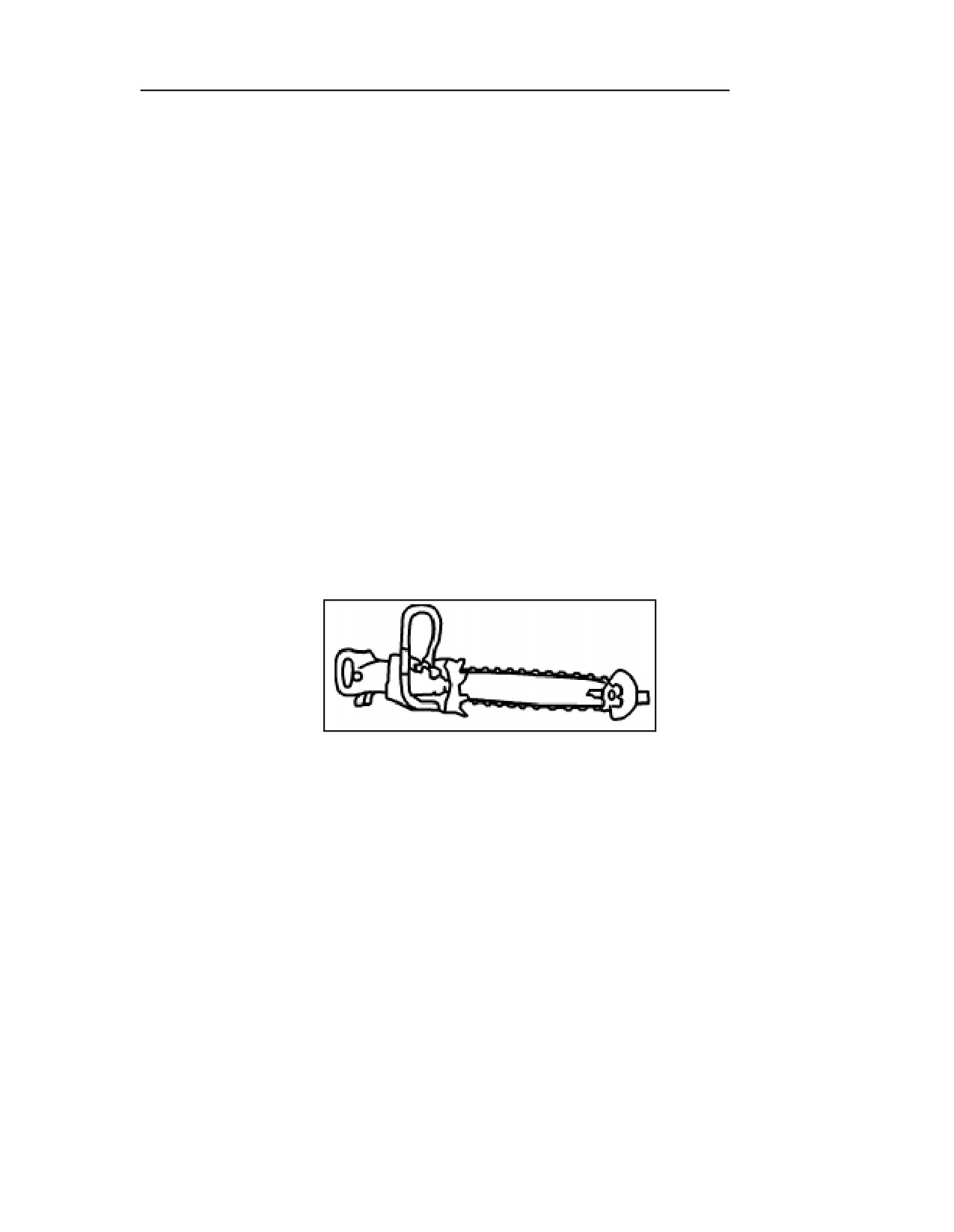
9-44. The pneumatic chain saw (Figure 9-7) is a heavy-duty saw intended
primarily for cutting trees or timbers up to 24 inches in diameter. It weighs 45
pounds and requires 90 cfm of air at 80 to 100 psi. The hose diameter varies
with the distance to the air source (25 feet or less from source, 5/8 inch; 26 to
100 feet from source, 3/4 inch; more than 100 feet from source, 1 inch). The
head assembly consists of a drive housing, two handles, a guide bracket, a
bumper, and an air connection. The drive housing contains a four-vane rotary
motor. A guard bar made of heavy steel extends from the head assembly to the
idler assembly and is slightly arched so it lies about 3/4 inch from the upper
portion of the chain. Its purpose is to protect the operator from injury in the
event of a break in the chain. The saw should never be operated without this
guard. The guard bar issued with the chain saw is for the 24-inch-length saw;
however, guard bars are available through supply channels for the 36- and 48-
inch-length saws. Use of a 48-inch bar requires two operators.
Figure 9-7. Chain Saw
Chains
9-45. The standard chain has a 3/4-inch pitch and a 3/8-inch cut for general-
purpose use on any capacity saw. It is used for felling and for cutting
hardwood or softwood. It is easy to sharpen and holds its cutting edge for a
relatively long time. This chain consists of three-link sets. The link in the
center of each set contains a raker tooth. Raker teeth are set alternately in the
sets, to the right and left. The first and third links in each set contain a cutter
tooth. The cutter teeth alternate on the chain, with the teeth set to the right
and to the left. The cutter teeth control the width of the cut. A 76-inch chain is
issued with the 24-inch-length chain saw; however, chains of 100 and 124
inches are available through supply channels for use with 36- and 48-inch-
length saws.
Air Compressors and Pneumatic Tools 9-13
FM 5-434
Production
9-46. The chain saw can cut through a 12-inch hardwood log in 50 seconds.
Never force the saw into the wood, but allow it to cut at its own speed. Be
careful to ensure that the saw does not twist while cutting.
Maintenance
9-47. Keep the chain at the proper tension and properly sharpened. The blade
should be adjusted to maintain a 1/2-inch chain slack when pulled up at the
center. More slack than this will allow the chain to jump out of the saw guide,
causing the blade to bend or break. If the chain is too tight, it will bend and
cause sprocket damage.
WOOD DRILL
9-48. The pneumatic wood drill is a heavy-duty, low-speed tool designed to
drive auger-type drill bits. It weighs 27 1/2 pounds, uses a 3/4-inch-diameter
hose, and requires 60 cfm of air at 80 to 100 psi. It is used extensively in
trestle bridge and other timber construction work where it is necessary to drill
holes for bolts and pins. The drill body houses a rotary-vane air motor, a gear
train (for reducing the motor speed to a chuck speed of about 800 rpm), and an
oil reservoir. A chuck is provided for 1/2-inch-diameter drill-bit shanks and a
large Allen-type setscrew holds the shank in place. There are two types of
chucks—the Morse-taper and the two-screw. The shaft, on which the chuck is
mounted, is drilled so the shank will extend into the base of the grip handle. A
slot in the base of this handle provides for insertion of a wedge against the end
of the bit to loosen it if it is jammed in the chuck. The air line is attached to
the end of the throttle handle.
Attachments
9-49. Auger-type drill bits are issued in 1- and 3-foot lengths and have 7/16-,
3/4-, 1-, and 2-inch diameters.
Production
9-50. The drill will bore 125 36-inch-deep holes in one hour using a 2-inch-
diameter auger bit.
Operation
9-51. The rotation of the wood drill can be reversed. Always start the drill
slowly until the screw is well set. Hold the drill firmly, but do not force it.
Exert enough effort to counteract the tendency of the tool to rotate, and be
prepared to resist the torque in case the bit becomes stuck. During boring and
withdrawing of the auger, keep it in line with the hole.
Maintenance
9-52. The auger bit frequently becomes stuck in the chuck. Remove it by using
the auger ejector. Trying to knock it out with a hammer will result in damage
to the chuck and/or the auger.
9-14 Air Compressors and Pneumatic Tools
FM 5-434
SUMP PUMP
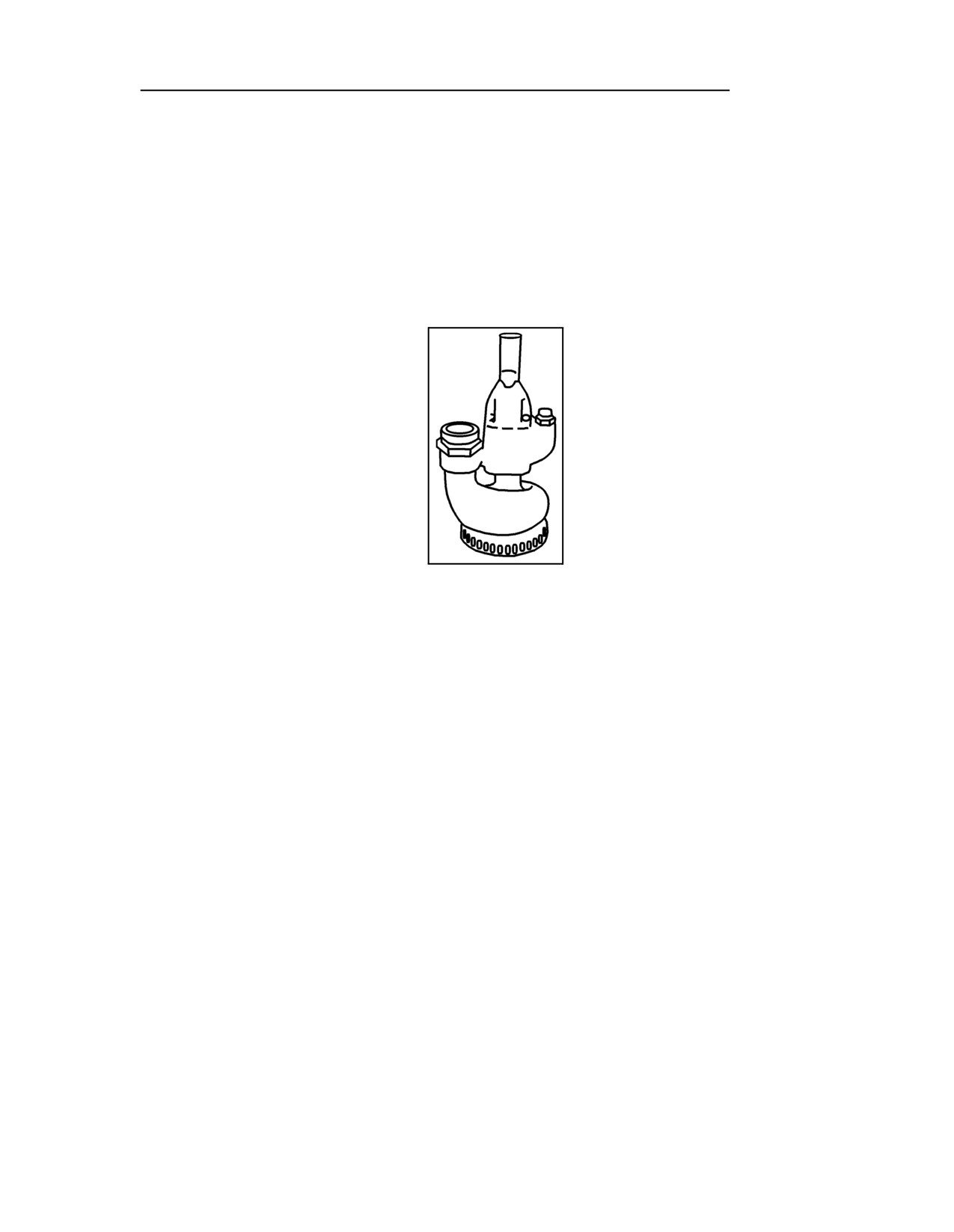
9-53. The pneumatic sump pump (Figure 9-8) is a small-capacity pump. The
sump pump weighs 50 pounds, uses a 3/4-inch-diameter hose, and requires
100 cfm of air at 80 to 90 psi. Due to its simple, rugged construction it requires
little attention. It can operate while completely submerged when an exhaust
line is used. The pump assembly consists of an open-impeller centrifugal
pump. A combination bottom plate and inlet strainer cover the pump intake
opening, and a 3-inch exhaust connection is mounted on the side of the pump
housing.
Figure 9-8. Sump Pump
Production
9-54. The pneumatic sump pump may be either a Class 1 (for transferring
sewage and sludge) or a Class 2 (for transferring petroleum products). This
pump is rated at 175 gallons per minute (GPM) against a 25-foot head or 150
GPM against a 150-foot head.
Operation
9-55. To ensure maximum efficiency, keep the inlet strainer clean and free of
debris. Keep the pump away from mud, and clean the strainer as often as is
necessary. Keep the exhaust-line outlet above the water level. Use only water-
pump grease in the fittings on the pump. Drain the pump of water when not
using it.
Maintenance
9-56. If silt and dirt are left in the pump after use, it will cause the impeller to
stick and will require disassembly and cleaning before it can be used again.
Allowing water to get into the pump through the exhaust port will cause
failure of the grease seals.
STEEL DRILL
9-57. The pneumatic steel drill is a portable tool for drilling, reaming, and
tapping in metals. The drill weighs 27.5 pounds, uses a 1/2-inch-diameter
hose, and requires 27 cfm of air at 90 to 100 psi. The chuck speed is 425 rpm.
It is suitable for 1 1/4-inch drilling and 1-inch reaming or tapping.
Air Compressors and Pneumatic Tools 9-15
FM 5-434
Attachments
9-58. Bits for use with this drill are 1/2-inch in diameter with a Number 3
Morse-taper shank.
Production
9-59. Used as a drill, thirty 1-inch holes can be drilled per hour if the steel
plate has been prepared beforehand with 1/4-inch lead holes.
Operation
9-60. The rotation of the steel drill cannot be reversed. It is important to
ensure that the bits have clean, sharp edges, and that they are not chipped or
damaged in any way.
• Use cutting oil to cool and lubricate the drill bit.
• Use a center punch to mark the center and to hold the tip of the drill
in place when starting a hole.
• Do not use worn chucks.
• Wear goggles to protect eyes from steel chips or shavings.
• Clamp all material that is being drilled to a bench. This will prevent
injuries to personnel if the drill should bind in the material.
Maintenance
9-61. The bit will be damaged due to heat if cutting oil is not used. Too much
pressure applied to the bit will stall the drill and cause undue wear on the
gear assembly. This can damage the feed-screw system.
HANDHELD ROCK DRILL
9-62. The pneumatic handheld rock drill is a piston-action unit with
independent air-motor rotation. It is designed primarily as a hard-rock drill;
however, it is also efficient in soft and medium formations. It weighs 57
pounds, uses a 3/4-inch-diameter hose, and requires 95 cfm of air at 80 to 100
psi. The drill consists of a back-head group, a cylinder unit, and a front-head
group. It is designed so that air may be directed through the drill, down the
drill steel, and into the bottom of the hole to blow out rock cuttings.
Attachments
9-63. This drill is issued with drill rods in 2-, 4-, 6-, and 8-foot lengths and
drill-bits of 1 5/8, 1 3/4, 1 7/8, and 2 inches.
Production
9-64. The drill is designed for vertical drilling. If large numbers of horizontal
holes are required, some mechanical means must be devised for holding the
drill in place. It will drill holes efficiently to a depth of 10 feet. See Table 9-2,
page 9-3, for production rates.
Operation
9-65. Bent drill steels should not be used. They cause damage to the drill and
usually result in a stuck bit and lost production.
9-16 Air Compressors and Pneumatic Tools
FM 5-434
SAFETY
9-66. Be very careful when working with compressed air. At close range it is
capable of putting out eyes, bursting eardrums, causing serious skin blisters,
or even killing an individual.
AIR COMPRESSORS
•
Ensure that the intake air is cool and free from flammable gases or
vapors.
•
Do not permit wood or other flammable materials to remain in contact
with the air-discharge pipe.
•
Shut down the compressor immediately if the air discharged from any
stage rises unduly or exceeds 400°F.
•
Ensure that all the pressure gauges are in good working order.
•
Do not kink a hose to stop the air flow.
•
Check the safety valves, pressure valves, and regulators to determine
if they are working properly before starting the air compressor.
•
Do not leave the compressor after starting it, unless you are certain
that the control, unloading, and governing devices are working
properly.
•
Do not run an air compressor faster than the manufacturer’s
recommended speed.
•
Use only the proper grade of oil as recommended by the manufacturer.
•
Use only oils which have high flash points to lubricate the air
cylinders.
•
Avoid the application of too much oil.
•
Keep the compressor, the tanks, and the accompanying piping clean to
guard against oil-vapor explosion.
•
Clean the intake air filters periodically.
•
Use only soapy water or a suitable nontoxic, nonflammable solution
for cleaning compressor intake filters, cylinders, or air passages.
Never use benzene, kerosene, or other light oils to clean these portions
of a system. These oils vaporize easily and the vapor will explode when
compressed.
•
Turn off the motor before making adjustments and repairs.
•
Make certain that the compressor is secured and cannot be started
automatically or by accident, that the air pressure in the compressor
is completely relieved, and that all the valves between the compressor
and the receivers are closed before working on or removing any part of
the compressor.
PNEUMATIC TOOLS
•
Wear protective clothing and equipment (such as goggles, gloves, and
respirators) appropriate for the particular pneumatic tool being
operated.
•
Maintain a firm grip on the tool at all times.
•
Maintain a good footing and proper balance at all times while
operating pneumatic tools.
Air Compressors and Pneumatic Tools 9-17
FM 5-434
•
Release the throttle of the tool at the first indication that the tool is
out of control. Release the tool and let it fall if it cannot be controlled.
•
Turn off the air and disconnect the tool when repairs or adjustments
are being made or the tool is not in use. When disconnecting the tool,
all pressurized air should be discharged from the line before the
connection is broken.
•
Inspect the hose to ensure that it is in good condition and free from
obstructions before connecting a pneumatic tool. When blowing out
the line, make certain the end of the hose is pointed into the air and is
secured against whipping. Make certain all connections are tight
before the line is pressurized.
•
Lay down pneumatic tools in such a manner that no harm can be done
if the switch is accidentally tripped. Do not leave an idle tool in a
standing position.
•
Keep pneumatic tools in good operating condition and thoroughly
inspect them at regular intervals. Give particular attention to the
control and exhaust valves, the hose connections, the guide clips on
hammers, and the chucks of reamers and drills.
•
Shut off the tool and relieve the pressure from the line before
disconnecting the tool from the line.
•
Remove leaking or defective hoses from service. The air hose must be
suitable to withstand the pressure required for the tool.
•
Do not lay the hose over ladders, steps, or walkways in such a manner
as to create a tripping hazard.
•
Where a hose is run through a doorway, protect the hose against
damage from the door’s edge.
•
Do not lay the hose between the operator’s legs while the tool is being
operated.
•
Never point an air hose at other personnel. Do not use compressed air
to clean clothing being worn or to blow dust off the body.
Handheld Rock Drills
•
Do not (under any circumstances) wear loose or torn clothing.
•
Examine the drill for defects. Pay particular attention to bit flutes,
which must be ground to uniform size, sharpness, and length.
•
Hold the machine on a straight line with the hole being bored.
•
Do not feed the machine too fast.
•
Establish a firm footing before starting the operation.
•
Do not modify or bypass the handgrip switch. (All drills are equipped
with a handgrip switch that will shut off the air supply when the grip
is released.)
Paving Breakers
•
Wear suitable goggles when operating pneumatic breakers.
•
Roughen hard materials or slick surfaces with a sledgehammer to
improve breaker control.
9-18 Air Compressors and Pneumatic Tools
Chapter 10
Hauling Equipment
The most common hauling equipment used for Army construction work
are the 5- and 20-ton dump trucks, both of which are organic to most
engineer units. Equipment trailers are used to transport heavy
construction equipment not designed for cross-country travel. They are
also used to haul long, oversize items and packaged items.
DUMP TRUCKS
USE
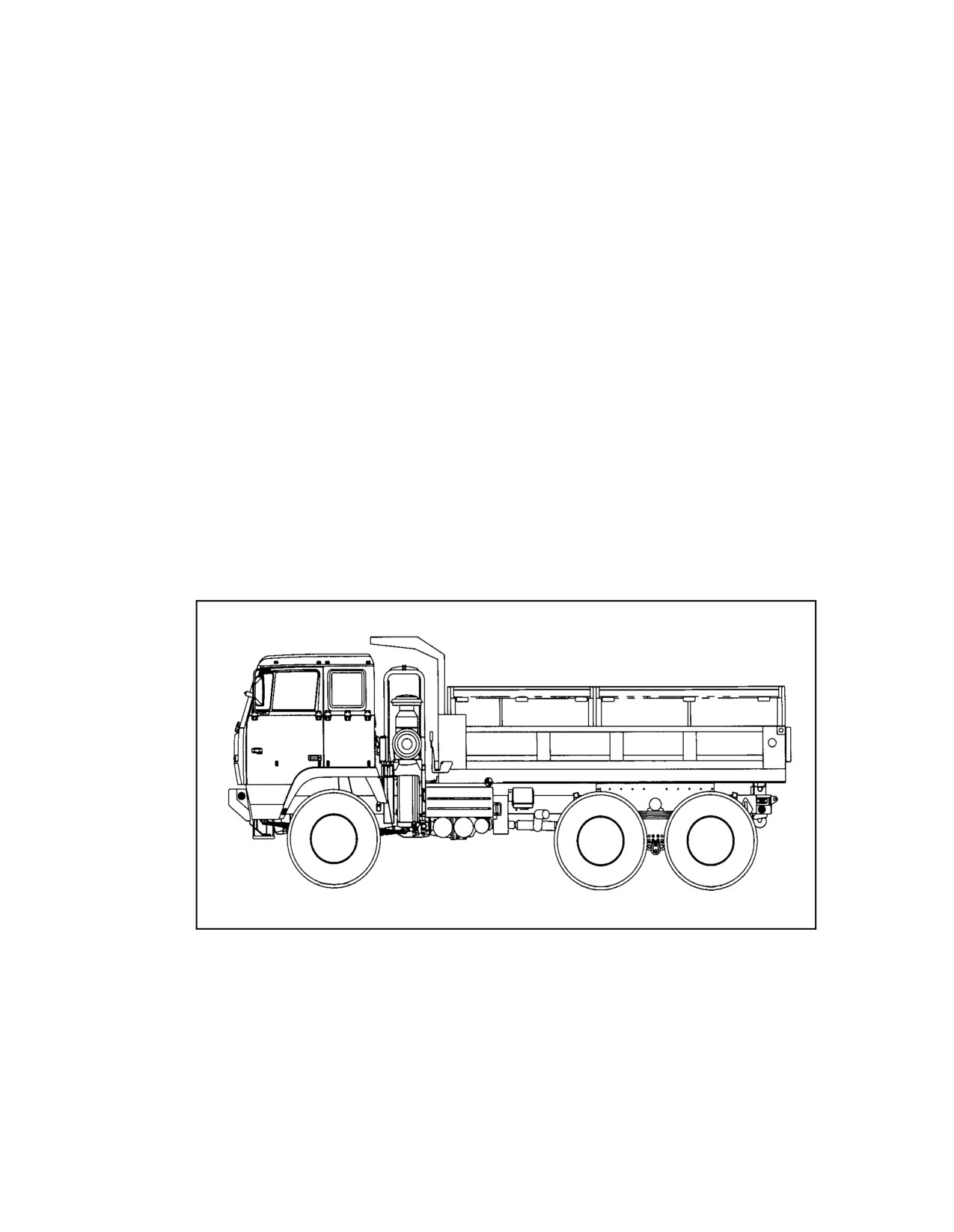
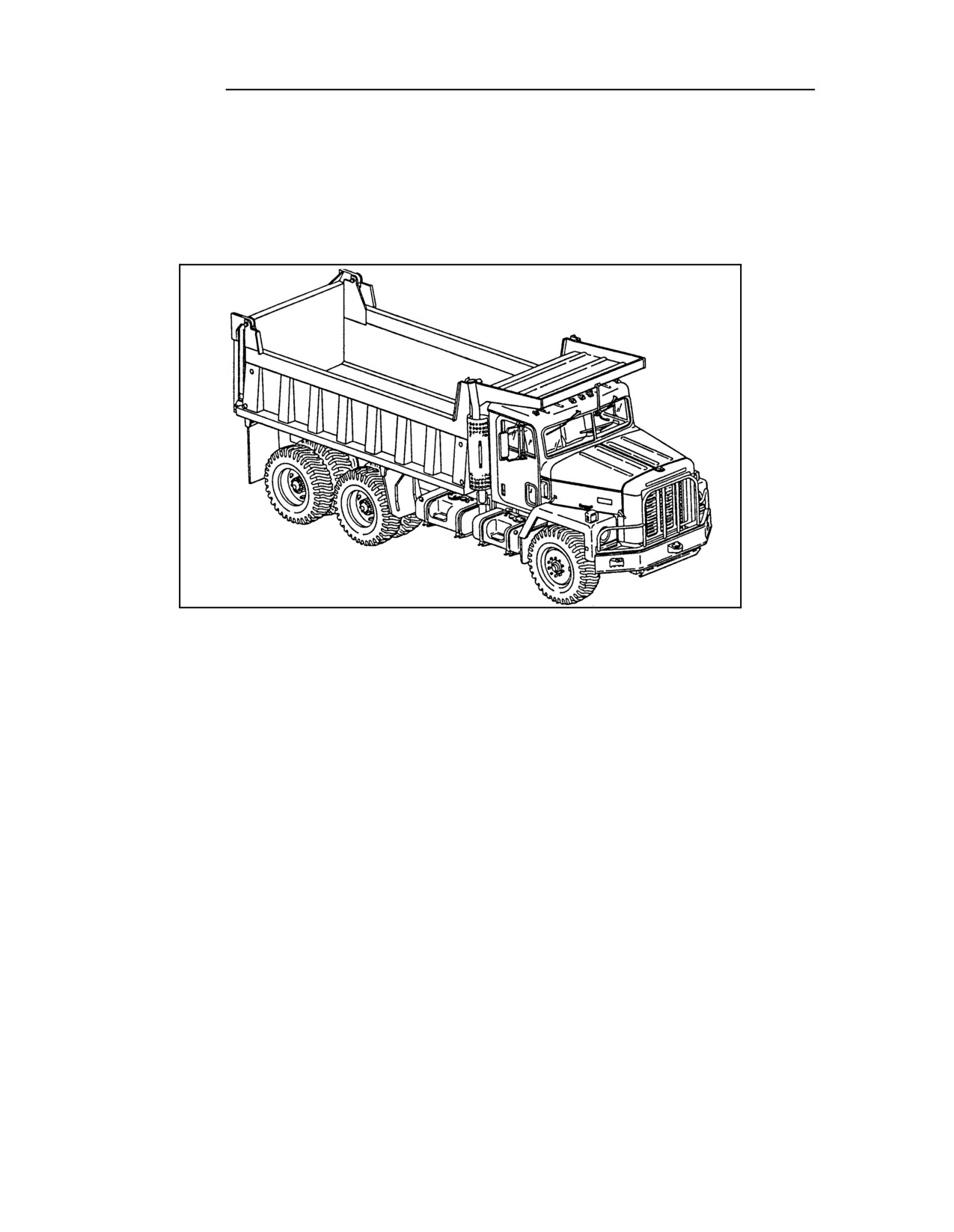
10-1. The 5-ton family of medium tactical vehicles (FMTV) (Figure 10-1) and
the 20-ton (Figure 10-2, page 10-2) dump trucks can be used for a variety of
purposes. This manual, however, discusses dump trucks used primarily for
hauling, dumping, and spreading earth, rock, or processed aggregates.
Figure 10-1. Dump Truck (5-Ton) FMTV
CAPACITY
10-2. The capacity of hauling equipment is expressed in one of three ways:
gravimetrically by the weight of the load it will carry (in tons), by its struck
rear-dump body volume (in cubic yards), or by its heaped rear-dump body
capacity (in cubic yards). The hauling capacity of Army dump trucks is
Hauling Equipment 10-1
FM 5-434
normally expressed gravimetrically: 5-ton and 20-ton. Conversely, the
capacity of loading equipment is normally expressed in cubic yards. The unit
weight of the various materials to be transported may vary from as little as
1,700 pounds per LCY for dry clay, to 3,500 pounds per LCY for trap rock (see
Table 1-2, page 1-4, for weights of common materials). Always make sure that
the volumetric load does not exceed the gravimetric capacity of the truck.
Figure 10-2. Dump Truck (20-Ton)
OPERATION
Loading
10-3. For maximum efficiency, fill trucks as close to their rated hauling
capacity as practical. Adjust the load size if haul roads are in poor condition or
if the trucks must traverse steep grades. Overloading will cause higher fuel
consumption, reduced tire life, and increased mechanical failures.
10-4. Use spotting markers when trucks are hauling from a hopper, a grizzly
ramp, or a stockpile. Spotting markers are also beneficial when excavators
(such as a dragline, a clamshell, a loader, a backhoe, or a hoe) are used to load
hauling equipment. They facilitate prompt and accurate vehicle spotting
which improves loading efficiency.
10-5. Spot trucks as close to the bank as possible when loading with an
excavator. Ensure that the trucks are within the working radius of the
dragline, the clamshell, or the hoe bucket. When using a loader, position the
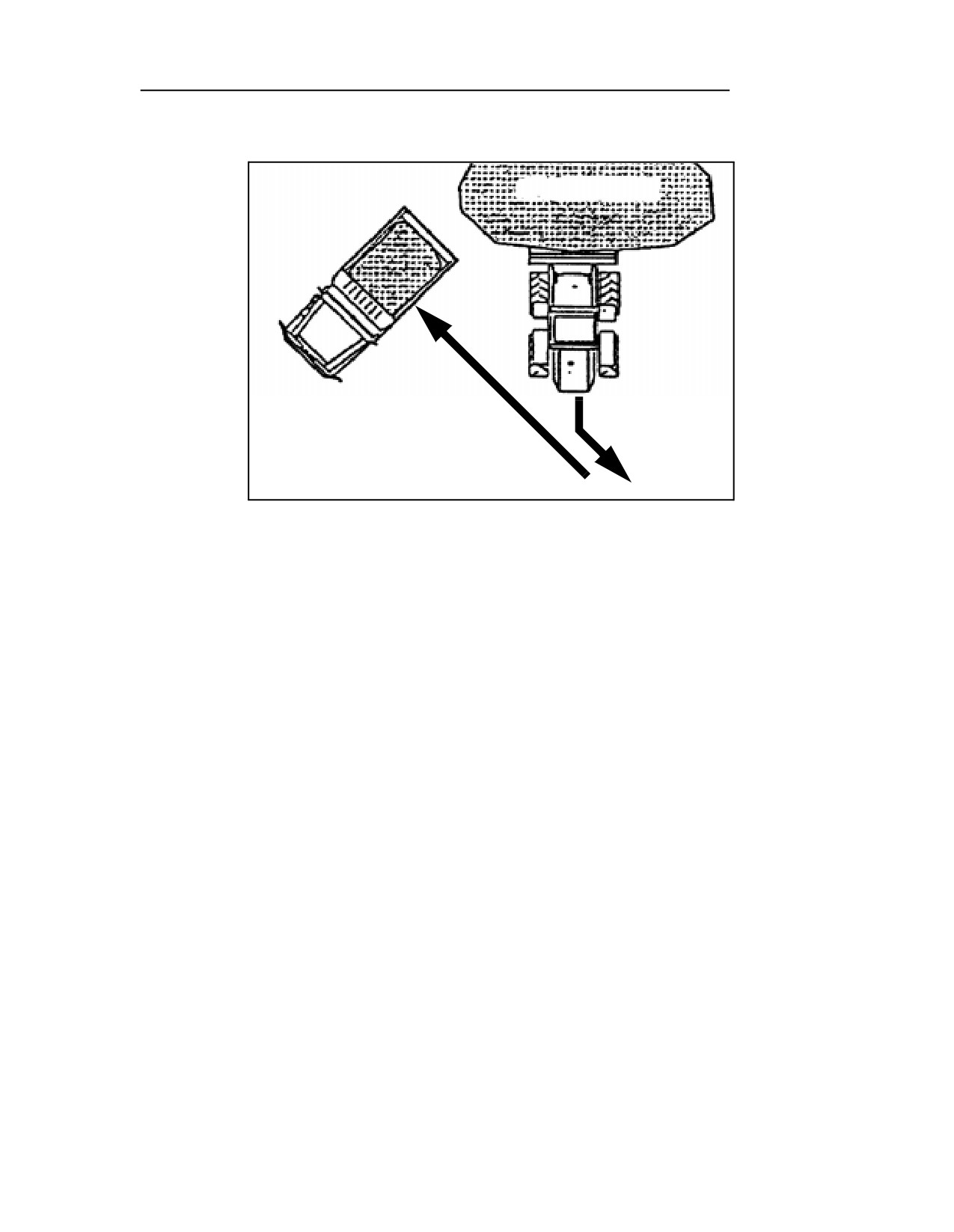
truck and loader so that the two machines form a V. This arrangement will
reduce the loader cycle time (Figure 10-3).
10-2 Hauling Equipment
FM 5-434
Stockpile
Truck
Loader
Figure 10-3. Truck and Loader V-Positioning for Loading
Maintaining Proper Speed
10-6. Haul at the highest safe speed and in the proper gear, without speeding.
Speeding is unsafe and hard on equipment. When several trucks are hauling,
it is essential to maintain the proper speed to prevent hauling delays or
bottlenecks at the loading and dumping sites. Use separate haul roads to and
from the dump site, if possible. Keep haul roads well maintained, with a
minimum grade. Use one-way traffic patterns to increase efficiency.
Dumping (Unloading)
10-7. Always use spotters to control dumping operations. When dumping
material that requires spreading, move the truck forward slowly while
dumping the load. This makes spreading easier. Establish alternative
dumping locations to maintain truck spacing when poor footing or difficult
spotting slow the dumping operation.
Preventive Maintenance
10-8. Keep truck bodies clean and in good condition. Accumulations of rust,
dirt, dried concrete, or bituminous materials hamper production. Consider the
time spent cleaning and oiling dump bodies, particularly for asphalt or
concrete hauling, when computing transportation requirements.
• Clean truck bodies thoroughly at the end of the day. When used to
haul wet concrete mix, spray the dump beds with water before loading
and clean them thoroughly as soon as practical after dumping.
• Coat the walls and sides of truck bodies with diesel fuel or oil to
prevent bituminous materials (plant-mix asphalt) from sticking.
Hauling Equipment 10-3
FM 5-434
PRODUCTION ESTIMATES
10-9. The production capacity of the loading equipment is normally the
hauling operation’s controlling factor. Never keep loading equipment waiting.
If there are not enough trucks, there will be a loss in production.
Number of Trucks Required
10-10. Use the following formula to estimate the number of trucks required to
keep loading equipment operating at maximum capacity:
truck cycle time (minutes)
Number of trucks required
=
1
+ -----------------------------------------------------------------------------
loader cycle time (minutes)
• The numeral 1 in the formula is a safety factor against the necessity
for closing down loading equipment due to lack of hauling equipment.
If all operations are on schedule, one truck will always be standing by
at the loader, ready for spotting.
• The truck cycle time is the time required for a truck to complete one
cycle of operation. One complete cycle is the time a loaded truck takes
to travel to the dump site, unload, return to the loading unit, and be
reloaded.
• The loader cycle time is the time it takes the loading equipment to
load the truck, plus any time lost by the loading equipment while
waiting for the truck to be spotted.
NOTE: After the job has started, the number of trucks required may
vary because of changes in haul road conditions, reductions or
increases in haul length, or changes in conditions at either the loading
or unloading areas.
Number of Standby Trucks Required
10-11. Identify, based on the normal cycle time, the number of standby trucks
that should be available to replace trucks that develop mechanical trouble.
The number of standby trucks needed depends largely on the mechanical
condition of the active trucks as well as the size and importance of the job. In
the case of a small fleet and a single loading unit, the ratio of standby trucks
to active trucks may be as high as 1:4. On larger jobs, the ratio is smaller.
Standby trucks need not be idle; use them on lower priority tasks from which
they can easily be diverted.
10-4 Hauling Equipment
FM 5-434
EXAMPLE
How many 5-ton FMTV trucks (hauling 3 LCY per load) will it take to support a
wheel loader having a 2-cubic-yard heaped-bucket capacity? The haul-unit cycle
time is 20 minutes excluding loading time. The loader cycle time per bucket load
is 0.5 minute. Consider a 60-minute working hour.
Step 1. Determine the number of bucket loads required to fill a truck.
3 LCY
Bucket load = haul-unit capacity
= ----------------
= 1.5 bucket loads
bucket capacity
2 LCY
Using only one bucket load would mean that the truck would only haul 2 LCY per
trip. Using two bucket loads would mean that the truck would haul 4 LCY per trip
and the extra material would spill out during the loading process.
Step 2. Determine the loading time per haul unit.
Loading time per haul unit = bucket cycle time x number of bucket loads
Considering one bucket load per truck
Loading time per haul unit = 0.5 minute x 1 = 0.5 minute
Considering two bucket loads per truck
Loading time per haul unit = 0.5 minute x 2 = 1 minute
Step 3. Determine the number of hauling units needed to support the loading unit.
Considering one bucket load per truck
Truck cycle time = 20 minutes + 0.5 minute = 20.5 minutes
truck cycle time (minutes)
20.5 minutes
Number of trucks required
=
1
+ -----------------------------------------------------------------------------
=
1
+ -----------------------------------
= 42 trucks
loader cycle time (minutes)
0.5 minute
Considering two bucket loads per truck
Truck cycle time = 20 minutes + 1 minute = 21 minutes
truck cycle time (minutes)
21 minutes
Number of trucks required
=
1
+ -----------------------------------------------------------------------------
=
1
+ ------------------------------
= 22 trucks
loader cycle time (minutes)
1 minute
Step 4. Determine the production based on the number of hauling units used.
The loader will control the production because of the one extra truck added to the
formula. Therefore, there is always a truck waiting at the loader.
Production = haul-unit loa × minutes per working hour
loader cycle time in minutes
Using one bucket load per truck will require 42, 5-ton FMTV dump trucks.
60
Production
=
2 LCY
× --------
= 240 LCY per hour
0.5
Using two bucket loads per truck will require 22, 5-ton FMTV dump trucks.
60
Production
=
3 LCY
× ------
= 180 LCY per hour
1
With an understanding of the effect of the different choices, determine the number
of trucks to use on the haul and how many bucket loads to place on each truck.
This illustrates that the capacity of both the loader and the trucks are set num-
bers. Therefore, there is a relationship between bucket loads and haul-unit capac-
ity, which in practice must be an integer number.
Hauling Equipment 10-5
FM 5-434
EQUIPMENT TRAILERS
USE
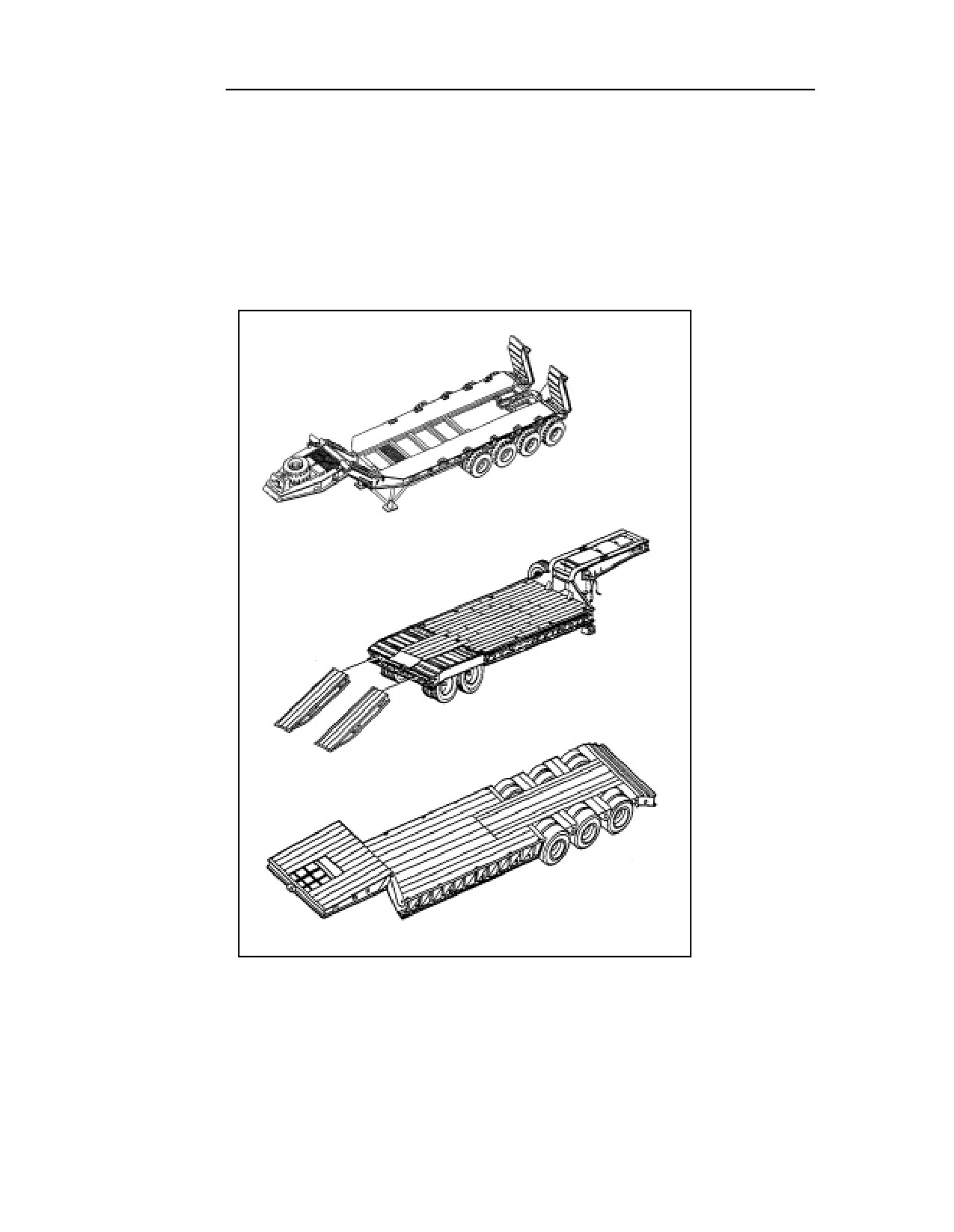
10-12. Use equipment trailers (Figure 10-4) to transport heavy construction
equipment such as cranes, dozers, or any equipment not designed for long-
distance movement by their own power. Also use the trailers to haul long
items such as pipes or lumber, or packaged items such as landing mats or
bagged cement.
Semitrailer, low-bed,
60-ton, heavy-equipment
transporter, M747
Semitrailer, low-bed,
25-ton, 4-wheel, M172A1
Semitrailer, low-bed,
40-ton, heavy-equipment
transporter (gooseneck),
M870
Figure 10-4. Equipment Trailers
10-6 Hauling Equipment
FM 5-434
OPERATION
Loading
10-13. For maximum efficiency, load trailers as close as possible to their rated
loading capacity. When loading, always station a spotter on the trailer to
direct the equipment operator and to keep the machine centered on the ramps
and trailer.
10-14. With rear-loading trailers, use low banks or built-up earth ramps
where possible. Some trailers carry loading ramps for loading from level
ground. When using loading ramps to load a dozer, run the machine slowly up
the ramps (with the blade raised) and as the balance point is reached, reduce
speed or stop, then lower the blade and allow the front of the tracks to settle
gently onto the trailer bed. Then move the dozer slowly ahead onto the trailer.
Some low-bed trailers are designed for front-end loading.
10-15. In areas that restrict rear loading, load the trailer from the side. Take
care not to damage the trailer bed.
NOTE: Refer to the unit’s SOP or to the appropriate technical manual
for proper techniques for loading and securing equipment.
Positioning and Securing
10-16. After positioning the equipment on the trailer bed, block and chock it
and chain it to the trailer. Properly distribute the weight of large equipment
on the trailer. Trailers have their load-weight centering position marked.
Unloading
10-17. Unload heavy equipment slowly to prevent damage to the trailer or the
equipment. Always use ramps to load and unload.
Hauling Equipment 10-7
FM 5-434
10-8 Hauling Equipment
Chapter 11
Soil-Processing and Compaction
Horizontal construction projects such as roads and airfields are
constructed using a variety of soil types. The suitability of these materials
for construction applications depends on their gradation, physical
characteristics, and load-bearing capacity. While some soil types are
suitable for structural purposes in their natural state, others require
processing such as adjusting the moisture content by mixing and blending.
Because there is a direct relationship between increased density and
increased strength and bearing capacity, the engineering properties of
most soils can be improved simply by compaction. Soil properties and
compaction requirements are discussed in FM 5-410.
SOIL PROCESSING
11-1. The amount of water present in a soil mass affects the ease of
compaction operations and the achievable soil density. The water-content
ratio is the standard measure of water in a soil mass. The water-content
ratio compares the weight of the water present in a soil mass to the weight of
the soil solids in the same mass. Each soil has its particular optimum
moisture content (OMC) at which a corresponding maximum density can be
obtained for a given amount of compactive input energy. Trying to compact a
soil at a water content either higher or lower than optimum can be very
difficult. The OMC varies from about 12 to 25 percent for fine-grained soils
and from 7 to 12 percent for well-graded granular soils. Since it is difficult to
attain and maintain the exact OMC, normal practice is to work within an
acceptable moisture range. This range, which is usually ±2 percent of
optimum, is based on attaining the maximum density with the minimum
compactive effort. Determination of the OMC is a laboratory test procedure.
For a detailed description of the moisture-density relationships of various
soils, refer to FM 5-410.
INCREASING THE MOISTURE CONTENT
11-2. If the moisture content of a soil is below its optimum moisture range,
add water to the soil before compaction. When it is necessary to add water, the
project officer must consider the following:
• The amount of water required.
• The rate of water application.
• The method of application.
• The effects of the weather.
Soil-Processing and Compaction 11-1
FM 5-434
Add water to the soil at the borrow pit or in place (at the construction site).
When processing granular materials, adding water in place usually gives the
best results. After adding water, thoroughly and uniformly mix it with the soil.
Amount of Water Required
11-3. It is essential to determine the amount of water required to achieve a
soil water content within the acceptable moisture range. Compute the amount
of water to add or remove in gallons per station (100 feet of length). Use the
following formula, based on the compacted volume, to compute the amount of
water to add or remove from the soil. The volume in this formula is for only
one station of project length. The computation is based on the dry weight of
the soil.
Gallons per station for one lift = desired dry density of soil in pounds per cubic foot (pcf)
desired moisture content (percent) - moisture content of borrow (percent)
× ------------------------------------------------------------------------------------------------------------------------------------------------------------------------------------------------------------------
100
compacted volume of soil (cubic foot)
× ------------------------------------------------------------------------------------------------------------
8.33 pounds per gallon
where—
8.33 = the weight of a gallon of water
NOTE: Normally, it is a good practice to adjust the desired moisture
content to OMC +2 percent, but this depends on the environmental
conditions (temperature and wind) and the soil type. A negative
answer indicates that water removal from the borrow material is nec-
essary before compacting the material on the fill.
EXAMPLE
Prepare to place soil in 6-inch (compacted) lifts. The desired dry unit weight of the
embankment is 120 pcf. The OMC (desired moisture content) of the soil is 12 per-
cent, but the soils technician has determined that the moisture content of the bor-
row material is only 5 percent. The roadway section to be placed is 40 feet wide.
Compute the amount of water (in gallons) to add per station for each lift of mate-
rial.
12 percent (OMC) - 5 percent (borrow)
Gallons per station for one lift
=
120 pcf
× ------------------------------------------------------------------------------------------------------------
100
40 feet × 100 feet × 0.5 foot
× ---------------------------------------------------------------------------
8.33 pounds per gallon
2,000 cubic feet
=
120 pcf × 0.07
× -----------------------------------------------------------------
8.33 pounds per gallon
= 2,017
NOTE: If the road width is constant, determine the total amount of
water required for the job by multiplying the gallons per lift times the
number of lifts, times the road length (in stations).
11-2 Soil-Processing and Compaction
FM 5-434
Rate of Water Application
11-4. After determining the total amount of water required, determine the
rate of application. Use the following formal to determine the water
application rate in gallons per square yard.
Gallons per square yard = desired dry density of soil (pcf)
percent of moisture added or removed
× ------------------------------------------------------------------------------------------------------------- × lift thickness (feet)
100
9 square feet per square yard
× -----------------------------------------------------------------------------------
8.33 pounds per gallon
where—
9
= factor used to convert square feet to square yards
8.33 = the weight of a gallon of water
EXAMPLE
Using the data from the previous example, determine the required application rate
in gallons per square yard.
9 square feet per square yard
Gallons per square yard
=
120 pcf × 0.07 × 0.5 foot
× -----------------------------------------------------------------------------------
8.33 pounds per gallon
=
4.5 gallons per square yard
Method of Application
11-5. After calculating the application rate, determine the method of
application. Regardless of the method of application, it is important to achieve
the proper application rate and the uniform distribution of water.
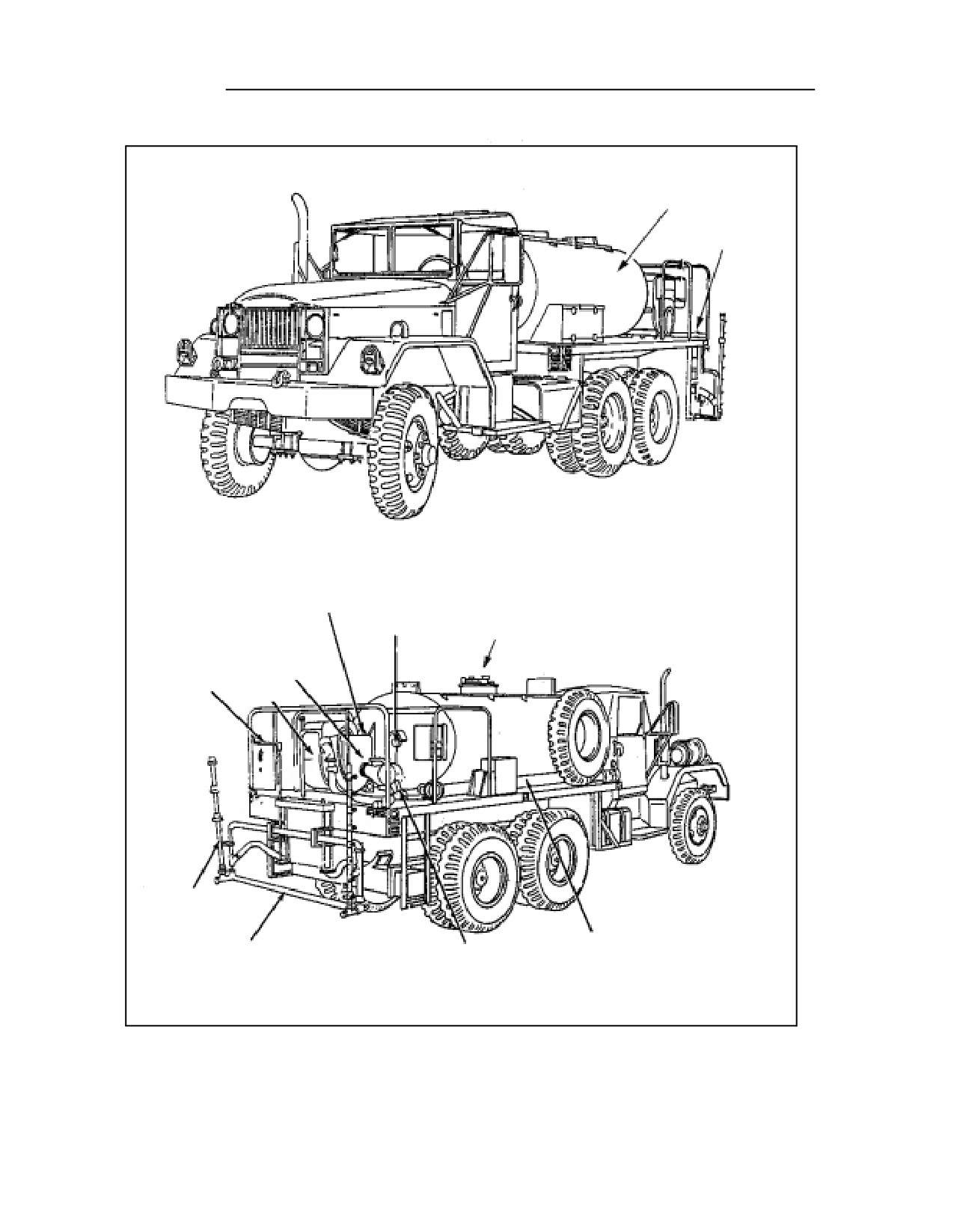
11-6. Water Distributor. The most common method of adding water is with
a water distributor. Water distributors are designed to distribute the correct
amount of water evenly over the fill. The truck-mounted, 1,000-gallon water
distributor (Figure 11-1, page 11-4) can distribute water under various
pressures or by gravity feed. It distributes the water through a 12-foot folding,
rear-mounted spray bar. The spray bar is adjustable, in 1-foot increments,
from 4 to 24 feet. The water application rate can be maintained by controlling
the forward speed of the vehicle and the water distribution pressure. A cab-
mounted odometer shows the vehicle speed in fpm. The project officer should
provide the water-distributor operator with the application rate in gallons per
square yard. With this information, the operator can determine the
appropriate spray-bar length, pumping pressure, and vehicle speed to achieve
the required application rate. Refer to the vehicle’s technical manual for
specific information regarding application rates.
Soil-Processing and Compaction 11-3
FM 5-434
Water tank
Operator’s
platform
Discharge pressure gauge
Tank gauge
Manhole
Vertical
Water
adjustment
pump
crank
Engine
Spray-bar
extension
(both sides)
Hoses
Spray-bar
Foot valve
assembly
and strainer
Figure 11-1. Truck-Mounted, 1,000-Gallon Water Distributor
11-4 Soil-Processing and Compaction
FM 5-434
11-7. Ponding. If time is available, add water by ponding the area until
achieving the desired depth of penetration. It is difficult to control the
application rate with this method. Ponding usually requires several days to
achieve a uniform moisture distribution.
Effects of the Weather
11-8. Weather substantially affects the soil’s moisture content. Cold, rainy,
cloudy, or calm weather will cause a soil to retain water or even increase its
moisture content. Hot, dry, sunny, or windy weather is conducive to drying
the soil by evaporating the moisture. In a desert climate, evaporation claims a
large amount of water intended for the soil lift. Thus, for a desert project the
engineer might go as high as 6 percent above the OMC as a target for all
water application calculations. This allows the actual moisture content to fall
very near to the desired content when placing and compacting the material.
REDUCING THE MOISTURE CONTENT
11-9. As previously stated, soil that contains more water than desired (above
the optimum moisture range) is correspondingly difficult to compact. Excess
water makes achieving the desired density very difficult. In these cases, take
action to reduce the moisture content to within the required moisture range.
Drying actions may be as simple as aerating the soil. However, they may be as
complicated as adding a soil stabilization agent that changes the physical
properties of the soil. Lime or fly ash are the typical stabilization agents for
fine-grained soils. Excess moisture, caused by a high water table, will require
some form of subsurface drainage to reduce the soil's moisture content. The
most common method of reducing the moisture is to scarify the soil prior to
compaction. Accomplish this by using the scarifying teeth on a grader or a
stabilizer mixer or by disking the soil. Another method is to use the grader’s
blade to toe the soil over into furrows to expose more material for drying.
MIXING AND BLENDING
11-10. Whether adding water to increase the soil’s moisture content or adding
a drying agent to reduce it, it is essential to mix the water or drying agent
thoroughly and uniformly with the soil. Even if additional water is not
necessary, mixing may still be essential for a uniform distribution of the
existing moisture. Accomplish mixing by using graders, stabilizer mixers, or
farm disks.
Grader
11-11. Use conventional graders to mix or blend a soil additive (water or
stabilizing agent) by windrowing the material from one side of the working
lane to the other. For a detailed description of grader operation, refer to
Chapter 4.
Stabilizer Mixer
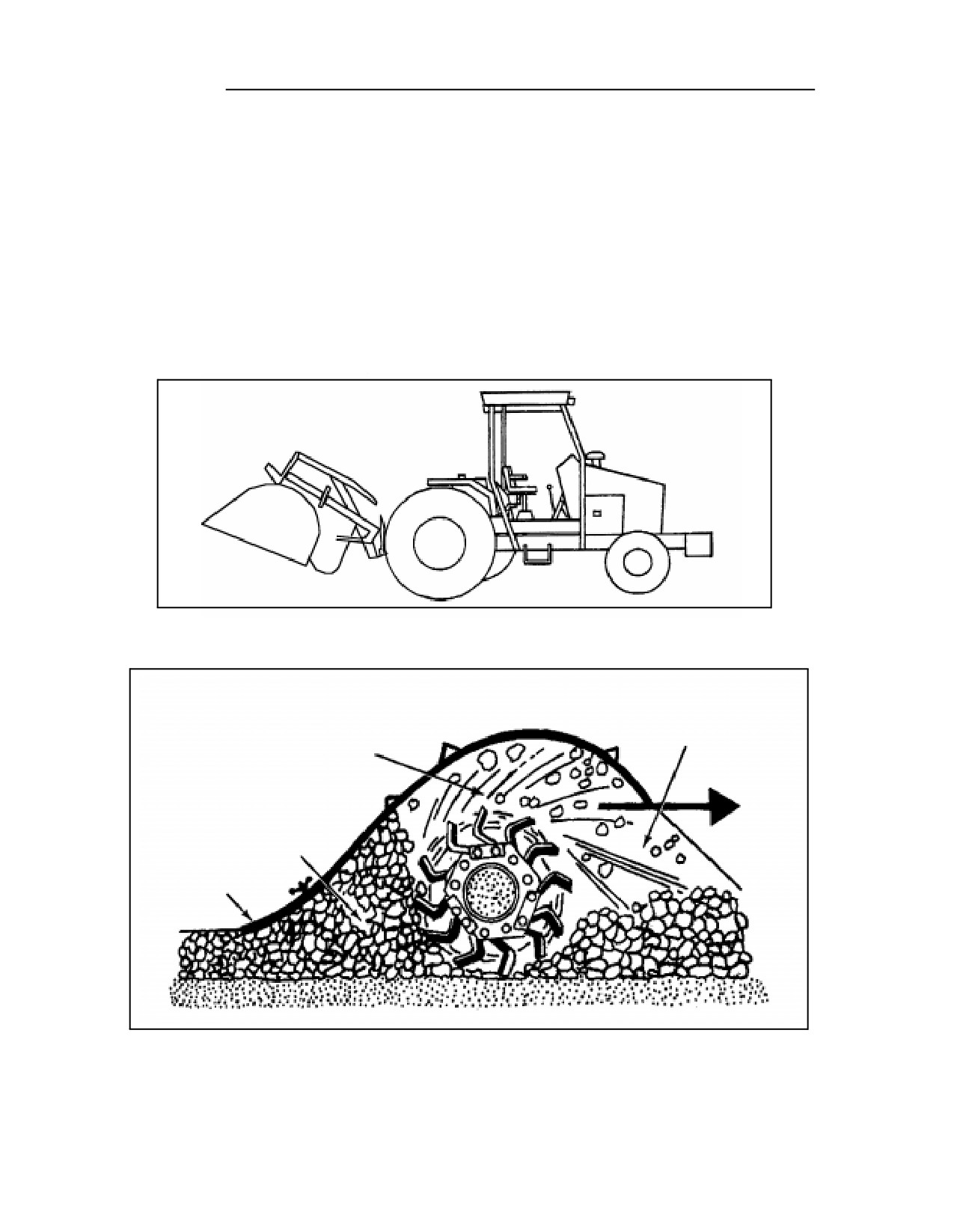
11-12. The stabilizer mixer is an extremely versatile piece of equipment
designed specifically for mixing, blending, and aerating materials (Figure 11-2,
page 11-6). The stabilizer consists of a rear-mounted, removable-tine, rotating
tiller blade covered by a removable hood. In place, the hood creates an enclosed
mixing chamber, which enhances thorough blending of the soil (Figure 11-3,
page 11-6). The tiller blade lifts the material in the direction of travel and
Soil-Processing and Compaction 11-5
FM 5-434
throws it against the leading edge of the hood. The material deflecting off of
the hood falls back onto the tiller blades for thorough blending. As the
stabilizer moves forward, it ejects the material from the rear of the mixing
chamber. As the material is ejected, it is struck off by the trailing edge of the
hood, resulting in a fairly level working surface. With the trailing edge of the
hood fully opened, churned soil has a very high void content, which exposes the
soil to the drying action of the sun and wind. Models equipped with a spray bar
are used to add water or stabilizing agents to the soil during the blending
process. The stabilizer mixer’s use is limited to material less than 4 inches in
diameter. The tines on the Army’s mixer are designed to penetrate up to 12
inches below the existing surface. This unit is used for scarifying and blending
in-place (in situ) material as well as fill material.
Figure 11-2. Stabilizer Mixer
Forward spillover for
additional mixing
Deflection into
rotor for mixing
Carry off mixed
materials
Strike off
Figure 11-3. Mixing Action in a Stabilizer Mixer
11-6 Soil-Processing and Compaction
FM 5-434
SOIL COMPACTION
11-13. Compaction is the process of mechanically densifying a soil, normally
by the application of a moving (or dynamic) load. This is in contrast to
consolidation, which is the gradual densification of a soil under a static load.
When controlled properly, compaction increases a soil’s load-bearing capacity
(shear resistance), minimizes settlement (consolidation), changes the soil’s
volume, and reduces the water-flow rate (permeability) through the soil.
Compaction does not affect all soils to the same degree. However, the
advantages gained by compaction make it an essential component of the
horizontal construction process.
COMPACTIVE EFFORT
11-14. Compactive effort is the amount of energy used to compact a soil mass.
Base the appropriate compactive effort on the physical properties of the soil,
including gradation (well or poorly graded), the Atterberg limits (cohesive or
cohesionless), and the required final density. Compaction equipment uses one
or more of the following methods to accomplish soil densification—
• Static weight (pressure).
• Kneading (manipulation).
• Impact (sharp blow).
• Vibration (shaking).
EQUIPMENT SELECTION
11-15. Compaction equipment ranges from handheld vibratory tampers
(suitable for small or confined areas) to large, self-propelled rollers and high-
speed compactors (ideally suited for large, horizontal construction projects).
Consider the following factors when selecting compaction equipment:
• Type and properties of the soil.
• Density desired.
• Placement lift thickness.
• Size of the job.
• Compaction equipment available.
11-16. Soil-compacting equipment normally available to military engineers
includes tamping-foot rollers, pneumatic-tired (rubber-tired) rollers, dual-
drum vibratory rollers, and smooth-drum vibratory rollers. To select the most
appropriate type of compaction equipment, a project officer must know the
characteristics, capabilities, and limitations of the different types of rollers.
Generally, tamping-foot compactors that produce high unit pressures are best
for predominantly fine-grained cohesive materials such as clays and sandy
clays. Large, steel-drum rollers are best for larger particle materials such as
gravel or cobble. Vibratory rollers are ideal for well-graded or gap-graded
materials because the shaking action causes the smaller particles to fill voids
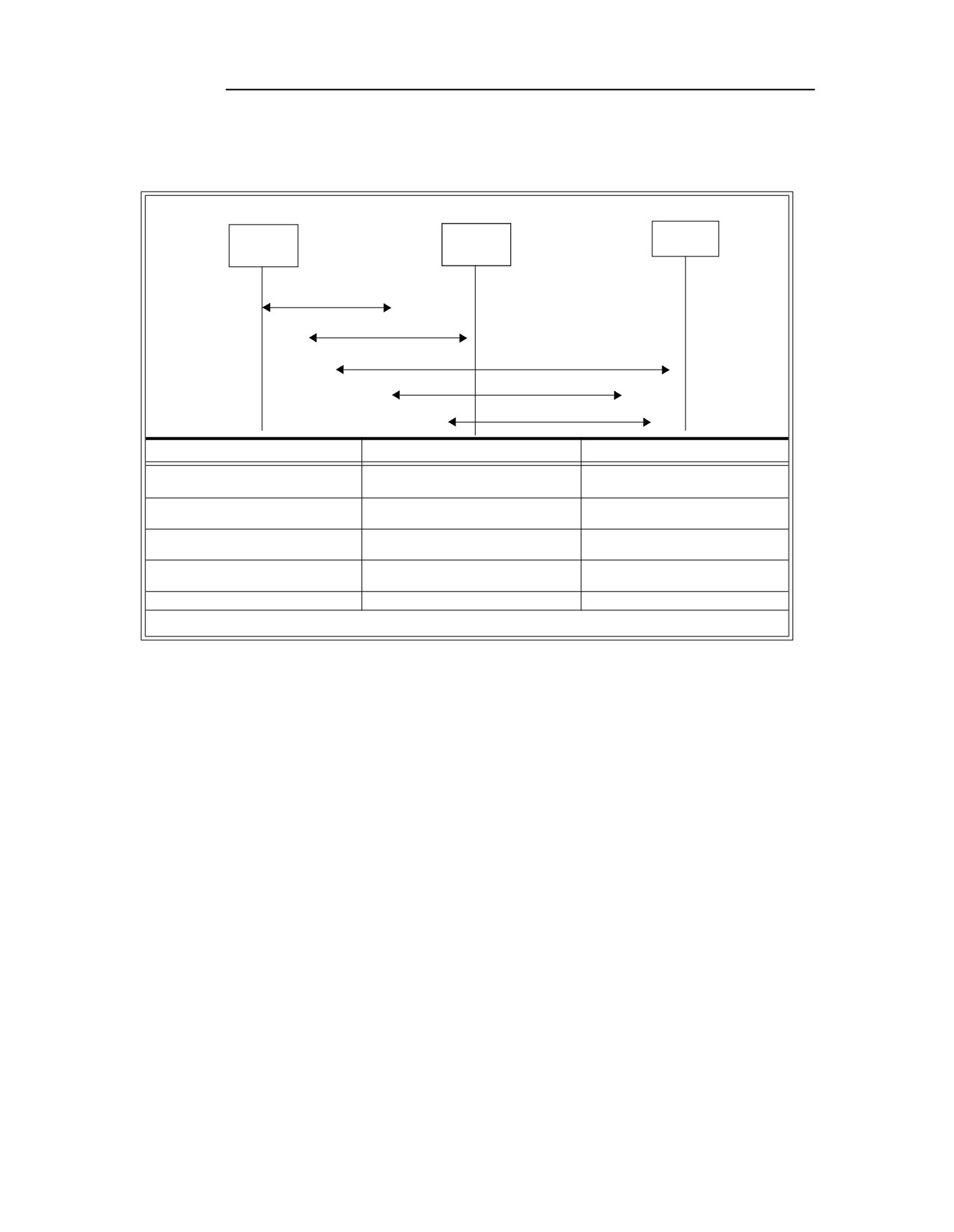
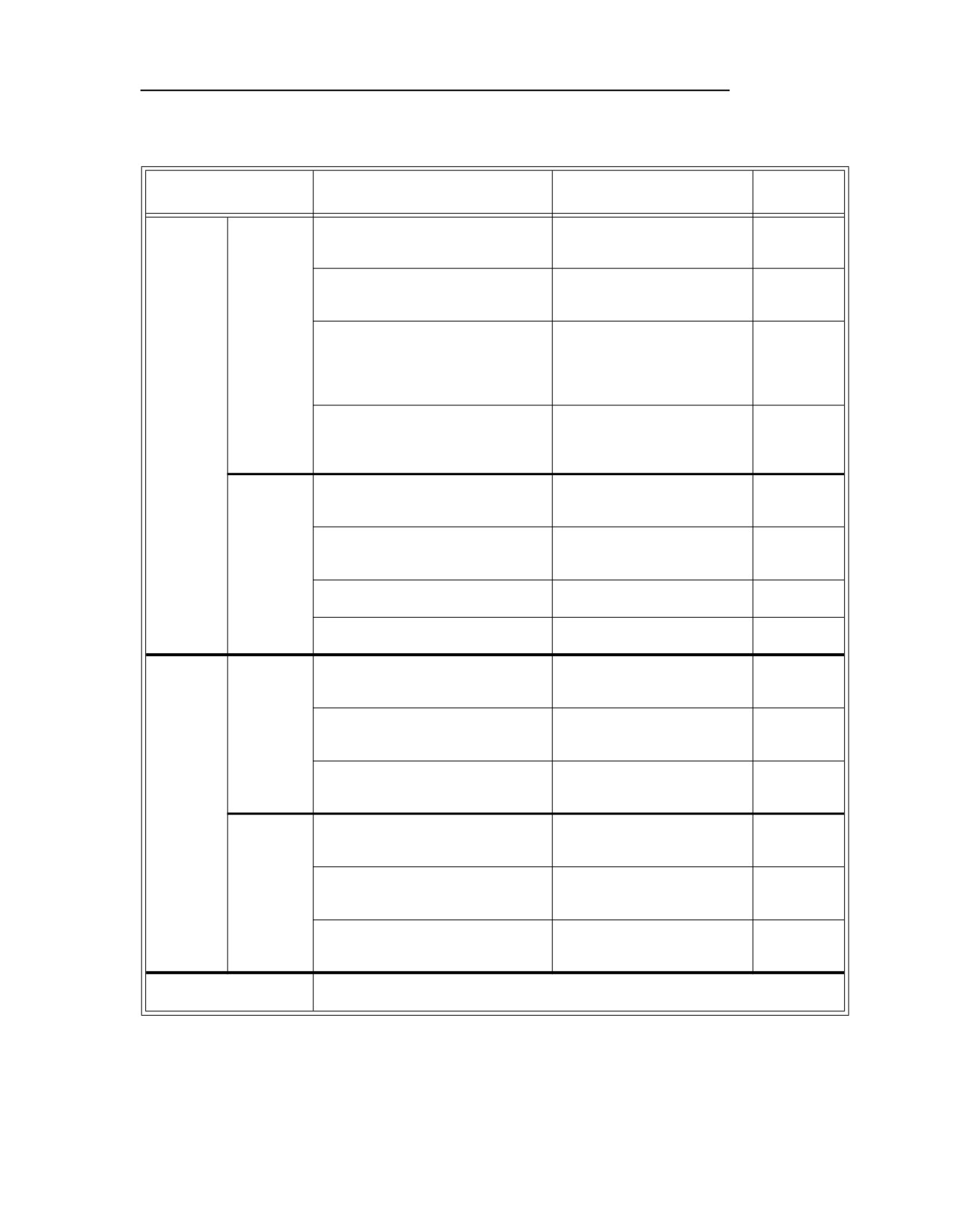
around the larger grains. Table 11-1, page 11-8, shows the spectrum of
capabilities for each type of roller and the type of compactive effort associated
with each roller. Tables 11-2 and 11-3, pages 11-9 and 11-10, show the major
soil-classification categories, the compaction requirements, and the
compactive methods compatible with each.
Soil-Processing and Compaction 11-7
FM 5-434
Table 11-1. Compaction-Equipment Capabilities
Spectrum of Roller Capabilities
100%
Rock
100%
fines
sand
Sheepsfoot
Tamping foot
Smooth-drum vibratory
Pneumatic-tired
Dual-drum vibratory
Roller Type
Soil Type
Compactive Effort
Sheepsfoot
Fine-grained soils; sandy silts;
Kneading
clays; gravelly clays
Tamping foot
All soils except pure sands and
Kneading
pure clays
Smooth-drum vibratory
Sand or gravel; gravelly and
Vibratory (for granular-type
sandy soils
soils)
Pneumatic-tired
Sand or gravel; fine-grained soils;
Kneading or static (based upon
asphalt
tire pressure)
Dual-drum vibratory
Gravelly soils; asphalt
Static
NOTE: Use a test strip to see which compactor is more efficient.
Tamping-Foot Roller
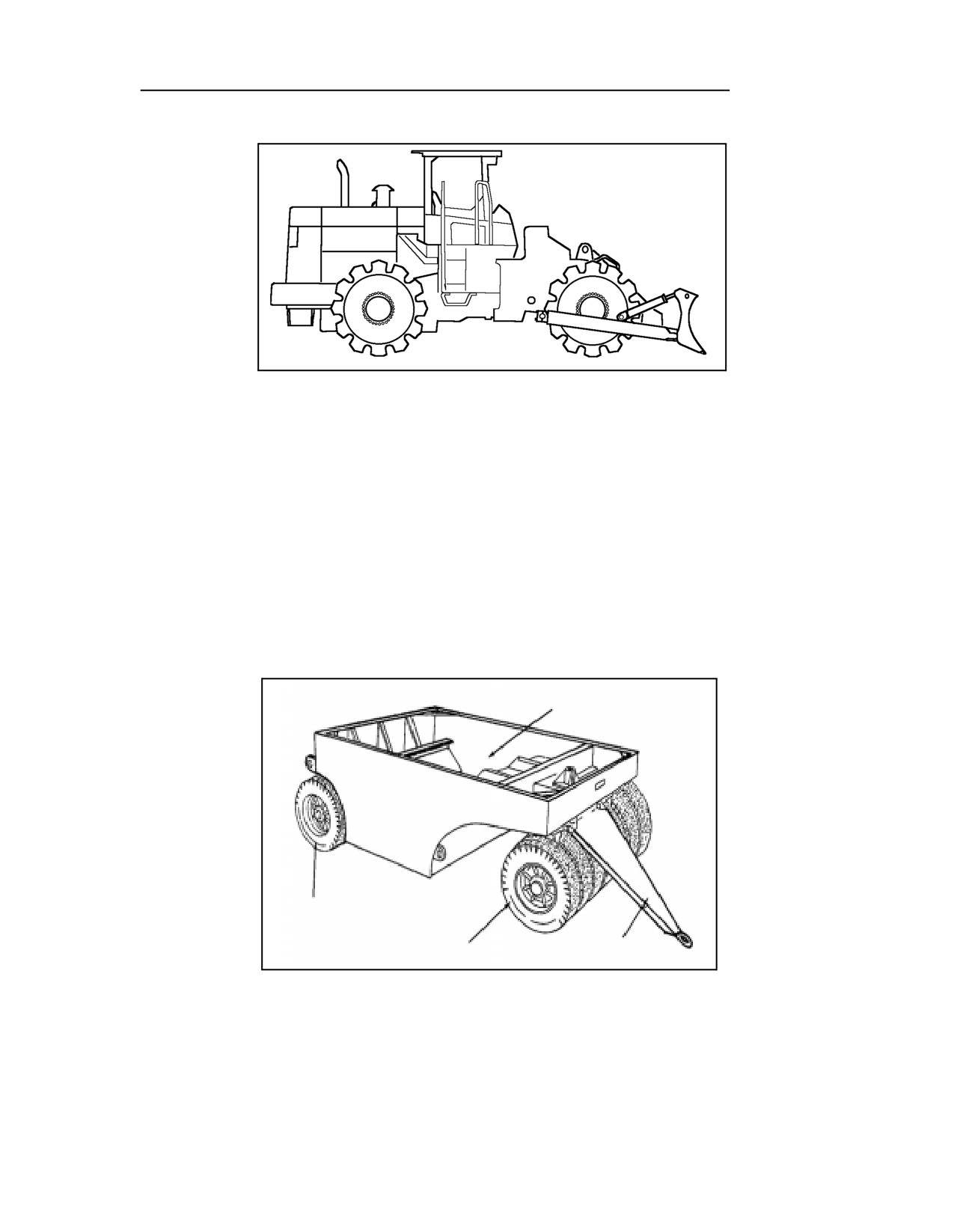
11-17. The self-propelled, tamping-foot roller (Figure 11-4, page 11-11) has
feet that are square or angular and taper down away from the drum. This
design allows the roller to achieve better penetration on the initial pass,
resulting in a thorough, uniform compaction throughout a lift. This roller
compacts the material from the bottom of the lift to the top, and walks out
after achieving the desired density. It is suitable for compacting all fined-
grained materials, but is generally not suitable for use on cohesionless
granular materials. The lift thickness for the tamping-foot roller is limited to
8 inches in compacted depth. If the material is loose and reasonably workable
(permitting the roller’s feet to penetrate into the layer on the initial pass), it is
possible to obtain a uniform density throughout the full depth of the lift.
Thoroughly loosen material that has become compacted by the wheels of
equipment during spreading or wetting before compaction. The tamping-foot
roller does not adequately compact the upper 2 to 3 inches of a lift. Therefore,
follow up with a pneumatic-tired or smooth-drum roller to complete the
compaction or to seal the surface if not placing a succeeding lift. The self-
propelled tamping-foot roller can achieve a working speed of as high as 8 mph.
The tamping-foot roller compacts from the bottom up and is particularly
appropriate for plastic materials. It is ideal for working soils that have
moisture contents above the acceptable moisture range since it tends to aerate
the soil as it compacts.
11-8 Soil-Processing and Compaction
FM 5-434
Table 11-2. Soil Classification
Value as a Base,
Potential
Major Soil Categories
Symbol and Description
Subbase, or Subgrade
Frost Action
GW
Well-graded gravels or
Fair to good for base; good to
None to very
gravel-sand mixture with 5%
excellent for subbase and
slight
or less of fines
subgrade
GP
Poorly graded gravels or
Fair to good for all
None to very
gravel-sand mixture with little
slight
or no fines
Gravel and/
GM
Silty gravel and poorly graded
Not suitable for base (15% or
Slight to
or gravelly
gravel-sand-silt mixtures
less of fines with PI of 5 or
medium
soils
less); fair to excellent for
subbase and subgrade (50% or
Coarse-
less of fines)
grained
soils (50%
GC
Clayey gravel and poorly
Not suitable for base (15% or
Slight to
or more
graded gravel-sand-clay
less of fines with PI of 5 or
medium
larger than
mixture
less); poor to good for subbase
a #200
and subgrade
sieve
SW
Well-graded sands or gravelly
Poor for base; fair to good for
None to very
opening)
sand mixture with 5% or less
subbase and subgrade
slight
of fines
SP
Poorly graded sands or
Poor to not suitable for base;
None to very
gravelly sand mixture with 5%
poor to fair for subbase and
slight
Sand and/or
or less of fines
subgrade
sandy soils
SM
Silty sands, sand-silt mixture
Not suitable for base; poor to
Slight to high
good for subbase and subgrade
SC
Clayey sands, sand-clay
Not suitable for base; poor to
Slight to high
mixture
fair for subbase and subgrade
ML
Inorganic silt of low plasticity,
Not suitable for base or
Medium to
silty fine sands
subbase; poor to fair for
very high
subgrade
Silt and
CL
Inorganic clay of low to
Not suitable for base or
Medium to
clays with
medium plasticity, lean clays
subbase; poor to fair for
high
liquid limits
subgrade
Fine-
less than 50
grained
OL
Organic silt and organic silt-
Not suitable for base or
Medium to
soils (more
clay of low plasticity
subbase; poor to very poor for
high
than 50%
subgrade
smaller
MH
Inorganic silt micaceous or
Not suitable for base or
Medium to
than a #200
diatomaceous soil
subbase; poor to fair for
very high
sieve
subgrade
opening)
Silt and
CH
Inorganic clay of high
Not suitable for base or
Medium
clays with
liquid limits
plasticity, fatty clays
subbase; poor to fair for
greater than
subgrade
50
OH
Organic clay of medium to
Not suitable for base or
Medium
high plasticity
subbase; poor to very poor for
subgrade
Highly organic soils (peat) are not defined by numerical criteria; these soils are
Highly organic soils
identified by visual and manual inspection.
Soil-Processing and Compaction 11-9

FM 5-434
Table 11-3. Average Compaction Requirements
Soil Classification Symbol
GW
GP
GM
GC
SW
SP
SM
SC
ML
CL
OL MH
CH
OH
Lift Thickness
Sheeps-
6
6
6
6
6
6
6
6
Compacted
foot, Stan-
(Inches)
(Best)
(Best)
(Best)
dard With
Rolling Speed
Ballast
NA
NA
NA
3
NA
NA
NA
3
3
2
2
2
2
2
(mph)
(Towed by
Number of
Dozer)
NA
NA
NA
10
NA
NA
NA
10
10
12
12
12
14
14
Passes
Lift Thickness
Compacted
18
18
12
12
18
18
12
12
8
8
Self-Pro-
(Inches)
(Best)
(Best)
(Best)
(Best)
pelled
Rolling Speed
4/1,400
4/1,400
4/
4/700
4/1,400
4/1,400
4/
3/700
3/700
3/700
Vibratory
NA
NA
NA
NA
(mph/vpm)
or more
or more
1,100
to none
or more
or more
1,100
to none
to none to none
Roller
Number of
8
8
6
6
8
8
6
7
7
7
NA NA
NA
NA
Passes
Tamping-
Lift Thickness
Foot Roller,
Compacted
12
12
9
9
12
12
9
9
6
6
6
6
6
6
Self-Pro-
(Inches)
pelled (Not
Rolling Speed
Recom-
10
10
10
8
10
10
10
8
8
4
4
4
3
3
(mph)
mended for
Finishing
Number of
Grade)
5
5
6
7
5
5
6
6
5
5
5
6
6
6
Passes
Lift Thickness
13-Wheel
Compacted
6
6
6
6
6
6
6
6
4
4
4
4
4
4
Pneumatic
(Inches)
Compactor
with Bal-
Rolling Speed
5
5
4
4
5
5
4
3
3
3
3
3
2
2
last (Wheel
(mph)
Towed),
100 psi
Number of
10
10
10
10
10
10
10
12
7
7
7
8
9
9
Passes
Lift Thickness
9-Wheel
Compacted
6
6
6
6
6
6
6
6
4
4
4
4
4
4
Pneumatic,
(Inches)
Self-Pro-
Rolling Speed
pelled with
6
6
6
5
6
6
6
5
4
4
4
4
3
3
(mph)
Ballast, 100
psi
Number of
6
6
7
7
7
7
8
8
6
6
6
6
6
6
Passes
Lift Thickness
Compacted
12
12
9
9
12
12
9
9
6
6
*
*
*
*
Smooth-
(Inches)
Drum
Rolling Speed
4/1,400
4/1,400
4/
4/700
4/1,400
4/1,400
4/
3/700
3/700
3/700
Vibratory
NA
NA
NA
NA
(mph/vpm)
or more
or more
1,100
to none
or more
or more
1,100
to none
to none to none
Roller
Number of
8
8
8
9
8
8
8
10
10
10
NA NA
NA
NA
Passes
NOTES:
This chart should be used as a planning guide when a test strip cannot be performed.
The above symbols are based on the United Soil Classification System (USCS).
*Not recommended.
11-10 Soil-Processing and Compaction
FM 5-434
Figure 11-4. Self-Propelled, Tamping-Foot Roller
Pneumatic-Tired Roller
11-18. Pneumatic-tired rollers (towed and self-propelled) are suitable for
compacting most granular materials. They are not effective in compacting
fine-grained clays. Pneumatic-tired rollers compact using two types of
compactive effort—static-load and kneading. The Army currently has a towed,
13-wheel, pneumatic-tired roller (Figure 11-5) and a variable-pressure, self-
propelled, nine-wheel, pneumatic-tired roller (Figure 11-6, page 11-12). The
nine-wheeled model is capable of varying the contact pressure to achieve the
desired compactive effort. The contact pressure is controlled by adjusting the
tire pressure and the wheel load. The towed, 13-wheel model exerts about 210
pounds of contact pressure per inch of rolling width. Contact pressure is
affected by tire pressure and wheel load.
Ballast compartment
(sand, rock, water)
7 tires
Tow bar
6 tires
Figure 11-5. Towed, 13-Wheel, Pneumatic-Tired Roller
Soil-Processing and Compaction 11-11
FM 5-434
2 Ballast compartments
(in rear section)
5 Tires
Spray bars
2 Ballast compartments
4 Tires
(located over tires)
(in front section)
Figure 11-6. Self-Propelled, Nine-Wheel, Pneumatic-Tired Roller
•
Contact pressure. The contact pressure of these rollers is
determined primarily by the tire pressure. Within the rated load
limits, the same load and tire pressure give about the same contact
area for any tire. The tire sidewalls carry about 10 percent of the load,
and the trapped air essentially supports 90 percent of the load.
Consequently, the tire will deflect until the contact area is adequate
and the ground pressure on the tire is equal to the tire pressure. For
example, the contact area for a tire with a 50-psi internal tire pressure
and a 5,000-pound wheel load is 100 square inches. If the wheel load is
doubled to 10,000 pounds, the tire will deflect until 200 square inches
are in contact with the ground. Since the sidewalls carry 10 percent of
the load, the contact area is—
0.9 × wheel load
Contact area
= --------------------------------------------
tire pressure
Generally, the analysis of contact pressure neglects the raised portions
of the tread. Use the gross contact areas, including the areas between
the raised portion, to determine contact pressure.
wheel load
Contact pressure
= ----------------------------------
contact area
•
Wheel load. The wheel load is significant for compacting at the
required depth or in test rolling to detect subsurface defects.
Researchers have built test sections in 6-inch compacted layers with
wheel loads of 10,000; 20,000; and 40,000 pounds to determine if
increased wheel loads would increase density. In the tests, the tire's
inflation pressure was maintained at a constant 65 psi. Figure 11-7
shows the vertical pressure distribution for the tire loadings. As
shown, the effective pressure varies with the depth. However, at
shallow depths, the pressure difference among the three loads was not
11-12 Soil-Processing and Compaction
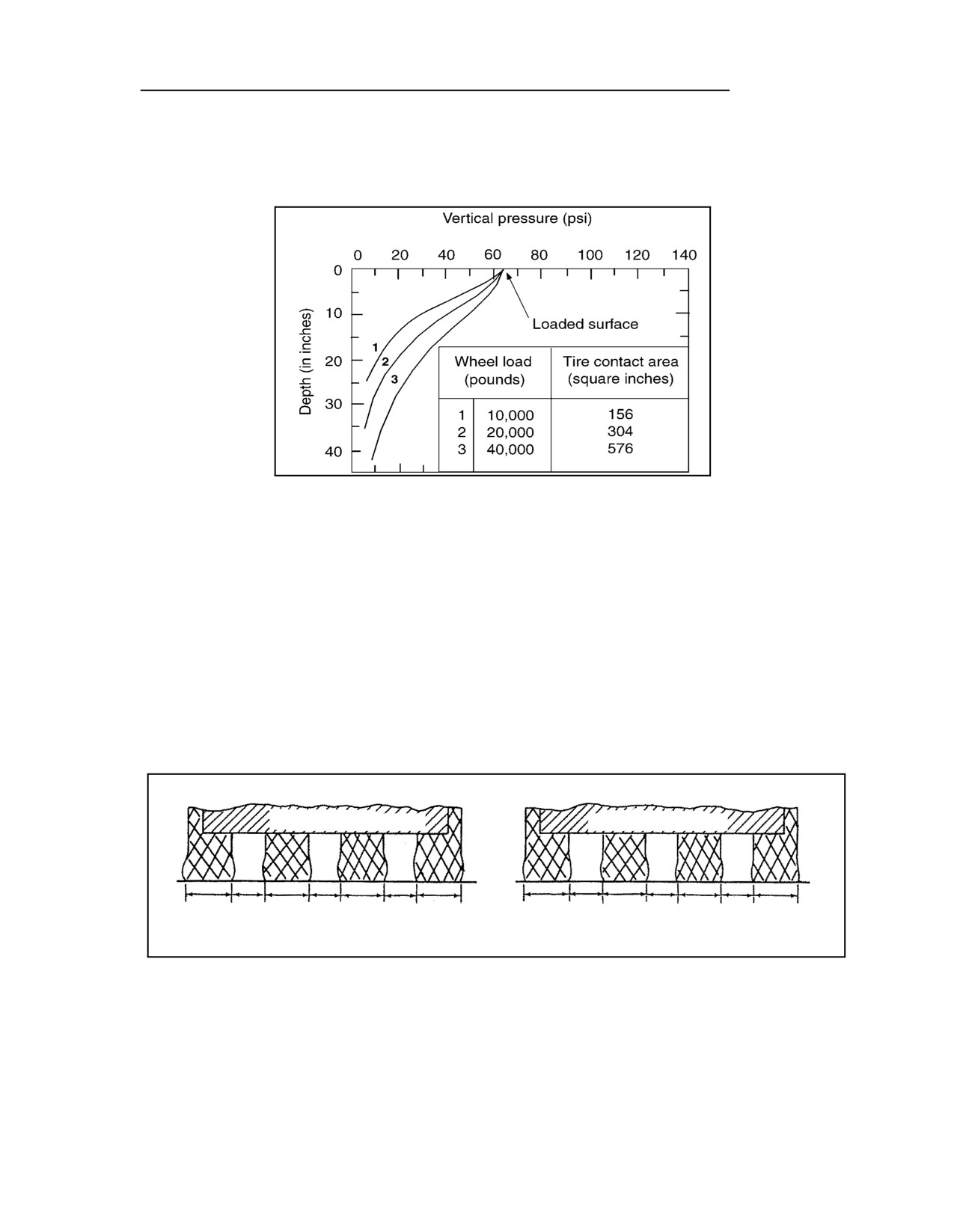
FM 5-434
enough to produce additional density. These and other tests have
indicated that an increase in wheel load is advantageous in
compacting thick lifts.
Figure 11-7. Vertical Pressure Distribution Beneath a Wheel Load
• Surface coverage. The wheel arrangement and the tire deflection
determine the surface coverage. Figure 11-8 shows the results of
varying wheel loads and tire pressures on single-pass coverage for a
heavy pneumatic-tired roller. Most of the pneumatic-tired rollers use
two rows of tires. The tires of one row offset the gaps between the tires
of the second row. This ensures complete coverage with one pass.
Heavier rollers have only one row of tires and require two passes for
complete surface coverage. The additive effects of the pressure bulbs
from the wheels on heavier rollers affect the at-depth coverage and the
rolling pattern. Figure 11-9, page 11-14, shows that at-depth coverage
requires considerable overlap with each pass to ensure that the entire
area has received the same compactive effort.
Tire width and spacing: 50-, 90-, and 150-psi rollers
Roller loading box
Roller loading box
17"
12"
17"
12"
17"
12"
17"
14.7"
14.3" 14.7"
14.3"
14.7"
14.3"
14.7"
Tires 50 psi: gross load 63,500 pounds
Tires 150 psi: gross load 125,000 pounds
Tires 90 psi: gross load 100,000 pounds
Figure 11-8. Varying Wheel Loads and Tire Pressures
Soil-Processing and Compaction 11-13
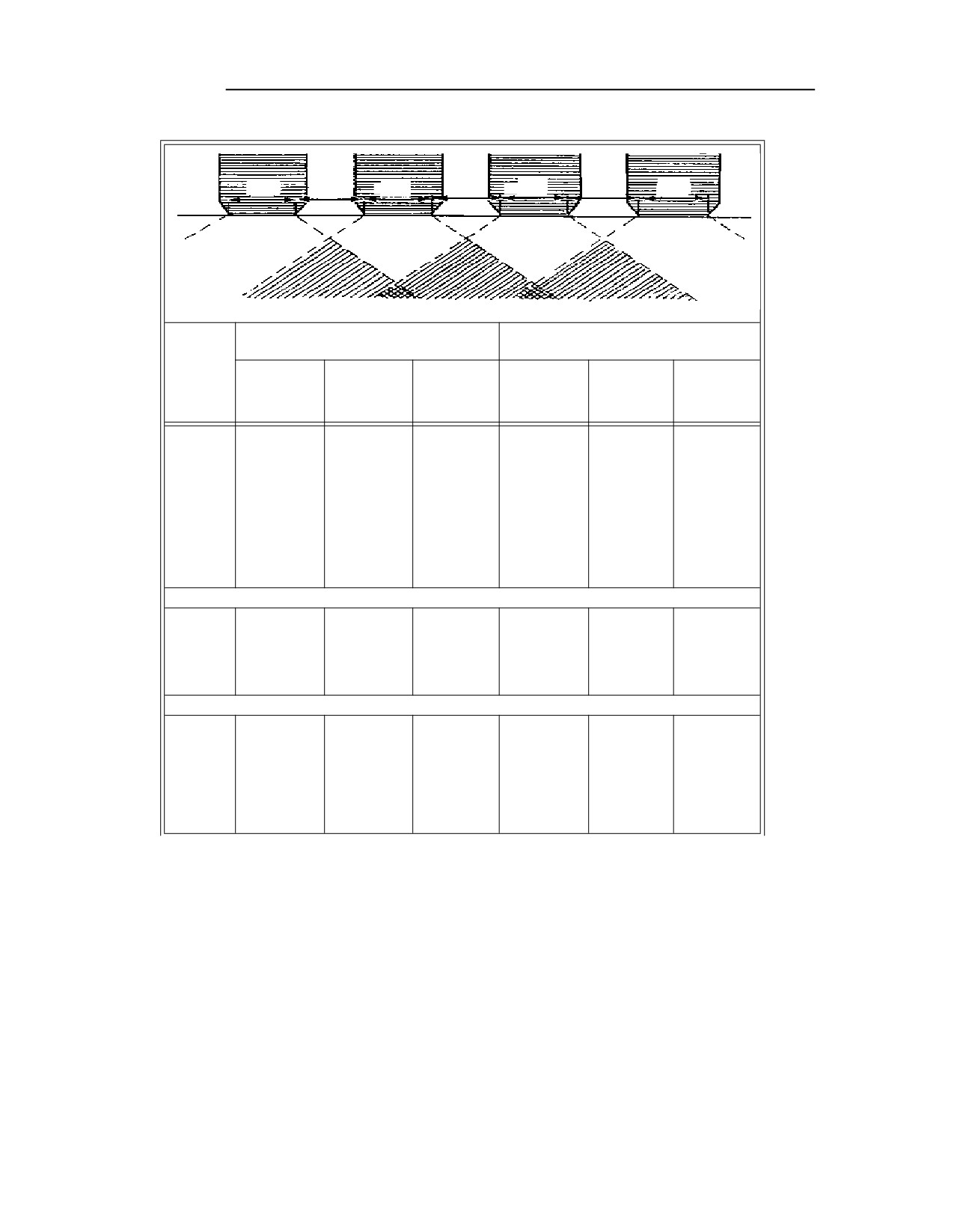
FM 5-434
9"
8"
9"
8"
9"
8"
9"
Tire dimensions: 10.00 x 20-tire x 14-ply
90-psi Tires
120-psi Tires
(6,000-Pound Wheel Load)
(8,000-Pound Wheel Load)
Equivalent
Area of
Equivalent
Area of
Circle
Stress
Circle
Stress
Depth
Diameter
(Square
Pressure
Diameter
(Square
Pressure
(Inches)
(Inches)
Inches)
(psi)
(Inches)
Inches)
(psi)
Surface
9.16
66.00
90.90
9.16
66.00
121.21
1
11.16
97.82
61.34
11.16
97.82
81.78
2
13.16
136.02
44.11
13.16
136.02
58.81
3
15.16
176.71
33.95
15.16
176.71
45.27
4
17.16
231.28
25.94
17.16
231.28
34.59
5
19.16
288.33
20.81
19.16
288.33
27.75
6
21.16
351.66
17.06
21.16
351.66
22.75
7
23.16
421.28
18.24
23.16
421.28
18.99
8
25.16
497.18
12.07
25.16
497.18
16.09
9
27.16
579.37
10.36
27.16
579.37
13.81
10
29.16
667.83
8.98
29.16
667.83
11.98
Pressure in Single-Hatch Areas
5
41.62
55.50
6
34.12
45.50
7
28.48
37.98
8
24.14
32.18
9
20.72
27.62
10
17.96
23.96
Pressure in Double-Hatch Areas
13
30.90
41.20
14
27.65
36.90
15
24.90
33.20
16
22.55
30.05
17
20.50
27.35
18
18.75
24.95
19
17.15
22.90
20
15.80
21.05
Figure 11-9. Tire Pressures at Various Depths
Dual-Drum Vibratory Roller
11-19. The dual-drum vibratory roller, with its smooth steel drum (Figure 11-10),
can compact a wide variety of materials from sand to cobble. Use this roller to
compact asphalt paving, cohesionless subgrade, base course, and wearing surfaces.
It is very effective when used immediately behind a blade to create a smooth,
dense, and watertight subgrade finish. Because it has a relatively low unit
pressure and compacts from the top down, it is normally used for relatively
shallow lifts (less than 4 inches). The smooth steel drum is ideal for base- or
wearing-course finish work. Exercise care to prevent excess crushing of the base-
course material. This is the roller of choice for asphalt paving.
11-14 Soil-Processing and Compaction
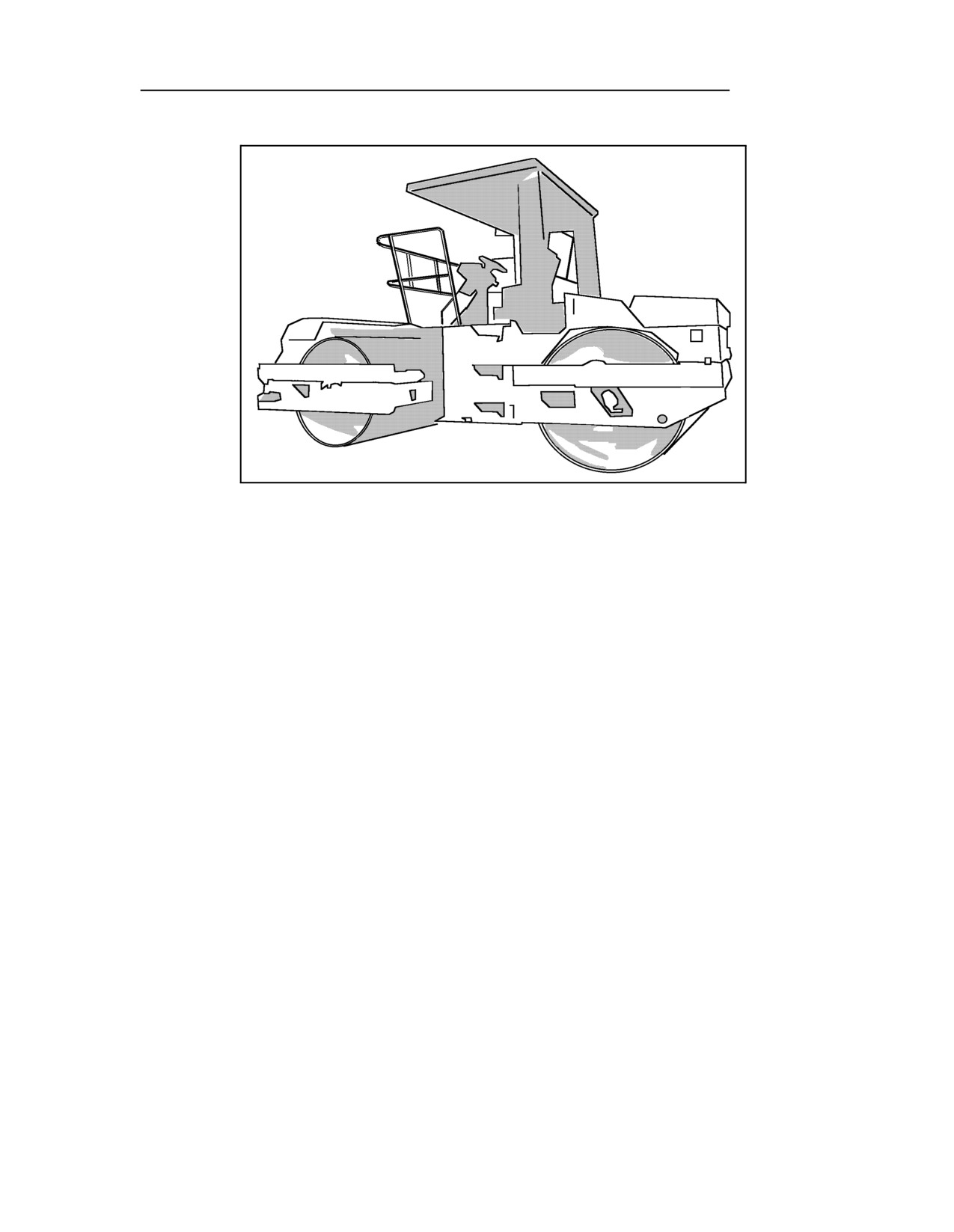
FM 5-434
Figure 11-10. Dual-drum vibratory roller
Smooth-Drum Vibratory Roller
11-20. The smooth-drum vibratory roller (Figure 11-11, page 11-16) uses a
vibratory action in conjunction with the ballast weight of the drum to
rearrange the soil particles into a dense soil mass. Vibratory compaction,
when properly controlled, can be one of the most effective and economical
means of attaining the desired density for cohesionless materials. This roller
is very effective in compacting noncohesive/nonplastic sands and gravels,
which are often used in subbase and base-course applications. Because this
roller is relatively light, the recommended maximum loose-lift depth (the fill
material measured before compaction) is 9 inches.
NOTE: Vibration has two measurements—amplitude (the measure-
ment of the movement or throw) and frequency (the number of repeti-
tions per unit of time). The amplitude controls the depth to which the
vibration is transmitted into the soil, and the frequency determines
the number of blows or oscillations that are transmitted in a period of
time.
Jay Tamper
11-21. The jay tamper is a small, self-contained, hand-operated, vibratory
compactor. The jay tamper (Figure 11-12, page 11-16) resembles a power lawn
mower. The jay tamper is ideal for compacting materials in confined spaces
such as in a trench against a pipe or inside an existing structure. A gasoline
engine powers the unit, so there are no supply lines or other auxiliary items to
hinder its operations.
Soil-Processing and Compaction 11-15
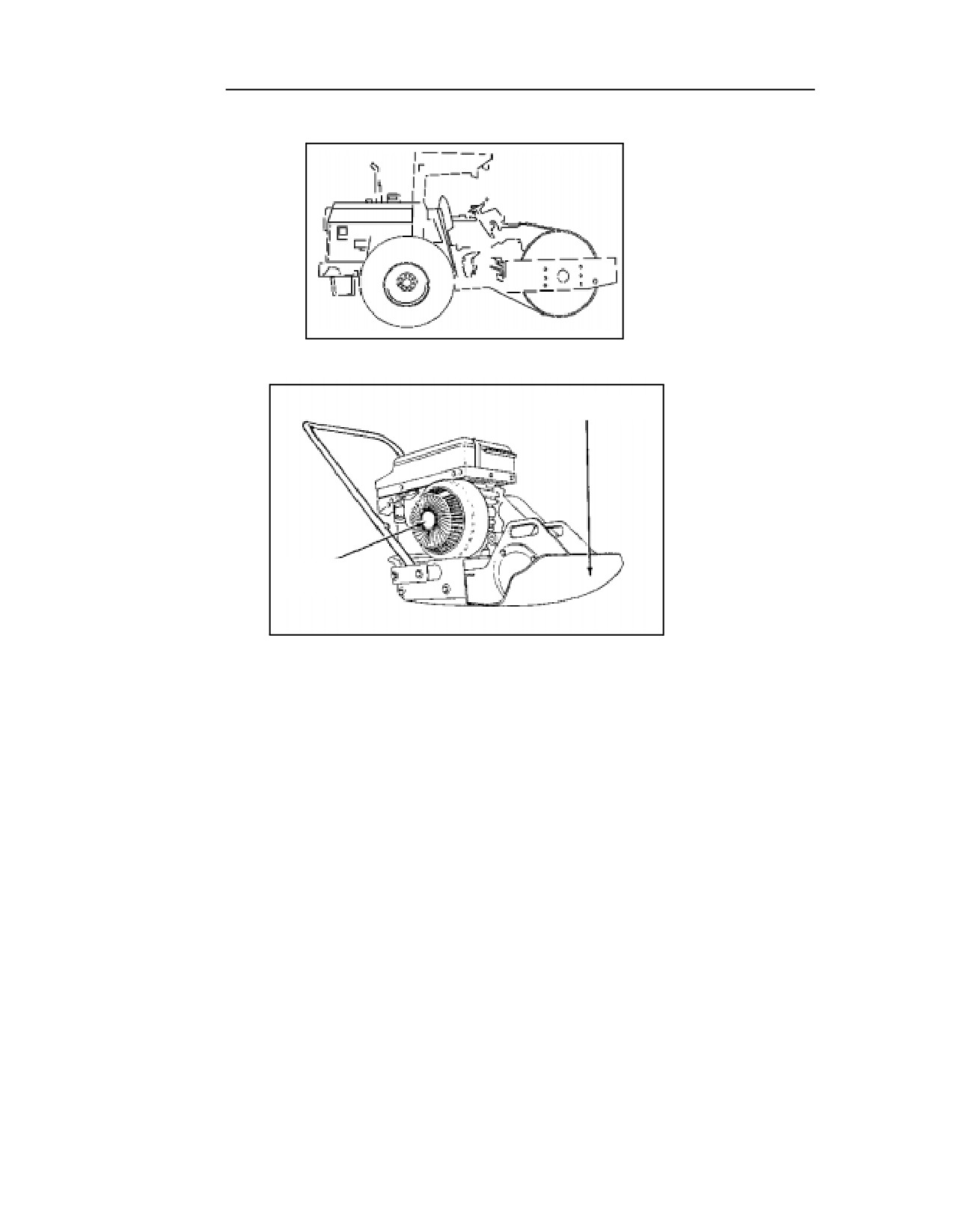
FM 5-434
Figure 11-11. Smooth-Drum Vibratory Roller
Interchangeabl
e shoe
Vibrating
motor
Figure 11-12. Jay Tamper
EQUIPMENT TESTING
11-22. Since the use of several types of compaction equipment overlaps, it is
good to use a test strip to make the final determination of the most efficient
compactor and compaction procedures. Locate a test strip adjacent to the
project site. The test strip provides an evaluation/validation of the proposed
construction procedures. Information obtained from a test strip includes the—
• Most effective type of compaction equipment.
• Optimum depth of lift.
• Optimum compactor speed.
• Number of passes required.
• Amount of ballast required.
• Vibration frequency required.
11-23. To make the initial selection of compaction equipment, place a 6-inch
(uncompacted depth) lift of the material and run each piece of equipment over
a specific length of the strip a predetermined number of passes (usually
three). After compacting all the lengths, perform a density test to determine
which roller gives the best results. After determining the most effective type of
equipment, use additional test strips to determine the most appropriate lift
thickness, the required number of passes, the optimum compactor speed and,
if using a vibratory roller, the resonant frequency.
11-16 Soil-Processing and Compaction

FM 5-434
PRODUCTION ESTIMATES
11-24. Use the following formula to determine compactor production in CCY
per hour.
16.3 × W × S × L × E
Production (CCY per hour)
= -----------------------------------------------------
N
where—
16.3 = constant for converting the factors in feet, mph, and inches to
CCY
W
= compacted width per pass, in feet
S
= compactor speed, in mph
L
= compacted lift thickness, in inches
E
= efficiency
N
= number of passes required
11-25. The accuracy of the compaction estimate depends on the project
officer’s skill in estimating the speed, the lift thickness, and the number of
passes required to attain the required density. Normally, this information is
determined from on-site test strips. The efficiency of a daytime compaction
effort is typically 50 minutes per hour. Reduce the efficiency to 45 minutes per
hour for nighttime compaction. Typical compactor speeds are given in Table
11-4. These speeds should be matched with the data in Tables 11-2 and 11-3,
pages 11-8 and 11-9. When calculating production estimates, use the average
speed of the compactor based on the individual speed for each pass.
Table 11-4. Typical Operating Speeds of Compaction Equipment
Compactor
Speed (mph)
Sheepsfoot, crawler, towed
3-5
Sheepsfoot, wheel-tractor, towed
5-10
Tamping foot:
First two or three passes
3-5
Walking out
8-10
Heavy pneumatic
3-5
Multitired pneumatic
5-15
Dual-drum vibratory
2-4
Smooth-drum vibratory
2-4
Vibratory:
Plate
0.6-1.2
Roller
1
Soil-Processing and Compaction 11-17
FM 5-434
EXAMPLE
Use of a test strip determined that it will take five passes to achieve the required
density using a tamping-foot roller. The following speeds were achieved:
First pass = 4 mph
Second pass = 4 mph
Third pass = 5 mph
Fourth pass (walking out) = 8 mph
Fifth pass (walking out) = 9 mph
Determine the average speed.
4+4+5+8+9
Average speed (mph)
= -----------------------------------------
= 6 mph
5 passes
EXAMPLE
What is the estimated production rate (CCY per hour) for a tamping-foot roller with
a compaction width of 5 feet? The following information was obtained from a test
strip at the project:
Compacted lift thickness = 6 inches
Average speed = 6 mph
Number of passes = 5
Efficiency factor = 0.83
16.3 × 5 × 6 × 6 × 0.83
Production (CCY per hour)
= ----------------------------------------------------------
= 487 CCY per hour
5 passes
11-26. Determine the total number of compactors required on the project,
using the following formula.
Compactors require = amount of fill delivered (LCY per hour)×soil conversion factor (LCY:BCY)
compactor production (CCY per hour)
NOTE: Refer to Table 1-1, page 1-4, for soil conversion factors.
EXAMPLE
How many compactors are required on the project (previous example) if 1,500
LCY of blasted rock is delivered per hour?
1,500 LCY per hour × 0.87 (soil conversion factor)
Compactors required
= --------------------------------------------------------------------------------------------------------------------------------------------
= 2.7 compactors, round up to 3
487 CCY per hour
11-18 Soil-Processing and Compaction