MULTISERVICE TACTICS, TECHNIQUES, AND PROCEDURES FOR CHEMICAL, BIOLOGICAL, RADIOLOGICAL, AND NUCLEAR CONSEQUENCE MANAGEMENT OPERATIONS (APRIL 2008) - page 2
•
The competency and training requirements for local responders and
technical experts are defined in 29 CFR 1910.120; NFPA Standard 471, Recommended
Practice for Responding to Hazardous Materials Incidents; NFPA Standard 472; NFPA
Standard 473, Standard for Competencies for Emergency Medical Services Personnel
Responding to Hazardous Materials Incidents; and in reference resources such as the
FEMA Guidelines for Public Sector Hazardous Materials Training.
(b) Specific Requirements. Personnel who participate, or expect to
participate, in emergency response shall complete the following training:
•
Responder awareness-level training is for personnel who are likely to
witness or discover an incident and have been trained to initiate an emergency response
sequence. This training should be provided for all unit personnel. These personnel would
take no further action beyond notifying the authorities of the hazard.
•
Responder operations-level training is required for personnel who
respond to incidents as part of the initial response to protect persons, property, or the
environment from the effects of the hazard. This includes security forces, incident response
team (IRT) members, and emergency medical personnel. These personnel are trained to
respond in a defensive fashion without actually trying to contain the hazard. They are
required to receive training equal to responder awareness-level training and to demonstrate
additional competencies according to service training guidelines.
•
HAZMAT technician-level unit and individual training is provided for
personnel who respond to contain the hazard. This training is required for HAZMAT team
members. They are required to receive training equal to responder operations-level training
and to demonstrate additional competencies according to service training guidelines.
•
On-scene IC-level training is needed for unit leaders to assume control
of the incident scene. They are required to receive training equal to responder operations-
level training and to demonstrate additional competencies according to service training
guidelines.
(c)
Training Evaluations.
•
Evaluations can be internal or external. Internal evaluations are
conducted at all levels and are incorporated into all training. External evaluations are
usually more formal and are conducted by the next higher headquarters.
•
Failure to evaluate each task every time it is executed is a critical
weakness in training. The exercise evaluation concept is based on simultaneous training
and evaluation. Every training exercise provides the potential for evaluation feedback. The
evaluation is a training session. For the program to work, trainers and leaders must
continually evaluate training as it is executed.
•
External evaluations are administered at the discretion of the chain of
command and are conducted to evaluate the unit’s ability to perform its critical response
missions.
4.
Coordinating, Monitoring, and Reporting Requirements
a.
Coordinating.
(1)
Response Unit Coordination. One major objective of CBRN CM
preparedness efforts is to ensure mission integration and interoperability during responses
III-6
FM 3-11.21/MCRP 3-37.2C/NTTP 3-11.24/AFTTP(I) 3-2.37
1 April 2008
to emergent crises across functional and organizational lines and between public and
private organizations. Each response unit must make certain that its CBRN CM response
plan has been coordinated with other applicable response elements; with the response plans
of local, state, and federal organizations; and with the plans of any JTFs, coalition forces, or
HN.
(2)
Focus of Coordination Efforts. Coordination is conducted within and
between military response units and surrounding area resources (civil or HN). Good
coordination efforts help to ensure that proper emphasis has been placed on planning
(identifying threats, determining vulnerabilities, and identifying required resources),
training and exercises, personnel qualification and certification, equipment certification,
and other preparedness requirements. Coordination efforts focus on identifying the range of
deliberate and critical planning tasks and activities necessary to build, sustain, and
improve the operational capability of the response unit’s plans to prevent, protect against,
respond to, and recover from any CBRN incident. Coordination allows the response unit to
refine its plan by—
•
Identifying assets and resources available.
•
Refining how a unit will task-organize with other responders.
•
Identifying communications methods and procedures.
•
Maintaining a reachback database.
•
Developing common operating procedures and details and an
understanding of each unit’s role in the plan. The unit can request, collect, and assess all
available local, state, and federal plans and directives, to include mutual aid agreements
(MAAs), that involve CBRN preparedness and response. This information can be used to
help ensure that the unit’s needs are met and that interagency unity of effort is achieved.
•
Developing and maintaining a COP of civil and military forces conducting
CM operations. This includes AO information, climate, infrastructure, and site
assessments.
•
Maintaining a responder/EOC/Emergency Management Agency database.
•
Maintaining duty rosters and call-up procedures.
•
Preparing modeling information for known sensitive sites within its AO.
b.
Monitoring. Any analysis of a response unit’s status should include a step-by
step review of command standing operating procedures (SOPs) and associated formal
checklists. These emergency response SOP checklists should be analyzed to ensure that
maximum coordination between responding elements is addressed in each SOP.
c.
Status Reporting. Each response unit periodically reports its operational status
to its parent unit, according to service guidance. Status reporting helps to ensure that
applicable incident plans are updated, executable, and relevant.
5.
Health Service Support
DOD components implement a comprehensive deployment health program during
CBRN CM, which helps them effectively anticipate, recognize, evaluate, control, and
mitigate health threats encountered during deployments. During the preparation phase,
the commander and medical personnel of the responding unit must—
1 April 2008
FM 3-11.21/MCRP 3-37.2C/NTTP 3-11.24/AFTTP(I) 3-2.37
III-7
•
Ensure that response personnel maintain a high state of predeployment health
and medical readiness. This includes ensuring that response personnel complete or confirm
the (as current) Department of Defense (DD) Form 2795, (Pre-Deployment Health
Assessment), and ensuring that all completed forms are submitted to the Defense Medical
Surveillance System, which is maintained by the Army Medical Surveillance Activity,
United States Army Center for Health Promotion and Preventive Medicine (USACHPPM).
•
Ensure that response personnel follow the requirements of a respiratory
protection program according to guidance from 29 CFR 1910-134, Respiratory Protection,
and DODI 6055.1, DOD Safety and Occupational Health (SOH) Program.
•
Ensure that responding personnel are briefed on deployment health threats and
are trained and equipped with necessary countermeasures.
•
Ensure that FHP prescription products (such as nerve agent antidote kits and
pyridostigmine tablets) are prescribed, as required.
•
Ensure that all responding medical personnel are trained on the signs,
symptoms, medical countermeasures, and treatments of exposure to endemic diseases and
environmental, occupational, and CBRN health threats.
•
Ensure that responding individuals’ immunization, medical, and dental records
are updated in a DOD-approved automated health information management system and
that custody for these records is established.
•
Ensure that responding personnel have completed an occupational health
baseline examination prior to responding to an incident.
•
Train, staff, equip, and provide support to conduct disease outbreak and OEH
exposure incident investigations, and ensure that reports and documentation of disease
outbreaks and OEH and CBRN exposures are reported.
•
Identify all responder health resource requirements in OPLANs and OPORDs.
•
Ensure that theater health surveillance plans and requirements are identified in
each OPLAN.
•
Develop and implement health risk communication plans during all phases of
deployment to communicate health threats and countermeasures to all deployed personnel.
6.
Conducting Response Exercises
a.
Education and training alone are not enough to adequately prepare response
units. Realistic exercises are required to ensure that operations can be conducted under
CBRN conditions. State and local response plans must be understood by responders.
Participation in federal, state, and local exercises increases interoperability and
supportability to those plans. Aspects to consider when developing an exercise should
include the following:
(1)
Participants. Include as many participants as possible from all appropriate
local, state, federal, and HN CM agencies.
(2)
Realism.
(a) Ensure that CBRN CM scenarios that units could face based on the
current threat assessment are realistic.
III-8
FM 3-11.21/MCRP 3-37.2C/NTTP 3-11.24/AFTTP(I) 3-2.37
1 April 2008
(b) Provide realistic master events sequence lists that exercise each
aspect of CBRN CM collective tasks. Include unexpected challenges (such as disabling key
personnel and equipment) to assess the resiliency of the response process.
(3)
Scheduling.
(a) Align unit exercise and training schedules with the combatant
commander (CCDR), HN, and DOS-related CBRN exercises. HN civilians and units
supporting CM operations may require frequent rehearsals and refresher training.
(b) When possible, response units should consider aligning its exercise
and training schedules with the DHS exercise and training programs for state and local
preparedness programs to include weapons of mass destruction-civil support teams
(WMD-CSTs), as appropriate.
(4)
Leadership Exercises. Tabletop exercises should be used to provide the
leadership and staff opportunities to war-game multiple scenarios. Tabletop training
exercises are specifically designed for leaders to train in executing critical missions and
critical collective tasks.
b.
Each exercise should be designed to evaluate specific critical missions or tasks
within the overall evaluation scenario. The evaluators must be thoroughly familiar with all
aspects of the test in order to implement it correctly. The use of realistic exercises is
required to ensure that the installation can conduct operations under CBRN or TIM
conditions.
c.
Each evaluator, regardless of position, must have expert knowledge of the
capabilities and responsibilities, communications equipment, weapons, and vehicles, and
should thoroughly understand the mission. Poor evaluator training may result in poor
after-action or lessons-learned information.
NOTE: The following link prepares an evaluation staff for evaluating a CBRN CM
7.
Evaluate Capabilities and Identify Remaining Vulnerabilities
a.
The response unit’s CBRN defense vulnerability assessment must be a
continuous process (see Figure III-2, page III-10). Multiservice Tactics, Techniques, and
Procedures for Chemical, Biological, Radiological, and Nuclear Vulnerability Assessment
provides further guidance on the VA cycle. Following the implementation of a CM plan, the
response unit starts scheduling periodic follow-ups to reassess CBRN CM preparation.
These periodic follow-ups help ensure that necessary resources remain properly deployed,
prepared, and synchronized to successfully execute CBRN CM tasks. However, the timing
of these reassessments should not be based strictly on time (calendar year, etc.). Other
factors, such as changes in the threat or changes in unit or resource availability, should
also be considered.
1 April 2008
FM 3-11.21/MCRP 3-37.2C/NTTP 3-11.24/AFTTP(I) 3-2.37
III-9
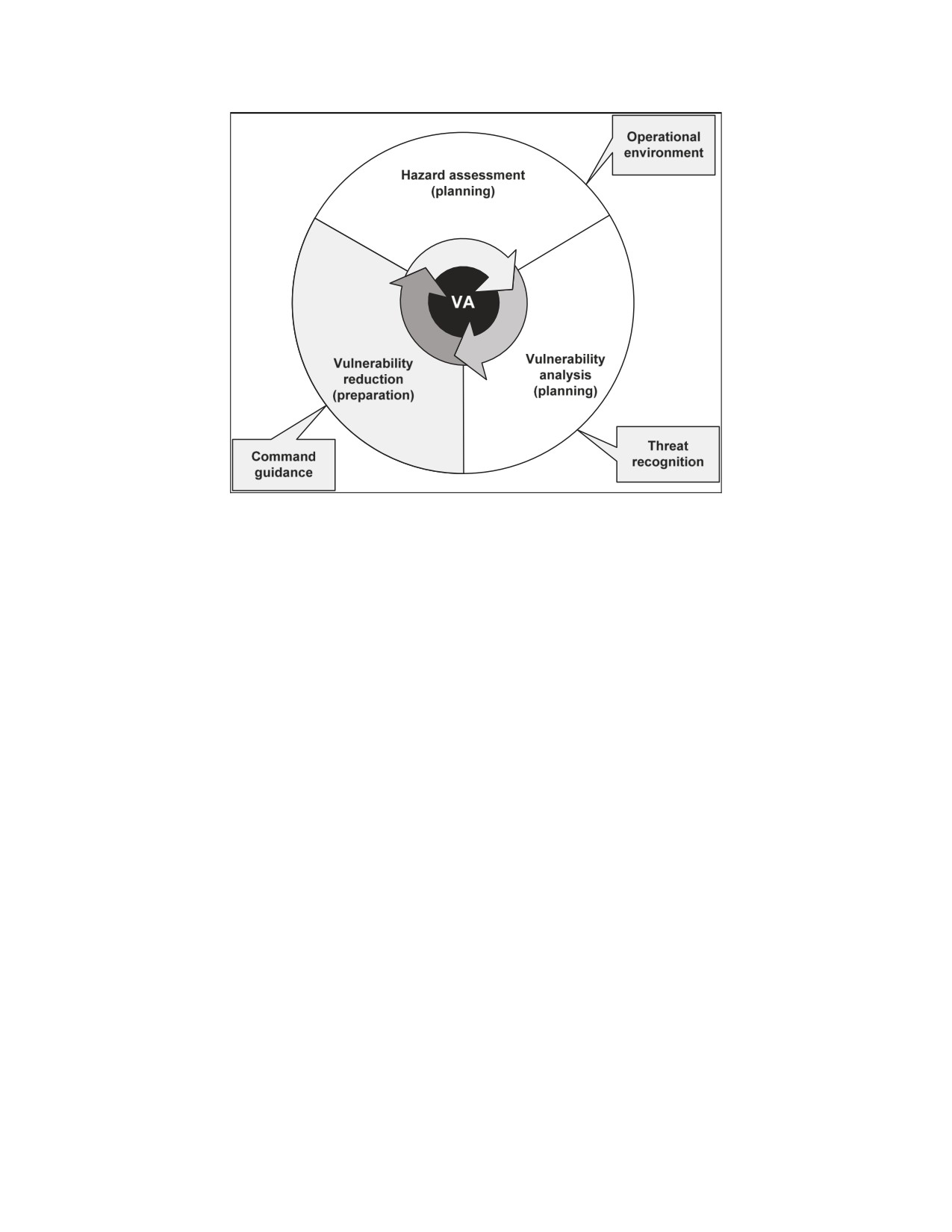
Figure III-2. Vulnerability Assessment During the Preparation Phase
b.
Preincident checks reverify that response units have supplies and equipment
such as the required PPE.
c.
The measures that comprise protection actions also provide VA feedback. This
feedback improves the overall response plan. For example, response personnel may take
notice of the shortcomings of HN protective equipment (protective ponchos issued by some
nations may be effective in protecting against a direct spray hazard would provide little
protection against regional mustard contamination).
8.
National Special Security Events
a.
JP 3-41 defines NSSE as “events of national significance that require greater
visibility” (such as the Olympics). In preparation for CM operations, DOD response assets
may be tasked to support NSSE. This unique CM operation requires DOD assets to prepare
for possible CM scenarios, deploy, and be prepared to respond, prior to any incident
occurring. Preparations for NSSE operations are based on the event supported and the
mission the unit is assigned. In many instances, a unit can even be pre-positioned near the
site where the CBRN CM operation could occur.
b.
An important aspect of preparation for CM at an NSSE is the ability of the unit
to directly interface with its counterparts to fully determine its role in the planned
response. Unlike other preincident preparation where the exact role of the unit cannot be
known until the scope and magnitude of the CBRN incident is determined, the NSSE
involves the preexecution of a response plan to such a degree that many of the responding
assets are pre-positioned and prepared to execute its part on very short notice.
III-10
FM 3-11.21/MCRP 3-37.2C/NTTP 3-11.24/AFTTP(I) 3-2.37
1 April 2008
Chapter IV
RESPONSE
1.
Background
a.
CBRN incidents may occur without warning and at a time of day and location
that will produce chaos, confusion, and casualties. In a no-notice incident, local emergency
services and possibly state and federal agency personnel will be the responders. Notification
from local responders to a nearby DOD military command may trigger an immediate
response to save lives, prevent human suffering, or mitigate great property damage.
Notification of an approved RFA triggers the domestic emergency response provided by
DOD. DOD personnel support for FCM operations requires approval from the DOS.
(1)
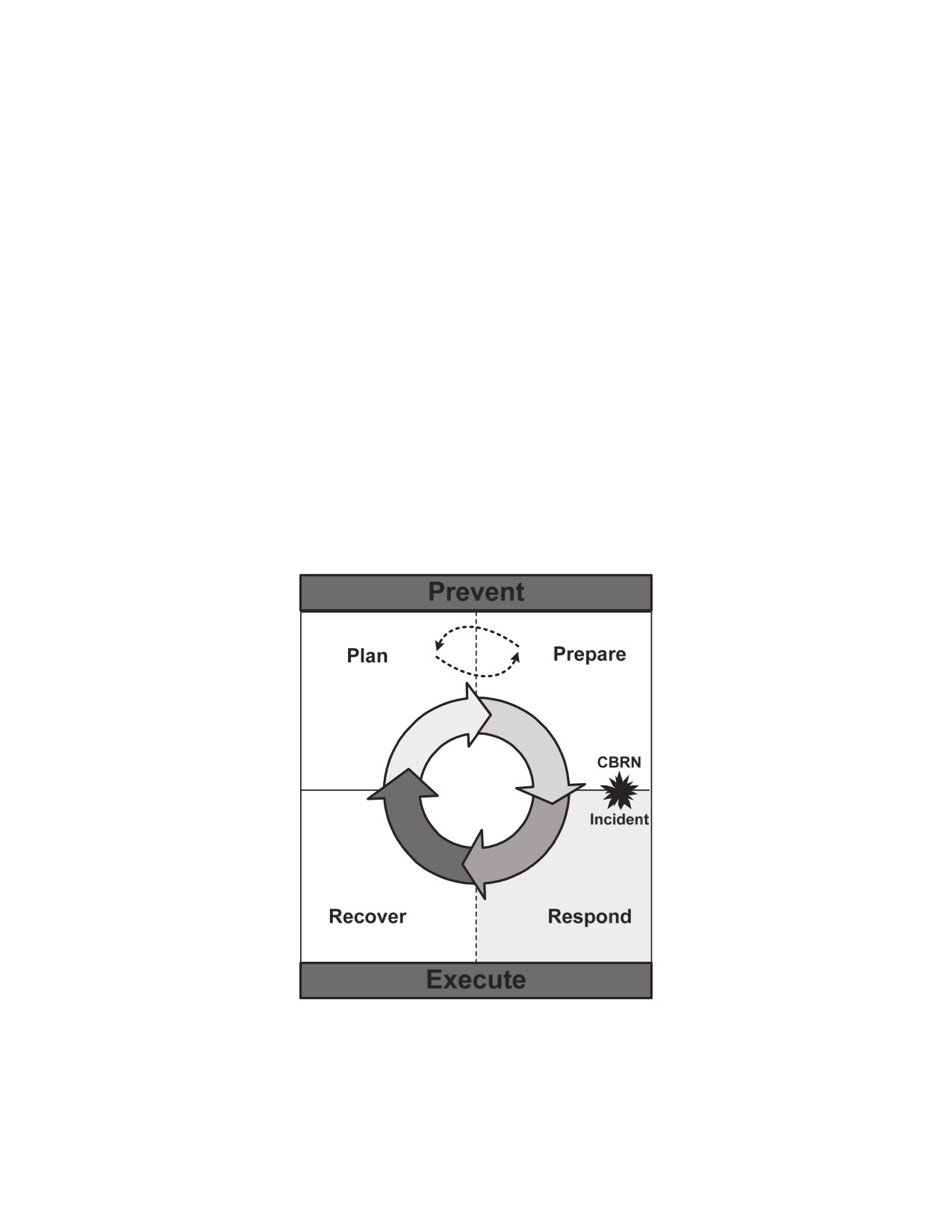
The major functions performed by CBRN CM response units are
safeguarding lives, preserving health and safety, securing and eliminating the hazard,
protecting property, preventing further damage to the environment, and maintaining public
confidence in the government’s ability to respond to a CBRN incident. See Figure IV-1 for
the response phase relative to the other phases of the CBRN CM response. Responding
forces initiate actions to restore conditions at and in the vicinity of the incident site.
Transition and redeployment plans are developed once the role of the DOD force is
established and follow-on local, state, and federal assets have been determined.
Figure IV-1. CBRN Consequence Management Process (Respond)
(2)
Although DOD’s primary CM focus is minimizing the effects of CBRN on
military operations, it must also be prepared to support the response to a CBRN incident in
the homeland and support allies and partners. To defend against and recover from CBRN
1 April 2008
FM 3-11.21/MCRP 3-37.2C/NTTP 3-11.24/AFTTP(I) 3-2.37
IV-1

use, U.S. armed forces must execute passive-defensive measures and be prepared to
conduct CBRN CM activities. If prevention efforts fail and a CBRN attack cannot be
prevented, DOD must be prepared to respond to RFAs; initiate or support ongoing CM
efforts; and actively support local, state, and federal or allied and partner authorities.
b.
The sequence and time of a response to a CBRN incident depends on factors such
as the operational environment (DCM or FCM), the magnitude of the CBRN incident, and
the resources needed to respond. Table IV-1 provides a general flow of events for a CBRN
incident response.
Table IV-1. Flow of Events for a CBRN Incident Response (Notional)
Event
Action
Trigger
A CBRN incident occurs that requires a response (explosion, dissemination,
appearance of symptoms, etc.).
Initiate response
A local response team responds to the incident.
Initiate ICS
The response team identifies the need to establish ICS.
Establish command
The IC assumes command and establishes control at the incident scene.
Secure site control
The IC establishes security of the site.
access
• Establish a security perimeter around the incident scene.
• Assure safe approach and positioning of emergency response resources
at the incident site.
• Establish a staging area as a method of controlling response resources at
the incident site.
Establish incident
The IC establishes an ICP outside of the present and potential hazard zone
command post (CP)
but close enough to the incident to maintain command.
• Location is disseminated.
• Incident reporting continues.
Identify the
Responders—
hazard/assess the
• Evaluate all available information (such as placards and shipping
situation (ongoing)
documents).
• Try to answer questions, such as—
Is there a fire, spill, or plume?
What are the weather conditions?
What is the terrain like?
Who/what is at risk?
What action should be taken?
What can be done immediately (such as evacuate, SIP, or
immediate rescue)?
Establish hazard control
The IC establishes cold, warm, and hot hazard control zones to ensure safe
zones
work areas.
Task organize
The IC organizes available response assets under appropriate command
authority.
Deploy response assets
Responders begin operations based on their assigned mission.
2.
Incident Response Overview
a.
First Response.
(1)
First response is conducted by local and nongovernmental police, fire,
and emergency personnel. In its most basic form, first responders are individuals who are
likely to witness or discover a hazardous substance release and who have been trained to
initiate an emergency response sequence by notifying the proper authorities of the release.
In its more advanced form, first responders are personnel who are trained to operational or
technical levels.
(2)
Personnel who provide first response support include local and
nongovernmental police, fire, and emergency personnel who, in the early stages of an
IV-2
FM 3-11.21/MCRP 3-37.2C/NTTP 3-11.24/AFTTP(I) 3-2.37
1 April 2008
incident, are responsible for the protection and preservation of life, property, evidence, and
the environment, including emergency response providers as defined in Section 2 of the
Homeland Security Act of 2002 (6 USC 101).
b.
Emergency Response.
(1)
Emergency response occurs when responders from outside the
immediate release area deploy to an occurrence which resulted in, or is likely to result in,
an uncontrolled release of a hazardous substance. Responses to releases of hazardous
substances where there is no potential safety or health hazard are not considered to be
emergency responses.
(2)
Representative functions of emergency response include firefighting,
law enforcement, security, medical support, emergency management, EOD, and mortuary
affairs.
3.
Chemical, Biological, Radiological, and Nuclear Responder
a. CBRN responders are DOD military and civilian personnel who are trained to
respond to CBRN incidents and certified to operate safely at the awareness, operations, or
technician level according to 29 CFR 1910.120 and NFPA Standard 472. The various levels
of CBRN responders are as follows:
(1) CBRN Responder (Awareness Level). CBRN responders at the awareness
level are individuals who are likely to witness or discover a CBRN or hazardous material
release and who have been trained to initiate an emergency response sequence by notifying
the proper authorities of the release. They would take no further action beyond notifying
the authorities of the release. CBRN responders at the awareness level shall have had
sufficient training or experience to demonstrate the following competencies:
•
Understand what CBRN or hazardous substances are and the risks
associated with them in an incident.
•
Understand the potential outcomes associated with an emergency created
when hazardous substances are present.
•
Recognize the presence of CBRN or hazardous substances in an emergency.
•
Identify the CBRN or hazardous substances, if possible.
•
Understand the awareness-level responder’s role in the employer’s
emergency response plan, including site security and control and the Emergency Response
Guide: A Guide for First Responders During the Initial Phase of a Dangerous
Goods/Hazardous Materials Incident.
•
Recognize the need for additional resources and make appropriate
notifications to the communication center.
(2) CBRN Responder (Operations Level). CBRN responders at the operations
level are individuals who respond to releases or potential releases of CBRN or hazardous
material as part of the initial response to the site for the purpose of protecting nearby
persons, property, or the environment from the effects of the release. They are trained to
respond in a defensive fashion without actually trying to stop the release. In addition to
awareness-level training, CBRN responders at the operational level shall have had
sufficient training or experience to demonstrate the following competencies:
1 April 2008
FM 3-11.21/MCRP 3-37.2C/NTTP 3-11.24/AFTTP(I) 3-2.37
IV-3
•
Know basic hazard and CBRN risk assessment techniques.
•
Know how to select and use proper PPE provided to the operational-level
responder.
•
Understand basic hazardous and CBRN material terms.
•
Know how to perform basic control, containment, and confinement
operations within the capabilities of the resources and PPE available within the unit.
•
Know how to implement basic decontamination procedures.
•
Understand the relevant SOPs and termination procedures.
(3) CBRN Responder (Technician Level). CBRN responders at the technician
level are individuals who respond to releases or potential releases for the purpose of
stopping the release. In addition to awareness- and operations-level training, CBRN
responders at the technician level shall have the following competencies:
•
Know how to implement emergency response plans.
•
Know how to classify, identify, and verify known and unknown materials by
using field survey instruments and equipment.
•
Be able to function within an assigned role in the ICS.
•
Know how to select and use proper specialized CBRN PPE.
•
Understand hazard and risk assessment techniques.
•
Be able to perform advanced control, containment, and confinement
operations within the capabilities of the resources and PPE available with the unit.
•
Understand and implement decontamination procedures.
•
Understand termination procedures.
•
Understand basic CBRN and toxicological terminology and behavior.
b.
See Appendix D for more information on training for CBRN responders.
4.
Response Environment
a.
Department of Defense Role. DOD forces responding in a domestic or foreign CM
response environment act in a supporting role and will not take control from the IC.
However, in a DOD-led response environment, the U.S. military will assume the lead role.
For example, a geographic combatant commander (GCC) may develop plans for DOD-led
CBRN CM missions within their assigned AOR. If required, the GCC may designate and/or
establish a Joint Task Force-Consequence Management (JTF-CM). The JTF-CM would
then be tailored to meet the specific requirements of a CBRN CM mission.
b.
Command and Control.
(1) Notification. Notification of a CBRN CM support mission will be processed
through normal military channels, and notification of the units tasked to provide support
will commence using local SOPs. Generally, a unit may be notified when the installation
EOC and command receives an approved RFA and provides a warning order (WARNORD)
to the units tasked to provide the support.
IV-4
FM 3-11.21/MCRP 3-37.2C/NTTP 3-11.24/AFTTP(I) 3-2.37
1 April 2008
(2) Warning and Reporting. Military warning and reporting procedures are still
applicable to DOD units while supporting CBRN CM operations (see Multiservice Tactics,
Techniques, and Procedures for Chemical, Biological, Radiological, and Nuclear
Contamination Avoidance). These common reporting procedures provide a means of
communicating hazards for the supporting DOD response units. Other reporting
requirements may be implemented by the IC during the response operation and should be
coordinated through the military liaison to ensure that the supporting military units
comply. See Appendix C for further information.
(3) Liaison. Liaison provides information continuity between the supporting
military units and the IC to ensure effective two-way communication. This includes
information from the IC for local, state, and federal plans and directives, to include other
representative information such as established MAAs.
(4) Immediate Response Authority.
(a) Immediate response is defined by JP 1-02 as any form of immediate
action taken to assist civil authorities or the public to save lives, prevent human suffering,
or mitigate great property damage under imminently serious conditions when time does not
permit approval from a higher authority.
(b) DOD policy for immediate action to save lives, prevent human
suffering, or mitigate great property damage authorizes military commanders or
responsible officials of other DOD agencies to respond to civil authorities’ requests for
emergency military support. The policy is based on the law commonly known as the
Stafford Act, and it gives the commander authority to—
•
Support an incident response without formal activation or direction
when immediate, serious conditions exist and time does not permit prior approval from
higher headquarters.
•
Save lives, prevent human suffering, or mitigate major property
damage under immediate, serious conditions where there has not been a Presidential
declaration of a catastrophe, a major disaster, or an emergency.
(c)
While the policy allows for an immediate response, it requires
commanders to advise the DOD Executive Secretary, through command channels and by
the most expeditious means available, and to seek approval or additional authorizations as
needed. Although an immediate response may be provided on a reimbursable basis, it will
not be delayed or denied because of the inability or unwillingness of the requester to make
a commitment to reimburse DOD. Commanders must exercise extreme caution if electing to
deploy under the auspices of an immediate response. Immediate response authority is not a
basis for using established MAAs. While this policy allows for great flexibility, commanders
must ensure that immediate-response deployment authority is used as a last resort.
c.
Tiered Response. DOD forces will be employed as part of a flexible tiered
response, and military support will be tailored to support a Tier I, II, or III response. The
scope and magnitude of the military response will focus on providing capabilities that meet
the response requirements that are beyond the resources of civil authorities. See JP 3-41 for
more details.
(1)
Tier I is normally implemented for small-scale, localized CBRNE incidents
that meet Secretary of Defense criteria outlined in the Chairman of the Joint Chiefs of Staff
1 April 2008
FM 3-11.21/MCRP 3-37.2C/NTTP 3-11.24/AFTTP(I) 3-2.37
IV-5
(CJCS) Concept Plan (CONPLAN) 0500, Military Assistance to Domestic Consequence
Management Operations in Response to a Chemical, Biological, Radiological, Nuclear, or
High-Yield Explosive Situation. In a Tier I situation, the DCO can effectively exercise
command over the small number of DOD forces required and still execute his functional
responsibilities with respect to processing mission assignments.
(2)
Tier II is the normal response posture for CBRNE incidents having met the
Secretary of Defense criteria to implement CJCS CONPLAN 0500 and the need to establish
a JTF to respond to the incident. Specialized units, detachments, teams, supplies, and
equipment will likely be required from DOD in Tier II.
(3)
Tier III involves extremely complex CBRNE scenarios impacting a wide
geographic area or a large population—or threatening national security.
5.
Joint Operational Phases for Consequence Management
a.
CBRN response is an organized response effort employed to mitigate hazards
for an emergency resulting from a deliberate or unintentional CBRN release. The Joint
Director of Military Support (JDOMS), located within the operations directorate of a joint
staff (J-3), produces military orders that pertain to domestic emergencies. The J-3 forwards
the orders to the Secretary of Defense for approval and then to the appropriate military
commander for execution. A six-step process is initiated when an RFA is received from a
lead or other primary agency.
•
The lead or other primary agency initiates the RFA.
•
The RFA is sent to the DOD Executive Secretary for assessment and processing.
•
The RFA is processed and sent to the Assistant Secretary of Defense (Homeland
Defense) and the JDOMS.
•
The JDOMS processes the order.
•
The Secretary of Defense approves the order.
•
The JDOMS issues the order to appropriate CCDRs, services, and agencies.
b.
The response is generally conducted in the following sequence:
(1)
Request for Support. When a CBRN incident occurs, the lead agency
receives and generates requests for support, and DOD may be tasked to provide resources.
Although specific unit taskings may occur, the requestor normally asks for a capability to
meet an identified shortfall. A representative list of units and/or activities that can support
CBRN CM is provided in Appendix A.
(a) Prescripted RFAs may be used by the lead agency to expedite the
process for requesting support. Prior to preparing a prescripted RFA, the preparer
considers what federal agency has the unique capability to satisfy the requirement.
(b) Since prescripting RFAs can assist with time-sensitive response
requirements, the preparer should prioritize the capabilities required for the incident. The
following factors should be considered when preparing a prescripted RFA:
•
Unique capabilities of the supporting agency.
•
Lifesaving capabilities of the supporting agency.
IV-6
FM 3-11.21/MCRP 3-37.2C/NTTP 3-11.24/AFTTP(I) 3-2.37
1 April 2008
•
Agency capabilities that can reduce the scope, scale, and/or impact of
the incident.
(2)
Alert. Upon notification of a CBRN response mission, tasked military
support elements initiate local alert procedures and prepare to deploy to the incident site.
Commanders and staff gather the information required to prepare their units to support
the response efforts.
(3)
Deploy. Deploying the needed military support assets at the appropriate
time is the key to success. Establishing a base support installation (BSI), which may take
place during the alert phase or during a transition between these phases, is a key
consideration. CBRN response units, with direction from the parent unit and service, are
responsible for coordinating and executing predeployment activities, movement to and
activities at ports of embarkation (POEs), and arrival at ports of debarkation (PODs).
Deployment ends when the applicable DOD forces are secured in the AO and the military
support commander determines that forces are ready to execute the mission. Deployment
considerations include—
•
Using all transportation modes to deploy supporting CBRN CM response
units.
•
Phasing the movement of CBRN CM response units so transportation
capabilities are not overwhelmed.
•
Prioritizing the movement of CBRN CM response units.
•
Immunizing CBRN CM response unit personnel to prevent unnecessary
delays in response posture.
•
Ensuring that units meet HSS standards established for the operation
prior to deployment into an AO.
•
Coordinating with the BSI for reception, staging, onward movement, and
integration (RSOI) operations.
(4)
Transition. Transitioning encompasses the remaining tasks the DOD
response elements must complete prior to redeployment. Transition is discussed further in
Chapter V.
(5)
Redeployment. Redeploying the supporting military units begins when
directed by the commander. Redeployment is discussed in further detail in Chapter V.
6.
Chemical, Biological, Radiological, and Nuclear Response Operations
a.
The initiation of response operations occurs following a triggering incident.
Response measures include the first and emergency response, establishment of the ICS,
ensuring that requisite control measures are in place, and execution of mission-essential
functions that occur in the hazard control zones.
b.
Triggering Incident. Triggering refers to the initial event, or sequence of events,
which causes response actions to begin. Trigger help to determine when a response to the
incident begins. A trigger may prompt an immediate DOD response (conditions permitting)
or a delayed response based on DOD approval of a validated RFA. Information from the
triggering incident supports the ongoing assessment and will influence the follow-on
1 April 2008
FM 3-11.21/MCRP 3-37.2C/NTTP 3-11.24/AFTTP(I) 3-2.37
IV-7
response actions. An effective response will drive a more effective recovery phase, limit the
severity of the CBRN event on operations, and reduce the overall number of casualties.
(1)
Detector triggers occur when a detection device signals that a CBRN agent
may be present in the environment. Detectors are limited to those CBRN agents they are
designed to find. They may not indicate the presence or absence of all CBRN agents due to
the sensitivity of the devices and the possibility of false-positive and false-negative
readings.
(2)
Weapon triggers refer to an overt attack by a weapons system, such as
theater ballistic missiles, submunitions, or artillery that might be armed with a CBRN
agent. If intelligence has indicated a CBRN-weapons capability, a weapons incident in a
high-threat area will likely be initially treated as an unknown agent. Detection of an attack
in progress may result from an attack warning, a detector alarm, or observable weapons
incident. During and immediately after an attack, the top priority should be to determine
whether it was a CBRN attack. Detection, observation, or other notices of attack prior to
the occurrence of casualties trigger during-attack actions, which are initially focused on
immediate actions to preserve human life.
(3)
MEDSURV may be the first means of detection for a CBRN incident,
especially in the case of sentinel casualties discovered following a covert biological attack. A
sentinel casualty triggering incident refers to the medical community’s detection of a
biological agent or infectious disease incident by assessing trends in medical symptoms
among personnel or diagnosis of an index case. Response actions based on a sentinel
casualty may begin well into the disease progression cycle. At its highest level, MEDSURV
could occur through the theater MEDSURV network, where epidemiology is focused on
theater-wide tracking of medical symptoms.
(4)
Intelligence triggers occur when a commander receives intelligence
indicating that a threat possesses an offensive CBRN capability, that there is unusual
threat activity consistent with operational use of a CBRN agent, or that a specific target
may be attacked with a CBRN agent. Intelligence warning is the triggering incident that
allows a commander the best opportunity to prepare for a response.
c.
First, Emergency, and CBRN Response. Based on the initial and follow-on
assessments, the response to a CBRN incident is tailored to the scope and magnitude of the
situation, and follow-on response assets are requested as required.
(1)
First response is conducted by local police, fire, and emergency personnel
who are likely to witness or discover a CBRN release and notify the proper authorities of
the release. The first response elements use resources such as the Emergency Response
Guide to identify the associated hazards and determine hazard control zones. These zones
take into consideration the CBRN material, population or area threatened, and weather
conditions. Efforts are made by the first response element arriving at the incident to ensure
that no one enters the hazard control zones without authorization from the ICP.
(2)
Emergency response is conducted by trained responders from outside the
immediate release area.
(3)
CBRN response is conducted by military CBRN responders with specialties
in areas such as decontamination, site assessment, response planning, or C2.
IV-8
FM 3-11.21/MCRP 3-37.2C/NTTP 3-11.24/AFTTP(I) 3-2.37
1 April 2008

d.
First Receivers. Health care workers at a hospital receiving contaminated
victims for treatment are a subset of responders (firefighters, law enforcement, HAZMAT
teams, and ambulance service personnel). Most responders typically act at the site of an
incident (the location where the primary release occurred). In contrast, inherent to the
definition of first receivers, is an assumption that the hospital is not itself the primary
incident site, but rather is remote from the location where the hazardous substance release
occurred. Refer to OSHA Best Practices for Hospital-Based First Receivers of Victims from
Mass Casualty Incidents Involving the Release of Hazardous Substances for more
information on first receivers.
e.
ICS Initiation. Under circumstances when the ICS will be used, the senior
responder at the incident site—who is most experienced for the type of incident—assumes
the role of the IC. The IC is responsible for directing, assessing, prioritizing, and controlling
resources by virtue of explicit legal, agency, or delegated authority. As the response
progresses, the role of the IC may change hands as more qualified responders arrive on the
scene or are appointed. Further information about the functions of the ICS can be found in
Multiservice Tactics, Techniques, and Procedures for Installation Chemical, Biological,
Radiological, and Nuclear Defense and the NIMS. See Figure IV-2 for a graphic
representation of the ICS command structure.
Incident
Commander
Command
Group
Public
Safety
Liaison
Information
Officer
Officer
Officer
Finance/
Operations
Planning
Logistics
Administration
Branch(es)
Resources unit
Supply unit
Compensation/
claims unit
Divisions/Groups
Situation unit
Food unit
Procurement unit
Ground support
Resources
Demobilization unit
unit
Cost unit
Documentation unit
Communications
Time unit
Technical
unit
Specialist(s)
Facilities unit
Medical unit
Figure IV-2. Incident Command System Command Structure
1 April 2008
FM 3-11.21/MCRP 3-37.2C/NTTP 3-11.24/AFTTP(I) 3-2.37
IV-9
f.
Site Assessment.
(1)
Although the IC’s initial site assessment may be completed before military
response units arrive at the incident site, assessment is a continual process. Assessment at
the incident site considers multiple factors, to include—
•
Weather.
•
Terrain.
•
Infrastructure.
•
Agent characteristics (flammability, toxicity, corrosiveness, radioactivity,
oxygen levels, etc.).
•
Response unit capabilities.
•
Workload.
•
Time.
•
Deadlines.
(2)
Representative tasks that support assessment include CBRN detection,
identification, and surveillance. The results of detection, identification, and surveillance
support identifying the specific hazards and determining the extent or degree of
contamination.
(3)
Other assessment support during response operations can be obtained
through agencies that provide technical reachback. See Appendix A for a representative list
of technical reachback agencies.
g.
Control Measures. The IC establishes control measures to prevent or reduce the
spread of contamination, human injury or death, environmental damage, and property
damage from the release or potential release of CBRN or HAZMAT materials. All control
measures are coordinated and controlled through the IC, the focal point for key information
(such as the presence of CBRN agents or maximum exposure limits). The IC determines the
level of protection that will be worn or available in each of the hazard control zones.
Representative control measures include—
(1)
PPE. Based on hazardous substances and conditions present, the IC will
implement appropriate emergency operations and ensure that the PPE worn is appropriate
for the hazards expected to be encountered. For example, responders who are engaged in
CBRN defense and emergency response who are exposed to hazardous substances of
unknown quantities will wear a positive-pressure self-contained breathing apparatus
(SCBA). They will continue to wear SCBA until the IC or designated safety officer
determines a decreased level of respiratory protection will not result in hazardous exposure.
(2)
Limited Access. The IC will limit the number of response personnel at the
emergency site who enter areas of potential or actual exposure to incident or site hazards.
Personnel will be limited to those who are actively performing emergency operations;
however, operations in hazardous areas will be performed using the buddy system in
groups of two or more.
(3)
Contamination Control. The IC initiates defensive contamination control
operations in order to limit the spread of contamination. This includes preventing
IV-10
FM 3-11.21/MCRP 3-37.2C/NTTP 3-11.24/AFTTP(I) 3-2.37
1 April 2008
potentially contaminated personnel from leaving the scene without being decontaminated,
controlling water runoff, and beginning emergency decontamination.
(4)
Site Security. The IC ensures that safe site management activities have
been instituted. The site is secured by establishing a security perimeter and controlling site
access to prevent additional personnel from entering the contaminated area(s) and to
prevent media personnel or bystanders from interfering with responders.
(5)
Decontamination. The IC directs that the following types of
decontamination operations can be conducted in the decontamination corridor:
•
Emergency decontamination.
•
Technical decontamination.
•
MCD.
(6)
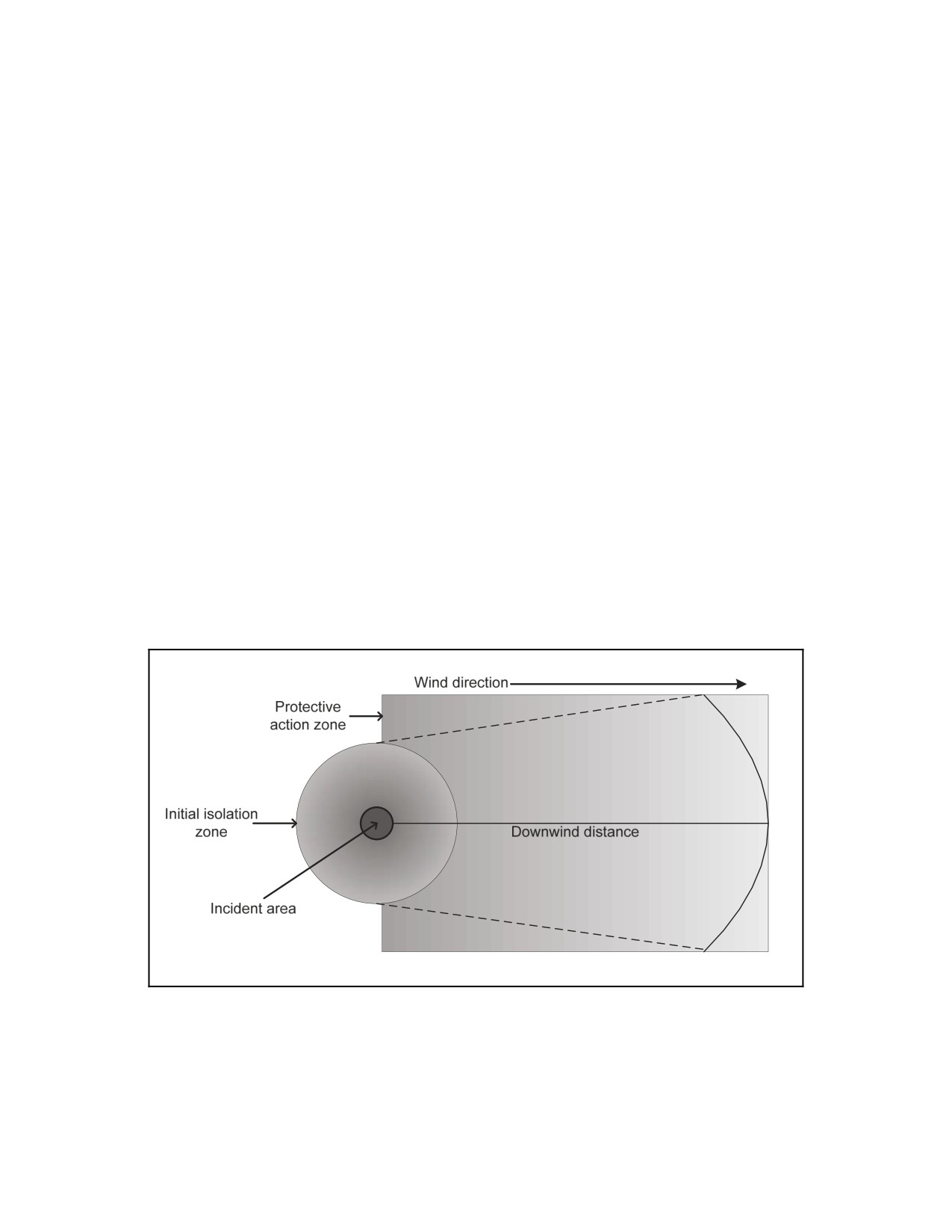
Hazard Control Zones. The IC identifies and designates hazard control
zones, including initial isolation and protective action zones and hot, warm, and cold zones.
(a) Initial Isolation and Protective Action Zones.
•
The initial isolation zone is an area surrounding the incident in which
persons may be exposed to dangerous (upwind) and life threatening (downwind)
concentrations of material.
•
The protective action zone is an area downwind from the incident in
which persons may become incapacitated and unable to take protective action and/or incur
serious or irreversible health effects. See Figure IV-3 for a graphic depiction of the initial
isolation and protective action zones.
Figure IV-3. Initial Isolation and Protective Action Zones
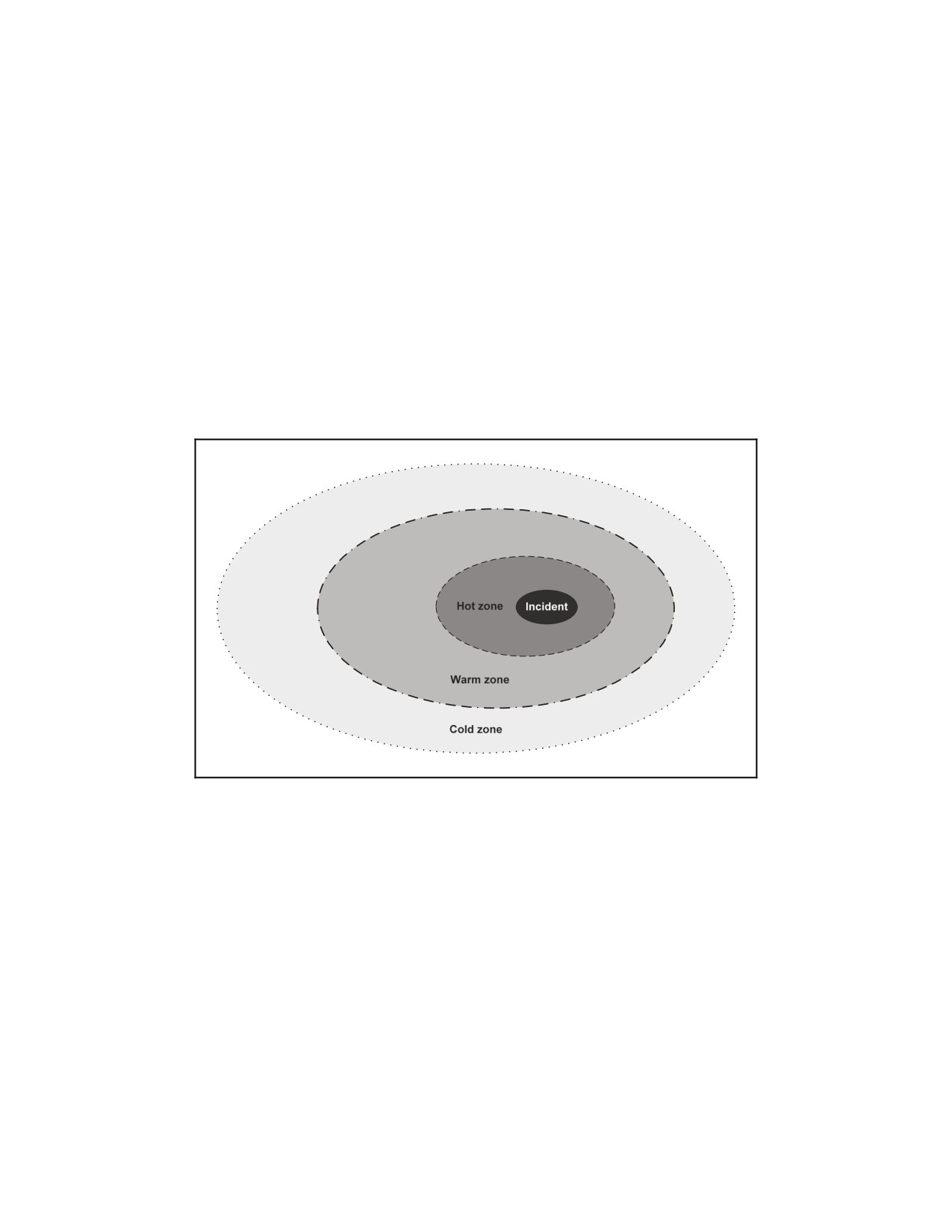
(b) Hot, Warm, and Cold Zones. Hazard control zones (hot, warm, and
cold) are established to provide areas for functions such as decontamination and support
operations.
1 April 2008
FM 3-11.21/MCRP 3-37.2C/NTTP 3-11.24/AFTTP(I) 3-2.37
IV-11
•
The hot zone is an area immediately surrounding a hazardous
materials incident which extends far enough to prevent adverse effects from released
contamination to personnel outside the zone.
•
The warm zone is the area between the hot and cold zones where
personnel and equipment decontamination and hot zone support take place. It includes
control points for the access corridor and thus assists in reducing the spread of
contamination.
• The cold zone is the area where the CP and support functions that are
necessary to control the incident are located. See Figure IV-4 for an example of hazard
control zones.
(7) Access Routes. The IC identifies safe approaches along multiple routes, if
available, for the movement of response assets to and from the incident site and assembly
areas. The routes identified include road, rail, sea, and aerial approaches to the incident
site.
Figure IV-4. Hazard Control Zones (Example)
(8) Staging Areas. The IC designates assembly areas for the staging of follow-on
response elements. The initial assembly point is a safe distance from the incident site to
prevent interference and to protect personnel.
h.
Hazard Control Zone Functions. Control zones are established by the IC at an
incident site. Control zones are established to ensure the safety of all responders and
control access into and out of a contaminated area. Figure IV-5 depicts hazard control zone
functions.
IV-12
FM 3-11.21/MCRP 3-37.2C/NTTP 3-11.24/AFTTP(I) 3-2.37
1 April 2008
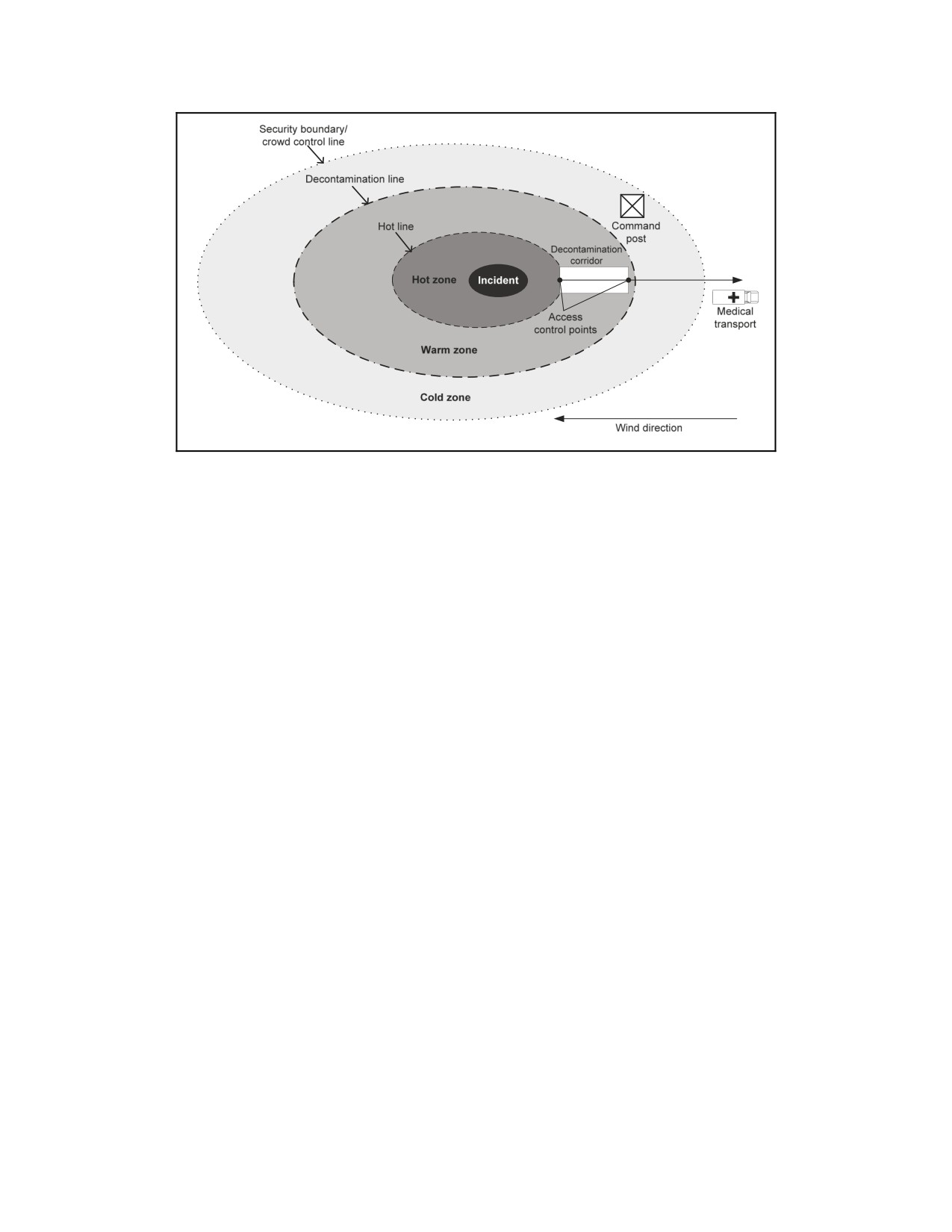
Figure IV-5. Hazard Control Zone Functions
(1)
Hot Zone. The hot zone is the area that the IC judges to be the most
affected by the incident and includes any area to which the contaminant has spread or is
likely to spread. The hot zone is also the location where contamination reduction begins,
and representative functions that can occur within the hot zone include—
•
Conducting search and rescue operations.
•
Performing mitigation measures.
•
Identifying CBRN or other physical obstacles to the entry point.
•
Conducting assessment activities (evaluating damage and/or presence of
contamination, etc.).
•
Performing chemical or radiological monitoring.
•
Conducting biological agent sampling.
(2)
Warm Zone. The warm zone is the area between the hot and cold zones
where decontamination operations (decontamination corridor) and hot zone support take
place. Representative functions that can occur in the warm zone include—
•
Emergency decontamination.
•
Technical decontamination.
•
MCD.
•
Staging of survey teams prior to entry into the hot zone.
•
Equipment decontamination.
1 April 2008
FM 3-11.21/MCRP 3-37.2C/NTTP 3-11.24/AFTTP(I) 3-2.37
IV-13
(3)
Cold Zone. The cold zone is an area that is readily accessible and provides a
clean location for support operations. It must be large enough to accommodate local, state,
and federal CBRN response forces, if required. Representative functions that can occur
within the cold zone include—
•
Incident command operations.
•
Support activities such as logistic, sustainment, and security operations.
•
Staging area operations.
i.
Hazard Communications (HAZCOM). During response operations, units
maintain its HAZCOM program. Representative HAZCOM program execution functions
include—
•
Sustaining the capability to store and use regulatory reference data and product
hazard data.
•
Preparing to receive and process CBRN materials information.
•
Maintaining access to information on CBRN hazards at the incident site.
•
Adhering to safety guidance as contained in applicable OSHA and CFR guidance.
7.
Health Service Support Response Activities
a.
The medical C2 element maintains C2 of deploying DOD medical responders.
These C2 functions include—
•
Assigning missions and dispatching units/staffs to designated response areas.
•
Coordinating DOD medical response activities with the IC and local, state,
federal, or HN response agencies.
•
Determining when the response units/staff are to stand down and turn over their
response activities to local, state, federal, HN, or other response agencies.
b.
Most HSS response activities are continued throughout the recovery phase of CM
operations. The HSS response activities of preventive medicine (PVNTMED), veterinary
services, stress management support for response forces and the local populace, laboratory
services, and health service logistics are detailed in Appendix C. Triage, patient
decontamination, treatment, evacuation, and hospitalization will be addressed in Chapter
V and Appendix D, Recovery Operations.
c.
Immediate response may be provided by―
•
On-scene personnel providing basic first aid.
•
Prestaged specialized DOD assets capable of providing emergency care in the hot
zone and patient stabilization in the cold zone until civilian EMS transport is available.
Such assets include the chemical-biological incident response force (CBIRF) and CBRNE
Enhanced Response Force Package (CERFP).
•
Military installation activities providing immediate support such as EMS
personnel, medical treatment teams, PVNTMED personnel, veterinary personnel,
firefighters, and military police.
IV-14
FM 3-11.21/MCRP 3-37.2C/NTTP 3-11.24/AFTTP(I) 3-2.37
1 April 2008
•
Local police and firefighters; EMS, public health, and public works personnel;
and designated medical treatment teams.
•
Country teams, HN medical assets, and DOD units/personnel in FCM situations.
d.
Medical diagnosis is the process of determining the cause of a disease or injury.
While some diagnoses are made evident by signs and symptoms, definitive diagnosis of
infection or chemical exposure may require laboratory or radiology studies. These studies
may take several days. Empiric treatment must begin prior to a definitive diagnosis in
order to save lives. Medical reachback is a method for the responding HSS elements and
organizations to obtain technical medical consultation and support during CBRN CM
response activities. Organizations and activities within DOD and other federal agencies
provide these services.
e.
HSS activities are based on the predeployment health risk assessment of the
health threats in the AO and the specific deployment location. Health risk assessments,
OEH site assessments, routine and incident-driven monitoring and sampling, and other
health surveillance activities should be updated during deployment. If health threats
increase or can be anticipated to increase during the deployment, commanders should
implement additional HSS to ensure that personnel are adequately monitored and
protected.
f.
During a CBRN CM response, OEH site assessments, site reconnaissance, and
food and water VAs (refer to DODD 6400.4, DOD Veterinary Services Program) are
conducted to validate actual or potential health threats, evaluate exposure pathways, and
determine COAs and countermeasures to control or reduce the health threats and protect
the health of deployed personnel. When conducting CM response, consider the following
tasks:
(1) Ensure that DOD- or Service-approved automated health information
management system is used to capture OEH monitoring data.
(2) Ensure that health risk communications (written or oral) are based on
health risk assessments and health CRM decisions, and update the health risk as new
information becomes available.
(3) Document deployment occupational and environmental exposures or CBRN
exposures and related monitoring data, and provide timely reporting of disease and
nonbattle injuries (DNBIs), battle injuries, and other medical information, as required.
(4) Submit medical information related to CBRN, unanticipated infectious
disease, or environmental contamination occurrences to the Armed Forces Medical
Intelligence Center (AFMIC). Also, provide copies of operational medical reports, which
include descriptions and/or assessments of infectious diseases, environmental findings, and
medical capability, to the AFMIC.
g.
A respiratory protection program includes medical screening and surveillance of
personnel issued respirators (such as SCBA) as an occupational requirement for CBRN
operations (such as DSCA). See 29 CFR 1910.134, Respiratory Protection, and DODI 6055.1
for more information.
1 April 2008
FM 3-11.21/MCRP 3-37.2C/NTTP 3-11.24/AFTTP(I) 3-2.37
IV-15
8.
Transition to Recovery Operations
a.
A fine, unclear line exists between the end of response operations and the
beginning of recovery operations. Often, recovery starts while response operations are still
in progress. Recovery operations may begin when military response assets are no longer
required or when replacements have arrived to provide relief in place. Chapter V discusses
recovery operations for CBRN CM operations.
b.
Additionally, there may be a handover of response authorities and
responsibilities when transitioning from response to recovery. For example, a responding
fire chief may hand over control of the scene to crime investigators, incident investigation
teams, or other officials.
IV-16
FM 3-11.21/MCRP 3-37.2C/NTTP 3-11.24/AFTTP(I) 3-2.37
1 April 2008
Chapter V
RECOVERY
1.
Background
a.
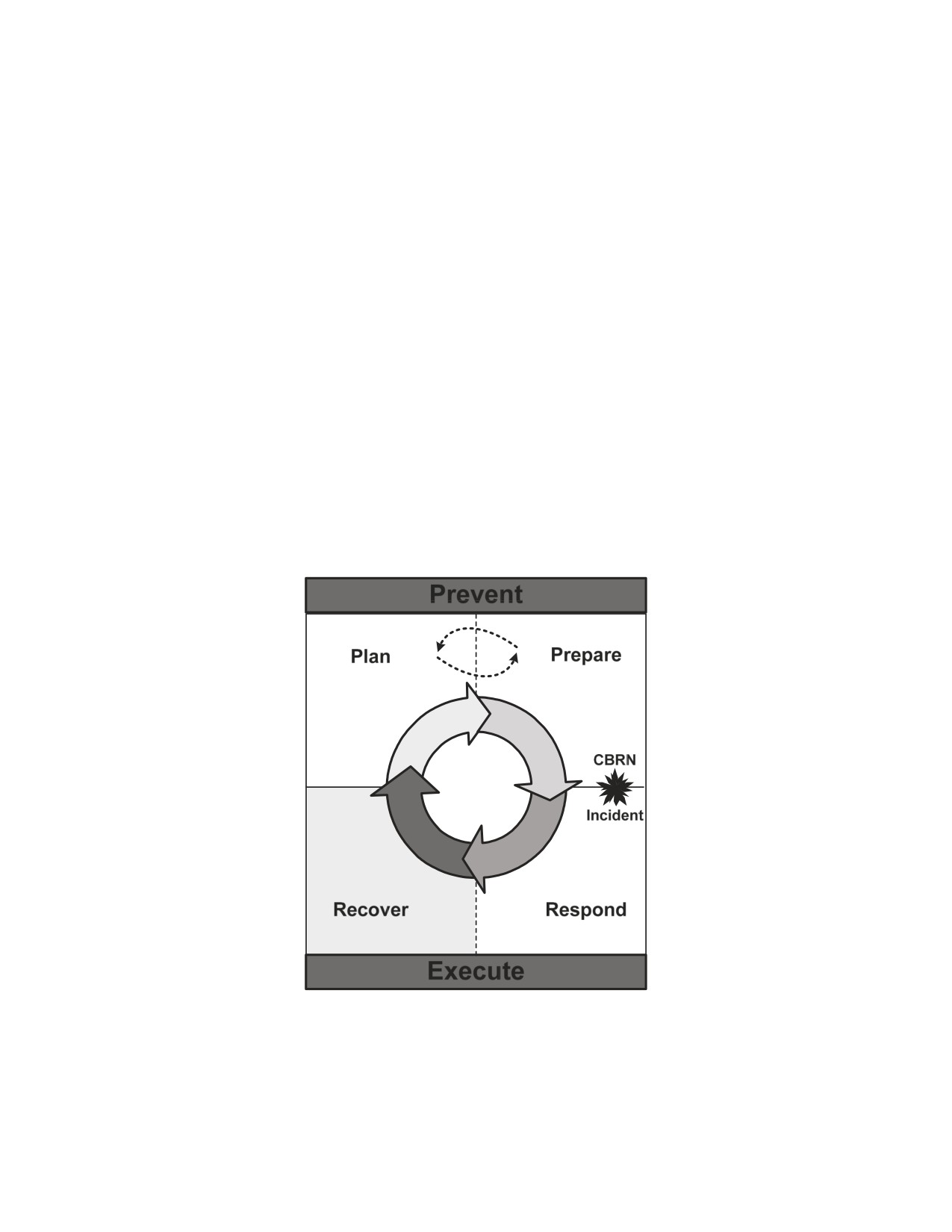
The recovery phase will begin when the immediate hazards are contained or
controlled during the response phase. See Figure V-1 for the recovery phase relative to the
other phases of the CBRN CM process. CBRN first responders will likely continue support
to complete any remaining mitigation of the immediate hazard (supporting reconnaissance,
decontamination, and assessment and providing advisory assistance). Understanding and
defining CBRN CM recovery operations requires a crosswalk between the traditional
military term and the NRP definition.
(1)
JP 1-02 defines recovery and reconstitution as those actions taken “to
minimize the effects of an attack, rehabilitate the national economy, provide for the welfare
of the populace, and maximize the combat potential of remaining forces and supporting
activities.”
(2)
The NRP addresses recovery in terms of “the development, coordination,
and execution of service- and site-restoration plans and the reconstitution of government
operations and services through individual, private-sector, nongovernmental, and public
assistance programs.”
Figure V-1. CBRN Consequence Management Process (Recover)
(3)
Overall, CBRN recovery operations occur within the context of CM and
include those actions taken to maintain or restore essential services and manage and
mitigate the consequences resulting from a CBRN incident.
1 April 2008
FM 3-11.21/MCRP 3-37.2C/NTTP 3-11.24/AFTTP(I) 3-2.37
V-1
b.
The operational duration of the recovery mission for CBRN responders is
determined by the requirements established by the appropriate authority (the IC for
domestic operations or the HN and/or DOS for foreign operations). The operational role for
CBRN responders changes during the recovery phase. During recovery operations, survey
operations may continue in the hot zone while supporting technical decontamination.
Additionally, technical advice and assistance and support to other decontamination
operations (clearance or terrain decontamination) may occur.
c.
The CBRN unit commander revises the mission-recovery plan prior to and
during the recovery phase and coordinates the plan with civil authorities to help ensure
that the transfer of tasks between civil authorities and military support commanders is
understood and completed. Top priorities for military commanders are reestablishing
mission capability, developing a plan to cover short- and long-term recovery requirements,
and returning to normal operations. Special consideration is given to minimizing and
mitigating environmental damage. The mission-recovery plan may address the following
areas:
(1)
Logistical support and resupply.
(2)
Protection.
(3)
Documentation and reporting requirements, to include resource
expenditures, losses, and environmental exposure data necessary to estimate personnel
exposure (to determine long- and short-term health effects).
(4)
Decontamination of equipment, infrastructure, and terrain. Military forces
may be requested to provide transportation for the affected population; assist with
decontamination efforts; and assist with segregating/isolating contaminated areas or
materials, restoring infrastructure, monitoring operations, and securing the contaminated
area.
(5)
HSS activities, to include—
•
Personal protection.
•
Casualty-handling operations.
•
Medical screening and documentation.
•
Critical-incident stress management.
•
Liaison with federal, state, local, and HN officials, as required.
d.
The operational environment will impact CBRN CM decontamination as follows:
•
For support of DHS-led CBRN CM operations in a domestic setting, DOD
response units will likely augment U.S. civilian response elements. Additionally, DOD
response units will be subject to OSHA and United States Environmental Protection
Agency (EPA) requirements.
•
For support of DOS-led CBRN CM operations in a foreign setting, DOD
response units may augment HN response elements, and actions may be bound by existing
HN treaty and/or status of forces agreements.
•
In DOD-led CBRN CM response operations, recovery measures undertaken
will support the commander’s guidance and the overall CBRN CM goals.
V-2
FM 3-11.21/MCRP 3-37.2C/NTTP 3-11.24/AFTTP(I) 3-2.37
1 April 2008
e.
There is no established timetable for recovery operations. During this phase,
there will come a time when military assets are replaced or are no longer needed. The
transition and order for redeployment may occur when military units receive a new
mission, the assigned mission is complete (such as MCD), or civilian authorities take over
the mission. The CBRN response unit commander facilitates the orderly transition from the
assigned recovery mission and conducts the withdrawal of military forces from the incident
site.
(1)
The military support commander implements the transition plan by
transferring CBRN CM tasks to the appropriate civil authorities (such as the DOS or
FEMA) commensurate with their ability to continue to conduct operations.
(2)
During transition, NGOs and contracted services may augment these civil
authorities. Upon completion of the required recovery support, military assets execute
transition and redeploy.
2.
Chemical, Biological, Radiological, and Nuclear Consequence Management
Decontamination
a.
General. By the time the recovery phase has begun, decontamination efforts will
have started in order to minimize casualties, save lives, and limit the spread of
contamination. Clearance decontamination may have begun on specific mission-essential
equipment, materiel, or infrastructure. Clearance decontamination provides
decontamination to a level that allows unrestricted transportation, maintenance,
employment, and disposal of equipment. See Multiservice Tactics, Techniques, and
Procedures for Chemical, Biological, Radiological, and Nuclear Decontamination for more
information. The following paragraphs discuss emergency, technical, and MCD operations
conducted during CBRN CM incidents.
b.
Decontamination Principles. Decontamination is a process that reduces CBRN
contamination to levels that minimize the risk of further harm to the victim and cross
contamination. To support the goal of decontamination operations to provide effective
support for the largest number of personnel, apply the decontamination principles outlined
in Multiservice Tactics, Techniques, and Procedures for Chemical, Biological, Radiological,
and Nuclear Decontamination. Those principles include—
•
Speed.
•
Need.
•
Priority.
•
Limited Area.
c.
Decontamination Methods. Decontamination methods vary in its effectiveness
for removing different substances. The process of selecting a decontamination method
begins by identifying the substance quickly in order to define hazard control zones and the
most effective method of decontamination. The selection of a decontamination method will
rely on multiple sources of data, such as physical indicators, medical symptoms,
communication with victims, and detection instrument results. Continue to assess the
effectiveness of any decontamination method throughout the decontamination operation. If
decontamination
1 April 2008
FM 3-11.21/MCRP 3-37.2C/NTTP 3-11.24/AFTTP(I) 3-2.37
V-3
does not appear to be effective, select and implement a different method. See Multiservice
Tactics, Techniques, and Procedures for Chemical, Biological, Radiological, and Nuclear
Decontamination for more information on decontamination methods. Decontamination is
based on one or more of the following methods:
(1) Physical Methods. Physical methods of decontamination involve physically
removing the contaminant from the contaminated person or object and containing the
contaminant for disposal. While these methods can reduce the contaminant concentration,
the contained contaminant remains chemically unchanged. Examples of physical
decontamination methods include absorption, brushing and scraping, isolation and
disposal, vacuuming, and washing.
(2) Chemical Methods. Chemical methods of decontamination are used on
equipment, not people, and involve changing the contaminant through some type of
chemical reaction in an effort to render the contaminant less harmful. In the case of
etiologic contaminants, chemical methods are actually biologically “killing” the organism.
Examples of chemical methods include adsorption, chemical degradation, disinfection or
sterilization, neutralization, and solidification.
(3) Weathering. Weathering involves processes such as evaporation and
irradiation to remove or destroy the contaminant. The contaminated item is exposed to
natural elements (such as sun, wind, heat, and precipitation) to dilute or destroy the
contaminant to create a reduced or negligible hazard. This may be as simple as leaving a
vehicle sitting in the hot desert sun to bake off the contaminant. Natural weathering is the
simplest and most preferred method of decontamination, particularly for terrain and non-
mission-essential buildings and roads.
(4) Preventive Methods. The risk of exposure is reduced and the need for
decontamination minimized if contact with a contaminant can be controlled. Work practices
that will minimize contact with hazardous substances should be emphasized. Limited-use
or disposable protective clothing and equipment should be worn.
d.
Incident-Specific Decontamination Considerations. In order to determine what
decontamination practices may be followed, the CBRN responder assesses the
characteristics of the incident.
(1) Although data may be incomplete, the following factors should be
addressed:
•
Number of casualties.
•
Types of casualties.
•
Type of agent.
•
Agent properties.
•
Type of release.
•
Physical environment.
•
Available resources.
•
Operational desirability of various decontaminants (such as cold weather).
•
Victim safety and privacy.
V-4
FM 3-11.21/MCRP 3-37.2C/NTTP 3-11.24/AFTTP(I) 3-2.37
1 April 2008
(2) For hazard-based decontamination during a mass casualty incident, the
number of victims may exceed the response capabilities of the CBRN responders.
Responders must then prioritize the rescue, treatment, and decontamination process.
Suggested prioritization factors include—
•
Victim’s report of exposure.
•
Physical signs and symptoms of exposure.
•
Victim’s distance from the point of release of the agent.
•
Victim has other serious injuries.
•
Evidence of agent deposition on clothing or the skin.
e.
Agent-Specific Decontamination Considerations. The type of agent released is a
critical factor in determining the decontamination practices to be used. Every situation will
have unique challenges, and responders must be flexible enough to adjust to the situation
with the resources available.
(1) Chemical. A chemical agent can exist as a liquid, a solid, or a vapor,
depending on its physical properties. Liquids and solids are usually the only forms of
chemical agents that can be effectively removed from the skin.
(a) It is generally not possible or necessary to decontaminate the skin
after chemical vapor exposure. However, chemical vapors can be trapped in clothing,
causing a continuing hazard. Therefore, clothing removal is the first step of
decontamination for a victim suspected of being exposed to either liquid or vapor chemical
agents.
(b) Self-decontamination or emergency decontamination methods should
be initiated immediately for victims suspected of chemical contamination. More complex
field-expedient and thorough systems might provide more privacy, comfort, and
thoroughness in decontamination operations; however, they require additional setup time
and resources and may not be an initial decontamination option. These systems are
typically used to provide additional decontamination for victims that have gone through
self-decontamination or emergency decontamination and as precautionary measures for
chemical victims that are not symptomatic and do not have evidence of chemical
contamination.
(c)
It may be necessary to use multiple methods of decontamination,
depending on the amount of time and equipment required for setup and operation, the
number of victims that can be processed, and the thoroughness of the available
decontamination methods.
(2) Biological. Biological agents typically have delayed symptoms and lack
easily recognizable signatures such as color or odor. There will rarely be an on-site incident
to respond to when a biological agent is released unless there is a dissemination warning, a
claimed or suspected dissemination device found, or a perpetrator caught in the act of
disseminating a biological agent.
(a) Health care facilities are the most likely locations for managing a
biological agent incident. It is there that a biological incident would likely be recognized due
to an increasing number of patients presenting similar symptoms.
1 April 2008
FM 3-11.21/MCRP 3-37.2C/NTTP 3-11.24/AFTTP(I) 3-2.37
V-5
(b) Medical treatment is the primary off-scene means of responding to a
biological agent incident. Decontamination using soap and warm water showers is
recommended, especially if patients have not washed themselves thoroughly since the
incident. If a biological incident is suspected, care must be taken to protect current hospital
patients, staff, and faculty from infection.
(c)
When biological decontamination is performed, thoroughness is more
important than speed. Biological agents are not typically a contact hazard, so removing the
agents from the skin is not as time-critical as when victims have been exposed to a chemical
agent. Immediate disrobing and emergency decontamination are only necessary for victims
who have other medical injuries that require immediate treatment.
(3) Radiological. An explosion caused by a nuclear weapon or improvised
nuclear device (IND) would have devastating effects. However, nuclear materials are
extremely difficult to access, handle, and transport, making this a high-consequence, but
unlikely, threat.
(a) A more likely incident would involve the dispersal of radioactive
materials using a radiological dispersal device (RDD) or "dirty bomb." This device typically
uses explosives or compressed gas to disperse radioactive materials over an area. An RDD
would not cause as many casualties as a well-orchestrated chemical or biological release;
however, it could cause traumatic injuries, contaminate large areas, and cause significant
psychological stress.
(b) Radiological materials have delayed medical effects and can take on
many forms, making them hard to recognize without special markings or the use of
detection equipment. Radiation detectors should be used to determine whether high levels
of radiological materials are present at an incident.
(c)
If radioactive materials are present, steps should be taken to contain
the hazard and minimize additional exposure. The RDD should be located and contained.
Victims should be moved away from the hazard and directed to an area for
decontamination.
(d) Radiological decontamination minimizes the hazards of skin
contamination, reduces the risk of contaminants entering the body, helps contain
contamination, and reduces psychological stress. In radiological decontamination, victims
should be misted with water prior to disrobing to reduce the risk of inhaling or ingesting
radioactive particles.
(e)
Immediate disrobing and emergency decontamination are necessary
only for victims who have other medical conditions that require immediate treatment.
However, unlike biological agents, radioactive materials can pose an external hazard (from
outside the body) and should be removed from skin and clothing in a timely manner.
f.
Decontamination Corridors.
(1) Figure V-2 provides a general example of a decontamination corridor (the
warm zone is enlarged to provide a detailed view of the corridor). NFPA Standard 471
defines the decontamination corridor as the area, usually located within the warm zone,
where decontamination procedures take place. This is a controlled access area leading from
the hot zone (incident site) to the cold zone (support zone) in which decontamination
operations for the incident are conducted.
V-6
FM 3-11.21/MCRP 3-37.2C/NTTP 3-11.24/AFTTP(I) 3-2.37
1 April 2008
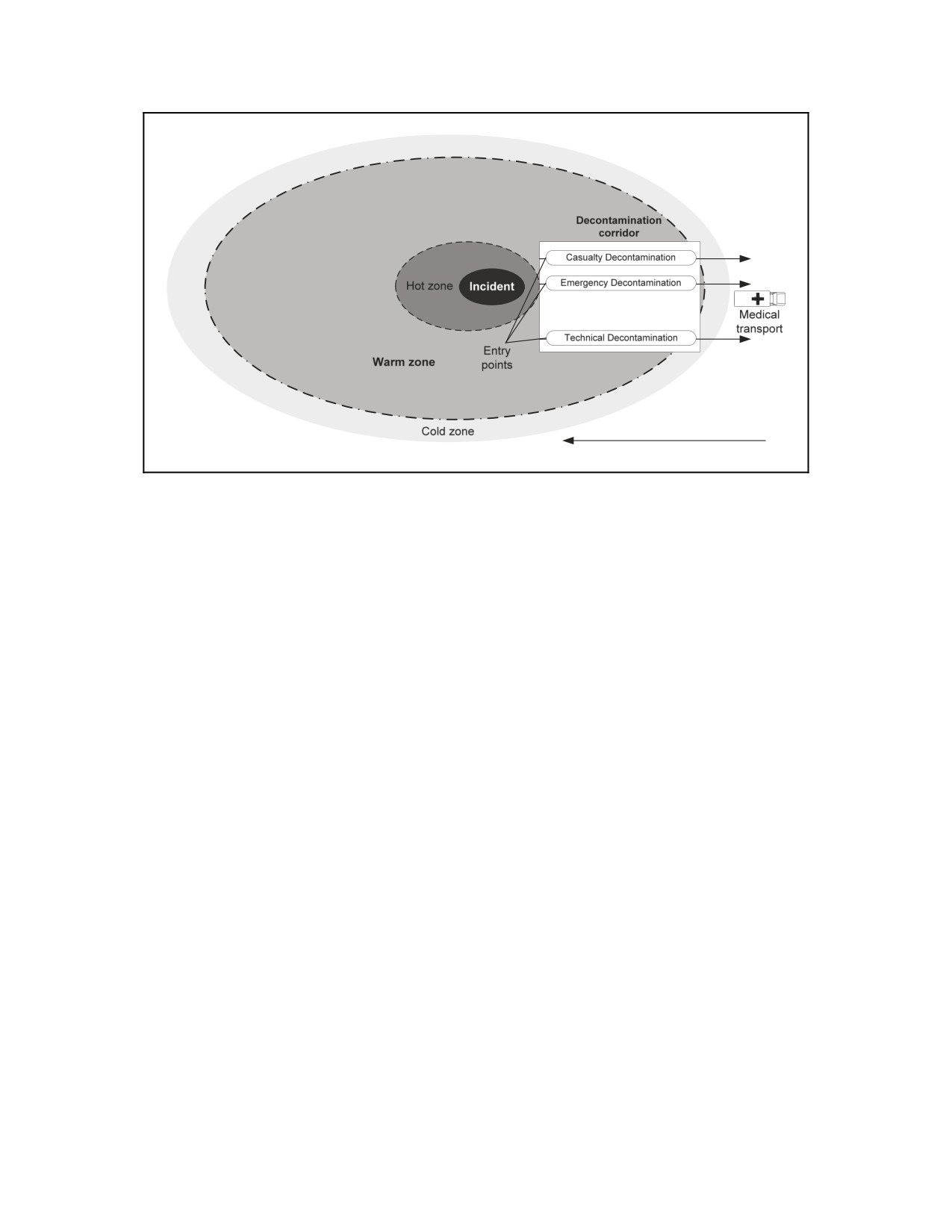
Figure V-2. Decontamination Corridor Layout (Example)
(2) The main points of a decontamination corridor are an entry point, an exit
point (vapor control line [VCL]), and an upwind direction of travel for personnel processing
through the decontamination corridor. The stations between the entry and exit points vary
with the type of decontamination corridor used. TTP for decontamination corridors can be
found in Appendix D.
g.
Personnel Decontamination Procedures.
(1) Emergency Decontamination. Emergency decontamination is a process that
removes contamination from personnel in order to save lives, minimizes casualties, and
limits the spread of the contamination. It also facilitates rapid medical attention without
transferring the contamination to other personnel or equipment.
(a) Decontaminants used are those that are safe for use on skin and
wounds. Basically, emergency decontamination directs mobile victims away from the
hazard.
(b) The process involves removing outer layers of clothing, removing any
liquid agent from the skin, showering, checking victims visually, and (time permitting)
conducting brief interviews. Figure V-3, page V-8, shows an example of an emergency
decontamination layout.
1 April 2008
FM 3-11.21/MCRP 3-37.2C/NTTP 3-11.24/AFTTP(I) 3-2.37
V-7
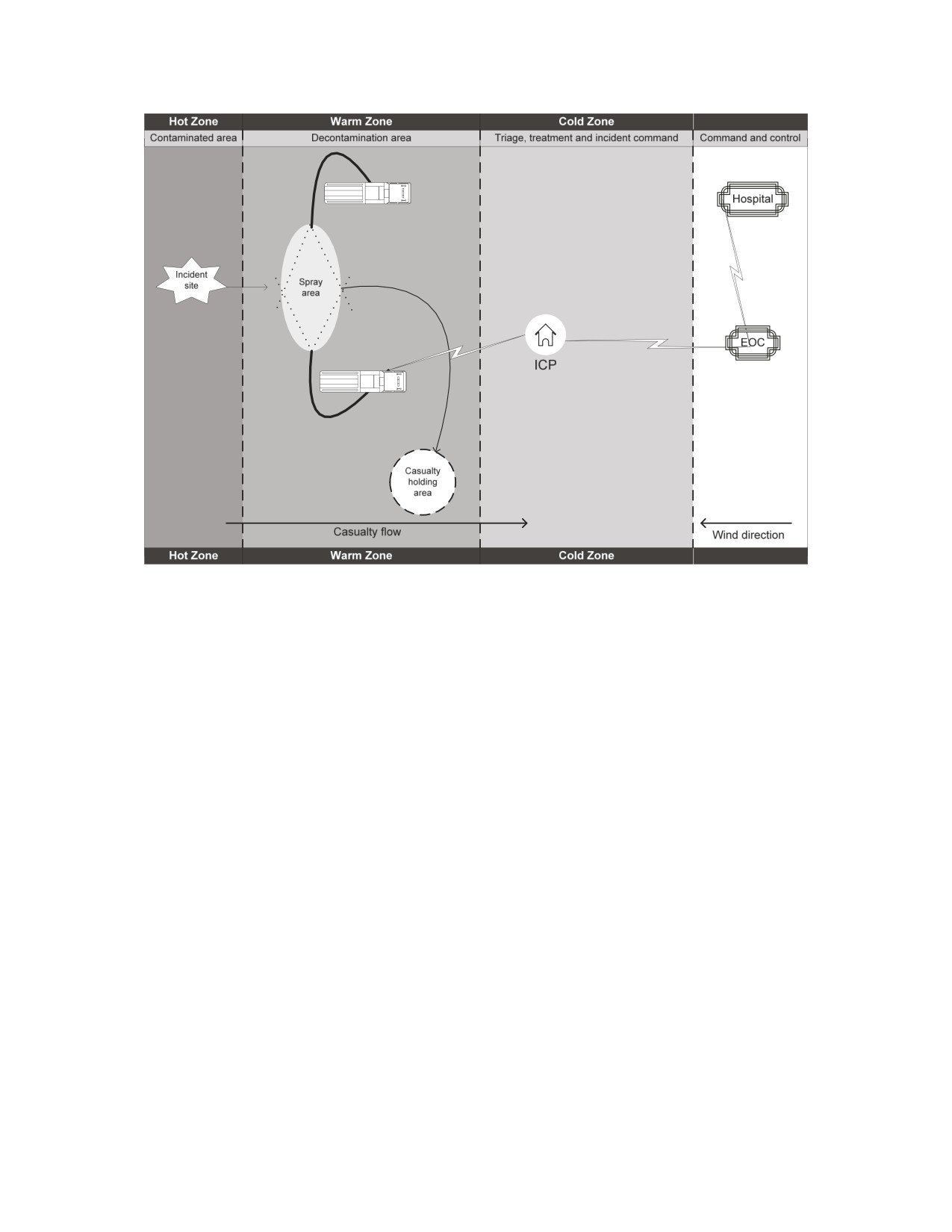
Figure V-3. Emergency Decontamination Layout (Example)
(c)
Following an incident, the IC may direct that the first
decontamination measure taken be emergency decontamination. The rapid setup of
emergency decontamination stations should help to minimize the number of casualties.
See Appendix D for emergency decontamination procedures.
(2) Technical Decontamination. Technical decontamination commonly refers to
the deliberate decontamination of responders, response equipment, and evidence. It is
conducted during a CBRN CM response where trained responders conduct
decontamination operations. The focus of technical decontamination is neutralization of
the agent. Terms that are commonly associated with technical decontamination are
detailed, thorough, deliberate, definitive, and responder decontamination.
(a) The incident may be accident- or terrorist-related and can involve
CBRN hazards. Responders may be required to use supplied air respirators and
fully-encapsulated, splash-resistant, protective suits.
(b) Technical decontamination requires a step-by-step process, based on
the hazards and risks involved, to reduce contamination on responders to a safe level and
prevent the transfer of contamination outside the containment area. This consists of
checking technical references to determine the hazards, such as flammability and toxicity,
then evaluating the associated risks (for example, vapor versus liquid, blister versus nerve
agents, radiological versus chemical-biological [CB] hazards).
(c)
In time sequencing, the establishment of technical decontamination
may follow emergency decontamination. However, technical decontamination may also
occur concurrent with emergency decontamination. In either case, no responder should be
V-8
FM 3-11.21/MCRP 3-37.2C/NTTP 3-11.24/AFTTP(I) 3-2.37
1 April 2008
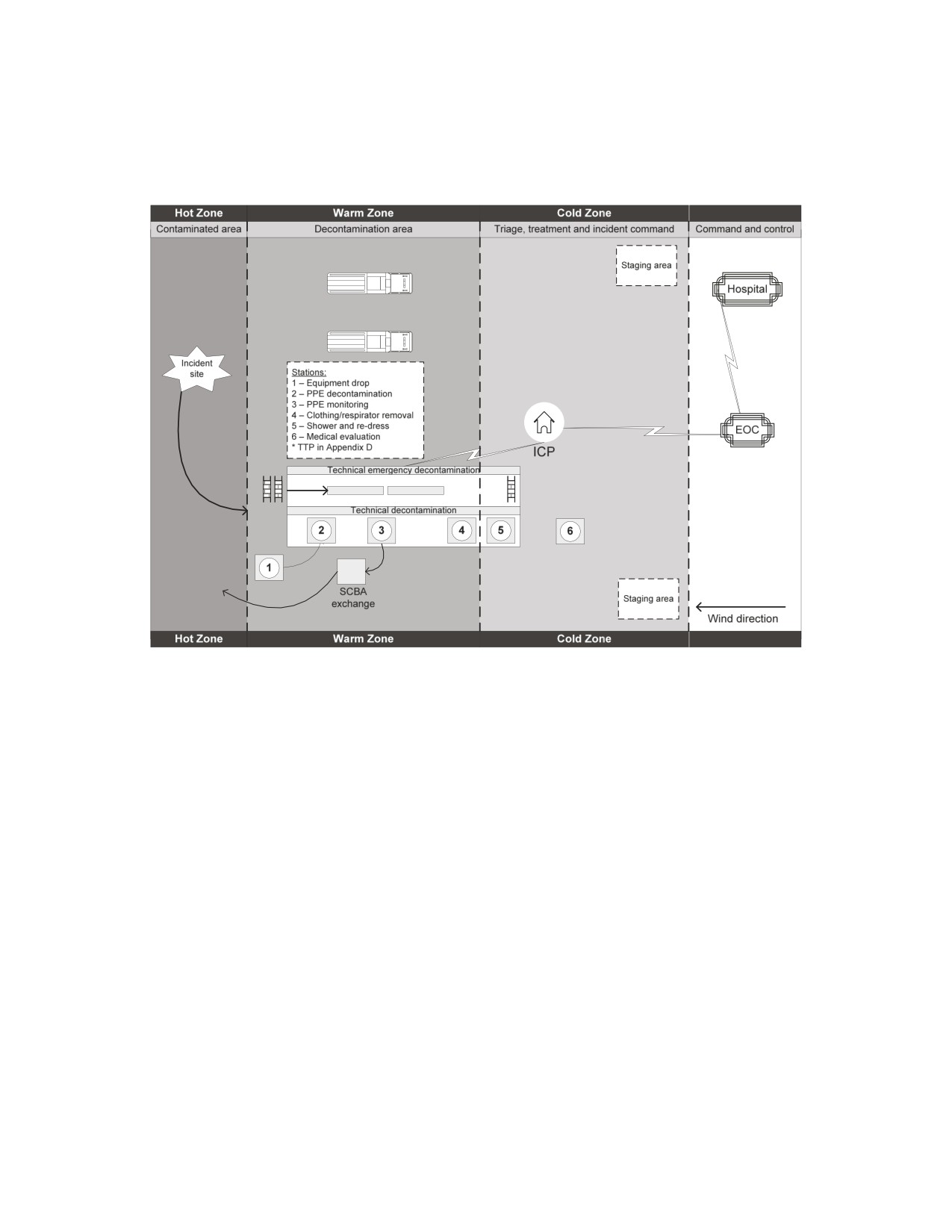
allowed to enter the hot zone until some form of decontamination is established for the
responders. For further information, see Appendix D and Multiservice Tactics, Techniques,
and Procedures for Chemical, Biological, Radiological, and Nuclear Decontamination.
Figure V-4 shows an example of a technical decontamination layout.
Figure V-4. Technical Decontamination Layout (Example)
(3) Mass Casualty Decontamination. When a CBRN incident results in mass
casualties, MCD operations may be required. Because personnel processing through a
domestic MCD operation are not likely to have PPE, they require a fast, efficient, and
effective decontamination process. In addition to a rapid response, MCD operations
require large numbers of response personnel, equipment, and supplies. For information
concerning decontamination of human remains, refer to JP 4-06.
(a) The operation may be performed by designated deployable units or by
members of the affected installation or activity, community, state, or nation. Responders
may include firefighters (DOD, local, state, and/or federal), medical personnel, logisticians,
engineers, security personnel, HN responders, or NGOs.
(b) Even when expedient decontamination measures such as fire hoses
and nozzles are employed, the health and safety of the casualties must always be of the
utmost concern. Medical personnel monitor the casualties throughout the decontamination
process to ensure that the process causes no further injury. Contact information for all
personnel processing through the decontamination line should be maintained in the event
that follow-up action is necessary.
(c)
Upon arrival at the incident site, the designated decontamination unit
leader reports to the IC to receive instructions. The decontamination leader coordinates
communications and logistic requirements, and requests additional resources, as required.
1 April 2008
FM 3-11.21/MCRP 3-37.2C/NTTP 3-11.24/AFTTP(I) 3-2.37
V-9
The leader receives specific guidance and establishes a decontamination site to conduct
operations. Responding DOD units/staffs may operate in support of civilian
decontamination efforts and provide assets that are not available in the community. The
leadership prepares a plan of action and—
•
Conducts leader’s reconnaissance of the designated decontamination
site.
•
Assigns specific assets to each site designated for setup.
•
Updates the response mission statement and tasking based on new
information.
•
Reconfigures equipment based on the updated mission statement.
•
Conducts equipment checks and prepares to deploy to the
decontamination site.
•
Deploys staff/unit to the decontamination site.
•
Sustains the operation and begins to request support through liaisons
to the on-scene command or ICS.
•
Establishes a plan to control any runoff or waste produced by the
decontamination operation.
(d) Decontamination must be conducted as soon as possible to save lives.
First responders/firefighters should use any immediately available resources and start
decontamination as soon as possible. Since they may be able to bring large amounts of
water, the most expedient approach is to use currently available equipment to provide an
emergency low-pressure deluge. Used alone, water provides good decontamination;
however, adding soap can improve the removal of the contaminant.
(e) Diluted sodium hypochlorite (bleach) solutions can aid in removal of
the agent, especially in the nonambulatory decontamination process. A 0.5% hypochlorite
solution can be used to decontaminate the litter, cutting devices, and other nonskin contact
areas. A soap and water solution is used on skin contact areas.
(f)
In time sequencing, the establishment of MCD will likely follow the
setup of emergency and technical decontamination. Emergency decontamination should be
completed by the time that MCD is established. However, technical decontamination in
support of responders should still be in operation. See Appendix D for detailed information
on MCD procedures. Figure V-5 shows an example of a casualty decontamination layout.
V-10
FM 3-11.21/MCRP 3-37.2C/NTTP 3-11.24/AFTTP(I) 3-2.37
1 April 2008
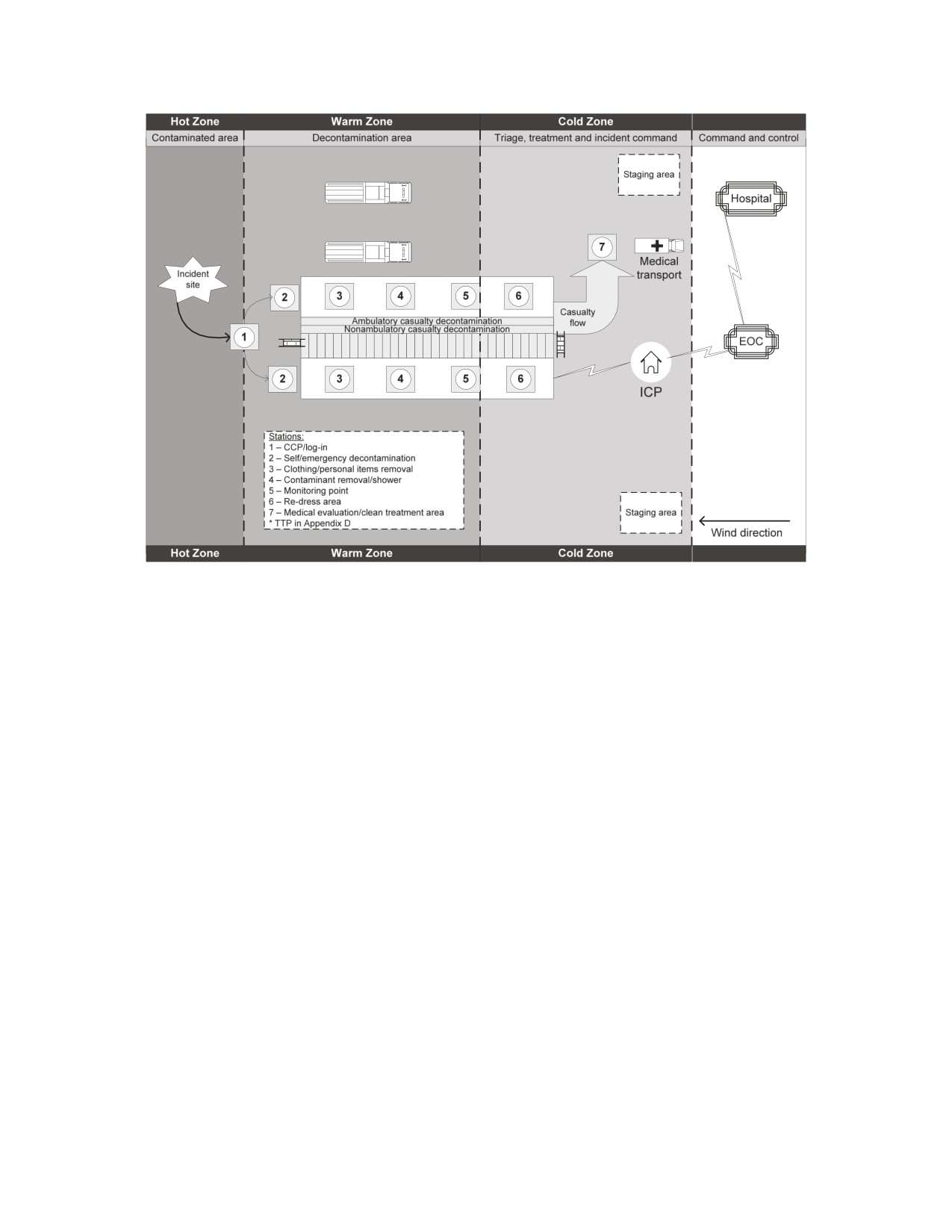
Figure V-5. Casualty Decontamination Layout (Example)
(4) Patient Decontamination.
(a) Patient decontamination is similar to MCD; however, it commonly
refers to the decontamination operations that occur at the patient decontamination site in
the vicinity of the medical treatment facility (MTF). This type of operation is primarily
conducted to protect the MTF from contamination. Patient decontamination follows all of
the guidelines of MCD, but it may be a smaller operation that handles the persons who
did not go through the MCD site and are presenting themselves to the MTF for medical
treatment.
(b) Patient decontamination is performed to ensure that patients are not
admitted to the MTF until they are contamination-free. See Field Manual (FM) 4-02.7,
Health Service Support in a Nuclear, Biological, and Chemical Environment Tactics,
Techniques, and Procedures, for patient decontamination procedures.
h. Facility, Terrain, and Equipment Decontamination Procedures. CBRN CM
decontamination operations may involve facility, terrain, or equipment contamination.
Doctrine guidance is found in Multiservice Tactics, Techniques, and Procedures for
Chemical, Biological, Radiological, and Nuclear Decontamination. Based on the highly
specialized and technical nature of these decontamination requirements, DOD will likely
support other United States Government technical response assets.
1 April 2008
FM 3-11.21/MCRP 3-37.2C/NTTP 3-11.24/AFTTP(I) 3-2.37
V-11
3.
Health Service Support Recovery Operations
a.
Definition. HSS recovery operations are a continuation of activities conducted
during the response phase of operations. During recovery operations, HSS units/staffs begin
phasing down operations and turning over their responsibilities to local, state, federal, or
HN medical responders.
b.
Triage. Triage is the process of evaluating patients to place them in medical
treatment categories that determine the order in which they are treated. HSS personnel
triage casualties at the treatment/decontamination receiving area to determine if they
require decontamination before treatment or if they have life-threatening injuries that
require immediate lifesaving procedures. The ability to triage and treat victims before
decontamination may be limited because medical treatment personnel are in protective
clothing. Treatment prior to decontamination consists mainly of stabilizing and lifesaving
measures.
c.
Receiving and Decontamination. A casualty receiving and decontamination
station should be established at the supporting MTF to ensure that all casualties entering
the MTF have been decontaminated. Some casualties may self-evacuate to the MTF, thus
bypassing the MCD lanes. Others may still have contamination on themselves or have
become recontaminated during the medical evacuation/transport process. Support
decontamination personnel and medical staff are required at this location. See FM 4-02.7,
Health Service Support in a Nuclear, Biological, and Chemical Environment Tactics,
Techniques, and Procedures, for TTP on establishing an MTF casualty receiving and
decontamination station. See patient decontamination in Appendix D for additional
information.
d.
Casualty Treatment. Initial treatment is provided by first responders such as
firefighters and EMS personnel or by a treatment team (triage, EMT, patient
decontamination, and evacuation personnel). The level of treatment depends on the type of
contamination, available decontamination assets, the number of casualties, the types of
available medical supplies, the number of available treatment personnel, the availability of
PPE for treatment personnel, and space allocated for the treatment site. Responders
remove the casualties from the contaminated area as quickly as possible, conduct
decontamination, and provide available antidotes and rapid EMT procedures.
e.
Medical Evacuation. Responders must rapidly remove casualties from the
contaminated area in order to reduce agent effects. However, medical evacuation platforms
may quickly become overwhelmed during the response to a CBRN incident. As a result,
medical personnel must consider nontraditional modes of transportation, especially when
unprotected casualties are involved. The use of vehicles such as school buses, flatbed
trucks, and pickup trucks may be needed to efficiently move the patients to a
decontamination and treatment area; however, care must be exercised to contain the spread
of contamination. See FM 4-02.2, Medical Evacuation, FM 4-02.7, and FM 8-10-6, Medical
Evacuation in a Theater of Operations Tactics, Techniques, and Procedures, for additional
information.
f.
Hospitalization. Hospitalization may be provided by service institutional MTFs
(such as United States Army Medical Department activities and medical centers; USAF
hospitals; and USN clinics, aid stations, and hospitals); operational medical treatment
units (deployable medical units); or local, state, federal, or HN facilities. Unique planning
considerations for hospitalization during CBRN CM are decontamination capabilities,
V-12
FM 3-11.21/MCRP 3-37.2C/NTTP 3-11.24/AFTTP(I) 3-2.37
1 April 2008
specialty supplies and equipment, and medical reachback capabilities for special medical
conditions. Regardless of the type of MTF providing support, HSS personnel must provide―
•
A patient receiving site adjacent to the facility with triage and decontamination
areas.
•
Facility security to prevent contaminated individuals from entering the facility
before decontamination.
•
Supplies and equipment for management and care of CBRN patients.
g.
National Disaster Medical System (NDMS). Several DOD MTFs are designated
as federal coordinating centers (FCCs) in support of the NDMS and must develop MOUs
with the NDMS. In the event of a national disaster (such as a CBRN incident), the FCCs
coordinate with local, state, federal, and NDMS staffs on the management of disaster
victims. This coordination includes patient movement and definitive patient care functions.
See DODD 6000.12, Health Services Operations and Readiness; United States Army
Medical Command (USAMEDCOM) Pamphlet 525-1, Medical Emergency Management
Planning; and the National Disaster Medical System Federal Coordinating Center Guide for
the responsibilities of FCCs and DOD MTFs in the planning, exercise, and operation of a
local plan to receive and provide definitive care to casualties evacuated to the area as part
of the NDMS.
4.
Logistic Recovery Operations
a.
Logistic planning must consider CBRN CM recovery and restoration actions.
Recovery operations are addressed in Appendix D. Further restoration may require
remediation of the actual site, and support during this phase of CBRN CM requires detailed
assistance that will likely be provided by other federal response assets (such as the EPA) or
the HN.
b.
The restoration of a CBRN CM site places a logistic burden on all levels of
response. A site may require a large amount of time and resources before it can be used
again, if at all. An example of the length of time a CBRN CM action could take is the
cleanup of the Hart Senate Building and the Brentwood Mail Facility following the
deliberate release of anthrax. The cleanup took months, and large amounts of technical and
logistic support were required. Military resources may continue supporting recovery
operations such as clearance, facility, or terrain decontamination.
c.
Decontamination of human remains to support mortuary affairs may be
required. See JP 4-06 for further guidance.
d.
As the recovery phase progresses, the CBRN CM response assets begin to look
ahead and prepare for eventual redeployment. Representative issues that may occur
include the following:
•
Identifying equipment or supplies that may have to be left at the incident site
because of contamination.
•
Confirming load-planning configurations.
•
Verifying the status of supply requisitions and ship-to addresses.
•
Checking on the status of equipment awaiting repair.
•
Updating records on the use of resources.
1 April 2008
FM 3-11.21/MCRP 3-37.2C/NTTP 3-11.24/AFTTP(I) 3-2.37
V-13
5.
Transition Operations
a.
Transition involves the transfer of responsibilities and functions to other
organizations. Termination or transition occurs when the mission has been accomplished or
when directed by the President or the Secretary of Defense.
b.
DOD typically disengages from operations when the designated authorities no
longer require DOD support. This is generally when the immediate danger from the CBRN
incident is eliminated, the capabilities to save lives are in place, and critical services are
restored. DOD assets generally do not remain to conduct site recovery operations.
c.
If DOD forces are transitioning functions between units, then the transition
requirements follow standard military handover procedures. If transition involves the
transfer of DOD force functions or areas to civil authorities or to local or HN agencies, the
transition will reflect operational procedures and existing agreements established by the
IC. A key factor is the transfer of any logs kept during the CM operation. Logs provide the
element assuming responsibilities a detailed picture of the events and actions that have
occurred. Rosters of all affected personnel and all responding personnel will be transferred
along with the logs, when appropriate.
d.
A transition plan helps the staff identify transition issues in relation to the
desired or projected end state. It is especially important to identify the parties or agencies
that will accept functional responsibilities from the JTF commander. The transition plan
should identify organizations, operating procedures, and transition recommendations and
considerations. When implementing the transition plan, the transitioning parties should
discuss criteria for transferring operations. The plan should be unclassified, clear, and
concise—using terminology appropriate to all parties.
(1)
Transitioning may be accomplished by function or specific areas of the
incident site. The transition process should be event-driven and not tied to calendar dates.
Functions or areas transfer only when a similar capability becomes available or is no longer
needed. Procedures for the transfer of equipment or supplies—either between DOD units,
to civil authorities or to local or HN agencies—must be established according to regulation
and command guidance.
(2) Planners identify other key transition factors within functional areas that
may include logistics, medical services, communications, security, and technical services.
Planners should develop a series of transition criteria to monitor progress. Well-chosen
indicators ensure that a consistent method is used to measure progress during the
transition.
6.
Redeployment Operations
a.
Redeployment begins as soon as objectives are accomplished or the need for
military forces diminishes. Redeployment planning and operations follow normal military
guidelines and protocols. Careful consideration is given to identifying physical assets that
can be safely removed from the incident site and those that should be contained, controlled,
and/or left in place. Safety remains the primary concern.
V-14
FM 3-11.21/MCRP 3-37.2C/NTTP 3-11.24/AFTTP(I) 3-2.37
1 April 2008