FMI 4-93.2 The Sustainment Brigade (February 2009) - page 5
Appendix B
B-26. Mobile units seek to avoid CBRN contamination to the maximum extent possible. If contaminated,
units identify clean areas, and on order, move along designated routes from contaminated areas. Units
decontaminate equipment and conduct MOPP gear exchange during the move to clean sites.
B-27. Sustainment units at the operational level, in contrast, may be required in emergency situations to
conduct operations from contaminated fixed sites until they can relocate to clean areas.
B-28. In most circumstances, the sustainment infrastructure in a theater of operations operates with a
substantial complement of nonmilitary personnel. In a typical theater, sustained operations will rely heavily
on military personnel, DOD civilians, HNS personnel, other nation support personnel, and contractor
provided sustainment support personnel. During the early phases of deployment, the sustainment
infrastructure may rely on HNS personnel for port operations and transportation requirements. Protection
of all types of personnel in the AO is required and must be included in the CBRN planning and
preparation.
WARNING SYSTEMS
B-29. In order for individuals and units to take necessary self-protection measures, timely warning of
CBRN attacks and subsequent spread of contamination is essential. The JFC has the responsibility, in
coordination with the HN, to establish an effective and timely warning system, and to exercise this system
on a recurring basis. Sustainment commanders tied to a fixed site should monitor CBRN warning systems
continuously and should be capable of passing warnings to workers and units throughout their sites.
Because of the variety of delivery methods for CBRN weapons and the limitations of detection capabilities,
personnel and units may not receive warning before exposure occurs. Warning systems should be designed
to alert workers promptly upon initial detection of an attack. Since workers may be widely dispersed
throughout the area, a site-wide alarm system, capable of being activated immediately upon receipt of
warning, must be available, maintained, and exercised regularly.
B-30. At many sites, military throughput will rely on civilian labor. Sustainment planners must consider the
vulnerability of HN and other civilian workers to attack and plan accordingly. Commanders are responsible
for ensuring mission-essential civilian workers receive appropriate equipment and training and are
integrated into area CBRN defense plans.
MATERIALS HANDLING EQUIPMENT (MHE)
B-31. Typically, even during high capacity operations, much of the MHE at a facility is not in use.
Commanders should protect idle MHE from exposure to chemical or biological agents in the event of
attack. Housing and covering MHE with plastic, or otherwise protecting it from exposure, can ensure that it
will be readily available to resume operations after the attack.
AERIAL PORTS
B-32. Regardless of an aerial port’s CBRN preparedness, some aircraft will not be able to land at or depart
from contaminated airfields. Of particular importance are limitations in CBRN environments on the
employment of the civil reserve air fleet, civilian, and other aircraft under contract to support military
operations. Sustainment plans must provide for replacing these aircraft with other airlift assets or
conducting trans-load operations from bases outside the immediate threat area. These replacement aircraft
would have to operate from trans-load airbases to shuttle the affected cargo and passengers to the theater of
operations. If that is not feasible, alternate means (sea, rail, wheeled transport, and so on) must be made
available to accomplish the mission.
SEA PORTS
B-33. In large-scale operations, US equipment and materiel normally enter the theater of operations on
strategic sealift ships and off-load at SPOD. The vital importance of these seaports to US power projection
capability makes them an attractive target for CBRN attack. However, conducting successful attacks
against SPODs presents significant challenges to the adversary. If port managers and operators are properly
B-6
FMI 4-93.2
4 February 2009
Protection
prepared to survive the attack and sustain operations, CBRN attacks may not cause significant long-term
degradation of throughput capacity. This is especially true at large ports where many piers, storage areas,
and much of the MHE may escape contamination. Operations in these cases may be limited more by the
effects of the attacks on the local workforce and nearby civilian population.
B-34. Each SPOD provides unique capabilities and has different vulnerabilities in CBRN environments,
but contamination avoidance is an essential element of sustaining throughput operations. In normal
circumstances, a port is but one node of a complex, theater-wide sustainment network. When possible,
plans should include options for redirecting incoming ships from contaminated ports to those that are
uncontaminated. However, when alternate ports with adequate capacity and berths to handle large cargo
ships are not available, it may be necessary to continue operations at contaminated ports. In considering
alternate ports, sustainment planners must take into account the requirements for unit equipment to arrive
in proximity to the marshalling areas for unit personnel, ammunition, and sustainment supplies in order to
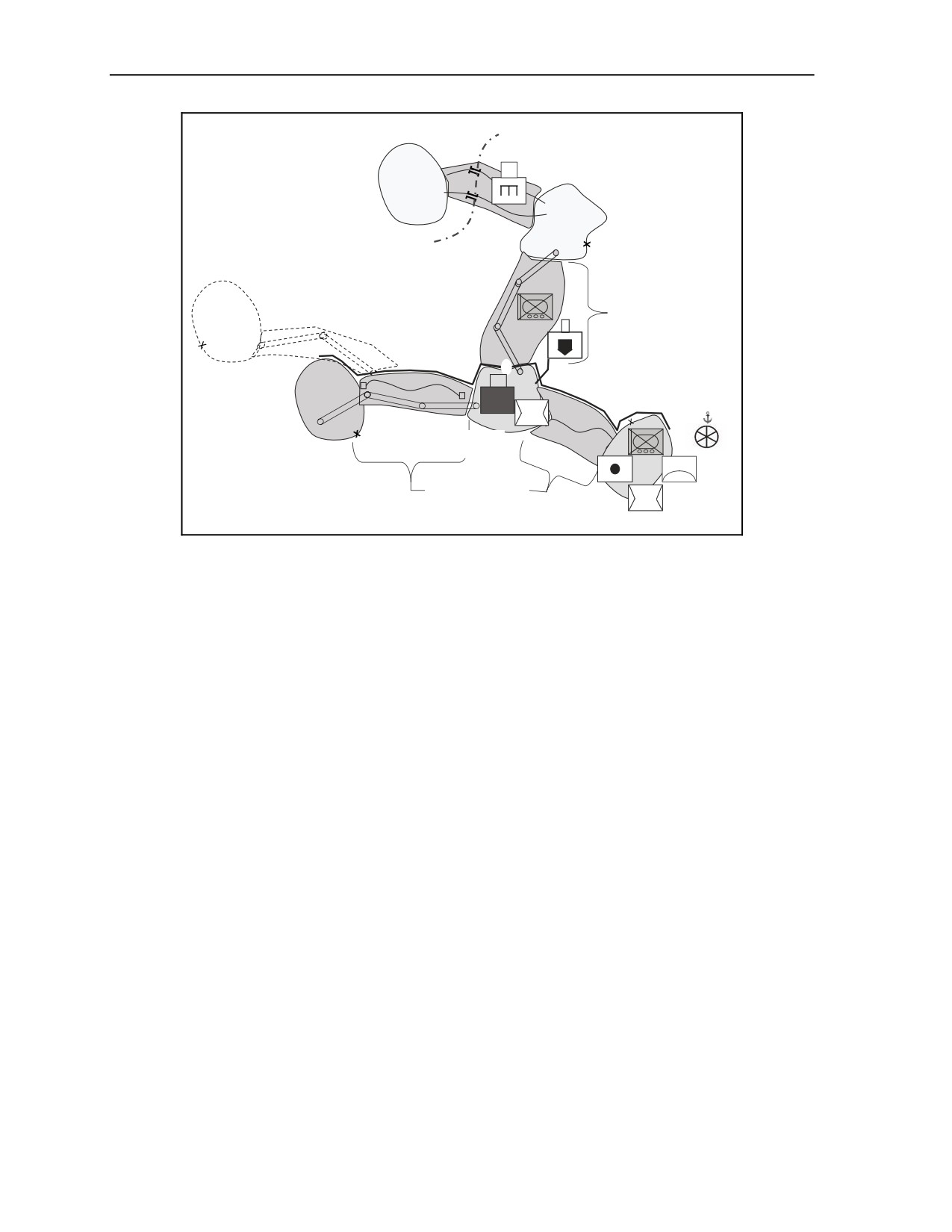
ensure a coherent RSO for affected units.
B-35. In some cases, it will be possible to continue operations at a contaminated port. While CBRN attacks
may result in contamination of some operating surfaces, the size of the contaminated area may be small
compared to the size of the port. The capability to shift operations to those areas and facilities within the
port that escaped contamination is key to sustaining throughput operations. Proper preparation can
significantly reduce the impact of CBRN attacks on a SPOD.
RECEPTION STAGING AND ONWARD MOVEMENT (RSO)
B-36. The permanency of sites for RSO of arriving forces can vary widely between theaters of operations.
Theaters of operations with large forward-deployed forces rely on fixed sites for a wide variety of
activities, such as pre-positioned stock maintenance and control, supply and maintenance, materiel and
transportation management, and sustainment network operations. Theaters of operations with limited
forward presence normally rely more heavily on temporarily fixed sites (facilities that are transportable or
mobile but, due to ongoing operational constraints, may not be rapidly moved).
B-37. Commanders will ensure that adequate detection, personnel protection, and decontamination assets
are available to meet the threat. They will identify alternate sites and prepare and rehearse activation plans.
B-38. Consideration of RSO in CBRN environments encompasses a number of specific functional areas.
B-39. Staging areas for personnel or equipment near APODs and SPODs may be attractive targets for
CBRN attack. Sustainment planners must assess the relative value of the convenience provided by
establishing large centralized facilities, which are more easily targeted, and the enhanced security that
results from having more smaller dispersed facilities that are more difficult to C2 but less vulnerable to
CBRN attack. While the anticipated threat will influence the staging area selection process, adequate
facility and area space availability may be the determining considerations. Planning must consider
equipment marshalling areas and rail yards (which may not be in close proximity of APOD and SPOD
facility complexes); sustainment hubs and bases
(which may be fixed facilities with large forward-
deployed forces); and force integration assembly areas (where deploying units complete deployment
recovery, equipment receipt, and processing and preparation for movement to TAAs).
MAIN SUPPLY ROUTES (MSRs)
B-40. The vulnerability of MSRs to CBRN attack may vary widely among theaters of operations. In those
that rely on a few major MSRs and have limited alternative routes and off-road capability, CBRN attacks
may have a greater impact on operations than in those with more extensive supply routes and where
obstacles can more easily be traversed.
4 February 2009
FMI 4-93.2
B-7
Appendix B
CONTRACTOR AND HNS CONSIDERATIONS
B-41. The three basic categories of external support for US military operations are wartime HNS,
contingency contracts, and current contract agreements. These usually exist in conjunction with one
another and collectively provide a full sustainment capability to the theater of operations. Contracts or
agreements will clearly specify services to be provided during periods of crisis or war. Sustainment
commanders should not expect unprotected or untrained individuals to continue to provide essential
services under the threat of CBRN attack or during operations in CBRN environments. Massive worker
absenteeism is possible and a lack of adequate protective clothing and equipment could result in significant
casualties should an attack occur. The commander is responsible for ensuring that mission-essential
personnel receive appropriate equipment and training.
B-42. CBRN protection includes individual and collective survival skills as well as operational training.
Survival skills refer to the capability to take required, immediate action upon CBRN attack, to include
masking, proper wear and care of protective clothing and equipment, personal decontamination, and buddy
aid. Operational training refers to the ability to continue to perform essential functions under MOPP
conditions and resume normal operations after an attack. Essential functions and tasks include convoy
driving, supply and equipment loading, refueling operations, and materiel decontamination.
SECTION IV - FIRE SUPPORT
FIRE SUPPORT CONSIDERATIONS
B-43. The sustainment brigade, and all subordinate commanders and staffs, must have a thorough
understanding of fire support procedures, organizations, and assets that are available within their AO.
Normally, the ESC will have a dedicated fires battalion assigned for fire support that a sustainment brigade
may call upon. However, this unit might not be available until the theater of operations is mature.
B-44. The sustainment brigade S-3 must include fire support considerations into their planning and the fire
support information must be disseminated to all subordinate elements. All fire support assets need to be
assessed (artillery, mortar, UAS, CAS, and naval) to determine availability and coordination requirements.
Planning should focus on close coordination with the fires units and detailed procedures to request fires
support. It should be routine for all personnel to receive training on call for fire procedures and to rehearse
the procedures. The sustainment brigade S-3 should be prepared to provide the fires unit recommended
targets and target indicators within the sustainment brigade AO.
SECTION V - PROTECTIVE MEASURES
PROTECTIVE MEASURES
B-45. Sustainment brigade units take several measures to reduce their vulnerability to enemy operations.
These measures include dispersion, cover, concealment, camouflage, intelligence gathering, obstacles, and
air and missile defense.
DISPERSION
B-46. Sustainment brigade organizations disperse as much as possible throughout the assigned AO.
Dispersion as a protective measure is balanced against the potential deficits to support operations and the
base cluster defense system. Dispersion helps avoid catastrophic damage from air and mass destruction
weapons. Even if a sustainment brigade unit is not the primary target, it may be attacked as a target of
opportunity. The dispersion required depends on the following:
B-8
FMI 4-93.2
4 February 2009
Protection
z
Type of threat. The probability of attack by air, for example, requires greater dispersion than an
attack by small ground forces.
z
Terrain. Road networks with good access that can bear expected traffic loads allow for greater
dispersion of elements. Occupying urban terrain decreases dispersion requirements because of
the cover provided by buildings in built-up areas.
z
Defensibility. Dispersion also depends on the ability of a unit to prevent, resist, or defeat enemy
forces. Built-up areas may offer more defensible facilities requiring less improvement than field
locations. However, built-up areas may risk loss of mobility if withdrawal is necessary. In the
field, defensibility improves as dispersed units consolidate to form closely knit base clusters.
ENGINEER SUPPORT
B-47. Engineer survivability support will be important for the elements of the sustainment brigade. When
available, it may be used for a variety of protection hardening measures in support of the sustainment
brigade to include survivability
(see FM
5-103, Survivability Operations) support and support to
camouflage, concealment, and decoys. Engineers may also provide geospatial support to the sustainment
brigade’s protection efforts. See FM 3-34 for a discussion of further potential engineer support.
COVER, CONCEALMENT, AND CAMOUFLAGE
B-48. The enemy cannot target sustainment brigade resources that it cannot detect. Cover, concealment,
and camouflage remain critical to protecting sustainment units, facilities, and supplies from enemy
detection and attack.
B-49. Cover includes natural and artificial protection from enemy observation and fire. When selecting
sites, advance parties consider the type of cover available. See FM 20-3, Camouflage, Concealment, and
Decoys, for more information.
B-50. Concealment includes natural or artificial protection from enemy detection. Sustainment brigade
units use concealed ingress and egress points and halt locations within support locations.
B-51. Camouflage consists of using natural or artificial objects or tactical positions to confuse, mislead, or
evade the enemy. With the exception of medical units, sustainment brigade units use camouflage to conceal
operations and the identity of critical assets.
OBSTACLES
B-52. Obstacles slow, impede, or channel enemy movement and incursion. They buy time until reaction
forces can deploy or a response force can arrive. Effective use of obstacles involves sound counter-
mobility planning and early warning. Obstacles in urban environments are as important as in the field.
Strategically placed obstacles provide protection against terrorist access to buildings.
AIR AND MISSILE DEFENSE
B-53. Air defense artillery (ADA) forces cannot provide dedicated air and missile defense (AMD) for all
sustainment brigade assets in the AO. The commander positions brigade organizations to take advantage of
coverage that available AMD forces provide. Using base clusters makes it possible for AMD units to cover
more Brigade assets than if units disperse throughout the AO, but reduces the benefits of dispersion.
Brigade assets identified AMD priorities that do not receive dedicated support are positioned to take
advantage of the coverage provided by AMD units protecting higher-priority assets.
B-54. Passive air defense operations include the means a unit uses to avoid enemy detection, along with
measures to minimize damage when attacked. Sustainment brigade units use OPSEC to conceal their
location from enemy visual and electronic surveillance. Elements within base clusters disperse as much as
possible. Dispersal along with field fortifications and obstacles significantly reduce casualties and damage
from air and missile attack.
4 February 2009
FMI 4-93.2
B-9
Appendix B
B-55. The joint security coordinator (JSC) coordinates with appropriate commanders and staffs to establish
a reliable, responsive, and redundant early warning system from the joint-force level to the base level in the
JSA. The JSC implements a standardized alert system throughout the JSA to ensure early warning and a
coherent response to threats. BCT commanders are responsible for early warning and response systems
within their assigned AOs.
B-56. Sustainment brigade personnel and air defenders share responsibility for protection of sustainment
brigade assets. The sustainment brigade commander develops air and missile defense priorities, which are
integrated into the TSC/BCT priorities. The air defense coordinator coordinates the use of available air and
missile defense assets to protect the maximum number of priority assets. The ADA provides defensive fires
and sustainment brigade units employ self-defense measures to defeat enemy air and missile attacks. The
sustainment brigade also integrates air and missile defense coverage into its planning for terrain
management and movement control.
SECTION VI - CONVOY SECURITY
B-57. The most serious threat faced by the deployed sustainment brigade elements occurs when moving.
The sustainment brigade must coordinate with maneuver, military police, and medical units operating in
the AO for additional security capability, medical support, and/or route security assessments (see FM4-
01.45).
B-58. Movement control always includes convoy defense considerations. Supply routes are assumed not to
be secure on a high threat area. Therefore, convoy movements between supported unit areas are combat
operations. The TSC and supported unit commanders and staffs work together to integrate defensive
capabilities into convoys. Adequate convoy security depends on two critical components. These are
thorough staff planning to counter enemy plans and capabilities and individual Soldier training to
counteract enemy action. All convoy personnel must be familiar with published rules of engagement and
local tactics, techniques, and procedures developed for the current situation on the convoy route.
B-59. The convoy commander ensures that troops are trained in convoy defense techniques. The damage a
convoy prevents or incurs when attacked often depends on the adequacy of convoy defense training. It also
depends on the route and timing of the convoy in relation to the enemy situation and the adequacy of the
intelligence and information convoy leaders receive in advance of the operation. The following paragraphs
discuss in the broadest of terms the considerations of convoy protection.
B-60. There is no such thing as an administrative move on the noncontiguous operational area. Once
outside the base perimeter you have a tactical convoy. A tactical convoy is a deliberately planned combat
operation. Its mission is to move personnel and/or cargo via a group of ground transportation assets in a
secure manner to or from a target destination. Tactical convoys operate under the control of a single
commander in a permissive, uncertain, or hostile environment. Tactical convoys should always have access
to the COP and be characterized by an aggressive posture, agility, and unpredictability. There should never
be less than two personnel in the cab, one to drive and one for protection.
B-61. Each tactical convoy must be prepared to take appropriate action in the face of ambush and once
contact is made based on rules of engagement and TTPs. Training, experience, and unit SOPs will
accelerate tactical convoy preparation and prepare unit personnel to take appropriate actions on contact.
B-62. Standard troop leading procedures (modified to reflect convoy operations) are included in FM 4-
01.45, Multi-Service Tactics, Techniques and Procedures for tactical convoy operations and should be used
to ensure all planning elements are considered when preparing to conduct convoy operations.
MOVEMENT CORRIDORS
B-63. The Maneuver Enhancement Brigade (MEB) is a multifunctional headquarters, task organized
according to METT-TC that provides security and protection within its assigned areas. The sustainment
brigade is likely to operate within a MEB AO and it will rely on the protection MEB elements provide
throughout designated movement corridors.
B-10
FMI 4-93.2
4 February 2009
Protection
B-64. A movement corridor (MC) is part of a layered and integrated security approach to LOC security.
Layered security constitutes concentric rings that increase in survivability and response measures. The first
ring (the center ring) being the ability of every convoy to defeat a Level I threat and to delay a Level II
threat. The next ring (middle ring) provides the increased security/protection capability in support of the
center ring activities, capable of defeating Level I and Level II threats, and supports the defeat of Level III
threats. The middle ring is also capable of integrating fires, CAS, MEDEVAC, safe havens, vehicle
removal/recovery operations, and so forth in support of the center ring and central effort that is the MC
concept. The final ring (the outer most ring) is the final ring of protection and brings with it the ability to
defeat all level of threats through the integration of all joint capabilities.
B-65. An MC is a protected LOC that connects two support areas. Within the MC are main and alternate
roads, railways, and/or inland waterway supply routes used to support operations. Within an AO, there is
an MC network that consists of multiple MCs that connect inter-theater APOD and SPOD; intra-theater
Aerial Port of Embarkation and APODs; operational level support, distribution, and storage areas; and
brigade support areas. The MEB is responsible for tactical LOC operations and security within its AO and,
as assigned, within its higher headquarters AO. The width and depth of an MC will be dependent on
METT-TC factors and the commanders’ guidance.
B-66. The establishment of an MC network is the result of applying multiple functions and establishing
required command, control, and support relationships. The collective integration and synchronization of
units, capabilities, and facilities will provide a comprehensive three-dimensional protection capability for
the designated LOCs, the unit and convoy movements on the LOCs, and the units supporting LOC and
movement operations. A fully developed MC will consist of military police units providing route
regulation and enforcement, straggler and dislocated civilian control, area and route security, convoy
escort, response force operations, and logistical units conducting and managing movement control.
Supporting functions include units and capabilities for vehicle recovery and storage, cargo transfer,
refueling, road maintenance and repair, MC safe haven support facility construction and repair, CBRN
detection and response, aerial reconnaissance, and medical treatment and evacuation.
B-67. The constitution of an MC and the required units and capabilities to support MC operations are not
new to the Army. What is new is the requirement to doctrinally codify a holistic, fully integrated, and
synchronized LOC and convoy protection system. The requirement to establish MC doctrine is based on
the combination of, and the complexity resulting from a asymmetrical operational environment, conducting
threat-based operations with minimal regard for occupying terrain, combat forces by-passing up to
company-sized mechanized forces, combating new categories of threat forces, smaller stockpiles with an
anticipatory
“push” logistics system, and conducting simultaneous offense, defense, and stability
operations. The establishment of an MC network and the allocation of resources to conduct MC protection
and support operations is a command function that must be synchronized with Army, joint, multinational,
and HN forces supporting MC operations and the applicable movement control agencies.
B-68. The sustainment brigade S-3 coordinates with the MEB when planning tactical convoys through
movement corridors. This may be done through movement control elements collocated with the MEB or
the division transportation officer. Figure B-1 depicts notional movement corridors established by the
MEB.
B-69. The MC concept provides a solution to current and future force requirements for ground LOC
movement as it pertains to a comprehensive approach to increasing the survivability of land forces in the
conduct of full spectrum operations. This concept provides for continuous support in keeping the MC
secure and operational; thereby, directly increasing the mobility, survivability, sustainability, and
responsiveness of combat enablers in support of all operational effort.
4 February 2009
FMI 4-93.2
B-11
Appendix B
Maneuver BCT
II
Brigade
Battle
Maneuver BCT
Position
Brigade
Battle
X
Position
Unassigned Area
II
Planned
Brigade
Mobility Corridor
Battle
X
Position
II
Stability
II
Operations
Theater
MP
II
Entry Point
CSSB
I
X
Sustainment
Area
II
I
BCT - Brigade Combat Team
CSSB - Combat Sustainment Support Battalion
X
MP - Military Police
Mobility Corridor
SUST - Sustainment Brigade
SUST
Figure B-1. Notional Mobility Enhancement Brigade Movement Corridors
Main Supply Routes (MSRs)/Alternate Supply Routes (ASRs)
B-70. MSRs are routes designated within the MEB’s or higher headquarters AO upon which the bulk of
sustainment traffic flows in support of operations. An MSR is selected based on the terrain, friendly
disposition, enemy situation, and scheme of maneuver. Supply routes are selected by the MEB S-4 in
coordination with the BSB support operations officer and MEB S-3. They also plan ASRs for use if a MSR
is interdicted by the enemy or becomes too congested. In the event of CBRN contamination, either the
primary or alternate MSR may be designated as the dirty MSR to handle contaminated traffic. All ASRs
must meet the same criteria as the MSR. MPs assist with regulating traffic and engineer units maintain
routes. Security of supply routes in a noncontiguous AO may require the MEB commander to commit non-
logistics resources.
B-71. Some route considerations are:
z
Location and planned scheme of maneuver for subordinate forces to include combined arms
forces, artillery units, and other forces moving through the MEB’s AO.
z
Route characteristics such as route classification, width, obstructions, steep slopes, sharp curves,
and type roadway surface.
z
Two-way, all-weather trafficability.
z
Weight classification of bridges and culverts.
z
Requirements for traffic control such as at choke points, congested areas, confusing
intersections, or along built-up areas.
z
Number and locations of crossover routes from the MSR to ASRs.
z
Requirements for repair, upgrade, or maintenance of the route, fording sites, and bridges.
z
Route vulnerabilities that must be protected. This may include bridges, fords, built-up areas, and
choke points.
z
Enemy threats such as air attack, conventional and unconventional tactics, explosive hazards,
ambushes, and chemical strikes.
B-12
FMI 4-93.2
4 February 2009
Protection
z
Known or likely locations of enemy penetrations, attacks, chemical strikes, or obstacles.
z
Known or potential civilian/refugee movements that must be controlled or monitored.
LAYERED CONVOY PROTECTION
B-72. The tactical convoy’s physical security elements are composed of three layers:
z
Organic security elements.
z
Convoy escorts.
z
Corridor security.
B-73. The organic security element is the responsibility of the convoy commander. These assets
(personnel, weapons, and vehicles) are taken from the organic assets of the unit conducting the convoy
operation. Vehicles selected for this mission should be fast, maneuverable, and hardened to the extent
possible (these vehicles are known as “gun trucks”). Crew served weapons, automatic weapons, and
grenade launchers mounted on these gun trucks provide suppressive fire as the convoy initially responds to
an ambush.
B-74. Convoy escorts may be provided by any organization tasked to provide convoy security. These
organizations may include MPs, CAS, and/or security detachments from a maneuver element. The mission
of the convoy escort is to provide protection from direct fire and complex ambushes. Convoy escort
elements may be used as reconnaissance ahead of the convoy and/or as a trail security element. Either
armor or mechanized units provide greater fire power for the escort mission. See FM 4-01.45 for suggested
employment of ground and CAS convoy escort assets. Corridor security is the responsibility of the BCT or
MEB whose AO includes the convoy route.
CONVOY COMMUNICATION
B-75. Radio communication is vital to the support the convoy. A convoy commander needs to consider and
plan for the following:
z
MEDEVAC operations.
z
Internal convoy vehicle to vehicle communications.
z
Communications with security vehicles (gun trucks and/or convoy escorts).
z
External communications to higher headquarters, quick reaction force, artillery support.
B-76. Alternate means of communication should be planned for the following:
z
Internal to vehicle.
z
Between vehicles.
z
When dismounted due to ambush or IED.
z
Radios capable of secure communications are used in convoys. Three types of communications
must be considered and planned for. Alternate means of communications (vehicle signal system,
hand and arm signals, pyrotechnics, and so on) should also be planned.
MOUNTED TACTICS
B-77. The four principles of mounted tactics for convoys are:
z
360 degree security - situational awareness, interlocking fires, mutual support.
z
Deterrence - aggressive posture, display a willingness to engage.
z
Agility - Ability to adapt to environment and conditions.
z
Unpredictability - No observable routine.
B-78. Every participant in the convoy must understand the areas in which they are responsible for
observing and into which they must fire in the event of enemy contact. Interlocking fires and mutually
supporting fires are ensured to the extent that fratricide considerations allow.
4 February 2009
FMI 4-93.2
B-13
Appendix B
DANGER AREAS
B-79. Intersections, ramps, traffic circles, over and underpasses, rest halts, or halts to recover disabled
vehicles can all be danger areas for convoys. See FM 4-01.45 for TTPs in dealing with these areas.
Battle Drills
B-80. Battle drills are the pre-planned, rehearsed responses to contact. FM 4-01.45 provides a simple
decision matrix for reaction to contact and examples of how convoy participants might respond. Battle
drills on how to react to convoy ambushes must be developed and rehearsed.
IMPROVISED EXPLOSIVE DEVICES (IEDS) AND VEHICLE BORNE IEDS (VBIEDS)
B-81. IEDs are one of the greatest threats to convoys and are often used to initiate an ambush. Convoy
personnel should always expect an ambush immediately following an IED detonation. Convoy
commanders should brief convoy personnel on the latest IED threat: what types of IEDs are being used and
where they have previously been emplaced along the route.
B-82. IEDs and VBIEDs represent an attractive attack weapon for asymmetrical threat forces. They can
inflict substantial damage to convoys (equipment and personnel) while providing the threat with very
limited exposure counter-attack by US forces.
B-83. IEDs are rigged from any explosive materiel available to threat forces and detonated by timing
device, trip wire or pressure trigger, or are command detonated. IEDs are most easily emplaced during
periods of limited visibility making morning periods exceptionally dangerous for exposure to IEDs. IEDs
are often used as the opening weapon in an ambush. Convoy participants must be prepared to counter an
assault by direct fire from hidden roadside positions immediately following an IED encounter.
B-84. IED battle drills are provided in FM 4-01.45.
B-85. FM 4-01.45 contains checklist for planning tactical convoys, briefing formats for the convoy
commander to use during convoy briefings, and formats for en route and after action reports.
SECTION VII - BASES AND BASE CLUSTERS
B-86. The sustainment brigade must integrate its HQ and subordinate elements FP plans into the base and
base cluster defense plans. These plans are integrated with the defense plans of the MEB or BCT having
the overall responsibility for the AO, and are copied to the higher sustainment commander. This defense
method protects elements from level I threats in their assigned areas. Commanders ensure all bases and
base clusters in their AOs train and prepare for their roles. Cooperation and coordination elements are
critical.
B-87. Bases and base clusters form the basic building block for planning, coordinating, and executing base
defense operations. The sustainment brigade S-3, with input from the sustainment brigade SPO, organizes
units occupying the support HQ AO into base clusters. The sustainment brigade SPO recommends
appointments of base or base cluster commanders from units in the cluster to the sustainment brigade S-3.
The base cluster commander is usually the senior commander in the base cluster. The base cluster
commander forms a base cluster defense operations center (BCOC) from the staff and available base assets.
B-88. A base may be a single-service or a joint-service base. The base cluster commander appoints the base
commanders. Base commanders form base defense operating centers (BDOCs).
B-89. Within the base cluster, three commanders have distinct responsibilities. These three
— the
individual unit commander, the base commander, and the base cluster commander — are discussed below.
Non-sustainment units residing within a base which a sustainment brigade commands will have a command
relationship and responsibilities established by order to the sustainment brigade for protection.
B-14
FMI 4-93.2
4 February 2009
Protection
INDIVIDUAL UNIT COMMANDERS
B-90. The commanders of units in a base are responsible for the following:
z
Participating in base defense planning.
z
Providing, staffing, and operating base defense facilities in accordance with base defense plans.
z
Conducting individual and unit training to ensure their forces’ readiness to perform their
assigned tasks in defense of the base.
z
Providing appropriate facilities and essential personnel for the BDOC and the base commander.
z
Providing liaison personnel to advise the base commander on matters peculiar to their units.
z
Providing internal security of the base.
z
Providing communications systems, including common-user communications, within the
command.
B-91. Sustainment brigade units use observation posts, listening posts, or unattended sensors on likely
avenues of approach to collect intelligence on threat activity. In areas where the populace is friendly, local
law enforcement or government agencies can provide information on threats in the area. BCOCs
implement an integrated warning plan within their cluster and with adjacent bases or base clusters.
BASE COMMANDER
B-92. The base commander is responsible for base security and defense. All forces assigned to the base are
under OPCON for base defense purposes. The base commander’s responsibilities for base defense include:
z
Establishing a BDOC from available base assets to serve as the base’s tactical operations center
(TOC) and focal point for security and defense. The BDOC assists with planning, directing,
coordinating, integrating, and controlling base defense efforts.
z
Establishing an alternate BDOC from base resources or, if base assets are not available,
designating a HQ element from units dedicated to the base for its local defense.
z
Planning for including transient units by ensuring that base defense plans include provisions for
augmenting the regularly assigned base defense forces with units present at the base during
periods of threat.
BASE CLUSTER COMMANDER
B-93. The base cluster commander is responsible for securing the base, coordinating the defense of bases
within the base cluster, and integrating base defense plans into a base cluster defense plan. Specific
responsibilities include:
z
Establishing a BCOC from the staff and available base or base cluster assets to serve as the base
cluster’s TOC and focal point for planning, directing, coordinating, integrating, and controlling
base cluster defense activities.
z
Providing appropriate facilities, housing, and services for necessary liaison personnel from bases
from within the cluster.
BASE AND BASE CLUSTER DEFENSE PLAN
B-94. Base and base cluster commanders develop and implement comprehensive defense plans to protect
their support capability. The defense plan includes measures to detect, minimize, or defeat level I and
defend level II threats. To maximize mutual support and prevent fratricide, the base and base cluster
commanders coordinate defense plans with adjacent base and base clusters and joint, multinational, and
HN forces. The sustainment brigade S-3 ensures that all plans conform to the overall TSC or BCT security
plans.
4 February 2009
FMI 4-93.2
B-15
Appendix B
AREA DAMAGE CONTROL
B-95. Commanders of bases and installations within the JSA coordinate requirements for area damage
control (ADC) with the JSC through their respective chains of command. Commanders establish priorities
for ADC missions as part of their planning process at the base or installation level. All units are responsible
for providing ADC within their base or installation to the extent of their capabilities.
B-96. The sustainment brigade takes ADC measures before, during, and after hostile action or natural
disasters to reduce the probability of damage, to minimize its effects, and to reestablish normal operations.
Necessary repair begins after the damage is contained.
B-97. The sustainment brigade and its assigned subordinate support HQ commanders anticipate ADC
operations. The SPO and S-4 section develop the ADC plan based on the policies and priorities of the
higher HQ (TSC or BCT). Plans highlight anticipated requirements for ADC that may exceed the
capabilities of organic resources and the priority of ADC missions. US and HN engineers have a major
portion of the capability to perform these tasks.
B-98. Other forces and assets that contribute to the ADC mission include—
z
Ordnance.
z
MP.
z
Chemical.
z
CA.
z
Maintenance.
z
Medical
z
Signal.
z
Supply.
z
Transportation.
z
Transiting units.
HNS can be a vital resource for ADC in the AO. Early HNS identification and coordination are essential to
supplement ADC efforts. Responsibilities and support from HN assets are negotiated at theater level and
are part of the status-of-forces agreements and treaties.
B-16
FMI 4-93.2
4 February 2009
Appendix C
Logistics Reporting
LOGISTICS REPORT
C-1. The logistics report is the internal status report that identifies logistics requirements, provides
visibility on critical shortages, projects mission capability, and provides input to the common operational
picture. In order to provide the support, unit commanders must coordinate closely with supporting and
supported units using the logistics report. The report is forwarded from a unit to its higher headquarters and
its supporting logistics headquarters. The logistics report will enable the higher command and support units
to make timely decisions, prioritize, cross level, and synchronize the distribution of supplies to sustain
units at their authorized levels.
C-2. The logistics report is the primary product used throughout the brigade and at higher levels of
command to provide a logistics snapshot of current stock status, on-hand quantities, and future
requirements. The logistics report gives the logistician the information and flexibility to manage
requirements internally at the lowest level to ensure mission accomplishment.
C-3. The logistics report incorporates the organizational and DS supplies starting at company level. The
intent is to identify the shortages at the lowest level first and then project the requirement to the next higher
command and the support unit. The format for the current force should incorporate organizational and
direct support data on the same report to enable logisticians to fix issues at the lowest levels. While the
format of the logistics report has been controlled by SOP in the past, a new standardized spreadsheet based
logistics report is under development. Data will be input and accessed locally through NIPRNET or BCS3.
Figure C-1 through Figure C-5 are examples of logistics report spreadsheets.
C-4. The logistics report is not intended as a means of gathering the same information available in a
logistics STAMIS, nor to serve as the primary means of requisitioning commodities managed by a logistics
STAMIS. The logistics report format is based upon METT-TC and should not overwhelm subordinate
units with data submission requirements. A report that grows too cumbersome will overwhelm staffs and
fail in high operational pace. It is important that this report is standardized and that units always provide
input, regardless of their level of support.
C-5. Additional reports such as the maintenance readiness report, munitions report, and petroleum report
should not be added to reporting requirements to subordinate units below division-level when STAMIS
and logistics report information satisfy information requirements.
C-6. Company Level: At company level, the 1SG or designated representative is responsible for
gathering the information from the platoon sergeants and submitting a consolidated report to the battalion
S-4. The 1SG can direct cross leveling between platoons and forecast requirements based on current
balances and upcoming mission requirements. Some possible details to include in the logistics report are
systems with an operational readiness rate below 60 percent, changes to anticipated expenditure rates,
Class V status, and significant incidents. The primary means of gathering this information and submitting it
to the battalion S-4 is through the logistics report in FBCB2.
C-7. Battalion Level: The battalion S-4 is responsible for collecting reports from all companies and
ensuring reports are complete, timely, and accurate. The battalion S-4 makes the determination on which
units receive which supplies. That decision is based on mission priority and the battalion commander’s
guidance. Upon receiving the logistics report, the company then validates external supplies to fulfill its
requirements (where capable) and provides input to the logistics report on the adjusted balance of external
supplies. The adjusted balances of external supplies are added to the logistics report and returned to the
battalion S-4. The company also provides a coordination copy to the BSB’s SPO or CSSB’s SPO. The
4 February 2009
FMI 4-93.2
C-1
Appendix C
battalion may include information such as STAMIS connectivity status, route and transportation node
status, and distribution platform capabilities. The battalion S-4 now has the complete logistics report and
forwards this report to the brigade S-4.
C-8. Brigade Level: The brigade S-4 is responsible for collecting reports from all battalions, including
the BSB logistics report on internal supplies. The S-4 ensures that reports are complete, timely, and
accurate. Prior to the brigade S-4 forwarding a consolidated report to the BSB SPO, the brigade S-4, with
brigade executive officer’s concurrence, makes the determination of which units receive which supplies.
Their decision is based upon mission priority and the brigade commander’s guidance. Upon receiving the
logistics report, the SPO conducts a Brigade Logistics Synchronization meeting. The BSB SPO then
disseminates the external supplies to fulfill battalion requirements
(where capable), synchronizes
distribution, and provides input to the logistics report. The SPO input to the logistics report focuses on the
adjusted balance of external supplies owned by the BSB and forecasting resupply requirements into the
brigade. Some other possible information to include would be stockage levels, inventory on hand and in
bound, and supply performance statistics. The adjusted balances of external supplies and forecasted
requirements are added to the logistics report and returned to the brigade S-4. The BSB SPO also provides
a courtesy copy to the supporting sustainment brigade SPO. The brigade S-4 now has the complete
logistics report and forwards this report to the division G-4. Once validated, the logistics report is used to
update the synchronization matrix. The end result should be a refined logistics report containing an
accurate forecast of logistics requirements for use by operational level support organizations. The updated
logistics report and logistics synchronization matrix complement paragraph 4 and annex I of the operations
order (OPORD), or fragmentary order (FRAGO).
C-9. Division Level: The division G-4 is responsible for collecting reports from all task organized
brigades and ensuring reports are complete, timely, and accurate. The division may add information such
as changes to theater opening and changes to anticipated expenditure rates. The division G-4 has a
complete logistics report and forwards this report to the next highest level of command and then forwards a
logistics report for coordination to the supporting TSC/ESC SPO.
C-10. The following are sample reports from the BCS3 Logistics Reporting Tool.
Note: See charts in LRT file.
C-2
FMI 4-93.2
4 February 2009
Glossary
SECTION I - TERMS AND DEFINITIONS
ABCS
Army Battle Command System
ADA
air defense artillery
A/DACG
arrival/departure airfield control group
ADC
area damage control
AFSBN
Army field support battalion
AFSB
Army field support brigade
AHLTA-T
Armed Forces Health Longitudinal Technology Application - Theater
AHS
Army health system
AIT
automated identification technology
ALT
acquisition, logistics, and technology
AMC
Air Mobility Command
AMD
air and missile defense
AO
area of operations
AOE
Army of excellence
AOR
area of responsibility
APOD
aerial port of debarkation
APOE
aerial port of embarkation
APS
Army pre-positioned stocks
AR
Army regulation
ARFOR
Army forces
ARFORGEN
Army force generation
ARSOF
Army special operations forces
ASA(ALT)
Assistant Secretary of the Army for Acquisition, Logistics, and
Technology
ASA
ammunition support activity
ASAS
All Source Analysis System
ASC
Army Sustainment Command
ASCC
Army Service component command
ASL
authorized stockage list
ASP
ammunition supply point
ASR
alternate supply route
ATHP
ammunition transfer and holding point
AUTL
Army Universal Task List
avn
Aviation
BAO
brigade ammunition officer
4 February 2009
FMI 4-93.2
Glossary-1
Glossary
BCOC
base cluster operations center
BCS3
Battle Command Sustainment Support System
BCT
brigade combat team
bde
Brigade
BDOC
base defense operating center
BFSB
battlefield surveillance brigade
BLOS
beyond line of sight
BLST
brigade logistics support team
bn
Battalion
BSB
brigade support battalion
BSS
brigade surgical station
BUB
battle update briefing
C2
command and control
CA
civil affairs
CAISI
combat service support automated information system interface (legacy
term)
CAPS
Commercial Accounts Payable System
CAS
close air support
CBM
combat service support bridge module (legacy term)
CBRN
chemical, biological, radiological, nuclear
CCBN
contingency contracting battalion
CCIR
commander’s critical information requirement
CCM
combat service support client module (legacy term)
CCT
contingency contracting team
CEA
captured enemy ammunition
CLS
combat lifesaver
CMMC
corps materiel management center
CMO
civil-military operations
CONUS
continental United States
COP
common operational picture
COR
contracting officer representative
COTS
commercial off-the-shelf
CP
command post
CRC
component repair company
CRSP
centralized receiving and shipping point
CSSA
consolidated supply support activity
CSB
contracting support brigade
CSC
convoy support center
CSM
command sergeant major
CSNP
causeway section, nonpowered
CSR
controlled supply rate
Glossary-2
FMI 4-93.2
4 February 2009
Glossary
CSSAMO
combat service support automation management office (legacy term)
CSSB
combat sustainment support battalion
CTASC
corps/theater automated data processing system center
CUL
common user logistics
DA
Department of the Army
DAO
division ammunition officer
DBCAS
Database Commitment Accounting System
DC
distribution center
DCO
deputy commanding officer
DCST
Defense Logistics Agency contingency support team
DDS
Defense Deployable System
DHCP
dynamic host configuration protocol
DIMHRS
Defense Integrated Military Human Resources System
DIRLAUTH
direct liaison authorized
DISCOM
division support command
DJMS
Defense Joint Military Pay System
DLA
Defense Logistics Agency
DMMC
division materiel management center
DOD
Department of Defense
DOS
day of supply
DOTMLPF
doctrine, organization, training, material, leadership and education,
personnel, facilities
DS
direct support
DSN
Defense Switched Network
DSS
division surgical section
DTAS
Digital Theater Accountability Software
DTO
division transportation office
EAB
echelons above brigade
EEE
early entry element
EPLRS
Enhanced Position Location and Reporting System
EPW
enemy prisoner of war
ESC
expeditionary sustainment command
FBCB2
Force XXI Battle Command, Brigade and Below
FEU
forty-foot equivalent unit
FHP
force health protection
FM
field manual; frequency modulation
FMC
financial management center
FMCO
financial management company
FMI
field manual, interim
FMTP
financial management tactical platform
FMTV
family of medium tactical vehicles
4 February 2009
FMI 4-93.2
Glossary-3
Glossary
FOB
forward operating base
FORSCOM
United States Army Forces Command
FRAGO
fragmentary order
FRCP
flatrack collection point
FSC
forward support company
G-1
assistant chief of staff, personnel
G-3
assistant chief of staff, operations
G-4
assistant chief of staff, logistics
G-6
assistant chief of staff, signal
G-8
assistant chief of staff, resource management
gal
Gallon
GATES
Global Air Transportation Execution System
GCC
geographic combatant commander
GCCS-A
Global Command and Control System - Army
GCSS-Army F/T
Global Combat Support System - Army (Field/Tactical)
GS
general support
HAZMAT
hazardous material
HBCT
heavy brigade combat team
HEMTT
heavy expanded mobility tactical truck
HET
heavy equipment transport
HF
high frequency
HHC
headquarters and headquarters company
HMMWV
high mobility multipurpose wheeled vehicle
HN
host nation
HNS
host nation support
HQ
headquarters
HR
human resources
HRSC
human resources sustainment center
HSS
health service support
IATS
Integrated Automated Travel System
IAW
in accordance with
IBCT
infantry brigade combat team
ICTC
inland cargo transfer company
ID
identification
IED
improvised explosive device
ILAR
integrated logistics aerial resupply
IPB
intelligence preparation of the battlefield
ISO
International Office of Standardization
ISSA
inter-Service support agreement
ITV
in-transit visibility
J-4
logistics directorate of a joint staff
Glossary-4
FMI 4-93.2
4 February 2009
Glossary
JDDOC
Joint Deployment Distribution Operations Center
JFC
joint force commander
JLOTS
joint logistics over-the-shore
JMAO
joint mortuary affairs office
JNN
joint network node
JOA
joint operations area
JOPES
Joint Operation Planning and Execution System
JP
joint publication
JSA
joint security area
JSC
joint security coordinator
JSOTF
joint special operations task force
JTF
joint task force
JTF-PO
Joint Task Force - Port Opening
km
Kilometer
km/h
kilometers per hour
LAN
local area network
LAP
logistics assistance program
LCMC
life cycle management command
LCOP
logistics common operational picture
LHS
load-handling system
LOC
line of communications
LOGCAP
logistics civil augmentation program
LOGSA
logistics support activity
LOS
line of sight
LOTS
logistics over-the-shore
LPB
logistics preparation of the battlefield
LSA
logistics support area
LSO
logistics support officer
LSV
logistics support vessel
MC4
medical communications for combat casualty care
MA
mortuary affairs
MACP
mortuary affairs collection point
MC
movement corridor
MCB
movement control battalion
MCS
maneuver control system
MCT
movement control team
MEB
maneuver enhancement brigade
MEDBDE
medical brigade
MEDEVAC
medical evacuation
MEDLOG
medical logistics
METL
mission-essential task list
4 February 2009
FMI 4-93.2
Glossary-5
Glossary
METT-TC
mission, enemy, terrain and weather, troops and support available, time
available, civil considerations
MHE
materials-handling equipment
MLC
medical logistics company
MLMC
medical logistics management center
MMC
materiel management center
MMT
military mail terminal
MOPP
mission-oriented protective posture
MP
military police
MRF
manager review file
MSC
Military Sealift Command
MSL
military shipping label
MSR
main supply route
MTF
medical treatment facility
MTS
movement tracking system
MTTP
multi-Service tactics, techniques, and procedures
MWR
morale, welfare, and recreation
NATO
North Atlantic Treaty Organization
NCO
noncommissioned officer
NETOPS
network operations
NIPRNET
Nonsecure Internet Protocol Router Network
NGO
nongovernmental organization
OCONUS
outside the continental United States
OEF
Operation ENDURING FREEDOM
OIF
Operation IRAQI FREEDOM
OPCON
operational control
OPLAN
operation plan
OPORD
operation order
OPSEC
operations security
PAO
public affairs office(r)
PBO
property book office
PBUSE
property book unit supply enhanced
PCC OTC
Paper Check Conversion Over The Counter
PE
personal effects
PEO
program executive officer
PLS
palletized load system
PM
project manager
PMT
port management team
POL
petroleum, oil, and lubricants
PPC
personnel processing center
PPTO
petroleum pipeline and terminal operation
Glossary-6
FMI 4-93.2
4 February 2009
Glossary
PSA
port support activity
PSC
petroleum support company
PWS
performance work station
QM
quartermaster
QSC
quartermaster support company
R5
reception, replacement, rest and recuperation, return to duty,
redeployment
RF
radio frequency
RFID
radio frequency identification
RIC-GEO
routing identifier code - geographic
RO
replenishment operation
RO/RO
roll on/roll off
RSO
reception, staging, onward movement
RSOI
reception, staging, onward movement, integration
S&S
supply and services
S-1
personnel staff officer
S-2
intelligence staff officer
S-3
operations staff officer
S-4
logistics staff officer
S-6
signal staff officer
SAAS-ATHP
standard Army ammunition system - ammunition transfer and holding
points
SAAS-ASP
standard Army ammunition system - ammunition supply points
SAAS-DAO
standard Army ammunition system - division ammunition officer
SAAS-MMC
standard Army ammunition system - materiel management center
SAAS-MOD
standard Army ammunition system - modernized
SAMS
Standard Army Maintenance System
SAMS-E
Standard Army Maintenance System - Enhanced
SAR
satellite access request
SARSS
standard Army retail supply system
SBCT
Stryker brigade combat team
SB(SO)(A)
sustainment brigade (special operations) (airborne)
SDDC
Surface and Deployment Command
SIPRNET
SECRET Internet Protocol Router Network
SJA
staff judge advocate
SLCR
shower, laundry, and clothing repair
SMC
support maintenance company
SMM
shipment management module
SOF
special operations forces
SOP
standing operating procedures
SPO
support operations
4 February 2009
FMI 4-93.2
Glossary-7
Glossary
SPOD
seaport of debarkation
SPOE
seaport of embarkation
SSA
supply support activity
SSR
system support representative
STAMIS
standard Army management information system
STANAG
standardization agreement (NATO)
STB
special troops battalion
ston
short ton
SVC
stored value card
TAA
tactical assembly area
TACON
tactical control
TACSAT
tactical satellite
TAMMIS-
Theater Army Medical Management Information System - Medical
MEDSUP
Supply
TAS
theater address system
TAV
total asset visibility
TCACCIS
Transportation Coordinator’s Automated Command and Control
Information System
TCAIMS
Transportation Coordinators Automated Information for Movement
System
TCF
tactical combat force
TCN
transportation control number
TD
theater distribution
TDA
Table of Distribution and Allowance
TDC
theater distribution center
TDT
trial defense team
TEU
twenty-foot equivalent unit
TFA
toxic-free area
TG R5
theater gateway reception, replacement, rest and recuperation, return to
duty, redeployment
TIS-TO
transportation information systems - theater operations
TLF
team logistics civil augmentation program - forward
TMAO
theater mortuary affairs officer
TMEP
theater mortuary evacuation point
TMIP
theater medical information program
TMMC
theater materiel management center
TMR
transportation movement release
TO
theater opening
TOC
tactical operations center
TOE
table of organization and equipment
TPT
tactical petroleum terminal
TSA
theater storage area
Glossary-8
FMI 4-93.2
4 February 2009
Glossary
TSC
theater sustainment command
TTB
transportation terminal battalion/brigade
TTOE
transportation theater opening element
TTP
tactics, techniques, and procedures
UAS
unmanned aircraft system
UCMJ
Uniform Code of Military Justice
UGR
unitized group ration
UGR-H&S
unitized group ration - heat and serve
ULLS
unit level logistics system
ULLS-AE
unit level logistics system - aviation enhanced
ULLS-G
unit level logistics system - ground
UMT
unit ministry team
US
United States
USACASCOM
United States Army Combined Arms Support Command
USAF
United States Air Force
USAMC
United States Army Materiel Command
USAREUR
United States Army, European Command
USASOC
United States Army Special Operations Command
UMT
unit ministry team
USTRANSCOM
United States Transportation Command
VBIED
vehicle-borne improvised explosive device
VSAT
very small aperture terminal
WPOD
water port of debarkation
WPS
Worldwide Port System
4 February 2009
FMI 4-93.2
Glossary-9
References
This reference lists field manuals by the new number followed by the old number in parenthesis.
ARMY PUBLICATIONS
Most Army publications are available online at http://www.train.army.mil
AR 10-87. Army Commands, Army Service Component Commands, and Direct Reporting Units.
4 September 2007
AR 56-4. Distribution of Materiel and Distribution Platform Management. 2 March 2007
FM 1-0 (12-6). Human Resources Support. 21 February 2007
FM 1-02 (101-5-1). Operational Terms and Graphics. 21 September 2004
FM 1-06 (14-100). Financial Management Operations. 21 September 2006
FM 3-0. Operations. 27 February 2008
FM 3-04.500 (1-500). Army Aviation Maintenance. 23 August 2006
FM 3-05. Army Special Operations Forces. 20 September 2006
FM 3-05.140, ARSOF Logistics, Jul 06
FM 3-11. Multiservice Tactics, Techniques, and Procedures for Nuclear, Biological, and Chemical Defense
Operations. 10 March 2003
FM 3-11.3. Multiservice Tactics, Techniques, and Procedures for Chemical, Biological, Radiological, and
Nuclear Contamination Avoidance. 2 February 2006
FM 3-11.4. Multiservice Tactics, Techniques, and Procedures for Nuclear, Biological, and Chemical (NBC)
Protection. 2 June 2003
FM 3-11.5. Multiservice Tactics, Techniques, and Procedures for Chemical, Biological, Radiological, and
Nuclear Decontamination. 4 April 2006
FM 3-11.21, Multiservice Tactics, Techniques, and Procedures for Chemical, Biological, Radiological, and
Nuclear Consequence Management Operations. 1 April 2008
FM
3-11.34, Multiservice Tactics, Techniques, and Procedures for Installation CBRN Defense.
6 November 2007
FM 3-06.11. Combined Arms Operations in Urban Terrain. 28 February 2002
FM 3-13 (100-6). Multi-Service Tactics, Techniques, and Procedures for the Reprogramming of Electronic
Warfare and Target Sensing Systems. 22 January 2007
FM 3-19.1 (19-1). Military Police Operations. 22 March 2001
FM 3-19.4 (19-4). Military Police Leader’s Handbook. 4 March 2002
FM 3-34 (5-100). Engineer Operations. 2 January 2004
FM 3-90. Tactics. 4 July 2001
FM 3-100.21. Contractors on the Battlefield. 3 January 2003
FM 4-0 (100-10). Combat Service Support. 29 August 2003
4 February 2009
FMI 4-93.2
References-1
References
FM 4-01.4 (100-10-1) Theater Distribution, 1 Oct 1999
FM 4-01.41. Army Rail Operations. 12 December 2003
FM 4-01.45. Multi-Service Tactics, Techniques, and Procedures for Tactical Convoy Operations.
24 March 2005
FM 4-02 (8-10). Force Health Protection in a Global Environment. 13 February 2003
FM 4-02.42 (8-42) Combat Health Support in Stability Operations and Support Operations, 27 Oct 1997
FM 4-20.21 (10-52) Water Supply in Theaters of Operation, 11 Jul 1990
FM 4-20.23 (10-52-1) Water Supply Point Equipment and Operations, 18 Jun 1991
FM 4-30.1 (9-6). Munitions Distribution in the Theater of Operations. 16 Dec 2003
FM 4-30.3 (9-43-1). Maintenance Operations and Procedures. 28 July 2004
FM 4-93.4. Theater Support Command. 15 April 2003
FM 5-71-100. Division Engineer Combat Operations. 22 April 1993
FM 6-0. Mission Command: Command and Control of Army Forces. 11 August 2003
FM 7-15. The Army Universal Task List. 31 August 2003
FM 7-98. Operations in a Low-Intensity Conflict. 19 October 1992
FM 10-1. Quartermaster Principles. 11 August 1994
FM 27-100. Legal Support Operations. 1 March 2000
FM 34-130. Intelligence Preparation of the Battlefield. 8 July 1994
FMI 1-0.01. S-1 Operations. 10 October 2007
JOINT PUBLICATIONS
Most joint publications are available online at http://www.dtic.mil/doctrine/
JP 1-06 Joint Tactics, Techniques and Procedures for Financial Management During Joint Operations, 22 Dec
1999
JP 3-09 Joint Doctrine for Fire Support, 12 May 1998
JP 3-10 Joint Security Operations in Theater, 28 May 1996
JP 3-35 Joint Deployment and Redeployment Operations, 7 Sep 1999
JP 4-0 Doctrine for Logistics Support of Joint Operations, 6 Apr 2000
JP 4-01.3 Joint Tactics, Techniques and Procedures for Movement Control, 9 Apr 2002
JP 4-01.4 Joint Tactics, Techniques and Procedures for Joint Theater Distribution, 22 Aug 2000
JP 4-07 JTTP for Common User Logistics during Joint Operations, 11 Jun 2001
JP 4-08 Joint Doctrine for Logistics Support of Multinational Operations. 25 Sep 2002
Luck, Gary GEN (Ret) “Insights on Joint Operations: The Art and Science” Joint Warfighting Center
USJFCOM, Sep 2006
References-2
FMI 4-93.2
4 February 2009