FM 3-39 Military Police Operations (August 2013) - page 4
Chapter 5
5-33. Commanders establish support relationships when the subordination of one unit to another is
inappropriate. They assign a support relationship when—
z
The support is more effective when the supporting unit is controlled by a commander with the
requisite technical and tactical expertise.
z
The supporting unit supports several units simultaneously. The requirement to set support
priorities to allocate resources to supported units exists. Assigning support relationships is one
aspect of mission command.
z
Several other relationships established by higher headquarters exist with units that are not in
command or support relationships. These relationships are limited or specialized to a greater
degree than the command and support relationships. These limited relationships are not used
when tailoring or task-organizing Army forces. The use of these specialized relationships helps
clarify certain aspects of operational or administrative control.
OTHER RESPONSIBILITIES
5-34. The military police staff has many responsibilities beyond those previously discussed. While it is
impossible to list every consideration or activity that the military police staff must balance, a few key
responsibilities are―
z
Parallel planning.
z
Working groups, boards, and cells.
z
Military police liaison.
PARALLEL PLANNING
5-35. Commanders ensure that plans are sent to subordinates in enough time to allow them to adequately
plan and prepare their own operations. To accomplish this, echelons plan in parallel as much as possible.
Parallel planning is two or more echelons planning for the same operation, sharing information
sequentially through warning orders from the higher headquarters prior to the higher headquarters
publishing their operation plan or operation order. (ADRP 5-0) It is facilitated by the higher headquarters
continuously sharing information with subordinate units concerning planning efforts. Parallel planning
requires significant interaction between echelons. With parallel planning, subordinate units do not wait for
their higher headquarters to publish an operation order or operation plan to begin their own plans and
orders development process. Military police commanders, provost marshals, and military police staff
planner conduct a parallel planning process between the supported unit and their task-organized military
police units. Although the senior military police commander may be dual-hatted as commander and provost
marshal, this relationship is less likely given the assignment of a provost marshal and military police staff
planners to the BCT, MEB, division, and corps staff. At the brigade level and above, the senior staff
military police planner or provost marshal will not routinely be a supporting military police unit
commander. It is critical that provost marshals, staff planners, and unit commanders conduct parallel
planning with higher, adjacent, and subordinate military police units to facilitate the synchronized
application of military police operations. This parallel process feeds the force commander’s military
decisionmaking process and provides the required planning information to feed operation plan or operation
order and annex development. This parallel effort results in planning documents being published nearly
simultaneously, maximizing the time available for mission rehearsal exercises and execution.
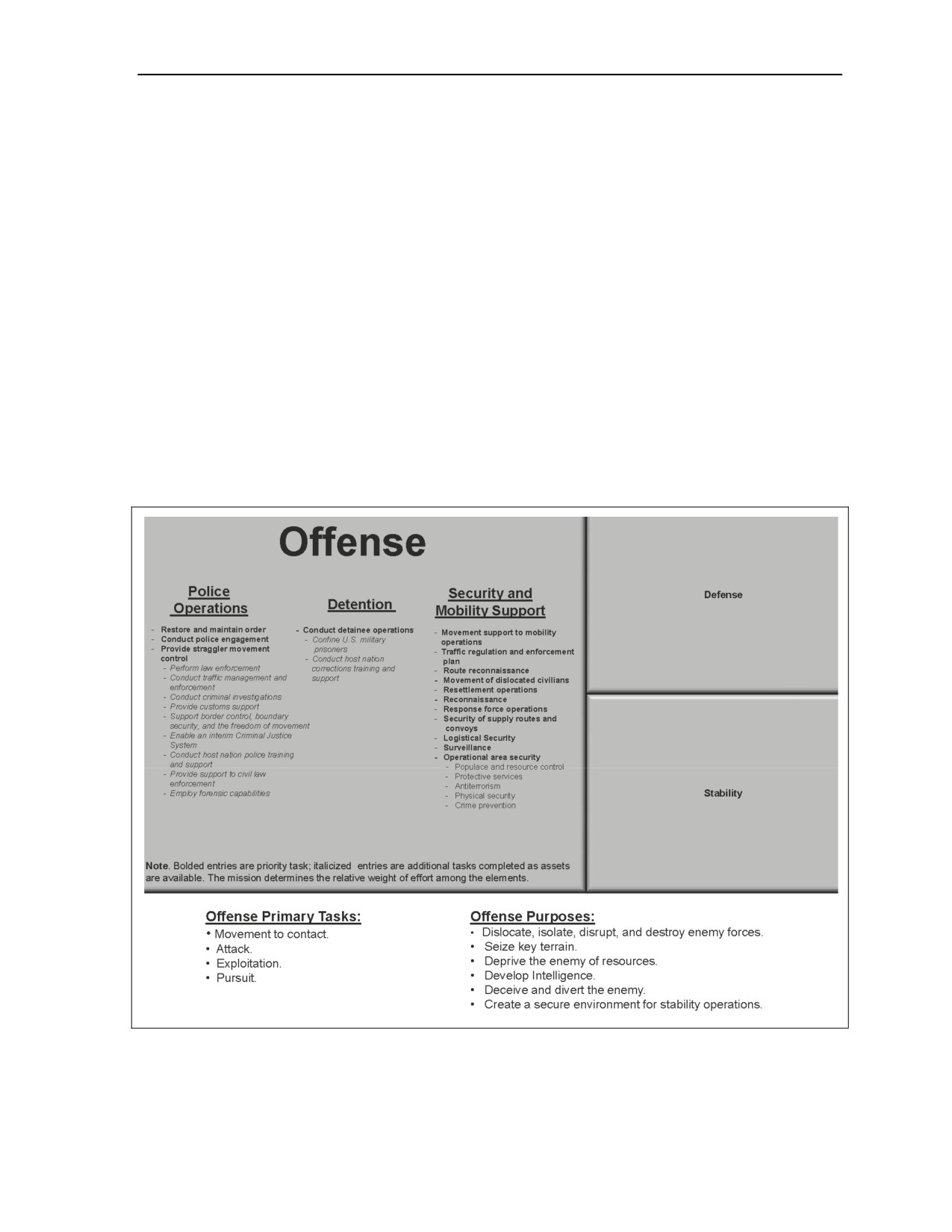
5-36. To facilitate effective parallel planning at the military police unit level, military police unit
commanders, provost marshals, and staff planners must—
z
Understand the higher commander’s intent and planning guidance.
z
Analyze military police combat power support to the operation plan through the warfighting
functions and military police functions.
z
Know the manning, training, and equipment capabilities of the military police unit so that the
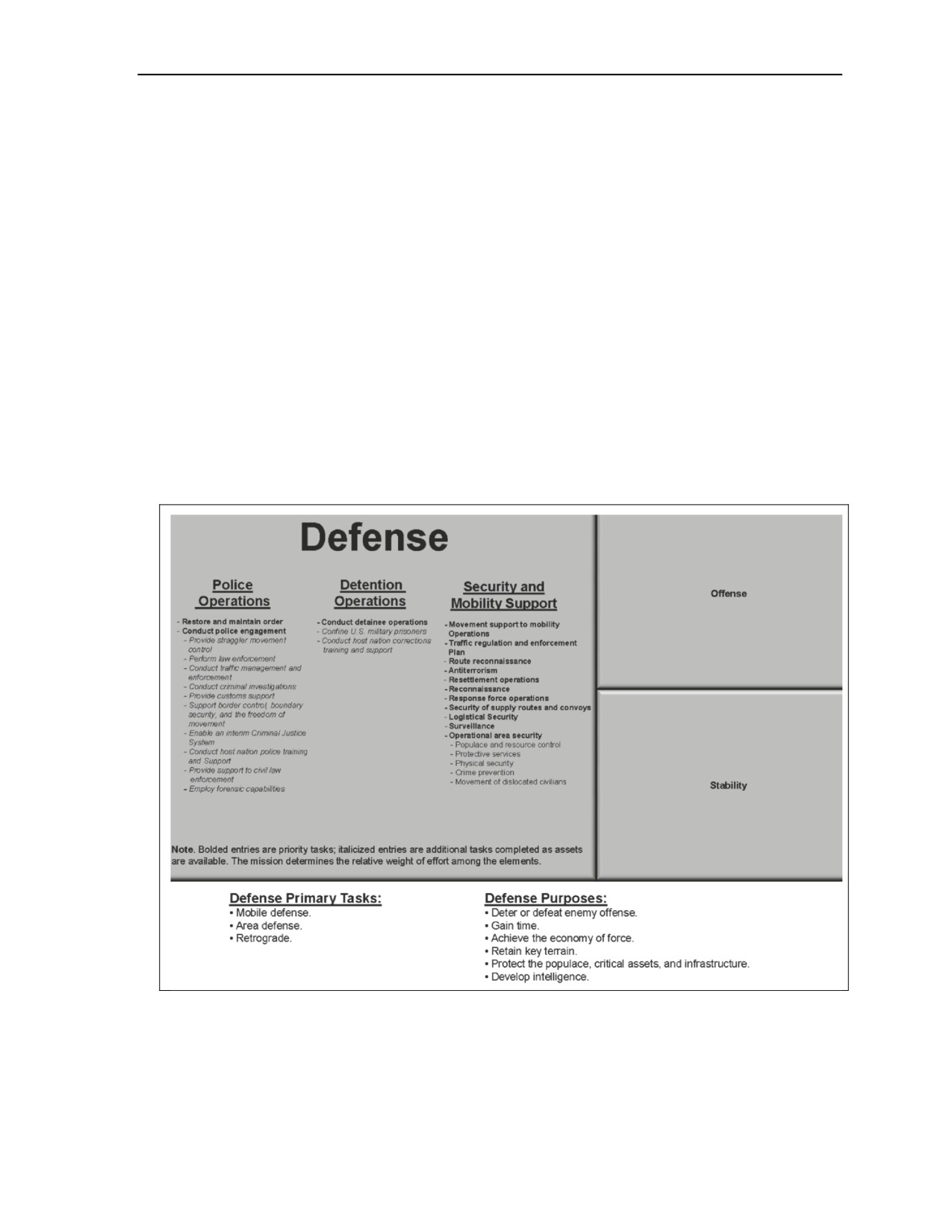
identified tasks can be accomplished within the time allotted.
z
Identify risks and methods to mitigate the risks.
z
Leverage reachback capabilities, including possible requests for assistance training of in-lieu-of
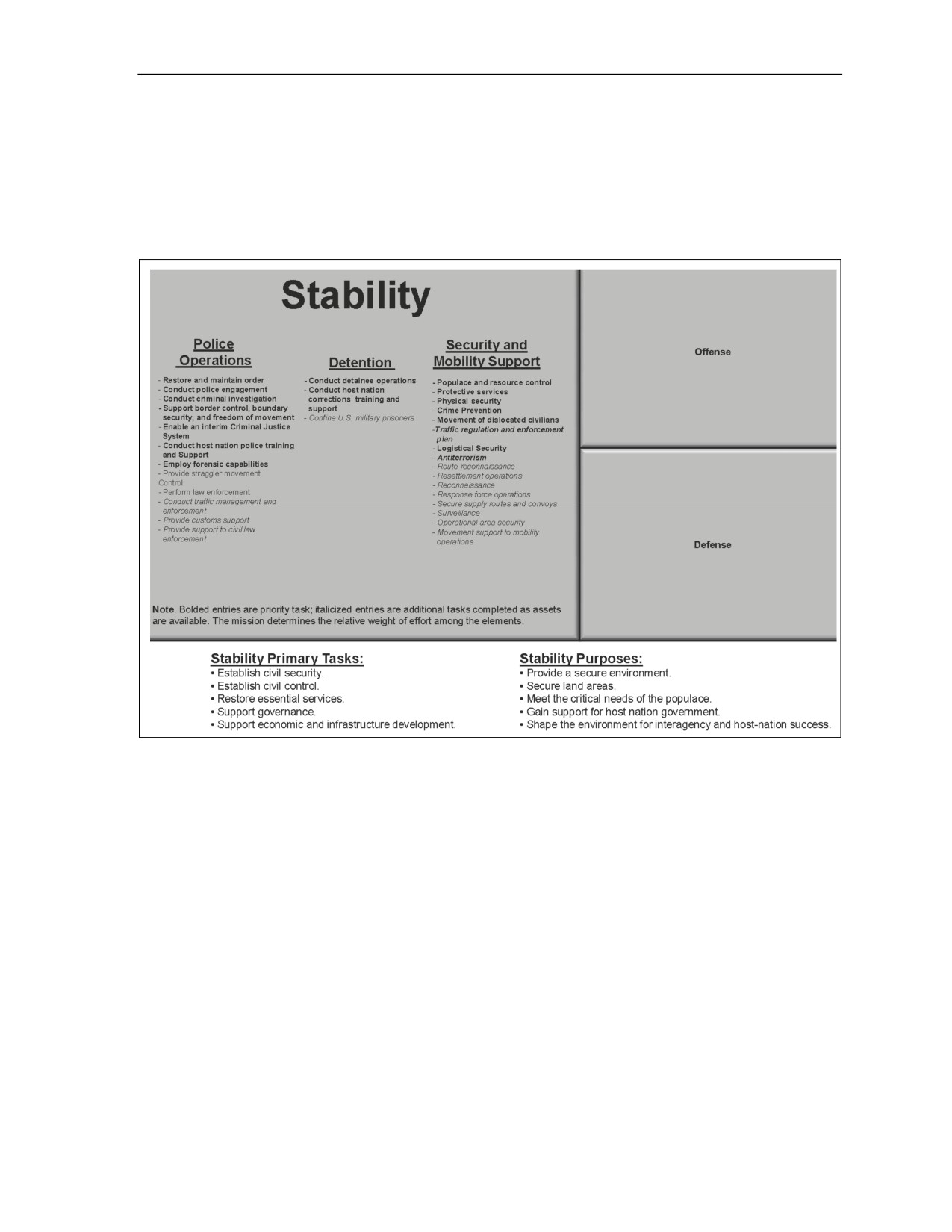
forces to assume security missions before or after their arrival in-theater.
5-12
FM 3-39
26 August 2013
Planning, Preparation, Execution, and Assessment
z
Analyze the sequences of operational planning and the effects of simultaneously executed
operations on military police support.
z
Analyze military police support requirements in specialty skill areas, such as customs, forensics,
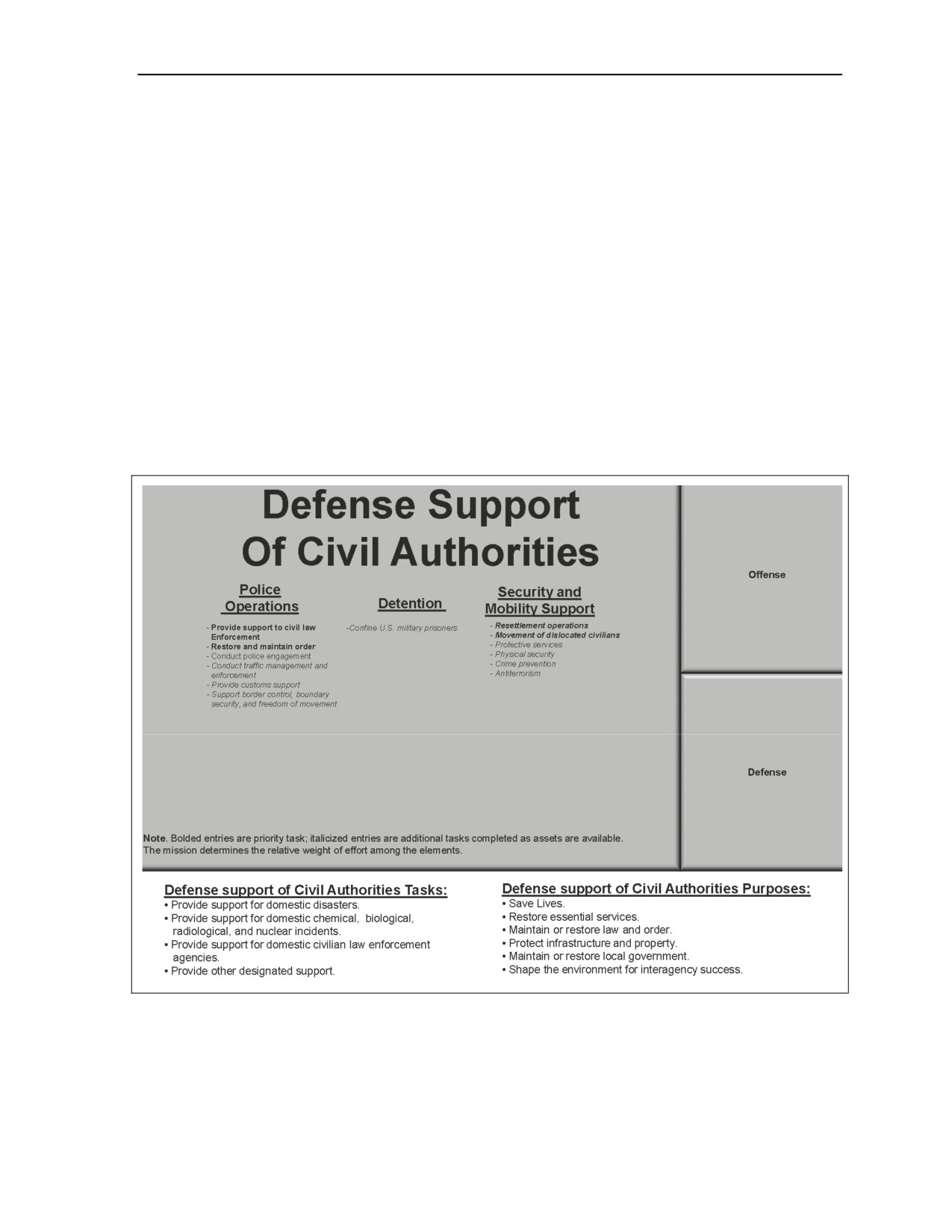
or investigative support.
z
Plan for the sustainment of military police operations, ensuring that all logistics requirements
were analyzed, accounted for the end state of operations, and resourced to accomplish the
mission and facilitate future operations.
WORKING GROUPS, BOARDS, AND CELLS
5-37. Staffs are organized into staff sections. Commanders organize command posts into functional and
integrating cells. Cells contain elements from staff sections. In the context of command posts, a cell is a
grouping of personnel and equipment by warfighting function (such as movement and maneuver) or
purpose (such as maneuver support) to facilitate mission command. Periodically, or as required, ad hoc
groupings form to solve problems and coordinate actions. These groups include representatives from within
or outside a command post, their composition depends on the issue. These groups are called meetings,
working groups, and boards. Each is a control mechanism for regulating a specific action, process, or
function. A working group is a temporary grouping of predetermined staff representatives who meet to
coordinate and provide recommendations for a particular purpose or function. A board is a temporary
grouping of selected staff representatives delegated decision authority for a particular purpose or function
(see ADRP 5-0). They are similar to working groups. When the process or activity being synchronized
requires command approval, a board is the appropriate forum.
5-38. Commanders at each echelon may establish working groups, boards, or cells to manage and
coordinate functional or multifunctional activities. The provost marshal staff will be key members on many
of these working groups, boards, and cells and may chair protection-related groups. Working groups
conduct staff coordination at the action officer level and prepare materials for decisions to be made at a
board. Boards establish policies, procedures, priorities, and oversight to coordinate the efficient use of
resources. Cells group personnel from various sections on a headquarters authorization document to
integrate key functions, such as cells focused on each warfighting function. The number of and subjects
addressed by working groups, boards, and cells depend on the mission, the environment, and the echelon.
Typically, higher echelons with broader spans of control will require a greater number of working groups,
boards, and cells. Battalion and brigade headquarters normally have fewer working groups than higher
echelons; they also tend to be less formal at lower echelons.
5-39. The military police staff participates in numerous meetings, working groups, and boards to ensure
integration and synchronization of military police missions and requirements. Military police and
USACIDC staff members participate to ensure that specific military police-related information
requirements are integrated and police information and police intelligence are fed and fused into the
operations process. Military police staff elements will participate in the following:
z
Assessment working group.
z
Antiterrorism working group.
z
Civil-military affairs working group.
z
Information engagement working group.
z
Intelligence synchronization meeting.
z
Intelligence working group.
z
Interagency working group.
z
Movement synchronization meeting.
z
Operations synchronization meeting.
z
Operations update and assessment briefing.
z
Protection working group.
z
Plans or future operations working group.
z
Shift change brief.
26 August 2013
FM 3-39
5-13
Chapter 5
z
Threat working group.
z
Targeting working group.
MILITARY POLICE LIAISON
5-40. Providing liaison officers or noncommissioned officers between supporting and supported
headquarters is a method of ensuring the continuity of planning efforts. The presence of liaison officers or
noncommissioned officers in a headquarters provides real-time access to critical planning decisions and
supporting information that guides the parallel planning efforts between headquarters elements. It is often
difficult for a headquarters, operating with scarce resources, to give up an officer or liaison team for liaison
duties, but the results often outweigh the initial loss. Commanders must give liaison officers and
noncommissioned officers full and uncontrolled access to every aspect of staff planning within the
headquarters. Only with this access are the liaison officers and noncommissioned officers fully capable of
realizing their full use and effectiveness.
5-41. Other possible liaison missions might include—
z
Secret Service coordination in support of protective service details.
z
MWD coordination with supported agencies.
z
Host nation policing activities.
z
Interagency and intergovernmental coordination during extended operations.
z
Federal, state, or local law enforcement activities during DSCA operations.
OPERATIONS PROCESS
5-42. Unified land operations are executed through a process of planning, preparation, execution, and
continuous assessment—the operations process. These cyclic activities may be sequential or simultaneous.
They are usually not discrete; they overlap and recur as circumstances demand. While differing
significantly in design and application, all missions follow the operations process. The commander drives
the operations process. Commanders use the operations process to help decide when and where to make
decisions, control operations, and provide command presence. The integrating processes and continuing
activities occur during operations process activities. (See ADRP 3-0 and ADRP 5-0 for more information
on these processes and activities.)
5-43. The operations process is the context where military police capabilities are integrated and
synchronized into combined arms applications. Throughout the operations process, commanders
synchronize forces and warfighting functions to accomplish missions. For example, the delivery of fires
must be synchronized with target acquisition to produce the desired effects. Finding ways to accomplish the
mission with an appropriate mix of lethal and nonlethal force is a paramount consideration for every Army
commander. Through synchronization, commanders mass the lethal and nonlethal effects of combat power
at the decisive place and time to overwhelm an enemy or dominate the situation. Military police leaders and
staff planners at each echelon play a pivotal role in ensuring the synchronization of the variety of military
police capabilities that are available to support decisive actions. They synchronize the application of
military police functions through the warfighting function framework by integrating them into the
operations process.
5-44. Military police units conduct planning and preparation activities integrated within the combined arms
task organizations as required by the operation and within their own functional organizations. Combined
arms rehearsals are especially critical to the success of complicated operations like gap crossings or passage
of lines. Appropriate intelligence requirements and military police reconnaissance assets should be
integrated throughout the information collection plan. As required, military police forces will plan and
conduct military police missions in support of the primary mission. Resource-intensive and focused
operations involving civil control tasks, such as building host nation police capability and capacity, requires
extensive planning and coordination within the combined arms staff and headquarters to ensure adequate
support and situational understanding by commanders and staffs across the area of operations.
5-45. Military police execute missions and operations as part of an integrated combined arms effort. While
some tasks are executed as part of a purely functional unit activity, all executed tasks and missions must be
5-14
FM 3-39
26 August 2013
Planning, Preparation, Execution, and Assessment
conducted within the intent and in support of the overall combined arms effort. Effective planning and
preparation ensures the successful nesting of tasks and the synchronization of the efforts necessary to
ensure that military police execution supports the senior combined arms commander’s mission and intent.
Throughout the operations process, all activities are continuously assessed to ensure that the desired results
are achieved. Assessment precedes and guides every activity in the operations process and concludes each
operation or phase of an operation. It involves a comparison of forecasted outcomes to actual events, using
measures of effectiveness and measures of performance to judge progress toward success. It entails two
distinct tasks―continuously monitoring the situation and progress of the operation toward the
commander’s desired end state and evaluating the operation against the measures of effectiveness and
measures of performance. (See ADRP 5-0 for additional information on assessment.) Military police
capabilities may be applied to add technical detail to the commander’s assessment. Military police teams
collect technically focused police information that enhances situational understanding, protection efforts,
movement and trafficability, policing models and strategies, and information focused on the criminal
environment. Relevant gathered information is analyzed to produce police intelligence that adds to the
depth of the commander’s understanding and provides a technical basis for measures of performance and
measures of effectiveness. Staffs analyze the situation in terms of mission and/or operational variables to
understand the mission and prepare their staff running estimates. They continuously assess the effects of
new information on the conduct of the operation; they update staff running estimates and determine if
adjustment decisions are required. Military police staffs use the memory aids of PMESII-PT, METT-TC,
and POLICE as tools to guide and conduct the analysis and assessment of policing activities and the
maintenance of running estimates. Commanders empower their staffs to make adjustments within their
areas of expertise. This requires staffs to understand those aspects of operations that require the
commander’s attention, as opposed to those that are delegated to their control.
MILITARY POLICE SUPPORT TO DECISIVE ACTION
5-46. Decisive action require the simultaneous combination of three elements—offense, defense, and
stability or DSCA (see ADRP 3-0). Planning military police support to decisive action is complex and
requires an in-depth understanding of the operational environment, the commander’s intent, the concept of
operations, and the capabilities and limitations of military police in support of the operation. While the
tasks of decisive action are discussed separately in the following paragraphs, the tasks are executed
simultaneously. The relative weight of any one task in relation to the others is determined by the mission.
Military police planners must continually assess and predict shifts in mission requirements and required
military police capability as operations transition between phases or as conditions change within the
operational environment.
OFFENSE
5-47. Seizing, retaining, and exploiting the initiative to gain physical advantages and achieve definitive
results is the essence of the offense. Offensive tasks seek to throw enemy forces off balance, overwhelm
their capabilities, disrupt their defenses, and ensure their defeat or destruction by maneuver. An offense
ends when the force achieves the purpose of the operation, reaches a limit of advance, or approaches
culmination. Army forces conclude an offensive task by consolidating gains through stability tasks,
resuming the attack, shifting over to the defense, or preparing for future operations. Army forces conduct
four types of offensive tasks—movement to contact, attack, exploitation, and pursuit. (See FM 3-90-1 for
more information on the conduct of offensive tasks.)
5-48. Military police operations supporting the offense include the simultaneous application of military
police capabilities through synchronizing warfighting functions throughout the depth of the area of
operations. Military police operations in close support of maneuver forces are the primary focus during
offensive tasks; however, all three disciplines are applied simultaneously to some degree. The primary
focus will be support that enables movement and maneuver, provides detention tasks to support captured or
detained individuals, and provides protection.
5-49. Military police support to offensive tasks varies according to the type of operation being conducted.
The military police disciplines support each combatant commander based on mission variables. In the
offense, military police mission priorities are often placed on detention operations and security and
26 August 2013
FM 3-39
5-15
Chapter 5
mobility support. Police intelligence activities are integrated throughout the execution of all other military
police disciplines; limited police operations may be conducted to facilitate the future transition to stability
tasks. Military police leaders supporting offensive tasks must—
z
Exercise disciplined initiative within the commander’s intent.
z
Anticipate selective elements of the offensive force to pause, defend, resupply, or reconstitute
while other forces attack.
z
Anticipate changes in the tempo of the operation and prepare the military police effort toward
that action.
z
Provide military police support within the area of responsibility. Military police must understand
how operations affect security functions in a joint supportability assessment and/or line of
communication; this translates to the protection of mission command and the sustainment of
information systems sustainment.
z
Understand the intelligence preparation of the battlefield, the commander’s critical information
requirements, and the priority intelligence requirements and integrate police intelligence
activities in all military police operations to support those requirements.
z
Conduct police operations within the local population.
z
Perform detention operations to reduce the impact on combat forces. (Military police coordinate
the treatment of dislocated civilians with the host nation or foreign forces during resettlement.)
z
Conduct security and mobility support tasks to assist the commander in speeding the shift of
forces to support the main effort and enhancing overall trafficability.
z
Anticipate pursuit and exploitation by positioning military police forces to support follow-on
forces. Military police organizations support as far forward as possible while protecting
sustainment assets.
z
Support the movement of maneuver forces, enabling their ability to mass. Military police protect
mission command nodes, such as the main command post and tactical command post. The
security and mobility support tasks assist in orchestrating the efforts to mass, sustaining the
offensive move. Military police quickly attack enemy reconnaissance forces in the area of
responsibility. Likewise, military police maintain surveillance, provide early warning, and
attack the enemy with supporting and organic fires, ensuring the freedom of action of the force.
z
Know the location and composition of probable response forces/tactical combat forces to
coordinate and assist in securing the joint supportability assessment against area threats.
5-50. During offensive tasks, military police support provided by military police units provides the
commander with an agile, versatile, and capable force ready to contribute to the overall mission success.
Figure 4-3, page 4-16, shows a notional application of military police capabilities supporting offensive
tasks. Specific military police missions conducted during offensive tasks may include the following:
z
Conducting police operations to begin building a greater situational understanding of the police
and criminal environment, shaping the future stability effort, and civil security and civil control
lines of effort.
z
Conducting detention operations to reduce the impact of detainees on combat forces.
z
Conducting resettlement to reduce the impact of dislocated civilians on combat forces.
z
Conducting security and mobility support tasks, such as support for gap crossings (including
river-crossing, passage-of-lines, and breaching operations), convoys and high-risk personnel
security.
z
Integrating police intelligence activities throughout military police operations to enhance
situational understanding and provide a holistic common operational picture.
z
Supporting forced-entry operations (plan for detainee operations).
z
Supporting cordon-and-search tasks (outer cordon security and detainee operations).
5-51. Military police units use preparation activities to posture military police assets with their task-
organized gaining or supported headquarters. Military police units establish early linkups with the
maneuver units they will support. As military police units prepare for offensive tasks, they focus on
inspections, combined arms rehearsals, the movement of the combined arms force into position for the
attack, and the evacuation and control of captured and detained individuals during the offense. Military
5-16
FM 3-39
26 August 2013
Planning, Preparation, Execution, and Assessment
police units also join combined arms breaching and gap-crossing forces to conduct rehearsals for the
breach, assault, and support forces. The provost marshal at the appropriate echelon coordinates military
police capabilities focused to support offensive tasks. Preparation may include establishing protection
measures and holding areas for tactical units moving across main supply routes to assembly areas. If route
clearance operations are anticipated, military police units join with engineer, CBRN, explosive ordnance
disposal, and other forces focused on route reconnaissance, inspections, clearance activities, and the
operation of movement corridors. Military police unit preparation activities occur in close proximity and
are closely aligned and integrated with maneuver force preparations.
5-52. Provost marshal offices at every echelon coordinate military police unit support to the offensive
maneuver plan. Military police assets can be placed in command or support relationships with the
maneuver force. Military police assets will require advanced movement on main supply routes to be in
place to support movement, given the nature of the heavy and wheeled equipment of the tactical force
being employed in offensive tasks. For movement beyond established main supply routes into forward
assembly areas, the additional reconnaissance of road networks will be required. Specialized military police
assets may also be necessary to accomplish certain missions, such as detention units for detainee operations
or USACIDC elements to facilitate criminal investigative support to the commander. At the operational and
tactical levels, some military police operations will probably not be conducted as part of a combined arms
mission; nonetheless, they must be fully coordinated with the maneuver commander responsible for the
area of operations. These operations may also enable the sustainment warfighting function or other areas
not directly related to close combat that may be critical to the preparation for an offensive operation
(figure-5-2).
Figure 5-2. Notional military police operations in the offense
5-53. During offensive tasks, measures to protect unit movements, sustainment assets, and high-risk
personnel are required. The emphasis lies on preserving the mobility of the force. Stationary mission
26 August 2013
FM 3-39
5-17
Chapter 5
command facilities, communications nodes, and critical supplies also require protection to lessen their
vulnerability. During the early planning stages, military police units can provide information on main
supply route conditions along march routes to facilitate movement and protection for the force.
5-54. When executing offensive tasks, the maneuver force uses its common operational picture to link its
detection efforts to maneuver to avoid encountering obstacles along the route of the attack. The maneuver
force supported by military police units can actively avoid manmade obstacles by interdicting threat
countermobility before emplacement or can passively avoid by identifying, marking, and bypassing.
Assessment enables execution as decisions are made to breach or bypass obstacles. Bypasses are preferred
whenever possible and may be handed off to follow-on military police units to guide additional forces
through the bypass routes. As soon as possible, military police units conduct assessments of the routes to
determine trafficability and feasible or suitable improvements to the lines of communication.
DEFENSE
5-55. Defensive tasks are combat operations conducted to defeat an enemy attack, gain time, economize
forces, and develop conditions favorable for offensive or stability tasks. The defense alone normally cannot
achieve a decision. However, it can create conditions for a counteroffensive operation that lets Army forces
regain the initiative. Defensive tasks can also establish a shield behind which stability tasks can progress.
Defensive tasks counter enemy offensive tasks. They defeat attacks, destroying as much of the attacking
enemy as possible. They also preserve control over land, resources, and populations. Defensive tasks retain
terrain, guard populations, and protect critical capabilities against enemy attacks. They can be used to gain
time and economize forces so that offensive tasks can be executed elsewhere.
5-56. Defending forces anticipate the enemy attacks and counter them. Waiting for attacks is not a passive
activity. Commanders conduct aggressive surveillance, reconnaissance, and security operations to seek
out enemy forces and deny information to them. They engage them with Army and joint fires and
maneuver to weaken them before close combat. Commanders use combined arms and joint capabilities to
attack enemy vulnerabilities and seize the initiative. There are three types of tactical operations associated
with defense: mobile defense, area defense, and retrograde defense. FM 3-90-1 provides details on the
conduct of defensive tasks.
5-57. Military police operations supporting the defense include the simultaneous application of military
police capabilities through synchronized warfighting functions and throughout the depth of the area of
operations. Support to defensive operations is consistent with the commander’s intent and priorities.
Military police support a defending force by assisting in movement and sustainment to maintain the
initiative. Military police support reflects the maneuver commander’s focus of destroying an attacking
force, retaining or denying key terrain, moving away from an enemy force, or a combination of these tasks.
In supporting defensive operations, military police leaders must—
z
Exercise disciplined initiative within the commander’s intent.
z
Anticipate operational changes and/or transitions and prepare the military police effort toward that
action.
z
Provide military police support within the area of responsibility. Military police must understand
how operations affect security functions in a joint supportability assessment and/or line of
communication; this translates to mission command protection and information system
sustainment.
z
Understand the intelligence preparation of the battlefield, commander’s critical information
requirements, and priority intelligence requirements to facilitate the integration of police
intelligence activities within all military police operations to support those requirements.
z
Conduct police operations within the local population.
z
Integrate police intelligence operations within all operations to enhance situational understanding
and provide a holistic common operational picture.
z
Consider the type and size of the area of responsibility, line-of-communication security, and the
threat and plan for detainee operations and dislocated civilians to determine how their presence
may affect the movement of forces.
5-18
FM 3-39
26 August 2013
Planning, Preparation, Execution, and Assessment
z
Perform detention operations to control and protect detainees, resulting from previous offensive or
ongoing stability tasks, to reduce the impact on operational forces.
z
Coordinate the treatment of dislocated civilians with the host nation or foreign forces.
z
Conduct security and mobility support to aid a force to maneuver and mass. Military police must
anticipate transitions from the defense to the offense and assist the forward movement of reserves
or reaction forces.
z
Conduct security and mobility support to deny information to enemy reconnaissance elements
seeking the location of the defending force. The military police unit is positioned where it can
control key terrain or improve the defensive capability of bases and base clusters. Military police
conduct aggressive reconnaissance and surveillance to deny enemy access to critical logistics and
sustainment facilities.
z
Know the location and composition of probable response forces/tactical combat forces to
coordinate and assist in securing the joint supportability assessment against area threats.
z
Protect sustainment resources while supporting the lateral, forward, and rearward movement of
combat forces.
5-58. Successful military police operations in the defense depend on the leader’s understanding of the
commander’s intent and the ability to properly employ military police resources. Military police perform
the three disciplines when assisting the defending commander by providing a lethal, mobile force,
permitting the commander to quickly concentrate efforts and resources in fixing the enemy. Figure 5-3
shows a notional application of military police capabilities supporting defensive operations.
Figure 5-3. Notional military police operations in the defense
5-59. In all three types of defensive primary tasks, the main focus for the military police force is to ensure
movement of the repositioning or counterattacking forces and to provide and support the evacuation of
captured or detained individuals. Defensive missions demand focused effort to provide the freedom of
movement for repositioning forces and the reserve when it is committed. These units are provided the
26 August 2013
FM 3-39
5-19
Chapter 5
priority of movement along main supply routes. Additional activities in the defense include providing
protection to sustainment activities (including critical headquarters, communications facilities, convoys,
and supply sites). Examples of expected missions include—
z
Conducting detention operations.
z
Establishing a movement corridor.
z
Conducting convoy escorts.
z
Conducting response force operations.
STABILITY
5-60. Stability tasks involve coercive and constructive military actions. They are designed to establish a
safe and secure environment and facilitate reconciliation among local or regional adversaries. Stability
tasks can also establish political, legal, social, and economic institutions and support the transition to
legitimate local governance. It is essential that stability tasks maintain the initiative by pursuing objectives
that resolve the causes of instability. The combination of tasks conducted during stability tasks depend on
the situation. Stability consists of five primary tasks—maintain civil security, maintain civil control, restore
essential services, provide support to governance, and provide support to economic and infrastructure
development. (The primary stability tasks are discussed in detail in FM 3-07.)
5-61. Preparing for stability tasks may be more difficult than preparing for combat operations because of
the technical nature of requirements and the broad range of potential military police missions associated
with them. An early on-the-ground assessment can be critical to tailor the military police force with
required specialties and military police resources. The results of this assessment are passed to planners to
ensure that an adequate military police force arrives in the area of operations in a timely manner. This
early, on-the-ground military police reconnaissance and associated assessment or survey identifies—
z
Basic security requirements and establishes police intelligence within the area of operations.
z
Needs of the host nation and necessary military police capabilities to address police operations
and detention requirements.
z
Other special considerations that will affect the military police force.
5-62. Like offense and defense, military police support for stability tasks includes the simultaneous
application of capabilities. Military police disciplines supporting the restoration of essential policing and
corrections services in support of civil security and civil order lines of effort are the primary military police
focus in stability tasks; however, all three of the military police disciplines are applied simultaneously to
some degree. Extensive detention operations may also result from extended stability tasks. Figure 5-4
shows a notional application of military police capabilities providing support to stability tasks.
5-63. Military police can support stability tasks through all three disciplines. However, during stability
support operations, the primary focus may be on police operations. Conducting policing activities in
support of civil security and civil control lines of effort are critical in establishing the rule of law. Police
intelligence operations are integrated and executed continuously throughout all military police operations;
this includes potentially establishing, using, and transferring host nation police intelligence operations.
Police operations may include the following:
z
Conducting police technical assessments to determine critical capability and capacity.
z
Establishing a strategic law enforcement stationing plan.
z
Executing theater law enforcement operations.
z
Establishing, operating, and transferring police stations to trained and skilled host nation police.
z
Establishing regional police academies.
z
Controlling the movement of civilians and providing relief to human suffering.
z
Establishing and training regional/urban police patrol operations (traffic control management
and emergency first responder operations).
z
Establishing and training special police technical skills
(special-reaction teams, emergency
response, protective services, riot control, and functional patrols).
z
Establishing and training criminal investigative capabilities.
z
Establishing indigenous highway patrol capabilities.
5-20
FM 3-39
26 August 2013
Planning, Preparation, Execution, and Assessment
z
Establishing indigenous police information systems
(administrative, logistics, training, and
operations).
z
Establishing vehicle registration systems.
z
Conducting joint information management liaison operations for all required echelons.
z
Establishing host nation police reports, forms, databases, and management protocols.
z
Recommending the procurement of material to create a police infrastructure, communications
equipment, and uniform sets.
Figure 5-4. Notional military police operations supporting stability
5-64. Military police detention operations support to host nations critical during stability operation is.
Detainees must be effectively managed and transferred to appropriately trained and disciplined host nation
police. Specific military police detention operations conducted during stability tasks may include the
following:
z
Conducting prison or detention technical assessments to determine critical capability and
capacity.
z
Establishing a strategic detainee/corrections system template.
z
Executing theater detainee operations.
z
Establishing, operating, and transferring theater level detention facilities to host nation control.
z
Establishing regional detainee/corrections academies.
z
Transferring/adjudicating criminal detainees.
z
Establishing juvenile detainee operations.
z
Training special teams (special-reaction, forced cell move, escort, and riot control teams).
z
Conducting facility security and protection efforts.
z
Conducting multilevel information management liaison operations.
26 August 2013
FM 3-39
5-21
Chapter 5
z
Establishing rehabilitative and reconciliation programs to facilitate the return of detainees to
society.
z
Providing detainee/corrections reform transition teams.
z
Recommending the procurement of detention infrastructure
(utilities, communications
equipment, and uniforms).
z
Establishing indigenous detainee automation/information systems
(administration, logistics,
operations, and training).
z
Establishing standard detainee reports, forms, databases, and management protocols.
z
Establishing and supporting resettlement facilities in support of civil affairs operations.
5-65. Stability tasks tend to be of long duration compared to the other task of decisive action. As such, the
military police level of effort is very high at the onset and decreases as the theater and host nation
capabilities mature. Preparation activities include determining the level of the civil rule of law in the
policing and corrections services and identifying significant infrastructure and base development
construction projects for police stations, training centers, and corrections institutions. The highest priority
projects may be executed using general engineering capabilities, while others may compete for contingency
funding and execution through a contract capability. Military police forces may be engaged in
counterinsurgency type operations as the security structure of the host nation evolves.
5-66. The military police capabilities and their operational and supporting tasks are integral to stability
tasks. Military police related skills are highly compatible and essential to the end state of stability tasks, and
the military police force provides a highly capable, politically acceptable force suitable for a variety of
stability tasks. They possess robust capabilities to shoot, move, and communicate, but are trained to
exercise judgment and resolve issues using the lowest level of force possible according to the use-of-force
continuum. Military police are trained to transition to deadly force only when all other options have been
exhausted. Military police units must project a professional law enforcement and policing image. This
presence is extremely important when tailoring a force that requires significant capabilities with a low
political profile.
5-67. Military police missions must be prioritized to achieve the greatest mission effect. The specific
discipline performed at a given time is determined by the supported commander’s needs and the availability
of military police resources. The supported commander, taking into consideration the recommendations of
the provost marshal, sets the functional priorities for military police operations. The provost marshal will
often need to prioritize tasks to accomplish the requirements for military police support.
5-68. Military police capabilities are further enhanced by their training, policing mind-set, and experience
in dealing with people in highly stressful and confusing situations. Military police can conduct combat
operations when required, but are highly practiced in escalation-of-force considerations and the
employment of the minimum-essential force to contain potentially violent situations. This mind-set serves
as the framework for military police law enforcement training and is critical in military police support for
stability tasks. Furthermore, this policing mind-set is exercised and reinforced daily in peacetime law
enforcement activities. Military police learn and receive constant reinforcement training in controlling the
level of violence in a situation and have the ability to make on-the-spot decisions to deescalate a situation,
minimizing the possible loss of control.
5-69. Military police with detention skills have the necessary training and experience to advise host nation
corrections authorities to get operations up and running. USACIDC special agents have the investigative
skills to complete complex criminal and war crime investigations or train investigative techniques to host
nation police personnel.
5-70. Four essential training competencies are stressed for military police Soldiers: technical and tactical
proficiency, the understanding of human dimension and attitude, a strong sense of camaraderie and
teamwork, and leadership. These competencies are the foundation for all military police operational
performances and are especially important to stability tasks. They mentally equip the military police
Soldier to exercise discretion in dealing with others and to protect and assist those in need. These abilities
permit the military police Soldier to accomplish the varying demands in stability tasks.
5-22
FM 3-39
26 August 2013
Planning, Preparation, Execution, and Assessment
5-71. Civil affairs forces may be critical in supporting military police operations, which typically can
include activities and interface with non-military organizations and military forces. Similarly, military
police capabilities may be applied to provide specific technical support integrated within the civil affairs
plan. Integration occurs through the operations process activities and is facilitated by coordination among
military police planners and civil affairs staff at the civil-military operations center. Civil affairs operations
are covered in-depth in FM 3-57.
DEFENSE SUPPORT OF CIVIL AUTHORITIES
5-72. Military police first responder capabilities are key aspects to the DSCA mission. Defense support of
civil authorities is support provided by U.S. federal military forces, DOD civilians, DOD contract
personnel, DOD component assets, and National Guard forces (when the Secretary of Defense, in
coordination with the Governors of the States, elects and requests to use those forces in title 32, United
States Code, status) in response to requests for assistance from civil authorities for domestic emergencies,
law enforcement support, and other domestic activities, or from qualifying entities for special events.
DSCA missions are also known as civil support missions. (DODD 3025.18) Military police support to
domestic operations is constrained by various laws. (See ADP 3-28 and ADRP 3-28.) It is accurate to say
that most military police tasks performed in domestic support are common to overseas operations; however,
military police conduct them under very different conditions. Figure
5-5 identifies military police
capabilities that are conducted in DSCA if authorized by law.
Figure 5-5. Notional military police operations during DSCA
5-73. Numerous features of DSCA are distinct from other decisive action tasks. DSCA tasks stress the
employment of nondestructive means to save lives, alleviate suffering, and protect property. The Army
National Guard is often the first military force to respond on behalf of state authorities. Army DSCA
includes four primary tasks: provide support for domestic disasters, provide support for domestic CBRN
26 August 2013
FM 3-39
5-23
Chapter 5
incidents, support civil law enforcement agencies, and provide other designated support as required. (See
ADP 3-28 and ADRP 3-28 for additional information on DSCA.)
5-74. Military police operations in DSCA may include the simultaneous application of all military police
disciplines. Specialized military police capabilities also have the potential to be employed. Military police
support may be required for Army forces providing mission command, protection, and sustainment to
government agencies at all levels until they can function normally. In a martial law situation, extensive
military police support may be required. Military police Soldiers have the essential training and technical
capabilities needed for relief operations, focusing on restoring civil order. The restoration of civil order
requires—
z
Operational unity.
z
Effective coordination.
z
Public acceptance.
z
Threat awareness.
z
Minimal use of force.
5-75. There are few unique military police missions performed in DSCA that are not performed during
other operations. The difference is the context in which they are performed. The Posse Comitatus Act
carefully limits the actions that military forces, particularly Regular Army units (to include federalized
National Guard units), can conduct within the United States and its territories. National Guard units,
remaining under the control of their respective state governors, are not restricted in the manner that federal
(active duty) forces are restricted. In addition to legal differences, civil support operations are always
conducted in support of state and federal agencies. Army forces cooperate and synchronize their efforts
closely with them. These agencies are trained, resourced, and equipped more extensively than similar
agencies involved in stability operations overseas. Policies issued by the federal government govern the
essential services that Army forces provide in response to a disaster. Within this context of support to
federal agencies, the focus for military police during DSCA support operations is to support federal
agencies restoring essential services. Essential services of concern for military police include—
z
Rescues.
z
Food and water.
z
Emergency shelter.
z
Basic sanitation, including sewage and garbage disposal.
z
Minimum-essential access to affected areas.
5-24
FM 3-39
26 August 2013
Chapter 6
Sustainment Support
Successful military police operations include the effective incorporation of
sustainment support. Sustainment for organic military police units and, in general,
military police companies and below, includes the functions of supply, field services,
transportation, maintenance, ordnance (minus explosive ordnance disposal), health
service support, personnel services, and selected general engineer support. The
assignment of military police elements to BCTs includes responsibility for their
sustainment support. All sustainment support is provided by, or coordinated through,
the BSTB for the military police platoons of the ABCT and the IBCT, the brigade
support battalion, and the headquarters and headquarters company of the SBCT. For
other military police units throughout the area of operations, integration into an area
or theater support structure will be required. This chapter focuses on sustainment
support for military police capabilities and highlights the sustainment considerations
that will affect military police operations.
RESPONSIBILITIES
6-1. Military police commanders and staff are essential to the sustainment of military police organizations
and capabilities operating at every echelon. Sustainment for military police units and capabilities organic,
assigned, or attached directly to a supported unit is the responsibility of the leaders and staff of the unit they
support, but the higher-echelon provost marshal will retain an interest in the status of their support. The
provost marshal must also work closely with the supported unit logistics staff to assist in planning,
preparing, executing, and assessing operations that require specialized military police assets or when a
particular mission will be sustainment heavy (such as detention or resettlement missions). When military
police or multifunctional headquarters are provided, the organic logistics staff within that headquarters
provides sustainment planning for the military police force under its mission command. (See ADRP 4-0 for
additional information on sustainment doctrine. For information on multinational support, see JP 4-07 and
JP 4-08.)
6-2. At the military police unit level, the basic sustainment responsibilities are to monitor, report, and
request requirements through the correct channels and to ensure that sustainment requirements are met
when sustainment is brought forward to the military police unit. The military police company executive
officer, first sergeant, and supply sergeant are normally in charge of these tasks within military police
companies; and they receive guidance and oversight from the commander. They are also responsible for
supporting any augmentation they receive. The accurate and timely submission of personnel and logistics
reports, other necessary information, and requests are essential.
6-3. Military police plan to meet the changing requirements of the operation. The military police
sustainment system should be versatile enough to keep pace with rapid decision cycles and mission
execution, while also reacting rapidly to crises or opportunities. Military police planners are sensitive to
military police task organization changes. Military police units can normally respond to a change in task
organization much quicker than theater sustainment packages can. Because of this, contingency military
police sustainment plans are normally developed. Military police consider joint, multinational, contracted
civilian, and interagency assets when planning support for operations. They—
z
Use all available resources to the fullest, especially host nation assets.
z
Prioritize critical military police activities based on the concept of operations.
z
Anticipate military police requirements based on war games and the rehearsal of concept drills,
incorporating experience and historical knowledge.
26 August 2013
FM 3-39
6-1
Chapter 6
z
Organize and resource for simultaneous and noncontiguous operations.
z
Participate in and evaluate the military police significance of each phase of the operation during
the entire command estimate process, to include mission analysis, course-of-action development,
analysis and war games, recommendation, and execution.
6-4. The provost marshal and the military police unit commander forecast future requirements and
accumulate assets needed to accommodate likely contingencies. Military police missions frequently
require—
z
Significant fuel resupply capability due to high fuel consumption rates.
z
Nonlethal ammunition or technology required for security, policing, and law enforcement
activities.
z
Military police-specific Class IX repair parts, often requiring additional coordination to obtain.
z
Large amounts of detention or resettlement sustainment materials.
z
Military police-specific Class I and II supplies, which may require additional out-of-theater
coordination.
z
Maintenance and transportation support.
z
Financial management support for the procurement process to facilitate the contracting of locally
available commercial services and materials. Procurement support includes contracting support
and commercial vendor services support (see FM 1-06).
z
Construction and nonstandard Class IV materials support for detention or resettlement missions.
z
Legal support for detention missions.
z
Dedicated mess, shower, and laundry facilities for detention or resettlement missions.
z
MWD veterinarian and other sustainment support.
z
Commercial, off-the-shelf equipment required for policing and security operations, such as―
Lighting equipment.
Forensic collection equipment and biometric collection devices.
Evidence-processing materials and equipment.
Law enforcement-related equipment critical for police and prison or detention missions.
PROVOST MARSHAL
6-5. The provost marshal at each echelon is reponsible for military police logistics estimates and plans
and monitors military police-related sustainment support for military police missions at that echelon. When
military police augmentation is required, the provost marshal recommends the most effective command and
support relationship. The provost marshal or subordinate staff member—
z
Writes the provost marshal annex and associated appendixes to the operation plan or operation
order to support the commander’s intent, including a recommended distribution for any military
police-related, command-regulated classes of supply and special equipment.
z
Assists in planning the locations of the forward supply point that will be used for the delivery of
military police-configured loads of Class IV and V material. This site is coordinated with the
unit responsible for the terrain and the appropriate logistics staff officer (S-4) or assistant chief
of staff, logistics (G-4).
z
Assists in planning the locations of the military police equipment for the pre-positioning of
critical equipment sets, such as detention or resettlement materials. These sites are coordinated
with the unit responsible for the terrain and the appropriate S-4/G-4.
z
Works closely with the sustainment staff to identify available assets and recommends priorities
to the sustainment planners.
z
Identifies extraordinary medical evacuation requirements or coverage issues for military police
units and coordinates with sustainment planners to ensure that the supporting unit can
accomplish these special workloads.
z
Identifies critical military police equipment and military police mission logistics shortages.
6-2
FM 3-39
26 August 2013
Sustainment Support
z
Provides (in conjunction with the engineer coordinator) the appropriate S-4/G-4 with an initial
estimate of supplies needed to support detention or resettlement missions and tracks their status.
z
Tracks the flow of mission-critical Class IV and V supplies into support areas and forwards
supplies to the supporting military police units. Coordinates to provide military police personnel
support as required to accept delivery of critical supplies.
z
Coordinates for explosive ordnance disposal support and integration as necessary.
z
Coordinates MWD logistics support requirements, including veterinarian services; kennel
facilities; food; narcotic and explosive training aids; and maintenance for vehicles, weapons, and
other equipment. Educates leaders about necessary support requirements when supported by
MWDs.
UNIT COMMANDER
6-6. The unit commander ensures that sustainment operations maintain the mission capabilities of the unit
and its ability to provide combat power. The unit commander provides critical insight during the supported
unit planning process. The unit commander—
z
Coordinates for sustainment support requirements external to the military police unit.
z
Anticipates problems, works to avoid delays in planning and battle transition, and conducts
sustainment battle tracking.
z
Communicates with subordinate leaders to identify the need for push packages, ensures their
arrival, and tracks their expenditure.
z
Determines the location of the unit resupply points and monitors the operation.
z
Ensures that the unit is executing sustainment operations according to the supported unit
standing operating procedures and operation order.
z
Monitors equipment locations and maintenance status.
z
Tracks military police equipment use, maintenance deadlines, and fuel consumption.
z
Receives, consolidates, and forwards logistics, administrative, personnel, and casualty reports to
the parent or supported unit.
z
Directs and supervises the medical support within the unit, coordinating for additional support as
required.
z
Supervises and monitors the evacuation of casualties, detainees, and damaged equipment.
z
Orients personnel replacements and assigns personnel to subordinate units.
z
Conducts sustainment rehearsals at the unit level.
z
Maintains and provides supplies for unit field sanitation activities.
z
Integrates explosive ordnance disposal support as necessary.
z
Manages, supports, and employs MWDs.
6-7. Military police leaders should seek to ensure that, wherever possible, contract personnel supporting
military police operations have accompanying security packages provided by the contractor or another
authorized source. It is also imperative that military police commanders and staffs fully understand the key
differences between contracted and organic military support. These differences include—
z
Contractors are not in the chain of command. They are managed through their contracts and the
contract management system, which should always include a unit contracting officer
representative.
z
Contractors perform only tasks specified in contracts; “other duties as assigned” does not apply.
CONSIDERATIONS
6-8. There are several special considerations for sustainment planning that military police commanders
and staffs need to address. These include mission-specific planning for detention and resettlement missions
and several other military police missions. Any detention or resettlement mission will include a
requirement to be proactive in planning and require the provost marshal to work closely with the engineer
coordinator and logistics planners to ensure the adequacy and timeliness of the facilities and support
26 August 2013
FM 3-39
6-3
Chapter 6
necessary to construct, maintain, and sustain detention or resettlement facilities. The material provided in
this chapter is only meant as an overview to the types of planning that must be accomplished to ensure
successful detention or resettlement mission accomplishment in terms of facilities and other sustainment
considerations.
6-9. As with all operations, when the supported unit receives a warning order (directly or implied) as part
of the military decisionmaking process, the provost marshal initiates the logistics estimate process. The
provost marshal focuses the logistics estimate on the sustainment of all subordinate military police units
that are organic and task-organized in support of the unit. Generally, Class I, III, IV, and V supplies and
personnel losses are the essential elements in the estimate process. Other classes of supply (II, VI, and IX)
may be required for detention or resettlement missions. Close integration with the sustainment support unit
can simplify and accelerate this process through an automated systems logistics status report to ensure that
the sustainment support unit is able to maintain an up-to-date picture of the military police unit sustainment
requirements. In the case of detention or resettlement missions, this planning must take into account the
projected population that will be serviced in detention or resettlement; these demands can be significant.
During continuous operations, the estimate process supporting the rapid decisionmaking and
synchronization process may need to be abbreviated because of time constraints.
6-10. After conducting the estimate process to determine the requirements for unit and mission
sustainment, the provost marshal, with the respective S-4/G-4, compares the requirements with the reported
status of subordinate units to determine the specific amount of supplies needed to support the operation.
These requirements are then coordinated with the sustainment support unit or forward support element to
ensure that the needed supplies are identified and resourced from higher-echelon stocks.
6-11. The provost marshal then translates the estimate into specific plans. This will include requirements
for maintenance, ammunition, supply and field services, transportation, health service support, and human
resources support. Postconflict considerations and planning must be integrated into the planning process.
6-12. In each type of BCT, the provost marshal, working with the appropriate sustainment planner and
executor, tracks essential sustainment tasks involving all military police units supporting the brigade.
Accurate and timely status reporting assists the provost marshal in providing the overall military police
status to the brigade commander and allows the provost marshal to intercede in critical sustainment
problems when necessary. The provost marshal also ensures that supplies needed by augmenting military
police units to execute missions for the brigade are integrated into the brigade sustainment plans. For the
provost marshal to execute these missions properly, accurate and timely reporting and close coordination
between the provost marshal, sustainment planners and providers, and the various BCT organizations and
supporting echelons-above-brigade units (to include the MEB) are essential. Supporting echelons-above-
brigade military police units must affect linkup with the existing sustainment to ensure their
synchronization of effort.
6-13. Much like individual military police platoons that are not organic to a BCT, USACIDC elements will
be reliant on the supported unit for sustainment. USACIDC elements, which generally consist of a two-
Soldier team, will turn to the military police unit within the area of responsibility for sustainment support.
These elements are ill-equipped to conduct operations other than police operations. Military police unit
commanders must consider that they may be required to provide support to USACIDC elements. A further
discussion of USACIDC and its elements can be found in chapter 7.
FUNCTION-FOCUSED PLANNING
6-14. Each of the military police disciplines has focused considerations that can be generally applied, and
some of these are listed below. These considerations flow from the discussion of the military police
disciplines in chapter 3.
Police Operations
6-15. This mission, while a traditional one, varies with conditions. During major combat operations, police
operations have a limited role and very little nontraditional sustainment support is required. Class I, III, V,
and IX supply items will be the major items required. The commander must recognize that the military
6-4
FM 3-39
26 August 2013
Sustainment Support
police platoon will likely be reliant on the supported unit for these materials, and coordination between
military police and supported units should be accomplished to ensure support.
6-16. Postconflict sustainment during police operations will vary based on the environment, specific
mission requirements within the area of operations, and available host nation resources. The length and
duration of the mission will mandate sustainment requirements. Sustainment planning must address many
logistics considerations for supporting police operations missions which cannot be supported within the
Army supply system; much of the police equipment required for extended and effective law enforcement
operations must be purchased as commercial, off-the-shelf items.
6-17. Ongoing law enforcement missions require extensive support in expendable administrative supplies
and routine policing and investigations supplies, such as evidence collection supplies, biometric collection
materials, and safety equipment. Depending on the environment and the duration of operations,
communications equipment, speed measuring devices, emergency lighting, and a myriad of other materials
may be required. Planners should identify ongoing logistics requirements early and develop and coordinate
an appropriate military police support plan.
Detention Operations
6-18. The detention operations discipline is perhaps the most sustainment-intensive of all military police
missions. As previously stated, the Army is DOD executive agent for detainee operations. Additionally, the
Army is the DOD executive agent for the long-term confinement of U.S. military prisoners. Within the
Army and through the geographic combatant commander, military police units are tasked with coordinating
shelter, protection, accountability, and sustainment for detainees. The detention operations discipline
addresses military police roles and responsibilities when managing detainees and U.S. military prisoners.
All classes of supply need to be considered. There are several classes of detainees, and each has specific
sustainment requirements.
Detention Facilities
6-19. The provost marshal (in conjunction with the engineer coordinator and logistics planners) must plan
for the acquisition of uncontaminated land and facilities, including—
z
Operational facilities (such as military police unit headquarters, military and civilian police
stations, combatant and U.S. military prisoner confinement facilities, and detention facilities).
z
Logistics facilities (such as maintenance and supply facilities and support facilities for detention
sustainment).
6-20. The combatant commander, in coordination with other Service components, specifies the
construction standards for facilities in the theater to optimize the effort expended on any given facility,
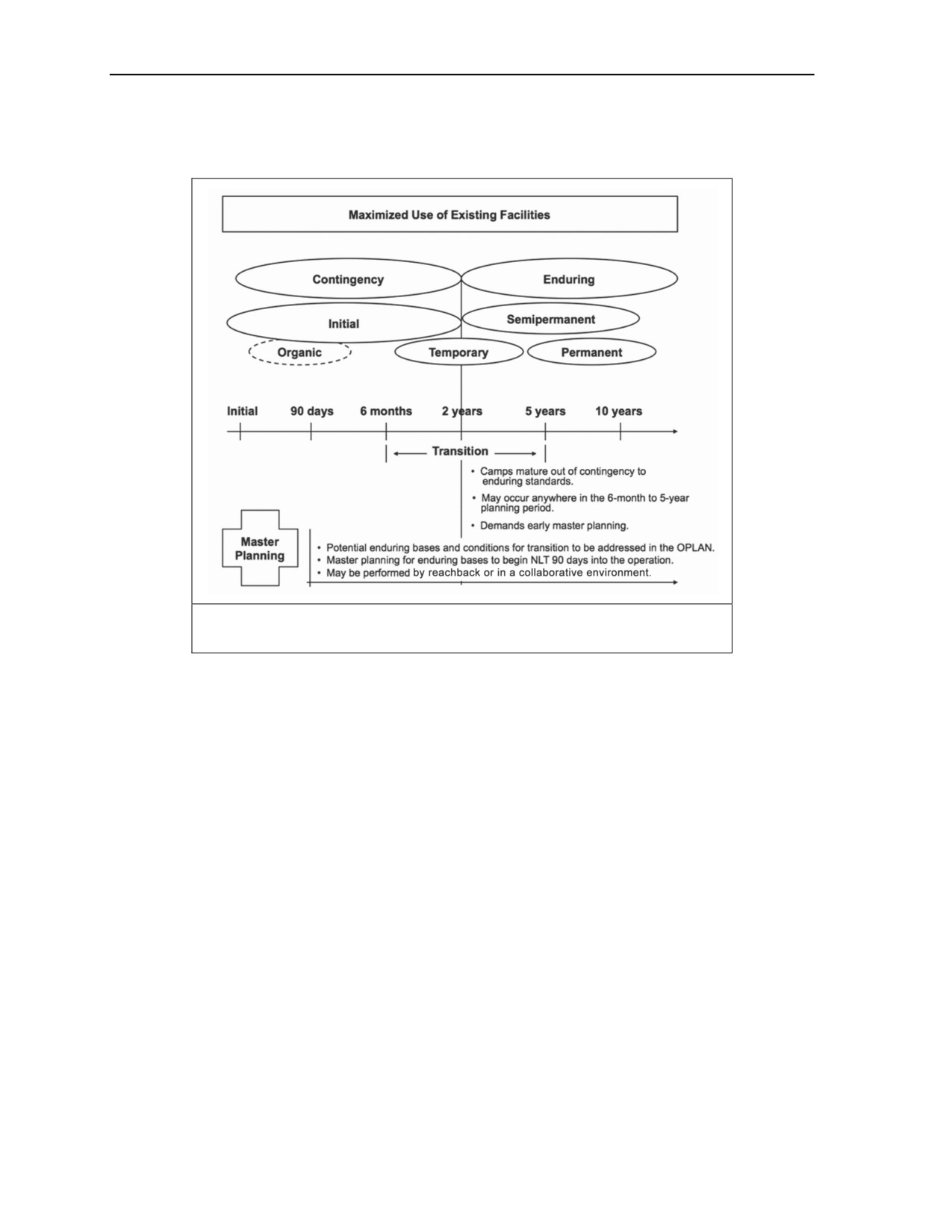
while ensuring that the facilities are adequate for health, safety, and mission accomplishment. Figure 6-1,
page 6-6, shows the beddown and basing continuum and highlights the need for early master planning
efforts to help facilitate transition to more permanent facilities as operations develop. Construction
standards are guidelines, and military police must consider other factors when planning detention facilities.
(See FM 3-34.400 and JP 3-34 for additional discussion of construction standards.)
6-21. The combatant commander determines what facilities are needed to satisfy operational requirements.
Facilities are grouped into six broad categories that emphasize the use of existing assets over new
construction. To the maximum extent possible, facilities or real estate requirements should be met from
these categories in the following priority order:
z
U.S.-owned, -occupied, or -leased facilities (including captured facilities).
z
U.S.-owned facility substitutes, pre-positioned in-theater.
z
Host nation and multinational support where an agreement exists for the host nation, allied, or
coalition nation to provide specific types and quantities of facilities at specified times in
designated locations.
z
Facilities available from commercial sources.
26 August 2013
FM 3-39
6-5
Chapter 6
z
U.S.-owned facility substitutes that are in the United States.
z
Construction of facilities that are considered shortfall after an assessment of the available
existing assets.
Legend:
NLT
not later than
OPLAN
operation plan
Figure 6-1. Force beddown and basing continuum
6-22. Military police staffs should plan expeditious construction of facility requirements that are
considered shortfalls
(such as those facilities that cannot be sourced from existing assets). In these
circumstances, the appropriate Service, host nation, alliance, or coalition should, to the extent possible,
perform construction during peacetime. Contracted support should be used to augment military capabilities.
If time or resource constraints prevent new construction from being finished in time to meet mission
requirements or antiterrorism requirements, the provost marshal
(in conjunction with the engineer
coordinator) should seek alternative solutions to new construction. Expedient construction
(rapid
construction techniques such as prefabricated buildings or clamshell structures) should also be considered,
because these methods can be selectively employed with minimum time, cost, and risk. The provost
marshal and engineer coordinator should plan for the capability to expand the size of the facility to support
an increase in detention population levels and to support future on-site reconciliation programs and
services.
6-23. The combatant commander is also responsible for the detention mission and provides engineer and
logistics support to the military police commander for the establishment and maintenance of detention
facilities. Planning for the construction of detention facilities must occur early in the operational plan. This
provides timely notification of engineers, selection and development of facility sites, and procurement of
construction materials. Military police coordinate the location with engineers, logistics units, higher
headquarters, and the host nation. The failure to properly consider and correctly evaluate all factors may
increase the logistics and personnel efforts required to support detention missions.
6-6
FM 3-39
26 August 2013
Sustainment Support
6-24. If a detention facility is improperly located, the entire detainee population may require relocation
when resources are scarce. When selecting a site for a facility, consider the following:
z
Locations where detainee labor can most effectively be used.
z
Distance from other elements from which additional external security could be drawn upon, if
required.
z
Potential threat from the detainee population to logistics support operations in the proposed
location.
z
Threat and boldness of guerrilla activity in the area.
z
Attitude of the local civilian population.
z
Facility accessibility to support forces and transportation to the site for support elements.
z
Proximity to probable target areas (airfields, ammunition storage).
z
Classification of detainees to be housed at the site.
z
Type of terrain surrounding the site and its conduciveness to escape.
z
Distance from the main supply route to the source of logistics support.
z
Mission variables.
z
Availability of suitable existing facilities (avoids unnecessary construction).
z
Presence of swamps, vectors, and other factors (including water drainage) that affect human
health.
z
Existence of an adequate, satisfactory source of potable water. The supply should meet the
demands for consumption, food sanitation, and personal hygiene.
z
Availability of electricity. Portable generators can be used as standby and emergency sources of
electricity.
z
Distance to work, if detainees are employed outside the facility.
z
Availability of construction material.
z
Soil drainage.
z
Health protection for detainees and forces manning the site.
z
Other environmental considerations as appropriate.
Detainees
6-25. Detainees are supply-intensive, and planning for those personnel will require extensive and continual
coordination with field elements of all types. The construction of detainee holding facilities must be
sufficiently secure. Transportation is also a critical requirement for the movement of detainees around the
area of operations. Holding facilities must meet health and well-being standards and security requirements.
As such, nontraditional supplies must be considered:
z
Class I items will be required for detainees and military police personnel. Detainees are entitled
to a sundry pack, and sustainment planners must plan for this entitlement.
z
Specific Class II clothing will be required for detainees, taking into consideration religious
beliefs and accoutrements.
z
Class III items will have less consumption than by main supply route patrols, but they cannot be
overlooked.
z
Class IV supplies will be required, and coordination with engineer personnel for specific
construction requirements must be accomplished.
z
Nonlethal Class V supplies must be considered in addition to traditional small arms for security
personnel.
z
Class VI items will also be required and supplied to detainees.
6-26. Medical supplies will normally be supplied by medical personnel. The ongoing medical care of
prisoners and detainees is of paramount concern.
26 August 2013
FM 3-39
6-7
Chapter 6
U.S. Military Prisoners
6-27. U.S. military prisoners may not be housed with detainees; therefore, a separate facility must be
constructed for those personnel. U.S. military prisoners require Class I, II, IV, and VI supplies not only for
their safety and security, but also for their health and well-being. If left unaddressed, it will likely lead to
unrest. Plans must be made to adequately accommodate military prisoners because there likely will only be
one confinement facility in the area of operations. U.S. military prisoners are normally retrograded from the
area of operations to permanent facilities; however, this could take an extended period of time.
Security and Mobility Support
6-28. The security and mobility support discipline will typically require a large consumption of Class III
supplies. Military police commanders and planners must anticipate extensive Class III and V supply
consumption regardless of the specific mission. When the mission involves straggler control, additional
Class I, VI, and VIII materials will be required. Gap-crossing, breeching, and passage-of-lines operations
will require barrier materials for use in checkpoints. Traffic management operations may require additional
capabilities, equipment, and materials for assessment and execution. The military police units and the
provost marshal cells coordinate closely with the engineer coordinator and the logistics staff to forecast and
assist in managing barrier and construction materials needed for access control and security at fixed-site
camps, forward operating bases, checkpoints, and high-risk targets. The commander must consider not only
the needs of the individual Soldier when planning for these operations, but also the needs of potential
stragglers and/or dislocated civilians.
6-29. Dislocated civilians require much the same sustainment support as detainees, but the level of security
and facilities are lessened. The first priority of sustainment support for dislocated civilians is coordination
with host nation support activities. If host nation sustainment activities are not available or can only
partially meet the requirements, it may be necessary for sustainment planners to coordinate military support
for the housing, feeding, security, and general well-being of the civilian population. Coordination with
unified action partners will be necessary in most cases to address the issues surrounding dislocated
civilians. Normal sustainment channels may not be adequate to provide the necessary sustainment support
required.
Police Intelligence Operations
6-30. While not typically viewed as sustainment-intensive, there are aspects associated with police
intelligence activities and military police missions that provide information-enabling police intelligence
analysis and the production of police intelligence products that may require unique types of sustainment.
The increased relevance of police intelligence operations in the operational environment will drive
increased requirements for current and emerging technologies and capabilities for collection of information
and evidence during military police missions, analyses, and production activities directly associated with
police intelligence operations. These requirements will increase the logistics demand for maintenance and
technical support and expendable supplies. Commanders and staffs should analyze missions supporting this
function to ensure that all unique sustainment is planned for in advance.
6-8
FM 3-39
26 August 2013
Chapter 7
U.S. Army Criminal Investigation Command
The USACIDC is a direct reporting unit that provides criminal investigations support
to all levels of command. Examples of USACIDC functions include investigating and
deterring felony crimes, conducting sensitive investigations, performing police
intelligence activities, conducting protective service operations for designated
personnel, providing forensic investigations, maintaining criminal records,
conducting crime prevention and antiterrorism analysis, performing logistics security
operations, investigating war crimes, performing polygraph investigations,
conducting computer crime investigations, and training host nation police on
advanced investigations techniques. This chapter discusses the specific investigative,
police intelligence, and forensic capabilities that reside within the USACIDC
structure and are available for support to the range of military operations.
ORGANIZATION
7-1. USACIDC operations help the commander maintain order and discipline through proactive crime
prevention and the investigation of criminal offenses. USACIDC special agents conduct investigations of
crimes, such as wrongful deaths, controlled-substance offenses, theft (based on amount limits identified in
AR 195-2), fraud, sex crimes, assaults, cybercrime and other national security offenses.
7-2. In a deployed environment, in addition to traditional investigations, USACIDC is responsible for war
crime and detainee abuse investigations. USACIDC special agents may also be assigned to battalion,
brigade, and higher level staffs within the provost marshal cell to support police operations planning and
police intelligence operations integration and to provide advice to the command on evidence and police
intelligence collection and targeting. Civilian law enforcement professionals may also be integrated to
provide investigative and police intelligence expertise.
7-3. As the primary criminal investigation organization of the Army, USACIDC is a direct reporting unit
headquartered at Quantico, Virginia. This direct reporting unit is commanded by a general officer and
staffed with officers, warrant officers, enlisted Soldiers, and DA civilian employees. Investigative
personnel, regardless of military rank, are known as “CID agents” or “special agents.” The command
provides overarching management and supervision of all Army criminal investigation functions. Chiefs of
staff within USACIDC are responsible for the strategic level of planning and executing command
functions. The USACIDC is the approving authority and manager of all agent accreditation functions
throughout the command. USACIDC commanders at all levels retain mission command, operational, and
UCMJ authority over all assets organic to their subordinate units, regardless of basic command and support
relationships. As a result, USACIDC elements are able to give supported commanders an independent,
unbiased investigation, free from fear of improper command influence.
7-4. The USACIDC chain of command emanates from the Secretary of the Army, through the Army
Chief of Staff. Army, and to the Commander, USACIDC. Coordination is effected with specific agencies
and commands as identified in figure 7-1, page 7-2.
26 August 2013
FM 3-39
7-1
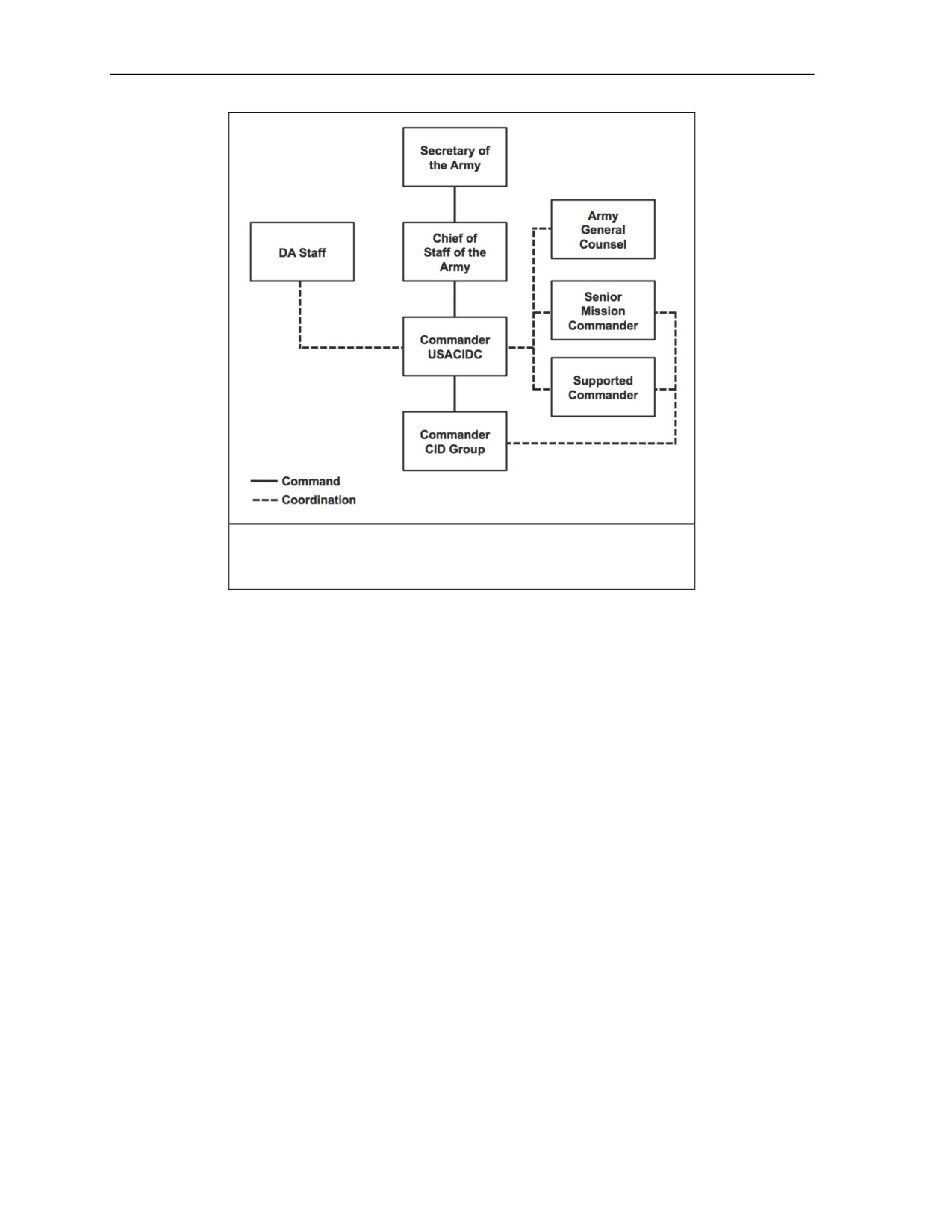
Chapter 7
Legend:
CID
criminal investigation division
DA
Department of the Army
USACIDC
U.S. Army Criminal Investigation Command
Figure 7-1. USACIDC chain of command and coordination
STRUCTURE
7-5. USACIDC is composed of supportive tactical units, logistics and administrative operational units,
and strategic planning units to support the range of military operations. The USACIDC is unique in that
there are tables-of-distribution-and-allowances and tables-of-organization-and-equipment elements at all
levels (see figure 7-2). These units, in succession, from strategic to operational and tactical, are—
z
USACIDC.
z
CID group.
z
CID battalion.
z
CID element.
7-6. CID groups are strategic-level subordinate units to USACIDC and provide mission command,
strategic planning, and supervision of subordinate CID battalions. CID groups are staffed with officers,
warrant officers, enlisted Soldiers, and DA civilians who specialize in operational planning, technical
guidance, administrative support, and legal advice within the group and to subordinate units. The group
establishes links with supported units in the theater Army and provides planning and oversight on matters
pertaining to USACIDC activities. These include criminal investigative support, criminal intelligence
activities, polygraph support, and forensic support. CID groups advise CID battalions, elements, and the
supported units on the investigative policy, the management of criminal information, crime prevention, and
drug suppression programs. CID groups may have a worldwide or specific geographic responsibility.
7-7. The USACRC is another table-of-distribution-and-allowances unit that is subordinate to USACIDC.
The USACRC receives safeguards, maintains, and disseminates criminal information from all Army law
enforcement records. These records are retained for a minimum of 40 years (and maintained to support
criminal investigations and background checks) before being destroyed. The USACRC correlates and
analyzes criminal statistics to provide the Army and other authorized federal agencies with data for
planning and executing law enforcement functions. The USACRC conducts more than 10,000 criminal-
7-2
FM 3-39
26 August 2013
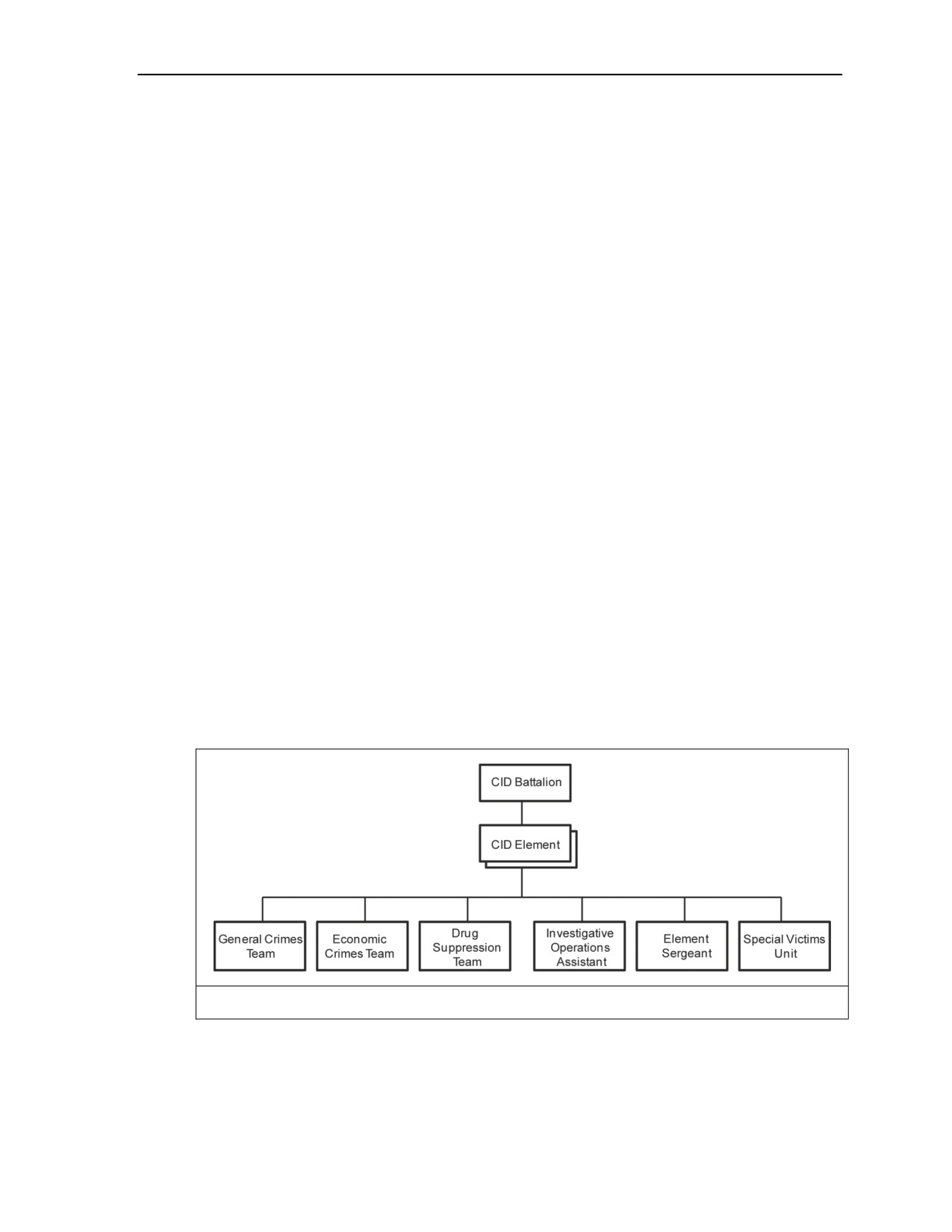
U.S. Army Criminal Investigation Command
history name checks each month to identify victims and perpetrators of criminal offenses. The checks are
conducted for military police; special agents; and other military, civilian, and federal law enforcement
agencies. The USACRC is also responsible for the review, research, and dissemination of information
requested under the Freedom of Information Act. The Army polygraph program administration and
worldwide polygraph support are provided by the USACRC.
7-8. CID battalions are operational units that are subordinate to a CID group and provide mission
command, staff supervision, and administrative oversight to the subordinate CID elements. These battalions
perform technical supervision and coordination of criminal investigations, criminal intelligence programs,
drug suppression activities, polygraph support, and host nation police development; and they manage
logistics security. CID battalions have two separate and distinct missions—investigative and support. The
investigative mission is controlled to a large extent by a senior CID warrant officer, usually a chief warrant
officer four or five, known as the operations officer. This warrant officer is responsible for the day-to-day
investigative missions of the subordinate elements. The operations officer normally has a staff of
subordinate warrant officer special agents who review investigations, provide guidance, and assist in
investigative efforts as required. The executive officer facilitates the support functions of the battalion.
Routine staff assistance visits and element inspections are conducted by the investigative and support
elements of the battalion. These staff assistance visits examine all aspects of the subordinate element, from
administration and personnel to investigations and training.
7-9. CID elements are operational units that are subordinate to a CID battalion (see figure 7-2). The
element reports directly to its battalion; however, effective coordination, liaison, and cooperation between
CID elements and local military police elements are crucial. CID elements are commanded by an Army
warrant officer, typically a chief warrant officer three or four. The element commander, referred to as the
special agent in charge, or the detachment commander supervises all aspects of the element. This includes
the conduct of all criminal investigations, criminal intelligence, logistics, administration, training, and
maintenance. The special agent in charge will have a varied number of team chiefs (normally warrant
officers) with subordinate warrant officers or enlisted special agents who conduct investigations. Organic to
every CID element is an element noncommissioned officer, who is identified as the detachment sergeant
and is the senior enlisted special agent in the element. The detachment sergeant is responsible for enlisted
matters and generally performs as the training, logistics, and administrative noncommissioned officer. In
elements without an assigned mechanic, the element sergeant also acts as the maintenance coordinator.
Every CID element has an identified criminal intelligence coordinator (typically a civilian employee). Most
CID elements also maintain an evidence repository for the accountability and safeguarding of items of
physical evidence in criminal investigations. A discussion of the scope of investigative support provided by
USACIDC is outlined later in this chapter.
Legend:
CID
criminal investigation division
Figure 7-2. Sample CID element organization and capabilities
7-10. Whether at home station or deployed, CID elements perform similar functions, although deployed
team composition is typically a two-agent team. The deployed investigative team is further discussed later
in this chapter.
26 August 2013
FM 3-39
7-3
Chapter 7
7-11. CID elements are assigned to a geographic area of responsibility and normally support organizations
within that area of responsibility during peacetime. When deployed to support a specific organization, CID
units may be attached to a supported combatant commander; however, the USACIDC retains
organizational and administrative mission command to ensure correct procedures for reporting,
accreditation, and other actions that are exclusive to CID.
PERSONNEL
7-12. Personnel assigned to CID elements come from several sources. Commissioned officers and enlisted
support personnel are assigned by the U.S. Army Human Resources Command. Civilian personnel are
hired and assigned through the civilian personnel hiring process. Unit assignments of CID special agents,
whether enlisted Soldiers or warrant officers, are controlled and assigned by USACIDC headquarters in
concert with the U.S. Army Human Resources Command. These personnel provide support to posts,
camps, and stations and provide critical law enforcement capabilities in support of the range of military
operations.
7-13. Special agents, which make up the majority of USACIDC assets, are selected by USACIDC
headquarters after a formal application process. Upon acceptance, prospective special agents attend an
extensive initial training program at USAMPS. The training conducted by USAMPS personnel provides
prospective special agents with the requisite skills, knowledge, and abilities to operate in any environment.
All special agents serve a 1-year apprenticeship period before being fully accredited.
7-14. Military police Soldiers may be attached or assigned to support CID elements. These Soldiers are
selected at the local level; and although operational control belongs to CID, administrative and UCMJ
control remains with the parent unit. These military police Soldiers perform duties as military police
investigators and can be found conducting drug suppression operations, gang activity investigations, or
other criminal investigative functions as designated by the CID special agent in charge.
7-15. The USACIDC also employs civilian personnel with special expertise. Civilian employees with
specialized skills in laboratory analysis are hired through normal civilian personnel channels to support
forensic analysis requirements and in support of requirements emanating from the range of military
operations. The computer investigations unit and the major procurement fraud unit are primarily composed
of civilian special agents. These civilian employees are hired through civilian personnel channels and then
attend the CID Special Agent Training Course at USAMPS if required.
INVESTIGATIVE MISSION AND SPECIALIZED CAPABILITIES
7-16. Commanders request USACIDC assets to facilitate discipline and order within their areas of
operations across the range of military operations. Highly trained CID special agents investigate felony
crimes, such as wrongful deaths, war crimes, controlled-substance offenses, high-value theft, fraud, sex
crimes, and aggravated assaults as defined in AR 195-2. Special agents can also be called on to conduct
investigations outside the parameters of the regulation when they involve sensitive investigations pertaining
to senior Army officials and classified programs. Additionally, special agents are called on to advise
commanders on a variety of other specialized considerations at the strategic, operational, and tactical levels.
(See AR 195-2 for more information regarding the USACIDC mission and specific authorities.)
INVESTIGATIVE MISSION
7-17. Mission requirements of the CID element involve criminal investigations in support of the
installation, unit, or geographic commander. These investigations are performed in all operational
environments. Investigations typically fall into the following categories:
z
Felony crimes against persons. These investigations consist of the most serious offenses.
Special agents conduct a complete investigation into all deaths that occur on an Army
installation and those in which the Army may have an interest. Other examples of crimes against
persons include robbery, assault, and child abuse.
z
Drug suppression. CID elements conduct installation level drug suppression activities on and
off the installation. These activities frequently involve undercover (semicovert) operations in
7-4
FM 3-39
26 August 2013
U.S. Army Criminal Investigation Command
unit and social environments. Covert special agents and attached military police investigators
conduct investigations where allegations have been made that Soldiers, civilian employees, or
family members are involved in the possession, use, or distribution of any illegal controlled
substance. The infiltration of social and military networks by USACIDC personnel will often
entail assuming a covert identity. Coordination between CID drug suppression teams and local,
state, federal, and host nation law enforcement agencies is routinely accomplished to ensure the
unity of the investigation. CID drug suppression teams may also have an overt element that
assists unit commanders in unit drug suppression activities through training, education, and the
conduct of health and welfare inspections.
z
Economic crimes. USACIDC units conduct investigations of fraud, waste, and abuse at the
installation, unit, and individual levels.
z
Sex crimes. Special agents complete investigations of sex crimes involving active duty Soldiers,
activated National Guard and Reservists on Title 10 status and civilians (in which there is a
direct Army interest) on U.S. military installations. These investigations require sensitivity and
finesse, and special agents receive extensive specialized training in these areas. Close
coordination with Army social work and victim advocacy services and medical treatment facility
personnel is required for the successful resolution of sex crimes. The nature of sex crimes
frequently requires coordination with off-installation professional services. This coordination is
accomplished in concert with Army victim advocacy personnel.
z
Crime prevention. Crime prevention activities are aggressively and proactively pursued by CID
elements on the installation. Special agents evaluate installation activities and units to determine
areas susceptible to theft or diversion of military assets or other crime-conducive conditions.
Recommendations are then made to the supported commander for improvements that may limit
risks.
z
Criminal intelligence. The USACIDC provides criminal intelligence analysis to commanders
that identify indicators of potential crimes and attacks against Army property, facilities, and/or
personnel. Criminal intelligence is a subset of police intelligence focused on criminal activity
and specific criminal threats. It is much more focused in scope than police intelligence in
general, which focuses on police systems, capabilities, infrastructure, and criminal activity and
threats. All criminal intelligence is police intelligence, but not all police intelligence is criminal
intelligence. Special agents collect, analyze, and process criminal intelligence from the
installation and external sources. Local CID elements evaluate, collate, and forward this
information to higher CID headquarters. Installation CID elements also receive intelligence
information that is passed from external sources to supported installation activities. Criminal
intelligence is a critical portion of installation police intelligence operations activities. Specific
criminal intelligence—such as methods of operation, distinct patterns, crime techniques,
investigative leads, gang violence, and terrorism—is reported to commanders and shared with
various intelligence and law enforcement agencies. CID elements also solicit criminal
intelligence from military, civilian, and foreign intelligence services.
SPECIALIZED CAPABILITIES
7-18. The nature of the USACIDC mission, regardless of the environment, necessitates several highly
specialized elements with special capabilities. These elements are described in the following paragraphs:
z
Field investigative unit. The field investigative unit is a unique investigative organization, and
it conducts the most sensitive criminal investigations in the Army. Much of the activity of the
field investigative unit is classified. The unit investigations frequently support the intelligence
and acquisition communities. In addition, it conducts investigations of senior Army personnel
and classified programs.
z
Protective Services Battalion. The Protective Services Battalion provides worldwide,
executive-level personal protection to the Secretary of Defense; the Deputy Secretary of
Defense; the Chairman and Vice Chairman, Joint Staff; the Secretary of the Army; and the Chief
of Staff, U.S. Army; their foreign counterparts on official visits to the United States; and other
DOD high-risk personnel as directed.
26 August 2013
FM 3-39
7-5
Chapter 7
z
Computer crimes investigative unit. The computer crimes investigative unit conducts
investigations involving intrusions and related malicious activities involving U.S. Army
computers and networks. The computer crime investigative unit works closely with other U.S.
federal and foreign government law enforcement agencies. The computer crime investigative
unit also provides expert investigative support to USACIDC field elements conducting criminal
investigations with computer implications.
z
Major procurement fraud unit. The major procurement fraud unit is compromised of highly
skilled special agents who conduct investigations involving major Army contracting activities.
These units may be colocated at an Army installation or may be a stand-alone element located
near a major Army contracting epicenter. The major procurement fraud unit special agents
conduct complex multifaceted investigations.
z
Polygraph support element. Polygraph support for criminal investigative activities conducted
by CID elements or military police is provided by specialized special agents. These special
agents receive extensive training in polygraph at the Defense Academy for Credibility
Assessment. Although normally geographically located within the CID battalion, a polygraph
examiner’s scope of responsibility is limited to the conduct of polygraph examinations as
assigned by the USACRC. Polygraph examiners operate independently from the CID battalion
headquarters to which they may be assigned.
z
Forensic science officer. The forensic science officer is a specially trained warrant officer with
the ability to conduct complex forensic investigations. This is a unique capability within CID.
Upon graduation from specialized training, these personnel are only assigned at the CID group
or battalion level. These specialists have advanced training in the identification, preservation,
collection, and analysis of evidence. The forensic science officer coordinates with the DFSC on
behalf of field agents when technical aspects of the evidence require advanced discussion.
OTHER OPERATIONAL CAPABILITIES
7-19. The USACIDC supports each echelon of command in the area of operations. The CID elements
support commanders with resident or reachback CID capabilities. The CID group ensures connectivity
among CID units within and external to the theater. It establishes links with supported units and joint,
interagency, and multinational authorities on matters pertaining to Army operations. Based on mission
variables, the CID group headquarters may provide support from a sanctuary location or colocate with the
supported theater Army main command post or the senior military police organization in-theater.
Colocation with the senior military police organization in an area of operations provides unified military
police support and facilitates sustainment of CID elements. When feasible, CID elements colocate with
military police battalions or companies.
7-20. CID elements are staffed and equipped with the minimum mission-essential requirements of
equipment and supplies. These elements have minimal organic administrative and logistics capability. They
rely on the CID battalion, military police units and occasionally, other organizations for maintenance,
supply, and administrative support. This need for sustainment support is the basis for colocating CID
elements with military police companies or battalions when possible.
7-21. The small size of CID elements may make it necessary for other elements, typically military police,
to support the movement of CID elements to facilitate compliance with protection standards imposed on
elements moving within a given area of operations. The operational tempo of an area of operations
typically necessitates close coordination with maneuver forces and military police elements. Movement
within the area of operations may be accomplished with the assistance of military police combat vehicle
escorts. Aviation support may be necessary to facilitate the rapid accomplishment of special investigations.
7-22. The deployed CID investigative team is the smallest operational investigative unit. Each team
consists of two special agents ideally, a warrant officer and an enlisted special agent. The operational
mission dictates that these teams have the capability to operate independently from their element
headquarters. Typically, CID teams attempt to colocate with military police elements when possible. The
investigative teams perform criminal investigations within their assigned area of operations.
7-6
FM 3-39
26 August 2013
U.S. Army Criminal Investigation Command
7-23. In addition to the more traditional investigative tasks, CID elements assume additional roles when
deployed and in support of unified land operations. These include, but are not limited to, logistics security
assessments, the development of criminal intelligence in support of military operations, specialized
protective services, support to training advanced investigative skills to host nation police, providing
combatant commanders forensics laboratory support, and unique types of support to police operations, to
include war crimes and detainee abuse.
LOGISTICS SECURITY ASSESSMENTS
7-24. A CID investigative team conducts logistics security assessments to detect and prevent the diversion
and/or destruction of critical supplies. This function should not be confused with physical security
operations, which are outside the scope of CID operations. The CID logistics security assessment role helps
protect the sustainment function against criminal activity at all levels of the logistics pipeline, from the
manufacturer to the individual Soldier. These actions involve preventing, detecting, and investigating
criminal and terrorist activities, such as supply diversion, destruction, and sabotage or product substitution.
Logistics security assessment identifies weaknesses in the supply chain, provides suggested solutions, and
assists with implementation of preventive measures to reduce vulnerability to sustainment channels.
Logistics security also entails attempts to recover materials that have been diverted and return those
materials to Army control.
POLICE INTELLIGENCE OPERATIONS
7-25. CID elements collect criminal information and produce and manage criminal intelligence to deter
criminal and terrorist activity. The CID police intelligence operations role in a deployed environment
focuses on the identification and prevention of terrorist activities and attacks against the United States and
the other multinational military personnel, facilities, and interests. The collection of criminal information
and production of criminal intelligence in operational environments are critical to police intelligence
operations efforts and the continuous integration within the operations process. At its very heart, subversive
activities are criminal offenses that require criminal investigation. CID assets conduct terror-related
criminal investigations in-theater when appropriate.
PROTECTIVE SERVICES
7-26. Senior commanders and key personnel are at a significantly greater risk during conflicts and
peacekeeping operations. These personnel are subject to the increased likelihood of physical attacks or
kidnapping for political purposes. Protective services, trained special agents accomplish executive
protection for designated senior commanders and other designated high-risk personnel. These special
agents may be augmented by military police personnel when the situation warrants. In some instances, the
protective services team may be composed of primarily military police Soldiers other than special agents.
Typically, a special agent will be in charge of a larger team. Close coordination between in-theater assets
and permanently assigned protection personnel ensures the continuity of protection.
POLICE OPERATIONS SUPPORT
7-27. Special agents in an area of operations provide police operations investigative support. Special agents
conduct investigations of crimes against persons, property crimes, and sex crimes. Drug suppression
operations and fraud investigations, in overt and covert modes, continue regardless of the area of
operations. When directed, CID conducts investigations into allegations of war crimes. Incidents of
detainees, dislocated civilians, or local national employees who allege that they were abused by U.S. forces
are also investigated by CID elements. CID special agents conduct investigations of violations of
international agreements, status-of-forces agreements, and other sensitive incidents as directed by higher
authority. When allegations are made that casualties were incurred from friendly forces, a “friendly fire”
incident, or a criminal fratricide, special agents may be required to conduct a complete investigation of the
incident.
26 August 2013
FM 3-39
7-7
Chapter 7
LAW ENFORCEMENT PROFESSIONALS PROGRAM
7-28. The Law Enforcement Professionals Program embeds an operational policing capability directly into
corps, division, BCT, and battalion headquarters to assist commanders by providing expertise and
methodology to understand, identify, target, interdict, and suppress criminal networks or threats that use
criminal enterprises and techniques to support their operations. The program provides experienced law
enforcement professionals with technical analytical expertise and investigative skills to understand and
identify complex criminal networks, organizations, and activities. These law enforcement professionals are
managed by OPMG and integrated in-theater by the echelon provost marshal. The embedded law
enforcement experts are civilian or Army investigators (sister Service investigators may be integrated if
required) with extensive background and experience in complex criminal investigations.
HOST NATION POLICE SUPPORT
7-29. CID elements may be required to provide special agent support to build police investigative
capability and capacity in support of the security force assistance framework. Special agents conduct an
initial and accurate assessment of the host nation police investigative abilities. The thorough and accurate
assessments of host nation police investigative abilities enables staffs to develop training and advisement
plans and goals based on identified capability gaps. Training should be conducted by experienced special
agents on investigation techniques, criminal intelligence, crimes against persons, and crimes against
property, drug suppression operations, economic crimes, and sex crimes investigations.
7-8
FM 3-39
26 August 2013
Chapter 8
U.S. Army Corrections Command
The Army Corrections System holds members of the armed forces in pretrial
confinement and incarcerates those who have been sentenced to confinement by
courts-martial. If a military Service member is not returned to duty, the corrections
system is committed to releasing that individual from military custody as a
productive, law-abiding citizen. This chapter discusses the ACC; its mission, mission
command, and organization; and the training of correctional specialists. It describes
the foundations necessary for efficient military police corrections operations
and discusses the ACC technical oversight of military occupational specialty 31E
corrections and detention specialists and their integration into combined arms
applications and detention operations at every echelon. Finally, this chapter discusses
several special considerations of military prisoner management.
MISSION
8-1. ACC provides trained detention units, leaders, and Soldiers to conduct detainee operations in support
of combatant commander requirements worldwide and executes the Secretary of the Army executive agent
responsibilities for long-term corrections and support for detainee operations. ACC exercises mission
command of Army corrections system facilities and assigned units to provide the care, custody, control,
and rehabilitation of U.S. military prisoners. The ACC develops and administers corrections policy; plans,
programs, budgets, and executes resources; and provides oversight to facility design, standardization, and
modernization. The ACC coordinates the disposition of all prisoners to include transfers and designation,
mandatory supervised release, clemency and parole, and the execution of condemned military prisoners.
Strategic objectives include—
z
Providing a safe environment for the retributive incarceration of prisoners.
z
Protecting communities by incarcerating prisoners.
z
Deterring those who might fail to adhere to the law or rules of discipline.
z
Providing rehabilitation services to prepare prisoners for release as civilians or for return to duty
with the prospect of being productive Soldiers/citizens.
z
Supporting commanders worldwide by developing detainee experts through experiential learning
in a prison environment.
8-2. The Secretary of the Army is the DOD executive agent for Level III corrections (sentences that are
more than 5 years), and military prisoners transferred to the Federal Bureau of Prisons. The ACC also
oversees Level II correctional operations (pretrial and sentences that are up to 5 years) at CONUS Army
regional correctional facilities, and Level I correctional operations (pretrial and short-term posttrial up to 1
year) at OCONUS Army regional correctional facilities.
8-3. The ACC is responsible for correctional operations that provide experiential learning for military
occupational specialty
31E Soldiers preparing for deployment in support of detention operations
worldwide. Military police detention Soldiers are those who have been specifically trained for corrections
and detention missions within the military police career management field and are awarded the military
occupational specialty of 31E. (See AR 190-47 for complete details on Army corrections.)
MISSION COMMAND
8-4. The OPMG is the Army strategic-level planning and coordination lead for all aspects of corrections.
In 2007, OPMG realigned the Army Corrections System and established a field-operating agency titled the
26 August 2013
FM 3-39
8-1
Chapter 8
ACC. The ACC standardizes corrections functions across the Army by assuming mission command,
operational, administrative, and support functions over the Army Corrections System.
ORGANIZATION
8-5. The ACC is headquartered in Alexandria, Virginia and is staffed with military and civilian personnel.
The command headquarters is composed of three sections—the command group, resource management
division, and operations/plans division. ACC is a generating force headquarters consisting of some
elements that are part of the operational force.
8-6. The ACC was established to divest Army commands (the U.S. Army Forces Command and
TRADOC) and Army service component commands (U.S. Army Europe, Seventh Army and U.S. Army,
Pacific Command Eighth Army) of the corrections mission and align that responsibility under a single
command. ACC standardizes corrections operations across the Army Corrections System. This realignment
consolidated the mission command of the Army Corrections System facilities and table-of-distribution and
allowances elements under ACC. The organizations remain in place as tenants on their installations, but are
now subordinate to ACC.
ARMY CORRECTIONS SYSTEM
8-7. To maintain good order and discipline within the Army, ACC ensures that corrections operations are
standardized throughout all of the Army correctional facilities. Operations in ACC correctional facilities
are conducted to national corrections standards. Correctional facilities require specially trained military
police Soldiers, officers, and civilians to plan and conduct corrections operations. Persons subject to the
UCMJ that are convicted of a crime by a court-martial or military tribunal are transferred to the Army
Corrections System facilities commanded by ACC. These correctional facilities conduct the terms of
incarceration as determined by the court. The U.S. Disciplinary Barracks located at Fort Leavenworth,
Kansas, is a Level III facility. It is the DOD, maximum-security custody facility and confines male military
prisoners from all Services who have sentences that are more than 5 years. Correctional treatment and
vocational training are provided to U.S. military prisoners who are confined there. Military prisoners who
have been deemed extremely violent, pose a high risk of escape, or have a sentence to death are confined at
the U.S. Disciplinary Barracks.
8-8. Joint regional correctional facilities located in CONUS are Level II facilities that confine and provide
correctional treatment and vocational training to U.S. military prisoners who are sentenced by a court-
martial to confinement of 5 years or less. These regional correctional facilities also confine U.S. military
Service members who are awaiting trial. The ACC, in coordination with the local staff judge advocate, will
determine the location of the Level II confinement.
8-9. The following are two Level I, U.S. Army regional correctional facilities located OCONUS:
z
U.S. Army Regional Correctional Facility-Korea that is located at Camp Humphreys, Korea.
z
U.S. Army Regional Correctional Facility-Europe that is located in Mannheim, Germany.
Note. These Level I correctional facilities provide pretrial confinement and short-term posttrial
corrections operations. Level I correctional facilities may confine prisoners for up to 1 year.
DEATH PENALTY SENTENCES
8-10. The Provost Marshal General is responsible for establishing policies and procedures for carrying out
death penalty sentences imposed by general courts-martial or military tribunals, per UCMJ and the Manual
for Courts-Martial. Additional details of responsibilities and procedures are established in AR 190-55.
MILITARY AND CIVILIAN CORRECTIONS COLLABORATION
8-11. The professional collaboration between the U.S. Army and the American Correctional Association
dates back to 1870 when Major Thomas A. Barr attended the first conference of the National Prison
Association. The first American Correctional Association-accredited military prison was the U.S.
8-2
FM 3-39
26 August 2013
U.S. Army Corrections Command
Disciplinary Barracks in 1982. The Military Corrections Committee, which provides interface with the
American Correctional Association to promote and foster understanding of the Military Corrections
Program, has been active ever since and remains important to today’s corrections mission. Mirroring the
fiscal challenges of federal and state correctional systems, the ACC is seeking to build further efficiencies
in the military correctional system. This collaboration becomes even more critical with the transfer of
military prisoners to the federal prison system. Military corrections procedures apply the American
Correctional Association standards for training and procedural applications within correctional institutions.
8-12. Accreditation by the American Correctional Association provides commanders with a tool for
maintaining their facilities according to nationally recognized standards for sound correctional practice and
a mechanism for evaluating compliance with those standards. Correctional accreditation is valid for a
3-year period during which the standards addressing administration and management, training, physical
plant, institutional operations, institutional services, and inmate programs are continually reviewed,
evaluated, and modified to remain timely, legally relevant, and applicable to current correctional practices.
The American Correctional Association also has a correctional certification program designed to ensure
that leaders at all levels maintain their individual standards of technical excellence. Army Corrections
System facility commanders also coordinate with U.S. probation officers working for the U.S. Parole
Commission for community supervision of prisoners released on parole and mandatory supervised release.
JOINT CORRECTIONS COLLABORATION
8-13. Army corrections leaders must coordinate corrections across the joint family to ensure the
consistency of corrections procedures. There are numerous military departments, including the—
z
Consolidated Naval Brigs at Miramar, California; Chesapeake, Virginia; and Charleston, South
Carolina.
z
Marine Pretrial Confinement Facilities at Camp Pendleton, California and Camp Lejeune, North
Carolina.
z
Army regional correctional facilities and the wide array of smaller, short-term confinement
facilities from all the military branches. As with all other aspects of Army operations, the ACC
strives to be joint interdependent, applying the strengths of each of the Services in conjunction
with ACC strengths and capabilities to provide the best possible corrections solutions.
SUPPORT TO UNIFIED LAND OPERATIONS
8-14. Corrections skills and knowledge are honed through training and the operations of correctional
facilities in support of bases and base camps supporting the U.S. military. These skills and knowledge
directly support requirements generated to support unified land operations. International law and
recognized standards for care and treatment of U.S. military prisoners and detainees demand the skill sets
and knowledge resident in military police corrections and detention specialists.
DETENTION OPERATIONS STAFF PLANNERS
8-15. Military occupational specialty 31E personnel are trained at USAMPS and are deployable worldwide
in support of detention operations. The ACC and USAMPS are capable of providing technical oversight
and reachback support to detention staff planners. Recent organizational design updates, based on lessons
learned from global conflicts, now assign corrections and detention specialists to tactical and operational
staffs from the BCT to the corps levels. They are assigned in the BCT, MEB, military police brigade, and
division and corps staff designs. Corrections and detention specialists provide correctional and detention
advice to their respective commanders. They also provide the operational and sustainment planning
expertise for detention operations and ensure that detainee and U.S. military prisoner planning is adequate
throughout the area of operations, and specifically, within their command area of operations.
DETENTION OPERATIONS UNITS
8-16. Detention units are organized at the battalion and company levels. Detention operations planners
incorporate the number of companies required based on estimates of capture rates. Military police detention
battalion headquarters are then assigned with the capability to provide mission command of two to five
26 August 2013
FM 3-39
8-3
Chapter 8
detention (or other military police) companies. Depending on the size of the area of operations, a military
police command commander may serve as the commander of detainee operations or those functions may be
performed by a military police brigade commander in a smaller area of operations.
BATTLEFIELD CONFINEMENT OF U.S. MILITARY PRISONERS
8-17. The field confinement facility (FCF) and the field detention facility (FDF) are an integral part of the
U.S. military justice system that commanders use to help maintain discipline, law, and order. The FCF and
the FDF provide a uniform system for incarcerating and providing correctional services for those who have
failed to adhere to the legally established rules of discipline. When conducting confinement operations for
U.S. military prisoners, units—
z
Foster a safe and secure environment while maintaining custody and control.
z
Prepare prisoners for release, whether returning to duty or to a civilian status.
z
Provide administrative services and limited counseling support.
z
Ensure that prisoners are provided adequate access to the courts.
z
Transfer U.S. military prisoners to Army Corrections System facilities as required.
Planning Process for U.S. Military Prisoners
8-18. Military police plan U.S. military prisoner operations to meet the needs of the combatant
commander. The commander may decide to establish U.S. military prisoner facilities within the theater if
the—
z
Projected or actual number of U.S. military prisoners exceeds the unit-handling capability and
has the potential of interfering with the pace of military operations.
z
Distance from the theater to confinement facilities OCONUS/CONUS is too great, making the
evacuation of prisoners impractical.
z
Necessary transportation assets are not available to quickly evacuate U.S. military prisoners to
other confinement facilities.
z
Length of military operations and the maturity of the theater enable the establishment of
confinement facilities within the theater.
z
Establishment of a confinement facility does not interfere with the commander’s ability to meet
other operational needs.
8-19. The appropriate echelon provost marshal assumes an important role in keeping the combatant
commander informed throughout the planning of U.S. military prisoner operations. The provost marshal
coordinates closely with the Staff Judge Advocate, civil affairs, host nation authorities; appropriate echelon
coordinating staff (such as the assistant chief of staff, personnel [G-1] and G-2); and major subordinate
commands before recommending or establishing U.S. military prisoner confinement facilities within the
theater of operations. During the planning process, the provost marshal determines the—
z
Availability of confinement facilities.
z
Location of an FCF in the theater.
z
Availability of resources and sustainment support needed to construct and operate the
confinement facility.
z
Availability of adequate and technically appropriate military police forces
(detention operations
augmentation or selective task organization may be required).
z
Classification and type of prisoner to be interned (pretrial, posttrial, and/or inter-Service).
z
Requirements for prisoner evacuation.
z
Requirements of supported forces.
z
Requirements that may impact the overall U.S. military prisoner operation.
z
Battlefield confinement of U.S. military prisoners.
8-4
FM 3-39
26 August 2013
U.S. Army Corrections Command
Battlefield Facilities
8-20. When the combatant commander makes the decision to retain U.S. military prisoners in the theater,
FDFs are possible as low as the BCT level, while an FCF is typically established at the theater level and is
responsible for longer-term confinement before the evacuation of U.S. military prisoner from theater. The
evacuation of U.S. military prisoners from an FDF to an FCF or from an FCF to a permanent facility is
completed according to established guidelines and available facilities.
Field Detention Facility
8-21. Military police use FDFs to detain prisoners placed in custody for a short term. FDFs are used to
hold prisoners in custody only until they can be tried and sentenced to confinement and evacuated from the
immediate area. When possible, prisoners awaiting trial remain in their units and not at an FDF. Only when
the legal requirements of Rules for Courts-Martial 305k. Prisoners will be placed in pretrial confinement
and retained by military police. Rules for Courts-Martial 305k requires probable cause belief that a
court-martial offense has been committed, that the prisoner committed it, and that a more severe form of
restraint is necessary to ensure that the prisoner will appear at pretrial proceedings or the trial or to prevent
serious criminal misconduct. Provost marshals are responsible for the location, setup, and operation of
FDFs.
8-22. When operating an FDF, military police sign for each prisoner using DD Form 2707 (Confinement
Order) and sign for each prisoner’s property using DA Form 4137 (Evidence Property/Custody Document).
Policies and procedures on the care and treatment of prisoners and the safeguarding of a prisoners’ personal
effects apply to FDFs and FCFs. If preexisting structures are available, use them as FDFs. If tents are used,
they should not be smaller than the medium, general-purpose tent. Probable equipment and supplies
required for the establishment of an FDF include, but are not limited to—
z
Barbed wire (roll and concertina).
z
Fence posts.
z
Gates and doors.
z
Floodlights and spotlights.
z
Generators.
z
Food service and cleaning equipment.
z
Water cans and/or lister bags.
z
First aid supplies and equipment.
z
Clothing and bedding.
Field Confinement Facility
8-23. Military police may be required to establish an FCF in the theater to detain prisoners placed in
custody for a short term (pretrial, posttrial, or until transferred to another facility outside the theater). The
DD Form 2707 (on which the prisoner was signed for) and the DA Form 4137 (on which the prisoner’s
property was signed for) also accompany the prisoner. The FCF may be a semipermanent or permanent
facility that is better equipped and resourced than an FDF. The respective unit commander and staff use the
military decisionmaking process to determine the specific tasks that must be performed to accomplish the
mission. Some of these tasks include—
z
Selecting a facility location and constructing the facility.
z
Determining processing, classification, and identification requirements.
z
Providing clothing and meals.
z
Providing medical care and sanitation facilities.
z
Exercising discipline, control, and administration.
z
Conducting emergency planning and investigations.
z
Enforcing rules of interaction and use of force.
z
Providing transportation.
z
Overseeing the transfer and disposition of U.S. military prisoners.
26 August 2013
FM 3-39
8-5
Chapter 8
8-24. The location of the FCF depends on several factors⎯sustainment assets
(availability of
transportation, medical treatment facilities), terrain and preexisting structures, enemy situation, existing
lines of communication, battlefield layout, and the mission variables. The provost marshal must coordinate
with engineers, the Staff Judge Advocate, host nation authorities, and coordinating staff before a site is
selected. The FCF should be located away from perimeter fences, public thoroughfares, gates,
headquarters, troop areas, dense cover, and wooded areas.
8-25. The construction of the FCF depends on the availability of existing structures, work force, and
material. Preexisting facilities are used to the maximum extent possible. If preexisting facilities are not
available, the provost marshal will coordinate with the engineer coordinator for the construction of a
facility based on existing designs in the Theater Construction Management System database.
Processing, Classifying, and Identifying
8-26. Processing, classifying, and identifying U.S. military prisoners are critical when operating a
confinement facility. Accurate documentation allows the classification and identification process to run
smoothly.
Processing
8-27. Each time the control of a U.S. military prisoner is transferred, the receiving organization
acknowledges receipt of the prisoner and his property using DA Form 4137.
8-28. Prisoners begin their confinement by inprocessing into the FCF. Inprocessing is typically conducted
by a military police detention company, prisoner operations section. Part of the inprocessing procedure is to
assist the prisoner integration into the confinement environment. Newly confined prisoners are processed
according to guidelines to ensure that—
z
DD Form 2707 is accurate.
z
Property is searched and segregated (authorized and unauthorized).
z
Prisoners are strip-searched.
z
Prisoners are issued the appropriate health and comfort supplies and complete a DD Form 504
(Request and Receipt for Health and Comfort Supplies).
z
Prisoners are photographed and fingerprinted.
z
All documentation is complete. If available, use the Army Corrections Information System
Centralized Operations Police Suite. (See AR 190-47.)
z
Prisoners are informed of mail and visitation rights.
8-29. A medical officer examines each prisoner within
24 hours of confinement and completes
DD Form 503 (Health Assessment Certificate for Segregation). Newly confined prisoners are segregated
from other prisoners while they undergo initial processing. Tattoos, scars, and identifying marks are noted
on DD Form 2710 (Prisoner Background Summary). The prisoner’s personal property (such as clothing,
money, official papers, and documents) is examined.
8-30. Newly confined prisoners complete training that is designed to explain facility rules and regulations,
counseling procedures, UCMJ disciplinary authority and procedures, and work assignment procedures as
soon as possible. The rights of prisoners and the procedures governing the presentation of complaints and
grievances according to AR 20-1 are fully and clearly explained. Pretrial prisoners are carefully instructed
as to their status, rights, and privileges. They participate in the correctional orientation or treatment
program phases that are, determined necessary by the facility commander to ensure custody and control,
employment, training, health, and welfare. Confined officers and noncomissioned officers do not exercise
command or supervisory authority over other individuals while confined, and they comply with the same
facility rules and regulations as other prisoners. They are not permitted special privileges that are normally
associated with their former rank.
8-6
FM 3-39
26 August 2013