FM 3-39 Military Police Operations (August 2013) - page 2
Organizations and Capabilities
MULTIFUNCTIONAL ORGANIZATIONS
2-76. Mission command for military police capabilities and missions is primarily provided by the military
police command, the military police brigade, and the military police battalion. Multifunctional units at
brigade and battalion echelons (MEB, BSTB) may also provide mission command for military police forces
in cases where military police support is integral to the multifunctional mission. This section briefly
describes the BSTB and the MEB. An analysis of operational variables establishes the suitable tailoring of
functional and multifunctional headquarters, while mission variables are analyzed to determine task
organization.
2-77. The division construct normally starts with an MEB and then adds a functional military police
brigade when the type (technical requirement), or size (magnitude of subordinate military police elements)
of the military police mission or the requirement to integrate military police capabilities across the force
becomes too large for the MEB. The corps level normally starts with at least a military police brigade and
expands to other military police brigades as necessary. In some instances, an MEB may also be required at
the corps level; for example, to provide mission command for a seaport of debarkation or an aerial port of
debarkation (both missions are terrain-focused) during early-entry operations or to support a movement
corridor within a corps area of operations. The MEB provides multifunctional capability with a smaller
footprint and has the ability to control terrain for these types of operations.
Brigade Special Troops Battalion
2-78. The BSTB is a multifunctional battalion within the IBCT, ABCT, and SBCT. The BSTB will
typically provide the mission command oversight of military police capabilities. Each BCT should plan for
the task organization of at least one military police company during major combat operations and
stability. (See FM 3-90.61 for additional information on the BSTB.)
Maneuver Enhancement Brigade
2-79. The MEB is designed as a mission command headquarters with a robust multifunctional brigade staff
that is optimized to conduct maneuver support operations. Maneuver support operations integrate the
complementary and reinforcing capabilities of key protection, movement and maneuver, and sustainment
functions, tasks, and systems to enhance freedom of action. (FM 3-90.31) The MEB contains no organic
units other than its headquarters and headquarters company, network support company, and brigade support
battalion. The staff includes functional operations and planning cells (military police; chemical, biological,
radiological, nuclear, and high-yield explosives [CBRNE]; and engineer). The staff also includes a fires
cell, an area operations section, and an airspace management section that support the capability of the MEB
to be assigned to an area of operations. Each MEB is uniquely tailored with augmentation for its directed
mission. An MEB typically includes a mix of several types of battalions and separate companies that may
include civil affairs, CBRN, engineer, explosive ordnance disposal, and military police units. It may also
contain other units, to include MI assets and a tactical operating force when assigned to an area of
operations with a Level III threat. In certain circumstances, the MEB may also include air and missile
defense units. The number of MEBs supporting a headquarters depends on the mission variables and the
critical considerations of span of control and functional area focus. A joint force commander may place an
MEB in support of another Service component, such as a Marine expeditionary force. An MEB may also be
placed in support of multinational forces. (See FM 3-90.31 for additional information on the MEB.)
HIGHER-ECHELON HEADQUARTERS
2-80. Command headquarters above the BCT consist of divisions, corps, and theater Army headquarters.
The division is optimized for the tactical control of brigades during ground combat operations. The corps
provides a headquarters that specializes in operations as a joint force land component command
headquarters or may be employed as an intermediate tactical headquarters. The theater Army headquarters
serves as the Army Service component commander with administrative control over Army forces and some
theater-wide planning and controlling support to joint forces. The Army Service component commander
focuses at geographic combatant command level land power employment and support to joint, interagency,
26 August 2013
FM 3-39
2-17
Chapter 2
and multinational forces. All three headquarters are modular entities designed to employ expeditionary
forces tailored to meet the requirements of specified joint operations.
Division
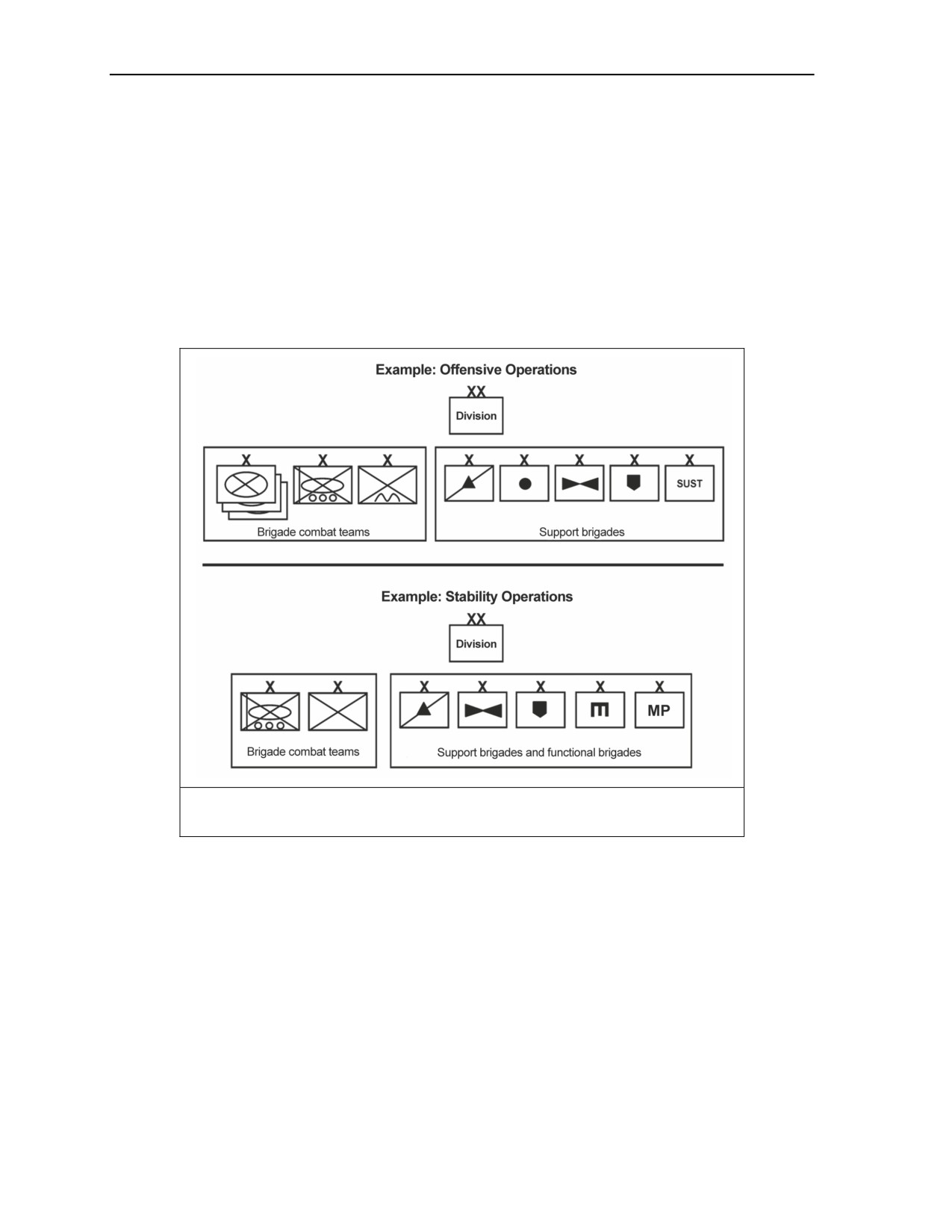
2-81. Divisions can typically control up to six BCTs during offensive and defensive tasks and more than
six BCTs in protracted stability tasks. A division force package may include any mix of ABCTs, IBCTs,
and SBCTs. In addition to BCTs, each division controls a tailored array of support brigades and functional
brigades. They may also control functional groups, battalions, or separate companies; however, these are
normally task-organized to a brigade. Each division is tailored for a specific operation; the composition of
the division is completely variable. Figure 2-1 provides a notional organization for a division conducting
offensive tasks with an MEB in support and a division tailored for stability with a military police brigade
headquarters and an MEB in support.
Legend:
MP
military police
SUST
sustainment
Figure 2-1. Notional examples of tailored divisions
2-82. The tailored military police force supporting a division is not set by rules of allocation. Rather, the
force is tailored to meet anticipated requirements based on an analysis of the situation. The divisional
military police force may be organized under a multifunctional headquarters, such as the MEB, or under a
functional military police headquarters. While a military police battalion, military police brigade, or
multifunctional headquarters may be allocated as the divisional military police headquarters, a battalion
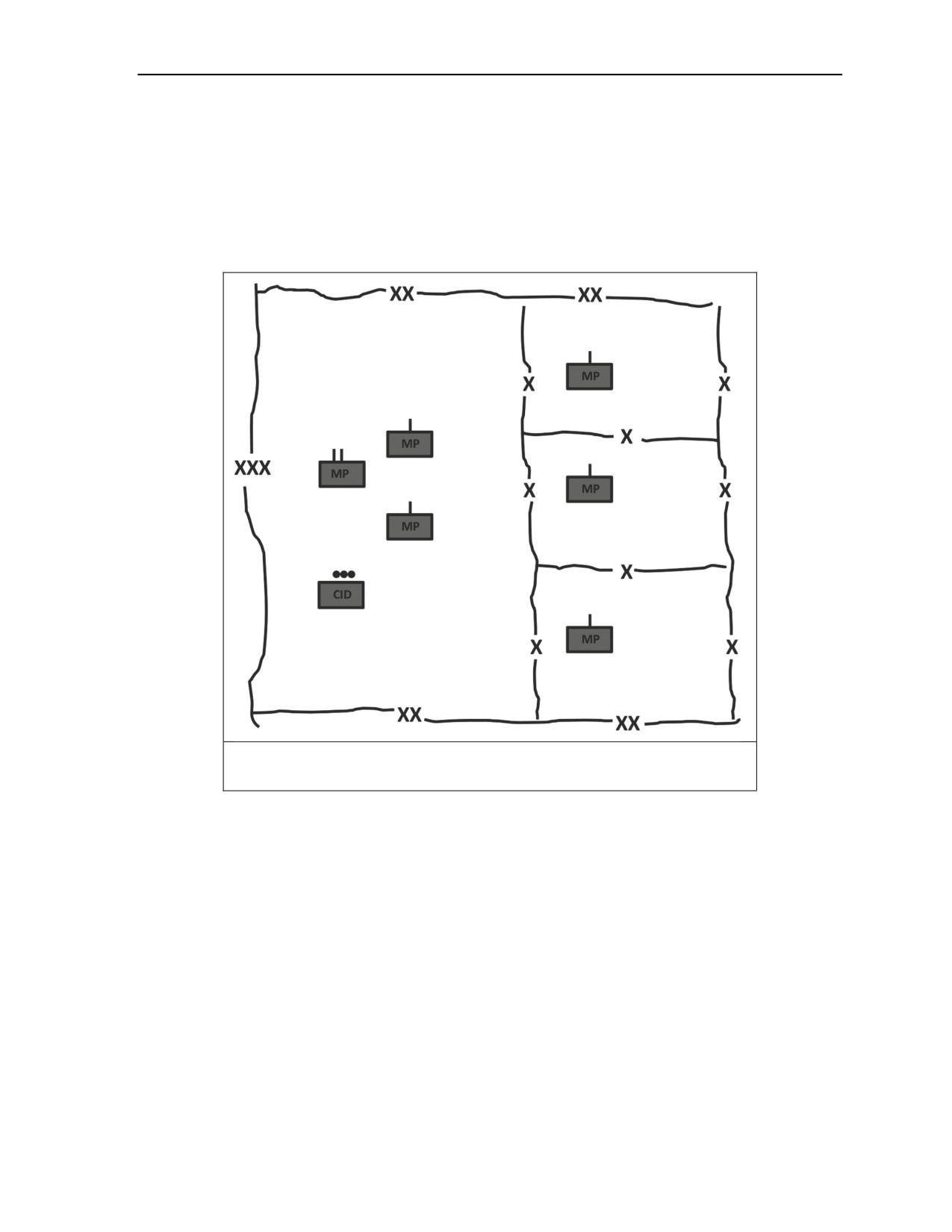
echelon headquarters or the MEB is typical for most operations. A military police brigade may be required
for special situations. (See figure 2-2.)
2-83. Typically, when the division is tailored with an MEB, military police assets allocated to the division
will be organized within the MEB for mission command. In some situations, the division may require a
combination of military police forces organized functionally and multifunctionally. A functional military
police brigade may be tailored as a division echelon headquarters. A military police brigade is allocated to
a division headquarters, in addition to an MEB, based on an analysis of mission variables and a
2-18
FM 3-39
26 August 2013
Organizations and Capabilities
determination that the division requires significantly increased military police mission command capability
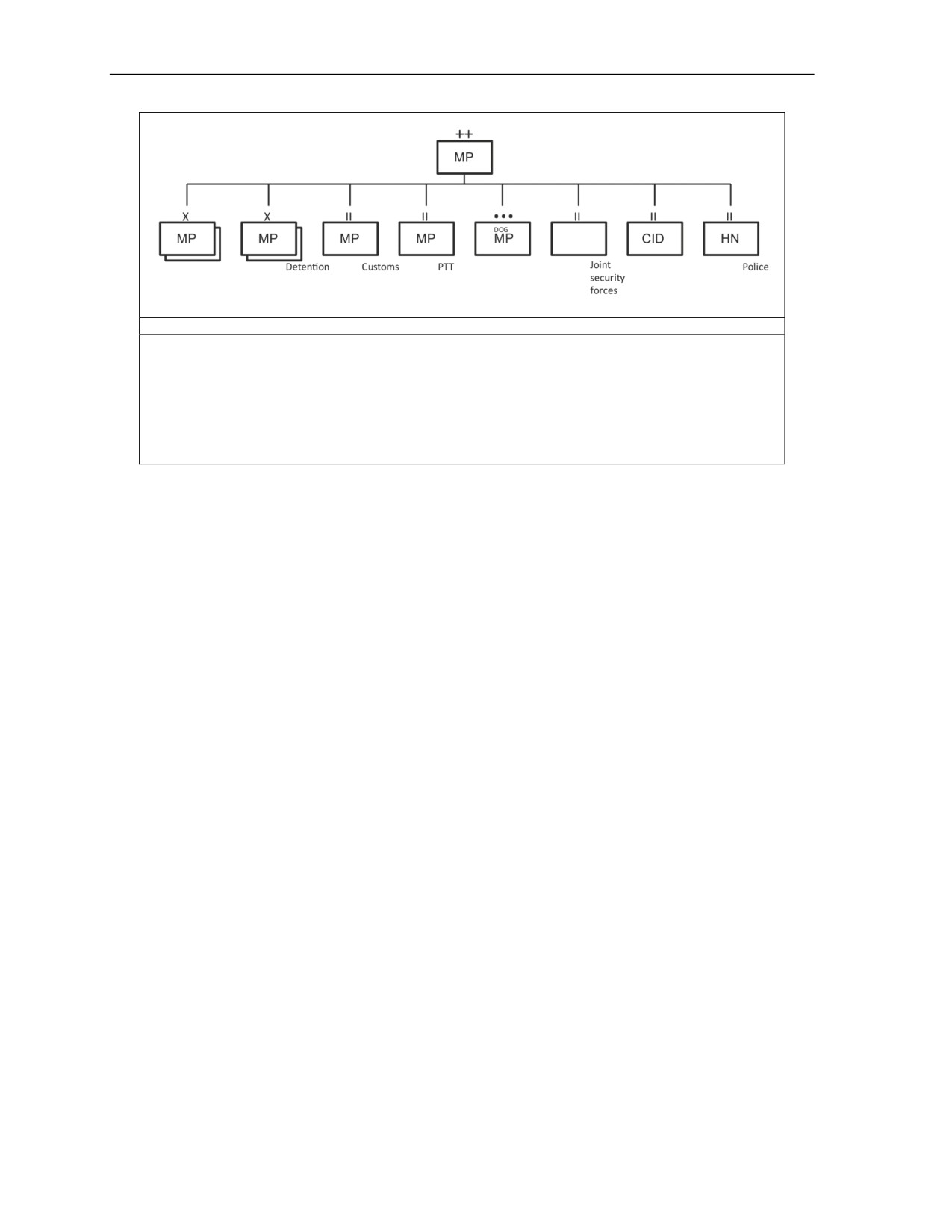
to conduct functional military police missions (see figure 2-1). Another primary consideration for task-
organizing a functional military police brigade at the division level is a division requirement for the
capability to integrate and synchronize military police capabilities uniformly across the entire division area
of operations. A primary example is in stability tasks where an MEB assigned to the division is given an
area of operations to control; and large-scale, host nation police support is required to be consistently
applied and synchronized across the division area of operations.
Legend:
CID
criminal investigation division
MP
military police
Figure 2-2. Notional military police support to a division
2-84. A military police brigade is provided to a division or higher organization when the magnitude of
functional military police requirements exceeds the limited capability of the MEB to provide functional
military police mission command. In these instances, military police brigade level mission command
capability is required to appropriately allocate, synchronize, control, and provide technical oversight for
military police assets and to provide the consistent application of military police capabilities across the area
of operations. Typically, if requirements for military police capabilities within the division exceed two
battalions, military police brigade mission command capability will be required.
Corps
2-85. The corps is optimized to serve as an intermediate tactical headquarters for land operations. With
augmentation, it may serve as an Army force headquarters, a joint task force headquarters, and a joint force
land component headquarters (see figure 2-3, page 2-20). A corps can deploy to any area of responsibility
to provide mission command for Army, joint, and multinational forces. Although a military police
command is not shown in this example, in certain situations a corps may require one. The corps force is
likely to include a joint military police headquarters or joint military police elements organized under a
26 August 2013
FM 3-39
2-19
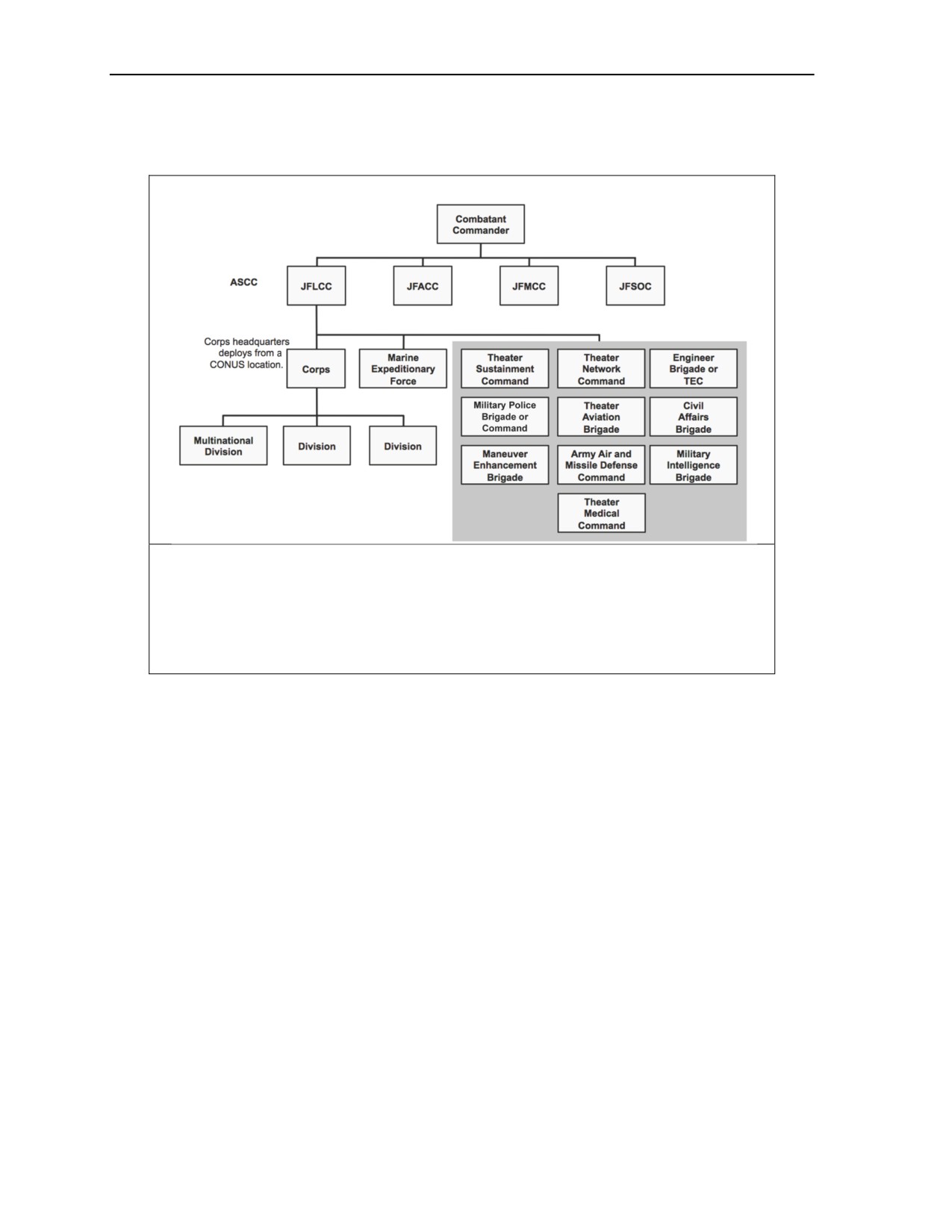
Chapter 2
multicomponent headquarters. Typically, a military police brigade headquarters will be allocated to a corps
for most operations. Figure 2-3, page 2-20, provides a notional organization for a military police brigade
headquarters and a joint military police headquarters supporting a corps.
Legend:
ASCC
Army service component command
CONUS
continental United States
JFACC
joint force air component command
JFLCC
joint force land component command
JFMCC
joint force maritime component command
JFSOC
joint force special operations command
TEC
theater engineer command
Figure 2-3. Corps as an intermediate land force headquarters
2-86. Like the division, the tailored military police force supporting a corps is not set by rules of allocation.
Rather, the force is tailored to meet anticipated requirements based on an analysis of the situation. The
military police brigade headquarters focuses training on support to corps and echelon-above-corps
operations. The military police brigade is capable of providing effective mission command of military
police operations for contingencies in which a corps headquarters is required and is the most likely military
police headquarters to be tailored for a corps echelon. For most operations, the corps echelon will typically
require the early or phased deployment of at least one military police brigade headquarters to provide for
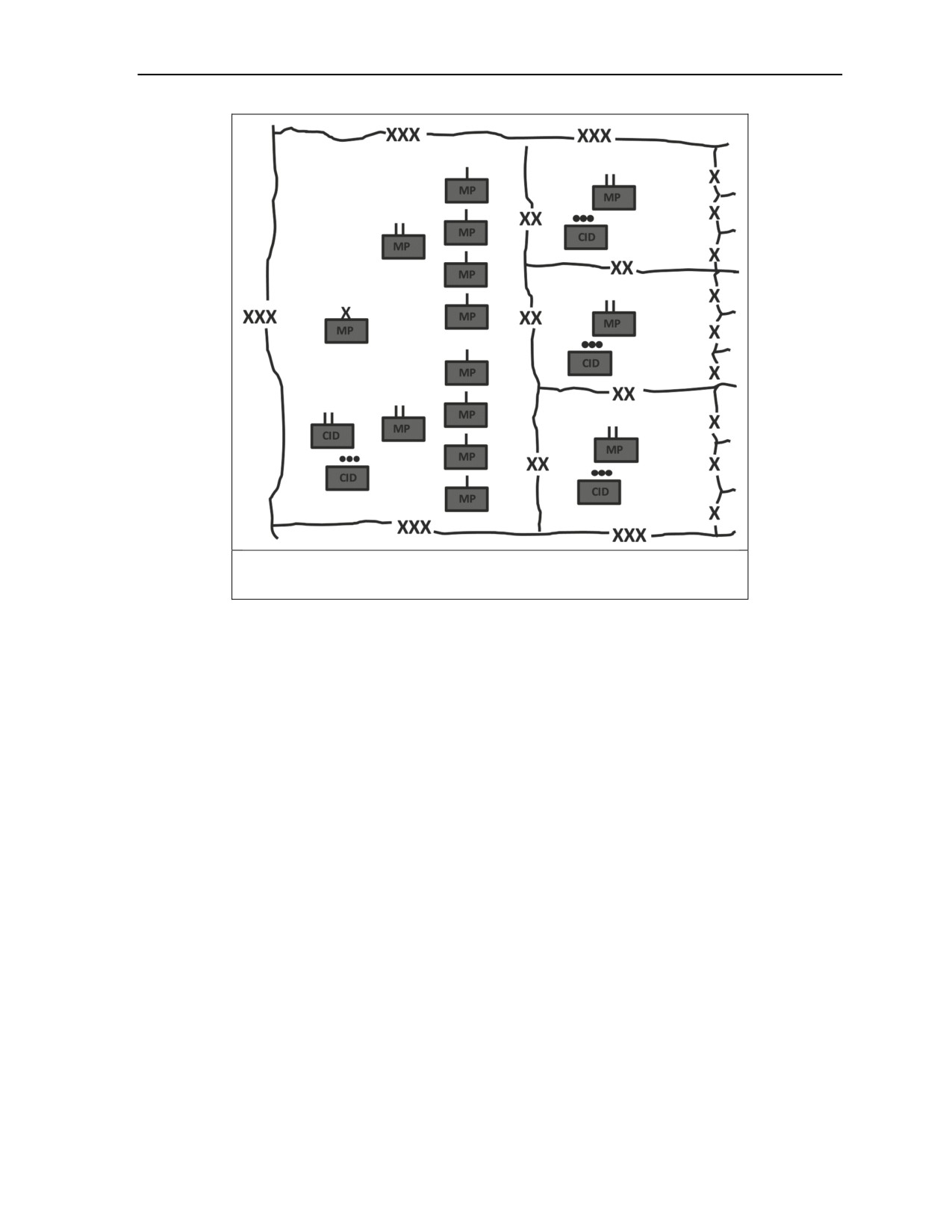
integrated and synchronized military police capability across the area of operations. Stability or DSCA may
require the deployment of multiple military police brigades in support of a corps headquarters. (See figure
2-4.)
2-20
FM 3-39
26 August 2013
Organizations and Capabilities
Legend:
CID
criminal investigation division
MP
military police
Figure 2-4. Notional military police support to a corps
Theater
2-87. The theater Army controls an assigned mix of regionally focused, supporting commands and
brigades, including sustainment, signal, intelligence, civil affairs, and medical. In addition to these
regionally focused commands, the theater Army receives additional attachments in the form of brigades and
commands requisite for operations in the area of operations. These latter forces are not regionally focused;
they are drawn from the “pool” of available forces assigned to general warfighting and maintained in the
continental U.S. (CONUS) and around the world. The situation in each theater dictates the size of these
formations—commands, brigades, or groups. Command relationships also vary across theaters between the
theater Army and supporting capabilities. In some theaters, the commands are assigned; in others,
commands are operationally controlled or aligned for planning only.
2-88. The theater Army normally receives one military police command when more than one military
police brigade is required
(see figure
2-6, page
2-22). The military police command is a modular
organization that can be tailored based on mission requirements. Within the military police command are
two deployable command posts that provide flexibility and rotational capability. It can deploy its main
command post and two deployable command posts. The deployable command post can be augmented with
other policing assets from a variety of sources. Capabilities that may be included with this augmentation are
contracting, real estate support, and interagency coordination capability. The military police command is
able to leverage reachback capabilities to capitalize on CONUS-based assets. If a military police command
is not deployed in support of a theater Army, a military police brigade can provide expertise and capability
similar to the military police command, but at a reduced level.
26 August 2013
FM 3-39
2-21
Chapter 2
Note. The USACIDC is a direct-reporting unit to the CSA.
Legend:
CID
criminal investigation division
CSA
Chief of Staff, U.S. Army
HN
host nation
MP
military police
MWD
military working dog
PTT
police training team
USACIDC
U.S. Army Criminal Investigation Command
Figure 2-5. Notional theater military police command
2-89. The military police command provides mission command and an organizational framework for the
operational-level military police effort within the area of responsibility. Non-military police organizations
may be task-organized to the military police command to perform specific missions. The military police
command focuses on reinforcing and augmenting tactical-level military police efforts and developing the
theater detention or resettlement operations base requirements. The commander of the military police
command also serves as the commander of detainee operations. (See figure 2-7.)
2-22
FM 3-39
26 August 2013
Organizations and Capabilities
Legend:
CID
criminal investigation division
MP
military police
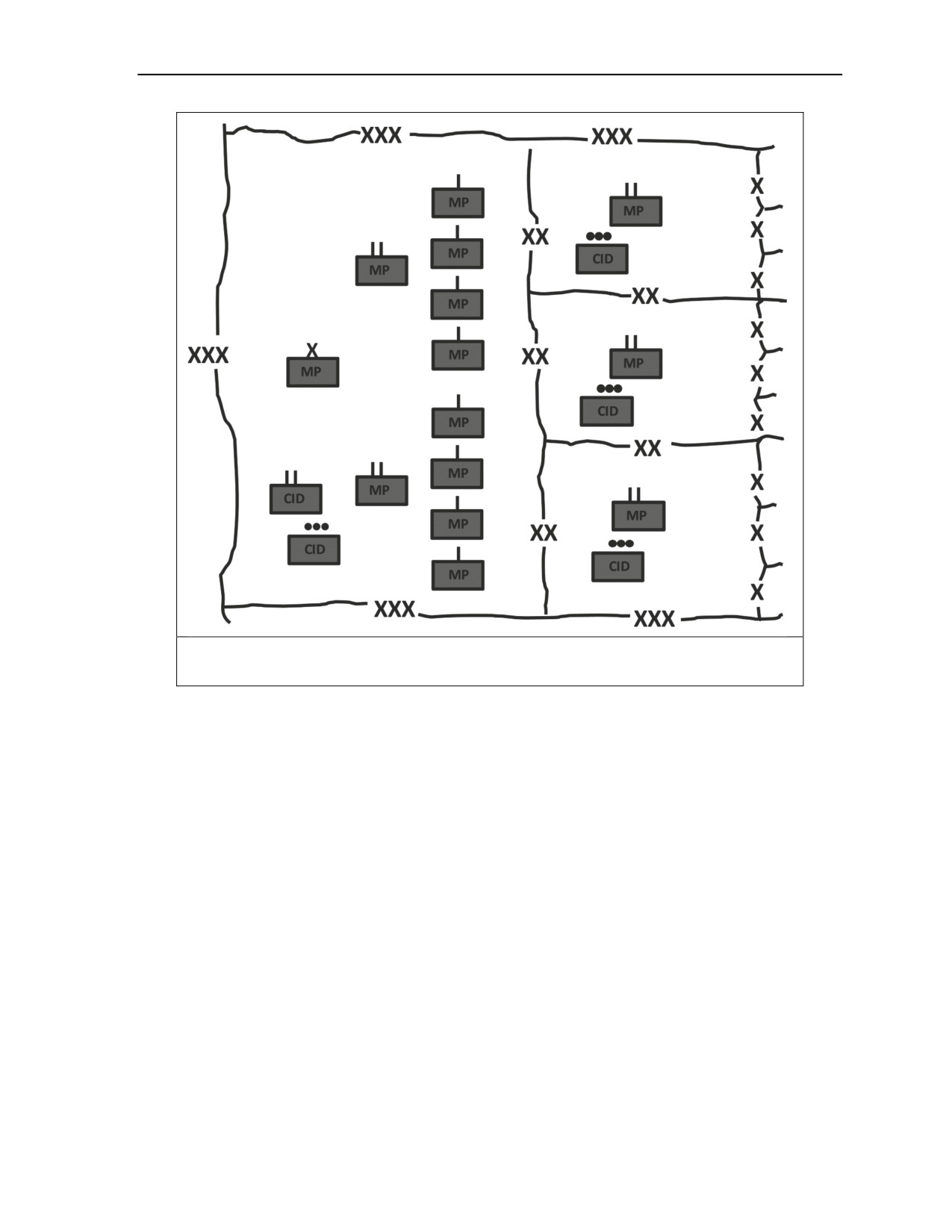
Figure 2-6. Notional military police support to a theater
26 August 2013
FM 3-39
2-23
Chapter 3
Foundations of Military Police Operations
ADP 3-0 describes decisive action as a continuous, simultaneous combination of
offensive, defensive, and stability or DSCA operations and it begins with the
commander’s intent and concept of operations. As a single, unifying idea, decisive
action provides direction for the entire operation. Army forces conduct decisive
action as part of the larger joint operations framework. Such operations require
flexibly applying combat power to complex environments by executing simultaneous
combinations of all tasks of decisive action. This chapter describes the foundations
necessary for effective military police operations. It defines the military police
disciplines that broadly categorize the array of military police technical capabilities
and tactical task and enables clear linkages from those capabilities and task to the
warfighting functions.
MILITARY POLICE FUNCTIONAL ORGANIZATIONS
3-1. Military police units perform critical requirements identified in the Universal Joint Task List and the
Army Universal Task List. The capabilities inherent in military police organizations provide a significant
force enabler to other Army organization and unified-action partners across the range of military
operations. While military police capabilities are sought for nearly all operations, it is in stability and
DSCA that military police capabilities become much more visible. Military police units facilitate the
freedom of maneuver and mobility necessary to meet mission objectives and provide focused protection to
high-risk personnel, equipment, and facilities. Military police units and Soldiers are especially well suited
for conducting security force assistance and providing support to policing and corrections. In doing so, they
enable the mobility of friendly forces and enhance the basic level of protection. Military police operations
also enable the sustainment of friendly forces; contribute to a clear understanding of the policing and
corrections environment; and provide support to noncombatants, and other unified-action partners.
3-2. Military police disciplines are interdependent areas of expertise within the Military Police Corps that
are grouped together to provide an organizational framework of military police technical capabilities and
tactical tasks. A review of current Universal Joint Task List and Army Universal Task List tasks,
warfighting gap analysis, and lessons learned from recent operational experiences has established three
critical disciplines that military police units and Soldiers perform in support of decisive action. The three
military police disciplines (police operations, detention, and security and mobility support), as shown in
table 3-1, page 3-2, are listed with major technical capabilities and tactical tasks aligned beneath the
corresponding discipline. The list of capabilities and tasks displayed is not an all-inclusive list of military
police tasks.
3-3. Police intelligence operations is the military police corps integrated function. Police intelligence
operations support commanders at all levels through the integration of police intelligence activities within
all military police operations. Police intelligence operations enable military police and USACIDC staff and
police intelligence analysts to identify connections and correlations between people, locations, events,
times, and things, allowing for the identification of trends, patterns, and associations pertinent to activity
and organizational structures that facilitate criminal behavior. Police intelligence tasks are identified in
table 3-2, page 3-2.
26 August 2013
FM 3-39
3-1

Chapter 3
Table 3-1. Military police disciplines and technical capabilities and tactical task
Military Police Disciplines
Security and Mobility
Police Operations
Detention Operations
Support
Perform law enforcement.
Confine U.S. military
Conduct movement support to
prisoners.
mobility operations.
Conduct traffic management and
Conduct detainee
Develop traffic regulation and
enforcement .
operations.
enforcement plan.
Conduct criminal investigations.
Conduct host nation
Conduct enforcement of main
corrections training and
supply route regulations.
Provide customs support.
support.
Conduct a route
reconnaissance.
Restore and maintain order.
Control movement of
dislocated civilians.
Support border control, boundary
Conduct resettlement
security, and the freedom of
operations.
movement.
Enable an interim Criminal Justice
Control movement of
System.
dislocated civilians.
Conduct host nation police training
Conduct population and
and support.
resource control.
Provide support to civil law
Conduct reconnaissance.
enforcement.
Conduct police engagement.
Conduct surveillance.
Employ forensic analysis or
Conduct operational area
biometric identification capabilities.
security .
Provide and evidence response
Conduct base/base camp
team.
defense.
Provide straggler movement control.
Conduct critical asset security.
Provide protective service for
selected individuals.
Conduct response force
operations.
Secure lines of communication,
supply routes and convoys.
Perform port and pier security.
Perform support area damage
control.
Apply antiterrorism measures.
Implement physical security
procedures.
Perform logistics security.
Perform crime prevention.
Provide military working dogs.
Table 3-2. Military police integrated function
Police Intelligence Operations
Provide support to situational understanding
Collect police information
Conduct police information analysis
Develop police intelligence products
3-2
FM 3-39
26 August 2013
Foundations of Military Police Operations
MILITARY POLICE DISCIPLINES
3-4. Military police units provide support to each of the warfighting functions while performing their
three disciplines as a flexible, versatile, lethal, and nonlethal economy-of-force organization. Through these
disciplines, military police units are able to provide commanders with an array of tailorable and focused
capabilities across the range of military operations. Military police headquarters cannot generally conduct
all three military police disciplines at the same level of priority; therefore, commanders must anticipate,
prioritize, and synchronize the employment of military police assets. The echelon provost marshal and staff
make priority recommendations in the planning process during war-gaming based on the commander’s
guidance and the mission variables. Each provost marshal works closely with supported commanders to
ensure that military police support is responsive and appropriate to the commanders’ concept of the
operation and to finalize command and support relationships.
POLICE OPERATIONS
3-5. Police operations are the primary discipline of military police shaping the actions and perspective of
military police Soldiers and leaders in the conduct and execution of the other disciplines. Police operations
encompass the associated law enforcement activities to control and protect populations and resources to
facilitate the existence of a lawful and orderly environment. Police operations and the associated skills and
capabilities inherent in that function provide the fundamental base on which all other military police
functions are framed and conducted. Military police conduct police operations—
z
To maintain good order and discipline. This application of the police operations discipline is
focused internally at policing our own Soldiers and civilians and deterring, mitigating, and
preventing criminal and terrorist threats. This application is the heart of the military police motto
of “assist, protect, and defend.” It is most prevalent at posts, camps, and stations but is also
necessary on base camps in mature theaters.
z
To establish and maintain civil security and civil control while enabling the rule of law. This
application of the police operations discipline is focused externally at policing the local
population in an operational environment where host nation policing and security capability are
nonexistent or inadequate. The goal of any police operation within a host nation is to enable the
rule of law and to eventually transition all policing functions to host nation control.
z
During times of crisis in DSCA. National Guard military police elements regularly support their
respective state governors in this function while operating as state assets under 32 U.S. Code
(USC). U.S. Army Reserve and active duty military police elements, including federalized
National Guard Soldiers, are generally prohibited from direct participation in law enforcement.
(Chapter 5 contains a more detailed discussion of military police roles and restrictions during
DSCA.)
3-6. Within the military community, the police operations discipline is an enabler of the commander’s
inherent responsibility to maintain order and discipline within the ranks of their formation. This is the most
visible application of the police operations discipline to most Army personnel and includes law
enforcement in support of bases and base camps. It is through the execution of garrison law enforcement
that military police gain critical interpersonal skills and technical policing and investigative capabilities
critical to police operations in any operational environment. Outside of U.S. territory, military police
execute the police operations to establish or preserve civil security, civil control, and the rule of law within
the host nation. In many operations, especially following major combat operations or disasters in which
host nation capabilities have been destroyed or rendered ineffective, establishing civil security and civil
control are critical to gaining a stable and secure environment. Military police execute the police operations
discipline early in these operations to set conditions for the successful transition to stability and the
eventual transfer of authority to host nation police and security elements. As stability becomes the
dominant operation in an operational environment, the focused demand for military police capabilities
generally transitions from primarily security and mobility support to police operations. Stability typically
produces the highest magnitude of requirements for police operations within the context of the range of
military operations.
3-7. Military police and USACIDC units work to reduce the opportunity for criminal activity throughout
an area of operations by assessing the local conditions, conducting police engagement at all levels
26 August 2013
FM 3-39
3-3
Chapter 3
(including coordinating and maintaining liaison with other DOD, host nation, joint, and multinational
agencies), and developing coherent policing strategies. Military police units at all levels coordinate actions
to identify and influence crime-conducive conditions. Military police support and develop strategies to
maintain order and enforce the rule of law across the range of military operations. The police operations
discipline also includes major areas such as law enforcement, traffic operations, criminal investigations,
host nation police training and support, and U.S. customs operations support. Police operations are
addressed under the protection warfighting functions (see ADRP 3-37 and ATTP 3-39.10).
Law Enforcement
3-8. Law enforcement assists the commander in maintaining order and discipline in the ranks and in
preserving the force. Military police units dedicate assets to conduct law enforcement based on command
guidance and the characteristics of the operational environment. Military police are only one of many
enforcement mechanisms that commanders can use to enforce rules and regulations and to enable the rule
of law. Commanders rely on leadership, professional development programs, sound physical security,
crime prevention programs, inquiries, investigations, and searches to gain the compliance of troops, thus
allowing military police to selectively focus their law enforcement efforts on the most significant
enforcement requirements. Law enforcement includes responding to civil disturbances; conducting raids;
employing special-reaction teams, MWD teams, and marksman/observer teams, investigating traffic
accidents; conducting vehicle searches; supporting the commander’s protection program; and providing
support to host nation and civil law enforcement agencies.
3-9. In multinational operations, military police may assist with the creation of multinational police units
and training. Circumstances that may support the establishment of these police forces include existing or
negotiated terms of international agreements or security assistance programs, a multinational operational
agreement, or appropriate military directives. Military police units provide the capability to train foreign
military or civilian personnel and/or reconstitute indigenous constabulary forces. Military police may be
required to provide interim law enforcement capability until that capability can be established within the
host nation. Military police can also provide the initial mentoring to these forces and temporary law
enforcement capabilities until the foreign military or civilian police forces are functional. Ideally, military
police will assist U.S. and civilian multinational police agencies in these efforts; however, the security
environment, availability of police personnel, and political considerations may make the employment of
civilian police agencies impractical. In these cases, military police are capable of assuming the mission
until civilian police agencies can assist or until the host nation can assume responsibility.
Traffic Operations
3-10. Traffic management and enforcement activities encompass a technical law enforcement specialty that
includes the control of traffic circulation, enforcement of traffic regulations, and investigation of traffic
accidents. Many of the skills and capabilities involved in traffic management and enforcement are equally
relevant in support of posts, camps, stations, and decisive action. Traffic management and enforcement
planning and execution is a routine function based on recurring, predictable events or special events or an
effort to control traffic flow, protect civilian and military personnel and equipment, and mitigate the effects
of traffic congestion. Traffic management and enforcement is critical in mitigating disruptions following an
unforeseen incident, major accident, or disaster. (See ATTP 3-39.10 for additional information on traffic
management).
3-11. Law enforcement personnel trained in traffic management and enforcement activities provide
expertise in conducting traffic surveys to assess traffic patterns and traffic flow, enhancing the safety of the
military and civilian community. Military police with expertise in traffic management and enforcement
work closely with engineers to design roadways, intersections, entry control points and access control
points, and other areas required to accommodate significant vehicular traffic flow. The enforcement of
traffic regulations ensures that the roadways are negotiated by vehicles in a safe and orderly manner,
protecting vehicular traffic, pedestrians, and personnel operating in the vicinity of roadways and areas of
vehicular traffic. Specially trained traffic accident investigators provide expertise specific to reconstructing
traffic accidents in the aftermath of accidents.
3-4
FM 3-39
26 August 2013
Foundations of Military Police Operations
Criminal Investigations
3-12. Military police and USACIDC units investigate offenses against U.S. forces or property committed
in an area of operations. All military police Soldiers are trained to conduct initial investigations. Specially
trained military police investigators and USACIDC special agents conduct most formal criminal
investigations within the Army. These investigators are trained in technical investigation techniques, to
include evidence identification, processing, and preservation critical to successful criminal investigations.
Investigations of minor crimes, such as low-value, personal property thefts or simple assaults, are normally
investigated and processed by military police investigators assigned to military police law enforcement
detachments or tactical units. Investigations of felony-related crimes involving wrongful death, serious
bodily injury, and war crimes are referred to USACIDC special agents. These special agents conduct death
investigations in the absence of host nation agreements or in conjunction with the host nation. The special
agents are authorized to investigate any alleged criminal conduct in which there is an Army interest, unless
prohibited by law or higher authority (see chapter 7).
3-13. The investigative authority and investigative responsibility of USACIDC OCONUS are determined
by international treaty or agreement, including status of forces agreements, the policies of the host nation
government (if viable), the U.S. ambassador, and AR 195-2. In the absence of such provisions, the
following guidelines apply:
z
On Army-controlled bases or base camps with deployed areas of operations, the USACIDC has
the authority to investigate alleged crimes.
z
Outside of an Army-controlled base or base camp, the USACIDC may investigate after
coordinating with host nation authorities.
3-14. In all environments, the USACIDC has the responsibility to investigate all felony crimes involving
Army personnel, DA civilians and agencies, and companies working for the Army. The USACIDC
investigates war crimes and crimes that involve personal and government property that affect the Army
mission and logistics security. Other investigations—such as those based on international treaties, status of
forces agreements, and joint investigations with the host nation—may be undertaken if requested by the
supported commander in support of the overall Army mission.
U.S. Customs Operations Support
3-15. Military police units support the U.S. Customs and Border Protection, the U.S. Department of
Agriculture, other federal agencies, joint staffs, and commanders who enforce the laws and regulations of
the United States concerning customs, agriculture, and immigration border clearances. The ultimate goal is
to prevent hazards and threats from entering the homeland. Support to the U.S. Customs and Border
Protection includes assistance to federal agencies to eliminate the illegal traffic of controlled substances
and other contraband through Army channels. Military police support to customs operations is normally
performed by military police trained in U.S. Customs and Border Protection. These military police are not
trained in all facets of customs operations, but they assist the U.S. Customs and Border Protection, the U.S.
Department of Agriculture, and other federal agencies in the enforcement of applicable laws and
regulations. When tasked, the USACIDC and other military police elements support the investigation of
violations of U.S. Codes, DOD or DA regulations, and applicable provisions of status-of-forces
agreements.
3-16. Customs-trained military police report violations of customs laws, regulations, and inspections and
investigative results to the installation provost marshal, the supported commander, and affected units.
During redeployment from OCONUS to CONUS bases and base camps, customs-trained military police
support the U.S. Customs and Border Protection and U.S. Department of Agriculture efforts to ensure that
personnel, equipment, and material meet customs, immigration, and agriculture requirements in all
applicable laws and regulations. As with other functions, MWD teams may be employed in support of
customs operations for the detection of explosives or narcotics.
Support to Civil Security and Civil Control
3-17. Civil security involves providing for the safety of the state and its population, including protection
from internal and external threats (see FM 3-07). It includes a diverse set of activities, ranging from
26 August 2013
FM 3-39
3-5
Chapter 3
enforcing peace agreements to executing disarmament, demobilization, and reintegration. Civil security
must be achieved for other stability lines of effort to be successful. Establishing a safe, secure, stable, and
professional environment shapes the environment and enables a transition toward normalcy. A secure
environment is key to gaining support from the local population.
3-18. Establishing civil control is a critical step toward instituting the rule of law and enabling stable and
effective governance. Civil control, with its emphasis on governance and the rule of law, is required for
successful stability tasks and the transfer of authority to a host nation government. The operational
environment may be threatened by insurgents, subversive elements within the population, organized crime,
or a state of general lawlessness. These threats are obstacles to a secure, stable peace and can prevent
successful efforts to establish a lawful and orderly environment. Civil control centers on the establishment
of the rule of law and efforts to build a functioning host nation civil authority triad (judiciary, police, and
corrections). It encompasses the key institutions necessary for a functioning justice system, including
police, investigative services, prosecutorial arm, public defense, and prisons.
Restore and Maintain Order
3-19. Establishing civil security and civil control requires initial actions to restore order in a chaotic and
potentially lawless environment. In most operational environments requiring U.S. forces to establish civil
security, the rule of law has failed or was never in place. U.S. forces, to include military police, must
establish and then maintain a secure environment, enabling civil control lines of effort and the rule of law
to be established. Restoring and maintaining order may require combat operations to eliminate specific
threats, disarm the population and disruptive elements, monitor and disperse crowds that become violent
and destructive, and physically separate belligerents.
3-20. Operations to restore order are conducted to halt violence and to support, reinstate, or establish civil
authorities. These operations provide security and stability after a conflict, while setting the conditions for
transition to the rule of law. Providing effective security for the local population by reducing their exposure
to the threat of violent conflict is critical to enabling a stable environment for continued stability tasks and
reconstruction. Military police are uniquely equipped to engage in operations to establish civil order.
Military police Soldiers are trained and experienced in graduated-response techniques and the application
of the minimal force necessary to control a situation. In operational environments that are precariously
between major conflict and instability, the ability to gain control of a potentially violent event, establish
order, and disperse the population without resorting to the significant application of force can make a
significant impact. Successful efforts to establish order with minimal violence ease the transition from
instability toward stable peace and enable the establishment of effective governance under the rule of law.
Support Border Control, Boundary Security, and Freedom of Movement
3-21. Civil security is threatened if the state cannot control the flow of persons and materiel across its
borders and throughout the country. The ability to monitor and regulate its borders is critical. When host
nation border control is ineffective or nonexistent, U.S. forces may be required to conduct border control
operations, to include patrolling the areas near the border, specifically in the vicinity of formal and informal
crossing sites. ADRP 3-07 contains additional information regarding border control, boundary security, and
freedom of movement.
3-22. Military police provide relevant capabilities to enhance border operations. Military police units are
trained in access control and physical security measures that support border checkpoint operations. Military
police customs personnel can transfer their experience supporting U.S. customs operations to supporting
host nation customs requirements at entry points and other checkpoints as required. The MWDs provide the
capability to detect contraband being smuggled across state boundaries. Military police units can provide
law enforcement expertise and work closely with host nation border personnel, providing training and
assistance until the host nation is capable of assuming full authority. Successful border control operations
include the—
z
Integration of border control and customs efforts.
z
Efficient, regulated movement of personnel, vehicles, materiel, and goods.
z
Cooperative efforts with adjacent state border agencies.
3-6
FM 3-39
26 August 2013
Foundations of Military Police Operations
z
Detection of—
Illegal trafficking across borders.
Organized criminal networks.
Movement of irregular forces.
Terrorist activities and movements.
Other threats to the host nation.
Establish an Interim Criminal Justice System
3-23. Army forces may be required to assist in establishing an interim justice system as a prerequisite to
the restoration of effective governance. Establishing an interim criminal justice system under the rule of
law requires a wide range of skilled professionals, including judges, prosecutors, court administrators,
corrections personnel, law enforcement personnel, and investigators. The civil authority triad consists of
police, prisons, and a judicial system. This triad provides the foundation on which the criminal justice
system is built. Military police provide specific capabilities that are pertinent to two of the three legs of the
civil authority triad―police and prisons―necessary for a functioning criminal justice system that operates
under the rule of law. (See FM 1-04 for information regarding legal support to Army operations.)
3-24. Military police units are specifically trained to support law enforcement and corrections missions
within their police operations and detention operations disciplines. Military police maintain the capability
to conduct law enforcement activities, including police patrols, traffic management and enforcement,
MWD, police station operations, and police administrative support task. The USACIDC provides extensive
criminal investigative capabilities and forensics capabilities that are comparable to civilian law
enforcement agencies.. Military police also have military police investigators with criminal investigations
training. Military police investigators and USACIDC special agents can be deployed in support of rule-of-
law missions, to include training host nation police personnel.
3-25. As the operational environment transitions from one dominated by combat operations to a more
stable environment dominated by the rule of law, military police organizations can provide valuable
policing and technical law enforcement and investigative capabilities. Military police elements ranging
from the provost marshal office and military police platoons within the BCT to military police battalions
and brigades supporting divisions and corps provide a wide range of law enforcement-related skills and
techniques, ranging from handling evidence during site exploitation to more sophisticated methods of
investigating complex crimes. Military police are capable of training and mentoring host nation police and
providing expertise to U.S. troops who are conducting security operations. Support to U.S. military units
may include conducting police tasks within restricted rules of engagement; conducting police-oriented,
inform and influence activities with the population; and collecting and preserving evidence. These
capabilities are increasingly important as the host nation transitions to the rule of law and begins
criminalizing and prosecuting activities of insurgent threat elements.
Host Nation Police Training and Support
3-26. In the event that U.S. forces are deployed to an area of operations with a limited or failed police
system, military police forces may be required to initially perform police duties to establish or maintain a
secure environment. In the long term, it is critically important to establish host nation police forces to
assume law enforcement duties as soon as possible. The United States, multinational partners, and the host
nation should institute a comprehensive program of police force development. U.S. military police units
serve best when operating as a support force for professional civilian and host nation police trainers.
However, there may be times when military police units or Soldiers are given the primary responsibility for
police training and they must be prepared to assume that role if required.
3-27. Military police units are skilled at providing police development and transition teams to train host
nation police personnel in basic and advanced law enforcement skills, investigations, police station
operations, and senior police leader skills. Military police are also capable of providing specialty training in
functional course areas, such as counterdrug operations, evidence collection, or advanced investigative
techniques based on local needs. Police development and transition teams may also serve in an advisory
26 August 2013
FM 3-39
3-7
Chapter 3
role to assist in the transition of responsibility for domestic security to the host nation police to provide a
safe and secure environment.
3-28. Host nation police training may be simultaneously conducted from the most senior administrative
levels to the ground level police patrols. The conduct of an effective host nation police training program
requires consistency and synchronization in the application of training, policy directives, and logistics
support. Task-organizing all military police elements conducting host nation police training under a single
military police mission command structure is the preferred organizational structure to enable the required
consistency and synchronization across the area of operations. Effective host nation police training requires
military police to—
z
Assess police roles, responsibilities, structures, management, and practices.
z
Determine existing and required police capabilities and capacities, to include logistics and
administrative support required for police operations.
z
Develop and support a police training curriculum at police training academies.
z
Understand the traditional role of police within the host nation and develop training strategies to
change the institutional culture of the police force, if required, to one that emphasizes public
service, ethical and humane treatment, and established policing principles.
z
Build intra- and interagency linkages to ensure that police activities complement the other key
functions within the civil authority triad (judicial system and prison).
z
Ensure that effective and consistent police training capabilities are present within the host nation
police infrastructure.
z
Train and develop investigative processes, including the gathering, handling, and preserving of
evidence (to include maintaining a viable chain of custody) to support ongoing prosecutions.
z
Enhance the ability of police services to plan and develop police intelligence analysis skills.
z
Develop and strengthen policies and mechanisms for police accountability.
z
Train and develop biometrics capabilities.
Support to Civil Law Enforcement
3-29. Military police Soldiers provide support to civil law enforcement within established jurisdictional
and legal parameters. This starts at home station and includes local community law enforcement.
USACIDC personnel and installation provost marshals and their staffs are fully integrated with local law
enforcement. They share information, enabling complementary and synchronized law enforcement efforts
within their respective purviews. Military police support to civil law enforcement includes—
z
Supporting counterdrug operations.
z
Supporting antiterrorism efforts.
z
Conducting riot control.
z
Providing general support to law enforcement as required.
Police Engagement
3-30. Police engagement occurs in all operational environments where police interact with elements
external to their own organization. Police engagement is a type of inform and influence activity that occurs
between police personnel, organizations, or populations for the purpose of maintaining social order.
Military police and USACIDC personnel engage local, host nation, and coalition police partners; police
agencies; civil leaders; and local populations for critical police information that can influence military
operations or destabilize an area of operations. The ultimate goal of police engagement is to develop a
routine and reliable interpersonal network through which police information can flow to military police.
Based on the tactical situation, police engagement can be formal or informal. Police engagement may be a
proactive activity as part of deliberate information gathering, targeting, or collection effort or can be
conducted as a reactive response to an episodic event.
3-31. Formal police engagement is generally conducted as part of a deliberate strategy to gain support or
information or to convey a message. It requires preparation, coordination, and postengagement reporting.
Military police or USACIDC personnel may serve as the key communicators within a sphere of influence
3-8
FM 3-39
26 August 2013
Foundations of Military Police Operations
that includes indigenous or multinational police leadership, or they may support a separate key
communicator. It is essential that information and messages exchanged are accurate and consistent with the
informational themes and the operations they represent.
3-32. Military police and USACIDC personnel employ the following engagement considerations when
planning and preparing for deliberate police engagement:
z
Background (purpose, decisions, and authority for engagement).
z
Person (position, organization, perceived agenda, and last engagement).
z
Meeting preparation (intelligence staff officer [S-2]/assistant chief of staff, intelligence [G-2])
intelligence summary and updates, current themes, political/cultural advisor advisement, gifts to
exchange or expect, and rehearsal).
z
Adjacent unit coordination (if area of operations is assigned to another headquarters).
z
Interpreter support (rehearsal with organic interpreter).
z
Uniform and equipment (appropriate for mission and location).
z
Postengagement follow-up (timely summaries to S-2/operations staff officer [S-3]/G-3) and
other stakeholders).
3-33. Police engagement is often less formal and occurs anytime military police interact with other police
entities or populations; however, military police and USACIDC personnel maintain a deliberate focus and
commitment to identifying criminal actors and networks, crime-conducive conditions, and other factors
from within the criminal or police environment that can destabilize an area or threaten short- and long-term
operational success. This focus of military police and USACIDC personnel during informal police
engagement may reap significant information gained through passive collection techniques. The simple act
of talking with the population or police partners may inadvertently reveal valuable information. Military
police must be cognizant of these opportunities and ensure that this information is reported and fused with
other collected information.
Biometrics and Forensics
3-34. Conflicts within present and future operational environments are much more likely to include
struggles against adversaries fighting among the people versus fighting around the people. As a result, the
opponent will attempt to blend into the population. Determining who the threat adversaries, adherents, and
passive supporters are often depends on biometric and forensic identification tools and capabilities to
distinguish friendly, adversarial, and threat forces. Biometric and forensics tools complement each other
and are critical in criminal investigations for identifying individuals, establishing a person’s presence at a
specific location in relation to time and space, establishing a suspect’s physical contact with material
related to an investigation, or identifying deception indicators. These biometric and forensic capabilities are
used extensively in traditional law enforcement investigations, but are also extremely relevant to incident
sites and major site exploitation operations.
3-35. Biometrics is the process of recognizing an individual based on measurable anatomical,
physiological, and behavioral characteristics.
(JP
2-0) These characteristics are useful for tracking
individuals, making positive identifications, establishing security procedures, or using as tools to detect
deception based on measurable biological responses to stimulus. Biometric data can be used for protection
and security efforts, contributions to biometric-enabled intelligence activities, and evidence in
investigations and criminal prosecution. The following are the major types of biometric data used by police
and intelligence collectors:
z
Personal identification data. Biometric collection and identification devices use biological
information (fingerprints, voiceprints, facial scans, retinal scans) to match an individual to a
source database. The identity of a specific individual can be identified from the target population
during screening.
z
Data that indicates source truthfulness. Biometric devices, such as voice stress analyzers and
polygraphs, are useful in determining a subject’s truthfulness. The USACIDC and the U.S.
Army Intelligence and Security Command maintain the only polygraph capability within the
Army. The Commanding General, USACIDC, in coordination with the Army Deputy Chief of
Staff for Operations and Plans, exercises overall Army staff responsibility for the DA Polygraph
26 August 2013
FM 3-39
3-9
Chapter 3
Program and policy guidance with respect to using the polygraph in criminal investigations. The
Deputy Chief of Staff, G-2, Department of the Army, promulgates policy on the use of
polygraph and credibility assessment for intelligence and counterintelligence applications in AR
381-20.
3-36. Forensics is the application of multidisciplinary scientific processes to establish facts. The forensic
functions of recognize, preserve, collect, analyze, store, and share are used to establish facts and identify
connections between persons, objects, or data. Forensics is most commonly associated with evidence
collected at crime scenes or incident sites, but also includes methodologies for the analysis of computers
and networks, accounting, psychiatry, and other specialized fields. Forensics is typically employed to
support legal proceedings that lead to criminal prosecution. Additionally, forensics analysis is used to
answer commander’s critical information requirements, provide situational awareness, and support other
mission requirements in support of military operations.
3-37. Defense Forensic Science Center (DFSC) supports Army forensics requirements. The primary
laboratory facility maintained by DFSC is stationary due to the nature of the equipment required; however,
forward-deployed mobile forensics emerged as a solution to recent operational requirements to support
deployed commanders. Operational developments in recent years have documented a growing demand for
forensics support to deployed commanders. The DFSC provides limited mobile forensics laboratories to
support commanders in the field as far forward as possible. These deployable laboratories enable DFSC to
provide more timely forensic analysis across the spectrum of capabilities, including latent fingerprints, tool
marks, firearms, deoxyribonucleic acid (DNA), and explosive/drug chemistry.
3-38. The need for the proper handling of material from a crime scene or incident site is critical to the
success of forensic examination by forensic scientists and technicians. Military police are trained to
properly handle and preserve collected material, whether in the context of processing a crime scene or
collecting and protecting material in support of military operations. Recent operational developments have
emerged requiring all Soldiers to train on the collection and preservation of forensic evidence on the
battlefield. Soldiers of many specialties beyond military police forces are now being required to understand
basic evidence collection procedures to protect crime scenes and incident sites.
Evidence Response Team
3-39. An evidence response team is an ad hoc or expediently formed team of technical experts, that are
mobilized to respond to a significant event requiring the collection and preservation of evidence. They will
typically be manned by military police Soldiers and led by military police investigators or USACIDC
special agents. Law enforcement professionals assigned to augment headquarters elements can also provide
requisite expertise to lead an evidence response team. The primary focus of an evidence response team is
to—
z
Identify the crime scene or incident site boundaries to facilitate the protection of the scene (the
actual area that may contain valuable evidence may not be obvious to untrained personnel).
z
Collect and preserve physical evidence.
z
Document evidence and establish the chain of custody.
DETENTION OPERATIONS
3-40. Detention involves the detainment of a population or group that poses some level of threat to military
operations. Detention operations are conducted by military police to shelter, sustain, guard, protect, and
account for populations (detainees or U.S. military prisoners) as a result of military or civil conflict or to
facilitate criminal prosecution. The Army is the DOD executive agent for detainee operations. Additionally,
the Army is the DOD executive agent for the long-term confinement of U.S. military prisoners. Detention
Operations is addressed under the protection warfighting function (see ADRP 3-37).
U.S. Military Prisoner Corrections
3-41. Military police units detain, sustain, protect, and evacuate U.S. military prisoners. Whenever
possible, Soldiers awaiting trial remain in their units. A U.S. military prisoner is a person sentenced to
confinement or death during a court-martial and ordered into confinement by a competent
3-10
FM 3-39
26 August 2013
Foundations of Military Police Operations
authority, whether or not the convening authority has approved the sentence. Commanders may
request that a judge or military magistrate impose pretrial confinement when reasonable grounds exist to
believe that the Soldier will not appear at the trial, the pretrial hearing, or the investigation or that they will
engage in serious criminal misconduct. Under these pretrial confinement instances, the commander must
also reasonably believe that a less severe form of restraint (such as conditions of liberty, restriction in lieu
of apprehension, or apprehension) is inadequate. When these circumstances exist and other legal
requirements are met, U.S. military personnel may be placed in pretrial confinement under military police
direct control. Convicted military prisoners are moved as soon as possible to confinement facilities outside
the area of operations.
3-42. No member of the U.S. armed forces may be placed in confinement in immediate association with a
detainee who is not a member of the U.S. armed forces. A temporary confinement facility may be
maintained in an area of operations only if distance or the lack of transportation requires such a facility.
When military prisoners are retained in-theater, temporary field detention facilities may be established in_
theater. (For additional information, see AR 190-47.)
Detainee Operations
3-43. Military police may be tasked with detaining, interning, and confining detainees (enemy combatants,
civilian internees, or retained persons). Military police formations are typically organized and staffed for
conducting detainee operations in support of general war. The reality is that military operations in support
of general war are generally short in duration compared to operations conducted at levels of violence less
than general war; such as insurgency or unstable peace operations are normally longer in duration. An
increase of counterinsurgency during stability tasks conducted among local populations requires more
complex and sustainable systems, solutions, and facilities. Even during major combat operations, enemy
forces often blend into the civilian population, criminals frequently escape or are released from jails and
prisons, and government records are removed or destroyed. Criminals, terrorists, and other opportunists
cross poorly secured borders and take personal or political advantage of the initial chaos that typically
accompanies general warfare. Major belligerents may or may not join these or other elements (tribes, third
world nationals, or factions) to conduct insurgent activities. The capture, detention,
rehabilitation/reconciliation, and repatriation of detainees must be conducted in a manner that is consistent
with the strategic end state, operational goals, and tactical realities.
3-44. Within the Army and through the geographic combatant commands, military police units are tasked
with coordinating shelter, protection, accountability, and sustainment for detainees. The detention
operations discipline ensures the humane treatment of all detainees and is of significant tactical and
strategic importance. In any conflict involving U.S. forces, the safe and humane treatment of detainees is
required by international law. Respect for individual human rights and humanitarian concerns is the basis
for the Geneva Conventions and the Law of Armed Conflict, which codify the ideal that Soldiers, even in
the most trying of circumstances, are bound to treat others with dignity and respect. Failure to conduct
detainee operations in a humane manner and according to international law can result in significant adverse
strategic impacts for the U.S. military. Military actions across the range of military operations will likely
result in detainees. During major combat operations, entire units of enemy forces, separated and
disorganized by the shock of intensive combat, may be captured. The magnitude of numbers places a
tremendous burden on the operational Army as they divert tactical units to handle detainees. Military police
units performing detention operations can preserve the combat effectiveness of the capturing unit by
relieving it of the responsibility to secure and care for detainees. Military police units perform their
detention operations discipline of collecting, evacuating, and securing detainees throughout the area of
operations. In this process, military police units coordinate closely with MI assets to collect information
that may be used in current or future operations.
3-45. Military police units support the joint force commander or the geographic combatant commander by
preventing the diversion or tasking of operating forces to detainee or U.S. military prisoner operations.
Tactical commanders at each echelon are responsible for screening detainees with organic or supporting
legal and intelligence resources to ensure that detainees being transferred to detention forces represent a
valid threat to U.S. or multinational forces or are reasonably suspected of possessing information of
potential intelligence value. Transferring detainees who possess little intelligence value (or who do not
present a valid threat) to detention facilities can potentially overwhelm the force detention capability and
26 August 2013
FM 3-39
3-11
Chapter 3
result in the unnecessary diversion of resources (military police, engineer, intelligence, legal, and logistics
[to include medical]) from supporting direct combat operations to securing, controlling, and processing
detainees.
3-46. Military police task-organized to the BCT are ideally positioned to take control of detainees from the
operating force in the BCT area of operations. Although these military police initially handle detainees,
military police detention battalions with assigned military police detention and/or guard companies and
supporting MWD teams are equipped and trained to handle this mission for the long term. A military police
detention battalion is typically organized to support, safeguard, account for, guard, and provide humane
treatment for up to 4,000 detainees or 1,500 U.S. military prisoners.
3-47. In major combat operations, a military police command may be deployed with its commander who is
serving as the commander of detainee operations for a theater operation. In other operations, where a corps
or division serves as the higher headquarters for a theater, a military police command may not be required.
In that case, a military police brigade may be deployed to provide mission command for detainee
operations and its commander may be designated as the commander of detainee operations.
Detainee Processing
3-48. Military police units are tasked with collecting detainees from combat units as far forward as
possible. Military police who are task-organized to BCTs or a MEB may operate collection points or
holding areas to temporarily secure detainees until they can be evacuated to the next higher echelon holding
area. The first long-term detention facility is the theater detention facility. This facility is the first level that
is resourced for long-term care of detainees. Some detainees may be evacuated outside of theater to Army
level detention facilities or joint strategic detention facilities.
3-49. In a mature theater, detention units provide mission command, administration and logistics services
(for assigned personnel, detainees and U.S. military prisoner population), and custody and control for the
operation of a U.S. military prisoner confinement facility or detainee detention facility. Guard companies
provide guards for detainees or U.S. military prisoners, bases, base camps, and facilities.
3-50. Detention operations require a robust and focused sustainable logistics effort to provide security and
order and to meet basic health and sanitary needs. Too often, the scope of the detention facility sustainment
effort is not realized until health or security requirements overwhelm the logistics system. The detention
operations requirements must be integrated early into the planning process. The maintenance and
development of large-scale detention facilities is a continuous sustainment effort and often involves
contractors, host nation personnel, or third-country nationals. The synchronization of sustainment, security,
and operational requirements and the efforts necessary to operate a detention facility are a complex tasks
that require sufficient authority to achieve a unity of effort and security.
Host Nation Corrections Training and Support
3-51. In many operational environments, U.S. forces are deployed to an area of operations with a limited or
failed policing or corrections system; this includes host nation capability and capacity for the detention of
detained personnel and subsequent incarceration of convicted criminals. Military police forces may be
required to initially perform corrections duties to establish or maintain a secure environment. In the long
term, it is critically important to establish host nation capability to assume corrections operations as soon as
possible. The United States, unified-action partners, and the host nation should institute a comprehensive
program of corrections training and development. U.S. military police units may be required to establish
and conduct corrections training programs to facilitate the transition of this authority to full host nation
control. This effort is enabled by military occupational specialty 31E personnel with technical corrections
training and expertise.
3-52. Within many countries, the concepts of the acceptable treatment of prisoners and the application of
prison operations are vastly different from those of the United States and the majority of our multinational
partners. Police often arrest and detain prisoners without charge or trial, often for extended periods. Jails
and prisons are typically overcrowded, have inadequate facilities, and are poorly managed by western
standards. In some countries, the abuse and torture of prisoners may be common or even normal. The
inadequate facilities can present serious health and hygiene issues for prisoners, guards, and the local
3-12
FM 3-39
26 August 2013
Foundations of Military Police Operations
population. Military forces, specifically military police, assuming responsibility over corrections operations
within a host nation may be faced with not only the operation of the facilities, but also the training,
development, and mentorship of host nation personnel to reform and develop the corrections system to
meet international standards in compliance with the Law of Armed Conflict. Issues to be addressed may
include—
z
Ensuring humane treatment of host nation prisoners.
z
Monitoring and enforcing pretrial correction standards consistent with the rule of law.
z
Improving and maintaining health, hygiene, and appropriate social services.
z
Establishing and maintaining the appropriate oversight of the corrections system.
z
Promoting the rehabilitation and reintegration of host nation prisoners.
3-53. Military police detention units and assigned military occupational specialty 31E Soldiers are skilled
at providing corrections training, development, and transition to train host nation corrections personnel in
the basic and advanced skills that are required to operate corrections facilities―from the guard force to
senior administrative personnel. They ensure that host nation personnel are trained, are capable of
implementing humane treatment, and are capable of providing adequate and safe conditions for host nation
prisoners. Military occupational specialty 31E Soldiers may also serve in an advisory role to assist in the
transition of responsibility from the United States and unified-action partners to the host nation corrections
personnel, ensuring a safe and orderly transition. Military police brigades and battalions are staffed to
provide leadership and administrative oversight, to include training and integrating with host nation
administrative and governmental counterparts.
SECURITY AND MOBILITY SUPPORT
3-54. Security and mobility support is a military police discipline conducted to protect the force and
noncombatants and preserve the commander’s freedom of action. Military police units expedite the secure
movement of theater resources to ensure that commanders receive the forces, supplies, and equipment
needed to support the operational plan and changing tactical situations. Throughout all aspects of the
security and mobility support discipline, military police units conduct proactive measures to detect, deter,
and defeat threat forces operating within the area of operations.
3-55. During security and mobility support, military police units provide combat power to protect the
mission command headquarters, equipment, and services that are essential for mission success as
prioritized by the joint force commander or geographic combatant commander. Major subtasks that are
associated with security and mobility support include—
z
Movement support to mobility operations.
z
Traffic regulation and enforcement.
z
Main supply route regulations enforcement.
z
Route reconnaissance.
z
Movement of dislocated civilians.
z
Resettlement operations.
z
Population and resource control.
z
Reconnaissance.
z
Surveillance.
z
Operational area security.
z
Protective services.
z
Response force operations.
z
Secure supply routes and convoys.
z
Antiterrorism.
z
Physical security.
z
Logistics security.
z
Crime prevention.
26 August 2013
FM 3-39
3-13
Chapter 3
3-56. Military police also implement countermeasures, which may include implementing vulnerability
assessments, developing procedures to detect terrorist actions before they occur, hardening likely targets,
and conducting offensive operations to destroy an enemy. Military police units actively use checkpoints
and roadblocks to control the movement of vehicles, personnel, and materiel and to prevent illegal actions
that may aid the enemy. These control measures serve as a deterrent to terrorist activities, saboteurs, and
other threats. Military police frequently are designated as an initial response force to respond to
emergencies and threat attacks. An initial response force is a unit designated by the commander to
respond to threat attacks or emergency situations.
3-57. Military police units provide response forces capable of delaying or defeating enemy attempts to
disrupt military operations in the area of operations. The firepower, movement, and communications
capabilities of the military police unit make threat detection, while aggressively patrolling the area of
operations, main supply routes, key terrain, and critical assets. The organic communications of the military
police unit enable the unit to advise appropriate headquarters, base camps, or units in the vicinity of
impending enemy activities. With organic firepower, military police units are capable of engaging in
decisive operations against an enemy to defeat Level I and Level II threats or delay a Level III threat until a
tactical combat force can respond.
Movement Support to Mobility Operations
3-58. Military police provide movement support to mobility operations, ensuring orderly and safe
movement of U.S. forces and enabling freedom of movement for the maneuver commander. Military police
support movement control and area security to facilitate movement of follow-on forces in support of the
operational plan.
Support to Gap-Crossing Operations
3-59. U.S. forces conduct gap-crossing operations to project combat power across a linear obstacle (wet or
dry) to accomplish a mission (see FM 3-34.22). The three types of gap crossing are deliberate, hasty, and
covert. Regardless of the type of crossing, the planning requirements and military police technical support
are similar. Military police units play a vital role by assisting the commander in controlling traffic at the
gap-crossing site and vicinity to allow units to enter and cross the gap as quickly and efficiently as possible.
The crossing is usually planned and conducted by the headquarters directing the crossing. A division
gap-crossing operation is conducted by a joint force commander or corps, depending on how the area of
responsibility is structured. A BCT deliberate crossing is controlled by a division or corps, depending on
how the area of responsibility is structured. Whenever a BCT is crossing, the military police assets task-
organized to the BCT may also cross to provide uninterrupted support to the BCT. In these instances, there
is typically a reliance on an engineer headquarters or an MEB in the area of responsibility to support the
crossing. The same is true for breaching and passage-of-lines operations.
3-60. The main thrust of military police support to gap-crossing operations is within the immediate
gap-crossing site and routes leading to and from the site. Military police direct the crossing units to their
proper locations using holding and staging areas to ensure that units move through the area within the time
listed on the movement schedule. This is a highly critical aspect of gap (and especially river) crossing
operations because the number of crossing sites are limited. Military police units are placed where they can
expedite and enforce movement tables on main supply routes leading into the crossing area. Military police
unit employment for gap crossing is influenced by the mission variables. The number and the placement of
military police units supporting a gap-crossing operation vary with the size of the crossing force, the
direction of the crossing
(forward or retrograde), and the degree of enemy resistance expected or
encountered. In most gap-crossing operations, military police traffic control posts and engineer regulating
points are located on both sides of the river (or other type of major gap) to improve communication and
coordination between the units.
3-61. Military police unit support to gap-crossing operations reduces the crossing time and promotes the
efficient movement of vehicles. It reduces congestion, speeds the crossing, and enables the crossing units to
maintain momentum. Military police units establish staging areas, holding areas, and traffic control posts to
control movement into and within the crossing site area according to the traffic control plan. Military police
can also conduct area security to the rear and flanks of crossing forces to enhance security (see FM 3-19.4).
3-14
FM 3-39
26 August 2013
Foundations of Military Police Operations
3-62. Military police units operating inside the crossing areas are typically under operational control of the
crossing area commander for the duration of the operation. The military police unit operating outside of the
crossing area is under the mission command of its appropriate echelon commander.
Support to Breaching Operations
3-63. Breaching operations are a combined arms mission conducted to allow forces to maneuver through
obstacles. Obstacle breaching is the employment of a combination of tactics, techniques, and procedures to
advance an attacking force to the far side of an obstacle that may be covered by fire. It is perhaps the most
difficult combat task a force can encounter. Breaching operations begin when friendly forces detect an
obstacle, and they end when the operational handover has occurred between the follow-on forces and the
unit conducting the breaching operation.
3-64. Military police support to breaching operations is based on mission variables, the available resources,
and the commander’s priorities. As a minimum, military police support includes—
z
Establishing traffic control posts along routes leading to or departing from the breaching site.
z
Establishing holding areas.
z
Establishing traffic control posts at the breaching site.
z
Assisting engineers with temporary route signs.
z
Establishing straggler-control operations.
z
Conducting area security.
3-65. Military police units conduct close coordination with the crossing force commander and the task
force commander executing the breaching operation. The most critical military police support is provided at
the breaching site, where military police units provide the commander with a means to control traffic flow
to appropriate cleared lanes. When multiple lanes branch off from a single far-recognition marker, military
police units assist in directing the formation through various lanes. They also assist in modifying the traffic
flow when lanes are closed for maintenance or expansion. Military police units enable the commander to
make required changes in traffic flow due to the tactical situation. As in gap-crossing operations, military
police support to breaching operations provides an efficient and orderly flow of forces into and through the
breached area.
Support to Passage-of-Lines Operations
3-66. In a passage-of-lines operations, forces move forward or rearward through the combat positions of
another force with the intention of moving into or out of contact with the enemy. The passage-of-lines is a
high-risk military operation that requires close coordination between the passing unit, the stationary unit,
and supporting forces (see FM 3-90-1).
3-67. Military police units assist passage-of-lines operations by reducing confusion and congestion of units
into and out of the passage area. Military police units provide traffic regulation and enforcement in areas
surrounding passage points and passage lanes to ensure that passing units have priority for using routes to
and through the areas. The headquarters directing the operation sets the priority of route use. Military
police units support the forward, rearward, or lateral passage of lines. Before actual operation, military
police units assigned to support passage operations conduct route reconnaissance and become familiar with
the routes to, through, and beyond the area of passage. Maintaining unit integrity and reducing incidents of
stragglers is vital to maintaining the passing unit momentum in a forward passage of lines. Military police
units perform aggressive straggler and dislocated-civilian control operations to prevent the possible
infiltration of the enemy into friendly forces.
Main Supply Route Regulation Enforcement
3-68. Military police units provide main supply route regulation enforcement to keep the routes within
controlled spaces free for priority tactical and sustainment operations. Military police units support the
command main supply route regulation measures as stated in the traffic regulation plan. The traffic
regulation plan contains specific measures to ensure the smooth and efficient use of the road network. It
assigns military route numbers and names, the direction of travel, highway regulation points, and
preplanned military police traffic control posts. A traffic control post is a manned post that is used to
preclude the interruption of traffic flow or movement along a designated route. Most important to
26 August 2013
FM 3-39
3-15
Chapter 3
military police, it gives the route control classification. Military police units ensure that classified routes are
used only by authorized traffic within their timetable schedule. Military police traffic control posts prevent
vehicles from traveling on roads that are too narrow for their passage or unable to support their weight to
ensure that they do not obstruct the route.
3-69. To expedite traffic on main supply routes, military police units operate special circulation control
measures, such as—
z
Temporary route signing.
z
Static posts
(traffic control posts, roadblocks, checkpoints, holding areas, defiles at critical
points).
z
Mobile patrolling between static posts.
z
Traffic and road conditions monitoring.
3-70. Military police units also gather military and police information on friendly and enemy activities and
help stranded vehicles and crews. They place temporary route signs to warn of hazards or to guide drivers
unfamiliar with routes. Using these measures, military police units exercise jurisdiction over the road
network in the area of operations and coordinate with the host nation (whenever possible) to expedite
movement on main supply routes.
3-71. Military police units employed with engineer, logistics, explosive ordnance disposal, aviation, and
other forces may establish movement corridors to provide the secure movement of military traffic through
vulnerable areas. A movement corridor is a designated area established to protect and enable ground
movement along a route. (FM 3-90.31) Based on published movement tables, the combined movement
corridor forces will open and maintain a safe passage route through uncontrolled terrain. The opening of the
route requires a synchronized effort, with each branch providing their unique movement and mobility skills
to the route. The sequence may include engineer route clearance and maintenance activities that are
integrated with area security implementation along the corridor. Engineer and military police forces
conduct route reconnaissance missions to determine problems along the route. Sustainment forces may then
establish temporary holding, maintenance, or rest areas along the corridor as the tactical situation dictates.
A holding area is a waiting area that forces use during traffic interruptions or deployment from an aerial
port or seaport of embarkation. Finally, military police traffic control posts and convoy escorts of critical
commodities of supplies are established and, with aviation convoy security in place, the convoys move
along the protected route to their final destination. The movement corridor opens and closes for specified
time periods to meet the movement table requirements.
Route Reconnaissance
3-72. Military police units conduct hasty and deliberate route reconnaissance to obtain information on a
route and nearby terrain where the enemy can influence troop movement. Route reconnaissance focuses on
continually monitoring the condition of main supply routes, alternate supply routes, and specified key
terrain along routes and reporting to the tactical commander. Military police patrols look for restricting
terrain, effects of weather on the route, damage to the route, CBRN contamination, and enemy presence or
absence. When enemy activity is spotted, military police patrols report it, maintain surveillance, and
develop the situation according to the commander’s plan and intent. To gather information for proposed
traffic plans, military police units look at the type and number of available routes, load classifications, route
widths, obstructions, and restrictions. All of this information is critical to the commander’s situational
understanding and the development of the common operational picture. Route reconnaissance may be
conducted as part of a multifunctional team with engineer, CBRN, and other specialties (see FM 3-34.170).
Straggler Control
3-73. Straggler control refers to operations conducted to regulate friendly forces that have become
separated from their commands by events in the area of operations. Straggler control is conducted by
military police units using mobile patrols, traffic control posts, and checkpoint teams to return stragglers to
their parent units. Most stragglers are simply Soldiers who become separated from their command as the
result of a tactical operation. Military police units direct Soldiers to their parent unit or to a replacement
3-16
FM 3-39
26 August 2013
Foundations of Military Police Operations
unit according to command policies. These units also provide basic first aid and initiate the medical
evacuation of wounded stragglers.
3-74. Military police units can set up special posts for straggler control following CBRN attacks or major
enemy actions that result in large numbers of lost, dazed, or confused military personnel. Mobile military
police patrols operate between posts and direct or collect stragglers. Straggler collection points may be
needed if many stragglers are present in the area of operations. If multinational forces are present in the
theater, each nation establishes a collection point for its own personnel. Military police units must be aware
of allied straggler collection locations and assist allied Soldiers in returning to their respective commands.
Military police units use available theater transportation assets to transfer stragglers from traffic control
posts and checkpoints to straggler collection points. At the collection points, they are screened and sorted
for removal to a medical treatment facility, return to their units, or movement as directed by the controlling
headquarters.
3-75. Military police units report intelligence information about stragglers with whom they come in
contact. This information is compiled by the military police unit headquarters and forwarded through
appropriate channels to the higher command. Information that is given by stragglers has immediate tactical
value is reported immediately using military police and MI channels.
Resettlement Operations
3-76. Military operations that are conducted across the range of military operations often require the
temporary resettlement of civilian populations. Military police provide support to resettlement operations,
which includes establishing and operating facilities and supporting civil affairs efforts to ensure that supply
routes remain open and clear to the maneuver commander. Resettlement is conducted by military police to
shelter, sustain, guard, protect, and account for civilians that are dislocated as a result of military or civil
conflict or natural or man-made disasters. The level of control is typically drastically different from that of
those interned during detainee operations. During detainee operations, the level of control and supervision
is high, based on security risk. During resettlement operations, dislocated civilians are allowed the freedom
of movement as long as such movement does not impede military operations. However, it is important to
note that any facility housing large numbers of persons for significant periods will be prone to unrest and
the formation of disruptive and criminal networks. Some of the same information-gathering techniques
employed to identify and mitigate disruptive and dangerous activities within a detainee facility may be
required within the context of a resettlement operation. Additional tasks that support and complement
resettlement operations include enforcing curfews, restricting movement, checking travel permits and
registration cards, operating checkpoints properly, instituting amnesty programs, and conducting
inspections.
3-77. Dislocated civilians are a special category during resettlement operations. Civil affairs personnel
perform a significant number of key tasks during resettlement operations. Resettlement operations
minimize civilian interference with military operations and protect civilians from combat operations.
Resettlement operations should be conducted by host nation elements when possible, minimizing the
requirement for military resources. Civil affairs elements coordinate with host nation agencies to facilitate
resettlement operations. Non-military international aid organizations and other nongovernmental
organizations are the primary resources used to assist civil affairs forces. However, civil affairs forces may
depend on other military units, such military police units, to assist with a particular category of dislocated
civilians.
3-78. Controlling dislocated civilians is essential during military operations because uncontrolled masses
of people can seriously impair the military mission. Commanders plan measures to protect dislocated
civilians in the area of operations and to prevent their interference with the mission. Military police
commanders and staffs must have a clear understanding of the operational environment, rules of
engagement, and legal considerations before setting up a resettlement facility in support of resettlement
operations. Military police are specifically trained to provide care and shelter for dislocated civilians. A
military police battalion is typically organized to support, safeguard, account for, guard, and provide the
humane treatment for up 8,000 dislocated civilians.
26 August 2013
FM 3-39
3-17
Chapter 3
Dislocated-Civilian Control
3-79. Military police units providing traffic regulation and enforcement on main supply routes may
encounter dislocated civilians that could hinder military traffic flow. These units ensure priority to military
traffic by diverting dislocated civilians from main supply routes and other areas to refugee routes or
resettlement facilities. They deny the movement of civilians whose location, direction of movement, or
actions may be a threat to themselves, tactical operations, or sustainment operations. If functioning, the host
nation government is responsible for identifying routes for the safe movement of dislocated civilians out of
an area of operations. If needed, military police units assist the civil affairs unit and host nation assets in
redirecting dislocated civilians to alternate routes.
3-80. U.S. and military police forces do not assume control of dislocated civilians unless they are requested
to do so by the host nation or are operating in an environment with a hostile government. When the joint
force commander or geographic combatant commander assumes responsibility, military police elements
coordinate with civil affairs elements to set up traffic control posts at critical points along the route to direct
dislocated civilians to secondary roadways and areas not used by military forces. When directed, dislocated
civilians may be housed within resettlement facilities operated by U.S. forces and supported by military
police.
Population and Resource Control
3-81. Military police conduct population and resource control to support military operations and shape the
operational environment. Military operations are not conducted in an operational environment that is free of
civilian presence or influence. Whatever the operational environment, military operations can be disrupted
by—
z
Uncontrolled and uncoordinated movement of frightened civilians in the environment.
z
Uncontrolled and uncoordinated movement of civilians who are conducting legitimate activities.
z
Illegal or illegitimate activities (insurgent operations, black market activities).
3-82. Population and resource control operations. They are conducted during times of civil or military
emergency. Population control and resource control are ideally conducted by the host nation; however,
during extreme conditions where host nation capabilities have broken down or are nonexistent, U.S. forces
must conduct population and resource control. For practical and security reasons, military forces use
population and resource control measures to varying degrees during the range of military operations.
3-83. Population control operations are conducted to provide security for a population, deny personnel and
materials to the enemy, mobilize population and material resources, and detect and reduce the effectiveness
of the threat. Dislocated-civilian operations and noncombatant evacuation operations are two special
categories of population control that require extensive planning and coordination among various military
and non-military organizations. Population controls may also include implementing martial law during a
complete breakdown of law and order. Population controls can include—
z
Maintaining curfews.
z
Restricting movement in specified areas.
z
Requiring travel permits.
z
Resettling specific portions of a population.
3-84. Resource control regulates the movement or consumption of materiel resources, mobilizes materiel
resources, and denies materiel to the enemy. Resource control measures may include—
z
Requiring licenses.
z
Implementing and enforcing regulations or guidelines.
z
Conducting checkpoints and inspection stations.
z
Implementing amnesty programs.
3-18
FM 3-39
26 August 2013
Foundations of Military Police Operations
z
Implementing ration controls.
z
Dislocated-civilian control.
Reconnaissance and Surveillance Operations
3-85. Military police serve as the eyes and ears of the commander, especially in support areas, by seeking
out the enemy and reporting information obtained by reconnaissance patrols. Military police units conduct
reconnaissance and surveillance to monitor likely high-speed avenues of approach and potential landing
zones and drop zones. Military police units become familiar with towns and other populated areas,
ridgelines, woods, and critical terrain features from which the enemy can influence movements along road
networks. Military police units pay close attention to areas near facilities designated as critical by the
commander. These areas may include key main supply route bridges, tunnels, depots, terminals,
sustainment bases, ammunition supply points, communications centers/nodes, critical routes, and mission
command headquarters. The MWD teams provide patrol and explosive detection/tracking capabilities that
enhance reconnaissance operations.
Operational Area Security
3-86. Military police conduct operational area security tasks to protect friendly forces, assets, and
operations in an area of operations, typically in support areas. Although vital to the success of military
operations, operational area security is an economy-of-force mission designed to ensure the continued
conduct of sustainment operations and to support decisive and shaping operations. Tasks supporting
operational area security are conducted by all units. (ADRP 3-37 contains an in-depth discussion of
operational area security and protection.) Within the context of area security operations, military police
specifically support the operational area security efforts of the sustainment base and support units through
the execution of key tasks, to include—
z
Base/base camp defense.
z
Critical asset security.
z
Protective services for selected individuals.
z
Response force operations.
z
Line-of-communication, supply route, and convoy security.
z
Port and pier security.
z
Area damage control.
Base/Base Camp Defense
3-87. Military police units provide protection operations for bases (to include airbases) in the area of
operations. In this role, military police units are capable of detecting and engaging enemy forces. Typically,
military police units will provide in-depth security by operating outside the perimeter of the base beyond
the range of threat weapons. This facilitates the early detection of the threat and the engagement of threat
forces at a sufficient standoff distance to destroy or disrupt the threat before it can engage friendly bases.
Police information gathered by military police units conducting area security is disseminated through the
operations process to update the common operational picture. Airbase protection and defense is a key
components of military police area security. When the threat exceeds the airbase capabilities, engaged
commanders request military police assistance through appropriate mission command channels.
3-88. Airbase defense requires special military police coordination with the U.S. Air Force security forces
and other security forces responsible for the base defense. Air Force security force units are responsible for
internal airbase security and defense. Military police and/or Air Force security forces are typically
responsible for the external defense of the air base. Air Force and Army forces must coordinate their
defensive efforts. This includes boundaries, fire control measures, and coordination points. Combining the
Air Force security forces with military police units provides an in-depth defense for weapons, systems,
aircraft, command centers, personnel, and other priority resources established by the airbase commander.
3-89. Military police units are trained and equipped to detect, delay, and repel enemy attacks. If the enemy
force exceeds the capabilities of the military police units responding, the unit will conduct a delaying action
until additional military police units or a tactical combat force arrives. If there is a viable host nation
26 August 2013
FM 3-39
3-19
Chapter 3
security force, or other Service elements, those security forces could also be used for airbase defense and
may possibly be used as a response force if these capabilities are resident within the force. The success of
military police employment depends on the critical exchange of information before and during military
police employment. Good communications, an understanding of the airbase defense plan, and liaison
operations are vital in preventing responding forces from entering a situation that could result in fratricide.
Critical Asset Security
3-90. Critical asset security is the protection and security of personnel and physical assets or information
that is analyzed and deemed essential to the operation and success of the mission and to resources required
for protection. (ADRP 3-37) When military police units provide protection around a critical site or asset,
they usually conduct mobile security patrols, taking advantage of wheeled armored vehicles with crew-
served weapons and communications platforms manned by three military police Soldiers organic to the
military police team and grouped in squad-, platoon-, or company-size elements. This standoff protection is
capable of detecting and defeating Level I and Level II enemy threats as the enemy attempts to maneuver
within direct-fire range of the facilities or assets (JP 3-10 describes the threat levels).
3-91. Military police units provide security to critical sites and assets in the area of operations. Military
police employment maximizes mobility, lethality, and communications capabilities. Military police units
may be required to establish local security and mobility measures
(such as checkpoints and
listening/observation posts) to further protect facilities. Military police units provide internal access control
points to critical facilities and act as an initial response force. When the critical site or asset relocates,
military police units provide in-transit security protection. Other types of critical site security include
ammunition supply points; deepwater ports; petroleum, oil, and lubricants (POL) terminals and pipelines;
trains; and railways; and bases.
Protective Services Operations and High-Risk Personnel Security
3-92. High-risk personnel are those personnel designated as high risk for targeting by terrorist or criminal
elements due to their grade, assignment, symbolic value, vulnerabilities, and specific threats. There are four
levels of high-risk personnel:
z
Level 1 and 2 high-risk personnel require significant protection, to include dedicated personal
security details and other security measures as outlined in Department of Defense Instruction
(DODI) O-2000.22.
z
Level 2.5 authorizes the designation of a CID Personal Security Advisor, who coordinates travel
security for the assigned high-risk personnel, and may be armed only if acting as part of a larger
(temporary) protective detail.
z
Level 3 is not authorized protective services, however should receive additional antiterrorism
and personal protective measure training.
3-93. The Deputy Secretary of Defense is the approval authority for all high-risk personnel levels.
Approval authority for high-risk personnel level 2.5 for OCONUS travel is delegated to the Under
Secretary of Defense for Policy by the Deputy Secretary of Defense.
3-94. Specially trained USACIDC special agents provide continuous executive-level protective service to
designated Level 1 and 2 High-Risk Personnel. USACIDC typically provides all close-in protection for
Level 1 and 2 high-risk personnel but often requires the augmentation of military police teams assigned or
attached to USACIDC and trained in protective service tasks. Military police coordinate with USACIDC
when augmenting personal security details. MWD teams may be employed to enhance military police and
USACIDC detection and protection capabilities.
Response Force Operations
3-95. Military police units may be designated as the base camp or critical facility commander’s response
force against Level I and Level II threat attacks. Military police units gather police information about the
enemy while performing security and mobility support missions throughout the area of operations. This
information updates the commander’s common operational picture with enemy and criminal activity near
base camps and throughout the area of operations. When needed, military police units provide wheeled
3-20
FM 3-39
26 August 2013
Foundations of Military Police Operations
armor response forces to respond to base camps and critical facilities under attack and to destroy the
enemy. A base camp commander’s defense plan is the cornerstone for protecting units and sustainment
operations.
3-96. When the threat exceeds a base camp or critical facility capabilities, the commander requests
response force support. When military police are the designated response force, military police units that
are near base camps, on patrol, or conducting area security will consolidate their forces, respond as quickly
as possible, and conduct combat operations to destroy the enemy. When the threat exceeds military police
capabilities, the military police response force may conduct a battle handover to a tactical combat force.
Military police consolidate into squads, platoons, and companies as needed to delay, defeat, or defend
against Level I and Level II threat elements. Military police forces performing or tasked as a response may
conduct a—
z
Movement to contact.
z
Hasty ambush.
z
Hasty attack.
z
Delay.
z
Call for fire (indirect fire or close air support).
z
Critical site defense.
3-97. If military police are the designated response force, they must—
z
Review base defense plans.
z
Coordinate with the supported base commanders to synchronize response plans.
z
Exchange communications frequencies to ensure communications capability between security
elements.
z
Identify military police contingency plans to counter likely enemy activities.
z
Integrate air defense artillery, engineer, chemical, indirect-fire, and close air support into their
plans (if available).
Lines-of- Communication, Supply Route, and Convoy Security
3-98. Military police units are capable of providing security and protection of lines of communication and
supply routes that are identified as critical to military operations. Military police also provide convoy
security for high-priority designated units transporting joint force commander- or geographic combatant
commander-designated critical supplies to combat forces. Military police teams moving with a convoy are
typically the least effective method for securing convoys. It is often most efficient to employ military police
units on aggressive patrolling, route, area, and zone reconnaissance measures that would create a safe and
secure environment for all types of unit movement.
3-99. Units may establish a movement corridor to set the conditions to protect and enable the movement of
traffic along a designated surface route. Units conduct synchronized operations within the movement
corridor, such as reconnaissance, security, mobility, and inform and influence activities for forces that
require additional mission command, protection, and support to enable their movement. Movement
corridors may be established to support the movement of a single element or for long-term security to
facilitate the movement of numerous elements along an established main supply route. A movement
corridor may be established along a main supply route or along a route designated for unit movement. The
movement corridor would typically include the airspace above it to allow the establishing unit to conduct
aerial reconnaissance and fires.
3-100. Military police provide critical capabilities to successful movement corridor operations. Military
police will typically conduct movement corridor operations as part of a multifunctional MEB. While
movement corridors may be established by military police brigades or battalions in support of a corps or
theater, they typically would require significant augmentation for the maintenance of any long-term
movement corridor. Several tasks should be integrated to set conditions that help secure unit movement
within a movement corridor. These tasks may include—
z
Supporting situational understanding.
z
Conducting tactical maneuver (performed by the area of operations owner or security forces).
26 August 2013
FM 3-39
3-21
Chapter 3
z
Conducting route and convoy security operations.
z
Conducting antiterrorism activities.
z
Conducting CBRNE operations.
z
Conducting survivability operations.
z
Transferring security responsibility when crossing area of operations borders or at the nearest
secure area, facility, or base.
z
Integrating fires.
z
Coordinating logistics support.
z
Conducting tactical troop movement.
z
Employing combat patrols.
z
Conducting counter ambush actions.
z
Employing obscurants.
Tactical Overwatch(Port and Pier Security)
3-101. Military police typically provide area security for port and pier areas. The joint force commander
and subordinate joint force commanders ensure that port security plans and responsibilities are clearly
delineated and assigned. Military police assigned a port area as part of their area of operations must
develop and organize plans to ensure that Soldiers are trained and equipped to protect or secure port areas
and cargo as necessary. The patrol of harbors and anchorages is generally the mission of a dedicated port
security unit and may include waterfront security operations. (See JP 3-10 for more information on port
security units.)
Area Damage Control
3-102. Military police provide support to area damage control when the damage and scope of the attack is
limited and they can respond and recover with local assets and resources. Optimally, commanders aim to
recover immediately. This involves resuming operations; maintaining or restoring order; administering first
aid; searching and rescuing entrapped, sick, and injured personnel; evacuating casualties; isolating danger
or hazard areas; and mitigating personnel and materiel losses.
Antiterrorism
3-103. Antiterrorism consists of defensive measures used to reduce the vulnerability of individuals and
property to terrorist acts, to include limited response and containment by local military and civilian forces.
(JP 3-07.2) It is an element of protection. Antiterrorism is a consideration for all forces during all military
operations. Military police are trained extensively in antiterrorism measures and methods for assessing the
threat, implementing preventive measures, and responding to terrorist incidents in a law enforcement
capacity and in general terms. Military police can advise leaders and staffs from other units on antiterrorism
requirements, measures, and response requirements.
3-104. Military police identify potential terrorist threats and other threat activities to enhance the freedom
of action by U.S. forces. The identification of threats is necessary to establish measures to protect from
surprise, observation, detection, interference, espionage, terrorism, and sabotage. Identification of threats
enables U.S. forces to take actions and implement procedures to reduce vulnerabilities to terrorist acts or
attacks. These actions reduce personnel vulnerability to terrorism through education to enhance an
understanding of the nature of terrorism, the maintenance of heightened situational understanding regarding
current threats, and the mitigation of vulnerabilities to terrorist acts by implementing appropriate protective
measures.
3-105. Military police are also trained and prepared to rapidly respond to terrorist attacks when prevention
efforts fail. These emergency response actions incorporate measures to treat casualties, apprehend
perpetrators, preserve evidence, minimize property damage, restore operations, and expedite the criminal
investigation and collection of lessons learned from a terrorist incident. (For more information regarding
antiterrorism, see AR 525-13 and FM 3-37.2.)
3-22
FM 3-39
26 August 2013
Foundations of Military Police Operations
Physical Security
3-106. Physical security is that part of security concerned with physical measures designed to safeguard
personnel; to prevent unauthorized access to equipment, installations, material, and documents; and to
safeguard them against espionage, sabotage, damage, and theft. (JP 1-02) The Army employs physical
security measures in depth to protect personnel, information, and critical resources in all locations and
situations against various threats by developing and implementing effective security policies and
procedures. This total system approach is based on the continuing analysis and employment of protective
measures, to include physical barriers, clear zones, lighting, access and key control, intrusion detection
devices, defensive positions, and nonlethal capabilities. (See AR 190-13 and ATTP 3-39.32 for more
information regarding physical security requirements and procedures.)
3-107. Physical security measures are applied in depth as a critical aspect in applying security and
antiterrorism measures on static locations. They are key in preventing unauthorized access to restricted,
controlled, or vulnerable areas. Physical security measures must be prioritized based on vulnerability and
threat assessments to protect critical sites, personnel, and equipment. They should be used in conjunction
with other security measures, such as mobile patrols, operations, and information security measures as part
of a holistic security program. Critical areas requiring extensive physical security measures may include—
z
Bases and installations.
z
Troop housing areas (especially high-concentration areas).
z
Weapons, arms, ammunition, and explosives storage areas.
z
Key command posts.
z
Aerial ports of debarkations, aerial ports of embarkation, seaports of debarkations, and seaports
of embarkation.
z
Critical sustainment hubs.
z
Access points and entry control points.
3-108. Physical security policies, programs, and goals are approved by the Provost Marshal General under
the authority of the Army Deputy Chief of Staff for Operations and Plans. USAMPS provides the Physical
Security Course to train physical security inspectors and subject matter experts; the course provides
military police Soldiers with an H3 identifier. The course is a requirement for physical security inspectors
on Army installations, posts, camps, and stations. Installation provost marshals are typically responsible for
providing physical security expertise, to include periodic inspections to ensure compliance with physical
security directives. Military police are well versed in physical security applications and procedures and can
provide commanders and staffs with subject matter expertise regarding the physical security of their
personnel and assets. In an operational environment where strict adherence to physical security standards is
not possible, military police personnel trained in physical security can assist commanders and staffs in
developing measures to mitigate gaps in physical security requirements. While military police employ
significant physical security measures in the course of military police operations, physical security
measures are required by all Army units. Physical security measures employed to protect personnel and
equipment may include—
z
Establishing checkpoints. Checkpoints are established to monitor and control the movement of
personnel and vehicles, inspect cargo, enforce laws and regulations, and provide information.
Establishing checkpoints can be a critical measure in a commander’s overall protection efforts.
Checkpoints can also enable effective civil control operations. Military police can provide
expertise to commanders on the construction and procedures involved in checkpoint operations.
They may also be used to operate critical checkpoints, control traffic flow, enforce laws, and
control movement at critical locations (such as border crossing sites), or control access to critical
facilities. ATTP 3-39.32 and Training Circular (TC) 19-210 provides additional information on
access control and checkpoint operations.
z
Controlling access to equipment, installation, material, and documents. Access control
involves the establishment of a system of complementary, overlapping security measures to
control access to critical resources and information. Measures may include physical barriers,
clear zones, lighting, access and key control, the use of security badges, intrusion detection
devices, defensive positions, and nonlethal capabilities. ATTP 3-39.32 and TC 19-210 provide
additional information on access control and checkpoint operations; AR 190-11 covers physical
26 August 2013
FM 3-39
3-23
Chapter 3
security requirements, to include access control requirements for arms, ammunition, and
explosives; and AR 190-13 covers physical security requirements, to include access control
requirements for Army assets other than arms, ammunition, and explosives.
z
Employing intrusion detection devices. The employment of intrusion detection devices
includes conducting site surveys and installing and operating intrusion detection systems to
protect Army installations, personnel, operations, and critical resources in tactical and
nontactical situations. ATTP
3-39.32 provides additional information on employment of
intrusion detection devices.
Employment of Unmanned Aircraft Systems
3-109. Small, unmanned aircraft systems are designed for reconnaissance, surveillance, and remote
monitoring and are capable of locating and recognizing enemy forces, moving vehicles, weapons systems,
and other targets that contrast with their surroundings. Small, unmanned aircraft systems are also capable of
locating and confirming the position of friendly forces and the presence of noncombatant civilians,
monitoring detainee operations, supporting border operations, or searching for missing persons. Military
police commanders and their staffs may integrate small, unmanned aircraft systems to perform the
reconnaissance and surveillance of specific locations and routes during military police tactical or law
enforcement operations in support of posts, camps, and stations to help clarify and verify facts and
assumptions in the operational environment. Military police can launch and recover a small, unmanned
aircraft system from unprepared terrain in minutes without special equipment. The system can be remotely
controlled from the ground control unit or can fly completely autonomous missions using global
positioning system waypoint navigation for launch and recovery. (See ATTP 3-04.15 and FM 3-04.155 for
more information on unmanned aircraft systems.)
POLICE INTELLIGENCE OPERATIONS
3-110. Police intelligence operations are a military police functions, integrated within all military police
operations, that supports the operations process through the analysis, production, and dissemination of
information collected as a result of police activities to enhance situational understanding, protection, civil
control, and law enforcement. This information is gathered during the conduct of military police operations
and, on analysis, may contribute to commander’s critical information requirements; intelligence-led, time-
sensitive operations; or policing strategies necessary to forecast, anticipate, and preempt crime or related
disruptive activities to maintain order. Military police and USACIDC special agents develop police
intelligence operations skills while supporting police operations at home camp and station, enabling them
to integrate these skills across all military police disciplines in support of decisive action. Other key
definitions that provide framework and understanding for police intelligence include the following—
z
Police information is available information concerning known and potential enemy and
criminal threats and vulnerabilities collected during police activities, operations, and
investigations.
z
Police intelligence is the application of systems, technologies, and processes that analyze
applicable data and information necessary for situational understanding and policing
activity focus to achieve social order.
z
Criminal intelligence is a category of police intelligence derived from the collection,
analysis, and interpretation of all available information concerning known potential
criminal threats and vulnerabilities of supported organizations.
3-111. USACIDC and PM staffs provide criminal intelligence analysis to commanders that identify
indicators of potential crimes and criminal threats against Army property, facilities, and/or personnel.
Criminal intelligence is a subset of police intelligence focused on criminal activity and specific criminal
threats. It is more focused in scope than police intelligence, which has a broader focus that includes police
systems, capabilities, infrastructure, criminal activity, and threats. All criminal intelligence is police
intelligence; however not all police intelligence is criminal intelligence.
3-112. Police intelligence operations are critical enabler to policing and law enforcement activities; they
can provide relevant, actionable police information or police intelligence to the Army through integration
3-24
FM 3-39
26 August 2013
Foundations of Military Police Operations
into the operations process and fusion with other intelligence data. The police intelligence operations
function is integrated throughout each of the military police disciplines. Continuous integrated police
intelligence operations activities provide police information and police intelligence to military police
commanders and staffs to support ongoing military police operations throughout the collection, analysis,
and production activities. Simultaneously, police intelligence operations continually feed information to the
operations process and its three integrating processes (see ADRP 3-0 and ADRP 5-0). Figure 3-1 provides a
graphic representation of police intelligence operations support to military police operations and the
operations process.
Legend:
CCIR
commander’s critical information requirements
HHQ
headquarters, headquarters company
HN
host nation
IPB
intelligence preparation of the battlefield
TTPS
tactics, techniques, and procedures
Figure 3-1. Police intelligence operations and the operations process
3-113. Police intelligence operations address the reality that, in some operational environments, the threat
is more criminal than conventional in nature. In those environments, it is not uncommon for members of
armed groups, insurgents, and other belligerents to use or mimic established criminal networks, activities,
and practices to move contraband, raise funds, or generally or specifically further their goals and
objectives. Assessing the impact of criminal activity on military operations and deconflicting that activity
from other threat or environmental factors can be essential to effective targeting and mission success.
3-114. Military police commanders and provost marshals at all echelons are typically responsible for the
police intelligence operations function. As such, each one must determine the best way to employ the
available staff resources to integrate and monitor the execution of police intelligence operations activities
within their commands.
26 August 2013
FM 3-39
3-25
Chapter 3
3-115. Military police units and provost marshals coordinate with USACIDC units to incorporate data that
is developed by USACIDC programs, assessments, and analysis, ensuring that criminal information is
released according to existing controls and constraints. These data sources include—
z
The Combating Terrorism Program as outlined in AR 525-13 and CID Regulation 195-1.
z
The Criminal Intelligence Program.
z
Personal security vulnerability assessments.
z
A crime threat analysis.
z
Logistics security threat assessments.
z
Constant liaison and communication with the higher echelon S-2/G-2; military information
support operations units; host nation police and other law enforcement agencies; joint,
combined, interagency, and multinational forces; the staff judge advocate; the civil-military
operations center; civil affairs teams; and the force protection officer.
OPERATIONS PROCESS
3-116. The police intelligence operations function represents military police capability to collect, analyze,
and process relevant police information from many sources, generally associated with policing activities
and military police operations. Police intelligence operations are a continuous process used by military
police to collect, analyze, and disseminate police information and police intelligence on infrastructure,
systems, populations, and individuals gathered while conducting military police operations. Information is
collected and analyzed from a policing viewpoint. Information and intelligence from other operational
elements are fused with information collected by military police and contribute to the common operational
picture. Police information and subsequent police intelligence obtained in the execution of three military
police disciplines
(police operations, detention operations, and security and mobility support) are
integrated to help shape a complete view of the operational environment that drives future operations across
all military police disciplines. Information collected through the execution of police intelligence operations
is disseminated throughout the military police community and is likewise pushed into Army intelligence
through the operations process. This continuous flow of police information and intelligence into the
operations process ensures the development of a holistic common operational picture for commanders and
staffs (see figure 3-1, page 3-25). Police intelligence operations integration into the operations process
through its three integrating processes
(intelligence preparation of the battlefield, targeting, and risk
management) are outlined in the following paragraphs.
Intelligence Preparation of the Battlefield
3-117. The intelligence preparation of the battlefield is a systematic process of analyzing the threat and
visualizing other aspects of the operational environment in a specific geographic area for a specific mission
or in anticipation of a specific mission. Applying the intelligence preparation of the battlefield process
helps unit commanders refine their operational plans to take advantage of enemy weaknesses and avoid
enemy strengths. It also helps identify gaps in knowledge about the enemy and other aspects of the
operational environment that can threaten operations and require focused collection efforts. Although the
S-2/G-2 has the staff responsibility for the command’s intelligence preparation of the battlefield, all staff
members must understand and participate in the intelligence preparation of the battlefield process.
Commanders and staffs develop intelligence preparation of the battlefield and apply it in all phases of the
operations process. They ensure that there are tactics, techniques, and procedures in place for the continual
assessment, development, and dissemination of intelligence preparation of the battlefield products.
3-118. Police intelligence operations are a reciprocating effort that feeds and draws from intelligence
preparation of the battlefield to help commanders understand their environment, mitigate vulnerabilities,
and exploit opportunities. During the intelligence preparation of the battlefield process, the S-2/G-2, S-3/G-
3, and staff use all available databases, intelligence sources, products, and related military disciplines to
analyze the threat and other aspects of the operational environment. In addition to the tactical information
that may be obtained through the conduct of police intelligence networks, the police intelligence operations
function provides additional information on possible criminal threats and threats to social order that may
support or drive current operations and change the friendly threat posture.
3-26
FM 3-39
26 August 2013
Foundations of Military Police Operations
3-119. Military police closely examine civil considerations that can affect military operations and social
order, such as the factors of POLICE (see ATTP 3-39.20). This assessment of the police or criminal
environment supports the development of information requirements, some of which may become
commander’s critical information requirements. This assessment also shapes the military police approach to
all military police missions throughout the area of operations. For example, a military police unit with a
security and mobility support mission seeks to leverage host nation or multinational police support (police
engagement) along the lines of communication to minimize their exposure to threat surveillance while
identifying crime-conducive conditions and evidence of organized criminal activity in the sector. This
approach becomes routine even as military police maintain security and remain vigilant for information that
answers other commander’s critical information requirements.
3-120. After reviewing the intelligence preparation of the battlefield products or outputs, a military police
commander may be directed to provide security and mobility support in a neighborhood that is known to
support threat elements. Military police engage other police personnel or organizations in, or adjacent to,
the operational area to collect relevant information. They may conduct joint patrols as they engage the local
population for information in a random or deliberate manner. They also coordinate with adjacent military
forces in, or adjacent to, the area of operations. Information obtained during police engagement may
validate or reinforce assumptions that were made during the initial intelligence preparation of the battlefield
about the criminal or civil environment. Biometric personal identity data that is collected at a joint police
checkpoint during police operations might immediately identify a criminal or threat actor while confirming
the trafficking patterns and trends of contraband. This information is rapidly disseminated through common
user information systems to enhance the common operational picture and update existing intelligence
preparation of the battlefield templates.
3-121. A military police commander conducting host nation police training and support activities in
support of a stability operation may direct a criminal demographic survey of all criminals detained in the
indigenous police station jails to verify humane treatment, initiate due process improvements, and gather
criminal information. The results of these surveys may reveal criminal trends and patterns committed by
the host nation police that have a chilling effect on an entire neighborhood. Further information is gathered
through police and civil leader engagement, S-2 channels, and interviews with other criminal detainees to
develop focused operations supporting integrated police strategies to target criminal perpetrators and
reduce crime-conducive conditions.
The Targeting Process
3-122. Targeting is the process of selecting and prioritizing targets and matching the appropriate response
to them, considering operational requirements and capabilities. (JP 3-0) Targeting methods can range from
lethal engagement to nonlethal weapons and informational engagements. Targeting begins in the planning
phase and continues throughout the operation.
3-123. The collection of police information and the production of police intelligence enable a fused
overall intelligence picture and provide enhanced support to the targeting analysis process. The police
information and intelligence provided to the process may result in a neighborhood, business, or residence
being targeted for further control or exploitation to collect additional intelligence, capture criminal
elements, and provide improved security for residents in the area.
3-124. Recent developments in biometric technology and the introduction of evidence collection and
forensic examination of incident scenes and collected material within operational environments outside the
United States have proven the effectiveness and relevance of police intelligence operations and its ability to
provide timely, accurate, and actionable intelligence to the geographic combatant commander within an
operational environment. The technical capabilities and knowledge of complex criminal networks and
activities leveraged by military police and USACIDC assets provide methods and reachback previously
overlooked by the Army as a whole. Results emanating from these capabilities directly feed the targeting
process and facilitate decisions to respond with a tactical offensive effort or policing efforts within the
context of the rule of law.
3-125. Within the Army, targeting is typically understood within the context of military operations against
a foreign threat. Identifying criminal threats and initiating action against those threats, within the context of
policing and protecting U.S. personnel and infrastructure, follow the same basic methodology. While
26 August 2013
FM 3-39
3-27
Chapter 3
conducting law enforcement at bases and base camps, police intelligence operations are critical in
understanding the criminal environment, developing linkages between criminal networks and actors,
establishing critical correlations in time and space, or identifying trends and patterns in criminal activity.
These variables are valuable in narrowing the scope of policing activities and investigations so that persons
of interest can be identified and interviewed, locations or material can be identified for examination and
collection for evidentiary value, and criminal threats can be appropriately targeted for further investigation
and apprehension.
Risk Management
3-126. Risk management is the process of identifying, assessing, and controlling, risks arising from
operational factors and making decisions that balance risk cost with mission benefits (JP 3-0). Police
information and intelligence resulting from police intelligence activities may identify risks before they
manifest themselves. These risks may be conventional, criminal, or environmental. The continuous flow of
information and intelligence from military police and USACIDC elements into the Army operations
process, to include the incorporation of risk management, can provide the early identification of potential
hazards to friendly and civilian personnel and equipment, thus providing commanders and staffs time to
properly assess the hazard, determine the risk to their personnel and equipment, and develop and implement
control measures to mitigate the risk (see ADRP 5-0).
POLICE INFORMATION
3-127. Police information flows continuously from the conduct of tactical military police operations and
through the interpersonal information network established via police engagement and investigations. This
information can originate from a multitude of sources and may be obtained through deliberate collection
efforts or through passive collection by military police during the conduct of military police missions and
activities. Typically, information is gathered to answer specific intelligence requirements. Occasionally,
information may be collected that is not directly pertinent to specific intelligence requirements, but is
recognized by the collector, staff, or other personnel as relevant to ongoing operations. This relevant
information should be forwarded immediately through operational and command networks. Relevant
information answers information requirements that are; accurate, timely, usable, complete, precise and
reliable (see ADRP 6-0).
3-128. Collection efforts range from conducting tactical reconnaissance and surveillance operations to
processing information specific to police operations and investigations. Military police and USACIDC
special agents collect and analyze information in response to requests for information, reviews of records
and reports, assessments and inspections, complaints, criminal statistics, incidents, inquiries, biometric
data, forensic evidence, and surveys of police and criminal environments. USACIDC specifically obtains
information from—
z
The Combating Terrorism Program as outlined in AR 525-13 and CID Regulation 195-1.
z
Law enforcement agencies.
z
Intelligence agencies.
z
Personal security vulnerability assessments.
z
Crime threat analysis.
z
Logistics security threat assessments.
z
Criminal investigations.
z
Interviews and law enforcement interrogations.
3-129. Military police and USACIDC personnel also receive information from interaction and
coordination with the higher echelon S-2/G-2; military information support operations units; host nation
police and other law enforcement agencies; joint, combined, interagency, and multinational forces; the staff
judge advocate; the civil-military operations center; civil affairs teams; and force protection officers. The
collected information is collated and analyzed for trends, patterns, and associations that may be apparent or
intuitive or that may emerge from the data. This information is shared or fused with intelligence to support
the commander’s information requirements and military decisionmaking process to support targeting,
information operations, and mission command.
3-28
FM 3-39
26 August 2013