FM 3-60 (FM 6-20-10) The Targeting Process (NOVEMBER 2010) - page 4
Appendix D
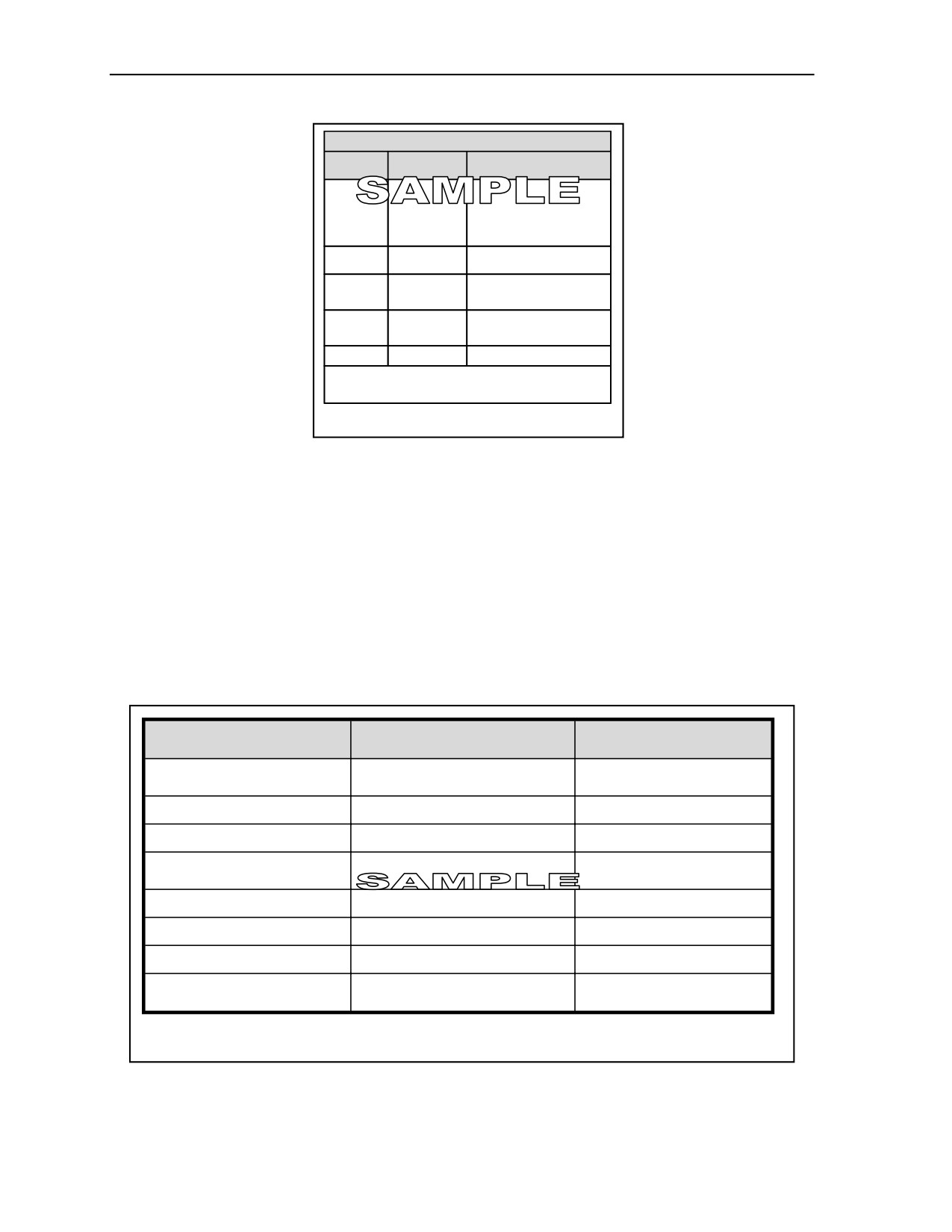
Phase of the operation—1—Isolate the enemy unit:
Priority
Category
High-payoff targets
1
Fire Support
Mortars
2
Maneuver
Insurgent teams
Mission
3
Cell phone
Command
Mission
4
FM radio
Command
5
Civilians
Hostile civilian crowds
*A hostile crowd is defined as 25 or more people with
leadership interfering or capable of interfering with the
BCT operations.
Legend:
BCT - brigade combat team
FM - frequency modulation
Figure D-1. High-payoff target list (sample)
TARGET SELECTION STANDARDS
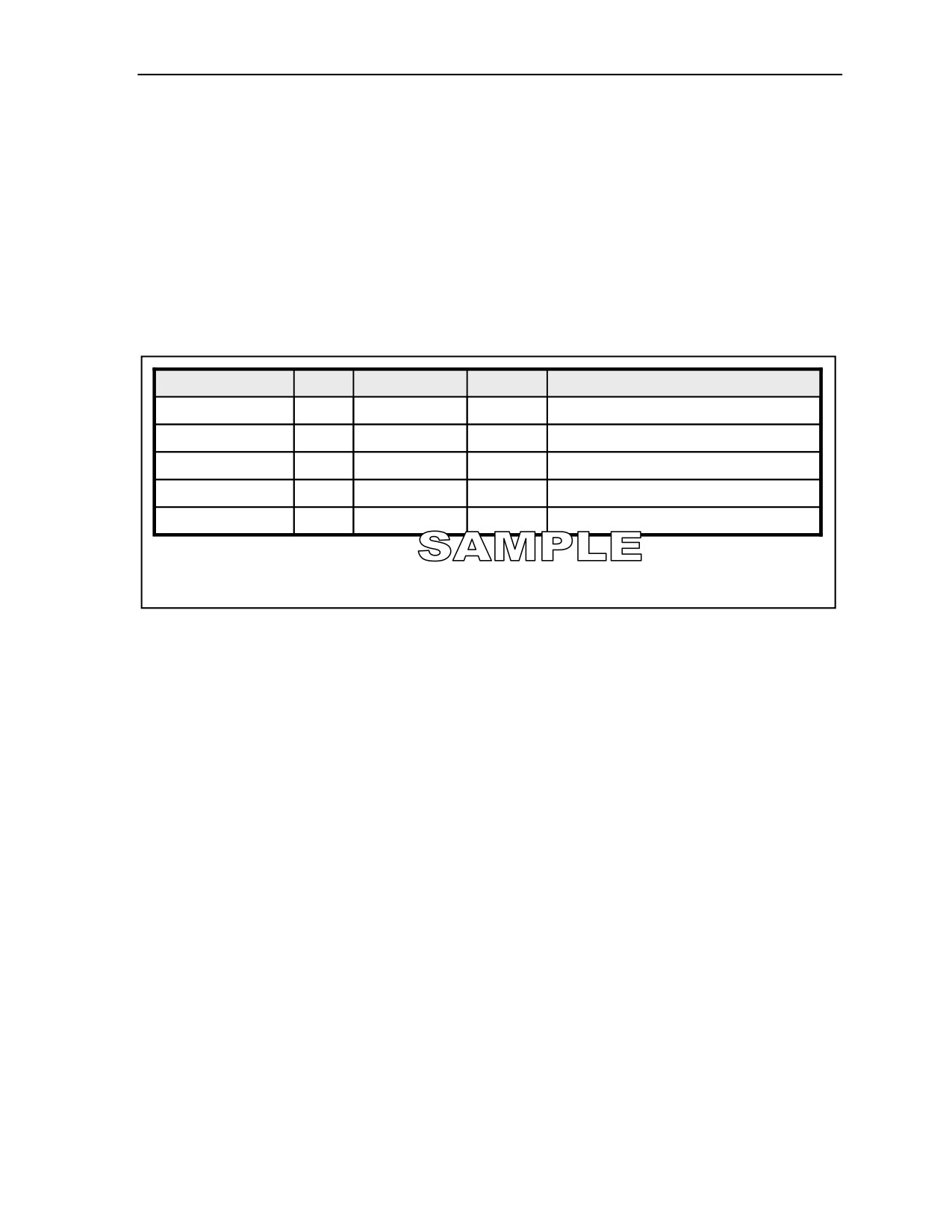
D-2. Target selection standards (TSS) (see the sample format in figure D-2 below) are usually comprised
of the essential elements listed below units may develop their own target selection format—
z
High-payoff target (HPT). This refers to the designated HPT that the collection manager is
tasked to acquire.
z
TIMELINESS. Valid targets are reported to weapon systems within the designated timeliness
criteria.
z
ACCURACY. Valid targets must be reported to the weapon system meeting the required target
location error
(TLE) criteria. The criteria are the least restrictive TLE considering the
capabilities of available weapons system.
High-payoff targets
Timeliness
Accuracy
COPs
3 hrs.
500 m
RISTA
30 min.
150 m
Rockets
30 min.
500 m
Missile Attacks
30 min.
500 m
15 min.
500 m
Air Defense Artillery
Command Post
3 hrs.
500 m
Ammunition
6 hrs.
1 km
Maneuver
1 hr.
150 m
Legend:
COP - communications operational planning system
RISTA - reconnaissance, intelligence, surveillance, and target acquisition
Figure D-2. Target selection standards matrix (sample)
D-2
FM 3-60
26 November 2010
Example Formats and Target Reports
ATTACK GUIDANCE MATRIX
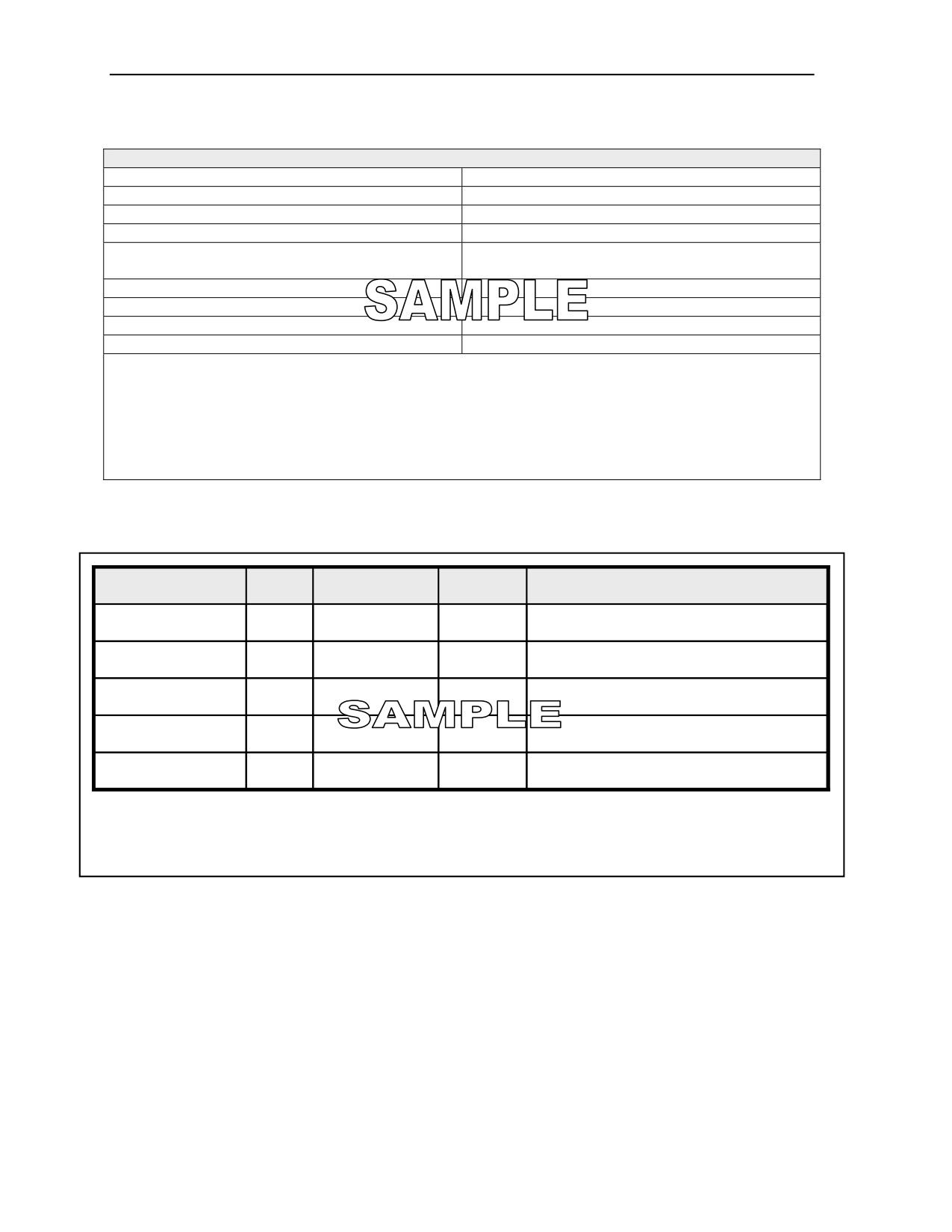
D-3. The attack guidance matrix (AGM) (see sample figure D-3) provides guidance on what HPT should
be attacked and when and how they should be attacked. Units may develop their own AGM format. The
AGM consists of the following elements—
z
HPTL. The HPTL is a prioritized list of HPT by phase of the operation.
z
WHEN. The WHEN column indicates the time the target should be engaged. (See the legend
below the example.)
z
HOW. This column indicates the weapon system that will engage the target.
z
EFFECT. The desired effects on the target or target system are stated in this column.
z
REMARKS. Remarks concerning whether or not battle damage assessment (BDA) is required,
whether coordination must take place, and so forth are indicated in this column.
High-payoff target
When
How
Effect
Remarks
Mortars
I
Field Artillery
Destroy
Use search and attack teams in restricted areas
Insurgent teams
I
Field Artillery
Neutralize
Destroy mission command
Cell phone
A
Electronic Attack
Disrupt
Disrupt service starting H-2
FM radio
A
Electronic Attack
Disrupt
No jamming until H-3 to preserve intelligence
Hostile civilian crowds
A
MISOP/MP
Dispersed
25 or more with leadership constitute crowd
Legend:
(A) - as acquired FM - frequency modulation H - hour (H-hour is the time for a scheduled event to begin.)
(I) - immediate MISOP - military information support operations MP - military police
Figure D-3. Attack guidance matrix (sample)
THE HIGH-PAYOFF TARGET LIST AND ATTACK GUIDANCE
MATRIX
D-4. In the samples below, there are two different formats for HPTL and associated AGM. Units may
develop their own HPTL and AGM formats. Table D-1 is a straightforward combined format compared to
table D-2. This allows the targeting working group to specify HPT in priority order with as much detail as
desired. It also allows the team to immediately specify the when, how, and restrictions information for
attack of the HPT. The HPTL and AGM will likely change as the situation changes from one phase or
critical event to another. Therefore, a separate HPTL and AGM can be prepared for each phase of the
battle.
26 November 2010
FM 3-60
D-3
Appendix D
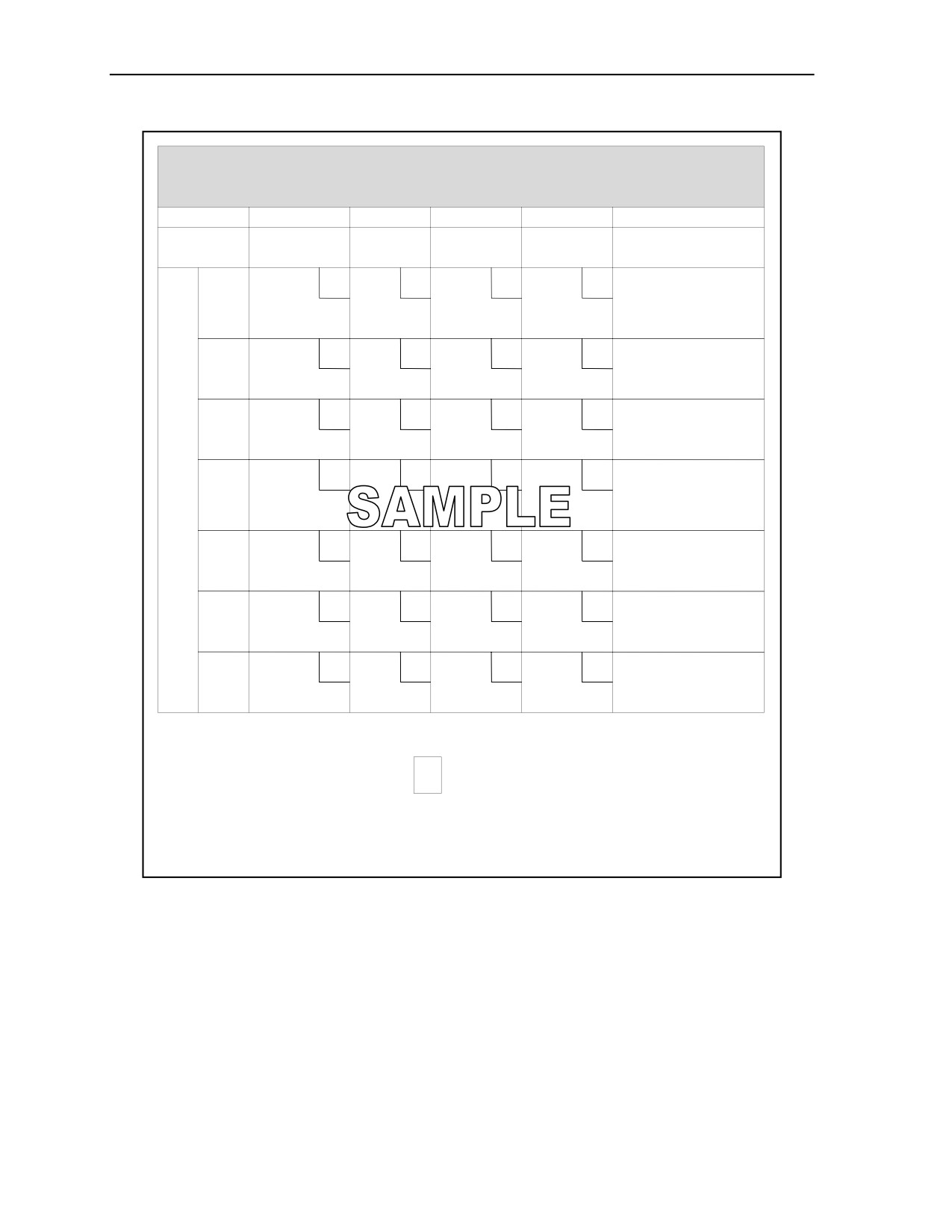
Table D-1. HPTL-AGM option 1 (sample)
Event or Phase: Attack through security zone
High-payoff target list
Attack guidance - when, how and restrictions
COPS
Prep, A, N cannon, and/or rocket
RISTA
Prep, A, N cannon, and/or rocket
Rockets
Prep, I, N cannon, and/or rocket
Prep, I, N cannon, and/or rocket
Missile attacks
Use corps assets beyond PL Diamond
Air Defense Artillery
SEAD. R, S
Command post
Prep, A, D
Ammunition sites
Prep, A, D
Maneuver and recon patrols
Prep, A, N
Legend:
WHEN ( I ) = Immediate
EFFECTS ( S ) = Suppress
WHEN ( A ) = As Acquired
EFFECTS ( N ) = Neutralize
WHEN ( P ) = Planned
EFFECTS ( D ) = Destroy
COPS - communications operational planning system
PL - phase line
Prep - preparation fires
RISTA - reconnaissance, intelligence, surveillance, target acquisition
SEAD - suppression of enemy air defense
Table D-2. HPTL-AGM option 2 (sample)
High-payoff target
When
How
Effect
Remarks
Insurgent Mortars
I
Field Artillery
Destroy
Use search and attack teams in restricted areas
Insurgent Teams
I
Field Artillery
Neutralize
Destroy mission command
Insurgent Cell Phone
A
Electronic Attack
EW
Disrupt service starting H-2
Insurgent FM Radio
A
Electronic Attack
EW
No jamming until H-3 to preserve intelligence
Hostile Civilian Crowd
A
MISOP/MP
Dispersed
25 or more with leadership constitute crowd
Legend:
(A) - as acquired
EW - jamming
FM - frequency modulation
H - hour (H-hour is the time for a scheduled event to begin.)
(I) - immediate
MISOP - military information support operations
MP - military police
COMBINED HIGH-PAYOFF TARGET LIST, TARGET SELECTION
STANDARDS, ATTACK GUIDANCE MATRIX
D-5. The doctrinal version of the AGM can be modified to make it more useful and practical. The format
below combines all three formats discussed in Chapter 2 into one format. The modified HPTL-TSS-AGM
is focused on exclusively attacking HPT. It can be completed in minutes and can be formatted in the
maneuver control system to allow for immediate transmission to all who need it. (See figure D-4.)
D-6. The CATEGORY column on the AGM is too generic to be useful. In the combined version, specific
HPT (according to phase, echelon, and so forth) are listed across the top. This sends a clear message that
only HPT will be attacked. If we accept the premise that the destruction of HPT will defeat the enemy (for
example, preclude successful completion of his mission), then we must concentrate our limited resources
only on HPT.
D-4
FM 3-60
26 November 2010
Example Formats and Target Reports
D-7. Down the left side, the weapon systems available to brigade, division, and corps are listed. This
allows for quick reference to determine which assets are available.
D-8. The WHEN column on the old AGM is unnecessary when attacking only targets identified as HPT.
The distinction between the terms as acquired and immediate becomes blurred to the point that they are
indiscernible.
D-9. HOW column loses most of its utility because the terms suppress and neutralize are too subjective for
commanders and fire support officers (FSO). As previously stated, if we are focused solely on HPT, the
destruction of those HPT is what will result in the defeat of the enemy.
D-10. In the modified version of the matrix each block contains the TSS, numbered 1 through 4, for the
following information:
z
Required TLE is given meters.
z
Required target size is described in type of units.
z
Activity of the target is described by moving or stationary.
z
Time of acquisition expresses the first actual spotting.
D-11. When these criteria are met, the applicable weapon system(s) is notified to engage the target. In the
case of targets that qualify for attack by more than one weapon, the weapon systems are prioritized. The
priority is listed in the upper right corner of the matrix block. (In the completed HPTL-TSS-AGM below,
fires brigade is the second priority for attacking the field artillery units listed as HPT number 1.)
D-12. The REMARKS column allows for the discussion of restrictions, constraints, or restraints involving
HPT or weapon systems. (For example, the Army tactical missile systems may only be used on semi-fixed
or soft-fixed targets.)
D-13. The phase of the operation and an effective date time group is included to eliminate confusion over
which version is current.
26 November 2010
FM 3-60
D-5
Appendix D
Phase: II
DTG: 030530 Jun02
HIGH-PAYOFF TARGETS
1
2
3
4
Priority
Remarks
Descriptions
Field Artillery
ADA
Maneuver
Command Post
1 100 m
5
2
3
3
Fires
2 Btry
Bn
3 Stat
4 1 hr
1 100 m
2
1
2
2
A
2 Btry
Fires
Bde
3 Stat
T
4 1 hr
T
1 100 m
1
1
2
2
A
2 Btry
MLRS
3 Stat
C
4 1 hr
K
1 100 m
1
1
1
1
Must request from corps
ATACMS
2 Btry
3 Stat
S
4 1 hr
Y
1 1 km
6
5
6
6
2 Btry
S
MNVR
3 Stat/Move
T
4 1 hr
E
1 500 m
3
3
4
4
2 Btry
M
ATK
Aircraft
3 Stat
4 1 hr
1 500 m
4
4
5
5
2 Btry
CAS
3 Stat
4 1 hr
Reference: Target SelectionStandard
1. Required TLE
4. Time acquired
2. Size
Priority of attack
3. Activity
Legend:
ADA - air defense artillery
ATK - attack
ATACMS - Army tactical missile system
Bde - brigade
Bn - battalion
Btry - battery
CAS - close air support
CP - command post
MLRS– multiple launch rocket system
MNVR - maneuver
Stat - stationary
Figure D-4. Combined HPTL TSS AGM (sample)
TARGET SELECTION STANDARDS WORKSHEET
D-14. The sample form below (figure D-5) incorporates TSS into a document that can be used to track and
confirm or deny targets generated by each sensor source. Units may develop their own target selection
standards worksheet format. The column headings are described below—
z
HPT. This column is used to list HPT.
z
SOURCE. This column is used to list the particular sensor agent.
z
TARGET LOCATION. This column is used to record the target by grid location.
z
ACCURACY (Target Location Error). This column lists the reliability of the sensor, normally
stated in meters.
D-6
FM 3-60
26 November 2010
Example Formats and Target Reports
z
TIME OF TARGET. This column is used to record the date time group the sensor acquired the
target.
z
TIME LIMIT. This column is used to tell the staff how old the acquisition can be and still be
attacked.
z
VALIDITY CONFIRMED. In this column, using YES or NO to record any confirmation by a
second source. Confirmation by another sensor may not be necessary depending on the sensor.
z
CLEARANCE CLEARED. This column is used to record who or what agency cleared the target
for attack. This is especially critical where the potential for fratricide exists.
TARGET SELECTION STANDARDS WORKSHEET
High-
Source
Target
Accuracy
Timeliness
Validity
Clearance
payoff
Location
(Target Location Error)
Confirmed
Cleared
Time of
Time Limit
target
Target
Figure D-5. Target selection standards worksheet (sample)
TARGETING SYNCHRONIZATION MATRIX
D-15. The sample targeting synchronization matrix has been successfully used to synchronize targeting by
assigning responsibilities to detect, deliver, and assess attacks on specific HPT. The HPT is listed in
priority by category under the DECIDE column. Units and agencies are listed under the DETECT,
DELIVER, and ASSESS columns across from the specific HPT for which they are responsible. As
responsibilities are fixed, the asset envisioned to be used is also indicated. This provides the targeting
working group the checks to ensure all assets are used and that assets or agencies are not overtaxed. This
form could also be prepared for a specific event or for each phase of the battle. Units may develop their
own targeting synchronization matrix format (See figure D-6).
26 November 2010
FM 3-60
D-7
Appendix D
Decide
Detect
Deliver
Assess
P
Category
HPT
Agency
Asset
Agency
Asset
Agency
Asset
Mortars
Fires Bde
Fire Finder
1-Fires Bde
1-Arty
Avn
INFLTREP
Rocket
----------------
----------------
2-Avn
MLRS
-------------
-------------
Fire
Artillery
G2
EAD assets
G2
Analysis
1
Support
-------------
-------------
----------------
----------------
-------------
-------------
Tactical
Ballistic
313 MI
Quick fix
313 MI
Quick fix
Missiles
-------------
-------------
-------------
-------------
-------------
-------------
-------------
Theater Missile
Fires
Fire Finder
Fires Bde
Arty, MLRS
----------------
-------------
-------------
-------------
-------------
-------------
-------------
Organic
Atk Aircraft
3-4 ADA
3-4 ADA
Organic
3-4 ADA
Organic
National
Fires Bde
Arty, MLRS
G2
Tactical
Fires Bde
SEAD
G2
Tactical
2
ADA
Enemy Air
Exploitation
Exploitation
Arty, MLRS
of National
of National
Theater Missile
Capabilities
-------------
-------------
Capabilities
Dat- linked
EAD
G3
aircraft
EAD ELINT
Launch Point
Fires Bde
Arty, MLRS
Air Force
INFLTREP
3
Recon
---------------
-------------
-------------
-------------
EAD ELINT
G2
EAD ELINT
Patrols
-------------
-------------
-------------
-------------
-------------
OPs
Organic
Bde
Organic
Bde
Organic
Legend:
ADA - air defense artillery
HPT - high-payoff target
Atk - attack
INFLTREP - in flight report
Arty - artillery
MLRS - multiple launch rocket system
Avn - aviation
MI - military intelligence
Bde - brigade
OP - observation post
EAD - echelons above division
P - priority
ELINT - electronic intelligence
Recon - reconnaissance
G2 - assistant chief of staff, intelligence
SEAD - suppression of enemy air defense
G3 - assistant chief of staff, operations
Figure D-6. Targeting synchronization matrix (sample)
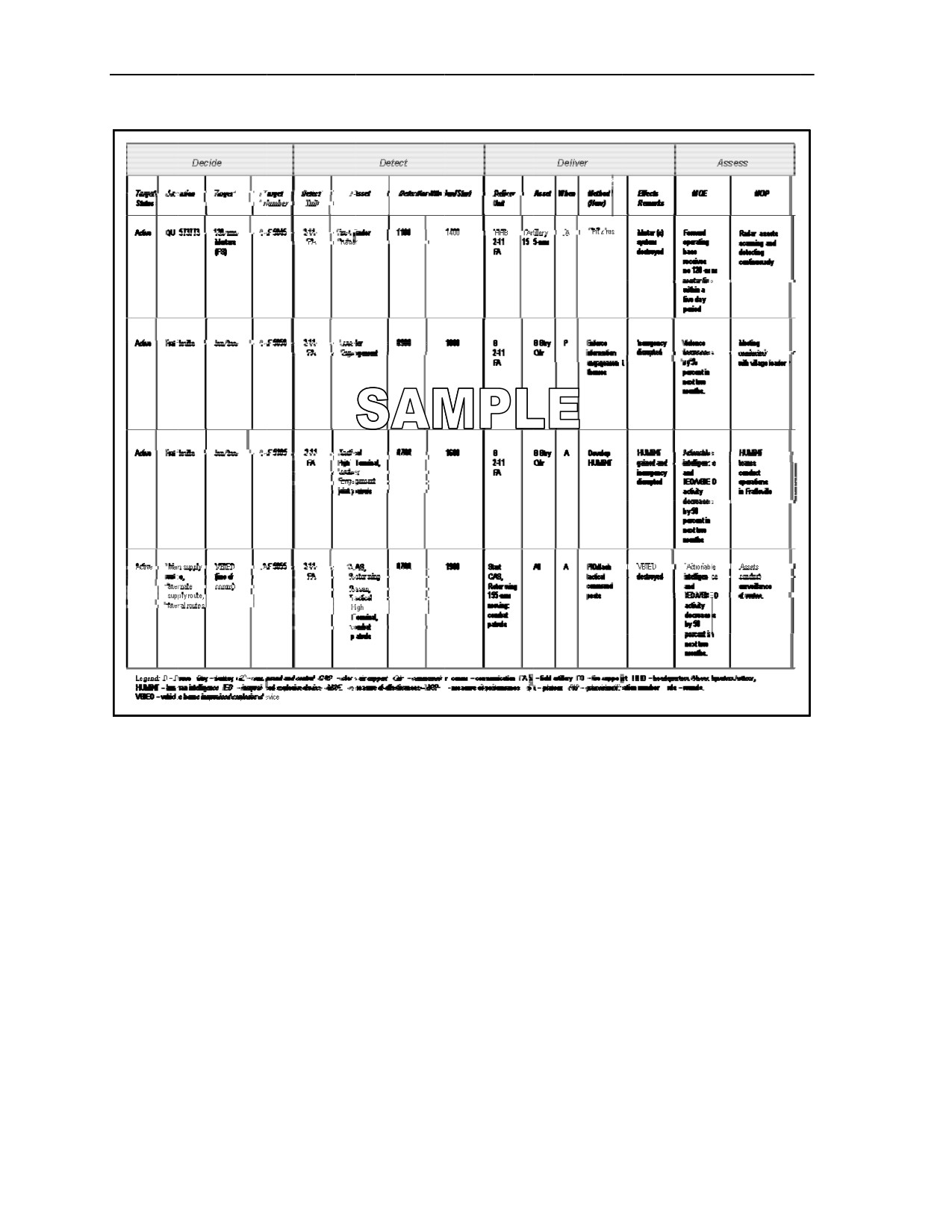
D-16. Both nonlethal and lethal assets may be included in the same matrix. Samples are shown in figures
D-7 and D-8. Units may develop their own lethal/nonlethal targeting synchronization matrix.
D-8
FM 3-60
26 November 2010
Example Formats and Target Reports
JFC objective: US/allied nationals, facilities and interests in region protected.
JFC desired effect: Country X unable to affect our ability to generate combat power (4th order effect).
Division desired effect: Enemy X unable to regain control of airfield (33rd order effect).
BCT task: Prior to H-1600 1st BCT disrupts 91st AFF Battalion indirect fire system (81-mm mortar) in area of operations HOG that can place indirect against GERONIMO
forward landing site and Route GOLD low water crossing from H-0300 to H+36.
Purpose: To enable 2nd BCT to seize lodgment, build combat power un-impeded, and transition to offensive operations (2ndorder effects).
BCT desired effect (end state): No effective enemy fires into the GERONIMO forward landing strip and Route GOLD low water crossings from H-0300 to H+36, when the
enemy is expected to infiltrate additional systems from adjacent area of operations.
Decide
Detect
Deliver
Assess
BCT
Targets
CAT
NAI
Time
Agency
Means
Agency
Means
Agency
Asset
MOP
MOE
cdr’s
&
trigger
desired
TAI
effects
Mortar
91
st
FS
TAI
H-36
BCT
Shadow
Spt
Rotor wing
BCT
Shadow
Leaflets
91st AFF
crew/
AFF
156
intell
UAV
division/
assets
intell
UAV
dropped
unable to
forward
mortar
157
co
system
corps
support the
co
and
effectively
talk or
dissemination
observers
crews
defects
aviation
HUMINT
30% of
deliver fires
of MISOP
unable to
and
mortar
bn
mortar
_
leaflets to
function
forward
positions
influences
positions
Thus: 91st
effectively
obs
crews and
AFF (LWC)
forward
fires into
observers
GERONIMO
to abandon
forward
their
landing site
positions
and route
Local
Village
Recon
Towns
H-36
Bn
Patrols
Tactical
Supporting
BCT
HUMINT
Local
GOLD low
leaders
leaders
in the
H-24
task
conduct
high
division/
intell
Patrols
leaders
water
and
and
vicinity
force
recon
terminal
Corps
co
and
crossing
populace
of
and
public
&
and post
MISOP
populace
disrupted
willing and
TAI
MISOP
BCT
handbills
teams
from H-
able to
personnel
report
156
0300 to
supply
intell
deliver
(DS)
mortar
&
H+36,
timely and
co
handbills
locations
accurate
157
when the
to
and
information
enemy is
influence
number
local
of
expected to
leaders
deserters
infiltrate
and
that may
additional
populace
be
systems
IPJ110
mortar
from
crews or
adjacent
forward
areas of
obs
operations
_
Fire
91
st
FS
AO
H-8
BCT
Prophet
BCT
Commando
BCT
Prophet
No
Thus: 2nd
support
AFF
HOG
intell
detects
intell
solo net
intell
comm
BCT is able
mission
msn
co
locates,
co and
disrupts
co
from 91st
to seize
command
cmd
and
supporting
91st
AFF
lodgment
rendered
monitors
joint
AFF comm
detected
build
ineffective
91st AAF
forces
by intrusion
FS msn
combat
capabilities
on AFF
cmd
power
frequency
effectively
unimpeded
modulation
disrupted
and
call for fire
transition to
& mission
offensive
command
operations
net w/msg
IJ3210
Legend:
AO - area of operations
FS - fire support
msg - message
BCT - brigade combat team
H - hour (H-hour is the time for a scheduled event to begin.)
msn - mission
bn - battalion
HUMINT - human intelligence
NAI - named area of interest
CAT - category
intell - intelligence
Recon - reconnaissance
cdr - commander
JFC - joint forces commander
spt - support
cmd - command
LWC - low water crossing
TAI - target area of interest
co - company
MISOP - military information support operations
UAV - unmanned aircraft vehicle
comm - communication
MOE - measure of effectiveness
obs - observers
DS - direct support
MOP - measure of performance
US - United States
Figure D-7. Combined lethal/nonlethal targeting synchronization matrix (sample)
26 November 2010
FM 3-60
D-9
Appendix D
Figure D-8. Alternate
targeting synchronization matrix format (sample)
DELIVERY STANDARDS
MATRIX
D-17.
The sample delivery standards matrix provides criteria for the attack of
HPT in each phase of the
battle.
Units may develop their own
delivery standards matrix format. It also facilitates objective
decisionmaking for attacking targets at the lowest level possible. Key personnel, such as the
field artillery
intelligence officer (FAIO), fires cell targeting officer, and the battalion fire direction officer, all refer to the
matrix. When HPT are identified they are automatically engaged if they meet
the criteria established by the
matrix. (See figure D-9.) The matrix provides the
following descriptions for each HPT by category for each
phase
of the operations—
z
TLE.
z
Size of the target.
z
Target activity.
z
Time of acquisition.
D-10
FM 3-60
26 November 2010
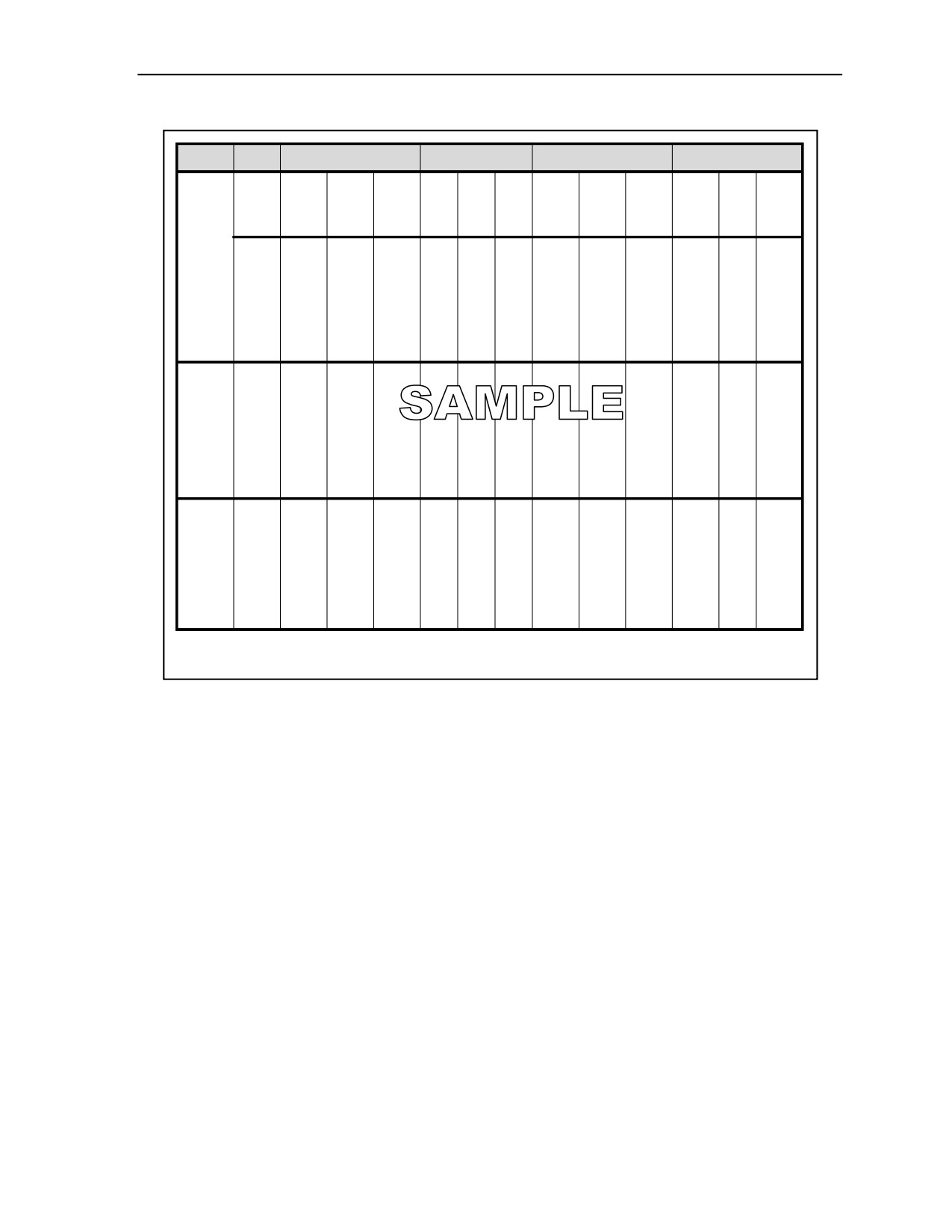
Example Formats and Target Reports
Category HPTs
Target Location Error
Size of Unit
Stationary/Moving
Time (Last Verification)
Fires
CAS/
Atk
CAS/
Fires
Atk
Fires
CAS/
Atk
Fires
CAS/
Atk
Bde,
AI
Air
AI
Bde,
Air
Bde,
AI
Air
Bde,
AI
Air
Fires
Fires
Fires
Fires
Bn
Bn
Bn
Bn
100 m -
OPS
200 m
500 m Sec Sec
Sec
Stat
Stat
Stat
72 hrs
72 hrs
48 hrs
200 m
----------------------------------------------------------------
-----------------------------------------
Recon
100 m -
200 m
1 km
Sec Sec
Sec Stat
Stat
Stat/
2 hrs
1 hr
1 hr
Patrols
200 m
Move
-------------------------------------------------------------------------------------------------------------------------------------------------------------------------
Launch
100 m –
200 m
1 km
Sec
Sec
Sec
Stat
Stat
Stat/
12 hrs
6 hrs
6 hrs
Points
200 m
Move
Hostile
100 m -
200 m
Sec
Sec
Stat
Stat
2 hrs
1 hr
Air
200 m
------------------------------------------------------------------------
-
--
-----------------------
---------------------------------------------------------
100 m -
200 m
Sec Sec
Stat
Stat
2 hrs
1 hr
ADA
Aircraft
200 m
-------------------------------------------------------------------------------------------------------------------------------------------------------------------------
Missile
100 m -
200 m
Sec
Sec
Stat
Stat
2 hrs
1 hr
Threats
200 m
100 m -
200 m
500 m Btry Bn
Bn
Stat
Stat
Stat
1 hr
2 hrs
2 hrs
Airfields
200 m
-------------------------------------------------------------------------------------------------------------------------------------------------------------------------
FS
200 m
1 km
Btry
Bn
Bn
Stat
Stat
Stat/
1 hr
2 hrs
2 hrs
Rockets
100 m -
200 m
Move
---------------------------------------------------------------- ---------------------------------------------------------------------------------------------------------
Tactical
100 m -
200 m
1 km
Btry
Bn
Bn
Stat
Stat
Stat/
1 hr
2 hrs
2 hrs
Missiles
200 m
Move
Legend:
ADA - air defense artillery Atk Air - attack aircraft
Bde - brigade
Bn - battalion Ai - air interdiction Btry - battery
CAS - close air support
FS - fire support
HPT - high-payoff target OP - observation post Recon - reconnaissance
Sec - section
Stat - stationary
Figure D-9. Delivery standards matrix (sample)
TARGET REPORT
D-18. When targeting information is passed from one agency to another, all essential information must be
included to allow for proper analysis and attack. The sample format below will give the targeting working
group enough information to properly formulate the best attack response. (See table-D-3.) Units may
develop their own target report format.
26 November 2010
FM 3-60
D-11

Appendix D
Table D-3. Target report (sample)
LINE NUMBER
1. Report Agency: COLT
2. Type of Sensor: Human
3. Report DTG: 190044ZNov08
4. Acquisition DTG: 190040ZNov08
5. Distribution: Unknown
6. Posture1: Moving
7. Activity2: Traveling east towards village
8. Size3:5 white pick trucks
9. Location4: 1000010000
10. Location Error5: 10 meters
NOTES:
1Dug-in, in the open, in built-up areas, and so on.
2Moving (direction) or stationary.
3Unit size, diameter, and so on.
4Grid coordinates
5+/- meters
AIR TASKING ORDERS
D-19. The air tasking order is a method used to task and disseminate to components, subordinate units, and
other agencies the projected sorties, capabilities, and/or forces to targets and specific missions. Normally
provides specific instructions to include call signs, targets, controlling agencies, weapons loads, as well as
special instructions. (Joint Publication [JP] 3-30). The joint air tasking cycle is used to develop the air
tasking order that articulates the tasking for all joint air operations for a specific execution timeframe,
normally 24 hours.
D-20. The air operations center normally establishes a 72- to 96-hour air tasking planning cycle. The battle
rhythm or daily operations cycle (schedule of events) articulates suspense’s for targeting, air support
requests, airspace control means requests, and the air battle plan. The battle rhythm is essential to ensure
information is available when and where required to provide products necessary for the synchronization of
joint air operations with the joint force commander (JFC) continuity of operations and for supporting other
Service components’ operations. See table D-4 for an air tasking order example.
D-12
FM 3-60
26 November 2010
Example Formats and Target Reports
Table D-4. Air tasking order (example)
EXER/PACIFICA//
MSGID/ATO/505 ECS DOO/ATOAA/FEB///TIMEFRAM/FROM:101200ZFEB2008/TO:111159ZFEB2008//
HEADING/TASKING//TSKCNTRY/DA//SVCTASK/D//
TASKUNIT/1 COMP SQ/ICAO:KHIF//
AMSNDAT/7000/-/-/-/TAL/-/-/DEPLOC:KHIF/ARRLOC:KHIF//
MSNACFT/1/ACTYP:C130H/GOLD08/CP1/-/142/27000/37000//
TASKUNIT/1-3 ATK HEL BN/ICAO:KINS//
AMSNDAT/1601/-/-/-/GATK/-/30M/DEPLOC:KINS/ARRLOC:KINS//
MSNACFT/6/ACTYP:AH64A/BLACKIE01/BEST/-/113/21601/31601//
TASKUNIT/1 FTR SQ/ICAO:KLSV//
AMSNDAT/7245/-/-/-/XCAS/-/-/DEPLOC:KLSV/ARRLOC:KLSV//
TASKUNIT/1 RECCE SQ/ICAO:KLUF//
AMSNDAT/1501/-/-/-/GREC/-/15M/DEPLOC:KLUF/ARRLOC:KLUF//
TASKUNIT/USS BOISE/ICAO:N764//
MTGTLOC/P/8002/-/-/NLT:101202Z/ID:0992E50058DD001/UNK/T/1/-/E19116
/DMPID:373800.0N1181454.0W/-//
TASKUNIT/15TH SPECIAL OPERATIONS SQ/ICAO:KDMA//
AMSNDAT/1300/-/-/-/SOF/-/-/DEPLOC:KDMA/ARRLOC:KDMA// MSNACFT/1/ACTYP:MC130H//
AIRMOVE/1/-/-/-/101530ZFEB/NNN/101531Z//CONTROLA/AWAC/COUSIN/-//
AIRDROP/-/LATS:334959N1180500W/-//
TASKUNIT/319AREFW/ICAO:KSLC//
AMSNDAT/5630/-/-/-/AR/-/-/DEPLOC:KSLC/ARRLOC:KSLC//
MSNACFT/1/ACTYP:KC135R/TEXACO30/TTF/-/111/25630/35630//
AMSNLOC/101520ZFEB/101630ZFEB/CHERRY ANCHOR/250//
REFTSK/BOM/KLBS:077/-/-//5REFUEL/MSNNO/RECCS/NO/ACTYPE/OFLD/ARCT /-//
HEADING/ATO SPECIAL INSTRUCTIONS (SPINS)//
GENTEXT/GENERAL SPINS INFORMATION/
SPINS INDEX
1 GENERAL INFORMATION
1.1. ADDITIONAL INSTRUCTIONS SECTION 15 CONTAINS
1.1.1. TIME SENSATIVE TARGETS
1.1.2. KILL BOX PROCEDURES
1.1.3. INTELLIGENCE, SURVALLIANCE, AND RECONNISANCE
2 COMMANDERS GUIDANCE
2.1. RESTATED MISSION
3 C2 BATTLE MANAGEMENT PLAN
4 RULES OF ENGAGEMENT (ROE)
5 PERSONNEL RECOVERY PROCEDURES
6 COMMUNICATIONS PLAN
7 ELECTRONIC WARFARE PLAN
8 ANTIAIR-WARFARE PLAN NO INPUT
9 THEATER POINT OF CONTACT NO INPUT
10 COMPOSITE AIR OPERATIONS NO INPUT
11 TANKER PROCEDURES
12 STRATEGIC AND THEATER AIRLIFT INSTRUCTIONS NO INPUT
13 SPACE WARFARE
14 AIRLIFT
15 ADDITIONAL INSTRUCTIONS
16 AIRSPACE CONTROL INSTRUCTIONS
26 November 2010
FM 3-60
D-13
Appendix D
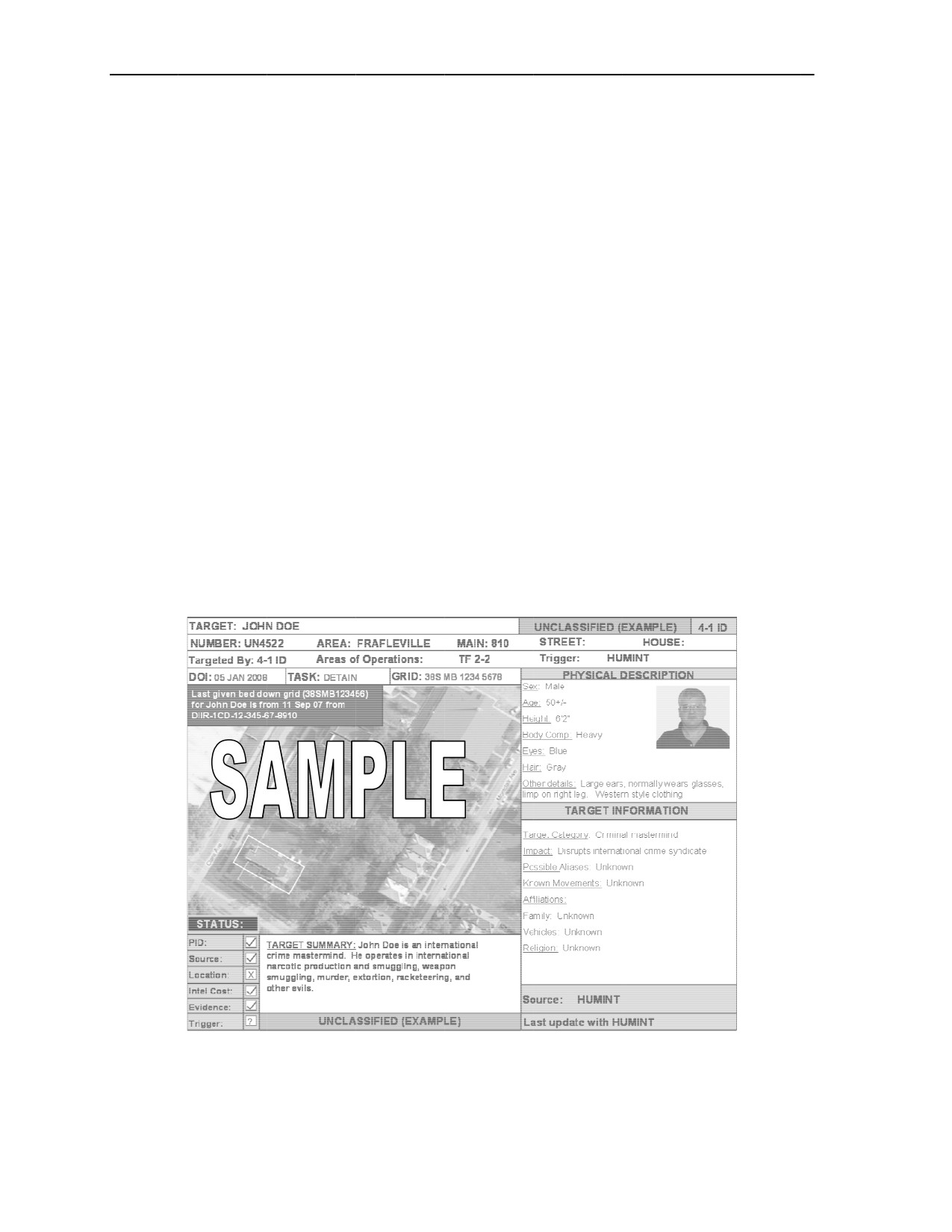
TARGET INFORMATION FOLDER
D-21.
Target information folders have proven to
be an efficient and effective way of tracking information
related
to high-value
individuals (HVI). The target information
folders normally include a
“baseball card,”
which
is a summary of the key
information on the HVI. The “baseball
card” normally includes the
following information—
z
Map of HVI area.
z
Picture of
HVI.
z
Personal history of HVI
z
Patterns of life for HVI
includes the where, when, who, what, and the how.
z
Cell phone number for HVI.
z
Car identification.
D-22.
The target information folder will also contain additional
information as it becomes available—
z
Human intelligence reports on the HVI.
z
Signal intelligence reports that reference the HVI.
z
Imagery/floor plans of likely areas.
z
Link diagrams (social/communications networking), both from human intelligence and signal
intelligence sources.
z
Previous concept of operations targeting the HVI.
z
Patrol debriefs.
z
Significant activities regarding the HVI.
z
Biometrics.
D-23.
Figures D-10
through D-15
are samples
of the information that may be contained in a target
information folder. Units may develop their own
format.
Figure D-10. Baseball
card (front side) (sample)
D-14
FM 3-60
26 November 2010
Appendix E
Targeting Checklist
DECIDE
_____The commander's planning guidance and intent contain enough detail to enable the targeting working
group to determine—
z
High-value targets (HVT) to nominate as high-payoff targets (HPT)?
z
Desired effects on each HPT?
z
When to attack each HPT?
z
How to attack each HPT?
z
Any restrictions or constraints?
z
Which HPT requires battle damage assessment (BDA)?
_____What targeting assets (organic, attached, and supporting) are available to detect and attack HPT?
_____What detect, deliver, and assess support is needed from higher headquarters?
_____When must requests to higher headquarters be submitted to obtain the support required?
_____Have target tracking responsibilities been established?
_____Are systems in place to pass the detected targets to assets that are capable of tracking them?
_____What detect, deliver, and assess support is required from subordinate units, and when is it required?
_____What detect, deliver, and assess support requests have been received from subordinate units, and what has
been done with them?
_____Has the AGM been synchronized with the decision support template and the maneuver and fire support
plans?
_____Are all commands using a common datum for locations? If not, are procedures in place to correct
differences in datum?
DETECT
_____Does the collection plan focus on priority intelligence requirement (PIR) HPT? (This includes HPT
designated as PIR.)
_____What accuracy, timeliness, and validity standards target selection standards (TSS) are in effect for
detection and delivery systems?
_____Are all target acquisition assets fully employed?
_____Have backup target acquisition systems been identified for HPT?
_____Have responsibilities been assigned to the appropriate unit and/or agency for detection of each HPT?
26 November 2010
FM 3-60
E-1
Appendix E
_____Are HPT being track?
_____Have verification procedures using backup systems been established where necessary?
_____Are target acquisition and BDA requirements distributed properly among systems that can accomplish
both?
DELIVER
_____Have communications links been established between detection systems, the decisionmaker, and delivery
systems?
_____Have responsibilities been assigned to the appropriate unit and/or agency for attack of each HPT?
_____Has a backup weapon system been identified for each critical HPT? (The primary system may not be
available at the time the HPT is verified.)
_____Have fire support coordination measures (FSCM) and/or AGM and clearance procedures been established
to facilitate target engagement?
_____Have on order FSCM and/or AGM been established to facilitate future and transition operations?
_____Have potential fratricide situations been identified, and have procedures been established to positively
control each situation?
_____Have responsibilities been assigned to the appropriate unit and/or agency for tracking specified HPT and
providing BDA on specified HPT?
_____What are the procedures to update the high-payoff target list (HPTL) and synchronize the AGM and
decision support template if it becomes necessary to change the scheme of maneuver and fire support as the
situation changes?
ASSESS
_____Are the collection assets, linked to specific HPT, still available?
_____Have the collection asset management been notified of the attack of a target requiring assessment?
_____Have the assessment asset managers been updated as to the actual target location?
_____Has all coordination been accomplished for the assessment mission, particularly airborne assets?
_____What is the status of BDA collection?
_____Has the information from the mission been delivered to the appropriate agency for evaluation?
_____Has the targeting working group reviewed the BDA to requests for redirection of air assets?
_____Has the target intelligence gathered from the assessment been incorporated into the overall enemy
situational development?
E-2
FM 3-60
26 November 2010

Appendix F
Sample Targeting Working Group Standard Operating
Procedures
This appendix provides guidelines for developing a standard/standing operating
procedure (SOP) for targeting working groups. Each unit must develop a SOP that is
based on the unique mission, organization, equipment, personnel, and philosophy of
the commander.
TARGETING WORKING GROUP SOP
F-1. The following example of a targeting working group SOP covers most of the functional areas
needing standardization in corps and division targeting working groups. The SOP may be adjusted to serve
as a model for brigade and lower echelons.
PURPOSE
F-2. The SOP provides guidelines, routine functions, and to delineate responsibilities for day-to-day
operations in the targeting working group.
ORGANIZATION
F-3. The chief of fires leads the targeting working group. In his absence, the assistant chief of staff,
operations (G-3) will be the alternate. Membership of the targeting working group routinely consists of
representatives from the following staff sections and major subordinate commands. (See figure F-1 below.)
G-2
G-2 Plans/Ops
ALO
DCOF
FAIO
G-3
G-2 Targeting
AVLO
Div/Bde LNO
PSYOP Officer
G-6
G-3 Plans/Ops
COF
DSO
SJA
G-7
ADAM/BAE
CHEMO
Engineer
SOF LNO
G-9
AMD
Collection Manager
EWO
SWO
Legend:
ADAM/BAE - air defense airspace management/brigade aviation element
AVLO - aviation liaison officer
AMD - air missile defense
CHEMO - chemical officer
ALO - air liaison officer
DCOF - deputy chief of fires
COF - chief of fires
DSO - deception staff officer
Div/Bde LNO - division/brigade liaison
FAIO - field artillery intelligence officer
EWO - electronic warfare officer
LNO - liaison
G-2 - assistant chief of staff, intelligence
Ops - operations
G-3 - assistant chief of staff, operations
PSYOP - psychological operations
G-6 - assistant chief of staff, signal
SJA - staff judge advocate
G-7 - assistant chief of staff, information engagement
SOF LNO - Special operations forces liaison
G-9 - assistant chief of staff, civil affairs operations
SWO - staff weather officer
Figure F-1. Targeting working group (example)
CONDUCT
F-4. The targeting working group agenda is divided and briefed during current and future operations. (See
figure F-2.) The chief of staff directs the board process and keeps the members focused on the unit mission,
commander’s intent, targeting guidance, and targeting priorities. The targeting agenda is included in routine
staff meetings or drills. Meeting times should be established to allow timely coordination of the parallel
targeting effort of senior and subordinate headquarters.
26 November 2010
FM 3-60
F-1

Appendix F
F-5. The staff weather officer begins the session by providing current and predicted weather and its
effects on combat operations for the next 72 to 96 hours. Next, the team examines the current situation
(present to 24 hours). The G-2 and G-3 brief the enemy and friendly situation with emphasis on current
attacks being conducted. The G-2 collection manager briefs battle damage collection currently in effect and
possible high-payoff target (HPT) nominations for immediate reattack.
F-6. The current operations agenda involves enemy and friendly situation updates from the G-2 and G-3
that impact on the high-payoff target list (HPTL) and the attack guidance matrix (AGM). They confirm the
joint air missions for the following day nominated targets or changes to targets. A significant change in the
situation would warrant redirecting allocated joint air capabilities. If there are no significant changes,
planning continues for the use of aircraft to support ground operations. The G-3 plans officer briefs a
review of operations planning for the next day. G-3 operations brief the concept of operations against the
targets assigned. The G-2 collection manager briefs the collection plan to validate targets and pursue battle
damage assessment (BDA) based on the target guidance and target priorities. The executors of planned
operations brief their respective execution matrixes and conduct any remaining staff coordination needed.
The fires cell coordinates the use of Army indirect fires, joint fires, and electronic attacks through the
targeting process. This includes the following—
z
Coordinate all suppression of enemy air defense (SEAD) missions.
z
Develop and recommend fire support coordination measures (FSCM) to support the concept of
operations.
z
Monitor the status of friendly artillery units.
z
Coordinating all Army Tactical Missile System missions controlled by the headquarters.
z
Posting the status of friendly maneuver brigades.
F-7. The future operations agenda involves the G-2 and G-3 briefing the anticipated enemy and friendly
situations. A review of the war gaming session for this time period is discussed with the chief of staff.
Recommended target guidance, target priorities, and objectives are provided to the commander for
approval. Targets nominated to support corps and division objectives and priorities are approved and
forwarded through channels to the battlefield coordination detachment. G-3 plans briefs shaping operations
and attacks for corps or division assets.
What
Who
Why
Current SITREP / CCIR
G-3 Operations
Situation Update
Current Enemy Situation
ASPS
Provide Planning Baseline
Special Staff Considerations
Special Situation
As Requested
Air Status
Air Liaison Officer
Update Allocations
Army Aviation Status
AVN LNO
Review Status and Mission
Collection Plan
AMD
Projected 72-hour Focus
IEW Status
IEW Representative
Review Baseline Priorities
24, 48, 72, and 96- Hour Forecast
G-3 Plans
Projected Division Operations
ASPS
Projected Enemy Sets
Targeting Officer
Target Nominations
Approve
Chief of Staff
Decision
Nominations: Long-range
Target Focus
Review Attack Guidance / HPT Deputy, Chief of Fires
Validate; Recommend Changes
Final Guidance
Chief of Staff
Legend:
AMD - air and missile defense
G-3 - assistant chief of staff, operations
ASPS - all-source production section
HPT - high-payoff target
ATO - air tasking order
IEW - intelligence electronic warfare
AVN LNO - aviation liaison
SITREP - situation report
CCIR - commander's critical information requirements
Note. 24, 48, 72, and 96-hours correspond to the ATO cycle. The 24-hour forecast is the current ATO.
Figure F-2. Targeting working group agenda (example)
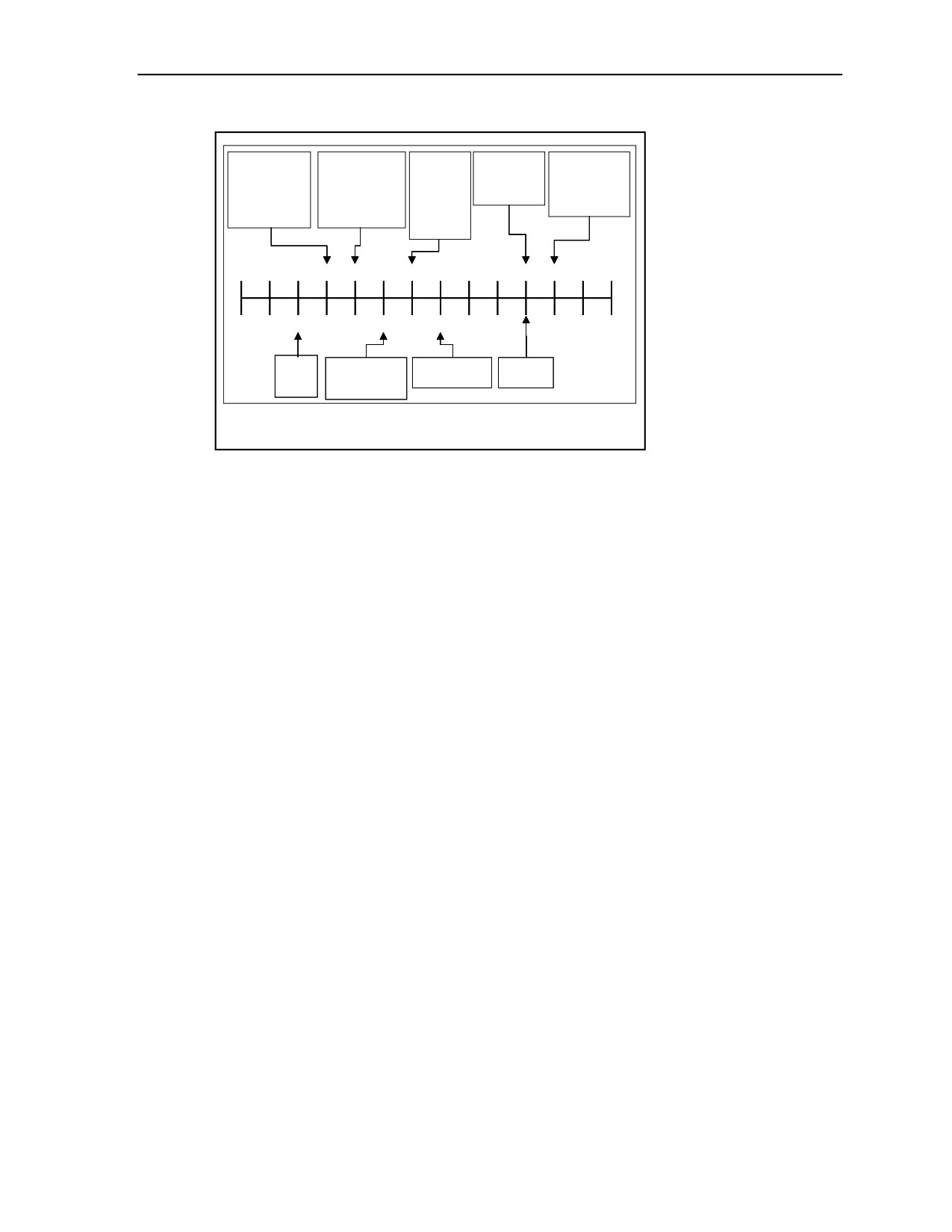
F-8. Scheduled meetings between corps and division provide an interactive process for the planning and
coordinating the allocation of available joint air capabilities during the execution of the joint air tasking
cycle (see figure F-3). These meetings synchronize the corps and division current/future operations with the
usually at least five joint air tasking orders at any given time for future actions, today’s plan, tomorrow’s
plan, and the day after tomorrow’s plan to include the plan in strategy development. The continuous
assessment conducted during these meetings allows for the targeting working group to focus on lessons
learned, deliberate targeting, and time-sensitive targets (TST) in the detect and deliver function during the
D3A methodology.
F-2
FM 3-60
26 November 2010
Sample Targeting Working Group Standard Operating Procedures
Division
1. Division
1. Division
Division
Targeting board
commander’s
commander’s
LNO departs
commander’s
meets on future
morning update;
morning
for corps
evening
HPT (AI
review
conference call
targeting
update.
nominations
HPT, AI,
2. AI nominations
board.
developed).
and BDA.
passed to corps
2. FRAGO
released.
0000
0600 0800
1000
1400
2000 2100
2400
0200 0400
0900
1100
1800
2200
ATO
Targeting board
Corps targeting
ATO
cycle
meets on
board meets
published
begins
close/current
Legend:
ATO - air tasking order
AI - air interdiction
BDA - battle damage assessment
FRAGO - fragmentary order
HPT - high-payoff target
LNO - liaison officer
Figure F-3. Meeting times interface between corps and division (example)
RESPONSIBILITIES: CURRENT OPERATIONS AGENDA
F-9. The following paragraphs discuss the responsibilities of individual staff officers and sections for the
current operations agenda.
Staff Weather Officer
F-10. The staff weather officer briefs the weather forecast to include light weather data for the next 96
hours. The light weather data impacts friendly air operations for fixed-wing and rotary-wing aircrafts.
Operations
F-11. Briefs recently completed or ongoing attacks and their effects on the current battle. Current
operations briefs the following—
z
Changes to task organization.
z
Current FSCM.
z
Relative combat power of all friendly maneuver brigade size units.
z
Friendly maneuver unit locations.
z
Friendly operations (last 24 hours).
z
Friendly scheme of maneuver (next 24 hours).
F-12. Representatives of the executing agencies of each shaping operations (corps and/or division aviation,
special operations forces, and others as needed) brief their execution matrix. They may request input or
additional guidance from the chief of staff.
Targeting Officer
F-13. The G-2 targeting officer presents BDA obtained from division, corps, and echelons above corps
intelligence gathering assets on critical HPT attacked by division, corps, supporting, and subordinate units.
Specificity and timeliness are essential. The targeting officer must be proactive in receiving BDA because
the degradation of specific targets may be a trigger mechanism for future operations. The corps G-2 and
aviation combat element help the targeting officer review and formulate BDA. Target nominations are for
immediate reattack of HPT is made at this time.
26 November 2010
FM 3-60
F-3
Appendix F
Plans
F-14. The G-2 plans officer briefs the disposition of important enemy units and associated systems impact
on the unit mission. The G-2 also briefs the most likely enemy course of action (COA) in the next 24 to 48
hours.
F-15. The G-3 plans officer reviews the plans for the next 24 to 48 hours that have been handed off to
subordinate units for execution. The G-3 briefs the current concept of operations.
Fires Cell
F-16. The deputy chief of fires discusses the approved targeting guidance, HPTL, AGM, and target
selection standards
(TSS) with the team in light of the G-2 and G-3 situation briefings. The team
determines if changes are required.
Collection Management Officer
F-17. The collection management officer reviews the intelligence collection plan for all division, corps, and
echelons above corps systems that will assist in targeting. The collection management officer highlights
those HPT that cannot be covered with available assets. The guidance is received from the chief of staff on
specific or additional requirements.
Air Liaison Officer
F-18. The air liaison officer works closely with the land operations planners to estimate the most likely
outcome resulting from employing joint air assets to achieve a specific effect. The following is presented
for each target—
z
Description.
z
Location.
z
Type and amount of aircraft to attack (package).
z
Ordnance.
z
Time on target.
z
Any significant changes based on the friendly and/or enemy situation can direct a force packages
to operate in a different part of the operational area. It must be approved by the chief of staff
because of their knowledge of the complete operational picture.
Information Engagement Officer
F-19. The information engagement officer briefs the inform and influence activities for following—
z
Command operational picture.
z
Requirements for combat camera, operations security, and civil affairs operations.
z
Running estimate for information operations.
z
Deconfliction methods for internal and external actions.
z
Coordination with outside agencies, higher headquarters, and augmenting forces.
Civil Affairs Officer
F-20. The civil affairs officer briefs the current civilian situation which covers the effect of civilian
populations on operations, plans for civilian interference in the area of operations, and the civil affairs
mission. Advises the commander on the employment of military units and assets that can support civil
affairs operations.
RESPONSIBILITIES: FUTURE OPERATIONS AGENDA
F-21. The following paragraphs discuss the responsibilities of individual staff officers and sections for the
future operations agenda. There are three primary briefers for the future operations agenda: G-2 and
G-3 plans officers and fires cell representative (usually the deputy chief of fires or and fire support officer
F-4
FM 3-60
26 November 2010
Sample Targeting Working Group Standard Operating Procedures
(FSO). Others who might brief during the future operations agenda (depending on the effect targeting has
on their mission areas) include the following—
z
Aviation liaison officers.
z
Fires cell targeting officer.
z
Engineer.
z
Information engagement officer.
z
Deception officer.
z
Electronic warfare (EW) officer.
z
Special operations forces liaison (if provided).
z
Staff judge advocate representative.
z
Air defense airspace management/brigade aviation element.
z
Liaison officers.
z
Civil affairs representative.
z
Chemical, biological, radiological, and nuclear officer.
z
Psychological operations representative.
z
Signal support officer.
Plans Officer
F-22. The G-2 plans officer briefs the disposition of important enemy units and associated systems
impacting on the unit mission. He also briefs the most likely enemy COA. This briefing includes enemy
follow on forces anticipated to be committed in the unit sector and other forces that will affect future
operations. The briefing includes potential HPT that if nominated for attack, meet the commander’s intent
and if not attacked will significantly impact on future operation plan (OPLAN).
Plans Officer
F-23. The G-3 plans officer will brief any divisional or corps/division operations planned during this time
period. The G-3 plans also briefs any branches or sequels to the current OPLAN.
Fires Cell
F-24. The deputy chief of fires discusses Army indirect fires, joint fires, and electronic attacks and presents
a decision briefing on proposed targeting guidance and priorities. This includes—
z
Recommended target guidance, objectives, and priorities.
z
Recommended HPTL, AGM, and TSS.
z
Proposed prioritized target list to be forwarded to higher headquarters for execution and
targeting tasking for subordinate units.
Aviation Liaison Officer
F-25. The aviation liaison officer answers any questions that the team may have on the capabilities of
Army aviation assets. The liaison officer takes the lead in planning attacks on all viable targets with
aviation assets.
Information Engagement Officer
F-26. The information engagement officer answers inform and influence activities questions during the
operations process. The position targeting responsibilities include—
z
Synchronizing appropriate aspects of inform and influence activities with the fires, maneuver,
and other warfighting functions.
z
Assessing enemy vulnerabilities, friendly capabilities, and friendly missions.
z
Nominating inform/influence activities targets for attack.
z
Briefing deception operations.
26 November 2010
FM 3-60
F-5
Appendix F
z
Providing operation security measures.
z
Synchronizing inform and influence activities.
Targeting Officer
F-27. The targeting officer prepares information briefings for the deputy chief of fires to include the
following—
z
Targeting guidance and priorities.
z
The targeting working group meeting agenda.
z
HPTL, AGM, and TSS.
F-28. The HPTL include HPT nominations submitted by the aviation combat element and subordinate units
to the unit fires cell. The targets are prioritized based on approved targeting guidance and priorities. The
targeting officer also updates the situation map and provides the team with all current and proposed FSCM.
The targeting officer is also responsible for consolidating, coordinating, providing to the team for approval
and disseminating the restricted, and no-strike target list. The list includes historical, religious, educational,
civic, and humanitarian sites within the unit boundaries.
Engineer Officer
F-29. The unit engineer provides expertise on enemy capabilities for bridging, breaching, and infrastructure
construction. The position helps the targeting working group determine target feasibility of enemy engineer
equipment. Specifically, the engineer representative must be prepared to discuss such things as the
following—
z
The width of gap the enemy can bridge.
z
The depth of any minefields the enemy can breach and location of breach sites.
z
The ability of the enemy to repair bridges, roads, airfields, and ports.
z
The obstacles plan is included in target planning.
Deception Officer
F-30. The deception officer advises the team on conflicts between targeting and deception plans.
Electronic Warfare Officer
F-31. The electronic warfare (EW) officer advises the working group members on the capability and
availability of all EW assets.
Special Operations Forces Liaison
F-32. The special operations forces liaison or liaison element (when provided) advises the board on special
operations forces missions in the area of operations and their capabilities as they relate to targeting. The
special operations element also helps formulate FSCM established to protect special operations forces.
Staff Judge Advocate Representative
F-33. The staff judge advocate’s representative on the targeting working group will provide analysis and
advice throughout the planning process to ensure compliance with the rules of engagement and all
applicable laws.
Air and Missile Defense Officer
F-34. The air and missile defense officer is responsible for deconflicting airspace management and
coordination.
F-6
FM 3-60
26 November 2010
Sample Targeting Working Group Standard Operating Procedures
Liaison Officer
F-35. The division and/or brigade liaison officer addresses the concerns of their commanders pertaining to
targeting and future operations. They are prepared to discuss their commander’s targeting priorities, future
plans, and air interdiction target nominations. The discussion prepares the unit staff to support and
anticipate the targeting needs of subordinate units. The liaison officer is prepared to discuss updates to
FSCM.
Civil Affairs Representative
F-36. The staff representative verifies the protected and restricted target list and helps the board answer
questions on collateral damage issues. Civil affairs conduct detailed assessments of the local population and
the area of operations. The assessments are used to provide information on which targets might have
positive or negative effect on morale or infrastructure and logistics systems of the enemy. The
representative also advises on the expected number and direction of flow of dislocated civilians and how
they will interfere with military operations.
Chemical Officer
F-37. The unit chemical officer provides expertise on the weapons of mass destruction capability of the
enemy. The chemical officer helps the targeting working group determine target feasibility of the weapons.
The officer advises on the impact that facilities (employment, storage, and production) would have on the
battlefield and friendly operations, if attacked. The chemical position provides guidance on the employment
of smoke and obscurants and their impact on weapon systems and sensors.
Psycholoical Operations Officer
F-38. The psychological operations officer analyzes potential targets based on their significance in
accomplishing a specific mission. The officer selects targets that are susceptible to military information
support operations and participates in the target nomination process to include coordinating available assets
to engage the targets.
Signal Support Officer
F-39. The signal officer provides expertise on the employment of friendly information systems to include
advice on the integration of the five signal support functions. The functions are as follows—
z
Communications.
z
Automation.
z
Visual Information.
z
Printing and Publications.
z
Records Management.
F-40. The five functions provide a full functioning, synchronized information system. The signal officer
coordinates with the chief of staff, G-3, and other targeting working group members as required.
26 November 2010
FM 3-60
F-7
Appendix G
Common Datum
For joint agencies to coordinate targeting functions properly, they must be able to
exchange information by using a common frame of reference regarding the
operational area. A small detail that has tremendous implications supporting this
common reference, especially if overlooked, is ensuring planners and operators use
the correct datum.
During the first days of Operation Desert Storm, the Air Force reported that the
Boeing B-52 Stratofortress raids consistently fell short of the target. The weapon
systems locating targets were on a different datum from the Boeing B-52 navigation
system. The B-52 bomber missions were successful after the datum issues were
identified and corrected. In some cases, forward observers, fire direction centers,
and/or weapon systems were using issued maps with different datums. Location
variances exceeded 700 meters. In other Operation Desert Storm examples, a global
positioning system receiver position was compared to a paper map position and in
many cases the positions varied by hundreds of meters. In another example, troops
deploying to Somalia found the maps available were a mix of Russian maps found in
Gauss Kruger and World Geodetic System 72.
All joint operations utilize the World Geodetic Systems 84 datum for references
coordinates according to the Chairman Joint Chiefs of Staff Instruction 3900.01C.
DATUM AND PROJECTION AWARENESS
G-1. Personnel working in any organization that exchanges information regarding position locations must
be aware of the need for using a common datum. In the past, this was not viewed as critical because
weapons technology and employment doctrine did not require highly accurate positions. The possibility of
deployment to many new foreign locations, where the only maps are on local datum and foreign
projections, make precise coordinates vital to mission success. The problem is even more critical with the
advent of growing technology (for example, global positioning system, tactical land attack missile system,
and so forth). Ignoring the map datum could result in fratricide or gross target location errors.
G-2. A datum is the mathematical model of the earth used to calculate position coordinates on any map,
chart, or survey system. Many countries use their own datum(s) when they make their maps and survey.
The local datums may produce coordinates that vary greatly from datums used by United States forces.
Different datums are used even within the United States Department of Defense.
G-3. Presently there are more than 1,000 datums in use. The National Geospatial-Intelligence Agency is
concerned with only 200 of these, which are found on paper maps, digital mapping products, and other
products provided to the user. As datums are shifted to a common grid, the change in the location of a unit
may be more than 1,000 meters. There are different datums for both horizontal and vertical reference. Most
vertical datums use mean sea level for elevation, but they may use any of over a hundred different
horizontal position datums. The agency is reducing the number of datums used for their products. As map
products are updated, they will be updated with standard datums and ellipsoids. Do not mix old and new
products. The National Geospatial-Intelligence Agency decided to use world geodetic system 84 in most of
the world. During transition, some paper products will not match digital products.
26 November 2010
FM 3-60
G-1
Appendix G
G-4. There can be several error possibilities in air ground operations if multiple datums are used. A few
are listed below—
z
Friendly position location errors.
z
Enemy target location errors.
z
Combat search and rescue location errors.
z
Navigation aid use.
z
Aircraft vectoring errors.
z
Airspace control measure errors.
z
Air defense errors.
DATUM USE
G-5. The joint force commander (JFC) must identify which datum information is to be used within the
joint force for exchange of position information. Subordinate personnel must know the answer to these
questions—
z
What is the operational datum?
z
On what datum are the target coordinates?
z
On what datum are the position coordinates?
z
On what datum are fire control systems?
z
On what datum are the current operational maps?
CHECKING DATUM AND CONVERTING COORDINATES
G-6. Datums can be checked. All maps and products that the National Geospatial-Intelligence Agency
distributes have the datum printed somewhere in the margin. The figure below is an example of typical
datum information provided in the margin of a map. Any element who converts coordinates from latitude
and longitude to Universal Transverse Mercator or military grid reference system, and the reverse requires
National Geospatial-Intelligence Agency-Mapping Datum Transformation software to perform
conversions. It can also transform coordinates between world geodetic system 84 and over a hundred other
datums. The mapping datum transformation software comes with instructions. The software works on any
International Business Machines personal computer compatible computer with an external drive. Purchase
the software from wherever the user procures National Geospatial-Intelligence Agency products by using
stock number Mapping Datum Transformation International Business Machines Personal Computer.
ELLIPSOID......................................................................WORLD GEODETIC SYSTEM 1984
GRID.........................................................................................1,000 METERS UTM ZONE 51
PROJECTION..............................................................................TRANSVERSE MERCATOR
VERTICLE DATUM....................................................................................MEAN SEA LEVEL
HORIZONTAL DATUM........................................................WORLD GEOTIC SYSTEM 1984
HYDROGRAPHIC DATUM..........................................APPROXIMATE LEVEL OF LOWEST
LOW WATER
PRINTED BY......................................................................................................DMAHTC 4-94
COODINATE CONVERSIOT WGS 84 TO TOKYO
GRID: Add 156m.E; Subtract 712m.N.
Geographic: Add 7.0”Long.; Subtract 8.5”Lat.
Figure G-1. Map margin datum (example)
G-2
FM 3-60
26 November 2010

Appendix H
Target Numbering
H-1. The target numbering system is a writing system for expressing lethal and nonlethal actions against
an entity or object considered for possible engagement or other actions. This numbering system identifies a
wide array of mobile and stationary forces, equipment, capabilities, and functions that an enemy
commander can use to conduct operations. The Army utilizes alphanumeric characters for the targeting
process when selecting and prioritizing targets, and matching the appropriate response, and considering
operational requirements and capabilities. The Army assigns target numbers that adheres to the provisions
of STANAG 2934.
H-2. The targeting alphanumeric system represents the following—
z
Organizations.
z
Elements.
z
Cell, sections, or teams within a brigade size element.
z
Cell, sections, or teams within a battalion size element.
z
Block of numbers.
H-3. The target number is comprised of six characters consists of two letters and four numbers in the
following positions, for example AB1234. The two letters indicate the originator of the target number
and/or the echelon holding the target data. The letter “Z” is the only permanently assigned first letters. The
senior headquarters establishes and publishes in the operations order the assigned first letter. The target
number prefix “Z” is reserved for technical use by automatic data processing systems among nations when
transferring target information from one nation to another. The automation system will use a target number
beginning with the prefix “Z.” The second letter “E” is allocated for Service components forces in
automatic data processing systems in those instances where a “Z” prefix target is generated for example
“ZE.” Table H-1 is an example of the assignment of first letters for targeting in an operational environment.
Table H-1. Assignment of first letter (example)
Organization
Letter
CENTCOM
C
United States
A
United Kingdom
B
EUROCORPS
E
France
F
Germany
D
MNC
M
NRDC Italy
N
Legend:
CENTCOM - Central Command
EUROCORPS - European Corps
MNC - Multi National Corps
NRDC - NATO Rapid Deployable Corps
H-4. Target numbers serve as an index to all other information regarding a particular target, such as
location, description, and size. Normally, a common target numbering system is used at corps and within a
major force. Target block numbers are traceable to its originating source to specific users. Corps down to
brigade level may assign the second letter (A through Z). See table H-2.
26 November 2010
FM 3-60
H-1

Appendix H
Table H-2. Assignment of letters (example)
Elements
Letters
Corps
AA
Fires Cell
AB
TACP
AC
X Division
AD
1 BCT
AE
2 BCT
AF
3 BCT
AG
4 BCT
AH
Y Division
AJ
1 BCT
AK
2 BCT
AM
3 BCT
AN
4 BCT
AQ
Legend: TACP - tactical air control party
BCT - brigade combat team
H-5.
See Table H-3 for an example of standard blocks of numbers assigned within a brigade.
Table H-3. Assignment of blocks of numbers (example)
Numbers
Brigade elements
0000-2999
BCT Fires Cell and COLT
3000-3999
Fires cell, lowest numbered maneuver battalion or squadron1
4000-4999
Fires cell, second lowest numbered maneuver battalion or squadron
5000-5999
Fires cell, third lowest numbered maneuver battalion or squadron
6000-6999
Additional Fires cells or fire support assets
7000-7999
FDC, BCT fires battalion
8000-8999
Counterfire targets
9000-9999
Spare
Legend: 1 Lowest regimental number
BCT - brigade combat team
COLT - combat observation and lasing team FDC - fire direction center
H-6.
The battalion size element with a block of numbers may allocate numbers as shown in table H-4.
Consult the unit standing operating procedure (SOP) for specific unit target numbers. Additional number
blocks are requested from the supervising fires cell.
Table H-4. Additional assignment of blocks of numbers (example)
Numbers
Battalion elements
X000-X199
Battalion Fires Cell
X200-X299
FIST, Company A
X300-X399
FIST, Company B
X400-X499
FIST, Company C
X500-X599
FIST, Company D
X600-X699
Additional FIST or fire support assets
X700-X799
FDC, battalion or company mortars
X800-X999
Spare
Legend: FDC - fire direction center FIST - fire support team
X - numeral assigned by higher HQ
H-2
FM 3-60
26 November 2010
Glossary
The glossary lists acronyms and terms with Army, multi-Service, or joint definitions,
and other selected terms. Where Army and joint definitions are different, “(Army)”
follows the term. Terms for which Field Manual (FM) 3-60 is the proponent manual
(the authority), are marked with an asterisk (*). The proponent manual for other
terms is listed in parentheses after the definition. Terms for which the Army and
Marine Corps have agreed on a common definition are followed by “(Army-Marine
Corps)”
SECTION I - ACRONYMS AND ABBREVIATIONS
attack guidance matrix
AGM
BCT
brigade combat team
battle damage assessment
BDA
COA
course of action
combat observation and lasing team
COLT
CP
command post
decide, detect, deliver, and assess
D3A
DJIOC
Defense Joint Intelligence Operations Center
electronic warfare
EW
F2T2EA
find, fix, track, target, engage, and assess
find, fix, finish, exploit, analyze, and disseminate
F3EAD
FAIO
field artillery intelligence officer
fires brigade
FIB
FM
field manual
field manual interim
FMI
FSCM
fire support coordination measure
fire support officer
FSO
G-2
assistant chief of staff, intelligence
assistant chief of staff, operations
G-3
HPT
high-payoff target
high-payoff target list
HPTL
HVI
high-value individual
high-value target
HVT
IPB
intelligence preparation of the battlefield
joint intelligence preparation of the operational environment
JIPOE
ISR
intelligence, surveillance, and reconnaissance
intelligence directorate of a joint staff
J-2
J-3
operations directorate of a joint staff
joint force air component commander
JFACC
JFC
joint force commander
joint force land component commander
JFLCC
26 November 2010
FM 3-60
Glossary-1
Glossary
JP
joint publication
J-SEAD
joint suppression of enemy air defense
JTCB
joint targeting coordination board
JTF
joint task force
MDMP
military decisionmaking process
METT-TC
mission, enemy, terrain and weather, troops and support available, time available, civil
considerations
MOE
measure of effectiveness
MOP
measure of performance
OPLAN
operation plan
OPORD
operation order
PIR
priority intelligence requirement
S-2
intelligence staff officer
S-3
operations staff officer
S-7
information engagement staff officer
S-9
civil affairs staff officer
SEAD
suppression of enemy air defense
SOP
standard/standing operating procedure
TACP
tactical air control party
TLE
target location error
TSS
target selection standard
TST
time-sensitive target
SECTION II - TERMS
air interdiction
(joint) Air operations conducted to divert, disrupt, delay, or destroy the enemy’s military potential
before it can be brought to bear effectively against friendly forces, or to otherwise achieve objectives.
Air interdiction is conducted at such distance from friendly forces that detailed integration of each air
mission with the fire and movement of friendly forces is not required. (JP 1-02)
airspace control authority
(Army) The commander designated to assume overall responsibility for the operation of the airspace
control system in the airspace control area. Also called ACA. (FM 3-52.2)
Army air-ground system
(Army) The Army system which provides for interface between Army and tactical air support agencies
of other Services in the planning, evaluating, processing, and coordinating of air support requirements
and operations. It is composed of appropriate staff members, including G-2 air and G-3 air personnel,
and necessary communication equipment. (FM 3-52.2)
assessment
(joint) 1. A continuous process that measures the overall effectiveness of employing joint force
capabilities during military operations. 2. Determination of the progress toward accomplishing a task,
creating an effect, or achieving an objective. 3. Analysis of the security, effectiveness, and potential of
an existing or planned intelligence activity. 4. Judgment of the motives, qualifications, and
characteristics of present or prospective employees or “agents.” (JP 1-02)
Glossary-2
FM 3-60
26 November 2010
Glossary
*attack guidance matrix
(Army) A matrix, approved by the commander, which addresses which targets will be attacked, how,
when, and the desired effects.
civil affairs
(joint) Designated Active and Reserve component forces and units organized, trained, and equipped
specifically to conduct civil affairs operations and to support civil-military operations. Also called CA.
(JP 1-02)
combat assessment
(joint) The determination of the overall effectiveness of force employment during military operations.
Combat assessment is composed of three major components: (a) battle damage assessment; (b)
munitions effects assessment; and (c) reattack recommendation. (JP 1-02)
*desired effects
(Army) The damage or casualties to the enemy or material that a commander desires to achieve from
an identical target engagement. Damage effects on material are classified as light, moderate, or severe.
electronic attack
(joint) Division of electronic warfare involving the use of electromagnetic energy, directed energy, or
antiradiation weapons to attack personnel, facilities, or equipment with the intent of degrading,
neutralizing, or destroying enemy combat capability and is considered a form of fires. Also called EA.
(JP 1-02)
electronic warfare
(joint) Military action involving the use of electromagnetic and directed energy to control the
electromagnetic spectrum or to attack the enemy. Electronic warfare consists of three divisions:
electronic attack, electronic protection, and electronic warfare support. Also called EW. (JP 1-02)
fires
(joint) The use of weapon systems to create a specific lethal or nonlethal effect on a target. (JP 1-02)
high-payoff target
(joint) A target whose loss to the enemy will significantly contribute to the success of the friendly
course of action. High-payoff targets are those high-value targets that must be acquired and
successfully attacked for the success of the friendly commander’s mission. Also called HPT. (JP 1-02)
*high-value individual
A high-value individual is a person of interest (friendly, adversary, or enemy) who must be identified,
surveilled, tracked and influenced through the use of information or fires. An HVI may become a high-
payoff target (HPT) that must be acquired and successfully attacked (exploited, captured, or killed) for
the success of the friendly commander’s mission.
high-value target
(joint) A target the enemy commander requires for the successful completion of the mission. The loss
of high-value targets would be expected to seriously degrade important enemy functions throughout
the friendly commander’s area of interest. Also called HVT. (JP 1-02)
intelligence, surveillance, and reconnaissance
(joint) An activity that synchronizes and integrates the planning and operation of sensors, assets, and
processing, exploitation, and dissemination systems in direct support of current and future operations.
This is an integrated intelligence and operations function. (JP 1-02) [Note: the Army definition adds:
“For Army forces, this activity is a combined arms operation that focuses primarily on priority
intelligence requirements while answering the commander’s critical information requirements.”] Also
called ISR. (FM 1-02/MCRP 5-12A)
interdiction
(joint). An action to divert, disrupt, delay, or destroy the enemy’s military surface capability before it
can be used effectively against friendly forces, or to otherwise achieve objectives. ( JP 1-02)
26 November 2010
FM 3-60
Glossary-3
Glossary
joint targeting coordination board
(joint) A group formed by the joint force commander to accomplish broad targeting oversight functions
that may include but are not limited to coordinating targeting information, providing targeting
guidance and priorities, and refining the joint integrated prioritized target list. The board is normally
comprised of representatives from the joint force staff, all components, and if required, component
subordinate units. Also called JTCB. (JP 1-02)
measure of effectiveness
(joint) A criterion used to assess changes in system behavior, capability, or operational environment
that is tied to measuring the attainment of an end state, achievement of an objective, or creation of an
effect. Also called MOE. (JP 1-02)
measure of performance
(joint) A criterion to assess friendly actions that is tied to measuring task accomplishment. Also called
MOP. (JP 1-02)
no-strike list
(joint) A list of objects or entities characterized as protected from the effects of military operations
under international law and/or rules of engagement. Attacking these may violate the law of armed
conflict or interfere with friendly relations with indigenous personnel or governments. Also called
NSL. (JP 1-02)
priority intelligence requirement
(joint) An intelligence requirement, stated as a priority for intelligence support, that the commander
and staff need to understand the adversary or operational environment. (JP 1-02) (Marine Corps) An
intelligence requirement associated with a decision that will critically affect the overall success of the
command’s mission. Also called PIR. (MCRP 5-12C)
restricted target list
(joint) A list of restricted targets nominated by elements of the joint force and approved by the joint
force commander. This list also includes restricted targets directed by higher authorities. Also called
RTL. (JP 1-02)
tactical air control party
(Army/Marine Corps) A subordinate operational component of a tactical air control system designed to
provide air liaison to land forces and for the control of aircraft. (Marine Corps) A subordinate
operational component of a tactical air control system organic to infantry divisions, regiments, and
battalions. Tactical air control parties establish and maintain facilities for liaison and communications
between parent units and airspace control agencies, inform and advise the ground unit commander on
the employment of supporting aircraft, and request and control air support. Also called TACP.
(FM 1-02/MCRP 5-12A)
target
(joint) 1. An entity or object considered for possible engagement or other action. (JP 1-02, part 1 of a
4-part definition)
target area of interest
(joint) The geographical area where high-value targets can be acquired and engaged by friendly forces.
Not all target areas of interest will form part of the friendly course of action; only target areas of
interest associated with high priority targets are of interest to the staff. These are identified during staff
planning and wargaming. Target areas of interest differ from engagement areas in degree. Engagement
areas plan for the use of all available weapons; target areas of interest might be engaged by a single
weapon. Also called TAI. (JP 1-02)
target development
(joint) The systematic examination of potential target systems — and their components, individual
targets, and even elements of targets — to determine the necessary type and duration of the action that
must be exerted on each target to create an effect that is consistent with the commander’s specific
objectives. (JP 1-02)
Glossary-4
FM 3-60
26 November 2010
Glossary
*target selection standards
Target Selection Standards (TSS) are criteria, applied to enemy activity (acquisitions and battlefield
information), used in deciding whether the activity is a target.
targeting
(joint) The process of selecting and prioritizing targets and matching the appropriate response to them,
considering operational requirements and capabilities. (JP 1-02)
validation
(joint) 2. A part of target development that ensures all vetted targets meet the objectives and criteria
outlined in the commander’s guidance and ensures compliance with the law of armed conflict and rules
of engagement. (JP 1-02, part 2 of a 4-part definition)
vetting
(joint) A part of target development that assesses the accuracy of the supporting intelligence to
targeting. (JP 1-02)
weaponeering
(joint) The process of determining the quanity of a specific type of lethal or nonlethal weapons
required to achieved a specific level of damage to a given target considerating target vulnerability,
weapons characteristics and effects, and delivery parameters. (JP3-60)
26 November 2010
FM 3-60
Glossary-5
References
Reference military publications are listed by title. Most joint publications are
available online:
<http://www.dtic.mil/>. Most Army doctrinal publications are
available online: <http://www.army.mil/usapa/index.html>.
REQUIRED PUBLICATIONS
FM 1-04, Legal Support to the Operational Army, 15 April 2009.
FM 3-05.40, Civil Affairs Operations, 29 September 2006.
FM 3-13, Information Operations: Doctrine, Tactics, Techniques, and Procedures,
28 November 2003.
FM 3-36, Electronic Warfare in Operations, 25 February 2009.
JP 2-0, Joint Intelligence, 22 June 2007.
JP 3-03, Joint Interdiction, 3 May 2007.
JP 3-13.1, Electronic Warfare, 25 January 2007.
JP 3-60, Joint Targeting, 13 April 2007.
TC 2-01, Intelligence, Surveillance, and Reconnaissance (ISR) Synchronization, 22 September 2010.
RELATED PUBLICATIONS
JOINT AND DEPARTMENT OF DEFENSE PUBLICATIONS
JP 1-02, Department of Defense Dictionary of Military and Associated Terms, 12 April 2001.
JP 2-01, Joint and National Intelligence Support to Military Operations, 7 October 2004.
JP 2-01.3, Joint Intelligence Preparation of the Operational Environment, 16 June 2009.
JP 2-03, Geospatial Intelligence Support to Joint Operations, 22 March 2007.
JP 3-0, Joint Operations, 17 September 2006.
JP 3-13, Information Operations, 13 February 2006.
JP 3-14, Space Operations, 6 January 2009.
JP 3-30, Command and Control for Joint Air Operations, 12 January 2010.
ARMY PUBLICATIONS
ATTP 3-09.13, Battlefield Coordination Detachment, 21 July 2010.
ATTP 3-09.36, Army Fires Observer, 17 February 2010.
FM 1-02, Operational Terms and Graphics, 21 September 2004.
FM 3-0, Operations, 27 February 2008.
FM 3-05.401, Civil Affairs Tactics, Techniques, and Procedures, 5 July 2007.
FM 3-24, Counterinsurgency, 15 December 2006.
FM 3-52.2, Multi-Service Tactics, Techniques, and Procedures for the Theater Air Ground System,
10 April 2007.
FM 3-61.1, Public Affairs Tactics, Techniques, and Procedures, 01 October 2000.
FM 5-0, The Operations Process, 26 March 2010.
FM 5-19, Composite Risk Management, 21 August 2006.
FM 6-20-40, Tactics, Techniques, and Procedures for Fire Support for Brigade Operations (Heavy),
5 January 1990.
26 November 2010
FM 3-60
References-1
References
FMI 2-01.301, Specific Tactics, Techniques, and Procedures and Applications for Intelligence
Preparation of the Battlefield, 31 March 2009.
MARINE CORPS PUBLICATIONS
MCRP 5-12C, Marine Corps Supplement to the Department of Defense Dictionary of military and
Associated Terms, 23 July 1998.
MCWP 3-16, Fire Support in the Ground Combat Element, 28 November 2001.
NATO PUBLICATIONS
STANAG 2934 (Ed. 3), Artillery Procedures, 27 April 2009.
PRESCRIBED FORMS
None
REFERENCED FORMS
DA Form 2028 Recommended Changes to Publications and Blank Forms.
References-2
FM 3-60
26 November 2010