FM 5-415 Fire-Fighting Operations - page 5
FM 5-415
SECTION II. HAZMAT FIRE PROCEDURES
NUCLEAR FIRES
11-50. The first person to see a fire involving nuclear materials should use the
following procedures:
• Report the fire to the nearest military or municipal fire department.
• Ask the first arriving official (police or fire department) to notify the
nearest military installation or EDRA office.
• Give immediate assistance to personnel, when possible.
• Keep away from the fire except to save lives. Highly explosive
components may detonate.
• Remain upwind and uphill from the fire.
• Use any available method to prevent smoke from entering your eyes,
nose, and throat.
STORAGE FIRES
11-51. Weapon-storage facilities will vary with geographical areas. Normally,
a weapon-storage area will be in—
• An underground magazine.
• An earth-covered igloo magazine.
• Outdoor storage.
• Rudimentary storage.
11-52. Personnel at weapon-storage locations are restricted in using
flammable materials and flame-producing devices. Because of these
restrictions and the high order of supervision and care required, fires seldom
occur in these facilities. However, other fire potentials, such as a building's
electrical system, the storage hydraulic systems, and the systems on forklifts,
may be present and should be considered, eliminated, or controlled. When a
fire occurs in a weapon-storage location, the first person to see the fire should
use the following procedures:
• Send another person to notify the fire department as soon as possible.
• Apply extinguishing agents immediately to extinguish the fire or
control its spread.
• Cut off the electrical power.
• Remove items such as forklifts to a safe area, if necessary.
• Remove all the weapons from the storage location and relocate them a
safe distance from the fire, if possible.
HAZMAT Incidents and Fire Procedures 11-13
FM 5-415
RAIL FIRES
11-53. The first person to see a rail fire should—
• Send another person, if possible, to the fire department to get help.
• Apply agents, immediately, from portable extinguishers.
• Isolate the burning car.
• Inspect the burning car's interior to see if the fire has penetrated.
• Fight the fire with any available fire-fighting equipment if the fire has
reached the interior but the weapon is still safe from fire.
• Remove all the weapons, if possible.
• Evacuate all personnel when an explosion is imminent.
TRANSPORT-VEHICLE FIRES
11-54. Some of the most common causes of vehicle fires are electrical short
circuits, collisions, improper fueling techniques, overheated brakes and tires,
broken fuel lines, and careless smoking habits. Because vehicle fires can occur
anywhere and anytime, the courier and driver must know and understand the
procedures to combat a fire. Personnel who operate transport vehicles should
use the following procedures to combat fire emergencies:
• Try to prevent the weapon's highly explosive component from
detonating. If possible, separate the burning tractor from the van
containing the weapon, apply agents from portable fire-extinguishing
equipment, and unload the weapon from the vehicle.
• Evacuate all personnel from the area if the situation involves spillage
of flammable liquids or petroleum fuels or the detonation of a
weapon's highly explosive component. Roadblocks should be
established with a minimum distance of 3/4 mile.
TACTICAL-VEHICLE FIRES
11-55. A fire involving tactical vehicles will vary in origin. Depending on the
seriousness and the location of a fire in relation to the weapon, the driver and
courier will either combat the fire immediately or evacuate the area before
fighting the fire. The local military commander (not the fire-department
incident commander) determines the action to take under emergency
conditions.
11-56. You need to ascertain whether a fire involves just the ordnance (rockets
and missiles) or the ready-to-launch rockets or missiles on a launcher. If a fire
involves the carrying vehicle or launcher, try to unload the vehicle and isolate
the complete weapon from the fire. If you cannot unload the vehicle, position
the vehicle or launcher so that the rocket will impact on a solid earth mass,
which will help if the motor ignites.
WEAPON-OPERATION FIRES
11-57. Electrical fires are most likely to occur during electrical testing or
monitoring of a weapon. A fire may occur in a warhead section, in the cables
11-14 HAZMAT Incidents and Fire Procedures
FM 5-415
leading to the weapon, or in the test equipment. Only qualified personnel
should deal with electrical fires. Personnel at the storage site should use the
following fire-fighting procedures when weapons are not in shipping
containers:
• Use a fire extinguisher to fight a fire while it is in the incipient state.
• Cut off the power from the weapon or tester. If smoke or flames
emanate from the wiring, use Halon to extinguish the flames. Smoke
from some electrical apparatus may be toxic. Take the necessary
measures to prevent breathing the fumes.
MISSILE FIRES (WITH OR WITHOUT WARHEADS)
11-58. When flammable and explosive components for guided missiles and
heavy rockets are properly stored, fire-prevention precautions and fire-
extinguishing procedures are simple. The missiles' training manuals or
standard texts list the appropriate extinguishing agent for each combustible
component.
11-59. When a missile is being placed in the ready condition, the flammable
and explosive components are close together. The method and duration of a
fire-extinguishing action changes. Extinguishing actions are further
complicated because one agent may not be correct for other components
involved.
11-60. Because missiles are different in type, size, and design, fire personnel
cannot establish general-fire plans and standards to cover all missiles.
Commanders of missile units must have detailed fire plans, and every
member of the unit must know what to do in any circumstance. When a fire
does occur, all personnel not involved in extinguishing the fire or relocating
other missiles will evacuate the area.
INERT MISSILE
11-61. An inert missile is an unfueled missile without a warhead, boosters,
solid propellant motors, or other dangerous components. Use the following
procedures when an inert missile is involved in a fire:
• Use any available extinguishing agent and appliance.
• Do not direct straight water streams against burning magnesium. A
violent reaction and splattering of the molten metal will occur.
• Use a chemical extinguisher or water to extinguish the fires that are
adjacent to the burning magnesium. Doing so helps reduce the
temperature of the magnesium below its ignition point.
PARTIALLY COMPLETED MISSILE
11-62. When a partially or completely fueled, liquid-propellant missile,
without a warhead or boosters, is involved in a fire, direct large volumes of
water at its base. Use foam if the burning fuel is a flammable liquid. If a fire is
HAZMAT Incidents and Fire Procedures 11-15
FM 5-415
on the ground, try to flush the burning fuel away from the missile or try to
relocate the missile. All personnel will evacuate the area when and if—
• The surface of the missile starts to melt.
• You can see the brilliant white glow of burning magnesium.
• Destroying the missile cannot be prevented.
• Smoke and flames prevent you from determining the condition of the
missile.
COMPLETE MISSILE
11-63. When a missile is fueled and it contains a warhead, take action only if
you can extinguish the fire or control it so that the missile will not be
enveloped in flames. If a fire is on the ground, apply large volumes of water or
foam to flush any burning liquid away from the missile. If the water supply is
sufficient, direct a water stream on the surface of the missile to cool it.
11-16 HAZMAT Incidents and Fire Procedures

Appendix A
Metric Conversion Chart
To Convert
Into
Multiply By
Acres
Square meters
4,047.0
Cubic centimeters
28,320.0
Cubic feet
Cubic meters
0.02832
Liters
28.32
Cubic centimeters
28,320.0
Cubic inches
Cubic meters
1.639 x 10⁻⁵
Liters
0.01639
Centimeters
6.0
Kilometers
3.048 x 10⁴
Feet
Meters
0.3048
Millimeters
304.8
Cubic centimeters
3,785.0
Cubic feet
0.1337
Gallons
Cubic inches
231.0
Cubic meters
3.785 x 10⁻³
Liters
3.785
Centimeters
2.540
Inches
Meters
2.540 x 10⁻²
Millimeters
25.40
Centimeters
1.609 x 10⁵
Miles (statue)
Kilometers
1.609
Meters
1,609.0
Centimeters per second
44.70
Miles per hour
Kilometers per hour
1.609
Kilometers per minute
0.02682
Pounds
Kilograms
0.4536
Pounds per square inch
Kilograms per square meter
703.1
Square centimeters
929.0
Square feet
Square meters
0.09290
Square millimeters
9.290 x 10⁴
Square miles
Square kilometers
2.590
Square meters
2.590 x 10⁶
Tons (short)
Kilograms
907.1848
Tons (metric)
0.9078
Centimeters
91.44
Kilometers
9.144 x 10⁻⁴
Yards
Meters
0.9144
Millimeters
914.4
NOTE: For temperatures: Celsius = 5/9 (F° - 32°), and Fahrenheit = 9/5 (C° + 32°).
Metric Conversion Chart A-1
Appendix B
Aircraft Prefire Plans
B-1. Firefighters could encounter many different types of aircraft in a TO.
The aircraft will be either rotary wing or fixed wing. The armament and
hazards of these aircraft can be varied, extensive, and quite lethal.
Firefighters must acquire and maintain knowledge of the aircraft
particular to their AO. A copy of TO 00-105E-9 should be available to the
CFR crews. This manual contains most of the fixed-wing and rotary-wing
aircraft, crash/rescue data, and aircraft specifications for all the services.
Because the TO is not always available, this appendix will contain most of
the aircraft that Army firefighters in a TO may encounter.
FAMILIARIZATION
B-2. The different types of aircraft make fire fighting and rescue complex. For
successful operations, you should be familiar with the following aspects of
Army aircraft:
• The characteristics of the various types of aircraft, for visual
identification.
• The locations of the entrance points.
• The locations and capacities of the fuel tanks.
• The locations and capacities of the oil tank, hydraulic reservoir, and
anti-icing reservoir.
• The locations of the batteries.
• The locations of the oxygen cylinders.
• The features of the ejection seats: how to operate the seats and how to
prevent accidental ejection.
SPECIFICATIONS
B-3. Pages B-3 through B-101 are extracts from TO 00-105E-9. The extracts
are of aircraft that have been identified as primary Army aircraft and/or Air
Force aircraft that support Army missions.
B-4. The rotary-wing aircraft, helicopters, addressed in this appendix are
the—
• AH-1 Huey Cobra, pages B-3 through B-7.
• AH-64 Longbow Apache, pages B-8 through B-13.
• CH-47 Chinook, pages B-14 through B-17.
Aircraft Prefire Plans B-1
FM 5-415
• CH-54 Tahre-Skycrane (National Guard and Reserves), pages B-18
through B-20..
• OH-6 Cayuse, pages B-21 through B-23.
• OH-58 Kiowa, pages B-24 through B-26.
• UH-1 Iroquois, pages B-27 through B-30.
• UH-60 Blackhawk, pages B-31 through B-33.
B-5. The fixed-wing aircraft addressed in this appendix are the—
• C-5 Galaxy, pages B-34 through B-46.
• C-12 Huron, pages B-47 through B-53.
• C-17 Globemaster III, pages B-54 through B-80.
• C-130 Hercules, pages B-81 through B-89.
• C-141 Starlifter, pages B-90 through B-95.
• OV-1 Mohawk, pages B-96 through B-99.
• U-21 King Air, pages B-100 and B-101.
B-2 Aircraft Prefire Plans
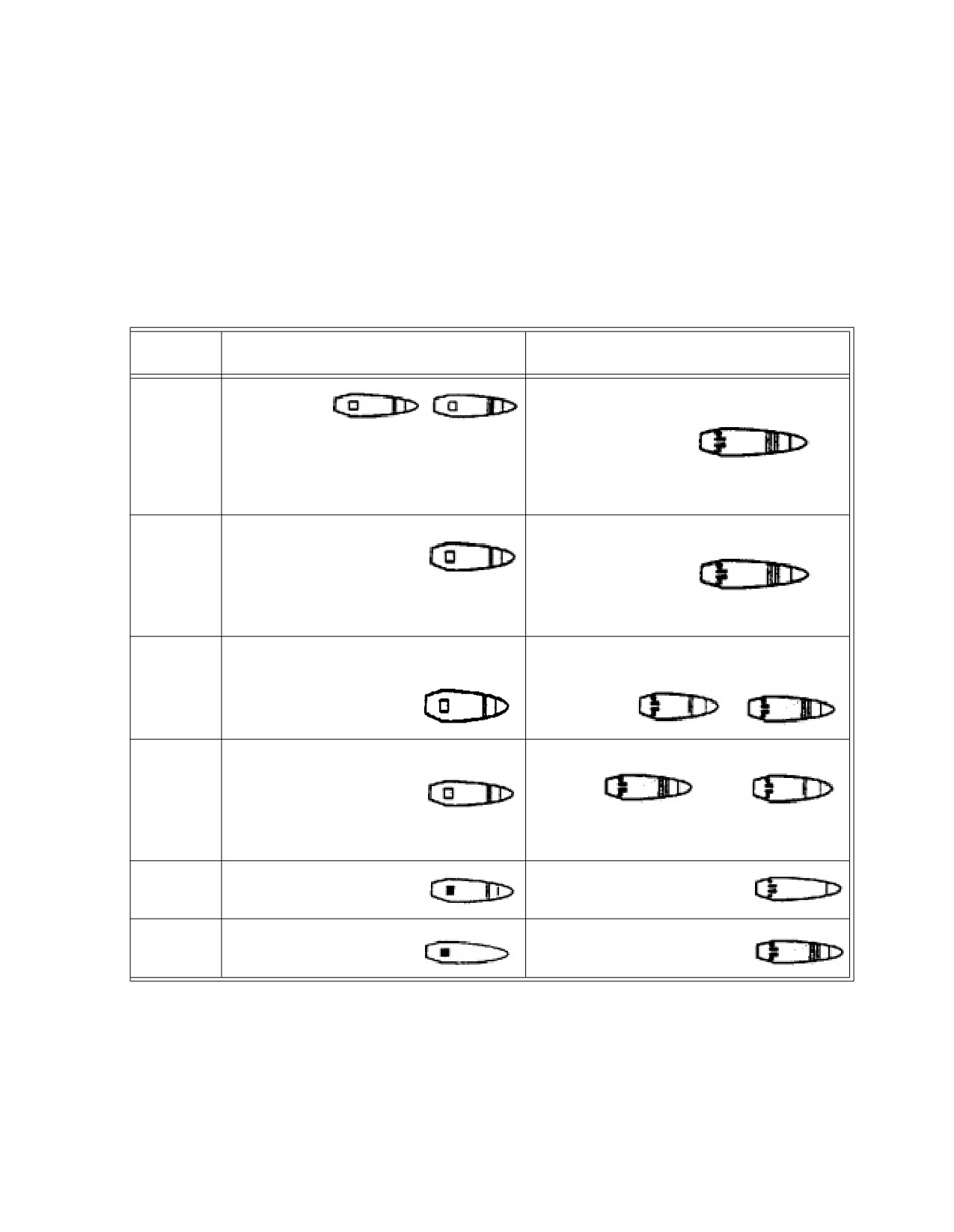
Appendix C
Ammunition Identification Chart
Type of
Old System
New System
Projectile
Toxic
Gray with green
chemical
Gray with
markings,yellow
agents
green
band if with
(casualty
markings
Nonpersistent
Persistent
explosive burster
agents)
including
including
G-series
V-series
- 1 green
- 2 green
1 green band
band
bands
Irritant
Gray with red
Nonpersistent
Gray with red
agents (riot-
markings
1 red band
markings,yellow
control
band if with
agents)
explosive burster
1 red band
Illuminating
Gray with white markings and band
White with black markings, OD with white
markings and band for separate loading projectiles
Smoke
Gray with yellow markings and band
Light green body WP, PWP
Other smoke
Light red markings, yellow band
Black
markings
Incendiary
Gray with purple markings
Light red with black markings
and band
Counter-
OD with black markings
Aluminum with black markings,
measure
brown band if with low-explosive
(leaflet)
burster
Ammunition Identification Chart C-1
Glossary
1LT
first lieutenant
ACM
air crew member
AFB
Air Force base
AFFF
aqueous film-forming foam
AIT
advanced individual training
AL TRN
alternate
ammo
ammunition
amp
amphere(s)
AO
area of operation
approx
approximately
APU
auxiliary power unit
AR
Army regulation
ARFF
aircraft rescue fire fighting
ASG
area support group
ASP
ammunition supply point
ATM
air turbine motor
attn
attention
aux
auxillary
AVGAS
aviation gasoline
batt
battery
BB
bare base
BDOC
base-defense operations center
BL
boom line
BO
base operability
BS
boom station
BZ
oksilidin
Glossary-1
FM 5-415
C
Celsius
C2
command and control
CA
California
CAIRA
chemical accident or incident response and assistance
CASP
chemical ammunition supply point
CB
Halon 1301
CBR
chemical, biological, radiological
cc
cubic centimeter(s)
CCD
camouflage, concealment, and deception
CCE
commercial construction equipment
cert
certification
cfm
cubic foot (feet) per minute
CFR
Code of Federal Regulations
CG
phosgene
chem
chemical
CK
cyanogen chloride
CL
chlorine
CN
chloroacetophenome
CNS
central nervous system
COB
collocated operating base
confinement The procedures taken to keep a material in a defined or local area.
containment The actions taken to keep a material in its container, such as to stop a release of the
material or reduce the amount being released.
contaminant A hazardous material that physically remains on or in people, animals, the
environment, or equipment, thereby creating a continuing risk of direct injury or a risk of
exposure outside of the hot zone.
contamination The process of transferring a hazardous material from its source to people,
animals, the environment, or equipment, which may act as a carrier.
control The defensive or offensive procedures, techniques, and methods used in the mitigation
of a HAZMAT incident, including containment, extinguishment, and confinement.
control zones The designation of areas at a HAZMAT incident based on safety and the degree of
hazard. Many terms are used to describe the zones involved in a HAZMAT incident. For this
manual, these zones are defined as the hot, warm, and cold zones.
CONUS continental United States
CO2
carbon dioxide
CP
command post
Glossary-2
FM 5-415
CPG
co-pilot gunner
CPR
cardiopulmonary resuscitation
CS
O-chlorobenzylidene malononitrile
CSA
corps storage area
CSG
corps support group
CTA
common table of allowances
ctr
center
CUCV commercial utility cargo vehicle
CW
chemical warfare
CWDE chemical-warfare-defense equipment
DA
diphenylchloroarsine
DA
Department of the Army
DC
ciphenylcyanoarsine
DC
District of Columbia
decontamination The physical and/or chemical process of reducing and preventing the spread of
contamination from persons and equipment used at a HAZMAT incident.
degradation (1) A chemical action involving the molecular breakdown of protective-clothing
material or equipment due to contact with a chemical. (2) The molecular breakdown of the spilled
or released material to render it less hazardous during control operations.
DD
Department of Defense
DDESB Department of Defense Explosives Safety Board
dia
diameter
disag
disengage
disch
discharge
DM
Diphenylaminochloroarsine
DOD
Department of Defense
DODD Department of Defense directive
DODI Deparment of Defense instruction
DOT
Department of Transportation
DSA
division support area
ea
each
elec
electrical/electric
emer
emergency
Glossary-3
FM 5-415
EMS
emergency medical support
eng
engineer
engr
engineer
environmental hazard A condition capable of posing an unreasonable risk to air, water, or soil
quality and to plants or wildlife.
EOD
explosive-ordnance disposal
EOR
explosive-ordnance reconnaissance
EPC
electrical power center
EPW
enemy prisoner of war
ERDA Energy Research and Development Administration
et seq
and the following ones
ext
exterior
F
Fahrenheit
FARP forward arming resupply point
FC-77
inert liquid
FCC
fire communications center
FEDS flotation-equipment deployment system
FEMA Federal Emergency Management Agency
first responders Those personnel that are likely to witness or discover a HAZMAT release in the
course of their normal duties, may be the first on the scene of an emergency involving HAZMATs.
First responders are expected to recognize HAZMATs presence, protect themselves, call for
trained personnel, and secure the area. In certain situations, first responders may be required to
take actions to confine and contain spills. In a TO, the first responders will normally be the unit
personnel that caused the material release or are responsible for the spill area.
FL
Florida
FM
tittanium tetrachloride
FM
field manual
FOB
forward operating base
fpm
foot (feet) per minute
FPORI fire-protection operational-readiness inspection
FS
fuselage station
FSS
fire-suppression system
ft
foot (feet)
FTX
field training exercise
fus
fuselage
Glossary-4
FM 5-415
fwd
forward
G3
Assistant Chief of Staff, G3 (Operations and Plans)
gal
gallon(s)
GB
sarin
GCP
gunner cockpit
gen
generator
GPM gallon(s) per minute
GRD
ground
GS
general support
GSA
General Services Administration
GTC
auxiliary power unit
H
levinstein mustard
hazard/hazardous Capable of posing an unreasonable risk to health, safety, or the environment
capable of causing harm.
HAZMAT hazardous material: A substance (gas, liquid, or solid) in a quantity or form that may
pose an unreasonable risk or is capable of causing harm.
HC
hexachloroethane
HD
distilled mustard
HHC
headquarters and headquarters company
HMIS
Hazardous Material Information System
HN
host nation
HNS
host-nation support
HP
horsepower
HQ
headquarters
ht
height
HT
mustard-T mixture
HTH
bleach-in-water solution
htr
heater
HVAR
high-velocity aircraft rocket
HW
hazardous waste
ID
identification
IFSTA
International Fire Service Training Association
Glossary-5
FM 5-415
in
inch(es)
inbd
inboard
Inc
incorporated
incident commander The person responsible for all decisions relating to the management of the
incident. The incident commander is in charge of the incident site. This individual will normally
be the fire-fighting team HQ commander who has been trained in HAZMAT incidents. This
individual may initially be the local commander who is responsible for the involved equipment,
materials, or spill area until trained fire-fighting teams arrive at the site.
info
information
Intergovernmental Maritime Consultative Organization Organization to consult in an
emergency when an incident involves the release or potential release of HAZMATs, with or
without fire.
ISB
intermediate-support base
ISBN
international standard book number
JP
jet petroleum
km
kilometer(s)
L
lewisite
lb
pound(s)
LA
engineer fire-fighting HQ team
LB
engineer fire-fighting fire-truck team
LC
engineer fire-fighting water-truck team
LH
left hand
LOS
line of sight
LOX
liquid oxygen
LRA
local reproduction authorized
LSA
logisitics-storage area
LT
left
MA
Massachusetts
MACI
military-adapted commercial item
MACOM
major Army command
max
maximum
MD
Maryland
Glossary-6
FM 5-415
MEDEVAC medical evacuation
MET
mobile-equipment transport
METL mission-essential task list
MIL-HDBK military handbook
misc
miscellaneous
mitigation Actions taken to prevent or reduce loss, human injury or death, environmental
damage, and property damage due to the release or potential release of HAZMATs.
mm
millimeter(s)
MO
Missouri
MOB main operating base
monitoring equipment Instruments and devices used to identify and quantify contaminates.
MOPP mission-oriented protective posture
MOS
military occupational specialty
MP
military police
mph
mile(s) per hour
MRE meals, ready to eat
NASP nuclear ammunition support point
nav
navigator
NBC
nuclear, biological, chemical
NCO
noncommissioned officer
NEA
nitrogen-enriched air
NFPA National Fire-Prevention Association
NH3
basic ammonia
No.
number
non ess bus nonessential BUS
norm
normal
NP
neptunium
OB
observer
OBIGGS onboard inert gas-generating system
OD
olive drab
OK
Oklahoma
OSHA Occupational Safety and Health Act
Glossary-7
FM 5-415
outbd
outboard
Pam
pamphlet
PASS
personal alert safety system
penetration The movement of a material through a suit's closures, such as zippers, buttonholes,
seams, flaps, other design features of chemical protective clothing, and through punctures, cuts,
and tears.
permeation A chemical action involving the movement of chemicals, on a molecular level,
through intact material.
PFC
private first class
PMCS preventive maintenance checks and services
P.O.
post office
POL
petroleum, oils, and lubricants
PPE
personal protective equipment: Protective clothing and equipment that is designed to
protect the wearer from heat and/or HAZMATs contacting the skin or eyes. Protective clothing is
divided into four types: structural fire-fighting clothing, liquid-splash protective clothing, vapor
protective clothing, and high-temperature protective clothing.
psi
pound(s) per square inch
PT
platinum
PTO
power take-off
PTU
power-train unit
PWP
plasticized white phosphorous
pwr
power
RADCON radiological contamination
recp
receptacle
release Any situation leading to a HAZMAT, HW, or petroleum products being freed from its
normal container. A release occurs when there is any spilling, leaking, pumping, pouring,
emitting, emptying, discharging, injecting, escaping, leaching, dumping, or disposing of
HAZMATs into the environment.
remediation Any action that permanently eliminates any threat that a release site may pose to
public health or the environment.
removal Any action taken to deal with environmental emergencies.
REMT radiological emergency medical team
response That portion of incident management in which personnel are involved in controlling
(defensively or offensively) a HAZMAT incident. The activities in the response portion of a
HAZMAT incident include analyzing the incident, planning the response, implementing the
planned response, and evaluating progress.
Glossary-8
FM 5-415
rev
reverse
RH
right hand
rpm
revolution(s) per minute
RT
right
sampling The process of collecting a representative amount of gas, liquid, or solid for analytical
purposes.
SCBA self-contained breathing apparatus
SF-6
sulfurhexaflouride gas
SFO
senior fire official
SGT
sergeant
SM
soldier’s manual
SOLL special operations, low-level
SOP
standing operating procedure
SPAAT hydraulic rescue drill
SPC
specialist
spec
specification
SSG
staff sergeant
sta
station
stabilization The point in an incident at which
the adverse behavior
of the HAZMATs is
controlled.
STP
soldier training publication
TAACOM theater Army area command
TAAMS The Army Maintenance Management System
TC
training circular
TEA
triethylaluminum
TEB
triethylborine
TG
trainer’s guide
TH
thorium
TO
technical order
TO
theater of operations
TOC
tactical operations center
TM
technical manual
TMP
transportation motor pool
Glossary-9
FM 5-415
TOE
table(s) of organization and equipment
TPA
terephthalic acid
TPT
tactical petroleum terminal
TRADOC United States Training and Doctrine Command
TSA
theater storage area
TX
Texas
TYP
typical
UIC
unit identification code
US
United States (of America)
USAES
United States Army Engineer School
USG
United States gallon(s)
UXO
unexploded ordnance
VX
nerve agent
w/
with
WCDO
war-consumable distribution objective
WL
water line
WP
white phosphorus
WRSK
war-readiness spares kit
WS
wing station
Glossary-10
References
SOURCES USED
These are the sources quoted or paraphrased in this publication.
JOINT AND MULTISERVICE PUBLICATIONS
DODD 6055.9. Department of Defense Explosives Safety Board (DDESB) and
DOD Component Explosives Safety Responsibilities. 29 July 1996.
DODI 6055.6. Department of Defense Fire and Emergency Services Program.
15 December 1994.
ARMY PUBLICATIONS
AR 40-5. Preventive Medicine. 15 October 1990.
AR 200-1. Environmental Protection and Enhancement. 21 February 1997.
AR 200-2. Environmental Effects of Army Actions. 23 December 1988.
AR 385-10. The Army Safety Program. 23 May 1988.
AR 385-30. Safety Color Code Markings and Signs. 15 September 1983.
AR 385-40. Accident Reporting and Records. 1 November 1994.
AR 385-55. Prevention of Motor Vehicle Accidents. 12 March 1987.
AR 700-141. Hazardous Material Information System (HMIS). 1 July 1997.
STP 5-51M14-SM-TG. Soldier’s Manual and Trainer’s Guide MOS 51M,
Firefighter Skill Level 1/2/3/4. October 1990.
TC 5-400. Unit Leaders’ Handbook for Environmental Stewardship. 29
September 1994.
TM 5-4210-219-10. Operator’s and Operation Maintenance Instructions for
Aircraft Crash and Structural Fire Fighting Turck, USAF Type A/532P-19. 16
June 1984.
TM 5-4210-220-12. Operator’s and Unit Maintenance Manual for Truck, Fire
Fighting, 1,000 GPM Multipurpose, Model 2500L. 30 October 1987.
TM 10-4210-235-13. Operator’s, Unit, and Direct Support Maintenance
Manual For Fire Suppression Equipment Set Model FSES-1 (NSN 4210-02-
370-4912). 30 September 1994.
OTHER MILITARY PUBLICATIONS
TO 00-105E-9. Aircraft Emergency Rescue Information Fire Protection. 12 May
1994. (Order this TO from HQ AFCESA/DF, 139 Barnes Drive, Tyndall AFB,
FL 32403-5319.)
References-1
FM 5-415
NONMILITARY PUBLICATIONS
10 CFR 20.1901. Caution Signs. Office of the Federeal Register National
Archives and Records Administration. US Government Printing Office. 1997.
10 CFR 20.1902. Posting Requirements. Office of the Federeal Register
National Archives and Records Administration. US Government Printing
Office. 1997.
Environmental Law Handbook. 12th Edition. Government Institutes, Inc.
Rockville, MD. 1993.
/www.fema.gov [click on search].)
FEMA. Recognizing and Identifying Hazardous Materials. 2nd Edition.
Student Manual. 1991. (http://www.fema.gov [click on search].)
Handbook of Occupational Groups and Series. US Office of Personnel
Management. Office of Classification. Washington, D.C. September 1993.
IFSTA. Aircraft Rescue and Fire Fighting. 3rd Edition. October 1995. (ISBN:
0-87939-099-9.) (http://www.ifsta.org [click on catalog].)
IFSTA. Hazardous Materials Training for First Responders. Washington, DC
1990.
IFSTA Manuals. (Purchase from the following source: Oklahoma State
University, Fire Publication Publications, Stillwater, OK 74078-0118.) (http://
www.ifsta.org [click on catalog].)
NFPA. Hazardous Materials Response Standards Handbook and Sets. 2nd
Edition. 1993. (http://www.nfpa.org [click on product information and then
NFPA codes and handbooks and sets].)
North American Emergency Response Guidebook. United States Department
of Transportation. 1996. (ISBN: 7-55547-000-70.)
OSHA 29. CFR 1910.120. Hazardous Waste Operations and Emergency
Response. 1 July 1997.
DOCUMENTS NEEDED
These documents must be available to the intended users of this publication.
AR 50-6. Nuclear and Chemical Weapons and Material, Chemical Surety. 1
February 1995.
AR 385-64. Ammunition and Explosives Safety Standards. 22 May 1987.
AR 385-95. Army Aviation Accident Prevention. 20 May 1991.
AR 420-90. Fire and Emergency Services. 10 September 1997.
AR 600-55. The Army Driver and Operator Standardization Program
(Selection, Training, Testing, and Licensing). 31 December 1993.
AR 611-201. Enlisted Career Management Fields and Military Occupational
Specialty. 26 June 1995.
AR 725-50. Requisition, Receipt, and Issue System. 15 November 1995.
References-2
FM 5-415
AR 735-5. Policies and Procedures for Property Accountability. 28 February
1994.
CTA 50-900. Clothing and Individual Equipment. 1 September 1994.
CTA 50-909. Field and Garrison Furnishings and Equipment. 1 August 1993.
CTA 50-970. Expendable Items (Except: Medical, Class V, Repair Parts and
Heraldic Items). 21 September 1990.
DA Pam 50-6. Chemical Accident or Incident Response and Assistance
(CAIRA) Operations. 17 May 1991.
DA Form 2028. Recommended Changes to Publication and Blank Forms. 1
February 1974.
DA Form 2404. Equipment Inspection and Maintenance Worksheet. 1 April
1979.
DA Form 4119. Fire Hose Record. 1 June 1973.
DA Form 5164-R. Hands-on Evaluation (LRA). September 1985.
DA Form 5165-R. Fields Expedient Squad Book (LRA). September 1985.
DA Form 5376-R. Individual Training Evaluation Record (LRA). January
1985.
DA Form 5377-R. Fire and Emergency Services Training Record (LRA).
December 1996.
DA Form 5378-R. Facility Response Card (LRA). September 1992.
DA Form 5379-R. Apparatus Maintenance Checklist (LRA). January 1985.
DA Form 5380-R. Fire Apparatus Test Record (LRA). January 1985.
DA Form 5381-R. Fire Risk Management Survey (LRA). December 1996.
DA Form 5382-R. Hazard Deficiency Inspection Record (LRA). September
1992.
DA Form 5383-R. Hot Work Permit (LRA). September 1992.
DA Form 5384-R. Water Flow Test (LRA). September 1992.
DD Form 2324. Fire Incident Report. January 1995.
DD Form 2324-1. Summary No-Loss Fire Emergencies Report. January 1995.
DOD 6055.6-M. Department of Defense Fire and Emergency Services
Certification Program. December 1995.
DOD 6055.7-M. Department of Defense Fire Incident Reporting Manual.
December 1995.
MIL-HDBK-1008C. Fire Protection for Facilities, Engineering, Design, and
Construction. June 1997.
NONMILITARY PUBLICATIONS
NFPA Codes and Standards. (Purchase from the following source: NFPA,
ATTN: Publication Sales Department, 1 Batterymarch Park, P.O. Box 9146,
References-3
FM 5-415
Quincy, MA 02269-9146.) (http://www.nfpa.org [click on product information
and then national fire codes and standards].)
RELATED PUBLICATIONS
These sources contain relevant supplemental information.
AR 58-1. Management, Acquisition and Use of Administrative Use Motor
Vehicles. 15 December 1979.
AR 95-1. Flight Regulations. 1 September 1997.
AR 95-2. Air Traffic Control, Airspace, Airfields, Flight Activities and
Navigation Aids. 10 August 1990.
AR 420-70. Buildings and Structures. 1 October 1997.
AR 420-74. Natural Resources: Land, Forest, and Wildlife Management. 1 July
1977.
AR 500-60. Disaster Relief. 1 August 1981.
DODD 6055.9-STD. DOD Ammunition and Explosives Safety Standards.
October 1992.
FM 3-9. Potential Military Chemical/Biological Agents and Compounds. 12
December 1990.
FM 5-1. Engineer Troop Organizations and Operations. 27 July 1971.
FM 10-67. Petroleum Supply in Theaters of Operation. 16 February 1983.
FM 10-68. Aircraft Refueling. 29 May 1987.
FM 10-69. Petroleum Supply Point Equipment and Operations. 22 October
1986.
FM 10-71. Petroleum Tank Vehicle Operations. 12 May 1978.
FM 21-2. Soldier's Manual of Common Tasks (Skill Level 1). 3 October 1983.
FM 21-3. Soldier's Manual of Common Tasks (Skill Levels 2, 3, and 4). 1 May
1981.
FM 25-5. Training for Mobilization and War. 25 January 1985.
TM 9-1300-206. Ammunition and Explosive Standards. 30 August 1973.
TM 38-600. Management of Administrative Use Motor Vehicles. 13 September
1979.
TM 38-750. The Army Maintenance Management System (TAMMS). 31 May
1981.
NONMILITARY PUBLICATIONS
NFPA. Life Safety Code Handbook. 17th Edition. 1997. (Purchase from the
following source: NFPA, ATTN: Publication Sales Department, 1
Batterymarch Park, P.O. Box 9146, Quincy, MA
02269-9146.)
www.nfpa.org [click on product information and then NFPA code handbooks
and sets].)
References-4
FM 5-415
OSHA 29 CFR 1910.134. Respiratory Protection. 1 July 1997.
OSHA 29 CFR 1930.1200. Bloodborne Pathogens. 1 July 1997.
Public Law 91-596. OSHA, Title 29 United States Code, 651 et seq. 29
December 1970. (Purchase from the following source: Superintendent of
Documents, Government Printing Office, Washington, DC 20402-9325.)
Public Law 93-498. Federal Fire Prevention and Control Act of 1974. 26
October 1974. (Purchase from the following source: Superintendent of
Documents, Government Printing Office, Washington, DC 20402-9325.)
Uniform Building Code Manuals. (Purchase from the following source:
International Conference of Building Officials, 5360 South Workman Mill
Road, Whittier, CA 90601-2298.)
References-5