Multiservice Tactics, Techniques, and Procedures for Chemical, Biological, Radiological, and Nuclear Contamination Avoidance (April 2009) - page 2
NOTE: Not used for BWR or CDR.
-
Not used or unknown
KM
Kilometers
NM
Nautical Miles
FT
Feet
KF
Kilofeet (1,000 feet)
HM
Hectometers (100 meters)
YD
Yards
M
Meters
SM
Statute Miles
UNITM/-/DGT/KPH/-// (3 letters for degrees and 3 letters for mils; direction
from which the wind is blowing)
DGM
Degrees/Magnetic North
DGT
Degrees/True North
DGG
Degrees/Grid North (GN)
MLM
Mils/Magnetic North
MLT
Mils/True North
MLG
Mils/GN
UNITM/-/DGT/KPH/-// (3 letters - Speed)
KPH
Kilometers per Hour
MPS
Meters per Second
KTS
Knots
MPH
Miles per Hour
UNITM/-/DGT/KPH/-// (1 letter - Temperature)
NOTE: Not used for EDR or BWR.
-
Not used or unknown
C
Celsius
F
Fahrenheit
•
LAYERM
Wind conditions at 2,000 m increments up to 30,000 m
Repeatable up to 15 times
Example using LAYERM/02/265/020//
LAYERM/02/265/020// (2 numbers, wind layer)
02
0-2,000 m
D-16
FM 3-11.3/MCWP 3-37.2A/NTTP 3-11.25/AFTTP(I) 3-2.56, C1
30 April 2009
04
2,000 m-4,000 m
28
26,000 m-28,000 m
30
28,000 m-30,000 m
LAYERM/04/290/030// (3 numbers for degrees and 4 numbers for mils; wind
direction from which the wind is blowing)
LAYERM/26/025/020// (3 numbers, wind speed)
•
ALFAM
Effective downwind for 2 KT and less
Example yield group explanations ALFAM/-/310/015/-//
ALFAM/-/310/015/-// (yield group)
ALFAM
BRAVOM
CHARLIEM
DELTAM
ECHOM
FOXTROTM
GOLFM
ALFAM/-/310/015/-// (radius of Zone 1)
- Not used or unknown
3 numbers
NOTE: If used, then direction, wind speed, and the angle of expansion are not
used.
ALFAM/-/310/015/-// (direction the wind is heading toward)
3 numbers for degrees and 4 numbers for mils
ALFAM/-/310/015/-// (wind speed)
- Not used or unknown
3 numbers
ALFAM/-/310/015/-// (angle of expansion)
- Not used or unknown
1 number
4
40 degrees
5
50 degrees
6
60 degrees
7
70 degrees
30 April 2009 FM 3-11.3/MCWP 3-37.2A/NTTP 3-11.25/AFTTP(I) 3-2.56, C1
D-17
8
80 degrees
9
90 degrees
0
100 degrees
1
110 degrees
2
120 degrees
3
more than 120 degrees
•
BRAVOM
Effective downwind for more than 2 KT to 5 KT yield group
Same as ALFAM
•
CHARLIEM
Effective downwind for 5 KT to 30 KT yield group
Same as ALFAM
•
DELTAM
Effective downwind for more than 30 KT to 100 KT yield group
Same as ALFAM
•
ECHOM
Effective downwind for 100 KT to 300 KT yield group
Same as ALFAM
•
FOXTROTM
Effective downwind for 300 KT to 1 MT yield group
Same as ALFAM
•
GOLFM
Effective downwind for more than 1 MT to 3 MT yield group
Same as ALFAM
•
WHISKEYM
Weather conditions for first of three consecutive 2-hour periods
NOTE: The optimal measuring height should be 10 m above ground in open
terrain averaged over a period of 10 minutes.
Example using WHISKEYM/120/010/4/18/7/4/2//
WHISKEYM/120/010/4/18/7/4/2//
Downwind direction
3 numbers for degrees and 4 numbers for mils
D-18
FM 3-11.3/MCWP 3-37.2A/NTTP 3-11.25/AFTTP(I) 3-2.56, C1
30 April 2009
WHISKEYM/120/010/4/18/7/4/2//
Wind speed
3 numbers
NOTE: The optimal measuring height should be 10 m above ground in open
terrain averaged over a period of 10 minutes.
WHISKEYM/120/010/4/18/7/4/2//
Air stability
1 letter or number
Simplified
U Unstable
N Neutral
S
Stable
Detailed
1
Very Unstable
2
Unstable
3
Slightly Unstable
4
Neutral
5
Slightly Stable
6
Stable
7
Very Stable
WHISKEYM/120/010/4/18/7/4/2//
Temperature
1 special character and 2 numbers or 2 to 3 numbers
-20
Minus 20 degrees
-03
Minus 3 degrees
00
0 degrees
02
2 degrees
15
15 degrees
999
999 degrees
WHISKEYM/120/010/4/18/7/4/2//
Humidity shown in percentage
1 number
0
0-9%
1
10-19%
30 April 2009 FM 3-11.3/MCWP 3-37.2A/NTTP 3-11.25/AFTTP(I) 3-2.56, C1
D-19
2
20-29%
3
30-39%
4
40-49%
5
50-59%
6
60-69%
7
70-79%
8
80-89%
9
90-100%
WHISKEYM/120/010/4/18/7/4/2//
Significant weather phenomena
1 letter or number
0
No significant weather phenomena
1
Sea breeze
2
Land breeze
3
Blowing snow or sand
4
Fog, ice fog, or thick haze
5
Drizzle
6
Rain
7
Light rain or snow
8
Showers of rain, snow, hail, or a mixture
9
Thunderstorm
A
Top of inversion layer lower than 800 m
B
Top of inversion layer lower than 400 m
C
Top of inversion layer lower than 200 m
WHISKEYM/120/010/4/18/7/4/2//
Cloud cover
1 number
0
Less than half-covered (scattered)
1
More than half-covered (broken)
2
Completely covered (overcast)
3
No clouds (clear conditions)
•
XRAYM
Surface weather conditions for the second of three consecutive 2-hour periods
See WHISKEYM for the details of the message
D-20
FM 3-11.3/MCWP 3-37.2A/NTTP 3-11.25/AFTTP(I) 3-2.56, C1
30 April 2009
•
YANKEEM
Surface weather conditions for the third of three consecutive 2-hour periods
See WHISKEYM for the details of the message
4.
Basic Wind Reports (Details and Examples)
This paragraph details how to effectively create and use BWRs.
a. BWRs. As described previously, the BWR is an ADP-formatted message used to
accommodate the two types of BWRs—the BWM based on actual weather data, and the
BWF based on predicted data. It provides wind conditions (direction and speed) in 2,000-
meter intervals from the surface of the earth to 30,000 meters.
b. Wind Vector Plot.
(1)
The information contained in the BWM is used for the construction of a
wind vector plot. The BWM is converted into downwind directions for each layer of height
by reversing the wind direction by 180 degrees.
(2)
The wind speed of each layer, as given in the BWM, is represented by a
vector, the length of which is extracted from the appropriate table. Tables D-5 through D-10
(pages D-22 through D-24) give the vector length in centimeters for different scale maps
listed in kph and knots. Ensure that the correct map size and wind speed are selected.
NOTE: Above 18,000 meters, altitude layers for plotting vector diagrams continue
at 2,000-meter intervals; however, since the map distance factors vary so little,
some of the columns in the following tables have been combined for convenience.
30 April 2009 FM 3-11.3/MCWP 3-37.2A/NTTP 3-11.25/AFTTP(I) 3-2.56, C1
D-21
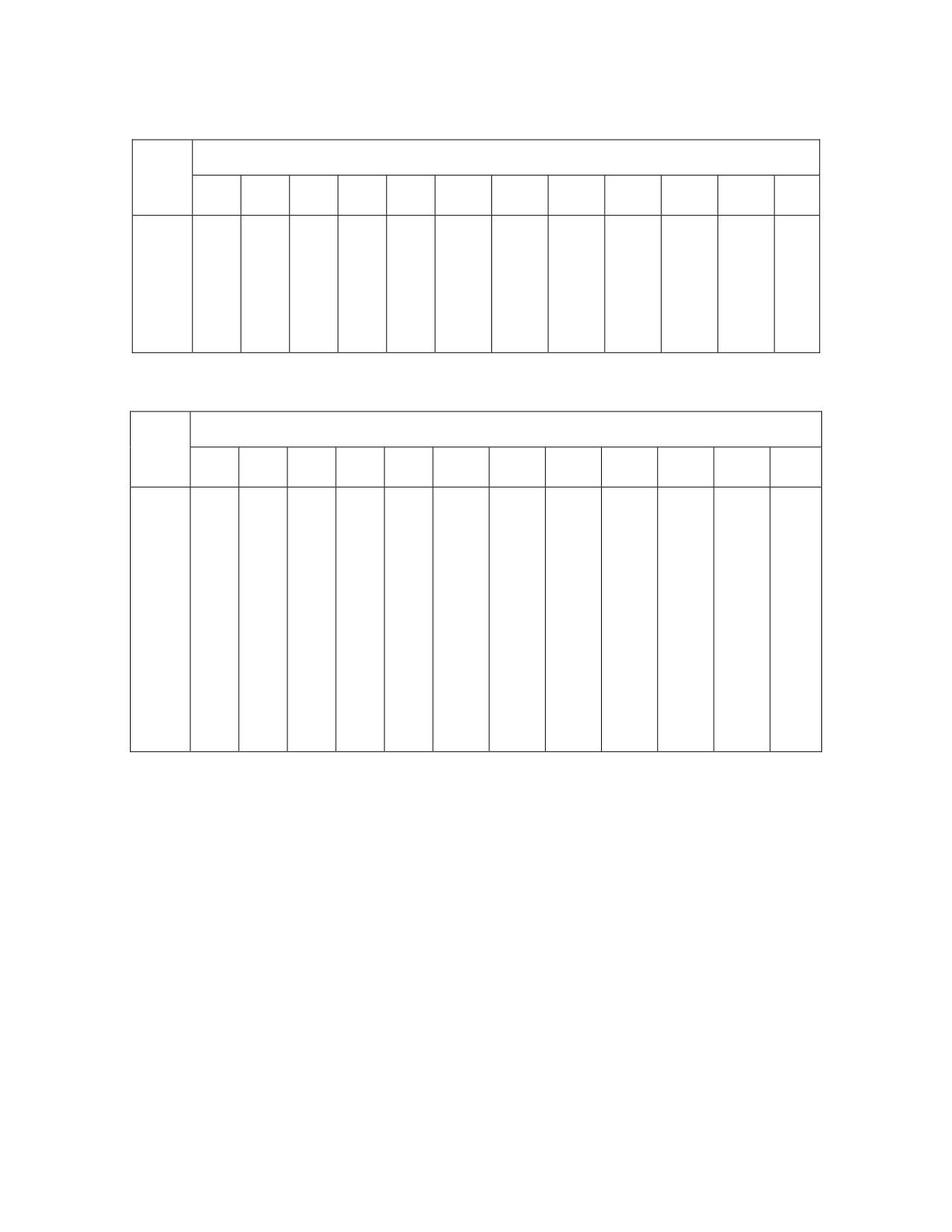
Table D-5. Map Distance for Wind Speed (Map Scale 1:50,000)
Altitude Layers (Thousands of Meters)
Wind
Speed
(kph)
0-2
2-4
4-6
6-8
8-10
10-12
12-14
14-16
16-18
18-22
22-30
>30
5
6.8
5.8
5.2
5.0
4.8
4.4
4.2
4.0
3.8
3.8
3.6
3.4
10
13.6
11.8
10.4
10.0
9.6
9.0
8.4
8.0
7.8
7.6
7.2
6.8
15
20.4
17.6
15.6
15.0
14.4
13.4
12.6
12.0
11.6
11.2
10.8
10.2
20
27.2
23.6
20.8
20.0
19.2
18.0
16.8
16.0
15.6
15.0
14.2
13.6
25
34.0
29.4
26.0
25.2
24.0
22.4
21.0
20.0
19.4
18.8
17.8
17.0
Table D-6. Map Distance for Wind Speed (Map Scale 1:100,000)
Altitude Layers (Thousands of Meters)
Wind
Speed
(kph)
0-2
2-4
4-6
6-8
8-10
10-12
12-14
14-16
16-18
18-22
22-30
>30
5
3.4
2.9
2.6
2.5
2.4
2.2
2.1
2.0
1.9
1.9
1.8
1.7
10
6.8
5.9
5.2
5.0
4.8
4.5
4.2
4.0
3.9
3.8
3.6
3.4
15
10.2
8.8
7.8
7.5
7.2
6.7
6.3
6.0
5.8
5.6
5.4
5.1
20
13.6
11.8
10.4
10.0
9.6
9.0
8.4
8.0
7.8
7.5
7.1
6.8
25
17.0
14.7
13.0
12.6
12.0
11.2
10.5
10.0
9.7
9.4
8.9
8.5
30
20.4
17.7
15.6
15.1
14.4
13.4
12.6
12.0
11.7
11.3
10.7
10.2
35
23.8
20.6
18.1
17.6
16.8
15.7
14.7
14.0
13.6
13.1
12.5
11.9
40
27.2
23.6
20.7
20.1
19.2
17.9
16.8
16.0
15.6
15.0
14.3
13.6
45
30.6
26.5
23.3
22.6
21.6
20.2
19.0
18.0
17.5
16.9
16.1
15.3
50
34.0
29.5
25.9
25.1
24.0
22.4
21.1
20.0
19.4
18.8
17.9
17.0
D-22
FM 3-11.3/MCWP 3-37.2A/NTTP 3-11.25/AFTTP(I) 3-2.56, C1
30 April 2009
(2)
The unit reorders chemical defense equipment (i.e., MOPP suits,
filters, and M291 refill kits).
(3)
Continue the effort to identify the agent if the unit has not yet
identified what agent was used. This will be done by—
•
Using the M256A1 Kit.
•
Using the ICAM.
•
Using the ACADA.
•
Taking samples and forwarding them to the area lab for analysis.
(4)
Perform the following if the unit must continue to operate in or
occupy the contaminated area:
•
Continue efforts to refine the contamination hazard area and extent
by continued sampling and detection.
•
Adjust or improve MOPP as required.
•
Mark contaminated areas, and identify “hot spots.”
•
Monitor contamination decay or covering to determine when natural
decay may render the area safe.
•
Be alert for “transient contamination” and the spread or movement
of contamination by natural sources (i.e., wind, rain, runoff, rivers) or human
sources, (i.e., vehicle traffic, rotor wash).
3.
NBC1 CHEM Report
The NBC1 CHEM report is the most widely used report. The observing unit
uses this report to provide chemical attack data. All units must be completely
familiar with the NBC1 CHEM report format and the information needed to
complete the report. This report is prepared at the unit level quickly and accurately
and then sent to the next higher HQ. NBC1 CHEM reports are not routinely passed
to corps or higher CBRN cells except for the initial-use report. Line items BRAVO
(location of observer), DELTA (DTG), GOLF (means of delivery), INDIA (release
information), and TANGO (terrain, topography, and vegetation description) are
mandatory entries in the NBC1 CHEM report.
a.
Precedence. The precedence of the NBC1 CHEM report depends on
whether or not it is an initial report. The initial use of a CBRN weapon report is
FLASH precedence; all others are IMMEDIATE precedence.
b.
Report Preparation. Individuals identified by the unit SOP submit
raw data to the unit CBRN defense team. NBC1 format should be used; however, a
size, activity, location, unit, time, and equipment (SALUTE) or spot report may also
be used and should be submitted to the unit CBRN defense team. The unit CBRN
defense team normally consists of individuals who have been trained in CBRN
defense. This ensures that the report is in the proper format and is as correct as
possible.
c.
Sample. A sample NBC1 CHEM report is shown in Figure E-1, page
E-4). The column “Cond” indicates the means operationally determined (O) or
30 April 2009 FM 3-11.3/MCWP 3-37.2A/NTTP 3-11.25/AFTTP(I) 3-2.56, C1
E-3
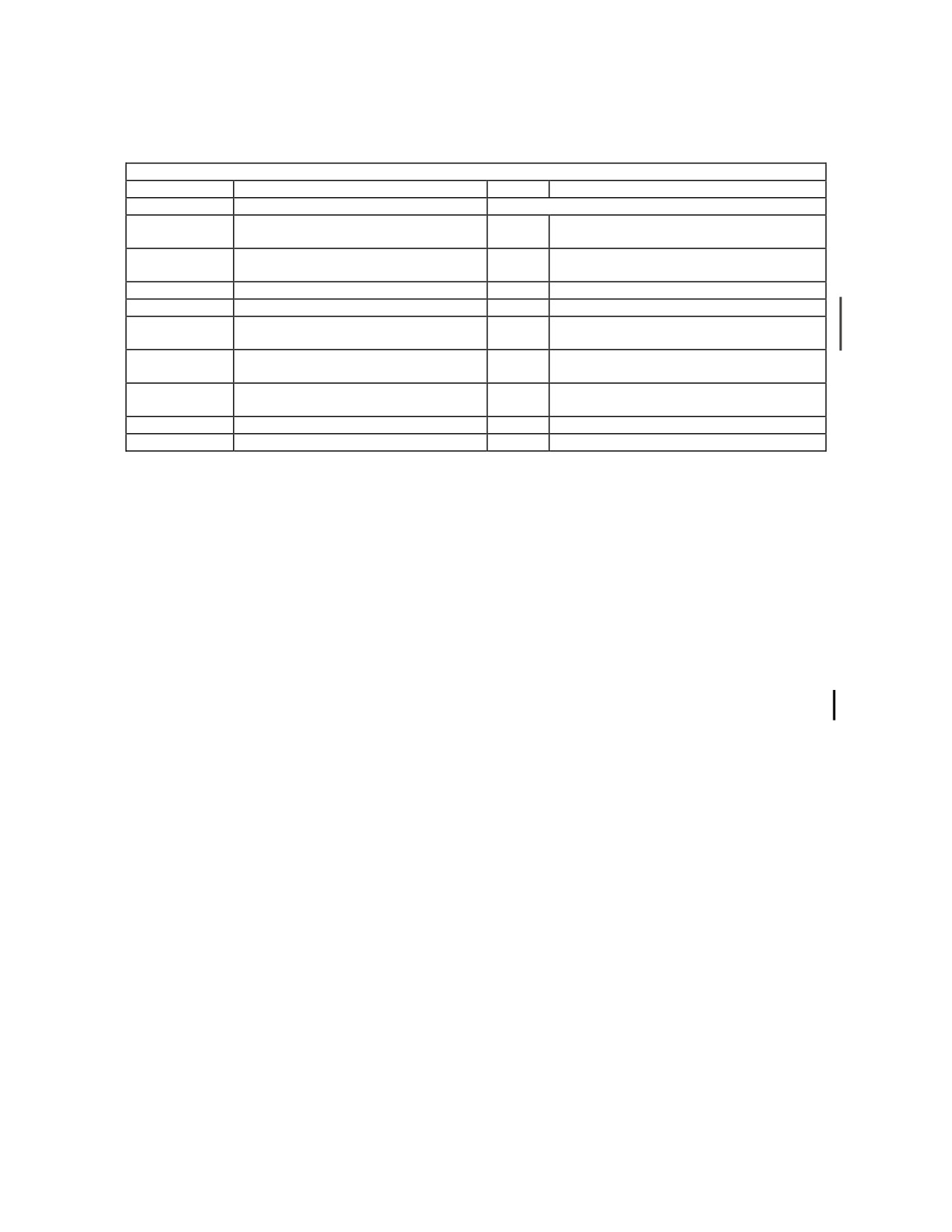
mandatory (M) for each message type. Operationally determined lines listed may be
added or deleted at command discretion.
NBC1 CHEM Report
Line Item
Description
Cond
Example
ALFA
Strike serial number
Will be assigned by the appropriate CBRN cell
BRAVO
Location of observer and direction of
M
BRAVO/32UNB062634/2500MLG//
attack or event
DELTA
DTG of attack or detonation and
M
DELTA/201405ZSEP2005/
attack end
201420ZSEP2005//
FOXTROT
Location of attack or event
O
FOXTROT/32UNB058640/EE//
GOLF
Delivery and quantity information
M
GOLF/OBS/AIR/1/BML/-//
INDIA
Release information on CB agent
M
INDIA/AIR/NERV/P/MPDS//
attacks or ROTA events
TANGO
Terrain/topography and vegetation
M
TANGO/FLAT/URBAN//
description
YANKEE
Downwind direction and downwind
O
YANKEE/270DGT/015KPH//
speed
ZULU
Actual weather conditions
O
ZULU/4/10C/7/5/1//
GENTEXT
General text
O
None
Figure E-1. Sample NBC1 CHEM Report
4.
NBC2 CHEM Report
The NBC2 CHEM report is based on one or more NBC1 CHEM reports. It is
used to pass evaluated data to higher, subordinate, and adjacent units.
a.
When actual attack areas are reported, it is easy to differentiate between
attacks by their locations. When estimated attack areas are reported, the CBRN
specialist uses the following sets to differentiate attacks:
•
Set BRAVO: Location of the observer and direction of the attack.
•
Set GOLF: Delivery means and quantity.
•
Set INDIA: Release information.
b.
Using the sets above, the CBRN specialist can determine whether the
attacks occurred in the same proximity, whether the means of delivery/quantity
were identical or similar (taking into account the fog of war), agent likeness, air or
ground burst, and liquid or vapor.
c.
The CBRN cell prepares the NBC2 CHEM report, assigns it a strike serial
number, and disseminates it to the appropriate units. Each subordinate unit then
decides whether to disseminate the report further. Line items ALFA (strike serial
number), DELTA (DTG), FOXTROT (location of attack), GOLF (means of delivery),
INDIA (release information), and TANGO (terrain, topography, and vegetation
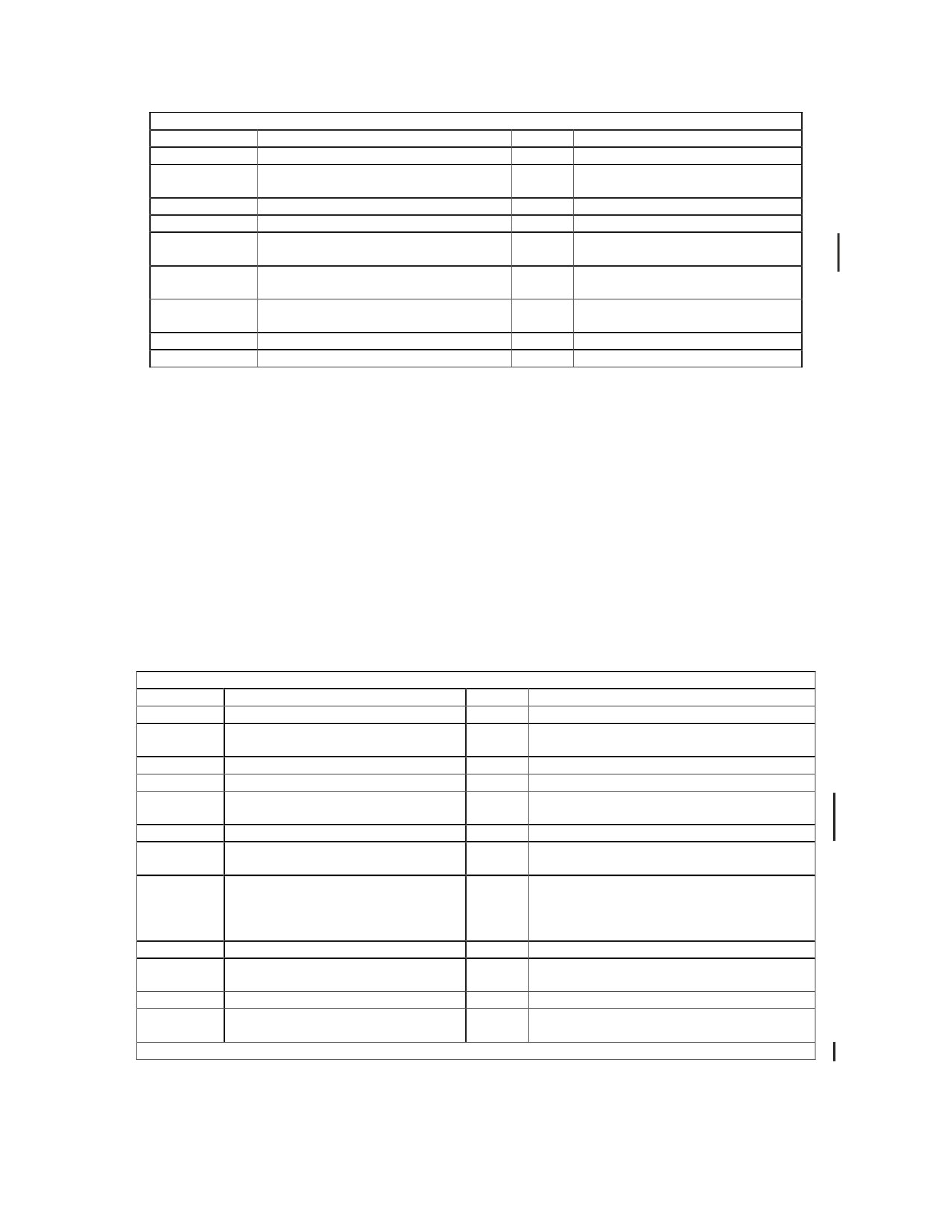
description) are mandatory entries in the NBC2 CHEM report. A sample NBC2
CHEM report is shown in Figure E-2.
E-4
FM 3-11.3/MCWP 3-37.2A/NTTP 3-11.25/AFTTP(I) 3-2.56, C1
30 April 2009
NBC2 CHEM Report
Line Item
Description
Cond
Example
ALFA
Strike serial number
M
ALFA/US/A234/001/B//
DELTA
DTG of attack or detonation and
M
DELTA/201405ZSEP2005//
attack end
201420ZSEP2005//
FOXTROT
Location of attack or event
M
FOXTROT/32UNB058640/EE//
GOLF
Delivery and quantity information
M
GOLF/OBS/AIR/1/BML/-//
INDIA
Release information on CB agent
M
INDIA/AIR/NERV/P/MPDS//
attacks or ROTA events
TANGO
Terrain/topography and vegetation
M
TANGO/FLAT/URBAN//
description
YANKEE
Downwind direction and downwind
O
YANKEE/270DGT/015KPH//
speed
ZULU
Actual weather conditions
O
ZULU/4/10C/7/5/1//
GENTEXT
General text
O
None
Figure E-2. Sample NBC2 CHEM Report
5.
NBC3 CHEM Report
The NBC2 CHEM report and current wind information are used to predict the
area of hazard. This prediction is disseminated as an NBC3 CHEM report, which is
sent to all units or activities that could be affected by the hazard. Each unit or
activity prepares a plot of the NBC3 CHEM report, determines which of its
subordinate units or activities are affected, and warns them accordingly.
Commanders should use this report as battlefield intelligence when planning
missions. The NBC3 CHEM report is a prediction of the hazard area. This prediction
is safe-sided to ensure that a significant hazard will not exist outside the predicted
hazard area. Units within the hazard area must adjust their MOPP level as
necessary. They must ensure that chemical-agent alarms are placed far enough
upwind to provide adequate warning. A sample NBC3 CHEM report is shown in
Figure E-3.
NBC3 CHEM Report
Line
Description
Cond
Example
ALFA
Strike serial number
M
ALFA/US/A234/001/C//
DELTA
DTG of attack or detonation and
M
DELTA/201405ZSEP2005/
attack end
201420ZSEP2005//
FOXTROT
Location of attack or event
M
FOXTROT/32UNB058640/EE//
GOLF
Delivery and quantity information
O
GOLF/OBS/AIR/1/BML/-//
INDIA
Release information on CB agent
M
INDIA/AIR/NERV/P/MPDS//
attacks or ROTA events
OSCAR
Reference DTG for contour lines
O
PAPAA
Predicted attack/release and hazard
M
PAPAA/1KM/3-10DAY/10KM/ 2-6DAY//
area
PAPAX
Hazard area location for weather
M
PAPAX/201600ZSEP2005/
period
32VNJ456280/32VNJ456119/
32VNJ576200/32VNJ566217/
32VNJ456280//
XRAYB
Predicted contour information
C
YANKEE
Downwind direction and downwind
O
YANKEE/270DGT/015KPH//
speed
ZULU
Actual weather conditions
O
ZULU/4/10C/7/5/1//
GENTEXT
General text
O
GENTEXT/CBRNINFO/RECALCULATION
BASED ON WEATHER CHANGE//
Note: XRAYB is prohibited if OSCAR is not used.
Figure E-3. Sample NBC3 CHEM Report
30 April 2009 FM 3-11.3/MCWP 3-37.2A/NTTP 3-11.25/AFTTP(I) 3-2.56, C1
E-5
a.
Chemical Contamination Prediction and Plotting. The chemical prediction
procedure for land provides information on the location and extent of the hazard
area and the duration of the hazard resulting from attacks with chemical weapons.
It provides the necessary information for commanders to warn units within the
predicted hazard area. In general, the predicted hazard area will be dependent on
the type of attack, the means of delivery, and MET factors in the attack area.
b.
Definitions Used in Chemical Hazard Predictions.
(1)
Attack Area. This is the predicted area immediately affected by the
delivered chemical agent.
(2)
Hazard Area. This is the predicted area in which unprotected
personnel may be affected by vapor spreading downwind from the attack area. The
downwind distance depends on the type of attack, the weather, and the terrain in
the attack area and the area downwind of the attack area.
(3)
Contaminated Area. This is the area in which liquid hazard may
remain for some time after the attack. The actual shape and duration can only be
determined by surveys.
NOTE: If actual surveys alter the initial data used for the determination of
the attack, the NBC2 and NBC3 CHEM reports must be changed or
updated.
c.
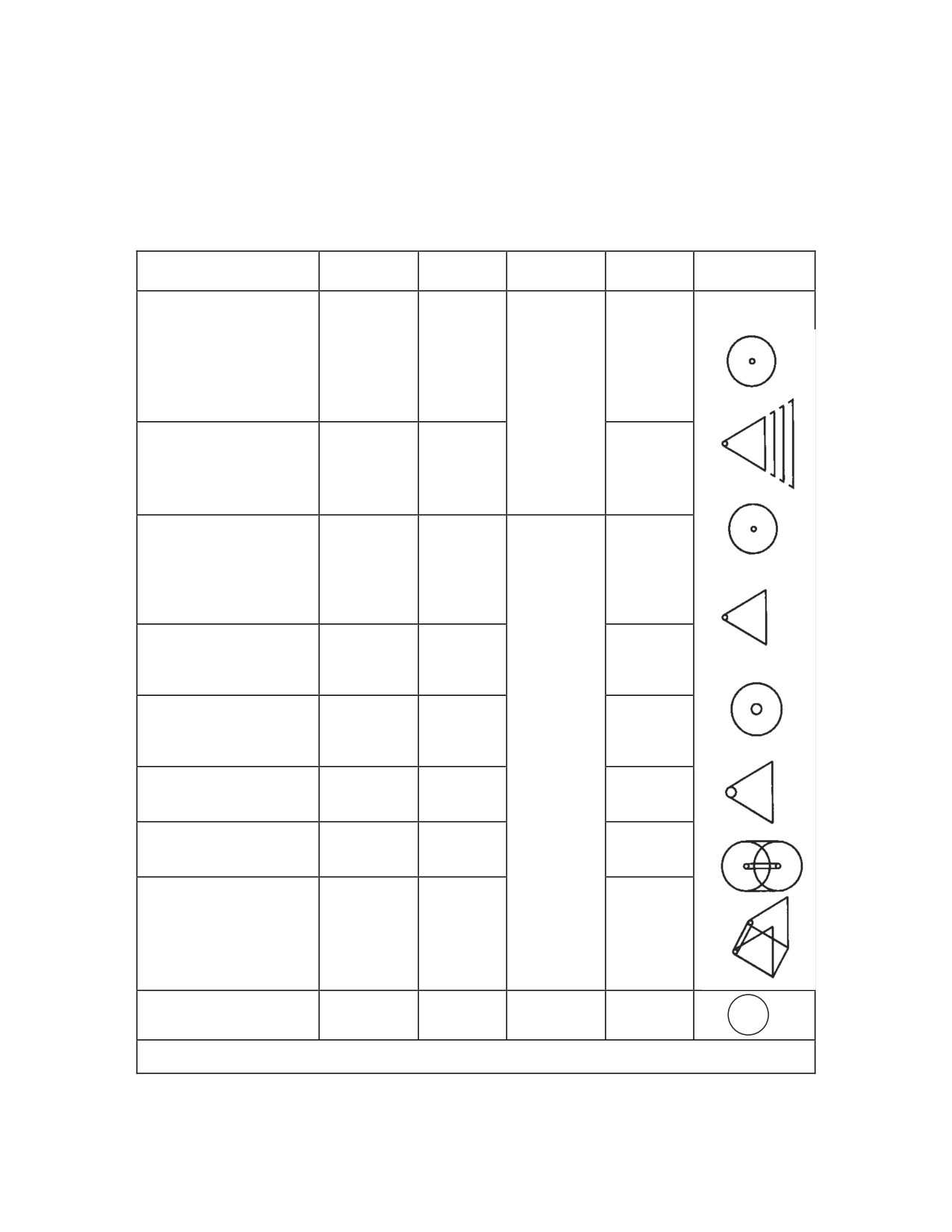
Types of Chemical Attacks. Chemical attacks can be divided into three
types, as follows:
(1)
Type A: Air-Contaminating attacks (nonpersistent agents). Type A
attacks are to be assumed unless liquid is present that is subsequently confirmed to
be a persistent agent.
(2)
Type B: Ground-contaminating attacks (persistent agents).
(3)
Type C: Attack origin unknown.
d.
Means of Delivery.
(1)
The means of delivery and types of agent containers are listed in
Table III-2.
e.
Prediction of the Downwind Hazard. After an attack by chemical agents,
personnel may encounter three types of hazards—liquid, vapor, or liquid and
vapor—depending on their position relative to the attack area.
(1)
Liquid Hazard. Personnel in an area contaminated with liquid
chemical agents will be exposed to a hazard that varies according to—
(a) The type and amount of agent disseminated.
(b) The method of dissemination.
(c)
The local climatic conditions.
(d) The nature of the terrain.
E-6
FM 3-11.3/MCWP 3-37.2A/NTTP 3-11.25/AFTTP(I) 3-2.56, C1
30 April 2009
(e) The time lapse after the contamination.
Liquid agents may completely stop evaporating and result in an all-clear
survey under very cold conditions. A hazard can be recreated when temperatures
rise.
Table E-1. Types and Cases of Chemical Attacks
Type of Agent Container
Radius of
Wind
Type
Case
Symbol
Attack Area
Speed
BML, BOM, RKT, SHL,
1
MNE, UNK, surface burst
MSL
1 km
≤10 kph
A
BML, BOM, RKT, SHL,
MNE, UNK, surface burst
1 km
>10 kph
2
MSL
BML, SHL, MNE, surface
burst RKT and MSL
1 km
≤10 kph
1
BML, SHL, MNE, surface
burst RKT and MSL
1 km
>10 kph
2
BOM, UNK, air burst RKT
and MSL
2 km
≤10 kph
3
B
BOM, UNK, air burst RKT
2 km
>10 kph
and MSL
4
1 km
≤10 kph
SPR, GEN
5
SPR, GEN
1 km
>10 kph
6
Detection after unobserved
N/A
N/A
attack
10 km
C
(NBC4 CHEM)
BML - Bomblets; BOM - Bomb; MNE - Mine; MSL - Missile; RKT - Rocket; SHL - Shell; SPR - Spray;
UNK - Unknown
30 April 2009 FM 3-11.3/MCWP 3-37.2A/NTTP 3-11.25/AFTTP(I) 3-2.56, C1
E-7
(2)
Nonpersistent Agents. Most nonpersistent agents are disseminated
mainly as vapor, but some of the agent types may leave residual liquid in shell or
bomb craters for hours or days depending on the climatic conditions and munition
type. Craters should be avoided until tests have proven the absence of a liquid
hazard.
(3)
Persistent Agents. Persistent agents are disseminated as liquid and
present a vapor and contact hazards. This hazard will last for several hours to days
depending on the terrain, climatic conditions, and munition type.
(4)
Border Areas. Some agents, normally classified as nonpersistent,
may behave as persistent agents in very cold environments, and liquid from
nonpersistent and persistent agents may freeze at low temperatures (e.g., HD
freezes at temperatures below 14°C) and can present a delayed hazard to personnel
when the temperature rises.
(5)
Thickened, Nonpersistent Agents. Thickened, nonpersistent agents
may have to be treated as persistent, ground-contaminating agents. Blister agents
are normally classified as persistent agents and will be indicated as such when
detected by three-way detector paper. Some ground-contaminating agents, however,
are very volatile and should be treated as nonpersistent.
(6)
Vapor Hazard. All chemical agents present a vapor or aerosol hazard
to personnel downwind of the attack area. The area covered by this hazard may be
estimated by using prediction techniques. The actual downwind distance covered by
a toxic cloud will depend on the type and amount of agent disseminated, method of
dissemination, climatic conditions, and terrain.
f.
Attack Chronology.
(1)
The dimensions of the downwind hazard area will depend on the
means of delivery, category of agent, type of attack, weather, and terrain. The cloud
arrival time at positions downwind of the attack point or area will depend on the
representative downwind speed.
(2)
The ability to provide a timely warning to personnel downwind of
the point or area of attack will depend on the time taken to learn of the attack, the
time taken to predict a downwind hazard area, and the time required to transmit
the warning to those in the hazard area.
g.
Principles of Chemical Predictions and Limitations.
(1)
Unprotected personnel in an attack area will be exposed to chemical-
agent hazards unless they take immediate protective action at the first indication of
an attack. It is assumed that once chemical warfare has been initiated, troops in
areas attacked by aircraft or missiles or coming under artillery or other
bombardment will immediately and automatically carry out appropriate chemical
defense tactics whether or not a chemical alarm has been given.
(2)
An attacked unit will attempt to warn all friendly forces in the
immediate vicinity, using the procedures described in STANAG 2047 (CBRN and air
attacks only).
E-8
FM 3-11.3/MCWP 3-37.2A/NTTP 3-11.25/AFTTP(I) 3-2.56, C1
30 April 2009
(3)
At fixed installations and at other locations where established
communications and alarms are available, the procedures in STANAG 2047 should
be used.
(4)
Units and installations that are warned should not promulgate the
alarm beyond their own area.
NOTE: As soon as a CBRN cell realizes that the completion and submission
of an NBC3 CHEM report would not warn a unit in the hazard area in time,
it will attempt to pass the alarm by the most expeditious means available.
(5)
CBRN cells will use information in the NBC3 CHEM report to
provide timely warning to units and installations in the predicted downwind hazard
area. Due to climatic and geographical variations, the lateral limits of the predicted
hazard area are normally defined by an angle of lateral spread that is 30° on either
side of the forecast representative downwind direction.
(6)
The hazard area prediction will be less reliable as the distance from
the point of emission increases.
(7)
Units in the downwind hazard area that are warned by a CBRN cell
will not raise an alarm outside their own area, but will submit an NBC4 CHEM
report according to the SOP when the chemical agent cloud actually arrives.
(8)
The limiting dosages of agents assumed in establishing the
procedures for hazard area prediction, while not sufficient to produce casualties
immediately, may produce later effects (i.e., miosis from nerve agents).
h.
Simplified Hazard Prediction (Land). The simplified hazard prediction
tells subordinate units whether they are in a chemical downwind hazard area. Since
Type A attacks present the greatest hazard, the simplified procedures are based on
that type of attack. It is valid until an NBC3 CHEM report is received. Units need to
make a simplified prediction using a CDM and a simplified template. The template
can be made from acetate, overlay paper, or plastic. Figure E-4, page E-10, shows a
sample simplified predictor. The following steps describe how to use a simplified
prediction:
(1)
Step 1. Get the wind speed from the CDM. If it is less than 10 kph,
use the circular portion of the prediction. If it is greater than 10 kph, follow the
remaining steps.
(2)
Step 2. Get the wind direction from the CDM. Mark that direction on
the compass circle of the template.
(3)
Step 3. Obtain the air stability code from the CDM and adjust the
code using Table D-14, page D-34, to determine the downwind distance (see
Table E-3, page E-11).
(4)
Step 4. Place the template on the map with the attack center of the
prediction (the cross mark) over the actual attack center. Rotate the predictor until
the downwind direction points toward GN.
(5)
Step 5. Draw the downwind line perpendicular to the downwind
direction using the distance obtained in Step 3.
30 April 2009 FM 3-11.3/MCWP 3-37.2A/NTTP 3-11.25/AFTTP(I) 3-2.56, C1
E-9
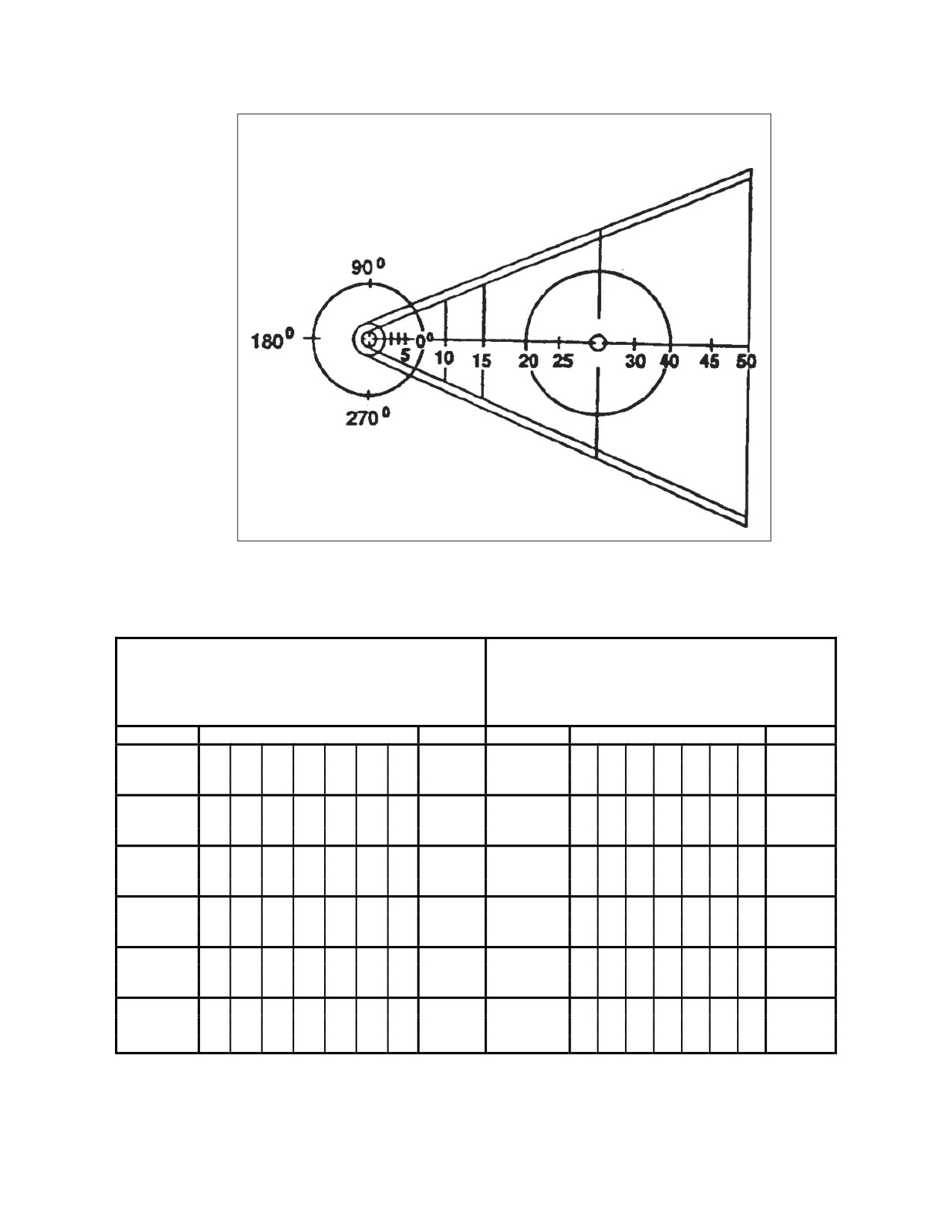
Figure E-4. Simplified Type A Chemical Predictor
Table E-2. DHD Versus Wind Speed (kph) and Air Stability, Land
Agent: Sarin
Agent: Soman
Weapon: Artillery (Cannon/Mortar)
Weapon: Rocket/Missile
Effective Payload: 650 kg
Effective Payload: 250 kg
Stability
1
2
3
4
5
6
7
Dose
Stability
1
2
3
4
5
6
7
Dose
Wind
<1
<1
<1
<1
<1
5
5
LCt50
Wind
<1
<1
<1
<1
<1
<1
<1
LCt50
11-17 kph
5
5
10
10
15
15
15
ICt5
11-17 kph
<1
5
5
5
10
10
10
ICt5
5
10
10
15
20
25
20
Miosis
5
5
5
10
10
15
10
Miosis
Wind
<1
<1
<1
<1
<1
<1
LCt50
Wind
<1
<1
<1
<1
<1
<1
LCt50
18-26 kph
5
5
5
10
15
20
ICt5
18-26 kph
<1
5
5
5
5
10
ICt5
5
5
10
15
20
25
Miosis
5
5
5
5
10
15
Miosis
Wind
<1
<1
<1
<1
LCt50
Wind
<1
<1
<1
<1
LCt50
27-36 kph
5
5
10
10
ICt5
27-36 kph
<1
5
5
5
ICt5
5
10
10
15
Miosis
5
5
5
10
Miosis
Wind
<1
<1
<1
LCt50
Wind
<1
<1
<1
LCt50
37-45 kph
5
5
10
ICt5
37-45 kph
<1
5
5
ICt5
5
10
15
Miosis
5
5
5
Miosis
Wind
<1
<1
<1
LCt50
Wind
<1
<1
<1
LCt50
46-54 kph
5
5
10
ICt5
46-54 kph
<1
5
5
ICt5
5
10
15
Miosis
5
5
5
Miosis
Wind
<1
<1
<1
LCt50
Wind
<1
<1
<1
LCt50
55-63 kph
5
5
5
ICt5
55-63
<1
5
5
ICt5
kph
5
10
10
Miosis
5
5
5
Miosis
E-10
FM 3-11.3/MCWP 3-37.2A/NTTP 3-11.25/AFTTP(I) 3-2.56, C1
30 April 2009
(h) Draw a line from the maximum downwind distance at right
angles to the downwind direction line. Extend the line on either side of the
downwind direction line.
(i)
Extend the downwind line upwind from the center of the attack
area 2 km. This is equal to twice the radius of the attack area.
(j)
Draw two lines from the upwind end of this line, which are
tangents to the attack area circle, and extend them until they intersect with the
maximum downwind distance line. These lines will form a 30° angle on either side of
the downwind line.
(k) Ensure that the hazard area is taken to be the area bounded
by—
•
The upwind edge of the attack area circle.
•
The two 30° tangents.
•
The maximum downwind distance line.
(l)
Prepare and transmit an NBC3 CHEM report and/or map
overlays to those units and installations within the hazard area according to the
SOP.
(5)
To estimate the earliest and latest arrival times of the chemical
cloud at a certain point, calculate the traveling speeds of the leading and trailing
edges of the chemical cloud.
(a) Leading Edge Speed = Downwind Speed x 1.5
Distance to Point
Earliest Arrival Time =
Leading-Edge Speed
(b) Trailing Edge Speed = Downwind Speed x 0.5
Distance to Point
Latest Arrival Time =
Trailing-Edge Speed
NOTE: The distance to the points considered must be measured from the
upwind edge (circle center for Case 1) of the attack area.
j.
Detailed Type B Attack Downwind Hazard Prediction (Land).
(1)
Type B agents are normally dispersed in liquid form to contaminate
surfaces. Persistent nerve and mustard agents are examples of this type of attack.
Ground-contaminating agents are normally dispersed by aircraft spray tanks, air-
bursting artillery shells, rockets, missiles, and mines. The evidence of ground
contamination may include the observer’s report of the agent falling to the ground
from air-bursting munitions, the identification of the agent with NBC-M8 paper, the
positive response of M9 paper, or the identification of a blister agent with the M256
series sampler or reading on the ICAM.
30 April 2009 FM 3-11.3/MCWP 3-37.2A/NTTP 3-11.25/AFTTP(I) 3-2.56, C1
E-15
(2)
For the next six cases of chemical attacks the following information
is required:
(a) NBC1 or NBC2 CHEM report.
(b) Detailed MET information (e.g., CDM or similar information).
Table E-4. Type B Attack, Probable Time After Ground Contamination at Which Personnel
May Safely Remove Protective Masks
Daily Mean Surface Air Temperature
Within Attack Area
Within Hazard Area
(Number of Days)
(Number of Days)
< 10° C
3-10 days
2-6 days
11°-20° C
2-4 days
1-2 days
> 20° C
up to 2 days
up to 1 day
NOTES:
1. The daily mean surface temperature is needed for the estimation of the
probable time after which personnel may safely remove their protective
masks (see Table E-4).
2. The air stability category is not considered in Type B hazard predictions
because the maximum downwind distance is always 10 km.
3. The estimates assume ground contamination densities up to 10 g/m2.
4. When making hazard estimates, the vapor has been considered to be the
determining factor within the attack area and in the downwind hazard
area. The duration of the hazard from contact with bare skin is, however,
difficult to predict. The duration can only be determined by the use of
chemical-agent detection or identification devices.
5. When temperatures are considerably lower than 0°C, the duration of
contamination may be longer than indicated in Table E-4, page E-16. The
absence of vapor does not preclude the presence of contamination.
6. Daily mean surface air temperature may be obtained from local MET
sources.
7. The information in Table E-4 is a worst-case scenario. Real, known
information should be used to the extent possible.
(3)
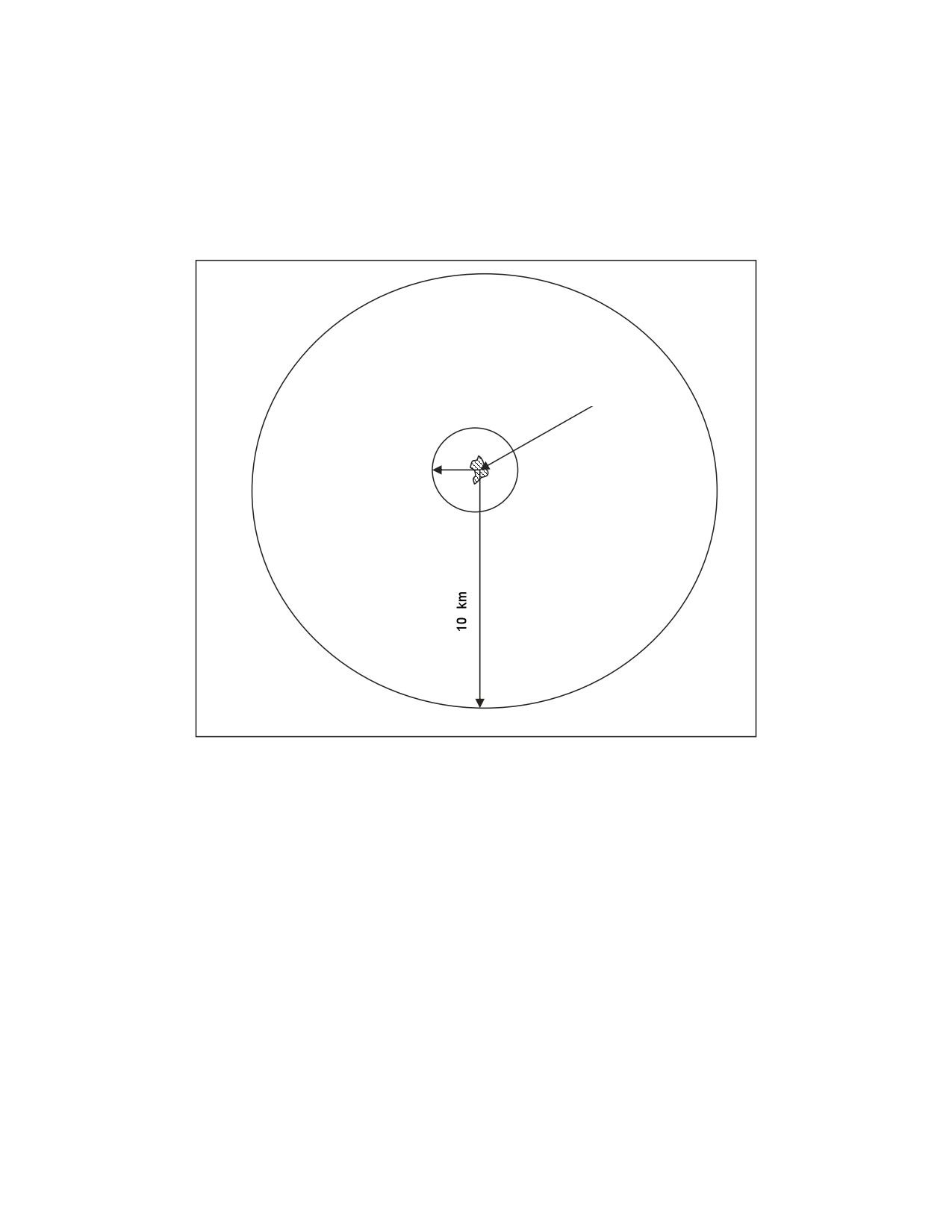
Type B, Case 1 (Figure E-7).
Sample NBC3 CHEM
ALFA/US/A234/001/C//
DELTA/271630ZAPR1999//
FOXTROT/33UUB206300/AA//
INDIA/SURF/NERV/P//
PAPAA/01KM/2-4DAY/10KM/1-2DAY//
E-16
FM 3-11.3/MCWP 3-37.2A/NTTP 3-11.25/AFTTP(I) 3-2.56, C1
30 April 2009
PAPAX/271600ZAPR1999/-//
YANKEE/105DGT/009KPH//
ZULU/4/18C/9/-/2//
GENTEXT/CBRNINFO/TYPE B, CASE 1//
Hazard Area
Attack Area
1 km
Hazard Area
Not to scale
Figure E-7. Hazard Area From Type B Attack, Case 1 (Wind Speed ≤10 kph)
(a) Obtain the location of the attack from the relevant NBC
chemical messages, and plot it on the map.
(b) Draw a circle (radius 1 km) around the center of the attack
location. The area within this circle represents the attack area.
(c)
Draw a circle (radius 10 km) around the center of the attack
location. The area within this circle represents the hazard area.
(d) Prepare and transmit an NBC3 CHEM report and/or map
overlays to those units and installations within the hazard area according to the
SOP.
(4)
Type B, Case 2.
Sample NBC3 CHEM
ALFA/US/A234/011/C//
DELTA/271650ZAPR1999//
30 April 2009 FM 3-11.3/MCWP 3-37.2A/NTTP 3-11.25/AFTTP(I) 3-2.56, C1
E-17
FOXTROT/32UNH250010/AA//
INDIA/AIR/NERV/P//
PAPAA/01KM/2-4DAY/10KM/1-2DAY//
PAPAX/271600ZAPR1999/
32UNH371020/
32UNH250020/
32UNH241015/
32UNH241005/
32UNG301900//
YANKEE/120DGT/015KPH//
ZULU/2/15C/8/-/2//
GENTEXT/CBRNINFO/TYPE B, CASE 2//
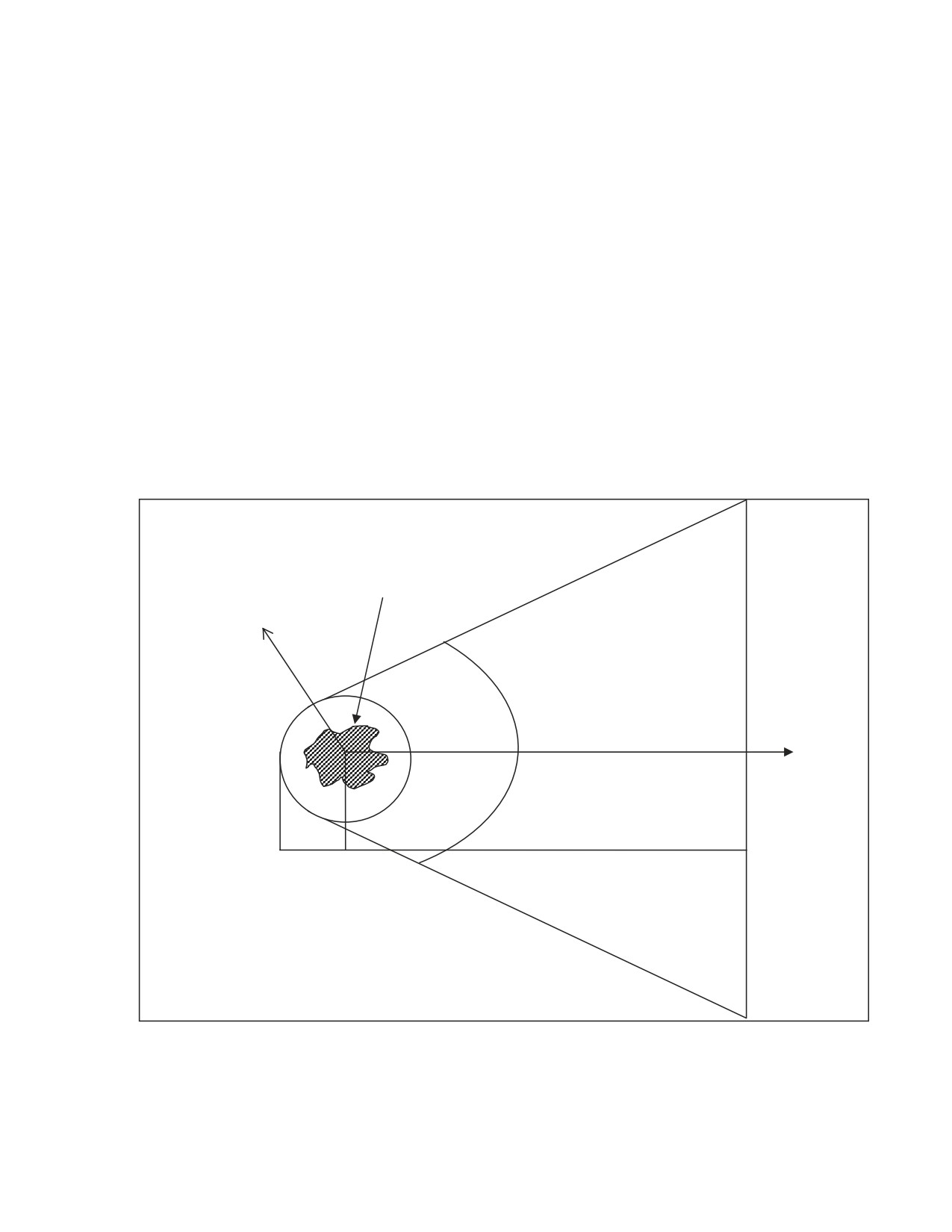
Attack Area
GN
30°
Downwind
Direction 120°
30°
1 km
Maximum Downwind
Hazard Distance 10 km
Not to scale
Figure E-8. Hazard Area From Type B Attack, Case 2 (Radius of Attack Area 1 km, Wind Speed >10
kph)
(a) Obtain the location of the attack from the relevant NBC CHEM
reports, and plot it on the map.
E-18
FM 3-11.3/MCWP 3-37.2A/NTTP 3-11.25/AFTTP(I) 3-2.56, C1
30 April 2009
(b) Draw a GN line from the center of the attack location.
(c)
Draw a circle (radius 1 km) around the center of the attack
location. The area within this circle represents the attack area.
(d) Draw a line from the center of the attack area showing the
downwind direction.
(e) Plot the 10-km downwind distance from the center of the
attack area on the downwind line.
(f)
Draw a line from the 10-km downwind distance at right angles
to the downwind direction line. Extend the line on either side of the downwind
direction line.
(g) Extend the downwind line upwind from the center of the attack
area 2 km. This is equal to twice the radius of the attack area.
(h) Draw two lines from the upwind end of this line, which are
tangents to the attack area circle, and extend them until they intersect with the 10-
km downwind distance line. These lines will form a 30° angle on either side of the
downwind line.
(i)
Find the probable time after ground contamination at which
personnel may safely remove their protective masks using Table E-4, page E-16.
(j)
Prepare and transmit an NBC3 CHEM report and/or map
overlays to those units and installations within the hazard area according to the
SOP.
(5)
Type B, Case 3.
Sample NBC3 CHEM
ALFA/US/A234/013/C//
DELTA/211605ZAPR1999//
FOXTROT/32UNH431562/EE//
GOLF/OBS/MSL/10/-/-//
INDIA/AIR/NERV/P//
PAPAA/02KM/2-4DAY/010KM/1-2DAY//
PAPAX/211500ZAPR1999/-//
YANKEE/105DEG/8KPH//
ZULU/2/15C/6/-/2//
GENTEXT/CBRNINFO/TYPE B, CASE 3//
30 April 2009 FM 3-11.3/MCWP 3-37.2A/NTTP 3-11.25/AFTTP(I) 3-2.56, C1
E-19
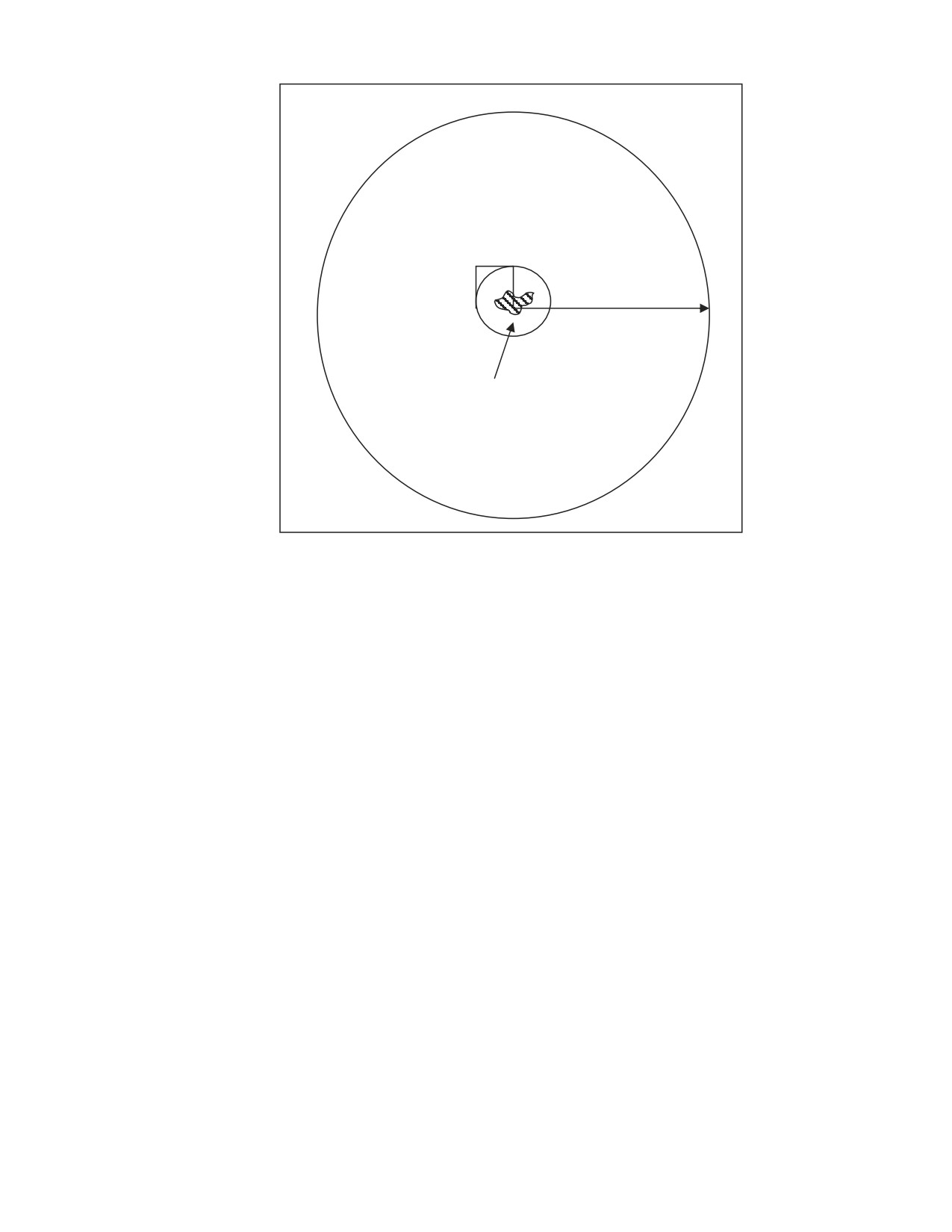
2 km
10 km
DHD
Attack
Area
Not to scale
Figure E-9. Hazard Area From Type B Attack, Case 3 Attack Area (Radius 2 km, Wind Speed <10 kph)
(a) Obtain the location of the attack from the relevant reports, and
plot it on the map.
(b) Draw a circle (radius 2 km) around the center of the attack
location. The area within this circle represents the attack area.
(c)
Draw a circle (radius 10 km) around the center of the attack
location. The area within this circle represents the hazard area.
(d) Prepare and transmit an NBC3 CHEM report and/or map
overlays to those units and installations within the hazard area according to the
SOP.
(6)
Type B, Case 4.
Sample NBC3 CHEM
ALFA/US/A234/006/C//
DELTA/181730ZAPR1999//
FOXTROT/32UNH320010/EE//
INDIA/AIR/NERV/P//
PAPAA/02KM/2-4DAY/10KM/1-2DAY//
PAPAX/181600ZAPR1999/
32UNH441051/
32UNH316029/
E-20
FM 3-11.3/MCWP 3-37.2A/NTTP 3-11.25/AFTTP(I) 3-2.56, C1
30 April 2009
32UNH301016/
32UNG304997/
32UNG386899//
YANKEE/110DGT/020KPH//
ZULU/4/16C/-/-/2//
GENTEXT/CBRNINFO/TYPE B, CASE 4//
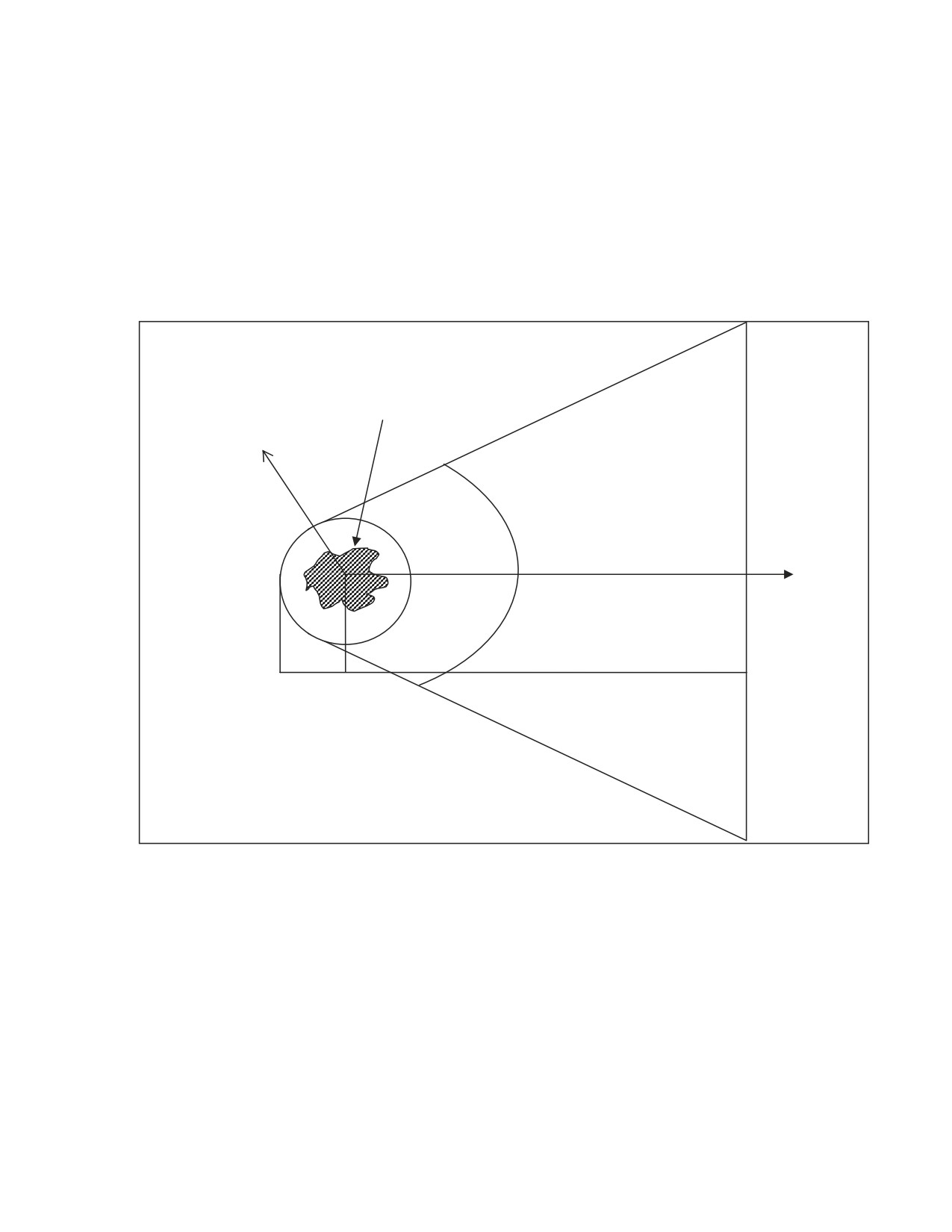
Attack Area
GN
30°
Downwind
Direction 120°
30°
2 km
Maximum Downwind
Hazard Distance 10 km
Not to scale
Figure E-10. Hazard Area From Type B Attack, Case 4 (Attack Area Radius 2 km, Wind Speed >10
kph)
(a) Obtain the location of the attack from the relevant NBC CHEM
reports, and plot it on the map.
(b) Draw a GN line from the center of the attack location.
(c)
Draw a circle (radius 2 km) around the center of the attack
location. The area within this circle represents the attack area.
(d) Draw a line from the center of the attack area showing the
downwind direction.
(e) Plot the 10-km downwind distance from the center of the
attack area on the downwind line.
30 April 2009 FM 3-11.3/MCWP 3-37.2A/NTTP 3-11.25/AFTTP(I) 3-2.56, C1
E-21
(f)
Draw a line from the 10-km downwind distance at right angles
to the downwind direction line. Extend the line on either side of the downwind
direction line.
(g) Extend the downwind line upwind from the center of the attack
area 4 km. This is equal to twice the radius of the attack area.
(h) Draw two lines from the upwind end of this line, which are
tangents to the attack area circle, and extend them until they intersect with the
10-km downwind distance line. These lines will form a 30° angle on either side of the
downwind line.
(i)
Find the probable time after ground contamination at which
personnel may safely remove their protective masks by using Table E-4, page E-16.
(j)
Prepare and transmit an NBC3 CHEM report and/or map
overlays, to those units and installations within the hazard area according to the
SOP.
(7)
Type B, Case 5.
Sample NBC3 CHEM
ALFA/US/A234/014/C//
DELTA/201530ZAPR1999//
FOXTROT/32UNG420620/EE/
32UNG435620/EE//
INDIA/AIR/NERV/P//
PAPAA/01KM/2-4DAY/010KM/1-2DAY//
PAPAX/211500ZAPR1999/-//
YANKEE/147DGT/009KPH//
ZULU/2/15C/6/-/2//
GENTEXT/CBRNINFO/TYPE B, CASE 5//
E-22
FM 3-11.3/MCWP 3-37.2A/NTTP 3-11.25/AFTTP(I) 3-2.56, C1
30 April 2009
(b) Identify and mark the extremities of the estimated attack area,
and connect the end points to form one or more attack lines.
(c)
Draw circles (radius of 1 km), using the extremities as center
points, around each point. Connect these circles on both sides by drawing tangents
to the circles parallel to the attack line to designate the attack area.
(d) Draw a GN line from the center of each circle.
(e) Consider each circle as a separate attack area, and carry out
the following procedure for each attack area:
•
Draw a line from the center of the attack area showing the
downwind direction.
•
Plot the 10-km downwind distance from the center of the
attack area on the downwind line.
•
Draw a line from the 10-km downwind distance at right angles
to the downwind direction line. Extend the line on either side of the downwind
direction line.
•
Extend the downwind line upwind from the center of the attack
area 2 km. This is equal to twice the radius of the attack area.
•
Draw two lines from the upwind end of this line, which are
tangents to the attack area circle, and extend them until they intersect with the
10-km downwind distance line. These lines will form a 30° angle on either side of the
downwind line.
•
Draw a line connecting the downwind corners of the two vapor
hazard areas (Points A and B in Figure E-12, page E-24).
(f)
Use Table E-4, page E-16, to find the probable time after
ground contamination at which personnel may safely remove their protective masks.
(g) Prepare and transmit an NBC3 CHEM report and/or map
overlays to those units and installations within the hazard according to the SOP.
(9)
Calculate the traveling speeds of the leading and trailing edges of
the chemical cloud to estimate the earliest and latest arrival times of the chemical
cloud at a certain point.
(a) Leading Edge Speed = Downwind Speed x 1.5
Distance To Point
Earliest Arrival Time =
Leading Edge Speed
(b) Trailing Edge Speed = Downwind Speed x 0.5
Distance To Point
Latest Arrival Time =
Trailing Edge Speed
30 April 2009 FM 3-11.3/MCWP 3-37.2A/NTTP 3-11.25/AFTTP(I) 3-2.56, C1
E-25
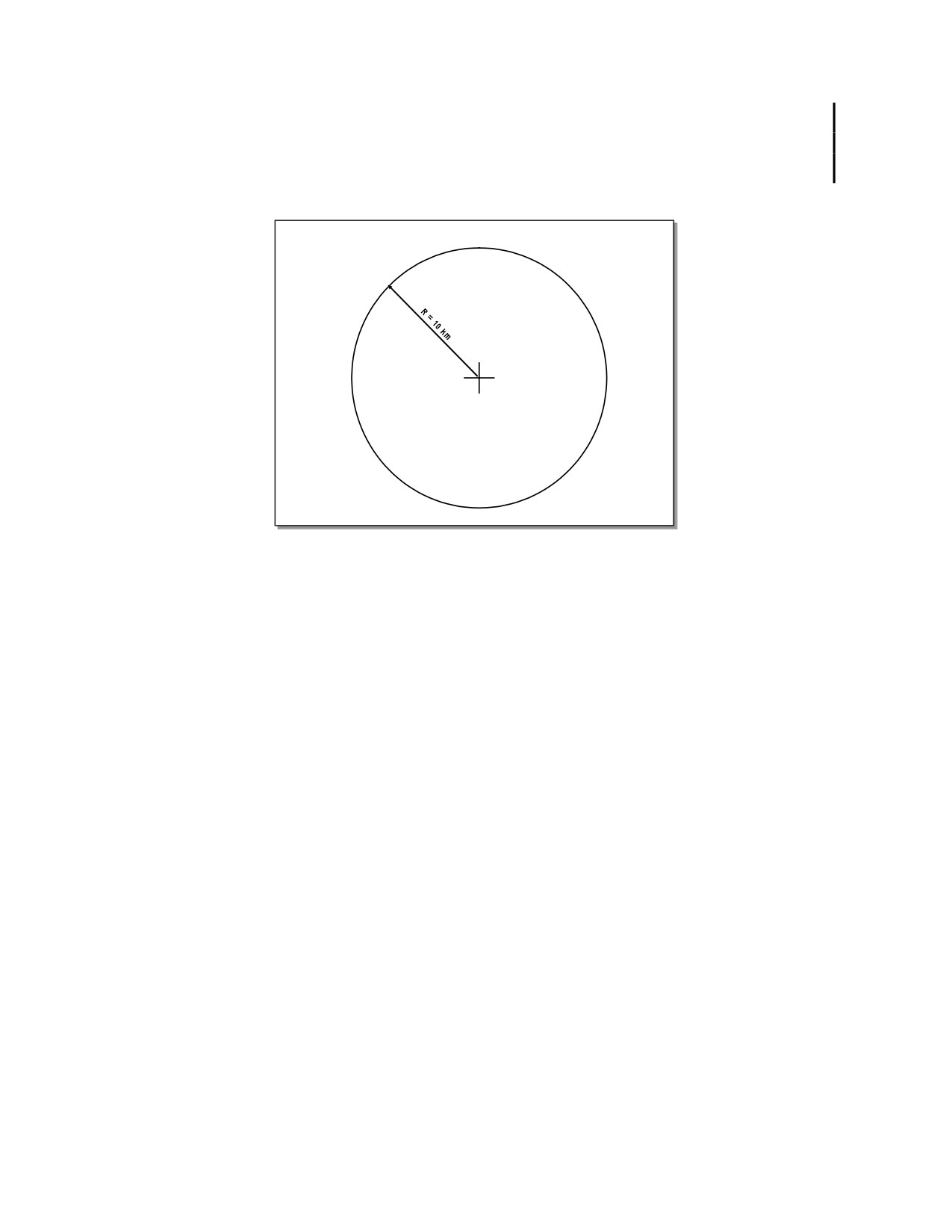
k.
Type C Attack Downwind Hazard Prediction (Land). A Type C attack
(Figure E-13) is an attack where the attack origin is unknown. These attacks will
most likely be found by a survey or reconnaissance.
Hazard Area
Figure E-13. Type C Attack
(1)
Obtain the location of detection from the relevant NBC4 CHEM
report (Line QUEBEC), and then plot it on the map.
(2)
Draw a circle with a 10-km radius around the center of the detection
location. The area within this circle represents the attack area and the hazard area.
(3)
Prepare and transmit an NBC3 CHEM report to the units and
installations in the predicted hazard area according to the unit SOP.
(4)
Repeat the above procedures for the new location if a new NBC4
CHEM message that cannot be allocated to a strike specifies a location outside of the
hazard area.
l.
Adjusted Hazard Prediction (Land). The methods previously discussed are
based on constant environmental conditions. After significant weather changes, the
NBC3 CHEM report may no longer be accurate or apply. An adjusted NBC3 CHEM
report must be sent to the unit or installation in the new hazard area if possible.
Also, notify units who may no longer be in the hazard area. Significant weather
changes include the following:
•
Representative downwind speed of 10 kph or more or a wind speed that
increases from less than 10 kph to more than 10 kph or the reverse.
•
Air stability category (Type A attacks only).
•
Changes in downwind direction by 30° or more.
Table E-5 shows which cases and types of attacks may be affected by different
atmospheric changes.
E-26
FM 3-11.3/MCWP 3-37.2A/NTTP 3-11.25/AFTTP(I) 3-2.56, C1
30 April 2009
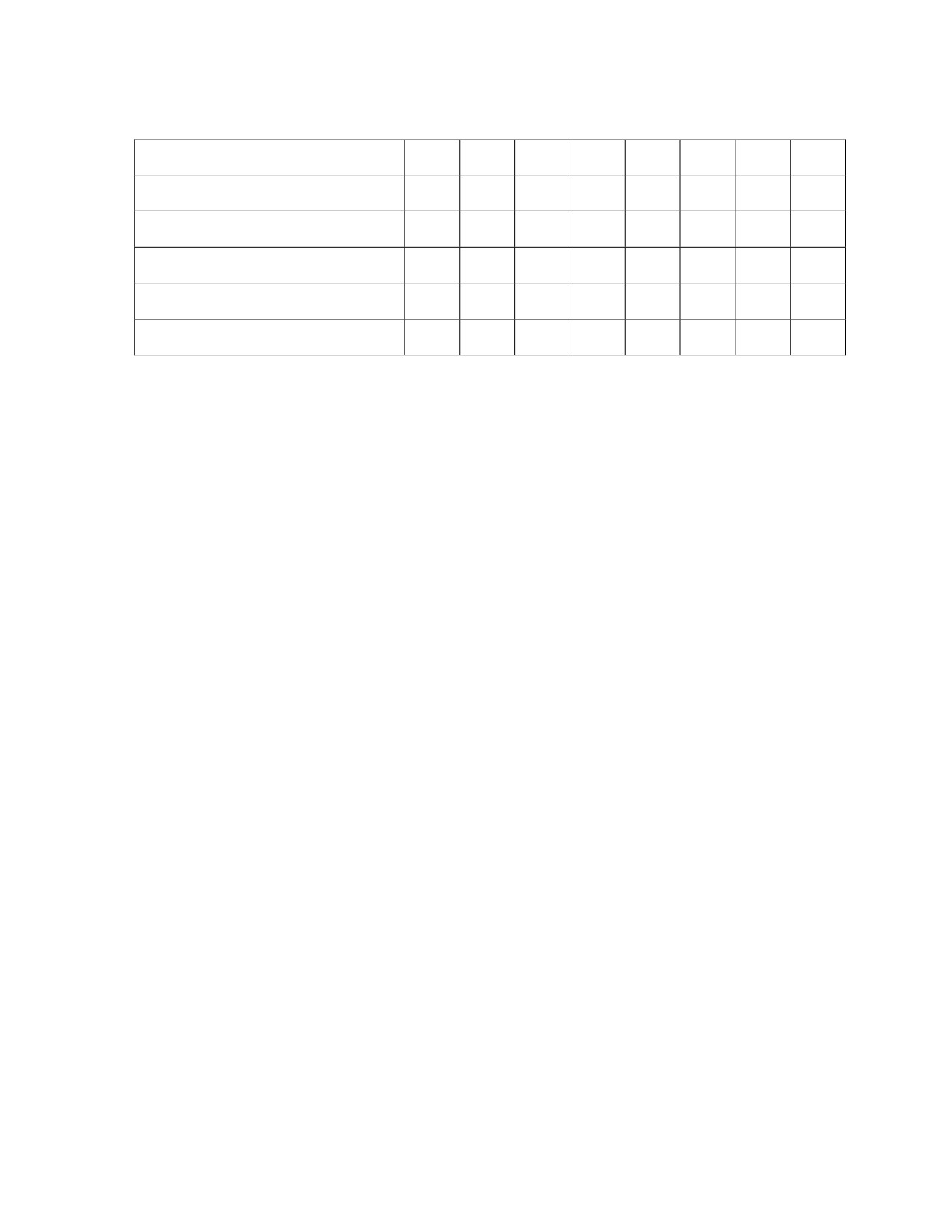
Table E-5. Cases and Types of Attacks
Changes
A 1
A 2
B 1
B 2
B 3
B 4
B 5
B 6
Wind Speed: By 10 kph or more
X
From >10 kph to ≤10 kph
X
X
X
X
From ≤10 kph to >10 kph
X
X
X
X
Wind Direction by 30° or more
X
X
X
X
Stability Category
X
NOTE: For a change in wind speed, determine the geographical center of the
frontline of the traveling cloud at the time the new data becomes available.
Calculate this distance by multiplying the original wind speed by twice the
time in hours since the attack. The center of the cloud front is then considered
to be the new center of attack area. Once the new center of attack is
determined, the downwind hazard area is determined using the procedures for
that type of attack.
(1)
Recalculation of Hazard Distances. When significant weather
changes occur or are predicted to occur, the following procedures for Type A attacks
should be used to determine—
(a) The distance the chemical agent cloud will have traveled prior
to the change by using—
d1
= u1 x t1
d1
= distance traveled prior to change in weather conditions
u1
= downwind speed prior to change in weather conditions
t1
= time elapsed between the time of attack and the end of the
current CDR time period
NOTE: If the distance traveled, as calculated above, is equal to or exceeds
the original maximum DHD, recalculation is not required.
(b) For Type A case 2 attacks, measure the distance d1 along the
downwind line and mark it. If that point is outside the current CDR area, get the
CDR for the area containing the new point and get the weather conditions for the
next time period. Compare these weather conditions with those used for the current
CDR time period, and determine if significant weather changes are predicted.
(c)
Determine the distance the chemical cloud will travel after the
change by using—
d2
= H2 - d1
d2
= remaining hazard distance
H2
= maximum hazard distance under the conditions prevailing
after the change
d1
= distance traveled prior to change in weather conditions
30 April 2009 FM 3-11.3/MCWP 3-37.2A/NTTP 3-11.25/AFTTP(I) 3-2.56, C1
E-27
NOTES:
1. If the second time period has a wind speed ≤10 kph (Type A1), always
draw a circle with a radius of 10 km (as if d2 = 10 km).
2. In constructing the hazard area, keep in mind that the maximum hazard
distance, valid during either set of weather conditions, must not be
exceeded. If d2 is ≤0, recalculation is not required.
(2)
Type A, Case 1 Changing to a Type A, Case 2 (Figure E-14 shows an
increase in wind speed from ≤10 kph to >10 kph).
Sample NBC CDM
Sample NBC2 CHEM
AREAM/NFEA12//
ALFA/US/A234/005/C//
ZULUM/230600ZAPR1999/230900ZAPR1999/2
DELTA/231030ZAPR1999//
31500ZAPR1999//
FOXTROT/32VNH450956/AA//
UNITM/KM/DGT/KPH/C//
GOLF/OBS/CAN/-/SHL/24//
WHISKEYM/140/008/4/06/8/-/2//
INDIA/SURF/NERV/NP//
XRAYM/140/012/4/10/8/-/2//
TANGO/FLAT/SCRUB//
YANKEEM/150/014/4/14/8/-/2//
YANKEE/140DGT/008KPH//
ZULUA/4/10C/8/-/2//
GENTEXT/CBRNINFO/
TYPE OF AGENT CONFIRMED
BY CHEMICAL DETECTION
KIT. RECALCULATION BASED
ON CHANGE IN WIND SPEED
231100Z//
(a) Calculate d1.
(b) Draw a circle around the center of the original attack area
(radius d1). The area inside this circle represents the new attack area.
NOTE: If d1 is >10 km then use d1 = 10 km.
(c)
Draw a line from the center of the attack area showing the
downwind direction.
(d) Draw a GN line from the center of the attack.
(e) Measure and mark the distance d2 on the downwind direction
line from where the downwind direction line cuts the new attack area circle.
(f)
Draw a line from the d2 distance at right angles to the
downwind direction line, and extend it on either side of the downwind direction line.
(g) Extend the downwind line upwind from the center of the attack
area by 2 x d1. This is equal to twice the radius of the new attack area.
(h) Draw two lines from the upwind end of this line, which are
tangents to the new attack area circle, and extend them until they intersect with the
right-angle line resulting from (f).
E-28
FM 3-11.3/MCWP 3-37.2A/NTTP 3-11.25/AFTTP(I) 3-2.56, C1
30 April 2009
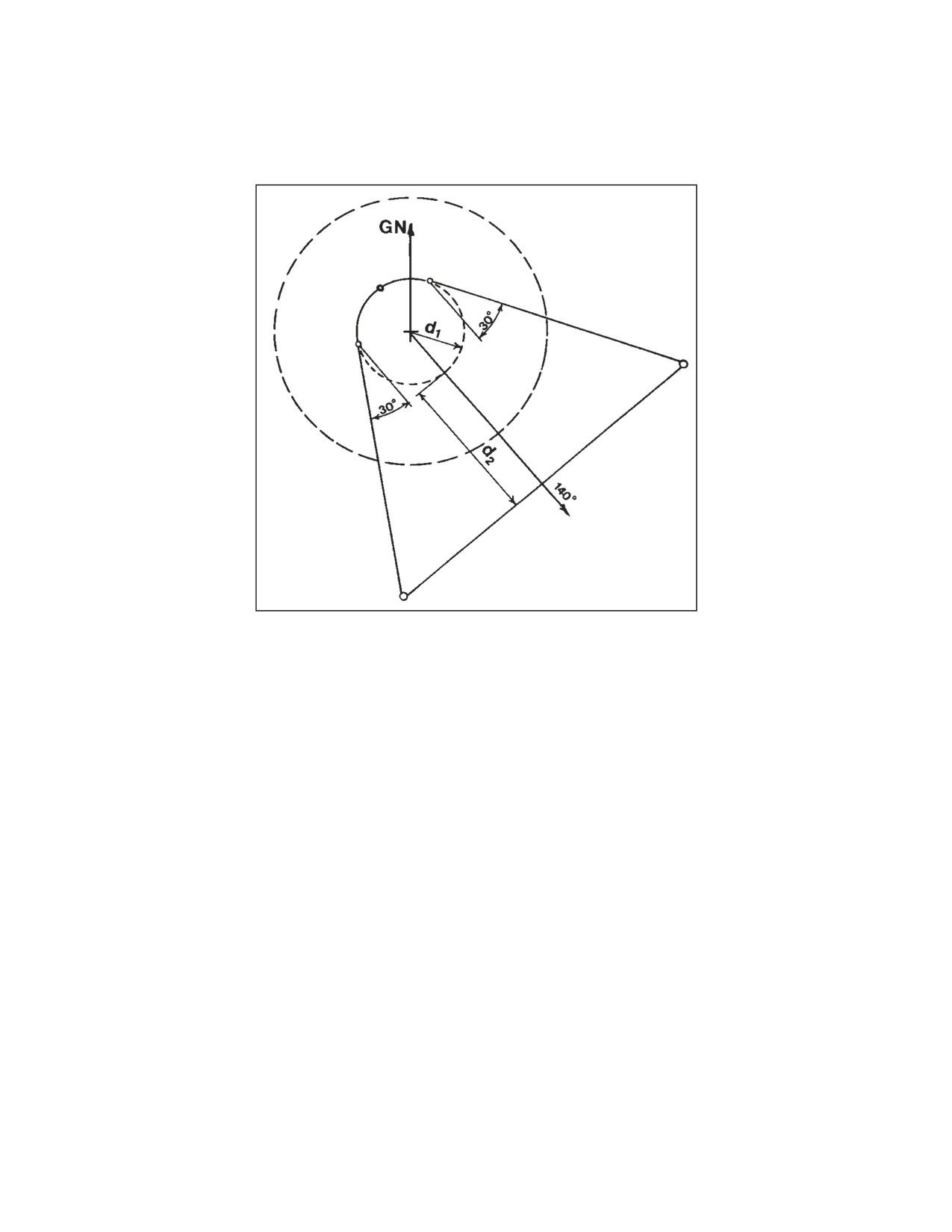
(i)
Prepare and transmit an NBC3 CHEM report and/or map
overlays to those units and installations within the hazard area according to the
SOP.
Figure E-14. Recalculation of Downwind Hazard Area Type A Attack (Change in Wind Speed From
≤10 kph to >10 kph)
30 April 2009 FM 3-11.3/MCWP 3-37.2A/NTTP 3-11.25/AFTTP(I) 3-2.56, C1
E-29
(3)
Type A, Case 2 Changing to a Type A, Case 1 (Figures E-15, E-16,
and E-17, pages E-31, E-32, and E-33 show a decrease in wind speed from >10 kph
to ≤10 kph)
Sample NBC CDM
Example NBC2 CHEM
AREAM/NFEB43//
ALFA/US/A234/005/C//
ZULUM/281200ZAPR1999/281500ZAPR1999/
DELTA/281615ZAPR1999//
282100ZAPR1999//
FOXTROT/32UPG387764/AA//
UNITM/KM/DGT/KPH/C//
GOLF/OBS/MLR/-/RKT/12//
WHISKEYM/090/018/4/14/8/-/2//
INDIA/SURF/NERV/NP//
XRAYM/090/008/4/10/8/4/2//
TANGO/FLAT/SCRUB//
YANKEEM/090/006/2/06/8/4/2//
YANKEE/090DGT/018KPH//
ZULUA/4/14C/8/-/2//
GENTEXT/CBRNINFO/
SYMPTOMS OF NERVE-
AGENT POISONING.
RECALCULATION
BASED ON CHANGE IN WIND
SPEED AS OF 281700Z//
E-30
FM 3-11.3/MCWP 3-37.2A/NTTP 3-11.25/AFTTP(I) 3-2.56, C1
30 April 2009
Sample NBC2 CHEM
Sample NBC3 CHEM
ALFA/US/A234/004/C//
ALFA/US/A234/004/C//
DELTA/281000ZAPR1999//
DELTA/281000ZAPR1999//
FOXTROT/32VMH747388/EE//
FOXTROT/32VMH747388/EE/32VMH
897388/EE//
GOLF/OBS/AIR/-/SPR/-//
INDIA/AIR/NERV/P//
INDIA/AIR/NERV/P//
PAPAA/01KM/96HR/10KM/48HR//
TANGO/FLAT/SCRUB//
PAPAX/281100ZAPR1999/
YANKEE/090DGT/020KPH//
32VMH846318/32VMH846329/
ZULU/4/18C/8/-/0//
32VMH856335/32VMH846341/
GENTEXT/CBRNINFO/SYMPTOMS OF
NERVE-AGENT POISONING//
32VMH847456/32VMH742396/
32VMH740395/32VMH739394/
Sample NBC CDM
32VMH738393/32VMH738392/
AREAM/NFEA12//
32VMH737391/32VMH737389/
ZULUM/280600ZAPR1999/280900ZAPR199
9/281500ZAPR1999//
32VMH737388/32VMH736266/
UNITM/KM/DGT/KPH/C//
32VMH836324/32VMH846318//
WHISKEYM/090/020/4/18/8/-/0//
YANKEE/090DGT/020KPH//
XRAYM/150/020/4/18/8/-/0//
ZULU/4/18C/8/-/0//
YANKEEM/150/020/4/18/8/-/0//
GENTEXT/CBRNINFO/
RECALCULATION BASED ON NBC
CDM WEATHER CHANGE AS OF
281100Z//
30 April 2009 FM 3-11.3/MCWP 3-37.2A/NTTP 3-11.25/AFTTP(I) 3-2.56, C1
E-37
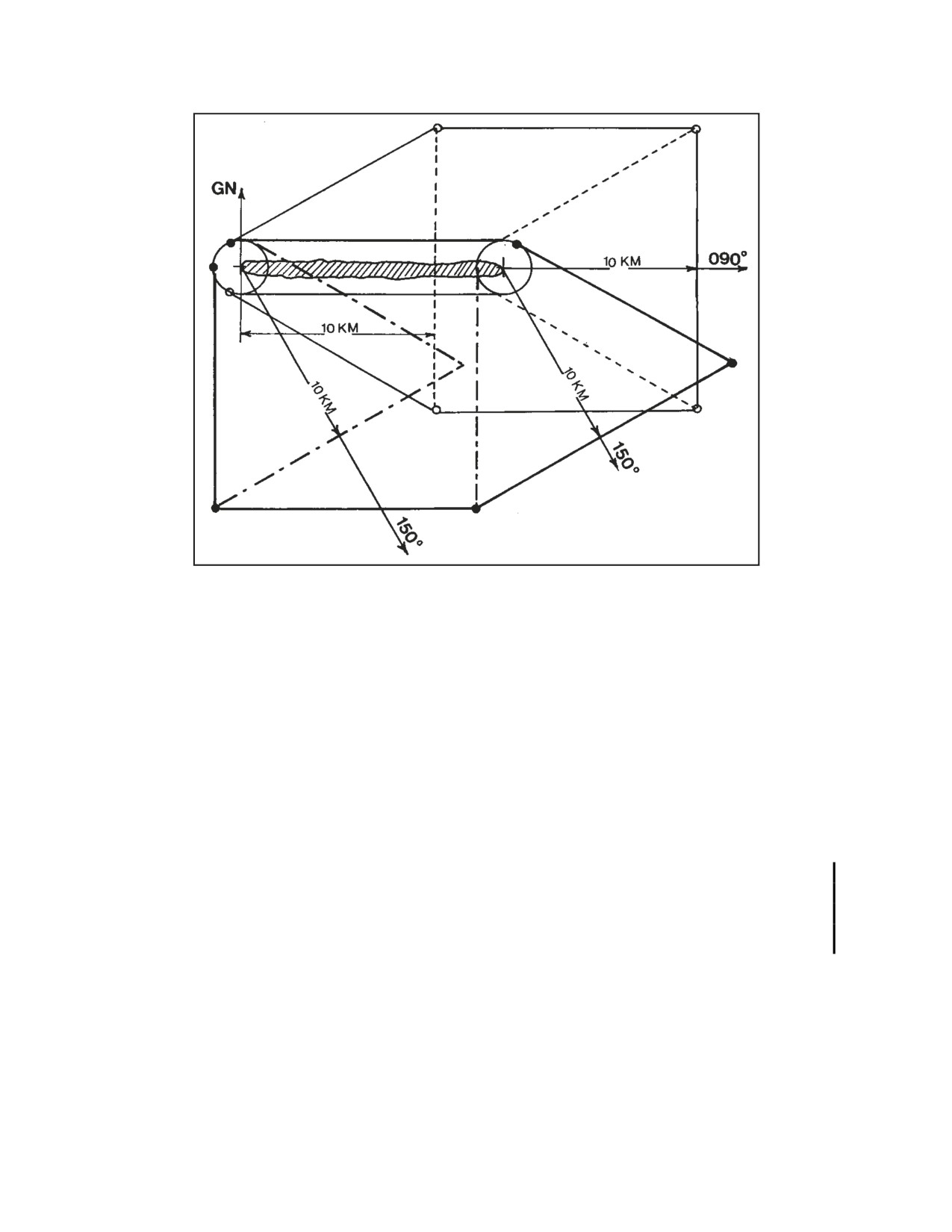
Figure E-20. Recalculation of Downwind Hazard Area Type B, Case 6 Attack (Change in Downwind
Direction)
(a) Plot the hazard area as calculated before and after the change
in wind direction, using the procedure described above.
(b) Indicate on the GENTEXT/CBRNINFO line the reason for
recalculation and the effective time for the new hazard area.
(8)
Type B, Case 2, 4, and 6 Attacks With a Change in Wind Speed from
>10 kph to ≤10 kph.
(a) Plot the hazard area as calculated for the wind speed >10 kph,
using the appropriate procedure described above for the correct case.
(b) Plot the hazard area as calculated for the wind speed ≤10 kph,
using the appropriate procedure described above for the correct case.
(9)
Hazard Area. The examples of the hazard area are valid after a
change in wind direction; they also include the area before the change. This takes
into account transient hazards caused by the shift in wind direction in the areas
between the two hazards.
(10) After Recalculation. When recalculation is complete, calculate the
arrival time of the hazard and issue an NBC3 CHEM report/map overlays to the
units or installations that will be affected. Issue the new NBC3 CHEM report to
those units initially warned to inform them that there may be a residual vapor
hazard in their area. The same strike serial number should be used as in the
E-38
FM 3-11.3/MCWP 3-37.2A/NTTP 3-11.25/AFTTP(I) 3-2.56, C1
30 April 2009
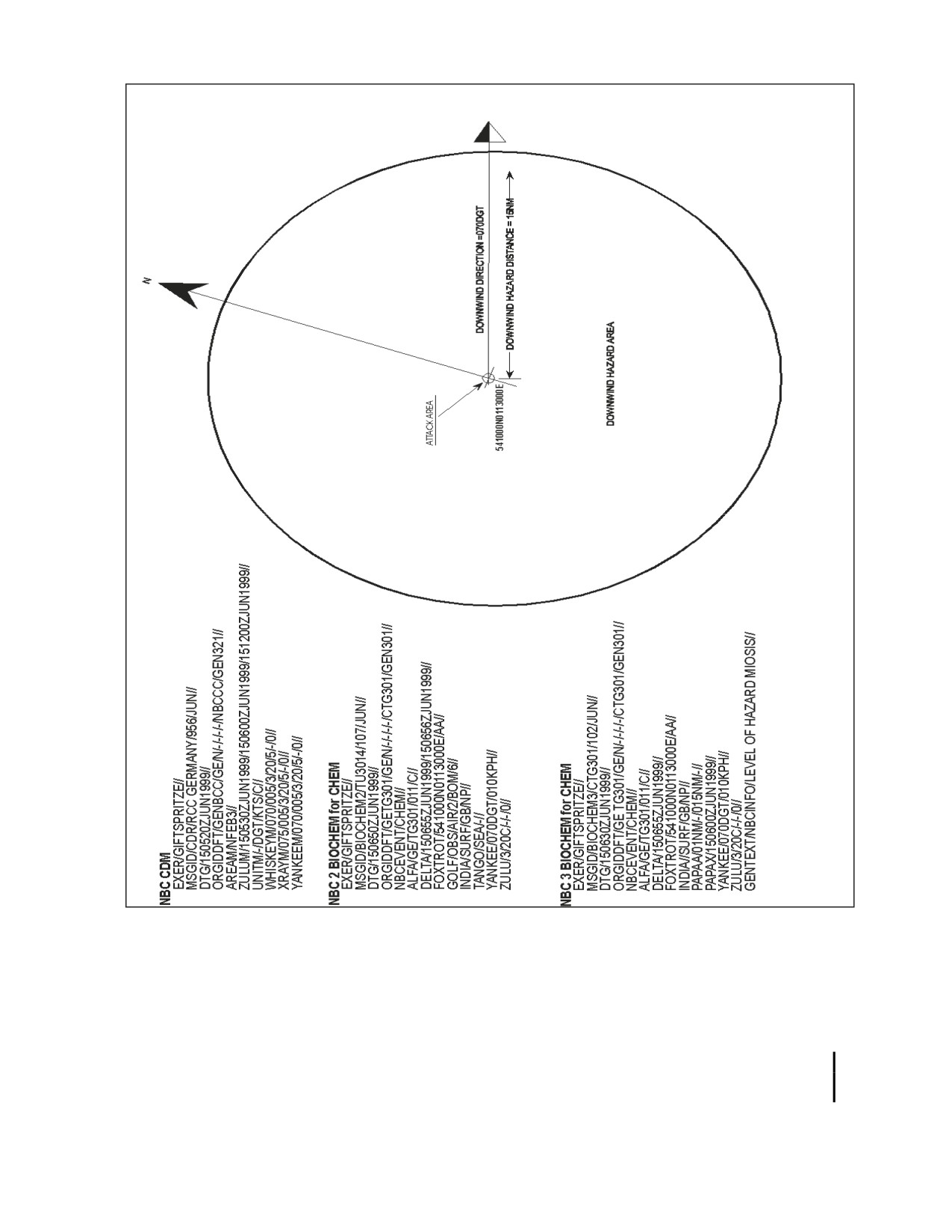
Figure E-26. Downwind Hazard Area, Type A Attack, Wind Speed ≤5 Knots or Variable
r.
Change in MET Conditions.
(1)
Adjustment Requirements. If the MET conditions change during the
hazard, the predicted hazard area must be adjusted for the following:
(a) Stability category changes from one category to another.
(b) Wind speed changes of more than 5 knots or from 5 knots or
less, to more than 5 knots, and vice versa.
30 April 2009 FM 3-11.3/MCWP 3-37.2A/NTTP 3-11.25/AFTTP(I) 3-2.56, C1
E-49
(c)
Wind direction changes of more than 20°.
(2)
Recalculation of Hazard. The new hazard area is determined by
calculating the downwind distance that the agent cloud may have traveled at the
time of the change in the MET conditions using the representative downwind speed.
Consider this point to be the center point of a new attack area, and draw a circle
around it with a radius equal to half the width of the hazard area at that point.
From there on, repeat the steps using the procedure described previously. The
distance which the agent cloud may already have traveled must be subtracted from
the maximum DHD under the new weather conditions (see Figure E-27, page E-52).
(3)
Agent Clouds Crossing the Coast Line. When a cloud from a
chemical agent crosses the coast line from sea to land or vice versa, consider the
point where the downwind direction line (downwind axis) intersects the coast line to
be the center point of a new attack area. Follow the procedure described above using
the appropriate tables for sea and land to determine the DHDs. When frequent
changes occur, use the land procedure when working manually.
(4)
Beginning and End of Hazard. In the case of air-contaminating
attacks (nonpersistent agent), the beginning and end of the hazard at a given point
may be determined using the following:
(a) Representative downwind speed.
(b) Distance of the location from the edge of the attack area.
(c)
Beginning and end of the attack.
The following two formulas are used:
tB = (dA x 60) / (1.5 x VZ) or tB = (dA x 40) / VZ
and
tE = (dB x 60) / (0.5 x VZ) or tE = (dB x 120) / VZ = 3 x tB
Where—
tB = time in minutes from the beginning of the attack to the
beginning of the hazard.
dA = distance between the location and the downwind leading edge of
the dissemination area (in NM).
dB = distance between the location and the downwind trailing edge
of the dissemination area (in NM).
VZ = wind speed in knots. If necessary, the wind speed must be
determined as the mean wind speed over several periods of validity
of the NBC CDM.
tE = time in minutes from the end of the attack to the end of the
hazard.
E-50
FM 3-11.3/MCWP 3-37.2A/NTTP 3-11.25/AFTTP(I) 3-2.56, C1
30 April 2009

6.
NBC4 CHEM Report
a.
When any unit detects CBRN hazards through monitoring, survey, or
reconnaissance, this information is reported using an NBC4 CHEM report (see
Figure E-28). Separate NBC4 CHEM reports are consolidated and then plotted on
the tactical map to show where the hazard exists. If monitoring information is
incomplete, a survey may be directed. Monitoring reports contain the type of agent
detected (line INDIA) indicating the type of chemical agent and persistency, the
location of the sampling (geographical position), the type of sample (air sample or
liquid sample) (line QUEBEC), the date-time of the detection (line SIERRA), and
topography information (line TANGO).
NBC4 CHEM Report
Line Item
Description
Cond
Example
ALFA
Strike serial number
O
ALFA/US/A234/001/C//
INDIA
Release information on CB agent
M
INDIA/UNK/NERV//
attacks or ROTA events
QUEBEC
Location of reading/sample/detection
M
QUEBEC/32VNJ481203/-/MSVY//
and type of sample/detection
ROMEO
Level of contamination, dose rate trend
O
ROMEO/20PPM//
and decay rate trend
SIERRA
DTG of reading or initial detection of
M
SIERRA/202300ZSEP1997//
contamination
TANGO
Terrain/topography and vegetation
M
TANGO/FLAT/URBAN//
description
WHISKEY
Sensor information
O
WHISKEY/POS/POS/NO/MED//
YANKEE
Downwind direction and downwind
M
YANKEE/270DGT/015KPH//
speed
ZULU
Actual weather conditions
O
ZULU/4/10C/7/5/1//
GENTEXT
General text
O
-
Figure E-28. Sample NBC4 CHEM Report
b.
Lines QUEBEC, ROMEO, SIERRA, and TANGO are a segment. With the
exclusion of line ROMEO, this segment is mandatory. Lines/segments are repeatable
up to 20 times in order to describe multiple detection, monitoring, or survey points.
c.
If no chemical agent is detected, this should be reported by entering NIL
in line INDIA. When all hazards from one attack are gone, the responsible CBRN
cell should annotate this in an NBC4 CHEM report by entering NIL in line INDIA
and by entering "CHEMICAL FREE ATTACK" in line GENTEXT/NBC INFO. To be
able to identify the attack, the strike serial number (line ALFA from the NBC2
CHEM report) must be included in the report.
30 April 2009 FM 3-11.3/MCWP 3-37.2A/NTTP 3-11.25/AFTTP(I) 3-2.56, C1
E-53

d.
For detailed information regarding chemical reconnaissance, refer to
Multiservice Tactics, Techniques, and Procedures for Nuclear, Biological, and
Chemical Reconnaissance.
7.
NBC5 CHEM Report
a.
The NBC5 CHEM report is prepared from the contamination plot. This
report is last in order because it consists of a series of grid coordinates. Often, this
message must be sent via radio nets. This requires lengthy transmission. The
recipient is required to plot each coordinate and redraw the plot. This report may
also be sent as a map overlay.
b.
For NBC5 CHEM reports, line items INDIA (release information),
OSCAR (reference time), and XRAYA (actual contour information) are mandatory
(see Figure E-29).
NBC5 CHEM Report
Line Item
Description
Cond
Example
ALFA
Strike serial number
O
ALFA/US/A234/001/C//
DELTA
DTG of attack or detonation and
O
DELTA/201405ZSEP1997//
attack end
INDIA
Release information on CB agent
M
INDIA/AIR/NERV/P/-//
attacks or ROTA events
OSCAR
Reference DTG for estimated
M
OSCAR/201505ZSEP1997//
contour lines
TANGO
Terrain/vegetation information
O
XRAYA*
Actual contour information
M
XRAYA/LCT50/32VNJ575203/
32VNJ572211/32VNJ560219/
32VNJ534218/32VNJ575203//
XRAYB*
Predicted contour information
O
YANKEE
Downwind direction and downwind
O
YANKEE/270DGT/015KPH//
speed
ZULU
Actual weather conditions
O
ZULU/4/10C/7/5/1//
GENTEXT
General text
O
*Line items are repeatable up to 50 times to represent multiple contours.
Figure E-29. Sample NBC5 CHEM Report
8.
NBC6 CHEM Report
The NBC6 CHEM report is a summary of the information concerning the
CBRN and ROTA events. NBC6 CHEM reports consist mainly of general text, which
gives information on the event (see Figure E-30).
E-54
FM 3-11.3/MCWP 3-37.2A/NTTP 3-11.25/AFTTP(I) 3-2.56, C1
30 April 2009