FM 4-20.127 Airdrop of Supplies and Equipment: Rigging M198, 155-MM Howitzer (JUNE 2004) - page 3
FM 4-20.127/TO 13C7-10-191
4
4
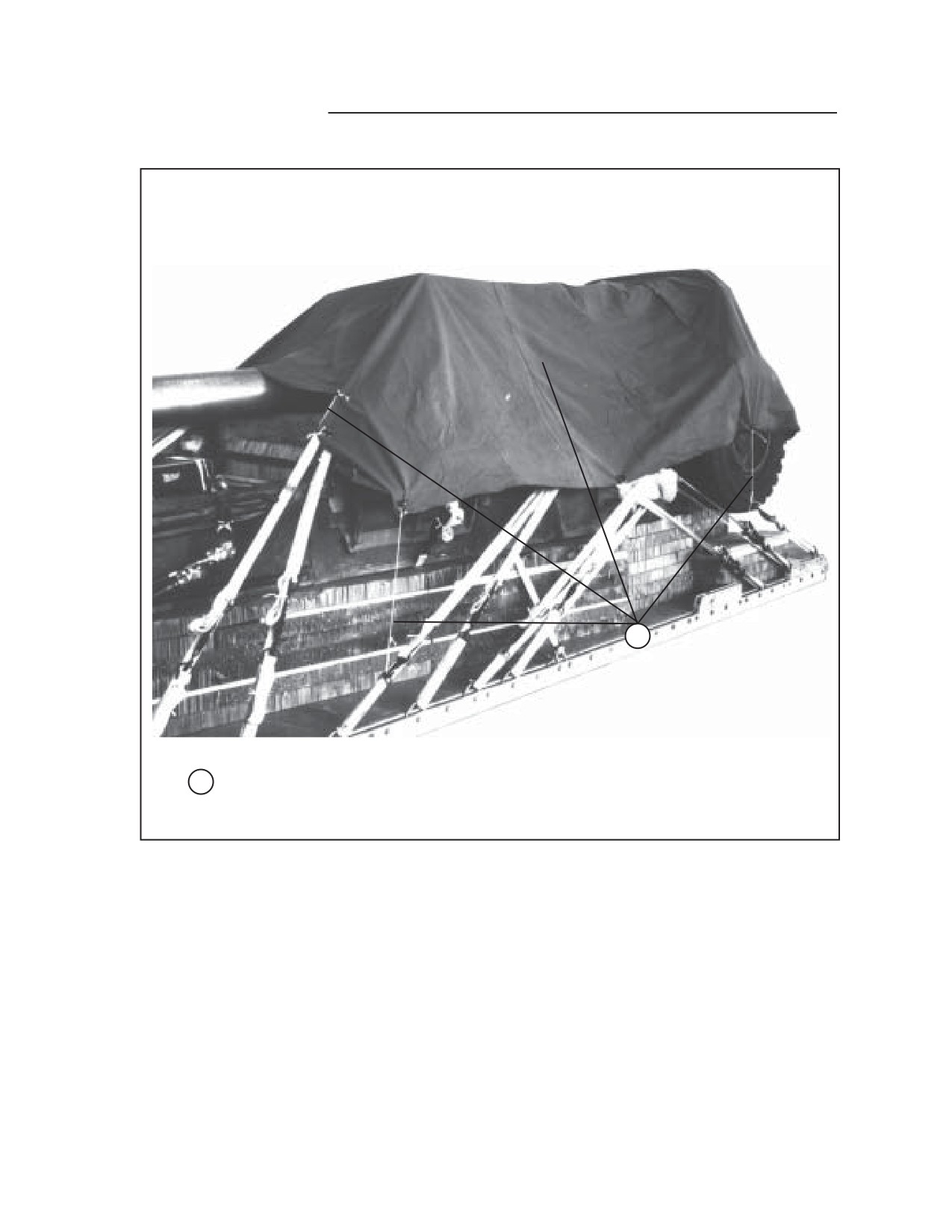
Tie a 15- by 16-foot load cover over the load with type III nylon cord. Tie the cord
under the gun tube and to convenient points on the load.
Figure 2-23. Load Covered (Continued)
2-34
FM 4-20.127/TO 13C7-10-191
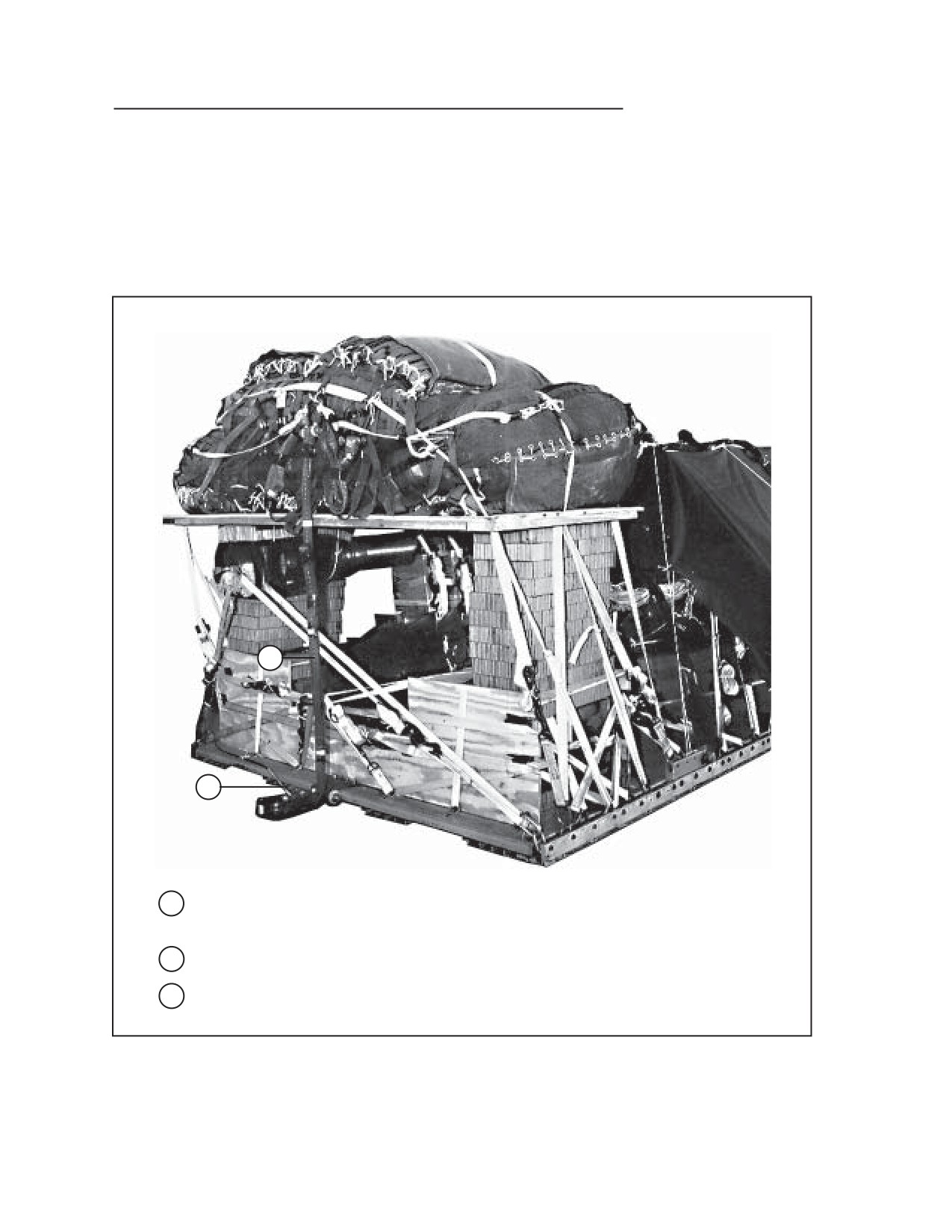
INSTALLING SUSPENSION SLINGS
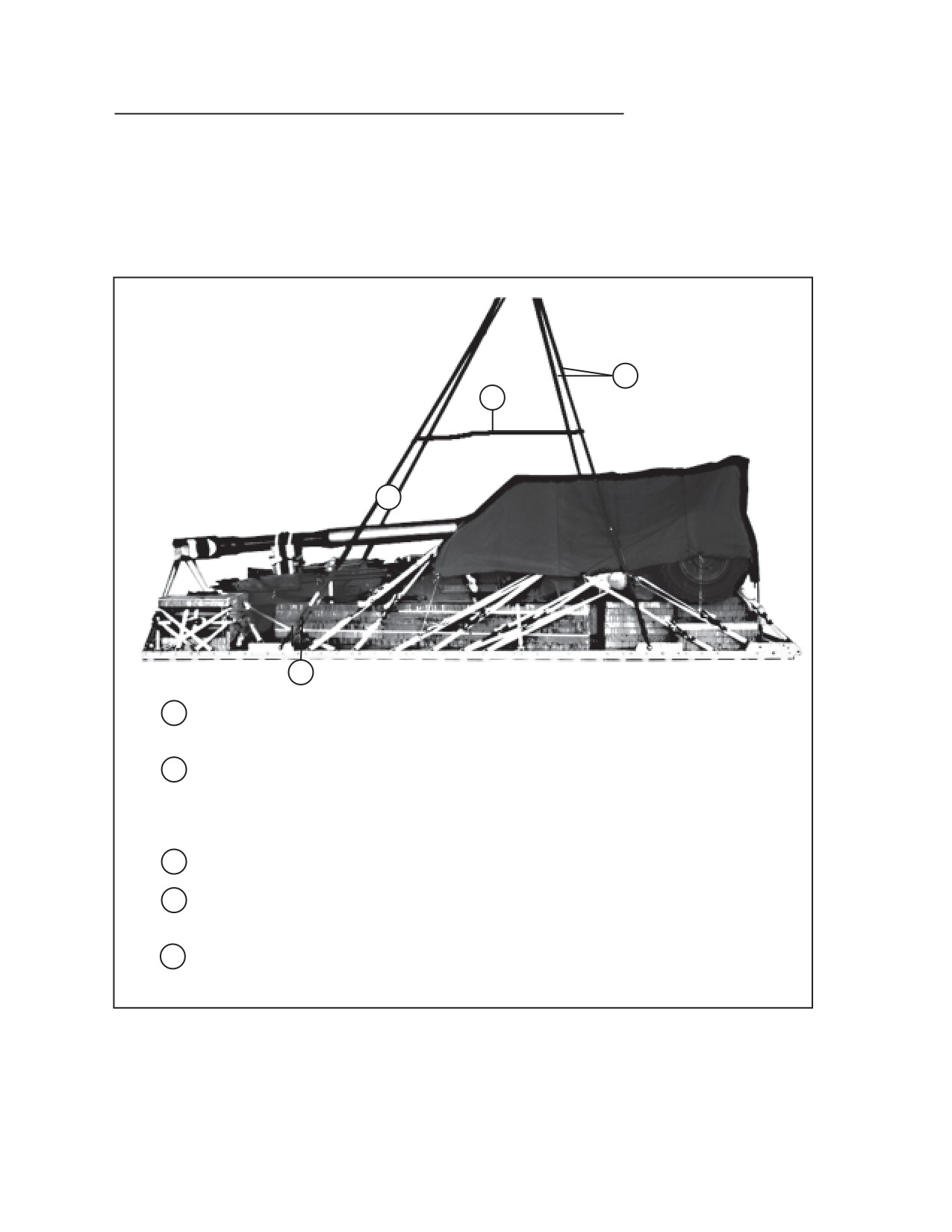
2-11. Install the suspension slings according to FM 4-20.102/NAVSEA
SS400-AB-MMO-010/TO 13C7-1-5 and as shown in Figure 2-24.
1
5
4
2
1
Attach a 16-foot (4-loop), type XXVI nylon suspension sling to each front suspension
bracket with a large clevis.
2
Place one end of a 3-foot (4-loop), type XXVI nylon suspension sling on a large clevis.
Pass the free end of the sling through a 5 1/2-inch, two-point link assembly. Place
the remaining end of the 3-foot sling onto the large clevis. Bolt the large clevis to the
right rear suspension bracket.
3
Repeat step 2 for the left side of the platform (Not Shown).
4
Attach a 16-foot (4-loop), Type XXVI nylon webbing sling to each 5 1/2-inch two-
point link assembly on the rear.
5
Raise the suspension slings. Install the safety tie according to FM 4-20.102/
NAVSEA SS400-AB-MMO-010/TO 13C7-1-5.
Figure 2-24. Suspension Slings Installed
2-35
FM 4-20.127/TO 13C7-10-191
6
7
6
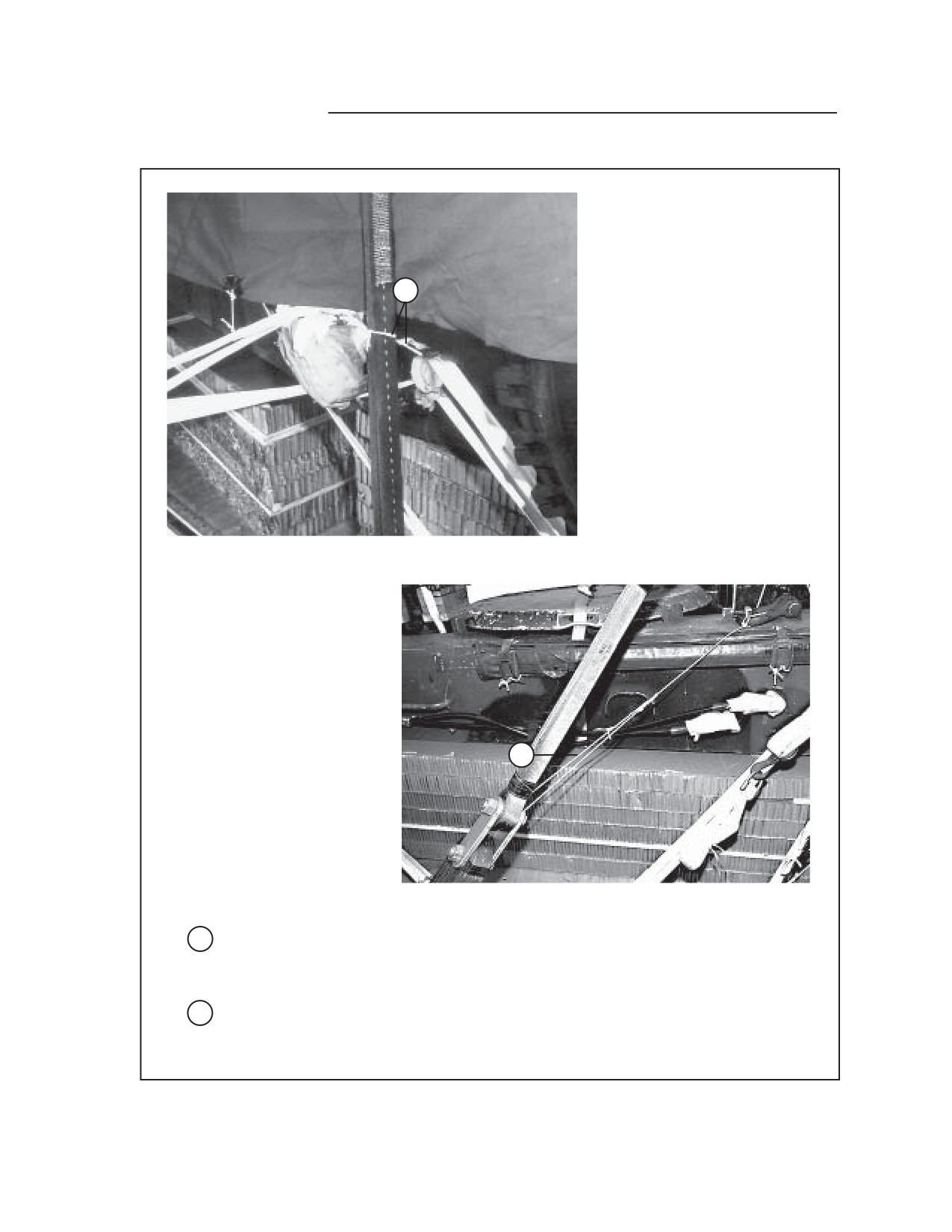
Run a length of 1/2-inch tubular nylon webbing through each trail lock. Safety the
front suspension slings to the 1/2-inch tubular nylon webbing with type I, 1/4-inch
cotton webbing.
7
Lower the suspension slings. Tie each 5 1/2-inch, two-point link assembly on the
rear suspension slings to the lifting provision on the howitzer trail with type III
nylon cord.
Figure 2-24. Suspension Slings Installed (Continued)
2-36
FM 4-20.127/TO 13C7-10-191
STOWING CARGO PARACHUTES
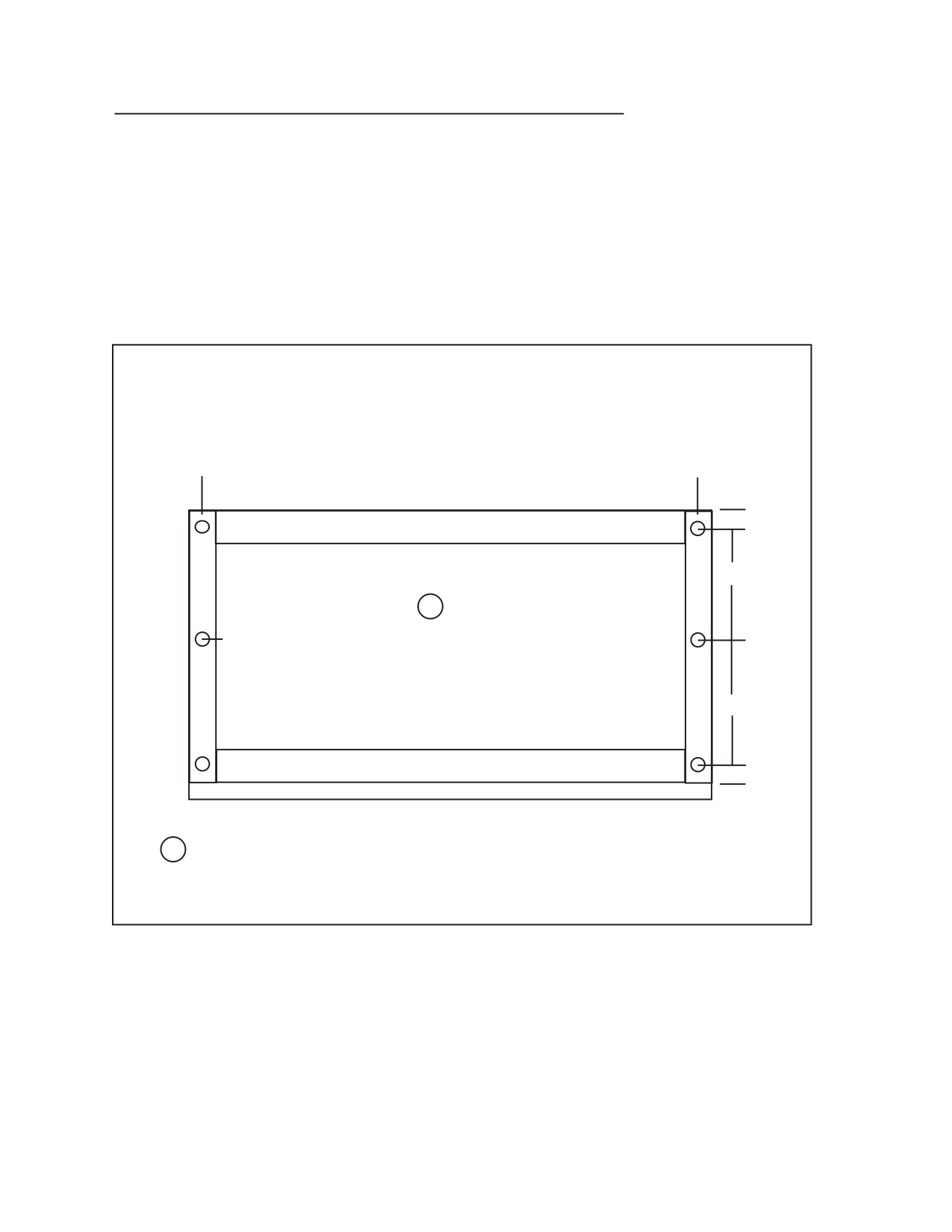
2-12. Build the stowage platform as shown in Figure 2-25. Install the
parachute stowage platform as shown in Figure 2-26. Stow the G-11
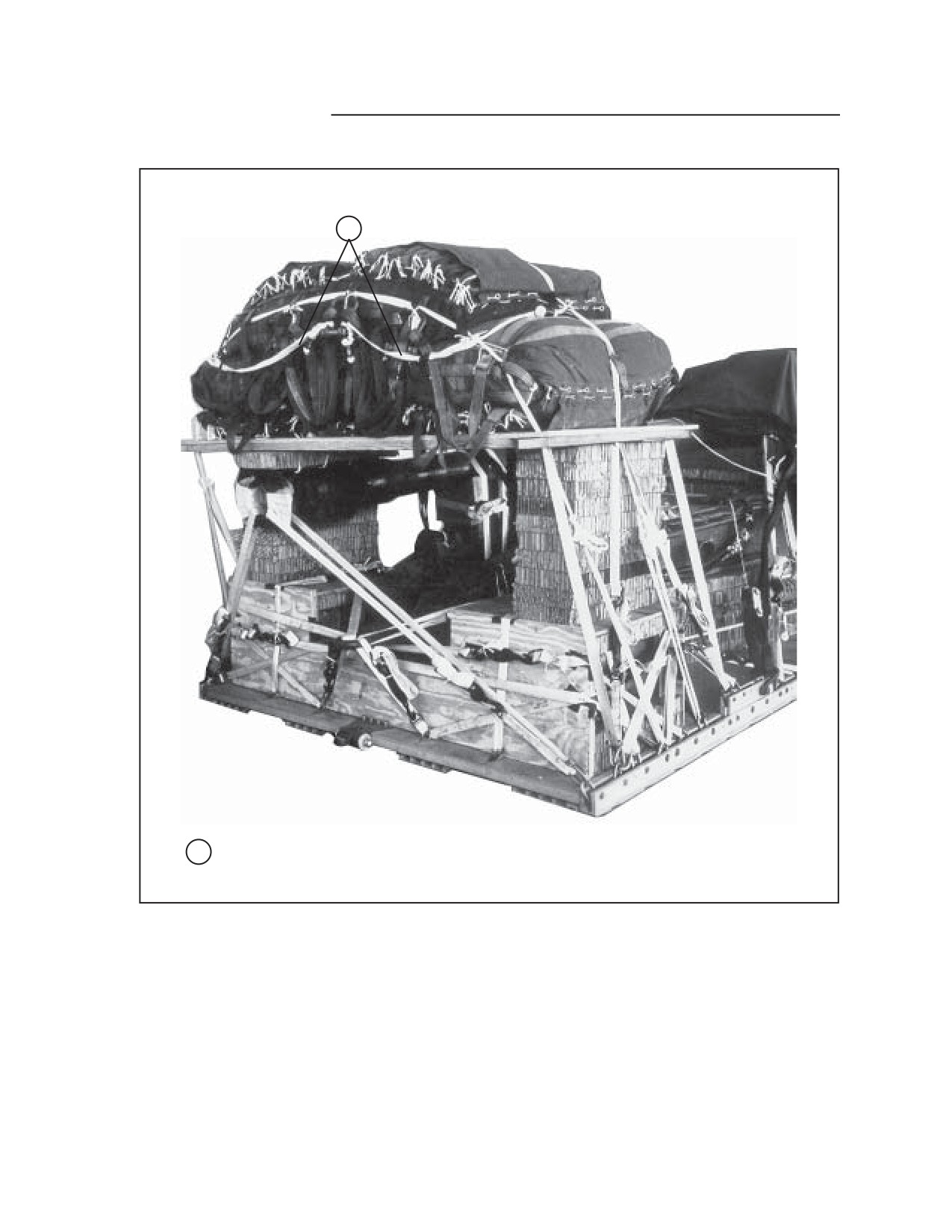
cargo parachutes as shown in Figure 2-27. Install the parachute
restraint straps as shown in Figure 2-28. Install the multicut
parachute release straps as shown in Figure 2-29.
NOTES:
1. This drawing is not to scale.
2. All measurements are given in inches.
2 x 6 x 85 lumber
2 x 6 x 45 lumber
3
2 x 6 x 85 lumber
19 1/2
1
2-inch hole
3/4 x 48 x 96 plywood
19 1/2
2 x 6 x 85 lumber
3
1
Build the parachute stowage platform as shown. Nail the lumber to the plywood
using 8d nails. Drill 2-inch holes through the plywood and the end pieces of the
2- by 6-inch lumber as shown.
Figure 2-25. Parachute Stowage Platform Built
2-37
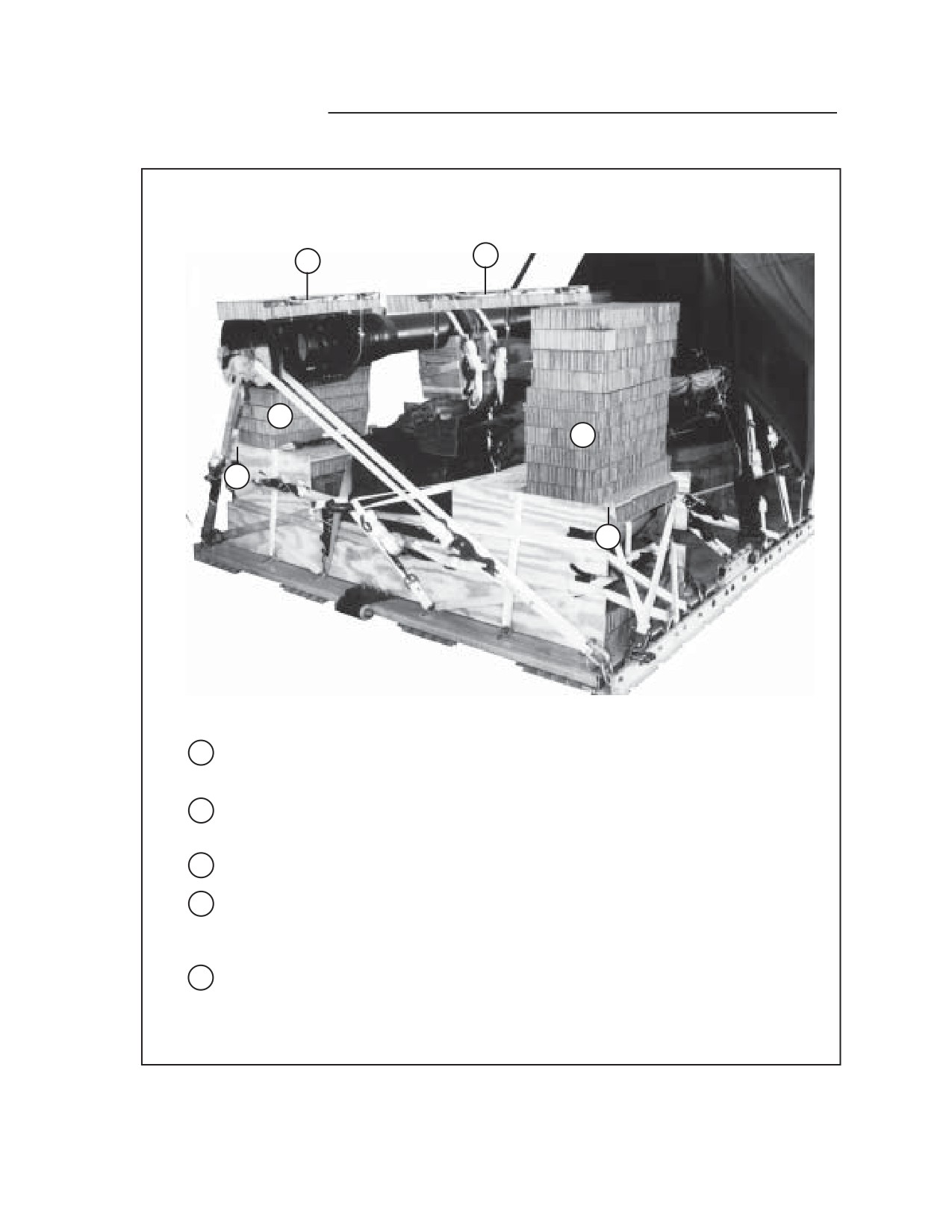
FM 4-20.127/TO 13C7-10-191
5
4
1
1
3
2
1
Make two 10-layer honeycomb supports using twenty 12- by 29-inch pieces of
honeycomb.
2
Place one honeycomb support 5 inches from the right side and flush with the rear
edge of the ammunition load.
3
Repeat step 2 for the left side.
4
Place a 14- by 29-inch piece of honeycomb on top of the muzzle brake. Tape the
edges of the honeycomb where the type III nylon cord will contact. Secure the
honeycomb in place with two lengths of type III nylon cord.
5
Place a 10- by 56-inch piece of honeycomb over the length of the gun tube.
Tape the edges of the honeycomb where the type III nylon cord will contact.
Secure the honeycomb with type III nylon cord in three evenly spaced places.
Do not use tape on the gun tube.
Figure 2-26. Parachute Stowage Platform Installed
2-38
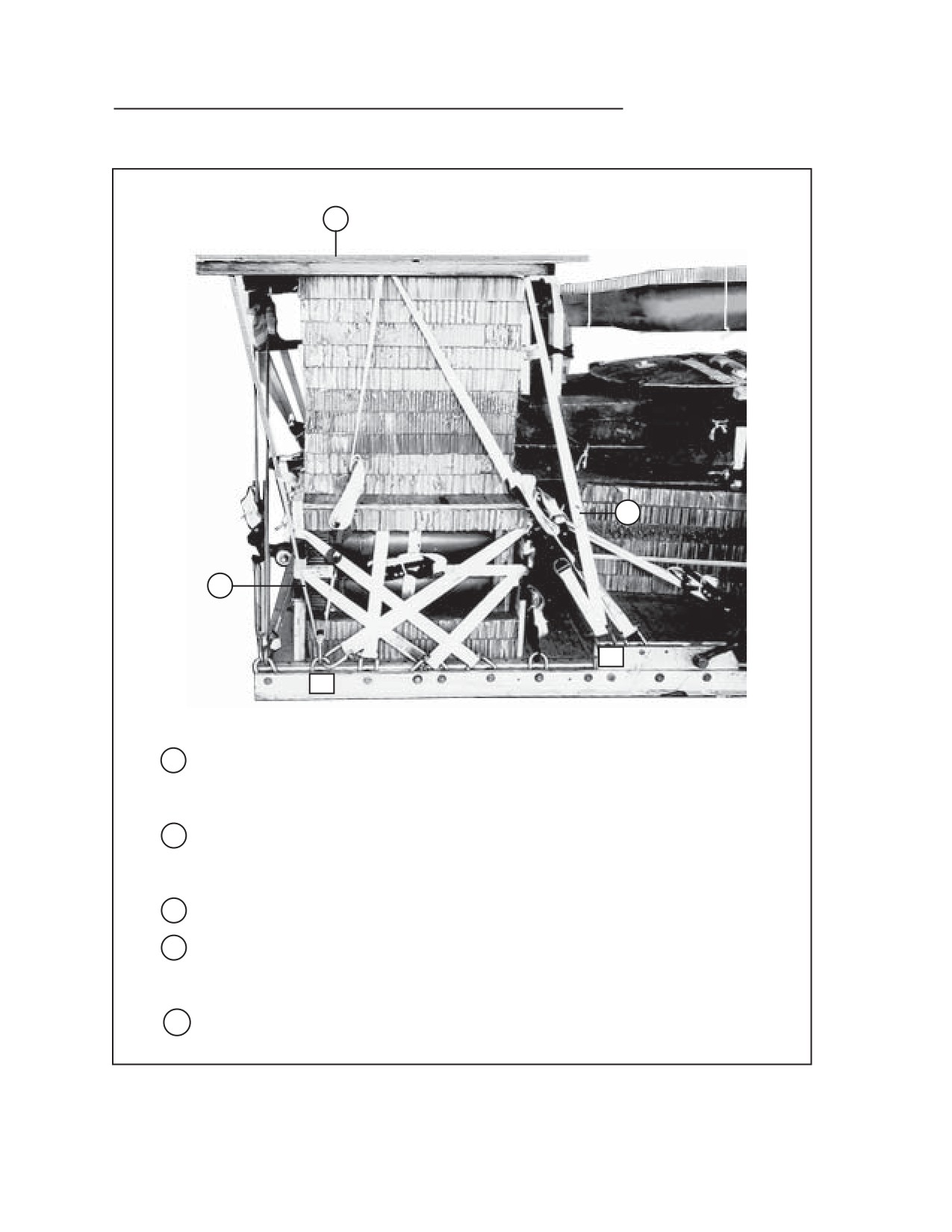
FM 4-20.127/TO 13C7-10-191
6
7
9
13
20
6
Center the parachute stowage platform on top of the honeycomb supports with
the rear edge of the parachute stowage platform flush with the rear edge of the
platform.
7
Pass a 15-foot lashing through clevis 13, up through the right front hole, and
down through the center hole of the parachute stowage platform. Secure the
ends of the lashing with a D-ring and a load binder.
8
Repeat step 7 using clevis 13A (Not Shown) for the left side.
9
Pass a 15-foot lashing through clevis 20, up through the right rear hole, and
down through the right center hole of the parachute stowage platform. Secure
the ends of the lashing with a D-ring and load binder.
10
Repeat step 9 using clevis 20A (Not Shown) for the left side.
Figure 2-26. Parachute Stowage Platform Installed (Continued)
2-39
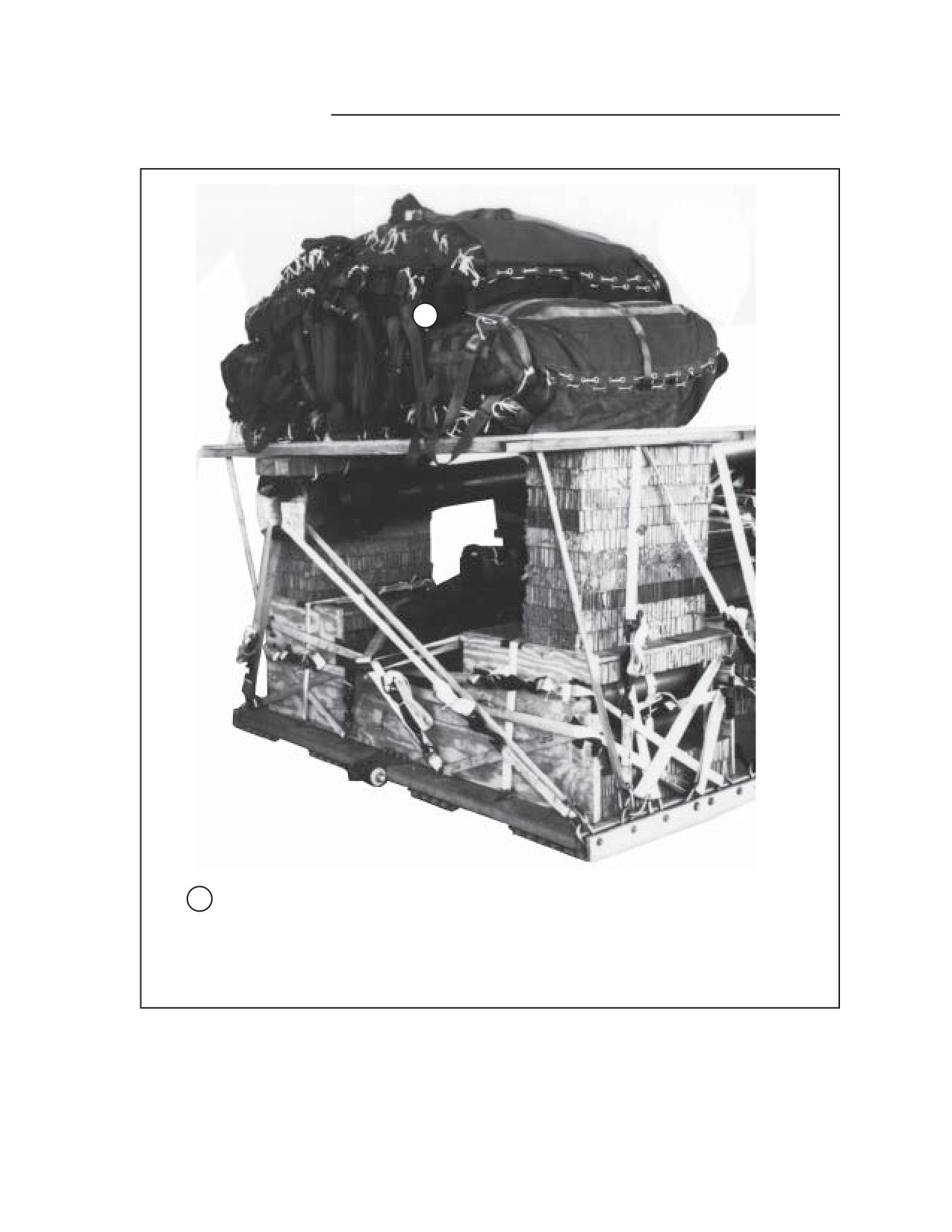
FM 4-20.127/TO 13C7-10-191
1
1
Prepare and stow five G-11C cargo parachutes on the parachute stowage platform
according to FM 4-20.102/NAVSEA SS400-AB-MMO-010/TO 13C7-1-5.
Note: If needed, a stow or two of the riser extension may be removed from
the riser extension compartment of each cargo parachute.
Figure 2-27. Cargo Parachutes Stowed
2-40
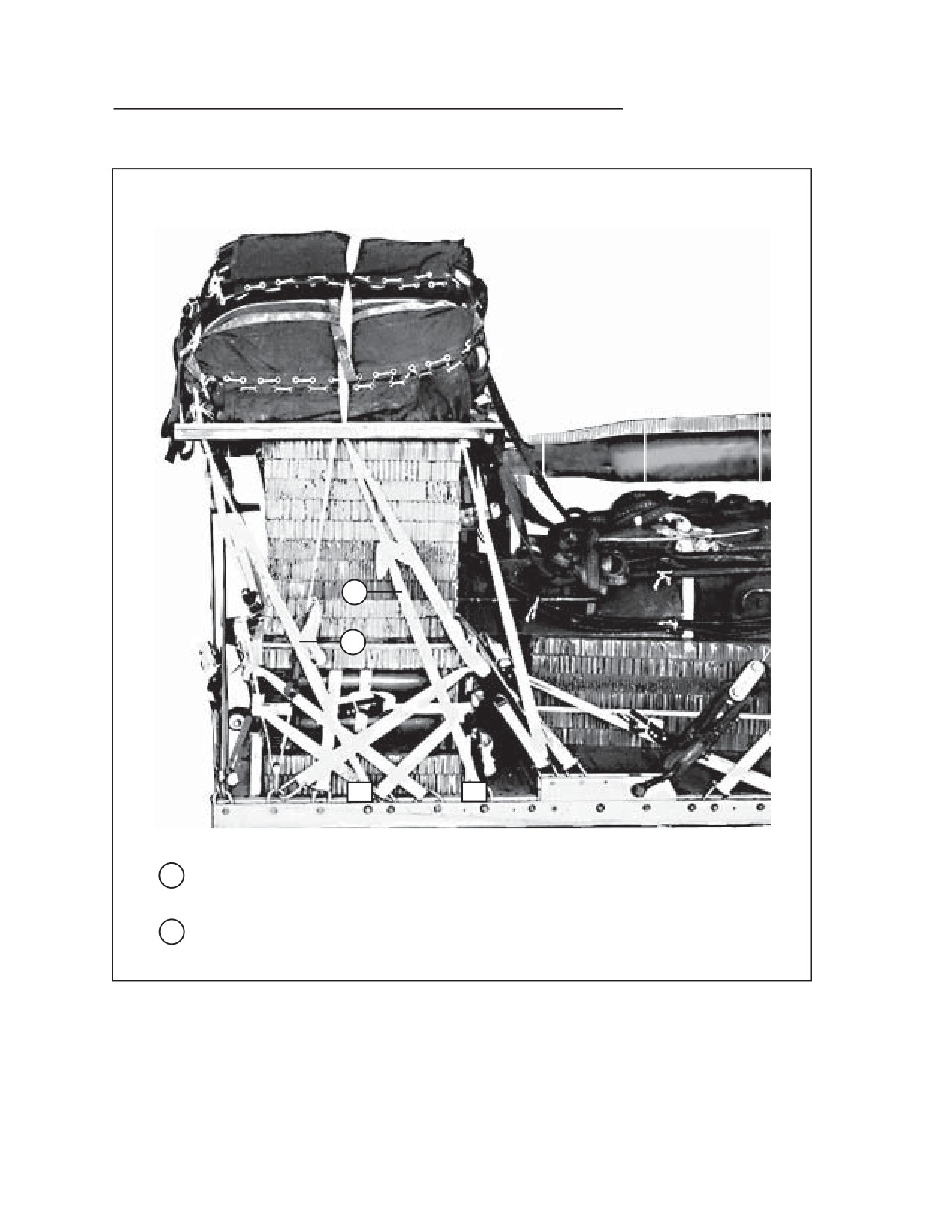
FM 4-20.127/TO 13C7-10-191
1
2
17
14
1
Install the first parachute restraint strap through the center hole of the parachute
stowage platform and to clevises 14 and 14A.
2
Install the second parachute restraint strap through the rear holes of the parachute
stowage platform and to clevises 17 and 17A.
Figure 2-28. Parachute Restraint Straps Installed
2-41
FM 4-20.127/TO 13C7-10-191
1
1
Install two multicut parachute release straps according to FM 4-20.102/NAVSEA
SS400-AB-MMO-010/TO 13C7-1-5.
Figure 2-29. Multicut Parachute Release Straps Installed
2-42
FM 4-20.127/TO 13C7-10-191
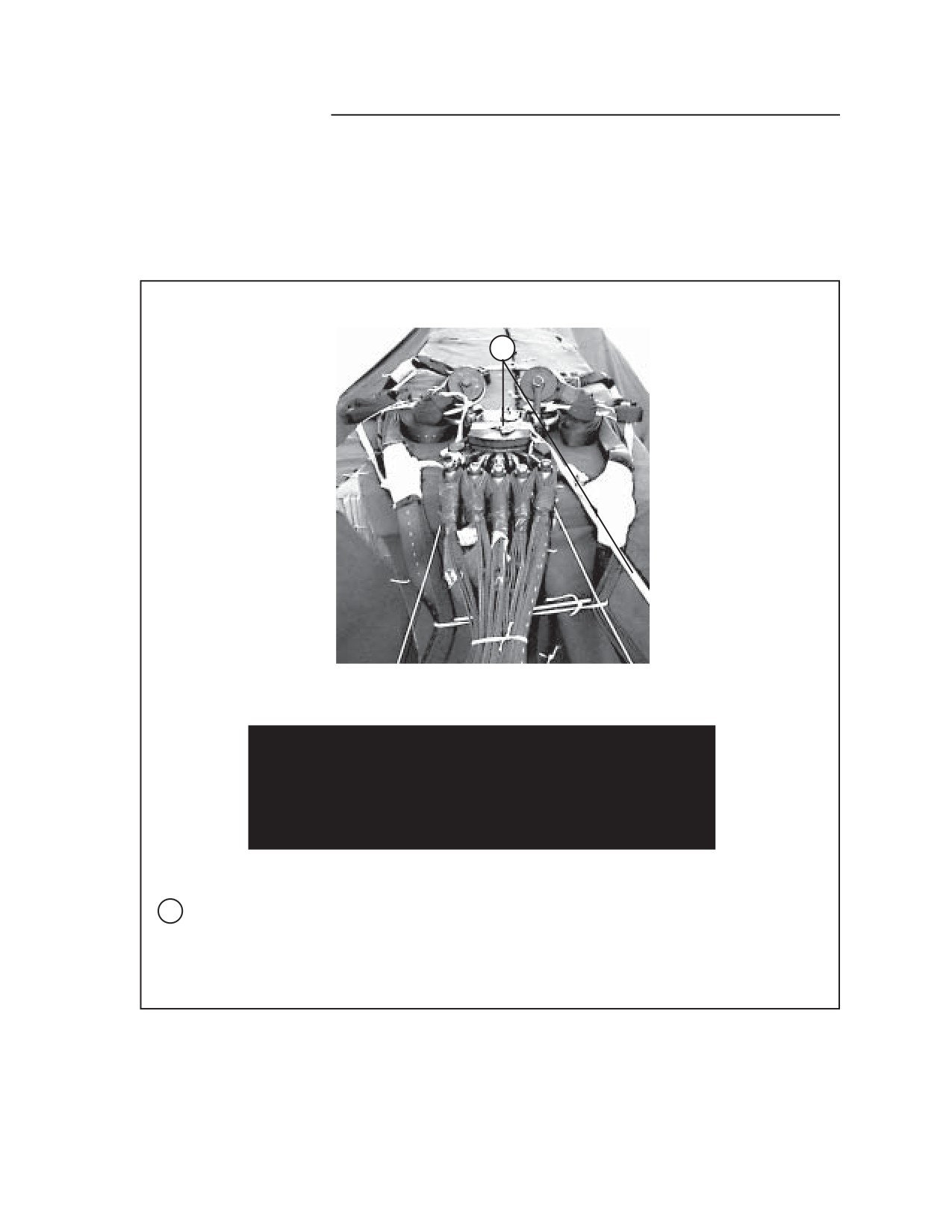
INSTALLING EXTRACTION SYSTEM
2-13. Install the Extraction Force Transfer Coupling (EFTC) System
according to FM 4-20.102/NAVSEA SS400-AB-MMO-010/TO 13C7-1-5
and as shown in Figure 2-30.
3
2
1
Install the EFTC actuator mounting brackets using the rear mounting holes (Not
Shown).
2
Install a 24-foot cable.
3
Attach a 9-foot (2-loop), type XXVI nylon sling as the deployment line.
Figure 2-30. Extraction System Installed
2-43
FM 4-20.127/TO 13C7-10-191
INSTALLING PARACHUTE RELEASE SYSTEM
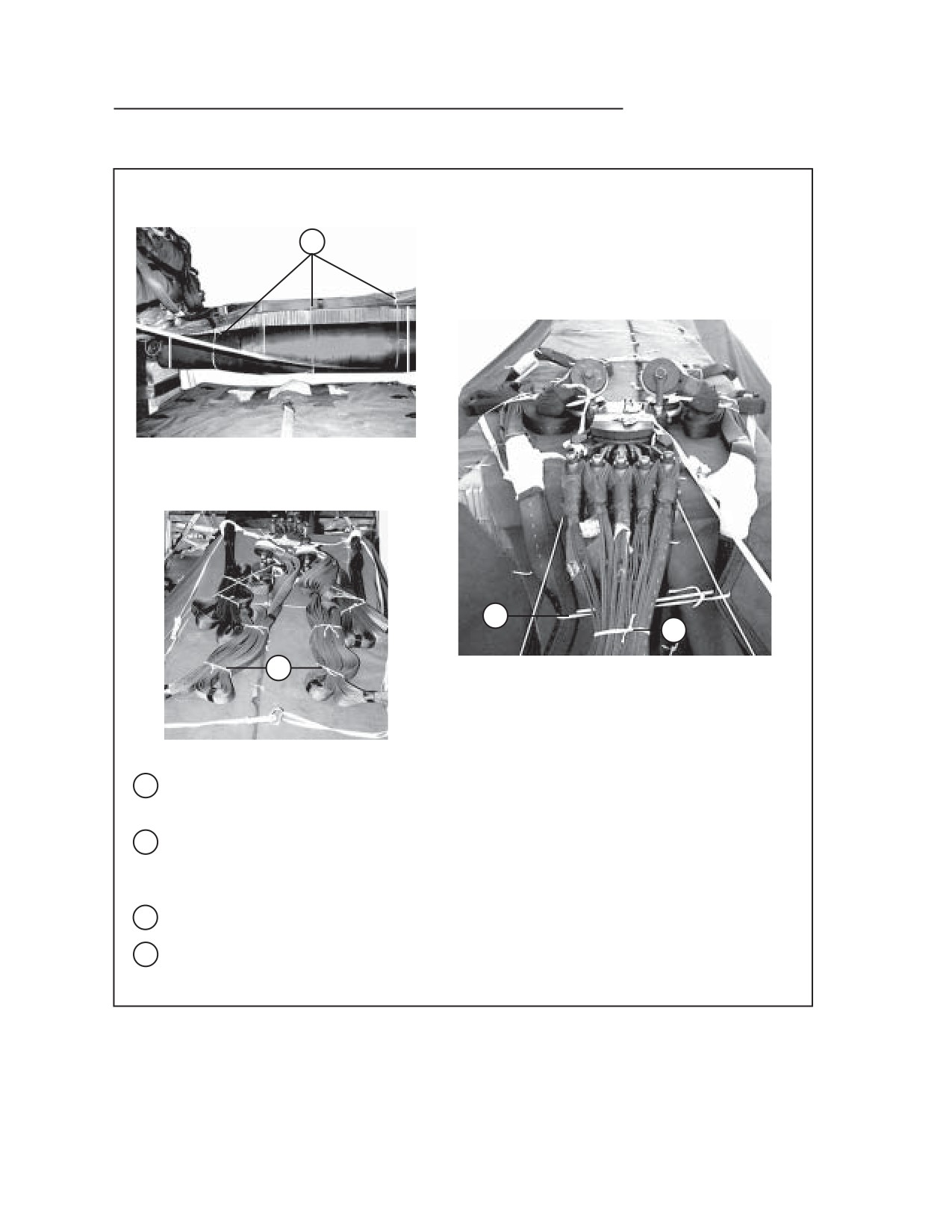
2-14. Install an M-2 parachute release system according to FM 4-20.102/
NAVSEA SS400-AB-MMO-010/TO 13C7-1-5 and as shown in Figure 2-31.
1
NOTICE OF EXCEPTION
The procedures in this manual for using the 25-foot arming wire
lanyard are different from those in FM 4-20.102/NAVSEA SS400-
AB-MMO-010/TO 13C7-1-5 and an exception is granted. The
procedures in step 1 below MUST be followed.
1
Using a 25-foot arming wire lanyard, install the M-2 parachute release on top of the
load cover at the rear edge of the release stowage platform. Attach suspension slings
and parachute riser extensions according to FM 4-20.102/NAVSEA SS400-AB-MMO-
010/TO 13C7-1-5.
Figure 2-31. Parachute Release Installed
2-44
FM 4-20.127/TO 13C7-10-191
3
4
2
5
2
Group and tie the riser extensions with type I, 1/4-inch cotton webbing at a convenient
point approximately 12 inches above the parachute release.
3
Group and tie the parachute riser extensions with type I, 1/4-inch cotton webbing
using a girth hitch at three convenient points. Route the free ends around honeycomb
and gun barrel and tie underneath.
4
Secure the rear suspension slings together with a length of 1/4-inch cotton webbing.
5
S-fold all the slack in the front suspension slings and secure with 1/4-inch cotton
webbing.
Figure 2-31. Parachute Release Installed (Continued)
2-45
FM 4-20.127/TO 13C7-10-191
INSTALLING PROVISIONS FOR EMERGENCY RESTRAINTS
2-15. Install the provisions for the emergency restraints on the load accord-
ing to FM 4-20.102/NAVSEA SS400-AB-MMO-010/TO 13C7-1-5.
PLACING EXTRACTION PARACHUTE
2-16. Place the extraction parachute as described below.
a. C-130 Aircraft. Place a 28-foot cargo extraction parachute;
a 60-foot (3-loop), type XXVI nylon webbing extraction line; and
a 5 1/2-inch, two-point link assembly on the load for installation
in the aircraft.
b. C-17 Aircraft. Place a 28-foot cargo extraction parachute;
a 140-foot (3-loop), type XXVI nylon webbing extraction line; and
a 5 1/2-inch, two-point link assembly on the load for installation
in the aircraft.
c. C-5 Aircraft. Place a 28-foot cargo extraction parachute on
the load for installation in the aircraft. See FM 4-20.102/NAVSEA
SS400-AB-MMO-010/TO 13C7-5-1 for extraction line requirments.
MARKING RIGGED LOAD
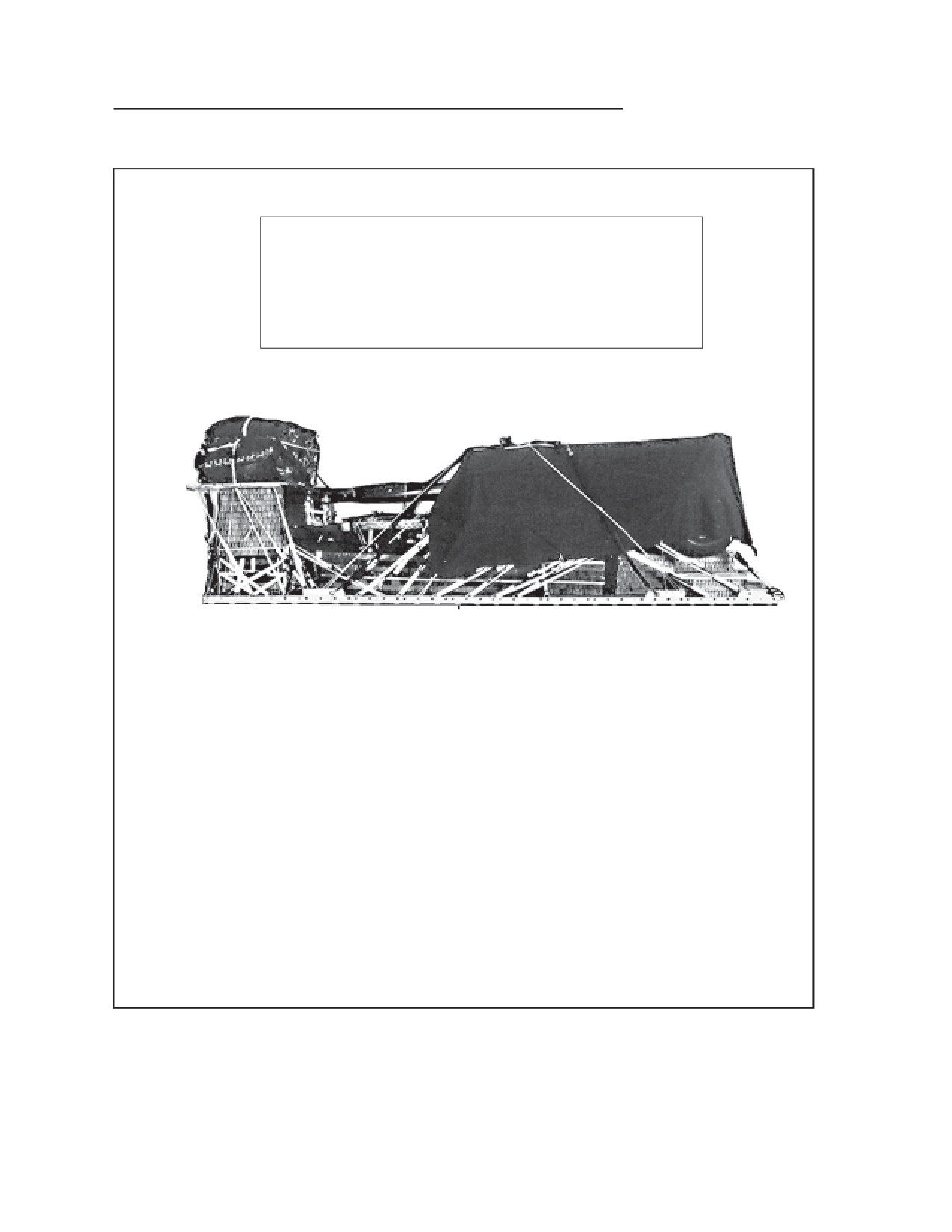
2-17. Mark the rigged load according to FM 4-20.102/NAVSEA SS400-
AB-MMO-010/TO 13C7-5-1 and as shown in Figure 2-32. Complete the
Shipper’s Declaration for Dangerous Goods. If the load varies from the
one shown, the weight, height, Center of Balance(C/B), and parachute
requirements must be recomputed.
EQUIPMENT REQUIRED
2-18. Use the equipment listed in Table 2-2 to rig this load.
2-46
FM 4-20.127/TO 13C7-10-191
CAUTION
Make the final rigger inspection required by AR 59-4/AFJ
13-210(I) and FM 4-20.102/NAVSEA SS400-AB-MMO-010/
TO 13C7-5-1 before the load leaves rigging site.
CB
RIGGED LOAD DATA
Weight
23,400 pounds
Maximum Weight
25,000 pounds
Height
94 inches
Width
109 1/2 inches
Overall Length
311 inches
Overhang: Front
0 inches
Rear (EFTC)
18 inches
Center of Balance (CB) (from front edge of platform)
128 inches
Figure 2-32. M198, 155-mm Howitzer with Accompanying Load Rigged on a Type V
Platform for Low-Velocity Airdrop
2-47
FM 4-20.127/TO 13C7-10-191
Table 2-2. Equipment Required for Rigging the M198, 155-mm Howitzer With Accompanying
Ammunition Load on a Type V Platform for Low-Velocity Airdrop
National Stock
Item
Quantity
Number
8040-00-273-8713
Adhesive paste, 1-gal
As required
1670-01-035-6054
Bridle, extraction line bag (for DES
)
1
4030-00-090-5354
Clevis, large
8
4030-00-678-8562
Clevis, medium
4
8305-00-880-8155
Cloth, coated, 60-inch
As required
4020-00-240-2146
Cord, nylon, type III, 550-lb
As required
1670-00-434-5783
Coupling, airdrop, extraction force transfer with cable,
24-ft
1
1670-00-360-0328
Cover, clevis, large
5
1670-01-183-2678
Leaf, extraction line (line bag)(add 1 for DES
)
2
Line, drogue (for DES
)
1670-01-064-4452
60-foot (1-loop), type XXV I
1
Line, extraction
:
1670-01-062-6313
For C-130: 60-foot (3-loop), type XXV I
1
1670-01-107-7651
For C-17: 140-foot (3-loop), type XXV I
1
For C-5:
1670-01-062-6313
60-ft, (3-loop), type XXV I
1
1670-01-107-7651
140-ft, (3-loop), type XXV I
1
Link assembly:
T
wo-point, 3 3/4-in
3
5306-00-435-8994
Bolt, 1-in diam, 4-in long
(6
)
5310-00-232-5165
Nut, 1-in, hexagonal
(6
)
1670-00-003-1953
Plate, side, 3 3/4-in
(6
)
5365-00-007-3414
Spacer, large
(6
)
T
wo-point, 3 3/4-in (for DES
)
1
5306-00-435-8994
Bolt, 1-in diam, 4-in long
(2
)
5310-00-232-5165
Nut, 1-in, hexagonal
(2
)
1670-00-003-1953
Plate, side, 3 3/4-in
(2
)
5365-00-007-3414
Spacer, large
(2
)
1670-01-483-8259
Link, tow release mechanism (H-Block) C-17
aircraft
1
2-48
FM 4-20.127/TO 13C7-10-191
Table 2-2. Equipment Required for Rigging the M198, 155-mm Howitzer With Accompanying
Ammunition Load on a Type V Platform for Low-Velocity Airdrop (Continued)
National Stock
Item
Quantity
Number
Lumber:
5510-00-220-6148
2- by 6-in
As required
5510-00-220-6248
2- by 10-in
As required
Nail, steel wire, common:
5315-00-010-4659
8d
As required
5315-00-010-4661
10d
As required
5315-00-164-5121
20d
As required
1670-00-753-3928
Pad, energy dissipating, honeycomb, 3- by 36- by
96-in
40 sheets
Parachute:
1670-01-016-7841
Cargo, G-11C
5
1670-00-040-8135
Cargo, extraction, 28-ft
1
1670-01-063-3715
Cargo, extraction, 15-ft (for DES
)
1
Platform, airdrop, type
V
, 28-ft
1
1670-01-353-8425
Bracket assembly, EFT C
(1
)
1670-01-162-2376
Bracket assembly, extraction
(1
)
1670-01-162-2372
Clevis assembly
(48)
1670-01-247-2389
Bracket, suspension
(4
)
1670-01-162-2381
T
andum link assembly (multipurpose link)
(2
)
5530-00-128-4981
Plywood, 3/4-in
7
sheets
1670-01-097-8817
Release, cargo parachute, M-2
1
Sling, cargo, airdrop
:
For lifting
:
1670-01-062-6305
9-ft (4-loop), type XXVI nylon webbing
2
1670-01-062-6307
12-ft (4-loop), type XXVI nylon webbing
2
For suspension:
1670-01-062-6306
3-ft (4-loop), type XXVI nylon webbing
2
1670-01-062-6308
16-ft (4-loop), type XXVI nylon webbing
4
For riser extensions:
1670-01-062-6311
120-ft (2-loop), type XXVI nylon webbing
5
For deployment:
1670-01-062-6304
9-ft (2-loop), type XXVI nylon webbing
1
5340-00-040-8219
Strap, parachute release, multicut (comes w. 3
knives)
2
7510-00-266-5016
Tape, adhesive, 2-in
As required
7510-00-266-6710
T
ape, masking, 2-in
As required
2-49
FM 4-20.127/TO 13C7-10-191
Table 2-2. Equipment Required for Rigging the M198, 155-mm Howitzer With Accompanying
Ammunition Load on a Type V Platform for Low-Velocity Airdrop (Continued)
National Stock
Item
Quantity
Number
1670-00-937-0271
Tie-down assembly, 15-ft
66
Webbing:
8305-00-268-2411
Cotton, 1/4-in, type I
As required
8305-00-082-5752
Nylon, tubular, 1/2-in
As required
8305-00-263-3591
T
ype VIII
As required
2-50
FM 4-20.127/TO 13C7-10-191
Chapter 3
RIGGING M198, 155-MM HOWITZER WITH ACCOMPANYING
AMMUNITION LOAD, MODULAR ARTILLERY CHARGE
SYSTEM (MACS) ON A TYPE V PLATFORM
DESCRIPTION OF LOAD
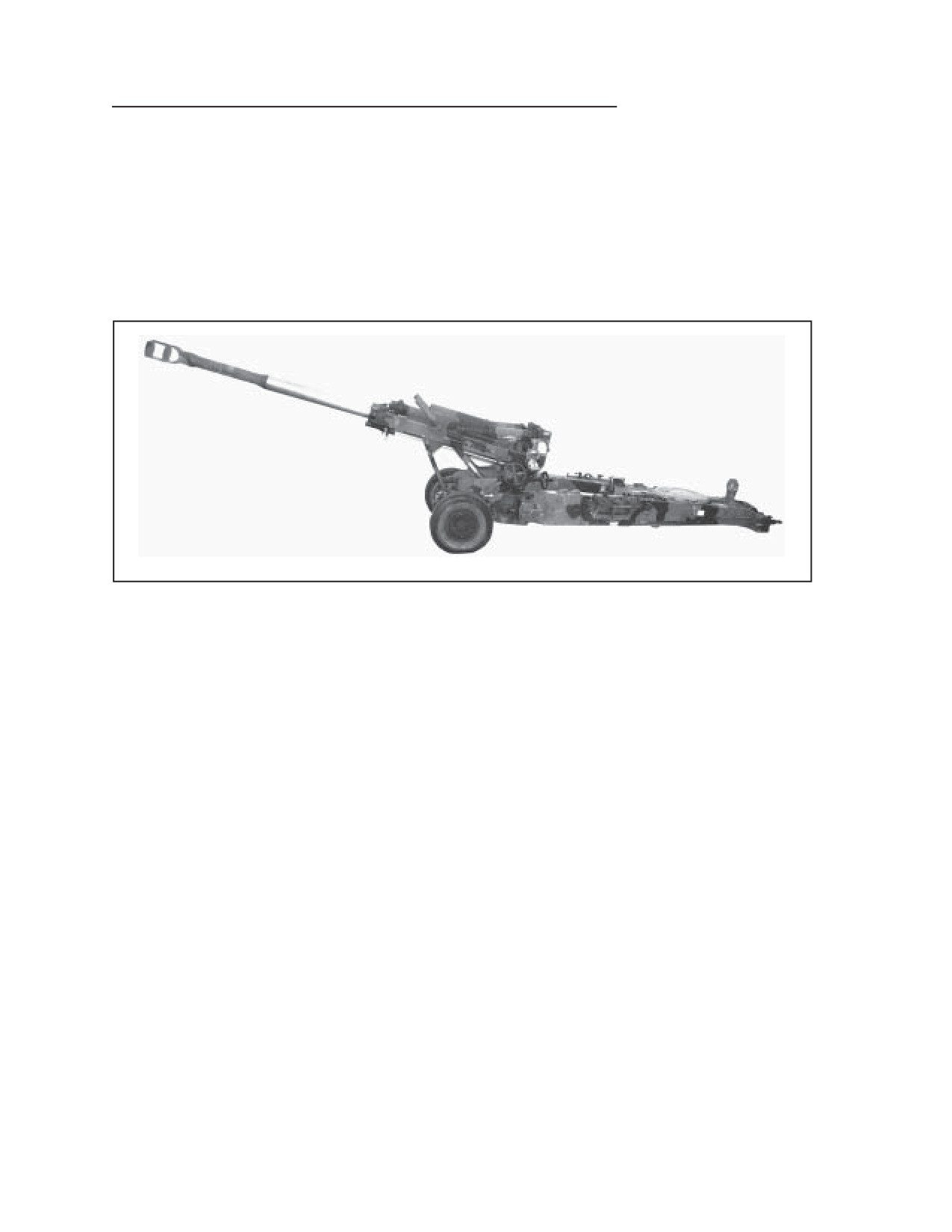
3-1. The M198, 155-mm howitzer is rigged on a 24-foot, type V airdrop
platform for low-velocity airdrop from C-130, C-17 and C-5 aircraft. The
howitzer is dropped with the accompanying load of ammunition, water
cans and gun equipment weighing 1,509 pounds. The load requires
five G-11C cargo parachutes.
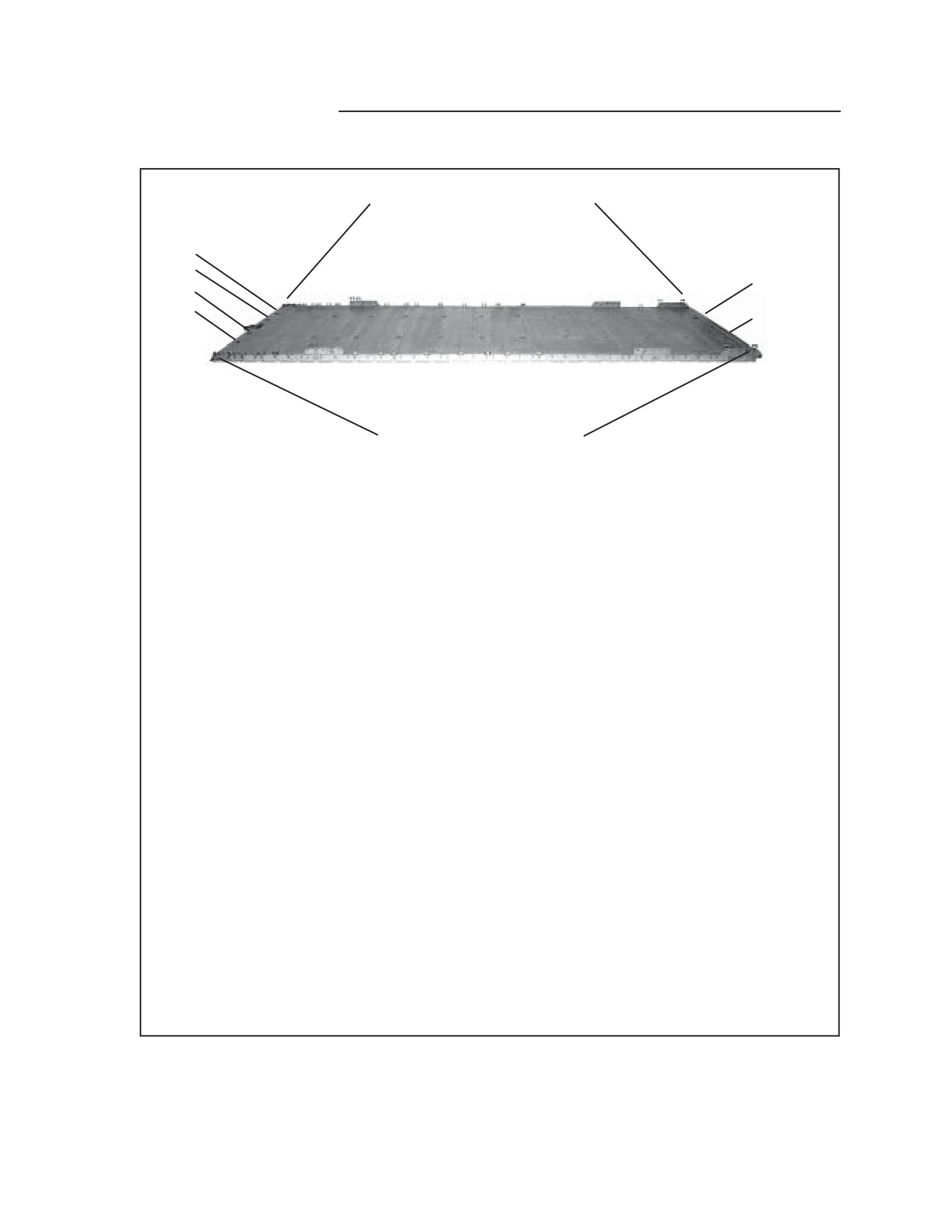
PREPARING PLATFORM
3-2. Prepare a 24-foot, type V airdrop platform according to TM 10-1670-
268-20&P/TO 13C7-52-22. Install two tandem links, four suspension
brackets and 48 tiedown clevis assemblies as shown in Figure 3-1.
Notes: 1. The nose bumper may or may not be installed.
2. Measurements given in this chapter are from the front edge of the
platform, NOT from the front edge of the nose bumper.
3-1
FM 4-20.127/TO 13C7-10-191
CLEVISES 22A THROUGH 1A
TIEDOWN
RINGS
TIEDOWN
D
RINGS
C
LEFT
ROW B
B
A
ROW A
REAR
FRONT
RIGHT
CLEVISES 22 THROUGH 1
Steps:
1.
Inspect, or assemble and inspect, the platform according to TM 10-1670-268-
20&P/TO 13C7-52-22.
2.
Install a suspension bracket in holes 9, 10, and 11 on each platform side rail.
Face the flat part of the link to the front of the rail.
3.
Install a suspension bracket in holes 38, 39, and 40 on each platform side
rail. Face the flat part of the link to the rear of the rail.
4.
Install a tandem link on each platform side rail holes 1, 2, and 3.
5.
Install a clevis on bushings 1 and 4 on each front tandem link.
6.
Install a clevis on bushings 3 and 4 on each rear suspension bracket.
7.
Starting at the front of each platform side rail, install clevises on each plat-
form side rail using bushings bolted on holes 6, 20, 23, 25, 27, 30, 33, 34, 36,
42, 43, 44, 45, 46, 47 (triple), and 48 (triple).
8.
Starting at the front of each platform side rail, number the clevises bolted to the
right side from 1 through 22 and those bolted to the left side from 1A through 22A.
9.
Starting at the front of the platform, label the two tiedown rings in the first 11
panels A and B from right to left. Label the four tiedown rings in the last panel
A, B, C, and D from right to left. Starting with the first panel, number the tiedown
rings 1 through 12.
Figure 3-1. Platform Prepared
3-2
FM 4-20.127/TO 13C7-10-191
RIGGING ACCOMPANYING AMMUNITION LOAD
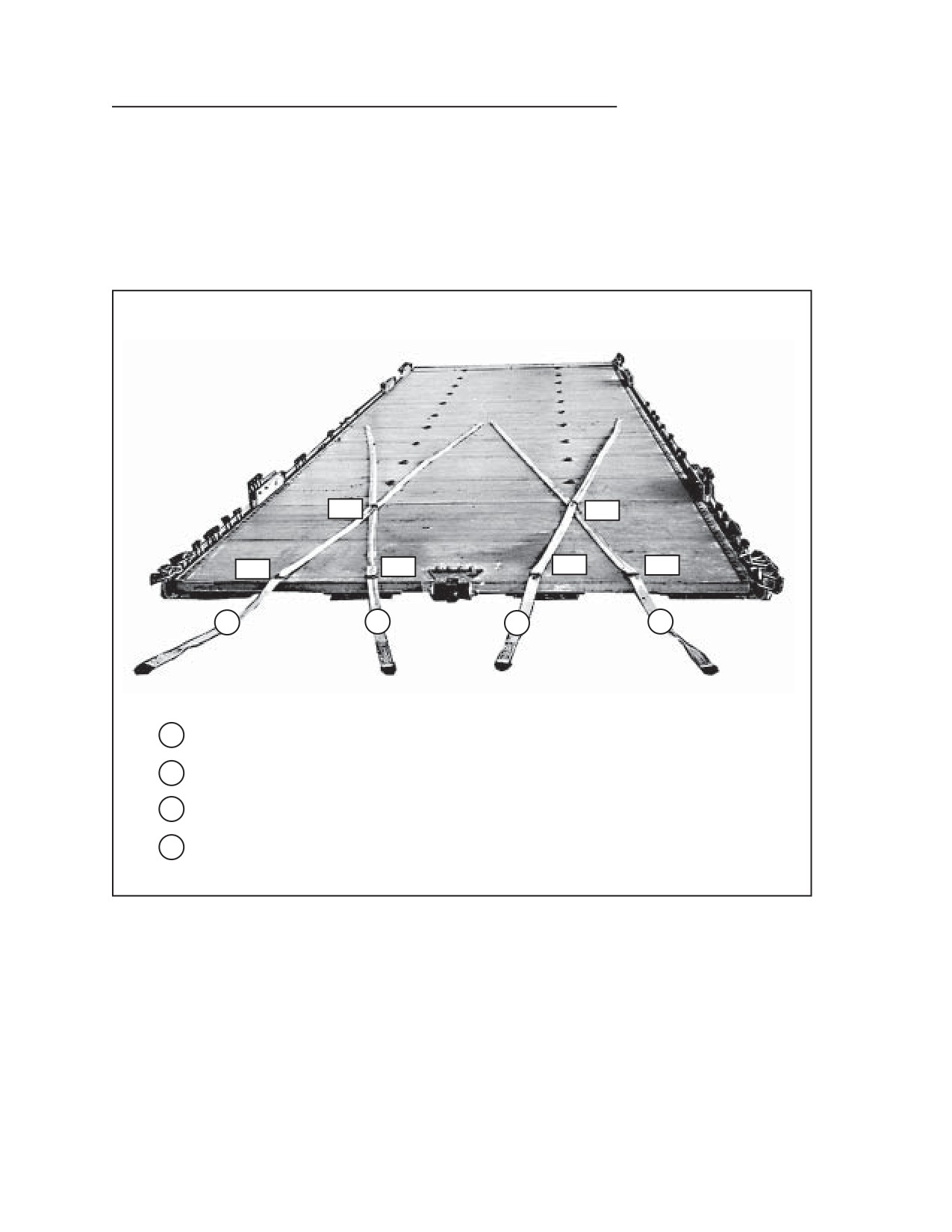
3-3. Rig the accompanying ammunition load (two groups of eight
projectiles each) on the rear of the platform as shown in Figures
3-2 through 3-7.
B11
A11
C12
B12
A12
D12
4
3
2
1
REAR
1
Pass a 15-foot lashing through tiedown rings A12 and A11.
2
Pass a 15-foot lashing through tiedown rings B12 and A11.
3
Pass a 15-foot lashing through tiedown rings C12 and B11.
4
Pass a 15-foot lashing through tiedown rings D12 and B11.
Figure 3-2. Lashings Positioned
3-3
FM 4-20.127/TO 13C7-10-191
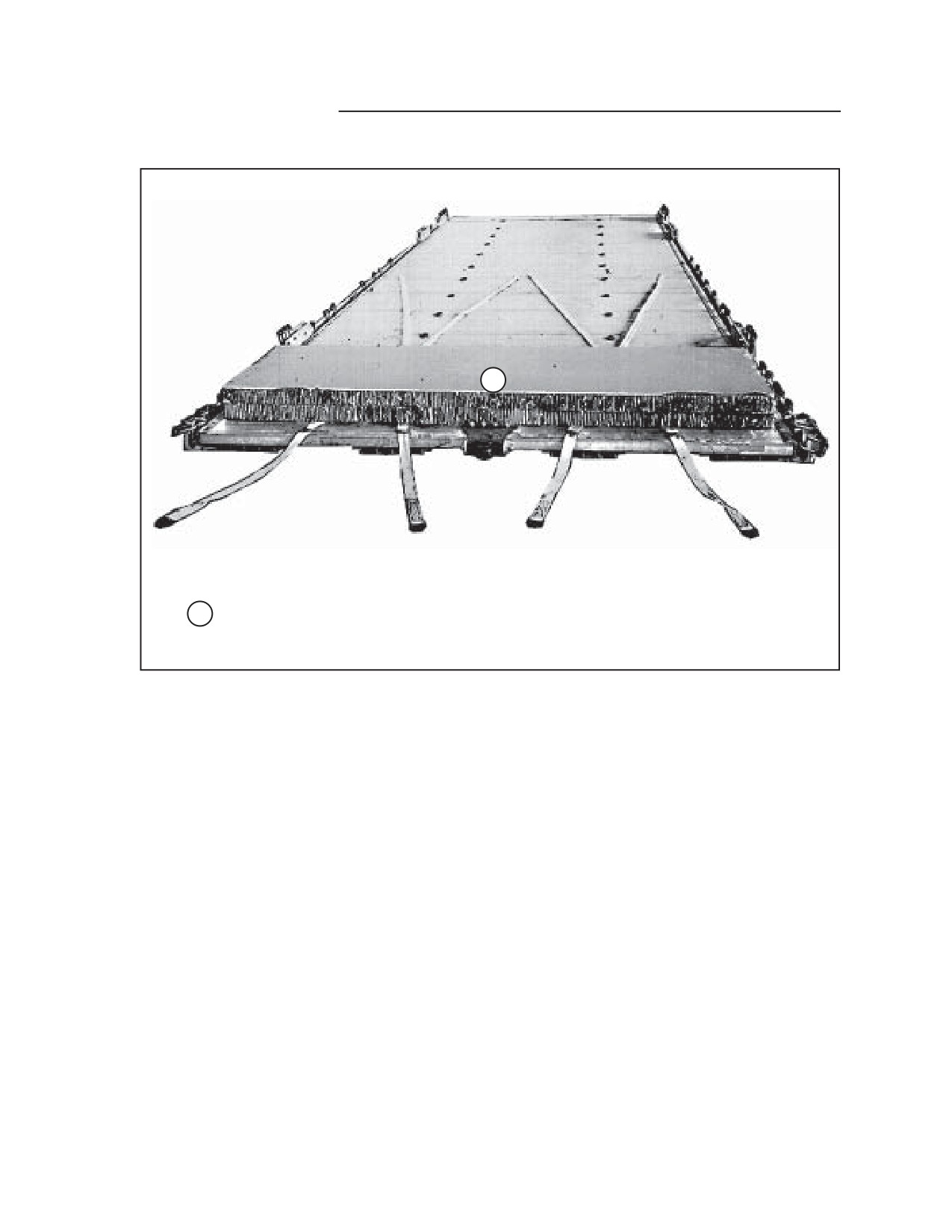
1
1
Center two 96- by 31-inch pieces of honeycomb on top of the lashings 6 inches
from the rear edge of the platform.
Figure 3-3. Honeycomb Positioned
3-4
FM 4-20.127/TO 13C7-10-191
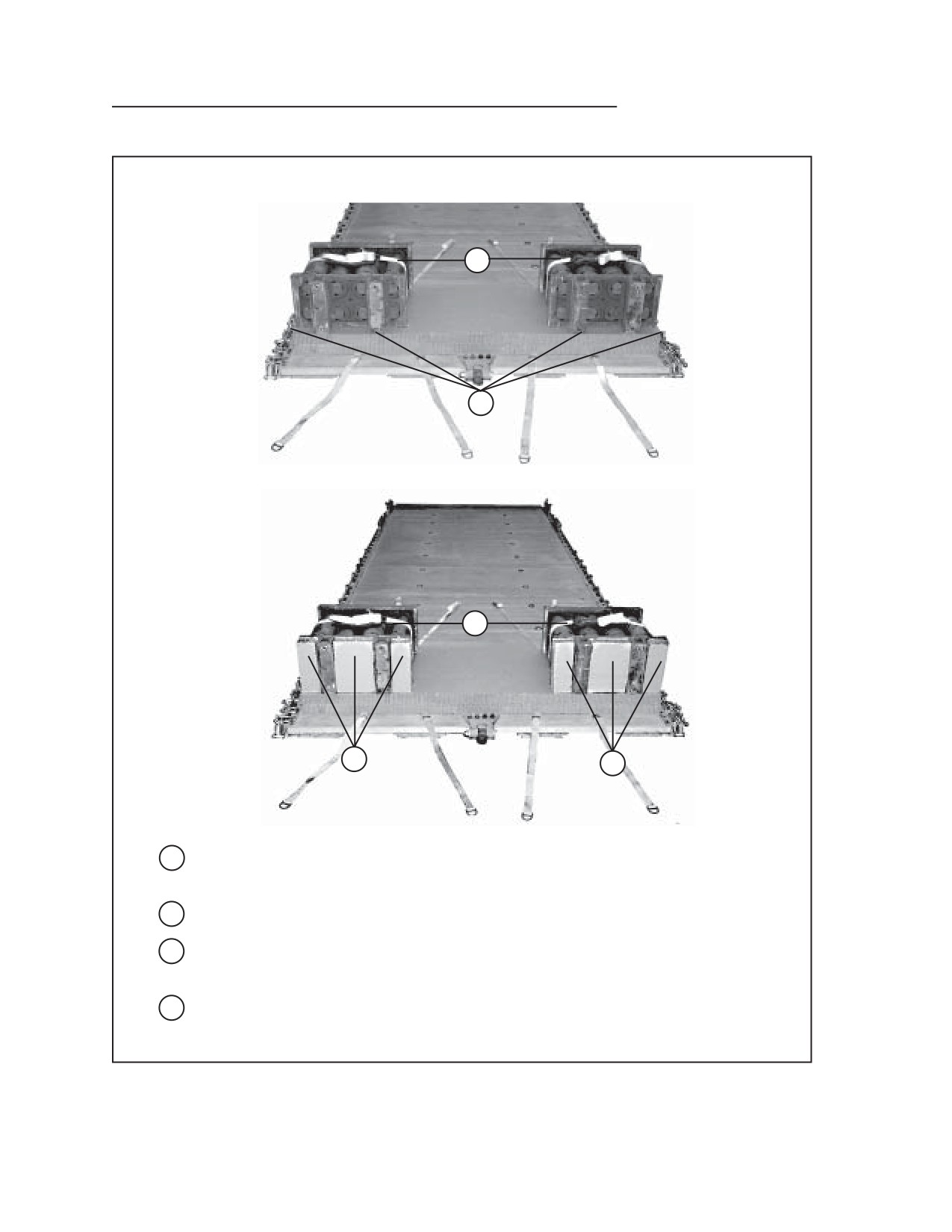
1
2
3
4
4
1
Bind each group of projectiles together with a 15-foot lashing with a piece of felt
under the load binder.
2
Position each group of projectiles flush with the rear and side edge of the honeycomb.
3
Face the base of the projectiles to the rear of the platform with the load binder on
top.
4
Cut four 5- by 14 1/2-inch pieces of honeycomb and two 10- by 14 1/2-inch pieces of
honeycomb. Place the cut pieces on the base of the projectiles.
Figure 3-4. Projectiles and Honeycomb Positioned
3-5
FM 4-20.127/TO 13C7-10-191
Notes: 1. Drawing is not to scale.
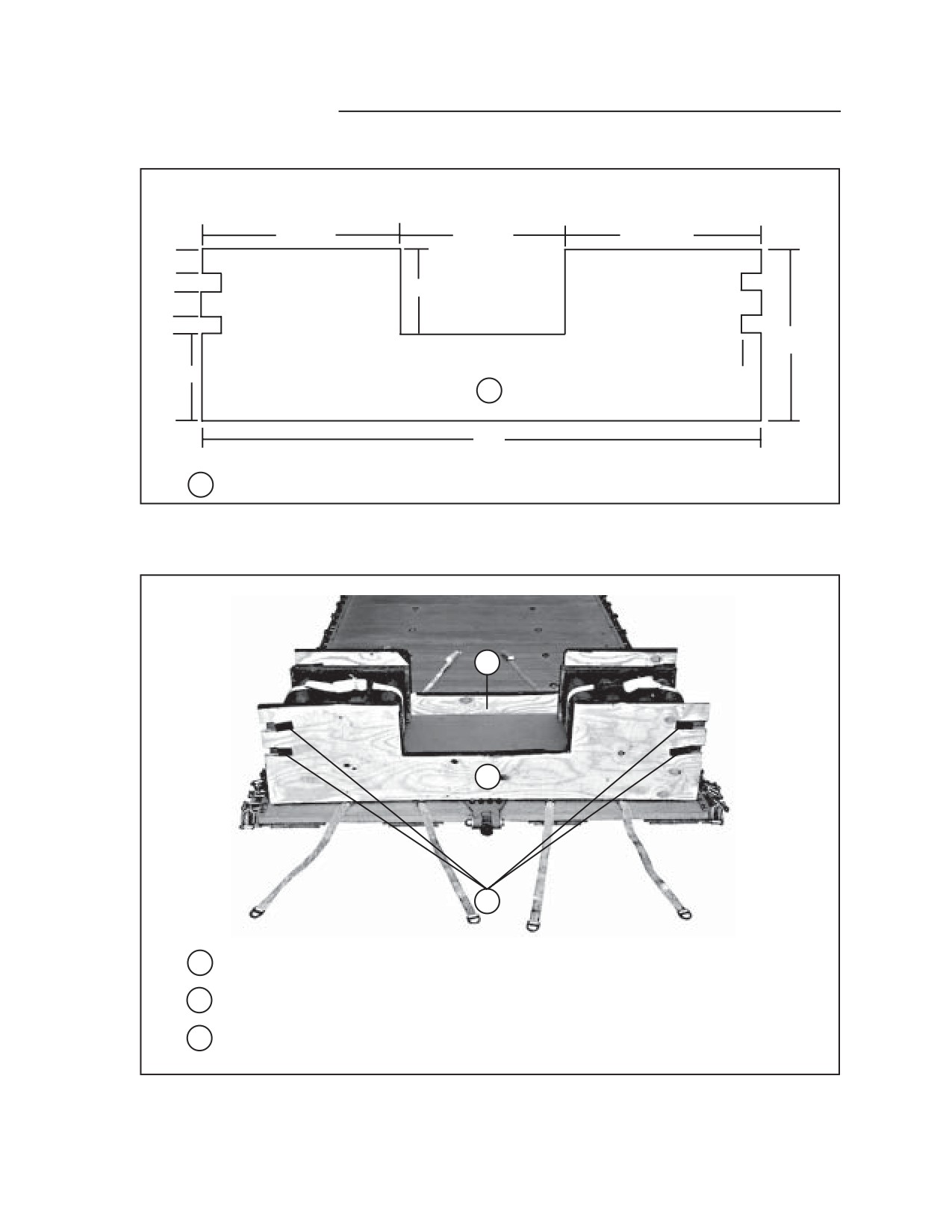
2. All dimensions are given in inches.
28 3/4
38 1/2
28 3/4
4
2
12
4
2
24
3
Plywood 3/4 X 24 X 96
12
1
96
1
Cut three endboards as shown above.
Figure 3-5. Endboards Prepared
2
1
REAR
3
1
Position two endboards against the rear of the accompanying load.
2
Position one endboard against the front of the accompanying load.
3
Tape all cutouts and edges of the endboards where lashings will contact.
Figure 3-6. Endboards Positioned
3-6
FM 4-20.127/TO 13C7-10-191
1
3
2
C12
B12
REAR
2
1
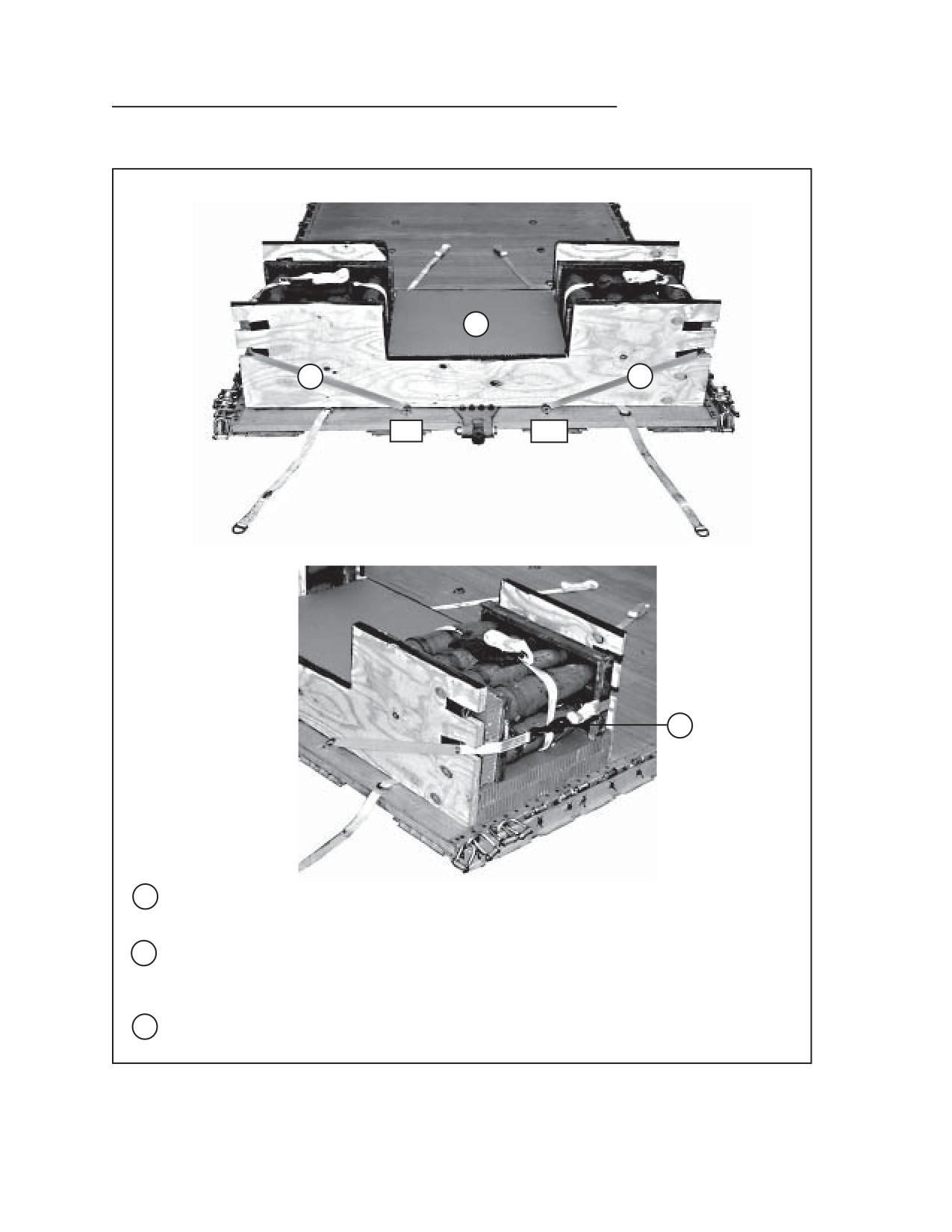
Cut and position two 31- by 37-inch pieces of honeycomb between the two groups of
projectiles.
2
Pass the ends of the pre-positioned lashings in tiedown rings A11 and B12 through the
lower cutouts of the endboards. Secure the lashing with a D-ring and load binder on the
right side of the projectiles.
3
Repeat step 2 using tiedown rings B11 and C12 for the lashing on the left side endboard.
Figure 3-7. Projectiles Lashed to Platform
3-7
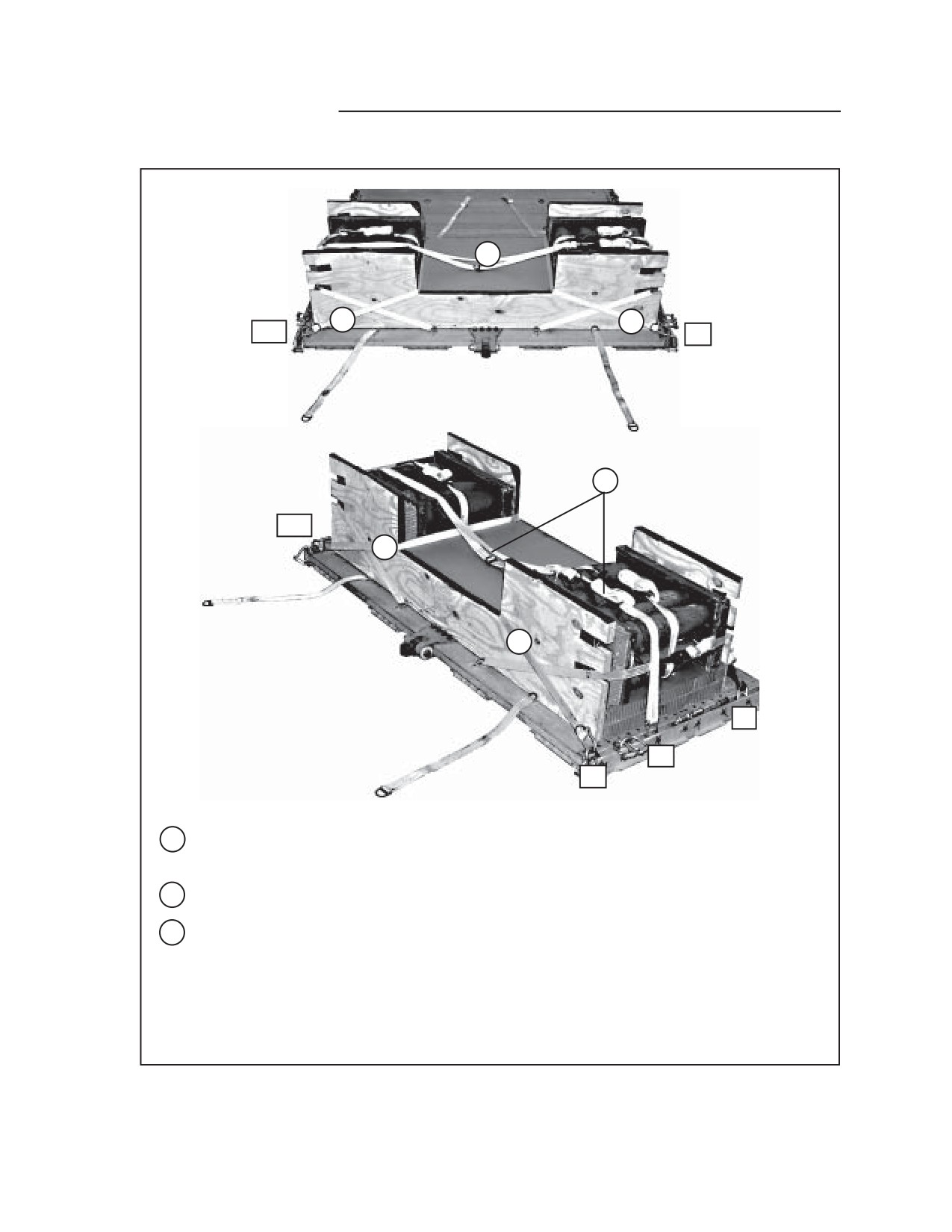
FM 4-20.127/TO 13C7-10-191
6
5
4
21A
21
6
21A
5
4
14
18
21
4
Pass a 15-foot lashing through clevis 21 and through its own D-ring. Pass the lashing
around the inside cutout of the endboards and secure the load binder to clevis 14.
5
Repeat step 4 using clevises 21A and 14A for the left side.
6
Form a 30-foot lashing passing one end through clevis 18 and the other free end
through clevis 18A. Secure the lashing with D-rings and the load binder on top of
the projectile group.
Note: Leave a little slack in the lashing in step 6. When the howitzer is
positioned on the platform, the lashing will tighten itself.
Figure 3-7. Projectiles Lashed to Platform (Continued)
3-8
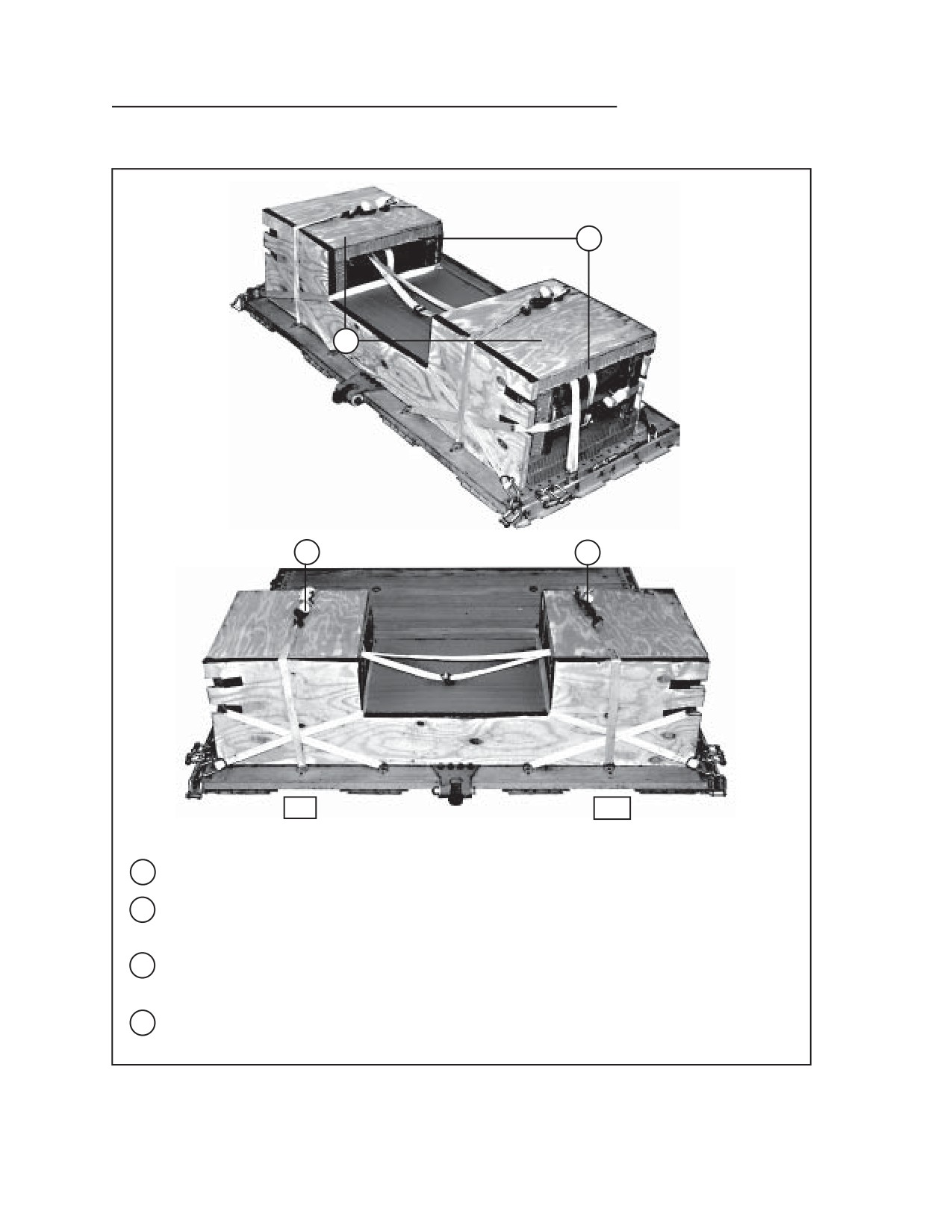
FM 4-20.127/TO 13C7-10-191
7
8
10
9
D12
A12
7
Cut and position a 29- by 31-inch piece of honeycomb on top of each projectile group.
8
Cut and position a 29- by 31- by 3/4-inch piece of plywood on top of the honeycomb in
step 7.
9
Pass the pre-positioned lashing in tiedown rings A12 and A11 over the top of the right
projectile group. Secure the lashing with a D-ring and load binder on top.
10
Repeat the step for the left side using tiedown rings D12 and B11.
Figure 3-7. Projectiles Lashed to Platform (Continued)
3-9
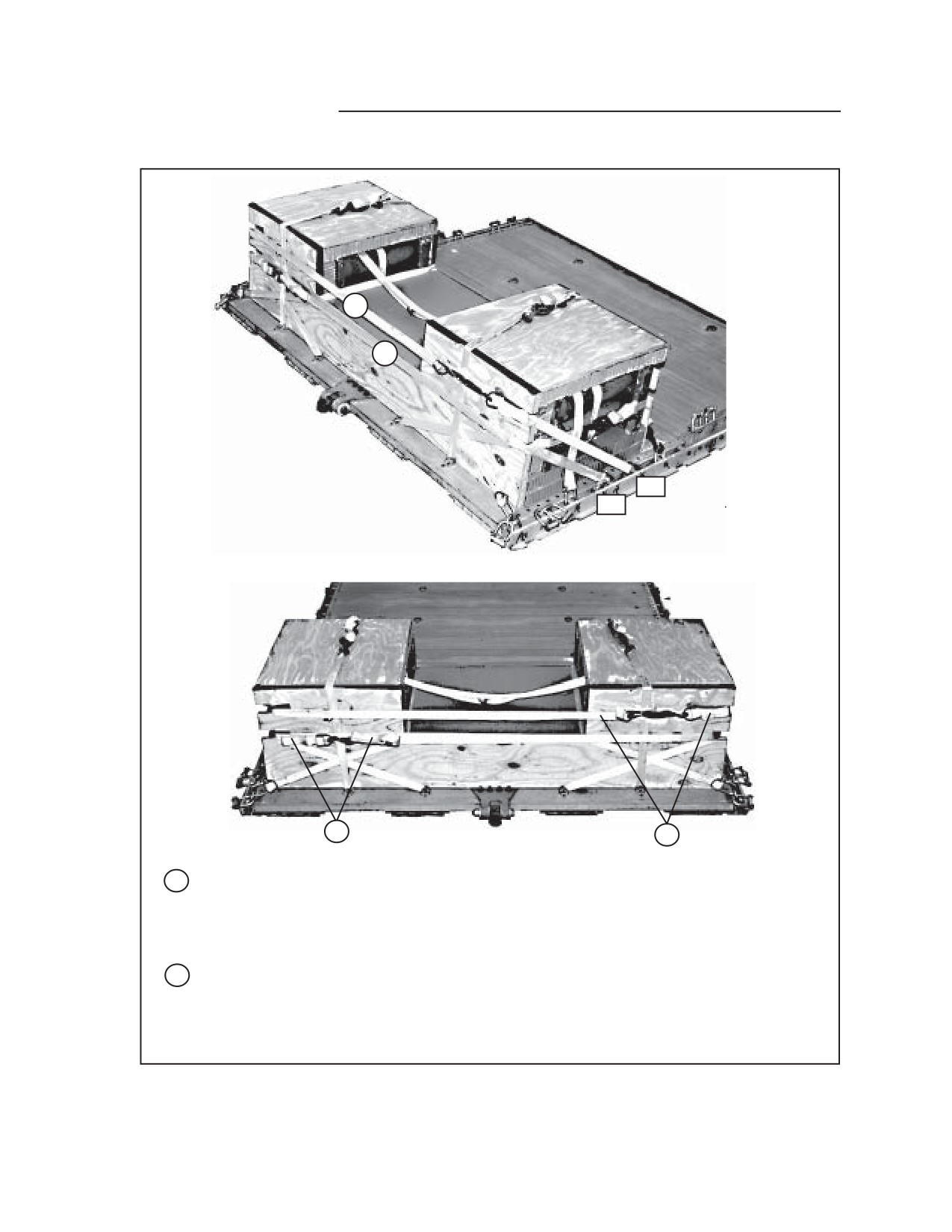
FM 4-20.127/TO 13C7-10-191
11
12
15
16
12
11
11 Form a 30-foot lashing according to FM 4-20.102/NAVSEA SS400-AB-MMO-010/
TO 13C7-1-5. Run the lashing through clevises 15 and 15A and through the top
cutouts in the rear endboard. Secure the lashing on the right side of the rear
endboards with two D-rings and a load binder.
12 Form a 30-foot lashing according to FM 4-20.102/NAVSEA SS400-AB-MMO-010/
TO 13C7-1-5. Run the lashing through clevises 16 and 16A and through the
lower cutouts in the rear endboards. Secure the lashing on the left side of the rear
endboards with two D-rings and a load binder.
Figure 3-7. Projectiles Lashed to Platform (Continued)
3-10
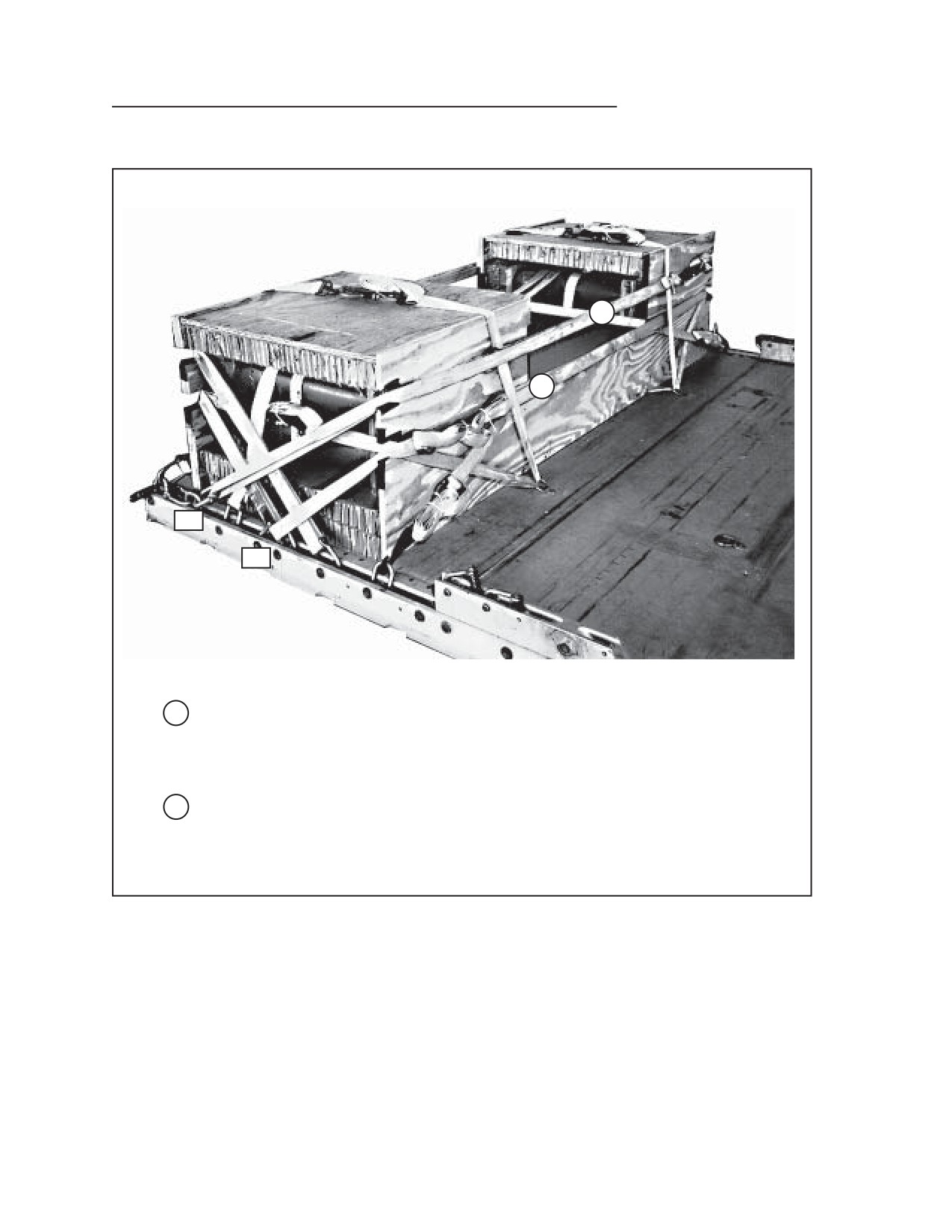
FM 4-20.127/TO 13C7-10-191
14
13
19
17
13
Form a 30-foot lashing according to FM 4-20.102/NAVSEA SS400-AB-MMO-010/
TO 13C7-1-5. Run the lashing through clevises 17 and 17A and through the lower
cutouts in the front endboard. Secure the lashing on the right side of the front
endboard with two D-rings and a load binder.
14
Form a 30-foot lashing according to FM 4-20.102/NAVSEA SS400-AB-MMO-010/
TO 13C7-1-5. Run the lashing through clevises 19 and 19A and through the upper
cutouts in the front endboard. Secure the lashing on the left side of the front
endboard with two D-rings and a load binder.
Figure 3-7. Projectiles Lashed to Platform (Continued)
3-11
FM 4-20.127/TO 13C7-10-191
PREPARING AND POSITIONING HONEYCOMB STACKS
3-4. Prepare five honeycomb stacks as shown in Table 2-1 and Figures 2-8
through 2-11. Position the honeycomb stacks on the platform as shown in
Figure 2-12.
STOWING ACCOMPANYING EQUIPMENT
3-5. Stow the accompanying equipment as shown in Figures 3-8 and 3-9.
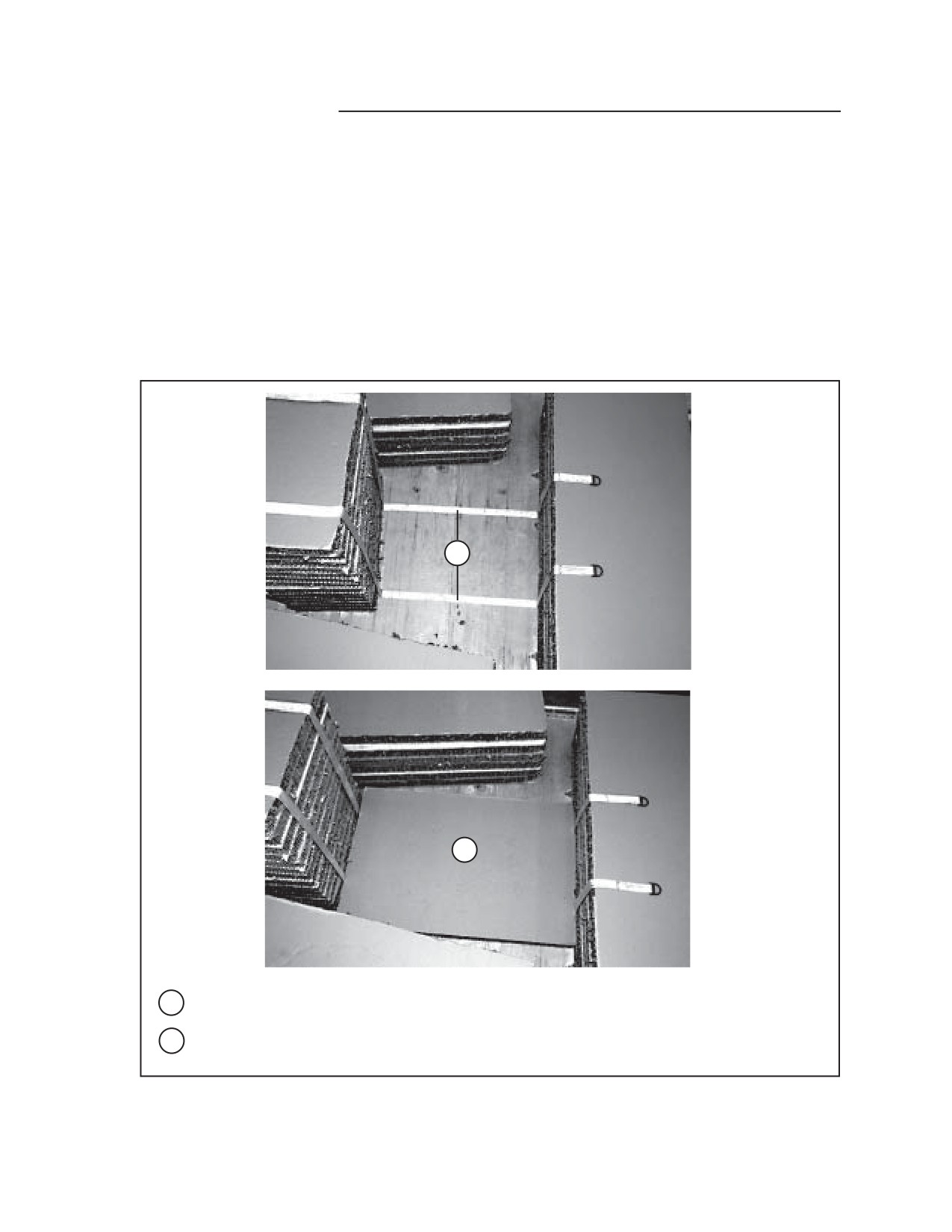
1
2
1
Center two 15-foot lashings 18 inches apart between honeycomb stacks 2 and 3.
2
Place one 30- by 53-inch piece of honeycomb on top of the lashings.
Figure 3-8. Accompanying Equipment Stowed
3-12
FM 4-20.127/TO 13C7-10-191
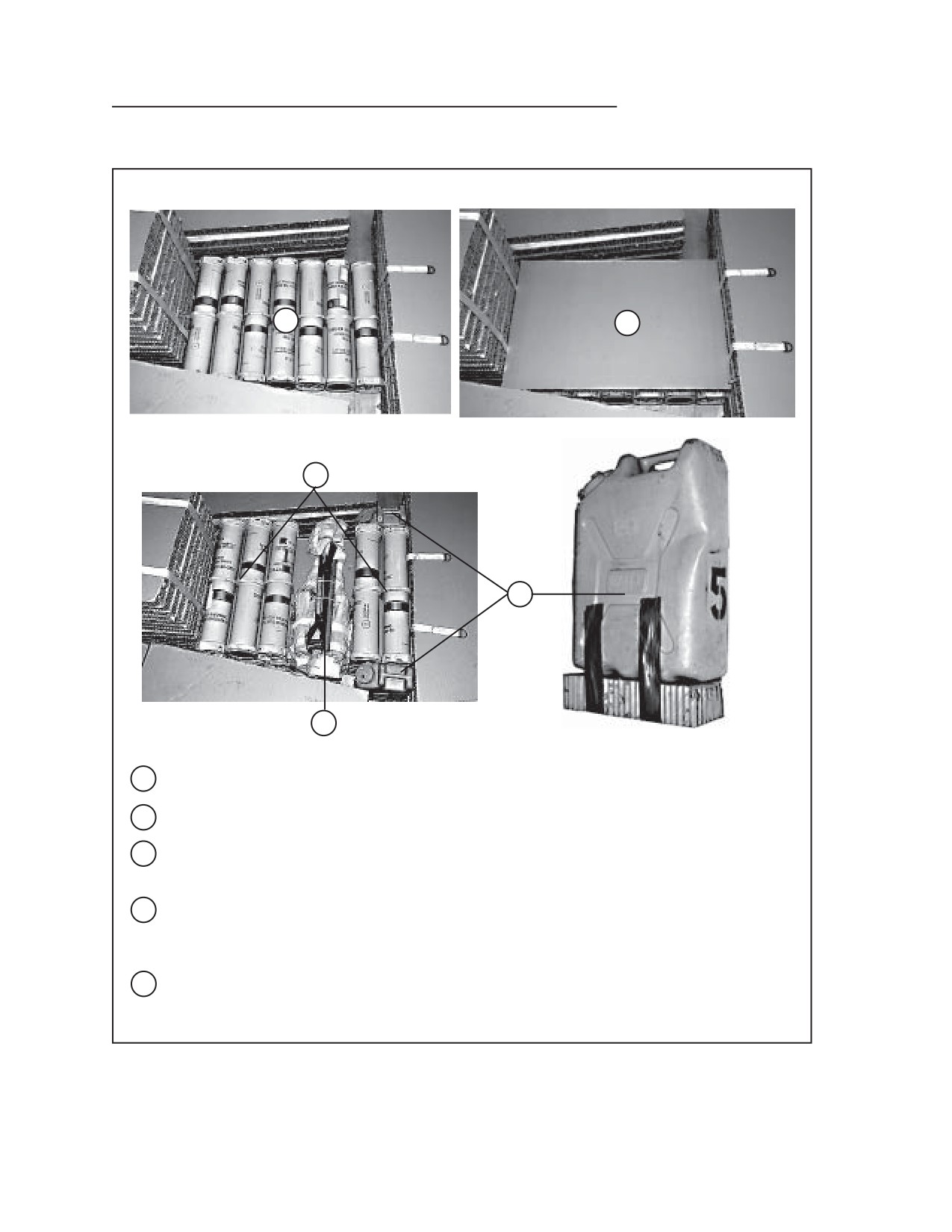
3
4
5
7
6
3
Place two rows of seven ammunition canisters on top of the honeycomb.
4
Place a 36- by 53-inch piece of honeycomb on top of the seven ammunition canisters.
5
Place two rows of three ammunition canisters on the rear of the honeycomb and
two rows of two canisters on the front.
6
Cellulose pad and tape the loading tray, shovel, axe and sledge hammer. Place the
loading tray on the honeycomb between the groups of ammunition canisters. Place
and secure the remaining items.
7
Cut a piece of honeycomb and place on the bottom of each water can. Place a
water can on each side of the ammunition canister behind stack 2.
Figure 3-8. Accompanying Equipment Stowed (Continued)
3-13
FM 4-20.127/TO 13C7-10-191
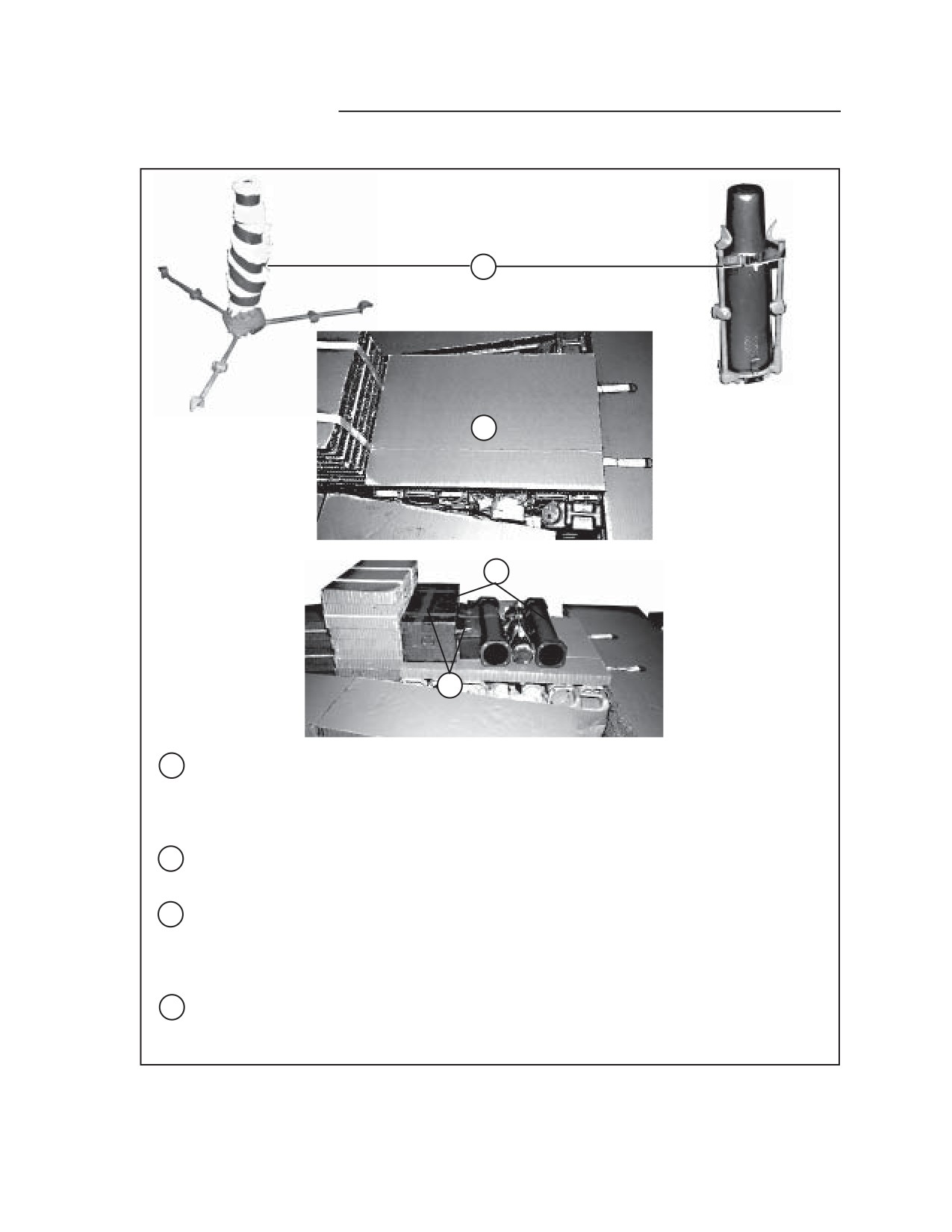
8
9
10
11
8
Take the M1A1 collimator out of its case. Place the legs as shown, and tighten the
locking knobs. Wrap the collimator with cellulose wadding, and tape the wadding in
place. Put the collimator back in its case. Fold the legs up, and tie them in place with
type III nylon cord.
9
Cut and place a 36- by 53-inch piece of honeycomb on top of the ammunition canisters
and miscellaneous items.
10
Position the section box against stack 3 and position two fuse boxes to the front of the
section box. Place one ammunition canister in front of the fuse boxes. Position the
collimator in front of the ammunition canister. Place the last ammunition canister
in front of the collimator.
11
Tape the section box with 2-inch adhesive tape. Secure the fuse cans to the section box
with 1/2-inch tubular nylon webbing.
Figure 3-8. Accompanying Equipment Stowed (Continued)
3-14
FM 4-20.127/TO 13C7-10-191
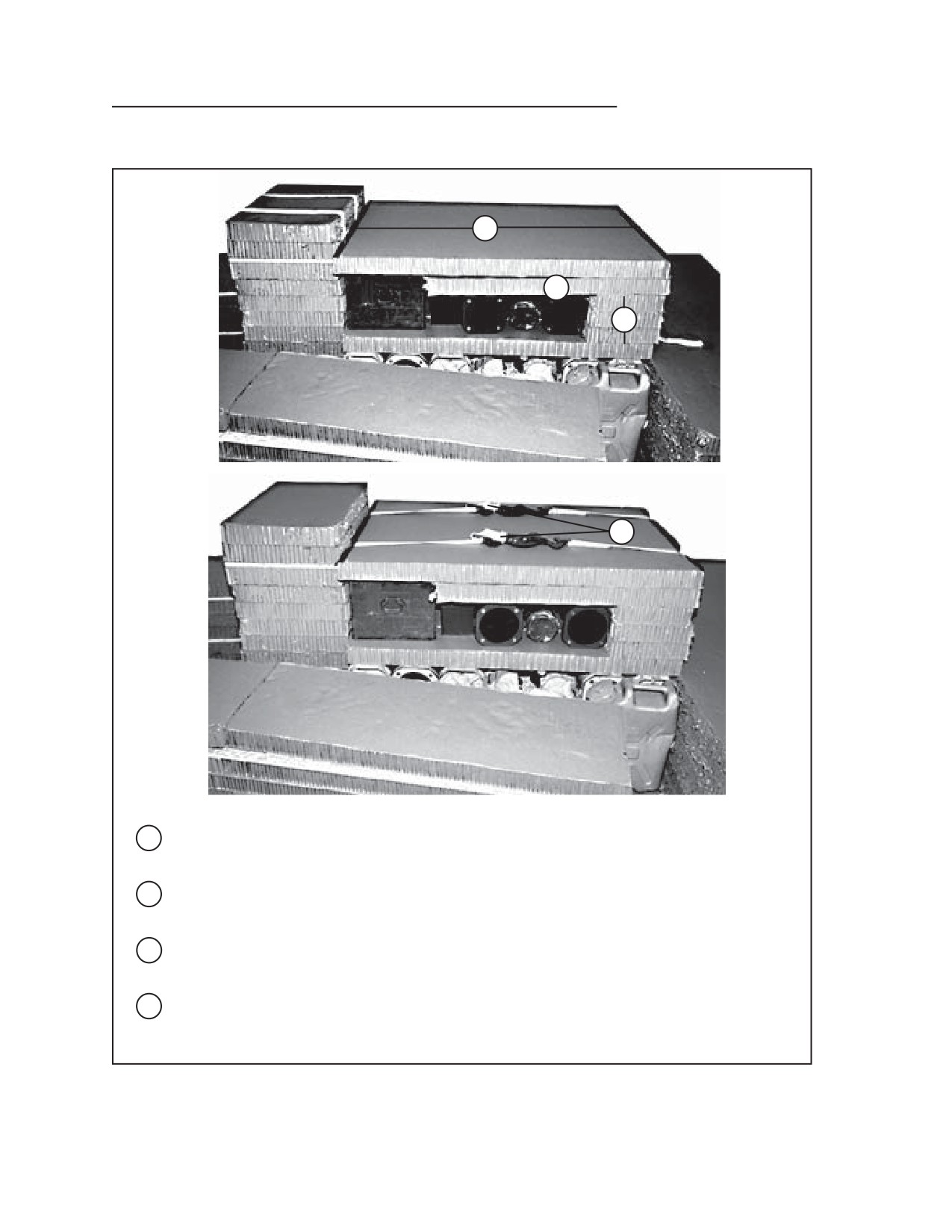
14
13
12
15
12
Cut and glue three 12- by 36-inch pieces of honeycomb. Position them in front of the
ammunition canister on top of the honeycomb in step 7.
13
Cut a 40- by 36- inch piece of honeycomb. Place it on top of the section box, collimator,
fuse boxes, and ammunition canisters.
14
Cut a 55-inch by 36-inch piece of honeycomb. Tape the 36-inch edges with 2-inch
adhesive tape and position on top of the accompanying load.
15
Secure the pre-positioned lashings under the accompanying load on top of the 55- by
36-inch piece of honeycomb placed in step 14.
Figure 3-8. Accompanying Equipment Stowed (Continued)
3-15
FM 4-20.127/TO 13C7-10-191
16
17
4
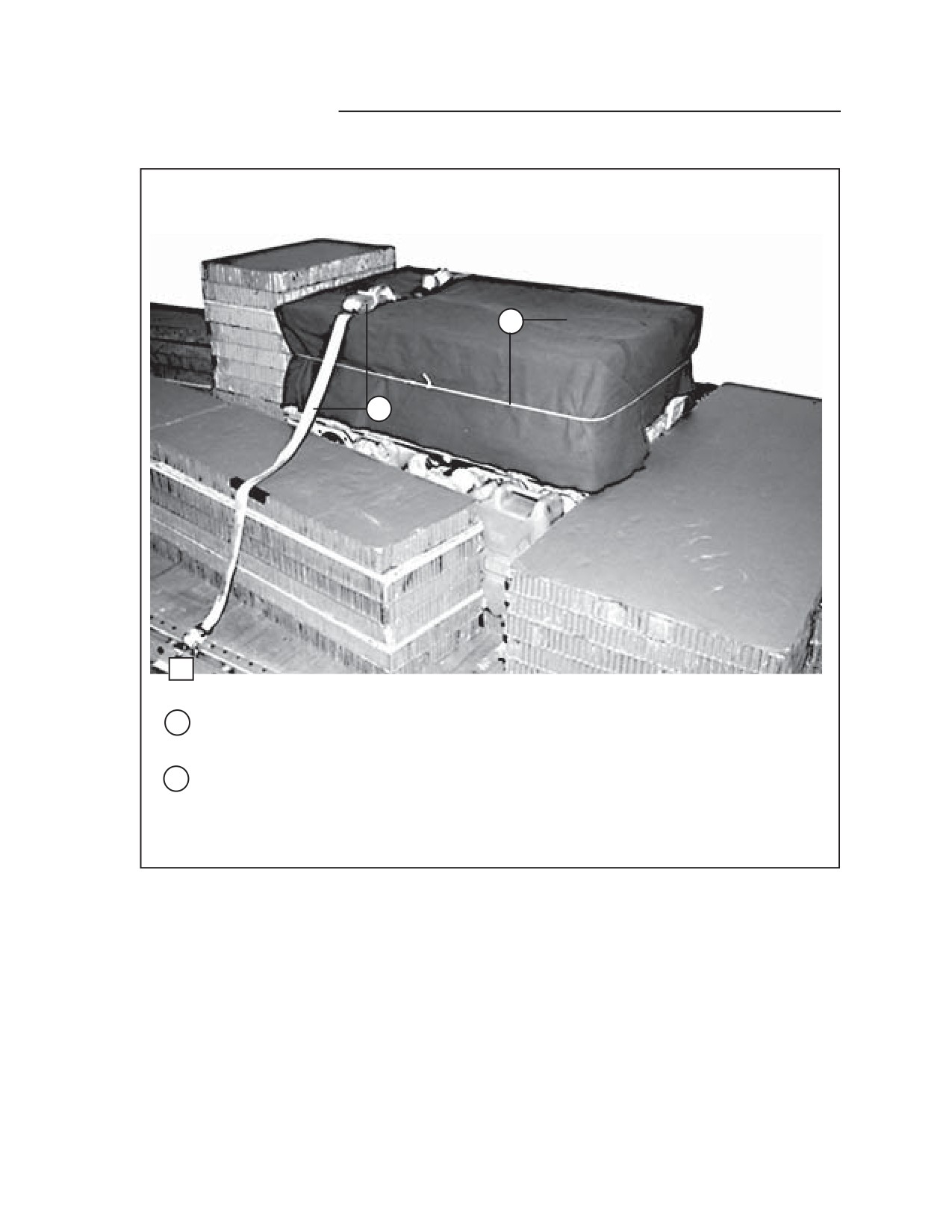
16 Place a 60- by 60-inch canvas cover over the equipment. Secure the cover with
type III nylon cord.
17
Pass a 15-foot lashing through clevis 4 and through its own D-ring. Pass another
15-foot lashing through clevis 4A and through its own D-ring. Secure the lashing on
top of the load with D-rings and load binder. Leave a little slack in the lashings.
When the howitzer is positioned, the lashing will tighten.
Figure 3-8. Accompanying Equipment Stowed (Continued)
3-16
FM 4-20.127/TO 13C7-10-191
PREPARING HOWITZER
3-6. Prepare the howitzer as described below.
a. Make sure a metal breechblock support bracket is available. If a
bracket is not available, construct one as shown in Figure 1-6. The
breechblock support is constructed of steel.
b. Build the gun tube support blocks as shown in Figure 1-7.
c. Prepare the gun tube as shown in Figure 3-9.
d. Lash the gun tube as shown in Figure 3-10.
e. Secure the baseplate and equipment as shown in Figure 3-11.
f. Prepare the muzzle as shown in Figure 3-12.
g. Secure additional equipment as shown in Figure 3-13.
h. Secure the breechblock and pad the breech as shown in Figure 3-14.
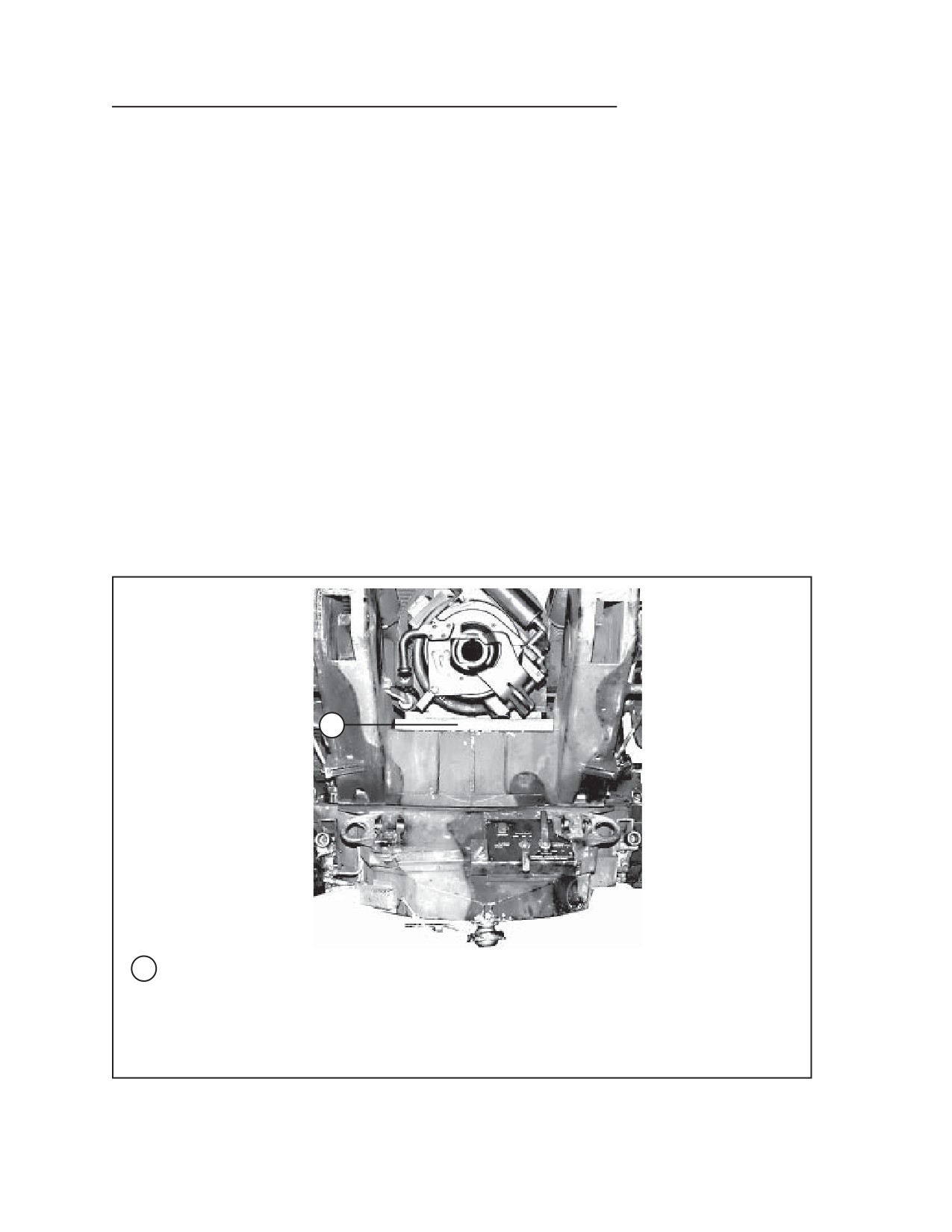
1
1
Move the gun tube of the howitzer to the stowed position. Raise the gun tube, and place
the metal support bracket under the breechblock. Be sure the fit is snug. The bracket
should not move when the breechblock rests on it. If necessary remove and disassemble
the bracket and place metal shims in the space provided. Reassemble and replace the
bracket.
Figure 3-9. Gun Tube Prepared
3-17
FM 4-20.127/TO 13C7-10-191
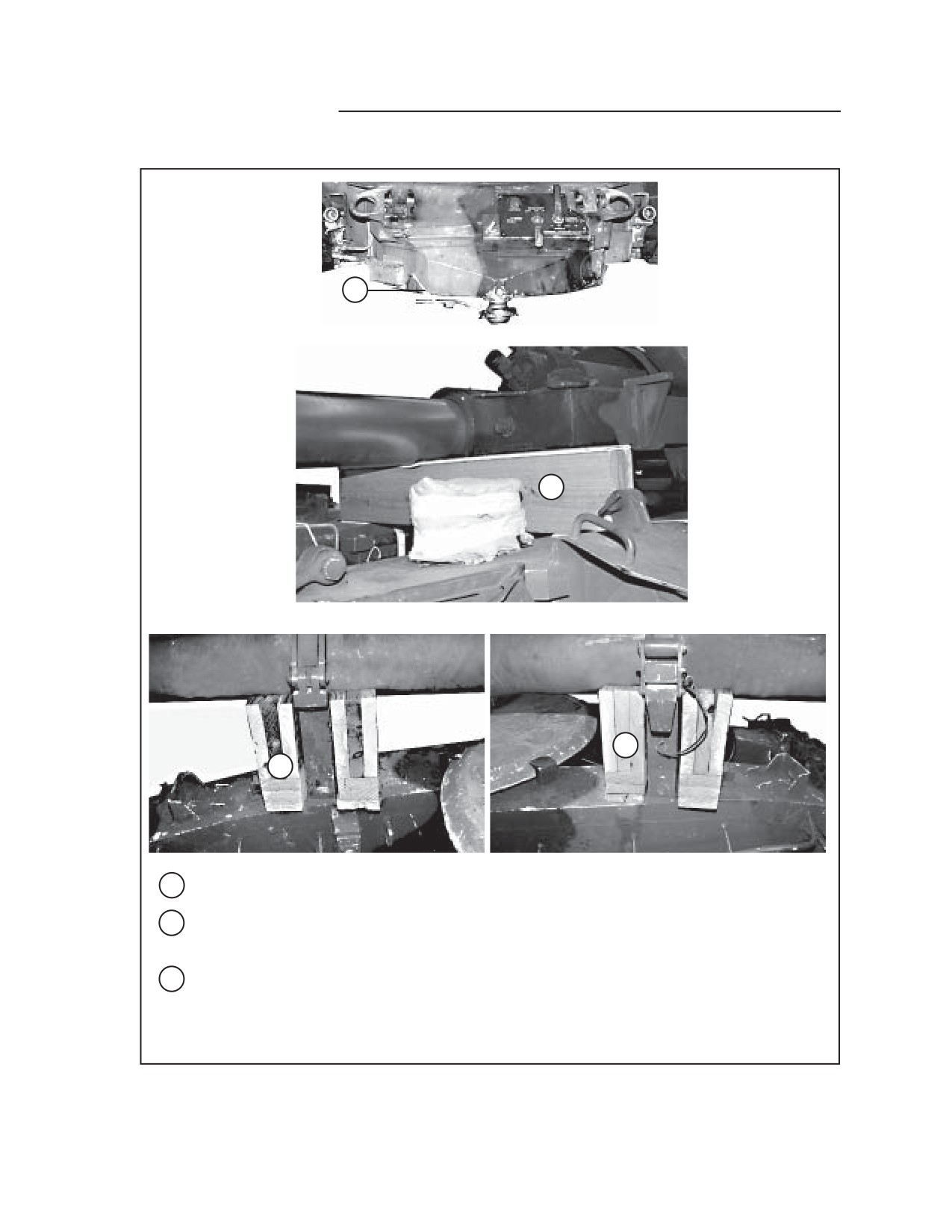
2
3
4
4
2
Secure the ball lock lever in place with type III nylon cord.
3
Set the rear gun tube support block on the trails under the rear of the tube. If
necessary use plywood shims of proper thickness between the block and the trails.
4
Set the forward gun tube blocks on the left trail against the gun tube travel lock.
Place the block with the slightly deeper cuts on the breech side of the tube travel
lock. If necessary, place plywood or lumber shims between the trail and the block
for a snug fit.
Figure 3-9. Gun Tube Prepared (Continued)
3-18