FM 4-20.127 Airdrop of Supplies and Equipment: Rigging M198, 155-MM Howitzer (JUNE 2004) - page 1
*FM 4-20.127 (FM 10-527)
TO 13C7-10-191
FIELD MANUAL
No. 4-20.127
DEPARTMENT OF THE ARMY
TECHNICAL ORDER DEPARTMENTDEPARTMENT OFDEPARTMENT OF THE AIR FORCE
No. 13C7-10-191
Washington, DC, 29 June 2004
Airdrop of Supplies and Equipment:
Rigging M198, 155-MM Howitzer
Contents
................................................................................................................................ Page
Preface
iii
Introduction
iv
Description of Load
iv
Special Considerations
iv
Chapter 1
Rigging M198, 155-mm Howitzer on a Type V Platform
Description of Load
1-1
Preparing Platform
1-1
Building and Positioning Honeycomb Stacks
1-3
Stowing Accompanying Equipment
1-6
Preparing Howitzer
1-8
Installing Suspension Slings
1-19
Setting Howitzer on Platform
1-20
Lashing Howitzer
1-21
Covering Load and Safety Tieing Slings
1-22
Stowing Cargo Parachutes
1-24
Installing Extraction System
1-28
Installing Release System
1-29
Placing Extraction Parachute
1-29
Installing Provisions for Emergency Restraints
1-29
Marking Rigged Load
1-30
Equipment Required
1-30
DISTRIBUTION RESTRICTION: Approved for public release; distribution is unlimited.
_________________________________________
*This publication supersedes FM 10-527, 30 September 1982.
i
FM 4-20.127/TO 13C7-10-191
Chapter 2
Rigging M198, 155-mm Howitzer with Accompanying Ammunition Load on
a Type V Platform
Description of Load
2-1
Preparing Platform
2-1
Rigging Accompanying Ammunition Load
2-3
Preparing and Positioning Honeycomb Stacks
2-12
Stowing Accompanying Equipment
2-18
Preparing Howitzer
2-24
Installing Lifting Slings and Positioning Howitzer
2-24
Lashing Howitzer
2-26
Building and Installing Release Stowage Platform
2-31
Covering Load
2-33
Installing Suspension Slings
2-35
Stowing Cargo Parachutes
2-37
Installing Extraction System
2-43
Installing Parachute Release System
2-44
Installing Provisions for Emergency Restraints
2-46
Placing Extraction Parachute
2-46
Marking Rigged Load
2-46
Equipment Required
2-46
Chapter 3
Rigging M198, 155-mm Howitzer with Accompanying Ammunition Load,
Modular Artillery Charge System (MACS) on a Type V Platform
Description of Load
3-1
Preparing Platform
3-1
Rigging Accompanying Ammunition Load
3-3
Preparing and Positioning Honeycomb Stacks
3-12
Stowing Accompanying Equipment
3-12
Preparing Howitzer
3-17
Installing Lifting Slings and Positioning Howitzer
3-24
Lashing Howitzer
3-25
Building and Installing Release Stowage Platform
3-30
Installing, Padding and Securing Suspension Slings
3-33
Stowing Cargo Parachutes
3-35
Installing Extraction System
3-39
Installing Parachute Release System
3-40
Installing Provisions for Emergency Restraints
3-42
Placing Extraction Parachute
3-42
Marking Rigged Load
3-42
Equipment Required
3-42
Glossary
Glossary 1
References
References 1
ii
FM 4-20.127/TO 13C7-10-191
PREFACE
SCOPE
The purpose of this manual is to provide the latest approved procedures for rigging the M198,
155-mm howitzer on the Type V platform for low-velocity airdrop from C-130, C-141 and C-17
aircraft. This manual is written for use by the parachute rigger.
USER INFORMATION
The proponent of this publication is HQ TRADOC. You are encouraged to report any errors or
omissions and to suggest ways of making this a better manual. Army personnel, send your
comments on DA Form 2028 directly to:
Director
Aerial Delivery and Field Services Department
USA Quartermaster Center and School
1010 Shop Road
Fort Lee, Virginia 23801-1502
Air Force personnel, route your reports on AFTO Form 22 through:
respective command Weapons and Tactics to:
Headquarters
Air Mobility Command (AMC/A3KT)
402 Scott Drive, Unit 3AI
Scott AFB, Illinois 62225-5302
HQ AMC/A3KT will consolidate and forward changes to:
Director
Aerial Delivery and Field Services Department
USA Quartermaster Center and School
1010 Shop Road
Fort Lee, Virginia 23801-1502
Also send an information copy of AFTO Form 22 to:
WR-ALC/LKCB
460 Richard Ray Blvd
Robins AFB, Georgia 31098-1640
iii
FM 4-20.127/TO 13C7-10-191
Introduction
DESCRIPTION OF LOAD
This manual shows and tells how to rig the M198, 155-MM howitzer with different modifications
and different amounts of accompanying equipment and ammunition. The M198 is rigged in the
following configurations:
a. The M198 howitzer with accompanying gun equipment weighing 610 lbs
and no accompanying ammunition load.
b. The M198 howitzer with an accompanying load of ammunition, water
cans, and gun equipment weighing 1509 lbs.
c. The M198 howitzer with accompanying ammunition load using the
Modular Artillery Charge System (MACS), water cans and gun
equipment weighing 1509 lbs.
SPECIAL CONSIDERATIONS
CAUTION
Only ammunition listed in FM 4-20.153/MCRP 4-11.3B/
TO13C7-18-41 may be airdropped.
NOTICE OF EXCEPTION:
The procedure for using the 25 foot arming lanyard with
the M-2 parachute release differs from the FM 4-20.102/
NAVSEA SS400-AB-MMO-010/TO 13C7-1-5. An
exception to FM 4-20.102/NAVSEA SS400-AB-MMO-010/
TO 13C7-1-5 is granted. The procedure in this manual
MUST be followed.
The loads covered in this manual include hazardous material as defined in AFMAN(I) 24-204/
TM 38-250. The hazardous materials must be packaged, marked and labeled as required by
AFMAN(I) 24-204/TM 38-250.
A copy of this manual must be available to the Joint Airdrop Inspectors during the before
and after loading inspection.
iv
FM 4-20.127/TO 13C7-10-191
Chapter 1
Rigging M198, 155-MM Howitzer on a Type V Platform
DESCRIPTION OF LOAD
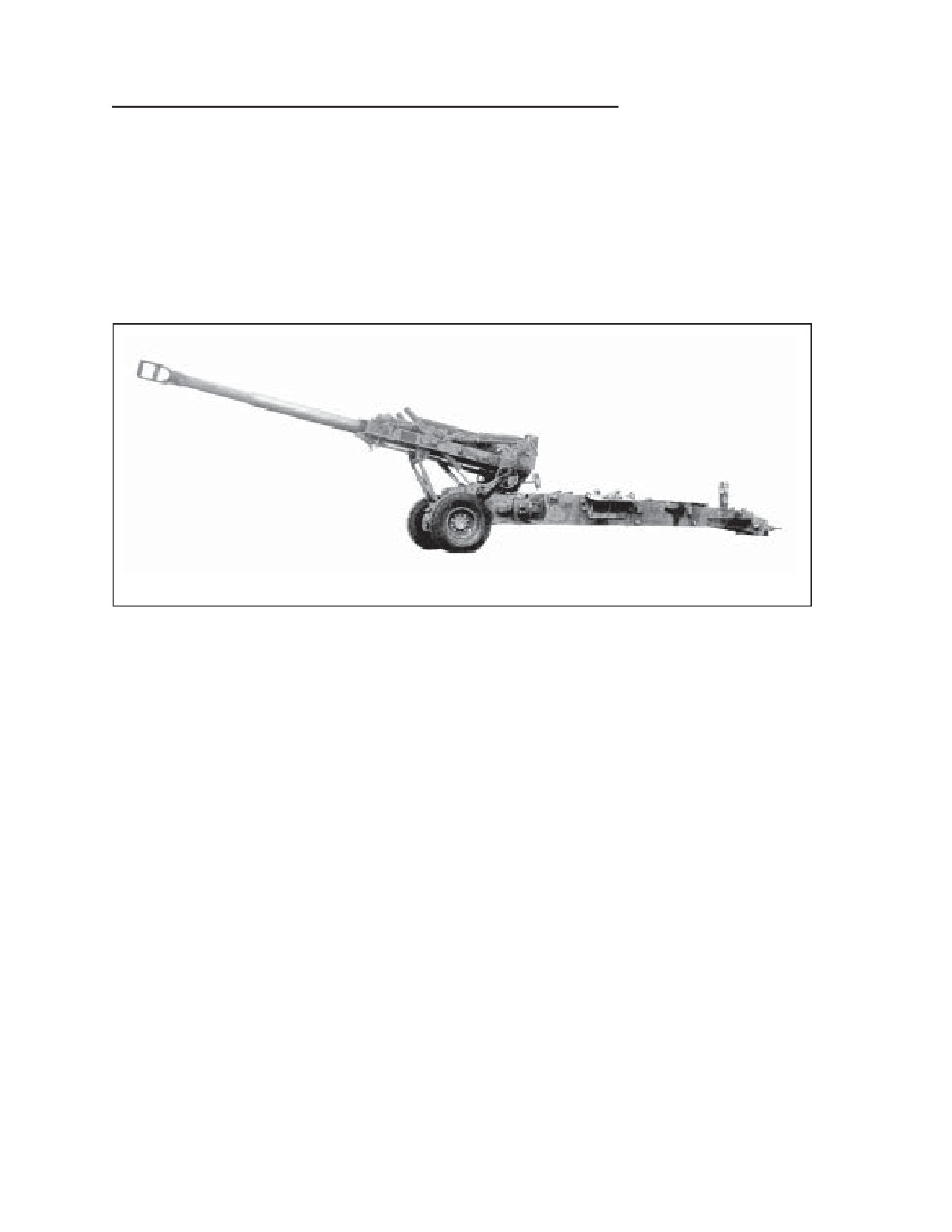
1-1. The M198, 155-mm howitzer is rigged on a 24-foot, type V airdrop
platform for low-velocity airdrop from C-130, C-17 and C-5 aircraft. The
howitzer is dropped with the accompanying gun equipment (section chest,
camouflage net and poles, cleaning pail, and pioneer tools) which weighs
610 pounds. The load may require either four G-11B or five G-11C cargo
parachutes depending on the weight.
PREPARING PLATFORM
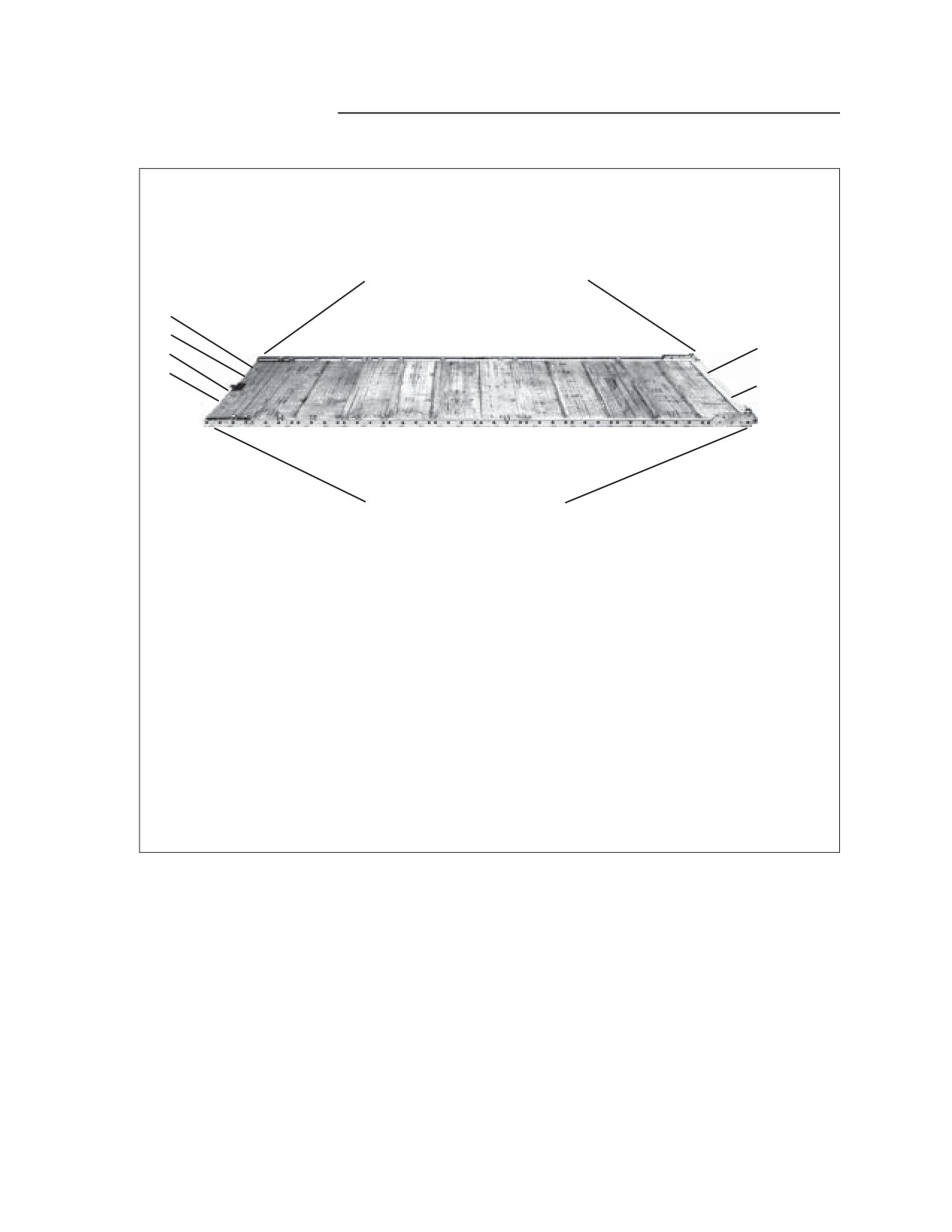
1-2. Prepare a 24-foot, type V airdrop platform according to
TM 10-1670-268-20&P/TO 13C7-52-22. Install two tandem links
and 26 tiedown clevis assemblies as shown in Figure 1-1.
Notes: 1. The nose bumper may or may not be installed
2. Measurements given in this chapter are from the front edge of the
platfrom, NOT from the front edge of the nose bumper.
1-1
FM 4-20.127/TO 13C7-10-191
TIEDOWN
CLEVISES 13A THROUGH 1A
RINGS
TIEDOWN
D
RINGS
C
LEFT
ROW B
B
A
ROW A
REAR
FRONT
RIGHT
CLEVISES 13 THROUGH 1
Step:
1. Inspect, or assemble and inspect, the platform as outlined in TM 10-1670-268-20&P/
TO 13C7-52-22.
2. Install a tandem link on the front of each platform side rail using holes 1, 2, and 3.
3. Bolt 13 tiedown clevises to each platform side rail according to FM 4-20.102/
NAVSEA SS400-AB-MMO-010/TO 13C7-1-5. Starting at the front of each side rail,
bolt a tiedown clevis to the first bushing of the tandem link and to bushings 9, 20, 22,
28, 33, 35, 36, 37, 39, 42, 45, and 46 of the platform.
4. Starting at the front of the platform, number the clevises bolted to the right
side rail from 1 through 13 and those bolted to the left side rail 1A through 13A.
5. Number the rear row of four deck rings according to FM 4-20.102/
NAVSEA SS400-AB-MMO-010/TO 13C7-1-5.
Figure 1-1. Platform Prepared
1-2
FM 4-20.127/TO 13C7-10-191
BUILDING AND POSITIONING HONEYCOMB STACKS
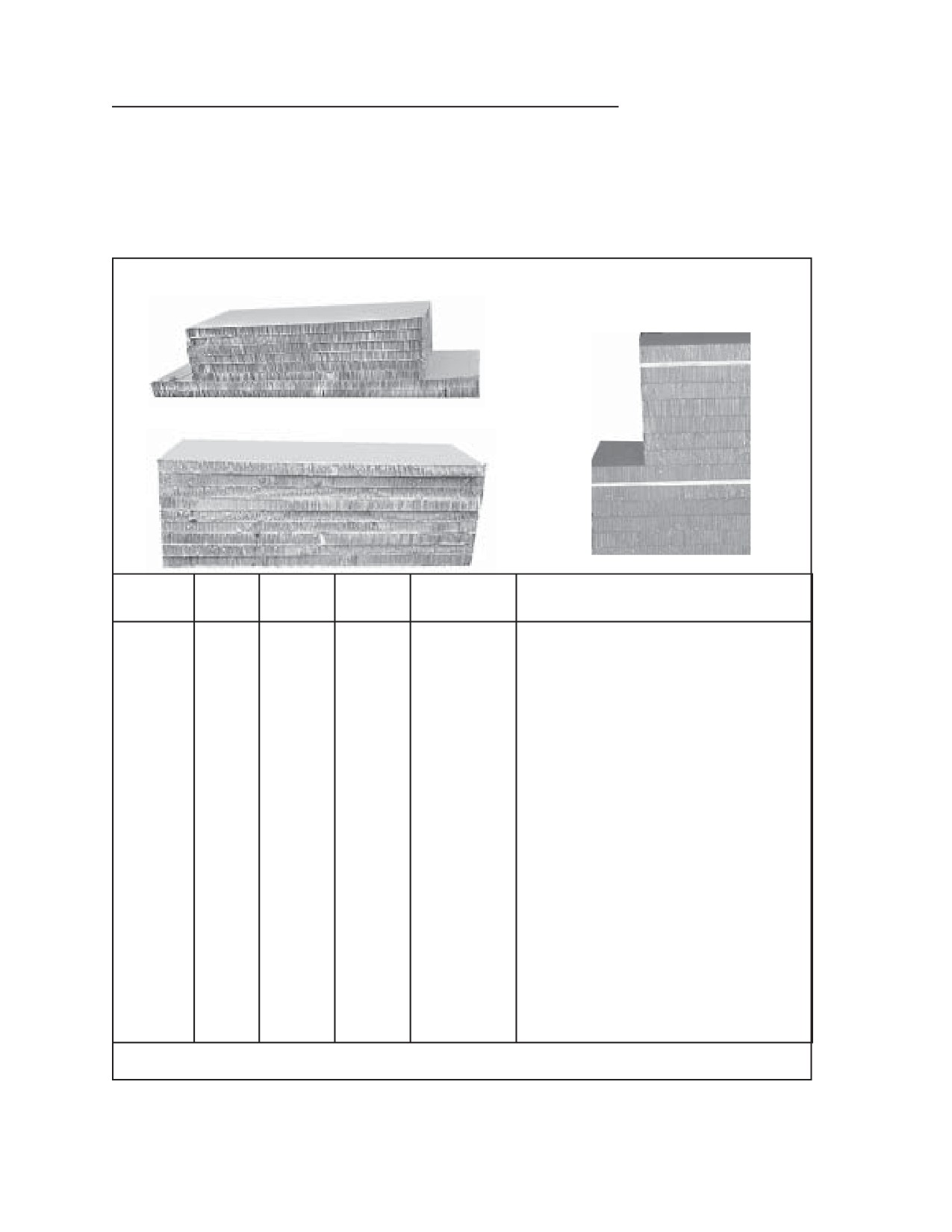
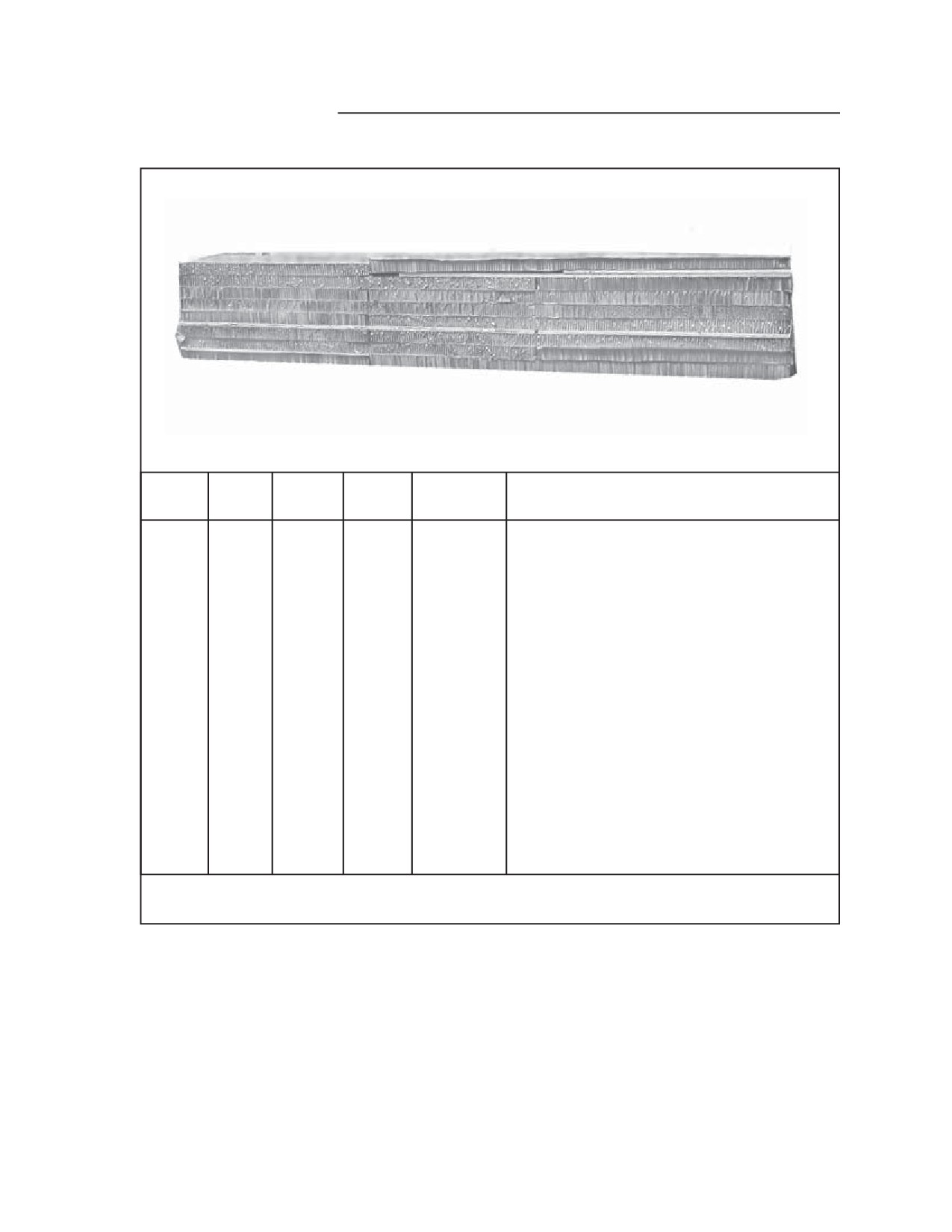
1-3. Build five honeycomb stacks and place them on the platform as shown
in Figures 1-2 through 1-4.
Stack 1
Stack 3
Stack 2
Stack
Width
Length
Pieces
Material
Instructions
Number
(Inches)
(Inches)
1
36
9
Honeycom b
Use honeycomb to make a two-layer
36
96
Honeycom b
base 105 inches long.
6
36
75
Honeycom b
Stack and center the 75-inch pieces on
the base.
2
9
30
80
Honeycom b
Form a stack.
3
5
30
18
Honeycom b
Form base.
1
30
18
3/4-inch
Place on top of honeycomb base.
plywood
1
30
18
Honeycom b
Place on top of plywood.
6
20
18
Honeycom b
Place on top of 30- by 18-inch
honeycomb.
1
20
18
3/4-inch
Place on top of 6 layers of honeycomb.
plywood
1
20
18
Honeycom b
Place on top of plywood.
* Alternate the sizes of the honeycomb in each layer.
Figure 1-2. Honeycomb Stacks 1, 2, and 3 Prepared
1-3
FM 4-20.127/TO 13C7-10-191
REAR
FRONT
Stack
Width
Length
Pieces
Material
Instructions
Number
(Inches)
(Inches)
4 and
5
*3
18
96
Honeycom b
Use honeycomb to make a three-layer base
18
54
Honeycom b
150 inches long.
1
18
96
3/4-inch
Form a plywood layer 150 inches long over
1
18
54
plywood
the honeycomb base.
18
96
Honeycom b
Use honeycomb to make
f
*4
18
54
Honeycom b
inches long.
1
18
88
3/4-inch
Place plywood on top of the
f
plywood
honeycomb on the front edge of the stack.
1
18
48
3/4-inch
Place plywood on top of the 88-inch piece
plywood
flush with the front of the stack.
1
18
96
Honeycom b
Use honeycomb to make a layer 150 inches
1
18
54
Honeycom b
long and place it on top of the stack
* Alternate the sizes of the honeycomb in each layer.
Figure 1-3. Honeycomb Stacks 4 and 5 Prepared
1-4
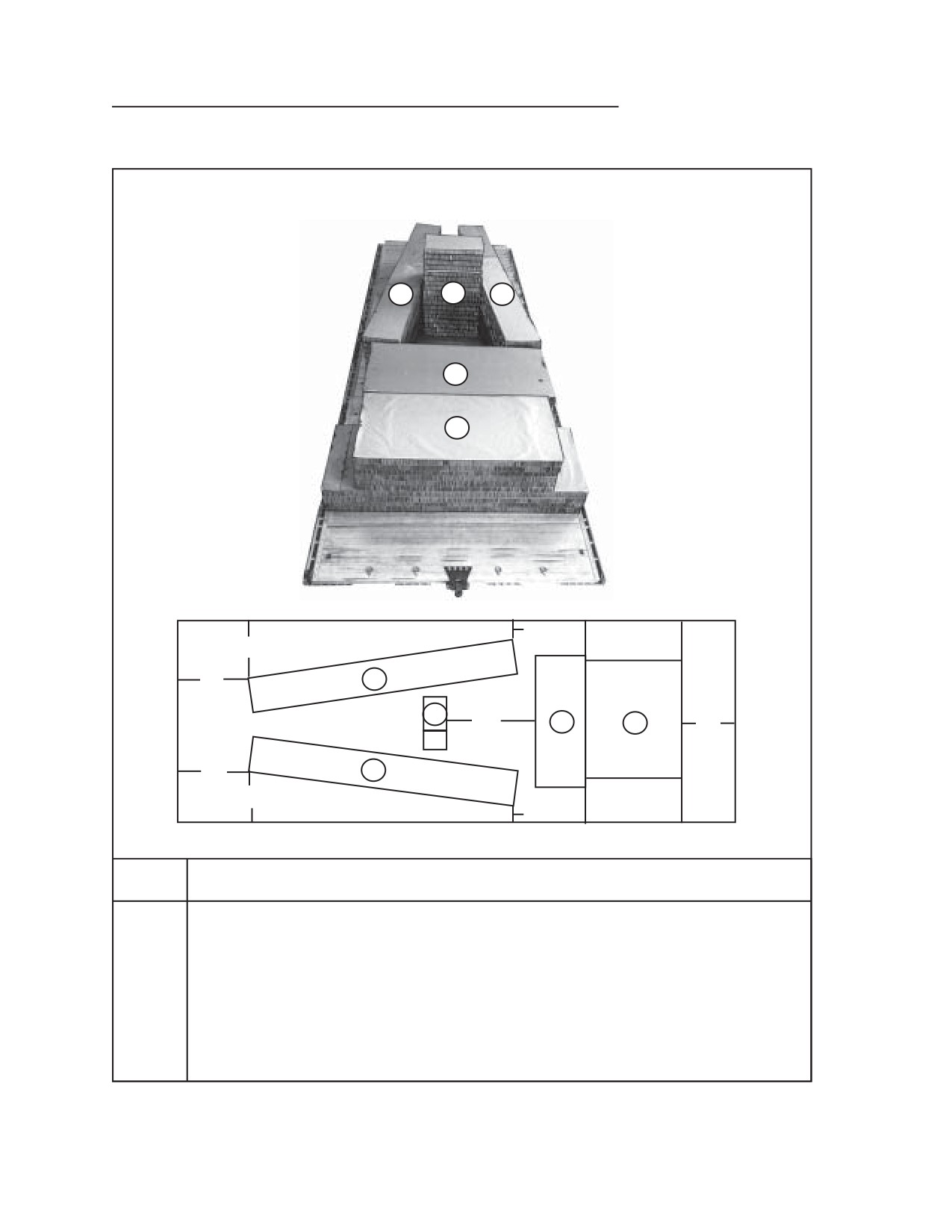
FM 4-20.127/TO 13C7-10-191
Notes: 1. Drawing is not to scale.
2. All dimensions are given in inches.
4
3
5
2
1
FRONT
10
30
36
5
REAR
3
FRONT
53
2
1
29
4
36
30
10
Stack
Instructions
Number
Place stack:
1
29 inches from the front edge of the platform and centered.
2
Flush against stack 1 and centered.
3
53 inches from stack 2 and centered. Make sure the highest part of the stack is on the
left side of the platform
4
36 inches from the rear edge of the platform. Place the front outside corner 10 inches
from the right rail. Place the rear outside corner 30 inches from the right rail.
5
36 inches from the rear edge of the platform. Place the front outside corner 10 inches
from the left rail. Place the rear outside corner
30 inches from the left rail.
Figure 1-4. Honeycomb Stacks Positioned on platform
1-5
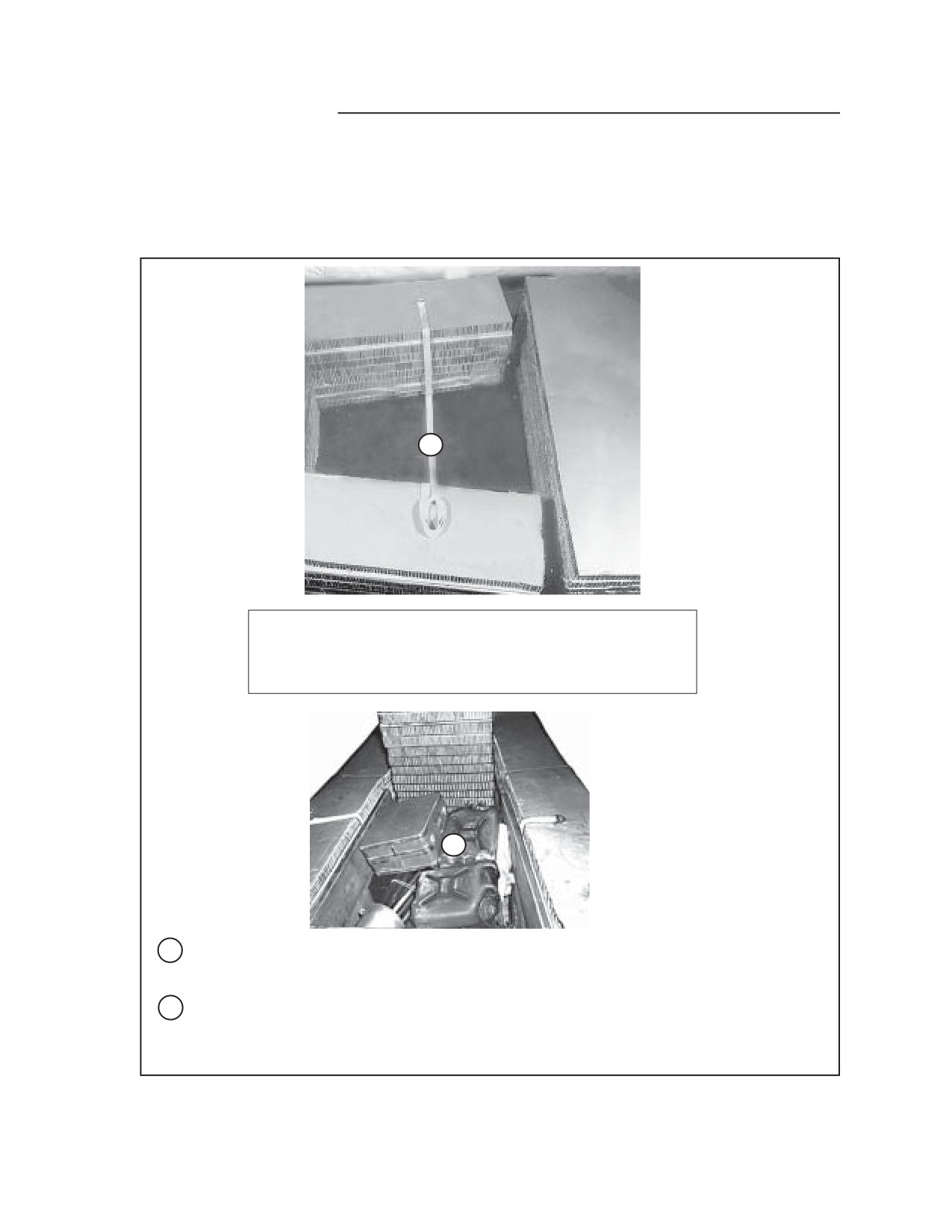
FM 4-20.127/TO 13C7-10-191
STOWING ACCOMPANYING EQUIPMENT
1-4. If the accompanying equipment (paragraph 1-1) is to be dropped, stow
it as shown in Figure 1-5.
1
CAUTION
Stow the equipment in such a way that it will be no higher
than honeycomb stacks 4 and 5.
2
1
Lay a 15-foot tiedown strap on the platform across stacks 4 and 5 with the ends of
the strap on top of the stacks.
2
Fit the accompanying equipment in the space between the stacks on top of the strap. If
lumber is included in the accompanying equipment, stow it on its edge against stacks 4
and 5 as shown.
Figure 1-5. Accompanying Equipment Stowed
1-6
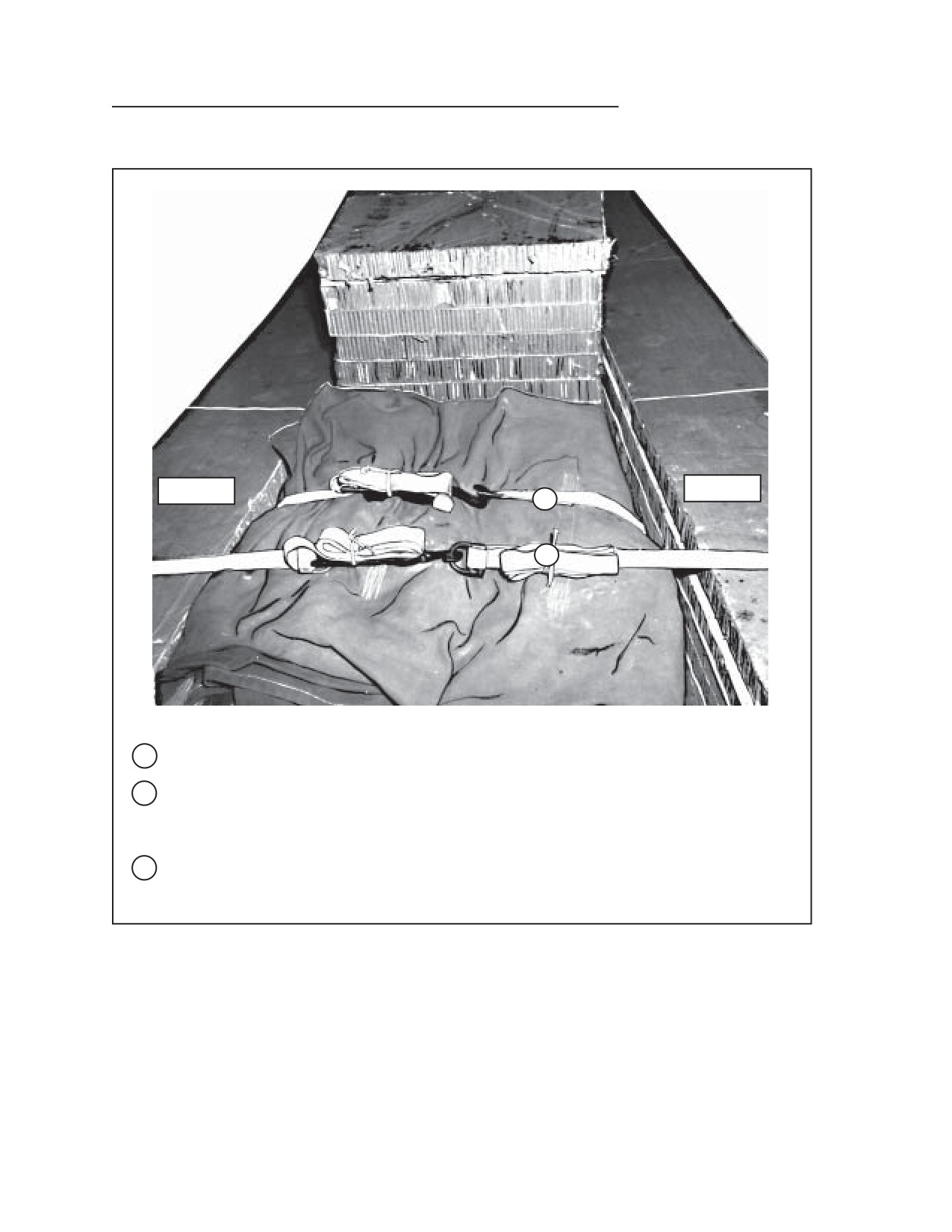
FM 4-20.127/TO 13C7-10-191
Stack 4
Stack 5
3
5
3
Bind the equipment with the 15-foot tiedown strap, a D-ring and a load binder.
4
Pass the free end of a 15-foot tiedown strap through clevis 4A and a second strap
through clevis 4. Run each strap through it’s own D-ring and pull the straps taut (not
shown).
5
Run these straps up over honeycomb stacks 4 and 5, and hook the straps together with
two D-rings and a load binder.
Figure 1-5. Accompanying Equipment Stowed (Continued)
1-7
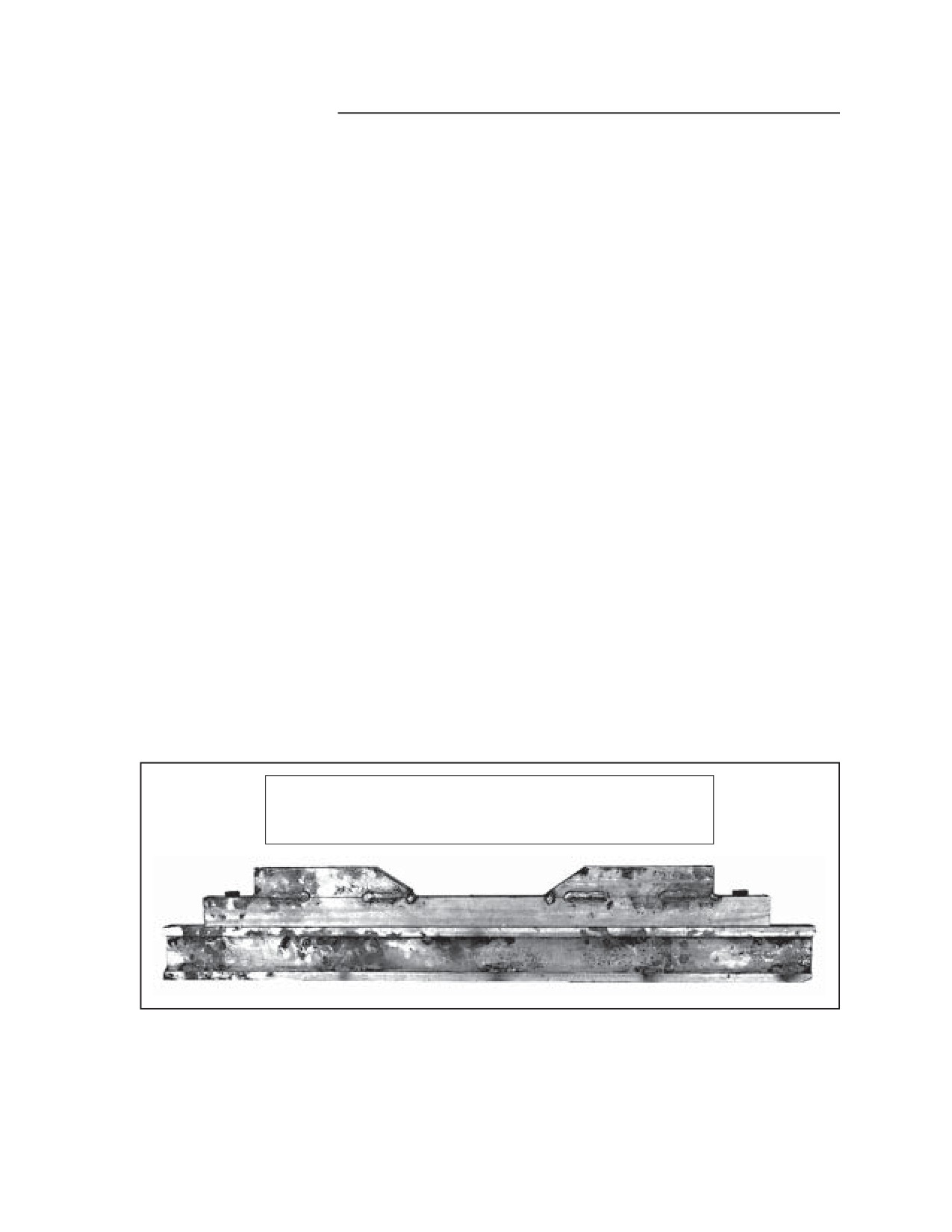
FM 4-20.127/TO 13C7-10-191
PREPARING HOWITZER
1-5. Prepare the howitzer as described below.
a. Insure the metal breechblock support bracket is available. A
previously airdropped howitzer should have it’s own breechblock
support bracket. If a bracket is not available for the howitzer to be
rigged, use the specifications given in Figure 1-6 to construct one.
The breechblock support is constructed of steel.
b. Use 2- by 6-inch and 2- by 10-inch pieces of lumber to build the
wooden support blocks for the gun tube according to Figure 1-7.
c. Prepare the radio, power distribution unit and batteries as shown in
Figure 1-8.
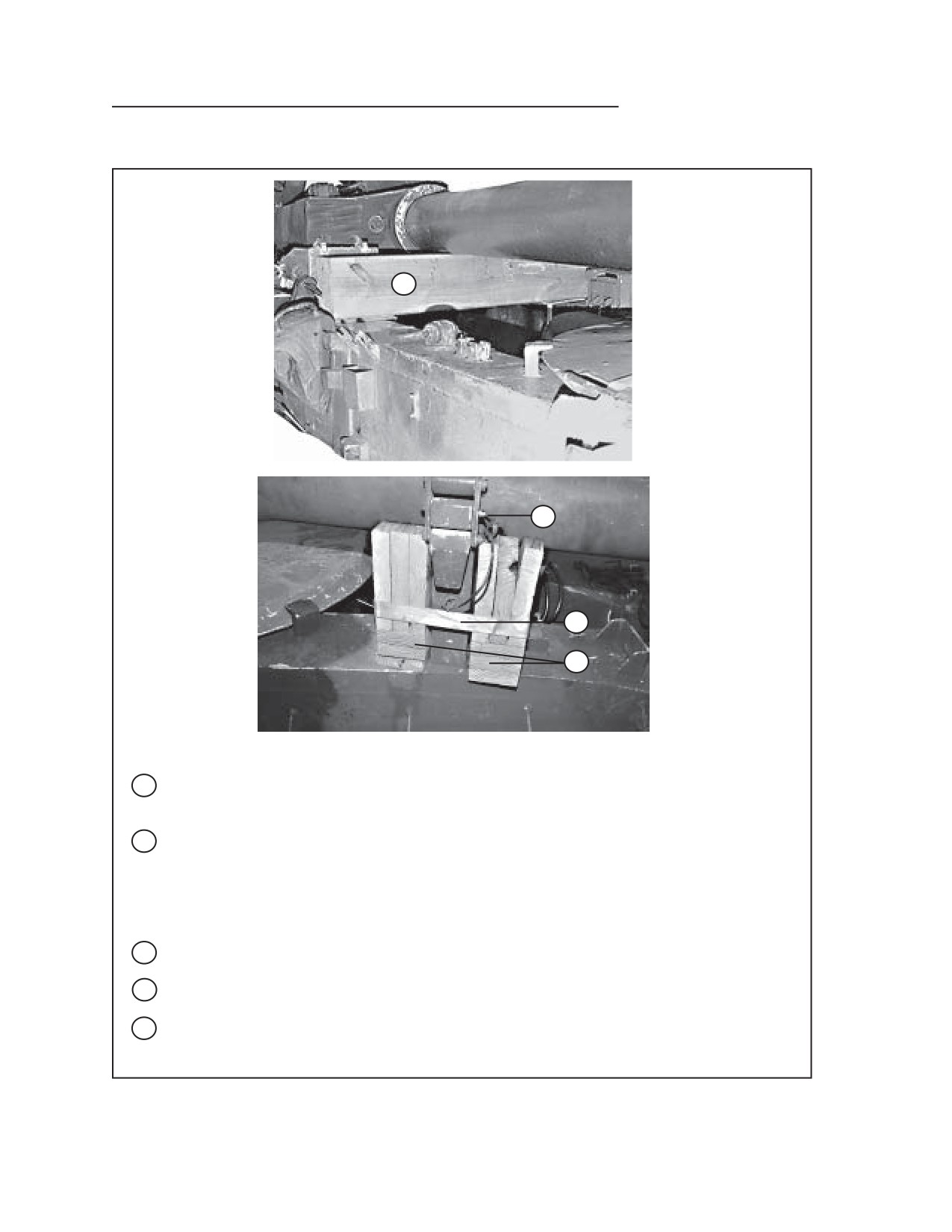
d. Prepare the gun tube as shown in Figure 1-9.
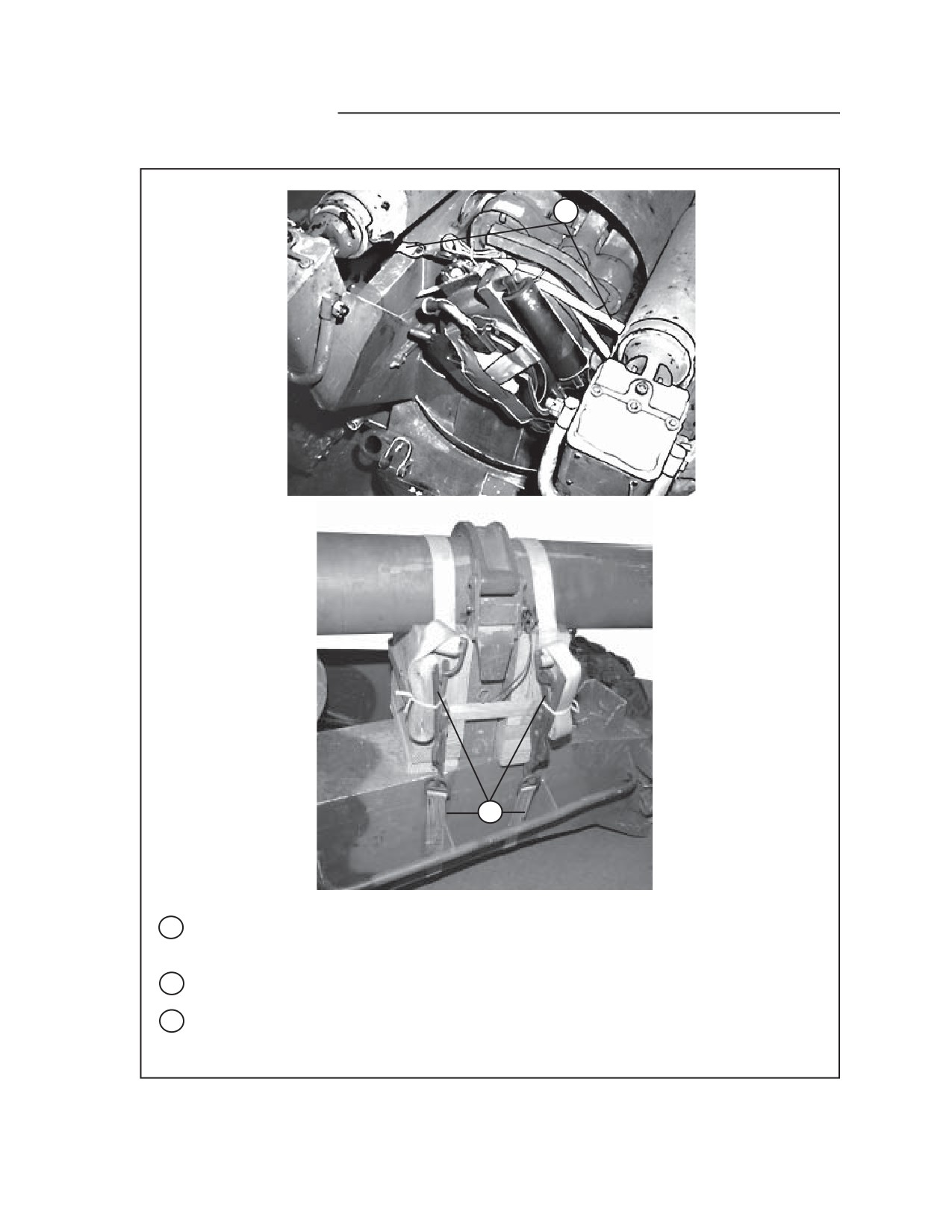
e. Lash the gun tube as shown in Figure 1-10.
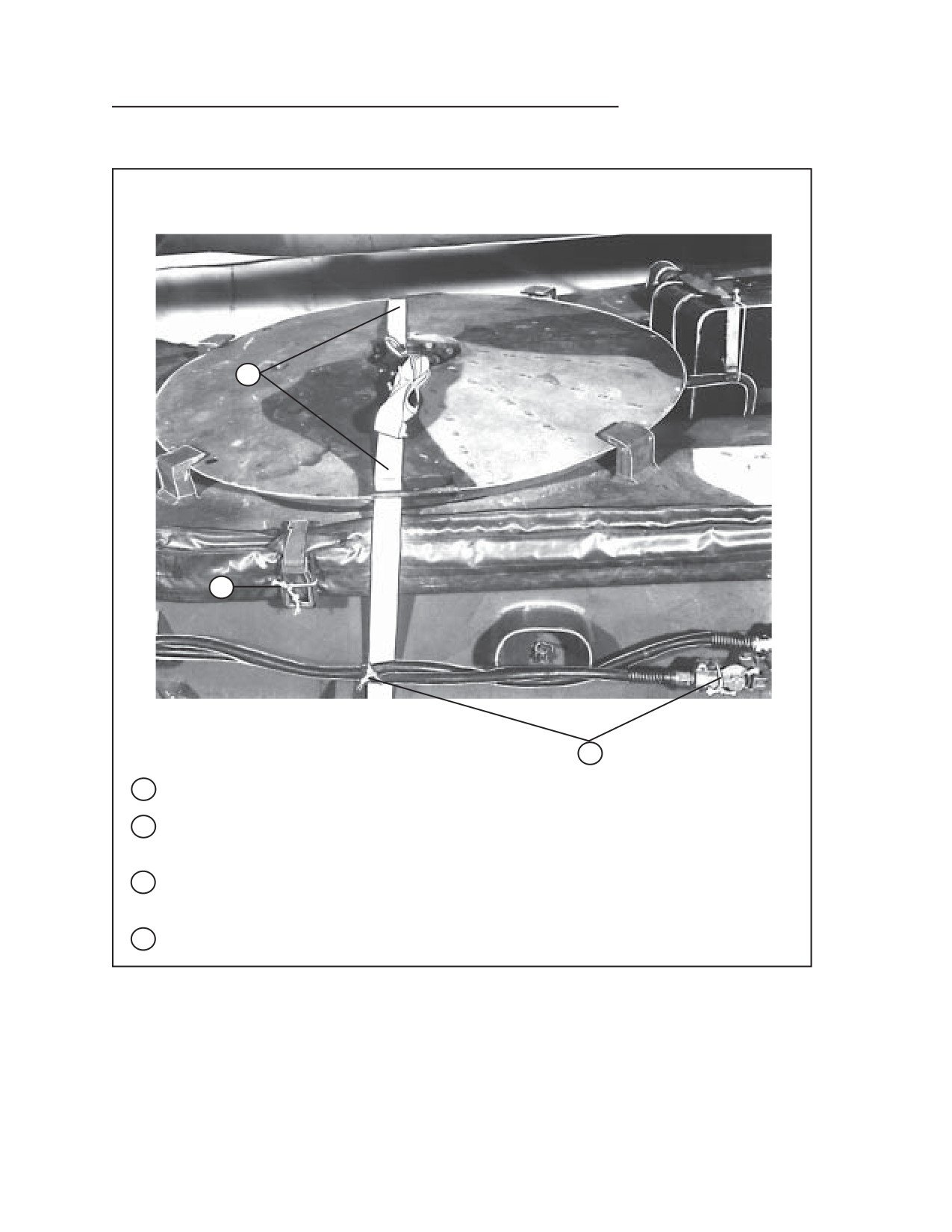
f. Secure the baseplate, hoses and aiming stakes as shown in Figure
1-10.
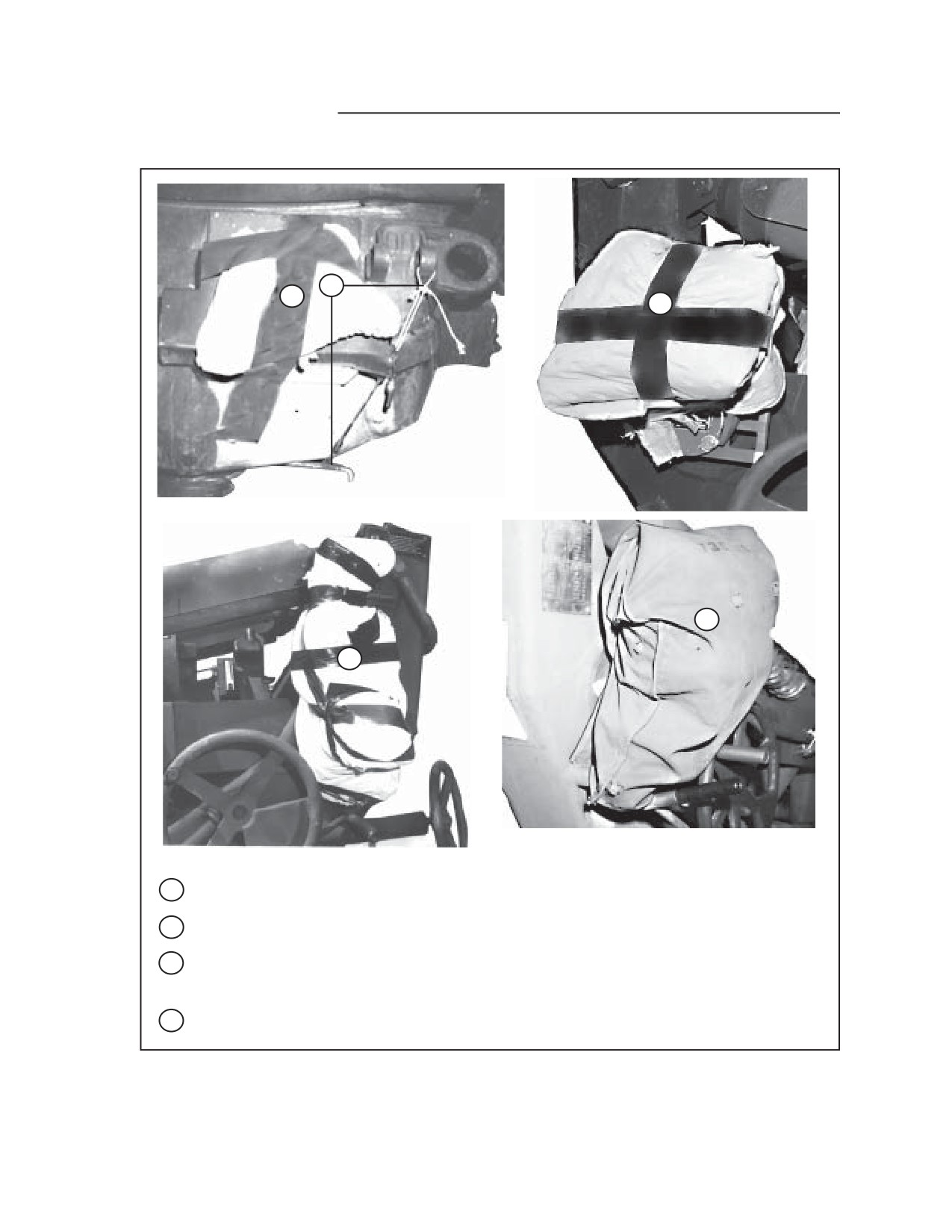
g. Prepare the manifold and quadrant mounts as shown in Figure
1-12.
h. Secure the carrying case and spades as shown in Figure 1-13.
i. Secure the collimator as shown in Figure 1-14.
CAUTION
The breechblock support bracket must be fitted to the
individual howitzer.
Figure 1-6. Breechblock Support Bracket Constructed
1-8
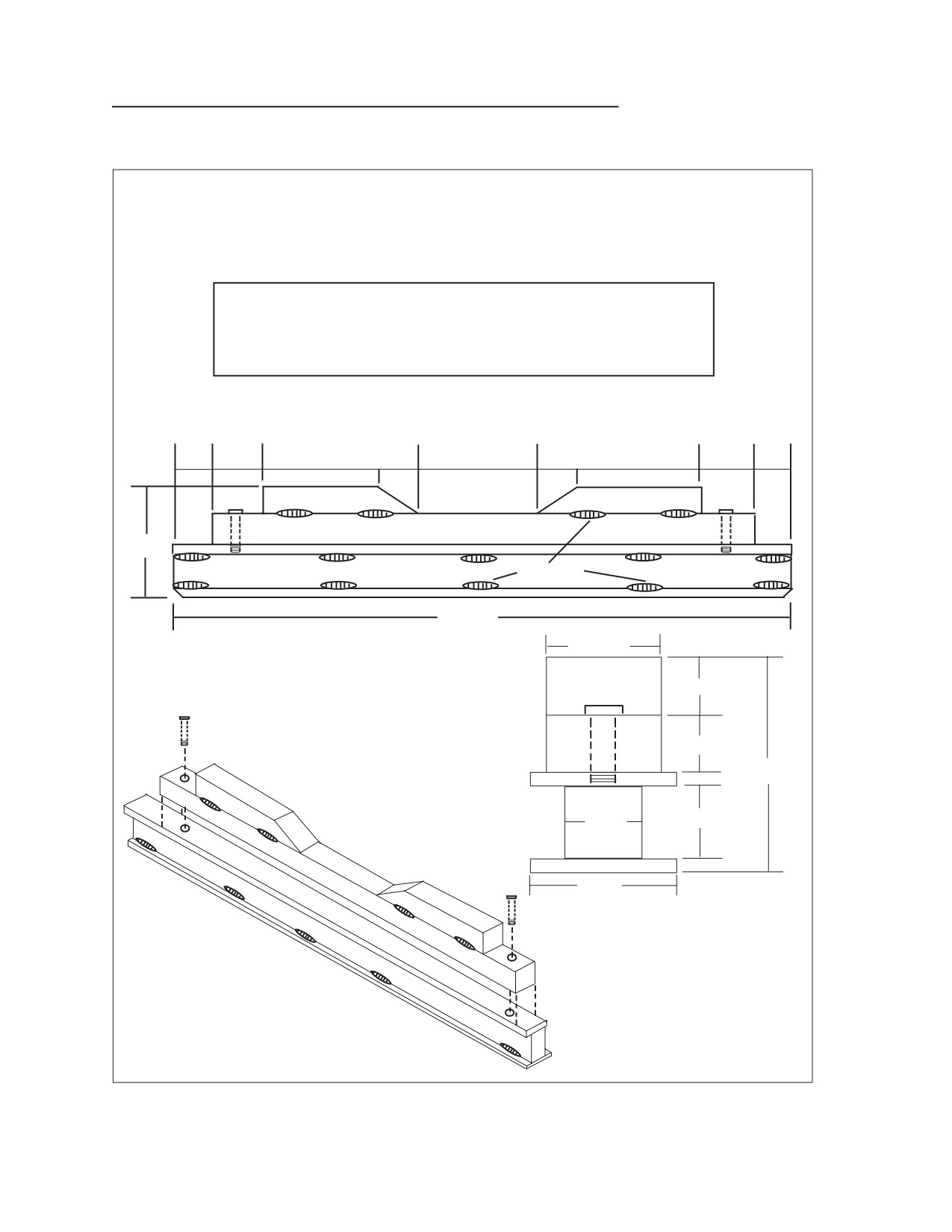
FM 4-20.127/TO 13C7-10-191
Notes: 1. Not drawn to scale.
2. All dimensions are given in inches.
3. The support is made to allow for metal shims to be inserted to ensure
a snug fit under the breechblock.
CAUTION
The breechblock support bracket must be fitted to the individual
howitzer.
SIDE VIEW
1 7/8
2 1/4
6 3/4
5 3/4
6 3/4
2 1/4
1 7/8
1 1/2
1 1/2
4 3/4
WELDS
27 1/2
1 1/4
1 1/4
3/16 x 1 3/4 BOLT
1 1/4
4 3/4
3/8
3/4
1 1/2
3/8
1 1/2
END VIEW
Figure 1-6. Breechblock Support Bracket Constructed (Continued)
1-9
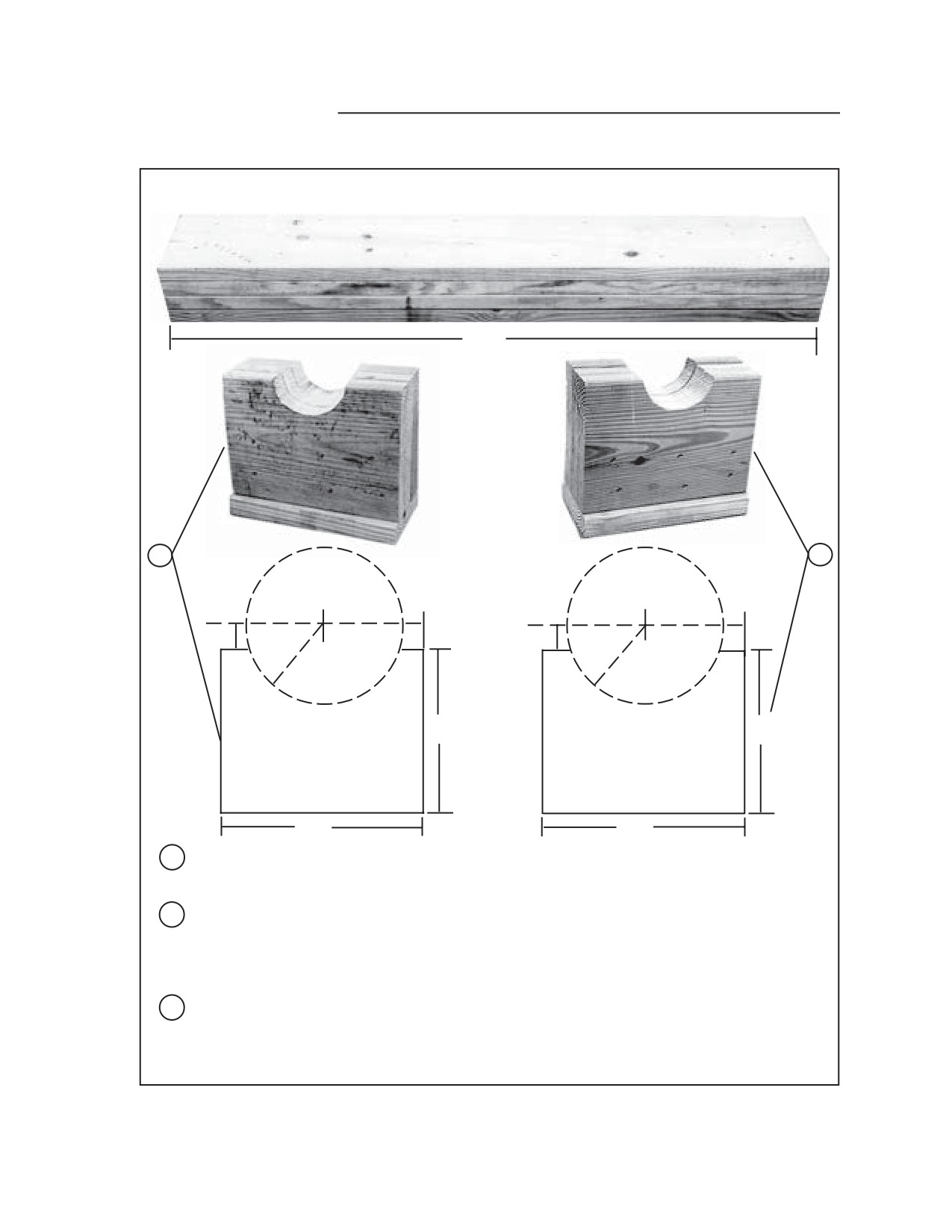
FM 4-20.127/TO 13C7-10-191
Notes: 1. Not drawn to scale.
2. All dimensions are given in inches.
57
2
3
5
5
(Radius)
REAR
(Radius)
6
6
2 5/8
2 1/2
9 1/4
9 1/4
12
12
1
Cut four 2- by 10- by 57-inch pieces of lumber. Nail the four pieces of lumber together
with 20d nails.
2
Make an arch-like cutout in three 2- by10- by 12-inch pieces of lumber. The arch is
based on a 5-inch radius centered 2 5/8- inches above the top of the wood and 6- inches
from either side. Nail the pieces together and to a 2- by 6- by 12-inch piece of lumber
with 20d nails.
3
Make an arch-like cutout in three 2- by 10- by 12-inch pieces of lumber. The arch is
based on a 5-inch radius centered 2 1/2- inches above the top of the wood and 6- inches
from either side. Nail the pieces together and to a 2- 6-by 12-inch piece of lumber with
20d nails.
Figure 1-7. Front and Rear Gun Tube Support Blocks Constructed
1-10
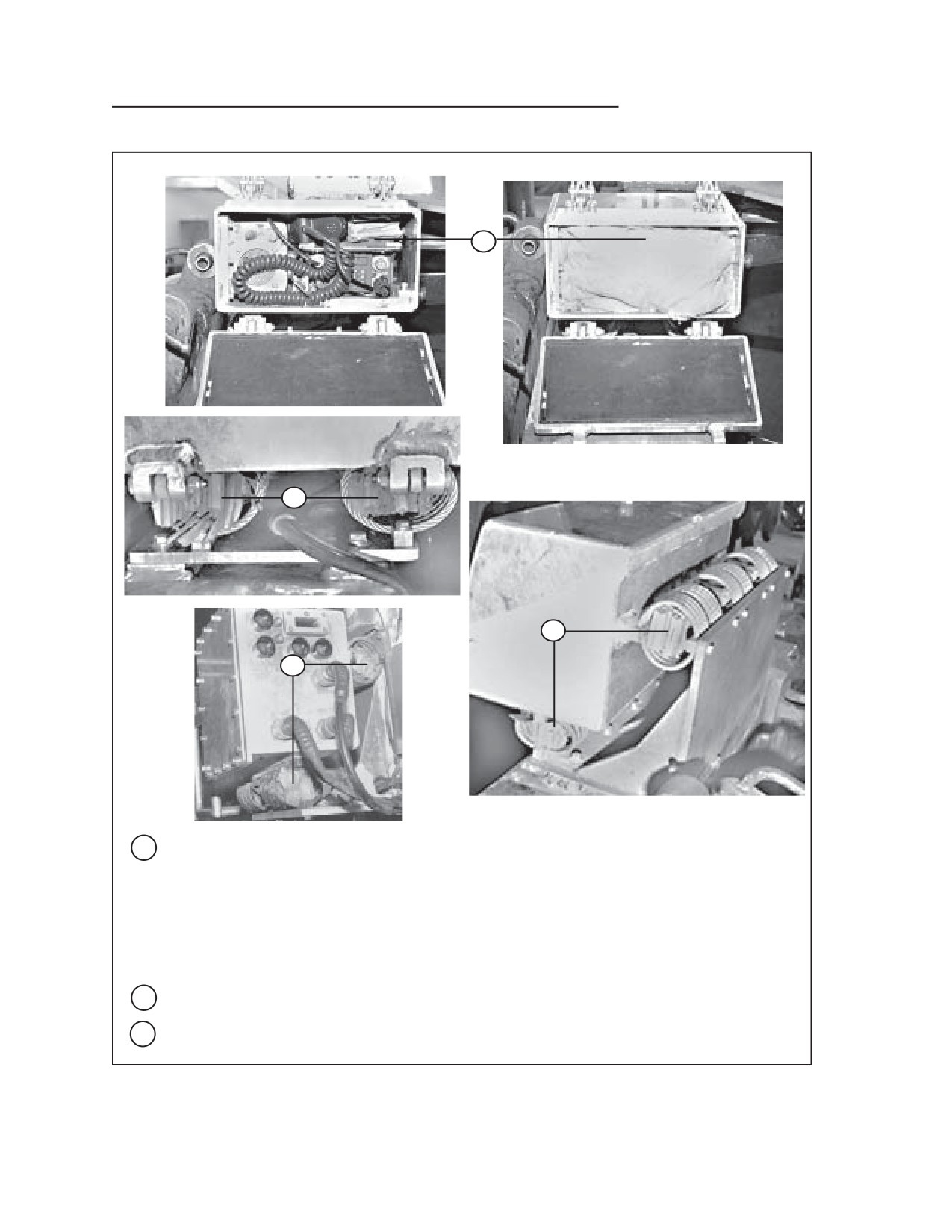
FM 4-20.127/TO 13C7-10-191
1
2
3
3
1
Place honeycomb on top of the radio inside the box. Pad the front of the radio with
cellulose wadding and secure the box latches.
Notes: 1. Located on both left and right trails are three boxes containing the
power supply distribution unit, radio, and batteries. Each box is mounted on
a set of shock coils.
2. Install the honeycomb vertically to ensure maximum absorption during impact.
2
Cut honeycomb to fit into the shock coils.
3
Place a strip of honeycomb inside all the shock coils of each box.
Figure 1-8. Radio, Power Distribution Unit and Batteries Prepared
1-11
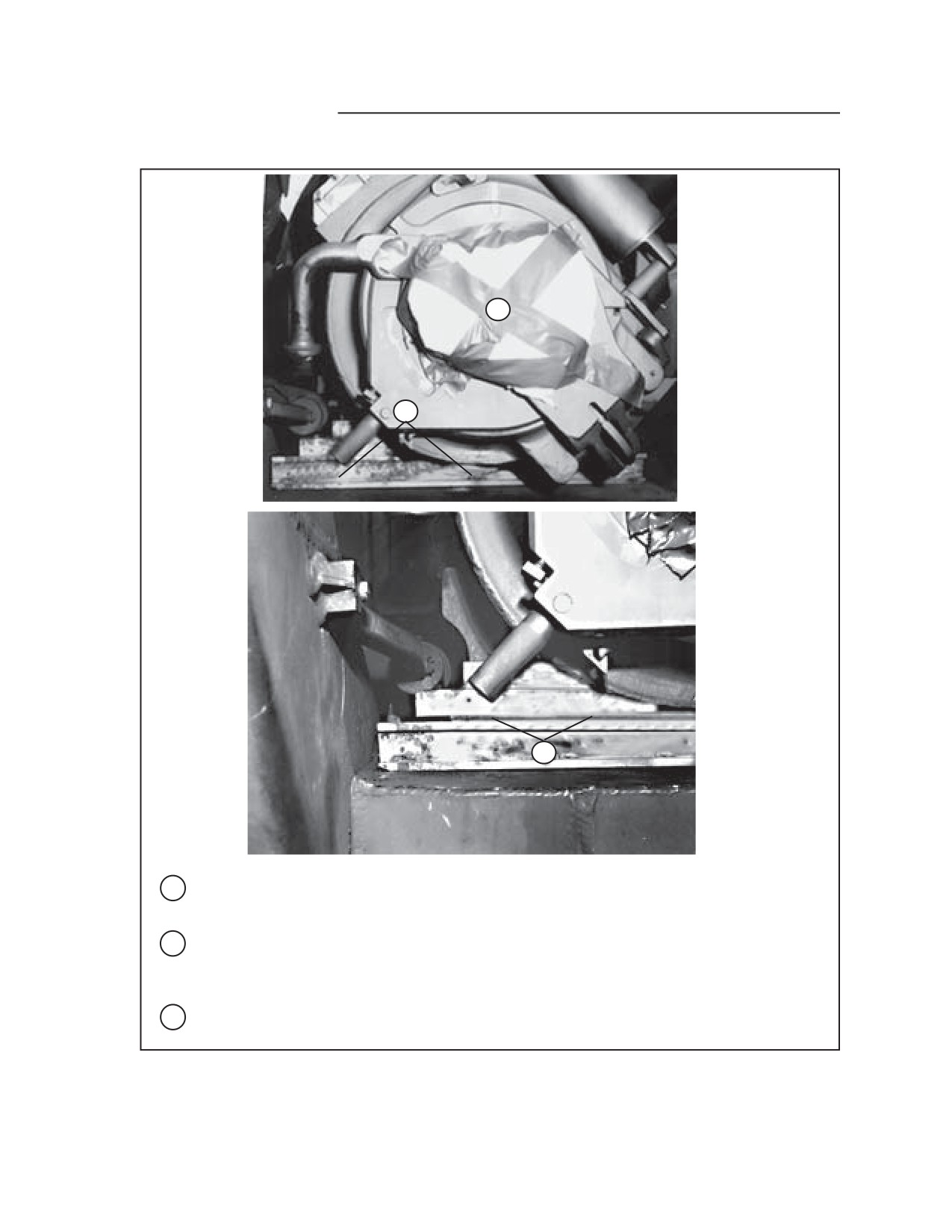
FM 4-20.127/TO 13C7-10-191
3
1
2
1
Move the gun tube of the howitzer to the stowed position. Raise the tube and place the
breechblock support bracket (Figure 1-6) under the breechblock. Ensure the fit is snug.
2
The bracket should not move when the breechblock rests on it. If necessary, remove and
disassemble the bracket and place metal shims in the space provided. Reassemble and
replace the bracket. A bracket with shims installed is shown above.
3
Pad the end of the breechblock with cellulose wadding. Tape the wadding in place.
Figure 1-9. Gun Tube Prepared
1-12
FM 4-20.127/TO 13C7-10-191
4
7
6
5
4
Set the rear gun support block on the trails under the rear of the tube. Allow 1-inch
clearance between the rear gun tube support block and the radio box.
5
Set the forward gun tube support blocks on the left trail against the gun travel lock.
The block with the slightly deeper cuts fits on the breech side of the tube travel lock. If
necessary, place plywood or lumber shims between the trail and the block for a snug fit.
The gun shown needed an additional piece of 2- by 6-inch lumber on the base of each
block.
6
Lash the support blocks to the gun tube travel lock with a 15-foot tiedown assembly.
7
Close the gun tube travel lock, and secure it with the pin provided.
8
Cover the muzzle and muzzle brake with plastic wrap, or insert the plug provided with
the gun and muzzle. (Not Shown)
Figure 1-9. Gun Tube Prepared (Continued)
1-13
FM 4-20.127/TO 13C7-10-191
1
3
1
Secure the breechblock with a 15-foot tiedown assembly. Run the strap under the cradle
assembly, over the breechblock, and under the thermal warning device.
2
Put the breechblock cover on the breechblock. (Not Shown)
3
Lash the gun tube to the left trail with two 15-foot tiedown assemblies. Run one strap
around each support block and position load binder as shown.
Figure 1-10. Gun Tube Lashed
1-14
FM 4-20.127/TO 13C7-10-191
1
3
2
1
Lash the firing base plate in its stowed position with a 15-foot tiedown assembly.
2
Tie the hose assemblies to the cleaning staff, to the lashing on the base plate, and to the
dummy couplings with type III nylon cord.
3
Tie the hold down latches on the aiming stakes bracket in the closed position with type
III nylon cord.
4
Tie the pump handles in place with the type III nylon cord. (Not Shown)
Figure 1-11. Base Plate, Hoses and Aiming Stakes Secured
1-15
FM 4-20.127/TO 13C7-10-191
1
2
3
4
3
1
Tie the lock-release lever to one side with type III nylon cord.
2
Pad the manifold assembly with cellulose wadding, and tape the wadding in place.
3
Pad the telescope and quadrant mounts (on both sides of the howitzer) with cellulose
wadding, and tape in place.
4
Cover the padded mounts if covers are available.
Figure 1-12. Manifold and Quadrant Mounts Prepared
1-16
FM 4-20.127/TO 13C7-10-191
1
2
1
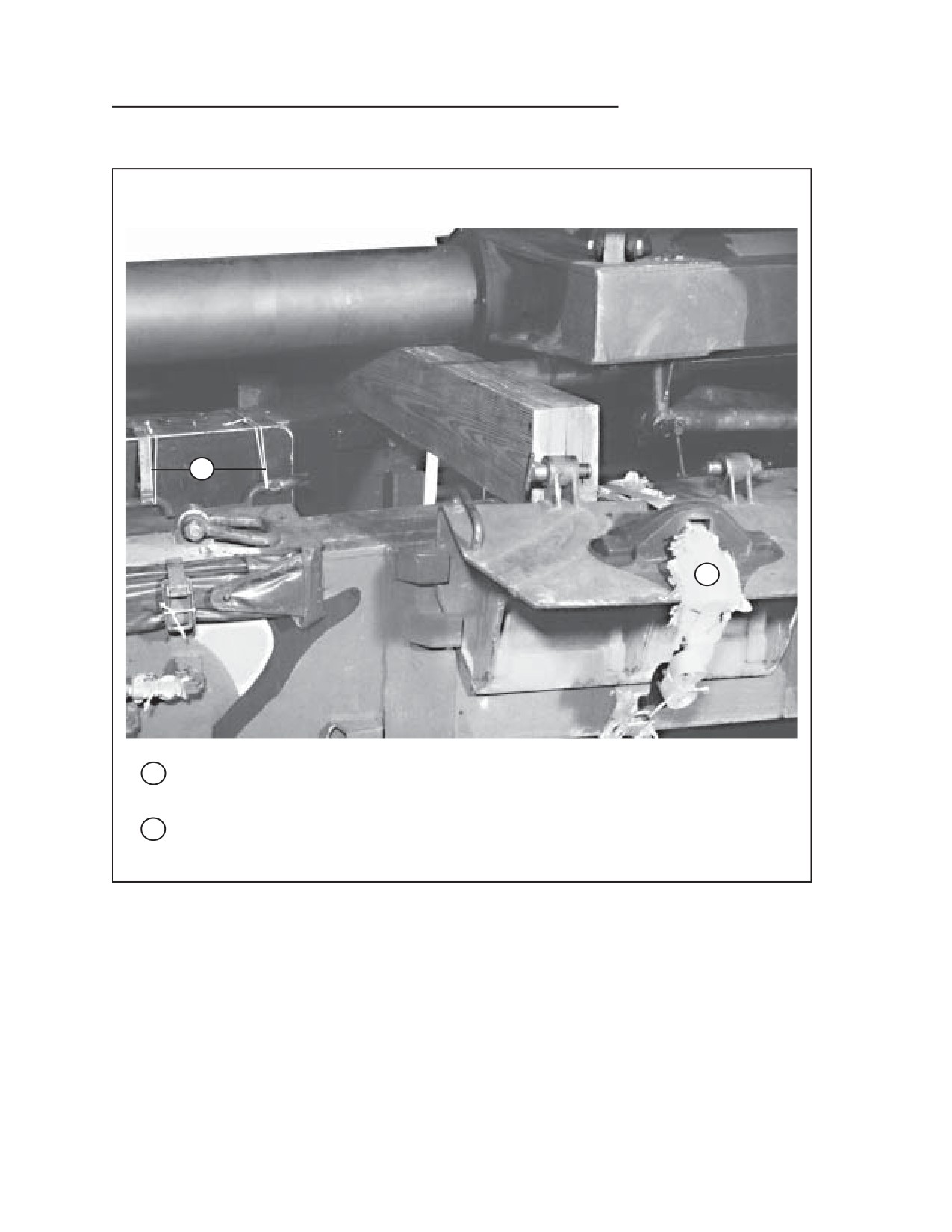
Strap the fire control equipment carrying case in its bracket on the left trail.
In addition, tie the case in place with two lengths of type III nylon cord.
2
Lash each spade in its bracket on each trail with a 15-foot tiedown assembly.
Pad any sharp edges that may contact the strap.
Figure 1-13. Fire Control Carrying Case and Spade Secured
1-17
FM 4-20.127/TO 13C7-10-191
2
1
5
3
4
1
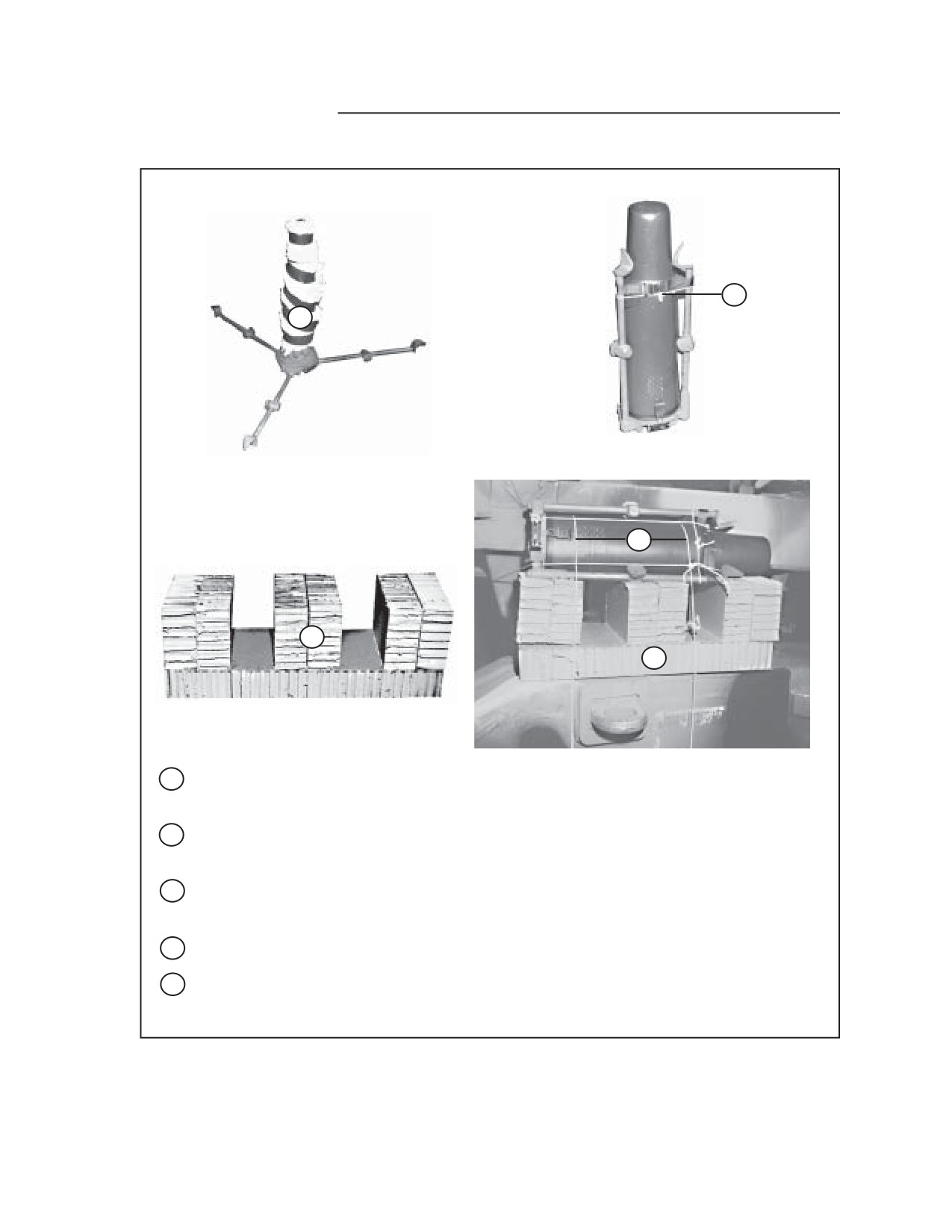
Take an M1A1 collimator out of its case. Place the legs as shown and tighten the locking
knobs. Wrap the collimator with cellulose wadding and tape the wadding in place.
2
Put the collimator back in its case. Fold the legs up and tie them in place with type III
nylon cord.
3
Glue six 6- by 10-inch pieces of honeycomb to a 10- by 26-inch piece of honeycomb as
shown.
4
Set the honeycomb stack on the left trail.
5
Lay the collimator on the honeycomb stack. Tie the honeycomb and the collimator to the
trail with lengths of type III nylon cord.
Figure 1-14. Collimator Secured
1-18
FM 4-20.127/TO 13C7-10-191
INSTALLING SUSPENSION SLINGS
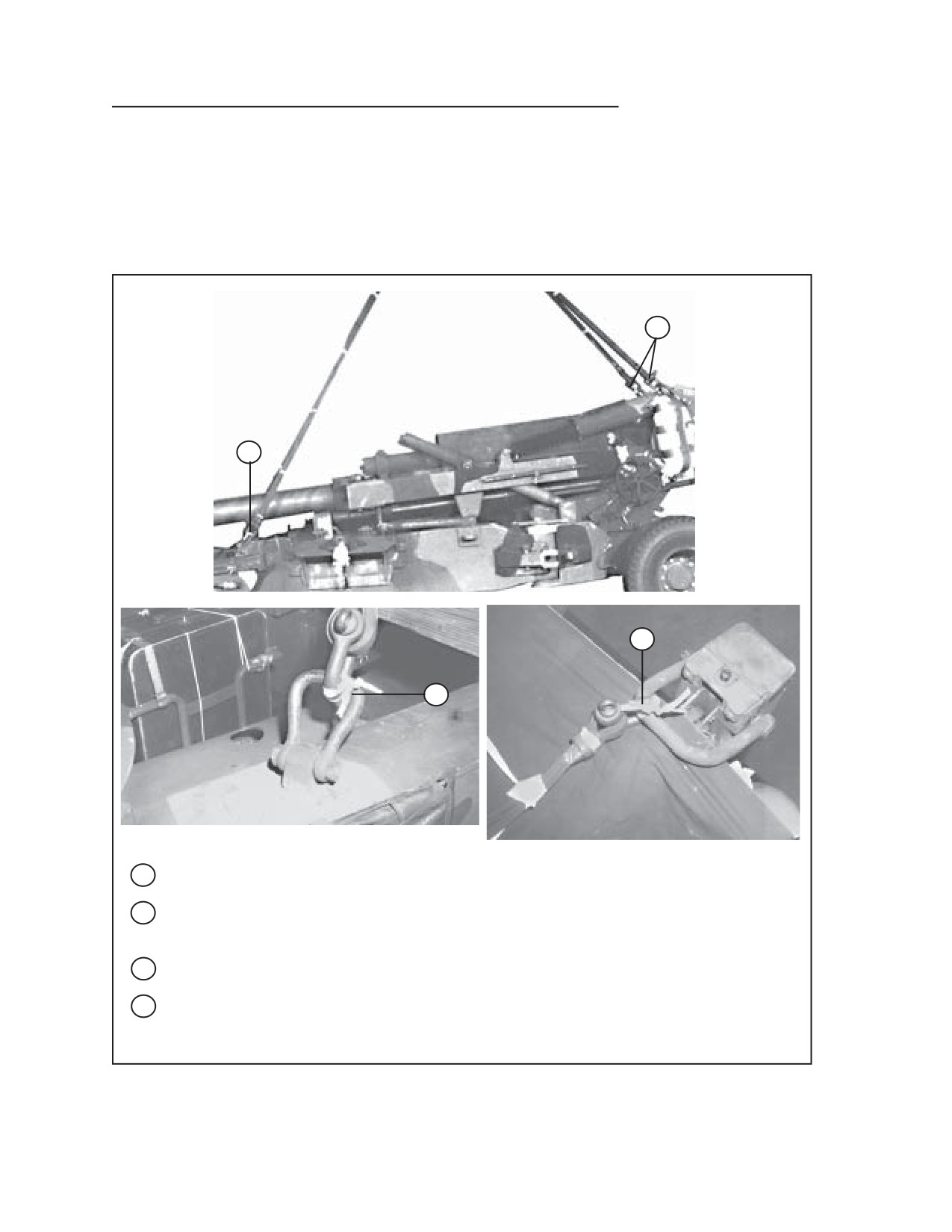
1-6. Install two 9-foot (4 loop) and two 12-foot (4 loop) type XXVI nylon
webbing slings with four screw-pin clevises as shown in Figure 1-15.
1
3
2
4
1
Bolt a 9-foot sling to each top carriage hoisting link with a screw-pin clevis.
2
Tie the screw-pin clevis to the hoisting link with a length of doubled 1/2-inch tubular
nylon webbing.
3
Bolt a 12-foot sling to the lifting clevis on each trail with a screw-pin clevis.
4
Tie the screw-pin clevis to the lifting clevis with a length of doubled 1/2-inch tubular
nylon webbing.
Figure 1-15. Suspension Slings Installed
1-19
FM 4-20.127/TO 13C7-10-191
SETTING HOWITZER ON PLATFORM
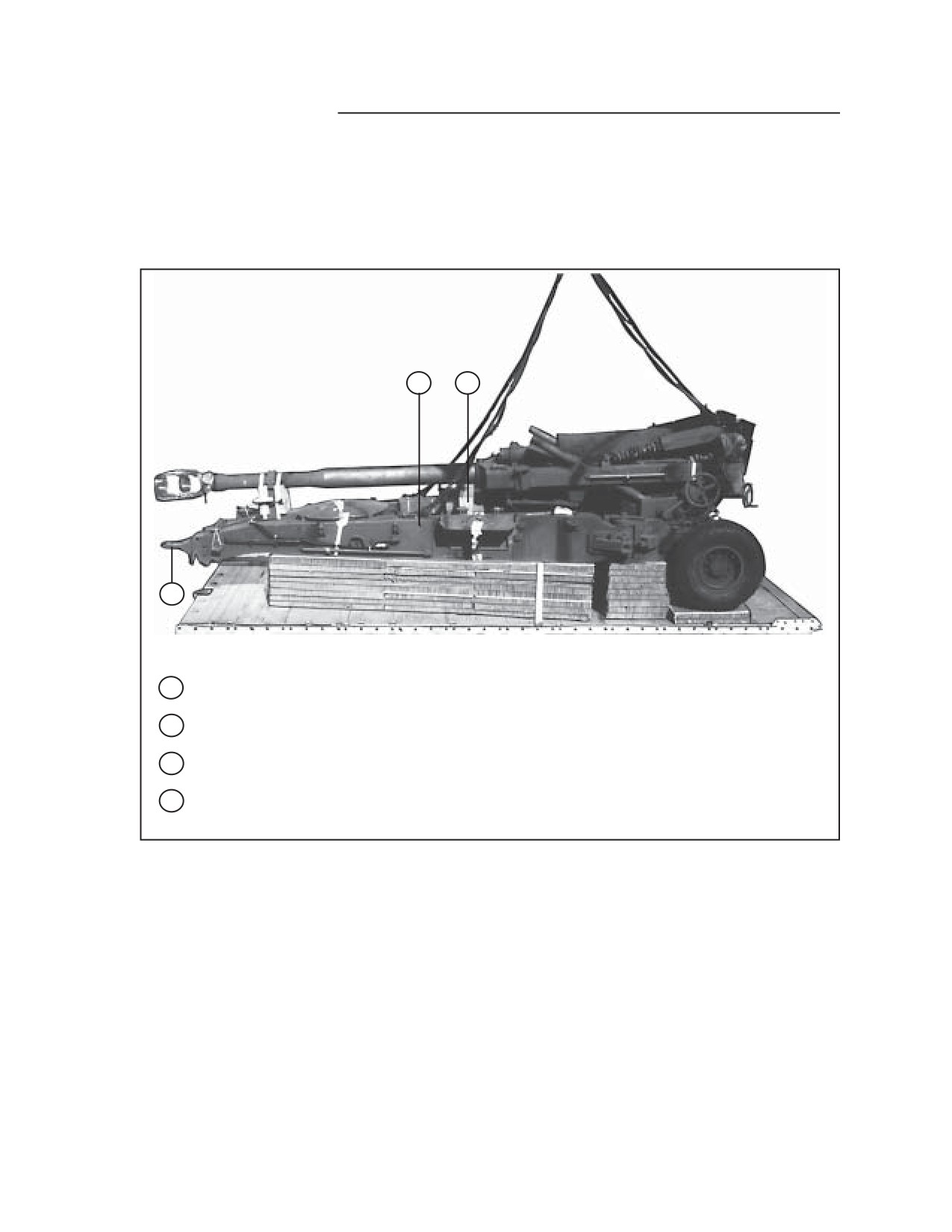
1-7. Set the howitzer on the honeycomb stacks as shown in Figure 1-16.
1
4
3
1
Center the right trail on stack number 4.
2
Center the left trail on stack number 5. (Not Shown).
3
The lunette will overhang the rear edge of the platform by 15 inches.
4
Insure the rear tube support blocks (Figure 1-9) are resting solidly on stack number 3.
Figure 1-16. Howitzer Placed on Honeycomb
1-20
FM 4-20.127/TO 13C7-10-191
LASHING HOWITZER
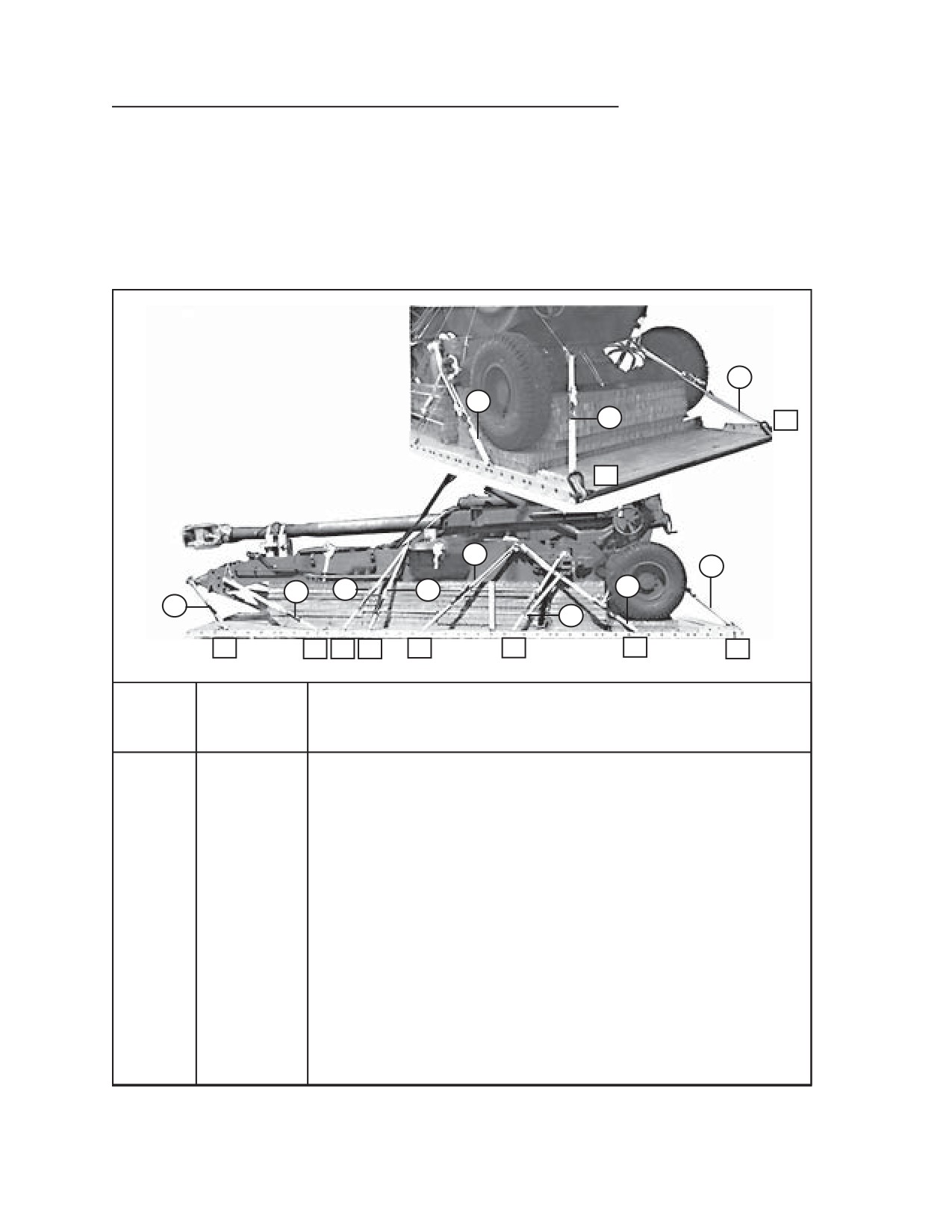
1-8. Lash the howitzer to the platform with sixteen 15-foot tiedown
assemblies as shown in Figure 1-17 and according to FM 4-20.102/
NAVSEA SS400-AB-MMO-010/TO 13C7-1-5.
2
3
1
1A
1
7
1
11
9
3
13
15
5
12
9
7
6
5
3
2
1
Tiedow n
Lashin g
Clevis
Instruction s
Number
Number
Pass lashing:
1
1
Through right front tiedow n provision on low er carriage.
2
1A
Through left front tiedow n provision on low er carriage.
3
2
Through tiedow n provision on right trail.
4
2A
Through tiedow n provision on left trail.
5
3
Around trail lock on right trail.
6
3A
Around trail lock on left trail.
7
5
Through tiedow n provision on right trail.
8
5A
Through tiedow n provision on left trail.
9
6
Through clevis on right corner of cradle assembly.
10
6A
Through clevis on left corner of cradle assembly.
11
7
Through clevis on right corner of cradle assembly.
12
7A
Through clevis on left corner of cradle assembly.
13
9
Through tiedow n provision on right trail.
14
9A
Through tiedow n provision on left trail.
15
12
Through lunette.
16
12A
Through lunette.
Figure 1-17. Howitzer Lashed
1-21
FM 4-20.127/TO 13C7-10-191
COVERING LOAD AND SAFETY TIEING SLINGS
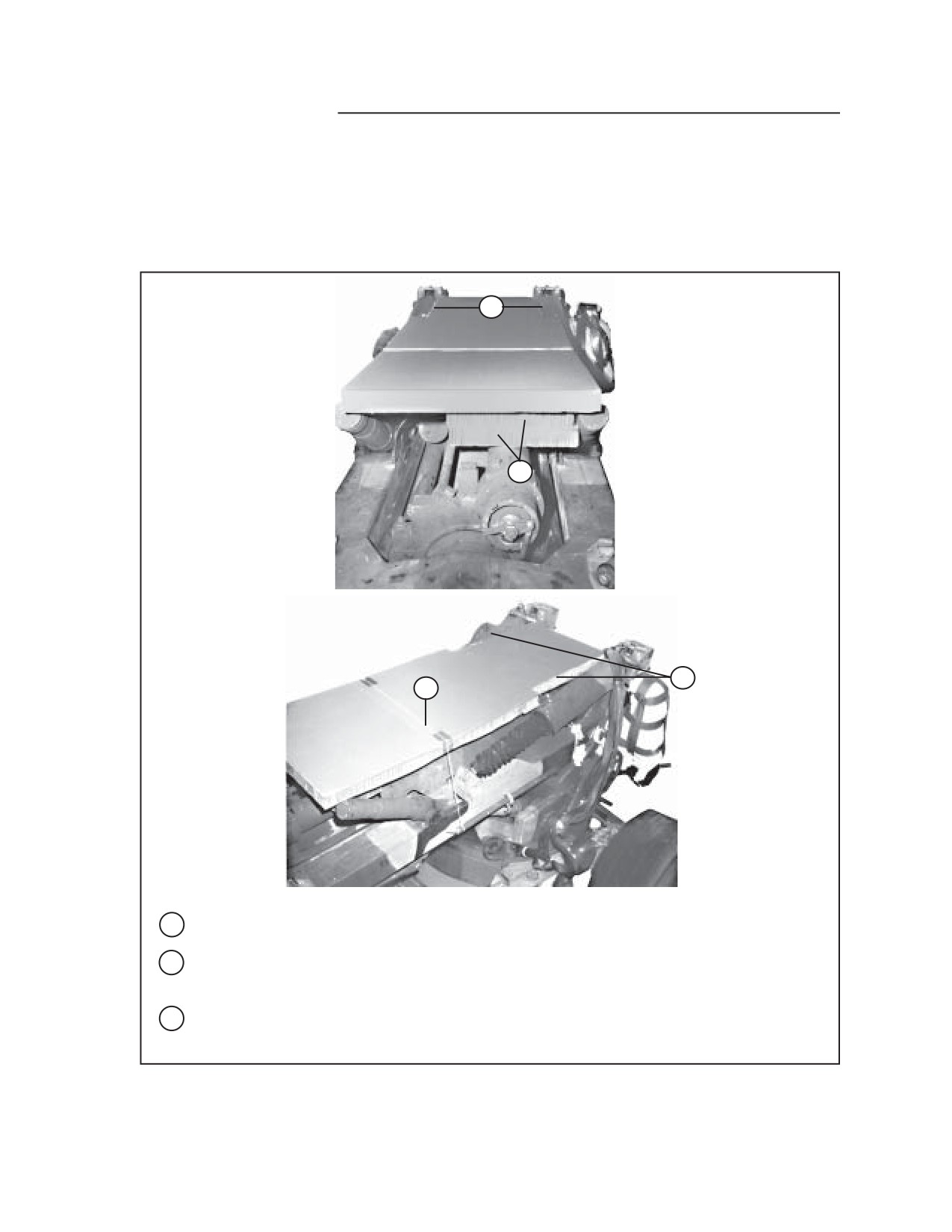
1-9. Cover the load and safety tie the suspension slings as shown in
Figure 1-18.
2
1
2
3
1
Center two 12- by 18-inch pieces of honeycomb over the front recoil tube.
2
Make two 3- by 36-inch cutouts in a 36- by 96-inch piece of honeycomb, and set the
honeycomb on the cradle assembly.
3
Tie the 36- by 96-inch piece of honeycomb in place with type III nylon cord. Tape the
edges where the cord contacts the honeycomb.
Figure 1-18. Load Covered and Supension Slings Safety Tied
1-22
FM 4-20.127/TO 13C7-10-191
5
4
4
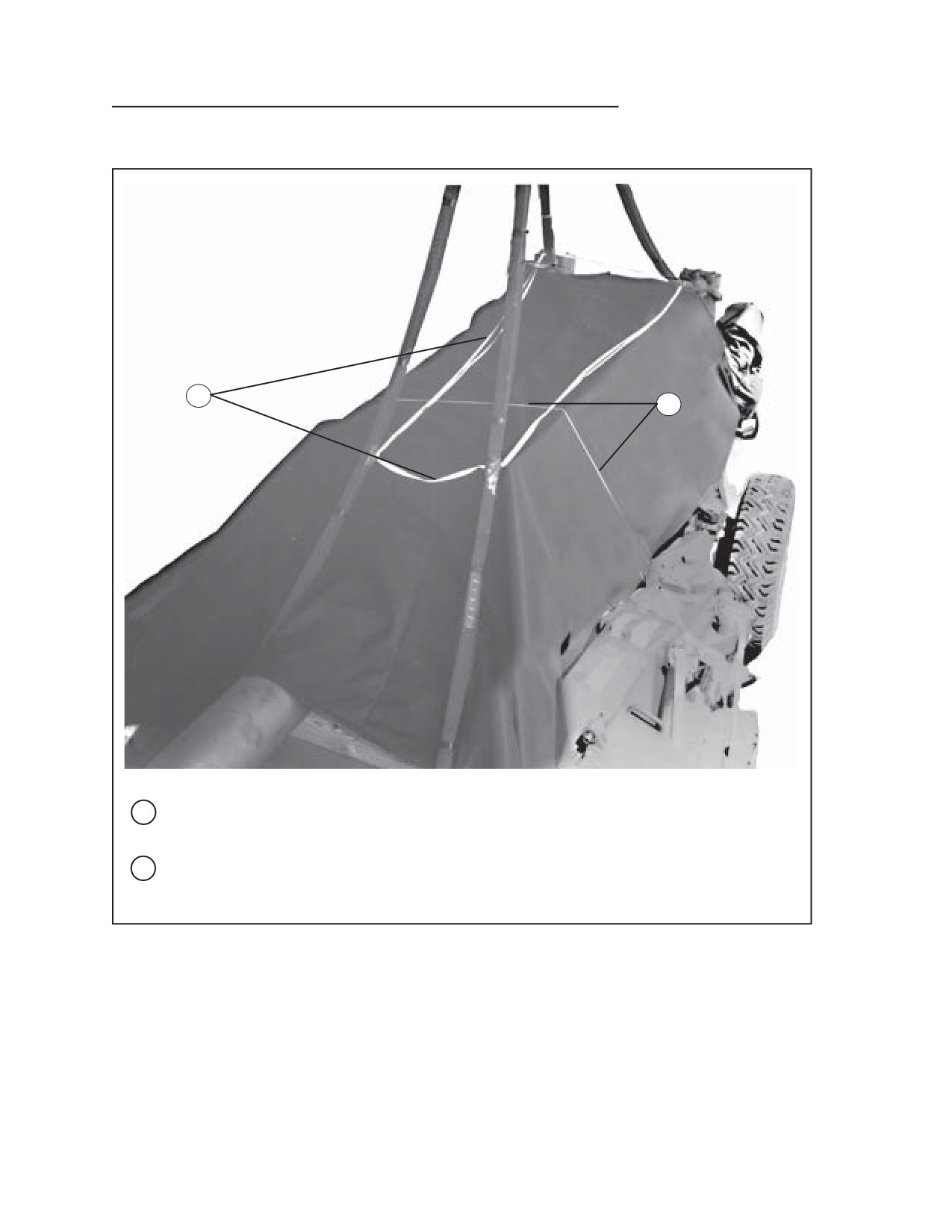
Tie a 12- by 12-foot piece of coated cloth over the load with lengths of type III nylon
cord.
5
Safety tie the suspension slings according to FM 4-20.102/NAVSEA SS400-AB-MMO-010/
TO 13C7-1-5.
Figure 1-18. Load Covered and Supension Slings Safety Tied (Continued)
1-23
FM 4-20.127/TO 13C7-10-191
STOWING CARGO PARACHUTES
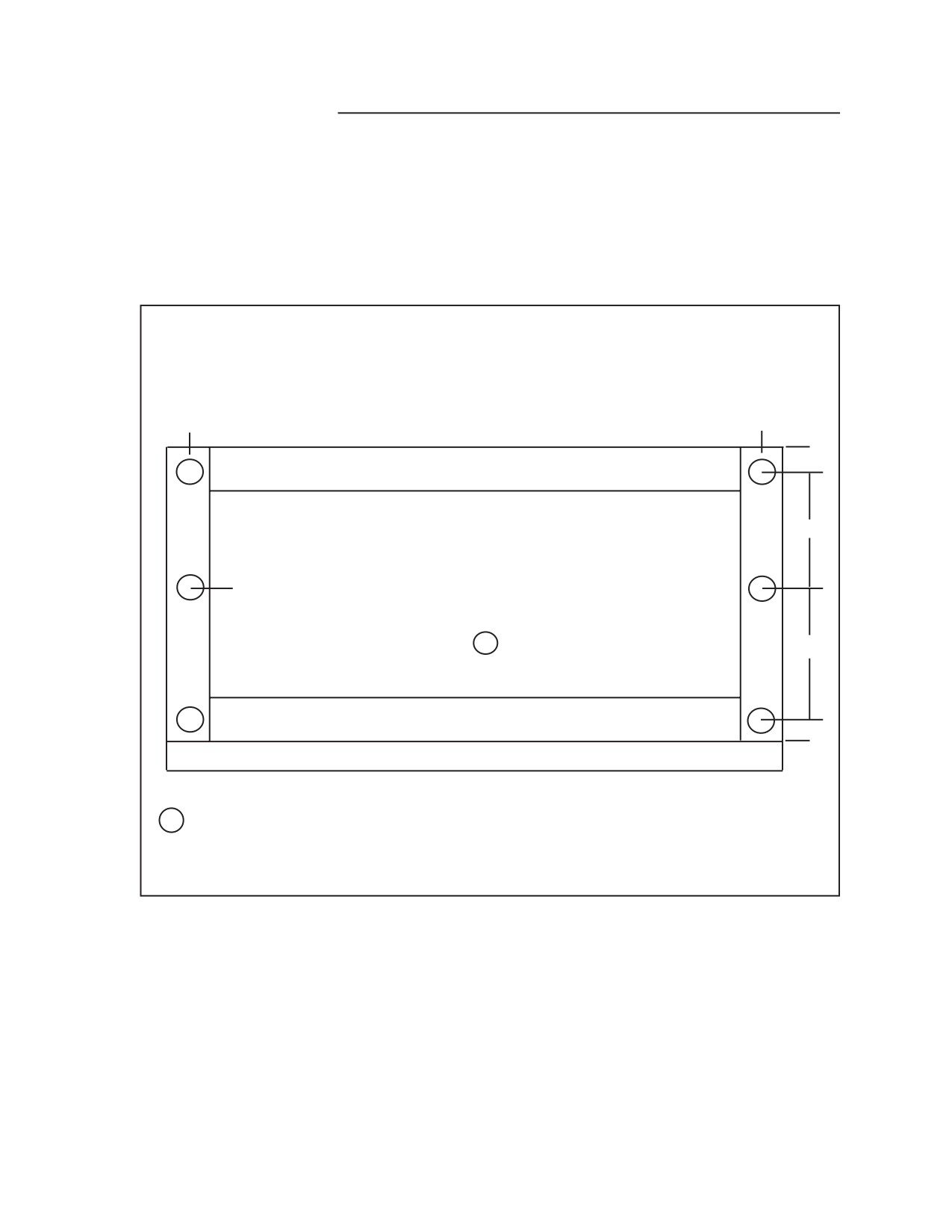
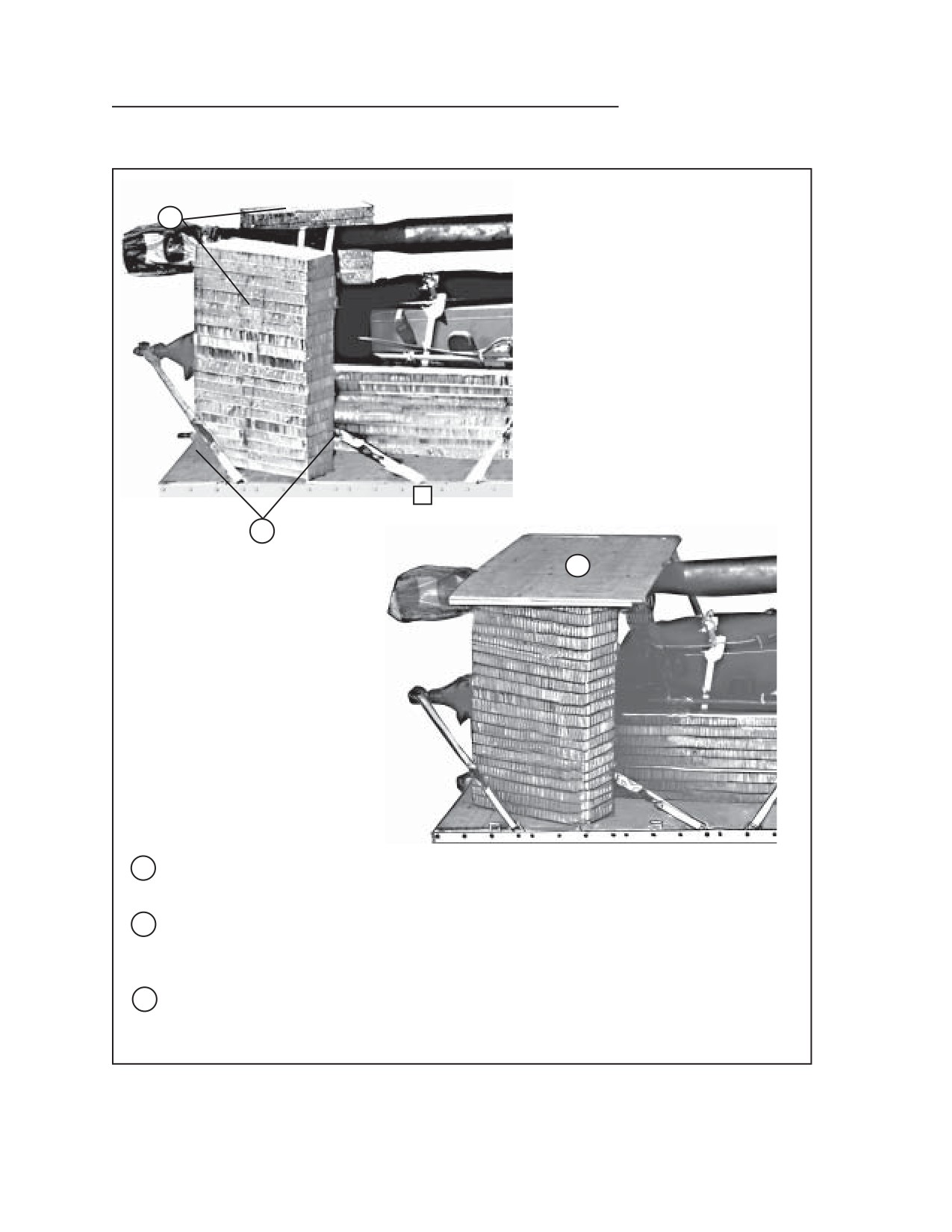
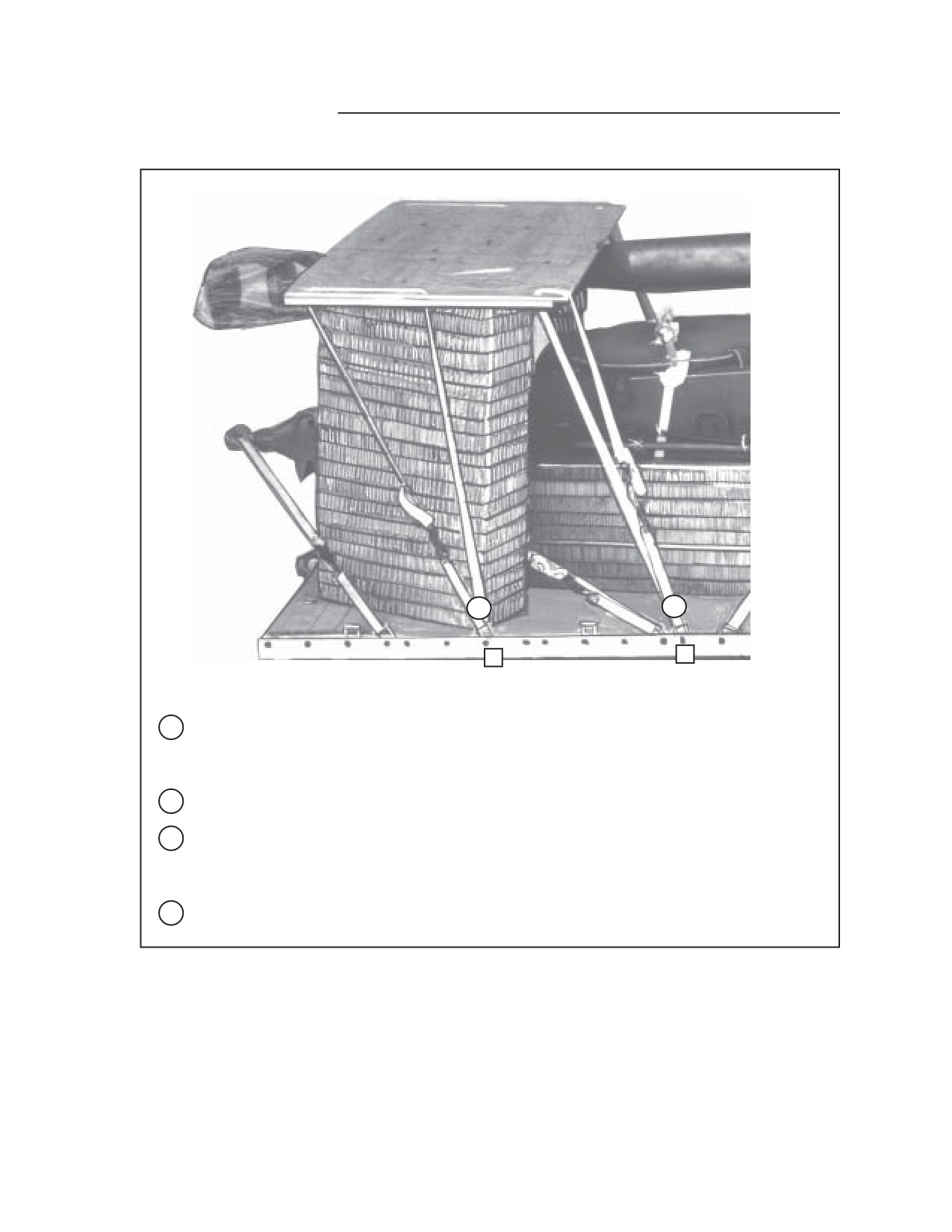
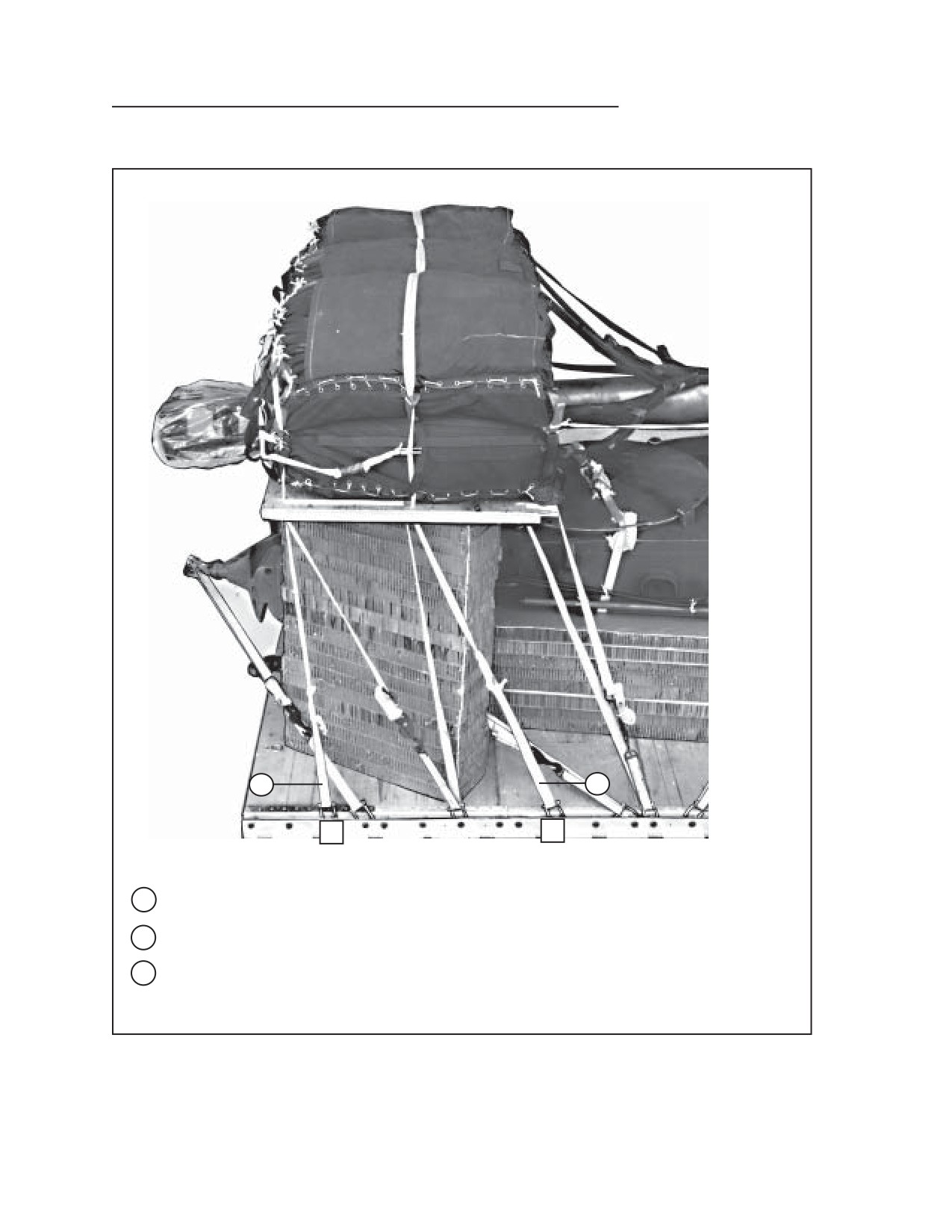
1-10. Install the parachute stowage platform as shown in Figure 1-19.
Prepare and stow the appropriate number of G-11 cargo parachutes
depending on the weight and as outlined in FM 4-20.102/NAVSEA SS400-
AB-MMO-010/TO 13C7-1-5 and as shown in Figure 1-20.
Notes: 1. Not drawn to scale.
2. All dimensions are given in inches.
2 x 6 x 45 lumber
2 x 6 x 45 lumber
Rear
3
2 x 6 x 85 lumber
19 1/2
2-inch hole
Plywood 3/4 x 48 x 96
1
19 1/2
2 x 6 x 85 lumber
3
1
Construct the parachute stowage platform as shown above. Nail the lumber to the
plywood using 8d nails. Drill three 2-inch holes on each side of the platform through
the plywood and end pieces of the 2- by 6-inch lumber as shown.
Figure 1-19. Parachute Stowage Platform Installed
1-24
FM 4-20.127/TO 13C7-10-191
2
9
3
4
2
Cut 40 pieces of 12-by 38-inch honeycomb. Glue pieces together forming two 20 layer
stacks.
3
Place a stack between the last two lashings on each side of the platform so the outside
rear corner is 5 inches from the rear edge of the platform and the inside front corner of
the stack touches the lashing from clevis 9 or 9A.
4
Set the parachute stowage platform on the stacks with the 2-inch by 6-inch lumber
facing down. The rear edge of the parachute stowage platform must be flush with
the outside rear corners of the stacks.
Figure 1-19. Parachute Stowage Platform Installed (Continued)
1-25
FM 4-20.127/TO 13C7-10-191
7
5
11
8
5
Pass a 15-foot lashing through clevis 8, up through the right front hole, and down
through the center hole of the parachute stowage platform. Secure the ends of the
lashing with a D-ring and a load binder.
6
Repeat step 5 using clevies 8A (Not Shown) for the left side.
7
Pass a 15-foot lashing through clevis 11, up through the right center hole of the
parachute stowage platform. Secure the ends of the lashing with a D-ring and
load binder.
8
Repeat step 5 using clevies 11A (Not Shown) for the left side.
Figure 1-19. Parachute Stowage Platform Installed (Continued)
1-26
FM 4-20.127/TO 13C7-10-191
2
1
13
10
1
Tie the ends of the first restraint strap to load tiedown clevises 10 and 10A.
2
Tie the ends of the second restraint strap to load tiedown clevises 13 and 13A.
3
Install two multicut parachute release straps according to FM 4-20.102/NAVSEA
SS400-AB-MMO-010/TO 1C37-1-5.
Figure 1-20. Cargo Parachutes Stowed
1-27
FM 4-20.127/TO 13C7-10-191
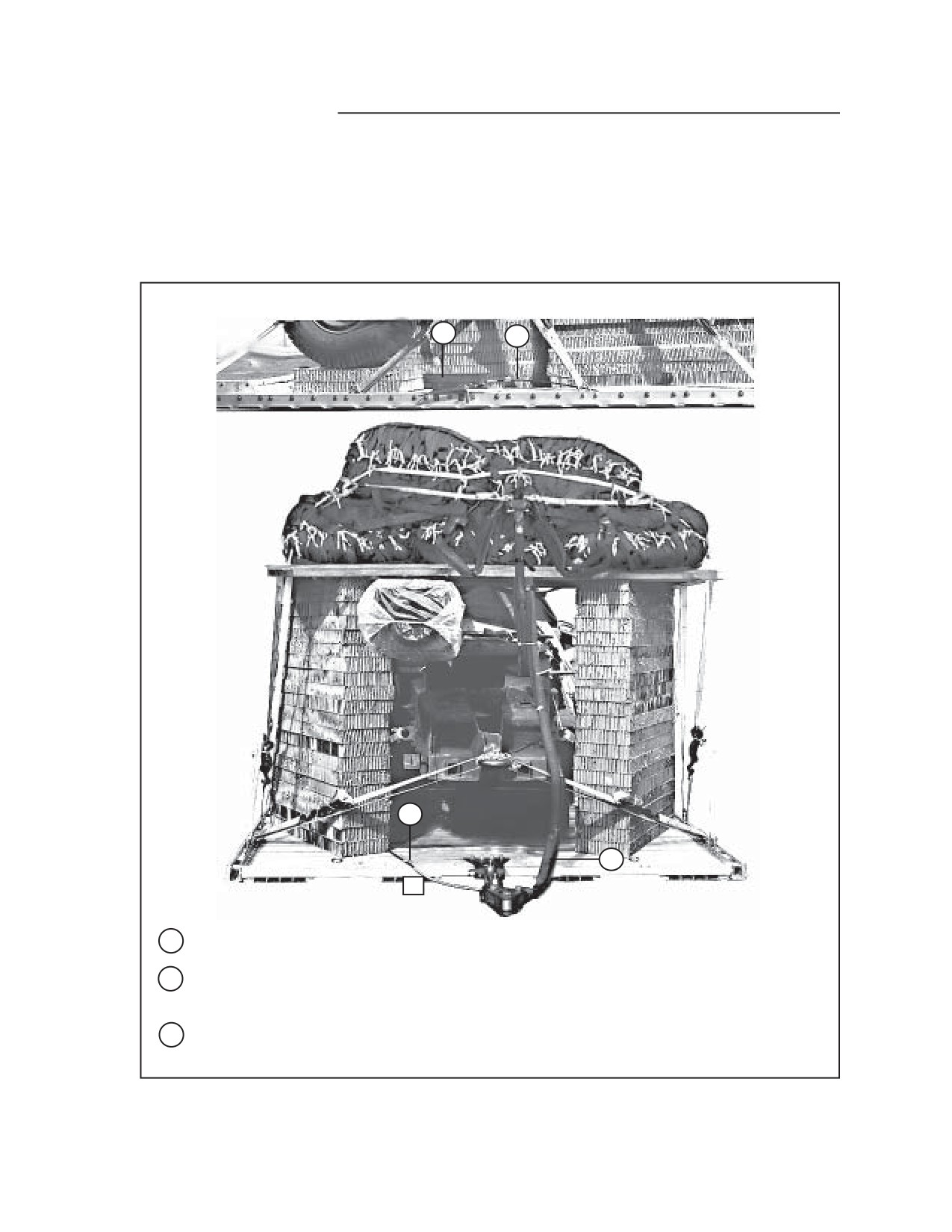
INSTALLING EXTRACTION SYSTEM
1-11. Use the Extraction Force Transfer Coupling (EFTC) system on
the type V platform. Install the EFTC according to FM 4-20.102/
NAVSEA SS400-AB-MMO-010/TO 13C7-1-5 and as shown in Figure 1-21.
1
2
2
3
C
1
Bolt the actuator bracket to the rear set of actuator holes in the left side rail.
2
Using a 20-foot cable, run it rearward inside the lashings. Tie the cable to deck ring
C and in convenient places with type I, 1/4-inch cotton webbing.
3
Use a 9-foot (2-loop), type XXVI sling as the deployment line. Fold and tie the slack
with type I, 1/4-inch cotton webbing.
Figure 1-21. EFTC Installed
1-28
FM 4-20.127/TO 13C7-10-191
INSTALLING RELEASE SYSTEM
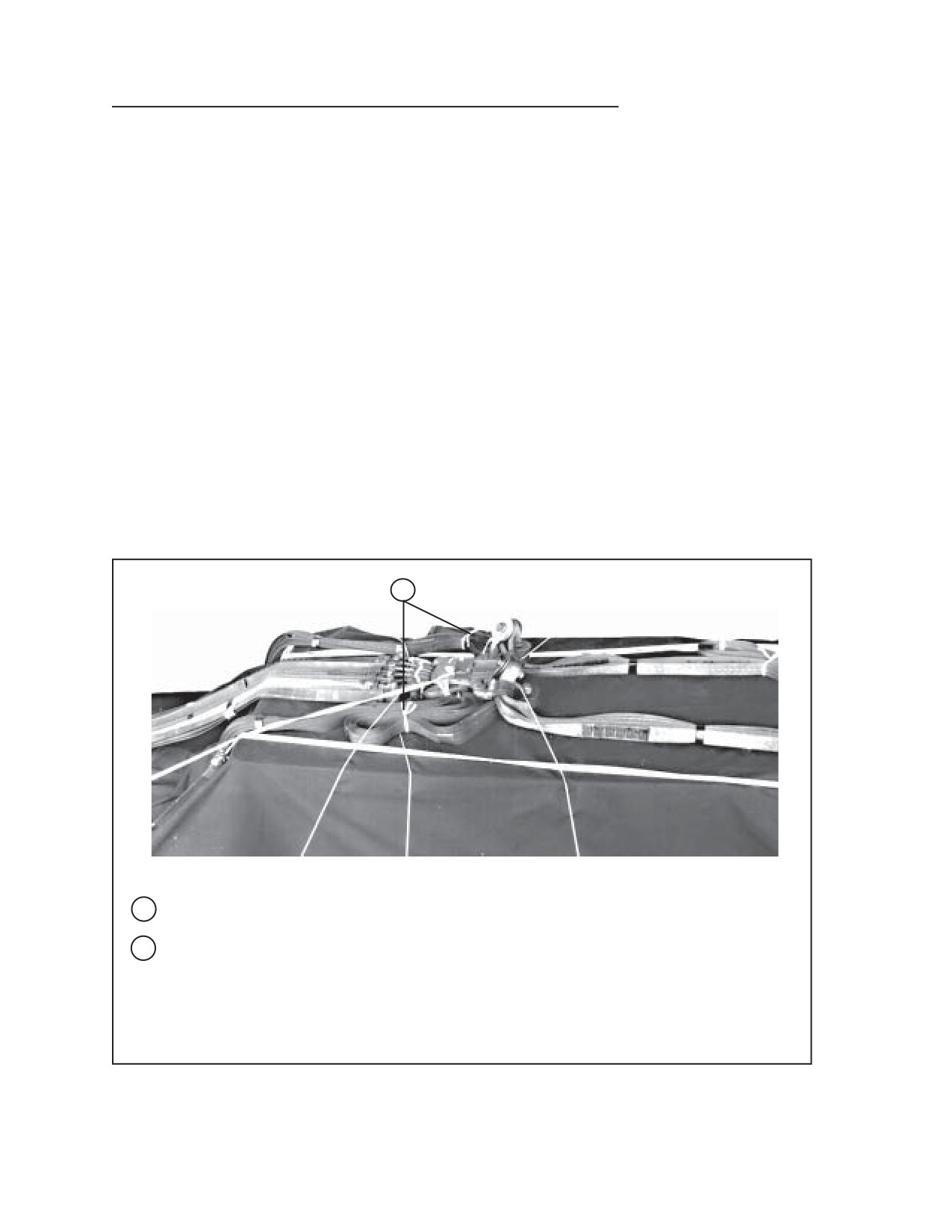
1-12. Prepare and install an M-2 cargo parachute release according to
FM 4-20.102/NAVSEA SS400-AB-MMO-010/TO 13C7-1-5 and as shown
in Figure 1-22.
PLACING EXTRACTION PARACHUTE
1-13. Select the extraction parachute and extraction line needed
using the extraction line requirements table in FM 4-20.102/NAVSEA
SS400-AB-MMO-010/TO 13C7-1-5. Place the extraction parachute and
extraction line in the line bag on the load for installation in the aircraft.
INSTALLING PROVISIONS FOR EMERGENCY RESTRAINTS
1-14. Select and install the provisions for the emergency aft restraints
according to the emergency aft restraint requirements table in
FM 4-20.102/NAVSEA SS400-AB-MMO-010/TO 13C7-1-5.
1
1
Fold and tie the excess suspension slings with type I, 1/4-inch cotton webbing.
2
Tie the riser extension to the gun tube with type I, 1/4-inch cotton webbing (Not Shown).
Do not use tape on the gun tube.
Note: If needed, one stow of the riser extension may be removed from the
riser extension compartment of each cargo parachute to reach the parachute
release.
Figure 1-22. Cargo Parachute Release Installed
1-29
FM 4-20.127/TO 13C7-10-191
MARKING RIGGED LOAD
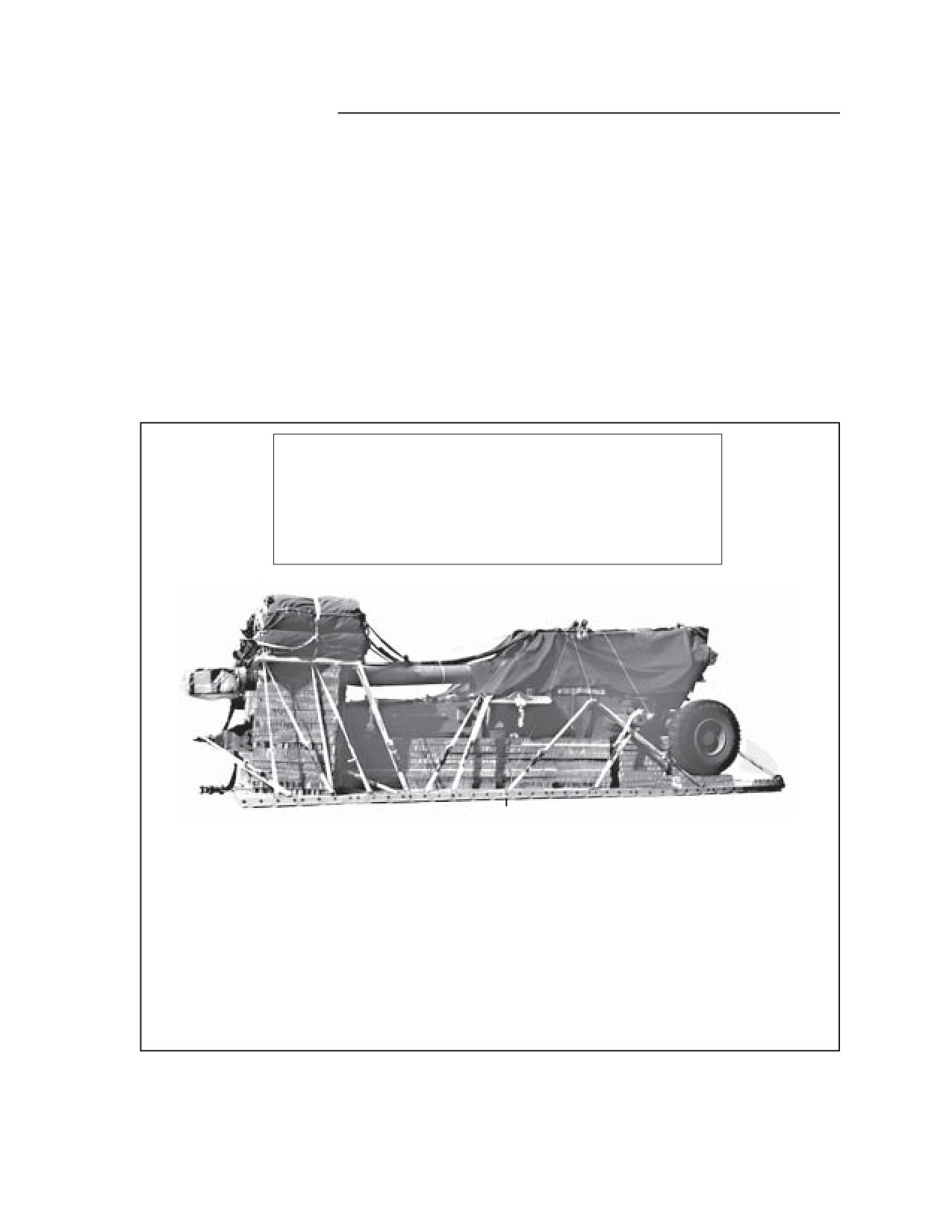
1-15. Mark the rigged load according to FM 4-20.102/NAVSEA
SS400-AB-MMO-010/TO 13C7-1-5 and as shown in Figure 1-23.
Complete Shipper’s Declaration for Dangerous Goods. If the load
varies from the one shown, the weight, height, Center of Balance(CB),
and parachute requirments must be recomputed.
EQUIPMENT REQUIRED
1-16. Use the equipment list in Table 1-1 to rig the load shown in
Figure 1-23.
CAUTION
Make the final rigger inspection required by AR 59-4/
AFJ 13-210(I) and FM 4-20.102/NAVSEA SS400-AB-
MMO-010/TO 13C7-1-5 before the load leaves the
rigging site.
CB
RIGGED LOAD DATA, M198
Weight: Load shown
21,030 pounds
Maximum load allowed
22,500 pounds
Height
96 inches
Width
108 inches
Length (overall)
311 inches
Overhang: Front
0 inches
Rear (EFTC )
18 inches
CB (from front edge of platform)
126 inches
Figure 1-23. M198, 155-mm Howitzer Rigged on a 24-foot, Type V Platform
for Low-Velocity Airdrop
1-30
///////////////////////////////////////