FM 3-37 PROTECTION (SEPTEMBER 2009) - page 2
Chapter 2
OPERATIONS SECURITY
2-80. OPSEC is the process of identifying essential elements of friendly information and subsequently
analyzing friendly actions attendant to military operations and other activities to: a. identify those actions
that can be observed by adversary intelligence systems; b. determine indicators hostile intelligence systems
might obtain that could be interpreted or pieced together to derive critical information in time to be useful
to adversaries; and c. select and execute measures that eliminate or reduce to an acceptable level the
vulnerabilities of friendly actions to adversary exploitation.
(FM 3-13) (See AR 530-1 for more
information.)
2-81. OPSEC applies to all operations across the spectrum of conflict. All units conduct OPSEC to
preserve essential secrecy. Commanders establish routine OPSEC measures in unit SOPs. The OPSEC
officer coordinates additional OPSEC measures with the G-2; assistant chief of staff, operations (G-3); and
other staff and command elements. The OPSEC officer develops measures during the military
decisionmaking process (MDMP). The G-2 assists the OPSEC process by comparing friendly OPSEC
indicators with enemy intelligence collection capabilities. The chief of protection, OPSEC officer, and
protection cell staff integrate OPSEC into all operations. (See appendix D for more information.)
EXPLOSIVE ORDNANCE DISPOSAL
2-82. The mission of EOD is to eliminate or reduce the effects of explosive ordnance (EO) hazards to
protect combat power. EO hazards are ever-present dangers on the modern battlefield. They limit
battlefield mobility, deny the use of critical assets, and threaten to injure or kill Soldiers at levels
unprecedented in the past. This fact is graphically shown by the hundreds of casualties caused by the use of
improvised explosive devices (IEDs) in Iraq and Afghanistan. Additionally, U.S. and coalition use of
munitions that disperse submunitions across a wide area has led to increased amounts of unexploded
ordnance (UXO) on the battlefield. EOD forces are trained, equipped, and organized to deal with the
increased quantity, sophistication, and lethality of EO and support U.S. and coalition forces across the
spectrum of conflict. (See FM 4-30.51 for more information.)
2-83. EOD units are specifically trained in the render-safe procedures
(RSP)/disposal of EO/IEDs,
including those containing CBRN materials. While other forces may have the ability to destroy UXO by
detonation, they are not properly equipped, trained, or authorized to perform RSP or other disposal
procedures. EOD elements normally—
z
Identify EO/IEDs/captured enemy ammunition and threats.
Perform initial assessment of found munitions. Found munitions include single munitions
discovered or captured during military operations (patrols, raids, maneuvers) or obtained through
buyback or amnesty programs.
Assist commanders with AT, including intelligence support, electronic warfare defense
plans, bomb threat/search procedures, facility site surveys, and development and implementation
of EOD emergency response and AT plans.
z
Render-safe/dispose of EO/IEDs. EOD is the only force equipped, manned, and trained to
positively identify, render-safe, and dispose of U.S. and foreign EO/IEDs.
Assist commanders with the implementation of protective works and consequence
management.
Provide technical advice and assistance to combat engineers during route clearance, area
clearance, and minefield clearance operations.
Support responses to nuclear and chemical accidents/incidents, including technical advice
and procedures to mitigate hazards associated with such items.
Provide EOD Soldiers in support of humanitarian efforts that involve EO.
Note. EOD provides technical assistance for the salvage, demolition, neutralization, or other
disposition of government-owned shipments in transit.
2-18
FM 3-37
30 September 2009
Protection Warfighting Function
z
Perform technical intelligence. EOD units recover EO/IEDs/components for technical
exploitation and prepare them for evacuation to a technical evaluation facility.
z
Perform postblast analysis.
Assist commanders during explosive accident or incident investigations.
Gather technical intelligence on new/first-seen foreign ordnance and IEDs.
Conduct weapons intelligence and postblast analysis.
Advise and assist civilian authorities in conducting postblast investigations involving
military ordnance and explosives.
Note. A priority of Army mortuary affairs is immediate recovery and clearance of deceased
persons. The presence of UXO found on, embedded in, or in the vicinity of deceased persons
adversely impacts the recovery of deceased U.S. or coalition personnel. Therefore, Army
planners should involve EOD in the planning stages for the recovery and processing of deceased
personnel.
30 September 2009
FM 3-37
2-19
Chapter 3
Protection in Full Spectrum Operations
Adversaries seek to gain
advantage through combat action and
their ability
to identify
friendly vulnerabilities
and infiltrate and penetrate the seams and gaps in friendly
protection
posture. As
the violence
and intensity
of conflict
increase, the
ability to
sufficiently
protect the
combat force and associated elements without
hindering
maneuver
and stifling initiative becomes increasingly complex. The protection of the
civilian population in some OEs could be the decisive operation that is linked to the
protection
of the military force.
Detainees also require
a level of protection.
Commanders use the mission variables to develop protection
strategies that integrate
all forms of protection
to deter, prevent, secure,
defend, and restore the force during
full spectrum operations. Commanders evaluate the significance of each mission, the
vulnerabilities inherent
in infrastructure and the
environment, and their
ability to
protect the
force.
FULL SPECTRUM OPERATIONS
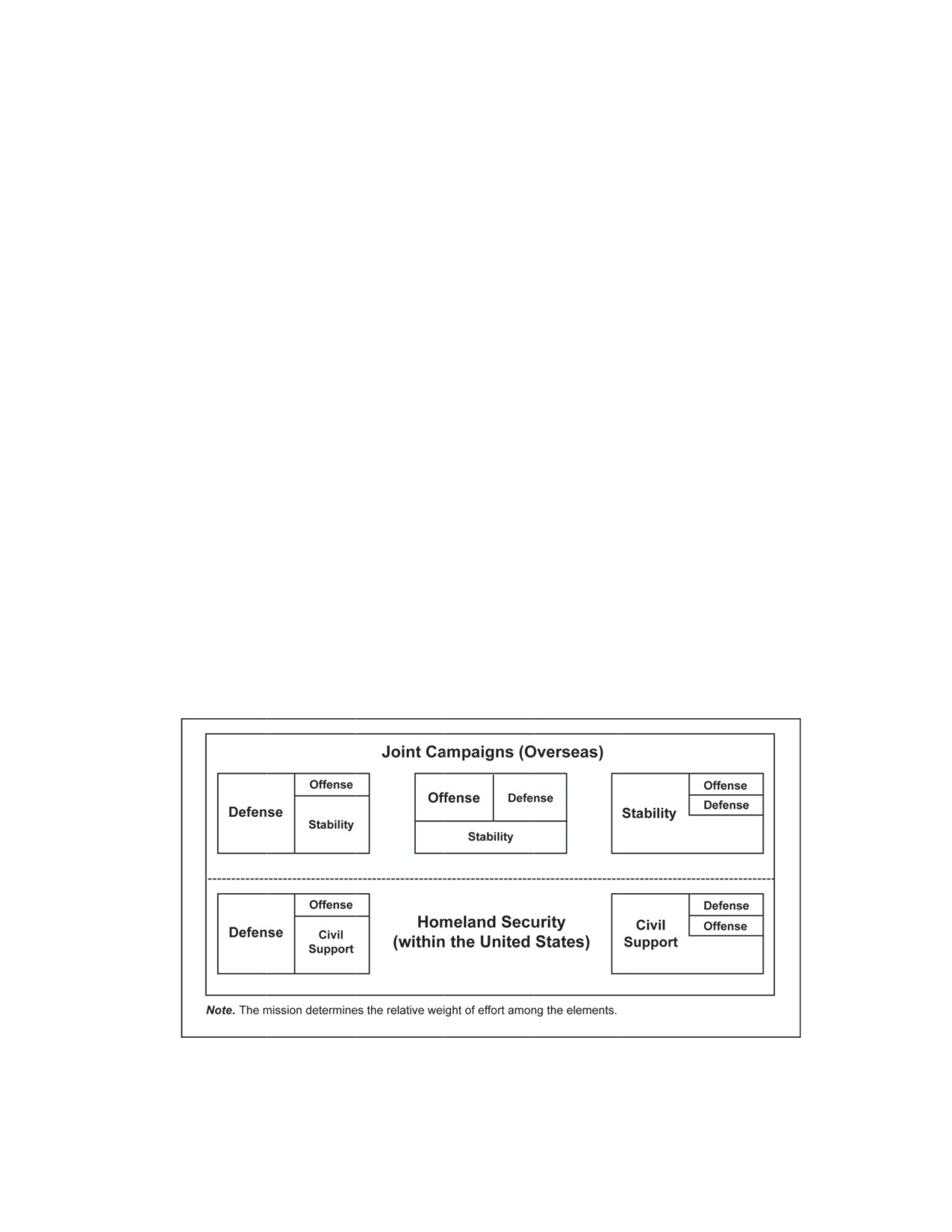
3-1. Full spectrum operations is the Army’s operational
concept of combining offensive, defensive, and
stability or civil
support operations simultaneously as part
of an interdependent joint force to seize,
retain,
and exploit the initiative, accepting prudent
risk to create opportunity. They employ synchronized action—
lethal and nonlethal—proportional to the
mission and
informed by
a thorough understanding
of all
variables of the
OE. Mission
command that conveys intent and an appreciation of all aspects
of the
situation guides
the adaptive
use of Army forces. (FM 3-0) Ultimately,
full spectrum
operations create a
safe and secure
environment where the stabilization and restoration of peaceful processes can prevail and
endure. (See figure 3-1.)
Figure 3-1. Full spectrum operations
30 September 2009
FM 3-37
3-1
Chapter 3
3-2. Full spectrum operations require continuous, simultaneous combinations of offensive, defensive, and
stability or civil support tasks:
z
Outside the continental United States (OCONUS). Operations conducted OCONUS and in its
territories simultaneously combine three elements—offense, defense, and stability. Commanders
balance the right mix of constructive and destructive capabilities along with lethal and nonlethal
actions to create dilemmas for opponents. Stability operations are characterized by nonlethal
actions, but the ability to engage potential threats with lethal force remains a viable deterrent.
z
CONUS. Operations in CONUS and in its territories require the element of civil support or a
combination of offensive and defensive elements, depending on the nature of the mission. Civil
support operations are characterized by nonlethal support actions. The use of offensive and
defensive elements in CONUS is limited to very specific circumstances associated with
homeland defense or self-defense by installations and personnel from hostile or life-threatening
attacks. Offensive and defensive elements may only be used in accordance with U.S. law and
DOD policy.
3-3. The Army can perform many tasks simultaneously, but not necessarily with equal emphasis or
effectiveness. Commanders and leaders must be flexible and adaptive as they seek opportunities to seize,
retain, and exploit the initiative. Leaders must have enhanced situational understanding in simultaneous full
spectrum operations due to the diversity of threats, the proximity to civilians, and the impact of information
during operations. The fluid, dynamic, and changing nature of operations may require the surge of certain
capabilities, such as protection, to effectively link decisive operations to shaping or stabilizing activities in
the AO. In other operations, the threat may be less discernible, unlikely to mass, and immune to the center
of gravity analysis, which requires a constant and continuous protection effort or presence.
3-4. Full spectrum operations are also characterized by initiative, simultaneity, and synchronization.
Operational and individual initiative involves intrinsic risk and opportunity, and significant opportunities
do not typically last long. Full spectrum operations must be capable of simultaneity (enabled through the
exercise of mission command) in order to act on opportunity. Mission command requires mutual trust and
full knowledge of the operational concept and demands that subordinate leaders at all echelons exercise
disciplined, aggressive, and independent initiative to accomplish the mission within the commander’s
intent.
3-5. Commanders must accept risk to exploit time-sensitive opportunities by acting before adversaries
discover vulnerabilities, take evasive or defensive action, and implement countermeasures. Commanders
and leaders can continue to act on operational and individual initiative if they make better risk decisions
faster than the enemy, ultimately breaking the enemy’s will and morale through relentless pressure.
Commanders can leverage technological advancements or processes that improve endurance and protection
capabilities to increase the probability of mission accomplishment. Advanced information technologies
increase commanders’ situational awareness, and the improved awareness enables commanders to make
better risk decisions faster than the enemy.
3-6. Accurate assessment is essential for effective decisionmaking and the apportionment of combat
power to protection tasks. Commanders fulfill protection requirements by applying or deriving reinforcing
or complementing protection capabilities from forces in primary, supporting, or economy-of-force roles or
from the OE itself. This is accomplished by identifying all protection capabilities available to the
commander and then proportionately synchronizing them within the concept of operations and with all
other full spectrum activities. Protection can be derived as a by-product or a complementary result of some
combat operations (such as security operations), or it can be deliberately applied as commanders integrate
and synchronize tasks and systems that comprise the protection warfighting function.
3-7. Full spectrum operations are normally translated into action through the development and
arrangement of primary and subordinate tasks that ultimately become missions. (See table 3-1.)
3-2
FM 3-37
30 September 2009

Protection in Full Spectrum Operations
Table 3-1. Elements of full spectrum operations
Operation
Primary Task
Purpose
Offensive
•
Movement to contact
•
Dislocate, isolate, disrupt, and destroy enemy forces.
•
Attack
•
Seize key terrain.
•
Exploitation
•
Deprive the enemy of resources.
•
Pursuit
•
Develop intelligence.
•
Deceive and divert the enemy.
•
Create a secure environment for stability operations.
Defensive
•
Mobile defense
•
Deter or defeat enemy offensive operations.
•
Area defense
•
Gain time.
•
Retrograde
•
Achieve economy of force.
•
Retain key terrain.
•
Protect the populace, critical assets, and infrastructure.
•
Develop intelligence.
Stability
•
Civil security
•
Provide a secure environment.
•
Civil control
•
Secure land areas.
•
Restoration of essential services
•
Meet the critical needs of the populace.
•
Support to governance
•
Gain support for host nation government.
•
Support to economic and
•
Shape the environment for interagency and host nation
infrastructure development
success.
Civil Support
•
Support in response to disasters or
•
Save lives.
terrorist attacks
•
Restore essential services.
•
Support of civil law enforcement
•
Maintain or restore law and order.
•
Other support as required
•
Protect infrastructure and property.
•
Maintain or restore local government.
•
Shape the environment for interagency success.
OPERATIONAL DESIGN
3-8. Commanders and leaders use all aspects of military art and science to protect the force. At the
operational level, leaders consider protection as they implement the elements of operations design to
reinforce and complement protection. As they understand and visualize the OE, commanders develop broad
concepts to effectively employ land power. Through the operational art, they define problems and
challenges, formulate and refine designs, and link them through METT-TC variables to tangible and
achievable objectives at the tactical level. Protection can often be derived from the effect or outcome of an
operational approach that makes effective use of time, terrain, tides, or tempo. Ports, lodgment and staging
areas, airfields, and drop zones are often decisive points that are selected or shaped for their ability to offer
some level of protection to the force, mission, or center of gravity. Sanctuaries and safe havens are selected
for their ability to provide protection, defense, or egress that is necessary to preserve the force or
population. The elements of combat power can be sequenced in a reinforcing and complementary manner
that provides protection for offensive action through preparatory activities, preemption, or diversion. Joint
capabilities can also help set conditions that reduce risk and increase protection.
3-9. At the tactical level, AOs are often designated and assigned based on factors in the OE and unit
capability. Unit boundaries, fire control restrictions, and graphic control measures help create zones of
action, engagement areas, and kill zones for friendly forces that help commanders reduce the likelihood of
fratricide or accidental damage. Rules of engagement (ROE), warning systems, and weapons control status
protect the force and populations through the controlled application of lethal and nonlethal action. To this
end, commanders are often given additional authority or C2, such as tactical control, to ensure the
synchronization (necessary for rapid response, defense, and protection) of all elements operating in or near
the AO.
30 September 2009
FM 3-37
3-3
Chapter 3
SECURITY OPERATIONS
3-10.
One of the most common methods of providing protection for ground combat forces during full
spectrum operations
is through security operations. The ultimate goal of security operations
is to protect the
force
from surprise
and reduce the unknown in
any situation.
. Doctrine recognizes five forms of security
operations in the military art:
z
Screen.
z
Guard.
z
Cover.
z
Area security.
z
Local security.
3-11.
Commanders use all five forms of security
to protect the
force during offensive operations; although,
screen, guard, and
cover are typically associated with combat formations specifically
organized for
combined arms maneuver. For this reason, screen, guard, and
cover are also aligned with
the movement
and maneuver warfighting function
while area security is aligned with the protection warfighting function
for tactical task apportionment.
3-12.
Screen, guard,
and cover operations reflect increasing levels of combat power that can be applied to
protect an asset or force from a directed threat
and are typically conducted
by combat units designed for
combined arms maneuver. The primary purpose
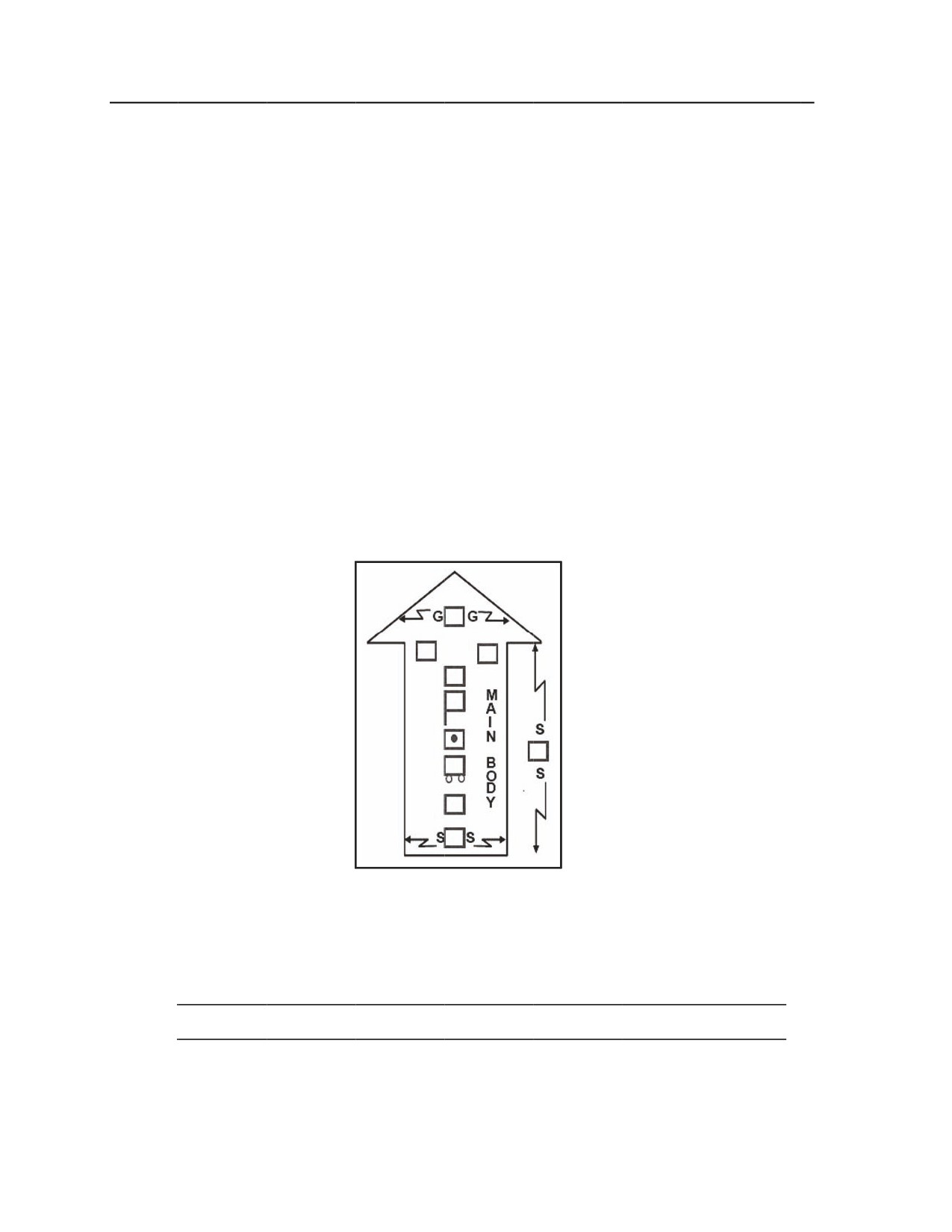
of a screen operation (see figure 3-2) is to provide early
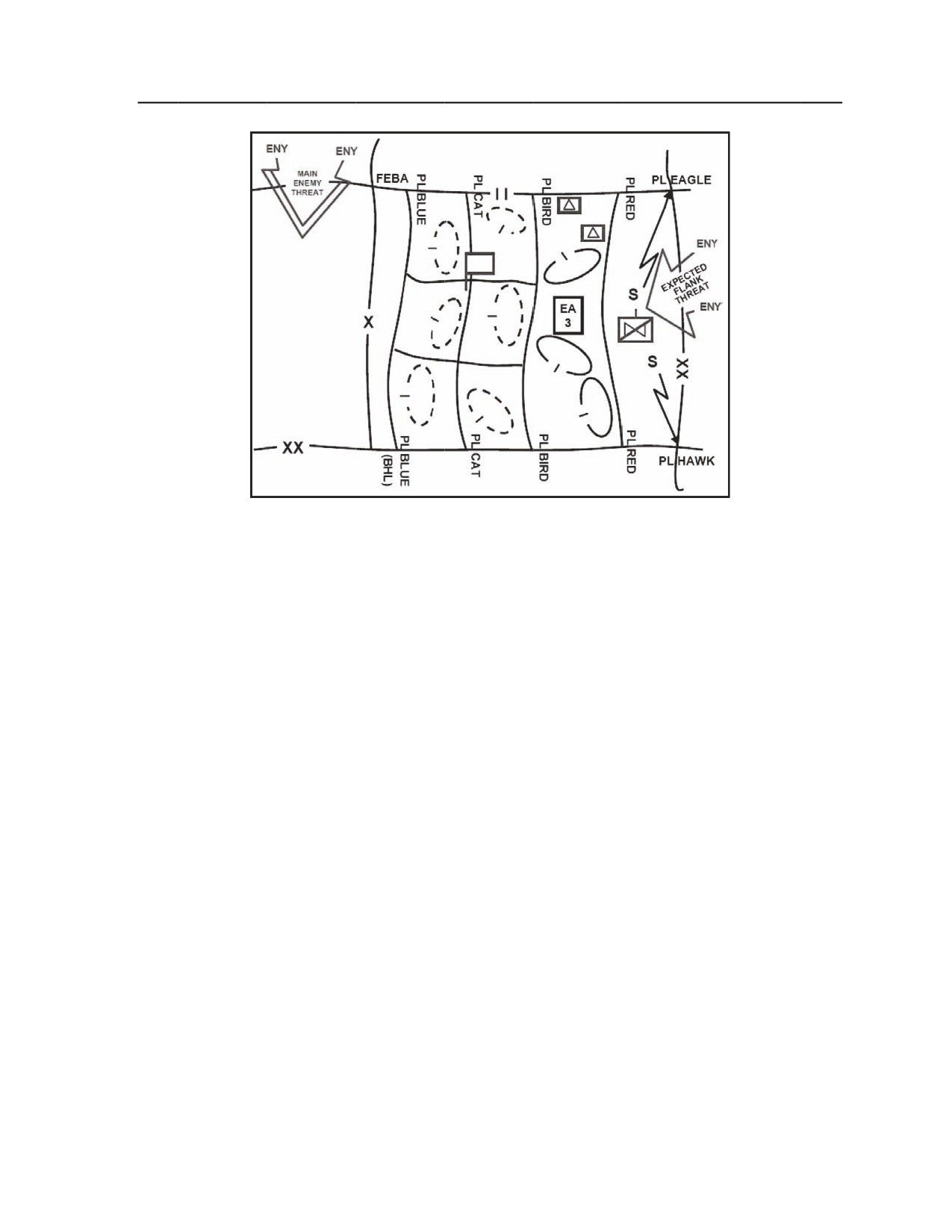
warning, thereby preventing surprise. Guard and
cover operations (see figure
3-3) involve
combined arms
units in combat, fighting to gain
time with differing levels of capability and autonomy
for independent
action
Figure 3-2. Screen security operation
3-13.
Area security
operations usually focus on the formation,
asset, or location they are protecting and do
not normally focus
on the enemy
force. Area
security operations take advantage of the various local
security measures being performed by all units
in the AO. Local security
measures are
inherent to all
operations and include active and
passive measures taken against enemy actions. Local
security allows
commanders to provide immediate, responsive security to the force.
Note. See FM 3-90 for more
information on security operations.
3-4
FM 3-37
30 September 2009
Protection in Full Spectrum Operations
Figure 3-3. Guard security operation
OFFENSE
3-14. Offensive
operations are
combat operations conducted to defeat and destroy enemy forces and
seize
terrain, resources, and population centers.
They impose
the commander’s will on the enemy. (FM
3-0)
Surprise, concentration, tempo, and audacity
characterize
the offense. Movement and
maneuver dominate
during offensive
operations. The application
of protection capabilities to
offensive operations is challenging
because of the
dynamic nature of offense
action and the need for bold initiative that depends on the
willingness to accept risk. Protection can be derived through audacity
or surprise or by increasing the
tempo of offensive operations. On the offense, leaders must balance the
need for caution with the potential
significance that opportunity offers and must weight their
decision in favor of initiative and action.
Army
forces conduct offensive operations for several purposes, such as destroying or disrupting an enemy
force,
seizing key terrain, or creating
a secure environment for stability operations. At the operational level, they
defeat enemy forces that threaten important areas or
governments.
Primary offensive tasks include
movement to contact, attack, exploitation, and pursuit. (See
FM 3-0 for more information.)
3-15. Seizing, retaining, and
exploiting initiative and opportunity are the essences of the offensive.
Activities that do not directly
contribute to that goal often
become supporting, secondary, or nested efforts.
In
offensive operations, protection must be applied carefully and selectively to ensure
that it does not have
a
debilitating effect on a commander’s freedom of action. This is
accomplished
through protection
integration and
synchronization. Protection
efforts are integrated with other combat power elements and
synchronized simultaneously or sequentially
where and when significant hazards and
threats are projected
in
the offensive
plan. This is
typically a function of the
protection cell and the G-3
at echelons
above
brigade, and it is achieved through a host of formal and informal processes at brigade
and below. During
offensive operations, typical points of vulnerability include flanks, critical C2 nodes and capabilities, lines
of
communications, sustainment areas, fratricidal events, unstable populations, and accidents. Protection
integration is discussed in chapter 4.
30
September 2009
FM 3-37
3-5
Chapter 3
PROTECTION DURING THE OFFENSE
3-16. Protection activities, tasks, and systems are applied and conducted to preserve combat power by
reducing risk or mitigating vulnerability. Air and missile systems defend maneuver forces, critical
infrastructure, and logistics bases. Although all commanders have some organic capability for air defense
and warning, enhanced capabilities are often provided by higher-echelon commanders and air component
organizations.
3-17. The preservation of combat power often requires the immediate restoration of critical skills and
capabilities. All mission-capable personnel contribute to combat power in operations, but certain skills and
capabilities can turn the tide of a battle or an engagement and their immediate recovery becomes essential.
Therefore, PR operations are closely integrated into all phases, branches, and sequels associated with
offensive operations to ensure that isolated and captured Soldiers are quickly recovered and returned to the
fight. Combat arms crews and aviation crews and pilots are often a high-demand personnel asset during
offensive operations, and their recovery may require specific guidance.
3-18. Combat conditions and operational stress can quickly take their toll on organizations and leaders
engaged in prolonged offensive operations. Behavioral-health expertise provides preventative and
restorative methods for identifying, treating, and restoring the effectiveness of personnel exposed to
prolonged stress.
3-19. An enemy force may resort to the use of CBRNE capabilities or scorched-earth techniques to delay,
divert, or culminate an offensive operation against them. Friendly CBRN reconnaissance assets must be
positioned and synchronized to allow commanders an early CBRN detection and avoidance capability that
enables rapid and decisive movement and maneuver and adjusts MOPP levels while preparing for
decontamination. Force health practitioners monitor offensive running estimates for evidence of a
deliberate or incidental epidemic, while ensuring that food and water sources are healthful.
3-20. Offensive operations often depend on shock, audacity, and surprise that are enabled through
disciplined OPSEC and the physical security of weapons, devices, sensitive items, codes, passwords, and
other sensitive or classified materials and information. Increased INFOCON during offensive operations
enhances C2 and protection posture through prevention and situational awareness. Measures taken through
CND to protect networks and computers from disruption and degradation can support and sustain the tempo
of offensive operations and allow leaders greater situational awareness through the uninterrupted access to
information. Information assurance helps authenticate the identity of information users and sustains the
availability of access only by authorized users.
3-21. The tempo and speed of offensive operations can result in combat identification errors and fratricide.
Deliberate precautions are taken to prevent surface-to-surface, surface-to-air, and air-to-surface friendly fire
incidents through positive and procedural control mechanisms, standard unit marking schemes and patterns,
and sound navigation and reporting procedures. Friendly and enemy forces often use obscurants for
protection during movement and maneuver or to create surprise through diversion.
3-22. Through survivability, units shape the immediate environment and location to provide or create self-
protection. On the offense, selected sites and positions from which combat power must be generated and
sustained may need to be hardened or protected for the duration of offensive operations. Tactical operations
centers (TOCs), radars, and some logistical elements are hardened or frequently moved to keep pace with
operations and to ensure their survivability. In support areas, commanders conduct area damage control to
prevent and respond to the negative effects of enemy action that can diminish combat power.
3-23. Area security operations allow commanders to provide protection to critical assets without a
significant diversion of combat power. During offensive operations, various military organizations may be
involved in conducting area security operations in an economy of force role to protect lines of
communications, convoys, or critical fixed sites and radars. Bases and base clusters employ local security
measures (including EOD, assessments and recommendations, random AT measures, and increased
FPCON), but may be vulnerable to enemy remnant forces requiring a response that is beyond base. Area
security operations support offensive operations by providing a response capability to base clusters and
sustainment areas and to designated geographical areas such as routes, bridge sites, or lodgments.
3-6
FM 3-37
30 September 2009
Protection in Full Spectrum Operations
3-24. The following vignette shows how a commander carefully balances threat and vulnerability to decide
on acceptable risk and complete the mission according to the higher commander’s intent.
Thunder Runs in Baghdad
On 6 April 2003, the 3d Infantry Division was on the outskirts of Baghdad. Major General
Buford Blount, 3d Infantry Division (Mechanized) commander, ordered Colonel David Perkins,
2d Brigade commander, to execute a limited-objective attack into Baghdad.
The brigade was located in Objective Saints. Task Force 1-64 Armor was to lead from
Objective Saints and seize Objective Diane. Task Force 4-64 Armor would follow and seize
two palaces designated Objectives Woody West and Woody East. Task Force 3-15 Infantry
would secure Objective Saints and the lines of communications between Objectives Saints and
Diane. Three key highway interchanges along the lines of communications were designated as
Moe, Larry, and Curly.
The initiative, speed, shock, and surprise of the drive to Baghdad, coupled with the “thunder
runs” inside the city, caught the Iraqi forces and leaders by surprise. The price for this tactical
gamble was extremely vulnerable supply lines and combat trains.
To prepare for this dangerous mission, each task force utilized a scout platoon as an escort
force for a limited logistics package
(four fuel and two ammunition trucks). The logistics
package was kept in Objective Saints on a “be prepared” status to move north into the city if
necessary. In addition, units stripped all unnecessary equipment from the tanks and Bradleys.
This reduced the fire potential since baggage in the bustle racks would easily catch fire if hit by
rocket-propelled grenades, recoilless rifles, or other incendiaries. Each vehicle had more than
its basic load of small arms and about a 5-day supply of water.
To eliminate concerns about lighter-skinned vehicles and to increase mobility and survivability,
Task Force 1-64 took only limited vehicles. These included tanks, Bradleys, and one or two
M113s per company (first sergeant/maintenance). The engineer companies remained at
Objective Saints and, along with the mortar platoons, served as a quick reaction force to assist
with a withdrawal from the Baghdad objectives, if needed, or to immediately reinforce success.
The battalions rigged tow cables on all vehicles for the hasty towing of disabled vehicles. This
and all other battle drills were thoroughly rehearsed. The commander accepted the risk that no
vehicles would be repaired until the unit maintenance collection point could be brought
forward. The units briefed and rehearsed a Baghdad evacuation plan that had units
maneuvering back to Objective Saints. Alternate routes to and from the objectives were
identified. Colonel Perkins also established decision points to prevent the loss of combat
power. For example, if they could not get resupplied in 24 hours, the plan was to pull back out
of the city. Due to flight restrictions, casualty evacuation was only possible by ground
transportation and the first sergeants’ vehicles were tasked with this mission. They planned to
use two combat vehicles to escort the first sergeants’ vehicles out of the city to Objective
Saints and hand them off to the logistics staff officer (S-4).
This example shows a commander taking a calculated risk despite vulnerable supply lines. To
mitigate the risk, the unit applied principles of protection. In the end, the unit achieved not only
a tactical objective, but also a strategic objective—the downfall of the regime in Baghdad.
Perkins applied the art of war to achieve the tactical and operational advantage, while
preserving his force through risk mitigation. His actions illustrated the weakness of the Iraqi
government and military to the world. The quick fall of the regime caused by the response to
this decisive maneuver operation resulted in the rapid culmination of Iraqi ground forces.
30 September 2009
FM 3-37
3-7
Chapter 3
DEFENSE
3-25.
Defensive operations are combat operations conducted to defeat an enemy attack, gain time,
economize forces,
and develop
conditions favorable for offensive or stability operations.
(FM 3-0)
Successful defensive
operations are often characterized by preparation, security, disruption,
massed effects,
and flexibility. Commanders may also choose to
defend for other purposes, to include retaining key terrain
or protecting the populace, critical assets, and
infrastructure.
. There are three tasks associated with the
defense—area defense, mobile defense, and retrograde movement. While area
and mobile defense basically
describe typical defensive patterns
involving combat, retrograde movement generally involves an organized
movement away from
the enemy to
preserve the force.
3-26.
In a mobile defense, the defender withholds a large portion of available forces for use as a striking
force in a counterattack. Mobile defenses require
enough depth
to let enemy
forces advance
into a position
that exposes them to
counterattack. The defense
separates attacking forces from their support and disrupts
the enemy’s C2. As enemy forces extend themselves in the defended area and lose momentum and
organization, the defender surprises and overwhelms them with
a powerful counterattack.
3-27.
A mobile defense normally
integrates elements of offense, defense, and delay
while focusing
combined arms maneuver on the
destruction of
enemy forces. Most of the
force forms a
striking force,
while
the rest of the force defends in depth and exposes the
enemy to counterattack. An area defense
concentrates on denying enemy access to a particular area of terrain, restricting their freedom of maneuver,
and drawing them into kill zones and engagement areas where
they can be defeated in detail from mutually
supporting positions
Note. See FM
3-0 for more information on
defensive operations.
3-28.
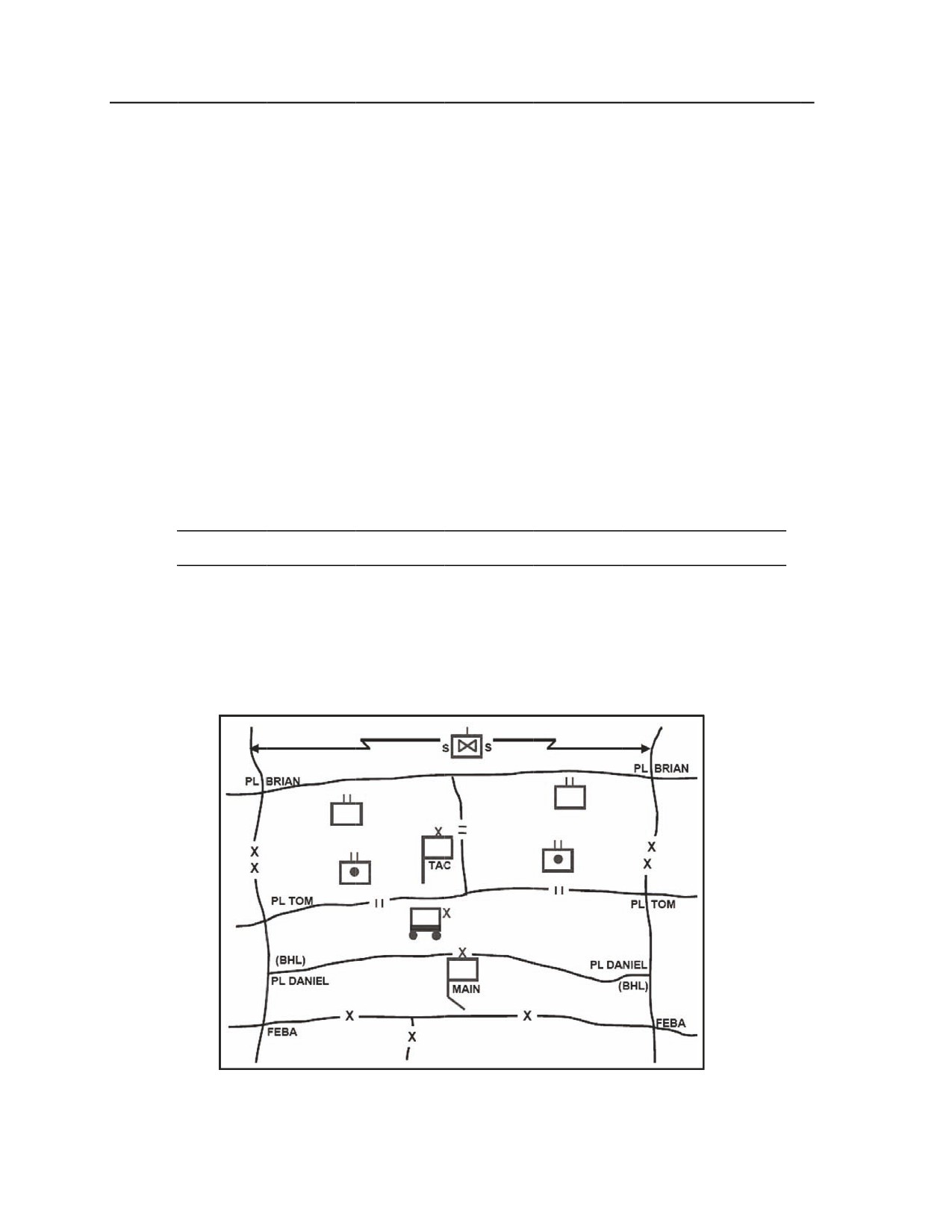
Operational commanders often employ
a covering force to protect the main
body during
a
withdrawal or retrograde or on the
defensive by disrupting enemy attacks, destroying initiatives, and setting
the conditions for decisive operations. (See FM
3-90 for more information.) Enemy forces must risk the
loss of momentum
and culmination as they fight through the covering force, often committing their
reserves in the process. Covering
force operations are resource-intensive because of their
requirement for
independent action
and may be represented at
the tactical level as guard operations in the defense (see
figure 3-4).
Figure 3-4. Cover security operation
3-8
FM 3-37
30 September 2009
Protection in Full Spectrum Operations
PROTECTION DURING THE DEFENSE
3-29. No matter which defensive task is performed, the survivability of C2 centers and key
communications nodes in defensive operations is critical to their success. Survivability and AT tasks and
plans are essential during the defense and may require a deliberate and detailed approach to ensure that
combat power is apportioned where it is most needed. Commanders may use decision support tools and
analysis to assess critical assets and key vulnerabilities. In mature theaters or FOBs, commanders plan and
prepare for enemy attacks by predicting where the next attack will occur and apply measures to mitigate the
effectiveness of the attack. These attacks may be from conventional, irregular, or terrorist forces and drive
changes in local FPCON or individual protective measures. Incident management plans and area damage
control in execution are key components to a successful protection plan. These plans cover all threat
capabilities and environmental considerations and integrate protection tasks and systems. EOD assets and
personnel support AT efforts on bases and in base clusters and dispose of UXO during defensive
operations.
3-30. In defensive operations, commanders protect forces and critical assets by conducting area security
operations because of their flexibility. Forces conducting area security in the defense can deter, detect, or
defeat enemy reconnaissance while creating standoff distances from enemy direct- and indirect-fire
systems. Area security operations can be used to protect the rapid movement of combat trains or protect
cached commodities until needed.
3-31. Mobile defensive schemes are characterized by a high degree of movement and maneuver; therefore,
they seek fratricide avoidance in a manner similar to offensive operations through solid land navigation and
position reporting, combat identification, and positive control. Area defense protects the force from
fratricide by the deliberate structure of the defensive pattern that emphasizes preparation, identifiable
engagement areas and kill zones, engagement criteria, and mutually supporting positions. The commitment
of the reserve force during an area defense operation may create the conditions for a fratricide event and
are, therefore, typically well rehearsed.
3-32. Any defensive operation could potentially begin with enemy bombardment, resulting in a siege that
can have dramatic results on the mental and behavioral health of unit personnel. Soldiers can become
combat ineffective from the close proximity of heavy indirect fire even if exposure is for short durations.
Systems for combat stress identification and treatment are deliberately emplaced to reduce the return-to-
duty time of affected personnel.
3-33. Commanders deploy air defense and alert warning systems to prevent and warn of an air intrusion,
air insertion, or air and missile attack. Air defense coverage may be positioned along likely air avenues of
approach and near designated critical assets.
3-34. Units develop, train, and rehearse a CBRN defense plan to protect personnel and equipment from an
attack or incident involving CBRN hazards. MOPP analysis results in initial MOPP and personal protective
equipment levels, and decontaminants are positioned accordingly. Force health personnel maintain
situational awareness and surveillance of personnel strength information for indications of force
contamination, epidemic, or other anomalies apparent in force health trend data.
3-35. Area defensive patterns require the placement of obstacles and the deliberate development and
preparation of fighting and support by fire positions, engagement areas, and kill boxes. Engineer assets
emplace obstacles and harden defensive positions throughout the defensive schemes. They also assure the
mobility of striking forces that support mobile defenses and reserve forces that support area defensive
plans.
3-36. Effective and disciplined OPSEC protects essential elements of friendly information
(EEFI),
preventing enemy reconnaissance and other information collection capabilities from gaining an advantage
through identifiable or observable pieces of friendly information or activities. This is key during defensive
and retrograde operations to prevent surprise. OPSEC and information protection activities deny the enemy
access to information systems and prevent network intrusion, degradation, or destruction through computer
network defensive TTP, while electronic protection capabilities prevent an attacking enemy from using the
electromagnetic spectrum to degrade or neutralize friendly combat capabilities.
30 September 2009
FM 3-37
3-9
Chapter 3
3-37. Preventable accidents can thwart mission success during combat operations. Leaders must continue
to assess the environment and routine activities for the evidence of hazards that can lead to the preventable
loss of combat power through accidents and events. Personnel rest and recovery plans, leader experience,
and skill levels are safety considerations that influence risk management decisions during combat
operations.
STABILITY
3-38. Stability operations is an overarching term encompassing various military missions, tasks, and
activities conducted outside the United States in coordination with other instruments of national power to
maintain or reestablish a safe and secure environment and provide essential governmental services,
emergency infrastructure reconstruction, and humanitarian relief. (JP 3-0) Stability operations aim to
stabilize the environment enough that the host nation can begin to resolve the root causes of conflict and
failure of the state. When a host nation or other agency cannot provide the basic functions of government,
military forces may be introduced to establish or restore basic civil functions and protect them until the host
nation or a civil authority is capable of providing these services for the local populace. Stability operations
are often more important to the lasting success of military operations than traditional combat operations
because they enable the introduction of other instruments of national power to an OE, creating a stable
foundation for the transfer of activities to civilian or host nation control.
3-39. Stability operations are conducted within the context of full spectrum operations (see figure 3-1, page
3-1). Offensive operations continue, but are generally characterized as episodic activities against specific or
focused targets, individuals, or groups. Offensive operations may include limited major operations against
former warring parties or raids and deliberate cordon-and-search operations throughout the OE. Defensive
operations may be conducted to protect facilities, enclaves, sanctuaries, or groups or to gain time for
response forces to take decisive action.
3-40. Military forces must quickly seize and retain the initiative in stability operations to gain control of
civil mechanisms of power and the environment and to prevent local conditions from destabilizing or
deteriorating. Acting boldly can prevent organized resistance from developing, while creating opportunities
for actions necessary to reduce suffering, strengthen institutions, and begin the transition to civil authority.
Bold initiatives during stability operations involve risk. The close proximity to civilians with immediate
access to global information conduits can magnify the consequences of inaction, accidents, collateral
damage, and casualties. Leaders must carefully balance lethal and nonlethal actions during stability
operations. Overcautious prevention activities or procedures limit the freedom of action just as unrestrained
action can result in provocation tactics by adversaries.
3-41. Fragile states suffer from institutional weaknesses that threaten the survival of their central
government. (See FM 3-07 for more information.) Stability operation strategies are developed to achieve
conflict resolution by enhancing host nation legitimacy, civil institution development through capacity-
building activities, and progress toward justice and the rule of law. They support and reflect overarching
national security, defense, and military strategies and policies eventually articulated within the framework
of the campaign plan at the operational level. At this level, stability operation strategies often require the
integration of operational and tactical tasks along the lines of effort that lead to the following end state
conditions:
z
Safe and secure environment.
z
Established rule of law.
z
Social well-being.
z
Stable government.
z
Sustainable economy.
3-42. Protection of the force during stability operations is essential for success at all levels of operations,
from tactical to strategic. Like offensive and defensive operations, stability operations can derive some
protection from the concept of operations alone, but the most sustainable protection success for the force is
achieved by integrating the protection tasks and systems that comprise the protection warfighting function.
Loss, damage, injuries, and casualties can influence the will of participating populations to sustain
3-10
FM 3-37
30 September 2009
Protection in Full Spectrum Operations
operations. The
enduring nature of stability operations
may require a
protection strategy that is
more
resource-intensive and prescribed than typical security operations.
3-43. Stability
operations require commanders to balance protection needs between
military forces and
civil populations. Because U.S. forces and
the local population frequently interact, planning for
their
protection is important and difficult. Enemies attack to weaken U.S. resolve and promote their individual
agendas. Such enemies, who
may be nearly
indistinguishable from noncombatants, view U.S. forces and
facilities as prime targets. An
additional planning consideration during stability operations is to protect the
force while using the minimum
force consistent with the approved ROE.
. The escalation of force TTP
must
also be rehearsed and flexible
enough to change with the local threat conditions. Collateral damage caused
by
military operations can
negatively impact the mission and support enemy
provocation tactics.
Conversely, overly restrictive
ROE can limit the commander’s freedom
of action and
ability to protect the
force.
3-44. Stability operations and
irregular warfare often involve conflict between nonstate
actors who possess
limited conventional forces. For this reason, some Army
functional capabilities are
often retasked
from
their primary function to conduct or reinforce protection
efforts such as fratricide avoidance, operational
security, and AT
based on METT-TC.
3-45. Adversaries often blend
in with the
local populace
during stability operations
and are difficult to
identify, making
heightened
levels of awareness the norm. Civil areas typically contain structured and
prepared routes, roadways, and avenues that can canalize
traffic. Control measures (such as establishing
traffic patterns)
could alleviate traffic concerns, but may also expose
vulnerabilities that enemies and
adversaries will
exploit. This can lead to
predictable friendly movement patterns
that can easily be
templated by the enemy. Commanders may
gradually apply protection to protect movement, or they
may
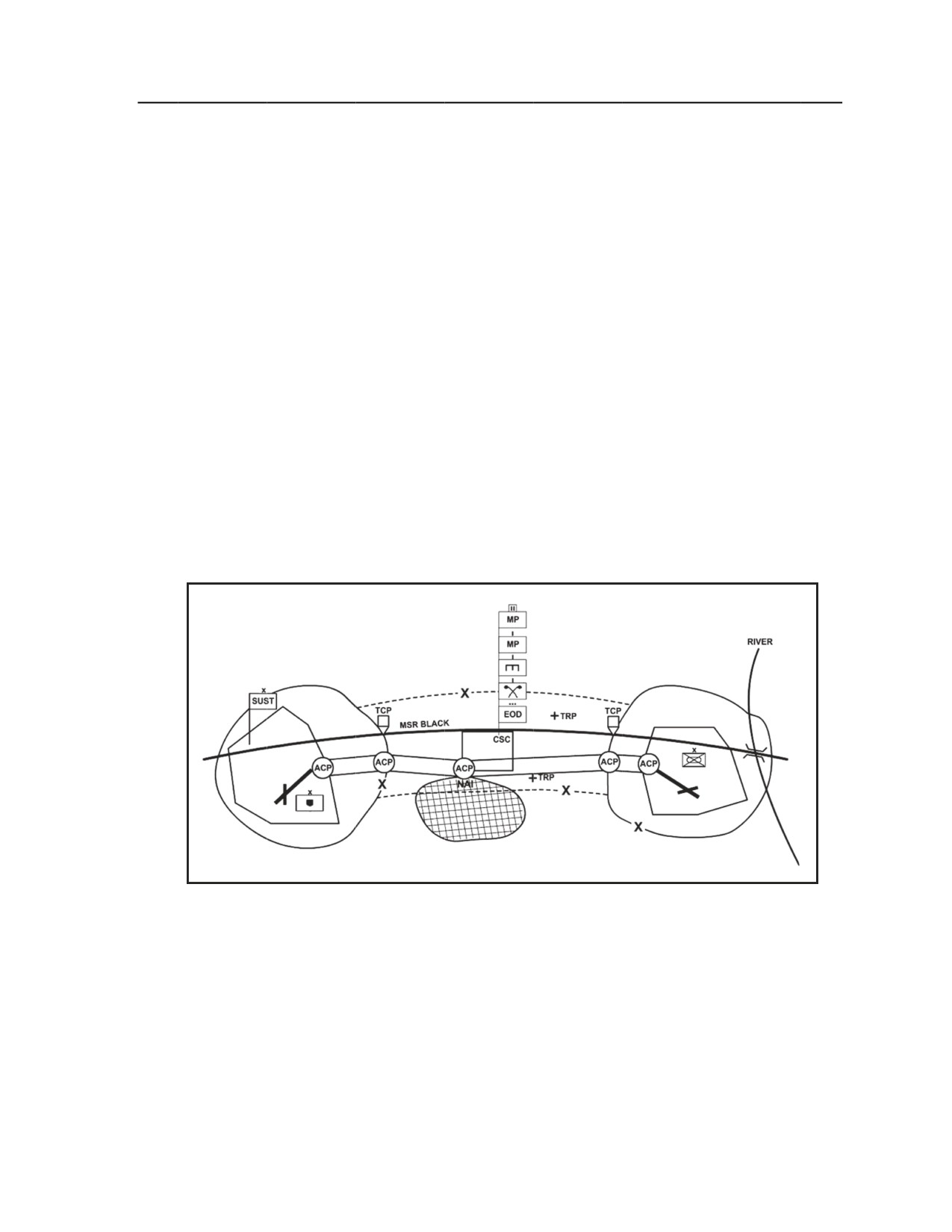
establish a movement corridor. (See figure 3-5.)
Figure 3-5. Movement corridor operation
3-46. Information engagement is an essential activity during stability operations and
is a key protection
enabler. Commanders and Soldiers engage the local population to inform
friendly audiences and influence
neutral audiences, enemies,
and adversaries. This can
include measures such
as improving
local
information programs, improving populace
and infrastructure security,
defeating IED
bomb-making and
expertise-funding efforts, and
defeating insurgent or terrorist recruitment efforts.
Civil affairs
(CA)
organizations help develop formal and informal relationships. Leaders
and Soldiers
conduct information
engagement tasks to facilitate
the delivery
of friendly messages and themes (matched by actions on the
ground) to key leaders and population groups.
3-47. The close
proximity of
civilians and
Soldiers can also promote FHP issues (such as communicable
disease) through
close contact with local civilians, detainees, or local foods. Stability operations are
often
30
September 2009
FM 3-37
3-11
Chapter 3
enduring missions that can lead to complacency among Soldiers and result in an increase in accidents.
Disciplined risk reduction efforts
require effective leadership
and should be continually
monitored and
assessed from the beginning to the
end of an operation or deployment.
3-48.
The protection
of civil institutions, processes, and systems required to
reach the end
state conditions
of the
stability operations strategy
can often be the most decisive factor in stability operations because its
accomplishment is essential for long-term success. For that reason, stability
operations require a “whole
government” approach that sets
the conditions necessary to enable the
elements of
national power
(diplomatic, information, military,
and economic). Stability operation tasks include—
z
Establishing civil security.
z
Establishing civil control.
z
Restoring
essential services.
z
Supporting governance.
z
Supporting economic and infrastructure development.
3-49.
Information engagement is
also essential
to the success of these operations. Unified action and
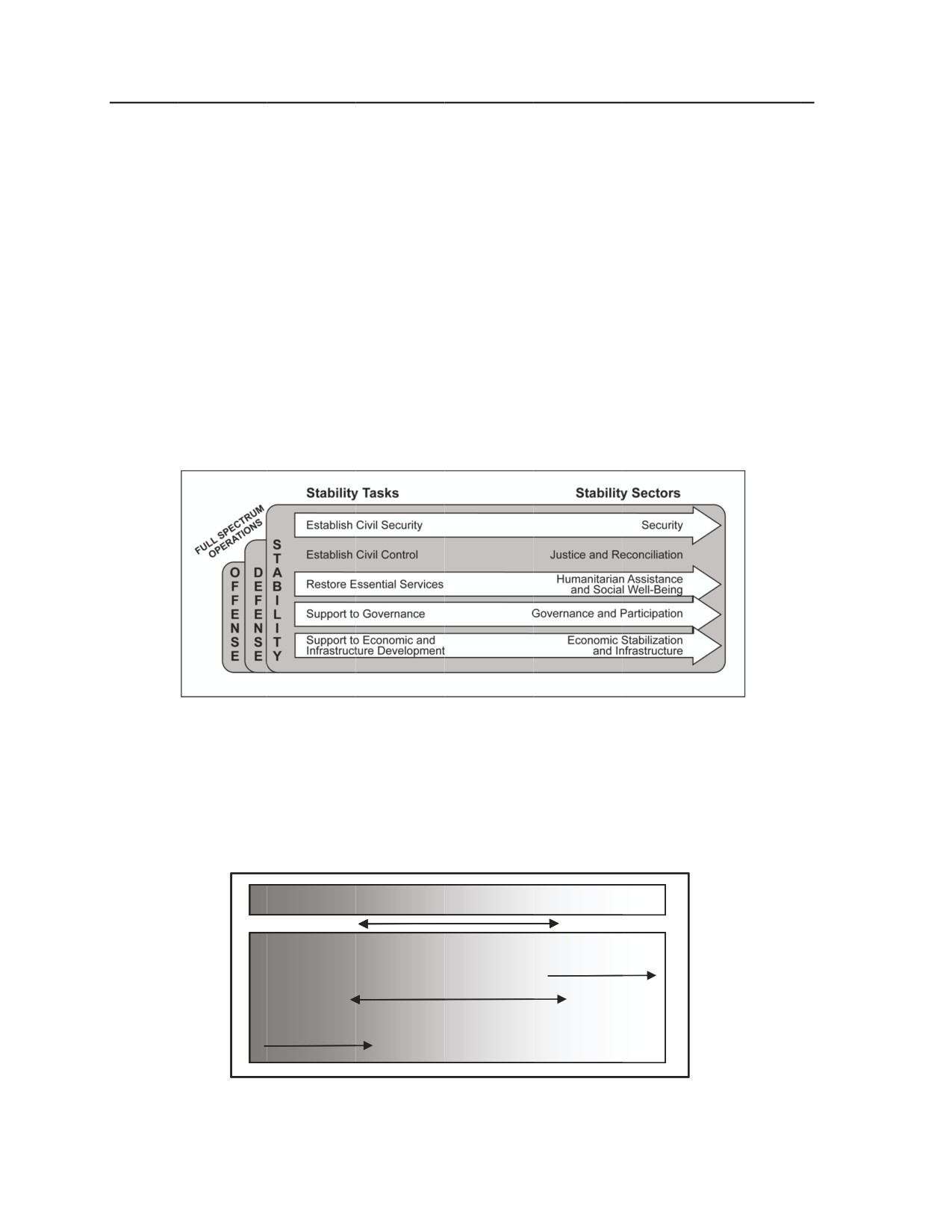
interagency participation is achieved by nesting the five stability tasks with the five
stability sectors
identified by the Department of State (DOS) Coordinator for Reconstruction
and Stabilization. (See figure
3-6.)
Figure 3-6.
Whole-government, integrated approach to stability operations
3-50.
Protection strategies for supporting stability operations are designed to
link operational goals and end
states
with stability
and protection
tasks integrated through combined arms
and the CRM
process at the
operational and tactical levels. Stability tasks
and security
sectors are integrated within the stability
operations framework to help define and measure progress
and to provide a context
for conducting
operations. (See figure 3-7.) The stability operations framework defines the
environment according to two
quantifiable, complementary scales—decreasing
violence and increasing normalization of the state which
is
the fundamental measure of success in conflict transformation.
(See FM 3-07
for more information.)
Failed
Failing
Recovering
Violent conflict
Normalization
Fostering
Sustainability
Transformation
Initial
Response
Figure
3-7. Stability
operations framework
3-12
FM 3-37
30 September 2009
Protection in Full Spectrum Operations
3-51. Protection strategies for stability operations often begin by determining where the current situation is
best described along the fragile-state spectrum or continuum and then applying protection capabilities to
the most significant military and civilian vulnerabilities. Primary stability operation tasks reflect a host of
subtasks within the continuum of operations and throughout the five stability sectors. Protection measures
are applied during vulnerability assessments focused on the primary stability operation tasks.
ESTABLISH CIVIL SECURITY
3-52. An initial response to a stability operation conducted in a failing state may emphasize the
establishment of civil security as a means of protecting critical assets, facilities, personnel, or freedom of
movement. Border or boundary control operations protect the integrity and sovereignty of the host nation
while providing protection against illegal entrants, contraband, disease, and the enemy. Border operations
can be conducted as a type of area defensive operation or through area security tasks and TTP integrating
checkpoints, mobile patrols, and designated fixed sites.
3-53. Stability operations are often characterized by the absence of large-scale military operations that
emphasize combined arms maneuver. However, tactical and nontactical movement occurs throughout the
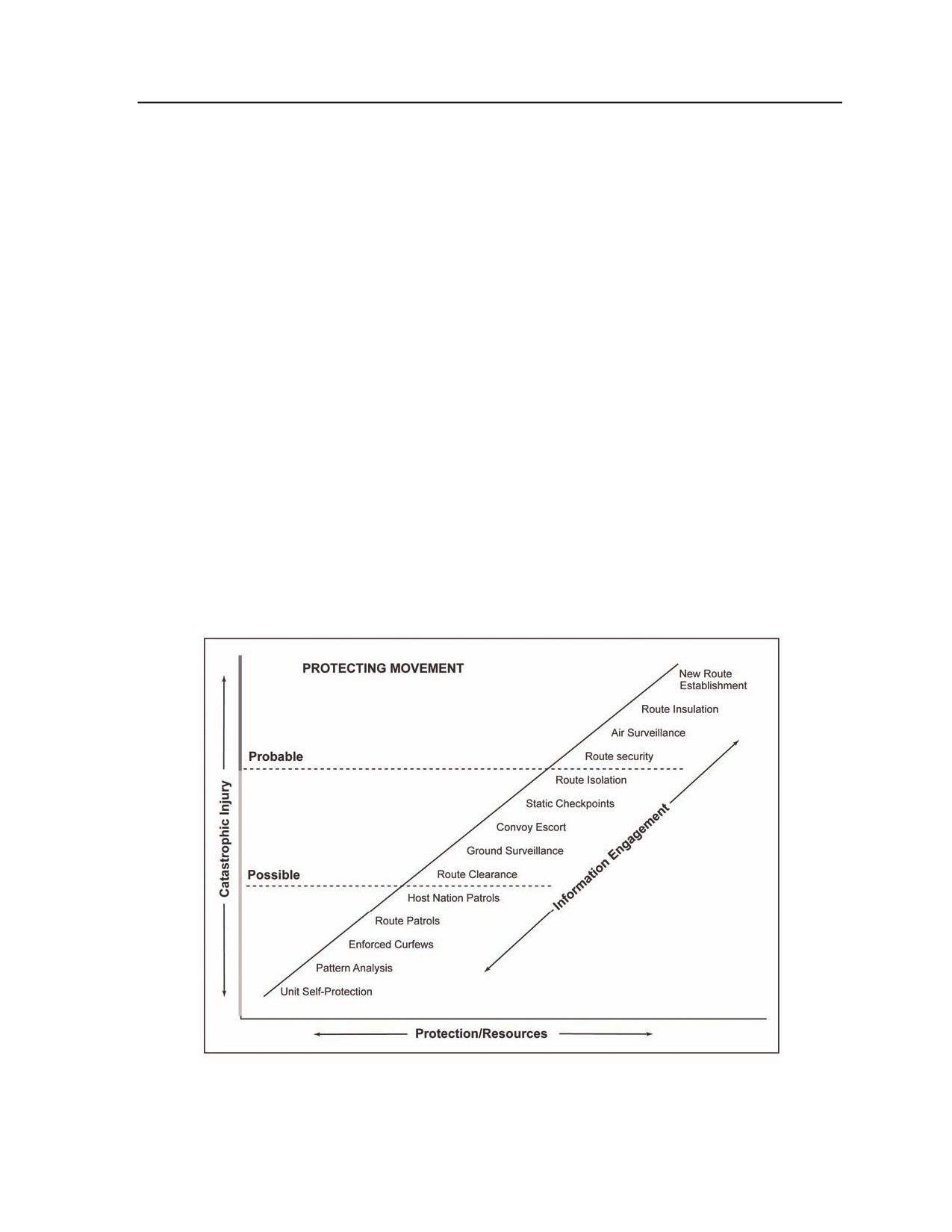
OE as a matter of military necessity and as a component of a normalized society. Controlling and
maintaining the freedom of movement in the OE is essential for efficiency and for protecting friendly
military forces and the population. This can include various methods
(including curfews, routine
restrictions, and travel authorizations) that are enforced and monitored throughout checkpoints or
technologies. (See figure 3-8.) This may be accomplished through movement and maneuver enhancement,
area security operations, or in conjunction with law and order operations as a function of traffic regulation
enforcement. A deliberate information engagement program is often essential when implementing
movement or traffic controls and restrictions on a given population in an AO. Commanders can leverage
host nation security, police, and civic organizations through information engagement to assist with the
implementation of movement controls and traffic enforcement for the safety and security of the force and
the local population. Response force operations supporting troops engaged in controlling or limiting
movement take deliberate precautions to prevent fratricide.
Figure 3-8. Controlling freedom of movement for protection
30 September 2009
FM 3-37
3-13
Chapter 3
3-54. The protection of key personnel and facilities may be an essential task anywhere in the stability
operations fragile-state spectrum or stability operations framework where there is a directed threat. Key
civil leaders may require protective services, sound AT and OPSEC procedures that are included in PR
plans and battle drills, and police and physical security reinforcement. Facilities that have national, cultural,
religious, or military significance may need dedicated security to reduce civil tension. Police stations,
armories, and hospitals may require immediate protection during heightened awareness. Records and
documentation for verifying identity and authority, deviant behavior, key governmental actions, and other
important historical events and information may need to be protected from destruction and misuse.
Explosives, mines, UXO, or CBRN hazards may exist in the OE at the cessation of hostilities or may be
introduced deliberately or accidentally. These threats and hazards may require an integrated EOD,
demining, or foreign consequence management response.
ESTABLISH CIVIL CONTROL
3-55. Transformation occurs in the stability operations framework as civil security is achieved and certain
risks are reduced, making other stability operation tasks possible. Civil control regulates behavior in an AO
and builds the foundation for order, justice, and the rule of law. There is a host of enforcement mechanisms
in a given society to maintain normalcy and civil behavior, including law enforcement officials, local
political and civic leaders, educators, clergy, and others who reflect and maintain local law, customs,
norms, and values. Most civil societies follow some form of predictable social activity cycle that often
includes seasonal, ethnic, religious, or cultural events such as holidays, school or academic periods, or days
of specific observance. The chief of protection examines the significance of each event for potential
hazards, risks, and opportunities and applies the requisite protection capability. For example, religious
holidays or pilgrimages may increase the number of third-country nationals entering the host nation while a
patriotic event could lead to the massing of civilians at key governmental locations. The end of the
academic school period may increase the number of adolescents in the streets of certain regions.
3-56. Military forces may be initially engaged in conducting policing and penal operations to prevent
criminal activity or to reduce crime-conducive conditions in a particular area. These activities protect
communities from criminal predators who can have a chilling effect on populations and destabilize specific
areas. In these operations, military forces must be proficient in the escalation of force before resorting to
lethal action within the ROE. Nonlethal TTP and technologies provide commanders with the ability to
demonstrate a measured force response which can contribute to the protection of the force and the civil
populace. The presence of well-trained, equipped, and disciplined troops with lethal or violent capability
can often be sufficient to deter violence, confrontation, or conflict during a stability operation. Law
enforcement activities transition from military personnel to civilian police who are supplied by the host
nation or as part of a third-country or international policing effort. Police training, development, and
mentoring may continue until normalization is achieved. Commanders may authorize, develop, and train
civilian volunteers to augment civil control efforts or to serve as a police auxiliary.
RESTORE ESSENTIAL SERVICES
3-57. Areas that have been neglected or damaged as a result of conflict may require the protection of
essential infrastructure. Power generation, water treatment, medical, and transportation facilities and
systems may require protection from pilferage, sabotage, or neglect which may be accomplished through
physical security, survivability, or area security TTP. Broadcast news, journalists, media outlets, and other
information venues often adhere to a predictable media or news cycle. The chief of protection works with
public affairs personnel to restore local media outlets and to anticipate the impact of negative or sensational
broadcast media or other information releases to the force or in the OE. Information engagement also
involves significant leader and Soldier engagement with the local population as a means for informing the
public while also gathering information on the environment.
3-58. By integrating military and host nation police forces early, commanders get police or street level
information on local criminal elements, including organized crime. Through combined police operations,
commanders help establish a safe and secure environment for U.S. forces, host nation forces, and civilians.
Such multinational operations also improve the perception of host nation government legitimacy. When no
insurgent or terrorist threat exists, integrating protection actions may be limited to safety and FHP
activities.
3-14
FM 3-37
30 September 2009
Protection in Full Spectrum Operations
SUPPORT GOVERNANCE
3-59. When conditions in a failed or failing state become extreme and prevent the host nation government
from conducting civic functions, military forces must be capable of providing support to governance and
civic functions while acting as a transitional military authority according to the international law or
mandate. (See FM 3-07 for more information.) In this capacity, military forces may be required to protect
the integrity of specific governmental processes. Elections normally follow a predictable cycle of activity
that can be examined for the evidence of corruption, election fraud, organized criminal involvement, or
threat interference. Election events, voting sites, and ballots require protection and safe access to ensure the
legitimacy of election results. International election monitors or support personnel may also require some
level of personnel protection.
SUPPORT ECONOMIC AND INFRASTRUCTURE DEVELOPMENT
3-60. Protection capabilities are often applied to support economic and infrastructure developmental efforts
during stability operations to foster sustainability. Building capacity within the economic sector often
requires the protection of specific activities and conditions for local economies to thrive and develop.
Business and economic activities typically follow a semipredictable cycle that may be seasonal, coinciding
with events such as agricultural harvests or conditions that make commodity gathering or production
optimal. These predictable events often telegraph other corresponding or supporting activities that may
require protection from interference. Commodity markets can be influenced and manipulated, or
commodity producers may be denied access to markets. Manufacturing facilities may be susceptible to
illicit labor practices. Black markets can create shortages, while human trafficking may thrive due to
underdeveloped economic conditions. Banks and other monetary institutions may require deliberate fixed-
site or area security during periods of unrest and shortage.
CIVIL SUPPORT
3-61. DOD civil support operations are divided into the three broad categories of domestic emergencies,
support of designated law enforcement agencies, and other support activities (JP 3-28). This includes
responds during disasters and declared emergencies, support or restoration of public health and services and
civil order, support during national special security events, and periodic planned support of other activities.
Army forces conduct civil support operations exclusive of the elements of offense and defense. (See FM 3-
0 for more information.)
3-62. When support for domestic emergencies is provided under the auspices of the national response
framework, it is called defense support of civil authorities (DSCA). The national response framework is the
Department of Homeland Security guide to how the nation conducts an all-hazards response. It is built
upon scalable, flexible, and adaptable coordinating structures to align key roles and responsibilities across
the nation. Federal, state, tribal, and local governments; nongovernmental organizations; and the private
sector use the National Incident Management System to execute response to incidents. The National
Incident Management System provides a consistent nationwide template that allows public and private
sectors to work together to prevent, protect against, respond to, recover from, and mitigate the effects of
incidents, regardless of their cause, size, location, or complexity. Unless otherwise directed by the
President, the U.S. military conducts DSCA operations in support of other federal agencies that are
coordinating the federal response. The Federal Emergency Management Agency (FEMA) is typically the
primary federal agency for requesting and coordinating DOD support.
3-63. The commitment of DOD resources for DSCA operations requires approval by the Secretary of
Defense or direction from the President. In most instances, DOD provides DSCA in response to a request
for assistance from another federal agency when local, tribal, state, and federal resources are fully
committed or when a DOD-unique capability is required. All requests for assistances are evaluated by
DOD to determine whether they meet the criteria for supportability
(legality, lethality, risk, cost,
appropriateness, and impact on readiness). Once the request for assistance is approved, DOD issues a
mission assignment that specifies exactly what type and how much support is authorized. In some
imminently serious situations, local commanders may unilaterally initiate an immediate response to save
lives, prevent human suffering, or mitigate great property damage. However, Secretary of Defense approval
30 September 2009
FM 3-37
3-15
Chapter 3
or Presidential directive is still required for the commitment of potentially lethal capabilities or direct law
enforcement support, including interdicting vehicles; conducting searches and seizures; making arrests or
apprehensions; and performing surveillance, investigation or undercover work, security patrols, and
crowd/traffic control.
3-64. Federal military units directed to support a DSCA mission may be under the operational control of a
defense coordinating officer, U.S. Army North, U.S. Northern Command (USNORTHCOM), or U.S.
Pacific Command depending on the situation. Requested support can include such capabilities as medical,
aviation, communications, damage assessment, transportation, logistics, debris clearing, aerial firefighting,
and CBRN consequence management response. According to the Posse Comitatus Act, members of the
U.S. Army, Navy, Air Force, and Marine Corps (including state national guard forces called into federal
service) are prohibited from exercising nominally state law enforcement, police, or peace officer powers
that maintain law and order on nonfederal property (states and their counties and municipal divisions)
within the United States. There are some exceptions in which the Posse Comitatus Act does not apply;
these include national guard units under state authority and Title 10 troops under the order of the President
of the United States pursuant to the Insurrection Act.
3-65. The commitment of DOD resources for other civil support operations (such as support to designated
law enforcement agencies, support during national special security events, and periodic planned support of
other activities) requires approval according to national laws and DOD policies.
3-66. FHP capabilities may support the preservation of life within the framework of the National Disaster
Medical System (NDMS). The NDMS combines federal and nonfederal medical resources into a unified
medical response system for incidents involving public health and medical emergencies. Under the
auspices of the Department of Health and Human Services, the NDMS facilitates the deployment of various
medical response teams to an event area. The Army response to this effort may include the formation of a
medical task force or the deployment of specialized expertise. The Army medical response to disasters is
typically provided through special medical augmentation response teams organized by the U.S. Army
Medical Command and its subordinate commands, on a task-organized basis, from various worldwide
assets. Larger events might require a functional task force, such as a medical task force to conduct medical
evacuation, triage, treatment, and public health and medical surveillance.
3-67. DOD may have to augment civil air space management assets and capabilities when their
effectiveness has been so significantly degraded that the probability of a catastrophic aviation event is
probable. The air component command to the USNORTHCOM has the primary capabilities to provide
support to civil aviation, while deconflicting the complexities of operations involving air assets from
multiple organizations.
3-68. Soldiers engaged in civil support operations may face threats from criminals, disease, the weather, or
TIM. The tasks of safety, FHP (preventive medicine), AT, and CBRN defense are critical considerations
for protecting deployed personnel and assets. An accurate, on-going assessment of risk is vital in
determining whether and how the deployed commander will provide DSCA.
3-69. Chairman of the Joint Chiefs of Staff Instruction (CJCSI) 3121.01B establishes fundamental policies
and procedures governing the actions taken by U.S. commanders and their forces during all DOD civil
support and routine military department functions occurring within U.S. territory and territorial seas.
During DSCA operations, the Secretary of Defense retains the authority to set the arming level for Title 10
forces. When DOD forces under DOD control operate in coordination with other federal agencies, the
applicable rules for the use of force will be coordinated with on-scene federal agency personnel. Standing
rules for the use of force also apply to homeland defense missions occurring within U.S. territories.
Commanders at all levels are responsible for training their personnel to understand and properly utilize the
standing rules for the use of force.
3-16
FM 3-37
30 September 2009
Chapter 4
Protection
Integration in
Army Operations
This chapter discusses how protection is integrated throughout the
operations
process. It describes
how commanders integrate protection during
planning,
preparation, execution,
and assessment. This chapter also details how the
protection
cell staff
reduces friendly vulnerabilities while developing
protection
strategies
through the application of protection capabilities based
on the commander’s
protection
priorities.
OPERATIONS PROCESS
4-1. While each operation differs in design and circumstances, all operations follow a general
cycle
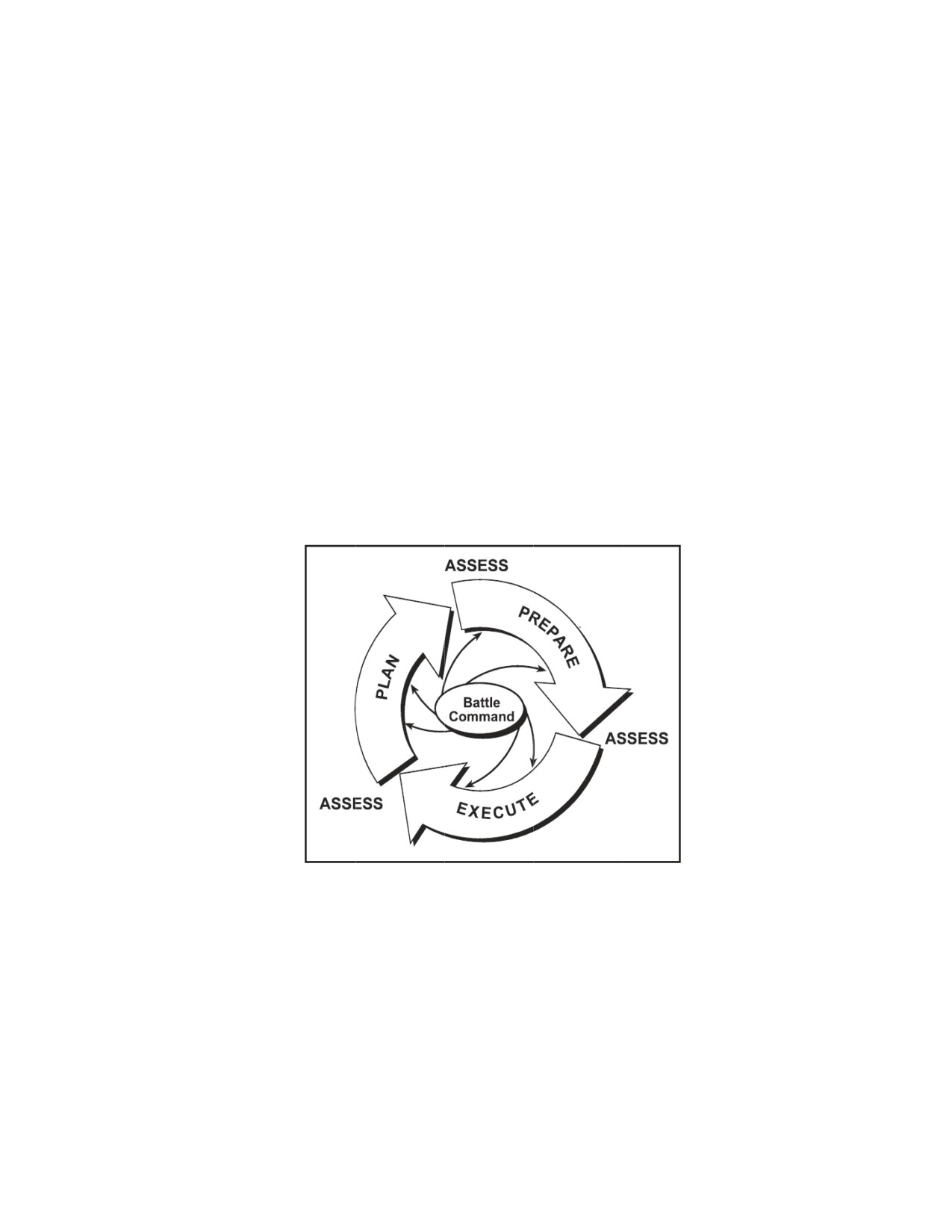
known as the “operations process.” This process consists of the major C2 activities performed during
operations—planning, preparation, execution, and continuous assessment.
(See figure
4-1.) Doctrine
describes this framework by each operations
process activity; however, planning, preparing, executing, and
assessing occur
sequentially or
simultaneously.
Figure 4-1. Operations
process
4-2. During planning, commanders use the
MDMP to analyze the mission while translating organizational
capabilities in terms of the warfighting functions for integration and expression in a plan or order. Various
activities and processes are used during preparation and execution for synchronization
and are monitored
and evaluated during a process
of continual assessment that facilitates decisionmaking.
4-3. Throughout the operations process, commanders accomplish
the mission
by using several
mechanisms to
facilitate the integration and
synchronization of tasks and functions. Battle rhythm
is one
key control measure that helps
manage the deliberate integration of functions and activities. Army doctrine
also illustrates
several continuing activities
and processes that are used
for functional integration
in the
operations process. For example, terrain management is a
continuing activity that relies on the intelligence
preparation of the battlefield
(IPB) process
for its integration and synchronization.
These activities and
processes occur
during all operations and must be synchronized with each other and integrated into the
30 September 2009
FM 3-37
4-1

Chapter 4
overall operation. (See figure 4-2.) This is often accomplished through the use of cross-functional teams,
working groups, and boards.
Plan
Prepare
Execute
Assess
Integrating Processes
• IPB
• Targeting
• ISR synchronization
• CRM.
• Knowledge management
Continuing Activities
• ISR
• Security operations
• Protection
• Liaison and coordination
• Terrain management
• Information management
• Airspace C2
Figure 4-2. Continuing activities and integrating processes
BATTLE COMMAND AND PROTECTION STRATEGIES
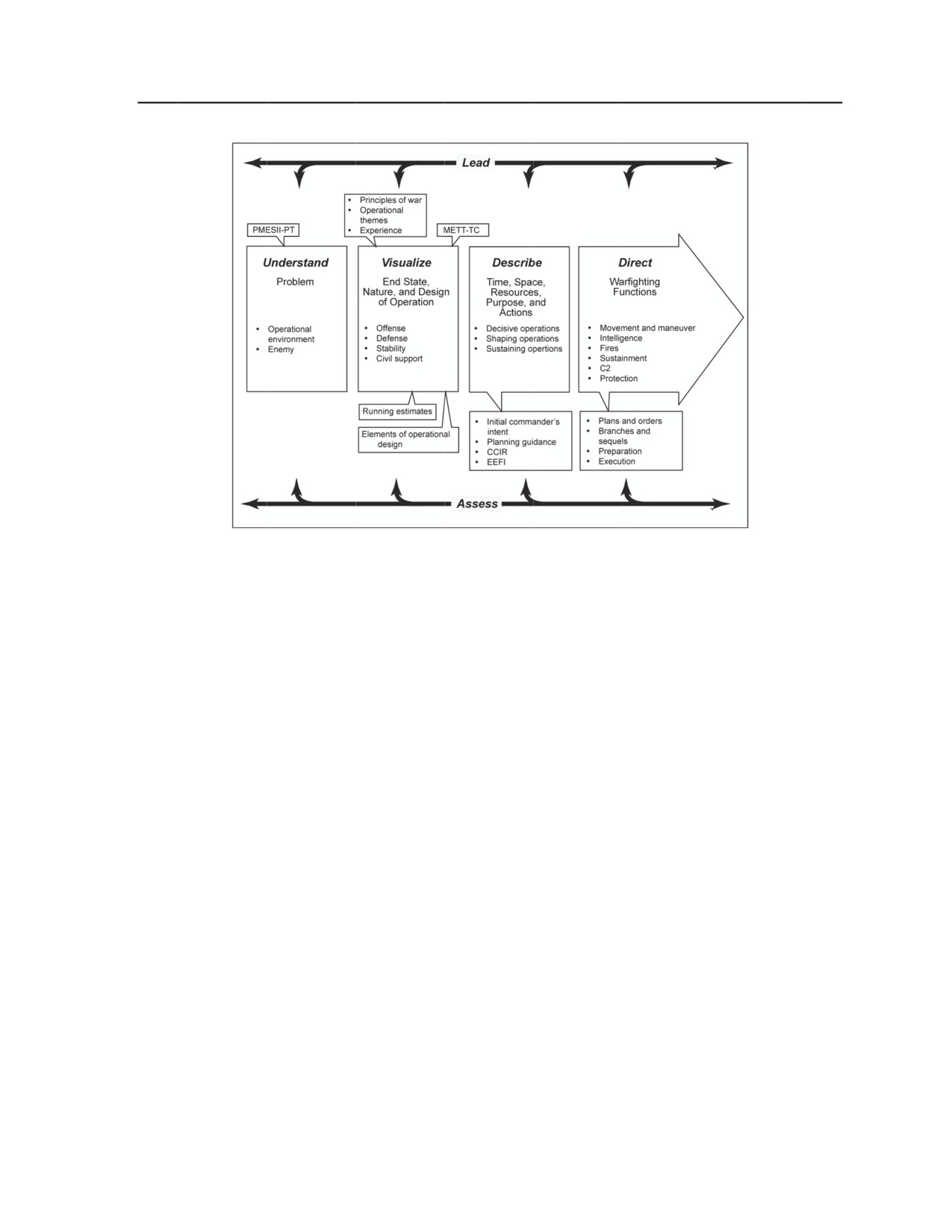
4-4. Commanders drive the operations process through the application of battle command, which is the
art and science of understanding, visualizing, describing, directing, leading, and assessing forces to impose
the commander’s will on a hostile, thinking, and adaptive enemy. Battle command applies leadership to
translate decisions into actions—by synchronizing forces and warfighting functions in time, space, and
purpose—to accomplish missions. (FM 3-0) (See figure 4-3.) Commanders combine the military art and
science to translate information and experience into superior decisions faster than the enemy. They also
determine priorities, provide guidance, establish time horizons, create command climates, and accept risk in
ways that are clear and help focus the staff and subordinate organizations. The commander’s inherent
responsibility to protect and preserve the force, while seeking every opportunity to act decisively, makes it
imperative to consider protection in the operations process.
4-2
FM 3-37
30 September 2009
Protection
Integration in Army Operations
Figure 4-3. Battle command
4-5. Commanders understand
and broadly visualize protection considerations and opportunities in relation
to
the mission and the OE in
terms of the forms of protection. They discern hazards
that are preventable
and divide threats into those that may be deterred and those that may require the application of security or
defensive measures to achieve protection.
Commanders
provide guidance on risk tolerance, CCIR, and
asset or capability criticality to
help focus the
staff and subordinate leadership.
4-6. A commander’s tolerance for risk may vary with the nature
of the threat,
operational theme,
environmental conditions, or
external factors. Leaders always protect all military personnel. All military
resources have value, but all military assets
are not linked
to mission accomplishment
in the same manner
or
at the same time. As the competition for
protection assets increases,
commanders must provide a
clear
intent and guidance on where,
when, and how much risk they are willing to assume or
tolerate. The
CRM
process provides a context for risk assessment to support decisionmaking. Decision
support tools and
systems may be
helpful within
the assessment process to help commanders differentiate between important
assets and mission-critical assets.
4-7. The operations staff assists the commander in integrating protection with the other warfighting
functions throughout the operations process.
At division and higher levels, the protection cell—
z
Focuses effort in the MDMP to produce a plan or order.
z
Develops protection
strategies to
effectively use
resources in
support of a protection concept of
operations.
z
Contributes to IPB
and situational
understanding
z
Identifies vulnerabilities, hazards,
and gaps in information.
z
Participates in the targeting process and the ISR
synchronization process.
z
Coordinates with various working groups to
further synchronize protection with the
other
warfighting functions according to
the commander’s intent and
concept of operations.
4-8. As a continuing activity, protection information and
considerations are typically
integrated into the
operations process by the operations officer
using the CRM integrating
process. (See
FM 5-19 for
more
information.) The protection
cell uses the
CRM process
to identify, evaluate, and
monitor threats and
hazards as they
emerge, while conducting the
functional tasks and monitoring the systems that comprise the
30
September 2009
FM 3-37
4-3
Chapter 4
protection warfighting function. When leaders employ the CRM process to
integrate key
protection tasks
and systems, they also participate
in the various integrating
processes and working groups during the
conduct of operations.
4-9.
The CRM process provides a
uniform way
of assigning a
risk value to
an activity by
determining the
probability of a hazardous event
occurring and
the severity
or outcome
in relation to
the mission or
personnel. It provides a context
for identifying
and assessing threats and
hazards and
is a source of
information for many other processes. The CRM
process informs and alerts commanders to
conditions and
activities that may negatively affect the mission and require an
adjustment decision.
PROTECTION CELL
4-10.
Successfully integrating the
protection function into operations begins
with fixing responsibility for
the many disparate protection tasks
and systems.
At division level and higher, this is typically done through
a designated protection cell and
the chief of protection. At
brigade and
below, this may occur more
informally with the
designation
of a protection coordinator
from among
the brigade
staff or as an
integrating staff function assigned
to a senior leader. Once functional and coordinating responsibilities have
been delineated among organizational staff members, protection tasks and
systems are
integrated and
synchronized in the operations
process through boards, working groups, and meetings like other
warfighting functions. Protection cells are further
discussed in chapter 5.
PROTECTION AND MODULARITY
4-11.
Brigade combat teams (BCTs), functional
brigades, and
support brigades perform
protection tasks
and functions directed by higher
headquarters. Brigades incorporate their efforts into
an established
protection framework developed by the staff at
higher headquarters. Among
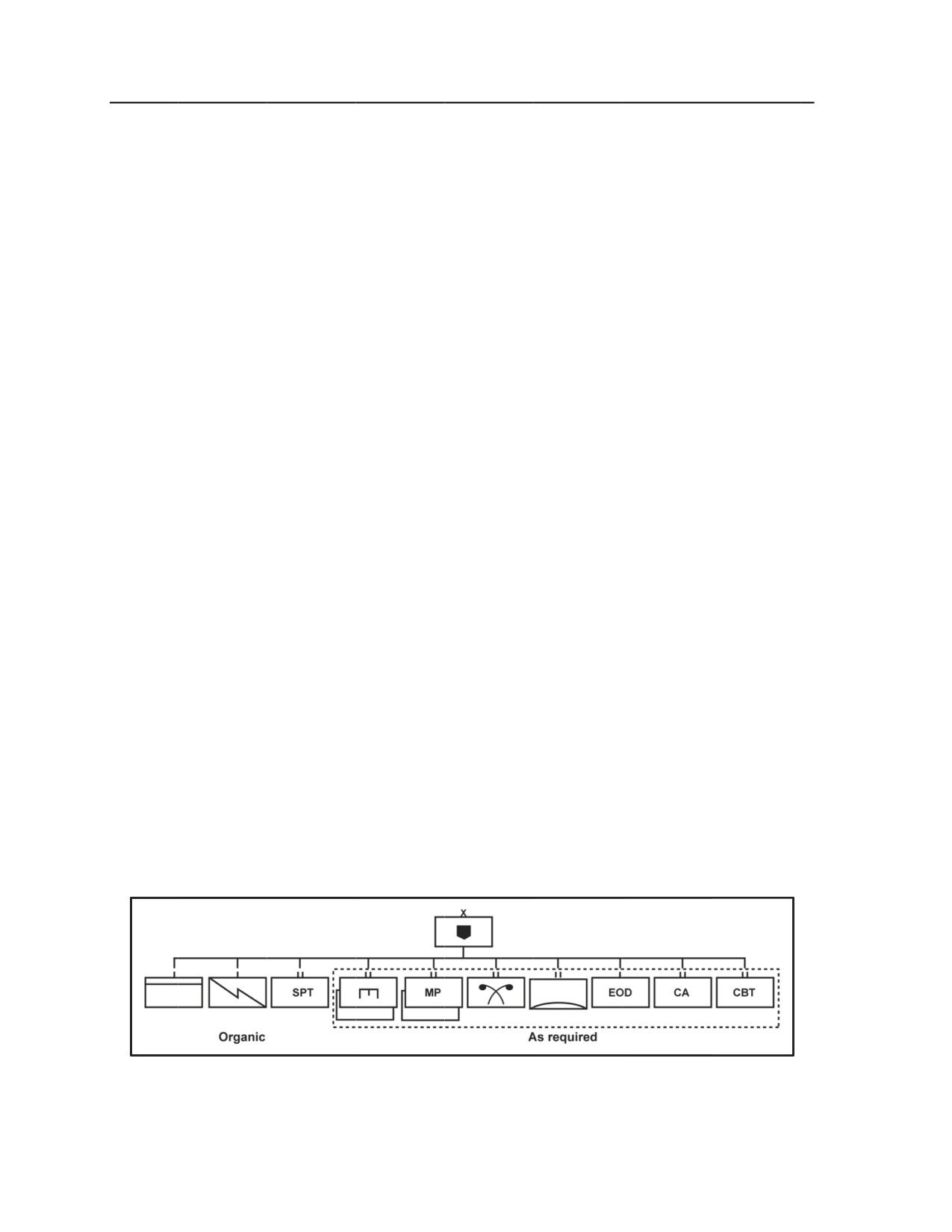
the Army’s modular support
brigades, the MEB presents a new
capability that
is ideally suited to perform
protection tasks and functions
for a
division, corps, or multinational force. The MEB can be task-organized as needed
to provide the
protection requirements needed at division and
corps levels. At these levels, the protection cell may
recommend the task
organization
of units whose primary mission is protection. Task organization is the
temporary reorganization of the
force by using command and support relationships, including
a
recommended task organization for the MEB and
other functional units as required. MEBs
are designed to
C2 the
following units that provide
protection and
other support to the force:
z
Engineer.
z
Military police.
z
CBRN.
z
CA.
z
Air defense artillery.
z
EOD.
z
TCF.
When
protection requirements exceed the capabilities of the MEB, the protection cell can identify the need
for a functional brigade headquarters. (See figure
4-4.)
Figure 4-4. MEB task-organized for protection tasks
4-4
FM 3-37
30 September 2009

Protection Integration in Army Operations
4-12. The protection cell translates protection guidance and capabilities and the results of analysis into
protection strategies using various decision support and analytical tools and the principles of protection.
The use of protection principles in developing protection strategies provides coherence to the many diverse
and overlapping protection activities and forms existing or occurring in the OE. Commanders at all levels
allocate resources to support protection strategies based on an accurate and continual assessment of threats
and hazards over time, but remain flexible enough to respond to variances and opportunities and to make
adjustments.
PROTECTION AND THE OPERATIONS PROCESS
4-13. The operations process is composed of several supporting topics that further illustrate the activities
and tasks necessary to conduct Army operations. For example, the MDMP and orders production support
planning, while activities such as reconnaissance and rehearsals support preparation. Decisionmaking
characterizes execution and is necessary to direct the application of combat power and to synchronize
activities. While assessment occurs continuously throughout the operations process to provide situational
understanding, monitoring and evaluating additional assessments also occur specifically to planning,
preparing, and executing operations. (See table 4-1.)
Table 4-1. Expanded operations process with supporting topics
Plan
Prepare
Execute
•
TLP and MDMP
•
Reconnaissance
•
Decide
•
Plans and orders
•
Security
Execution
•
Force protection
Adjustment
•
Plan revision and refinement
•
Direct
•
Coordination and liaison
Apply combat power
•
Rehearsals
Synchronize
Maintain continuity
•
Task organization
•
Training
•
Movement
•
Precombat checks and
inspections
•
Integration of new Soldiers
and units
Assessment During
Assessment During
Assessment During
Planning
Preparation
Execution
•
Monitor the situation
•
Monitor preparations
•
Monitor operations
•
Monitor MOP/MOE
•
Evaluate preparations
•
Evaluate progress
•
Evaluate COAs
Continuous Assessment
•
Situational understanding—sources, solutions
•
Monitoring—situation/operations, MOP/MOE
•
Evaluating—forecast, seize, retain, and exploit the initiative; variances
4-14. While each protection task and system has its own operational consideration, each must be
synchronized within a coherent protection strategy or concept to ensure synergistic protection efforts. For
example, AMD without survivability is much less effective. Area security without AT, OPSEC, and
physical security is also less effective. To ensure this synergy, the protection cell develops protection
strategies around which MOP and MOE can be established. In this way, the success or failure of each
individual protection effort can be monitored and evaluated.
Note. Chapter 2 discusses protection tasks and systems.
CONTINUOUS ASSESSMENT
4-15. Assessment is the continuous monitoring and evaluation of the current situation, particularly the
enemy, and progress of an operation. (FM 3-0) Commanders typically base assessments on their situational
understanding, which is generally a composite of several informational sources and intuition. Staff
members normally develop running estimates that illustrate the significant aspects of a particular activity or
30 September 2009
FM 3-37
4-5
Chapter 4
function over time. These estimates are used by commanders to maintain situational awareness and direct
adjustments. Significant changes or variances among or within running estimates can signal a threat or an
opportunity, alerting commanders to take action.
4-16. Assessing protection is an essential, continuing activity that occurs throughout the operations
process. While a failure in protection is typically easy to detect, the successful application of protection
may be difficult to assess and quantify. For example, although prevention and deterrence may consume
significant resources that are easy to quantify, the absence of accidents or threat actions does not
necessarily mean that the plan is working or that leaders are managing risk well. This makes the measured
assessment of deliberate protection activities essential to determining the effectiveness of the plan, task
organization, or operational concept.
4-17. Deliberate assessment is enabled by monitoring and evaluating criteria derived from the tasks and
systems that comprise the protection warfighting function. Criteria used to monitor and evaluate the
situation or operation may be represented as MOP or MOE. These measures are discrete, relevant, and
responsive benchmarks that are useful in all operations. They may contain the CCIR and EEFI and may
generate information requirements. MOP and MOE can be significant decision support tools and may drive
transition periods, resource allocations, and other critical decisions.
Measure of Performance
4-18. A MOP helps determine whether a commander has applied enough, correct resources to an operation.
A MOP is a criterion used to assess friendly actions and that is tied to measuring task accomplishment. (JP
3-0) This measure is friendly force-oriented. It measures task accomplishment; and in its simplest form, it
answers whether a task was performed successfully. FM 7-15 provides a table with MOPs that can be used
to develop standards for each task. Some specific MOPs may be altered for their relevance to the local
situation or they may be omitted; however, all changes to established MOPs should be disseminated
vertically and horizontally among headquarters and participants in an operation or activity.
Measure of Effectiveness
4-19. A MOE is useful in determining success and deciding whether a commander must maintain, adjust,
or reallocate resources. An MOE is a criterion used to assess changes in system behavior, capability, or OE
that is tied to measuring the attainment of an end state, achievement of an objective, or creation of an
effect. (JP 3-0) It is oriented to mission accomplishment, focuses on the results or consequences of an
action, and is used to assess changes in the OE. This is more often a subjective assessment as it tends to
measure long-term results. As a result, an MOE may consist of a series of indicators that are used to judge
success or failure.
4-20. Significant changes in some environmental conditions are subtle and only occur over a long period of
time, yet protection activities must be continual. The enduring nature of protection could cause
complacency or inattentiveness, requiring leaders to stay focused on determining, monitoring, and
evaluating accurate protection indicators and warnings that maintain situational understanding and alert
them to risk.
4-21. Commanders monitor MOEs and evaluate variances and change indicators for cause and effect to
forecast failure or identify a critical point of failure in an activity or operation. Based on this type of
assessment, resources can be reassigned to mitigate the overall risk to the mission or to support or reinforce
specific local security efforts. The goal is to anticipate the need for action before failure occurs, rather than
react to an unplanned loss. Thorough staff planning in the MDMP allows commanders to accelerate
decisionmaking by preplanning responses to anticipated events through the use of battle drills, branches,
and sequels. War-gaming critical events also allows commanders to focus their CCIR and the supporting
information collection effort. Information developed during this process can be used to develop EEFI and
indicators or warnings that relate to the development of protection priorities.
4-22. If an action appears to be failing in its desired effect, the result may be attributed to—
z
Personnel or equipment system failure.
z
Insufficient resource allocation at vulnerable points.
4-6
FM 3-37
30 September 2009
Protection Integration in Army Operations
z
Variance in anticipated threat combat power ratio, resulting in an increased risk equation.
z
Ineffective supporting efforts, leading to a cumulative failure of more critical elements.
4-23. Assessment identifies the magnitude and significance of variances in performance or conditions from
those that were expected through prior forecasting to determine if an adjustment decision is needed.
Commanders monitor the ongoing operation to determine if it is progressing satisfactorily according to the
current plan, including fragmentary orders that have modified it. The staff assesses the situation in relation
to established protection criteria. This assessment ensures that facts and assumptions remain valid and also
identifies new facts and assumptions. Assessment decreases reaction time by anticipating future
requirements and linking them to current plans.
Critical Asset List
4-24. The critical asset list (CAL) is a prioritized list of assets that should be protected; it is normally
identified by the phase of an operation and approved by the commander. Once the threat, criticality,
and vulnerability assessments are complete, the staff presents the prioritized list of critical assets to the
commander for approval. Commanders typically operate in a resource-constrained environment and have a
finite amount of combat power for protecting assets. Therefore, the protection cell determines which assets
are critical for mission success and recommends protection priorities based on the available resources. The
list will vary depending on the mission variables.
4-25. During threat assessment, members of the protection cell identify and prioritize the commander’s
critical assets using the vulnerability assessment, criticality assessment, and plan or order. Critical assets
are generally specific assets of such extraordinary importance that their loss or degradation would have a
significant and debilitating effect on operations or the mission. (See JP 3-07.2 for more information.) They
represent what “should” be protected. The protection cell and working group use information derived from
command guidance, IPB, warning orders, and the restated mission to nominate critical assets from their
particular protection functional area. Vulnerability and criticality assessments are generally intended to be
sequential. However, the criticality assessment can be conducted before, after, or concurrent with threat
assessments. The vulnerability assessment should be conducted after the threat and criticality assessments
to orient protection efforts on the most important assets. These assessments provide the staff with data to
develop benchmarks, running estimates, CCIR, change indicators, variances, and MOP/MOE.
4-26. This lack of replacement may then cause that critical asset to become the first priority for protection.
Not all assets listed on the CAL will receive protection from continuously applied combat power. Critical
assets with some protection from applied combat power become part of the defended asset list (DAL).
4-27. CAL development may require the establishment of evaluation criteria, such as value (impact of
loss), depth (proximity in distance and time), replacement impact (degree of effort, cost, or time), and
capability (function and capacity for current and future operations). (See figure 4-5, page 4-8.)
Defended Asset List
4-28. When compared to the assessed threats, the vulnerability and criticality assessments provide the
commander with information to make decisions about which assets are the most critical, which assets must
have combat power dedicated to their protection, and where he can accept risk. For instance, one of five
critical assets considered in a given criticality assessment cannot be replaced during an operation, while the
other four can. This lack of replacement or recuperation may cause that critical asset to become the first
priority for protection. Not all assets listed on the CAL will receive deliberate protection reinforcement.
Some assets will derive additional protection from the complementary effect of other ongoing warfighting
functions, while remaining assets may rely on organic security measures and self-protection. Critical assets
that are reinforced with additional protection capabilities or capabilities from other combat power elements
become part of the DAL. The DAL is a listing of those assets from the CAL, prioritized by the
commander, to be defended with the resources available. It represents what “can” be protected, by
priority. This allows the commander to apply finite protection capabilities to the most valuable assets. The
combat power applied may be a weapon system, electronic sensor, obstacle, or combination. The CAL and
DAL are dynamic lists (see figure 4-6, page 4-8).
30 September 2009
FM 3-37
4-7
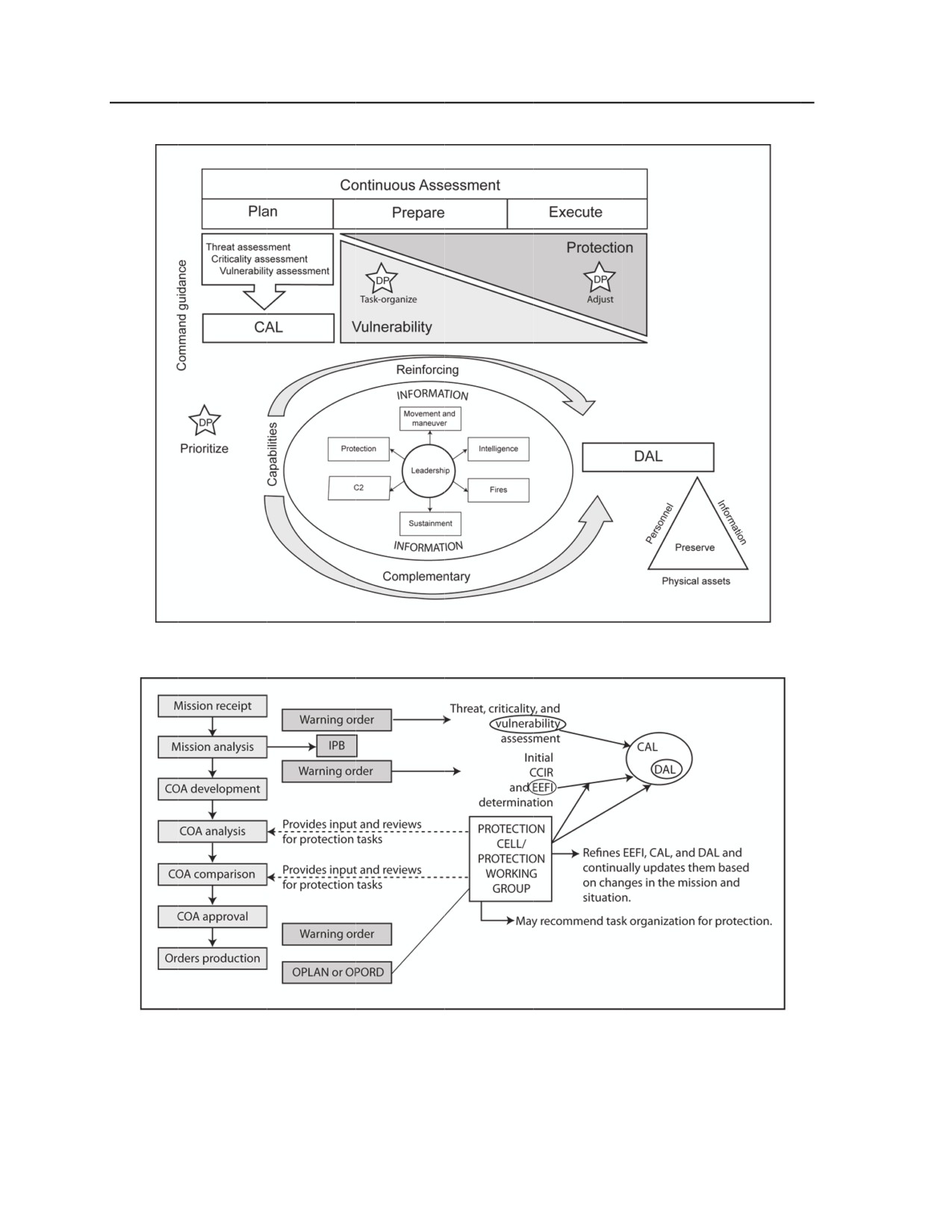
Chapter 4
Figure 4-5.
CAL and DAL in the operations process
Figure 4-6. Protection
cell and planning process
4-8
FM 3-37
30 September 2009
Protection Integration in Army Operations
4-29. Assessment permits the commander to shape protection measures and provides valuable information
for refining future protection activities. Commanders stay alert to transitions in operations. Significant
changes in the situation and environment often affect vulnerabilities to the force; such changes may require
adjustments to CALs and DALs.
4-30. Commanders and units remain flexible while conducting protection operations. When the situation
changes significantly, the protection plan must be adapted so that resources and opportunities are not
wasted. Commanders should not hesitate to modify the protection plan if it fails to adequately protect
critical assets.
4-31. The most important question when assessing the effectiveness of applied protection capabilities is
whether the allocation of resources and combat power to protection tasks remain valid. The staff compares
expectations to actual events to determine the overall effectiveness of the plan, and they recommend
appropriate adjustments. They answer the following questions:
z
Was the plan successful?
z
Were the assets protected?
z
Were Soldiers accidentally killed or injured?
z
Were the correct assets defended?
z
Did protection equipment or TTP fail?
z
What actions must be taken to restore critical capabilities or mitigate damage?
z
Is it necessary to reallocate assets because of enemy actions?
z
What protection assets are available for reinforcement?
z
What activities can be combined to produce a complementary protective effect?
z
What additional protection capabilities are needed?
z
What current protection capabilities are not needed?
4-32. Commanders must prepare for success and failure when planning to mitigate the risk to the mission
and force. A significant change in the situation may represent successful mission accomplishment.
However, commanders can become vulnerable or complacent immediately after mission accomplishment
due to fatigue or exuberance arising from victory. As the chance of human error increases, an unprepared
force becomes vulnerable to enemy counterattacks or surprise attacks.
4-33. Since many protection information requirements are long-term and overlap staff functions, the
protection cell often develops a means of quantifying progress and normal activities. In planning, the staff
develops specific information requirements oriented on protection. These requirements may be represented
as CCIR and used to focus collection efforts or as change indicators to alert or measure variances in
baseline assumptions detailed in the protection concept of operation. Protection effectiveness, progress, and
success can be expressed in many ways—including the reaction time of response forces; duration of
specific, uninterrupted military capabilities; statistics on Soldiers returned to duty; and many others.
4-34. The criteria used to evaluate the degree of mission success can be expressed as—
z
MOP to determine how well protection tasks achieved the intended purpose.
z
MOE to evaluate the overall effectiveness of protection plans and assumptions.
PLANNING
4-35. Planning is the first step toward effective protection. Commanders consider the most likely threats
and decide which personnel, physical assets, and information to protect. They set protection priorities for
each phase or critical event of an operation. The MDMP or troop-leading procedures provide a deliberate
process and context to develop and examine information for use in the various continuing activities and
integrating processes that comprise the operations process. Effective protection strategies and risk decisions
are developed based on information that flows from mission analysis, allowing a thorough understanding of
the situation, mission, and environment. Mission analysis typically occurs during planning, and the CRM
process provides a context to identify and analyze threats and hazards before their integration in preparation
and execution. (See table 4-2, page 4-10.)
30 September 2009
FM 3-37
4-9

Chapter 4
Note. See FM 5-19 for more information on CRM and MDMP.
Table 4-2. CRM process
Risk Management Steps
Step 3.
MDMP
Develop
Step 5.
Step 1.
Step 2.
Step 4.
Steps
Controls and
Supervise
Identify
Assess
Implement
and Evaluate
Hazards
Hazards
Make Risk
Controls
Decisions
Mission receipt
X
Mission analysis
X
X
COA development
X
X
X
COA analysis
X
X
X
COA comparison
X
COA approval
X
Orders production
X
X
Rehearsal
X
X
X
X
X
Execution/assessment
X
X
X
X
X
4-36. During mission analysis, functional proponents in the protection cell develop running estimates of
their specific protection task and system that are used to monitor and evaluate protection efforts throughout
the operations process. These estimates can be used to develop variances and their change indicators from
which MOP and MOE may be further developed.
Planning Guidance
4-37. Planners receive guidance as commanders describe their visualization of the operational concept and
intent. This guidance generally focuses on COA development by identifying decisive and supporting
efforts, massing effects, and stating priorities. Effective planning guidance provides a broad perspective of
the commander’s visualization with the latitude to explore additional options. Command guidance is often
issued using the warfighting functions as criterion. A commander’s initial protection guidance may
include—
z
Protection priorities.
z
Work priorities for survivability assets.
z
AMD positioning guidance.
z
Specific terrain and weather factors.
z
Intelligence focus and limitations for security efforts.
z
Areas or events where risk is acceptable.
z
Protected targets and areas.
z
Vehicle and equipment safety or security constraints.
z
PR C2.
z
FPCON status.
z
FHP measures.
z
MOPP guidance.
z
Environmental guidance.
z
INFOCON.
z
UXO guidance.
z
OPSEC risk tolerance.
z
ROE, standing rules for the use of force, and rules of interaction.
z
Escalation of force and nonlethal weapons guidance.
4-10
FM 3-37
30 September 2009
Protection Integration in Army Operations
4-38. Commanders typically determine their own CCIR, but may select some from staff nominations. Staff
sections recommend the most important priority intelligence requirements
(PIR) and friendly force
information requirements for the commander to designate as CCIR.
Plans and Orders
4-39. The approved vulnerability reduction mitigation measures, commander’s decisions for acceptable
risks, CAL, and DAL represent running estimates that are incorporated into appropriate plans and orders.
Based on these estimates, the protection cell develops the concept of protection in the base order and
appropriate annexes.
4-40. Protection strategies are developed after receiving guidance and considering the forms and principles
of protection in relation to the mission variables and the tasks and systems that comprise the protection
warfighting function. The concept of protection is based on the mission variables and should include
protection priorities by area, unit, activity, or resource. It should also address how protection can be applied
and derived during the conduct of operations. For example, the security for routes, bases, and critical
infrastructure can be accomplished by applying protection assets in dedicated, fixed, or local security roles;
or it may be derived from economy-of-force protection measures such as area security techniques. It also
identifies areas and conditions where forces may become fixed or static and unable to derive protection
from their ability to maneuver and press the offensive. These conditions, areas, or situations are anticipated;
and the associated risks are mitigated by describing and planning for the use of TCFs and other response
forces.
4-41. Planners integrate protection actions and information throughout specific plans and orders. Some
significant, protection-related products that are often produced in the planning process include the—
z
Protection concept or strategy that supports and nests with the operational concept.
z
Running estimate that reflects protection tasks and systems.
z
Quantifiable level of risk for specific events and activities.
z
Protection MOP and MOE and threshold variances.
z
Recommendations for CCIR that reflect decision criteria from protection tasks and systems.
z
CAL and DAL.
z
Decision points (DP) based on the commander’s risk tolerance level.
4-42. Information protection is part of the protection warfighting function; and because it involves
procedural and technical instructions related to information systems (including networks), it is typically
addressed within the NETOPS section of most plans and orders. FHP is included in the health service
support section. The G-6/signal staff officer (S-6) and echelon surgeon coordinate their input to plans and
orders with the chief of protection.
4-43. Although protection is continuous and enduring, many operations are not. This makes efficient
protection planning difficult and dependent on clear command guidance. Long planning horizons may
permit increasingly detailed analysis in the development of some plans and orders or in the assessments
they contain, while other situations afford only hasty methods. For example, protection planning often
requires criticality, vulnerability, or recuperability analysis. Commanders must weigh the benefit that a
potentially lengthy protection analysis provides when compared with less accurate, hasty methods.
ASSESSMENT DURING PLANNING
4-44. The continuous assessment that occurs during planning includes activities that are necessary to
maintain situational understanding and those that continue to monitor and evaluate running estimates,
MOEs, and MOPs; identify variances; and support decisionmaking. These assessment activities are
consistent throughout all parts of the operations process. However, certain assessments occur during
planning that are specific to the planning process, MDMP, or mission analysis. For example, the protection
cell evaluates COA during MDMP against evaluation criteria derived from the protection warfighting
function to determine if each COA is feasible, acceptable, or suitable in relation to its ability to protect or
preserve the force.
30 September 2009
FM 3-37
4-11
Chapter 4
4-45. The staff may also conduct a specific analysis to assess threat capability or the vulnerability and
criticality of an asset to assist commanders in determining protection priorities or task organization
decisions. This type of analysis is often required when the nature of the operation is enduring or requires a
continuous, dedicated protection effort or when the potential loss of the protected asset has significant
consequences.
Threat and Hazard Assessment
4-46. Threats include hazards with the potential to cause injury, illness, or death of personnel; damage to or
loss of equipment or property; or mission degradation. Commanders and protection cell staff are concerned
with three general categories of threats:
z
Hostile actions. Threats from hostile actions include any capability that enemy forces or
criminal elements have to inflict damage upon personnel, physical assets, or information. These
threats may include IEDs, suicide bombings, network attacks, mortars, asset theft, air attacks, or
CBRNE weapons.
z
Nonhostile activities. Threats from nonhostile activities include hazards associated with Soldier
duties within their occupational specialty, Soldier activity while off duty, and unintentional
actions that cause harm. Examples include on- and off-duty accidents, OPSEC violations,
network compromises, equipment malfunctions, or accidental CBRNE incidents.
z
Environmental conditions. Environmental threats are hazards associated with the surrounding
environment that could potentially degrade readiness or mission accomplishment. Weather,
natural disasters, and disease are common examples. The protection cell staff also considers how
military operations may affect noncombatants in the AO. Such considerations prevent
unnecessary collateral damage and regard how civilians (those merely going about their day-to-
day activities) will affect the mission. Heavy civilian vehicle or pedestrian traffic adversely
affects convoys and other operations.
4-47. Commanders use the following METT-TC mission variables to describe the OE, including threats
that may impact protection:
z
Mission. The nature of the operational mission may imply specific hazards. Some missions are
inherently more dangerous than others. Leaders look for hazards associated with the complexity
of higher headquarters plans and orders, such as a particularly complex scheme of maneuver.
Using a fragmentary order in lieu of a detailed operation plan (OPLAN) or operation order
(OPORD) raises the vulnerability because of possible misunderstanding. Since protection is a
continuing activity, leaders also look for hazards in on- and off-duty garrison activities.
z
Enemy. Commanders try to determine the enemy’s capability and intent that pose threats to the
operation or mission. During planning, the protection staff participates in the IPB process. IPB is
a dynamic staff process that is critical to identifying enemy threats. IPB supports threat-based
risk assessments by identifying opportunities and constraints that the OE offers to enemy and
friendly forces. It also portrays a picture of enemy capabilities and vulnerabilities. In the on- and
off-duty garrison environment, enemy considerations take the form of outside influences that
may affect or impact a planned event or activity.
z
Terrain and weather. To identify and access terrain-related hazards that can impact force
protection or preservation and affect operations, leaders use the military aspects of terrain—
observation and fields of fire, avenues of approach, key terrain, obstacles, and cover and
concealment (OAKOC). Predeployment checklists are useful in making assessments associated
with nonmission activities. Common terrain hazards are elevation, altitude, road surfaces,
curves, grades, and traffic density. To assess common weather hazards, leaders use the military
aspects of weather (precipitation, temperature and humidity, visibility, winds, and clouds).
Illumination may also be a factor of risk assessment. Whether planning a PR operation or out-of-
town leave, terrain and weather can create specific hazards. Leaders assess these mission
variables for all activities.
z
Troops and support available. Leaders consider hazards associated with the level of training,
staffing, and equipment maintenance and condition. These hazards affect morale and the
availability of supplies and services, including the physical, spiritual, and behavioral health of
4-12
FM 3-37
30 September 2009
Protection Integration in Army Operations
Soldiers. For nonmission activities, troops include Soldiers, their dependents, civilian workers,
and others, whether or not they are connected to the activity. Some examples of other-than-
mission hazards include sexual assault, domestic violence, substance abuse, sexually transmitted
diseases, and other behavioral or medical conditions.
z
Time available. Insufficient time for mission preparation often forces commanders to accept
greater risk when planning, preparing, and executing plans and orders associated with mission
planning. To avoid or mitigate the risks associated with inadequate time for planning, leaders
should allow subordinates two-thirds of the available planning time as a control measure. For
nonmission activities, insufficient time is a matter of haste rather than availability. This
especially applies during holiday periods when the zeal of young Soldiers to get home may lead
them to depart duty stations without sufficient rest.
z
Civil considerations. This variable expands the consideration of hazards to include those that a
tactical mission may pose to the civilian populace and noncombatants in the AO. The objective
is to reduce collateral damage to civilians and noncombatants. Hazards are also created by the
presence of a large civilian population and their efforts to conduct day-to-day living during the
course of a mission. Dense civilian traffic may present hazards to convoys and maneuver
schemes. Such diverse elements as insurgents, riots, and criminal activity must also be assessed.
For nonmission activities, the term addresses those legal, regulatory, or policy considerations
that may impact a desired activity or limit a COA.
Criticality Assessment
4-48. A criticality assessment identifies key assets that are required to accomplish a mission. It addresses
the impact of temporary or permanent loss of key assets or unit ability to conduct a mission. It examines
costs of recovery and reconstitution, including time, expense, capability, and infrastructure support. The
staff gauges how quickly a lost capability can be replaced before giving an accurate status to the
commander. The general sequence for a criticality assessment is—
z
List the key assets and capabilities.
z
Determine if critical functions or combat power can be substantially duplicated with other
elements of the command or an external resource.
z
Determine the time required to substantially duplicate key assets and capabilities in the event of
temporary or permanent loss.
z
Set priorities for response to threats toward personnel, physical assets, and information.
4-49. The protection cell staff continuously updates the criticality assessment during the operations
process. As the staff develops or modifies a friendly COA, ISR efforts confirm or deny information
requirements. As the mission or threat changes, initial criticality assessments may also change, increasing
or decreasing the subsequent force vulnerability. The protection cell monitors and evaluates these changes
and begins coordination among the staff to implement modifications to the protection concept or
recommends new protection priorities. PIR, running estimates, MOPs, and MOEs, are continually updated
and adjusted to reflect the current and anticipated risks associated with the OE.
Vulnerability Assessment
4-50. A vulnerability assessment is a DOD, command, or unit level evaluation (assessment) to determine
the vulnerability of a terrorist attack against an installation, unit, exercise, port, ship, residence, facility, or
other site. (JP 3-07.2) It identifies areas of improvement to withstand, mitigate, or deter acts of violence or
terrorism. The staff addresses the questions of “who” or “what” is vulnerable and “how” it is vulnerable.
The vulnerability assessment identifies physical characteristics or procedures that render critical assets,
areas, infrastructures, or special events vulnerable to known or potential threats and hazards. The
assessment provides a basis for developing controls to eliminate or mitigate vulnerabilities. Vulnerability is
the component of risk over which the commander has the most control and greatest influence. The general
sequence of a vulnerability assessment is—
z
List assets and capabilities and the threats against them.
z
Determine common criteria for assessing vulnerabilities.
z
Evaluate the assets and capabilities for their vulnerability.
30 September 2009
FM 3-37
4-13
Chapter 4
4-51. Vulnerability evaluation criteria may include the degree to which an asset may be disrupted, quantity
available (if replacement is required due to loss), dispersion (geographic proximity), and key physical
characteristics as required.
4-52. DOD has created several decision support tools to perform criticality assessments in support of the
vulnerability assessment process (including mission, symbolism, history, accessibility, recognizability,
population, and proximity [MSHARPP] and criticality, accessibility, recuperability, vulnerability, effect,
and recognizability [CARVER]). Protection cells can use any of these tools.
Note. DOD O-2000.12-H discusses MSHARPP and CARVER in detail.
Protection Priorities
4-53. Although all military assets are important and all resources have value, the capabilities they represent
share no inherent equality in their contribution to decisive operations or overall mission accomplishment.
Determining and directing protection priorities may be the most important decisions that commanders make
and staffs support. There are seldom sufficient resources to simultaneously provide all assets the same level
of protection. For this reason, commanders use CRM to identify increasingly risky activities and events,
while other decision support tools assist in prioritizing protection resources.
4-54. Most prioritization methodologies assist in differentiating what is important from what is urgent. In
protection planning, the challenge is to differentiate between critical assets and important assets and further
determine what protection is possible with available protection capabilities. Event-driven operations may
be short in duration, enabling a formidable protection posture for a short time; condition-driven operations
may be open-ended and long-term, requiring an enduring and sustainable protection strategy. In either
situation, commanders must provide guidance on prioritizing protection capabilities and categorizing
important assets.
4-55. Initial protection planning requires various assessments to support protection prioritization; namely,
threat, vulnerability, and criticality assessments. These assessments are used to determine which assets can
be protected given no constraints (critical assets) and which assets can be protected with available resources
(defended assets). Commanders make decisions on acceptable risks and provide guidance to the staff so
that they can employ protection capabilities based on the CAL and DAL. All forms of protection are
utilized and employed during preparation and continue through execution to reduce friendly vulnerability.
PREPARATION
4-56. Preparation consists of activities by the unit before execution to improve ability to conduct the
operation, including, but not limited to, the following: plan refinement; rehearsals; reconnaissance,
coordination, inspection, and movement. (FM 3-0)
4-57. Preparation includes increased application and/or emphasis on active and passive protection
measures. During preparation, the protection cell may conduct or coordinate the following activities:
z
Revising and refining the plan.
z
Emplacing systems to detect threats to the CAL.
z
Directing OPSEC measures.
z
Designating quick-reaction forces or TCFs and troop movements.
z
Preparing and improving survivability positions.
z
Liaising and coordinating with adjacent and protected units.
z
Determining indicators and warnings for ISR operations.
z
Rehearsing.
z
Training with defended assets.
z
Confirming subordinate back briefs.
z
Implementing vulnerability reduction measures.
4-14
FM 3-37
30 September 2009
Protection Integration in Army Operations
4-58. During preparation, the protection cell ensures that the controls or risk reduction measures developed
during planning have been implemented and are reflected in plans, SOPs, and running estimates, even as
the threat assessment is continuously updated. New threats and hazards are identified or anticipated based
on newly assessed threat capabilities or changes in environmental conditions as compared with known
friendly vulnerabilities and weaknesses. Commanders use after-action reviews and war games to identify
changes to the threat. The protection cell and working group maintain a list of prioritized threats, adverse
conditions, and hazard causes. The challenge is to find the root cause or nature of a threat or hazard so that
the most effective protection solution can be implemented and disseminated.
4-59. As the staff monitors and evaluates the performance or effectiveness of friendly COA,
reconnaissance collects information that may confirm or deny forecasted threat COAs. As the threat
changes, risk to the force changes. Some changes may require a different protection posture or the
implementation or cessation of specific protection measures and activities. The protection cell analyzes
changes or variances that may require modifications to protection priorities and obtains guidance when
necessary. Threat assessment is a dynamic and continually changing process. Chiefs of protection and
planners stay alert for changing indicators and warnings in the OE that would signal new or fluctuating
threats and hazards.
4-60. Complete intelligence for a specific threat assessment is seldom available. Changes in the situation
often dictate adjustments or changes to the plan when they exceed variance thresholds established in
planning. During preparation, the staff continues to monitor and evaluate the overall situation because
variable threat assessment information may generate new PIR, while changes in asset criticality could lead
to new friendly force information requirements. Updated critical information requirements could be
required based on changes to asset vulnerability and criticality when conjoined with the threat assessment.
4-61. Commanders exercising battle command direct and lead throughout the entire operations process as
they provide supervision in concert with the CRM process. Commanders’ actions during preparation may
also include—
z
Reconciling the threat assessment with personal judgment and experience.
z
Providing guidance on risk tolerance and making risk decisions.
z
Emphasizing protection tasks and systems during rehearsals.
z
Minimizing unnecessary interference with subunits to allow maximum preparatory time.
z
Circulating throughout the environment to observe precombat inspections.
z
Directing control measures to reduce risks associated with preparatory movement.
z
Expediting the procurement and availability of resources needed for protection implementation.
z
Requesting higher headquarters support to reinforce logistical preparations and replenishment.
4-62. Depending on the situation and the threat, some protection tasks may be conducted for short or long
durations, covering the course of several missions or an entire operation. The staff coordinates the
commander’s protection priorities with vulnerability mitigation measures and clearly communicates them
to—
z
Superior, subordinate, and adjacent units.
z
Civilian agencies and personnel that are part of the force or may be impacted by the task or
control.
4-63. Subordinate leaders also conduct CRM and provide supervision to ensure that Soldiers understand
their responsibilities to and the significance of protection measures, tasks, and systems. This is normally
accomplished during mission preparation through training, rehearsals, task organization, and resource
allocation. Rehearsals, especially those using opposing force personnel, can provide a measure of
protection plan effectiveness. (See FM 3-0 for more information.)
30 September 2009
FM 3-37
4-15
Chapter 4
ASSESSMENT DURING PREPARATION
4-64. Although continuous assessment occurs during preparation and includes activities required to
maintain situational understanding; monitor and evaluate running estimates, MOE, and MOP; and identify
variances for decision support, some assessments are specific to preparatory activities. These assessments
generally provide commanders with a composite estimate of preoperational force readiness or status in time
to make adjustments.
4-65. During preparation, the protection cell may focus on threats and hazards that can influence
preparatory activities, to include monitoring new Soldier integration programs and movement schedules or
evaluating live-fire requirements for precombat checks and inspections. The protection cell may evaluate
training and rehearsals or provide coordination and liaison to facilitate effectiveness in high risk or complex
preparatory activities, such as movement and logistics preparation.
EXECUTION
4-66. Execution is putting a plan into action by applying combat power to accomplish the mission and
using situational understanding to assess progress and make execution and adjustment decisions. (FM 3-0)
4-67. Commanders exercising battle command decide, direct, and provide leadership to organizations and
Soldiers during execution. As operations develop and progress, the commander interprets information that
flows from C2 systems for indicators and warnings that signal the need for execution or adjustment
decisions. Commanders may direct and redirect the way combat power is applied or preserved and may
adjust the tempo of operations through synchronization. The continuous and enduring character of
protection activities makes the continuity of protection actions and activities essential during execution.
Commanders implement control measures and allocate resources that are sufficient to ensure protection
continuity and restoration.
4-68. The protection cell monitors and evaluates several critical ongoing functions associated with
execution for operational actions or changes that impact protection cell proponents. Some of these
functions include—
z
Ensuring that the protection focus supports the decisive operation.
z
Reviewing and adjusting the CCIR derived from protection tasks and systems.
z
Reviewing changes to graphic control measures and boundaries for the increased risk of
fratricide.
z
Evaluating the effectiveness of C2 battle tracking for constraints on PR.
z
Monitoring the employment of security forces for gaps in protection or unintended patterns.
z
Evaluating the effectiveness of liaison personnel for protection activities.
z
Evaluating movement coordination and control to protect critical paths.
z
Monitoring adjacent unit coordination procedures for terrain management vulnerabilities.
z
Monitoring readiness rates of response forces involved in fixed-site protection.
z
Monitoring FHP.
4-69. Staff members are also particularly alert for reports and events that meet CCIR. Once a threat to a
critical or defended asset is detected by monitoring and evaluating running estimates and MOEs for
indicators and warnings, the protection cell alerts the unit responsible for protecting the asset or
recommends additional protective action. Unit commanders respond to their assessment of the threat or
deliberate warning and then execute contingency or response plans. For example, if a threat force attacks an
asset, the commander applies combat power to defeat it. Commanders are alerted by CCIR if the capability
of the threat force reflects a variance that exceeds anticipated and projected combat power ratios. They may
respond to the increased risk by rendering an execution or adjustment decision to commit additional assets
in the form of response forces or fires that are necessary to defeat or neutralize the threat.
4-16
FM 3-37
30 September 2009
Protection Integration in Army Operations
4-70. Events frequently occur that prompt commanders to reevaluate assessed threat and vulnerability,
usually due to a significant change in the situation. Examples include a change in mission, loss of a critical
asset, newly discovered enemy capability, environmental change, political or civil event, or change in the
ROE. Commanders must stay as sensitive to the risk calculus as they are to changes in readiness rates or
available manpower in terms of immediate combat power. When commanders adjust or change their risk
calculation, the process begins anew. The staff compares the new friendly situation to the known enemy
situation, develops controls, recommends priorities and DPs, and then implements the decisions. The
protection cell determines—
z
Where protection assets can best help mission accomplishment with acceptable risk.
z
If protection assets should be committed to the mission immediately or be held in reserve.
z
If assets should be moved due to a change in the DAL.
z
Whether the commander needs to request assistance and, if so, for what purpose.
4-71. There may be a change in the ROE or political, civil, or environmental situation. These unanticipated
changes may not require immediate action. However, commanders must consider how changes relate to the
mission as they mitigate the vulnerability to civilians and the environment. They must—
z
Determine if immediate actions will minimize damage.
z
Decide whether actions will affect mission accomplishment.
z
Determine if the staff balance requires protective actions.
z
Ensure overall mission accomplishment.
ASSESSMENT DURING EXECUTION
4-72. Upon publication of the OPORD, the protection cell and protection working group monitor the
situation so that protection tasks approved by the commander are executed according to plan.
4-73. The protection cell monitors and evaluates the progress of current operations to validate assumptions
made in planning and to continually update changes to the situation. The protection cell and protection
working group continually meet to monitor threats to the CAL and DAL, and they recommend changes to
the protection plan as required. They monitor the conduct of operations, looking for variances from the
OPORD that affect their areas of expertise. When variances exceed a threshold value developed or directed
in planning, the protection cell may recommend an adjustment decision to counter an unforecasted threat or
hazard or to mitigate a developing vulnerability. They also track the status of protection assets and evaluate
the effectiveness of the protection systems as they are employed. Additionally, the protection cell and
protection working group monitor actions of other staff sections by periodically reviewing plans, orders,
and risk assessments to determine if those areas require a change in protection priorities, posture, or
resource allocation.
LESSONS LEARNED
4-74. The way organizations and Soldiers learn from mistakes is key in protecting the force. Although the
evaluation process occurs throughout the operations process, it also occurs as part of the after-action review
and assessment following the mission. Leaders at all levels ensure that Soldiers and equipment are combat-
ready. Leaders demonstrate their responsibility to sound stewardship practices and risk management
principles required to ensure the minimal losses of resources and military assets due to hostile, nonhostile,
or environmental threats. Key lessons learned are immediately applied and shared with other commands.
Commanders develop systems to ensure the rapid dissemination of approved lessons learned and TTP
proven to save lives or protect equipment and information. The protection cells at each command echelon
evaluate the integration of lessons learned and constantly coordinate protection lessons with other staff
elements within and between the levels of command.
30 September 2009
FM 3-37
4-17