FM 3-01.48 DIVISIONAL AIR AND MISSILE DEFENSE SENTINEL PLATOON OPERATIONS (DECEMBER 2003) - page 3
FM 3-01.48
x
SENTINEL
DIV AM D
CBT
3
TEAM
PLT LDR
UMCP
1
5
SP
MSR
LRP
TF FLD
TRANS
x
TF FLD
FSB
4
TRAINS
2
SENTINEL
TF FLD
TRAINS
1. SENTINEL TEAM CHIEF COORDINATES W ITH DIV AM D W PN
TEAM
PLT LDR.
2. SENTINEL TM CH COORD W ITH DIV AM D W PN PSG.
X
3. DIV AM D 1SG MEETS LOGPAC AT LRP.
4. DIV AM D PSG M EETS LOGPAC AT LRP.
5. DIV AM D PLT LDR MEETS LOGPAC AT LRP MEETS LOGPAC
AT LRP.
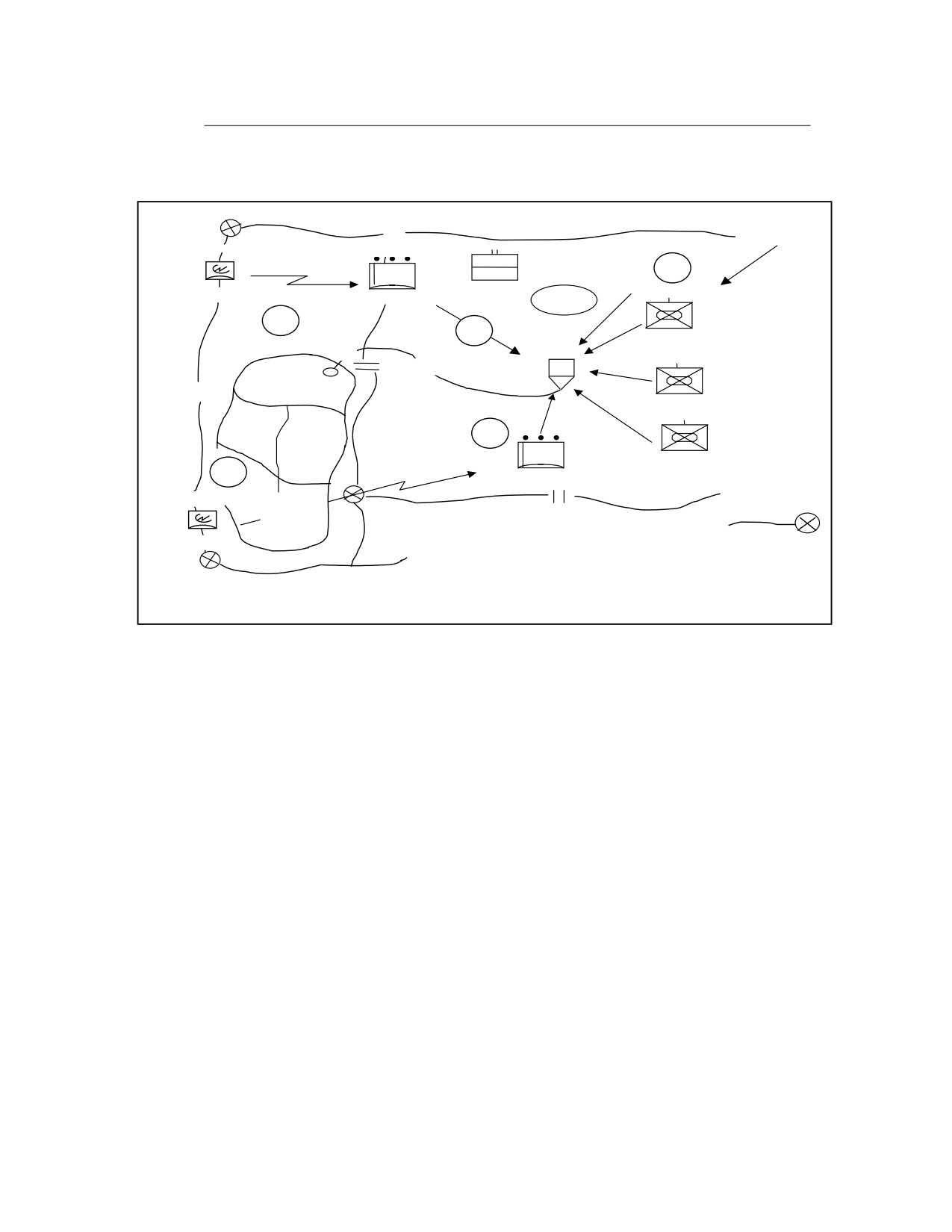
Figure 4-1. Obtaining Logistics
4-32. Normally, the section sergeant obtains all classes of supply per the
battalion’s SOP. When his teams are attached to a divisional AMD battery,
the Sentinel section sergeant must coordinate with the battery commander or
first sergeant to ensure that his teams receive the supplies they need. In
addition, he must ensure that all classes of supply are available when his
teams need them.
4-33. This digital request can be made with the divisional AMD battery in
its area of operations. Once the supply requirement has been determined and
requested, the section sergeant or team chief should be available at all times
to pick up and distribute these supplies. The section sergeant should
supervise this distribution.
4-34. Remember, the most often needed supplies are food (Class I), fuel
(Class III), ammunition (Class V), and spare parts (Class IX). The section
sergeant should always know the team’s status and ensure the following:
• The teams are fed properly and have adequate water for drinking and
personal hygiene.
• The teams are refueled in a concealed area or during hours of
darkness if possible.
• Other supplies such as medical equipment; NBC equipment; tools;
individual clothing and equipment listed in the common table of
4-8
FM 3-01.48
allowances (CTA) 50; maps; batteries; and other expendable items are
available before and during operations.
4-35. The section sergeant and team chiefs should ensure detailed and
timely coordination is conducted to logistically support the tactical situation.
Logistics, or lack of it, may determine the success or failure of combat
operations. The Sentinel teams should be armed, fueled, and repaired as far
forward as the tactical situation dictates. Forward support is accomplished
through LOGPACs.
SENTINEL TEAMS
4-36. Any time the Sentinel teams have a command or support relationship
of anything other than attached, there is no doctrinal basis for logistical
support by the AMD battery or the supported maneuver force. The Sentinel
teams must be integrated in the planning and preparation of the battery
LOGPAC operations.
4-37. The teams should (digitally or vocally) coordinate with the divisional
AMD battery on a constant basis to ensure the Sentinel team’s LOGPAC
consists of the items required, is formed at the field trains, and moved
forward to the LRP. The Sentinel section sergeants must ensure that
supplies, equipment, and personnel replacements, which are peculiar to the
AMD mission, are digitally coordinated with the battery commander, the first
sergeant or the battery supply sergeant. When the LOGPAC reaches the
LRP, the Sentinel section sergeants or team chief, will take control of the
LOGPAC.
4-38. The tactical displacement of the Sentinel sections may call for
delegation of logistical responsibilities to the Sentinel section when close to a
respective divisional AMD weapons team CP. Maintenance and evacuation of
damaged vehicles will be coordinated with the battery. The location of
UMCPs should be available and briefed to team personnel. When the battery
has not responded to a request for support in sufficient time, the section
sergeant should notify the first sergeant or the battery commander.
4-39. Evacuation of wounded personnel has to be coordinated with the
maneuver brigade MEDEVAC personnel. This requires the Sentinel teams to
be knowledgeable of the brigade's SOP on evacuation procedures. The teams
must be informed of locations for casualty collection points, that is, brigade
aid station (BAS), forward aid station (FAS), ambulance exchange point
(AXP), and combat medics. When the tactical situation allows, organic team
vehicles may be used to evacuate the wounded. The use of the FBCB2 will
facilitate this function.
LOGPAC OPERATIONS BY THE BATTERY HEADQUARTERS
4-40. LOGPAC operations by the battery headquarters follow the same
battalion operations procedures with the exception of having different key
players. The command relationship will likely be operational control or
attached. In this situation, the battery will provide support. The battery
support vehicles are maintained at the battery trains where they are loaded
with the necessary supplies. The battery first sergeant, with the help of the
4-9
FM 3-01.48
battery supply sergeant, forms the LOGPACs for each divisional AMD team
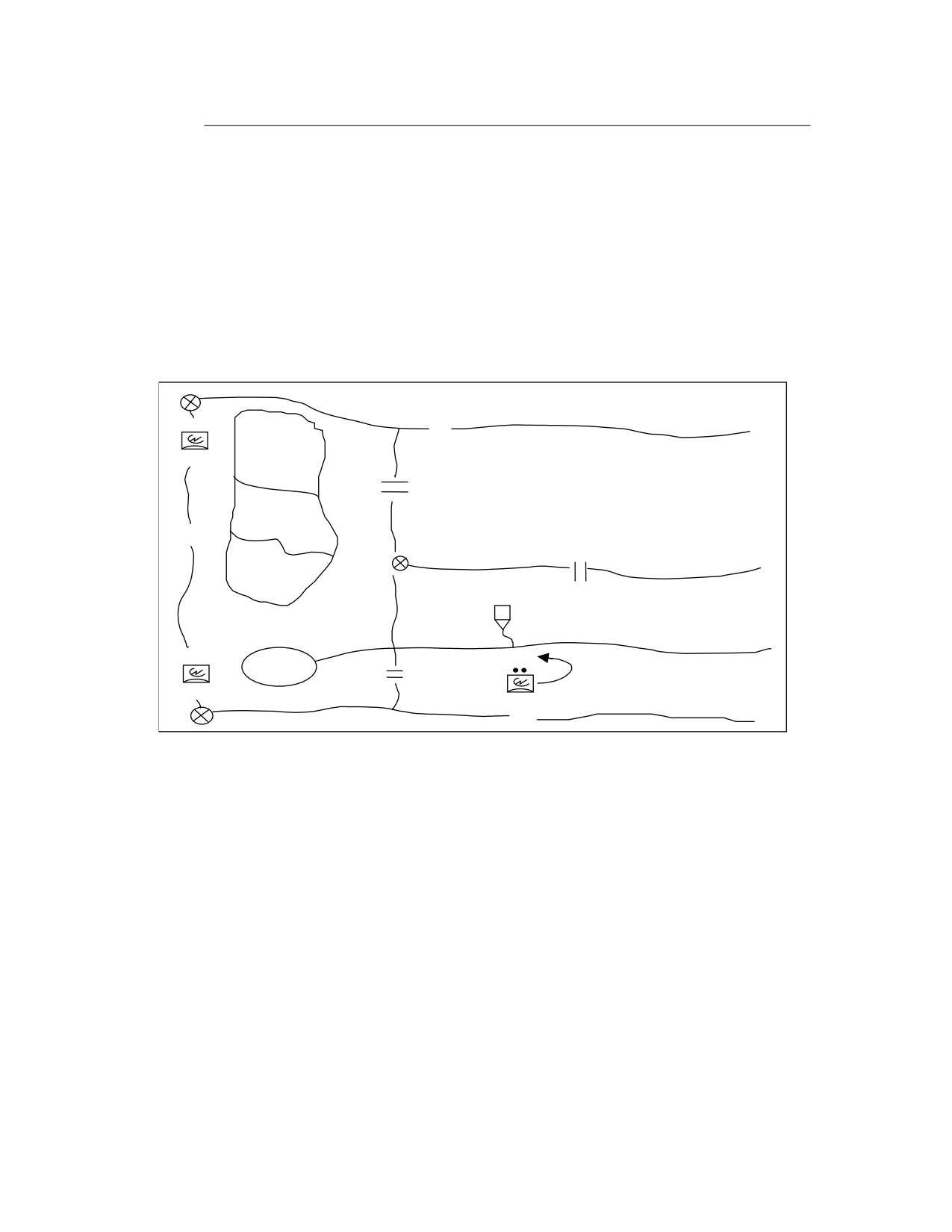
based upon prior coordination. The first sergeant moves the LOGPACs
forward along the established MSR to a designated LRP. When MSRs and
LRPs are located within the area of operations of another unit, the section
sergeants or team chief may be required to coordinate for the use of MSRs or
LRPs with the unit occupying the area. When the LOGPACs arrive at the
LRP, the Sentinel section sergeant will take control of the teams' LOGPAC.
Once the teams have been resupplied, the vehicle returns to the LRP, and the
section sergeant gives his requests to the battery first sergeant for the next
LOGPAC. See Figure 4-2.
SENTINEL
X
A BTRY
FLD
TEAM
TRNS
B BTRY
FLD
TRNS
X
C BTRY
FLD
TRNS
DIV AMD BTRY LRP
SENTINEL
BSA
TEAM
SENTINEL SECT LDR OR TEAM
CHIEF MEETS LOGPAC AT LRP
X
Figure 4-2. LOGPAC
4-41. LRP locations are determined either by the first sergeant or a
designated representative (such as the battery XO). LRPs are based on the
tactical situation. It is often useful or necessary to coordinate for the use of
established MSRs or LRPs. The LRP should be close to where the Sentinel
teams are employed and easy to locate. The MSR, LRP, UMCP, and train
locations should be included on the operations overlay. SOP establishes the
LOGPAC convoy arrival time at the LRP and length of time it remains.
4-42. The first sergeant or battery representative remains at the LRP as
long as the LOGPAC vehicles are in the team areas. He should ensure the
LOGPAC release and return takes place efficiently. To assist in the
coordination for the next LOGPAC the following must be considered:
• Changes in logistical requirements reflecting any last-minute
changes in task organizations.
• Digital reports on personnel, logistics, and maintenance from the
team chiefs.
• First-hand updates on the tactical situation and logistical status.
• Delivery, receipt, and distribution of mail.
4-10
FM 3-01.48
4-43. The battery maintenance personnel monitor and ensure the Sentinel
teams are being supported in LOGPAC operations. The battery maintenance
section will either push contact teams forward to the task force UMCPs or
keep them on call at the battery rear CP in the BSA (METT-TC).
RESUPPLY OPERATIONS
4-44. Resupply operations are developed in the battery SOP. They are
based on METT-TC and rehearsed in training. The methods of resupply are
routine, emergency, and prestock. Routine resupply is used for the regular
resupply of Class I, II, III, V and IX items, mail, and other battery items.
Routine resupply takes place daily. Periods of limited visibility are best for
resupply. If possible, resupply of Class III takes place at every opportunity.
The LOGPAC technique is a simple and efficient way to conduct routine
resupply operations. A LOGPAC is a centrally organized resupply convoy
originating at the TF field trains. LOGPACSs should contain all anticipated
supplies required to sustain the battery for a specific time, usually 24 hours
or until the next scheduled LOGPAC operation. Battalion and battery SOPs
specify the exact composition and march order of the LOGPAC.
TEAM RESUPPLY TECHNIQUES
4-45. The section sergeant determines the resupply technique to be used
based on METT-TC. This method will probably be used only when the
Sentinels are GS to division and not collocated DS to an AMD battery. The
technique selected for ground resupply will generally be the service station
method, tailgate method, or a variation of the two. The section sergeant
digitally or vocally briefs each team on the resupply method and establishes
the resupply point. The section sergeant notifies the teams when the resupply
point is prepared.
Service Station Method
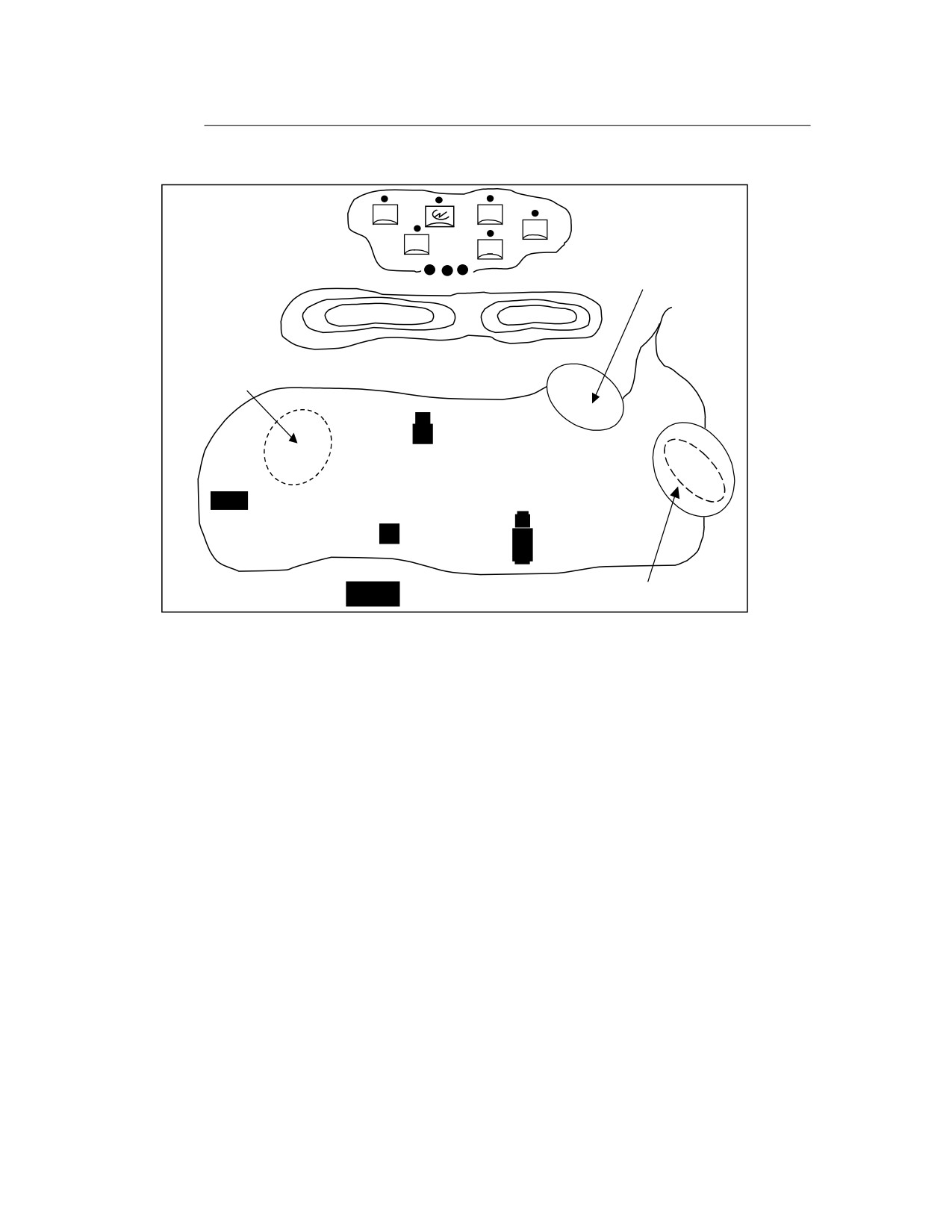
4-46. Vehicles enter the resupply point following one-way traffic flow. Only
those vehicles requiring immediate organizational or higher maintenance
stop in maintenance holding areas before conducting resupply. If not already
evacuated, WIA, KIA, and EPW are removed from team vehicles once they
stop at the refuel or rearm point. Vehicles will rearm and refuel rotating to
each point. The section sergeants will develop a plan so that not all Sentinels
are down at any one time for resupply.
4-47. Sentinel teams rotate individually to feed, pick up mail, pick up
supplies, and refill or exchange water cans. Once all vehicles have completed
resupply, they move to the holding area where the section sergeants or team
chief will conduct a precombat inspection
(PCI). Based on the enemy
situation, vehicles will disperse from their positions one vehicle at a time.
They will be resupplied and return to the holding position until the whole
section has been resupplied. Note: Medical evacuation vehicles are positioned
an equal distance between the refuel and rearm points. This decreases the
number of stops that a vehicle has to make. See Figure 4-3.
4-11
FM 3-01.48
INSPECTION AREA
EPW HOLDING AREA
PSG VEHICLE
FUEL
MEDIC
SUPPLY TRUCK
AMMO
MAINTENANCE HOLDING AREA
Figure 4-3. Service Station Method
Tailgate Method
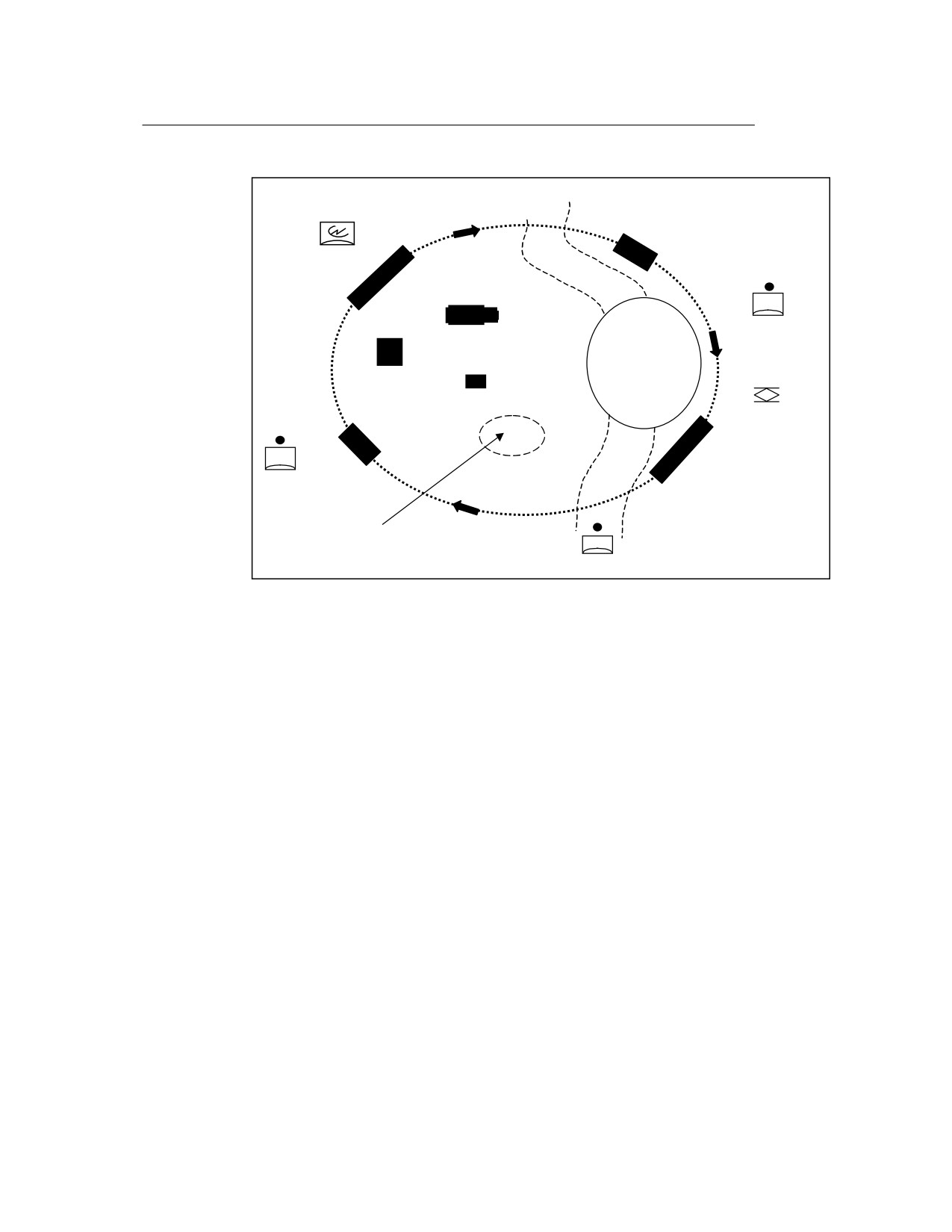
4-48. When the tailgate method is used, combat vehicles remain in place or
back out of their position a short distance so the resupply vehicle is not
exposed. POL and ammunition trucks go to each vehicle position in turn.
Team members rotate individually through feeding areas and pick up
supplies, water, and mail. Sentinel team personnel bring KIA and personal
effects to the holding area. Armored ambulances pick up critically wounded.
Other injured are carried or walk to the ambulances for first aid. EPW are
centralized and guarded. Vehicles requiring maintenance are brought to the
maintenance area. The section sergeant or team chief at each vehicle
completes inspections. See Figure 4-4.
4-12
FM 3-01.48
IN
SENTINEL
FUEL
TEAM
AMMO
SUPPLY TRUCK
MAINTENANCE
FEEDING AREA
AREA
MEDIC
FUEL
AMMO
EPW HOLDING AREA
OUT
Figure 4-4. Tailgate Method
4-49. Note that the tailgate method is normally used only in an AA. If it is
employed in forward positions, resupply must be masked by terrain. This
procedure takes much longer than the service station method.
EMERGENCY RESUPPLY
4-50. Occasionally, usually as a result of combat, the battery may have
such urgent need for resupply that it cannot wait for routine LOGPAC.
Emergency resupply may involve Classes III, V, and VIII. Because it often
occurs while in contact with the enemy, special techniques must be
considered. When the task force and weapon platoons (and Sentinels) are
under fire, limited supplies can be brought forward to the closest concealed
position, where the tailgate method may be used. Individual vehicles drop
back to resupply at the direction of the team chief, then return to fight. For
resupply during a lull in combat, the service station method may be
appropriate.
CROSS-LEVELING
4-51. Cross-leveling is not a technique of resupply but a way to make
supplies last longer. It is the distribution of supplies evenly throughout the
teams. Section sergeant and team chiefs in the assembly areas and after
every action do it automatically. Cross-leveling usually takes place between
team members. It is done for repair parts and all classes of supply. In some
cases, supplies may be shifted in the teams to increase combat potential. For
example, if a Sentinel team is preparing for movement but is short on
ammunition and water, they may acquire or draw these items from the other
4-13
FM 3-01.48
teams remaining in position. These teams would in turn be resupplied by the
normal resupply system. The Sentinel section sergeants and team chiefs
should manage cross-leveling between the teams.
PRE-POSITIONING SUPPLIES
4-52. Pre-positioned supplies are required in most defensive operations.
Sentinels need more Class III because of generators. Normally, only Class V
items are pre-positioned. The location and amount of pre-positioned
ammunition and fuel for Sentinels must be carefully planned, and each
vehicle driver must be digitally informed. Section sergeant or team chiefs
should verify the locations of the sites during their reconnaissance and
rehearsals.
4-53. Pre-positioned ammunition is on pallets, preferably in covered,
protected positions. Other pre-positioning considerations include—
• Pre-positioning frees cargo vehicles to bring more fuel and
ammunition forward.
• The possibility of capture or destruction of pre-positioned fuel and
ammunition is a risk for the battery. The battery cannot guard pre-
positioned sites with the manpower available.
• Pre-positioned Class III and ammunition must be far enough away
from vehicles and individual fighting positions so that its destruction
will not cause friendly vehicle or personnel casualties.
• Pre-positioning fuel is difficult. It requires covered sites separated
from ammunition as well as additional equipment, including fuel
transfer pumps and drums, blivets, and 5-gallon cans in quantity.
The following paragraphs describe the two main methods of pre-positioning
supplies.
Method 1
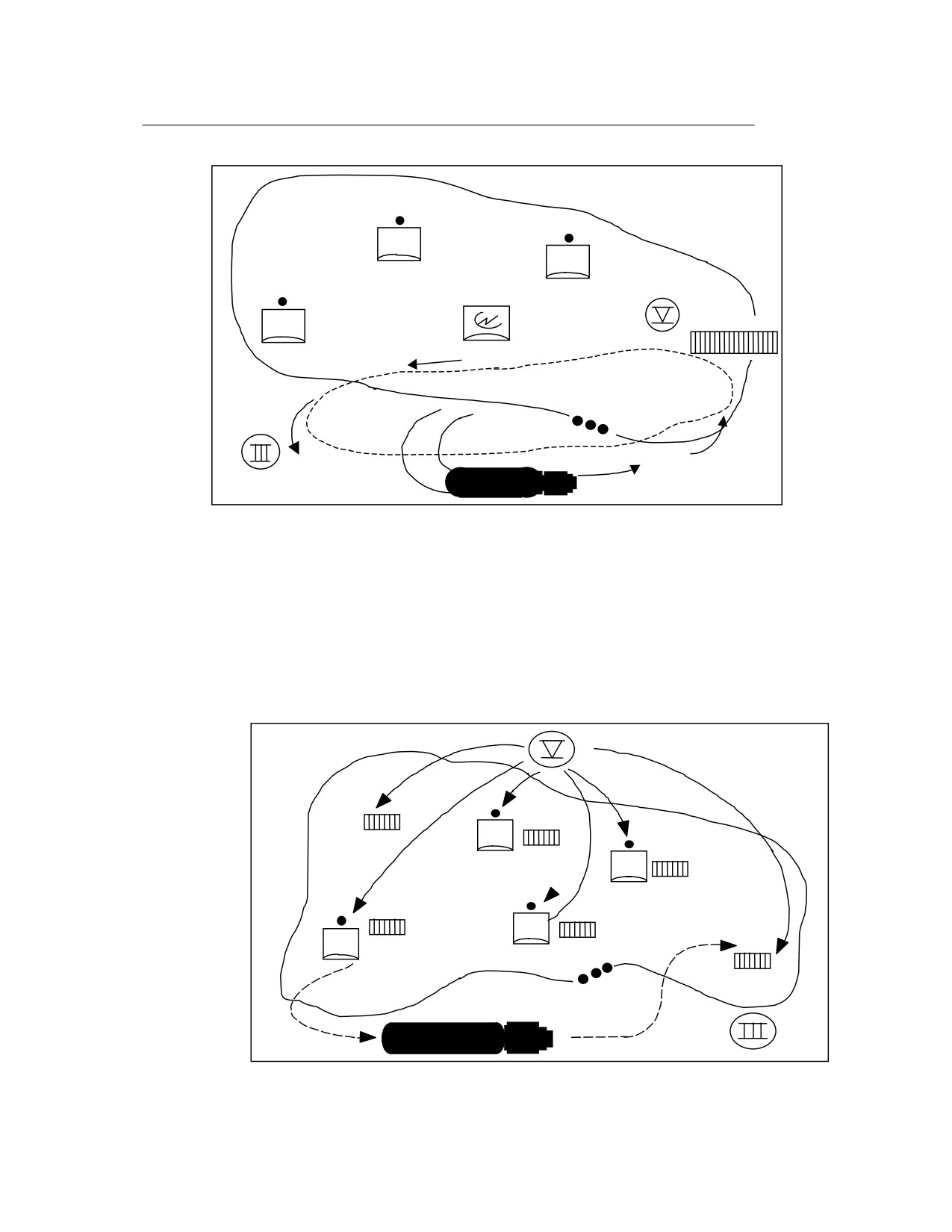
4-54. Class V (supplies) is located in one place inside the AA or BP. See
Figure 4-5. Each vehicle pulls into the central area to upload ammunition
and rations, if any are pre-positioned. Pre-positioned fuel tankers are set up
at the rear of the position, and refueling is done using the service-station
method.
4-14
FM 3-01.48
SENTINEL
CLASS V
TEAM
CLASS III
FUEL TRUCK
Figure-4-5. Service Station Method 1
Method 2
4-55. Class V (supplies) is pre-positioned at each vehicle position, and Class
III fuel tankers are pre-positioned in one location for the entire section. In
this method, Class V supplies are placed on the ground near each vehicle
position and rearming begins. The fourth vehicle stops at the Class III fuel
tanker located to the rear of the position and refuels. When the refueling
vehicle is full, it moves into its position and begins to rearm while another
vehicle moves to the refuel point. See Figure 4-6.
CLASS V
FUEL TRUCK
CLASS III
Figure 4-6. Service Station Method 2
4-15
FM 3-01.48
PERSONNEL SERVICES
4-56. This consists of strength accounting, casualty reporting, replacement
procedures, maintenance, personnel actions, and awards. According to local
SOP, a strength accounting report is sent to battalion headquarters detailing
Sentinel section strength by enlisted, and attached personnel. At higher
echelons, these reports are used to determine which units receive priority
when replacement troops arrive.
4-57. After digitally requesting a MEDEVAC for a casualty, a digital
personnel status is filled out as soon as the tactical situation permits. This
report is processed through administration/logistics
(admin/log) channels.
This information is used to inform the soldier’s next of kin and to provide a
statistical base for analysis of friendly or enemy activity. The platoon leader
should be prepared to write a letter for the commander's signature to be sent
to the soldier's next of kin.
REPLACEMENT OPERATIONS
4-58. Integrating replacements into teams is important. A new soldier
arriving on the battlefield may be scared and disoriented as well as
unfamiliar with local SOPs and the theater of operations. The section
sergeants should welcome him to the unit, interview him, and introduce him
to his team chief. The team chief introduces him to the team, briefs him on
his duty position, and assigns him an experienced "buddy" to "look out" for
him. This briefing should cover section recent, current, and future activities.
Furthermore, this briefing should reinforce the fact that he is part of a good
unit with a proud heritage (esprit de corps). The soldier should be told about
the importance of SOPs and be given special information concerning the area
of operations.
HEALTH SERVICES SUPPORT
4-59. At team level, health services support consists of: prevention,
treatment, and evacuation of casualties. Emphasis is placed on prevention
since soldiers may become combat ineffective due to nonbattle injuries or
disease as often as due to combat. Understanding and applying the principles
of field hygiene may eliminate these casualties, and prevent weather-related
injuries. Leaders monitor the overall condition of their soldiers (see FM 21-
10).
4-60. The leader must be prepared to treat and evacuate casualties. His
treatment of serious casualties consists primarily of stabilizing the soldier
until he can be evacuated to the nearest medical aid station. Casualties are
treated and may be evacuated directly from the teams by vehicle or
helicopter. If evacuated by vehicle, they are taken to the supported unit
casualty collection point or battalion aid station designated in the OPORD. If
evacuated by helicopter they are taken to the rear to the medical company in
FSB to receive medical assistance.
4-61. Unit SOPs and operation orders address casualty evacuation in
detail. They cover the duties and responsibilities of essential personnel, rank
4-16
FM 3-01.48
methods of evacuation, and establish procedures for retrieving and
safeguarding the weapons, ammunition, and equipment of casualties.
4-62. In war, leaders must be prepared to treat and evacuate casualties.
The combat lifesaver program enhances the teams 's ability to provide
immediate medical attention to casualties until evacuated to the nearest
casualty collection point. The goal is to have one combat lifesaver in each
Sentinel section.
MEDICAL EVACUATION PROCEDURES
4-63. The following provides the format for the Sentinel section and teams
to request medical evacuation support from a medical element. The medical
company has organic ground ambulances available and is often augmented
with both ground and air evacuation resources from the corps/COMMZ
medical evacuation battalion. For information concerning the medical
evacuation request used in peacetime, refer to FM 8-10-6.
MEDICAL COMPANY EVACUATION SUPPORT
4-64. The medical company evacuates patients farther to the rear from
Echelon I facilities. It also evacuates casualties on an area basis from units
without organic evacuation resources—
• In the case of evacuating patients from Echelon I facilities, the
required information is passed on the dedicated medical operations
net.
• In the case of evacuating patients on an area basis, the request
originates from the supported unit on the administration/logistics
net. The evacuation request format (Table 4-1) is used.
• Medical evacuation requests are transmitted using secure means or
are encrypted prior to transmission.
PREPARATION OF THE MEDICAL EVACUATION REQUEST
4-65. Brevity codes must be used in preparing all medical evacuation
requests. The authorized codes are provided in Table 4-1. They are also
provided in the standard SOI. Use of locally devised brevity codes is not
authorized. If the unit preparing the request does not have access to secure
communications, the request must be prepared in encrypted form.
TRANSMISSION OF THE REQUEST
4-66. The medical evacuation request should be made by the most direct
communications means to the medical unit that controls the evacuation
assets. The communications means and channels used depend on the
situation
(organization, communications means available, location on the
battlefield, and distance between units). The primary and alternate channels
to be used for requesting medical evacuation support are specified in the unit
evacuation plan.
4-17
FM 3-01.48
4-67. Secure Transmissions. Regardless of the type (secure or nonsecure)
of communications equipment used in transmission, it is necessary to—
• Make contact with the intended receiver.
• Use the call sign and frequency assignments from the SOI.
• Use the proper radio procedures.
• Ensure that transmission time is kept to a minimum (20 to 25
seconds maximum).
• Provide the opening statement: "I HAVE A MEDEVAC REQUEST."
4-68. Receiver Acknowledgment. After the appropriate opening
statement is made, the transmitting operator breaks for acknowledgment.
Authentication by the receiving or transmitting unit should be done per
TSOP.
4-69. Clear Text and Encrypted Transmissions. If secure
communications equipment is used in transmission, the request will be
transmitted in CLEAR TEXT. However, if the communications equipment
used in transmission is not secure, the request must be transmitted in
ENCRYPTED FORM with the following exceptions. The medical evacuation
request line number identifier (Line 1, Line 2, Line 3, and so forth) is always
transmitted in CLEAR TEXT. The call sign and suffix (Line 2) can be
transmitted in CLEAR TEXT. When using DRYAD numeral cipher, the same
"SET" line is used to encrypt the grid zone letters and the coordinates (Line 1
of the medical evacuation request). To avoid misunderstanding, a statement
is made that the grid zone letters are included in the message. This must be
accomplished unless the unit's SOP specifies that the DRYAD numeral cipher
is to be used at all times.
4-70. Letter and Numeral Pronunciation. The letters and numerals
that make up the request will be pronounced per radio procedures. In
transmitting the request, the medical evacuation line number identifier will
be given followed by the evacuation information (for example: “Line One.
TANGO PAPA FOUR SIX FIVE THREE SEVEN NINER”).
4-71. Medical Evacuation Request Line Numbers 1 Through 5. Line
numbers 1 through 5 of the request must always be transmitted first. The
information enables the evacuation unit to begin the mission and avoids
unnecessary delay if the remaining information is not immediately available.
The information for Lines 6 through 9 may be transmitted to the evacuation
vehicle en route.
4-72. Monitoring Requirement. After transmission and acknowledgment
the transmitting operator must monitor the frequency (Line 2 of the request)
to wait for additional instructions or contact from the evacuation vehicle.
4-18
FM 3-01.48
Table 4-1. Procedures for Information Collection and
Medical Evacuation Request Preparation
WHERE/
WHO
HOW
NORMALLY
LINE
ITEM
EXPLANATION
OBTAINED
PROVIDES
REASON
1
Location of pickup
Encrypt the grid
From map
Unit leader(s)
Required so
site
coordinates of the
evacuation
pickup site. When
vehicle knows
using the DRYAD
where to pick up
numeral cipher, the
patient. Also, so
same “SET” line will
that the unit
be used to encrypt the
coordinating the
grid zone letters and
evacuation
the coordinates. To
mission can plan
preclude mis-
the route for the
understanding, a
evacuation
statement is made
vehicle
(if the
that grid zone letters
evacuation
are included in the
vehicle must pick
message (unless unit
up from more than
SOP specifies its use
one location)
at all times)
2
Radio frequency,
Encrypt the frequency
From SOI
RTO
Required so that
call sign, and suffix
of the radio at the
evacuation
pickup site, not a rely
vehicle can
frequency. The call
contact requesting
sign (and suffix if
unit while en route
used) of person to be
(to obtain
contacted at the
additional
pickup site may be
information, or
transmitted in the
change in
clear
situation or
directions)
3
Number of patients
Report only applicable
From
Medic or
Required by unit
by precedence
infor- mation and
evaluation of
senior
controlling the
encrypt the brevity
patient(s)
person
evacuation
codes:
present
vehicles to assist
in prioritizing
A-URGENT
missions
B-URGENT-SURG
C-PRIORITY
D-ROUTINE
E-CONVENIENCE
If two or more
categories must be
reported in the same
request, insert the
word “BREAK”
between each
category
4-19
FM 3-01.48
Table 4-1. Procedures for Information Collection and
Medical Evacuation Request Preparation (Continued)
WHERE/
WHO
HOW
NORMALLY
LINE
ITEM
EXPLANATION
OBTAINED
PROVIDES
REASON
4
Special equipment
Encrypt the applicable
From
Medic or senior
Required so
required
brevity codes:
evaluation of
person present
that the equip-
A-None
patient/
ment can be
situation
placed on
B-Hoist
board the
C-Extraction equipment
evacuation
vehicle prior to
D-Ventilator
the start of the
mission
5
Number of patients
Report only applicable
From
Medic or senior
Required so
by type
information and encrypt the
evaluation of
person present
that the
brevity codes. If requesting
patient(s)
appropriate
MEDEVAC for both types,
number of
insert the word “BREAK”
evacuation
between the litter entry and
vehicles may
the ambulatory entry.
be dispatched
to the pickup
L+ # of Pnt - Litter
site. They
A + # of Pnt -
should be
Ambulatory
configured to
(sitting)
carry the
patients
requiring
evacuation
6
Security of pickup
N-No enemy troops in
From
Unit leader
Required to
site
area
evaluation of
assist
situation
evacuation
(wartime)
P-Possible enemy troops
crew in
in area (approach with
assessing the
caution)
situation and
E-Enemy troops in area
determining if
(approach with
assistance is
caution)
required. More
X-Enemy troops in area
definitive
(armed escort
guidance can
required)
be furnished
the evacuation
vehicle while it
is en route
(specific
location of
enemy to assist
an aircraft in
planning its
approach)
4-20
FM 3-01.48
Table 4-1. Procedures for Information Collection and
Medical Evacuation Request Preparation (Continued)
WHERE/
WHO
HOW
NORMALLY
LINE
ITEM
EXPLANATION
OBTAINED
PROVIDES
REASON
6
Number and type
Specific information
From
Medic or senior
Required to
of wound, injury, or
regarding patient wounds
evaluation of
person present
assist
illness (peace-time)
by type (gunshot or
patient
evacuation
shrapnel). Report serious
personnel in
bleeding, along with patient
determining
blood type, if known
treatment and
special
equipment
needed
Medic or senior
7
Method of marking
Encrypt the brevity codes:
Based on
Required to
person present
pickup site
situation and
assist the
A-Panels
availability of
evacuation
B-Pyrotechnic signal
materials
crew in
C-Smoke signal
identifying the
D-None
specific location
E-Other
of the pickup.
Note that the
color of the
panels or
smoke should
not be
transmitted until
the evacuation
vehicle
contacts the
unit (just prior
to its arrival).
For security,
the crew should
identify the
color and the
unit verify it.
Patient nationality
From
Medic or
8
The number of patients in
Required to
and status
evaluation of
senior person
each category need not be
assist in
patient
present
transmitted. Encrypt only
planning for
the applicable brevity
destination
codes:
facilities and
need for
A-US military
guards. Unit
B-US civilian
requesting
C-Non-US military
support should
D-Non-US civilian
ensure that
E-EPW
there is an
English-
speaking
representative
at the pickup
site
4-21
FM 3-01.48
Table 4-1. Procedures for Information Collection and
Medical Evacuation Request Preparation (Continued)
WHERE/
WHO
HOW
NORMALLY
LINE
ITEM
EXPLANATION
OBTAINED
PROVIDES
REASON
9
NBC contamination Include this line only when
From situation
Medic or
Required to
(war time)
applicable. Encrypt the
senior
assist in
applicable brevity codes:
person
planning for the
N-Nuclear
present
mission.
(Determine
B-Biological
which
C-Chemical
evacuation
vehicle will
accomplish the
mission and
when it will be
accomplished.)
From area
Terrain description
Required to
9
Include details of terrain
Personnel
survey
(peacetime)
allow
features in and around
at site
evacuation
proposed landing site. If
personnel to
possible, describe
assess
relationship of site to
route/avenue of
prominent terrain feature
approach to
(lake, mountain, tower)
area. Of
particular
importance if
hoist operation
is required.
ECHELONS OF MEDICAL CARE
4-73. Combat health support is arranged in echelons of care. Each echelon
reflects an increase in medical capabilities while retaining the capabilities
found in the preceding echelon.
ECHELON I
4-74. The first medical care a soldier receives is provided at Echelon I (also
referred to as unit-level medical care). This echelon of care includes—
• Immediate lifesaving measures.
• Disease and nonbattle injury prevention.
• Combat stress control preventive measures.
• Patient collection.
• Medical evacuation from supported units to supporting MTFs.
4-75. Treatment is provided by designated combat medics or treatment
squads (BASs) in conventional forces. In Army special operations forces,
Echelon I treatment is provided by special operations combat medics
(SOCMs), special forces medical sergeants
(SFMSs), or physicians or
physician assistants
(PAs) at forward operating bases, special forces
operating bases, or
in joint special operations task force areas of
4-22
FM 3-01.48
responsibility. Major emphasis is placed on those measures necessary for the
patient to RTD, or to stabilize him and allow for his evacuation to the next
echelon of care. These measures include maintaining the airway, stopping
bleeding, preventing shock, protecting wounds, immobilizing fractures, and
performing other emergency measures, as indicated.
4-76. The combat medic is assisted in his duties by nonmedical personnel
performing first-aid procedures. First aid is administered by an individual
(self-aid, buddy aid) and by the combat lifesaver. Each individual soldier is
trained to be proficient in a variety of specific first-aid procedures. These
procedures include aid for chemical casualties with particular emphasis on
lifesaving tasks. This training enables the soldier or a friend to apply first aid
to alleviate a life-threatening situation.
4-77. The combat lifesaver is a member of a nonmedical unit selected by
the unit commander for additional training beyond basic first-aid procedures.
A minimum of one individual per squad, crew, team, or equivalent-sized
element should be trained. The primary duty of this individual does not
change. The additional duty of the combat lifesaver is to provide enhanced
first aid for injuries (based on his training) before the combat medic arrives.
The combat lifesavers training is normally provided by medical personnel
assigned, attached, or in direct support of the unit. The senior medical person
designated by the commander manages the training program. Members of SF
operational detachment A teams receive enhanced first-aid training at the
combat lifesaver level.
4-78. Echelon I medical treatment is provided by the combat medic or by
the physician, PA, or medical specialist in the BAS. Emergency medical
treatment (immediate far forward care) consists of those lifesaving steps that
do not require the knowledge and skill of a physician. The combat medic is
the first individual in the CHS chain who makes medically substantiated
decisions based on medical MOS-specific training. The SFMS receives more
advanced training than the conventional force combat medic, as the SFMS
may be required to maintain patients for longer periods of time under austere
conditions. The physician and the PA in a treatment squad are trained and
equipped to provide advanced trauma management to the battlefield
casualty. This element also conducts routine sick call when the tactical
situation permits. Like elements provide this echelon of medical care to
division, corps, and EAC units.
4-79. Echelon I care is provided by—
• Medical teams/sections of combat and combat support
battalions/squadrons.
• Divisional medical companies.
• Corps and EAC area support medical companies.
• Special forces medical sergeants, PAs, and physicians assigned to
specialforces groups, special operations support battalions, and
SOCMs, PAs, and physicians assigned to Ranger regiments.
4-23
FM 3-01.48
ECHELON II
4-80. At Echelon II, care is rendered at the clearing stations (division or
corps), which are operated by the treatment teams of the medical company.
Here the casualty is examined and his wounds and general status are
evaluated to determine his treatment and evacuation precedence, as a single
casualty among other casualties. Emergency medical treatment, including
resuscitation is continued and, if necessary, additional emergency measures
are instituted, but they do not go beyond the measures dictated by immediate
necessities. The clearing station has a whole blood capability and limited x-
ray, laboratory, and dental support. Echelon II CHS also includes PVNTMED
and CSC assets in the division (main support medical company) and in the
corps (area support medical battalion [ASMB]). Those patients who can RTD
within one to three days are held for treatment. Company-sized medical units
organic to brigades, divisions, and ASMBs typically perform these functions.
Patients who are nontransportable due to their medical condition may receive
immediate surgical care from a forward surgical team (FST) collocated with a
division or corps medical company. A discussion of the FST is contained in
FM 8-10-25. Army special operations forces units do not have organic Echelon
II resources and are dependent upon theater assets for this echelon of care.
Support is provided on an area support basis by the ASMB.
ECHELON III
4-81. At Echelon III, the patient is treated in an MTF staffed and equipped
to provide resuscitation, initial wound surgery, and postoperative treatment.
Those patients who are expected to RTD within the theater evacuation policy
are relegated to a facility that has the capability for reconditioning and
rehabilitation.
ECHELON IV
4-82. At Echelon IV, the patient is treated in a hospital staffed and
equipped for general and specialized medical and surgical care. It stabilizes
the patient for further evacuation out of the theater, or for reconditioning and
rehabilitation prior to RTD.
ECHELON V
4-83. Echelon V medical care is found in support base hospitals.
Mobilization requires expansion of military hospital capacities and the
inclusion of Department of Veterans Affairs and civilian hospital beds in the
CHS system to meet the increased demands created by the evacuation of
patients from the TO. The support base hospitals represent the most
definitive medical care available within the CHS system.
4-24
Appendix A
Air and Missile Defense Orders and Annexes
This appendix provides the format and content of different types
of digital orders and annexes. Thoroughly understanding and
using them allows the Sentinel platoon leader to organize his
thoughts and concisely convey them to his subordinates.
(Classification)
(Change from oral orders, if any) (Optional)
A WARNING ORDER DOES NOT AUTHORIZE EXECUTION UNLESS SPECIFICALLY STATED
Copy__of__copies
Issuing headquarters
Place of issue
Date-time group of signature
Message reference number
WARNING ORDER_____
References: Refer to higher headquarters OPLAN/OPORD, and identify map sheet for operation. (Optional)
Time Zone Used Throughout the Order: (Optional)
Task Organization: (Optional) (See paragraph 1c.)
1. SITUATION:
a. Enemy forces. Include significant changes in enemy composition, dispositions, and courses of action.
IInformation not available for inclusion in the initial WARNO can be included in subsequent warning orders.
b. Friendly forces. (Optional) Only address if essential to the WARNO.
(1) Higher commander’s mission.
(2) Higher commander’s intent.
c. Attachments and detachments. Initial task organization; only address major unit changes.
2. MISSION. Issuing headquarters’ mission at the time of the WARNO. This is nothing more than higher
headquarters’ restated mission or commander’s decisions during MDMP.
3. EXECUTION.
Intent:
a. Concept of operations. Provide as much information as available; this may be done during the initial WARNO.
b. Tasks to maneuver units. Any information on tasks to units for execution, movement to initiate, recon-
naissance to initiate, or security to emplace.
c. Tasks to combat support units. See paragraph 3b.
d. Coordinating instructions. Include any information available at the time of the issuance of the WARNO. It
may include the following:
•
CCIR.
Time line.
•
Risk guidance.
Guidance on orders and rehearsals.
•
Deception guidance
Orders group meeting (attendees, location, and time).
•
Specific priorities, in order of completion.
Earliest movement time and degree of notice.
4. SERVICE SUPPORT. (Optional) Include any known logistics preparation for the operation.
a. Special equipment. Identifying requirements and coordinating transfer to using units.
b. Transportation. Identifying requirements and coordinating for pre-position of assets.
5. COMMAND AND SIGNAL. (Optional)
a. Command. State the chain of command if different from unit SOP.
b. Signal. Identify current SOI edition, and pre-position signal assets to support operation.
ACKNOWLEDGE: (Mandatory)
NAME (Commander’s last name)
RANK (Commander’s rank)
OFFICIAL: (Optional)
(Classification)
Figure A-1. Warning Order
A-1
FM 3-01.48
______________
(Classification)
(Change from oral orders, if any)
Copy__of__copies
Issuing headquarters
Place of issue
Date-time group of signature
Message reference number
FRAGMENTARY ORDER______
References: (Mandatory) Reference the order being modified.
Time Zone Used Throughout the Order (Optional)
1. SITUATION. (Mandatory) Include any changes to the existing order.
2. MISSION. (Mandatory) List the new mission.
3. EXECUTION.
Intent: (Optional):
a. Concept of operations. (Mandatory)
b Tasks to subordinate units. (Mandatory)
c. Coordinating instructions. (Mandatory) Include statement, “Current overlay remains in effect” or “See change 1 to
Annex C, Operations Overlay.” Mark changes to control measures on overlay or issue a new overlay.
4. SERVICE SUPPORT. Include any changes to existing order or the statement, “No change to OPORD xx.”
5. COMMAND AND SIGNAL. Include any changes to existing order or “No change to OPORD xx.”
ACKNOWLEDGE: (Mandatory)
NAME (Commander’s last name)
RANK (Commander’s rank)
OFFICIAL: (Optional)
ANNEXES: (Optional)
DISTRIBUTION: (Optional)
___________
(Classification)
Figure A-2. Fragmentary Order
A-2
FM 3-01.48
ANNEX G (AIR AND MISSILE DEFENSE) TO OPERATION ORDER NO __________
1. SITUATION
a. Enemy. See Annex B (Intelligence).
(1) Terrain. Identify most likely enemy ingress and egress routes.
(2) Weather. Identify enemy aircraft all-weather capabilities and limitations.
(3) Enemy air capability and/or activity.
(a) Air threat data. Air-capable organizations including air platforms by number and type.
(b) Additional air threat information. Include air threat information pertinent to the operation but not covered in the
Intelligence Annex. Highlight specific air threat considerations such as sortie rates, subordination of air elements to ground
units, ordnance peculiarities, target preferences, tactics, and recent significant activities and tactical ballistic missile threat.
(c) Air avenues of approach. List all expected air avenues of approach and identify by air platform their potential
users. List all beginning points. List all known beginning points and describe avenue of approach as it goes through the area
of interest.
b. Friendly situation. List AMD mission at all applicable levels. Describe how the air and missile defense plan integrates
with higher-echelon plans:
(1) Higher units. Outline higher AMD unit concept and plans.
(2) Adjacent units. Outline adjacent AMD unit concept and plans.
(3) Supporting elements. Note supporting units and support relationships.
c. Attachments and detachments. Identify air defense resources attached from other commands and identify those air
defense resources detached.
2. MISSION
3. EXECUTION
a. Scheme of AMD support. Commander’s overall AMD plan to include the concept, objectives, and priorities.
b. Tasks to subordinate AMD units. Briefly discuss AMD plan, command and support relationships, and priority of
protection.
c. Coordinating instructions. Instructions applicable to two or more subordinate units. Include references to other
applicable annexes.
•
Weapon control status (WCS) and WCS authority. Include any plans to change WCS.
•
Hostile criteria. Basic rules the commander has established to assist in the identification of friendly or hostile air
vehicles. Include preplanned changes.
•
Rules of engagement. Address ROE unique to the operation or points in the operation where changes are intended.
Include use of supplemental fire control measures.
•
Passive air defense. Specific passive air defense measures that all units should take to protect themselves from air
and missile attack or surveillance during this operation.
•
Combined arms for air defense. Specific techniques units should use to help in defending themselves against an air
or a missile attack or surveillance.
•
Early warning. Method and format for passing early warning to the entire force.
4. SERVICE SUPPORT
5. COMMAND AND SIGNAL
a. Command.
b. Signal:
•
Identification, friend or foe (IFF) code edition and book number.
• Communications links for early warning equipment.
Figure A-3. Annex G (Air and Missile Defense) to Operation Order
A-3
FM 3-01.48
(Classification)
(Change from oral orders, if any)
Copy__of__copies
Issuing headquarters
Place of issue
Date-time group of signature
Message reference number
OPERATION PLAN (ORDER)________(code name)
(number)
References:
Time Zone Used Throughout the Plan (Order):
Task Organization:
1. SITUATION
a. Enemy forces.
b. Friendly forces.
c. Attachments and detachments.
d. Assumptions (OPLAN only).
2. MISSION
3. EXECUTION
Intent:
a. Concept of operations.
(1) Maneuver
(2) Fires
(3) Reconnaissance and Surveillance
(4) Intelligence
(5) Engineer
(6) Air and Missile Defense
(7) Information Operation
b. Tasks to maneuver units.
c. Tasks to combat support units.
(1) Intelligence
(2) Engineer
(3) Fire Support
(4) Air and Missile Air Defense
(5) Signal
(6) NBC
(7) Provost Marshal
(8) PSYOP
(9) Civil Military
(10) As required
d. Coordinating instructions.
(1) Time or condition when a plan or order becomes effective
(2) CCIR
(3) Risk reduction control measures
(4) Rules of engagement
(5) Environmental considerations
(6) Force protection
(7) As required
4. SERVICE SUPPORT
a. Support concept.
b. Materiel and services.
c. Medical evacuation and hospitalization.
d. Personnel.
e. Civil military.
f. As required.
Figure A-4. Operation Plan (Order)
A-4
FM 3-01.48
5. COMMAND AND SIGNAL
a. Command.
b. Signal.
ACKNOWLEDGE:
NAME (Commander’s last name)
RANK (Commander’s rank)
OFFICIAL:
Name and position
ANNEXES:
(Classification)
Figure A-4. Operation Plan (Order)(Continued)
___________
(Classification)
(Change from oral orders, if any)
Copy__of__copies
Issuing headquarters
Place of issue
Date-time group of signature
Message reference number
MOVEMENT ORDER______
References:
Time Zone Used Throughout the Order:
Task Organization:
1. SITUATION
a. Enemy forces.
b. Friendly forces.
c. Attachments and detachments.
2. MISSION
3. EXECUTION
a. Concept of movement.
b. Tasks to subordinate units.
c. Detailed timings.
d. Coordinating instructions.
(1) Order of march.
(2) Routes.
(3) Density.
(4) Speed (include catch-up speed).
(5) Method of movement.
(6) Defense on move.
(7) Start, release, or other critical points.
(8) Convoy control.
(9) Harbor areas.
(10) Instructions for halts.
(11) Lighting.
(12) Air support.
Figure A-5. Movement Order
A-5
FM 3-01.48
4. SERVICE SUPPORT
a. Traffic control (performed by MPs).
b. Recovery.
c. Medical.
d. Petroleum, oils, and lubricants.
e. Water.
5. COMMAND AND SIGNAL
a. Command.
(1) Location of commander and chain of command.
(2) Locations of key individuals or particular vehicles.
b. Signal.
ACKNOWLEDGE:
NAME (Commander’s last name)
RANK (Commander’s rank)
OFFICIAL:
ANNEXES:
DISTRIBUTION:
____________
(Classification)
Figure A-5. Movement Order (Continued)
A-6
FM 3-01.48
(Classification)
(Change from oral orders, if any)
Copy__of__copies
Issuing headquarters
Place of issue
Date-time group of signature
Message reference number
OVERLAY ORDER________(code name)
(number)
References:
Time Zone Used Throughout the Order:
Task Organization: List only changes on the overlay.
1. SITUATION. List any changes to enemy or friendly situation.
a. Enemy forces. Verbal brief, referring to enemy unit locations (known or suspected) on the overlay.
b. Friendly forces. Verbal brief, referring to friendly unit locations on the overlay.
c. Attachments and detachments. Verbal brief, confirms changes to task organization.
d. Commander’s evaluation. Verbal brief.
2. MISSION. Written on the overlay.
3. EXECUTION
Intent:
a. Concept of operations. Verbal brief, referring to the overlay. Focus is on key events, identifying the main effort,
priorities of fires, and trigger points to execute engagements.
b. Tasks to maneuver units. Written, for each subordinate unit, on the overlay. Specified tasks for each unit only.
c. Tasks to CS units. Verbal brief, identifies priority of support.
d. Coordinating instructions. Verbal brief, covers only items not covered in unit SOPs. Focus on control measures and
graphics.
4. SERVICE SUPPORT. Verbal brief, referring to the overlay for locations of support. Any changes to sustainment.
5. COMMAND AND SIGNAL
a. Command. Verbal brief, refer to the overlay for location of key personnel, and identify the succession of command.
b. Signal. Verbal brief, and any code words which key events.
ACKNOWLEDGE: List on the overlay
NAME (Commander’s last name)
RANK (Commander’s rank) List on the overlay
OFFICIAL: Authentication by preparing staff officer, if not signed by the commander.
ANNEXES: None will be used.
DISTRIBUTION: Per unit SOP.
_____________
(Classification)
Figure A-6. Overlay Order
A-7
Appendix B
Reconnaissance, Selection, and
Occupation of Position
This appendix addresses the reconnaissance, selection, and occupation of
position (RSOP) requirements and their applications. The procedures for
RSOP have been developed to facilitate the rapid, orderly, and safe
movement of Sentinel teams on the battlefield. The six Sentinel teams
managed by the three section sergeants will displace frequently, whether
deployed in forward or flank areas. They move to support the divisional
AMD batteries in response to mission changes. They also move to
enhance survivability. RSOP must be part of a unit's SOP, be clearly
understood, and be practiced repeatedly by all members of the Sentinel
platoon.
METHODS OF RECONNAISSANCE
B-1. Reconnaissance is the thorough examination of terrain. It determines its
suitability for accomplishment of the mission. The three methods of
reconnoitering are: digital map, aerial, and ground.
DIGITAL MAP
B-2. A study and analysis of a digital tactical map will provide an appreciation of
the terrain and show the best route to the selected location. A map
reconnaissance—
• Precedes all other methods. A hard copy map should always be available
for the area of operation.
• Allows quick examination of large areas. This is faster than other
reconnaissance methods.
• Does not determine current conditions of the area. Therefore, examine
all overlays (for example, engineer and chemical). Use a current map
because a dated map may provide an inaccurate representation of the
area. Verify line of sight (LOS).
• Ensures the most security. A map reconnaissance can be conducted in a
secure location.
AERIAL
B-3. The section sergeant or team chief can also use available aircraft to see the
terrain. An aerial reconnaissance—
• Provides the fastest way to see the terrain.
• Is limited by aircraft availability, weather, and light conditions.
• Is still an imperfect reconnaissance. Masked areas inhibiting LOS,
ground conditions, and local threat cannot be determined unless the
aircraft lands.
• Is less secure than a map reconnaissance. Aircraft activity in an area
exposes soldiers to threat activity and also reveals an interest in a
particular area.
B-1
FM 3-01.48
GROUND
B-4. A ground reconnaissance is an on-site examination of the terrain. A ground
reconnaissance—
• Is the most accurate and desirable type of reconnaissance. The route can
be evaluated for trafficability, obstacles, choke points, and key terrain.
Firing positions, fields of fire, and air avenues of approach can be
analyzed for planning finalization.
• Is time-consuming. Covering the distances over potential routes and
checking alternate positions takes time. The ground reconnaissance is
the slowest method of reconnaissance.
• Is dangerous. The small reconnaissance party could be subjected to
threat observation en route or at the objective area.
B-5. If ground or aerial reconnaissance cannot be performed, engineer terrain
teams may be able to provide necessary information. Plans can be made for the
reconnaissance to include routes, rally/release points (RPs), assembly points,
and assembly times for the reconnaissance party. If time is limited and the unit
must move before the reconnaissance party returns, road guard positions are
selected and soldiers necessary for these tasks are included in the RSOP party.
Actual inspection of the chosen routes and positions on the ground is desirable to
confirm selections made from the map, or to make necessary adjustments in
plans.
RSOP SEQUENCE
B-6. Divisional AMD Sentinels are deployed as teams, and each Sentinel team is
deployed no farther apart than
60 kilometers
(METT-TC), which allows
20 kilometers of radar coverage overlap between Sentinels. This prevents an
enemy aerial platform from slipping between two radars. The Sentinel section
(two teams) will have to create its RSOP party. The following paragraphs detail
the sequence of actions for conducting the RSOP.
RECEIVE/ISSUE DIGITAL MOVEMENT WARNING ORDER
B-7. The Sentinel section sergeant returns to the assembly area, issues a
movement warning order, and briefs his team chiefs on the new mission. The
movement warning order can be—
• Written, digital, or verbal.
• Delivered in person.
• Passed over digital tactical communications nets.
B-8. The warning order must include, as a minimum: situation, mission,
execution (concept of operations, tasks to maneuver and combat support units,
and coordinating instructions), and an acknowledgement. See Appendix A for a
warning order format.
MAKE A DIGITAL MAP RECONNAISSANCE
B-9. Making a digital map reconnaissance is a quick way to conduct a tentative
reconnaissance. The best way is to actually look at the area and walk the
terrain. The positions of the six teams and each section CP are plotted on a map
B-2
FM 3-01.48
and represent the best locations for broadcasting track data to the divisional
AMD assets. The team chiefs will consider the terrain, weather, and the factors
of METT-TC. Alternate positions should be identified at this time, especially if
jamming has been detected. After the Sentinel positions have been plotted on a
map, positions for check points (CPs) and primary and alternate routes are
selected and plotted. The Sentinel team chief identifies a digital reconnaissance
route by conducting a digital map reconnaissance to the proposed area.
Positions selected by map reconnaissance must be confirmed by additional
reconnaissance if the tactical situation allows.
PLAN THE GROUND RECONNAISSANCE
B-10. Perform a ground reconnaissance to select the best Sentinel team
positions, march routes, SPs, RPs, CPs, and communications sites. The Sentinel
section sergeants should
(digitally or by voice) coordinate with the local
divisional AMD battery commander and the supported unit battalion S3 to
determine what areas the divisional AMD assets and maneuver forces plan to
occupy. Mutual agreement must be established to make the best use of the
available terrain. The Sentinel team chiefs select the personnel and equipment
needed to conduct the ground reconnaissance. The unit SOP will establish the
normal composition and responsibilities of the party. The reconnaissance party
for the team location should consist of at least the team chief, driver, and RTO.
BRIEF NEXT-IN-COMMAND − ISSUE ORDERS
B-11. After the senior team chief (section sergeants) finalizes and coordinates
the plan, he briefs his team and the other team covering all elements of a five-
paragraph operation order (situation, mission, execution, service support, and
command and signal) and indicates when the RSOP party will depart the
present position. He identifies at least the SP and the RP. His briefing and
issuing of orders should include instructions on continued operations in the
absence of key personnel.
CONDUCT RECONNAISSANCE AND SELECT POSITIONS
B-12. As soon as RSOP preparations are complete, the team chief departs with
the reconnaissance party. He ensures that the selected primary route meets
equipment (height, weight, and width) requirements, is passable, and avoids
possible ambush locations. He positions road guides as required. He may keep
the team posted on his progress by referencing predetermined checkpoints. As
the RSOP party approaches the new location, the team chief checks the area.
B-13. The team chief must ascertain if the tentative map-selected locations will
allow immediate occupation for accomplishment of the mission. Ground
reconnaissance verifies whether the terrain provides good natural concealment;
has access roads for primary and alternate route in and out of the position;
provides good observation, LOS to divisional AMD assets; and has firm ground
that will support the weight of the equipment.
B-14. NBC and mine detection teams check the immediate area to ensure it is
free of contamination and mines. A total security plan is then placed in effect.
This includes positioning personal weapons overlooking the main ground avenue
of approach and alternate routes into the position, and establishing other
B-3
FM 3-01.48
security positions around the area to preclude gaps in the perimeter.
Communications are established with all the positions. Proposed positions
plotted during the map reconnaissance should be used if possible. Team chiefs
reconnoiter the positions assigned to them, select tentative sites and observation
posts
(OPs), and confirm them with the section sergeants. The team chief
reconnoiters the area and selects the site for the C2 node. He visits each
proposed position, and supervises or assists as needed. After approving the
positions, the Sentinel section sergeants inform the divisional AMD S3 and
battery commander of the Sentinel locations.
B-15. Positions selected must be the best available for broadcasting track data,
communications, accessibility, and survivability. The following specific
characteristics must be considered in selecting static sites for the Sentinel
teams:
• Location has good LOS to the battery and elements and the ABMOC
(METT-TC).
• Cover and concealment are available.
• Alternate entrance and exit routes are available.
• Position is defendable against ground attack.
• Position is collocated (1 kilometer) with an AMD weapon system for air
and or ground protection.
B-16. The following are characteristics which must be considered in selecting
sites for Sentinel teams:
• Primary and secondary positions.
• Communications with section sergeants and the other team in the
section.
• Positions should be within 100 meters of plotted positions in original
Sentinel design. If not, it may need to be redesigned.
• Positions make maximum use of available cover and concealment to
facilitate survivability.
B-17. When Sentinels broadcast from a position and jamming has been detected,
that position may be compromised. The Sentinel team then should locate to the
alternate position. Sentinel teams will select primary alternate, and
supplementary positions during the ground reconnaissance. Routes into and out
of these positions must be selected and prepared as necessary. The following
positions are normally selected by ground reconnaissance:
• Primary position. A position from which the Sentinel team intends to
accomplish its tactical mission.
• Alternate position. A position to which the Sentinel team moves when
the primary position becomes untenable or unsuitable for carrying out
the assigned mission. The alternate position must be far enough away to
prevent its being rendered untenable by the same action that affected
the primary position. The alternate position must meet all the
requirements of the primary position.
• Supplementary position. A position that provides the best means to
accomplish a task that cannot be accomplished from the primary or
alternate positions.
B-4
FM 3-01.48
B-18. Care must be exercised to avoid placing positions near terrain features
easily recognized from the air. Positions are more vulnerable to enemy fires
(once spotted near an identifiable object).
PREPARE TO OCCUPY POSITIONS
B-19. After the team chiefs have selected their positions, they ensure the ground
guides know exactly where they want the vehicles and equipment emplaced.
Preparation should include marking the location of each major piece of
equipment (as required). Everyone at the new position is given the new
challenge and password, information on any known enemy activity in the area,
and the approximate arrival time, location, and order of vehicles for the main
party.
MOVE TO NEW POSITIONS
B-20. The team chiefs inform the rest of the teams of the results of their
reconnaissance and relay appropriate instructions for the movement of the main
body. The team chiefs organize the vehicles as suggested by the section
sergeants. Team vehicles use movement techniques dictated by the factors of
METT-TC and unit SOP.
OCCUPY, ORGANIZE, AND IMPROVE POSITIONS
B-21. The occupation of a position should be coordinated with the supported unit
to avoid mutual interference. When the section (two teams) arrives at the
position, all vehicles move off the road into the position without halting and
without closing the interval between vehicles. The unit SOP should state the
requirements and the priorities for occupying positions.
B-22. When all teams have reported they are in position and capable of
broadcasting air track data to their assigned divisional AMD batteries and
assets, the section sergeants will report the section "ready for action."
B-23. Team chiefs begin improving positions as dictated by SOP or additional
orders. A typical improvement sequence may include:
• Natural camouflage. Supplement existing camouflage nets where
possible with indigenous materials (branches, leaves, and snow). These
materials should be from the vicinity of the section so they will blend
naturally into the surroundings.
• Cover. The Sentinel teams must dig individual fighting positions when
the threat situation dictates. Engineer support may be required in some
situations, and should be requested through the divisional AMD battery.
• Alternate and supplementary positions. Work on alternate and
supplementary positions is initiated as early as possible to ensure they
are available should the primary become untenable.
B-24. Upon occupying the position, the Sentinel teams must provide continuous
local security. Obstacles such as a hasty protective minefield provide security,
which block, disrupt, or canalize enemy attacks. All obstacles must be
coordinated with the battery. Other measures taken should also be integrated
with the ground defense plan.
B-5
Appendix C
Continuity of Operations
This appendix describes the continuity of operations mode which may be
necessary due to equipment failure or battle damage. When a
system/subsystem fails, it must quickly reconfigure, to the best of its
ability, to allow the mission to continue. All divisional AMD Sentinel
teams need to be familiar with the capabilities of the system/subsystem
under continuity of operations. Equipment failure may occur when
individuals perform maintenance. For example, during extended hours of
operation, maintenance lights and indicators will require a soldier’s
attention. Equipment failure will also occur when engines fail, radios
overheat, matching units fail, and soldiers are incapacitated. These make
the unit less than 100% (degraded) operational. The battalion tactical
standing operating procedures (TSOP) should identify possible continuity
of operation situations and degraded modes affecting the Sentinel C2
node, radar, and associated equipment.
SENTINEL
C-1. There are numerous continuity of operation scenarios to think about at the
Sentinel radar and C2 node. The following are possibilities dealing with
equipment losses.
RADAR OUT OF ACTION/C2 NODE OPERATIONAL
C-2. When the radar is out of action, but the C2 node is functioning, ensure that
the "Intra-SHORAD" net is active and continuing to exchange track data from
other Sentinels in the battalion. Ensure that all fire units are within the
active/operating Sentinel's area for Sentinel broadcast. In this scenario, you will
be able to broadcast the division air picture but not your own local air tracks.
RADAR OPERATIONAL/C2 NODE OUT OF ACTION
C-3. When the C2 node is out of action, and the Sentinel radar is still
operational, take the C2 node EPLRS out of the node and use it at the radar.
This will curtail an 8-10 minute EPLRS reactivating needlines delay.
C-4. The Sentinel radar is now in the continuity of operations mode and will
broadcast air track data to the battery, platoons, sections, and fire units. If the
C2 node EPLRS radio is not available (unserviceable) then use the EPLRS radio
with the Sentinel to broadcast air track data to the battery, platoons, sections,
and fire units. There will be an 8-10 minute wait until the needlines are
activated.
RADAR AND C2 NODE BOTH OUT OF ACTION
C-5. This condition could exist when the C2 node with radar is changing
locations. In this case the battery, platoons, sections, and fire units operating in
that Sentinel's broadcast zone will not receive an EW air picture. Thus, per
C-1
FM 3-01.48
established SOP, the battery, platoons, sections, and fire units need to select
another Sentinel C2 node.
C-6. Each soldier having a TCU/EPLRS and HTU/EPLRS and not receiving an
air picture must accomplish a needline procedure. This procedure requires the
operator at the battery to access the LINK TOGGLE menu screen and the
platoons, sections, and fire units to access the SETUP menu screen. They
position the cursor to SENTINEL BROADCAST and select the Sentinel
identified to be used per SOP when continuity of operations occurs.
Note: MANUAL will cause a reboot which cleans out old HTU data. When the
cursor is at MANUAL, do not press ENTER. Going into or coming out of
MANUAL will cause a reboot.
Note: A Sentinel can display and distribute the air picture to another Sentinel if
and when one is out of range or line of sight from the ABMOC. This is
accomplished when in the "Sentinel Chaining", not the SIM training mode.
SINCGARS
C-7. There are two major continuity of operations conditions which would
dictate special procedures and configurations concerning SINCGARS digital
communications. One is due to distances involved between the Sentinel/C2 nodes
and the ABMOC in the IntraSHORAD−SINCGARS net and not all Sentinel/C2
nodes can receive data from the ABMOC. The second is when not all divisional
AMD elements serviced by a Sentinel/C2 node−SINCGARS net(s) are receiving
the air picture.
C-8. IntraSHORAD−SINCGARS net. The operational deployment of stations on
the IntraSHORAD−SINCGARS net is such that not all SINCGARS stations can
receive digital data communications from the ABMOC (normal condition). Some
Sentinel/C2 subsystems can receive from the ABMOC, others cannot. Some are
within the planning distance for communications with the A2C2 subsystem.
When this condition exists, extraordinary communications configurations must
be adapted. A solution follows:
• Establish two separate and distinct IntraSHORAD−SINCGARS nets.
IntraSHORAD−SINCGARS Net−1 would be established for the ABMOC
and Sentinel/C2 nodes which can receive from the ABMOC.
IntraSHORAD−SINCGARS Net 2 would be established for the A2C2
subsystem node and Sentinel/C2 nodes which can receive from the A2C2
subsystem.
• The DLRP and supported unit boundary (SUB) would be passed via
voice communications from the ABMOC to the A2C2 subsystem node for
dissemination on the IntraSHORAD−SINCGARS Net−2.
• Battlefield geometries, weapons control orders, airspace control
measures, and air defense warnings would be passed via JTIDS net.
Figure C-1 shows continuity of operations broadcast nets.
• Another possible workaround would be to use a handheld subsystem
that is in position to act as a relay as a method of completing this data
link. The selected handheld subsystem then would have to communicate
on the same frequency/hopset as is being used by the IntraSHORAD−
C-2
FM 3-01.48
SINCGARS Net. A consideration for this technique would be only the
externally acquired air tracks would be displayed at the selected relay.
JTIDS NET
JTIDS NET
E-3A
JTIDS
E-3A
JTIDS
AWACS (or)
PPLI
AWACS (or)
PPLI
E-2C HAWKEYE
A/C
E-2C HAWKEYE
A/C
ABMOC
A2C2 SUBSYSTEM
INTRASHORAD BROADCAST - SINCGARS
INTRASHORAD BROADCAST - SINCGARS 2
1
DATA CONNECTIVITY NOT ESTABLISHED - OUT OF RANGE
SENSOR/C2 (AT LEAST 1)
SENSOR/C2 (AT LEAST 1)
SENSOR BROADCAST - SINCGARS (UP TO 6 EACH)
SENSOR BROADCAST - SINCGARS (UP TO 6 EACH)
FIRE UNITS 24
BATTERY CP SECTION CPs 2 EACH
BATTERY CP
SECTION CPs 2 EACH
PLATOON CP 3 EACH
FIRE UNITS 24
CP
PLATOON CP 3 EACH
NOTE: The number of platoon/section CPs and fire units will vary based on the
task organization in SINCGARS continuity of operations broadcast nets.
Figure C-1. Continuity of Operations Broadcast Nets
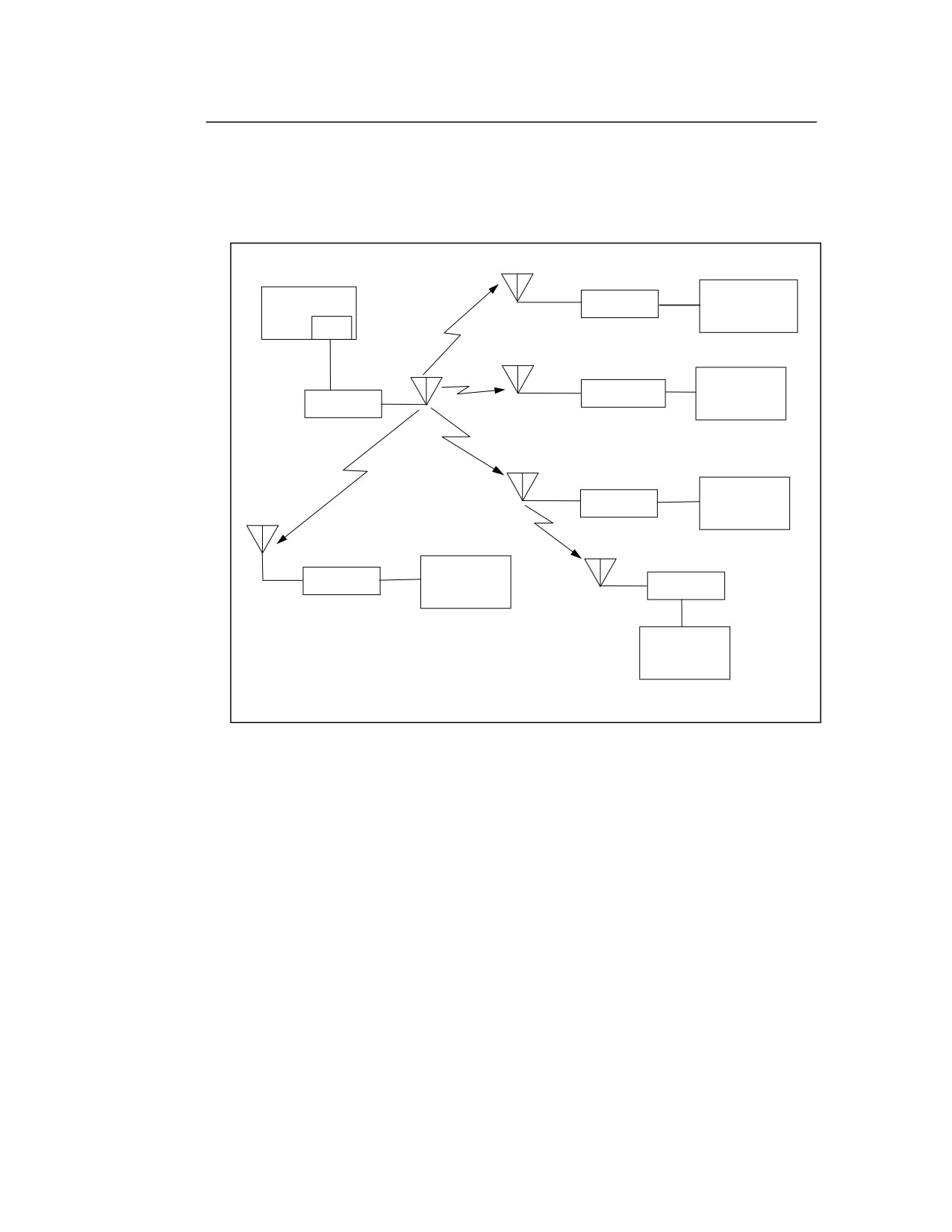
C-9. In the second condition when not all of the battery CP subsystems (and all
subsystems subordinated to the battery CP) can receive data from the
Sentinel/C2 serving as the data interface, a SINCGARS relay is needed. A
selected platoon/section CP or fire unit subsystem may be designated as a relay
for data received from the Sentinel/C2 subsystem. The following constraints
would apply in implementing a SINCGARS relay:
• Only one SINCGARS relay is normally allowed per each Sentinel
broadcast SINCGARS Net.
• There is only one radio transmitting data over a net at any one time.
Only the Sentinel/C2 subsystem and the designated relay are to transmit
data. The divisional AMD C3I software controls the time for
transmission of data.
• This is a special divisional AMD C3I HTU relay using one SINCGARS
receiver/transmitter (RT) with the relaying HTU using the same RT and
hopset but delaying the time of transmission to the second 2 seconds of
the “2+2+2”. It is different than the SINCGARS RT to RT relay where
one SINCGARS RT is cabled to another (which relays the data slightly
delayed on a second frequency net).
C-3
FM 3-01.48
• Because the SINCGARS RT to RT relay destroys the timing of 2+2+2 or
2+2, it should not be used for divisional AMD data. See Figure C-2.
SINCGARS/C2
SINCGARS
BATTERY CP
CIU
SINCGARS
HTU
SINCGARS
SINCGARS
HTU
RELAY
SINCGARS
SHTU
SINCGARS
HTU
Figure C-2. SINCGARS Relay
C-4
Appendix D
Sentinel Management Checklists
The checklists in this appendix are recommended for use by the Sentinel
platoon leader, platoon sergeant, and section leaders. They are not all-
inclusive; however, they are useful in most combat situations. Additions
can be made to these checklists where required. If the battalion or
battery SOP calls for different or more detailed procedures, follow the
local SOP.
CHECKLIST 1. PLATOON PRECOMBAT INSPECTION
INDIVIDUAL SOLDIER READINESS
1. TA-50 inventory. ______
2. Assigned weapons cleaned and zeroed. ______
3. Assigned NBC mask with accessories. ______
4. Load-bearing equipment (LBE). ______
a. First aid pouch with dressing. ______
b. Canteen(s) with water. ____
c. Ammo pouch with magazines. _____
d. Decontamination kit. ______
EQUIPMENT READINESS
1. Publications for vehicles. ______
2. Logbook, dispatch, and drivers license. ______
3. Before-operation PMCS and daily operations completed per TMs/FMs. ______
4. General
a. Orders and rehearsals conducted. ______
b. Required package product on-hand. ______
c. Basic issue items present and serviceable. ______
d. Fuel can(s) filled.
______
e. Water can(s) filled.
______
f. Necessary maps on-hand. ______
g. Rations distributed.
______
h. Vehicles loaded per load plan. ______
i. Compasses on-hand. ______
j. All necessary manuals on-hand. ______
COMMUNICATIONS EQUIPMENT
1. All necessary (supported force, AD, et cetera) TACSOP and SOIs on-hand. ______
2. Radios and intercom operational. ______
3. All connectors and receptacles clean. ______
4. Grounding straps secure. ______
5. Antennas and matching units complete and serviceable. ______
6. Field telephones present and serviceable. _____
7. Applicable batteries on-hand. _____
8. Radios complete and operational. ______
9. COMSEC equipment (ANCD) operational and programmed. ______
10. PLGR operational. ______
Figure D-1. Checklist 1
D-1
FM 3-01.48
WEAPONS
1. Weapons cleaning equipment on-hand. ______
2. All weapons clean. ______
3. Ammo basic load on-hand and clean. ______
SAFETY
1. Road crossing equipment (warning triangles, safety vest, and flashing lights) present
and in good working order. ______
2. Appropriate local area safety briefing given. ______
3. Vehicle safety check performed. ______
4. First aid kits or aid bag inspected. ______
Figure D-1. Checklist 1 (Continued)
CHECKLIST 2. PLATOON LEADER’S PLANNING
1. Threat analyzed. ______
2. IPB aerial and ground portion reviewed. ______
3. Air indicator templates, named areas of interest, target areas of interest, and
priority avenues of approach reviewed. ______
4. Battalion decision support template and decision support matrix reviewed. _____
5. Early warning data frequencies for Sentinels received by batteries. _____
6. Mission analyzed. ______
7. Mission focus on the supported brigade force reviewed. ______
8. Maneuver S3 coordination for all friendly airspace users (especially maneuver
scout-launched UAVs and RPVs used for intelligence gathering). ______
9. Counter-RISTA and the following reviewed:
a. Predictive operations considerations. ______
b. Convoy. ______
c. Choke points. ______
d. Troop and logistics concentrations. ______
e. APOD and SPOD. ______
f. Considerations for decisive operations. ______
g. Passage of lines. (EW frequencies) ______
h. Movement to contact. ______
i. Meeting engagement. ______
j. Deliberate attack. ______
k. Defend in sector. ______
l. Defend BP and strong point. ______
m. Withdrawal. ______
BACKWARD PLANNING
1. Equipment emplacement time. ______
2. Movement time from rally/release point (RP) to position. ______
3. Convoy time. ______
4. Start point (SP) time. ______
5. Briefing time to section sergeants/team chiefs. ______
6. Ammunition, POL, and ration resupply plan. ______
7. Maintenance completion time. ______
8. Movement time to rally point. ______
9. March order time. ______
Figure D-2. Checklist 2
D-2