FM 3-01.48 DIVISIONAL AIR AND MISSILE DEFENSE SENTINEL PLATOON OPERATIONS (DECEMBER 2003) - page 1
*FM 3-01.48
Field Manual
HEADQUARTERS
No. 3-01.48
DEPARTMENT OF THE ARMY
Washington, DC, 12 December 2003
DIVISIONAL AIR AND MISSILE DEFENSE
SENTINEL PLATOON OPERATIONS
Contents
Page
Preface
iii
Chapter 1 ORGANIZATION AND SYSTEM CAPABILITIES
OF THE SENTINEL PLATOON
1-1
Mission
1-1
Organization
1-1
Responsibilities
1-6
System Capabilities and Limitations
1-9
Early Warning
1-13
Force Protection
1-18
Chapter 2 SENTINEL MANAGEMENT PLANNING, COMMAND, AND CONTROL
2-1
Management Planning
2-1
Employment Methods
2-1
Air and Missile Defense Employment Principles
2-2
Sentinel Employment Guidelines
2-3
Command and Control
2-4
Support Relationships
2-6
Military Decision-Making Process
2-7
Intelligence Preparation of the Battlefield Process
2-7
Planning Considerations
2-12
Troop-Leading Procedures
2-16
Backbriefs, Rehearsals, and Inspections
2-19
Chapter 3 SENTINEL COVERAGE IN OFFENSIVE AND DEFENSIVE OPERATIONS
3-1
Offensive Operations
3-1
Defensive Operations
3-6
Support of Light and Special Operations
3-11
Distribution Restriction: Approved for public release; distribution is unlimited.
* This publication supersedes FM 44-48, 21 September 1993.
FM 3-01.48
Chapter 4 COMBAT SERVICE SUPPORT (LOGISTICS)
4-1
Functional Overview
4-1
Division Level
4-1
Brigade and Battalion Level
4-3
LOGPAC Operations
4-4
Resupply Operations
4-11
Personnel Services
4-16
Medical Evacuation Procedures
4-17
Echelons of Medical Care
4-22
Appendix A AIR AND MISSILE DEFENSE ORDERS AND ANNEXES
A-1
Appendix B RECONNAISSANCE, SELECTION, AND OCCUPATION OF POSITION
B-1
Methods of Reconnaissance
B-1
RSOP Sequence
B-2
Appendix C CONTINUITY OF OPERATIONS
C-1
Sentinel
C-1
SINCGARS
C-2
Appendix D SENTINEL MANAGEMENT CHECKLISTS
D-1
Glossary
Glossary-1
Bibliography
Bibliography -1
Index
Index-1
ii
FM 3-01.48
Preface
This field manual (FM) describes the organization and employment of the digitized air and
missile defense (AMD) Sentinel platoon, sections, and teams. The term Sentinel incorporates the
C2 node, radar, and associated equipment. C2 and C3 are interchangeable. This FM is to be used
by the AMD Sentinel platoon leader and soldiers organic to Heavy and Light Divisional AMD
battalions and AMD batteries supporting those respective Heavy and Light Divisions,
Light/Heavy ACRs, and Separate Brigades.
This publication implements the following International Standardization Agreements
(STANAGs):
STANAG
TITLE
EDITION
Formats for Orders and Designation of
2014
9
Timings, Locations and Boundaries
Military Symbols for Land Based
2019
4
Systems—APP-6(A))
2241
Land Operations—ATP-3.2
1
3880
Counterair Operations—ATP-42 (B)
3
The proponent for this publication is HQ TRADOC. Send comments and recommendations on
DA Form 2028 to Commandant, US Army Air Defense Artillery School, ATTN: ATSA-DT-WF,
Fort Bliss, T X 7 9 9 1 6 -3802. Unless this publication states otherwise, masculine nouns and
pronouns do not refer exclusively to men.
iii
Chapter 1
Organization and System Capabilities
of the Sentinel Platoon
This chapter discusses the mission, organization, system capabilities,
limitations, responsibilities, and early warning of digital divisional AMD
Sentinel operations. The digitized Sentinel platoon provides 24-hour early
warning (EW) to AMD battalions, batteries, platoons, sections, fire units,
and AMD liaison officers (LNOs) which support the maneuver force. This
digital early warning supports AMD elements in their mission to defeat
enemy air attack platforms, deny enemy RISTA capabilities, and destroy
low-level cruise missile threats. Digital early warning to AMD forces is
necessary to minimize losses and maneuver effectively to win on the
modern battlefield.
MISSION
1-1. The Forward Area Air Defense Command, Control, Communications, and
Intelligence (FAAD C3I) system supports divisional AMD forces by facilitating
the processing of critical C3I information to higher, adjacent, and lower units.
The FAAD C3I function involves the detection, acquisition, and identification of
helicopters, fixed-wing aircraft, cruise missiles, and unmanned aerial vehicles;
the distribution and dissemination of C3I data among the AMD units and
combined arms elements; the provision of early warning to the rest of the force;
and the alerting of all forces to transiting enemy aircraft. To enhance
functionality of the FAAD C3I system, it is integrated into and inter-operates
with both the Army Battle Command Systems and AMD systems.
ORGANIZATION
1-2. This section describes the organization of the Sentinel platoon found in a
digitized divisional AMD battalion. The unit MTOE provides detailed
information on unit personnel and equipment authorizations. The digitized
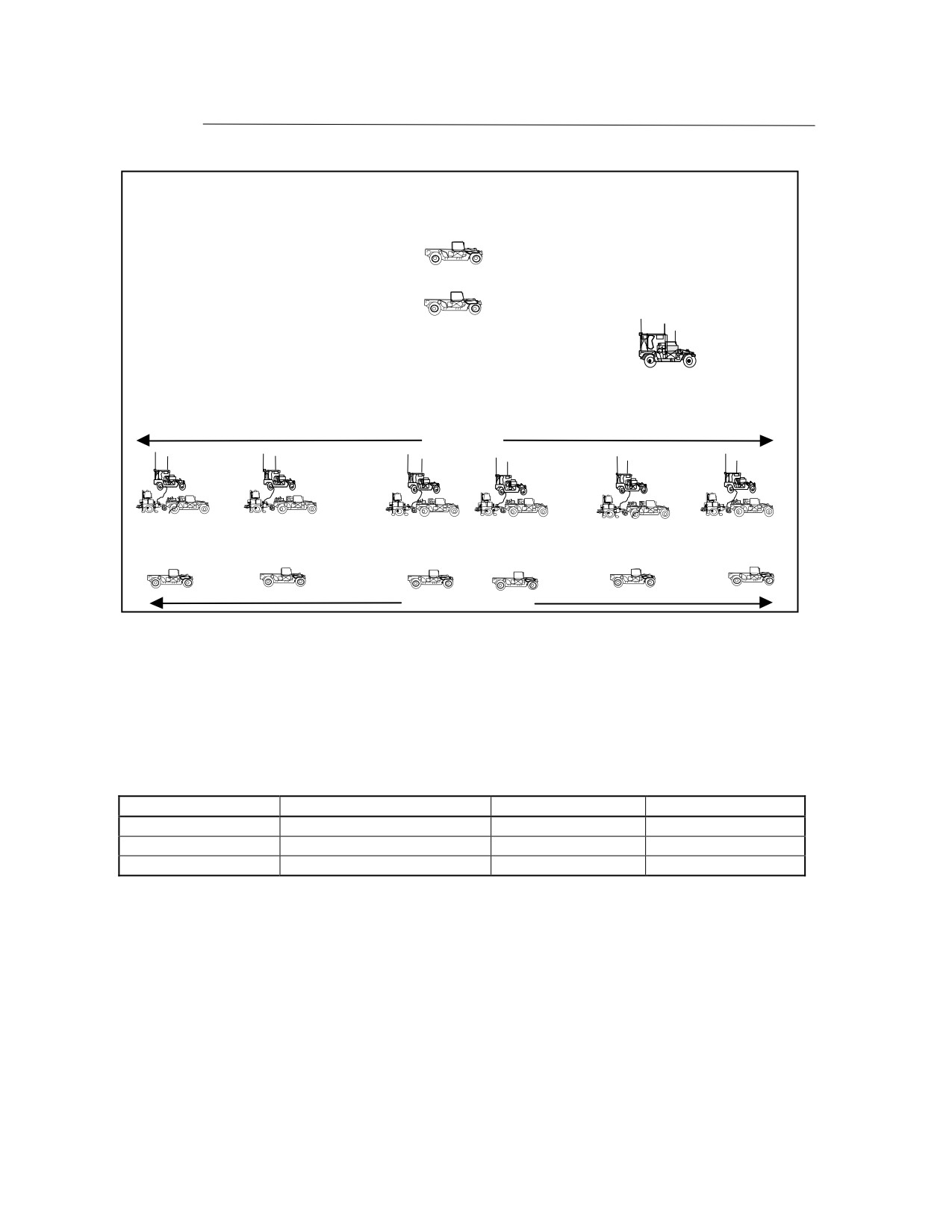
Sentinel platoon consists of a platoon headquarters, a maintenance section, and
three C3I Sentinel sections. See Figure 1-1.
1-1
FM 3-01.48
PLATOON LEADER
PLATOON
HEADQUARTERS
PLATOON SERGEANT
Three Sentinel sections per platoon
(Two teams per section)
MAINTENANCE SECTION
C2 NODE
SUPPORT VEHICLE
Figure 1-1. Sentinel Platoon Configuration
HEADQUARTERS
1-3. Headquarters provides the overall command and control of the platoon.
Duties and responsibilities of headquarters personnel are addressed later in the
chapter. Table 1-1 provides a listing of authorized personnel in the headquarters
section, and Table 1-2 provides a listing of authorized equipment.
Table 1-1. Headquarters Section Personnel
QUANTITY
TITLE
RANK
MOS
1
Platoon leader
2LT
14B00
1
Platoon sergeant
SFC
14J40
1
Vehicle driver
PFC
14J10
Table 1-2. Headquarters Section Equipment
1-2
FM 3-01.48
QUANTITY
ITEMS
1
Alarm, chemical agent, automatic: portable manpack M8A1
2
Truck utility: cargo/troop carrier 1-1/4 ton 4x4 W/E HMMWV
2
Navigation set: GPS receiver (PLGR)
1
Navigation set, satellite systems: AN/PSN-11
1
Night vision goggles: AN/PVS-5
4
Night vision goggles: AN/PVS-7B
1
PJH surface vehicle radio set: AN/VSQ-2 (V) 1 (PJHI)
1
HF radio set: AN/GRC-193A
1
Radio set: AN/VRC-91A
1
Radio set: AN/VRC-91D
1
Radio set: AN/VRC-92A
1
Radio set: AN/VRC-92D
1
Radio set: AN/VRC-92F
1
Radio set: AN/GRC-106
1
Radiac set: AN/UDR-13
1
Radiac set: AN/VDR-2
1
Radiac meter: IM-93/UD
1
Radiac meter: IM-174/PD
1
KY-99: MINTERM
1
Antenna group: OE-254/GRC
2
Cable telephone: WD-1/TT DR-8 1/2KM
1
Alarm, chemical agent, automatic: M22
4
Camouflage, screen support system: woodland/desert
4
Camouflage screen system: Ultra-lightweight radar scattering general-purpose
2
Camouflage screen system: Woodland light weight radar scattering without
support system
1
Reeling machine cable hand: RL-39
1
Telephone set: TA-312/PT
2
Monitor chemical agent
1
Tape reader general purpose: KOI-18/TSEC
1
Power supply vehicle: HYP-57/TSEC
1
Mast antenna 10 meters: AB-903/G
2
Data transfer device: AN/CYZ-10
1
Electronic transfer keying device: KYK-13/TSEC
1
Net control device: KYX-15/TSEC
2
Computer set digital: AN/UYK
1
Antenna: RC-292
1
Battery case: Z-AIJ-E1
1
Alarm monitor group: NBC tactical vehicle/area warning
1-3
FM 3-01.48
MAINTENANCE SECTION
1-4. The maintenance section is responsible for the operational readiness of all
Sentinel-related equipment. Table 1-3 provides a listing of authorized personnel
in the maintenance section, and Table 1-4 provides a listing of authorized
equipment.
Table 1-3. Maintenance Section Personnel
QUANTITY
TITLE
RANK
MOS
1
Maintenance supervisor
SSG
35M30
1
System radar repairer
SGT
35M20
1
System radar repairer
SPC
35M10
1
System radar repairer
PFC
35M10
Table 1-4. Maintenance Section Equipment
QUANTITY
ITEMS
2
Truck, utility: cargo/troop carrier, 1 1/4 ton, 4x4, W/E (HMMWV)
2
Navigation set: GPS receiver
2
Radio set: AN/VRC-90A
2
Radio set: AN/VRC-90D
2
Multimeter digital: AN/PSM-45
4
Night vision goggles: AN/PVS-7B
2
Oscilloscope, DC 100MZ: AN/USM-488
2
Tool kit: electronic maintenance Sentinel
3
Tool kit: radar maintenance Sentinel
2
Test set radio frequency power: AN/USM-491
2
Test set: elect sys AN/PSM-95 for soldiers port on-system repair tool
4
Camouflage screen system: woodland lightweight radar scattering without support
system
4
Camouflage screen support system: woodland/desert
4
Camouflage screening system: ultra-lightweight radar scattering general purpose
1
Cable telephone: WD-1/TT DR-8 1/2 KM
2
Data transfer device: AN/CYZ-10
2
Radiac set: AN/UDR-13
2
Radiac meter: IM-93/UD
1
Reeling machine cable hand: RL-39
1
Telephone set: TA-312/PT
1
Maintenance kit: supplemental (Sentinel)
2
Navigation set satellite system: AN/PSN-11
1
Alarm monitor group: (MICAD) NBC tactical vehicles/area warning
2
Computer set digital: AN/UYK
2
Radio set: AN/VRC-90F
2
Navigation set: GPS receiver
1-4
FM 3-01.48
SENTINEL RADAR SECTIONS
1-5. The Sentinel platoon consists of three digitized Sentinel radar sections, two
Sentinel teams per section. Teams normally work in pairs when deployed. These
sections make up the FAAD C3I architecture of the Sentinel platoon. Table 1-5
provides a listing of authorized personnel in the sections. Table 1-6 provides a
listing of authorized equipment in the sections.
Table 1-5. Sentinel Radar Sections Personnel
QUANTITY
TITLE
RANK
MOS
3
Section sergeant
SSG
14J30
3
Team chief
SGT
14J20
12
EWS operator
SPC
14J10
12
EWS operator
PFC
14J10
Table 1-6. Sentinel Radar Sections Equipment
QUANTITY
ITEMS
6
Air conditioner: 115V, AC, 1PH, 50-60 CY 9000 BTU
30
Alarm, chemical agent, automatic: portable, manpack, M8A1
6
Alarm: chemical agent automatic M22
12
Antenna group: OE-254()/GRC
6
Binocular: modular construction MIL scale reticle, 7x50MM W/E
12
Control, receiver-transmitter: C-11561
6
Battery case: Z-AIJ-E1
18
Cable telephone: WD-1/TT DR-8 1/2 KM
60
Camouflage screen support system: woodland/desert
6
Camouflage screen system: woodland, lightweight, radar scattering, without
support system
6
Communications control set: AN/TSQ-183A
6
Data transfer device: AN/CYZ-10
3
Electronic transfer keying device ETKD: KYK-13/TSEC
12
Generator set: DED TM: 10 KW, 60 HZ, mounted on M116A2 PU-798
6
Generator set: DED skid-mounted, 10 KW, 400 HZ
6
Radar set: Sentinel AN/MPQ-64
6
KY-99: MINTERM
6
Indicator bearing distance heading (Patriot)
6
Night vision goggles: AN/PVS-5
36
Night vision goggles: AN/PVS-7B
18
PJH surface vehicle radio set: AN/VSQ-2
6
Radiac set: AN/VDR-2
6
Radio set: AN/GRC-213
6
Radiac set: AN/UDR-13
3
Alarm, monitor group: NBC, tactical vehicles/area warning
6
Radiac meter:IM-93/UD
6
Radiac meter: IM-174/PD
12
Reeling machine cable hand: RL-39
1-5

FM 3-01.48
Table 1-6. Sentinel Radar Section Equipment (continued)
QUANTITY
ITEMS
6
Truck utility: heavy variant HMMWV, 4X4, 10000 GVW, W/E
3
Tape reader, general purpose: KOI-18/TSEC
6
Truck, utility: cargo/troop carrier 1 ¼-ton, 4X4, W/E (HMMWV)
6
Test set: electrical system AN/PSM-95 for soldiers port on-system rep tool teq
6
Power supply, vehicle: HYP-57/TSEC
6
Water heater: mounted/ration used on M1 tank & M2 fighting vehicles
60
Camouflage screening system: ultra-lightweight radar scattering general purpose
6
Radio set: AN/VRC-90F
6
Interrogation set: AN/TPX-56
6
Radio set: AN/GSQ-20
6
Radio set: AN/GRC-106
6
HF radio set: AN/GRC-193A
12
Radio set: AN/VRC-90A
12
Radio set: AN/VRC-90D
6
Radio set: AN/GRC-106
6
Navigation set: GPS receiver
6
Navigation set satellite systems: AN/PSN-11
12
Mast antenna, 10- meters: AB-903/B
6
Computer set, digital: AN/UYK
6
Common hardware maneuver control system
RESPONSIBILITIES
1-6. Providing digitized early warning to the force requires a team of trained and
disciplined soldiers. Therefore, soldiers and leaders within the Sentinel platoon
must be trained and knowledgeable on the entire digital early warning spectrum
and serve as the FAAD C3I subject-matter experts to the air and missile defense
force. Sentinel platoon personnel demonstrate their subject-matter expertise by
providing timely and accurate early warning to the entire force 24 hours a day.
They further support the force by integrating into the supported force planning
process and assist with overall FAAD C3I management.
SENTINEL PLATOON LEADER
1-7. The Sentinel platoon leader is responsible for the morale, welfare, discipline,
and training of his platoon, and for molding his platoon into an effective fighting
force capable of performing its combat mission. He is further responsible for the
operational readiness and accountability of all assigned equipment. In addition
to his platoon leadership requirements, the Sentinel platoon leader is further
responsible for executing a defined set of duties and responsibilities as the senior
FAAD C3I expert in the AMD battalion. Because of this, he must be a senior
lieutenant of proven competency and of the highest quality. Those duties and
responsibilities are as follows:
1-6
FM 3-01.48
• Participate in the division planning process and provide
recommendations to the battalion S3 on the employment of Sentinel
sections. See Chapter 2 for details on Sentinel employment planning.
• Assist the battalion S2 with integrating Sentinels into the division
reconnaissance and surveillance plan.
• Assist the S3 in executing the C3I Sentinel management plan.
• Conduct a digital terrain analysis of all proposed Sentinel positions.
• Advise battalion personnel on digital communication links and assist the
battalion signal officer with digital link management.
• Advise battery commanders on Sentinel employment and management
when Sentinel sections are attached to AMD batteries.
SENTINEL PLATOON SERGEANT
1-8. The C3I Sentinel platoon sergeant is second in command of the C3I Sentinel
platoon. He ensures the C3I Sentinel platoon is trained to accomplish its combat
mission. The C3I Sentinel platoon sergeant is responsible to the platoon leader
for the training, logistics, and discipline of the C3I Sentinel platoon. He
coordinates all logistical and maintenance support the platoon requires. The
platoon sergeant must work closely with the platoon leader to ensure unity of
effort. He must be proficient in all of the tasks normally accomplished by the
platoon leader and be prepared to accept platoon leader responsibilities in his
absence. Additionally, the Sentinel platoon sergeant is responsible for executing
the following duties and responsibilities:
• Assist the platoon leader with Sentinel employment planning.
• Coordinate and integrate GS Sentinel teams into supported force
logistical plans.
• Advise battery commanders and first sergeants of Sentinel team
logistical requirements, and assist with battery CSS planning when
teams are attached to AMD batteries.
• Coordinate for the distribution of IFF codes to all Sentinel teams.
SENTINEL SECTION SERGEANT
1-9. The C3I Sentinel section sergeant is responsible to the platoon leader and
platoon sergeant for the training, maintenance, discipline, and tactical
employment of his C3I Sentinel teams. The section sergeant designates the area
for positioning the C3I Sentinel teams per guidance from the S3, platoon leader,
or battery commander when attached to a divisional AMD battery.
1-10. Based upon higher echelon orders, the section sergeant selects tentative
positions for C3I Sentinels and approves positions upon confirmation from
individual team chiefs. He coordinates with the AMD battery for supply and
maintenance support of his teams and is responsible for the maintenance of all
assigned equipment. He ensures the digital broadcast of air threat early warning
to the divisional AMD battalion, batteries, platoons, sections, fire units, and
AMD LNOs in his broadcast sector and zone. Finally, he executes the Sentinel
employment plan as specified. Additional duties and responsibilities include the
following:
1-7
FM 3-01.48
• Ensure Sentinels are properly networked to pass a digital air picture to
supported elements.
• Coordinate and integrate Sentinel positions into supported force scheme
of maneuver.
• Verify that IFF codes are properly loaded into each Sentinel.
• Coordinate external issues to include force protection, logistics, casualty
evacuation, and other requirements with supported forces.
• Based upon METT-TC, coordinate for engineer support and security
augmentation to develop and execute site security for the individual
Sentinels.
• Serve as the FAAD C3I SME to the AMD battery commander when
attached. Advise the battery commander on Sentinel planning,
employment, and digital link management.
1-11. Until the MTOE can be adjusted to accommodate personnel and vehicle
shortages, the supported AMD battery must assume a majority of the Sentinel
section sergeant’s responsibilities. The following section sergeant responsibilities
are performed by the first sergeant and battery XO/commander:
• AMD battery first sergeant:
Coordinate maintenance and DA 5988-E turnaround to include total
responsibility for recovery of Sentinel equipment to BSA and
coordination of contact teams.
Coordinate CASEVAC for Sentinel teams.
Implement a plan to resupply Sentinel section.
Logistics, maintenance, and CASEVAC support can be coordinated either
directly from the battery, the GS platoon sergeant, or the DS platoon supporting
a task force.
• AMD battery XO/commander:
Coordinate for Sentinel security/force protection during brigade
MDMP.
When operating with maneuver task force coordination, needs to be
directly tasked to DS AMD platoon leaders. This includes
coordination for movement and any DS assets tasked with security or
engineer support for Sentinel teams.
Develop a plan to get Sentinel section sergeant/team chief to
brigade/task force order and rehearsal. This is the one area where an
assumed risk has to be taken. It is imperative that section
sergeants/team chiefs be present at orders and rehearsals.
AMD batteries must train with the Sentinel sections that support them and
include Sentinel planning into their battery TACSOP. The Sentinel team is the
key to successful FAAD C3I integration.
ORGANIZATIONAL LIMITATIONS
1-12. Current MTOEs dictate that Sentinel section sergeants serve as part of a
Sentinel team. This impacts the section sergeant’s ability to execute some
internal requirements such as supervising Sentinel positioning, executing
1-8
FM 3-01.48
logistics and CASEVAC operations, and providing general oversight of other
Sentinel teams. Externally, the section sergeant is limited in his abilities to
coordinate support from other forces and is limited in his ability to participate in
the planning process, orders drills, and rehearsals. This limitation does not
alleviate the section sergeant of his responsibilities. Leaders within the platoon
must be creative in generating ways to overcome these limitations until such a
time that MTOE changes are incorporated. Some recommendations may help
alleviate this problem.
• Employ Sentinel platoon sergeants to assist section sergeants.
• Shuttle the section sergeant to the AMD battery during the planning
process, orders drills, and rehearsals.
• Since Sentinels are almost always collocated with an adjacent unit,
coordinate for external sources to provide CSS support to Sentinel teams.
1-13. Air defense early warning to the Armored Cavalry Regiment is limited in
its application to the corps due to an insufficient number of Sentinel radars and
JTIDS to cover the corps area of operations (three divisions). This limitation can
be remedied with additional Sentinels equipped with a JTIDS, associated
equipment, and 14J soldiers.
SYSTEM CAPABILITIES AND LIMITATIONS
1-14. The Sentinel radar is towed by a heavy HMMWV model 1097 with a
mounted 10-kilowatt generator in the rear of the HMMWV. The digitized
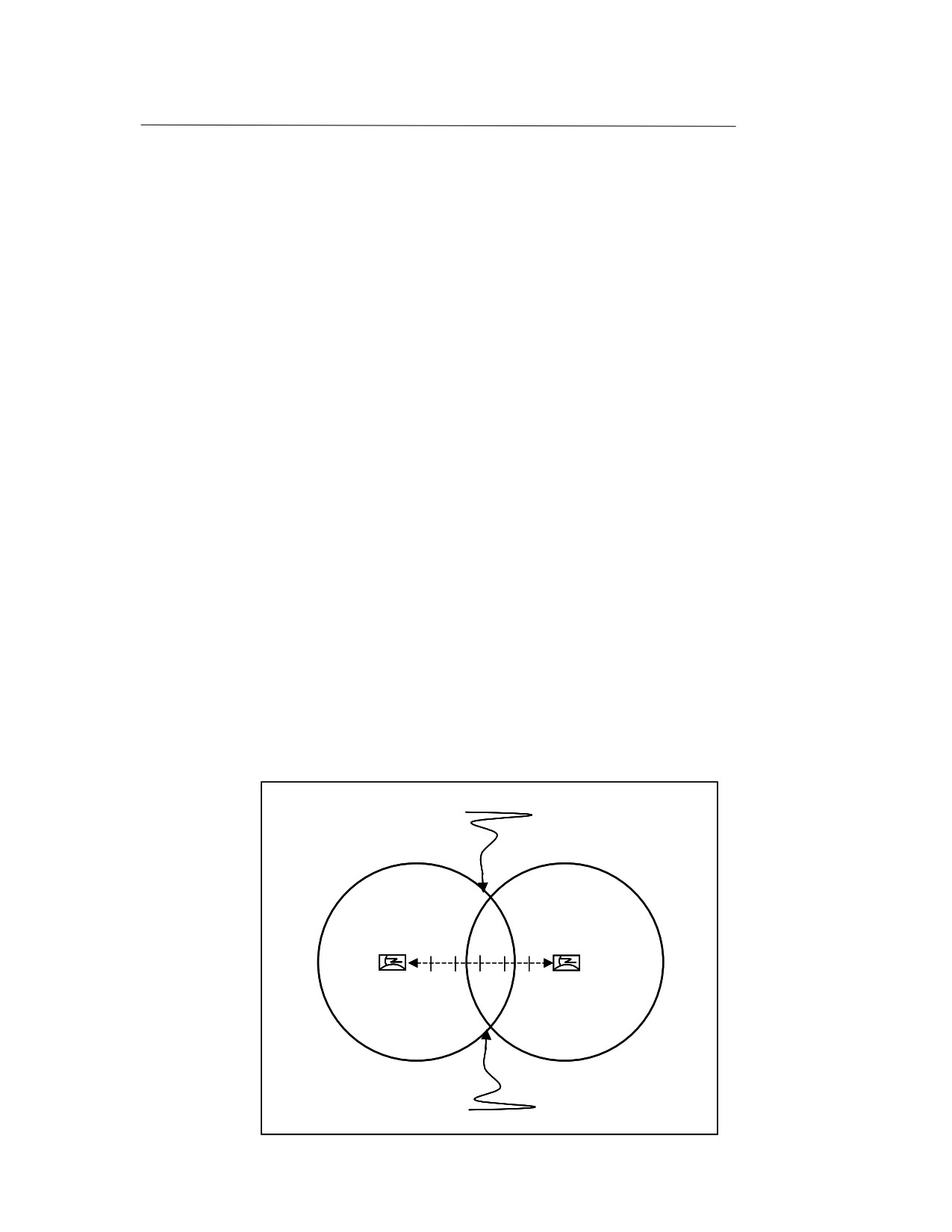
Sentinel/C2 node is capable of 24-hour operations and can be located within 10
kilometers of the FLOT. It should have a clear field of view (360 degrees), no
more than 60 kilometers from another Sentinel radar to ensure overlapping
coverage (20-kilometer radar overlap), and should be placed away from power
sources of similar radiating frequency bands to avoid interference. If two
digitized Sentinel nodes must operate close together due to the mission, then one
should counter-rotate to ensure no radar interference exists between them
(Figure 1-2).
ENEMY PLATFORM
60
50
40
30
20
10
0
0
10
20
30
40
50
60
SENTINEL W/C2 NODE
SENTINEL W/C2 NODE
ENEMY PLATFORM
1-9
FM 3-01.48
Figure 1-2. Deployed Sentinels
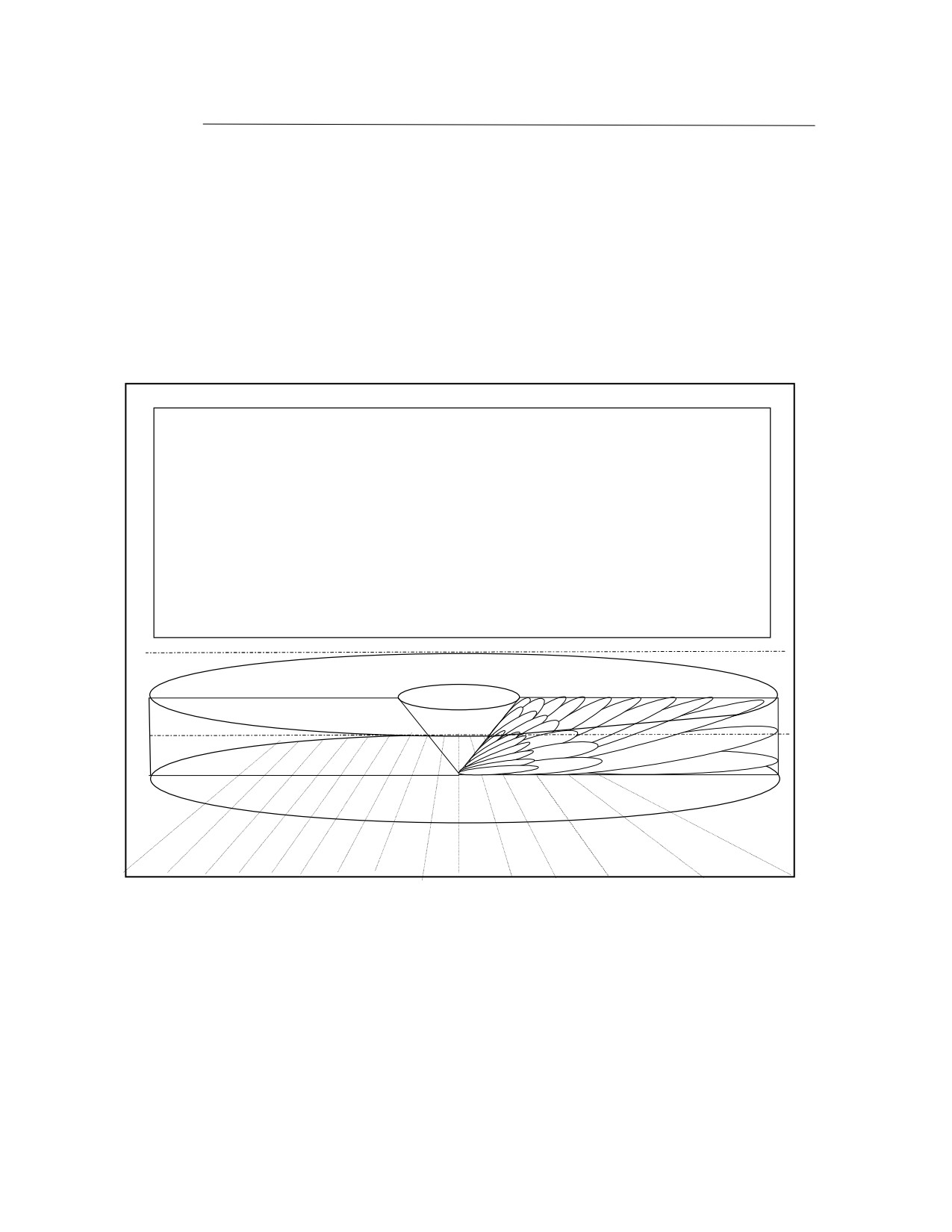
1-15. The Sentinel radar is an X-Band, medium PRF pulse-Doppler radar. Its
extremely low noise design and Doppler signal processing result in exceptional
ability to detect small, low-flying targets in clutter. Targets can be detected and
tracked in all weather, day or night, under the most extreme battlefield
conditions. The Sentinel can detect and classify rotary-wing aircraft, including
hovering rotary-wing aircraft, at ranges beyond firing battery maximum weapon
detection and engagement range in severe ECM. Due to its three-dimensional
pencil beam and frequency-agile mode of operation, the Sentinel is difficult to
detect and locate accurately, improving its survivability. See Figure 1-3.
Radar
Mobility
Track
X Band (8-12)
March Order 15 minutes
Process up to 120 Tracks
Three-Dimensional Pencil Beam (2° x)
Emplacement 30 minutes
Fixed-Wing
)1R
ange-Gated, Pulse
Rotary-Wing
Phase-Frequency
Cruise Missile/UAV/RPV
Remote Control Unit
30 RPM (2-second update)
Provides Built-InTest
Tracking
Angle Accuracy Az
0.2°
Troop Proficiency Trainer
Elevation - 10° to 55°
Elevation Accuracy
Maintenance Trainer
Elevation (Track) -10 to 55°
Transportablility
IFF (L-Band)
Vehicle Mounted Shelter with
Beam Width Az 12°
ECC
Elevation 40°
Extremely Low
Sidelobes
Power Unit
Wide Band Frequency
Towed
Sensor
360° Surveillance
Range 40 KM Instrumented
Sector Blanking
Airlift
Track on Jam
Altitude 0-4 KM
(Variable Pulse Repetition )
Helicopter: CH-47D
Fixed-Wing: C-130, C-141, C5
4000
40 KM
0 KM
0 KM
4 KM
8 KM
12 KM
16 KM
20 KM
Figure 1-3. Sentinel Characteristics
ENHANCED TARGET RANGE ACQUISITION AND CLASSIFICATION
1-16. Two ETRAC modes are available to the operator:
• Three-second rotation rate with full raster. The operator selects this
default mode under normal operating conditions.
• Three-second rotation rate with low-altitude raster. The operator selects
this special mode only when directed by the team chief or higher
authority due to an expected cruise missile threat to a particular asset.
1-10
FM 3-01.48
Figure 1-2. Deployed Sentinels
DIGITIZED C2 NODE
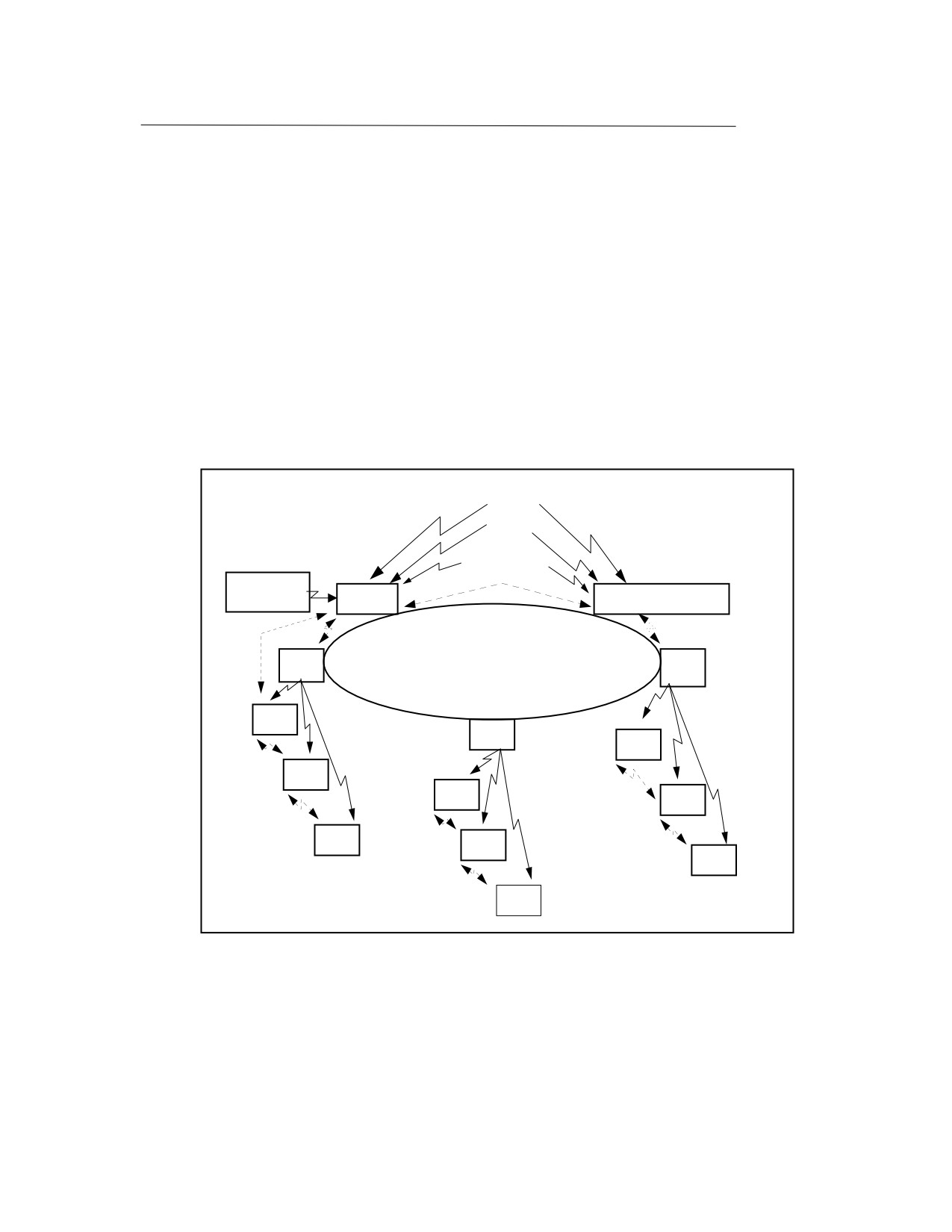
1-17. The digitized C2 node is a heavy HMMWV model 1097 with a mounted
shelter containing a transportable computer unit which displays the air picture,
two EPLRS radios, two FM radios, and an uninterruptable power supply. The
digitized C2 node is the “voice” of each C3I Sentinel team. All communications,
voice/data, and all air track data traffic is received and broadcasted by the C2
node. The digitized Sentinel node using EPLRS processes air tracks acquired by
the Sentinel and correlates those air tracks with the tracks sent from the
ABMOC. The Sentinels share their air picture with the other C2 Sentinel nodes,
the ABMOC, and the AD A2C2. This process is referred to as “netted” C3I
Sentinels. The digitized C2 Sentinel node using EPLRS broadcasts early warning
air tracks to its respective AMD battery, platoons, sections, fire units, and LNOs.
See Figure 1-4.
E3A
PPLI
ADJ SHORAD BN
MSE
VIA JTIDS
PATRIOT
A2C2 SUBSYSTEM
TADIL-B
ABMOC
C2
EPLRS Net
C2
Node
Node
(Netted)
EPLRS
Btry
EPLRS
Simplex
C2
Simplex
EPLRS
Track
Node
Btry
Broadcast
Track
Simplex
P/S
Broadcast
Track
Broadcast
EPLRS
Btry
EPLRS
P/S
Duplex
Duplex
(Pt-to-Pt)
FU
EPLRS
(Pt-to-Pt)
P/S
Duplex
FU
(Pt-to-Pt)
FU
Figure 1-4. Netted Track Data
1-18. EPLRS connectivity is based on a needline library. The needline
architecture is determined by the requirement to pass data to another element,
hence the term needline. The supporting signal battalion in a division maintains
the needline library. The AMD battalion’s signal officer and a 140A are required
to ensure the appropriate needlines are established to support AMD digital
operations. Needlines are not quickly adjusted, which is a problem when
changing task organization. The modification of the needline architecture is a
1-11
FM 3-01.48
complex process and needs to be identified in the planning process to ease
transition.
1-19. It is imperative to understand the distinction between simplex versus
duplex needlines. The simplex needline is a one-way connection. Within FAAD
C3I this capability is used for the dissemination of air tracks. Duplex circuits are
point-to-point two-way communications used in FAAD C3I for dissemination and
acknowledgment of air defense warnings and battle management messages. The
C2 node will disseminate using a simplex needline. From battery level down,
duplex EPLRS needlines will be used.
1-20. The digitized C2 node equipped with only SINCGARS is not able to “share”
(or net) its air tracks with other C2 nodes or with the AD A2C2 and ABMOC. This
is referred to as “unnetted” Sentinels. The digitized C2 Sentinel node of the
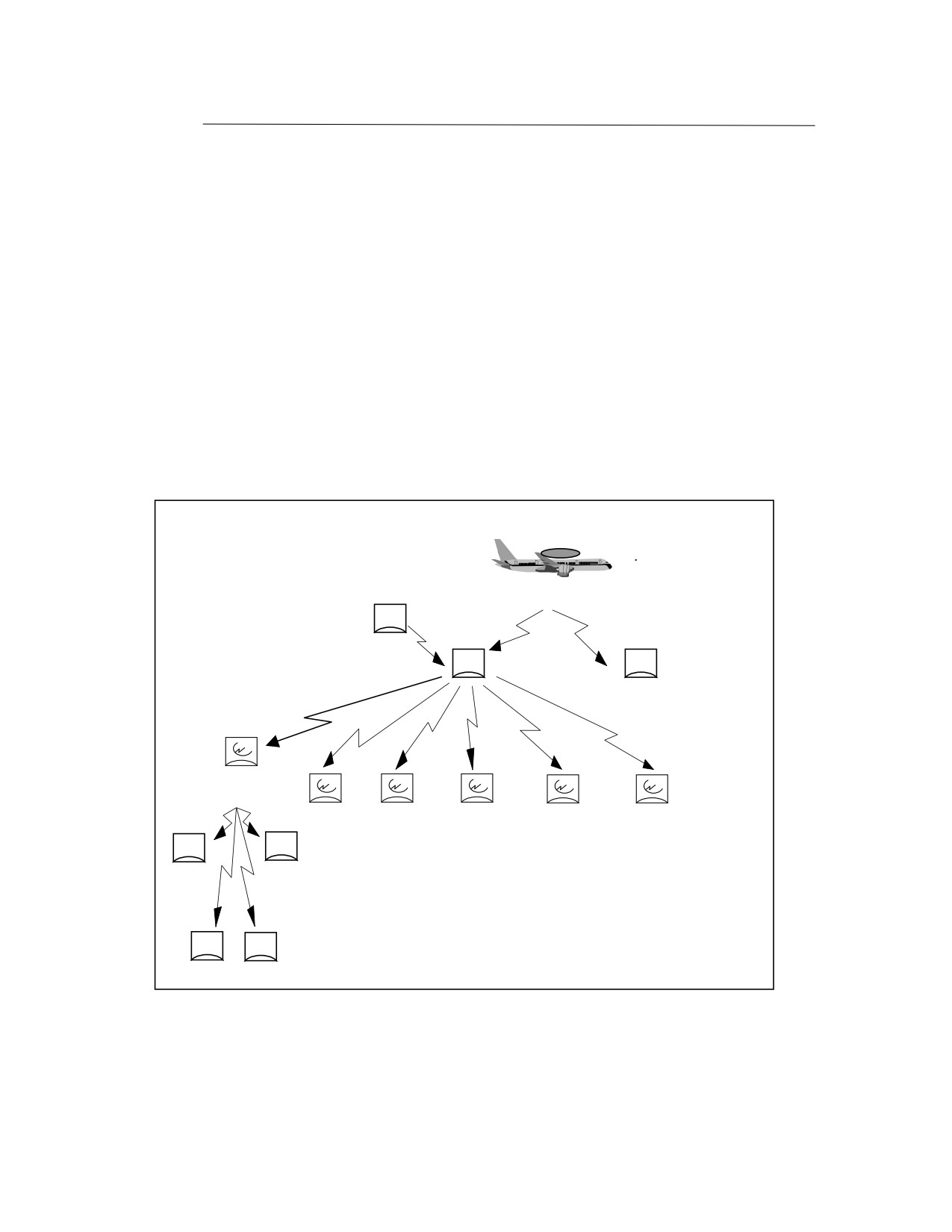
divisional AMD battalion using SINCGARS broadcasts air tracks to the
divisional AMD battery, platoons, sections, fire units, and LNOs for which the C2
Sentinel node is providing early warning. See Figure 1-5.
PATRIOT
AWACS
MSE
TADIL-B
ABMOC
A2C2 SUBSYSTEM
C2
NODE
C2
C2
C2
C2
C2
NODE
NODE
NODE
NODE
NODE
Sentinels are battalion assets controlled by the S3 through the
BTRY
PLT
Sentinel platoon leader when GS, and battery commander when
CP
CP
DS.
Sentinels broadcast to the battery and battery elements in their
broadcast sector and zone.
SEC
FU
Figure 1-5. SINCGARS Configuration
SENTINEL BROADCAST SECTOR
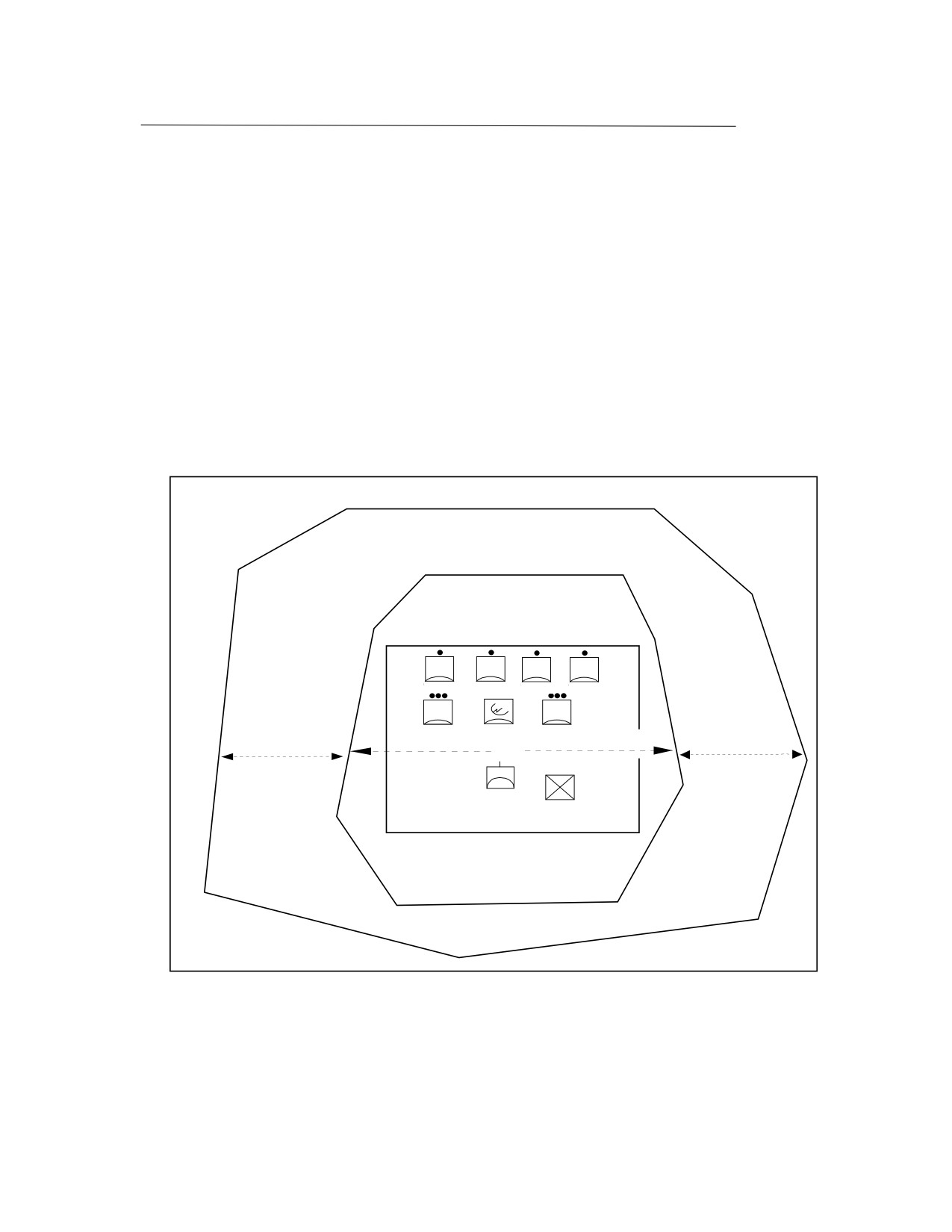
1-21. The digitized Sentinel node operator defines the Sentinel broadcast sector
which is used to establish the volume of airspace within which air tracks are to
1-12
FM 3-01.48
be broadcasted. The area defined in the SBS is referred to within AMD as the
community of users.
1-22. The community of users within the SBS can be any grouping of batteries,
platoons, sections, fire units, and AMD LNOs. The SBS will encompass the area
of responsibility of the supported battery plus an area extended approximately
8-10 kilometers outside the defined battery area of responsibility. If no SBS is
defined, then the software will construct a default SBS of 40 kilometers on a side
centered on the Sentinel C2 node location.
SENTINEL BROADCAST ZONE
1-23. Once the SBS is defined, the AMD C3I software automatically generates a
Sentinel broadcast zone The SBZ is a 60-kilometer extension of the SBS. Any air
tracks present within the SBZ are broadcasted to the supported AMD elements.
The SBZ may shrink as a result of communications saturation alleviation
processing. See Figure 1-6.
SBZ
SBS
PLT CP SENTINEL PLT CP
8-10 KM
60 KM
60 KM
8-10 KM
X
SBS
BTRY CP
BDE TOC
BTRY SUB
SBZ
Figure 1-6. Sentinel Broadcast Sector/Zone
1-24. The digitized C2 node operator will bring the C3I Sentinel system to an
operational state to process AMD C3I data.
EARLY WARNING
1-13
FM 3-01.48
1-25. The Sentinel platoon leader should be the resident expert concerning early
warning. If air tracks are not received from the Sentinel teams, he should
investigate potential terrain/LOS issues, EPLRS needline/EW frequencies, and
other possible answers per the established TSOP. Although, typically, many of
the problems encountered can be averted through prior planning, precombat
checks, and precombat inspections. Early warning to the AMD elements
normally originates at the ABMOC. The exception to this is the AMD batteries
supporting a brigade slice or the ACRs and separate brigades. Their organic
Sentinel platoon
(two Sentinels) would broadcast only those air tracks
originating with their organic Sentinels. If a JTIDS is furnished to one of the
Sentinels, then external tracks can be correlated with its local data and
broadcast to the AMD elements. In addition, in this configuration the platoon
leader would have to assign track ID authority (coordinate with available A2C2
elements) to one of the Sentinels. The Sentinel with the JTIDS would be a good
choice. However, many JTIDS terminals will not get fielded to MTOE identified
positions, because the radio is no longer in production.
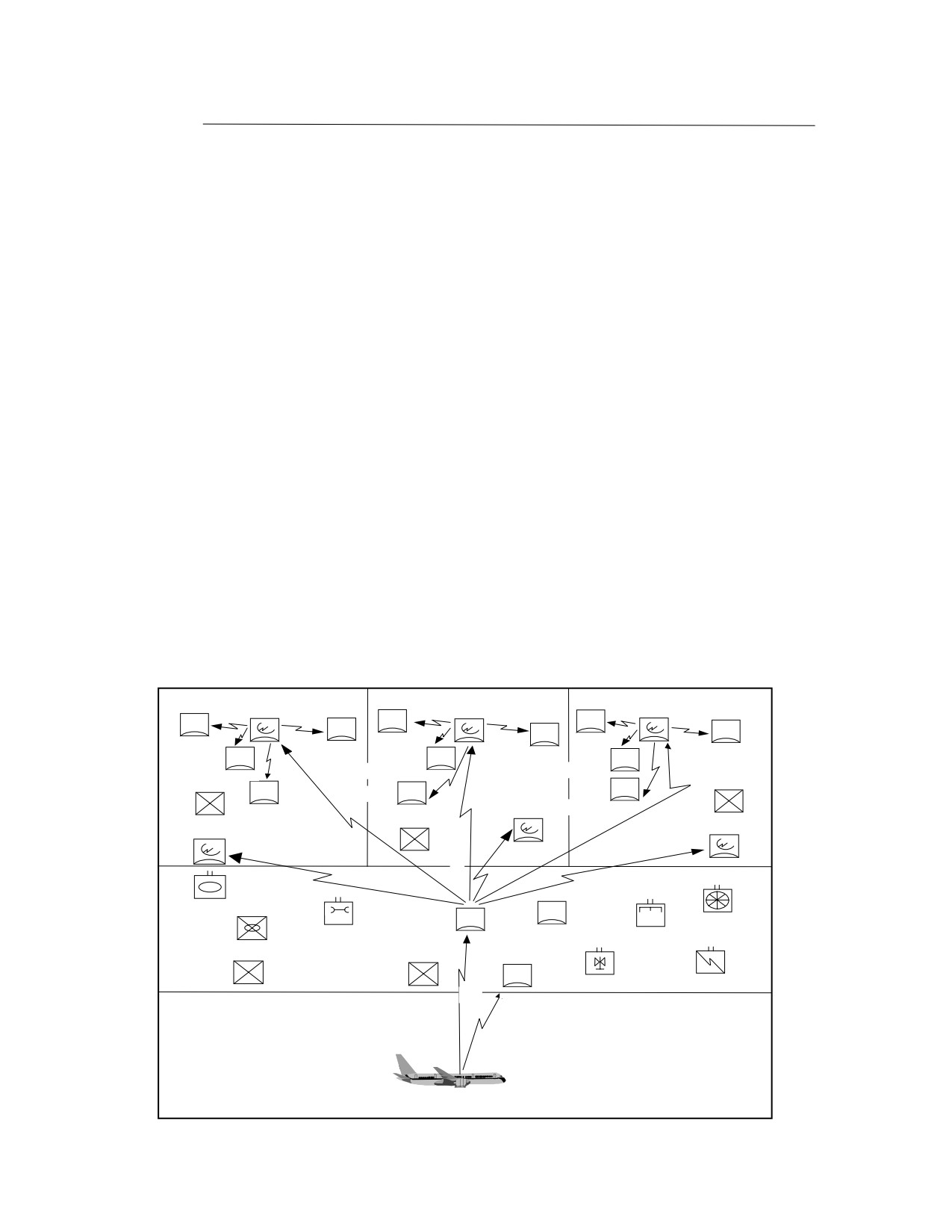
1-26. Divisional AMD battalions in support of the light and heavy divisions have
a six-Sentinel platoon. In that configuration, early warning starts with the
ABMOC and A2C2 subsystem receiving early warning simultaneously. The
ABMOC will correlate those air tracks with the nearest Patriot source and any
air track data (TADIL-J) input from other sources.
1-27. The ABMOC will then broadcast to the six Sentinels tactically located on
the battlefield. The Sentinels will correlate those air tracks with their own local
data and broadcast that correlated air picture to their respective AMD batteries,
platoons, sections, fire units, and the LNOs in their Sentinel broadcast sector
and zone. See Figure 1-7.
SENTINEL 1
SENTINEL 3
SENTINEL 5
CP
CP
CP
FU
FU
FU
SEC
SEC
SEC
PLT
CP
PLT
CP
PLT
CP
X
X
1st
3D
BTRY
CP
CP
BTRY
CP
BDE
BDE
SENTINEL 4
BTRY
2d
SENTINEL 6
SENTINEL 2
BDE
PASSIVE
PASSIVE
PASSIVE
X
TANK
XX
CP
ABMOC
BTRY
TRANS
DIVARTY
MAINT
A2C2
ENGR
XX
DIVISION
XX
SUBSYSTEM
DISCOM
MAIN
AIR CAV
SIGNAL
XX
XXX
1-14
FM 3-01.48
Figure 1-7. Division Early Warning
1-15
FM 3-01.48
DIVISION (VOICE) EARLY WARNING
1-28. The division early warning net starts with the ABMOC receiving and
correlating external tracks from outside sources (nearest Patriot, joint forces
AWACS, Hawkeye, Navy, Marine) then broadcasted digitally to the six Sentinels
tactically located on the battlefield. Some tactical missions due to METT-TC will
require the FAAD C3I system to be less than 100 percent (no ABMOC/A2C2
subsystem), and air tracks will be generated by the Sentinels only. Nonetheless,
simultaneously, voice early warning will be broadcasted on the DEW net to the
maneuver force. As the Sentinels are broadcasting digital EW to the AMD
battalion elements, voice EW must be redundant, with the batteries broadcasting
voice EW to the brigades, platoons to the battalions, and when required, the
AMD sections to the maneuver companies and teams.
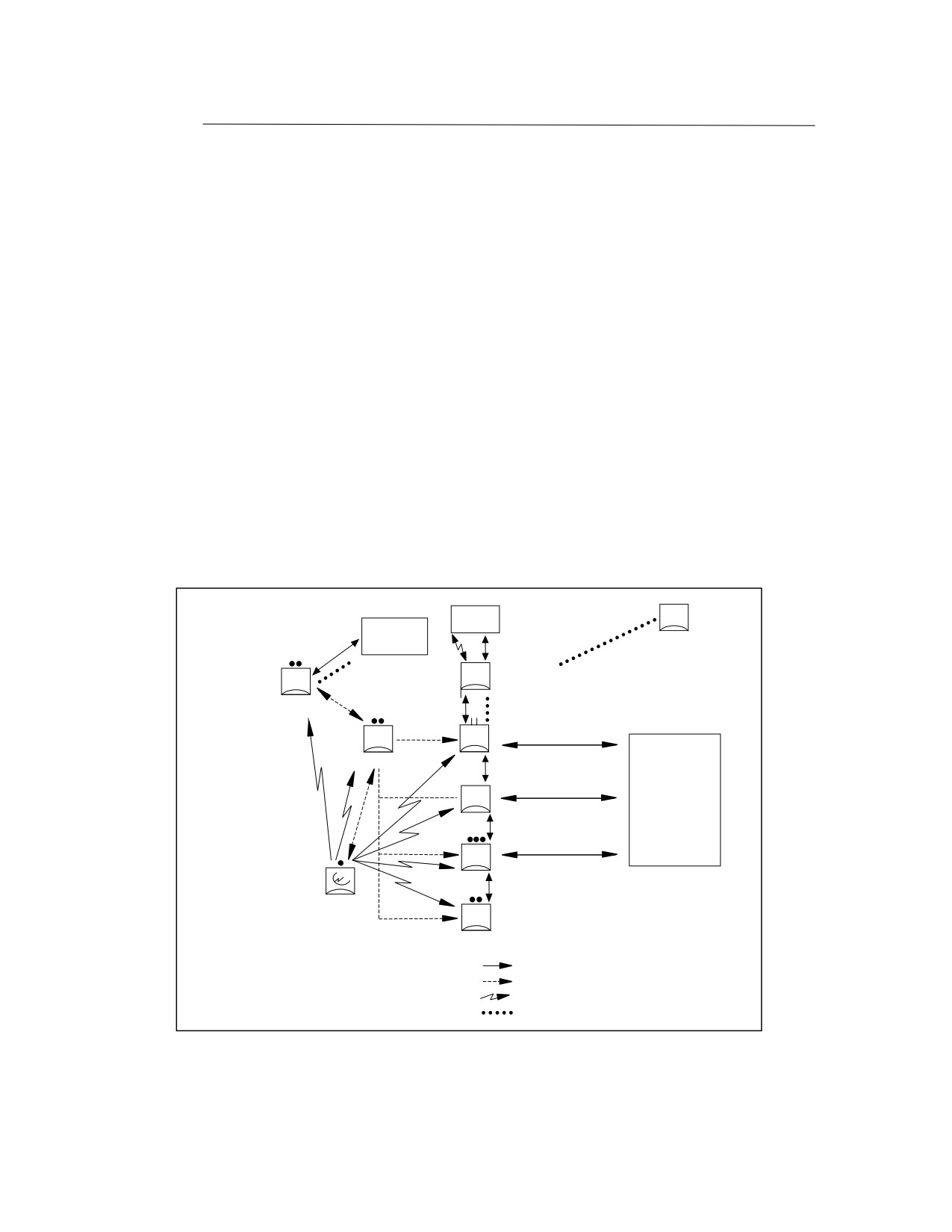
CORPS EARLY WARNING
1-29. Corps AMD battalion EW is passed over the corps early warning (CEW)
net. The AMD brigade receives early warning from AWACS, other airborne
platforms, Patriot units, host nation sources, or from an ADCS team at an
adjacent AMD unit. The AMD brigade TOC passes the EW information to its
AMD battalion ABMOC section. The battalion ABMOC correlates this
information with other external track information received and sends the EW
information over the AM net to battery elements. See Figure 1-8.
TADIL-J
CRC
OR TADIL-B
TASK ORG
METT-TC
CADE
X
AMD BDE
TOC
ADCS
ABMOC
SUPPORTED
UNITS
AS
REQUIRED
SENTINEL
LEGEND:
FM OR MSE IN DIRECTED EW FORMAT
AM EW NET
DATA LINK
MSE
Figure 1-8. Corps Early Warning
1-16
FM 3-01.48
DIRECTED EARLY WARNING
1-30. Directed early warning is designed to alert a particular unit, units, or area
of the battlefield of an immediate or possible threat. It is passed over the
supported unit command net or a net designated by the supported unit
commander as flash precedent traffic. Directed early warning defines the local
air defense warning and states whether the aircraft is friendly or unknown, a
cardinal direction, and, if known, the most likely affected asset(s) within the
supported force. For example, if an early warning source reports four enemy
rotary-wing aircraft inbound from the east, and 1st Brigade is attacking along
the eastern axis during a division attack, the ADO reports an LADW and
directed early warning message: "Dynamite! Dynamite!" or "Red Air! Red Air!
Four Hinds from the east against Axis Blue!" Dynamite is the LADW that alerts
the division to attack, and the response according to the local SOP must be
immediate. The AMD battalion TOC will broadcast directed early warning on the
division command or O/I net and to the AMD battalion. When a threat to the
supported force is identified, the ADO will transmit LADW on the supported
force command net. When brigade ADOs receive early warning from the ABMOC
or from the AMD Sentinels, they will direct early warning down on the supported
unit nets.
1-31. Directed early warning must be quick, simple, and redundant in nature. It
is imperative that all maneuver units receive early warning, especially those
units that have only minimal air defense coverage. Unit SOPs will determine the
exact procedures used but will include the following elements:
• Preface
A method used to differentiate tracks.
• Identification
Type of aerial platform, location, and
time.
• Local Air Defense Warning
Self-explanatory.
• Direction
Self-explanatory.
• Size
Few, many, or actual number.
• Affected asset
Not sent in clear on unsecured nets.
LOW LEVEL AIR PICTURE INTERFACE
1-32. The low level air picture interface provides for the exchange of air track
information with a source of external tracks via digital communications. LLAPI
initially links air defense assets of the Federal Republic of Germany Army (and
ultimately other NATO air defense assets) with FAAD C3 I.
1-33. LLAPI consists of a shelter-mounted LLAPI subsystem interface and a
FAAD C3I Sentinel. The two elements join together via a 30-meter long hardwire
interface.
1-34. The two subsystems receive air track data via their respective air defense
systems (the FRG Army Air Defense Surveillance and Command and Control
System and FAAD C3I). The LLAPI subsystem processes air tracks acquired by
AADSACS into a data link format for transmission over the hardwire interface to
FAAD C3I. The LLAPI subsystem receives air tracks from the FAAD Sentinel
node and processes such air tracks for dissemination to AADSACS over an
AADSACS communications link. Air tracks from FAAD Sentinels are provided to
the interfaced LLAPI if the air track is an organic FAAD Sentinel track or
1-17
FM 3-01.48
indicated by a track quality greater than “0,” or if the track is within the adjacent
LLAPI/FAAD system area of interest.
1-35. A LLAPI configuration can be established whenever a forward area FRG
Army division and a US Army division share a common boundary. Depending on
the availability of equipment, the FAAD Sentinel may either be dedicated to
interface with LLAPI or LLAPI may interface with a FAAD Sentinel deployed
closest to the FRG/US Army division boundary.
ADJACENT LLAPI OUTPUT FILTERS
1-36. The Sentinel node having a LLAPI will define an adjacent LLAPI output
filter. The LLAPI operational concept calls for establishing an adjacent LLAPI
output filter approximately 30 kilometers parallel to the common division
lateral boundary. Air track reports will not be sent to an adjacent LLAPI until
the operator has defined the adjacent LLAPI output filter.
1-37. The adjacent LLAPI output filter is defined by entering MGRS UTM
coordinates which encompass the geographic area within which air tracks will be
passed to the adjacent LLAPI. The adjacent LLAPI output filter will be
determined by coordination with FRG Air Defense Command and Control
personnel. If such coordination is not possible or practical, then a method to
determine the coordinates to be entered is to take the common lateral boundary
of the US/FRG division and extend its distance, according to the LLAPI
operational concept, approximately 30 kilometers away from, and parallel to, the
common boundary (as shown in Figure 1-9).
FLOT
X
X
US
FRG
X
X
X
X
X
X
X
XX
Figure 1-9. Adjacent LLAPI Output Filter
1-18
FM 3-01.48
FORCE PROTECTION
1-38. Force protection needs to provide security for the high-value asset Sentinel
radar teams. During offensive operations, the need for a Sentinel team to be
placed on or near the line of departure can arise. In the defense, Sentinel teams
covering a counter reconnaissance are positioned well forward on the battlefield.
1-39. Due to the requirement for LOS, operations in mountainous terrain dictate
that Sensor/C2 nodes be placed on the battlefield to properly cover the AMD
elements with maneuver force and broadcast the FAAD C3I picture to the AMD
elements in the Division. When a Sentinel team moves forward in the offense,
they are usually OPCON for movement to a task force AMD battery. Security is
provided, either by the rear elements of the task force or an element from the DS
AMD platoon with the TF. Once the team arrives at their designated location,
they are left with only small arms to defend themselves. When positioning a
Division asset in proximity to the LD, security must be provided. Even Sentinel
teams positioned 10 km behind the FLOT must be allocated additional security.
1-40. The Sentinel's rotating antenna must be clearly visible in order to
accomplish its mission. This makes for an easily visible target for bypassed units
or reconnaissance in the offense or for flanking units in the defense.
Considerations must be made in order to counter a threat from crew-served
weapons of 12.7 mm and above, a capability that Sentinel teams do not have.
This type of support would most likely be necessary when a Sentinel section is
attached to an AMD battery in support of a maneuver brigade. It is essential
that this is captured during the planning process and put into the brigade order.
Support of this type can come from many different sources, like the following:
• Brigade assets:
Military Police
Scouts
GS Avengers
• Battalion TF assets:
M1 Abrams
M2 Bradley
Linebacker/BSFV from DS Platoon
1-41. Force protection (safety and fratricide) is an issue that the Sentinel platoon
leader must consider in all aspects of training and evaluation. Safety is a
component of force protection. Sentinel leaders and soldiers use risk
management to ensure that unnecessary risks are eliminated and that realistic
training can be performed. Risk management assigns responsibility,
institutionalizes the Sentinel platoon leader’s review of operational safety, and
leads to decision making at a level of appropriate risk. The objective of safety is
to help Sentinel teams protect their limited combat power through accident
prevention, which enables Sentinel teams to win fast and decisively, with
minimum losses. Safety is an integral part of all combat, stability, and support
operations. Safety begins with readiness, which determines a Sentinel team's
ability to perform its METL to standard. During METL assessment, readiness
standards are addressed.
1-19

FM 3-01.48
• Sentinel soldiers with the self-discipline to consistently perform tasks to
standard.
• Sentinel leaders who are ready, willing, and able to enforce standard.
• Training that provides skills needed for performance to standard.
• Standards and procedures for task preference that are clear and
practical.
• Support for task preference, including required equipment, personnel,
maintenance, facilities, and services.
1-42. Proper fluid replacement (hydration) is one of the most essential elements in
heat injury prevention. Of particular note is the fact that the revised maximum
hourly fluid intake should NOT exceed 1.5 quarts and the revised maximum daily
fluid intake should not exceed 12 quarts. The newly revised fluid replacement
chart (Table 1-7) describes the amounts of fluid replacement and work/rest cycles
for acclimatized Sentinel soldiers undergoing training. Table 1-8 further describes
the differences among easy work, moderate work, and hard work.
Table 1-7. Fluid Replacement Guidelines for Warm Weather Training
(Applies to Average Acclimated Soldier Wearing BDU, Hot Weather)
Easy Work
Moderate Work
Hard Work
Water
Water
Water
Heat
WBGT
Intake,
Intake,
Intake,
Category
Index, oF
Work/Rest
Qt/hr
Work/Rest
Qt/hr
Work/Rest
Qt/hr
1
78-81.9
NL
½
NL
¾
40/20 min
¾
2
82-84.9
NL
½
50/10 min
¾
30/30 min
1
(Green)
3
85-87.9
NL
¾
40/20 min
¾
30/30 min
1
(Yellow)
4
88-89.9
NL
¾
30/30 min
¾
20/40 min
1
(Red)
5
1
> 90
50/10 min
1
20/40 min
1
10/50 min
(Black)
Notes:
• The work/rest times and fluid replacement volumes will sustain performance and hydration for at least 4 hours of
work in the specified heat category. Individual water needs will vary ¼ qt/hour.
• NL = no limit to work time per hour.
• Rest means minimal physical activity (sitting or standing), accomplished in shade if possible.
• CAUTION: Hourly fluid intake should not exceed 1½ quarts.
• Daily fluid intake should not exceed 12 quarts.
• Wearing body armor add 5o F to WBGT Index.
• Wearing MOPP overgarment add 10o F to WBGT Index.
1-20

FM 3-01.48
Table 1-8. Work Differences
Easy Work
Moderate Work
Hard Work
Walking Hard Surface at 3.5 mph, ≥> 40 lb
Drill and Ceremony
Walking Hard Surface at 3.5 mph, < 40 lb Load
Load
Walking Hard
Surface at
Walking Loose Sand at 2.5 mph, no Load
Walking Loose Sand at 2.5 mph with > 30 lb
2.5 mph, <≤ 30 lb
Calisthenics
Load
Load
Weapon
Patrolling
Maintenance
Individual Movement Techniques (i.e. low
Manual of Arms
crawl, high crawl)
Marksmanship
Defensive Position Construction Field Assaults
Training
1-43. Risk management is a tool that addresses the root causes (readiness
shortcomings) of accidents. It assists the Sentinel platoon leader and team chiefs
in not only identifying what the next accident may be, but it also helps identify
who may have the next accident. Risk management is a way to put more realism
into training without paying the price in deaths, injures, or damaged equipment.
1-44. Safety demands total chain of command involvement in planning,
preparing, executing, and evaluating training. The chain of command has several
safety-related responsibilities:
• Sentinel platoon leader, section sergeants, and team chiefs—
Seek optimum, not adequate, performance.
Specify the risk they will accept to accomplish the mission.
Select risk reductions provided by Sentinel team chiefs.
Accept or reject residual risk, based on the benefit to be derived.
Train and motivate Sentinel leaders at all levels to effectively use
risk management concepts.
• Team chiefs—
Apply consistently effective risk management concepts and methods
to operations they lead.
Report risk issues beyond their control or authority to their section
sergeants.
• Individual soldiers—
Report unsafe conditions and acts and correct the situation when
possible.
Establish a buddy system to keep a safety watch on one another.
Take responsibility for personal safety.
Work as a team member to implement safety performance measures.
Modify own risk behavior.
1-21

FM 3-01.48
Enhancement of basic soldier skills (Soldier’s Manual of Common
Tasks and FM 7-8), promoting force protection and limitation of
fratricide.
1-45. Risk management is a five-step cyclic process that is easily integrated into
the decision-making process outlined in FM 100-14. The five steps are:
• Identify hazards. Identify the most probable hazards for the missions.
• Assess hazards. Analyze each hazard to determine the probability of its
causing an accident and the probable effect of the accident. Identify
control options to eliminate or reduce the hazard. The Army standard
risk assessment matrix (Table 1-9) is the tool for assessing hazards.
• Develop controls and make risk decision. Weigh the risk against the
benefits of performing the operations. Accept no unnecessary risks and
make any residual risk decisions at the proper level of command.
• Implement controls. Integrate specific controls into OPLANs, OPORDs,
SOPs, and rehearsals. Communicate controls to the individual soldier.
• Supervise and evaluate. Determine the effectiveness of controls in
reducing the probability and effect of identified hazards to include follow
up and after action review. Develop the lessons learned.
Table 1-9. Risk Management Steps
Step 1
Step 2
Step 3
Step 4
Step 5
Military Decision
Identify
Develop Controls and
Implement
Supervise
Making Process
Hazards
Assess Hazards
Make Risk Decision
Controls
and Evaluate
Mission Receipt
X
Mission Analysis
X
X
X
COA Development
X
X
X
COA Analysis
X
X
X
COA Comparison
X
Orders Production
X
COA Approval
X
Rehearsal1
X
X
X
X
X
Execution and
Assessment1
X
X
X
X
X
1All boxes are marked to emphasize the continued use of the risk management process throughout the mission.
1-46. Fratricide is a component of force protection and is closely related to safety.
Fratricide is the employment of weapons that results in unforeseen and
unintentional injury or death to friendly personnel. Fratricide is by definition an
accident. Risk assessment management is the mechanism with which incidences
of fratricide can be controlled. The primary causes of fratricide are—
• Direct fire control plan failures. These occur when units fail to develop
defensive and, particularly, offensive fire control plans.
• Land navigation failures. These result when units stray out of sector,
report wrong locations, and become disoriented.
1-22
FM 3-01.48
• Combat identification failures. These failures include gunners or pilots
being unable to distinguish thermal and or optical signatures near the
maximum range of their sighting systems and units in proximity
mistaking each other for the enemy under limited visibility conditions.
• Inadequate control measures. Units fail to disseminate the minimum
maneuver and fire support control measures necessary to tie control
measures to recognizable terrain or events.
• Reporting communications failures. Units at all levels face problems in
generating timely, accurate, and complete reports as locations and
tactical situations change.
• Weapons error. Lapses in individual discipline lead to charge errors,
accidental discharges, mistakes with explosives and hand grenades, and
similar incidents.
• Battlefield hazards. Unexploded ordnance, unmarked or unrecorded
minefields, FASCAM, and booby traps litter the battlefield. Failure to
mark, remove, record, or anticipate these hazards increases the risk of
friendly casualties.
1-47. Fratricide results in unacceptable losses and increases the risk of mission
failure. Fratricide undermines the unit's ability to survive and function. Units
experiencing fratricide observe these consequences:
• Loss of confidence in the unit leadership.
• Increasing self-doubt among team chiefs.
• Hesitation to use supporting combat systems.
• Over-supervision of units.
• Hesitation to conduct night operations.
• Loss of aggressiveness during fire and maneuver.
• Loss of initiative.
• Disrupted operations.
• General degradation of cohesiveness, morale, and combat power.
1-48. Protection of natural resources (environmental protection) has continued to
become an ever-increasing concern to the Army. It is the responsibility of all unit
leaders to decrease, and if possible eliminate, damage to the environment when
conducting training. Environmental risk management parallels safety risk
management and is based on the same philosophy as safety risk management.
Environmental risk management consists of the following steps:
• Identify hazards. Identify potential sources for environmental
hazards. An environmental hazard is a condition with the potential
for polluting air, soil, or water and or destroying cultural and
historical artifacts.
• Assess the hazard. Analyze severity of environmental degradation
using environmental risk assessment matrix (Table 1-10). Severity of
environmental degradation is considered when determining the
potential effect an operation will have on the environment. The risk
impact value is defined as an indicator of the severity of
environment degradation. Quantify the risk to the environment
resulting from the operation as extremely high, high, medium, or low,
using the environmental risk assessment matrix.
1-23
FM 3-01.48
Table 1-10. Environmental Risk Assessment Matrix
ENVIRONMENTAL AREA
RATING:
UNIT OPERATIONS
RISK IMPACT
Movement of heavy vehicles/systems
5
4
3
2
1
0
Movement of personnel and light vehicles/systems
5
4
3
2
1
0
Assembly areas activities
5
4
3
2
1
0
Field maintenance of equipment
5
4
3
2
1
0
Garrison maintenance of equipment
5
4
3
2
1
0
ENVIRONMENTAL RISK ASSESSMENT WORKSHEET
MOVEMENT
OF
MOVEMENT
PERSONNEL
OF HEAVY
AND LIGHT
ASSEMBLY
FIELD
GARRISON
VEHICLES/
VEHICLES/
AREAS
MAINTENANCE
MAINTENANCE
RISK
SYSTEMS
SYSTEMS
ACTIVITIES
OF EQUIPMENT
OF EQUIPMENT
RATING
Air pollution
Archeological
and historical
sites
Hazardous
materiel/waste
Noise
pollution
Threatened/
endangered
species
Water
pollution
Wetland
protection
Overall rating
OVERALL ENVIRONMENTAL RISK ASSESSMENT FORM
ENVIRONMENTAL
RISK CATEGORIES
RANGE
DAMAGE
DECISION MAKER
Low
0-58
Little or none
Appropriate level
Medium
59-117
Minor
Appropriate level
High
118-149
Significant
Division commander
Extremely high
150-175
Severe
MACOM commander
1-49. Make environmental risk decisions. Make decisions and develop measures
to reduce high environmental risks.
1-50. Brief chain of command. Brief chain of command on proposed plans and
pertinent high-risk environmental matrixes. Risk decisions are made at a level of
command that corresponds to the degree of risk.
1-51. Implement controls. Implement environmental protection measures by
integrating them into plans, orders, SOPs, training performance standards, and
rehearsals.
1-24
Chapter 2
Sentinel Management Planning,
Command, and Control
This chapter discusses management planning, command, and control for
the employment of the Sentinel platoon. Divisional AMD command,
control, communications, and intelligence (C3I) success is dependent upon
detailed planning by the air defense officer at the battalion and battery
levels and the Sentinel platoon leader, section, and team chiefs. Effective
and efficient command and control of Sentinel assets and the execution of
sound planning is vital to the success of the overall air and defense
mission.
MANAGEMENT PLANNING
2-1.
Thorough Sentinel platoon planning is critical to providing timely
and effective air and missile defense throughout the division. The divisional
AMD battalion S3 evaluates all aspects of mission; enemy; terrain; troops;
time and civilian considerations; command and control; and logistical
support. He does this before recommending an employment method to the
AMD battalion commander.
EMPLOYMENT METHODS
2-2.
Divisional AMD Sentinel platoons can employ Sentinels in one of
three ways. The platoon as a whole can be employed in general support to
the division, sections can be attached to AMD batteries in support of
brigade combat teams, or sections can be employed in a mixed mode (a
section attached to select BCTs and the remaining section GS to the division).
GS TO THE DIVISION
2-3.
When providing GS to the division, the Sentinel platoon leader
employs his platoon in sections (two teams per section) in support of the force
as a whole. The Sentinel employment plan is generated as a result of the
AMD battalion S2’s air IPB. The S3 coordinates the selected Sentinel
positions with the division staff and the AD A2C2 element. Furthermore,
Sentinel positions may be coordinated with the AMD battery commanders
when planning calls for positioning Sentinels forward in brigade combat
team areas of operation. In this method, the Sentinel platoon leader retains
command and control of his entire platoon. This method is used most often
during defensive operations.
2-1
FM 3-01.48
ATTACHED TO AMD BATTERIES
2-4.
Sentinel sections may be attached to each of the AMD firing batteries
in support of divisional BCTs. The firing battery commander selects radar
positions and informs the ABMOC and S3. The S3 coordinates and validates
the Sentinel positions ensuring they support divisional reconnaissance and
surveillance requirements and the overall scheme of maneuver. This method
is preferred during most offensive operations and in defensive operations on
canalized terrain. C2 by the firing battery commander allows detailed
coordination of movements in the main battle area, enhancing survivability
and providing for better coverage. Attaching two Sentinels enables bounding
movements in support of offensive operations. The Sentinel platoon leader
normally assists the battery commander in support of the main effort BCT
with employment planning and C2 coordination when using this method.
MIXED EMPLOYMENT
2-5.
When conducting a mixed employment, one or two Sentinel sections
are attached to firing batteries while the other section or sections remain
under the Sentinel platoon leader’s control as in GS to the division. Other
variations are METT-TC dependent. In this configuration, the Sentinel
platoon leader normally operates from the ABMOC, but provides planning
and employment assistance to the battery commander with the attached
Sentinel section.
2-6.
The Sentinel radar provides the foundation for digital early warning
across the division. It is the single most important piece of equipment for the
successful conduct of air defense operations in support of a maneuver force.
The ability to plan and integrate the Sentinel radar effectively into the
division/brigade scheme of maneuver will determine your success on the
digitized battlefield.
AIR AND MISSILE DEFENSE EMPLOYMENT PRINCIPLES
2-7.
Air defense forces fight per air defense principles of mass, mix,
mobility and integration. These principles apply to both divisional AMD
weapon systems and Sentinels.
MASS
2-8.
Mass is the concentration of air defense combat power achieved by
allocating sufficient fire units and EW assets to successfully defend a
designated critical asset. Generally, digitized Sentinel teams will be the
smallest tactical EW element assigned to provide surveillance for a specific
critical asset, air avenue of approach, NAI, or TAI.
MIX
2-9.
Mix is achieved through a balance between specific types of air
defense systems, such as Stinger and Avenger. With Sentinels, mix is
achieved through the establishment of netted joint and Army Sentinels to
allow multiple means of detection for a specific area. Mixed forces cause the
enemy to vary its attack approach because it faces a variety of air defense
systems, rather than a single system. Creating a mix of air defense systems
2-2
FM 3-01.48
greatly complicates the threat strategy, thus offering greater survivability for
the defended asset.
MOBILITY
2-10. Mobility is characterized by the capability of individual air defense
systems to move from asset to asset while providing the capability to fulfill
their primary mission. The air defense package must be at least as mobile as
the asset it defends. Defending static assets may also require quick
movements to alternate positions.
INTEGRATION
2-11. Integration is the close coordination of effect and unity of action that
maximizes air defense operational effectiveness. Integration necessitates
effective command and control links among all echelons of command with the
air defense commander, a full partner in planning and executing maneuver
force operations. Successful integration helps to ensure that AMD Sentinels
are in the right place at the right time to fully support the maneuver force.
SENTINEL EMPLOYMENT GUIDELINES
2-12. Sentinel employment guidelines are accepted means by which
Sentinels may be employed to accomplish their mission. They are intended to
serve as guidelines only and are used in conjunction with air defense
employment principles. The guidelines that are used to employ the Sentinels
are selected based upon an evaluation of the commander’s intent, IPB,
METT-TC, and asset priorities.
BALANCED COVERAGE
2-13. Balanced coverage is defined as providing Sentinel coverage in all
directions for an asset or area. The asset or area may be battalion, brigade, or
division-sized, such as a lodgment, brigade area of defense, or a flight landing
strip.
WEIGHTED COVERAGE
2-14. Weighted coverage is defined as providing dense Sentinel coverage for
the area that is most likely to be used by enemy airframes, and is most
critical to the success of the supported unit’s mission. This requires that the
commander assume risk in other areas.
COVERAGE IN DEPTH
2-15. Coverage in depth requires the arraying of Sentinels throughout the
depth of the battlefield to provide continuous coverage of ingressing and
egressing air platforms. This is most often accomplished through the
employment of a Sentinel mix.
EARLY DETECTION
2-16. Early detection is achieved by positioning Sentinels as far forward as
the tactical situation permits to achieve the earliest possible detection of
enemy airframes. In some situations, position Sentinel up to 10 kilometers from
2-3
FM 3-01.48
the FLOT, but not within enemy artillery range. If the Sentinel is positioned
in disregard of METT-TC, it will quickly get attrited by enemy SPF or
indirect fire.
OVERLAPPING COVERAGE
2-17. Overlapping coverage is accomplished when the effective radar search
sectors of adjacent Sentinels overlap by
20 kilometers. This allows the
Sentinels to establish an uninterrupted band of radar coverage throughout
the AO. The actual distance between Sentinels will fluctuate based upon
ground clutter that will affect the actual coverage range of the Sentinel.
MUTUAL SUPPORT
2-18. Mutual support is accomplished when the effective search of two
Sentinels extends to cover the entire dead space of the other Sentinel. This
not only enhances coverage within the AO, but also facilitates survivability of
the adjacent Sentinel.
COMMAND AND CONTROL
2-19. Placing an AMD unit under another unit forms unique command
relationships. The relationships set the degree of control and responsibility a
commander has for forces under his control.
2-20. Command responsibilities, responsibilities for service support, and
authority to organize or reassign component elements of a supporting force
remain with the higher headquarters or parent unit unless the authorizing
commander specifies otherwise. See Table 2-1 for inherent responsibilities
based on the type of command the Sentinel platoon is placed under.
COMBATANT COMMAND (COMMAND AUTHORITY)
2-21. COCOM is a nontransferable command authority exercised only by
combatant commanders unless the national command authority directs
otherwise. Combatant commanders exercise it over assigned forces. COCOM
provides full authority to organize and employ commands and forces to
accomplish missions. Combatant commanders exercise through subordinate
commands, to include subunified commands, service component commands,
functional component commands, and JTFs.
ATTACHMENT
2-22. Attachment is the placement of units or personnel in an organization
where such placement is relatively temporary. Subject to the limitations
imposed by the attachment order, the commander of the formation, unit or
organization receiving the attachment has the responsibility to provide the
attached units with sustainment support above its organic capability. The
parent formation, unit, or organization will be responsible for the transfer,
promotion of personnel, nonjudicial punishment, courts martial, and
administrative actions, such as SIDPERS transactions and unit strength
reporting.
2-4

FM 3-01.48
OPERATIONAL CONTROL
2-23. Command authority that may be exercised by commanders at any
echelon at or below the level of combatant is operational control. Operational
control is inherent in combatant command (command authority). Operational
control may be delegated and is the authority to perform those functions of
command over subordinate forces involving organizing and employing
commands and forces, assigning tasks, designating objectives, and giving
authoritative direction necessary to accomplish the mission. Operational
control includes authoritative direction over all aspects of military operations
and joint training necessary to accomplish missions assigned to the
command. Operational control should be exercised through the commanders
of subordinate organizations. Normally this authority is exercised through
subordinate joint force commanders and service or functional component
commanders. Operational control provides full authority to organize
commands and forces and to employ those forces, as the commander in
operational control considers necessary, to accomplish assigned missions.
Operational control does not, in and of itself, include authoritative direction
for logistics or matters of administration, discipline, internal organization or
unit training.
Table 2-1. Command Relationships
Inherent
If Relationship is:
responsibilities
COCOM
Attached
OPCON
TACON
are:
Gaining combatant
Has command
commander; gaining
Gaining
Gaining
Gaining command
relationship with:
service component
command
Command
commander
Gaining combatant
May be task
commander; gaining
Gaining
Gaining command
Parent unit
organized by:
service component
command
commander
Receives logistic
Gaining service
Gaining
Parent command
Parent unit
support from:
component commander
command
Assigned position
Gaining component
Gaining
Gaining
Gaining command
or AO by:
commander
command
command
As required by
As required by
As required by gaining
Per gaining
gaining
gaining
Provides liaison to:
component commander
command
component
component
commander
commander
As required by
Establishes and
As required by
gaining
maintains
As required by gaining
Gaining
gaining
component
communications
component commander
command
commander
command and
with:
parent units
Has priority
Gaining component
Gaining
Gaining
Gaining
established by:
commander
Command
Command
Command
Attached;
Gaining command
OPCON;
OPCON; TACON;
Direct support;
can impose further
OPCON; TACON; direct
TACON; direct
direct support;
mutual support;
command
support; general
support; general
general support;
general support;
relationship or
support; close support
support; close
close support
close support
authority of:
support
2-5
FM 3-01.48
TACTICAL CONTROL
2-24. Tactical control is the command authority over assigned or attached
forces or commands, or military capability or forces made available for
tasking. It is limited to the detailed and, usually, local direction and control
of movements or maneuvers necessary to accomplish missions or tasks
assigned. Tactical control is inherent in operational control. Tactical control
may be delegated to, and exercised at any level at or below the level of
combatant command. Tactical control allows commanders below combatant
command level to apply force and direct the tactical use of logistics assets but
does not provide authority to change organizational structure or direct
administrative and logistical support.
SUPPORT RELATIONSHIPS
2-25. Support
relationships
define
specific
relationships
and
responsibilities between supporting and supported units. Refer to Table 2-2.
GENERAL SUPPORT
2-26. An AMD unit in GS provides support for the force as a whole. It is not
committed to any specific element of the supported force. It does not support
a specific unit within the larger unit’s area of operations. An AMD unit in GS
remains under the control of its higher AMD commander, and is positioned
by its AMD commander. GS is commonly used to protect EAC, corps, or
division-level assets.
GENERAL SUPPORT-REINFORCING
2-27. An AMD unit with a GS-R mission provides support for the force as a
whole and secondarily augments the support provided by another AMD unit.
AMD units with a GS-R mission have a primary responsibility to provide
support to the force as a whole within a specific area, but must coordinate
with the supported AMD unit to reinforce the coverage of assets in the area of
operations.
REINFORCING
2-28. A reinforcing AMD unit augments the coverage of another AMD unit
and strengthens the air and missile defense capabilities of the force. A
reinforcing AMD unit is positioned to protect one or more of the reinforced
unit's priorities as specified by the supported AMD commander. For example,
a Sentinel platoon could reinforce the limitations of a Patriot battery's radar
coverage.
DIRECT SUPPORT
2-29. In direct support, the supporting unit provides dedicated support to a
specific unit. A DS AMD unit (with Sentinels) provides dedicated air and
missile defense for a specific element of the force that has no organic air and
missile defense. The supporting AMD unit coordinates its movements and
positioning with the supported unit. The AMD weapons platoon, for example
may provide DS to a mechanized task force. The weapons platoon will provide
dedicated support to the task force and the weapons platoon leader will
2-6

FM 3-01.48
position the platoon in conjunction with the task force commander's concept
of the operation.
Table 2-2. Support Relationships
Inherent Responsibilities
Gaining
Task-
Receives
Maintains
Priorities
Relationship
Positioned
Provides
unit can
organized
logistics
commo
established
with:
by:
liaison:
further
by:
from:
with:
by:
impose:
Parent
Per Parent
Parent
Parent Unit
Parent Unit
Parent Unit
Parent Unit
NA
GS
Unit
Unit
Unit
Per Parent
Parent
1. Parent Unit
Parent
Unit and
Unit and
GS-R
Parent Unit
Parent Unit
Parent Unit
2. Reinforced
NA
Unit
reinforced
reinforced
Unit
unit
unit
Parent
1. Reinforced
Parent
Reinforced
Reinforced
Unit and
Unit
R
Parent Unit
Parent Unit
NA
Unit
Unit
Unit
reinforced
2. Parent
Unit
Unit
Parent
Parent
Supported
Supported
Unit and
Supported
DS
Parent Unit
Parent Unit
NA
Unit
Unit
Unit
Supported
Unit
Unit
MILITARY DECISION-MAKING PROCESS
2-30. The military decision making process is the language used to solve
tactical problems by commanders and staffs. The MDMP is a logical and
pragmatic process that results in the development of an operation order. The
successful integration of the ADO into the planning process results in a
better-supported maneuver force and enhanced survivability for the air
defense fire units and radars. The air defender serves as both a staff officer
and commander in support of a maneuver force. It is critical for the ADO to
be well-versed in the MDMP and his role in it. The MDMP starts with the
receipt of the warning order from higher headquarters. The full decision
making process begins upon receipt of the actual operation order or operation
plan. See Appendix A for the proper warning order format.
2-31. Mission analysis allows the commander and staff to see the terrain,
enemy, and their own forces within the context of the fight. This is called
battlefield visualization. The critical intent of mission analysis is to provide
an understanding of the supported units as well as the air defense mission,
and an analysis of friendly weapon system capabilities and limitations (to
include movement speed of wheeled vehicles with towed loads, radar range
limitations, and dead space). The results of mission analysis are a defined
tactical problem and the beginning of the process of determining feasible
solutions.
INTELLIGENCE PREPARATION OF THE BATTLEFIELD PROCESS
2-32. The intelligence preparation of the battlefield is a systematic,
continuous process of analyzing the threat and environment in a specific
geographic area. IPB is the second step in mission analysis. IPB is designed
2-7
///////////////////////////////////////