FM 3-22 ARMY SUPPORT TO SECURITY COOPERATION (JANUARY 2013) - page 3
Preparation and Execution Considerations
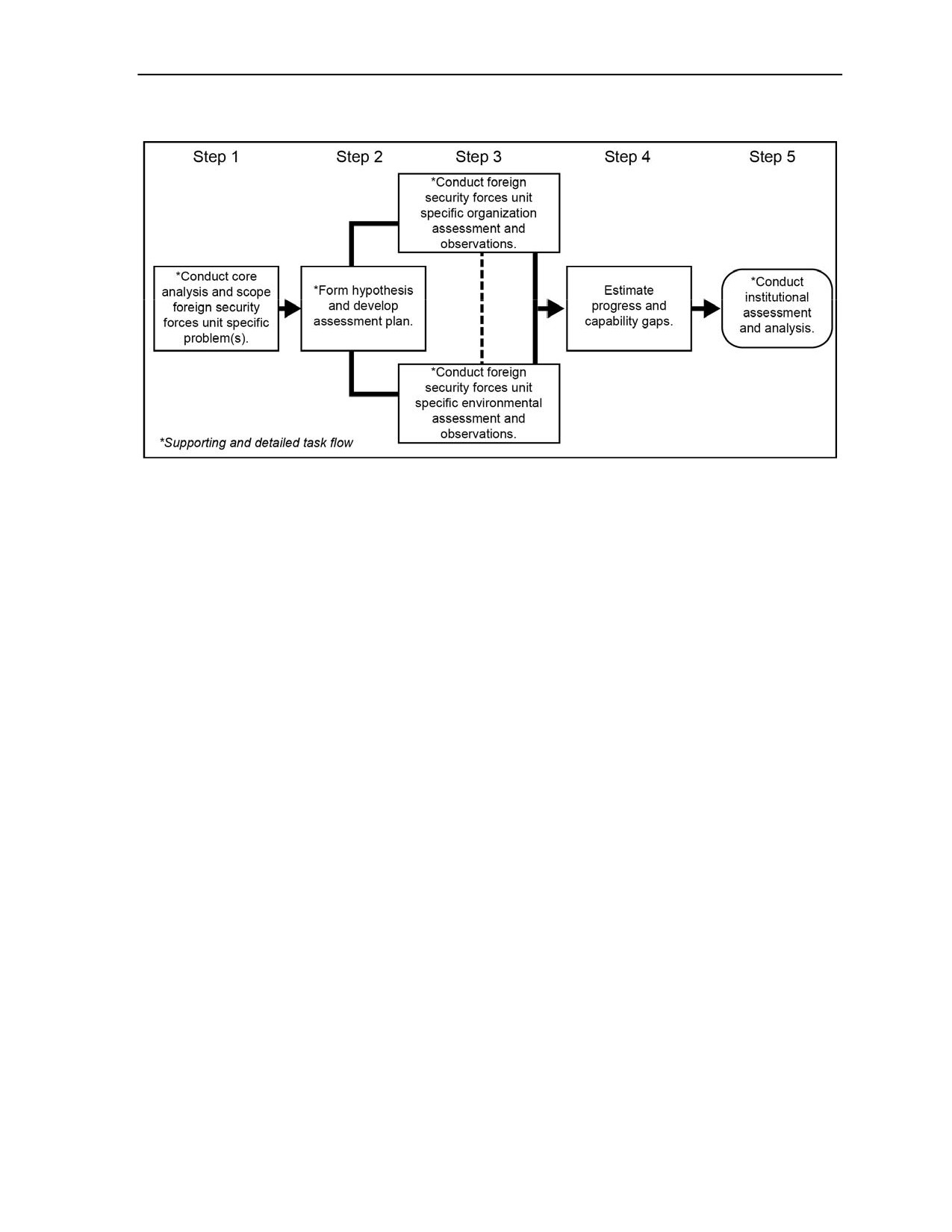
Figure 4-2. Foreign security forces assessment workflow
4-72. While every situation differs, theater army and brigade leaders assess the following factors
throughout planning, preparation, and execution of the operation:
z
The operational environment (including civil and sociocultural considerations).
z
Legal authorities (see chapter 2).
z
The core grievances and potential threats (possibly including the prerequisites of insurgency).
z
FSF elements (force generation, employment, sustainment, and transition).
z
Methods, successes, and failures of FSF security efforts.
z
State of training at all levels, and the specialties and education of leaders.
z
Equipment and priority placed on maintenance.
z
Sustainment and infrastructure structure and their ability to meet the force’s requirements.
z
Laws, regulations, and doctrine governing the FSF, and their relationships to national leaders.
4-73. Continuous FSF assessment provides measurable feedback in terms of measures of effectiveness and
measures of performance of the developmental progress for a specific force and collectively across the
FSF. The assessment measures how well FSF are performing individual and collective training tasks. When
assessing tasks, RAF identify what the FSF must do, how well they must be able to do it, and what factors
are impeding the FSF from accomplishing their objectives.
4-74. Security cooperation planners, together with advisors conducting security force assistance tasks
within a particular country, apply this foreign security assessment workflow methodology as a
developmental tool when conducting assessments of security cooperation activities designed to achieve
theater campaign plan objectives. An assessment of FSF is critical to aiding the commander’s situational
understanding of the operating environment and informs the development of theater campaign and
campaign support plans.
22 January 2013
FM 3-22
4-13
Chapter 4
SECURITY FORCE ASSISTANCE MISSION ELEMENTS
4-75. The elements of a security force assistance mission are force generation, employment, sustainment,
and transition. These elements serve to identify and synchronize the DOD and interagency actions with
partner nation efforts to achieve the desired campaign objectives. Table 4-2 shows a logical breakdown of
the major security force assistance actions within mission elements required to achieve the commander’s
objectives. Integrated in the security force assistance elements are the security force assistance tasks
(organize, train, equip, rebuild and build, advise and assist, and assess). The task to advise the partner
nation FSF occurs throughout all lines of effort to support the campaign plan.
Table 4-2. Security force assistance mission elements
Force generation
Force employment
Sustainment
Transition
Formulate policies and
Roles, responsibilities,
Force protection
Validation
programs
and authority
Sustainment
Operational
Present and justify the
Assessment
organization
deployment and
force’s positions on
advisory program
Preparation
Force modernization
policies, programs, and
Multinational and
plans
Planning
Military infrastructure
host-nation combined
Implement policies,
Execution
Budget and funding
operation
program, budgets, and
Secure the populace
Contract support
Independent
instructions
continuously
host-nation operations
Ensure efficient
International donations
Secure critical
generating and
Antigraft and
infrastructure
operating functions
anticorruption programs
Ensure the generating
Counter crime
Leadership training and
(organized and petty)
force fulfills current and
education
future operating force
Secure host-nation
requirements
Host-nation security
borders, air and seaports
ministry development
Cooperate and
Security force
coordinate with other
Materiel acquisition
intelligence organization
departments and
Civil service
ministries to provide
Police information and
deployment
more effective, efficient,
intelligence
and economical
Collection methods and
administration, and
systems
eliminate duplication
Analysis
Supervise and control
force intelligence
Dissemination
activities
4-14
FM 3-22
22 January 2013
Chapter 5
Considerations for Brigade Operations
This chapter discusses activities related to, deployment, employment, redeployment,
and postdeployment of Army brigades. It provides tactical-level considerations in
support of strategic security cooperation goals and objectives.
DEPLOYMENT ACTIVITIES
5-1. Deployment is the movement of forces to an operational area in response to an order. It encompasses
all activities from origin or home station through destination, including predeployment events and
intracontinental U.S., intertheater, and intratheater movement legs. Effective and efficient redeployment
avoids operational pauses and contributes to the sustainment of land power capabilities of U.S. forces and
foreign security forces (FSF) over the long term. Deployment and redeployment are similar, iterative and
planning is critical to execution success. Redeployment may involve transfer to support another
requirement in the same operational area.
5-2. This combination of dynamic actions supports the combatant commander’s concept of operations for
employment of the force. It consists of four distinct phases:
z
Predeployment activities.
z
Home station to port of debarkation.
z
Port to port.
z
Reception, staging, onward movement, and integration.
5-3. The generating force’s primary roles in deployment are to—
z
Support operational Army commanders in predeployment activities.
z
Plan for and coordinate unit movement from home station to port of debarkation.
z
Provide capabilities to United States Transportation Command to operate ports.
z
Provide capabilities to combatant commanders for conducting reception, staging, onward
movement, and integration.
5-4. The deployment and redeployment process does not change under security cooperation. However,
there may be cases that require the process to react within 180 days to meet combatant commander country
requirements. United States Army Forces Command (FORSCOM) has overall responsibility for the
deployment of capabilities based in the continental United States to a geographic combatant commander’s
area of responsibility (AOR).
5-5. Security cooperation is conducted in both permissive and uncertain operational environments, in
which U.S. forces are guests of the host nation or partner organization. Units deploy into the operational
area by following their deployment standing operating procedures and the operation plan. This information,
however, does not obviate the need for extensive standing operating procedures and an operation plan.
PREDEPLOYMENT SITE SURVEY
5-6. The predeployment site survey unit aims to report accurately to its parent unit the analysis of the
existing security cooperation situation using the mission variables—mission, enemy, terrain and weather,
troops and support available, time available, and civil considerations (METT-TC). It also establishes
in-country mission command, support, protection, and sustainment relationships for the follow-on unit’s
mission execution. The site survey coordinates the in country reception of forces. This coordination
mitigates risk during the handoff, and requires all units—outgoing and incoming—to apply a
comprehensive approach at all levels of command.
22 January 2013
FM 3-22
5-1
Chapter 5
ADVANCE PARTY DEPLOYMENT
5-7. An advance party deploys to the host nation or partner organization area of operations after the unit
completes its mission planning and the proper commander representative declares it deployable. The
advance party conducts predeployment activities and coordinates necessary travel documentation and
country clearances. The advance party reviews the rules of engagement (ROE) and any status-of-forces
agreements before deploying. If applicable, the proper staff provides an updated threat briefing to the unit.
The brigade logistics staff officer (S-4) coordinates out-loading in the unit area. The unit places all supplies
and materials on pallets beforehand and prepares the load manifest.
5-8. Upon arrival, the advance party processes through customs and immediately notifies the higher
headquarters of its arrival and status. Often the higher headquarters provides point of contacts to the
advance party. These contacts help the advance party obtain the proper identification, documentation, and
weapons permits.
5-9. The advance party establishes contact with all U.S. entities, the country team and tactical unit
commanders to conduct final pre-mission planning activities. The advance party procures secure working,
storage, and living areas for the unit and reconnoiters and prepares the training sites. The advance party
coordinates for special support equipment to unload heavy supplies and transport the supplies and
personnel to the training site.
MAIN BODY DEPLOYMENT
5-10. The unit deploys after completing its planning and the appropriate commander declares the unit
ready. The unit follows the same procedures performed by the advance party. Members of the advance
party meet the main body on its arrival and brief the main body on any required changes to the operation
order.
5-11. After arriving in country, the unit processes through customs and immediately notifies the higher
headquarters of its arrival and status. The unit obtains the proper identification, documentation and
weapons permits from the U.S. country team or other sources, if applicable. Often the security assistance
organization provides to the unit the necessary point of contacts that expedite this process.
5-12. The unit off loads equipment and personnel onto vehicles for movement to the training site, or it
stores the equipment in a secure area until the processing is completed. The host nation may provide a
physical security site for the equipment, but the unit provides security because the commander is
accountable for the security cooperation support member’s physical and personal security. Sustainment
personnel may assist with the equipment transportation, storage, and security.
IN-COUNTRY PREPARATION
5-13. Upon arrival, the commander and brigade operations staff officer (S-3) brief the higher headquarters
on the planned execution of the mission and reconfirm the required command relationship. Local
conditions may require the unit to confirm or establish its in-country and external mission command,
support, and sustainment relationships from outside its operational area upon arrival. The unit establishes
direct working relationships with its next higher in or out of country supporting element to—
z
Determine the limits of the available support and expected reaction time between the initiation of
the support request and its fulfillment.
z
Confirm or establish communications procedures between the supporting element and the unit,
to include alternative and emergency procedures for mission command, all available support,
and medical evacuation.
5-14. The unit establishes procedures to promote interagency cooperation and synchronization. The unit—
z
Identifies the locations and contacts of the relevant agencies, of the United States and the host
nation.
z
Contacts the concerned agency to establish initial coordination.
z
Exchanges information or intelligence according to with Army Foreign Disclosure policy and
combatant command guidance.
5-2
FM 3-22
22 January 2013
Considerations for Brigade Operations
z
Confirms or establishes other coordination protocols as necessary.
z
Incorporates the newly established or changed procedures into the plans for mission execution.
5-15. The unit immediately establishes operations security and protection procedures to support its mission
execution and identifies contingency plans incorporated into its defensive, evasion, and personnel recovery
plans.
5-16. After receiving a detailed briefing and further guidance from the advance party, unit personnel
continue to develop effective rapport with the host-nation military counterparts. They also assess their
working, storage, and living areas for security and verify the location of the training site, communications
center, dispensary area, and host-nation military areas. In partnership with the host-nation military
leadership, the unit commander—
z
Establishes rapport.
z
Conducts introductions in a professional business style, congenial manner.
z
Briefs on the unit’s mission, its capabilities, and any restrictions and limits imposed by the
higher U.S. commander.
z
Ensures all unit personnel are fully informed and firmly support security cooperation goals.
Requests counterpart linkup be made under the mutual supervision of the host-nation military
commander and the unit commander.
z
Explains current unit plans are tentative and that assistance is needed for adaptation and
finalization.
z
Deduces or solicits the actual estimate of unit capabilities and perceived advisory assistance and
materiel requirements.
z
Recommends the most desirable courses of action while emphasizing how they satisfy present
conditions, achieve the desired training, and meet advisory assistance goals.
z
Informs the higher in-country U.S. commander and country team of any significant changes in
the unit’s plan to assist the host-nation military.
5-17. The brigade intelligence staff officer (S-2) supervises the dissemination of intelligence and other
operationally pertinent information within the unit and, as applicable, to higher, lower, or adjacent units or
agencies. The S-2 also—
z
Monitors the implementation of the intelligence collection plans to include updating the
commander’s priority intelligence requirements, conducting area assessment, and coordinating
for additional intelligence support.
z
Establishes liaison with host-nation intelligence and security agencies (within the guidelines
provided by applicable higher authority). Assesses the intelligence threat and resulting security
requirements, including coordination with the S-3 on specific security and operations security
measures.
5-18. Through the S-2, the commander’s priority intelligence requirements (known as PIRs) are based on
the latest information available and requirements for additional PIRs that arise from modified estimates and
plans. The S-2 also—
z
Analyzes the foreign unit’s status to finalize unit plans for advisory assistance. These plans can
include task organization of unit with counterparts, staff functions for planning security
cooperation activities, and advisory assistance required for executing activities.
z
Explains analysis to counterparts and encourages them to help and participate in analyzing,
preparing, and briefing the analysis to the foreign unit commander.
z
Prepares and briefs the plans for training and advisory assistance.
z
Helps the foreign unit inspect the available facilities to identify deficiencies. If the unit finds
deficiencies, the S-2 prepares estimates of courses of action for the host-nation commander to
correct deficiencies.
z
Supervises the preparation of the facilities with their counterparts and informs unit and
host-nation commanders on the status of the facilities.
22 January 2013
FM 3-22
5-3
Chapter 5
5-19. The unit ensures its security is based on the present or anticipated threat. Some recommended actions
the unit may take include—
z
Hardening its positions based on available means and requirements to maintain low visibility.
z
Maintaining unit internal guard system with at least one Soldier who is awake and knows the
locations of all other unit personnel. The guard reacts to an emergency by following an internal
alert plan and starting defensive actions.
z
Maintaining communications with all subordinate unit personnel deployed outside the
immediate area controlled by the main body.
z
Establishing plans for immediate defensive actions in the event of an attack or a loss of rapport
with hostile reaction.
z
Discussing visible security measures with foreign counterparts to ensure understanding and to
maintain effective rapport. Unit personnel do not divulge sensitive information for the sake of
possible rapport benefits.
z
Encouraging the foreign unit, through counterparts, to adopt additional security measures
identified when analyzing the foreign unit’s status and inspecting its facilities.
z
Coordinating defensive measures with the foreign unit to develop a mutual defensive plan. Unit
personnel obtain from counterparts a current internal defense plan. They encourage the foreign
unit to conduct mutual full-force rehearsals of defensive plans. If unsuccessful, the unit conducts
internal rehearsals of the plans.
ARMY FORCE GENERATION
5-20. Army force generation (known as ARFORGEN) is the structured progression of unit readiness over
time to produce trained, ready, and cohesive units prepared for operational deployment in support of the
geographic combatant commander and other Army requirements. Army force generation is the Army’s core
process for force generation, executed with supporting-to-supported relationships, that cycles units through
three force pools: RESET, train/ready, and available. Each of the three force pools contains a balanced
force capability to provide a sustained flow of forces for current commitments and to hedge against
unexpected contingencies. Army force generation establishes the basis to plan and execute Army-wide unit
resourcing. The conduct of brigade operations in support of security cooperation missions is initially
affected by the unit selected. Some brigades may be regionally aligned, assigned to a geographic combatant
command, located in the AOR, and already conducting focused language and cultural training. Other
brigades may be designated from FORSCOM. Effective and efficient redeployment avoids operational
pauses and contributes to the maintenance of landpower capabilities and partnerships with FSF over the
long term. (See AR 525-29 for more information on Army force generation.)
5-21. FORSCOM trains, mobilizes, deploys, sustains, transforms and reconstitutes conventional forces,
providing relevant and ready landpower to combatant commanders and theater army commanders in
defense of the nation both at home and abroad. FORSCOM serves as Army force provider in the global
force management process. It recommends sourcing solutions that include generating force capabilities to
combatant commander capabilities requirements. FORSCOM configures assigned operational Army forces
for employment, and prepares them for the specific operational environment and mission in which they will
be employed, to include the planning and execution of mission readiness exercises and mission rehearsal
exercises, as well as the maintenance and employment of an exportable training capability.
5-22. Units in the Army force generation train/ready force pool increase training readiness and capabilities
given resource availability to meet established readiness goals. Units in the train/ready force pool may be
deployed, and Reserve Component units may be mobilized for deployment.
5-23. Units in the train/ready force pool perform the following activities:
z
Perform individual and collective training tasks.
z
Complete professional military education.
z
Conduct mission analysis to identify personnel and equipment capability shortfalls in order to
meet theater army requirements.
z
Receive new personnel and equipment.
5-4
FM 3-22
22 January 2013
Considerations for Brigade Operations
z
Provide institutional support.
z
Conduct mission rehearsal exercises.
z
Perform other activities as directed.
Commanders must ensure the continuous medical and dental processing and readiness of all Soldiers
assigned.
5-24. Units in the train/ready force pool provide operational depth by retaining the capability to perform
decisive action (offense, defense, stability, and defense support of civil authorities) tasks or respond to
theater army and geographic combatant command security cooperation requirements.
5-25. United States Army Training and Doctrine Command (TRADOC) recruits, trains, and educates
Soldiers; supports training in units; develops doctrine; establishes standards; and builds the future Army.
TRADOC provides this support to operating forces even while they are conducting operations. TRADOC
assists operating forces in integrating new capabilities and in adapting to their operational environment, as
well as transitioning successful adaptations to the rest of the Army. TRADOC also supports theater army
security cooperation activities and security force assistance, including force design for those forces and
their supporting institutions. TRADOC support is provided primarily through its major subordinate
commands and field operating agencies.
OPERATION PLAN
5-26. The S-3 disseminates the operation plan or order to unit staff and subordinates. The S-3 ensures
predeployment training for Soldiers, to include preparation for training host-nation military forces and
rehearsals for movement. The S-3 reviews the program of instruction for tasks whether they be train,
advise, assist, equip, or assess, to include getting approval from the commander and higher headquarters, if
necessary.
5-27. Commanders normally initiate the military decisionmaking process upon receipt of or in anticipation
of a mission. Commanders and staffs often begin planning in the absence of a complete and approved
higher headquarters’ operation plan or operation order. This requires active coordination with the theater
army that issued the plan or order, and parallel planning between FORSCOM and the division as the plan
or order is developed. (See ADRP 5-0 for further discussion of the operations process.)
TASK ORGANIZING
5-28. Brigades may require additional augmentation to provide capabilities not organic or habitually
assigned. Brigades identify any capability shortfalls and coordinate support with their higher headquarters,
FORSCOM and the theater army during military decisionmaking process. Ideally, through global force
management and Army force generation, FORSCOM will tailor the brigade to meet theater army
requirements prior to deployment, however may subsequently task organize the brigade or elements of the
brigade upon arrival. These capabilities and units include Army aviation, civil affairs, military information
support teams, additional military police, linguists, or additional officers and noncommissioned officers as
either advisors or instructors in professional military education. These units or individuals should arrive
before the conduct predeployment training.
5-29. Brigades conducting security cooperation missions will normally be task organized into smaller
rotational teams for execution. These teams should be focused on training, advising or assisting a specific
partner unit or activity. These teams include, but are not limited to, infantry battalion advisory teams,
brigade advisory teams. Specialized teams may also be required for partner sustainment, engineer, or police
units.
CIVIL AFFAIRS
5-30. Security cooperation activities may require support or augmentation from civil affairs. Therefore,
brigade planners work in concert with the theater army security cooperation division and civil affairs
operations section (S-9) to determine civil affairs capability shortfalls.
22 January 2013
FM 3-22
5-5
Chapter 5
5-31. Civil affairs commands, brigades and battalions are organized, trained and equipped to enable
geographic combatant command and theater army to achieve unified action by working the civil populace
by planning, preparing for, executing, assessing, and transitioning civil affairs operations. Each theater
army has a civil affairs brigade aligned with it. A civil affairs battalion is normally attached to a division
and attaches its civil affairs companies to brigades. The battalion provides a civil affairs planning team to
the division G-5 (assistant chief of staff, plans) to assist in planning.
5-32. The civil affairs section typically supports many elements of the theater campaign plan, the theater
campaign support plan, and contingency plans. At the strategic and operational levels, especially during the
implementation of these plans, the timely application of civil affairs operations can mitigate the need to
apply other military operations such as security cooperation activities or in response to contingency
planning. Civil affairs determine the need to establish one or more civil-military operations centers, civil
liaison teams, civil information management architecture, and supporting networks as early as possible to
facilitate communication and coordination with the nonmilitary agencies in the operational environment.
5-33. The civil affairs section ensures the operations plan minimizes how operations affect the civilian
population and addresses ways to mitigate the civilian impact on military operations. Civil affairs
operations also ensure the operation plan discusses coordination with any augmenting actors. These actors
might include civil affairs forces, provincial reconstruction teams, or United States Agency for
International Development project officers in the operational area. During predeployment training, Soldiers
receive training, materials, and briefings on the operational area. This training can cover the history,
culture, religion, language, tribal affiliations, local politics, and cultural sensitivities as well as any
significant nongovernmental organizations and intergovernmental organizations operating in the
operational area.
PREDEPLOYMENT ACTIVITIES AND TRAINING
5-34. Upon receipt of a security cooperation mission, brigades continue detailed predeployment activities
no different from any other operation. Commanders, staff, and leaders prepare plans and orders and
conduct rehearsals. Commanders and staff obtain supplies, equipment, and training materials and prepare
for overseas movement. Personnel and units become proficient in individual tasks, collective tasks, and
mission-essential tasks. They conduct an extensive familiarization and orientation with the country’s
political, military, and civil factors (such as sociocultural, religious, and language aspects).
5-35. The priority of training for brigades assigned security cooperation missions such as security force
assistance training is to become proficient in decisive action tasks of offense, defense, and stability so they
are prepared to train FSF to accomplish those tasks. Following that, brigades should prioritize their training
toward becoming proficient in the specific theater army requirements that support the geographic
combatant command country plan. Soldiers receive training, materials, and briefings on the operational
area. Training should emphasize the host-nation culture and language and provide cultural tips for
developing a good rapport with foreign partners. Training can cover history, culture, religion, language,
tribal affiliations, local politics, and cultural sensitivities as well as any significant nongovernmental
organizations operating in the operational area. Interpersonal communications, cultural awareness, and
abiding by host-nation laws are absolutely critical to mission success. Most security cooperation missions
take place in countries where a majority of the FSF do not speak fluent English and will not be able to
furnish interpreters. Employment of contract linguists as interpreters is a viable way to facilitate
communication between the advisors and the FSF.
5-36. Combined training centers and security force assistance training organizations play a critical role
toward ensuring U.S. forces are proficient in training and advising FSF. For brigades assigned to support
security cooperation missions such as security force assistance, the first priority is to become proficient in
decisive action (offense, defense, stability, and defense support of civil authorities) tasks. Theater army
security cooperation requirements vary from country to country. However, all predeployment training for
security cooperation missions should include training on security force assistance tasks (organize, train,
equip, rebuild and build, advise and assist, and assess), stability tasks (civil security, civil control, restore
essential services, support to governance, and support to economic and infrastructure development) and
counterinsurgency tasks, following the training principles described in ADP
7-0 and FM 7-15. The
5-6
FM 3-22
22 January 2013
Considerations for Brigade Operations
following tasks (paragraphs 5-37 to 5-39) are derived from FM 7-15 and should not be considered as
all-inclusive because requirements vary from one country to another.
Decisive Action Tasks
5-37. Decisive action tasks are—
z
Offense.
z
Defense.
z
Stability: civil security, civil control, restore essential services, support to governance, and
support to economic and infrastructure development.
z
Defense support of civil authorities.
Movement and Maneuver Tasks
5-38. Movement and maneuver tasks are—
z
Conduct tactical maneuver.
z
Conduct five forms of maneuver.
z
Employ combat formations.
z
Employ combat patrols.
z
Conduct tactical troop movements.
Sustainment Support Tasks
5-39. Sustainment support tasks are—
z
Provide maintenance support (focused on preventive maintenance of combat vehicles).
z
Provide transportation: convoy operations and unit movement.
z
Provide health support such as medical evacuation planning and execution, combat lifesaver,
preventive medication, casualty care and emergency first aid, and first responder.
SECURITY FORCE ASSISTANCE CONSIDERATIONS
5-40. Security force assistance considerations include—
z
Advisor training and characteristics.
z
Culture and language (Army Language and Cultural Enterprise).
z
Vehicle operator training.
z
Counterinsurgency tactics, techniques, and procedures.
z
Conducting negotiations.
z
Conducting an assessment using measures of effectiveness and measures of performance (often
called metrics).
z
Instructor training (staff, military decisionmaking process, warrior leader course, troop leading
procedures, small unit tactics, military occupational specialty, airborne operations and
jumpmaster training, air mobility operations, weapons, range, and safety).
z
Counternarcotics training.
z
Counter-improvised explosive device tasks.
z
Anticorruption training.
z
Gender perspective training.
z
Range operations (individual and crew-served weapons qualification and employment).
z
Fire support planning and terminal control of supporting arms (such as surface-delivered fires
and close air support).
z
Tactical communications.
z
Media training.
z
Law of War and ROE training.
22 January 2013
FM 3-22
5-7
Chapter 5
5-41. In all cases, before deploying to conduct security force assistance missions, personnel must receive
training in—
z
Foreign disclosure, so that Soldiers understand information that can or cannot be shared.
Processes and procedures to accomplish this are instrumental in establishing and maintaining a
productive work environment with foreign partners.
z
Survival, escape, evasion, and resistance (SERE), level A.
z
Theater and Service force protection and level 1 antiterrorism training.
z
Current SERE, level C, mandatory for advisors identified as high risk of isolation or high risk of
capture.
z
A country brief from theater army that includes, but is not limited to country plan with current
assessment and objectives, strategic communication messages and themes, travel briefing, visa
requirements and coordination, transportation (cooperative security locations, aerial ports of
departure
[APODs], and seaports of departure
[SPODs]), medical health support, and
communications.
z
Medical vaccinations.
5-42. Based on the higher commander’s training guidance, unit commanders assign missions and approve
the draft mission-essential task list that supports security cooperation activities. The staff plans, conducts,
and evaluates training to support this guidance and the approved mission-essential task list for security
cooperation missions. Commanders prioritize tasks that need training. Since there is never enough time to
train in every area, commanders’ focus on tasks essential for mission accomplishment.
5-43. Once commanders select tasks for training, the staff builds the training schedule and plans on these
tasks. The staff provides the training requirements to the commander. After approving the list of tasks to be
trained, the commander includes the tasks in the unit training schedule. The staff then coordinates the
support and resource requirements with the S-3 and S-4. Finally, commanders, through their sergeants
major and noncommissioned officers, ensure standards are enforced during training.
5-44. Unit training objectives are for developing capabilities to conduct internal defense and development
activities for tactical operations, intelligence operations, military information support operations, populace
and resources control operations, and civil affairs and advisory assistance operations in the host-nation
language. Units identified for security cooperation support begin intensified training immediately upon
deployment notification.
5-45. After deployment to the host nation and before commitment to operations, the unit may receive in
country training at host-nation training centers or at designated training locations. This training helps
personnel become psychologically and physically acclimated to the host nation and operational
environment. This training also allows commanders and staffs some time to coordinate and plan within
their own command and with civilian, military, joint, and multinational organization partners. After
commitment, training continues and is emphasized between operations, using needed improvements
identified in operations as the basis for further training.
EMPLOYMENT ACTIVITIES
5-46. Once the unit has deployed and arrived in country, it begins employment. Employment is the conduct
of security cooperation activities in partnership with the host-nation military. Planning and coordination, of
indirect and direct support approaches with the host nation are multinational endeavors. Employment
includes foreign counterparts in the mission planning (preparing the FSF for the activities, missions or
operations) to increase the capability and capacity of the host nation’s internal defense and development.
COMMANDER
5-47. Preceding a mission or operation, the U.S. commander advises and assists the foreign security force
commander. The foreign counterpart issues planning guidance for the execution of the mission and clarifies
the commander’s intent to emphasize or de-emphasize certain aspects of the mission. The U.S. commander
advises and assists the foreign commander in the mission command of tactical operations. The U.S.
commander explains the methodology of mission command with intention of creating a more thorough
5-8
FM 3-22
22 January 2013
Considerations for Brigade Operations
understanding of the operational environment and of the problems to be addressed. He or she articulates
that mission command enables subordinate commanders to build teams and establish themes and messages
to drive processes and procedures. Mission command enables an operationally adaptive force that
anticipates transitions; accepts risks to create opportunities; informs friendly, joint, interagency,
intergovernmental, and multinational partners; and influences neutrals, adversaries, and enemies. By
accompanying the host-nation commander when the mission is received from higher headquarters, the U.S.
commander assists any subsequent missions. The U.S. commander monitors how FSF understand the
commander’s intent and all specified or implied tasks.
5-48. During execution of the mission, the U.S. commander helps the foreign unit commander exercise
mission command during operations. After monitoring the tactical situation, the U.S. commander
recommends changes to the courses of action to exploit the situation. After monitoring the flow of
information, the U.S. commander recommends improvements to use intelligence collection assets and to
keep subordinates reporting required information.
STAFF
5-49. Before the mission, the advisor staff advises and assists the foreign counterparts in preparing
estimated courses of action for essential tasks. The staff helps write tentative plans based on the planning
guidance and unit’s standard operating procedures. These plans include primary, alternate, contingency,
and emergency plans.
5-50. During execution, the staff helps foreign counterparts coordinate the execution of the tasks. They
disseminate portions of their plans to other personnel, senior and subordinate staff sections, and supporting
elements. They help notify higher, lower, or adjacent staff sections of modified estimates and plans.
Finally, the staff—with the S-2 and the S-2 counterpart—helps update the commander’s critical
information requirements with the latest information and requirements that arise from operations.
Executive Officer
5-51. The executive officer performs the organizational analysis of the unit’s coordinating staff sections to
ensure efficiency during the planning process according to initial planning guidance. With the foreign
counterpart, this officer directs foreign staff sections as they develop estimates and plans. The executive
officer monitors the liaison and coordination with host-nation military higher headquarters, recommending
changes to improve efficiency.
Manpower and Personnel Staff Officer
5-52. The manpower and personnel staff officer
(S-1) provides advice, assists, and makes
recommendations to the foreign counterpart for conducting human resources. This includes monitoring the
maintenance of foreign unit strength, accountability of casualties, unit morale, and postal activities. This
may also include concerns with the foreign pay system, leave procedures, and casualty pay procedures.
Intelligence Staff Officer
5-53. The S-2 advises the intelligence counterpart on the intelligence process. The S-2 monitors security
cooperation activities to protect classified and sensitive material and operations. The S-2 advises in the
examination of captured adversarial documents or materiel. The S-2 advises in the development of
intelligence, surveillance, and reconnaissance support plans to include the brief and debrief of patrols
operating as a part of reconnaissance and surveillance activities. Finally, the S-2 advises on dissemination,
the integrating and sharing the intelligence that was processed to help his foreign counterpart update
situation maps and overlays.
Operations Staff Officer
5-54. The S-3 helps the foreign counterpart to prepare tactical plans using estimates, predictions, and
information. The S-3 monitors command and communications nets, assists in preparing all orders and
plans, and helps to supervise the training and preparation for operations. Finally, the S-3 monitors the
22 January 2013
FM 3-22
5-9
Chapter 5
planning process and makes recommendations for consistency with internal defense and development
goals.
Sustainment Chief
5-55. The sustainment chief advises on sustainment activities and systems that provide support and
services to ensure freedom of action, extend operational reach, and prolong endurance. This includes those
tasks associated with sustainment, personnel services, and health service support.
REDEPLOYMENT ACTIVITIES
5-56. Redeployment is the return of forces and materiel to the home or mobilization station. Before
redeployment, a unit conducting security cooperation activities inventories all supplies and equipment to be
passed on to the relieving U.S. unit. These actions ensure all items are accounted for and the custody chain
for property and equipment is unbroken. The outgoing unit also—
z
Prepares a final evaluation report showing its estimate of the foreign unit’s capabilities and
giving an opinion of its future employment.
z
Discusses the foreign unit’s performance with its commander. The unit submits a copy of the
foreign unit’s final evaluation to the next higher host-nation military commander.
z
Passes custody of training schedules, lesson plans, foreign operational records, and the foreign
unit’s final evaluation to the foreign unit and relieving U.S. unit.
z
Presents debriefings, after action reviews (AARs), and the foreign unit’s final evaluation to the
higher in-country U.S. commander and country team.
5-57. A foreign disclosure officer (known as FDO) ensures that the requirements of the commander and
staff to disclose military information and technology are understood by country, category, and classification
level and that the authorities and procedures are in place to affect these disclosures.
5-58. The outgoing unit commander supervises the redeployment. This commander approves prepared
redeployment plans or, as necessary, directs changes to the redeployment plans. The commander and
operations officer assess and select alternatives or changes to the present redeployment courses of action
based on the intelligence officer’s intelligence estimate. They develop and disseminate a fragmentary order
for selected alternatives or changes.
5-59. Unit personnel prepare all accompanying supplies and equipment for shipment. They brief ground
support personnel on equipment handling procedures, routes, convoy procedures, and actions to take if a
terrorist or insurgent incident occurs. They load personnel and equipment for movement to the departure
airfield or airport following the load plan in the unit’s operation order. They maintain accountability for all
their personnel, supplies, and equipment.
RELIEF-IN-PLACE TRANSITION OF AUTHORITY AND MISSION HANDOFF
5-60. During long-term continuous Army support to security cooperation, commanders may elect to
replace teams, elements, detachments or units for a variety of reasons. Time is not the only governing
factor. Changes in the host-nation political or military dynamic may require reshaping force packages as
situations or notional operation plans change, for better or worse. Security cooperation programs often
transcend all plan phases: shape, deter, seize the initiative, dominate, stabilize, and enable civil authority. In
addition, internal administrative concerns might prompt or support a commander’s decision to rotate teams
or units. For example, new equipment may be fielded to an incoming unit that the outgoing unit lacks.
Regardless of the reason, mission handoff is necessary and is defined as the process of passing an ongoing
mission from one unit to another with no discernible loss of continuity.
5-61. Relief in place and transition of authority (often referred to as RIPTOA) begin with the commander
ordering the change. The authority for determining the mission handoff lies with the incoming commander
since he assumes responsibility for the mission. RIPTOA may affect the conditions under which the
mission continues. In security cooperation, this may not entail an in-country relief transition of authority.
During small-scale security cooperation activities, virtual meetings, video teleconferences, or—
preferably—commander and staff meetings between transitioning teams or units can help achieve
5-10
FM 3-22
22 January 2013
Considerations for Brigade Operations
continuity. Ideally, all Army units execute these procedures unit-to-unit in the host nation. During episodic
engagements with a gap and indirect handoff between units supporting security cooperation, the lessons
learned and postmission debriefing provides a historical record that assists in bridging the gap between
activities or operations. During the security cooperation, units are encouraged to populate the debriefing
with all relevant information as a guide for incoming units. The historical record can serve as an in-briefing
for incoming units. The postmission debriefing should be reviewed prior to a predeployment site survey.
Together, in combination with the considerations list and the training plan, the briefings and surveys all
serve to assist an incoming unit with an episodic or indirect handoff of security cooperation engagements.
Commanders and staffs must be adaptive in their thinking when a mission handoff, or portions of it, is
indirect (for example, from the historical record).
5-62. The outgoing commander advises the incoming commander on the tentative handoff process and the
assumption of the mission directly or through a liaison. If this advice conflicts with the mission statement
or the incoming commander’s intent and design and the conflict cannot be resolved with the authority
established for the incoming commander, the commander ordering the relief resolves the issue.
5-63. If the incoming Army unit or the host-nation unit is in direct-fire contact with insurgents or another
internal threat during the handoff, the advisory team or unit immediately notifies the higher headquarters
ordering the exchange. If the incoming unit commander has not assumed responsibility, his unit
immediately comes under operational control of the outgoing unit and is absorbed into that unit position.
(Possible exceptions include a rapidly evolving noncombatant evacuation operation or the underlying crisis
that triggers it.) The outgoing unit commander and his host-nation counterpart control the operation. If the
outgoing unit commander has passed responsibility to the incoming unit commander, the outgoing unit
comes under the operational control of the incoming unit, and the host-nation unit coordinates its
movements with the new unit. Army units conducting security cooperation that involve direct support
including combat operations may need to follow these same procedures.
TERMINATION OF OPERATIONS AND SECURITY COOPERATION ACTIVITIES
5-64. Security cooperation activities are adaptable and occur across the range of military operations,
various operational environments, and types of military operations ranging from stability operations to
foreign internal defense. Security cooperation activities can be used to create an environment that enables
campaigns and larger operations to be terminated. A poorly conducted termination of security cooperation
activities must be avoided because it can have a long-term impact on U.S. relations with the host nation, the
region, and, potentially, in more than one region. Some level of security cooperation activities or programs
normally continues well after intensive support has ended. The operational and tactical closure may differ
from strategic closure.
5-65. In security cooperation, objectives are determined in a collaborative setting that includes the
host-nation leadership to ensure a clearly defined national strategic end state that is mutually beneficial.
The termination criteria for a conflict help define the desired military end state, which normally represents
a period in time or set of conditions beyond which the President does not require the military instrument of
national power as the primary means to achieve the remaining national objectives. Termination of security
cooperation operations typically involve analyses of the participating nations to determine if objectives
have been met and that these nations can assume responsibility for the defense and continued interdiction
of threats. Specified standards are approved by the President or the Secretary of Defense that must be met
before a security cooperation activity or operation can be concluded or transitioned to a less intensive level
of support. Small-scale security cooperation exercises, fellowship programs and assistance may continue
through Army support.
POSTDEPLOYMENT ACTIVITIES
5-66. The unit commander debriefs to provide an overview of the mission and all relevant information
subsets. Topics can range from military geography, political parties, and military forces to insurgents,
security forces, and ongoing agency operations.
22 January 2013
FM 3-22
5-11
Chapter 5
POSTMISSION DEBRIEFING
5-67. Redeployment is not the end of the mission. Upon arrival at the redeployment location, the unit
undergoes an extensive debriefing. The S-2 typically organizes and conducts the debriefing. The S-2
coordinates with higher-level intelligence organizations to take part in the returning unit’s debriefing,
particularly if other organizations tasked the unit to obtain information. All deployed personnel, to include
attachments, must be available for the debriefing.
POSTMISSION DOCUMENTATION
5-68. After the debriefing, the unit commander and staff prepare three documents—an AAR, a report of
lessons learned, and an assessment.
After Action Review
5-69. An AAR describes the “who, what, when, where, and how” of the operation. It is a permanent record
of the major activities of the unit from receipt of mission to debriefing. As such, it is an extremely
important template on which past missions may be compared and future missions planned. Within 48 hours
of being debriefed, the unit normally submits an AAR through command channels to the higher command.
The intelligence and operations officers at each echelon keep copies of unit AARs.
5-70. Shortly after completion of the AAR, or simultaneously with its submission, the unit submits a report
of lessons learned (discussed in further detail below). This report documents the commander and staff’s
reflection of the operation and recommendations for the future. Units often prepare the lessons according to
the elements of combat power: mission command, movement and maneuver, intelligence, fires,
sustainment, protection, leadership, and information. This method addresses what worked and did not work
during the operation, why it did or did not work, and what changes or substitutions are needed for existing
tactics, techniques, and procedures in the unit.
Lessons Learned
5-71. Lessons learned validate knowledge and experience derived from observations and the historical
study of military training, exercises, and combat operations. Lessons learned, when further validated,
eventually lead to a change in behavior at the tactical level (such as tactics, techniques, and procedures), the
operational level, or the strategic level, or in one or more of the doctrine, organization, training, materiel,
leadership and education, personnel and facilities (DOTMLPF) domains. Shortly after completion of the
AAR, or simultaneously with its submission, the unit submits a report of lessons learned. This report
documents the commander and staff’s reflection of the operation and recommendations for the future. Units
often prepare the lessons according to the elements of combat power: mission command, movement and
maneuver, intelligence, fires, sustainment, protection, leadership, and information. This method addresses
what worked and did not work during the operation, why it did or did not work, and what changes or
substitutions are needed for existing tactics, techniques, and procedures in the unit.
5-72. As security cooperation programs are implemented, it is critical to document lessons learned to allow
the commander to modify the security cooperation program to fit special circumstances and environments.
Lessons learned provide valuable data that informs the assessment of not only the brigade conducting the
mission, but also of partner security forces.
5-73. AR 11-33 directs that commanding generals of all Army commands, Army Service component
commands, and direct reporting units will direct assigned units, brigade-sized or larger (except in the case
of specialty units which operate or deploy separately at the platoon, company, or battalion levels), to submit
unit-level AARs and other lessons learned to the Center for Army Lessons Learned (known as CALL) for
review, analysis, dissemination, and archiving, according to the following guidelines. First, AARs will be
submitted to Center for Army Lessons Learned (Combined Arms Center) no later than 90 days after
returning to home station after participating in an Army, joint, or combined (multinational) military
operation. Second, AARs will be submitted to Center for Army Lessons Learned no later than 60 days after
returning to home station after participating in a major Army, joint, or joint combined (multinational)
5-12
FM 3-22
22 January 2013
Considerations for Brigade Operations
exercise training or security cooperation mission. Units completing Combat Training Center rotations may
submit a copy of the relevant portions of their “take-home package.”
5-74. As a minimum, the lessons learned report is forwarded to the appropriate theater army and the
Service and joint lessons learned agencies to allow integration into subsequent unit training and leader
education. Units submit comprehensive AARs focusing on the specifics of security cooperation activities
such as joint exercises to gather lessons learned information as soon as possible after mission execution.
They submit reports to the Combined Arms Center, Fort Leavenworth, Kansas. The Center for Army
Lessons Learned Web site (http://usacac.army.mil/cac2/call/index.asp ) allows users to either access a
database of lessons learned or submit a request for information. The Center for Army Lessons Learned
Web site also maintains links to other lessons learned databases and centers, to include the Joint Lessons
Learned Information System, which is accessible to all Services.
Assessment
5-75. Brigades are required to conduct a comprehensive assessment using measures of effectiveness and
measures of performance (determined by the theater army) of all security cooperation activities conducted
with FSF. Brigades submit assessments to the theater army being supported upon completion of the
mission. These assessments are critical in helping the combatant command and theater army assess those
activities to determine progress towards achieving theater campaign plan objectives. The assessment should
also be shared with the U.S. forces transitioning to assume responsibility.
5-76. In all operations, units assess the short-term, mid-term, and long-term success of FSF. Success is
normally defined within the context of these three periods. In the short term, FSF make steady progress in
fighting threats, meeting political milestones, building democratic institutions, and standing up security
forces. In the midterm, FSF lead fighting threats and provide security, have a functioning government, and
work towards achieving economic potential. In the long term, FSF are peaceful, united, stable, and secure.
They are integrated into the international community and a full partner in international security concerns.
CONSOLIDATION OF GAINS
5-77. The standards for host-nation military individual and collective tasks will differ due to conditions.
Differing materiel conditions may exist in the host nation, requiring specific standards for equipment not
originating from U.S. forces. Cultural conditions could involve adaptive standards for the organization and
leadership. It is imperative to document host-nation tasks, missions, operations, and capabilities at brigade
level and below to assist in developing and recording levels of proficiency specific to host-nation standards.
The documentation will ensure consistency during intermittent security cooperation operations. The
documentation should include recommended measures of performance for advisors to develop training and
evaluation criteria for individual and collective tasks. Advisors use recommended measures of performance
as a basis from which to develop standards of performance for the specific host-nation unit under the given
specific conditions.
TRANSFER OF ACTIVITIES
5-78. The direct and indirect approaches to security cooperation intend to change the security environment
by enabling the host nation to effectively provide its own internal defense and development. This leads to
strengthening regional security through mutual defense goals, in synchronization with U.S. priorities
established in the mission performance plan. The transition of all activities to the host nation occurs
incrementally on multiple levels (tactical, operational, and strategic) over time, but success is ultimately
defined by acceptable host-nation sovereignty to include self-sufficient defense and security.
5-79. Security cooperation supports strategic goals and objectives. It is analogous to a continuum of
sustained military engagements with episodic periods of inactivity. The continuation of programs promotes
specific U.S. security interests and provides U.S. forces with peacetime and contingency access to host
nations. During periods of inactivity in security cooperation programs, the Army provides reduced support
to the host nation in the form of training and equipping during the initial performance of security
cooperation tasks. Tasks are practiced with expert assistance, followed by the subsequent performance of
self-defense by the host nation without assistance. Security cooperation aims to establish a relationship and
22 January 2013
FM 3-22
5-13
Chapter 5
build mutual trust with a professional Army in support of mutual defense. In addition to mutual defense, the
expert assistance promotes the broader standards of professionalism, democratic values, human rights,
internal development, and civil-military relations. The continuum of Army force projection in support of
security cooperation operations build defense and security relationships to assure allies and partners,
dissuade potential adversaries, deter aggression, and counter coercion or defeat.
5-14
FM 3-22
22 January 2013
Chapter 6
Considerations for Working Effectively With Foreign
Security Forces
This chapter discusses considerations for working with foreign security forces,
including the significance of building relationships. It describes the types of skills all
Soldiers need to work effectively with foreign security forces. It explains the
importance of the advisor.
RELATIONSHIP BUILDING
6-1. Building relationships can lead to partnerships, and is central to security cooperation whether
conducting military engagement with a foreign partner in Europe and Asia, or conducting Soldier and
leader engagements with foreign security forces
(FSF) during operations that may include
counterinsurgency. It is essential for the Soldier, particularly the advisor, to place a considerable amount of
time and energy in establishing solid relationships among U.S. forces and FSF. By its very nature, the
advisor mission forces its members out of their traditional roles. An advisor must purposefully look to build
solid relationships between U.S. and foreign security force commanders, staffs, and the defense
establishment, as well as a variety of governmental and nongovernmental entities.
RAPPORT
6-2. Since Soldiers conducting security cooperation missions that include security force assistance are in
a unique military position, they establish rapport with their foreign counterparts. This position is one in
which the leader has no positional authority over the actions of their foreign counterparts. This lack of
authority means that the doctrinal view of leadership is modified to emphasize interpersonal relationships
and deemphasize authoritarian roles. Soldiers use their interpersonal skills to build rapport. Soldiers cannot
simply order a specific action; instead, they use interpersonal skills to positively affect the actions and
decisions of their foreign counterparts and work toward shared goals. The measure of effective rapport is
whether Soldiers can inspire foreign counterparts to take the desired action and guide them to succeed.
6-3. Soldiers obtain certain knowledge before establishing effective rapport. First, they study Army
leadership doctrine
(see ADP
6-22 and ADRP
6-22) to enhance their leadership knowledge for
understanding human nature and motivation. They then incorporate information specific to the culture and
society of their counterparts. To further enable rapport, Soldiers must develop a genuine interest in other
people. They must smile often. They must remember and use people’s names, encourage others to talk
about themselves, listen to others, discuss what the other person is interested in, and make the other person
feel important. Through this type of interaction, Soldiers and FSF develop mutual or shared interests on
which to base their relationships and developmental goals. These mutual or shared interests are the
foundation upon which rapport is built. It is important to remember that genuine rapport is developed
slowly, but it can be ruined in an instant.
6-4. Rapport comprises understanding, respect, and trust. No amount of resources or firepower can
compensate for a lack of rapport between advisor and FSF counterpart. It must be honest, genuine, and
heartfelt. Mutual understanding, respect, and trust are the building blocks to success. All the components of
rapport are two-way streets: counterparts are more likely to share about their culture, language, and
experiences if Soldiers are willing and able to share also. Building this type of rapport may require Soldiers
to establish a personal level of understanding, respect, and trust with their counterparts.
6-5. Understanding begins before deployment and may include foreign cultural studies, language training,
and equipment and doctrine familiarization. Once in country, Soldiers continue to broaden their
22 January 2013
FM 3-22
6-1
Chapter 6
understanding by observing and asking questions. It is not necessary to accept others’ beliefs or values, but
Soldiers need to understand others’ ways of thinking and operating. Knowing their own culture and
understanding why they believe and value what they do help Soldiers find a common cause.
6-6. Respect is a reciprocal commodity. Ideally, the foreign counterpart will grow to respect Soldiers—
what they know and how they perform. Soldiers should look for characteristics they respect in their
counterparts as soon as they make their acquaintance. Counterparts will possess traits deserving respect,
and more will become evident as the relationship matures. Mutual respect grows through shared
experiences and shared dangers. Soldiers should live, eat, and if authorized, fight with their counterparts.
By sharing their hardships and dangers, coupled with respecting a different culture, Soldiers build respect.
6-7. Trust grows gradually from understanding and respect. Building trust needs to begin on day one, but
it will not mature until later in the relationship. Soldiers should begin by showing they are reliable and
should do everything they say they will do. They should be in the right place at the right time. Two things
can enhance this growth. First, the unit should start out with confidence-building missions. Early success
builds self-confidence and trust. Second, Soldiers should not promise any support they might not be able to
deliver. Mutual trust unites a diverse set of decision makers with whom advisors interact and try to
influence.
LANGUAGE
6-8. Advisors should make every effort to learn to communicate effectively in their counterpart’s
language. Generally, advisors that can converse directly with their counterparts are more effective. If
language proficiency is not an option, learn to work with an interpreter. It is still essential to learn enough
of the language for basic items like greetings. It helps for Soldiers to have enough of an understanding to
catch the basic direction of conversations, even those between the interpreter and the counterpart. The
advisor should attempt to improve his or her language proficiency over time, as this will be a well-received
gesture of respect.
BODY LANGUAGE AND GESTURES
6-9. Body language and gestures are more powerful than verbal language. Subtle movements of the body
may indicate that a person understands the message that is being conveyed. Likewise, conflicting messages
may be sent by unintentional body language or gestures.
LOCAL CUSTOMS
6-10. Respecting local customs goes a long way in building effective rapport. In every culture, refusing
invitations is seen as a slight. This is extreme in some cultures. The advisor must be prepared to accept
many forms of unfamiliar hospitality. Eating local food, unless there is a documented medical threat,
should be the order of the day. Participating in cultural ceremonies also helps build rapport. At some point,
however, there is a level of activity where it is necessary to draw the line. The advisor must be prepared to
be able to deal tactfully with issues that are out of bounds.
Uniform and Grooming Standards
6-11. Advisors should adhere to their Services’ grooming and uniform standards. This will establish a level
of expectation in respect to other standards such as training or maintenance.
Expertise
6-12. Expertise develops from one’s knowledge and experience. Soldiers must repeatedly demonstrate
expertise by making sound judgments and keeping promises. Bad advice and failing to keep promises can
destroy credibility. If credibility is lost, an advisor will fail to build rapport.
Limits
6-13. Building rapport has its limits. Soldiers need not “go native” in order to truly understand the host
nation and its challenges. In the military, it is appropriate to assume enough of the customs common to the
6-2
FM 3-22
22 January 2013
Considerations for Working Effectively With Foreign Security Forces
operational area to be effective. Advisors who are close to their counterparts can often provide their higher
headquarters with valuable insights into local perspectives, from a grass-roots level. However, an advisor
that begins to pursue the agenda of the FSF to the detriment of the United States or the multinational
campaign plan has effectively stepped over the line.
Political Discussions
6-14. Soldiers should avoid initiating lengthy lectures about political philosophy. However, FSF should
know about the current situation in the host country and likely preconceived notions about the United
States. When the topic of politics does arise, Soldiers should remain ready to discuss U.S. history,
difficulties in establishing peaceful democracies, minority rights, and other positive aspects of the U.S.
democratic political system. They should reinforce their counterparts’ national pride and ask about their
national traditions and history.
TYPES OF SKILLS NEEDED
6-15. Soldiers need to possess a variety of skills to perform their assigned mission. These skills can be
divided into two categories: hard skills and soft skills. Hard skills are the foundational skills upon which
basic competencies are based. Hard skills include military occupational specialty training and proficiency,
warrior skills, tactical experience, and subject matter expertise. Soft skills are the specific sociocultural
skills that Soldiers learn throughout their life. Soft skills include, but are not limited to, social skills, ability
to build rapport, ability to influence, ability to negotiate, interpreter use, cultural awareness, and language
ability.
HARD SKILLS
6-16. Soldiers participating in security cooperation may initially be selected on the basis of hard skill
expertise. However, military occupational specialty or tactical proficiency does not necessarily make a
Soldier effective in a security cooperation task. Within security cooperation, Soldiers must be able to teach,
advise, assist, equip, and assess foreign forces. To do this they must be knowledgeable and proficient in
tactics, techniques, and procedures, and have the skill to impart knowledge effectively. They may also be
required to train, assist, or advise foreign forces in the areas of intelligence, communications, operations,
and logistics. Some Soldiers may be required to call in U.S. supporting arms (such as artillery, close air
support, or air medical evacuation). Since these skills may be critical due to the isolated and independent
nature of a mission, Soldiers should refresh them during predeployment training.
6-17. As a group of Soldiers forms a team, they must practice their warrior tasks, organize to cover the
warfighting functions associated with any team, and familiarize team members with their duties and
responsibilities. Some hard skills are refined before deploying, and others are learned in-country.
SOFT SKILLS
6-18. Soft skills build on the hard skills of Soldiers and contribute to the methods of teaching, coaching,
and advising. Soldiers use these skills to develop the capabilities of the FSF. Soldiers have to operate
effectively within cultural settings that can be very different in behavior and language from their own. Soft
skills help Soldiers to better understand these environments and human behavior, to communicate across
cultures, to build rapport, to influence, and to negotiate. Successfully employing these skills sets the
conditions for Soldiers to move forward with their mission.
6-19. Leaders will make an initial assessment to determine the foreign unit’s proficiency to determine the
appropriate method with which to start. If the ability level of the FSF is low then leaders focus their
approach on teaching the FSF basic skills and task. Once the ability level of FSF increases the leaders can
shift their method to coaching and help guide the FSF to a high level of proficiency. As the FSF reach a
high level of proficiency, leaders once again shift their focus to advising and allow the FSF to take the lead.
In this role, the advisors provide options and suggestions to continue to improve the ability level of FSF.
Throughout this process trust between the Soldiers and FSF becomes the major factor in enhancing the
abilities of the FSF. If there is little trust then Soldiers cannot accomplish their task and FSF will be less
22 January 2013
FM 3-22
6-3
Chapter 6
receptive, despite their level of knowledge or expertise. It is imperative that Soldiers build trust hand in
hand with proficiency of the FSF in order to become successful.
Teaching
6-20. Teaching includes training and education. Methods of teaching can include classroom lectures,
seminars, hands-on training, training exercises, and simulations.
Coaching
6-21. Coaching relies on guiding to bring out and enhance capabilities already present. Coaching refers to
the function of helping someone through a set of tasks. Those being coached may or may not have
appreciated their potential. The coach helps them understand their current level of performance and
instructs them how to reach the next level of knowledge and skill. Coaching requires identifying short- and
long-term goals and devising a plan to achieve those goals. The coach and the person being coached
discuss strengths, weaknesses, and a course of action to sustain or improve the goals.
Communication
6-22. Communication is the transfer of messages from one person to another. Messages may be passed
along verbally, in writing, or by signals (such as gestures and body language). The sender encodes the
message and the receiver decodes it. The type and style of encoding used is influenced by the sender’s
personality, culture, and motivations (wants and needs).
6-23. The receiver decodes messages, influenced by lifestyle, group membership, status and role, world
view, language, and social norms. Communication is a two-way process in which the encoding and
decoding methods can affect both sending and receiving. Effective communication occurs when the
message is perceived and responded to in the manner the sender intended. Ineffective communication can
occur from poorly chosen words, flawed timing, a confused mix of verbal and nonverbal signals, poor
listening skills, or a failure to take culture and individual dynamics into account.
6-24. Soldiers working with FSF should consider how certain dynamics are thought to affect
communication significantly. These can determine how or why a specific method, way, or topic of
communication is being conveyed. Certain dynamics are believed to be relatively constant over long
periods of time and across very different cultural contexts. These dynamics are—
z
Personality.
z
Culture.
z
Motivation (wants and needs).
Personality
6-25. The study of human personality can give insights that enhance Soldiers’ communication skills. If
advisors can identify a few critical aspects of the personality of the people they are working with, they may
be more effective in selecting techniques to influence them. While there is a commonality between all
people, no two people are exactly alike. Often groups are thought to act and think alike under similar
circumstances, but this is a false impression. Soldiers should avoid stereotyping. Two biological brothers
could be raised in the same house under the same conditions and have completely different personalities. At
the very least, personality factors may help to explain the activities of individuals when they act differently
than their needs or culture might predict.
Culture
6-26. The study of the cultures they are working with helps Soldiers gain insights that enhance their
communication skills. While definitions of culture vary, its elements include the set of opinions, beliefs,
values, norms, and customs that define the identity of a society. Culture includes social behavior standards
(such as how men relate with women and how children relate with adults), language (standards of speech),
and religion (standards on how man relates with his mortality and creation). Culture is learned, adaptive,
6-4
FM 3-22
22 January 2013
Considerations for Working Effectively With Foreign Security Forces
and in a constant state of change. Army sociocultural research and analysis capabilities can be used to
facilitate sociocultural understanding and to update knowledge about the population.
6-27. Communication is shaped by culture. For example, some cultures value clearly stating issues and
problems and working toward resolving them in a straightforward and efficient manner. This is sometimes
referred to as “low-context” communication. Other cultures place a premium on building relationships,
maintaining harmony, and helping everyone “save face.” Communication for solving problems may seem
more slow, indirect or behind-the-scenes, and informal. This is sometimes referred to as “high-context”
communication. Another approach to analyzing cultural factors that shape communication includes
preferred levels of formality and directness, perceptions of time and the individual’s relationship to the
group, and norms for displaying emotion.
6-28. Quickly and effectively identifying a society’s preferences is a key to effectively conveying
information between the advisor and the host-nation population. Soldiers working with FSF should strive to
develop the highest possible skill level in cross-cultural communication. This means ongoing study to
enhance their awareness and knowledge. (For more information on cross-cultural communication, refer to
TC 31-73.)
6-29. Consistent with the Department of Defense’s Ministry of Defense training, developed by the United
States Institute of Peace, advisors should have a foundational knowledge of and be able to distinguish—
. . . between cultural adaptability training generally and imparting knowledge about a
specific country’s cultural norms and habits. Information about the environment in which
the trainees [advisors] are preparing to work should paint a picture of the current
situation and cover the following areas:
• introduction to the history, culture, politics, and economics of the country
• the structure of the multinational command, if any
• other parties involved in the effort
• the organizational structure of the ministry within which the adviser will work
• who holds what positions in the ministry
• the nature and scope of plans to develop the ministry
• the progress made in training the military and the police to tackle corrupt
practices and strengthen weak systems
• the ability of the ministry to deliver services to the population
• the failures and successes of previous advisers
• the reputations those predecessors acquired
• local perceptions of internationals in general
• the security situation and the conflict context
• spoilers and other threats to security and reform
Nadia Gerspacher, Special Report 312: Preparing Advisors for Capacity-Building
Missions, United States Institute of Peace, © August 2012
Motivation
6-30. The study of human motivation can help Soldiers communicate more effectively. It is important to
understand the motivations driving people to act. This helps with anticipating what a person is likely to do,
and why. Personal motivation can be a driving force behind why a counterpart is communicating with a
Soldier about a particular topic. A popular theory expresses common, hierarchical needs that motivate all
people. The most basic needs, such as security, must be satisfied before higher needs.
22 January 2013
FM 3-22
6-5
Chapter 6
Cross-Cultural Negotiation
6-31. The principal form of negotiation is likely to be cross-cultural negotiation. Cross-cultural negotiation
brings special challenges and requires specialized approaches and techniques. Culture fundamentally
affects language and behavior. It also significantly affects the way people handle conflict.
6-32. Negotiation among members of the same culture can be stressful; negotiation with members of other
cultures can be exceedingly difficult. The ability to work with members of other cultures is a basic skill for
the Soldier and an absolute requirement when acting in an advisory role. Understanding the components,
perspectives, roles, and outcomes will help minimize the difficulty of cross-cultural negotiation. (See
TC 31-73 for a discussion of cultural dynamics as they affect negotiation.)
THE ADVISOR
6-33. Advising is a combat multiplier that boosts supported unit capability. Advisors have experience in
particular areas in which they are advising, but are not required to have similar backgrounds. Advisor
relationships are not based on superior to subordinate relationships. Advisors provide an expert opinion,
advice, and counsel by focusing on both personal development (interpersonal and communication skills)
and professional development (technical and tactical knowledge). Advising develops mutual trust and
respect.
6-34. Advisor teams have limited positional power and depend on interpersonal skills to positively
influence FSF through teaching, coaching, and advising. Advisor team members often work with people of
higher rank or grade than themselves. Advisors should remember the foreign unit’s experience and
capabilities and carefully choose opportunities to inject or impart knowledge. Foreign units are most
receptive to advisor teams that teach unobtrusively. Foreign units most value those who are subtle in their
teaching, coaching, and advising. Those advisors who master the ability to create a climate in which FSF
feel they are teaching themselves often prove the most effective.
6-35. Advisors play a significant role in security cooperation missions such as security force assistance.
They live, work, and sometimes are required to fight with their partner FSF. The relationship between
advisors and FSF is vital. Advisors are not liaison officers, nor do they command foreign security force
units, but they are a necessary element to understanding the human dimension, specifically the managing
relationships and mitigating risk between the U.S. forces and FSF, across the range of military operations.
6-36. Advising FSF is an extension of U.S. assistance to other nations. The assistance may be bilateral
between the United States and a foreign nation, part of an internationally sponsored effort, or the United
States may use multiple methods to assist other nations in maintaining or achieving stability. The keys to
success at the strategic, operational, and tactical levels require advisors to coordinate with related efforts in
a given operational area that includes a comprehensive approach of working with U.S. civilian interagency
partners, multinational partners, international organizations, and nongovernmental organizations in unified
action to achieve unity of effort.
6-37. Advising FSF is required across the range of military operations from steady-state, phase 0 security
cooperation missions and relative stability, such as in Europe, to major combat operations that may include
a counterinsurgency, such as Iraq and Afghanistan, with any combinations in between.
6-38. All planned operations must be conducted by, with, or through the FSF and defense establishment.
The measure of an effective advisory effort is the amount of personal responsibility the FSF take for their
own operations. Civilians must see that their FSF can provide for their internal security and external
defense while promoting the legitimacy of the host-nation government and its capacity to build trust and
confidence. Advisors maintain a subtle and ongoing influence, their presence being as constant and
unobtrusive as a shadow.
ADVISOR CHARACTERISTICS
6-39. An untrained advisor in a foreign country is effectively blind, deaf, and armed. Without the common
reference of history, culture, language, and social systems, advisors have the daunting task of translating
and interpreting every perceived cue through their own cultural lens and making decisions that could have
6-6
FM 3-22
22 January 2013
Considerations for Working Effectively With Foreign Security Forces
strategic consequences. Beyond this, the way in which an advisor interacts with the host-nation population
and FSF can directly (negatively or positively) affect the relationship between U.S. forces and FSF or even
the advisor’s personal safety. Culture plays an extremely important role in this process. For instance, a
trivial event or action to an advisor can be construed as a grievous offense by the host-nation populace
or FSF.
6-40. An effective advisor mitigates these factors by combining their inherent strengths with their trained
competencies, and an understanding of culture. The advisor then applies them toward mission
accomplishment by working by, with, and through counterparts in the FSF. Advisors must be able to
observe, listen, and understand their environment, counterparts, and the situation and apply various
advising techniques where required. This means that the daily activities of advisors are subjective in nature
and dependent on multiple factors, planned and unplanned. Advisors accomplish their mission by building
relationships and rapport with FSF, motivating and influencing them to accomplish tasks, and set the
conditions for further U.S. engagement with FSF.
6-41. Not every Soldier is well suited to perform advisory functions; even those considered to be the best
and most experienced have failed at times. Effective advisors are only the most capable individuals.
Advisors are Soldiers known to take the initiative and who set the standards for others; however, they are
also patient and personable enough to work effectively with FSF. Recognizing that not all Soldiers are
capable of performing as advisors, leaders should immediately remove advisors who do not exhibit these
qualities.
6-42. The United States Institute of Peace outlines types of knowledge that should be included in advisor
training.
Trainees who have not served as advisers before—and even some who have—need to be
taught how to function effectively in a post-conflict environment and how to transfer their
expertise to local actors, whether that expertise is in logistics, procurement, budgeting,
production and processing, personnel management, or any field from which advisers are
recruited. They also need to understand the various dynamics, obstacles, traps, and
opportunities that typify a reform environment, as well as the relationship-building tools
required to develop an effective professional exchange with local actors.
Nadia Gerspacher, Special Report 312: Preparing Advisors for Capacity-Building
Missions, United States Institute of Peace, © August 2012
Because advisors operate in very subjective environments, it is difficult to establish objective criteria by
which to assess potential advisors. However, research and experience indicate that several personality traits
greatly enhance the advisor’s ability to adapt and thrive in a foreign culture. These traits include—
z
Tolerance for ambiguity.
z
Realistic when setting goals and tasks.
z
Open-mindedness.
z
Ability to withhold judgment.
z
Empathy.
z
Communicativeness.
z
Flexibility.
z
Curiosity.
z
Warmth in human relations.
z
Motivation of self and others.
z
Self-reliance.
z
Strong sense of self.
z
Tolerance for differences.
z
Perceptiveness.
z
Ability to accept and learn from failure.
z
Sense of humor.
z
Patience.
22 January 2013
FM 3-22
6-7
Chapter 6
ADVISOR ROLES
6-43. The military advisor has three roles involving different responsibilities. First and foremost, advisors
are members of a U.S. military organization with a well-defined chain of command and familiar
responsibilities. Second, advisors embed themselves with their counterparts. Third, advisors are interpreters
and communicators between U.S. forces and their foreign counterparts.
6-44. As members of military organizations, advisors receive and execute the orders of superiors. These
orders may conflict with the orders their counterparts receive. Among other duties, advisors must act
unobtrusively, but nonetheless positively, much like an observer controller at a combat training center—
often observing, evaluating, and reporting on the performance of counterparts and their assigned unit.
Secondly, advisors live, eat, and work with the officers and soldiers of their partner units. Often, advisors
begin to regard themselves as one of them. The sharing of common hardships and dangers forges potent
emotional ties. The success and good name of their units typically become matters of prime and personal
importance to the advisor. Finally, advisors are interpreters and communicators between U.S. superiors and
foreign counterparts. Advisors must introduce and explain one to the other; they must help resolve myriad
problems, misunderstandings, and suspicions that arise in any human organization, particularly when
people of very different cultures approach difficult tasks together. Advisors with quick and easy access to
influential counterparts can sometimes be the best possible means of communicating.
6-45. To be effective, advisors obviously must gain their counterparts’ trust and confidence. This
relationship, however, is only a prelude to the advisor’s major objective: inspiring and influencing a
counterpart to effective action. In pursuing this goal—constantly, relentlessly, and forcefully, yet patiently,
persuasively, and diplomatically—advisors must recognize conditions that can benefit or handicap their
cause.
EVALUATION OF ADVISOR EFFECTIVENESS
6-46. It can be extremely difficult to identify performance measures the effectiveness by which to gauge a
Soldier’s success during security cooperation missions, particularly for advisors in security force
assistance. For instance, it is possible that Soldiers who place a high priority on rapport-building activities
and interacting with their counterparts may not achieve short-term goals. Conversely, Soldiers showing
little or no respect toward their counterparts’ culture or interests may fully meet short-term mission
requirements and appear successful. However, they may have damaged not only their credibility, but also,
more importantly, the ability of the United States to achieve long-term goals, thus resulting in a negative
strategic effect. In comparison, Soldiers who build rapport and display awareness are setting the conditions
for achieving long-term goals in a mutually beneficial environment.
6-47. However, it is useful for leaders and their teams to evaluate their performance as advisors, to assess
their effectiveness. Through continual assessment, leaders and teams can ensure they are focused on setting
conditions for long-term success. Table 6-1, pages 6-9 to 6-11, provides an example of an advisor
assessment tool. Commanders can use a tool such as this to assess the strengths and weaknesses of their
security force assistance teams and to tailor training plans to prepare their security force assistance teams
for deployment.
6-8
FM 3-22
22 January 2013
Considerations for Working Effectively With Foreign Security Forces
Table 6-1. Example of advisor assessment tool
Advisor skills
Skill
Total
Key tasks
T/P/U
Understanding
1.
Understands hierarchy of human needs
human nature
2.
Understands cultural beliefs, values, and attitudes
3.
Understands the five factors of personality
Building rapport
4.
Advisor and counterpart understand each other
5.
Advisor and counterpart respect each other
6.
Advisor and counterpart trust each other
Influencing
1.
Determine a goal and who needs to be influenced and
motivated
2.
Determine individuals cultural attributes and compare
to predominate cultural attributes
3.
Determine susceptibility
4.
Determine and apply tactics and techniques
5.
Check measures of effectiveness
Negotiating
1.
Determine both sides of a position
2.
Determine both sides interests and priorities
3.
Determine both sides best alternative to a negotiated
agreement
4.
Determine agenda for meeting
Use of an interpreter
1.
Advisor maintains eye contact with counterpart
2.
Advisor speaks to counterpart as if interpreter is not
there
3.
Advisor keeps statements short enough to allow easy
translation
4.
Advisor plans breaks or rotates translators
5.
Advisor rehearses with interpreter
Security force assistance team internal functions
Function
Total
Key tasks
T/P/U
Mission command
1. Team has defined command and support relationships
2. Team defines succession of command
3. Team defines communication networks
4. Team established PACE plan for each network
5. Team establishes reporting frequency and formats
Intelligence
1. Team collects information of potential intelligence value
from FSF and conventional forces
2. Team sorts and processes data
3. Team Analyzes information to determine if it meets
FSF or conventional forces PIRs
4. Team disseminates Information to FSF or conventional
forces adhering to FDO requirements
5. Team recommends updates to FSF or conventional
forces priority intelligence requirement
Movement and
1. Team assesses FSF capabilities
maneuver
2. Team develops plan to build FSF capacity
3. Team prepares resources required to execute plan
4. Team executes capacity building plan and reassess
22 January 2013
FM 3-22
6-9
Chapter 6
Table 6-1. Example of advisor assessment tool, continued
Fires
1. Team decides what effects conventional forces can assist
FSF in achieving (field artillery, close air support, close
combat attack, information engagement, civil affairs,
electronic warfare)
2. Team detects where these effects can be achieved
3. Team coordinates with conventional forces for delivery of
effects
4. Team asses effects achieved and reports to conventional
forces
Protection
1. Team develops base defense plan
2. Team develops guardian angel plan
3. Team develops personnel recovery plan
Sustainment
1. Personnel systems
2. Logistics systems
3. Medical plan
4. Maintenance and recovery plan
Security force assistance skills
Skill
Total
Key tasks
T/P/U
Mission
1.
TOC Receives, distributes, analyzes, and displays
command
red/blue/green information feeds
2.
TOC integrates and synchronizes recourses and makes
recommendations to the commander
3.
TOC establishes communication networks and PACE plan
4.
TOC establishes reporting frequency and formats
Intelligence
1.
S-2 collects data meeting PIR
2.
S-2 sorts and process data into usable information
3.
S-2 analyzes information to produce an intelligence product
4.
S-2 disseminates product higher and lower
5.
S-2 updates priority intelligence requirements
Movement and
1.
S-3 conducts assessment of the operational environment
maneuver
2.
S-3 plans what effects must be achieved by whom, where,
and when
3.
S-3 ensures resources are prepared to support operations
and combined arms rehearsals are conducted
4.
S-3 monitors execution of plans
Fires
1.
Fire support officer decides what effects will be achieved
(field artillery, close air support, close combat attack,
information engagement, civil affairs, electronic warfare)
2.
Fire support officer plans how locations for effects will be
detected
3.
Fire support officer coordinates for delivery of effects
4.
Fire support officer asses effects achieved
Protection
1.
Base defense plan
2.
Counter IED plan
3.
Counter IDF Plan
4.
Personnel recovery plan
5.
TCP and ECP SOPs
6-10
FM 3-22
22 January 2013
Considerations for Working Effectively With Foreign Security Forces
Table 6-1. Example of advisor assessment tool, continued
Sustainment
1. Personnel systems
2. Logistics systems
3. Medical plan
4. Maintenance and recovery plan
Combat skills
Skill
Total
Key tasks
T/P/U
Mounted patrolling
1.
Team produces CONOPS for patrol and receives trip
ticket
2.
Team conducts PCC/PCI and patrol brief
3.
Team develops SOPs for vehicle configuration and
OOM
React to contact
1.
React to direct fire
2.
React to indirect fire
3.
React to IED
4.
React to visual contact
5.
React to civil disturbance
Establish security
1.
On the base
2.
On the move
3.
At the halt
4.
During counterpart engagements
Evacuate casualties
1.
Conducts treatment under fire
2.
Conducts tactical field care
3.
9-Line MEDEVAC request
4.
Prepares vehicles for CASEVAC
5.
Conducts tactical evacuation care
Employ external
1.
Field artillery
assets
2.
Close air support
3.
Close combat attack
4.
Quick-reaction force
LEGEND
CASEVAC - casualty evacuation
PACE - primary, alternate, contingency, and
emergency
CONOPS - concept of operations
S-2 - battalion or brigade intelligence staff
ECP - entry control point
officer
FDO - foreign disclosure officer
S-3 - battalion or brigade operations staff
IED - improvised explosive device
officer
FSF - foreign security forces
SOP - standard operating procedure
MEDEVAC - medical evacuation
T/P/U — trained/practiced/untrained
OOM - order of movement
TCP - traffic control point
TOC - tactical operations center
22 January 2013
FM 3-22
6-11
Source Notes
These are the sources quoted in this publication. They are listed by page number.
vi
“The Army is globally engaged and regionally responsive . . .”: 2012 Army Strategic Planning
Guidance. Available at http://www.army.mil/info/references/.
vi
“. . . to invest in the capacity of strong and capable partners.”: National Security Strategy.
May 2010. Available at
http://www.whitehouse.gov/sites/default/files/rss_viewer/national_security_strategy.pdf.
vi
“the Joint Force, Combatant Commanders, and Service Chiefs shall . . .”: The National
Military Strategy of the United States of America. 2011. Available at
http://www.army.mil/info/references/.
vii
“U.S. forces will conduct a sustainable . . .”: Sustaining U.S. Global Leadership: Priorities
for 21st Century Defense. January 2012. Available at
vii
“Expand the envelope of interagency . . .:Chairman’s Strategic Direction to the Joint Force.
6 February 2012. Available at
1-1
“activities undertaken by the Department of Defense . . .”: DODD 5132.03.
1-3
“Within the range of security cooperation activities . . .”: Quadrennial Defense Review
Report. February 2010. Available at
1-5
“conventional, strategic, and special operations forces …”: DODD 5100.01. Functions of the
Department of Defense and Its Major Components. 21 December 2010.
4-10
“. . . train advisers for institution-building activities . . .”: Gerspacher, Nadia. Special Report
312: Preparing Advisors for Capacity-Building Missions. United States Institute of Peace.
6-6
“ . . . between cultural adaptability training generally . . .”: Gerspacher, Nadia. Special Report
312: Preparing Advisors for Capacity-Building Missions. United States Institute of Peace.
6-7
“Trainees who have not served as advisers . . .”: Gerspacher, Nadia. Special Report 312:
Preparing Advisors for Capacity-Building Missions. United States Institute of Peace.
22 January 2013
FM 3-22
Source Notes-1
Glossary
The glossary lists acronyms and terms with Army or joint definitions. Where Army
and joint definitions differ, (Army) precedes the definition. Terms for which FM 3-22
is the proponent publication are marked with an asterisk
(*). The proponent
publication for other terms is listed in parentheses after the definition.
SECTION I - ACRONYMS AND ABBREVIATIONS
AAR
after action review
ADP
Army doctrine publication
ADRP
Army doctrine reference publication
AOR
area of responsibility
AR
Army regulation
ARSOF
Army special operations forces
ASCC
Army Service component command
ATP
Army techniques publication
ATTP
Army tactics, techniques, and procedures publication
DA
Department of the Army
DOD
Department of Defense
DODD
Department of Defense directive
DOS
Department of State
DOTMLPF
doctrine, organization, training, materiel, leadership and education, personnel,
and facilities
DSCA
Defense Security Cooperation Agency
FM
field manual
FSF
foreign security forces
FORSCOM
United States Army Forces Command
GEF
Guidance for Employment of the Force
JP
joint publication
JSCP
Joint Strategic Capabilities Plan
METT-TC
mission, enemy, terrain and weather, troops and support available, time
available, and civil considerations
NATO
North Atlantic Treaty Organization
PL
public law
RAF
regionally aligned forces
ROE
rules of engagement
S-2
battalion or brigade intelligence staff officer
S-3
battlion or brigade operations staff officer
S-4
battalion or brigade logistics staff officer
SDO/DATT
senior defense official/defense attaché
TC
training circular
22 January 2013
FM 3-22
Glossary-1
Glossary
TSC
theater sustainment command
U.S.
United States
USAID
United States Agency for International Development
USC
United States Code
USD(P)
Under Secretary of Defense for Policy
SECTION II - TERMS
activity
A function, mission, action, or collection of actions. (JP 3-0)
Army design methodology
A methodology for applying critical and creative thinking to understand, visualize, and describe
problems and approaches to solving them. (ADP 5-0)
assessment
The determination of the progress toward accomplishing a task, creating an effect, or achieving an
objective. (JP 3-0)
foreign internal defense
Participation by civilian and military agencies of a government in any of the action programs taken by
another government or other designated organization to free and protect its society from subversion,
lawlessness, insurgency, terrorism, and other threats to its security. (JP 3-22)
*foreign security forces
Forces, including but not limited to, military, paramilitary, police, and intelligence forces; border
police, coast guard, and customs officials; and prison guards and correctional personnel, that provide
security for a host nation and its relevant population or support a regional security organization's
mission.
host country
A nation which permits, either by written agreement or official invitation, government representatives
and/or agencies of another nation to operate, under specified conditions, within its borders. (JP 2-01.2)
host nation
A nation which receives the forces and/or supplies of allied nations and/or NATO [North Atlantic
Treaty Organization] organizations to be located on, to operate in, or to transit through its territory.
(JP 3-57)
internal defense and development
The full range of measures taken by a nation to promote its growth and to protect itself from
subversion, lawlessness, insurgency, terrorism, and other threats to its security. (JP 3-22)
measure of effectiveness
A criterion used to assess changes in system behavior, capability, or operational environment that is
tied to measuring the attainment of an end state, achievement of an objective, or creation of an effect.
(JP 3-0)
measure of performance
A criterion used to assess friendly actions that is tied to measuring task accomplishment. (JP 3-0)
military engagement
Routine contact and interaction between individuals or elements of the Armed Forces of the United
States and those of another nation's armed forces, or foreign and domestic civilian authorities or
agencies to build trust and confidence, share information, coordinate mutual activities, and maintain
influence. (JP 3-0)
Glossary-2
FM 3-22
22 January 2013
Glossary
objective
A clearly defined, decisive, and attainable goal toward which every operation is directed. (JP 5-0)
operational art
The cognitive approach by commanders and staffs-supported by their skill, knowledge, experience,
creativity, and judgment-to develop strategies, campaigns, and operations to organize and employ
military forces by integrating ends, ways, and means. (JP 3-0)
operational environment
A composite of the conditions, circumstances, and influences that affect the employment of
capabilities and bear on the decisions of the commander. (JP 3-0)
operational reach
The distance and duration across which a unit can successfully employ military capabilities. (JP 1-02)
operations process
The major mission command activities performed during operations: planning, preparing, executing,
and continuously assessing the operation. (ADP 5-0)
permissive environment
An operational environment in which host country military and law enforcement agencies have control
as well as the intent and capability to assist security cooperation operations that a unit intends to
conduct. (JP 3-0)
*regionally aligned forces
Those forces that provide a combatant commander with up to joint task force capable headquarters
with scalable, tailorable capabilities to enable the combatant commander to shape the environment.
They are those Army units assigned to combatant commands, those Army units allocated to a
combatant command, and those Army capabilities distributed and prepared by the Army for combatant
command regional missions.
rules of engagement
Directives issued by competent military authority that delineate the circumstances and limitations
under which United States forces will initiate and/or continue combat engagement with other forces
encountered. (JP 1-04)
security assistance
A group of programs authorized by the Foreign Assistance Act of 1961, as amended, and the Arms
Export Control Act of 1976, as amended, or other related statutes by which the United States provides
defense articles, military training, and other defense-related services by grant, loan, credit, or cash sales
in furtherance of national policies and objectives. Security assistance is an element of security
cooperation funded and authorized by Department of State to be administered by Department of
Defense/Defense Security Cooperation Agency. (JP 3-22)
security cooperation
All Department of Defense interactions with foreign defense establishments to build defense
relationships that promote specific US security interests, develop allied and friendly military
capabilities for self-defense and multinational operations, and provide US forces with peacetime and
contingency access to a host nation. (JP 3-22)
security cooperation organization
All Department of Defense elements located in a foreign country with assigned responsibilities for
carrying out security assistance/cooperation management functions. It includes military assistance
advisory groups, military missions and groups, offices of defense and military cooperation, liaison
groups, and defense attaché personnel designated to perform security assistance/cooperation functions.
(JP 3-22)
22 January 2013
FM 3-22
Glossary-3
Glossary
security force assistance
The Department of Defense activities that contribute to unified action by the US Government to
support the development of the capacity and capability of foreign security forces and their supporting
institutions. (JP 3-22)
security forces
Duly constituted military, paramilitary, police, and constabulary forces of a state. (JP 3-22)
security sector reform
A comprehensive set of programs and activities undertaken to improve the way a host nation provides
safety, security, and justice. (JP 3-07)
situational understanding
The product of applying analysis and judgment to relevant information to determine the relationships
among the operational and mission variables to facilitate decisionmaking. (ADRP 6-0)
strategic direction
The processes and products by which the President, Secretary of Defense, and Chairman of the Joint
Chiefs of Staff provide strategic guidance to the Joint Staff, combatant commands, Services, and
combat support agencies. (JP 5-0)
uncertain environment
An operational environment in which the hosting government security forces, whether opposed to or
receptive to operations that a unit intends to conduct, do not have totally effective control of the
territory and population in the intended operational area. (JP 3-0)
unified action
The synchronization, coordination, and/or integration of the activities of governmental and
nongovernmental entities with military operations to achieve unity of effort. (JP 1)
unified land operations
How the Army seizes, retains, and exploits the initiative to gain and maintain a position of relative
advantage in sustained land operations through simultaneous offensive, defensive, and stability
operations in order to prevent or deter conflict, prevail in war, and create the conditions for favorable
conflict resolution. (ADP 3-0)
Glossary-4
FM 3-22
22 January 2013
References
Army publications and selected joint publications are listed by new number followed
by old number, if applicable, in parentheses
REQUIRED PUBLICATIONS
ADRP 1-02. Operational Terms and Military Symbols. 31 August 2012.
JP 1-02. Department of Defense Dictionary of Military and Associated Terms. 8 November 2011.
RELATED PUBLICATIONS
These documents contain relevant supplemental information.
JOINT AND DEPARTMENT OF DEFENSE PUBLICATIONS
Most joint publications are available online: http://www.dtic.mil/doctrine/new_pubs/jointpub.htm..
DODD 5100.01. Functions of the Department of Defense and it’s Major Components.
21 December 2010.
DODD 5105.65. Defense Security Cooperation Agency (DSCA). 26 October 2012.
DODD 5105.75. Department of Defense Operations at U.S. Embassies. 21 December 2007.
DODD 5132.03. DoD Policy and Responsibilities Relating to Security Cooperation. 24 October 2008.
JP 1. Doctrine for the Armed Forces of the United States. 20 March 2009.
JP 1-04. Legal Support to Military Operations. 17 August 2011.
JP 3-0. Joint Operations. 11 August 2011.
JP 3-07. Stability Operations. 29 September 2011.
JP 3-22. Foreign Internal Defense. 12 July 2010.
JP 3-57. Civil-Military Operations. 8 July 2008.
JP 5-0. Joint Operation Planning. 11 August 2011.
ARMY PUBLICATIONS
Most Army publications are available online: http://www.apd.army.mil/.
ADP 3-0 (FM 3-0). Unified Land Operations. 10 October 2011.
ADP 5-0 (FM 5-0). The Operations Process. 17 May 2012.
ADP 7-0 (FM 7-0). Training Units and Developing Leaders. 23 August 2012.
ADP 6-22. Army Leadership. 1 August 2012.
ADRP 3-0. Unified Land Operations. 16 May 2012.
ADRP 3-07. Stability. 31 August 2012.
ADRP 4-0 (FM 4-0). Sustainment. 31 July 2012.
ADRP 5-0. The Operations Process. 17 May 2012.
ADRP 6-0. Mission Command. 17 May 2012.
ADRP 6-22 (FM 6-22). Army Leadership. 1 August 2012.
AR 11-31. Army International Security Cooperation Policy. 24 October 2007.
AR 11-33. Army Lessons Learned Program (ALLP). 17 October 2006.
AR 12-1. Security Assistance, Training, and Export Policy. 23 July 2010.
22 January 2013
FM 3-22
References-1
References
AR 12-7. Security Assistance Teams. 23 June 2009.
AR 525-29. Army Force Generation. 14 March 2011.
ATP 4-91. Army Field Support Brigade. 15 December 2011.
ATTP 3-39.10. Law and Order Operations. 20 June 2011.
ATTP 4-10. Operational Contract Support Tactics, Techniques, and Procedures. 20 June 2011.
FM 1-04. Legal Support to the Operational Army. 26 January 2012.
FM 3-05.2 (FM 3-05.137/FM 3-05.202). Foreign Internal Defense. 1 September 2011.
FM 3-93. Theater Army Operations. 12 October 2011.
FM 4-92 (FM 100-10-2). Contracting Support Brigade. 12 February 2010.
FM 4-94. Theater Sustainment Command. 12 February 2012.
FM 7-15. The Army Universal Task List. 27 February 2009.
FM 27-10. The Law of Land Warfare. 18 July 1956.
TC 31-73. Special Forces Advisor Guide. 2 July 2008.
OTHER PUBLICATIONS
United States Law
Search United States law at http://www.gpo.gov/fdsys/.
The Constitution of the United States.
Arms Export Control Act 1976. Public Law 90-629, as amended.
Foreign Assistance Act of 1961. Public Law 87-195.
Foreign Operations Appropriation Act of 1997.
Foreign Service Act of 1980. Public Law 96-465.
Goldwater-Nichols Department of Defense Reorganization Act of 1986. Public Law 99-433.
Leahy Amendments. (See the Foreign Operations Appropriations Act of 2001 and annual National
Defense Authorization Acts.)
National Defense Authorization Act. FY (fiscal year) 2006.
Title 10, United States Code. Armed Forces.
Title 22, United States Code. Foreign Relations and Intercourse.
War Powers Act of 1973. Public Law 93-148.
International Law
Reports, Strategic and Guidance Documents, Manuals, and Plans
2012 Army Posture Statement. Washington, DC: Office of the Chief of Staff, Army. 2012.
2012 Army Strategic Planning Guidance. Washington, DC: Office of the Chief of Staff, Army. 2012.
Chairman’s Strategic Direction to the Joint Force. Joint Chiefs of Staff. February 2012.
Gerspacher, Nadia. Special Report 312: Preparing Advisors for Capacity-Building Missions. United
States Institute of Peace. © August 2012.
Guidance for Employment of the Force (GEF). Office of the Under Secretary of Defense for Policy.
August 2012.
How the Army Runs: A Senior Leader Reference Handbook, 2011-2012. 2011. U.S. Army War
References-2
FM 3-22
22 January 2013
References
Joint Strategic Capabilities Plan (JSCP). Joint Staff, J-5 (Plans Directorate). 10 June 2011.
The Management of Security Cooperation. Thirty-First Edition. February 2012. Defense Institute of
National Defense Strategy. Department of Defense. Washington, DC. June 2008.
National Military Strategy of the United States of America. Joint Chiefs of Staff. Washington, DC.
8 February 2011.
http://www.jcs.mil//content/files/2011-02/020811084800_2011_NMS_-_08_FEB_2011.pdf.
National Security Presidential Directive 36. United States Government Operations in Iraq. May 2004.
National Security Presidential Directive 44. Management of Interagency Efforts Concerning
Reconstruction and Stabilization. December 2005.
National Security Strategy. Washington, DC. May 2010.
Quadrennial Defense Review Report. Department of Defense. Washington, DC. 12 February 2010.
Quadrennial Diplomacy and Development Review (QDDR): Leading Through Civilian Power.
Sustaining U.S. Global Leadership: Priorities for 21st Century Defense. Washington, DC. Department
of Defense. 3 January 2012.
REFERENCED FORMS
DA Form 2028. Recommended Changes to Publications and Blank Forms.
WEB SITES
Ministry of Defense Advisors Program (MoDA).
22 January 2013
FM 3-22
References-3