FM 3-52 AIRSPACE CONTROL (OCTOBER 2016) - page 3
Appendix B
COMMON REFERENCE SYSTEMS
B-6. Airspace element personnel work with several references systems such as military grid, latitude and
longitude, area grid reference systems, and several altitude reference systems. For planning and immediate
execution, these common reference systems require simple, widely distributed, and integrated platforms and
weapons systems. Common reference systems are also a means to “digitize” operational environments and
provide a two-dimensional construct from which three-dimensional control and coordination measures can
be constructed at the operational level.
POINT REFERENCE SYSTEMS
B-7. Airspace element personnel use the World Geodetic System 1984, Military Grid Reference System,
and geographic coordinates as point reference systems.
World Geodetic System 1984
B-8. The World Geodetic System 1984 (WGS 84) is the official Department of Defense positional reference
system. The earth is an ellipsoid, not a sphere. It’s flattened slightly at the poles and bulging somewhat at the
equator. Datums are reference surfaces that consider the curvature of the earth for the mathematical creation
of geodetic and cartographic data. Numerous datum exists. In unilateral and joint operations, U.S. military
forces use the WGS 84 horizontal coordinates and height (height above ellipsoid) unless the commander
determines that the use of other position reference systems (such as horizontal, vertical, or both datum) is
mission critical. Universal use of the WGS 84 positional reference system (datum) eliminates confusion
regarding which system to use in reporting positions.
Military Grid Reference System
B-9. The Military Grid Reference System (MGRS) is an alpha-numeric system for expressing Universal
Transverse Mercator (UTM) universal polar stereographic coordinates. A single alpha-numeric value
references an area unique for the entire earth. The number
15SWC8081751205 illustrates a MGRS
coordinate. The first two characters represent the 6-degree wide UTM zone. The third character is a letter
designating the band of latitude. The fourth and fifth characters are a pair of letters designating one of the
100,000-meter grid squares within the grid zone. The remaining characters consist of the numeric easting
and northing values within the 100,000-meter grid square. Ten numeric characters equal a one meter
refinement. Eight numeric characters equal a 10-meter refinement. Six numeric characters equal a 100 meter
refinement. Four numeric characters equal a 1,000 meter refinement. The MGRS is the most commonly used
point reference system by Soldiers.
Geographic Coordinates
B-10. The use of geographic coordinates as a system of reference is accepted worldwide. It is based on the
expression of position by latitude (parallels) and longitude (meridians) in relation to the equator (north and
south) and a prime meridian (east and west). The map scale and the accuracy requirements for plotting and
scaling influence the degree of accuracy of a geographic reference. The U.S. military uses two formats to
show location that sometimes leads to confusion for airspace element personnel. The Army generally
expresses position in degrees, minutes (60 to a degree), and seconds (60 to a minute). An example of a
geographic reference referenced to degrees, minutes, and seconds of latitude and longitude found in an
operation order is: 40°21’12” N 132°14’18” E. Joint and civil aviation express geographic reference position
using the sexagesimal system using degrees, minutes, and decimal minutes (DDMM.mmmm). The same
location given in the previous example is found in air tasking order or ACO expressed as 40°21.2000 N
132°14.3000 E. Army digital airspace systems translate between methods automatically. For manual data
entry into a digital system, the operator just needs to select the correct format. If an airspace Soldier needs to
convert locations manually from one format to another, the conversion is simple. There is no change to the
degrees or whole minutes, only the seconds or decimal portion of the decimal minute are converted. To
convert seconds to decimal minutes divide the seconds by 60 (for example, 12/60=.2). The product is the
B-24
FM 3-52
20 October 2016
Airspace Coordinating Measures
decimal. To convert from decimal minutes to seconds multiply the decimal portion by 60. The product is the
seconds (for example, .2 X 60= 12).
AREA REFERENCE SYSTEMS
B-11. Airspace element personnel use the Global Area Reference System and common geographic reference
system as area reference systems.
Global Area Reference System
B-12. The Global Area Reference System (GARS) is the standardized area reference system across the
Department of Defense. It is based on lines of longitude (long) and latitude (lat) to provide an integrated
common frame of reference for joint force situational awareness to facilitate air-to-ground coordination,
deconfliction, integration, and synchronization. This area reference system provides a common language
between the components and simplifies communications. The point of origin for this system is 90 degrees
south and 180 degrees east/west. The areas GARS describes coincide with even numbered WGS-84 degree
and minute lines. GARS airspace is divided into cells, further divided into quadrants, and subdivided into
keypads.
Common Geographic Reference System
B-13. The common geographic reference system (CGRS) is an early, theater specific system that may still
be in use. CGRS uses a theater determined origin or starting point. CGRS airspace is divided into cells,
further divided into nine keypads, and may be subdivided into quadrants.
B-14. Since GARS and CGRS use common terms (such as keypads and quadrants), a risk of confusion exists
since these common terms have different meanings in the individual reference systems. For example, a GARS
cell (~30nm x 30nm) is divided first into four quadrants (~15nm x 15nm) then into nine keypads (~5nm x
5nm), while a CGRS cell (~30nm x 30nm) is divided into nine keypads (~10nm x 10nm), which may be
further subdivided into four quadrants (~5nm x 5nm). The risk in confusion is that a GARS keypad is ~5nm
x 5nm while a CGRS keypad is ~10nm x 10nm.
ALTITUDE MEASURING SYSTEMS
B-15. Airspace element personnel use the mean sea level, above mean sea level, above ground level, height
above ellipsoid, and flight level as altitude measuring systems.
Mean Sea Level
B-16. The MSL is determined by continuously measuring the rise and fall of the ocean at “tide gauge stations”
on seacoasts for a period of about 19 years. This averages out the highs and lows of the tides caused by the
changing effects of the gravitational forces from the sun and moon which produce the tides. The MSL then
is defined as the zero elevation for a local or regional area. The MSL is elevation used for military maps,
digital terrain elevation data (DTED) and by artillery airspace users. Some aircraft systems using Global
Positioning System (GPS) data convert height above ellipsoid (see paragraph B-19) to MSL data before
reporting.
Above Mean Sea Level
B-17. The above mean sea level (AMSL) refers to the elevation (on the ground) or altitude (in the air) of any
object, relative to the average sea level datum. It is also used in aviation, where all heights are recorded and
reported with respect to AMSL. Manned aircraft determine AMSL with a barometric altimeter corrected for
local air pressure.
Above Ground Level
B-18. An altitude above ground level (AGL) is measured with respect to the underlying ground surface. AGL
altitude varies constantly as the aircraft proceeds on course. Therefore, the only constant is the MSL. When
20 October 2016
FM 3-52
B-25
Appendix B
working in and around controlled airspace or providing traffic separation clearance enroute, airspace element
personnel must consider that the AGL varies while the MSL does not. Manned aircraft determine AGL with
a radar altimeter.
Height Above Ellipsoid
B-19. Sometimes referred to as Global Positioning System GPS altitude, height above ellipsoid (HAE) uses
GPS for altitude data use. For global applications, the geodetic reference (datum) used for GPS is the WGS-
84. When the HAE is used, the height above the ellipsoid differs from the MSL. Direct elevation readings
for most locations can differ up to hundreds of feet. This variation is caused, in part, because the GPS
definition of altitude does not refer to MSL, but rather to a gravitational surface called the reference ellipsoid.
Some aircraft self-reporting systems (see Appendix C) report GPS altitude as an HAE altitude, but some
systems convert the GPS altitude to an MSL altitude prior to reporting. Munitions maneuvering with GPS
data generally use HAE.
B-20. Current digital systems use the USMTF standard for ACMs, and USMTF currently does not have an
HAE option. Airspace personnel have to use MSL as a substitute. These personnel must know any significant
differences between MSL, AMSL, AGL, and HAE for their AO and consider these differences when
integrating airspace users.
Flight Level
B-21. A flight level (FL) is a standard nominal altitude of an aircraft in hundreds of feet (such as FL 250 is
25,000 feet). This altitude is calculated from an international standard datum pressure of 29.92 inches of
mercury (inHg), the average sea-level pressure, and therefore is not necessarily the same as the aircraft’s true
altitude either above MSL or AGL. Airspace personnel normally use FL for flights above the transition
altitude of 18,000 feet in the United States and Canada. The altitude that aircraft transition to FLs is called
the transition altitude. Transition altitudes are local, regional, or national and vary considerably between
about 3,000ft and 18,000ft. Regardless of altitude, Identification Friend Foe Mode C altitudes will be based
on the standard datum pressure of 29.92 inHg.
B-26
FM 3-52
20 October 2016
Appendix C
Airspace Control Connectivity
This appendix discusses connectivity of airspace control systems. This appendix first
discusses airspace control in a mission command system. Then it discusses equipment
used for communications systems. The appendix then discusses networks and
applications. It concludes with a discussion of airspace control in a degraded network
environment.
AIRSPACE CONTROL IN A MISSION COMMAND SYSTEM
C-1. As a component of the mission command system, airspace control systems enable commanders to have
a near-real-time situational awareness of airspace users, communicate information between airspace elements
and airspace users, and execute airspace control of airspace users in near-real-time. The airspace control set
of mission command systems consists of networks, applications that process air track data for situational
awareness, and airspace control-related applications supporting the operations process. They include joint,
Army, and civil networks; systems and applications; and airspace control-related applications. Joint, Army,
and civil networks enable the rapid low-latent exchange of precise participant location and identification and
communications with airspace users and control elements as well as communication of other mission
command systems. These latter networks include the command post’s mission command network (with
external connectivity) and other networks (see paragraphs C-4 through C-23). Systems and applications
receive aircraft location data from a variety of sources such as sensors (radar for example) and self-reporting
systems (blue force tracking for example). These systems combine the air track data and pass data to mission
command systems for display on visual displays and for use in airspace control running estimates. Airspace
control-related applications use data for integrating airspace use, to include manned and unmanned aviation,
as well as offensive and defensive fires.
COMMUNICATIONS SYSTEMS
C-2. All echelons, brigade and higher, contain airspace elements equipped with a full suite of airspace
information systems and line-of-sight, beyond-line-of-sight, and tactical satellite communications systems.
These systems provide access to integrated terrestrial, aerial, and spaced-based networks. These
communications systems enable horizontal and vertical connectivity with airspace users, airspace elements,
the battlefield coordination detachment, and theater air-ground system airspace control nodes. These nodes
include the theater air control system, control and reporting center, Airborne Warning and Control System,
air support operations center, tactical air control parties, tactical air command center or tactical air direction
center, tactical air operations center, and direct air support center. Communications systems enable airspace
elements to collectively perform the full range of their functions to identify, coordinate, integrate, and control
Army airspace users as well as unified action partner airspace users, when appropriate, in the low to medium
altitudes over their assigned area of operations.
C-3. Airspace users at different echelons use different communications systems. Divisions and corps have
two communications systems that work together to support airspace control. The AMD element has a TSQ-
253 air defense airspace management shelter. This shelter provides the integrated air picture for the unit and
the airspace element while providing the airspace element its AMD applications. The airspace element uses
the TSQ-221 Tactical Airspace Integration System (TAIS) shelter. This shelter provides the airspace element
personnel with TAIS workstations as well as a wide range of digital and voice communications with joint,
Army, and civil airspace users. It also provides a backup air picture capability for the AMD TSQ-253 shelter.
At the brigade level, the air defense airspace management/brigade aviation element (ADAM/BAE) primary
system is the TSQ-253. This shelter provides a similar air picture and AMD capabilities resident at division
level but has only one TAIS workstation and fewer ground-to-air radios.
20 October 2016
FM 3-52
C-1
Appendix C
NETWORKS
C-4. The SIPRNET resident in command posts (CPs) provides connectivity to other mission command
systems to include the CP server. The CP has connectivity to other airspace elements through high bandwidth
multichannel tactical satellite. Through these networks, the airspace control applications connect to the CP
server, publish airspace data, and subscribe to data from other mission command systems.
DATA DISSEMINATION SERVICES AND PUBLISH AND SUBSCRIBE SERVICES
C-5. Both the AMD workstation and TAIS publish and subscribe data from the CP server. Data
dissemination services (known as DDS) is the currently fielded capability that goes beyond the publish and
subscribe services (PASS) capabilities. As a federated service, data dissemination services are designed for
global data dissemination. It replaces publish and subscribe services at all echelons, from battalion and above.
It permits Department of Defense and joint interoperability beyond the current point-to-point interface. Data
dissemination services afford discovery across the network, enable “many-to-many” exchanges, and supply
a means to share information that is useful for any community of interest. With data dissemination services,
the network exchange potential dramatically improves enabling exchanges typical in a net-centric data
environment. Data dissemination services thus permit interoperable data exchanges to evolve from an intra-
CP to an inter-CP, echelon, Service, and nation a reality. This ensures data is visible, available, and usable
when and where needed to accelerate the decisionmaking process.
MULTI-TACTICAL DATA LINK NETWORKS
C-6. ADAM/BAE operators configure and integrate numerous data link networks. Key networks include
tactical digital information link J (Link 16), tactical digital information link B (Link 11B), Intra-forward area
air defense (FAAD) Network (IFN), situational awareness data link, exploitation support data, cursor on
target, and radar element subsystem.
Link 16
C-7. Link 16 is a secure, jam-resistant, high-capacity, and nodeless tactical digital information link or
TADIL and formerly known as TADIL-J. This link utilizes the joint tactical information distribution system,
multifunctional information distribution system terminal, and its multiple access architecture for multi-netted
communications. ADAM/BAE operators convey the information exchanged on this link in the J-series
messages, which conform to the operational specifications contained in military standard (MIL-STD)-6016
series.
Link 11B
C-8. Link 11B is a tactical digital data link protocol, formerly known as tactical data link B, specified by
MIL-STD-6011, for point-to-point communication over landline between two units. Known as M-series
messages, the messages over Link 11B, adhere to the Link 11 message standard.
IntraFAAD Network
C-9. The IFN is more commonly referred to as the FAAD. Paragraph C-23 discusses FAAD in detail.
Situational Awareness Data Link
C-10. ADAM personnel use an enhanced position location reporting system radio and air defense system
integrator. Situational awareness data link (known as SADL) gives non-Link-16 aircraft the ability to pass
their location to Link-16 aircraft via the Link-16 gateway. Link-16 gateways have a situational awareness
data link radio located with them which allows aircraft with Link-16 and situational awareness data link to
see one another digitally. The situational awareness data link is the only system that fully integrates with the
Army’s enhanced position location reporting system network.
C-2
FM 3-52
20 October 2016
Airspace Control Connectivity
Exploitation Support Data
C-11. ADAM/BAE personnel use exploitation support data within the air defense system integrator to
communicate with the Shadow’s ground control unit for flight following. ADAM/BAE personnel use this
capability when radar coverage is minimal or nonexistent to populate the Shadow’s position and pass the
ground control unit’s location to joint and coalition forces flying or monitoring Link-16.
Cursor on Target
C-12. Cursor on target enables different communities across the Services to share vital information in near-
real time. Near-real time pertains to the timeliness of data or information which has been delayed by the time
required for electronic communication and automatic data processing, furthermore, near-real time implies
that there are no significant delays. Cursor on target leverages the widespread extensible markup language
and defines a common extensible message format for communicating key targeting information (what, when,
and where). Small unmanned aircraft system operators connected to the SIPRNET can inject their what,
when, and where into the common tactical picture. The FAAD and air defense system integrator are the
primary data systems within the ADAM/BAE to exploit this capability.
Radar Element Subsystem
C-13. Radar element subsystem enables transmission control protocol/internet protocol capability for sensor
connectivity to the ADAM’s forward area air defense. The radar element subsystem allows counterfire
(firefinder, lightweight countermortar, and sentinel) radar data to be shared on a network for an exploitation
with a mission command system.
SELF-REPORTING TRACKING TECHNOLOGIES
C-14. Self-reporting tracking technologies are increasingly being integrated into aerial systems (manned,
unmanned, cruise missiles, and precision munitions for example). When coupled with networked data
systems (discussed in paragraphs C-5 through C-13), these technologies provide an accurate and complete
low level air picture, rapid decisionmaking, and a significant improvement in an airspace elements’ ability
to integrate airspace users in near-real-time.
Blue Force Tracking-Air
C-15. The blue force tracking (BFT) network (BFT-A/2) provides self-reporting aircraft position, velocity,
and mission parameters in a joint variable message format transmitted to ground control centers via an
L-Band satellite. Control centers accumulate these reports and redistribute them via satellite to all BFT
transceivers coded for the operation. Control centers also distribute the reports via the SIPRNET to make this
information available to support various missions. However, aircraft reporting and control center reporting
rules can induce tens of seconds, and in some cases several minutes, delay in the aircraft reported position
data being received at a transceiver and displayed to the user. Such a delay limits the BFT’s use in increasing
situational awareness.
Automatic Dependent Surveillance-Broadcast
C-16. Automatic dependent surveillance-broadcast (ADS-B) is the basis for a revolution in worldwide civil
air traffic control. ADS-B is one of a series of innovations that the federal aviation administration refers to
as NextGen technologies in the national airspace. ADS-B establishes an air traffic surveillance structure that
migrates from reliance on radars and interrogators to aircraft equipped with transceivers that transmit self-
reported precise GPS position, velocity, and identification information every second.
C-17. There are two ADS-B data links planned for the national airspace system: Mode S extended squitter
and universal access transceiver. All aircraft that fly above 18,000 feet worldwide use the Mode S extended
squitter. Military aircraft use ADS-B Mode S extended squitter data link transmitted from military
transponders. The universal access transceiver is used by general aviation within the national airspace system.
20 October 2016
FM 3-52
C-3
Appendix C
Mark XIIA Capabilities
C-18. Mark XIIA, provides identification, friend or IFF encrypted waveform messaging. It extends the
current triggered, transponder technology into the uplink and downlink encrypted messaging (Mode 5)
technologies. It also provides an unencrypted Mode S capability to augment the encrypted messaging
capabilities to permit operations within the evolving national and international air traffic control systems of
the future. Mode 5 is a line of sight capability that reliably populates the air picture with properly equipped
friendly (blue) aircraft to altitudes as low as the surface of the earth. Aircraft using Mark XIIA Mode 5 Level
2 (M5L2), with embedded global positioning system and inertial navigation system, respond to interrogations
from a ground-based or airborne system or automatically report (squitter) to the same, with data formats that
include aircraft identification, position and altitude data. Mode 5 ID data should align with ATO planning
per the “Mark XIIA Mode 5 and Mode Select (Mode S) Joint Concept of Operations (Joint CONOPS)” dated
4 November 2011.
C-19. Mode 5 Level 1(M5L1) and M5L2 not only reply to interrogations but also provide important multi-
ship discrimination capabilities (M51) and identification information and position data (M5L 2). M5L 2 also
provides the capability to report encrypted identification, position, altitude, and other information without
prompting by interrogation. Mode 5 equipped aircraft can employ the following varying capabilities:
z
M5L1 equipped: M5L1 replies to M5L1 interrogation format (no position data).
z
M5L1 equipped: Reply to a M5L1 Lethal interrogation format, even if the transponder is set to
STBY (no ID or position data). A Lethal report is only sent if the interrogator sends a lethal
interrogation. Friendly air defense systems perform lethal interrogations as a final Combat
Identification measure before engaging.
z
M5L2 equipped and selected: M5L2 reports to M5L2 interrogation format and M5L1 replies to
M5L1 interrogation format.
z
M5L2 and “Squitter ON” equipped and selected: High resolution M5L2 report format is
transmitted approximately every half second (interrupted only for M5L1 interrogations and lethal
interrogations.). M5L2 Squitter ON is the default position.
z
M5L2 equipped and selected: Reply to a M5L2 Lethal interrogation (includes ID and 3D position
data), or M5L1 Lethal interrogation format even if the transponder is set to standby.
Air Situational Awareness Systems
C-20. ADAM/BAE operators configure and integrate numerous air situational awareness systems.
Air Defense System Integrator
C-21. The air defense system integrator provides brigades with direct near-real-time access to tactical and
strategic communications, tactical data information links, and intelligence networks such the joint planning
network, joint data network, and the integrated broadcast service. The air defense system integrator receives
line-of-sight and beyond-line-of-sight data from—
z
Multifunctional information distribution system low volume terminal-2 for radio frequency
Link 16.
z
Transmission control protocol/internet protocol, serial, and landline for MIL-STD-3011 A, B, and
C joint range extension applications protocols.
z
Wideband tactical radio for satellite tactical data Link 16.
z
Enhanced position location reporting system for situational awareness data link to provide
situation awareness for non-Link 16 capable platforms.
C-22. The air defense system integrator receives, processes, correlates, fuses, and displays up to 2,000 precise
participant location and identification tracks from multiple tactical data link and intelligence sources. These
tracks include the Link 16 direct and indirect (forwarding) participant location and identification messages,
the variable message format 5.01 position reports, and cursor on target position reports transmitted into the
joint data network. Participant location and identification messages are combined with unmanned aircraft
system vehicle GPS reports to ground control stations to provide a more complete air picture. Airspace
C-4
FM 3-52
20 October 2016
Airspace Control Connectivity
personnel forward that single integrated picture to the AMD workstation to provide air situational awareness
for dissemination into a mission command system.
Forward Area Air Defense
C-23. The FAAD system (that includes the IFN), which is interoperable with joint, multinational, and unified
action partner air defense artillery systems, provides real-time targeting and accurate and timely identification
of air targets. It alerts indirect fire protection capability intercept and sense and warning systems and it alerts
and cues AMD units and weapon systems. FAAD systems receive air situational data from tactical digital
information links via the joint data network and radar (sentinel, firefinder, lightweight countermortar radar,
and Airborne Warning and Control System) data via radar elements subsystem. When augmented with AMD
sensors and shooters, FAAD provides joint command and control for engagement operations and displays a
low-level correlated air picture with target cueing and tracking. In addition, FAAD integrates and
disseminates airspace coordinating measures, rules of engagement, air defense warnings, and weapons
control orders to augmented AMD units.
APPLICATIONS
C-24. Airspace elements employ two applications in airspace control systems.
TACTICAL AIRSPACE INTEGRATION SYSTEM AIRSPACE WORKSTATION
C-25. The TAIS airspace workstation (AWS) provides automated airspace control planning and enhanced
airspace control execution. TAIS interfaces with Army and joint command and control systems and provides
a direct link to the theater air-ground system through interface with the theater battle management core
system. It also has an added civil and government interagency capability.
C-26. For commanders, the system provides a visual three-dimensional airspace picture with near-real-time
air tracks. TAIS combines multiple input sources into a single airspace picture for situational awareness,
airspace control
(to include clearing airspace for immediate fire missions), and fratricide avoidance.
Combined with the electronic ground picture, TAIS provides the commander with visualization of the air and
ground area of operations. TAIS enables ADAMs and ADAM/BAEs to digitally build, send, and receive
airspace coordinating measures supporting the brigade unit airspace plan. TAIS publishes the airspace control
order to the CP server enabling other mission command systems to subscribe to it. TAIS can also disseminate
the airspace control order directly via e-mail to other mission command systems as well as in U.S. message
text format.
C-27. Fielded software provides a Web-based, net-centric, thin client application called the dynamic airspace
collaboration tool (DACT). This tool provides airspace control collaboration and a three dimensional
visualization capability for non-TAIS users. This capability extends key elements of airspace functionality
to other Army users, joint users, and unified action partners on shared mission command systems without the
need for these other users to have a TAIS AWS. The DACT allows all airspace stakeholders to collaborate
rapidly and accurately on airspace requests in near-real time. For example, an Army brigade combat team
uses its TAIS AWS to collaborate with a Marine Corps airspace agency using the DACT while an Air Force
airspace agency uses the DACT to expedite dynamic retasking of assets across Service boundaries. In future
TAIS software versions, any device with an HMTL 5 compliant web browser on the network can access the
TAIS 12 airspace collaboration service whether by tablet, laptop, desktop, or handheld. TAIS capabilities are
permission based and fully customizable by the TAIS administrator. TAIS will also run on Virtual Machine
and Blade Server Configurations and each TAIS server can simultaneously support 25 full TAIS operator
capability instances and 75 DACT-like client connections.
C-28. Generally, the air defense system integrator provides air tracks to the TAIS. This integrator is a native
component of a TAIS shelter. However, air tracks can also be provided through direct connections with
remote TAIS via a network connection. All TAIS can receive BFT data through a network multicast session.
Either TAIS AWS can pull air track data from another TAIS or it can connect remotely to an air defense
system integrator in the ADAM cell or even a TAIS shelter through the network, provided such arrangements
are made prior to an attempt to connect. The TAIS can only pull air tracks from a single source at a time (not
including BFT) and the track data is limited to what the air track source is receiving and processing.
20 October 2016
FM 3-52
C-5
Appendix C
C-29. Fielding of the Expanded Air track Sensor Interface will update future TAIS shelters with modernized
air track equipment and capabilities. Expanded Air track Sensor Interface is a government owned and
developed air track fusion engine that will provide the ATC common air picture, access to ATC active and
passive sensors, and will replace the commercial air defense systems integrator in all TAIS shelters. In TAIS
command post shelters, the Expanded Air track Sensor Interface link management and track fusion capability
will be retained as a backup to the AMD shelter air defense systems integrator and suite of systems that are
currently providing command post air track inputs to enable development of the air picture.
AIR AND MISSILE DEFENSE WORKSTATION
C-30. The AMD workstation provides a common AMD staff planning and execution tool. It enables
collaborative AMD integration with intelligence preparation of the battlefield through development of threat
analysis and sensor/shooter employment. The workstation also provides an AMD gateway to a mission
command system and AMD interface to joint and multinational systems. For commanders, the AMD
workstation provides a visual three dimensional airspace picture with near-real-time air tracks. For
ADAM/BAEs, the AMD workstation enables them to parse and graphically display the airspace control
order, airspace coordinating measures, airspace control overlay, and unit airspace plan. The AMD
workstation also enables ADAM/BAEs to leverage the integrated enemy target and friendly aircraft data for
airspace clearance. The workstation enables not only integrated Army AMD and aviation planning but also
near-real-time airspace control.
AIRSPACE CONTROL WITH A DEGRADED NETWORK
C-31. While networks and applications greatly enhance airspace control, commanders can exercise airspace
control in a degraded network environment. However, in a degraded network environment, controlling
airspace is based on preplanned airspace coordinating measures with limited capability to assess airspace
control effectiveness or make adjustments during execution. The nature of an operational environment,
combined with the broad range of threats, makes it likely that Army forces will have to operate under
degraded conditions and networks. While Army air-ground system and airspace information systems are not
envisioned as a primary target, they will be degraded as a result of attacks against key enabling networks and
nodes.
C-32. For airspace elements, degraded network operations potentially cause loss of air picture or air-ground
communications, brigade CP connectivity, or digital systems in the CP. Loss of air picture or air-ground
communications will force airspace elements to resort to 100 percent procedural control. Loss of brigade CP
connectivity affects connectivity to higher headquarters CPs and joint airspace control nodes. In this case,
airspace elements continue to digitally plan airspace use, download airspace coordinating measure requests
(known as ACMREQs) to a disk, and physically transport it to an adjacent brigade that has connectivity or
to a higher headquarters airspace element. Loss of digital systems in the CP occurs when the TAIS
malfunctions. In this case, airspace elements can—with connectivity—client into another unit’s TAIS. Loss
of connectivity forces airspace elements to update maps and overlays manually. Airspace element personnel
need to retain skills and expertise to control airspace manually.
C-6
FM 3-52
20 October 2016
Appendix D
Airspace Messages, Requests, and Information Displays
This appendix discusses airspace messages, requests, and information displays. First,
it discusses the types of digital messages. The appendix then discusses airspace
coordinating measure and system peculiarities. Then the appendix concludes with a
discussion on information displays.
DIGITAL MESSAGES
D-1. Digital messages consist of airspace messages, requests, and information displays. Airspace users
transmit digital messages using two distinct formats compatible with multiple control systems within the data
link architecture. The two primary formats used are United States message text format and joint variable
message format. Digital airspace control systems, such as machine-to-machine exchange, determine
appropriate formats to use for their particular systems. For example, TAIS communicates point-to-point with
theater battle management core system via USMTF. Airspace users utilize USMTF predominantly on the
Army mission command system and joint command and control automation systems. Airspace users utilize
joint variable message format messages on the tactical Internet and at the platform level to support Force
XXI Battle Command Brigade and below.
UNITED STATES MESSAGE TEXT FORMATTING
D-2. The USMTF establishes standards, rules, and conventions governing message text formats. USMTF is
a set of character-oriented message text formats that provide common voice and automation templates to
exchange information between joint command and control systems and enables interoperability for all
military operations. The joint user handbook-message text formats (JUH-MTF) and FM 6-99 provide
additional information on USMTF.
D-3. The USMTF voice-message templates provide the means for units to communicate effectively during
degraded network operations. Communicating expeditiously and succinctly via voice will remain a
requirement due to the potential degraded network operations.
D-4. Common USMTF voice templates used by airspace elements include the following:
z
Airspace coordinating measure request [ACMREQ]-REPORT NUMBER: A030 {USMTF #
F658} (also the USMTF message for Munition Flight Path - MFP).
z
Airspace control order [ACO]-REPORT NUMBER: A035 {USMTF # F756}.
z
Air defense command message [AIRDEFCOM]-REPORT NUMBER: A010 {USMTF # E710}.
z
Airlift request [AIRLIFTREQ]-REPORT NUMBER: A015 {USMTF # D630}.
z
Air Mission Request Status/Tasking
[REQSTATASK]-REPORT NUMBER: A020
{USMTF # A661}.
z
Battlefield Support Geometry Message (SPRTGEOM) - REPORT NUMBER: XXX {USMTF
#S201) (supports PAH/TAH dissemination and coordination).
z
Artillery Target Intelligence - Intelligence & Electronic Warfare (IEW) Target Coordination
Message [ATIIEWTC] - REPORT NUMBER: XXX {USMTF #S308) (supports fire mission
notification for airspace deconfliction and coordination).
Note: These messages and reports may also be a record and are identified by “(Record)” at the
end of the description.
20 October 2016
FM 3-52
D-1
Appendix D
JOINT VARIABLE MESSAGE FORMAT
D-5. Joint variable message format is a modem-based message protocol that provides the most extensive
digital information exchange between similarly capable platforms and ground-based terminal attack
controller kits. The variable message format provides an extremely flexible message standard that consists
of only essential information, allowing shorter messages than USMTF for reduced transmission time and
network clutter. It is bit-oriented, digital information with variable-length messages. The conveyed data
requires varying amounts of volume and detail of information, and it can be transmitted over a broad range
of tactical communications systems. Variable message format uses Link 16 data elements to create variable
length messages suitable for near-real-time data exchange in a bandwidth constrained combat environment.
The variable message format is the Army solution to the battlefield digitization interoperability and
bandwidth problems. Refer to MIL-STD-6017 for a complete listing of all variable message formats.
UNITED STATES MESSAGE TEXT FORMAT AND VARIABLE MESSAGE FORMAT RECORD
TEMPLATES
D-6. Airspace users utilize USMTF and variable message format record templates to record messages and
reports. Airspace elements routinely use record messages and digitally transmit them via a mission command
system.
AIRSPACE CONTROL PECULIARITIES TO BE AWARE OF
D-7. Requesting airspace requires an understanding of the different airspace coordinating measures, how
those airspace coordinating measures are communicated (messages) between airspace control nodes, as well
as the information displays used to integrate airspace use. All users requesting airspace must understand the
methods used to transmit their airspace use requests. These methods may range from a simple hand-held
radio during degraded operations, through the most advanced and complex automated systems on the
battlefield. No matter the situation, effective individual users understand the systems used (such as advanced
field artillery tactical data system, tactical airspace integration system, theater battle management core
system) and how system interoperability impacts their airspace use requests.
AIRSPACE COORDINATING MEASURES PECULIARITIES
D-8. Airspace coordinating measures are measures employed to facilitate the efficient use of airspace to
accomplish missions and simultaneously provide safeguards for friendly forces (JP 3-52). While JP 3-52 and
other doctrinal and joint standards documents define airspace coordinating measures (ACMs), the USMTF
standard defines the implementation of these ACMs using current digital airspace control systems (such as
machine-to-machine exchange).
D-9. The difference or peculiarities between the standards has caused confusion at times. In some cases, the
name of the ACM differs between joint doctrine and USMTF. In other cases, the nature of the coordinating
measure changes. In USMTF, a restricted operations zone is a category (type) with many associated
coordinating measures (usages) one of which is a restricted operations area. The same situation exists for
special use airspace, which in USMTF is a type, not a usage.
D-10. Since the language between the various Service command and control systems is USMTF, airspace
element personnel need to understand how their automation systems use and exchange ACMs. Often airspace
element personnel have to convert non-digital airspace requests using doctrinal definitions that may not be
USMTF terms (such as coordinating altitude or restricted operations zone) into the appropriate digital
USMTF format. In addition, since some digital systems do not process the entire USMTF set of coordinating
measures, airspace element personnel must understand the peculiarities effects of ACM type, usage, and
shape selection when translating text into a digital USMTF message to ensure that the ACM yields the desired
outcome.
D-11. The shape tool used in the creation of an ACM is a critical aspect on whether the ACM can be processed
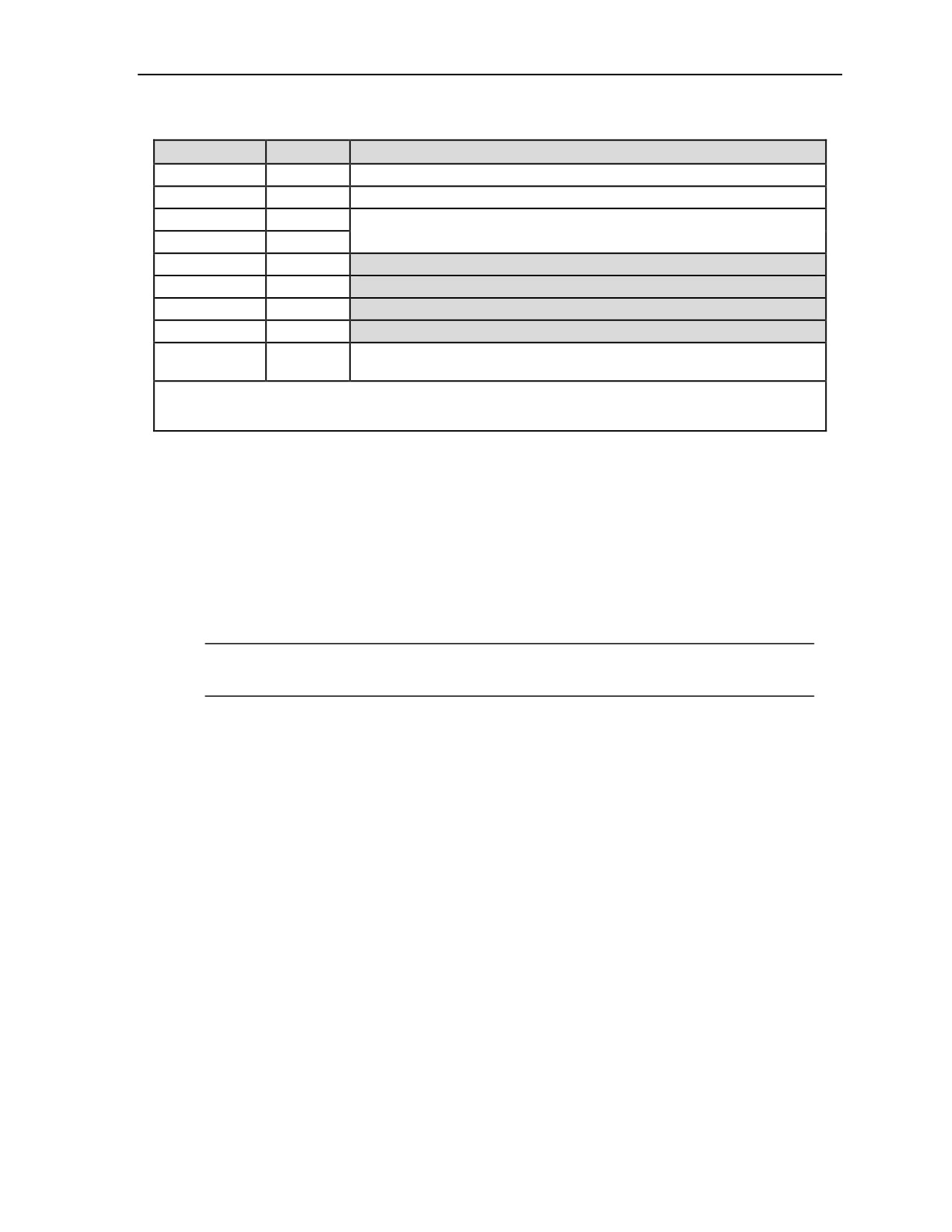
among the systems used to integrate airspace use. For example, the tactical TAIS has eight different shape
choices while the theater battle management core system has nine shape choices. See Table D-1 on page D-
3.
D-2
FM 3-52
20 October 2016
Airspace Messages, Requests, and Information Displays
Table D-1. Airspace control system shapes
TAIS
TBMCS
Remarks
Cylinder
Circle
A cylinder is a circle with three dimensions.
Route
Corridor
Route is the same shape as a corridor.
Orbit
Orbit
Cakes are complex Rad-Arcs.
Cake/Rad-Arc
Rad-Arc
Polyarc
PolyArc
Polygon
Polygon
Track
Track
Line
Line
TAIS does not have a point shape, rather TAIS uses its airspace control
Point
point tool for entering point data.
Legend
TAIS
Tactical Airspace Integration System
TBMCS
Theater Battle Management Core System
AIRSPACE SYSTEM PECULIARITIES
D-12. All effective airspace users know their system defaults, peculiarities, and how their system
interchanges information between the available systems. Airspace users recognize that any software updates
to their system may significantly change their “settings.”
D-13. Each system has peculiarities. TAIS—one of the airspace control system used by air defense airspace
management/brigade aviation element, the ADAM/BAE,—and airspace elements will parse, display, and run
conflict checks against all USMTF compatible ACMs. However, the default setting for many ACMs is set to
not check for conflicts. Operators of TAIS can change the default setting of “conflict check off” based on
standard operating procedures or orders.
Note: The critical importance of clarity in the discussion of ACMs and the manifestation of them
in digital messages cannot be overstated.
INFORMATION DISPLAYS
D-14. Information displays (also referred to as overlays) result from messages, either inputted or transmitted,
into systems that portray a continuous common operational picture. This picture provides commanders with
situational awareness and situational understanding of the operational area. Commanders use the common
operational picture to support visualization of the mission. Staff components use it to support their running
estimates that they continuously update.
D-15. Airspace elements are responsible for maintaining information displays based on accurate information
and databases in near-real-time. This includes, but is not limited to the following:
z
Ensuring airspace users disseminate up to date information to appropriate higher, lower, and
adjacent command posts.
z
Establishing a shared pasteboard for collecting, processing, displaying, and disseminating relevant
information on the command post of the future system workstation.
z
Preparing a shared plan using the two dimensional application on the command post of the future
system workstation.
z
Preparing a shared plan using the three dimensional application on the command post of the future
system workstation.
D-16. Airspace elements typically publish the airspace control overlay (formerly airspace command and
control overlay). Airspace control overlays can be digital (containing all data associated with ACMs), or
graphic (drawn on plastic or paper for use during degraded network operations). Airspace elements typically
subscribe to these overlays:
20 October 2016
FM 3-52
D-3
Appendix D
z
Air defense artillery overlay.
z
Fire support overlay.
z
Intelligence overlay:
Information collection plan overlay.
Terrain overlay.
z
Weather overlay.
z
Operation overlay.
D-4
FM 3-52
20 October 2016
Appendix E
Airspace Element Collective Tasks
This appendix discusses Army collective tasks in general and then the specific airspace
element collective tasks.
ARMY COLLECTIVE TASKS
E-1. ADRP 1-03, The Army Universal Task List (AUTL), is a comprehensive, but not all-inclusive listing
of Army tasks, missions, and operations. The AUTL provides a common doctrinal structure for collective
tasks that support Army tactical missions and operations. The airspace control AUTL task is the Army tactical
task 5.4, Control Tactical Airspace.
E-2. A collective task is a clearly defined, discrete, and measurable activity or action performed by an
integrated and coordinated collection of Soldiers and contributes directly to mission accomplishment. In
terms of airspace control, the Army has 14 airspace control collective tasks.
COLLECTIVE TASKS FOR AIRSPACE CONTROL
E-3. The airspace control collective tasks apply across echelons, brigade through theater army. At the
brigade level, the air defense airspace management/brigade aviation element, ADAM/BAE or ADAM,
elements execute all the collective tasks. Above the brigade level (division, corps, and theater army), the
airspace element and the air and missile defense (AMD) element collaborate to execute the tasks in contained
in ADRP 1-03.
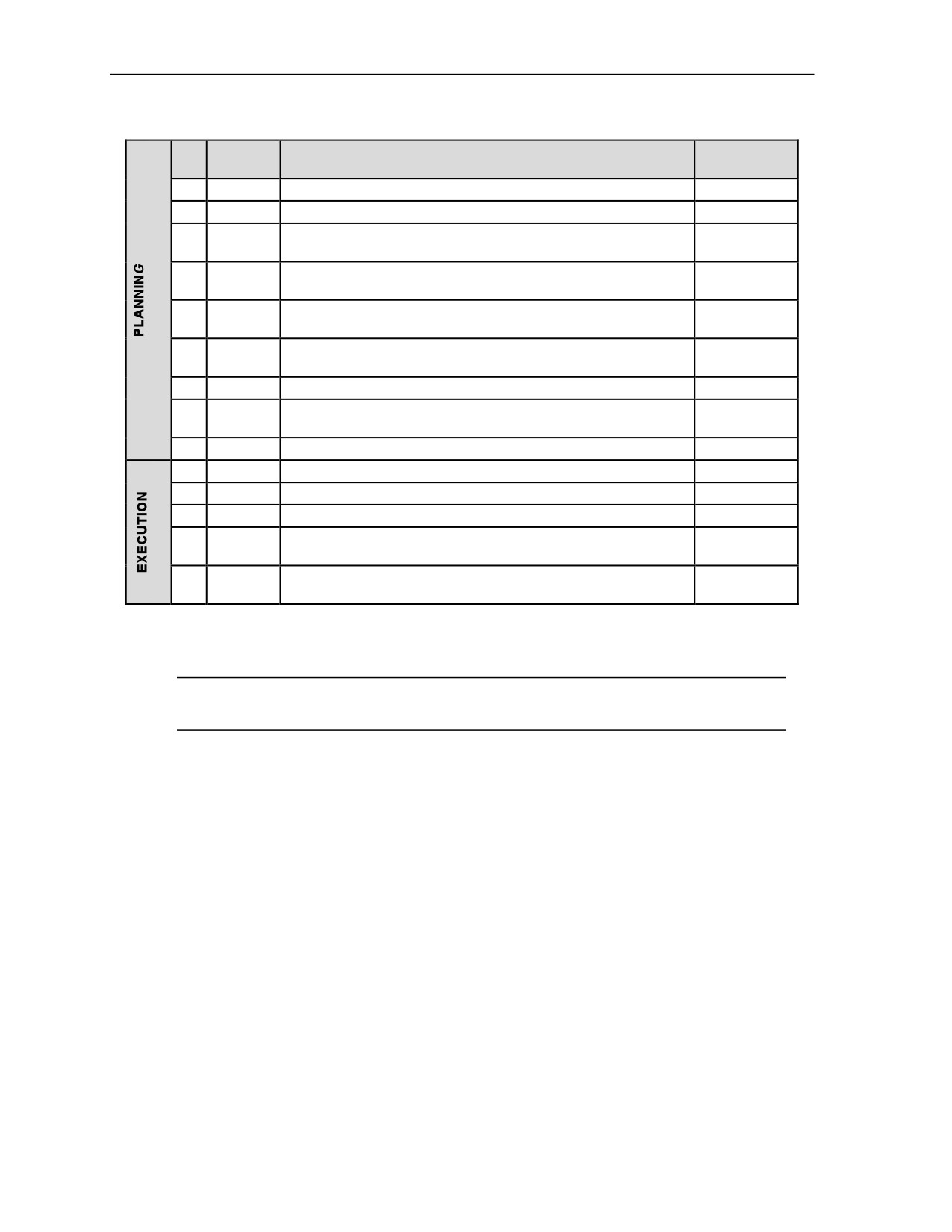
E-4. In ADRP 1-03, Army tactical task 5.4, titled Control Tactical Airspace, consists of 14 collective tasks
that provide the basis for performance measures. These collective tasks are separated into two groups: tasks
that focus on planning future airspace use and tasks that focus on the execution of airspace use. The first
group of collective tasks integrate airspace requirements generated by all airspace user communities
(movement and maneuver, intelligence, fires, sustainment, mission command, and protection), both joint and
Army, while meeting commander’s guidance for mission accomplishment and risk. The remaining collective
tasks integrate airspace use during execution of current operations using both staff procedures and near-real-
time procedural control. These latter tasks occur to resolve airspace use conflicts according to commander’s
guidance for mission accomplishment and risk. See Table E-1 on page E-2 for Army tactical task 5.4 Control
tactical airspace.
20 October 2016
FM 3-52
E-1
Appendix E
Table E-1. Army tactical task 5.4 Control tactical airspace
FM 3-52
#
Scale
Measure
Paragraph #
01
Yes/No
The unit determined integrated airspace user requirements.*
3-26
02
Yes/No
The unit developed airspace usage priorities.
3-27
The unit coordinated air traffic service, sensor emplacement, and
03
Yes/No
3-28
data links.
The unit determined combat identification authority and
04
Yes/No
3-29
procedures for airspace users.
The unit developed rules of engagement and early warning
05
Yes/No
3-31
procedures for air defense operations in the area of operations.
The unit determined reporting requirements and monitoring
06
Yes/No
3-32
methods for manual reporting.
07
Yes/No
The unit integrated airspace use within the area of operations.
3-33
The unit developed airspace coordinating measures to support
08
Yes/No
3-34
planned operations.*
09
Yes/No
The unit developed the airspace appendix.
3-37
10
Yes/No
The unit processed airspace orders and directives.*
4-16
11
Yes/No
The unit managed airspace control information displays.
4-17
12
Yes/No
The unit determined track Identification for airspace users.
4-18
The unit monitored assigned airspace and airspace users within
13
Yes/No
4-19
assigned area of operation.
The unit resolved real-time conflicts for airspace users within the
14
Yes/No
4-20
area of operations.*
E-5.
For more detail, refer to the Digital Training Management System (known as DTMS) and the Training
Development Capability (known as TDC) databases. These databases detail the task, condition, and standard
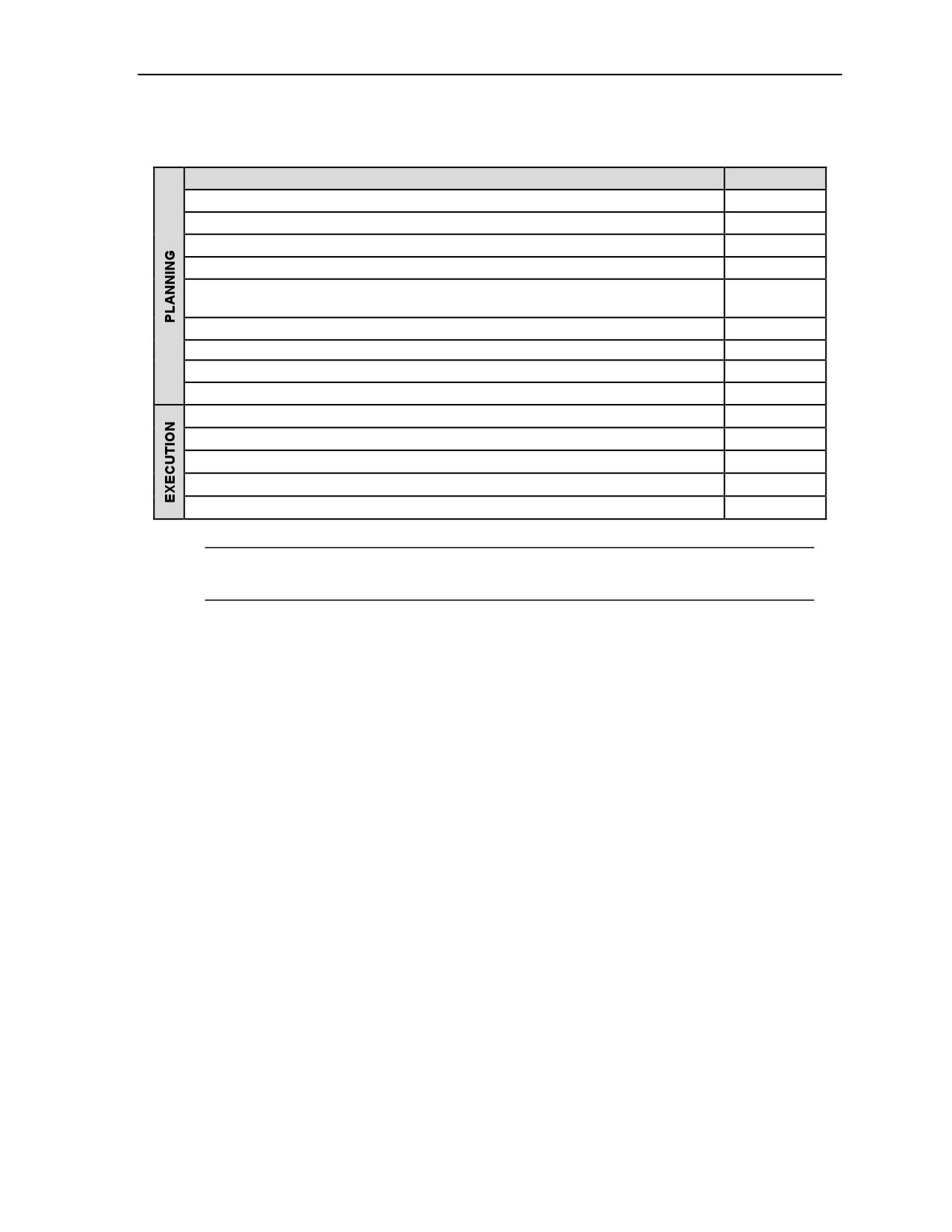
of each collective task found by its training and evaluation outline task number. See Table E-2 on page E-3.
Note Brigade and higher units without assigned airspace element personnel (ADAM/BAE or
airspace elements) are required to execute the collective tasks marked with an asterisk (*).
E-2
FM 3-52
20 October 2016
Airspace Element Collective Tasks
Table E-2. Airspace control collective tasks
Task
Task #
Determine integrated airspace user requirements.
71-8-5702*
Develop airspace usage priorities.
71-8-5700
Coordinate air traffic services, sensor emplacement, and data links.
71-8-5706
Determine combat identification authority and procedures for airspace users.
71-8-5705
Develop rules of engagement and early warning procedures for air defense
71-8-5713
operations in the area of operations.
Determine reporting requirements and monitoring methods for manual reporting.
71-8-5707
Integrate airspace use within the area of operations.
71-8-5704
Develop airspace coordinating measures to support planned operations.
71-8-5703*
Develop the airspace annex.
71-8-5701
Process airspace orders and directives.
71-8-5711*
Manage airspace control information displays.
71-8-5710
Determine track identification for airspace users.
71-8-5709
Monitor assigned airspace and airspace users within assigned area of operations.
71-8-5712
Resolve real-time conflicts for airspace users within the area of operations.
71-8-5708*
Note Brigade and higher units without assigned airspace element personnel (ADAM/BAE or
airspace elements) are required to execute the collective tasks marked with an asterisk (*).
20 October 2016
FM 3-52
E-3
This page intentionally left blank.
Appendix F
Airspace Control Appendix Format
An airspace control appendix is included in all maneuver brigade and functional
brigade or higher units assigned an area of operations or that employ organic manned
or unmanned aircraft. The airspace control appendix provides guidance on how to
integrate airspace users in accordance with commander’s intent, priorities, concept of
operations, and risk guidance contained in Annex C (Operations) of the operation plan.
[CLASSIFICATION]
Include heading if attachment is distributed separately from the base order or higher-level attachment
APPENDIX 10 (AIRSPACE CONTROL) TO ANNEX C (OPERATIONS) TO [OPERATION
PLAN/ORDER [number] [(code name)]—[(classification of title)]
(U) References: List documents essential to understanding the attachment.
a. List maps and charts first. Map entries include series number, country, sheet names, or numbers,
edition, and scale.
b. List other references in subparagraphs labeled as shown.
c. Doctrinal References for this appendix include the following: ADRP 5-0, FM 6-0, FM 3-52, ATP3-
52.1, ATP 3-52.2, ATP 3-91.1, JP 3-30, and JP 3-52.
(U) Time Zone Used Throughout the Plan or Order: Write the time zone established in the base plan
or order.
1. (U) Situation. Include information affecting the functional area that paragraph 1 of the operation plan
(OPLAN) or operation order (OPORD) does not cover or that needs to be expanded.
a. (U) Area of Interest. Refer to Annex B (Intelligence) as required.
b. (U) Area of Operations. Refer to Appendix 2 (Operation Overlay) to Annex C (Operations).
(1) (U) Terrain. List all critical terrain aspects that impact airspace use. Refer to Annex B
(Intelligence) as required.
(2) (U) Weather. List all critical weather aspects that impact airspace use. Refer Annex B
(Intelligence) as required.
c. (U) Enemy Forces. Describe anticipated enemy air defense, enemy use of manned and unmanned
aircraft, fires, and other capabilities (such as electronic warfare and cyber warfare) that will impact
friendly use of airspace.
[page number]
[CLASSIFICATION]
20 October 2016
FM 3-52
F-1
Appendix F
[CLASSIFICATION]
APPENDIX 10 (AIRSPACE CONTROL) TO ANNEX C (OPERATIONS) TO [OPERATION
PLAN/ORDER [number] [(code name)]—[(classification of title)]
d. (U) Friendly Forces. Outline the theater airspace structure to include higher headquarters airspace
plans and airspace control appendixes as they pertain to airspace control. Outline the airspace control
organization of unified action partners identifying airspace control entities and airspace users that will
support or impact the issuing headquarters or require coordination and additional support. This will
include joint force commander (JFC) designation of the airspace control authority (ACA), the area air
defense commander (AADC), and the joint force air component commander (JFACC). Identify relevant
theater air-ground system (TAGS) control agencies such as combat reporting centers, airborne warning
and aircraft control systems, air support operations centers, direct air support centers, tactical air
operations centers, air traffic control or services or their coalition equivalents involved with the
operation of the airspace control system within the ground commander’s area of operation. Describe
probable airspace use by joint and coalition partners that will affect airspace control such as close air
support, information collection, or special operations. Highlight aspects of higher headquarter airspace
plans that impact operations. As a minimum, the joint force commander’s airspace control plan and the
airspace control appendix of the next higher headquarters will be addressed.
e. (U) Interagency, Intergovernmental, and Nongovernmental Organizations. Identify and describe
other organizations in the area of operations that may impact the conduct of airspace control. Include
both civil airspace control agencies as well as interagency, intergovernmental, and nongovernmental
organizations that will be using airspace in the area of operation. Refer to Annex V (Interagency
Coordination) as required.
f. (U) Civil Considerations. Refer to Appendix 1 (Intelligence Estimate) to Annex B (Intelligence) as
required.
g. (U) Attachments and Detachments. List units attached or detached only as necessary to clarify task
organization and the airspace control architecture such as air traffic services, air and missile defense,
supporting tactical air control party and artillery organizations. Identify units with manned and unmanned
aircraft. Identify units with airspace elements to include air defense airspace management/brigade
aviation elements (ADAM/BAEs) or ADAMs (or a joint or multinational equivalent). (Note: if the air
traffic service information [Air traffic service facilities, airfields, or similar facilities] is lengthy or is not
available from other sources, include Tab A, Air Traffic Services, to expand upon this sub-paragraph.)
h. (U) Assumptions. List any airspace control assumptions that support the appendix development.
2. (U) Mission. State the mission of the airspace element in support of the base plan or order.
3. (U) Execution.
a. (U) Concept of Airspace Control. Describe how airspace control supports the commander’s intent,
concept of operations, and concept of fires. Describe how the unit will manage airspace during the phases
of the operation (radar, nonradar, procedural and positive control.) Specify the authority exercised at
each echelon for each phase of the operation. Describe the roles and relationships between airspace
elements in the organization and how the airspace elements will coordinate with joint and unified action
partner airspace elements. Describe the authorities, responsibilities, and expectations of individual or
multiple joint air ground integration centers if that technique is used. Describe how air traffic service
units and capabilities (airspace information center) are integrated into the unit airspace plan. Describe
how air and missile defense units located in the area of operations are integrated with airspace control.
b. (U) Assessment. Describe the priorities for assessment and identify the measures of performance
and effectiveness used to assess end state conditions and objectives. Refer to Annex M (Assessment) as
required.
[page number]
[CLASSIFICATION]
F-2
FM 3-52
20 October 2016
Airspace Control Appendix Format
[CLASSIFICATION]
APPENDIX 10 (AIRSPACE CONTROL) TO ANNEX C (OPERATIONS) TO [OPERATION
PLAN/ORDER [number] [(code name)]—[(classification of title)]
c. (U) Tasks to Subordinate Units. List airspace control tasks assigned to specific subordinate units
not contained in the base order. This may include tasks to a division joint air ground integration center,
tasks to the combat aviation brigade for air traffic services, tasks to air and missile defense units for sensor
coverage, tasks to airspace information center and air traffic service units, and tasks to brigade combat
teams and other functional brigades utilizing airspace assigned to Army elements..
d. (U) Coordinating Instructions. List only instructions applicable to two or more subordinate units
not covered in the base order that affect airspace control procedures.
(Note 1: For operations within the United States and its territories, title this paragraph “Rules for the Use
of Force.”)
(Note 2: Items listed below as examples do not need to be included if already in the unit standard operating
procedure.)
(1)
(U) Unit Airspace Plan. Planned airspace coordinating measure requests (ACMREQs)
procedures to integrate and nominate planned airspace coordinating measures to higher headquarters as
part of a future airspace control order.
(2) (U) Airspace Control Order Change Request. Procedures for submitting ACMREQs that are
within the current airspace control order cycle and can be integrated into the current airspace control
order and disseminated as a change to the current airspace control order.
(3) (U) Near-Real-Time Airspace Coordination. Immediate airspace request procedures for near-
real-time coordination with external airspace agencies such as a joint air ground integration center, U.S.
Air Force combat reporting centers or U.S. Marine Corps direct air support centers.
(4) (U) Airspace Control Order. Airspace control order issuing and dissemination times from
theater designated airspace control authority and methods for digital and non-digital units to receive it.
(5) (U) Air Tasking Order. Air tasking order issuing and dissemination times and methods for
digital and nondigital units.
(6)
(U) Key and Enduring Airspace Coordinating Measures. For example, this can be
coordinating altitude, coordinating level.
(7) (U) Priorities for Airspace Use for Each Phase of the Operation.
(8) (U) Risk Acceptance Guidance. This can be the form of a matrix.
(9) (U) Risk Reduction Measures.
(10) (U) Air and Missile Defense Rules of Engagement.
(11) (U) Constraints. List any restrictions on airspace use placed on the commander by a higher
commander that will restrict the freedom of action of the commander. Sources include higher headquarters
airspace control and air and missile defense appendixes, airspace control plan, area air defense plan,
airspace control order, and special instructions.
(12) (U) Combat Identification Procedures. Add detail to provide airspace personnel sufficient
information to ensure friendly aircraft are accurately identified. For example, adding supplemental
guidance for manually entering or correcting aircraft identification that is not correctly or incompletely
identified in the common operational picture. Refer to Appendix 1 (Air and Missile Defense) to Annex E
(Protection).
(13) (U) Procedures for Manual Aircraft Reporting.
[page number]
[CLASSIFICATION]
20 October 2016
FM 3-52
F-3
Appendix F
[CLASSIFICATION]
APPENDIX 10 (AIRSPACE CONTROL) TO ANNEX C (OPERATIONS) TO [OPERATION
PLAN/ORDER [number] [(code name)]—[(classification of title)]
4. (U) Sustainment. Provide information as necessary for sustainment of airspace control and air traffic
service unique equipment. Refer to Annex F (Sustainment) as required.
5. (U) Command and Signal.
a. (U) Command. State the location of key airspace control leaders. Identify who is authorized to
make airspace control decisions for the commander and what authorities an air support operations center
assigned to an Army unit has been authorized.
b. (U) Liaison Requirements. State the functional area liaison requirements not covered in the base
order.
c. (U) Signal. Address any functional area-specific communications requirements or reports. Provide
operations task link (OPSTASK Link) information for establishing data links. Refer to Appendix 7 (Air and
Missile Defense) to Annex D (Fires) if the information is located there. Provide rules and procedures for
using airspace control digital systems and other digital software such as chat programs, e-mail, and
instant messaging including chat rooms to be used, types of information, monitoring requirements, and
message verification requirements. Refer to Annex H (Signal) as required.
ACKNOWLEDGE: Include only if attachment is distributed separately from the base order.
[Commander’s last name]
[Commander’s rank]
The commander or authorized representative signs the original copy of the attachment. If the
representative signs the original, add the phrase “For the Commander.” The signed copy is the historical
copy and remains in the headquarters’ files.
OFFICIAL:
[Authenticator’s name]
[Authenticator’s position]
Use only if the commander does not sign the original attachment. If the commander signs the original,
no further authentication is required. If the commander does not sign, the signature of the preparing
staff officer requires authentication and only the last name and rank of the commander appear in the
signature block.
ATTACHMENTS: List lower level attachment (such as tabs, and exhibits).
DISTRIBUTION: Show only if distributed separately from the base order or higher-level attachments.
[page number]
[CLASSIFICATION]
F-4
FM 3-52
20 October 2016
Appendix G
Airspace Control during Defense Support of Civil
Authorities
This appendix augments the thorough description of how the Army conducts defense
support of civil authorities. The appendix provides an overview of defense support of
civil authorities. It then discusses coordinating airspace during defense support of civil
authorities and joint airspace control. Lastly, it addresses employment considerations
of unmanned aircraft systems.
DEFENSE SUPPORT OF CIVIL AUTHORITIES OVERVIEW
G-1. During defense support of civil authorities, in particular disaster response operations, aircraft are in
high demand. Therefore, Army leaders must understand how to coordinate airspace control procedures to
operate effectively along with other organizations to reduce the chance of accident or injury. Defense support
of civil authorities is support provided by U.S. Federal military forces, Department of Defense civilians,
Department of Defense contract personnel, Department of Defense component assets, and National Guard
forces (when the Secretary of Defense, in coordination with the governors of the affected states, elects and
requests to use those forces in Title 32, United States Code, status) in response to requests for assistance from
civil authorities for domestic emergencies, law enforcement support, and other domestic activities, or from
qualifying entities for special events (DODD 3025.18). Defense support of civil authorities (DSCA) includes
operations that address the consequences of natural or man-made disasters, accidents, terrorist attacks, and
incidents in the United States and its territories. When the size and scope of events exceed the capabilities or
capacities of domestic civilian agencies a governor or federal civilian agency requests support.
G-2. For Army forces, DSCA typically involves aviation support. Army aviation support includes air
movement of logistics; transportation of personnel and equipment; medical evacuation; command and control
support to federal, state, and local authorities; air evacuation; air traffic services; and information collection
support to civilian law enforcement operations. Further, federal military and National Guard aviation units
support civil authorities for counterdrug programs, civil disturbances, and border surveillance operations.
G-3. For Army aviation support for DSCA, several emergency support function (ESF) annexes of the
national response framework guide employment. ESF annexes describe the roles and responsibilities of
federal departments and agencies as ESF coordinators, primary agencies, or support agencies. The following
ESF annexes are relevant to Army aviation support:
z
ESF #1 - addresses transportation, including airspace control.
z
ESF #5 - addresses information and planning.
z
ESF #7 - addresses logistics and sustainment management.
z
ESF #8 - addresses public health and medical, including medical evacuation and mass casualty
evacuation flights.
z
ESF #9 - addresses interagency search and rescue operations.
COORDINATING AIRSPACE DURING DEFENSE SUPPORT OF
CIVIL AUTHORITIES
G-4. To facilitate cross-governmental coordination, the Federal Emergency Management Agency
establishes a joint field office (“joint” in this context meaning interagency) to coordinate a national-level
response. A joint field office is a temporary federal facility for coordination and liaison across agencies and
jurisdictions. The cross-governmental coordination between Department of Defense (DOD) and other
participating agencies ensures all units operate in an integrated and synchronized manner. Within the joint
20 October 2016
FM 3-52
G-1
Appendix G
field office, the air operations branch facilitates the coordination of aviation assets during disaster operations.
DODD 3025.18 and JP 3-28 contain detailed information for implementing DSCA.
G-5. During DSCA, the national airspace remains under the control of the Federal Aviation Administration
(FAA) (part of the Department of Transportation). The FAA assumes the role of the airspace coordinating
authority. In this capacity, the FAA develops the airspace control plan. This plan describes processes and
procedures for the safe employment of air assets, both military and civilian, operating within the rescue and
recovery area. Other military operations within the scope directed by the joint force air component command
use the airspace control plan.
G-6. The airspace control plan directs all assets, military or civilian, operating in or through the disaster area
and assumes civil air traffic control facilities will control all air traffic and provide visual and instrument
flight rule separation. Strict adherence to the airspace control plan and FAA air traffic control procedures
ensures safe, efficient, and expeditious use of airspace while still enabling all participants to accomplish their
respective missions. Lessons from recent DSCA underpin the importance of coordinating and integrating
airspace use through airspace elements, at all echelons, and letting the highest airspace element interface with
the joint force and state and federal agencies, if necessary and appropriate. This prevents other airspace users
from inundating local state and federal agencies with requests. The air component command for the United
States Northern Command (USNORTHCOM) is Air Force North (1st Air Force).
G-7. To augment the FAA’s airspace control plan, each state maintains an airspace control plan signed by
the adjutant general, maintained by 1st Air Force. The 601st Air and Space Operations Center (AOC [United
States Air Force]), 1st Air Force, plans, directs, and assesses air and space operations for the North American
Aerospace Defense Command, and USNORTHCOM. The AOC provides aerospace warning and control for
North American Aerospace Defense defensive counterair activities, as well as directs Air Force air and space
capabilities supporting USNORTHCOM homeland security and DSCA missions. As required, the joint force
air component commander coordinates with the FAA and issues supplementary instructions to air
commanders to accommodate changes required for emergency operations by military aircraft. To assist with
coordination, all military and civilian agencies and organizations provide liaisons to the joint force air
component command and coordinate all air activities with FAA representatives. While this is true for federal
military missions, Air Force North (AFNORTH) offers the contingency response air support schedule
(CRASS) to all agencies supporting disaster response operations.
G-8. While the CRASS is similar to an unclassified air tasking order, it is not a “tasking” document. It
serves as a visibility document intended to maximize visibility of air operations in the disaster area or joint
operations area among all participants. AFNORTH uses unclassified means to disseminate CRASS and
amplifying information (airspace control plan, airspace control order, or special instructions). The CRASS
provides increased situational awareness of all aircraft, including non-DOD aircraft, operating in the joint
operations area. The CRASS includes all interagency missions, as well as planned flying by other agencies
supporting the disaster, including nongovernmental organizations and Army National Guard aviation assets
operating in State active duty or Title 32 status.
G-9. The fidelity of the CRASS depends on the information provided by non-DOD agencies and
organizations. AFNORTH publishes it using a common application to ensure data access. It requires
increased coordination with State emergency operations centers, law enforcement agencies, and other
agencies to ensure accuracy. While compliance with the airspace control plan, airspace control order, or
special instructions is not mandatory for non-DOD agencies, AFNORTH encourages these agencies to
contribute to the CRASS work sheet. Participation is voluntary, and while not mandatory, it is highly
encouraged. AFNORTH updates all information in accordance with the classified air tasking order cycle.
AFNORTH (1st Air Force), coordinates with state emergency operations center and other agencies to ensure
fullest dissemination of required information. Required information is also available on the AFNORTH
public domain Web site at http://www.1af.acc.af.mil/.
JOINT AIRSPACE CONTROL
G-10. During DSCA, airspace control is transferred to the joint force air component command. All
apportioned military aircraft operating in the joint operations area are line-tasked in the air tasking order. For
those assets not directly tasked by the joint force air component command, applicable mission information
G-2
FM 3-52
20 October 2016
Airspace Control during Defense Support of Civil Authorities
appears in the airspace control plan and special instructions section of the air tasking order for command,
control, and coordination purposes. All participating military aircraft adhere to the air control plan and
applicable air tasking order and special instructions.
G-11. AFNORTH’s regional air movement coordination center, located at Tyndall Air Force Base, stands up
during emergencies and contingencies to provide management of airflow into and out of designated airfields
for the purpose of maximizing personnel and cargo throughput. The regional air movement coordination
center coordinates with military command posts present at available airfields to determine constraints and
limitations that affect airflow into those airfields. Subsequently, the regional air movement coordination
center coordinates with the FAA, National Guard Bureau, and the Air Force’s Tanker Airlift Control Center
to determine and issue time slots for aircraft transiting the available airfields.
G-12. AFNORTH’s (1st Air Force), standing AOC (601st), is particularly suited for DSCA taking place
within the USNORTHCOM’s area of responsibility. Additional tactical command and control systems
(ground based or airborne) may be required to deploy to the area based on the availability of the local
communications and command and control nodes.
Note The
1st Air Force controls military airspace within the USNORTHCOM area of
responsibility except in Alaska, where the 11th Air Force Air and Space Operations Center
supports Joint Task Force-Alaska. The 13th Air Force controls military airspace in Hawaii in
support of United States Pacific Commands area of responsibility.
G-13. Coordinating DOD search and rescue support within the continental United States falls to the
responsibility of 1st Air Force. See ADRP 3-28 for more details. To support DSCA, 1st Air Force is prepared
to deploy numerous air component coordination elements as well as additional liaison elements to support
other major commands.
G-14. Air National Guard air control squadrons provide operationally ready command and reporting center
mission control elements for support of theater air operations. These elements include radar surveillance and
tracking, radar service to tactical aircraft, supervision of subordinate deployed air control units, and data link
of a combined air picture to higher headquarters.
G-15. Many Navy ships are well suited for air command and control support during DSCA. They possess
robust communications capabilities. For example, Navy tactical air command and control centers are located
on amphibious assault ships. They are able to assist the joint force air component command in air space
planning, integration, and deconfliction of multiagency air assets.
G-16. Elements of the Marine air command and control system (known as MACCS) may deploy a capability
for DSCA. Common agencies would include the direct air support center, Marine air traffic control
detachment, tactical air operations center, tactical air command center, or task organized elements of one or
all of these.
G-17. Air Force airborne warning and airspace control aircraft may deploy to provide a detailed air picture
to the airspace control authority. These airborne control centers can become the link between the FAA
controllers on the ground, working out of a military facility, and aircraft in and around the incident site.
G-18. Army air traffic service units may deploy to re-establish air traffic services or augment FAA
capabilities in support of DSCA. Possible services being requested from Army units include airfield control
tower, ground controlled approach radar, enroute flight management and airfield management.
UNMANNED AIRCRAFT SYSTEMS EMPLOYMENT
CONSIDERATIONS
G-19. Over the last 10 years, the use of unmanned aircraft has grown exponentially. However, within the
United States and its territories, the use of unmanned aircraft is severely restricted. During DSCA,
commanders use unmanned aircraft systems as a last resort, when manned assets are neither available nor
practical. Often they choose to employ an unmanned aircraft system because they require the capability in
support of the operation. These systems give the commander many capabilities, but often unmanned aircraft
systems may not be the most efficient, timely, or practical method of achieving the commander’s desired
20 October 2016
FM 3-52
G-3
Appendix G
effect. Sometimes a manned platform can provide the desired capability in a much more timely and efficient
manner. Commanders decide to employ unmanned aircraft systems judiciously. Use of unmanned aircraft
systems requires approval at high levels within the DOD and the FAA prior to employment in DSCA.
CONTROL OF UNMANNED AIRCRAFT SYSTEMS
G-20. Command relationships for unmanned aircraft systems operations should be defined in advance of
mission accomplishment. In general, the controlling joint task force typically exercises operational control
of available unmanned aircraft systems.
G-21. Unmanned aircraft system operators supporting domestic missions should anticipate coordinating their
actions through the joint task force to supporting the joint force air component commander. These operators
also anticipate and prepare to include their operations in the air tasking order. Regardless of the nature of
operations, unmanned aircraft systems command and control structures must be thoroughly planned (well in
advance, when possible), responsive to both operator and user inputs, and flexible enough to handle changes
to the operation. This is particularly important for retasking of unmanned aircraft systems assets.
G-22. Certain unmanned aircraft systems such as Global Hawk can operate far above normal commercial
traffic while providing situation assessment to ground commanders. Intermediate systems such as the
Predator have supported recent disaster operations, dramatically increasing situational awareness at the joint
field office level. If available and authorized, these systems can provide near-real-time surveillance to
command posts for extended periods. The approval process is not automatic. Requests for unmanned aircraft
system surveillance support goes through the joint force air component command and joint task force to the
joint field office for joint staff approval. The joint force air component command coordinates with the FAA
and includes the mission on the air tasking order when approved. The FAA issues notices to airmen as
required.
LIMITATIONS ON THE USE OF UNMANNED AIRCRAFT SYSTEMS
G-23. There are numerous limitations involving unmanned aircraft systems operations in the United States.
The three most important are legal restrictions, FAA restrictions, and weather restrictions.
Legal Restrictions
G-24. Legal restrictions on the use of unmanned aircraft systems in domestic operations are numerous. Use
of DOD intelligence capabilities for DSCA missions—such as incident awareness and assessment, damage
assessment, and search and rescue—requires prior Secretary of Defense approval, together with approval of
both the mission and use of the exact DOD intelligence community capabilities. Certain missions require not
only approval of the Secretary of Defense but also coordination, certification, and possibly, prior approval
by the Attorney General of the United States. Additionally, several Department of Defense directives
(DODDs) and Chairman, Joint Chiefs of Staff instructions (CJCSIs) cover military support to civil
authorities. For example, DODI 3025.21and CJCSI 3710.01B apply to domestic unmanned aircraft systems
operations. Additionally, the Chairman of the Joint Chiefs of Staff standing execution order for DSCA
(referred to as the CJCS DSCA EXORD) provides guidance on operational parameters and limitations on
using DOD intelligence capabilities for DSCA missions. Further, per DODI 3025.21, military forces cannot
use military systems for surveillance and pursuit of individuals. Concerns or questions regarding legal
restrictions on the use of unmanned aircraft systems in domestic operations should be directed towards the
assigned judge advocate or legal advisor.
G-25. All requests for unmanned aircraft systems must be approved by the Secretary of Defense. Operators
of unmanned aircraft systems supporting civilian law enforcement agencies must be cognizant of, and fully
comply with, DODI 3025.21and any operational parameters and limitations specified in the Chairman of the
Joint Chiefs of Staff standing execution order for DSCA regarding collection, retention, and dissemination
of unmanned aircraft systems sensor data and imagery. Operators cannot conduct surveillance on specifically
identified U.S. persons, unless expressly approved by the Secretary of Defense, consistent with U.S. laws
and regulations. Additionally, civilian law enforcement agencies will handle any data collected by such
surveillance operations. Finally, per current Office of the Secretary of Defense guidance, National Guard
forces conducting domestic unmanned aircraft systems operations are normally in Title 10 (United States
G-4
FM 3-52
20 October 2016
Airspace Control during Defense Support of Civil Authorities
Code) status, unless the Secretary of Defense determines Title 32 (United States Code) status is more
appropriate.
Federal Aviation Administration Restrictions
G-26. By far, access to the national airspace system proves the biggest challenge to operating unmanned
aircraft systems in the United States, its territories, and possessions. Since unmanned aircraft systems differ
from manned systems, unmanned aircraft systems do not meet the same standards for operations in the
national airspace system required for manned systems (the ability to see and avoid other aircraft for example).
To fly unmanned aircraft systems in other-than-military restricted airspace or warning areas, unmanned
aircraft systems operators must apply for a certificate of waiver or authorization
(certification of
authorization) from the FAA granting permission to fly the unmanned aircraft systems in the national airspace
system. Processing this certification of authorization can take up to 60 days, although work is underway to
shorten this process. If conditions dictate, operators can receive emergency certification of authorizations in
hours. Additionally, unmanned aircraft systems operators prepare to meet other FAA requirements such as
qualification training for operators and knowledge of the airspace regulations for the type of airspace in which
the unmanned aircraft systems will operate.
G-27. The joint force air component commander provides guidance regarding the certification of
authorization approval process due to their long-term relationship established with the FAA. Regardless of
the status of a certification of authorization application, active coordination with the FAA when planning to
operate military unmanned aircraft systems in the domestic airspace of the United States cannot be
overemphasized. Timely coordination with the FAA gives an operator a greater chance of gaining approval
to operate unmanned aircraft systems where and when required. In those instances where no pre-existing
certification of authorization exists, the joint force air component command and the FAA have a process to
expedite certification of authorization approval for extreme cases.
G-28. The FAA can activate a temporary flight restriction in the vicinity of disaster and hazard areas or
approve an emergency certification of authorization for the unmanned aircraft systems to operate. Unmanned
aircraft systems operations within an approved temporary flight restriction should be added to the verbiage
contained in the temporary flight restriction. For operations outside the temporary flight restriction, operators
require an additional certification of authorization.
Weather Restrictions
G-29. Severe weather presents operational challenges to most unmanned aircraft systems. Planners have to
carefully consider the weather in the intended area of operations to determine if manned systems are more
suitable for the desired mission. In-flight conditions—such as icing, heavy precipitation, or instrument
meteorological conditions at the launch and recovery site—often preclude unmanned aircraft systems
operations. Throughout the DSCA mission, unmanned aircraft systems employment depends on the current
and forecasted weather conditions of the affected area.
20 October 2016
FM 3-52
G-5
This page intentionally left blank.
Glossary
The glossary lists acronyms and terms with Army or joint definitions. Where Army and
joint definitions differ, (Army) precedes the definition. The proponent manual for
terms is listed in parentheses after the definition, if necessary.
SECTION I - ACRONYMS AND ABBREVIATIONS
AADC
area air defense commander
AADP
area air defense plan
AAGS
Army air-ground system
AAMDC
Army Air and Missile Defense Command
ACA
airspace control authority
ACM
airspace coordinating measure
ACMREQ
airspace coordinating measure request
ACO
airspace control order
ACP
airspace control plan
ADAFCO
air defense artillery fire control officer
ADAM
air defense airspace managment
ADAM/BAE
air defense airspace management/brigade aviation element
ADP
Army doctrine publication
ADS-B
automatic dependent surveillance-broadcast
AFNORTH
Air Force North
AGL
above ground level
ALO
air liaison officer
AMD
air and missile defense
AMSL
above mean sea level
AO
area of operations
AOC
Air and Space Operations Center
AOD
air operations directive
ASOC
air support operations center
ATO
air tasking order
ATS
air traffic service
AUTL
Army Universal Task List
AWACS
Airborne Warning and Control System
AWS
airspace workstation
BAE
brigade aviation element
BCD
battlefield coordination detachment
BCT
brigade combat team
BFT
blue force tracking
CAB
combat aviation brigade
CAS
close air support
CGRS
common geographic reference system
20 October 2016
FM 3-52
Glossary-1
Glossary
COA
course of action
COP
common operational picture
CP
command post
CRASS
contingency response air support schedule
CRC
control and reporting center
DASC
direct air support center
DCA
defensive counterair
DOD
Department of Defense
DSCA
defense support of civil authorities
DTED
digital terrain elevation data
ESF
emergency support function
FAA
Federal Aviation Administration
FAAD
forward area air defense
FAC(A)
forward air controller (airborne)
FL
flight level
FSCM
fire support coordination measure
G-3
assistant chief of staff, operations
G-5
assistant chief of staff, plans
GARS
Global Area Reference System
GPS
Global Positioning System
HAE
height above ellipsoid
HIDACZ
high-density airspace control zone
IFF
identification, friend or foe
IFN
Intra-forward area air defense (FAAD) Network
inHg
mercury
JACCE
joint air component coordination element
JAGIC
joint air ground integration center
JAOC
joint air operations center
JAOP
joint air operations plan
JARN
joint air request net
JFACC
joint force air component commander
JFC
joint force commander
JFLCC
joint force land component commander
JTAC
joint terminal attack controller
JTF
joint task force
JUH-MTF
joint user handbook-message text format
MAGTF
Marine air-ground task force
MGRS
Military Grid Reference System
MIL-STD
military standard
MSL
mean sea level
NATO
North Atlantic Treaty Organization
Glossary-2
FM 3-52
20 October 2016
Glossary
OPCON
operational control
S-3
operations staff officer
S-5
plans staff officer
SIPRNET
SECRET Internet Protocol Router Network
TACP
tactical air control party
TADIL
tactical digital information link
TAGS
theater air-ground system
TAIS
tactical airspace integration system
TAMD
theater air and missile defense
TAOC
tactical air operations center
U.S.
United States
UAP
unit airspace plan
USAF
United States Air Force
USMTF
United States message text format
USNORTHCOM
United States Northern Command
UTM
Universal Transverse Mercator
WGS 84
World Geodetic System 1984
SECTION II - TERMS
airspace control
Capabilities and procedures used to increase operational effectiveness by promoting the safe, efficient,
and flexible use of airspace. (JP 3-52)
airspace control system
An arrangement of those organizations, personnel, policies, procedures, and facilities required to
perform airspace control functions. (JP 3-52)
airspace coordinating measures
Measures employed to facilitate the efficient use of airspace to accomplish missions and
simultaneously provide safeguards for friendly forces. (JP 3-52)
airspace management
The coordination, integration, and regulation of the use of airspace of defined dimensions. (JP 3-52)
area of operations
An operational area defined by the joint force commander for land and maritime forces that should be
large enough to accomplish their missions and protect their forces. (JP 3-0)
battle rhythm
A deliberate cycle of command, staff, and unit activities intended to synchronize current and future
operations. (FM 6-0)
defense support of civil authorities
Support provided by U.S. Federal military forces, Department of Defense civilians, Department of
Defense contract personnel, Department of Defense component assets, and National Guard forces (when
the Secretary of Defense, in coordination with the governors of the affected states, elects and requests to
use those forces in Title 32, United States Code, status) in response to requests for assistance from civil
authorities for domestic emergencies, law enforcement support, and other domestic activities, or from
qualifying entities for special events. (DODD 3025.18)
20 October 2016
FM 3-52
Glossary-3
Glossary
execution
Putting a plan into action by applying combat power to accomplish the mission. (ADP 5-0)
joint fires
Fires delivered during the employment of forces from two or more components in coordinated action
to produce desired effects in support of a common objective. (JP 3-0)
joint fires observer
A trained Service member who can request, adjust, and control surface-to-surface fires, provide targeting
information in support of Type 2 and 3 close air support terminal attack control, and perform autonomous
terminal guidance operations. (JP 3-09.3)
mission command
The exercise of authority and direction by the commander using mission orders to enable disciplined
initiative within the commander’s intent to empower agile and adaptive leaders in the conduct of unified
land operations. (ADP 6-0)
mission command system
The arrangement of personnel, networks, information systems, processes and procedures, and facilities
and equipment that enable commanders to conduct operations. (ADP 6-0)
operational environment
A composite of conditions, circumstances, and influences that affect the employment of capabilities
and bear on the decisions of the commander. (JP 3-0)
planning
The art and science of understanding a situation, envisioning a desired end state, and laying out
effective ways of bringing that future about. (ADP 5-0)
positive control
A method of airspace control that relies on positive identification, tracking, and direction of aircraft
within an airspace, conducted with electronic means by an agency having the authority and
responsibility therein. (JP 3-52)
procedural control
A method of airspace control which relies on a combination of previously agreed and promulgated
orders and procedures. (JP 3-52)
rehearsal
A session in which a staff or unit practices expected actions to improve performance during execution.
(ADRP 5-0)
unified action
The synchronization, coordination, and/or integration of the activities of governmental and
nongovernmental entities with military operations to achieve unity of effort. (JP 1)
working group
A grouping of predetermined staff representatives who meet to provide analysis, coordinate, and
provide recommendations for a particular purpose or function. (FM 6-0)
Glossary-4
FM 3-52
20 October 2016
References
All URLs accessed on 13 September 2016.
REQUIRED PUBLICATIONS
These documents must be available to intended users of this publication.
JP 1-02. Department of Defense Dictionary of Military and Associated Terms. 8 November 2010.
ADRP 1-02. Terms and Military Symbols. 07 December 2015.
RELATED PUBLICATIONS
These documents contain relevant supplemental information.
JOINT AND DEPARTMENT OF DEFENSE PUBLICATIONS
Most joint publications are available online: http://www.dtic.mil/doctrine/new_pubs/jointpub.htm
CJCSI 3710.01B. DOD Counterdrug Support. 26 January 2007.
DODD 3025.18. Defense Support of Civil Authorities (DSCA). 29 December 2010.
DODI 3025.21. Defense Support of Civilian Law Enforcement Agencies. 27 February 2013.
JP 1. Doctrine for the Armed Forces of the United States. 25 March 2013.
JP 3-0. Joint Operations. 11 August 2011.
JP 3-01. Countering Air and Missile Threats. 23 March 2012.
JP 3-09. Joint Fire Support. 12 December 2014.
JP 3-09.3. Close Air Support. 25 November 2014.
JP 3-17. Air Mobility Operations. 30 September 2013.
JP 3-28. Defense Support of Civil Authorities. 31 July 2013.
JP 3-30. Command and Control of Joint Air Operations. 10 February 2014.
JP 3-50. Personnel Recovery. 02 October 2015.
JP 3-52. Joint Airspace Control. 13 November 2014
JP 6-0. Joint Communications System. 10 June 2015.
ARMY PUBLICATIONS
Most Army doctrinal publications are available online: http://www.apd.army.mil/
ADP 3-0. Unified Land Operations. 10 October 2011.
ADP 5-0. The Operations Process. 17 May 2012.
ADP 6-0. Mission Command. 17 May 2012.
ADRP 1-03. The Army Universal Task List. 2 October 2015.
ADRP 3-0. Unified Land Operations. 16 May 2012.
ADRP 3-28. Defense Support of Civil Authorities. 14 June 2013.
ADRP 5-0. The Operations Process. 17 May 2012.
ATP 3-01.7. Air Defense Artillery Brigade Techniques. 16 March 2016.
ATP 3-01.94. Army Air and Missile Defense Command Operations. 20 April 2016
ATP 3-09.13. The Battlefield Coordination Detachment. 24 July 2015.
ATP 5-19. Risk Management. 14 April 2014.
FM 3-01. U.S. Army Air and Missile Defense Operations. 2 November 2015.
FM 3-04. Army Aviation. 29 July 2015.
FM 3-09. Field Artillery Operations and Fire Support. 4 April 2014.
20 October 2016
FM 3-52
References-1
References
FM 3-94. Theater Army, Corps, and Division Operations. 21 April 2014.
FM 6-0. Commander and Staff Organization and Operations. 5 May 2014.
FM 6-99. U.S. Army Report and Message Formats. 19 August 2013.
FM 27-10. The Law of Land Warfare. 18 July 1956.
OTHER PUBLICATIONS
AAP-6. NATO Glossary of Terms and Definitions (English and French). 2015.
Armed Forces. Title 10, U.S. Code.
AJP-3.3.5. Allied Doctrine for Joint Airspace Control. 8 May 2013.
ATP 3-52.1/MCWP
3-25.13/NTTP
3-56.4/AFFTTP
3-2.78. Multi-Service Tactics, Techniques, and
Procedures for Airspace Control. 9 April 2015.
ATP 3-52.2/MCRP 3-25F/NTTP 3-56.2/AFTTP 3-2.17. Multi-Service Tactics, Techniques, and Procedures
for the Theater Air-Ground System. 30 June 2014.
ATP 3-91.1/AFTTP 3-2.86. Joint Air Ground Integration Center. 18 June 2014.
MIL-STD-3011. Joint Range Extension Application Protocol (JREAP).
MIL-STD-6011. Tactical Data Link (TDL) 11/11B Message Standard.
MIL-STD-6016. Tactical Data Link (TDL) 16 Message Standard.
MIL-STD-6017. Variable Message Format (VMF).
National Guard. Title 32, U.S. Code.
WEB SITES
AFNORTH
PRESCRIBED FORMS
This section contains no entries.
REFERENCED FORMS
Unless otherwise indicated, DA Forms are available on the Army Publishing Directorate (APD) web
site: www.apd.army.mil
DA Form 2028. Recommended Changes to Publications and Blank Forms.
References-2
FM 3-52
20 October 2016