Snowmobile Arctic Cat (2007 year). Instruction - part 45
4-5
4
Cleaning Carburetor
(120
cc)
1. Place all metallic components in a wire basket
and submerge in carburetor cleaner.
2. Soak for approximately 30 minutes; then rinse
with fresh parts-cleaning solvent.
3. Wash all non-metallic components with soap
and water. Rinse thoroughly.
4. Dry all components with compressed air only
making sure all holes, orifices, and channels are
unobstructed.
5. Blow compressed air through all hoses to
remove any obstructions.
Inspecting Carburetor
(120 cc)
NOTE: Whenever a part is worn excessively,
cracked, or damaged in any way, replacement is
necessary.
1. Inspect the mixing body for cracks, nicks,
stripped threads, and any other imperfections in
the casting.
2. Inspect the float for perforations or damage.
3. Inspect the gaskets for distortion, tears, or
noticeable damage.
4. When applicable, inspect the idle speed screw,
needle jet, pilot air screw, and pilot jet for wear,
damage, or distortion.
5. Inspect the main jet for obstructions or damage.
6. Inspect the carburetor mounting flange for dam-
age and tightness.
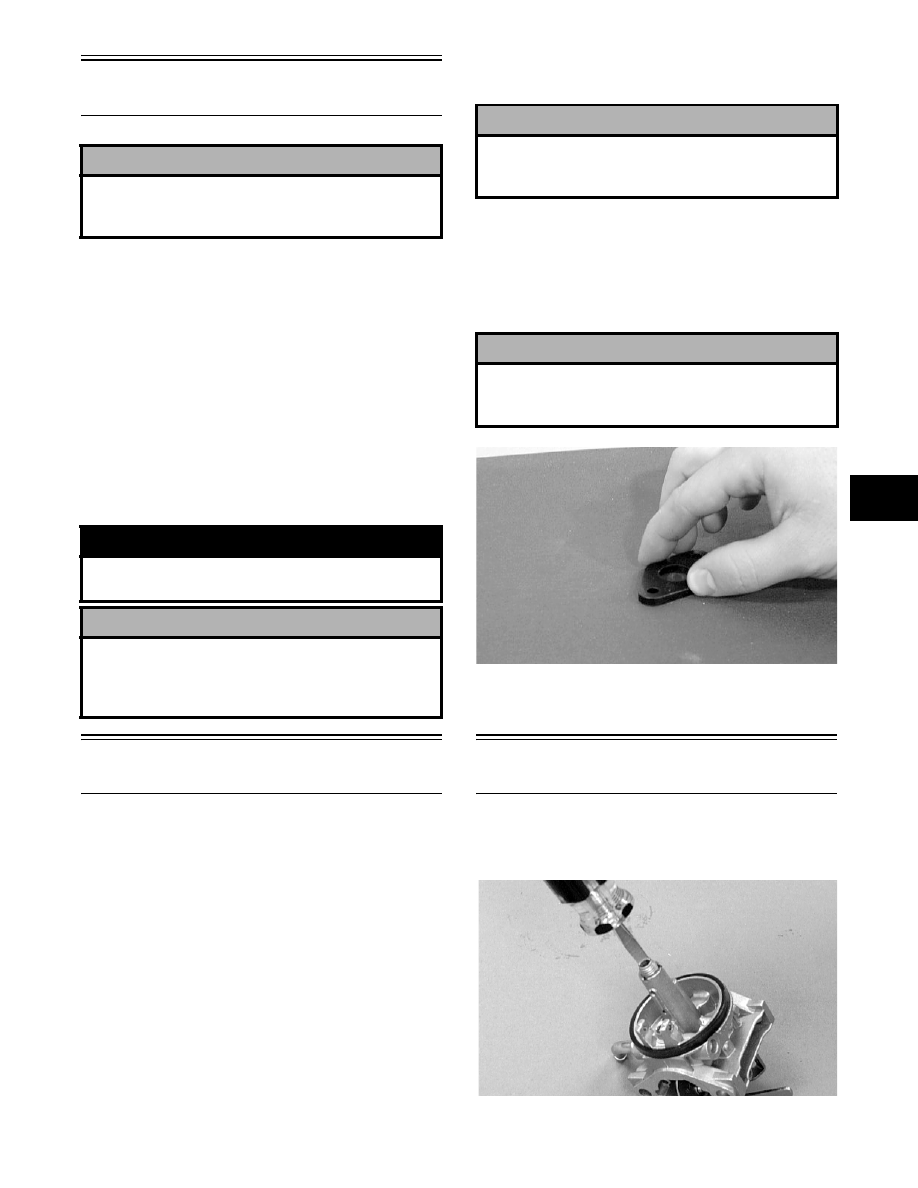
7. Place the carburetor insulator on a surface plate
covered with #400 grit wet-or-dry sandpaper.
Move the insulator over the surface plate using a
figure eight motion. The motion should produce
an even wear pattern over the entire sealing
area.
A739
8. Inspect the condition of the throttle return
spring.
Assembling Carburetor
(120 cc)
1. Install the nozzle and main jet into the carbure-
tor tower.
GF326D
! CAUTION
DO NOT place any non-metallic components in
parts-cleaning solvent or carburetor cleaner
because damage or deterioration will result.
! WARNING
Always wear safety glasses when drying compo-
nents with compressed air.
! CAUTION
DO NOT use wire or small drill bits to clean carbure-
tor orifices, holes, or channels. Distorted or dam-
aged orifices, holes, or channels can result in poor
carburetor operation.
! CAUTION
An air leak between the carburetor and engine will
cause a lean condition and severe engine damage
will result.
! CAUTION
Water or parts-cleaning solvent must be used in
conjunction with the wet-or-dry sandpaper or dam-
age to the sealing surfaces may result.