Polaris 550 Indy Sport / 550 Voyageur / Indy Evo / RMK Evo Snowmobile. Owner’s Manual (2024) - page 4
 

  Index      Manuals     Polaris 550 Indy Sport / 550 Voyageur / Indy Evo / RMK Evo Snowmobile. Owner’s Manual (2024)


Search            copyright infringement  


Content      ..     2      3      4     


Polaris 550 Indy Sport / 550 Voyageur / Indy Evo / RMK Evo Snowmobile. Owner’s Manual (2024) - page 4


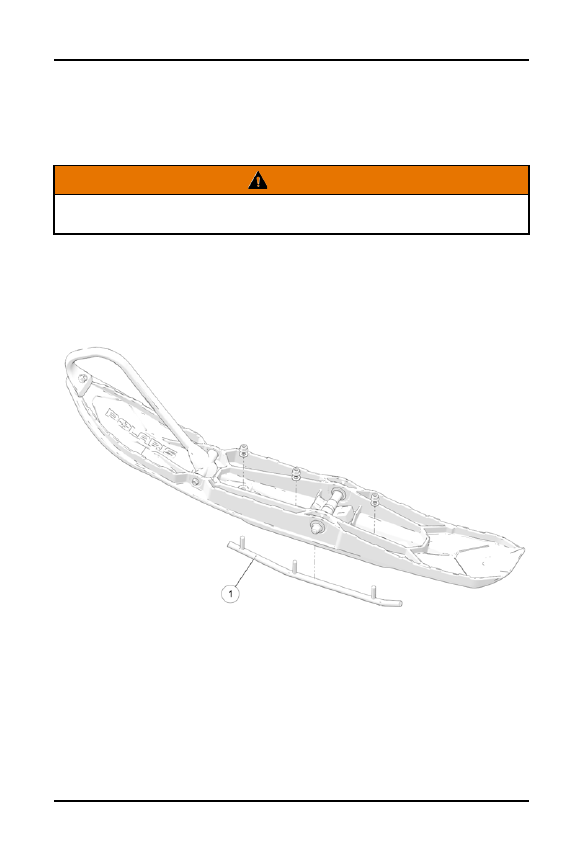
SKI SKAGS

See your dealer’s studding chart for recommended skags. If you install longer or
more aggressive carbide skags than the original equipment, it may also be
necessary to add track studs to maintain proper vehicle control while turning on
hard-packed snow or ice.

WARNING

Worn skis and/or skags will adversely affect handling. Loss of vehicle control

may result, causing serious injury or death.

Check skags before each use of the snowmobile to ensure positive steering
characteristics. Skags must be replaced when worn to half their original
diameter. Carbide skags must be replaced if any abnormal wear or chipping is
found.

SKAG REPLACEMENT

To replace the skag, do the following:

1. Raise and support the front of the snowmobile so the skis are approximately

6 inches (15.2 cm) from the ground.

2. Remove the attaching hardware and pry the skag

q

downward.

3. Remove the front end of the skag.

4. Remove the rear end of the skag.

5. Reverse the steps to install a skag.

99

MAINTENANCE

RAIL SLIDE WEAR

For ease of inspection, all POLARIS
rail slides have a wear limit indicator
groove to indicate the minimum
permissible slide thickness

q

.

Replace the rail slides if they are worn
to the top of the groove

w

at any point

along their length. Failure to do so may
result in permanent damage to the
track or rails.

BATTERY MAINTENANCE

Keep battery terminals and connections free of corrosion. If cleaning is
necessary, remove the corrosion with a stiff wire brush. Wash with a solution of
one tablespoon baking soda and one cup water. Rinse well with tap water and
dry off with clean shop towels. Coat the terminals with dielectric grease or
petroleum jelly.

WARNING

CALIFORNIA PROPOSITION 65 WARNING:

Batteries, battery posts, terminals and related accessories can expose you to

chemicals including lead, which is known to the State of California to cause

birth defects or other reproductive harm. For more information go to www.

P65Warnings.ca.gov.

WARNING

Battery electrolyte is poisonous. It contains sulfuric acid. Serious burns can

result from contact with skin, eyes or clothing. Antidote:

External:

Flush with water.

Internal:

Drink large quantities of water or milk. Follow with milk of

magnesia, beaten egg, or vegetable oil. Call physician immediately.

Eyes:

Flush with water for 15 minutes and get prompt medical attention.

Batteries produce explosive gases.

Keep sparks, flame, cigarettes, etc. away. Ventilate when charging or using in

an enclosed space. Always shield eyes when working near batteries.

KEEP OUT OF REACH OF CHILDREN.

100

MAINTENANCE

BATTERY REMOVAL

1. Remove the right side panel to access the battery. See page 74.

2. Disconnect the black (negative) battery cable first.

3. Disconnect the red (positive) battery cable last.

4. Remove the battery.

BATTERY INSTALLATION

When installing a new battery, make sure it's fully charged prior to its initial use.
Using a new battery that has not been fully charged can damage the battery and
result in a shorter life. It can also hinder vehicle performance. Follow the battery
charging instructions outlined in this owner’s manual before installing the
battery.

1. Ensure that the battery is fully charged.

2. Set the battery in the battery holder.

3. Connect and tighten the red (positive) cable first.

4. Connect and tighten the black (negative) cable last.

5. Verify that cables are properly routed.

6. Re-install the battery cover.

7. Reinstall the side panel.

BATTERY IDENTIFICATION

IMPORTANT

It is important to identify what type of battery is installed in the vehicle. Different

types of batteries require different service procedures. Proper servicing and

upkeep of the battery is very important for maintaining long battery life.

The types of batteries are:

• Lead Acid Conventional
• Dry Shipped Absorbed Glass Mat (AGM)
• Lead Acid Low Maintenance
• AGM Low Maintenance

Refer to the examples below to identify the type of battery in your vehicle.

101

MAINTENANCE

LEAD ACID CONVENTIONAL / DRY SHIPPED AGM
BATTERY

• The battery is NOT activated when packaged
• A removable cap plugs / strip is located on top of the battery
• Distilled water is added as required (Lead Acid only)
• A vent tube is located on the side of battery (Lead Acid only)

LOW MAINTENANCE BATTERY

• The battery is activated when packaged
• Non removable cap(s) is / are located on top of the battery
• Distilled water or electrolyte is NEVER added

BATTERY CHARGING

To ensure your battery maintains its level of charge, the battery should be
connected to a battery trickle charger using the battery charge port

q

.

102

MAINTENANCE

1. Check the battery voltage with a

voltmeter or multimeter. A fully
charged battery will register 12.8 V
or higher.

2. If the voltage is less than 12.8 volts,

recharge the battery at 1.2 amps or
less until the battery voltage is 12.8
or greater using the battery charge
port

q

.

RESTRICTION

When using an automatic charger, refer to the charger manufacturer's

instructions for recharging. When using a constant current charger, use the

following guidelines for recharging.

WARNING

An overheated battery may explode, causing severe injury or death. Always

watch charging times carefully. Stop charging if the battery becomes very

warm to the touch. Allow it to cool before resuming charging.

TIP

Always verify battery condition before and 1-2 hours after the end of charging.

State of Charge

Voltage

Action

Charge Time*

100%

12.8-13.0 volts

None, check at 3 mos.
from date of
manufacture

None required

75%-100%

12.5-12.8 volts

May need slight
charge, if no charge
given, check in 3
months

3-6 hours

50%-75%

12.0-12.5 volts

Needs charge

5-11 hours

25%-50%

11.5-12.0 volts

Needs charge

At least 13 hours,
verify state of charge

0%-25%

11.5 volts or less

Needs charge with
desulfating charger

At least 20 hours

*Using constant current charge @ standard amps specified on top of battery.

103

MAINTENANCE

OFF SEASON STORAGE

NOTICE

If the battery is stored during the winter months, electrolyte will freeze at higher

temperatures as the battery discharges. The chart below indicates freezing

points by specific gravity.

SPECIFIC GRAVITY OF
ELECTROLYTE

FREEZING POINT

1.265

-75° F

1.225

-35° F

1.200

-17° F

1.150

+5° F

1.100

+18° F

1.050

+27° F

LEAD ACID CONVENTIONAL BATTERY
MAINTENANCE

Recharge the battery to its full capacity every 30 to 60 days.

If the battery is stored or used in a partially charged condition, hard crystal
sulfation will form on the plates, reducing the efficiency and service life of the
battery.

CAUTION

NEVER add electrolyte to the battery once the battery is in service.

If necessary, only add distilled water to the battery .

Store the battery in the vehicle with the cables disconnected, or store the battery
in a cool / dry location. Batteries will self discharge more rapidly when stored in
extreme temperatures.

DRY SHIPPED AGM BATTERY MAINTENANCE

CAUTION

NEVER add electrolyte or distilled water to the battery once the battery is in

service.

If you do not drive the vehicle for more than TWO weeks, maintain the
Absorbent Glass Mat (AGM) battery with the BatteryMINDer® 2012 AGM - 2
AMP charger (or a similar charger).

104

MAINTENANCE

BatteryMINDer® 2012 AGM - 2 AMP battery charger

2830438

If you plan to store the vehicle for ONE month or longer, remove the battery from
the vehicle and store the battery in a cool / dry location. Continue to maintain the
battery with the 2 AMP charger and inspect the battery every 60 days.

LEAD ACID LOW MAINTENANCE BATTERY
MAINTENANCE

Recharge the battery to its full capacity every 30 to 60 days.

If the battery is stored or used in a partially charged condition, hard crystal
sulfation will form on the plates, reducing the efficiency and service life of the
battery.

CAUTION

NEVER add electrolyte or distilled water to the battery. Doing so will damage

the case and shorten the life of the battery.

Store the battery in the vehicle with the cables disconnected, or store the battery
in a cool / dry location. Batteries will self discharge more rapidly when stored in
extreme temperatures.

AGM LOW MAINTENANCE BATTERY
MAINTENANCE

CAUTION

NEVER add electrolyte or distilled water to the battery. Doing so will damage

the case and shorten the life of the battery.

If you do not drive the vehicle for more than TWO weeks, maintain the
Absorbent Glass Mat (AGM) battery with the BatteryMINDer® 2012 AGM - 2
AMP charger (or a similar charger).

BatteryMINDer® 2012 AGM - 2 AMP battery charger

2830438

If you plan to store the vehicle for ONE month or longer, remove the battery from
the vehicle and store the battery in a cool / dry location. Continue to maintain the
battery with the BatteryMINDer® 2012 AGM - 2 AMP charger (or a similar
charger) and inspect the battery every 60 days.

105

MAINTENANCE

FALL TUNE-UP

For maximum performance, your POLARIS dealer can perform a fall service
tune-up. Their experienced and trained service technicians will keep your
snowmobile in peak operating condition.

TRANSPORTING THE SNOWMOBILE

Whenever the snowmobile is transported:

1. Turn the fuel valve off. See page 60.

2. Be sure the fuel cap and oil cap are installed correctly.

3. Always tie the snowmobile to the transporting unit securely using suitable

straps.

4. Remove the ignition key to prevent loss.

SUMMER STORAGE GUIDE

TREATING THE FUEL SYSTEM

As the riding season draws to a close, Polaris recommends riders begin treating
their snowmobile’s fuel system with Polaris Carbon Clean or similar
commercially-available fuel stabilizer.

Treating the fuel system with Carbon Clean during the last few rides of the
season ensures the entire fuel system is treated. Then, when it comes time to
store the snowmobile, all the rider has to do is completely fill the fuel tank with
fresh, non-oxygenated fuel and treat the new fuel with Carbon Clean.
It is also recommended riders use non-oxygenated fuel during the last rides of
the season as non-oxygenated fuel stores better than oxygenated fuel and
resists water vapor absorption.
If the rider was unable to treat the fuel system and/or use non-oxygenated fuel at
the end of the riding season, the rider should do the following:

1. The rider should consume as much fuel in the fuel tank as possible during

the last rides of the season.

2. When performing the summerization storage procedures, fill the fuel tank

completely with non-oxygenated fuel. Note that most oxygenated fuels
contain ethanol. Since ethanol is hydroscopic, oxygenated fuel will absorb a
small amount of water vapor during the storage season and more so in
humid locations. Completely filling the tank with non-oxygenated fuel
minimizes water vapor absorption during the storage period and limits the
amount of air and water vapor that can accumulate in the tank.

3. Treat the fuel in the fuel tank with the recommend amount of Polaris Carbon

Clean. The recommended mixing ratio is outlined on the bottle label.

106

MAINTENANCE

4. Position the snowmobile outside in a well-ventilated area.

5. Start and run the engine for 10-15 minutes to distribute the treated fuel

throughout the fuel system.

NOTICE

On Carbureted engines (550cc / 120 Youth), run the engine for 10-15 minutes

and then turn the fuel shut off valve to ‘OFF’. Continue to run the engine until

the engine stalls and turns off. Doing this drains the carburetors of fuel.

FOGGING THE ENGINE

Fogging the engine with Polaris fogging oil or similar commercial alternative is
probably the most important storage step a rider can do to ensure the internal
parts of their snowmobile’s engine do not rust and corrode during the storage
season.

To fog the engine, do the following:

1. Remove the spark plugs from the engine.

2. Liberally spray fogging oil into each spark plug hole. If possible, have an

assistant slowly pull on the recoil rope to rotate the engine while spraying the
oil into each cylinder.

3. Loosely install the spark plugs.

NOTICE

Do not install new spark plugs after fogging the cylinders. Fogging oil prevents

the formation of rust / corrosion by sticking to the internal engine components –

including the spark plug electrodes. Replace these spark plugs the following

season after all of the fogging oil has been burned out of the engine.

DRIVE BELT STORAGE

Never leave the drive belt installed in the clutches as oxidation may form where
the belt contacts the aluminum clutch sheave faces.

To clean the drive and driven clutches, do the following:

1. Remove the primary and spare drive belt from the snowmobile.

2. Inspect the drive belt for wear and glazing. Compare the primary belt with the

spare belt. Decide if a new belt is needed next season and note the primary
belt can now be used as the spare belt next season.

3. Clean the drive and driven clutch sheaves with Isopropyl Alcohol. Allow the

alcohol to air dry. Continue cleaning the sheave faces until all belt residue is
removed.

107

MAINTENANCE

BATTERY/ELECTRICAL SYSTEM STORAGE

Never leave a battery unattended
during the storage season. Snowmobile
batteries are small and cannot maintain
their charge over the storage season.
To ensure your battery maintains its
level of charge, the battery should be
connected to a battery trickle charger
using the battery charge port

q

.

1. While the battery can remain installed on the snowmobile, it is recommended

the battery be removed from the snowmobile and stored in a cool, and dry
location. Removing the battery from the snowmobile facilitates off-site
storage of the snowmobile where electricity may not be available to connect
a battery charger. In addition, removing the battery allows access to other
maintenance items, such as the chaincase chain tensioner bolt.

2. Connect a Polaris battery charger or equivalent commercially available

charger to the battery.

3. Inspect the electrical connections and wire harnesses throughout the

snowmobile. If damage is found, make a note of the damage so that you and
your authorized Polaris dealer can address the concern.

CHAINCASE

Never leave ‘used’ lubricant in the chaincase during the storage season. Doing
so may leave water present in the chaincase which may cause corrosion and
rust.

1. Follow the Owner’s Manual procedures and drain / fill the chaincase with

new Polaris SCL (Synthetic Chaincase Lubricant). All Polaris PRO-RIDE,
AXYS, and MATRYX snowmobile feature ‘fill-to-spill’ lubricant fill
specifications which makes it relatively ‘easy’ to re-fill the chaincase.

2. Rotate the driven clutch in the direction of forward vehicle travel to move the

chain slack to the tensioner-side of the drive system. Lock the parking brake.

3. Loosen the drive chain adjuster lock nut. Turn the adjuster screw inwards

until it can no longer be turned by hand.

4. At this point, turn the adjuster nut ¼ turn counter clockwise.

5. Tighten and then torque the jam nut to the specification listed in the Owner’s

Manual. Release the parking brake.

NOTICE

If the snowmobile is equipped with a transmission (Titan / WideTrak

snowmobiles), there is not a drive chain adjustment procedure.

108

MAINTENANCE

CLEANING THE SNOWMOBILE

Snowmobiles, especially those transported on sled decks and open trailers can
accumulate a lot of water and road dirt / salt during the riding season. The
snowmobile must be thoroughly washed and cleaned to prevent corrosion and
rust formation.

1. Wash the snowmobile with a garden hose and a solution of soapy water.

Note that if a pressure washer is used, care should be taken to not point the
pressure washer nozzle close to the snowmobile which may force high
pressure water into suspension / shock shaft seals and exposed electrical
connectors.

2. Dry the snowmobile with a lint-free towel. Allow the entire snowmobile to air

dry afterwards.

3. Clean the engine compartment. Use a shop vacuum if required to remove

dirt, leaves, cat tails, etc. from within the engine compartment.

4. Hand wash the exhaust system and dry the pipe and silencer with a clean

shop towel.

5. Apply “spray” metal protectant on exposed metal components, such as the

exhaust pipe, silencer, shock shafts, and suspension springs / pivots.

IMPORTANT

Do not spray metal protectant on the drive or driven clutches.

LUBRICATE THE PIVOTS

After washing the snowmobile, it is important to use Polaris Premium All Season
grease to lubricate the various suspension / steering pivot points. Doing so
forces any water accumulated within the joints out which prevents the formation
of corrosion and rust.

1. Use a grease gun and Polaris Premium All Season Grease. Reference the

appropriate Owner’s Manual to locate any / all grease zerks on the steering
and suspension systems.

2. Pump fresh grease into all zerks until the grease can be seen purging out of

each joint.

3. Use a paper towel to clean up and remove all of the residual purged grease

from the joints.

STORING THE SNOWMOBILE

Never store the snowmobile in a hot, humid location if possible. Try to store the
snowmobile away from direct sunlight.

109

MAINTENANCE

1. Cover the snowmobile with a Polaris cover or after-market equivalent cover.

2. Store in a location away from water, tall grass, and direct sunlight. The

storage location should have some level of ventilation to prevent stagnant,
humid air from accumulating in and around the snowmobile.

WINTER RIDE PREPARATION

Preparing a snowmobile for in-season service is basically performing some of
the summer storage procedures in reverse order.

1. Move the snowmobile outside to a well-ventilated area. Raise the rear

suspension up, off the ground. Remove the engine compartment side panel
and hood.

2. Prep the primary and back up (secondary) for winter use. It is recommended

the belts be washed with a solution of warm, soapy water and allowed to air
dry.

3. If the snowmobile is equipped with electric start or a PIDD on-board battery,

remove the battery from the battery charger and re-install it back into the
battery box. Follow the owner’s manual for battery installation procedures.

4. Verify the spark plugs are installed and torqued. Re-install the spark plug

wires.

NOTICE

Verify you hear an audible “click” when pushing the spark plug caps down onto

the spark plugs. This ensures the plug caps are seated properly.

5. If you placed dryer sheets inside the engine compartment, remove them.

6. Using clean and dry shop towel, wipe down the exhaust pipe , silencer, and

clutch sheaves.

7. Install the primary drive belt onto the clutches with the “Polaris” writing

readable from the outside of the snowmobile.

8. Install the back-up (secondary) drive belt into the belt holder.

9. On the carbureted snowmobiles, turn the fuel shut-off valve to the ON

position.

10. With the track suspended up, off the ground, follow the track tension

adjustment procedure as outlined in your owner’s manual.

110

MAINTENANCE

11. Start and run the engine. Allow the engine to run for at least 15 minutes.

Occasionally “blip” the throttle to rev the engine.

NOTICE

The exhausted may emit more smoke than usual as the fogging oil is burned

out of the engine.

12. While the engine is running, verify there are no coolant leaks (on liquid

cooled engines). After engaging the throttle a few times to spin the track,
verify the track is aligned with the slide rails.

13. Turn off the engine. If the track requires, re-align the track at this time.

14. After adjusting the track or allowing the engine to cool down. Add coolant to

reservoir bottle if required.

15. Re-start the engine and allow it to run for another 15 minutes. After 15

Minutes, shutoff the engine and allow the exhaust pipe to cool.

16. Remove and discard the spark plugs. Install new spark plugs into the engine.

Obtain two more new spark plugs and install them into the spark plug holders
or storage bag.

17. Inspect the ski wear bars/carbides. Now is the time to replace the wear bars

if damage if found or carbides are worn.

18. Add Carbon Clean to the fuel tank.

19. Log onto www.ridecommand.com and download the latest TRAILS PIDD

update files. Update the PIDD (if equipped) with the latest TRAILS update
file.

20. Grease the rear suspension grease zerks with Polaris Premium All Season

grease just enough to push out any water that may have accumulated in the
suspension pivot points.

111

MAINTENANCE

112

SPECIFICATIONS

INDY SPORT 121
SWITCHBACK 144
VOYAGEUR ADVENTURE 144
VOYAGEUR LXT
VOYAGEUR LXT NORTHSTAR
VOYAGEUR 144

CAPACITIES AND DIMENSIONS

Body Style

PRO-RIDE

Coolant Capacity

N/A

Rider Capacity

1 Rider
Adventure Models: 2 Riders

Chaincase Oil Capacity

8.96 oz (265 mL)

Fuel Capacity

11.5 gal (43.5 L)

Oil Capacity

3.05 qt (2.89 L)

Gearcase Oil Capacity

N/A

Height

48.75 in (123.2 cm)

Length

114 in (289 cm)

Designed Width

48 in (122 cm)

Brake Type

Hayes® Phantom Lite DOT 4

Drive Clutch Center Distance

10.63 in (27 cm)

Drive Belt P/N

3211154

Drive Clutch Type

CVTech PB50®

Driven Clutch Type

CVTech Invance®

Reverse Transmission

Electronic Reverse

113

SPECIFICATIONS

ENGINE AND COOLING

Engine Model Number

S8756-5555-LR5T

Displacement

544 cc

Cylinders

2

Bore x Stroke (mm)

73.0 x 65.0

Alternator Output

280 watt

Carburetor/Throttle Body

2-Mikuni®

Carburetor Model

VM34

Idle RPM (+/- 200)

1700

Rated Operating RPM (+/- 200)

7000

Cooling

Fan Air

Ignition Type

Kokusan® 16 Bit ER

Ignition Timing

15° BTDC @ 1600 RPM / 14° BTDC @ 6500
RPM

Spark Plug / Gap

NGK® BR9ES / 0.028 in (0.70 mm)

Recommended Engine Oil

Polaris Blue 2-Cycle Semi-Synthetic Oil

Recommended Fuel Octane

Minimum 87 non-oxygenated

CARBURETOR SETTINGS

Main Jet

220

Pilot Jet

45

Jet Needle/Clip Position

6BGY48/#4

Needle Jet

Q-0 (480)

Cutaway

3

Throttle Gap Under CA

0.275 in (6.98 mm)

Fuel Screw (from fully seated)

N/A

Air Screw (from fully seated)

1.5 Turns Fixed

Pilot Air Jet

2.5

114

SPECIFICATIONS

FEATURES

Electric Fuel Gauge

N/A

Low Oil Light

Standard

Parking Brake

Standard

Speedometer

Standard

Tachometer

Standard

CARBURETOR JETTING

CARBURETOR JETTING – ALL MODELS

*SHADED CELLS INDICATE FACTORY SETTINGS

ALTI-

TUDE

METERS

(FEET)

AMBIENT TEMPERATURE

°F

BE-

LOW

- 30

-30

TO -

10

-15

TO +5

0 TO

+20

+15

TO

+35

+30

TO

+50

+45

TO

+65

ABO-

VE

+65

°C

BE-

LOW

- 34

-34

TO -

23

-26

TO -

15

-18

TO -

7

-9 TO

+2

-1 TO

+10

+7

TO

+18

ABO-

VE

+18

0-600

(0-2000)

Main Jet

240

230

220

220

210

210

195

185

Pilot Jet

45

45

45

45

45

45

45

45

Clip

Position

#5

#4

#4

#4

#3

#3

#2

#1/2

600-1200

(2000-40-

00)

Main Jet

230

220

210

210

200

190

190

175

Pilot Jet

45

45

45

45

45

45

45

45

Clip

Position

#4

#4

#4

#3

#3

#2

#2

#1

1200-18-

00

(4000-60-

00)

Main Jet

210

200

200

195

190

180

180

170

Pilot Jet

45

45

45

45

45

45

45

45

Clip

Position

#4

#4

#3

#3

#2

#2

#2

#1

1800-24-

00

(6000-80-

00)

Main Jet

200

190

185

180

170

165

160

160

Pilot Jet

45

45

45

45

45

45

45

45

Clip

Position

#4

#4

#3

#3

#2

#2

#1

#1

115

SPECIFICATIONS

CARBURETOR JETTING – ALL MODELS

*SHADED CELLS INDICATE FACTORY SETTINGS

ALTI-

TUDE

METERS

(FEET)

AMBIENT TEMPERATURE

°F

BE-

LOW

- 30

-30

TO -

10

-15

TO +5

0 TO

+20

+15

TO

+35

+30

TO

+50

+45

TO

+65

ABO-

VE

+65

°C

BE-

LOW

- 34

-34

TO -

23

-26

TO -

15

-18

TO -

7

-9 TO

+2

-1 TO

+10

+7

TO

+18

ABO-

VE

+18

2400-30-

00 (8000-

10000)

Main Jet

190

180

170

165

160

155

150

150

Pilot Jet

45

45

45

45

45

45

45

45

Clip

Position

#4

#3

#3

#2

#2

#1

#1

#1

3000-37-

00

(10000-

12000)

Main Jet

170

160

160

155

155

150

145

145

Pilot Jet

45

45

45

45

45

45

45

45

Clip

Position

#4

#3

#2

#2

#1

#1

#1

#1

The carburetor jetting chart above is consistent with the provisions of U.S.A. federal regulation 40

CFR 1051.115(d)(3) and is an acceptable alternative to the use of tamper-resistant features.

116

SPECIFICATIONS

CLUTCHING AND GEARING

INDY 121

ALTITUDE

Meters

(Feet)

Drive Clutch
Shift Weight

Drive Clutch

Spring

Driven
Clutch
Spring

Driven Helix

Chaincase

Gearing/

Pitch

*Shaded cells indicate factory settings

0-600

(0-2000)

2205307-43

gr (1 ea)

2205309-3.2

g (3 ea)

7044154

202-292

CVT

1151-1135

7044155

90-112

CVT

5951-1006

Fixed

18:42

72P

600-1200

(2000-4000)

1200-1800

(4000-6000)

2205308-21

gr (1 ea)

2205309-3.2

g (8 ea)

1800-2400

(6000-8000)

2205308-21

gr (1 ea)

2205309-3.2

g (7 ea)

2400-3000

(8000-10000)

2205308-21

gr (1 ea)

2205309-3.2

g (6 ea)

3000-3600

(10000-1200-

0)

2205308-21

gr (1 ea)

2205309-3.2

g (5 ea)

117

SPECIFICATIONS

LXT AND 144 MODELS

ALTITUDE

Meters

(Feet)

Drive Clutch
Shift Weight

Drive Clutch

Spring

Driven
Clutch
Spring

Driven Helix

Chaincase

Gearing/

Pitch

*Shaded cells indicate factory settings

0-600

(0-2000)

2205307-43

gr (1 ea)

2205309-3.2

g (3 ea)

7044154

202-292

CVT

1151-1135

7044155

90-112

CVT

5951-1006

Fixed

18:42

72P

600-1200

(2000-4000)

1200-1800

(4000-6000)

2205308-21

gr (1 ea)

2205309-3.2

g (8 ea)

1800-2400

(6000-8000)

2205308-21

gr (1 ea)

2205309-3.2

g (7 ea)

18:43

72P

2400-3000

(8000-10000)

2205308-21

gr (1 ea)

2205309-3.2

g (6 ea)

3000-3600

(10000-1200-

0)

2205308-21

gr (1 ea)

2205309-3.2

g (5 ea)

118

SPECIFICATIONS

VOYAGEUR 155

CAPACITIES AND DIMENSIONS

Body Style

PRO-RIDE

Rider Capacity

1 Rider (Voyageur)
2 Riders (Indy Adventure)

Coolant Capacity

N/A

Chaincase Oil Capacity

8.96 oz (265 mL)

Fuel Capacity

11.5 gal (43.5 L)

Oil Capacity

3.05 qt (2.89 L)

Gearcase Oil Capacity

N/A

Height

52 in (132 cm)

Length

133 in (338 cm)

Width

48 in (122 cm)

Brake Type

Hayes® Phantom Lite DOT 4

Drive Clutch Center Distance

10.63 in (27 cm)

Drive Belt P/N

3211174

Drive Clutch Type

CVTech® PB50

Driven Clutch Type

CVTech® Invance

Reverse Transmission

Electronic Reverse

ENGINE AND COOLING

Engine Model Number

S8756-5555-LR5T

Displacement

544 cc

Cylinders

2

Bore x Stroke (mm)

73.0 x 65.0

Alternator Output

280 watt

Carburetor/Throttle Body

2-Mikuni®

Carburetor Model

VM34

Idle RPM (+/- 200)

1700

119

SPECIFICATIONS

Rated Operating RPM (+/- 200)

7000

Cooling

Fan Air

Ignition Type

Kokusan® 16 Bit ER

Ignition Timing

15° BTDC @ 1600 RPM / 14° BTDC @ 6500
RPM

Spark Plug / Gap

NGK® BR9ES / 0.028 in (0.70 mm)

Recommended Engine Oil

Polaris Blue Synthetic Blend 2-Cycle Oil

Recommended Fuel Octane

Minimum 87 non-oxygenated

CARBURETOR SETTINGS

Main Jet

220

Pilot Jet

45

Jet Needle/Clip Position

6BGY48/#4

Needle Jet

Q-0 (480)

Cutaway

3

Throttle Gap Under CA

0.275 in (6.98 mm)

Fuel Screw (from fully seated)

N/A

Air Screw (from fully seated)

1.5 Turns Fixed

Pilot Air Jet

2.5

FEATURES

Electric Fuel Gauge

N/A

Low Oil Light

Standard

Parking Brake

Standard

Speedometer

Standard

Tachometer

Standard

120

SPECIFICATIONS

CARBURETOR JETTING

CARBURETOR JETTING

VOYAGEUR 155

* SHADED CELLS INDICATE FACTORY SETTINGS

ALTI-

TUDE

METERS

(FEET)

AMBIENT TEMPERATURE

°F

BE-

LOW

- 30

-30

TO -

10

-15

TO +5

0 TO

+20

+15

TO

+35

+30

TO

+50

+45

TO

+65

ABO-

VE

+65

°C

BE-

LOW

- 34

-34

TO -

23

-26

TO -

15

-18

TO -

7

-9 TO

+2

-1 TO

+10

+7

TO

+18

ABO-

VE

+18

0-600

(0-2000)

Main Jet

240

230

220

220

210

210

195

185

Pilot Jet

45

45

45

45

45

45

45

45

Clip

Position

#5

#4

#4

#4

#3

#3

#2

#1/2

600-1200

(2000-40-

00)

Main Jet

230

220

210

210

200

190

190

175

Pilot Jet

45

45

45

45

45

45

45

45

Clip

Position

#4

#4

#4

#3

#3

#2

#2

#1

1200-18-

00

(4000-60-

00)

Main Jet

210

200

200

195

190

180

180

170

Pilot Jet

45

45

45

45

45

45

45

45

Clip

Position

#4

#4

#3

#3

#2

#2

#2

#1

1800-24-

00

(6000-80-

00)

Main Jet

200

190

185

180

170

165

160

160

Pilot Jet

45

45

45

45

45

45

45

45

Clip

Position

#4

#4

#3

#3

#2

#2

#1

#1

2400-30-

00 (8000-

10000)

Main Jet

190

180

170

165

160

155

150

150

Pilot Jet

45

45

45

45

45

45

45

45

Clip

Position

#4

#3

#3

#2

#2

#1

#1

#1

121

SPECIFICATIONS

CARBURETOR JETTING

VOYAGEUR 155

* SHADED CELLS INDICATE FACTORY SETTINGS

ALTI-

TUDE

METERS

(FEET)

AMBIENT TEMPERATURE

°F

BE-

LOW

- 30

-30

TO -

10

-15

TO +5

0 TO

+20

+15

TO

+35

+30

TO

+50

+45

TO

+65

ABO-

VE

+65

°C

BE-

LOW

- 34

-34

TO -

23

-26

TO -

15

-18

TO -

7

-9 TO

+2

-1 TO

+10

+7

TO

+18

ABO-

VE

+18

3000-37-

00

(10000-

12000)

Main Jet

170

160

160

155

155

150

145

145

Pilot Jet

45

45

45

45

45

45

45

45

Clip

Position

#4

#3

#2

#2

#1

#1

#1

#1

The carburetor jetting chart above is consistent with the provisions of U.S.A. federal regulation 40

CFR 1051.115(d)(3) and is an acceptable alternative to the use of tamper-resistant features.

CLUTCHING AND GEARING

CLUTCHING CHART

VOYAGEUR 155

ALTITUDE

Meters

(Feet)

Drive Clutch
Shift Weight

Drive Clutch

Spring

Driven
Clutch
Spring

Driven Helix

Chaincase

Gearing/

Pitch

*Shaded cells indicate factory settings

0-600

(0-2000)

2205308-21

gr (1 ea)

2205309-3.2

g (8 ea)

7044161

112-247

CVT

1151-1120

7044162

157-180

CVT

5951-1009

Fixed

18:44

72P

600-1200

(2000-4000)

1200-1800

(4000-6000)

2205308-21

gr (1 ea)

2205309-3.2

g (6 ea)

7044187

135-247

CVT

1151-1125

1800-2400

(6000-8000)

2400-3000

(8000-10000)

2205308-21

gr (1 ea)

2205309-3.2

g (4 ea)

7044190

157-247

CVT

1151-1129

3000-3600

(10000-1200-

0)

122

SPECIFICATIONS

INDY EVO
RMK EVO

CAPACITIES AND DIMENSIONS

Body Style

PRO-RIDE

Rider Capacity

1 Rider

Chaincase Oil Capacity

8.96 oz (265 mL)

Fuel Capacity

10 gal. (37.85 l) 10 gal (37.85 L)

Oil Capacity

3.05 qts. (2.89 l) 3.05 qt (2.89 L)

Gearcase Oil Capacity

N/A

Height

41 in (104.14 cm)

Length

INDY EVO: 114 in (289 cm)
EVO RMK: 124.5 in (316.23 cm)

Designed Width

44 in (111.76 cm)

Brake Type

Hayes® Phantom Lite DOT 4

Drive Clutch Center Distance

10.63 in. (27 cm) 10.63 in (27 cm)

Drive Belt P/N

3211154 (INDY EVO Models)
3211174 (EVO RMK Models)

Drive Clutch Type

CVTech PB50®

Driven Clutch Type

CVTech Invance®

Reverse Transmission

Electronic Reverse

123

SPECIFICATIONS

ENGINE AND COOLING

Engine Part Number

Indy EVO: 1208630
RMK EVO: 1205790

Engine Model Number

Indy EVO: S8630-5555-LR5T
RMK EVO: S5790-55555-LR5T

Displacement

544 cc

Cylinders

2

Bore x Stroke (mm)

73.0 x 65.0

Alternator Output

280 watt

Carburetor/Throttle Body

2-Mikuni®

Carburetor Model

VM34

Idle RPM (+/- 200)

1700

Rated Operating RPM (+/- 200)

7000

Cooling

Fan Air

Ignition Type

Kokusan® 16 Bit ER

Ignition Timing

15° BTDC @ 1600 RPM / 14° BTDC @ 6500
RPM

Spark Plug / Gap

NGK BR9ES / .028 in (0.70 mm)

Recommended Engine Oil

Polaris Blue 2-Cycle Semi-Synthetic Oil

Recommended Fuel Octane

Minimum 87 non-oxygenated

CARBURETOR SETTINGS

Main Jet

220

Pilot Jet

45

Jet Needle/Clip Position

6BGY48/#4

Needle Jet

Q-0 (480)

Cutaway

3

Throttle Gap Under CA

6.98 mm / .275 in.

Fuel Screw (from fully seated)

N/A

Air Screw (from fully seated)

1.5 Turns Fixed

Pilot Air Jet

2.5

124

SPECIFICATIONS

FEATURES

Electric Fuel Gauge

N/A

Low Oil Light

Standard

Parking Brake

Standard

Speedometer

Standard

Tachometer

Standard

CARBURETOR JETTING

CARBURETOR JETTING

*SHADED CELLS INDICATE FACTORY SETTINGS

ALTI-

TUDE

METERS

(FEET)

AMBIENT TEMPERATURE

°F

BE-

LOW

- 30

-30

TO -

10

-15

TO +5

0 TO

+20

+15

TO

+35

+30

TO

+50

+45

TO

+65

ABO-

VE

+65

°C

BE-

LOW

- 34

-34

TO -

23

-26

TO -

15

-18

TO -

7

-9 TO

+2

-1 TO

+10

+7

TO

+18

ABO-

VE

+18

0-600

(0-2000)

Main Jet

240

230

220

220

210

210

195

185

Pilot Jet

45

45

45

45

45

45

45

45

Clip

Position

#5

#4

#4

#4

#3

#3

#2

#1/2

600-1200

(2000-40-

00)

Main Jet

230

220

210

210

200

190

190

175

Pilot Jet

45

45

45

45

45

45

45

45

Clip

Position

#4

#4

#4

#3

#3

#2

#2

#1

1200-18-

00

(4000-60-

00)

Main Jet

210

200

200

195

190

180

180

170

Pilot Jet

45

45

45

45

45

45

45

45

Clip

Position

#4

#4

#3

#3

#2

#2

#2

#1

1800-24-

00

(6000-80-

00)

Main Jet

200

190

185

180

170

165

160

160

Pilot Jet

45

45

45

45

45

45

45

45

Clip

Position

#4

#4

#3

#3

#2

#2

#1

#1

125

SPECIFICATIONS

CARBURETOR JETTING

*SHADED CELLS INDICATE FACTORY SETTINGS

ALTI-

TUDE

METERS

(FEET)

AMBIENT TEMPERATURE

°F

BE-

LOW

- 30

-30

TO -

10

-15

TO +5

0 TO

+20

+15

TO

+35

+30

TO

+50

+45

TO

+65

ABO-

VE

+65

°C

BE-

LOW

- 34

-34

TO -

23

-26

TO -

15

-18

TO -

7

-9 TO

+2

-1 TO

+10

+7

TO

+18

ABO-

VE

+18

2400-30-

00 (8000-

10000)

Main Jet

190

180

170

165

160

155

150

150

Pilot Jet

45

45

45

45

45

45

45

45

Clip

Position

#4

#3

#3

#2

#2

#1

#1

#1

3000-37-

00

(10000-

12000)

Main Jet

170

160

160

155

155

150

145

145

Pilot Jet

45

45

45

45

45

45

45

45

Clip

Position

#4

#3

#2

#2

#1

#1

#1

#1

The carburetor jetting chart above is consistent with the provisions of U.S.A. federal regulation 40

CFR 1051.115(d)(3) and is an acceptable alternative to the use of tamper-resistant features.

126

SPECIFICATIONS

CLUTCHING AND GEARING

INDY EVO

ALTITUDE

Meters

(Feet)

Drive Clutch

Shift Weight

Drive

Clutch
Spring

Driven
Clutch
Spring

Driven Helix

Chaincase

Gearing/

Pitch

*Shaded cells indicate factory settings

0-600

(0-2000)

2205308-21 gr (1

ea.)

2205309-3.2 g (8

ea.)

7044161

112-247

CVT

1151-1120

7044203
135–157

CVT

5951-1008

Fixed

17:44

72P

600-1200

(2000-4000)

1200-1800

(4000-6000)

2205308-21 gr (1

ea.)

2205309-3.2 g (7

ea.)

7044187

135-247

CVT

1151-1125

1800-2400

(6000-8000)

2205308-21 gr (1

ea.)

2205309-3.2 (6

ea.)

7044190

157-247

CVT

1151-1129

2400-3000

(8000-1000-

0)

2205308-21 gr (1

ea.)

2205309-3.2 g (5

ea.)

3000-3600

(10000-120-

00)

127

SPECIFICATIONS

RMK EVO

ALTITUDE

Meters

(Feet)

Drive Clutch
Shift Weight

Drive

Clutch
Spring

Driven
Clutch
Spring

Driven Helix

Chaincase

Gearing/

Pitch

*Shaded cells indicate factory settings

0-600

(0-2000)

2205308-21 gr (1

ea.)

2205309-3.2 g (8

ea.)

7044188

135-292

CVT

1151-1126

7044203
135–157

CVT

5951-1008

Fixed

17:44

72P

600-1200

(2000-4000)

1200-1800

(4000-6000)

2205308-21 gr (1

ea.)

2205309-3.2 g (7

ea.)

1800-2400

(6000-8000)

2205308-21 gr (1

ea.)

2205309-3.2 (6

ea.)

7044190

157-247

CVT

1151-1129

2400-3000

(8000-1000-

0)

2205308-21 gr (1

ea.)

2205309-3.2 g (5

ea.)

3000-3600

(10000-120-

00)

128

SPECIFICATIONS

POLARIS PRODUCTS

POLARIS PRODUCTS

PART NO.

DESCRIPTION

Engine Lubricants

2870791

Fogging Oil (Aerosol)

2882201

Oil - Polaris Blue SYN qt. (12)

2882202

Oil - Polaris Blue SYN gal. (6)

2882204

Oil - Polaris Blue SYN 2.5 gal. (2)

Gearcase/Transmission Lubricants

2873105

SCL - Synthetic Chaincase Lubricant qt. (.95 l)

2873106

SCL - Synthetic Chaincase Lubricant gal (3.8 l)

Grease/Specialized Lubricants

2871312

Grease Gun Kit, All Season (3 oz./89 ml)

2871322

All Season Grease (3 oz./89 ml cartridge)

2871423

All Season Grease (14 oz./414 ml cartridge)

2871329

Dielectric Grease (Nyogel®)

Additives/Miscellaneous

2871326

Carbon Clean

2870652

Fuel Stabilizer

2872893

Engine Degreaser

2870505

Isopropyl

2878018

Shock Thread Spray Lubricant

129

POLARIS PRODUCTS

130

TROUBLESHOOTING

ENGINE TROUBLESHOOTING

Unless you have experience and training in two-cycle engine repair, your dealer
can assist if technical problems arise.

PROBLEM

PROBABLE CAUSE

SOLUTION

Erratic engine
operating RPM
during
acceleration or
load variations

Drive clutch binding

Your dealer can perform
this service.

Driven clutch malfunction

Your dealer can perform
this service

Harsh drive
clutch
engagement

Drive belt worn or too
narrow

Replace the drive belt.

Excessive belt/sheave
clearance

Your dealer can perform
this service.

Drive belt turns
over

Wrong belt for application

Replace the drive belt.

Clutch alignment out of
spec

Your dealer can perform
this service.

Engine mount broken or
loose

Inspect and replace.
Your dealer can perform
this service.

Machine fails to
move

Clutch jammed

Check for twisted belt or
broken spring. Your dealer
can perform this service.

Track jammed

• Foreign object may be

caught or the rail slide
melted to the track clips
due to lack of lubrication.

• Track may be iced up or

frozen to the ground.

Chaincase sprocket or
chain jammed or broken

Chain is loose or broken or
chain tightener is loose.
Your dealer can perform
this service.

131

TROUBLESHOOTING

PROBLEM

PROBABLE CAUSE

SOLUTION

Noise in drive
system

Broken drive clutch
components

Your dealer can perform
this service.

Bearing failure/
chaincase, jackshaft, or
front drive shaft

Your dealer can perform
this service.

Drive belt surface flat
spots

Inspect and replace as
needed.

Drive chain loose

Inspect and adjust (or
replace).

Drive chain worn,
sprocket teeth broken

Your dealer can perform
this service.

Poor low RPM
performance

Worn drive belt

Inspect and replace as
needed.

Excessive belt/sheave
clearance

Your dealer can perform
this service.

Sticky clutch

Your dealer can perform
this service.

Poor fuel quality

Use 87-91 octane fuel (or
higher).

Engine doesn't
turn

Seized engine

Your dealer can perform
this service. Seizure is a
result of poor lubrication,
inadequate fuel supply,
broken parts or improper
cooling.

Hydrostatic lock

Fuel may have entered the
crankcase while the vehicle
was standing or being
transported. Drain plug(s)
are located on the lower
crankcase for emergency
draining. Your dealer can
perform this service

132

TROUBLESHOOTING

PROBLEM

PROBABLE CAUSE

SOLUTION

Engine turns but
fails to start

Faulty ignition

Install new spark plug(s). If
engine still fails to start,
check for spark. If there's
no spark, Your dealer can
perform this service.

No fuel to engine

• Make sure the fuel valve

is on.

• Make sure tank contains

fuel.

• Ice may be in the fuel

line, filter or pump. Add
isopropyl alcohol to the
fuel system.

• Your dealer can perform

this service.

Poor engine compression

This indicates a major
engine problem that must
be repaired before
operating. Your dealer can
perform this service.

Engine lacks
power

Fouled or defective spark
plug(s)

Replace the plug(s).

Fuel filter (loss of high
RPM power)

Your dealer can perform
this service.

Plugged fuel filter or tank
pick-up sock

Your dealer can perform
this service.

Incorrect clutching

Your dealer can perform
this service.

Engine
continually
backfires

Faulty plug(s)

Change plug(s), ensure
caps are seated.

Fuel System

Dirt or ice may be in the fuel
system (deicer should be
added to non-ethanol fuel at
all times for assurance
against fuel line icing).

133

TROUBLESHOOTING

PROBLEM

PROBABLE CAUSE

SOLUTION

Incorrect throttle freeplay
or faulty switch

Your dealer can perform
this service.

Engine requires
more than normal
pulls to start

Poor fuel

Replace with fresh winter
fuel.

Not enough fuel getting to
engine

Your dealer can perform
this service.

Plugged fuel filter or tank
pick-up sock

Your dealer can perform
this service.

REAR SUSPENSION TROUBLESHOOTING

Problem

Solution

Rear suspension bottoms too easily

• Refer to the suspension

adjustment and set-up information
beginning on page 35.

Rides too stiff in rear

• Refer to the suspension

adjustment and set-up information
beginning on page 35.

• Check for binding suspension

shafts and grease all pivot points.

Machine darts from side to side

• Your dealer can perform a ski

alignment inspection.

• Make sure spindles and all

steering components turn freely.

• Check for excessive play in

steering assembly (your dealer
can perform this service).

• Ensure skags are straight on skis.
• Check rail slide/replace if worn

(see page 100).

134

TROUBLESHOOTING

Front end pushes

• Check for worn skags.
• Check for binding front suspension

shafts and steering components,
grease all pivot points (elevate
front of machine).

• Increase IFS preload (if equipped).

Steering is heavy

• Make sure spindles and all

steering components turn freely.

• Your dealer can perform a ski

alignment inspection.

• Check skags and skis for damage.

DRIVE BELT TROUBLESHOOTING

BELT WEAR/BURN DIAGNOSIS

CAUSES

SOLUTIONS

Driving at low RPM

Drive at higher RPMs. Gear the machine down.
Check belt deflection.

Insufficient warm-up

Warm the engine at least five minutes. Take the
drive belt off the snowmobile in extremely cold
weather and warm it up. Break snowmobile loose
from the snow.

Towing at low RPM

Do not tow in deep snow. Use fast, aggressive
throttle to engage clutch.

Riding with high RPM
and slow speed (8000
RPM/10 MPH/16 km/h)

Lower the gear ratio. Reduce RPM. Avoid riding in
high ambient temperatures. Check for snow
ingestion.

Ice and snow build-up
between track and
tunnel

Warm the engine at least five minutes. Take the
drive belt off the snowmobile in extremely cold
weather and warm it up. Break snowmobile loose
from the snow.

Poor engine
performance

Check for fouled plugs and water, ice or dirt in the
fuel tank or fuel line.

Loading snowmobiles
onto trailers

Skis may gouge into trailers and prevent the
drivetrain from spinning properly. Use enough
speed to drive the snowmobile completely onto the
trailer. Push and pull it to finish loading if necessary.

135

TROUBLESHOOTING

BELT WEAR/BURN DIAGNOSIS

CAUSES

SOLUTIONS

Clutch malfunction

Inspect clutch components. Your dealer can
perform this service.

Slow, easy clutch
engagement

Use fast, aggressive throttle to engage clutch.

136

TROUBLESHOOTING

WARRANTY

SERVICE AND WARRANTY INFORMATION

OBTAINING SERVICE AND WARRANTY
ASSISTANCE

Read and understand the service data and the POLARIS warranty information
contained in this manual. Contact your POLARIS dealer for replacement parts,
service or warranty. Your dealer receives frequent updates on changes,
modifications and tips on snowmobile maintenance, which may supersede
information contained in this manual. Your dealer is also familiar with POLARIS
policies and procedures and will be happy to assist you.

When contacting us about parts, service, or warranty, always provide the
following information:

1. Serial number

2. Model number

3. Dealer name

4. Date of purchase

5. Details of trouble experienced

6. Length of time and conditions of operation

7. Previous correspondence

Use the page provided near the front of your owner’s manual to record the
identification numbers of your snowmobile and its engine.

POLARIS CUSTOMER SERVICE

United States & Canada: 1-800-POLARIS (1-800-765-2747)

French: 1-800-268-6334

137

WARRANTY

LIMITED WARRANTY

POLARIS Industries Inc., 2100 Highway 55, Medina, MN 55340 (POLARIS)
gives a 12 MONTH LIMITED WARRANTY on all components of your POLARIS
vehicle against defects in material or workmanship. This warranty covers parts
and labor charges for repair or replacement of defective parts and begins on the
date of purchase by the original retail purchaser. The duration of this warranty
may vary by international region based upon local laws and regulations.

THIS WARRANTY MAY BE VOIDED BY ANY UNAPPROVED
MODIFICATIONS TO THIS VEHICLE THAT ALTER, DAMAGE OR AFFECT
POWERTRAIN, EXHAUST, CHASSIS OR SUSPENSION.

Promotional warranties are sometimes offered by POLARIS, including but not
limited to:

• Two-year extended engine coverage
• Two-year powertrain coverage
• Extended service contract

See your dealer for details and separate terms and conditions for any
promotional warranties.

REGISTRATION

At the time of sale, the Warranty Registration Form must be completed by your
dealer and submitted to POLARIS within ten days of purchase. Upon receipt of
this registration, POLARIS will record the registration for warranty. No
verification of registration will be sent to the purchaser as the copy of the
Warranty Registration Form will be your proof of warranty coverage. If you have
not signed the original registration and received the customer copy, please
contact your dealer immediately. Initial dealer preparation and set-up of your
vehicle is very important in ensuring trouble-free operation.

138

WARRANTY

WARRANTY COVERAGE AND EXCLUSIONS

LIMITATIONS OF WARRANTIES AND REMEDIES

This POLARIS Limited Warranty excludes any failures that are not caused by a
defect in material or workmanship. THIS WARRANTY DOES NOT COVER
CLAIMS OF DEFECTIVE DESIGN. This warranty also does not cover acts of
God, accidental damage, normal wear and tear, abuse or improper handling.
This warranty also does not cover damage to any vehicle, component or part as
a result of being structurally altered, modified, neglected, improperly maintained
or used for racing, competition or purposes other than for which it was designed.

This warranty also excludes failures resulting from improper lubrication;
improper engine timing; improper fuel; surface imperfections caused by external
stress, heat, cold or contamination; operator error or abuse; improper
component alignment, tension, adjustment or altitude compensation; failure due
to snow, water, dirt or other foreign substance ingestion/contamination; improper
maintenance; modified components; use of aftermarket components;
unauthorized repairs; repairs made after the warranty period expires or by an
unauthorized repair center; use of the product in competition or for commercial
purposes. Warranty will not apply to any product which has been damaged by
abuse, accident, fire or any other casualty not determined a defect of materials
or workmanship.

This warranty excludes damages or failures caused by abuse, accident, fire or
any other cause other than a defect in materials or workmanship and provides
no coverage for consumable components, general wear items or any parts
exposed to friction surfaces, stresses, environmental conditions and/or
contamination for which they were not designed or not intended, including but
not limited to the following items:

Skis
Tracks
Suspension components
Brake components
Seat components
Clutches and components
Steering components
Batteries
Light bulbs/Sealed beam lamps
Idler wheels
Sealants
Coolant
Fuel

Ski wear rods
Slide rails
Finished and unfinished surfaces
Carburetor/Throttle body components
Engine components
Drive belts
Hydraulic components
Circuit breakers/Fuses
Electronic components
Spark Plugs
Lubricants
Filters

139

WARRANTY

LUBRICANTS AND FLUIDS

1. Mixing oil brands or using non-recommended oil may cause engine damage.
We recommend the use of POLARIS engine oil.

2. Damage or failure resulting from the use of non-recommended lubricants or
fluids is not covered by this warranty.

This warranty provides no coverage for personal loss or expense, including
mileage, transportation costs, hotels, meals, shipping or handling fees, product
pick-up or delivery, replacement rentals, loss of product use, loss of profits, or
loss of vacation or personal time.

THE EXCLUSIVE REMEDY FOR BREACH OF THIS WARRANTY SHALL BE,
AT POLARIS’ OPTION, REPAIR OR REPLACEMENT OF ANY DEFECTIVE
MATERIALS, COMPONENTS, OR PRODUCTS. THE REMEDIES SET FORTH
IN THIS WARRANTY ARE THE ONLY REMEDIES AVAILABLE TO ANY
PERSON FOR BREACH OF THIS WARRANTY. POLARIS SHALL HAVE NO
LIABILITY TO ANY PERSON FOR INCIDENTAL, CONSEQUENTIAL OR
SPECIAL DAMAGES OF ANY DESCRIPTION, WHETHER ARISING OUT OF
EXPRESS OR IMPLIED WARRANTY OR ANY OTHER CONTRACT,
NEGLIGENCE, OR OTHER TORT OR OTHERWISE. THIS EXCLUSION OF
CONSEQUENTAL, INCIDENTAL AND SPECIAL DAMAGES IS INDEPENDENT
FROM AND SHALL SURVIVE ANY FINDING THAT THE EXCLUSIVE
REMEDY FAILED OF ITS ESSENTIAL PURPOSE.

THE IMPLIED WARRANTY OF FITNESS FOR A PARTICULAR PURPOSE IS
EXCLUDED FROM THIS LIMITED WARRANTY. ALL OTHER IMPLIED
WARRANTIES (INCLUDING BUT NOT LIMITED TO THE IMPLIED
WARRANTY OF MERCHANTABILITY) ARE LIMITED IN DURATION TO THE
ABOVE 12 MONTH WARRANTY PERIOD. POLARIS DISCLAIMS ALL
EXPRESS WARRANTIES NOT STATED IN THIS WARRANTY. SOME STATES
DO NOT PERMIT THE EXCLUSION OR LIMITATION OF INCIDENTAL OR
CONSEQUENTIAL DAMAGES OR ALLOW LIMITATIONS ON THE DURATION
OF IMPLIED WARRANTIES, SO THE ABOVE LIMITATIONS MAY NOT APPLY
TO YOU IF INCONSISTENT WITH CONTROLLING STATE LAW.

HOW TO OBTAIN WARRANTY SERVICE

You are responsible for presenting your vehicle to an authorized POLARIS
Dealer as soon as a problem exists. The warranty repairs should be completed
in a reasonable amount of time, not to exceed 30 days. However any damage
caused to the product by you or any non-authorized third party may void this
warranty. Warranty or Service Bulletin repairs must be done by an authorized
POLARIS Dealer, or other qualified person authorized by POLARIS.

140

WARRANTY

IN THE COUNTRY WHERE YOUR PRODUCT WAS
PURCHASED:

Warranty or service bulletin repairs must be done by an authorized POLARIS
dealer, or other qualified person authorized by POLARIS. If you move or are
traveling within the country where your product was purchased, warranty and
service bulletin repairs may be requested from an authorized POLARIS dealer,
or other qualified person authorized by POLARIS.

OUTSIDE THE COUNTRY WHERE YOUR PRODUCT
WAS PURCHASED:

If you are traveling temporarily outside the country where your product was
purchased, you should take your product to an authorized POLARIS Dealer. You
must show the dealer photo identification from the country of the selling dealer’s
authorized location as proof of residence. Upon residence verification, the
servicing dealer will be authorized to perform the warranty repair.

IF YOU MOVE:

If you move to another country, be sure to contact POLARIS Customer
Assistance and the customs department of the destination country before you
move. Product importation rules vary considerably from country to country. You
may be required to present documentation of your move to POLARIS in order to
continue your warranty coverage. You may also be required to obtain
documentation from POLARIS in order to register your product in your new
country.

IF YOU PURCHASE FROM A PRIVATE PARTY:

If you purchase a POLARIS product from a private party, to be kept and used
outside of the country in which the product was originally purchased, all warranty
coverage will be denied. However, we encourage you to register your product at
a local authorized POLARIS dealer promptly to receive safety information and
notice regarding your product.

141

WARRANTY

EXPORTED PRODUCTS

EXCEPT WHERE SPECIFICALLY REQUIRED BY LAW, THERE IS NO
WARRANTY OR SERVICE BULLETIN COVERAGE ON THIS PRODUCT IF IT
IS SOLD OUTSIDE THE COUNTRY OF THE SELLING DEALER’S
AUTHORIZED LOCATION. This policy does not apply to products that have
received authorization for export from POLARIS. Dealers may not give
authorization for export. You should consult an authorized dealer to determine
this product’s warranty or service coverage if you have any questions. This
policy does not apply to products registered to government officials or military
personnel on assignment outside the country of the selling dealer’s authorized
location. This policy does not apply to safety bulletins.

NOTICE

If your product is registered outside of the country where it was purchased and
you have not followed the procedure set above, your product will no longer be
eligible for warranty or service bulletin coverage of any kind, other than safety
bulletins. Products registered to Government officials or military personnel on
assignment outside of the country where the product was purchased will
continue to be covered by the Limited Warranty.

Please work with your dealer to resolve any warranty issues. Should your dealer
require any additional assistance, they will contact the appropriate person at
POLARIS.

This warranty gives you specific legal rights, and you may also have other rights
which vary from state to state or in different countries. If any of the above terms
are void because of federal, state, local law, all other warranty terms will remain
in effect.

For questions call POLARIS Customer Assistance:

United States & Canada: 1-800-POLARIS (1-800-765-2747)

French: 1-800-268-6334

142

WARRANTY

U.S.A. EPA EMISSIONS LIMITED WARRANTY

This Emissions Limited Warranty is in addition to the POLARIS standard Limited
Warranty for your vehicle. POLARIS Industries Inc. warrants that at the time it is
first purchased, this emissions-certified vehicle is designed, built and equipped
so it conforms with applicable U.S. Environmental Protection Agency emission
regulations. POLARIS warrants that the vehicle is free from defects in materials
and workmanship that would cause it to fail to meet these regulations.

The warranty period for this emissions-certified vehicle starts on the date the
vehicle is first purchased and continues for a period of 200 hours of engine
operation; 4,000 kilometers (2,485 miles) of vehicle travel; or 30 calendar
months from the date of purchase, whichever comes first.

This Emissions Limited Warranty covers components if their failure increases
the vehicle’s regulated emissions, and it covers components of systems if their
only purpose is to control emissions. Repairing or replacing other components
not covered by this warranty is the responsibility of the vehicle owner. This
Emissions Limited Warranty does not cover components if their failure does not
increase the vehicle’s regulated emissions.

For exhaust emissions, emission-related components include any engine parts
related to the following systems:

• Air-induction system
• Fuel system

• Ignition system
• Exhaust gas recirculation systems

The following parts are also considered emission-related components for
exhaust emissions:

• Aftertreatment devices
• Crankcase ventilation valves

• Sensors
• Electronic control units

143

WARRANTY

The following parts are considered emission-related components for evaporative
emissions:

• Fuel Tank
• Fuel Cap
• Fuel Line
• Fuel Line Fittings
• Clamps*
• Pressure Relief Valves*
• Control Valves*

Control Solenoids*

Electronic Controls*

• Vacuum Control Diaphragms*

Control Cables*

• Control Linkages*
• Purge Valves
• Vapor Hoses
• Liquid/Vapor Separator
• Carbon Canister
• Canister Mounting Brackets
• Carburetor Purge Port Connector

*As related to the evaporative emission control system.

The exclusive remedy for breach of this Limited Warranty shall be, at the
exclusive option of POLARIS, repair or replacement of any defective materials,
components or products. THE REMEDIES SET FORTH IN THIS LIMITED
WARRANTY ARE THE ONLY REMEDIES AVAILABLE TO ANY PERSON FOR
BREACH OF THIS WARRANTY. POLARIS SHALL HAVE NO LIABILITY TO
ANY PERSON FOR INCIDENTAL, CONSEQUENTIAL OR SPECIAL
DAMAGES OF ANY DESCRIPTION,WHETHER ARISING OUT OF EXPRESS
OR IMPLIED WARRANTY OR ANY OTHER CONTRACT, NEGLIGENCE OR
OTHER TORT OR OTHERWISE. THIS EXCLUSION OF CONSEQUENTIAL,
INCIDENTAL, AND SPECIAL DAMAGES IS INDEPENDENT FROM AND
SHALL SURVIVE ANY FINDING THAT THE EXCLUSIVE REMEDY FAILED OF
ITS ESSENTIAL PURPOSE.

ALL IMPLIED WARRANTIES (INCLUDING BUT NOT LIMITED TO ANY
IMPLIED WARRANTIES OF MERCHANTABILITY AND FITNESS FOR A
PARTICULAR PURPOSE) ARE LIMITED IN DURATION TO THE WARRANTY
PERIOD DESCRIBED HEREIN. POLARIS DISCLAIMS ALL EXPRESS
WARRANTIES NOT STATED IN THIS WARRANTY. Some states do not allow
limitations on how long an implied warranty lasts, so the above limitation may
not apply if it is inconsistent with the controlling state law.

This Limited Warranty excludes failures not caused by a defect in material or
workmanship. This Limited Warranty does not cover damage due to accidents,
abuse or improper handling, maintenance or use. This Limited Warranty also
does not cover damage to any engine as a result of being structurally altered, or
when the vehicle has been used in racing competition. This Limited Warranty
also does not cover physical damage, corrosion or defects caused by fire,
explosions or other similar causes beyond the control of POLARIS.

Owners are responsible for performing the scheduled maintenance identified in
the owner’s manual. POLARIS may deny warranty claims for failures that have
been caused by the owner’s or operator’s improper maintenance or use, by
accidents for which POLARIS has no responsibility, or by acts of God.

144

WARRANTY

Any qualified repair shop or person may maintain, replace, or repair the
emission control devices or systems on your vehicle. POLARIS recommends
that you contact an authorized POLARIS dealer to perform any service that may
be necessary for your vehicle. POLARIS also recommends that you use only
POLARIS parts, however, equivalent parts may be used for such service. It is a
potential violation of the Clean Air Act if a part supplied by an aftermarket parts
manufacturer reduces the effectiveness of the vehicle’s emission controls.
Tampering with emission controls is prohibited by federal law.

If you have any questions regarding your warranty rights and responsibilities,
please contact POLARIS Customer Assistance:

United States & Canada: 1-800-POLARIS (1-800-765-2747) or visit polaris.com.

French: 1-800-268-6334

145

WARRANTY

146

MAINTENANCE LOG

MAINTENANCE LOG

Present this section of your manual to your dealer each time your snowmobile is
serviced. This will provide you and future owners with an accurate log of
maintenance and services performed on the snowmobile.

DATE

MILES

(KM)

TECHNICIAN

SERVICE PERFORMED /

COMMENTS

150 mi.

(240 km)

500 mi

(800 km)

1000 mi

(1600 km)

2000 mi

(3200 km)

147

MAINTENANCE LOG


Content      ..     2      3      4