Snowmobile Polaris 600 RMK, 600 SwitchBack (2006 year). Instruction - part 19
 

  Index      Snowmobiles / ATV     Snowmobile Polaris 600 RMK, 600 SwitchBack - instruction 2006 year


Search            copyright infringement  


Content   ..  17  18  19  20   ..


Snowmobile Polaris 600 RMK, 600 SwitchBack (2006 year). Instruction - part 19


4

77

MAINTENANCE

Lubrication

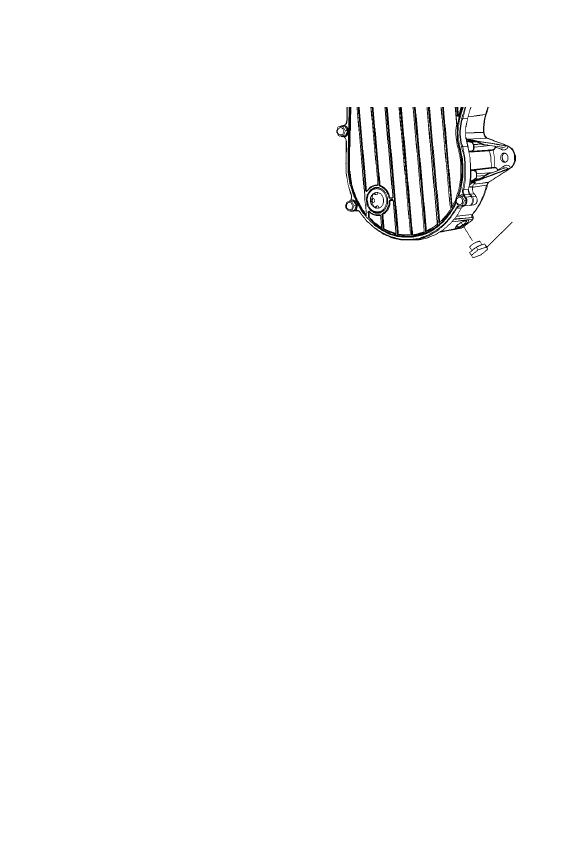
Chaincase Oil

Oil Change
1. Position the vehicle on a level

surface.

2. Remove the drain plug (4) and

drain the oil into a drain pan.

Allow the oil to drain

completely

3. Install a new sealing washer on

the drain plug.

NOTE: The sealing surfaces on the drain plug and the oil tank

should be clean and free of burrs, nicks or scratches.

4. Reinstall the drain plug. Torque to 6-10 ft. lbs. (8-13 Nm).
5. Remove the fill plug.
6. Add 11 oz. (325 ml) of the recommended oil. Do not overfill.
7. Reinstall the fill plug, making sure it is seated properly.

78

MAINTENANCE

General Maintenance

Spark Plugs

A new engine can cause temporary spark plug fouling due to the

preservative added during the assembly process. Avoid prolonged idle

speeds, which cause plug fouling and carbonization.
Change the spark plugs every 2000-2500 miles (3200-4000 km).

CAUTION

Using non-recommended spark plugs can result in serious engine

damage. A spark plug with a heat range too high will always

cause engine damage if the engine is operated in conditions more

severe than intended for that plug. Always use the spark plugs

recommended for your snowmobile.

S

Use recommended spark plugs with the proper gap.

S

Use only resistor-type spark plugs.

S

Torque spark plugs to 18-22 ft. lbs. (24-30 Nm).

S

Always carry spare spark plugs.

2

79

MAINTENANCE

General Maintenance

Spark Plugs

Spark plug condition is indicative of engine operation. The spark plug

firing end condition should be read after the engine has been warmed

up and the vehicle has been driven at higher speeds. Immediately

check the spark plug for correct color.

WARNING

A hot exhaust system and engine can cause serious burns. Wear

protective gloves when removing a spark plug for inspection.

1. Normal

The normal insulator tip is gray, tan or light brown. There will be few

combustion deposits. The electrodes are not burned or eroded. This

indicates the proper type and heat range for the engine and the service.

NOTE: The tip should not be white. A white insulator tip indicates

overheating, caused by use of an improper spark plug or

incorrect throttle body adjustments.

2. Wet Fouled

The wet fouled insulator tip is black. A damp oil film covers the firing

end. There may be a carbon layer over the entire nose. Generally, the

electrodes are not worn. General causes of fouling are excessive oil or

use of non-recommended injection oil.

Spark Plug Removal and Replacement

1. Remove the spark plug cap.
2. Using the special wrench provided in the

tool pouch, rotate the spark plug

counterclockwise to remove.

3. Reverse the procedure for spark plug

installation.

4. Torque to 18-22 ft. lbs. (24-30 Nm).
5. Reinstall the spark plug cap.

+

80

MAINTENANCE

General Maintenance

Intake Filters

The intake foam filter limits

snow ingestion into the intake

system. When operating in

loose powder snow, check the

top of the foam filter

periodically to remove any

accumulation of snow.

CAUTION

Operating the snowmobile with the intake filters removed may

cause carburetor icing. The result will be poor fuel economy or

carburetor malfunction. Always reinstall the intake filters before

operating the snowmobile.

Fuel Pump

All fuel pump service must be performed by an authorized Polaris

dealer. Do not attempt to service the fuel pump.

Fuel Filter/Fuel Lines

See your Polaris dealer for replacement of the in-tank fuel filter every

1000 miles (or annually).
Inspect the fuel lines regularly for signs of deterioration or damage.

Always check fuel line condition after periods of storage. Normal

deterioration from weather and fuel compounds may occur. Replace

worn or damaged fuel lines promptly.

CAUTION

Kinking the fuel lines or using a pliers or similar tools to remove

fuel lines may cause damage to the lines. If a fuel line has been

damaged or kinked, replace it promptly.


Content   ..  17  18  19  20   ..