Airbus A318/319/320/321. FLIGHT CREW TECHNIQUES MANUAL (2005-2022) - page 10
PROCEDURES
NORMAL PROCEDURES
A318/A319/A320/A321
FLIGHT CREW
NORMAL CHECKLISTS
TECHNIQUES MANUAL
FLAPS SETTING
CONF ____ (BOTH)
The PF checks and compares the flaps setting on the PFD and FMS PERF page.
The PF announces the configuration displayed on PFD e.g. “CONF 1+F”.
T.O SPEEDS & THRUST
_____ (BOTH)
The PF reads aloud V1, VR, V2 and thrust setting on the FMS PERF page while PM checks V1 and
V2 on the PFD.
The PF announces e.g. “V1 One Two Five, VR One Two Five, V2 One Two Nine, Flex Fifty Two”.
The PM reads aloud V1, VR, V2 and thrust setting on the FMS PERF page while PF checks V1 and
V2 on the PFD.
The PM announces e.g. “V1 One Two Five, VR One Two Five, V2 One Two Nine, Flex Fifty Two”.
FCU ALT
_____
The PF checks the altitude on the glareshield.
The PF announces e.g. “Five thousand feet”.
APPROACH
Ident.: PR-NP-CL-00024957.0001001 / 09 NOV 21
Applicable to: ALL
Checklist trigger: Below 10 000 ft AAL and barometric reference set.
BARO REF
_____ (BOTH)
The PF and PM check and read the QNH BARO setting (or QFE BARO setting ).
The PF then PM announce e.g. “QNH One Zero One Three”.
SEAT BELTS
ON
The PF checks the memo.
The PF announces "ON".
MINIMUM
____
The PF checks the baro or radio minimum on the FMA.
The PF announces e.g. “BARO Four hundred fifty feet” or “RADIO One hundred sixty feet”.
AUTO BRAKE
____
The PF checks the autobrake mode on the autobrake panel.
The PF announces the autobrake mode e.g. "LOW" or "MED".
ENG MODE SEL
____
The PF checks that IGNITION is displayed or not on the memo.
The PF announces "IGNITION" or "NORM".
PIA A318/A319/A320/A321 FLEET
PR-NP-CL P 5/8
FCTM
← G to H
23 NOV 21
PROCEDURES
NORMAL PROCEDURES
A318/A319/A320/A321
FLIGHT CREW
NORMAL CHECKLISTS
TECHNIQUES MANUAL
LANDING
Ident.: PR-NP-CL-00024958.0001001 / 09 NOV 21
Applicable to: ALL
Checklist trigger: LDG CONF set and cabin report received.
ECAM MEMO
LDG NO BLUE
- LDG GEAR DN
- SIGNS ON
- CABIN READY
- SPLRS ARM
- FLAPS FULL or CONF 3
The PF checks no blue items on the ECAM memo.
The PF announces "LANDING NO BLUE".
CABIN
READY
The PF confirms that the cabin report is received.
The PF announces "READY".
AFTER LANDING
Ident.: PR-NP-CL-00024959.0002001 / 09 NOV 21
Applicable to: ALL
Checklist trigger: After Landing Flow pattern completed.
RADAR & PRED W/S
OFF
The PF checks on the pedestal that the weather radar and predictive windshear are OFF.
The PF announces "OFF".
PARKING
Ident.: PR-NP-CL-00024960.0001001 / 09 NOV 21
Applicable to: ALL
Checklist trigger: SEAT BELTS sw OFF.
PARKING BRAKE OR CHOCKS
SET
The PF checks the PARK BRK memo or confirms that the ground personnel set the chocks.
The PF announces “PARKING BRAKE SET” or “CHOCKS SET”.
ENGINES
OFF
The PF checks the master levers and engine parameters on EWD.
The PF announces "OFF".
PIA A318/A319/A320/A321 FLEET
PR-NP-CL P 6/8
FCTM
I to K →
23 NOV 21
PROCEDURES
NORMAL PROCEDURES
A318/A319/A320/A321
FLIGHT CREW
NORMAL CHECKLISTS
TECHNIQUES MANUAL
WING LIGHTS
OFF
The PF checks the WING LIGHTS pb-sw on the EXT LT overhead panel.
The PF announces “OFF”.
FUEL PUMPs
OFF
The PF checks the FUEL pb-sw on the overhead panel.
The PF announces "OFF".
SECURING THE AIRCRAFT
Ident.: PR-NP-CL-00024961.0001001 / 09 NOV 21
Applicable to: ALL
Checklist trigger: After the last passenger left the aircraft (if securing the aircraft is intended).
OXYGEN
OFF
The CM2 checks the CREW SUPPLY pb-sw on the OXYGEN overhead panel.
The CM2 announces "OFF".
EMER EXIT LIGHT
OFF
The CM2 checks the EMER EXIT LT sw on the SIGNS overhead panel.
The CM2 announces "OFF".
EFBs
OFF
The CM1 and CM2 checks the EFBs.
The CM1 then CM2 announces “OFF”.
BATTERIES
OFF
The CM1 checks the BAT pb-sw on the ELEC overhead panel.
The CM1 announces “OFF”.
PIA A318/A319/A320/A321 FLEET
PR-NP-CL P 7/8
FCTM
← K to L
23 NOV 21
PROCEDURES
NORMAL PROCEDURES
A318/A319/A320/A321
FLIGHT CREW
NORMAL CHECKLISTS
TECHNIQUES MANUAL
Intentionally left blank
PIA A318/A319/A320/A321 FLEET
PR-NP-CL P 8/8
FCTM
23 NOV 21
PROCEDURES
NORMAL PROCEDURES
A318/A319/A320/A321
FLIGHT CREW
SUPPLEMENTARY PROCEDURES - ADVERSE WEATHER
TECHNIQUES MANUAL
Cold Weather Operations and Icing Conditions
GENERAL
Ident.: PR-NP-SP-10-10-1-00019322.0001001 / 05 JUN 18
Applicable to: ALL
Aircraft performance is certified on the basis of a clean wing. Ice accretion affects wing performance.
When the wing is clean, the airflow smoothly follows the shape of the wing. When the wing is
covered with ice, the airflow separates from the wing when the Angle-Of-Attack (AOA) increases.
Therefore, the maximum lift-coefficient is reduced. As a result, the aircraft may stall at a lower AOA,
and the drag may increase.
The flight crew must keep in mind that the wing temperature of the aircraft may be significantly lower
than 0 °C, after a flight at high altitude and low temperature, even if the Outside Air Temperature
(OAT) is higher than 0 °C. In such cases, humidity or rain will cause ice accretion on the upper
wing, and light frost under the wing (only 3 mm of frost on the under side of the wing tank area is
acceptable).
Ice accretion on the lower part of the nose fuselage may also affect the Static, Pitot and AOA probes.
If ice ridges build up on the skin of the aircraft, it may impact the aerodynamic flow in front of the
Static, Pitot and AOA probes. As a result, the flight crew may observe unreliable air data during the
takeoff and climb phases.
EXTERIOR INSPECTION
Ident.: PR-NP-SP-10-10-1-00016317.0002001 / 20 MAR 17
Applicable to: ALL
When icing conditions on ground are encountered, and/or when ice accretion is suspected, the
Captain should determine, on the basis of the exterior inspection, if the aircraft requires ground
deicing/anti-icing treatment. This visual inspection must take into account all vital parts of the aircraft,
and must be performed from locations that offer a clear view of these parts.
COCKPIT PREPARATION
Ident.: PR-NP-SP-10-10-1-00019323.0001001 / 20 MAR 17
Applicable to: ALL
The following systems may be affected in very cold weather:
- The EFIS/ECAM (when the cockpit temperature is very low)
- The IRS alignment (may take longer than usual, up to 15 min).
The probe and window heating may be used on ground.
PIA A318/A319/A320/A321 FLEET
PR-NP-SP-10-10-1 P 1/8
FCTM
A to C
23 NOV 21
PROCEDURES
NORMAL PROCEDURES
A318/A319/A320/A321
FLIGHT CREW
SUPPLEMENTARY PROCEDURES - ADVERSE WEATHER
TECHNIQUES MANUAL
AIRCRAFT DEICING/ANTI-ICING ON GROUND
Ident.: PR-NP-SP-10-10-1-00016318.0002001 / 05 MAR 19
Applicable to: ALL
DE-ICING/ANTI-ICING FLUID
Deicing/anti-icing fluids must be able to remove ice and to prevent its accumulation on aircraft
surfaces until the beginning of the takeoff. In addition, the fluids must flow off the surfaces of the
aircraft during takeoff, in order not to degrade takeoff performance.
Several types of fluids can be used. These fluids have different characteristics:
type 1
type 2, 3, 4
Low viscosity
High viscosity
Limited hold-over time
Longer hold-over time
Used mainly for de-icing
Used for de-icing and anti-icing
The holdover time starts from the beginning of the application of the fluid, and depends on the type
of fluid, and on the nature and severity of precipitation. The flight crew should refer to applicable
tables as guidelines. These tables must be used in conjunction with the pre-takeoff check.
Depending upon the severity of the weather, de-icing/anti-icing procedure must be applied either:
- In one step, via the single application of heated and diluted deicing/anti-icing fluid: This
procedure provides a short holdover time, and should be used in low moisture conditions only.
The holdover time starts from the beginning of the application of the fluid.
- In two steps, by first applying the heated deicing fluid, then by applying a protective anti-icing
fluid: These two sprays must be applied consecutively. The holdover time starts from the
beginning of the application of the second fluid.
PROCEDURES
Refer to FCOM/PRO-NOR-SUP-ADVWXR Before Fluid Spraying.
TAXI-OUT
Ident.: PR-NP-SP-10-10-1-00016320.0002001 / 09 NOV 21
Applicable to: ALL
On contaminated runways, the taxi speed should be limited to 10 kt, and any action that could
distract the flight crew during taxiing should be delayed until the aircraft is stopped.
The following factors should be taken into account:
- At speeds below 20 kt: Antiskid deactivates.
- Engine anti-ice increases ground idle thrust.
- To minimize the risk of skidding during turns: Avoid large tiller inputs.
- On slippery taxiways: It may be more effective to use differential braking and/or thrust, instead of
nosewheel steering.
PIA A318/A319/A320/A321 FLEET
PR-NP-SP-10-10-1 P 2/8
FCTM
D to E →
23 NOV 21
PROCEDURES
NORMAL PROCEDURES
A318/A319/A320/A321
FLIGHT CREW
SUPPLEMENTARY PROCEDURES - ADVERSE WEATHER
TECHNIQUES MANUAL
- On slush-covered, or snow-covered, taxiways: Flap selection should be delayed until reaching the
holding point, in order to avoid contaminating the flap/slat actuation mechanism.
- When reaching the holding point: The Taxi checklist must be performed.
- The flight crew must maintain the aircraft at an appropriate distance from the aircraft in front.
- In icing conditions: When holding on ground for extended periods of time, or if engine vibration
occurs, thrust should be increased periodically, and immediately before takeoff, to shed any ice
from the fan blades.
For more details about this procedure, Refer to FCOM/PRO-NOR-SOP-09 After Start - ENG Anti-Ice
TAKEOFF
Ident.: PR-NP-SP-10-10-1-00016321.0002001 / 20 MAR 17
Applicable to: ALL
TAKEOFF PERFORMANCES
The use of FLEX thrust for takeoff on contaminated runways is prohibited. However, derated
thrust
may be used, as required, in order to optimize aircraft performance. When available, a
derated takeoff thrust results in lower minimum control speeds and, therefore, in a lower V1. A
reduction in the minimum control speeds can sometimes enhance takeoff performance.
If anti-ice is used, the flight crew must apply the applicable performance penalty.
Slush, standing water, or deep snow reduces the aircraft takeoff performance because of
increased rolling resistance and the reduction in tire-to-ground friction. A higher flap setting
increases the runway limited takeoff weight, but reduces second the segment limited takeoff
weight.
TAKEOFF ROLL
Before the aircraft lines up on the runway for takeoff, the flight crew must ensure that the airframe
has no ice or snow.
Then, before applying thrust, the Captain should ensure that the nosewheel is straight. If there is a
tendency to deviate from the runway centerline, this tendency must be neutralized immediately, via
rudder pedal steering, not via the tiller.
On contaminated runways, the flight crew should ensure that engine thrust advances
symmetrically to help minimize potential problems with directional control.
The flight crew should keep in mind that a RTO is a potentially hazardous manoeuvre on
contaminated runways.
If a RTO must be performed, the flight crew should maintain directional control with the rudder and
small inputs to the nose wheel. If necessary, the flight crew should use differential braking in order
to realign with the runway centerline, when stopping distance permits.
PIA A318/A319/A320/A321 FLEET
PR-NP-SP-10-10-1 P 3/8
FCTM
← E to F
23 NOV 21
PROCEDURES
NORMAL PROCEDURES
A318/A319/A320/A321
FLIGHT CREW
SUPPLEMENTARY PROCEDURES - ADVERSE WEATHER
TECHNIQUES MANUAL
IN FLIGHT
Ident.: PR-NP-SP-10-10-1-00016322.0002001 / 20 MAR 17
Applicable to: ALL
CLIMB/DESCENT
Whenever icing conditions are encountered or expected, the engine anti-ice should be turned on.
Although the TAT before entering clouds may not require engine anti-ice, flight crews should be
aware that the TAT often decreases significantly, when entering clouds.
If the recommended anti-ice procedures are not performed, engine stall, over-temperature, or
engine damage may occur,
Wing anti-ice should be turned on, if either severe ice accretion is expected, or if there is any
indication of icing on the airframe.
HOLDING
If holding is performed in icing conditions, the flight crew should maintain clean configuration. This
is because prolonged flight in icing conditions with the slats extended should be avoided.
APPROACH
ICE ACCRETION
If significant ice accretion develops on parts of the wing, the aircraft speed must be increased
(Refer to FCOM/PRO-NOR-SUP-ADVWXR Minimum Speed with Ice Accretion).
BAROMETER INDICATIONS
In cold weather, the atmosphere differs from the International Standard Atmosphere (ISA)
conditions. The parameters that the ADIRS computes are barometric and ISA-referenced. When
the atmosphere differs from the ISA conditions, the altitude and FPA computed by the ADIRS,
and the associated indications on PFD (altitude, VDEV, ...) are not accurate.
Note:
The ADIRS computes the FPA from inertial data and barometric altitude.
When the temperature is lower than ISA:
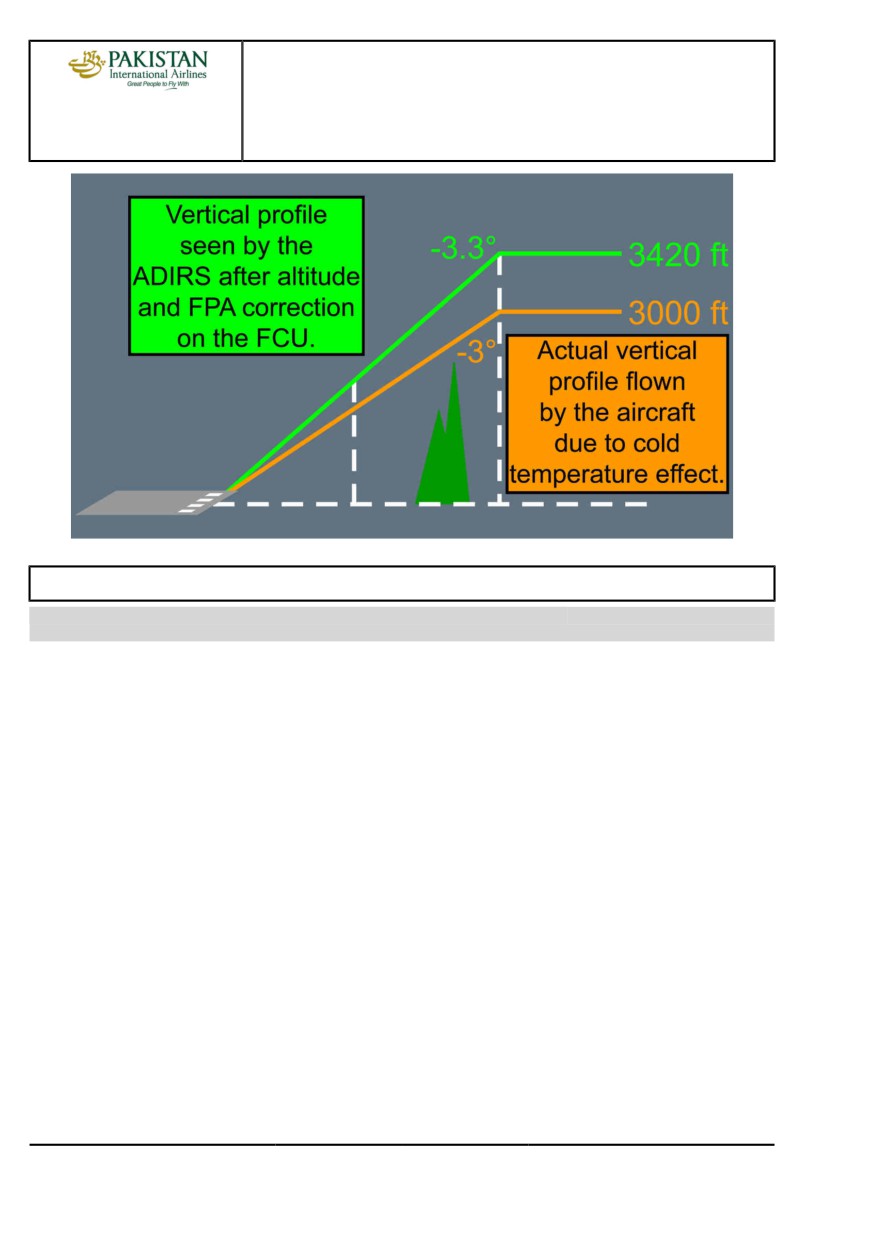
- The true altitude of the aircraft is lower than the altitude that the ADIRS computes.
- The FPA that the aircraft actually flies, is less steep than the FPA that the ADIRS computes.
If appropriate, the flight crew should therefore apply corrections on the altitudes and on the
FPA (in vertical selected FPA mode), and they should be vigilant on the parameters that are
displayed.
Altitude Correction
The flight crew should consider to correct the target altitudes, by adding the values that are
indicated in the table below:
PIA A318/A319/A320/A321 FLEET
PR-NP-SP-10-10-1 P 4/8
FCTM
G →
23 NOV 21
PROCEDURES
NORMAL PROCEDURES
A318/A319/A320/A321
FLIGHT CREW
SUPPLEMENTARY PROCEDURES - ADVERSE WEATHER
TECHNIQUES MANUAL
Corrections to be Added (ft)
Airport Temperature (°C)
Height (ft)
-10
-20
-30
500
50
70
100
1 000
100
140
190
2 000
200
280
380
3 000
290
420
570
4 000
390
570
760
5 000
490
710
950
These values are calculated for an aerodrome at sea level, and are therefore conservative
when applied at a higher altitude aerodrome. For aerodromes at sea level, these corrections
corresponds approximately to 4 x Delta ISA x Height (ft)/1000.
The correction depends on the airport temperature, and on the height above the airport. This
correction has to be added to the indicated altitude.
Along the Approach and Missed Approach, the flight crew should consider to apply the
altitude corrections on the relevant minimum altitudes (all including FAF, Step-down altitudes,
minima), and on the altitude for the altitude/distance check.
For Non Precision Approach in vertical managed mode, refer to the Approach guidance
management section.
FPA Correction
When the temperature is lower than ISA, the FPA that the aircraft actually flies is less steep
than the FPA that the ADIRS (ISA referenced) computes.
In vertical selected mode FPA, to correct the FPA for this ISA deviation effect, the flight crew
should select on the FCU a FPA slightly different from the FPA that the aircraft needs to fly.
In any case, the check "altitude (corrected in temperature) versus distance" remains the
reference.
Impact on the indications
The barometric indications on PFD, namely the altitude and the VDEV are not corrected in
temperature and are therefore not accurate.
Example
EXAMPLE
Airport outside temperature -20 °C ; Delta ISA = -35 °C.
Approach: FAF at 3 000 ft ; Final descent slope 3 °.
PIA A318/A319/A320/A321 FLEET
PR-NP-SP-10-10-1 P 5/8
FCTM
← G →
23 NOV 21
PROCEDURES
NORMAL PROCEDURES
A318/A319/A320/A321
FLIGHT CREW
SUPPLEMENTARY PROCEDURES - ADVERSE WEATHER
TECHNIQUES MANUAL
LANDING
Ident.: PR-NP-SP-10-10-1-00016323.0002001 / 25 JUL 17
Applicable to: ALL
The flight crew should avoid landing on slippery runways, particularly if the antiskid is inoperative.
However, if it is not possible to avoid such landings, the following factors (linked to operations on
contaminated runways) should be considered:
- Braking action
- Directional control.
BRAKING ACTION
The presence of fluid contaminants on the runway has an adverse effect on braking performance,
because it reduces the friction between the tires and the surface of the runway. It also creates
a layer of fluid between the tires and the runway surface, and reduces the contact area. The
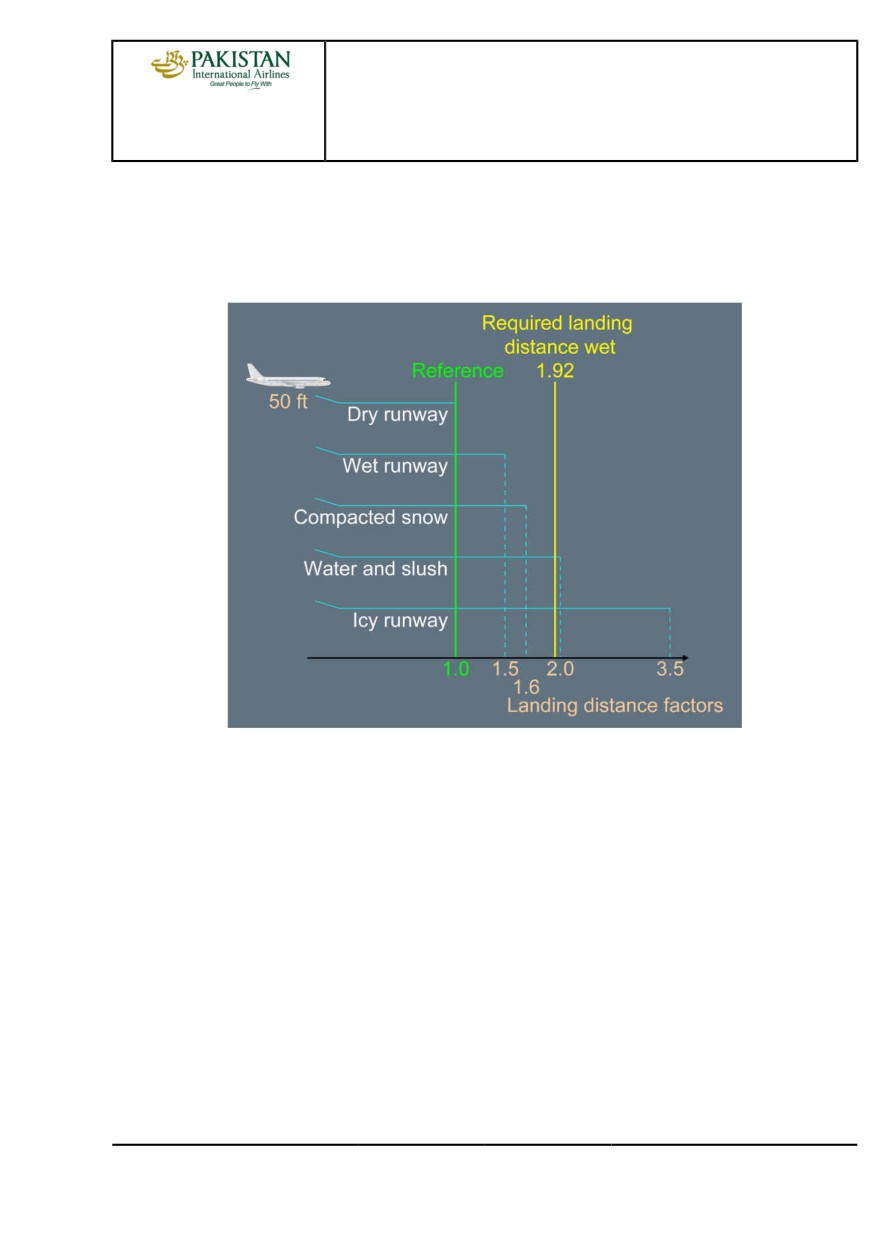
landing distances provide a good assessment of the real landing distances for specific levels of
contamination.
After a brief flare a firm touchdown should be made, and REV MAX should be selected as soon
as the main landing gear is on ground. Using reversers on a runway that is contaminated with
dry snow may reduce visibility, particularly at low speeds. In such cases, reverse thrust should be
reduced to idle, if applicable.
If necessary, REV MAX can be used until the aircraft is fully stopped.
The use of MED autobrake mode is recommended, when landing on an evenly contaminated
runway. It is possible that the DECEL light on the AUTO BRK panel will not come on, as the
PIA A318/A319/A320/A321 FLEET
PR-NP-SP-10-10-1 P 6/8
FCTM
← G to H →
23 NOV 21
PROCEDURES
NORMAL PROCEDURES
A318/A319/A320/A321
FLIGHT CREW
SUPPLEMENTARY PROCEDURES - ADVERSE WEATHER
TECHNIQUES MANUAL
predetermined deceleration may not be achieved. This does not mean that the autobrake is not
working.
In the case of uneven contamination on a wet or contaminated runway, the autobrake may laterally
destabilize the aircraft. If this occurs, consider deselecting the autobrake.
Typical Landing Distance Factors Versus Runway Condition
DIRECTIONAL CONTROL
During rollout, the sidestick must be centered. This prevents asymmetric wheel loading, that
results in asymmetric braking and increases the weathercock tendency of the aircraft.
The flight crew should maintain directional control with the rudder as long as possible.
When required, differential braking must be applied by completely releasing the pedal on the
side that is opposite to the expected direction of the turn. This is because, on a slippery runway,
the same braking effect may be produced by a full or half-deflection of the pedal.
Landing on a contaminated runway in crosswind requires careful consideration. In such a case,
directional control problems are caused by two different factors:
- If the aircraft touches down with some crab and the reverse thrust is selected, the side force
component of reverse adds to the crosswind component and causes the aircraft to drift to the
downwind side of the runway.
- As the braking efficiency increases, the cornering force of the main wheels decreases. This
adds to any problems there may be with directional control.
PIA A318/A319/A320/A321 FLEET
PR-NP-SP-10-10-1 P 7/8
FCTM
← H →
23 NOV 21
PROCEDURES
NORMAL PROCEDURES
A318/A319/A320/A321
FLIGHT CREW
SUPPLEMENTARY PROCEDURES - ADVERSE WEATHER
TECHNIQUES MANUAL
If there is a problem with directional control:
- Reverse thrust should be set to idle, in order to reduce the reverse thrust side-force
component.
- The brakes should be released, in order to increase the cornering force.
- The pilot should return to the runway centerline, reselect reverse thrust, and resume braking
(Refer to PR-NP-SOP-250 Rollout).
TAXI-IN
Ident.: PR-NP-SP-10-10-1-00016324.0002001 / 20 MAR 17
Applicable to: ALL
During taxi-in, after landing, the flaps/slats should not be retracted. This is because retraction could
cause damage, by crushing any ice that is in the slots of the slats. When the aircraft arrives at
the gate, and the engines are stopped, a visual inspection should be performed to check that the
slats/flaps areas are free of contamination. They may then be retracted, with the electric pumps.
At the end of the flight at parking, in extreme cold conditions, cold soak protection is requested when
a longer stop over is expected.
PIA A318/A319/A320/A321 FLEET
PR-NP-SP-10-10-1 P 8/8
FCTM
← H to I
23 NOV 21
PROCEDURES
NORMAL PROCEDURES
A318/A319/A320/A321
FLIGHT CREW
SUPPLEMENTARY PROCEDURES - ADVERSE WEATHER
TECHNIQUES MANUAL
Windshear
GENERAL
Ident.: PR-NP-SP-10-10-2-00019324.0001001 / 08 DEC 20
Applicable to: ALL
WINDSHEAR PHENOMENON
Windshear is a sudden change in either wind speed or direction, or both, over a relatively short
distance. Windshear occurs either horizontally or vertically at all altitudes.
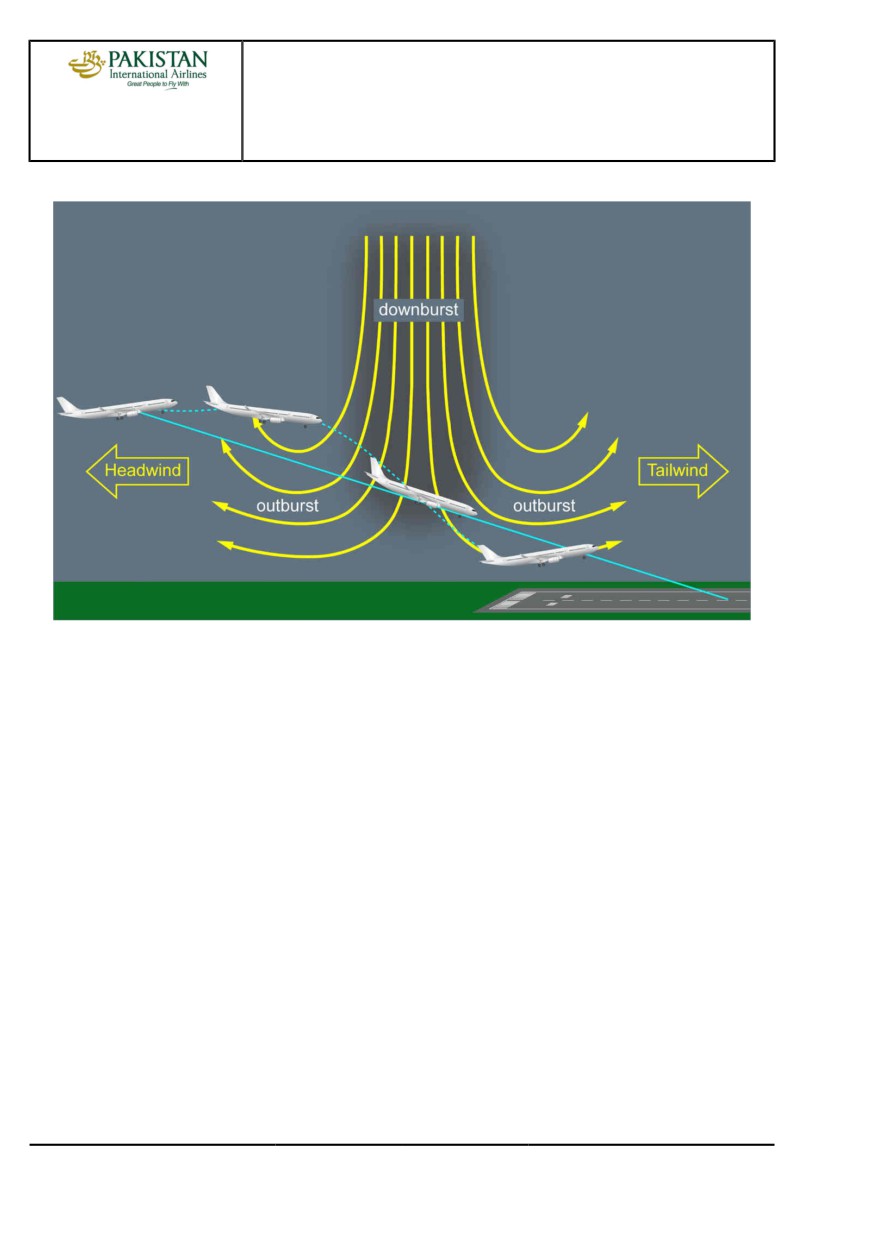
Windshear can result from a microburst. Microbursts occur close to the ground and are a possible
hazard to the safe flight of the aircraft for the following two reasons:
- The downburst of a microburst can result in strong downward winds (40 kt can be reached)
- The outburst of a microburst can result in both a large horizontal windshear and a wind
component shift from headwind to tailwind (horizontal winds can reach up to 40 kt).
An aircraft that approaches a microburst will first encounter a strong headwind. This can result
in an increase in the indicated airspeed. This may cause the aircraft to fly above the intended
flight path and/or accelerate. With a fixed speed on approach, the flight crew's reaction may be to
reduce power. This will cause the aircraft to fly with reduced energy through the downburst. The
wind will then become a tailwind. The indicated airspeed and lift will drop and the downburst may
be sufficiently strong to force the aircraft to lose a significant amount of altitude. The degraded
performance, combined with a tailwind encounter, may cause the aircraft to stall.
PIA A318/A319/A320/A321 FLEET
PR-NP-SP-10-10-2 P 1/8
FCTM
A →
10 AUG 21
PROCEDURES
NORMAL PROCEDURES
A318/A319/A320/A321
FLIGHT CREW
SUPPLEMENTARY PROCEDURES - ADVERSE WEATHER
TECHNIQUES MANUAL
Windshear Phenomenon
AWARENESS AND AVOIDANCE
Awareness of the weather conditions that cause windshear will reduce the risk of an encounter.
Studying meteorological reports and listening to tower reports will help the flight crew to assess the
weather conditions that are to be expected during takeoff or landing.
If a windshear encounter is likely, the takeoff or landing should be delayed until the conditions
improve, e.g. until a thunderstorm has moved away from the airport.
RECOGNITION
Timely recognition of a windshear condition is vital for the successful implementation of the
windshear recovery/escape procedure.
The flight crew should pay attention to the following deviations that may indicate a possible
windshear condition:
- Indicated airspeed variations in excess of 15 kt
- Ground speed variations
- Wind indication variations on the ND or HUD : directions and velocity
- Vertical speed excursions of 500 ft/min
- Pitch attitude excursions of 5 °
- Glide slope deviation of 1 dot
PIA A318/A319/A320/A321 FLEET
PR-NP-SP-10-10-2 P 2/8
FCTM
← A →
10 AUG 21
PROCEDURES
NORMAL PROCEDURES
A318/A319/A320/A321
FLIGHT CREW
SUPPLEMENTARY PROCEDURES - ADVERSE WEATHER
TECHNIQUES MANUAL
- Heading variations of 10 °
- Unusual A/THR activity.
STRATEGY FOR COPING WITH WINDSHEAR
The windshear and microburst are hazardous phenomena for an aircraft at takeoff or landing. The
strategy to cope with windshear is:
- Increasing flight crew awareness through the PWS
- Informing the flight crew of unexpected air mass variations through FPV and approach speed
variations
- Warning the flight crew of significant loss of energy through "SPEED, SPEED, SPEED" and
"WINDSHEAR" aural warnings (if available)
- Providing effective tools to escape the shear through ALPHA FLOOR protection, SRS pitch
order, high AOA protection and Ground Speed mini protection.
INCREASING FLIGHT CREW AWARENESS (IF AVAILABLE)
When the airshaft of a microburst reaches the ground, it mushrooms outward carrying with it a
large number of falling rain droplets. The radar can measure speed variations of the droplets,
and as a result, assess wind variations. This predictive capability to assess wind variations
is performed by the PWS. The PWS automatically operates below a given altitude (Refer to
FCOM/DSC-34-SURV-30-20 General), if the radar is ON or OFF, provided that the PWS sw is
in the AUTO position.
INFORMING FLIGHT CREW
The FPV associated with the approach speed variations (GS mini protection) is an effective
means for informing the flight crew of unexpected air mass variations:
Approach speed variations and lateral FPV displacement reflect horizontal wind gradient.
Vertical FPV displacement reflects the vertical air mass movement.
WARNING THE FLIGHT CREW
The "SPEED, SPEED, SPEED" low energy warning (if available) is based on the aircraft speed,
acceleration and flight path angle. This warning attracts the PF eyes to the speed scale, and
request rapid thrust adjustment. In windshear conditions, it is the first warning to appear, before
the activation of the alpha floor. The following table provides some typical values of the speed at
which the warning could occur in two different circumstances.
Deceleration Rate
Flight Path Angle
Warning
-1 kt/second
-3 °
VLS -7 kt
-1 kt/second
-4 °
VLS -1 kt
In addition, the aircraft has a reactive windshear warning system. This system triggers if
the aircraft encounters windshear. In such a case, there is a "WINDSHEAR WINDSHEAR
WINDSHEAR" aural warning.
PIA A318/A319/A320/A321 FLEET
PR-NP-SP-10-10-2 P 3/8
FCTM
← A →
10 AUG 21
PROCEDURES
NORMAL PROCEDURES
A318/A319/A320/A321
FLIGHT CREW
SUPPLEMENTARY PROCEDURES - ADVERSE WEATHER
TECHNIQUES MANUAL
PROVIDING EFFECTIVE TOOLS
There are three effective tools to assist the flight crew to escape:
- The alpha floor protection
- The SRS AP/FD pitch law
- The high AOA protection.
When the alpha floor protection is triggered, the A/THR triggers TOGA on all engines. The FMA
displays A.FLOOR, that changes to TOGA LK, when the aircraft AOA has decreased. TOGA/LK
can only be deselected by turning the A/THR off.
The SRS pitch mode ensures the best aircraft climb performance. Therefore, the procedure
requests following the SRS pitch bar and possibly full aft stick, in order to follow the SRS orders
and minimize the loss of height.
The high angle-of-attack protection enables the PF to safely pull full aft stick, if needed, in
order to follow the SRS pitch order, or to rapidly counteract a down movement. This provides
maximum lift and minimum drag, by automatically retracting the speed brakes, if they are
extended.
PIA A318/A319/A320/A321 FLEET
PR-NP-SP-10-10-2 P 4/8
FCTM
← A
10 AUG 21
PROCEDURES
NORMAL PROCEDURES
A318/A319/A320/A321
FLIGHT CREW
SUPPLEMENTARY PROCEDURES - ADVERSE WEATHER
TECHNIQUES MANUAL
OPERATIONAL RECOMMENDATIONS
Ident.: PR-NP-SP-10-10-2-00016325.0001001 / 04 NOV 20
Applicable to: ALL
GENERAL GUIDELINES
- Predictive windshear warning (“WINDSHEAR AHEAD" and "GO AROUND WINDSHEAR
AHEAD" aural alerts, associated with the W/S AHEAD that appears on the PFDs), reactive
windshear warning ("WINDSHEAR WINDSHEAR WINDSHEAR" aural alert, associated with the
WINDSHEAR that appears on the PFDs) and windshear detected by the flight crew, request
immediate actions.
The following recommendations apply for takeoff after V1 and when airbone (including approach
and go around phases):
• The flight crew must set TOGA thrust and should follow SRS orders (if necessary pull the
sidestick fully back).
If the FD bars are not displayed, the flight crew should move toward an initial pitch attitude of
17.5 °. Then, if necessary, to prevent a loss in altitude, increase the pitch attitude.
• If the AP is engaged, the flight crew should keep it engaged. The AP disengages if the angle
of attack value goes above αPROT
• The flight crew should monitor the flight path, the speed and the speed trend.
- Suspected windshear (upon ATC or traffic notification or flight crew observation) and predictive
windshear caution (“MONITOR RADAR DISPLAY" aural alert, associated with W/S AHEAD
that appears on the PFDs) request anticipation of the flight crew to be prepared for a possible
windshear.
Note:
When a predictive windshear aural alert (“WINDSHEAR AHEAD" or "GO AROUND
WINDSHEAR AHEAD") is triggered, the flight crew must carefully check that there is
no hazard. If this is the case, the flight crew can disregard the alert, as long as both the
following apply:
- There are no other signs of possible windshear conditions
- The reactive windshear system is operational.
Known cases of spurious predictive windshear alerts were reported at some airports
either during takeoff or landing, due to the specific obstacle environment.
However, the flight crew must always rely on all reactive windshear (i.e. WINDSHEAR)
alerts.
TAKEOFF
SUSPECTED WINDSHEAR OR PREDICTIVE WINDSHEAR
The Predictive Windshear Function detected a windshear.
Predictive windshear alerts are inhibited when the aircraft speed is above 100 kt and up to 50 ft.
PIA A318/A319/A320/A321 FLEET
PR-NP-SP-10-10-2 P 5/8
FCTM
B →
10 AUG 21
PROCEDURES
NORMAL PROCEDURES
A318/A319/A320/A321
FLIGHT CREW
SUPPLEMENTARY PROCEDURES - ADVERSE WEATHER
TECHNIQUES MANUAL
If a predictive windshear alert is triggered on the runway before takeoff, or in case of suspected
windshear, the flight crew must delay takeoff until conditions are better. In order to evaluate
takeoff conditions, the flight crew should apply both of the following:
- Use their observations and experience
- Check the weather conditions.
In order to select the preferred runway, the flight crew should take into consideration the
location of expected windshear.
If a predictive windshear warning is triggered during the takeoff roll, the Captain must reject
takeoff.
If a predictive windshear caution is triggered during the takeoff roll, it is the decision of the
Captain according to the Captain's situation assessment to either:
- Continue with takeoff considering TOGA, or
- Reject takeoff.
If a predictive windshear alert is triggered during initial climb, the flight crew must:
- Set TOGA
- Closely monitor the speed and the speed trend
- Ensure that the flight path does not include areas with suspected windshears
- Change the aircraft configuration, provided that the aircraft does not enter windshear.
REACTIVE WINDSHEAR OR WINDSHEAR DETECTED BY FLIGHT CREW OBSERVATION
The Reactive Windshear Function detected a windshear.
During the takeoff roll, "WINDSHEAR WINDSHEAR WINDSHEAR" alert is inhibited.
Windshear recognition is based on the flight crew observation.
If the windshear occurs before V1, with significant speed and speed trend variations, the
Captain must initiate a rejected takeoff.
If the windshear occurs after V1, the flight crew must select TOGA. The flight crew must pay
attention to the following:
- The flight crew should not change the configuration, until the aircraft is out of the windshear,
because operating the landing gear doors causes additional drag
- The PF must fly SRS pitch orders rapidly and smoothly, but not aggressively, and must
consider pulling full backstick, if necessary, to minimize height loss
- The PM should call out the wind variations from the ND and V/S and, when clear of the
windshear, report the encounter to the ATC.
APPROACH
SUSPECTED WINDSHEAR OR PREDICTIVE WINDSHEAR
The Predictive Windshear Function detected a windshear.
PIA A318/A319/A320/A321 FLEET
PR-NP-SP-10-10-2 P 6/8
FCTM
← B →
10 AUG 21
PROCEDURES
NORMAL PROCEDURES
A318/A319/A320/A321
FLIGHT CREW
SUPPLEMENTARY PROCEDURES - ADVERSE WEATHER
TECHNIQUES MANUAL
If "MONITOR RADAR DISPLAY" or the visual alert appears, or in case of suspected windshear,
the flight crew should either delay the approach or divert to another airport. However, if the flight
crew decides to continue the approach, they should:
- Assess the weather severity with the radar display
- Consider the most appropriate runway
- Select FLAPS 3 for landing, in order to optimize the climb gradient capability in the case of a
go-around
- Use managed speed, because it provides the GS mini function
- The flight crew may increase VAPP displayed on MCDU PERF APP page up to a maximum
VLS +15 kt, in case of strong or gusty crosswind greater than 20 kt, use the LDG PERF
application of EFB for VAPP determination.
- In very difficult weather conditions, the A/THR response time may not be sufficient to manage
the instantaneous loss of airspeed. Refer to PR-NP-SOP-190-CONF Use of A/THR for the
applicable technique description.
In the case of "GO AROUND, WINDSHEAR AHEAD" aural alert triggering, the PF must set
TOGA for a go-around. The flight crew can change the aircraft configuration, provided that the
windshear is not entered. Full backstick should be applied, if required, to follow the SRS, or to
minimize the loss of height.
REACTIVE WINDSHEAR OR WINDSHEAR DETECTED BY FLIGHT CREW OBSERVATION
The Reactive Windshear Function detected a windshear.
In the case of a windshear, the PF must set TOGA for a go-around.
The flight crew must pay attention to the following:
- The flight crew should not change the configuration, until the aircraft is out of the windshear,
because operating the landing gear doors causes additional drag
- The PF must fly SRS pitch orders rapidly and smoothly, but not aggressively, and must
consider pulling full backstick, if necessary, to minimize height loss
- The PM should call out the wind variations from the ND and V/S and, when clear of the
windshear, report the encounter to the ATC.
PIA A318/A319/A320/A321 FLEET
PR-NP-SP-10-10-2 P 7/8
FCTM
← B
10 AUG 21
PROCEDURES
NORMAL PROCEDURES
A318/A319/A320/A321
FLIGHT CREW
SUPPLEMENTARY PROCEDURES - ADVERSE WEATHER
TECHNIQUES MANUAL
Intentionally left blank
PIA A318/A319/A320/A321 FLEET
PR-NP-SP-10-10-2 P 8/8
FCTM
10 AUG 21
PROCEDURES
NORMAL PROCEDURES
A318/A319/A320/A321
FLIGHT CREW
SUPPLEMENTARY PROCEDURES - ADVERSE WEATHER
TECHNIQUES MANUAL
Weather Turbulence
INTRODUCTION
Ident.: PR-NP-SP-10-10-3-00019325.0001001 / 20 MAR 17
Applicable to: ALL
Severe turbulence is defined as turbulence that causes large, abrupt changes in altitude and/or
attitude. It usually causes large variations in airspeed.
The flight crew must use weather reports and charts to determine the location and altitude of possible
CBs, storms, and Clear Air Turbulence (CAT).
If turbulence is expected:
- The flight crew must set the SEAT BELTS sw to ON, in order to prepare passengers and prevent
injuries
- All loose equipment must be secured in the cockpit and in the cabin.
If severe turbulence occurs during a flight, the flight crew must make a logbook entry in order to
initiate maintenance action.
TAKEOFF
Ident.: PR-NP-SP-10-10-3-00016326.0001001 / 20 MAR 17
Applicable to: ALL
For takeoff in high turbulence, the flight crew must wait for the target speed +20 kt (limited to VFE-5)
before retracting the slats/flaps (e.g. the flight crew must wait for F+20 kt before setting Flaps 1).
IN FLIGHT
Ident.: PR-NP-SP-10-10-3-00016327.0001001 / 28 MAY 20
Applicable to: ALL
USE OF RADAR
Areas of known turbulence, associated with CBs, must be avoided. Good management of the
radar tilt is essential, in order to accurately assess and evaluate the vertical development of
CBs. Usually, the gain should be left in AUTO. However, selective use of manual gain may help
to assess the general weather conditions. Manual gain is particularly useful, when operating in
heavy rain, if the radar picture is saturated. In this case, reduced gain will help the flight crew to
identify the areas of heaviest rainfall, that are usually associated with active CB cells. After using
manual gain, it should be reset to AUTO, in order to recover optimum radar sensitivity. A weak
echo should not be a reason for the flight crew to underestimate a CB, because only the wet parts
of the CB are detected. The decision to avoid a CB must be taken as early as possible, and lateral
avoidance should, ideally, be at 20 NM upwind.
PIA A318/A319/A320/A321 FLEET
PR-NP-SP-10-10-3 P 1/4
FCTM
A to C →
02 SEP 20
PROCEDURES
NORMAL PROCEDURES
A318/A319/A320/A321
FLIGHT CREW
SUPPLEMENTARY PROCEDURES - ADVERSE WEATHER
TECHNIQUES MANUAL
USE OF AP AND A/THR
- In cruise
• If moderate turbulence is encountered, the flight crew should set the AP and A/THR to ON.
• If severe turbulence is encountered :Refer to QRH/severe turbulence.
- In approach
The flight crew should use AP and A/THR for approaches as it reduces the workload. If the
A/THR performance is unsatisfactory, the PF should disconnect it and control the thrust
manually.
Use of managed speed is recommended in order to benefit from GS mini function : Refer to
FCOM/speed in approach phase.
Note:
if the aircraft is flown manually, the flight crew should be aware of the fact that flight
control laws are designed to cope with turbulence. Therefore, they should avoid the
temptation to fight turbulence, and should not over-control the sidestick.
THRUST AND AIR SPEED
Set the thrust to give the recommended speed. This thrust setting aims to obtain, in stabilized
conditions, the speed for turbulence penetration.
Only change thrust in case of an extreme variation in airspeed, and do not chase your Mach or
airspeed.
A transient increase is preferable to a loss of speed, that decreases buffet margins and is difficult
to recover.
ALTITUDE
If the flight crew flies the aircraft manually:
- The flight crew may expect large variations in altitude, but should not chase altitude
- The flight crew should consider descending to or below OPT FL, in order to increase the margin
to buffet.
CONSIDERATIONS ON CLEAR AIR TURBULENCE (CAT)
CAT can be expected by referring to weather charts and pilot reports. However, the radar cannot
detect CAT, because it is "dry turbulence".
If CAT is encountered, the flight crew may consider avoiding it vertically, keeping in mind that the
buffet margin reduces as the altitude increases.
PIA A318/A319/A320/A321 FLEET
PR-NP-SP-10-10-3 P 2/4
FCTM
← C →
02 SEP 20
PROCEDURES
NORMAL PROCEDURES
A318/A319/A320/A321
FLIGHT CREW
SUPPLEMENTARY PROCEDURES - ADVERSE WEATHER
TECHNIQUES MANUAL
MISCELLANEOUS
- The flight crew must set the harness to on, check that the seat belts signs are on and use all
white lights in thunderstorms.
- Turbulence speeds are indicated in the QRH.
LANDING
Ident.: PR-NP-SP-10-10-3-00020711.0001001 / 22 MAR 17
Applicable to: ALL
Configuration FULL, or 3, can be used.
CONF FULL provides better handling capability in turbulent conditions, however, CONF 3 provides
more energy and less drag.
PIA A318/A319/A320/A321 FLEET
PR-NP-SP-10-10-3 P 3/4
FCTM
← C to D
02 SEP 20
PROCEDURES
NORMAL PROCEDURES
A318/A319/A320/A321
FLIGHT CREW
SUPPLEMENTARY PROCEDURES - ADVERSE WEATHER
TECHNIQUES MANUAL
Intentionally left blank
PIA A318/A319/A320/A321 FLEET
PR-NP-SP-10-10-3 P 4/4
FCTM
02 SEP 20
PROCEDURES
NORMAL PROCEDURES
A318/A319/A320/A321
FLIGHT CREW
SUPPLEMENTARY PROCEDURES - ADVERSE WEATHER
TECHNIQUES MANUAL
Wake Turbulence
WAKE TURBULENCE
Ident.: PR-NP-SP-10-10-4-00022269.0001001 / 27 FEB 18
Applicable to: ALL
GENERAL:
Every aircraft that flies generates wake vortices, also known as wake turbulence. Wake turbulence
rolls-up into a pair of coherent, counter-rotating vortices that can persist for some minutes behind
the aircraft’s flight path. This wake turbulence usually moves downward and laterally with the
wind. The intensity of the trailing vortex and the dissipation time depends upon factors such as
the weight, size, speed of the aircraft, and the prevailing atmospheric conditions (calm weather
creates the most critical situation).
Wake turbulence may cause possible danger to the safe flight of another aircraft that crosses
or operates below the trajectory of the aircraft that generates these vortices. An aircraft can
encounter wake turbulence during any flight phase.
WAKE TURBULENCE PREVENTION:
To reduce the encounter of a wake turbulence, the flight crew must comply with the aircraft
separation minima.
If the flight crew suspects that the aircraft may encounter wake turbulence, an upwind lateral offset
can be used to avoid the wake turbulence. However, the application of a lateral offset does not
guarantee that the vortex will be avoided (except if the vortices are clearly visible by condensation
trails).
During final approach, the flight crew should remain on the standard approach slope because a
deviation does not guarantee avoidance of wake turbulence.
PIA A318/A319/A320/A321 FLEET
PR-NP-SP-10-10-4 P 1/2
FCTM
A →
04 SEP 18
PROCEDURES
NORMAL PROCEDURES
A318/A319/A320/A321
FLIGHT CREW
SUPPLEMENTARY PROCEDURES - ADVERSE WEATHER
TECHNIQUES MANUAL
WAKE TURBULENCE RECOVERY:
If the aircraft encounters wake turbulence, pilot input can amplify the effect of the vortices. All of
the following is therefore recommended:
- Do not use the rudder: Use of the rudder does not reduce the severity of the encounter, nor
does it enhance the ease of recovery.
- Keep the AP ON: The AP is able to correctly manage roll and pitch movements that are
generated by wake turbulence. However, if the aircraft encounters severe wake turbulence, the
AP may disconnect.
- If the AP was set to OFF by the flight crew or automatically disconnected, release the controls
and wait for a reasonable stabilization of the aircraft.
When the aircraft is stabilized perform both of the following:
- Roll wings level
- Establish again the trajectory.
PIA A318/A319/A320/A321 FLEET
PR-NP-SP-10-10-4 P 2/2
FCTM
← A
04 SEP 18
PROCEDURES
NORMAL PROCEDURES
A318/A319/A320/A321
FLIGHT CREW
SUPPLEMENTARY PROCEDURES - GREEN OPERATING PROCEDURES
TECHNIQUES MANUAL
GENERAL
Ident.: PR-NP-SP-20-00019335.0001001 / 03 NOV 21
Applicable to: ALL
This section describes the available cost-reduction guidelines for the different flight phases.
Operators can use these procedures in order to define their own cost-reduction policy.
Each Operator is responsible for the decision of what costs/parameters to reduce, for example
(non-exhaustive list):
- Maintenance costs
- Fuel consumption
- Operating costs
- Passenger comfort.
For example, the purpose of both CI and Flexible Takeoff is to reduce general costs, not the fuel
consumption.
The information in this chapter is not applicable to all Operators to the same extent, and depends on
their specific operations (e.g. geographical location, airport conditions, local regulations, etc.).
The flight crew should decide which procedures to apply, in accordance with the Operator's
guidelines and the flight conditions of the day, including the aircraft status.
DISPATCH
Ident.: PR-NP-SP-20-00019336.0001001 / 20 MAR 17
Applicable to: ALL
FUEL QUANTITY
The flight crew must determine and monitor the necessary fuel quantity at departure, from
accurate and consistent data (i.e. weather, performance factor, optimum flight level, average wind
speed, etc.).
The weight of any extra fuel will increase fuel consumption.
TAKEOFF CONFIGURATION
Fuel reduction is not a factor for the selection of a takeoff configuration.
The takeoff performance and best takeoff configuration depend on several operational and
environmental factors. The flight crew should select the takeoff configuration that:
- Optimizes takeoff performance (takeoff weight, etc.)
- If possible, increases flexible temperature
- Reduces takeoff speed (higher configuration for a dedicated flexible temperature).
A higher slats and flaps configuration (i.e. slats and flaps more extended) slightly increases fuel
consumption. But, with a higher flexible temperature, such a higher configuration results in a cost
reduction.
PIA A318/A319/A320/A321 FLEET
PR-NP-SP-20 P 1/8
FCTM
A to B →
23 NOV 21
PROCEDURES
NORMAL PROCEDURES
A318/A319/A320/A321
FLIGHT CREW
SUPPLEMENTARY PROCEDURES - GREEN OPERATING PROCEDURES
TECHNIQUES MANUAL
TAKEOFF THRUST
When performance permits, use the highest flexible temperature for takeoff.
Takeoff with flexible thrust increases fuel consumption compared with takeoff with TOGA thrust,
due to the longer takeoff phase. But the use of flexible thrust reduces engine wear and reduces
general costs.
PRELIMINARY COCKPIT PREPARATION
Ident.: PR-NP-SP-20-00020592.0001001 / 20 MAR 17
Applicable to: ALL
APU
The flight crew may delay, for as long as possible, the APU start, and use the ground electrical unit
and ground pneumatic unit when available.
AIR CONDITIONING
If one pack is sufficient to supply air when on ground, the flight crew can set one PACK to OFF.
In such a case, the flight crew should switch between the packs on each flight, in order to prevent
excessive wear of one pack.
EXTERNAL WALKAROUND
Ident.: PR-NP-SP-20-00019337.0001001 / 20 MAR 17
Applicable to: ALL
During the external inspection, the flight crew should pay attention to defects that may increase
aerodynamic drag, for example:
- Mismatch of aircraft fuselage panels
- Flight control surfaces that are not correctly aligned
- Worn seals on the airframe
- Peeling paint
- Dirt on the aircraft.
PIA A318/A319/A320/A321 FLEET
PR-NP-SP-20 P 2/8
FCTM
← B to D
23 NOV 21
PROCEDURES
NORMAL PROCEDURES
A318/A319/A320/A321
FLIGHT CREW
SUPPLEMENTARY PROCEDURES - GREEN OPERATING PROCEDURES
TECHNIQUES MANUAL
COCKPIT PREPARATION
Ident.: PR-NP-SP-20-00019338.0001001 / 20 MAR 17
Applicable to: ALL
FMGS INITIALIZATION
INIT PAGE
The flight crew should respectively check that:
- The Cost Index (CI) is consistent with the Computerized Flight Plan (CFP). The CI is the ratio
of time costs versus fuel costs. The purpose of the CI is not to reduce fuel consumption
- The tropopause value is correct, in order to ensure the accuracy of FMS predictions.
TAKEOFF PERF PAGE
If conditions and regulations permit, the flight crew should reduce the altitude for both the thrust
reduction altitude (THR RED ALT) and the acceleration altitude (ACCEL ALT).
Depending on the regulations, the lowest authorized altitude may be 400 ft.
TAKEOFF RUNWAY OPTIMIZATION
The takeoff performance is the first factor to consider in the selection of the takeoff runway.
When possible, the flight crew should request takeoff on the runway that minimizes the taxi time
and optimizes the departure trajectory, in order to minimize the flight time.
BEFORE PUSHBACK OR START
Ident.: PR-NP-SP-20-00019339.0001001 / 20 MAR 17
Applicable to: ALL
PUSHBACK/START CLEARANCE
When conditions and ATC permit, the flight crew should delay the engine start for as long as
possible. This is to reduce time spent with the engines running before takeoff.
Before takeoff, the flight crew must ensure engine warm-up, in order to prevent engine wear, and
to maintain engine performance.
PIA A318/A319/A320/A321 FLEET
PR-NP-SP-20 P 3/8
FCTM
E to F
23 NOV 21
PROCEDURES
NORMAL PROCEDURES
A318/A319/A320/A321
FLIGHT CREW
SUPPLEMENTARY PROCEDURES - GREEN OPERATING PROCEDURES
TECHNIQUES MANUAL
AFTER START
Ident.: PR-NP-SP-20-00019340.0001001 / 20 MAR 17
Applicable to: ALL
APU
- If the APU is not necessary during or after taxi, the flight crew should set the APU bleed to off
and shut down the APU. Fuel consumption is reduced when the APU is not running, even if
bleed air is supplied by the engines.
- If the APU is necessary during or after taxi (e.g. when takeoff performance requires APU bleed),
the flight crew may set the APU bleed to ON, in order to reduce fuel consumption. This opens
the crossbleed valve and automatically closes the engine bleed. As the bleed air is not supplied
by the engines, the fuel consumption is reduced.
However, the use of APU bleed can lead to exhaust gases ingestion into the air conditioning
system.
AIR CONDITIONING
Consider LO (ECON) mode. Refer to FCOM/PRO-NOR-SOP-06 Overhead Panel - Air Cond
TAXI
Ident.: PR-NP-SP-20-00019341.0001001 / 04 SEP 18
Applicable to: ALL
THRUST MANAGEMENT
Idle thrust is sufficient to move a light aircraft during taxi. If necessary, the flight crew should apply
a small thrust increase.
Excessive thrust burns more fuel, requires more brake application, and results in an increase in
brake wear.
ONE ENGINE TAXI
Refer to FCOM/PRO-NOR-SUP-ENG One Engine Taxi - At Departure
PIA A318/A319/A320/A321 FLEET
PR-NP-SP-20 P 4/8
FCTM
G to H
23 NOV 21
PROCEDURES
NORMAL PROCEDURES
A318/A319/A320/A321
FLIGHT CREW
SUPPLEMENTARY PROCEDURES - GREEN OPERATING PROCEDURES
TECHNIQUES MANUAL
BEFORE TAKEOFF
Ident.: PR-NP-SP-20-00019342.0001001 / 20 MAR 17
Applicable to: ALL
AIR CONDITIONING
Before takeoff, the flight crew can set both packs to OFF. Refer to FCOM/PRO-NOR-SOP-11
Before Takeoff - Packs.
CLIMB
Ident.: PR-NP-SP-20-00020597.0001001 / 20 MAR 17
Applicable to: ALL
ECON SPEED
Unless restricted by the ATC, the flight crew should use managed speed during climb, in order to
fly at the optimum ECON speed.
ACCELERATION BELOW 10 000 FT
By default, the FMS flight plan takes into account the 250 kt speed limitation below 10 000 ft. If the
ATC permits, the flight crew can remove this limitation, in order to accelerate and save fuel.
CRUISE
Ident.: PR-NP-SP-20-00020598.0001001 / 20 MAR 17
Applicable to: ALL
OPTIMUM FLIGHT LEVEL (OPT FL)
During cruise, the OPT FL increases while the aircraft weight decreases.
The flight crew should monitor the OPT FL, and fly at the most appropriate flight level for optimum
aircraft performance and fuel consumption.
For additional information, Refer to PR-NP-SOP-150 Step Climb.
WIND UPDATE
The flight crew should insert accurate and up-to-date wind information in the FMS, in order to
optimize respectively:
- Fuel predictions
- Determination of OPT FL.
The flight crew should update wind information when the change is more than:
-
30 ° in direction, or
-
30 kt in speed.
For additional information, Refer to PR-NP-SOP-150 Wind and Temperature.
PIA A318/A319/A320/A321 FLEET
PR-NP-SP-20 P 5/8
FCTM
I to K →
23 NOV 21
PROCEDURES
NORMAL PROCEDURES
A318/A319/A320/A321
FLIGHT CREW
SUPPLEMENTARY PROCEDURES - GREEN OPERATING PROCEDURES
TECHNIQUES MANUAL
MANAGED SPEED
The flight crew should use managed speed mode, in order to:
- Fly at ECON speed
- Optimize speed in accordance with the CI and flight conditions of the day.
The flight crew should not modify the CI in flight.
For additional information, Refer to PR-NP-SOP-150 Cost Index.
DESCENT PREPARATION
Ident.: PR-NP-SP-20-00019343.0001001 / 20 MAR 17
Applicable to: ALL
LANDING RUNWAY OPTIMIZATION
When landing performance permits, the flight crew should ask the ATC to land on the runway that
minimizes approach and/or taxi time.
LANDING PREPARATION
When landing performance permits, the best combination to reduce fuel costs and brakes
oxidation is: CONF 3 + REV IDLE + Autobrake LO.
If the flight crew needs to reduce the landing distance, they should consider to use the
deceleration devices in the following order:
1. FLAPS FULL
2. REV MAX
3. Autobrake MED.
The flight crew should avoid the use of Autobrake MED in combination with CONF 3 and REV
IDLE. This is because this configuration highly increases brake temperature and, as a result,
brakes oxidation, which may be severe.
L2
For more information about brakes oxidation, Refer to PR-NP-SOP-160 Brakes Oxidation.
L1
When the flight crew rides the brakes (and overrides the Autobrake) at landing, brakes oxidation
may occur.
PIA A318/A319/A320/A321 FLEET
PR-NP-SP-20 P 6/8
FCTM
← K to L
23 NOV 21
PROCEDURES
NORMAL PROCEDURES
A318/A319/A320/A321
FLIGHT CREW
SUPPLEMENTARY PROCEDURES - GREEN OPERATING PROCEDURES
TECHNIQUES MANUAL
DESCENT
Ident.: PR-NP-SP-20-00020599.0001001 / 20 MAR 17
Applicable to: ALL
MANAGED SPEED
The flight crew should use managed speed mode, in order to:
- Fly at ECON speed
- Optimize speed in accordance with the CI and flight conditions of the day.
HOLDING
Ident.: PR-NP-SP-20-00020600.0001001 / 20 MAR 17
Applicable to: ALL
FLAPS CONFIGURATION
Clean configuration is the optimum configuration for a holding circuit.
When required (holding pattern or speed limitation), the flight crew may consider the selection of
CONF 1.
OPTIMUM SPEED
In clean configuration, the flight crew should fly at Green Dot speed, in order to optimize the
Lift-to-Drag ratio.
APPROACH
Ident.: PR-NP-SP-20-00020601.0001001 / 20 MAR 17
Applicable to: ALL
DECELERATION
When conditions and ATC permit, a decelerated approach reduces fuel consumption.
When the approach type does not enable to fly a decelerated approach, the flight crew should fly
an early-stabilized approach.
FLAPS CONFIGURATION
When landing performance permits, the selection of CONF 3 reduces both the approach time and
fuel consumption.
PIA A318/A319/A320/A321 FLEET
PR-NP-SP-20 P 7/8
FCTM
M to O
23 NOV 21
PROCEDURES
NORMAL PROCEDURES
A318/A319/A320/A321
FLIGHT CREW
SUPPLEMENTARY PROCEDURES - GREEN OPERATING PROCEDURES
TECHNIQUES MANUAL
AFTER LANDING
Ident.: PR-NP-SP-20-00019344.0001001 / 20 MAR 17
Applicable to: ALL
APU
After landing, the flight crew should delay, for as long as possible, the start of the APU.
If only the ground pneumatic unit is available at the gate, the flight crew may keep the APU bleed
off during transit.
AIR CONDITIONING
If one pack is sufficient to supply air when on ground, the flight crew can set one PACK to OFF.
In such a case, the flight crew should switch between the packs on each flight, in order to prevent
excessive wear of one pack.
ONE ENGINE TAXI
Refer to FCOM/Refer to FCOM/PRO-SUP - One Engine Taxi - Arrival
PIA A318/A319/A320/A321 FLEET
PR-NP-SP-20 P 8/8
FCTM
P
23 NOV 21
PROCEDURES
NORMAL PROCEDURES
A318/A319/A320/A321
FLIGHT CREW
SUPPLEMENTARY PROCEDURES - RADIUS TO FIX (RF) LEGS
TECHNIQUES MANUAL
RADIUS TO FIX (RF) LEGS
Applicable to: ALL
Ident.: PR-NP-SP-30-A-00019329.0001001 / 20 MAR 17
GENERAL
A Radius-to-Fix (RF) leg is an arc of circle with a fixed radius coded in the FMS Navigation Data
Base. The rounded value of the radius is displayed on the MCDU FLIGHT PLAN page and is
called ARC value.
Ident.: PR-NP-SP-30-A-00019330.0001001 / 20 MAR 17
USE OF AP/FD
Depending on the RNP operations, use of the FDs or the AP/FD may be mandatory.
Ident.: PR-NP-SP-30-A-00019331.0001001 / 20 MAR 17
SPEED MANAGEMENT ALONG RF LEGS
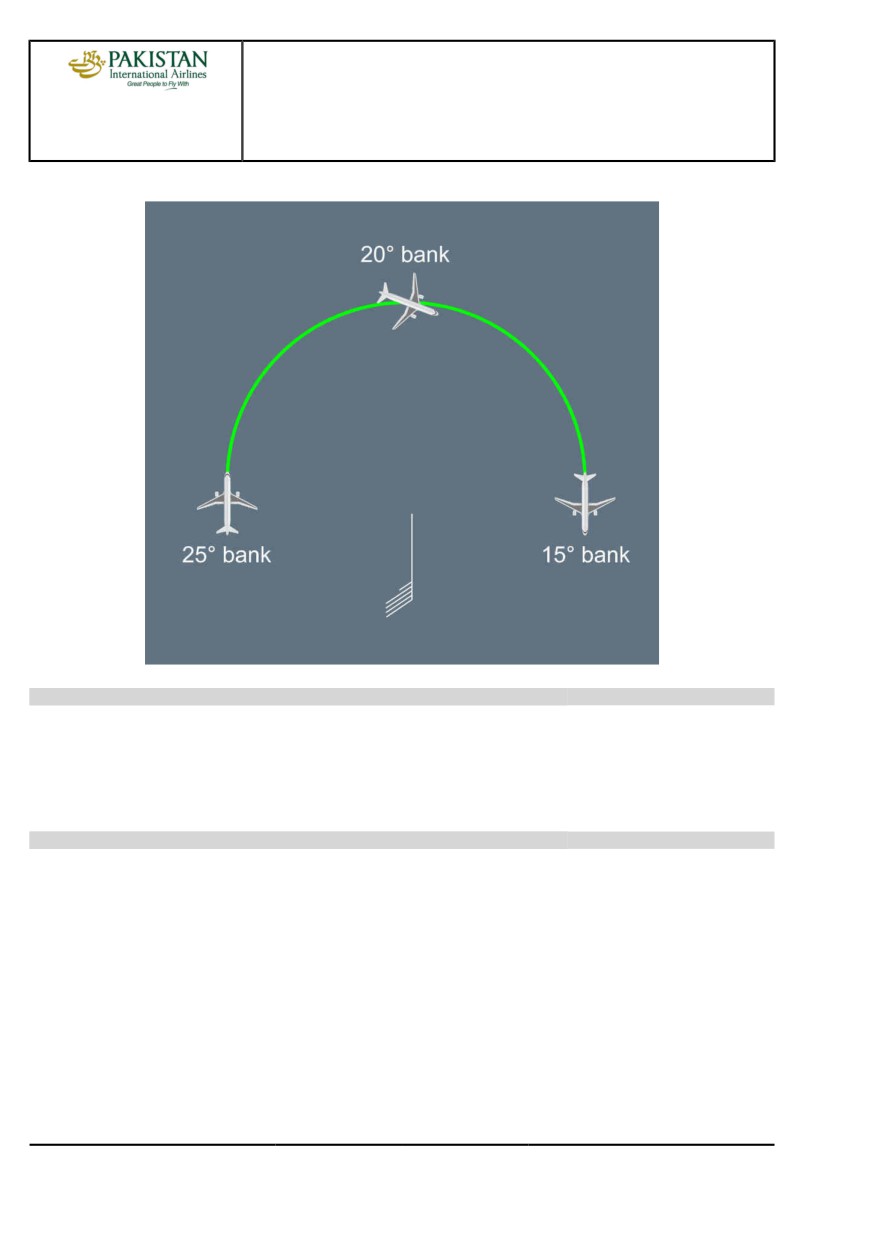
When flying an RF leg, the FMS adapts the bank angle to fly the arc. The bank angle is a function
of the ground speed.
If the ground speed is excessive, the requested bank angle to follow the trajectory can be higher
than the maximum bank angle permitted by the Flight Guidance (FG) system (30 ° in normal
conditions). In this case the aircraft will overshoot the trajectory.
Therefore, to fly RF legs, the flight crew should be aware of the following operational
recommendations:
- Respect speed constraints on RF legs. Use managed speed.
- Pay attention to strong winds, particularly to high tailwinds that increase the ground speed
- Monitor the bank angle, particularly when near 30 ° (i.e. the maximum bank angle with the
AP/FD engaged).
PIA A318/A319/A320/A321 FLEET
PR-NP-SP-30 P 1/4
FCTM
A →
23 NOV 21
PROCEDURES
NORMAL PROCEDURES
A318/A319/A320/A321
FLIGHT CREW
SUPPLEMENTARY PROCEDURES - RADIUS TO FIX (RF) LEGS
TECHNIQUES MANUAL
Variation of the bank angle due to the wind in RF legs
Ident.: PR-NP-SP-30-A-00019332.0001001 / 22 MAR 17
GO-AROUND DURING RF LEG
When the flight crew selects TOGA thrust, particularly in a turn, they must check that the NAV
mode immediately engages in order to stay on the desired track.
If the NAV mode does not automatically engage, the flight crew must engage it manually.
Ident.: PR-NP-SP-30-A-00019333.0001001 / 30 AUG 18
USE OF THE DIR TO FUNCTION
The use of the DIR TO function below MSA is not recommended. This is because the flight plan
leg that results is not part of the approach procedure.
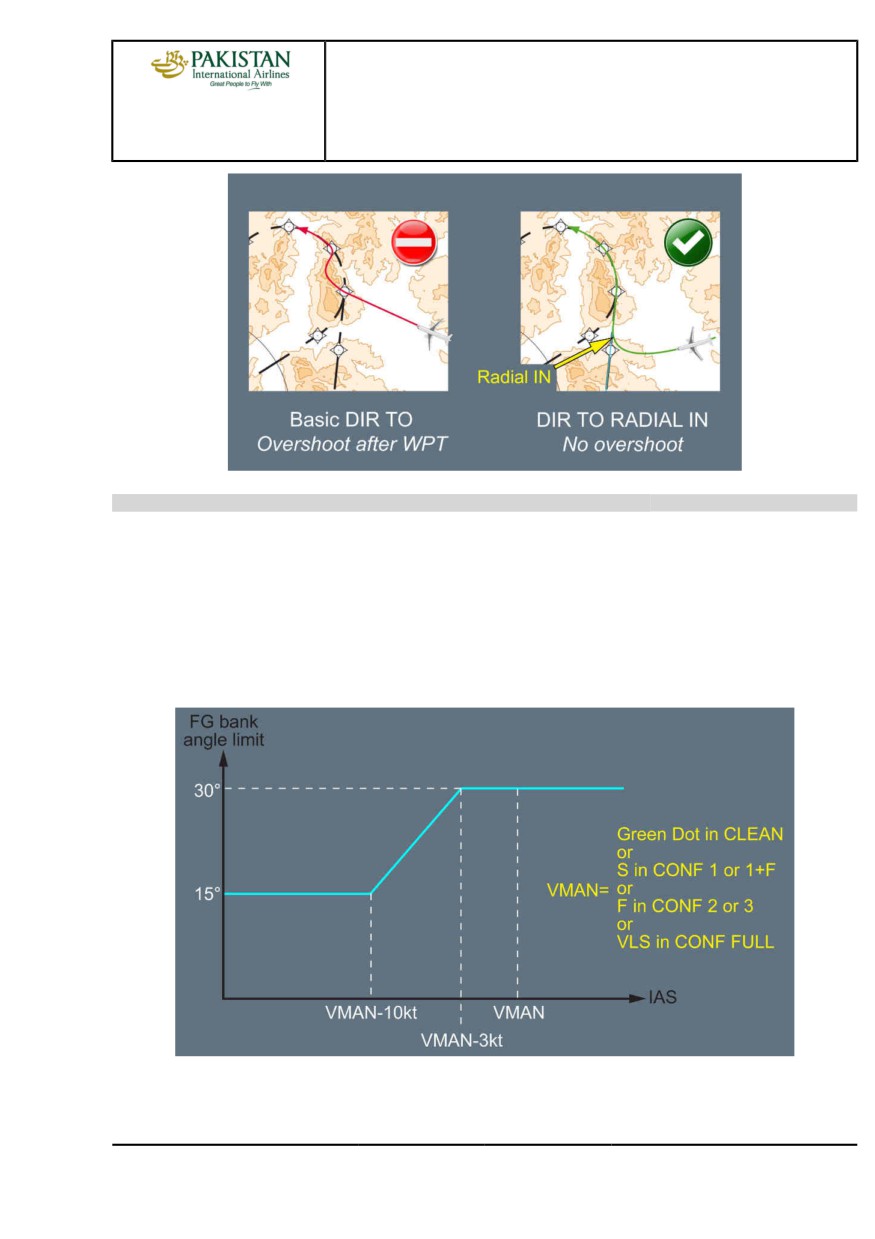
The flight crew must use the RADIAL IN function when performing a DIR TO towards a waypoint
followed by a RF leg. This enables the alignment of the aircraft with the subsequent RNP F-PLN
track.
The flight crew must not descend below the MSA until the aircraft is established on the F-PLN leg.
PIA A318/A319/A320/A321 FLEET
PR-NP-SP-30 P 2/4
FCTM
← A →
23 NOV 21
PROCEDURES
NORMAL PROCEDURES
A318/A319/A320/A321
FLIGHT CREW
SUPPLEMENTARY PROCEDURES - RADIUS TO FIX (RF) LEGS
TECHNIQUES MANUAL
Ident.: PR-NP-SP-30-A-00019334.0001001 / 03 NOV 21
ENGINE-OUT CONSIDERATIONS
The bank angle limit of the FG with one engine inoperative is 30 ° when NAV, APP NAV, or FINAL
APP mode is engaged.
With one engine inoperative, the bank angle limit of the FG may be lower than 30 ° when the IAS
is lower than maneuvering speeds (VMAN). The VMAN is the F speed, S speed, or Green Dot
speed, depending on the flap configuration. The bank angle limit of the FG depends on the IAS as
illustrated on the following graph:
During go-around or departure with one engine inoperative, the IAS may be lower than the current
maneuvering speed, which will limit the bank angle.
PIA A318/A319/A320/A321 FLEET
PR-NP-SP-30 P 3/4
FCTM
← A →
23 NOV 21
PROCEDURES
NORMAL PROCEDURES
A318/A319/A320/A321
FLIGHT CREW
SUPPLEMENTARY PROCEDURES - RADIUS TO FIX (RF) LEGS
TECHNIQUES MANUAL
The flight crew must be aware that during acceleration, flaps retraction at the usual speeds (F
speed, then S speed) may affect the turn radius and a compatibility with turn requirements for a
procedure being flown.
PIA A318/A319/A320/A321 FLEET
PR-NP-SP-30 P 4/4
FCTM
← A
23 NOV 21
PROCEDURES
NORMAL PROCEDURES
A318/A319/A320/A321
FLIGHT CREW
SUPPLEMENTARY PROCEDURES - TOUCH AND GO
TECHNIQUES MANUAL
TOUCH AND GO
Applicable to: ALL
Ident.: PR-NP-SP-40-A-00020989.0001001 / 09 NOV 21
GENERAL
The primary objective of a touch and go is to practice approach and landing. Touch and go are not
intended for neither landing roll nor takeoff procedure training.
Except for the items detailed hereafter, the flight crew must apply the SOPs and standard
tasksharing when they perform a touch and go. On repetitive patterns without significant change,
the instructor can decide to adapt the Acceleration Flow Pattern and Approach checklist.
The flight crew should pay attention to the following remarks when they perform a touch and go:
- The decision speed (V1) does not apply to touch and go. The PFD does not display V1 during
the roll phase of a touch and go. Therefore, the flight crew should be go-minded.
- If the instructor wants to abandon the touch and go, the instructor calls “STOP - I HAVE
CONTROL". Simultaneously the instructor takes control and stops the aircraft, with the use of
maximum braking and reverse. When the aircraft stops, the instructor calls for any applicable
ECAM actions. The decision to discontinue a touch and go after the application of TOGA must
only be taken if the instructor is sure that the aircraft cannot safely fly.
- If the trainee selects reverse thrust, the flight crew must perform a full-stop landing.
If any failure occurs during the touch and go training, the flight crew must first perform the
ECAM/QRH/OEB actions. Then, during the decision process, the instructor should consider MEL
for assessment of the training continuation. For the determination of the MEL repair interval,
consider each "touch and go" or "stop and go" as one flight.
Ident.: PR-NP-SP-40-A-00020990.0001001 / 20 MAR 17
DURING FINAL APPROACH
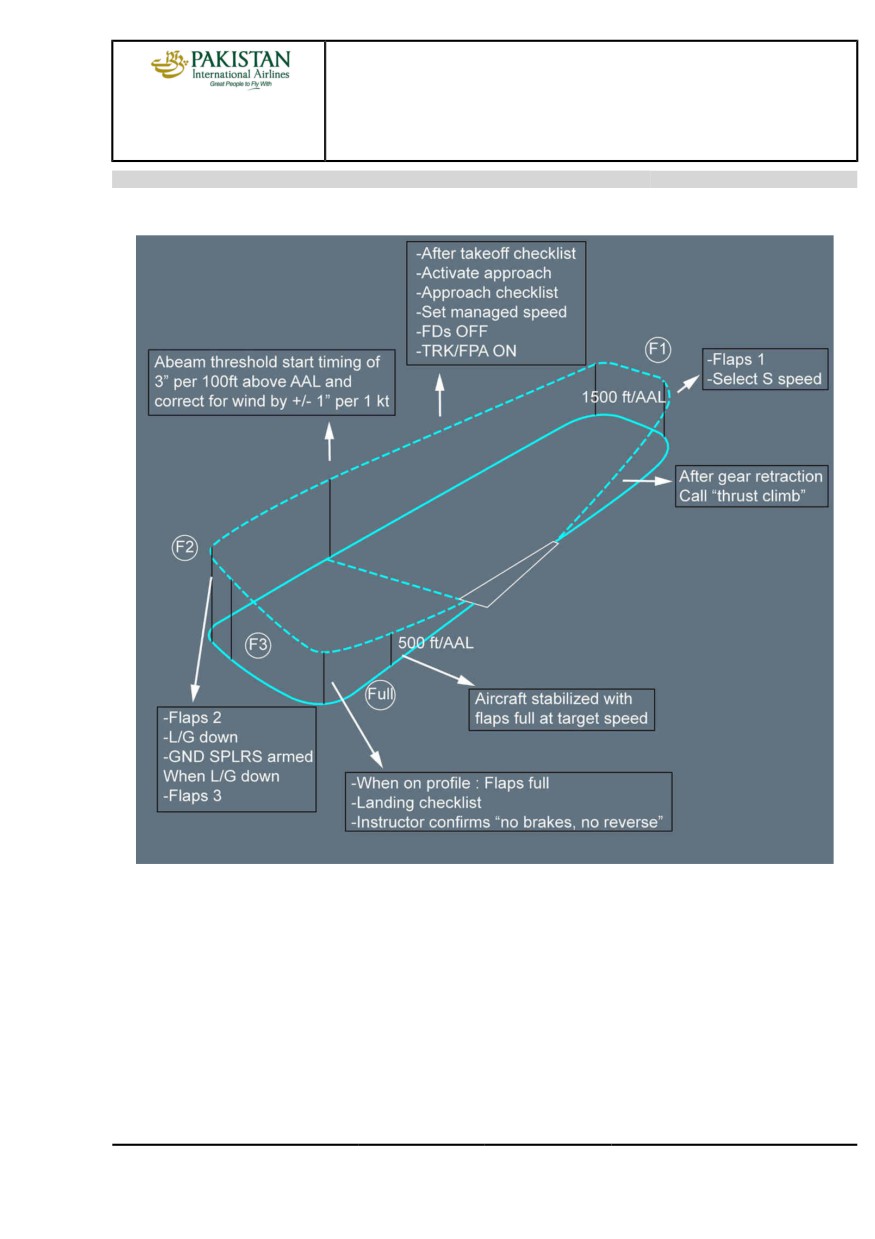
Before each touch and go, the instructor confirms with the trainee that both of the following apply:
- Reverse thrust will not be selected
- Brakes (auto or manual) will not be used.
PIA A318/A319/A320/A321 FLEET
PR-NP-SP-40 P 1/4
FCTM
A →
23 NOV 21
PROCEDURES
NORMAL PROCEDURES
A318/A319/A320/A321
FLIGHT CREW
SUPPLEMENTARY PROCEDURES - TOUCH AND GO
TECHNIQUES MANUAL
Ident.: PR-NP-SP-40-A-00020991.0001001 / 28 MAY 20
DURING TOUCH AND GO
Trainee
Instructor
- Perform usual flare and landing technique
- Maintain the runway centerline.
-
Disarm the ground spoilers (1)
-
Order “STAND UP".
Move forward the thrust levers approximately 5 cm (2 in), in
order to prevent the reduction of engines to ground idle.
-
Set flaps configuration for takeoff (2)
-
If necessary, reset the rudder trim
-
Monitor the pitch trim movement towards the green band
-
Place one hand behind the thrust levers to ensure that
they are advanced to approximately 5 cm (2 in)
-
Order “GO" when the aircraft is in the correct
configuration (pitch trim, rudder trim and flaps).
Set TOGA thrust.
-
Check engine parameters and announce “THRUST SET"
-
Order “ROTATE" at VAPP
Remove the hand from the thrust levers.
-
Maintain the hand behind the thrust levers to ensure that
the trainee does not perform an inadvertent reduction of
thrust or unwanted stop.
Rotate the aircraft and target takeoff pitch attitude, then
follow SRS.
(1)
At nosewheel touchdown, the instructor pushes on the SPEED BRAKE lever to disarm the ground
spoilers. The objective is to initiate the immediate retraction of the ground spoilers, and not to wait
for their automatic retraction while the thrust levers are advanced.
Carefully disarm the ground spoilers, so that the SPEED BRAKE lever is in the RET position. If the
SPEED BRAKE lever is not in the fully-retracted position, the SPEED BRAKE lever will possibly
command speed brakes extension. When thrust levers are set above CLB detent, the CONFIG
SPEED BRAKES NOT RETRACTED alert triggers and the ground spoilers automatically retract.
(2)
Flap settings are as follows:
- Landing configuration: CONF FULL
- Takeoff configuration: CONF 2.
PIA A318/A319/A320/A321 FLEET
PR-NP-SP-40 P 2/4
FCTM
← A →
23 NOV 21
PROCEDURES
NORMAL PROCEDURES
A318/A319/A320/A321
FLIGHT CREW
SUPPLEMENTARY PROCEDURES - TOUCH AND GO
TECHNIQUES MANUAL
Ident.: PR-NP-SP-40-A-00020992.0001001 / 20 MAR 17
VISUAL PATTERN
PIA A318/A319/A320/A321 FLEET
PR-NP-SP-40 P 3/4
FCTM
← A
23 NOV 21
PROCEDURES
NORMAL PROCEDURES
A318/A319/A320/A321
FLIGHT CREW
SUPPLEMENTARY PROCEDURES - TOUCH AND GO
TECHNIQUES MANUAL
Intentionally left blank
PIA A318/A319/A320/A321 FLEET
PR-NP-SP-40 P 4/4
FCTM
23 NOV 21
PROCEDURES
NORMAL PROCEDURES
A318/A319/A320/A321
FLIGHT CREW
SUPPLEMENTARY PROCEDURES - STOP AND GO
TECHNIQUES MANUAL
STOP AND GO
Applicable to: ALL
Ident.: PR-NP-SP-50-A-00020993.0001001 / 20 MAR 17
GENERAL
The primary objective of a stop and go is to practice:
- Approach and landing
- Roll out and runway vacation
- Taxi and takeoff.
Except for the items detailed hereafter, the flight crew must apply the SOPs and standard
tasksharing when they perform a stop and go.
The flight crew should taxi the aircraft to the runway threshold for the next takeoff.
Ident.: PR-NP-SP-50-A-00020994.0001001 / 20 MAR 17
WHEN THE RUNWAY IS VACATED
PF
PM
Disarm ground spoilers.
Set the FLAPS lever to 0.
Ident.: PR-NP-SP-50-A-00020995.0001001 / 09 NOV 21
BEFORE NEXT TAKEOFF
Before the next takeoff, the flight crew should perform all of the following actions:
- Consider MEL (if applicable). For the determination of the MEL repair interval, consider each
“touch and go” or “stop and go” as one flight.
- Set FMS:
• Set INIT data
• Set ZFW & ZFW CG data
• Set F-PLN data
• Set TAKEOFF data.
- Set FCU and reset FDs
- Set Takeoff configuration:
• Arm Ground Spoilers
• Set Flaps
• Set / check Rudder and Pitch Trims
• Set MAX Autobrake mode.
- Perform T.O CONFIG test
- Perform After Start checklist
- Request ATC clearance
PIA A318/A319/A320/A321 FLEET
PR-NP-SP-50 P 1/2
FCTM
A →
23 NOV 21
PROCEDURES
NORMAL PROCEDURES
A318/A319/A320/A321
FLIGHT CREW
SUPPLEMENTARY PROCEDURES - STOP AND GO
TECHNIQUES MANUAL
- Perform Takeoff briefing
- Perform Taxi checklist.
Ident.: PR-NP-SP-50-A-00020996.0001001 / 20 MAR 17
BEFORE LINE UP
PF
PM
Check brake temperature.
Check brake temperature (1).
(1)
In order to limit the brake temperature, the flight crew should select the appropriate exit after
landing. If performance permits, the instructor can decide to keep the landing gear down after
takeoff for brake cooling.
PIA A318/A319/A320/A321 FLEET
PR-NP-SP-50 P 2/2
FCTM
← A
23 NOV 21
PROCEDURES
ABNORMAL AND EMERGENCY PROCEDURES
A318/A319/A320/A321
FLIGHT CREW
GENERAL
TECHNIQUES MANUAL
INTRODUCTION
Ident.: PR-AEP-GEN-00016331.0001001 / 20 MAR 17
Applicable to: ALL
The Abnormal and Emergency Procedures chapter highlights techniques that will be used in
some abnormal and emergency operations. Some of the procedures discussed in this chapter
are the result of double or triple failures. Whilst it is very unlikely that any of these failures will
be encountered, it is useful to have a background understanding of the effect that they have on
the handling and management of the aircraft. In all cases, the ECAM/QRH should be handled as
described in FCTM (Refer to AOP-30-30 General).
PIA A318/A319/A320/A321 FLEET
PR-AEP-GEN P 1/2
FCTM
A
22 MAR 17
PROCEDURES
ABNORMAL AND EMERGENCY PROCEDURES
A318/A319/A320/A321
FLIGHT CREW
GENERAL
TECHNIQUES MANUAL
Intentionally left blank
PIA A318/A319/A320/A321 FLEET
PR-AEP-GEN P 2/2
FCTM
22 MAR 17
PROCEDURES
ABNORMAL AND EMERGENCY PROCEDURES
A318/A319/A320/A321
FLIGHT CREW
AUTO FLIGHT
TECHNIQUES MANUAL
FMGC FAILURE
Ident.: PR-AEP-AUTOFLT-00019223.0001001 / 28 MAY 20
Applicable to: ALL
SINGLE FMGC FAILURE
Should a single FMGC failure occur, the AP, if engaged on the affected side, will disconnect.
The flight crew can recover the AP by selecting the other AP. The A/THR remains operative.
Furthermore, flight plan information on the affected ND may be recovered by using the same
range as the opposite ND. The flight crew should consider a FMGC reset as detailed in QRH.
DUAL FMGC FAILURE
Should a dual FMGC failure occur, the AP/FD and A/THR will disconnect. The flight crew should
try to recover both AP and A/THR by selecting them back ON (The AP and A/THR can be
recovered if the FG parts of the FMGC are still available).
If both AP and A/THR cannot be recovered, the thrust levers will have to be moved to recover
manual thrust. The flight crew should switch off the FDs and select TRK/FPA to allow the blue
track index and the bird to be displayed. The RMPs can be used to tune the NAVAIDs.
The flight crew should refer to the QRH for system reset considerations and then Refer to
FCOM/DSC-22_20-90-10 Automatic FMGC Reset and Resynchronization - FM Reset to reload
both FMGCs as required.
If both FMGCs cannot be recovered and if the NAV B/UP function is installed, the MCDU
features a NAV B/UP function which provides simplified IRS based navigation (Refer to
FCOM/DSC-22_20-60-130 General).
Note:
For aircraft equipped with FG standard from PI17 or PC20 (Refer to
FCOM/DSC-22_10-10 FMGC Standard), in case of dual FMS failure with the FG part of
the FMGC still available, the AP remains engaged and reverts to HDG-V/S or TRK-FPA.
PIA A318/A319/A320/A321 FLEET
PR-AEP-AUTOFLT P 1/2
FCTM
A
02 SEP 20
PROCEDURES
ABNORMAL AND EMERGENCY PROCEDURES
A318/A319/A320/A321
FLIGHT CREW
AUTO FLIGHT
TECHNIQUES MANUAL
Intentionally left blank
PIA A318/A319/A320/A321 FLEET
PR-AEP-AUTOFLT P 2/2
FCTM
02 SEP 20
PROCEDURES
ABNORMAL AND EMERGENCY PROCEDURES
A318/A319/A320/A321
FLIGHT CREW
BRAKES
TECHNIQUES MANUAL
LOSS OF BRAKING
Ident.: PR-AEP-BRK-00019299.0002001 / 05 JUN 18
Criteria: P4576, SA
1 Applicable to: MSN 02719-07792
GENERAL
If the flight crew does not perceive deceleration when required, the flight crew will apply the LOSS
OF BRAKING procedure from memory because of the urgency of the situation.
PROCEDURE
USE OF REVERSE THRUST
- If needed, full reverse thrust may be used until coming to a complete stop. Below 70 kt, when
the flight crew considers that the aircraft can stop on the runway, the flight crew should set
idle reverse thrust
- Unless required due to an emergency, it is recommended to avoid the use of high level of
reverse thrust at low speed, in order to avoid engine stall and excessive EGT.
A/SKID & N/W STRG OFF
In order to successfully revert to alternate braking, it is important to sequence the actions in
three steps. The PF should:
1. Release the brake pedals
2. Request the PM to set the A/SKID & N/W STRG sw to OFF
3. Press the brake pedals, only after the PM has set the A/SKID & N/W STRG sw to OFF. The
ABCU automatically limits the brake pressure to 1 000 PSI. Monitor the brake pressure on the
BRAKES PRESS indicator.
PARKING BRAKE
- If still no braking, use short successive parking brake applications to stop the aircraft
- Brake onset asymmetry may be felt at each parking brake application
- If possible, delay the use of parking brake until low speed, to reduce the risk of tire burst and
lateral control difficulties.
LOSS OF BRAKING
Ident.: PR-AEP-BRK-00019299.0001001 / 05 JUN 18
Criteria: SA
Applicable to: MSN 02155-02274
GENERAL
If the flight crew does not perceive deceleration when required, the flight crew will apply the LOSS
OF BRAKING procedure from memory because of the urgency of the situation.
PIA A318/A319/A320/A321 FLEET
PR-AEP-BRK P 1/2
FCTM
A →
10 AUG 21
PROCEDURES
ABNORMAL AND EMERGENCY PROCEDURES
A318/A319/A320/A321
FLIGHT CREW
BRAKES
TECHNIQUES MANUAL
PROCEDURE
USE OF REVERSE THRUST
- If needed, full reverse thrust may be used until coming to a complete stop. Below 70 kt, when
the flight crew considers that the aircraft can stop on the runway, the flight crew should set
idle reverse thrust
- Unless required due to an emergency, it is recommended to avoid the use of high level of
reverse thrust at low speed, in order to avoid engine stall and excessive EGT.
A/SKID & N/W STRG OFF
In order to successfully revert to alternate braking, it is important to sequence the actions in
three steps. The PF should:
1. Release the brake pedals
2. Request the PM to set the A/SKID & N/W STRG sw to OFF
3. Press the brake pedals, only after the PM has set the A/SKID & N/W STRG sw to OFF.
Modulate brake pedal pressure to maximum 1 000 PSI. Monitor the brake pressure on the
BRAKES PRESS indicator.
PARKING BRAKE
- If still no braking, use short successive parking brake applications to stop the aircraft
- Brake onset asymmetry may be felt at each parking brake application
- If possible, delay the use of parking brake until low speed, to reduce the risk of tire burst and
lateral control difficulties.
PIA A318/A319/A320/A321 FLEET
PR-AEP-BRK P 2/2
FCTM
← A
10 AUG 21