NATO ANTI–PIRACY MULTINATIONAL DOCTRINE (2008) - page 5
MTP 1(D), Vol. I
Table 8-1. Surface Action Checkoff List (Cont.)
PHASE 3 — LONG-RANGE ENGAGEMENT
PHASE 3 — LONG-RANGE ENGAGEMENT
(CONT.)
(CONT.)
(f) Selection of LR SSM firing units.
(2) If cooperating with surface attack aircraft, es-
tablish “time windows” for arrival of SSM. TOT for
1. Available missiles and their seeker
aircraft and missiles should not coincide; however,
characteristics.
aircraft and missiles attacks should be coordi-
nated.
2. Accuracy of required target data.
(3) After damage assessment, reattack if results
do not meet OTC’s Damage Criteria.
3. Spacing of other enemy units in relation
to intended line of SSM fire.
d. POST-COMBAT.
4. Direction of attack.
OTC, ASUWC, or SAGC orders action to cease and
issues post-combat instructions (See Phase 4, para-
(g) Safety of friendly forces, including MSFZ
graph d. below).
and MSTZ.
PHASE 4 — SHORT-RANGE ENGAGEMENT
(7) Order coordination and employment of:
a. INITIATION. Unless tasks have already been as-
(a) LR/SSM, including weapon release crite-
signed, the OTC will:
ria and fire distribution.
(b) Jammers.
(1) If appropriate, detach a SAG and consider re-
dispositions of remaining units.
(c) Chaff-firing sectors and patterns for con-
fustion and/or distraction.
(2) Consider main body evasion.
(3) Order Standard Action Plans, and if not already
(8) Intentions, to include plans of approach and
specified:
post-combat rendezvous, must be passed early
since at a later stage communications are likely to
(a) Targets to be engaged.
be saturated and/or jammed.
(b) Communications/links to be used.
(9) Action in case of damage.
(4) Verify position of own forces to avoid engage-
ment of friendly units.
(a) Nominate standby SAGC.
(5) Consider shifting remainder of force to alter-
(b) Action for own damaged ships.
nate SAG net.
b. APPROACH.
(10) Enemy contact report — SITREP to OTC/
ASUWC.
(1) Actions covering formation, disposition, com-
munications, assumption of duties, reassessment
c.
COMBAT.
of threat and enemy’s intentions, and EW policy as
in preceding Phase 3, paragraphs b.(1) to (5).
(1) OTH action is conducted according to the
Standard Plan ordered, or as specified otherwise.
(2) Employment of allocated air submarine, and
surface assets.
8-5
ORIGINAL
MTP 1(D), Vol. I
Table 8-1. Surface Action Checkoff List (Cont.)
PHASE 4 — SHORT-RANGE ENGAGEMENT
PHASE 4 — SHORT-RANGE ENGAGEMENT
(CONT.)
(CONT.)
(4) Action in case of damage.
(a) Assessment of target information.
(a) Standby SAGC take command.
1. Single passive bearing.
(b) Action for own damaged ships.
2. Triangulation.
(5) Missile/gunnery advantage/disadvantage.
3. Deploying a TRU/forward observer.
(a) Maintain missile/gunner advantage.
4. Other sources (e.g., radar).
(b) Carry out action to assume advantage if
not presently held.
(b) Updating plots, identification/recogniton,
and selection of target.
NOT RELEASABLE
(c) Selection of TRU/forward observer.
1. NOT RELEASABLE
(d) Selection of firing units to include avail-
2. NOT RELEASABLE
able SR SSM/SASS.
(6) NOT RELEASABLE
(3)
Order employment of:
(a) NOT RELEASABLE
(a) SR SSM/SASS — including weapon re-
lease criteria and fire distribution.
(b) NOT RELEASABLE
(b) Guns.
(7) Enemy contact report — SITREP to OTC.
1. Methods of verification and control of
(8) Following the OTC’s policy, order type and
fall of shot.
number of SR SSM/SASS to be fired. A “cocktail
mix” will make the enemy’s ASMD difficult.
2. Control of opening of weapon area.
(9) Consider use of surface- or
3. Control of opening fire.
submarine-launched torpedoes and long-range
ASW weapons.
4. Pre-action calibration (PAC) — range
from enemy to conduct — ESM aspects.
c.
COMBAT.
5. Ammunition type.
(1) Open fire order
— coordination of SR
SSM/SASS and guns.
NOT RELEASABLE.
6. Wind finding.
(2) NOT RELEASABLE.
7. Illumination.
(3) Reassess gunnery advantage/disadvantage;
8. Fire distribution.
change tactics accordingly.
(c) Jammers.
(d) Chaff-firing sectors and patterns for con-
fusion and/or distraction.
8-6
ORIGINAL
MTP 1(D), Vol. I
Table 8-1. Surface Action Checkoff List (Cont.)
PHASE 4 — SHORT-RANGE ENGAGEMENT
PHASE 4 — SHORT-RANGE ENGAGEMENT
(CONT.)
(CONT.)
(4) Weapon arcs — adjust SAG formation to a
d. POST-COMBAT.
course to maximize SAG weapon effectiveness.
(1) Individual ships report to SAGC.
(5) Fire distribution
— consider redistribution.
(a) Damage and assistance required.
(6) Ammunition expenditure — use burst fire ini-
tially; continue burst fire until good hitting rate
(b) Ammunition reports.
achieved, then use continuous fire.
NOT RELEASABLE.
(7) Jamming/chaff employment — continue un-
(c) Fuel.
less interference is caused to own gun/missile
NOT RELEASABLE.
control radar.
(2) SAGC SITREP to OTC.
(8) NOT RELEASABLE.
(3) Update position of post-combat rendezvous (if
(9) Damage reports — only if fighting capability is
required).
reduced.
(4) Update OTC Rendezvous/PIM.
(10) Fall of shot reports
— only if situation is
confused.
(5) Order formation, course, and speed. Consider
maximum sonar speed if significant subsurface
(11) Reassess target priorities.
threat exists.
NOT RELEASABLE
(6) Survivors
— use helicopter assistance.
(7) Further action
— re-engage, shadow, or
NOT RELEASABLE
withdraw.
NOT RELEASABLE
NOT RELEASABLE
NOT RELEASABLE
NOT RELEASABLE
NOT RELEASABLE
8-7
ORIGINAL
MTP 1(D), Vol. I
(e) Decision on the use of submarines for detection, identification, and possible attack utiliz-
ing either torpedoes or ASSMs.
(f) Decision on the use of air attack units and/or employment of ASSMs to provide defense in
depth.
(g) Obtaining accurate target data for possible engagement.
(3) Phase 3 — Long Range Engagement.
(a) Consideration of detaching air assets or submarines for long-range attacks.
(b) Detachment as necessary of long-range ASSM units in SAGs with supporting submarines
as appropriate or single units for long-range engagements.
(c) Conducting long-range attacks.
(d) Post-combat.
(4) Phase 4 — Short-Range Engagement.
(a) Detachment of SAGs with short-range missiles, guns, and torpedoes.
(b) Conducting attacks.
(c) Post-combat.
8106
— 8109 SPARE
8110
NOT RELEASABLE
8111
— 8119 SPARE
8-8
ORIGINAL
MTP 1(D), Vol. I
SECTION II — ANTISURFACE WARFARE BY SURFACE UNITS
8200 SURFACE ACTION CHECKOFF LIST
a. Checkoff List of Surface Action. Table 8-1 contains a checkoff list of points to be consid-
ered during the four phases of surface action. Not all of the points in the table will apply to every action, but
they should be considered and disregarded if not appropriate.
b. Enemy SSMs. Enemy SSMs may be fired from over the horizon: that is, beyond the launching
platform’s active sensor ranges and at shorter or horizon range. With the horizon range threat, appropriate
factors in Table 8-1 must be considered early and plans quickly promulgated. Indeed, under these circum-
stances, phases 2 and 4 may be compressed to run concurrently. Because of the high level of expected EW
activity, success at horizon range depends on careful planning, thorough briefing, and minimal reliance on
radio communications.
8201 SURFACE ACTION GROUP (SAG)
a. SAG Commander. On formation of a SAG, the SAG commander is responsible for:
(1) The organization of the SAG and its tactical employment.
(2) The tactical control of aircraft assigned.
(3) EW coordination.
(4) Local AAW coordination.
(5) Keeping the OTC informed of the progress of the action.
b. Composition. SAG units should be compatible in weapons, sensors, speeds, and maneuver-
ability; however, if a capability such as a complete EW suite is available only in an incompatible unit, that
unit may have to be in the SAG despite any other shortcomings.
NOT RELEASABLE
c. Communications. When the formation of the SAG is preplanned and adequate warning is
given, there will be no difficulty in activating a prepared communication plan. However, this may not be
the case when a SAG is formed in an emergency to counter a sudden threat. In this case, the SAG may em-
ploy any already established control net as ordered by the OTC. Where appropriate, the remainder of the
force should switch to alternate circuits.
d. Electronic Warfare.
(1) On the formation of the SAG, control of EW in the SAG is automatically assumed by the SAG
commander. The SAG commander will reassign ESM tasking based on threat intelligence and retask
ECM assets in order to enhance warning and defense possibilities with minimum mutual interference.
(2) Retasking of the SAGs EW equipment to concentrate on the surface threat against which the
SAG has been detached requires the EWC to reconsider overall force EW tasking. Threats no longer
covered by SAG units may have to be reassigned to ensure complete threat coverage within the force.
e. Antiair Warfare. As soon as possible after the SAG separates from the main body, the SAG
commander should become his own local AAW coordinator, controlling his own friendly aircraft if they
8-9
CHANGE 4
MTP 1(D), Vol. I
are available. This will add to the effectiveness of his forces, better ensure own aircraft safety, and mini-
mize the confusion that would result in divided aircraft control.
f. Antisurface Ship Missiles (ASSMs).
(1) ASSM systems are divided into three categories.
(a) Short range: Up to 20 miles (to-the-horizon ranges).
(b) Medium range: From 20 to 75 miles.
(C) Long range: More than 75 miles.
The OTC or delegated authority should, if he has any choice, allocate units to the SAG with ASSM
systems of sufficiently superior range and lethality to ensure success without needlessly wasting his
most powerful assets.
(2) The conflicting use of SAM systems for AAW on the one hand and for SAM in the surface-
to-surface (SASS) mode on the other must be carefully weighed by the OTC. Systems with more than
one tracker can maintain both, although with reduced capabilities. However, most medium- and
long-range SAM systems have sufficient surface-to-surface capability to favorably influence the out-
come of the surface action.
8202 SURFACE ACTION GROUP POLICY
In defense of the main body, the primary concern must be to remain between the enemy and the main
body. If the SAG has been detached to destroy, neutralize, or repel missile carrier(s), the SAG should do so
as far as possible from the main body or convoy. In formulating his policy, the SAG commander must con-
sider the following factors:
a. Relative capabilities of own and enemy forces.
b. Likely tactics of enemy forces.
c. The use of ECM. The SAG commander should make use of the ECM capability of ships of the
SAG to disrupt enemy fire control, surface warning sensors, missile systems, and communications.
d. The use of deception. When approaching the enemy, the SAG commander should consider the
use of physical and electronic measures designed to conceal the size and formation of the SAG. The elec-
tronic emission pattern of the SAG must conform with the deception plan in use.
e. The formation. It is important that deployment into the chosen surface-action formation should
have been completed before action commences. The surface-action formation must allow ships to engage
with all their weapons, and to take avoiding action without endangering adjacent ships. Unnecessarily
large intervals between ships give an enemy with superior speed the opportunity to concentrate on one part
of the group at a time.
f. Pre-action fire control settings. It is vital that these are obtained as early in the action as possible.
Thus, initial settings on fire control equipment must be accurate. However, fire control is vulnerable to
jamming and therefore calibration involving fire control radar transmissions may be inadvisable and
should only be carried out on instruction from the SAG commander.
g. Fire distribution.
8-10
CHANGE 4
MTP 1(D), Vol. I
(1) Normal fire distribution. Normal fire distribution entails the engagement of opposite numbers
of the enemy force and should as far as possible leave no enemy ship unengaged. If concentration of fire
is possible, major enemy ships should receive priority. Normal fire distribution is automatically in
force.
(2) Targets to individual units. The SAG commander may make a fire distribution signal allotting
targets to individual units at any time before or during an action. Special signal groups are available for
this purpose.
h. Number of missiles to be fired in ASSM salvos.
8203 STANDARD SURFACE ACTION PLANS
Three standard surface action plans exist.
NOT RELEASABLE
a. Plan GREYHOUND. Plan GREYHOUND is the plan for SSM attack by ships using a target
reporting unit (TRU) and is best suited for over-the-horizon (OTH) attacks.
b. Plan GROUSE. Plan GROUSE is the plan for SAGs, which may include helicopters, in a coor-
dinated attack against enemy surface units other than missile-armed fast patrol boats. This plan is best
suited for engagements within horizon range.
c. Plan SNIPE. Plan SNIPE is the plan for SAGs against missile-armed fast patrol boats.
8204 USE OF PASSIVE ACOUSTIC MEANS IN ANTISURFACE WARFARE
Towed array sonar (TAS) is capable of passively detecting surface as well as subsurface contacts at
extended ranges. In an area of high surface threat, the OTC may consider assigning a TAS ship to the
ASUW role in addition to, or in lieu of the ASW role. In either case, the resultant effect on the forces ASW
posture must be considered. Hull-mounted sonar, VDS and anti-torpedo detection systems can be em-
ployed to detect and identify any surface ship sonar transmission. These methods can be effective.
8205 PICKETS IN ANTISURFACE WARFARE
Pickets are stationed primarily to extend the surveillance area, and in littoral areas especially to
cover entrances and choke points. A picket-chain consisting of several units might be ordered to cover
large areas. The ASUW picket may be a surface unit, a submarine, or an aircraft.
NOT RELEASABLE
8206 — 8209 SPARE
8-11
CHANGE 4
MTP 1(D), Vol. I
SECTION III — ANTISURFACE WARFARE WITH AIR COOPERATION
8300 GENERAL
Air assets in support of antisurface warfare operations may be used for the detection of the enemy,
for locating, identification/recognition, and reporting in order to contribute to the surface picture and for
target data reporting and transmission. Independent and coordinated attacks on the enemy’s surface units
may be included. The type of support to be provided by air assets depends on operational requirements and
on the capabilities of the air assets. Air assets may also be used to distract the enemy’s attention from own
forces, and to disrupt the enemy’s command and control.
8301 ANTISURFACE OPERATIONS SUPPORT BY FIXED-WING AIRCRAFT
a. The aim of antisurface operations by fixed-wing aircraft is to ensure the detection and
engagement of enemy surface forces in order to deny their effective employment. Fixed-wing aircraft may
be employed in:
(1) Attacks on enemy surface forces.
(2) Scouting, using any sensor to acquire tactical information.
b. Armed reconnaissance, a combination of both types, is possible, depending on the tactical situa-
tion and available air assets.
NOT RELEASABLE
8302 ANTISURFACE OPERATIONS BY HELICOPTERS
a. The aim of antisurface operations by helicopters is to:
(1) Assist forces in the detection, localization, identification, recognition, and targeting of hostile
surface forces.
(2) Attack lightly defended enemy forces, especially fast patrol boats equipped with SSMs.
b. Helicopters will normally be integrated with a surface force that may or may not have other air sup-
port. They may be land based or shipborne. When two or more helicopters cooperate against a particular surface
threat, they form a HAG. The best-fitted helicopter should become HAG commander (CONTROLLER).
c. Helicopters in antisurface operations may be employed in reconnaissance and attack and may
carry out controlled operations or act independently, as ordered by the OTC, or the unit that the OTC has
assigned duty as HCU.
(1) Controlled Operations. When the helicopter has two-way communications with and is
within the radar range of the control unit, the helicopter is to operate under positive or advisory control.
(2) Independent Operations. When the helicopter is beyond radar range and/or communica-
tion range of the HCU, the helicopter is fully responsible for safety, navigation, and the accomplishment
of its task.
8303 COOPERATION BETWEEN FIXED-WING AIRCRAFT AND HELICOPTERS
If helicopters and fixed-wing aircraft cooperate in engaging a surface target, the following rules will
apply. As the supporting aircraft approaches the target area and communications are established, the
8-12
CHANGE 4
MTP 1(D), Vol. I
helicopter will provide all available target information to the supporting aircraft. If it is equipped to do so,
the helicopter may be requested to illuminate the target. Special precautions should be observed by attack
aircraft, particularly during periods of reduced visibility and at night, to ensure that the helicopter is safely
clear of dropped illumination devices, the attack flightpath, and weapon effects.
8304 EMPLOYMENT OF A HELICOPTER ACTION GROUP (HAG)
a. Alert State. The limited endurance of missile-armed helicopters prevents, in most cases, the
keeping of a HAG at airborne alert. Missile-armed helicopters should, therefore, normally be placed at the
highest possible alert state (see Chapter 1).
b. Selection of a HAG Rendezvous. The HAG rendezvous should normally be in the direction
of the threat, in order to make best use of the short on-task time of the helicopter.
c. Attack Procedure. The prime requirement for a successful missile attack is precise information
about the position, course, and speed of the target. The need for the missile-firing helicopter to be in visual
contact with and/or be pointed in the general direction of the target mainly depends on the capability of the
sensors available and the missile used. In case of a visual attack, a flare-dropping helicopter may be used.
d. Provision of Helicopter Operating Facilities. When a SAG is to cooperate with a HAG,
units with helicopter refueling facilities should be included in the SAG to increase the effective range and
endurance of the HAG.
8305 HELICOPTER IDENTIFICATION/ RECOGNITION AND ATTACK TACTICS
The aim of this procedure is to extend the range at which a surface force can identify/recognize and
attack lightly armed surface units such as fast patrol boats.
a. Employment. Helicopters can be employed to investigate contacts held by other units. By day,
helicopters should be able to make visual identification/recognition if weather conditions permit. How-
ever, at night, a method of illumination is normally required. Identification/recognition and attack proce-
dures are described in paragraph c.
b. Altitude Separation. If more than one missile-armed helicopter is launched, it may be neces-
sary to allocate different height bands for HAG separation. The following altitudes are recommended:
HAG 1
HAG 2
(Feet)
(Feet)
Illuminator
1,500
2,000
(CANDLE)
HAG Commander
800
1,000
(CONTROLLER)
Attack Aircraft
400
600
(ATTACKER)
If each HAG is operating on a separate frequency, it will be necessary for HAG commanders to man
an additional common frequency for coordination. If cooperating with fixed-wing aircraft, altitude separa-
tion should be imposed and departures from these altitudes made only while under positive control.
c. Identification/Recognition and Attack Procedures. By day, two aircraft comprise the
HAG carrying out this procedure: the CONTROLLER (control aircraft) and the ATTACKER (probe or
8-13
ORIGINAL
MTP 1(D), Vol. I
attack aircraft). At night, an additional aircraft will be required for illumination (CANDLE). In some cir-
cumstances, an AEW aircraft or ship may replace the control aircraft.
d. Day Procedure. The primary requirements for a successful attack are for the ATTACKER to
see the target and to be informed when within the maximum range of the missile from the target.
NOT RELEASABLE
(1) through (7) NOT RELEASABLE
e. NOT RELEASABLE
8-14
ORIGINAL
MTP 1(D), Vol. I
Figure 8-1 — NOT RELEASABLE
8-15
CHANGE 4
MTP 1(D), Vol. I
This page — including 8306 — NOT RELEASABLE
8-16
CHANGE 4
MTP 1(D), Vol. I
This page — NOT RELEASABLE
8-17
ORIGINAL
MTP 1(D), Vol. I
8307 ATTACK SUPPORT
Attack support is the generic term for all forms of tactical assistance given by a shadower to enable
strike, attack, or reconnaissance aircraft to locate their targets.
a. Surface Picture (SURPIC). The SURPIC message format is used for contact reporting dur-
ing shadowing and attack support operations.
b. Vector-Assisted Attack (VASTAC). VASTAC procedures enable attack aircraft to be
vectored to the target by the target reporting unit (TRU). The TRU must be capable of holding both the at-
tack aircraft and the designated target on radar.
NOT RELEASABLE
8308 — 8309 SPARE
8-18
ORIGINAL
MTP 1(D), Vol. I
SECTION IV — NOT RELEASABLE
8-19
CHANGE 2
MTP 1(D), Vol. I
This page — NOT RELEASABLE
8-20
CHANGE 2
MTP 1(D), Vol. I
SECTION V — THIRD-PARTY TARGETING
8500 GENERAL
Weapon range of ASSM exceeding the sensor range of the missile-firing unit requires the evaluation
and transmission of target data by a third party acting as an external sensor. When there is a requirement to
disguise the presence or identity of a missile-carrying unit from a target within the firing-units sensor hori-
zon, third-party targeting may be used. Surveillance, identification, classification, recognition, and report-
ing as a contribution for the surface picture compilation by this external sensor is a prerequisite for the
firing unit to decide target selection, weapon, and firing policy. Damage assessment after missile engage-
ment is another important function for an external sensor.
8501 DEFINITIONS
a. Third-Party Targeting (TPT). TPT is the evaluation and reporting/transmission of data for
the surface picture compilation and/or missile engagement by a target reporting unit (TRU).
b. Over-the-Horizon Targeting (OTHT). OTHT is the location evaluation and reporting/trans-
mission of data for a target outside the active sensor horizon of a missile-firing unit by means of a TRU.
c. Disguised Targeting. This is the evaluation and reporting/transmission of data for an enemy
within sensor range of a missile-firing unit aimed to disguise its presence.
d. Remote Targeting. This is the evaluation of target data for a missile engagement by means of
a system-integrated remote sensor platform capable of midcourse and terminal command override.
e. Target Reporting Unit (TRU). TRU is a sensor platform (manned or remotely piloted). This
unit is able to evaluate and report/transmit data for surface picture compilation and missile engagement to a
missile-firing unit.
f. Voice/RATT Reporting. This is the reporting of data for surface picture compilation and mis-
sile engagement for a TRU to a missile-firing unit by voice/RATT.
g. Link Reporting. This is the transmission of data surface picture compilation and missile en-
gagement from a TRU to a missile-firing unit by automatic data transmission in real time (Link).
8502 OVER-THE-HORIZON TARGETING CONSIDERATIONS
a. Appropriate OPGEN or OPTASK ASUW. The OTC normally promulgates his antisurface
warfare policy using the appropriate OPGEN or OPTASK ASUW.
b. Employment of OTHT Weapons. Normally OTHT-capable weapons are force weapons
and therefore are employed as directed by the OTC or delegated authority.
c. Policy Considerations. The following is a list of items to be considered for inclusion in the
policy:
(1) Retain or delegate authority to initiate OTHT and coordination.
(2) Target priorities and desired results.
(3) Firing units in order of preference.
8-21
ORIGINAL
MTP 1(D), Vol. I
(4) TRUs in order of preference.
(5) Force defensive action.
(6) SAG employment.
(7) Geographical and environmental aspects.
(8) EMCON.
(9) Sensor employment (including parameters of target vehicle emitters).
(10) Weapon release criteria.
(11) Mutual interference.
(12) Weapon economy.
(13) Damage assessment.
8503 ACCURACY OF TARGET DATA
Because of the finite size of the search pattern of an ASSM, the greatest possible accuracy of target-
ing information is required to ensure a high probability of missile acquisition which depends upon:
a. The accuracy of the sensor(s) used.
b. The positional accuracy of, and time delay in, plotting and calculating target data (course, speed,
position, and forecast movement).
c. The ability of the missile and/or reporting unit to discriminate between targets in formation to en-
sure engagement of the optimum target.
d. The positional accuracy of the data link/voice reporting reference point.
e. The accuracy of transfer of target data to the ASSM system in the firing system.
f. The accuracy of ASSM navigation and/or guidance systems in the flight profiles.
g. The ability to update target data to the missile in flight.
h. The countermeasures employed by the target and EPM capabilities of ASSM and launch or re-
porting unit.
8504 SELECTION AND STATIONING OF A TARGET REPORTING UNIT
a. Providing Target Data. Where target data cannot be provided by the ASSM launch vehicles
own sensors, selection of the TRU is very important to ensure provision of the most accurate and
up-to-date information. Target reporting units may include:
(1) Radar and/or ESM-fitted helicopters.
(2) Shipborne ASW aircraft.
8-22
ORIGINAL
MTP 1(D), Vol. I
(3) Maritime patrol aircraft (MPA).
(4) Land- or carrier-based fighter/attack/reconnaissance aircraft.
(5) EW/AEW aircraft.
(6) Land-based ESM and radar stations, including installations, such as oil and gas platforms.
(7) Surface units, preferably capable of data link transmissions to the firing unit.
(8) Submarines.
(9) Remotely piloted vehicles (RPVs).
b. Radar-Fitted Aircraft. These aircraft usually provide the most effective platforms by virtue
of their mobility, extended sensor horizon, and endurance. Reporting accuracy may be increased if the air-
craft is fitted with data link transmission facilities.
c. NOT RELEASABLE
8-23
CHANGE 3
MTP 1(D), Vol. I
d. TRU Stationing. Stationing the TRU will depend upon:
(1) Type of vehicle used, including self-defense capability of the TRU.
(2) Sensor fit. Active sensors will provide a more accurate solution than that obtained by correlation
and triangulation of passive data. The employment of active sensors will depend upon the emission pol-
icy to which the TRU is subject. The range of the TRU from the target will be a function of the discrimi-
nation possible with active sensors and the degree of risk to the TRU acceptable to the OTC.
(3) Range of ASSM engagement.
(4) Communication range between the TRU and the ASSM platform.
(5) Sensors available in the firing unit.
(6) ASSM flight profile, missile-homing search capability, and missile facility to receive
midcourse guidance corrections.
(7) Geographic and environmental constraints.
(8) Geometric considerations, including the need for passive sensor baseline.
(9) Enemy’s defensive systems.
(10) Rules of Engagement (ROE).
(11) Required recognition level and required recognition confidence level.
8505 TARGET REPORTING
Target data from the TRU can be transferred to the firing unit by voice/RATT report or by data link.
a. Voice/RATT Reporting. This has the disadvantage of being slow in data rate, prone to inaccu-
racy, and unless encrypted, it is not secure. Where voice transmissions are unencrypted, the use of a
low-grade code is essential to avoid compromise of friendly positions. Voice/RATT reports need to be fre-
quent and, if reports are passed in grid, a gridlock is required at the earliest opportunity.
b. Link Reporting. The data link can be directional to a dedicated ASSM platform, or
omnidirectional to permit a number of suitable units to achieve a firing solution. The link need not be
dedicated to TPT, because of the high capacity of modern data link systems, but may be usefully em-
ployed simultaneously in other fields of warfare to best exploit the capabilities of the TRU. Caution
should be exercised when using data link to ensure sufficient gridlock accuracy and track quality for
discriminative targeting of a multiship formation.
8-24
CHANGE 3
MTP 1(D), Vol. I
SECTION VI — DEFENSE AGAINST SURFACE THREAT
8600 DEFENSE AGAINST MISSILE-ARMED SHIPS
a. For a successful defense against missile-armed ships, the following criteria must be considered
in addition to other procedures for antisurface warfare:
(1) Detection of the missile carrier(s).
(2) Actions upon interception of threat radars.
(3) Destruction or neutralization of the missile carrier(s) before reaching its engagement range
against friendly forces.
(4) Detection of missile(s) in flight.
(5) Deception and jamming of missile before lock-on.
(6) Measures to break lock-on of missile.
(7) Destruction of missile.
b. Details of defense against missile attacks are set forth in Chapter 7.
8601 DETECTION OF MISSILE CARRIER(S)
Early warning of missile-launching surface craft is of vital importance for the defense of own forces
to ensure the timely initiation of suitable defense measures. Especially, in this context ESM and airborne
surface surveillance efforts must be carefully considered and coordinated.
a. Target/Threat Radars. The interception of electronic emissions will normally be the first in-
dication of the enemy. Therefore, those radar frequencies should be watched continuously that are known
to be surveillance or fire-control radars of missile carriers and would therefore pose an immediate threat
(e.g., SQUARE TIE). Careful ESM tasking is required, including the determination of threat radars.
b. Use of Active Sensors. The policy for using own airborne and surface platform radars must
be matched carefully with ESM tasking in order to provide maximum warning and minimum interference
to ESM equipment and minimum ESM data to a launching platform.
8602 ACTIONS UPON INTERCEPTION OF TARGET/THREAT RADARS
a. Target/Threat Radar Detection. Once a target/threat radar is detected, the OTC may decide
to attack the missile carrier or avoid action:
(1) If an attack is intended, maneuver at maximum speed to bring own weapons to bear and to mini-
mize enemy weapon effectiveness.
(2) If action is to be avoided, turn away from missile carrier at maximum speed, try to show the
smallest possible radar cross-section, and keep firing arcs open.
b. OTCs Considerations. In addition to the alteration of course, speed, and formation, and de-
pending on whether the decision is to attack or to avoid action, the OTC should consider the following
actions:
8-25
CHANGE 3
MTP 1(D), Vol. I
(1) Actions which cannot be detected by the enemy. Readiness to:
(a) Employ chaff confusion/distraction.
(b) Launch decoys.
(c) Use jammers.
(d) Employ fire-control radars and weapons immediately.
(2) Actions which are likely to be detected by the enemy. Employment of:
(a) Chaff confusion and jammers to cause confusion to the enemy’s picture of the situation.
(b) Own active sensors.
8603 ANTI-FPB OPERATIONS
Table 8-2 contains a checkoff list of points to be considered by the OTC during anti-FPB operations. Not
all of these points will apply to every situation.
NOT RELEASABLE
8604 AIR ANTI-FPB OPERATIONS
The following paragraphs describe airplans that may be employed by MPA and helicopters during
anti-FPB operations.
8605 AIR PLAN BLUEBELL
a. Purpose and Use.
(1) Air Plan BLUEBELL is designed for use by MPA employed on anti-FPB operations in support
of a surface force. The aircraft’s primary search sensor will be radar. The airplan is designed to provide
warning of approaching FPBs in the following situations:
(a) Across a given sector, when an assessment can be made of the FPBs’ probable direction of
approach.
(b) All round the surface force, when the FPBs’ direction of approach cannot be assessed.
(2) The OTC attempts to assess the direction from which the FPB threat can be expected and assigns
MPA to execute the appropriate form of the airplan. Aircraft should report all contacts to the OTC im-
mediately, but should not deviate from the patrol to investigate or classify contacts unless specifically
ordered to do so by the OTC.
(3) Air Plan BLUEBELL is designed for use in open-ocean waters. When operating in confined wa-
ters or in areas of dense shipping, a geographic or relative airplan, such as Air Plan 5, may be considered
to be more appropriate.
b. Description.
(1) Air Plan BLUEBELL is designed to provide sufficient warning across a given sector for heli-
copters or probe aircraft to intercept, identify, and engage FPBs before they can reach missile-firing po-
sition. When aircraft are on all-round patrol, the warning is only sufficient for interception. In both
8-26
CHANGE 3
MTP 1(D), Vol. I
Table 8-2. Anti-FPB Checkoff List
PRIOR TO ATTACK
1. Avoid FPB probability areas. Transit in daylight if possible.
2. Very bad weather conditions inhibit FPB operations. Sea states 5 or less may be advantageous to the FPB. Take
this into account when planning transits.
3. Prepare/review preplanned responses.
4. Mount maximum air surveillance/reconnaissance all around the force and/or in the threat direction.
5. If threat direction is known, use pickets, barriers, or SAGs (in advanced position).
6. Identify all contacts as early as possible. Use surface and air units.
7. Select an inner or outer screen, depending on circumstances.
8. Review EMCON plan and EW tasking.
9. Review COMPLAN to ensure that it supports anti-FPB operations.
10. Assume the appropriate degree of readiness. Keep air assets at a high degree of availability.
11. Keep a clear and up-to-date surface picture in which own helicopters, direct support aircraft, and chaff are in-
corporated to prevent confusion and surprise.
12 and 13. NOT RELEASABLE.
WHEN FPB ATTACK DEVELOPS
1. Promulgate the appropriate threat warning.
2. Assume a higher degree of ASUW/AAW readiness.
3. Take appropriate torpedo countermeasures.
4. Ship’s weapon systems are to be used in accordance with standard doctrine.
5. Firm weapon coordination is required.
6. Employ all other possible decoys.
7. Assume the highest aircraft alert state.
8 THRU 16. NOT RELEASABLE.
8-27
CHANGE 3
MTP 1(D), Vol. I
cases, an alteration of course by the force away from the FPBs will increase the time available to inter-
cept, identify, and engage.
(2) NOT RELEASABLE
c. through f. NOT RELEASABLE
8-28
CHANGE 3
MTP 1(D), Vol. I
13062 EVACUATION OF ANCHORAGES
a. Passive and Active Mine Countermeasures. The passive and active mine
countermeasures to protect merchant and naval ships from the danger of mines in anchorages, and
measures to move those units to safe waters, are covered by the term, evacuation.
b. Passive Mine Countermeasures. Ships caught in an anchorage by an enemy surprise
mining campaign should remain there until further orders, initiating passive mine countermeasures
immediately.
c. Anchorage Standing Orders. All units will receive Anchorage Standing Orders (in
accordance with Chapter 4 of ATP 6, Vol. I), for information about procedures in a mined area.
d. OPCON Authority. The OPCON authority will detach MCMVs, if available, to conduct
active mine countermeasures, preferably:
(1) Clearance diving in the vicinity of ships at anchor.
(2) Minehunting in link routes, exit channels, and close to ships at anchor.
(3) Minesweeping in channels where they are not endangering units at anchor.
e. No MCM Vessels Available. If no MCMVs are available, the OPCON authority will signal
further intentions.
13063 REPORTING MINE EXPLOSIONS/DETECTIONS
Every ship detonating a mine or detecting a moored mine or a drifting mine case, whether damaged
or not, shall make a mine detection report (MW signal, (see ATP 1 vol II) to the OPCON authority
informing the OTC of the MCM force if in contact with that force. If doubt exists as to which unit activated
a particular mine, the nearest ship is to report. The report does not substitute for any other report requested.
NOT RELEASABLE
13-23 (Reverse Blank)
CHANGE 2
MTP 1(D), Vol. I
CHAPTER 14
Force Protection in Harbor
14000 INTRODUCTION
In times of tension, as well as in war, ships at anchor or at berths are liable to clandestine attack. Such
attack may take various forms (e.g., car bombs, improvised explosive devices (EOD), underwater
swimmers or floating mines). It is important that provision be made within a force, as well as in individual
ships, for an organization to coordinate defense and establish degrees of readiness against this threat.
Command responsibilities are in Chapter 1. All operations involving divers, including bottom search
operations, must be conducted in accordance with ADivP-1, Allied Guide to Diving Operations.
14010 NOT RELEASABLE
14011 SECURITY ALERT STATES
a. The OTC or the operational commander ashore may order the following security alert states
NOT RELEASABLE
(1) Alert State ALPHA.
NOT RELEASABLE
(2) Alert State BRAVO.
NOT RELEASABLE
(3) Alert State CHARLIE.
NOT RELEASABLE
(4) Alert State DELTA.
NOT RELEASABLE
b. The security alert states and/or selected security measures may be ordered by the appropriate
signals from ATP-1, Vol. II.
14-1
CHANGE 2
MTP 1(D), Vol. I
14012 — 14019 SPARE
14020 DEFENSE AGAINST ATTACK BY UNDERWATER SWIMMERS
14021 NOT RELEASABLE
14022 ORGANIZATION
The commanding officer of a ship (the OTC in the case of a group of ships) shall contact the
operational commander ashore (or the local (military) authorities) to obtain the following material and
information if not already held:
14-2
CHANGE 2
MTP 1(D), Vol. I
a. Chart showing fixed targets and facilities in the base (nets and booms, dry docks, and so forth)
and their identification symbols.
b. Chart showing the defense arrangements and the location of seaward defense weapons and
facilities.
c. Chart showing berths and anchor berths assigned to each ship.
d. Charts showing suitable positions for beaching ships.
e. Chart showing the track of permanent or occasional patrols by local boats.
f. Chart showing the location and sectors assigned to the local lookout stations.
g. through i. NOT RELEASABLE.
j. Countermeasures to be adopted.
NOT RELEASABLE
14023 STATES OF READINESS
States of readiness which may be ordered either by the OTC of an anchorage or by the operational
commander ashore are shown below:
14-3
CHANGE 2
MTP 1(D), Vol. I
NOT RELEASABLE
State
When Ordered
1
1. Actual evidence of an attack has been obtained (e.g., sight-
ing of swimmers or their bubble tracks).
2. Intelligence reported attack imminent.
2
1. In ports known to contain hostile elements.
2. Intelligence reports attack probable at some unspecified
time
(e.g.,m not imminent).
3
On all occasions when ships may be subjected to clandestine
attack but which are not covered by States 1 or 2.
14024 NOT RELEASABLE
14-4
CHANGE 2
MTP 1(D), Vol. I
This Page — NOT RELEASABLE
14-5
CHANGE 2
MTP 1(D), Vol. I
14025 — 14029 SPARE
14030 ACTION AFTER ATTACK
In warships, the search for limpet mines is the responsibility of the ships’ own divers. Any limpets
found are to be dealt with by an officer qualified in rendering mines safe if such an officer is available. If no
such officer is available, one of the ship’s officers must undertake this task in accordance with instructions
based on available knowledge of enemy limpet mines. Clearing limpets from the hulls of merchant ships is
the responsibility of EODTs. In either case, speed is essential; every effort is to be made to find and remove
or render safe a limpet mine after it is discovered on any part of the ship as soon as possible. Ships are to
take all appropriate measures to minimize the effect of an explosion should such occur before a limpet can
be removed or rendered safe.
14-6
CHANGE 2
NATO/PfP UNCLASSIFIED
AJP-2.5(A)
CAPTURED PERSONS,
MATERIEL AND
DOCUMENTS
0410LP1075025
ORIGINAL
NATO/PfP UNCLASSIFIED
NATO/PfP UNCLASSIFIED
INTENTIONALLY BLANK
ORIGINAL
NATO/PfP UNCLASSIFIED
NATO/PfP UNCLASSIFIED
AJP-2.5(A)
CAPTURED PERSONS,
MATERIEL AND
DOCUMENTS
AUGUST 2007
I
ORIGINAL
NATO/PfP UNCLASSIFIED
NATO/PfP UNCLASSIFIED
INTENTIONALLY BLANK
II
ORIGINAL
NATO/PfP UNCLASSIFIED
NATO/PfP UNCLASSIFIED
AJP-2.5(A)
March 2008
PUBLICATION NOTICE
ROUTING
1. AJP-2.5(A), CAPTURED PERSONS, MATERIEL AND DOCUMENTS, is
available in the Navy Warfare Library. It is effective upon receipt.
2. Summary: AJP-2.5(A) provides guidance on the procedures for the handling
and administration of captured persons and their effects, for the interrogation
of captured persons, as well as the procedures for the handling and reporting of
captured materiel and documents within the NATO alliance. It is also intended
to improve cooperation between NATO forces during operations and provide a
sound procedural base for instruction in the service schools and establishments
of NATO and its member states.
Navy Warfare Library Custodian
Navy Warfare Library publications must be made
readily available to all users and other interested
personnel within the U.S. Navy.
Note to Navy Warfare Library Custodian
This notice will assist you in providing information to cognizant personnel. It is not accountable.
IIa
ORIGINAL
NATO/PfP UNCLASSIFIED
NATO/PfP UNCLASSIFIED
AJP-2.5(A)
INTENTIONALLY BLANK
IIb
ORIGINAL
NATO/PfP UNCLASSIFIED
NATO/PfP UNCLASSIFIED
INTENTIONALLY BLANK
IV
ORIGINAL
NATO/PfP UNCLASSIFIED
NATO/PfP UNCLASSIFIED
AJP-2.5(A)
INTENTIONALLY BLANK
VI
ORIGINAL
NATO/PfP UNCLASSIFIED
NATO/PfP UNCLASSIFIED
RECORD OF CHANGES
Identification of
Date Entered
NATO Effective Date
By Whom Entered
Change,
(Signature; Rank,
Reg. No. (if any), and
Grad or Rate;
Date
Name of Command
VII
ORIGINAL
NATO/PfP UNCLASSIFIED
NATO/PfP UNCLASSIFIED
INTENTIONALLY BLANK
VIII
ORIGINAL
NATO/PfP UNCLASSIFIED
NATO/PfP UNCLASSIFIED
RECORD OF RESERVATIONS BY NATIONS
CHAPTER
RECORD OF RESERVATIONS BY NATIONS
Chapter 1
NLD, USA
Chapter 2
USA
Chapter 3
USA
Chapter 4
USA
Chapter 7
BEL, USA
Chapter 8
USA
Annex G
USA
Appendix 1
BEL
Annex K
Appendix 2
BEL
Annex K
Annex L
USA
Annex V
USA
IX
ORIGINAL
NATO/PfP UNCLASSIFIED
NATO/PfP UNCLASSIFIED
INTENTIONALLY BLANK
X
ORIGINAL
NATO/PfP UNCLASSIFIED
NATO/PfP UNCLASSIFIED
RECORD OF SPECIFIC RESERVATIONS
NATION
SPECIFIC RESERVATIONS
1) Owing to the medical profession secrecy the Belgian Ministry of Fefence consider the
sentence "list any wounds, injuries, illnesses" in Point 27 of Appendix 1 to Annex K as
non-existing
2) The Belgian Ministry of Defence considres that, in view of Appendix 2 to Annex K, the
BEL
"Medical records" will be handled according to the applicable medical professionsecrecy
standards.
3) With the rspect to Paragraph 0707,2,d,(4), the Belgian Ministry of Defence interprets
the "safety of the CPERS" as the "medical safety of the CPERS"
Further to paragraph 0104 under 2 and paragraph 0105 under 1, The Netherlands will
aplly the Additional Protocol I
(1977) and relevant sections of the Third Geneva
Convention on Prisoners of War (1949) to determine the status of captured personnel
NLD
during an armed conflict. The Netherlands thus considers the stipulations of the
Additional Protocol I (1977) to have been incorporated into Annex V and the glossary of
AJP-2.5(A).
A. The United Staes of America(USA) does not subscribe to the generic application of the
Geneva Conventions as implied in paragraphs 0104.1, 0302.3.b, 0303.2.d, 0702.1.a(3),
and 0706.1. Not all captured personnel meet the criteria of an enemy prisoner of
war(EPW) under GC3 or that of a protected person as set forth in GC4. For those
individuals who do not meet the requirements of either GC3 or GC4, the USA will apply
Department of Defense Policy as set forth in DOD Directive 5100.77. It is Department of
Defense Policy that members of Armed Forces will comply with the law of war during all
armed conflicts, no matter how they are characterized, and in all other military operations.
The Law of war is defined as: That part of international law that regulates the conduct of
armed hostilities. It is often called the "law of armed conflict." The law of war
encompasses all international law for the conduct of hostilities binding on the United
States or its individual citizens, including treaties and international agreements to which
the Unites States is a party, and applicable customary international law.
B. The USA does not subscribe to language in Para. 0104.3, the provision that any
USA
detainee who is not an enemy prisoner of war or is protected under GC4 will be handed
over to competent civilian authorities. The USA will comply with US policy regarding any
individual detained who does not meet the requirements of the Geneva Convention.
C. The USA does not subscribe to the language in paragraphs 0204.1.c(1) and 0805.1.b,
to the extent that captured persons (CPERs) do not meet the criteria of GC3 or GC4. The
USA shall treat all CPERs humanely and in accordance with applicable law and US
policy as provided in US domestic law and the laws of war.
D. The USA does not subscribe to the 24 hours and 72 hours timelines for keeping
CPERs at collecting points and holding areas as set forth in paragraphs 0302.1, 0302.2,
G001.6, and G002.12. Within the operational environment, the amount of time CPERs
stay at collecting points and holding areas is a function of security and operational
considerations, which include ensuring the safety of CPERs. The US will keep detainees
at collecting points and holding areas only as long as circumstances require based on
security/operational conditions and available transportation.
XI
ORIGINAL
NATO/PfP UNCLASSIFIED
NATO/PfP UNCLASSIFIED
E. The USA does not subscribe to Para. 0303.2.e, as it is inconsistent with current US
policy. The USA will comply with applicable law and policy as provided in US law, policy
and the laws of war.
F. The USA does not agree with the word "communicate" in Para. 0303.7. The USA will
comply with Article 70, GC3, which provides that an enemy prisoner of war may "write" to
his family. Further, Article 70 only applies to capture cards. It does not provide for "letters,
cards and emails." The USA will comply with Article 71, GC3, with respect to
correspondence.
G. The USA does not subscribe to the Internationla Committee of the Red Cross(ICRC)
having the right to "investigate" or "inspect" USA facilities per Para. 0304.1 and Annex M,
page M-1. The ICRC mission is to be an impartial, neutral and independent organization
whose exclusively humanitarian mission is to protect the lives and dignity of victims of
war and internal violence, and to provide them with assistance. It directs and
coordinates the international relief activities conducted by the movement in situations of
conflict. It also endevaours to prevent suffering by promoting and strengthening
humanitarian law and universal humanitarian principles.
H. The USA does not subscribe to the ICRC being allowed unfettered access to
individual CPERS held in interrogation facilities as per Para. 0401.1. While the USA
agrees that ICRC may have access to interrogation facilities, the Geneva Conventions
USA
specifically recognize that access to CPERs by the ICRC may be limited for reasons of
"imperative military necessity" under GC3, Article 126.
I.The USA does not use the term "international humanitarian law" in Para. 0801.2. The
USA uses the term "law of war" or "Law of Armed Conflict." The USA will comply with the
law of war as described in reservation "a" above.
J. The USA does not subscribe to the parctise of allowing prisoners of war (POWs) to
maintain possessions of medical supplies in Annex L, Para. L004 and Annex V, POW
HANDLING ORGANISATION / ACTION AT COLLECTING POINT table. USA policy is
that any medical supplies, especially medications found in the possession of the POWs
at time of capture, must be confiscated, placed in a locked container, and identified with
POW's name and capture tag number. This ensures the POW's safety by preventing the
risk of individula suicide attempts or use of medical supplies by other POWs for suicide
attempts while in custody. In addition, there is no guarantee that substances reported to
be prescription drugs or medical supplies are in fact prescription drugs or medical
supplies. Such substances should be assessed for medical intelligence value and
determined by competent medical authority to be what they are reported to be. Medical
supplies can be subsequently provided in a controlled, prescribed manner. If medical
personnel of an enemy force are detained as captured personnel, captured medical
supplies and drugs can be distributed to them for the purpose of providing medical care
to POWs within areas designated by the Coalition as POW medical treatment areas.
XII
ORIGINAL
NATO/PfP UNCLASSIFIED
NATO/PfP UNCLASSIFIED
TABLE OF CONTENTS
Page
No.
CHAPTER 1 - INTRODUCTION
0101
Purpose…………………………………………………………………………………… 1-1
0102
Scope……………………………………………………………………………………… 1-1
0103
Terms and Definitions…………………………………………………………………….. 1-1
0104
Prisoner of War Status……………………………………………………………………. 1-1
0105
The Geneva Conventions…………………………………………………………………. 1-2
0106
The Detaining Power……………………………………………………………………… 1-2
0107
Knowledge of the Geneva Conventions and the 1977 Protocols……………
1-3
CHAPTER 2 - PROCEDURES FOR HANDLING PERSONS, MATERIEL AND
DOCUMENTS UPON CAPTURE
0201
Introduction……………………………………………………………………………….. 2-1
0202
Persons……………………………………………………………………………………. 2-1
0203
The Handling of Persons Captured at Sea………………………………………………… 2-3
0204
Tactical Questioning……………………………………………………………………… 2-3
0205
Categorisation…………………………………………………………………………….. 2-4
0206
Materiel…………………………………………………………………………………… 2-6
0207
Documents………………………………………………………………………………… 2-7
CHAPTER 3 - PROCEDURES FOR HANDLING CAPTURED PERSONS
0301
General Handling Procedures…………………………………………………………….. 3-1
0302
Facilities…………………………………………………………………………………... 3-3
0303
Processing of POWs and Other CPERS…………………………………………………... 3-3
0304
Inspections, Media Operations, Visits and Photography…………………………………. 3-5
CHAPTER 4 - INTERROGATION OF CAPTURED PERSONS
0401
General Provisions………………………………………………………………………... 4-1
0402
Organisation………………………………………………………………………………. 4-3
0403
Procedures at Interrogation Units…………………………………………………………. 4-3
0404
Procedures at Joint Interrogation Centres and Combined Joint Interrogation Centres
4-4
0405
Reporting
4-5
CHAPTER 5 - CAPTURED MATERIEL AND ASSOCIATED TECHNICAL DOCUMENTS
0501
General……………………………………………………………………………………. 5-1
0502
Safety……………………………………………………………………………………… 5-1
0503
Exploitation……………………………………………………………………………….. 5-2
0504
Reporting………………………………………………………………………………….. 5-3
XIII
ORIGINAL
NATO/PfP UNCLASSIFIED
NATO/PfP UNCLASSIFIED
0505
Further Handling………………………………………………………………………….. 5-3
0506
Security…………………………………………………………………………………… 5-4
CHAPTER 6 - CAPTURED DOCUMENTS
0601
General……………………………………………………………………………………. 6-1
0602
Categorisation…………………………………………………………………………….. 6-1
0603
Exploitation……………………………………………………………………………….. 6-2
0604
Translation
6-3
0605
Tagging and Handling of CDOCs
6-3
0606
Reporting, Reproduction and Dissemination……………………………………………... 6-4
0607
Handling of Category “A” Documents…………………………………………………… 6-4
0608
Handling of Special Documents…………………………………………………………... 6-5
0609
Further Handling………………………………………………………………………….. 6-5
0610
Security…………………………………………………………………………………… 6-5
CHAPTER 7 - CAPTURED PERSONS, MATERIEL AND DOCUMENTS IN COMBINED
JOINT OPERATIONS
0701
General……………………………………………………………………………………. 7-1
0702
Responsibilities…………………………………………………………………………… 7-1
0703
The Handling of CPERS and the Operational Planning Process…………………………. 7-6
0704
The Organisation for Handling CPERS…………………………………………………... 7-7
0705
The CJDIF………………………………………………………………………………… 7-8
0706
Responsibilities Pursuant to the Geneva Conventions or Other Applicable International
Law as They Pertain to the CJDIF…………………………………
7-9
0707
Organisation………………………………………………………………………………. 7-9
0708
CMAT and CDOCs……………………………………………………………………
7-11
CHAPTER 8 - NON-ARTICLE 5 CRISIS RESPONSE OPERATIONS
0801
General
8-1
0802
Peace Support Operations
8-1
0803
Defence Against Terrorism Operations
8-2
0804
Responsibilities…………………………………………………………………………… 8-2
0805
Treatment of CPERS…………………………………………………………...…………. 8-3
0806
General Procedures……………………………………………………………………….. 8-3
0807
CPERS Suspected of Committing or Conspiring to Commit Terrorist Acts,
War Crimes, Crimes Against Humanity or Other Crimes………………………………... 8-5
0808
Additional Procedures…………………………………………………………………….. 8-5
0809
Media Operations…………………………………………………………………………. 8-6
ANNEX A - CAPTURE TAG
A001
General……………………………………………………………………………………. A-1
ANNEX A - APPENDIX - CAPTURE TAG FORMAT
XIV
ORIGINAL
NATO/PfP UNCLASSIFIED
NATO/PfP UNCLASSIFIED
ANNEX B - GROUP CAPTURE REPORT
B001
General……………………………………………………………………………………. B-1
ANNEX B - APPENDIX - SAMPLE FORMAT FOR A GROUP CAPTURE REPORT
ANNEX C - SPECIAL PROVISIONS FOR THE HANDLING OF PERSONS CAPTURED AT
SEA………………………………………………………………………………………………
C001
General Principles………………………………………………………………………. C-1
C002
After an Engagement at Sea ……………………………………………………………. C-1
C003
Hospital Ships……………………………………………………………………
C-1
C004
Neutral Ports…………………………………………………………………………….
C-1
C005
CPERS Documentation………………………………………………………………….. C-1
C006
Reports………………………………………………………………………………….. C-1
C007
Tactical Questioning and Interrogation………………………………………………… C-1
C008
Evacuation of CPERS…………………………………………………………………… C-1
C009
Transfer of CPERS Between Ships……………………………………………………… C-1
C010
Guidelines for Guarding and Handling CPERS at Sea…………………………………... C-1
C011
Removal of CPERS to Maritime Units in Amphibious Operations……………………… C-2
ANNEX D - SAMPLE FORMAT FOR A TACTICAL QUESTIONING REPORT
ANNEX E - PRELIMINARY TECHNICAL REPORT (PRETECHREP)
ANNEX F - GUIDELINES FOR HANDLING EVIDENCE
F001
General……………………………………………………………………………………. F-1
F002
Evidence Custody…………………………………………………………………………. F-1
F003
Evidence Submission……………………………………………………………………... F-2
F004
Evidence Storage Facilities……………………………………………………………….. F-2
F005
Evidence Inventory……………………………………………………………………….. F-3
F006
Transfer and Shipment of Evidence………………………………………………………. F-3
F007
Disposal of Evidence……………………………………………………………………… F-3
ANNEX G - HOLDING FACILITIES FOR CAPTURED PERSONS
G001
General……………………………………………………………………………………. G-1
G002
Collecting Point…………………………………………………………………………… G-2
G003
Holding Area……………………………………………………………………………… G-3
G004
Long-Term Holding Facility……………………………………………………………… G-4
G005
Facilities for Inprocessing CPERS………………………………………………………... G-5
G006
Planning Factors for Holding Areas and Long-Term Holding Facilities…………………. G-6
G007
Construction Recommendations………………………………………………………….. G-7
G008
Interrogation Facility……………………………………………………………………… G-9
ANNEX H - ESCORTS AND GUARDS
H001
Introduction……………………………………………………………………………….. H-1
H002
Definitions………………………………………………………………………………… H-1
H003
The Escort………………………………………………………………………………… H-1
XV
ORIGINAL
NATO/PfP UNCLASSIFIED
NATO/PfP UNCLASSIFIED
H004
The Guard…………………………………………………………………………………. H-3
H005
Control of CPERS………………………………………………………………………… H-4
H006
Conclusion………………………………………………………………………………… H-5
ANNEX H - APPENDIX - GUIDELINES FOR THE MOVEMENT OF CAPTURED
PERSONS
ANNEX I -SUMMARY OF GENEVA CONVENTIONS WHICH SHOULD BE
COMMUNICATED TO PRISONERS OF WAR
ANNEX J - INTERNMENT SERIAL NUMBER
J001
General……………………………………………………………………………………. J-1
J002
The Internment Serial Number……………………………………………………………. J-1
ANNEX K - PRISONER OF WAR PERSONNEL RECORD AND PRISONER OF WAR
RECORD CARD
K001
Preparation Instructions…………………………………………………………………... K-1
ANNEX K - APPENDIX 1 - SAMPLE FORMAT OF A PRISONER OF WAR RECORD
ANNEX K - APPENDIX 2 - SAMPLE FORMAT OF A PRISONER OF WAR RECORD
CARD
ANNEX K - APPENDIX 3 - BIOMETRICS
K301
General……….…………………………………………………………………………… K-3-1
K302
Types of Biometric Data………………………………………………………………….. K-3-1
K303
Standards……..…………………………………………………………………………… K-3-2
ANNEX L - PROCEDURES GOVERNING THE HANDLING OF PROPERTY AND MONEY
OF PRISONERS OF WAR
L001
Personal Effects…………………………………………………………………………… L-1
L002
Personal Documents and Effects………………………………………………………….. L-1
L003
Military Effects…………………………………………………………………………… L-1
L004
Medical Supplies………………………………………………………………………….. L-2
L005
Food……………………………………………………………………………………….. L-2
ANNEX M - THE INTERNATIONAL COMMITTEE OF THE RED CROSS
M001
The International Committee of the Red Cross…………………………………………… M-1
M002
Inspections of CPERS Facilities………………………………………………………….. M-1
ANNEX N - SYSTEM OF ALLOCATING INTERROGATION SERIAL NUMBERS
XVI
ORIGINAL
NATO/PfP UNCLASSIFIED
NATO/PfP UNCLASSIFIED
N001
General……………………………………………………………………………………. N-1
N002
Composition of the Interrogation Serial Number…………………………………………. N-1
ANNEX O - SAMPLE FORMAT OF A SEARCH REPORT
ANNEX P - SAMPLE FORMAT OF AN INTERROGATION REPORT
ANNEX Q - JOINT CAPTURED MATERIEL EXPLOITATION CENTRE
Q001
General
Q-1
Q002
Joint Captured Materiel Exploitation Centre
Q-1
Q003
Captured Materiel Exploitation Operations
Q-2
ANNEX R - COMTECHREP - TYPE A
R001
Purpose
R-1
R002
Format
R-1
ANNEX S - COMTECHREP - TYPE B
S001
Purpose
S-1
S002
Format
S-1
ANNEX T - COMTECHREP - TYPE C
T001
Purpose
T-1
T002
Format
T-1
ANNEX U - JOINT CAPTURED MATERIEL EXPLOITATION CENTRE
U001
General
U-1
U002
Joint Captured Document Exploitation Centre
U-1
U003
Captured Document Exploitation Operations
U-2
ANNEX V - PRISONER OF WAR HANDLING AIDE MEMOIRE
ANNEX W - STANAG 1059 COUNTRY AND NATO COMMAND CODES
W001
General
W-1
W002
Three-Letter ISO-Based Codes and Two-Letter NATO Codes for Countries
W-1
W003
Three-Letter ISO-Based Codes and Two-Letter NATO Codes for NATO Commands
W-7
W004
Six-Character ISO-Based Codes and Four-Character NATO Codes for NATO
Subordinate Commands
W-7
GLOSSARY
XVII
ORIGINAL
NATO/PfP UNCLASSIFIED
NATO/PfP UNCLASSIFIED
INTENTIONALLY BLANK
XVIII
ORIGINAL
NATO/PfP UNCLASSIFIED
NATO/PfP UNCLASSIFIED
LIST OF ILLUSTRATIONS
Page
No.
CHAPTER 3 - PROCEDURES FOR HANDLING CAPTURED PERSONS
Figure 3-1
CPERS Evacuation Chain………………………………………………………….. 3-2
CHAPTER 7 - CAPTURED PERSONS, MATERIEL AND DOCUMENTS IN COMBINED
JOINT OPERATIONS
Figure 7-1
Organisation for Handling CPERS………………………………………………….. 7-8
Figure 7-2
Example Organisation of a CJDIF………………………………………………….. 7-10
CHAPTER 8 - NON-ARTICLE 5 CRISIS RESPONSE OPERATIONS
Figure 8-1
CPERS Handling Process in a NA5CRO…………………………………………..
8-4
ANNEX G - HOLDING FACILITIES FOR CAPTURED PERSONS
Figure G-1
Example of an Initial Collecting Point…...…………………………...…………….. G-2
Figure G-2
Example of a Central Collecting Point (200 man capacity).…………….……………G-3
Figure G-3
Example of a Holding Area (500 man capacity)………………………………….. G-4
Figure G-4
Example of a POW Long-Term Holding Facility………………………………….. G-5
Figure G-5
Example of a CPERS Processing Facility ………………………………………... G-6
Figure G-6
Example of an Interrogation Facility………………………………………………... G-10
XIX
ORIGINAL
NATO/PfP UNCLASSIFIED
NATO/PfP UNCLASSIFIED
INTENTIONALLY BLANK
XX
ORIGINAL
NATO/PfP UNCLASSIFIED
NATO/PfP UNCLASSIFIED
CHAPTER 1
Introduction
0101
Purpose
The purpose of this publication is to provide guidance on the procedures for the handling and
administration of captured persons (CPERS) and their effects, for the interrogation of CPERS, as well
as the procedures for the handling and reporting of captured materiel
(CMAT) and documents
(CDOCs) within the NATO alliance. It is also intended to improve cooperation between NATO forces
during operations and provide a sound procedural base for instruction in the service schools and
establishments of NATO and its member states.
0102 Scope
This publication is intended to cover the handling of CPERS, CMAT and CDOCs in operations across
the spectrum of armed conflict. Since warfighting is the basis for the ability of NATO to conduct other
types of operations, the procedures outlined in this publication are primarily applicable to conventional
military operations. However, the adaptation of these procedures to other types of operations such as
Non-Article 5 Crisis Response Operations (NA5CRO) and Defence Against Terrorism Operations
(DATOs) is also addressed. The publication also provides general guidelines for the handling of
CPERS, CMAT and CDOCs in multinational operations based on the Combined Joint Task Force
(CJTF) concept with the participation of both NATO member Nations and coalition partners.
0103
Terms and Definitions
1. Terms, definitions, acronyms and abbreviations used in this publication are explained in the
Glossary.
2. For purposes of convenience, a CPERS, either a prisoner of war (POW) or other detained person1,
is referred to throughout the publication as ”he”. However, it should be remembered that a CPER may
be male or female. Where particular procedures refer to female POWs or other detained person, this
will be made clear in the text of the publication.
3. The term ”Detaining Power” will, throughout this publication, have the meaning given in the
Geneva Convention Relative to the Treatment of Prisoners of War of 12 August 1949 (GC3) and the
Geneva Convention Relative to the Protection of Civilian Persons in Time of War of 12 August 1949
(GC4).
0104
Prisoner of War Status
1.
CPERS can be divided into two broad categories: CPERS who are POWs and other persons
R
whose liberty has been restricted. All CPERS enjoy the protections of the GCs as set forth in GC4,
Article 4, or other applicable international law while in the custody of a Detaining Power.
1 In this context the term “detained person” does not include refugees, displaced persons and other persons who
have been detained for their own protection. It does, however, include retained personnel.
1 - 1
ORIGINAL
NATO/PfP UNCLASSIFIED
NATO/PfP UNCLASSIFIED
2.
POW status is conferred on CPERS who fall within the categories listed in Article 4 of GC3.
These categories are included in the definition of a POW in the Glossary, or, if ratified by the nations
concerned, those who meet the expanded definition of a POW as stated in Protocol I of the 1977
Protocols2.
R
3.
Should any doubt arise as to whether any persons, including those appearing to be POWs,
having committed a belligerent act and having fallen into Allied hands, belong to any of the categories
of persons entitled to POW status pursuant to article 4 of GC3, such persons shall enjoy the protection
of GC3 until such time as their status has been determined by a competent tribunal. If such a tribunal
determines that an individual does not qualify for POW status, then the Detaining Power must
determine whether the detained person qualifies as a ”protected person” pursuant to GC4 and obtain
legal advice relative to the proper course of action for dealing with such detained persons. If it is
determined that these detained persons do not have POW or protected status, they will be handed over
to competent civilian authorities
(national, United Nations or authorities of other international
organisations) or held in the custody of a NATO force in accordance with the provisions of the
Memorandum of Agreement (MOA) for that particular operation or mission.
4.
Furthermore, when NATO forces are engaged in NA5CROs including DATOs, the MOA
should contain specific guidelines as to which individuals will have POW status in accordance with
applicable international law. Directions for handling other detained persons, once their status has been
determined by a competent authority, including those suspected of terrorism, crimes against humanity,
war crimes or other crimes, are also to be included in the MOA relevant to that particular operation or
mission. These procedures are described in general terms in Chapters 7 and 8.
5.
Children captured as participants in a hostile action will be detained and handled in accordance
with applicable international law3. They will be segregated from adult CPERS.
0105
The Geneva Conventions
1.
Treatment of POWs as well as the handling of personal possessions including personal
documents belonging to them will at all times be in accordance with GC3 and, if ratified by the
nations concerned, with the 1977 Protocols2.
2.
Treatment of other detained persons as well as the handling of their personal possessions and
documents will at all times be in accordance with applicable international law.
0106
The Detaining Power
1.
The responsibilities of the “Detaining Power” as set out in GC3 rest with the nation which
initiated the capture or detention of the CPERS in question. CPERS awaiting the determination of their
real status are considered as POWs. Both such CPERS and confirmed POWs may only be transferred
by the Detaining Power in accordance with the conditions laid down in GC3, Article 12 (2). NATO is
not a state and, therefore, cannot itself be a party to treaties and other international instruments relating
2 It should be noted that not all NATO member nations have ratified the 1977 Additional Protocols. However,
nations should honour those provisions of the Protocols that they consider customary international law.
3 GC4 and the Additional Protocols refer to CPERS under the age of 15 as children. GC3 does not address the
issue of children captured as active participants in an armed conflict. This issue will be referred to the member
nations for legal guidance and should be addressed in the MOA, if relevant to the particular operation or mission.
Guidance may also be found in the UN Convention on the Rights of the Child of 20 November 1989 and in the
Optional Protocol of 25 May 2000 to this Convention on the involvement of children in armed conflict. (For the
purposes of that Convention, a child means every human being below the age of 18 years unless, under the law
applicable to the child, majority is attained earlier.)
1 - 2
ORIGINAL
NATO/PfP UNCLASSIFIED
NATO/PfP UNCLASSIFIED
to the conduct of armed conflict. Individual NATO troop contributing nations may, of course, be a
party to such international instruments. In NATO-led operations, a lead nation may be designated to
receive POWs from of other NATO nations participating in the operation. A MOA may be entered
into to govern the procedures for transfer and the responsibilities of the designated nation following
transfer. Any such arrangements must be in accordance with GC3, Article 12.
0107 Knowledge of the Geneva Conventions and the 1977 Protocols
1.
The Geneva Conventions require the signatories in time of both peace and war to circulate the
text of the Conventions as widely as possible within their countries. They are especially required to
ensure that the provisions and implications of the Conventions are clearly understood by the members
of their armed forces and by the civilians attached to them. This is especially important for those who
may be called upon to deal with CPERS. It is suggested in the Conventions that instruction in them is
included in the syllabus of appropriate military and civilian courses of instruction.
2.
The conventions also state that any military or other authority assuming responsibility for
dealing with POWs in time of war or armed conflict must be in possession of the text of the
Conventions and that its personnel must be instructed in how the Conventions affect them in the
execution of their duties with POWs.
3.
If ratified by the nations concerned, these requirements are, by inference, also applicable to the
1977 Protocols.
1 - 3
ORIGINAL
NATO/PfP UNCLASSIFIED
NATO/PfP UNCLASSIFIED
(INTENTIONALLY BLANK)
1 - 4
ORIGINAL
NATO/PfP UNCLASSIFIED
NATO/PfP UNCLASSIFIED
CHAPTER 2
Procedures for Handling Persons, Materiel and Documents
upon Capture
0201 Introduction
1.
CPERS and their effects, CMAT and CDOCs are prime sources of information and should be
exploited for intelligence purposes with a minimum of delay. Intelligence exploitation, therefore,
requires expeditious and correct handling and reporting on these information sources. The procedures
outlined in this chapter pertain specifically to the handling of persons, materiel and documents at the
point of capture. A more detailed description of the procedures for the subsequent handling of CPERS
and their effects, CMAT and CDOCs is given in Chapters 3, 4, 5, and 6 of this publication.
2.
When practicable, suitably manned, trained and equipped forces should be allocated to combat
units specifically to process CPERS and their effects as well as CMAT and CDOCs and subsequently
evacuate them from the combat zone.
3.
Especially in connection with NA5CROs, capturing units should be aware of the possibility
that, depending on national or NATO directives, CPERS may be suspected of having committed acts
subject to legal prosecution, and that CMAT and CDOCs may constitute evidence that could be used
in legal proceedings. Therefore, such CPERS, CMAT and CDOCs should be properly tagged and
subsequently handed over to the military police or other competent authorities as soon as possible.
0202 Persons
1.
Conditions allowing, the following procedures should be followed at the initial point of
capture:
a. CPERS should be disarmed immediately, and their weapons made safe. Personnel
conducting searches should be aware that CPERS may carry concealed explosives on their
person (in order to carry out “suicide bombings”). The CPERS and his effects should be
thoroughly searched. CPERS should be searched by personnel of their own gender. If that is
not possible, CPERS may be searched by personnel of the opposite sex in the presence of a
witness, when possible an officer or non-commissioned officer, to ensure that the search is
conducted in accordance with standards of propriety relevant to that particular situation.
All documents and effects of military or investigative interest as well as items that may
pose a threat to the security of own forces should be removed.
b. CPERS with POW status may retain clothing, identity documents, protective equipment
(helmets, gas masks and those articles issued for personal protection), eating
utensils, personal effects etc., as stipulated in GC3, Article 18. All identification
documents should be reviewed/inspected and catalogued, and then returned to the POW as
soon as possible.
2 - 1
ORIGINAL
NATO/PfP UNCLASSIFIED
NATO/PfP UNCLASSIFIED
c. A Capture Tag (CAPTAG) should then be filled out and provided to the CPERS. The
designated parts of the tag will be attached to his personal effects and documents in
accordance with the procedures outlined at Annex A.
d. Where a group of CPERS are taken at the same time or are to be evacuated together, a
Group Capture Report (GROUPCAPREP) should be completed. The format for this report
is at Annex B. Category A or B CPERS (as described in paragraph 0205) are to be
separately reported by an Intelligence Report (INTREP). (Refer to STANAG 2022.)4 Any
Category A or B CPERS should be moved to the nearest suitable interrogation unit or
facility as expeditiously as practicable.
e. It is important that the personal effects, CMAT and CDOCs taken from the CPERS
accompany him to the next receiving unit. Valuable information may be lost by not having
these items available during processing and interrogation.
f. CPERS should be allowed no opportunity to exchange information among themselves, to
exchange identities or to dispose of materiel, documents and personal effects.
g. Subsequent questioning and interrogation must not be compromised by unauthorised and
unsupervised contact between CPERS and personnel not concerned with interrogation
duties.
h. Within the confines of the tactical situation, CPERS are to be segregated according to rank,
grade, service, sex, nationality or warring faction, and if necessary, ethnic and religious
group to minimise the opportunity to prepare counter-interrogation measures. Children
should be separated from adult CPERS. Furthermore, deserters, civilians and regime and
other indoctrination personnel will be individually segregated from other CPERS. Such
segregation shall be undertaken in a manner which does not violate applicable international
law (e.g. GC3, Articles 16 and 22, for CPERS with POW status).
i.
CPERS are to be guarded in a manner, which shall deny the opportunity for self-injury,
suicide, escape or sabotage. Use of force, including lethal force, will be in accordance with
the established principles of self-defence and Rules of Engagement (ROE).
j.
CPERS will also be prevented from observing sensitive and critical activities, materiel and
procedures involving NATO, national or allied forces.
4 An INTREP may follow one of the following formats: the “5W” format (Who, What, Where, When, Why-
-and How) or the “SALUTE” format (Size, Activity, Location, Unit, Time, Equipment) format.
2 - 2
ORIGINAL
NATO/PfP UNCLASSIFIED
NATO/PfP UNCLASSIFIED
k. CPERS are to be escorted to the nearest initial collecting point as quickly as possible and
subsequently evacuated to higher echelon’s collecting point or holding area as expeditiously
as possible.
l.
Naval and air force personnel should be identified and the intelligence organisation is to be
notified in order that interrogation by naval/air force personnel may take place at the
earliest opportunity.
0203 The Handling of Persons Captured at Sea
1.
The handling of persons captured at sea is in addition to GC3 governed by the Convention for
the Amelioration of the Condition of Wounded, Sick and Shipwrecked Members of Armed Forces at
Sea of 12 August 1949 (GC2). In this Convention, the term 'shipwrecked' covers all eventualities at
sea including sinking by enemy action and the crashing of aircraft into the sea.
2.
The handling of POWs captured at sea should follow the principles and, where practicable, the
same procedures set out in Chapters 1 through 6 of this publication. Although the unique nature of
maritime operations and the organisation and manning of naval units may preclude strict adherence to
these procedures, the GCs, in particular GC2, Article 16, and applicable international law must be
respected. Additional special provisions that take the different nature of maritime and amphibious
operations into account are detailed in Annex C.
0204 Tactical Questioning
1.
As soon as possible after capture, CPERS should be screened by interrogators or personnel
trained in tactical questioning. Tactical questioning may also be conducted at sea. This tactical
questioning should be carried out so that subsequent interrogations are not compromised or
jeopardised. The object of tactical questioning is to screen CPERS and to obtain valuable information
which would deteriorate or be lost altogether if the questioning was delayed until a trained interrogator
could be made available. In order to achieve this, it is necessary that:
a. CPERS are thoroughly searched even though this may already have been done at the point
of capture.
b. The tactical questioners should have been provided, by the unit commander and his
intelligence staff, with clearly stated information requirements.
c. In the course of questioning, tactical questioners are to adhere to the following provisions:
(1) No physical or moral coercion shall be exercised against CPERS, in particular to obtain
R
information from them or from third parties. (In accordance with GC4, Article 31.)
2 - 3
ORIGINAL
NATO/PfP UNCLASSIFIED
NATO/PfP UNCLASSIFIED
(2) A POW, when questioned on the subject, is bound only to give his surname, first names
and rank, date of birth, and army, regimental, personal or serial number, or failing this,
equivalent information. Neither physical or mental torture, nor any other form of
coercion may be inflicted in order to secure information of any kind whatever. They
may not be threatened, insulted or exposed to unpleasant or disadvantageous treatment
of any kind. (In accordance with GC3, Article 17.)
(3) CPERS who are incapable, for physical or mental reasons, of stating their identity are to
be handed over to the unit medical staff for treatment and/or evacuation.
(4) Questioning of CPERS shall be carried out in a language which they can understand.
2.
For each captured person, the tactical questioners produce a Tactical Questioning Report
(TQREP) referring to the CPERS number (from the CAPTAG). The format of a TQREP is provided in
Annex D.
3.
Tactical questioners and interrogators check that CPERS and any associated documents or
effects have been correctly tagged and that these documents and effects accompany the CPERS as
they are moved.
0205 Categorisation
1.
CPERS shall be categorised according to their assessed intelligence value as early as possible.
This may be done by capturing units where a tactical questioning and language capability exists. This
categorisation shall be reassessed by interrogation units (IUs) whenever they receive CPERS.
2.
Categories:
a. Category A. CPERS of high value whose broad or specific knowledge of the adversary’s
war effort or of the activities of one of the parties in the conflict makes it necessary for
them to be interrogated without delay by specialised interrogation personnel and at the
highest level. Category A CPERS could include the following:
(1)
General Officers or their equivalents.
(2)
Chiefs of Staff of major formations, and heads of staff
sections down to Army level.
(3) Officers in intelligence or communications organisations or appointments.
(4) Officers in special police units and counter-terrorist units.
(5) Officers and NCOs of Special Operations Forces.
(6) Personnel with knowledge of ciphers/cryptography.
(7) Personnel with knowledge of subjects of particular intelligence interest or importance
like:
2 - 4
ORIGINAL
NATO/PfP UNCLASSIFIED
NATO/PfP UNCLASSIFIED
(a) Scientific and technical personnel
- personnel with current knowledge of
radiological, biological and chemical weapons or any other new type of materiel or
weapon of mass destruction.
(b) Psychological operations (PSYOPS) personnel.
(c) Regime officials.
(d) Indoctrination personnel (e.g. political officers).
(e) Other CPERS with wide knowledge of the adversary’s or the particular warring
faction’s military capabilities or political, religious, cultural, psychological and
economic factors.
(f) Persons with knowledge of organised crime organisations and operations. (These
persons are to be reported to relevant legal and law enforcement authorities for
further interrogation.)
(g) Persons with knowledge of terrorist organisations and operations. (These persons
are to be reported to the counterintelligence and security organisations for further
interrogation.)
(h) Persons with knowledge of terrorism, war crimes, crimes against humanity and
other crimes.
(These persons are to be reported to relevant legal and law
enforcement authorities for further interrogation.)
(i) Aviation personnel/naval personnel whose mission subordination, training and
knowledge of enemy locations, movements and organisation are thought likely to
be of considerable interest.
(8) CPERS who display a willingness to assist interrogation staff in the achievement of
their primary task and whose assistance can be material to the achievement of that task.
b.
Category B. CPERS who have sufficient information of intelligence value to warrant
further interrogation or who may be of assistance to interrogation staff.
c.
Category C. CPERS who have information of limited, immediate tactical value, which is,
therefore, time sensitive.
d.
Category D. CPERS of no intelligence interest.
3.
The above definitions are a broad guide only and considerable latitude shall be exercised by
interrogation staff in the categorising of CPERS.
4.
The timely interrogation and exploitation of CPERS in Category A and B is vital to the
achievement of the primary aim of interrogation. The swift transfer of Category A and B CPERS to a
Joint Interrogation Centre (JIC) or a Combined Joint Interrogation Centre (CJIC), which are described
in paragraph 0402, is therefore extremely important.
2 - 5
ORIGINAL
NATO/PfP UNCLASSIFIED
NATO/PfP UNCLASSIFIED
5.
When a capturing unit moves a CPERS who is assessed or presumed to be Category A or B to a
medical facility or to a holding point, the intelligence organisation should be alerted as soon as
possible to ensure the early exploitation of his intelligence potential.
0206 Materiel
1.
CMAT includes items necessary to equip, operate, maintain, or support military, terrorist or
criminal activities without distinction as to its application for administrative or combat purposes.
(However, CMAT does not include real estate, installations, and utilities.) CMAT that has no further
intelligence value or value as evidence in legal proceedings will ordinarily be disposed of through
appropriate logistics channels or by ordnance personnel. Generally, this CMAT will be handed over to
or retrieved by service and recovery units.
2.
Great care should be taken to ensure the safe handling of CMAT. The possibility that CMAT
and other items having belonged to or been used by an adversary could be booby-trapped should be
considered before they are handled. All weapons and armaments should be cleared or otherwise
rendered safe. Ammunition should be stored so that the danger of explosion is minimised. Weapons of
mass destruction and other weapons and equipment containing bio-hazardous, radioactive or toxic
materials should be cordoned off, and trained personnel should be summoned to dispose of them.
High-voltage equipment should be handled with great care.
3.
CMAT and Associated Technical Documents (ATDs) considered of intelligence or other
interest will be handled by the capturing unit in the following manner:
a.
An INTREP will be prepared by the capturing unit upon the discovery or capture of CMAT
or ATDs believed to be of intelligence interest. The reporting channels are from the
capturing unit through the chain of command to the first Technical Intelligence (TECHINT)
element.
b.
If possible, the capturing unit will conduct a preliminary screening to obtain information of
immediate technical or tactical value. A Preliminary Technical Report (PRETECHREP) as
set out in Annex E will be prepared and submitted through established intelligence
channels.
c.
CMAT will be tagged by the capturing unit as follows:
National identifying letters of capturing unit as prescribed in STANAG 1059—see Annex
W.
Designation of capturing unit including service.
DTG of capture.
Location of capture (geographic coordinates or UTM grid reference including grid zone
designation and 100,000-metre square identification).
Adversary unit or warring faction from which CMAT was captured (including national
identifying letters in accordance with STANAG 1059).
Summary of circumstances of capture.
Associated CPERS.
d.
ATDs will be tagged as described in paragraph 0207.1. c.
2 - 6
ORIGINAL
NATO/PfP UNCLASSIFIED
NATO/PfP UNCLASSIFIED
e. CMAT and any ATDs should be subsequently evacuated.
f. If the CMAT cannot be evacuated, ATDs should be forwarded with photographs, drawings
or a detailed description of the CMAT to the nearest intelligence staff for exploitation. The
CMAT should be kept under guard until further instructions are received.
g. If CMAT has to be destroyed for operational or safety reasons, unidentified items should be
photographed, sketched or described in writing as documentation. This documentation will
then be forwarded to the nearest intelligence staff for exploitation.
4.
CMAT and ATDs that may constitute evidence in legal proceedings against CPERS suspected
of crimes against humanity, terrorism, war crimes and other crimes as applicable will be safeguarded
or secured separately from other CMAT and ATDs. Tags for such CMAT and ATDs should be
marked “EVIDENCE”. These items should be reported as soon as possible by the capturing unit or
person to the military police or other personnel specially trained and authorised to handle evidence, so
that they may establish a chain of custody/evidence. Guidelines for handling items to be used as
evidence are detailed in Annex F.
0207 Documents
1.
CDOCs are important sources of intelligence and information. It should be noted that
documents include all types of media that may contain, record or store information. A detailed
definition of the term “document” may found in the Glossary. Therefore, specialist personnel may be
required to access information from various types of media. CDOCs considered of intelligence interest
will be handled by the capturing unit in the following manner:
a. If possible, the capturing unit will conduct a preliminary screening to obtain information of
immediate technical or tactical value.
b. An INTREP identifying the CDOCs and its disposition as well as giving information
considered to be of immediate tactical value will be prepared and submitted by the
capturing unit.
c. The original CDOCs should not be marked on; they should be collected and stored in
watertight containers or bags and tagged. The capturing unit/person will tag the CDOC or
CDOCs as follows.
National identifying letters of capturing unit as prescribed in STANAG 1059.
Designation of capturing unit including service.
Serial number of the CDOC or CDOCs. This will consist of a number allocated sequen-
tially by the capturing unit.
DTG of capture.
Location of capture (geographic coordinates or UTM grid reference including grid zone
designation and 100,000-metre square identification).
Adversary unit or warring faction from which CDOC was captured (including national
identifying letters in accordance with STANAG 1059).
Summary of circumstances under which the CDOCs were obtained.
2 - 7
ORIGINAL
NATO/PfP UNCLASSIFIED
NATO/PfP UNCLASSIFIED
Interrogation serial number of any associated CPERS, if appropriate or known. CDOCs
associated with a captured person should be marked with part C of the CAPTAG.
2.
CDOCs that may constitute evidence in legal proceedings against CPERS suspected of crimes
against humanity, terrorism, war crimes and other crimes as applicable will be safeguarded or secured
separately from other CDOCs when practicable. Tags identifying such documents should be marked
”EVIDENCE”. These documents should be reported as soon as possible by the capturing unit or
person to the military police or other personnel specially trained and authorised to handle evidence in
order to establish a chain of custody/evidence. Guidelines for handling items to be used as evidence
are detailed in Annex F.
2 - 8
ORIGINAL
NATO/PfP UNCLASSIFIED
NATO/PfP UNCLASSIFIED
CHAPTER 3
Procedures for Handling Captured Persons
0301 General Handling Procedures
1.
Standard administrative procedures for the handling of CPERS will be as set out below.
Operational conditions may require deviations from these procedures. Where this is the case, the
principles and procedures will be followed as far as circumstances allow. The provisions of applicable
international law will always be observed.
The Detaining Power will at all times be responsible for the care, custody and control of CPERS.
Article 12 of GC3 permits the transfer of POWs from the custody of the Detaining Power to the
custody of another power that has ratified GC3 and has the will and means to uphold the provisions of
the Convention.
2.
The interrogation of CPERS is set out in Chapter 4 of this publication and should be read in
conjunction with this chapter.
3.
As soon as possible after capture, individuals are to be provided with tags in accordance with
the procedures outlined in Annex A and collected at a suitable point or area where a GROUPCAPREP
should be compiled (see Annex B).
4.
Evacuation is to be carried out as soon as the tactical situation permits to one of the following
facilities that should be situated far enough from the combat zone for the CPERS to be out of danger:
a. Collecting points.
b. Holding areas.
c. Long-term detention facilities.
d. Medical facilities.
e. Interrogation units (usually collocated with a-c above).
5.
Figure 3-1 illustrates the CPERS evacuation chain and lists recommended actions at each stage
in the CPERS handling process.
3 - 1
ORIGINAL
NATO/PfP UNCLASSIFIED
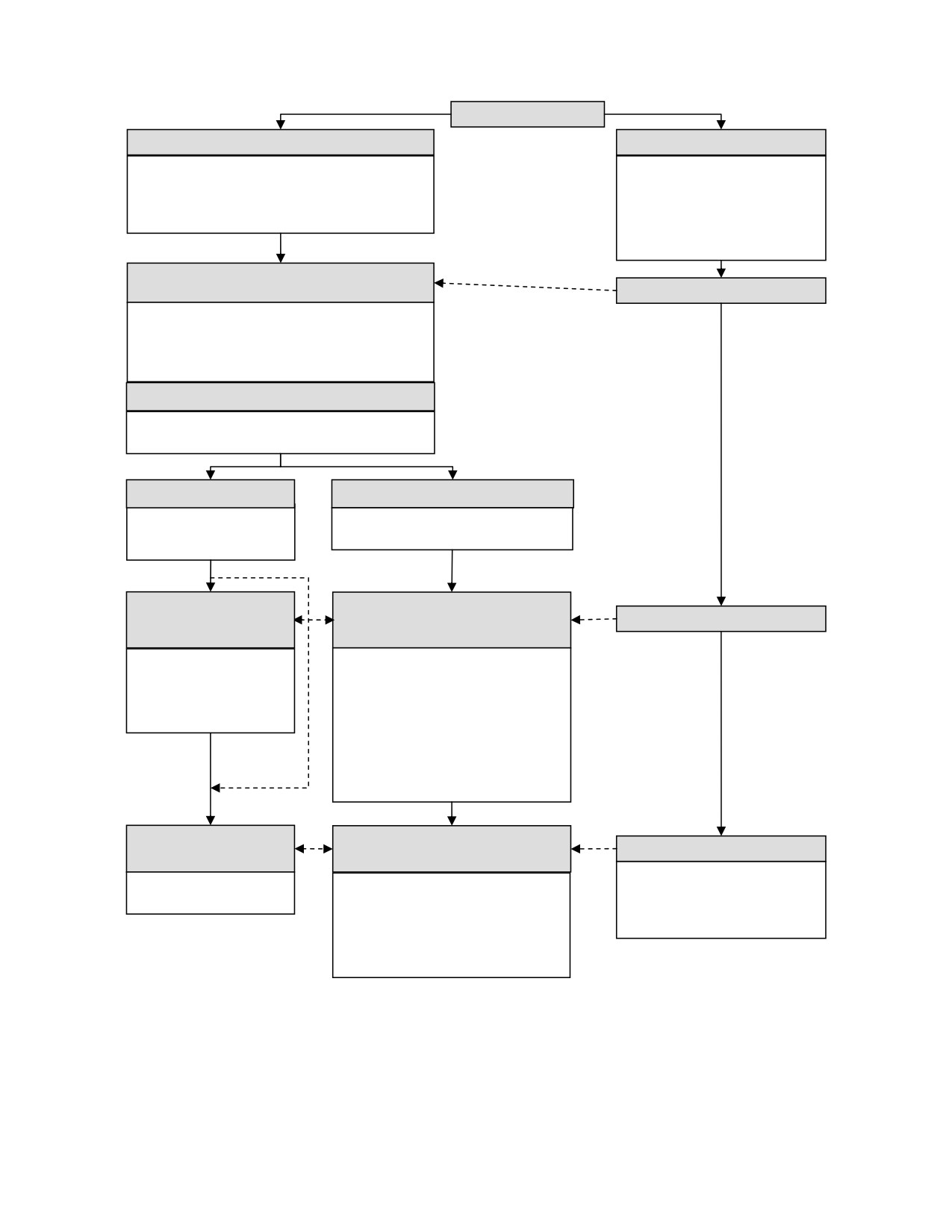
NATO/PfP UNCLASSIFIED
Point of Capture
Unwounded
Wounded
• Disarm
• Disarm
• Search
• Give first aid
• Guard
• Search
• Provide with tag (CAPTAG)
• Guard
• Transport under escort to next higher echelon
• Provide with tag (CAPTAG)
• Transport under escort to aid
station of next higher echelon
Next Higher Echelon’s (e.g. Battalion or Brigade’s)
Collecting Point
Aid Station
• Guard
• Search
• (Provide with tag (CAPTAG))
• Segregate
• Send GROUPCAPREP to formation
Tactical Questioning
• Report (TQREP and INTREP)
• Categorise
Selected for Interrogation
Not Selected for Interrogation
• Expedite Category A and
• Transport under escort to higher
B CPERS to Interrogation
formation’s holding area
Unit or Centre
Interrogation Unit
Formation’s (e.g. Brigade, Division or
(Collocated with Holding
Corps’) Holding Area
Clearing or Dressing Station
Area)
• Interrogate (Interrogation
• Guard
Report and INTREP)
• Segregate
• Expedite Category A and
• Conduct detailed search (Search
B CPERS to Interrogation
Report)
Centre
• Induct, register and process
(Internment Serial No., POW Record
and Record Card)
• Report to ICRC (Red Cross forms)
• Shelter and feed
• Transport under escort to long-term
detention facility
Interrogation Centre
Long-Term Detention Facility
(Collocated with Long-Term
Hospital
Detention Facility
• Induct, register and process
• Interrogate (Interrogation
• Guard
(POW Record and Record Card)
Report and INTREP)
• Induct, register and process
• Report to ICRC (Red Cross forms)
(Internment Serial Number, POW
Record and Record Card)
• Report to ICRC (Red Cross forms)
• House, feed and provide facilities i.a.w.
applicable international law
Figure 3-1: CPERS Evacuation Chain.
3 - 2
ORIGINAL
NATO/PfP UNCLASSIFIED
NATO/PfP UNCLASSIFIED
0302 Facilities
1.
Collecting Points. These are usually established at battalion or brigade level, but may also
R
be established at any appropriate command level. A central collecting point may be established at
division level. Collecting points are intended to hold CPERS for up to 24 hours. They should be
evacuated as soon as the tactical situation permits. Interrogation units may be collocated with them.
R
2.
Holding Areas. These will usually be temporary areas located at division and corps level, but
in certain operations may also be located at brigade level. Holding areas are intended to hold CPERS
for up to 72 hours from time of capture. They should be evacuated as soon as the tactical situation
permits. At corps level holding areas for accommodating large numbers of CPERS for longer periods
of time may be established. Interrogation units may also be collocated with these.
3.
Long-Term Detention Facilities. These include POW facilities and other detention
facilities.
a.
POW Facilities. POW facilities are of a more established nature and are designed for the
extended internment and complete administration of POWs. These facilities may be
established in the Communications Zone, the Rear Combat Zone or other location away
from the battlefield, or outside the area of operations. POWs not selected for interrogation
may be transported directly to a POW facility. Interrogation units or centres may be
collocated with POW facilities. POWs will be treated in accordance with GC3.
R
b.
Other Detention Facilities. Other detention facilities include internment facilities and
other installations separate from POW facilities that are designed for the extended
incarceration of other detained persons pending decision on their status and disposition.
CPERS held in such facilities are entitled to treatment in accordance with international law
including GC4 when applicable. In all cases, internment will occur only when absolutely
necessary to the security of the Detaining Power and will be in accordance with the
provisions of GC4 when applicable.
c.
Medical Facilities. CPERS will receive proper medical treatment to include dispatch to
the nearest facility as necessary. They will remain the responsibility of the CPERS
administration organisation while undergoing treatment.
d.
Interrogation Units. CPERS assessed to have information of immediate tactical value
may be subjected to tactical questioning. Based on the results of tactical questioning, an
evaluation of effects or the circumstances of capture, CPERS who are assessed as Category
A or B as defined in Chapter 2 of this publication, are to be sent to the nearest suitable
interrogation unit. These units will normally be collocated with the collecting points and
holding areas. The early exploitation of a captured person’s intelligence potential may make
it necessary for interrogation units to come forward to the initial point of capture.
e.
Guidelines. Guidelines for establishing collecting points, holding areas and long-term
detention facilities are contained in Annex G.
0303
Processing of POWs and Other CPERS
1.
Stage 1 - The Capture. Whenever conditions allow, the procedures outlined in Chapter 2
of this publication are to be followed by the capturing unit.
3 - 3
ORIGINAL
NATO/PfP UNCLASSIFIED
NATO/PfP UNCLASSIFIED
2.
Stage 2 - Evacuation and Holding. The tasks set out in Chapter 2 of this publication shall
be completed at the collecting point if they have not been done at the point of capture. The duties and
procedures of escorts and guards are detailed in Annex H. At holding areas registration of CPERS
should take place and the following processes should be completed.
a. POWs are to be informed of their rights under GC3 as summarised in Annex I.
b. POWs are to be issued an Internment Serial Number (INTERNSN). The INTERNSN is a
unique serial number allocated by the national POW handling organisation to enable the
identification and tracking of the POW during his internment. A recommended format for
an INTERNSN is detailed in Annex J.
c. Records and record cards for POWs are to be initiated (Annex K). All records for POWs
and other CPERS should be digitised when possible and maintained in databases accessible
to intelligence and law enforcement agencies. Biometric data may be used in addition to
photographs and fingerprints to ensure unmistakable identification of CPERS.
R
d. Civilians who do not have POW status may be interned and will be treated in accordance
with GC4 and applicable international law. They shall be accommodated and administered
separately from POWs and from persons deprived of liberty for any other reason.
R
e. CPERS other than those with POW status suspected of terrorism, war crimes, crimes
against humanity and other crimes will be handed over to the law enforcement agencies or
judicial authorities appointed by NATO to deal with them as determined by the MOA.
3.
POWs may be transferred from/to collecting points and holding areas into or from the custody
of interrogation units. The responsibility for the guarding, feeding, medical treatment and safety of
POWs remains with the unit which has custody of the POWs.
4.
GC3 stipulates that a nation transferring POWs to another nation still has the obligation to
ensure that treatment of the transferred POWs is in accordance with the GC3 and other applicable
international law. Any such transfer should be conducted in accordance with the operational plan.
5.
Stage 3 - POW Facilities. If any of the above procedures or duties have not been carried
out, they will be completed by the facility authorities at the earliest opportunity.
6.
POWs may be transferred to the custody of interrogation units or interrogation centers and from
such custody as described above. If not already allocated, it will be the responsibility of the facility
staff to allocate a POW INTERNSN to CPERS who have been interrogated before completion of
processing and registration. Interrogation Serial Numbers (INTGSNs) shall not be used for this
purpose. The responsibility for the safeguarding, feeding and medical treatment of CPERS so
transferred remains with the unit having custody of them. When CPERS are transferred to a holding
area or POW facility under the control of another NATO nation’s armed forces or of a NATO nation
acting as the Detaining Power on behalf of the nations participating in a NATO force, the transferring
nation or formation will ensure that the information required by this publication is transferred together
with the CPERS. The receiving forces will be responsible for completing the documentation required
by their own forces or those required by this publication.
R
7.
As soon as possible after capture and not more than one week after arrival at a temporary or
long-term holding facility or a hospital every POW shall be given the opportunity to communicate
with his family and - in wartime - the Central Prisoner of War Agency. Resulting letters, cards and e-
3 - 4
ORIGINAL
NATO/PfP UNCLASSIFIED
NATO/PfP UNCLASSIFIED
mails will be forwarded as quickly as possible after inspection by intelligence personnel or appropriate
authority.
8.
POW Personal Property. The procedure for handling, recording and safeguarding the
personal property taken from POWs as set out in Annex L shall be used.
9.
Financial Accountability. GC3 establishes how the financial matters of POWs should be
handled. This includes records of pay, accounts and work records. The officer commanding the POW
facility will ensure that all such GC3 requirements are met.
10.
POW Rights. GC3 requires that POWs have access to copies of GC3 in their own language.
This is the responsibility of the Detaining Power. This responsibility may be delegated to the officer
commanding the POW facility.
0304 Inspections, Media Operations, Visits and Photography
1.
Inspections. Representatives and delegates of Protecting Powers and International
R
Committee of the Red Cross (ICRC) delegates have the right to investigate the treatment and
administration of POWs and other CPERS wherever they may be in accordance with GC3, GC4 or
other applicable international law. They are to be given every assistance in this work. This right may
only be suspended for reasons of “imperative military necessity” by the national authority of the
detaining power, and then only as an exceptional and temporary measure. Legal advice must be sought
before taking such action. The provision of full and open inspection facilities will assist in establishing
a favourable impression of the quality of the treatment of CPERS. The role of the ICRC is explained
in Annex M.
2.
Media Operations. The increased ability of the international press to focus on the treatment of
CPERS could lead to adverse publicity and pressure. This could in turn damage domestic and
international support for an operation. Also, media exposure could jeopardise military and law
enforcement operations. The section responsible for media operations within the headquarters is to be
kept informed of operations and data pertaining to CPERS within the Command’s Area of
Responsibility (AOR). The Command should issue a policy regarding media access to CPERS and
facilities holding CPERS consistent with applicable international law.
3.
Visits. The Command should issue a policy regarding the authorisation of visits by persons
who are not representatives or delegates of a Protecting Power or the ICRC. Such visits should serve
an official purpose and be limited in frequency, scope and duration. Operational security within
CPERS facilities should be strictly maintained. Exposure of CPERS to the media and other visitors to
facilities holding CPERS must not violate the provisions of the Geneva Conventions and other
applicable international law especially regarding protection against public curiosity.
4.
Photography. All photography of CPERS and facilities holding CPERS must serve an
official purpose and be approved by the Commander or the senior officer responsible for the handling
of CPERS. The GCs (inter alia GC3, Articles 13 and 14) must be complied with.
3 - 5
ORIGINAL
NATO/PfP UNCLASSIFIED
NATO/PfP UNCLASSIFIED
INTENTIONALLY BLANK
3 - 6
ORIGINAL
NATO/PfP UNCLASSIFIED
NATO/PfP UNCLASSIFIED
CHAPTER 4
Interrogation of Captured Persons
0401 General Provisions
R
1.
Geneva Conventions. The treatment of CPERS held for interrogation will comply with the
provisions of the Geneva Conventions, or other applicable international law. The responsibilities of
the Detaining Power as set out in GC3 and GC4 shall rest with the capturing or detaining nation. The
term ”Detaining Power” will have the meaning as understood in GC3 and GC4. The ICRC is to be
allowed access to individual CPERS held in interrogation facilities, but not to sensitive areas (e.g.
operations and communications rooms).
2.
Interrogation Personnel. A lead interrogator should be designated with responsibility for
the conduct of the interrogation. Interrogators must be trained and qualified to conduct systematic and
extended questioning of CPERS to obtain information of intelligence value. They should have the
necessary language skills to conduct interrogations in the area of operations. If interpreters are used, it
should be noted that this may diminish the interrogators’ effectiveness and may entail security
problems.
3.
Aim. The primary aim of interrogation is the timely extraction of information from CPERS
following tactical questioning, and the timely dissemination of information and intelligence resulting
from interrogations to relevant commands in order that it may be used in the production of
intelligence estimates and in decision making. In order to achieve this aim, CPERS should be
screened by trained personnel as soon as possible after their capture in order to obtain information of
immediate tactical value and to categorise them according to their assessed intelligence or counter-
intelligence value to ensure the effective allocation of interrogation resources. Category A or B
CPERS (as assessed in accordance with paragraph. 0205) during tactical questioning (as described in
paragraph 0204) should be transferred as soon as possible to an interrogation unit or centre. The
categorisation of a CPERS may be changed based on the results of an interrogation and with the
passage of time.
4.
Responsibilities. The responsibilities are as follows:
a. The operational commander through his intelligence organisation is responsible for the
interrogation of CPERS in order to obtain information of intelligence or counter-
intelligence value.
b. Information obtained during operational interrogation may not be admissible as evidence in
criminal proceedings unless certain legal procedures have been followed. Therefore,
interrogation of CPERS for the purpose of obtaining evidence to be used in criminal
proceedings should be the responsibility of competent law enforcement agencies or judicial
authorities. If criminal activity is uncovered during interrogation the appropriate law
enforcement agencies or judicial authorities must immediately be involved to process the
information for legal consideration. Ordinarily, where criminal activity is suspected,
questioning by law enforcement agencies or judicial authorities should take place first.
Failure to do so may taint any evidence obtained by questioning. This, in turn, may prevent
a successful prosecution for the criminal activity concerned. If it is deemed desirable for
military intelligence personnel to be present during a law enforcement interview of a
4 - 1
ORIGINAL
NATO/PfP UNCLASSIFIED
NATO/PfP UNCLASSIFIED
suspect legal advice should be obtained first to determine the effect this may have upon the
admissibility of the evidence gathered during the interview. Ultimately, in a NATO
operation, the commander of the NATO force may have to decide whether interrogation for
the purpose of intelligence collection or an interview to obtain evidence in accordance with
legal standards has the highest priority in a particular case.
c. The responsibility for the handling, guarding, administration and welfare of CPERS in
custody of NATO forces shall rest with the CJ1 staff. The guard force and administrative
staff shall not conduct interrogation operations.
d. CPERS should be held by the interrogation organisation for the minimum time consistent
with the effective exploitation of their intelligence potential. It is not the intention that
interrogation staff should assume administrative responsibility for CPERS.
5.
Handling of CPERS During the Interrogation Phase. If practicable, throughout the
interrogation phase, CPERS should be:
a.
Segregated according to rank, grade, service, sex, nationality or warring faction, and if
necessary, ethnic and religious group to minimise the opportunity to prepare counter-
interrogation measures. Children should be separated from adult CPERS. However, young
children should not be separated from immediate family members, if captured with them.
Furthermore, civilians, deserters, regime officials, indoctrination personnel and persons
deemed to require protection from other CPERS will be individually segregated. Such
segregation shall be undertaken in a manner which does not violate applicable international
law (e.g. GC3, Articles 16 and 22).
b.
Allowed no opportunity to exchange information among themselves, to exchange identities
or to dispose of materiel, documents and effects of intelligence interest. Whenever possible
facilities should allow for prisoners to be segregated from each other to prevent
communication with and observation of each other while in transit to and from the
interrogation facility.
c.
Allowed no opportunity to compromise interrogation operations by unauthorised and
unsupervised contact with personnel not concerned with interrogation duties.
d.
Allowed no opportunity to observe sensitive and critical activities, materiel and procedures
involving NATO or national forces.
e.
Guarded in a manner, which shall deny the opportunity for self-injury, suicide, escape or
sabotage. Use of force, including lethal force, will be in accordance with the established
ROE.
f.
Provided necessary medical care and regularly examined by medical personnel.
6.
Other CPERS Treated As POWs. The procedures for the debriefing of defectors and
adversary deserters and the questioning of other combatants shall be the same as those for POWs.
Such categories shall be segregated from other CPERS during interrogation and holding wherever
practicable.
4 - 2
ORIGINAL
NATO/PfP UNCLASSIFIED
NATO/PfP UNCLASSIFIED
0402 Organisation
1.
It is important that the interrogation organisation is as flexible and straightforward as possible.
An Interrogation Unit (IU) and a Joint Interrogation Centre (JIC) may comprise the basic interrogation
organisation.
a.
IU. The primary aim of IUs is to exploit the time-sensitive intelligence potential of CPERS
in Categories A, B and C, and to identify Category A and B CPERS in order to arrange
their early transfer to a JIC. IUs may be set up and employed at any appropriate command
level. Such units would form part of the appropriate command or task force’s intelligence
organisation. They may operate at holding areas for CPERS or elsewhere to meet the
commander’s intelligence requirements. IUs will, therefore, operate as closely as possible
to collecting points, holding areas, and, possibly, long-term holding facilities as possible to
avoid the need for separate guard forces as well as medical, catering and other
administrative staffs. Only personnel who are trained and qualified to conduct
interrogations should be employed as interrogators. Naval, army and air force interrogation
staffs may be attached to IUs where appropriate, thus forming, Joint Interrogation Units
(JIU). Interrogation personnel from two or more nations may form Combined Joint
Interrogation Units (CJIU). IUs may be supported by one or more teams capable of, and
responsible for, providing linguistic and technical support to interrogations and translating
and exploiting CDOCs. These teams should consist of linguists and technical specialists
capable of retrieving information from electronic media.
b.
JIC. JICs may be set up and employed at any appropriate joint command level. Combined
Joint Interrogation Centres (CJICs) may be established. Ideally JIC/CJICs would be
collocated at POW facilities and other long-term detention facilities in order to facilitate
interrogation operations and minimise the need for administrative and logistic support.The
primary aim of JIC/CJICs is the extensive and, where necessary, extended interrogation of
CPERS in order that their tactical, operational and strategic intelligence potential can be
fully exploited. Appropriate navy, army or air force interrogation staffs should be organic to
those centers. JIC/CJICs should also have organic teams capable of, and responsible for,
providing linguistic support to interrogations and translating and exploiting CDOCs. These
teams should consist of linguists and technical specialists capable of retrieving information
from electronic media.
2.
The aim of the above organisations is to ensure the effective use of the interrogation resources
in an armed conflict. Where IUs or JICs are established, they should not only report their products
through national reporting channels but also those reporting channels of the relevant NATO command.
3.
Nations which do not have a need or organisation for the formation of a JIC may delegate this
responsibility to an IU, a JIU or a CJIC.
0403 Procedures at Interrogation Units
1.
IUs, JIUs and CJIUs receiving CPERS shall adopt the following procedures:
a. Allocate an Interrogation Serial Number to CPERS selected for interrogation in accordance
with the procedure set out at Annex N.
4 - 3
ORIGINAL
NATO/PfP UNCLASSIFIED
NATO/PfP UNCLASSIFIED
b.
Review the GROUPCAPREP, the TQREP and any associated documents and materiel.
c.
Conduct a thorough search of the CPERS to ensure that he has been properly disarmed and
that all material of intelligence interest has been recovered. During the search of the
CPERS his physical and mental condition should be observed and all items in his
possession should be thoroughly inspected and evaluated for intelligence value and for their
potential danger to own personnel and to the CPERS himself. Effects and articles essential
to his safety will be returned to him after the search has been completed. The principles set
out in applicable international law shall be strictly observed. Results of the search including
observations of the CPERS physical and mental condition as well as information of
intelligence value gathered from documents, effects and other articles should be recorded in
a Search Report (SEARCHREP). A sample format for a SEARCHREP is shown in Annex
O. This information may also be included in the Interrogation Report (INTGREP).
d.
At the end of each interrogation an INTGREP will be submitted by the most appropriate
means. The INTGREP is described in Annex P.
e.
On completion of interrogation at the IU, POWs shall be sent to a JIC/CJIC for further
specialised interrogation, if warranted. If the POWs are deemed to be of no further
intelligence interest, they shall be forwarded to a POW facility established by the Detaining
Power in accordance with the current administrative instructions.
f.
CPERS who are not POWs will be processed in accordance with instructions from higher
national or NATO command.
0404 Procedures at Joint Interrogation Centers and Combined Joint Interrogation
Centers
1.
JICs and CJICs receiving CPERS shall adopt the following procedures:
a. Allocate an Interrogation Serial Number (INTGSN) to CPERS selected for interrogation in
accordance with the procedure set out at Annex N, if one has not already been allocated.
b. Review any pertinent reports (such as INTREPS and Intelligence Summaries) as well as
any reports from previous questioning and interrogation as well as any associated
documents and materiel.
c. Search the CPERS to ensure that they are properly disarmed and that all objects of
intelligence interest have been recovered. If an extensive and thorough search has been
conducted by an interrogation unit at lower echelon, results of the search should be reported
in a Search Report or included in the INTGREP; if a search has not been conducted, this
should also be recorded in the INTGREP. Effects and articles essential to CPERS’ safety
will be returned to them after inspection to ensure that they contain no material of
intelligence interest and cannot be used to harm interrogation and guard personnel or to
inflict self-injury.
d. At the end of each interrogation an INTGREP will be submitted by the most appropriate
means.
4 - 4
ORIGINAL
NATO/PfP UNCLASSIFIED
NATO/PfP UNCLASSIFIED
2.
On completion of interrogation, POWs shall be sent to a POW facility established by the
Detaining Power in accordance with the current administrative instructions and applicable
international law.
3.
CPERS who are not POWs will be processed in accordance with instructions from higher
national or NATO command.
4.
POWs sent to POW facilities and other detained persons who remain in custody after
interrogation may be subjected to further interrogation should the need arise.
0405 Reporting
1.
INTREPs. The capturing unit should identify any category A or B CPERS and report them by
submitting an INTREP. These CPERS will be moved to the nearest suitable interrogation unit or
facility as expeditiously as practicable.
2.
Interrogation Serial Number. Every individual selected for interrogation will be given an
INTGSN. This number, once issued, will remain with the captured person throughout his interrogation
at whatever level and should not be changed. This number is issued for intelligence source
identification. This number shall not be confused with the POW Internment Serial Number
(INTERNSN), which should NOT be used for this purpose. The INTGSN will be composed as
detailed in Annex N.
3.
Search Report. The Search Report is used to record the results of the thorough and extensive
search conducted by IUs and JICs. Results of the search including observations of the CPERS physical
and mental condition as well as information of intelligence value gathered from documents, effects
and other articles should be recorded in a Search Report. A sample format for a Search Report is
shown in Annex O. This information may also be included in the INTGREP.
4.
Interrogation Reports. INTGREPs may also be used to report results gathered from the search
and tactical questioning (or screening), if this has not been done previously. INTGREPs shall be
forwarded to the Command intelligence organisation as quickly as possible. One copy shall remain in
the captured person’s file which shall accompany him through all phases of the interrogation process.
These reports will remain in the intelligence channels and shall not be forwarded to the administrative
authorities when CPERS are sent to detention facilities or other holding facilities. A sample format for
an INTGREP is shown in Annex P.
5.
Intelligence Reports. The preparation of full INTGREPs shall not delay the communication of
important interrogation products to the Command. Where such information has been sent in advance
of the INTGREP in the form of, for example, an INTREP, this fact should be mentioned and any
relevant message identification and DTG should be referred to in the report.
6.
CDOC Exploitation. Information and intelligence obtained from the exploitation of CDOCs
will normally be separately reported in accordance with Chapter 6 of this publication. INTGREPs will
refer to such exploitation, particularly where CPERS are prepared to confirm such
information/intelligence.
4 - 5
ORIGINAL
NATO/PfP UNCLASSIFIED
NATO/PfP UNCLASSIFIED
INTENTIONALLY BLANK
4 - 6
ORIGINAL
NATO/PfP UNCLASSIFIED
NATO/PfP UNCLASSIFIED
CHAPTER 5
Captured Materiel and Associated Technical Documents
0501 General
1.
Exploitation of CMAT, and ATDs should be carried out carefully and promptly. Some of this
materiel may be unknown or only partially known in its design, construction, technical data, function,
capabilities, modes of employment, etc. Therefore, it is of utmost importance to gain information for
possible counteractivities and necessary protective measures to support friendly operations. Materiel
and ATDs of special intelligence interest should be stated in the intelligence staff's information and
other intelligence requirements and included in the Intelligence Collection Plan.
2.
CMAT and ATDs of interest to a particular component or nation should preferably be handed
over to that component or nation at the earliest possible moment for exploitation.
3.
Procurement of technical experts and the way they should be utilised for exploitation are to be
decided by the nations. Nations may decide to establish Joint Captured Materiel Exploitation Centres
(JCMECs) on a permanent or ad hoc basis. Guidance on this matter is offered in Annex Q.
4.
The results of the exploitation of CMAT and ATDs shall be made available to the commander
and to other NATO or national commanders and authorities in accordance with stated intelligence
requirements and reporting procedures consistent with national laws and policy. In combined
operations TECHINT as well as photographic documentation of the CMAT and copies of ATDs
should be shared among all the troop-contributing nations. If a command intelligence database has
been established such intelligence and information may be stored in it.
5.
TECHINT personnel and units often operate under the operational control of the intelligence
staff. However, logistic staff must provide transportation support for the evacuation of CMAT from
the combat zone to a facility where intelligence exploitation can take place. Furthermore, workshops
and other logistic facilities may have to be placed at the disposal of TECHINT personnel and staff in
their work.
6.
Procedures for handling CMAT and ATDs that may constitute evidence in criminal
proceedings are detailed in Annex F.
0502 Safety
Great care should be taken to ensure the safe handling of CMAT. When necessary, trained personnel
(e.g. Explosive Ordnance Disposal specialists) should be tasked to handle or dispose of weapons,
armaments, ammunition and explosives. All weapons and armaments should be cleared or otherwise
rendered safe. Ammunition should be stored so that the danger of explosion is minimised. Weapons of
mass destruction and other weapons and equipment containing bio-hazardous, radioactive or toxic
materials should be cordoned off, and specialists should dispose of them. High-voltage equipment
should be handled with great care. The possibility that CMAT and other items having belonged to or
been used by an adversary could be booby-trapped should be considered before they are handled.
5 - 1
ORIGINAL
NATO/PfP UNCLASSIFIED
NATO/PfP UNCLASSIFIED
0503 Exploitation
1.
Intelligence exploitation of CMAT and ATDs is in principle a national responsibility to be
undertaken by the capturing nation, but this responsibility may be assumed by a NATO Command or
Force. Wherever forces of two or more NATO nations are operating together, mutual support for the
purposes of proper and timely exploitation should be given. This is especially important when the
capturing nation does not have the necessary technical capability to exploit particular CMAT and
ATDs. In that case such CMAT and ATDs should be turned over to an allied nation that has such a
capability as expeditiously as possible. In cases where responsibility for exploitation is handed over to
an allied nation, that nation will keep the capturing nation fully informed of the results obtained and
will forward copies of ATDs and reports prepared. The exploiting nation will be responsible for
reporting as described in this Chapter.
2.
During the exploitation process, CMAT and the original copy of ATDs must be kept together.
When exploitation has been completed, the CMAT must be handed over to appropriate national
agencies for utilisation or disposal, with copies of ATDs as appropriate. A copy of the ATDs will be
forwarded to the document exploitation unit of the national JIC or, if applicable, the CJIC (see Chapter
4 of this publication), or other national or NATO agency responsible for CDOCs. When possible,
photographs of the CMAT should be taken and removed with the CMAT/ATDs.
3.
In the exploitation of CMAT and ATDs, close coordination should be exercised between
elements at various levels within the intelligence organisation where linguistic and technical assistance
could be sought. CPERS associated with CMAT and ATDs should, if possible, be kept available for
questioning during the exploitation process, but the evacuation and interrogation of CPERS have
higher priority.
4.
CMAT and ATDs considered to be of intelligence or other interest will be exploited through
the following process. Whenever feasible, in order to expedite handling, the processing stages may be
combined.
a. Reporting. The capturing unit reports the capture or discovery of CMAT or ATDs
believed to be of intelligence or other interest through higher headquarters to the first
TECHINT element in the chain of command by means of a PRETECHREP (as at Annex E)
or an INTREP.
b. Preliminary Screening. Preliminary screening and reporting of information of
immediate technical, operational or other value through established intelligence channels
will be accomplished by the capturing unit.
c. Complementary Examination. Complementary examination and reporting may be
carried out in the field by technical experts or Technical Exploitation Teams (TETs). (See
Annex Q.) If possible, the preliminary screening, translation and categorization of ATDs
should be carried out by translators specialized in the exploitation of technical documents.
d. Detailed Exploitation. If special circumstances require it, detailed exploitation may be
undertaken outside the AO. (See Annex Q.)
5.
CMAT and ATDs will be tagged as follows by the first technical exploitation specialist or team
performing exploitation for intelligence or other purposes:
a. CMAT.
5 - 2
ORIGINAL
NATO/PfP UNCLASSIFIED
NATO/PfP UNCLASSIFIED
• Serial number of CMAT of intelligence interest.
•
Serial number of ATDs if applicable.
b. ATDs.
As for CMAT above, with the serial number(s) of associated CMAT and clearly marked
with the flagword “TECHDOC”.
c. Associated CPERS. The capture tag number and the interrogation serial number (if
allocated) will be recorded on the CMAT and ATD tags in order to facilitate interrogation
to obtain information of technical, operational or other value.
0504 Reporting
1.
Reports will be submitted in accordance with relevant reporting procedures. Copies of all
reports should follow the CMAT during the exploitation process. The following reports are required:
a. INTREP. An INTREP will be prepared by the capturing unit upon the discovery or capture
of CMAT or ATDs believed to be of intelligence interest. The reporting channels are from
the capturing unit through the chain of command to the first element with technical
exploitation capability.
b. Preliminary Technical Report. A PRETECHREP may be prepared and submitted by
the capturing unit or a Technical Exploitation Team (TET) after preliminary screening.
(See Annex E.)
c. Complementary Technical Report. A COMTECHREP type A, B or C will be
prepared and submitted by proper authority or TET after complementary examination in the
field. (See Annexes R, S and T.)
d. Detailed Technical Report. A DETECHREP will be prepared and submitted by proper
authority or Specialist Team after detailed exploitation in rear areas. This report has no set
format. The flagword DETECHREP should be used as report identifier, and the report will
include necessary data identifying the CMAT and its disposition.
e. INTREPs may, as the circumstances dictate, be submitted in advance but not in lieu of the
reports listed above.
0505
Further Handling
1.
An appropriate national or NATO commander or staff will direct and coordinate the
exploitation process and decide when CMAT can be handed over for utilisation or disposal.
Intelligence staff will ensure that duplicate photographs of CMAT and copies of ATDs are provided
and distributed for further exploitation by technical and other elements as appropriate.
2.
When exploitation is complete, final disposition of the materiel will be carried out as
determined by the commander or his staff or in accordance with agreed procedures.
5 - 3
ORIGINAL
NATO/PfP UNCLASSIFIED
NATO/PfP UNCLASSIFIED
0506
Security
1.
CMAT and ATDs will be classified in accordance with the applicable security classification
guidance, also considering the circumstances of capture and the value of denying the opposing forces
the knowledge that a particular document or piece of materiel is in NATO hands.
2.
At all stages during the intelligence exploitation process, the CMAT and ATDs will be placed
under guard in order to prevent looting, misuse or destruction. No item is authorised for retention as a
war trophy or souvenir. CMAT and ATDs to be used as evidence in legal proceedings against CPERS
suspected of terrorist acts, crimes against humanity, war crimes and other crimes are to be safeguarded
separately from other CMAT and ATDs and should be in the custody of the military police or other
investigative authority. (Guidelines for the handling of such CMAT and ATDs may be found in Annex
F.) The investigative authority will assist in the intelligence exploitation of such evidence.
5 - 4
ORIGINAL
NATO/PfP UNCLASSIFIED
NATO/PfP UNCLASSIFIED
CHAPTER 6
Captured Documents
0601 General
1.
CDOCs are valuable sources of information and should be exploited for intelligence or law
enforcement purposes with a minimum of delay. It should be noted that documents include all types of
media that may contain, record or store information. Therefore, specialist personnel may be required
to access information from various types of media. A detailed definition of the term “document” may
be found in the Glossary.
2.
ATDs, which are marked “TECHDOC”, will be handled as described in Chapter 5. All other
types of CDOCs will be handled as described in this Chapter.
3.
Nations may decide to establish Joint Captured Document Exploitation Centres (JCDECs) on a
permanent or ad hoc basis. A CJTF may decide to establish a Combined Joint Captured Document
Exploitation Centres (CJCDEC) on a permanent or ad hoc basis. Guidance on this matter is offered in
Annex U.
0602 Categorisation
1.
CDOCs should be categorised according to their assessed intelligence or other value as soon
after capture as possible. The categorisation of each CDOC should be reassessed as it is exploited and
assessed by document exploitation elements at each level in the chain of command.
2.
In order to ensure the timely exploitation of time-sensitive CDOCs of intelligence or other
value, CDOCs are to be divided into categories as follows:
a. Category A. Documents which because of their special intelligence or other value require
priority removal and/or special handling and are of interest to another command, collection
agency or other agency i.e. TECHINT, air force, navy, PSYOPS, cryptography, law
enforcement etc. These documents should be translated as quickly as possible to exploit
information of intelligence or other value to operations and to force protection. Specific
examples of Category A documents change according to the Priority Intelligence
Requirements and will be set forth in each document exploitation element's standing opera-
ting procedures. Documents to be used as evidence in legal proceedings against CPERS
suspected of terrorism, crimes against humanity, war crimes and other crimes will be
handled as Category A documents.
b. Category B. Documents containing information of intelligence or other interest to the
supported field command (answering operational-level intelligence requirements). These
documents should also be translated as quickly as possible to exploit information of
intelligence or other value to operations and to force protection.
c. Category C. Personal documents and items containing no perceived information of
intelligence or other interest but still requiring special administrative accountability i.e.
currency, works of art, family photos, or letters. Category C is the lowest category of
CDOCs that can be assigned by field elements.
6 - 1
ORIGINAL
NATO/PfP UNCLASSIFIED
NATO/PfP UNCLASSIFIED
d. Category D. Documents containing no known information of immediate intelligence or
other value. This designation should be applied only by the echelon at which appropriate
document exploitation expertise exists.
3.
In principle, CDOCs are the responsibility of the nation of the capturing unit. However, in order
to ensure that information of intelligence or other interest is efficiently utilised, such documents
should be handled through command channels in the initial phases of the exploitation process. Final
and thorough exploitation will be the responsibility of the capturing nation, the NATO Force or NATO
Command in accordance with national law and policies or the MOA.
0603 Exploitation
1.
Exploitation of CDOCs is in principle a national responsibility to be undertaken by the
capturing nation, but this responsibility may be assumed by a NATO Command or Force. Wherever
forces of two or more NATO nations are operating together, mutual support for the purposes of proper
and timely exploitation should be given. This is especially important when the capturing nation does
not have the necessary capability to exploit CDOCs. In that case such CDOCs should be turned over
as expeditiously as possible to an allied nation that has such a capability. In cases where responsibility
for exploitation is handed over to an allied nation, that nation will keep the capturing nation fully in-
formed of the results obtained and will forward copies of CDOCs and reports prepared. The exploiting
nation will be responsible for reporting as described in this Chapter.
2.
CDOCs will be forwarded as expeditiously as appropriate to the document exploitation unit of
the national JIC or, if applicable, the CJIC (see Chapter 4 of this publication), or other national or
NATO agency, such as a JCDEC or Combined Joint Captured Document Exploitation Centre
(CJCDEC), responsible for captured documents.
3.
CDOCs associated with CPERS should, if possible, follow the CPERS from whom it was taken
during the interrogation and exploitation process. If specialist exploitation is necessary, copies of the
CDOC may follow the CPERS in lieu of the original CDOC.
4.
CDOCs considered to be of intelligence or other interest will be exploited through the following
process. Whenever feasible, in order to expedite handling, the processing stages may be combined.
a. Reporting. The capturing unit reports the capture or discovery of CDOCs believed to be
of intelligence or other interest through higher headquarters to the first document
exploitation element in the chain of command by means of an INTREP.
b. Preliminary Screening. If possible, preliminary screening, translation, categorisation
should be accomplished by translators specialised in the exploitation of military and
technical documents. Therefore, tactical questioners should forward CDOCs to DOCEX
specialists in (C)JICs or (C)JCDECs as soon as possible, or these specialists should be
detached to lower tactical levels. Reporting of information of immediate tactical value
gained from CDOCs through established intelligence channels will be accomplished by
personnel conducting tactical questioning for the capturing unit.
c. Supplementary Examination. Supplementary examination should be carried out by
translators specialised in the exploitation of military or technical documents. Therefore,
interrogators should forward CDOCs to DOCEX specialists in (C)JICs or (C)JCDECs as
soon as possible, or these specialists should be detached to lower tactical levels. CDOCs of
6 - 2
ORIGINAL
NATO/PfP UNCLASSIFIED
NATO/PfP UNCLASSIFIED
special intelligence or other interest will be reproduced and disseminated to intelligence and
other staffs, as appropriate.
d. Detailed Exploitation. Detailed exploitation and reporting may take place at a (C)JIC or
at a (C)JCDEC by DOCEX specialists.
5.
Information technology may be used to support the translation of documents and to scan them
for reproduction and dissemination.
0604
Translation
1.
Levels of Translation. Translation of CDOCs is often a time-consuming task. Therefore,
depending on the assessed intelligence or other value of the CDOCs, the following levels of translation
may carried out:
a.
Summary Translation. A summary translation should consist of a concise outline of the
contents in the CDOC and highlight information of intelligence or other value.
b.
Extract Translation. Specific parts of a CDOC containing specific information of
intelligence or other value may be translated in full.
c.
Full or Complete Translation. A full or complete translation of a CDOC may be made
when the entire contents of a CDOC are of such intelligence or other value as to warrant a
complete translation.
2.
A CDOC may go through several levels of translation. As the result of a preliminary screening,
it may initially be translated in summary form before being forwarded to the next higher echelon.
After complementary examination and evaluation, a translation of excerpts of intelligence or other
interest to this or a higher echelon may be made. Finally, a full or complete translation may be made in
order to facilitate a detailed exploitation of the CDOC.
0605 Tagging and Handling of CDOCs
1.
Capturing units shall do everything possible to preserve the integrity of captured documents.
CDOCs should be placed in appropriate protective containers for transit and storage (file folders,
ration cases, watertight bags, etc).
2.
The capturing unit will tag or otherwise identify the container holding the CDOC in accordance
with the procedures stated in Chapter 2, para 0204. It is important that the original CDOC not be
marked or otherwise altered. CDOCs associated with a CPERS should be tagged with part C of the
Captured Personnel and Personal Effects Tag. If this CPERS has been interrogated, the INTGSN
should be noted on the tag.
3.
CDOCs will be categorised as described in paragraph 0602. 2. The CDOC containers or tags
should be clearly marked with the letters "CDOC CAT" followed by the category letter.
Example: CDOC CAT "C".
6 - 3
ORIGINAL
NATO/PfP UNCLASSIFIED
NATO/PfP UNCLASSIFIED
4.
Documents constituting evidence to be used in legal proceedings against persons suspected of
terrorism, crimes against humanity, war crimes and other crimes will be marked ”EVIDENCE”. Such
documents will be kept separate from other documents and will be stored under guard or in a secure
area in order to ensure an unbroken chain of custody/evidence. Procedures for handling such CDOCs
are outlined in Annex F. Copies of CDOCs assessed to be of intelligence or other value will be
provided to the intelligence element of the capturing nation.
5.
CDOCs, even if assessed to be damaged in the field, should not be disposed of or destroyed
until reviewed by DOCEX specialists.
0606 Reporting, Reproduction and Dissemination
1.
The reporting of information and intelligence obtained from documents should be as
expeditious as possible. The use of information technology makes it possible to transfer documents
and translations of documents with great speed to experts for exploitation and to intelligence and other
customers. Databases should, therefore, be established to retrieve stored documents, and link analysis
should be employed to exploit information obtained from these documents by identifying links to
persons, places and events.
2.
Reports will be submitted in accordance with relevant reporting procedures. Copies of all
reports should follow the CDOCs through the exploitation process. NATO information systems such
as the Battlefield Information Collection and Exploitation System (BICES) and Crisis Response
Operations in NATO Open Systems (CRONOS) should be used for the widest dissemination to NATO
and coalition forces (through plug-in systems) to process and disseminate CDOCs in a uniformed and
expeditious manner. The following reports are required:
a. Intelligence Report. An INTREP identifying the CDOC and its disposition, and giving
information considered to be of immediate value, will be prepared and submitted by the
capturing unit and other exploiting elements as appropriate.
b.
Detailed Document Report. A Detailed Document Report (DEDOCREP) will be
prepared and submitted after a complementary and detailed examination/exploitation has
found the CDOC to be of current intelligence or other value. This report has no set format.
An adapted INTREP format could be used. It should include, at minimum, a summary
translation. The flagword “DEDOCREP” will be used as the report identifier, and the report
will include necessary data identifying the CDOC and its disposition.
3.
Reproduction and dissemination of CDOCs and translations as necessary will be carried
out at the earliest possible stage of the exploitation process. Copies of CDOCs considered of interest
or translations thereof and lists of exploited documents, whether disseminated or not, will be submitted
to appropriate national and NATO staffs.
0607 Handling of Category "A" Documents
All Category A documents require special, restricted handling. The national and NATO Command or
Force headquarters should be kept informed of the seizure and disposition of such documents as soon
as possible. If appropriate, they are to be handed over to the relevant component or nation without
delay. Here they should be handled in close coordination with the intelligence and other relevant
specialist staff.
6 - 4
ORIGINAL
NATO/PfP UNCLASSIFIED
NATO/PfP UNCLASSIFIED
0608 Handling of Special Documents
1.
Unmarked Maps, Charts, Air Imagery, Etc. Unmarked maps, charts, air imagery and other
types of cartographic material and information should be forwarded to the nearest geographic staff,
survey unit or topographical section for exploitation. Copies may be retained to meet operational
needs.
2.
Marked Maps, Charts and Air Imagery. Marked maps, charts and air imagery will be
immediately forwarded to the nearest national supporting intelligence centre or other all-source
analysis facility for analysis, but relevant geographic staffs, survey units and topographical sections
are to be informed of their existence, with scale, series, edition and other identification data.
3.
Personal Papers. Personal papers belonging to a captured person, such as identity papers,
personal letters and photographs that are not to be used as evidence, etc., if examined and determined
to be of no intelligence or other value, will be returned to him in accordance with applicable
international law. Copies of such papers will be made and forwarded to the appropriate agency, e.g. a
DOCEX unit.
0609 Further Handling
Further handling is to be carried out in accordance with the procedures for handling CMAT/ATDs as
described in Chapter 5.
0610 Security
1.
CDOCs will be classified in accordance with national and NATO security regulations and
protected in accordance with their intelligence or other value based on their operational sensitivity and
in order to ensure protection of the information as well as sources and collection methods. The
DOCEX or other intelligence element initially handling the CDOC should determine its classification.
Circumstances of capture and the value of denying the opposing forces the knowledge that a particular
piece of materiel or document is in own or NATO hands are also important considerations in
determining the proper classification of a CDOC. The original classification markings on CDOCs
should, therefore, not necessarily serve as a guideline. The classification of a CDOC may subsequently
be reviewed as to its continued intelligence or other relevance.
2.
CDOCs to be used as evidence in legal proceedings against CPERS suspected of terrorist acts,
crimes against humanity, war crimes and other crimes are to be safeguarded separately from other
CDOCs and should be in the custody of the military police or other investigative authority.
(Guidelines for the handling of such CDOCs may be found in Annex F.) Copies of such CDOCs
should be supplied to intelligence and other appropriate staffs. The investigative authority will assist in
the intelligence and other exploitation of such evidence.
6 - 5
ORIGINAL
NATO/PfP UNCLASSIFIED
NATO/PfP UNCLASSIFIED
INTENTIONALLY BLANK
6 - 6
ORIGINAL
NATO/PfP UNCLASSIFIED
NATO/PfP UNCLASSIFIED
CHAPTER 7
Captured Persons, Materiel and Documents in Combined
Joint Operations
0701 General
1. This Chapter is intended to provide guidance to NATO forces and other forces participating in a
NATO Combined Joint Task Force (CJTF) operation on the handling and processing of persons,
materiel and documents captured during that operation. Furthermore, the aim of this Chapter is to
describe the responsibilities of the Commander of the CJTF and his staff. It provides guidelines for the
planning necessary to ensure that CPERS with various types of status are handled in accordance with
international law or other applicable law. It also provides guidance on how to handle CMAT and
CDOCs so that they may be exploited for intelligence and other purposes.
2. NATO member countries and other countries participating under the auspices of NATO in a
coalition must be prepared to conduct operations across the spectrum of conflict. In the course of these
operations, NATO and Coalition forces will have to be prepared to deal with CPERS of various
categories. They must be able to handle CMAT and CDOCs correctly and expeditiously to extract
information of intelligence and other value, including evidence for use in legal proceedings against
CPERS suspected of war crimes, crimes against humanity, or terrorism. The handling of CPERS,
CMAT and CDOCs needs to be taken into consideration by the commander, at each echelon, in all
aspects of planning for operations and in subsequent conduct of operations.
3. The greatest number of CPERS may be expected to come from the Land Component Command’s
AO. Therefore, the main emphasis of this Chapter is on the handling of persons, materiel and
documents captured in the land environment. Nevertheless, the principles of planning and preparation
for dealing with CPERS, CMAT and CDOCs are valid for other environments and for commanders at
all levels within the AO.
0702 Responsibilities
1.
The Nations and NATO. The member Nations must have a common understanding of the
definitions and procedures regarding CPERS, CMAT and CDOCs and their handling prior to forming
a CJTF. NATO, in conjunction with the troop-contributing nations to a CJTF, develops ROE
applicable to the particular operation or mission. The member Nations support NATO in manning the
CJTF staff and units to provide the necessary manpower to handle CPERS, CMAT and CDOCs.
a. The nations participating in the CJTF should formulate a Memorandum of Agreement
which includes:
(1) A common definition of a POW consistent with the provisions of the GCs and other
applicable international law as they pertain to the particular operation or mission.
(2) Procedures for determining the status of CPERS who do not immediately fall under
these pre-defined categories (e.g. by convening a tribunal to determine POW status).
7 - 1
ORIGINAL
NATO/PfP UNCLASSIFIED
NATO/PfP UNCLASSIFIED
R
(3) Measures to ensure that all CPERS regardless of status are treated in accordance with
the GCs or other applicable international law.
(4) Procedures for the transfer of CPERS to a CJTF organisation handling CPERS so that
the obligations of the detaining member nation of the CJTF in accordance with
applicable international law are fulfilled. In general, the handover of CPERS with POW
status between nations and to a CJTF may require:
• The designation of a Nation that assumes the responsibilities of the detaining power
on behalf of all nations contributing troops to the CJTF. This Nation will provide
the commander of the CJTF organisation handling CPERS.
• The written authorisation of the government of each Nation contributing troops to
the CJTF permitting the transfer of its CPERS to the lead nation charged with the
handling of CPERS on behalf of all troop-contributing nations.
• Provisions for regular inspections by representatives of the troop-contributing
nations with CPERS in the custody of the CJTF.
(5) Conditions and procedures for the handover of CPERS who have not been accorded
POW status to:
• Appropriate civil authorities in the host nation (if it has a functioning law
enforcement and judicial system meeting recognised international standards for the
treatment of detained persons and for fair and impartial judicial proceedings),
• An international police authority (e.g. the United Nations Civilian Police), or
• An international tribunal.
(6) If relevant, conditions and procedures for the extradition of CPERS who have not been
accorded POW status to:
• A NATO member state,
• A non-NATO member state participating in the CJTF, or
• Another state requesting extradition.
(7) Agreed interrogation methods and techniques.
(8) Provisions for release of persons in accordance with GCs or other applicable
international law
(9) Provisions for inspections by representatives and delegates of Protecting Powers and
ICRC delegates including a mechanism for suspending such inspections on the grounds
of imperative military necessity.
(10)
Procedures regarding the exploitation of CMAT and CDOCs. This is to
include provisions for the transportation and storage of such CMAT and CDOCs.
(11)
Procedures regarding the final disposition of CMAT and CDOCs
including final ownership of these items and financial and logistical responsibility for
their final removal or destruction.
(12)
Procedures regarding the sharing of intelligence and information
obtained through interrogation and the exploitation of CMAT and CDOCs by the troop-
contributing nations.
7 - 2
ORIGINAL
NATO/PfP UNCLASSIFIED
NATO/PfP UNCLASSIFIED
(13)
Standards ensuring the interoperability of communications and
information systems, thus enabling the expeditious reporting of intelligence and
information obtained from all sources including interrogation and the exploitation of
CMAT and CDOCs.
(14)
Provisions for the establishment of intelligence databases in accordance
with AIntP-3 data exchange standards. These databases should be accessible by the
intelligence staffs of all component commands and multinational and single nation
formations and units.
(15)
Standards and procedures for the collection, processing, recording and
storage of personal data on CPERS, including, if applicable, biometric data.
(16)
Regulations and procedures regarding the photography of CPERS and
CPERS facilities including the prohibition of private photography of such persons and
facilities.
b. NATO drives efforts to meet the Statement of Requirements developed by the CJTF for
personnel to be contributed by the member Nations and coalition partners to man staff
positions in the CJTF headquarters and for units to handle CPERS, CMAT and CDOCs. In
developing the operational plans with annexes and ROE, NATO should include procedures
for dealing with special categories of CPERS such as those suspected of committing or
conspiring to commit war crimes, crimes against humanity or terrorist acts.
2.
The CJTF Commander. The CJTF Commander is responsible for planning and conducting
operations within the constraints and restraints of the GCs or other applicable international law.
Therefore, he must also have exact knowledge of his responsibilities for CPERS and their handling.
This Chapter only lists the main responsibilities which the Commander and his staff must discharge.
The Commander and his staff must, therefore, be familiar with the provisions of the GCs or other
applicable international law in as much detail as possible. The moral and political importance placed
on the correct and humane treatment of CPERS in all types of conflicts makes it essential that the
Commander receives competent legal, political, medical and intelligence advice in these matters.
The commander’s main responsibilities regarding the treatment of CPERS are to ensure that:
a. The individual members of his force comply with the provisions of the GCs or other
applicable international law.
b. Persons captured by the CJTF are treated in accordance with the GCs or other applicable
international law.
3.
The Staff. Although the commander bears the overall responsibility for the handling of
CPERS, CMAT and CDOCs, he delegates responsibility for certain aspects of the process to his staff.
The following discussion identifies tasks and suggests staff sections and special staff that could
execute them. It is not a complete list. In a CJTF these tasks may be delegated or assigned in a number
of different ways.
a. CJ1 Staff. The CJ1 has overall staff responsibility for the handling of CPERS within the
Combined Joint Task Force Headquarters (CJTFHQ). He will be assisted by CJ2 for
intelligence and CJ3 for operational matters, CJ4 for logistical and medical matters, the
Legal Advisor for matters pertaining to the GCs or other applicable international law and
7 - 3
ORIGINAL
NATO/PfP UNCLASSIFIED
NATO/PfP UNCLASSIFIED
the Provost Marshal for matters pertaining to the physical detention and guarding of
CPERS. CJ1 may be responsible for :
(1) Developing policy for the handling of CPERS within the CJTF AO in conformity with
the GCs or other applicable international law.
(2) Issuing instructions for the safe custody, welfare, discipline and, if necessary,
evacuation of CPERS from the AO.
(3) Determining the format of the INTERNSN to be used by the CJTF.
(4) Issuing instructions for the administration of CPERS including submission of reports
and returns in accordance with the GCs or other applicable law (in connection with e.g.
transfers, deaths, repatriations).
(5) Issuing instructions on the collection, processing, recording and storage of personal data
on CPERS. These instructions may include guidelines for the use of biometrics.
(6) Appointing officers and staffs to run CJTF collection points and holding areas for
CPERS and the Combined Joint Detention and Interrogation Facility (CJDIF) within
the AO and the issuing of orders for the operation of these collection points and holding
areas and facilities.
(7) Providing on the advice of CJ2, interpreters for CJTF and CJDIF collection points and
holding areas, and Interrogation Teams as well as interpreters for CDOC and CMAT
Exploitation Centres and Teams.
(8) Determining the status of CPERS and convening boards of inquiry where necessary to
include review and appeal boards.
(9) Arranging for the transfer of CPERS to other nations; or to international legal bodies,
consistent with GCs or other applicable international law. Additionally, CJ1 is
responsible for the transfer of CPERS from the nations’ forces participating in the
CJTF, and from the other component commands to CJTF collection points and holding
areas for CPERS as well as to the CJDIF.
(10)
Assisting in the repatriation of CPERS with POW status during and after
hostilities.
(11)
Provisions for regular inspections by representatives of the troop-
contributing nations with CPERS in the custody of the CJTF.
(12)
Developing media policy as it pertains to the handling of CPERS and
policy regarding visits to CPERS facilities.
b.
CJ2 Staff. CJ2 may be responsible for:
(1) Producing estimates of likely numbers of POWs before the beginning of an operation
(assisted by the CJ3 and CJ5 Staff as well as national intelligence organisations).
(2) Organising the formation of CJ2, including CJ2X, and the Interrogation Element of the
CJDIF (assisted by CJ1).
7 - 4
ORIGINAL
NATO/PfP UNCLASSIFIED
NATO/PfP UNCLASSIFIED
(3) Tasking the CJDIF in accordance with the Commander’s Priority Intelligence
Requirements to collect information and intelligence through interrogation of CPERS
and exploitation of CMAT, CDOCs and personal effects belonging to CPERS.
(4) Processing and disseminating information and intelligence collected by the CJDIF.
(5) Determining security policy regarding CPERS and CPERS facilities, including
photography of CPERS, CPERS facilities, CMAT and CDOCs.
c.
CJ3 Staff. CJ3 may be responsible for:
(1) Selecting locations for collection points and holding areas for CPERS and the location
of the CJDIF (assisted by CJ2 and CJ4) and issuing orders to units for their
construction.
(2) Issuing instructions for the activation of CJTF collection points and holding areas for
CPERS and the CJDIF.
(3) Identifying units to act as guards and escorts for CPERS and to reinforce military police
and issuing orders for execution of these tasks.
d.
CJ4 Staff. CJ4 may be responsible for:
(1) Procuring and providing construction materials and stores for the establishment of
collection points, holding areas and long-term detention facilities for CPERS, storage
facilities for CMAT and the CJDIF.
(2) Producing Administrative Instructions covering the feeding, clothing, movement and
accommodation of CPERS.
(3) Planning for the provision of sufficient resources to meet the requirements for the
handling of the projected numbers of CPERS and expected amount of CMAT.
(4) Issuing instructions for the medical examination and treatment of CPERS.
(5) Recovering or disposing of CMAT after it has been examined.
e.
Force Provost Marshal. The Force Provost Marshal (FPM) is the NATO Commander’s
principal staff advisor on Military Police matters. (He may, or may not, be double-hatted as
the NATO Military Police Commander. If he is also the NATO Military Police
Commander, he is empowered to execute Operational Command of allocated military
police resources.) He may be responsible for:
(1) Providing guidelines and policy for the guarding and escort of CPERS by other military
units within the AO.
(2) Planning military police operations to handle CPERS.
(3) Supporting the CJTF staff in the planning process as it pertains to the handling of
CPERS.
7 - 5
ORIGINAL
NATO/PfP UNCLASSIFIED
NATO/PfP UNCLASSIFIED
(4) Providing guidance for the guarding of CPERS at CJTF collection points, handling
areas and long-term detention facilities.
(5) If he is also the NATO Military Police Commander, he may be responsible for
supervising all military provosts or police assigned to the CJTF in the execution of their
duties in handling CPERS.
f. Additional Responsibilities. The Commander should furthermore delegate
responsibility for the following tasks:
(1) Inspection and validation of all handling procedures for CPERS, and of all detention
facilities, to ensure compliance with the provisions of the GCs or other applicable
international law.
(2) Liaison with the ICRC.
(3) Development of agreed biometric standards as well Standard Operating Procedures for
collecting, processing, transmitting and storing biometric data from CPERS.
0703 The Handling of CPERS and the Operational Planning Process
1.
The impact of persons captured by the CJTF on the Commander’s plan will vary according to
the type of operation. This is especially relevant when dealing with several types of CPERS in the
same operation. In general, the impact on operations of having to handle CPERS may be described as
follows:
a. The obligation to protect and the need to guard CPERS reduces the numbers of troops
available for operations or other duties.
b. Guarding and escorting CPERS generally requires that troops assigned to these duties
receive special training.
c. The logistical requirements of dealing with CPERS place an additional burden on the
CJTF’s logistic resources.
d. The transport of CPERS places an additional burden on the transport system.
e. CPERS may hamper the conduct of operations and inhibit the commander’s operational
flexibility.
f. The administration of CPERS creates additional pressures on the CJTF staff.
g. CPERS contribute to improved intelligence about military, political, criminal and terrorist
actors in the CJTF Area of Intelligence Responsibility and Area of Interest.
2.
A number of steps may be taken in conjunction with the Operational Planning Process to
determine the impact of CPERS on an operation and provide the basis for making the necessary
preparations to deal with persons captured by the CJTF during the operation. These steps are:
a. Step 1. CJ2 assesses whether the operation will result in the capture of POWs or other
persons, and the category and projected numbers of the anticipated CPERS.
7 - 6
ORIGINAL
NATO/PfP UNCLASSIFIED
NATO/PfP UNCLASSIFIED
b. Step 2. If the assessment in Step 1 indicates the operation will result in the capture of
POWs or other persons, this should then be considered in the planning process as ‘Other
Relevant Factors’. Early consideration of religious, cultural and ethnic factors will facilitate
the planning and conduct of CPERS operations.
c. Step 3. Having considered the impact of POWs and other CPERS on the plan, measures
for handling POWs and other CPERS should be considered as a possible task. Troops and
other necessary resources should subsequently be allocated to the task. This will normally
include guard personnel, interpreters, logistical support, transport and medical support.
d. Step 4. Once the Commander has selected his course of action, details of his plan for
handling POWs and other CPERS are included in the ‘Execution’ paragraph of his orders.
Depending on the potential impact of POWs and other CPERS on the operation, the need to
make a specific plan for their handling may be reflected in the ‘Concept of Operations’.
However, POWs and other CPERS will always be included in the ‘Coordinating
Instructions’ for the execution of the plan.
3.
Dealing with CPERS will nearly always affect an operation in unexpected ways. The
Commander and staff of the CJTF will rarely be able to make a plan for the handling of CPERS with
any assurance that it will succeed without significant difficulty. Therefore, it is necessary to base the
plan on a worst-case scenario and prepare to allocate sufficient resources to meet that challenge. In the
non-linear battlespace, POWs and other persons may be captured by different units of different
nationalities. The unplanned arrival of large numbers of CPERS in a commander’s AO can create
enormous problems for the conduct of the operation.
0704 The Organisation for Handling CPERS
1.
An organisation and a chain of command for the handling and exploitation of CPERS, CMAT
and CDOCs should be established if the CJTF is to deal effectively with these issues.
2.
In the pre-deployment planning phase of an operation, the CJTF may establish an organisation,
e.g. a CJDIF, for handling CPERS commensurate in size with the estimated number of POWs and
other persons to be captured during the operation or campaign. If a CJDIF is established, the CJTF
should identify units to conduct the handling of CPERS.
3.
This organisation for handling CPERS assumes responsibility for all aspects of the evacuation
and custody of CPERS once they have been delivered to a CJTF collection point, leaving unit and
formation commanders free to conduct operations. A diagram showing the relationship between the
CJTF headquarters and the organisation for handling CPERS, e.g. a CJDIF, is shown in Figure 7-1.
7 - 7
ORIGINAL
NATO/PfP UNCLASSIFIED
NATO/PfP UNCLASSIFIED
THE NATIONS AND NATO
ICRC POW
CJTF COMMANDER
INFORMATION
BUREAU
CJ1
CJ2
CJ3
CJ4
FPM
COMPONENT COMMANDS
CJDIF COMMANDER & STAFF
CMAT &
CDOC
INTER-
EXPLOI-
DETENTION
ROGATION
TATION
ELEMENT
ELEMENT
CENTRES
CPERS
TECH-
CJTF COLLECTING
INTER-
INT &
POINT or HOLDING AREA
ROGATION
DOCEX
TEAM
TEAMS
CPERS
LEGEND:
FORMATION
UNIT
(E.g. Multinational
Operational Command
Intelligence
Division or
CPERS
Brigade)
CPERS Matters
Logistics
Figure 7-1. Example of CJTF Organisation for Handling CPERS.
4.
The organisation for handling CPERS, CMAT and CDOCs should be flexible, adapting to the
size of the operation or campaign and the CJ2 assessment of the expected numbers of POWs and other
CPERS. CJTF intermediate collection points and holding areas may be established in direct support of
formations and units; however, in principle, formations and units are responsible for guarding and
transporting CPERS to the CJTF collection point. The size of the AO, the availability and type of
transport and the numbers of CPERS involved, will determine if intermediate holding areas and
collection points are required.
0705 The CJDIF
1.
A CJDIF may be established within the framework of a CJTF. It may also be established within
the framework of a multinational formation (e.g. division or brigade), a sector or an agreement
between two or more participating nations. (In these cases the term Multinational Detention and
Interrogation Facility—or something to that effect—may be more appropriate.)
2.
The mission of the CJDIF is:
a. To assume custody of CPERS resulting from a combined joint operation either as POWs in
an armed conflict or as other CPERS apprehended during a NA5CRO.
7 - 8
ORIGINAL
NATO/PfP UNCLASSIFIED
NATO/PfP UNCLASSIFIED
b. To provide for their long-term detention until a decision has been reached on their final
disposition.
c. To conduct competent interrogations of POWs and other CPERS by trained interrogators
for the purpose of gathering information of intelligence and other value.
d. To provide support to law enforcement personnel and other legal authorities in the
questioning of CPERS for the purpose of obtaining evidence to be used in legal
proceedings.
0706 Responsibilities Pursuant to the Geneva Conventions or Other Applicable
International Law as They Pertain to the CJDIF
1.
The responsibilities of the “Detaining Power” as set out in GC3 rest with the nation which
R
initiated the capture or detention of the CPERS in question. POWs may only be transferred by the
Detaining Power in accordance with the conditions laid down in GC3, Article 12 (2). NATO is not a
state and, therefore, cannot itself be a party to treaties and other international instruments relating to
the conduct of armed conflict. Individual NATO troop contributing nations may, of course, be a party
to such international instruments. In NATO-led operations, a lead nation may be designated to receive
POWs from other NATO nations participating in the operation. The lead nation, which should
subsequently fill the position of Commander of CJTF, will be responsible to each nation transferring
POWs to the CJDIF for ensuring that the treatment of POWs is in accordance with international law,
including GC3 or, where civilians are detained, in accordance with GC4. A MOA may be entered into
to govern the procedures for transfer and the responsibilities of the designated nation following
transfer. Any such arrangements involving POWs must be in accordance with GC3, Article 12.
2.
GC3 also stipulates that a nation transferring POWs to another nation still has the obligation to
ensure that treatment of the transferred POWs is in accordance with the GC3 or other applicable
international law. Ideally, this responsibility could be met by requiring each nation to appoint its
senior officer serving in the CJDIF as its representative responsible for ensuring that the treatment of
persons captured by its troops is in accordance with GC3 or other applicable international law, thus
fulfilling its obligations in accordance with GC3.
0707 Organisation
1.
The organisation of the CJDIF will invariably be based on the type of combined joint operation
being conducted, the estimated or real number of CPERS to be detained and interrogated, and the
adjusted Statement of Requirements based on contributions from the participating nations. An
example of how a CJDIF may be organised is shown in Figure 7-2.
7 - 9
ORIGINAL
NATO/PfP UNCLASSIFIED
NATO/PfP UNCLASSIFIED
COMMANDER
LEGAL ADVISOR
DEPUTY
COMMANDER
(Chief of Staff)
STAFF
ADMINIS-
SERVICE
TRATION
SUPPORT
PROVOST
CJ2
MEDICAL
OFFICER
OFFICER
(MP OFFICER)
Information
Requirements
and Reporting
DETENTION
INTERROGATION
ELEMENT
ELEMENT
MEDICAL
INTERROGATION
DOCUMENT &
GUARD
SECTION &
OPERATIONS &
EFFECTS
FORCE
INFIRMARY
ANALYSIS
EXPLOITATION
BATH, LAUNDRY
AUDIO-VISUAL
KITCHEN
INTERROGATION
& MAINTENANCE
DOCUMEN-
TEAMS
SECTION
SECTION
TATION
Figure 7-2. Example Organisation of a CJDIF
2.
A CJDIF may comprise the following functions and elements:
a. Commander. The Commander has overall responsibility for the operation of the CJDIF. He
is especially responsible for ensuring that the treatment of CPERS in his custody is in
accordance with the GCs or other applicable international law.
b. Legal Advisor. The operation of the CJDIF is governed by a wide range of international
laws, including the GCs, and regulations. Breaches of these laws and regulations may have
serious consequences for both the violators and the Commander. Therefore, the
Commander should have a qualified legal advisor to assist him in ensuring compliance with
all applicable conventions, laws and regulations.
c. Deputy Commander. The Deputy Commander assumes command of the CJDIF in the
Commander’s absence. He is also Chief of the facility’s Operations Staff. In this capacity
7 - 10
ORIGINAL
NATO/PfP UNCLASSIFIED
NATO/PfP UNCLASSIFIED
he is responsible to the Commander for the planning, coordination and conduct of
operations within the facility.
d.
Staff. The work of the Staff is directed by the Deputy Commander. The Staff may consist of
the following functions and elements:
(1) Administration. Administration is mainly responsible for receiving, processing,
maintaining and transferring records and documents concerning the administration of
CPERS in the custody of the CJDIF.
(2) Service Support. This section provides the service support necessary to operate the
CJDIF. This includes supply, maintenance, construction, transportation etc. Depending
on the size of the CJDIF, budget and finance can either be a separate function or
integrated in the Service Support Section.
(3) Provost Officer (Military Police Officer). The Provost Officer (Military Police Officer)
is the staff officer responsible for planning and supervising detention operations. He
advises the CJDIF Commander on matters pertaining to detention procedures. As
delegated by the Commander, he conducts inspections to ensure that relevant
regulations are followed and that the detention facilities and the treatment of CPERS in
the custody of the CJDIF are in compliance with all applicable conventions, laws and
regulations. In that capacity, he should have powers of arrest over all personnel serving
in the CJDIF. He may also serve as the CJDIF security officer.
(4) Medical Officer. The Medical Officer is the staff officer responsible for medical
services within the CJDIF. In this capacity he is responsible to the Commander for the
health and safety of the CPERS in the custody of the CJDIF. He advises the
Commander on matters pertaining to health, hygiene and sanitation. He supervises the
CJDIF Medical Section and Infirmary. In a smaller CJDIF he also provides medical
treatment to all personnel in the absence of other physicians.
e.
Detention Element. The Detention Wing guards, escorts, handles, houses, clothes and feeds
the CPERS in the custody of the CJDIF. Furthermore, it provides medical treatment and
bath and laundry facilities for the detained persons.
f.
Interrogation Element. The Interrogation Wing plans and conducts interrogations based on
the Information Requirements determined by CJ2. Information collected from
interrogations and from the exploitation of documents and effects is reported to CJ2. To
support subsequent interrogations and to record interrogations for documentation purposes,
an audio-visual documentation section may be included in the organisation of the
Interrogation Wing.
0708
CMAT and CDOCs
1.
In general, the procedures for handling CMAT and CDOCs will be in accordance with the
guidelines given in Chapters 2, 5 and 6 of this Publication. Specific procedures may be adapted to the
requirements of a particular operation or campaign.
2.
Available resources for the handling and exploitation of CMAT and CDOCs will also
determine the size and capabilities of the organisations designated to carry out these tasks. Where
possible, a CJCMEC and a CJCDEC as outlined in Annexes Q and U respectively will provide the
most capable organisational structure for the handling and exploitation of CMAT and CDOCs. They
7 - 11
ORIGINAL
NATO/PfP UNCLASSIFIED
NATO/PfP UNCLASSIFIED
may be attached to the CJDIF. TETs and DOCEX Teams, may be detached to support interrogation
units in the field. The tasks of the TETs are described in Annex Q and those of the DOCEX Teams in
Annex U.
7 - 12
ORIGINAL
NATO/PfP UNCLASSIFIED