содержание .. 1 2 3 4 ..
Английский язык (с ответами). Всероссийская олимпиада школьников в Москве (2021-2022 год) - часть 3
Всероссийская олимпиада школьников по английскому языку 2021-2022 уч. г.
Муниципальный этап. 10-11 классы
WRITING
Time: 60 minutes (20 points)
Comment on the following quotation.
Talent is cheaper than table salt. What separates the talented individual from the
successful one is a lot of hard work.
Stephen King
Write 200-250 words.
Use the following plan:
make an introduction, explaining how you understand the author’s point of view;
express your personal opinion and give reasons to support it;
give examples from literature or history to illustrate your reasons;
make a conclusion restating your position.
14

Всероссийская олимпиада школьников по английскому языку 2021-2022 уч. г.
Муниципальный этап. 10-11 классы
Keys (maximum points 100)
Listening (15 points)
Task 1(10 points)
Task 2 (5 points)
1
False
11
win the judo competition
2
False
12
maintain balance
3
True
13
to defend herself
4
True
14
every day
5
False
15
a year ago
6
False
7
True
8
False
9
True
10
True
Reading (20 points)
Task 1 (10 points)
1
They get what they like and find use for it afterwards.
2
were experienced in purchasing old and high quality goods
3
offered stunning views
4
second-hand and pre-owned
5
demolished the add-on part of the building
6
hues and dimensions
7
They changed jobs after moving to Anglesey.
8
a personal pilot venture
9
word of mouth type of advertising
10
did not do anything about it
Task 2 (10 points)
1
I
2
C
3
E
4
A
5
K
6
B
7
G
8
H
9
F
10
J
1

Всероссийская олимпиада школьников по английскому языку 2021-2022 уч. г.
Муниципальный этап. 10-11 классы
Use of English (45 points)
Task 1 (15 points)
Task 2 (10 points)
1
V
1
there is hardly any petrol
2
all
2
to work as a volunteer
3
V
3
on the point of leaving
4
far
4
cut down on the
5
V
amount/quantity
6
being
5
had no idea cars cost
7
V, a
6
lack/absence of leadership that
8
such
caused
9
V
7
she would rather not
10
so
8
will be followed by
11
out
9
to be unable to keep
12
V
10
pleasure to take you on/for
13
up
14
V
15
make
Task 3 (10 points)
1
addition
2
unprecedented/ unprecedential
3
typically
4
drawing
5
services/ service
6
rigidly
7
permissible/ permissive
8
competition
9
self-employed
10
perception
2
Всероссийская олимпиада школьников по английскому языку 2021-2022 уч. г.
Муниципальный этап. 10-11 классы
Task 4 (10 points)
The Old Lady of
a nickname for the Bank of England
Threadneedle Street
The three Rs
the three basic things that children must learn in school
The Proms
a series of concerts of classical music which take place
every summer at the Albert Hall in London, over a period
of several weeks
Royal National
a summer event in Wales at which there are competitions
Eisteddfod
in singing, poetry, and music
underdog
a person, team that is weaker than the others, is always
expected to be unsuccessful, and that is often treated
badly
The Old Bailey
the most famous law court in the UK, officially called the
Central Criminal Court
cricket
it is supposed to be the perfect example of the British
concept of fair play
first-past-the-post
a system of electing a politician, a government etc. in
which the person or party who gets the most votes wins
nimbyism
when people do not want a particular activity or building
near their home, it’s infrequently referred to as the British
phenomenon
80. The lollipop lady
someone whose job is to help children cross a road safely
on their way to school
Writing (20 points)
3
Всероссийская олимпиада школьников по английскому языку 2021-2022 уч. г. Муниципальный этап. 10-11 классы
Подсчёт баллов за все конкурсы
Listening. Максимальное количество баллов - 15. Задания проверяются по ключам. Каждый правильный ответ
оценивается в 1 балл. За неверный ответ или отсутствие ответа выставляется 0 баллов.
Reading. Максимальное количество баллов - 20. Задания проверяются по ключам. Каждый правильный ответ
оценивается в 1 балл. За неверный ответ или отсутствие ответа выставляется 0 баллов.
Use of English. Максимальное количество баллов - 45. Задания проверяются по ключам. Каждый правильный
ответ оценивается в 1 балл. За неверный ответ или отсутствие ответа выставляется 0 баллов. В заданиях 1, 2, 3 ор-
фография учитывается. Если в ответе имеется орфографическая ошибка, балл не начисляется. В задании 2 возмож-
но расширение ключей (возможны дополнительные правильные варианты), это задание необходимо прове-
рять, имея перед глазами не только ключи, но и сами задания, чтобы не пропустить возможные правильные
варианты, не указанные в ключах.
Writing. Максимальное количество баллов - 20. Задание оценивается по критериям оценивания.
При подведении итогов баллы за все конкурсы суммируются.
Максимальное количество баллов за все конкурсы - 100.
1

Всероссийская олимпиада школьников по английскому языку 2021-2022 уч. г. Муниципальный этап. 10-11 классы
Критерии оценивания раздела «Письмоª
Максимальное количество баллов - 20.
Внимание! При оценке «0ª по критерию «Решение коммуникативной задачиª выставляется общая оценка «0ª.
ОФОРМЛЕНИЕ (максимум 16 баллов)
Решение коммуникативной задачи
Организация
Лексика
Грамматика
Орфография и
(максимум 4 балла)
текста
(максимум
(максимум
пунктуация
(максимум
4 балла)
4 балла)
(максимум
4 балла)
4 балла)
К1
К2
К3
К4
К5
4
Задание выполнено полностью, все аспекты,
4 балла
4 балла
4 балла
4 балла
указанные в задании, раскрыты (4 аспекта):
Высказывание
Работа не имеет
Работа не имеет
В работе нет
1) вступление соответствует теме задания и объ-
логично, имеется
ошибок с точки
ошибок с точки
орфографи-
ясняет точку зрения автора цитаты,
вступление, име-
зрения
зрения
ческих и/или
2) выражена позиция автора работы и дан(ы) ар-
ется заключение,
лексического и
грамматического
пунктуационных
гумент(ы) в ее защиту,
средства
стилистическо-
оформления.3
ошибок.
3) приведен(ы) исторические или литературные
логической связи
го2 оформления.
пример(ы),
использованы
4) заключение соответствует теме задания и под-
правильно, текст
тверждает позицию автора работы.
правильно разде-
лён на абзацы.
Объём работы либо соответствует заданному,
либо отклоняется от заданного не более чем на
10 % в сторону увеличения (не больше 275 слов1)
или на 10 % в сторону уменьшения (не меньше
180 слов).
1 При превышении объема более чем на 10 % от заданного (276 слов и более) проверяются первые 250 слов. При превышении объема менее чем на 10% от
заданного баллы за содержание не снижаются.
2 Работа должна быть написана в нейтральном стиле, допускается наличие в работе стяженных форм и риторических вопросов, случаи неоправданного употреб-
ления стилистически сниженной лексики считаются лексическими ошибками.
3 Ошибки на одно и то же грамматическое правило считаются однотипными и учитываются один раз.
2

Всероссийская олимпиада школьников по английскому языку 2021-2022 уч. г. Муниципальный этап. 10-11 классы
3
Задание выполнено: некоторые аспекты,
3 балла
3 балла
3 балла
3 балла
указанные в задании, раскрыты не полностью или
Допускаются 1-2
В работе
В работе имеются
В работе
неточно4
ошибки в органи-
имеются 1-2
1 - 2 грамма-
имеются 1-2
(1-2 аспекта раскрыты не полностью;
зации высказыва-
лексические
тические ошибки.
орфографи-
или 1 аспект не раскрыт, остальные раскрыты
ния.
ошибки.
ческие и/или
полно);
пунктуационные
ошибки.
2
Задание выполнено не полностью: (3-4 аспекта
2 балла
2 балла
2 балла
2 балла
раскрыты не полностью или неточно;
Допускаются 3-4
В работе
В работе имеются
В работе
или 2 аспекта не раскрыты, но остальные раскры-
ошибки в органи-
имеются 3-4
3-4 граммати-
имеются 3 - 4
ты полно и точно; или 1 аспект не раскрыт и 1-2
зации высказыва-
лексические
ческие ошибки
орфографи-
аспекта раскрыты не полностью или неточно).
ния.
ошибки.
ческие и/или
пунктуационные
ошибки.
1
Задание выполнено частично: (3 аспекта не
1 балл
1 балл
1 балл
1 балл
раскрыты, но один раскрыт полно и точно или 2
Допускаются 5-6
В работе
В работе имеются
В работе
аспекта не раскрыты и 1-2 аспекта раскрыты не
ошибок в органи-
имеются 5-6
5-6 граммати-
имеются 5 - 6
полностью или неточно; или 1 аспект не раскрыт
зации высказыва-
лексических
ческих ошибок
орфографи-
и 3 аспекта раскрыты не полностью или неточно).
ния.
ошибок.
ческих и/или
пунктуационных
ошибок
0
Задание не выполнено: содержание не отражает
0 баллов
0 баллов
0 баллов
0 баллов
тех аспектов, которые указаны в задании
В работе имеются
В работе
В работе имеются
В работе
(4 аспекта не раскрыты или 3 аспекта не раскры-
7 и более ошибок
имеются 7 и
7 и более
имеются 7 и
ты, и один раскрыт неполно или неточно).
в организации
более
грамматических
более орфогра-
высказывания.
лексических
ошибок.
фических и/или
И/ИЛИ Объём менее 180 слов.
ошибок.
пунктуационных
ошибок.
4 Аспект считается раскрытым не полностью, если аргументы повторяются и/или аргументы неразвёрнутые. Аспект считается раскрытым неточно, если в приве-
денных примерах есть фактические ошибки. Аспект считается нераскрытым, если аргументация отсутствует или примеры не приведены.
3
Всероссийская олимпиада школьников по английскому языку
2022 г.
региональный этап
стр. 1 из 7
Listening and Reading
Time: 1 hour 15 minutes
LISTENING
Task 1
For items 1-10 listen to the interview with a woman engineer and decide whether the
statements (1-10) are TRUE (A), or FALSE (B) according to the text you hear. You
will hear the text TWICE.
1.
Lindsey became an engineer to improve the world.
A. True
B. False
2.
Lindsey believes engineering deals with proposing new theories.
A. True
B. False
3.
There were quite a few female students in the mechanical
engineering
department.
A. True
B. False
4.
Lindsey felt uncomfortable at the university at the beginning.
A. True
B. False
5.
Lindsey started her career in a car manufacturing industry.
A. True
B. False
6.
Lindsey worked on military aircraft before her present job.
A. True
B. False
7.
At present Lindsey spends most of her time doing tests.
A. True
B. False
8.
It was not easy for Lindsey to be the boss of a male team.
A. True
B. False
9.
Lindsey likes engineering because it is well paid.
A. True
B. False
10. Lindsey wants there to be more female engineers.
A. True
B. False
Всероссийская олимпиада школьников по английскому языку
2022 г.
региональный этап
стр. 2 из 7
Task 2
For items 11-15 listen to the dialogue. Choose the correct answer (A, B or C) to
answer questions 11-15. You will hear the text only ONCE.
11. Richard is
A. a traveler.
B. a journalist.
C. the editor of a newspaper.
12. Richard was NOT interested in
A. South America.
B. Arab countries.
C. European countries.
13. Richard is bilingual in English and
A. Spanish.
B. Portuguese.
C. Arabic.
14. The hardest question for Richard was about
A. his further qualifications.
B. the qualities of a foreign correspondent.
C. the articles he had written.
15. Richard goes to the gym
A. three times a week.
B. two times a week.
C. once a week.
Всероссийская олимпиада школьников по английскому языку
2022 г.
региональный этап
стр. 3 из 7
INTEGRATED LISTENING AND READING
Task 3
Read the abstract of a critical review below, then listen to part of an interview with
the author of the review. You will notice that some ideas coincide and some differ in
them. Answer questions 16-25 by choosing A if the idea is expressed in both
materials, B if it can be found only in the reading text, C if it can be found only in
the audio-recording, and D if neither of the materials expresses the idea.
Now you have 7 minutes to read the text.
Megacities and Atmospheric Pollution
ABSTRACT
About half of the world’s population now lives in urban areas because of the
opportunity for a better quality of life. Many of these urban centers are expanding
rapidly, leading to the growth of megacities, which are defined as metropolitan areas
with populations exceeding 10 million inhabitants. These concentrations of people and
activity are exerting increasing stress on the natural environment, with impacts at
urban, regional and global levels. In recent decades, air pollution has become one of
the most important problems of megacities. Initially, the main air pollutants of concern
were sulfur compounds, which were generated mostly by burning coal. Today,
photochemical smog—induced primarily from traffic, but also from industrial
activities, power generation, and solvents—has become the main source of concern for
air quality, while sulfur is still a major problem in many cities of the developing world.
Air pollution has serious impacts on public health, causes urban and regional haze, and
has the potential to contribute significantly to climate change. Yet, with appropriate
planning, megacities can efficiently address their air quality problems through
measures such as application of new emission control technologies and development
of mass transit systems.
This review is focused on nine urban centers, chosen as case studies to assess air quality
from distinct perspectives: from cities in the industrialized nations to cities in the
developing world. While each city—its problems, resources, and outlook—is unique,
the need for a holistic approach to the complex environmental problems is the same.
There is no single strategy in reducing air pollution in megacities; a mix of policy
measures will be needed to improve air quality. Experience shows that strong political
will coupled with public dialog is essential to effectively implement the regulations
required to address air quality problems.
Всероссийская олимпиада школьников по английскому языку
2022 г.
региональный этап
стр. 4 из 7
Mario J. Molina and Luisa T. Molina
Massachusetts Institute of Technology, Cambridge,
Massachusetts
Now listen to part of an interview with the author of the book and then do the
tasks (questions 16-25), comparing the text above and the interview. You will hear
the interview TWICE.
16 Some people are allergic to the pollutants in megacities.
17 A megacity is a large urban area with a population over 10 million people.
18 The term megacity doesn’t have an exact definition.
19 There are 9 megacities in the world.
20 Air pollution has serious harmful effects on the health of the population.
21 Sulfur and smog are the main problems in the developed world.
22 The problem of megacities and air pollution is both a regional and global issue.
23 Pollutants have different physical properties.
24 The world needs a common strategy to reduce air pollution in megacities.
25 Political measures may help to improve the situation in megacities.
READING
Task 4
Read the text and answer questions 26-40 below.
An overthinker? That’s who I am!
Examining every aspect of a question can be exhausting, but the most amazing
insights can be gained that way.
Всероссийская олимпиада школьников по английскому языку
2022 г.
региональный этап
стр. 5 из 7
(A) The first time I remember someone telling me not to overthink was when I had my
first son. “Don’t overthink it,” said my friend, “just go with it.” “Just going with it” is
not something I do. I have to really understand what I’m doing and then I think through
almost every possibility and eventuality, like a mind map on nootrops. At every second,
my neurons are firing signals in a million different directions. My brain constantly
races, not necessarily stressfully, but it’s like my thoughts never rest. I cannot let it go,
because I’m convinced that if I just run over the details a few more times, I’ll finally
uncover some new understanding of the situation or it will somehow change the
outcome. And, for myself it’s normal thinking.
(B) Of course, it doesn’t take a genius to realise that my overthinking, like most things,
probably started in childhood. I had a loving, noisy but at times unpredictable
childhood. Dinner was always on the table at the same time, and it was always
delicious. My mother and father were always, physically, where they said they would
be. But I grew up in a house where emotions weren’t discussed, they were bottled up,
only to explode out in random unpredictable ways - or a silence would ensue for some
wrongdoing I had to fathom out entirely all by myself.
(C) I became a natural observer, able to take the temperature of a room, able to watch
people’s micro-movements, listen to their language, their tone. This all became second
nature to me. Sometimes, today, my children and husband think I’m a mind reader, but
of course I’m not. I’ve just observed what’s been said, what’s gone on, and I’ve
overthought what they might do, or say. So sometimes I answer a question before they
ask it and they think I have a superpower.
(D) It maybe didn’t help that, straight out of school, I joined the military, where you
had to think not once, but several times about the simplest task because everything was
a potential trap. “Build a model bridge out of these 120 bricks?” Sure, but count the
bricks first because they would often not give you the number of bricks they said they
would. You must always check the basics. While doing a written exam, someone would
come in to give a message to the examiner and afterwards you’d be told to describe
that person who just flitted in while you were concentrating on something else. The
message there was never let your guard down. I once stunned my examining officer by
giving a description of a person so detailed, he had to turn over the A4 page to make
notes.
(E) Honestly, I didn’t realise just how much I thought until one day someone at work
asked me what I was thinking (as a child I was a natural daydreamer) because I was
Всероссийская олимпиада школьников по английскому языку
2022 г.
региональный этап
стр. 6 из 7
quiet. I went through what I’d been thinking about for the past minute and realised it
was a different thought for every second. The look of horror on their face said it all.
“All that in the last 60 seconds?” “Sure,” I said, “what have you been thinking about?”
I asked. “Lunch,” they answered. And they are all underthinkers.
(F) I do have to be super-careful to have boundaries and give myself time off because
burnout is never far away. Because, like all emotions and ways of working, there’s a
plus and a minus side. Overthinking, gone wrong, can be about anxiety. I consulted
Susanna Abse, a psychoanalyst to ask her about that. “People may perseverate or
reflect,” she said. “It’s about whether you are going over and over something in your
mind without a resolution or whether you are able to sit back, replay something and
learn something useful from it.” Abse also said that “in an action-focused world, being
a thinker isn’t necessarily a bad thing. But ruminating in a way that doesn’t lead
anywhere may be a sign of anxiety.”
(G) The interesting thing is that when I am with people who overthink, I relax. I let
them do the thinking for me, and I know they’ll never fail me. Just because I know
what their thinking is like. This very much looks like delegating, and most likely it is.
When I am with underthinkers this leads me to feel uncomfortable, because I sense I
am not “safe”. So my number one tip is: if you are an overthinker, try not to spend too
much time with underthinkers, as you will end up thinking not just for yourself, but for
them, too. I tend to prefer travelling alone and definitely try to avoid travelling with
underthinkers, or else I end up feeling like I’m leading a school trip.
(H) The next one is taking up yoga. Yes, I used to hate it, too, and anyone who
suggested it. Today I can’t live a day without it. Then, I also realised repetitive tasks
were my friends: this is why running is the overthinker’s friend. Knitting is another
one. Fairly mindless but absorbing. And also sewing. If you start to get overwhelmed,
shorten your focus to the next five minutes and no more, and ask yourself, “What do I
need right now?” and then just concentrate on only that single aim. My final top tip is
something that never fails to recalibrate me: cold showers. Start slow but try to build
up to two to three minutes in less than 15C water. Cold showers have all sorts of other
health and psychological benefits, but in those three minutes, I think of nothing else.
Heaven.
Questions 26-40
Всероссийская олимпиада школьников по английскому языку
2022 г.
региональный этап
стр. 7 из 7
In which part of the text is the following mentioned?
26
the amount of thinking done by different people in a given amount of time
27
a changed attitude to a physical activity
28
the necessity of constant vigilance under any circumstances
29
distinctions between seemingly similar thinking processes
30
contradictions of a regulated yet erratic lifestyle
31
narrowing one’s attention span to just one thing
32
taking in more than you are supposed to focus on
33
mental work considering all prospects and options
34
heightened attention to a person’s actions and diction
35
undisclosed feelings and reactions to one’s actions
36
the potential negative outcome of overthinking
37
craftwork done to unburden one’s mind
38
aimless thinking leading to apprehension and angst
39
the psychological and mental effect of the group
40
an extraordinary ability similar to clairvoyance
TRANSFER ALL YOUR ANSWERS TO YOUR ANSWER SHEET
Всероссийская олимпиада школьников по английскому языку
2022 г.
региональный этап
стр. 1 из 4 v1
Use of English
Time: 45 minutes
Task 1
For items 1-10, solve the crossword using the definitions of the required word given
in brackets. The first example (0) is done for you.
Example: 0. commercial
THE HISTORY OF THE CINEMA
In Britain, the cinema was, without doubt, the most important form of public (0) …
(intended to make a profit) entertainment of the twentieth century. Until its (1) …
(the state of being liked, enjoyed or supported by a large number of people)
was eclipsed in the 1950s by television, cinema enjoyed a period of some fifty years
during which its appeal far (2) …. (was greater than a particular number or
amount) that of sport or indeed any other leisure activity.
The fame of the cinema at that time is hardly difficult to explain: it was
(3)
…(easy to find or reach), glamorous and cheap. At its height, between 1920 and
1950, a very small sum of money would (4) … (to promise that something
is true or will happen) a good seat in the cinema. In the 1920s, the usual venue was
a small neighbourhood hall. The audience was drawn from the local area, and could on
some occasions be rather noisy. By the end of the 1930s, the venue was more likely to
be in one of the larger cinemas known as 'picture palaces', which were springing up
everywhere in city centres to (5) … (to provide somebody with a room or place
to sleep, live or sit) audiences of over two thousand people. In these (6) …
(organizations) the audiences were expected to be well behaved; the performances
were organised just like (7) … (relating to the army, navy, or air force) operations,
with uniformed staff on hand to control the queues and usherettes to direct seating
arrangements.

Всероссийская олимпиада школьников по английскому языку
2022 г.
региональный этап
стр. 2 из 4 v1
These large cinemas attracted a very (8) … (consisting of different qualities
or elements) audience, although older people were less likely to be cinema-goers than
adolescents. As might be expected, people in rural areas were less (9) … (completely
involved in something so that you do not notice anything else) in the cinema
than were people in towns, simply because of the greater
(10)
…
(supplies of food and other necessary items) of cinemas in urban areas.
6
5 A
S
1
O
O
L
M
L
4 G
7
0 С
9
2
I
M
D
O
8M
10
R
V
I
C
M
Y
E
R
C
3
C
I
L
E
D
A
L
Task 2
Some fictional characters are so well-known that they are infrequently referred to in
ordinary conversation. For items 11-20, match the names of characters (column 1) with
their descriptions (column 2). One description is not needed.
Example 0. has been done for you: 0. F
Всероссийская олимпиада школьников по английскому языку
2022 г.
региональный этап
стр. 3 из 4 v1
1
2
0. Robin Hood
A. a man who never seems to become older or grow up. The
name comes from the main character in the play by J. M.
11. Rip van Winkle
Barrie who never grows up, but lives in a magic place and
12. Peter Pan
can fly
13. Scrooge
14. Man Friday
B. someone who is always happy and always thinks
15. Pollyanna
something good is going to happen; the main character in
16. Walter Mitty
Eleanor Porter’s eponymous book
17. Jekyll and Hyde
18. Little Lord
C. a loyal and trusted servant or helper. This name comes
Fauntleroy
from a character in Daniel Defoe’s famous book
19. Becky Sharp
20. Billy Bunter
D. the main character in the book by William Thackeray. She
is a clever, attractive, and ambitious young woman,
who treats people cruelly and unfairly to get what she wants.
E. the main character in a story by Washington Irving,
who sleeps for 20 years and finds that the world has changed
a lot when he wakes up
F. He is a man who lived as an outlaw with his followers. He
is remembered especially for robbing the rich and giving to
the poor
G. a story by Robert Louis Stevenson about a man with
both a good character and an evil character at the same
time
H. a king in ancient stories who was given the magic
power of turning everything he touched into gold
I. the main character in the children's book by Frances
Hodgson Burnett. He is an American boy who is known for
his long blond curly hair, his neat clothes, and his polite,
morally good behaviour.
J. someone who seems very ordinary but who
either imagines they have an exciting secret life or who
actually does have one. This name comes from a story by
James Thurber.
Всероссийская олимпиада школьников по английскому языку
2022 г.
региональный этап
стр. 4 из 4 v1
K.
the
main
character
in
the
children's stories by Frank Richards about life in an
English
public
school.
He
is
a fat stupid boy with glasses who loves eating and is always
getting into trouble.
L. someone who is a miser like Charles Dickens’s famous
character
TRANSFER ALL YOUR ANSWERS TO YOUR ANSWER SHEET
Всероссийская олимпиада школьников по английскому языку
2022 г.
региональный этап
Writing
Time: 1 hour 30 minutes
Task 1
A student magazine is running a writing competition. The prize is an adventure
weekend in Australia. Readers are invited to send in short stories for a series
entitled “Fill your life with adventures, not things”. Your story must include the
proverb:
“A journey is best measured in friends rather than miles”.
You decide to take part and submit your own short story. Your short story must
have a title, an exciting plot, a problem to solve, (a) courageous character(s), and
direct speech.
Write 250-300 words.

Listening & Reading
KEYS
Item #
1
A
B
2
A
B
3
A
B
4
A
B
5
A
B
6
A
B
7
A
B
8
A
B
9
A
B
10
A
B
11
A
B
C
12
A
B
C
13
A
B
C
14
A
B
C
15
A
B
C
16
A
B
C
D
17
A
B
C
D
18
A
B
C
D
19
A
B
C
D
20
A
B
C
D
21
A
B
C
D
22
A
B
C
D
23
A
B
C
D
24
A
B
C
D
25
A
B
C
D
26
A
B
C
D
E
F
G
H
27
A
B
C
D
E
F
G
H
28
A
B
C
D
E
F
G
H
29
A
B
C
D
E
F
G
H
30
A
B
C
D
E
F
G
H
31
A
B
C
D
E
F
G
H
32
A
B
C
D
E
F
G
H
33
A
B
C
D
E
F
G
H
34
A
B
C
D
E
F
G
H
35
A
B
C
D
E
F
G
H
36
A
B
C
D
E
F
G
H
37
A
B
C
D
E
F
G
H
38
A
B
C
D
E
F
G
H
39
A
B
C
D
E
F
G
H
40
A
B
C
D
E
F
G
H
Use of English
Keys
V1
1
popularity
2
exceeded
3
accessible
4
guarantee
5
accommodate
6
establishments
7
military
8
mixed
9
immersed
10
provision
11
E
12
A
13
L
14
C
15
B
16
J
17
G
18
I
19
D
20
K

Критерии оценивания раздела «Письмоª
Максимальное количество баллов: 20
Внимание! При оценке 0 по критерию «Решение коммуникативной задачиª выставляется общая оценка 0.
РЕШЕНИЕ КОММУНИКАТИВНОЙ ЗАДАЧИ
ОРГАНИЗАЦИЯ ТЕКСТА
ЯЗЫКОВОЕ ОФОРМЛЕНИЕ (максимум 9 баллов)
(максимум 6 баллов)
(максимум 5 баллов)
Лексика
Грамматика
Орфография и
пунктуация
(максимум 3 балла)
(максимум 3
балла)
(максимум 3
балла)1
Коммуникативная задача полностью выполнена:
5 баллов (5 пунктов)
3 балла
3 балла
3 балла
содержание отражает все аспекты, указанные в
Работа не имеет ошибок с точки
Участник
Участник
Участник
задании.
зрения организации.
демонстрирует
демонстрирует
демонстрирует
богатый лексический
грамотное и
уверенное
запас, точный выбор
уместное
владение
Объем работы либо соответствует заданному, либо
слов и владение
употребление
навыками
отклоняется от заданного не более чем на 10% в
лексической
грамматических
орфографии и
сторону увеличения или уменьшения (225 - 330
сочетаемостью.
структур.
пунктуации.
слов).2
Работа не имеет
Работа не имеет
Работа не имеет
ошибок с точки
грамматических
ошибок с точки
зрения использования
ошибок.
зрения
лексики.
орфографии и
пунктуации.
1 При подсчете ошибок по данному критерию орфографические и пунктуационные ошибки складываются.
2 Если объем работы отклоняется от заданного более чем на 10% в сторону увеличения (более 330 слов), проверке подлежат только первые 300 слов.
Коммуникативная задача выполнена не полностью:
4 балла
2 балла
2 балла
2 балла
содержание отражает не все аспекты, указанные в
Требования по одному из пунктов
Участник
Участник
В тексте
задании.
данного критерия в работе не
демонстрирует
демонстрирует
присутствуют
выполнены (есть ошибки).
лексический запас,
грамотное и
орфографические
достаточный для
уместное
И/ ИЛИ
раскрытия темы,
употребление
пунктуационные
точный выбор слов и
грамматических
ошибки (1-2 в
3 балла
владение лексической
структур.
сумме).
В работе не выполнены требования по
сочетаемостью.
В работе имеются
двум пунктам данного критерия (есть
В работе имеются 1-2
1-2
ошибки).
лексические ошибки.
грамматические
ошибки.
2 балла
1 балл
1 балл
1 балл
В работе не выполнены требования по
Участник
В работе имеются
В тексте
трем пунктам данного критерия (есть
демонстрирует
3 - 4
присутствуют
ошибки).
лексический запас,
грамматические
орфографические
необходимый для
ошибки.
И/ ИЛИ
раскрытия темы.
пунктуационные
1 балл
ошибки (3 - 4 в
В работе имеются 3 -
сумме).
В работе не выполнены требования по
4 лексические
четырем пунктам данного критерия
ошибки.
(есть ошибки).
Не выполнена коммуникативная задача
0 баллов
0 баллов
0 баллов
0 баллов
(отсутствуют 6 аспектов, формат написанного не
В работе не выполнены требования по
Участник
В тексте
В тексте
соответствует заданию).
пяти пунктам данного критерия (есть
демонстрирует
присутствуют
присутствуют
ошибки).
крайне ограниченный
многочисленные
многочисленные
словарный запас.
грамматические
орфографические
И/ИЛИ
Или: имеются
ошибки (5 и
И/ ИЛИ
многочисленные
более).
пунктуационные
ошибки (5 и более) в
ошибки (5 и более
Объем письменного текста менее 225 слов.
употреблении
в сумме).
лексики.
И/ИЛИ
Более 30% ответа имеет непродуктивный
характер.
Примечания:
При оценивании выполнения задания особое внимание уделяется способности участника продуцировать развернутое письменное высказывание. Если
более 30% ответа имеет непродуктивный характер (т.е. текстуально совпадает с опубликованным источником или источником в сети Интернет), то
выставляется «0ª баллов по критерию «Решение коммуникативной задачиª и, соответственно, все задание оценивается в «0ª баллов.
Параметры оценивания задания Writing (для жюри)
(max. - 20 баллов)
Решение коммуникативной задачи - 6 баллов максимум
1. Тема текста соответствует теме пословицы: для успешного путешествия или
приключения важно, чтобы у героя были друзья. - 1 балл
2. Текст содержит заголовок, соответствующий содержанию рассказа. - 1 балл
3. Текст содержит ясно изложенный сюжет. - 1 балл
4. Текст содержит описание происшествия или рискованной ситуации, которую
героям надо разрешить. - 1 балл
5. В тексте описан смелый/ мужественный герой(и). - 1 балл
6. Текст содержит диалог и/или случаи/ случай прямой речи. - 1 балл
0 баллов за РКЗ ставится, если
1) написан не приключенческий рассказ, а другая литературная форма или другой
литературный жанр, то есть в тексте отсутствует описание происшествия или
рискованной ситуации, которую героям надо разрешить;
2) отсутствуют все 6 аспектов КЗ (см. выше);
3) написано менее 225 слов (Слова, входящие в заголовок, считаются).
Организация текста - 5 баллов максимум
1. В рассказе есть вступление (или экспозиция: описание места и времени действия).
- 1 балл
2. В рассказе есть концовка. - 1 балл
3. В тексте нет логических ошибок. - 1 балл
4. Текст рассказа правильно разделен на абзацы. - 1 балл
5. Средства логической связи используются правильно. - 1 балл
Языковое оформление
Лексика - 3 балла максимум
Нет ошибок - 3 балла
1-2 ошибки - 2 балла
3-4 ошибки - 1 балл
5 и более ошибок - 0 баллов
Грамматика - 3 балла максимум
Нет ошибок - 3 балла
1-2 ошибки - 2 балла
3-4 ошибки - 1 балл
5 и более ошибок - 0 баллов
Орфография и пунктуация - 3 балла максимум (ошибки за орфографию и
пунктуацию суммируются)
Нет ошибок - 3 балла
1-2 ошибки - 2 балла
3-4 ошибки - 1 балл
5 и более ошибок - 0 баллов.
Всероссийская олимпиада школьников по английскому языку
2022 г.
региональный этап
стр. 1 из 7
Listening and Reading
Time: 1 hour 15 minutes
LISTENING
Task 1
For items 1-10 listen to the interview with a woman engineer and decide whether the
statements (1-10) are TRUE (A), or FALSE (B) according to the text you hear. You
will hear the text TWICE.
1.
Lindsey became an engineer to improve the world.
A. True
B. False
2.
Lindsey believes engineering deals with proposing new theories.
A. True
B. False
3.
There were quite a few female students in the mechanical
engineering
department.
A. True
B. False
4.
Lindsey felt uncomfortable at the university at the beginning.
A. True
B. False
5.
Lindsey started her career in a car manufacturing industry.
A. True
B. False
6.
Lindsey worked on military aircraft before her present job.
A. True
B. False
7.
At present Lindsey spends most of her time doing tests.
A. True
B. False
8.
It was not easy for Lindsey to be the boss of a male team.
A. True
B. False
9.
Lindsey likes engineering because it is well paid.
A. True
B. False
10. Lindsey wants there to be more female engineers.
A. True
B. False
Всероссийская олимпиада школьников по английскому языку
2022 г.
региональный этап
стр. 2 из 7
Task 2
For items 11-15 listen to the dialogue. Choose the correct answer (A, B or C) to
answer questions 11-15. You will hear the text only ONCE.
11. Richard is
A. a traveler.
B. a journalist.
C. the editor of a newspaper.
12. Richard was NOT interested in
A. South America.
B. Arab countries.
C. European countries.
13. Richard is bilingual in English and
A. Spanish.
B. Portuguese.
C. Arabic.
14. The hardest question for Richard was about
A. his further qualifications.
B. the qualities of a foreign correspondent.
C. the articles he had written.
15. Richard goes to the gym
A. three times a week.
B. two times a week.
C. once a week.
Всероссийская олимпиада школьников по английскому языку
2022 г.
региональный этап
стр. 3 из 7
INTEGRATED LISTENING AND READING
Task 3
Read the abstract of a critical review below, then listen to part of an interview with
the author of the review. You will notice that some ideas coincide and some differ in
them. Answer questions 16-25 by choosing A if the idea is expressed in both
materials, B if it can be found only in the reading text, C if it can be found only in
the audio-recording, and D if neither of the materials expresses the idea.
Now you have 7 minutes to read the text.
Megacities and Atmospheric Pollution
ABSTRACT
About half of the world’s population now lives in urban areas because of the
opportunity for a better quality of life. Many of these urban centers are expanding
rapidly, leading to the growth of megacities, which are defined as metropolitan areas
with populations exceeding 10 million inhabitants. These concentrations of people and
activity are exerting increasing stress on the natural environment, with impacts at
urban, regional and global levels. In recent decades, air pollution has become one of
the most important problems of megacities. Initially, the main air pollutants of concern
were sulfur compounds, which were generated mostly by burning coal. Today,
photochemical smog—induced primarily from traffic, but also from industrial
activities, power generation, and solvents—has become the main source of concern for
air quality, while sulfur is still a major problem in many cities of the developing world.
Air pollution has serious impacts on public health, causes urban and regional haze, and
has the potential to contribute significantly to climate change. Yet, with appropriate
planning, megacities can efficiently address their air quality problems through
measures such as application of new emission control technologies and development
of mass transit systems.
This review is focused on nine urban centers, chosen as case studies to assess air quality
from distinct perspectives: from cities in the industrialized nations to cities in the
developing world. While each city—its problems, resources, and outlook—is unique,
the need for a holistic approach to the complex environmental problems is the same.
There is no single strategy in reducing air pollution in megacities; a mix of policy
measures will be needed to improve air quality. Experience shows that strong political
will coupled with public dialog is essential to effectively implement the regulations
required to address air quality problems.
Всероссийская олимпиада школьников по английскому языку
2022 г.
региональный этап
стр. 4 из 7
Mario J. Molina and Luisa T. Molina
Massachusetts Institute of Technology, Cambridge,
Massachusetts
Now listen to part of an interview with the author of the book and then do the
tasks (questions 16-25), comparing the text above and the interview. You will hear
the interview TWICE.
16 Some people are allergic to the pollutants in megacities.
17 A megacity is a large urban area with a population over 10 million people.
18 The term megacity doesn’t have an exact definition.
19 There are 9 megacities in the world.
20 Air pollution has serious harmful effects on the health of the population.
21 Sulfur and smog are the main problems in the developed world.
22 The problem of megacities and air pollution is both a regional and global issue.
23 Pollutants have different physical properties.
24 The world needs a common strategy to reduce air pollution in megacities.
25 Political measures may help to improve the situation in megacities.
READING
Task 4
Read the text and answer questions 26-40 below.
An overthinker? That’s who I am!
Examining every aspect of a question can be exhausting, but the most amazing
insights can be gained that way.
Всероссийская олимпиада школьников по английскому языку
2022 г.
региональный этап
стр. 5 из 7
(A) The first time I remember someone telling me not to overthink was when I had my
first son. “Don’t overthink it,” said my friend, “just go with it.” “Just going with it” is
not something I do. I have to really understand what I’m doing and then I think through
almost every possibility and eventuality, like a mind map on nootrops. At every second,
my neurons are firing signals in a million different directions. My brain constantly
races, not necessarily stressfully, but it’s like my thoughts never rest. I cannot let it go,
because I’m convinced that if I just run over the details a few more times, I’ll finally
uncover some new understanding of the situation or it will somehow change the
outcome. And, for myself it’s normal thinking.
(B) Of course, it doesn’t take a genius to realise that my overthinking, like most things,
probably started in childhood. I had a loving, noisy but at times unpredictable
childhood. Dinner was always on the table at the same time, and it was always
delicious. My mother and father were always, physically, where they said they would
be. But I grew up in a house where emotions weren’t discussed, they were bottled up,
only to explode out in random unpredictable ways - or a silence would ensue for some
wrongdoing I had to fathom out entirely all by myself.
(C) I became a natural observer, able to take the temperature of a room, able to watch
people’s micro-movements, listen to their language, their tone. This all became second
nature to me. Sometimes, today, my children and husband think I’m a mind reader, but
of course I’m not. I’ve just observed what’s been said, what’s gone on, and I’ve
overthought what they might do, or say. So sometimes I answer a question before they
ask it and they think I have a superpower.
(D) It maybe didn’t help that, straight out of school, I joined the military, where you
had to think not once, but several times about the simplest task because everything was
a potential trap. “Build a model bridge out of these 120 bricks?” Sure, but count the
bricks first because they would often not give you the number of bricks they said they
would. You must always check the basics. While doing a written exam, someone would
come in to give a message to the examiner and afterwards you’d be told to describe
that person who just flitted in while you were concentrating on something else. The
message there was never let your guard down. I once stunned my examining officer by
giving a description of a person so detailed, he had to turn over the A4 page to make
notes.
(E) Honestly, I didn’t realise just how much I thought until one day someone at work
asked me what I was thinking (as a child I was a natural daydreamer) because I was
Всероссийская олимпиада школьников по английскому языку
2022 г.
региональный этап
стр. 6 из 7
quiet. I went through what I’d been thinking about for the past minute and realised it
was a different thought for every second. The look of horror on their face said it all.
“All that in the last 60 seconds?” “Sure,” I said, “what have you been thinking about?”
I asked. “Lunch,” they answered. And they are all underthinkers.
(F) I do have to be super-careful to have boundaries and give myself time off because
burnout is never far away. Because, like all emotions and ways of working, there’s a
plus and a minus side. Overthinking, gone wrong, can be about anxiety. I consulted
Susanna Abse, a psychoanalyst to ask her about that. “People may perseverate or
reflect,” she said. “It’s about whether you are going over and over something in your
mind without a resolution or whether you are able to sit back, replay something and
learn something useful from it.” Abse also said that “in an action-focused world, being
a thinker isn’t necessarily a bad thing. But ruminating in a way that doesn’t lead
anywhere may be a sign of anxiety.”
(G) The interesting thing is that when I am with people who overthink, I relax. I let
them do the thinking for me, and I know they’ll never fail me. Just because I know
what their thinking is like. This very much looks like delegating, and most likely it is.
When I am with underthinkers this leads me to feel uncomfortable, because I sense I
am not “safe”. So my number one tip is: if you are an overthinker, try not to spend too
much time with underthinkers, as you will end up thinking not just for yourself, but for
them, too. I tend to prefer travelling alone and definitely try to avoid travelling with
underthinkers, or else I end up feeling like I’m leading a school trip.
(H) The next one is taking up yoga. Yes, I used to hate it, too, and anyone who
suggested it. Today I can’t live a day without it. Then, I also realised repetitive tasks
were my friends: this is why running is the overthinker’s friend. Knitting is another
one. Fairly mindless but absorbing. And also sewing. If you start to get overwhelmed,
shorten your focus to the next five minutes and no more, and ask yourself, “What do I
need right now?” and then just concentrate on only that single aim. My final top tip is
something that never fails to recalibrate me: cold showers. Start slow but try to build
up to two to three minutes in less than 15C water. Cold showers have all sorts of other
health and psychological benefits, but in those three minutes, I think of nothing else.
Heaven.
Questions 26-40
Всероссийская олимпиада школьников по английскому языку
2022 г.
региональный этап
стр. 7 из 7
In which part of the text is the following mentioned?
26
the amount of thinking done by different people in a given amount of time
27
a changed attitude to a physical activity
28
the necessity of constant vigilance under any circumstances
29
distinctions between seemingly similar thinking processes
30
contradictions of a regulated yet erratic lifestyle
31
narrowing one’s attention span to just one thing
32
taking in more than you are supposed to focus on
33
mental work considering all prospects and options
34
heightened attention to a person’s actions and diction
35
undisclosed feelings and reactions to one’s actions
36
the potential negative outcome of overthinking
37
craftwork done to unburden one’s mind
38
aimless thinking leading to apprehension and angst
39
the psychological and mental effect of the group
40
an extraordinary ability similar to clairvoyance
TRANSFER ALL YOUR ANSWERS TO YOUR ANSWER SHEET
Всероссийская олимпиада школьников по английскому языку
2022 г.
региональный этап
стр. 1 из 4 v2
Use of English
Time: 45 minutes
Task 1
For items 1-10, solve the crossword using the definitions of the required word given
in brackets. The first example (0) is done for you.
Example: 0. favourite
FAVOURITE SCIENCE FICTION AUTHORS
Top scientists and writers nominate their (0) … (a person or thing that you
like more than all others) science fiction authors.
Isaac Asimov, the founding father of modern science fiction, came out as a
clear favourite among today’s scientists and writers. (1) … (taught for a particular
job or activity) as a chemist, Asimov also held a teaching post at Boston University
for many years. “Although not as (2) … (attractive and showing a good sense of
style) a prose writer as many of his (3) … (people who live or lived at the same
time as somebody else, especially those who are about the same age),
Asimov was, however, very rigorous scientifically and thoughtful about how he (4) …
(made a guess about the future based on the given information) scientific
ideas into the future,” says Philip Ball, a writer of popular science books. Two works
mark Asimov out as the (5) … (someone who does something very well) of the
genre: I, Robot, and the Foundation trilogy. In the Foundation series, science and
mathematics were used to (6) … (to say what you think will happen in the future)
and plan the
(7)
…
(the process of growing, changing,
or becoming more advanced) of communities, something which Mark Brake,
professor of science communication, thinks may be a touch farfetched, “We often
cannot even forecast a flood in a nearby town, let alone how a
(8)
…
(a large group of people who live in the same country or area and have the
same laws, traditions, etc) behaves a thousand years in the future. In addition to
being an outstanding writer, Asimov knew how to explain the science, and was a (9)

Всероссийская олимпиада школьников по английскому языку
2022 г.
региональный этап
стр. 2 из 4 v2
… (very interested or enthusiastic) populariser of real science,” says Brake. “What
sets him apart is that he was also masterful at documenting human
(10)
…
(answers or reactions to something that has been said or done) to scientific
progress.”
3
N
8
10
5
A
6
D
O
1
A
7 D
9
Y
0 F
A
V
O
U
R
I
T
E
2
E
T
4 P
O
T
D
Task 2
For items 11-20, match the outstanding people in (column 1) with the descriptions of
their immense contributions to the world progress (column 2). One description is not
needed.
Example 0. has been done for you: 0. F
Всероссийская олимпиада школьников по английскому языку
2022 г.
региональный этап
стр. 3 из 4 v2
1
2
0. Adam Smith
A. (1820 - 1910) volunteered to nurse soldiers during the
Crimean War. Her analysis of mortality rates helped to
11. Isambard
improve hospital practices. She also helped improve the
Kingdom Brunel
standard and prestige of the nursing profession. She is
considered to be the founder of modern nursing.
12. Florence
Nightingale
B. (1758 -1805) English naval commander who died during
the Battle of Trafalgar, leading Britain to victory over the
13. Ada Lovelace
French navy - a key moment in the Napoleonic Wars. He had
a long and distinguished career, in which he gained a
14. Christopher Wren
reputation as a master tactician and for his great personal
bravery.
15. Horatio Nelson
C. (1632-1723) the greatest English architect of his time. He
16. Benjamin
designed 53 London churches, including St. Paul’s Cathedral,
Franklin
as well as many secular buildings of note. His scientific work
was highly regarded by Isaac Newton and Blaise Pascal. He
17. Duke of
was knighted in 1673.
Wellington
D. (1903 -1950) has proved to be one of the twentieth
18. Woodrow Wilson
century’s most influential and thought-provoking writers. He
is best known for his novels 1984 and Animal Farm - which
19. George Orwell
both warn about the dangers of a totalitarian state.
20. Thomas Jefferson
E. (1806-59) a British engineer, who played a key role in
the early industrial revolution. He built one of the first major
railway routes - the Great Western Railway between London
and Bristol. He also designed and built steamships and
pioneering bridges.
F. (1723-1790) a Scottish social philosopher and pioneer of
classical economics, who is best known for his work The
Wealth of Nations which laid down a framework for the
basis of free-market economics.
G. (1769 - 1852) Anglo-Irish military commander and British
politician. He was the commander of British forces that
defeated Napoleon, at the Battle of Waterloo - effectively
ending Napoleon’s dominance of Europe.
Всероссийская олимпиада школьников по английскому языку
2022 г.
региональный этап
стр. 4 из 4 v2
H. (1821-1912) a nurse in the American civil war, she
helped improve treatment of wounded soldiers. After
working with the international Red Cross in Europe, she
returned to the US where she set up the American Red
Cross.
I.
(1856-1924) At the end of the First World War, he
formulated his
14 points, which sought to create an
international League of Nations and institute principles of
self-determination and justice as the basis for the armistice.
J. (1706-90) a US politician, writer, and scientist who was
involved in writing the Declaration of Independence and
the US Constitution. He is also known for writing Poor
Richard's Almanack and for his numerous inventions.
K.
(1743-1826) the author of the Declaration of
Independence (1776). He was also a noted polymath with
wide-ranging interests from architecture to gardening,
philosophy, literature and education. Although a slave owner
himself, he sought to introduce a bill to end slavery in all
Western territories.
L. (1815-52) an English mathematician, the daughter of poet
Lord Byron, has been called "the first computer programmer"
for writing an algorithm for a computing machine in the mid-
1800s. Because she introduced many computer concepts, she
is considered the first computer programmer.
TRANSFER ALL YOUR ANSWERS TO YOUR ANSWER SHEET
Всероссийская олимпиада школьников по английскому языку
2022 г.
региональный этап
Writing
Time: 1 hour 30 minutes
Task 1
A student magazine is running a writing competition. The prize is an adventure
weekend in Australia. Readers are invited to send in short stories for a series
entitled “Fill your life with adventures, not things”. Your story must include the
proverb:
“A journey is best measured in friends rather than miles”.
You decide to take part and submit your own short story. Your short story must
have a title, an exciting plot, a problem to solve, (a) courageous character(s), and
direct speech.
Write 250-300 words.

Listening & Reading
KEYS
Item #
1
A
B
2
A
B
3
A
B
4
A
B
5
A
B
6
A
B
7
A
B
8
A
B
9
A
B
10
A
B
11
A
B
C
12
A
B
C
13
A
B
C
14
A
B
C
15
A
B
C
16
A
B
C
D
17
A
B
C
D
18
A
B
C
D
19
A
B
C
D
20
A
B
C
D
21
A
B
C
D
22
A
B
C
D
23
A
B
C
D
24
A
B
C
D
25
A
B
C
D
26
A
B
C
D
E
F
G
H
27
A
B
C
D
E
F
G
H
28
A
B
C
D
E
F
G
H
29
A
B
C
D
E
F
G
H
30
A
B
C
D
E
F
G
H
31
A
B
C
D
E
F
G
H
32
A
B
C
D
E
F
G
H
33
A
B
C
D
E
F
G
H
34
A
B
C
D
E
F
G
H
35
A
B
C
D
E
F
G
H
36
A
B
C
D
E
F
G
H
37
A
B
C
D
E
F
G
H
38
A
B
C
D
E
F
G
H
39
A
B
C
D
E
F
G
H
40
A
B
C
D
E
F
G
H
Use of English
Keys
V2
1
trained
2
elegant
3
contemporaries
4
projected
5
master
6
predict
7
development
8
society
9
keen
10
responses
11
E
12
A
13
L
14
C
15
B
16
J
17
G
18
I
19
D
20
K

Критерии оценивания раздела «Письмоª
Максимальное количество баллов: 20
Внимание! При оценке 0 по критерию «Решение коммуникативной задачиª выставляется общая оценка 0.
РЕШЕНИЕ КОММУНИКАТИВНОЙ ЗАДАЧИ
ОРГАНИЗАЦИЯ ТЕКСТА
ЯЗЫКОВОЕ ОФОРМЛЕНИЕ (максимум 9 баллов)
(максимум 6 баллов)
(максимум 5 баллов)
Лексика
Грамматика
Орфография и
пунктуация
(максимум 3 балла)
(максимум 3
балла)
(максимум 3
балла)1
Коммуникативная задача полностью выполнена:
5 баллов (5 пунктов)
3 балла
3 балла
3 балла
содержание отражает все аспекты, указанные в
Работа не имеет ошибок с точки
Участник
Участник
Участник
задании.
зрения организации.
демонстрирует
демонстрирует
демонстрирует
богатый лексический
грамотное и
уверенное
запас, точный выбор
уместное
владение
Объем работы либо соответствует заданному, либо
слов и владение
употребление
навыками
отклоняется от заданного не более чем на 10% в
лексической
грамматических
орфографии и
сторону увеличения или уменьшения (225 - 330
сочетаемостью.
структур.
пунктуации.
слов).2
Работа не имеет
Работа не имеет
Работа не имеет
ошибок с точки
грамматических
ошибок с точки
зрения использования
ошибок.
зрения
лексики.
орфографии и
пунктуации.
1 При подсчете ошибок по данному критерию орфографические и пунктуационные ошибки складываются.
2 Если объем работы отклоняется от заданного более чем на 10% в сторону увеличения (более 330 слов), проверке подлежат только первые 300 слов.

Коммуникативная задача выполнена не полностью:
4 балла
2 балла
2 балла
2 балла
содержание отражает не все аспекты, указанные в
Требования по одному из пунктов
Участник
Участник
В тексте
задании.
данного критерия в работе не
демонстрирует
демонстрирует
присутствуют
выполнены (есть ошибки).
лексический запас,
грамотное и
орфографические
достаточный для
уместное
И/ ИЛИ
раскрытия темы,
употребление
пунктуационные
точный выбор слов и
грамматических
ошибки (1-2 в
3 балла
владение лексической
структур.
сумме).
В работе не выполнены требования по
сочетаемостью.
В работе имеются
двум пунктам данного критерия (есть
В работе имеются 1-2
1-2
ошибки).
лексические ошибки.
грамматические
ошибки.
2 балла
1 балл
1 балл
1 балл
В работе не выполнены требования по
Участник
В работе имеются
В тексте
трем пунктам данного критерия (есть
демонстрирует
3 - 4
присутствуют
ошибки).
лексический запас,
грамматические
орфографические
необходимый для
ошибки.
И/ ИЛИ
раскрытия темы.
пунктуационные
1 балл
ошибки (3 - 4 в
В работе имеются 3 -
сумме).
В работе не выполнены требования по
4 лексические
четырем пунктам данного критерия
ошибки.
(есть ошибки).
Не выполнена коммуникативная задача
0 баллов
0 баллов
0 баллов
0 баллов
(отсутствуют 6 аспектов, формат написанного не
В работе не выполнены требования по
Участник
В тексте
В тексте
соответствует заданию).
пяти пунктам данного критерия (есть
демонстрирует
присутствуют
присутствуют
ошибки).
крайне ограниченный
многочисленные
многочисленные
словарный запас.
грамматические
орфографические
И/ИЛИ
Или: имеются
ошибки (5 и
И/ ИЛИ
многочисленные
более).
пунктуационные
ошибки (5 и более) в
ошибки (5 и более
Объем письменного текста менее 225 слов.
употреблении
в сумме).
лексики.
И/ИЛИ
Более 30% ответа имеет непродуктивный
характер.
Примечания:
При оценивании выполнения задания особое внимание уделяется способности участника продуцировать развернутое письменное высказывание. Если
более 30% ответа имеет непродуктивный характер (т.е. текстуально совпадает с опубликованным источником или источником в сети Интернет), то
выставляется «0ª баллов по критерию «Решение коммуникативной задачиª и, соответственно, все задание оценивается в «0ª баллов.
Параметры оценивания задания Writing (для жюри)
(max. - 20 баллов)
Решение коммуникативной задачи - 6 баллов максимум
1. Тема текста соответствует теме пословицы: для успешного путешествия или
приключения важно, чтобы у героя были друзья. - 1 балл
2. Текст содержит заголовок, соответствующий содержанию рассказа. - 1 балл
3. Текст содержит ясно изложенный сюжет. - 1 балл
4. Текст содержит описание происшествия или рискованной ситуации, которую
героям надо разрешить. - 1 балл
5. В тексте описан смелый/ мужественный герой(и). - 1 балл
6. Текст содержит диалог и/или случаи/ случай прямой речи. - 1 балл
0 баллов за РКЗ ставится, если
1) написан не приключенческий рассказ, а другая литературная форма или другой
литературный жанр, то есть в тексте отсутствует описание происшествия или
рискованной ситуации, которую героям надо разрешить;
2) отсутствуют все 6 аспектов КЗ (см. выше);
3) написано менее 225 слов (Слова, входящие в заголовок, считаются).
Организация текста - 5 баллов максимум
1. В рассказе есть вступление (или экспозиция: описание места и времени действия).
- 1 балл
2. В рассказе есть концовка. - 1 балл
3. В тексте нет логических ошибок. - 1 балл
4. Текст рассказа правильно разделен на абзацы. - 1 балл
5. Средства логической связи используются правильно. - 1 балл
Языковое оформление
Лексика - 3 балла максимум
Нет ошибок - 3 балла
1-2 ошибки - 2 балла
3-4 ошибки - 1 балл
5 и более ошибок - 0 баллов
Грамматика - 3 балла максимум
Нет ошибок - 3 балла
1-2 ошибки - 2 балла
3-4 ошибки - 1 балл
5 и более ошибок - 0 баллов
Орфография и пунктуация - 3 балла максимум (ошибки за орфографию и
пунктуацию суммируются)
Нет ошибок - 3 балла
1-2 ошибки - 2 балла
3-4 ошибки - 1 балл
5 и более ошибок - 0 баллов.
Всероссийская олимпиада школьников по английскому языку
2022 г.
региональный этап
стр. 1 из 7
Listening and Reading
Time: 1 hour 15 minutes
LISTENING
Task 1
For items 1-10 listen to the interview with a woman engineer and decide whether the
statements (1-10) are TRUE (A), or FALSE (B) according to the text you hear. You
will hear the text TWICE.
1.
Lindsey became an engineer to improve the world.
A. True
B. False
2.
Lindsey believes engineering deals with proposing new theories.
A. True
B. False
3.
There were quite a few female students in the mechanical
engineering
department.
A. True
B. False
4.
Lindsey felt uncomfortable at the university at the beginning.
A. True
B. False
5.
Lindsey started her career in a car manufacturing industry.
A. True
B. False
6.
Lindsey worked on military aircraft before her present job.
A. True
B. False
7.
At present Lindsey spends most of her time doing tests.
A. True
B. False
8.
It was not easy for Lindsey to be the boss of a male team.
A. True
B. False
9.
Lindsey likes engineering because it is well paid.
A. True
B. False
10. Lindsey wants there to be more female engineers.
A. True
B. False
Всероссийская олимпиада школьников по английскому языку
2022 г.
региональный этап
стр. 2 из 7
Task 2
For items 11-15 listen to the dialogue. Choose the correct answer (A, B or C) to
answer questions 11-15. You will hear the text only ONCE.
11. Richard is
A. a traveler.
B. a journalist.
C. the editor of a newspaper.
12. Richard was NOT interested in
A. South America.
B. Arab countries.
C. European countries.
13. Richard is bilingual in English and
A. Spanish.
B. Portuguese.
C. Arabic.
14. The hardest question for Richard was about
A. his further qualifications.
B. the qualities of a foreign correspondent.
C. the articles he had written.
15. Richard goes to the gym
A. three times a week.
B. two times a week.
C. once a week.
Всероссийская олимпиада школьников по английскому языку
2022 г.
региональный этап
стр. 3 из 7
INTEGRATED LISTENING AND READING
Task 3
Read the abstract of a critical review below, then listen to part of an interview with
the author of the review. You will notice that some ideas coincide and some differ in
them. Answer questions 16-25 by choosing A if the idea is expressed in both
materials, B if it can be found only in the reading text, C if it can be found only in
the audio-recording, and D if neither of the materials expresses the idea.
Now you have 7 minutes to read the text.
Megacities and Atmospheric Pollution
ABSTRACT
About half of the world’s population now lives in urban areas because of the
opportunity for a better quality of life. Many of these urban centers are expanding
rapidly, leading to the growth of megacities, which are defined as metropolitan areas
with populations exceeding 10 million inhabitants. These concentrations of people and
activity are exerting increasing stress on the natural environment, with impacts at
urban, regional and global levels. In recent decades, air pollution has become one of
the most important problems of megacities. Initially, the main air pollutants of concern
were sulfur compounds, which were generated mostly by burning coal. Today,
photochemical smog—induced primarily from traffic, but also from industrial
activities, power generation, and solvents—has become the main source of concern for
air quality, while sulfur is still a major problem in many cities of the developing world.
Air pollution has serious impacts on public health, causes urban and regional haze, and
has the potential to contribute significantly to climate change. Yet, with appropriate
planning, megacities can efficiently address their air quality problems through
measures such as application of new emission control technologies and development
of mass transit systems.
This review is focused on nine urban centers, chosen as case studies to assess air quality
from distinct perspectives: from cities in the industrialized nations to cities in the
developing world. While each city—its problems, resources, and outlook—is unique,
the need for a holistic approach to the complex environmental problems is the same.
There is no single strategy in reducing air pollution in megacities; a mix of policy
measures will be needed to improve air quality. Experience shows that strong political
will coupled with public dialog is essential to effectively implement the regulations
required to address air quality problems.
Всероссийская олимпиада школьников по английскому языку
2022 г.
региональный этап
стр. 4 из 7
Mario J. Molina and Luisa T. Molina
Massachusetts Institute of Technology, Cambridge,
Massachusetts
Now listen to part of an interview with the author of the book and then do the
tasks (questions 16-25), comparing the text above and the interview. You will hear
the interview TWICE.
16 Some people are allergic to the pollutants in megacities.
17 A megacity is a large urban area with a population over 10 million people.
18 The term megacity doesn’t have an exact definition.
19 There are 9 megacities in the world.
20 Air pollution has serious harmful effects on the health of the population.
21 Sulfur and smog are the main problems in the developed world.
22 The problem of megacities and air pollution is both a regional and global issue.
23 Pollutants have different physical properties.
24 The world needs a common strategy to reduce air pollution in megacities.
25 Political measures may help to improve the situation in megacities.
READING
Task 4
Read the text and answer questions 26-40 below.
An overthinker? That’s who I am!
Examining every aspect of a question can be exhausting, but the most amazing
insights can be gained that way.
Всероссийская олимпиада школьников по английскому языку
2022 г.
региональный этап
стр. 5 из 7
(A) The first time I remember someone telling me not to overthink was when I had my
first son. “Don’t overthink it,” said my friend, “just go with it.” “Just going with it” is
not something I do. I have to really understand what I’m doing and then I think through
almost every possibility and eventuality, like a mind map on nootrops. At every second,
my neurons are firing signals in a million different directions. My brain constantly
races, not necessarily stressfully, but it’s like my thoughts never rest. I cannot let it go,
because I’m convinced that if I just run over the details a few more times, I’ll finally
uncover some new understanding of the situation or it will somehow change the
outcome. And, for myself it’s normal thinking.
(B) Of course, it doesn’t take a genius to realise that my overthinking, like most things,
probably started in childhood. I had a loving, noisy but at times unpredictable
childhood. Dinner was always on the table at the same time, and it was always
delicious. My mother and father were always, physically, where they said they would
be. But I grew up in a house where emotions weren’t discussed, they were bottled up,
only to explode out in random unpredictable ways - or a silence would ensue for some
wrongdoing I had to fathom out entirely all by myself.
(C) I became a natural observer, able to take the temperature of a room, able to watch
people’s micro-movements, listen to their language, their tone. This all became second
nature to me. Sometimes, today, my children and husband think I’m a mind reader, but
of course I’m not. I’ve just observed what’s been said, what’s gone on, and I’ve
overthought what they might do, or say. So sometimes I answer a question before they
ask it and they think I have a superpower.
(D) It maybe didn’t help that, straight out of school, I joined the military, where you
had to think not once, but several times about the simplest task because everything was
a potential trap. “Build a model bridge out of these 120 bricks?” Sure, but count the
bricks first because they would often not give you the number of bricks they said they
would. You must always check the basics. While doing a written exam, someone would
come in to give a message to the examiner and afterwards you’d be told to describe
that person who just flitted in while you were concentrating on something else. The
message there was never let your guard down. I once stunned my examining officer by
giving a description of a person so detailed, he had to turn over the A4 page to make
notes.
(E) Honestly, I didn’t realise just how much I thought until one day someone at work
asked me what I was thinking (as a child I was a natural daydreamer) because I was
Всероссийская олимпиада школьников по английскому языку
2022 г.
региональный этап
стр. 6 из 7
quiet. I went through what I’d been thinking about for the past minute and realised it
was a different thought for every second. The look of horror on their face said it all.
“All that in the last 60 seconds?” “Sure,” I said, “what have you been thinking about?”
I asked. “Lunch,” they answered. And they are all underthinkers.
(F) I do have to be super-careful to have boundaries and give myself time off because
burnout is never far away. Because, like all emotions and ways of working, there’s a
plus and a minus side. Overthinking, gone wrong, can be about anxiety. I consulted
Susanna Abse, a psychoanalyst to ask her about that. “People may perseverate or
reflect,” she said. “It’s about whether you are going over and over something in your
mind without a resolution or whether you are able to sit back, replay something and
learn something useful from it.” Abse also said that “in an action-focused world, being
a thinker isn’t necessarily a bad thing. But ruminating in a way that doesn’t lead
anywhere may be a sign of anxiety.”
(G) The interesting thing is that when I am with people who overthink, I relax. I let
them do the thinking for me, and I know they’ll never fail me. Just because I know
what their thinking is like. This very much looks like delegating, and most likely it is.
When I am with underthinkers this leads me to feel uncomfortable, because I sense I
am not “safe”. So my number one tip is: if you are an overthinker, try not to spend too
much time with underthinkers, as you will end up thinking not just for yourself, but for
them, too. I tend to prefer travelling alone and definitely try to avoid travelling with
underthinkers, or else I end up feeling like I’m leading a school trip.
(H) The next one is taking up yoga. Yes, I used to hate it, too, and anyone who
suggested it. Today I can’t live a day without it. Then, I also realised repetitive tasks
were my friends: this is why running is the overthinker’s friend. Knitting is another
one. Fairly mindless but absorbing. And also sewing. If you start to get overwhelmed,
shorten your focus to the next five minutes and no more, and ask yourself, “What do I
need right now?” and then just concentrate on only that single aim. My final top tip is
something that never fails to recalibrate me: cold showers. Start slow but try to build
up to two to three minutes in less than 15C water. Cold showers have all sorts of other
health and psychological benefits, but in those three minutes, I think of nothing else.
Heaven.
Questions 26-40
Всероссийская олимпиада школьников по английскому языку
2022 г.
региональный этап
стр. 7 из 7
In which part of the text is the following mentioned?
26
the amount of thinking done by different people in a given amount of time
27
a changed attitude to a physical activity
28
the necessity of constant vigilance under any circumstances
29
distinctions between seemingly similar thinking processes
30
contradictions of a regulated yet erratic lifestyle
31
narrowing one’s attention span to just one thing
32
taking in more than you are supposed to focus on
33
mental work considering all prospects and options
34
heightened attention to a person’s actions and diction
35
undisclosed feelings and reactions to one’s actions
36
the potential negative outcome of overthinking
37
craftwork done to unburden one’s mind
38
aimless thinking leading to apprehension and angst
39
the psychological and mental effect of the group
40
an extraordinary ability similar to clairvoyance
TRANSFER ALL YOUR ANSWERS TO YOUR ANSWER SHEET
Всероссийская олимпиада школьников по английскому языку
2022 г.
региональный этап
стр. 1 из 3 v3
Use of English
Time: 45 minutes
Task 1
For items 1-10, solve the crossword using the definitions of the required word given
in brackets. The first example (0) is done for you.
Example: 0. clerk
A Literary Giant
Born in Portsmouth, England, on 7th February 1812, Charles Dickens was the
second of eight children. His father was a
(0)
… (someone who works in
an office or bank, keeping records and doing general office work) who worked
for the Navy Pay office until his (1) … (the act of putting somebody in a prison
or another place from which they cannot escape; the state of being there)
for debt. Charles was very young at the time of his father's incarceration and the
resulting financial hardships forced him to seek work at the age of twelve. The
deprivation that Charles experienced together with the social
(2)
…
(a situation or action in which people are treated unfairly) he observed affected
him deeply and would influence his writing.
Although Charles had little formal (3) … (the education you receive at a
special educational place), he managed to teach himself shorthand. This (4) …
(made something possible) him to get a job as a parliamentary reporter at a
newspaper. He went on to publish work in magazines but it was not until he published
The Pickwick Papers that he became really successful. Another of his most (5) …
(famous for a special ability or quality) works, A Tale of Two Cities, was written
twenty years after he had read a book about the French Revolution and (6) …
(behaving or reacting naturally and without thinking) knew that he had to write
a novel set in the same period.
Dickens' (7) … (the state of a person’s body or mind) began to deteriorate
in the 1860s and the fact that he had begun to do public readings only aggravated his
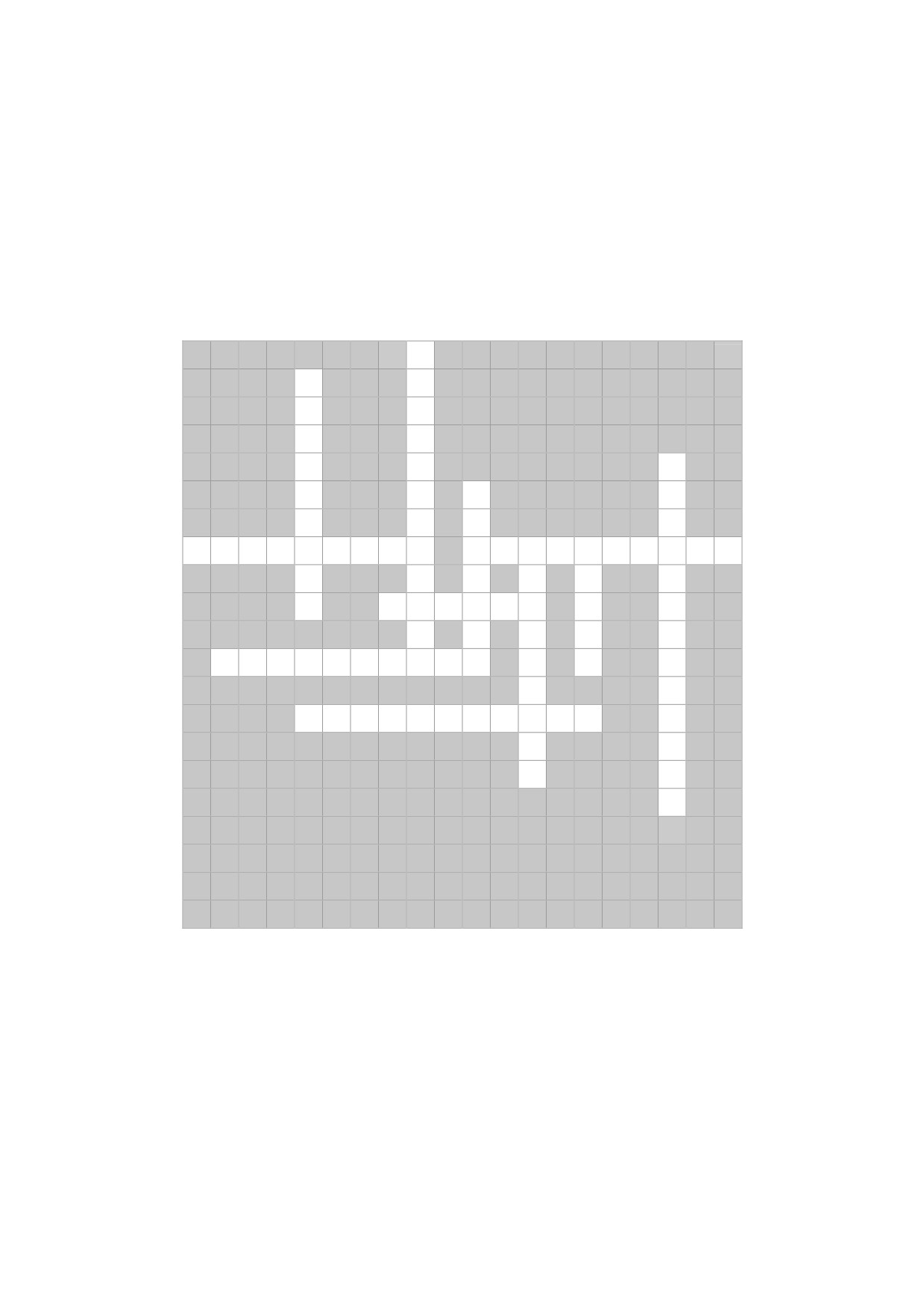
Всероссийская олимпиада школьников по английскому языку
2022 г.
региональный этап
стр. 2 из 3 v3
(8) … (the state that someone is in). He died on 9th June 1870. By the time of his
death, he had written 15 (9) … (large in amount, value or importance) novels and
countless other works. He was undoubtedly a great literary figure whose name will
always be (10) … (having a connection between/relating people or things in
your mind) with a criticism of greed and the notion that good will be rewarded.
1
2
R
6
4
N
8
I
N
10
S
3
0 C
D
L
7
E
E
N
R
5
E
D
K
9S
S
N
I
Y
Task 2
For items 11-20, match the borrowings from other languages existing in English
(column 1) with their descriptions (column 2). One description is not needed.
Example 0. has been done for you: 0. F
содержание .. 1 2 3 4 ..