Volkswagen Arteon (2023 year). Manual in english - page 12

An authorized Volkswagen dealer or authorized Volkswagen Service Facility cannot assume any liability for damage resulting from repairs and technical
modifications that were performed incorrectly.
An authorized Volkswagen dealer or authorized Volkswagen Service Facility is not responsible for damage resulting from repairs and technical modifications that
were performed incorrectly. Such damages are also not covered by the Volkswagen warranty.
Have all repairs and technical modifications performed by suitably qualified professionals. Volkswagen recommends contacting your authorized Volkswagen dealer
or authorized Volkswagen Service Facility for Volkswagen Genuine Parts®.
Volkswagen repair information
Volkswagen service information and official Volkswagen repair information can be purchased.
Customers in Europe, Asia, Australia, Africa, Central and South America:
Contact suitably qualified professionals for assistance. Volkswagen recommends contacting an authorized Volkswagen dealer or authorized Volkswagen Service
Facility. Or register with the erWin (electronic repair and service information) web portal:
Customers in North America and Canada:
If you wish to order the printed service information, please contact:
Volkswagen Technical Literature Ordering Centerliterature.vw.com
You can also register for the erWin web portal:
Diagnostic connection (on-board diagnosis)
In the vehicle interior, there is a diagnostic connection (OBD ) to read event memories. Event memories document faults that have occurred and deviations from
specified values from the control module ⇒
The diagnostic connection (OBD) is located in the footwell on the driver's side on the underside of the instrument panel or next to the hood release lever behind a
cover.
Only have the event memory read out and reset by suitably qualified professionals. Additional information about the saved data can be obtained from suitably
qualified professionals. Volkswagen recommends contacting an authorized Volkswagen dealer or authorized Volkswagen Service Facility.
After a malfunction is fixed, the information about it will be deleted from the event memory. Other memory content is overwritten continuously.
Vehicles with special modifications and mountings
The attachment and mounting manufacturer should make sure that the applicable environmental laws and regulations are met for the attachments and mountings,
especially the EU directive 2000/53/EG about old vehicle and EU directive 2003/11/EG about market introduction restrictions and the use of certain hazardous
materials and compounds.
The installation instructions for any retrofitted equipment should be saved by the vehicle owner and provided to the removal facility if the vehicle is scrapped. This
ensures that even vehicles with retrofitted equipment will be disposed of in a way that will not harm the environment.
Windshield repairs
To perform functions, some equipment requires an electric or electronic component that is secured to the inside of the windshield near the interior rearview mirror,
for example. If the windshield is damaged within the area covered by the electrical or electronic component's visual field, for example with a stone chip, then the
windshield must be replaced. Stone chip repairs can cause malfunctions in the equipment.
After a windshield is replaced, the camera and sensors must be adjusted and calibrated by suitably qualified professionals. Volkswagen recommends contacting an
authorized Volkswagen dealer or authorized Volkswagen Service Facility.
Impairment or damage to sensors and cameras
The sensors or cameras could shift or become damaged as a result of incorrect repairs, structural changes to the vehicle (such as “lowering”), installation of after-
market equipment, or changes to the trim panels. This can also be caused by collisions when parking and by minor damage, such as a stone hitting the windshield.
The area in front of and around the sensors and cameras must not be covered by stickers, auxiliary headlights, decorative license plate frames, or similar objects.
Note the position of sensors and cameras on your vehicle in the vehicle overviews.
NOTICE
Additionally affixed foils and paint on and above the sensors can impair the function of the sensors.
If there is damage in the area of the sensors in the bumper, have the component replaced by a suitably qualified professional. Volkswagen recommends
contacting an authorized Volkswagen dealer or authorized Volkswagen Service Facility.
If ignored, important vehicle functions of driver assistance systems could be impaired and vehicle damage could result.
Have repairs or structural changes performed by suitably qualified professionals. Volkswagen recommends contacting an authorized Volkswagen dealer or
authorized Volkswagen Service Facility.
Additional information:
333

Painting near the sensors can impair the function of the system that uses those sensors.
The Volkswagen emblem can impede the view of the radar sensors to the front on some vehicle versions. Therefore only operate the vehicle with the original
Volkswagen emblem or an emblem approved by Volkswagen.
Engine/motor protection
Engine/motor protection can reduce the risk of damage to the vehicle underbody and the oil pan, for example if driving over curbs, entering driveways, or on
unpaved roads.
Have the retrofitting work performed by suitable qualified professionals. Volkswagen recommends contacting an authorized Volkswagen dealer or authorized
Volkswagen Service Facility.
Engine/motor protection may not be available in all countries.
WARNING
Repairs and modifications to the vehicle that are performed incorrectly can impair the effectiveness of the driver assistance systems and deploying airbags.
This can cause malfunctions, accidents and fatal injuries.
Only have suitably qualified professionals make repairs or modifications to a vehicle. Volkswagen recommends contacting an authorized Volkswagen
dealer or authorized Volkswagen Service Facility.
WARNING
Repairs and modifications to the vehicle that are performed incorrectly may cause vehicle damage, accidents and severe injuries.
Volkswagen recommends the use of Volkswagen original parts or Volkswagen original accessories, which you can acquire from an authorized
Volkswagen dealer or authorized Volkswagen Service Facility. Volkswagen has verified their reliability, safety, and suitability.
Only have suitably qualified professionals make repairs or modifications to a vehicle. Authorized Volkswagen dealers and authorized Volkswagen Service
Facilities have the required tools, diagnostic devices, repair information, and qualified personnel. Volkswagen recommends contacting an authorized
Volkswagen dealer or authorized Volkswagen Service Facility.
Only install parts on the vehicle whose design and function are identical to the parts installed at the factory.
Only use rim/tire combinations that are approved by Volkswagen for your vehicle model.
WARNING
Incorrect use of the diagnostic connection can cause malfunctions, which can then result in collisions and serious injuries.
Never read out the event memory yourself using the diagnostic connection.
Never load data yourself using the diagnostic connection in the vehicle.
Only have the event memory read out with the diagnostic connection by suitably qualified professionals. Volkswagen recommends contacting an
authorized Volkswagen dealer or authorized Volkswagen Service Facility.
Airbag system repairs and situations that can affect the system function
Volkswagen guidelines must be followed when performing repairs and technical modifications ⇒
Only have modifications and repairs on the front bumper, doors, front seats, headliner, or vehicle body performed by an authorized Volkswagen dealer or authorized
Volkswagen Service Facility. Volkswagen recommends contacting an authorized Volkswagen dealer or authorized Volkswagen Service Facility. Airbag system
components and sensors may be located on these vehicle components.
Airbag system components can be damaged during all procedures on the airbag system and when removing and installing system components while performing
other repair procedures. This may prevent the airbags from deploying or cause them to deploy incorrectly in the event of an accident.
The instructions must be followed so that the effectiveness of the airbags is not impaired and removed components do not cause injuries and environmental
pollution. An authorized Volkswagen dealer or authorized Volkswagen Service Facility will be familiar with these provisions. Volkswagen recommends contacting an
authorized Volkswagen dealer or authorized Volkswagen Service Facility.
A modification to the vehicle suspension can impair the functionality of the airbag system during a collision. For example, using a rim/tire combination that is not
approved by Volkswagen, lowering the vehicle, or changing the suspension stiffness including the springs, suspensions struts, shock absorbers, etc., can change
the force that is measured by the airbag sensors and transmitted to the electronic control module. For example, some changes to the suspension can increase the
force measured by the systems and trigger the airbag system in accidents where the airbags would normally not be deployed if the modifications had not been
made. Other modifications can reduce the force measured by the sensors and prevent the airbag from deploying when it should have deployed.
WARNING
Repairs and modifications that were done incorrectly can cause damage and malfunctions to the vehicle as well as impair the effectiveness of the airbag
system. This can cause accidents and serious or fatal injuries.
334

Only have suitably qualified professionals make repairs or modifications to a vehicle. Volkswagen recommends contacting an authorized Volkswagen
dealer or authorized Volkswagen Service Facility.
The airbag module cannot be repaired; it must be replaced.
Never install airbag components removed from old vehicles or from recycling.
WARNING
A modification to the vehicle suspension including using a rim/tire combination that is not permitted can change the functionality of the airbag and increase the
risk of severe or fatal injuries in an accident.
Never install suspension components that do not have the same properties as the original parts installed in the vehicle.
Never use rim/tire combinations that are not approved by Volkswagen.
Mobile phone usage in the vehicle
Electromagnetic waves
When using a mobile phone or radio equipment without connecting to the exterior antenna, the electromagnetic waves will not be deflected outward in an optimum
way. Increased waves in the vehicle interior can occur, especially when reception is poor, for example in rural areas. This could be a potential health risk ⇒
Depending on the equipment, it may be possible to use a suitable telephone interface to connect the mobile phone to the exterior antenna. This will improve the
connection quality and increase the range.
Using a phone
In many countries, using a phone in the vehicle is only permitted if there is a hands-free connection, for example using a Bluetooth ® connection. Before using the
phone, secure it in a suitable holder ⇒
or store it in a storage compartment, such as in the center console, to prevent it from sliding around.
Radio
If operating radio devices, follow the legal regulations and the user guide from the manufacturer. The aftermarket installation of radio devices is subject to approval.
Contact qualified professionals for more information about installing radio equipment. Volkswagen recommends contacting an authorized Volkswagen dealer or
authorized Volkswagen Service Facility.
WARNING
Mobile devices that are loose or not secured correctly can be thrown through the vehicle interior during sudden driving or braking maneuvers or in the event of a
collision and cause injuries.
Secure or store the mobile phone and accessories safely outside the deployment range of the airbags.
WARNING
Using a mobile device or radio equipment inside the vehicle without a connection to an exterior antenna may create electromagnetic energy that exceeds
permissible limits. This may be dangerous to your health and that of your passengers. This also applies if the exterior antenna is not installed correctly.
Maintain a distance of at least 8 inches (20 cm) between the device antennae and any active medical implants, such as pacemakers.
Do not carry a mobile device that is turned on directly above or in the immediate vicinity of any active medical implants, for example by keeping a phone
in a shirt pocket.
Switch off the mobile device immediately if you suspect there is interference with an active medical implant or other medical device.
335
Customer information
Warranty
Warranty
Your vehicle is covered by various warranties:
New Vehicle Limited Warranty.
Limited Warranty Against Corrosion Perforation.
Emissions Control System Warranties: Federal Emissions Control System Defect Warranty, Federal Emissions Performance Warranty.
US battery electric vehicles: High-Voltage System Limited Warranty.
US models: Kansas Safety Belt Limited Warranty.
US models: California Emissions Control System Warranties: Short-term Emissions Defects Warranty, Long-term Emissions Defect Warranty, California
Emissions Performance Warranty.
You can find the detailed information in your Warranty & Maintenance Booklet and California Emissions Booklet or on the website:
maintenance.vw.com
Event data recorder (crash data recorder)
This vehicle is equipped with an event data recorder (EDR). The main purpose of an EDR is to record, in certain crash or near crash-like situations, such as an air
bag deployment or hitting a road obstacle, data that will assist in understanding how a vehicle's systems performed. The EDR is designed to record data related to
vehicle dynamics and safety systems for a short period of time, typically 30 seconds or less. The EDR in this vehicle is designed to record such data as:
How various systems in your vehicle were operating;
Whether or not the driver and passenger safety belts were buckled/fastened;
How far (if at all) the driver was depressing the accelerator and/or brake pedal; and,
How fast the vehicle was traveling.
These data can help provide a better understanding of the circumstances in which crashes and injuries occur.
In addition, data from the driver assistance systems is also collected. In addition to information about whether these systems were switched on or off, had limited
availability, or were inactive, it can also be understood if these functions steered, accelerated, or braked the vehicle in the situations listed above. Depending on the
vehicle equipment, systems may include:
Adaptive Cruise Control (ACC).
Lane Assist
Park Assist
Parking systems
Autonomous Emergency Braking Function (Front Assist)
NOTE: EDR data are recorded by your vehicle only if a non-trivial crash situation occurs; no data are recorded by the EDR under normal driving conditions and no
personal data (e.g., name, gender, age, and crash location) are recorded. However, other parties, such as law enforcement, could combine the EDR data with the
type of personally identifying data routinely acquired during a crash investigation.
To read data recorded by an EDR, special equipment is required, and access to the vehicle or the EDR is needed. In addition to the vehicle manufacturer, other
parties, such as law enforcement, that have the special equipment, can read the information if they have access to the vehicle or the EDR.
Volkswagen will not access, read or process the Event Data Recorder (EDR) data unless the vehicle owner gives permission. This excludes contractual or legal
regulations.
Due to the legal obligation to monitor products, Volkswagen is allowed to use data for field observation as well as for research purposes and quality improvement o
vehicle safety systems. For research purposes, Volkswagen provides the data to third parties in an anonymous format. This means the data does not reference the
individual vehicle or the vehicle owner.
Labels and signs
Factory labels and signs with important information regarding vehicle operation are located in the engine compartment and on several vehicle components.
Never remove these labels and signs or make them illegible.
If vehicle components equipped with labels and signs are replaced, suitably qualified professionals must place identical labels and signs correctly in the same
locations on the new components. Volkswagen recommends contacting an authorized Volkswagen dealer or authorized Volkswagen Service Facility.
Safety certificate
A safety certificate on the driver's door jamb specifies all necessary safety standards and guidelines of the traffic safety authorities in the applicable country at the
336
time of manufacture. The month and year of production as well as the VIN may also be listed. Read the information in the Owner's Manual.
WARNING
Incorrect vehicle handling increases the risk of accidents and injuries.
Follow the legal regulations.
Follow the Owner's Manual instructions.
NOTICE
Incorrect vehicle handling can cause vehicle damage.
Follow the legal regulations.
Perform service according to the specifications.
Fluids in the air conditioning system
Refrigerant in the air conditioning system
The label in the engine compartment provides information about the type and amount of refrigerant used in the vehicle air conditioning system. The label is in the
front section of the engine compartment near the refrigerant filler tubes ⇒
Warning: the air conditioning system must only be serviced by qualified technicians. Refrigerant type. Type of refrigerant oil. See service information
(only available for authorized Volkswagen dealers and authorized Volkswagen Service Facilities). The air conditioning system must only be serviced by
qualified technicians. Flammable refrigerant. Make sure all components are disposed of correctly and never install components removed from old vehicles or
from recycling in the vehicle.
Refrigerant oil in the air conditioner
The air conditioner is filled with refrigerant oil. The label on the air conditioner compressor provides information on the type and quantity of refrigerant oil used
⇒ Repairs and technical modifications.
WARNING
To ensure safe operation, the air conditioner may only be serviced by an authorized Volkswagen dealer or authorized Volkswagen Service Facility qualified in
this respect.
NOTICE
Never repair the air conditioning system evaporator with replacement parts from old vehicles or from the recycling, or replace it with such replacement
parts.
A replacement part for the air conditioning system evaporator must be certified and marked in accordance with SAE standards J2842 HFO-1234y and
R744.
The air conditioner must only be serviced by qualified technicians who are trained according to SAE standard J2845 and certified according to SAE
standard J2911. SAE standard J639 must be complied with while working on the air conditioner. Refrigerant labels that are damaged or no longer
present (in the engine compartment) must be replaced
Infotainment system and aerials
The aerials for the Infotainment system are fitted in various places in the vehicle:
On the inside of the rear window.
On the roof of the vehicle
Antennas on the inside of the window glass can be detected as thin wires.
NOTICE
Antennas that are located on the inside of the window glass can be damaged by abrasive objects or by corrosive and acidic materials.
Never apply stickers over metal wires, for example on the rear window.
Never clean the antennas with corrosive or acidic materials.
NOTICE
A retrofitted Infotainment system must be compatible with the antenna amplifier installed in the vehicle by the manufacturer. Otherwise, the antenna amplifier
337
could become damaged.
Component protection
Some electronic components and control
modules, such as the Infotainment
system, are equipped with component
protection at the factory.
The component protection allows suitably qualified professionals to legitimately install or replace components and control modules. Volkswagen recommends
contacting your Volkswagen dealership.
In the following situations, component protection reduces the risk of components supplied by the factory being operated without restrictions outside the vehicle.
Installation in other vehicles, for example the components have been stolen
Operating components outside of the vehicle
If a message about component protection appears in the instrument cluster display or on the Infotainment system screen, contact a suitably qualified professional fo
assistance. Volkswagen recommends contacting your Volkswagen dealership.
Disposal of old batteries and electronic devices
Old batteries
As with electronic devices, old batteries must be collected and recycled separately by the end user. These batteries are indicated by the crossed-out wheeled
garbage can symbol . You, as the end user, are legally obliged to return old batteries
⇒
In many federal states, old batteries can be handed in to an authorized Volkswagen dealer or authorized Volkswagen Service Facility.
You can obtain more information on return and recycling from your authorized Volkswagen dealer or authorized Volkswagen Service Facility.
Old electrical or electronic devices
Your vehicle contains old electrical/electronic devices, such as the navigation system SD card or remote controls. You can recognize these from the symbol of the
crossed-out wheeled garbage can
Old devices with this marking must be collected separately from normal household garbage and disposed of in accordance with legal requirements.
Batteries within devices that are not permanently installed must be removed beforehand and disposed of separately as batteries.
Any saved personal data must be erased before disposal of old devices.
You can obtain more information on return and recycling from your authorized Volkswagen dealer or authorized Volkswagen Service Facility.
WARNING
Handling lithium-containing batteries requires particular care. For instance, damage can cause gaseous or liquid substances to escape, which pose a
significant risk to health and the environment. A short circuit at the battery terminal may also result in a fire or explosion.
Never heat up lithium-containing batteries.
Never damage lithium-containing batteries.
Never short circuit the battery terminals.
Batteries containing heavy metals are marked with the chemical symbols Hg (mercury), Cd (cadmium) and/or Pb (lead). Heavy metals can be harmful to the
health of humans and animals and accumulate in the environment.
In order to avoid these consequences, it is imperative to ensure you collect batteries separately and return them properly.
Batteries for the remote control vehicle key and remote controls may contain perchlorate. For information on how to handle these materials correctly, see the
following website: www.dtsc.ca.gov/perchlorate. Follow all the legal specifications for dealing with and disposing of these batteries. Volkswagen recommends
having these batteries replaced and disposed of by suitably qualified professionals. Volkswagen recommends contacting an authorized Volkswagen dealer or
authorized Volkswagen Service Facility.
Product recycling
338
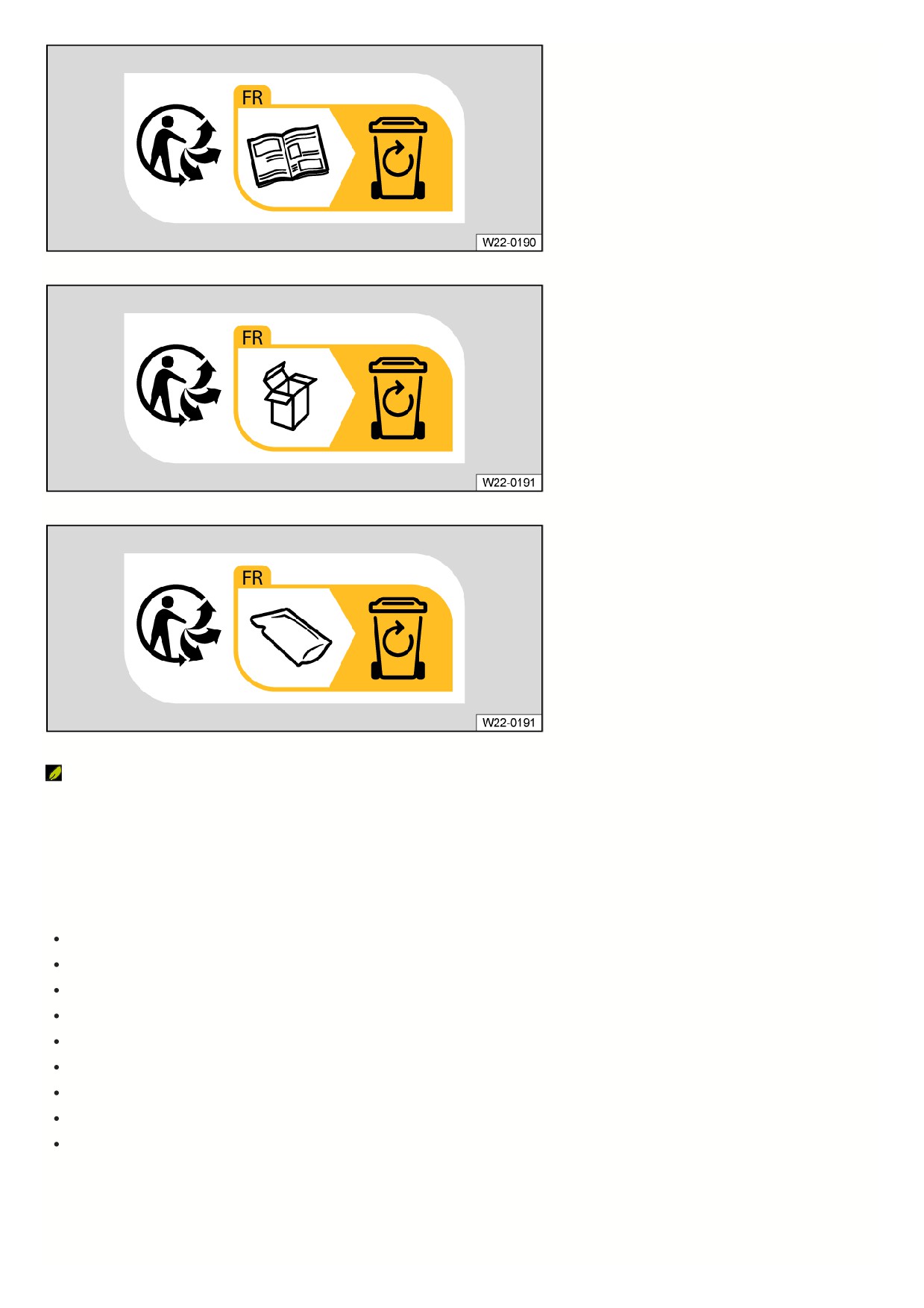
Fig. 202
Fig. 203
Fig. 204
The Triman logo and the Infotri symbol contain important sorting information for the end consumer.
Declaration of conformity (Declaration of Compliance, Telecommunications and Electronic
Systems)
Radio Frequency Devices and Radiocommunication Equipment User Manual Notice.
Radio equipment
Provision for mobile telephone.
Electronic immobilizer
Remote start relay function
Vehicle key
Keyless locking and starting system Keyless Access.
USA: VW Car-Net®.
Adaptive Cruise Control (ACC)
Autonomous Emergency Braking (Front Assist).
Rear Traffic Alert.
These devices comply with:
FCC Part 15.19
These devices comply with Part 15 of the FCC Rules. Operation is subject to the following 2 conditions:
(1) This device may not cause harmful interference, and
339

(2) this device must accept any interference received, including interference that may cause undesired operation
FCC Part 15.21
CAUTION:
Changes or modifications not expressly approved by the party responsible for compliance could void the user's authority to operate the equipment.
These devices comply with RSS-210 of Industry Canada.
Operation is subject to the following 2 conditions:
(1) This device may not cause interference, and
(2) this device must accept any interference, including interference that may cause undesired operation of the device.
The manufacturer is not responsible for any radio or TV interference caused by unauthorized modifications to this equipment.
Third Party Copyright Information
Some products installed in this vehicle contain software components that are covered under Open Source licenses.
A list of the Open Source software components being used, including copyright information, the relevant Open Source license conditions, and those applicable
license texts, are available at the website given above. The source code of specific Open Source software components can be requested from the vehicle
manufacturer. The manufacturer will provide the source code in accordance with the relevant license conditions, whereby you will only be charged for the provision
costs, e.g. delivery costs. The required information can be obtained at the website given above.
Old vehicle return and scrap disposal
Old vehicle return
At the end of its life cycle, your vehicle should be recycled or disposed of in an environmentally friendly manner. This is why the last owners of vehicles in many
states are legally obliged to hand their vehicles over to an authorized treatment facility.
Volkswagen has already made provision for this point: Recycling centers where you can hand over your vehicle are available throughout many federal states.
Find out more information about recycling centers from your authorized Volkswagen dealer or authorized Volkswagen Service Facility.
Scrap disposal
If scrapping the vehicle or its individual parts such as the airbag system and the safety belt pretensioners, the applicable safety regulations must always be followed
Suitably qualified professionals will be familiar with these provisions. Volkswagen recommends contacting your authorized Volkswagen dealer or authorized
Volkswagen Service Facility.
Radar sensors
Depending on the vehicle equipment, assistance systems e.g. Adaptive Cruise Control (ACC) (ACC) that use a radar sensor can be installed in your vehicle.
Observe the legal regulations for restricted access to certain zones that prohibit entry for vehicles with radar sensors. Observe relevant available traffic signs where
applicable. If you want to drive into one of the regions, first contact an authorized Volkswagen dealer or authorized Volkswagen Service Facility to ask whether
radar sensors are installed in your vehicle.
WARNING
Sensors can be subject to physical system limitations. External sources of interference, e.g. from other vehicles, can affect the functions of the sensors. The
supporting systems may be restricted or may not work as expected.
Reporting Safety Defects
If you believe that your vehicle has a defect which could cause a crash or could cause injury or death, you should immediately inform the National Highway Traffic
Safety Administration (NHTSA) in addition to notifying Volkswagen of America, Inc. 3800 Hamlin Road, Auburn Hills, MI 48326.
If NHTSA receives similar complaints, it may open an investigation, and if it finds that a safety defect exists in a group of vehicles, it may order a recall and remedy
campaign. However, NHTSA cannot become involved in individual problems between you, your dealer, or Volkswagen of America, Inc.
To contact NHTSA, you may call the Vehicle Safety Hotline toll-free at:
Tel.: 1-888-327-4236 (TTY: 1-800-424-9153)
go to:
or write to:
Administrator, NHTSA, 1200 New Xersey Avenue, SE. Washington, D.C. 20590
You can also obtain other information about motor vehicle safety from
34
Notes on radio regulations
Declaration of conformity for radio equipment for the USA
Approval mark for radio systems in the USA.
With this document, the manufacturer declares that the radio equipment listed in the following is in compliance with the basic requirements and other relevant
regulations and laws at the time of production:
The radio systems listed below are not available in every vehicle.
Connection to the exterior antenna
Antenna
Antenna amplifier
Bluetooth®.
Remote control key (vehicle)
Garage door opener
ID. Cockpit.
Infotainment system
Keyless Access.
Instrument cluster, electronic immobilizer
Radar sensors for assistance systems
Tire pressure sensors
Mobile phone interface
Volkswagen Car-Net control module
Wi-Fi hotspot.
Central control module
Radio systems with this marking must be collected separately from normal household garbage and disposed of in accordance with legal requirements
⇒ Disposal of old batteries and electronic devices. Symbol for limited use of certain hazardous substances in electrical and electronic devices in accordance
with the RoHS directive.
Approval numbers
FCC ID: 2AAJCBR20, FCC ID: 2AAJCBR21, FCC ID: 2AA98, FCC ID: 2AA98-COLOUR5C, FCC ID: 2AA98-MEDIUM5C, FCC ID: 2AA98-MEDIUM5C21,
FCC ID: 2AA98A, FCC ID: 2AHPN-WLC, FCC ID: 2AOUZ17101001, FCC ID: 2AOUZ17101002, FCC ID: 2AOUZ17101010, FCC ID: 2AOUZ17101022,
FCC ID: 2AOUZ17101023, FCC ID: 2AOUZ17101031, FCC ID: 2AOUZ17101032, FCC ID: 2AOUZ17101033, FCC ID: 2AOUZ17101034,
FCC ID: 2AOUZ17101041, FCC ID: 2AOUZ17101042, FCC ID: 2AOUZ17101043, FCC ID: 2AOUZ17101051, FCC ID: 2AOUZ17101052,
FCC ID: 2AOUZ17101053, FCC ID: 2AOUZ17101054, FCC ID: 2AOUZ17101055, FCC ID: 2AOUZ17101056, FCC ID: 2AOUZ17101057,
FCC ID: 2AOUZ17101071, FCC ID: 2AOUZ17101072, FCC ID: 2AOUZ18020531, FCC ID: 2AOUZ18020532, FCC ID: 2AOUZ18020533,
FCC ID: 2AOUZ18020534, FCC ID: 2AOUZ18100931, FCC ID: 2APOM-MQBA0, FCC ID: 2AVXWWSBRC001, FCC ID: 2AXPS-WPC003-1, FCC ID: 772C-
LB1FD, FCC ID: BEJLCW05-VWE5, FCC ID: BEJMIB2, FCC ID: BEJMIB2PQ, FCC ID: BEJ-MEBICAS3, FCC ID: BEJ-MIBPQMIN, FCC ID: BEJ-MIB3OI,
FCC ID: BEJTLAHW3IU-E, FCC ID: BEJTLAHW3IU-N, FCC ID: BEJTLVHE4IU-E, FCC ID: BEJTLVHE4IU-N, FCC ID: BEJTLVHM3IU-E, FCC ID: BEJTLVHW3IU-
E, FCC ID: BEJTLVHM3IU-N, FCC ID: BEJTLVM3IU-N, FCC ID: BEJTUVM01IU, FCC ID: CWTUGZZF1, FCC ID: CWTUGZZF2, FCC ID: IYZVK2, FCC ID: KR5-
BCMEVOC, FCC ID: KR5FS14T, FCC ID: KR5FS14TK, FCC ID: KR55NA920791A, FCC ID: LTQR3TR, FCC ID: NBG010180T, FCC ID: NBG010905A,
FCC ID: NBG011719A, FCC ID: NBG013854, FCC ID: NBG01RS4, FCC ID: NBG011719A, FCC ID: NBG10176, FCC ID: NBG9068, FCC ID: NBG92596263,
FCC ID: NBGBCMEVO, FCC ID: NBGBCMEVO5, FCC ID: NBGBCM2R, FCC ID: NBGFS09P03, FCC ID: NBGFS12A, FCC ID: NBGFS12A01,
FCC ID: NBGFS12P, FCC ID: NBGFS12P01, FCC ID: NBGFS12PM, FCC ID: NBGFS12P01M, FCC ID: NBGFS125C, FCC ID: NBGFS125C1,
FCC ID: NBGFS125C5, FCC ID: NBGFS173NP, FCC ID: NBGFS173NPM, FCC ID: NBGFS173NR, FCC ID: NBGFS1744M, FCC ID: NBGFS19,
FCC ID: NBGFS191, FCC ID: NBGFS93N, FCC ID: NBGMQBBB, FCC ID: NBGMQBBH, FCC ID: NBGPQ12P01, FCC ID: NBGRSB19, FCC ID: NF3-FR5CPEC,
FCC ID: NF3-LRR3SCU, FCC ID: NF3-LRR4, FCC ID: NF3-MRR1PLUS, FCC ID: NF3-MRR1REAR, FCC ID: NF3-MRREVO14F, FCC ID: NF3-LRR3SCU,
FCC ID: NT8-FPK8IMMO5D, FCC ID: NT8-VWMIBREGIO, FCC ID: NZLADHL5D, FCC ID: NZLJCIBUSHL4, FCC ID: OAYARS4B, FCC ID: OAYARS5B,
FCC ID: OYGTSSRE4UD, FCC ID: OYGTSSRE4UF, FCC ID: OYGTSSSG4G5, FCC ID: QIPALAS6A-US, FCC ID: QISME919BS-567BN, FCC ID: QISME919BS-
567BNB, FCC ID: QZ9-KA3, FCC ID: RK7MBC-NAR, FCC ID: RK7MBC-NAR2, FCC ID: RK7185-00, FCC ID: RK7186-00, FCC ID: RX2BNFHL,
FCC ID: RX2BNFLL, FCC ID: T8GA270, FCC ID: T8GA475, FCC ID: T8GA476, FCC ID: T8GP114, FCC ID: VPYLB1KD, FCC ID: WJLHT-5.
Interference statement
This device complies with part 15 of the FCC Rules. Operation is subject to the following two conditions:
(1) This device may not cause harmful interference, and
(2) This device must accept any interference received, including interference that may cause undesired operation.
CAUTION TO USERS: Changes or modifications not expressly approved by the party responsible for compliance could void the user`s authority to operate the
equipment.
341
FCC RF Exposure Statement
FCC ID: RK7MBC-NAR
This equipment complies with FCC radiation exposure limits set forth for an uncontrolled environment. End users must follow the specific operating instruction for
satisfying RF exposure compliance. This transmitter must not be co-located or operating in conjunction with any other antenna or transmitter.
This is a CONSUMER device.
BEFORE USE, you MUST REGISTER THIS DEVICE with your wireless provider and have provider's consent. Most wireless providers consent to the use of signal
boosters. Some providers may not consent to the use of this device on their network. If you are unsure, contact your provider.
You MUST operate this device with approved antennas and cables as specified by the manufacturer. Antennas MUST be installed at least 20 cm (8 inches) from
any person.
You MUST cease operating this device immediately if requested by FCC or a licensed wireless service provider.
WARNING: E911 location information may not be provided or may be inaccurate for calls served by using this device.
Wireless notice
This device complies with FCC radiation exposure limits set forth for an uncontrolled environment and meets the FCC radio frequency (RF) Exposure Guidelines.
This transmitter must not be colocated or operating in conjunction with any other antenna or transmitter. The antenna should be installed and operated with
minimum distance of 20 cm between the radiator and your body.
FCC Class A digital device notice
NOTE: This equipment has been tested and found to comply with the limits for a Class A digital device, pursuant to part 15 of the FCC Rules. These limits are
designed to provide reasonable protection against harmful interference when the equipment is operated in a commercial environment. This equipment generates,
uses, and can radiate radio frequency energy and, if not installed and used in accordance with the instruction manual, may cause harmful interference to radio
communications. Operation of this equipment in a residential area is likely to cause harmful interference in which case the user will be required to correct the
interference at his own expense.
FCC Class B digital device notice
NOTE: This equipment has been tested and found to comply with the limits for a Class B digital device, pursuant to Part 15 of the FCC Rules. These limits are
designed to provide reasonable protection against harmful interference in a residential installation. This equipment generates, uses and can radiate radio frequency
energy and, if not installed and used in accordance with the instructions, may cause harmful interference to radio communications. However, there is no guarantee
that interference will not occur in a particular installation. If this equipment does cause harmful interference to radio or television reception, which can be determined
by turning the equipment off and on, the user is encouraged to try to correct the interference by one or more of the following measures:
- Reorient or relocate the receiving antenna.
- Increase the separation between the equipment and receiver.
- Connect the equipment into an outlet on a circuit different from that to which the receiver is connected.
- Consult the dealer or an experienced radio/TV technician for help.
342

Technical data
Information on technical data
General information about specifications
As long as nothing else is specified or listed, the technical data applies to the base model. Different values may result due to optional equipment, different model
versions, special equipment, and market-specific equipment. The specifications in the legal vehicle documents always take precedence.
The drive and power of the vehicle are listed in the official vehicle registration.
Weight
The values for the curb weight in the following tables apply to a vehicle ready for operation with standard equipment, without a driver, with fluids including 100% full
fuel tank. Optional equipment and retrofitted equipment will increase the specified curb weight and reduce the possible load.
The load consists of the following weight:
Passengers.
All luggage inside and outside the vehicle.
Attachments.
Trailer tongue weight if in trailer mode.
The permitted total vehicle weight and the gross axle weight rating must never be exceeded. The permissible values are indicated on the safety compliance label or
on the identification label on the B-pillar on the driver's side ⇒ Safety certificate ⇒ Identification label.
Performance
The performance was determined without equipment that limits performance, such as add-on parts.
Due to technical or legal reasons, the performance specifications and mileage may vary.
On some engines with heavy duty suspension, the speed maximum speed may be limited and lower.
Towing weight and trailer tongue weight ratings
The towing weight and tailer tongue weight ratings on the trailer hitch identification label are simply the test values for the trailer hitch. The vehicle-based
specifications, which are often below these values, can be found in your vehicle documents. The specifications in the official vehicle registration or on the
identification label of the vehicle ⇒ Identification label or safety certificate ⇒ Safety certificate always take precedence.
Towing weight
The indicated combination weights apply only for altitudes up to 1000 m (3000 ft) above sea level. For every additional 1000 m (3000 ft), the gross combination
weight rating must be reduced approximately 10%.
Incline angle
The incline angle is the specification up to which the vehicle is able to drive uphill on an angle with its own power. This can depend on the road conditions, the
weather conditions, and the engine power, among other things. The values apply to a vehicle that is in motion and not to a vehicle that starts to drive form a
stationary position.
A rising difference in altitude (incline) on a 100 m (300 ft) stretch is given in percentage or degrees (100% = 45 degrees).
Vehicle Identification Number (VIN)
Structure of the vehicle identification number (VIN)
The vehicle identification number (VIN, VIN) consists of 17 characters. These characters can be sorted into seven groups.
The structure is explained using the following examples of vehicle identification numbers.
Group
1
Position
1
2
3
4
5
6
7
8
9
10
11
12
13
14
15
16
7
W
V
W
Z
Z
Z
C
B
Z
M
E
4
0
0
9
5
3
Example
W
V
W
A
F
2
9
N
4
8
Y
0
0
0
0
0
1
Vehicle manufacturer identification:
WVW
Volkswagen Passenger Vehicles
WVG Volkswagen Passenger Vehicles
343
1VW Volkswagen Group of America Inc., Volkswagen de México, S.A. de C.V
3VW
Volkswagen de México, S.A. de C.V
XW8
LLC Volkswagen Group Rus (Volkswagen/Skoda Kaluga)
MFB
Garuda Matraman Motor (Indonesia)
Filler characters: The filler characters may vary depending on manufacturer, or contain information on the body shape and transmission type.
Vehicle class, depending on model:
3H
Arteon
5T
Touran
6R
Polo
AC
T-Roc convertible
BV
Golf
CB
Passat
CA
Atlas
CR
Touareg
Depending on the manufacturer, digits 7 to 9 can also contain information on the fuel type (7) and vehicle class (8 and 9).
Filler characters or check digits: The filler characters or check digits may vary depending on the manufacturer.
VIN index, depending on model year:
M
2021
N
2022
P
2023
R
2024
Production location, plant where the vehicle was manufactured:
C
Volkswagen plant in Chattanooga
D
Volkswagen plant in Bratislava
E
Volkswagen plant in Emden
P
Volkswagen plant in Osnabrcck
Or: Volkswagen plant in Kaluga
M
Volkswagen plant in Puebla
P
Volkswagen plant in Zwickau
T
Volkswagen plant in Pune
U
Volkswagen plant in Uitenhage
V
Volkswagen plant in Palmela
W
Volkswagen plant in Wolfsburg
Y
Volkswagen plant in Pamplona
The letter assignment for the production site may vary depending on the vehicle or be assigned twice.
Sequential production number for each model year.
Position of the vehicle identification number
344
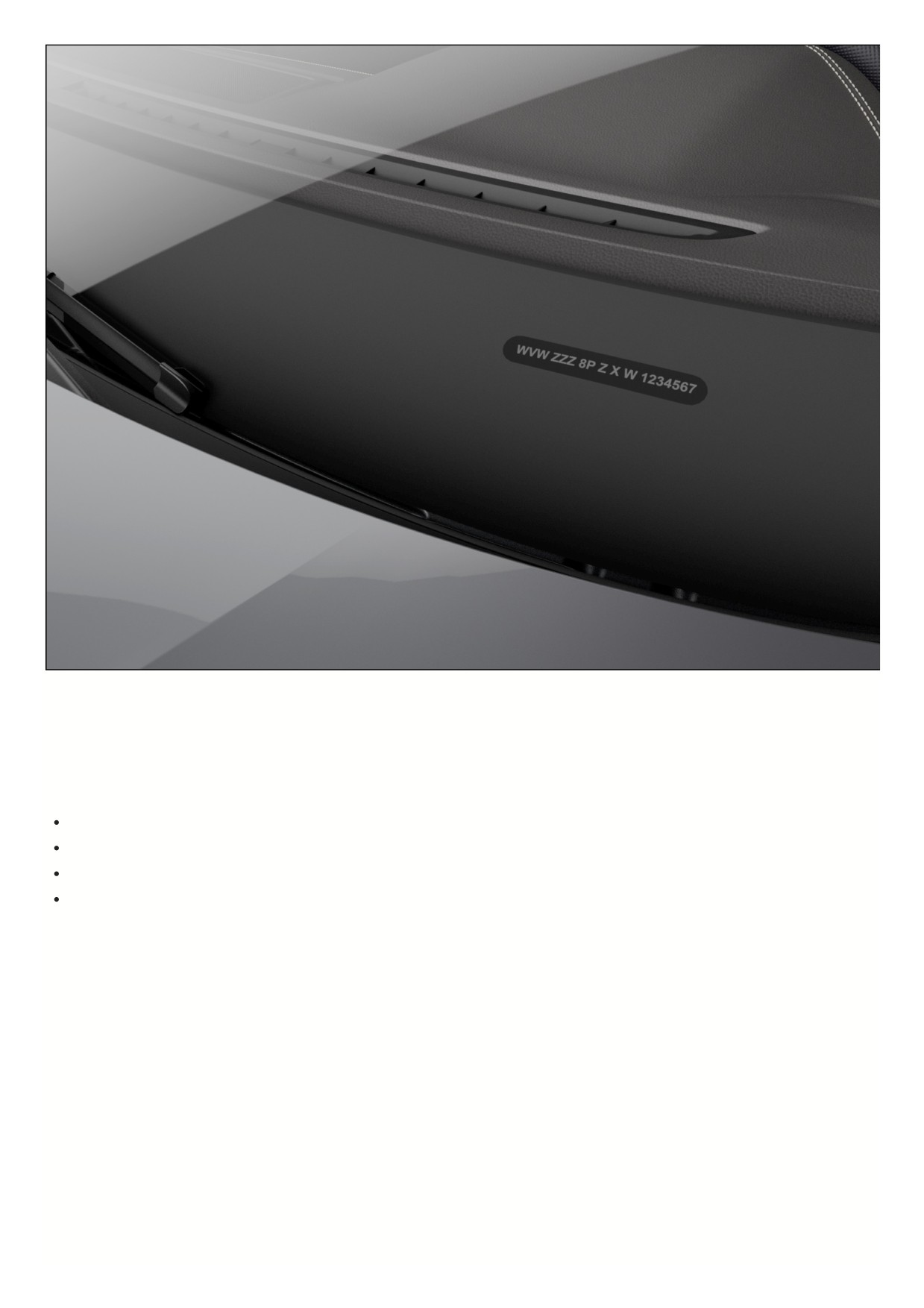
Fig. 205 In the windshield: vehicle identification number (VIN)
The VIN can be read from the outside through the viewing window in the windshield. The viewing window is at the side of the lower section of the windshield.
In some models, it may be possible to display the VIN in the Service menu or in the vehicle settings, depending on the Infotainment system. The vehicle
identification number may also be located on the identification label.
The VIN may also be stamped in the following locations, depending on the model, market, and engine:
In the right water drain channel in the engine/motor compartment
On the right suspension strut tower in the engine/motor compartment
In the engine compartment near the hinge for the hood on the right side of the vehicle.
Under the carpet behind the right front seat
Identification label
345
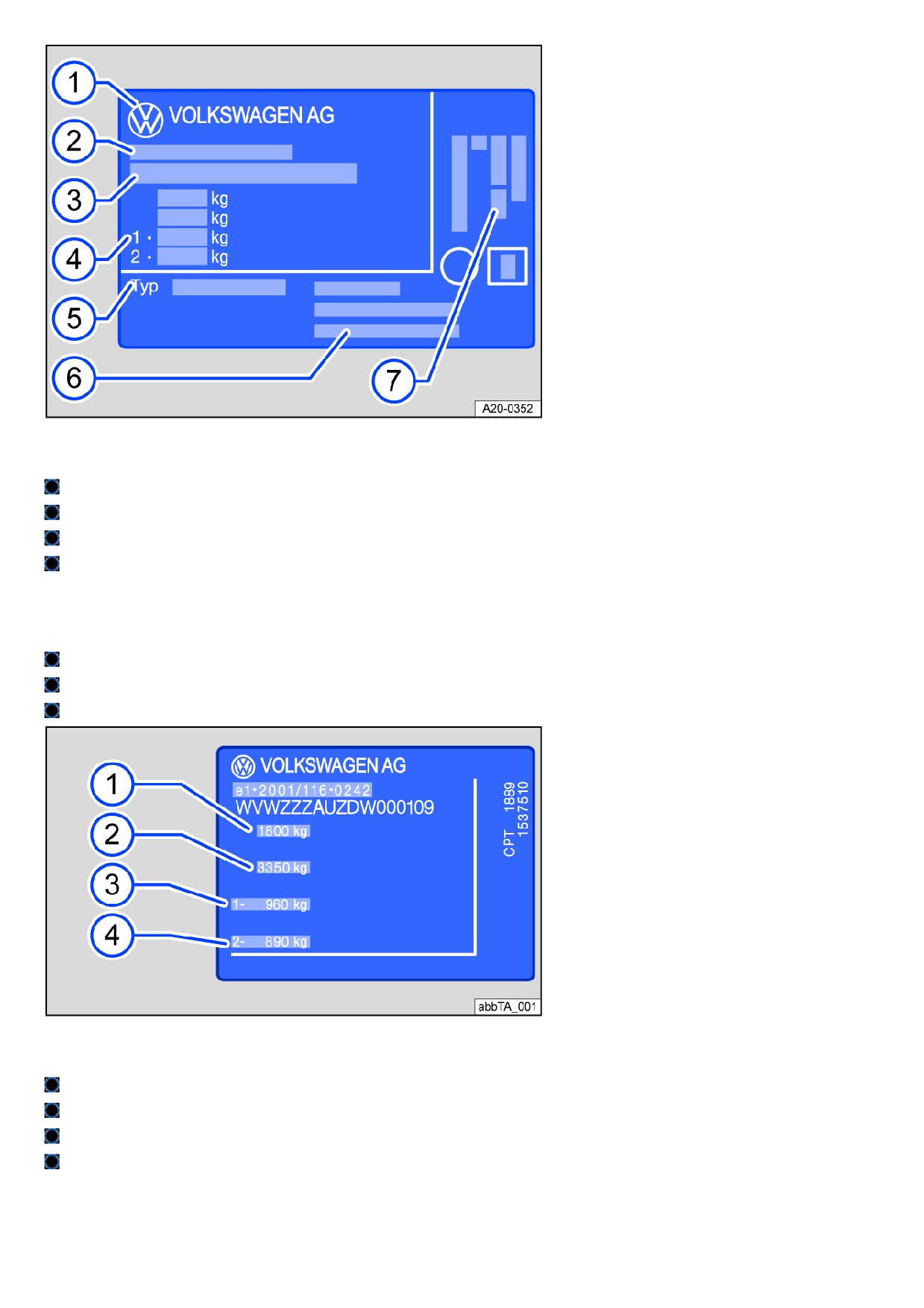
Fig. 206 Identification label (general example): version 1.
Depending on the country, the type approval number, such as the EU operating license, may be specified.
Manufacturer code.
Type approval.
Vehicle Identification number.
Gross Vehicle Weight Rating.
Gross combination weight rating (towing vehicle and trailer).
Front Gross Axle Weight Rating.
Rear Gross Axle Weight Rating.
Vehicle model
Manufacturer's address.
Engine code.
Fig. 207 Identification label (general example): version 2.
Depending on the country, the type approval number, such as the EU operating license, may be specified.
Gross Vehicle Weight Rating.
Gross combination weight rating (towing vehicle and trailer).
Front Gross Axle Weight Rating.
Rear Gross Axle Weight Rating.
Depending on the country and model, the model plate may be visible in the lower section of the door pillar when the driver’s for front passenger door is open.
Vehicles exported to some countries do not have a model plate.
Safety certificate
346
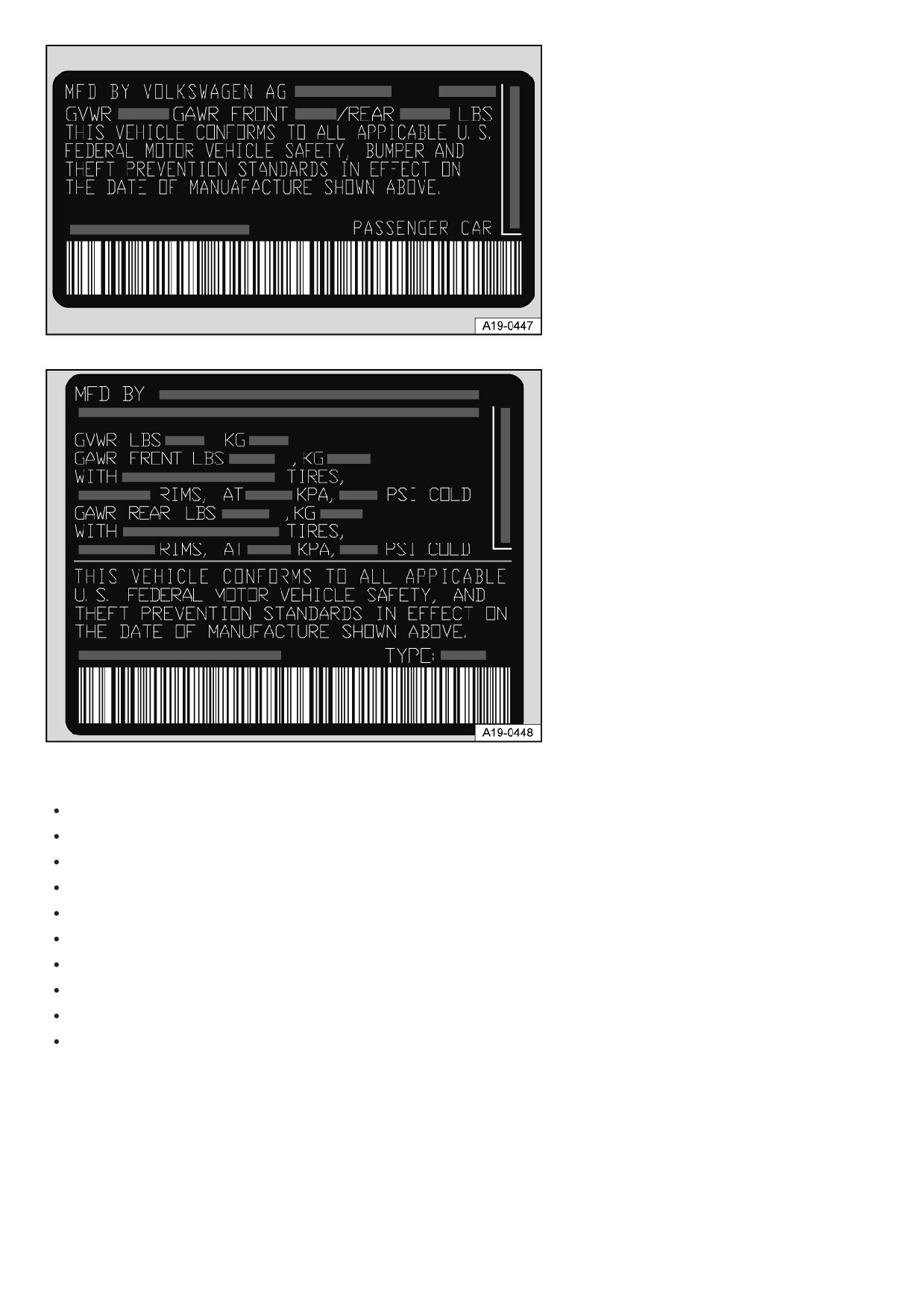
Fig. 208 Safety certificate (general example).
Fig. 209 Safety certificate (general example).
A safety certificate on the driver door pillar displays the following information:
Manufacturer.
Country of manufacture.
Date of manufacture.
Gross vehicle weight rating.
Gross axle weight ratings.
Tire size.
Rim size
Tire pressure.
Vehicle Identification number.
Type designation.
Dimensions
347
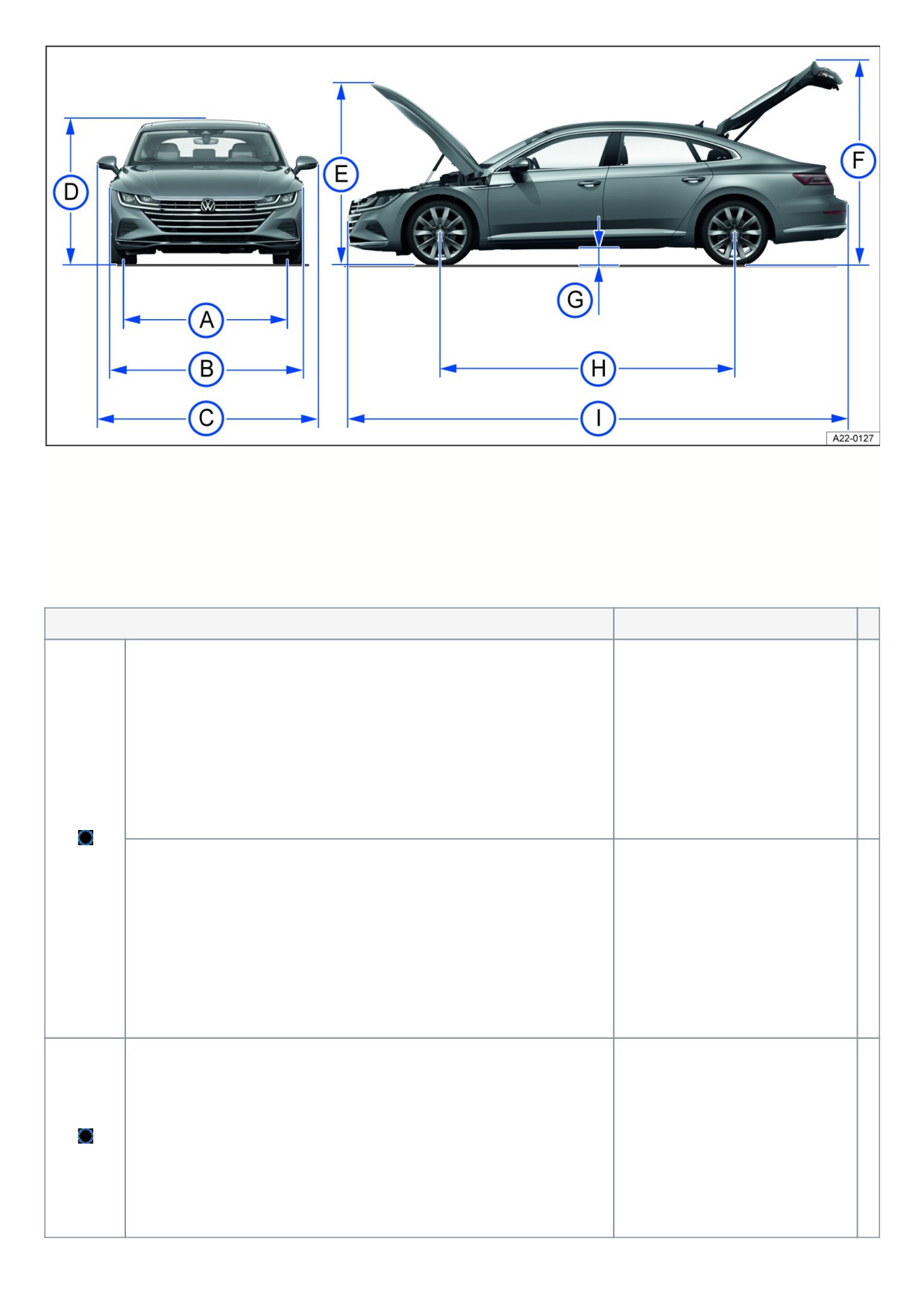
Fig. 210 Vehicle dimensions.
The information in the table applies for the standard model with standard equipment.
In the case of other rim and wheel sizes, additional equipment, different model versions and the retrofitting of accessories as well as in the case of special vehicles,
these values may differ.
Information about how the weight specifications are compiled can be found in section
⇒ Leneral information about specifications .
Where the vehicle dimensions are not given, the values were not available at the time of printing.
Key for fig. 210:
1
5
8
7
mm
(
Front track
(in)
6
2
5
)
1
5
7
7
mm
(
Rear track
(in)
6
2
1
)
1
8
7
1
mm
(
Width
(in)
7
3
7
)
348
Key for fig. 210:
1
9
2
4
mm
(
Width from outside mirror to outside mirror (outside mirror folded in)
(in)
7
5
7
)
1
4
2
6
mm
(
Height at curb weight to top of the roof
(in)
5
6
1
)
1
4
4
2
mm
(
Height with curb weight with navigation antenna
(in)
5
6
8
)
1
8
6
8
mm
(
Height with open hood and at curb weight
(in)
7
3
5
)
2
1
7
0
mm
(
Height with open trunk lid and at curb weight
(in)
8
5
4
)
1
3
8
mm
(
Ground clearance at curb weight between the axles
(in)
5
4
)
349
Key for fig. 210:
2
8
4
1
(
mm
Wheelbase with curb weight
1
(in)
1
1
9
)
1
1
9
m
(
Minimum turning circle diameter
(ft)
3
9
0
)
4
8
6
6
(
mm
Length from bumper to bumper
1
(in)
9
1
6
)
Tank capacities
The fuel tank has the following volume:
17.4 gallons (approximately 66 l)
The capacity of the fuel tank includes an indeterminate reserve quantity that remains in the fuel tank when the fuel gauge shows that the fuel tank is empty. The
reserve quantity is variable and cannot reliably serve to increase the remaining range.
Gasoline engines
2.0 l, 4 cylinder, TFSI®, 224 kW (300 hp), gasoline engine
Engine overview
kW
224 at 5350 - 6500 rpm
Output
hp
300 at 5350 - 6500 rpm
Engine code
DSFB
Nm
400 at 2000 - 5350 rpm
ft-lb
295 at 2000 - 5350 rpm
Maximum torque
35
D
S
G
®
7
4
Transmission
DSG®7
M
O
T
I
O
N
km/h
-
-
Maximum speed
mph
-
-
Weight specifications and axle loads
D
S
G
®
7
4
Transmission
DSG®7
M
O
T
I
O
N
1
7
kg
1668
8
2
Curb weight
3
9
lbs
3677
2
9
2
2
kg
2140
8
0
Gross Vehicle Weight Rating
5
0
lbs
4718
2
7
1
1
kg
1130
7
0
Front Gross Axle Weight Rating
2
5
lbs
2491
7
9
1
1
kg
1060
6
0
Rear Gross Axle Weight Rating
351
2
5
lbs
2337
5
7
Towing weights
D
S
G
®
7
4
Transmission
DSG®7
M
O
T
I
O
N
9
kg
907
0
7
Braked towing weight
2
0
lbs
2000
0
0
7
kg
748
4
8
Unbraked towing weight
1
6
lbs
1650
5
0
3
1
kg
3034
8
4
Maximum gross combination weight rating
7
0
lbs
6710
2
0
9
kg
91
1
Maximum permissible trailer tongue weight rating
2
lbs
200
0
0
4)
This data was not available at the time of printing.
352