Volkswagen Arteon (2023 year). Manual in english - page 6
Cruise control system malfunction
Malfunction. The yellow indicator light turns on.
1. Switch off the cruise control system and seek assistance from an authorized Volkswagen dealer or authorized Volkswagen Service Facility. Volkswagen
recommends contacting an authorized Volkswagen dealer or authorized Volkswagen Service Facility.
The regulation function is canceled automatically
The vehicle has exceeded the stored speed for an extended period.
No gear is engaged for driving forward.
Brake assistance systems, for example ASR or ESC, are active.
The vehicle has been braked by Front Assist.
If the problem persists, switch off the cruise control system and seek assistance from an authorized Volkswagen dealer or authorized Volkswagen Service
Facility. Volkswagen recommends contacting an authorized Volkswagen dealer or authorized Volkswagen Service Facility.
Adaptive Cruise Control (ACC)
Introduction
Adaptive Cruise Control (ACC)
maintains your selected speed. When
the vehicle approaches a vehicle driving
ahead, the ACC adjusts the speed
automatically and maintains your set
distance to the vehicle driving ahead.
Does this vehicle have ACC?
The vehicle has ACC if you can adjust ACC settings in the Assistance systems menu in the Infotainment system.
Speed range
You can set a speed between approx. 20 mph (approx. 30 km/h) and approx. 130 mph (approx. 210 km/h). The maximum speed that you can set may be lower,
depending on the vehicle equipment and country.
Driving with ACC
You can override the ACC system at any time. The regulation function is canceled when you apply the brakes. When you accelerate, the regulation function is
paused while accelerating and then resumed.
If a trailer is hitched, ACC is less dynamic.
Driver intervention request
If automatic deceleration by the ACC is not sufficient or the system limits are reached, the ACC will prompt you - with a message in the instrument cluster -
to also apply the brakes. The red warning light will also turn on and a warning tone will sound. Take over steering and be ready to brake.
Radar sensor
ACC detects driving situations using a radar sensor in the front of the vehicle. The radar sensor has a range of up to approx. 120 m (approx. 400 ft).
WARNING
The intelligent technology of the ACC cannot overcome the natural laws of physics and can operate only within the limits of the system. Never allow the
increased convenience to tempt you into taking risks. Careless or unintended use of the ACC system can cause accidents and serious injuries. The system
cannot replace the driver's attention.
Always adapt your speed and distance to vehicles driving ahead based on the visual, weather, road, and traffic conditions.
Never use ACC when visibility is poor or when roads are steep, winding, flooded, or slippery, like from snow, ice, moisture, or gravel.
Never use ACC when driving off-road or on unpaved roads. ACC is only designed for use on paved roads.
Take over steering immediately if a driver intervention prompt appears in the instrument cluster display or the deceleration by ACC is not sufficient.
Apply the brakes if the vehicle continues to roll unintentionally, e.g. after a driver intervention prompt.
Always be ready to resume control of the vehicle speed.
Special driving situations
Please read the introductory information and heed the Warnings and Notice ⇒
Introduction.
The functions described below depend on the vehicle equipment and are not available in all countries.
Stop-and-go traffic
ACC can brake vehicles with automatic transmissions to a stop and hold them stationary. ACC remains active, and the instrument cluster display shows ACC is
ready for a few seconds. In this time, the vehicle will automatically move again once the vehicle driving ahead starts.
153

Extend drive-readiness or reactivate:
1. Press the
button.
Driving off when drive-readiness has ended and the vehicle driving ahead has already started moving:
1. Press the
button.
Or: Briefly press the accelerator pedal.
The ACC does not stay active in the following scenarios:
The stationary phase lasts several minutes.
A vehicle door is opened.
The ignition is switched off.
WARNING
If ACC is ready appears in the instrument cluster display and the vehicle driving ahead starts to move, your vehicle will start driving automatically. The vehicle
may not be able to detect obstacles in the vehicle's path when this happens. This may cause accidents and serious injuries.
Check the vehicle's path every time before you start driving and brake the vehicle if necessary.
ACC limitations
Please read the introductory information and heed the Warnings and Notice ⇒
Introduction.
When should I not use ACC?
The ACC system is not suitable in the following situations. Canceling the regulation function
⇒
:
When driving in heavy rain, snow, or spray
When driving through construction zones, tunnels or toll stations.
When driving on winding roads, for example, mountain roads
When driving off-road
When driving in parking ramps
When driving on roads with embedded metal objects, such as railroad tracks
When driving on gravel roads
Following a violent impact affecting components within the range of the radar sensor, e.g. following a rear-end collision.
WARNING
If you use the ACC in the situations mentioned, accidents and serious injuries may result and legal regulations may be violated.
Delayed reaction
If the radar sensor is exposed to environmental conditions that limit its function, the system may have a delayed response to this. Therefore, the display that
indicates that functions are restricted may be delayed when you first start driving or while driving ⇒
Introduction.
Unrecognizable objects
ACC only detects vehicles that are moving in the same direction. The following will not be detected:
Pedestrians
Animals
Stationary vehicles
Vehicles crossing the street or oncoming vehicles
Other stationary obstacles
154
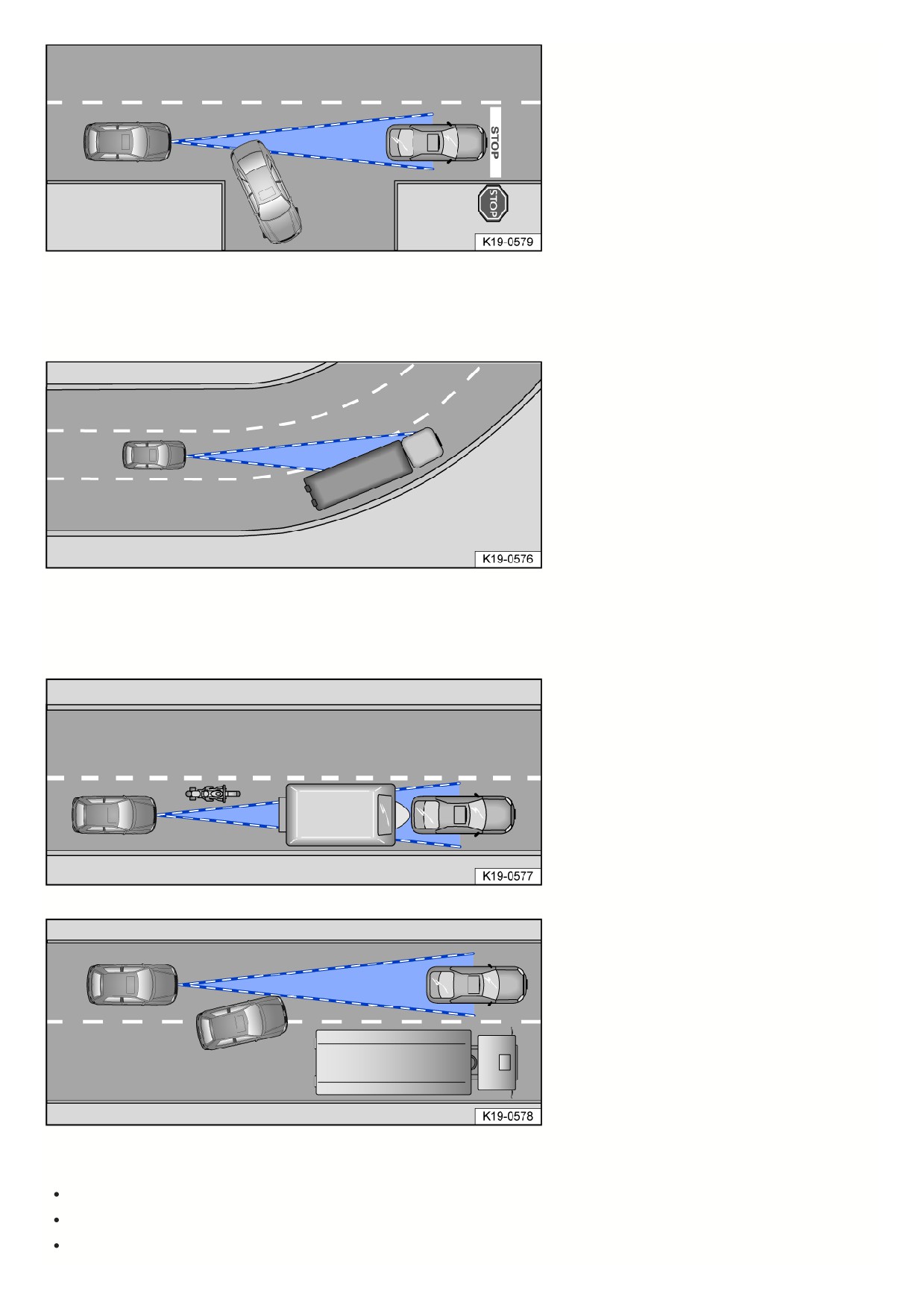
Fig. 107 Turning and stationary vehicles.
If, for example, a vehicle detected by the ACC turns or changes lanes and there is a stationary vehicle in front of this vehicle, the ACC will not react to the stationary
vehicle fig. 107.
Curves
Fig. 108 Driving around curves.
The radar sensor only measures straight ahead. Therefore, on tight curves, vehicles may be detected by mistake or vehicles driving ahead may not be detected
fig. 108.
Vehicles outside the sensor range
Fig. 109 Narrow vehicle.
Fig. 110 Changing lanes.
The ACC may not react, may react with a delay, or may react in a way that is not desired in the following situations:
If there are vehicles that are driving close to your vehicle but outside the sensor range, such as motorcycles fig. 109.
If vehicles change to your lane close in front of your vehicle fig. 110.
Vehicles with attachments exceeding the vehicle dimensions.
155
Switching ACC on and off
Please read the introductory information and heed the Warnings and Notice ⇒
Introduction.
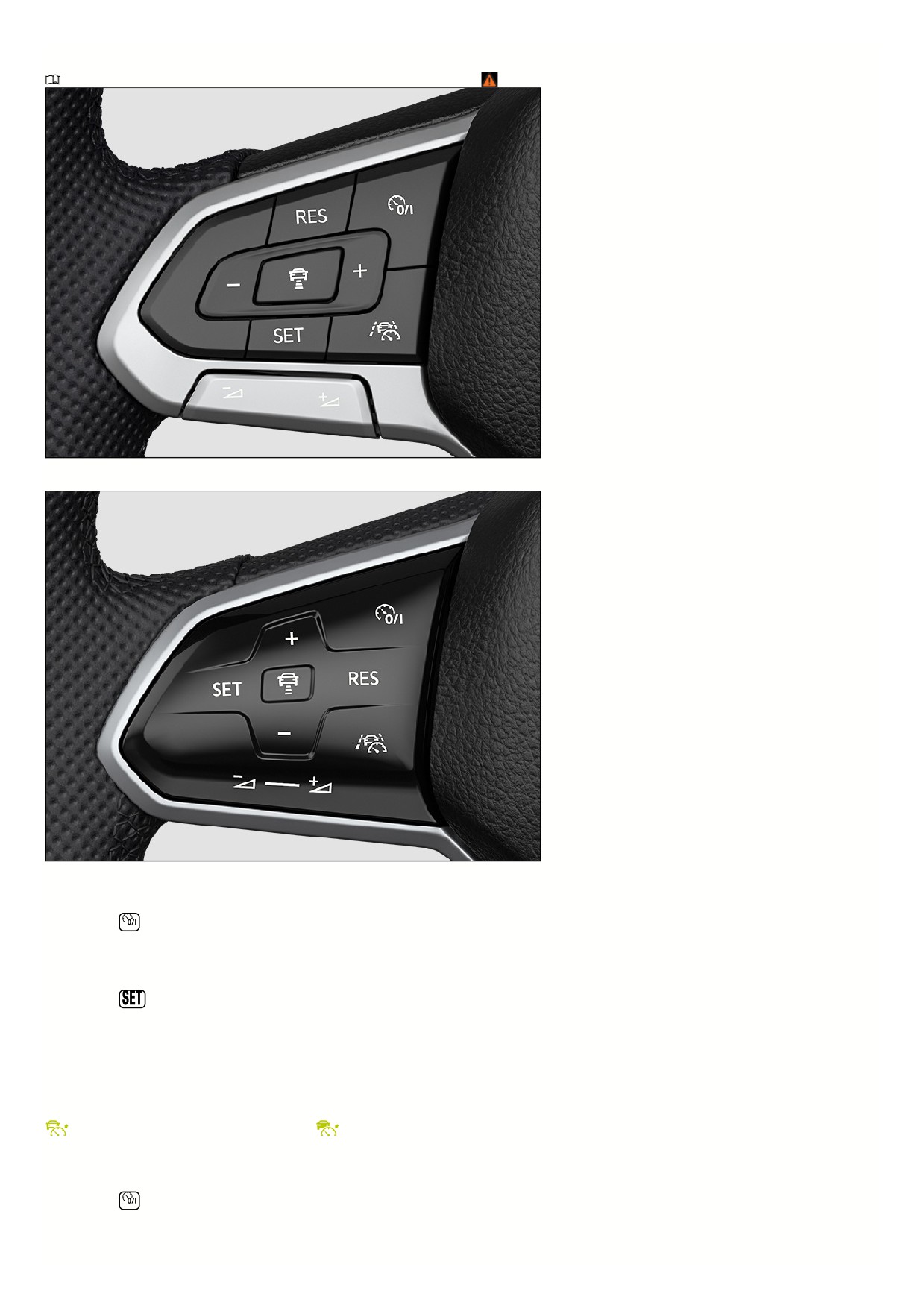
Fig. 111 Left side of the multi-function steering wheel (variant 1).
Fig. 112 Left side of the multi-function steering wheel (variant 2).
Switching on
1. Press the
button.
ACC is not yet functioning.
Starting the regulation function
1. Press the
button while driving forward.
ACC saves the current speed and maintains the set distance. If the current speed is outside the specified speed range, the ACC adjusts the minimum speed
when driving too slowly or the maximum speed when driving too quickly.
In addition, the anti-slip regulation (ASR) is activated and ESC Sport is deactivated.
The following indicator lights may turn on depending on the driving situation:
ACC is regulating - no vehicle ahead detected.
ACC is regulating - vehicle ahead detected.
If the ACC is not functioning, the gray indicator lights come on.
Canceling the regulation function
1. Press the
button briefly.
Or: Press the brake pedal.
If the respective indicator light for the driving situation lights up gray, the speed and distance are saved.
156
If the anti-slip regulation (ASR) is deactivated, then the Adaptive Cruise Control is automatically stopped.
Resuming the regulation function
1. Press the
button.
ACC assumes the last set speed and the last set distance. The instrument cluster display shows the set speed, and indicator lights turn on corresponding to the
driving situation.
Switching off
1. Press and hold the
button.
The set speed is deleted.
Adjusting the ACC settings
Please read the introductory information and heed the Warnings and Notice ⇒
Introduction.
Setting the distance
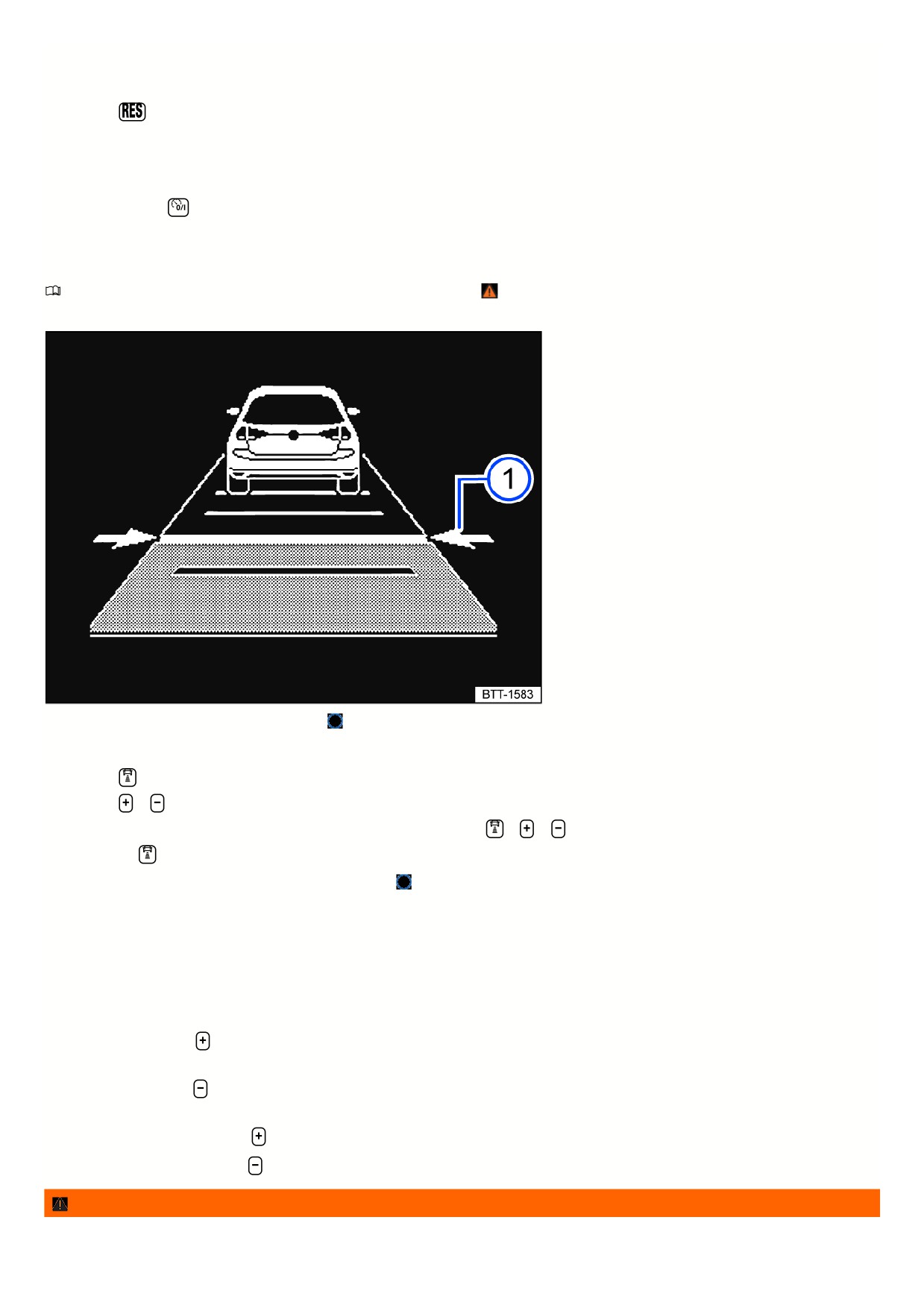
Fig. 113 In the instrument cluster display: set distance
(general example, ACC is regulating).
You can set the distance at five levels from very short to very long:
1. Press the
button.
2. Press the
or
button.
Steering wheel version 2: Alternatively, swipe vertically over the button area from
to
or
Or: Press the
button repeatedly until the preferred distance is set.
The instrument cluster display shows the selected level fig. 113
. Heed the country-specific regulations for minimum distance.
In the Assistance systems menu of the Infotainment system, you can choose whether you want the regulation to start at the distance that was set at the end of the
journey or start at a preselected distance.
If ACC is not regulating, the set distance and the vehicle will not be highlighted on the instrument cluster display.
Setting the speed
You can adjust the stored speed within the specified speed range using the buttons on the multi-function steering wheel as follows:
+ 1 mph (1 km/h):
Press the
button.
Steering wheel version 2: Alternatively, swipe the button from the bottom to the top.
- 1 mph (1 km/h):
Press the
button.
Steering wheel version 2: Alternatively, swipe the button from the top to the bottom.
+ 5 mph (10 km/h):
Press and hold the
button. Pressing for the first time changes to the next-largest tens digit (km/h) or fives digit (mph).
- 5 mph (10 km/h):Press and hold the
button. Pressing for the first time changes to the next-smallest tens digit (km/h) or fives digit (mph).
WARNING
If the vehicle is less than the minimum distance from the vehicle ahead and the difference in speed between the vehicle ahead and your own vehicle is so great
that the speed deceleration from the ACC is not sufficient, there is a risk of a rear end collision. The braking distance also increases during rainfall and winter
157

road conditions.
ACC may not be able to detect all driving situations correctly.
Always be ready to apply the brakes yourself.
If you press the accelerator pedal, you will override the speed and distance control. In this case, ACC will not brake automatically.
Heed the country-specific regulations regarding minimum distance.
Always set a longer distance when there is rain, snow, or poor visibility.
Adjusting the regulation function system settings
You can influence how the ACC reacts in a sporty driving style:
Vehicles with Driving Mode Selection:
Select the desired driving mode.
Vehicles without Driving Mode Selection:
Select the desired driving mode in the Assistance systems menu in the Infotainment system.
Deactivating distance control
1. Press the
button.
2. Select Control system in the instrument cluster display.
Distance control is deactivated. The vehicle only maintains the set speed.
Troubleshooting
Please read the introductory information and heed the Warnings and Notice ⇒
Introduction.
ACC is not available
The yellow indicator light turns on.
The radar sensor is dirty. Clean the radar sensor ⇒ Vehicle care.
The visibility of the radar sensor is limited due to weather conditions, such as snow, or from soap residue or coatings. Clean the radar sensor
⇒ Vehicle care
Radar sensor visibility is limited by attachments, decorative frames on license plate holders, or stickers. Clear the area around the radar sensor.
The radar sensor is misaligned or damaged, for example as a result of damage to the front of the vehicle. Check if there is noticeable damage
⇒ Repairs and
technical modifications.
Malfunction or fault. Stop the engine and restart.
Painting work was carried out on or structural modifications were made to the front of the vehicle.
The original Volkswagen emblem is not used. Volkswagen recommends the use of Volkswagen original parts or Volkswagen original accessories, which you
can acquire from an authorized Volkswagen dealer or authorized Volkswagen Service Facility.
If the problem persists, contact an authorized Volkswagen dealer or authorized Volkswagen Service Facility. Volkswagen recommends contacting an
authorized Volkswagen dealer or authorized Volkswagen Service Facility.
ACC is not functioning as expected
The radar sensor is dirty. Clean the radar sensor ⇒ Vehicle care.
The system limitations are not adhered to ⇒ ACC limitations.
The brakes are overheating, and the regulation function has been automatically canceled. Let the brakes cool down and check the function again.
If the problem persists, contact an authorized Volkswagen dealer or authorized Volkswagen Service Facility. Volkswagen recommends contacting an
authorized Volkswagen dealer or authorized Volkswagen Service Facility.
The Adaptive Cruise Control cannot start
Make sure the following requirements are met:
Vehicles with an automatic transmission: A gear is engaged for driving forward.
The brake lights on the vehicle are functioning.
The brake lights on the electronically connected trailer are functioning.
ESC is not regulating.
The brake pedal is not being pressed.
Unusual noises during automatic braking
This is normal and not a cause for concern.
158

Front Assist
Introduction
Front Assist can recognize impending
forward collisions and warn the driver.
In addition, the system can provide
support when braking and initiate an
automatic braking maneuver.
The Front Assist system can help to avoid accidents but cannot replace the driver's attention.
Front Assist works solely within the system limitations. Warning times vary depending on the Traffic Situation and the driving behavior.
Range of functions
Autonomous Emergency Braking (Front Assist) includes the following extended functions, depending on the vehicle equipment and the country:
Pedestrian Monitoring.
The functions named are (if available) automatically active if Front Assist is switched on.
Recognizable objects
Autonomous Emergency Braking (Front Assist) can recognize the following objects, depending on the vehicle equipment and the country:
Vehicles.
Bikes.
Pedestrians.
Driving with Front Assist
You can cancel automatic braking interventions by moving the steering wheel or pressing the accelerator pedal.
Automatic braking
Front Assist can brake the vehicle to a stop. The vehicle will not be held at a stop after that. Press the brake pedal.
The brake pedal feels more firm during an automatic braking maneuver.
Detecting the Driving Situation
Front Assist detects driving situations using a radar sensor in the front of the vehicle. The range of the radar sensor is up to approximately 400 ft (120 m).
WARNING
The intelligent technology of Front Assist cannot overcome the natural laws of physics and it can only operate within the limits of the system. Do not allow the
increased convenience provided by the Front Assist system to tempt you into taking risks. The Front Assist system cannot prevent accidents and severe
injuries automatically. The driver is always responsible for control of the vehicle.
Always adapt your speed and remain a safe distance to vehicles driving ahead according to the visual, weather, road, and traffic conditions.
Please be aware that Autonomous Emergency Braking (Front Assist) cannot detect all objects in the speed range
⇒ Front Assist limitations.
When Front Assist warns you, brake the vehicle immediately or maneuver around the obstacle, depending on the driving situation.
Autonomous Emergency Braking (Front Assist) may intervene when not desired, e.g. when the function is limited. Therefore, consider interrupting
automatic Autonomous Emergency Braking (Front Assist) interventions if necessary.
If you are unsure which functions the vehicle has included, consult suitably qualified professionals before starting your journey. Volkswagen recommends
contacting an authorized Volkswagen dealer or authorized Volkswagen Service Facility.
Warning levels and braking support
Please read the introductory information and heed the Warnings and Notice ⇒
Introduction.
Speed ranges
Autonomous Emergency Braking (Front Assist) provides maximum support within these speed ranges:
Response to vehicles: Approx. 3 mph (approx. 5 km/h) to approx. 155 mph (approx. 250 km/h).
Response to bikes: Approx. 3 mph (approx. 5 km/h) to approx. 155 mph (approx. 250 km/h).
Response to pedestrians: Approx. 3 mph (approx. 5 km/h) to approx. 40 mph (approx. 65 km/h).
The support system can involve an advance warning, an immediate warning, automatic braking or braking support. A distance warning may also be displayed.
Influencing factors
Whether and in which speed range Autonomous Emergency Braking (Front Assist) reacts to the named objects is dependent on the following factors:
Type of object.
159

Movement direction of the object.
Speed of the object.
Speed of the vehicle.
The work area can therefore be limited if the vehicle approaches an object very quickly and thus has little time to react.
Furthermore, not all warning levels are passed through in all situations. Depending on the speed, there may not be, for example, an advance warning or immediate
warning, but rather an automatic braking maneuver that occurs straight away, so as to best protect the detected object.
Distance warning
Front Assist detects if there is a safety hazard from following the vehicle ahead too closely.
The indicator light turns on. Increase the distance.
Advance warning
Front Assist detects a possible collision and prepares the vehicle for possible emergency braking.
A warning tone sounds and the warning light turns on. Apply the brakes or maneuver to avoid the collision.
Immediate warning
If you do not respond to the advance warning, the brakes may be applied briefly to indicate the increasing risk of a collision. Apply the brakes or maneuver to avoid
the collision.
Automatic braking
Autonomous Emergency Braking (Front Assist) can brake the vehicle automatically in several stages of increasing braking force. Reducing the vehicle speed may
help to reduce the damage resulting from a collision.
Braking support
If the system detects that you are not braking enough before an impending collision, Front Assist can increase the braking force and thus help to reduce the risk of
collision. The braking support is only active as long as you are firmly pressing the brake pedal.
Front Assist limitations
Please read the introductory information and heed the Warnings and Notice ⇒
Introduction.
or
Autonomous Emergency Braking is not available or availability is limited directly after starting the vehicle or after restarting the system. During this
time, the indicator light in the instrument cluster display comes on.
Front Assist has physical and system limitations. Therefore, always pay attention and be ready to intervene as necessary.
Delayed reaction
If the radar sensor is exposed to environmental conditions that limit its function, the system may have a delayed response to this. Therefore, the display that
indicates that functions are restricted may be delayed when you first start driving or while driving ⇒
Introduction.
Unrecognizable objects
Autonomous Emergency Braking (Front Assist) may not react or may react with a delay to the following objects:
If vehicles are driving close to your vehicle but outside of the sensor range, for example vehicles that are staggered around your vehicle or motorcycles
If vehicles change to your lane close in front of your vehicle
If vehicles have objects or accessories projecting out of the vehicle.
If there are oncoming vehicles or vehicles crossing the street
Stationary or oncoming pedestrians; generally no reaction to people without Pedestrian Monitoring.
Stationary cyclists, oncoming cyclists or cyclists crossing the street.
Pedestrians and cyclists who are not detected as such, for example because they are fully or partially hidden.
Functional limitations
Front Assist may not react, may react with a delay, or may react in a way that is not desired in the following situations:
When driving around tight curves
When driving in heavy rain, snow, or spray
When driving in parking garages or tunnels.
When driving on roads with embedded metal objects, such as railroad tracks
When driving in reverse
If ESC is regulating.
If the radar sensor is dirty or obstructed
If multiple brake lights on the vehicle are malfunctioning.
If multiple brake lights are malfunctioning on a trailer that is connected to the vehicle electrical system
16

If the vehicle is accelerating very quickly or the accelerator pedal is pressed all the way down
In complex driving situations, such as around traffic islands
In unclear traffic situations, for example if vehicles driving ahead are braking quickly or are turning
If Front Assist is malfunctioning
Switching off Front Assist
Depending on the system, Front Assist may not be suitable in the following situations and must be switched off if they occur
⇒
:
If the vehicle is not being driven on public roads, for example during off-road driving or on a racetrack.
If the vehicle is being towed or transported
If add-ons such as auxiliary headlights cover the radar sensor.
If the radar sensor is malfunctioning
Following a violent impact affecting components within the range of the radar sensor, e.g. following a rear-end collision.
If there are multiple unwanted activations
WARNING
If you do not switch off Front Assist in the these situations, accidents and serious injuries could occur.
Using Front Assist
Please read the introductory information and heed the Warnings and Notice ⇒
Introduction.
When you switch on the ignition, Front Assist and the advance warning (depending on the country) are automatically switched on.
or
However, Front Assist is not available or its availability is restricted while the indicator light is turned on.
Volkswagen recommends always leaving Front Assist, distance warning, and advance warning switched on. For exceptions to this, see
⇒ Front Assist limitations.
Switching on and off
You can switch Autonomous Emergency Braking on and off manually and view the switched on condition.
In the instrument cluster display:
1. Press the
button.
2. Switch Autonomous Emergency Braking on or off.
Depending on the vehicle equipment, the
button is located either on the multi-function steering wheel or the turn signal and high beam lever.
In the Infotainment system:
1. Open the Assistance systems menu.
2. Switch Autonomous Emergency Braking on or off in the corresponding submenu.
If you switch off Front Assist, the advance warning and distance warning will also be switched off. The yellow indicator light turns on in the instrument
cluster display.
Adjusting the distance and advance warning setting
If Front Assist is switched on, you can set the following settings in the assistance systems menu of the Infotainment system depending on the equipment and
country:
Switch on and off distance warning.
Switch on and off advance warning.
Set the warning period for the advance warning.
Troubleshooting
Please read the introductory information and heed the Warnings and Notice ⇒
Introduction.
or
Front Assist Starts
The indicator light lights up white or yellow depending on the country.
Autonomous Emergency Braking (Front Assist) is temporarily not available or has limited availability. After driving straight for a short distance, Autonomous
Emergency Braking is available again and the indicator light goes out. If the vehicle does not drive, the indicator light stays on.
Front Assist is not available, and the radar sensor does not have sufficient visibility
The radar sensor is dirty. Clean the radar sensor ⇒ Vehicle care.
The visibility of the radar sensor is limited due to weather conditions, such as snow, or from soap residue or coatings. Clean the radar sensor
⇒ Vehicle care
Radar sensor visibility is limited by attachments, decorative frames on license plate holders, or stickers. Clear the area around the radar sensor.
161

The radar sensor is misaligned or damaged, for example as a result of damage to the front of the vehicle. Check if there is noticeable damage
⇒ Repairs and
technical modifications.
Painting work was carried out on or structural modifications were made to the front of the vehicle.
The original Volkswagen emblem is not used. Volkswagen recommends the use of Volkswagen original parts or Volkswagen original accessories, which you
can acquire from an authorized Volkswagen dealer or authorized Volkswagen Service Facility.
If the problem persists, turn off Autonomous Emergency Braking and contact suitably qualified professionals. Volkswagen recommends contacting an
authorized Volkswagen dealer or authorized Volkswagen Service Facility.
Front Assist is not functioning as expected or has been triggered multiple times unnecessarily
The radar sensor is dirty. Clean the radar sensor ⇒ Vehicle care.
The system limitations are not adhered to ⇒ Front Assist limitations.
If the problem persists, turn off Autonomous Emergency Braking and contact suitably qualified professionals. Volkswagen recommends contacting an
authorized Volkswagen dealer or authorized Volkswagen Service Facility.
Lane Keeping System (Lane Assist)
Introduction
Lane Assist helps the driver to stay in a
lane, within the system limitations. This
function is not suitable for, and not
designed for, autonomously keeping
your vehicle in a lane.
Lane Assist detects the lane markers using a camera behind the windshield. If the system detects that the vehicle is coming too close to a lane marker, the system
warns the driver with corrective steering. The driver can override the corrective steering at any time.
Speed range
Lane Assist is ready to take control (active system status) when a lane marking is detected within the system limits above approximately 35 mph (60 km/h).
WARNING
The intelligent technology of Lane Assist cannot overcome the natural laws of physics and it can only operate within the limits of the system. Careless or
unintended use of Lane Assist can cause accidents and serious injuries. The system cannot replace the driver’s attention and steering.
Always adapt your speed and remain a safe distance to vehicles driving ahead according to the visual, weather, road, and traffic conditions.
Always keep your hands on the steering wheel so that you are prepared to steer at any time. The driver is always responsible for keeping the vehicle
within the lane.
Override immediately by steering if the system intervenes when it should not.
Pay attention to indicators in the instrument cluster display and respond to the prompts accordingly when the traffic situation allows.
Always pay attention to the area around your vehicle and drive with anticipation.
If the camera lens is dirty, covered, or damaged, Lane Assist may be limited.
Lane Assist limitations
Please read the introductory information and heed the Warnings and Notice ⇒
Introduction.
Lane markings not detected or not correctly recognized
Lane Assist does not correctly detect all lane markings. If lane markings are not recognized, Lane Assist may fail to intervene. Be prepared to steer at all times.
Under certain circumstances, Lane Assist may incorrectly detect poor road surfaces, road structures or objects, reflections and glare as lane markings. Override
immediately if the system intervenes when it should not.
Switching off Lane Assist temporarily
In the following situations, Lane Assist may intervene when not desired or may fail to intervene when it should. Therefore, the driver's attention is especially
important in these scenarios. Switch off Lane Assist temporarily:
When the driving style is very dynamic.
When weather or road conditions are poor
In construction zones
In front of bumps or dips in the road
When not on highways or well-developed roads.
WARNING
162
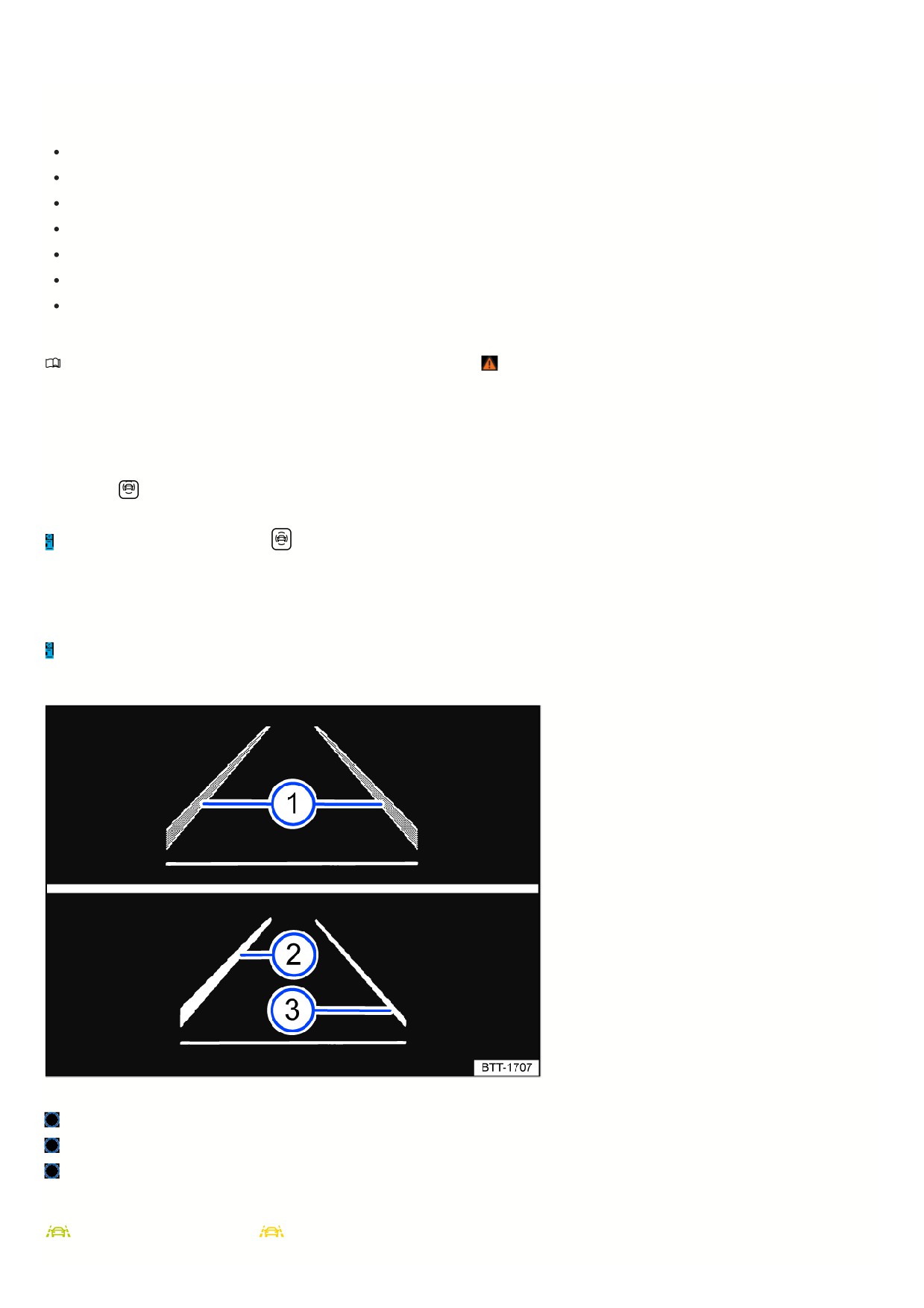
If you do not switch off Lane Assist in the these situations, accidents and serious injuries could occur.
Lane Assist is not available
The system is not available under the following conditions (inactive system status):
The vehicle speed is less than around 55 km/h (around 30 mph).
Lane Assist has not detected a road lane marking.
If lanes and curves are too narrow.
Temporarily, when the driving style is very dynamic.
When the turn signals are switched on before a manual lane change.
When the driver oversteers during a system intervention.
When there is no reaction from the driver to a driver intervention prompt.
Driving with Lane Assist
Please read the introductory information and heed the Warnings and Notice ⇒
Introduction.
Switching on and off
You can view the switched on condition of the Lane Assist in the instrument cluster display and in the Infotainment system. You can also switch Lane Assist on and
off there.
In the instrument cluster display:
1. Press the
button.
2. Switch Lane Assist on or off.
Depending on the vehicle equipment, the
button is located either on the multi-function steering wheel or the turn signal and high beam lever.
In the Infotainment system:
1. Open the Assistance systems menu.
2. Switch Lane Assist on or off in the corresponding submenu.
If there is a system malfunction, Lane Assist can turn off automatically.
Displays
Fig. 114 In the instrument cluster display: Lane Assist indicators.
Lane marking detected. The system is ready to monitor on the indicated side.
Lane marking detected. The system is monitoring on the indicated side.
The system is not ready to monitor on the indicated side.
One of the following indicator lights may come on, depending on the driving situation and the instrument cluster version:
System active and ready to control.
System in operation (corrective steering intervention).
If the indicator light does not light up, the system is not ready for operation on both sides (inactive system status) or is switched off.
163

If Travel Assist is actively regulating, there will be no steering intervention and no Lane Keeping System (Lane Assist) display.
Driver intervention request
If there is no steering activity, the system prompts you to drive in the center of your lane with an indicator in the instrument cluster display and warning chimes.
If you do not respond accordingly, the system becomes inactive.
Depending on the vehicle equipment, semi-automatic vehicle control in a medical emergency (Emergency Assist) is activated.
Independently of steering activity, you are also prompted by an indicator on the instrument cluster display and by a warning chime to drive in the middle of the lane
the corrective steering intervention takes a long time.
Steering wheel vibration
The following situations may cause the steering wheel to vibrate:
A lane is no longer detected during a sharp corrective steering intervention by the system.
In addition, you can select the Vibration or Steering wheel vibration option in the Assistance systems menu in the Infotainment system. If you select this option, the
steering wheel will vibrate if Lane Assist is active and you drift onto a road lane marking that the system has detected.
Troubleshooting
Please read the introductory information and heed the Warnings and Notice ⇒
Introduction.
Malfunction message, Lane Assist is not available
An indicator light comes on in the instrument cluster. In addition, a message is shown in the instrument cluster display.
The camera field of view is dirty. Clean the windshield ⇒ Vehicle care.
The camera's view is limited due to weather conditions, such as snow, or from soap residue or coatings. Clean the windshield
⇒ Vehicle care.
The camera's view is limited by attachments or stickers. Keep the area around the camera field of view clear.
The camera is misaligned or damaged, for example as a result of damage to the windshield. Check if there is noticeable damage
⇒ Repairs and technical
modifications.
The camera was automatically deactivated due to a high ambient temperature or long exposure to direct sunlight. Lane Assist will be available once the
camera is available again. Stop the engine and restart.
Malfunction or fault. Stop the engine and restart.
If the problem persists, contact an authorized Volkswagen dealer or authorized Volkswagen Service Facility. Volkswagen recommends contacting an
authorized Volkswagen dealer or authorized Volkswagen Service Facility.
It can take a few seconds once the ignition has been switched on for a system fault to be recognized.
If Lane Assist is not available, Emergency Assist is not available either.
If Lane Assist is not available, Travel Assist is not available either.
The system is functioning differently than expected
1. Do not mount any objects on the steering wheel.
Comfort drive Travel Assist
Introduction
Thanks to the comfort drive Travel
Assist, within the system limitations, the
vehicle can maintain a distance, which
has been preselected by the driver, to
the vehicle in front and hold the
preferred position within the lane
(adaptive lane guidance).
Travel Assist uses the same sensor technology as the Adaptive Cruise Control (ACC) and Lane Keeping System (Lane Assist). Therefore, carefully read all the
information about the ACC and Lane Assist and take note of the system limitations and notes specified in those sections.
Does this vehicle have Travel Assist?
The vehicle has Travel Assist, if the
button on the multi-function steering wheel is available.
Speed range
Travel Assist operates in a speed range between around 30 km/h (approximately 20 mph) and around 210 km/h (approximately 130 mph). This range is expanded
to, from 0 km/h (0 mph) to around 250 km/h (approximately 155 mph), for the adaptive lane guidance. This speed range may vary depending on the country.
Driving with Travel Assist
Travel Assist automatically regulates the speed and steers the vehicle. Within the system limitations, Travel Assist can also bring the vehicle to a halt behind a
164
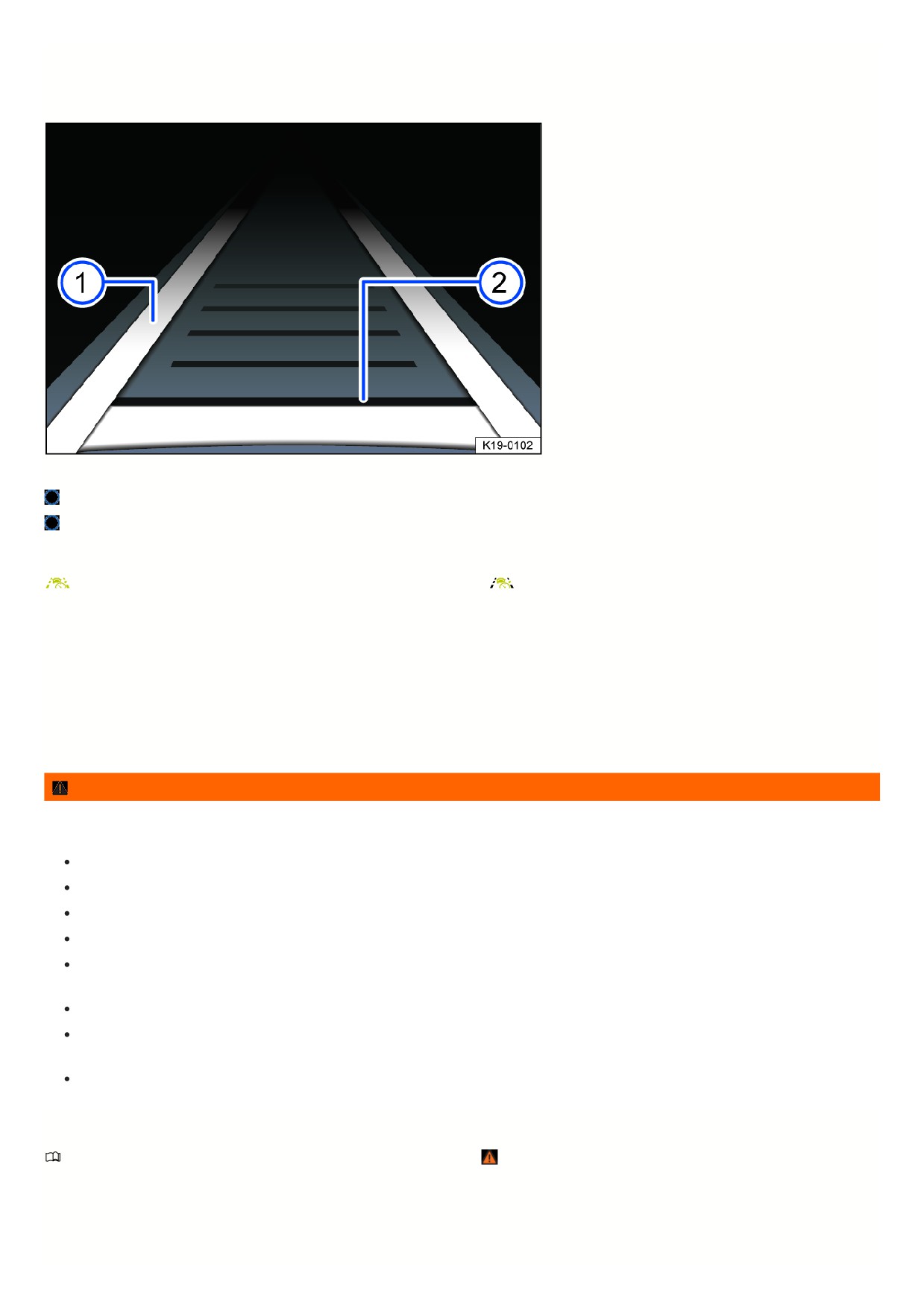
stopping vehicle and drive on again.
You can override the Travel Assist regulation function at any time.
Displays
Fig. 115 In the instrument cluster display: Display during active control.
Adaptive lane guidance is active.
Set distance, no vehicle recognized in front.
Indicator lights on the instrument cluster display show the Travel Assist status, depending on the vehicle equipment:
Travel Assist active, Adaptive Cruise Control and adaptive lane guidance active.
Travel Assist active, Adaptive Cruise Control active and adaptive lane
guidance passive.
Driver intervention request
If you remove your hands from the steering wheel, the system will ask you to take over the steering wheel after a few seconds with a message in the instrument
cluster display and with audible warnings.
If you do not respond, the system warns you with a brief braking maneuver.
Travel Assist is then deactivated.
Alternatively, Emergency Assist is activated, depending on the vehicle equipment.
WARNING
The intelligent technology of the Travel Assist cannot overcome the natural laws of physics, and it can only operate within the limits of the system. Careless or
unintended use of the Travel Assist can cause accidents and serious injuries. The system cannot replace the driver's attention.
Always adapt your speed and distance to vehicles driving ahead based on the visual, weather, road, and traffic conditions.
Never use Travel Assist when visibility is poor or when roads are steep, winding, flooded, or slippery, for example from snow, ice, moisture, or gravel.
Never use Travel Assist when driving off-road or on unpaved roads. Travel Assist is only designed for use on paved roads.
Travel Assist does not react to persons, animals, vehicles crossing the lane or vehicles coming towards you in the same lane.
Take over steering immediately if a driver intervention prompt appears in the instrument cluster display or the deceleration by the Travel Assist is not
sufficient.
Apply the brakes if the vehicle continues to roll unintentionally, e.g. after a driver intervention prompt.
Always keep your hands on the steering wheel so that you are prepared to steer at any time. The driver is always responsible for keeping the vehicle
within the lane.
Always be ready to resume control of the vehicle speed.
Operating Travel Assist
Please read the introductory information and heed the Warnings and Notice ⇒
Introduction.
165
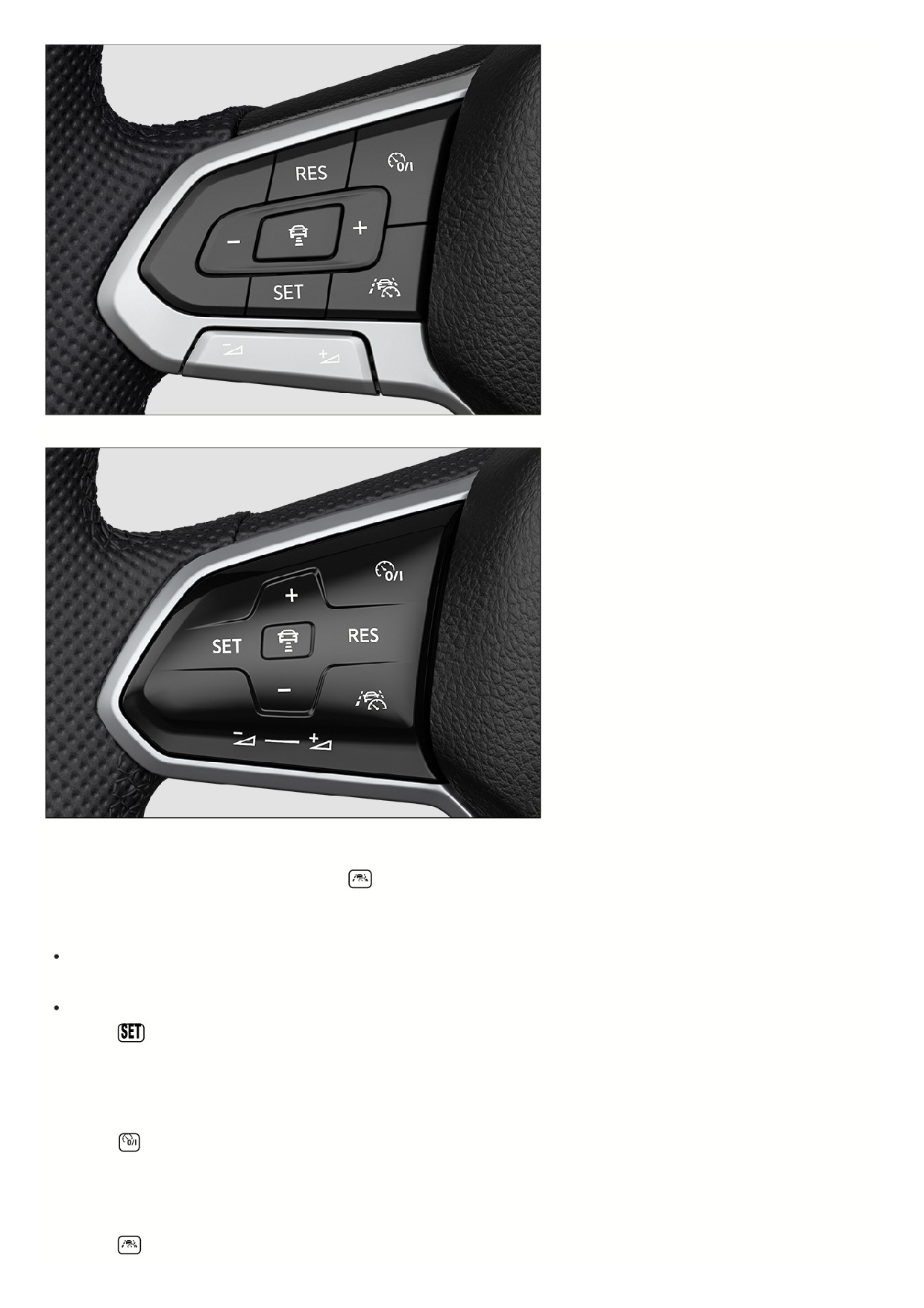
Fig. 116 Left side of the multi-function steering wheel (variant 1).
Fig. 117 Left side of the multi-function steering wheel (variant 2).
Switching on and starting the regulation function
1. During forward travel with ACC switched on, press the
button on the multi-function steering wheel.
The vehicle switches from ACC to Travel Assist.
Depending on the driving situation, the vehicle switches to the following system status in Travel Assist:
If ACC is regulating, Travel Assist maintains the current speed and the preset distance from the vehicle driving ahead (system status inactive).
At the same time, the vehicle is kept in its lane by steering movements when road markings are detected (system status active).
If ACC is not regulating, Travel Assist is switched on, but stays deactivated.
1. Press the
button.
Travel Assist switches the driving situation accordingly to an active or inactive system status.
The indicator/warning light corresponding to the driving situation comes on in the instrument cluster display. A notification is also displayed.
Canceling the regulation function
1. Press the
button briefly.
Or: Press the brake pedal.
The set distance remains saved.
Changing to ACC
1. Press the
button on the multi-function steering wheel.
166

The vehicle switches from Travel Assist to the system status of ACC corresponding to the driving situation.
Adjusting further settings
The further operation of Travel Assist corresponds to the operation of the ACC
⇒ Adjusting the ACC settings.
Troubleshooting
Please read the introductory information and heed the Warnings and Notice ⇒
Introduction.
Comfort drive Travel Assist is not available or is not working as expected
The yellow indicator light turns on. In addition, a message is shown in the instrument cluster display.
There is a malfunction in the sensor system. Check the causes and troubleshooting measures described in the information on ACC and Lane Assist.
Malfunction or fault. Stop the engine and restart.
The system limitations are not adhered to.
If the problem persists, contact an authorized Volkswagen dealer or authorized Volkswagen Service Facility. Volkswagen recommends contacting an
authorized Volkswagen dealer or authorized Volkswagen Service Facility.
Take over the steering
The white warning light will come on and a message will be shown in the instrument cluster display.
You have let go of the steering wheel for a few seconds.
1. Take hold of the steering wheel and take over steering the vehicle.
Take over the steering immediately
The red warning light will come on and a message will be shown in the instrument cluster display. An audible warning will sound or the steering wheel will vibrate,
depending on the driving situation.
You have let go of the steering wheel for a long period of time or the system limits have been reached.
1. Immediately take hold of the steering wheel and take over steering the vehicle.
Comfort drive Travel Assist switches off automatically
Vehicles without Emergency Assist:
You have let go of the steering wheel for a long period of time.
Malfunction or fault. Stop the motor and restart.
If the problem persists, contact an authorized Volkswagen dealer or authorized Volkswagen Service Facility. Volkswagen recommends contacting an
authorized Volkswagen dealer or authorized Volkswagen Service Facility.
The regulation function is canceled unexpectedly
You have operated the turn signal.
Semi-automatic vehicle control in a medical emergency (Emergency Assist)
Introduction
Emergency Assist can recognize driver
inactivity and can automatically keep
the vehicle in its lane and, if necessary,
slow it down to a stop. The system can
hereby actively help to avoid an
accident or reduce the consequences of
an accident.
Emergency Assist uses the same sensor technology as the Adaptive Cruise Control (ACC) and Lane Keeping System (Lane Assist). Therefore, carefully read all
the information about the ACC and Lane Assist and take note of the system limitations and notes specified in those sections.
WARNING
The intelligent technology of the Emergency Assist cannot overcome the laws of physics, and it can only operate within the limits of the system. The
responsibility for driving the vehicle always lies with the driver.
Always adapt your speed and remain a safe distance to vehicles driving ahead according to the visual, weather, road, and traffic conditions.
Emergency Assist alone cannot always avoid accidents and serious injury.
If the radar sensor or the front camera malfunctions, is covered or misaligned, Emergency Assist may carry out unwanted braking or steering
interventions.
Emergency Assist does not react to people, animals, vehicles crossing the lane or vehicles coming towards you in the same lane.
167

Driving with Emergency Assist
Please read the introductory information and heed the Warnings and Notice ⇒
Introduction.
Switching on and off
When the ignition is switched on, Emergency Assist is active under the following conditions:
The Lane Assist system and Adaptive Cruise Control (ACC) are switched on.
A gear is engaged for driving forward.
The system must detect lane markers on the left and right side of the vehicle.
If the Lane Keeping System (Lane Assist) is not available, Emergency Assist is not available either.
Driver intervention request
Using warning chimes and brief braking maneuver, Emergency Assist prompts an inactive driver to take over control of driving. In addition, a message is shown in
the instrument cluster display.
System intervention
If you do not respond, the system can brake the vehicle and keep it in its lane. In the instrument cluster display, one of the following indicator lights comes on:
System is regulating.
You can override the regulation at any time by accelerating, braking or steering.
Whenever Emergency Assist is actively controlling the vehicle, the emergency flashers will switch on after a short delay to warn other road users.
If the remaining stopping distance is sufficient, the vehicle slows down, if necessary, to a stop. The electronic parking brake then switches on automatically.
WARNING
If Emergency Assist is triggered unintentionally, it could result in accidents or serious injury.
If the vehicle behaves unexpectedly, you can stop intervention by Emergency Assist by accelerating, braking or steering.
Switch off the Lane Keeping System (Lane Assist).
Do not use the comfort drive Travel Assist.
Seek assistance from suitably qualified professionals and have the system checked. Volkswagen recommends contacting an authorized Volkswagen
dealer or authorized Volkswagen Service Facility.
Lane Change System (Side Assist)
Introduction
The Lane Change System (Side Assist)
helps the driver to discern the traffic
situation behind the vehicle.
Radar sensors monitor the area behind the vehicle. The system measures the distance and difference in speed to other vehicles and informs the driver through
visual signals in the outside mirrors.
System limitations
Only use the Lane Change System on secure roads.
The Lane Change System may not interpret the traffic situation correctly in some situations, for example:
In tight curves.
When driving in the center of two lanes.
When lanes have different widths.
When driving at the top of a hill.
In poor weather conditions.
When certain types of equipment are on the side of the road, such as high or offset guard rails.
WARNING
The intelligent technology of the Lane Change System (Side Assist) cannot overcome the laws of physics and it can only operate within the limits of the system.
Do not allow the increased convenience of the Lane Change System (Side Assist) to tempt you into taking risks. Careless or unintended use of the Lane
Change System (Side Assist) can cause accidents and serious injuries. The system cannot replace the driver's attention.
Always adapt your speed and remain a safe distance to vehicles driving ahead according to the visual, weather, road, and traffic conditions.
Always keep your hands on the steering wheel so that you are prepared to steer at any time.
168
Pay attention to the displays in the outside mirror housings and in the instrument cluster display, and act accordingly.
Always pay attention to the area around your vehicle.
Never use the Lane Change System (Side Assist) if the radar sensors are dirty, covered up, or damaged. The function of the system may be impaired in
such cases.
Sunlight may reduce the visibility of the visual display in the outside mirror.
The radar sensors calibrate once, on the first kilometer of a journey after the vehicle is delivered, and then again if the sensor technology has been repaired. The
range of the sensors may be limited during the calibration phase.
Driving with the lane change system
Please read the introductory information and heed the Warnings and Notice ⇒
Introduction.
Switching on and off
You can view the switched on condition of Side Assist in the instrument cluster display and in the Infotainment system. You can also switch Side Assist on and off
there.
In the instrument cluster display:
1. Press the
button.
2. Switch the Lane Change System (Side Assist) on or off.
Depending on the vehicle equipment, the
button is located either on the multi-function steering wheel or the turn signal and high beam lever.
In the Infotainment system, depending on the vehicle equipment:
1. Open the Assistance systems menu.
2. Switch the Lane Change System (Side Assist) on or off in the corresponding submenu.
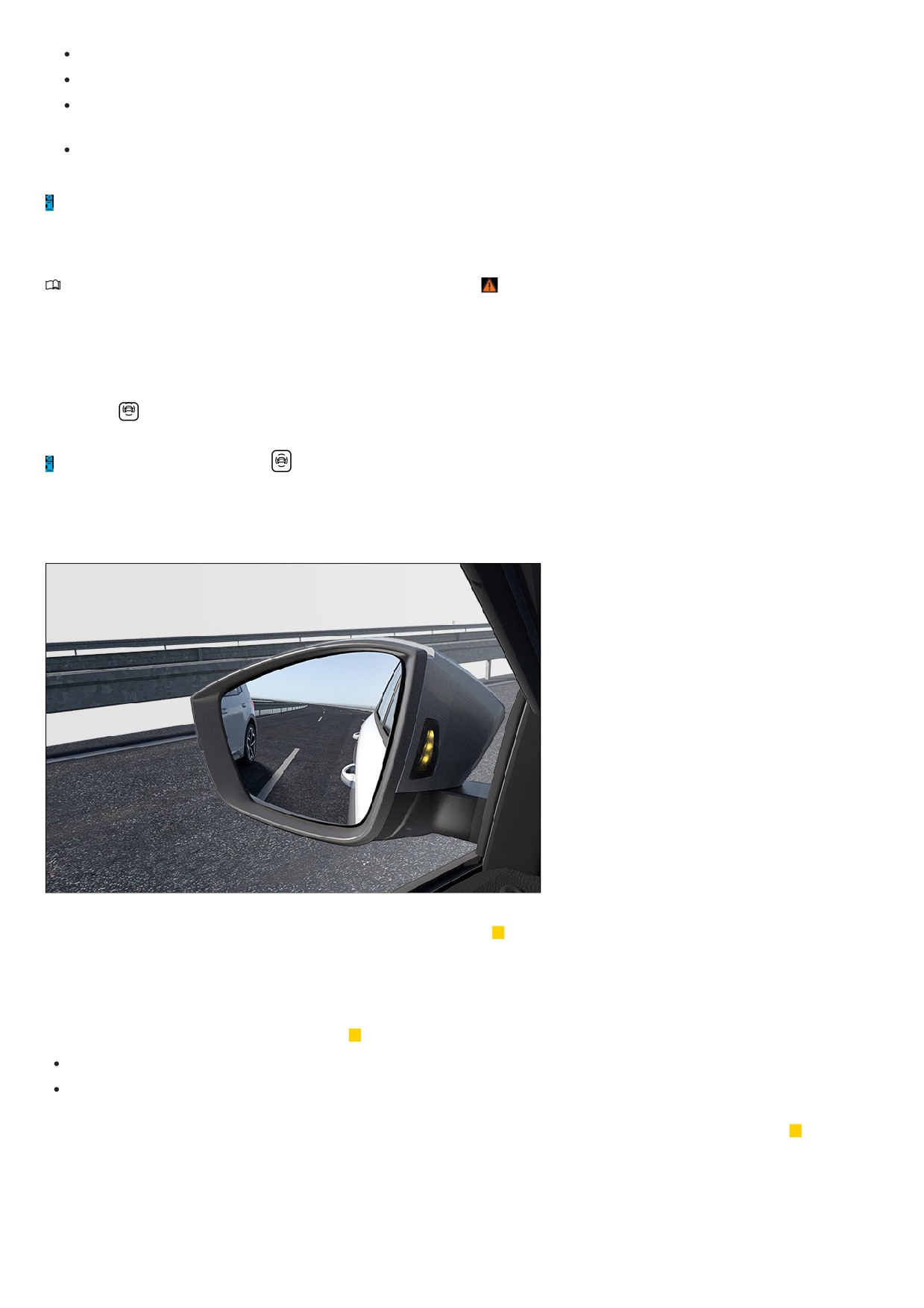
Fig. 118 In the outside mirror housing: Visual indicators for Side Assist.
When the Lane Change System (Side Assist) is switched on, the yellow indicator light
comes on once briefly in the outside mirror.
System function
The switched on lane change system is active from approximately 9 mph (approximately 15 km/h). The lane change system deactivates at a speed below
approximately 6 mph (approximately 10 km/h).
In the following driving situations, the yellow indicator light
in the outside mirror will come on:
When your vehicle is passed.
When passing another vehicle and the difference in speed between the two vehicles is up to approximately 9 mph (approximately 15 km/h). There is no
indicator if the passing speed is clearly faster.
When a potentially critical situation is detected while the turn signal is activated in the direction of the detected vehicle, the yellow indicator light
blinks in the
outside mirror.
The faster another vehicle approaches, the sooner the display in the outside mirror will turn on.
Lane change system “Side Assist Plus”
In vehicle with a Lane Keeping System (Lane Assist), a corrective steering intervention warns you when a possibly critical situation is detected when changing lane
(information level, warning level), if the Lane Keeping System (Lane Assist) is switched on. The steering intervention also occurs if you activate the turn signal for
169
the respective side. If you oversteer the steering intervention, an additional warning is provided by a steering wheel vibration. Steering wheel vibration must also be
activated in the Assistance systems menu in the Infotainment system.
Automatic deactivation
The lane change system switches off automatically if the radar sensors are permanently covered. For example, this could be from ice or snow covering the radar
sensor.
A message will appear in the instrument cluster display.
If the Lane Change System (Side Assist) is automatically deactivated, the system can be activated only after switching the ignition off and back on.
If you use the trailer hitch installed at the factory and have made the required electrical connection, the Lane Change System (Side Assist) will switch off
automatically. Once you have disconnected the electrical connection, the Lane Change System (Side Assist) will be automatically switched on again. For trailer
hitches that were not installed at the factory, you must switch the Lane Change System (Side Assist) off and on again manually.
Brightness
The brightness of the visual display adapts it self automatically to the ambient brightness.
You can set the default brightness of the display in the Assistance systems menu of the Infotainment system. The lane change system is not active while making th
settings.
Troubleshooting
Please read the introductory information and heed the Warnings and Notice ⇒
Introduction.
Lane change system malfunctioning
Malfunction or fault. The yellow indicator light turns on. In addition, the yellow central warning light
comes on.
1. Contact a suitably qualified professional. Volkswagen recommends contacting an authorized Volkswagen dealer or authorized Volkswagen Service Facility.
Malfunctioning sensor view, malfunction message, system switches off automatically
Clean the radar sensors and remove labels or accessories from the radar sensors ⇒ Exterior care and cleaning.
Check if there is any noticeable damage.
If the problem persists, contact an authorized Volkswagen dealer or authorized Volkswagen Service Facility. Volkswagen recommends contacting an
authorized Volkswagen dealer or authorized Volkswagen Service Facility.
The system is functioning differently than expected
The radar sensors could be dirty ⇒ Exterior care and cleaning. In addition to dirt and snow, the sensor range can also be impaired by soap residue or other
coatings.
The system conditions are not met ⇒
Introduction.
The radar sensors could be covered by water.
The vehicle could be damaged in the radar sensor area, for example from parking barriers.
The coverage areas of the radar sensors could be blocked by attachments, for example by bicycle carriers.
The paint may have been changed or other structural modifications may have bee made near the radar sensors, for example to the front of the vehicle or to the
suspension.
The side mirrors may be covered with after-market tinting films.
If the problem persists, contact an authorized Volkswagen dealer or authorized Volkswagen Service Facility. Volkswagen recommends contacting an
authorized Volkswagen dealer or authorized Volkswagen Service Facility.
17

Parking and maneuvering
Parking the vehicle
Parking
WARNING
Parking the vehicle incorrectly can result in the vehicle rolling, even on slight downhill slopes. This can cause accidents and serious injuries.
When parking, always follow the steps in the specified order.
Before exiting the vehicle, make sure the electronic parking brake is activated and the red warning light
comes on in the Volkswagen Digital
Cockpit display once the ignition has been switched off.
1. Press and hold the brake pedal.
2. In vehicles with an automatic transmission, move the selector lever into the P position.
3. Set the electronic parking brake.
4. On uphill and downhill slopes, turn the steering wheel so that the vehicle will roll into a curb if it begins moving.
5. Stop the engine and switch the ignition off.
The red
indicator light in the instrument cluster display will turn on.
6. Release the brake.
7. Exit the vehicle ⇒
. Pay attention to other road users.
8. Take all vehicle keys with you and lock the vehicle.
WARNING
If children, people requiring assistance or animals are left unattended in the vehicle, there is a risk of accidents and serious injuries.
Never leave children, people requiring assistance or animals unattended in the vehicle. They could move the selector lever, switching off the electronic
parking brake. The vehicle could move.
Never leave children, people requiring assistance or animals in the vehicle. Depending on the season, the temperature inside the vehicle could become
very high or low.
Always take all vehicle keys with you when leaving the vehicle.
To avoid damage and dangerous situations, always park the vehicle in a suitable parking area
⇒
NOTICE
Any unevenness in the ground, as well as sand and mud may mean that the vehicle cannot be parked safely and may be damaged.
Always park the vehicle on solid and level ground.
NOTICE
Vehicle components that are low to the ground such as the bumpers, spoilers, and parts of the suspension could be damaged when driving over objects
protruding up from the ground.
Drive carefully over driveways, ramps, curbs and fixed barriers, as well as when driving through dips.
Electronic parking brake
171
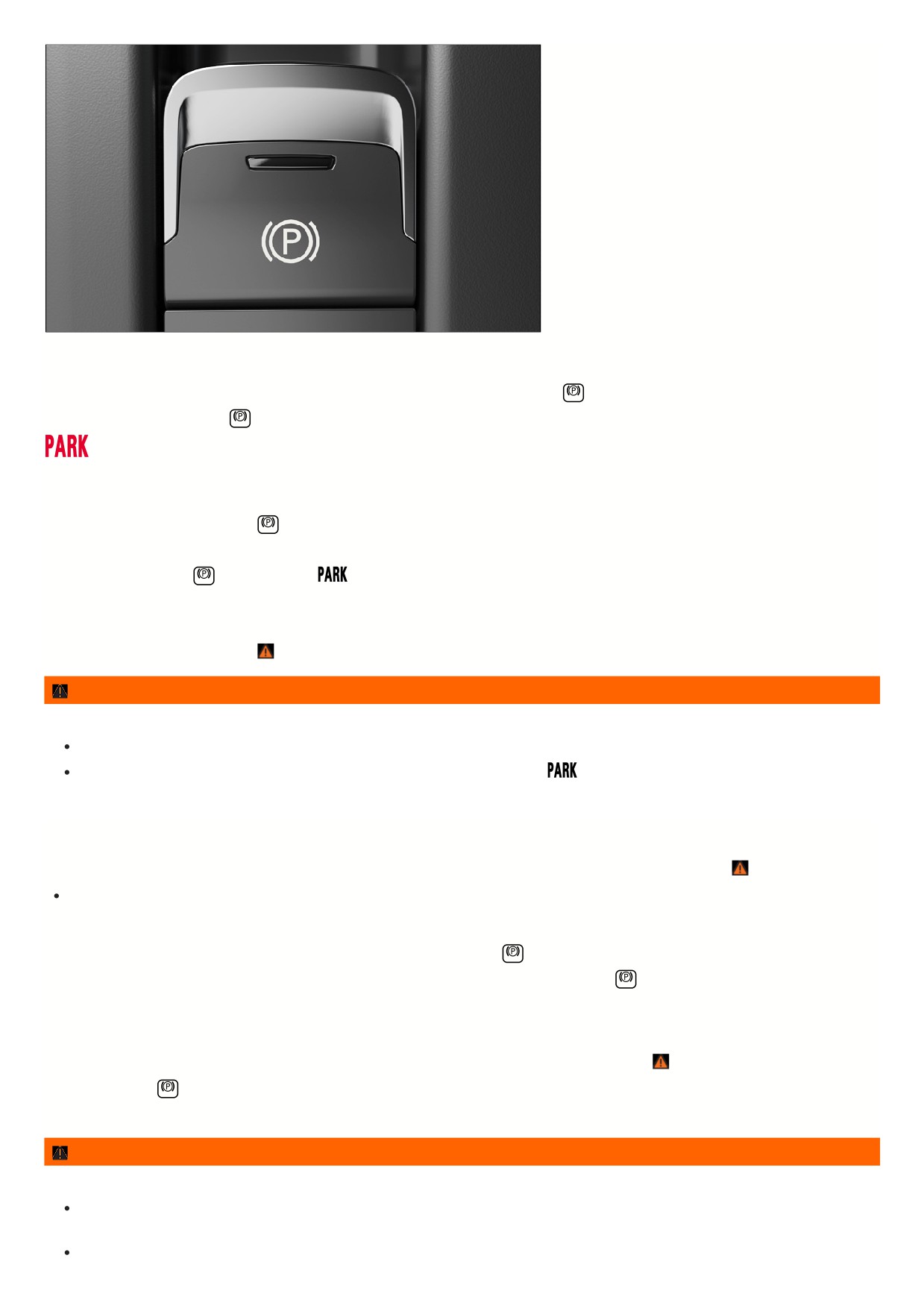
Fig. 119 In the center console: button for the electronic parking brake.
Switching on
1. When the vehicle is stationary, pull and hold the button for the electronic parking brake fig. 119
The yellow indicator light in the
button comes on.
If the electronic parking brake is switched on, the red indicator light comes on in the instrument cluster.
Switching off
1. Switch the ignition on.
2. Press the brake pedal and press the
button.
Or: when the engine is running, press the accelerator pedal lightly without pressing the brake pedal.
The indicator light in the
button and the red
warning light in the Volkswagen Digital Cockpit will turn off.
Automatic switch-on if you leave the vehicle incorrectly
In vehicles with an automatic transmission or DSG® automated transmission, if the system detects that the vehicle was exited incorrectly, it can switch on the
electronic parking brake automatically ⇒
WARNING
Exiting the vehicle incorrectly can result in the vehicle rolling. This can cause accidents, serious injuries, and property damage.
Always follow the specified steps in the correct order when parking the vehicle.
Before exiting the vehicle, make sure the electronic parking brake is activated and the red
warning light in the Volkswagen Digital Cockpit display
comes on after switching off the ignition.
Automatic switch-off when starting to drive
The parking brake releases automatically as you drive off if one of the following situations occurs when the driver's door is closed
⇒
:
Automatic transmission: A gear is engaged or changed.
Starting to drive on steep inclines or with increased vehicle weight
You can prevent the electronic parking brake from releasing automatically if you pull the
switch upward and hold it up while starting to drive.
If more engine power is required when starting to drive, the electronic parking brake will release only after the
switch is released.
This can make it easier to start driving when towing a heavy load.
Emergency braking function
Only use the emergency braking function in an emergency, if the vehicle cannot be stopped using the brake pedal
⇒
1. Pull and hold the
switch.
The vehicle will brake abruptly. A warning chime will also sound at the same time.
WARNING
Using the electronic parking brake incorrectly can cause accidents and serious injuries.
Always use the brake pedal to brake the vehicle and never the electronic parking brake unless it is an emergency. The braking distance will be
significantly longer because only the rear wheels will be braked under certain circumstances.
Do not press the accelerator pedal when the engine is running and a gear is engaged if the vehicle is to be brought to a standstill. The parking break may
172
release and the vehicle could start to move.
Noises can be heard when the electronic parking brake is operated or checked after a longer period.
Troubleshooting
Holding force in the current situation is too low
The red warning light
is blinking.
It is not possible to park the vehicle safely.
1. Park the vehicle in another location or on a flat surface.
/
Electronic parking brake malfunction
The yellow central warning light comes on. The
symbol with a message is additionally shown in the instrument cluster display.
1. Contact an authorized Volkswagen dealer or authorized Volkswagen Service Facility. Volkswagen recommends contacting an authorized Volkswagen dealer or
authorized Volkswagen Service Facility.
The electronic parking brake does not switch off
The requirements for switching off the electronic parking brake are not met
⇒ Electronic parking brake .
The 12 V vehicle battery is drained ⇒ Preparing and Performing a Jump-start.
Auto Hold
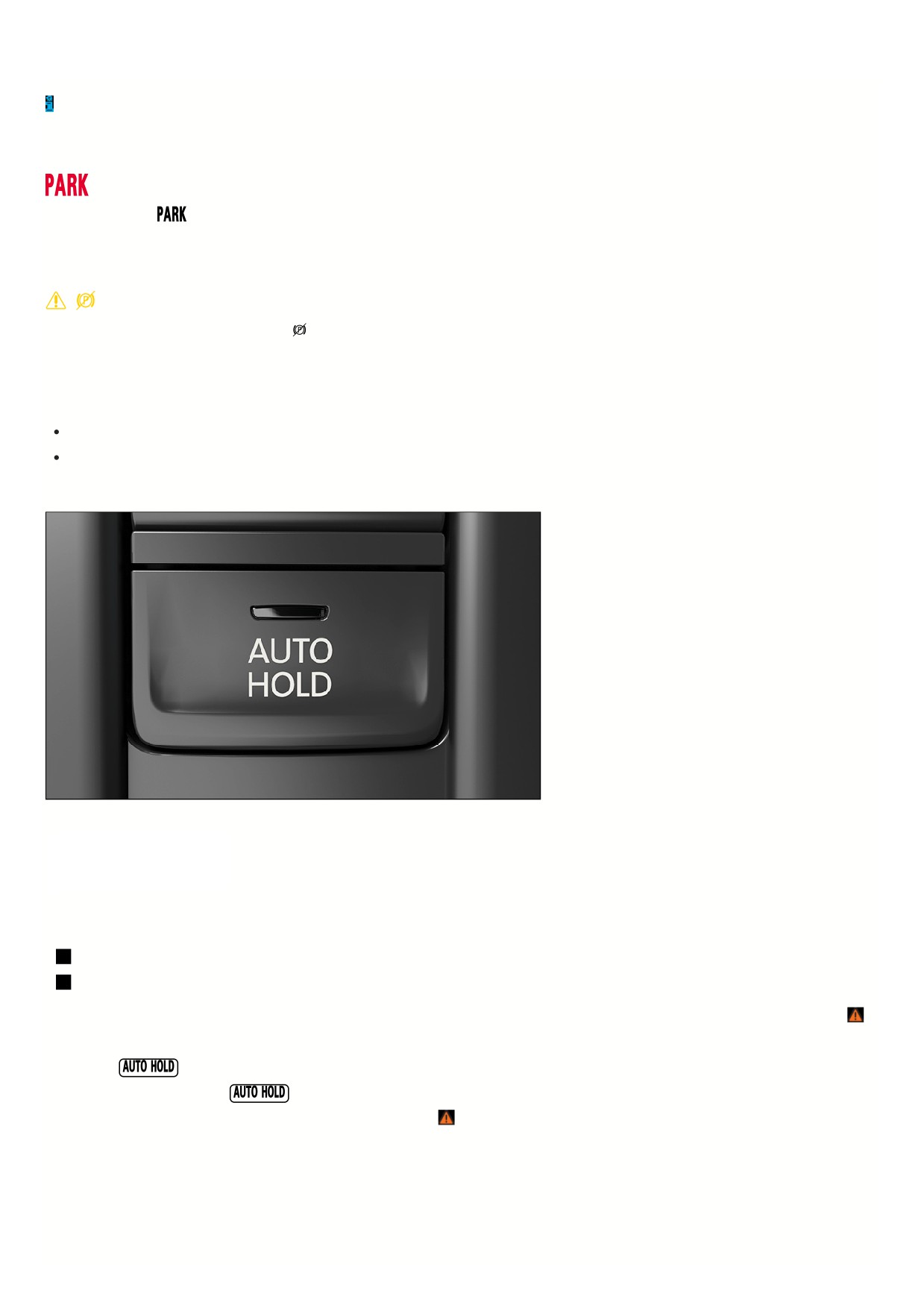
Fig. 120 In the center console: Auto Hold button (general example).
Auto Hold secures the vehicle from
rolling away when it is stationary,
without having to hold the vehicle with
the brake pedal.
Depending on the vehicle equipment, your vehicle may feature the Auto Hold function.
Requirements
The driver door must be closed.
The engine must be stopped.
Auto Hold does not switch on or it switches off automatically if you shift into the N position. As a result, the vehicle will not be secured from rolling away
⇒
Switching on
1. Press the
button fig. 120.
The yellow indicator light in the
button turns on.
Auto Hold is ready to use, but the vehicle may not be kept stationary
⇒
Auto Hold remains switched on after the ignition is turned on again.
Keeping the vehicle stationary using Auto Hold
1. When Auto Hold is switched on, bring the vehicle to a stop using the brakes.
2. Release the brake pedal.
The vehicle is kept stationary.
173

The hold on the vehicle will end when the vehicle starts to drive or the requirements for Auto Hold are not met.
Switching off
1. Press the
button.
The indicator light in the
fig. 120 button turns off.
The electronic parking brake switches on automatically to keep the vehicle stationary.
However, if you press the brake pedal when switching off Auto Hold, the electronic parking brake will not switch on
⇒
Temporary switch-off with the
button
It may be necessary to switch off Auto Hold temporarily, for example when maneuvering the vehicle to make it easier for the vehicle to roll.
1. With the engine running, press the brake pedal.
2. Press the
button.
Auto Hold is switched off.
Auto Hold will switch on again once the brake pedal is pressed while the vehicle is stationary.
WARNING
The intelligent technology of Auto Hold cannot overcome the natural laws of physics and it can only operate within the limits of the system. Do not allow the
increased convenience provided by Auto Hold to tempt you into taking risks.
Make sure the indicator light for the electronic parking brake in the instrument cluster display lights up if the vehicle is to be kept stationary.
Never exit the vehicle when the engine is running and Auto Hold is switched on.
In some situations, such as when the ground is slippery or icy, Auto Hold will not be able to keep the vehicle stationary on hills or brake it adequately
when going downhill.
NOTICE
Damage can result if the electronic parking brake switches on automatically in a car wash.
Always switch off Auto Hold before going through a car wash.
Information about the parking systems
Safety instructions
WARNING
The intelligent technology of the Park Distance Control (PDC) cannot overcome the natural laws of physics and it can only operate within the limits of the
system. Do not allow the increased convenience provided by the parking systems to tempt you into taking risks. The parking systems cannot replace the driver's
attention.
Always adapt your speed and driving style to the visibility, weather, road and traffic conditions.
Always keep an eye on the parking direction and the vehicle surroundings. Pay particular attention to small children, animals and objects.
Bear in mind that the parking system may not be able to react if the vehicle approaches too quickly and no warning is issued.
Do not allow the parking system's display to distract you from the traffic around you.
WARNING
Camera lenses enlarge and distort the field of vision. Using the camera image to estimate the distance to people or obstacles may not be precise and can cause
accidents and serious injuries.
Do not rely on the camera system image.
NOTICE
In parking spaces without a curb, park at least 20 inches (50 cm) away from walls and buildings to reduce the risk of vehicle damage.
Sensor and camera boundaries
Various sensors and cameras that detect the vehicle surroundings ultrasonically, by radar waves, and visually are located on and in the vehicle. The various parking
systems use different combinations of sensors. All sensors have technical and physical limits ⇒
:
174

In some situations, some objects may not be detected, e.g. trailer draw bars, narrow poles, fences, posts, and trees, extremely low or high obstacles, or trunk
lids that are opening or already open ⇒
The parking system coverage areas have “blind” spots in their range where they cannot detect people and objects.
Dirt, ice, or water on the sensors and cameras may be detected as obstacles or prevent the detection of objects in some cases. In addition to dirt and snow,
soap residue or other coatings can also impair the sensor range → page , Exterior care and cleaning.
External noises and certain surfaces on objects and clothing can affect the sensor signals. In some situations, people and objects may not be detected or may
be detected incorrectly.
Certain objects, such as small posts or grating, cannot be shown or cannot be adequately shown due to the resolution of the screen and if there is insufficient
lighting.
The cameras only show two-dimensional images on the screen. Due to the lack of depth of field, it may be difficult or impossible to identify protruding objects o
recesses in the road.
Volkswagen recommends practicing with the parking systems in a location or parking space with no traffic in order to become acquainted with the functions.
Requirements
The use of parking systems, e.g. with camera assistance, may not be allowed in some regions according to legal provisions.
Use the parking systems only where permitted by legal provisions.
General information
So that the sensors and cameras can detect the area surrounding the vehicle as well as possible and display this image on the Infotainment system screen, the
following requirements must be met.
The doors and trunk lid are closed.
The outside mirrors must not be folded in.
The sensors or cameras are not covered by attachments or decorative license plate frames. The decorative number plate frame and the number plate itself
must not protrude at the sides or bottom.
The vehicle must be on level ground.
The vehicle must not be loaded primarily in the rear or on one side.
Engine is running.
Braking assistance systems such as ESC or ASR are switched on.
If you use any other functions in the Infotainment system while you are parking, the parking function and its warning chimes will be deactivated.
Finding a suitable parking space
The length and width of the parking space must be larger than the vehicle measurements and provide enough space to maneuver.
The distance when driving past the parking space is approx. 1 m (approx. 3 feet).
Vehicles with Park Assist: The speed when passing the parking space is, for parking spaces parallel to the road, maximum approx. 40 km/h (approx.
25 mph), and for parking spaces across the road maximum approx. 20 km/h (approx. 12 mph).
Automatic braking intervention
A parking system's automatic braking
support helps to avoid collisions, if an
obstacle is detected.
Parking systems with braking support
Depending on the vehicle equipment, the vehicle has parking systems with a maneuvering and/or emergency braking function
⇒
WARNING
The increased comfort offered by the parking system automatic braking intervention should not cause you to take safety risks. In some situations, function of the
automatic braking intervention may be limited or it may not function at all. Collisions with obstacles can lead to injuries and vehicle damage. The system cannot
replace the driver's attention.
Stay attentive and do not rely only on the parking systems.
Always be ready to take over braking and steering.
Do not take any risks when it comes to safety.
React to the warnings and recommendations from the parking systems.
175

Requirements
When maneuvering, the vehicle is not driving faster than approx. 10 km/h (approx. 6 mph).
A parking system has been switched on.
What happens during an automatic braking intervention?
If there is an obstacle, the vehicle brakes to a stop and is kept stationary for around two seconds.
1. After braking, press the brake pedal to keep the vehicle stationary.
2. Check your surroundings.
Park Assist: If the speed is too high, the vehicle will brake to a stop. The parking process can then be resumed.
Depending on the vehicle equipment, there may be a message on the instrument cluster display.
Switching on and off
Automatic braking is activated or deactivated when a parking system is switched on or off by the driver.
1. Or: Tap the
function key in the screen display of the parking system.
Maneuver braking for Park Distance Control
1. Briefly press the accelerator pedal to cancel the automatic braking support ⇒
If there is an obstacle in the front area of the vehicle, automatic braking support will not happen if Park Distance Control was activated automatically while
driving forward ⇒ Switching Park Distance Control (PDC) on and off.
Driving with a trailer
If a trailer is connected electrically, the automatic braking support in the rear area is deactivated.
If the trailer hitch was not installed at the factory, the parking system must be manually deactivated when towing a trailer.
General information
Switch the parking system off if automatic braking support happens too frequently, like when driving off-road.
If the maneuver braking function for Park Distance Control intervenes to stop the vehicle, the function will be inactive for a distance of approx. 5 m (approx.
16 ft) when driving in the same direction. It will become active again if the gear or selector lever position changes.
The parking process is canceled following Park Assist emergency braking due to an obstacle.
Following a Rear Traffic Alert emergency braking intervention, it will take approx. 10 seconds before automatic braking support can occur again.
Troubleshooting
The parking system is functioning differently than expected
The system conditions are not met ⇒ Requirements.
The sensors or camera may be dirty or covered with ice
⇒ Exterior care and cleaning.
The camera lens is dirty and the camera image is not clear ⇒ Exterior care and cleaning.
Sources of noise, such as a jackhammer or driving over cobblestones, can interfere with the ultrasonic signal.
The vehicle is damaged in the area of the sensors or camera, for example from parking barriers, or the paint may have been changed or other structural
modifications may have been made near the sensors or camera, for example to the vehicle front end or to the suspension.
The areas detected by the sensors or camera may be blocked by accessories such as bicycle racks.
Fault displays
1. Note any messages on the instrument cluster display and in the Infotainment system.
NOTICE
Contact an authorized Volkswagen dealer or authorized Volkswagen Service Facility in the event of a parking system malfunction. Volkswagen recommends
contacting an authorized Volkswagen dealer or authorized Volkswagen Service Facility.
No sensor or camera view or the parking system has been switched off
If a sensor malfunctions, the sensor area is deactivated. The sensor area affected can be displayed in the Infotainment system by the
symbol. The parking syste
may be completely switched off.
If Park Distance Control is malfunctioning, a continuous tone will sound for several seconds when you switch it on. Where applicable, a message will appear in the
instrument cluster display.
1. Check if one of the causes listed is responsible.
2. Once the source of the issue has been resolved, switch the system on again.
176
3. If the problem persists, contact an authorized Volkswagen dealer or authorized Volkswagen Service Facility. Volkswagen recommends contacting an authorized
Volkswagen dealer or authorized Volkswagen Service Facility.
The Park Assist is canceled automatically
Park Assist will end the parking process if one of the following situations occurs:
The
function key is pressed.
The driver takes over steering.
The driver’s door is opened.
The time limit or number of movements for the parking process is exceeded.
ASR is switched off or it engages.
There is a system malfunction.
1. Restart the parking process.
Park Assist is active and supports steering movements when the vehicle is stationary
If Park Assist attempts to turn the steering while the vehicle is stationary, the white
symbol appears in the instrument cluster display.
1. Press the brake pedal.
After a wheel change, Park Assist parks inaccurately
If, after a wheel change, Park Assist parks inaccurately, e.g. with an increased or reduced distance from the curb, the system may have to acquire the wheel sizes
again.
1. Drive the vehicle over a longer distance, including around bends.
The Park Assist system automatically learns the new wheel sizes.
Park Distance Control (PDC)
Introduction
Park Distance Control assists the driver
when parking and warns if there are
obstacles.
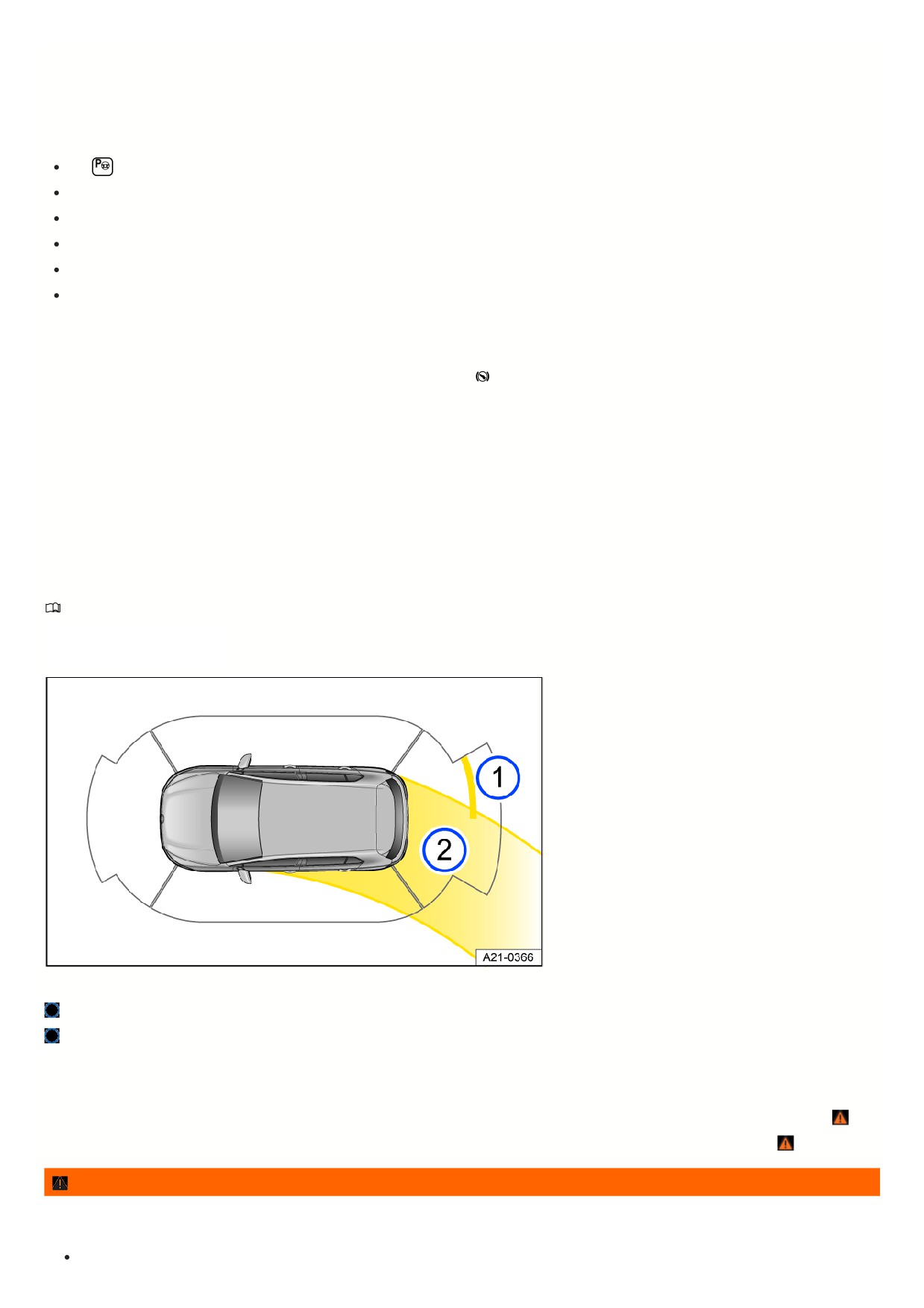
Fig. 121 Infotainment system: Display of Park Distance Control (general example).
Obstacle detection.
Steering lock.
System function
Using ultrasound sensors, the Park Distance Control detects the distance of the vehicle from an obstacle.
The Park Distance Control warns you of a collision via colored segments on the screen of the Infotainment system and via warning chimes fig. 121, ⇒
If the driver does not respond to an approaching obstacle, automatic braking support may intervene (depending on the vehicle equipment)
⇒
WARNING
The intelligent technology of the Park Distance Control (PDC) cannot overcome the natural laws of physics and it can only operate within the limits of the
system. Not paying attention can result in accidents, serious injuries and vehicle damage.
The PDC cannot replace the driver's attention.
177
NOTICE
The collision area has been reached, at the latest, when the penultimate segment is displayed or a continuous warning tone sounds.
Brake the vehicle in good time before reaching an obstacle.
NOTICE
Depending on the vehicle equipment, distances to obstacles in the side areas are also displayed. In order to fully scan and display the side areas, you must
move the vehicle a few yards forward or back. Any obstacles that enter these areas from the outside are not displayed.
Screen display
Red section of the image: Nearby obstacle. The vehicle is at risk. Apply the brakes.
Yellow section of the image: Obstacle in the path of the vehicle.
The vehicle is at risk. Steer around the obstacle.
White or gray section of the image: Obstacle outside of the vehicle's path.
Switch maneuver braking
on and off (depending on the vehicle equipment).
Mute the warning chimes. There is a system malfunction in the area that is detected (depending on vehicle
equipment). The colors may vary.
NOTICE
The system will only provide visual and audible warnings for obstacles within the vehicle's path.
Park Distance Control settings
Depending on the vehicle equipment, settings for the Park Distance Control can be adjusted in the vehicle settings in the Infotainment system
⇒ Vehicle settings
menu.
Special considerations when towing a trailer
If a trailer electrical system is connected, the rear sensors of the Park Distance Control are not switched on:
You are not warned about obstacles.
The maneuver braking is also deactivated automatically.
Switching Park Distance Control (PDC) on and off
Please read the introductory information and heed the Warnings and Notice ⇒
and Safety instructions.
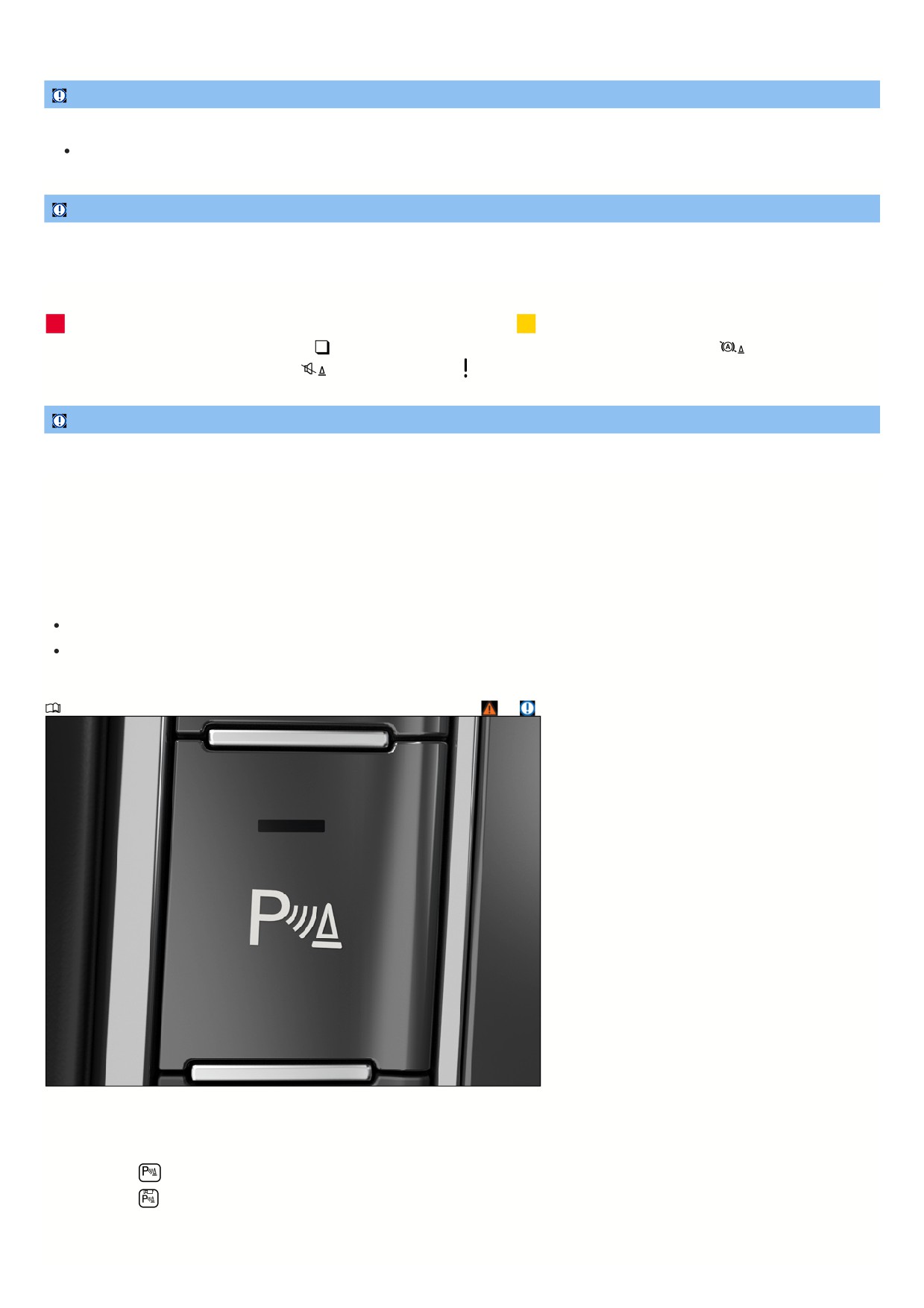
Fig. 122 In the center console: Park Distance Control button.
Switching on
1. Select the reverse gear.
Or: Press the
button fig. 122.
Or: Press the
button.
Or: The vehicle will roll backward.
Switching off
178
1. Press the
button fig. 122.
Or: Press the
button.
Or: engage the P selector lever position.
Or: the vehicle is driving forward at more than approx. 10 km/h (approx. 6 mph) up to approx. 15 km/h (approx. 9 mph).
Automatic activation when driving forward
If the vehicle slowly approaches an obstacle, Park Distance Control is automatically activated.
1. Switch the function on or off in the Infotainment system vehicle settings
⇒ Vehicle settings menu.
If the driver switches off Park Distance Control, no further automatic activation occurs.
Automatic activation is available again under following conditions:
The vehicle has been accelerated to more than approx. 15 km/h (approx. 9 mph) and then the speed has fallen below this again.
Or: the ignition has been switched off and on again.
Or: parking lock P has been changed to a gear.
If an obstacle is detected in front of the vehicle, the display in the Infotainment system is activated. If the vehicle approaches further, warning chimes also
sound.
Rear View Camera (Rear View)
Introduction
The Rear View Camera system in the
rear of the vehicle makes it easier for
the driver to see behind the vehicle and
assists when parking.
System function
The Rear View Camera system shows the area behind the vehicle on the Infotainment system screen. Depending on the mode and vehicle equipment, orientation
lines may assist in the view toward the rear ⇒
WARNING
The intelligent technology of the Park Distance Control (PDC) cannot overcome the natural laws of physics and it can only operate within the limits of the
system. Not paying attention can result in accidents, serious injuries and vehicle damage.
The PDC cannot replace the driver's attention.
Brake the vehicle in good time before reaching an obstacle.
The orientation lines superimposed on the camera image are shown by the system regardless of the vehicle's surroundings. There is no automatic obstacle
detection by the camera while it is active. The driver must evaluate whether the vehicle will fit in the parking space.
If a trailer is connected to the factory-installed trailer hitch, all orientation lines for the rear area are hidden in the camera image.
If a camera is installed in the trunk lid, the orientation lines are also hidden if the trunk lid is open.
USA and Canada: If the camera image on a parking system has been switched on by engaging the reverse gear, no function keys are displayed for safety reasons.
These function keys can be displayed again by tapping the function key
CAUTION
Vehicles with a swiveling emblem: The Rear View Camera system extending can cause serious injuries due to entrapment.
When engaging reverse gear, make sure that there are no persons directly behind the vehicle and that nobody can intervene in the range of operation of
the Volkswagen emblem on the trunk lid.
Switching the Rear View Camera system on and off
Please read the introductory information and heed the Warnings and Notice ⇒
and Safety instructions.
Switching on
Rear View Camera system with parking mode selection:
1. Select the reverse gear.
Or: Press the
button.
Switching off
179
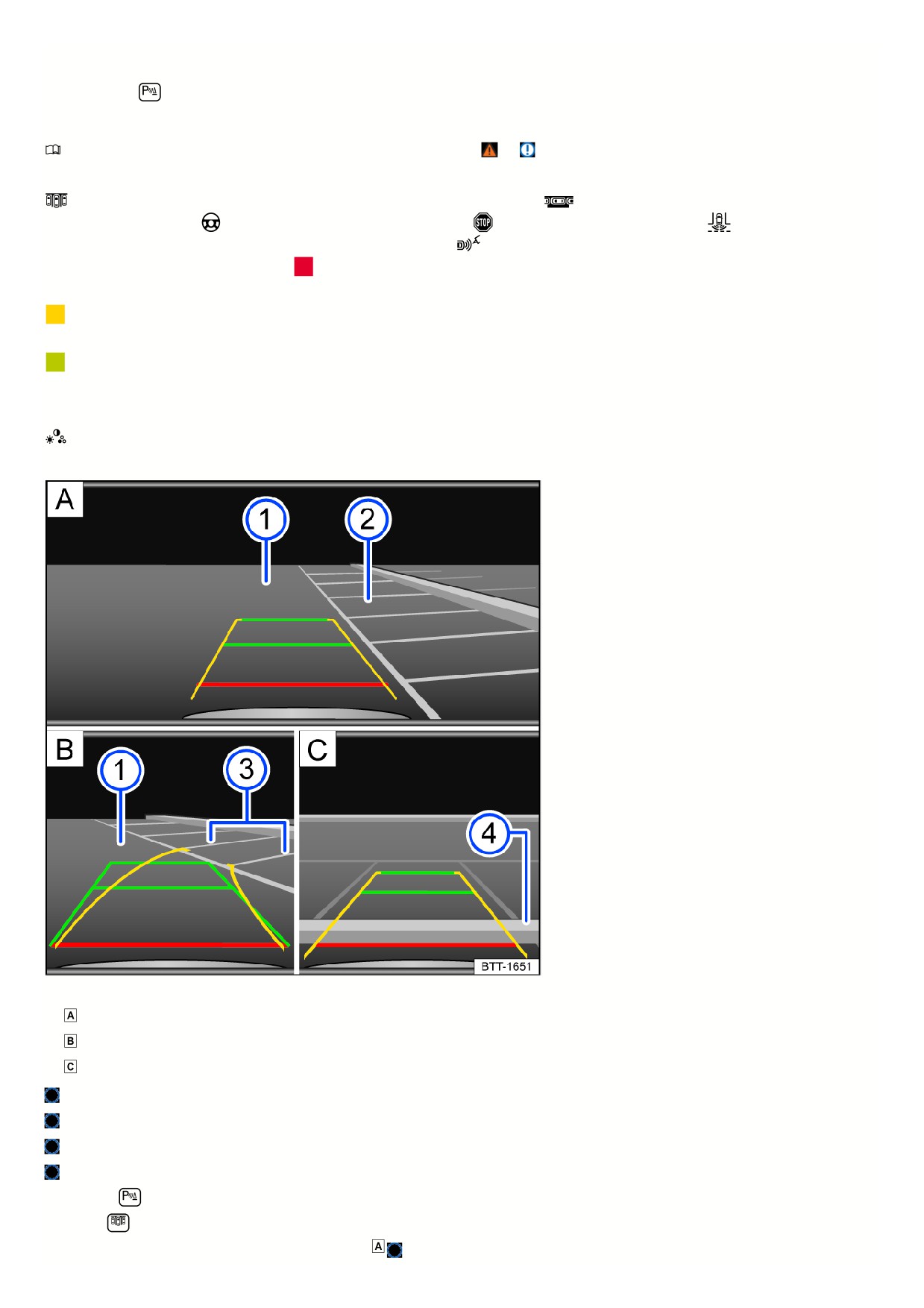
Rear View Camera system with parking mode selection:
1. The vehicle drives at more than approx. 9 mph (approx. 15 km/h).
Or: Press the
button.
Parking (Rear View Camera system with parking mode selection)
Please read the introductory information and heed the Warnings and Notice ⇒
and Safety instructions.
Screen display
Perpendicular parking: Guide lines help when parking in reverse perpendicular to the road.
Parallel parking: Guide lines and boxes help when parking
in reverse parallel to the road.
Turn the steering wheel (parallel parking mode).
Stop the vehicle (parallel parking mode).
Cross traffic: Depiction of the
area behind the vehicle and the areas to the side of the vehicle at a wide angle.
Trailer or terrain assistance: Depiction of the area immediately behind the
vehicle with a high zoom factor and guide lines.
Red line: Boundary or safety distance from the vehicle.
Red frame: Outline of the vehicle (parallel parking).
Yellow lines: the vehicle's path based on the steering angle.
Yellow assisting box: front or rear edge of the parking space (parallel parking)
Green horizontal lines: Boundaries.
Green line on the side: turning point when parking (parallel parking).
Green frame: outline of the vehicle (parallel parking).
Adjust the brightness, contrast, and color.
Parking mode: Parking perpendicular to the road
Fig. 123 Infotainment system: Parking perpendicular to the road.
Searching for a parking space.
Steering toward the selected parking space.
Aligning the vehicle within the parking space.
Road surface.
Parking space.
Side boundary of the parking space.
Rear boundary of the parking space.
1. Press the
button or function key before driving past the parking space.
2. Tap the
function key in the Infotainment system to select the parking mode.
3. Position your vehicle in front of the parking space fig. 123
18
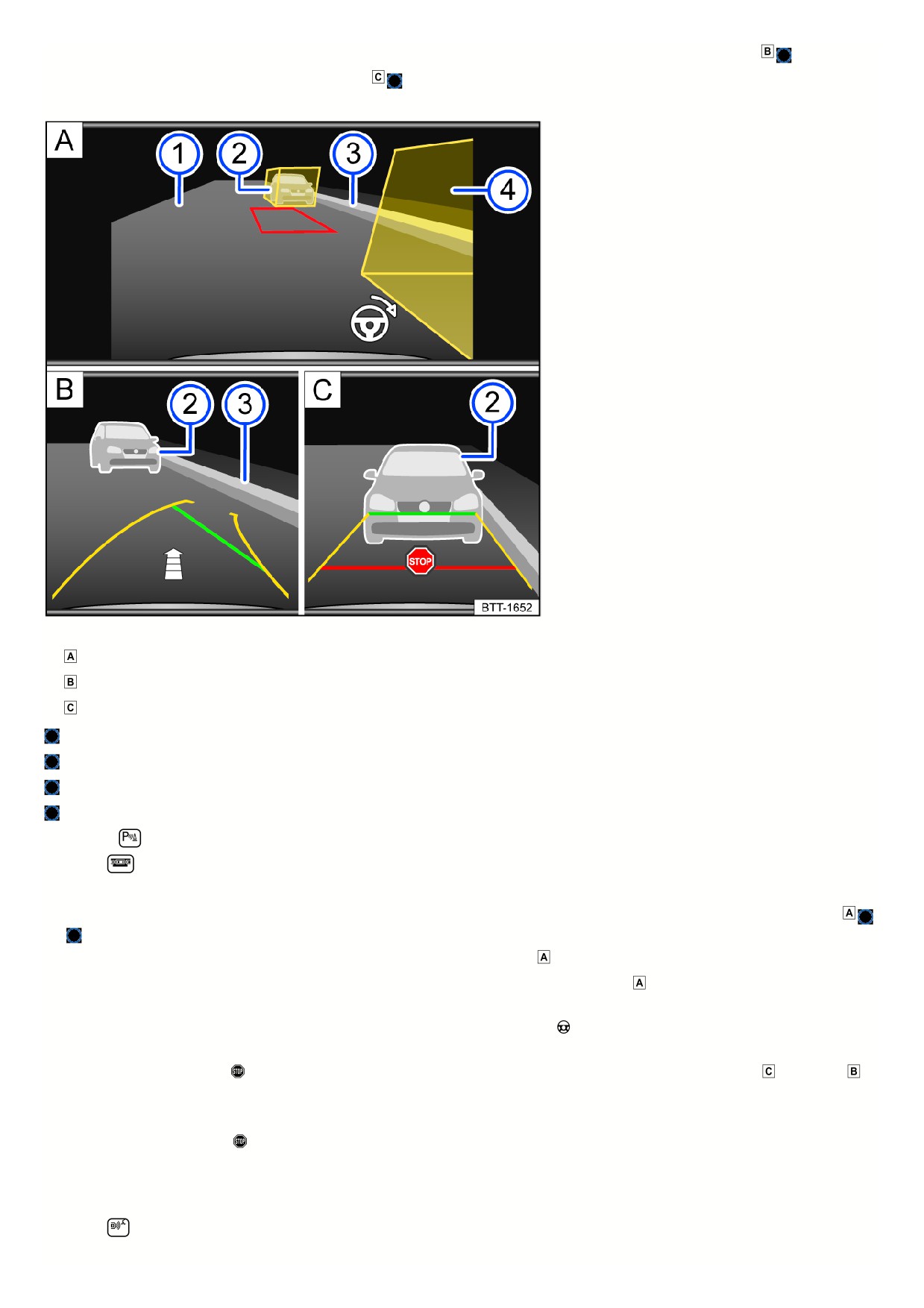
4. Steer so that the yellow lines lead into the parking space. The green and yellow lines must align with the side boundary lines fig. 123
5. Stop when the red line reaches the rear boundary fig. 123
Parking mode: Parallel parking
Fig. 124 Infotainment system: Parking parallel to the road.
Searching for a parking space.
Steering toward the selected parking space.
Aligning the vehicle within the parking space.
Road surface.
Obstacle or assisting box.
Side boundary of the parking space.
Obstacle or assisting box.
1. Press the
button or function key before driving past the parking space.
2. Tap the
function key in the Infotainment system to select the parking mode.
3. Turn on the turn signal for the corresponding side of the road.
4. Position the vehicle at a distance of approximately 1 m (3 ft) parallel to the parking row. The yellow assisting boxes must cover the obstacles fig. 124
o
. The area in between must be free of obstacles.
5. Select the reverse gear. A red frame represents the target position of your vehicle fig. 124
6. Turn the steering wheel until the red frame moves between the assisting boxes and becomes green fig. 124 . Hold the steering wheel in this position while
driving in reverse.
If the steering wheel angle needs to change, one of the yellow side lines will become red. The
steering wheel symbol indicates to the driver when the
steering wheel must be turned.
7. Drive slowly in reverse until the
stop symbol appears or the green line aligns with the side boundary of the parking space fig. 124 . An fig. 124
arro
indicates the remaining distance to be driven based on the number of displayed segments.
8. Stop the vehicle. Steer in the opposite direction until the steering angle is reached and a direction arrow is no longer displayed.
9. Keep driving in reverse until the
stop symbol appears or until the red line reaches the rear boundary.
Parking mode: Trailer support
On vehicles with a trailer hitch installed at the factory, trailer support can be used for assistance when attaching the trailer to a draw bar.
1. Tap the
function key to select the parking mode.
Colored guide lines help you with the maneuvering process.
181
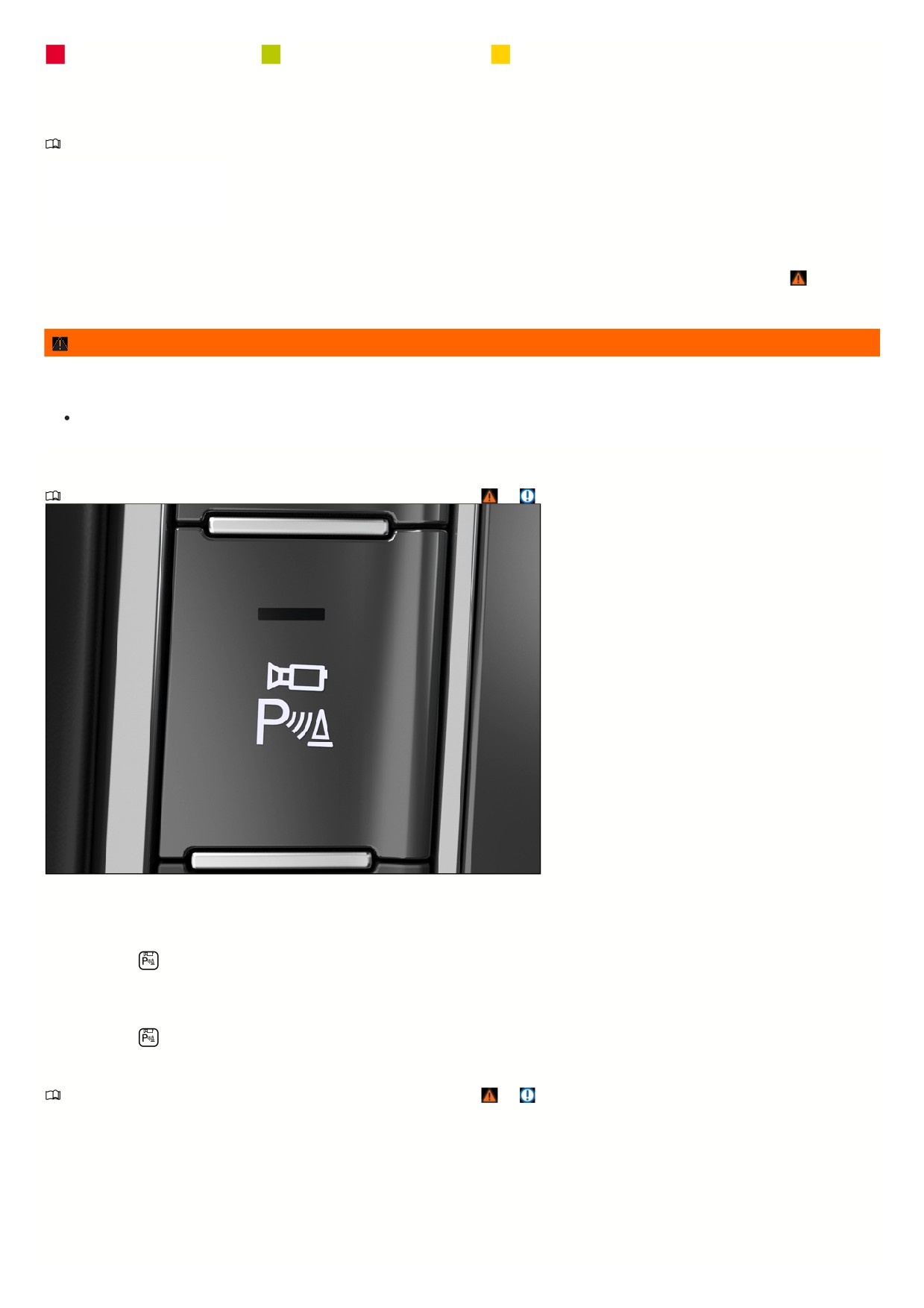
Red lines: position of the trailer hitch.
Green lines: distance to the trailer hitch.
Orange line: predicted direction of the trailer hitch based on the steering
wheel angle.
Area View
Introduction
The Area View shows the entire vehicle
environment in real time. This function
helps you recognize obstacles in good
time in situations where there might be
blind spots.
System function
The system uses multiple cameras to create images of the vehicle environment, which are then displayed on the Infotainment system screen
⇒
The functions and displays of the Area View may vary depending on the vehicle equipment, e.g. if Park Distance Control is available and is also displayed.
WARNING
The intelligent technology of the Park Distance Control (PDC) cannot overcome the natural laws of physics and it can only operate within the limits of the
system. Not paying attention can result in accidents, serious injuries and vehicle damage.
The PDC cannot replace the driver's attention.
Switching on and off
Please read the introductory information and heed the Warnings and Notice ⇒
and Safety instructions.
Fig. 125 In the center console: Button for switching the Area View on and off.
Switching on
1. Select the reverse gear.
Or: Press the
button fig. 125.
Switching off
1. Drive faster than approx. 9 mph (approx. 15 km/h).
Or: Press the
button fig. 125.
Changing the camera perspective
Please read the introductory information and heed the Warnings and Notice ⇒
and Safety instructions.
182