Mercedes-Benz ML320. Service manual - part 691
 

  Index      Mercedes     Mercedes-Benz ML320 - service and repair manual 1997-2005 year


Search            copyright infringement  


Content   ..  689  690  691  692   ..


Mercedes-Benz ML320. Service manual - part 691


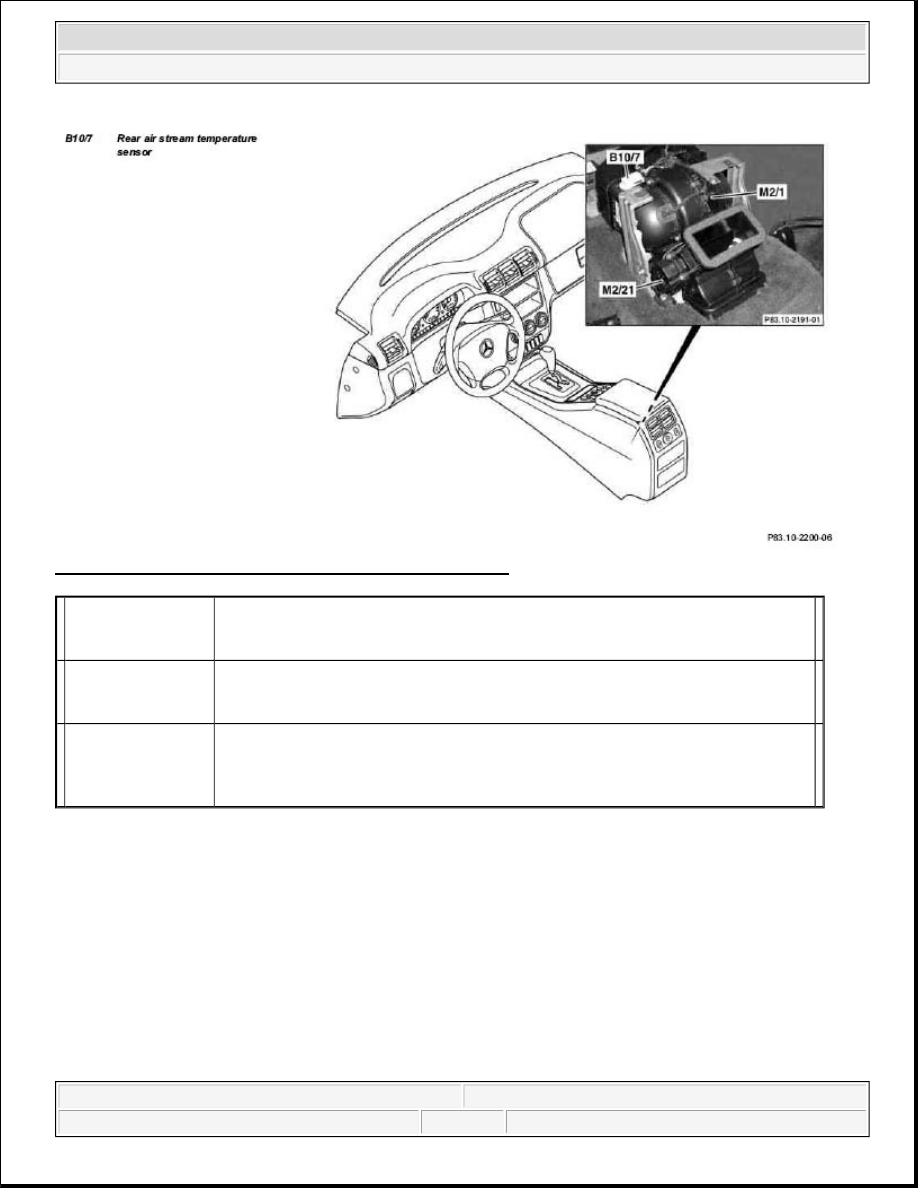
Fig. 128: Identifying Rear Air Stream Temperature Sensor 

AMBIENT TEMPERATURE DISPLAY TEMPERATURE SENSOR, FUNCTION - GF83.57-P-2119-01GI 

Function  

The resistance of the ambient temperature display temperature sensor is dependent on the ambient temperature 
and speed. The current resistance value is sent via the CAN data bus to the AAC push-button control module 
(N22), which then slightly readjusts the set temperature. 

The fact that the ambient temperature is dependent on the speed helps to prevent any excess temperature being 
sent to the AAC push-button control module (N22) when the car is at a standstill or traveling slowly, e.g. as 
induced by engine heat radiation. 


Rear air stream 
temperature sensor, 
location

The rear air stream temperature sensor (B10/7) is located to the left of the rear 
passenger compartment blower motor housing behind the rear nozzle.


Rear air stream 
temperature sensor, 
task

The rear air stream temperature sensor (B10/7) records the temperature of the air 
flowing in the rear passenger compartment and sends it to the AAC push-button 
control module (N22).


Rear air stream 
temperature sensor, 
function

The recorded temperature value for the rear ventilation air stream is compared by 
the AAC push-button control module (N22) with the setting in the temperature 
selector wheel and authorizes a corresponding adjustment to the blending air flap 
to be made depending upon the result.


2001 Mercedes-Benz ML320 

1998-2005 HVAC Climate Control - 163 Chassis


me 


When switching the ignition on or off and at speeds of less than 20 km/h the last measured temperature value is 
used. 

At ignition OFF, the last ambient temperature used for the control operation is stored. 

AMBIENT TEMPERATURE DISPLAY TEMPERATURE SENSOR, LOCATION/TASK/FUNCTION - GF83.57-P-2119GI 

MODEL 163 as of 1.9.01 with CODE (580a) Automatic air conditioning  

Fig. 129: Identifying Ambient Temperature Display Temperature Sensor 

RESIDUAL ENGINE HEAT UTILIZATION SYSTEM, FUNCTION - GF83.75-P-2000GI 

MODEL 163 as of 1.9.01 with CODE (580a) Automatic air conditioning  

Function  

The residual engine heat utilization system allows the vehicle to be heated even when the ignition is switched 


Ambient temperature display 
temperature sensor, location

The ambient temperature display temperature sensor 
(B14) is located on the front left side of the bumper.


Ambient temperature display 
temperature sensor, task

The ambient temperature display temperature sensor 
(B14) determines the ambient temperature.


Ambient temperature display 
temperature sensor, function


GF83.57-P-
2119-01GI


2001 Mercedes-Benz ML320 

1998-2005 HVAC Climate Control - 163 Chassis


me 


OFF . To this end the system uses the residual heat of the engine. The residual engine heat is dissipated to the 
coolant and routed through the heat exchanger with the aid of the heating water circulation pump. The air drawn 
in by the blower motor is routed around the heat exchanger, whereby it is then warmed up. The heated air is 
then routed over the air outlets into the passenger compartment. 

The residual engine heat utilization system can only be used when the ignition is switched OFF. 

Once the Rest push-button  (


)  on the AAC push-button control module (N22) has been pressed the 

following program sequence is run:  

Blending air flaps are automatically controlled  

Heating water circulation pump ON  

The blower's control voltage is limited to a maximum value of 5 Volt.  

End of program  

Pressing the Rest push-button (

 )  

Timeout of 30 minutes period (repeated operation possible)  

Protection against undervoltage at a battery voltage of less than 11 V (LED flashes)  

Ignition ON  

 During the residual engine heat utilization function no function keys are accepted apart from the Rest push-

button (

 ) and the set point adjusters. 

SAFETY PRECAUTIONS  

RISK OF EXPLOSION CAUSED BY WELDING OR SOLDERING WORK ON CLOSED AIR CONDITIONING SYSTEM. 
RISK OF POISONING CAUSED BY INHALING OVERHEATED REFRIGERANT VAPORS. RISK OF INJURY TO SKIN AND 
EYES CAUSED BY CONTACT WITH LIQUID REFRIGERANT. - AS83.00-Z-0001-01A 

Never perform welding work on or near a closed air conditioning system. No smoking or open flames. 
Wear safety glasses and protective gloves. Work only in well ventilated areas. Carry out repair work on 
the air conditioning system circuit only after the system has been discharged.
  

Potential risks  

Risk of explosion  

When closed air conditioning systems (charged or empty) become heated, high pressures are produced that can 

  Rest push-button, location/task/function

  GF83.40-P-2148GI

  Heating water circulation pump, location/task/ function

  GF83.20-P-2109GI

  Heating system heat exchanger, location/ purpose/function

  GF83.20-P-2108GC

  Blower motor, location/task/design/function

  GF83.10-P-2170GI

  Blending air flap actuator, location/task/function

  GF83.57-P-2112GI


2001 Mercedes-Benz ML320 

1998-2005 HVAC Climate Control - 163 Chassis


me 


ultimately cause the system to burst. For this reason, all welding and soldering operations on or near closed 
air conditioning systems are prohibited. High pressure levels can combine with refrigerant vapors to produce a 
mixture that is potentially explosive when exposed to atmospheric air. 

Risk of poisoning  

Refrigerant can decompose when overheated. The resulting substances are toxic and should never be inhaled. 

Risk of injury  

Refrigerant vapors are heavier than air; this means that escaping gases pose a risk of suffocation for anyone in a 
work pit beneath the vehicle. 

Contact with liquid refrigerant may cause chilblain-like damage to the skin (due to under-cooling). 

Safety instructions/precautions  

All welding, brazing and soldering operations on sealed air conditioning systems and in their 
immediate vicinity are prohibited.  

Never smoke when working with refrigerant, never expose refrigerant to open flames.  

piercing odor can indicate overheated refrigerant - never inhale these vapors. Leave closed rooms 
immediately and ventilate thoroughly.  

All refrigerant must be evacuated from the entire air conditioning system prior to doing any repair work 
on the air conditioning circuit or components.  

Because it poses a hazard to the atmosphere as well as to personal health and safety, discharging 
refrigerant directly into the air is prohibited.  

Suitable evacuation, treatment and charging devices equipped with integral disposal and treatment 
facilities must be used for evacuating refrigerant.  

Even after the system has been evacuated, residual pressure may still be present in the system when 
loosening couplings. Therefore, loosen the couplings carefully, so that the pressure can dissipate slowly.  

Avoid all contact with liquid refrigerant.  

Always wear safety glasses and protective gloves when working with refrigerant.  

First aid measures  

In case of eye contact 

Immediately flush with plenty of running water and consult a physician.  

In case of skin contact 

Consult a physician immediately in case of frostbite. In case of inhalation  

of concentrated refrigerant, immediately take victim out into the fresh air and keep victim calm. 


2001 Mercedes-Benz ML320 

1998-2005 HVAC Climate Control - 163 Chassis


me 


Content   ..  689  690  691  692   ..