Mercedes-Benz ML320. Service manual - part 237
 

  Index      Mercedes     Mercedes-Benz ML320 - service and repair manual 1997-2005 year


Search            copyright infringement  


Content   ..  235  236  237  238   ..


Mercedes-Benz ML320. Service manual - part 237


In addition, the vehicle's course of travel is determined with the aid of the sequence of the locations calculated 
with GPS. 

Possible interference when receiving GPS signals  

Since GPS operates in the GHz range (microwaves) and the signals are weak, reception interference can occur 
as the result of: 

atmospheric interference, e.g. weather, water vapor, fog  

multiple reception resulting from reflecting of signals, e.g. from building walls  

Signal shadows, e.g., in built-up areas, tunnel, in the proximity of higher buildings and trees  

GPS reception therefore necessitates a clear view of the sky. The location finding accuracy of the GPS system is 
100 m or better. 

GLOBAL POSITIONING SYSTEM LOCATION FINDING, FUNCTION - GF82.61-P-3007GI 

MODEL 163 as of 1.9.01 with CODE (522) Modular control system (MCS) radio USA with CODE (357) 
Navigation system - additional unit with CODE (818b) Single CD player - additional unit with CODE 
(491) U.S. version
  

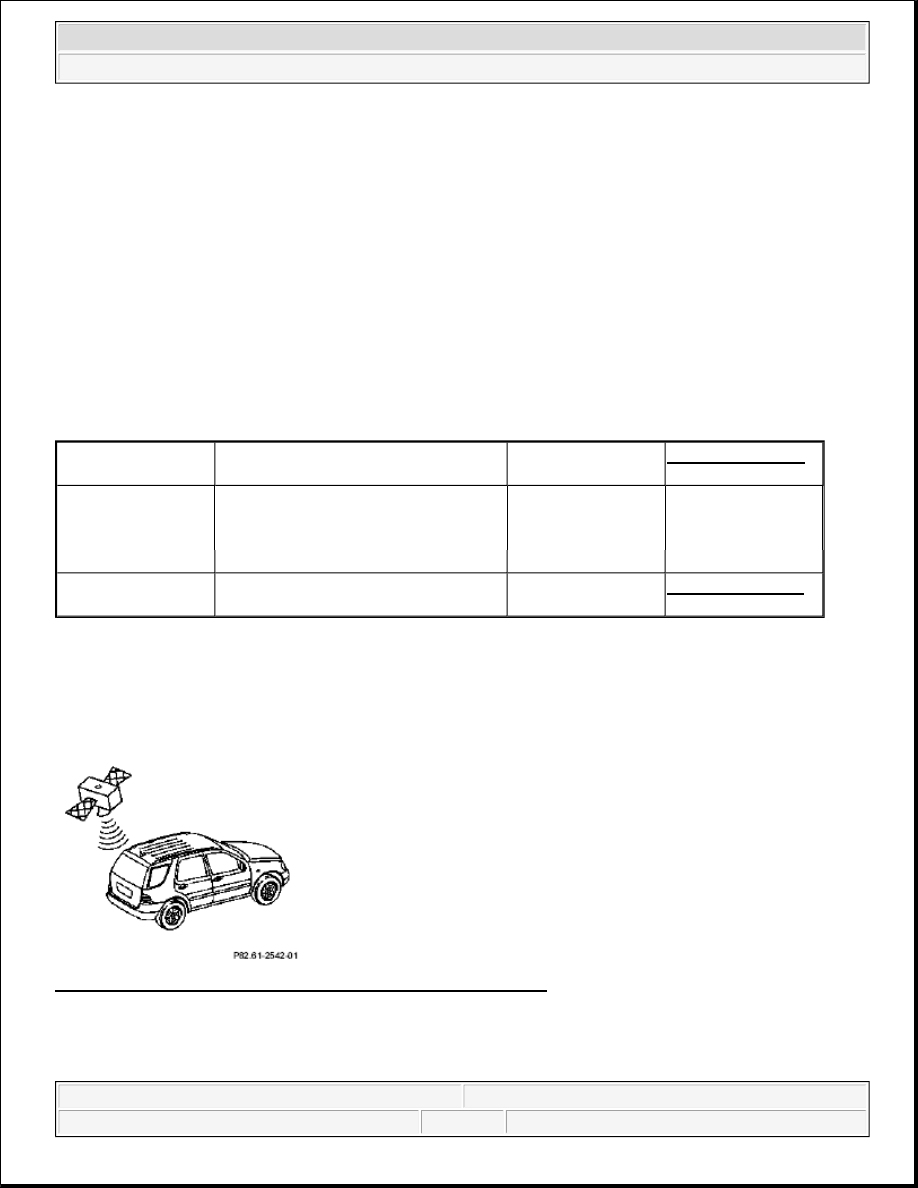
Fig. 49: Identifying Global Positioning System Location Finding 

General  

The global positioning system (GPS) is a satellite-supported location finding system. It is not subject to fees


GPS/CTEL roof antenna 
location/task/design/ function

Models 163, 
168,208.3,210

GF82.70-P-4111A


Global positioning system antenna, 
location/ task/design/function

Models 170, 208.4

GF82.61-P-4106A


Models 203, 209.3

GF82.61-P-4106E


Model 209.4

GF82.61-P-4107Q


Antenna splitter, 
location/task/design/function

Model Series 163

GF82.85-P-3107B


2001 Mercedes-Benz ML320 

1998-2005 ACCESSORIES & BODY, CAB Electrical System - Body - 163 Chassis


me 


and is available worldwide . Presently there are 266 satellites on 6 different earth orbits. The GPS satellites 
permanently transmit time and position data. If data from a minimum of 3 satellites is received (with two-
dimensional location finding) it is possible to calculate the position of the receiver. 

The GPS location finding is particularly important when driving outside of the digitized map area and 
following vehicle transport (e.g. train, ferry or towing). 

repeated GPS location finding (following satellite reception interruption) can take several minutes (when 
unit is initially started up to 20 min .). 

GPS map matching function  

The navigation processor calculates the location of the vehicle and the accuracy of positioning from the 
satellite signals received and amplified by the GPS antenna (A2/49) . The current calculation is based 
primarily on the measurement of the transmission times for the signals transmitted synchronously by the 
various satellites. Here, an important prerequisite is that the satellite and receiver clocks are synchronized . For 
this purpose, the receiver has an automatic time correction feature which again is possible with the aid of the 
satellite signals. If the navigation processor determines that the basic location finding is less precise than the 
GPS location finding, the currently calculated position is corrected with the aid of the GPS data . 

Moreover, the vehicle route is determined from the location sequence calculated with GPS . 

 Approx. 50 new GPS location finding calculations are performed each minute. 

Possible interference when receiving GPS signals  

Since GPS operates in the GHz (microwave) range and the signals are weak, reception interferences can 
occur from 

atmospheric interferences, e.g. weather, water vapor, fog,  

multiple path reception due to signal reflections, e.g. from building walls  

Signal shadows, e.g. in built-up areas, tunnels, high buildings, trees  

A free view of the sky is therefore necessary for GPS reception The location finding accuracy is approx. 100 
m or better
 . 


Basic location finding, 
function


GF82.61-P-3006GI


Map-supported location 
finding, function


GF82.61-P-3008GI


Guidance, function


GF82.61-P-3012GI


Radio and navigation 
module, location/purpose/ 
design/function


GF82.61-P-4109GI


GPS roof antenna/telephone,   

GF82.70-P-4111A


2001 Mercedes-Benz ML320 

1998-2005 ACCESSORIES & BODY, CAB Electrical System - Body - 163 Chassis


me 


MAP-SUPPORTED LOCATION FINDING, FUNCTION - GF82.61-P-3008C 

MODEL 163, 168, 170, 203.0 /2 /7, 208, 209.3 /4, 210 with CODE (353) Audio 30 APS  

Basic representation of the map-supported location finding shown on model 210  

Map-supported location finding (map matching) is available only in the digitized area of the DVD map. 

A deviation can be recognized and corrected automatically by comparing the calculated position of the vehicle 
with the possible positions on the DVD map. 

Fig. 50: Identifying Map-Supported Location Finding Function 

Function  

The position of the vehicle is continuously followed on the DVD map by the navigation processor. A number of 
alternative routes are calculated preliminarily in the digitized area of the DVD map. If the route driven varies 
from one of the possible routes, the position coordinates for basic location finding are corrected where 
necessary. 

 The navigation processor is integrated in the radio (A2). 

Loading the DVD map data  

The navigation processor has a read/write memory (RAM) for storing the DVD map data. However, this 
memory is not large enough to store the entire DVD map (currently approx. 10 %). For this reason, the 
navigation processor loads into the memory only the map data required for route guidance. 

Here, different storage methods are used depending on whether the destination is in the near vicinity of the 
vehicle or further away: 

The following methods are used to store the data:

location/purpose/ 
design/function


2001 Mercedes-Benz ML320 

1998-2005 ACCESSORIES & BODY, CAB Electrical System - Body - 163 Chassis


me 


If the destination is in the near vicinity, a map area is loaded within a radius of approx. 100 km of the 
vehicle location ("Local area").  

For destinations further away, an area is selected surrounding the vehicle location, the destination and the 
concrete route to the destination ("Corridor formation").  

After storing the map data, the DVD with the map data can be taken out of the drive. Now, audio CDs can also 
be played. 

If the driver deviates too far from the calculated route during the course of navigation system and thereby leaves 
the map area stored in the navigation processor, it may be necessary to insert the DVD again in order to 
calculate a new route. The navigation processor requests this automatically. 

Location errors  

The errors are classified into 2 categories: 

Incorrect position indication between 2 driving instructions (may not occur more than once every 500 
km)  

Incorrect driving instruction (may not occur more than once every 1,000 km)  

MAP-SUPPORTED LOCATION FINDING, FUNCTION - GF82.61-P-3008GI 

MODEL 163 as of 1.9.01 with CODE (522) Modular control system (MCS) radio USA with CODE (357) 
Navigation system - additional unit with CODE (818b) Single CD player - additional unit with CODE 
(491) U.S. version
  

General  

Map-supported location finding is available only in the digitized area of the CD-ROM map. 

By comparing the calculated vehicle position with the CD-ROM map it is possible to recognize and 
automatically correct the deviation. 

Function  

The vehicle position is permanently followed by the navigation processor on the CD-ROM map. If the route 
deviates from the calculated route the position coordinates of the basic location finding are corrected if 
necessary. 


Global positioning 
system location finding, 
function


GF82.61-P-3007C


2001 Mercedes-Benz ML320 

1998-2005 ACCESSORIES & BODY, CAB Electrical System - Body - 163 Chassis


me 


Content   ..  235  236  237  238   ..