Mercedes-Benz ML320. Service manual - part 205
 

  Index      Mercedes     Mercedes-Benz ML320 - service and repair manual 1997-2005 year


Search            copyright infringement  


Content   ..  203  204  205  206   ..


Mercedes-Benz ML320. Service manual - part 205


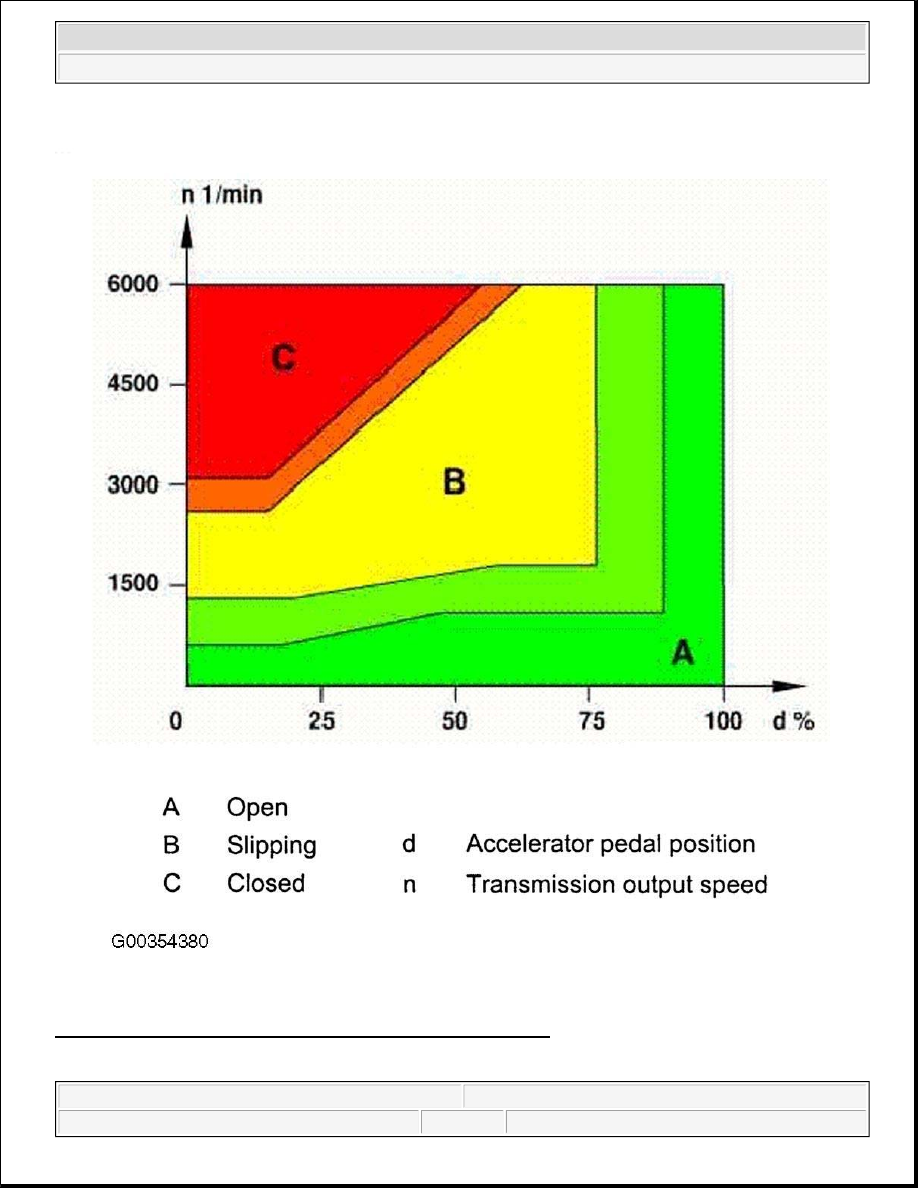
Fig. 159: Function Of Torque Converter Lockup Clutch Control 
Courtesy of MERCEDES-BENZ OF NORTH AMERICA.


2001 Mercedes-Benz ML320 

1998-03 AUTOMATIC TRANSMISSIONS Complete Transmissions - ML 320 - 722.662


me 


The aim of using the torque converter lockup clutch is to reduce the fuel consumption and exhaust gas 
emissions of the vehicle by reducing torque converter slip. See Fig. 159. This stands in contradiction to the ride 
comfort demands made on the drive train with regard to its vibration behavior. The task of the electronic 
transmission control is therefore to close the clutch in all driving situations relevant to fuel consumption, if 
possible, and ensure that the engine vibrations are isolated from the drive train. 

The characteristic curves shown in the diagram illustrate the different operating states of the torque converter 
lockup clutch in relation to the accelerator pedal position and transmission output speed, plotted for one 
transmission gear. 

In addition to the evaluation of these characteristics, the status of the torque converter lockup clutch is also 
determined by other variables. 

Variables influencing the states of the torque converter lockup clutch:  

Accelerator Pedal Movement  

Uphill And Down Hill Gradients  

Transmission Shift Functions  

ATF Temperature  

Durability Requirements  

Load Condition  

Engine Control Influences  

Torque Converter Lockup Clutch Control Pressure, Function 
 
See TORQUE CONVERTER LOCKUP CLUTCH CONTROL PRESSURE, FUNCTION.  

Torque Converter Lockup Clutch Control Pressure, Function 

Apart from extreme states of open or closed, it is possible to operate the torque converter lockup clutch with 
preset slip speeds. To enable this variable control pressure must be applied to the torque converter lockup clutch 
regulating valve. 

The torque converter lockup clutch control pressure is adapted to each operating state via the pulse-width 
modulated torque converter lockup solenoid valve (Y3/6y6) which is actuated by the ETC control unit (N15/3). 

Torque Converter Lockup Clutch PWM Solenoid Valve, Location/Task/Design/Function 
 
See LOCATION/TASK/DESIGN/FUNCTION OF PWM SOLENOID VALVE, TORQUE 
CONVERTER LOCKUP CLUTCH

Torque Converter Lockup Clutch, Location/Task/Design/Function 
 
See TORQUE CONVERTER LOCK-UP CLUTCH, LOCATION/TASK/DESIGN/FUNCTION

Torque Converter Lockup Clutch Regulating Valve, Location/Task/Function 


2001 Mercedes-Benz ML320 

1998-03 AUTOMATIC TRANSMISSIONS Complete Transmissions - ML 320 - 722.662


me 


See TORQUE CONVERTER LOCKUP CLUTCH REGULATING VALVE, 
LOCATION/TASK/FUNCTION
.  

Kick-Down Function (Up To 5/31/02) (With Touch Shift) 

Transmission With Touch Shift 722.6 In Model 163 

Fig. 160: Kick-Down Function (Up To 5/31/02)


2001 Mercedes-Benz ML320 

1998-03 AUTOMATIC TRANSMISSIONS Complete Transmissions - ML 320 - 722.662


me 


Courtesy of MERCEDES-BENZ OF NORTH AMERICA.

Operation 

The driver's wish for maximum acceleration of the vehicle is met with the kick-down function. See Fig. 160

When the kick-down switch (S16/6) is operated a CAN Signal is passed on from the electronic selector lever 
module control module (N15/5) to the ETC control module (N15/3) via the electronic accelerator. 

Based on this information the ETC control module (N15/3) actuates the solenoid valves so that the upshifts and 
downshifts take place at higher engine speeds in order to achieve maximum performance. 

Kick-Down Switch, Location/Task/Design 
 
See KICK-DOWN SWITCH, LOCATION/TASK/DESIGN.  

Hydropneumatic Transmission Control, Function (Without Touch Shift) 

Operation 

The hydropneumatic transmission control is divided into electronic and hydraulic transmission control. 

While the electronic transmission control is responsible for gear selection and for matching the pressures to the 
torque to be transmitted, the transmission's power supply control occurs via hydraulic elements in the 
electrohydraulic control module. The oil supply to the hydraulic elements, such as the hydrodynamic torque 
converter, the shift elements and the hydraulic transmission control, is provided by way of an oil pump 
connected with the torque converter. 

The electronic transmission control (ETC) allows for the precise adaptation of pressures to the corresponding 
operating conditions and to the engine output during the gearshift phase, resulting in a noticeable improvement 
in shift quality. 

It is possible to reach the engine RPM limit in the individual gears using full throttle and kick-down. The shift 
range can be changed in the forward gears while driving, but the electronic transmission control (ETC) employs 
a downshift safeguard to prevent over-revving the engine. 

The system offers the additional advantage of flexible adaptation to different vehicle and engine variants. 

ETC Control Module, Location/Task 
 
See ETC CONTROL UNIT, LOCATION/TASK

Electric Control Module, Location/Task/Design/Function 
 
See ELECTRONIC CONTROL MODULE, LOCATION/TASK/DESIGN/FUNCTION

Kickdown Switch, Location/Task/Design/Function Model 163 Without Touch Shift 


2001 Mercedes-Benz ML320 

1998-03 AUTOMATIC TRANSMISSIONS Complete Transmissions - ML 320 - 722.662


me 


Content   ..  203  204  205  206   ..