JAC HFC4DA1-2C engine. Instruction - part 5
 

  Index      JAC     JAC HFC4DA1-2C engine. Instruction


Search            copyright infringement  


Content      ..     3      4      5      6     ..


JAC HFC4DA1-2C engine. Instruction - part 5


Maintenance instruction for sunray hfc4da1-2c china-IV diesel engines 


66

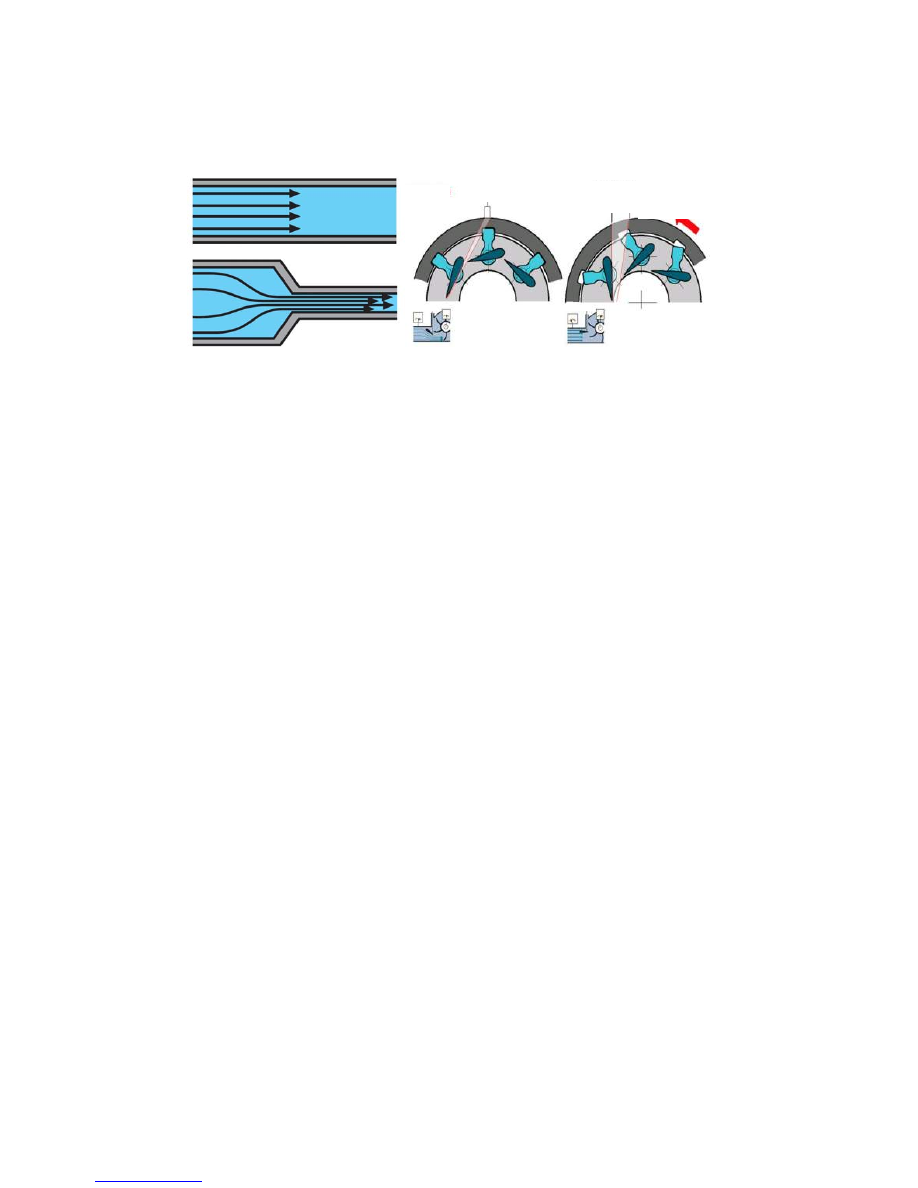
section passage is greatly higher than that passing through the constant section passage. 


Idling of 

engine

Small passage 

section 

Large passage 

section 

High speed 

running of engine 

Rotation direction of adjustment ring


-------------------------------------------------------------------------------------------------------------------------------------------------------------

Maintenance instruction for sunray hfc4da1-2c china-IV diesel engines 


67

Section IX EGR System 


The exhaust gas recirculation (EGR) introduces one small portion of exhaust gas from the exhaust pipe into the intake 
pipe that is mixed with the fresh intake air to artificially increase the exhaust amount in the fresh intake air and thus 
reduce the combustion temperature of engine and reduce the formation of NOx.   

z  The NOx is increased following the increasing of engine load and the EGR ratio shall increase accordingly.   

z  The EGR is not be performed when the engine coolant temperature is low;   

z  The EGR is not performed under idling or low load, as the NOx emission is not high in such case.   

z  The EGR is not performed under full load or acceleration;   

z  The water-cooled EGR further reduces the temperature of exhaust gas entering into the cylinder and further 

reduces the emission of NOx.   


-------------------------------------------------------------------------------------------------------------------------------------------------------------

Maintenance instruction for sunray hfc4da1-2c china-IV diesel engines 


68

Section X Exhaust System 


The exhaust pipe is composed of four exhaust manifolds leading to the exhaust master pipe and one manifold leading 
to the exhaust gas chamber of EGR valve. During the operation, the exhaust gas from the combustion chamber is 
introduced into the EGR valve by the manifold leading to the exhaust gas chamber of EGR valve through the EGR 
passage in the cylinder head. Under the control of the EGR valve, the exhaust gas is mixed with fresh air and enters 
into the combustion chamber to realize exhaust gas recirculation and reduce the emission.     

4DA1-2C diesel engine real-time monitors the pressure drop of the exhaust gas post-treatment unit to determine 
whether the post-treatment system is working normally. Via two pressure ports on the sensor, the pressure on two 
sides of the exhaust gas post-treatment unit is introduced. The sensor converts the measurement into voltage value and 
feeds back to the control unit, which can guarantee the sufficient oxidization of grains and prevent the blockage of 
catalytic converter.   


-------------------------------------------------------------------------------------------------------------------------------------------------------------

Maintenance instruction for sunray hfc4da1-2c china-IV diesel engines 


69

Chapter III Working Principle of Engine Control and Actuator Units   

Section I Overview of Diesel Common Rail System


The electronically controlled high pressure common rail system means one fuel supply mode in which the generation 
of injection pressure and fuel injection are completely separated in the closed-loop system composed of high pressure 
fuel pump, pressure sensor, and ECU. The high pressure fuel pump generates high pressure fuel and conveys to the 
common rail pipe to realize precise control of fuel pressure within the common rail pipe. This fuel injection system 
can ensure that the fuel injection pressure will not vary following the variation of the engine speed and thus relieve the 
defect of traditional diesel engines. Instead of the common pulse theory, this system adopts the pressure-time 
measuring theory and combines the high pressure common rail with the control of fuel injection solenoid valves of all 
cylinders, in which the last pulse of the control unit introduces the injection signal into the solenoid valve to trigger 
one injection cycle and the injection amount is controlled by the accumulated pressure and the open duration of the 
injector. The injection pressure of EDC17 control system adopted by this engine is up to 1,600bar.   

The electronically controlled common rail fuel injection technology of diesel engine integrates the computer control 
technology, modern sensing and measuring technology, and advanced fuel injection mechanism. The main 
characteristic of this technology is as below: The main parameters (including speed, torque, power, oil temperature, oil 
pressure, water temperature, and turbocharger pressure of the diesel engine) under actual working conditions of the 
diesel engine are measured by modern sensing and measuring technology and transmitted to the ECU and the ECU 
compares these measurements with the pre-inputted optimized running MAPs of the diesel engine and processes and 
calculates out the best values to control the pressure of common rail pipe and the open moment, duration, and 
injection frequency of the high speed solenoid valves of the fuel injectors, in order to realize the best working state of 
the diesel engine. The electric pulses generated by the ECU trigger the solenoid valves of the fuel injector as per 
specified sequence to determine the open and close moments of each fuel injection cycle of the engine and flexibly 
control the fuel injection speed and frequency. The common rail fuel injection mechanism forms directly or indirectly 
constant high pressure fuel and distributes to each fuel injector. The electronically controlled common rail fuel 
injection technology of the diesel engine can guarantee that the diesel engine achieves the best air-combustion ratio 
and excellent atomization.   

Diesel common rail injection system


High pressure 

pump


Cut-off valve 

(optional) 

Fuel pressure sensor 

Distribution 

pipe 

Fuel-water 

t

Fuel tank


High pressure

Low pressure

Pressure 

regulation valve

Fuel temperature 

sensor 

Fuel delivery pump

Other sensors


Accelerator 
pedal


Fuel injector


Crankshaft 
position 
sensor


Camshaft position 
sensor


-------------------------------------------------------------------------------------------------------------------------------------------------------------

Maintenance instruction for sunray hfc4da1-2c china-IV diesel engines 


70

The high pressure common rail system is composed of fuel tank, diesel filter, high pressure fuel pump, common rail 
pipe, electronically controlled fuel injector, high pressure fuel pipe, and low pressure fuel return pipeline.     

z  It adopts direct injection combustion chamber system and common rail fuel supply system to realize high 

performance, clean emission, low noise, and low vibration;   

z  Single camshaft and four-valve technology brings about higher air charging efficiency and improves the 

combustion;  

z  High power per liter design and compact design;   

z  Variable nozzle turbocharger (VNT) control;   

z  Exhaust Gas Recirculation (EGR);   

z  Electronic throttle control.   


-------------------------------------------------------------------------------------------------------------------------------------------------------------

Maintenance instruction for sunray hfc4da1-2c china-IV diesel engines 


71

Section II Working Principle of Low Pressure Fuel Line System   

I. Composition of low pressure fuel line:   

The low pressure fuel line is functioned to supply sufficient fuel to the 
high pressure fuel line and is composed of:   

z  Fuel tank (including filter screen)   

z  Fuel filter (including instruction fuel delivery pump)   

z  Low pressure fuel delivery pump   

z  Other low pressure fuel hoses   

II. Fuel tank   

The fuel tank shall be fabricated from anti-corrosion material and shall maintain 0.3bar pressure under all working 
conditions and be free of fuel leakage under the application of the doubled working pressure. The fuel tank shall also 
set up appropriate opening or safety valve or adopt appropriate measures to relieve the excessive pressure whenever 
it's needed. When the motor vehicle is subject to slight vibration, makes turns or travels or parks on a slope, the fuel in 
the fuel tank shall not leak from the fuel tank cap or the pressure balancing device.   

III. Fuel filter (including instruction fuel delivery pump)   

Sunray long-wheelbase model adopts two-stage diesel filter, including 
one primary filter and one fine filter. Compared with traditional diesel 
engines, it requires cleaner fuel supply. The impurities contained in 
the fuel will damage the fuel system including the high pressure pump, 
high pressure common rail, and fuel injector. The fuel filter purifies 
the fuel inputting into the high pressure fuel pump, in order to help the 
normal functioning of the high pressure pump. The contaminant, 
impurity, and particle in the fuel will lead to the damage of pump units, 
fuel supply valve, and fuel injector. Therefore, the use of fuel filter 
capable of meeting the fuel injector requirements becomes the 
premise for normal working of the engine and guarantee of service life. 
The water content in the diesel may exist in non-free radical form 
(emulsified fuel) or radical form (such as water condensate generated 
due to variation of temperature). If entering into the fuel injection 
system, this water content will lead to damage of parts due to corrosion. 
Similar to other fuel injection systems, common rail system requires 
the fuel filter with water collection chamber as well as the automatic 
water content alarm. When the alarm lamp lights up, make sure to 
drain the water from the water collection chamber.   

The fuel filter is composed of fuel temperature sensor, fuel heater, 

instruction fuel pump, fuel-water separator, and water level sensor.   
The fuel leakage during traveling or the air ingress into fuel pipeline 
after replacement of fuel filter may lead to start failure or poor 
functioning of the engine. Therefore, make sure to bleed the air from 
the low pressure fuel pipeline after the installation of instruction fuel 
delivery pump. Installed on the fuel filter, the manual fuel delivery 
pump is the device for supplying fuel to the fuel filter and the device 
required to guarantee the first start of the engine. In event of the 
following conditions, press the manual fuel delivery pump, till the 
manual fuel delivery pump can’t be further pressed, before starting the 


-------------------------------------------------------------------------------------------------------------------------------------------------------------

Maintenance instruction for sunray hfc4da1-2c china-IV diesel engines 


72

engine.  

z  After the fuel is used up.   

z  After the water drainage from the fuel-water separator.   

z  After the replacement of fuel filter   

Replacement of fuel filter 

1. Replacement interval of fuel filter: Once every 7,000km;   

2. Water separation interval: Once every 5,000Km;   

3. It’s prohibited to use any used fuel filter.   

IV. Low pressure fuel delivery pump   

The low pressure fuel delivery pump is one gear pump and is stalled 
at the rear end within the high pressure pump housing. The low 
pressure fuel delivery pump continually supplies the required fuel 
amount to the high pressure pump from the fuel tank.   

The fuel delivery pump is functioned to supply sufficient fuel 
supply to the high pressure pump under following conditions:   

(1) Under any working condition;   

(2) Under necessary pressure;   

(3) Throughout the entire service life.   

The low pressure fuel delivery pump is one mechanical gear pump and is installed at the rear end of high pressure 
pump and driven by the high pressure pump shaft. Its main parts are two gears rotating in opposite direction. While 
rotating, two gears engages to vacuumize the fuel into the chamber formed between gears and pump walls and then 
conveys to the outlet (pressure end). The closing line of the rotating gears realizes the sealing between vacuumization 
end and pressure end of the pump and prevents the fuel backflow.   
The fuel supply amount of the gear pump is approximately in proportion to the engine speed. This is why the fuel 
supply amount of the gear pump can be reduced by means of the throttle valve at the inlet end or can be restrained by 
means of the relief valve at the outlet end.   
No maintenance is required for the gear pump. Charge the fuel from the fuel system before the first start. When the 
fuel in the fuel tank is used up, operate the instruction fuel delivery pump to charge fully the low pressure fuel line.   

V. Fuel pipeline   

Besides the steel pipe, the low pressure fuel line can also adopt flame-retardant braided and armored fuel hose. The 
fuel pipes shall be arranged in such manner to prevent the mechanical damage and that the fuel dripped or evaporated 
will not concentrate nor burn.   

In event of vehicle distortion, engine displacement, or similar conditions, the functions of the fuel pipeline shall not be 
impaired. All fuel delivery pipelines shall have the radiation shield measures.   


-------------------------------------------------------------------------------------------------------------------------------------------------------------

Maintenance instruction for sunray hfc4da1-2c china-IV diesel engines 


73

VI. Common malfunctions and troubleshooting for low pressure fuel line 

No. Malfunction 

Troubleshooting 

Remarks 

Weak pumping of 
fuel  

Retighten the connectors (temperature 
sensor, plug, and pile connector), in 
order to prevent the pumping failure 
due to ingress of air. If ineffective, 
replace the instruction pump.   

The tightening torque for connectors is 
30-35N.m. Higher torque will lead to 
thread failure.   

Fuel leakage of air 
bleeding screw   

Check the screw hole of instruction pump 
for presence of thread failure. If yes, 
replace the transitional thread insert 
and air bleeding screw and washer.   

The tightening torque is 7~9N.m. Higher 
torque will lead to thread failure. While 
assembling the transitional thread insert, 
add an appropriate amount of thread sealant 
onto the thread. Prevent the ingress of 
sealant into the instruction pump.   

3 Fuel 

leakage 

of 

instruction pump   

Replace the instruction pump   

The knocking or improper use will lead to 
fuel leakage of instruction pump   

4 Slow 

acceleration 

and difficult start 
due to difficult 
fuel supply 

The filter is blocked. Replace the filter. 
If the malfunction still occurs after 
replacement of fuel filter, check other 
engine parts.   

The blockage of fuel filter will increase the 
pressure difference.   

Failure for timely 
water drainage   

Make sure to drain the water when the 
water level sensor indicator lamp lights 
up.  


If the water is not drained, the water 
content in fuel will increase to impair the 
engine performance.   

Light-up failure of 
water level sensor 
indicator lamp at 
engine start   

1.    Water level sensor is damaged.   

2.    Indicator lamp is damaged.   

3.    Circuit malfunction   


Working failure of 
heater  


1. The heater is damaged.   

2. Circuit malfunction   

3. Low battery current   

4. The heater is punctured due to high 
current 


Working failure of 
temperature 
sensor  

Damage o temperature sensor   

Circuit malfunction   


-------------------------------------------------------------------------------------------------------------------------------------------------------------

Maintenance instruction for sunray hfc4da1-2c china-IV diesel engines 


74

Section III Working Theory of High Pressure Fuel Line 

I. High pressure fuel line parts   

The high pressure fuel line generates and accumulates 
sufficient fuel pressure required for the fuel injectors. 
The parts include: High pressure pump, fuel rail, high 
pressure fuel pipe, and fuel injector.   

II. High pressure pump   

The high pressure pump compresses the fuel to a system 
pressure of up to 1,450bar and then the fuel is 
transmitted to the tubular high pressure fuel accumulator 
(rail) via the high pressure pipe.   

The high pressure pump is the interface between low pressure stage and high pressure stage. Under all working 
conditions, it can reliably supply sufficient high pressure fuel throughout the entire service life of the vehicle, 
including supplying addition fuel required for rapid start and the 
rapid establishment of pressure in the common rail. The high 
pressure pump continually generates the system pressure required 
for the high pressure accumulator (rail). Therefore, it means that, 
compared with traditional system, it’s unnecessary to compress the 
fuel for each individual injection cycle.   

The fuel is compressed by three plunger pumps arranged radially at 
spacing of 120º from each other. As each rotation turn can generate 
three compression strokes and only generate low peak drive torque, 
the drive unit of the pump maintains uniform force application. As 
far as 16Nm torque is concerned, this torque is only 1/9 of the 
torque required for driving similar distribution pump. This means 
that, compared with traditional fuel injection systems, the common rail generates lower load onto the drive unit of the 
pump. The raising power of the drive pump is in proportion to the preset pressure of common rail and the speed of the 
fuel pump (fuel delivery amount).   

Working mode:   

Through one water separator, the fuel delivery pump pumps out the fuel from the fuel tank and the fuel enters into the 
lubricating and cooling lines of high pressure pump via the fuel inlet. The drive shaft with eccentric wheel drives three 
pump plungers for upward and downward movements along with the profile of the cam. The pump plungers move 
downward under the application of the fuel delivery pressure (fuel suction stroke). When the plungers overpass the 
bottom dead center, the fuel inlet valve is closed so that the fuel in the pump chamber will not leak out. In such case, 
the fuel is compressed so that the fuel pressure exceeds the fuel delivery pressure of the fuel delivery pump. In such 
case, once the pressure established exceeds the pressure in the common rail, the fuel outlet valve opens so that the fuel 
enters into the high pressure line. The pump plungers will continue the fuel supply, till the top dead center is reached 
(fuel delivery stroke). Then the pressure drops and the fuel outlet valve closes. The residual fuel is pressure relieved: 
The pump plungers move downward. When the pressure in the pump chamber is less than the fuel delivery pressure, 
the fuel inlet valve re-opens and the pumping process is started again.   

III. Fuel rail (Common rail) 

The high pressure accumulator (rail) stores the high pressure fuel and at the same time restrains the pressure variation 
generated during the fuel supply and fuel injection of the high pressure pump. The high pressure accumulator is 
shared by all cylinders and therefore is referred to as “common rail”. Even when a great amount of fuel is drained, the 
common rail can maintain its internal pressure basically unchanged. Therefore it maintains the constant fuel injection 
pressure of the fuel injector.   

1. 

Drive shaft 

2. 

Eccentric cam   

3. 

Plunger pump 

4. 

Fuel suction valve 

5. 

Fuel outlet valve 

6. 

Fuel inlet 


-------------------------------------------------------------------------------------------------------------------------------------------------------------

Maintenance instruction for sunray hfc4da1-2c china-IV diesel engines 


75

The space of the common rail is always filled with high 
pressure fuel. It utilizes the fuel compressed due to high 
pressure to achieve the accumulator effect. When the fuel is 
departed from the common rail for injection, the pressure in the 
high pressure accumulator is basically constant. At the same 
time, the pressure variation generated by the pulsed fuel supply 
of high pressure pump is balanced and the pressure information 
is provided to the ECU.   

IV. High pressure fuel pipe   

The high pressure fuel pipe is used to convey the high pressure 
fuel and is made of steel to endure the intermittent high 
frequency pressure variation under the maximum system pressure of the engine. The fuel pipe is generally 6mm in 
outside diameter and 2.4mm in inside diameter. All high pressure fuel pipes between fuel rail and fuel injectors are 
same in length, which means that the distances between the fuel rail and all fuel injectors are the same and the bending 
points compensate the corresponding length differences.   

IV. Fuel injector   

The fuel injectors are the core parts of the high pressure common rail and are installed on the high pressure common 
rail. In accordance with the directive of the ECU, the fuel 
injectors spray high pressure well-atomized fuel into the 
combustion chamber at specified moment and specified 
pressure for a specified duration.   

The fuel injector is mainly composed of fuel injector 
nozzle, hydraulic servo unit, and solenoid valve. When 
the coil control valve acquires control signal through the 
ECU, the control valve will depart from its seat ring so 
that the fuel pressure in the needle valve control chamber 
drops rapidly. As the pressure at the injector nozzle holder 
is maintained at similar pressure with common rail, the 
needle valve opens and the injection starts. When the 
current of the solenoid control valve drops to zero, as the 
control valve returns to the seat cushion under the 
application of coil spring, the pressure of the needle 
control chamber will increase to lightly higher than he 
pressure at the injector holder so that the needle valve 
closes the injector and the injection stops. The sealing 
copper washer beneath the fuel injector must be replaced 
once the fuel injector is disassembled or loosened. During 
the disassembly, use the special tools recommended or 
designated by JAC Multifunctional Commercial Vehicle 
Company. Note: Never disassemble the fuel injector by 
self in any case. All maintenances and services of the fuel 
injector body shall be fulfilled by Bosch relevant service 
stations or JAC designated service stations.   


-------------------------------------------------------------------------------------------------------------------------------------------------------------

Maintenance instruction for sunray hfc4da1-2c china-IV diesel engines 


76

Section IV Electronic Control Unit of High Pressure Common Rail System   

The EDC17 system of HFC4DA1-2C engine belongs to electronically controlled diesel injection system and 
incorporates the dynamic fuel injection timing system and air and fuel management system. It adopts the BOSCH 
diesel high pressure common rail system, with the rail pressure up to 1,600bar, and applies new technologies 
including VNT, electronically controlled EGR, and POC pressure difference control to meet the Euro-IV emission 
standard, with potential compliance for Euro-V emission standard.   

The characteristics of this system is one single ECU, one set of fuel injection control system, and one set of sensor 
system. It’s functioned to inject the fuel into the engine cylinder, with accurate injection timing and fuel amount, so 
that the fuel is mixed with air in the cylinder to achieve best combustion efficiency.   

The electronic control unit of the diesel common rail system is mainly composed of three parts: sensor, ECU, and 
actuator.  

①  Sensor part: The sensors and rated value transmitters collecting the running state and rated values of the engine 
and complete vehicle, which convert various types of physical parameters into electric signals.   

② ECU: It’s functioned to process the information as per definite mathematic calculation method and issue the 
electric signals of the directives.   

③ Actuator: It’s functioned to convert the electric signals of the directives issued by the ECU into mechanical 
parameters.  

I. Sensor part   

1. Crankshaft position sensor 

1) 

Overview  

z  The crankshaft position sensor is one electromagnetic sensor.   

z  The position of piston in the combustion chamber determines 

the start moment of fuel injection. As the engine piston is 
connected with crankshaft through connecting rod, the 
crankshaft position sensor can provide all data information for 
the piston position and the engine speed determines the 
revolution per minute of the crankshaft.   

z  Generation of signal: The crankshaft is connected with one 

60-tooth ferromagnetic actuation gear. The actuation gear 
actually in use has two teeth missing. This large gap 
corresponds to one specified crankshaft position of 1

st

 cylinder. 

The crankshaft position sensor records the tooth sequence of 
the actuation gear. It’s composed of one permanent magnet and 
soft iron core with copper coil. The magnetic flux in the sensor 
varies along with the gear and gap passing through and 
generates one sine AC voltage, of which the amplitude rapidly 
increases following the speed of the engine (crankshaft). It can 
achieve sufficient amplitude even when the speed is at 50r/min.   

z  The crankshaft position sensor is situated on the rear clutch 

housing of the engine;   

z  Wiring terminals: 1. Signal terminal of crankshaft position 

sensor; 2. Grounding terminal of crankshaft position sensor;   

Crankshaft speed sensor 
1. Permanent magnet        2. Sensor housing   
3. Engine outer cap          4. Soft iron core     
5. Coil                              6. Sensing gear 


-------------------------------------------------------------------------------------------------------------------------------------------------------------

Maintenance instruction for sunray hfc4da1-2c china-IV diesel engines 


77

z  Resistance: 860 Ohm;   

z  Clearance between sensor and top of signal gear: 0.5~1.2mm.   

2) Working Principle 

The electromagnetic sensor simulates the AC signal generator, namely such sensor generates AC signal, and is 
generally composed of a magnet wound by coil and two wiring terminals. These two coil terminals are the output 
terminals of the sensor. When the steel annular gear (sometimes referred to as magnetic resistance gear or target gear 
or signal gear) rotates to pass through this sensor, the magnetic flux of the magnet passing through the coil varies at 
certain level and the induction voltage is generated in the coil.   

The same tooth profiles of the signal gear will generate continual pulses in same form. The pulses have consistent 
form amplitudes (peak-peak voltages) and are in proportion to the speed of crankshaft signal gear. The frequency of 
the output signal is based on the rotation speed of the magnetic resistance gear and the air gap between sensor 
magnetic pole and the magnetic resistance gear is of great influence over the amplitude of the sensor signal (Attention 
shall be paid to the backlash during the installation). During the production, removing the synchronous pulse 
generated by one tooth or two really close teeth from the sensor can determine the signal of top dead center, which 
will lead to the frequency variation of output signal. When the number of teeth is reduced, the voltage output 
amplitude will vary greatly. This pulse signal is transmitted to the ECU, based on which the ECU controls the fuel 
injection of the engine.   

As the electromagnetic crankshaft position sensor is weak in signal and sensitive and is vulnerable to the 
electromagnetic interference by the electric devices such as car telephone, fan, and starter, it will lead to malfunction 
of traveling performance or generate trouble code. To prevent the occurrence of such phenomenon, two signal wires of 
the crankshaft position sensor adopt the twisted-pair structure in the manufacturing of engine harness, which can 
effectively guard the signal of crankshaft position sensor against the external signals and reduce the production cost.   

3) Measurement analysis:  


1 – Signal -; 2 – Signal +; Use a multimeter to measure the resistances for two signal terminals of the crankshaft 
position sensor. The resistance measurement shall be 860 Ohm.   

4) Malfunction Mode:  

z  Short-circuit or open-circuit of sensor;   

z  Distorted, error, and suspicious signal;   

z  Unstable sensor signal;   

z  Sensor signal is out of range.   

The crankshaft position and speed sensor is the main sensor of the engine electronic control system. In event of the 
malfunction of crankshaft position and speed sensor, the engine can’t start. If the malfunction occurs after the start of 
the engine, the engine will stop immediately.   

5) Troubleshooting 

Speed sensor 

Signal

Grounding

Shielding wire


-------------------------------------------------------------------------------------------------------------------------------------------------------------

Maintenance instruction for sunray hfc4da1-2c china-IV diesel engines 


78

Use diagnosis instrument to check the trouble code and determine the 
malfunction position. Mainly check whether the sensor is installed in place and 
whether the clearance is normal, check the sensor circuit whether there is 
short-circuit or open-circuit to grounding wire, check whether there is 
short-circuit or open-circuit to the power supply, and check whether the circuit 
is consistent with the given pin definition.   

Notice: Take caution to install the sensor and make sure not to add any washer, 
or it may lead to signal distortion of sensor.   

2. Camshaft position sensor  

1) Overview   

z  The camshaft position sensor is one Hall sensor.   

z  The camshaft position sensor utilizes the Hall effect to determine the camshaft position. One steel actuation gear 

rotates along with the camshaft, the Hall effect integrated circuit is installed between actuation gear and 
permanent magnet, and the permanent magnet generates a magnetic field perpendicular to the Hall unit. If one 
tooth of actuation gear passes through the current-carrying linear sensor unit (semiconductor chip), it changes the 
strength of magnetic field perpendicular to the Hall unit. In such case, the electron driven by the voltage in major 
axis direction is offset in the direction perpendicular to the current direction to generate one temporary signal 
voltage (Hall voltage) so that the calculation circuit integrated with the sensor Hall integrated circuit will process 
the signal and output as square wave signal.   

z  The camshaft position sensor is installed on the cylinder head shield.   

z  Wiring terminals: 1. +5V power supply, 2. Signal output, 3. Grounding;   

z  The clearance between sensing end of sensor and the signal gear of camshaft: 0.5~1.5mm. Required torque: 

8

±0.5Nm  

2) Working Principle 

The camshaft controls the intake and exhaust valves of the engine, of which the speed is only half of the crankshaft 
speed. When the piston moves towards the top dead center, the camshaft position determines whether the piston is at 
compression stroke or the exhaust stroke and then judges the fuel injection or not. If the engine is under start stage, 
such data information can’t be acquired from the crankshaft position. On the other hand, during the normal working 
of the engine, the data information generated by the crankshaft sensor is enough to determine the engine state. In 
other words, while the vehicle is traveling, even the camshaft sensor is failed, the ECU can still receive the data 
information of engine working state from the crankshaft sensor.   

The camshaft sensor utilizes Hall effect to determine the camshaft position. One steel toothed part is fixed on the 
camshaft and rotates along with the camshaft. When this toothed part passes through the semiconductor chip of the 
camshaft sensor, its magnetic field will offset the electron of the semiconductor chip towards the current direction. 
Therefore, one temporary voltage signal (Hall voltage) is generated to remind ECU that the 1

st

 cylinder enters into the 

compression stroke.   

3) Measurement analysis   

Wiring terminals: 1 - +5V, 2 – Signal +, 3 – Grounding   


Camshaft 

position 

sensor 

Grounding terminal

Signal terminal

Power supply terminal


-------------------------------------------------------------------------------------------------------------------------------------------------------------

Maintenance instruction for sunray hfc4da1-2c china-IV diesel engines 


79

4) Malfunction Mode 

z  Short-circuit or open-circuit of sensor;   

z  Distorted, error, and suspicious signal;   

z  Unstable sensor signal;   

z  Sensor signal is out of range.   

5) Troubleshooting 

Use diagnosis instrument to check the trouble code and determine the malfunction position. Mainly check whether the 
sensor is installed in place and whether the clearance is normal, check the sensor circuit whether there is short-circuit 
or open-circuit to grounding wire, check whether there is short-circuit or open-circuit to the power supply, and check 
whether the circuit is consistent with the given pin definition.   

3. Pressure difference sensor 

1) Overview   

z  The pressure difference sensor is functioned to real-time monitor the pressure drop of the POC and determine 

whether the after-treatment system is working normally. The pressure at two ends of the POC is introduced via 
two pressure ports of the sensor and then the sensor converts the measurement into voltage value and feeds back 
to control unit. This can not only guarantee the sufficient oxidization of grains, but also prevent the blockage of 
catalytic converter.   

z  The pressure difference sensor and the POC are connected via stainless steel pipe and high temperature rubber 

hose. The pressure is introduced via stainless steel pipe, which is at least 250mm in length, from two sides of 
POC and then is led to the pressure difference sensor via high temperature rubber hose, which is capable of 
enduring more than 150ºC.   

2) Working Principle 


-------------------------------------------------------------------------------------------------------------------------------------------------------------

Maintenance instruction for sunray hfc4da1-2c china-IV diesel engines 


80

3) Test analysis   

Wiring terminals: 1 - +5V, 2 – Signal +, 3 – Grounding   


3.  Turbocharger pressure sensor   

1) Overview   

The turbocharger pressure sensor is connected to the 
intake pipe and is functioned to measure the absolute 
pressure of the intake pipe. This sensor is composed of 
one pressure unit with two sensing units and one 
evaluation circuit chamber. The sensing units and 
evaluation circuit are mounted on common ceramic 
substrate. Each sensing unit incorporates one horn-shaped 
diaphragm embodying the benchmark capacity for 
determination of internal pressure. The diaphragm moves 
towards large or small open extent as a function of 
charging pressure. The pressure sensitive resistor is 
mounted on the diaphragm surface, of which the resistance 
varies under the application of pressure. These resistors are 
connected to form a resistor bridge. Therefore, any 
movement of the diaphragm will change the balance of 
resistor bridge, namely the voltage of the resistor bridge is 
one measurement of turbocharger pressure. The evaluation 
circuit is functioned to amplify the bridge voltage and 
compensate the linear variation of temperature influence 
and pressure characteristic. The output signal of evaluation 
circuit is transmitted to ECU and then the turbocharger 
pressure is obtained by means of the programming 
characteristic curve.   

z  The temperature sensor incorporates one negative 

temperature coefficient (NTC) thermistor that is 
connected in the voltage division circuit of 5V power 
supply.  

z  The voltage drop on the resistor is inputted to the ECU via one analog and one digital converters (ADC), which 

is one measurement for evaluating the temperature. The ECU micro-processor embodies one characteristic curve, 
which defines the temperature as a function of given voltage.   

z  It’s installed on the pressure stabilizing chamber of intake manifold and take the priority to measure the pressure.   

z  Wiring terminals: 1 – Grounding, 2 – Temperature signal, 3 – +5V, 4 – Pressure signal.   

2) Working Principle 

The turbocharger pressure sensor is connected in the intake pipe and is capable of measuring the absolute pressure of 
intake pipe at 0.5~3bar. This sensor is composed of one pressure unit with two sensing units and one evaluation circuit 
chamber. The sensing units and evaluation circuit are mounted on common ceramic substrate. Each sensing unit 
incorporates one horn-shaped diaphragm embodying the benchmark capacity for determination of internal pressure. 
The diaphragm moves towards large or small open extent as a function of charging pressure. The pressure sensitive 

Pressure 

difference 

sensor 

5V power supply 

Pressure difference signal

Earthing


-------------------------------------------------------------------------------------------------------------------------------------------------------------

Maintenance instruction for sunray hfc4da1-2c china-IV diesel engines 


81

resistor is mounted on the diaphragm surface, of which the resistance varies under the application of pressure. These 
resistors are connected to form a resistor bridge. Therefore, any movement of the diaphragm will change the balance 
of resistor bridge, namely the voltage of the resistor bridge is one measurement of turbocharger pressure. The 
evaluation circuit is functioned to amplify the bridge voltage and compensate the linear variation of temperature 
influence and pressure characteristic. The output signal of evaluation circuit is transmitted to ECU and then the 
turbocharger pressure is obtained by means of the programming characteristic curve.   

The voltage drop on the resistor is inputted to the ECU via one analog and one digital converters (ADC), which is one 
measurement for evaluating the temperature. The ECU micro-processor embodies one characteristic curve, which 
defines the temperature as a function of given voltage.   

3) Measurement analysis  
Wiring terminals: 1 – Grounding, 2 – Temperature signal, 3 – +5V, 4 – Pressure signal.   


4) Malfunction Mode 

The light-up of the engine malfunction indicator lamp indicates the presence of malfunction in the engine system and 
it’s necessary to diagnose with diagnosis instrument. Use Sunray special diagnosis instrument to communicate with 
ECU of electronic injection system and read out the malfunction data in the ECU. 

5) Troubleshooting   

Use Sunray special diagnosis instrument to check the trouble code and determine whether there is short-circuit or 
open-circuit between circuit of malfunction position and the grounding wire, whether there is short-circuit or 
open-circuit to power supply, and whether the circuit is consistent with the given pin definition.   

4.  Thermal diaphragm air flowmeter   

1)   Overview   

z  The thermal diaphragm airflow sensor is one air mass sensor fitted with 

logic output. To obtain the air flow, the sensor diaphragm on the sensor is 
heated by the heating resistor installed in the middle and the temperature 
distribution on the diaphragm is measured by the temperature resistors 
installed paralleling with the heating resistor. The air flow passing through 
the sensor changes the temperature distribution on the diaphragm to cause 
resistance difference between two temperature resistors. The resistance 
difference depends on the direction and flow rate of the airflow so that the 
airflow sensor has high requirements over the flow rate and direction of the 
airflow. The sensor manufactured by micro-machinery features small size, 
low thermal capacity, and <15ms response time.   

z  The sensor is internally fitted with intake temperature sensor to measure the 

intake temperature.   

z  The air flowmeter is installed at the port of the air cleaner.   

z  Wiring terminals: 1. +12V power supply; 2. Grounding; 3. Air temperature signal; 4. Airflow rate signal.   

Turbocharger pressure 

and temperature 

sensor 

Grounding

5V power supply

Intake pressure signal

Intake temperature signal


-------------------------------------------------------------------------------------------------------------------------------------------------------------


Content      ..     3      4      5      6     ..