FM 1-02 (FM 101-5-1) MCRP 5-12A OPERATIONAL TERMS AND GRAPHICS (SEPTEMBER 2004) - page 12
FM 1-02/MCRP 5-12A________________________________________________________________
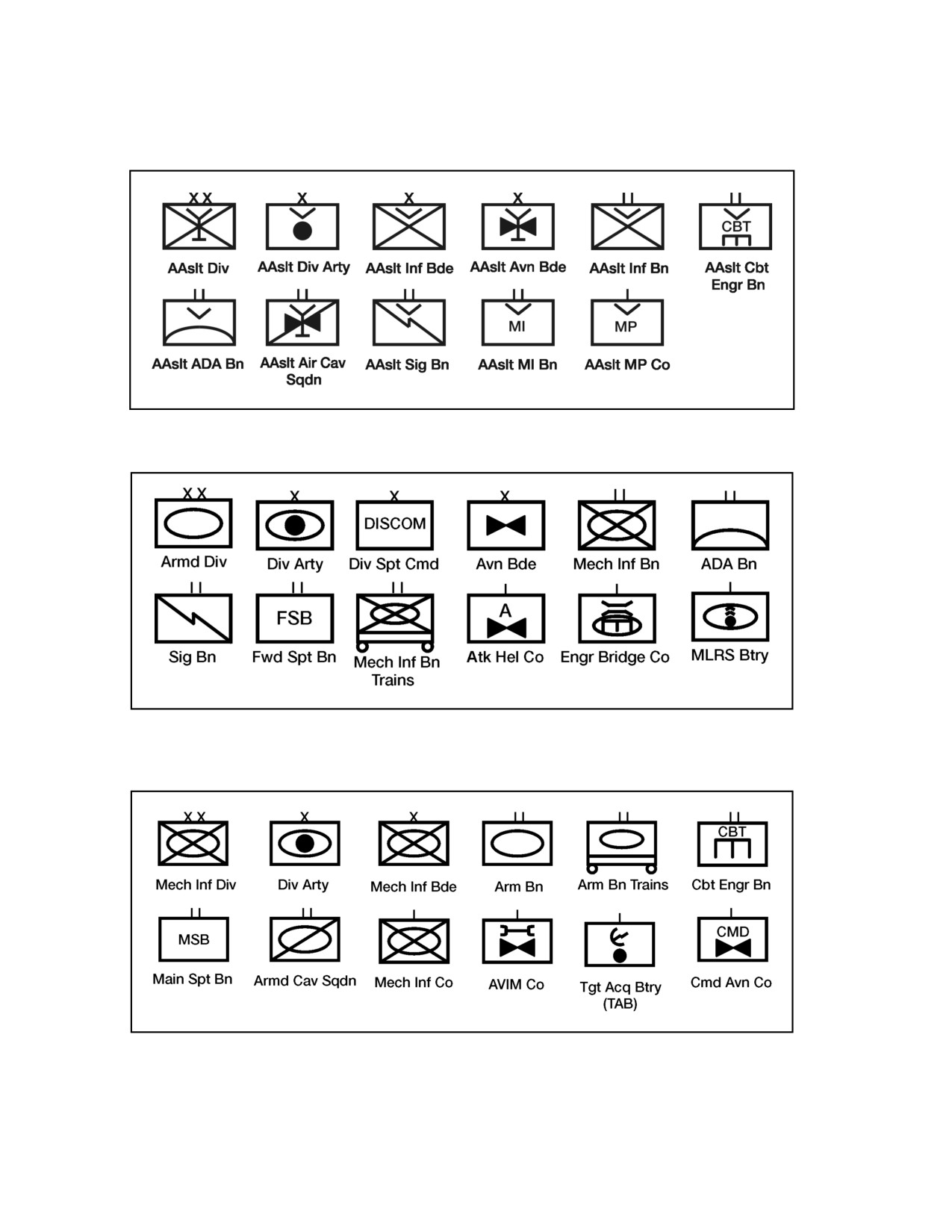
Figure B-2. Air Assault Infantry Divisions
Figure B-3. Armored Divisions
Figure B-4. Mechanized Infantry Divisions
B-2
_________________________________________________________Examples of Military Symbols
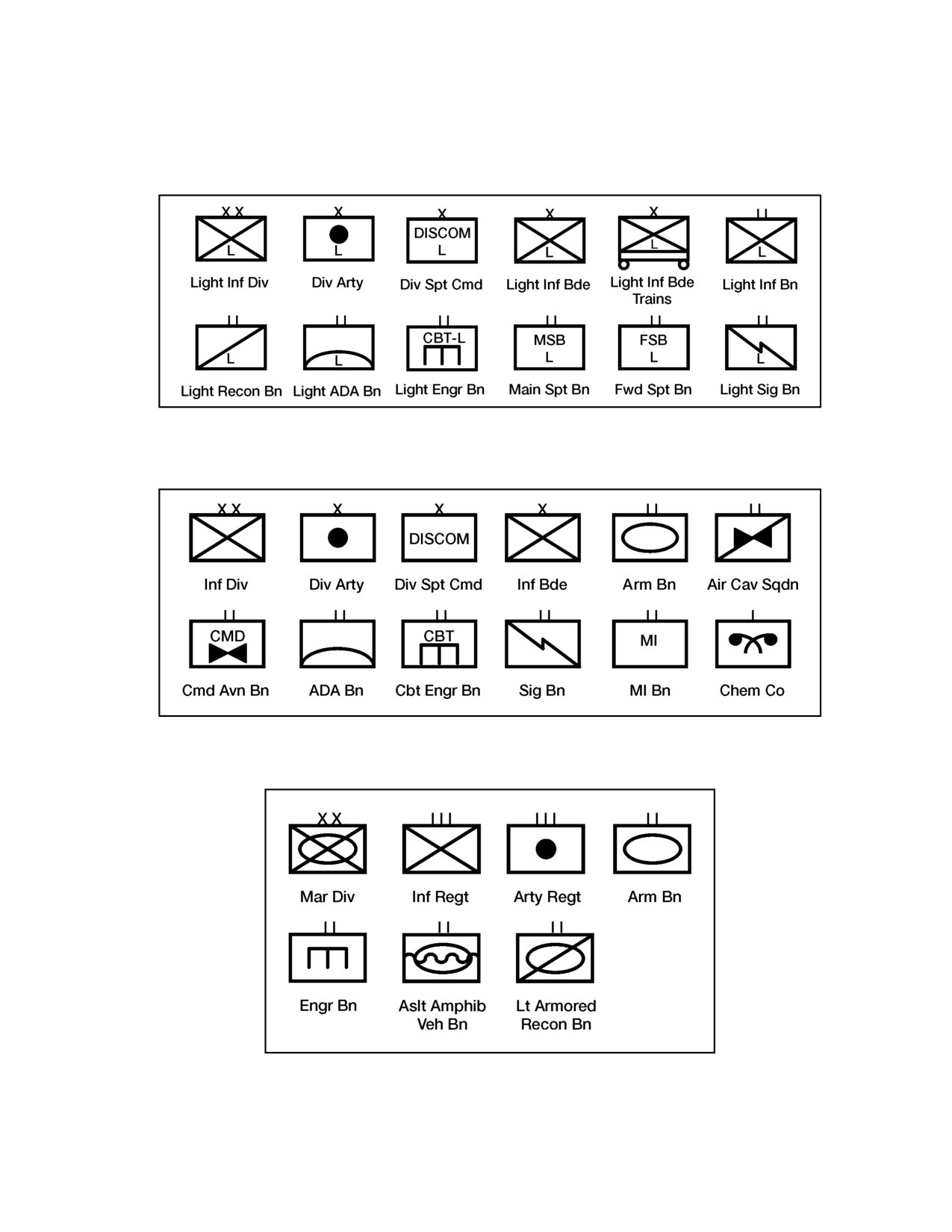
Figure B-5. Light Infantry Divisions
Figure B-6. Infantry Divisions
Figure B-7. Marine Divisions
B-3
FM 1-02/MCRP 5-12A________________________________________________________________
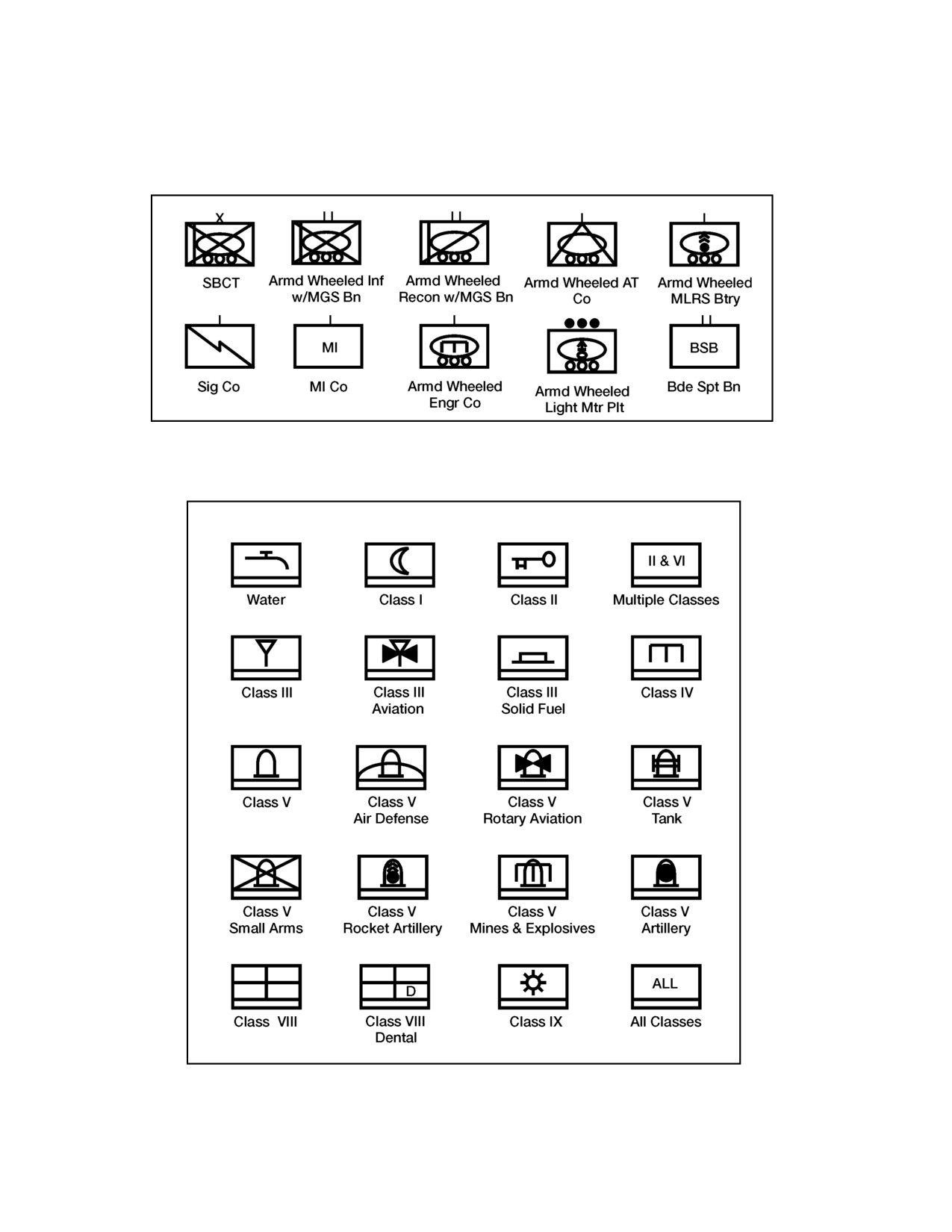
Figure B-8. Stryker Brigade Combat Teams
Figure B-9. Supply Sites
B-4
_________________________________________________________Examples of Military Symbols
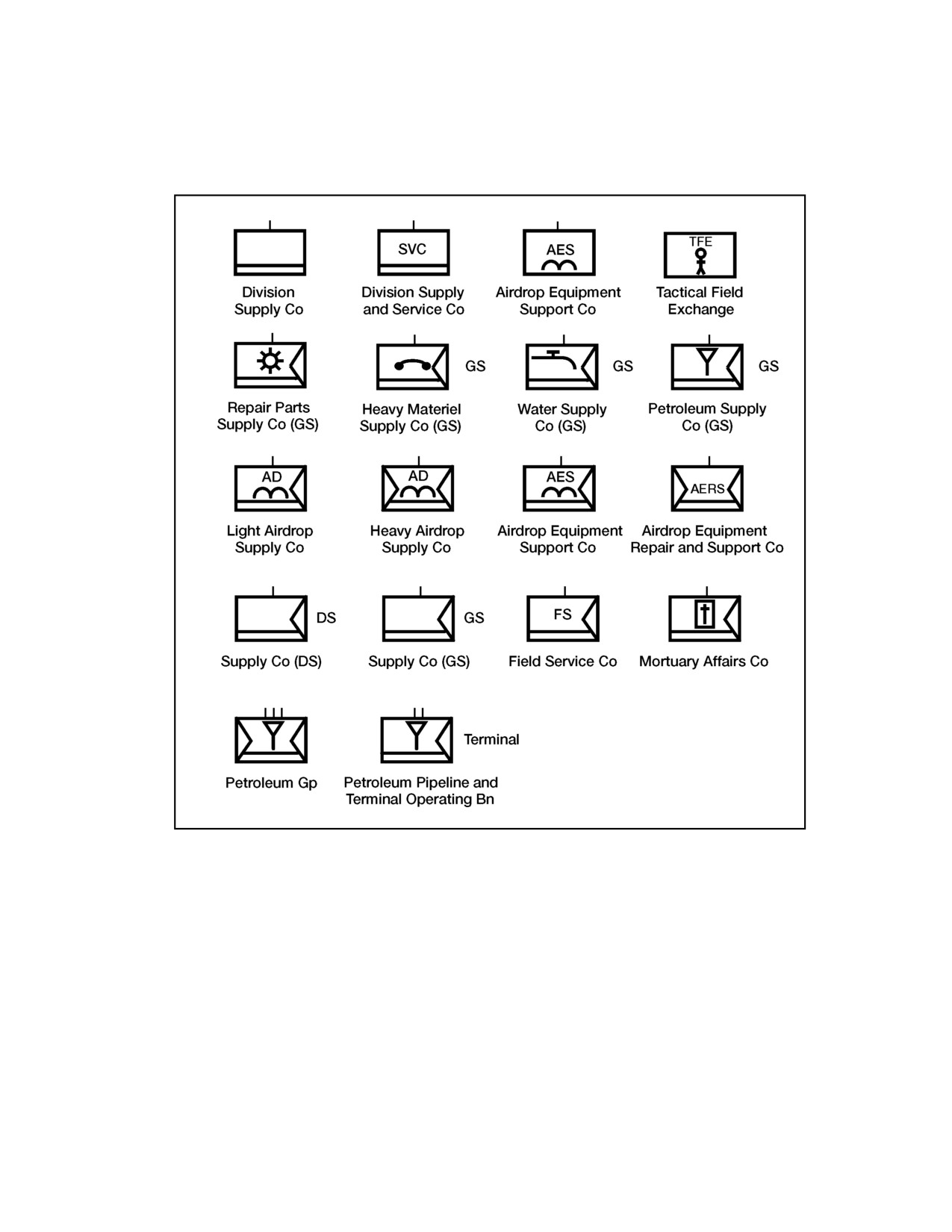
Figure B-10. Combat Service Support Units
B-5
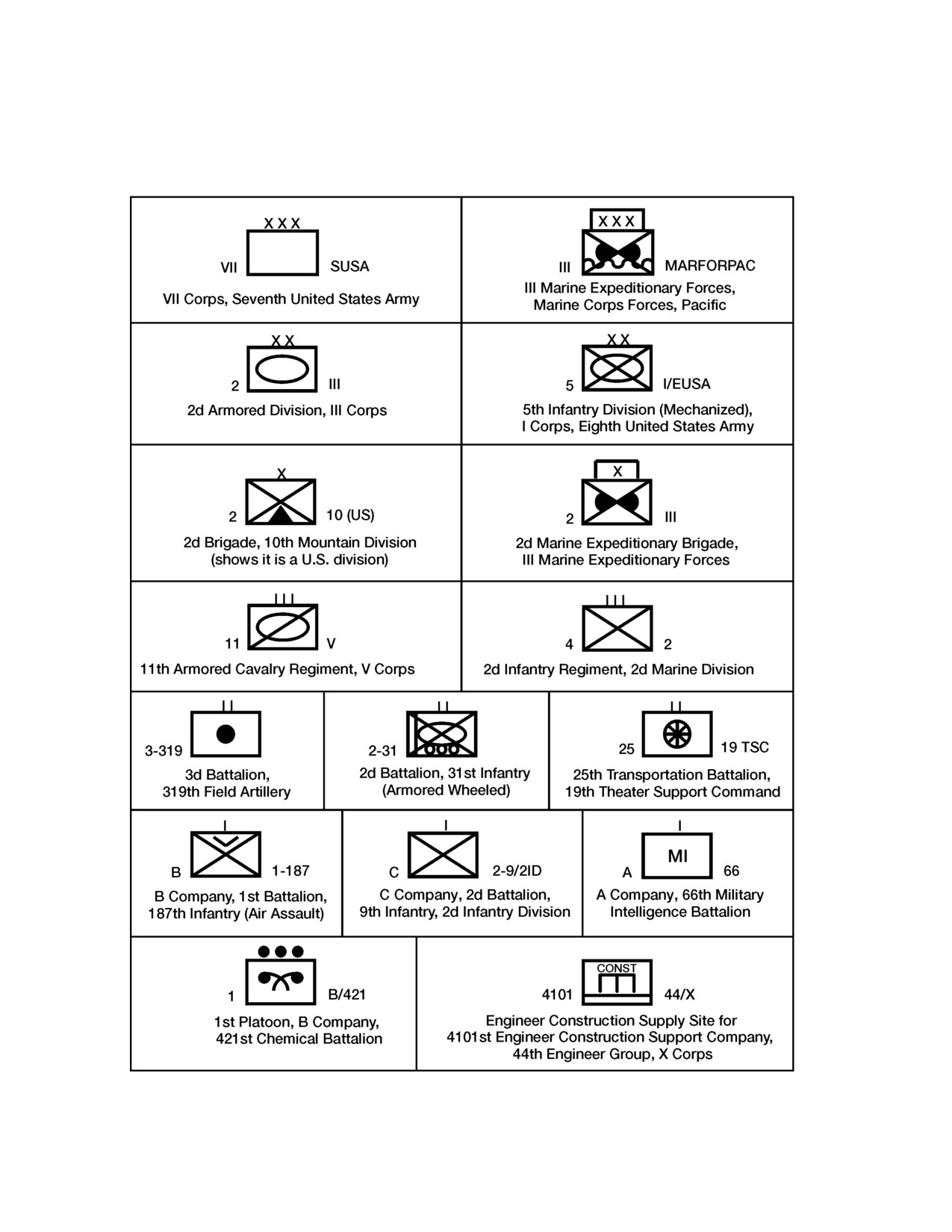
FM 1-02/MCRP 5-12A________________________________________________________________
Figure B-11. Unit Symbols with Labeling Fields
B-6
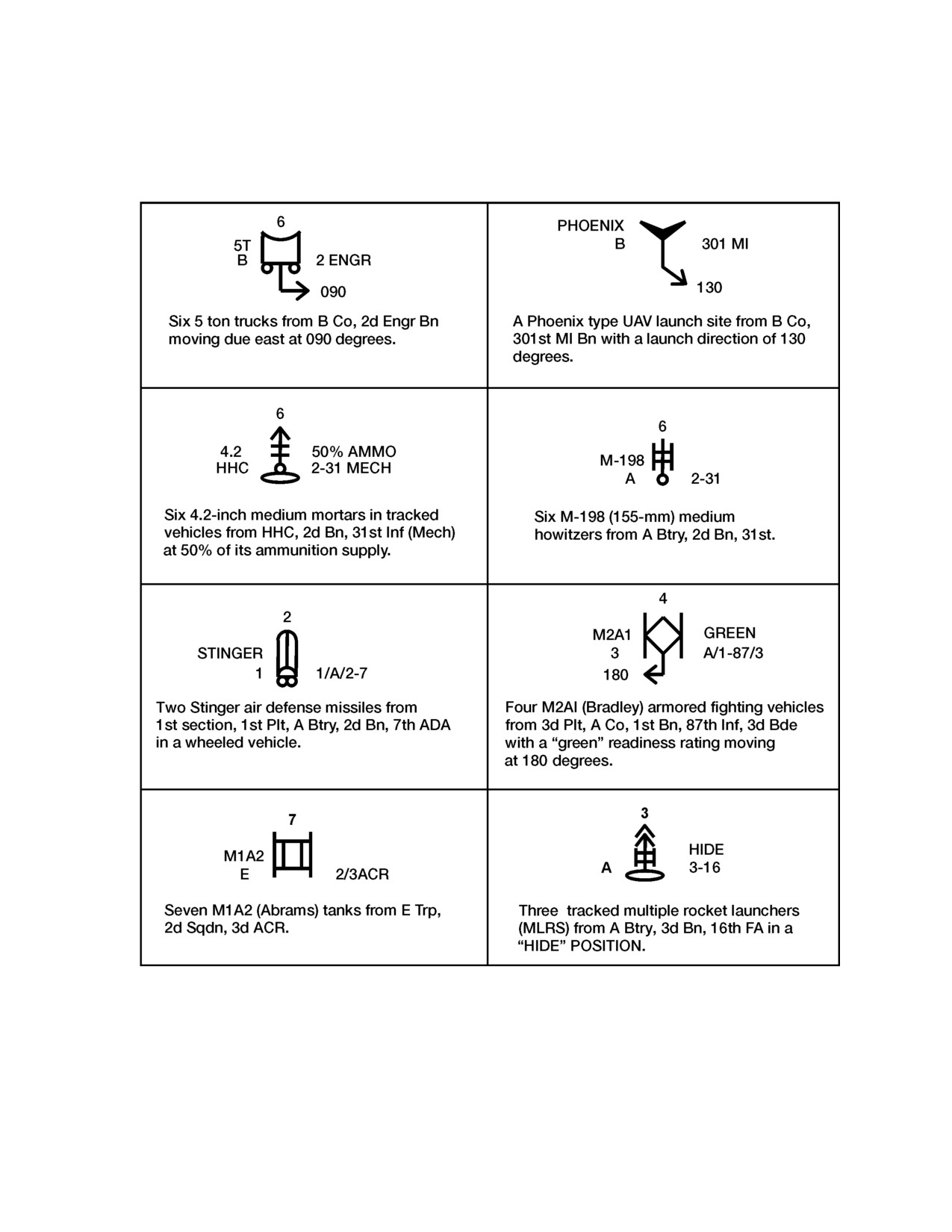
_________________________________________________________Examples of Military Symbols
Figure B-12. Equipment Symbols with Labeling Fields
B-7
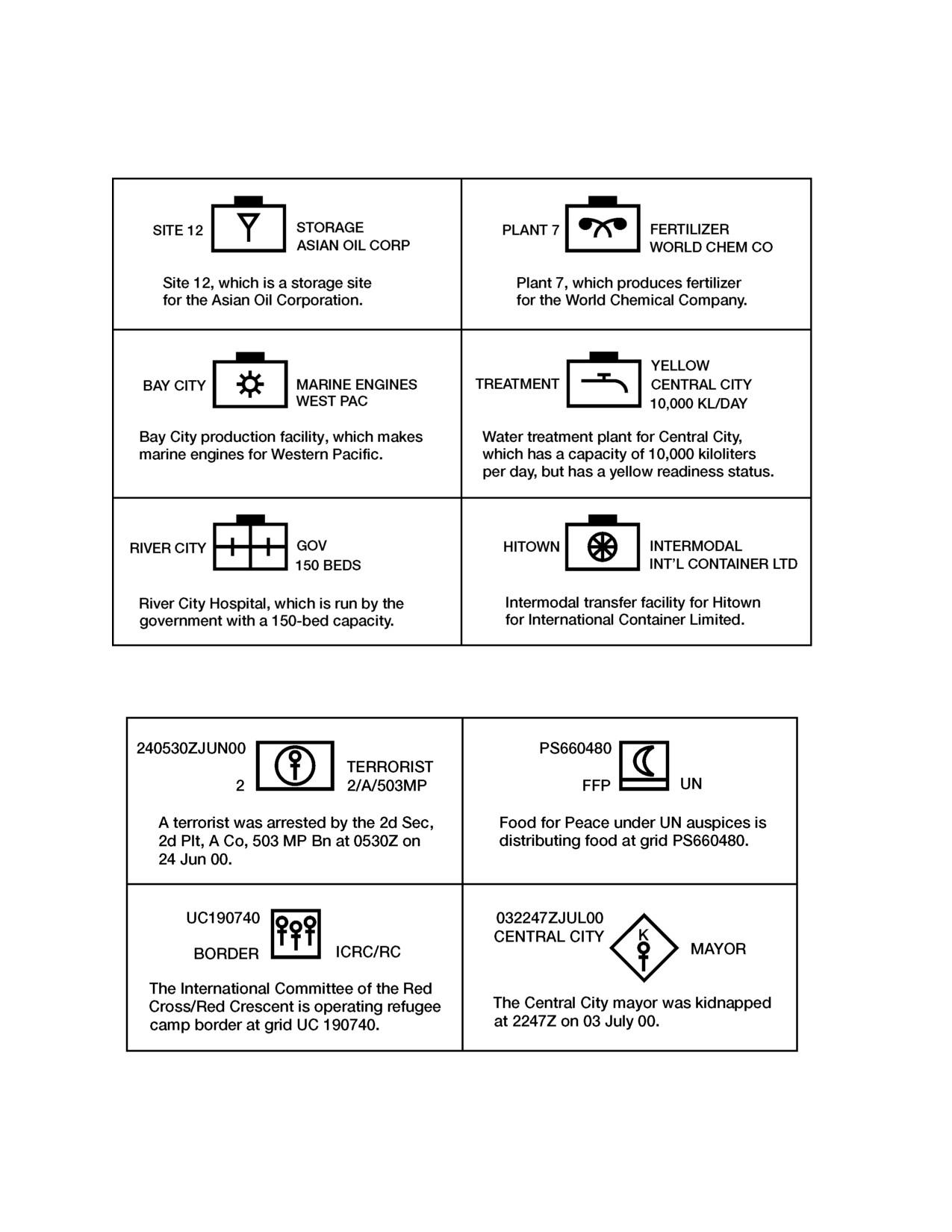
FM 1-02/MCRP 5-12A________________________________________________________________
Figure B-13. Installation Symbols with Labeling Fields
Figure B-14. Stability Operations and Support Operations Symbols with Labeling Fields
B-8
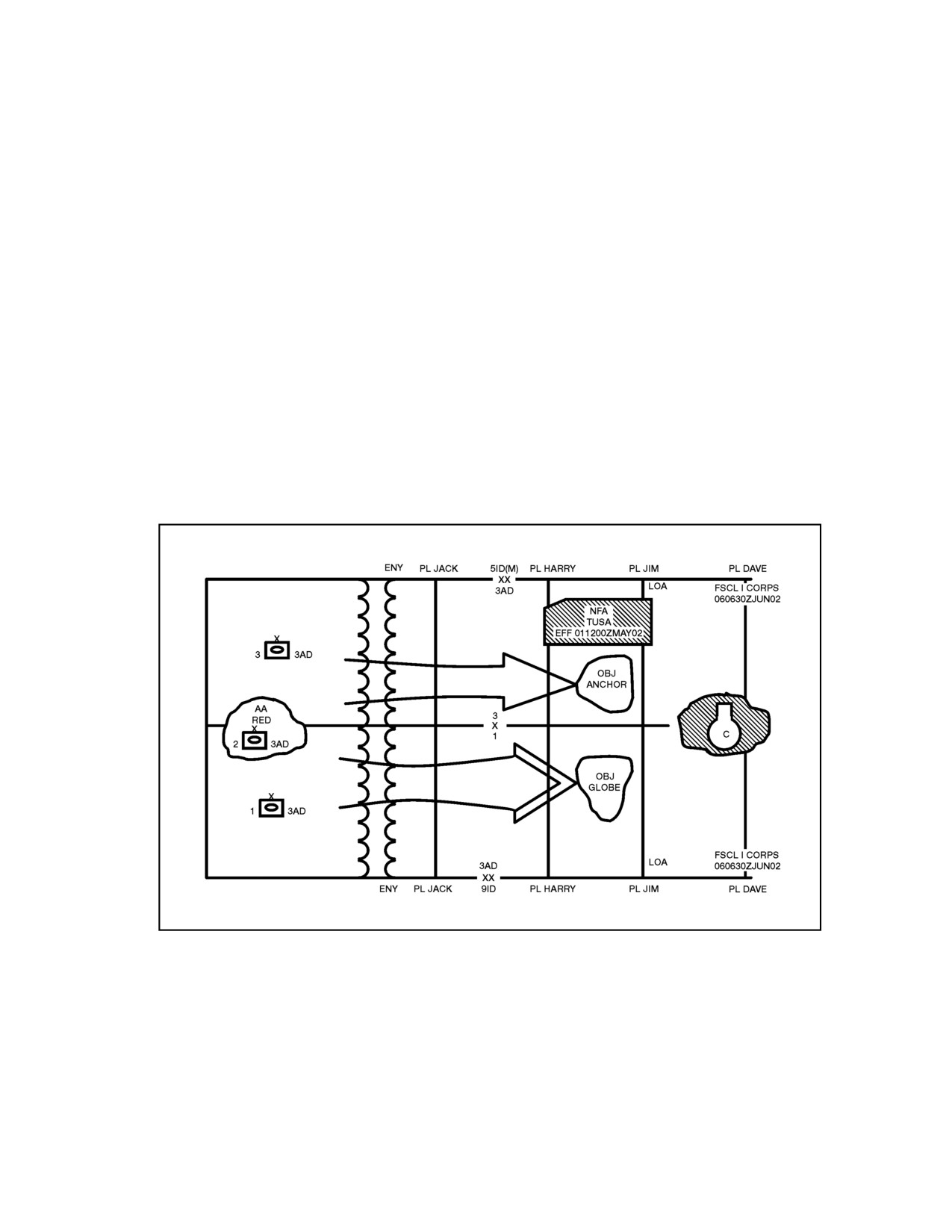
Appendix C
Examples of the Use of Military Symbols
This appendix provides examples of military symbols used in—
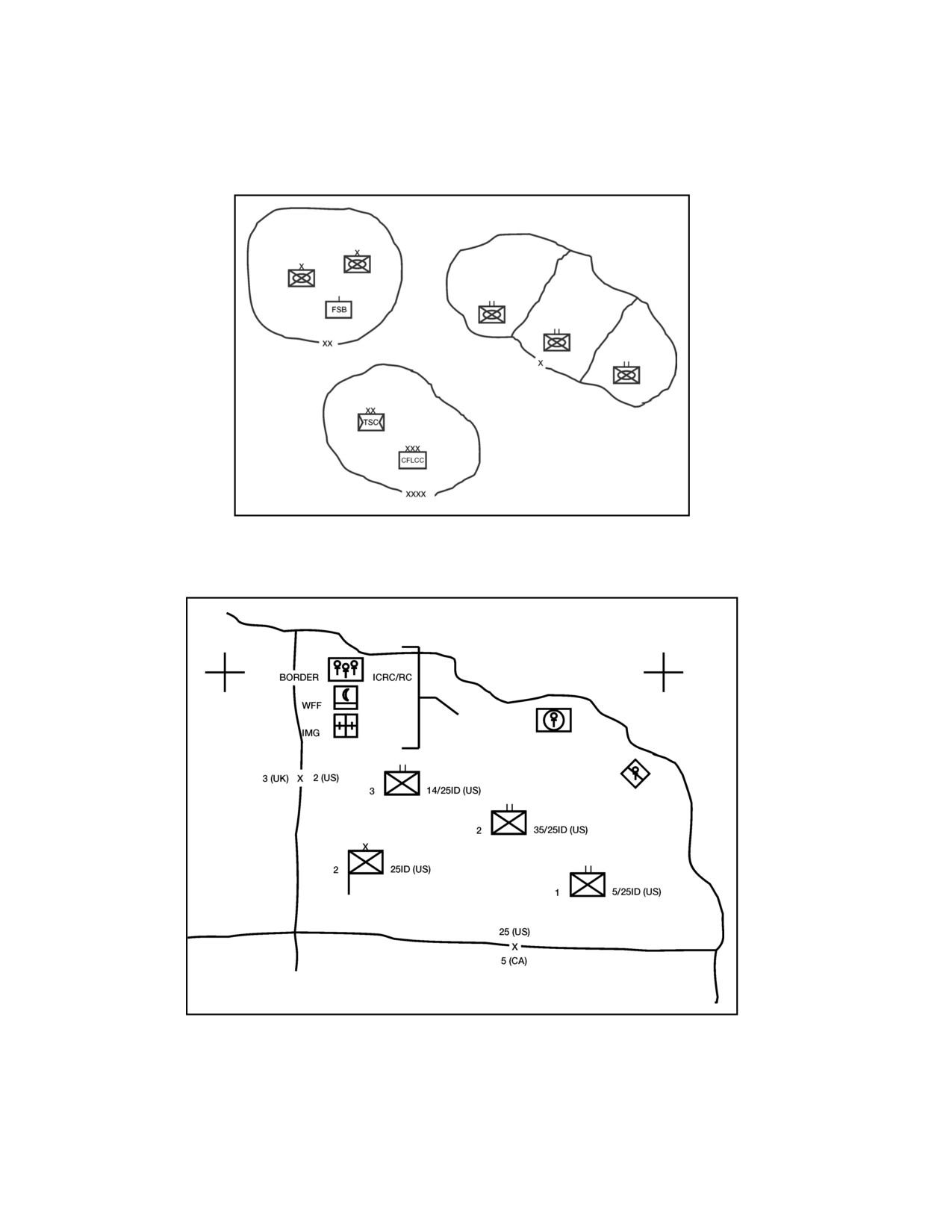
• Figure C-1—contiguous areas of operations.
• Figure C-2—noncontiguous areas of operations.
• Figure C-3— stability operations and support operations.
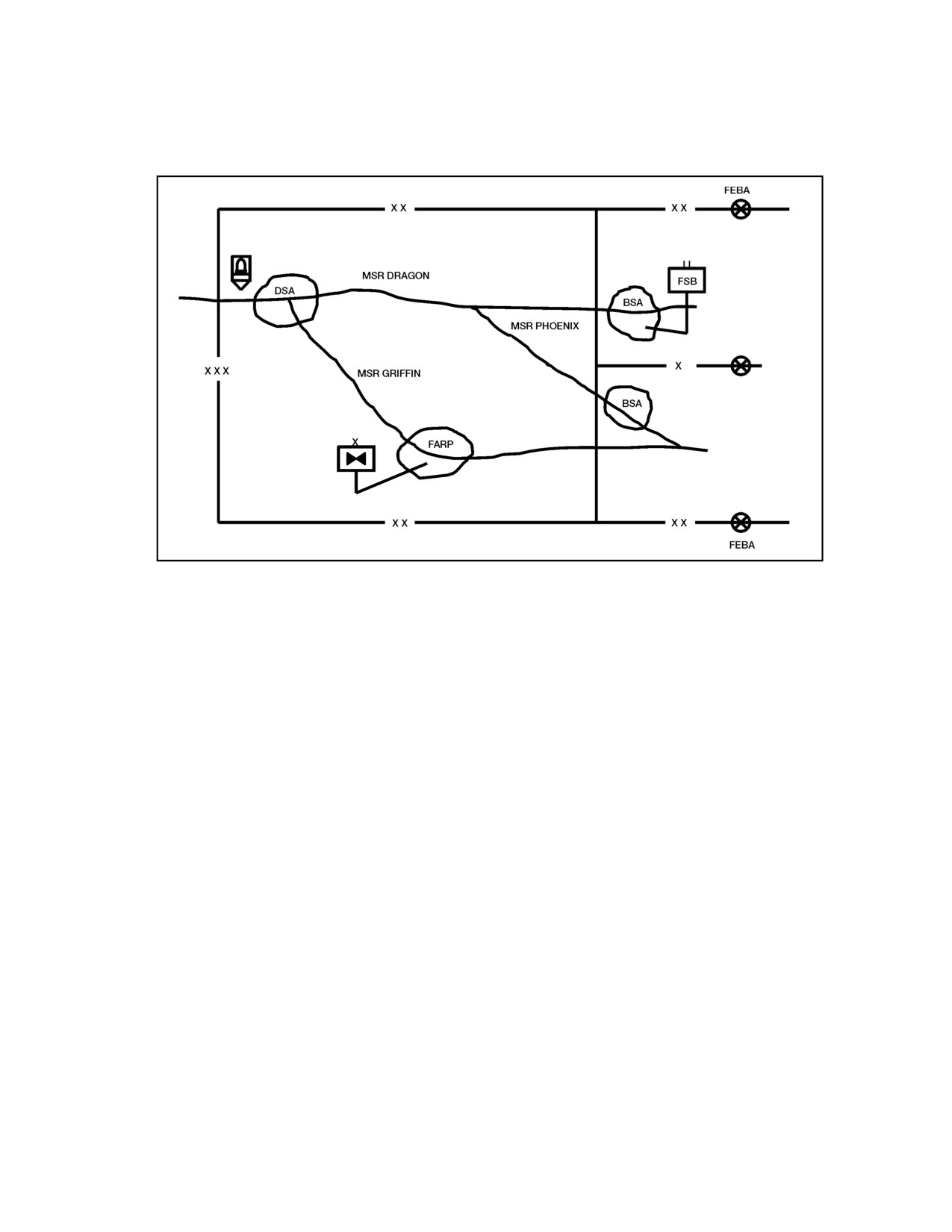
• Figure C-4—combat service support operations.
These examples are not as detailed as layouts used in actual operations.
Figure C-1. Contiguous Areas of Operations
C-1
FM 1-02/MCRP 5-12A________________________________________________________________
Figure C-2. Noncontiguous Areas of Operations
Figure C-3. Stability Operations and Support Operations
C-2
________________________________________________Examples of the Use of Military Symbols
Figure C-4. Combat Service Support Operations
C-3
This page intentionally left blank.
Appendix D
Military Decisionmaking Process Graphics
The tenets of Army operations are initiative, depth, agility, synchroniza-
tion, and versatility. If commanders and staffs are to adhere to these ten-
ets, they need information in a format that assists them to adapt quickly
to the changing factors of METT-TC. The military symbols portrayed in
chapters 4 through 9 are used to plot locations and directions of move-
ment; however, the decisionmaker normally requires additional informa-
tion for course of action sketches, synchronization matrixes, and
maneuver sketches that are not readily available by studying a current
situation map. The battlefield envisioned by our current doctrine requires
rapid and frequent changes in task organization of units to seize or retain
or take the initiative and move optimally task-organized forces to the
critical point on the battlefield. Military decisionmaking process graphics
are a tool for portraying the necessary information.
STATUS AND ASSESSMENT CHARTS
D-1. Commanders require two general categories of information when ana-
lyzing the situation map: the status of equipment and personnel, and the
composition of the task-organized forces. Two common methods for displaying
information and identifying status are the bar chart and the gumball chart.
FM 6-0 provides information on the use of status and assessment charts.
BAR CHART
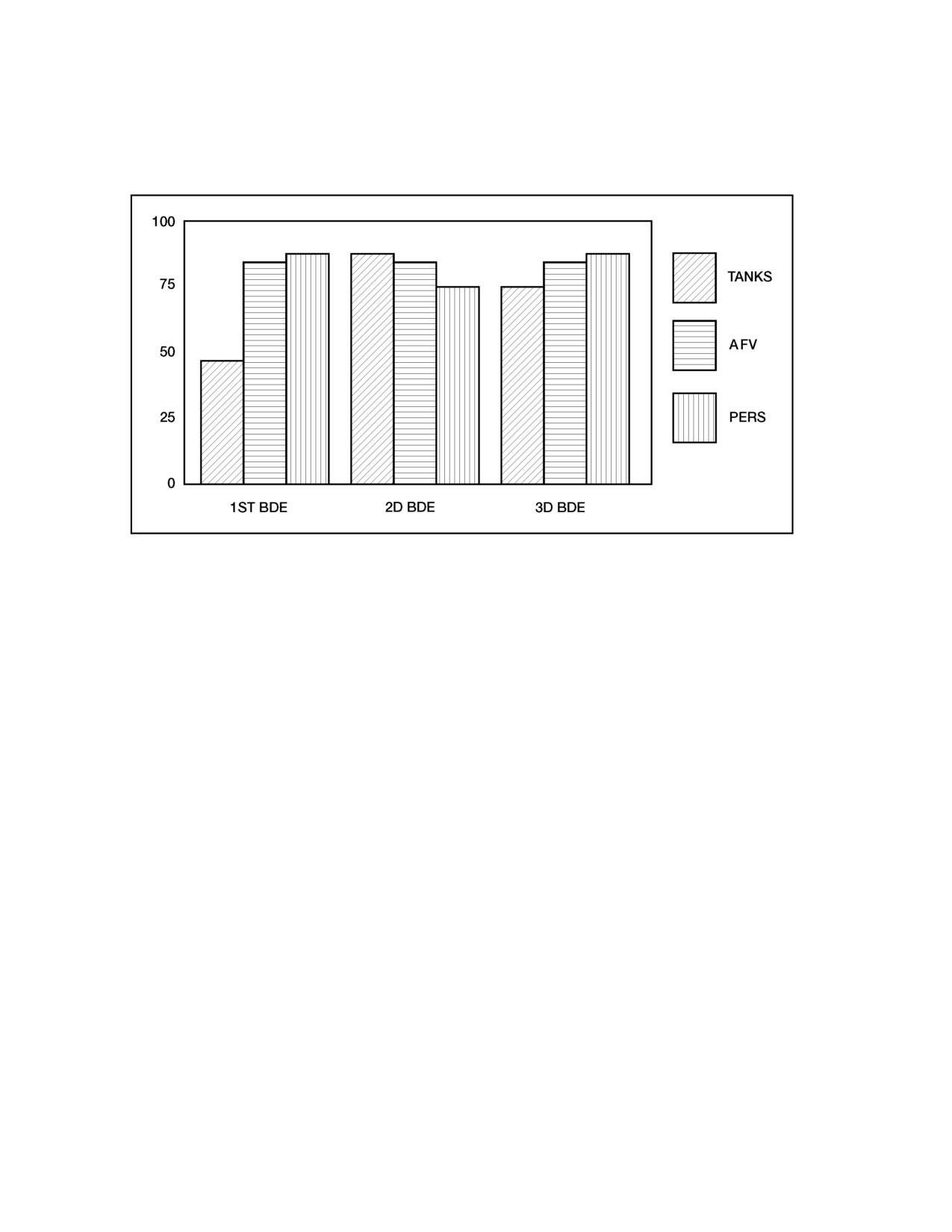
D-2. The bar chart is used to display quantities or percentages. Its major
advantage is that it provides a simple method for comparing status indicators
to each other and to a set, standard reference point. Bar charts also give the
staff flexibility to display and relate various types and combinations of infor-
mation for the commander. Figure D-1 shows an example of a bar chart.
D-1
FM 1-02/MCRP 5-12A________________________________________________________________
Figure D-1. Example of Bar Type Status Chart
GUMBALL CHART
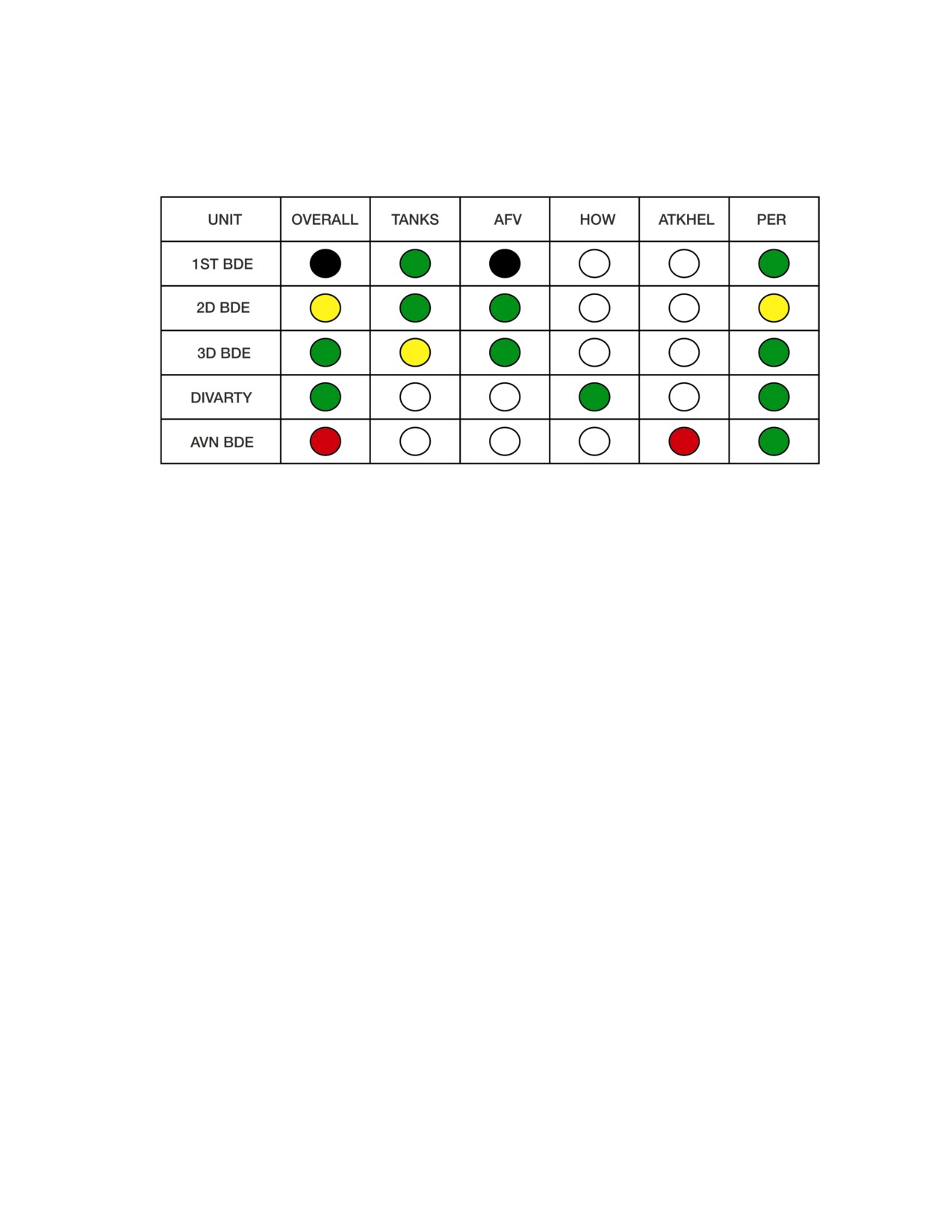
D-3. The gumball chart provides a clear picture of the status of designated
elements using a color code established in the unit standing operating proce-
dures. The chart assists the commander to quickly assess the status of criti-
cal elements and assists the staff to focus on problem areas. Choose a color
code consistent throughout all echelons of the command.
D-4. The following is a commonly used color code:
• Green indicates that the unit is at 85 percent or greater strength
(combat capable).
• Amber indicates that the unit is at 70 to 84 percent strength (combat
capable with minor deficiencies).
• Red indicates that the unit is at 50 to 69 percent strength (combat
ineffective, unit has major losses or deficiencies).
• Black indicates that the unit is at less than 50 percent strength (re-
quires reconstitution before next mission).
• White indicates not applicable or no information available.
D-5. See figure D-2 for an example of a gumball status chart.
D-2
_______________________________________________Military Decisionmaking Process Graphics
Figure D-2. Example of a Gumball Status Chart
COMBAT EFFECTIVENESS GRAPHICS
D-6. Situation reports
(SITREPs) focus on the collection of information
about the ability of subordinate units to perform their mission. Appropriate
staff elements use various formats to report factors such as the status of fuel,
ammunition, vehicle availability, and personnel. The commander, however,
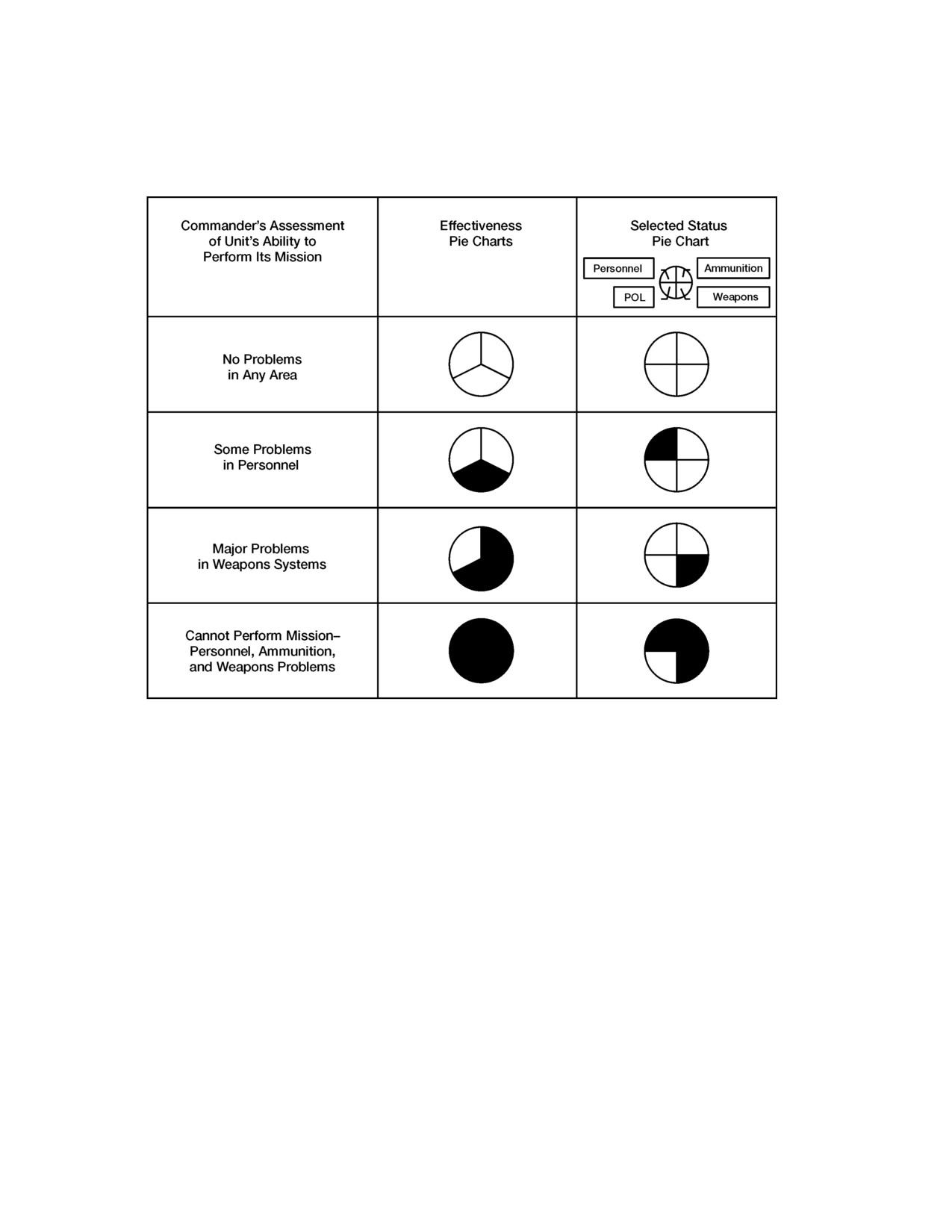
provides the net assessment of his unit's ability to perform the mission. This
assessment can be expressed using decision graphics as shown in figure D-3.
D-7. The center column of figure D-3 visually depicts the overall combat rat-
ing of the unit, and the right column specifies the status of selected items of
interest. The standing operating procedures (SOP) will specify the items of
interest to be reported higher. The subordinate commander may add to this
list for his internal reporting and tracking. The four items shown in the right
column are ammunition, weapons, POL, and personnel.
D-3
FM 1-02/MCRP 5-12A________________________________________________________________
Figure D-3. Example of Combat Effectiveness Chart
TASK ORGANIZATION COMPOSITION GRAPHICS
D-8. The resources available to the ground maneuver commander are pro-
vided as a detailed listing in the task organization portion of the operation
order. This detailed listing may be later modified by fragmentary and warn-
ing orders. The headquarters and individual units of the task organization
may be portrayed graphically by using multiple unit symbols as shown in
chapter 5 of this manual. These symbols provide a rapid and easily under-
stood means through situation maps, overlays, and annotated aerial photo-
graphs to express an operation plan, concept, or friendly or hostile (enemy)
situation. However, they do not provide decisionmakers with a quick and
easy method of portraying information relating to task organization composi-
tion.
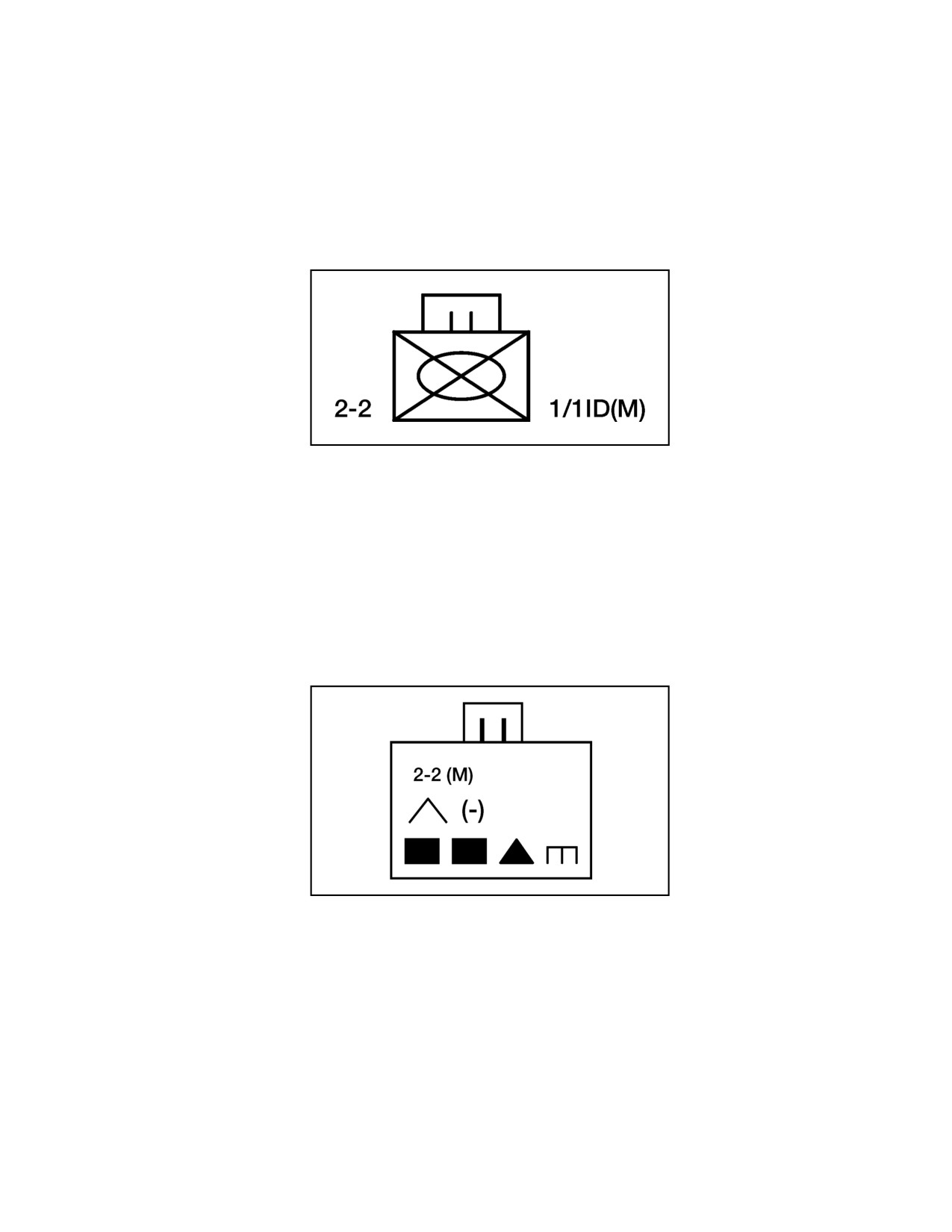
D-9. Figure D-4 shows a task force organized around the headquarters of the
2d Battalion, 2d Infantry Regiment (mechanized), of the 1st Brigade, 1st In-
fantry Division (mechanized) using a unit symbol. The task force unit symbol
(figure D-4) shows the basic unit, but does not show how the unit is organ-
ized. While the overall combat effectiveness of the unit can be displayed using
D-4
_______________________________________________Military Decisionmaking Process Graphics
the “K” field, more detailed information on combat effectiveness can not be
displayed. Although this data may be available through other charts, reports,
and briefings, its impact can be lost if the decisionmaker is required to go to
different documents.
Figure D-4. Unit Symbol for Task Force 2-2
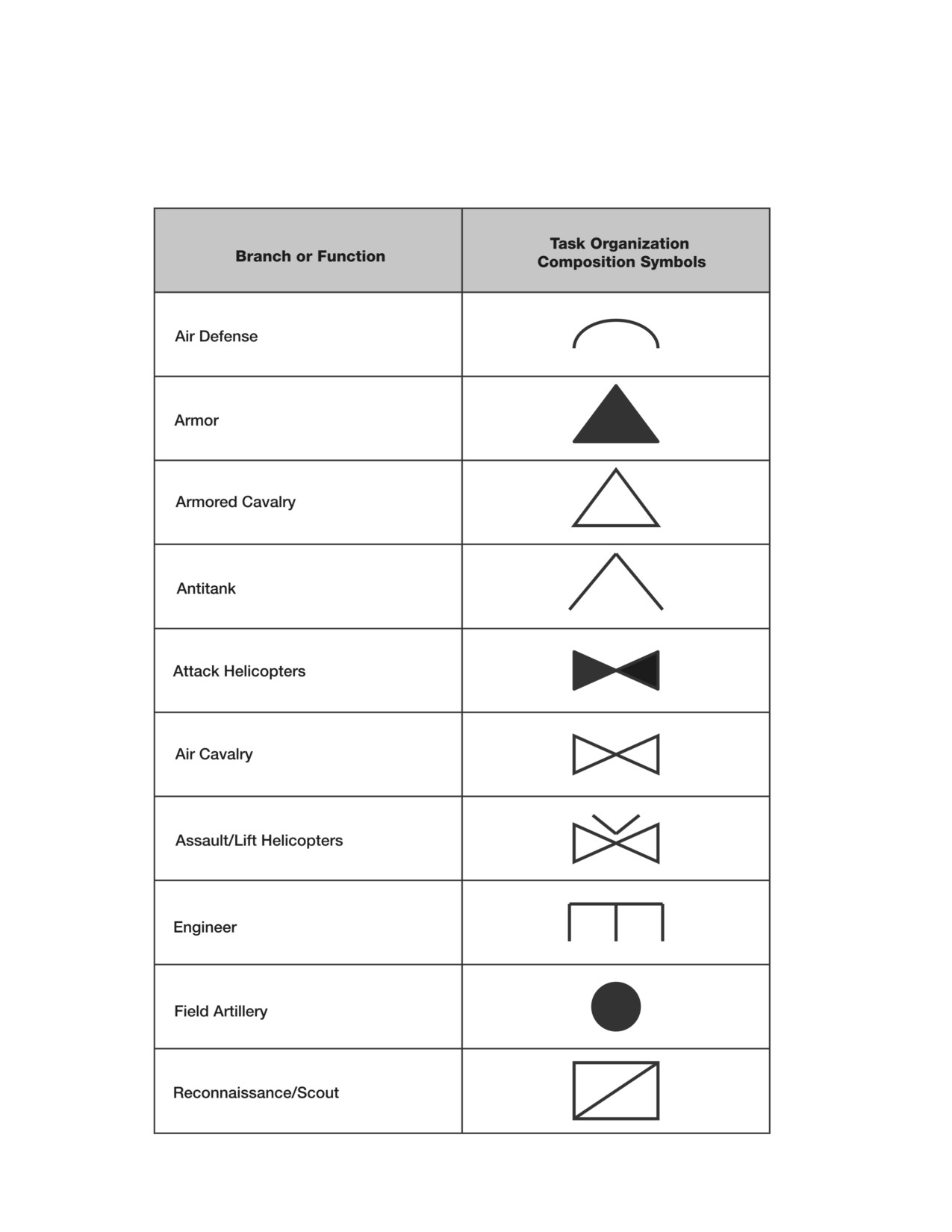
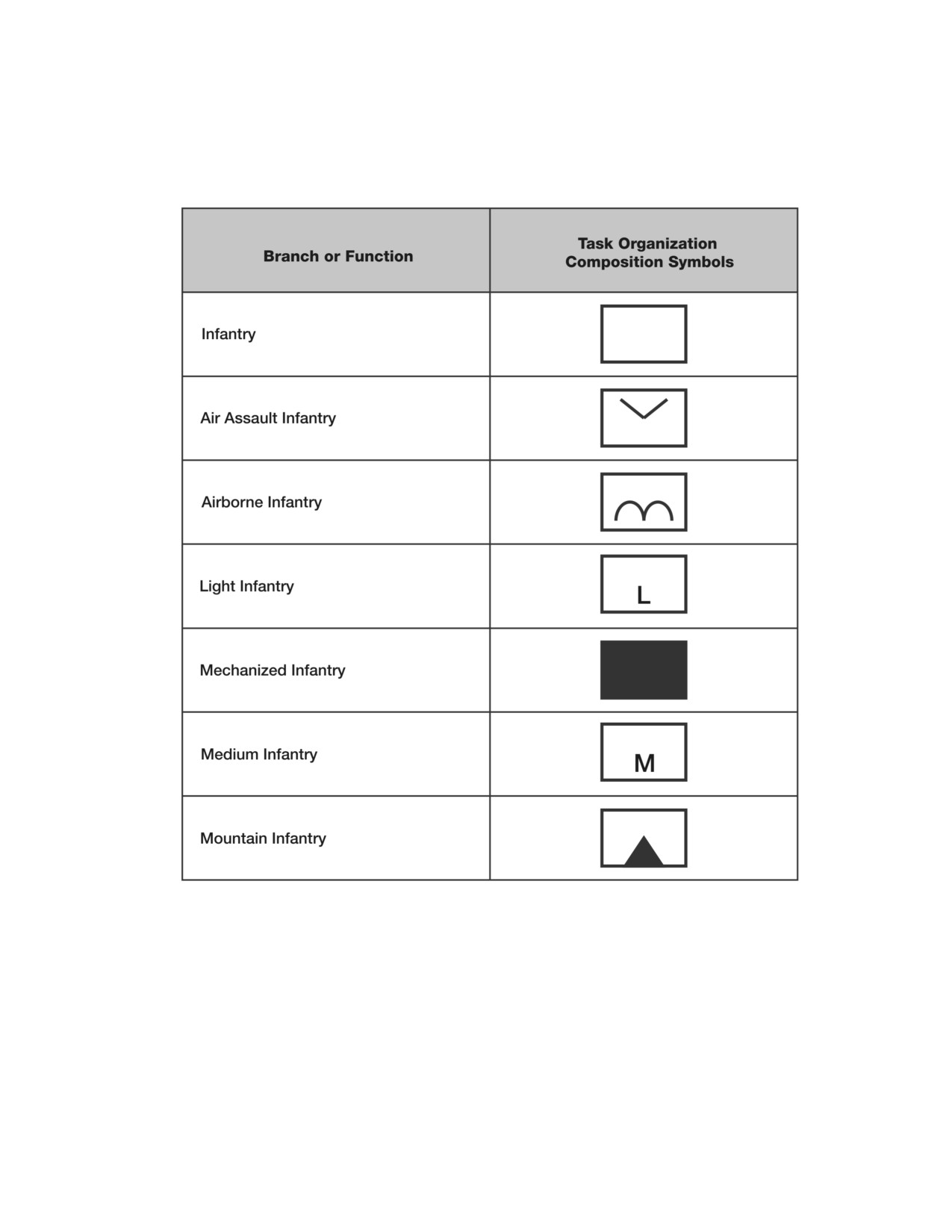
D-10. Using the task organization branch or function symbols, figure D-5
shows TF 2-2 as a task organization composition graphic. It provides the de-
tails of how the task force is organized. Table D-1 shows examples of task
organization branch or function symbols for use in building decision graphics.
(Task organization unit graphics are never displayed in conjunction with unit
symbols as shown in figure D-4.) In figure D-5, Task Force 2-2 Mechanized
Infantry is organized with two mechanized infantry companies, one armor
company, one engineer company, and one reduced antitank company.
Figure D-5. Example of a Task Organization Composition Graphic
D-11. The task organization composition graphic is built using a rectangular
frame. On the top and centered in the middle of the rectangular frame is the
echelon graphic symbol and task force symbol (if required). Inside the frame
on the top line is the unique designation of the organization being displayed.
If any unit is not one echelon lower than the designated unit on line one, then
the echelon indicator is used above the task organization unit graphic (see
figure D-7 on page D-8.). For a unit that is reduced, reinforced, or reduced
and reinforced, use the appropriate symbol (see figure D-5).
D-5
FM 1-02/MCRP 5-12A________________________________________________________________
Table D-1. Task Organization Unit Symbols
D-6
_______________________________________________Military Decisionmaking Process Graphics
Table D-1. Task Organization Unit Symbols
DECISION GRAPHICS
D-12. Combat effectiveness graphics and task organization composition
graphics can be combined to form decision graphics. Examples of decision
graphics at the company/team, battalion/task force, and brigade levels are
displayed in figure D-6, page D-8; figure D-7, page D-8, and figure D-8, page
D-9. Using the color coding system for gumball charts as described in
paragraphs D-3 and D-4, green, amber, red, or black can be used for the fill
colors or outlines of the task organization unit graphics to show the combat
effectiveness status of the subordinate units. Decision graphics can be com-
bined with mission graphics (appendix A) for use in course of action sketches,
synchronization matrixes, and maneuver sketches. See figure A-1, page A-7,
D-7
FM 1-02/MCRP 5-12A________________________________________________________________
for an example of decision graphics and tactical mission graphics used to-
gether. FM 101-5 provides information on the use of decision graphics and
tactical mission graphics.
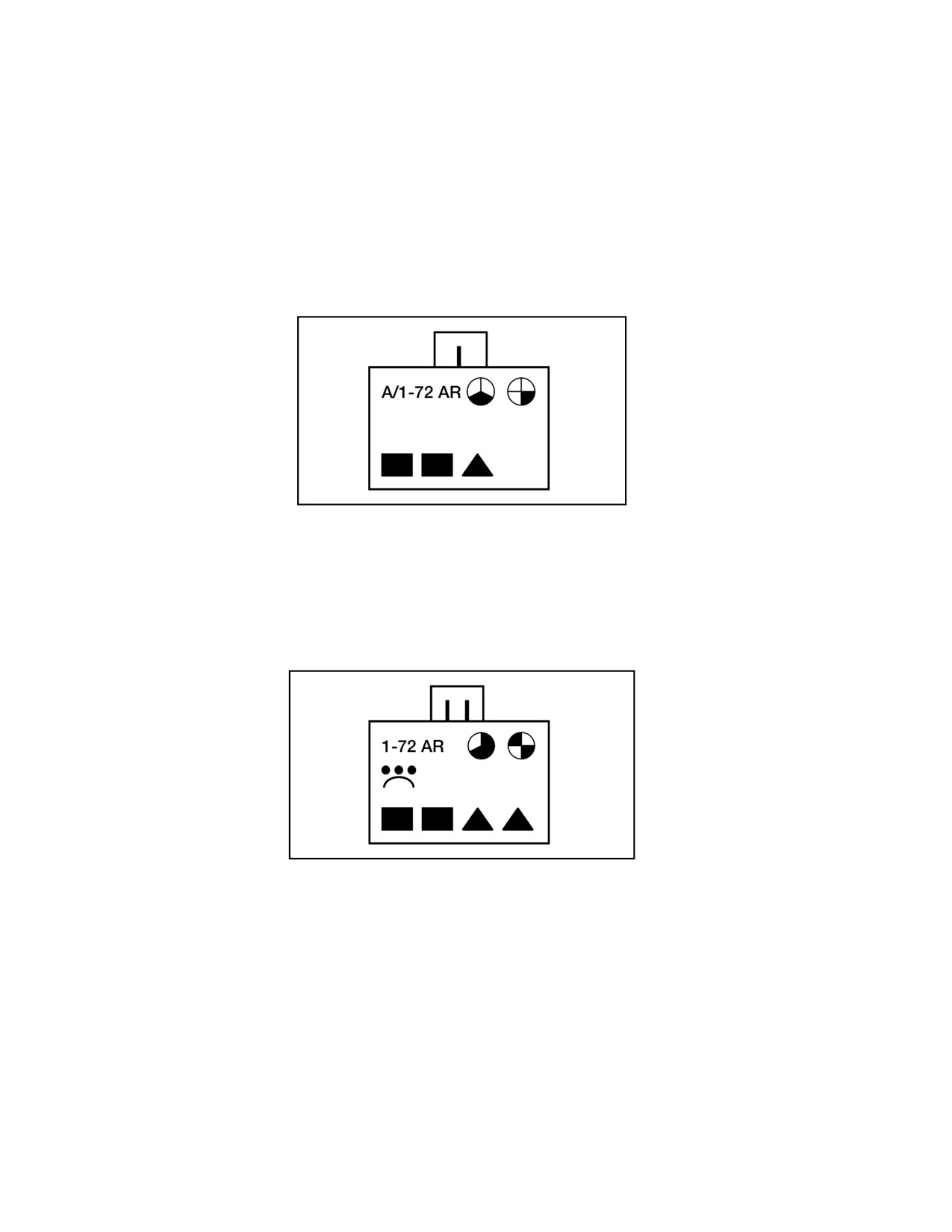
D-13. In figure D-6, Team A, 1st Battalion, 72d Armor is organized with two
mechanized infantry platoons and one armor platoon. It has “some problems”
performing its mission because of weapons systems.
Figure D-6. Example of a Company Team Decision Graphic
D-14. In figure D-7, Task Force 1-72 Armor is organized with two mechanized
infantry companies, two armor companies, and an air defense platoon. It has
“major problems” performing its mission because of personnel and weapons
systems.
Figure D-7. Example of a Task Force Decision Graphic
D-8
_______________________________________________Military Decisionmaking Process Graphics
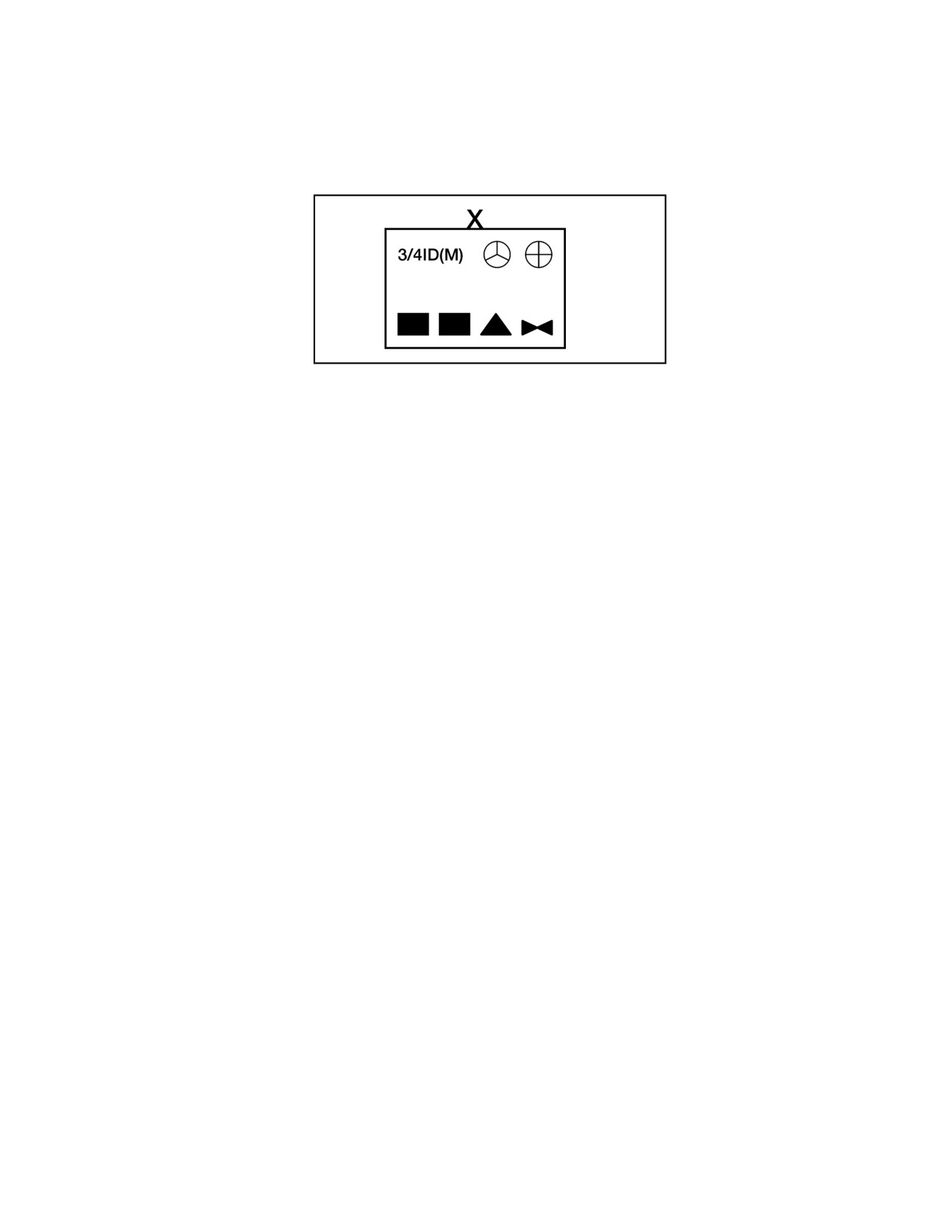
Figure D-8. Example of a Brigade Decision Graphic
D-9
This page intentionally left blank.
Bibliography
SOURCES USED
JOINT PUBLICATIONS
JP 1-02. Department of Defense Dictionary of Military and Associated Terms. 12 April
2001 (as amended through 05 June 2003).
NATO PUBLICATIONS
AAP-15. NATO Glossary of Abbreviations Used in NATO Documents and Publications.
December 2003.
STANAG 1059. National Distinguishing Letters for Use by NATO Armed Forces. 6
December 1988.
STANAG 2019/APP-6(A). Military Symbols for Land Based Systems. October 1998.
STANAG 2022. Intelligence Reports. 29 September 1988.
STANAG 2961. Classes of Supply of NATO Land Forces. 11 December 1984.
STANAG 3680/AAP-6 (2003). NATO Glossary of Terms and Definitions (English and
French). December 2002.
QUADRIPARTITE AGREEMENTS
QSTAG 509. Military Symbols. 5 March 1979.
QSTAG 511. Intelligence Reports. 5 April 1979.
ARMY PUBLICATIONS
AR 600-82FM 1 (FM 100-1). The Army. 14 June 2001.
FM 1-05 (FM 16-1). Religious Support. 18 April 2003.
FM 1-112. Attack Helicopter Operations. 02 April 1997. (Will be revised as FM 3-04.112.)
FM 3-0 (FM 100-5). Operations. 14 June 2001.
FM 3-04.111 (FM 1-111) Aviation Brigades. 21 August 2003.
FM 3-05.20 (FM 31-20). Special Forces Operations. 26 June 2001.
FM 3-05.30 (FM 33-1). Psychological Operations. 19 June 2000.
FM 3-05.201. Special Forces Unconventional Warfare Operations. 30 April 2003.
FM 3-06 (FM 90-10). Urban Operations. 01 June 2003.
FM 3-07 (FMs 90-29, 100-19, 100-20, 100-23). Stability Operations and Support
Operations. 20 February 2003.
FM 3-3. Chemical and Biological Contamination Avoidance. 16 November 1992.
FM 3-3-1. Nuclear Contamination Avoidance. 09 September 1994.
FM 3-5. NBC Decontamination. 28 July 2000, change 1, 31 January 2002. (Will be
revised as FM 3-11.5.)
Bibliography-1
FM 1-02/MCRP 5-12A________________________________________________________________
FM 3-6. Field Behavior of NBC Agents (Including Smoke and Incendiaries). 03 November
1986.
FM 3-7. NBC Field Handbook. 29 September 1994. (Will be revised as FM 3-11.7.)
FM 3-9. Potential Military Biological/Chemical Agents and Compounds. 12 December
1990.
FM 3-11 (FM 3-100). Multiservice Tactics, Techniques, and Procedures for Nuclear,
Biological, and Chemical Defense Operations. 10 March 2003.
FM 3-11.4 (FM 3-4). Multiservice Tactics, Techniques, and Procedures for Nuclear,
Biological, and Chemical (NBC) Protection. 02 June 2003.
FM 3-11.21 (FM 3-21). Multiservice Tactics, Techniques, and Procedures for Nuclear,
Biological, and Chemical Aspects of Consequence Management. 12 December
2001.
FM 3-13 (FM 100-6). Information Operations Doctrine: Tactics, Techniques, and
Procedures. 28 November 2003.
FM 3-19. NBC Reconnaissance. 19 November 1993. (Will be revised as FM 3-11.19.)
FM 3-19.1 (FM 19-1). Military Police Operations. 22 March 2001, change 1, 31 January
2002.
FM 3-19.4 (FM 19-4). Military Police Leaders’ Handbook. 04 March 2002, change 1, 02
August 2002.
FM 3-19.30 (FM 19-30). Physical Security. 08 January 2001.
FM 3-19.40 (FM 19-40). Military Police Internment/Resettlement Operations. 01 August
2001.
FM 3-20.12 (FMs 17-12-1-1 and 17-12-1-2). Tank Gunnery (Abrams). 01 October 2001.
FM 3-20.15 (FM 17-15). Tank Platoon. 01 November 2001.
FM 3-20.96. Cavalry Squadron (RSTA). 23 December 2002.
FM 3-21.91 (FM 7-91). Tactical Employment of Antiarmor Platoons and Companies. 26
November 2002.
FM 3-22.1 (FM 23-1). Bradley Gunnery. 28 November 2003.
FM 3-22.9 (FM 23-9). Rifle Marksmanship M16A1, M16A2/3, M16A4 and M4 Carbine.
24 April 2003.
FM 3-22.68 (FM 23-14). Crew-Served Machine Guns, 5.56-mm and 7.62-mm. 31 January
2003.
FM 3-25.26 (FM 21-26). Map Reading and Land Navigation. 20 July 2001.
FM 3-34.2 (FM 90-13-1). Combined Arms Breaching Operations. 31 August 2000, change
3, 11 October 2002.
FM 3-34.230 (FM 5-105). Topographic Operations. 03 August 2000.
FM 3-34.331 (FM 5-232). Topographic Surveying. 16 January 2001.
FM 3-50. Smoke Operations. 04 December 1990, change 1, 11 September 1996. (Will be
revised as FM 3-11.50.)
FM 3-52 (FM 100-103). Army Airspace Command and Control in a Combat Zone. 01
August 2002.
FM 3-54.10 (FM 3-97.18). Brevity: Multiservice Brevity Codes. 5 June 2003.
FM 3-90. Tactics. 04 July 2001.
FM 3-90.1 (FM 71-1). Tank and Mechanized Infantry Company Team. 09 December 2002.
Bibliography-2
_____________________________________________________________________Bibliography
FM 3-100.4. Environmental Considerations in Military Operations. 15 June 2000, change
1, 11 May 2001. (Will be revised as FM 4-04.4.)
FM 3-100.21 (FM 100-21). Contractors on the Battlefield. 03 January 2003.
FM 4-0 (FM 100-10). Combat Service Support. 29 August 2003.
FM 4-01.30 (FM 55-10). Movement Control. 01 September 2003.
FM 4-02 (FM 8-10). Force Health Protection in a Global Environment. 13 February 2003.
FM 4-02.6 (FM 8-10-1). The Medical Company. Tactics, Techniques, and Procedures. 01
August 2002.
FM 4-02.7 (FM 8-10-7). Health Service Support in a Nuclear, Biological, and Chemical
Environment. Tactics, Techniques, and Procedures. 01 October 2002.
FM 4-02.17. Preventive Medicine Service. 28 August 2000.
FM 4-02.24 (8-10-24). Area Support Medical Battalion Tactics, Techniques, and
Procedures. 28 August 2000.
FM 4-20.41 (FM 10-500-1). Aerial Delivery Distribution in the Theater of Operations. 29
August 2003.
FM 4-30.3 (FM 9-43-1). Maintenance Operations and Procedures. 01 September 2000.
FM 4-30.13 (FMs 9-13 and 9-38). Ammunition Handbook: Tactics, Techniques, and
Procedures for Munitions Handlers. 01 March 2001.
FM 5-34. Engineer Field Data. 30 August 1999, change 3, 10 April 2003. (Will be revised
as FM 3-34.310.)
FM 5-100. Engineer Operations. 27 February 1996. (Will be revised as FM 3-34.)
FM 5-100-15. Corps Engineer Operations. 06 June 1995. (Will be revised as FM 3-34.226.)
FM 5-103. Survivability. 10 June 1985. (Will be revised as FM 3-34.112.)
FM 5-250. Explosives and Demolitions. 30 July 1998, change 1, 30 June 1999. (Will be
revised as FM 3-34.214.)
FM-5-430-00-1. Planning and Design of Roads, Airfields, and Heliports in the Theater of
Operations—Airfield and Heliport Design. 26 August 1994. (Will be revised as
FM 3-34.461.)
FM 5-430-00-2. Planning and Design of Roads, Airfields, and Heliports in the Theater of
Operations—Airfield and Heliport Design. 29 September 1994. (Will be revised as
FM 3-34.462.)
FM 6-0 (FMs 100-34 and 101-5). Mission Command: Command and Control of Army
Forces. 11 August 2003.
FM 6-2. Tactics, Techniques, and Procedures for Field Artillery Survey. 23 September
1993, change 1, 16 October 1996. (Will be revised as FM 3-09.2.)
FM 6-20. Fire Support in the Airland Battle. 17 May 1988. (Will be revised as FM 3-09.)
FM 6-20-10. Tactics, Techniques, and Procedures for the Targeting Process. 08 May 1996.
(Will be revised as FM 3-60.)
FM 6-20-20. Tactics, Techniques, and Procedures for Fire Support at Battalion Task
Force and Below. 27 December 1991.
FM 6-20-30. Tactics, Techniques, and Procedures for Fire Support for Corps and Division
Operations. 18 October 1989. (Will be revised as FM 3-09.5.)
FM 6-20-40. Tactics, Techniques, and Procedures for Fire Support for Brigade Operations
(Heavy). 05 January 1990. (Will be revised as FM 3-09.4.)
Bibliography-3
FM 1-02/MCRP 5-12A________________________________________________________________
FM 6-22.5 (FM 22-9). Combat Stress. 23 June 2000.
FM 6-30. Tactics, Techniques, and Procedures for Observed Fire. 16 July 1991. (Will be
revised as FM 3-09.3.)
FM 6-40. Tactics, Techniques, and Procedures for Field Artillery Manual Cannon
Gunnery. 23 April 1996, change 1, 01 October 1999. (Will be revised as FM 3-
09.40.)
FM 6-50. Tactics, Techniques, and Procedures for the Field Artillery Cannon Battery. 23
December 1996. (Will be revised as FM 3-09.50.)
FM 7-0 (FM 25-100). Training the Force. 22 October 2002.
FM 7-7. The Mechanized Infantry Platoon and Squad (APC). 15 March 1985. (Will be
revised as FM 3-21.7.)
FM 7-8. Infantry Rifle Platoon and Squad. 22 April 1992, change 1, 01 March 2001. (Will
be revised as FM 3-21.8.)
FM 7-10. The Infantry Rifle Company. 14 Dec 1990, change 1, 31 October 2000. (Will be
revised as FM 3-21.10.)
FM 7-15. Army Universal Task List. 31 August 2003.
FM 7-20. The Infantry Battalion. 06 April 1992, change 1, 29 December 2000. (Will be
revised as FM 3-21.20.)
FM 7-30. The Infantry Brigade. 03 October 1995, change 1, 31 October 2000. (Will be
revised as FM 3-21.30.)
FM 8-10-6. Medical Evacuation in a Theater of Operations. Tactics, Techniques, and
Procedures. 14 April 2000. (Will be revised as FM 4-02.2.)
FM 8-51. Combat Stress Control in a Theater of Operations. Tactics, Techniques, and
Procedures. 29 September 1994, change 1, 30 January 1998. (Will be revised as
FM 4-02.51.)
FM 8-55. Planning for Health Service Support. 09 September 1994. (Will be revised as
FM 4-02.55.)
FM 8-284. Treatment of Biological Warfare Agent Casualties. 17 July 2000, change 1, 8
July 2002. (Will be revised as FM 4-02.284.)
FM 9-6. Munitions Support in the Theater of Operations. 20 March 1998. Will be revised
as FM 4-30.1.)
FM 10-1. Quartermaster Principles. 11 August 1994. (Will be revised as FM 4-20.)
FM 10-15. Basic Doctrine Manual for Supply and Storage. 12 December 1990, change 1,
30 September 1993. (Will be revised as FM 4-20.06.)
FM 10-27. General Supply in Theaters of Operations. 20 April 1993. (Will be revised as
FM 4-20.1.)
FM 10-64. Mortuary Affairs Operations. 16 February 1999. (Will be revised as FM 4-
20.64.)
FM 10-67. Petroleum Supply in Theaters of Operations. 18 February 1983, change 1, 10
October 1985. (Will be revised as FM 4-03.)
FM 11-32. Combat Net Radio Operations. 15 October 1990.
FM 11-43. Signal Leader’s Guide. 12 June 1995. (Will be revised as FM 6-02.43.)
FM 20-3. Camouflage, Concealment, and Decoys. 30 August 1999. (Will be revised as FM
3-58.1.)
Bibliography-4
_____________________________________________________________________Bibliography
FM 20-32. Mine/Countermine Operations. 29 May 1998, change 3, 1 October 2002. (Will
be revised as FM 3-34.32.)
FM 21-16. Unexploded Ordnance (UXO) Procedures. 30 August 1994. (Will be revised as
FM 4-30.11.)
FM 22-100. Army Leadership. 31 August 1999. (Will be revised as FM 6-22.)
FM 24-1. Signal Support in the AirLand Battle. 15 October 1990. (Will be revised as FM
6-02.)
FM 24-19. Radio Operator’s Handbook. 24 May 1991.
FM 27-10. The Law of Land Warfare. 18 July 1956, change 1, 15 July 1976. (Will be
revised as FM 1-04.10.)
FM 31-20-5. Special Reconnaissance Tactics, Techniques, and Procedures for Special
Forces. 23 March 1993.
FM 33-1-1. Psychological Operations Techniques and Procedures. 05 May 1994. (Will be
revised as FM 3-05.301.)
FM 34-1. Intelligence and Electronic Warfare Operations. 27 September 1994. (Will be
revised as FM 2-0.)
FM 34-2. Collection Management and Synchronization Planning. 08 March 1994. (Will be
revised as FM 2-33.3.)
FM 34-3. Intelligence Analysis. 15 March 1990. (Will be revised as FM 2-33.4.)
FM 34-45. Tactics, Techniques, and Procedures for Electronic Attack. 09 June 2000. (Will
be revised as FM 2-00.45.)
FM 34-52. Intelligence Interrogation. 28 September 1992. (Will be revised as FM 2-22.3.)
FM 34-60. Counterintelligence. 03 October 1995. (Will be revised as FM 2-01.2.)
FM 34-130. Intelligence Preparation of the Battlefield. 08 July 1994. (Will be revised as
FM 2-01.3.)
FM 41-10. Civil Affairs Operations. 14 February 2000. (Will be revised as FM 3-05.40.)
FM 44-100. US Army Air and Missile Defense Operations. 15 June 2000. (Will be revised
as FM 3-01.)
FM 46-1. Public Affairs Operations. 30 May 1997.
FM 55-1. Transportation Operations. 03 October 1995. (Will be revised as FM 4-01.)
FM 55-17. Cargo Specialists’ Handbook. 16 February 1999. (Will be revised as FM 4-
01.5.)
FM 55-20. Rail Transport in a Theater of Operations. 01 June 2000. (Will be revised as 4-
01.41.)
FM 55-30. Army Motor Transport Units and Operations. 27 June 1997. (Will be revised
as FM 4-01.40.)
FM 55-50. Army Water Transport Operations. 30 September 1993. (Will be revised as FM
4-01.50.)
FM 55-60. Army Terminal Operations. 15 April 1996. (Will be revised as FM 4-01.50.)
FM 63-2. Division Support Command, Armored, Infantry, and Mechanized Infantry
Divisions. 20 May 1991. (Will be revised as FM 4-93.2.)
FM 71-123. Tactics and Techniques for Combined Arms Heavy Forces: Armored Brigade,
Battalion Task Force, and Company Team. 30 September 1992. (Will be revised
as FM 3-90.123.)
Bibliography-5
FM 1-02/MCRP 5-12A________________________________________________________________
FM 90-4. Air Assault Operations. 16 March 1987. (Will be revised as FM 3-18.12.)
FM 90-7. Combined Arms Obstacle Integration. 29 September 1994, change 1, 10 April
2003. (Will be revised as FM 3-34.1.)
FM 90-13. River Crossing Operations. 26 January 1998. (Will be revised as FM 3-34.13.)
FM 90-26. Airborne Operations. 18 December 1990. (Will be revised as FM 3-18.11.)
FM 100-7. Decisive Force: The Army in Theater Operations. 31 May 1995. (Will be revised
as FM 3-93.)
FM 100-8. The Army in Multinational Operations. 24 November 1997. (Will be revised as
FM 3-16.)
FM 100-9. Reconstitution. 13 January 1992. (Will be revised as FM 4-100.9.)
FM 100-10-1. Theater Distribution. 01 October 1999. (Will be revised as FM 4-01.4.)
FM 100-12. Army Theater Missile Defense Operations. 31 March 2000. (Will be revised as
FM 3-01.12.)
FM 100-13. Battlefield Coordination Detachment (BCD). 05 September 1996. (Will be
revised as FM 3-09.13.)
FM 100-14. Risk Management. 23 April 1998. (Will be revised as FM 5-19.)
FM 100-17. Mobilization, Deployment, Redeployment, Demobilization. 28 October 1992.
(Will be revised as FM 3-35.)
FM 100-17-2. Army Pre-Positioned Land. 16 February 1999. (Will be revised as FM 3-
35.2.)
FM 100-17-3. Reception, Staging, Onward Movement, and Integration. 17 March 1999.
(Will be revised as FM 4-01.8.)
FM 100-18. Space Support to Army Operations. 20 July 1995. (Will be revised as FM 3-
14.)
FM 100-25. Doctrine for Army Special Operations Forces. 01 August 1999. (Will be
revised as FM 3-05.)
FM 100-30. Nuclear Operations. 29 October 1996. (Will be revised as FM 3-12.)
FM 101-5. Staff Organization and Operations. 31 May 1997. (Will be revised as FM 5-0.)
FM 101-5-2. US Army Report and Message Formats. 29 June 1999. (Will be revised as
FM 6-99.2.)
MARINE CORPS PUBLICATIONS
MCRP 5-12C. Marine Corps Supplement to the Department of Defense Dictionary of
Military and Associated Terms. 23 July 1998.
MCWP 2-15.4. Imagery Intelligence. 6 September 2002.
DOCUMENTS NEEDED (NONE)
READINGS RECOMMENDED (NONE)
Bibliography-6
Index of Symbols
psychological operations,
division support (DSA), 7-77
A
target audience location,
drop zone (DZ), 7-18
activities
9-11
enemy known or confirmed,
arrest, 9-6
psychological operations,
7-16
arson, 9-6
television broadcast, 9-11
enemy known or confirmed
assassination, 9-6
psychological operations,
strong point), 7-27
bomb/bombing, 9-6
written, 9-11
enemy prisoner of war
booby trap, 9-6
recruitment, 9-11
(EPW) holding, 7-76
computer network attack
recruitment,
enemy suspected, 7-17
(CNA), 9-6
coerced/impressed, 9-13
engagement (EA), 7-19
demonstration, 9-7
recruitment, willing, 9-11
engagement area (EA), 7-
drive-by shooting, 9-7
riot, 9-13
26
electronic warfare intercept,
sniping, 9-13
extraction zone (EZ), 7-18
9-7
air assault, 5-45
fenced decoy mined, 7-24
execution, 9-6
organic lift, 5-45
fire support (FSA), 7-40
extortion, 9-7
organic lift (NATO), 5-45
fortified, 7-19
fire, 9-6
air defense, 5-7
forward area air defense
foraging/searching, 9-7
composite (gun and
engagement zone
graffitti, 9-7
missile), 5-7
(FAADEZ), 7-21
hijacking, 9-7
gun, 5-7
forward arming and refuel
hijacking merchant, 9-9
high-to-medium altitude
point (FARP), 7-76
hijacking, air, 9-7
missile defense (HIMAD),
forward assembly (FAA), 7-
hijacking, airplane, 9-7
5-7
17
hijacking, helicopter, 9-7
missile, 5-7
forward observer (FO)
hijacking, leisure craft, 9-9
targeting unit, 5-7
position, 7-27
hijacking, sea surface, 9-9
theater missile defense
free fire (FFA), 7-40
hijacking, vehicle, 9-7
(TMD), 5-7
friendly, 7-16
kidnapping, 9-9
airborne, 5-45
friendly planned or on order,
murder, 9-6
alliance commands
7-16
patrolling, 9-9
Supreme Allied Command
friendly strong point (SP), 7-
poisoning, 9-9
Atlantic (SACLANT), 5-59
26
psychological operations, 9-
Supreme Headquarters
high-altitude missile
9
Allied Powers Europe
engagement zone
psychological operations,
(SHAPE), 5-59
(HIMEZ), 7-22
broadcast, aerial fixed
amphibious, 5-45
high-density airspace
wing station, 9-9
antiarmor/antitank, 5-7
control zone (HIDACZ),
psychological operations,
arctic, 5-45
7-21
distribution center, 9-9
areas
landing zone (LZ), 7-18
psychological operations,
airfield zone, 7-47
limited access, 7-60
face-to-face, 9-9
airspace coordination
low-altitude missile
psychological operations,
(ACA), 7-40
engagement zone
loudspeaker broadcast,
assault position, 7-34
(LOMEZ), 7-22
9-9
assembly (AA), 7-17
mined, 7-53
psychological operations,
assembly area occupied by
minimum safe distance
loudspeaker broadcast,
multiple units, 7-17
(MSD) zone, 7-61
helicopter rotary wing
biologically contaminated,
missile engagement zone
mounted, 9-11
7-64
(MEZ), 7-22
psychological operations,
bomb, 7-40
named area of interest
loudspeaker broadcast,
brigade support (BSA), 7-76
(NAI, 7-38
wheeled vehicle
chemically contaminated
NBC observation post
mounted, 9-11
area, 7-64
(dismounted), 7-28
psychological operations,
combat outpost), 7-27
no-fire (NFA), 7-40
printing service, 9-11
decoy mined, 7-24
psychological operations,
detainee holding, 7-76
radio broadcast, 9-11
Index of Symbols-1
_____________________________________________________________________
FM 3-09.5 (FM 6-20-30)
observation outpost
fighting command and
friendly ground axis of main
occupied by
control (C2), 6-30
attack, 7-30
reconnaissance), 7-27
infantry fighting, 6-29
friendly ground axis of
observation post
personnel carrier, 6-29
shaping operations, 7-29
(OP)/outpost), 7-27
personnel carrier recovery,
friendly ground axis of
occupied, 7-26
6-29
supporting attack, 7-29
occupied assembly, 7-17
protected ground vehicle, 6-
friendly ground axis on
of operations (AO), 7-38
26
order with date and time
pickup zone (PZ), 7-18
tank, 6-26
effective, 7-30
planned, 7-26
tank heavy, 6-28
B
position area for artillery
tank heavy recovery, 6-29
band. See multifunctional
(PAA), 7-41
tank light, 6-28
combat service support
prepared but not occupied,
tank light recovery, 6-28
bicycle equipped, 5-46
7-26
tank medium, 6-28
principal direction of fire
tank medium recovery, 6-28
boundaries
enemy known, 7-13
(PDF), 7-28
wheeled fighting, 6-30
enemy suspected, 7-13
proposed or on order
Army Service Component
forward, 7-14
assembly, 7-17
Commands (ASCC)
friendly planned or on order,
radioactive, 7-64
United States Army Central
regimental support (RSA),
(ARCENT), 5-57
7-13
friendly present, 7-13
7-77
United States Army Europe
lateral, 7-13
restricted operations zone
(USAREUR), 5-57
rear, 7-14
(ROZ), 7-21
United States Army Forces
restrictive fire (RFA), 7-41
Command (FORSCOM),
C
search/reconnaissance, 7-
5-57
cavalry
18
United States Army Pacific
armored, 5-22
sensor outpost/listening
(USARPAC), 5-57
combat, 5-7
post, 7-28
United States Army South
combat service support (CSS),
targeted area of interest
(USARSO), 5-57
5-34
(TAI), 7-38
assumed friend, 4-3
combat support unit, 5-25
unexploded ordnance, 7-55
attack position
combatant commands
weapons free zone (WFZ),
by fire, 7-35
United States Central
7-22
friendly, 7-34
Command (CENTCOM),
armies
friendly occupied, 7-35
5-59
Eighth United States Army
friendly planned, proposed
United States European
(EUSA), 5-57
or on order, 7-35
Command (EUCOM), 5-
Third United States Army
objective, 7-35
59
(TUSA), 5-57
support by fire position, 7-
United States Joint Forces
armor, 5-7
35
Command (JFCOM), 5-
amphibious
automatic weapons
59
armor/armored/track, 5-7
rifle, 6-14
United States Northern
amphibious recovery
rifle/heavy machine gun, 6-
Command
armor/armored/track, 5-9
16
(NORTHCOM), 5-59
armored/track/self-
rifle/light machine gun, 6-16
United States Pacific
propelled, 5-7
aviation, 5-9
Command (PACOM), 5-
track recovery, 5-9
axis of advance
59
wheeled armored, 5-9
enemy known or confirmed,
United States Southern
wheeled armored
7-30
Command
amphibious, 5-9
enemy templated or
(SOUTHCOM), 5-59
wheeled armored
suspected, 7-30
composite (rotary wing and
amphibious recovery, 5-9
feint, 7-24
fixed wing), 5-11
wheeled armored recovery,
friendly airborne, 7-29
convoys
5-9
friendly attack helicopter, 7-
halted, 7-75
armored (wheeled), 5-47
29
moving, 7-74
armored vehicles
friendly aviation, 7-29
corps level multifunctional
combat service support
friendly ground axis of
combat service support
(CSS), 6-29
decisive operations, 7-30
corps support battalion
(CSB), 5-66
Index of Symbols-2
_____________________________________________________________________________________
Index
Corps Support Command
division level and below
construction, 6-34
(COSCOM), 5-64
multifunctional combat
dozer, 6-35
corps support group
service support
earthmover, 6-34
(forward) (CSG(F)), 5-64
division aviation support
mine clearing armored
corps support group (rear)
battalion (DASB), 5-66
mounted, 6-35
(CSG(R)), 5-64
division support command
mine clearing trailer
force service support group
(DISCOM), 5-66
mounted, 6-35
(FSSG), 5-66
forward support battalion
mine laying, 6-34
crossing site
(FSB), 5-66
radar, 6-37
assault area, 7-58
main support battalion
railcar, 6-35
bridge or gap, 7-58
(MSB), 5-66
reconnaissance helicopter,
ferry, 7-58
6-39
E
ford difficult, 7-59
sensor, 6-37
earthwork, small trench, or
ford easy, 7-59
sensor emplaced, 6-37
lane, 7-59
fortification, 7-60
train locomotive, 6-35
echelons
raft, 7-59
truck mounted mine laying,
army, 5-54
6-34
D
army group, 5-54
utility helicopter, 6-37
decoys/feints
battalion/squadron, 5-54
equipment, 6-8
axis of advance for a feint,
brigade, 5-54
explosive ordnance disposal
7-24
company/battery/troop, 5-54
(EOD), 5-34
decoy mined area, 7-24
corps, 5-54
direction of attack for a
division, 5-54
F
feint, 7-24
platoon/detachment, 5-54
field artillery, 5-17
dummy, 7-24
regiment/group, 5-54
finance. See multifunctional
fenced decoy mined area,
region, 5-54
combat service support
7-24
section, 5-54
fixed wing, 5-9
phony minefield, 7-25
squad, 5-54
and rotary wing
direction of attack
team/crew, 5-54
(composite), 5-11
enemy aviation known or
electronic warfare, 5-28
attack, 5-9
confirmed, 7-31
armored wheeled vehicle,
reconnaissance (Scout), 5-9
enemy aviation templated
5-28
unmanned aerial vehicle, 5-
or suspected, 7-31
corps support element, 5-30
13
enemy ground known or
direction finding, 5-28
utility, 5-9
confirmed, 7-32
intercept, 5-28
fort, 7-60
enemy ground templated or
jamming, 5-30
fortified line, 7-60
suspected, 7-32
theater/echelons above
foxhole, emplacement, or
final coordination line, 7-33
corps support element, 5-
weapon site, 7-61
friendly attack planned or
30
friend, 4-3
on order, 7-32
encirclement
friendly aviation
friendly aviation, 7-30
ambush, 7-36
petroleum/gas/oil, 8-2
friendly aviation planned or
friendly forces, 7-36
friendly mechanized infantry
on order, 7-31
hostile forces, 7-36
unit, 5-2
friendly decisive operations,
engineer, 5-15
friendly person-to-person
7-32
bridging, 5-15
psychological operations, 9-
friendly main attack, 7-32
combat, 5-15
2
friendly shaping operations,
construction, 5-15
friendly petroleum/gas/oil, 8-2
7-31
diving, 5-15
friendly psychological
friendly supporting attack,
drilling, 5-17
operations, 9-2
7-31
naval, 5-17
friendly wheeled armored
infiltration lane, 7-33
topographic, 5-17
infantry battalion with gun
limit of advance (LOA), 7-33
engineer vehicles, 6-32
systems, 5-3
line of departure (LD), 7-33
armored carrier mine laying,
friendly wheeled armored
line of departure/line of
6-34
infantry unit, 5-2
contact (LD/LC), 7-34
attack/armed helicopter, 6-
friendly wheeled armored
probable line of deployment
39
infantry unit with gun
(PLD), 7-34
bridge, 6-32
systems, 5-3
cargo helicopter, 6-39
civilian, 6-37
Index of Symbols-3
_____________________________________________________________________
FM 3-09.5 (FM 6-20-30)
G
direct fire gun light, 6-25
aircraft, military fixed wing
generic joint and multinational
direct fire gun light self-
bomber (B), 8-6
commands
propelled, 6-25
aircraft, military rotary wing,
assault command post
direct fire gun medium, 6-25
8-6
(ASLT), 5-62
direct fire gun medium self-
aircraft, unmanned aerial
Base Defense Operations
propelled, 6-26
vehicle, 8-6
Center (BDOC), 5-62
gun recoiless, 6-25
airport/airbase, 8-6
combat trains command
ammunition and explosives,
H
post (CTCP), 5-62
8-6
heavy/high altitude, 5-46
atomic energy reactor, 8-7
command group (CMD), 5-
higher echelon support
62
electric power, 8-7
corps support element, 5-34
forward command post
electric power hydroelectric,
theater/echelons above
(FWD), 5-62
8-7
corps support element, 5-
forward trains command
engineering equipment, 8-7
34
engineering equipment
post (FTCP), 5-62
high-to-medium altitude missile
Joint Force Air Component
bridge, 8-8
defense (HIMAD), 5-7
Command (JFACC), 5-61
government leadership, 8-8
horse, camel, or pack animal
Joint Force Land
ground vehicle, 8-8
equipped, 5-46
Component Command
howitzer, 8-8
hostile, 4-3
medical facility, 8-8
(JFLCC), 5-61
howitzer, 6-20
Joint Force Maritime
medical facility, hospital, 8-8
friendly, 6-2
Component Command
military base/facility, 8-9
friendly medium, 6-2
(JFMCC), 5-61
mine, 8-9
friendly medium self-
Joint Force Special
missile systems, 8-9
propelled, 6-2
NBC decontamination, 8-9
Operations Component
friendly medium self-
Command (JFSOCC), 5-
petroleum/gas/oil, 8-9
propelled
61
police station, 8-9
(M109A6/Paladin), 6-3
Joint Task Force (JTF), 5-
railyard/railroad station, 8-
heavy, 6-22
61
10
heavy self-propelled, 6-22
seaport, 8-10
main command post
light, 6-20
(MAIN), 5-62
ship yard, 8-10
light self-propelled, 6-20
Multinational Joint Task
tank, 8-10
medium, 6-21
Force (MNJTF), 5-61
telecommunications, 8-10
medium self-propelled, 6-21
rear command post
telecommunications, radio,
howitzer/gun, 5-17
8-10
(REAR), 5-62
amphibious, 5-17
tactical command post
telecommunications,
self-propelled, 5-17
(TAC), 5-62
telephone, 8-10
Tactical Operations Center
telecommunications,
I
(TOC), 5-62
television, 8-10
infantry, 5-13
grenade launcher, 6-16
vehicle, 8-10
air assault, 5-15
heavy, 6-18
vehicle maintenance, 8-10
airborne, 5-13
light, 6-16
water services, 8-10
arctic, 5-15
medium, 6-16
internal security forces, 5-25
light, 5-13
gun system, 5-46
aviation, 5-25
mechanized or armored, 5-
gun systems, 6-22
railroad, 5-25
15
air defense gun, 6-22
riverine, 5-25
mechanized/armored with
air defense gun heavy, 6-24
gun system (infantry
J
air defense gun light, 6-22
fighting vehicle), 5-15
Joint Information Bureau. See
air defense gun medium, 6-
motorized, 5-13
multifunctional combat
22
mountain, 5-13
service support
antitank gun, 6-24
naval, 5-15
Judge Advocate General
antitank gun heavy, 6-24
information operations, 5-34
(JAG). See multifunctional
antitank gun light, 6-24
installation, 8-6
combat service support
antitank gun medium, 6-24
aircraft, 8-6
direct fire gun, 6-25
aircraft, civilian fixed wing,
L
direct fire gun heavy, 6-26
8-6
labor. See multifunctional
direct fire gun heavy self-
aircraft, military fixed wing,
combat service support
propelled, 6-26
8-6
landing support, 5-34
Index of Symbols-4
_____________________________________________________________________________________
Index
law enforcement
unmanned aerial vehicle
with self-destruct date-
civilian, 5-30
(UAV), 7-21
time group, 7-53
Criminal Investigation
locations
antitank, 7-52
Division (CID), 5-30
ammunition cache, 9-13
antitank with gap, 7-52
military police, 5-30
black list, 9-13
completed, 7-52
security police (AIR), 5-30
drug operation, 9-13
executed volcano antitank,
shore patrol, 5-30
food distribution, 9-13
7-53
light/low altitude, 5-46
gray list, 9-13
mined area, 7-53
lines
mass grave site, 9-13
phony, 7-25
air corridor, 7-20
medical treatment facility, 9-
planned, 7-52
airhead/airhead line (AL), 7-
14
scatterable (antitank) with
37
radio, 9-14
self-destruct date-time
bridgehead line (BL), 7-37
radio station, 9-14
group, 7-53
coordinated fire (CFL), 7-39
supply cache, 9-14
scatterable with self-
dose rate contour, 7-67
television station, 9-14
destruct date-time group,
final coordination line, 7-33
white list, 9-13
7-52
final protective line (FPL), 7-
mines
M
25
antipersonnel (AP), 7-51
maintenance, 5-44
fire support coordination
antipersonnel showing
(FSCL), 7-39
electro-optical, 5-44
direction of effects, 7-51
heavy, 5-44
fortified, 7-60
antitank (AT), 7-51
missile ordnance, 5-44
forward edge of the battle
antitank with anti-handling
ordnance, 5-44
area (FEBA), 7-25
device, 7-51
recovery, 5-44
forward line of own troops
cluster, 7-51
(FLOT) enemy known or
mechanized, armored, or self-
unspecified, 7-51
propelled (tracked), 5-47
confirmed, 7-15
wide area, 7-51
medical, 5-38
forward line of own troops
missile launcher, 6-8
dental, 5-38
(FLOT) enemy
air defense (AD) short
fixed wing evacuation, 5-38
suspected, 7-15
range, 6-8
forward line of own troops
medical treatment facility, 5-
air defense
38
(FLOT) friendly planned
intermediate/medium
psychological, 5-38
or on order, 7-15
range, 6-9
rotary wing evacuation, 5-
forward line of own troops
air defense long range, 6-9
38
(FLOT) friendly present,
air defense surface-to-air
7-14
veterinary, 5-38
(SAM), 6-8
medium/medium altitude, 5-46
halted convoy, 7-75
air defense theater, 6-9
meteorological, 5-19
handover, 7-16
antitank, 6-10
military intelligence, 5-26
holding line (HL), 7-37
antitank heavy, 6-11
aerial exploitation, 5-26
light (LL), 7-47
antitank light, 6-10
line of departure (LD), 7-33
counterintelligence, 5-26
antitank medium, 6-10
ground station module
line of departure/line of
surface-to-surface (SSM),
(GSM), 5-28
contact (LD/LC), 7-34
6-9
ground surveillance radar,
low-level transit route
surface-to-surface
5-28
(LLTR), 7-21
intermediate/medium
minimum risk route (MRR),
Joint Intelligence Center, 5-
range, 6-10
28
7-20
surface-to-surface long
meteorological (MET), 5-28
moving convoy, 7-74
range, 6-10
operations (OPS), 5-28
of contact (LC), 7-15
surface-to-surface short
sensor, 5-28
phase (PL), 7-16
range, 6-9
probable line of deployment
sensor control module
mobile subscriber element
(SCM), 5-28
(PLD), 7-34
(MSE). See signal
signals intelligence
release line (RL), 7-37
mobility
(SIGINT), 5-26
restrictive fire line (RFL), 7-
amphibious, 6-43
tactical exploitation (TE), 5-
39
barge, 6-43
standard-use Army aircraft
28
over-snow (prime mover), 6-
minefields
flight route (SAAFR), 7-
43
antipersonnel, 7-52
20
pack animals, 6-43
antipersonnel reinforced
railway, 6-42
with scatterable mines
Index of Symbols-5
_____________________________________________________________________
FM 3-09.5 (FM 6-20-30)
sled, 6-43
drug vehicle, 9-14
unspecified alternate
towed, 6-42
known insurgent, black list
decontamination
tracked, 6-42
vehicle, 9-14
site/point (DCN), 7-65
wheeled (cross-country), 6-
media, 9-14
unspecified
42
refugees, 9-14
decontamination
wheeled (limited cross-
safe house, 9-14
site/point (DCN), 7-65
country), 6-42
spy, 9-14
nuclear, biological, chemical
wheeled and tracked, 6-42
nuclear, biological, chemical, 5-
(NBC), 8-9
morale, welfare, recreation
25
O
(MWR). See multifunctional
biological, 5-26
obstacle effects
combat service support
biological attack or release
block, 7-54
mortar, 5-21, 6-18
event, 7-63
disrupt, 7-54
amphibious, 5-21
biologically contaminated
fix, 7-54
heavy, 6-18
area, 7-64
light, 6-18
chemical, 5-25
obstacle restricted area, 7-
55
medium, 6-18
chemical attack or release
obstacle-free area, 7-55
self-propelled/tracked, 5-21
event, 7-63
turn, 7-54
towed, 5-21
chemical reconnaissance,
unexploded ordnance area,
mortuary/graves registry. See
5-26
multifunctional combat
chemical smoke, 5-26
7-55
obstacles
service support
chemical smoke and
abatis, 7-48
motorized, 5-47
decontamination, 5-25
antitank ditch reinforced
mountain, 5-47
chemical wheeled armored
with antitank mines, 7-49
multifunctional combat service
reconnaissance
support
surveillance, 5-26
antitank ditch under
construction, 7-49
administrative, 5-34
chemically contaminated
antitank wall, 7-50
administrative corps support
area, 7-64
belt, 7-48
element, 5-36
dose rate contour lines, 7-
booby trap, 7-51
administrative
67
theater/echelons above
enemy known ground zero,
bypass difficult, 7-57
bypass easy, 7-57
corps support element, 5-
7-62
bypass impossible, 7-58
34
enemy templated, 7-62
completed antitank ditch, 7-
band, 5-36
equipment and troops
48
broadcast public affairs
decontamination
detachment, 5-36
site/point (DCN-E/T), 7-
explosives, state of
readiness 1, 7-55
finance, 5-36
66
explosives, state of
Joint Information Bureau
equipment decontamination
readiness 2, 7-56
(JIB), 5-36
site/point (DCN-E), 7-66
fixed and prefabricated
Judge Advocate General
fallout producing, 7-63
(JAG), 5-36
friendly planned or on order,
antitank tetrahedrons,
dragon’s teeth, and other
labor, 5-38
7-62
similar, 7-50
morale, welfare, recreation
minimum safe distance
high wire fence, 7-56
(MWR), 5-38
(MSD) zone, 7-61
line, 7-48
mortuary/graves registry, 5-
motorized biological
36
reconnaissance, 5-26
low wire fence, 7-56
moveable and prefabricated
personnel services (PS), 5-
nuclear, 5-26
antitank tetrahedrons,
36
nuclear detonations, friendly
dragon’s teeth, and other
postal, 5-36
ground zero, 7-61
similar, 7-50
public affairs, 5-36
operational
religious support (chaplain),
decontamination
moveable antitank
tetrahedrons, dragon’s
5-36
site/point (DCN-O), 7-66
teeth, and other similar,
replacement holding unit
radioactive area, 7-64
7-50
(RHU), 5-38
thorough decontamination
planned, 7-55
site/point (DCN-T), 7-67
N
troops decontamination
roadblock complete, 7-56
naval, 5-47
trip wire, 7-56
site/point (DCN-T), 7-65
neutral, 4-3
wire, double apron fence, 7-
nonmilitary organizations
56
civilian helicopter, 9-14
wire, double fence, 7-56
Index of Symbols-6
_____________________________________________________________________________________
Index
wire, double strand
operational
marine division, 5-22
concertina, 7-57
decontamination
marine force, 5-22
wire, single fence, 7-56
site/point (DCN-O), 7-66
wheeled armored, 5-22
wire, single strand
passage (PP), 7-46
reconnaissance, cavalry, or
concertina, 7-57
pop-up (PUP), 7-23
scouts, 5-21
wire, triple strand
rally (RLY), 7-46
recovery, 5-48
concertina, 7-57
rearm, refuel, and resupply
religious support (chaplain).
wire, unspecified, 7-56
(R3P), 7-70
See multifunctional combat
zone, 7-48
refuel on the move (ROM),
service support
7-70
replacement holding unit
P
release (RP), 7-46
(RHU). See multifunctional
pending, 4-3
special, 7-44
combat service support
personnel services (PS). See
start (SP), 7-46
riverine or floating, 5-48
multifunctional combat
supply, Class I, 7-71
rocket launcher, 6-11
service support
supply, Class II, 7-71
antitank, 6-13
points
supply, Class III, 7-72
antitank heavy, 6-14
air control (ACP), 7-23
supply, Class III aviation, 7-
antitank light, 6-14
ambulance exchange
72
antitank medium, 6-14
(AXP), 7-68
supply, Class IV, 7-72
multiple, 6-13
ammunition supply (ASP),
supply, Class IX, 7-73
multiple heavy, 6-13
7-74
supply, Class V, 7-72
multiple light, 6-13
ammunition transfer point
supply, Class VI, 7-73
multiple medium, 6-13
(ATP), 7-74
supply, Class VII, 7-73
single, 6-11
cannibalization (CAN), 7-68
supply, Class VIII, 7-73
single heavy, 6-12
casualty collection (CCP),
supply, Class X, 7-74
single light, 6-11
7-68
supply, general/multiple
single medium, 6-11
checkpoint (CKP), 7-45
classes, 7-71
rocket launchers, 5-17
civilian collection (CIV), 7-
target reference point
multiple, 5-19
68
(TRP), 7-28
self-propelled multiple, 5-19
communications checkpoint
thorough decontamination
self-propelled single, 5-17
(CCP), 7-23
site/point (DCN-T), 7-67
single, 5-17
contact (CP), 7-44
traffic control post (TCP), 7-
towed multiple, 5-19
coordination, 7-44
70
towed single, 5-19
decision (DP), 7-45
trailer transfer point (TTP),
truck mounted multiple, 5-
detainee collection (DET),
7-70
19
7-69
troops decontamination
truck mounted single, 5-19
downed aircrew pickup), 7-
site/point (DCN-T), 7-65
rotary wing, 5-9
23
unit maintenance collection
air cavalry, 5-11
enemy prisoner of war
(UMCP), 7-71
and fixed wing (composite),
collection (EPW), 7-69
unspecified alternate
5-11
engineer regulating point
decontamination
antisubmarine warfare
(ERP), 7-60
site/point (DCN), 7-65
(ASW), 5-11
equipment and troops
unspecified
attack, 5-11
decontamination
decontamination
command and control (C2),
site/point (DCN-E/T), 7-
site/point (DCN), 7-65
5-11
66
way, 7-47
medical evacuation
equipment decontamination
postal. See multifunctional
(MEDEVAC), 5-11
site/point (DCN-E), 7-66
combat service support
mine countermeasure
fire support station (FSS), 7-
public affairs. See
(MCM), 5-11
39
multifunctional combat
reconnaissance (Scout), 5-
forward arming and refuel
service support
11
point (FARP), 7-76
search & rescue (SAR), 5-
general or unspecified, 7-45
R
11
linkup (LU), 7-45
railway, 5-47
unmanned aerial vehicle, 5-
logistics release (LRP), 7-69
reconnaissance, 5-48
13
maintenance collection
light armored (LAR), 5-22
utility, 5-11
(MCP), 7-69
long range surveillance, 5-
utility heavy, 5-11
of interest, 7-19
22
marine (amphibious), 5-22
Index of Symbols-7
_____________________________________________________________________
FM 3-09.5 (FM 6-20-30)
utility light, 5-11
fixed wing attack, 5-49
T
utility medium, 5-11
fixed wing aviation
tactical mission canalize, A-2
psychological operations,
tactical mission tasks
S
5-53
block, A-2
signal, 5-30
fixed wing refuel, 5-49
breach, A-2
area, 5-30
fixed wing utility, 5-49
bypass, A-2
communications
naval, 5-51
clear, A-2
contingency package
psychological operations
contain, A-2
(CCP), 5-30
(PSYOP), 5-51
counterattack, A-3
communications
Ranger, 5-51
counterattack by fire, A-3
contingency package
rotary wing, 5-49
delay, A-3
(CCP) light, 5-30
rotary wing attack, 5-51
destroy, A-3
enhanced position location
rotary wing combat search
disrupt, A-3
reporting system
and rescue, 5-49
fix, A-3
(EPLRS) ground
rotary wing utility, 5-51
follow and assume, A-4
reference unit, 5-32
sea-air-land team (SEAL),
follow and support, A-4
light of sight radio relay, 5-
5-51
interdict, A-4
32
special attack submarine
isolate, A-4
mobile subscriber
nuclear and radiological
neutralize, A-4
equipment (MSE) large
(SSNR), 5-51
occupy, A-4
extension node (LEN), 5-
special boat, 5-51
passage of lines (rearward),
32
support, 5-53
A-5
mobile subscriber
V/STOL, 5-49
passage of lines, forward,
equipment (MSE) node
supply, 5-40
A-4
center (NC), 5-32
Class I (subsistence), 5-40
penetration, A-5
mobile subscriber
Class III (OL aviation), 5-40
relief in place (RIP), A-5
equipment (MSE) radio
Class III (POL), 5-40
retain, A-5
access unit (RAU), 5-32
Class IV (construction
retirement, A-5
mobile subscriber
materials), 5-40
secure, A-5
equipment (MSE) small
Class IX (repair parts), 5-42
security, cover, A-6
extension node (SEN), 5-
Class V (ammunition), 5-40
security, guard, A-6
32
Class VII (major end items),
security, screen, A-5
radio unit tactical satellite,
5-42
seize, A-6
5-32
Class VIII (medical), 5-42
suppress, A-6
radio unit teletype center, 5-
Class X (nonstandard
turn, A-6
32
items), 5-42
withdraw, A-6
tri-service tactical
clothing and equipment, 5-
withdraw under pressure, A-
communications
40
6
AN/TTC-39D, 5-32
laundry/bath, 5-42
tank, 6-3
tri-service tactical
personal demand items, 5-
friendly M1A2 (Abrams)
communications single
40
heavy, 6-3
shelter switch (SSS), 5-
Quartermaster, 5-40
heavy, 6-3
32
supply trains, 5-40
target acquisition, 5-19
ski, 5-48
water, 5-42
ANGLICO, 5-21
special equipment
water purification, 5-42
flash (optical), 5-21
flame thrower, 6-41
supply routes
radar, 5-21
land mines, 6-41
alternate (ASR), 7-75
reconnaissance
land mines claymore, 6-41
alternating traffic, 7-75
(COLT/FIST), 5-21
land mines less than lethal,
main (MSR), 7-75
sound, 5-19
6-41
one-way traffic, 7-75
target acquistion
laser, 6-39
two-way traffic, 7-75
tracked (COLT/FIST), 5-21
NBC, 6-39
surface shelter, 7-61
targets
smoke generator, 6-39
surface-to-surface missile, 5-22
circular, 7-42
Special Operations Forces
strategic, 5-22
final protective fire (FPF), 7-
(SOF), 5-49
tactical, 5-22
42
Army special forces, 5-51
survey, 5-19
group, rectangular, 7-43
aviation, 5-49
suspect, 4-3
group, regular, 7-43
civil affairs, 5-53
irregular shaped, 7-42
fixed wing, 5-49
Index of Symbols-8
_____________________________________________________________________________________
Index
linear, 7-41
reconnaissance/scout, D-7
embarkation
linear smoke, 7-43
theater missile defense (TMD),
(SPOD/SPOE), 5-44
nuclear, 7-41
5-7
U
planned smoke, 7-43
theater/echelons above corps
point/single, 7-41
multifunctional combat
underground shelter, 7-61
unknown, 4-3
rectangular, 7-42
service support
unmanned aerial vehicle
series, rectangular, 7-43
are support batttalion
(UAV), 5-13
series, regular, 7-42
(ASB), 5-64
utility vehicles
smoke, 7-44
area support group (ASG),
task organizations
5-64
bus, 6-30
cargo or personnel carrier,
air assault infantry, D-7
Theater Army Area
6-30
air cavalry, D-7
Command (TAACOM), 5-
cross-country truck, 6-32
air defense, D-6
64
limited cross-country truck,
airborne infantry, D-7
Theater Support Command
antitank, D-6
(TSC), 5-64
6-32
limited cross-country
armor, D-6
towed, 5-48
truck/amphibious, 6-32
armored calvary, D-6
transportation, 5-42
semi (tractor trailer), 6-30
assault/lift helicopters, D-7
aerial port of
attack helicopters, D-7
debarkation/aerial port of
V
engineer, D-7
embarkation
vertical/short takeoff and
field artillery, D-7
(APOD/APOE), 5-44
landing (V/STOL), 5-13
infantry, D-7
movement control center
light infantry, D-7
(MCC), 5-42
W
mechanized infantry, D-7
railhead, 5-42
weapon system, 6-8
medium infantry, D-7
seaport of
mountain infantry, D-7
debarkation/seaport of
Index of Symbols-9
This page intentionally left blank.