FM 2-22.3 (FM 34-52) HUMAN INTELLIGENCE COLLECTOR OPERATIONS (September 2006) - page 1
FM 2-22.3 (FM 34-52)
HUMAN INTELLIGENCE
COLLECTOR OPERATIONS
HEADQUARTERS, DEPARTMENT OF THE ARMY
September 2006
DISTRIBUTION RESTRICTION: Approved for public release; distribution is unlimited.
NOTE: All previous versions of this manual are obsolete. This document is identical in content
to the version dated 6 September 2006. All previous versions of this manual should be
destroyed in accordance with appropriate Army policies and regulations.
*FM 2-22.3 (FM 34-52)
Field Manual
Headquarters
No. 2-22.3
Department of the Army
Washington, DC, 6 September 2006
Human Intelligence Collector Operations
Contents
Page
PREFACE
vi
PART ONE
HUMINT SUPPORT, PLANNING, AND MANAGEMENT
Chapter 1
INTRODUCTION
1-1
Intelligence Battlefield Operating System
1-1
Intelligence Process
1-1
Human Intelligence
1-4
HUMINT Source
1-4
HUMINT Collection and Related Activities
1-7
Traits of a HUMINT Collector
1-10
Required Areas of Knowledge
1-12
Capabilities and Limitations
1-13
Chapter 2
HUMAN INTELLIGENCE STRUCTURE
2-1
Organization and Structure
2-1
HUMINT Control Organizations
2-2
HUMINT Analysis and Production Organizations
2-6
DISTRIBUTION RESTRICTION: Approved for public release; distribution is unlimited.
NOTE: All previous versions of this manual are obsolete. This document is identical in content to the version
dated 6 September 2006. All previous versions of this manual should be destroyed in accordance with
appropriate Army policies and regulations.
*This publication supersedes FM 34-52, 28 September 1992, and ST 2-22.7, Tactical Human Intelligence and
Counterintelligence Operations, April 2002.
6 September 2006
FM 2-22.3
i
FM 2-22.3 _________________________________________________________________________________
Chapter 3
HUMINT IN SUPPORT OF ARMY OPERATIONS
3-1
Offensive Operations
3-1
Defensive Operations
3-2
Stability and Reconstruction Operations
3-3
Civil Support Operations
3-7
Military Operations in Urban Environment
3-8
HUMINT Collection Environments
3-8
EAC HUMINT
3-9
Joint, Combined, and DOD HUMINT Organizations
3-10
Chapter 4
HUMINT OPERATIONS PLANNING AND MANAGEMENT
4-1
HUMINT and the Operations Process
4-1
HUMINT Command and Control
4-3
Technical Control
4-4
Command and Support Relationships
4-4
HUMINT Requirements Management
4-5
HUMINT Mission Planning
4-15
Task Organization
4-18
Operational Considerations
4-19
Operations Plans, Operations Orders, and Annexes
4-21
Operational Coordination
4-22
PART TWO
HUMINT COLLECTION IN MILITARY SOURCE OPERATIONS
Chapter 5
HUMINT COLLECTION
5-1
HUMINT Collection Operations
5-1
Human Source Contact Operations
5-2
Debriefing Operations
5-7
Liaison Operations
5-12
Interrogation Operations
5-13
Types of Interrogation Operations
5-27
PART THREE
THE HUMINT COLLECTION PROCESS
Chapter 6
SCREENING
6-1
Human Source Screening
6-1
Screening Operations
6-2
Screening Process
6-9
Screening Methodologies
6-11
Screening Requirements
6-12
6 September 2006
FM 2-22.3
ii
FM 2-22.3 _________________________________________________________________________________
Initial Data and Observations
6-13
Source Assessment
6-14
Other Types of Screening Operations
6-15
Chapter 7
PLANNING AND PREPARATION
7-1
Collection Objectives
7-1
Research
7-1
HUMINT Collection Plan
7-8
Final Preparations
7-13
Chapter 8
APPROACH TECHNIQUES AND TERMINATION STRATEGIES
8-1
Approach Phase
8-1
Developing Rapport
8-3
Approach Techniques
8-6
Approach Strategies for Interrogation
8-20
Approach Strategies for Debriefing
8-21
Approach Strategies for Elicitation
8-22
Termination Phase
8-23
Chapter 9
QUESTIONING
9-1
General Questioning Principles
9-1
Direct Questions
9-1
Elicitation
9-5
Leads
9-5
Detecting Deceit
9-6
HUMINT Collection Aids
9-9
Recording Techniques
9-9
Questioning With an Analyst or a Technical Expert
9-11
Third-Party Official and Hearsay Information
9-12
Conducting Map Tracking
9-13
Special Source Categories
9-16
Chapter 10
REPORTING
10-1
Reporting Principles
10-1
Report Types
10-1
Reporting Architecture
10-5
6 September 2006
FM 2-22.3
iii
FM 2-22.3 _________________________________________________________________________________
Chapter 11
HUMINT COLLECTION WITH AN INTERPRETER
11-1
Advantages and Disadvantages of Interpreter Use
11-1
Methods of Interpreter Use
11-2
Sources of Interpreters
11-4
Interpretation Techniques
11-5
Training and Briefing the Interpreter
11-5
Placement of the Interpreter
11-6
Interactions With and Correction of the Interpreter
11-7
Interpreter Support in Report Writing
11-8
Evaluating the Interpreter
11-8
Managing an Interpreter Program
11-9
PART FOUR
ANALYSIS AND TOOLS
Chapter 12
HUMINT ANALYSIS AND PRODUCTION
12-1
Analytical Support to Operational Planning
12-1
Operational Analysis and Assessment
12-3
Source Analysis
12-4
Single-Discipline HUMINT Analysis and Production
12-4
HUMINT Source Selection
12-19
Chapter 13
AUTOMATION AND COMMUNICATION
13-1
Automation
13-1
Collection Support Automation Requirements
13-2
Analytical Automation Requirements
13-3
Automation Systems
13-7
Communications
13-8
APPENDIX A
GENEVA CONVENTIONS
A-1
Section I. Geneva Conventions Relative to the Treatment
of Prisoners of War (Third Geneva Convention)
A-1
Section II. Geneva Conventions Relative to the Protection of
Civilian Persons in Time of War (Fourth Geneva Convention)
A-47
APPENDIX B
SOURCE AND INFORMATION RELIABILITY MATRIX
B-1
APPENDIX C
PRE-DEPLOYMENT PLANNING
C-1
APPENDIX D
S2 GUIDE FOR HANDLING DETAINEES, CAPTURED ENEMY DOCUMENTS,
AND CAPTURED ENEMY EQUIPMENT
D-1
6 September 2006
FM 2-22.3
iv
FM 2-22.3 _________________________________________________________________________________
APPENDIX E EXTRACTS FROM ALLIED JOINT PUBLICATION (AJP)-2.5
E-1
APPENDIX F NATO SYSTEM OF ALLOCATING INTERROGATION SERIAL NUMBERS ... F-1
APPENDIX G QUESTIONING QUICK REFERENCE
G-1
APPENDIX H SALUTE REPORTING
H-1
APPENDIX I
DOCUMENT EXPLOITATION AND HANDLING
I-1
APPENDIX J REFERENCES
J-1
APPENDIX K CONTRACT INTERROGATORS
K-1
APPENDIX L SAMPLE EQUIPMENT FOR HCT OPERATIONS
L-1
APPENDIX M RESTRICTED INTERROGATION TECHNIQUE - SEPARATION
M-1
GLOSSARY
Glossary-1
BIBLIOGRAPHY
Bibliography-1
INDEX
Index-1
6 September 2006
FM 2-22.3
v
FM 2-22.3 _________________________________________________________________________________
Preface
This manual provides doctrinal guidance, techniques, and procedures governing the
employment of human intelligence (HUMINT) collection and analytical assets in
support of the commander’s intelligence needs. It outlines⎯
• HUMINT operations.
• The HUMINT collector’s role within the intelligence operating system.
• The roles and responsibilities of the HUMINT collectors and the roles of those
providing the command, control, and technical support of HUMINT collection
operations.
This manual expands upon the information contained in FM 2-0. It
supersedes FM 34-52 and rescinds ST 2-22.7. It is consistent with doctrine
in FM 3-0, FM 5-0, FM 6-0, and JP 2-0. In accordance with the Detainee
Treatment Act of 2005, the only interrogation approaches and techniques
that are authorized for use against any detainee, regardless of status or
characterization, are those authorized and listed in this Field Manual.
Some of the approaches and techniques authorized and listed in this Field
Manual also require additional specified approval before implementation.
This manual will be reviewed annually and may be amended or updated from time to
time to account for changes in doctrine, policy, or law, and to address lessons learned.
This manual provides the doctrinal guidance for HUMINT collectors and
commanders and staffs of the MI organizations responsible for planning and
executing HUMINT operations. This manual also serves as a reference for personnel
developing doctrine, tactics, techniques, and procedures (TTP); materiel and force
structure; institutional and unit training; and standing operating procedures (SOPs),
for HUMINT operations at all army echelons. In accordance with TRADOC
Regulation 25-36, the doctrine in this field manual is not policy (in and of itself), but
is “…a body of thought on how Army forces operate….[It] provides an authoritative
guide for leaders and soldiers, while allowing freedom to adapt to circumstances.”
This manual applies to the Active Army, the Army National Guard/Army National
Guard of the United States, and the United States Army Reserve unless otherwise
stated. This manual also applies to DOD civilian employees and contractors with
responsibility to engage in HUMINT collection activities. It is also intended
for commanders and staffs of joint and combined commands, and Service Component
Commands (SCC). Although this is Army doctrine, adaptations will have to be made
by other Military Departments, based on each of their organizations and specific
doctrine.
Material in this manual applies to the full range of military operations. Principles
outlined also are valid under conditions involving use of electronic warfare (EW) or
nuclear, biological, or chemical (NBC) weapons.
This manual is intended for use by military, civilian, and civilian contractor
HUMINT collectors, as well as commanders, staff officers, and military intelligence
(MI) personnel charged with the responsibility of the HUMINT collection effort.
HUMINT operations vary depending on the source of the information. It is essential
that all HUMINT collectors understand that, whereas operations and sources may
vi
6 September 2006
FM 2-22.3 _________________________________________________________________________________
differ, the handling and treatment of sources must be accomplished in accordance
with applicable law and policy. Applicable law and policy include US law; the law of
war; relevant international law; relevant directives including DOD Directive 3115.09,
“DOD Intelligence Interrogations, Detainee Debriefings, and Tactical Questioning”;
DOD Directive 2310.1E, “The Department of Defense Detainee Program”; DOD
instructions; and military execute orders including fragmentary orders (FRAGOs).
Interrogation, the HUMINT subdiscipline responsible for MI exploitation of enemy
personnel and their documents to answer the supported specific information
requirements (SIRs), requires the HUMINT collector to be fully familiar with both
the classification of the source and applicable law. The principles and techniques of
HUMINT collection are to be used within the constraints established by US law
including the following:
• The Uniform Code of Military Justice (UCMJ).
• Geneva Convention for the Amelioration of the Condition of the Wounded and
Sick in Armed Forces in the Field (including Common Article III), August 12,
1949; hereinafter referred to as GWS.
• Geneva Convention Relative to the Treatment of Prisoners of War (including
Common Article III), August 12, 1949; hereinafter referred to as GPW.
• Geneva Convention Relative to the Protection of Civilian Persons in Time of
War (including Common Article III), August 12, 1949; hereinafter referred to as
GC.
• Detainee Treatment Act of 2005, Public Law No. 109-163, Title XIV.
HUMINT collectors must understand specific terms used to identify categories of
personnel when referring to the principles and techniques of interrogation.
Determination of a detainee’s status may take a significant time and may not be
completed until well after the time of capture. Therefore, there will be no difference
in the treatment of a detainee of any status from the moment of capture until such a
determination is made. The following terms are presented here and in the glossary.
• Civilian Internee: A person detained or interned in the United States or in
occupied territory for security reasons, or for protection, or because he or she has
committed an offense against the detaining power, and who is entitled to
“protected person” status under the GC.
• Enemy Prisoner of War (EPW): A detained person, as defined in Articles 4 and
5 of the GPW. In particular, one who, while engaged in combat under orders of
his or her government, is captured by the armed forces of the enemy. As such,
he or she is entitled to the combatant’s privilege of immunity from the municipal
law of the capturing state for warlike acts that do not amount to breaches of the
law of armed conflict. For example, an EPW may be, but is not limited to, any
person belonging to one of the following categories of personnel who have fallen
into the power of the enemy; a member of the armed forces, organized militia or
volunteer corps; a person who accompanies the armed forces, without actually
being a member thereof; a member of a merchant marine or civilian aircraft
crew not qualifying for more favorable treatment; or individuals who, on the
approach of the enemy, spontaneously take up arms to resist invading forces.
• Other Detainees: Persons in the custody of the US Armed Forces who have not
been classified as an EPW
(Article
4, GPW), retained personnel
(Article 33, GPW), and Civilian Internee (Articles 27, 41, 48, and 78, GC) shall
be treated as EPWs until a legal status is ascertained by competent authority;
for example, by Article 5 Tribunal.
• Retained Personnel: (See Articles 24 and 26, GWS.)
6 September 2006
vii
FM 2-22.3 _________________________________________________________________________________
- Official medical personnel of the armed forces exclusively engaged in the
search for, or the collection, transport or treatment of wounded or sick, or in
the prevention of disease, and staff exclusively engaged in the administration
of medical units and facilities.
- Chaplains attached to the armed forces.
- Staff of National Red Cross Societies and that of other Volunteer Aid
Societies, duly recognized and authorized by their governments to assist
Medical Service personnel of their own armed forces, provided they are
exclusively engaged in the search for, or the collection, transport or treatment
of wounded or sick, or in the prevention of disease, and provided that the
staff of such societies are subject to military laws and regulations.
•
Protected Persons: Include civilians entitled to protection under the GC,
including those we retain in the course of a conflict, no matter what the reason.
•
Enemy Combatant: In general, a person engaged in hostilities against the
United States or its coalition partners during an armed conflict. The term
“enemy combatant” includes both “lawful enemy combatants” and “unlawful
enemy combatants.” All captured or detained personnel, regardless of status,
shall be treated humanely, and in accordance with the Detainee Treatment Act
of
2005 and DOD Directive
2310.1E,
“Department of Defense Detainee
Program”, and no person in the custody or under the control of DOD, regardless
of nationality or physical location, shall be subject to torture or cruel, inhuman,
or degrading treatment or punishment, in accordance with and as defined in US
law.
- Lawful Enemy Combatant: Lawful enemy combatants, who are entitled to
protections under the Geneva Conventions, include members of the regular
armed forces of a State Party to the conflict; militia, volunteer corps, and
organized resistance movements belonging to a State Party to the conflict,
which are under responsible command, wear a fixed distinctive sign
recognizable at a distance, carry their arms openly, and abide by the laws of
war; and members of regular armed forces who profess allegiance to a
government or an authority not recognized by the detaining power.
- Unlawful Enemy Combatant: Unlawful enemy combatants are persons not
entitled to combatant immunity, who engage in acts against the United
States or its coalition partners in violation of the laws and customs of war
during an armed conflict. For the purposes of the war on terrorism, the term
“unlawful enemy combatant” is defined to include, but is not limited to, an
individual who is or was part of or supporting Taliban or al Qaeda forces, or
associated forces that are engaged in hostilities against the United States or
its coalition partners.
Headquarters, U.S. Army Training and Doctrine Command
(TRADOC) is the
proponent for this publication. The preparing agency is the US Army Intelligence
Center and Fort Huachuca, Fort Huachuca, AZ. Send written comments and
recommendations on DA Form 2028 (Recommended Changes to Publications and
Blank Forms) directly to Commander, ATZS-CDI-D
(FM 2-22.3), U.S. Army
Intelligence Center and Fort Huachuca, 550 Cibeque Street, Fort Huachuca, AZ
85613-7017. Send comments and recommendations by e-mail to ATZS-FDT-
D@hua.army.mil. Follow the DA Form 2028 format or submit an electronic DA Form
2028.
Unless otherwise stated, masculine nouns and pronouns do not refer exclusively to
men. Use of the terms “he” and “him” in this manual should be read as referring to
both males and females unless otherwise expressly noted.
viii
6 September 2006
FM 2-22.3
PART ONE
HUMINT Support, Planning, and Management
HUMINT collection activities include three general categories: screening,
interrogation, and debriefing. In some cases these may be distinguished by legal
distinctions between source categories such as between interrogation and
debriefing. In others, the distinction is in the purpose of the questioning. Regardless
of the type of activity, or goal of the collection effort, HUMINT collection operations
must be characterized by effective support, planning, and management.
_________________________________________________________________________
Chapter 1
Introduction
INTELLIGENCE BATTLEFIELD OPERATING SYSTEM
1-1. The Intelligence battlefield operating system
(BOS) is one of seven
operating systems⎯Intelligence, maneuver, fire support, air defense,
mobility/countermobility/survivability, combat service support
(CSS), and
command and control⎯that enable commanders to build, employ, direct, and
sustain combat power. The Intelligence BOS is a flexible force of Intelligence
personnel, organizations, and equipment. Individually and collectively, these
assets generate knowledge of and products portraying the enemy and the
environmental features required by a command planning, preparing,
executing, and assessing operations. Inherent within the Intelligence BOS is
the capability to plan, direct, and synchronize intelligence, surveillance, and
reconnaissance (ISR) operations; collect and process information; produce
relevant intelligence; and disseminate intelligence and critical information in
an understandable and presentable form to those who need it, when they
need it. As one of the seven disciplines of the Intelligence BOS, HUMINT
provides a capability to the supported commander in achieving information
superiority on the battlefield.
INTELLIGENCE PROCESS
1-2. Intelligence operations consist of the functions that constitute the
intelligence process: plan, prepare, collect, process, produce, and the
common tasks of analyze, disseminate, and assess that occur throughout
the intelligence process. Just as the activities of the operations process
overlap and recur as circumstances demand, so do the functions of the
intelligence process. Additionally, the analyze, disseminate, and assess tasks
6 September 2006
1-1
FM 2-22.3 _________________________________________________________________________________
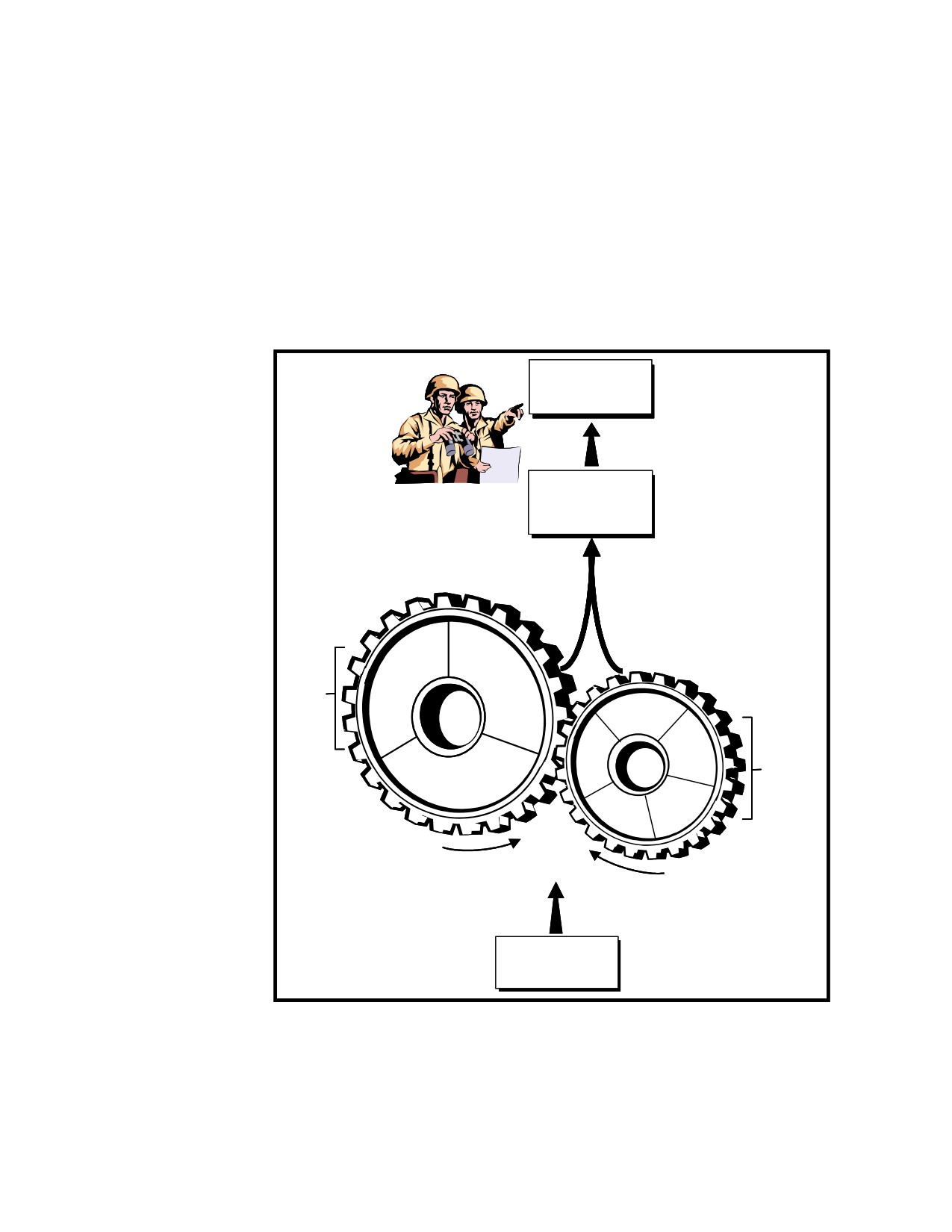
of the intelligence process occur continuously throughout the intelligence
process. (See Figure 1-1.)
•
Plan. This step of the intelligence process consists of activities that
include assessing the situation, envisioning a desired outcome (also
known as setting the vision), identifying pertinent information and
intelligence requirements, developing a strategy for ISR operations to
satisfy those requirements, directing intelligence operations, and
synchronizing the ISR effort. The commander’s intent, planning
guidance, and commander’s critical information requirements (CCIRs)
(priority information requirements
[PIRs] and friendly force
information requirements [FFIRs]) drive the planning of intelligence
operations. Commanders must involve their supporting staff judge
advocate
(SJA) when planning intelligence operations
(especially
HUMINT operations). Planning, managing, and coordinating these
operations are continuous activities necessary to obtain information
and produce intelligence essential to decisionmaking.
•
Prepare. This step includes those staff and leader activities that take
place upon receiving the operations plan (OPLAN), operations order
(OPORD), warning order (WARNO), or commander’s intent to improve
the unit’s ability to execute tasks or missions and survive on the
battlefield.
•
Collect. Recent ISR doctrine necessitates that the entire staff,
especially the G3/S3 and G2/S2, must change their reconnaissance and
surveillance (R&S) mindset to conducting ISR. The staff must carefully
focus ISR on the CCIR but also enable the quick re-tasking of units
and assets as the situation changes. This doctrinal requirement
ensures that the enemy situation, not just our OPLAN, “drives” ISR
operations. Well-developed procedures and carefully planned flexibility
to support emerging targets, changing requirements, and the need to
support combat assessment are critical. The G3/S3 and G2/S2 play a
critical role in this challenging task that is sometimes referred to as
“fighting ISR” because it is so staff intensive during planning and
execution (it is an operation within the operation). Elements of all
units on the battlefield obtain information and data about enemy
forces, activities, facilities, and resources as well as information
concerning the environmental and geographical characteristics of a
particular area.
•
Process. This step converts relevant information into a form suitable
for analysis, production, or immediate use by the commander.
Processing also includes sorting through large amounts of collected
information and intelligence (multidiscipline reports from the unit’s
ISR assets, lateral and higher echelon units and organizations, and
non-MI elements in the battlespace). Processing identifies and exploits
that information which is pertinent to the commander’s intelligence
requirements and facilitates situational understanding. Examples of
processing include developing film, enhancing imagery, translating a
document from a foreign language, converting electronic data into a
standardized report that can be analyzed by a system operator, and
1-2
6 September 2006
_________________________________________________________________________________ FM 2-22.3
correlating dissimilar or jumbled information by assembling like
elements before the information is forwarded for analysis.
• Produce. In this step, the G2/S2 integrates evaluated, analyzed, and
interpreted information from single or multiple sources and disciplines
into finished intelligence products. Like collection operations, the
G2/S2 must ensure the unit’s information processing and intelligence
production are prioritized and synchronized to support answering the
collection requirements.
Facilitates
Situational
Understanding
Relevant
COMMANDER
Information
(which includes
Intelligence)
Operations Process
Intelligence Process
PREPARE
ASSESS
EXECUTE
is a
continuous
function
PRODUCE
ANALYZE,
DISSEMINATE,
PLAN
PROCESS
and ASSESS
are
PLAN
continuous
functions
COLLECT
PREPARE
The Operations Process
provides guidance and
focus which drives the
The Intelligence Process
Intelligence Process
provides continuous
intelligence input essential
to the Operations Process
Commander’s
Intent
Figure 1-1. Intelligence Process.
1-3. For more information on the Intelligence process, see FM 2-0.
6 September 2006
1-3
FM 2-22.3 _________________________________________________________________________________
HUMAN INTELLIGENCE
1-4. HUMINT is the collection of information by a trained HUMINT collector
(military occupational specialties [MOSs] 97E, 351Y [formerly 351C], 351M
[formerly 351E], 35E, and 35F), from people and their associated documents
and media sources to identify elements, intentions, composition, strength,
dispositions, tactics, equipment, personnel, and capabilities. It uses human
sources as a tool and a variety of collection methods, both passively and
actively, to gather information to satisfy the commander’s intelligence
requirements and cross-cue other intelligence disciplines.
1-5. HUMINT tasks include but are not limited to—
• Conducting source operations.
• Liaising with host nation (HN) officials and allied counterparts.
• Eliciting information from select sources.
• Debriefing US and allied forces and civilian personnel including
refugees, displaced persons (DPs), third-country nationals, and local
inhabitants.
• Interrogating EPWs and other detainees.
• Initially exploiting documents, media, and materiel.
Note. In accordance with Army regulatory and policy guidance, a select set of intelligence
personnel may be trained and certified to conduct certain HUMINT tasks outside of those
which are standard for their primary MOS. Such selection and training will qualify these
personnel to conduct only those specific additional tasks, and will not constitute
qualifications as a HUMINT collector.
HUMINT SOURCE
1-6. A HUMINT source is a person from whom information can be obtained.
The source may either possess first- or second-hand knowledge normally
obtained through sight or hearing. Potential HUMINT sources include
threat, neutral, and friendly military and civilian personnel. Categories of
HUMINT sources include but are not limited to detainees, refugees, DPs,
local inhabitants, friendly forces, and members of foreign governmental and
non-governmental organizations (NGOs).
HUMINT COLLECTOR
1-7. For the purpose of this manual, a HUMINT collector is a person who is
specifically trained and certified for, tasked with, and engages in the
collection of information from individuals (HUMINT sources) for the purpose
of answering intelligence information requirements. HUMINT collectors
specifically include enlisted personnel in MOS 97E, Warrant Officers (WOs)
in MOS 351M (351E) and MOS 351Y (351C), commissioned officers in MOS
35E and MOS 35F, select other specially trained MOSs, and their Federal
civilian employee and civilian contractor counterparts. These specially
trained and certified individuals are the only personnel authorized to
conduct HUMINT collection operations, although CI agents also use
HUMINT collection techniques in the conduct of CI operations. HUMINT
1-4
6 September 2006
_________________________________________________________________________________ FM 2-22.3
collection operations must be conducted in accordance with applicable law
and policy. Applicable law and policy include US law; the law of war; relevant
international law; relevant directives including DOD Directive
3115.09,
“DOD Intelligence Interrogations, Detainee Debriefings, and Tactical
Questioning”; DOD Directive 2310.1E, “The Department of Defense Detainee
Program”; DOD instructions; and military execute orders including FRAGOs.
Additional policies and regulations apply to management of contractors
engaged in HUMINT collection. (See Bibliography for additional references
on contractor management.) HUMINT collectors are not to be confused with
CI agents, MOS 97B and WO MOS 351L (351B). CI agents are trained and
certified for, tasked with, and carry out the mission of denying the enemy the
ability to collect information on the activities and intentions of friendly
forces. Although personnel in 97E and 97B MOSs may use similar methods
to carry out their missions, commanders should not use them
interchangeably. See Figure 1-2 for HUMINT and CI functions.
PHASES OF HUMINT COLLECTION
1-8. Every HUMINT questioning session, regardless of the methodology
used or the type of operation, consists of five phases. The five phases of
HUMINT collection are planning and preparation, approach, questioning,
termination, and reporting. They are generally sequential; however,
reporting may occur at any point within the process when critical
information is obtained and the approach techniques used will be reinforced
as required through the questioning and termination phases.
Planning and Preparation
1-9. During this phase, the HUMINT collector conducts the necessary research
and operational planning in preparation for a specific collection effort with a
specific source. Chapter 7 discusses this phase in detail.
Approach
1-10. During the approach phase, the HUMINT collector establishes the
conditions of control and rapport to gain the cooperation of the source and to
facilitate information collection. Chapter
8 discusses approach and
termination strategies in detail.
Questioning
1-11. During the questioning phase, the HUMINT collector uses an
interrogation, debriefing, or elicitation methodology to ask a source questions
systematically on relevant topics, collect information in response to the
intelligence tasking, and ascertain source veracity. Chapter
9 discusses
questioning techniques in detail. (See Appendix B for a source and reliability
matrix.)
6 September 2006
1-5

FM 2-22.3 _________________________________________________________________________________
HUMINT
COUNTERINTELLIGENCE
ROLE
ROLE
• Determine
• Detect
- Capabilities
• Identify
- Order of Battle
• Exploit
- Vulnerabilities
• Neutralize
- Intentions
TARGET
TARGET
• Adversary Intelligence
• Adversary Decisionmaking
Activities
Architecture
INTENT
INTENT
Shape Blue’s
Degrade Red’s
Visualization
Visualization
of Red
of Blue
FUNCTIONS
FUNCTIONS
• HUMINT Collection Activities
• Collection
- Tactical Questioning
- Contact Operations
- Screening
- Tactical Source Operations
- Interrogation
• Investigation
- Debriefing
- Incidents
- Liaison
- Anomalies
- Human Source Operations
• Operation
- DOCEX
- Agent Operations
- CEE Operations
• Analysis
• Analysis
- Link Diagrams
- Link Diagrams
- Patterns
- Patterns
Figure 1-2. HUMINT and CI Functions.
Termination
1-12. During the termination phase, the HUMINT collector completes
a
questioning session and establishes the necessary conditions for future
collection from the same source by himself or another HUMINT collector.
(See Chapter 8.)
Reporting
1-13. During the reporting phase, the HUMINT collector writes, edits, and
submits written, and possibly oral, reports on information collected in the
course of a HUMINT collection effort. These reports will be reviewed, edited,
and analyzed as they are forwarded through the appropriate channels.
Chapter 10 discusses reporting in detail.
1-6
6 September 2006
_________________________________________________________________________________ FM 2-22.3
HUMINT COLLECTION AND RELATED ACTIVITIES
1-14. HUMINT collection activities include these categories: tactical
questioning, screening, interrogation, debriefing, liaison, human source
contact operations (SCOs), document exploitation (DOCEX), and captured
enemy equipment
(CEE) operations. DOCEX and CEE operations are
activities supported by HUMINT collection but usually are only conducted by
HUMINT collectors when the CEE or captured enemy document (CED) is
associated with a source being questioned. In some cases, these
determinations may depend on legal distinctions between collection methods
such as interrogation and debriefing. In others, the distinction is in the
purpose of the questioning. For example, screening is used to identify the
knowledgeability and cooperation of a source, as opposed to the other
activities that are used to collect information for intelligence purposes.
1-15. The activities may be conducted interactively. For example, a HUMINT
collector may be screening a potential source. During the course of the
screening, the HUMINT collector identifies that the individual has
information that can answer requirements. He might at that point debrief or
interrogate the source on that specific area. He will then return to screening
the source to identify other potential areas of interest.
1-16. HUMINT collection activities vary depending on the source of the
information. Once the type of activity has been determined, leaders use the
process of plan, prepare, execute, and assess to conduct the activity. The
following are the different types of HUMINT collection activities.
TACTICAL QUESTIONING
1-17. Tactical questioning is expedient initial questioning for information of
immediate tactical value. Tactical questioning is generally performed by
members of patrols, but can be done by any DOD personnel. (See ST 2-91.6.)
SCREENING
1-18. Screening is the process of identifying and assessing the areas of
knowledge, cooperation, and possible approach techniques for an individual
who has information of intelligence value. Indicators and discriminators used
in screening can range from general appearance, possessions, and attitude to
specific questions to assess areas of knowledge and degree of cooperation to
establish if an individual matches a predetermined source profile. Screening
is not in itself an intelligence collection technique but a timesaving measure
that identifies those individuals most likely to have information of value.
1-19. Screening operations are conducted to identify the level of knowledge,
level of cooperation, and the placement and access of a given source.
Screening operations can also assist in the determination of which discipline
or agency can best conduct the exploitation. Chapter 6 discusses screening in
detail. Screening operations include but are not limited to—
Mobile and static checkpoint screening, including screening of
refugees and DPs.
Locally employed personnel screening.
6 September 2006
1-7
FM 2-22.3 _________________________________________________________________________________
Screening as part of a cordon and search operation.
EPW and detainee screening.
INTERROGATION
1-20. Interrogation is the systematic effort to procure information to answer
specific collection requirements by direct and indirect questioning techniques
of a person who is in the custody of the forces conducting the questioning.
Some examples of interrogation sources include EPWs and other detainees.
Interrogation sources range from totally cooperative to highly antagonistic.
Interrogations may be conducted at all echelons in all operational
environments. Detainee interrogation operations conducted at a Military
Police
(MP) facility, coalition-operated facility, or other agency-operated
collection facility are more robust and require greater planning, but have
greater logistical support. Interrogations may only be conducted by personnel
trained and certified in the interrogation methodology, including personnel
in MOSs 97E, 351M (351E), or select others as may be approved by DOD
policy. Interrogations are always to be conducted in accordance with the Law
of War, regardless of the echelon or operational environment in which the
HUMINT collector is operating.
DEBRIEFING
1-21. Debriefing is the process of questioning cooperating human sources to
satisfy intelligence requirements, consistent with applicable law. The source
usually is not in custody and usually is willing to cooperate. Debriefing may
be conducted at all echelons and in all operational environments. The
primary categories of sources for debriefing are refugees, émigrés, DPs, and
local civilians; and friendly forces.
• Refugees, Émigrés, DPs, and Local Civilians Debriefing
Operations. Refugee, émigré, and DP debriefing operations are the
process of questioning cooperating refugees and émigrés to satisfy
intelligence requirements. The refugee may or may not be in custody,
and a refugee or émigré’s willingness to cooperate need not be
immediate or constant. Refugee debriefings are usually conducted at
refugee collection points or checkpoints and may be conducted in
coordination with civil affairs (CA) or MP operations. Local civilian
debriefing operations are the process of questioning cooperating local
civilians to satisfy intelligence requirements. As with refugees and
émigrés, the local civilians being debriefed may or may not be in
custody and the civilian’s willingness to cooperate may not be
immediate or constant. Debriefing operations must be conducted
consistent with applicable law and policy. Applicable law and policy
include US law; the law of war; relevant international law; relevant
directives including DOD Directive
3115.09,
“DOD Intelligence
Interrogations, Detainee Debriefings, and Tactical Questioning”; DOD
Directive 2310.1E, “The Department of Defense Detainee Program”;
DOD instructions; and military execute orders including FRAGOs.
• Friendly Force Debriefing Operations. Friendly force debriefing
operations are the systematic debriefing of US forces to answer
1-8
6 September 2006
_________________________________________________________________________________ FM 2-22.3
collection requirements. These operations must be coordinated with US
units. (See Chapter 6.)
LIAISON OPERATIONS
1-22. Liaison operations are programs to coordinate activities and exchange
information with host country and allied military and civilian agencies and
NGOs.
HUMAN SOURCE CONTACT OPERATIONS
1-23. Human SCO are operations directed toward the establishment of
human sources who have agreed to meet and cooperate with HUMINT
collectors for the purpose of providing information. Within the Army, SCO
are conducted by trained personnel under the direction of military
commanders. The entire range of HUMINT collection operations can be
employed. SCO sources include one-time contacts, continuous contacts, and
formal contacts from debriefings, liaison, and contact operations. SCO
consist of collection activities that utilize human sources to identify attitude,
intentions, composition, strength, dispositions, tactics, equipment, target
development, personnel, and capabilities of those elements that pose a
potential or actual threat to US and coalition forces. SCO are also employed
to develop local source or informant networks that provide early warning of
imminent danger to US and coalition forces and contribute to the Military
Decision-Making Process (MDMP). See Chapter 5 for discussion of approval,
coordination, and review for each type of activity.
DOCEX OPERATIONS
1-24. DOCEX operations are the systematic extraction of information from
open, closed, published, and electronic source documents. These documents
may include documents or data inside electronic communications equipment,
including computers, telephones, Personal Digital Assistants (PDAs), and
Global Positioning System (GPS) terminals. This operation is not solely a
HUMINT function, but may be conducted by any intelligence personnel with
appropriate language support.
1-25. Many CEDs are associated with EPWs and other human sources.
Consequently, a HUMINT collector is often the first person to screen them.
HUMINT collectors will screen the documents associated with human
sources and will extract information of use to them in their immediate
collection operation. Any information discovered during this initial screening
that might cross-cue another collection effort will be forwarded to the
appropriate unit.
1-26. A captured document is usually something that the enemy has written
for his own use. For this reason, captured documents are usually truthful and
accurate. There are cases in which falsified documents have been permitted
to fall into enemy hands as a means of deception but these cases are not the
norm. Normal policy of not relying on single-source information should help
prevent deceptions of this type from being effective. Documents also do not
forget or misinterpret information although it must be remembered that
their authors may have. Usually, each document provides a portion of a
6 September 2006
1-9
FM 2-22.3 _________________________________________________________________________________
larger body of information. Each captured document, much like a single piece
of a puzzle, contributes to the whole. In addition to tactical intelligence,
technical data and political indicators that are important to strategic and
national level agencies can sometimes be extracted from captured documents.
Captured documents, while not affected by memory loss, are often time
sensitive; therefore, they are to be quickly screened for possible exploitation.
CEE OPERATIONS
1-27. CEE includes all types of foreign and non-foreign materiel found on a
detainee or on the battlefield that may have a military application or answer
a collection requirement. The capturing unit must--
• Recognize certain CEE as having immediate intelligence value, and
immediately forward such CEE to the unit’s S2. Such items include—
All electronic communications equipment with a memory card,
including computers, telephones, PDAs, and GPS terminals.
All video or photographic equipment.
• Recognize certain CEE as having technical intelligence (TECHINT)
value. Such items include--
New weapons.
All communications equipment not immediately exploitable for
HUMINT value.
Track vehicles.
Equipment manuals.
All CEE known or believed to be of TECHINT interest.
• Evacuate the equipment with the detainee.
• Confiscate, tag, and evacuate weapons and other equipment found on
the detainee the same as CEDs. (See Appendix D.)
• Secure and report the capture of TECHINT items to the unit’s S2 for
disposition instructions.
TRAITS OF A HUMINT COLLECTOR
1-28. HUMINT collection is a science and an art. Although many HUMINT
collection skills may be taught, the development of a skilled HUMINT
collector requires experience in dealing with people in all conditions and
under all circumstances. Although there are many intangibles in the
definition of a
“good” HUMINT collector, certain character traits are
invaluable:
• Alertness. The HUMINT collector must be alert on several levels
while conducting HUMINT collection. He must concentrate on the
information being provided by the source and be constantly evaluating
the information for both value and veracity based on collection
requirements, current intelligence, and other information obtained
from the source. Simultaneously, he must be alert not only to what the
source says but also to how it is said and the accompanying body
language to assess the source’s truthfulness, degree of cooperation, and
current mood. He needs to know when to give the source a break and
1-10
6 September 2006
_________________________________________________________________________________ FM 2-22.3
when to press the source harder. In addition, the HUMINT collector
constantly must be alert to his environment to ensure his personal
security and that of his source.
•
Patience and Tact. The HUMINT collector must have patience and
tact in creating and maintaining rapport between himself and the
source, thereby enhancing the success of the questioning. Displaying
impatience may—
Encourage a difficult source to think that if he remains unresponsive
for a little longer, the HUMINT collector will stop questioning.
Cause the source to lose respect for the HUMINT collector, thereby
reducing the HUMINT collector’s effectiveness.
•
Credibility. The HUMINT collector must provide a clear, accurate,
and professional product and an accurate assessment of his
capabilities. He must be able to clearly articulate complex situations
and concepts. The HUMINT collector must also maintain credibility
with his source. He must present himself in a believable and consistent
manner, and follow through on any promises made as well as never to
promise what cannot be delivered.
•
Objectivity and Self-control. The HUMINT collector must also be
totally objective in evaluating the information obtained. The HUMINT
collector must maintain an objective and dispassionate attitude
regardless of the emotional reactions he may actually experience or
simulate during a questioning session. Without objectivity, he may
unconsciously distort the information acquired. He may also be unable
to vary his questioning and approach techniques effectively. He must
have exceptional self-control to avoid displays of genuine anger,
irritation, sympathy, or weariness that may cause him to lose the
initiative during questioning but be able to fake any of these emotions
as necessary. He must not become emotionally involved with the
source.
•
Adaptability. A HUMINT collector must adapt to the many and
varied personalities which he will encounter. He must also adapt to all
types of locations, operational tempos, and operational environments.
He should try to imagine himself in the source's position. By being
adaptable, he can smoothly shift his questioning and approach
techniques according to the operational environment and the
personality of the source.
•
Perseverance. A tenacity of purpose can be the difference between a
HUMINT collector who is merely good and one who is superior. A
HUMINT collector who becomes easily discouraged by opposition, non-
cooperation, or other difficulties will not aggressively pursue the
objective to a successful conclusion or exploit leads to other valuable
information.
•
Appearance and Demeanor. The HUMINT collector's personal
appearance may greatly influence the conduct of any HUMINT
collection operation and attitude of the source toward the HUMINT
collector. Usually an organized and professional appearance will
favorably influence the source. If the HUMINT collector's manner
6 September 2006
1-11
FM 2-22.3 _________________________________________________________________________________
reflects fairness, strength, and efficiency, the source may prove more
cooperative and more receptive to questioning.
• Initiative. Achieving and maintaining the initiative are essential to a
successful questioning session just as the offensive is the key to success
in combat operations. The HUMINT collector must grasp the initiative
and maintain it throughout all questioning phases. This does not mean
he has to dominate the source physically; rather, it means that the
HUMINT collector knows his requirements and continues to direct the
collection toward those requirements.
REQUIRED AREAS OF KNOWLEDGE
1-29. The HUMINT collector must be knowledgeable in a variety of areas in
order to question sources effectively. The collector must prepare himself for
operations in a particular theater or area of intelligence responsibility
(AOIR) by conducting research. The G2 can be a valuable source of
information for this preparatory research. The HUMINT collector should
consult with order of battle
(OB) technicians and analysts and collect
information from open sources and from the Secret Internet Protocol Router
Network (SIPRNET) to enhance his knowledge of the AOIR. Some of these
areas of required knowledge are—
•
The area of operations (AO) including the social, political, and
economic institutions; geography; history; language; and culture of the
target area. Collectors must be aware of all ethnic, social, religious,
political, criminal, tribal, and economic groups and the
interrelationships between these groups.
•
All current and potential threat forces within the AOIR and their
organization, equipment, motivation, capabilities, limitations, and
normal operational methodology.
•
Applicable law and policy that might affect HUMINT collection
activities. Applicable law and policy include US law; the law of
war; relevant international law; relevant directives including
DOD Directive
3115.09,
“DOD Intelligence Interrogations,
Detainee Debriefings, and Tactical Questioning”; DOD
Directive
2310.1E,
“The Department of Defense Detainee
Program”; DOD instructions; and military execute orders
including FRAGOs. HUMINT collectors are subject to applicable law,
which includes US law, the law of war
(including the Geneva
Conventions as applicable), and relevant international law.
Additionally, local agreements with HNs or allies and the applicable
execute orders and rules of engagement (ROE) may further restrict
HUMINT collection activities. However, these documents cannot
permit interrogation actions that would be illegal under applicable US
or international law.
•
The collection requirements, including all specific information
requirements (SIRs) and indicators that will lead to the answering of
the intelligence requirements.
1-12
6 September 2006
_________________________________________________________________________________ FM 2-22.3
• Cultural awareness in the various AOs will have different social and
regional considerations that affect communications and can affect the
conduct of operations. These may include social taboos, desired
behaviors, customs, and courtesies. The staff must include this
information in pre-deployment training at all levels to ensure that
personnel are properly equipped to interact with the local populace.
1-30. There are other areas of knowledge that help to develop more effective
questioning:
• Proficiency in the target language. The HUMINT collector can
normally use an interpreter (see Chapter 11) and machine translation
as they are developed to conduct questioning. Language proficiency is a
benefit to the HUMINT collector in a number of ways: He can save
time in questioning, be more aware of nuances in the language that
might verify or deny truthfulness, and better control and evaluate
interpreters.
• Understanding basic human behavior. A HUMINT collector can
best adapt himself to the source’s personality and control of the
source’s reactions when he understands basic behavioral factors, traits,
attitudes, drives, motivations, and inhibitions. He must not only
understand basic behavioral principles but also know how these
principles are manifested in the area and culture in which he is
operating.
• Neurolinguistics. Neurolinguistics is a behavioral communication
model and a set of procedures that improve communication skills. The
HUMINT collector should read and react to nonverbal
communications. He must be aware of the specific neurolinguistic clues
of the cultural framework in which he is operating.
CAPABILITIES AND LIMITATIONS
CAPABILITIES
1-31. HUMINT collection capabilities include the ability to⎯
• Collect information and cross-cue from an almost endless variety of
potential sources including friendly forces, civilians, detainees, and
source-related documents.
• Focus on the collection of detailed information not available by other
means. This includes information on threat intentions and local
civilian and threat force attitudes and morale. It also includes building
interiors and facilities that cannot be collected on by other means due
to restrictive terrain.
• Corroborate or refute information collected from other R&S assets.
• Operate with minimal equipment and deploy in all operational
environments in support of offensive, defensive, stability and
reconstruction operations, or civil support operations. Based on solid
planning and preparation, HUMINT collection can provide timely
information if deployed forward in support of maneuver elements.
6 September 2006
1-13
FM 2-22.3 _________________________________________________________________________________
LIMITATIONS
1-32. HUMINT collection limitations include⎯
•
Interpersonal abilities. HUMINT is dependent on the subjective
interpersonal capabilities of the individual rather than on the abilities
to operate collection equipment. HUMINT collection capability is based
on experience within a specific AO that can only be developed over
time.
•
Identification of knowledgeable sources. There is often a multitude of
potential HUMINT sources. Information in response to specific
requirements can only be collected if sources are available and
identified that have that information.
•
Limited numbers. There are never enough HUMINT collectors to meet
all requirements. Limited assets must be prioritized in support of units
and operations based on their criticality.
•
Time limitations. HUMINT collection, particularly source operations,
takes time to develop. Collection requirements must be developed with
sufficient lead-time for collection.
•
Language limitations. Although HUMINT collectors can normally use
an interpreter, a lack of language proficiency by the collector can
significantly slow collection efforts. Such language proficiency takes
time to develop.
•
Misunderstanding of the HUMINT mission. HUMINT collectors are
frequently used incorrectly and assigned missions that belong to CA,
MP, interpreter or translators, CI, or other operational specialties.
•
Commanders’ risk management. Maneuver commanders, in weighing
the risks associated with employing HUMINT collection teams (HCTs),
should seriously consider the potential loss of a wealth of information
such as enemy activities, locations of high-value personnel, and threats
to the force that they will incur if they restrict HCT collection
activities. J/G2Xs, operational management teams (OMTs), and HCT
leaders must educate maneuver commanders on the benefits of
providing security for HCTs and employing them in accordance with
their capabilities.
•
Legal obligations. Applicable law and policy govern HUMINT
collection operations. Applicable law and policy include US law; the
law of war; relevant international law; relevant directives including
DOD Directive 3115.09, “DOD Intelligence Interrogations, Detainee
Debriefings, and Tactical Questioning”; DOD Directive 2310.1E, “The
Department of Defense Detainee Program”; DOD instructions; and
military execute orders including FRAGOs. HUMINT operations may
be further restricted by Status of Forces Agreements (SOFAs) and
other agreements, execute orders and ROE, local laws, and an
operational umbrella concept. Such documents, however, cannot
permit interrogation actions that are illegal under applicable law.
•
Connectivity and bandwidth requirements. With the exception of the
size, activity, location, unit, time, equipment (SALUTE) report, most
HUMINT reporting requires considerable bandwidth. Deployed
1-14
6 September 2006
_________________________________________________________________________________ FM 2-22.3
HUMINT teams must be able to travel to, and report from, all areas of
the battlefield. Digital communication equipment must be able to
provide reliable connectivity with teams’ reporting channels and
sufficient bandwidth for transmission of reports, including digital
imagery.
• Timely reporting and immediate access to sources. Except in tactical
situations when HUMINT collectors are in immediate support of
maneuver units, HUMINT collection and reporting takes time. In
stability and reconstruction operations, sources need to be assessed
and developed. Once they are developed, they need to be contacted
which often takes time and coordination. In offensive and defensive
operations, HUMINT collection at detainee holding areas sometimes
may still be timely enough to meet tactical and operational
requirements. See paragraphs 3-2 and 3-7 for more information on
offensive and defensive operations.
6 September 2006
1-15
This page intentionally left blank.
FM 2-22.3
Chapter 2
Human Intelligence Structure
ORGANIZATION AND STRUCTURE
2-1. The success of the HUMINT collection effort depends on a complex
interrelationship between command and control
(C2) elements,
requirements, technical control and support, and collection assets. Each
echelon of command has its supporting HUMINT elements although no MI
organization in the Army is robust enough to conduct sustained HUMINT
operations under all operational environments using only its organic
HUMINT assets. HUMINT units have specific support requirements to the
commander. HUMINT units must be flexible, versatile, and prepared to
conduct HUMINT collection and analysis operations in support of any
echelon of command. A coherent C2 structure within these HUMINT
organizations is necessary in order to ensure successful, disciplined, and
legal HUMINT operations. This structure must include experienced
commissioned officers, warrant officers, and senior NCOs conscientiously
discharging their responsibilities and providing HUMINT collectors with
guidance from higher headquarters.
2-2. Regardless of the echelon, there are four basic elements that work
together to provide the deployed commander with well-focused, thoroughly
planned HUMINT support. The four elements are staff support, analysis, C2,
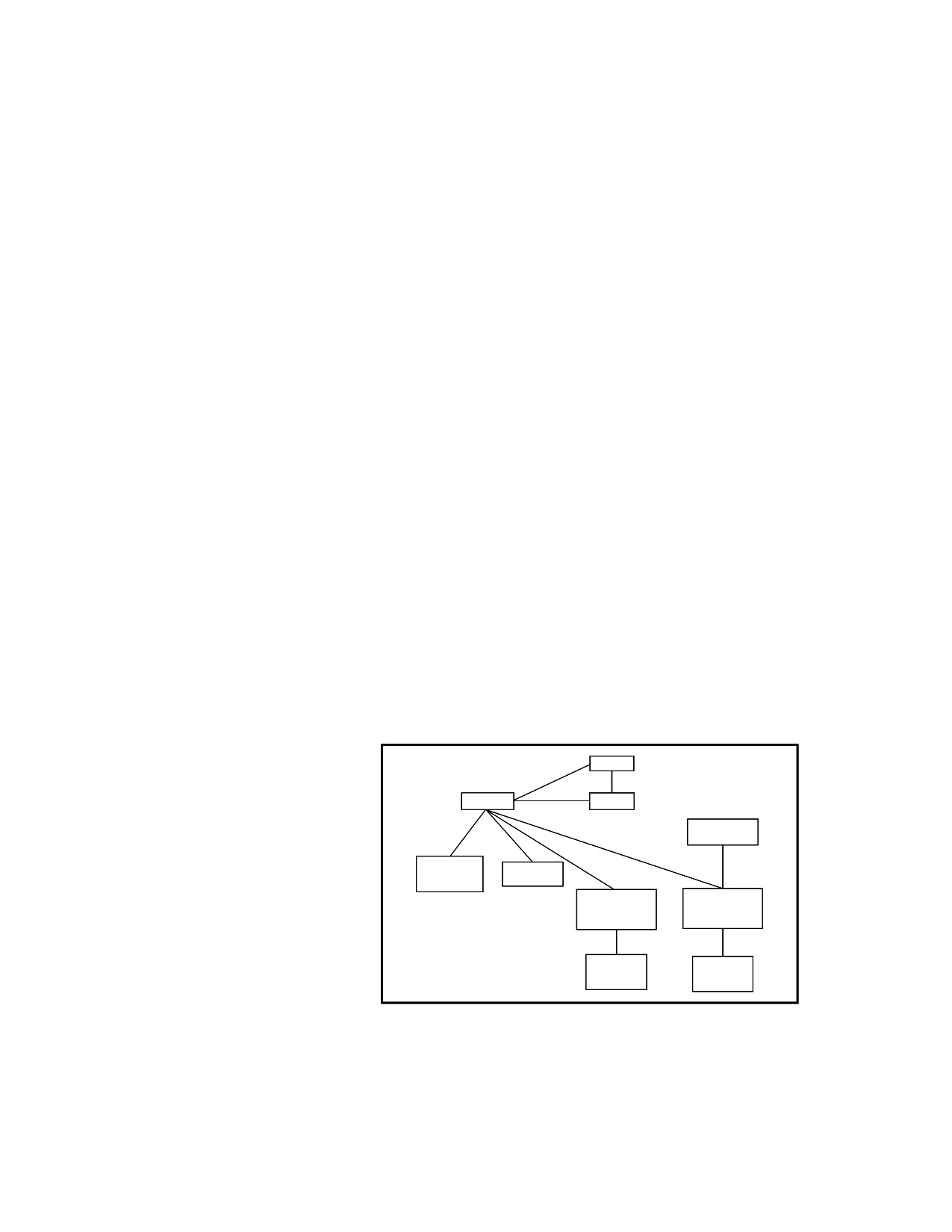
and collection. Each piece of the infrastructure builds on the next and is
based on the size, complexity, and type of operation as shown in Figure 2-1.
J/G2
J/G2X
ACE
Supported
S2
Other
Military
Government
Assets
Agencies
Operational
Operational
Management
Management
Team (GS)
Team (DS)
HUMINT
HUMINT
Collector
Collector
Team(s)
Team(s)
Figure 2-1. Tactical HUMINT Organization.
6 September 2006
2-1
FM 2-22.3 _________________________________________________________________________________
HUMINT CONTROL ORGANIZATIONS
2-3. HUMINT control organizations are the means by which a commander
exercises command of a unit’s operations. HUMINT control organizations are
vital to the effective use of HUMINT collection assets. HUMINT control
organizations consist of the C/J/G/S2X and the HUMINT operations cell
(HOC) at the brigade and above level and the OMTs at the battalion and
below level.
C/J/G/S2X
2-4. The C/J/G/S2X is a staff element subordinate to the C/J/G/S2, is the
primary advisor on HUMINT and CI, and is the focal point for all HUMINT
and CI activities within a joint task force (JTF) (J2X), an Army component
task force (G2X) or a brigade combat team (BCT) (S2X). The 2X can be
organic to the unit staff or can be attached or under operational control
(OPCON) to the staff from another organization such as the theater MI
brigade. The C/J/G/S2X is part of a coherent architecture that includes
organic HUMINT assets and HUMINT resources from national, theater, and
non-DOD HUMINT organizations.
2-5. The C/J2X is responsible for controlling Joint Force HUMINT assets,
coordinating all HUMINT and CI collection activities, and keeping the joint
force C/J/2 informed on all HUMINT and CI activities conducted in the joint
force area of responsibility (AOR). The C/J2X is also part of the review and
recommendation process concerned with the retention or release of detainees.
HUMINT reports maintained at the C/J2X are considered during the review
for release process. The C/J2X consists of the
2X Officer, a HOC, a
Counterintelligence Coordination Authority (CICA), a HUMINT Analysis
Cell (HAC), and a CI Analysis Cell (CIAC). At all echelons, the 2X should
also include an Operational Support Cell (OSC) staffed to operate 24 hours a
day. The authority and operational responsibilities of a C/J2X in combined or
joint contingency operations (CONOP) takes precedence over service-specific
CI and HUMINT technical control agencies. Specifically, the C/J/G/S2X⎯
• Accomplishes technical control and support, and deconfliction of all
HUMINT and CI assets through the Army component G2X, the
HUMINT and CI operations sections, or the OMTs.
• Participates in planning for deployment of HUMINT and CI assets in
support of operations.
• Coordinates, through the HOC and the CICA, all HUMINT and CI
activities to support intelligence collection and the intelligence aspects
of force protection for the deployed commander.
• Coordinates and deconflicts all HUMINT and CI operations within the
operational area.
• Coordinates with the senior US national intelligence representative for
specific operational approval when required by standing agreements.
• Is the release authority for HUMINT reporting at his echelon and only
releases reports to the all-source system after ensuring all technical
control measures for reporting have been met.
2-2
6 September 2006
_________________________________________________________________________________ FM 2-22.3
• Coordinates with other HUMINT collection agencies not under the
control of the command, such as Defense Intelligence Agency (DIA),
Central Intelligence Agency
(CIA), and Federal Bureau of
Investigation (FBI).
• Does not exercise OPCON over HUMINT and CI assets assigned,
attached, or reinforcing the unit; however, he is the staff support
responsible for creating a cohesive HUMINT and CI effort.
• Coordinates with non-DOD agencies conducting HUMINT collection
operations in the joint area of operations (JAO) to ensure deconfliction
of sources, informants, or contacts and the HUMINT reporting that is
generated by these collection operations.
2-6. The J2X will maintain technical control
(see para
4-10) of all CI
investigative actions within its AOIR; however, all investigative matters will
be in accordance with DOD policies, joint or Military Department doctrine,
applicable US law and policy, SOFAs, or other International Standardization
Agreements (ISAs). The J2X will advise the responsible Theater CICA
(TCICA) of any Army CI element conducting investigative activities that fall
under the purview of AR 381-20.
OPERATIONS SUPPORT CELL (OSC)
2-7. The OSC in the C/J/G/S2X staff will maintain the consolidated source
registry for all HUMINT and CI activities in the unit’s designated AOIR. The
OSC will provide management of intelligence property book operations,
source incentive programs, and intelligence contingency funds (ICFs) for
subordinate HUMINT and CI elements. The OSC responsibilities also
include requests for information (RFIs) and/or source-directed requirements
(SDRs) management and the release of intelligence information reports
(IIRs).
COUNTERINTELLIGENCE COORDINATION AUTHORITY
2-8. The CICA is assigned under the J/G2X and coordinates all CI activities
within its designated AOIR. (See FM 34-60 for a detailed explanation of the
CI mission.) The CICA⎯
• Provides technical support to all CI assets and coordinates and
deconflicts CI activities in the deployed AOIR.
• Coordinates and supervises CI investigations and collection activities
conducted by all services and components in the AOIR.
• Establishes and maintains the theater CI source database.
• Coordinates with the HOC for CI support to detention, interrogation,
refugee, and other facilities.
• Manages requirements and taskings for CI collectors in the AO in
coordination with the HOC.
• Expedites preparation of CI reports and their distribution to
consumers at all levels.
• Coordinates CI activities with senior CI officers from all CI
organizations on the battlefield.
6 September 2006
2-3
FM 2-22.3 _________________________________________________________________________________
• Performs liaison with HN and US national level CI organizations.
• Informs the appropriate TCICA when Army CI elements are
conducting CI investigative activities within the purview of AR 381-20.
HUMINT OPERATIONS CELL
2-9. The HOC is assigned under the J/G2X to track all HUMINT activities in
the AOIR. The J/G2X uses this information to advise the senior intelligence
officer
(SIO) on all HUMINT activities conducted within the AOIR. The
HOC—
• Provides technical support to all HUMINT collection operations and
deconflicts HUMINT collection operations in the designated AOIR.
• Establishes and maintains a consolidated HUMINT source database in
coordination with the CICA.
• Coordinates with collection managers and the HAC to identify
collection requirements and to ensure requirements are met.
• Coordinates the activities of HUMINT collectors assigned or attached
to interrogation, debriefing, refugee, DOCEX, and other facilities.
• Manages requirements and taskings for HUMINT collectors in the
AOIR, in coordination with the CICA.
• Expedites preparation of intelligence reports and their distribution to
consumers at all levels.
• Performs liaison with HN and US national HUMINT organizations.
OPERATIONAL MANAGEMENT TEAM
2-10. A HUMINT OMT consists of senior individuals in MOS 351M (351E)
and MOS 97E. Each OMT can control 2 to 4 HCTs depending upon assigned
mission and operational tempo (OPTEMPO). The OMT performs a necessary
function when two or more HCTs deploy by assisting the HUMINT element
commander in tasking and providing technical support to assigned or
attached HCTs. The OMT is optimally collocated with the command post
(CP) of the supported unit. However, it must be located where it can provide
oversight of team operations and best support the dissemination of tasking,
reports, and technical data between the unit and the deployed collection
assets. When a higher echelon augments subordinate elements with
collection teams, it should include proportional OMT augmentation. When a
single collection team is attached in direct support (DS) of a subordinate
element, the senior team member exerts mission and technical control over
the team. The OMT⎯
• Provides operational and technical control and guidance to deployed
HCTs.
• Normally consists of a WO and noncommissioned officers (NCOs)
whose experience and knowledge provide the necessary guidance for
effective team collection operations.
• Manages the use of ICFs and incentives for the HCTs.
• Provides the collection focus for HCTs.
2-4
6 September 2006
_________________________________________________________________________________ FM 2-22.3
• Provides quality control and dissemination of reports for subordinate
HCTs.
• Directs the activities of subordinate HCTs and controls their
operations.
• Conducts limited single-discipline HUMINT analysis and mission
analysis for the supported commander.
• Acts as a conduit between subordinate HCTs, the HOC, and the
C/J/G/S2X.
• Reports the HCT mission and equipment status to the HOC and the
command element.
HUMINT COLLECTION TEAM
2-11. HCTs are the elements that collect information from human sources.
The HUMINT collectors deploy in teams of approximately four personnel in
MOS
97E
(HUMINT Collector) and MOS
351M
(351E)
(HUMINT
Technician).
2-12. The HCT may be augmented based on factors of mission, enemy,
terrain and weather, troops and support available, time available, and civil
considerations (METT-TC). Interpreters from the RC or civilian contractors
with appropriate security clearances are added when necessary. TECHINT
personnel or other specific subject-matter experts (SMEs) may augment the
team to meet technical collection requirements. Another example would be
pairing HUMINT collectors with dedicated analysts to provide sharper focus
to the interrogation effort. In fixed detention facilities, these HUMINT
collector or analyst relationships may become more enduring. Commanders
are not encouraged to mix HUMINT collectors and CI agents on a single
team. Doing so seriously undermines the ability to conduct both the
HUMINT collection and CI missions simultaneously. However, commanders
may find times when METT-TC factors make it reasonable to augment a CI
team with HUMINT support for a mission, or vice versa.
COMMAND DEBRIEFING TEAM
2-13. A command debriefing team is normally not a table of organization and
equipment (TOE) organization but may be task organized to meet mission
requirements. This task-organized team is normally OPCON to the HOC.
Although more prevalent during stability and reconstruction operations,
senior personnel will often acquire information of intelligence interest during
the normal course of their duties. The HUMINT collection assets,
particularly at division echelon or higher, will normally task organize a team
of more senior, experienced individuals to debrief these senior unit personnel.
In offensive and defensive operations, this same team is prepared to
interrogate high-value detainees (including EPWs) or debrief senior civilians.
The command debriefing team should not be confused with the G2/S2
debriefing program, which also is critical and is an important conduit of
information.
DOCUMENT EXPLOITATION TEAM
6 September 2006
2-5
FM 2-22.3 _________________________________________________________________________________
2-14. DOCEX teams are normally found at theater and national level
organizations. Lower echelon HCTs may also be designated to perform the
DOCEX mission based upon mission parameters and linguist availability.
However, if organic assets are used, there will be a mission tradeoff.
Dependent on the priority of exploitation and volume of documents, HCTs
assigned the DOCEX mission may be augmented by military, civilian, or
contractor personnel to accomplish their assigned mission. During
operations, the DOCEX team will normally screen documents, extract
information, and expedite the evacuation of documents to the Joint or
Theater Document Exploitation Facility.
HUMINT ANALYSIS AND PRODUCTION ORGANIZATIONS
2-15. HUMINT analysis and production organizations analyze information
collected from HUMINT sources, support the requirements management
(RM) system, and produce single-discipline intelligence products. HUMINT
analysis and production are conducted at all echelons, separate brigades, and
higher. (See Chapter 12 for a description of the HUMINT analysis system
and methodologies.)
HUMINT ANALYSIS CELL
2-16. The HAC is part of the J/G2X; however, it may be collocated with an
analysis and control element (ACE) or Joint Intelligence Support Element
(JISE) single-source enclave depending on facilities and operational
environment considerations. The HAC works closely with the all-source
intelligence elements and the CIAC to ensure that HUMINT reporting is
incorporated into the all-source analysis and common operational picture
(COP). The HAC is the “fusion point” for all HUMINT reporting and
operational analysis in the JISE and ACE. It determines gaps in reporting
and coordinates with the RM to cross-cue other intelligence sensor systems.
The HAC⎯
• Produces and disseminates HUMINT products and provides input to
intelligence summaries (INTSUMs).
• Uses analytical tools found at the ACE or JISE to develop long-term
analyses and provides reporting feedback that supports the HOC,
OMTs, and HCTs.
• Provides analytical expertise to the C/J/G/S2X, HOC, and OMTs.
• Produces country and regional studies tailored to HUMINT collection.
• Compiles target folders to assist C/J/G/S2X assets in focusing collection
efforts.
• Analyzes and reports on trends and patterns found in HUMINT
reporting.
• Analyzes source reliability and credibility as reflected in reporting and
communicates that analysis to the collector.
• Develops and maintains databases specific to HUMINT collection
activities.
• Produces HUMINT requirements.
2-6
6 September 2006
_________________________________________________________________________________ FM 2-22.3
• Answers HUMINT-related RFIs.
• Identifies collection gaps and provides context for better collection at
their echelon.
JOINT INTERROGATION AND DEBRIEFING CENTER ANALYSIS SECTION
2-17. This section ensures that all members of the Joint Interrogation and
Debriefing Center (JIDC) (see para 5-102) are aware of the current situation
through the distribution of INTSUMs and products from external agencies.
The Analysis Section also supports the JIDC by--
• Providing situation update briefings to all facility personnel every 12
hours.
• Preparing research and background packets and briefings for
interrogations and debriefings.
• Developing indicators for each intelligence requirement to support
screening operations.
• Conducting single-discipline HUMINT analysis based on collected
information to support further collection efforts.
• Correlating reports produced by the JIDC to facilitate analysis at
higher levels.
• Answering RFIs from interrogators and formulating RFIs that cannot
be answered by the analytical section on behalf of the interrogators.
• Reviewing IIRs and extracting information into analysis tools tailored
to support the interrogation process.
• Pursuing products and resources to support the interrogation effort.
HUMINT ANALYSIS TEAM
2-18. The HUMINT analysis team (HAT) is subordinate to the G2 ACE. The
HAT supports the G2 in the development of IPB products and in developing
and tailoring SIRs to match HUMINT collection capabilities.
6 September 2006
2-7
This page intentionally left blank.
FM 2-22.3
Chapter 3
HUMINT in Support of Army Operations
3-1. Army doctrine for full spectrum operations recognizes four types of
military operations: offensive, defensive, stability and reconstruction, and
civil support. Missions in any environment require the Army to conduct or be
prepared to conduct any combination of these operations. HUMINT assets
will be called on to provide information in support of all four operations.
Simultaneous operations, for example elements of a force conducting
offensive operations while other elements are engaged in stability and
reconstruction operations, will cause a similar division of the limited
HUMINT assets based on METT-TC.
OFFENSIVE OPERATIONS
3-2. Offensive operations aim at destroying or defeating the enemy. Rapid
maneuver, constantly changing situations, and a vital need for intelligence
support at the point of contact influence HUMINT missions during offensive
operations. The guiding principle to the use of HUMINT in support of
offensive operations is to minimize the time between when friendly forces
encounter potential sources (detainees, refugees, and local civilians) and
when a HUMINT collector screens them.
3-3. During offensive operations, at echelons corps and below, HCTs
normally operate in the engaged maneuver brigades’ AOs and are further
deployed in support of maneuver battalions based on advice from the OMTs.
These collection assets may be in general support (GS) of the parent brigade
or in DS of the maneuver battalions, reconnaissance squadrons, and other
forward-deployed maneuver assets. The HCTs and their supporting control
structure are deployed in accordance with METT-TC based on three
principles:
• The relative importance of that subordinate element’s operations to the
overall parent unit’s scheme of maneuver and the overall ISR plan.
• The potential for that subordinate element to capture detainees, media
and materiel, or to encounter civilians on the battlefield.
• The criticality of information that could be obtained from those sources
to the success of the parent unit’s overall OPLANs.
3-4. HUMINT missions in support of offensive operations include screening
and interrogating EPWs and other detainees, questioning and debriefing
civilians in the supported unit’s AO, and conducting DOCEX, limited to
extracting information of immediate tactical value. EAC assets normally
support offensive operations through theater interrogation and debriefing
facility operations and mobile interrogation teams. These facilities are better
equipped to conduct in-depth interrogations and DOCEX, so it is imperative
6 September 2006
3-1
FM 2-22.3 _________________________________________________________________________________
that EPWs and other detainees who will be evacuated to theater facilities be
transported there as soon as possible.
HUMINT IN SUPPORT OF FORCED ENTRY OPERATIONS
3-5. Forced entry operations (FEOs) are offensive operations conducted to
establish an initial military presence in a target area in the face of expected
enemy opposition. HUMINT collection assets may be able to provide vital
information to tactical commanders in the critical early stages of the entry
operation. Key considerations for HUMINT support to FEOs include:
• HUMINT collectors attached or under OPCON of the initial force
package to provide HUMINT collection support for the entry force.
Collection teams will normally operate in support of battalion-sized or
smaller elements. HUMINT collection assets should be integrated
early and should participate in all aspects of planning and training,
including rehearsals, to smoothly integrate and execute operations.
• HUMINT assets supporting the entry force must include proportional
OMT elements. For example, if 2 to 4 teams are attached to a
maneuver brigade, an OMT also needs to be attached. Even if the
teams are further attached to maneuver battalions, there must be an
OMT at the brigade level to coordinate and control HUMINT collection
activities.
• HCTs and OMTs must be as mobile and as survivable as the entry
forces. Team leaders should ensure that the supported unit will be able
to provide maintenance support to the team vehicles, as appropriate, in
accordance with the support relationship.
• Attached or OPCON HUMINT teams must have robust
communications connectivity with the supported unit and must have
reach connectivity through their OMT.
• HCTs must contain organic or attached language capability in order to
conduct HUMINT collection effectively during FEO. It is unlikely that
the teams can be augmented with attached civilian interpreters during
this type of operation.
HUMINT IN SUPPORT OF EARLY ENTRY OPERATIONS
3-6. Early entry operations differ from FEOs in that early entry operations
do not anticipate large-scale armed opposition. Early entry operations
establish or enhance US presence, stabilize the situation, and shape the
environment for follow-on forces. HUMINT collection provides critical
support to defining the operational environment and assessing the threat to
US forces. The considerations listed above for FEOs apply equally to early
entry operations.
DEFENSIVE OPERATIONS
3-7. Defensive operations defeat an enemy attack, buy time, economize
forces, hold the enemy in one area while attacking in another, or develop
conditions favorable for offensive operations. Forces conducting defensive
3-2
6 September 2006
________________________________________________________________________________ FM 2-22.3
operations must be able to identify rapidly the enemy’s main effort and
rapidly assess the operational conditions to determine the timing of counter-
offensive or other operations. HUMINT support to defensive operations
centers on the ability to provide the forward-deployed maneuver commander
with information and intelligence of immediate tactical value. HUMINT
assets should be placed in the AO of the forward elements to minimize the
time between when friendly forces encounter potential sources (detainees,
refugees, local civilians) and when a HUMINT collector screens them.
HUMINT collectors are placed where the potential for HUMINT collection
and the criticality of the information are greatest.
3-8. In defensive operations, it may be necessary to divide the HUMINT
assets equally among the subordinate elements to provide area coverage
until the primary enemy threat is identified. The HUMINT C2 elements
(team leader, OMTs, and unit C2) must be prepared to task organize rapidly
and shift resources as the situation dictates, based on the changing situation
and higher headquarters FRAGO. HUMINT missions in defensive operations
normally include interrogation of detainees, refugee debriefings, and
assisting in friendly force patrol debriefings.
STABILITY AND RECONSTRUCTION OPERATIONS
3-9. Stability and reconstruction operations sustain and exploit security and
control over areas, populations, and resources. They employ military and
civilian capabilities to help establish order that advances US interests and
values. The immediate goal often is to provide the local populace with
security, restore essential services, and meet humanitarian needs. The long-
term goal is to help develop indigenous capacity for securing essential
services, a viable market economy, rule of law, democratic institutions, and
robust civil society. Stability and reconstruction operations involve both
coercive and cooperative actions. They may occur before, during, and after
offensive and defensive operations; however, they also occur separately,
usually at the lower end of the range of military operations. The primary
focus of the HCTs during stability and reconstruction operations is to answer
the commander's information requirements (IRs) and provide support to force
protection. In stability and reconstruction operations, the HUMINT collectors
must be able to maintain daily contact with the local population. The nature
of the threat in stability operations can range from conventional forces to
terrorists and organized crime and civil disturbances. Consequently,
intelligence requirements can vary greatly. Examples of HUMINT collection
requirements include TECHINT to support arms control; extensive political
information and demographic data; order of battle (OB) regarding several
different former warring factions during peace operations; or extremely
detailed target data. HUMINT collectors also help to ascertain the feelings,
attitudes, and activities of the local populace. Stability and reconstruction
operations may be conducted in coordination with other US departments and
agencies, and in conjunction with other countries and international
organizations.
3-10. Centralized management and databasing are key to successful
HUMINT operations. The HUMINT assets may operate in GS to the parent
unit or operate in the AO of subordinate elements of the parent unit. For
6 September 2006
3-3
FM 2-22.3 _________________________________________________________________________________
example, in a division AO, the HCTs would normally operate in DS to the
division but each team would normally have an AOIR that corresponds to the
AO of the division’s brigades or battalion task forces. There is close
coordination between the HUMINT staff officer (C/J/G/S2X) and the OMTs to
synchronize HUMINT operations properly, to develop the overall threat
awareness, and to deconflict sources. The HCTs screen and debrief contacts
to increase the security posture of US forces, to provide information in
response to command collection requirements, and to provide early warning
of threats to US forces. They may also interrogate detainees if permitted to
do so by the mission-specific orders and in accordance with applicable law
and policy. Applicable law and policy include US law; the law of war; relevant
international law; relevant directives including DOD Directive
3115.09,
“DOD Intelligence Interrogations, Detainee Debriefings, and Tactical
Questioning”; DOD Directive 2310.1E, “The Department of Defense Detainee
Program”; DOD instructions; and military execute orders including FRAGOs.
3-11. Many stability and reconstruction operations are initiated with the
establishment of a lodgment or base area. There is a subsequent expansion of
operations to encompass the entire AO. The general concept of an HCT’s
operation is that of a two-phased effort. In the initial phase, the HCT
establishes concentric rings of operations around the US forces starting from
the supported unit’s base of operations and working outward. Each ring is
based on the threat environment and the commander’s need to develop his
knowledge of the tactical situation. The second, or continuation phase, begins
once the initial information collection ring is established. The initial ring is
not abandoned but rather is added to as the HCT shifts its focus to expand
and establish the second and successive rings. The amount of time spent
establishing each ring is situationally dependent.
INITIAL PHASE
3-12. The initial phase of stability and reconstruction operations is used to
lay the foundation for future team operations. In general, the priority of
effort is focused inward on security. The HCT conducts initial and follow-up
screenings of locally employed personnel, to establish base data for
subsequent source operations. The supported unit S2, with the assistance of
the HUMINT team leader, establishes procedures to debrief reconnaissance
and surveillance assets operating in the supported unit AO, as well as
regular combat patrols or logistics convoys. The HCT lays the groundwork for
future collection efforts by establishing liaison with local authorities, as well
as developing plans and profiles for HUMINT collection. While establishing
the initial and subsequent rings, the HCT actively seeks to collect PIR
information, whether it pertains to the current ring or any other geographic
location.
CONTINUATION PHASE
3-13. Following the initial phase, the HCT’s focus shifts outward. While the
HCT continues performing HUMINT collection and analysis functions within
the base camp, it also expands its collection effort to outside the base camp to
answer the supported unit’s requirements. During the continuation phase,
the HCT conducts contact operations with local personnel who may be able to
3-4
6 September 2006
________________________________________________________________________________ FM 2-22.3
provide information of interest to the local commander or to satisfy the
requirements of the tasking or request. The HCT also conducts liaison with
local authorities, coalition forces
(if present), NGOs, and others whose
knowledge or activities may affect the success of the US mission. Any time
the HCT is outside the base camp, it must be careful to observe the local
population and report what it sees. The activities and attitudes of the general
population will often have an effect on the commander’s decisions on how to
conduct US missions in the area.
LEVELS OF EMPLOYMENT
3-14. HCTs may be employed with varying degrees of contact with the local
population. As the degree of contact with the population increases, the
quantity and diversity of HUMINT collection increases. In many instances,
however, there is a risk to the HCT inherent with increased exposure to the
local population. The ability of the HCT members to fit in with the local
populace can become very important to their safety. Consequently, the
commander should consider exceptions to the ROE, as well as relaxed
grooming and uniform standards, to help HCT members blend in and provide
additional security. Commanders must consider the culture in which the
HCT members will be operating. In some cultures, bearded men are more
highly respected than clean-shaven men. Relaxing grooming standards for
HCTs in these situations will support the team’s ability to collect
information. The decision regarding what level to employ an HCT is METT-
TC dependent. The risk to the collection assets must be balanced with the
need to collect information and to protect the force as a whole. The
deployment and use of HUMINT collection assets may be limited by legal
restrictions, mission-specific orders, directions from higher headquarters,
and the overall threat level. The four basic levels of employment for the HCT
are discussed below. Figure 3-1 shows these levels as well as their collection
potential versus team security.
Base Camp
• Restricting the HCT to operations within the base camp minimizes the
risk to the team. This action, however, minimizes the collection
potential and maximizes the risk to the force as a whole. While
restricted to a base camp, the HCT can maintain an extremely limited
level of information collection by⎯
Interviewing walk-in sources and locally employed personnel.
Debriefing combat and ISR patrols.
Conducting limited local open-source information collection.
• This mode of deployment should be used only when dictated by
operational restrictions. These would be at the initial stages of stability
and reconstruction operations when the operational environment is
being assessed, or as a temporary expedient when the force protection
level exceeds the ability to provide reasonable protection for the
collectors. A supported unit commander is often tempted to keep the
HCT “inside the wire” when the force protection level or threat
6 September 2006
3-5
FM 2-22.3 _________________________________________________________________________________
condition
(THREATCON) level increases. The supported unit and
parent commanders must compare the gains of the HCT collection
effort with the risks posed. This is necessary especially during high
THREATCON levels when the supported unit commander needs as
complete a picture as possible of the threat arrayed against US or
multinational forces.
HI
Soft
Independent
C
P
O
O
L
T
Defensive
L
E
Independent
E
N
C
T
T
I
I
A
With
O
ISR
N L
Assets
Base
Camp
LO
HI
SECURITY TO THE TEAM
LO
Figure 3-1. Team Level of Employment.
Integrated with Other Operations
• Under some circumstances, when it is not expedient to deploy the HCT
independently due to threat levels or other restrictions, it can be
integrated into other ongoing operations. The HCT may be employed
as part of a combat patrol, ISR patrol, or in support of an MP patrol or
stationed at a checkpoint or roadblock. It can also be used to support
CA, psychological operations (PSYOP), engineer, or other operations.
This method reduces the risk to the team while greatly increasing its
collection potential over the confined-to-base-camp method. It has the
advantage of placing the team in contact with the local population and
allowing it to spot, assess, and interact with potential sources of
information.
• The integration into other operations can also facilitate the elicitation
of information. However, this deployment method restricts collection
by subordinating the team’s efforts to the requirements, locations, and
timetables of the unit or operation into which it is integrated.
Integration can be done at the team or individual collector level.
HUMINT collectors should be used only in situations with an
3-6
6 September 2006
________________________________________________________________________________ FM 2-22.3
intelligence collection potential. It is a waste of a valuable asset to use
them in a function that could be performed by a civilian translator.
As an Independent Patrol
• Defensive. One of the key elements of the HCT success is the
opportunity to spot, assess, and develop relationships with potential
sources of information. Operating as independent patrols, without
being tied to ISR or combat assets, enables the HCTs maximum
interaction with the local population, thereby maximizing the pool of
potential sources of information. The HCT must be integrated into the
supported unit’s ISR plan and be provided with other command
elements as needed to support the collection mission. The team leader
will advise the supported unit on the specific capabilities and
requirements of the team to maximize mission success. This method
also increases the risk to the team. HCT members must carry the
necessary firepower for self-protection. They must also have adequate
communications equipment to call for help if needed. The team’s
posture, equipment, and appearance will be dictated by overall force
restrictions and posture. When operating as an independent patrol, the
HCT should not stand out from overall US forces operations. If US
forces are in battle-dress uniforms and operating out of military
vehicles, so should the HUMINT collectors.
• Soft. If the threat situation is such that soldiers are authorized to
wear civilian clothes when outside base areas, the HUMINT collectors
should also move among the civilian population in civilian clothes, so
that they do not stand out from others in the area.
CIVIL SUPPORT OPERATIONS
3-15. Army support supplements the efforts and resources of state and local
governments and organizations. If a presidential declaration initiates civil
support for a major disaster or emergency, involvement of DOD intelligence
components would be by exception. Civil support requires extensive
coordination and liaison among many organizations—interagency, joint, AC,
and RC—as well as with state and local governments, and in any case will
require compliance with the Posse Comitatus Act, 18 U.S.C., § 1385, when
US forces are employed to assist Federal, state, or local law enforcement
agencies
(LEAs). The National Response Plan provides a national level
architecture to coordinate the actions of all supporting agencies.
MILITARY OPERATIONS IN URBAN ENVIRONMENT
3-16. Units are often task organized with additional ISR units and assets to
meet the detailed collection requirements in the urban operations. The
complexities of urban terrain cause degradation in the capabilities of many of
the sensor systems. HUMINT collectors may have to be placed in DS of lower
echelon combat maneuver forces (battalion and lower) to support operations.
HUMINT and combat reporting by units in direct contact with threat forces
and local inhabitants becomes the means of collection. For successful ISR
6 September 2006
3-7
///////////////////////////////////////