FM 3-04.203 Fundamentals of Flight (May 2007) - page 1
FM 3-04.203
Fundamentals of Flight
May 2007
DISTRIBUTION RESTRICTION: Approved for public release; distribution is unlimited.
Headquarters, Department of the Army
*FM 3-04.203
Field Manual
Headquarters
Department of the Army
FM 3-04.203
Washington, D.C. 7 May 2007
Fundamentals of Flight
Contents
Page
PREFACE
xiv
Chapter 1
THEORY OF FLIGHT
1-1
Section I - Physical Laws and Principles of Airflow
1-1
Newton’s Laws of Motion
1-1
Fluid Flow
1-2
Vectors and Scalars
1-3
Section II - Flight Mechanics
1-6
Airfoil Characteristics
1-6
Airflow and Reactions in the Rotor System
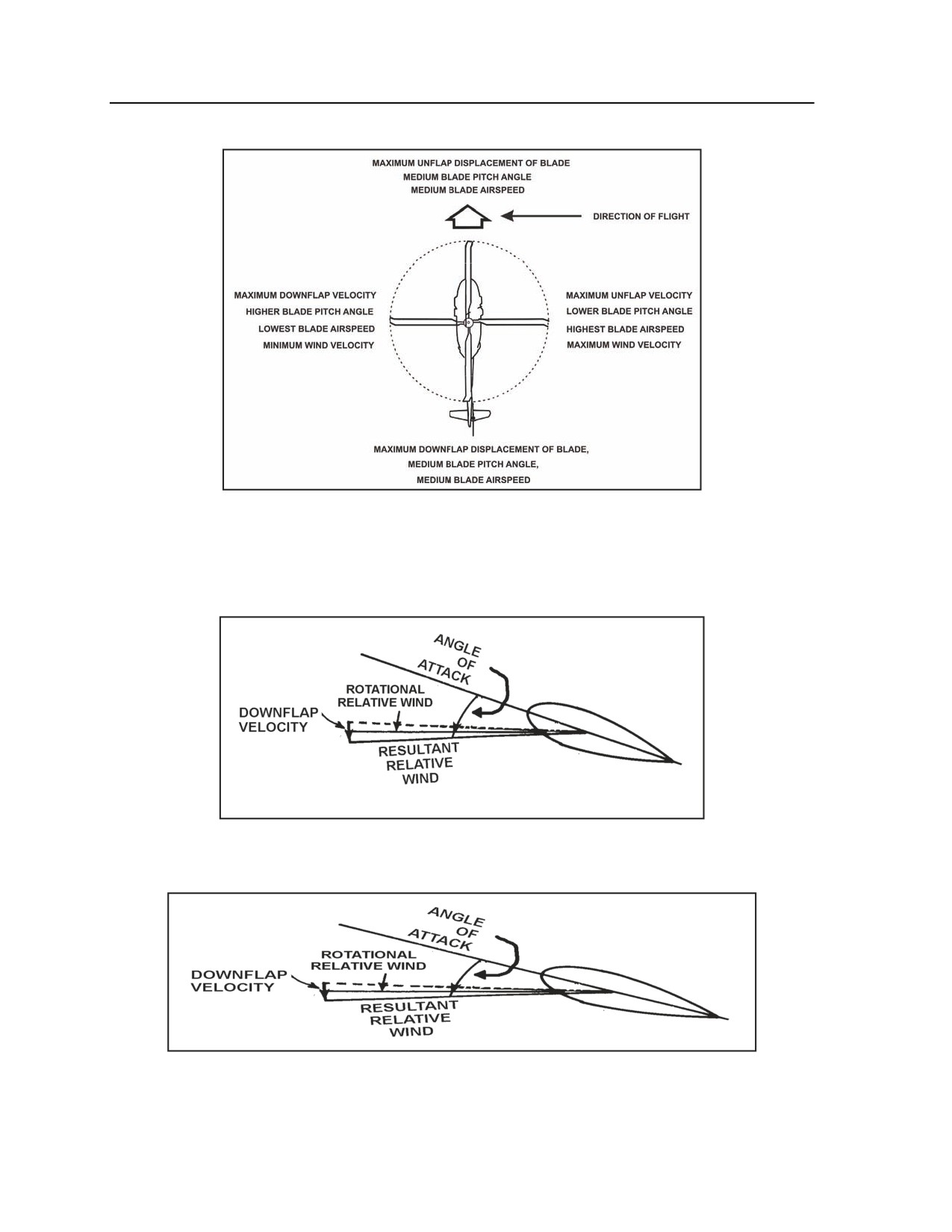
1-8
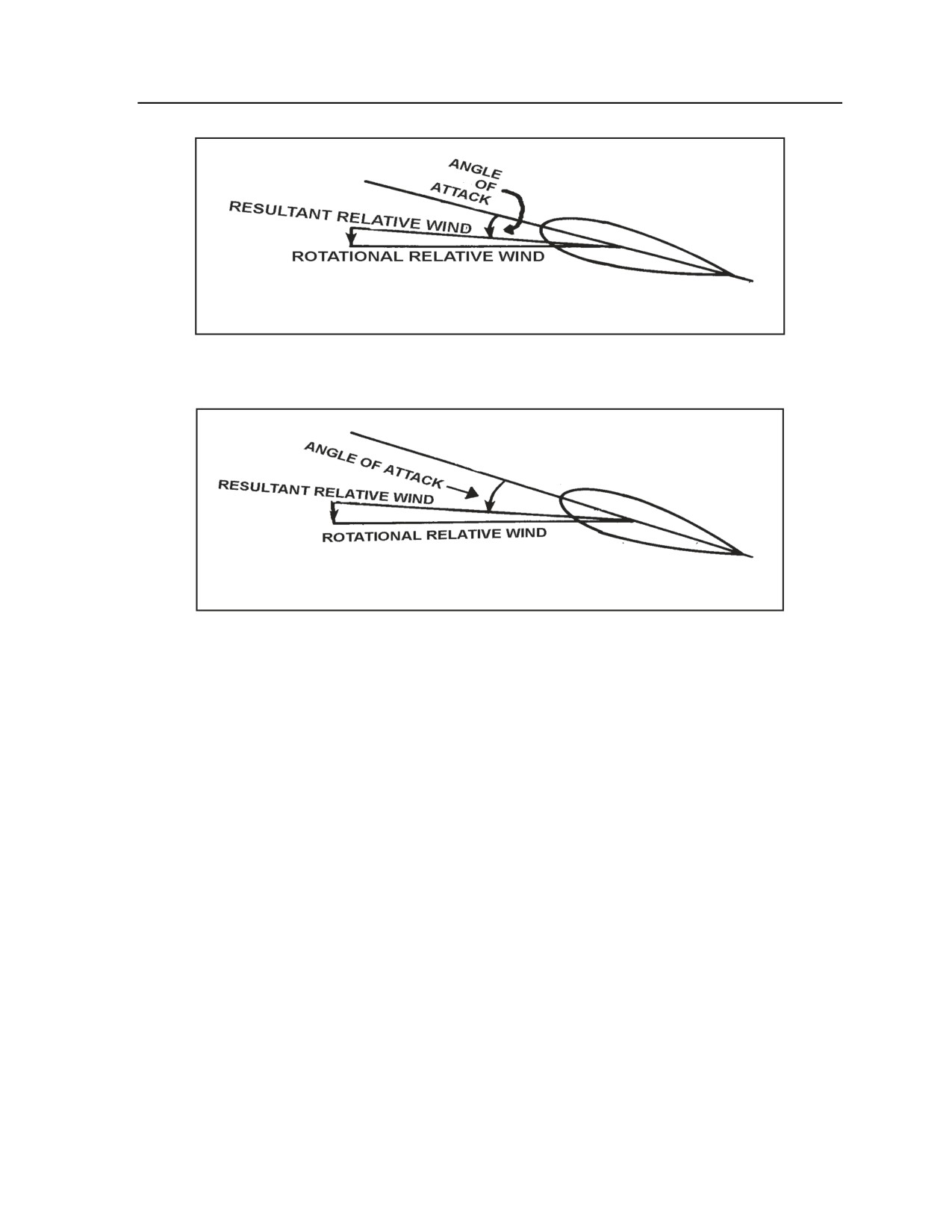
Rotor Blade Angles
1-11
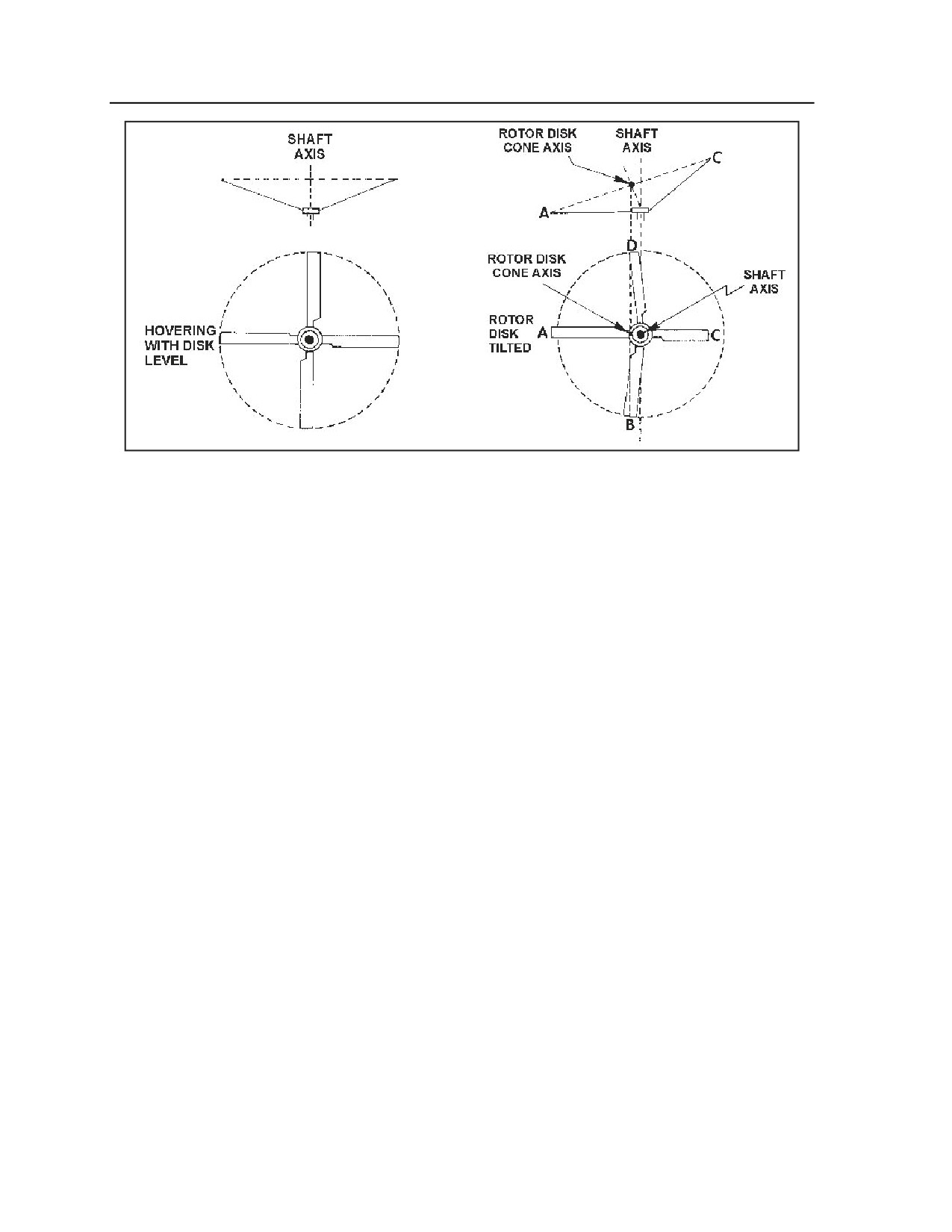
Rotor Blade Actions
1-12
Helicopter Design and Control
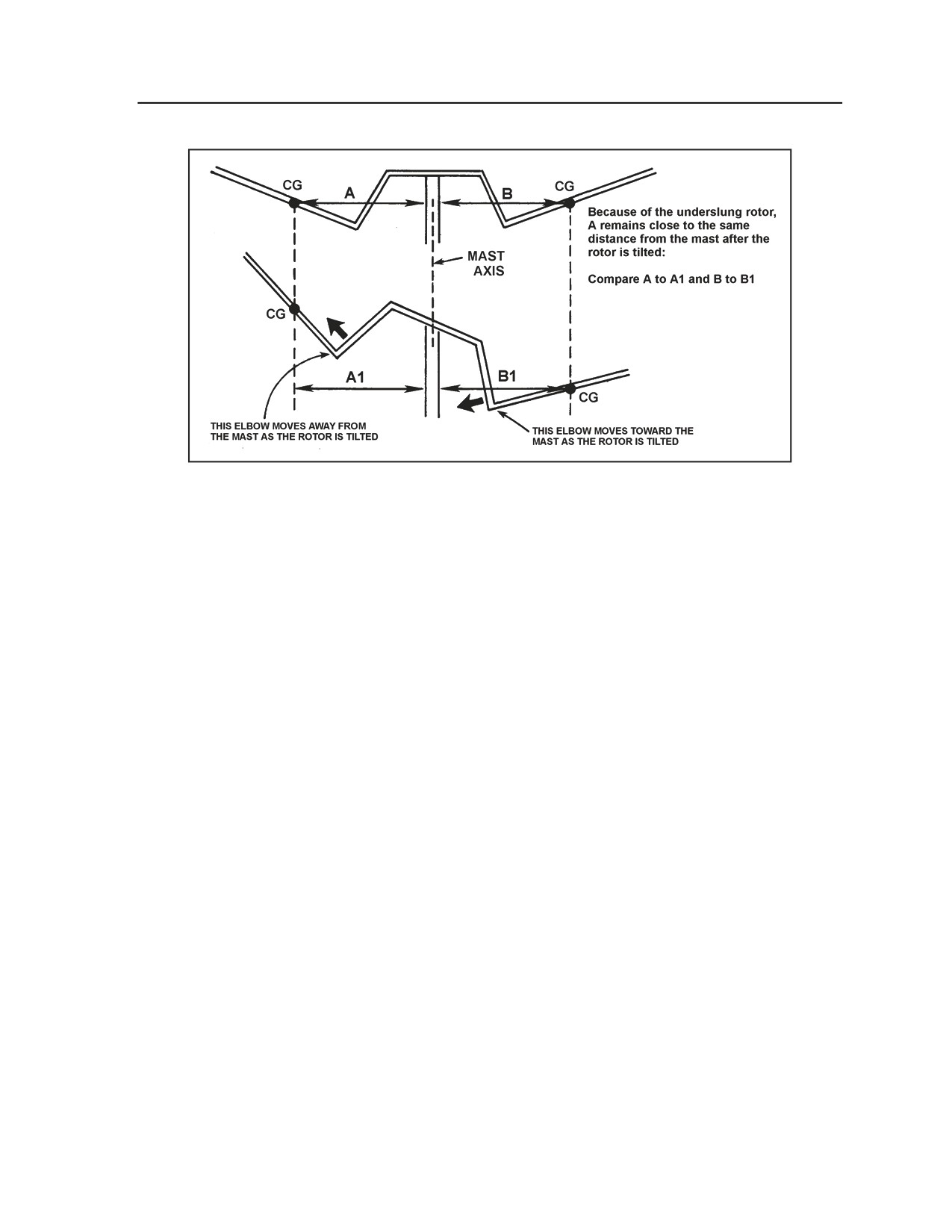
1-17
Section III - In-Flight Forces
1-27
Total Aerodynamic Force
1-27
Lift and Lift Equation
1-28
Drag
1-29
Centrifugal Force and Coning
1-30
Torque Reaction and Antitorque Rotor (Tail Rotor)
1-32
Balance of Forces
1-33
Section IV - Hovering
1-35
Airflow in Hovering Flight
1-35
Ground Effect
1-35
Translating Tendency
1-38
Section V - Rotor in Translation
1-39
Airflow in Forward Flight
1-39
Translational Lift
1-44
Transverse Flow Effect
1-45
Effective Translational Lift
1-45
Autorotation
1-46
DISTRIBUTION RESTRICTION: Approved for public release; distribution is unlimited.
*This publication supersedes FM 1-202, 23 February 1983; FM 1-203, 03 October 1988; TC 1-201, 20
January 1984; and TC 1-204, 27 December 1988.
7 May 2007
FM 3-04.203
i
Contents
Section VI - Maneuvering Flight
1-55
Aerodynamics
1-55
Guidelines
1-61
Section VII - Performance
1-61
Factors Affecting Performance
1-61
Section VIII - Emergencies
1-65
Settling with Power
1-65
Dynamic Rollover
1-68
Retreating Blade Stall
1-71
Ground Resonance
1-73
Compressibility Effects
1-74
Chapter 2
WEIGHT, BALANCE, AND LOADS
2-1
Section I - Weight
2-1
Weight Definitions
2-1
Weight Versus Aircraft Performance
2-2
Section II - Balance
2-2
Center of Gravity
2-2
Lateral Balance
2-3
Balance Definitions
2-3
Principle of Moments
2-5
Section III - Weight and Balance Calculations
2-5
Center of Gravity Computation
2-6
Section IV - Loads
2-8
Planning
2-8
Internal Loads
2-10
External Loads
2-22
Hazardous Materials
2-25
Chapter 3
ROTARY-WING ENVIRONMENTAL FLIGHT
3-1
Section I - Cold Weather Operations
3-1
Environmental Factors
3-1
Flying Techniques
3-6
Taxiing and Takeoff
3-6
Maintenance
3-10
Training
3-12
Section II - Desert Operations
3-13
Environmental Factors
3-13
Flying Techniques
3-17
Maintenance
3-19
Training
3-21
Section III - Jungle Operations
3-22
Environmental Factors
3-22
Flying Techniques
3-24
Maintenance
3-24
Training
3-25
ii
FM 3-04.203
7 May 2007
Contents
Section IV - Mountain Operations
3-26
Environmental Factors
3-26
Flying Techniques
3-34
Maintenance
3-47
Training
3-47
Section V - Overwater Operations
3-48
Environmental Factors
3-48
Flying Techniques
3-49
Maintenance
3-49
Training
3-49
Chapter 4
ROTARY-WING NIGHT FLIGHT
4-1
Section I - Night Vision
4-1
Night Vision Capability
4-1
Combat Visual Impairments
4-1
Aircraft Design
4-2
Section II - Hemispheric Illumination and Meteorological Conditions
4-3
Light Sources
4-3
Other Considerations
4-4
Section III - Terrain Interpretation
4-5
Visual Recognition Cues
4-5
Factors
4-9
Other Considerations
4-12
Section IV - Night Vision Sensors
4-13
Electromagnetic Spectrum
4-14
Night Vision Devices
4-16
Thermal-Imaging Systems
4-21
Operational Considerations
4-22
Section V - Night Operations
4-28
Premission Planning
4-28
Night Flight Techniques
4-30
Emergency and Safety Procedures
4-37
Chapter 5
ROTARY-WING TERRAIN FLIGHT
5-1
Section I - Terrain Flight Operations
5-1
Mission Planning and Preparation
5-1
Aviation Mission Planning System
5-2
Terrain Flight Limitations
5-2
Terrain Flight Modes
5-2
Selection of Terrain Flight Modes
5-4
Pickup Zone/Landing Zone Selection
5-4
Route-Planning Considerations
5-6
Map Selection and Preparation
5-9
Charts, Photographs, and Objective Cards
5-11
Route Planning Card Preparation
5-12
Hazards to Terrain Flight
5-14
Terrain Flight Performance
5-16
7 May 2007
FM 3-04.203
iii
Contents
Section II - Training
5-17
Command Responsibility
5-18
Identification of Unit/Individual Needs
5-18
Training Considerations
5-18
Training Safety
5-18
Chapter 6
MULTI-AIRCRAFT OPERATIONS
6-1
Section I - Formation Flight
6-1
Formation Discipline
6-1
Crew Coordination
6-1
Crew Responsibilities
6-1
Considerations
6-3
Formation Breakup
6-9
Rendezvous and Join-Up Procedures
6-13
Lost Visual Contact Procedures
6-13
Communication During Formation Flight
6-14
Section II - Formation Types
6-14
Two-Helicopter Team
6-15
Fixed Formations
6-15
Maneuvering Formations
6-19
Section III - Basic Combat Maneuvers
6-23
Maneuvering Flight Communications
6-24
Basic Combat Maneuvers
6-24
Section IV - Planning Considerations and Responsibilities
6-30
Planning Considerations
6-30
Planning Responsibilities
6-31
Section V - Wake Turbulence
6-32
In-Flight Hazard
6-32
Ground Hazard
6-32
Vortex Generation
6-32
Induced Roll and Counter Control
6-33
Operational Problem Areas
6-34
Vortex Avoidance Techniques
6-34
Chapter 7
FIXED-WING AERODYNAMICS AND PERFORMANCE
7-1
Section I - Fixed-Wing Stability
7-1
Motion Sign Principles
7-1
Static Stability
7-2
Dynamic Stability
7-3
Pitch Stability
7-4
Lateral Stability
7-12
Cross-Effects and Stability
7-14
Section II - High-Lift Devices
7-17
Purpose
7-17
Increasing the Coefficient of Lift
7-18
Types of High-Lift Devices
7-21
iv
FM 3-04.203
7 May 2007
Contents
Section III - Stalls
7-24
Aerodynamic Stall
7-25
Stall Warning and Stall Warning Devices
7-27
Stall Recovery
7-29
Spins
7-29
Section IV - Maneuvering Flight
7-31
Climbing Flight
7-31
Angle of Climb
7-33
Rate of Climb
7-35
Aircraft Performance in a Climb or Dive
7-35
Turns
7-37
Slow Flight
7-39
Descents
7-42
Section V - Takeoff and Landing Performance
7-44
Procedures and Techniques
7-44
Takeoff
7-44
Section VI - Flight Control
7-49
Development
7-49
Control Surface and Operation Theory
7-49
Longitudinal Control
7-51
Directional Control
7-53
Lateral Control
7-54
Control Forces
7-54
Control Systems
7-57
Propellers
7-59
Section VII - Multiengine Operations
7-61
Twin-Engine Aircraft Performance
7-61
Asymmetric Thrust
7-62
Critical Engine
7-62
Minimum Single-Engine Control Speed
7-63
Single-Engine Climbs
7-65
Single-Engine Level Flight
7-67
Single-Engine Descents
7-68
Single-Engine Approach and Landing
7-68
Propeller Feathering
7-68
Accelerate-Stop Distance
7-69
Accelerate-Go Distance
7-70
Chapter 8
FIXED-WING ENVIRONMENTAL FLIGHT
8-1
Section I - Cold Weather/Icing Operations
8-1
Environmental Factors
8-1
Aircraft Equipment
8-7
Flying Techniques
8-10
Training
8-15
Section II - Mountain Operations
8-16
Environmental Factors
8-16
Flying Techniques
8-17
7 May 2007
FM 3-04.203
v
Contents
Section III - Overwater Operations
8-17
Oceanographic Terminology
8-17
Ditching
8-18
Section IV - Thunderstorm Operations
8-22
Environmental Factors
8-23
Flying Techniques
8-24
Training
8-26
Chapter 9
FIXED-WING NIGHT FLIGHT
9-1
Section I - Preparation and Preflight
9-1
Equipment
9-1
Lighting
9-1
Parking Ramp Check
9-2
Preflight
9-2
Section II - Taxi, Takeoff, and Departure Climb
9-3
Taxi
9-3
Takeoff and Climb
9-3
Section III - Orientation and Navigation
9-4
Visibility
9-4
Maneuvers
9-5
Disorientation and Reorientation
9-5
Cross-Country Flights
9-5
Overwater Flights
9-5
Illusions
9-5
Section IV - Approaches and Landings
9-5
Distance
9-5
Airspeed
9-5
Depth Perception
9-6
Approaching Airports
9-6
Entering Traffic
9-6
Final Approach
9-6
Executing Roundout
9-7
Section V - Night Emergencies
9-9
GLOSSARY
Glossary-1
REFERENCES
References-1
INDEX
Index-1
vi
FM 3-04.203
7 May 2007
Contents
Figures
Figure
1-1. Water flow through a tube
1-2
Figure
1-2. Venturi effect
1-2
Figure
1-3. Venturi flow
1-3
Figure
1-4. Resultant by parallelogram method
1-4
Figure
1-5. Resultant by the polygon method
1-5
Figure
1-6. Resultant by the triangulation method
1-5
Figure
1-7. Force vectors on an airfoil segment
1-6
Figure
1-8. Force vectors on aircraft in flight
1-6
Figure
1-9. Symmetrical airfoil section
1-8
Figure
1-10. Nonsymmetrical (cambered) airfoil section
1-8
Figure
1-11. Relative wind
1-9
Figure
1-12. Rotational relative wind
1-9
Figure
1-13. Induced flow (downwash)
1-10
Figure
1-14. Resultant relative wind
1-10
Figure
1-15. Angle of incidence and angle of attack
1-11
Figure
1-16. Blade rotation and blade speed
1-12
Figure
1-17. Feathering
1-13
Figure
1-18. Flapping in directional flight
1-14
Figure
1-19. Flapping (advancing blade 3 o’clock position)
1-14
Figure
1-20. Flapping (retreating blade 9-o’clock position)
1-14
Figure
1-21. Flapping (blade over the aircraft nose)
1-15
Figure
1-22. Flapping (blade over the aircraft tail)
1-15
Figure
1-23. Lead and lag
1-16
Figure
1-24. Under slung design of semirigid rotor system
1-17
Figure
1-25. Gyroscopic precession
1-18
Figure
1-26. Rotor head control systems
1-19
Figure
1-27. Stationary and rotating swashplates tilted by cyclic control
1-19
Figure
1-28. Stationary and rotating swashplates tilted in relation to mast
1-20
Figure
1-29. Pitch-change arm rate of movement over 90 degrees of travel
1-21
Figure
1-30. Rotor flapping in response to cyclic input
1-21
Figure
1-31. Cyclic feathering
1-22
Figure
1-32. Input servo and pitch-change horn offset
1-23
Figure
1-33. Cyclic pitch variation-full forward, low pitch
1-24
Figure
1-34. Fully articulated rotor system
1-25
Figure
1-35. Semirigid rotor system
1-25
Figure
1-36. Effect of tail-low attitude on lateral hover attitude
1-26
Figure
1-37. Cyclic control response around the lateral and longitudinal axes
1-27
Figure
1-38. Total aerodynamic force
1-28
Figure
1-39. Forces acting on an airfoil
1-28
Figure
1-40. Drag and airspeed relationship
1-30
Figure
1-41. Effects of centrifugal force and lift
1-31
7 May 2007
FM 3-04.203
vii
Contents
Figure
1-42. Decreased disk area (loss of lift caused by coning)
1-31
Figure
1-43. Torque reaction
1-32
Figure
1-44. Balanced forces; hovering with no wind
1-33
Figure
1-45. Unbalanced forces causing acceleration
1-34
Figure
1-46. Balanced forces; steady-state flight
1-34
Figure
1-47. Unbalanced forces causing deceleration
1-35
Figure
1-48. Airflow in hovering flight
1-35
Figure
1-49. In ground effect hover
1-37
Figure
1-50. Out of ground effect hover
1-38
Figure
1-51. Translating tendency
1-39
Figure
1-52. Differential velocities on the rotor system caused by forward airspeed
1-40
Figure
1-53. Blade areas in forward flight
1-41
Figure
1-54. Flapping (advancing blade, 3-o’clock position)
1-42
Figure
1-55. Flapping (retreating blade, 9-o’clock position)
1-42
Figure
1-56. Blade pitch angles
1-43
Figure
1-57. Translational lift (1 to 5 knots)
1-44
Figure
1-58. Translational lift (10 to 15 knots)
1-44
Figure
1-59. Transverse flow effect
1-45
Figure
1-60. Effective translational lift
1-46
Figure
1-61. Blade regions in vertical autorotation descent
1-47
Figure
1-62. Force vectors in vertical autorotative descent
1-49
Figure
1-63. Autorotative regions in forward flight
1-50
Figure
1-64. Force vectors in level-powered flight at high speed
1-51
Figure
1-65. Force vectors after power loss-reduced collective
1-51
Figure
1-66. Force vectors in autorotative steady-state descent
1-52
Figure
1-67. Autorotative deceleration
1-52
Figure
1-68. Drag and airspeed relationship
1-54
Figure
1-69. Counterclockwise blade rotation
1-56
Figure
1-70. Lift to weight
1-59
Figure
1-71. Aft cyclic results
1-60
Figure
1-72. Density altitude computation
1-64
Figure
1-73. Induced flow velocity during hovering flight
1-66
Figure
1-74. Induced flow velocity before vortex ring state
1-66
Figure
1-75. Vortex ring state
1-67
Figure
1-76. Settling with power region
1-68
Figure
1-77. Downslope rolling motion
1-70
Figure
1-78. Upslope rolling motion
1-70
Figure
1-79. Retreating blade stall (normal hovering lift pattern)
1-72
Figure
1-80. Retreating blade stall (normal cruise lift pattern)
1-72
Figure
1-81. Retreating blade stall (lift pattern at critical airspeed-retreating blade
stall)
1-73
Figure 1-82. Ground resonance
1-74
Figure 1-83. Compressible and incompressible flow comparison
1-76
Figure 1-84. Normal shock wave formation
1-77
viii
FM 3-04.203
7 May 2007
Contents
Figure
2-1. Helicopter station diagram
2-4
Figure
2-2. Aircraft balance point
2-5
Figure
2-3. Locating aircraft center of gravity
2-6
Figure
2-4. Fuel moments
2-7
Figure
2-5. Center of gravity limits chart
2-8
Figure
2-6. Weight-spreading effect of shoring
2-11
Figure
2-7. Load contact pressure
2-12
Figure
2-8. Formulas for load pressure calculations
2-13
Figure
2-9. Determining general cargo center of gravity
2-14
Figure
2-10. Determining center of gravity of wheeled vehicle
2-15
Figure
2-11. Compartment method steps
2-16
Figure
2-12. Station method steps
2-17
Figure
2-13. Effectiveness of tie-down devices
2-19
Figure
2-14. Calculating tie-down requirements
2-21
Figure
3-1. Weather conditions conducive to icing
3-3
Figure
3-2. Ambient light conditions
3-5
Figure
3-3. Depth perception
3-9
Figure
3-4. Desert areas of the world
3-14
Figure
3-5. Sandy desert terrain
3-15
Figure
3-6. Rocky plateau desert terrain
3-16
Figure
3-7. Mountain desert terrain
3-16
Figure
3-8. Jungle areas of the world
3-22
Figure
3-9. Types of wind
3-27
Figure
3-10. Light wind
3-28
Figure
3-11. Moderate wind
3-28
Figure
3-12. Strong wind
3-29
Figure
3-13. Mountain (standing) wave
3-29
Figure
3-14. Cloud formations associated with mountain wave
3-30
Figure
3-15. Rotor streaming turbulence
3-31
Figure
3-16. Wind across a ridge
3-32
Figure
3-17. Snake ridge
3-32
Figure
3-18. Wind across a crown
3-33
Figure
3-19. Shoulder wind
3-33
Figure
3-20. Wind across a canyon
3-34
Figure
3-21. Mountain takeoff
3-35
Figure
3-22. High reconnaissance flight patterns
3-38
Figure
3-23. Computing wind direction between two points
3-39
Figure
3-24. Computing wind direction using the circle maneuver
3-39
Figure
3-25. Approach paths and areas to avoid
3-40
Figure
3-26. Nap-of-the-earth or contour takeoff (terrain flight)
3-43
Figure
3-27. Ridge crossing at a 45-degree angle (terrain flight)
3-44
Figure
3-28. Steep turns or climbs at terrain flight altitudes
3-44
Figure
3-29. Flight along a valley (terrain flight)
3-45
Figure
3-30. Nap-of-the-earth or contour approach (terrain flight)
3-46
7 May 2007
FM 3-04.203
ix
Contents
Figure
4-1. Identification by object size
4-6
Figure
4-2. Identification by object shape
4-7
Figure
4-3. Identification by object contrast
4-8
Figure
4-4. Identification by object viewing distance
4-9
Figure
4-5. Electromagnetic Spectrum
4-14
Figure
4-6. IR energy
4-15
Figure
4-7. Image intensifier
4-16
Figure
4-8. AN/AVS-6 in operational position
4-17
Figure
4-9. Pilotage system
4-21
Figure
4-10. Target acquisition system
4-22
Figure
4-11. Atmospheric effects on IR radiation
4-24
Figure
4-12. Infrared energy crossover
4-25
Figure
4-13. Parallax effect
4-26
Figure
4-14. Night visual meteorological conditions takeoff
4-32
Figure
4-15. Approach to a lighted inverted Y
4-34
Figure
4-16. Approach to a lighted T
4-36
Figure
5-1. Modes of flight
5-3
Figure
5-2. Route planning map symbols
5-10
Figure
5-3. Sample-joint operations graphic map preparation
5-11
Figure
5-4. Example of an en route card
5-13
Figure
5-5. Example of an objective card
5-14
Figure
6-1. Horizontal distance
6-5
Figure
6-2. Stepped-up vertical separation
6-6
Figure
6-3. Echelon formation before breakup
6-9
Figure
6-4. Left break with 10-second interval for landing
6-10
Figure
6-5. Breakup into two elements
6-11
Figure
6-6. Formation breakup-inadvertent instrument meteorological conditions
6-12
Figure
6-7. Two-helicopter section/element
6-15
Figure
6-8. Staggered right and left formation
6-16
Figure
6-9. Echelon right and left formation
6-17
Figure
6-10. Trail formation
6-18
Figure
6-11. V-formation
6-19
Figure
6-12. Team combat cruise
6-20
Figure
6-13. Flight combat cruise
6-20
Figure
6-14. Combat cruise right
6-21
Figure
6-15. Combat cruise left
6-22
Figure
6-16. Combat trail
6-23
Figure
6-17. Combat spread
6-23
Figure
6-18. Basic combat maneuver circle
6-24
Figure
6-19. Tactical turn away
6-25
Figure
6-20. Tactical turn to
6-26
Figure
6-21. Dig and pinch maneuvers
6-26
Figure
6-22. Split turn maneuver
6-27
Figure
6-23. In-place turn
6-27
x
FM 3-04.203
7 May 2007
Contents
Figure 6-24. Cross turn in or out
6-28
Figure 6-25. Cross turn cover (high/low)
6-28
Figure 6-26. Break turn left/right
6-29
Figure 6-27. Break turn left/right (high/low)
6-29
Figure 6-28. Shackle turn
6-30
Figure 6-29. Wake vortex generation
6-33
Figure 7-1. Stability nomenclature
7-1
Figure 7-2. Nonoscillatory motion
7-2
Figure 7-3. Oscillatory motion
7-4
Figure 7-4. CM versus CL
7-5
Figure 7-5. Fixed-wing aircraft center of gravity and aerodynamic center
7-6
Figure 7-6. Wing contribution to longitudinal stability
7-6
Figure 7-7. Negative pitching moment about the aerodynamic center of a positive-
cambered airfoil
7-7
Figure 7-8. Positive longitudinal stability of a positive-cambered airfoil
7-7
Figure 7-9. Negative longitudinal stability of a positive-cambered airfoil
7-8
Figure 7-10. Lift as a stabilizing moment to the horizontal stabilizer
7-9
Figure 7-11. Thrust axis about center of gravity
7-9
Figure 7-12. Positive sideslip angle
7-10
Figure 7-13. Directional stability (β versus CN)
7-11
Figure 7-14. Dorsal fin decreases drag
7-11
Figure 7-15. Fixed-wing aircraft configuration positive yawing moment
7-12
Figure 7-16. Horizontal lift component produces sideslip
7-13
Figure 7-17. Positive static lateral stability
7-13
Figure 7-18. Dihedral angle
7-13
Figure 7-19. Dihedral stability
7-14
Figure 7-20. Adverse yaw
7-15
Figure 7-21. Slipstream and yaw
7-17
Figure 7-22. Asymmetric loading (propeller-factor)
7-17
Figure 7-23. Increasing camber with trailing-edge flap
7-19
Figure 7-24. Suction boundary-layer control
7-20
Figure 7-25. Blowing boundary-layer control
7-20
Figure 7-26. Vortex generators
7-21
Figure 7-27. Angle of incidence change with flap deflection
7-22
Figure 7-28. Types of high-lift devices
7-23
Figure 7-29. CLmax increase with slotted flap
7-24
Figure 7-30. Coefficient of lift curve
7-25
Figure 7-31. Various airfoil angles of attack
7-26
Figure 7-32. Boundary-layer separation
7-26
Figure 7-33. CL curves for cambered and symmetrical airfoils
7-28
Figure 7-34. Stall strip
7-28
Figure 7-35. Flapper switch
7-29
Figure 7-36. Spins
7-30
Figure 7-37. Climb angle and rate
7-32
7 May 2007
FM 3-04.203
xi
Contents
Figure
7-38. Force-vector diagram for climbing flight
7-33
Figure
7-39. Wind effect on maximum climb angle
7-34
Figure
7-40. Full-power polar diagram
7-36
Figure
7-41. Polar curve
7-37
Figure
7-42. Effect of turning flight
7-38
Figure
7-43. Effect of load factor on stalling speed
7-40
Figure
7-44. Best glide speed
7-44
Figure
7-45. Net accelerating force
7-45
Figure
7-46. Landing roll velocity
7-48
Figure
7-47. Using flaps to increase camber
7-50
Figure
7-48. Operation of aileron in a turn
7-50
Figure
7-49. Effect of elevator and rudder on moments
7-51
Figure
7-50. Effect of center of gravity location on longitudinal control
7-52
Figure
7-51. Adverse moments during takeoff
7-53
Figure
7-52. Hinge moment
7-54
Figure
7-53. Aerodynamic balancing using horns
7-55
Figure
7-54. Aerodynamic balancing using a balance board
7-56
Figure
7-55. Aerodynamic balancing using a servo tab
7-56
Figure
7-56. Spoiler used as control surface
7-58
Figure
7-57. Wing flap control
7-58
Figure
7-58. Blade angle affected by revolutions per minute
7-60
Figure
7-59. Forces created during single-engine operation
7-63
Figure
7-60. Sideslip
7-65
Figure
7-61. One-engine inoperative flight path
7-66
Figure
7-62. Windmilling propeller creating drag
7-68
Figure
7-63. Required takeoff runway lengths
7-70
Figure
7-64. Balanced field length
7-71
Figure
8-1. Lift curve
8-3
Figure
8-2. Drag curve
8-4
Figure
8-3. Tail stall pitchover
8-6
Figure
8-4. Pneumatic boots
8-9
Figure
8-5. Propeller ice control
8-10
Figure
8-6. Wind swell ditch heading
8-19
Figure
8-7. Single swell
8-19
Figure
8-8. Double swell (15 knot wind)
8-20
Figure
8-9. Double swell (30 knot wind)
8-20
Figure
8-10. Swell (50 knot wind)
8-21
Figure
8-11. Effect of microburst
8-24
Figure
9-1. Positive climb
9-4
Figure
9-2. Typical light pattern for airport identification
9-6
Figure
9-3. Visual approach slope indicator
9-7
Figure
9-4. Roundout (when tire marks are visible)
9-8
xii
FM 3-04.203
7 May 2007
Contents
Tables
Table 1-1. Airfoil terminology
1-7
Table 1-2. Aircraft reaction to forces
1-18
Table 1-3. Bank angle versus torque
1-59
Table 1-4. Speed of sound variation with temperature and altitude
1-75
Table 2-1. Responsibilities
2-9
Table 2-2. Internal loading considerations
2-10
Table 2-3. Percentage restraint chart
2-20
Table 4-1. Position distance
4-2
Table 5-1. Mission, enemy, terrain and weather, troops and support available, time
available, civil considerations and terrain flight modes
5-4
Table 5-2. Pickup zone selection considerations
5-5
Table 5-3. Pickup zone selection considerations
5-5
Table 5-4. Route planning considerations
5-7
Table 5-5. Example of a navigation card
5-12
Table 6-1. Sample lighting conditions
6-7
Table 8-1. Temperature ranges for ice formation
8-2
Table 8-2. Oceanographic terminology
8-17
7 May 2007
FM 3-04.203
xiii
Preface
Field manual (FM) 3-04.203 still presents information to plan and conduct common aviation tasks for fixed-
and rotary-wing flight. However, it has become more inclusive and its scope broadened to reduce the number of
manuals used by Army crewmembers for reference
One of the underlying premises of Army aviation is if crewmembers understand ‘why’ they will be better
prepared to ‘do’ when confronted with the unexpected. FM 3-04.203 endeavors to ensure that crewmembers
understand the basic physics of flight, and the dynamics associated with fixed- and rotary-wing aircraft. A
comprehensive understanding of these principles will better prepare a crewmember for flight, transition
training, and tactical flight operations.
Because the U.S. Army prepares its Soldiers to operate anywhere in the world, this publication describes the
unique requirements and flying techniques crewmembers will use to successfully operate in extreme
environments, not always encountered in home station training.
As a full-time force, the U.S. Army is capable of using the advantages of its superior night operation
technologies to leverage combat power. To that end, Army crewmembers must be familiar and capable of
performing their mission proficiently and tactically at night. The information on night vision systems (NVSs)
and night operations in this circular will provide the basis for acquiring these skills.
Every aviator understands that the primary purpose is to operate aircraft safely. Every crewmember must
perform the mission effectively and decisively in tactical and combat operations. FM 3-04.203 also covers basic
tactical flight profiles, formation flight, and air combat maneuvers.
FM 3-04.203 is an excellent reference for Army crewmembers; however, it can not be expected that this
circular is all inclusive or a full comprehension of the information will be obtained by simply reading the text.
A firm understanding will begin to occur as crewmembers become more experienced in their particular aircraft,
study the tactics, techniques, and procedures (TTP) of their units, and study other sources of information.
Crewmembers honing skills should review FM 3-04.203 periodically to gain new insights.
This publication applies to the Active Army, the Army National Guard/Army National Guard of the United
States, and the United States Army Reserve unless otherwise stated.
The proponent of this publication is Headquarters, United States Army Training and Doctrine Command
(TRADOC). Send comments and recommendations on Department of the Army
(DA) Form
2028
(Recommended Changes to
publications
and
Blank
Forms)
or
automated
link
(http://www.usapa.army.mil/da2028/daform2028.asp ) to Commander, U.S. Army Aviation Warfighting Center
ATTN: ATZQ-TD-D, Fort Rucker, Alabama 36362-5263. Comments may be e-mailed to the Directorate of
Training and Doctrine at av.doctrine@us.army.mil. Other doctrinal information can be found on the Internet at
Army Knowledge Online (AKO) or call defense switch network (DSN) 558-3551 or (334) 255-3551.
Unless this publication states otherwise, masculine nouns and pronouns do not refer exclusively to men.
This publication has been reviewed for operations security considerations.
xiv
FM 3-04.203
7 May 2007
Chapter 1
Theory of Flight
This chapter presents aerodynamic fundamentals and principles of rotary-wing flight.
The content relates to flight operations and performance of normal mission flight
tasks. It covers theory and application of aerodynamics for the aviator, whether in
flight training or general flight operations. Chapter 7 presents additional information
on fixed-wing (FW) flight.
SECTION I - PHYSICAL LAWS AND PRINCIPLES OF AIRFLOW
NEWTON’S LAWS OF MOTION
1-1. Newton’s three laws of motion are inertia, acceleration, and action/reaction. These laws apply to flight
of any aircraft. A working knowledge of the laws and their applications will assist in understanding
aerodynamic principles discussed in this
chapter. Interaction between the laws of motion
Contents
and aircraft mechanical actions causes the
aircraft to fly and allows aviators to control
Section I - Physical Laws and
such flight.
Principles of Airflow
1-1
Section II - Flight Mechanics
1-6
INERTIA
Section III - In-Flight Forces
1-27
Section IV - Hovering
1-35
1-2. A body at rest will remain at rest, and a body in
Section V - Rotor in Translation
1-39
motion will remain in motion at the same speed
Section VI - Maneuvering Flight
1-55
and in the same direction unless acted upon by
an external force. Nothing starts or stops
Section VII - Performance
1-61
Section VIII - Emergencies
1-66
without an outside force to bring about or
prevent motion. Inertia is a body’s resistance to
a change in its state of motion.
ACCELERATION
1-3. The force required to produce a change in motion of a body is directly proportional to its mass and rate
of change in its velocity. Acceleration refers to an increase or decrease—often called deceleration—in
velocity. Acceleration is a change in magnitude or direction of the velocity vector with respect to time.
Velocity refers to direction and rate of linear motion of an object.
ACTION/REACTION
1-4. For every action, there is an equal and opposite reaction. When an interaction occurs between two
bodies, equal forces in opposite directions are imparted to each body.
7 May 2007
FM 3-04.203
1-1
Chapter 1
FLUID FLOW
BERNOULLI’S PRINCIPLE
1-5. This principle describes the relationship between internal fluid pressure and fluid velocity. It is a
statement of the law of conservation of energy and helps explain why an airfoil develops an
aerodynamic force. The concept of conservation of energy states energy cannot be created or
destroyed and the amount of energy entering a system must also exit. A simple tube with a constricted
portion near the center of its length illustrates this principle. An example is using water through a
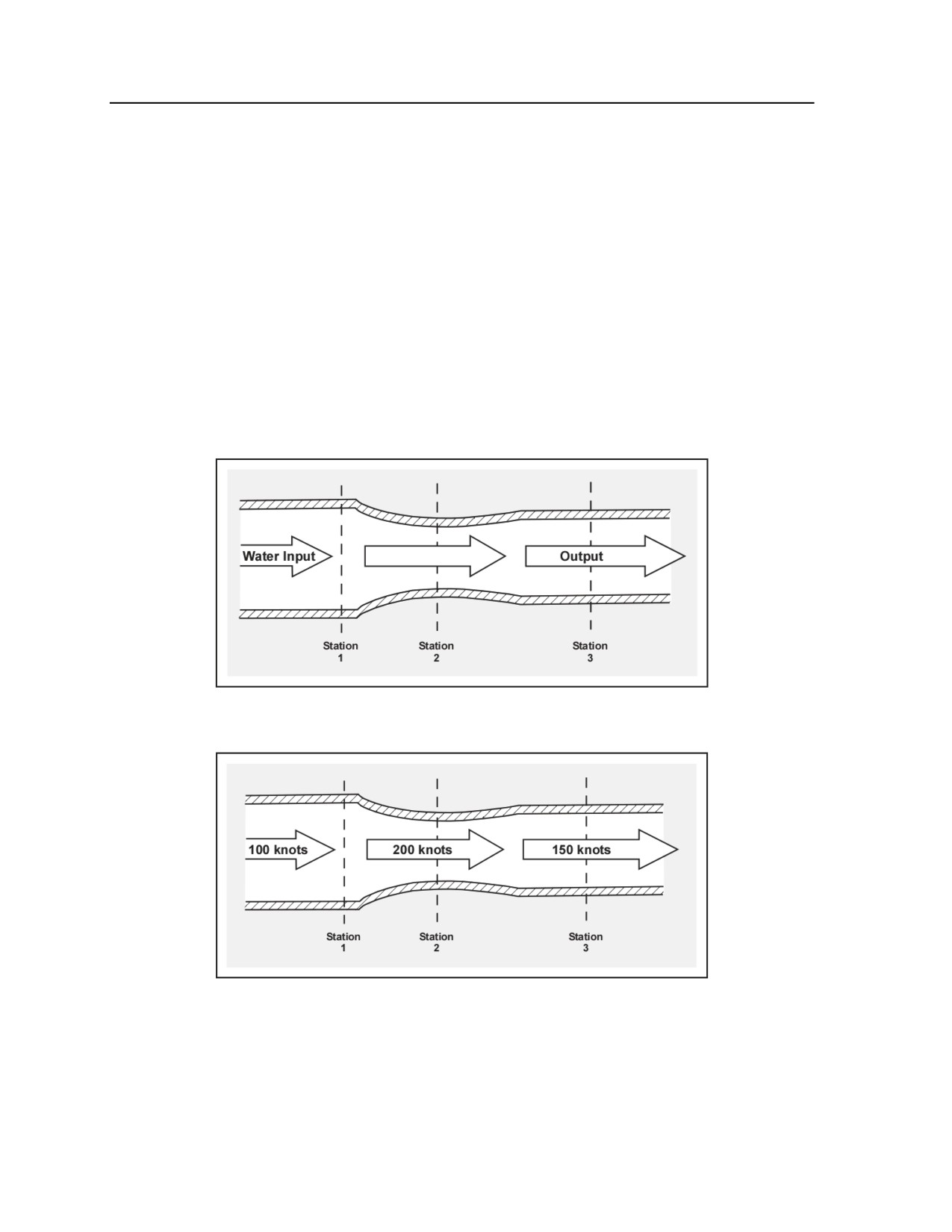
garden hose (figure 1-1). The mass of flow per unit area (cross sectional area of tube) is the mass flow
rate. In figure 1-1, the flow into the tube is constant, neither accelerating nor decelerating; thus, the
mass flow rate through the tube must be the same at stations 1, 2, or 3. If the cross sectional area at any
one of these stations—or any given point—in the tube is reduced, the fluid velocity must increase to
maintain a constant mass flow rate to move the same amount of fluid through a smaller area. Fluid
speeds up in direct proportion to the reduction in area. Venturi effect is the term used to describe this
phenomenon. Figure 1-2 illustrates what happens to mass flow rate in the constricted tube as the
dimensions of the tube change.
Figure 1-1. Water flow through a tube
Figure 1-2. Venturi effect
VENTURI FLOW
1-6. While the amount of total energy within a closed system (the tube) does not change, the form of the
energy may be altered. Pressure of flowing air may be compared to energy in that the total pressure of
1-2
FM 3-04.203
7 May 2007
Theory of Flight
flowing air will always remain constant unless energy is added or removed. Fluid flow pressure has
two components—static and dynamic pressure. Static pressure is the pressure component measured in
the flow but not moving with the flow as pressure is measured. Static pressure is also known as the
force per unit area acting on a surface. Dynamic pressure of flow is that component existing as a result
of movement of the air. The sum of these two pressures is total pressure. As air flows through the
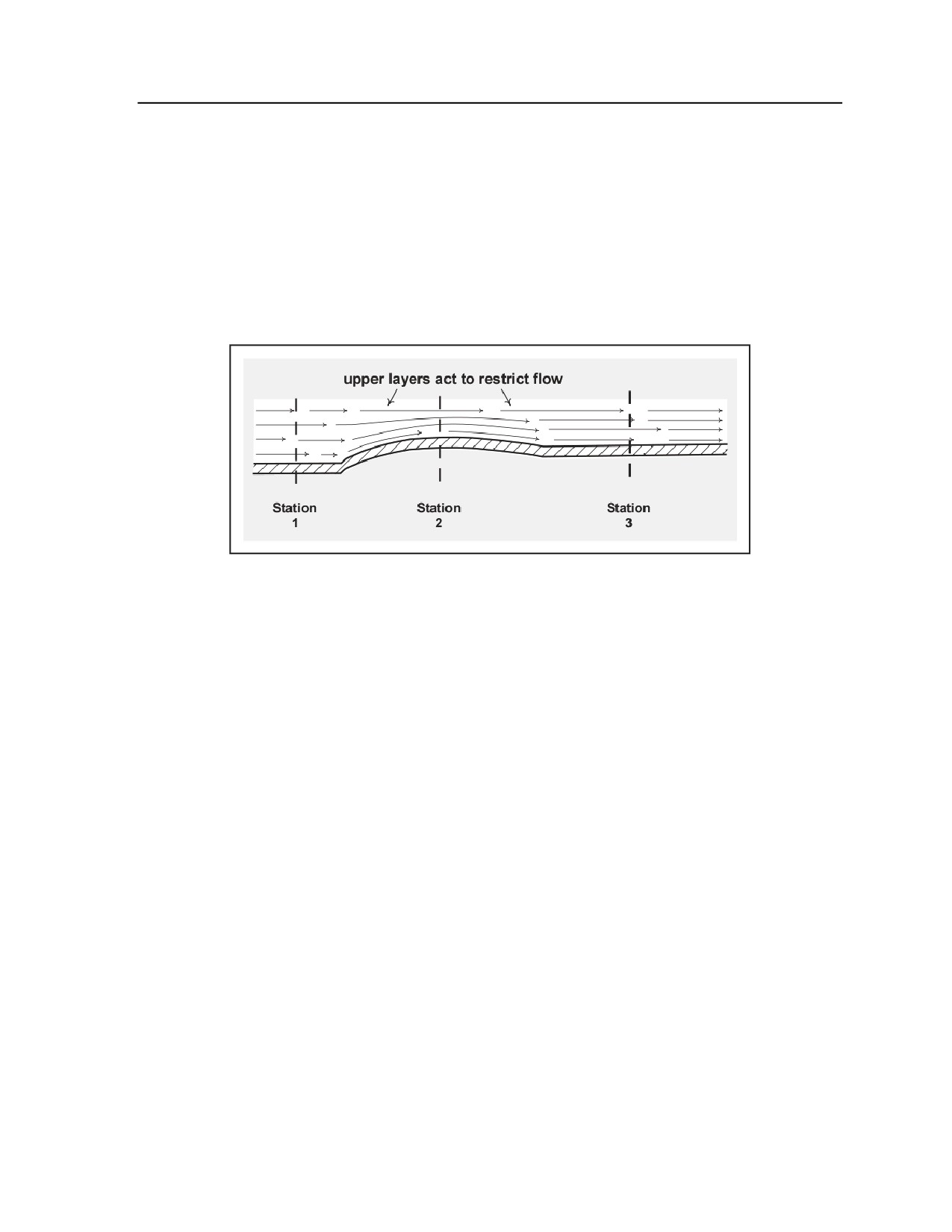
constriction, static pressure decreases as velocity increases. This increases dynamic pressure. Figure 1-
3 depicts the bottom half of the constricted area of the tube, which resembles the top half of an airfoil.
Even with the top half of the tube removed, the air still accelerates over the curved area because the
upper air layers restrict the flow—just as the top half of the constricted tube did. This acceleration
causes decreased static pressure above the curved portion and creates a pressure differential caused by
the variation of static and dynamic pressures.
Figure 1-3. Venturi flow
AIRFLOW AND THE AIRFOIL
1-7. Airflow around an airfoil performs similar to airflow through a constriction. As velocity of the airflow
increases, static pressure decreases above and below the airfoil. The air usually has to travel a greater
distance over the upper surface; thus, there is a greater velocity increase and static pressure decrease
over the upper surface than the lower surface. The static pressure differential on the upper and lower
surfaces produces about 75 percent of the aerodynamic force, called lift. The remaining 25 percent of
the force is produced as a result of action/reaction from the downward deflection of air as it leaves the
trailing edge of the airfoil and by the downward deflection of air impacting the exposed lower surface
of the airfoil.
VECTORS AND SCALARS
1-8. Vectors and scalars are useful tools for the illustration of aerodynamic forces at work. Vectors are
quantities with a magnitude and direction. Scalars are quantities described by size alone such as area,
volume, time, and mass.
VECTOR QUANTITIES
1-9. Velocity, acceleration, weight, lift, and drag are examples of vector quantities. The direction of vector
quantities is as important as the size or magnitude. When two or more forces act upon an object, the
combined effect may be represented by the use of vectors. Vectors are illustrated by a line drawn at a
particular angle with an arrow at the end. The arrow indicates the direction in which the force is
acting. The length of the line (compared to a scale) represents the magnitude of the force.
7 May 2007
FM 3-04.203
1-3
Chapter 1
VECTOR SOLUTIONS
1-10. Individual force vectors are useful in analyzing conditions of flight. The chief concern is with
combined, or resultant, effects of forces acting on an airfoil or aircraft. The following three methods of
solving for the resultant are most commonly used.
Parallelogram Method
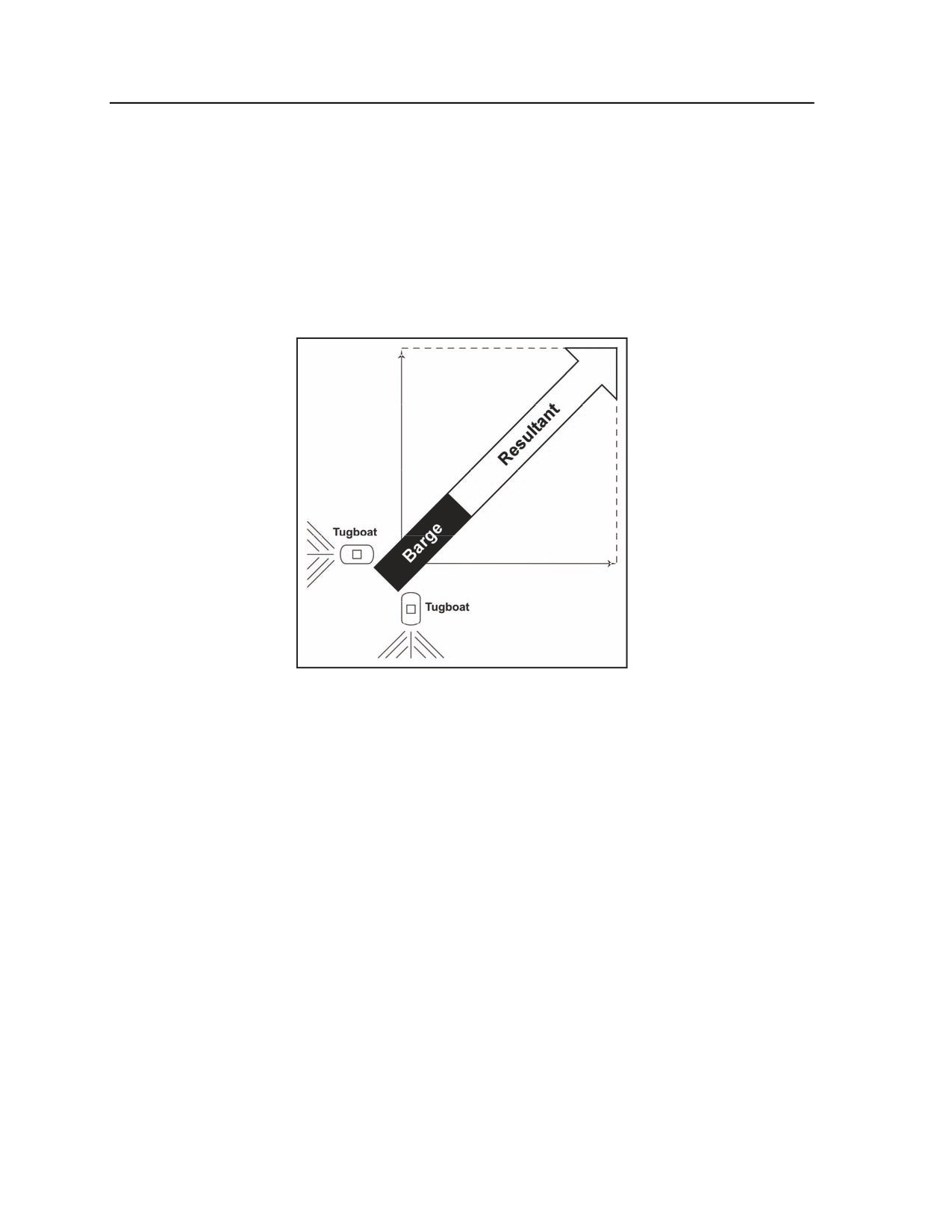
1-11. This is the most commonly used vector solution in aerodynamics. Using two vectors, lines are drawn
parallel to the vectors determining the resultant. If two tugboats push a barge with equal force, the
barge will move forward in a direction that is the mean of the direction of both tugboats (figure 1-4).
Figure 1-4. Resultant by parallelogram method
Polygon Method
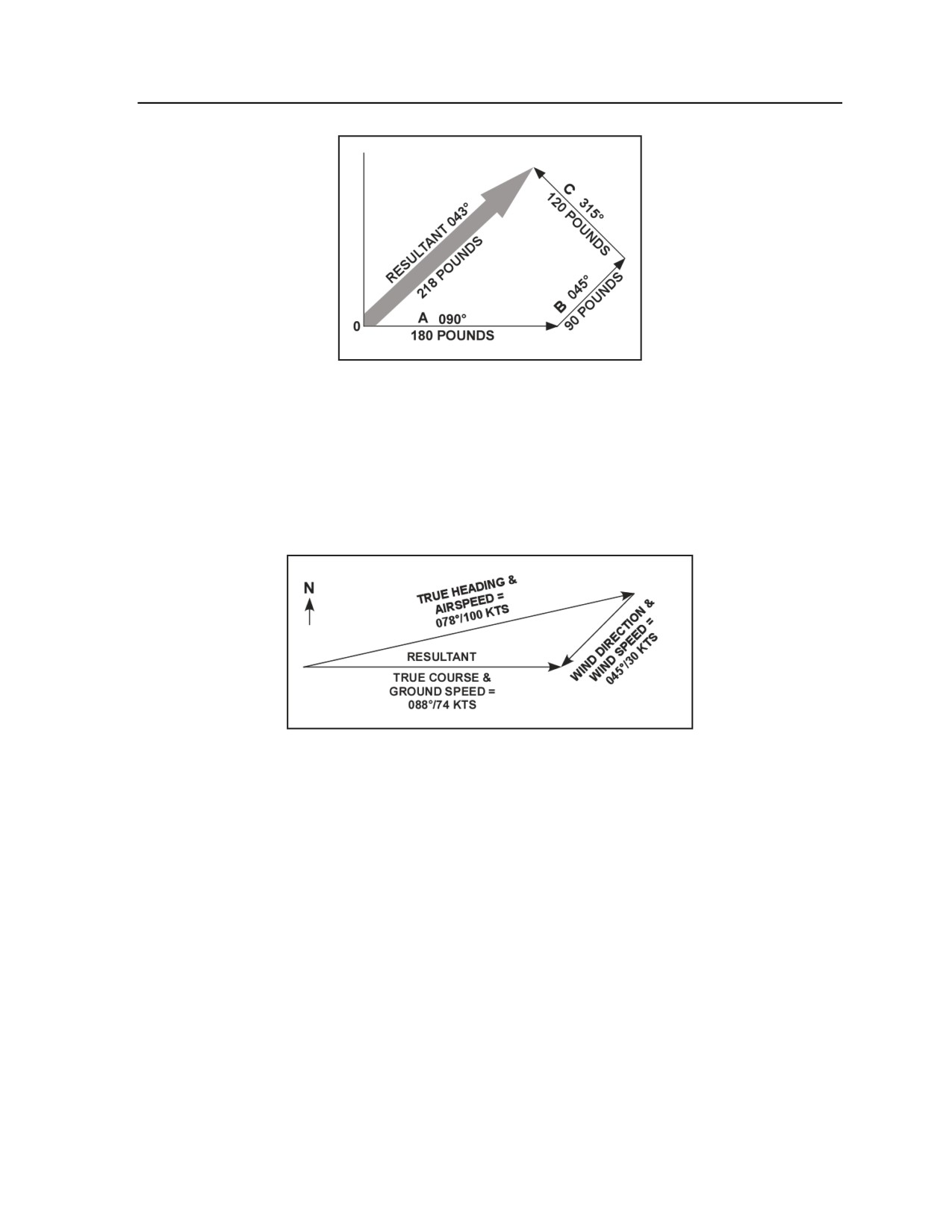
1-12. When more than two forces are acting in different directions, the resultant may be found by using a
polygon vector solution. Figure 1-5 shows an example in which one force is acting at 90 degrees with
a force of 180 pounds (vector A), a second force acting at 45 degrees with a force of 90 pounds (vector
B), and a third force acting at 315 degrees with a force of 120 pounds (vector C). To determine the
resultant, draw the first vector beginning at point
0 (the origin) with remaining vectors drawn
consecutively. The resultant is drawn from point of origin (0) to the end of the final vector (C).
1-4
FM 3-04.203
7 May 2007
Theory of Flight
Figure 1-5. Resultant by the polygon method
Triangulation Method
1-13. This is a simplified form of a polygon vector solution using only two vectors and connecting them
with a resultant vector line. Figure 1-6, page 1-5, shows an example of this solution. By drawing a
vector for each of these known velocities and drawing a connecting line between the ends, a resultant
velocity and direction can be determined.
Figure 1-6. Resultant by the triangulation method
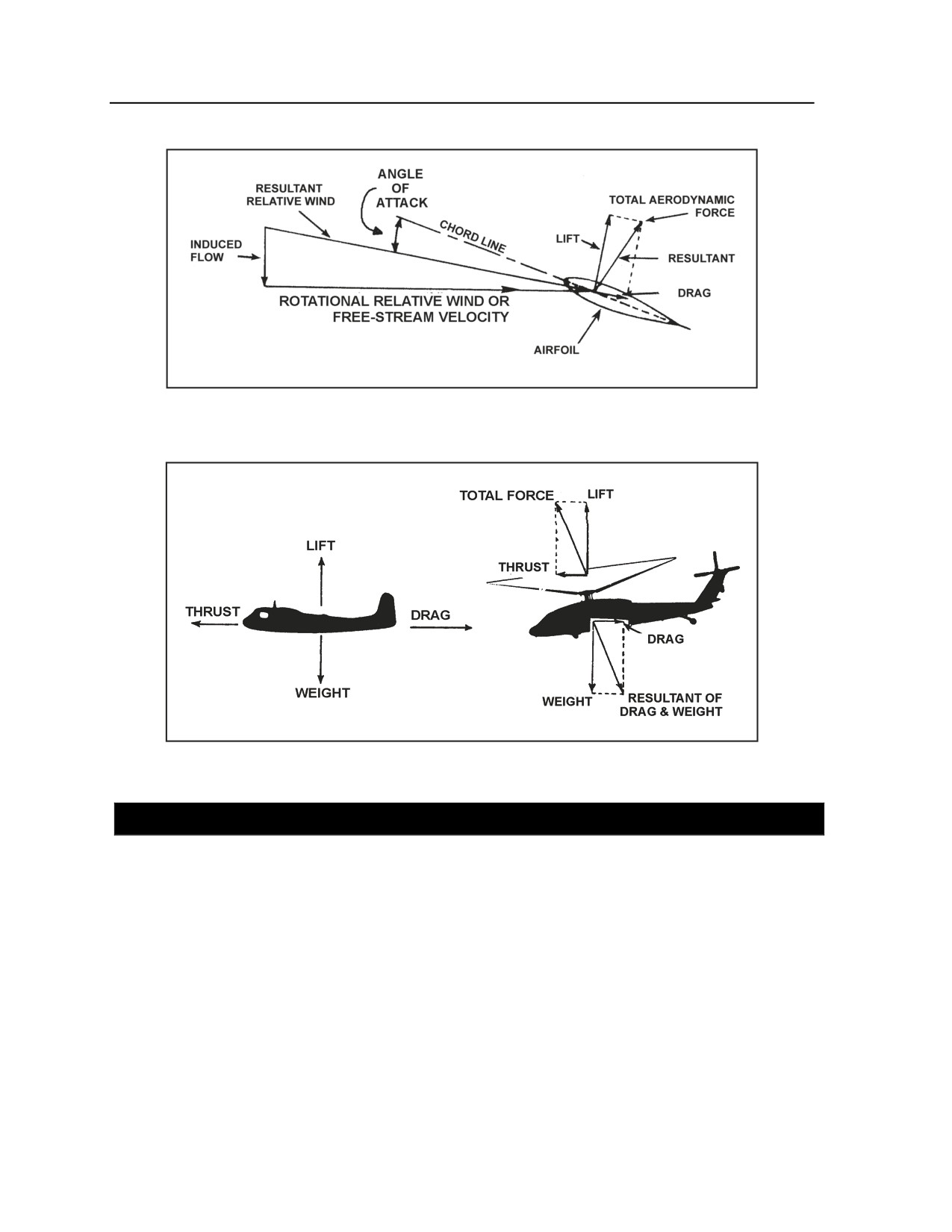
VECTORS USED
1-14. Figure 1-7 and figure 1-8 show examples of vectors used to depict forces acting on an airfoil
segment and aircraft in flight.
7 May 2007
FM 3-04.203
1-5
Chapter 1
Figure 1-7. Force vectors on an airfoil segment
Figure 1-8. Force vectors on aircraft in flight
SECTION II - FLIGHT MECHANICS
AIRFOIL CHARACTERISTICS
1-15. Helicopters and conventional aircraft are able to fly due to aerodynamic forces produced when air
passes around the airfoil. An airfoil is a structure or body designed to produce a reaction by its motion
through the air. Airfoils are most often associated with production of lift. Airfoils are also used for
stability (fin), control (elevator), and thrust or propulsion (propeller or rotor). Certain airfoils, such as
rotor blades, combine some of these functions. Airfoils are carefully structured to accommodate a
specific set of flight characteristics.
AIRFOIL TERMINOLOGY
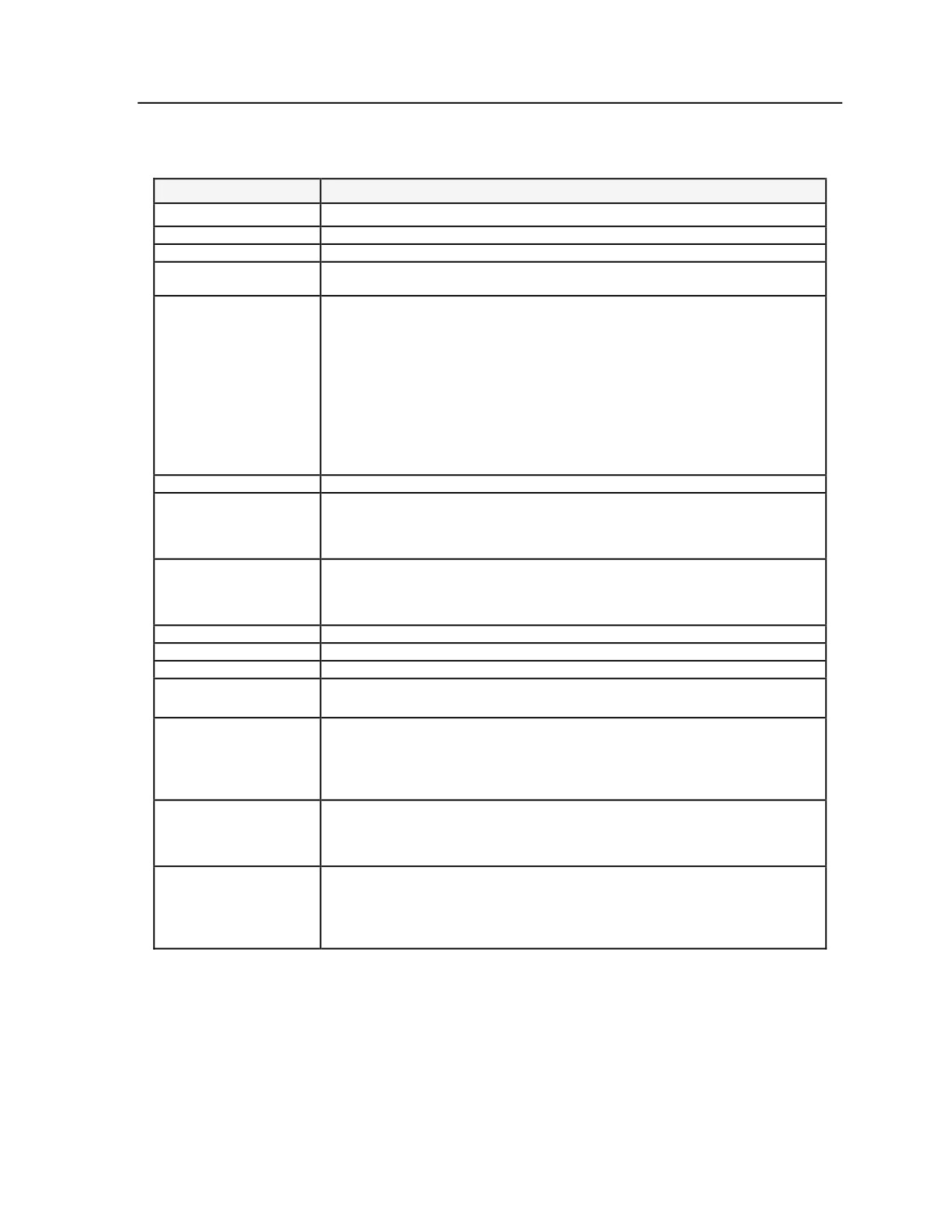
1-16. Table 1-1 provides airfoil terms and their definitions common to all aircraft. The first four terms
describe the shape of an airfoil. The remaining terms describe development of aerodynamic properties.
1-6
FM 3-04.203
7 May 2007
Theory of Flight
Table 1-1. Airfoil terminology
Terms
Definitions
Blade Span
The length of the rotor blade from point of rotation to tip of the blade.
Wing Span
The length of the wing from tip to tip.
Chord Line
A straight line intersecting leading and trailing edges of the airfoil.
Chord
The length of the chord line from leading edge to trailing edge; it is the
characteristic longitudinal dimension of the airfoil section.
Mean Camber Line
A line drawn halfway between the upper and lower surfaces. The chord line
connects the ends of the mean camber line. Camber refers to curvature of the
airfoil and may be considered curvature of the mean camber line. The shape of
the mean camber is important for determining aerodynamic characteristics of
an airfoil section. Maximum camber (displacement of the mean camber line
from the chord line) and its location help to define the shape of the mean
camber line. The location of maximum camber and its displacement from the
chord line are expressed as fractions or percentages of the basic chord length.
By varying the point of maximum camber, the manufacturer can tailor an airfoil
for a specific purpose. The profile thickness and thickness distribution are
important properties of an airfoil section.
Leading-Edge Radius
The radius of curvature given the leading edge shape.
Flight-Path Velocity
The speed and direction of the airfoil passing through the air. For FW airfoils,
flight-path velocity is equal to true airspeed (TAS). For helicopter rotor blades,
flight-path velocity is equal to rotational velocity, plus or minus a component of
directional airspeed.
Relative Wind
Air in motion equal to and opposite the flight-path velocity of the airfoil. This is
rotational relative wind for rotary-wing aircraft and will be covered in detail later.
As an induced airflow may modify flight-path velocity, relative wind experienced
by the airfoil may not be exactly opposite its direction of travel.
Induced Flow
The downward flow of air (more distinct in rotary-wing).
Resultant Relative Wind
Relative wind modified by induced flow.
Angle of Attack (AOA)
The angle measured between the resultant relative wind and chord line.
Angle of Incidence
The angle between the airfoil chord line and longitudinal axis or other selected
(FW Aircraft)
reference plane of the airplane.
Angle of Incidence
The angle between the chord line of a main or tail-rotor blade and rotational
(Rotary-Wing Aircraft)
relative wind (tip-path plane). It is usually referred to as blade pitch angle. For
fixed airfoils, such as vertical fins or elevators, angle of incidence is the angle
between the chord line of the airfoil and a selected reference plane of the
helicopter.
Center of Pressure
The point along the chord line of an airfoil through which all aerodynamic
forces are considered to act. Since pressures vary on the surface of an airfoil,
an average location of pressure variation is needed. As the AOA changes,
these pressures change and center of pressure moves along the chord line.
Aerodynamic Center
The point along the chord line where all changes to lift effectively take place. If
the center of pressure is located behind the aerodynamic center, the airfoil
experiences a nose-down pitching moment. Use of this point by engineers
eliminates the problem of center of pressure movement during AOA
aerodynamic analysis.
AIRFOIL TYPES
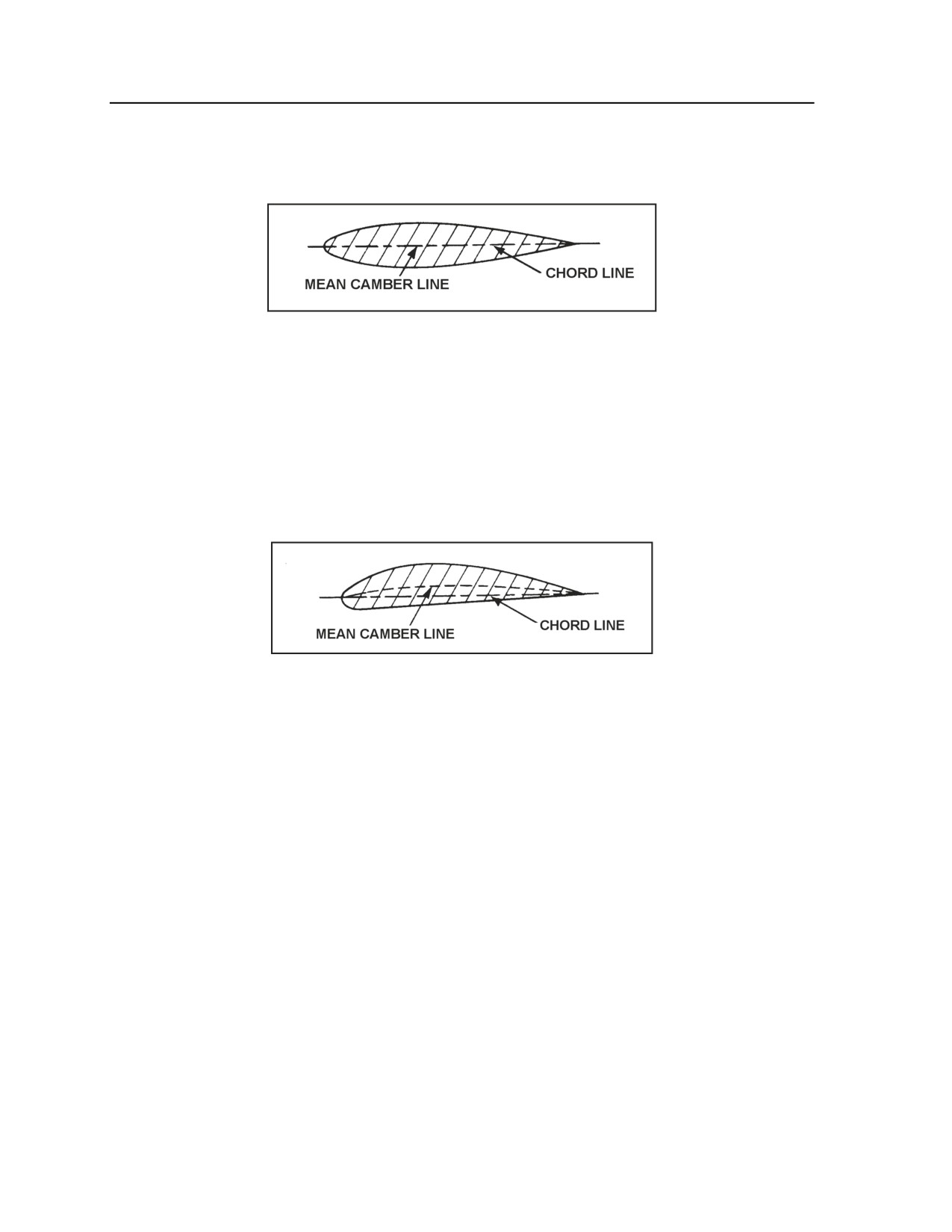
1-17. The two basic types of airfoils are symmetrical and nonsymmetrical.
Symmetrical
1-18. The symmetrical airfoil (figure 1-9) is distinguished by having identical upper and lower surface
designs, the mean camber line and chord line being coincident and producing zero lift at zero AOA. A
symmetrical design has advantages and disadvantages. One advantage is the center-of-pressure
7 May 2007
FM 3-04.203
1-7
Chapter 1
remains relatively constant under varying angles of attack (reducing the twisting force exerted on the
airfoil). Another advantage is it affords ease of construction and reduced cost. The disadvantages are
less lift production at a given AOA than a nonsymmetrical design and undesirable stall characteristics.
Figure 1-9. Symmetrical airfoil section
Nonsymmetrical (Cambered)
1-19. The nonsymmetrical airfoil (figure 1-10) has different upper and lower surface designs, with a
greater curvature of the airfoil above the chord line than below. The mean camber line and chord line
are not coincident. The nonsymmetrical airfoil design produces useful lift even at negative angles of
attack. A nonsymmetrical design has advantages and disadvantages. The advantages are more lift
production at a given AOA than a symmetrical design, an improved lift to drag ratio, and better stall
characteristics. The disadvantages are the center-of-pressure travel can move up to 20 percent of the
chord line (creating undesirable torque on the airfoil structure) and greater production costs.
Figure 1-10. Nonsymmetrical (cambered) airfoil section
BLADE TWIST (ROTARY-WING AIRCRAFT)
1-20. Because of lift differential along the blade, it should be designed with a twist to alleviate internal
blade stress and distribute the lifting force more evenly along the blade. Blade twist provides higher
pitch angles at the root where velocity is low and lower pitch angles nearer the tip where velocity is
higher. This increases the induced air velocity and blade loading near the inboard section of the blade.
AIRFLOW AND REACTIONS IN THE ROTOR SYSTEM
RELATIVE WIND
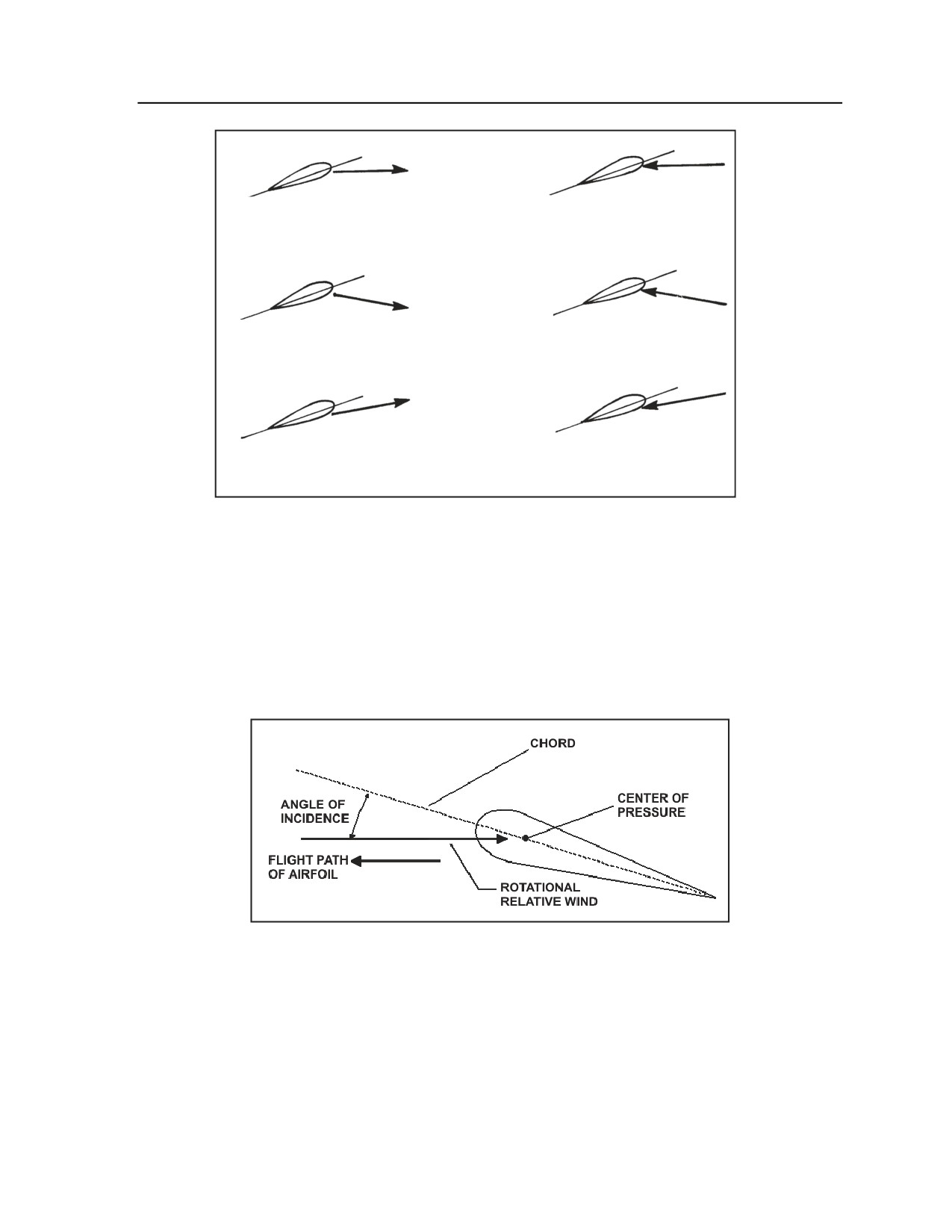
1-21. Knowledge of relative wind (figure 1-11) is essential for an understanding of aerodynamics and its
practical flight application for the aviator. Relative wind is airflow relative to an airfoil. Movement of
an airfoil through the air creates relative wind. Relative wind moves in a parallel but opposite direction
to movement of the airfoil.
1-8
FM 3-04.203
7 May 2007
Theory of Flight
THIS AIRFOIL
RESULTS IN
THIS RELATIVE WIND
DIRECTION
THIS AIRFOIL
RESULTS IN
THIS RELATIVE WIND
DIRECTION
THIS AIRFOIL
RESULTS IN
THIS RELATIVE WIND
DIRECTION
Figure 1-11. Relative wind
ROTATIONAL RELATIVE WIND
1-22. The rotation of rotor blades as they turn about the mast produces rotational relative wind (figure 1-
12). The term rotational refers to the method of producing relative wind. Rotational relative wind
flows opposite the physical flight path of the airfoil, striking the blade at 90 degrees to the leading
edge and parallel to the plane of rotation, and is constantly changing in direction during rotation.
Rotational relative wind velocity is highest at blade tips, decreasing uniformly to zero at axis of
rotation (center of the mast).
Figure 1-12. Rotational relative wind
INDUCED FLOW (DOWNWASH)
1-23. At flat pitch, air leaves the trailing edge of the rotor blade in the same direction it moved across the
leading edge; no lift or induced flow is being produced. As blade pitch angle is increased, the rotor
system induces a downward flow of air through the rotor blades creating a downward component of
air that is added to the rotational relative wind. Because the blades are moving horizontally, some of
7 May 2007
FM 3-04.203
1-9
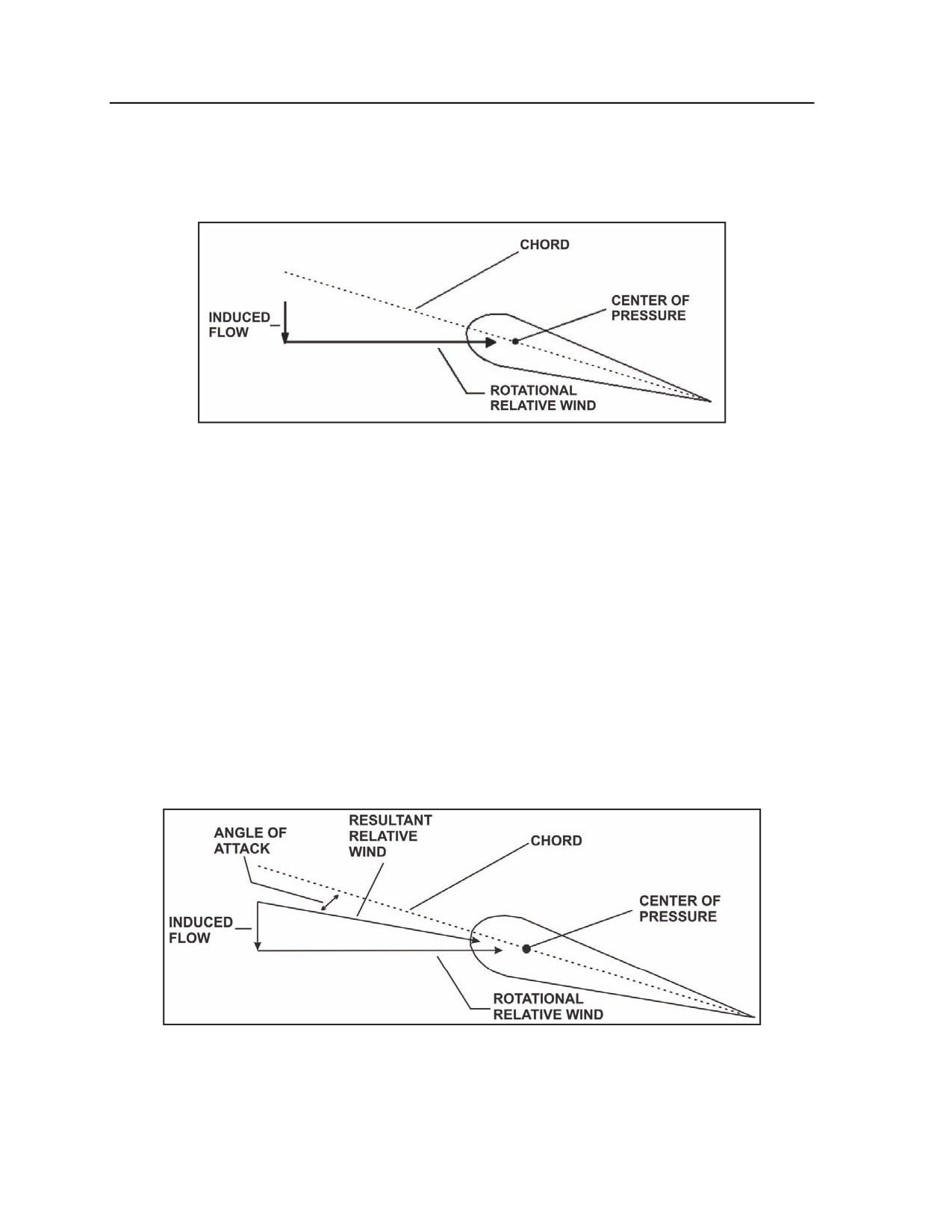
Chapter 1
the air is displaced downward. The blades travel along the same path and pass a given point in rapid
succession. Rotor blade action changes the still air to a column of descending air. This downward flow
of air is called induced flow (downwash). It is most pronounced at a hover under no-wind conditions
(figure 1-13).
Figure 1-13. Induced flow (downwash)
RESULTANT RELATIVE WIND
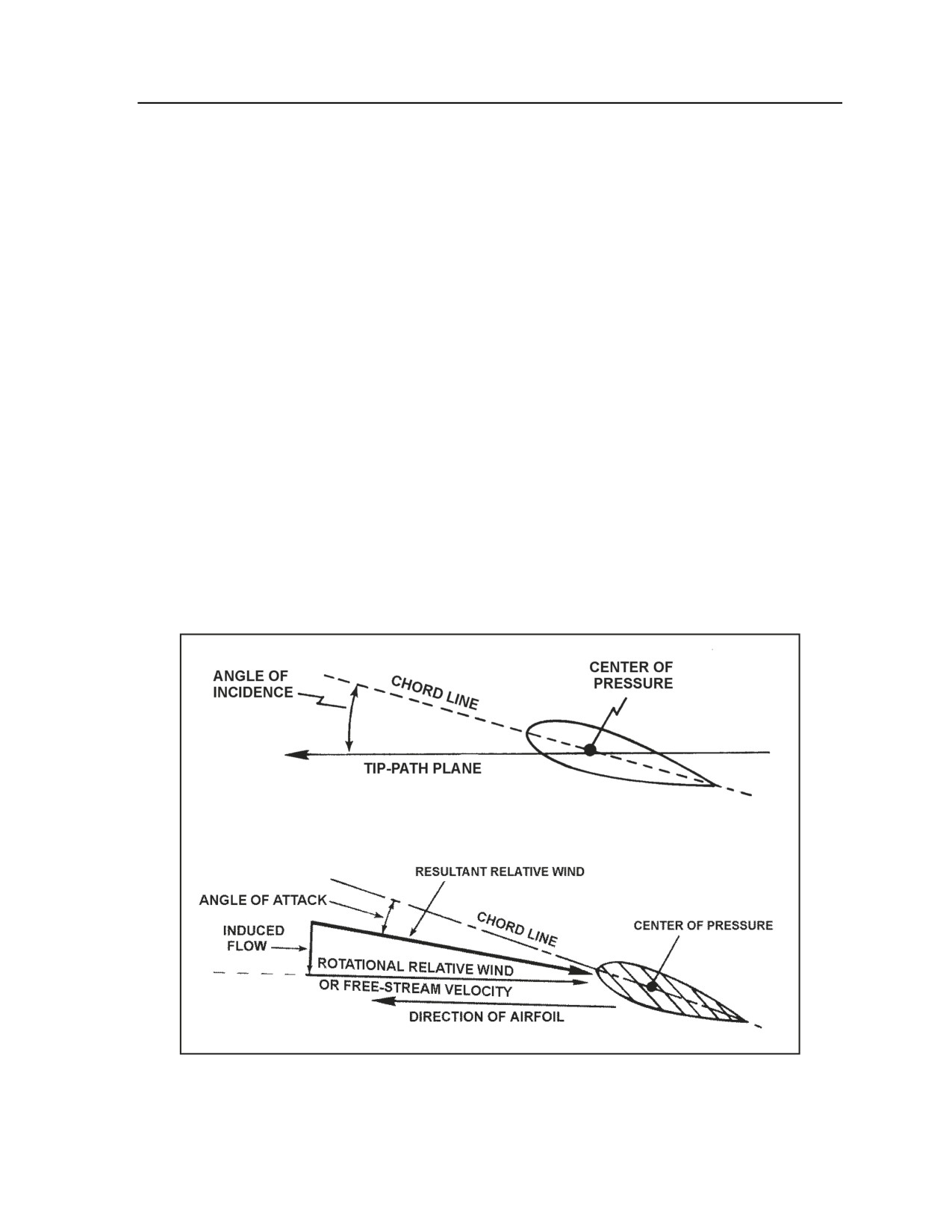
1-24. The resultant relative wind (figure 1-14) at a hover is rotational relative wind modified by induced
flow. This is inclined downward at some angle and opposite the effective flight path of the airfoil,
rather than the physical flight path (rotational relative wind). The resultant relative wind also serves as
the reference plane for development of lift, drag, and total aerodynamic force (TAF) vectors on the
airfoil. When the helicopter has horizontal motion, airspeed further modifies the resultant relative
wind. The airspeed component of relative wind results from the helicopter moving through the air.
This airspeed component is added to, or subtracted from, the rotational relative wind, depending on
whether the blade is advancing or retreating in relation to helicopter movement. Introduction of
airspeed relative wind also modifies induced flow. Generally, the downward velocity of induced flow
is reduced. The pattern of air circulation through the disk changes when the aircraft has horizontal
motion. As the helicopter gains airspeed, the addition of forward velocity results in decreased induced
flow velocity. This change results in an improved efficiency (additional lift) being produced from a
given blade pitch setting. Section V further covers this process.
Figure 1-14. Resultant relative wind
1-10
FM 3-04.203
7 May 2007
Theory of Flight
UP FLOW (INFLOW)
1-25. Up flow (inflow) is airflow approaching the rotor disk from below as the result of some rate of
descent. Up flow also occurs as a result of blades flapping down or an updraft, which alter the AOA.
ROTOR BLADE ANGLES
ANGLE OF INCIDENCE
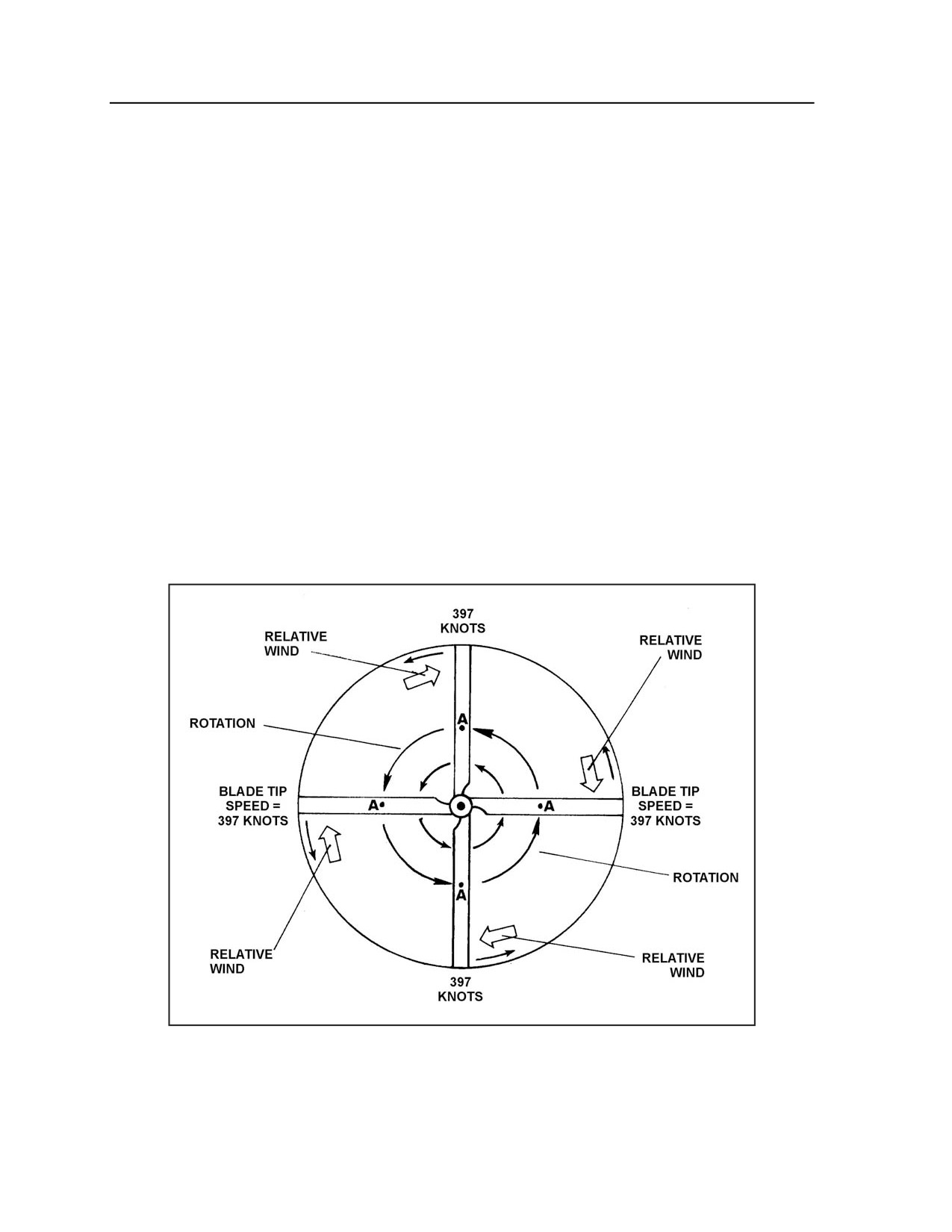
1-26. Angle of incidence (figure 1-15) is the angle between the chord line of a main or tail rotor blade and
the rotational relative wind of the rotor system (tip-path plane). It is a mechanical angle rather than an
aerodynamic angle and is sometimes referred to as blade pitch angle. In the absence of induced flow,
AOA and angle of incidence are the same. Whenever induced flow, up flow (inflow), or airspeed
modifies relative wind, then AOA is different from angle of incidence. Collective input and cyclic
feathering change angle of incidence. A change in angle of incidence changes AOA, which changes
the coefficient of lift, thereby changing the lift produced by the airfoil.
ANGLE OF ATTACK
1-27. AOA (figure 1-15) is the angle between the airfoil chord line and resultant relative wind. AOA is an
aerodynamic angle. It can change with no change in angle of incidence. Several factors may change
the rotor blade AOA. Aviators control some of those factors; others occur automatically due to rotor
system design. Aviators adjust AOA through normal control manipulation; even with no aviator input,
however, AOA will change as an integral part of travel of the rotor blade through the rotor-disk arc.
This continuous process of change accommodates rotary-wing flight. Aviators have little control over
blade flapping and flexing, gusty wind, and/or turbulent air conditions. AOA is one of the primary
factors determining amount of lift and drag produced by an airfoil.
Figure 1-15. Angle of incidence and angle of attack
7 May 2007
FM 3-04.203
1-11
Chapter 1
EFFECTS OF AIRFLOW
1-28. As AOA is increased, there is a greater acceleration of air atop the airfoil. This results in a larger
pressure differential between the top and bottom of the airfoil, producing a larger aerodynamic force.
If AOA is increased beyond a critical angle, flow across the top of the airfoil will be disrupted,
boundary layer separation will occur, and a stall results. When this occurs, lift rapidly decreases, drag
rapidly increases, and the airfoil ceases to fly.
ROTOR BLADE ACTIONS
ROTATION
1-29. Rotation of rotor blades is the most basic movement of the rotor system and produces rotational
relative wind. During hovering, rotation of the rotor system produces airflow over the rotor blades.
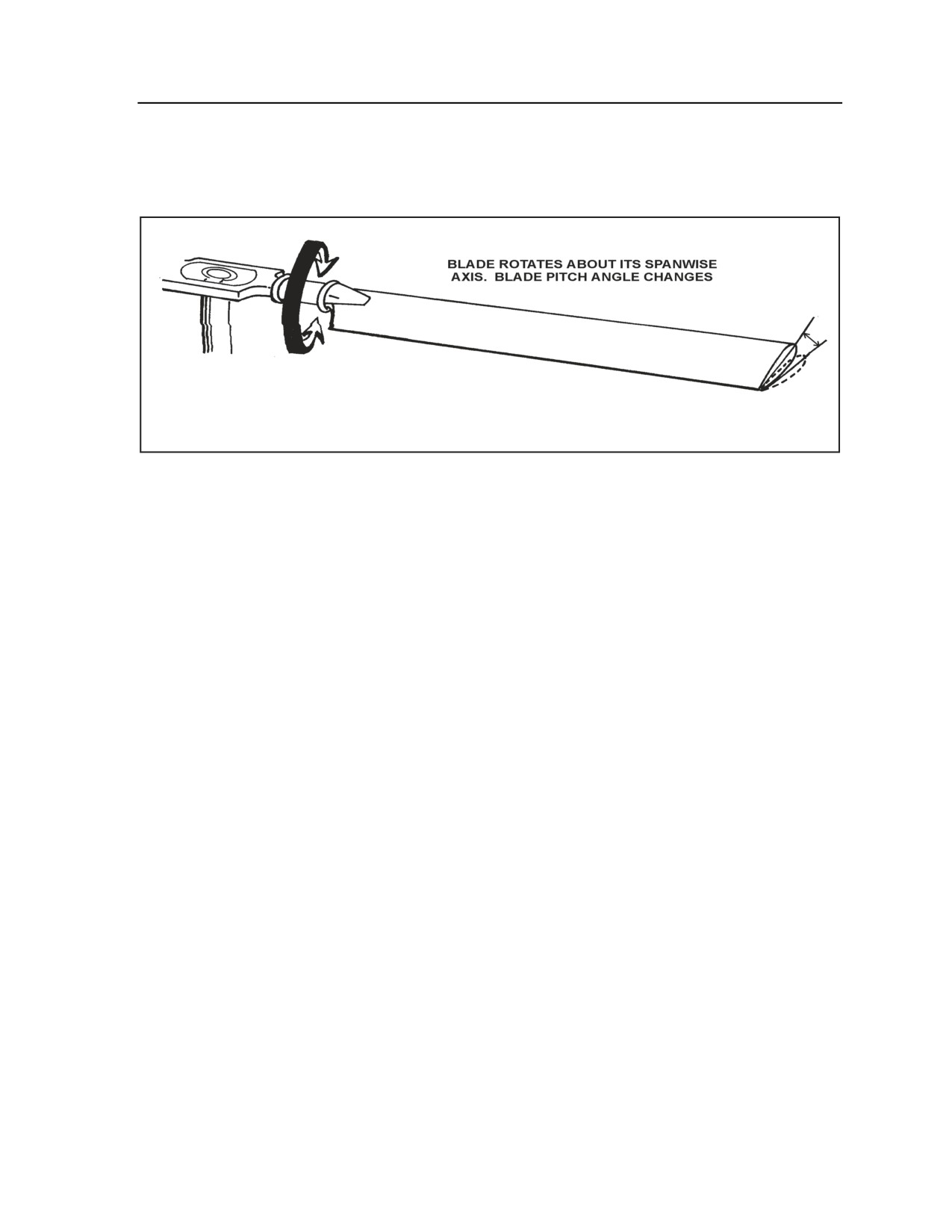
Figure 1-16 illustrates a typical rotor system with an arbitrary rotor diameter of 40 feet and rotor speed
of 320 revolutions per minute (RPM) used to demonstrate rotational velocities. In this example, blade
tip velocity is 670 feet per second, or 397 knots. At the blade root—nearer the rotor shaft or blade
attachment point—blade speed is much less as the distance traveled at the smaller radius is much less.
Halfway between the root and tip (point A in figure 1-16) blade speed is 198.5 knots, or one-half tip
speed. Blade speed varies according to the distance or radius from the center of the main rotor shaft.
While the airspeed differential between root and tip is extreme, the lift differential is more extreme
because lift varies as the square of the velocity (see lift equation on page 1-25). As velocity doubles,
lift increases four times. The lift at point A in figure 1-16 would be only one-fourth as much as lift at
the blade tip—assuming the airfoil shape and AOA are the same at both points.
Figure 1-16. Blade rotation and blade speed
1-12
FM 3-04.203
7 May 2007
Theory of Flight
FEATHERING
1-30. Feathering is the rotation of the blade about its spanwise axis by collective/cyclic inputs causing
changes in blade pitch angle (figure 1-17).
Figure 1-17. Feathering
Collective Feathering
1-31. Collective feathering changes angle of incidence equally and in the same direction on all rotor blades
simultaneously. This action changes AOA, which changes coefficient of lift (CL), and affects overall
lift of the rotor system.
Cyclic Feathering
1-32. Cyclic feathering changes angle of incidence differentially around the rotor system. Cyclic feathering
creates a differential lift in the rotor system by changing the AOA differentially across the rotor
system. Aviators use cyclic feathering to control attitude of the rotor system. It is the means to control
rearward tilt of the rotor
(blowback) caused by flapping action and (along with blade flapping)
counteract dissymmetry of lift (section V). Cyclic feathering causes attitude of the rotor disk to change
but does not change amount of lift the rotor system is producing.
FLAPPING
1-33. The up and down movement of rotor blades about a hinge is called flapping (figures 1-18 through 1-
22). It occurs in response to changes in lift due to changing velocity or cyclic feathering (figure 1-18,
page 1-13). No flapping occurs when the tip-path plane is perpendicular to the mast. The flapping
action alone, or along with cyclic feathering, controls dissymmetry of lift (section V). Flapping is the
primary means of compensating for dissymmetry of lift.
7 May 2007
FM 3-04.203
1-13
Chapter 1
Figure 1-18. Flapping in directional flight
1-34. Flapping also allows the rotor system to tilt in the desired direction in response to cyclic input. See
figures 1-19 and 1-20, Figures 1-21 and 1-22, page 1-14, for depictions of flapping as it occurs
throughout the rotor disk.
Figure 1-19. Flapping (advancing blade 3 o’clock position)
Figure 1-20. Flapping (retreating blade 9-o’clock position)
1-14
FM 3-04.203
7 May 2007
Theory of Flight
Figure 1-21. Flapping (blade over the aircraft nose)
Figure 1-22. Flapping (blade over the aircraft tail)
1-35. In the semirigid rotor system, a blade is not free to flap independently of the other blades because
they are affixed through the hub. The blades form one continuous unit moving together on a common
teetering hinge. This hinge allows one blade to flap up as the opposite blade flaps down, although
blade flex limits the amount of blade flapping. In the fully articulated rotor system, blades flap
individually about a horizontal hinge pin. Therefore, each blade is free to move up and down
independently from all of the other blades. Aircraft design can reduce excessive flapping in several
ways; for example, a forward tilt of the transmission and mast helps minimize flapping and installation
of a synchronized elevator or stabilator (UH-60 and AH-64) helps maintain the desired fuselage
attitude to reduce flapping.
LEAD AND LAG (HUNTING)
1-36. Lead and lag (figure 1-23, page 1-15) are fore and aft movement of the blade in the plane of rotation
in response to changes in angular velocity. This rotor blade action can only occur in a fully articulated
rotor system, in which the system is equipped with a vertical hinge pin (drag hinge) or elastomeric
bearing providing a pivot point for each blade to move independently. In directional flight, pitch angle
and the AOA of the blades are constantly changing. These changes in AOA cause changes in blade
drag. To prevent undue bending stress on the blades and blade root, the blade is free to move fore and
aft in the plane of rotation. The need to lead and lag is due to the Coriolis force. It is governed by the
law of conservation of angular momentum. This law states a body will continue to have the same
rotational momentum unless acted on by an outside force. Two factors determine the rotational
(angular) momentum—distance of the center of gravity (CG) from the center of rotation and rotational
speed. If the CG moves closer to the center of rotation, the rotational speed must increase. If the CG
moves farther away from the axis of rotation, rotational velocity will decrease (figure 1-23, page 1-
15).
7 May 2007
FM 3-04.203
1-15
Chapter 1
Figure 1-23. Lead and lag
Lead
1-37. As a blade flaps up, the CG of the blade (figure 1-23, point C) moves inboard toward the axis of
rotation, producing a smaller radius of travel. The blade speeds up in reaction to this CG change,
causing the blade to lead a few degrees ahead of its normal position in the tip-path plane (figure 1-23,
point D). This motion relieves stress that would have been imposed on the blade structure.
Lag
1-38. As a blade flaps down, the CG of the blade (figure 1-23, point A) moves outboard away from the
axis of rotation, producing a greater radius of travel. The blade slows down in reaction to this CG
change, causing the blade to lag a few degrees behind its normal position in the tip-path plane (figure
1-23, point B). This motion relieves stress that would have been imposed on the blade structure.
SEMIRIGID ROTOR SYSTEM
1-39. Because of the design (under slung) of the semirigid rotor system, no change occurs in the travel
radius of the CG of the blade associated with blade flapping (figure 1-24, page 1-16). The angular
velocity of the blade does not change. Drag does impose significant stresses on the blade roots; a drag
brace is normally installed at the blade root to absorb some of these bending forces.
1-16
FM 3-04.203
7 May 2007
Theory of Flight
Figure 1-24. Under slung design of semirigid rotor system
HELICOPTER DESIGN AND CONTROL
GYROSCOPIC PRECESSION
1-40. The phenomenon of precession occurs in rotating bodies that manifest an applied force 90 degrees
after application in the direction of rotation. Although precession is not a dominant force in rotary-
wing aerodynamics, aviators and designers must consider it, as turning rotor systems exhibit some of
the characteristics of a gyro. Figure 1-25 illustrates effects of precession on a typical rotor disk when
force is applied at a given point. A downward force applied to the disk at point A results in a
downward movement of the disk at point B.
7 May 2007
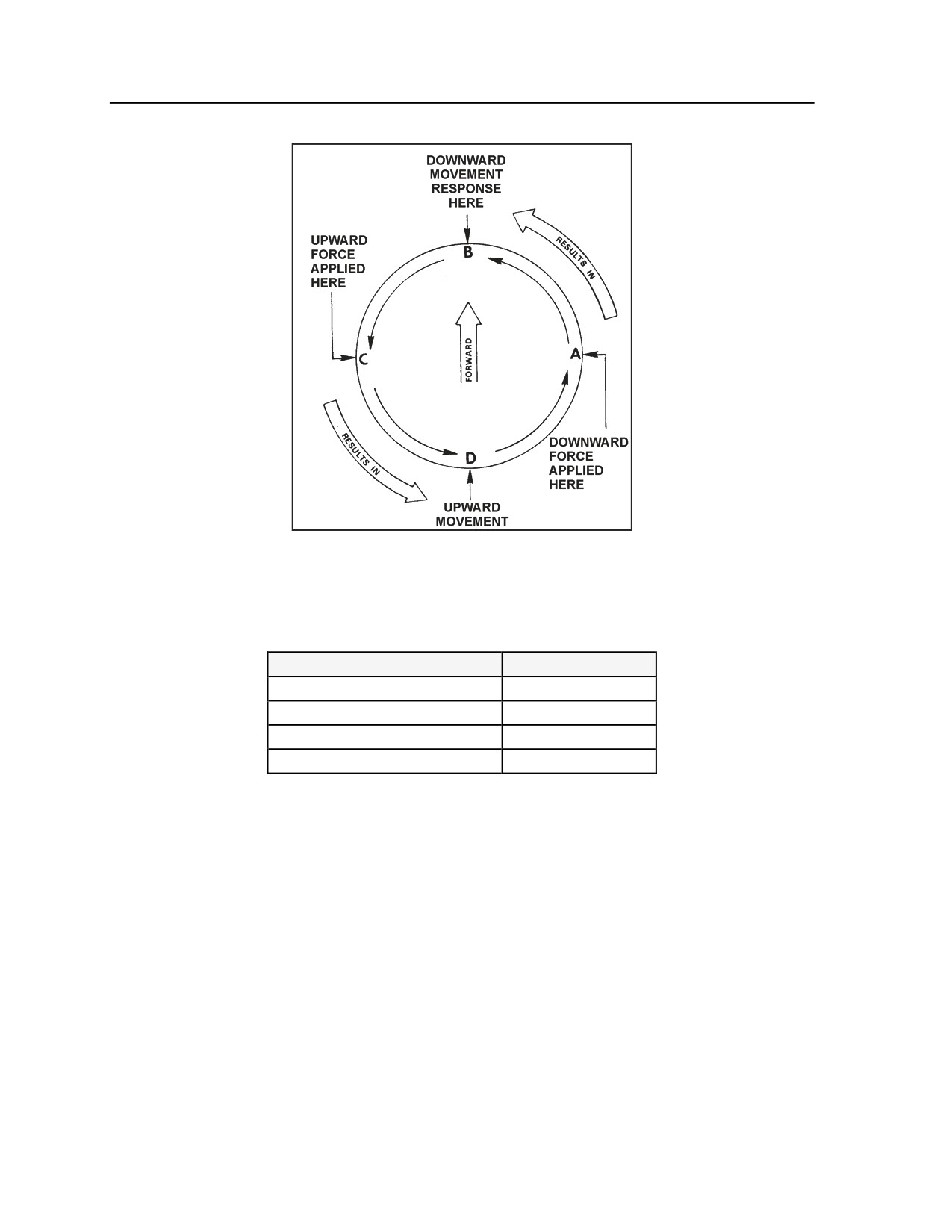
FM 3-04.203
1-17
Chapter 1
Figure 1-25. Gyroscopic precession
1-41. Table 1-2 shows reactions to forces applied to a spinning rotor disk by control input or wind gusts.
Table 1-2. Aircraft reaction to forces
Force Applied to Rotor Disk
Aircraft Reaction
Up at nose
Roll right
Up at tail
Roll left
Up on right side
Nose up
Up on left side
Nose down
1-42. This behavior explains some fundamental effects occurring during various helicopter maneuvers. For
example, the helicopter behaves differently when rolling into a right turn than when rolling into a left
turn. During roll into a right turn, the aviator must correct for a nose-down tendency to maintain
altitude. This correction is required because precession causes a nose-down tendency. During a roll
into a left turn, precession causes a nose-up tendency. Aviator input required to maintain altitude is
different during a left versus right turn as gyroscopic precession acts in opposite directions.
ROTOR HEAD CONTROL
Cyclic and Collective Pitch
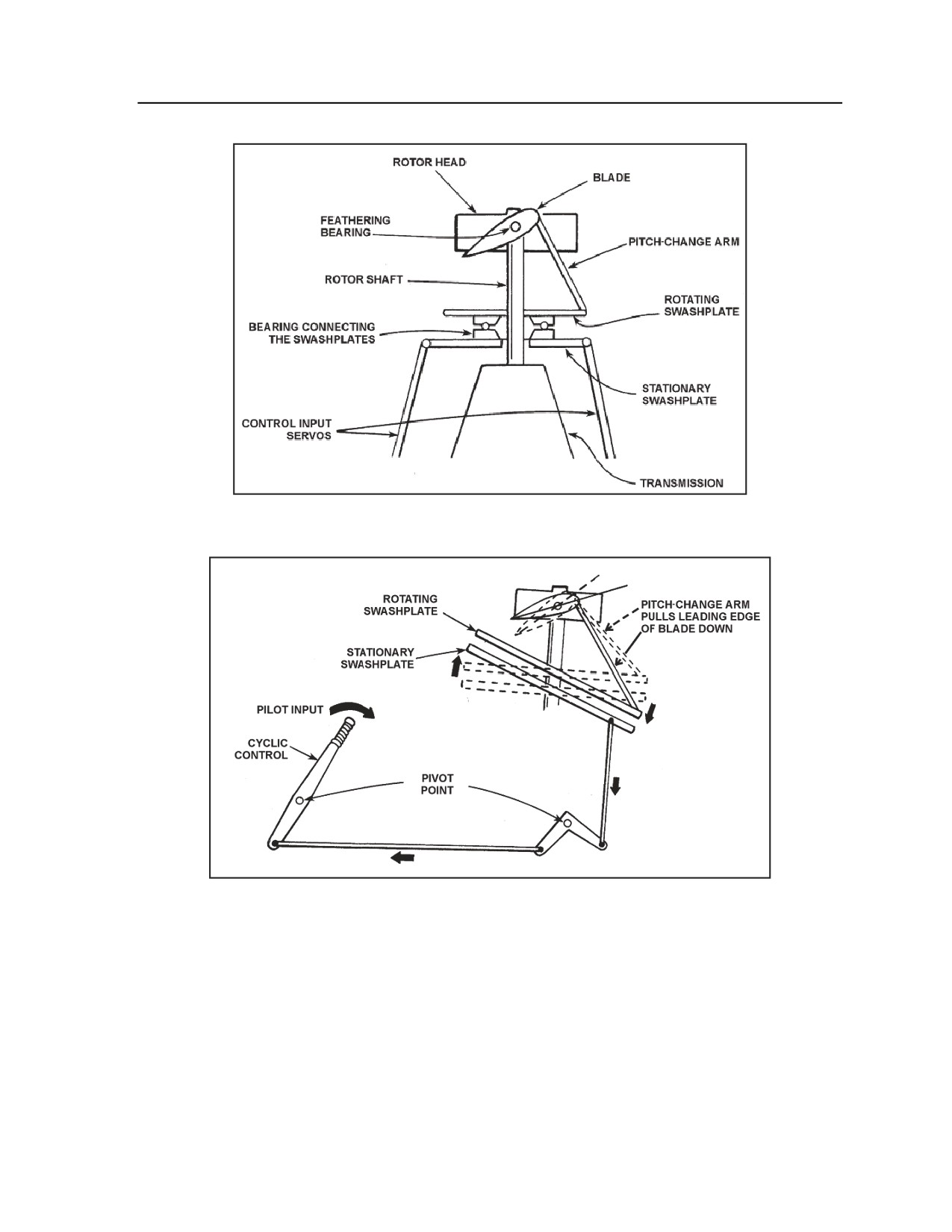
1-43. Aviator inputs to collective and cyclic pitch controls are transmitted to the rotor blades through a
complex system. This system consists of levers, mixing units, input servos, stationary and rotating
swashplates, and pitch-change arms (figure 1-26). In its simplest form, movement of collective pitch
control causes stationary and rotating swashplates mounted centrally on the rotor shaft to rise and
descend. The movement of cyclic pitch control causes the swashplates to tilt; the direction of tilt is
controlled by the direction in which the aviator moves the cyclic (figure 1-27, page 1-18).
1-18
FM 3-04.203
7 May 2007
Theory of Flight
Figure 1-26. Rotor head control systems
Figure 1-27. Stationary and rotating swashplates tilted by cyclic control
7 May 2007
FM 3-04.203
1-19
Chapter 1
Tilted Swashplate Assembly
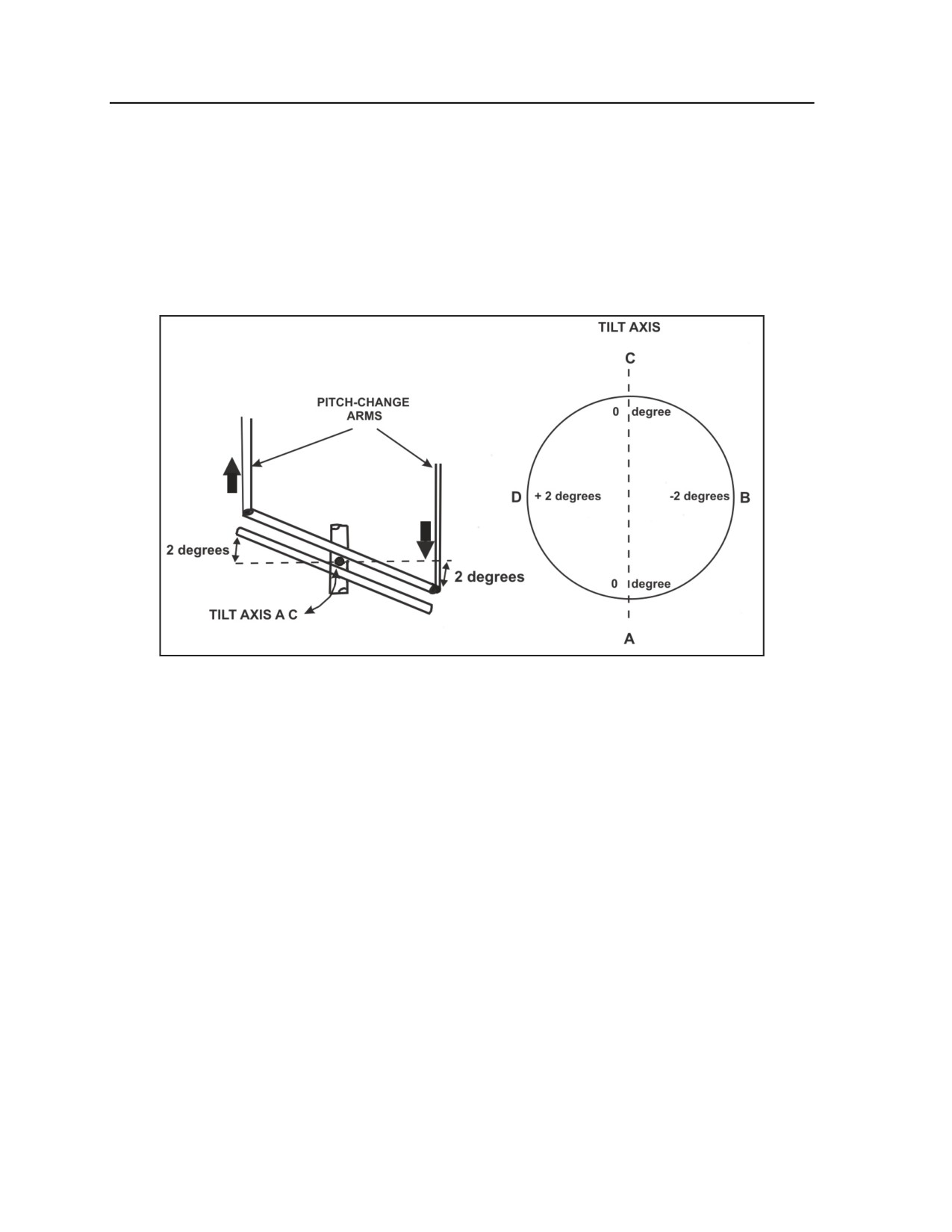
1-44. Figure 1-28 illustrates a swashplate tilted 2 degrees at two positions, points B and D. Points A and C
form the axis about which the tilt occurs. At that axis, the swashplate remains at zero degrees. When
the swashplate is moved, pitch-change arms transmit the resulting motion change to the rotor blade. As
the pitch-change arms move up and down with each rotation of the swashplate, blade pitch constantly
increases or decreases. If the aviator applies cyclic control to tilt the rotor, adding collective pitch does
not change the tilt of the swashplate and rotor. It simply moves the swashplate upward so pitch is
increased equally on all blades simultaneously, thereby increasing AOA and total lift.
Figure 1-28. Stationary and rotating swashplates tilted in relation to mast
1-20
FM 3-04.203
7 May 2007
Theory of Flight
Pitch-Change Arms
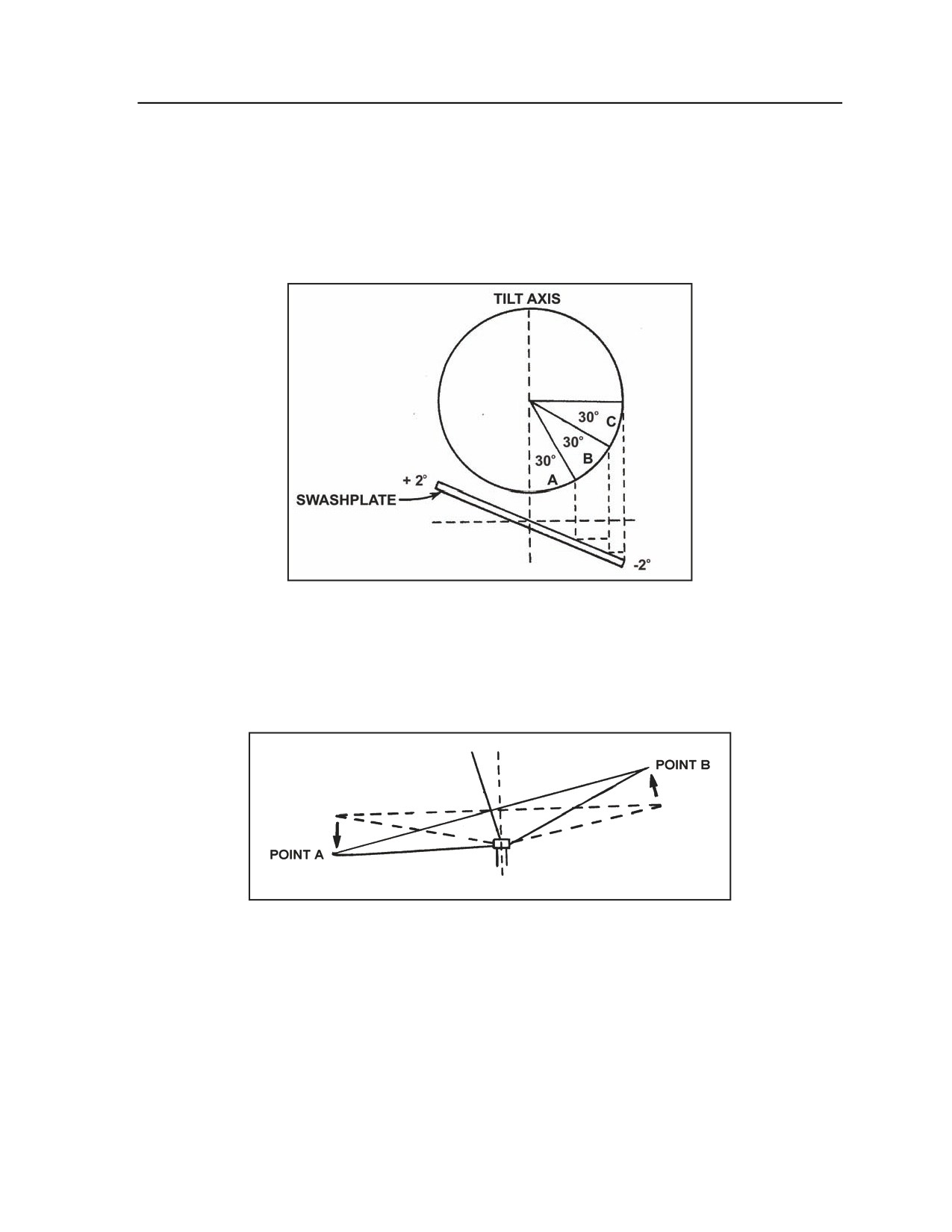
1-45. Figure 1-29, illustrates how pitch-change arms move up and down on the tilted swashplate. The rate
of vertical change throughout the rotation is not uniform. Vertical movement is larger during the 30
degrees of rotation at point A than at points B and C. This variation repeats during each 90 degrees of
rotation. The rate of vertical movement is lowest at the low and high points of the swashplate and
highest when the pitch-change arms pass by the tilt axis of the swashplate.
Figure 1-29. Pitch-change arm rate of movement over 90 degrees of travel
Cyclic Pitch Change
1-46. Figure 1-30 shows a change in cyclic pitch (cyclic feathering) causing rotor blades to climb from
point A to point B then dive or descend from point B to point A. In this way, the rotor is tilted in the
direction of desired flight.
Figure 1-30. Rotor flapping in response to cyclic input
1-47. To pass through points A and B, the blades must flap up and down on a hinge or teeter on a trunnion.
At the lowest flapping point (point A), the blades would appear to be at their lowest pitch angle; at the
highest flapping point (point B), they would be at their highest pitch angle. If only aerodynamic
considerations were involved, this might be true. However, gyroscopic precession (figure 1-31, page
1-20) causes these points to be separated by 90 degrees of rotation.
1-48. A cyclic movement decreases blade pitch at one point in the rotor disk while increasing blade pitch
by the same amount 180 degrees of travel later. A decrease in lift resulting from a decrease in blade
pitch angle and AOA causes the blade to flap down; the blade reaches its maximum downflapping
7 May 2007
FM 3-04.203
1-21
Chapter 1
displacement 90 degrees later in the direction of rotation. An increase in lift resulting from an increase
in blade pitch angle and AOA causes the blade to flap up; the blade reaches its maximum upflapping
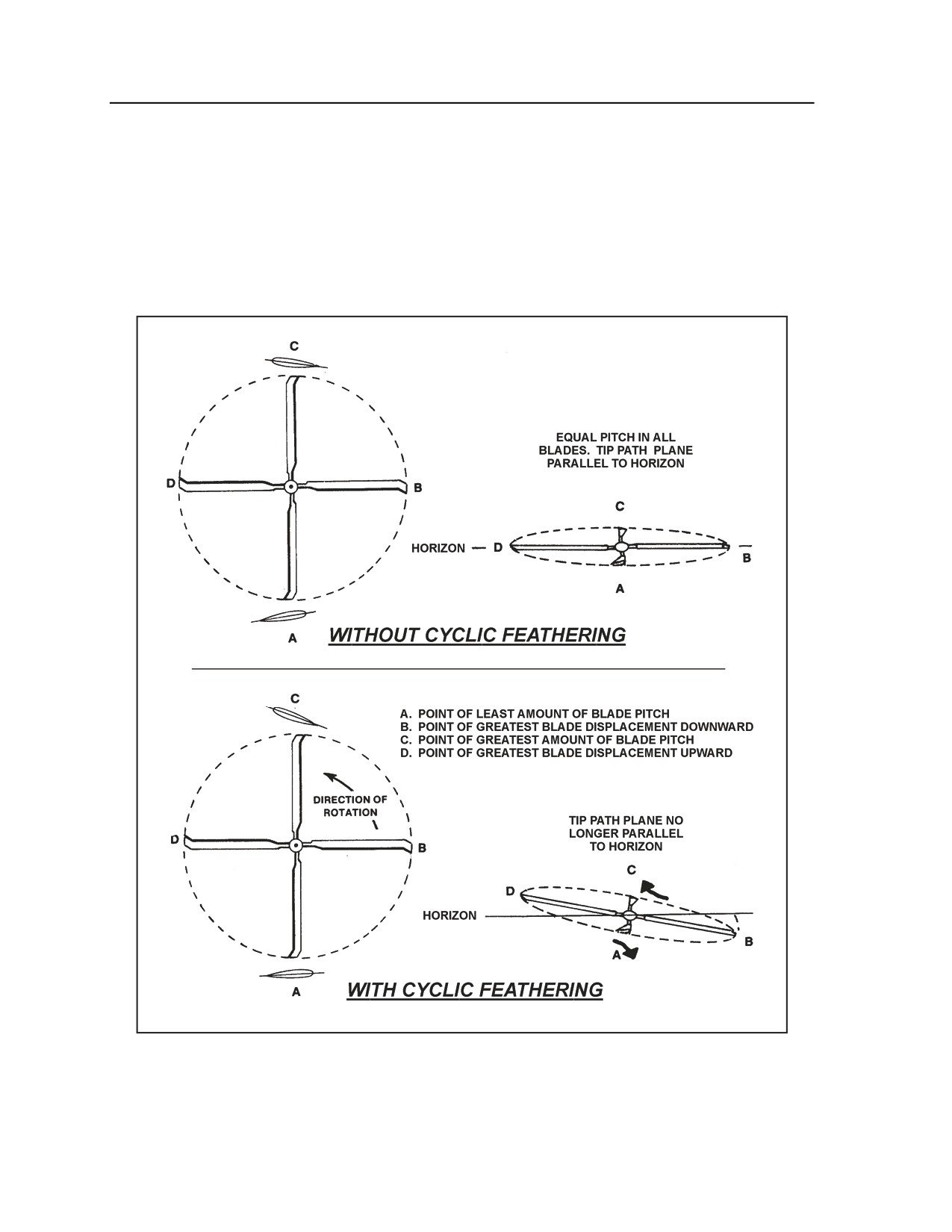
displacement 90 degrees later in the direction of rotation. Figure 1-31 shows the resulting change to
the rotor disk’s attitude. The cyclic pitch causing blade flap must be placed on the blades 90 degrees of
rotation before the lowest and highest flap are desired. This 90 degrees of phase lag due to gyroscopic
precession is accounted for when rotors are designed, and it ensures when the cyclic is pushed
forward, the action tilts the swashplate assembly to place the cyclic pitch accordingly. To tilt the rotor
disk forward, the lowest cyclic pitch on the blade needs to be over the right side of the helicopter and
the highest cyclic pitch over the left side. The rotor always tilts in the direction in which the aviator
moves the cyclic.
Figure 1-31. Cyclic feathering
1-22
FM 3-04.203
7 May 2007
Theory of Flight
Typical Design Features
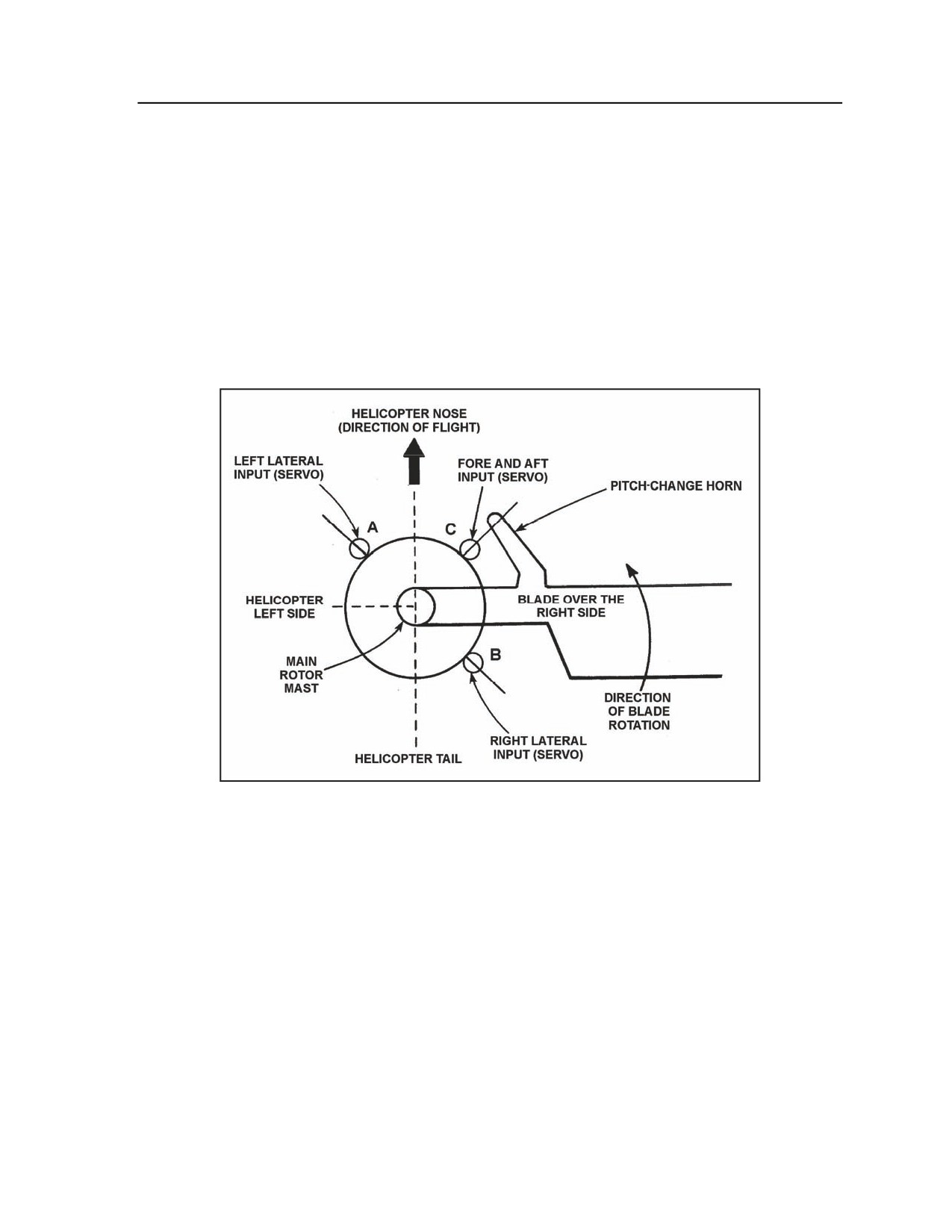
1-49. Figure 1-32 illustrates a typical design feature used in most four-bladed rotor systems offsetting
cyclic control input 90 degrees from where the aviator desires rotor tilt. Rotor control input locations
are the left lateral servo (point A), right lateral servo (point B), and fore and aft servo (point C). Each
servo is offset 45 degrees from the position corresponding to its name. The fore and aft input servo, for
example, is not located at the nose or tail position but at the right front about halfway between the nose
and 3 o’clock position. Similarly, the left lateral servo is located halfway between the nose and 9
o’clock position. The right lateral servo is halfway between the tail and 3 o’clock position. Locations
of the input servos account for part of the offset the aviator needs to correct for gyroscopic precession.
In addition, the rotor blade has a pitch-change horn extending ahead of the blade in the plane of
rotation about 45 degrees. A connecting rod, called a pitch-change rod, transmits aviator control inputs
from the input servos to the pitch-change horn. The design of the pitch-change horn, coupled with
placement of the servo and tilt of the swashplate, provides the total offset.
Figure 1-32. Input servo and pitch-change horn offset
Cyclic Pitch Variation
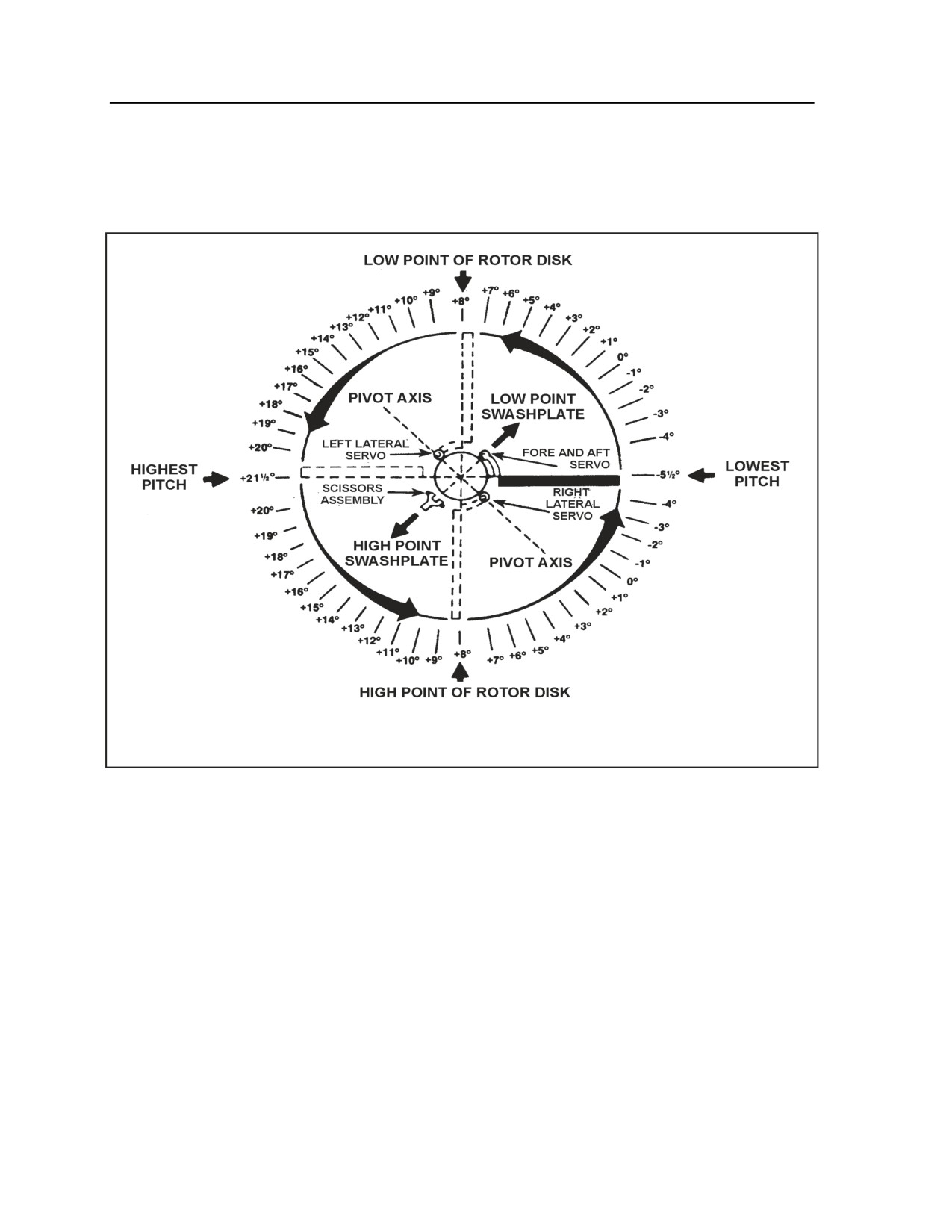
1-50. Figure 1-33, page 1-22, illustrates typical cyclic pitch variation for a blade through one revolution
with cyclic pitch control full forward. Degrees shown are for a typical aircraft rotor system; figures
would vary with the type of helicopter. As described in the previous paragraph, the input servos and
pitch-change horns are offset. With cyclic pitch control in the full forward position, the blade pitch
angle is highest at the 9 o’clock position and lowest at the 3 o’clock position. The pitch angle begins
decreasing as it passes the 9 o’clock position and continues to decrease until it reaches the 3 o’clock
position. The pitch begins to increase and reaches the maximum pitch angle at the 9 o’clock position.
Blade pitch angles over the nose and tail are about equal.
1-51. Figure 1-33 shows blades reach a point of lowest flapping over the nose 90 degrees in the direction
of rotation from the point of lowest pitch angle. Highest flapping occurs over the tail 90 degrees in the
direction of rotation from the point of the highest pitch angle. Simply stated, the force (pitch angle)
7 May 2007
FM 3-04.203
1-23
Chapter 1
causing blade flap must be applied to the blade 90 degrees of rotation before the point where the
aviator desires maximum blade flap.
1-52. A pattern similar to figure 1-33 could be constructed for other cyclic positions in the circle of cyclic
travel. In each case, the same principles apply. Points of highest and lowest flapping are located 90
degrees in the direction of rotation from the points of highest and lowest blade pitch.
Figure 1-33. Cyclic pitch variation-full forward, low pitch
FUSELAGE HOVERING ATTITUDE
Single-Rotor Helicopter
1-53. The design of most fully articulated rotor systems includes an offset between the main rotor mast and
blade attachment point. Centrifugal force acting on the offset tends to hold the mast perpendicular to
the tip-path plane
(figure
1-34, page 1-23). When the rotor disk is tilted left to counteract the
translating tendency, the fuselage follows the main rotor mast and hangs slightly low on the left side.
1-54. A fuselage suspended under a semirigid rotor system remains level laterally unless the load is
unbalanced or the tail rotor gearbox is lower than the main rotor (figure 1-35, page 1-23). The fuselage
remains level because there is no offset between the rotor mast and the point where the rotor system is
attached to the mast (trunnion bearings). Because trunnion bearings are centered on the mast, the mast
does not tend to follow the tilt of the rotor disk during hover. In addition, the mast does not tend to
remain perpendicular to the tip-path plane as it does with a fully articulated rotor system. Instead, the
mast tends to hang vertically under the trunnion bearings, even when the rotor disk is tilted left to
1-24
FM 3-04.203
7 May 2007
///////////////////////////////////////