FM 3-21.8 (FM 7-8) The Infantry Rifle Platoon and Squad (MARCH 2007) - page 15
Appendix H
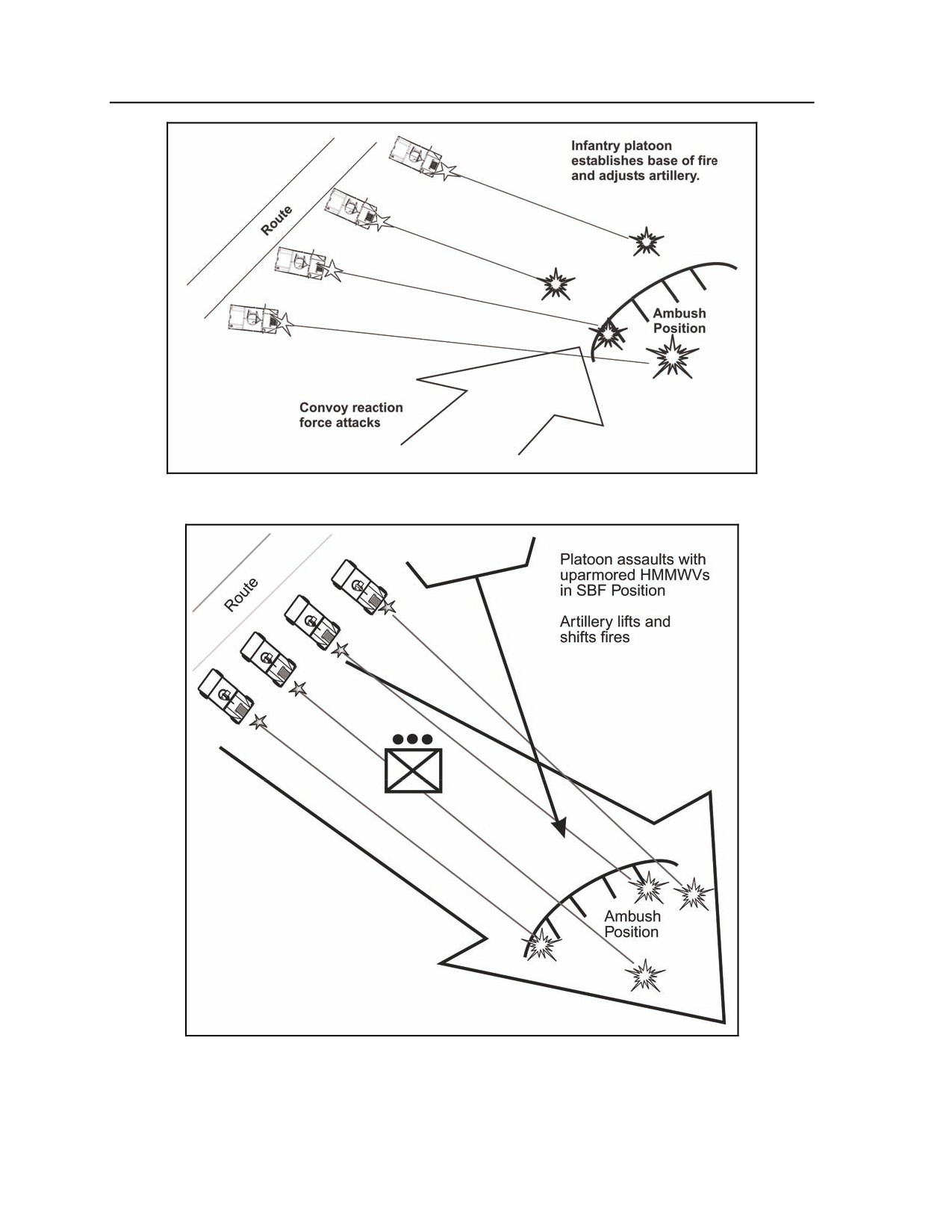
Figure H-14. Escort suppresses ambush for reaction force attack.
Figure H-15. Escort assaults ambush.
H-26
FM 3-21.8
28 Mach 2007
Security
ACTIONS AT AN OBSTACLE
H-90. Obstacles are a major impediment to convoys. The purpose of reconnaissance ahead of a convoy is to
identify obstacles and either breach them or find bypasses. In some cases the enemy or its obstacles may
avoid detection by the reconnaissance element.
H-91. Obstacles can be used to harass the convoy by delaying it. If the terrain is favorable, the obstacle may
stop the convoy altogether. Obstacles may also be used to canalize the convoy to set up an enemy ambush.
When an obstacle is identified, the convoy escort faces two problems: reducing or bypassing the obstacle,
and maintaining protection for the convoy. Security becomes critical, and actions at the obstacle must be
accomplished very quickly. The convoy commander must assume that the enemy is covering the obstacle
with direct- and indirect-fire weapons systems.
H-92. To reduce any time the convoy is halted and to reduce its vulnerability, the following actions should
occur when the convoy escort encounters a point-type obstacle:
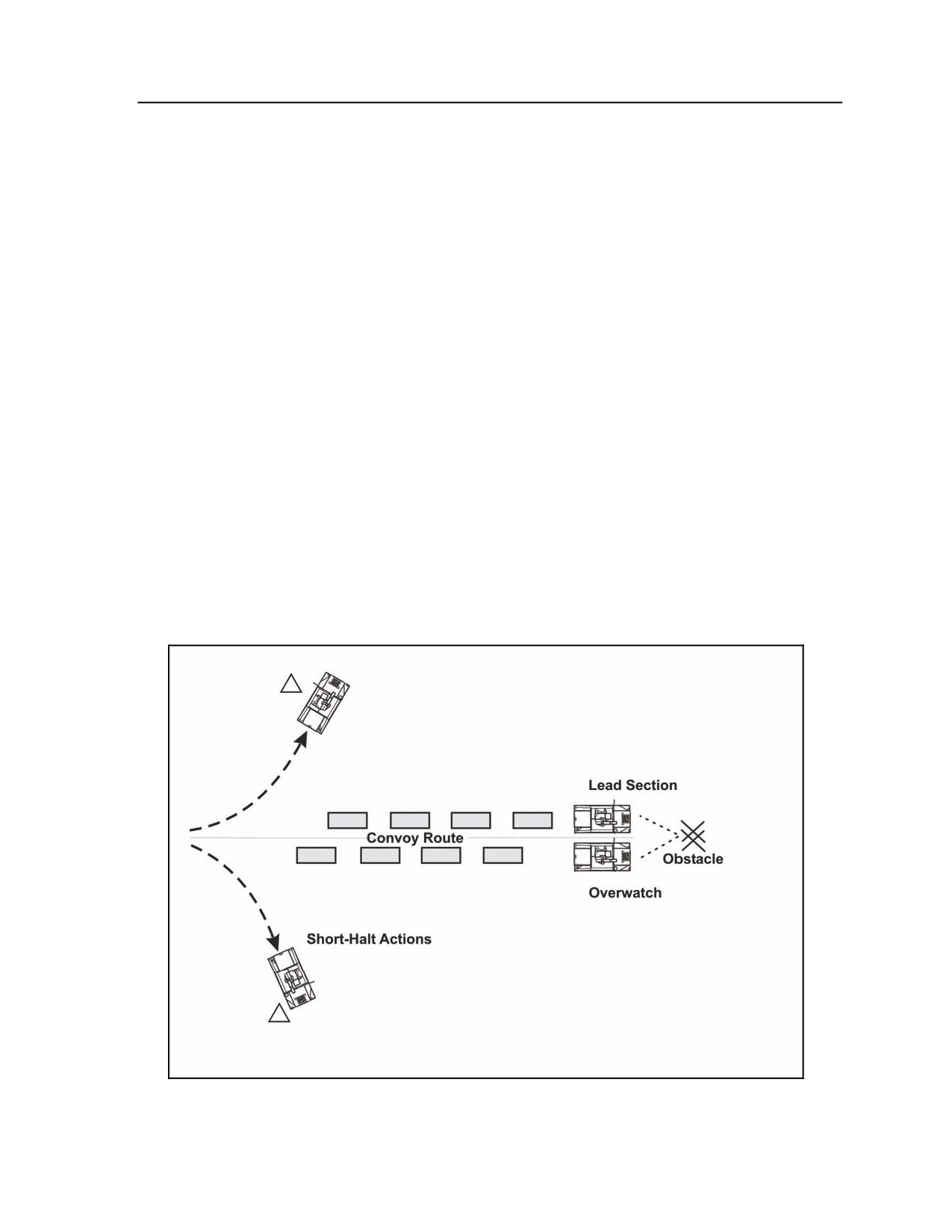
The lead element identifies the obstacle and directs the convoy to make a short halt to establish
security. The convoy escort overwatches the obstacle and requests the breach element force to
move forward (Figure H-16).
The convoy escort maintains 360-degree security of the convoy and provides overwatch as the
breach force reconnoiters the obstacle in search of a bypass.
H-93. Once all reconnaissance is complete, the convoy commander determines which of the following
COAs he will take:
Bypass the obstacle.
Breach the obstacle with assets on hand.
Breach the obstacle with reinforcing assets.
H-94. The convoy security commander relays a SPOTREP and requests support by combat reaction forces,
engineer assets (if they are not part of the convoy), and aerial reconnaissance elements. Artillery units are
alerted to prepare to provide fire support.
Figure H-16. Convoy escort overwatches an obstacle.
28 March 2007
FM 3-21.8
H-27
Appendix H
H-95. Obstacles may be in the form of unexploded ordnance (UXO), or uncharted minefields. If the convoy
encounters UXO or mines, the convoy security commander should identify, mark, report, and bypass.
ACTIONS DURING HALTS
H-96. During a short halt, the convoy escort remains alert for possible enemy activity. If the halt is for any
reason other than an obstacle, the following actions should be taken.
H-97. The convoy commander signals the short halt and transmits the order via tactical radio. All vehicles
in the convoy initially assume a herringbone formation.
H-98. If possible, escort vehicles are positioned up to 100 meters beyond the convoy vehicles that are just
clear of the route. Escort vehicles remain at the ready, dismount the rifles teams or squads as required, and
establish local security. Infantry security elements or escort vehicles must occupy terrain within small arms
range that dominates the convoy route during halts.
H-99. When the order is given to move out, convoy vehicles reestablish movement formation, leaving
space for escort vehicles. Once the convoy is in column, local security elements (if used) return to their
vehicles, and the escort vehicles rejoin the column.
H-100. The convoy resumes movement.
H-28
FM 3-21.8
28 Mach 2007
Appendix I
Improvised Explosive Devices, Suicide Bombers,
and Unexploded Ordnance
Improvised explosive devices (IEDs), car bombs, unexploded ordnance (UXO), and
suicide bombers pose deadly and pervasive threats to Soldiers and civilians in
operational areas all over the world. Infantrymen at all levels must know how to
identify, avoid, and react to these hazards properly. Newly assigned leaders and
Soldiers should read everything they can find on current local threats. They should
also become familiar with unit SOP policies and other relevant information contained
in locally produced Soldier handbooks and leader guidebooks.
This appendix introduces discussions of improvised explosive devices
(IEDs),
homicide bombers, and unexploded ordnance (UXO). It incorporates tactical-level
countermeasures learned from recent combat operations.
SECTION I — IMPROVISED EXPLOSIVE DEVICES
I-1. IEDs are nonstandard explosive devices used to target U.S. Soldiers, civilians, NGOs, and
government agencies. IEDs range from crude homemade explosives to extremely intricate
remote-controlled devices. The devices are used to instill fear in U.S. Soldiers, coalition forces, and the
local civilian population. Their employment is intended to diminish U.S. national resolve with mounting
casualties. The sophistication and range of IEDs continue to increase as technology continues to improve
and as terrorists gain experience.
TYPES
I-2. Some of the many types of IEDs follow.
TIMED EXPLOSIVE DEVICES
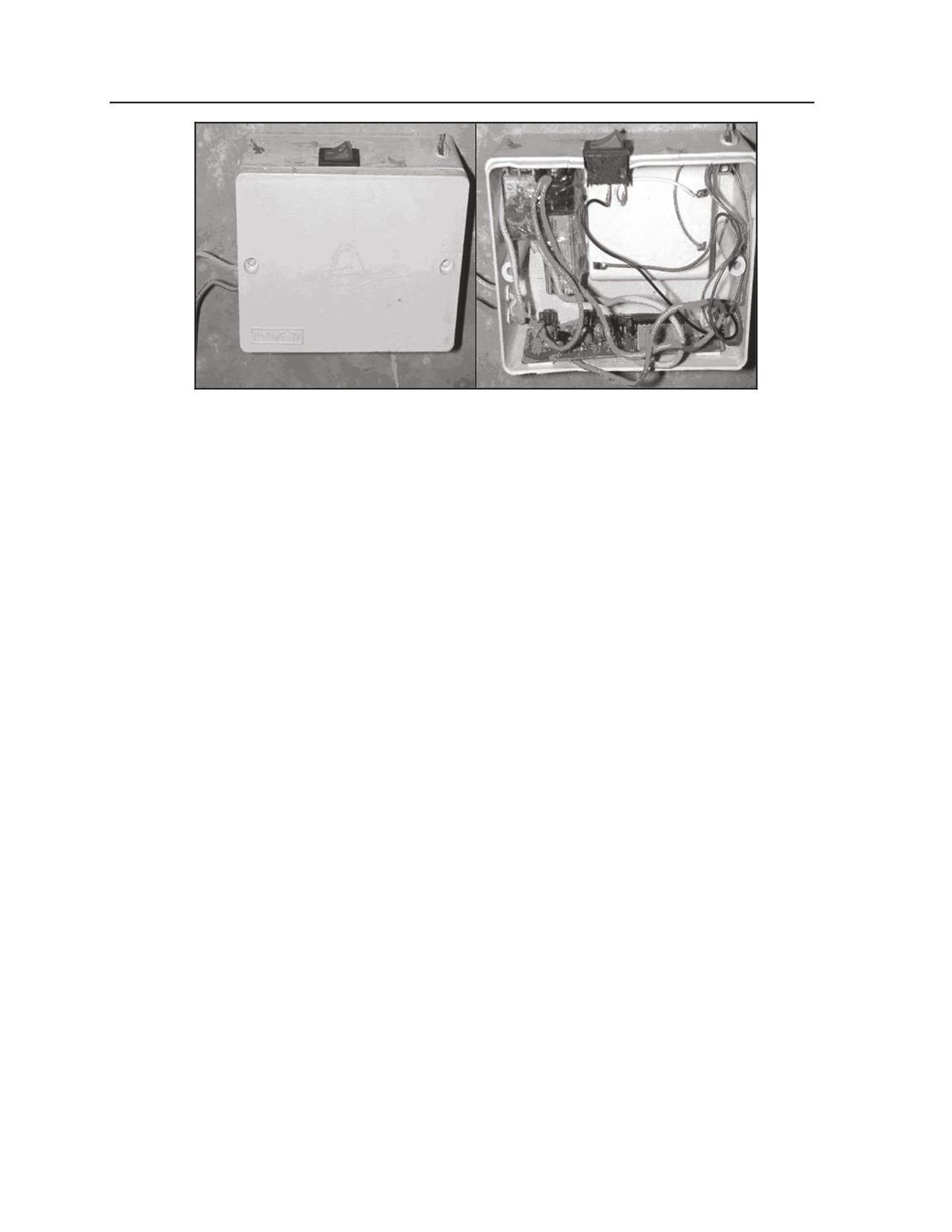
I-3. These can be detonated by remote control such as by the ring of a cell phone, by other electronic
means, or by the combination of wire and either a power source or timed fuze (Figure I-1).
IMPACT DETONATED DEVICES
I-4. These detonate after being dropped, thrown, or impacted in some manner.
VEHICLE BOMBS
I-5. These may include explosive-laden vehicles detonated with electronic command wire or wireless
remote control, or with timed devices. They might be employed with or without drivers.
28 March 2007
FM 3-21.8
I-1
Appendix I
Figure I-1. Example of IED detonation device with explosive.
CHARACTERISTICS
I-6. Key identification features and indicators of suspected IEDs include—
Exposed wire, cord, or fuze protruding from an object that usually has no such attachment.
An unusual smell, sound, or substance emanating from an object.
An item that is oddly light or heavy for its size.
An object that seems out of place in its surrounding.
An object or area locals are obviously avoiding.
An threatening looking object covered with written threats or whose possessor uses verbal
threats.
An object that is thrown at personnel, facilities, or both.
INGREDIENTS
I-7. Anything that can explode will be used to make IEDs. Examples include:
Artillery rounds containing high explosives or white phosphorous.
Any type of mine (antitank or antipersonnel).
Plastic explosives such as C4 or newer.
A powerful powdered explosive.
Ammonium nitrate (fertilizer) combined with diesel fuel in a container. (The truck bomb that
destroyed the Oklahoma City Federal Building used ammonium nitrate and diesel fuel.)
CAMOUFLAGE
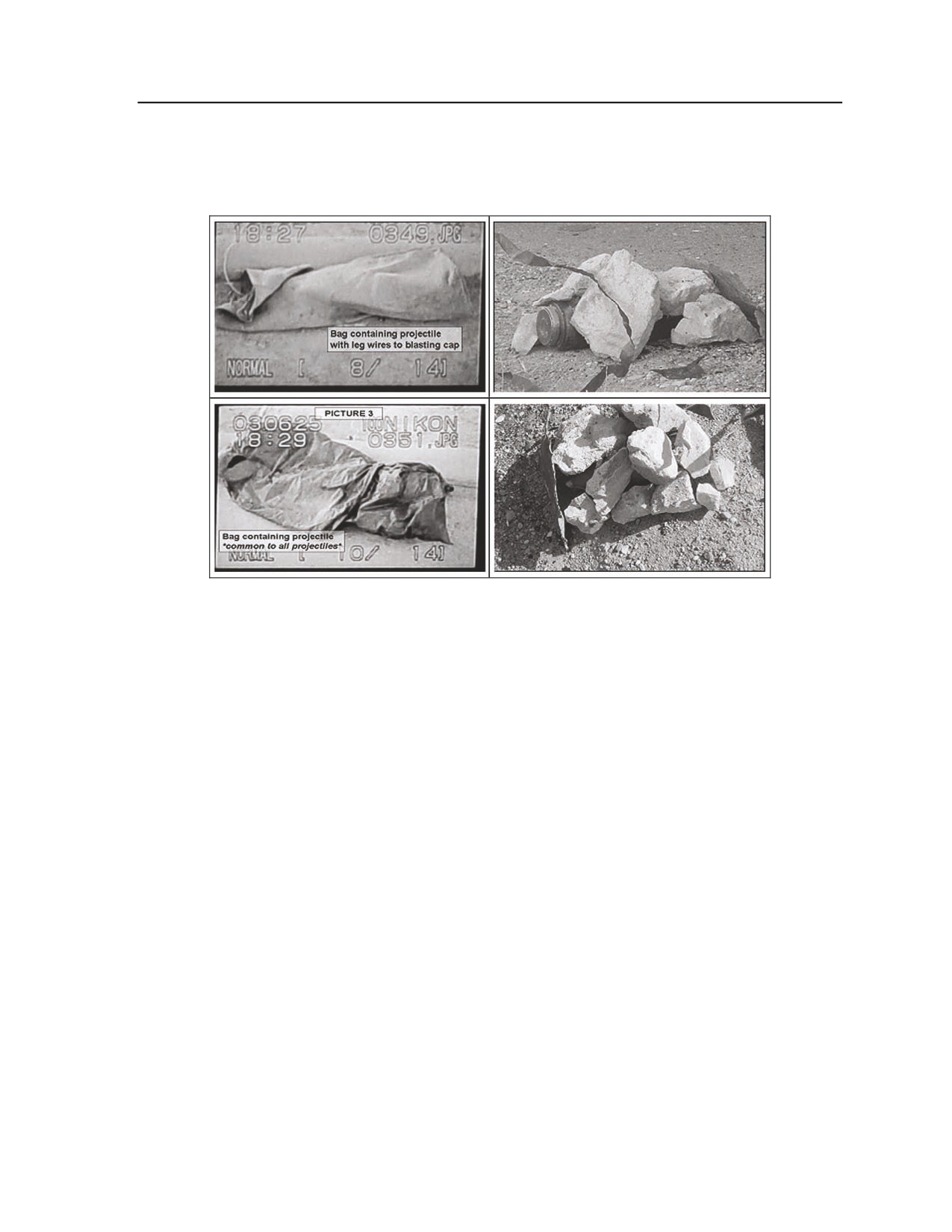
I-8. An IED can vary from the size of a ballpoint pen to the size of a water heater. They are often
contained in innocent-looking objects to camouflage their true purpose. The type of container used is
limited only by the imagination of the terrorist. However, containers usually have a heavy metal casing to
increase fragmentation. Figure I-2 shows some of the types of camouflage that have been used to hide IEDs
in Iraq. Some of the more commonly used containers include:
Lead, metal, and PVC pipes with end caps (most common type).
Fire extinguishers.
Propane tanks.
Mail packaging.
Wood and metal boxes.
I-2
FM 3-21.8
28 March 2007
Improvised Explosive Devices, Suicide Bombers, and Unexploded Ordnance
Papier-mâché or molded foam or plastic "rocks," (containers that look like rocks, usually
employed along desert roads and trails).
Military ordnance, or rather modified military ordnance, which uses an improvised fuzing and
firing system.
Figure I-2. Camouflaged UXO.
VEHICLE-BORNE DEVICES (CAR BOMBS)
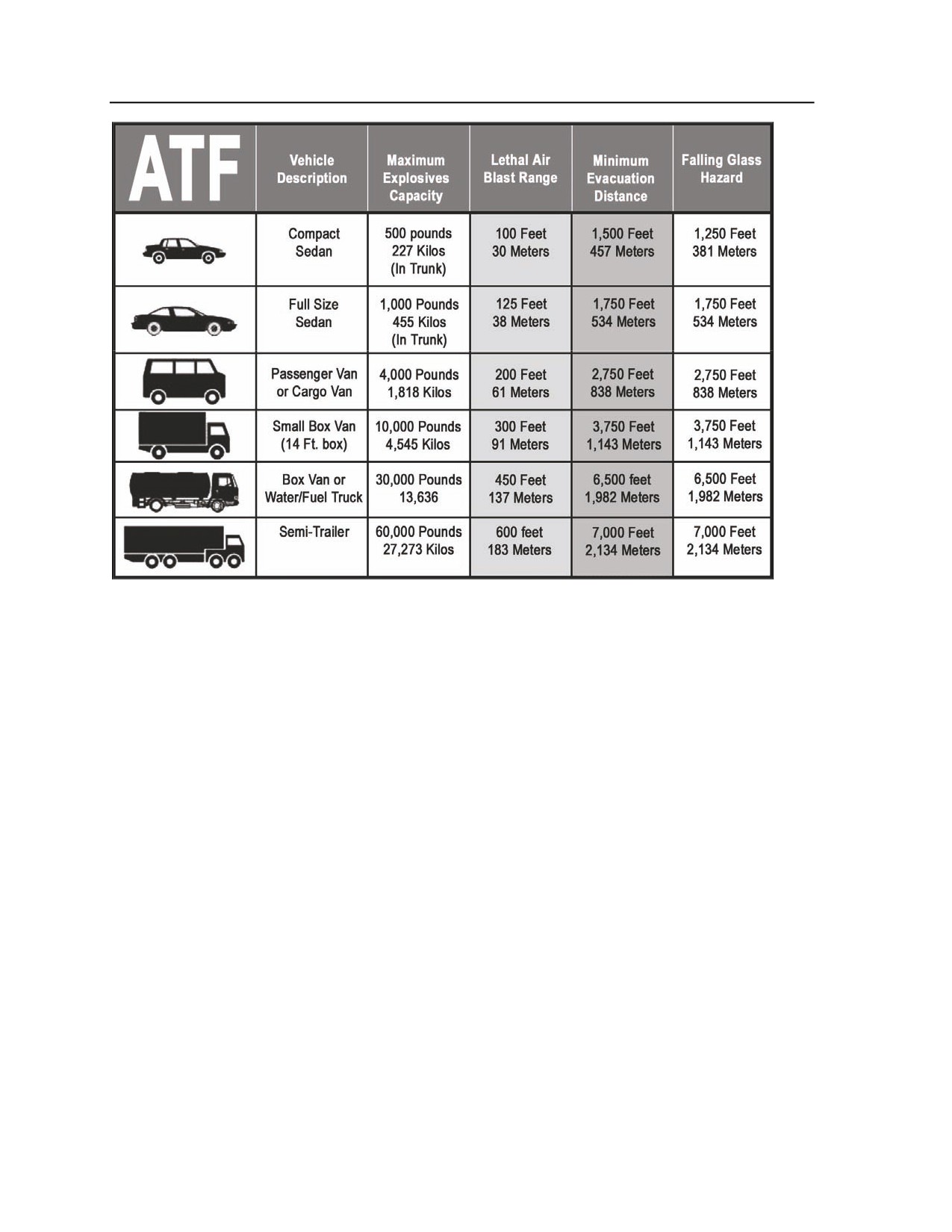
I-9. Car bombs obviously use a vehicle to contain the device. The size of the device varies by the type of
vehicle used. They can be packed into varying sizes of sedans, vans, or a large cargo trucks (Figure I-3).
Larger vehicles can carry more explosives, so they cause more damage than smaller vehicles. Device
functions, like package types, vary.
I-10. Signs of a possible car bomb include:
A vehicle riding low, especially in the rear, especially if the vehicle seems empty. Explosive
charges can also be concealed in the panels of the vehicle to distribute the weight of the
explosives better.
Suspiciously large boxes, satchels, bags, or any other type of container in plain view on, under,
or near the front seat in the driver's area of the vehicle.
Wire or rope-like material coming from the front of the vehicle that leads to the rear passenger
or trunk area.
A timer or switch in the front of a vehicle. The main charge is usually out of sight, and often in
the rear of the vehicle.
Unusual or very strong fuel-like odors.
An absent or suspicious-behaving driver.
28 March 2007
FM 3-21.8
I-3
Appendix I
Figure I-3. Vehicle IED capacities and danger zones.
EMPLOYMENT
I-11. IEDs have been used against the U.S. military throughout its history. Operation Enduring Freedom
(Afghanistan) and Iraqi Freedom (OIF) have seen the use of IED attacks on a significant scale targeting
U.S., coalition, and Iraqi Security forces, and civilian concentrations. Some threat TTPs might include:
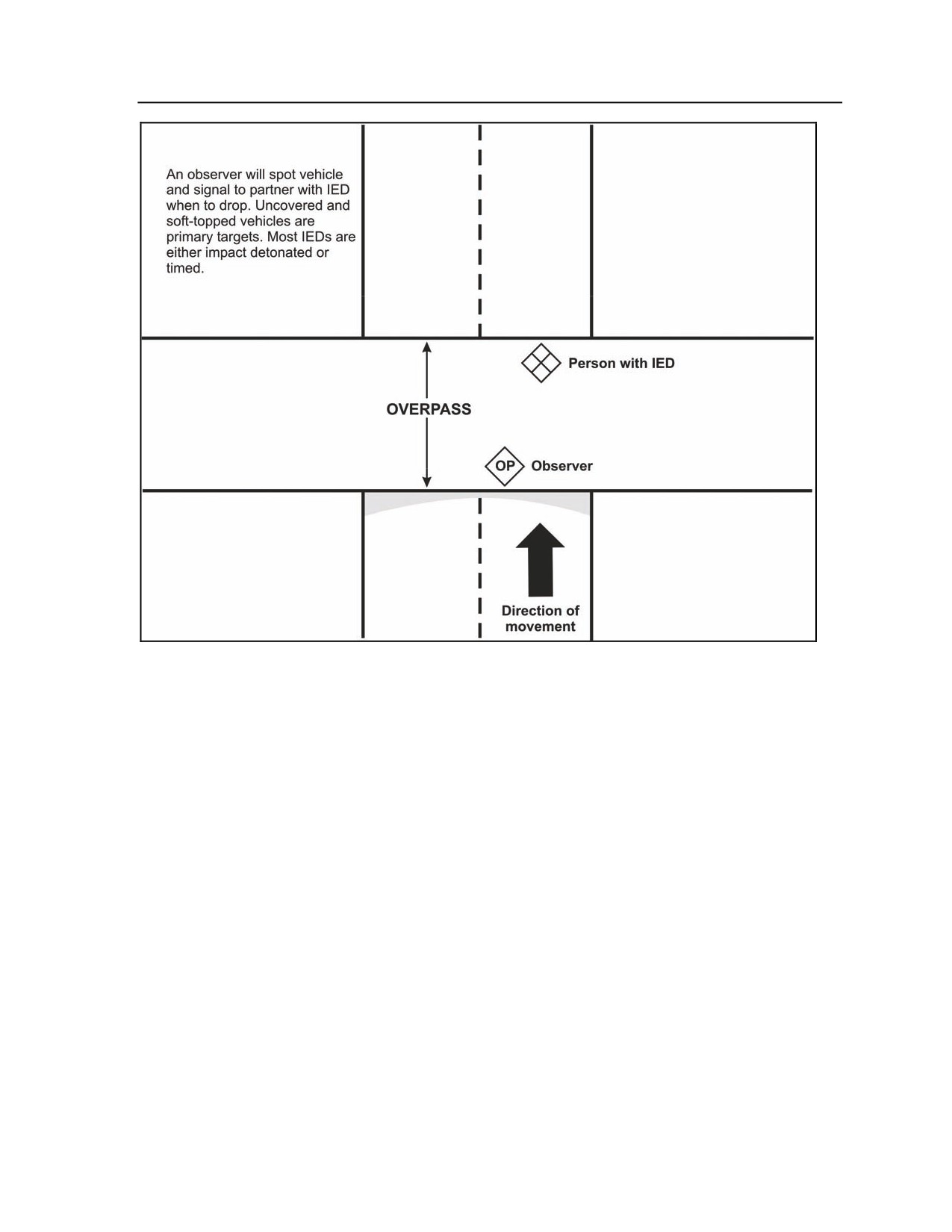
An IED dropped into a vehicle from a bridge overpass. An enemy observer spots a vehicle and
signals a partner on the overpass when to drop the IED. Uncovered soft-top vehicles are the
main targets. These IEDs are triggered either by timers or by impact (Figure I-4).
An IED used in the top-attack mode and attached to the bottom of a bridge or overpass. This
IED is command-detonated as a vehicle passes under it. This method gets around the side and
undercarriage armor used on U.S. vehicles.
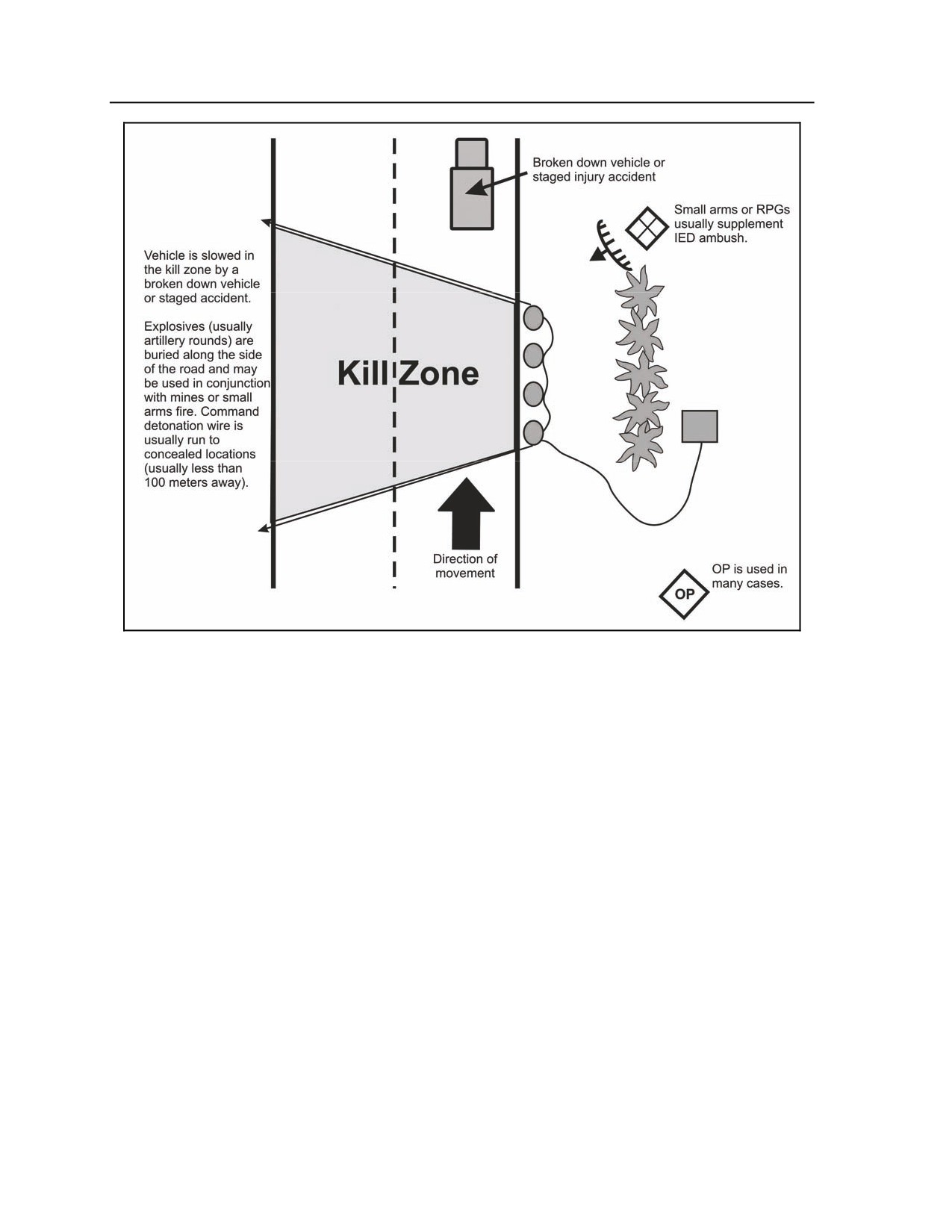
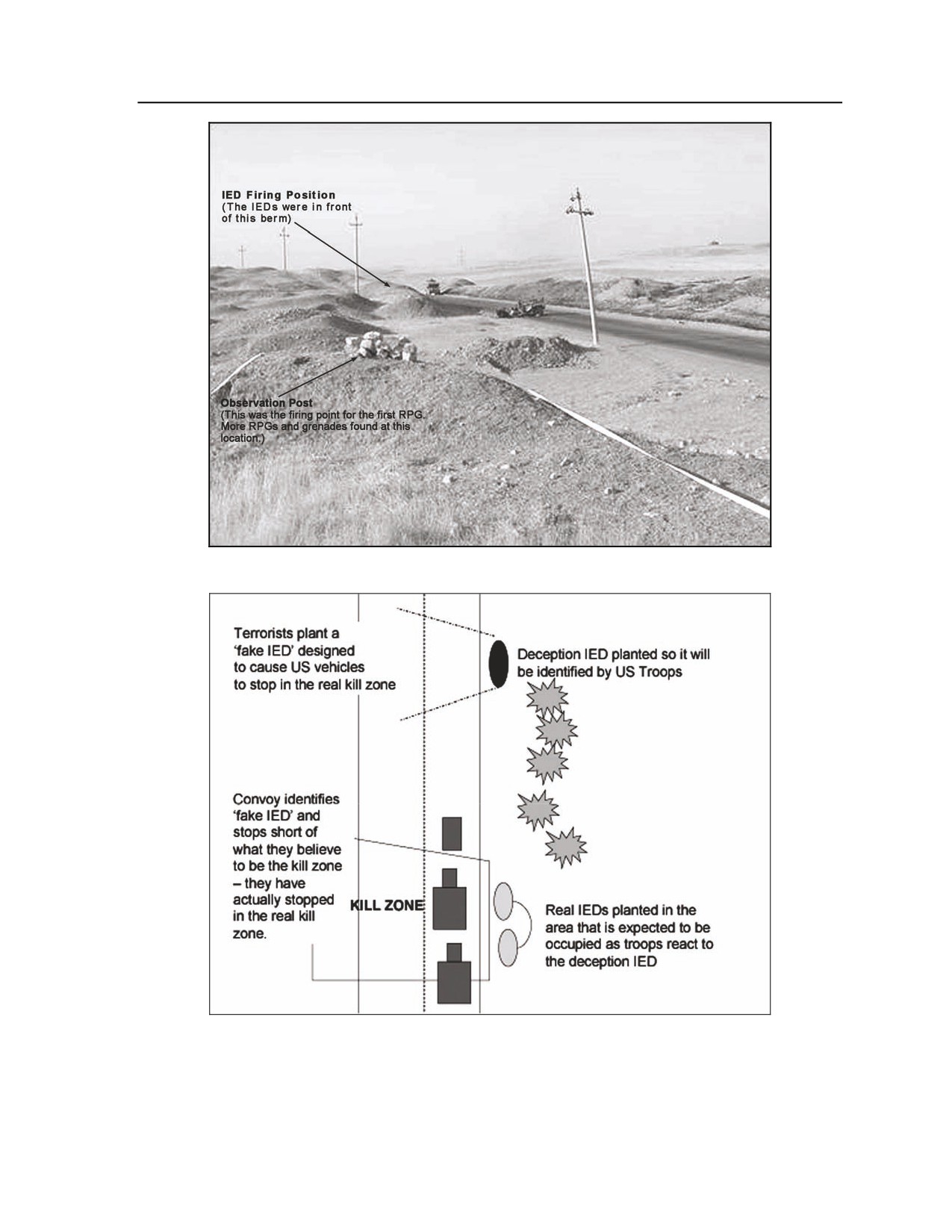
An IED used with an ambush. Small arms, RPGs, and other direct-fire weapons supplement the
IED, which initiates the ambush (Figures I-5, I-6, and I-7). Terrorists sometimes use deception
measures such as dummy IEDs to stop or slow vehicles in the real kill zone.
The driver of a suicide or homicide vehicle such as a taxicab feigns a breakdown and detonates
the vehicle when Soldiers approach to help. The vehicle with IEDs might also run a checkpoint
and blow up next to it.
Suicide bombers sometimes approach U.S. forces or other targets and then self-detonate.
Children might approach coalition forces wearing explosive vests.
I-4
FM 3-21.8
28 March 2007
Improvised Explosive Devices, Suicide Bombers, and Unexploded Ordnance
Figure I-4. Example of IED dropped into vehicles.
28 March 2007
FM 3-21.8
I-5
Appendix I
Figure I-5. Typical IED combination ambush.
I-6
FM 3-21.8
28 March 2007
Improvised Explosive Devices, Suicide Bombers, and Unexploded Ordnance
Figure I-6. IED combination ambush in Iraq.
Figure I-7. Deception or fake IED used to stop convoy in kill zone.
28 March 2007
FM 3-21.8
I-7
Appendix I
COUNTERMEASURES
I-12. The enemy continues to adapt as friendly countermeasures evolve. Following are some measures
used to counter an IED threat.
AVIATION SUPPORT
I-13. Operate with army aviation support when possible. Terrorists employing command-detonated IEDs
generally rely on a quick escape after detonating an IED or executing an ambush. Recent trends have
shown that OH-58D support deters attacks because terrorists are unable to break contact easily.
ALL-ROUND SECURITY
I-14. Remain alert. Maintain all-round security at all times. Scan rooftops and bridge overpasses for enemy
activity.
CONVOY SECURITY
I-15. When possible, travel in large convoys. Vary road speed to disrupt the timing of command-detonated
devices. However, terrorists often target convoys (or specific vehicles within convoys) with poor security
postures. All occupants of convoy vehicles should have and keep their weapons pointed in an alert and
defensive posture. Maintain a strong rear security element or a follow-on "shadow" trail security element.
This force can more quickly be brought to bear on an enemy attacking the rear of a convoy. Use armed
vehicles to speed ahead of a convoy to overwatch overpasses as the convoy passes. The lead vehicle in a
convoy should have binoculars to scan the route ahead. All convoys should have extra tow bars or towing
straps to recover broken-down vehicles quickly.
ADAPTATION
I-16. Be aware of evolving enemy tactics/procedures and be prepared to design countermeasures (Figure I
8). To the maximum possible extent, avoid becoming predictable. Vary routes, formations, speeds, and
techniques.
TURNS
I-17. Avoid moving toward or stopping for an item in the roadway. Give wide clearance to items in the
road. Turn to the outside of corners because terrorists often plant IEDs on the inside of turns to close the
distance to the target. Turning to the outside also allows a longer field of view past the turn.
AUDIBLE SIGNALS
I-18. At night be aware of audible signals that can be used to communicate the approach of a convoy such
as flares, gunfire, lights going off, or horns honking.
ENEMY OBSERVERS
I-19. Be alert for people who seem overly interested in your convoy, especially those using cell phones
while watching your convoy.
UNUSUAL SILENCE
I-20. Be aware of unusually quiet areas. Often, local civilians have been warned of an enemy attack on
coalition forces.
I-8
FM 3-21.8
28 March 2007
Improvised Explosive Devices, Suicide Bombers, and Unexploded Ordnance
USE OF HEADLIGHTS
I-21. Do not use service drive headlights during the day. Having lights on during daylight makes the
military vehicles stand out and easier to identify at a greater distance.
VEHICLE PROTECTION
I-22. Harden all vehicles.
OTHER TRAVELING PRECAUTIONS
I-23. Do not stop for broken down civilian vehicles, vehicle accidents, or wounded civilians along a
convoy route.
CIVILIAN VEHICLE THREATS
I-24. Be alert to civilian vehicles cutting in and out or ramming vehicles in a convoy as if attempting to
disrupt, impede, or isolate the convoy. Current ROE might permit you to fire warning shots or to engage
threatening vehicles.
FIVES C's TECHNIQUE
I-25. Using the five C's (confirm, clear, call, cordon, control) technique helps to simplify both awareness
and reaction to a suspected IED.
CONFIRM
I-26. The first step when encountering a suspected IED is to confirm that it is an IED. If Soldiers suspect
an IED while performing 5- and 25-meter searches of their positions, they should act as if it could detonate
at any moment, even if it turns out to be a false alarm. Using as few people as possible, troops should begin
looking for telltale signs such as wires, protruding ordnance, or fleeing personnel.
CLEAR
I-27. If an IED is confirmed, the next step is to clear the area. The safe distance is determined by several
factors: the tactical situation, avoidance of predictability, and movement several hundred meters away.
Everyone within the danger zone should be evacuated. If more room is needed such as when the IED is
vehicle-born, Soldiers should clear a wider area and continuously direct people away. Only explosive
ordnance disposal (EOD) personnel or their counterparts may approach the IED. While clearing, avoid
following a pattern and look out for other IEDs. If you find any more, reposition to safety and notify a
ranking member on the scene.
CALL
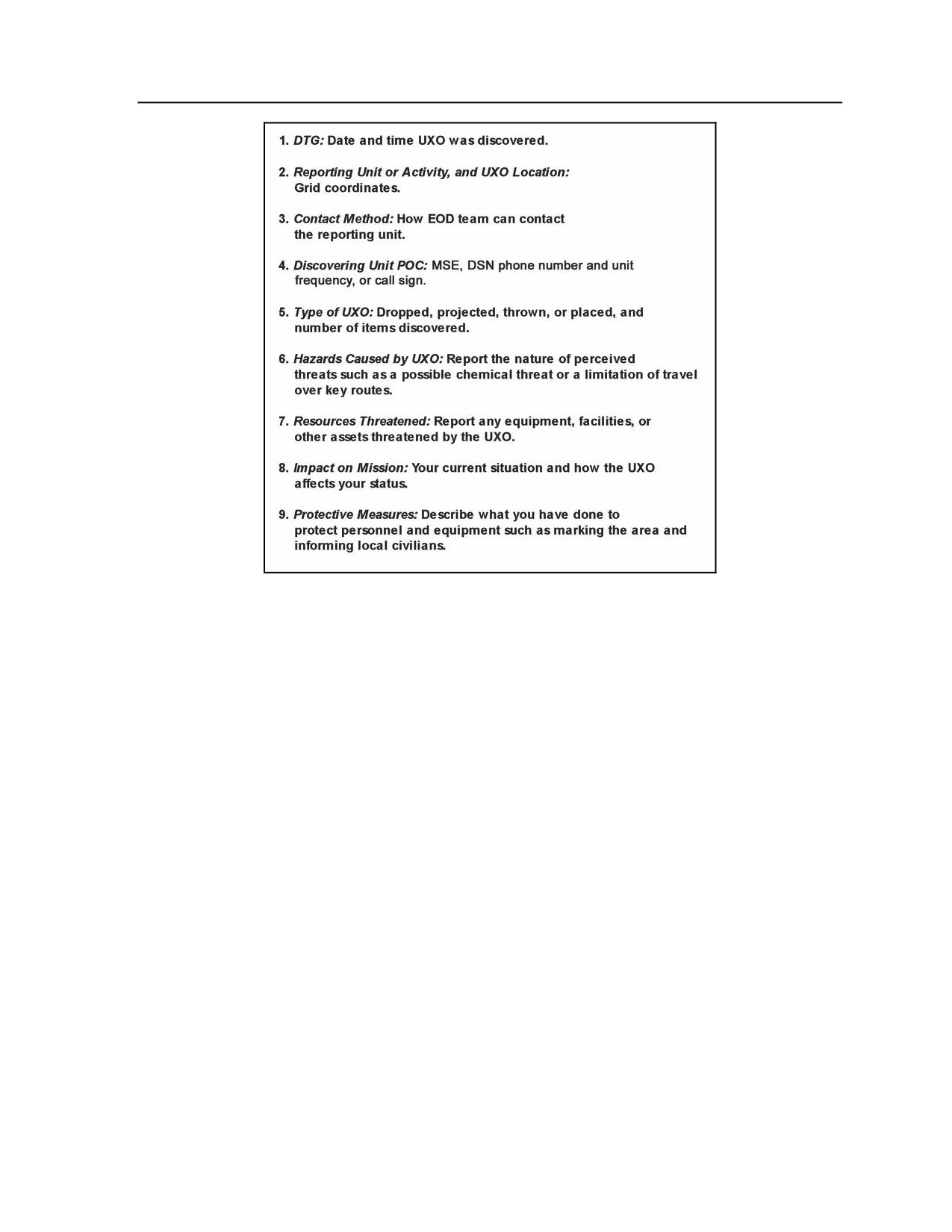
I-28. While the area around the IED is being cleared, a nine-line IED/UXO report should be called in. The
report is much like the nine-line MEDEVAC report. It includes the necessary information for the unit's
TOC to assess the situation and prepare an appropriate response.
CORDON
I-29. After the area has been cleared and the IED has been called in, Soldiers should establish fighting
positions around the area to prevent vehicle and foot traffic from approaching the IED. They assure the area
is safe by checking for secondary IEDs. They use all available cover. The entire perimeter of the effected
area should be secured and dominated by all available personnel. Available obstacles should be used to
block vehicle approach routes. Scan near and far for enemy observers who might try to detonate the IED.
Insurgents often try to hide where they can watch their target area and detonate at the best moment. To
deter attacks, randomly check the people leaving the area.
28 March 2007
FM 3-21.8
I-9
Appendix I
CONTROL
I-30. Since the distance of all personnel from the IED directly affects their safety, Soldiers should control
the site to prevent people from straying too close until the IED is cleared. No one may leave the area until
the EOD gives the "all clear." While controlling the site, assure all Soldiers know the contingency plans in
case they come under attack by any means, including direct-fire small arms or RPGs, or indirect fires.
SECTION II — SUICIDE BOMBERS
I-31. These are different from all other terrorist threats, and require specific guidance on actions,
particularly the interpretation of the ROE.
DEFINITION
I-32. A suicide attack is so called because it is an attack that means certain death for the attacker.
The terrorist knows that success depends on his willingness to die. He conducts this kind of attack by
detonating a worn, carried, or driven portable explosive charge. In essence, the attacker is himself a
precision weapon. Suicide bombers aim to cause the maximum number of casualties, or to assassinate a
particular target. Stopping an ongoing suicide attack is difficult. Even if security forces stop him before he
reaches his intended target, he can still activate the charge and kill or injure those around him at the time.
An additional benefit is the simplicity of such an attack. Neither escape nor extraction is an issue. Nor is
intelligence, for no one will be left to interrogate. The only way to prepare for a suicide attack is to train
Soldiers to react immediately with competence and confidence. Soldiers should also train to avoid
overreacting with unnecessary or inappropriate lethal force. The following are potential high-value targets
for suicide bombers.
High-signature forces such as uniformed military and security elements; military vehicles;
civilian vehicles used for military purposes; military bases; checkpoints; patrols; liaison
personnel; or supportive host nation personnel.
Members and facilities of the international community such as ambassadors and other diplomats;
embassy, U.N., and NGO buildings; and diplomatic vehicles and staffs.
National and provincial leaders and government officials.
Civilians in public places such as markets, shops, and cafes. Although civilians in these locations
are seldom primary targets, some groups do attack them.
DELIVERY METHODS
I-33. The two main methods of employing devices are by person or by vehicle.
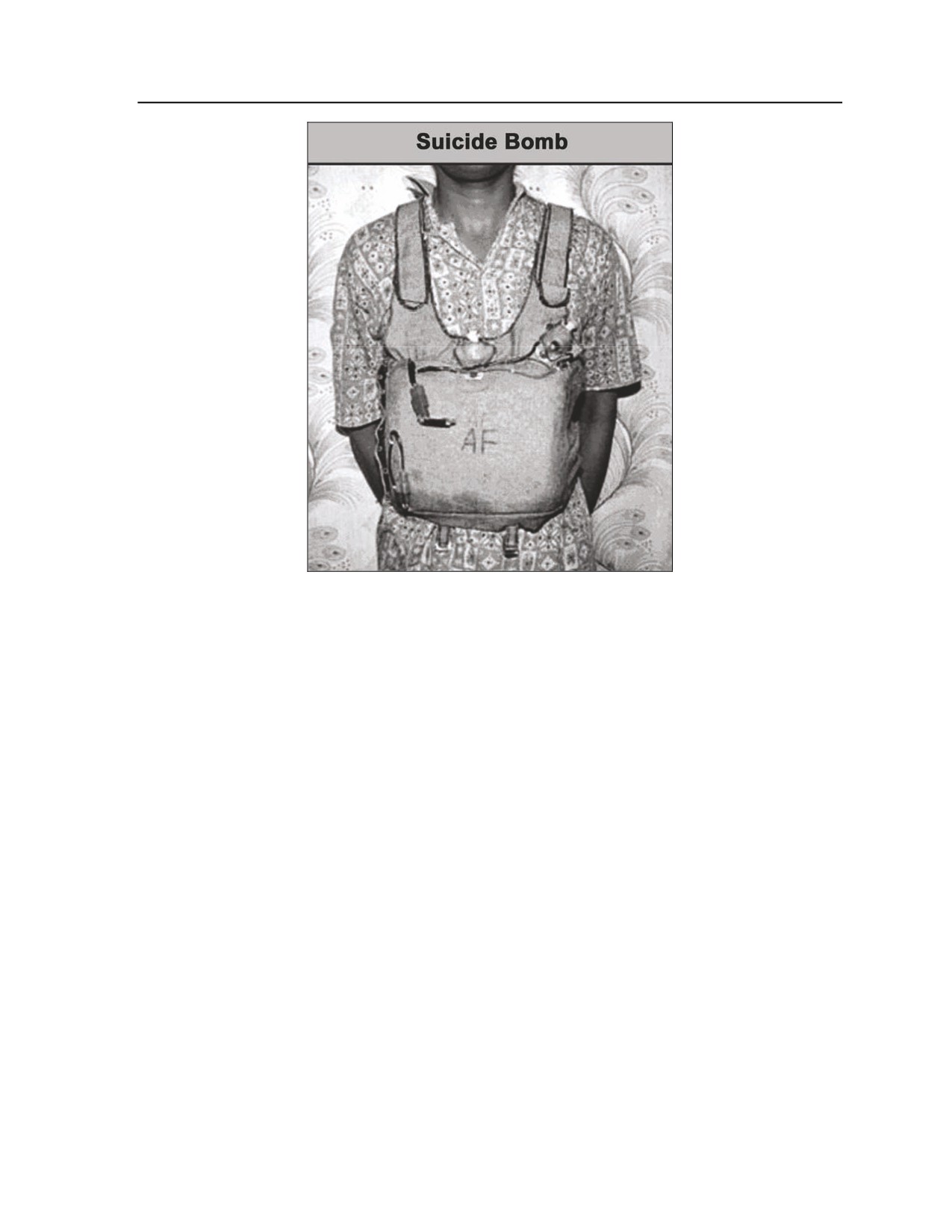
A person-borne suicide bomb usually has a high-explosive and fragmentary effect and uses a
command-detonated firing system such as a switch or button the wearer activates by hand. A
vest, belt, or other specially modified clothing can conceal explosives with fragmentation
(Figure I-8).
A vehicle-borne suicide bomb uses the same methods and characteristics of other package or
vehicle bombs, and is usually command detonated.
I-10
FM 3-21.8
28 March 2007
Improvised Explosive Devices, Suicide Bombers, and Unexploded Ordnance
Figure I-8. Suicide bomber vest.
INDICATORS
I-34. Suicide bombers can be either gender and any age. For example, recent Palestinian bombers were
female teenagers. You might be looking at a suicide bomber if you see someone who—
Tries to blend in with the (target) environment.
Wears ordinary, nondistinctive clothing, military or religious garb, or an oversized, bulky, or
unseasonably heavy coat or jacket.
Demonstrates fanatical religious beliefs by behaviors such as praying fervently, possibly loudly,
in public.
Has a shaved head (Muslim males); wears their hair short and their face clean shaven; or wears
fragrance, which is unusual for an Arab man.
Behaves nervously, that is, sweats, or glances about anxiously.
Has religious verses from the Quran written or drawn onto their body, hands, or arms.
(Islamic males) dresses as and pretends to be a woman.
Carries a bag tightly, clutched close to the body, and in some cases squeezes or strokes it.
SPECIAL CONSIDERATIONS
I-35. Consider the following when dealing with potential suicide bombers:
Most will try to detonate the device if they believe they have been discovered.
Suicide bombers are of any nationality, not necessarily of direct Middle Eastern descent. They
may simply sympathize with the terrorist group’s cause(s).
If you determine that a suspect is a suicide bomber, then you will probably have to use deadly
force. Prepare for and expect a detonation. Shoot from a protected position from as far away
as possible.
28 March 2007
FM 3-21.8
I-11
Appendix I
Many suicide bombers use pressure-release-type detonation devices that they hold in their hands.
They apply the pressure before they begin their final approach to the target. The explosive
payload will detonate as soon as the bomber relaxes his grip, so it will go off even if you kill
him.
Some bombers also have a command-detonated system attached to their bomb, and a second
person observes and tracks him to the target. This also allows the terrorists to control and
detonate the bomb, even if the bomber dies or his trigger is destroyed or disabled.
The suicide bomber may also use a timed detonation system, and again this works whether or
not you kill him before he reaches his target.
COMPLICATIONS
I-36. Dealing with a suicide bomber is one of the toughest situations a Soldier can face. In just a few
seconds he must identify the bomber, assess the situation, consider how to comply with the ROE, and act
decisively. There is seldom time to think beyond that or to wait for orders. The only possible way to stop
the bomber short of his target is to immediately incapacitate him with lethal force. Challenging him would
probably cause him to trigger his device at once. The suicide bomber is trained and prepared to carry out
his mission. Some experts believe that a suicide bomber considers himself already dead when setting out on
an attack. The Soldier and leader must continually be aware that—
A pressure release switch can detonate the device as soon as the bomber is shot.
A device could be operated by remote control or timer even after the bomber is incapacitated.
Another person observe and command-detonate the bomb.
A second suicide bomber might be operating as a backup or to attack the crowd and assistance
forces that normally gather after a detonation.
SECTION III — UNEXPLODED ORDNANCE
I-37. Unexploded ordinance (UXO) are made up of both enemy and friendly force ordnance that have
failed to detonate. UXO sometimes pose no immediate threat, but they can cause injuries, loss of life, and
damage to equipment if appropriate actions are not taken. UXO can be found on the battlefield, in urban
areas, caves, and almost anywhere in an AO. UXO can be a result of a recent battle or war, or left over
from past conflicts. During Operation Enduring Freedom (OEF), U.S. Soldiers, coalition forces, and the
local population were in danger of encountering an estimated 10,000,000 pieces of UXO and mines left
over from 23 years of war in Afghanistan. Soldiers in Bosnia and Soldiers fighting in Operation Iraqi
Freedom have been exposed to an estimated 8 million antipersonnel mines and 2 million antitank mines, as
well as UXO. Soldiers can expect to encounter UXO in any future conflict.
RECOGNITION
I-38. Soldiers’ knowledge of UXO is essential to help prevent the risk of injury. Soldiers are generally
familiar with the appearance of ammunition and munitions used in their own weapons. They seldom
recognize what the actual projectile looks like once it has been fired, especially if it is discolored or
deformed by impact. Also, Soldiers might not be able to easily recognize UXO from USAF-delivered
weapons or from non-U.S. weapons. In general, leaders should caution their Soldiers against disturbing any
unknown object on the battlefield.
I-1.
I-39. FM 3-100.38 provides detailed illustrations and identifying characteristics of the four categories of
UXO, including projected, thrown, placed, and dropped.
PROJECTED ORDNANCE
I-40. Projected ordnance includes:
Projectiles such as HE, chemical, illumination, and submunitions.
Mortar rounds such as HE, chemical, WP, and illumination.
I-12
FM 3-21.8
28 March 2007
Improvised Explosive Devices, Suicide Bombers, and Unexploded Ordnance
Rockets such as self-propelled projectiles, no standard shape.
Guided missiles such as missiles with guidance systems.
Rifle grenades similar to mortars but fired from rifles.
THROWN ORDNANCE
I-41. Thrown ordnance including fragmentation, smoke, illumination, chemical, and incendiary
hand grenades.
PLACED ORDNANCE
I-42. Placed ordnance includes:
AP mines, generally small, of various shapes and sizes, and made of plastic, metal, or wood.
They might have trip wires attached.
AT mines, large, of various shapes and sizes, and made of plastic, metal, or wood. They might
have antihandling devices.
DROPPED ORDNANCE
I-43. Dropped ordnance includes:
Bombs, small to very large, with metal casings, tail fins, lugs, and fuzes. They may contain HE,
chemicals, or other hazardous materials.
Dispensers that look similar to bombs but may have holes or ports in them. Do not approach as
sub-munitions might be scattered around.
Very sensitive submunitions such as small bombs, grenades, or mines.
DANGER
DO NOT TRY TO TOUCH OR MOVE UXO. ORDNANCE FAILS FOR
MANY REASONS, BUT ONCE FIRED OR THROWN, THE FUZING
SYSTEM WILL LIKELY ACTIVATE. THIS MAKES THE ORDNANCE
TOO UNSTABLE TO HANDLE. IF A ROUND FAILS TO FUNCTION
INITIALLY, ANY SUBSEQUENT STIMULUS OR MOVEMENT MIGHT
SET IT OFF.
IMMEDIATE ACTION
I-44. Many areas, especially previous battlefields, might be littered with a wide variety of sensitive and
deadly UXO. Soldiers need to follow these precautions on discovering a suspected UXO:
Do not move toward the UXO. Some types of ordnance have magnetic or motion-sensitive
fuzing.
Never approach or pick up UXO even if identification is impossible from a distance. Observe the
UXO with binoculars if available.
Send a UXO report to higher HQ (Figure I-9). Use radios at least 100 meters away from the
ordnance. Some UXO fuzes might be set off by radio transmissions.
Mark the area with mine tape or other obvious material at a distance from the UXO to warn
others of the danger. Proper markings will also help EOD personnel find the hazard in response
to the UXO report.
Evacuate the area while carefully scanning for other hazards.
Take protective measures to reduce the hazard to personnel and equipment. Notify local people
in the area.
28 March 2007
FM 3-21.8
I-13
Appendix I
BOOBY TRAPS
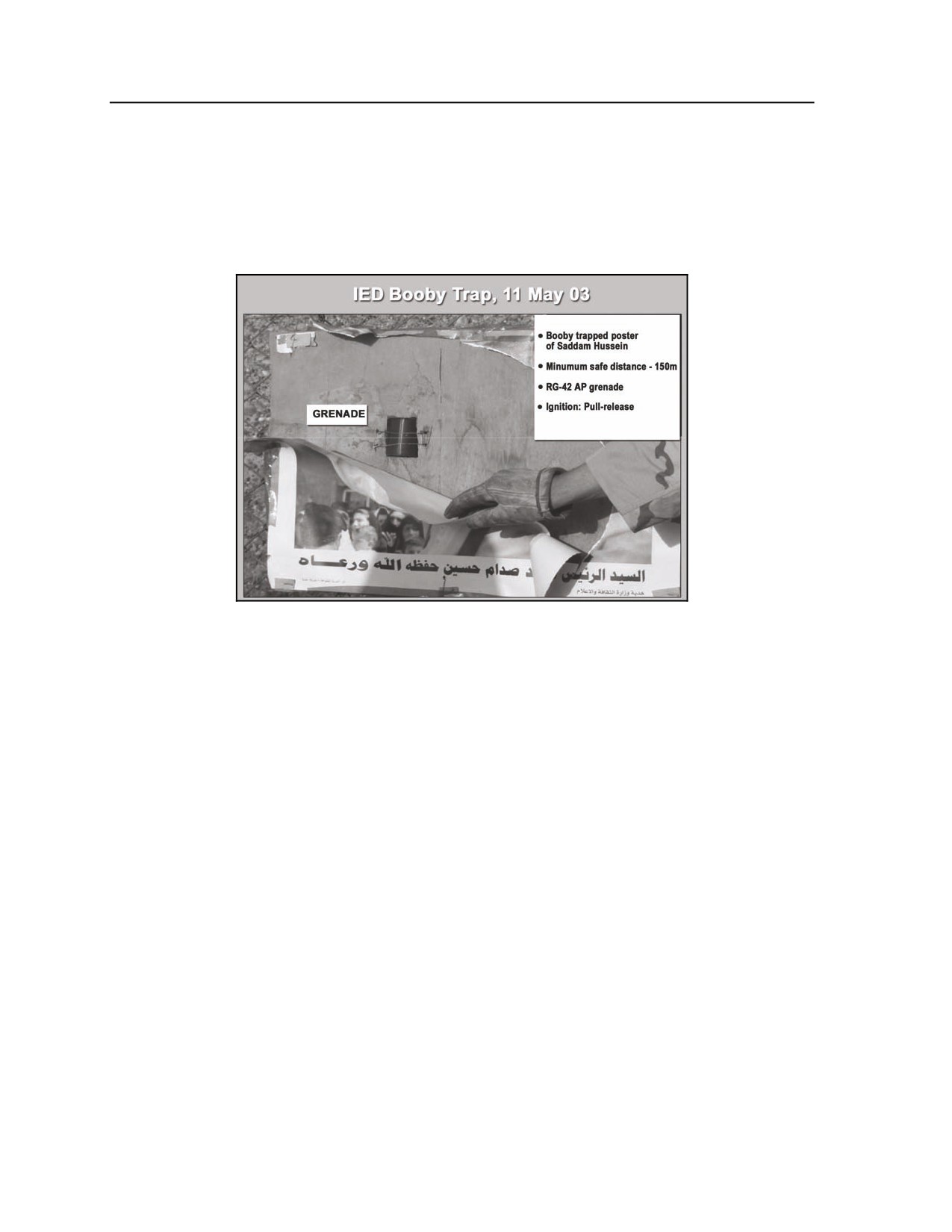
I-45. Booby traps are typically hidden or disguised explosive devices rigged on common items to go off
unexpectedly (Figure I-9). They may also be employed as antihandling devices on UXO, emplaced mines,
or as improvised explosive devices (IED). Identify, mark, and report using the nine-line UXO incident
report (Figure I-10). Field-expedient booby traps have also been employed with some success during
most conflicts.
Figure I-10. Example booby trap.
I-14
FM 3-21.8
28 March 2007
Improvised Explosive Devices, Suicide Bombers, and Unexploded Ordnance
Figure I-10. Nine-line UXO incident report.
28 March 2007
FM 3-21.8
I-15
This page intentionally left blank.
Glossary
ACRONYMS AND ABBREVATIONS
Acronym/Term
Definition
AA
assembly area
AAR
after-action review
ACL
allowable cargo load
AD
air defense
ADA
air defense artillery
ADAM
air defense and missile
AG
assistant gunner
AHD
antihandling device
ALO
air liaison officer
ANCD
automated network control device
AO
area of operations
AP
Antipersonnel
APC
armored personnel carrier
APDS
armor piercing discarding sabot
APOBS
Antipersonnel Obstacle Breaching System
AR
automatic rifleman
AT
antitank
ATGM
antitank guided missile
BAS
battalion aid station
BB
bunker buster
BC
Bradley commander
BCU
battery coolant unit
BDM
bunker defeat munition
BFT
blue force tracker
BIT
built-in text
BITE
built-in test equipment
BMNT
beginning morning nautical twilight
BVF
M2 Bradley Fighting Vehicle
C2
command and control
CAPS
counter active protection system
CAS
close air support
CASEVAC
casualty evacuation
CBRN
chemical, biological, radiological, and nuclear
CCIR
commander’s critical information requirements
CCM
close combat missile
CCMS
Close Combat Missile System
28 March 2007
FM 3-21.8
Gossary-1
FM 3-21.8
CCP
casualty collection point
CFL
coordinated fire line
CLU
command launch unit
COA
course of action
COE
contemporary operational environment
COP
common operating picture
CP
check point
CWST
combat survival water test
DA
Department of the Army
DD
Deparment of Defense form
DED
detailed equipment decontamination
DLIC
detachment left in contact
DoD
Department of Defense
DTD
detailed troop decontamination
DTG
date-time group
DVR
driver
EA
engagement area
ECM
electronic countermeasures
EENT
end of evening nautical twilight
EFP
explosive formed penetrator
EPW
enemy prisoner of war
ES2
enemy soldier and sensor
ETAC
enlisted tactical air controller
FBCB2
Force XXI Battle Command Brigade and Below System
FDC
fire direction center
FEBA
forward edge of the battle area
FFE
fire for effect
FIST
fire support team
FLIR
forward looking infared radar
FLOT
forward line of troops
FM
field manual
FO
forward observer
FOV
field of vision
FPF
final protective fire
FPL
final protective line
FRAGO
fragmentary order
FS
fire support
FSCL
fire support coordination line
FSCM
fire support coordination measures
FSE
fire support element
FSO
fire support officer
Glossary-2
FM 3-21.8
28 March 2007
Glossary
GNR
gunner
GPS
Global Positioning System
GSR
ground surveillance radar
GTA
graphic training aid
GTL
gun team leader
GTP
ground tactical plan
HE
high explosive
HEAT
high explosive antitank
HEDP
high explosive dual purpose
HEI-T
high explosive incendiary w/ tracer
HEMTT
heavy expanded mobility tactical truck
HMMWV
high-mobility multipurpose wheeled vehicle
HPT
high profile target
HQ
Headquarters
HUMINT
human intelligence
IBA
individual body armor
ICV
Infantry carrier vehicle
ICOM
ingetrated communication
IED
improvised explosive device
IMP
Impact
IMT
individual movement techniques
IPB
intelligence preparation of the battlefield
IR
information requirement
IRP
initial rally point
ISR
intelligence, surveillance, reconnaissance
ITAS
Improved Target Acquistion System
JSLIST
joint service lightweight integrated suit technology
JTAC
joint terminal air controller
KIA
killed in action
KPH
kilometers per hour
LACE
liquid, ammunition, casualty, and equipment
LAW
light antiarmor weapon
LC
line of contact
LCMR
lightweight counter-mortar radar
LD
line of departure
LOA
limit of advance
LOC
line of communication
LOGPAC
logistics package
LOS
line of sight
LOW
law of war
LTA
launch tube assembly
28 March 2007
FM 3-21.8
Glossary-3
FM 3-21.8
LZ
landing zone
MANPADS
Man-Portable Air Defense System
MBA
main battle area
MDI
modernized demolition initiator
MEDEVAC
medical evacuation
MEL
maximum engagement line
METTC-TC
mission, enemy, terrain, troops-time, civil
MGS
Mobile Gun System
MLO
multipurpose rain/snow/cb overboot
MOPMS
modular pack mine system
MOPP
mission-oriented protective posture
MR
Moonrise
MS
Moonset
MSD
minimum safe distance
MSR
main supply route
MVT
Movement
NAI
named area of interest
NCO
non-commissioned officer
NCS
net control system
NFA
no-fire area
NFV
narrow field of view
NLT
not later than
NMC
nonmission capable
NSB
near surface burst
NVD
night vision device
NVG
night vision goggles
NVS
night vision sight
OAKOC
observation and fields of fire, avenues of approach, key and decisive terrain, obstacles,
cover and concealment
OP
observation post
OPCON
operational control
OPORD
operation order
OPTEMPO
operational tempo
ORP
objective rally point
OT
observer target
PA
physician’s assistant
PCI
precombat inspection
PDF
principle direction of fire
PI
percent of incapacitation
PIR
priority intelligence requirement
PLD
probable line of deployment
Glossary-4
FM 3-21.8
28 March 2007
Glossary
PLGR
precision lightweight GPS receiver
PLL
parts load list
PMCS
preventive maintenance checks and services
PMM
preventive medicine measures
POL
petroleum, oil, and lubricants
POSNAV
position navigation
PRX
Proximity
PSG
platoon seargent
PSI
pressure per square inch
PZ
pickup zone
RCU
remote control unit
RED
risk estimate distance
RFA
restrictive fire area
RIP
relief in place
RLEM
rifle-launched entry munitions
ROE
rules of engagement
ROI
rules of interaction
RPG
rocket-propelled grenade
RRP
reentry rally point
RTO
radiotelephone operator
SA
situational awareness
SALUTE
size, activity, location, uniform, time, equipment
SBCT
Stryker brigade combat team
SBF
support by fire
SCATMINEs
scatterable mines
SD
self-destruct
SDM
squad designated marksman
SDZ
surface danger zone
SEAD
suppression of enemy air defenses
SEE
small earth excavator
SHORAD
short-range air defense
SINCGARS
Single Channel Ground/Airborne Radio System
SITEMP
situation template
SL
squad leader
SLAM
selectable lightweight attack munition
SLM
shoulder-launched munitions
SMAW-D
shoulder-launched multipurpose assault weapon (disposable)
SME
small earth excavator
SOFA
status of forces agreement
SOP
standing operating procedure
SOSRA
suppress, obscure, secure, reduce, and assault
28 March 2007
FM 3-21.8
Glossary-5
FM 3-21.8
SR
Sunrise
SSC
small-scale contingency
SS
Sunset
SU
situational understanding
SVML
standard vehicle-mounted launcher
TACP
tactical air control party
TC
truck commander
TCP
traffic control point
TL
team leader
TLP
troop-leading procedures
TM
technical manual
TOW
tube-launched, optically-tracked, wire-guided
TPT
trainer practice tracer
TRP
target reference point
TSOP
tactical standing operating procedure
TTP
tactics, techniques, and procedures
TWS
thermal weapons site
UAS
unmanned aircraft system
UCMJ
Uniform Code of Military Justice
UHF
ultra high frequency
UMCP
unit maintenance collection point
UXO
unexploded ordnance
VC
vehicle commander
WARNO
warning order
WCS
weapons control status
WFF
warfighting function
WFOV
wide field of view
WIA
wounded in action
WLGH
weapon-launched grappling hook
WP
white phosphorus
WSL
weapons squad leader
XO
executive officer
Glossary-6
FM 3-21.8
28 March 2007
References
ARMY REGULATIONS
AR 190-8, Enemy Prisoners Of War, Retained Personnel, Civilian Internees and Other Detainees. 01 October
1997.
AR 385-63, Range Safety {MCO 3570.1B}. 19 May 2003.
ARMY TRAINING EVALUATION PROGRAM MISSION TRAINING PLANS
ARTEP 7-8-DRILL, Battle Drills for the Infantry Rifle Platoon and Squad. 25 June 2002.
ARTEP 7-8-MTP, Mission Training Plan for the Infantry Rifle Platoon and Squad. 29 September 2004.
FIELD MANUALS
FM 3-21.10, The Infantry Rifle Company. 27 July 2006.
FM 1-02, Operational Terms and Graphics. 21 September 2004.
FM 6-22, Army Leadership. 12 October 2006.
FM 6-0, Mission Command: Command and Control of Army Forces. 11 August 2003.
FM 3-22.68, Crew-Served Machine Guns, 5.56-mm and 7.62-mm. 31 January 2003.
FM 3-0, Operations. 14 June 2001.
FM 3-90, Tactics. 04 July 2001.
FM 21-60, Visual Signals. 30 September 1987.
FM 6-30, Tactics, Techniques, and Procedures for Observed Fire. 16 July 1991.
FM 21-75, Combat Skills of the Soldier. 03 August 1984.
FM 21-18, Foot Marches. 01 June 1990 (with C1, 08 August 2005).
FM 5-19, Composite Risk Management. 21 August 2006.
FM 3-34.2, Combined-Arms Breaching Operations. 31 August 2000 (with C3, 11 October 2002).
FM 3-06, Urban Operations. 26 October 2006.
FM 3-06.11, Combined Arms Operations in Urban Terrain. 28 February 2002.
FM 90-7, Combined Arms Obstacle Integration. 29 September 1994 (with C1, 10 April 2003).
FM 5-103, Survivability. 10 June 1985.
FM 5-34, Engineer Field Data. 19 July 2005.
FM 3-23.25, Shoulder-Launched Munitions. 31 January 2006.
FM 3-22.37, Javelin Medium Antiarmor Weapon System. 23 January 2003.
FM 3-22.34, Tow Weapon System. 28 November 2003.
FM 3-22.32, Improved Target Acquisition System, M41. 08 July 2005.
FM 90-4, Air Assault Operations. 16 March 1987.
FM 20-32, Mine/Countermine Operations. 29 May 1998 (with C5, 01 April 2005).
FM 5-250, Explosives and Demolitions. 30 July 1998 (with C1, 30 June 1999).
FM 90-7, Combined Arms Obstacle Integration. 29 September 1994 (with C1, 10 April 2003).
FM 3-21.38, Pathfinder Operations. 25 April 2006.
FMI 2-91.4, Intelligence Support to Operations in the Urban Environment. 30 June 2005.
FM 7-8, Infantry Rifle Platoon and Squad. 22 April 1992 (with C1, 01 March 2001).
FM 3-21.10, The Infantry Rifle Company. 27 July 2006.
FM 2-21.20 (FM 7-20), The Infantry Battalion. 13 December 2006.
FM 3-22.9, Rifle Marksmanship M16A1, M16A2/3, M16A4, and M4 Carbine. 24 April 2003 (with C4,
13 September 2006).
FM 3-07, Stability Operations and Support Operations. 20 February 2003 (with C1, 30 April 2003).
FM 8-10-6, Medical Evacuation in A Theater of Operations, Tactics, Techniques, and Procedures.
14 April 2000.
FM 8-10.26, Employment of the Medical Company (Air Ambulance). 16 February 1999 (with C1,
30 May 2002).
FM 3-22.65, Browning Machine Gun, Caliber .50 Hb, M2. 03 March 2005.
FM 3-22.27, MK 19, 40-mm Grenade Machine Gun, MOD 3. 28 November 2003 (with C1,
14 September 2006).
28 March 2007
FM 3-21.8
References-1
FM 3-21.8
FM 3-25.26, Map Reading and Land Navigation. 18 January 2005 (with C1, 30 August 2006).
FM 22-6, Guard Duty. 17 September 1971 (with C1, 15 January 1975).
FM 7-8, Infantry Rifle Platoon and Squad. 22 April 1992 (with C1, 01 March 2001).
FM 3-100.38, (Ux0) Multi-Service Tactics, Techniques And Procedures For Unexploded Operations {MCRP 3-
17.2B; NTTP 3-02.4.1;AFTTP(I) 3-2.12}. 16 August 2005.
DEPARTMENT OF THE ARMY FORMS
DA Form 1355-1-R, Hasty Protective Row Minefield Record. September 2001.
DA Form 5517-R, Standard Range Card. February 1986.
DA Form 4137, Evidence/Property Custody Document. July 1976.
DA Form 2404, Equipment Inspection and Maintenance Worksheet. April 1979.
DA Form 2028, Recommended Changes to Publications and Blank Forms. February 1974.
DA Form 1156, Casualty Feeder Card. March 2006.
DEPARTMENT OF DEFENSE FORMS
DD Form 2745, Enemy Prisoner of War (EPW) Capture Tag. May 1996.
DEPARTMENT OF DEFENSE DIRECTIVES
Department of Defense Directive 2311.01E, DoD Law of War Program. 09 May 2006.
DEPARTMENT OF THE ARMY PAMPHLETS
DA PAM 385-63, Range Safety. 10 April 2003.
DA PAM 350-38, Standards in Weapons Training. 16 August 2004.
TRADOC REGULATIONS
TRADOC Reg. 350-70, Systems Approach to Training Management, Processes, and Procedures. 09 March
1999.
TRADOC Reg. 385-2, TRADOC Safety Program. 27 January 2000 (with C1, 10 October 2000).
TECHNICAL MANUALS
TM 9-1005-319-10, Operator's Manual for Rifle, 5.56 mm, M16A2W/E; Rifle 5.56-mm, M16A3; Rifle, 5.56
mm, M16A4; Carbine, 5.56-mm, M4 W/E; Carbine, 5.56-mm, M4A1. 01 October 1998.
TM 9-1010-221-10, Operator's Manual for Grenade Launcher, 40-mm: M203. 01 August 2001.
TM 9-1005-201-10, Operator's Manual Machine Gun, 5.56-mm, M249 w/Equip. 26 July 1991.
TM 9-1005-313-10, Operator's Manual for Machine Gun, 7.62mm, M240B. 11 November 2002 (with C2,
20 May 2005).
TM 9-1315-886-12, Operator's and Unit Maintenance Manual for Launcher and Cartridge, 84 Millimeter:
M136 (AT4). 15 May 1990.
TM 9-1425-687-12, Operator and Organizational Maintenance Manual for Javelin. 24 May 2005.
TM 9-1425-688-12, Operator and Maintenance Manual for Javelin Weapon System, M98A1. 24 May 2005.
TM 9-1005-213-10, Operator's Manual for Machine Guns, Caliber .50; M2, Heavy Barrel Flexible, W/E.
01 June 2001.
TM 9-1010-230-10, Operator's Manual for Machine Gun, 40-mm, MK 19, MOD 3. 30 May 2001.
TM 9-1425-450-12, Operator and Organizational Maintenance Manual for TOW 2 Weapon System,
Guided Missile System M220A2. 25 May 1983.
TM 5-6665-298-10, Operator’s Manual for Mine Detecting Set AN/PSS-12. 01 April 2002.
GRAPHIC TRAINING AIDS
GTA 05-08-001, Survivability Positions. 01 August 1993.
GTA 07-06-001, Fighting Position Construction Infantry Leader’s Reference Card. 01 June 1992.
References-2
FM 3-21.8
28 March 2007
References
JOINT PUBLICATIONS
JP 3-09, Joint Fire Support. 13 November 2006.
JP 3-09.3, Joint Tactics, Techniques, and Procedures for Close Air Support (CAS). 03 September 2003.
RECOMMENDED READING
These sources contain relevant supplemental information.
AR 190-11, Physical Security of Arms, Ammunition, and Explosives. 15 November 2006.
FM 3-11.5, Multiservice Tactics, Techniques, and Procedures for Chemical, Biological, Radiological, and
Nuclear Decontamination. 04 April 2006.
FM 21-11, First Aid for Soldiers. 27 October 1988 (with C2, 4 December 1991.)
U.S. LAW
The War Crimes Act of 1996, U.S. Code 18 (1996), § 2441.
INTERNET WEB SITES
Doctrinal and Training Literature (ARTEPs, FMs, GTAs, STPs, TCs)
U.S. Army Publishing Agency (DA forms and pamphlets)
28 March 2007
FM 3-21.8
References-3
Index
follow-through 7-53
A
close combat missile systems,
attacks during limited
B-6
actions at danger areas
visibility, 7-25
javelin, B-6
(mounted), 3-42
TOW, B-7
actions on contact, 1-32 (illus)
B
combat engineer support, G-7
adjust fire, 2-34
booby traps, I-14
combat orders, 5-4
advance to objective, 7-15
briefings and orders (patrols),
fragmentary order
9-37
aerial sustainment, 6-9 (illus)
(FRAGO), 5-5
after-action reviews, 1-34
C
operations order (OPORD),
air and missile defense, 4-8,
5-5
call for fire, 2-27
G-9
warning order (WARNO),
camouflage (IED), I-2
active air defense, 4-10
5-4, 5-5 (table)
early warning procedures,
camouflage, noise, and light
combat patrols, 9-7
4-9
discipline, 3-45
ambush, 9-8
assault element, 9-8
alternating fire, 2-20
car bombs, I-3
final preparations, 9-14,
ambush, 7-26, 9-12
casualty procedures, 6-10
9-15 (illus)
casualty evacuation
area fire, 2-20
L-shaped ambush, 9-13,
(CASEVAC), 6-11, 6-12
9-14 (illus)
area reconnaissance, 9-29
(table)
leader locations, 9-9
actions from the ORP,
casualty report, 6-14 (illus),
linear ambush, 9-13
9-29
6-15 (illus)
(illus)
multiple teams, 9-30
initial care, 6-10
planning, 9-8 (illus)
observation plan, 9-29
killed in action (KIA), 6-15
raid, 9-10 (illus)
security element, 9-30
movement, 6-10, 6-12
security, 9-8
short range, 9-30
(table)
security element, 9-9
surveillance teams, 9-30
unit SOPs, 6-14
support element, 9-9
area of operation (AO), 7-12,
chemical, biological,
v-shaped ambush , 9-14
7-13 (illus)
radiological, and nuclear
(illus)
assault a building, 7-38
(CBRN) defense, 4-10
combat power, 1-5, 1-35
building entry, 7-39
CBRN defense tenets, 4-11
doctrinal hierarchy of
clear a room, 7-40, 7-42
CBRN reconnaissance, 4-11
operations, 1-37, 1-38
(illus)
contamination avoidance,
(illus)
clearing a "T" intersection,
3-11
four critical functions,
7-45, 7-46 (illus)
decontamination, 4-12, 4-13
1-35
clearing hallway junctions,
(table)
combat vehicle and infantry
7-43, 7-44 (illus)
protection, 4-11
platoon formations, 3-40
critical tasks, 7-36
MOPP levels, 4-11 (table)
combat vehicle and infantry
follow-through, 7-47
civil support operations, 1-42
squad formations, 3-37
isolate building, 7-37,
clearing a trench, 7-52
7-38 (illus)
combined arms warfare, 1-21
moving in building , 7-42,
clearing hallway junctions,
complimentary effects,
7-43 (illus)
7-43, 7-44 (illus)
1-21, 1-22 (illus)
assaulting trench systems, 7-51
clearing a "T" intersection,
command and control, 5-1,
clearing, 7-52
7-45, 7-46 (illus)
7-12
entering, 7-51
close air support, 2-43
fire support, 7-11
moving, 7-53
intelligence, 7-11
close combat, characteristics of
leadership, 5-1 (table)
attack by fire, 7-36
1-6
mission command, 5-2
attacking fortified positions,
courage, 1-6
mission-oriented, 5-1
7-48 through 7-53
flexibility, 1-6
movement and maneuver,
find, 7-48
mental stamina, 1-6
7-11
finish, 7-49
physical and mental
protection, 7-11
fix, 7-49
toughness, 1-6
sustainment, 7-12
28 March 2007
FM 3-21.8
Index-1
FM 3-21.8
movment to contact, 7-18,
defend an area, 8-24
security, 8-2
7-19 (illus)
(illus)
security in the defense,
plans and orders, 5-3
8-21
defend a strong point, 8-28,
combat orders, 5-4
sequence of the defense, 8-2
8-29 (illus)
FRAGO, 5-5
approach of enemy attack,
defensive purposes, 1-40
OPORD, 5-5
8-4
WARNO, 5-4, 5-5
defensive techniques, 8-23
consolidation and
(table)
delay, 8-48
reorganization, 8-5
mission statement, 5-3
determine where to kill
counterattack, 8-5
the enemy, 8-16
enemy assault, 8-4
convoy and route security,
disruption, 8-2
occupation, 8-3
H-19
emplace weapons
stay-behind operations, 8-49
command and control,
systems, 8-17
retirement, 8-50
H-22
engagement area
deliberate attack, 7-14, 7-15
escort element, H-21
development, 8-16
(illus)
flank and rear guard
fighting and survivability
screen, H-21
deployment, 7-9
positions, 8-33 (illus)
organization of forces,
direct fires, 3-4
fighting position materials,
H-19
8-37
direct fire and boundaries, 7-12
reacting to enemy
fighting position principles,
contact, H-23 (illus)
doctrinal hierarchy of
8-34
actions at ambush,
operations, 1-37, 1-38 (illus)
fighting positions, types of
H-24 (illus)
8-38
E
actions at obstacle,
javelin, 8-42, 8-43
H-27 (illus)
echelonment of fire, C-3
(illus)
actions during halts,
employing fires, 2-1
machine gun, 8-41, 8-42
H-28
avoid target overkill, 2-3
(illus)
reaction force, H-21
command and control, 2-1
one-soldier, 8-39 (illus)
convoys, 3-42
destroy greatest threat, 2-2
three-soldier, 8-40, 8-41
develop contingencies, 2-4
counterattack, 7-30
(illus)
employ best weapon, 2-3
trenches, 8-43, 8-44
creeping method, 2-40,
mass the effects, 2-2
(illus)
2-41 (illus)
minimize friendly exposure,
two-soldier, 8-40
crossing danger areas,
2-4
(illus)
3-34
plan for limited visibility,
weapons placement
crossing large open areas,
2-4
(defense), 8-22
3-35, 3-36 (illus)
prevent fratricide, 2-4
flexibility, 8-2
crossing linear danger
massing effects, 8-2
employing direct fire, 2-11
areas (platoon), 3-35
occupation of and
control measures, 2-11
(illus)
preparation of defensive
enemy target types, 2-7
positions, 8-19
engagement area (EA), 2-15
crossing small open areas,
coordination, 8-23
engagement priority, 2-18
3-36, 3-37 (illus)
establishment of, 8-22
final protective fire, 2-17
D
planning considerations,
final protective line (FPL),
debriefing and reporting, 1-11
8-6
2-16
command and control,
fire control process, 2-12
defensive operations, 1-39, 8-1
8-15
fire patterns, 2-18
characteristics, 8-1
fire support, 8-13
leader responsibilities, 2-12
conduct engagement area
intelligence, 8-15
maximum engagement line
rehearsal, 8-18 (illus)
movement and maneuver,
(MEL), 2-16
defend a battle position,
8-6
principle direction of fire,
8-25, 8-26 (illus)
protection, 8-13
2-17
defend a perimeter, 8-30,
priority of work, 8-20
restrictive fire line, 2-17
8-31 (illus)
reconnaissance, security
rules of engagement (ROE),
defend a reverse slope, 8-31,
operations, and enemy
2-11
8-32 (illus)
preparatory fires, 8-2
sector of fire, 2-15
retrograde defensive
target reference point
operation, 8-44
(TRP), 2-13, 2-14 (illus)
Index-2
FM 3-21.8
28 March 2007
Index
terrain and threat-based fire
target location methods,
suppressive effects of HE
control measures, 2-12,
2-28
mortar rounds, C-16
2-13 (table)
grid mission, 2-28 (illus)
use of thermal sites, C-18
threat-based fire control
polar mission, 2-28, 2-29
fire support, 7-11
measures, 2-18
(table) (illus)
fire support warfighting
trigger, 2-19
shift from known point,
function, 1-4
weapons control status,
2-29, 2-30, 2-31 (table)
2-19
(illus)
fire team formations, 3-8
weapons-ready posture,
trajectory, 2-32
(table)
2-19
file, 3-9 (illus)
employment, machine gun,
weapons safety posture,
wedge, 3-8 (illus)
A-1
2-19
fire team weapons, 2-7
employment, vehicles, D-1
employing indirect fires, 2-27
flexibility, 8-2
enemy contact at danger
adjust fire, 2-34
follow-through, 7-53
areas, 3-37
call for fire, 2-27
enemy prisoners of war (EPW)
forms of maneuver, 7-3
creeping method, 2-40,
and retained/detained
envelopment, 7-3,
2-41 (illus)
persons, 1-46, 6-15, 6-16
7-4 (illus)
deviation correction, 2-36
(illus), 6-17, 6-18 (illus)
frontal attack, 7-7, 7-8
angle T, 2-37, 2-38 (illus)
(illus)
range correction, 2-38
engagement techniques,
infiltration, 7-5, 7-6
range spotting, 2-38
2-20
(illus)
successive bracketing,
engaging the enemy without
penetration, 7-6, 7-7
2-39 (illus)
endangering friendly
(illus)
deviation spotting, 2-34
troops, 2-9
turning, 7-4, 7-5 (illus)
(illus), 2-35, 2-36 (illus)
entering a trench, 7-51
forward observer (FO), 1-14
end of mission, 2-41
fire support coordination
envelopment movement, 7-3,
fragmentary order (FRAGO),
measures, 2-41
7-4 (illus)
5-5
free-fire area, 2-42
every soldier is a sensor (ES2),
G
no-fire area, 2-42
1-11
grenadier, 1-15
refinement and end of
exploitation, 7-24
mission, 2-34
grid mission, 2-28 (table)
F
restrictive fire area, 2-42
ground tactical plan, E-2
feint, 7-31
hasty bracketing, 2-39
2-40 (illus)
fighting and survivability
H
message to observer, 2-32
positions, 8-33 (illus)
hand and arm signals, 2-24,
repeat, 2-33
fighting position, 8-37
2-25 (illus)
request splash, 2-33
materials, 8-37
hasty attack, 7-17
required elements, 2-27
principles, 8-34
conduct, 7-17
time on target, 2-33
fire commands, 2-21
task organization, 7-18
time to target , 2-33
fire planning, C-1
helicopter movement, E-1
method of fire and control,
defense, C-8
airmobile operation stages,
2-33
offence, C-11
E-2
observer I.D. and WARNO,
process, C-2
air movement plan, E-5
2-27
tactical uses of planned
ground tactical plan, E-2
adjust fire, 2-27
fires, C-3
landing plan, E-3 (table)
fire for effect, 2-27
echelonment, C-3
loading plan, E-6, E-7
fire when ready, 2-33
targets effects planning,
(illus)
grid mission, 2-28 (table)
C-13 (illus)
capabilities, E-1
optional elements, 2-32
effects of HE rounds,
helicopter characteristics,
ammunition, 2-32
C-16
E-1 (table)
danger close, 2-32
HE ammunition, C-13
limitations, E-1
method of engagement,
(illus)
safety, E-9
2-32
illumination, smoke, white
staging plan, E-8, E-9
suppress, 2-27
phosphorous, C-17
(table)
target description, 2-31
special illumination
techniques, C-18
28 March 2007
FM 3-21.8
Index-3
FM 3-21.8
high explosive (HE)
infantry fire team, 1-14
combat techniques of fire,
ammunition, C-13
automatic rifleman, 1-16
A-5
effects of HE cover, C-16
grenadier, 1-15
distribution, concentration,
rifleman, 1-15
and rate of fire, A-16
human dimension, 1-43
team leader, 1-16
fire commands, A-23
friction, 1-44
(table)
skill, 1-44
infantry platoon, 1-11
fire control, A-22
will, 1-44
platoon headquarters, 1-12
platoon leader, 1-12
machine gun tech data, A-1
I
platoon medic, 1-14
(table)
identification of enemy
platoon radiotelephone
M2.50 Cal, A-5 (illus)
approach, 8-16
operator, 1-13
M240B, A-3, A-4 (illus)
illumination, smoke, white
platoon sergeant, 1-13
M249, A-2, A-3 (illus)
phosphorous, C-17
MK 19, A-4 (illus)
infantry squad, 1-17
special illumination
squad designated
machine gun use, A-28
techniques, C-18
marksman, 1-18
ammunition planning,
improvised explosive devices
squad leader, 1-17
A-33
(IEDs), I-1 (illus)
machine guns in the
infantry weapons squad, 1-20
booby traps, I-14
defense, A-32
close combat missile team,
camouflage, I-2
machine guns in the offense,
1-21
car bombs, I-3
A-30
medium machine gun team,
characteristics, I-2
methods of fire control,
1-20
countermeasures, I-8
A-22
weapons squad leader, 1-21
employment, I-4
predetermined fires, A-19
infiltration maneuver, 7-5, 7-6
five c's technique, I-9
field expedients, A-21
(illus)
ingredients, I-2
range card, A-20
suicide bombers, I-10
information requirements (IR),
terminology, A-19
complications, I-12
9-27, 9-28 (table)
security, A-29
definition, I-10
intelligence, 7-11
tactical organization, A-28
delivery methods, I-10
(table)
intelligence warfighting
indicators, I-11
target engagements by
function, 1-4
special considerations,
types of targets, A-14
I-11
K
target engagement during
types, I-1
limited visibility, A-16
kill zone, 9-12
techniques, A-17
individual leadership, 1-24
knocking out bunkers, 7-50
accountability, 1-26
maintenance, 6-6
authority, 1-25
L
maneuver company fire
by example, 1-25 (illus)
L-shaped ambush, 9-13, 9-14
support team (FIST) fire
delegation, 1-26
(illus)
request channels, G-7
responsibility, 1-26
law of war, 1-44
maneuver forms, 7-3
infantry, 1-1
enemy prisoners of war and
through 7-8 (illus)
doctrine, 1-7
other detainees, 1-45
envelopment, 7-3,
forward observer, 1-14
principles, 1-45
7-4 (illus)
individual skills, 1-8
ten soldier rules, 1-46
frontal attack, 7-7, 7-8
communicate, 1-9
(illus)
leadership by example, 1-25
move, 1-8
infiltration, 7-5, 7-6
(illus)
shoot, 1-8
(illus)
linear ambush, 9-13 (illus)
survive, 1-9
penetration, 7-6, 7-7
sustain, 1-9
M
(illus)
principles, 1-7
turning, 7-4, 7-5 (illus)
M1-series tank , D-5
tactics, 1-7
maneuver movement, 7-11
M2 Bradley fighting
infantry battalion mortar
vehicle, D-7
mechanized infantry rifle
platoon, G-1
platoon and squad, M2, G-2
machine gun employment,
infantry battalion scout
A-1
message to observer, 2-32
platoon, G-1
applications of fire, A-13
method of engagement, 2-32
infantry battalion sniper
characteristics, A-5
section, G-2
Index-4
FM 3-21.8
28 March 2007
Index
method of fire and control,
navigation aids, 3-28
counterattack, 7-30
2-33
demonstration, 7-31
navigation, types of, 3-29
enemy-oriented, 1-39
mission command, 1-27
nested purpose, 1-27
exploitation, 7-24
disciplined initiative, 1-27
O
feint, 7-31
nested purpose, 1-27
fire support, 7-11
observation posts, H-6
mounted tactical movement,
follow-through, 7-53
occupying, H-8
3-41
forms of maneuver, 7-3,
types and positioning, H-6
movement and maneuver,
7-4 (illus)
observed fire, 2-21
7-11
envelopment, 7-3,
warfighting function, 1-4
obstacles, 5-10, 5-11 (illus)
7-4 (illus)
avenues of approach,
frontal attack, 7-7, 7-8
movement formations, 3-2
5-11 (illus)
(illus)
fire team, 3-8 (table)
cover and concealment,
infiltration, 7-5, 7-6
primary formations, 3-6,
5-13 (illus)
(illus)
3-7 (table)
key terrain, 5-12 (illus)
penetration, 7-6, 7-7
squad, 3-9
observation and fields of
(illus)
wedge, 3-8
fire, 5-12, 5-13
turning,7-4, 7-5 (illus)
movement techniques, 3-19
obstacle reduction and
intelligence, 7-11
platoon, 3-20 (table)
employment, F-1, F-27
movement and maneuver,
bounding overwatch, 3-26
(illus)
7-11
(illus)
mines, F-28
movment to contact, 7-18,
traveling overwatch, 3-25
special-purpose
7-19 (illus)
(illus)
munitions, F-34
movement to line of
squad, 3-21 (illus)
wire, F-39
departure, 7-9
bounding overwatch,
reduction, F-6 (illus)
offensive operation types,
3-22, 3-23 (illus)
booby traps, F-26
1-39, 7-2
command and control,
breaching, F-6
planning considerations,
3-27
constructed obstacles,
7-11
successive and alternative
F-11
protection, 7-11
bounds, 3-20 (illus),
minefields, F-11
sustainment, 7-12
traveling overwatch,
urban obstacles, F-17
platoon attacks, 7-14
3-21 (illus)
types and catagories, F-1
deliberate, 7-14, 7-15
movement to contact, 7-18,
exiting, F-2
(illus)
7-19 (illus)
reinforcing, F-2
hasty, 7-17
movement to line of departure,
purposes, 1-39
offensive and defensive
7-9
pursuit, 7-24
combat, 1-1
raid, 7-29, 7-30 (illus)
movement with combat
basic actions, 1-2
sequence of offensive
vehicles, 3-37
individual leadership, 1-3
operations, 7-8
actions at danger areas
tactical decision making,
assault, 7-10
(mounted), 3-42
1-3
assembly area, 7-9
combat vehicle and infantry
tactical maneuver, 1-2
consolidation and
platoon formations, 3-40
tactical principles, 1-2
reorganization, 7-10
combat vehicle and infantry
(table)
(table)
squad formations, 3-37
warfighting functions, 1-3
deployment, 7-9
convoys, 3-42
offensive operations, 1-38, 7-1
maneuver, 7-9
mounted tactical movement,
ambush, 7-26
preparation, 7-8
3-41
attacking fortified positions,
reconnaissance, 7-9
other movement situations,
7-48
spoiling attack, 7-30
3-47
find, 7-48
tactical enabling and infantry
by water, 3-48
finish, 7-49
during limited visibility,
platoon actions, 1-39
fix, 7-49
3-48
tactical tasks, 7-31
attacks during limited
attack by fire, 7-36
moving in a trench, 7-53
visibility, 7-25
clear, 7-32
characteristics, 7-1
N
seize, 7-31
command and control,
support by fire, 7-35
naval gunfire support, 2-46
7-12
suppress, 7-34
28 March 2007
FM 3-21.8
Index-5
FM 3-21.8
terrain-oriented, 1-39
sustainment ops, 8-1
fan method, 9-34 (illus)
urban areas, 7-36
stationary element
platoon attacks, 7-14
assault a building, 7-38,
techniques, 9-36 (illus)
deliberate attack, 7-14, 7-15
7-42, 7-43, 7-46, (illus)
successive sector method,
(illus)
critical tasks, 7-36
9-36 (illus)
advance to objective, 7-15
find, 7-37
consolidate and
protection, 4-1, 7-11
follow-through, 7-47
reorganize, 7-17
air missile defense, 4-8
isolate building, 7-37,
isolate objective, 7-16
CBRN defense, 4-10
7-38 (illus)
reconnaissance, 7-15
risk management and
operational environment, 1-46
seize foothold and exploit
fratricide, 4-1
objective, 7-17
avoidance, 4-5
operations order (OPORD),
site exploitation, 7-17
procedures, 4-1
5-5
hasty attack, 7-17
responsibilities, 4-5
organizing reconnaissance
conduct, 7-18
protection warfighting
patrols, 9-26 (illus)
task organization, 7-18
function, 1-5, 7-11
P
platoon formations, 3-12,
pursuit, 7-24
patrols, 9-1
3-14 (table)
ambush, 9-10
column, 3-14, 3-15 (illus)
R
actions from the ORP,
file, 3-18, 3-19 (illus)
raid, 7-29, 7-30 (illus)
9-29
line, 3-16 (illus)
rally points, 9-6
multiple teams, 9-30
vee, 3-17 (illus)
range cards, 2-25, 2-26
observation plan, 9-29
wedge, 3-17, 3-18 (illus)
(illus)
security element, 9-30
platoon, infantry, 1-11
short range, 9-30
range correction, 2-38
headquarters, 1-12
surveillance teams, 9-30
leader, 1-12
range spotting, 2-38
area reconnaissance, 9-29
medic, 1-14, 6-2
reacting to enemy
combat patrols, 9-7
radiotelephone operator,
contact, H-23
planning, 9-8 (illus)
1-13
actions at ambush,
raid, 9-10 (illus)
sergeant, 1-13, 6-1
H-24 (illus)
departure from base, 9-5
platoon movement techniques,
actions at obstacle,
initial planning and
3-24
H-27 (illus)
coordination, 9-3
actions during halts,
point fire, 2-20
organization, 9-2
H-28
password, 9-5
post-patrol activities, 9-41
reaction force, H-21
plan, 9-4 (illus)
accounting for members,
preparations, 9-37
9-41, 9-42 (illus)
reconnaissance, 7-9, 7-15
5 and 20 meter checks,
patrol reports, 9-42 (illus)
reconnaissance by fire, 2-21
9-41
reconnaissance patrols,
reconnaissance patrols,
briefings and orders,
9-22
9-22
9-37
actions, 9-27 (illus)
actions on objective, 9-27
equipment, 9-38
control measures, 9-24
(illus)
exiting and entering a
IR, 9-27, 9-28 (table)
control measures, 9-24
fixed base, 9-40
observation plan, 9-28
security patrols, 9-22
security checks, 9-40
organizing, 9-26 (illus)
reinforcing fire effects,
purpose, 9-1
security patrols, 9-22
1-22, 1-23 (illus)
rally points, 9-6,
9-7 (illus)
route reconnaissance, 9-31
signals, 9-5
conduct, 9-31 (illus),
responsibility, 1-26
types of patrols, 9-2
9-33 (illus)
resupply operations, 6-6
moving element
penetration, 7-8
aerial sustainment, 6-9
techniques, 9-33
prestock resupply, 6-9
plan and integrate indirect
stationary element
fires, 8-17
retirement, 8-50
techniques, 9-36
plan and integrate obstacles,
zone reconnaissance, 9-33
risk management and
8-17
box method, 9-34, 9-35
fratricide, 4-1
planning considerations, 8-1
(illus)
avoidance, 4-5
defensive ops, 8-1
converging routes method,
procedures, 4-1
offensive ops, 7-1
9-35 (illus)
responsibilities, 4-5
Index-6
FM 3-21.8
28 March 2007
Index
route planning, 3-29
security in the defense,
movement techniques,
8-21
3-19, 3-20 (table)
route reconnaissance, 9-31
weapons squad, 3-11
conduct, 9-31 (illus), 9-33
seize foothold and exploit
(illus)
objective, 7-17
squad leader, 1-17, 6-1
route selection and navigation,
sequence of the defense, 8-2
stability operations, 1-41
3-28
approach of enemy attack,
stationary element techniques,
execute route, 3-32
8-4
9-36 (illus)
leg development, 3-31
consolidation and
stay-behind operations, 8-49
(illus)
reorganization, 8-5
navigation aids, 3-28
counterattack, 8-5
Stryker brigade combat
planning, 3-29
enemy assault, 8-4
infantry rifle platoon and
types of navigation, 3-29
occupation, 8-3
squad, G-4
types of routes, 3-30
Stryker infantry carrier
sequential fire, 2-21
zone reconnaissance, 9-33
vehicle, D-8
shoulder-launched munitions
box method, 9-34, 9-35
(SLM) and close combat
successive bracketing,
(illus)
missile systems, B-1
2-39 (illus)
converging routes
close combat missile
suicide bombers, I-10
method, 9-35 (illus)
systems, B-6
complications, I-12
fan method, 9-34 (illus)
antiarmor, B-16
definition, I-10
stationary element
javelin, B-6, B-7 (illus)
delivery methods, I-10
techniques, 9-36 (illus)
(table)
indicators, I-11
successive sector
urban field fortifications,
special considerations,
method, 9-36 (illus)
B-14, B-15 (table)
I-12
route, types of, 3-30
defensive operations, B-23
support by fire, 7-35
employment considerations,
S
suppressive effects of HE
B-14
sector of fire, 2-15
mortar rounds, C-16
offensive operations, B-23
security, 3-43, H-1
safety, B-24 (illus)
sustainment, 6-1 7-12
at halts, 3-44, 3-46 (table)
javelin, B-30 (illus)
aerial sustainment, 6-9
camouflage, noise, and light
SLM B-24 (illus)
(illus)
discipline, 3-44
TOW, B-32 (illus)
combat lifesaver, 6-2
convoy and route security,
urban operations and field
combat load and basic load,
H-19
fortifications, B-14,
6-6
command and control,
B-15 (illus)
maintenance, 6-6
H-22
planning considerations, 6-2
site exploitation, 1-11, 7-17
escort element, H-21
emergency resupply, 6-8
situation, 1-44
flank and rear guard
platoon medic, 6-2
human dimension, 1-44
screen, H-21
platoon sergeant, 6-1
organization of forces,
soldier's load, 6-6
resupply operations, 6-6
H-19
soldier's load, 6-6
special illumination
reacting to enemy
squad leader, 6-1
techniques, C-18
contact, H-23 (illus)
supply class
special purpose attacks, 7-26
reaction force, H-21
considerations, 6-4
ambush, 7-26
observation posts, H-6
support, types of, 6-3
counterattack, 7-30
occupying, H-8
sustainment planning,
demonstration, 7-31
types and positioning,
6-3
feint, 7-31
H-6
transportation, 6-6
raid, 7-29, 7-30 (illus)
traffic control checkpoints,
sustainment warfighting
H-10
spoiling attack, 7-30
function, 1-5
physical layout, H-13
squad, 1-17
selecting and securing,
T
squad designated marksman,
H-7
tactical decision making,
1-18
task organization, H-15
1-3, 1-27, 1-28 (illus)
squad formations, 3-9 (table)
types, H-11
tactical enabling operations,
column, 3-10 (illus)
security at halts, 3-44
1-42
file,
3-11 (illus)
combined arms breach,
security fundamentals, H-1
line, 3-11 (illus)
1-43
28 March 2007
FM 3-21.8
Index-7
FM 3-21.8
passage of lines, 1-43
camouflage, noise, and
turning or deceleration
reconnaissaince, 1-42
light discipline, 3-45
zone, H-14
relief in place, 1-43
enemy, 3-44
task organization, H-15,
security, 1-42
terrain, 3-45
H-16 (table)
squad formations, 3-9
C2 element, H-17
tactical maneuver, 1-2
(table)
civil authority assistance,
tactical movement, 3-1
column, 3-10 (illus)
H-17
actions at danger areas, 3-33
file, 3-11 (illus)
escalation of force, H-17
crossing danger areas,
line, 3-10, 3-11 (illus)
security element, H-17
3-34
movement techniques,
trajectory, 2-7, 2-32
crossing large open areas,
3-19
3-35, 3-36 (illus)
trenches, 8-43, 8-44 (illus)
platoon, 3-24
crossing linear danger
squad, 3-21
troop-leading procedures,
areas (platoon), 3-35
weapons squad, 3-11
1-29, 5-6
(illus)
avenues of approach,
tactical principles, 1-2
crossing small open areas,
5-11 (illus)
(table)
3-36, 3-37 (illus)
complete plan, 5-18
enemy contact at danger
tactical questioning, 1-11
conduct reconnaissance
areas, 3-37
tactical tasks
(offensive), 7-31
5-18
control, 3-4
attack by fire, 7-36
course of action (COA)
convoys, 3-42
clear, 7-32
development, 5-15, 5-16
fire team formations, 3-8
seize, 7-31
(table)
(table)
support by fire, 7-35
cover and concealment,
file, 3-9 (illus)
suppress, 7-34
5-13 (illus)
wedge, 3-8 (illus)
initiate movement, 5-17
tactical uses of planned
movement formations,
issue OPORD, 5-18, 5-21
fires, C-3
3-2, 3-8 (table)
(illus)
echelonment, C-3
movement techniques,
issue WARNO, 5-7
3-20 (table)
tank platoon, G-11 (illus)
key terrain, 5-12 (illus)
movement with combat
target description, 2-23
make tentative plan, 5-8
vehicles, 3-37
(table)
observation and fields of
actions at danger areas
targets effects planning,
fire, 5-12, 5-13 (illus)
(mounted), 3-42
C-13
obstacles, 5-10, 5-11 (illus)
combat vehicle and
effects of cover on HE
receive mission, 5-6
infantry platoon
rounds, C-16
supervise and refine, 5-19
formations, 3-40
HE ammunition, C-13
(table)
combat vehicle and
illumination, smoke, and
squad orders, 5-20
infantry squad
white phosphorous C-17
terrain and weather analysis,
formations, 3-37
(illus)
5-9, 1-10 (OCKA table)
convoys 3-42
special illumination
turning movement ,7-4, 7-5
mounted tactical movement.
techniques, C-18
(illus)
3-41
suppressive effects of HE
other movement situations,
U
mortar rounds, C-16
3-47
unexploded ordnance (UXO),
time of suppression, 2-21
administrative, 3-47
I-12
terrain, 3-3, 3-45, 7-13
by water, 3-48
immediate action, I-13
limited visibility, 3-48
terrain association, 3-29
incident report, I-14, I-15
tactical road marches, 3-48
thermal sites, use of, C-18
(illus)
platoon formations, 3-12,
recognition, I-12
traffic control checkpoints,
3-14 (table)
H-10
urban areas, 7-36
column, 3-14, 3-15 (illus)
checkpoint types, H-11
assault a building, 7-38
file, 3-18, 3-19 (illus)
deliberate, H-11
building entry, 7-39
line, 3-16 (illus)
hasty, H-12
clear a room, 7-40, 7-42
vee, 3-17 (illus)
physical layout, H-13 (illus)
(illus)
wedge, 3-16, 3-17 (illus)
canalization zone, H-14
clearing a "T" intersection,
route selection and
safe zone, H-15
7-45, 7-46 (illus)
navigation, 3-28
search zone, H-15
security, 3-44
Index-8
FM 3-21.8
28 March 2007
Index
clearing hallway junctions,
weapons and munitions
7-43, 7-44 (illus)
characteristics, 2-5 (illus)
critical tasks, 7-36
ammunition, 2-6
moving in a building , 7-42,
complementary and
7-43 (illus)
reinforcing effects, 2-8
follow-through, 7-47
enemy target types, 2-7
isolate building, 7-37,
fire team weapons, 2-7
7-38 (illus)
high explosive (HE)
munitions, 2-6
V
lay, 2-5, 2-6 (illus)
v-shaped ambush, 9-14 (illus)
trajectory, 2-7
vehicle employment, D-1
weapons placement,
assault high mobility
(defense), 8-22
multi-purpose wheeled
weapons squad, 1-20
vehicle, D-10
close combat missile team,
Bradley fighting vehicle,
1-21
D-7, D-8 (illus)
medium machine gun team,
combat vehicles
1-20
supporting infantry, D-2
weapons squad leader, 1-21
infantrymen supporting
combat vehicles, D-2
weapons squad movement
maintenance and
formations, 3-11
recovery, D-28
operations, D-16
Z
plan, D-17
zone reconnaissance, 9-33
prepare, D-21
box method, 9-34, 9-35
risk management, D-18
(illus)
protection, D-4
converging routes method,
size and weight
9-35 (illus)
considerations, D-11
fan method, 9-34 (illus)
(table)
stationary element
Stryker infantry carrier
techniques, 9-36 (illus)
vehicle, D-8
successive sector method,
tactical capabilities, D-11,
9-36 (illus)
D-12 (table)
tactical movement rates,
D-12, D-13 (table)
tanks (M1), D-5
technical capabilities, D-3
fire power, D-3, D-4
(table)
vehicle characteristics,
D-3 (table)
volley fire, 2-20
W
warfighting functions, 1-3
command and control, 1-5
fire support, 1-4
intelligence, 1-4
movement and maneuver,
1-4
protection, 1-5
sustainment, 1-5
warrior ethos and Army
values, 1-9
28 March 2007
FM 3-21.8
Index-9