FM 3-21.10 (FM 7-10) The Infantry Rifle Company (July 2006) - page 1
*FM 3-21.10 (FM 7-10)
Headquarters
Field Manual
Department of the Army
No. 3-21.10 (7-10)
Washington, DC, 27 July 2006
The Infantry Rifle Company
Contents
Page
PREFACE
xxi
Chapter 1
INTRODUCTION
1-1
Section I. OPERATIONAL ENVIRONMENT
1-1
DEFINITION
1-1
PHASES OF CONFLICT
1-2
SYSTEMS-BASED WARFARE
1-4
GENERATION AND FOCUS OF EFFECTS OF COMBAT POWER
1-5
STRATEGIC AND OPERATIONAL PRINCIPLES OF FIGHTING
1-5
CRITICAL, STRATEGIC, AND OPERATIONAL VARIABLES
1-6
Section II. PREPARATION FOR WAR
1-7
SOLDIER
1-7
LEADER
1-7
UNIT
1-8
TRAINING PROGRAM
1-8
Section III. MISSIONS, TYPES, CHARACTERISTICS, CAPABILITIES,
LIMITATIONS, AND ORGANIZATION
1-8
MISSIONS
1-8
TYPES AND CHARACTERISTICS OF INFANTRY RIFLE COMPANIES
1-8
CAPABILITIES AS COMPARED WITH OTHER INFANTRY
1-9
ADDITIONAL CAPABILITIES AND LIMITATIONS
1-9
ORGANIZATION
1-10
Section IV. DUTIES AND RESPONSIBILITIES OF KEY PERSONNEL
1-13
COMPANY COMMANDER
1-13
EXECUTIVE OFFICER
1-13
FIRST SERGEANT
1-14
PLATOON LEADER
1-14
PLATOON SERGEANT
1-15
FIRE-SUPPORT OFFICER
1-15
SENIOR RADIO OPERATOR
1-16
RADIO OPERATOR
1-16
SUPPLY SERGEANT
1-16
Distribution Restriction: Approved for public release; distribution is unlimited.
*This publication supersedes FM 7-10, 14 December 1990.
FM 3-21.10
i
Contents
CHEMICAL, BIOLOGICAL, RADIOLOGICAL, OR NUCLEAR NCO
1-16
MORTAR SECTION LEADER
1-17
ARMORER
1-17
MEDIC
1-17
Section V. COMBAT POWER, LEADERSHIP, AND WARFIGHTING
FUNCTIONS
1-18
LEADERSHIP
1-18
INTELLIGENCE
1-19
MOVEMENT AND MANEUVER
1-19
FIRE SUPPORT
1-19
PROTECTION
1-19
SUSTAINMENT
1-19
COMMAND AND CONTROL
1-20
Chapter 2
TROOP-LEADING PROCEDURES
2-1
Section I. OVERVIEW
2-1
BATTLE COMMAND
2-1
ARMY PLANNING PROCESS
2-2
COMMON PITFALLS
2-8
Section II. STEPS 1 AND 2--RECEIVE MISSION, ISSUE WARNING ORDER
2-8
STEP 1--RECEIVE MISSION
2-8
STEP 2--ISSUE WARNING ORDER
2-9
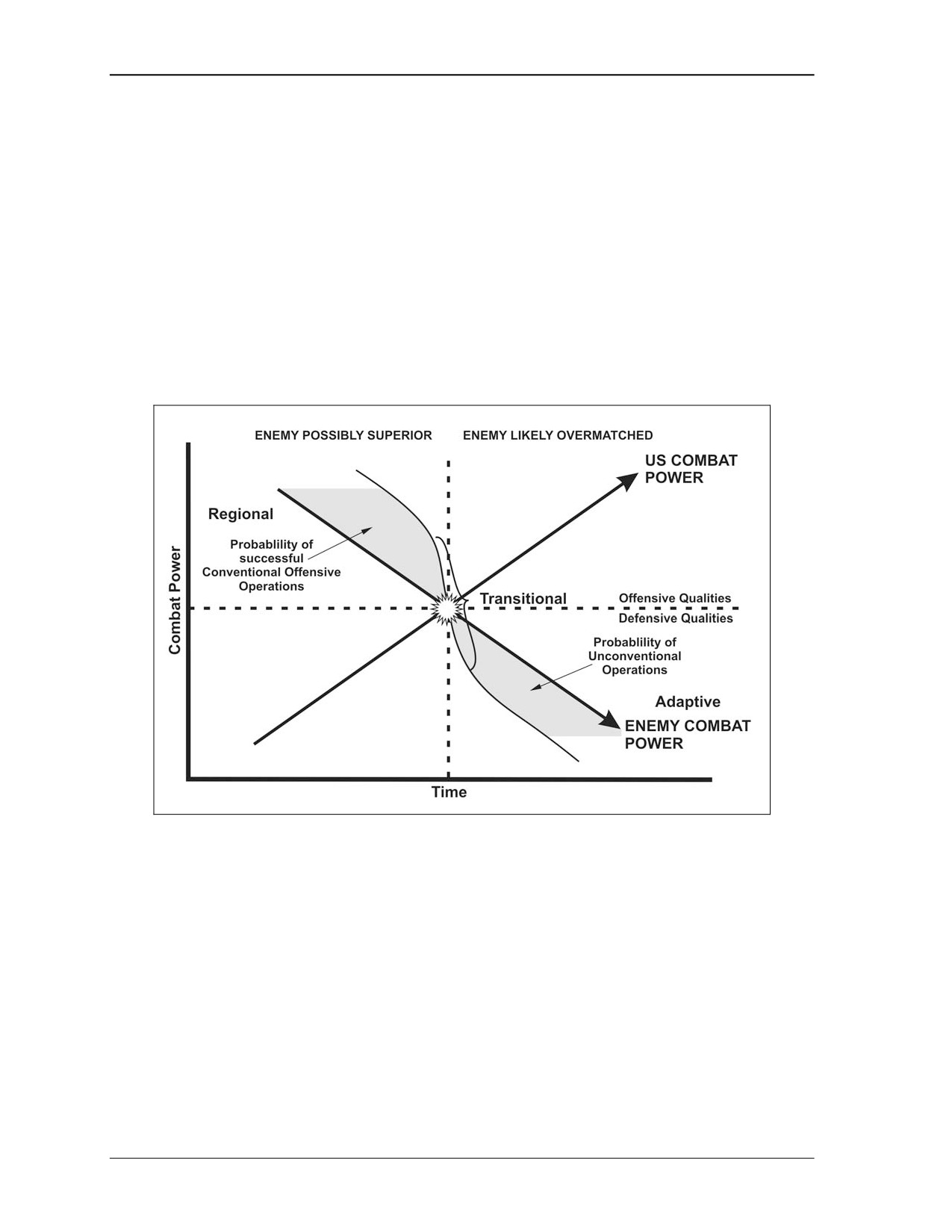
Section III. STEP 3--MAKE A TENTATIVE PLAN
2-10
MISSION ANALYSIS
2-10
METT-TC
2-11
COURSE OF ACTION DEVELOPMENT
2-42
COURSE OF ACTION ANALYSIS
2-46
COURSE OF ACTION COMPARISON AND SELECTION
2-50
Section IV. STEPS 4 THRU 8--INITIATE MOVEMENT, RECONNOITER,
COMPLETE PLAN, ISSUE OPORD, SUPERVISE
2-51
STEP 4--INITIATE MOVEMENT
2-51
STEP 5--RECONNOITER
2-51
STEP 6--COMPLETE PLAN
2-52
STEP 7--ISSUE OPORD
2-52
STEP 8--SUPERVISE
2-53
PRECOMBAT CHECKS AND INSPECTIONS
2-54
Chapter 3
MOVEMENT
3-1
TACTICAL MOVEMENT AND ENEMY CONTACT
3-1
MOVEMENT TECHNIQUES
3-2
MOVEMENT FORMATIONS
3-5
CONTROL TECHNIQUES
3-14
SECURITY DURING MOVEMENT
3-15
MOVEMENT AS PART OF A BATTALION
3-16
Chapter 4
OFFENSIVE OPERATIONS
4-1
Section I. OVERVIEW
4-1
CHARACTERISTICS
4-1
TYPES
4-3
ii
FM 3-21.10
27 July 2006
Contents
FORMS OF MANEUVER
4-3
Section II. SEQUENCE
4-8
ASSEMBLY AREA
4-8
RECONNAISSANCE
4-8
MOVEMENT TO LINE OF DEPARTURE
4-8
MANEUVER
4-8
DEPLOYMENT
4-9
ASSAULT
4-9
CONSOLIDATION AND REORGANIZATION
4-10
Section III. PLANNING CONSIDERATIONS
4-10
INTELLIGENCE
4-10
MOVEMENT AND MANEUVER
4-10
FIRE SUPPORT
4-10
PROTECTION
4-11
SUSTAINMENT
4-11
COMMAND AND CONTROL
4-11
Section IV. ACTIONS ON CONTACT
4-12
FORMS
4-12
CIRCUMSTANCES
4-12
DEVELOPMENT
4-12
TIME REQUIREMENTS
4-12
STEPS
4-13
Section V. ATTACKS
4-15
CHARACTERISTICS
4-15
TYPES
4-16
SPECIAL PURPOSE ATTACKS
4-18
OTHER ATTACK TECHNIQUES
4-23
Section VI. MOVEMENT TO CONTACT
4-38
DEFINITION
4-38
PLANNING CONSIDERATIONS
4-39
SEARCH AND ATTACK
4-39
APPROACH-MARCH-TECHNIQUE
4-43
LEAD COMPANY MOVEMENT
4-44
OTHER COMPANIES
4-44
FLANK GUARD AND REAR GUARD
4-44
CONTACT
4-45
TECHNIQUE CONSIDERATIONS
4-46
Section VII. COMMON ACTIVITIES
4-48
INFILTRATION
4-48
OVERWATCH
4-52
FOLLOW AND SUPPORT
4-52
BYPASS
4-53
CLEARING OF AN OBJECTIVE
4-53
COMPANY AS RESERVE
4-54
27 July 2006
FM 3-21.10
iii
Contents
Chapter 5
DEFENSIVE OPERATIONS
5-1
Section I. OVERVIEW
5-1
TYPES
5-1
PURPOSE
5-2
CHARACTERISTICS
5-2
Section II. SEQUENCE
5-3
RECONNAISSANCE AND SECURITY OPERATIONS AND ENEMY
PREPARATORY FIRES
5-3
OCCUPATION AND PREPARATION
5-3
APPROACH OF ENEMY MAIN ATTACK
5-4
ENEMY ASSAULT
5-4
COUNTERATTACK
5-4
CONSOLIDATION AND REORGANIZATION
5-4
Section III. PLANNING CONSIDERATIONS
5-5
MOVEMENT AND MANEUVER
5-5
FIRE SUPPORT
5-10
PROTECTION
5-11
SUSTAINMENT
5-11
Section IV. PREPARATION AND INTEGRATION
5-11
DEFENSIVE TECHNIQUES
5-11
SECTOR DEFENSE
5-12
BATTLE POSITION DEFENSE
5-14
STRONGPOINT DEFENSE
5-18
PERIMETER DEFENSE
5-20
LINEAR DEFENSE
5-24
NONLINEAR DEFENSE
5-25
REVERSE SLOPE DEFENSE
5-27
ENGAGEMENT AREA DEVELOPMENT
5-30
PRIORITY OF WORK
5-39
ADJACENT UNIT COORDINATION
5-43
Section V. RETROGRADE OPERATIONS
5-43
PURPOSE
5-43
TYPES
5-44
Chapter 6
STABILITY OPERATIONS
6-1
Section I. PLANNING CONSIDERATIONS
6-2
INTELLIGENCE
6-2
MOVEMENT AND MANEUVER
6-3
FIRE SUPPORT
6-3
PROTECTION
6-3
SUSTAINMENT
6-4
COMMAND AND CONTROL
6-4
MEDIA
6-5
OPERATIONS WITH OUTSIDE AGENCIES
6-5
Section II. TYPES OF OPERATIONS
6-6
PEACE OPERATIONS
6-6
FOREIGN INTERNAL DEFENSE
6-6
iv
FM 3-21.10
27 July 2006
Contents
SECURITY ASSISTANCE
6-7
HUMANITARIAN AND CIVIC ASSISTANCE
6-7
SUPPORT TO INSURGENCY
6-7
SUPPORT TO COUNTERDRUG OPERATIONS
6-7
COMBATTING OF TERRORISM
6-7
NONCOMBATANT EVACUATION
6-8
ARMS CONTROL
6-8
SHOW OF FORCE
6-8
Section III. COMPANY TASKS
6-8
ESTABLISH AND OCCUPY A LODGMENT AREA OR FORWARD
OPERATING BASE
6-8
NEGOTIATE
6-11
MONITOR COMPLIANCE WITH AN AGREEMENT
6-13
SEARCH
6-19
PATROL
6-21
ESCORT A CONVOY
6-25
OPEN AND SECURE ROUTES
6-29
CONDUCT RESERVE OPERATIONS
6-29
CONTROL CROWDS
6-29
Chapter 7
CIVIL SUPPORT OPERATIONS
7-1
ROLES
7-1
DEFINITION
7-2
TYPES OF OPERATIONS
7-2
POSSIBLE TASKS
7-2
INTELLIGENCE
7-3
MOVEMENT AND MANEUVER
7-4
FIRE SUPPORT
7-5
PROTECTION
7-5
SUSTAINMENT
7-6
COMMAND AND CONTROL
7-6
Chapter 8
TACTICAL ENABLING OPERATIONS
8-1
Section I. RECONNAISSANCE
8-1
DEFINITION
8-1
CATEGORIES
8-1
TYPES
8-2
PLANNING CONSIDERATIONS
8-3
EXECUTION
8-3
Section II. SPECIAL PURPOSE OPERATIONS
8-5
LINKUP
8-5
RELIEF IN PLACE
8-8
PASSAGE OF LINES
8-13
Section III. SECURITY OPERATIONS
8-17
TYPES
8-17
PLANNING CONSIDERATIONS
8-18
SCREEN
8-21
GUARD
8-22
LOCAL SECURITY
8-26
27 July 2006
FM 3-21.10
v
Contents
Section IV. BREACHING
8-27
DEFINITIONS
8-27
TENETS
8-28
Section V. PATROLS
8-33
DEFINITION
8-33
TYPES
8-33
COMPANY COMMANDER INVOLVEMENT
8-36
ORGANIZATION
8-36
RAID
8-39
AMBUSH
8-44
PATROL BASE
8-49
Chapter 9
DIRECT FIRE CONTROL
9-1
Section I. FIRE-CONTROL PRINCIPLES
9-1
MASS EFFECTS OF FIRE
9-1
DESTROY GREATEST THREAT FIRST
9-1
AVOID TARGET OVERKILL
9-2
EMPLOY BEST WEAPON FOR TARGET
9-2
MINIMIZE FRIENDLY EXPOSURE
9-2
PLAN AND IMPLEMENT FRATRICIDE AVOIDANCE MEASURES
9-2
PLAN FOR EXTREME LIMITED VISIBILITY CONDITIONS
9-2
PLAN FOR DIMINISHED CAPABILITIES
9-2
Section II. FIRE-CONTROL PROCESS
9-3
IDENTIFY PROBABLE ENEMY LOCATIONS AND DETERMINE ENEMY
SCHEME OF MANEUVER
9-3
DETERMINE WHERE AND HOW TO MASS FIRES
9-4
ORIENT FORCES TO SPEED TARGET ACQUISITION
9-5
SHIFT FIRES TO REFOCUS AND REDISTRIBUTE
9-6
Section III. PLANNING CONSIDERATIONS
9-7
OVERVIEW
9-7
STANDING OPERATING PROCEDURES
9-8
Section IV. CONTROL
9-9
MEASURES
9-9
COMMANDS
9-20
Chapter 10
MANEUVER SUPPORT
10-1
Section I. COMMAND AND SUPPORT RELATIONSHIPS
10-1
COMMAND RELATIONSHIPS
10-1
SUPPORT RELATIONSHIPS
10-2
Section II. FIRE SUPPORT
10-3
INDIRECT FIRE CAPABILITIES
10-4
FIRE-SUPPORT TEAM
10-4
FIRE-SUPPORT PLANS AND COORDINATION
10-5
MANEUVER COMMANDER'S INTENT
10-10
PLANNING PROCESS
10-11
FIRE-SUPPORT EXECUTION MATRIX
10-15
FINAL PROTECTIVE FIRES
10-16
SPECIAL MUNITIONS
10-17
vi
FM 3-21.10
27 July 2006
Contents
SMOKE SUPPORT
10-17
OBSERVER POSITIONS
10-18
REHEARSALS AND EXECUTION
10-18
COMMUNICATIONS
10-18
QUICKFIRE CHANNEL
10-20
INDIRECT FIRES IN CLOSE SUPPORT
10-20
ECHELONMENT OF FIRES
10-21
EXECUTION CONSIDERATIONS
10-24
MORTARS
10-28
MORTAR POSITIONS
10-31
MORTAR EMPLOYMENT
10-31
MORTAR DISPLACEMENT
10-32
MORTAR ENGAGEMENTS
10-33
Section III. ENGINEERS
10-39
ORGANIZATION
10-39
MISSIONS
10-41
Section IV. AIR DEFENSE ARTILLERY
10-46
SYSTEMS, ORGANIZATION, AND CAPABILITIES
10-46
EMPLOYMENT
10-47
WEAPONS CONTROL STATUS
10-47
Chapter 11
SUSTAINMENT OPERATIONS
11-1
Section I. PLANNING CONSIDERATIONS
11-1
OVERVIEW
11-1
COMPANY RESPONSIBILITIES
11-2
Section II. SOLDIER'S LOAD
11-4
PLANS
11-5
CALCULATION
11-7
MANAGEMENT
11-7
Section III. TRAINS
11-9
OVERVIEW
11-9
SECURITY
11-9
Section IV. SUPPLY AND TRANSPORTATION OPERATIONS
11-9
CLASSES
11-9
ROUTINE RESUPPLY
11-12
EMERGENCY RESUPPLY
11-16
PRESTOCKAGE OPERATIONS
11-16
SUPPLY CONSIDERATIONS
11-17
TRANSPORTATION
11-18
Section V. MAINTENANCE OPERATIONS
11-18
MAINTENANCE REQUIREMENTS
11-18
DESTRUCTION
11-19
Section VI. HEALTH SERVICE SUPPORT
11-19
HEALTH AND HYGIENE
11-19
FIRST RESPONSE
11-20
CASUALTY EVACUATION
11-21
SOLDIERS KILLED IN ACTION
11-23
27 July 2006
FM 3-21.10
vii
Contents
Section VII. REORGANIZATION AND WEAPONS REPLACEMENT
11-23
REPLACEMENTS AND CROSS-LEVELING OF PERSONNEL
11-23
ENEMY PRISONERS OF WAR, DETAINEES, AND OTHER RETAINED
PERSONS
11-24
Chapter 12
URBAN OPERATIONS
12-1
Section I. INTRODUCTION
12-1
DEFINITIONS
12-1
CONDITIONS
12-2
Section II. URBAN BATTLESPACE
12-3
TYPES
12-3
ZONES
12-5
BUILDING ANALYSIS
12-6
Section III. CHARACTERISTICS
12-8
CHANGING CONDITIONS
12-8
SMALL-UNIT BATTLES
12-8
COMMUNICATIONS
12-9
NONCOMBATANTS
12-9
AMMUNITION
12-9
CASUALTIES
12-9
MANEUVER SPACE
12-10
THREE-DIMENSIONAL TERRAIN
12-10
COLLATERAL DAMAGE
12-10
HUMAN INTELLIGENCE
12-10
COMBINED ARMS
12-10
CRITICAL POINTS
12-10
SNIPERS
12-10
SUPPORT-BY-FIRE POSITIONS
12-11
Section IV. WEAPONS AND DEMOLITIONS
12-11
SURFACES
12-11
ENGAGEMENT RANGES
12-11
ENGAGEMENT TIMES
12-11
DEPRESSION AND ELEVATION
12-11
REDUCED VISIBILITY AND INCREASED NOISE
12-11
FRIENDLY FIRE
12-11
CLOSE COMBAT
12-12
MAN-MADE STRUCTURES
12-12
MODERN BUILDINGS
12-12
Section V. FUNDAMENTALS
12-12
PERFORM FOCUSED INFORMATION OPERATIONS AND
AGGRESSIVE INTELLIGENCE, SURVEILLANCE, AND
RECONNAISSANCE
12-12
CONDUCT CLOSE COMBAT
12-13
AVOID ATTRITION APPROACH
12-13
CONTROL ESSENTIALS
12-13
MINIMIZE COLLATERAL DAMAGE
12-13
SEPARATE COMBATANTS FROM NONCOMBATANTS
12-13
RESTORE ESSENTIAL SERVICES
12-13
viii
FM 3-21.10
27 July 2006
Contents
PRESERVE CRITICAL INFRASTRUCTURE
12-14
UNDERSTAND HUMAN DIMENSION
12-14
CONTROL TRANSITION
12-14
Section VI. ARMOR
12-14
EMPLOYMENT CONSIDERATIONS FOR COMPANY-SIZE
COMBINED-ARMS TEAMS
12-14
STRENGTHS AND LIMITATIONS OF INFANTRY AND ARMORED
VEHICLES
12-15
EMPLOYMENT OF INFANTRY AND ARMORED VEHICLES
12-16
TASK ORGANIZATION WITH TANKS AT COMPANY TEAM LEVEL
12-17
ARMORED VEHICLE POSITIONS
12-22
TRANSPORTATION OF INFANTRY
12-25
CONSIDERATIONS FOR ARMORED VEHICLES, WEAPONS, AND
MUNITIONS
12-29
TASK ORGANIZATION WITH BRADLEYS AT COMPANY TEAM LEVEL ... 12-29
Section VII. OFFENSE
12-30
PLANNING CONSIDERATIONS
12-30
TROOP REQUIREMENTS
12-30
MANEUVER
12-31
LIMITATIONS
12-31
METT-TC FACTORS
12-31
COMMAND AND CONTROL
12-36
TASK ORGANIZATION INTO THREE ELEMENTS
12-38
MOVEMENT
12-39
DELIBERATE ATTACK
12-41
ISOLATION OF URBAN OBJECTIVE
12-43
ASSAULT OF A BUILDING
12-45
ATTACK OF BLOCK OR GROUP OF BUILDINGS
12-48
CONSOLIDATION AND REORGANIZATION
12-49
Section VIII. DEFENSE
12-50
METT-TC FACTORS
12-50
COMMAND AND CONTROL
12-60
HASTY DEFENSE
12-61
COMPANY DEFENSE OF A VILLAGE
12-62
DEFENSE OF A BLOCK OR GROUP OF BUILDINGS
12-63
DEFENSE OF KEY TERRAIN
12-64
DEFENSE OF AN URBAN STRONGPOINT
12-65
DELAY
12-66
Appendix A
RISK MANAGEMENT, FRATRICIDE AVOIDANCE, AND EFFECTS OF
CONTINUOUS OPERATIONS
A-1
Section I. RISK MANAGEMENT
A-1
TYPES OF RISK
A-1
STEPS
A-2
IMPLEMENTATION
A-5
CHALLENGES
A-5
COMMAND CLIMATE
A-5
27 July 2006
FM 3-21.10
ix
Contents
Section II. FRATRICIDE AVOIDANCE
A-6
EFFECTS
A-6
CAUSES
A-7
PREVENTION
A-8
GUIDELINES AND CONSIDERATIONS
A-8
Section III. EFFECTS OF CONTINUOUS OPERATIONS
A-9
COMBAT STRESS CONTROL
A-10
RESPONSIBILITIES
A-11
SLEEP DEPRIVATION
A-12
Appendix B
TOW AND JAVELIN EMPLOYMENT
B-1
Section I. OVERVIEW
B-1
INFANTRY BATTALION WEAPONS COMPANY
B-1
ORGANIZATION AND EQUIPMENT
B-1
PRINCIPLES
B-3
CAPABILITIES AND LIMITATIONS
B-7
Section II. JAVELIN CLOSE COMBAT MISSILE SYSTEM
B-8
COMMAND LAUNCH UNIT
B-9
MISSILE
B-9
LETHALITY
B-10
SURVIVABILITY
B-10
AGILITY AND FLEXIBILITY
B-10
LIMITATIONS
B-11
EMPLOYMENT CONSIDERATIONS
B-11
JAVELIN FIRING POSITIONS
B-14
DETECTION, RECOGNITION, AND CLASSIFICATION OF TARGETS
B-15
SELF-DEFENSE AGAINST HELICOPTERS
B-16
Appendix C
HEAVY AND STRYKER EMPLOYMENT
C-1
VEHICLES
C-1
TANKS
C-1
INFANTRY FIGHTING VEHICLE
C-2
STRYKER INFANTRY CARRIER VEHICLE
C-3
SAFETY
C-4
PLANNING CONSIDERATIONS
C-7
COMBINED OPERATIONS WITH ARMORED VEHICLES
C-8
MOVEMENT TO CONTACT
C-8
ATTACKS
C-9
DEFENSE
C-12
RETROGRADE OPERATIONS
C-14
LOGISTICAL SUPPORT
C-15
INFANTRY ON TANKS
C-15
COMMUNICATION WITH TANKS
C-15
Appendix D
AVIATION SUPPORT
D-1
EMPLOYMENT
D-1
HELICOPTER TYPES
D-1
GROUND TACTICAL PLAN
D-2
LANDING PLAN
D-2
x
FM 3-21.10
27 July 2006
Contents
AIR MOVEMENT PLAN
D-6
LOADING PLAN
D-6
STAGING PLAN
D-12
DUTIES OF KEY PERSONNEL
D-12
AIR MISSION BRIEFING
D-13
ATTACK AVIATION CONSIDERATIONS
D-15
SAFETY
D-21
Appendix E
SNIPER EMPLOYMENT
E-1
SNIPER TEAM
E-1
SQUAD DESIGNATED MARKSMAN
E-1
OFFENSIVE EMPLOYMENT
E-3
ACTIONS AGAINST FORTIFIED AREAS
E-4
DEFENSIVE EMPLOYMENT
E-5
RETROGRADE EMPLOYMENT
E-6
URBAN OPERATIONS
E-7
STABILITY AND RECONSTRUCTION OPERATIONS
E-8
PEACE OPERATIONS
E-9
RIVER CROSSINGS
E-10
PATROLS
E-10
Appendix F
OPERATIONS WITH ARMY SPECIAL OPERATIONS FORCES
F-1
UNITED STATES SPECIAL OPERATIONS COMMAND
F-1
UNITED STATES ARMY SPECIAL OPERATIONS COMMAND
F-1
SPECIAL FORCES
F-2
75TH RANGER REGIMENT
F-3
SPECIAL OPERATIONS AVIATION
F-4
CIVIL AFFAIRS
F-5
PSYCHOLOGICAL OPERATIONS
F-7
PLANNING CONSIDERATIONS
F-7
COORDINATION
F-8
SPECIAL OPERATIONS COMMAND AND CONTROL ELEMENT
F-8
CIVIL AFFAIRS PLANNING TEAM A
F-8
RANGER DEPLOYABLE PLANNING TEAMS AND CROSS-FUNCTIONAL
TEAMS
F-8
REQUEST FOR SUPPORT
F-8
Appendix G
IMPROVISED EXPLOSIVE DEVICES, SUICIDE BOMBERS, UNEXPLODED
ORDNANCE, AND MINES)
G-1
Section I. IMPROVISED EXPLOSIVE DEVICES
G-1
TYPES
G-1
CHARACTERISTICS
G-2
INGREDIENTS
G-2
CAMOUFLAGE
G-2
VEHICLE-BORNE DEVICES (CAR BOMBS)
G-3
EMPLOYMENT
G-4
COUNTERMEASURES
G-8
FIVES C'S TECHNIQUE
G-9
Section II. SUICIDE BOMBERS
G-10
DEFINITION
G-10
27 July 2006
FM 3-21.10
xi
Contents
DELIVERY METHODS
G-10
INDICATORS
G-11
SPECIAL CONSIDERATIONS
G-11
COMPLICATIONS
G-12
Section III. UNEXPLODED ORDNANCE
G-12
RECOGNITION
G-12
IMMEDIATE ACTION
G-13
BOOBY TRAPS
G-14
Section IV. MINEFIELDS
G-15
TYPES
G-15
STANDARD MINEFIELDS
G-15
MINEFIELD PATTERNS AND MARKINGS
G-16
UNCHARTED MINEFIELDS
G-16
MINE INDICATORS
G-16
REPORTS
G-17
EXTRACTION
G-17
Appendix H
OPERATIONS IN A CHEMICAL, BIOLOGICAL, RADIOLOGICAL,
OR NUCLEAR ENVIRONMENT
H-1
DEFENSE
H-1
CHEMICAL AGENTS
H-4
TREATMENT OF CHEMICAL CASUALTIES
H-4
BIOLOGICAL AGENTS
H-8
RADIOLOGICAL WEAPONS
H-9
NUCLEAR WEAPONS
H-10
Appendix I
MEDIA CONSIDERATIONS
I-1
OBJECTIVE
I-1
REALITY
I-1
OBJECTIVES AND INTERESTS
I-1
CAPABILITIES
I-2
COMMAND CONSIDERATIONS
I-2
GUIDELINES
I-2
INTERVIEWS
I-3
TRAINING FOR MEDIA AWARENESS
I-4
MEDIA CARDS
I-4
Appendix J
PATTERN ANALYSIS AND SITUATIONAL UNDERSTANDING
J-1
GATHERING OF INFORMATION
J-1
SOURCES
J-2
ASSESSMENT
J-2
OPERATIONAL VARIABLES
J-2
COLLECTION
J-2
RECORDS
J-4
POPULATION CONSIDERATIONS
J-6
RESPONSIBILITIES
J-8
PLATOON LEADER
J-9
PLATOON MEMBERS
J-9
xii
FM 3-21.10
27 July 2006
Contents
Appendix K
MOTORIZED OPERATIONS
K-1
Section I. WHEELED VEHICLE PLANNING CONSIDERATIONS
K-1
MAINTENANCE
K-2
VEHICLE WEIGHT, SURVIVABILITY, AND ARMOR
K-2
FIREPOWER AND OBSERVATION CONSIDERATIONS
K-5
COMMUNICATION CONSIDERATIONS
K-5
CREW AND PASSENGER DESIGNATED VEHICLE POSITIONS
K-5
VEHICLE EQUIPMENT LOAD PLANS
K-8
Section II. PATROLLING CONSIDERATIONS IN URBAN OPERATIONS
K-9
URBAN PATROLLING CONSIDERATIONS
K-9
TACTICAL VEHICLE EMPLOYMENT AND URBAN PATROLS
K-9
BRADLEY AND STRYKER CONSIDERATIONS
K-10
MOUNTED HASTY CHECKPOINT OPERATIONS
K-10
Section III. LONG-RANGE OPERATIONS CONSIDERATIONS
K-11
LONG-RANGE OPERATIONS
K-12
ROUGH TERRAIN DRIVING
K-12
VEHICLE RECOVERY
K-13
Section IV. OEF AND OIF VEHICLE MODIFICATIONS
K-13
UNIT-INSTALLED WIRE CUTTERS AND WIRE GUARDS
K-13
URBAN PATROL
K-14
UNIT COMMAND VEHICLE
K-15
UNIT-PRODUCED TRIPOD AND MODIFIED ARMOR
K-15
UNIT-INSTALLED STEEL ARMOR
K-17
GLOSSARY
Glossary-1
REFERENCES
References-1
INDEX
Index-1
Figures
Figure 1-1. Enemy operations in OE
1-2
Figure 1-2. Components of combat system
1-5
Figure 1-3. Variables in operational environment
1-7
Figure 1-4. Infantry
1-11
Figure 1-5. Heavy
1-11
Figure 1-6. Stryker
1-12
Figure 1-7. Ranger
1-12
Figure 1-8. Elements of combat power
1-18
Figure 2-1. Army planning process within TLP
2-3
Figure 2-2. Key planning concepts
2-4
Figure 2-3. Parallel planning
2-5
Figure 2-4 Nesting of concepts
2-7
Figure 2-5. Analysis of mission using METT-TC
2-11
27 July 2006
FM 3-21.10
xiii
Contents
Figure
2-6. Areas of operation and interest
2-15
Figure
2-7. Military aspects of terrain
2-16
Figure
2-8. Analysis of obstacles and restricted terrain
2-19
Figure
2-9. Analysis of mobility corridors and avenues of approach
2-22
Figure
2-10. Analysis of key terrain
2-24
Figure
2-11. Analysis of "IV" line
2-25
Figure
2-12. Light matrix
2-28
Figure
2-13. Example enemy composition
2-31
Figure
2-14. Example enemy disposition
2-32
Figure
2-15. Example enemy strength
2-32
Figure
2-16. Example enemy situation template
2-36
Figure
2-17. Example company timeline
2-38
Figure
2-18. Risk assessment
2-41
Figure
2-19. Example COA sketch
2-46
Figure
2-20. Analysis of course(s) of action
2-47
Figure
2-21. Box war-gaming technique
2-48
Figure
2-22. Belt war-gaming technique
2-49
Figure
2-23. Avenue-in-depth war-gaming technique
2-50
Figure
3-1. Transition from movement techniques to maneuver
3-2
Figure
3-2. Legend of company symbols
3-3
Figure
3-3. Traveling technique
3-3
Figure
3-4. Traveling overwatch technique
3-4
Figure
3-5. Bounding overwatch technique
3-5
Figure
3-6. Example company column formation
3-7
Figure
3-7. Example company line formation
3-8
Figure
3-8. Example company wedge formation
3-8
Figure
3-9. Example company vee formation
3-9
Figure
3-10. Example company file formation
3-10
Figure
3-11. Example echelon right formation
3-11
Figure
3-12. All-round security
3-15
Figure
3-13. Strip map
3-20
Figure
4-1. Envelopment
4-4
Figure
4-2. Turning movement
4-5
Figure
4-3. Infiltration
4-6
Figure
4-4. Penetration
4-7
Figure
4-5. Frontal attack
4-7
Figure
4-6. Spectrum of attacks
4-16
Figure
4-7. Movement to objective
4-24
Figure
4-8. Isolation of objective
4-26
Figure
4-9. Breaching and securing of a foothold
4-27
Figure
4-10. Exploitation of penetration
4-29
xiv
FM 3-21.10
27 July 2006
Contents
Figure
4-11. Linear assault
4-35
Figure
4-12. Linear assault with support element
4-36
Figure
4-13. Linear assault with follow and support
4-37
Figure
4-14. Combination technique
4-48
Figure
4-15. Company moving on single infiltration lane
4-50
Figure
4-16. Company moving on multiple infiltration lanes
4-50
Figure
5-1. Protective wire obstacles
5-9
Figure
5-2. Company defense in sector, with platoon in a battle position
5-13
Figure
5-3. Primary and alternate positions
5-15
Figure
5-4. Supplementary position
5-16
Figure
5-5. Defense from mutually supporting platoon battle positions
5-17
Figure
5-6. Multiple engagement areas
5-18
Figure
5-7. Company strongpoint
5-19
Figure
5-8. Company perimeter defense
5-20
Figure
5-9. Y-shape perimeter defense
5-22
Figure
5-10. Modified Y-shape perimeter defense
5-23
Figure
5-11. Linear defense
5-24
Figure
5-12. Nonlinear defense
5-26
Figure
5-13. Company defense on a reverse slope
5-28
Figure
5-14. Likely enemy avenues of approach
5-31
Figure
5-15. Example enemy scheme of maneuver
5-32
Figure
5-16. Locations to kill enemy
5-33
Figure
5-17. Emplacement of weapons systems
5-35
Figure
5-18. Plans for and integration of obstacles
5-36
Figure
5-19. Integration of direct and indirect fires
5-38
Figure
5-20. Company defensive sector sketch
5-41
Figure
5-21 Example company dismounted delay from subsequent positions
5-46
Figure
5-22. Example company delay from alternating positions
5-47
Figure
5-23. Example unassisted withdrawal
5-49
Figure
6-1. Types of stability operations
6-6
Figure
6-2. Example Infantry company lodgment area using existing facilities
6-10
Figure
6-3. Example deliberate observation post
6-14
Figure
6-4. Deliberate checkpoint layout
6-17
Figure
6-5. Vehicular traffic stop
6-19
Figure
6-6. Employment of checkpoints, OPs, and patrols to enforce a zone of separation
6-22
Figure
8-1. Identification of intelligence requirements and use of patrols to reconnoiter
8-4
Figure
8-2. Infantry company linkup
8-7
Figure
8-3. Relief in place in sequence
8-10
Figure
8-4. Relief in place (company graphics)
8-13
Figure
8-5. Infantry company conducting a forward passage of lines
8-16
Figure
8-6. Infantry company conducting a rearward passage of lines
8-17
27 July 2006
FM 3-21.10
xv
Contents
Figure 8-7. Stationary guard with OPs forward
8-25
Figure 8-8. Infantry company guarding flank during movement to contact
8-26
Figure 8-9. Area reconnaissance patrol
8-37
Figure 8-10. Zone reconnaissance patrol
8-38
Figure 8-11. Combat patrol
8-38
Figure 8-12. Organization of elements
8-39
Figure 8-13. Security elements move into position
8-43
Figure 8-14. Support and assault elements move into position
8-44
Figure 9-1. Identification of probable enemy locations and determination of enemy scheme
of maneuver
9-4
Figure 9-2. Determination of where and how to mass (focus and distribute) fire effects to kill
enemy
9-5
Figure
9-3. Orientation of forces to speed target acquisition
9-6
Figure
9-4. Shifting of fires to refocus and redistribute them
9-7
Figure
9-5. Terrain-based quadrants
9-11
Figure
9-6. Friendly based quadrants
9-12
Figure
9-7. Frontal fire
9-13
Figure
10-1. Command and support relationships
10-3
Figure
10-2. Fire planning process
10-12
Figure
10-3. Example fire support execution matrix
10-16
Figure
10-4. Dimensions of final protective fires
10-17
Figure
10-5. Company FIST communications
10-19
Figure
10-6. QuickFire channel illustration of sensor-to-shooter link
10-20
Figure
10-7. Beginning of close air support
10-24
Figure
10-8. 155-mm shaping fires, close air support shifts
10-25
Figure
10-9. 155-mm shift, 81-mm, and supporting fires
10-26
Figure
10-10. 81-mm shift, 60-mm mortars
10-27
Figure
10-11. 60-mm cease fire, shift of supporting fires
10-28
Figure
10-12. 60-mm mortar
10-30
Figure
10-13. 81-mm mortar
10-30
Figure
10-14. 120-mm mortar
10-30
Figure
10-15. TTFACOR technique
10-36
Figure
10-16. Example format for a nine-line close air support briefing
10-38
Figure
10-17. IBCT engineer company
10-40
Figure
10-18. Example sapper squad
10-41
Figure
10-19. Stinger, man-portable and mounted (as "Avenger") on a HMMWV
10-46
Figure
10-20. Machine-gun aim points against helicopters and high-performance aircraft
10-49
Figure
11-1. Load echelon diagram
11-6
Figure
11-2. Classes of supply
11-11
Figure
11-3. Service station resupply method
11-13
Figure
11-4. Tailgate resupply method
11-14
Figure
11-5. In-position method
11-14
xvi
FM 3-21.10
27 July 2006
Contents
Figure
11-6. Enemy prisoner of war detainee tag
11-27
Figure
11-7. Unit record copy
11-27
Figure
11-8. Enemy prisoner of war, document, and special equipment tag
11-28
Figure
12-1. Tank in direct fire, supported by Infantry
12-17
Figure
12-2. Graphic control measures for Infantry and heavy
12-22
Figure
12-3. Hull-down position
12-23
Figure
12-4. Hide position
12-24
Figure
12-5. Building hide position
12-25
Figure
12-6. Example positions for Infantry riding on a tank
12-26
Figure
12-7. Danger areas around a tank firing a 120-mm main gun
12-28
Figure
12-8. Artillery in direct-fire role
12-35
Figure
12-9. Example numbering system
12-37
Figure
12-10. Zones, boundaries, and phase lines
12-38
Figure
12-11. Clearing of selected buildings within sector
12-43
Figure
12-12. Isolation of an urban objective
12-44
Figure
12-13. Direction-of-attack technique for direct-fire planning and control
12-45
Figure
12-14. Assault of a building
12-46
Figure
12-15. Example marking SOP
12-48
Figure
12-16. Example of urban obstacles
12-53
Figure
12-17. Platoon battle positions in a company sector
12-55
Figure
12-18. Urban strongpoint
12-66
Figure
12-19. Company delay in an urban area
12-67
Figure A-1. Example completed risk management worksheet
A-3
Figure B-1. Infantry battalion weapons company
B-2
Figure B-2. Assault platoon of weapons company
B-2
Figure B-3. Overlapping sectors of fire
B-3
Figure B-4. Standoff ranges, TOW (top) and Javelin (bottom)
B-5
Figure B-5. Dispersion between squads
B-7
Figure B-6. Command launch unit
B-9
Figure B-7. Launch tube assembly and missile
B-10
Figure B-8. Javelin flight profile in top-attack mode
B-12
Figure B-9. Javelin flight profile in direct-attack mode
B-13
Figure B-10. Minimum room enclosure for Javelin firing
B-14
Figure C-1. M1 tank danger zone
C-5
Figure C-2. BFV danger zone
C-6
Figure C-3. BFV TOW backblast danger zone
C-7
Figure C-4. Attacks along converging routes
C-10
Figure C-5. Attacking on same route
C-11
Figure C-6. Mounted forces support by fire
C-12
Figure C-7. Mounted forces integrated throughout position
C-13
Figure C-8. Mounted force held in reserve
C-14
27 July 2006
FM 3-21.10
xvii
Contents
Figure D-1. UH-60 unloading diagram
D-5
Figure D-2. Inverted "Y" marker
D-7
Figure D-3. Large, one-sided PZ
D-9
Figure D-4. Small, two-sided PZ
D-10
Figure D-5. UH-60 loading diagram
D-11
Figure D-6. Minimum planning requirements
D-16
Figure D-7. Bull’s-eye technique: uses a known point or an easily recognizable terrain feature
D-16
Figure D-8. Grid technique: uses grid coordinates define point
D-16
Figure D-9. Sector and terrain technique: uses terrain and graphics, which are both available
to air and ground units
D-17
Figure D-10. Phase line technique: uses graphics, which are available to both air and ground
D-17
Figure D-11. Example CCA nine-line briefing
D-20
Figure D-12. Example of CCA nine-line briefing
D-21
Figure F-1. ARSOF missions and collateral activities
F-2
Figure F-2. Special forces operational detachment A
F-3
Figure G-1. Example of IED detonation device with explosive
G-2
Figure G-2. Camouflaged UXO
G-3
Figure G-3. Vehicle IED capacities and danger zones
G-4
Figure G-4. Example of IED dropped into vehicles
G-5
Figure G-5. Typical IED combination ambush
G-6
Figure G-6. IED combination ambush in Iraq
G-7
Figure G-7. Deception or fake IED used to stop convoy in kill zone
G-7
Figure G-8. Suicide bomber vest
G-11
Figure G-9. Nine-line UXO incident report
G-14
Figure G-10. Example booby trap
G-15
Figure G-11. Example format for a mine incident report
G-17
Figure H-1. Nerve agent antidote Mark I and CANA
H-7
Figure H-2. Thigh injection site
H-8
Figure H-3. Buttocks injection site
H-8
Figure J-1. Example 1, pattern analysis
J-5
Figure J-2. Example 2, pattern analysis
J-6
Figure J-3. Example 1, population status overlay
J-7
Figure J-4. Example 2, population status overlay
J-8
Figure K-1A. Commercially produced and available gunner armor protection
K-3
Figure K-1B. Army-issue, roof-mounted, gun-ring armor
K-3
Figure K-2. Commercially produced HMMWV armored half-door and double-articulating,
swing-arm mount for crew-served weapons
K-4
Figure K-3A. Possible platoon-seating technique
K-6
Figure K-3B. Variation of platoon-seating technique
K-6
Figure K-4. Modified M1025 (turtle-shell HMMWV)
K-7
Figure K-5. Commercially produced version of an outboard-facing rear passenger seat and
double-articulated swing arm for crew-served weapons
K-8
xviii
FM 3-21.10
27 July 2006
Contents
Figure K-6. Hasty checkpoints
K-11
Figure K-7. Unit-installed wire cutters and wire guards
K-14
Figure K-8. Urban patrol
K-14
Figure K-9. Unit command vehicle
K-15
Figure K-10. Unit-produced tripod and modified armor
K-16
Figure K-11. Closeup of sections of Bradley fighting vehicle spall liner armor applied
to exterior of cargo bed
K-16
Figure K-12. Unit-installed steel armor
K-17
Figure K-13. Closeup, reverse-angle view of unit-fabricated and -installed steel plate armor
K-17
Tables
Table
1-1. Capabilities and limitations of Infantry rifle company
1-10
Table
2-1. Factors to consider in analyzing obstacles and restricted terrain
2-18
Table
2-2. Factors to consider in analyzing mobility corridors and avenues of approach
2-21
Table
2-3. Factors to consider in analyzing key terrain
2-23
Table
2-4. Factors to consider in analyzing observation and fields of fire
2-26
Table
2-5. Considerations in cover and concealment
2-27
Table
2-6. Example enemy capabilities
2-33
Table
2-7. Example enemy recent activities
2-34
Table
2-8. Recommended SITEMP items
2-35
Table
2-9. Example PCC and PCI checklists
2-55
Table
3-1. Comparison of movement formations
3-11
Table
5-1. Obstacle effects
5-8
Table
5-2. Selection of control measures
5-12
Table
6-1. Example convoy briefing checklist
6-26
Table
8-1. Relationship between breaching organization and fundamentals
8-30
Table
9-1. Common fire-control measures
9-9
Table
9-2. Weapons safety posture levels
9-18
Table
10-1. Indirect fire capabilities
10-4
Table
10-2. Artillery response times
10-9
Table
10-3. Example battalion fire support execution matrix
10-10
Table
10-4. Risk estimate distances for mortars and cannon artillery
10-22
Table
10-5. Risk estimate distances for aircraft-delivered ordnance
10-23
Table
10-6. Mortar ammunition characteristics
10-29
Table
10-7. Advantages and disadvantages of direct lay
10-33
Table
10-8. Advantages and disadvantages of direct alignment
10-34
Table
10-9. Advantages and disadvantages of conventional indirect fire
10-34
Table
10-10. Advantages and disadvantages of hip shoot
10-35
Table
10-11. Close air support types for terminal attack attributes
10-39
Table
10-12. Engineer missions
10-42
27 July 2006
FM 3-21.10
xix
Contents
Table 10-13. Emplacement authority
10-44
Table 11-1. Five S's and T method of detainee field processing
11-25
Table 12-1. Approximate frontages and depths in large built-up areas
12-52
Table A-1. Examples of potential hazards
A-2
Table A-2. Risk levels and impact on mission execution
A-3
Table A-3. Combat stress behaviors
A-10
Table A-4. Reduction of impact of continuous operations
A-11
Table A-5. Effects of sleep loss
A-13
Table A-6. Indicators of sleep deprivation and fatigue
A-13
Table B-1. Javelin technical characteristics
B-8
Table B-2. Range determination recognition method
B-16
Table D-1. Air mission briefing format
D-13
Table D-2. Techniques for marking of target or location
D-18
Table F-1. Ranger force capabilities
F-4
Table H-1. MOPP levels
H-2
Table H-2. Comparison data for decontamination levels
H-3
Table H-3. Characteristics of chemical agents
H-4
xx
FM 3-21.10
27 July 2006
Preface
Preface
Rather than providing rote solutions, this manual provides a doctrinal framework of principles; tactics,
techniques, and procedures (TTP); terms; and symbols for the employment of the Infantry rifle company. This
framework will help Infantry rifle company leaders effectively--
y Exploit capabilities unique to the Infantry.
y Reduce the vulnerability of the unit.
y Plan and conduct full-spectrum operations.
y Accomplish their missions in various tactical situations, from stability and civil support to
high-intensity combat.
y Win on the battlefield.
The Infantry companies of the SBCT and HBCT mostly use the same doctrine, but cover more specific doctrine
in their own manuals.
The main target audience for this manual includes Infantry rifle company commanders, executive officers, first
sergeants, platoon sergeants and platoon leaders. Military instructors, evaluators, training and doctrine
developers will also find it useful, as will other Infantry company commanders (HHC and weapons company),
Infantry battalion staff officers, service school instructors, and commissioning source instructors.
This publication applies to the Active Army, the Army National Guard (ARNG), the National Guard of the
United States (ARNGUS), and the US Army Reserve (USAR) unless otherwise stated.
Leaders must understand this manual before they can train their companies using ARTEP 7-10-MTP. They
should use this manual as a set along with the publications listed in the References.
The Summary of Change lists major changes from the previous edition by chapter and appendix.
Changes include lessons learned.
The proponent for this publication is the US Army Training and Doctrine Command. The preparing agency is
the US Army Infantry School. You may send comments and recommendations by any means, US mail, e-mail,
fax, or telephone, as long as you use or follow the format of DA Form 2028, Recommended Changes to
Publications and Blank Forms. You may also phone for more information.
E-mail
doctrine@benning.army.mil.
Phone
COM 706-545-7114 or DSN 835-7114
Fax
COM 706-545-7500 or DSN 835-7500
US Mail
Commandant, USAIS
ATTN: ATSH-ATD
6751 Constitution Loop
Fort Benning, GA 31905-5593
Unless this publication states otherwise, masculine nouns and pronouns may refer to either men or women.
27 July 2006
FM 3-21.10
xxi

Summary of Change
Summary of Change
Chapter 1
ADDS
Full-spectrum operations in the COE.
Warfighting functions.
ES2.
UPDATES
Organizational structure in the modular brigade design.
Chapter 2
EXPANDS
Battle command.
TLP.
Chapter 4
ADDS
SUAS.
Continuum of contact.
Chapter 6
ADDS
Stability operations.
Chapter 7
ADDS
Civil support operations.
Chapter 8
ADDS
Presence patrols for stability and civil support operations.
Point reconnaissance.
Tracking and contact patrols.
EXPANDS
Reconnaissance and breaching as tactical enabling operations.
Company commander’s use of patrols to accomplish tactical tasks.
DELETES
Friendly force use of non-command-detonated antipersonnel mines or booby traps.
Chapter 9
ADDS
Direct fire control and distribution.
Chapter 10
ADDS
Checklists such as the CAS 9-line briefing.
EXPANDS
CAS, JTAC.
Chapter 11
ADDS
New terms.
UPDATES
Sustainment.
Unit trains.
Resupply.
Health service support.
Weapons replacement operations.
Chapter 12
EXPANDS
Urban operations.
Key planning issues.
Appendix B
ADDS
Risk management.
Fratricide avoidance.
Continuous operations.
Safety and force protection.
Appendix C
COMBINES
TOW and Javelin employment.
Appendix D
ADDS
Employment with SBCT and HBCT elements.
Appendix E
ADDS
Sniper employment during tactical operations.
Appendix F
ADDS
Integration with Army SOF.
Appendix G
ADDS
IEDs, homicide bombers, UXO, and mines.
Tactical-level countermeasures lessons learned.
Appendix H
UPDATES
CBRN defense operations.
ADDS
Current CBRN concepts, terms, procedures, and equipment.
Appendix I
ADDS
Media considerations.
Appendix J
ADDS
Pattern analysis.
Situational understanding for rapid planning.
Appendix K
ADDS
Motorized operations.
Motorized patrolling.
xxii
FM 3-21.10
27 July 2006
Chapter 1
Introduction
"The unresting progress of mankind causes continual change in the
weapons; and with that must come a continual change in the manner of
fighting." --Alfred Mahan
The Infantry is an all-weather, all-terrain unit. Its mission is to close with the
enemy by means of fire and maneuver to destroy or capture him, or to repel
his assault by fire, close combat, and counterattack. Against this backdrop,
the Infantry company must also be ready to adapt to various levels of conflict
and peace in differing environments. This requires bold, aggressive,
resourceful, and adaptive leaders who are willing to accept known risks to
accomplish the mission. Infantry leaders must use their initiative and make
rapid decisions to take advantage of unexpected opportunities. In order to
succeed, Infantry companies must be aggressive, physically fit, disciplined,
and well trained. The inherent strategic mobility of Infantry units dictates a
need to be prepared for rapid deployment in response to the operational
environment. This chapter discusses the operational environment (OE) and
preparation of the Infantry company for war.
This chapter discusses the recent changes in the Infantry Company’s
organizational structure in the modular brigade design. It also adds a
discussion of full spectrum operations in the contemporary operational
environment (COE) and introduces the warfighting functions and the concept
of Every Soldier as a Sensor (ES2).
Section I. OPERATIONAL ENVIRONMENT
This section defines the OE itself and discusses phases of the conflict; systems-based warfare; generation and
focus of the effects of combat power; and the principles and variables of full-spectrum operations.
DEFINITION
1-1.
In the OE, potential enemy state and nonstate actors see the United States as the world’s dominant
power. Potential enemies avoid US military strengths and focus on exploiting perceived US weaknesses.
They hope this will enable them to achieve their own regional or international goals without US
intervention or, failing this, without the US military defeating those goals. When potential enemies do not
fight US forces the same as regional adversaries, asymmetry develops. Conditions that contribute to an
asymmetric environment may include cultural and ideological differences, a technological or military
imbalance, and a disparity in the application of combat power. In the context of military operations, an
asymmetric threat means an adaptive enemy approach to avoid or counter US strengths without opposing
them directly. It also seeks to identify, target, and exploit US weaknesses to achieve goals or objectives.
Consequently, the Infantry company must be prepared to go into any region or operational environment
and perform the full range of missions while dealing with a wide range of threats.
27 July 2006
FM 3-21.10
1-1
Chapter 1
1-2.
Such an OE changed the paradigm of the Soviet motorized rifle regiment to a new paradigm that
encompasses the entire operational environment. Infantry Soldiers know that they will face adaptive and
opportunistic enemies worldwide. Therefore, as part of their planning and execution of operations, Infantry
company commanders must be acutely aware of the relationship between their tactical goals and the myriad
of constantly changing factors that their units might encounter.
PHASES OF CONFLICT
1-3.
The three general phases where the enemy will operate in the OE are regional, transitional, and
adaptive (Figure 1-1). Knowing these phases helps commander anticipate how the enemy will fight. For
example, enemy forces might operate differently, with or without cooperation, in different regions or even
in commanders' areas of operations (AOs). The labeled phases in Figure 1-1 will help commanders analyze
and better understand the OE. However, they should note that these phases are neither all inclusive nor
mutually exclusive.
Figure 1-1. Enemy operations in OE.
1-4.
Infantry companies can expect to operate against foreign conventional and unconventional forces
striving to achieve regional superiority. Except for a few nation states, most notably the US, modern
militaries and unconventional forces are designed to defeat regional threats and operate in and around the
territory of their own nation. They train to achieve regional dominance. Their equipment is designed
around the local environment. US military forces can expect to fight on foreign soil. When this happens,
the enemy enjoys a "home field advantage," which offers--
y Better understanding of the terrain and weather.
y Better understanding of the population and language.
y knowledge of local religious and ethnic customs and courtesies.
y Combatants who can easily blend in with noncombatants.
y Potential access to cached arms and ammunition.
y Popular support.
1-2
FM 3-21.10
27 July 2006
Introduction
REGIONAL
1-5.
This phase is likely to occur in the beginning of a conflict. With limited or no US presence in a
region, the regional militaries are likely to enjoy conventional military superiority. At the beginning of a
conflict, US combat power is likely to be relatively lower than enemy combat power (Figure 1-1). During
this phase, the enemy might be able to succeed with conventional offensive operations against regional or
international threats in the immediate area. To negate his advantage, US forces begin building combat
power in the region. This also helps them meet US goals and objectives. Enemy conventional offensive
operations focus on consolidating gains or denying US entry to the region. The enemy state and allies work
strategically and politically to prevent US interference.
TRANSITIONAL
1-6.
On orders from the National Command Authority, US forces deploy to and build combat power in
the region. As US forces enter the region, US combat power rises, which increases the ratio of US combat
power to enemy combat power. At some point, the ability of US forces to generate combat power equals,
then overmatches, that of enemy forces. (This is where the arrows cross in Figure 1-1.) For this reason, the
enemy favors the use of unconventional, adaptive operations to achieve his goals.
ADAPTIVE
1-7.
When US conventional forces gain clear superiority, and when the enemy realizes this, the
conflict moves into the adaptive phase of the OE. In this phase, the enemy adopts unconventional, guerilla,
insurgent, or terroristic tactics to counteract the US combat power advantages. This might be the most
dangerous phase for US forces, because the enemy avoids conventional engagements and instead blends
into and uses the local population. He also uses information and psychological operations and warfare to
achieve his goals. These goals usually include removing US forces from the region. The enemy will likely
adopt a systems-based approach to combat to negate US regional and technological superiority.
EXAMPLE
In early 1990, the US military was clearly more powerful overall. Iraqi forces dominated
the Persian Gulf region, and so they easily, quickly, and successfully invaded Kuwait.
In response, the US began deploying light forces to the region. However, even with US
air and naval support, the Iraqi's multiple armor and mechanized divisions remained the
superior combat power.
However, the US presence grew, and by the time combat operations began in 1991, US
and coalition forces easily defeated Iraqi conventional forces.
The US has maintained a military presence in the Persian Gulf since then, which keeps
the Iraq-US situation in the transitional phase.
When the US massed forces and invaded Iraq in 2003, the US enjoyed a tremendous
combat power advantage and destroyed all of the conventional Iraqi forces that tried to
resist. Those who remained loyal to the old regime were forced into the adaptive phase,
during which they have limited their attacks on US combat forces. They have instead
concentrated on vulnerable subsystems. They do this with IEDs, ambushes with
rocket-propelled grenades (RPGs), and other unconventional tactics. These adaptive
tactics give them a temporary advantage in combat power.
27 July 2006
FM 3-21.10
1-3
Chapter 1
SYSTEMS-BASED WARFARE
1-8.
When employing the characteristics of systems-based warfare, the enemy will try to---
y Identify and target critical subsystems or components.
y Determine the best time and, or place of greatest vulnerability for maximum destruction.
y Conduct unexpected or random attacks to achieve shock and demoralize the population.
1-9.
Enemy elements will attack vulnerable or unprepared segments of the US force to weaken the
entire force structure. Commanders at all levels must know exactly how they and their forces look to the
enemy, and identify and shield these critical or vulnerable systems before the enemy can attack them.
Commanders must understand and analyze objectively every component in their combat system, looking
for exploitable trends, characteristics, or vulnerabilities. The enemy focuses on splitting up the US combat
system as a whole by rendering its parts (subsystems and components) ineffective. He identifies and
attacks the friendly force's weakest or most critical links.
1-10.
The enemy carefully analyzes US successes and modifies his operations accordingly. This
requires Infantry company commanders to adapt the status and tactics of their force protection plan
continually. They must maintain a strong and offensive force protection status to guard against
a continually adapting enemy. Force protection extends to all elements of the commanders' combat
systems. In accordance with FM 3-0, they channel the collection and processing of this information by
clearly expressing which of their commander's critical information requirements
(CCIR) are most
important to them.
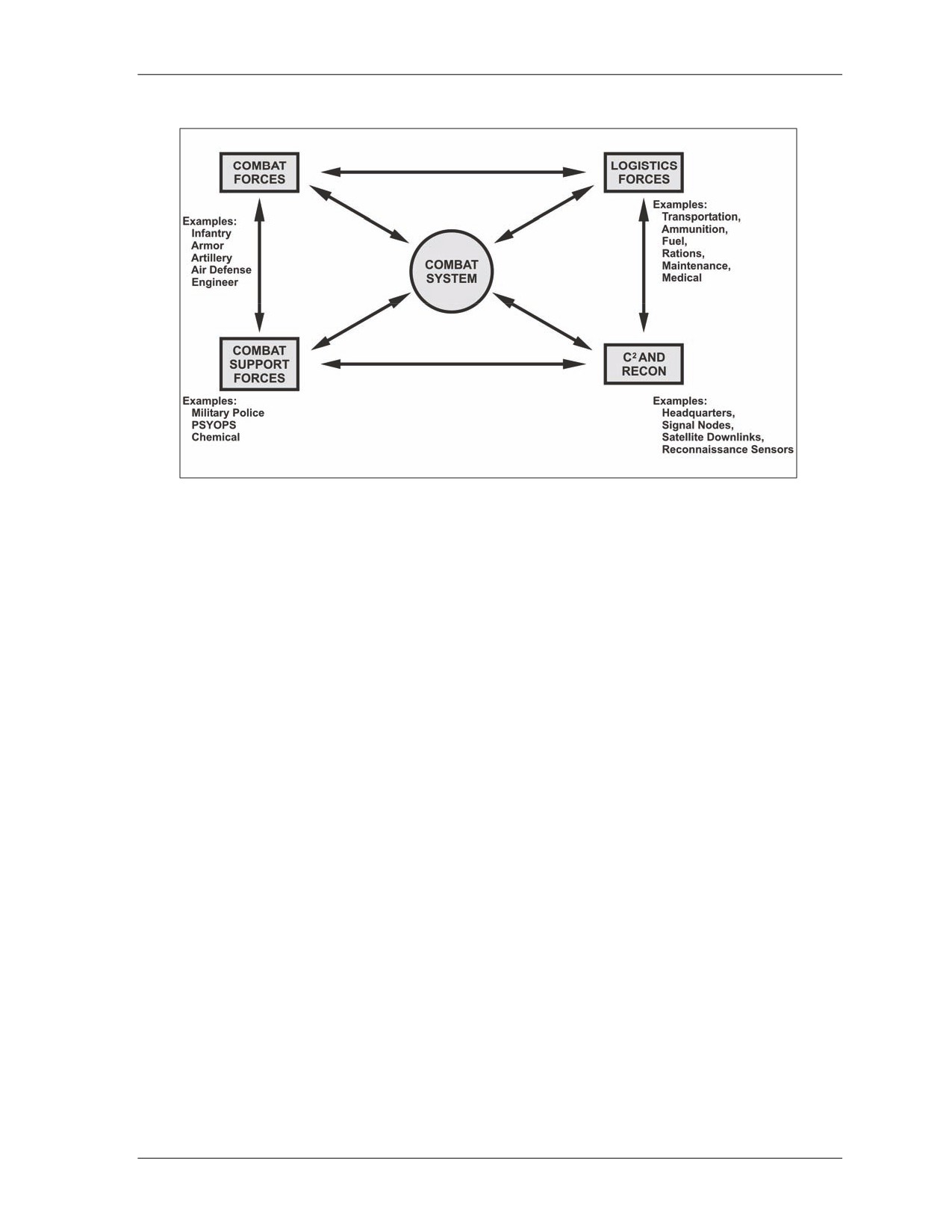
1-11.
Figure 1-2 shows an example of systems-based warfare. The combat power of an Armor or
Infantry company clearly exceeds that of a small guerilla team. If a guerilla(s) attacks an Armor or Infantry
company conventionally, he can be destroyed easily. However, the Armor or Infantry company relies on
subsystems, such as Class I, Class III, Class V, manpower, and communications networks, to function
properly and generate combat power. The guerilla can identify and destroy one subsystem, thus degrading
the combat power of the friendly force without the cost of a conventional attack. The guerilla might also
ambush an unprotected company logistics package
(LOGPAC). He might target Class I supplies
biologically, or he might directly or electronically attack the C2 nodes. By destroying or isolating any one
of the supporting sub-systems, he can hurt the entire friendly combat system. Finally, he capitalizes on
these isolated successes in his information operations (IO) campaign by highlighting his victory against the
US Army "as a whole."
1-4
FM 3-21.10
27 July 2006
Introduction
Figure 1-2. Components of combat system.
GENERATION AND FOCUS OF EFFECTS OF COMBAT POWER
1-12.
Infantry company commanders must remember that the enemy will patiently study and evaluate
their forces to identify their most vulnerable subsystems. During the adaptive phase of enemy operations,
time favors the enemy because he knows the area. He will most likely attack only when, where, and how
he can to avoid or negate US combat power advantages. This also lets the enemy create or generate his
own combat power at that particular time or place. For example, the enemy might mass as an ambush force
to quickly overwhelm a US convoy or patrol operating without Army aviation or armored vehicle support.
The enemy uses the protection of the urban or restricted terrain to target soft-skin vehicles or a small
numbers of personnel who are vulnerable to small arms and RPG fire. The ambush force likely disperses
along preplanned routes before an effective US counterattack can occur. The ambush force reduces US
advantages in protection, mobility, and firepower provided by armored vehicles, aviation, or heavy
weapons. The enemy creates a momentary advantage in the ability to generate and focus the effects of
combat power.
1-13.
First, commanders at all levels must continually analyze both their essential elements of friendly
information (EEFI) and PIR to anticipate where the enemy might try to gain greater combat power. Then,
they (Infantry commanders) must act to deny him (the enemy) the chance. Second, commanders must
continually analyze, plan, and implement procedures to eliminate enemy advantages.
STRATEGIC AND OPERATIONAL PRINCIPLES OF FIGHTING
1-14.
Few combatants want to confront US combat forces directly. In fact, the enemy prefers to keep or
get the US out of the conflict altogether. If confrontation is unavoidable, he will fight US forces differently
than he fights regional peers or lesser forces. The US can expect the enemy to mix the following principles.
CONTROL AND LIMIT ACCESS INTO REGION
1-15.
The enemy will likely target sea ports of debarkation (SPODs) and aerial ports of debarkation
(APODs) in the region to prevent the initial or subsequent entry of US combat forces. These and other lines
27 July 2006
FM 3-21.10
1-5
Chapter 1
of communication (LOC) are likely to remain the focus of enemy action because they are difficult
to secure.
CHANGE THE NATURE OF CONFLICT
1-16.
The enemy will try to change the nature of the conflict. Naturally, his goal is to shape it to favor
his strengths and focus on perceived US weaknesses. He will avoid open conventional engagements where
massed US systems can work to their full potential. This means he will focus on highly populated urban
and restricted terrain areas where he can generate more combat power.
CONTROL TEMPO
1-17.
The enemy will also try to set and control the tempo of an operation. He does so in order to take
the initiative, if he can, and to act within the decision cycle of the US force(s). For him to control the
tempo, he must generate enough combat power for large-scale offensive operations or for many smaller,
widespread, well-coordinated attacks. US forces aggressively counter the enemy's effort to control the
tempo of an operation by assuming an offensive posture. This disrupts enemy operations and prevents their
synchronization.
NEUTRALIZE TECHNOLOGICAL OVERMATCH
1-18.
US enemies usually have a technological disadvantage. The greatest advantages US forces are
likely to enjoy are in weapons ranges and destructive power, target acquisition, and information-sharing
capabilities. The enemy might respond by moving the conflict where friendly weapons ranges are limited
and commanders cannot use the most destructive weapons. The enemy will blend with local populations
and confuse sophisticated friendly sensors.
CAUSE POLITICALLY UNACCEPTABLE CASUALTIES
1-19.
A US center of gravity is popular support for military action. The enemy will do what he can to
affect regional, US national, and world support for US military action adversely. Such measures might
include targeting his own infrastructures and civilians, or it might include trying to cause collateral damage
and noncombatant casualties by US forces. By exploiting the images resulting from these measures, they
endeavor to manipulate the media to their advantage (see also Appendix I). As a result, the US population
must be assured that casualties inflicted by the enemy are relative to the importance of military and
political objectives.
ALLOW NO SANCTUARY
1-20.
In hopes of lowering the morale of US troops, the enemy will try to prevent the establishment of
an area where our Soldiers can rest and refit with a lower force-protection level. He will also target any
perceived vulnerability at every echelon.
CRITICAL, STRATEGIC, AND OPERATIONAL VARIABLES
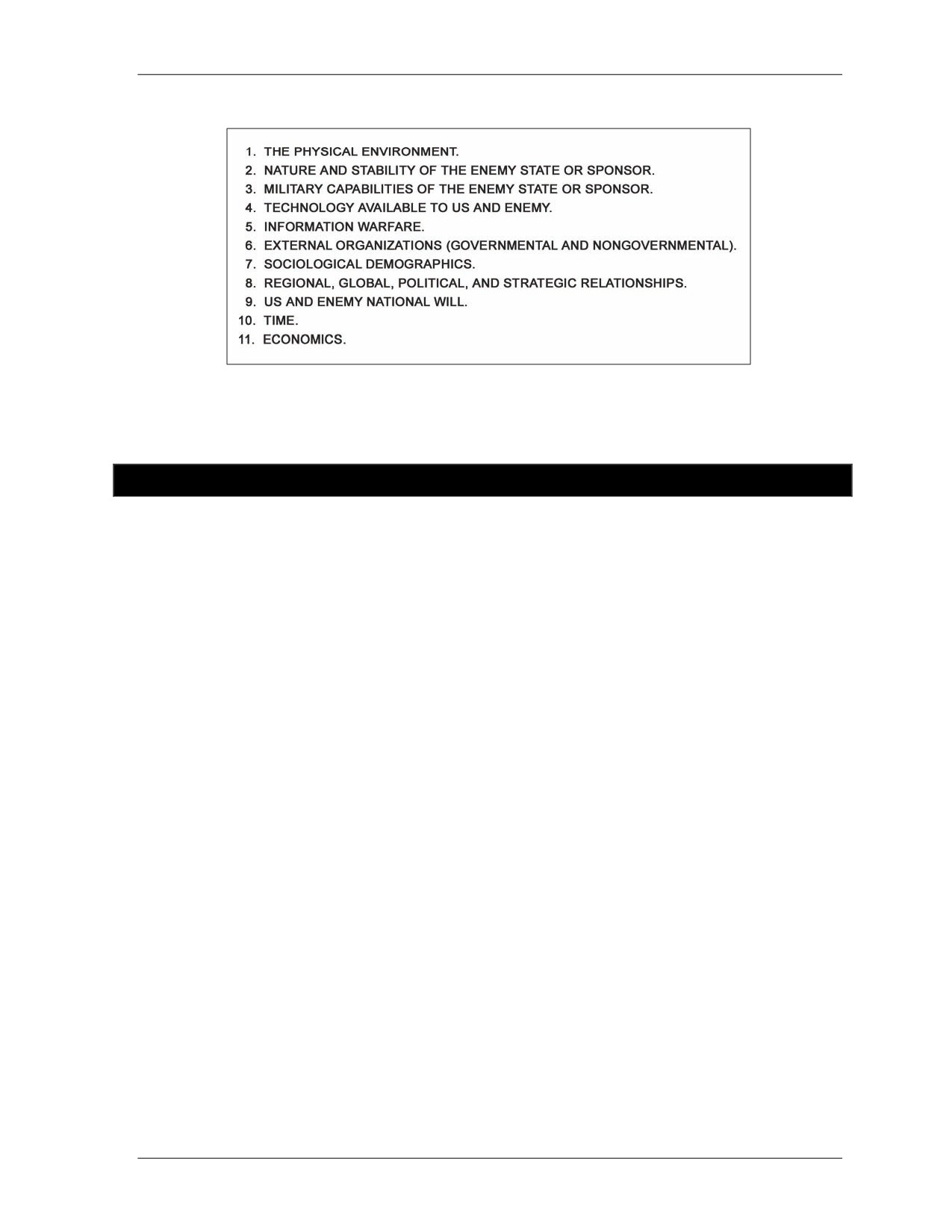
1-21.
Eleven variables define the operational environments in which US military conflicts occur. These
variables represent the exact conditions, circumstances, and influences in the OE and vary based on the
situation, region, and politics. Whether or not these variables significantly affect the environment,
commanders must nevertheless consider them when analyzing the mission or the changing situation.
Figure 1-3 shows the eleven variables.
1-6
FM 3-21.10
27 July 2006
Introduction
Figure 1-3. Variables in operational environment.
Section II. PREPARATION FOR WAR
Infantry companies are organized and equipped to close with and kill the enemy, to destroy his equipment, and
to shatter his will to resist. This close personal fight requires combat-ready units with skilled Soldiers and
leaders. These units are developed into agile combat forces by tough, thorough, and demanding training. This
takes leaders who understand the effective employment of Infantry forces in a complex OE. All units receive
extensive training in reconnaissance techniques. This ensures a thorough situational understanding, which
allows the Infantry company commanders to employ overwhelming, precise force within the enemy's decision
cycle. This precise application of combat power and agility helps reduce collateral damage to facilities and
noncombatants.
SOLDIER
1-22.
The successful resolution of ground combat depends on the Infantry. Individual Soldiers, molded
into a disciplined and well-led team, create a combat-ready force. No Soldier must master a more diverse
set of skills than the Infantry Soldier. He is an authority on the employment of weapons from the basic
bayonet to high-tech mortars and multipurpose missiles. As needed, he can simultaneously function as an
engineer, doctor, air defender, senior radio operator, diplomat, computer expert, mechanic, and
construction expert. He is a survivor, because he can conduct operations and attain victory against steep
odds in any conditions. Furthermore, Every Soldier as a Sensor (ES2) means that Soldiers are trained to
actively observe for details related to CCIR while in an AO, and they are competent, concise, and accurate
in their reporting. Their leaders understand how to optimize the collection, processing, and dissemination
of information in their unit to enable generation of timely intelligence. The individual Soldier is the
Infantry's most precious resource.
LEADER
1-23.
Infantry leaders do everything they can to prepare their Soldiers--and their units--for the rigors of
close combat. In combat, leaders have to channel the efforts of individuals and small units to achieve
victory. Leadership in combat is a leader's most important endeavor. It is the culmination of all his training,
counseling, coaching, and preparation. Infantry leaders seek responsibility and insist on tough, realistic
training. They understand the consequences of inaction and complacency. They understand the importance
of initiative and aggressiveness, the study of their profession, and the setting of the proper examples for his
Soldiers. Leading in combat is the capstone of all previous experience. The Infantry leader is a resourceful,
tenacious, decisive, and adaptive warrior.
27 July 2006
FM 3-21.10
1-7
Chapter 1
UNIT
1-24.
The strength of Infantry units comes from the skill, courage, and discipline of individual Soldiers.
Their individual capabilities are enhanced by the teamwork and cohesion in the squads and platoons. This
cohesion is essential to the survival and success of Infantry units in close combat. It gives the Infantryman
the will and determination to persevere, to accept hardships, and to refuse defeat. In the close fight, these
factors decide the victor. Cohesion and teamwork enhance combat effectiveness most at squad and
team level.
TRAINING PROGRAM
1-25.
Individual and collective training focus on critical wartime operations. Performance-oriented
training is conducted to measurable standards IAW published Army and doctrinal references. Complexity
increases with mastery of each level. Reinforcement training maintains proficiency. Proper training instills
discipline and transforms the difficult to the routine. Training events require subordinate leaders to use
their initiative and take independent action in order to prepare for decentralized operations. Training must
be hard, realistic, physically demanding, and mentally stressful to prepare Soldiers for combat. Training
programs assume personnel turnover and continue during all types of operations, including combat.
Section III. MISSIONS, TYPES, CHARACTERISTICS, CAPABILITIES,
LIMITATIONS, AND ORGANIZATION
The fundamental considerations for employing Infantry companies result from the missions, types, equipment,
capabilities, limitations, and organization of these units. Other capabilities result from a unit's training program,
leadership, morale, personnel strengths, and many other factors. These other capabilities constantly change
based on the current situation.
MISSIONS
1-26.
The combat mission of the Infantry rifle company is to close with the enemy by means of fire and
maneuver to destroy or capture him, repel his assault by fire, close combat, and counterattack. The inherent
versatility of Infantry also makes it well suited for employment against asymmetrical threats across the full
spectrum of operations. During joint campaigns overseas, Army forces execute a simultaneous and
continuous combination of offensive, defensive, and stability and reconstruction operations. They do this
as part of joint, interagency, and multinational teams. Concurrently with overseas campaigns, Army forces
within the United States and its territories may combine offensive, defensive, and civil support operations
to support homeland security. This combination, which defines full-spectrum operations, is also well
served by the flexibility of the Infantry company.
TYPES AND CHARACTERISTICS OF INFANTRY RIFLE
COMPANIES
1-27.
Infantry, Heavy, Stryker, and Ranger comprise the four types of Infantry rifle companies. Some of
these have specialized capabilities such as airborne and air assault. Though differences exist between them,
they share some similarities in organization, tactics, and employment. The main differences lie in the
means of transportation to and on the battlefield, and in the organic supporting assets available to them.
Most of the combat power of the Infantry rifle company lies in its highly trained squads and platoons. The
company maneuvers in all types of terrain and in climatic and visibility conditions and capitalizes on all
forms of mobility. It also uses night vision devices and surveillance equipment.
1-8
FM 3-21.10
27 July 2006
Introduction
INFANTRY
1-28.
Infantry units can operate effectively in most terrain and weather conditions. They might be the
dominant arm in fast-breaking operations because of their rapid strategic deployability. In such cases, they
can wrest the initiative early, seize and hold ground, and mass fires to stop the enemy. They are particularly
effective in urban terrain, where they can infiltrate and move rapidly to the rear of enemy positions. The
commander can enhance their tactical mobility by using helicopters and tactical airlift.
RANGER
1-29.
Ranger units are rapidly deployable, airborne-capable, and trained to conduct joint strike
operations with (or in support of) special operations units of all services in any environment. They plan and
conduct special military operations to support national policies and objectives. They also conduct
direct-action missions to support the geographic combatant commanders and operate as conventional
Infantry units when integrated with other combined arms elements. (FM 7-85 is the capstone manual for
Ranger operations.)
CAPABILITIES AS COMPARED WITH OTHER INFANTRY
1-30.
This paragraph compares the capabilities of the Infantry company with those of the Heavy and
Stryker companies.
HEAVY
1-31.
Heavy Infantry units are mounted on Bradley fighting vehicles. These units are task organized
with M1 Abrams tanks in combined arms battalions of the Heavy brigade combat team (HBCT). These
heavy units are highly mobile with tremendous combined arms firepower. They are best suited to less
restrictive terrain and combat against an armored enemy.
STRYKER
1-32.
The battalions of the Stryker brigade combat team (SBCT) serve as its primary maneuver force.
The battalion is organized three-by-three: three rifle companies, with three rifle platoons each. Companies
fight as combined arms teams with a section of organic 60-mm and strap-on 81-mm mortars, mobile gun
system (MGS) platoon, and sniper team. The SBCT units are equipped with the Stryker Infantry carrier
vehicle (ICV). The SBCT battalion retains most of the capabilities of the other Infantry plus the additional
mobility of Stryker vehicles. Stryker companies operate across the full spectrum of modern combat
operations. They are organized to maintain tactical flexibility within restricted and severely
restricted terrain.
ADDITIONAL CAPABILITIES AND LIMITATIONS
1-33.
Table 1-1 shows the capabilities and limitations of the Infantry rifle company.
27 July 2006
FM 3-21.10
1-9

Chapter 1
Capabilities
Limitations
Conduct offensive and defensive operations in all
Limited combat support (CS) and sustainment
types of environments, primarily at night.
assets.
Seize, secure, occupy, and retain terrain.
Limited vehicle mobility.
Destroy, neutralize, suppress, interdict, disrupt,
Vulnerable to enemy armor, artillery, and air
block, canalize, and fix enemy forces.
assets when employed in open terrain.
Breach enemy obstacles.
Vulnerable to enemy chemical, biological,
radiological, nuclear, and high yield explosive
Feint and demonstrate to deceive the enemy.
(CBRNE) attacks with limited decontamination
Screen and guard friendly units.
capability.
Reconnoiter, deny, bypass, clear, contain, and
isolate. (These tasks might be oriented on both
terrain and enemy.)
Conduct small-unit operations.
Participate in air assault operations.
Participate in airborne operations (airborne and
Ranger companies).
Operate in conjunction with mounted or special
operations forces.
Participate in amphibious operations.
Table 1-1. Capabilities and limitations of Infantry rifle company.
ORGANIZATION
1-34.
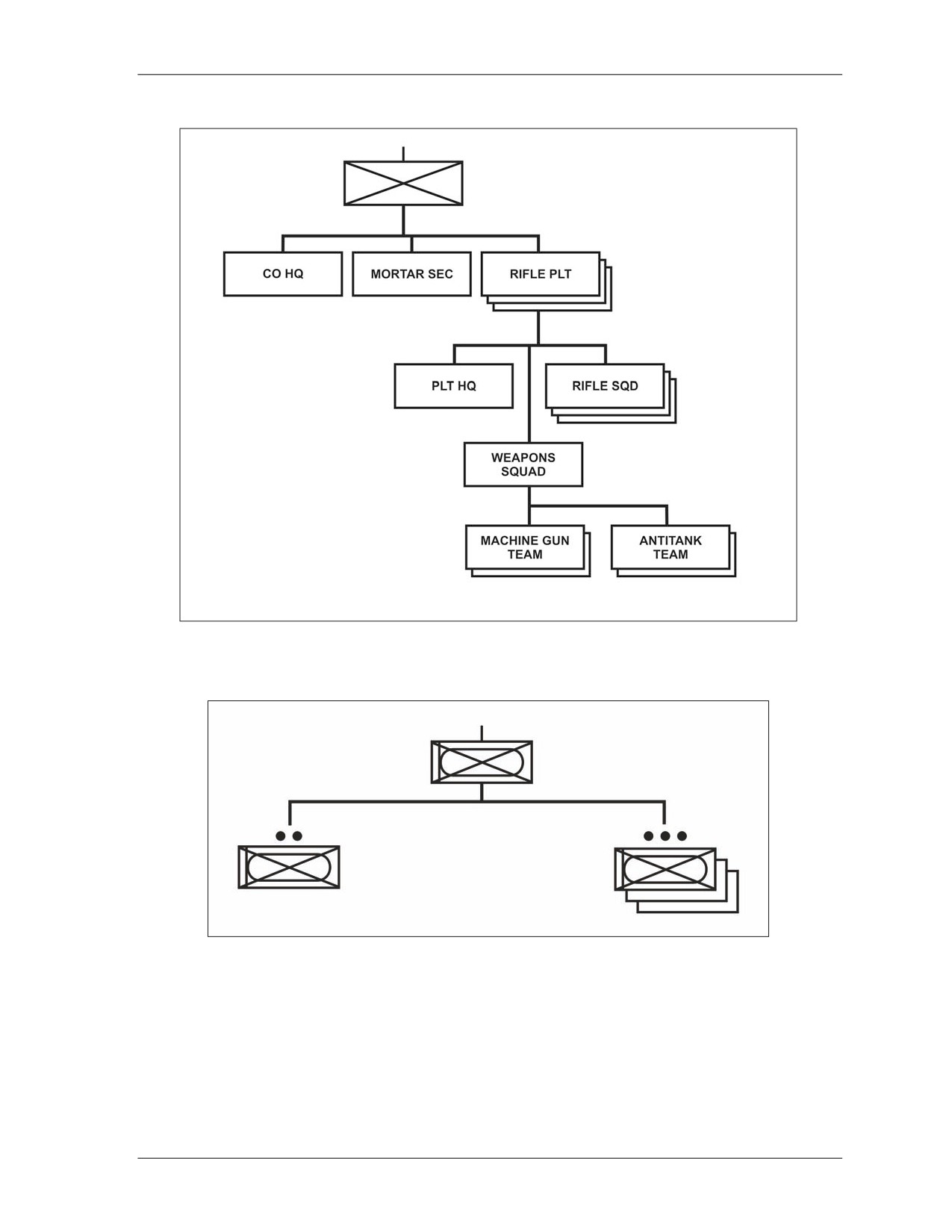
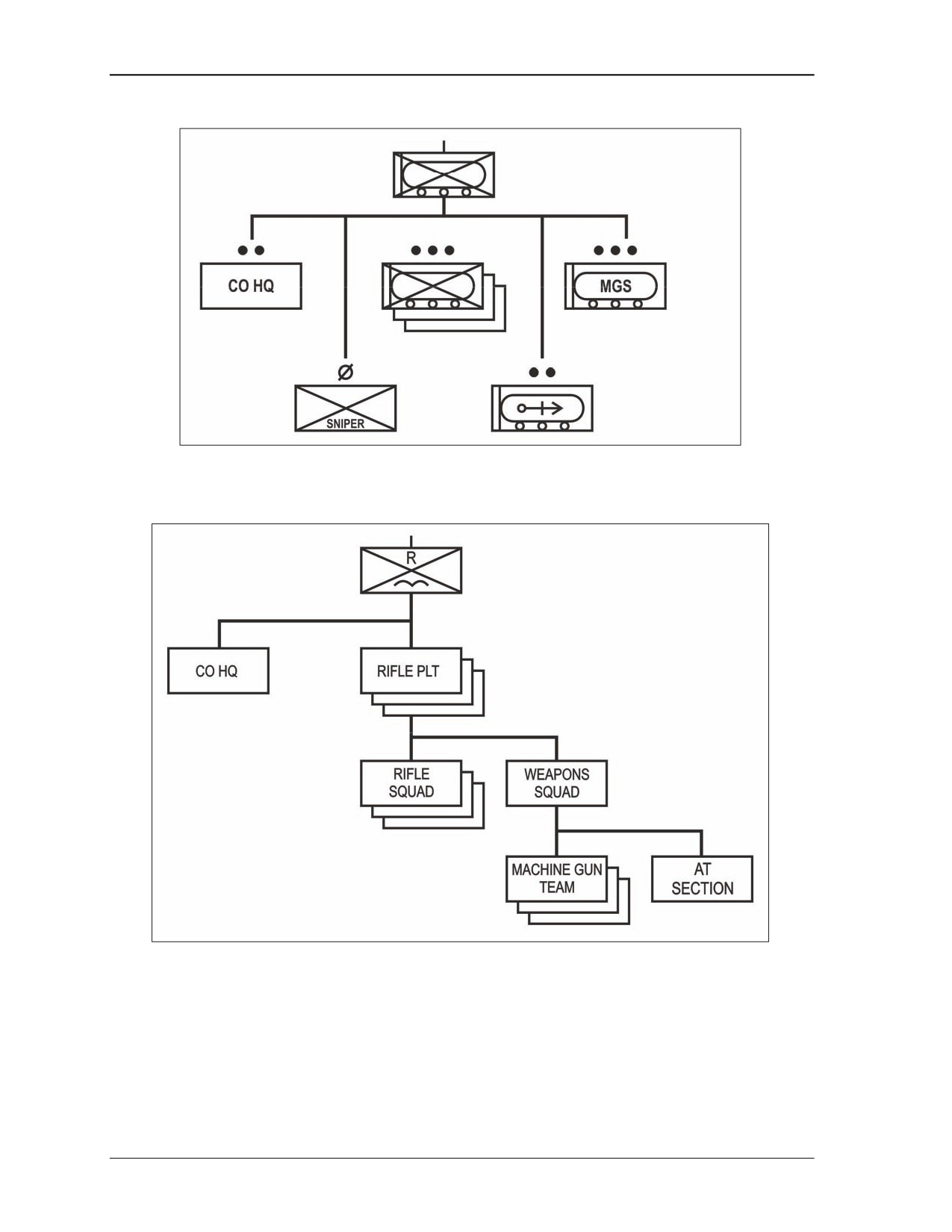
With the exception of Ranger units, all Infantry rifle company organizations
(Figure 1-4,
Figure 1-5, Figure 1-6, and Figure 1-7) have the same TOE. Air assault and airborne-trained companies
require some special equipment associated with unique capabilities. However, despite these few
differences, the mission and employment considerations and tactics are nearly the same.
1-10
FM 3-21.10
27 July 2006
Introduction
Figure 1-4. Infantry.
Figure 1-5. Heavy.
27 July 2006
FM 3-21.10
1-11
Chapter 1
Figure 1-6. Stryker.
Figure 1-7. Ranger.
1-12
FM 3-21.10
27 July 2006
Introduction
Section IV. DUTIES AND RESPONSIBILITIES OF KEY PERSONNEL
This section describes the duties and responsibilities of key personnel in the Infantry rifle company. Duties and
responsibilities of the executive officer (XO) and first sergeant (1SG) may vary in the heavy and Stryker
Infantry company.
COMPANY COMMANDER
1-35.
The company commander leads by personal example and is responsible for everything the
company does or fails to do. His principle duties include the key areas of tactical employment, training,
administration, personnel management, maintenance, force protection, and sustainment of his company.
Given the asymmetrical, noncontiguous environment, he must now integrate and synchronize a greater mix
of forces for full spectrum operations including other combined arms and combat support elements, civil
affairs (CA), psychological operations (PSYOP), interpreters, media, unmanned aerial system (UAS) and
robotics teams. Among other things, he--
y Commands and controls through his subordinate leaders.
y Employs his company to accomplish its mission according to the battalion commander's intent
and concept.
y Selects the best location to maneuver the platoons and other elements.
y Conducts mission analysis and troop-leading procedures (TLP) and issues operation orders for
company tactical operations.
y Maintains and expresses situation awareness and understanding.
y Resources the platoons and other elements and requests battalion support when needed.
y Ensures that the company command post (CP) effectively battletracks the situation and status.
y Provides a timely and accurate tactical picture to the battalion commander and
subordinate units.
y Implements effective measures for force protection, security, and accountability of forces
and systems.
y Develops the leadership and tactical skill of his platoon leaders.
EXECUTIVE OFFICER
1-36.
The XO is second in command. His primary role is to assist the commander in mission planning
and accomplishment. He assumes command of the company as required and ensures that tactical reports
from the platoons are forwarded to the battalion tactical operations center (TOC). The XO locates where he
can maintain communications with the company commander and the battalion. He--
PLANS AND SUPERVISES
1-37.
Plans and supervises, before the battle along with the 1SG, the company's sustainment operations;
ensures that precombat inspections are complete. The XO plans and coordinates logistical support with
agencies outside the company while the 1SG does the same internally. He prepares or aids in preparing
paragraph 4 of the company operation order (OPORD). He may also help the company commander plan
the mission.
COORDINATES
1-38.
Coordinates with higher, adjacent, and supporting units. He may aid in control of critical events of
the battle such as a passage of lines, bridging a gap, or breaching an obstacle; or, he may assume control of
a platoon attached to the company during movement.
27 July 2006
FM 3-21.10
1-13
Chapter 1
PERFORMS AS LANDING ZONE OR PICKUP ZONE CONTROL OFFICER
1-39.
This may include straggler control, casualty evacuation, resupply operations, or air-ground liaison.
LEADS QUARTERING PARTY OR DETACHMENT
1-40.
The XO might lead a quartering party, an element consisting of representatives of various
company elements. Their purpose is to precede the company and reconnoiter, secure, and mark an
assembly area.
1-41.
The XO might lead a detachment with other tactical tasks including shaping or sustaining force
leader in a company raid or attack, control company machine guns, or mortar section. He may also--
y Lead the reserve.
y Lead the detachment left in contact during a withdrawal.
y Control attachments to the company.
y Serve as movement control officer.
FIRST SERGEANT
1-42.
The 1SG is the senior noncommissioned officer (NCO) and normally the most experienced
Soldier in the company. He is the commander's primary tactical advisor and the expert on individual and
NCO skills. He helps the commander plan, coordinate, and supervise all activities that support the unit
mission. He operates where the commander directs or where he can best influence a critical point or what is
viewed as the unit's decisive point. The first sergeant--
y Supervises routine operations. This can include enforcing the tactical standing operating
procedures (TSOP); planning and coordinating both training and full spectrum operations; and
administering replacement operations, logistics, maintenance, communications, field hygiene,
and casualty evacuation operations.
y Supervises, inspects, and influences matters designated by the commander as well as areas that
depend on his expertise such as Soldier care, force protection, security, and accountability.
y Assists the XO and keeps himself prepared to assume the XO's duties, if needed.
y Leads task-organized elements or subunits for the company's shaping effort or other designated
missions.
PLATOON LEADER
1-43.
The platoon leader (PL) leads his soldiers by personal example. He is responsible for all the
platoon does or fails to do and has complete authority over his subordinates. This centralized authority
enables the PL to maintain unit discipline and unity and to act decisively. The demands of modern combat
or full spectrum operations require the PL to exercise initiative without continuous guidance from higher
commands. He must know his Soldiers as well as how to employ the platoon, its weapons, and its systems.
He relies on the expertise of the Platoon Sergeant and regularly consults with him on all platoon matters.
As part of his key tactical responsibilities, the PL--
y Leads the platoon in accomplishing its mission according to the company and battalion
commanders’ intent and concept.
y Performs TLP for missions assigned to the platoon.
y Locates where he can best maneuver the squads and the fighting elements, and then
synchronizes their efforts.
y Anticipates the platoon's next tactical move.
y Requests and controls assets.
y Ensures force-protection measures are implemented.
1-14
FM 3-21.10
27 July 2006
Introduction
y Maintains all-round, three-dimensional security.
y Controls emplacement of key weapon systems.
y Ensures security measures are implemented at the limit of advance (LOA).
y Provides a timely and accurate tactical picture to the commander.
PLATOON SERGEANT
1-44.
The platoon sergeant (PSG) is the platoon's most experienced NCO and second in command. He
is accountable to the platoon leader for the leadership, discipline, training, and welfare of the platoon's
Soldiers. He sets the example in everything. His expertise includes tactical maneuver, employment of
weapons and systems, logistics, administration, security, accountability, force protection, and Soldier care.
As the second in command, the PSG assumes no formal duties except those prescribed by the PL. As part
of his traditional tactical responsibilities, the PSG--
y Locates and acts where best to help control the fight or other platoon operations; may lead
either the shaping or sustaining operation.
y Assures that the platoon is prepared to accomplish its mission by supervising precombat checks
and inspections.
y Helps develop the squad leaders' tactical and leadership skills.
y Supervises platoon sustainment operations.
- Receives the squad leaders' administrative, logistical, and maintenance reports and requests
for rations, water, fuel, and ammunition.
- Coordinates with the company 1SG or XO for resupply.
- Runs the platoon casualty collection point (CCP); directs the medic and aid and litter teams;
forwards casualty reports; manages personnel strength levels, receives orients replacements.
FIRE-SUPPORT OFFICER
1-45.
The fire support officer (FSO) helps plan, coordinate, and execute the company's fire support.
During planning, he develops a fire support plan based on the company commander's concept and
guidance. He coordinates the fire support plan with the battalion fire support officer (FSO). During
planning, the FSO--
y Advises the commander of the capabilities and statuses of all available fire support assets.
y Helps the commander develop the OPORD to ensure full integration of fires into the concept.
Refines field artillery and mortar targets to support the maneuver plan.
y Designates targets and fire control measures and determines method of engagement and firing
responsibility.
y Determines the specific tasks and instructions required to conduct and control the fire plan.
y Briefs the fire support plan as part of the company OPORD, and coordinates with PLs to ensure
they understand their fire support responsibilities.
y Integrates platoon targets into the company target overlay and target worksheet, and sends the
resulting products to the battalion fire support element (FSE).
y During the battle, normally locates near the commander. This allows greater flexibility in
conducting or adjusting the fire support plan. At times, locates away from the commander to
better control supporting fires. Informs the commander of key information on the radio net.
y Understands Infantry tactics in order to integrate fires effectively, and if the company
commander becomes a casualty, may assume temporary control of the company until the XO
can do so.
y Coordinates the employment of the joint air attack team (JAAT), close air support (CAS),
attack helicopter, and UASs.
y Ensures the indirect fire plan is part of each company rehearsal.
27 July 2006
FM 3-21.10
1-15
Chapter 1
SENIOR RADIO OPERATOR
1-46.
The senior radio operator supervises operation, maintenance, and installation of organic wire, and
FM communications. This includes sending and receiving routine traffic and making required
communication checks. He--
y Supervises the company command post.
- Relays information.
- Monitors the tactical situation.
- Establishes the CP security plan and radio watch schedule.
- Informs the commander and subordinate units of significant events.
y Renders clear, accurate, and timely situation reports (SITREPS).
y Performs limited troubleshooting of organic communications equipment. Serves as the link
between the company and the battalion for communications equipment maintenance.
y Supervises all aspects of communications security
(COMSEC) equipment, to include
requesting, receipting, maintaining, securing, employing, and training for COMSEC equipment
and related materials.
y Advises the company commander in planning and employing the communications systems.
Based on the commander's guidance, he prepares or helps prepare paragraph 5 of the OPORD.
RADIO OPERATOR
1-47.
The radio operator uses and performs maintenance on his assigned radio, including preparation for
special missions
(cold weather, air assault, or waterborne) and construction of field-expedient
antennas. He--
y Understands the company's mission. If the commander becomes a casualty, the radio operator
might be the only Soldier on the radio for a time. If so, he must be prepared to call for and
adjust artillery, or to request medical evacuation or resupply.
y Assists in OPORD preparation by copying overlays and building a sand table.
y Assists the senior radio operator and is prepared to assume his duties.
SUPPLY SERGEANT
1-48.
The supply sergeant requests, receives, issues, stores, maintains, and turns in supplies and
equipment for the company. He coordinates requirements with the 1SG and the battalion S-4. He--
y Controls the supply trucks that are organic to the company.
y Monitors tactical situation.
y Anticipates logistical requirements (Chapter 11, Sustainment Operations).
y If located in the Infantry battalion support area, the headquarters and headquarters company
(HHC) commander may provide guidance and assistance to supply sergeants.
y Communicates using the battalion administrative/logistical (A/L) radio and digital network.
CHEMICAL, BIOLOGICAL, RADIOLOGICAL, OR NUCLEAR NCO
1-49.
The CBRN NCO helps the company commander plan chemical, biological, radiological, or
nuclear (CBRN) and high-yield (CBRNE) weapons operations. He conducts and supervises CBRN training
within the company (decontamination, monitoring, survey, and equipment maintenance operations) and
inspects detection and protective equipment for serviceability. He--
y Operates forward with the company CP and helps the senior radio operator with CP operations
and security.
1-16
FM 3-21.10
27 July 2006
Introduction
y Recommends mission-oriented protective posture (MOPP) levels to the commander (based on
guidance from the battalion CBRN NCO and the current situation).
y Conducts continuous CBRN vulnerability analysis.
y Ensures connectivity with the joint warning and reporting network (JWARN).
y Acts as liaison with supporting chemical units.
y Reports, analyzes, and disseminates CBRN attack data manually or digitally using the NBC
Warning and Reporting System (NBCWRS), and NBC1, NBC4, and spot reports from the
FBCB2 system.
y Plans and supervises decontamination and monitoring and survey operations.
y Requisitions CBRN equipment and supplies.
MORTAR SECTION LEADER
1-50.
The mortar section leader is responsible for employing the mortar section and ensures effective
mortar support for the company. He--.
y Helps the company commander plan the employment of the mortar section.
y Coordinates with the company FSO and fire support team (FIST).
y Controls the section during tactical operations.
y Acts as the primary trainer for mortar systems.
ARMORER
1-51.
The armorer is a supply specialist whose duties focus on organizational maintenance and repair of
the company's small arms weapons. He assures accountability and security of weapons and ammunition
under his control and evacuates weapons to the DS maintenance unit, if required. Normally, he helps the
supply sergeant in the brigade support area (BSA), but he may operate forward with the company CP to
support continuous CP operations.
MEDIC
1-52.
The senior trauma specialist (senior company medic) is attached to the rifle company to provide
emergency medical treatment (EMT) for sick, injured, or wounded company personnel. Emergency
medical treatment procedures performed by the trauma specialist may include opening an airway, starting
intravenous fluids, controlling hemorrhage, preventing or treating for shock, splinting fractures or
suspected fractures, and providing relief for pain. The EMT performed by the trauma specialist is under the
supervision of the battalion surgeon or physician's assistant
(PA). The senior trauma specialist or
company medic--
y Oversees and provides guidance to each platoon medic as required.
y Triages injured, wounded, or ill friendly and enemy personnel for priority of treatment as they
arrive at the company casualty collection point (CCP).
y Oversees sick call screening for the company.
y Requests and coordinates the evacuation of sick, injured, or wounded personnel under the
direction of the company 1SG.
y Helps train company personnel in first aid and combat lifesaver techniques, including in
enhanced first-aid procedures.
y Requisitions Class VIII supplies from the BSA for the company according to the TSOP.
y Recommends locations for company CCPs.
y Provides guidance to the company's combat lifesavers as required.
27 July 2006
FM 3-21.10
1-17
///////////////////////////////////////