FM 10-450-4 MULTISERVICE HELICOPTER SLING LOAD: SINGLE-POINT LOAD RIGGING PROCEDURES (September 2003) - page 10

FM 10-450-4/MCRP 4-23E, VOL II/NWP 3-04.12/AFJMAN 11-223, VOL II/
COMDTINST M13482.2
10-5. Communications or Electronic Systems Housed in S-280 Shelters
a. Applicability. The following items in Table 10-4 are certified for all helicopters with suitable lift capacity by the US
Army Natick Research, Development, and Engineering Center:
Table 10-4. S-280 Shelters
MAX
RECOMMENDED
LINK COUNT
NOMENCLATURE
WEIGHT
SLING
SET
AIRSPEED
FRONT/REAR
(POUNDS)
(KNOTS)
Door is the Front
Shelter, Battery Servicing, AN/TSM-133
5,240
10K
65
30/3
Facility, Improved Message,
Door is the Front
5,368
10K
55
AN/TSC-58A
37/3
Facility, Improved Message,
Door is the Front
5,368
10K
55
AN/MSC-29A
37/3
Station, System Master, Reporting,
ECU is the Front
6,050
15K
75
Position Location, AN/TSQ-129
10/4
Station, Enhanced Position Location
ECU is the Front
6,289
15K
75
Reporting System Net AN/TSQ-158
10/4
Terminal, Regency Net Force,
Door is the Front
8,200
10K
70
AN/TRC-179(V)1
30/3
Communications Nodal Control Element,
Door is the Front
10,000
25K
80
AN/TSQ-111
3/24
Multiplexer Terminal Set,
Door is the Front
6,190
10K
90
AN/TSQ-146(V)
5/50
IFTE Base Shop Test Facility (BSTF),
ECU is the Front
Basic, S-280C/G Shelter,
7,806
10K
50
3/3
AN/TSM-191(V)3
IFTE BSTF, Hawk, S-280C/G Shelter,
ECU is the Front
7,748
10K
50
AN/TSM-191(V)2
3/3
IFTE 60 Hz Storage Shelter, S-280C/G
ECU is the Front
6,365
10K
70
Shelter, S-744/TSM-191(V)
3/3
IFTE 400 Hz Storage Shelter, S-280C/G
ECU is the Front
5,119
10K
70
Shelter, S-175/TSM-191(V)
3/3
ECU is the Front
Tactical Satellite Terminal, AN/TSC-85B
6,200
10K
70
33/3
E1045 Bottle Cleaning and Charging
Door is the Front
6,400
15K
70
Station
3/15
Door is the Front
E1022 Maintenance Facility Night Sight
6,400
15K
70
3/3
FM 10-450-4/MCRP 4-23E, VOL II/NWP 3-04.12/AFJMAN 11-223, VOL II/
COMDTINST M13482.2
Table 10-4. S-280 Shelters (continued)
MAX
RECOMMENDED
LINK COUNT
NOMENCLATURE
WEIGHT
SLING SET
AIRSPEED
FRONT/REAR
(POUNDS)
(KNOTS)
Door is the Front
AN/TYA-16B, TAMCN A0294
3,325
15K
65
3/3
Airborne Reconnaissance Low-Imagery
(ARL-I) and Airborne Reconnaissance
ECU is the Front
8,500
10K
80
Low-Comint (ARL-C) Fly Away Kit,
3/10
Type A-1
ARL-I and ARL-C Fly Away Kit, Type
ECU is the Front
8,500
10K
80
B-1
3/10
ARL-I and ARL-C Fly Away Kit, Type
ECU is the Front
8,500
10K
80
C-1
3/10
NOTES:
tape or Type III nylon cord.
1. Do not allow the sling legs to become entangled
with the rope lashing points located near the lift points.
(c) Secure all loose equipment (electrical lines, hoses,
etc.) with tape or Type III nylon cord.
2. The CH-47 is not recommended for single point
sling loading of the Integrated Family of Test Equip-
(d) Ensure all the bolts in the Environmental Control
ment Shelters.
Unit's (ECU) mounting frame are present and tight.
b. Materials. The following materials are required to
(e) Secure the ECU cover with tape or Type III nylon
rig this load:
cord.
(1) Sling set (as listed in table 10-4).
(f) Secure the lift rings in the vertical position with
Type III nylon cord.
(2) Tape, adhesive, pressure-sensitive, 2-inch wide
roll.
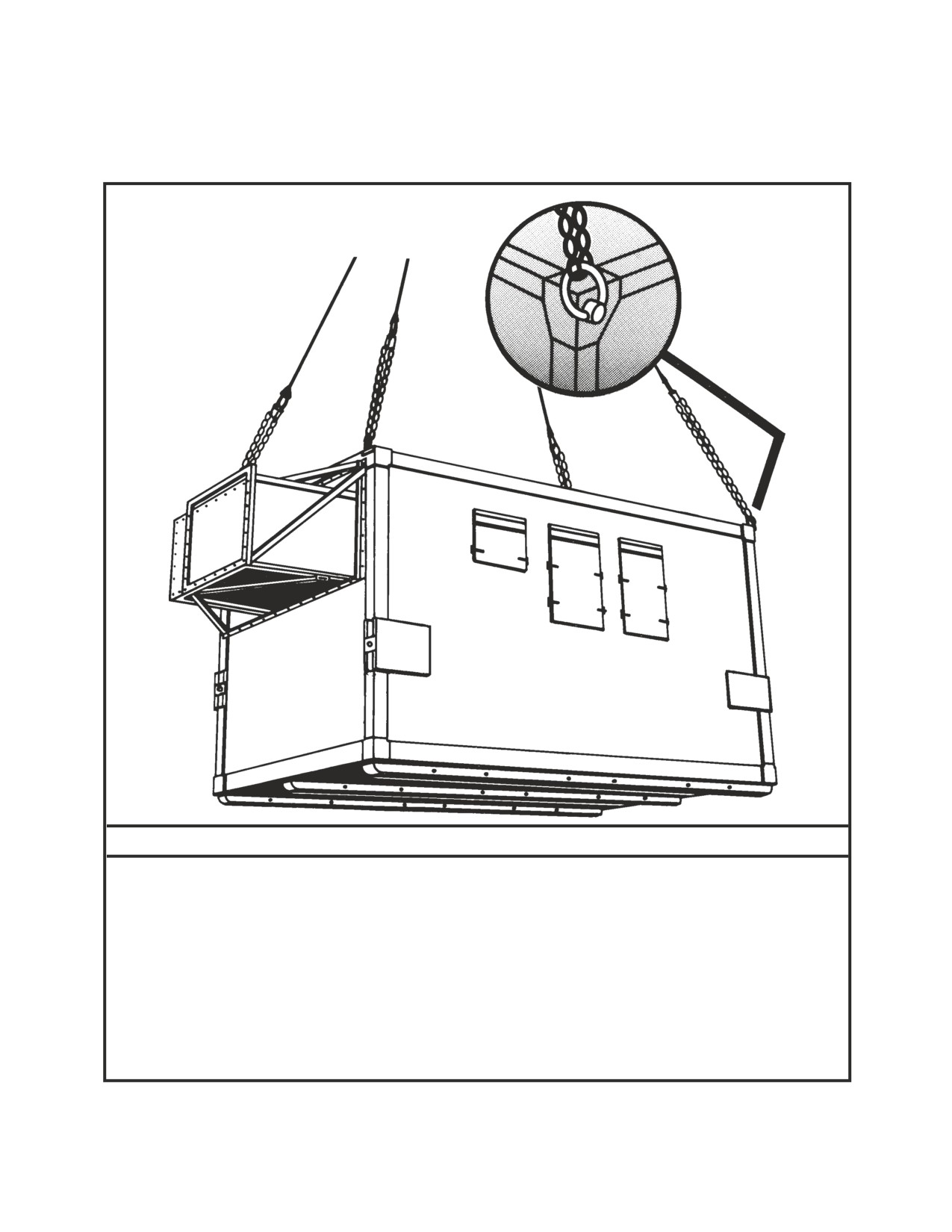
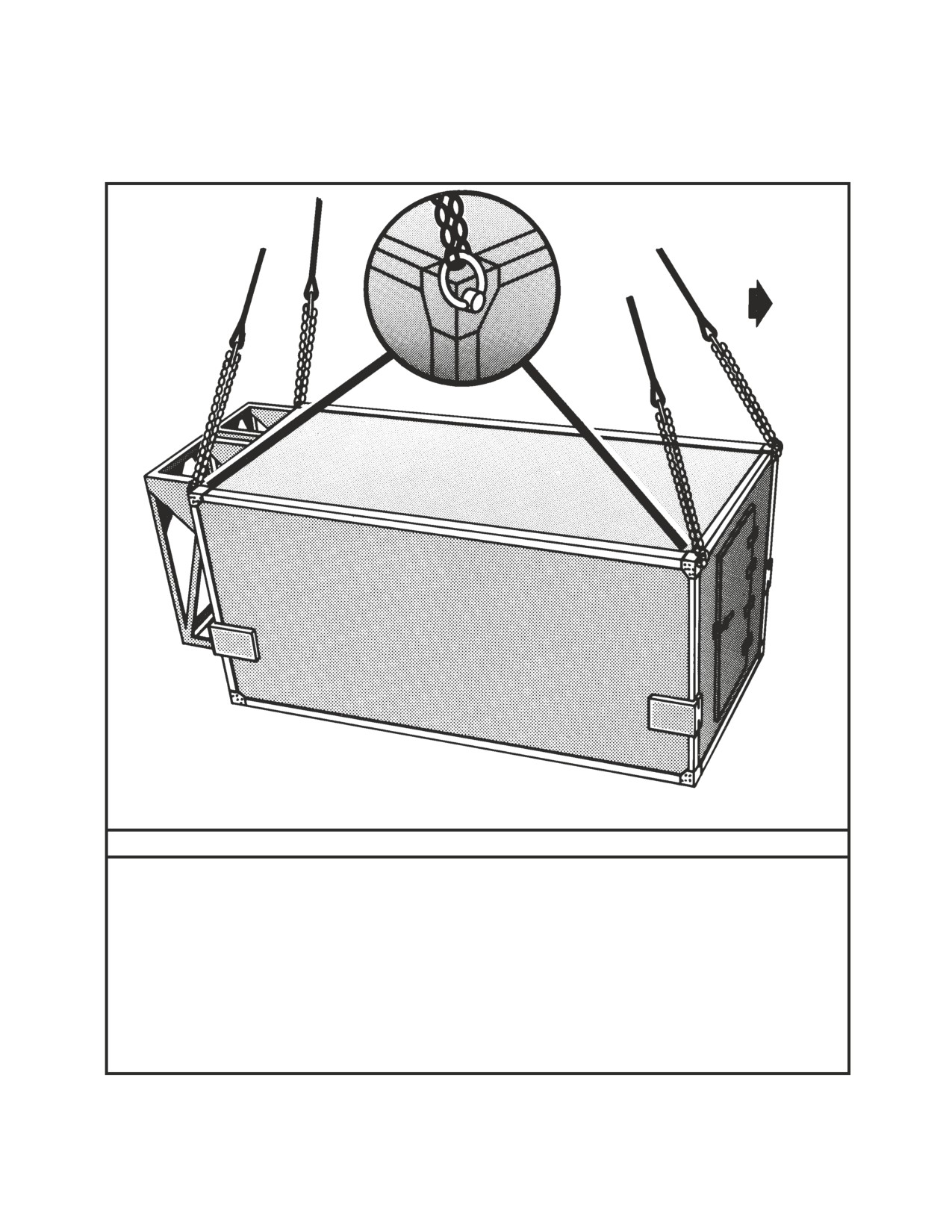
(2) Rigging. Rig the load according to the steps in
Figure 10-4.
(3) Cord, nylon, Type III, 550-pound breaking strength.
(3) Hookup. The hookup team stands on top of the
(4) Webbing, cotton, 1/4-inch, 80-pound breaking
shelter. The static wand person discharges the static elec-
tricity with the static wand. The hookup person places
strength.
the apex fitting onto the aircraft cargo hook. The hookup
team then moves clear of the load but remains close to the
c. Personnel. Two persons can prepare and rig this
load as the helicopter removes slack from the sling legs.
load in 15 minutes.
When successful hookup is assured, the hookup team
quickly exits the area underneath the helicopter to the
d. Procedures. The following procedures apply to this
designated rendezvous point.
load:
(1) Preparation. Prepare the load using the following
CAUTION
steps:
Brief the helicopter crew to relax the sling leg
tension and hover to the side of the load when
(a) Remove all antennas. Disassemble and securely
releasing the apex fitting to prevent damage to
stow inside the shelter.
the roof of the shelter.
(b) Close and secure all doors, vents, and caps with
(4) Derigging. Derigging is the reverse of the prepa-
ration and rigging procedures in steps d (1) and d (2).
10-8
FM 10-450-4/MCRP 4-23E, VOL II/NWP 3-04.12/AFJMAN 11-223, VOL II/
COMDTINST M13482.2
RIGGING STEPS
1. Position apex fitting on top of the shelter. Route
3. Loop the chain end of sling leg 3 through the left rear
outer sling legs 1 and 2 to the front of the shelter and inner
lift provision at the top left corner of the shelter. Place the
sling legs 3 and 4 to the rear. Sling legs 1 and 3 must be on
correct link from Table 10-4 in the grab hook. Repeat with
the left side of the load.
sling leg 4 on the right rear lift provision. Secure the
excess chain with tape or Type III nylon cord.
2. Loop the chain end of sling leg 1 through the left
front lift provision at the top left corner of the shelter.
4. Cluster and tie or tape (breakaway technique) all sling
Place the correct link from Table 10-4 in the grab hook.
legs together on top of the shelter to prevent entangle-
Repeat with sling leg 2 on the right front lift provision.
ment during hookup and lift-off.
Secure the excess chain with tape or Type III nylon cord.
Figure 10-4. S-280 Shelters

FM 10-450-4/MCRP 4-23E, VOL II/NWP 3-04.12/AFJMAN 11-223, VOL II/
COMDTINST M13482.2
10-6. 8- x 8- x 10-Foot Shelter Systems
a. Applicability. The following items in Table 10-5 are certified for all helicopters with suitable lift capacity by the US
Army Natick Research, Development, and Engineering Center:
Table 10-5. 8- x 8- x 10-Foot Shelter Systems
MAX
RECOMMENDED
LINK COUNT
NOMENCLATURE
WEIGHT
SLING
SET
AIRSPEED
FRONT/REAR
(POUNDS)
(KNOTS)
Shelter, Electromechanical Induction
Door is the Front
7,700
15K
70
(EMI), TAMCN C6110
5/5
S-715/T, Reproduction/Distribution-
Door is the Front
4,826
15K
50
Facility Shelter
3/3
Door is the Front
Electronic EMI HSOP Shelter
4,140
15K
60
3/3
Shelter, Radar Set, Precision
Door is the Front
Approach, AN/TPN-22, TAMCN
7,200
15K
80
3/3
Q2115
Shelter, Communications Central,
Door is the Aft
6,619
15K
85
AN/MSC-63A, TAMCN A0258
5/5
Door is the Front
Air Radar Shelter, AN/TPS-73
14,500
40K
80
5/8
Door is the Front
Radar Shelter, AN/TPS-63B
7,360
15K
70
3/10
7,000
10-Foot Rigid EMD Communications
Door is the Front
(Minimum
15K
70
Shelter
3/3
Weight)
d. Procedures. The following procedures apply to this
b. Materials. The following materials are required to
load:
rig this load:
(1) Preparation. Prepare the load using the following
(1) Sling set (15,000 or 40,000-pound capacity).
steps:
(2) Tape, adhesive, pressure-sensitive, 2-inch wide
(a) Remove all antennas. Disassemble and securely
roll.
stow inside the shelter.
(3) Cord, nylon, Type III, 550-pound breaking strength.
(b) Close and secure all doors, vents, and caps with
tape or Type III nylon cord.
(4) Webbing, cotton, 1/4-inch, 80-pound breaking
strength.
(c) Secure all loose equipment (electrical lines, hoses,
etc.) with tape or Type III nylon cord.
c. Personnel. Two persons can prepare and rig this
load in 15 minutes.
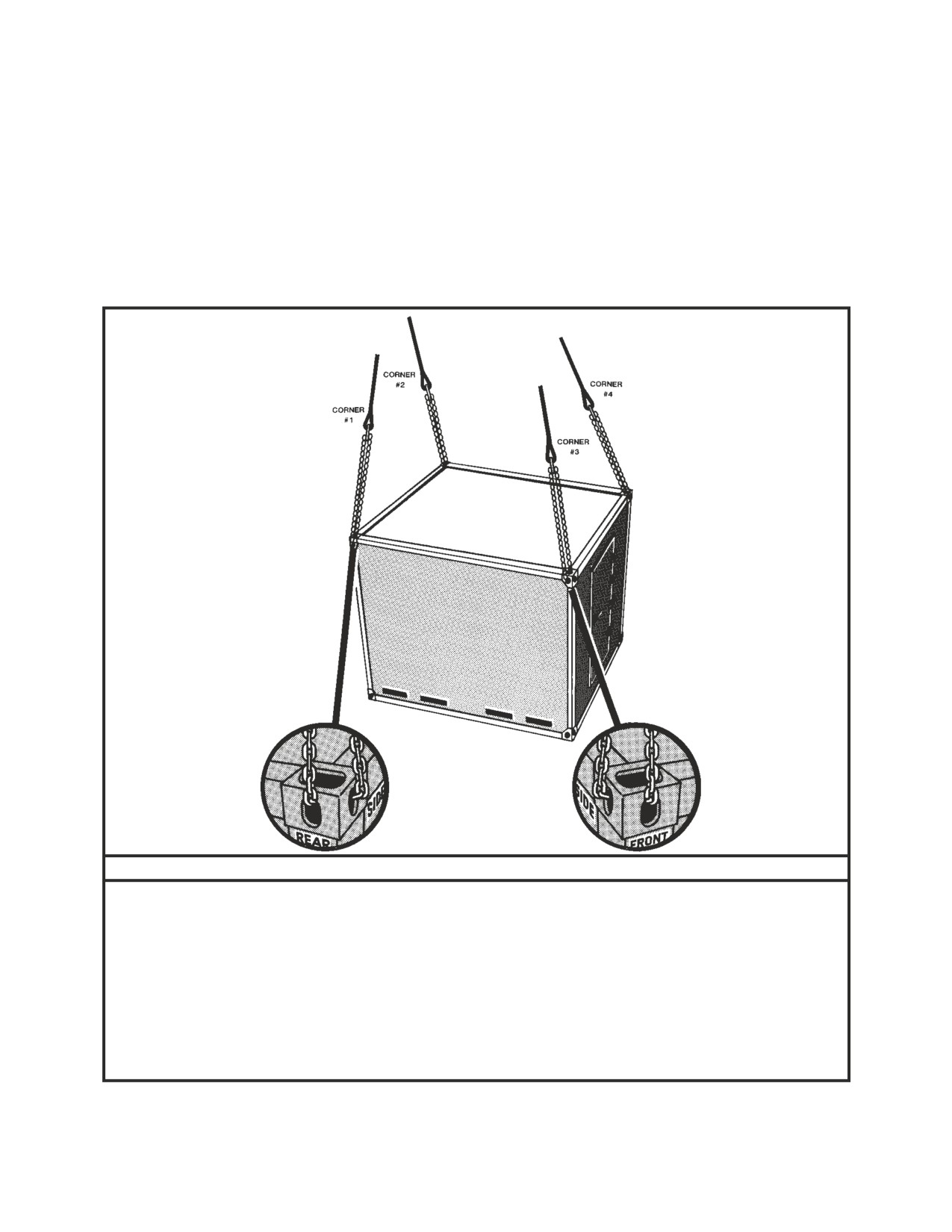
(2) Rigging. Rig the load according to the steps in
Figure 10-5.
10-10
FM 10-450-4/MCRP 4-23E, VOL II/NWP 3-04.12/AFJMAN 11-223, VOL II/
COMDTINST M13482.2
(3) Hookup. The hookup team stands on top of the
When successful hookup is assured, the hookup team
shelter. The static wand person discharges the static elec-
quickly exits the area underneath the helicopter to the
tricity with the static wand. The hookup person places
designated rendezvous point.
the apex fitting onto the aircraft cargo hook. The hookup
team then moves clear of the load but remains close to the
(4) Derigging. Derigging is the reverse of the prepa-
load as the helicopter removes slack from the sling legs.
ration and rigging procedures in steps d (1) and d (2).
RIGGING STEPS
1. Position apex fitting on top of the shelter. Route
3. Loop the chain end of sling leg 3 through the open-
outer sling legs 1 and 2 to the front of the shelter and inner
ing in the side of the ISO lift provision at the top left
sling legs 3 and 4 to the rear. Sling legs 1 and 3 must be on
corner of the shelter and out through the rear opening.
the left side of the load.
Place the correct link from Table 10-5 in the grab hook.
Repeat with sling leg 4 on the right rear lift provision.
2. Loop the chain end of sling leg 1 through the open-
ing in the side of the ISO lift provision at the top left
4. Cluster and tie or tape (breakaway technique) all sling
corner of the shelter and out through the front opening.
legs together on top of the shelter to prevent entangle-
Place the correct link from Table 10-5 in the grab hook.
ment during hookup and lift-off.
Repeat with sling leg 2 on the right front lift provision.
Figure 10-5. 8- x 8- x 10-Foot Shelter Systems

FM 10-450-4/MCRP 4-23E, VOL II/NWP 3-04.12/AFJMAN 11-223, VOL II/
COMDTINST M13482.2
10-7. Downsized Digital Group Multiplexer (DDGM) Shelter Assemblages
a. Applicability. The following items in Table 10-6 are certified for all helicopters with suitable lift capacity by the US
Army Natick Research, Development, and Engineering Center:
Table 10-6. Downsized Digital Group Multiplexer (DDGM) Shelter Assemblages
MAX
RECOMMENDED
LINK COUNT
NOMENCLATURE
WEIGHT
SLING SET
AIRSPEED
FRONT/REAR
(POUNDS)
(KNOTS)
AN/TRC-173A
3,500
10K
3/3
80
AN/TRC-174A
3,425
10K
3/3
80
AN/TRC-175A
3,350
10K
3/3
80
AN/TRC-138B
3,525
10K
3/3
80
AN/TRC-138C
3,430
10K
3/3
80
b. Materials. The following materials are required to
tape or Type III nylon cord.
rig this load:
(b) Close and secure all doors, vents, and caps with
(1) Sling set (10,000-pound capacity).
tape or Type III nylon cord.
(c) Secure the air conditioner cover with Type III
(2) Tape, adhesive, pressure-sensitive, 2-inch wide
nylon cord.
roll.
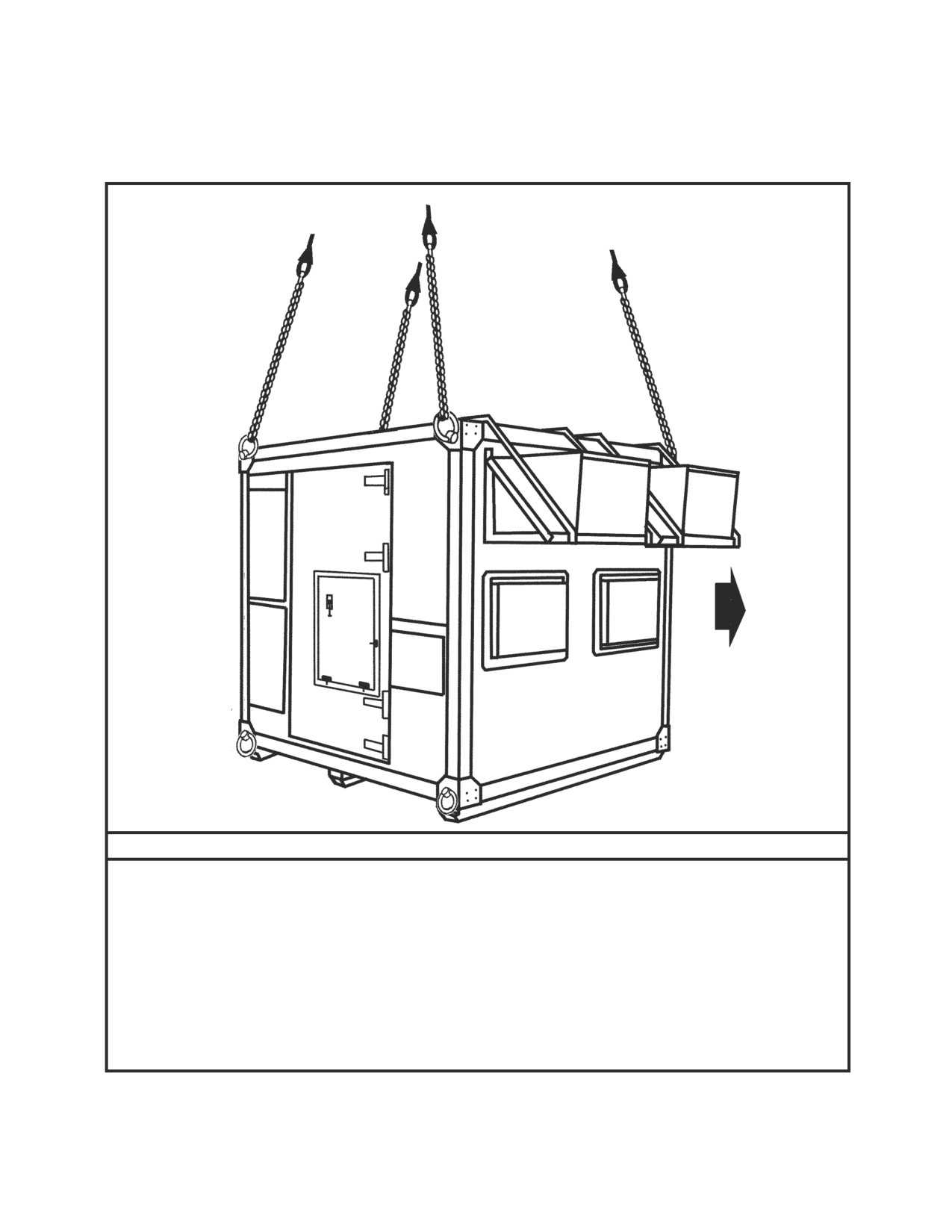
(2) Rigging. Rig the load according to the steps in
(3) Cord, nylon, Type III, 550-pound breaking strength.
Figure 10-6.
(4) Webbing, cotton, 1/4-inch, 80-pound breaking
(3) Hookup. The hookup team stands on top of the
strength.
shelter. The static wand person discharges the static elec-
tricity with the static wand. The hookup person places
c. Personnel. Two persons can prepare and rig this
the apex fitting onto the aircraft cargo hook. The hookup
load in 20 minutes.
team then moves clear of the load but remains close to the
load as the helicopter removes slack from the sling legs.
d. Procedures. The following procedures apply to this
When successful hookup is assured, the hookup team
load:
quickly exits the area underneath the helicopter to the
designated rendezvous point.
(1) Preparation. Prepare the load using the following
steps:
(4) Derigging. Derigging is the reverse of the prepa-
ration and rigging procedures in steps d (1) and d (2).
(a) Secure all drawers and internal equipment with
10-12
FM 10-450-4/MCRP 4-23E, VOL II/NWP 3-04.12/AFJMAN 11-223, VOL II/
COMDTINST M13482.2
RIGGING STEPS
1. Position apex fitting on top of the shelter. Route
3. Loop the chain end of sling leg 3 through the left rear
outer sling legs 1 and 2 to the front of the shelter (ECU
lift provision. Place the correct link from Table 10-6 in the
end) and inner sling legs 3 and 4 to the rear. Sling legs 1
grab hook. Repeat with sling leg 4 on the right rear lift
and 3 must be on the left side of the load.
provision.
2. Loop the chain end of sling leg 1 through the left
4. Cluster and tie or tape (breakaway technique) all sling
front lift provision. Place the correct link from Table 10-6
legs together on top of the shelter to prevent entangle-
in the grab hook. Repeat with sling leg 2 on the right front
ment during hookup and lift-off.
lift provision.
Figure 10-6. Downsized Digital Group Multiplexer (DDGM) Shelter Assemblages
FM 10-450-4/MCRP 4-23E, VOL II/NWP 3-04.12/AFJMAN 11-223, VOL II/
COMDTINST M13482.2
10-8. AN/TYC-5A Data Communications Terminal
a. Applicability. The following item in Table 10-7 is certified for all helicopters with suitable lift capacity by the US
Army Natick Research, Development, and Engineering Center:
Table 10-7. AN/TYC-5A Data Communications Terminal
MAX
RECOMMENDED
LINK COUNT
NOMENCLATURE
WEIGHT
SLING SET
AIRSPEED
FRONT/REAR
(POUNDS)
(KNOTS)
AN/TYC-5A Data Communications
7,451
15K
5/5
70
Terminal
b. Materials. The following materials are required to
III nylon cord.
rig this load:
(b) Close and secure all doors, vents, and caps with
(1) Sling set (15,000-pound capacity).
tape or Type III nylon cord.
(c) Remove the transporter dolly lift sets if attached
(2) Tape, adhesive, pressure-sensitive, 2-inch wide
to the shelter.
roll.
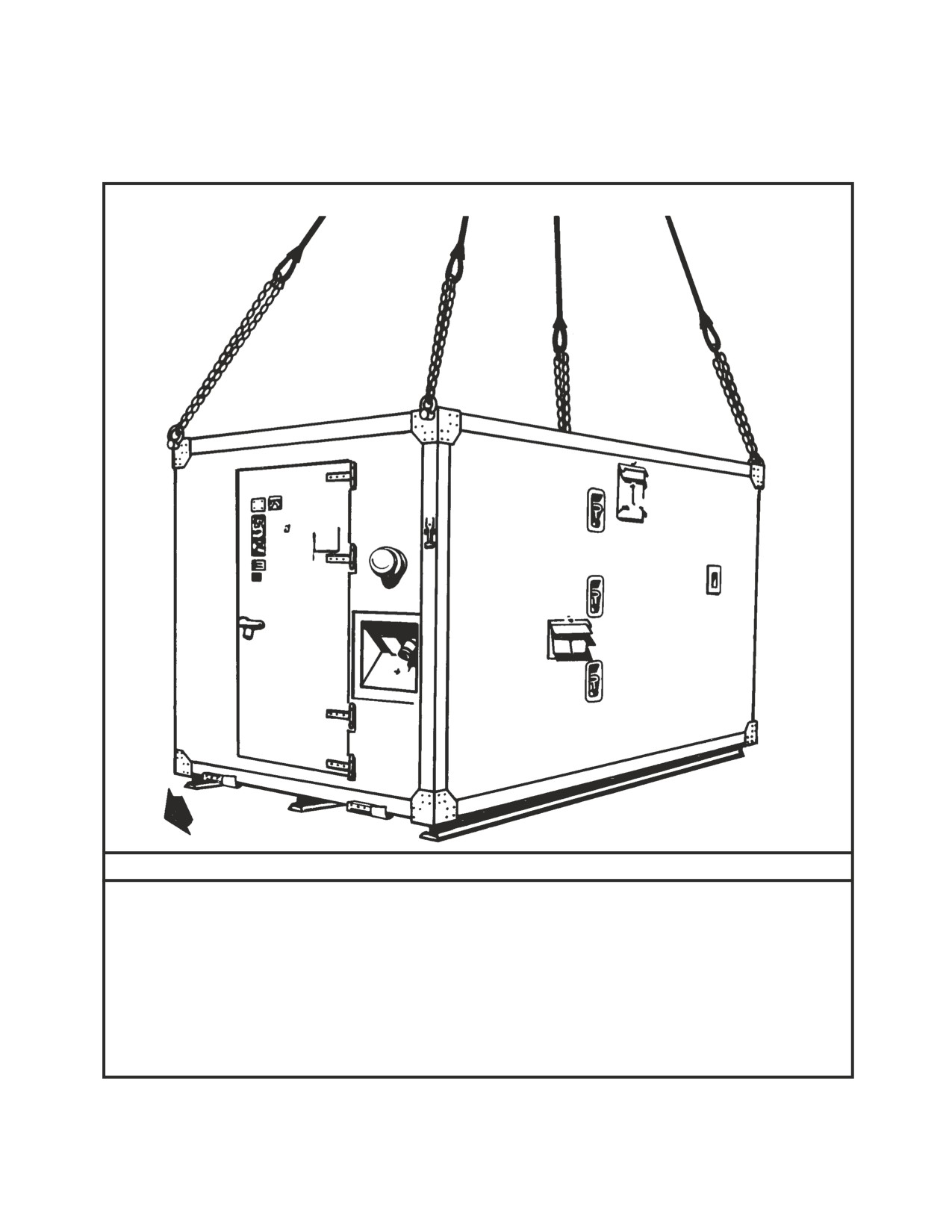
(2) Rigging. Rig the load according to the steps in
(3) Cord, nylon, Type III, 550-pound breaking strength.
Figure 10-7.
(4) Webbing, cotton, 1/4-inch, 80-pound breaking
(3) Hookup. The hookup team stands on top of the
strength.
shelter. The static wand person discharges the static elec-
tricity with the static wand. The hookup person places
c. Personnel. Two persons can prepare and rig this
the apex fitting onto the aircraft cargo hook. The hookup
load in 15 minutes.
team then moves clear of the load but remains close to the
load as the helicopter removes slack from the sling legs.
d. Procedures. The following procedures apply to this
When successful hookup is assured, the hookup team
load:
quickly exits the area underneath the helicopter to the
designated rendezvous point.
(1) Preparation. Prepare the load using the following
steps:
(4) Derigging. Derigging is the reverse of the prepa-
ration and rigging procedures in steps d (1) and d (2).
(a) Secure all internal equipment with tape or Type
10-14
FM 10-450-4/MCRP 4-23E, VOL II/NWP 3-04.12/AFJMAN 11-223, VOL II/
COMDTINST M13482.2
RIGGING STEPS
1. Position apex fitting on top of the shelter. Route
outer sling legs 1 and 2 to the front of the shelter (door
3. Loop the chain end of sling leg 3 through the left rear
end) and inner sling legs 3 and 4 to the rear. Sling legs 1
lift provision. Place the correct link from Table 10-7 in the
and 3 must be on the left side of the load.
grab hook. Repeat with sling leg 4 on the right rear lift
provision.
2. Loop the chain end of sling leg 1 through the left
front lift provision. Place the correct link from Table 10-7
4. Cluster and tie or tape (breakaway technique) all sling
in the grab hook. Repeat with sling leg 2 on the right front
legs together on top of the shelter to prevent entangle-
lift provision.
ment during hookup and lift-off.
Figure 10-7. AN/TYC-5A Data Communications Terminal
FM 10-450-4/MCRP 4-23E, VOL II/NWP 3-04.12/AFJMAN 11-223, VOL II/
COMDTINST M13482.2
10-9. AN/TRN-44 Tactical Air Navigation Shelter
a. Applicability. The following item in Table 10-8 is certified for all helicopters with suitable lift capacity by the US
Army Natick Research, Development, and Engineering Center:
Table 10-8. AN/TRN-44 Tactical Air Navigation Shelter
MAX
RECOMMENDED
LINK COUNT
NOMENCLATURE
WEIGHT
SLING SET
AIRSPEED
FRONT/REAR
(POUNDS)
(KNOTS)
AN/TRN-44 Tactical Air Navigation
6,800
15K
3/3
75
Shelter
b. Materials. The following materials are required to
(a) Secure all internal equipment with tape or Type
rig this load:
III nylon cord.
(1) Sling set (15,000-pound capacity).
(b) Close and secure all doors, vents, and caps with
tape or Type III nylon cord.
(2) Tape, adhesive, pressure-sensitive, 2-inch wide
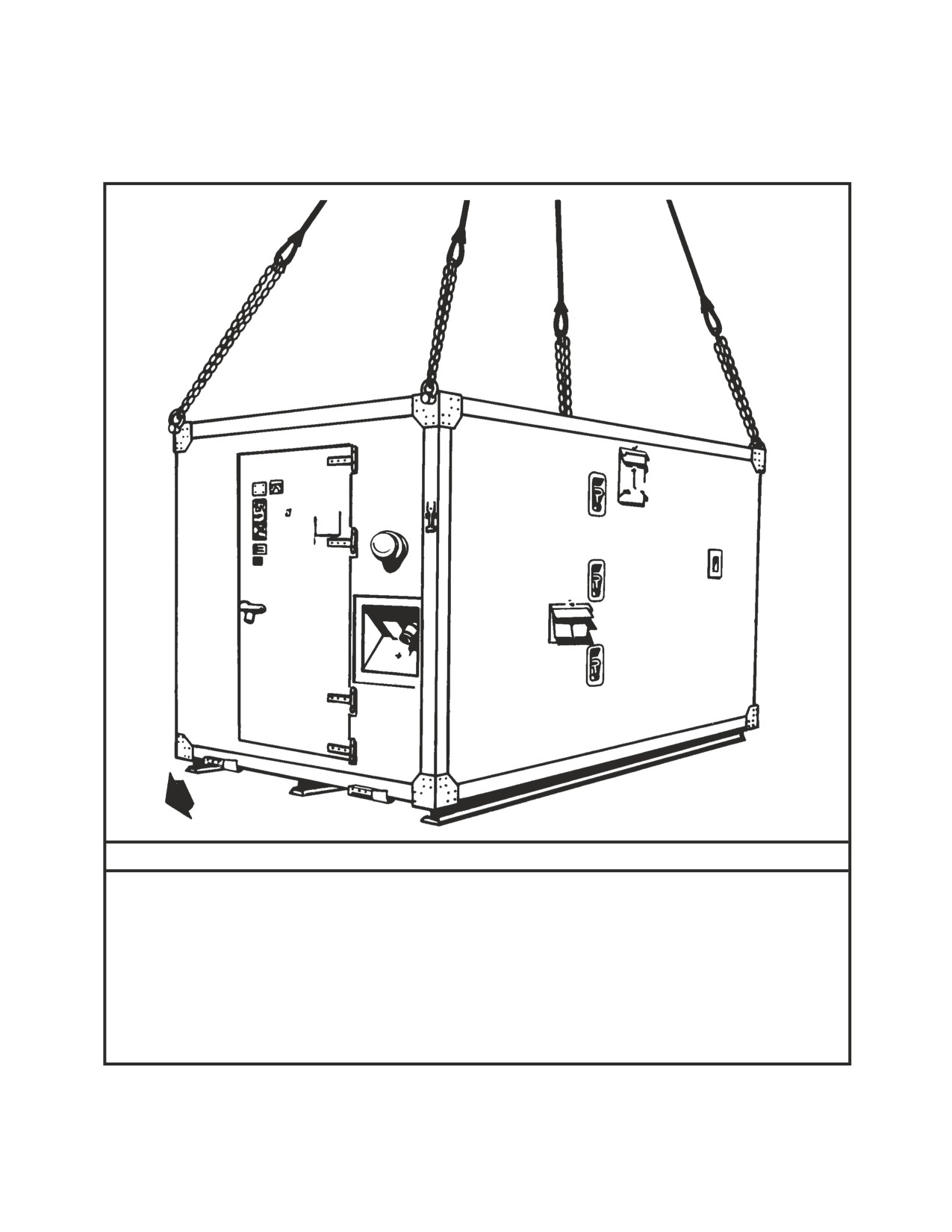
(2) Rigging. Rig the load according to the steps in
roll.
Figure 10-8.
(3) Cord, nylon, Type III, 550-pound breaking strength.
(3) Hookup. The hookup team stands on top of the
shelter. The static wand person discharges the static elec-
(4) Webbing, cotton, 1/4-inch, 80-pound breaking
tricity with the static wand. The hookup person places
strength.
the apex fitting onto the aircraft cargo hook. The hookup
team then moves clear of the load but remains close to the
c. Personnel. Two persons can prepare and rig this
load as the helicopter removes slack from the sling legs.
load in 15 minutes.
When successful hookup is assured, the hookup team
quickly exits the area underneath the helicopter to the
d. Procedures. The following procedures apply to this
designated rendezvous point.
load:
(4) Derigging. Derigging is the reverse of the prepa-
(1) Preparation. Prepare the load using the following
ration and rigging procedures in steps d (1) and d (2).
steps:
10-16
FM 10-450-4/MCRP 4-23E, VOL II/NWP 3-04.12/AFJMAN 11-223, VOL II/
COMDTINST M13482.2
RIGGING STEPS
1. Position apex fitting on top of the shelter. Route
3. Loop the chain end of sling leg 3 through the left rear
outer sling legs 1 and 2 to the front of the shelter (door
lift provision. Place the correct link from Table 10-8 in the
end) and inner sling legs 3 and 4 to the rear. Sling legs 1
grab hook. Repeat with sling leg 4 on the right rear lift
and 3 must be on the left side of the load.
provision.
2. Loop the chain end of sling leg 1 through the left
4. Cluster and tie or tape (breakaway technique) all sling
front lift provision. Place the correct link from Table 10-8
legs together on top of the shelter to prevent entangle-
in the grab hook. Repeat with sling leg 2 on the right front
ment during hookup and lift-off.
lift provision.
Figure 10-8. AN/TRN-44 Tactical Air Navigation Shelter
FM 10-450-4/MCRP 4-23E, VOL II/NWP 3-04.12/AFJMAN 11-223, VOL II/
COMDTINST M13482.2
10-10. Hardened Army Tactical Shelter (HATS)
a. Applicability. The following item in Table 10-9 is certified for all helicopters with suitable lift capacity by the US
Army Natick Research, Development, and Engineering Center:
Table 10-9. Hardened Army Tactical Shelter (HATS)
MAX
RECOMMENDED
LINK COUNT
NOMENCLATURE
WEIGHT
SLING SET
AIRSPEED
FRONT/REAR
(POUNDS)
(KNOTS)
Hardened Army Tactical Shelter,
8,160
10K
3/30
70
S-658G
b. Materials. The following materials are required to
III nylon cord.
rig this load:
(b) Close and secure all doors, vents, and caps with
(1) Sling set (10,000-pound capacity).
tape or Type III nylon cord.
(2) Tape, adhesive, pressure-sensitive, 2-inch wide
(c) Secure the air conditioner panels with tape.
roll.
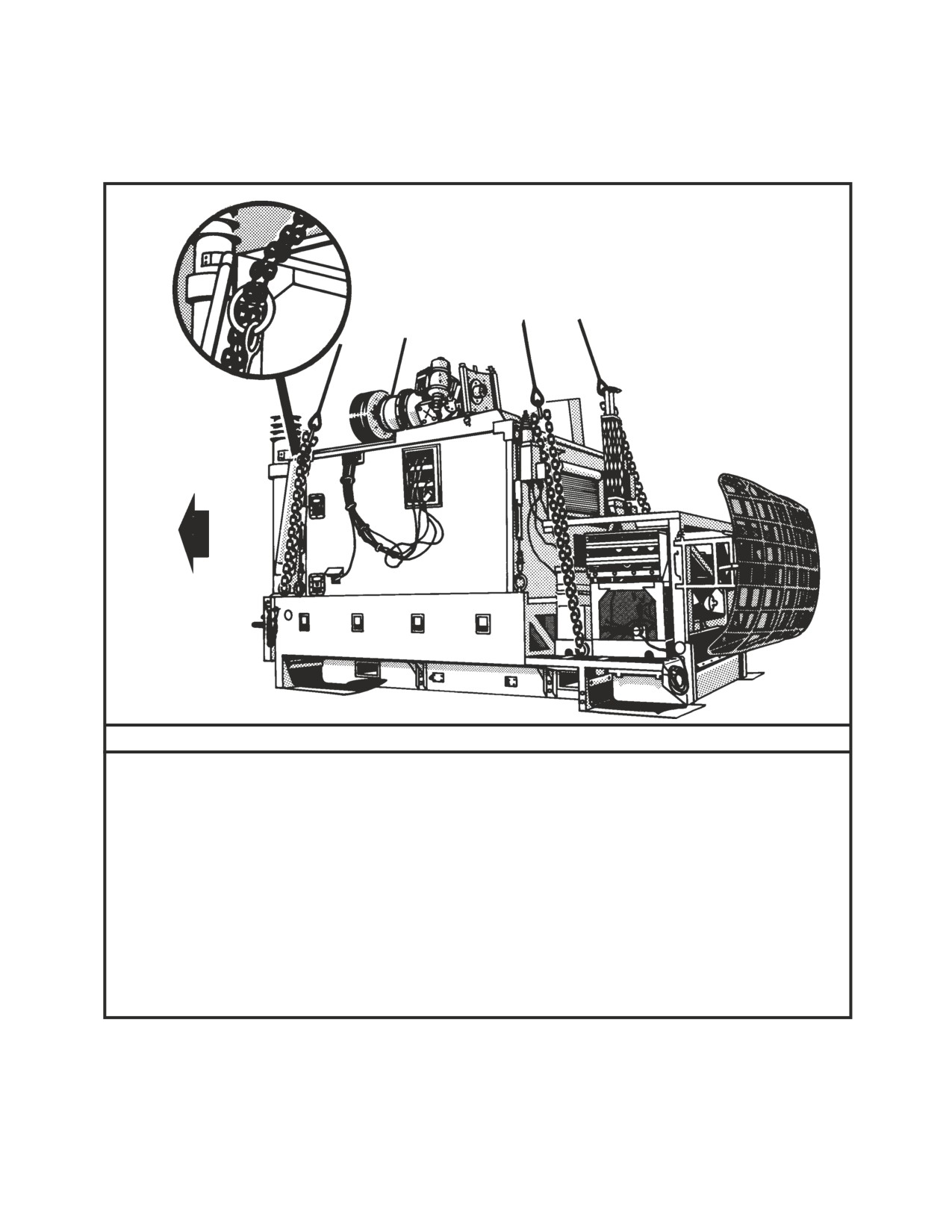
(2) Rigging. Rig the load according to the steps in
(3) Cord, nylon, Type III, 550-pound breaking strength.
Figure 10-9.
(3) Hookup. The hookup team stands on top of the
(4) Webbing, cotton, 1/4-inch, 80-pound breaking
shelter. The static wand person discharges the static elec-
strength.
tricity with the static wand. The hookup person places
the apex fitting onto the aircraft cargo hook. The hookup
c. Personnel. Two persons can prepare and rig this
team then moves clear of the load but remains close to the
load in 15 minutes.
load as the helicopter removes slack from the sling legs.
When successful hookup is assured, the hookup team
d. Procedures. The following procedures apply to this
quickly exits the area underneath the helicopter to the
load:
designated rendezvous point.
(1) Preparation. Prepare the load using the following
(4) Derigging. Derigging is the reverse of the prepa-
steps:
ration and rigging procedures in steps d (1) and d (2).
(a) Secure all internal equipment with tape or Type
10-18
FM 10-450-4/MCRP 4-23E, VOL II/NWP 3-04.12/AFJMAN 11-223, VOL II/
COMDTINST M13482.2
RIGGING STEPS
1. Position apex fitting on top of the shelter. Route
3. Loop the chain end of sling leg 3 through the left rear
outer sling legs 1 and 2 to the front of the shelter (door
lift provision. Place the correct link from Table 10-9 in the
end) and inner sling legs 3 and 4 to the rear. Sling legs 1
grab hook. Repeat with sling leg 4 on the right rear lift
and 3 must be on the left side of the load.
provision.
2. Loop the chain end of sling leg 1 through the left
4. Cluster and tie or tape (breakaway technique) all sling
front lift provision. Place the correct link from Table 10-9
legs together on top of the shelter to prevent entangle-
in the grab hook. Repeat with sling leg 2 on the right front
ment during hookup and lift-off.
lift provision.
Figure 10-9. Hardened Army Tactical Shelter (HATS)

FM 10-450-4/MCRP 4-23E, VOL II/NWP 3-04.12/AFJMAN 11-223, VOL II/
COMDTINST M13482.2
10-11. Cradle Mounted AN/TPQ-32A Radar Set, Component of the AN/MPQ-49A Forward
Area Alerting Radar (FAAR) System
a. Applicability. The following item in Table 10-10 is certified for all helicopters with suitable lift capacity by the US
Army Natick Research, Development, and Engineering Center:
Table 10-10. Cradle Mounted AN/TPQ-32A Radar Set
MAX
RECOMMENDED
LINK COUNT
NOMENCLATURE
WEIGHT
SLING SET
AIRSPEED
FRONT/REAR
(POUNDS)
(KNOTS)
AN/TPQ-32A Cradle Mounted Radar
Set (Cradle, S-250/G Shelter, and a
7,100
10K
3/20
90
Generator)
NOTE: The AN/TPQ-32A must be removed from the
cordance with TM 9-1430-588-10.
truck prior to sling loading.
(b) Remount the antenna reflectors from over the
b. Materials. The following materials are required to
generator assembly to the front of the cradle by removing
rig this load:
and replacing the quick release pins.
(1) Sling set (10,000-pound capacity).
(c) Remove the two turnbuckles located between
the front (shelter door end) cradle tie-down provision and
(2) Additional chain lengths with couplings (4 each).
the shelter lifting provision using a 9/16-inch box wrench.
Store them inside the shelter or in a cradle cabinet.
(3) Tape, adhesive, pressure-sensitive, 2-inch wide
roll.
(d) Pin the mud flaps in the up position.
(e) Secure all loose equipment inside the shelter and
(3) Cord, nylon, Type III, 550-pound breaking strength.
between the cradle and the shelter with Type III nylon
cord, tape, or tie-down straps.
(4) Webbing, cotton, 1/4-inch, 80-pound breaking
strength.
(f) Close and secure all doors, vents, and caps with
tape or Type III nylon cord.
(6) Tie-down strap, cargo, CGU-1/B (as required).
(2) Rigging. Rig the load according to the steps in
(7) Wrench, box end, 9/16-inch.
Figure 10-10.
c. Personnel. Two persons can prepare and rig this
(3) Hookup. The hookup team stands on top of the
load in 25 minutes.
shelter. The static wand person discharges the static elec-
tricity with the static wand. The hookup person places
d. Procedures. The following procedures apply to this
the apex fitting onto the aircraft cargo hook. The hookup
load:
team then moves clear of the load but remains close to the
load as the helicopter removes slack from the sling legs.
(1) Preparation. Prepare the load using the following
When successful hookup is assured, the hookup team
steps:
quickly exits the area underneath the helicopter to the
designated rendezvous point.
(a) Remove the cradle from the modified M35A2
truck and remount the mast in the vertical position in ac-
(4) Derigging. Derigging is the reverse of the prepa-
ration and rigging procedures in steps d (1) and d (2).
10-20
FM 10-450-4/MCRP 4-23E, VOL II/NWP 3-04.12/AFJMAN 11-223, VOL II/
COMDTINST M13482.2
RIGGING STEPS
1. Attach an additional chain leg to each sling leg
link from Table 10-10 in the grab hook. Repeat with sling
using the coupling links.
leg 2 and the right front lift provision of the shelter and
cradle. Secure excess chain with tape or nylon cord.
2. Position the apex fitting on top of the shelter. Route
outer sling legs 1 and 2 to the front of the shelter (door
4. Loop the chain end of sling leg 3 through the left rear
end) and inner sling legs 3 and 4 to the rear. Sling legs 1
lift provision of the cradle. Place the correct link from
and 3 must be on the left side of the load.
Table 10-10 in the grab hook. Repeat with sling leg 4 and
the right rear lift provision of the cradle.
3. Loop the chain end of sling leg 1 through the left
front lift provision of the shelter and through the left front
5. Cluster and tie or tape (breakaway technique) all sling
lift provision of the cradle. Be sure to use the cradle lift
legs together on top of the shelter to prevent entangle-
provision, not the tie-down provision. Place the correct
ment during hookup and lift-off.
Figure 10-10. Cradle Mounted AN/TPQ-32A Radar Set
FM 10-450-4/MCRP 4-23E, VOL II/NWP 3-04.12/AFJMAN 11-223, VOL II/
COMDTINST M13482.2
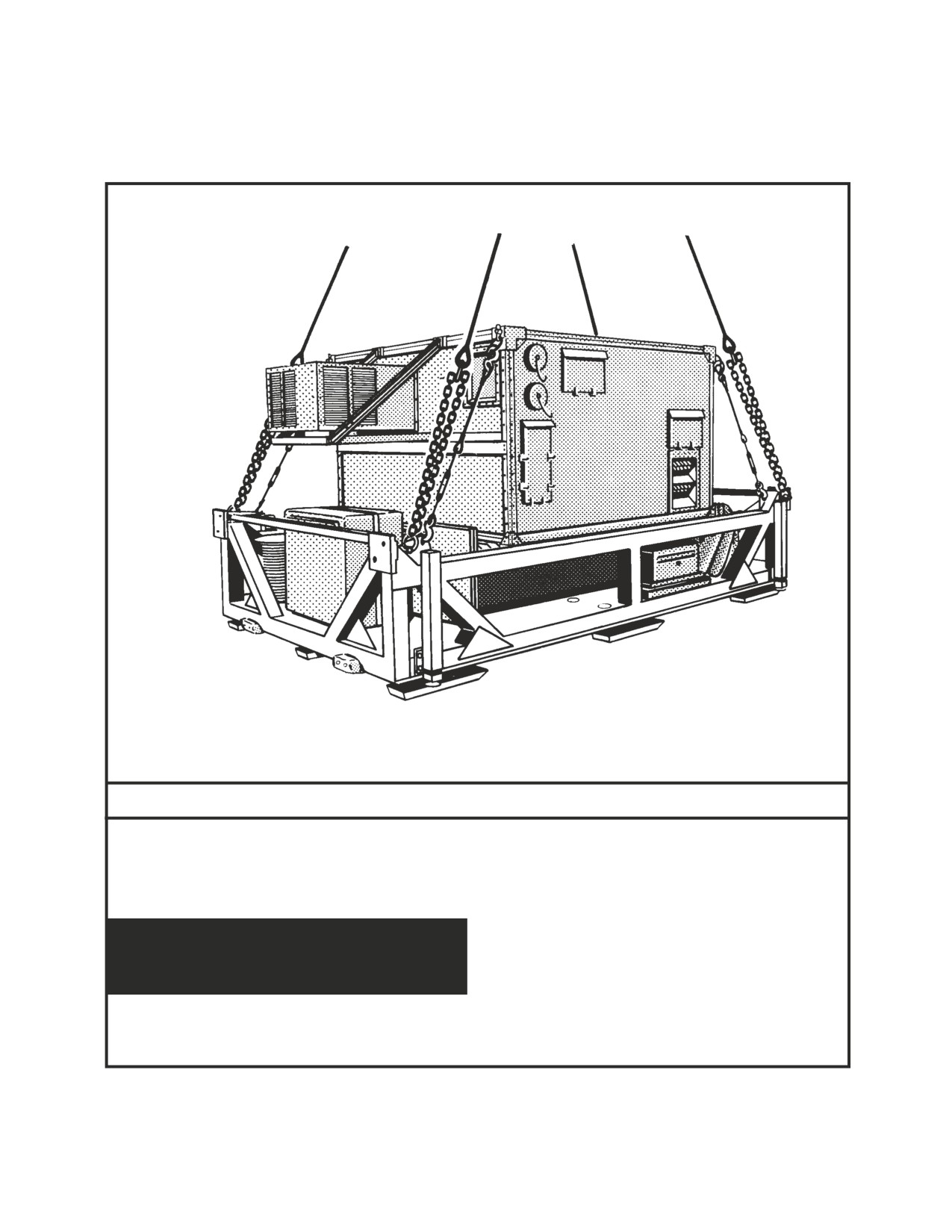
10-12. NATO Air Base Satcom (NABS) Shelter Pallet, AN/TSC-93B (V) 2
a. Applicability. The following item in Table 10-11 is certified for all helicopters with suitable lift capacity by the US
Army Natick Research, Development, and Engineering Center:
Table 10-11. NATO Air Base Satcom (NABS) Shelter Pallet, AN/TSC-93B (V) 2
MAX
RECOMMENDED
LINK COUNT
NOMENCLATURE
WEIGHT
SLING SET
AIRSPEED
FRONT/REAR
(POUNDS)
(KNOTS)
AN/TSC-93B (V) 2 Shelter Pallet
5,751
10K
3/3
90
b. Materials. The following materials are required to
shelter pallet with tape or Type III nylon cord.
rig this load:
(b) Remove the cargo cover and stow it inside the
(1) Sling set (10,000-pound capacity).
shelter.
(c) Close and secure all doors, vents, and caps with
(2) Tape, adhesive, pressure-sensitive, 2-inch wide
tape or Type III nylon cord. All exhaust vents must be
roll.
taped.
(3) Cord, nylon, Type III, 550-pound breaking strength.
(2) Rigging. Rig the load according to the steps in
Figure 10-11.
(4) Webbing, cotton, 1/4-inch, 80-pound breaking
strength.
(3) Hookup. The hookup team stands on top of the
shelter. The static wand person discharges the static elec-
c. Personnel. Two persons can prepare and rig this
tricity with the static wand. The hookup person places
load in 20 minutes.
the apex fitting onto the aircraft cargo hook. The hookup
team then moves clear of the load but remains close to the
d. Procedures. The following procedures apply to this
load as the helicopter removes slack from the sling legs.
load:
When successful hookup is assured, the hookup team
quickly exits the area underneath the helicopter to the
(1) Preparation. Prepare the load using the following
designated rendezvous point.
steps:
(4) Derigging. Derigging is the reverse of the prepa-
(a) Secure all loose cables and equipment on the
ration and rigging procedures in steps d (1) and d (2).
10-22
FM 10-450-4/MCRP 4-23E, VOL II/NWP 3-04.12/AFJMAN 11-223, VOL II/
COMDTINST M13482.2
RIGGING STEPS
1. Position the apex fitting on top of the shelter. Route
link from Table 10-11 in the grab hook. Repeat with sling
outer sling legs 1 and 2 to the front of the pallet (ECU end)
leg 2 and the right front lift provision.
and inner sling legs 3 and 4 to the rear. Sling legs 1 and 3
must be on the left side of the load.
3. Loop the chain end of sling leg 3 through the left rear
lift provision located on the pallet. Place the correct link
CAUTION
from Table 10-11 in the grab hook. Repeat with sling leg 4
and the right rear lift provision.
Do not use the lift provisions on the shelter.
4. Cluster and tie or tape (breakaway technique) all sling
2. Loop the chain end of sling leg 1 through the left
legs together on top of the shelter to prevent entangle-
front lift provision located on the pallet. Place the correct
ment during hookup and lift-off.
Figure 10-11. NATO Air Base Satcom (NABS) Shelter Pallet, AN/TSC-93B (V) 2
FM 10-450-4/MCRP 4-23E, VOL II/NWP 3-04.12/AFJMAN 11-223, VOL II/
COMDTINST M13482.2
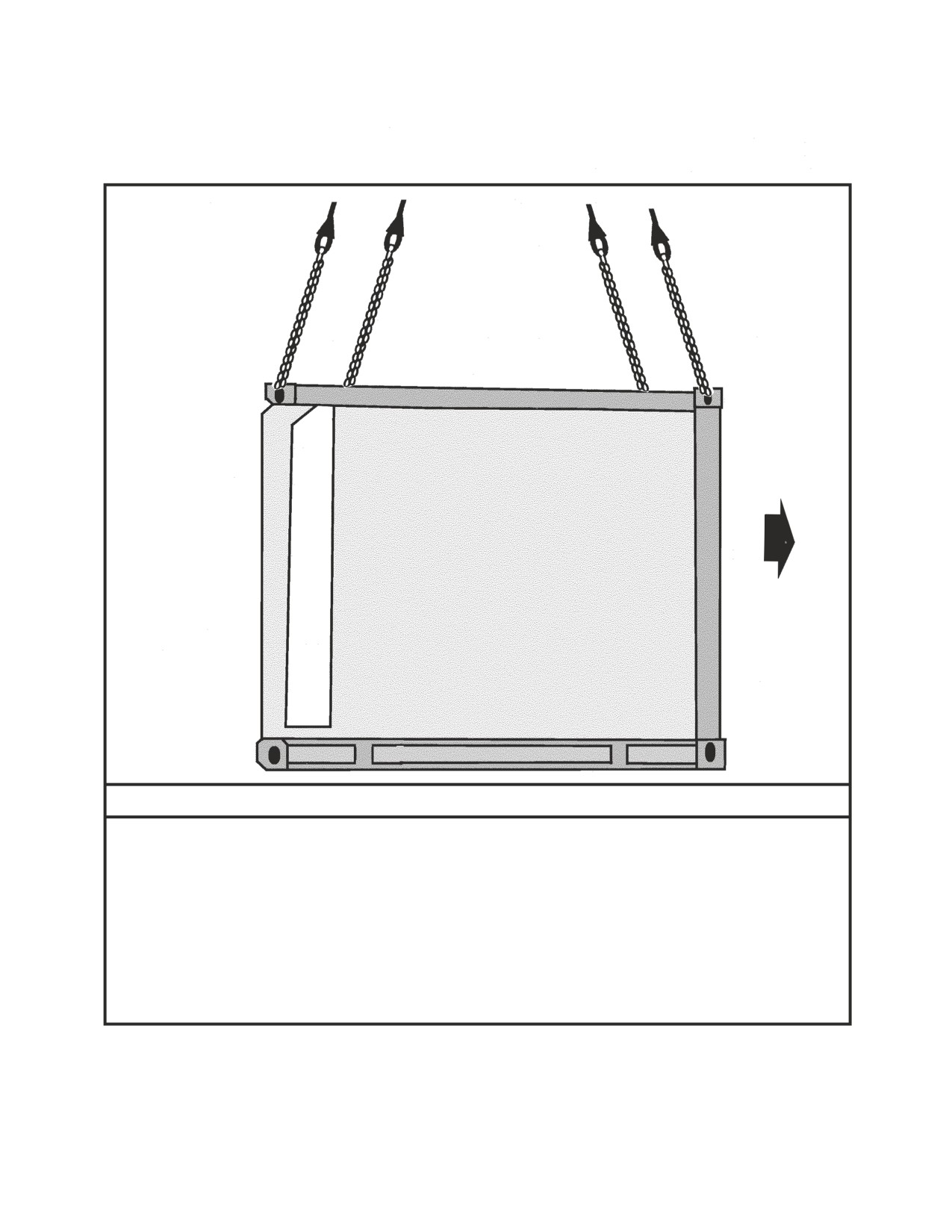
10-13. Refrigerator, Rigid Box without Refrigerator Unit
a. Applicability. The following item in Table 10-12 is certified for all helicopters with suitable lift capacity by the US
Army Natick Research, Development, and Engineering Center:
Table 10-12. Refrigerator, Rigid Box without Refrigerator Unit
MAX
RECOMMENDED
LINK COUNT
NOMENCLATURE
WEIGHT
SLING SET
AIRSPEED
FRONT/REAR
(POUNDS)
(KNOTS)
Refrigerator, Rigid Box, TAMCN
3,500
15K
5/5
90
B1710, without Refrigerator Unit
b. Materials. The following materials are required to
(a) Remove the refrigerator unit from inside the re-
rig this load:
frigerator box.
(1) Sling set (15,000-pound capacity).
(b) Secure all equipment inside the box with tape or
Type III nylon cord. Close and secure the door latch.
(2) Tape, adhesive, pressure-sensitive, 2-inch wide
roll.
(2) Rigging. Rig the load according to the steps in
Figure 10-12.
(3) Cord, nylon, Type III, 550-pound breaking strength.
(3) Hookup. The hookup team stands on top of the
shelter. The static wand person discharges the static elec-
(4) Webbing, cotton, 1/4-inch, 80-pound breaking
tricity with the static wand. The hookup person places
strength.
the apex fitting onto the aircraft cargo hook. The hookup
team then moves clear of the load but remains close to the
c. Personnel. Two persons can prepare and rig this
load as the helicopter removes slack from the sling legs.
load in 10 minutes.
When successful hookup is assured, the hookup team
quickly exits the area underneath the helicopter to the
d. Procedures. The following procedures apply to this
designated rendezvous point.
load:
(4) Derigging. Derigging is the reverse of the prepa-
(1) Preparation. Prepare the load using the following
ration and rigging procedures in steps d (1) and d (2).
steps:
10-24
FM 10-450-4/MCRP 4-23E, VOL II/NWP 3-04.12/AFJMAN 11-223, VOL II/
COMDTINST M13482.2
RIGGING STEPS
1. Position the web ring on top of the refrigerator box.
3. Loop the chain end of sling leg 3 through the left rear
Route outer sling legs 1 and 2 to the front of the box and
lift provision. Place the correct link from Table 10-12 in
inner sling legs 3 and 4 to the rear. Sling legs 1 and 3 must
the grab hook. Repeat with sling leg 4 and the right rear
be on the left side of the load.
lift provision.
2. Loop the chain end of sling leg 1 through the left
4. Cluster and tie or tape (breakaway technique) all sling
front lift provision. Place the correct link from Table 10-12
legs together on top of the box to prevent entanglement
in the grab hook. Repeat with sling leg 2 and the right
during hookup and lift-off.
front lift provision.
Figure 10-12. Refrigerator, Rigid Box without Refrigerator Unit
C3, FM 10-450-4/MCRP 4-23E, VOL II/NWP 3-04.12/AFJMAN 11-223, VOL II/
COMDTINST M13482.3A
CHAPTER 11
CERTIFIED SINGLE-POINT RIGGING PROCEDURES FOR CONTAINERS
11-1. Introduction
tifies the certified loads. The certified single-point rigging
This chapter contains rigging procedures for single-point
procedures for containers are in this section. Paragraphs
lift of containers that have been certified for sling load.
11-2 through 11-12 give detailed instructions for rigging
Each rigging procedure is found in a paragraph that in-
loads.
cludes a description of the load, materials required for
rigging, and steps to complete the procedure. An applica-
NOTE: Reach Pendants may be used on all single point
bility paragraph is also a part of each paragraph and iden-
loads. A static discharge person is not required when
using a Reach Pendant.
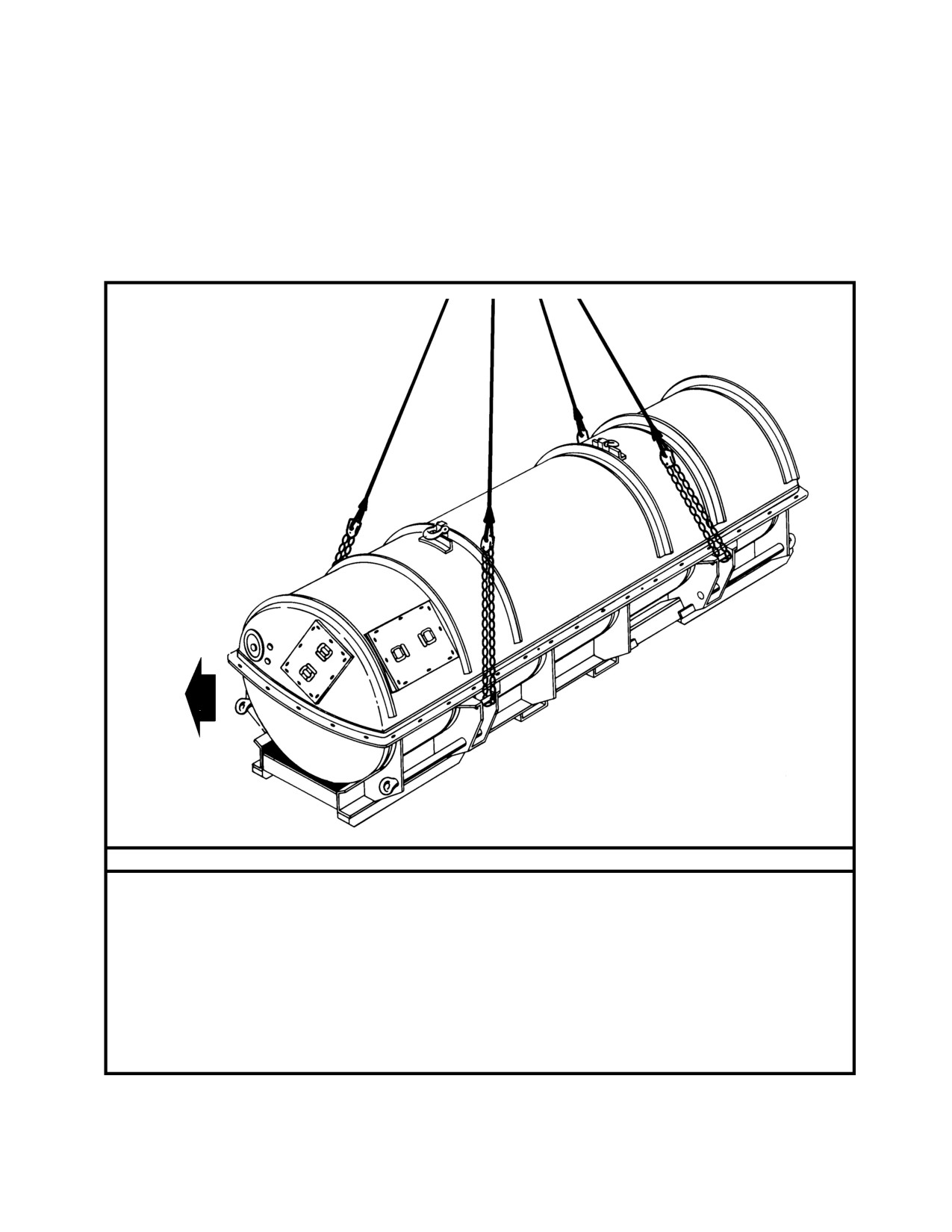
11-2. Pershing II in Container
a. Applicability. The following items in Table 11-1 are certified for all helicopters with suitable lift capacity by the US
Army Soldier Systems Center:
Table 11-1. Pershing II in Container
MAX
RECOMMENDED
LINK COUNT
NOMENCLATURE
WEIGH T
SLING SET
AIRSPEE D
FRONT/REA R
(POUNDS )
(KNOTS )
Pershing II First Stage Section
14,410
25K
3/20
90
Pershing II Second Stage Section
10,158
25K
3/13
110
Pershing II Guidance and Control
3,500
10K
3/14
100
Adapter Section
Pershing II Radar Section
1,708
10K
/
70
b. Materials. The following materials are required to
d. Procedures. The following procedures apply to this
rig this load:
load:
(1) Sling set (10,000- or 25,000-pound capacity) (as
(1) Preparation. Prepare the load using the following
required).
steps:
(2) Tape, adhesive, pressure-sensitive, 2-inch wide
(a) Ensure the container cover is securely fastened.
roll.
(b) Ensure the container skids and lift handles are
(3) Cord, nylon, Type III, 550-pound breaking strength.
serviceable.
(4) Webbing, cotton, 1/4-inch, 80-pound breaking
(2) Rigging. Rig the load according to the steps in
strength.
Figure 11-1.
c. Personnel. Two persons can prepare and rig this
(3) Hookup. The hookup team stands on top of the
load in 10 minutes.
container. The static wand person discharges the static
11-1
C3, FM 10-450-4/MCRP 4-23E, VOL II/NWP 3-04.12/AFJMAN 11-223, VOL II/
COMDTINST M13482.3A
electricity with the static wand. The hookup person places
quickly exits the area underneath the helicopter to the
the apex fitting onto the aircraft cargo hook. The hookup
designated rendezvous point.
team then moves clear of the load but remains close to the
load as the helicopter removes slack from the sling legs.
(4) Derigging. Derigging is the reverse of the prepa-
When successful hookup is assured, the hookup team
ration and rigging procedures in steps d (1) and d (2).
RIGGING STEPS
1. Position apex fitting on top of the container. Route
3. Loop the chain end of sling leg 3 through the left rear
outer sling legs 1 and 2 to the front of the container and
lift handle. Place the correct link from Table 11-1 in the
inner sling legs 3 and 4 to the rear. Sling legs 1 and 3 must
grab hook. Repeat with sling leg 4 on the right rear lift
be on the left side of the load.
provision. Secure the excess chain with tape or Type III
nylon cord.
2. Loop the chain end of sling leg 1 through the left
front lift handle. Place the correct link from Table 11-1 in
4. Cluster and tie or tape (breakaway technique) all sling
the grab hook. Repeat with sling leg 2 on the right front
legs together on top of the container to prevent entangle-
lift provision.
ment during hookup and lift-off.
Figure 11-1. Pershing II in Container
11-2
C3, FM 10-450-4/MCRP 4-23E, VOL II/NWP 3-04.12/AFJMAN 11-223, VOL II
COMDTINST M13482.3A
11-3. Shipping/Storage Containers
a. Applicability. The following items in Table 11-2 are certified for all helicopters with suitable lift capacity by the US
Army Soldier Systems Center:
Table 11-2. Shipping/Storage Containers
M AX
RECOMMENDED
LINK COUNT
NOMENCLATURE
WEIGH T
SLING SET
AIRSPEE D
FRONT/REA R
(POUNDS )
(KNOTS )
ISU-60 (Loaded)
11,650
25K
/
80
ISU-90 (Loaded)
11,900
25K
/
105
ISU-90 (Empt
y)
1,900
10K
/
65
ISU-60 with Jump Forward Arming and
Refueling Point (FARP), Advanced
4,000
10K
/
80
Aviation Forward Area Refueling System
(AAFARS)
b. Materials. The following materials are required to
(a) Secure all cargo inside the container.
rig this load:
(b) Secure all doors in the secured and locked
(1) Sling set (10,000- or 25,000-pound capacity) (as
position.
required).
(2) Rigging. Rig the load according to the steps in
(2) Tape, adhesive, pressure-sensitive, 2-inch wide
Figure 11-2
roll.
(3) Hookup. The hookup team stands on top of the
(3) Cord, nylon, Type III, 550-pound breaking strength.
container. The static wand person discharges the static
electricity with the static wand. The hookup person places
(4) Webbing, cotton, 1/4-inch, 80-pound breaking
the apex fitting onto the aircraft cargo hook. The hookup
strength.
team then moves clear of the load but remains close to the
load as the helicopter removes slack from the sling legs.
c. Personnel. Two persons can prepare and rig this
When successful hookup is assured, the hookup team
load in 10 minutes.
quickly exits the area underneath the helicopter to the
designated rendezvous point.
d. Procedures. The following procedures apply to this
load:
(4) Derigging. Derigging is the reverse of the prepa-
ration and rigging procedures in steps d (1) and d (2).
(1) Preparation. Prepare the load using the following
steps:
11-3
C3, FM 10-450-4/MCRP 4-23E, VOL II/NWP 3-04.12/AFJMAN 11-223, VOL II/
COMDTINST M13482.3A
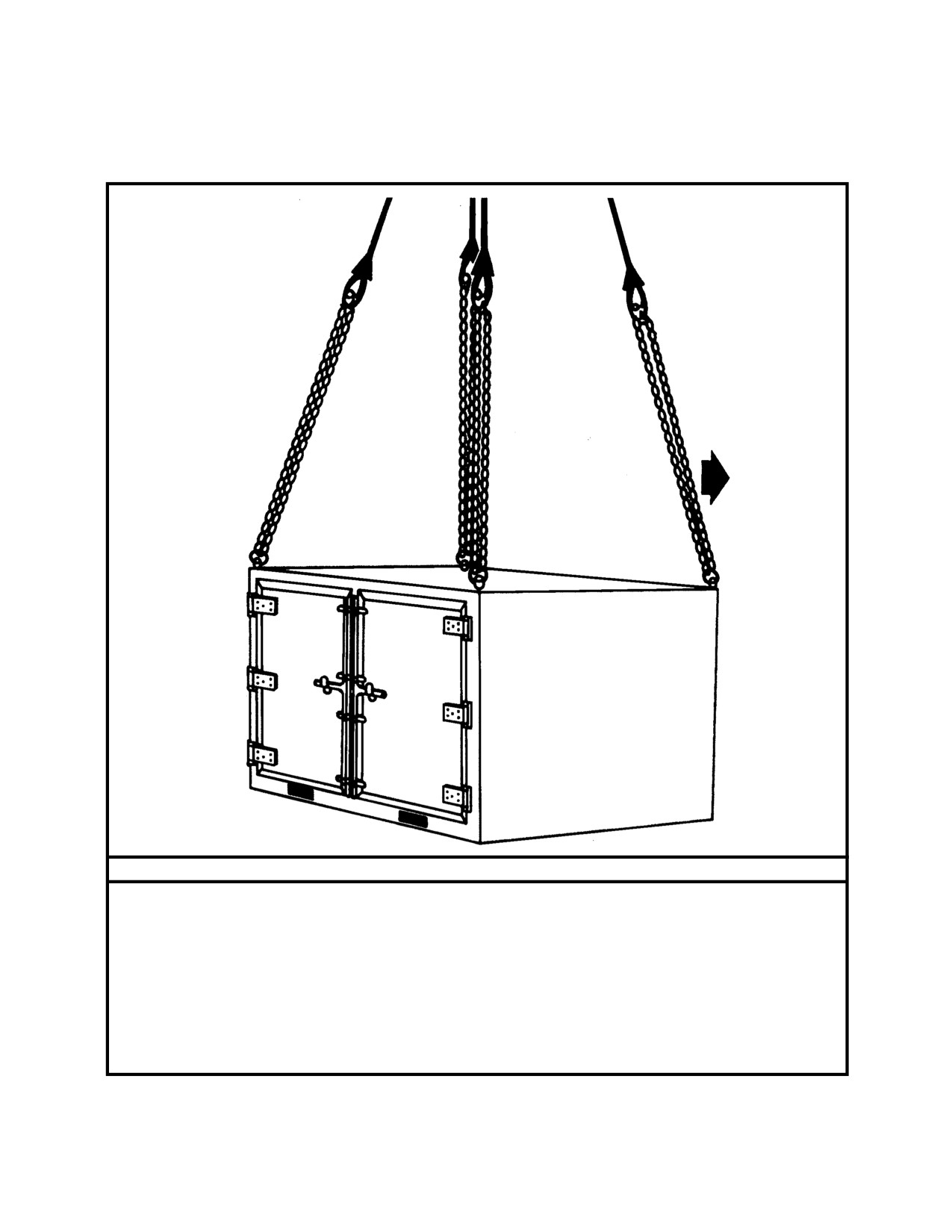
RIGGING STEPS
1. Position the apex fitting on the roof of the container.
3. Loop the chain end of sling leg 3 through the left rear
Route outer sling legs 1 and 2 to the front of the container
lift provision. Place the correct link from Table 11-2 in the
and inner sling legs 3 and 4 to the rear. Sling legs 1 and 3
grab hook. Repeat with sling leg 4 through the right rear
must be on the left side of the load.
lift provision.
2. Loop the chain end of sling leg 1 through the left
4. Cluster and tie or tape (breakaway technique) all sling
front lift provision. Place the correct link from Table 11-2
legs together on top of the container to prevent entangle-
in the grab hook. Repeat with sling leg 2 through the
ment during hookup and lift-off.
right front lift provision.
Figure 11-2. Shipping/Storage Containers
11-4
C1, FM 10-450-4/MCRP 4-23E, VOL II/NWP 3-04.12/AFJMAN 11-223, VOL II/
COMDTINST M13482.2
11-4. Army Missile Systems Enclosure Assembly Launch Pods (EALP), One Container
a. Applicability. The following items in Table 11-3 are certified for all helicopters with suitable lift capacity by the US
Army Soldier Systems Center:
Table 11-3. Army Missile Systems Enclosure Assembly Launch Pods, One Container
M AX
RECOMMENDED
LINK COUNT
NOMENCLATURE
WEIGH T
SLING SET
AIRSPEE D
FRONT/REA R
(POUNDS )
(KNOTS )
Multiple Launch Rocket System wih
5,005
10K
/
90
Rocket Pod/Container (with Six Rocket
s)
Guided Missile Launch Assembly
5,071
10K
/
90
(GMLA )
b. Materials. The following materials are required to
(1) Preparation. Prepare the EALP for travel in accor-
rig this load:
dance with standard procedures.
(1) Sling set (10,000-pound capacity).
(2) Rigging. Rig the load according to the steps in
Figure 11-3.
(2) Tape, adhesive, pressure-sensitive, 2-inch wide
roll.
NOTE: The firing end is considered to be the front of the
load.
(3) Cord, nylon, Type III, 550-pound breaking strength.
(3) Hookup. The hookup team stands on top of the
(4) Webbing, cotton, 1/4-inch, 80-pound breaking
EALP . The static wand person discharges the static elec-
strength.
tricity with the static wand. The hookup person places
the apex fitting onto the aircraft cargo hook. The hookup
c. Personnel. Two persons can prepare and rig this
team then moves clear of the load but remains close to the
load in 15 minutes.
load as the helicopter removes slack from the sling legs.
When successful hookup is assured, the hookup team
d. Procedures. The following procedures apply to this
quickly exits the area underneath the helicopter to the
load:
designated rendezvous point.
(4) Derigging. Derigging is the reverse of the prepa-
ration and rigging procedures in steps d (1) and d (2).
11-5
C1, FM 10-450-4/MCRP 4-23E, VOL II/NWP 3-04.12/AFJMAN 11-223, VOL II/
COMDTINST M13482.2
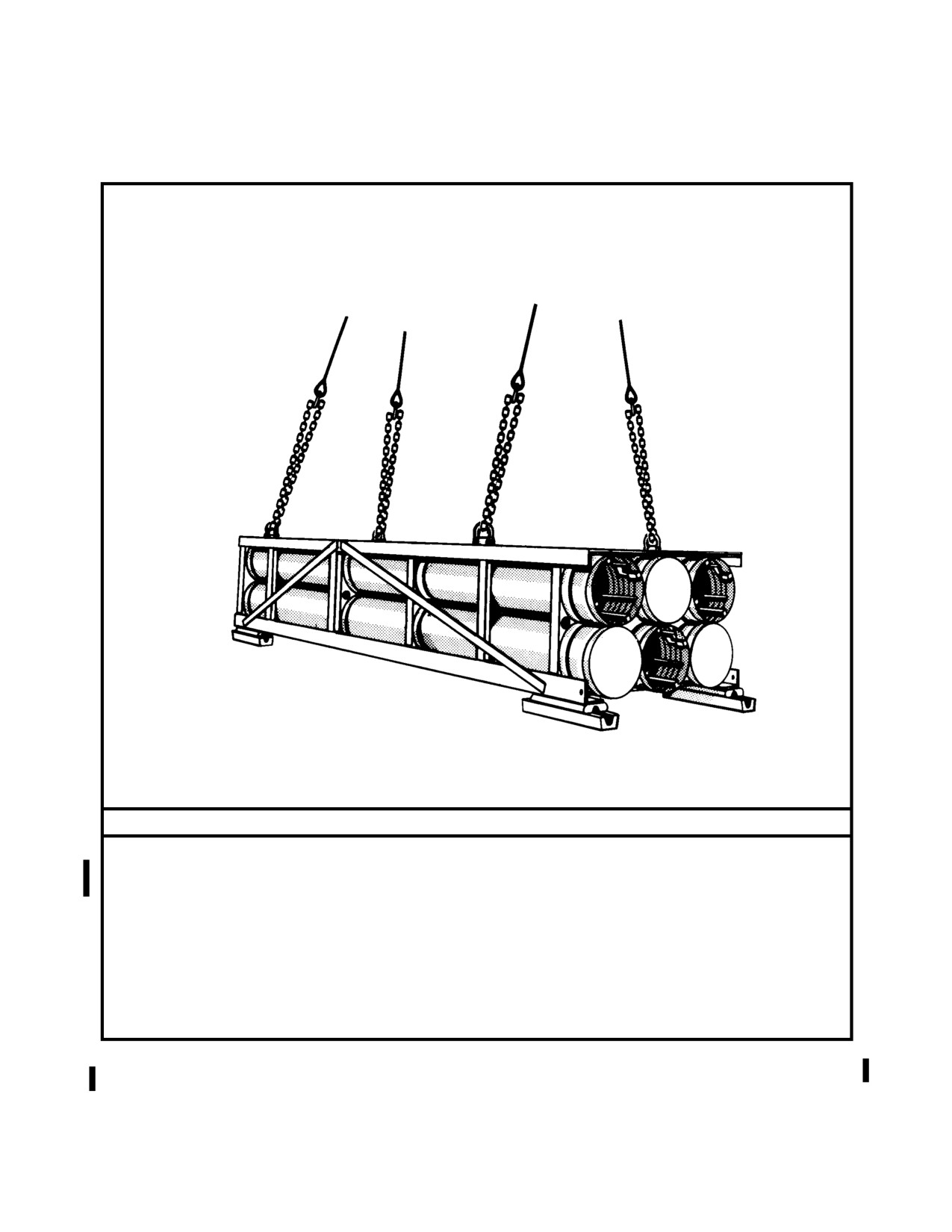
RIGGING STEPS
1. Position apex fitting on top of the EALP. Route outer
3. Loop the chain end of sling leg 3 through the left
sling legs 1 and 2 to the front of the EALP and inner sling
rear lift provision. Place the correct link from Table 11-3 in
legs 3 and 4 to the rear. Sling legs 1 and 3 must be on the
the grab hook. Repeat with sling leg 4 on the right rear lift
left side of the load.
provision.
2. Loop the chain end of sling leg 1 through the left
4. Cluster and tie or tape (breakaway technique) all sling
front lift provision. Place the correct link from Table 11-3
legs together on top of the container to prevent entangle-
in the grab hook. Repeat with sling leg 2 on the right front
ment during hookup and lift-off.
lift provision.
Figure 11-3. Army Missile Systems Enclosure Assembly Launch Pods, One Container
11-6
C1, FM 10-450-4/MCRP 4-23E, VOL II/NWP 3-04.12/AFJMAN 11-223, VOL II/
COMDTINST M13482.2
11-5. Army Missile Systems Enclosure Assembly Launch Pods (EALP), Two Containers
a. Applicability. The following items in Table 11-4 are certified for all helicopters with suitable lift capacity by the US
Army Soldier Systems Center:
Table 11-4. Army Missile Systems Enclosure Assembly Launch Pods (EALP), Two Containers
M AX
RECOMMENDED
LINK COUNT
NOMENCLATURE
WEIGH T
SLING SET
AIRSPEE D
FRONT/REA R
(POUNDS )
(KNOTS )
Multiple Launch Rocket System withT wo
Rocket Pods/Containers (with Six
10,010
25K
/
85
Rockets)
T
wo Enclosure Assem bly Launch Pods,
10,142
25K
/
85
Guided Missile Launch Assem bly
b. Materials. The following materials are required to
CAUTION
rig this load:
Do not mix the MLRS and the GMLA in the
same load.
(1) Sling set (25,000-pound capacity).
(c) Lash the stack of EALPs together using the
(2) Tape, adhesive, pressure-sensitive, 2-inch wide
CGU-1/B tie-down straps. Two of the straps should run
roll.
through both sets of lifting provisions on each end of the
EALPs, to keep them aligned during flight. Evenly space
(3) Cord, nylon, Type III, 550-pound breaking strength.
the remaining two straps between the lifting provisions,
running them around the EALPs. DO NOT ROUTE THE
(4) Webbing, cotton, 1/4-inch, 80-pound breaking
STRAPS OVER THE ROCKET TUBES. Pad all straps in
strength.
the area where they contact the edges of the EALPs.
(5) Felt sheet, cattle hair, Type IV, 1/2-inch or suitable
(2) Rigging. Rig the load according to the steps in
substitute.
Figure 11-4.
(6) Tie-down strap, cargo, CGU-1/B (as required).
NOTE: The firing end is considered the front of the
load.
c. Personnel. Four persons can prepare and rig this
load in 30 minutes.
(3) Hookup. The hookup team stands on top of the
EALPs. The static wand person discharges the static
d. Procedures. The following procedures apply to this
electricity with the static wand. The hookup person places
load:
the apex fitting onto the aircraft cargo hook. The hookup
team then moves clear of the load but remains close to the
(a) Prepare the EALPs for travel in accordance with
load as the helicopter removes slack from the sling legs.
standard procedures.
When successful hookup is assured, the hookup team
quickly exits the area underneath the helicopter to the
(b) Stack the EALPs one on top of the other, with
designated rendezvous point.
both EALPs facing the same direction.
(4) Derigging. Derigging is the reverse of the prepa-
ration and rigging procedures in steps d (1) and d (2).
11-7
C1, FM 10-450-4/MCRP 4-23E, VOL II/NWP 3-04.12/AFJMAN 11-223, VOL II/
COMDTINST M13482.2
RIGGING STEPS
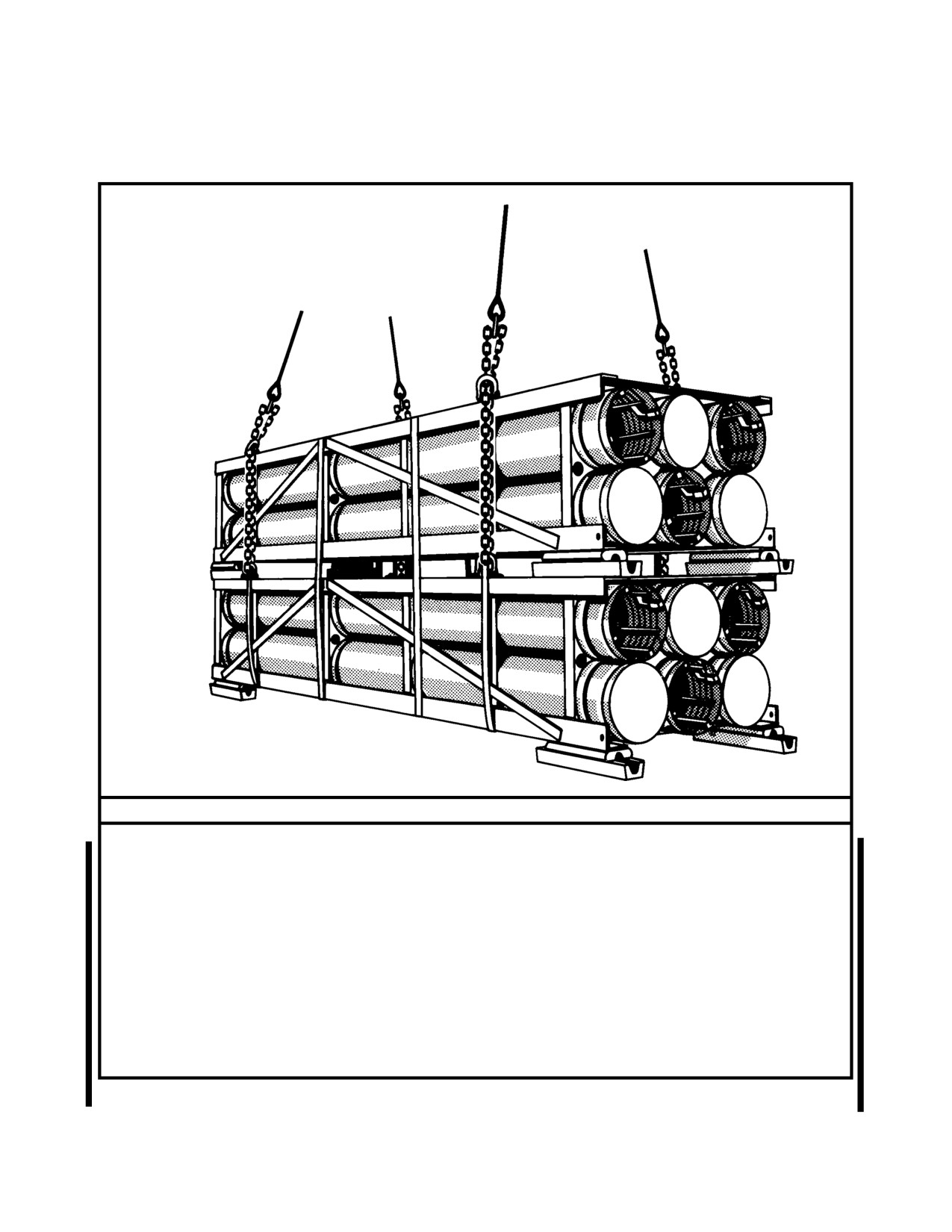
1. Position apex fitting on top of the EALPs. Route
3. Loop the chain end of sling leg 3 through the left rear
outer sling legs 1 and 2 to the front of the EALPs and inner
lift provision on the top EALP and through the rear lift
sling legs 3 and 4 to the rear. Sling legs 1 and 3 must be on
provision on the bottom EALP. Thread it back through
the left side of the load.
the rear lift provision on the top EALP. Place the correct
link from Table 11-4 in the grab hook. Repeat with sling
2. Loop the chain end of sling leg 1 through the left
leg 4 on the right rear lift provision.
front lift provision on the top EALP and through the front
lift provision on the bottom EALP. Thread it back through
4. Cluster and tie or tape (breakaway technique) all sling
the front lift provision on the top EALP. Place the correct
legs together on top of the EALP to prevent entanglement
link from Table 11-4 in the grab hook. Repeat with sling
during hookup and lift-off.
leg 2 on the right front lift provision.
Figure 11-4. Army Missile Systems Enclosure Assembly Launch Pods (EALP), Two Containers
11-8

FM 10-450-4/MCRP 4-23E, VOL II/NWP 3-04.12/AFJMAN 11-223, VOL II/
COMDTINST M13482.2
11-6. M1A1 Full-Up Power Pack (FUPP) Container
a. Applicability. The following item in Table 11-5 is certified for all helicopters with suitable lift capacity by the US
Army Natick Research, Development, and Engineering Center:
Table 11-5. M1A1 Full-Up Power Pack
MAX
RECOMMENDED
LINK COUNT
NOMENCLATURE
WEIGHT
SLING SET
AIRSPEED
FRONT/REAR
(POUNDS)
(KNOTS)
M1A1 Full-Up Power Pack Container
with Full-Up Power Pack (Metal or
13,620
25K
3/10
110
Fiberglass)
b. Materials. The following materials are required to
tape or Type III nylon cord.
rig this load:
(b) Close and secure all doors and vents with tape or
(1) Sling set (25,000-pound capacity).
Type III nylon cord.
(2) Tape, adhesive, pressure-sensitive, 2-inch wide
(2) Rigging. Rig the load according to the steps in
roll.
Figure 11-5.
(3) Cord, nylon, Type III, 550-pound breaking strength.
(3) Hookup. The hookup team stands on top of the
container. The static wand person discharges the static
(4) Webbing, cotton, 1/4-inch, 80-pound breaking
electricity with the static wand. The hookup person places
strength.
the apex fitting onto the aircraft cargo hook. The hookup
team then moves clear of the load but remains close to the
(5) Tie-down strap, cargo, CGU-1/B (as required).
load as the helicopter removes slack from the sling legs.
When successful hookup is assured, the hookup team
c. Personnel. Two persons can prepare and rig this
quickly exits the area underneath the helicopter to the
load in 15 minutes.
designated rendezvous point.
d. Procedures. The following procedures apply to this
(4) Derigging. Derigging is the reverse of the prepa-
load:
ration and rigging procedures in steps d (1) and d (2).
(a) Secure all equipment inside the container with
11-9
FM 10-450-4/MCRP 4-23E, VOL II/NWP 3-04.12/AFJMAN 11-223, VOL II/
COMDTINST M13482.2
TRANSMISSION
END
RIGGING STEPS
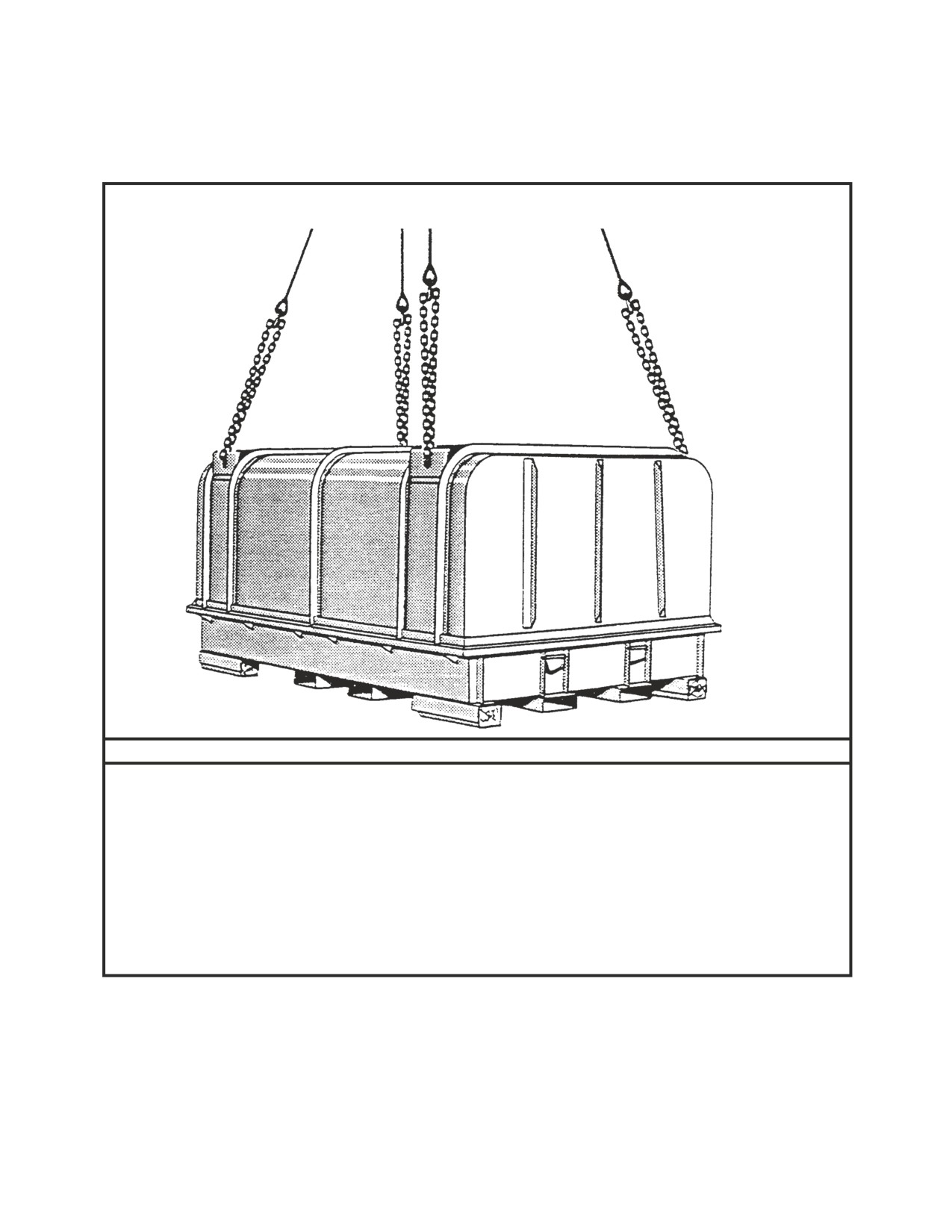
1. Position apex fitting on top of the container. Route
3. Loop the chain end of sling leg 3 through the left rear
outer sling legs 1 and 2 to the front of the container (trans-
lift provision. Place the correct link from Table 11-5 in the
mission end) and inner sling legs 3 and 4 to the rear. Sling
grab hook. Repeat with sling leg 4 on the right rear lift
legs 1 and 3 must be on the left side of the load.
provision. Secure the excess chain with Type III nylon
cord.
2. Loop the chain end of sling leg 1 through the left
front lift provision. Place the correct link from Table 11-5
4. Cluster and tie or tape (breakaway technique) all sling
in the grab hook. Repeat with sling leg 2 on the right front
legs together on top of the container to prevent entangle-
lift provision.
ment during hookup and lift-off.
Figure 11-4. M1A1 Full-Up Power Pack
11-10

FM 10-450-4/MCRP 4-23E, VOL II/NWP 3-04.12/AFJMAN 11-223, VOL II/
COMDTINST M13482.2
11-7. Field Medical Oxygen Generation/Distribution System (FMOGDS)
a. Applicability. The following items in Table 11-6 are certified for all helicopters with suitable lift capacity by the US
Army Natick Research, Development, and Engineering Center:
Table 11-6. Field Medical Oxygen Generation/Distribution System
MAX
RECOMMENDED
LINK COUNT
NOMENCLATURE
WEIGHT
SLING SET
AIRSPEED
FRONT/REAR
(POUNDS)
(KNOTS)
Oxygen Generation/Distribution
3,405
10K
3/3
70
Module (OGDM)
Cylinder Filling Module (CFM)
2,049
10K
3/3
70
b. Materials. The following materials are required to
loose equipment inside the container with tape or Type III
rig this load:
nylon cord.
(1) Sling set (10,000-pound capacity).
(b) Secure all doors and vents with tape. Secure all
hoses and chains with tape or 1/4-inch cotton webbing.
(2) Tape, adhesive, pressure-sensitive, 2-inch wide
roll.
(2) Rigging. Rig the load according to the steps in
Figure 11-6.
(3) Cord, nylon, Type III, 550-pound breaking strength.
(3) Hookup. The hookup team stands on top of the
(4) Webbing, cotton, 1/4-inch, 80-pound breaking
container. The static wand person discharges the static
strength.
electricity with the static wand. The hookup person places
the apex fitting onto the aircraft cargo hook. The hookup
(5) Tie-down strap, cargo, CGU-1/B (as required).
team then moves clear of the load but remains close to the
load as the helicopter removes slack from the sling legs.
c. Personnel. Two persons can prepare and rig this
When successful hookup is assured, the hookup team
load in 20 minutes.
quickly exits the area underneath the helicopter to the
designated rendezvous point.
d. Procedures. The following procedures apply to this
load:
(4) Derigging. Derigging is the reverse of the prepa-
ration and rigging procedures in steps d (1) and d (2).
(a) Ensure all tools are properly stowed. Secure all
11-11
FM 10-450-4/MCRP 4-23E, VOL II/NWP 3-04.12/AFJMAN 11-223, VOL II/
COMDTINST M13482.2
RIGGING STEPS
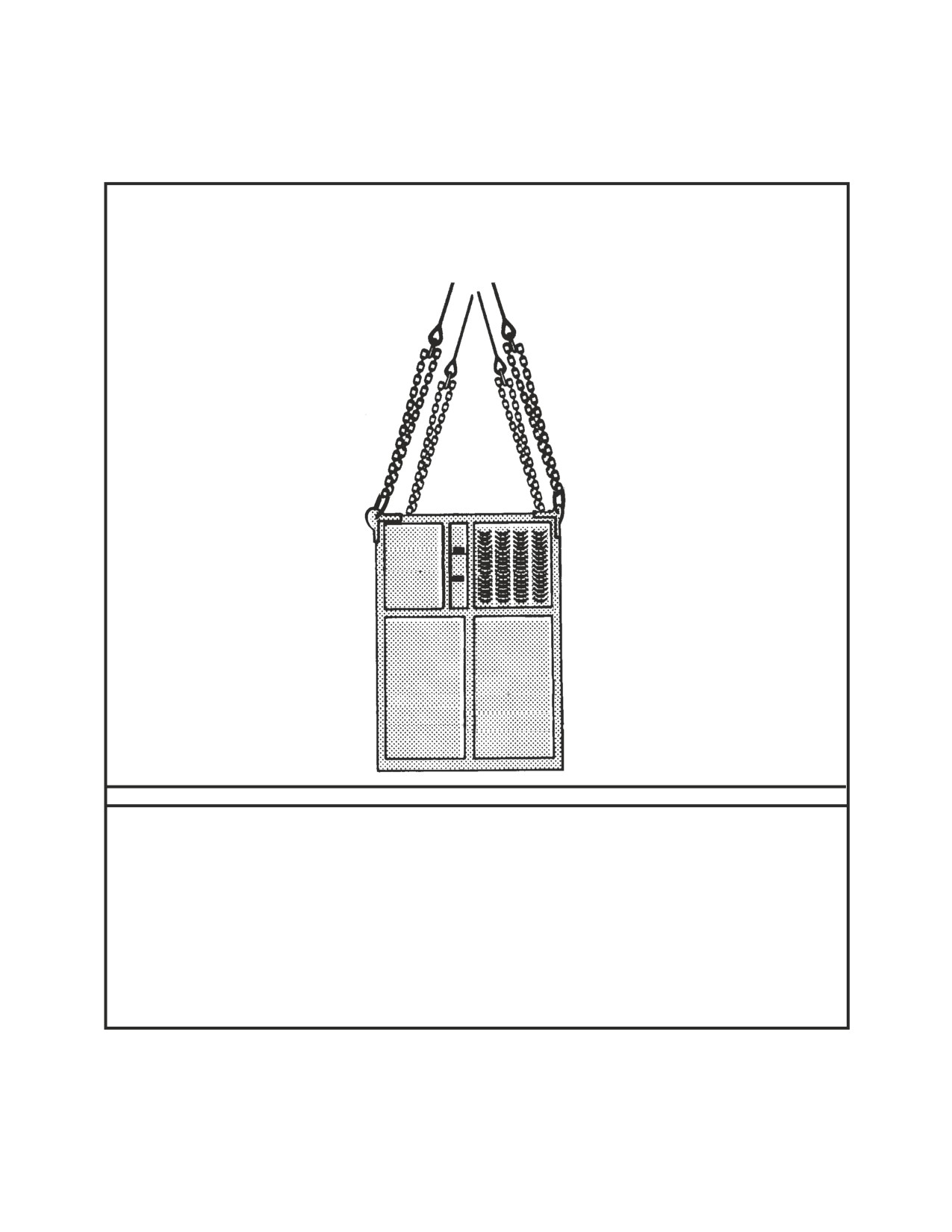
1. Position apex fitting on top of the container. Route
3. Loop the chain end of sling leg 3 through the left rear
outer sling legs 1 and 2 to the front of the container (side
lift provision. Place the correct link from Table 11-6 in the
with the forklift entry holes) and inner sling legs 3 and 4 to
grab hook. Repeat with sling leg 4 on the right rear lift
the rear. Sling legs 1 and 3 must be on the left side of the
provision.
load.
4. Cluster and tie or tape (breakaway technique) all sling
2. Loop the chain end of sling leg 1 through the left
legs together on top of the container to prevent entangle-
front lift provision. Place the correct link from Table 11-6
ment during hookup and lift-off.
in the grab hook. Repeat with sling leg 2 on the right front
lift provision.
Figure 11-6. Field Medical Oxygen Generation/Distribution System
11-12
FM 10-450-4/MCRP 4-23E, VOL II/NWP 3-04.12/AFJMAN 11-223, VOL II/
COMDTINST M13482.2
11-8. Field Medical Oxygen Generation/Distribution System (FMOGDS) (Combined)
a. Applicability. The following item in Table 11-7 is certified for all helicopters with suitable lift capacity by the US
Army Natick Research, Development, and Engineering Center:
Table 11-7. Field Medical Oxygen Generation/Distribution System (Combined)
MAX
RECOMMENDED
LINK COUNT
NOMENCLATURE
WEIGHT
SLING SET
AIRSPEED
FRONT/REAR
(POUNDS)
(KNOTS)
Oxygen Generation Distribution
5,454
10K
3/20/3
85
Module and Cylinder Filling Module
b. Materials. The following materials are required to
(b) Secure all doors and vents with tape. Secure all
rig this load:
hoses and chains with tape or 1/4-inch cotton webbing.
(1) Sling set (10,000-pound capacity) with two addi-
(c) Position the units together with the "A" sides
tional chain legs.
facing each other.
(2) Tape, adhesive, pressure-sensitive, 2-inch wide
(d) Cut slots in four 2 x 4 x 72-inch pieces of lumber
roll.
to keep the CGU-1/B tie-down straps from sliding.
(3) Cord, nylon, Type III, 550-pound breaking strength.
(e) Place the 2 x 4 x 72-inch pieces of lumber between
the OGMD and the CFM as dunnage.
(4) Webbing, cotton, 1/4-inch, 80-pound breaking
strength.
(2) Rigging. Rig the load according to the steps in
Figure 11-7.
(5) Tie-down strap, cargo, CGU-1/B (as required).
(3) Hookup. The hookup team stands on top of the
(6) Lumber, 2 x 4 x 72-inch (4 each ).
container. The static wand person discharges the static
electricity with the static wand. The hookup person places
c. Personnel. Two persons can prepare and rig this
the apex fitting onto the aircraft cargo hook. The hookup
load in 20 minutes.
team then moves clear of the load but remains close to the
load as the helicopter removes slack from the sling legs.
d. Procedures. The following procedures apply to this
When successful hookup is assured, the hookup team
load:
quickly exits the area underneath the helicopter to the
designated rendezvous point.
(a) Ensure all tools are properly stored. Secure all
loose equipment inside the container with tape or Type III
(4) Derigging. Derigging is the reverse of the prepa-
nylon cord.
ration and rigging procedures in steps d (1) and d (2).
11-13
FM 10-450-4/MCRP 4-23E, VOL II/NWP 3-04.12/AFJMAN 11-223, VOL II/
COMDTINST M13482.2
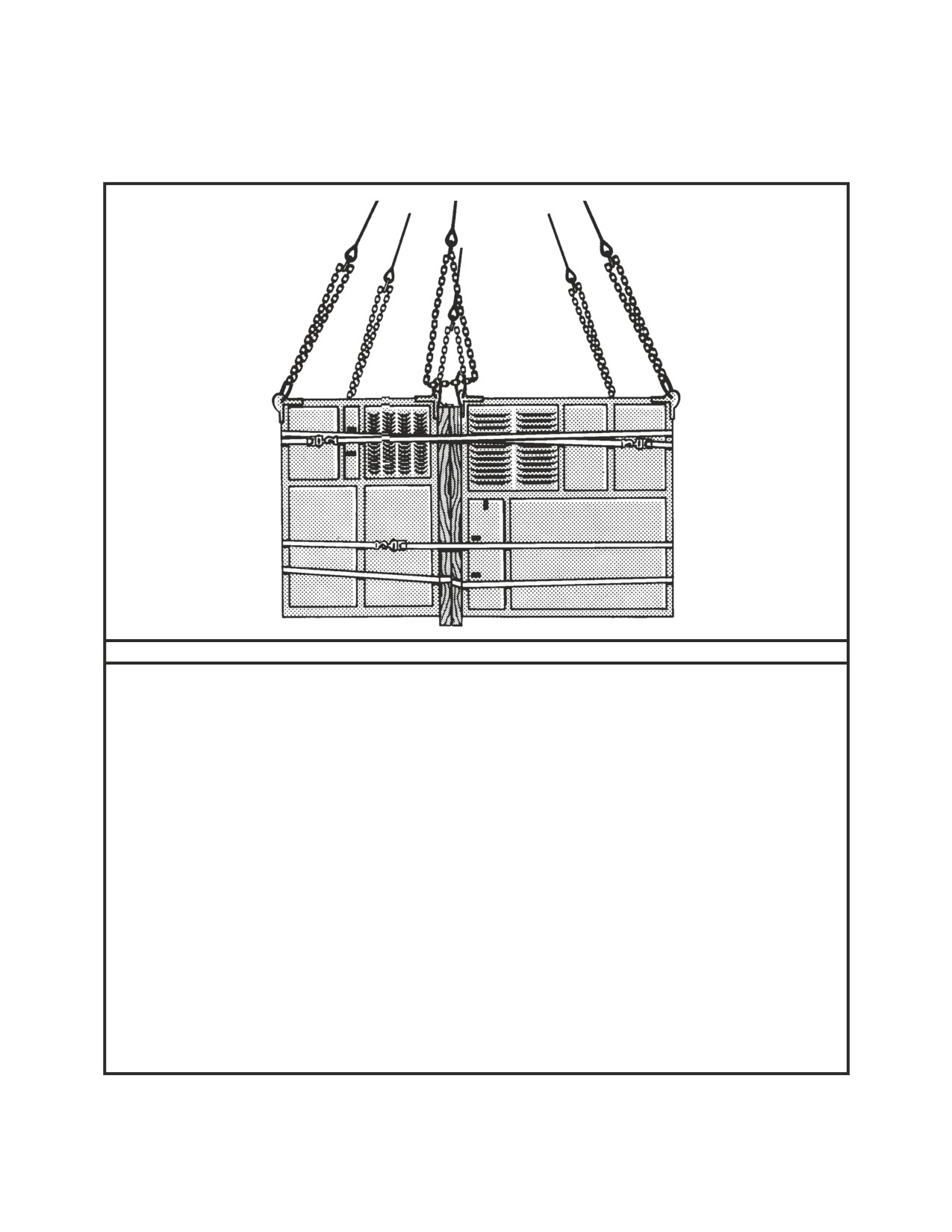
RIGGING STEPS
1. Configure a six leg sling set.
front lift provision located on the front of the OGDM.
Place the correct link from Table 11 -7 in the grab hook.
2. Attach two (2) 2 x 4 x 72-inch pieces of lumber to the
Repeat with sling leg 2 on the right front lift provision.
“A” side of each unit using the CGU-1/B tie-down straps.
Ensure the straps are routed horizontally around the unit
6. Route the chain end of sling leg 3 through the left
and through the slots in the lumber.
rear lift provision located on the rear of the CFM. Place
the correct link from Table 11 -7 in the grab hook.
3. Strap OGDM and CFM together using the tiedown
Repeat with sling leg 4 on the right rear lift provision.
straps, two fastenings evenly spaced around the sides.
Fasten the straps together as necessary to span the two
7. Route the chain end of sling leg 5 through the left
pieces of equipment.
lifting provision on the interfacing “A” sides of the OGDM
and the CFM. Place the correct link from Table 11-7 in the
4. Position apex fitting on top of the units. Route outer
grab hook. Repeat with sling leg 6 and the right lifting
sling legs 1 and 2 to the front of the OGDM. Route inner
provision on the interfacing “A” sides of the OGDM and
sling legs 3 and 4 to the rear of the CFM and the middle
the CFM. Secure the excess chain with Type III nylon
sling legs 5 and 6 to the interface of the OGDM and the
cord.
CFM. Sling legs 1, 3, and 5 must be on the left side of the
load.
8. Cluster and tie or tape (breakaway technique) all sling
legs together on top of the ODGM and CFM to prevent
5. Route the chain end of sling leg 1 through the left
entanglement during hookup and lift-off.
Figure 11-7. Field Medical Oxygen Generation/Distribution System (Combined)
11-14
C1, FM 10-450-4/MCRP 4-23E, VOL II/NWP 3-04.12/AFJMAN 11-223, VOL II/
COMDTINST M13482.2
11-9. Distributed Explosive Technology (DET) System, Array Container
a. Applicability. The following item in Table 11-8 is certified for all helicopters with suitable lift capacity by the US
Army Soldier Systems Center:
Table 11-8. Distributed Explosive Technology (DET) System, Array Container
M AX
RECOMMENDED
LINK COUNT
NOMENCLATURE
WEIGH T
SLING SET
AIRSPEE D
FRONT/REA R
(POUNDS )
(KNOTS )
Distributed Explosive Technology (DET)
Navy MK105
O
4,000
/
90
System
, Array Container
SlingAssem
l
b. Materials. The following materials are required to
(2) Rigging. Rig the load according to the steps in
rig this load:
Figure 11-8.
(1) Sling set, Navy MK105 O Sling Assembly with 91-
(3) Hookup. The hookup team stands on top of the
inch or longer leg assembly.
container. The static wand person discharges the static
electricity with the static wand. The hookup person places
(2) Tape, adhesive, pressure-sensitive, 2-inch wide
the apex fitting onto the aircraft cargo hook. The hookup
roll.
team then moves clear of the load but remains close to the
load as the helicopter removes slack from the sling legs.
(3) Cord, nylon, Type III, 550-pound breaking strength.
When successful hookup is assured, the hookup team
quickly exits the area underneath the helicopter to the
c. Personnel. Two persons can prepare and rig this
designated rendezvous point.
load in 10 minutes.
(4) Derigging. Derigging is the reverse of the prepa-
d. Procedures. The following procedures apply to this
ration and rigging procedures in steps d (1) and d (2).
load:
(1) Preparation. Prepare the load by taping the handles
on the sides of the container.
11-15
C1, FM 10-450-4/MCRP 4-23E, VOL II/NWP 3-04.12/AFJMAN 11-223, VOL II/
COMDTINST M13482.2
RIGGING STEPS
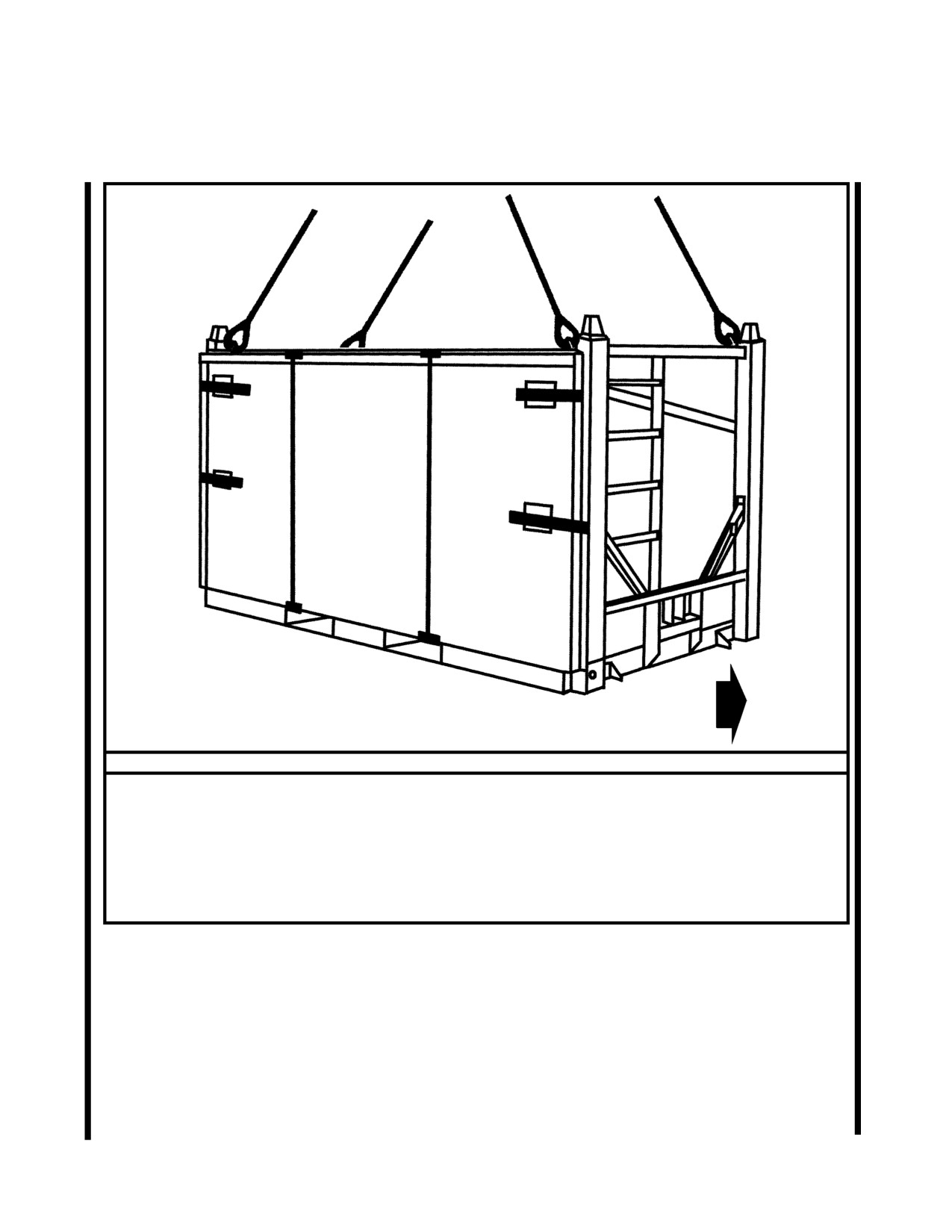
1. Position apex fitting on top of the container. Route
respective lift provision located at the top corners of the
outer sling legs 1 and 2 to the front of the container. Route
container.
inner sling legs 3 and 4 to the rear of the container. Sling
3. Secure the sling leg hooks in the closed position
legs 1and 3 must be on the left side of the load.
with Type III nylon cord.
2. Attach the hook on the end of each sling leg to the
Figure 11-8. Distributed Explosive Technology (DET) System, Array Container
11-16
C2, FM 10-450-4/MCRP 4-23E, VOL II/NWP 3-04.12/AFJMAN 11-223, VOL II
COMDTINST M13482.2
11-10. Distributed Explosive Technology (DET) System, Landing Craft, Air Cushioned
(LCAC), Landing Interface Kit (LIK) Container, Single
a. Applicability. The following item in Table 11-9 is certified for all helicopters with suitable lift capacity by the US Army
Soldier Systems Center:
Table 11-9. Distributed Explosive Technology (DET) System, Landing Craft, Air Cushioned (LCAC), Landing
Interface Kit (LIK) Container, Single
MAX
RECOMMENDED
LINK COUNT
NOMENCLATURE
WEIGH T
SLING SET
AIRSPEE D
FRONT/REA R
(POUNDS )
(KNOTS )
Distributed Explosive Techn
l
System, Landing Craft, Air Cushioned
Navy MK105
O
1,550
/
80
(LCAC), Landing Interface Kit (LIK
)
SlingAssem
l
Container
b. Materials. The following materials are required to
(2) Rigging. Rig the load according to the steps in
rig this load:
Figure 11-9.
(1) Sling set, Navy MK105 O Sling Assembly with 91-
(3) Hookup. The hookup team stands on top of the
inch or longer leg assembly.
container. The static wand person discharges the static
electricity with the static wand. The hookup person places
(2) Cord, nylon, Type III, 550-pound breaking strength.
the apex fitting onto the aircraft cargo hook. The hookup
team then moves clear of the load but remains close to the
c. Personnel. Two persons can prepare and rig this
load as the helicopter removes slack from the sling legs.
load in 10 minutes.
When successful hookup is assured, the hookup team
quickly exits the area underneath the helicopter to the
d. Procedures. The following procedures apply to this
designated rendezvous point.
load:
(4) Derigging. Derigging is the reverse of the prepa-
(1) Preparation. Prepare the load by placing a strap
ration and rigging procedures in steps d (1) and d (2).
over each end of the LIK container and attaching it to the
platform in accordance with manufacturer's instructions.
11-17
C2, FM 10-450-4/MCRP 4-23E, VOL II/NWP 3-04.12/AFJMAN 11-223, VOL II/
COMDTINST M13482.2
RIGGING STEPS
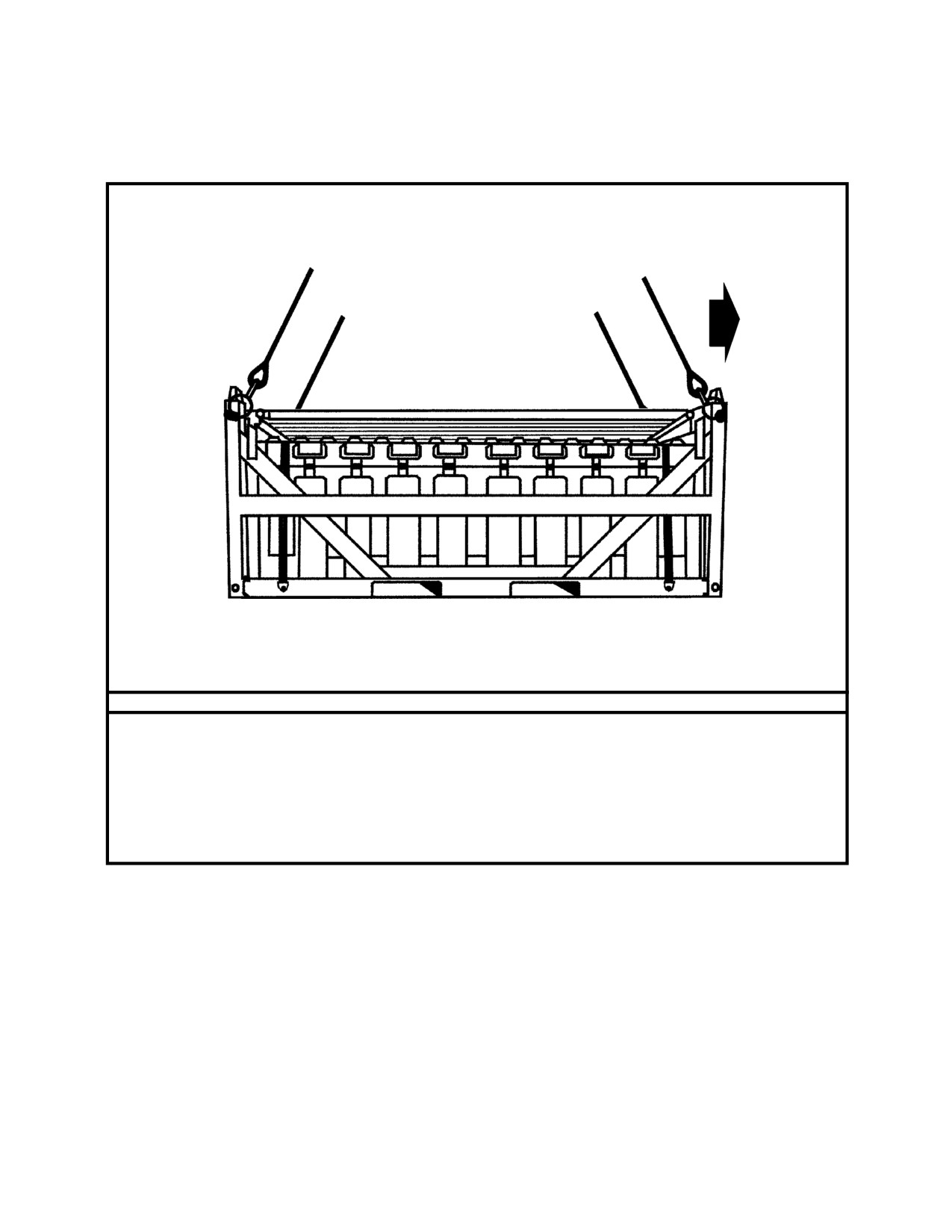
1. Position apex fitting on top of the container. Route
the respective lift provision located at the top corners of
outer sling legs 1 and 2 to the front of the container. Route
the container.
inner sling legs 3 and 4 to the rear of the container. Sling
legs 1and 3 must be on the left side of the load.
3. Secure the sling leg hooks in the closed position
with Type III nylon cord.
2. Attach the hook on the end of each sling leg to
Figure 11-9. Distributed Explosive Technology (DET) System, Landing Craft, Air Cushioned (LCAC), Landing
Interface Kit (LIK) Container, Single
11-18
C1, FM 10-450-4/MCRP 4-23E, VOL II/NWP 3-04.12/AFJMAN 11-223, VOL II/
COMDTINST M13482.2
11-11. Distributed Explosive Technology (DET) System, Landing Craft, Air Cushioned
(LCAC), Landing Interface Kit (LIK) Container, Doubled, Stacked
a. Applicability. The following item in Table 11-10 is certified for all helicopters with suitable lift capacity by the US
Army Soldier Systems Center:
Table 11-10. Distributed Explosive Technology (DET) System, Landing Craft, Air Cushioned (LCAC), Landing
Interface Kit (LIK) Container, Doubled, Stacked
M AX
RECOMMENDED
LINK COUNT
NOMENCLATURE
WEIGH T
SLING SET
AIRSPEE D
FRONT/REA R
(POUNDS )
(KNOTS )
DistributedExplosiveTechn
l
System
, Landing Craft, Air Cushioned
Navy MK105
O
(LCAC), Landing Interface Kit (LIK
)
2,400
/
85
Sling Assem
l
Container, Doubled, Stacked
b. Materials. The following materials are required to
on top of the other according to the manufacturer's in-
rig this load:
structions.
(1) Sling set, Navy MK105 O Sling Assembly with 91-
(c) Tie the bottom container lift provisions down to
inch or longer leg assembly.
a point on the load with Type III nylon cord.
(2) Cord, nylon, Type III, 550-pound breaking strength.
(2) Rigging. Rig the load according to the steps in
Figure 11-10.
c. Personnel. Two persons can prepare and rig this
load in 10 minutes.
(3) Hookup. The hookup team stands on top of the
container. The static wand person discharges the static
d. Procedures. The following procedures apply to this
electricity with the static wand. The hookup person places
load:
the apex fitting onto the aircraft cargo hook. The hookup
team then moves clear of the load but remains close to the
(1) Preparation. Prepare the load using the following
load as the helicopter removes slack from the sling legs.
steps:
When successful hookup is assured, the hookup team
quickly exits the area underneath the helicopter to the
(a) Place a strap over each end of the LIK container
designated rendezvous point.
and attach it to the platform in accordance with
manufacturer's instructions.
(4) Derigging. Derigging is the reverse of the prepa-
ration and rigging procedures in steps d (1) and d (2).
(b) Ensure the containers are secured together one
11-19
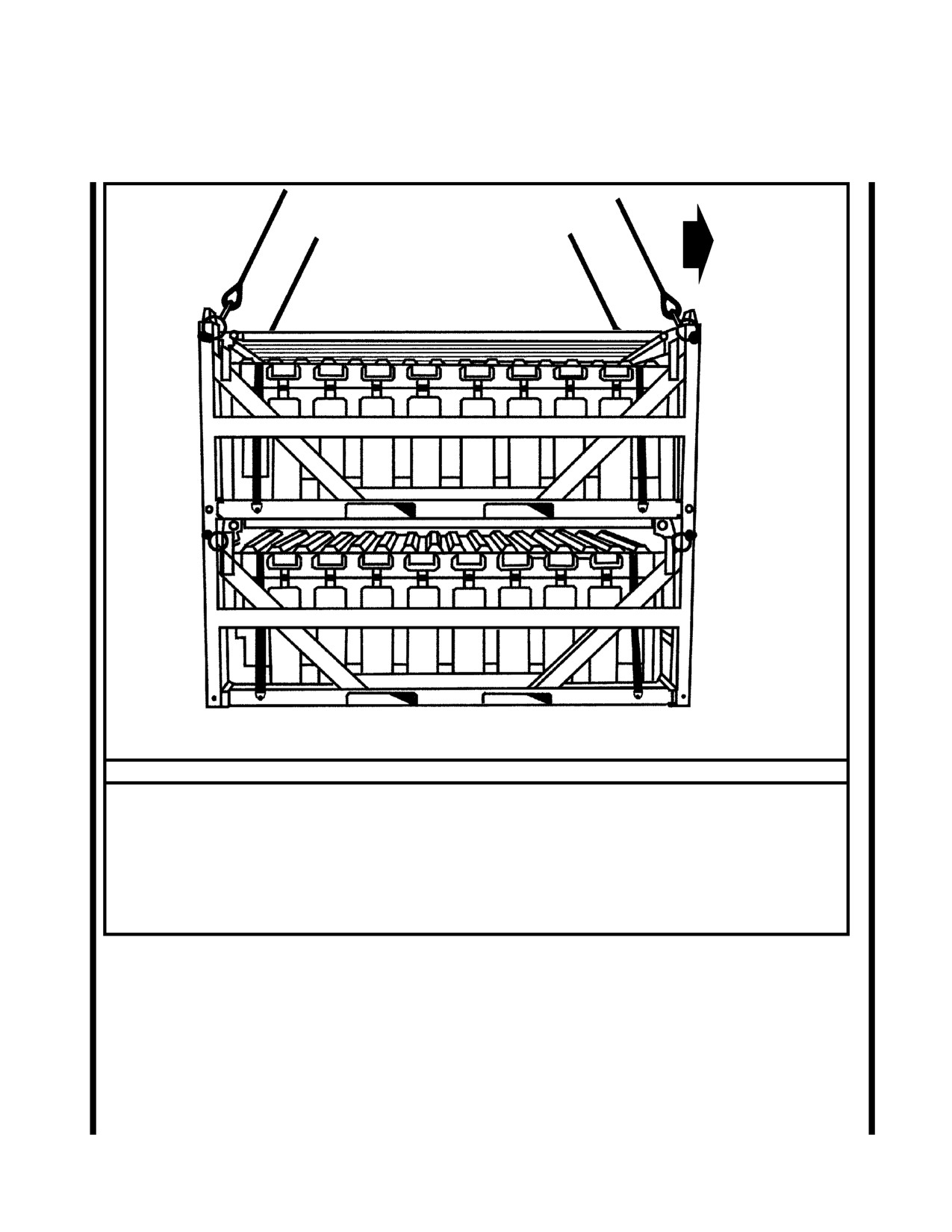
C1, FM 10-450-4/MCRP 4-23E, VOL II/NWP 3-04.12/AFJMAN 11-223, VOL II/
COMDTINST M13482.2
RIGGING STEPS
1. Position apex fitting on top of the container. Route
the respective lift provision located at the top corners of
outer sling legs 1 and 2 to the front of the container. Route
the container.
inner sling legs 3 and 4 to the rear of the container. Sling
legs 1and 3 must be on the left side of the load.
3. Secure the sling leg hooks in the closed position
with Type III nylon cord.
2. Attach the hook on the end of each sling leg to
Figure 11-10. Distributed Explosive Technology (DET) System, Landing Craft, Air Cushioned (LCAC), Landing
Interface Kit (LIK) Container, Double Stacked
11-20
C3, FM 10-450-4/MCRP 4-23E, VOL II/NWP 3-04.12/AFJMAN 11-223, VOL II
COMDTINST M13482.3A
11-12. Quadcons
a. Applicability. The following items in Table 11-11 are certified for all helicopters with suitable lift capacity by the US
Army Soldier Systems Center:
Table 11-11. Quadcons
M AX
RECOMMENDED
LINK COUNT
NOMENCLATURE
WEIGH T
SLING SET
AIRSPEE D
FRONT/REA R
(POUNDS )
(KNOTS )
One(1)Quadcon,Em
t
1,764
10K
/
100
One (1) Quadcon, Loaded
7,000
10K
/
100
Two (2) Quadcons, Empty
3,528
10K
/
90
10,000
10K
Two (2) Quadcons, Loaded
/
100
14,000
25K
WARNING
WEIGHT IS RESTRICTED TO 7,000 POUNDS IN EACH QUADCON FOR SLING LOAD OPERATIONS.
QUADCONS MUST BE CENTRALLY LOADED. ENSURE QUADCONS ARE LOADED TO SIMILAR WEIGHTS
FOR MULTIPLE QUADCON CONFIGURATIONS. OFF CENTER LOADING OR OVERLOADING MAY RESULT IN
ADVERSE FLIGHT CONDITIONS OR DAMAGE TO THE LOAD.
NOTE: Recommended airspeed will vary based on load configuration and the weight of the load inside the Quadcons.
b. Materials. The following materials are required to
(a) Connect the Quadcons together using the manu-
rig this load:
facture' s approved rigid connecting link (Part No. Sealock
1046). Lock all connecting links and wrap with tape.
(1) Sling set (10,000- or 25,000-pound capacity).
(b) Secure all cargo inside the container. Close and
(2) Tape, adhesive, pressure-sensitive, 2-inch wide
secure all doors in the locked position.
roll.
(2) Rigging. Rig the load according to the steps in
(3) Cord, nylon, Type III, 550-pound breaking strength.
Figure 11-11.
(4) Webbing, cotton, 1/4-inch, 80-pound breaking
(3) Hookup. The hookup team stands on top of the
strength.
container. The static wand person discharges the static
electricity with the static wand. The hookup person places
c. Personnel. Two persons can prepare and rig this
the apex fitting onto the aircraft cargo hook. The hookup
load in 15 minutes.
team then moves clear of the load but remains close to the
load as the helicopter removes slack from the sling legs.
d. Procedures. The following procedures apply to this
When successful hookup is assured, the hookup team
load:
quickly exits the area underneath the helicopter to the
designated rendezvous point.
(1) Preparation. Prepare the load using the following
steps:
(4) Derigging. Derigging is the reverse of the prepa-
ration and rigging procedures in steps d (1) and d (2).
11-21