ARMY FM 4-20.117 RIGGING HIGH-MOBILITY MULTIPURPOSE WHEELED VEHICLES (October 2001) - page 1
ARMY FM 4-20.117 (FM 10-517)
AIR FORCE TO 13C7-1-111
AIRDROP OF SUPPLIES AND EQUIPMENT:
RIGGING HIGH-MOBILITY
MULTIPURPOSE WHEELED VEHICLES
DISTRIBUTION RESTRICTION: Approved for public release; distribution is unlimited.
HEADQUARTERS
DEPARTMENT OF THE ARMY
DEPARTMENT OF THE AIR FORCE
*FM 4-20.117 (FM 10-517)
TO 13C7-1-111
FIELD MANUAL
HEADQUARTERS
NO 4-20.117
DEPARTMENT OF THE ARMY
DEPARTMENT OF THE AIR FORCE
TECHNICAL ORDER
Washington,DC, 1 October 2001
NO 13C7-1-111
AIRDROP OF SUPPLIES AND EQUIPMENT:
RIGGING HIGH-MOBILITY MULTIPURPOSE WHEELED VEHICLES
Page
TABLE OF CONTENTS
PREFACE……………………………………………………… .
vii
CHAPTER 1
INTRODUCTION
Description of Items
1-1
Special Considerations
1-4
CHAPTER 2
RIGGING HMMWV SOFT-TOP TRUCKS
FOR LOW-VELOCITY AIRDROP
Description of Load
2-1
Preparing Platform
2-1
Preparing and Positioning Honeycomb Stacks
2-4
Preparing Truck
2-7
Stowing Accompanying Load
2-18
Installing Optional Drive-Off Aids on Platform
2-22
Lifting and Positioning Truck and Installing
Optional Drive-Off Aids
2-23
Lashing Truck
2-26
Installing and Safety Tying Suspension Slings
2-28
Stowing Cargo Parachutes
2-29
Installing Parachute Release
2-30
Installing Extraction System
2-31
Installing Provisions for Emergency Restraints
2-32
Placing Extraction Parachute
2-32
Marking Rigged Load
2-32
Equipment Required
2-32
DISTRIBUTION RESTRICTION: Approved for public release; distribution is unlimited
*This publication supercedes FM 10-517/TO 13C7-1-5, 14 November 1989.
i
FM 4-20.117/TO 13C7-1-111
Page
CHAPTER 3
RIGGING ARMAMENT CARRIERS FOR
LOW-VELOCITY AIRDROP
Section I
RIGGING CARRIERS ON A 16-FOOT PLATFORM
Description of Load
3-1
Preparing Platform
3-1
Preparing and Positioning Honeycomb Stacks
3-2
Preparing Truck
3-2
Stowing Accompanying Load
3-6
Lifting and Positioning Truck and Installing
Optional Drive-Off Aids
3-9
Lashing Truck
3-9
Installing and Safety Tying Suspension Slings
3-9
Stowing Cargo Parachutes
3-11
Installing Parachute Release
3-11
Installing Extraction System
3-12
Installing Provisions for Emergency Restraints
3-12
Placing Extraction Parachute
3-12
Marking Rigged Load
3-12
Equipment Required
3-12
Section II
RIGGING CARRIERS ON A 20-FOOT PLATFORM WITH
ADDITIONAL ACCOMPANYING AMMUNITION LOAD
Description of Load
3-16
Preparing Platform
3-16
Preparing and Positioning Honeycomb Stacks
3-18
Rigging Accompanying Loads on the Platform and in the Truck..3-19
Preparing Truck
3-22
Installing Optional Drive-Off Aids on Platform
3-22
Lifting and Positioning Truck and Installing
Optional Drive-Off Aids
3-23
Lashing Truck
3-24
Installing and Safety Tying Suspension Slings
3-26
Stowing Cargo Parachutes
3-28
Installing Parachute Release
3-29
Installing Extraction System
3-30
Installing Provisions for Emergency Restraints
3-32
Placing Extraction Parachute
3-32
Marking Rigged Load
3-32
Equipment Required
3-32
Section III
RIGGING STRIKER IN ARMAMENT CARRIER-CONFIGURED
HMMWV-SERIES TRUCK ON A 16-FOOT PLATFORM
Description of Load
3-36
Preparing Platform
3-36
Preparing and Positioning Honeycomb Stacks
3-38
Preparing Truck
3-38
Preparing Striker Equipment
3-38
ii
FM 4-20.117/TO 13C7-1-111
Page
Lifting and Positioning Truck and Installing Drive-Off Aids
3-50
Lashing Truck
3-50
Installing and Safety Tying Suspension Slings
3-52
Stowing Cargo Parachutes
3-52
Installing Parachute Release
3-53
Installing Extraction System
3-54
Installing Provisions for Emergency Restraints
3-54
Placing Extraction Parachute
3-54
Marking Rigged Load
3-54
Equipment Required
3-54
CHAPTER 4
RIGGING EXPANDED CAPACITY HMMWV-SERIES
TRUCKS FOR LOW-VELOCITY AIRDROP
Section I
RIGGING M1113 TRUCK WITH M56 SMOKE GENERATOR
ON A 16-FOOT PLATFORM
Description of Load
4-1
Preparing Platform
4-1
Preparing and Positioning Honeycomb Stacks
4-3
Preparing Truck and Smoke Generator
4-7
Lifting and Positioning Truck, Installing Optional
Drive-Off Aids, and Stowing Spreader Bar
4-11
Lashing Truck
4-11
Installing and Safety Tying Suspension Slings
4-15
Stowing Cargo Parachutes
4-15
Installing Parachute Release
4-15
Installing Extraction System
4-15
Installing Provisions for Emergency Restraints
4-15
Placing Extraction Parachute
4-15
Marking Rigged Load
4-16
Equipment Required
4-16
Section II
RIGGING M1114 UP-ARMORED ARMAMENT CARRIER
Description of Load
4-19
Preparing Platform
4-19
Preparing and Positioning Honeycomb Stacks
4-21
Preparing Truck
4-26
Stowing Load in M1114 Truck
4-31
Lifting and Positioning Truck, and Installing Optional
Drive-Off Aids
4-41
Lashing Truck
4-41
Installing and Safety Tying Suspension Slings
4-45
Stowing Cargo Parachutes
4-46
Installing Parachute Release
4-47
Installing Extraction System
4-48
Installing Provisions for Emergency Restraints
4-49
Placing Extraction Parachute
4-49
Marking Rigged Load
4-49
Equipment Required
4-49
iii
FM 4-20.117/TO 13C7-1-111
Page
CHAPTER 5
RIGGING SPECIFIC ACCOMPANYING LOADS
IN HMMWV-SERIES TRUCKS
Description of Loads
5-1
Rigging TAACS, Ammunition, and Truck Equipment in M998
And M1039 Cargo/Troop Carriers
5-2
Rigging AN/TVQ-2 Ground/Vehicle Laser Locator
Designator (G/VLLD) in M966 TOW Carrier
5-6
Rigging AN/USG-70 Position and Azimuth Determining
System (PADS) in M998 Cargo/Troop Carrier
5-12
Rigging Battery Computer System (BCS) in M998 Truck
5-20
Rigging AN/VSC-2 Radioteletype in M998 Truck
5-26
Rigging Division Assault Command
Radio System in M998 Truck
5-36
Rigging Mobile Subscriber Radio Telephone in M998 Truck
5-42
Rigging Lightweight Tactical Fire Direction
Control System (LTACFIRE) in M998 Truck
5-45
Rigging Initial Fire Support Automated
System (IFSAS) in M998 Truck
5-59
Rigging Semi-Automatic Meteorological
Sensor (SMS) in M998 Truck
5-63
Rigging Gun Laying Positioning System
(GLPS) in M998 Truck
5-66
Rigging Mechanic Shop Kit in M998 Truck
5-74
Rigging Dental Operative Field Set in M998 Truck
5-80
Rigging Soft Top Installation Kit in M998 Truck
5-90
Rigging Viper Generator System in HMMWV-Series Truck
5-99
Rigging Driver Vision Enhancer (DVE) in
HMMWV-Series Truck
5-100
CHAPTER 6
RIGGING TWO HMMWV TRUCKS ON A 32-FOOT
PLATFORM FOR LOW-VELOCITY AIRDROP
Description of Load
6-1
Preparing Platform
6-1
Preparing and Positioning Honeycomb Stacks
6-3
Placing and Securing Accompanying Load
6-4
Installing Optional Drive-Off Aids on Platform
6-8
Preparing and Loading Trucks
6-9
Lifting and Positioning Truck and Installing
Optional Drive-Off Aids
6-10
Lashing Trucks
6-11
Installing and Safety Tying Suspension Slings
6-15
Building and Installing Parachute Stowage Platform
6-17
Stowing Cargo Parachutes
6-18
Installing Parachute Release
6-19
Installing Extraction System
6-21
Installing Provisions for Emergency Restraints
6-22
Placing Extraction Parachute
6-22
Marking Rigged Load
6-22
Equipment Required
6-22
iv
FM 4-20.117/TO 13C7-1-111
Page
CHAPTER 7
RIGGING GROUND MOBILITY VEHICLE ON A 16-FOOT
PLATFORM FOR LOW-VELOCITY AIRDROP
Description of Load
7-1
Preparing Platform
7-1
Preparing and Positioning Honeycomb Stacks
7-3
Preparing Truck and Stowing Load
7-3
Lifting and Positioning Trucks and Installing
Optional Drive-Off Aids
7-13
Lashing Trucks
7-13
Installing and Safety Tying Suspension Slings
7-16
Stowing Cargo Parachutes
7-16
Installing Parachute Release
7-17
Installing Extraction System
7-18
Installing Provisions for Emergency Restraints
7-18
Placing Extraction Parachute
7-18
Marking Rigged Load
7-18
Equipment Required
7-18
GLOSSARY
Glossary -1
REFERENCES
References-1
v
FM 4-20.117/TO 13C7-1-111
PREFACE
SCOPE
This manual tells and shows how to rig HMMWV-series trucks in the Army inventory at the time of
publication for low-velocity parachute airdrop. Some specialized truck configurations and loads are included.
USER INFORMATION
The proponent of this publication is HQ TRADOC. You are encouraged to report any errors or omissions and
to suggest ways of making this a better manual.
Army personnel, send your comments on DA Form 2028 directly to:
Director
Aerial Delivery and Field Services Department
USA Quartermaster Center and School
1010 Shop Road
Fort Lee, Virginia 23801-1502
Air Force personnel, send your reports on AFTO Form 22 through:
Headquarters
Air Mobility Command (AMC/DOKT)
402 Scott Drive, Unit 3AI
Scott AFB, Illinois 62225-5302
Air Force personnel in Special Operations Command, send your reports on
AFTO Form 22 through:
HQ AFSOC/DOXT
100 Bartley Street, Suite 260
Hurlburt Field, FL 32544-5273
to:
Director
Aerial Delivery and Field Services Department
USA Quartermaster Center and School
1010 Shop Road
Fort Lee, Virginia 23801-1502
Also send an information copy of AFTO Form 22 to:
WR-ALC/LKCB
460 Richard Ray Blvd
Warner Robbins AFB, GA 31098-1640
vi
FM 4-20.117/TO 13C7-1-111
CHAPTER 1
INTRODUCTION
R
DESCRIPTION OF ITEMS
1-1. The HMMWV-series trucks that can be rigged using the procedures in this
manual are listed below.
a. M998 Cargo/Troop Carriers. The M998 truck weighs 5,200 pounds. It is
180 inches long and 85 inches wide. The reduced height of the truck is 54
inches.
The M998A1 truck weighs 5,380 pounds. Its length is 180 inches and its width
is 86 inches. The reduced height is 56 inches.
b. M1038 Cargo/Troop Carriers With Winch. The M1038 truck weighs 5,327
pounds. It is 186 inches long and 85 inches wide. The reduced height of the
truck is 54 inches.
The M1038A1 truck weighs 5,507 pounds. Its length is 186 inches and its width
is 86 inches. The reduced height is 56 inches.
c. M1025 Armament Carriers, Armored. The M1025 truck weighs 5,960
pounds. It is 180 inches long and 85 inches wide. The reduced height of the
truck is 74 inches.
The M1025A1 truck weighs 6,140 pounds. Its length is 180 inches and its width
is 86 inches. The reduced height is 74 inches.
The M1025A2 truck weighs 6,780 pounds. Its length is 191 inches and its width
is 86 inches. The reduced height is 74 inches.
d. M1025A2 Armament Carrier (Modified), With Winch. This is NOT the
same carrier as the M1025A2. External and internal modifications have been
made to support special operations. The M1025A2 (modified) carrier weighs
7,020 pounds. It is 191 inches long and 86 inches wide.
e. M1026 Armament Carriers, Armored With Winch. The M1026 truck
weighs 6,087 pounds. It is 186 inches long and 85 inches wide. The reduced
height of the truck is 74 inches.
The M1026A1 truck weighs 6,267 pounds. Its length is 186 inches and its width
is 86 inches. The reduced height is 74 inches.
1-1
FM 4-20.117/TO 13C7-1-111
f. M1026 Armament Carrier (Modified). This is NOT the same carrier as
the M1026. External and internal modifications have been made to support
special operations.The M1026 (modified) carrier weighs 6,087 pounds. It is 185
inches long and 85 inches wide. The reduced height of the truck is 69 inches.
g. M966 TOW Carriers, Armored . The M966 truck weighs 6,051 pounds. It
is 180 inches long and 85 inches wide. The reduced height of the truck is 74
inches.
The M966A1 truck weighs 6,231 pounds. Its length is 180 inches and its width
is 86 inches. The reduced height is 74 inches.
h. M1036 TOW Carrier, Armored With Winch. The M1036 truck weighs
6,178 pounds. It is 186 inches long and 85 inches wide. The reduced height of
the truck is 74 inches.
i. M1121 TOW Carrier, Armored. The M1121 truck weighs 7,900 pounds. It
is 180 inches long and 85 inches wide. The reduced height of the truck is 74
inches.
j. M1043 Armament Carriers, With Supplemental Armor. The M1043
truck weighs 6,411 pounds. It is 180 inches long and 85 inches wide. The
reduced height of the truck is 74 inches.
The M1043A1 truck weighs 6,591 pounds. Its length is 180 inches and its width
is 86 inches. The reduced height is 74 inches.
The M1043A2 truck weighs 7,230 pounds. Its length is 191 inches and its width
is 86 inches. The reduced height is 74 inches.
k. M1044 Armament Carriers, With Supplemental Armor and Winch.
The M1044 truck weighs 6,411 pounds. It is 186 inches long and 85 inches wide.
The reduced height of the truck is 74 inches.
The M1044A1 truck weighs 6,718 pounds. Its length is 186 inches and its width
is 86 inches. The reduced height is 74 inches.
l. M1045 Armament Carriers, With Supplemental Armor. The M1045
truck weighs 6,438 pounds. It is 180 inches long and 85 inches wide. The
reduced height of the truck is 74 inches.
The M1045A1 truck weighs 6,618 pounds. Its length is 180 inches and its width
is 86 inches. The reduced height is 74 inches.
The M1045A2 truck weighs 7,258 pounds. Its length is 191 inches and its width
is 86 inches. The reduced height is 74 inches.
1-2
FM 4-20.117/TO 13C7-1-111
m. M1046 TOW Carriers, With Supplemental Armor and Winch. The
M1046 truck weighs 6,565 pounds. It is 186 inches long and 85 inches wide. The
reduced height of the truck is 74 inches.
The M1046A1 truck weighs 6,745 pounds. Its length is 186 inches and its width
is 86 inches. The reduced height is 74 inches.
n. M1037 S250 Shelter Carrier. The M1037 truck weighs 5,425 pounds. It is
191 inches long and 85 inches wide. The reduced height, without the shelter, is
54 inches.
o. M1037 Cargo/Troop Carrier (Modified), With Winch. This is NOT the
same carrier as the M1037. External and internal modifications have been made
to support artillery operations. The M1037 (modified) is 185 inches long and 85
inches wide. The reduced height of the truck is 70 inches.
p. M1042 S250 Shelter Carrier, With Winch.The M1042 truck weighs 5,551
pounds. It is 197 inches long and 85 inches wide. The reduced height, without
the shelter, is 54 inches.
q. M1097 Truck, Utility, Heavy Variant. The M1097 truck weighs 5,600
pounds. It is 191 inches long and 86 inches wide. The reduced height of the
truck is 56 inches.
The M1097A1 truck weighs 5,600 pounds. Its length is 191inches and its width
is 86 inches. The reduced height is 56 inches.
The M1097A2 truck weighs 5,900 pounds. Its length is 191 inches and its width
is 86 inches. The reduced height is 56 inches. This truck may have a winch.
r. M1113 Truck, Utility, Expanded Capacity. The M1113 truck weighs
6,190 pounds. It is 197 inches long and 86 inches wide. The reduced height of
the truck is 56 inches. This truck may have a winch.
s. M1114 Armament Carrier, Expanded Capacity, Up-Armored, With
Winch. The M1114 truck weighs 9,800 pounds. It is 197 inches long and 86
inches wide. The reduced height of the truck is 74 inches.
1-3
FM 4-20.117/TO 13C7-1-111
SPECIAL CONSIDERATIONS
1-2. Special considerations for this manual are listed below.
a. The loads covered in this manual may include hazardous materials as
defined in AFJMAN 24-204/TM 38-250. If included, the hazardous material
must be packaged, marked, and labeled as required by AFJMAN 24-204/TM
38-250.
b. A copy of this manual must be available to the joint airdrop inspectors
during the before- and after-loading inspections.
CAUTION
Only ammunition listed in FM 10-500-53/MCRP
4-3.81/TO 13C7-18-41 may be airdropped.
1-4
FM 4-20.117/TO 13C7-1-111
CHAPTER 2
RIGGING 1 1/4-TON HMMWV SOFT-TOP TRUCKS
FOR LOW-VELOCITY AIRDROP
DESCRIPTION OF LOAD
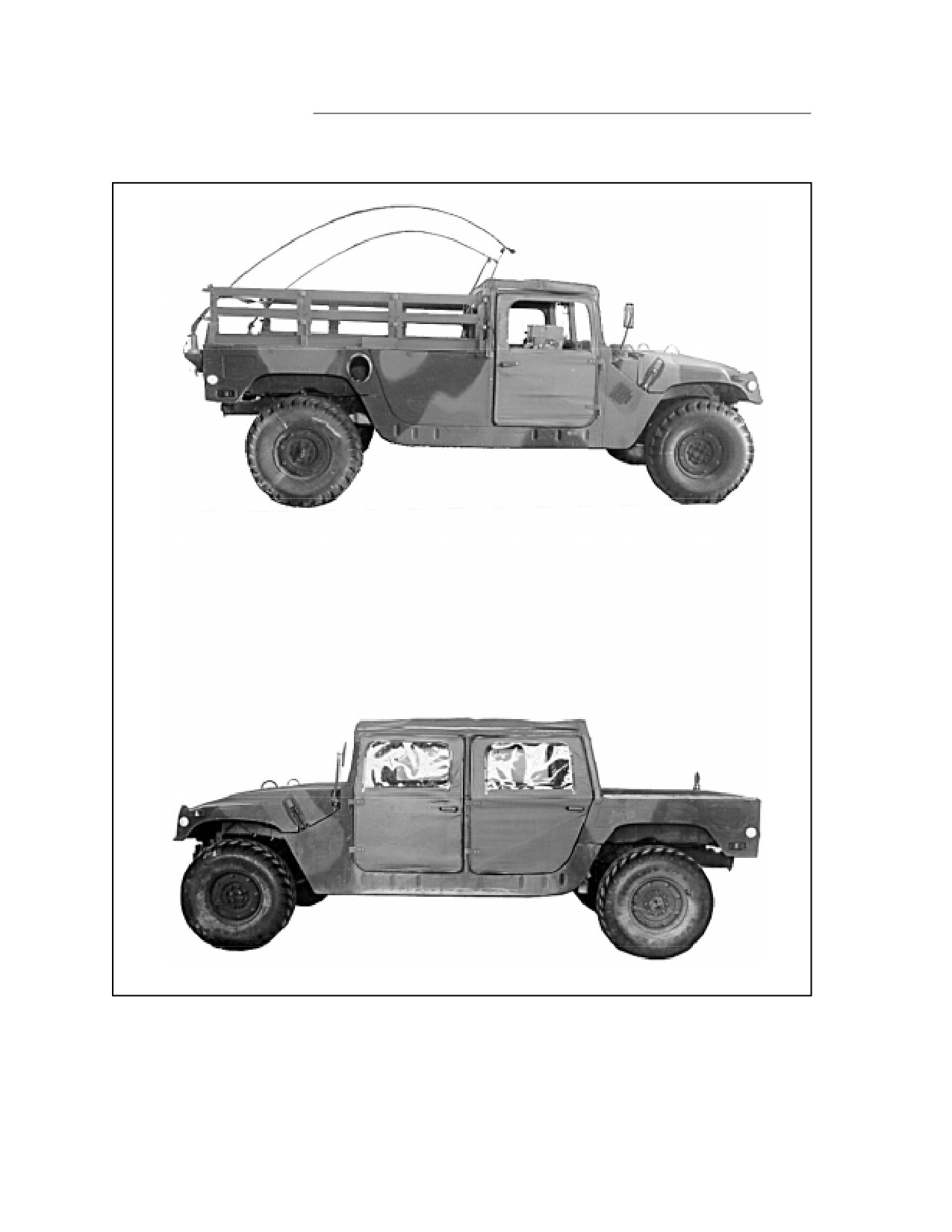
2-1. The unrigged M998 cargo/troop carrier (Figure 2-1) is described in Chapter
1. The HMMWV truck is rigged on a 16-foot type V platform for low-velocity
airdrop. An accompanying load weighing a minimum of 800 pounds and a
maximum of 2,000 pounds (2,500 pounds for the M1037 modified HMMWV,
M1042, M1097, M1097A1, and M1097A2) must be rigged in the truck. The load
requires two G-11 cargo parachutes. The following trucks can be rigged using
the procedures given in this chapter:
M998A1
M1038 and M1038A1
M1037 and M1037 modified
M1042
M1097, M1097A1, and M1097A2
PREPARING PLATFORM
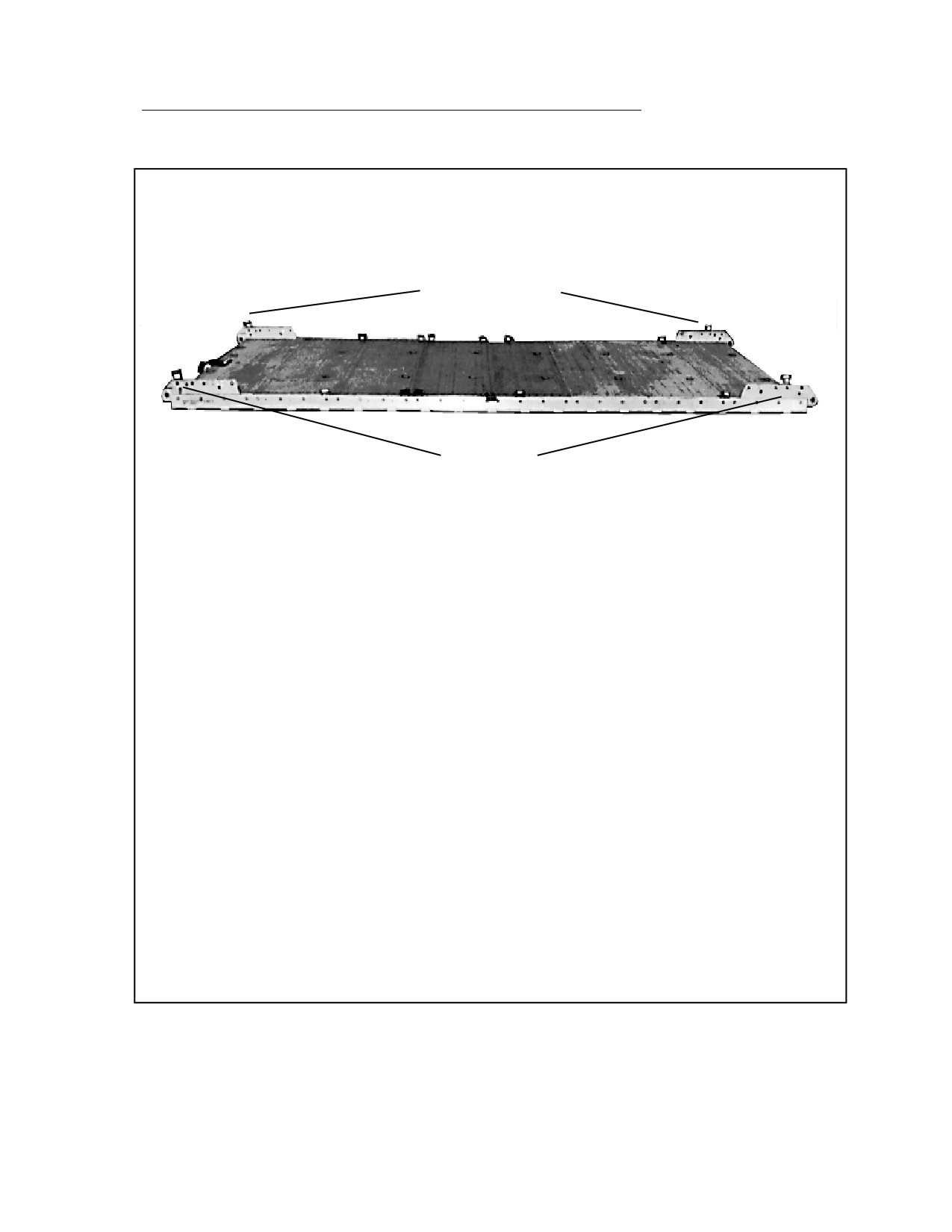
2-2. Prepare a 16-foot, type V airdrop platform according to TM 10-1670-268-
20&P/TO 13C7-52-22. Install four tandem links as shown in Figure 2-2.
Attach and number 18 clevis assemblies as shown in Figure 2-2.
NOTES: 1. The nose bumper may or may not be installed.
2. Measurements given in this chapter are from the
front edge of the platform, NOT from the front
edge of the nose bumper.
2-1
FM 4-20.117/TO 13C7-1-111
TWO-DOOR CONFIGURATION
FOUR-DOOR CONFIGURATION
Figure 2-1. M998 Cargo/Troop Carrier
2-2
FM 4-20.117/TO 13C7-1-111
CLEVISES
9A THROUGH 1A
LEFT
REAR
RIGHT
FRONT
CLEVISES
9 THROUGH 1
Step:
1. Install a tandem link on the front of each platform side rail using holes 1, 2, and 3.
2. Install a tandem link on the rear of each platform side rail using holes 30, 31, and 32.
3. Install a clevis on bushing 2 of each front tandem link.
4. Install a clevis on bushing 4 of each rear tandem link.
5. Starting at the front of the platform, install clevises on each platform side rail using the bushings
bolted on holes 5, 15, 20, 21 and 25.
6. Install a clevis on bushing 17 in an inverted position. Install a clevis on bushing 17A in the normal
position. Bolt an additional clevis to each of the clevises on the 17th bushings.
7. Starting at the front of the platform, number the clevises bolted to the right side of the platform
from 1 through 9, and those bolted to the left side from 1A through 9A. Number the clevises
bolted to the 17th bushings 5 and 5A. Number the clevises bolted to these clevises 4 and 4A.
8.
Label the tie-down rings according to FM 4-20.102/TO 13C7-1-5.
Figure 2-2. Platform Prepared
2-3
FM 4-20.117/TO 13C7-1-111
PREPARING AND POSITIONING HONEYCOMB STACKS
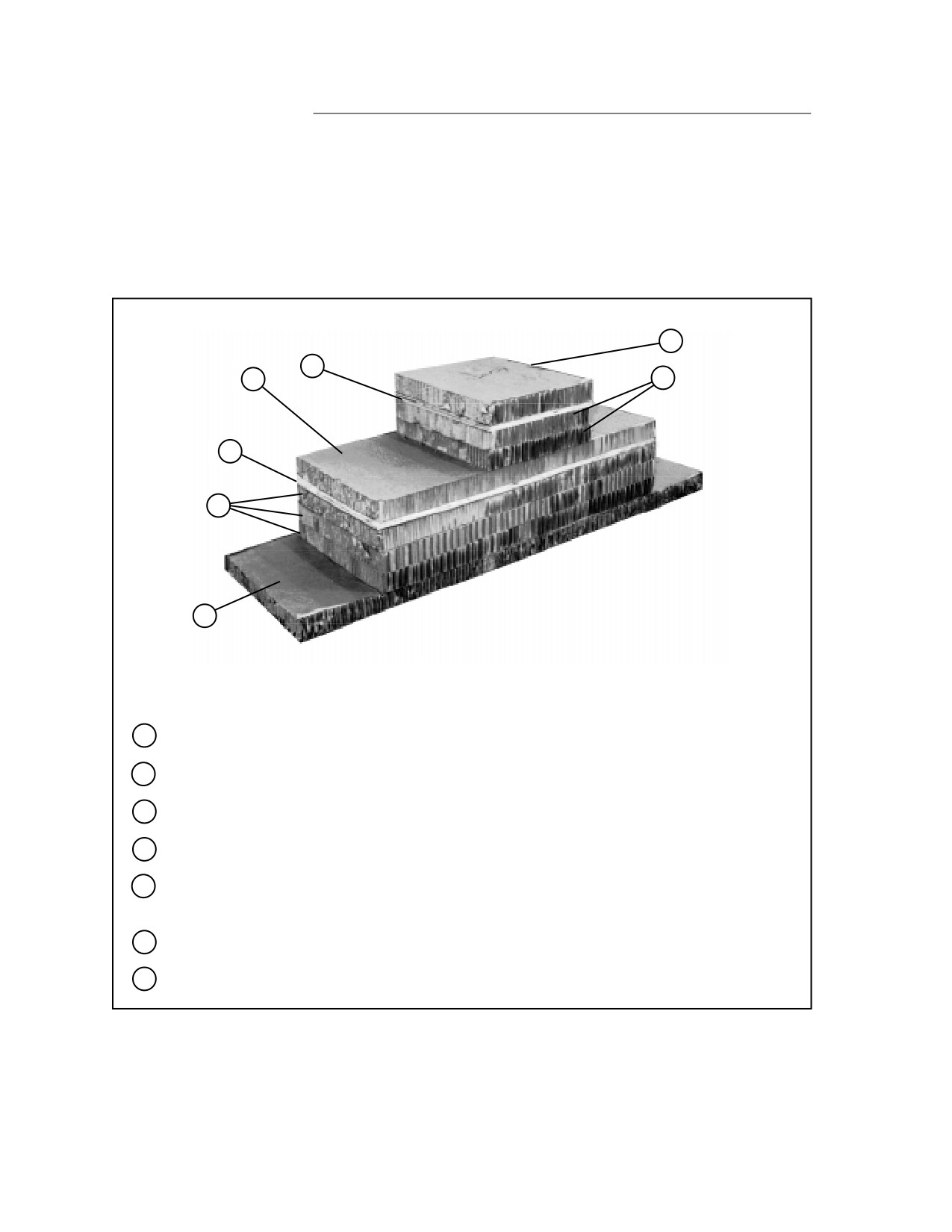
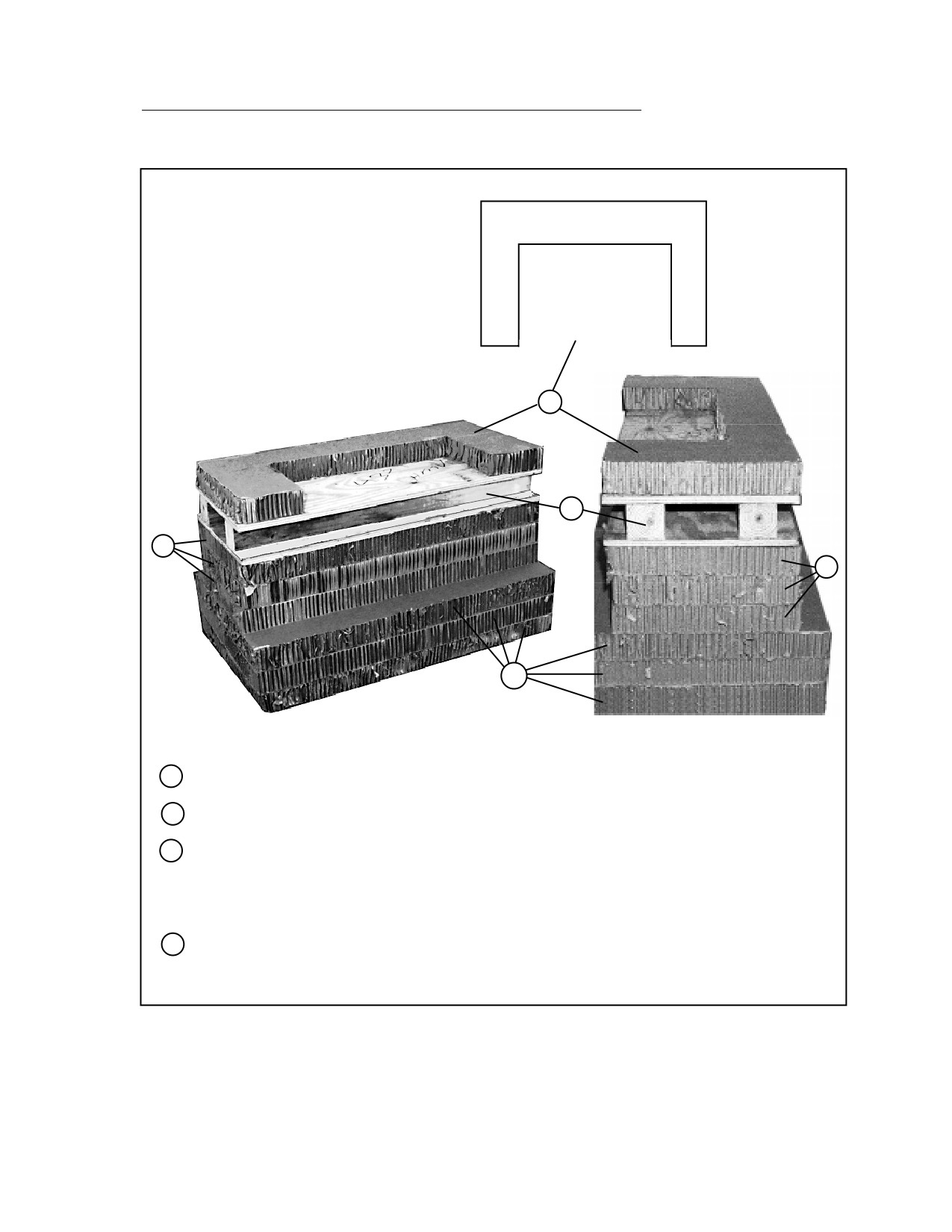
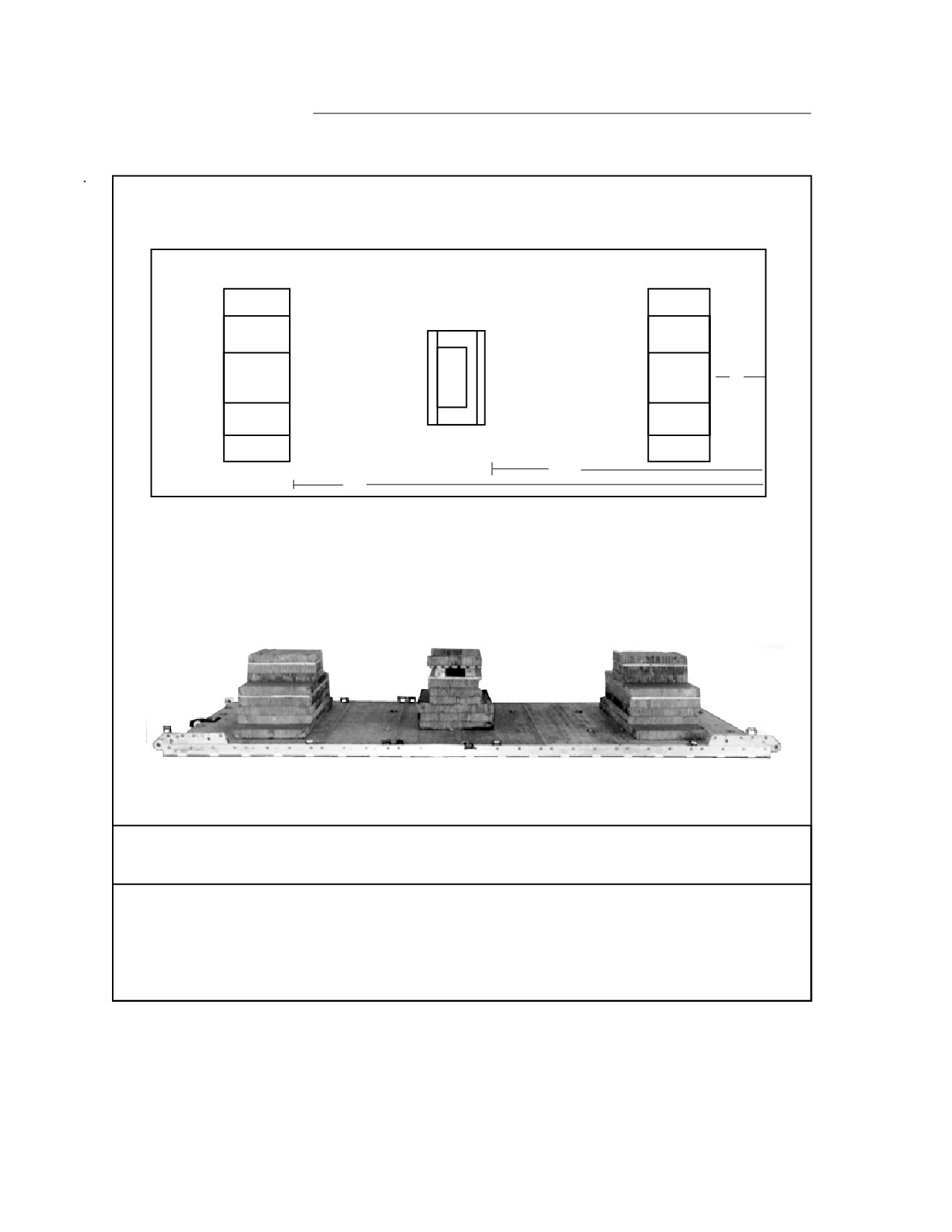
2.3. Prepare three honeycomb stacks as shown in Figures 2-3 and 2-4. Position
the stacks on the platform as shown in Figure 2-5.
7
6
4
5
3
2
1
1
Use an 80- by 24-inch piece of honeycomb to form a base.
2
Center and glue three 54- by 24-inch pieces of honeycomb on the base.
3
Place a 3/4- by 54- by 24-inch piece of plywood over the honeycomb placed in step 2 above.
4
Place one 54- by 24-inch piece of honeycomb on top of the plywood placed in step 3 above.
5
Center two 20- by 24-inch pieces of honeycomb on top of the honeycomb placed in step 4
above.
6
Place a 3/4- by 20- by 24-inch piece of plywood over the honeycomb placed in step 5 above.
7
Place one 20- by 24-inch piece of honeycomb on top of the plywood placed in step 6 above.
Figure 2-3. Stacks 1 and 3 Prepared
2-4
FM 4-20.117/TO 13C7-1-111
Notes: 1. This drawing is not drawn to scale.
43
2. All dimensions are given in inches.
27
18
12
8
TOP LAYER
4
3
2
2
1
REAR
RIGHT
1
Glue three 43- by 26-inch pieces of honeycomb flush together to form a base.
2
Center and glue three 43- by 18-inch pieces of honeycomb flush on the base.
3
Nail a 43-inch piece of 4- by 4-inch lumber parallel to each long side and 1 1/2 inches from
each long edge of a 3/4- by 43- by 18 inch piece of plywood. Nail a second 3/4- by 43- by
18-inch piece of plywood to the lumber and flush with the bottom piece of plywood. Glue the
wooden section of the stack flush on the honeycomb placed in step 2 above.
4
Make the cutout as shown in a 43- by 18-inch piece of honeycomb. Glue the honeycomb
flush over the plywood.
Figure 2-4. Stack 2 Prepared
2-5
FM 4-20.117/TO 13C7-1-111
Notes: 1. This drawing is not drawn to scale.
2. Dimensions are given in inches.
REAR
FRONT
17
86
147
STACK
STACK
STACK
3
2
1
Stack
Number
Position of Stack on Platform
Place stack:
1
17 inches from the front edge of the platform and centered.
2
86 inches from the front edge of the paltform and centered. Face the cutout to
the rear.
3
147 inches from the front edge of the platform and centered.
Figure 2-5. Honeycomb Stacks Positioned on Platform
2-6
FM 4-20.117/TO 13C7-1-111
PREPARING TRUCK
2-4. Prepare the truck as described below.
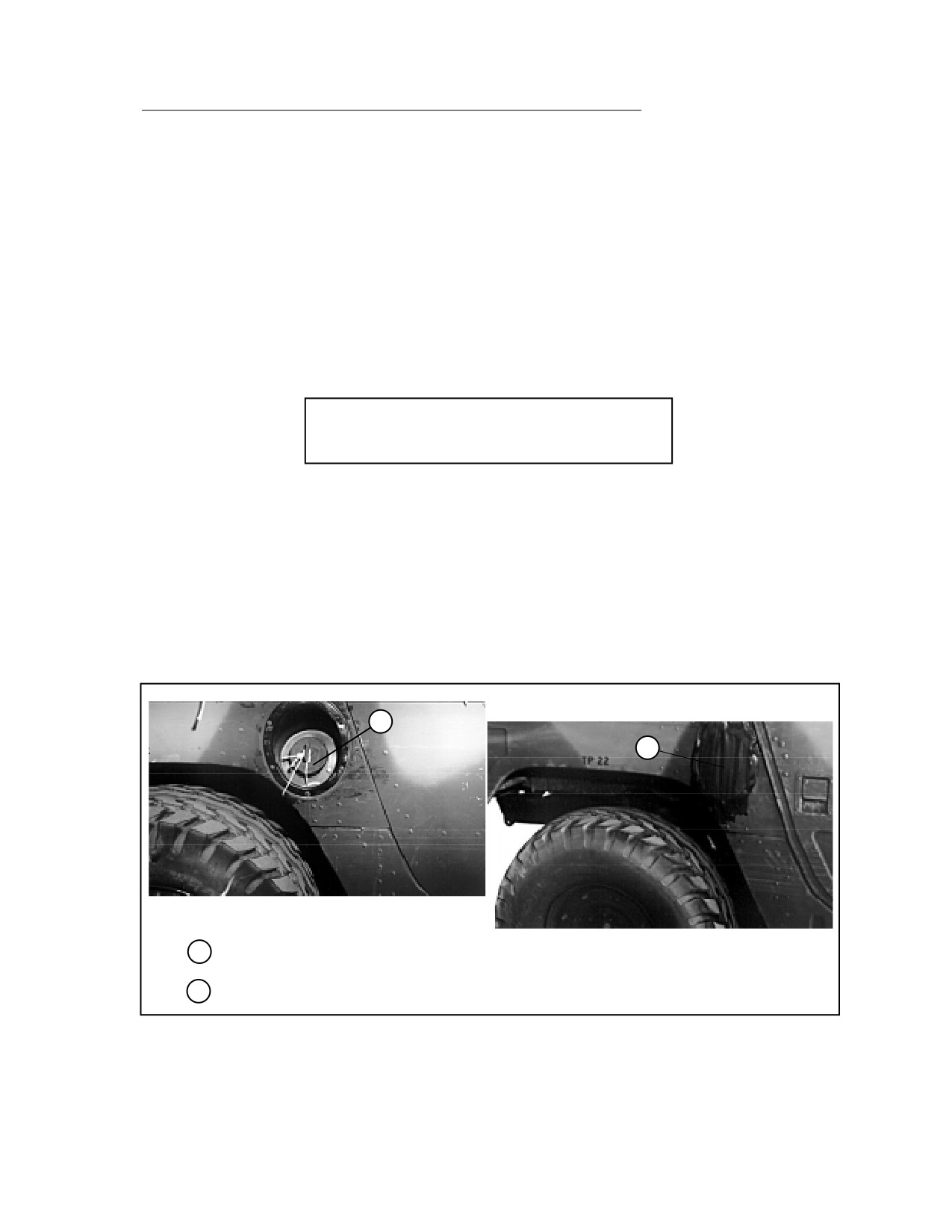
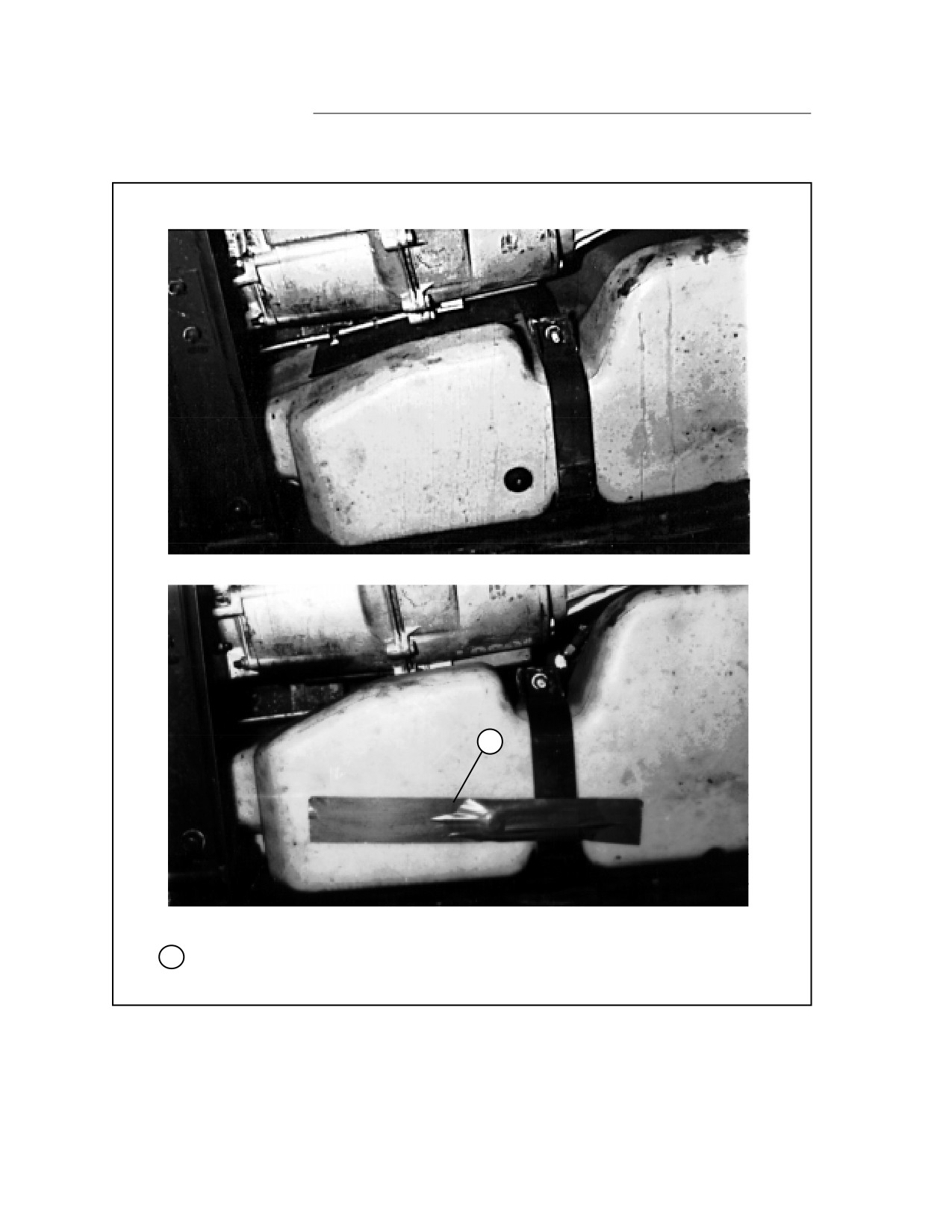
a. Make sure the fuel tank is no more than 3/4 full. Prepare the fuel tank
filler cap and fuel filler opening as shown in Figure 2-6. Prepare the fuel
tank drain plug as shown in Figure 2-7.
Note: Certain units may be authorized a waiver allowing 95% fuel. One way to verify the tank
is 95% full is to fill the tank and withdraw 1 1/4 gallons with a hand pump.
CAUTION
A full tank does not allow for fuel expansion,
and is a danger to aircraft and crew.
b. Make sure the batteries and battery compartment comply with AFJMAN
24-204/TM 38-250.
c. Stow the truck OVE according to TM 9-2320-280-10/TO 36A12-1A-2091-1/
TM 2320-10/6.
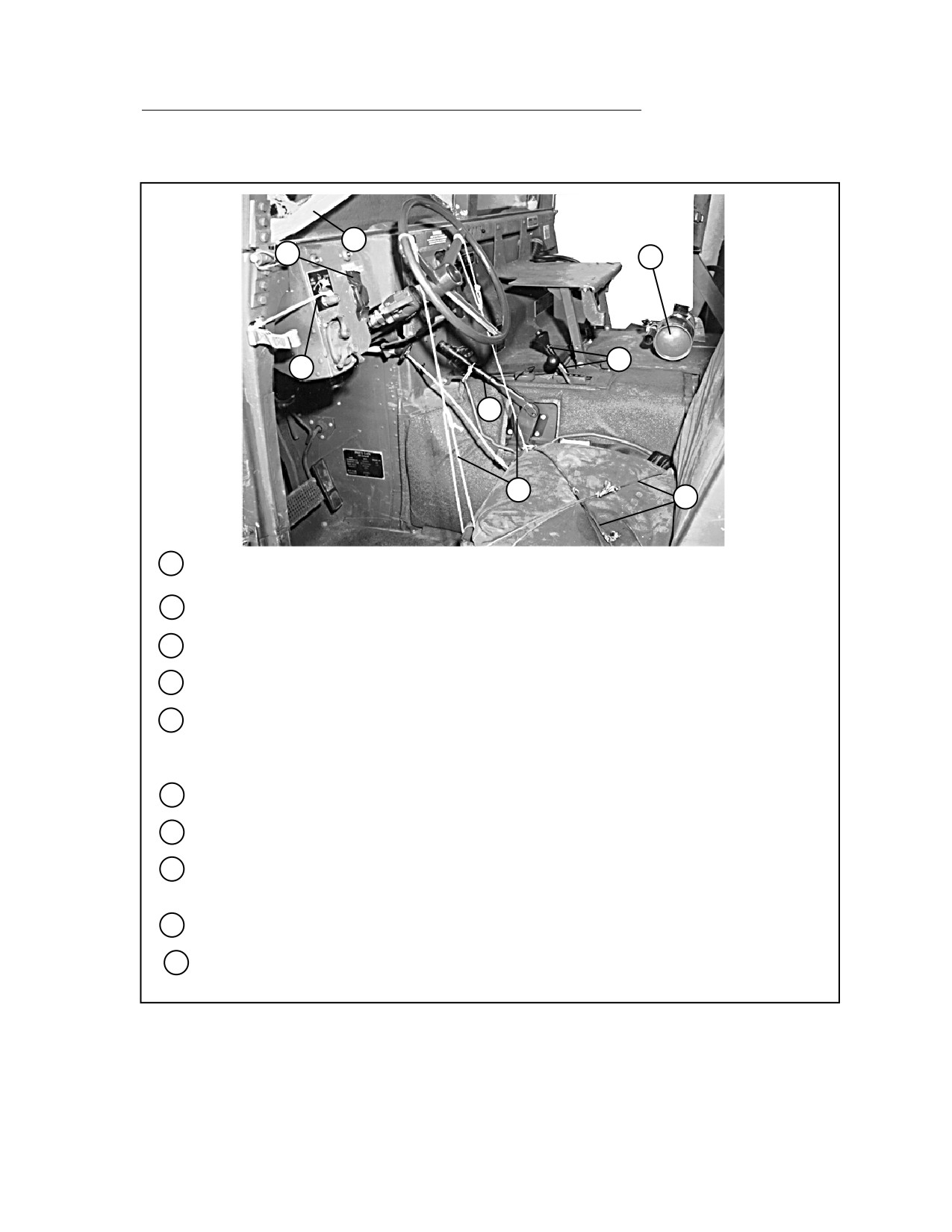
d. Prepare the cab of the truck as shown in Figure 2-8.
1
2
1 Tie the fuel filler cap to the body of the truck with type III nylon cord.
2 Tape the fuel filler opening.
Figure 2-6. Fuel Tank Filler Cap and Opening Prepared
2-7
FM 4-20.117/TO 13C7-1-111
1
1 Place a 12-inch length of cloth-backed tape over the fuel tank drain plug.
Figure 2-7. Fuel Tank Drain Plug Prepared
2-8
FM 4-20.117/TO 13C7-1-111
2
10
9
7
4
6
5
8
1
Remove all doors, covers, and supporting bows.
2
Tape the windshield glass on both sides in an X.
3
Remove and pad the mirrors. Secure them under the driver's seat with type III nylon cord.
4
Tie the engine start switch in the engine stop position with type I, 1/4-inch cotton webbing.
5
Tie the steering wheel to the seat frame in two places with type III nylon cord, or use the
retractable steering wheel locking cable. If the locking cable is used, secure it to the steering
wheel with type III nylon cord, not a padlock.
6
Tie the emergency brake handle in the off position with type III nylon cord.
7
Place the transmission and four-wheel drive levers in the neutral position.
8
Tie the seat cushions to the seat frames with type III nylon cord. Fold the passenger seats
in four-door trucks and secure them with the pins provided.
9
Tie the fire extinguisher in place with two lengths of type III nylon cord.
10
Tape all instrument panel gauges.
Figure 2-8. Cab Prepared
2-9
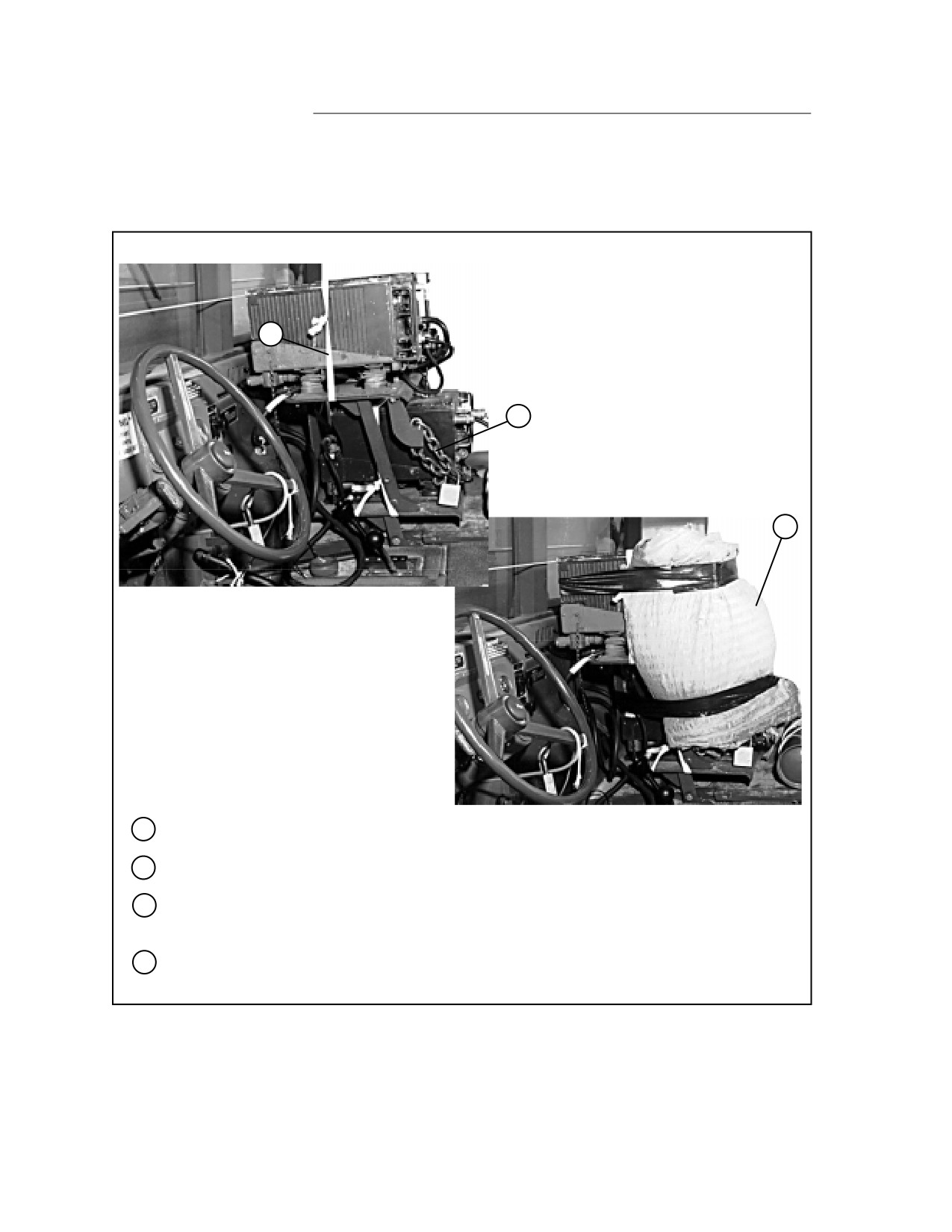
FM 4-20.117/TO 13C7-1-111
e. Secure and pad radio equipment in the cab section as shown in Figure
2-9.
2
1
3
1
Secure communications equipment in its mount with chains and padlocks.
2
Tie the equipment to its mount with 1-inch tubular nylon webbing.
3
Pad the front of the equipment generously with cellulose wadding taped in place. Pad the radio
handset with cellulose wadding and tie the handset to the mount with type III nylon cord.
4
Remove antennas and pad the antenna mounts with cellulose wadding taped in place (not
shown).
Figure 2-9. Communications Equipment Secured and Padded
2-10
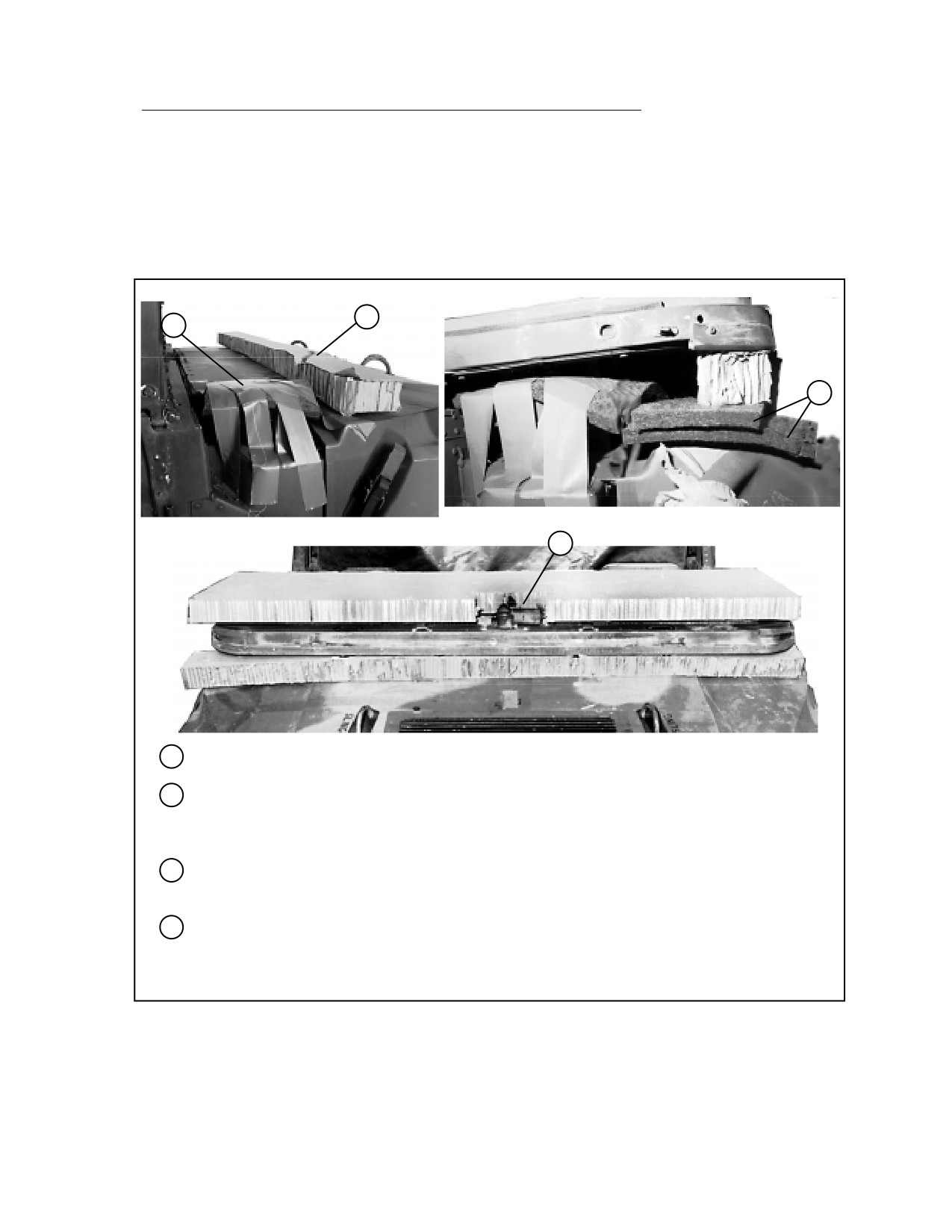
FM 4-20.117/TO 13C7-1-111
f. Prepare the front of soft-top trucks with foldable windshields as shown in
Figure 2-10.
2
1
3
4
1
Cover the breather cap with one layer of felt taped in place.
2
Fold the windshield down over a 78- by 4-inch piece of honeycomb with the top edge of the
windshield aligned with the front edge of the honeycomb. Note where the bumper pads and
wipers make contact. Make indentations in the honeycomb to allow for them.
3
Pad under the honeycomb placed in step 2 above with two pieces of felt placed on either side
of the center bulge in the hood.
4
Fold the windshield down over the honeycomb and felt placed in steps 2 and 3 above. Replace
the securing pins in the brackets. Cover the rear side of the folded windshield with a 78- by 19-
inch piece of honeycomb. Make a cutout to allow for the wiper motor.
Figure 2-10. Front of Truck Prepared
2-11
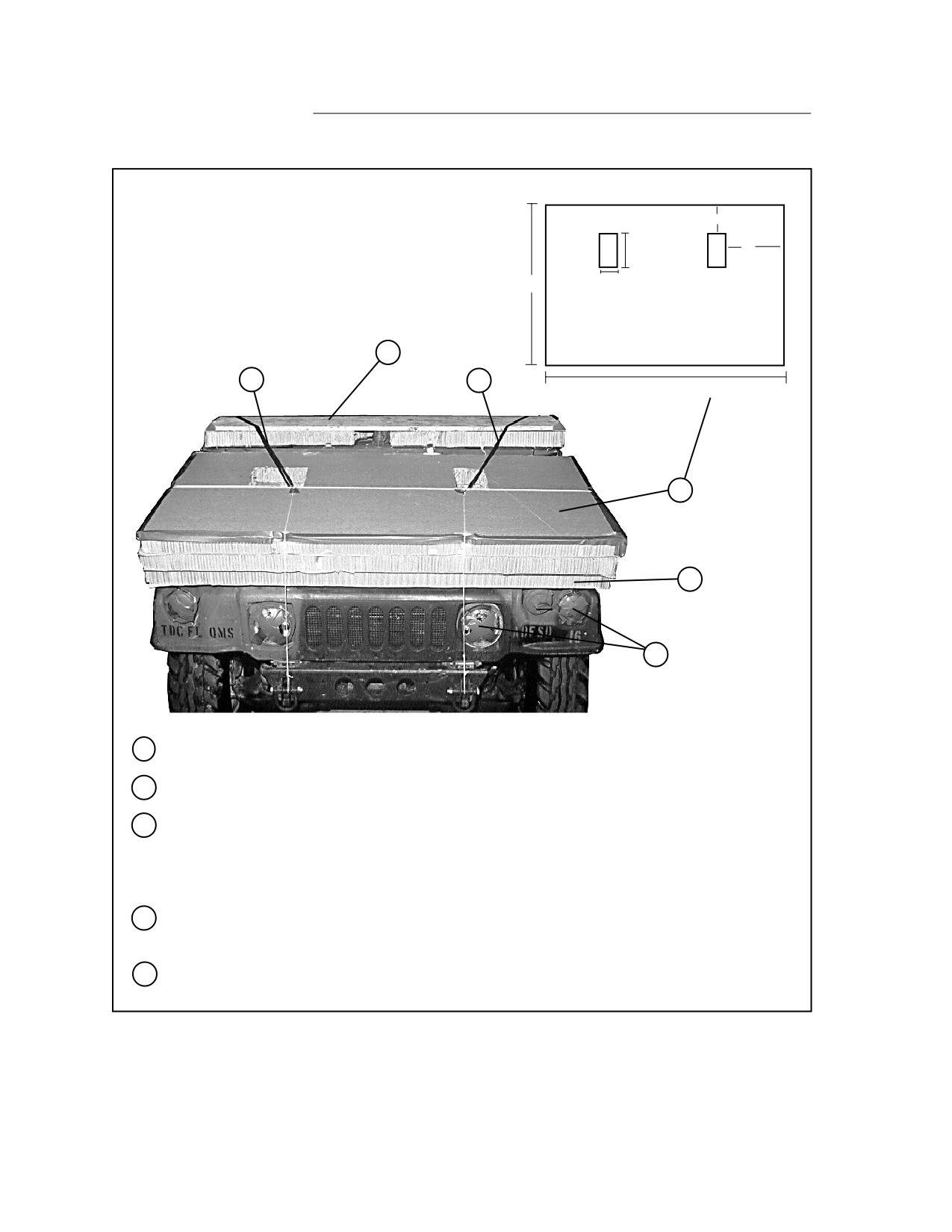
FM 4-20.117/TO 13C7-1-111
Notes: 1. This drawing is not drawn to scale.
2. All dimensions are given in inches.
8
9
20
6
36
8
9
9
83
7
6
5
5
Tape all lights and reflectors. Tape the hood latches.
6
Center a 78- by 4-inch piece of honeycomb along the front edge of the hood.
7
Place two 83- by 36-inch pieces of honeycomb, with cutouts as shown, on the hood. Tie one
length of type III nylon cord over the honeycomb to the front coil springs on each side. Tie two
lengths of type III nylon cord from the airlift bracket to the front tie-down bracket on each side.
Tape the honeycomb where the cord passes over the edges.
8
Place a 3/4- by 78- by 19-inch piece of plywood over the honeycomb placed in step 4. Round
the front corners, and drill a 1/2-inch hole 6 inches from the bottom and 1 inch from each end.
9
Secure the plywood with two lengths of 1/2-inch tubular nylon webbing tied from the airlift
bracket to the windshield securing pin on each side.
Figure 2-10. Front of Truck Prepared (continued)
2-12
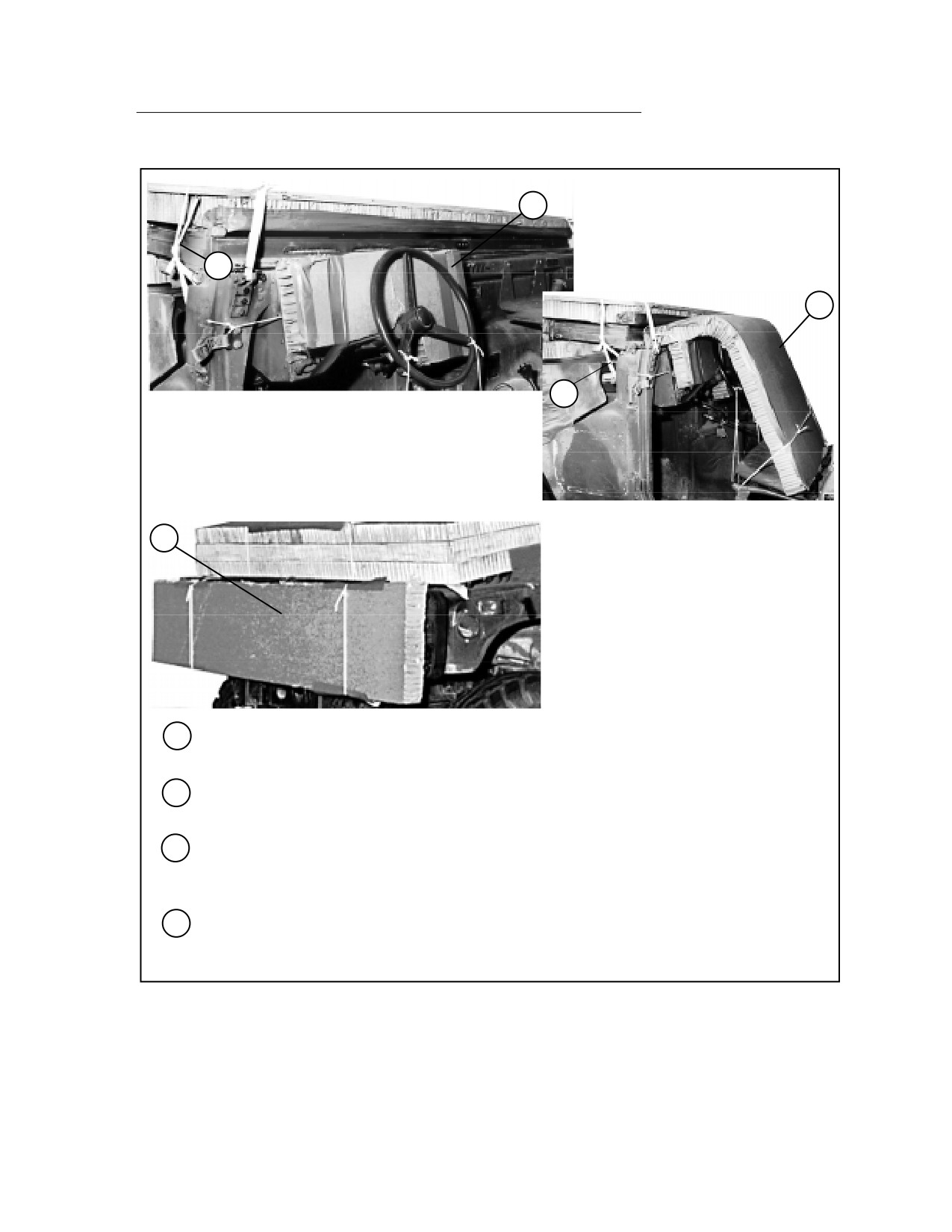
FM 4-20.117\TO 13C7-1-111
11
10
12
10
13
10
Secure the plywood to the windshield with 1/2-inch tubular nylon webbing tied through the
drilled holes in the plywood and to the mirror brackets (shown), or to the door hinges.
11
Cover the instrument panel with a 23- by 11-inch piece of honeycomb. Make a cutout to allow
for the turn signal lever. Tape the honeycomb in place.
12
Cover the steering wheel with a 24- by 44-inch piece of honeycomb. Tape the edges and tie the
honeycomb to the seat frame with type III nylon cord. Tie the honeycomb at the top to the
windshield securing bracket and to the defroster control knob with type III nylon cord.
13
On trucks equipped with the brush guard, cover the front side with an 83- by 14-inch piece of
honeycomb, tied in place with type III nylon cord.
Figure 2-10. Front of Truck Prepared (continued)
2-13
FM 4-20.117\TO 13C7-1-111
g. Prepare and secure the pioneer tool kit according to TM 9-2320-280-10/
TO 36A12-1A-2091-1/TM 2320-10/6, and as shown in Figure 2-11.
1
2
3
1
Tape all sharp edges of the pioneer tools. Pad the ax head with cellulose wadding.
2
Place the tools in the rack, and secure them with the straps provided, and with type III nylon
cord. For the M1037 (modified) truck, secure the tools with 1/2-inch tubular nylon webbing.
3
Close and latch the tool rack. Tie the rack in place with type III nylon cord.
Figure 2-11. Pioneer Tool Kit Secured
2-14
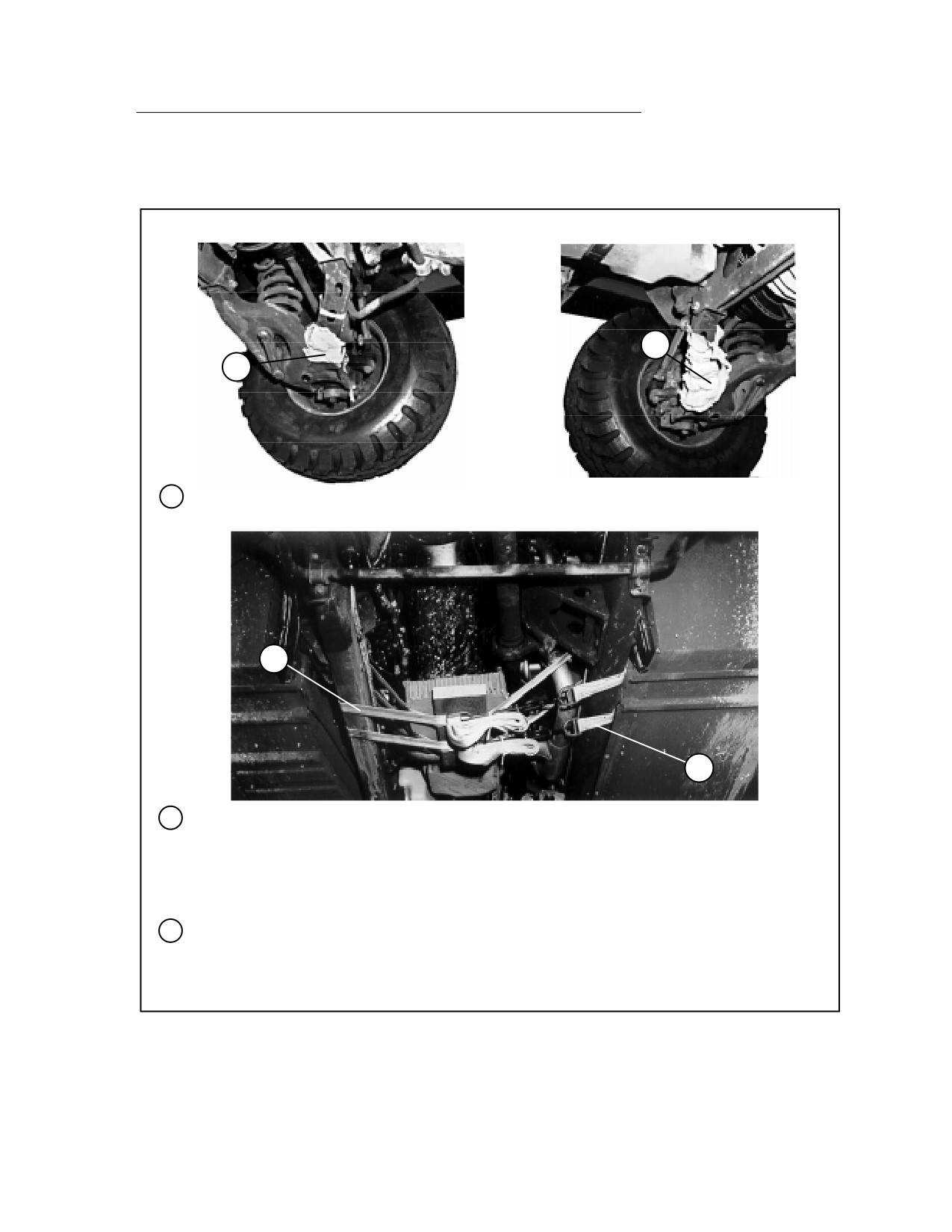
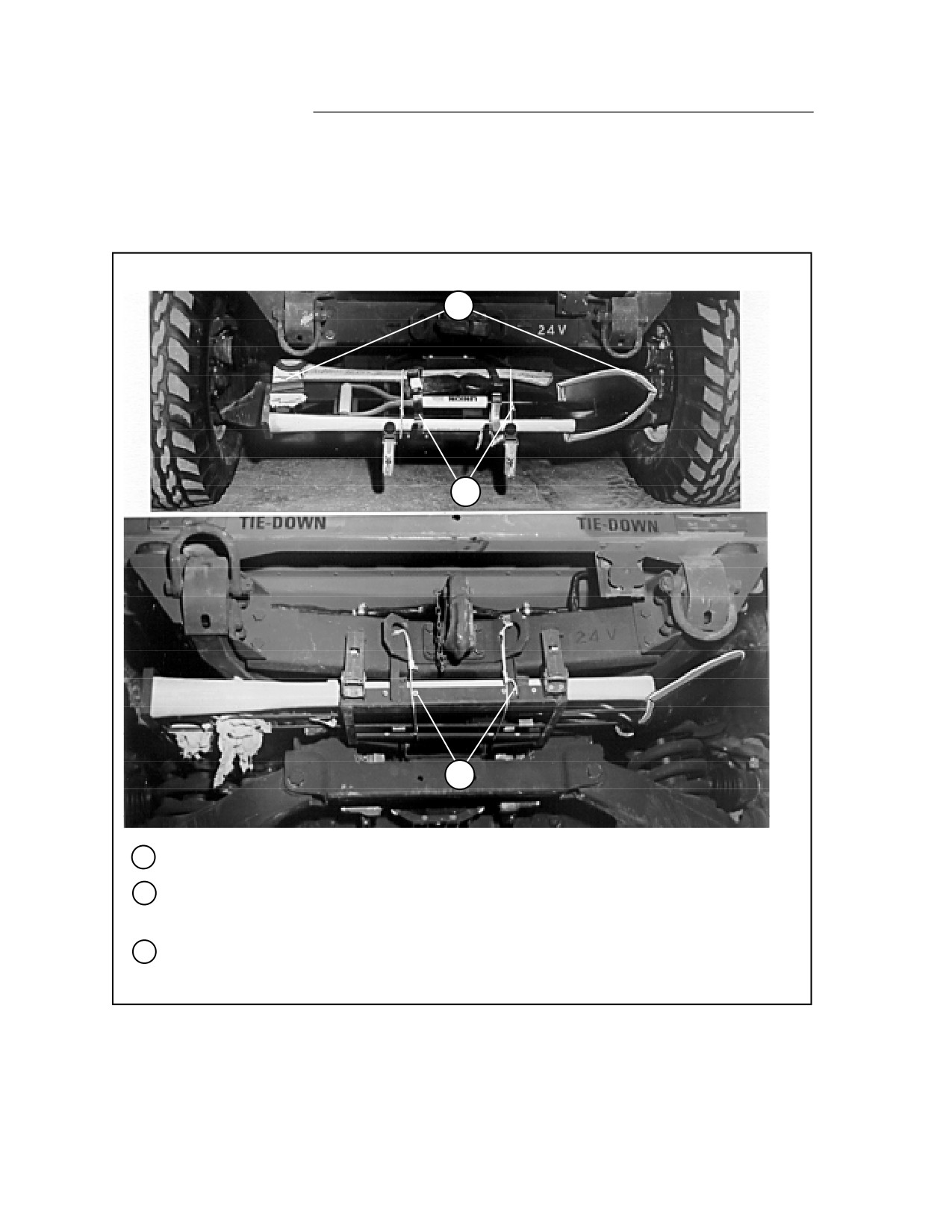
FM 4-20.117\TO 13C7-1-111
h. Prepare the underside of the truck as shown in Figure 2-12.
1
1
1
Pad the lower control arms on the front and rear of the truck with cellulose wadding taped in
place.
2
3
2
Pass a 15-foot lashing over the right frame rail, under the oil pan, and over the left frame rail.
Make sure the lashing goes over the exhaust pipe and then under it. Make sure the wires
running along the frame rail are to the outside of the lashing. Place a 12- by 12-inch piece of
honeycomb and a 2- by 6- by 16-inch piece of lumber between the lashing and the oil pan.
Fasten the lashing with a D-ring and a load binder.
3
Install another lashing just to the rear of the lashing installed in step 2 above. Route the
lashing in the same way.
Figure 2-12. Underside of Truck Prepared
2-15
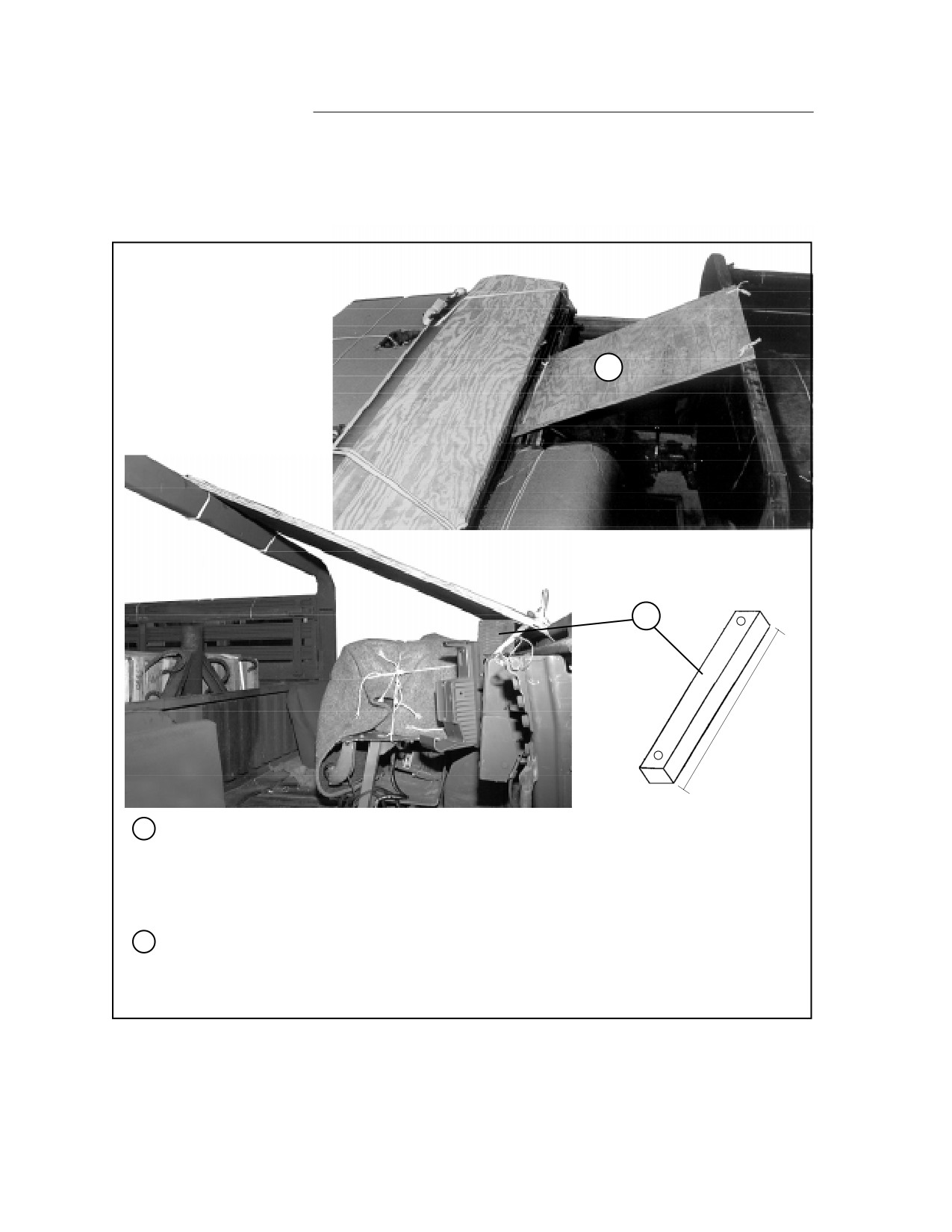
FM 4-20.117\TO 13C7-1-111
i. Prepare the truck body as shown in Figure 2-13.
1
2
24 inches
1
Drill 1/2-inch holes 2 inches in from each corner of a 3/4- by 24- by 42-inch piece of plywood.
Center the plywood over the cab with one 24-inch edge resting on the bottom ledge of the
windshield frame and the other end on the B-pillar. Secure the plywood to the B-pillar and to
convenient points in the cab with 1/2-inch tubular nylon webbing. This plywood will be used as
a platform for the release.
2
For trucks with radios that extend higher than the top of the instrument panel, drill 1/2-inch
holes 2 inches from each end of a 24-inch piece of 4- by 4-inch lumber. Place this lumber
between the plywood and the top of the instrument panel, the holes facing vertically. Tie the
lumber to the radio mounts and the plywood with 1/2-inch tubular nylon webbing.
Figure 2-13. Truck Body Prepared
2-16
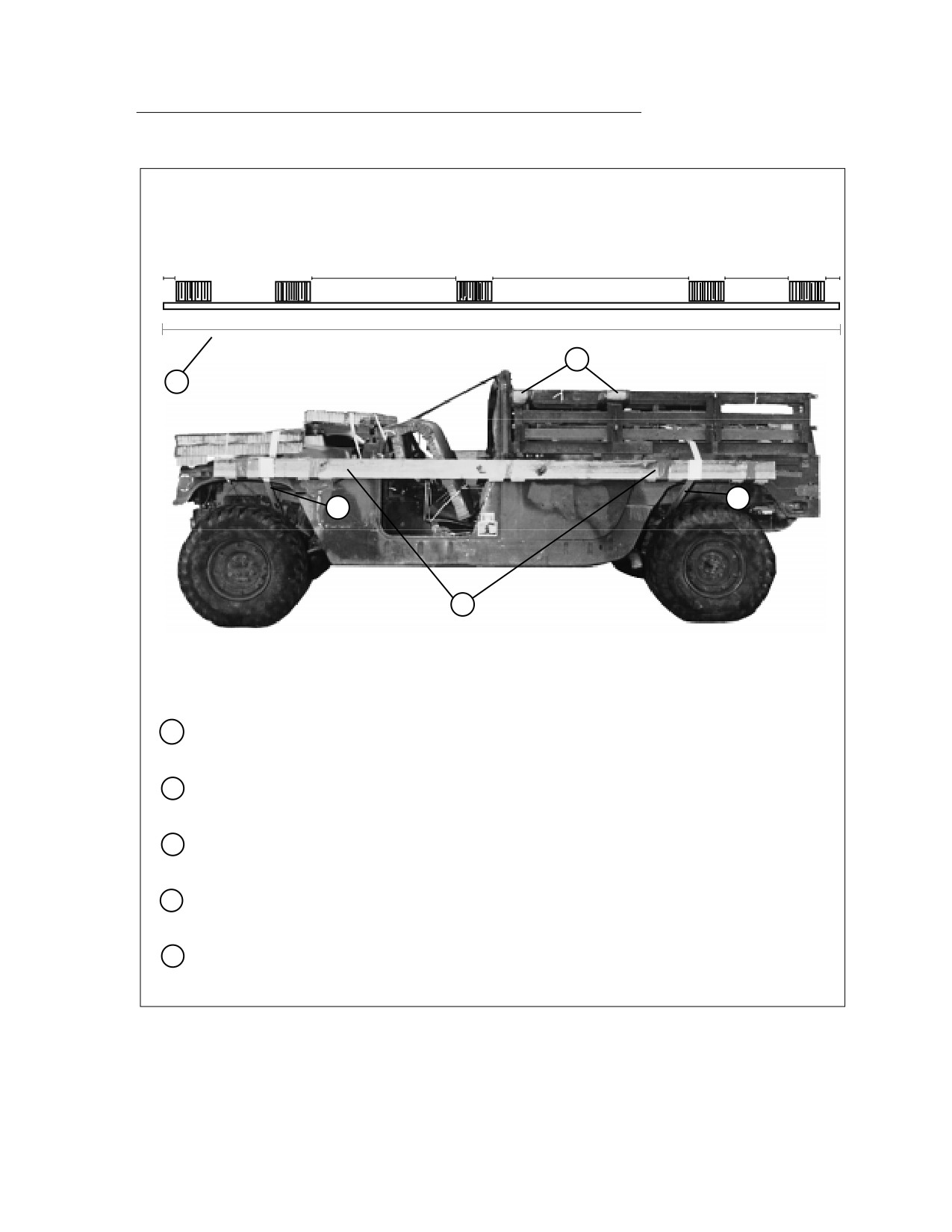
FM 4-20.117\TO 13C7-1-111
Notes:
1. This drawing is not drawn to scale.
2. All dimensions are given in inches.
2
33
40
9
2
150
2
5
4
3
6
2
If the wood cargo body sides are installed, pad all sharp edges with cellulose wadding taped in
place.
3
Pass a 15-foot lashing around the upper control arm behind a front wheel and through its own
D-ring. Repeat for the other side of the truck.
4
Pass a 15-foot lashing around the upper control arm behind a rear wheel and through its own D-
ring. Repeat for the other side of the truck.
5
Tape five 6- by 10-inch pieces of honeycomb to a 2- by 6- by 150-inch piece of lumber spaced
as shown. Repeat for the second side board.
6
Bring the lashings positioned in steps 3 and 4 around the boards two turns. Secure the lashings
from the left and right sides of the truck together with D-rings and load binders.
Figure 2-13. Truck Body Prepared (continued)
2-17
FM 4-20.117\TO 13C7-1-111
STOWING ACCOMPANYING LOAD
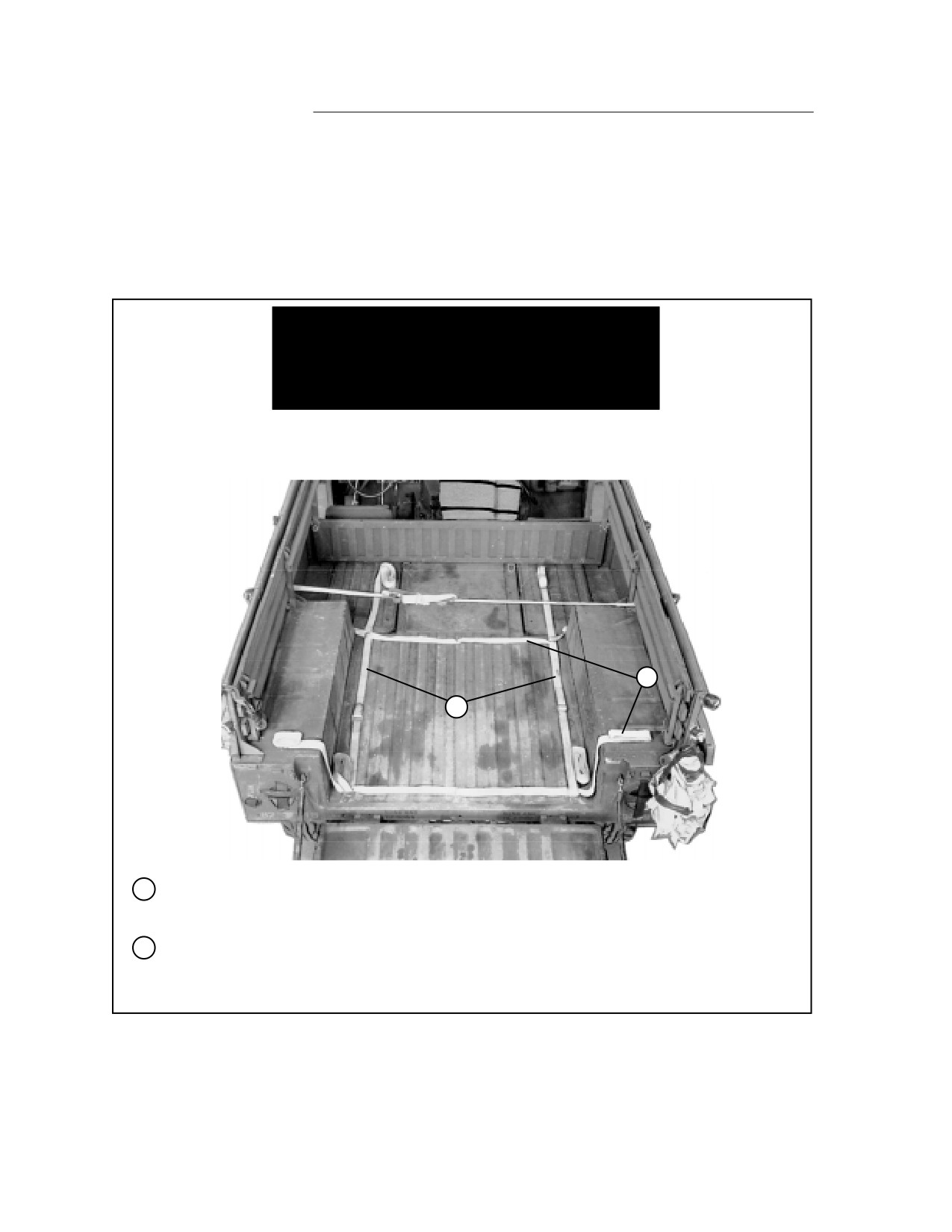
2-5. Use or adapt the procedures shown in Figure 2-14 to stow ammunition and
truck equipment. The accompanying load shown is 16 boxes of ammunition and
truck equipment weighing 1,800 pounds.
CAUTION:
Only ammunition listed in FM 10-500-53/MCRP 4-
3.81/TO 13C7-18-41 may be airdropped. Package,
label, and mark hazardous material according to
AFJMAN 24-204/TM 38-250.
2
1
1
Form two 30-foot lashing according to FM 4-20.102/TO 13C7-1-5. Lay the lashings lengthwise
across the cargo bed, passing them through the left and right tie-down rings in the cargo floor.
2
Lay two 15-foot lashings widthwise across the cargo bed passing them through the center and
rear tie-down rings in the cargo bed floor.
Figure 2-14. Ammunition and Truck Equipment Stowed
2-18
FM 4-20.117\TO 13C7-1-111
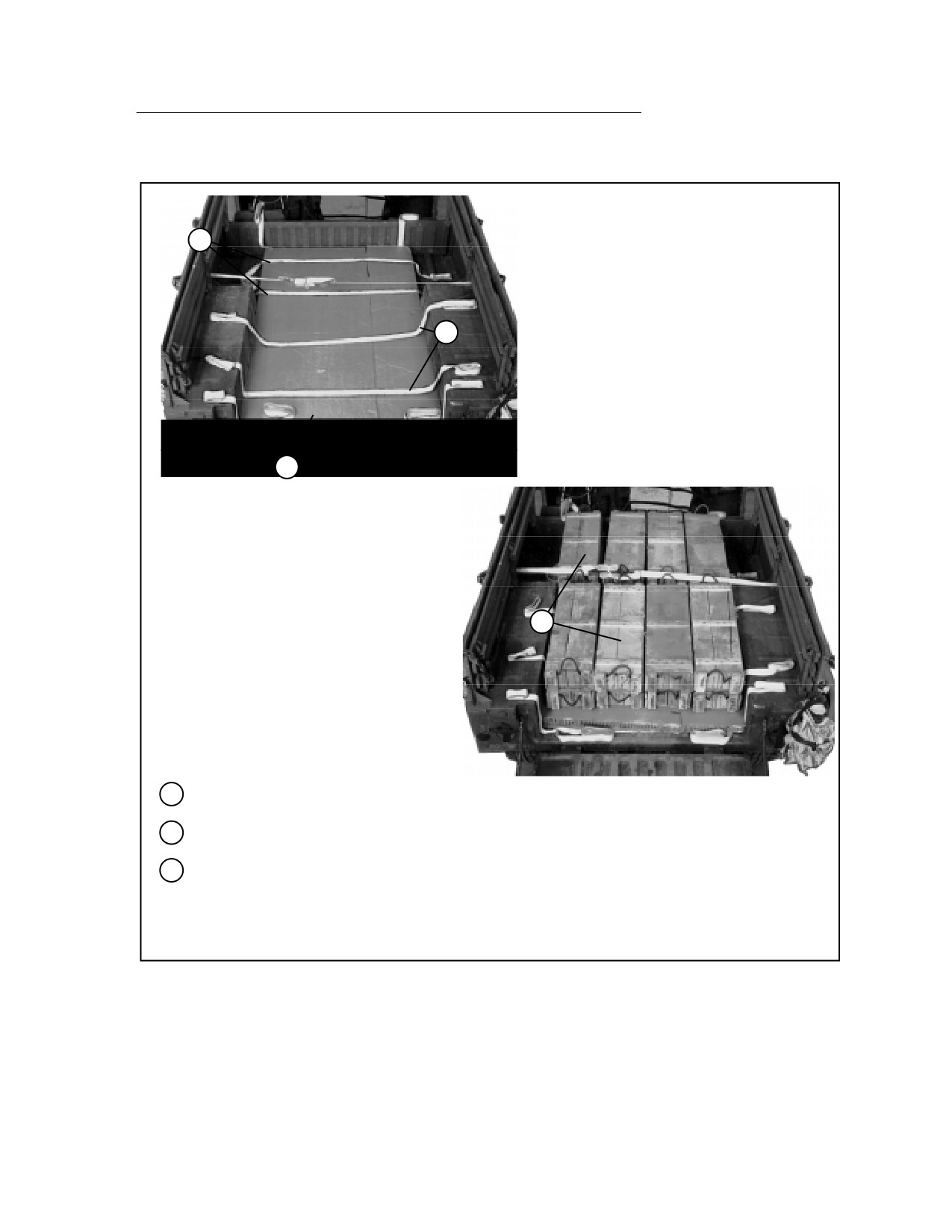
4
4
3
5
3
Cover the cargo floor using two pieces of honeycomb to make a 40- by 80-inch layer.
4
Space four 15-foot lashings evenly across the width of the cargo bed.
5
Place 16 boxes of ammunition on the honeycomb as shown.
Note: Leave 3 inches of space between any accompanying load and the tailgate to
prevent damage to the truck.
Figure 2-14. Ammunition and Truck Equipment Stowed (continued)
2-19
FM 4-20.117\TO 13C7-1-111
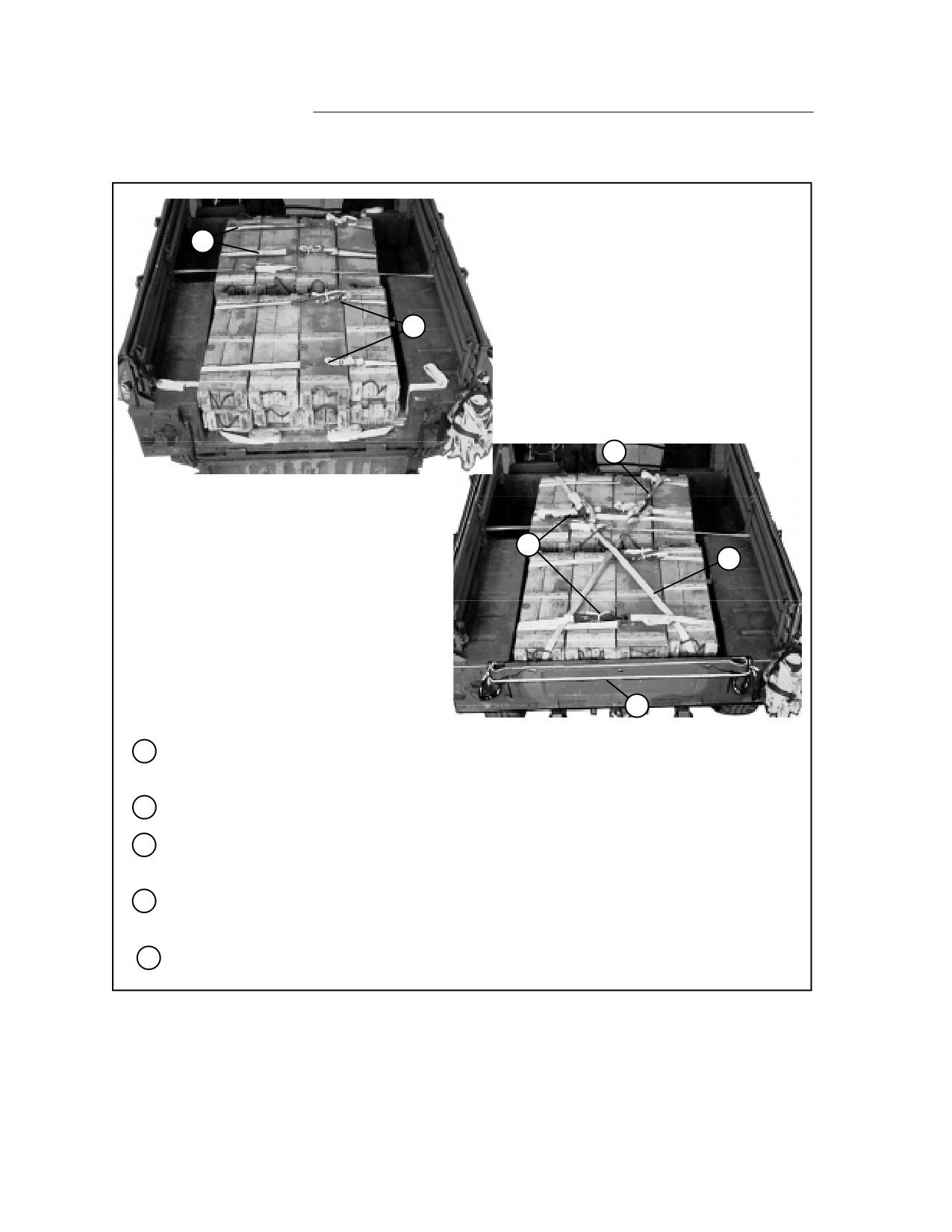
6
6
9
7
8
10
6
Bind the boxes together with the four side-to-side lashings placed in step 4. Secure each
lashing with a D-ring and a load binder.
7
Secure the lashings placed in step 2 with D-rings and load binders.
8
Join the left front and right rear 30-foot lashings placed in step 1 with two D-rings and a load
binder. Pass the lashings through the box handles wherever possible.
9
Join the left rear and right front 30-foot lashings placed in step 1 in the same way as step 8
above.
10
Close the tailgate. Secure it to the chain hook brackets with a single length of 1/2-inch tubular
nylon webbing.
Figure 2-14. Ammunition and Truck Equipment Stowed (continued)
2-20
FM 4-20.117\TO 13C7-1-111
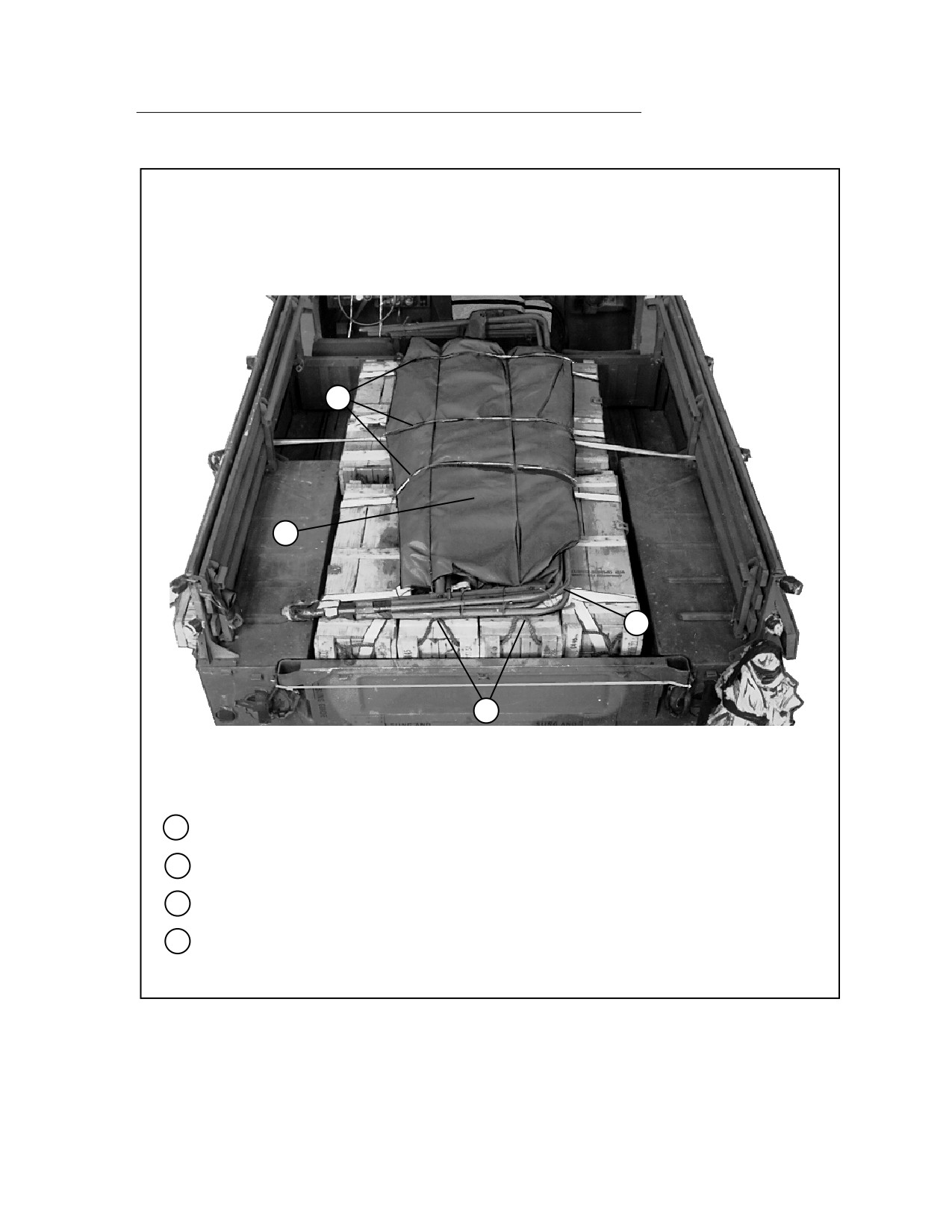
14
13
11
14
11
Tie the truck tarpaulin bows together with type III nylon cord. Place them on the boxes.
12
Place the truck doors on the boxes (not shown).
13
Fold the truck tarpaulin over the doors and bows.
14
Tie the items placed in steps 11, 12, and 13 above to the lashings and to the box handles with
type III nylon cord.
Figure 2-14. Ammunition and Truck Equipment Stowed (continued)
2-21
FM 4-20.117\TO 13C7-1-111
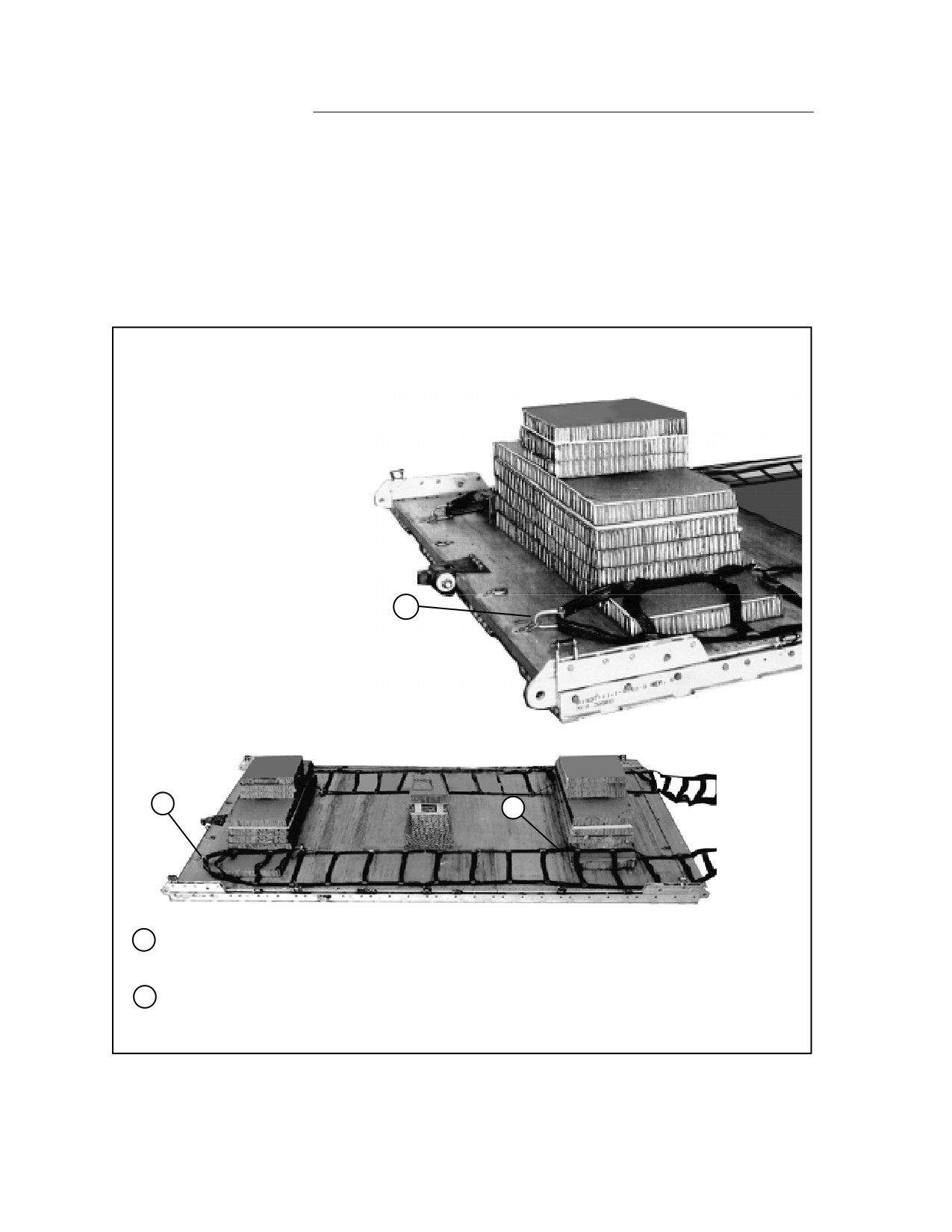
INSTALLING OPTIONAL DRIVE-OFF AIDS ON PLATFORM
2-6. Install the drive-off aids on the platform as shown in Figure 2-15.
Note : The use of drive-off aids is optional.
1
1
2
1
Attach one end of a drive-off aid to the outside rear tie-down ring on one side of the platform
with a type V clevis assembly. Repeat for the other side.
2
Extend the drive-off aids to the front of the platform. Pass them over the base layers of stacks
1 and 3. Secure the drive-off aids to adjacent clevises and tie-down rings with type I, 1/4-inch
cotton webbing.
Figure 2-15. Drive-off Aids Installed on Platform
2-22
FM 4-20.117\TO 13C7-1-111
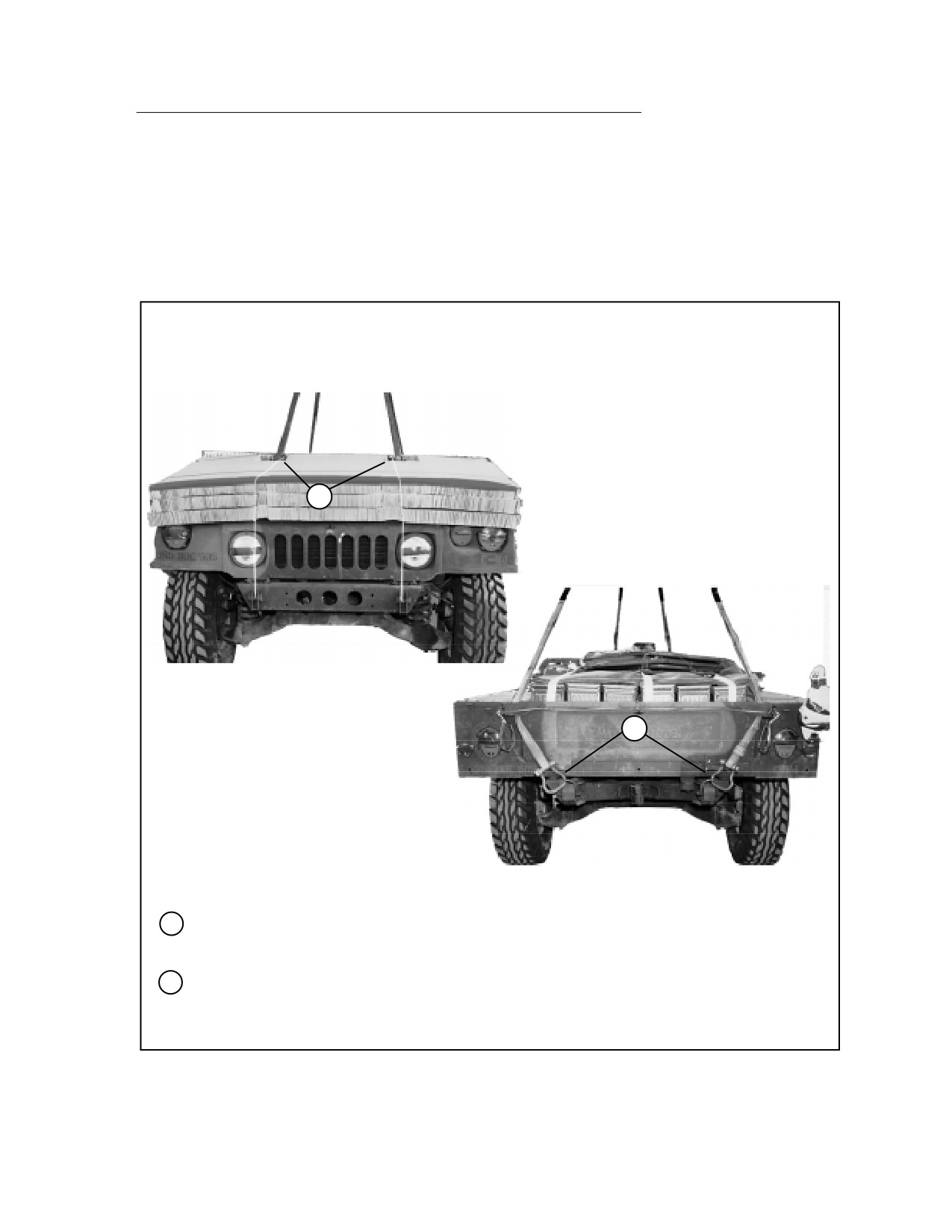
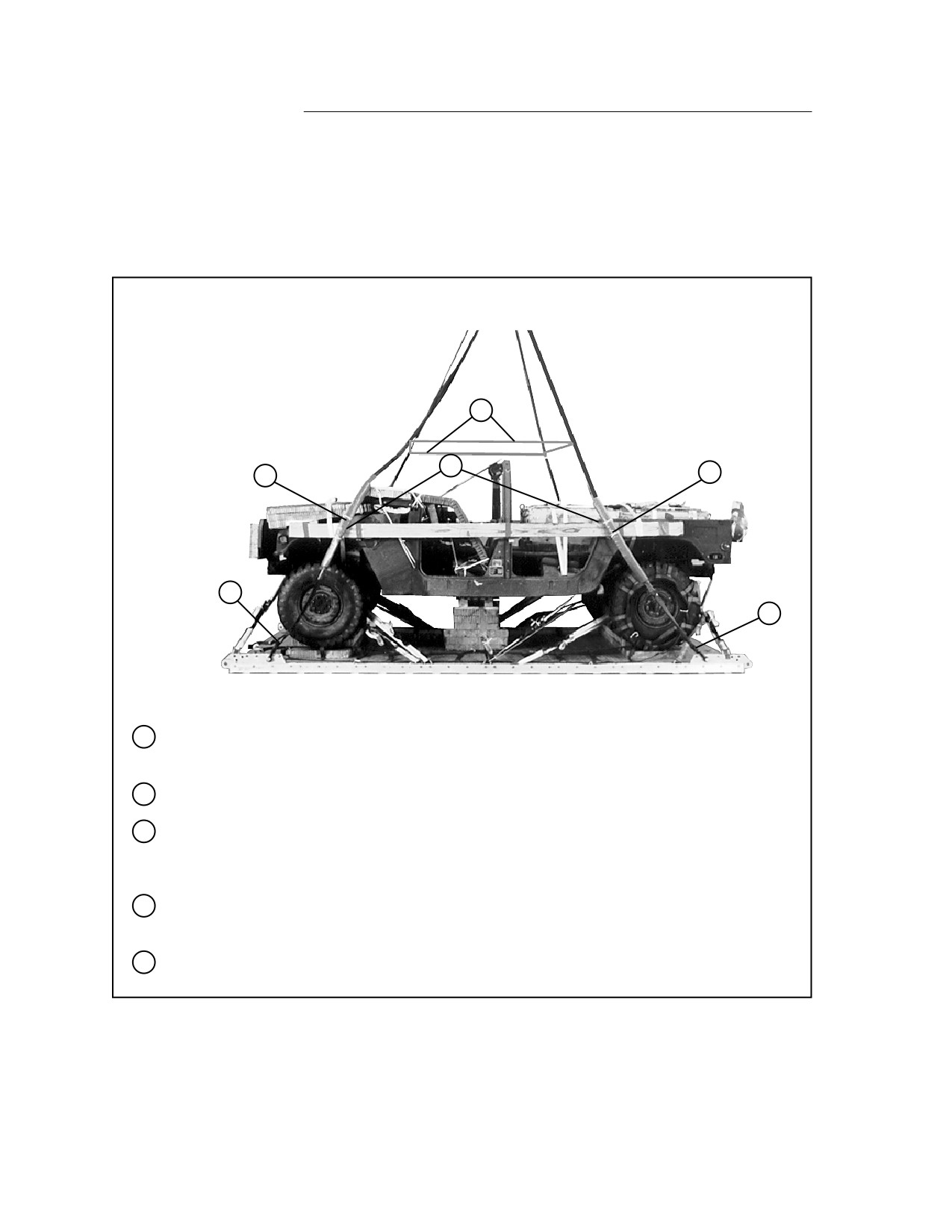
LIFTING AND POSITIONING TRUCK AND INSTALLING OPTIONAL DRIVE-OFF AIDS
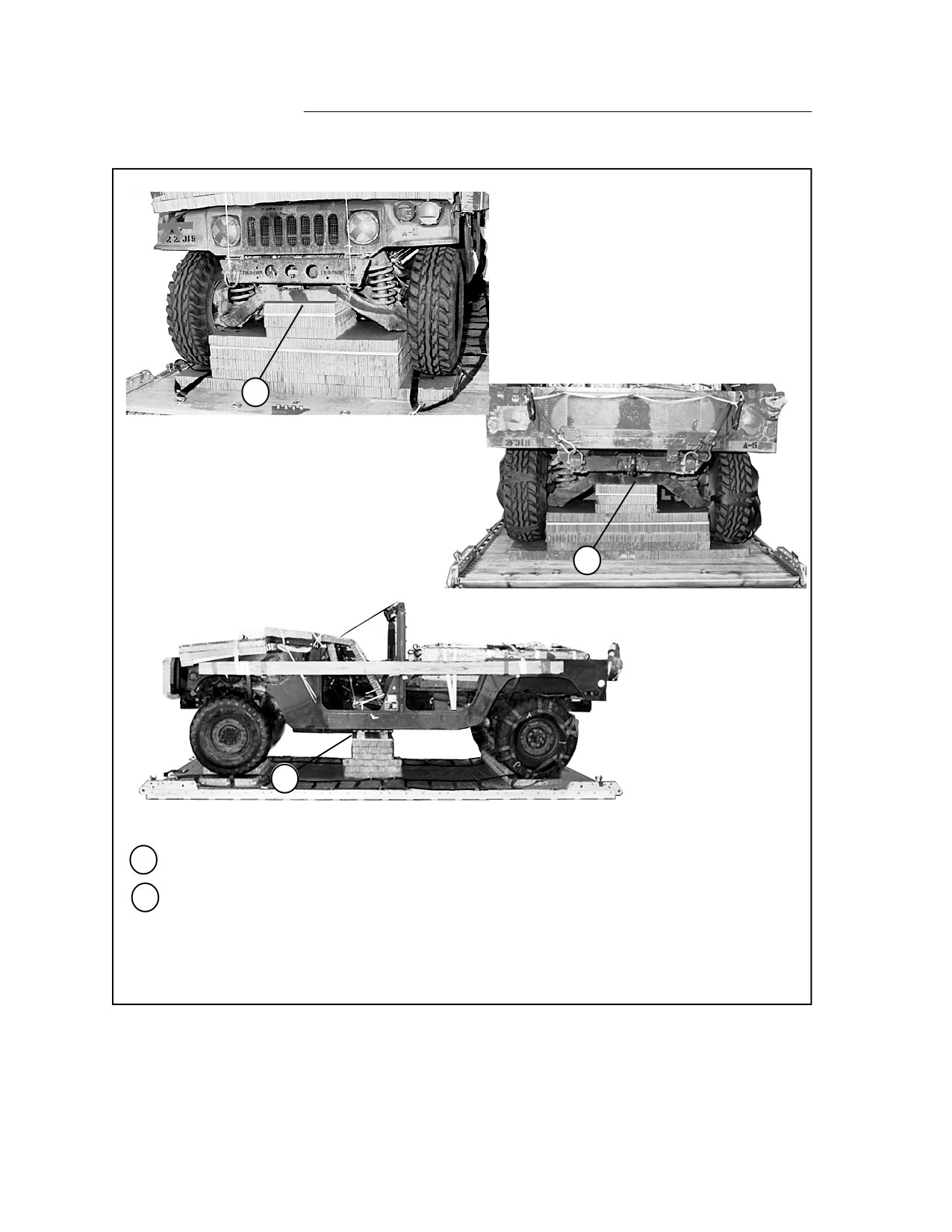
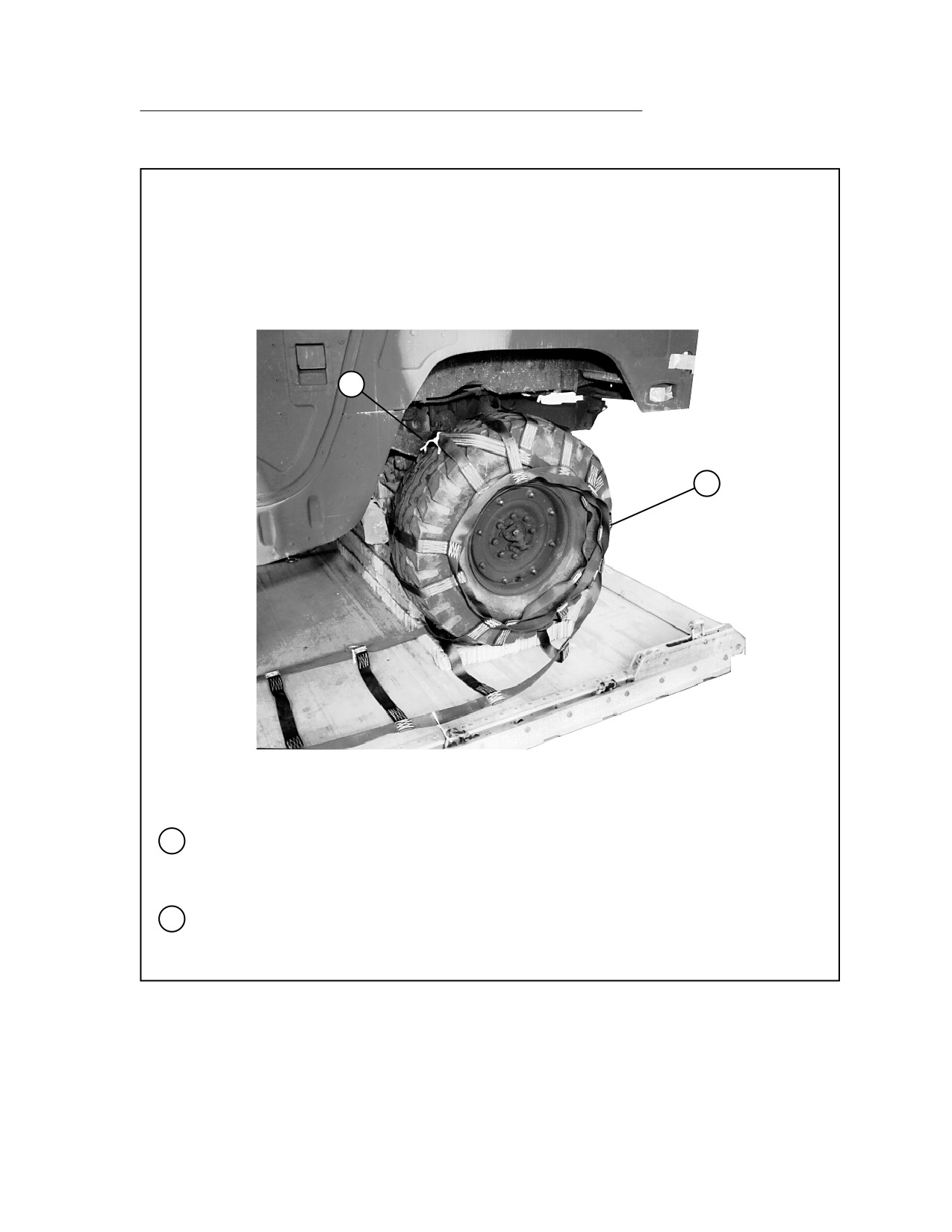
2-7. Install the lifting slings and position the truck on the honeycomb stacks as
shown in Figure 2-16. Attach the drive-off aids to the wheels of the truck as
shown in Figure 2-17, and according to FM 4-20.102/TO 13C7-1-5.
1
2
1
Attach a 9-foot (2-loop), type XXVI nylon webbing sling to each airlift bracket with a medium
clevis.
2
Attach a 12-foot (2-loop), type XXVI nylon webbing sling to each rear lifting shackle with a
medium clevis. Route the slings through the openings on each side of the tailgate.
Figure 2-16. Lifting Slings Installed and Truck Positioned
2-23
!
!
"
#
"
!
$
%
$
"
! & "
$
"
!
#
!
!
$
"
'
#
!
!
(
$
!
"
#
)
! "
!
! "
#"
!
! "#$
%&'
(
)
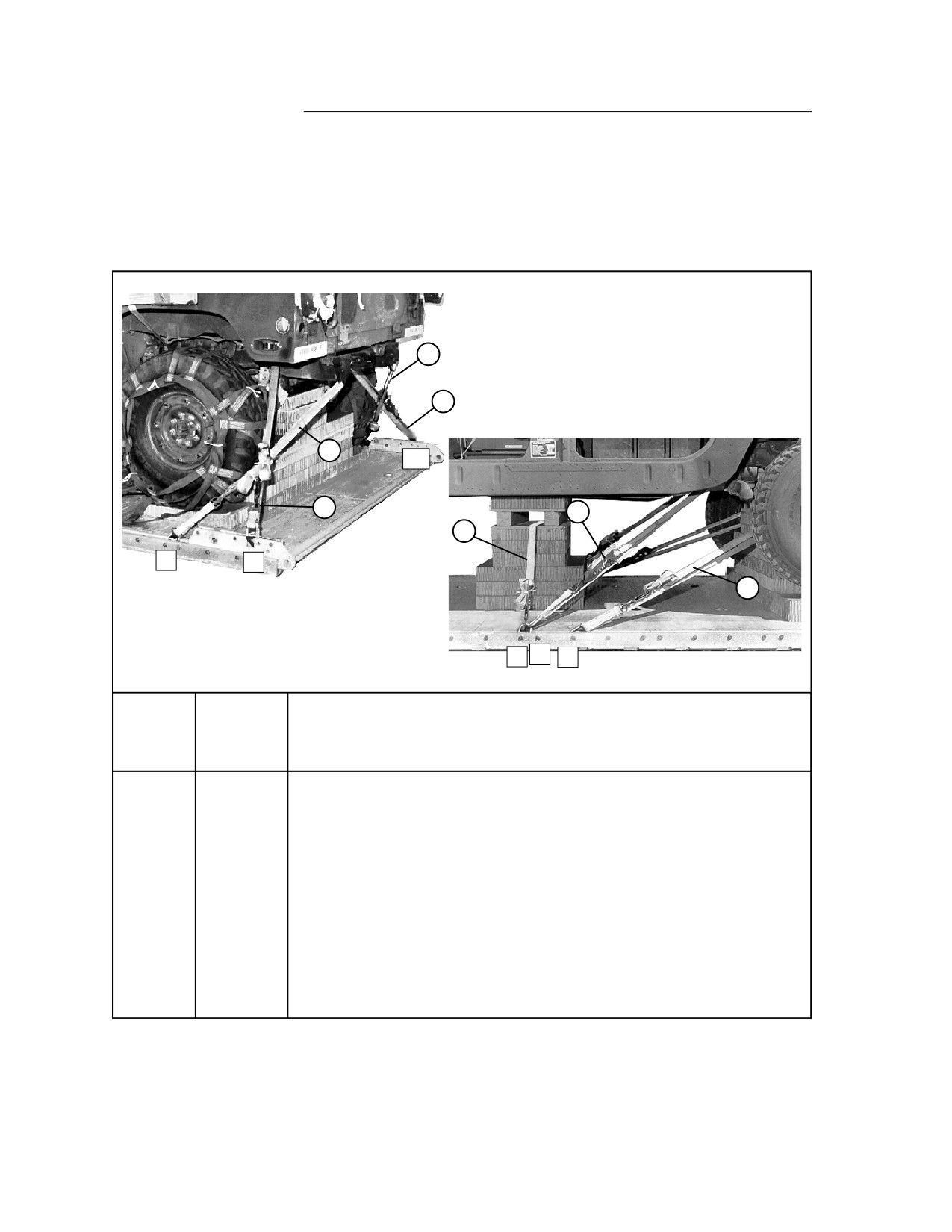
Tie-dow n
Lashing
Clevis
Number
Number
Instructions
Pass lashing :
1
1
Through tie-down bracket behind left rear coil spring.
2
1A
Through tie-down bracket behind right rear coil spring.
3
2
Through left rear lifting shackle
4
2A
Through right rear lifting shackle
5
3
Around left rear lower control arm
6
3A
Around right rear lower control arm
7
4
Through tie-down bracket in front of left rear coil spring
8
4A
Through tie-down bracket in front of right rear coil spring
9
5 and 5A
Pass a 15-foot lashing through clevis 5A and through its own D-ring .
Pass the lashing through the hole in stack 2. Attach the lashing to clevis
5 with a load binder.
$
"
"
" %
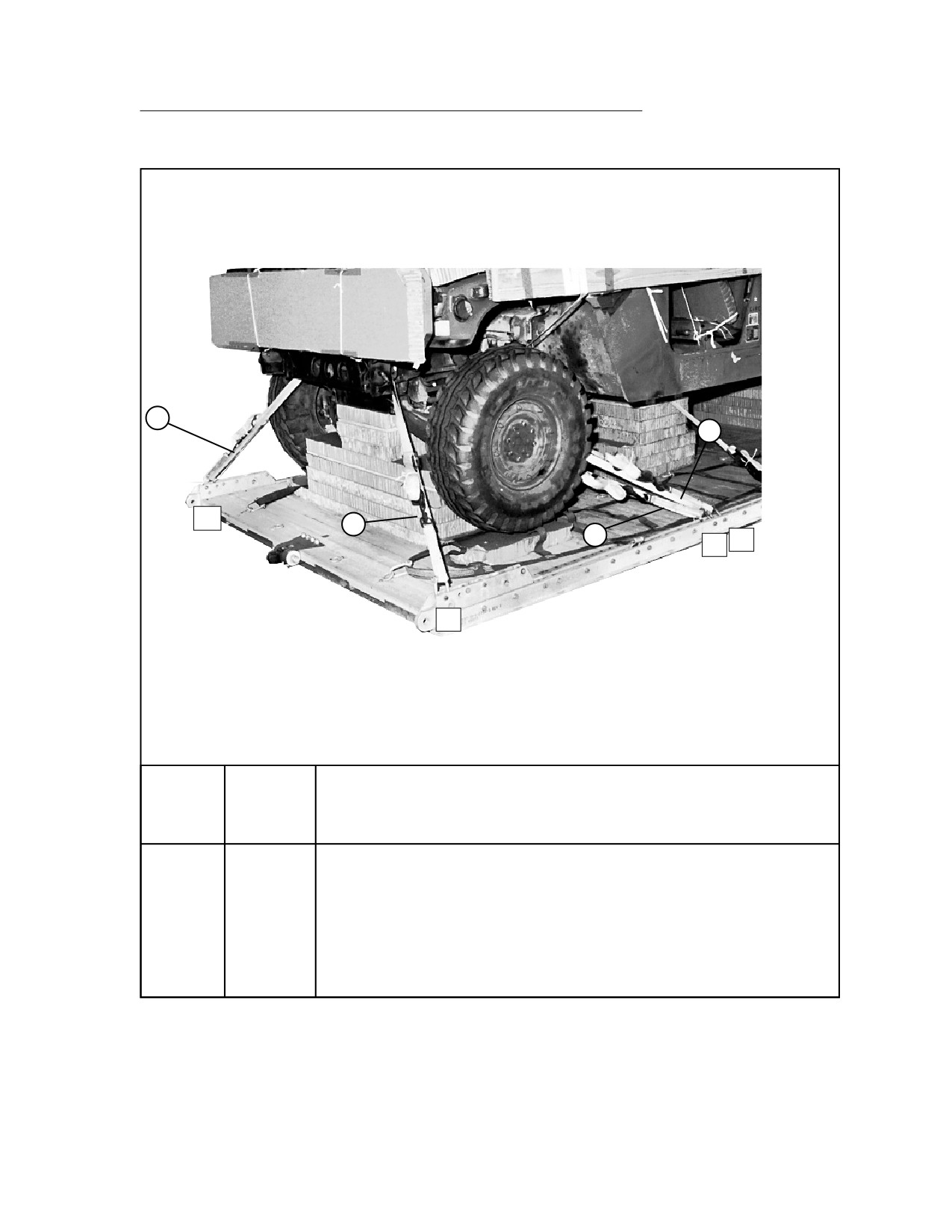
Tie-dow n
Lashing
Clevis
Number
Number
Instructions
Pass lashing :
10
6
Through tie-down bracket behind left front coil spring.
11
6A
Through tie-down bracket behind right front coil spring.
12
7
Around left lower control arm
13
7A
Around right lower control arm
14
9
Through tie-down bracket on end of left frame rail.
15
9A
Through tie-down bracket on end of right frame rail.
%
"
& "
" '
)
+
,
-(
* ../
*
!
! "#$
%&'
(
!
+
,#
--.
"
!
"
$
'
"
/
0
$
%
"
1
$
2
$
"
!
#
3
"
$
!
"
%
"
$
4
"
$
5
4
"
!
"
&
(
)
)
*
///////////////////////////////////////