FM 3-34.170/MCWP 3-17.4 ENGINEER RECONNAISSANCE (March 2008) - page 1
*FM 3-34.170/MCWP 3-17.4 (FM 5-170)
Field Manual
Headquarters
Department of the Army
No. 3-34.170/MCWP 3-17.4 (5-170)
Washington, DC, 25 March 2008
Engineer Reconnaissance
Contents
Page
PREFACE
vii
INTRODUCTION
ix
Chapter 1
ENGINEER RECONNAISSANCE
1-1
Engineer Functions
1-1
Army Warfighting Functions
1-3
Engineer Reconnaissance
1-4
Engineer Reconnaissance Team Capabilities and Limitations
1-9
Chapter 2
INTEGRATING ENGINEER RECONNAISSANCE CAPABILITIES
2-1
Enabling Information Superiority
2-1
Integrating Assured Mobility
2-3
Staff Engineer Coordination
2-4
Geospatial Integration
2-6
Planning Processes
2-7
Specific Command and Control Considerations
2-13
Chapter 3
ENGINEER SUPPORT TO INTELLIGENCE, SURVEILLANCE, AND
RECONNAISSANCE OPERATIONS
3-1
Intelligence, Surveillance, and Reconnaissance Planning
3-1
Reconnaissance Operations
3-7
Engineer Reconnaissance Operations
3-17
Sustainment Considerations
3-19
Chapter 4
TACTICAL RECONNAISSANCE SUPPORT
4-1
Support to Mobility Operations
4-1
Support to Countermobility Operations
4-13
Support to Survivability Operations
4-14
Support to Other Combat Operations
4-15
Other Types of Reconnaissance
4-27
Distribution Restriction: Approved for public release; distribution is unlimited.
*This publication supersedes FM 5-170, 5 May 1998.
i
Contents
Chapter 5
TECHNICAL RECONNAISSANCE - ROUTE CLASSIFICATION
5-1
Route Classification
5-1
Route Classification Overlay
5-2
Route Classification Formula
5-4
Curve Calculations
5-7
Underpasses
5-15
Tunnels on Routes
5-16
Road Reconnaissance Procedure
5-20
Chapter 6
TECHNICAL RECONNAISSANCE - ASSESSMENTS AND SURVEYS
6-1
Bridge Reconnaissance
6-1
Other Gap Crossing Sites
6-6
Engineer Resource Assessment
6-14
Infrastructure Reconnaissance
6-14
Environmental Reconnaissance
6-21
Airfield Assessment
6-23
Technical Resources and Field Force Engineering
6-27
Appendix A
METRIC CONVERSION TABLE
A-1
Appendix B
REPORTING
B-1
Appendix C
INFRASTRUCTURE RECONNAISSANCE
C-1
Appendix D
ENVIRONMENTAL BASELINE SURVEY
D-1
Appendix E
MILITARY LOAD CLASSIFICATION
E-1
Requirement for Classification Numbers
E-1
Requirement for Vehicle Classification
E-15
Temporary Procedures for Vehicle Classification
E-16
Appendix F
RAPID CLASSIFICATION OF BRIDGE SPANS
F-1
Appendix G
SIGNS
G-1
Appendix H
TECHNICAL TOOLS AND RESOURCES
H-1
SOURCE NOTES
Source Notes-1
GLOSSARY
Glossary-1
REFERENCES
References-1
INDEX
Index-1
ii
FM 3-34.170/MCWP 3-17.4
25 March 2008
Contents
Figures
Figure
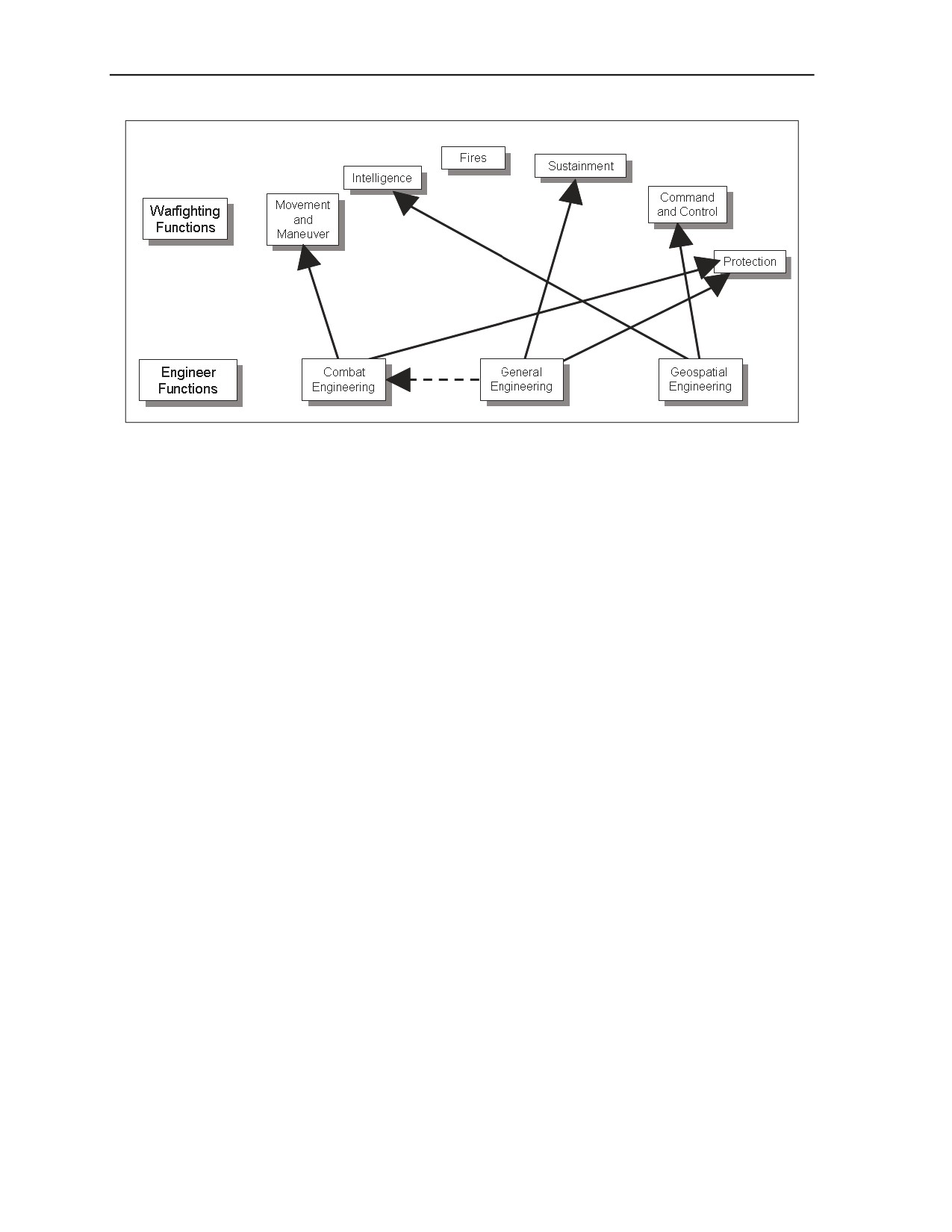
1-1. Engineer primary relationships to the warfighting functions
1-4
Figure
1-2. Range of engineer reconnaissance capabilities
1-6
Figure
2-1. Commander’s critical information requirements
2-2
Figure
2-2. Developing situational understanding
2-3
Figure
2-3. The military decision-making process
2-8
Figure
2-4. Rapid decision-making and synchronization process
2-9
Figure
3-1. ISR task development process
3-3
Figure
3-2. ISR integration
3-6
Figure
3-3. Reconnaissance guidance—tempo
3-11
Figure
3-4. Zone reconnaissance graphic coordinating measures
3-13
Figure
3-5. Area reconnaissance graphic control measures
3-15
Figure
3-6. Route reconnaissance graphic control measures
3-16
Figure
5-1. Route classification overlay
5-3
Figure
5-2. Route widths
5-5
Figure
5-3. Tape-measure method
5-8
Figure
5-4. Triangulation method
5-8
Figure
5-5. Formula method
5-9
Figure
5-6. Curve symbols
5-10
Figure
5-7. Percent-of-slope formula
5-10
Figure
5-8. Map method to determine percent of slope
5-11
Figure
5-9. Pace method to determine percent of slope
5-12
Figure
5-10. Angle-of-slope method to determine percent of slope
5-13
Figure
5-11. Percent-of-slope symbols
5-14
Figure
5-12. Route constriction symbol
5-15
Figure
5-13. Underpass symbols
5-15
Figure
5-14. Types of tunnel bores
5-16
Figure
5-15. Tunnel symbols
5-17
Figure
5-16. Overhead clearance measurements
5-18
Figure
5-17. Dimensions required for tunnels
5-19
Figure
5-18. Portal view of tunnel
5-20
Figure
5-19. Parts of a road
5-21
Figure
5-20. Load bearing capacity of roads with a flexible surface
5-26
Figure
6-1. Bridge components
6-3
Figure
6-2. Full NATO bridge symbol
6-4
Figure
6-3. Telltale
6-5
Figure
6-4. Ford symbols
6-7
Figure
6-5. Ferry symbol
6-9
Figure
6-6. Sample ferry symbols
6-9
25 March 2008
FM 3-34.170/MCWP 3-17.4
iii
Contents
Figure
6-7. Dimensions required for streams
6-11
Figure
6-8. Measuring stream width with a compass
6-12
Figure
6-9. Measuring stream width with a surveying instrument
6-12
Figure
6-10. Finding stream velocity
6-13
Figure
6-11. Assessment overlapping survey
6-16
Figure
6-12. Hierarchy of infrastructure categories
6-17
Figure
6-13. Airfield damage categories
6-25
Figure
6-14. Field force engineering
6-28
Figure B-1. Sample DA Form 1247
B-6
Figure B-2. Sample DA Form 1248
B-13
Figure B-2. Sample DA Form 1248 (continued)
B-14
Figure B-3. Typical bridge spans
B-17
Figure B-4. Sample DA Form 1249
B-19
Figure B-4. Sample DA Form 1249 (continued)
B-20
Figure B-5. Sample DA Form 1250
B-22
Figure B-6. Sample DA Form 1251
B-24
Figure B-7. Sample DA Form 1252
B-26
Figure B-8. Sample DA Form 1711
B-29
Figure B-9. Engineer resource symbols
B-34
Figure B-10. Sample DA Form 2203
B-36
Figure B-11. Sample DA Form 7398
B-41
Figure C-1. The infrastructure assessment and survey model
C-1
Figure C-2. Sewer smartcard
C-7
Figure C-3. Water smartcard
C-10
Figure C-4. Electricity smartcard
C-18
Figure C-5. Academics smartcard
C-20
Figure C-6. Trash smartcard
C-23
Figure C-7. Medical smartcard
C-24
Figure C-8. Safety smartcard
C-27
Figure C-9. Roads smartcard
C-30
Figure C-10. Railroads smartcard
C-33
Figure C-11. Bridges and waterways smartcard
C-36
Figure C-12. Airports smartcard
C-38
Figure C-13. Housing smartcard
C-43
Figure C-14. Communications smartcard
C-47
Figure C-15. Food supply smartcard
C-52
Figure C-16. Socio/government smartcard
C-56
Figure C-17. Cultural/historical/religious smartcard
C-63
Figure C-18. Hazardous materials smartcard
C-66
Figure D-1. Environmental conditions report format
D-7
Figure F-1. Dimensions for a simple stringer bridge
F-4
iv
FM 3-34.170/MCWP 3-17.4
25 March 2008
Contents
Figure F-2. Dimensions for concrete bridges
F-5
Figure F-3. Dimensions for a steel truss bridge
F-6
Figure F-4. Dimensions for plate girder bridges
F-7
Figure F-5. Dimensions for arch bridges
F-8
Figure F-6. Dimensions for suspension bridges
F-9
Figure F-7. Timber or steel trestle bridge with timber deck
F-11
Figure F-8. Steel stringer bridge with concrete deck
F-12
Figure F-9. Reinforced concrete t-beam bridge with asphalt wearing surface
F-13
Figure F-10. Reinforced concrete-slab bridge with asphalt wearing surface
F-14
Figure F-11. Masonry arch bridge
F-15
Figure F-12. Timber deck classification
F-34
Figure F-13. Live-load moment for a 12-inch reinforced concrete strip
F-35
Figure F-14. Masonry arch PLC
F-36
Figure F-15. Bridge classification
F-37
Figure F-16. Profile factors for arch bridges
F-38
Figure G-1. Example of hazard signs not included in the Geneva Convention
G-3
Figure G-2. Example of hazard signs included in the Geneva Convention
G-3
Figure G-3. Warning and enforcement signs
G-4
Figure G-4. Bridge signs
G-5
Figure G-5. Bridge sign containing technical information
G-5
Figure G-6. Width and height signs
G-6
Figure G-7. Typical multilane bridge classification
G-7
Figure G-8. Example of posting a damaged bridge
G-7
Figure G-9. Military route guide signs for axial routes
G-8
Figure G-10. Example of directional arrow disks
G-8
Figure G-11. Example of guide signs for casualty evacuation routes
G-9
Figure G-12. Unit direction arrow
G-9
Figure G-13. Example of detour signs
G-10
Figure G-14. Front sign
G-11
Figure H-1. The power continuum
H-3
Tables
Table 2-1. The military decision-making process and the engineer estimate
2-12
Table 5-1. Bypass symbols
5-4
Table 5-2. Traffic flow capability based on route width
5-6
Table 5-3. Conversion of degrees and mils to percent of slope
5-13
Table 5-4. Principal soil types
5-22
Table 5-5. Soil characteristics of roads and airfields
5-23
Table 5-6. Engineering properties of soil types
5-24
Table 5-7. Wheeled vehicle classification related to single wheel load
5-25
25 March 2008
FM 3-34.170/MCWP 3-17.4
v
Contents
Table 5-8. Symbols for limiting characteristics
5-27
Table 5-9. Symbols for type of surface materials
5-28
Table 6-1. Minimum overhead clearance for bridges
6-5
Table 6-2. Infrastructure reconnaissance categories and team composition
6-15
Table 6-3. Status color coding of infrastructure categories
6-18
Table A-1. Metric conversion table
A-1
Table B-1. Route classification symbols
B-1
Table B-2. Engineer reconnaissance reports
B-5
Table B-3. Minimum roadway widths
B-15
Table B-4. Span construction types
B-16
Table B-5. Construction material
B-18
Table C-1. Sample infrastructure assessment
C-3
Table D-1. Environmental baseline survey format
D-5
Table E-1. Reference list of common vehicles with MLCs
E-1
Table E-2. Reference list of selected allied vehicles with MLCs
E-14
Table F-1. Entries required for Bridge Reconnaissance Report, DA Form 1249
F-2
Table F-2. Notations
F-10
Table F-3. Properties of timber stringer
F-16
Table F-4. Properties of steel stringers (Fy = 36 ksi, fb = 27 ksi, fv = 16.5 ksi)
F-17
Table F-5. Wheeled- and tracked-vehicle moment (MLL in kip-ft)
F-20
Table F-6. Wheeled- and tracked-vehicle sheer (VLL in kips)
F-26
Table F-7. Profile factors
F-32
Table F-8. Arch factors
F-32
Table F-9. Minimum roadway widths
F-34
Table G-1. Typical hazard, regulatory, and guide signs
G-2
vi
FM 3-34.170/MCWP 3-17.4
25 March 2008
Preface
Doctrine provides a military organization with unity of effort and a common philosophy, language, and
purpose. This field manual provides doctrine for the application of engineer reconnaissance capabilities in
support of the combined arms team conducting full spectrum operations.
Engineer reconnaissance, like chemical, biological, radiological, and nuclear (CBRN) and other technical
applications, is not a form of reconnaissance
(see chapter
3 for a discussion of the four forms of
reconnaissance). Engineer reconnaissance is instead a focused application of special/unique capabilities
supporting reconnaissance operations and is applicable over/pertinent to all four forms of reconnaissance. Field
manual (FM) 3-34.170/Marine Corps Warfighting Publication (MCWP) 3-17.4 updates the FM that provides
doctrinal guidance for engineer reconnaissance in support of full spectrum operations, including engineer
reconnaissance in support of tactical operations as well as engineer technical reconnaissance support. This
manual supersedes FM 5-170 and supports the doctrine found in FM 3-0, FM 3-34, and FM 6-0, and Field
Manual Interim (FMI) 5-0.1. This manual will serve as a reference document for engineer commanders and
staff, leaders, training developers, and doctrine developers throughout the Army and Marine Corps. It will also
provide guidance to commanders for the employment of engineer reconnaissance capabilities in support of all
operations. It is also the primary reference for engineer reconnaissance for Joint Publication (JP) 3-34.
This FM has an introduction and six chapters. It includes significant discussion on integrating the planning for
engineer reconnaissance support within the planning doctrine in FM 5-0 and the command and control (C2)
doctrine in FM 6-0. The introduction expands upon the manual’s purpose and summarizes the doctrinal changes
it contains. Chapter 1 provides a doctrinal framework for the provision of engineer reconnaissance capabilities
resident within engineer functions and supporting the warfighting functions, describes a range of tactical to
technical engineer reconnaissance capabilities, and provides capabilities and limitations of the engineer
reconnaissance team
(ERT). Chapter
2 provides doctrine for integrating the planning for engineer
reconnaissance within information management and planning processes of the combined arms team. It
specifically addresses integration of geospatial support and provides specific C2 considerations for integration
of engineer reconnaissance. Chapter
3 provides doctrine for integrating the application of engineer
reconnaissance within tactical reconnaissance operations of the combined arms team. It also addresses
considerations for the sustainment of engineer reconnaissance elements. Chapter 4 provides doctrine for the
conduct of ERT operations providing engineer reconnaissance support at the tactical end of the range described
in Chapter 1. ERTs conduct zone, area, and route reconnaissance with a specified additional focus on required
technical information. Chapters 5 and 6 provide doctrine for the conduct of engineer assessments and surveys
which provide engineer reconnaissance support at the technical end of the range described in Chapter 1.
Assessment and survey teams conduct reconnaissance specifically focused on collecting detailed technical
information. Appendix B illustrates the preparation of required engineer reconnaissance reports and forms.
Appendix C incorporates the smartcard tools developed for infrastructure assessment. Appendix D provides the
environmental baseline assessment tool. Appendix H includes a collection of other useful tools and resources.
The target audience for this manual is focused at the brigade and below maneuver commander and supporting
staff. This also includes nonorganic unit commanders and staffs that will support brigade and below maneuver
organizations. Additionally, it is pertinent to other commanders and staffs at all echelons. This doctrine will
assist branch schools in teaching the integration of engineer capabilities. Engineer involvement is a virtual
certainty for nearly every military operation. FM 3-34.170 is intended to inform all Service components of the
types of engineer reconnaissance tasks and the variety of capabilities available to perform them.
25 March 2008
FM 3-34.170/MCWP 3-17.4
vii
Preface
This FM is built directly on the doctrine articulated in the following manuals:
• FM 3-0.
• FM 3-20.96.
• FM 3-34.
• FM 3-34.221.
• FM 3-90.
• FM 3-90.6.
• FM 5-0.
• FM 5-7-30.
• FM 5-71-2.
• FM 5-71-3.
• FM 6-0.
• FMI 5-0.1.
Given the magnitude of doctrinal changes in recent years, becoming familiar with these documents is essential
to effectively using this manual. It also applies to selected portions of engineer support across echelons and
throughout the area of operations (AO). Doctrine in FM 3-34.170 applies across the spectrum of conflict (from
peace to general war) and the operational components of full spectrum operations (offense, defense, and
stability, or civil support). However, it is focused at the tactical level of war and support of the tactical
commander’s engineer reconnaissance needs.
Terms that have joint or Army definitions are identified in both the glossary and the text. Glossary terms: The
glossary lists most terms used in FM 3-34.170 that have joint or Army definitions. Terms with an asterisk in the
glossary indicate that this FM is the proponent FM (the authority). Text references: Definitions printed in
boldface in the text indicate that this FM is the proponent FM. These terms and their definitions will be
incorporated into the next revision of FM 1-02/Marine Corps Reference Publication (MCRP) 5-12A. For other
definitions in the text, the term is italicized, and the number of the proponent FM follows the definition. As a
dual service manual, references made to the United States (U.S.) Army, Soldiers, and brigade combat team
(BCT) are interchangeable with and/or include the United States Marine Corps (USMC), Marines, and
regimental combat team (RCT) unless stated otherwise in the text. Additionally, unless this publication states
otherwise, masculine nouns or pronouns do not refer exclusively to men.
This FM applies to the Active Army, the Army National Guard (ARNG)/Army National Guard of the United
States (ARNGUS), the United States Army Reserve (USAR) unless otherwise stated and to the USMC.
Headquarters, United States Army Training and Doctrine Command (TRADOC) is the proponent for this
publication. The preparing agency is the Doctrine Division (DD), United States Army Engineer School
(USAES). Send written comments and recommendations on DA Form 2028, Recommended Changes to
Publications and Blank Forms, directly to Commandant, United States Army Engineer School, ATTN:
ATZT-TDD-E, 320 MANSCEN Loop, Suite 220, Fort Leonard Wood, Missouri 64573-8929. Send comments
and recommendations by e-mail to <leon.mdottddengdoc@conus.army.mil>.
viii
FM 3-34.170/MCWP 3-17.4
25 March 2008
Introduction
The three engineer functions are combat (with the capabilities and activities of mobility, countermobility,
and survivability [M/CM/S]), general, and geospatial engineering. All three of these functions include
significant reconnaissance capabilities. This manual focuses on engineer support to combined arms
commanders at all levels for engineer reconnaissance support during full spectrum operations. It includes
extensive discussion on integrating the planning for and conduct of engineer reconnaissance support within
the tactical operations of the combined arms team. This manual discusses capability resident within combat
engineer units to form and employ ERTs. It also describes the capability resident within general engineer
elements to form and employ ERTs, augment combat engineer ERTs, or provide assessment and survey
teams. Finally, geospatial engineering is used to enable reconnaissance operations and may play a large
role, especially during the planning process.
Engineer reconnaissance, like CBRN and other technical applications, is not a form of reconnaissance (see
chapter 3 for a discussion of the four forms of reconnaissance). Engineer reconnaissance is instead a
focused application of special/unique capabilities supporting reconnaissance operations and is applicable
over/pertinent to all four forms of reconnaissance. Engineer reconnaissance generated from and organized
by the engineer functions provides a range of technical reconnaissance capabilities. Each of the functions
provides varying degrees of technical expertise and effort within the assigned mission and tasks. The tasks
and levels of expertise provided overlap from function to function. For example, there is no clean dividing
line from the technical effort required for the combat engineering task of classifying a route for combat
vehicle traffic to the general engineering task of conducting a road reconnaissance to estimate the effort
required for the upgrade of a main supply route (MSR). The combat engineering task will effectively
address classification of the route but will also provide information useful in the general engineer’s
estimate. Similarly the general engineer’s estimate will effectively address the effort required for an
upgrade and will provide information useful in the classification of the route. Geospatial engineering is
employed in support of both and in varying degrees as required by the task and situation.
The engineer functions provide a menu of reconnaissance capabilities varying in linkages to warfighting
functions and varying in degree of technical expertise and effort applied to the assigned mission and tasks.
The capabilities are generated from and organized by both combat and general engineer units with
overarching support from geospatial means. With few exceptions (discussed in chapter 1), these units do
not have organized and dedicated reconnaissance elements within their structure. Rather, combat and/or
general engineers are task-organized as required by the situation—based on mission, enemy, terrain and
weather, troops and support available, time available, civil considerations (METT-T[C])—and may be
teamed separately or with other elements from across engineer (or even various warfighting) functions.
Note. The Marine Corps and joint doctrine use METT-T without “civil considerations” being
added.
FM 3-34.170 is a significant revision from FM 5-170, which it supersedes, and reflects considerable
changes that have occurred over the 9 years since that manual was released. Many of the tactical tasks
associated with engineer reconnaissance have remained essentially constant, but the operational
environment
(OE) has dramatically shifted. New requirements for technical information and new
technologies available to the engineer have caused adjustments in reconnaissance challenges and
capabilities. Another major change involves the Army’s reorganization and restructuring to a modular
force and the effects that this has on doctrine and operations. Changes that directly affect this manual
include—
z
The advent of the construct and term of assured mobility and its relationship to other doctrine
(see FM 3-34).
25 March 2008
FM 3-34.170/MCWP 3-17.4
ix
Introduction
z
An acknowledgement of the importance of joint interdependence among the Services.
z
The formalization of a planning tool that supports the engineer staff running estimate known as
essential tasks for M/CM/S (see FM 3-34).
z
The OE.
z
The likelihood that the operations conducted will be joint, interagency, and multinational (see
FM 3-0). The primary focus of joint engineer operations is to achieve the commander’s intent by
coordinating engineer support throughout the joint AO. All branches of Service possess organic
engineer elements with varying degrees of technical and tactical capabilities. When available,
units such as Navy construction battalion-engineers
(Seabees), Air Force Rapid Engineer
Deployable Heavy Operational Repair Squadron Engineer (RED HORSE), and Prime Base
Engineer Emergency Force
(Prime BEEF) organizations can augment the technical
reconnaissance capability.
z
The formalization of support requirements to homeland security. See JP 3-26 and FM 3-07.
z
The frequency of contractors on the battlefield and their support for many of the tasks associated
with general engineering. (See Army Regulation [AR] 715-9 and FM 3-100.21).
z
Resulting changes in the basic design and organizational structures and equipment of engineer
organizations to support the Army’s ongoing transformation.
z
The acknowledgement that nearly all operations will be conducted in the context of a joint,
interagency, and multinational environment.
This FM includes the discussion of engineer reconnaissance in support of tactical operations as well as
more technical engineer reconnaissance. It includes revised material from the current manual that guides
engineer reconnaissance of roads, bridges, tunnels on routes, and other infrastructure components along a
selected route and will discuss and integrate discussions of engineer reconnaissance in support of, M/CM/S
operations. Changes in the structure of the force have not changed the basic principles of engineer
employment, but they will adjust the C2 structure and force tailoring of engineer forces to support the
BCT. Recent lessons learned include the need to define, develop, and provide a proponent manual for
infrastructure reconnaissance and its memory aid for sewage, water, electricity, academics, trash, medical,
safety, and other considerations
(SWEAT-MSO) as well as reintegrate the discussion of clearing
operations. Significant changes occur in this manual. This manual—
z
Updates the discussion of the integration of engineer reconnaissance capabilities within the
combined arms team.
z
Describes a range of engineer reconnaissance capabilities from tactical to technical with
overarching geospatial support.
z
Establishes the ERT as an ad hoc, tactically focused reconnaissance capability.
z
Establishes assessment and survey teams as an ad hoc, technically focused reconnaissance
capability.
z
Incorporates the capacity to augment with technical capabilities through field force engineering
(FFE), multi-Service, interagency, contractor, and host nation (HN) capabilities.
z
Changes “engineer recon” to an engineer resource assessment.
z
Incorporates developing doctrine on infrastructure reconnaissance and environmental
reconnaissance.
z
Introduces or recaptures new doctrine on the reconnaissance of underground tunnels, as distinct
from tunnels on routes as covered in the previous FM 5-170.
The engineer's contribution to operational success will always be highly desired/required by the
commander. Demands for engineer reconnaissance support will often exceed capabilities as they are spread
across and compete with the commander’s needs for other engineer applications. The same engineer
elements and capabilities are often required for each of these areas. Resolution of this competition is one of
the goals of the planning process as the staff running estimate is created during mission analysis and the
engineer coordinator (ENCOORD) identifies the specified and implied engineer tasks (may be more than
M/CM/S) and their associated purposes. This results in the recommendation of essential tasks for M/CM/S
to the supported commander.
x
FM 3-34.170/MCWP 3-17.4
25 March 2008
Introduction
Finally, this manual is written with the acknowledgement that the OE is much more variable than what
doctrine was previously written against. Engineers must be prepared to go into any OE and perform its full
range of reconnaissance tasks in support of the maneuver commander while dealing with a wide range of
threats and other influences. It builds on the collective knowledge and wisdom gained through recent
conduct of operations—combat as well as operations other than war—numerous exercises, and the
deliberate process of informed reasoning throughout the Army. It is rooted in time-tested principles and
fundamentals, while accommodating new technologies and diverse threats to national security.
25 March 2008
FM 3-34.170/MCWP 3-17.4
xi
Chapter 1
Engineer Reconnaissance
Nothing is more worthy of attention of a good general than the endeavor to penetrate the
designs of the enemy.
Niccolo Machiavelli
FM 1 and field manual interim (FMI) 5-0.1, describes “how Army forces fight” by
describing an operational concept that is the core statement of Army doctrine. The
Army’s operational concept is full spectrum operations. The operational concept
depends on the flexible combination of Army capabilities (combined arms) and joint
capabilities
(joint interdependence) integrated across the warfighting functions
(WFFs) through mission command and the operations process. One of the
fundamentals that underlie this concept and the basis for organization and operations
of Army forces is combined arms. Combined arms is synchronized or simultaneous
application of several arms—such as infantry, armor, field artillery, engineers, and
aviation—to achieve an effect on the enemy that is greater than if each arm was used
against the enemy separately or in sequence. Engineer support to the combined arms
team adds key capabilities that ensure the team’s freedom of maneuver and preserve
the team’s combat power. An important measure of effectiveness of the team’s
integration of lethal and nonlethal capabilities is the degree to which the commander
can concentrate combat power at the critical place and time and the agility with
which the commander can shift those concentrations to new situations. Engineer
support also adds reconnaissance capabilities to improve the commander’s situational
understanding (SU) about the enemy and environment, enabling the concentration
and agility needed. This chapter begins the discussion of engineer reconnaissance and
the application of those capabilities integrated and synchronized with the other
systems—warfighting functions—united by the combined arms commander toward
the common purpose of accomplishing the mission.
ENGINEER FUNCTIONS
1-1. Engineer support capabilities are traditionally characterized as supporting the combined arms team
with combat tasks (including mobility—breaching, clearing, and bridging; countermobility—emplacing
and/or reinforcing obstacles; and survivability hardening and emplacement of fighting/protective
positions), general tasks (including general construction and reinforcement of the combat tasks), and
geospatial tasks (to include mapping and terrain analysis). The traditional engineer support capabilities are
organized into three engineer functions: combat M/CM/S, general, and geospatial engineering. The
engineer functions are useful in describing the various engineer support capabilities and associated
linkages through the WFFs across the entire spectrum of operations. Engineer functions are similarly
useful in organizing and describing a range of engineer reconnaissance capabilities that vary from a purely
tactical focus to a purely technical focus linking through the warfighting functions to support the combined
arms reconnaissance operation.
25 March 2008
FM 3-34.170/MCWP 3-17.4
1-1
Chapter 1
COMBAT ENGINEERING
1-2. Combat engineering is defined by JP 3-34 and JP 1-02 as those engineering capabilities and
activities that support the maneuver of land combat forces and that require close support to those forces.
Combat engineering consists of three types of capabilities and activities: M/CM/S.
1-3. Combat engineering includes those capabilities organic to and augmenting the BCTs/RCTs. Combat
engineering provides tactical level engineer support to combat (offense and defense), stability, or civil
support operations and is typically (although not always) focused on the support of close combat. It may be
augmented at times with general engineering support but retains its focus on the integrated application of
engineer capabilities to support the combined arms team’s freedom of maneuver
(mobility and
countermobility) and protection (survivability). (See FM 3-34.2, FM 90-13, and FM 5-103 for more
information on combat engineering.)
1-4. Combat engineer reconnaissance capabilities are similarly focused on supporting the WFFs of
movement and maneuver and protection. These capabilities are typically fully integrated into the
intelligence, surveillance, and reconnaissance
(ISR) plan and targeted to improve the commander’s
understanding of the enemy’s use of terrain and obstacles within the AO. Combat engineer reconnaissance
can range from almost purely tactically focused to a fully integrated tactical reconnaissance focused on
gathering technical information.
GENERAL ENGINEERING
1-5. General engineering is defined by JP 3-34 and JP 1-02 as those engineering capabilities and
activities, other than combat engineering, that modify, maintain, or protect the physical environment.
Examples include the construction, repair, maintenance, and operation of infrastructure, facilities, lines of
communication and bases; terrain modification and repair; and selected explosive hazard activities. (See
FM 5-104, FM 3-100.4; and FM 7-15 for additional information on general engineering.)
1-6. As mentioned in the definition, general engineering may be performed in direct support of combat
operations which results in a gray area in distinguishing purely combat engineering from general
engineering tasks at the tactical level. General engineering will typically not be associated with close
combat. More distinguishable at the operational level, general engineering capabilities are applied to
establish and maintain the infrastructure necessary for sustaining military operations in theater. At times,
the military operation may extend general engineering support to restore facilities, power, and life-support
systems within the infrastructure of the AO. This effort aids in the recovery and the transition to preconflict
conditions or may be the objective of civil support operations. General engineering tasks—
z
May include construction or repair of existing logistics-supported facilities, line of
communications (LOC) and MSRs, airfields, ports, water wells, power plants, pipelines, and
base camps/force bed down.
z
May be performed by a combination of joint engineer units, civilian contractors, and host-nation
(HN) forces.
z
Usually require large amounts of construction materials, which must be planned and provided
for in a timely manner.
z
May include the production of construction materials.
z
May include support to selecting real property for lease or operation and upgrading those
facilities (to include hardening for protection).
1-7. General engineer reconnaissance capabilities are typically focused on technical requirements for the
construction or repair of sustainment facilities. However; just as other general engineering capabilities may
be applied in direct support of combat engineering, general engineer reconnaissance may similarly augment
combat engineer capabilities at the tactical level. General engineer capabilities may be focused at the
tactical or operational level but, in every case, introduce additional technical capabilities that are applied to
improve the commander’s understanding of the terrain, facilities, and infrastructure within the AO.
1-2
FM 3-34.170/MCWP 3-17.4
25 March 2008
Engineer Reconnaissance
GEOSPATIAL ENGINEERING
1-8. Geospatial engineering is defined by JP 3-34 and JP 1-02 as those engineering capabilities and
activities that contribute to a clear understanding of the physical environment by providing geospatial
information and services to commanders and staffs. Examples include terrain analyses, terrain
visualization, digitized terrain products, nonstandard tailored map products, precision survey, geospatial
data management, baseline survey data, and force bed-down analysis. Engineer planners are charged to be
terrain experts and to advise commanders on how to conceptualize the OE effectively. They must be
supported by terrain analysts to fully assist others to use the terrain more effectively. (See FM 3-34.230
and JP 2-03 for more information on geospatial support to Army and Joint systems.)
1-9. Geospatial engineering provides commanders with information about the terrain and assists them in
conceptualizing the OE more accurately to make knowledgeable decisions. It supports reconnaissance and
other operations ranging from a tactical to a more technical focus. Geospatial engineering provides terrain
analysis, digitized terrain products, nonstandard tailored map products, map production, precision survey,
terrain data management, and baseline survey data—all of which contribute to improving SU. Creative and
productive use of digital terrain data aids the commander's visualization of the physical environment by
determining factors such as, but not limited to—
z
Avenues and routes for friendly/enemy forces.
z
Terrain limitations to enemy capabilities.
z
Obstacle zone locations.
z
Environmentally significant areas (water resources, hazards).
z
Major engagement areas (EAs).
z
Unit positions.
z
Deep operation targets and their impact on future operations.
z
Rescue operation parameters.
z
Flood prediction models.
z
Mission planning and rehearsal data.
ARMY WARFIGHTING FUNCTIONS
1-10. Engineer functions are the baseline functions performed by multi-Service engineers to support the
maneuver force. These functions are each generally aligned in support of specific warfighting functions
(see figure 1-1 on page 1-4) although they have impact in and across the others.
z
Combat engineering is aligned primarily with the movement and maneuver and the protection
functions.
z
General engineering aligns to focus its support on the sustainment and protection functions,
reinforcement of combat engineering outside of close combat, and support to operational
mobility and countermobility.
z
Geospatial engineering is primarily aligned with the C2 and intelligence functions.
25 March 2008
FM 3-34.170/MCWP 3-17.4
1-3
Chapter 1
Figure 1-1. Engineer primary relationships to the warfighting functions
1-11. In describing the purpose of the warfighting functions, FMI 5-0.1 states that commanders generate
and focus combat power by tying the warfighting functions together through leadership. To synchronize
and execute operations, commanders must be able to visualize and direct operations through the
warfighting functions. To effectively support the combined arms team, engineer reconnaissance
capabilities retain their relationship through the warfighting functions. The combat engineer capability to
rapidly assess the maneuverability of a selected route for heavy combat vehicle traffic is synchronized and
then executed primarily through its relationship to the movement and maneuver function and is typically
conducted as an enabler to the tactical route reconnaissance mission. The general engineer capability to
classify and provide a design for the upgrade of a selected bridge along the MSR is similarly synchronized
and executed through its relationship to the sustainment function and would typically be conducted as a
stand-alone engineer mission. Engineer reconnaissance capabilities are generated from and organized
within the framework of the engineer functions but are applied by the commander through their alignment
or relationship to the warfighting functions.
ENGINEER RECONNAISSANCE
1-12. Reconnaissance operations are those operations undertaken to obtain, by visual observation or other
detection methods, information about the activities and resources of an enemy or potential enemy or to
secure data concerning the meteorological, hydrographical, or geographical characteristics and the
indigenous population of a particular area. Reconnaissance primarily relies on the human dynamic rather
than technical means. Reconnaissance is a focused collection effort. It is performed before, during, and
after other operations to provide information used in the intelligence preparation of the battlefield (IPB)
process, as well as by the commander to formulate, confirm, or modify the course of action (COA).
1-13. The responsibility for conducting reconnaissance does not reside solely with specifically organized
units. Every unit has an implied mission to report information about the terrain, civilian activities, and
friendly and enemy dispositions; regardless of its physical location and primary function. Although all
units conduct the implied reconnaissance mission, the commander typically focuses specifically organized
reconnaissance units on the highest priority requirements. The BCT designs have more than doubled the
reconnaissance capabilities organic to brigade commanders and given them new surveillance and target
acquisition capabilities. This design permits the BCT to mix aggressive patrolling, reconnaissance in force,
and a multilayered and integrated approach to their reconnaissance efforts. Their ability to develop the
situation both in and out of contact and to act first with decisiveness is enhanced by this robust
reconnaissance capability.
1-4
FM 3-34.170/MCWP 3-17.4
25 March 2008
Engineer Reconnaissance
1-14. Even with the robust reconnaissance capability now available in support of the BCT, the commander
must know the capabilities and limitations of reconnaissance assets to ensure that the employment of these
assets is within their capabilities and on missions for which they have been trained and equipped. Although
reconnaissance primarily relies on the human dynamic rather than technical means, the situation may
require collecting a higher degree of technical information than nonspecialized units possess. An area with
suspected contamination by chemicals or industrial toxins, for example, must be targeted for
reconnaissance by assets equipped to determine the type and level of contamination present as well as
protection from the contamination. Supporting units—such as engineers, CBRN, explosive ordnance
disposal
(EOD), military police
(MP), and others—have specialized capabilities to collect technical
information that complements the force’s overall reconnaissance effort. It is this collection of technical
information that defines a range of engineer reconnaissance capabilities.
RANGE OF ENGINEER RECONNAISSANCE
1-15. Engineer reconnaissance, like CBRN and other technical applications, is not a form of
reconnaissance
(see chapter
3 for a discussion of the four forms of reconnaissance). Engineer
reconnaissance is instead a focused application of special/unique capabilities supporting reconnaissance
operations and is applicable over/pertinent to all four forms of reconnaissance. Engineer reconnaissance
generated from and organized by the engineer functions provides a range of technical reconnaissance
capabilities. Each of the functions provides varying degrees of technical expertise and effort within the
assigned mission and tasks. The tasks and levels of expertise provided overlap from function to function.
For example, there is no clean dividing line from the technical effort required for the combat engineering
task of classifying a route for combat vehicle traffic to the general engineering task of conducting a road
reconnaissance to estimate the effort required for the upgrade of an MSR. The combat engineering task
will effectively address classification of the route but will also provide information useful in the general
engineer’s estimate. Similarly the general engineer’s estimate will effectively address the effort required
for an upgrade but also provide information useful in the classification of the route. Geospatial engineering
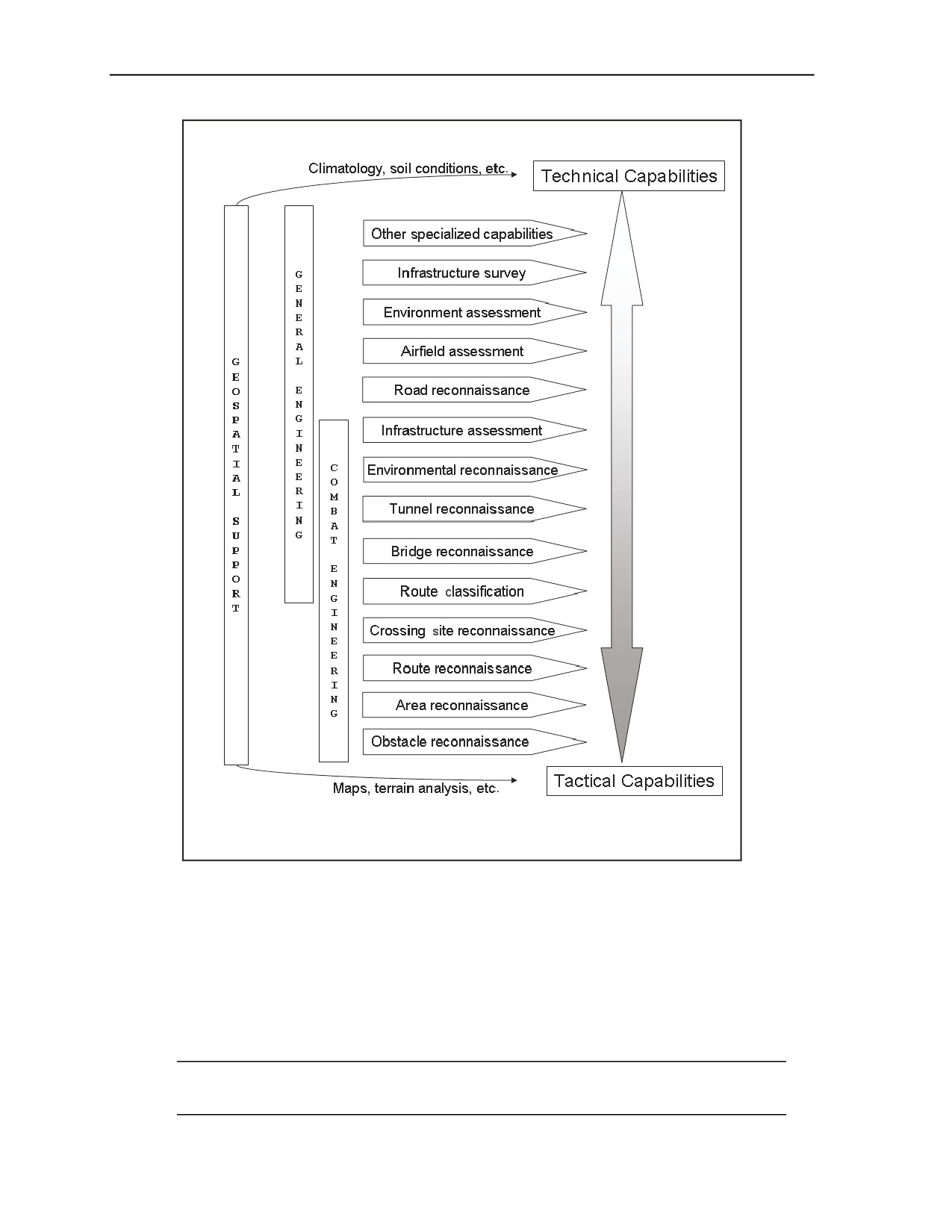
is employed in support of both and in varying degrees as required by the task and situation. Figure 1-2 on
page 1-6 graphically describes the range of technical information provided by engineer reconnaissance
capabilities. This graphic is not intended to define absolutes but rather general relationships and linkages
between the engineer functions and the technical and tactical engineer reconnaissance capabilities.
25 March 2008
FM 3-34.170/MCWP 3-17.4
1-5
Chapter 1
Figure 1-2. Range of engineer reconnaissance capabilities
1-16. As portrayed in figure 1-2, the engineer functions provide a menu of reconnaissance capabilities
varying in linkages to warfighting functions and varying in degree of technical expertise and effort applied
to the assigned mission and tasks. The capabilities are generated from and organized by both combat and
general engineer units with overarching support from geospatial means. With few exceptions as discussed
later in this chapter, these units do not have organized and dedicated reconnaissance elements within their
structure. Rather, combat and/or general engineers are task-organized as required by the situation, based on
METT-T[C], and may be teamed separately or with other elements from across engineer (or even
warfighting) functions.
Note. The Marine Corps and joint doctrine use METT-T without “civil considerations” being
added.
1-6
FM 3-34.170/MCWP 3-17.4
25 March 2008
Engineer Reconnaissance
ENABLING AND TEAMING WITH OTHER RECONNAISSANCE CAPABILITIES
1-17. Engineers teamed directly with dedicated reconnaissance assets, by adding some degree of technical
skill to the team, can increase the tempo and effectiveness of the reconnaissance mission. Combat
engineers are typically task-organized directly to maneuver battalion scouts or reconnaissance squadron
troops to augment those units during tactical reconnaissance operations. The reconnaissance unit conducts
the overall mission while the assigned engineer team focuses on the more technical information required,
such as detailed information on a complex obstacle or a proposed crossing site. While various engineers
are available to be task-organized directly to reconnaissance units, the teaming of engineers directly into
the reconnaissance forces directly supporting the BCT/RCT is the most common application.
1-18. With the exception of the reorganized single engineer company supporting the Army heavy BCT
(HBCT), engineer units organic to and augmenting the BCTs/RCTs have no dedicated reconnaissance
assets; but with measured risk to other mission support, they have the capability to provide ERTs to
augment the BCT/RCT reconnaissance squadron or maneuver battalion scout platoons. If required, the
engineer company commander forms an ERT(s) ranging in size from a three-man team to a platoon. ERTs
may operate independently; however, they normally augment one of the squadron troops or other
maneuver units directly involved in reconnaissance operations. If an ERT augments a squadron element,
the team should be task-organized with equipment that is compatible with mission requirements and the
supported reconnaissance force. The final section of this chapter provides additional discussion on the
formation of ERTs.
1-19. General engineer reconnaissance capabilities, when not in direct support of combat engineers, will
typically be organized in the form of assessment or survey teams. These task-organized teams will have a
specific focus for the collection of technical information and are less likely to be teamed directly with
reconnaissance units in the BCT/RCT. (Additional discussion on engineer assessment and survey teams is
provided later in this chapter as well as in chapter 6.)
TACTICAL CAPABILITIES
1-20. Combat engineers conduct tactical reconnaissance as described by Army tactical task
(ART),
Conduct Tactical Reconnaissance, in FM 7-15 and includes five subtasks—zone reconnaissance, area
reconnaissance, reconnaissance-in-force, route reconnaissance, and conducting a reconnaissance patrol.
These missions are fully integrated within the BCT/RCT tactical reconnaissance operations but, because
they are conducted by engineers, will include some degree of focus on technical information as required by
the commander’s reconnaissance guidance. These missions may be conducted by ERTs, teamed with other
forces or in a stand-alone fashion, if they are assigned to a combat engineer unit supporting the BCT/RCT.
1-21. The majority of tactical engineer reconnaissance capabilities enable the collection of technical
information in support of the combat engineering function. Reconnaissance in support of M/CM/S
operations is conducted primarily by ERTs (composed of combat engineers) and focuses on collecting
tactical and technical information to support the BCT’s/RCT’s freedom of maneuver and protection.
(Chapter 4 provides a detailed discussion of reconnaissance support of the five functions of mobility
operations, support of obstacle integration and turnover in countermobility operations, support to fighting
and other protective positions, and support to other tactical operations in the BCT/RCT.) The specific
combat engineer reconnaissance tasks include, but are not limited to,—
z
Obstacle reconnaissance focused on bypass or breach of obstacles.
z
Route reconnaissance focused on route clearance operations.
z
Area reconnaissance focused on explosive hazards (EHs), such as mines and unexploded
explosive ordnance (UXO), requiring area clearance operations.
z
Crossing site reconnaissance focused on determining requirements for a gap crossing.
z
Route reconnaissance focused on establishing a combat road or trail.
z
Reconnaissance of planned or existing sites and facilities supporting forward aviation
operations.
z
Obstacle, including demolition obstacles, reconnaissance focused on establishing friendly
obstacles integrated with fires.
25 March 2008
FM 3-34.170/MCWP 3-17.4
1-7
Chapter 1
z
Obstacle reconnaissance in preparation for target turnover.
z
Area reconnaissance focused on establishing vehicle fighting positions and/or protective works.
z
Area reconnaissance in support of urban combat operations.
z
Reconnaissance of tunnels and underground structures.
z
Reconnaissance to establish an initial assessment of environmental factors.
z
Reconnaissance to establish an initial assessment of infrastructure factors.
z
Reconnaissance in complex terrain.
1-22. General engineering capabilities are employed in direct support of combat engineer ERTs as
required based on the factors of METT-T[C], providing additional technical capabilities as required for the
mission. Additionally, general engineer capabilities are teamed with ERTs, other BCT/RCT units, or in
stand-alone organizations to conduct tactical reconnaissance tasks that enable missions linked to BCT/RCT
sustainment. These tasks are tactical missions that include the requirement to gather technical information
needed for—
z
MSR maintenance and upgrade.
z
General engineering in support of airfields and heliports.
z
Bridge construction or repair.
z
General engineering in support of protection.
z
Procurement and/or production of construction materials.
z
General engineering in support of real estate activities.
TECHNICAL CAPABILITIES
1-23. General engineers provide a range of technical reconnaissance capabilities. These capabilities are
similar in focus to the reconnaissance tasks that enable missions linked to BCT/RCT sustainment.
Technical capabilities are distinguished from the support provided to combat engineer missions and from
tactical sustainment missions by the level at which the requirements are identified and addressed. At the
tactical level, the BCT/RCT may have a general engineer element in direct support to maintain or upgrade
a specified MSR in the BCT/RCT AO. General engineers working at the operational level will conduct
reconnaissance to identify requirements for major construction along a ground LOC. Technical
reconnaissance capabilities are typically conducted by a general engineer assessment team or survey team
to gather the technical information required for—
z
Maintenance and upgrade of ground LOCs.
z
Bridge construction or repair.
z
General engineering in support of airfields and heliports.
z
General engineering in support of seaports.
z
General engineering in support of survivability.
z
Real estate and real property maintenance activities.
z
Procurement and/or production of construction materials.
z
General engineering in support of base camps and support areas.
z
Power generation and distribution.
z
Petroleum pipeline and storage facilities.
z
Water supply and well drilling.
z
Underwater and other specialized construction support.
z
Infrastructure survey.
z
Environmental baseline assessment.
z
Environmental remediation survey and assessment.
1-8
FM 3-34.170/MCWP 3-17.4
25 March 2008
Engineer Reconnaissance
1-24. Technical capabilities include robust support from joint service, multiagency, contractor, HN, and
reach-back element. Field force engineering (FFE) is the broad range of activities linked through the
general engineer element on the ground to apply a high degree of technical expertise to the engineer
mission. (FFE is discussed in chapter 6. Some of the reach-back resources available are discussed in
appendix H. See also FM 3-34.)
ENGINEER RECONNAISSANCE TEAM CAPABILITIES AND
LIMITATIONS
1-25. The Army is restructuring from a division-based to a brigade-based force—the modular force.
Modular force brigades are strategically flexible, and the major combat and support capabilities a brigade
needs for most operations are organic to its structure. The three types of BCTs are HBCT, infantry (IBCT),
and Stryker (SBCT). The BCT contains organic elements from many different branches, including, MP,
military intelligence (MI), infantry/armor, artillery, logistics, and engineers. When deployed, specialized
units are added according to the needs of the mission. The BCT has a significant collection capability
inherent in its organic reconnaissance squadron, maneuver battalion scout platoons, and MI company and
may be augmented with ISR assets from echelons above the BCT. This section describes the capabilities
and limitations of task-organized ERTs formed by engineers supporting the BCT. This includes the combat
engineer companies organic to each of the BCT structures and augmenting engineer units. (Additional
information on the structure of each of the BCTs can be found in FM 3-90.6. Additional information on the
capabilities and structure of the combat engineers organic to each of the BCTs can be found in FM
3-34.221, FM 7-30, FM 7-71.2, and FM 5-71-3.)
1-26. The Marine Corps structure includes combat engineer capabilities task-organized in direct support of
the RCT. While the combat engineer elements supporting the RCT do not include organic or dedicated
reconnaissance formations, they do have the capability to conduct tactical reconnaissance as required by
the situation. Combat engineers conducting tactical reconnaissance in support of the RCT provide the
range of capabilities described in the section on tactical capabilities above and in chapter 4. The RCT will
tend to rely more heavily than its BCT counterpart on joint Service support or other general engineer
augmentation to provide the technical range of support.
1-27. With the exception of the HBCT engineer company, current engineer force structure does not
provide for personnel or equipment dedicated to reconnaissance efforts. However, experience has shown
that employment of engineers in a tactical reconnaissance role enhances the effectiveness of combat
engineer support as well as the tempo and technical quality of the reconnaissance operation. Because an
engineer unit has limited assets to draw from, the formation of ad hoc ERTs will subsequently degrade the
capabilities of the organization from which they are drawn. The commander should be aware of the ERT
capabilities but also understand the trade-offs between using engineer assets in a reconnaissance role
versus using them in other roles.
FORMATION OF AN ENGINEER RECONNAISSANCE TEAM
1-28. An ERT is the baseline engineer reconnaissance element. Only the reorganized single engineer
company in the HBCT provides dedicated personnel and equipment that can be quickly organized in a
reconnaissance element. However, engineer units that identify and train personnel, establish standing
operating procedures
(SOPs), and provide necessary equipment for the formation of task-organized
reconnaissance teams have effectively employed ERTs. The identified element may be a team, squad,
platoon, or larger. Highly trained personnel are required for obstacle and other engineer tactical
reconnaissance operations requiring not only the tactics, techniques, and procedures necessary for tactical
reconnaissance operations but also knowledge and experience in the specific technical information
requirements (IR). ERT training must include the skills sets necessary for tactical reconnaissance tasks
with a focus on collecting technical information.
25 March 2008
FM 3-34.170/MCWP 3-17.4
1-9
Chapter 1
1-29. The ERT is normally task-organized for a specific mission, and its elements are drawn from the
combat mobility platoons, the mobility support platoon, or the search team of the engineer company in the
HBCT. The ERT—
z
Increases the supporting unit reconnaissance capabilities concerning complex mine and wire
obstacle systems, enemy engineer activities, and the details of mobility along a route.
z
Provides detailed technical information on any encountered obstacle.
z
Conducts an analysis of assets needed to reduce any encountered obstacle.
z
Marks bypasses of obstacles based on guidance from the supported commander. This guidance
includes whether to mark bypasses and the direction the force should maneuver when bypassing
an obstacle.
z
Assists in guiding the breach force to the obstacle for reduction.
z
Assists in gathering basic enemy information.
z
Provides detailed technical information on routes
(including classification) and specific
information on bridges, tunnels, fords, and ferries along the route.
z
Provides the initial level technical information required for an airfield assessment.
z
Assists in acquiring information on enemy engineer equipment on the battlefield.
z
Conducts tactical reconnaissance with a specified focus on the initial technical information
required for environmental or infrastructure assessments.
1-30. An ERT conducts operations as part of a larger combined arms force, directly augmenting the
reconnaissance squadron or operating as a discrete element within the plan. The team normally performs
reconnaissance of one named area of interest (NAI) or multiple NAIs within the same vicinity in the AO.
More than one ERT may be employed if multiple NAIs need to be observed in dispersed locations. In most
instances, the ERT will conduct its reconnaissance dismounted. However, the team may arrive in the
vicinity of the reconnaissance objective in many ways—including dismounted, by air, or by ground
transportation. If the team travels dismounted or is air inserted, it should consist of at least three personnel.
If the team uses an organic vehicle to arrive in the vicinity of its reconnaissance objective, it should consist
of at least five personnel—three with the dismounted element and two with the team’s vehicle as the
mounted element. Ideally it will travel in a vehicle that is similar to other reconnaissance vehicles so it will
blend in and maintain comparable mobility, maneuverability, and vehicle protection.
1-31. A dismounted element should consist of three or more personnel and be commanded by a
reconnaissance team leader. The dismounted element’s mission is to locate and report all necessary
information required by the supported commander according to the ISR plan. This information can be
transmitted directly to the supported unit’s headquarters on the appropriate net (according to the SOP or the
ISR order) or relayed through the mounted element.
1-32. A mounted element consists of at least two personnel per vehicle—the vehicle operator and an
assistant reconnaissance team leader. The mounted element’s mission is to maintain communication with
both the dismounted element and the supported unit. The mounted element is responsible for relaying any
intelligence collected by the dismounted element to the appropriate C2 node and ensures that the team’s
vehicle is not discovered by the enemy. All obstacle intelligence
(OBSTINTEL) collected by a
reconnaissance team is also sent to its parent engineer headquarters, if possible. The mounted element’s
secondary mission is to be prepared to go forward and complete the reconnaissance if the dismounted
element is unsuccessful.
1-33. Successful employment of engineers in a tactical reconnaissance role requires a trained engineer staff
at the BCT/RCT as well as in the engineer unit providing the capability. The formation of ERTs will
consequently degrade the capabilities of the organization from which the personnel and equipment is
drawn. The brigade engineer and the unit commander must understand the trade-offs between using
engineer assets in a reconnaissance role versus using them for other M/CM/S tasks when making
recommendations to the BCT/RCT commander. The brigade engineer must work with the engineer unit
commander to understand the specific unit’s capabilities, their SOP, and any augmentation they will
require, including integration within the security and evacuation plan for the overall reconnaissance effort.
1-10
FM 3-34.170/MCWP 3-17.4
25 March 2008
Engineer Reconnaissance
The brigade engineer and unit commander coordinate with the supported maneuver unit to augment the
ERT with necessary assets to accomplish the mission.
LIMITATIONS OF AN ENGINEER RECONNAISSANCE TEAM
1-34. One of the high-frequency tasks associated with reconnaissance missions is locating obstacles and
restrictions that may affect the trafficability along a route or an axis. The purpose of this reconnaissance is
to determine how best to overcome the effects of the obstacle: reduction or bypass. Tasks associated with
this reconnaissance may be to estimate the reduction assets necessary to reduce the obstacle, to mark the
best location to reduce, or to recommend a bypass of the obstacle. If the obstacle is to be bypassed, the
reconnaissance team should be prepared to provide guides and markings. The reconnaissance should
include the location of supporting enemy positions and possible reduction sites for the obstacle. Obstacles
and restrictions are either existing or reinforcing. Manmade and natural obstacles and restrictions include
the following:
z
Minefields, improvised explosive devices (IEDs), and other EHs.
z
Bridges and other terrain gaps.
z
Log obstacles.
z
Antitank (AT) ditches.
z
Wire entanglements.
z
Defiles.
z
Persistent agent contamination.
1-35. Some ERTs (primarily Army ERTs) have the capability to clear or reduce small obstacles that are
not covered by fire or observation; however, an ERT’s primary task with regard to tactical and protective
obstacles is the reconnaissance of those obstacles as well as locating and marking bypasses around
obstacles and restrictions. ERTs have the following limitations:
z
The engineer company does not have personnel and equipment listed on the table(s) of
organization and equipment
(TOE) and the modified TOE specifically dedicated for
reconnaissance activities. Only the reorganized engineer company in the HBCT has a search
team that can be quickly organized to function as an ERT.
z
The team is extremely limited in its ability to destroy or repel enemy reconnaissance units and
security forces.
z
The distance the ERT can operate away from the main body is restricted by the range of
communications, the range of supporting indirect fires, and the ability to perform sustainment
operations.
z
The team has limited communications capability. Based on the radio configuration of the vehicle
used during the reconnaissance and whether the ERT is working under maneuver element
control, dedicated monitoring of engineer nets may be difficult. However, with the single-
channel ground and airborne radio system (SINCGARS), the ERT should be able to scan critical
engineer nets or, at the very least, easily switch to the engineer net to report OBSTINTEL. Other
communication means, including digital systems, may not be as capable of rapidly switching
linkages to reflect task organization changes.
z
The ERT has very limited obstacle creation and reduction ability because it normally carries a
light basic load of demolitions according to the unit SOP. Obstacle reduction is normally limited
to manually reducing obstacles not covered by enemy fires and observation.
1-36. Regardless of where personnel come from to create the ERT, units have to dedicate a large amount
of training time toward developing an effective ERT. This training includes—
z
Training events with the reconnaissance squadron to develop a strong working relationship.
z
Fundamentals of reconnaissance operations (see chapter 3).
z
Operation with brigade assets, the reconnaissance squadron, and maneuver battalion scouts in a
nearly habitual relationship to develop the trust and familiarity necessary to succeed on the
battlefield.
25 March 2008
FM 3-34.170/MCWP 3-17.4
1-11
Chapter 1
z
Procedures for reporting, calling for fires, first aid, land navigation, demolitions, minefield
indicators, foreign mine recognition, dismounted movement techniques, vehicle and equipment
maintenance, helicopter insertion, resupply, extraction, relay, and retransmission.
z
Operation of digital communications and automated reconnaissance systems to facilitate passing
reconnaissance information.
z
Noise, light, and litter discipline and the use of night vision devices and camouflage.
z
Rigorous physical training to meet mission requirements.
TECHNICAL AUGMENTATION OF AN ENGINEER RECONNAISSANCE TEAM
1-37. General engineers can provide a range of additional technical reconnaissance capabilities in direct
support of an ERT. Technical support can take the form of augmentation of the ERT or reach-back support.
In some cases, the ERT’s mission will provide the initial technical information to plan or focus the
employment of follow-on assessment or survey elements from the general engineer force. General engineer
capabilities available to add technical expertise include—
z
Vertical or horizontal construction specialists.
z
Port or pipeline construction expertise.
z
Power generation and distribution specialists.
z
Water well drilling and distribution specialists.
z
Divers and underwater construction specialists.
z
Real estate and facilities management expertise.
z
Environmental engineering and specialist.
z
Structural engineering and antiterrorism specialist.
1-38. ERTs may also be augmented with specialized capabilities from within the combat engineer
function. In response to the proliferation of explosive and other hazards in the OE, selected combat
engineers receive special training to provide additional capability to address the EH and other threats.
Specialized training available includes a search advisor course and explosive ordnance clearance agent
training.
1-39. Any person or organization that has received basic search training is a resource that may be able to
provide specialized information to support the intelligence picture. Even relatively trivial information
provided by a search aware individual may provide the necessary information from which to launch future
search operations. (See FM 3-34.210 for additional information on search operations.)
1-40. The search advisor is usually an experienced company-level officer, warrant officer, or senior
noncommissioned officer who has received intermediate or advanced search advisor training. A search
advisor conducts detailed search planning, preparation, rehearsals, and mission execution. A unit
commander may delegate authority to the search advisor as appropriate to accomplish the search mission.
The specific authorities delegated depend upon the situation and the personalities involved. The search
advisor can directly augment an ERT when the reconnaissance mission is planned in support of search
operations. When unavailable to augment or accompany the ERT, the search advisor may provide specific
IR for the reconnaissance focus in support of planned search operations.
1-12
FM 3-34.170/MCWP 3-17.4
25 March 2008
Engineer Reconnaissance
1-41. The explosive ordnance clearance agent (EOCA) is not an engineer unit but rather a special engineer
capability. EOCA personnel are combat engineers trained to perform limited identification and battlefield
disposal of UXO as outlined in the EOCA identification guide and supplemental list of EOCA ordnance
provided by the theater EOD commander (part of the ordnance order of battle). If the UXO is out of the
scope of operations for the EOCA, EOD personnel must be called. EOCA personnel can assist EOD
personnel in disposing of other EH as requested. Properly trained and certified EOCA personnel
capabilities include―
z
UXO reconnaissance. EOCA personnel are trained to perform detailed reconnaissance of a
suspected UXO.
z
UXO identification. EOCA personnel can perform limited identification of the items listed in the
EOCA identification guide and supplemental EOCA ordnance list. Items that the EOCA cannot
positively identify must be reported to EOD personnel.
z
UXO area marking. EOCA personnel mark the UXO area according to the standard UXO
marking system.
z
Protective works. EOCA personnel can provide the blast and fragmentation danger area of
identified UXO. EOCA may provide the estimated blast and fragmentation danger area for items
similar to but not included in the EOCA identification guide and supplemental EOCA ordnance
list. EOCAs will advise the on-scene commander with the recommended personnel and
equipment protective measures. When the commander determines that certain personnel or
equipment cannot be removed from the hazard area, protective works must be established to
protect those personnel and assets from the effects of the UXO. EOCAs will recommend and
supervise the appropriate protective works to be completed.
z
UXO disposal. EOCA personnel are authorized to destroy by detonation individual UXOs
identified in the EOCA identification guide and supplemental EOCA ordnance list.
z
IED disposal. EOCA personnel are authorized to blow in place munition-based IEDs identified
in the EOCA identification guide and supplemental EOCA ordnance list.
1-42. The following are the EOCA’s limitations:
z
Cannot move, combine, and/or destroy multiple UXOs (such as a cache).
z
Cannot perform reconnaissance or handling of IED or vehicle-borne IED (VBIED) incidents.
z
Can only perform captured enemy ammunition (CEA) operations under direct supervision of
EOD personnel (includes EH teams [EHTs]).
z
Are not to be used for EH response calls. However, if EOD is not readily available as
determined by the maneuver commander, EOCA personnel can be used to conduct an initial
reconnaissance of the UXO. If the UXO falls within their capability, then EOCA personnel may
dispose of the UXO.
Note. The EOD battalion/group at corps/division or EOD personnel within the chemical,
biological, radiological, nuclear, and high-yield explosives
(CBRNE) cell at the brigade
manages modification to the supplemental EOCA ordnance list provided by the theater EOD
commander (part of the ordnance order of battle), based upon the published ordnance of battle.
Requests to modify the supplemental list will be coordinated through the local EOD unit or the
EHT for approval by the EOD battalion/group at corps/division or EOD personnel within the
CBRNE cell at the brigade.
25 March 2008
FM 3-34.170/MCWP 3-17.4
1-13
This page intentionally left blank.
Chapter 2
Integrating Engineer Reconnaissance Capabilities
Make your plans fit the circumstances.
General George S. Patton, Jr.
As stated in FM 6-0, the essential task of commanders is applying the art and science
of war to the command and control of Army forces. The commander’s command and
control system enables the commander to use his authority to accomplish the mission
and see to the health and welfare of subordinates. Using the command and control
system, the commander directs the actions of his forces and imposes his will on the
enemy. Through command and control the commander initiates the actions of,
influences, and synchronizes the elements of combat power [warfighting functions
plus leadership] to impose his will on the situation and defeat the enemy. The
supporting arms must be fully integrated throughout the command and control system
to effectively support the combined arms team. Engineer support includes
reconnaissance capabilities to improve the commander’s SU about the enemy and
environment but must fit fully within the C2 processes and functions that enable
information superiority and facilitate the commander’s SU.
ENABLING INFORMATION SUPERIORITY
2-1. Reconnaissance provides information. In the general sense, information is the meaning humans
assign to data. As described in FM 6-0, information is the most important of three elements of control.
Information gives structure and shape to military operations and the operational environment. Commanders
and staffs can then give meaning to and gain understanding of the events and conditions in which they
make decisions and conduct operations.
2-2. Relevant information is all information of importance to the commander and staff in the exercise of
command and control (see FM 3-0). (Intelligence is a subset of relevant information). An operational
picture is a single display of relevant information within a commander’s area of interest (see FM 3-0). A
common operational picture (COP) is an operational picture tailored to the user’s requirements, based on
common data and information shared by more than one command (see FM 3-0). Data and information from
all echelons of command and shared among all users create the COP. Although ideally the COP is a single
display, it may include more than one display and information in other forms. By applying judgment to the
COP, commanders achieve SU, upon which they base decisions. However, maintaining an accurate COP is
complex and difficult. Information management (IM) contributes to the information superiority necessary
for an accurate COP.
2-3. IM is a component of all C2 systems. It is a contributor to information superiority. IM is the
provision of relevant information to the right person at the right time in a usable form to facilitate SU and
decision-making. It uses procedures and information systems to collect, process, store, display, and
disseminate information (see FM 3-0). IM provides the structure to process and communicate information
and to put decisions into action.
2-4. Commanders can neither make decisions nor act to implement them without information. The
amount of information that is available today and in the future makes managing information and turning it
into effective decisions and actions critical to success during operations. Since effective C2 depends on
getting relevant information (RI) to the right person at the right time, IM is crucial to C2. IM narrows the
25 March 2008
FM 3-34.170/MCWP 3-17.4
2-1
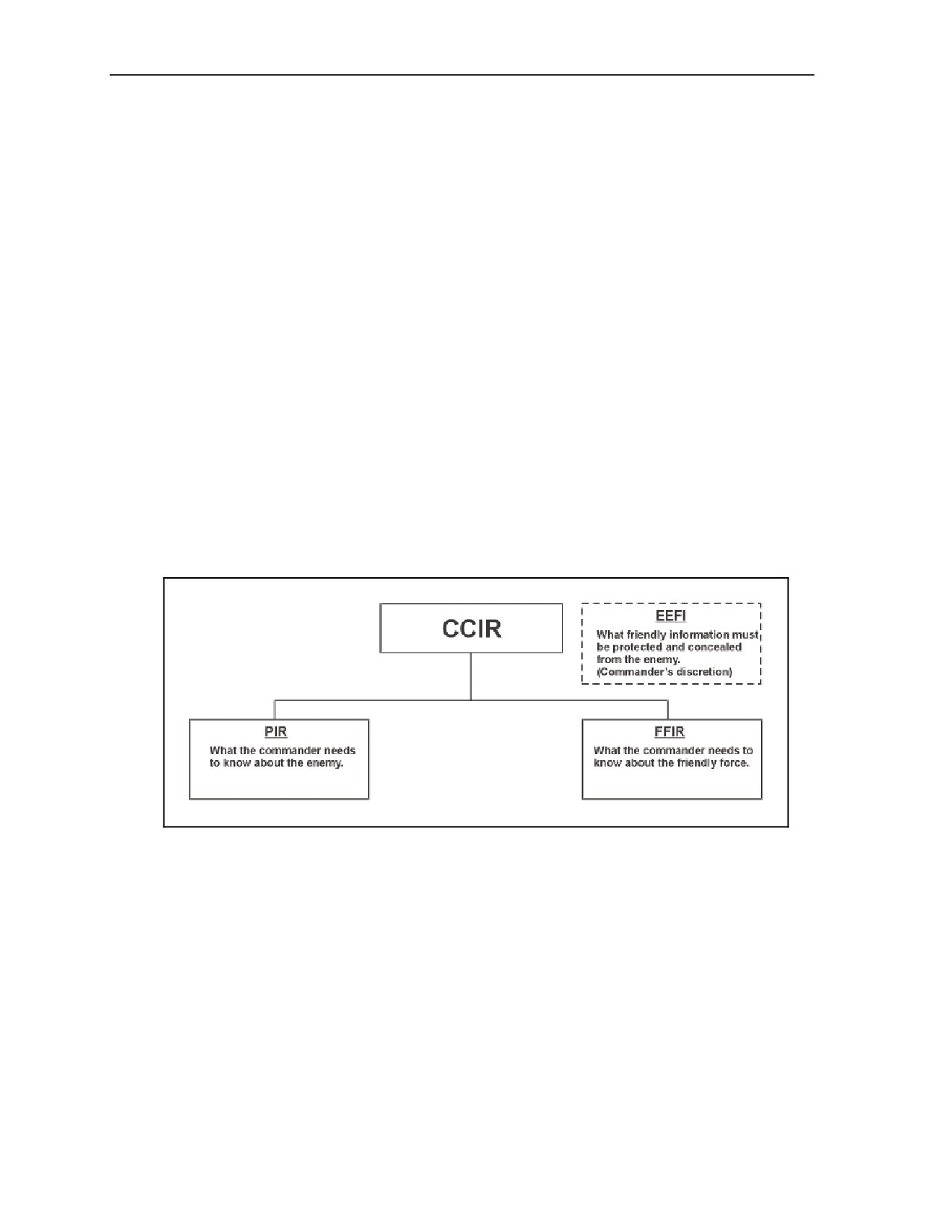
Chapter 2
gap between RI that commanders require and the RI that they have. C2 systems manage information for
one overriding purpose—to enable commanders to make timely decisions in spite of the fog and friction of
operations. All information given to commanders must be RI; that is, commanders should only receive
information they need to exercise C2. Staffs ensure this RI is accurate, timely, usable, complete, precise,
and reliable.
2-5. Information becomes RI if it supports exercising C2 for a mission and if it is accurate, timely, usable,
complete, precise, and reliable. RI provides the basis for creating and maintaining the COP and the
substance of execution information. It is the basis for achieving SU. Commanders state the RI that they
need by establishing the commander’s critical information requirements (CCIR). The commander alone
decides what information is critical based on his experience, the mission, input from his staff, the higher
commander’s intent, and his estimate of the situation. CCIR consist of two primary components (see figure
2-1):
z
Priority intelligence requirements (PIR). PIR are the intelligence requirements for which the
commander has an anticipated and stated priority in his task of planning and decision-making
(FM 2-0).
z
Friendly force information requirements (FFIRs). FFIR cover information the commander
needs about the forces available for an operation. This could include unit strength, disposition,
capability, and readiness (FM 6-0).
z
Essential elements of friendly information (EEFI). EEFI are not CCIR but become priorities on a
level with CCIR when a commander designates them as such. They also generate CCIR (usually
PIR to determine if the enemy is collecting against or has detected EEFI). EEFI are the critical
aspects of a friendly operation that, if known by the enemy, would subsequently compromise,
lead to failure, or limit success of the operation and, therefore, must be protected from enemy
detection (FM 1-02/MCRP 5-12A).
Figure 2-1. Commander’s critical information requirements
2-6. IM, including priorities commanders set by establishing and continuously updating their CCIR,
supports commanders’ achieving and maintaining SU. SU and commander’s visualization are based on RI
provided by functional experts in the C2 system who process data into information. As commanders
achieve SU, they use commander’s visualization to determine the end state and the ways of getting from
the present state to the end state. Figure 2-2 graphically depicts the commander’s development of SU.
2-2
FM 3-34.170/MCWP 3-17.4
25 March 2008
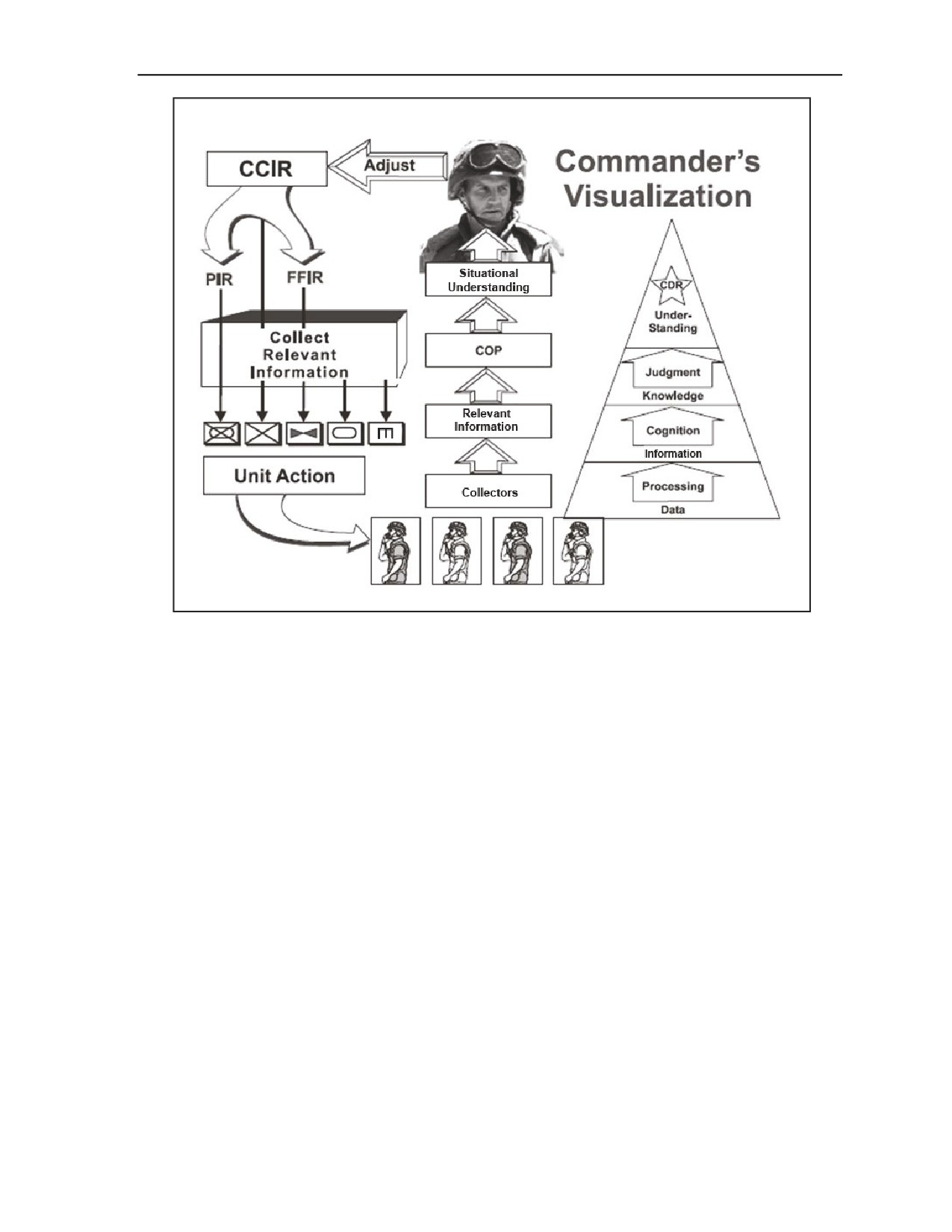
Integrating Engineer Reconnaissance Capabilities
Figure 2-2. Developing situational understanding
2-7. At the start of the military decision-making process (MDMP), commanders expect to have gaps in
information needed to accomplish the mission. Nevertheless, they make some initial decisions. One
decision to make is which information, including intelligence, is needed to fill those gaps and attain a
comprehensive SU. Commanders use CCIR to focus information collection on the RI they need to support
their visualization and to make critical decisions. Staffs translate CCIR into execution information by
tasking assets to collect the information required to answer them. Within the combined arms team, the
ENCOORD acts as the translator of the CCIR into the technical information required from engineer
reconnaissance.
INTEGRATING ASSURED MOBILITY
2-8. Assured mobility provides a planning framework to guide the commander and staff in the proactive
application of engineer and other combat power to assure the freedom of movement and maneuver. As an
integrating process, assured mobility provides linkage between the tasks associated with M/CM/S and their
roles across the six WFFs. It applies in all operations and across the complete spectrum of conflict.
Assured mobility is the framework of processes, actions, and capabilities that assure the ability of the joint
force to deploy and maneuver where and when desired, without interruption or delay, to achieve the
mission. It strives to ensure freedom of maneuver and preserve combat power throughout the AO as it
seeks to exploit superior SU. This construct is one means of enabling a joint force to achieve the
commander’s intent. Assured mobility emphasizes proactive mobility and countermobility (and supporting
survivability) and integrates all of the engineer functions in accomplishing this. Assured mobility is
broader than the term mobility and should not be confused with the limited application of the mobility
operations as described in FM 3-34.2. Its focus is on supporting the maneuver commander’s ability to gain
a position of advantage in relation to the enemy—by conducting mobility operations to negate the impact
25 March 2008
FM 3-34.170/MCWP 3-17.4
2-3
Chapter 2
of enemy obstacles, conducting countermobility to impact and shape enemy maneuver, or a combination of
both.
2-9. While focused primarily on the WFFs of movement and maneuver, intelligence, and protection, it
has linkages to each of the WFFs and both enables and is enabled by those functions. While the engineer
has a primary staff role in assured mobility, other staff members support its integration and have critical
roles to play. The engineer plays an integrating role in assured mobility that is similar to the role played by
the intelligence officer in the IPB integrating process. Other staff members also integrate M/CM/S tasks as
a part of assured mobility. Examples would include—but are not limited to—the regulation of traffic in the
maneuver space, the handling of displaced persons, and other M/CM/S tasks to support the maneuver plan.
Assured mobility is the integrating planning process within which consideration of engineer, CBRN, and
other reconnaissance capabilities will occur.
2-10. The framework of assured mobility follows the continuous cycle of the operations process.
Achieving assured mobility rests on applying six fundamentals that both sustain friendly maneuver,
preclude the enemy’s ability to maneuver, and assist the protection of the force. The fundamentals of
assured mobility are—
z
Predict: Engineers and other planners must accurately predict potential enemy impediments to
joint force mobility by analyzing the enemy’s tactics, techniques, procedures, capability, and
evolution. Prediction requires a constantly updated understanding of the OE.
z
Detect: Using ISR assets, engineers and other planners identify early indicators for the location
of natural and manmade obstacles, preparations to create/emplace obstacles, and potential means
for obstacle creation. They identify both actual and potential obstacles and propose solutions
and alternate courses of action to minimize or eliminate their potential effects.
z
Prevent: Engineers and other planners apply this fundamental by denying the enemy’s ability to
influence mobility. This is accomplished by forces acting proactively before the obstacles are
emplaced or activated. This may include aggressive action to destroy enemy assets/capabilities
before they can be used to create obstacles. Political considerations and rules of engagement
(ROE) may hinder the ability to apply the fundamental early in a contingency.
z
Avoid: If prevention fails, the commander will maneuver forces to avoid impediments to
mobility if this is viable within the scheme of maneuver.
z
Neutralize: Engineers and other planners plan to neutralize, reduce, or overcome
obstacles/impediments as soon as possible to allow unrestricted movement of forces. The
breaching tenants and fundamentals apply to the fundamental of “neutralize.”
z
Protect: Engineers and other elements plan and implement survivability and other protection
measures that will deny the enemy the ability to inflict damage as joint forces maneuver. This
may include countermobility missions to deny the enemy maneuver and provide protection to
friendly maneuvering forces.
2-11. Assured mobility provides the broad framework of fundamentals that serve to retain the focus and
integrate M/CM/S within the combined arms team. Planners at all levels of the combined arms team rely on
this framework to ensure that adequate support is provided to the commander’s scheme of maneuver and
intent. Within the combined arms team planning staff, it is the assured mobility section at the BCT level
(and those same staff members at echelons above the BCT) that provides the input for engineer, CBRN,
and similar specialized reconnaissance. The ENCOORD plans for the application of and coordinates the
integration of engineer reconnaissance across the engineer functions and spanning the range from tactical
to technical capabilities.
STAFF ENGINEER COORDINATION
2-12. Each maneuver force echelon down to brigade level has an organic engineer planner to integrate
engineers into the combined arms fight. The task force and company levels may also have an engineer, but
the engineer will seldom be organic to these echelons, except in the combined arms battalion of the HBCT.
The engineer is a special staff member of the battle staff responsible for understanding the range of
2-4
FM 3-34.170/MCWP 3-17.4
25 March 2008
Integrating Engineer Reconnaissance Capabilities
engineer capabilities/functions (combat, general, and geospatial engineering) available to the force and for
synchronizing those capabilities to best meet the needs of the maneuver commander.
2-13. The ENCOORD is the planner responsible for coordinating engineer reconnaissance operations and
is usually the senior engineer officer in the force. The ENCOORD may or may not command an engineer
unit supporting the BCT/RCT. In the BCT/RCT, the brigade or regimental engineer is the ENCOORD.
However, when an engineer battalion is task-organized in support of the BCT/RCT, the BCT/RCT
commander determines if a change will occur in ENCOORD designation. This decision is based upon the
type of unit, duration of the attachment, and focus of the mission being performed by the supporting
engineer battalion. If the attached engineer battalion commander is designated as the ENCOORD, the
BCT/RCT staff engineer becomes the assistant ENCOORD. The assistant represents the ENCOORD
during planning and when the ENCOORD is not available. At the maneuver battalion level, the
ENCOORD is the senior engineer supporting that battalion. The ENCOORD performs the following key
tasks that directly or indirectly support planning for engineer reconnaissance operations:
z
Integrates the engineer functions of combat (M/CM/S), general, and geospatial engineering into
future brigade plans.
z
Develops the necessary input to BCT/RCT orders, annexes, and engineer unit orders (as
required).
z
Makes time-sensitive engineer decisions on requests for immediate tactical support received
from BCT/RCT engineers.
z
Trains the brigade engineer cell located at the brigade main command post (CP).
z
Formulates ideas for engineer support to meet the BCT/RCT commander’s intent.
z
Visualizes the future state of engineer operations in the BCT/RCT.
z
Recommends the engineer priorities of effort and support, essential tasks for M/CM/S, and
acceptable mission risks to the BCT/RCT commander.
z
Determines and evaluates critical aspects of the engineer situation.
z
Decides what engineer missions must be accomplished to support current and future fights.
z
Develops a scheme of engineer operations concurrent with the BCT/RCT maneuver COAs.
z
Integrates the necessary orders and instructions into higher headquarters plans and orders.
z
Issues timely instructions and orders to subordinate engineer units through the BCT/RCT base
order to simplify preparation and integration.
z
Monitors the execution of engineer orders and instructions by tracking the current fight.
z
Alters the engineer plan using the feedback received from maneuver battalions, the engineer
company, and any augmenting engineer units as required.
z
Identifies any BCT/RCT requirements for echelons above brigade engineer and other M/CM/S
assets to support the brigade.
z
Makes the BCT/RCT commander aware of the capabilities, limitations, and employment
considerations of supporting engineers and other M/CM/S assets.
z
Recommends the engineer organization for combat.
z
Plans and coordinates with the FSCOORD on integrating obstacles and fires.
z
Advise the commander on using organic and nonorganic engineer assets.
z
Advises the commander on employing and reducing obstacles.
z
Provides a terrain visualization mission folder to determine the terrain effect on friendly and
enemy operations (see TC 5-230).
z
Produces maps and terrain products and coordinates with the terrain section for planning and
distribution.
z
Assists the intelligence staff officer
(S-2) with the IPB—including information from the
preparation of the engineer estimate.
z
Participates in the targeting process.
z
Provides information on the status of engineer assets on hand.
25 March 2008
FM 3-34.170/MCWP 3-17.4
2-5
Chapter 2
z
Tracks all templated and known obstacles, scatterable mines (SCATMINEs), the survivability
status, the route status, engineer missions, and any other engineer-specific information.
z
Recommends MSRs and logistics areas to the logistics staff officer (S-4) based on technical
information.
z
Recommends IR to the S-2 through the operations staff officer (S-3).
z
Coordinates with BCT/RCT S-4 or maneuver battalion S-4 for additional resources to support
the mobility effort (Class III, Class IV).
z
Advises the commander on environmental issues, coordinates with other staff members to
determine the impact of operations on the environment, and helps the commander integrate
environmental considerations into decision making.
z
Recommends when engineer diver support may facilitate specific engineer reconnaissance in
support of the BCT/RCT.
z
Coordinates with MI and MP resources to identify elements of the threat that are pertinent to
survivability and ensures that BCT/RCT personnel incorporate this threat into engineering
survivability support activities.
2-14. The ENCOORD plans for the application and coordination of engineer reconnaissance and its
integration. In this role, the ENCOORD is a critical link in the commander’s IM processes that provide the
translation from the gaps identified by the commander in CCIR to the technical information focus of
engineer reconnaissance. The ENCOORD and other members of the staff also ensure that geospatial
support is provided and integrated in the combined arms team.
GEOSPATIAL INTEGRATION
2-15. Geospatial support includes the standards, processes, Soldiers and Marines, and equipment required
to generate, manage, analyze, and disseminate the geospatial information necessary to assemble the best
view of the operational environment for the command. Geospatial engineers manage the enterprise
geospatial database—compiled from all sources including National Geospatial-Intelligence Agency,
Topographic Engineering Center
(TEC), other Services, coalition allies, as well as exploiting new
collection and production from deployed Soldiers and Marines and sensors. Geospatial engineers manage
the geospatial foundation of the COP, synchronizing hard and soft copy products that are a necessary
component of all source intelligence and battle command.
2-16. Terrain analysis is a key product of geospatial support. It is the study of the terrain’s properties and
how they change over time, with use, and under varying weather conditions. Terrain analysis starts with
the collection, verification, processing, revision, and construction of source data. It requires the analysis of
climatology (current and forecasted weather conditions), soil conditions, and enemy or friendly vehicle
performance metrics. Terrain analysis and geospatial information and services (GI&S) is necessary to
support the warfighter’s mission planning and operational requirements and requires the management of an
enterprise geospatial database at every echelon from combatant command to deployed BCT/RCT. Terrain
analysis is a technical process and requires the expertise of terrain-analysis technicians and terrain data
specialist.
2-17. Geospatial engineering is provided to the Army and other Services based on echelon. It is focused on
data generation, data management, and quality control at the numbered Army and combatant command
level. At the corps and division levels, the majority of the workload is required to support database
management, mission planning, and the IPB process. Below division level, geospatial engineering is
increasingly focused on current operations and updating the geospatial database (database management).
2-18. A topographic company is assigned to provide direct and general support to an active theater of
operations. Topographic companies are the only unit with dedicated geospatial data generation capability
within the Army force structure. The topographic company requires access to the Global Information Grid
(GIG) and classified tactical local area network
(LAN) SECRET Internet Protocol Router Network
(SIPRNET) to update and disseminate geospatial information and products. Topographic companies are
composed of collection management platoons, analysis platoons, finish print platoons, and a headquarters
platoon. Two collection management platoons generate geospatial data from a variety of sources. Currently
2-6
FM 3-34.170/MCWP 3-17.4
25 March 2008
Integrating Engineer Reconnaissance Capabilities
these platoons are designed to derive high-resolution elevation and feature data from existing and emerging
sensors. Two analysis platoons provide direct support to separate numbered armies, coalition allies (that
lack geospatial support), joint task force (JTF) commands, and deployed divisions. Two print finish
platoons provide hard copy geospatial products to units in theater.
2-19. The geospatial engineer team organic to the corps/division collects and provides updated geospatial
data and products to support corps/division operations. The team performs analysis and acquires, manages,
and disseminates geospatial data and products to support corps/division planning and execution, maintains
the corps/division common topographic operating picture (CTOP) on the corps’/division’s server, and
provides updates to the corps’s/division’s portion of the Theater Geospatial Database
(TGD). The
corps/division team provides direct support to the component intelligence staff (G-2) and operations staff
(G-3) planners and provides general support to the staff and subordinate units. The geospatial engineer
team requires access to the classified tactical LAN (SIPRNET) to update and disseminate geospatial
information and products.
2-20. The geospatial engineer team organic to the brigade headquarters performs analysis, management,
and dissemination of geospatial data and products to support brigade planning and execution and maintains
the brigade’s CTOP on the brigade’s server and provides updates to the brigade’s portion of the TGD. The
team provides direct support to the S-2/S-3 with general support to the staff and subordinate units. The
brigade level team is too small to provide continuous direct support to the S-2 but will form ad hoc
geospatial intelligence (GEOINT) cells as necessary to support operations. The geospatial engineer team
requires access to the classified tactical LAN (SIPRNET) to update and disseminate geospatial information
and products.
PLANNING PROCESSES
2-21. The MDMP (and associated troop-leading procedures [TLPs]) is the doctrinal planning model that
establishes procedures for analyzing a mission; developing, analyzing, and comparing COAs against
criteria of success and each other; selecting the optimum COA; and producing a plan or order (see figure 2
3 on page 2-8). (Detailed references to the MDMP and the TLP are found in FM 5-0.)
25 March 2008
FM 3-34.170/MCWP 3-17.4
2-7
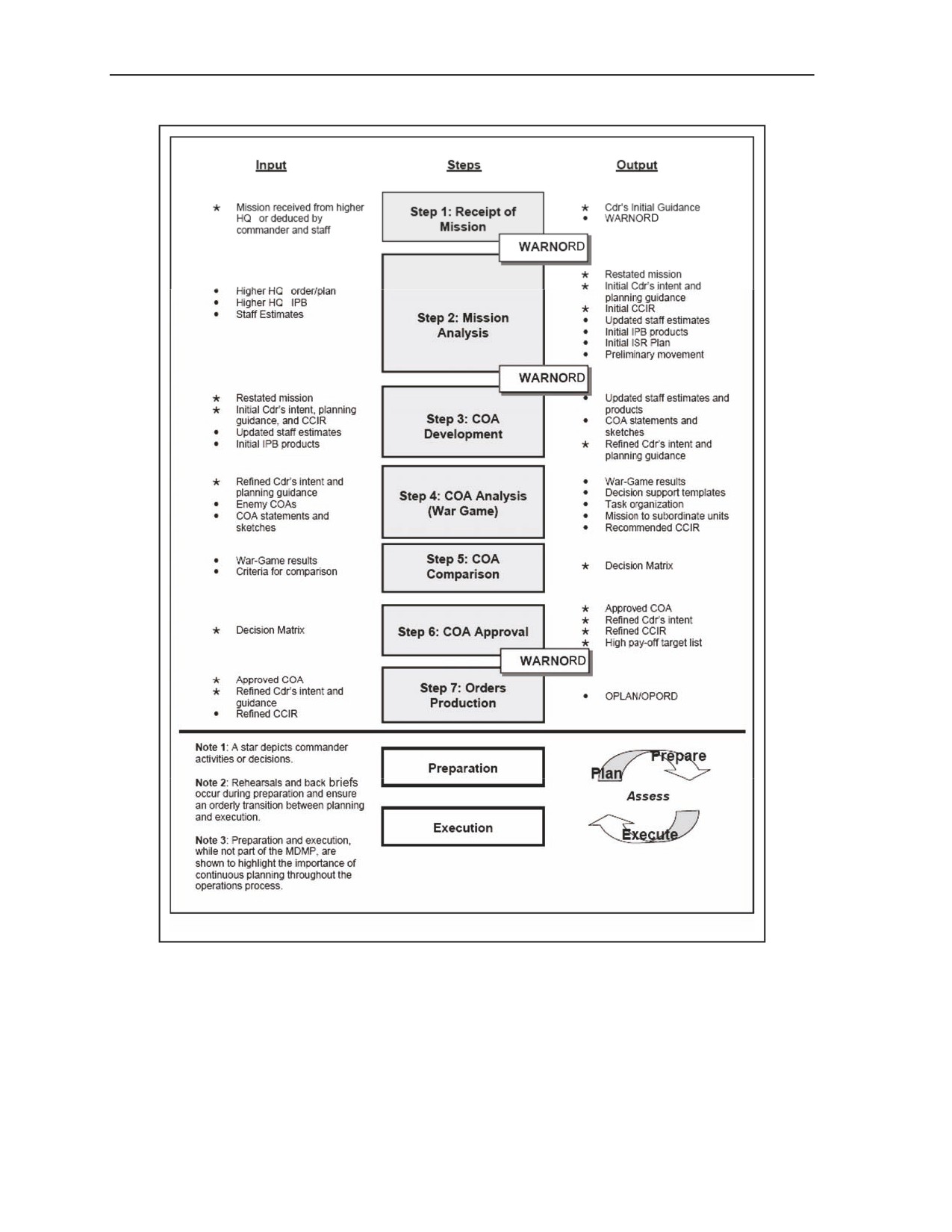
Chapter 2
Figure 2-3. The military decision-making process
2-8
FM 3-34.170/MCWP 3-17.4
25 March 2008
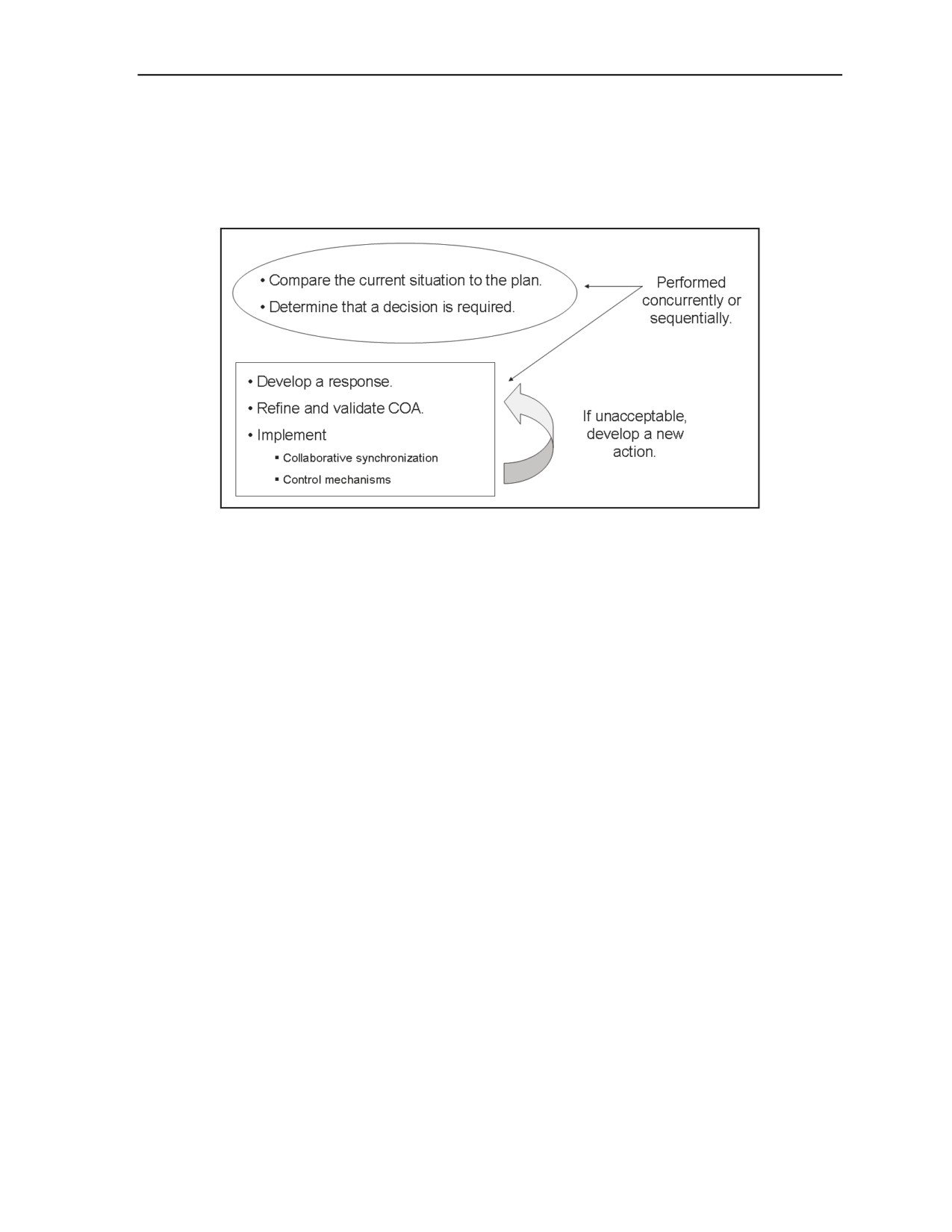
Integrating Engineer Reconnaissance Capabilities
2-22. Commanders and staffs also use the rapid decision-making and synchronization process (RDSP)
described in FMI 5-0.1 to make decisions and rapidly resynchronize forces and warfighting functions when
presented opportunities or threats during execution. The RDSP includes five steps. Leaders perform them
as shown in FMI 5-0.1. The first two steps may be performed in any order, including concurrently. The last
three steps are performed interactively until an acceptable COA is found (see figure 2-4).
Figure 2-4. Rapid decision-making and synchronization process
2-23. As is the case with other reconnaissance capabilities, commanders must balance the application of
engineer reconnaissance against the corresponding trade-off in primary capability. In the case of engineers,
engineer units tasked to conduct a specified reconnaissance task may not be available for employment on
other M/CM/S tasks.
2-24. Increased engineer requirements in the contemporary OE may limit engineer resources immediately
available to support mobility operations. Combat engineering
(M/CM/S) and general engineering
requirements often compete for the same engineer assets. Combat engineering requirements are assessed
and categorized as mobility, countermobility, or survivability. The maneuver commander sets the priorities
to allow the force to perform the most critical tasks. The ENCOORD and other staff members assist the
maneuver commander in his decision by identifying essential tasks for M/CM/S.
2-25. An essential task for M/CM/S is a specified or implied M/CM/S task that is critical to mission
success. Essential tasks for M/CM/S support assured mobility in a similar fashion to how essential tasks for
fire support targeting. Although ultimately executed by a combined arms element, the staff (typically
elements such as engineer, CBRN, MP, or EOD) identifies and recommends the essential tasks for
M/CM/S to the commander. A fully developed essential task for M/CM/S includes the task and purpose.
z
Task. A task is one or more clearly defined and measurable activities accomplished by
individuals and organizations required to achieve the desired effects (FM 7-0). These are the
most important M/CM/S tasks which must be accomplished. Often the entire operation is
dependant on completing these tasks, and without their successful completion, the operation is at
risk.
z
Purpose. The desired or intended result of the task stated in terms relating to the purpose of the
supported unit. This portion of the essential task for M/CM/S explains why it must be
accomplished. It also provides intent to the engineer commander so he can be reactive as the
situation changes.
25 March 2008
FM 3-34.170/MCWP 3-17.4
2-9

Chapter 2
2-26. The maneuver commander uses essential tasks for M/CM/S to communicate to subordinate
maneuver units what he wants accomplished with specific assets supporting M/CM/S. This provides the
maneuver unit with clear priorities and unity of purpose in planning, preparation, and execution. Essential
tasks for M/CM/S also provide CBRN, MP, psychological operations (PSYOPS)/civil affairs (CA), and
other nonengineer elements clearly articulated tasks related to M/CM/S. Example engineer reconnaissance
related essential tasks for M/CM/S might include the following:
Essential Task for M/CM/S, Example #1
Task:
Conduct engineer reconnaissance of MSR Tigers from CP 1 to CP 2.
Purpose
Classify route, identify impediments to maneuver, and facilitate planning
:
of route clearance operations.
Essential Task for M/CM/S, Example #2
Task:
Conduct engineer reconnaissance of Crossing Area WHITE.
Purpose
Collect and confirm crossing site data and locate key BCT river crossing
:
locations.
Essential Task for M/CM/S, Example #3
Task:
Conduct an infrastructure reconnaissance of the power station at grid
ST231546.
Purpose
Assess the status of the power station to enhance the SU of critical
:
infrastructure throughout the area of operation.
Essential Task for M/CM/S, Example #4
Task:
Conduct engineer reconnaissance of buildings at grid ST234544.
Purpose
Determine if buildings are adequate to house BCT headquarters from
:
protection standpoint.
2-27. The development of essential tasks for M/CM/S development begins during the mission analysis
phase of the MDMP. During this phase, planners identify specified and implied tasks and associated
purpose. From these tasks, combined with the maneuver commander’s guidance, the ENCOORD and other
staff representatives recommend essential tasks for M/CM/S to maneuver commanders during the mission
analysis brief. At the conclusion of the mission analysis brief, the commander approves those essential
tasks for M/CM/S that he considers relevant.
2-28. After essential tasks for M/CM/S are approved, the ENCOORD and other planners integrate them
into COA development. The ENCOORD and other planners identify the essential tasks for M/CM/S
required to achieve the desired effects and achieve the designated purpose. These planners develop
associated methods to complete the essential tasks for M/CM/S by assigning resources and recommending
priorities. The ENCOORD and other planners, in coordination with the maneuver planner, then
synchronize the methods to achieve the desired effects on enemy or friendly forces.
2-10
FM 3-34.170/MCWP 3-17.4
25 March 2008
Integrating Engineer Reconnaissance Capabilities
2-29. The engineer estimate is a logical thought process and extension of the MDMP. It is conducted by
the ENCOORD, concurrently with the planning process of the supported maneuver force, and is
continually refined. This estimate allows for early integration and synchronization of essential tasks for
M/CM/S into combined arms planning processes (MDMP or RDSP). It drives the coordination between the
engineer, the supported commander, and other staff officers in developing engineer plans, orders, and the
supporting annexes. Additionally, allocating engineer assets and resources assists in determining command
and support relationships that will be used. Table 2-1 on page 2-12, illustrates the relationship between the
MDMP and the engineer estimate, including identification of essential tasks for M/CM/S.
25 March 2008
FM 3-34.170/MCWP 3-17.4
2-11

Chapter 2
Table 2-1. The military decision-making process and the engineer estimate
Military Decision-making Process
Engineer Staff Running Estimate
Mission Analysis
Analyze higher headquarters order.
Analyze the higher headquarters orders.
Conduct IPB.
Commander’s intent
Determine specified, implied, and essential
Mission
tasks.
Concept of operation
Review available assets.
Timeline
Determine constraints.
AO
Identify critical facts and assumptions.
Conduct IPB/develop engineer staff running estimate.
Conduct risk assessment.
Terrain and weather analysis
Determine CCIR.
Enemy mission and M/CM/S capabilities
Develop ISR plan.
Friendly mission and M/CM/S capabilities
Plan use of available time.
Analyze the engineer mission.
Write restated mission.
Specified M/CM/S tasks
Conduct mission-analysis briefing.
Implied M/CM/S tasks
Approve restated mission.
Assets available
Develop commander’s intent.
Limitations
Issue commander’s guidance.
Risk as applied to engineer capabilities
Issue warning order (WARNORD).
Time analysis
Review facts and assumptions.
Identify essential tasks for M/CM/S
Restated mission
Conduct risk assessment.
Safety
Environment
Determine CCIR (terrain and mobility restraints,
obstacle intelligence, threat engineer capabilities).
Integrate reconnaissance effort.
COA Development
Develop scheme of engineer operations.
Analyze relative combat power.
Refine essential tasks for M/CM/S.
Identify engineer missions and allocation of
forces/assets
Determine engineer priority of effort/support
Refine commander’s intent for M/CM/S operations
Apply engineer employment considerations.
Integrate engineer operations into the maneuver COA.
COA Analysis
Wargame and refine the engineer plan.
COA Comparison
Recommend a COA.
COA Approval
Finalize the engineer plan.
Order Production
Input to basic operation order (OPORD).
Scheme of engineer operations
essential tasks for M/CM/S
Subunit instructions
Coordinating instructions
Engineer annex/appendixes
2-12
FM 3-34.170/MCWP 3-17.4
25 March 2008
Integrating Engineer Reconnaissance Capabilities
SPECIFIC COMMAND AND CONTROL CONSIDERATIONS
2-30. Engineers are task-organized in a variety of ways, depending on the mission and current
requirements. This task organization drives an engineer reconnaissance team’s command or support
relationship. When attached, a reconnaissance team is temporarily placed in the unit it supports. The
commander of the supported unit exercises the same degree of C2 as he does over his organic units. In this
relationship, the reconnaissance team receives all of its missions and support from the supported unit, not
its organic engineer unit. Additionally, the supported unit commander may task organize the
reconnaissance team as he feels is appropriate.
z
In an operational control (OPCON) relationship, a reconnaissance team receives all of its
tasking and missions from the supported unit. The supported unit commander retains the same
authority over the reconnaissance team as over his organic units and may task organize the
reconnaissance team as he feels is appropriate. Logistical support comes from the parent
engineer unit unless the engineer battalion has coordinated with the supported unit for certain
classes of supply.
z
In a direct support (DS) relationship, a reconnaissance team answers directly to the supported
unit’s requests for support. Logistical support is provided by the parent engineer unit, and the
reconnaissance team is commanded by its parent engineer unit commander.
z
In a general support (GS) relationship, a reconnaissance team receives missions and all support
from its parent engineer unit.
2-31. An engineer reconnaissance team can be employed using several methods. Each method has
advantages and disadvantages.
z
Integrated as part of the brigade intelligence-collection effort. In this method, an ERT is
integrated into a brigade’s collection effort. This effort normally includes other assets and
receives the same types of support and sustainment as the rest of the brigade’s reconnaissance
assets. It is imperative that the engineer unit providing the ERT understands all aspects of the
plan to employ the ERT. As a minimum, the ERT leader should attend the brigade’s ISR
rehearsal. The providing unit continues to track the ERT through the operation. Resources
(including maintenance and personnel status), verification of the team’s position, and activation
of no-fire areas) must be closely monitored. The efficient dissemination of the intelligence
collected by the team is also a critical task of the providing unit staff.
z
Assigned brigade NAIs in a TF’s AO. Under this method, an ERT receives its reconnaissance
objectives from brigade through an engineer unit supporting a maneuver battalion/TF. The ERT
leader should link up with the appropriate TF scout platoon leader upon receiving the mission
from the providing engineer unit. The engineer unit must ensure that the necessary instructions
to the appropriate TFs are included in the brigade’s OPORD, especially if the TFs are expected
to provide logistical support to the ERT (including casualty evacuation and vehicle recovery
support). The team leader should be present at the scout platoon leader’s OPORD and rehearsals
to ensure understanding of the scout platoon’s plan. To reduce the risk of fratricide, the ERT
leader must provide his plan to the scout platoon leader. The ERT should report all
checkpoints/locations on the same net that the TF scouts are operating on (for example, the TF
operations and intelligence [O/I] net). All intelligence reports should be sent to both the TF and
the engineer unit. The unit should then pass the information to the brigade and its subordinate
elements. This employment concept should be used anytime the ERT works close to the TF
scouts.
z
Working under a TF’s control. In this method, ERTs are placed under the TF’s control to look at
NAIs that the brigade has tasked to the TF or expects the TF to develop requiring engineer
expertise
(possibly a TF breaching operation). This method involves the least amount of
coordination and planning for the providing engineer unit. However, the responsibility to plan
and monitor the ERT’s activities now falls to the TF engineer. Although the TF decides how to
use the ERT, the TF engineer must be involved in the planning details to ensure that the team is
properly used, is integrated into a sound ISR plan, and receives all necessary support.
25 March 2008
FM 3-34.170/MCWP 3-17.4
2-13
Chapter 2
2-32. The BCT/RCT distributes its reconnaissance assets throughout its AO. To prevent fratricide and to
synchronize the collection effort and logistic support, the BCT/RCT must organize the AO. When
assigning boundaries and task organizing subordinate units, the terrain team or BCT/RCT engineer should
be included in the decision process. This will help to ensure the boundaries and task organization in
conjunction with the terrain complement rather than hinder the reconnaissance effort. The reconnaissance
squadron operates in one of two battlefield organizations with respect to terrain and command
relationships. First, it can operate independently inside of its own AO. Second, it can operate
independently inside one or more of the battalion AOs. Each technique has advantages and disadvantages
for C2 and fratricide reduction and specific planning and coordination requirements that are part of the ISR
order.
2-33. In most cases, ISR assets will be attached to a subordinate command to ensure integration and C2.
However, the brigade may keep some assets under brigade control and assign them their own AO or have
them operated independently in someone else’s. The brigade special troops battalion (BSTB) is responsible
for command oversight of these independent operators (in the HBCT and the IBCT), while the asset has the
requirement to ensure coordination with the terrain manager of the land the BSTB is operating on.
Examples of ISR assets operating independent of subordinate units include—
z
BCT/RCT retransmission section supporting the reconnaissance squadron but located in a
maneuver battalion sector.
z
Unmanned aircraft system (UAS) launch and recovery site.
2-14
FM 3-34.170/MCWP 3-17.4
25 March 2008
///////////////////////////////////////