C2, ARMY FM 10-500-71 RIGGING THE FAMILY OF MEDIUM TACTICAL VEHICLES (FMTV) (DECEMBER 2003) - page 2
FM 10-500-71/TO 13C7-6-141
46
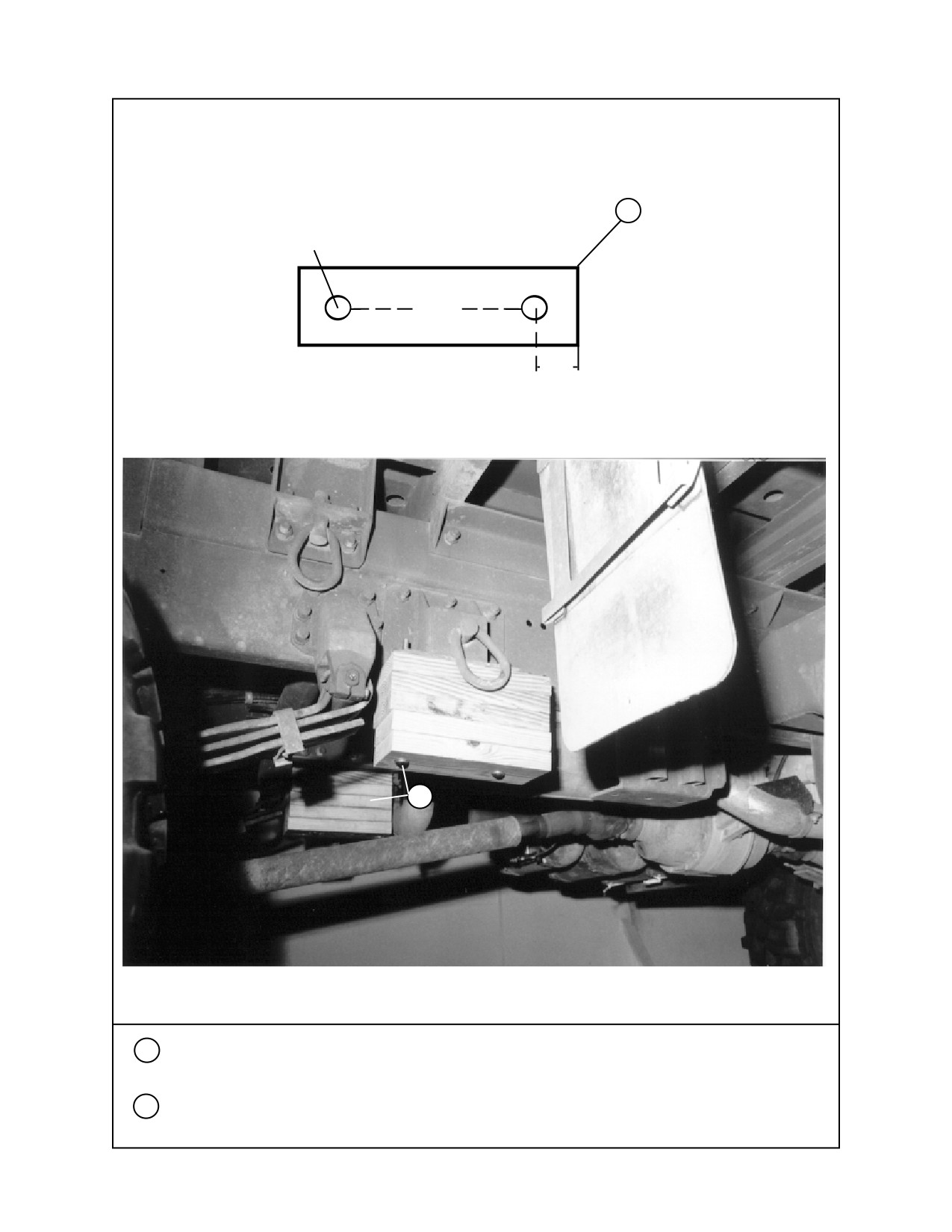
2” x 6” x 13” LUMBER
5/8” DIA.
10 1/4”
1 3/8”
47
46
Cut ten 2- by 6- by 13-inch pieces of lumber. Drill two 5/8-inch diameter holes 1 3/8-inches from the
edge, with a 10 1/4-inch center to center hole measurement in each piece of lumber.
47
Bolt five 2- by 6- by 13-inch pieces of lumber to the left and right side frame pads using two 1/2- by
10-inch bolts on each side.
Figure 2-12. Truck prepared (Continued)
2-34
FM 10-500-71/TO 13C7-6-141
48
49
48
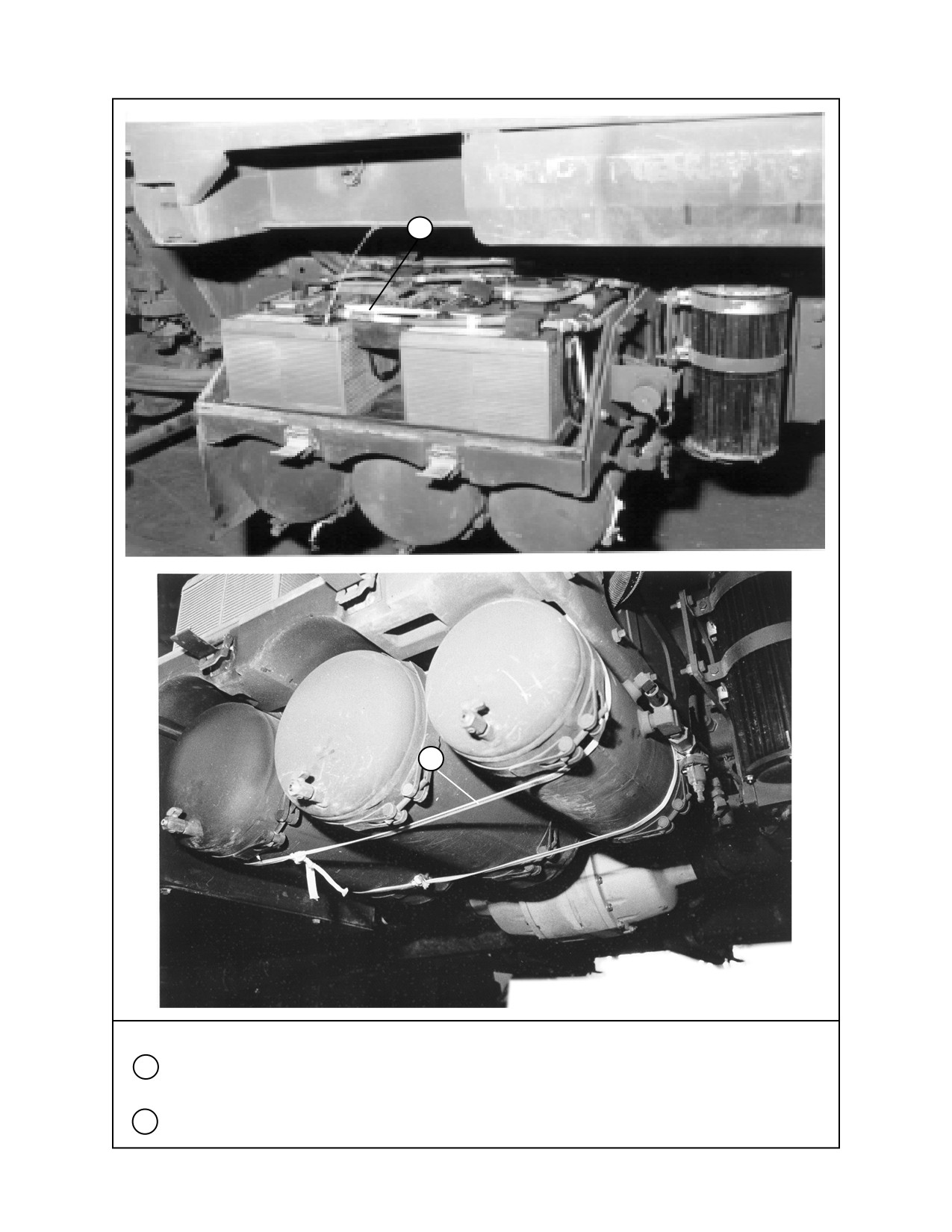
Remove the battery box cover and secure the batteries in place with two lengths of 1/2-inch tubular nylon
webbing.
49
Run the nylon webbing over the batteries down through the battery box and under the air tanks.
Figure 2-12. Truck prepared (Continued)
2-35
FM 10-500-71/TO 13C7-6-141
50
51
50
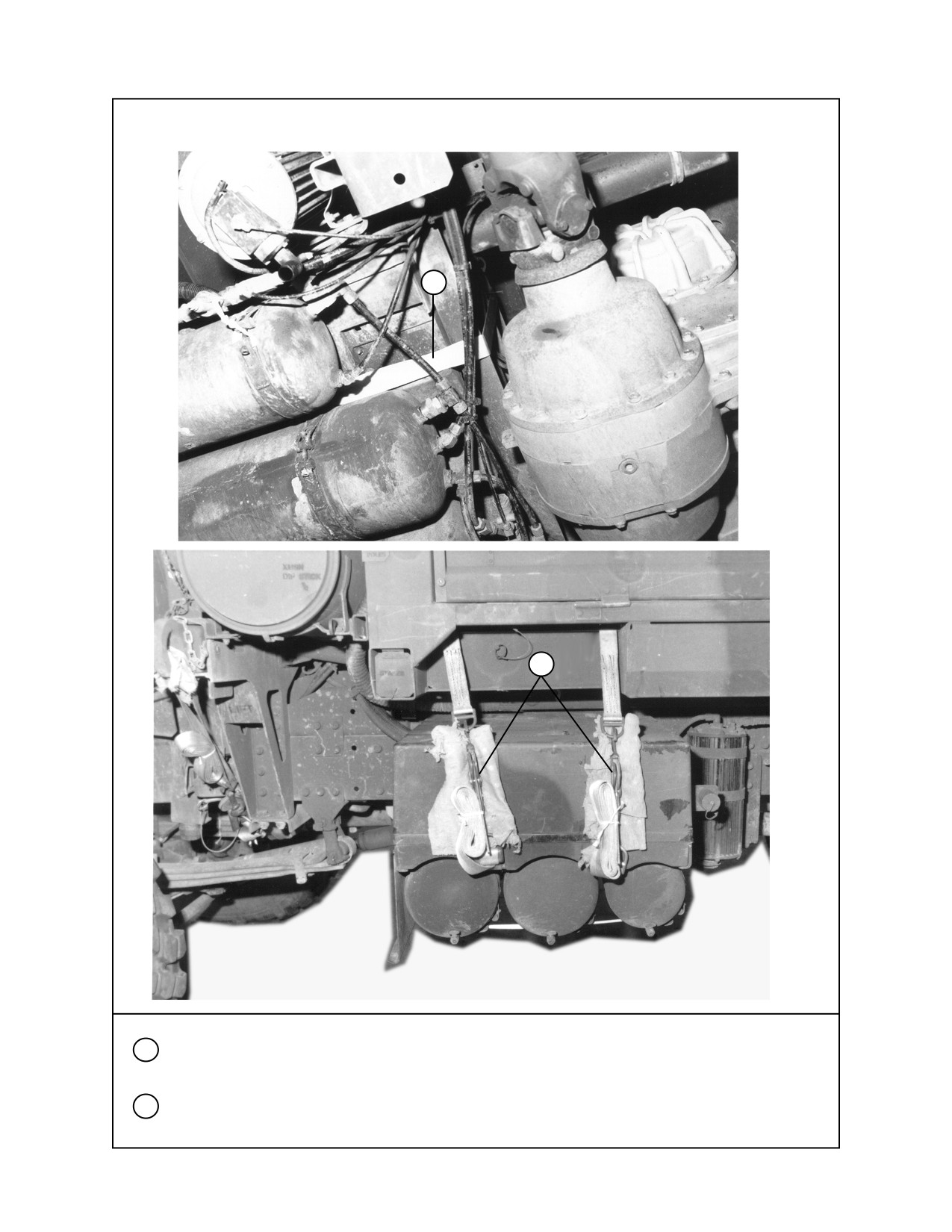
Replace the cover. Route two 15-foot lashings around the main frame, under the battery box, between the
air tanks. Ensure hoses are not crimped.
51
Secure with D-ring and loadbinder on top of battery box. Pad with felt or cellulose wadding.
Figure 2-12. Truck prepared (Continued)
2-36
FM 10-500-71/TO 13C7-6-141
52
53
52
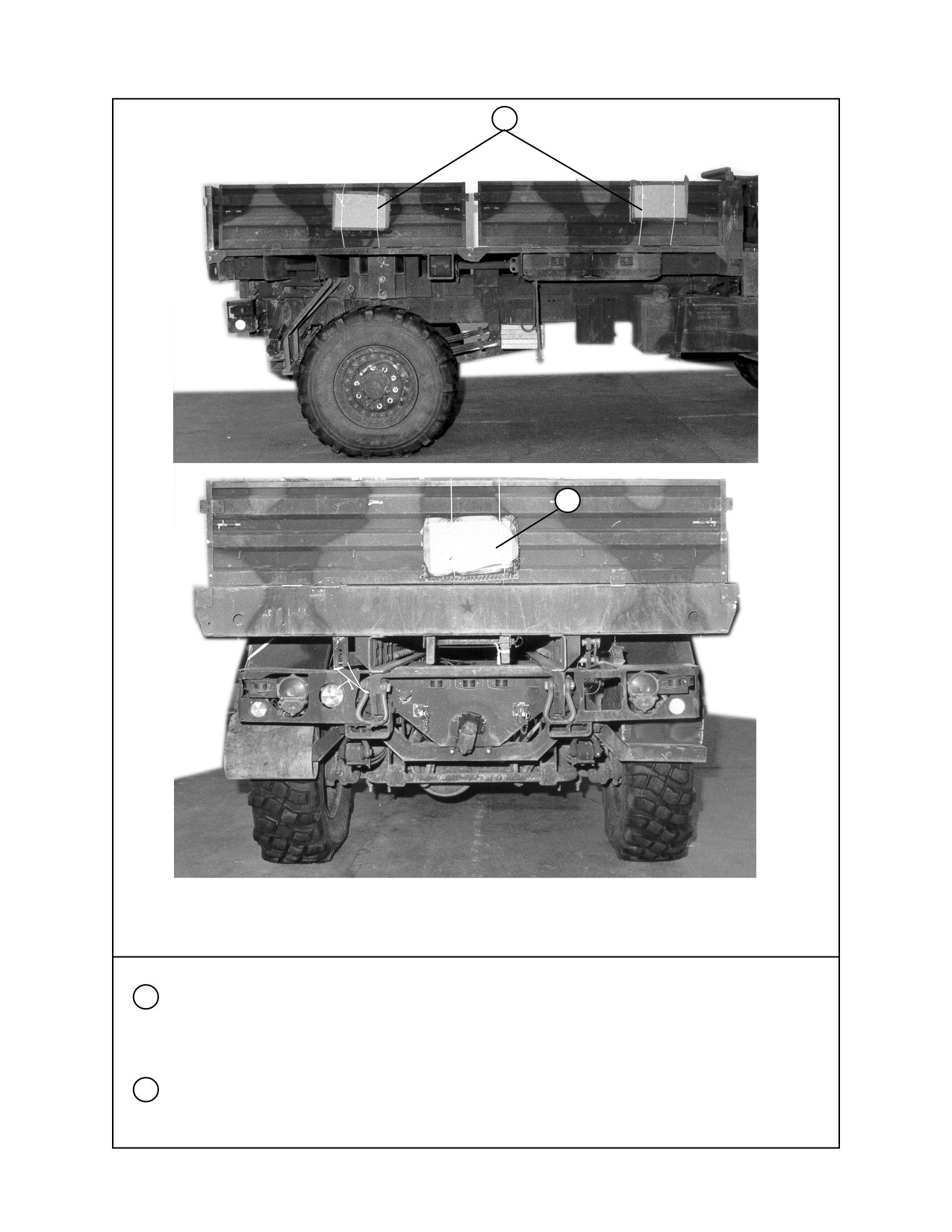
Raise the side panels and place an 11- by 16-inch piece of honeycomb on each contact point. Position the
pieces on the front panels where they will come in contact with the fuel tank and battery box. Place the
pieces on the rear panels where they will come in contact with the tires. Secure the honeycomb in place
with type III nylon cord.
53
Raise the tailgate and place an 11- by 16-inch piece of honeycomb on the center of the tailgate. Secure the
honeycomb in place with type III nylon cord..
Figure 2-12. Truck prepared (Continued)
2-37
FM 10-500-71/TO 13C7-6-141
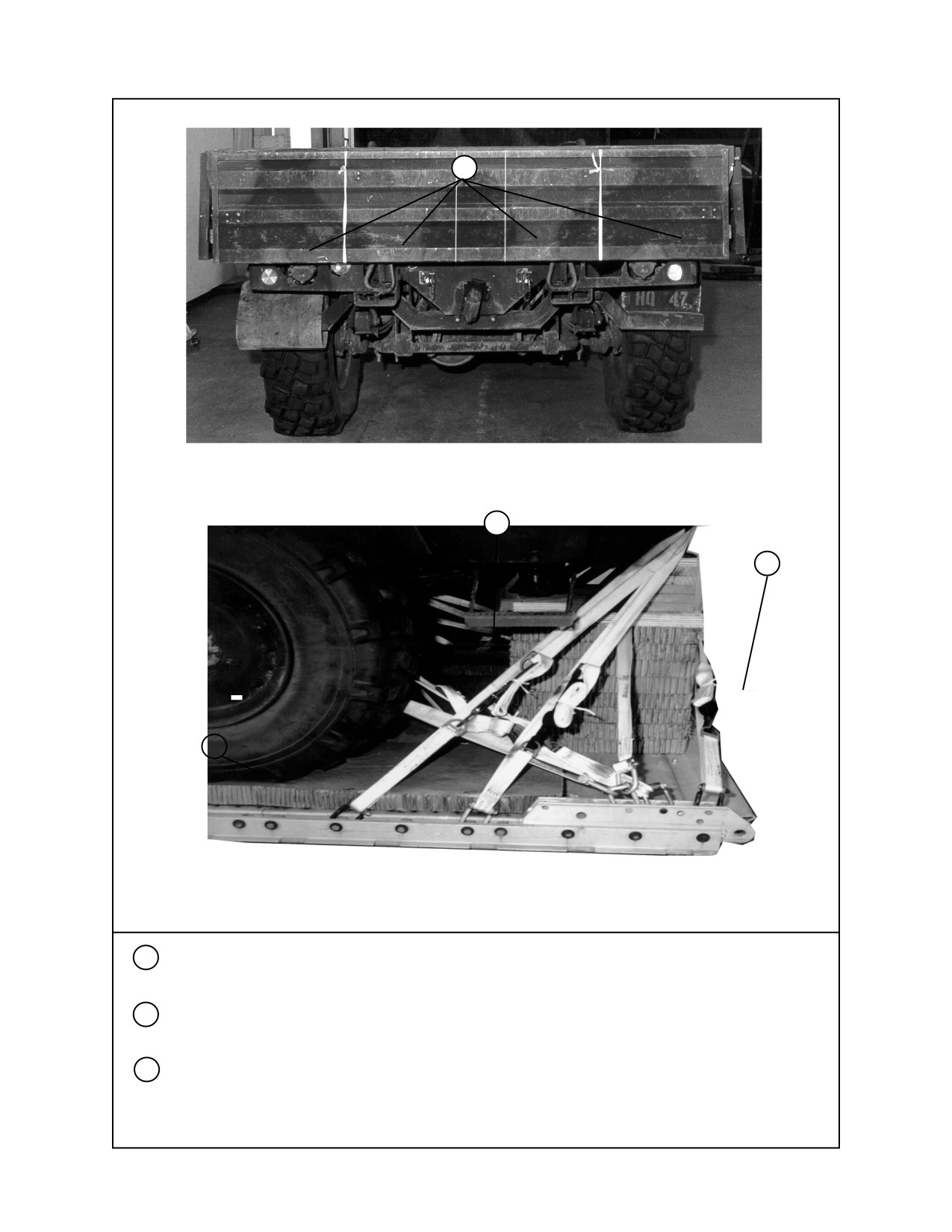
54
54
55
56
54
Secure the side panels and tailgate down using 1/2-inch tubular nylon webbing. Tie to convenient
locations on the truck.
55
Using 1/2-inch tubular nylon webbing, tie the corners of the rear side panels and tailgate together. Tie the
front of the forward side to convenient locations on the truck.
56
Tie the mud flaps up with type III nylon cord.
Note: Steps 54 and 55 ties must be secured. No slippage of the ties is allowed. If the ties are not secure,
damage may occur.
Figure 2-12. Truck prepared (Continued)
2-38
FM 10-500-71/TO 13C7-6-141
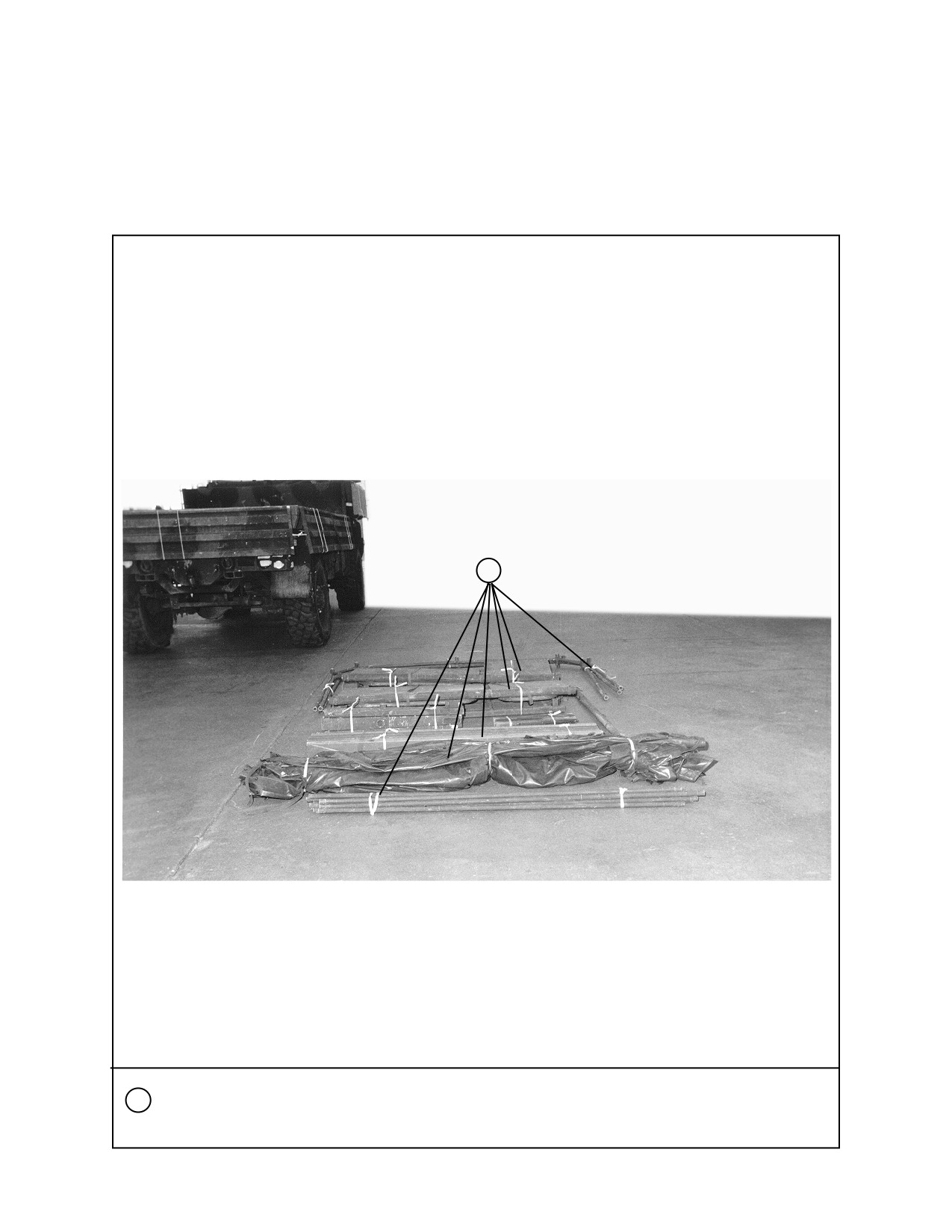
2-6. Stowing Basic Load
Basic accompanying load consists of the roof, spare tire,
tire strap, davit, cargo/troop carrier cover, bows, cargo/
troop carrier cover poles, bed stakes, seat bars, seats and
side rails. Stow the vehicle parts as shown in Figure 2-13.
1
1
Tie each like item together using 1/2-inch tubular nylon webbing, except the seats. They will be tied into two
sets of two seats each.
Figure 2-13. Basic load stowed
2-39
FM 10-500-71/TO 13C7-6-141
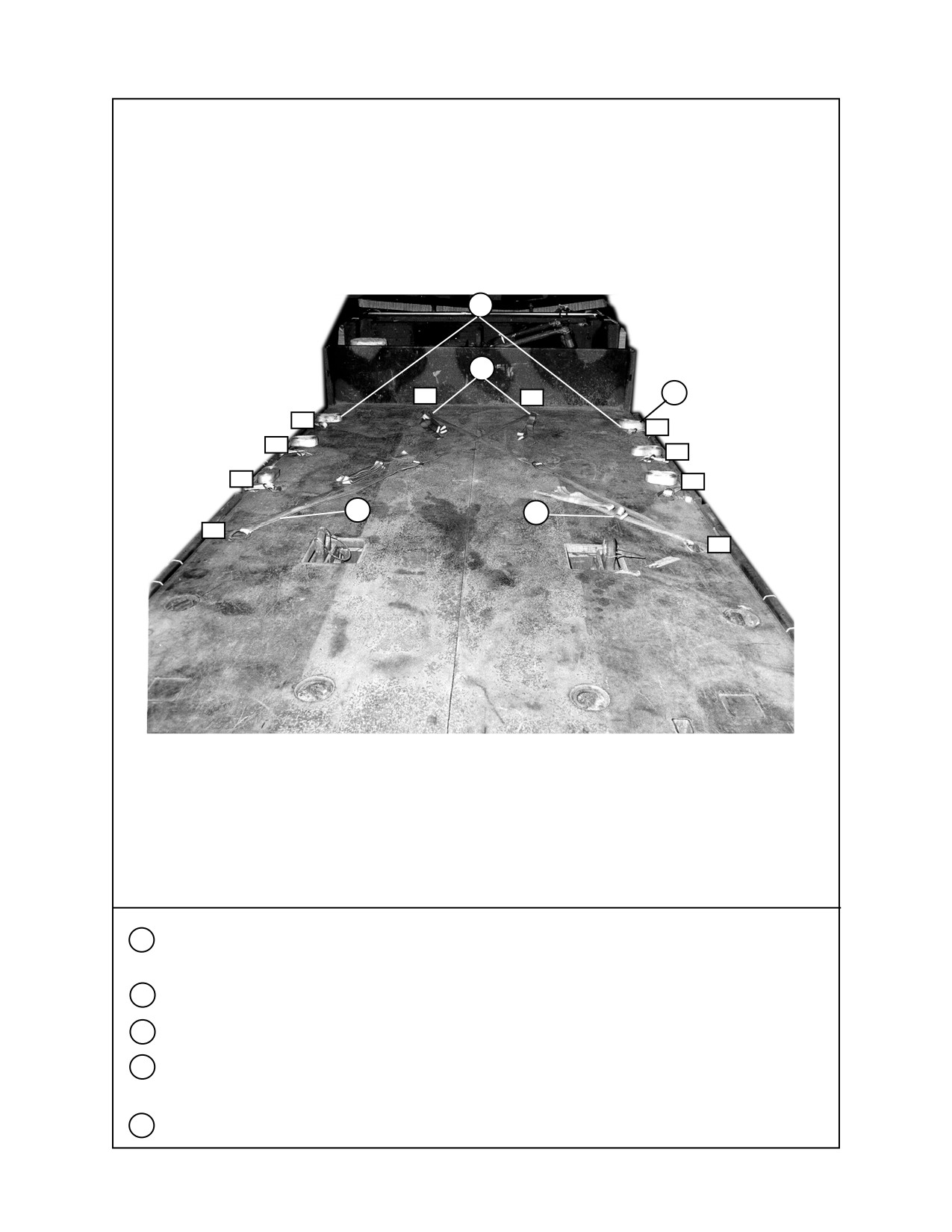
6
2
5
B
A
1A
1
2A
2
3A
3
3
4
4A
4
2
Starting at the front of the truck bed, label the right side truck bed tiedown rings 1 through 4 and the left
side 1A through 4A. Label the front center truck rings as A and B.
3
Route a 30-foot lashing from bed ring A to 4A .
4
Route a 30-foot lashing from bed ring B to 4 .
5
Route a 15-foot lashing through the truck bed tiedown ring 1, and through it’s own D-ring. Lay it to the
vehicle side or roll it up and lay it to the side.
6
Repeat for truck bed tiedown rings 2, 3, 1A, 2A and 3A.
Figure 2-13. Basic load stowed (Continued)
2-40
FM 10-500-71/TO 13C7-6-141
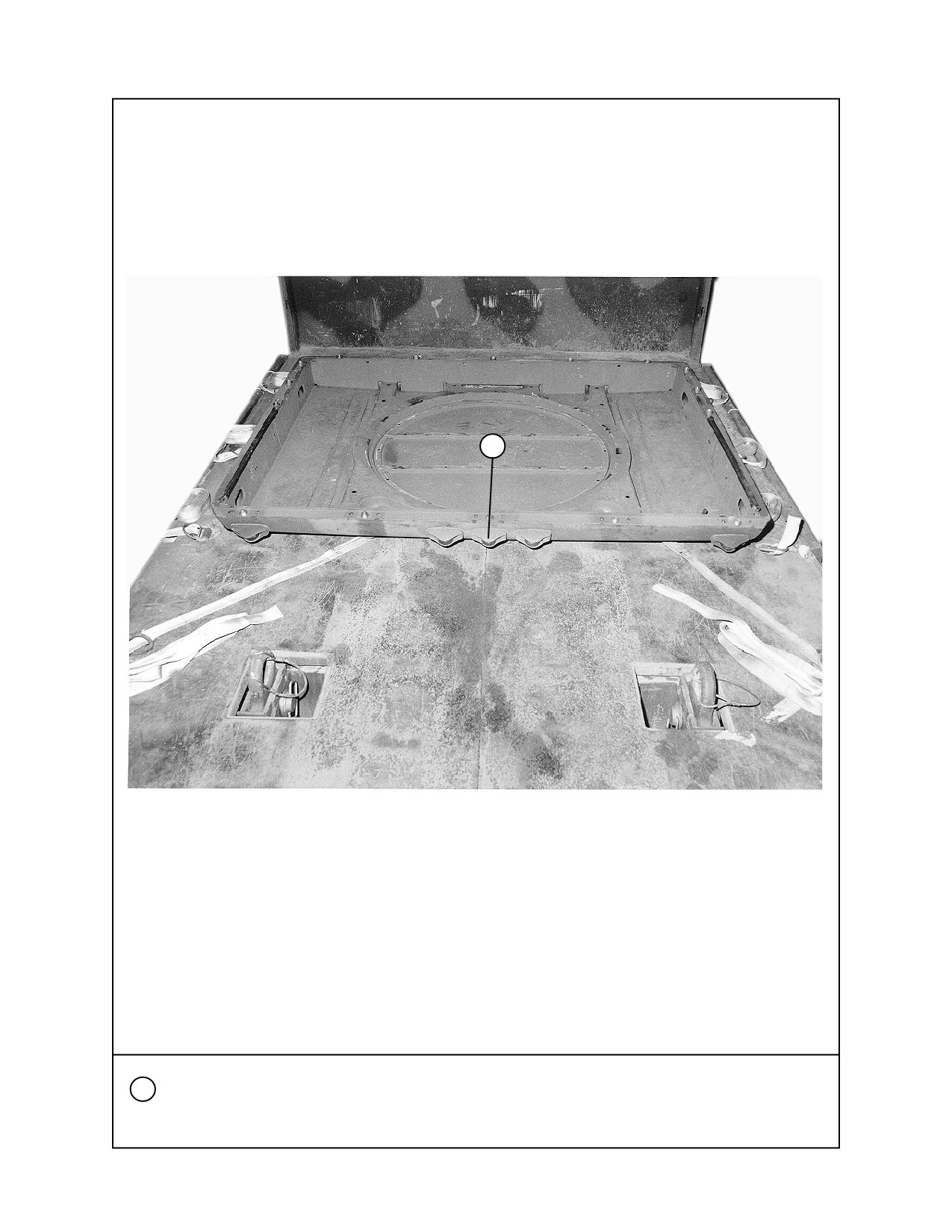
NOTE: Before positioning roof, make sure that all tiedown rings are laying to the outside of the truck bed.
7
7
Position the roof upside down and centered between truck bed tiedown rings 1, 2, 3, 1A, 2A, and 3A, with
the lights facing the rear of the vehicle.
Figure 2-13. Basic load stowed (Continued)
2-41
FM 10-500-71/TO 13C7-6-141
8
9
8
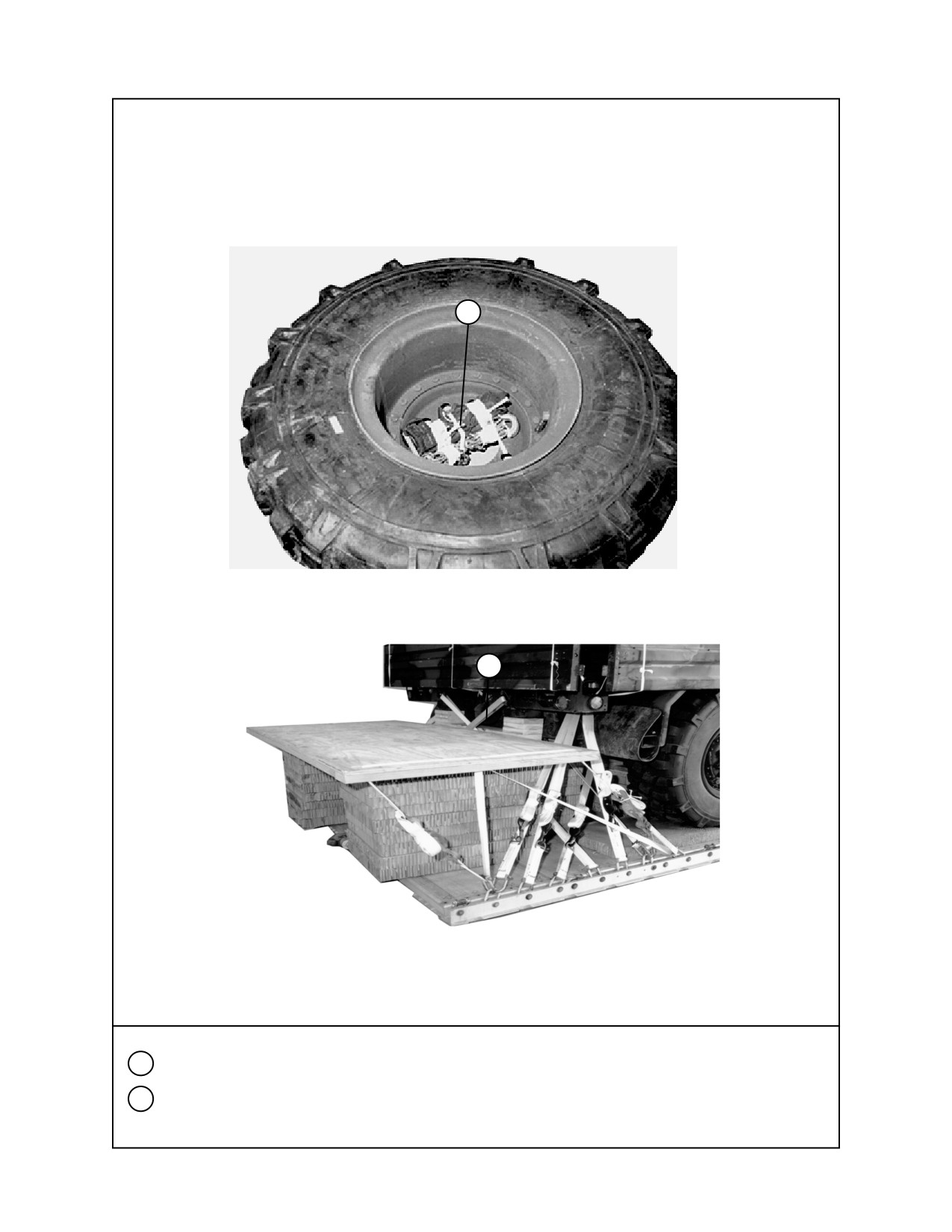
Roll and tape the tire strap. Secure it in the spare tire using 1/2-inch tubular nylon webbing.
9
Position the spare tire in the center of the roof.
Figure 2-13. Basic load stowed (Continued)
2-42
FM 10-500-71/TO 13C7-6-141
10
11
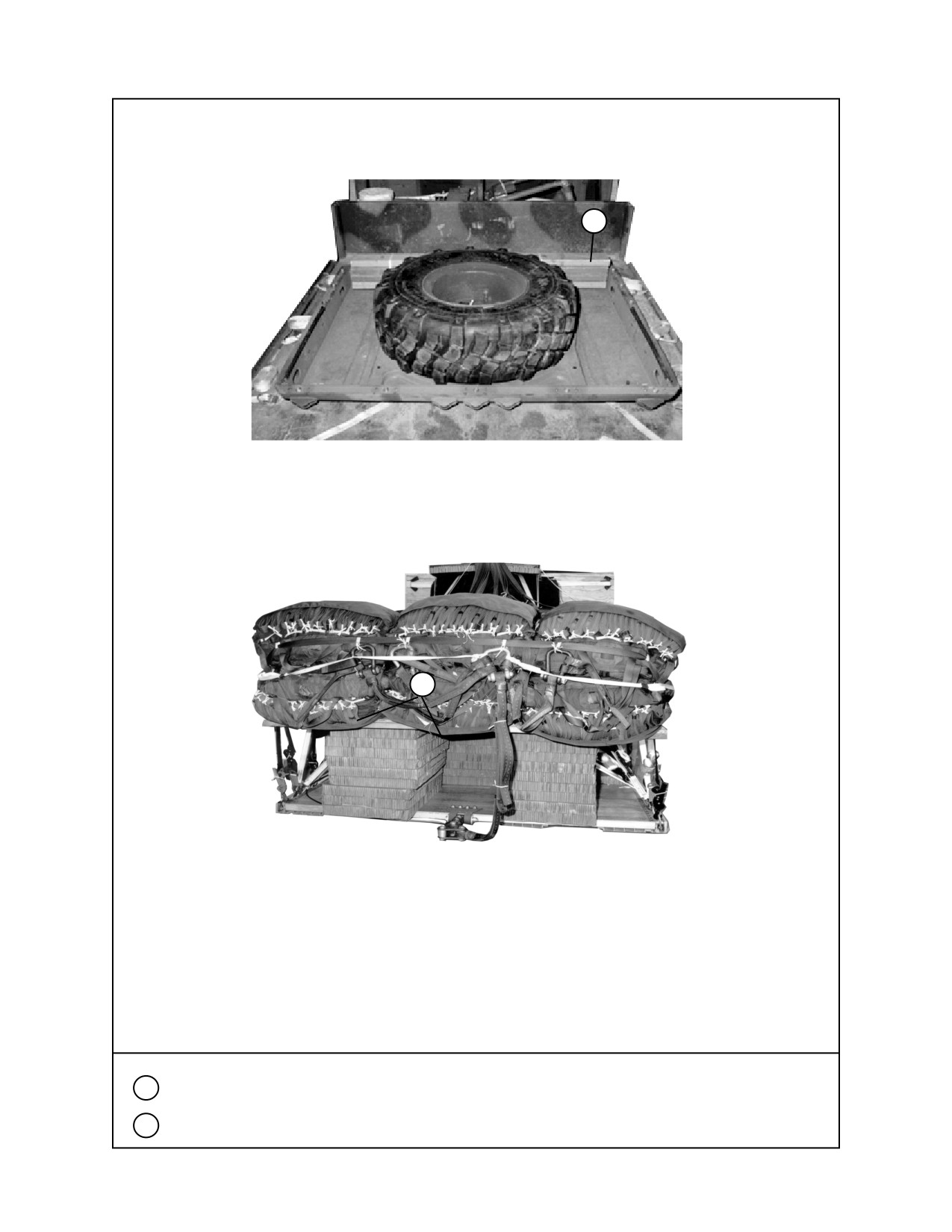
10
Position the side rails inside the roof in front of the spare tire.
11
Position the davit to the rear of the spare tire.
Figure 2-13. Basic load stowed (Continued)
2-43
FM 10-500-71/TO 13C7-6-141
13
12
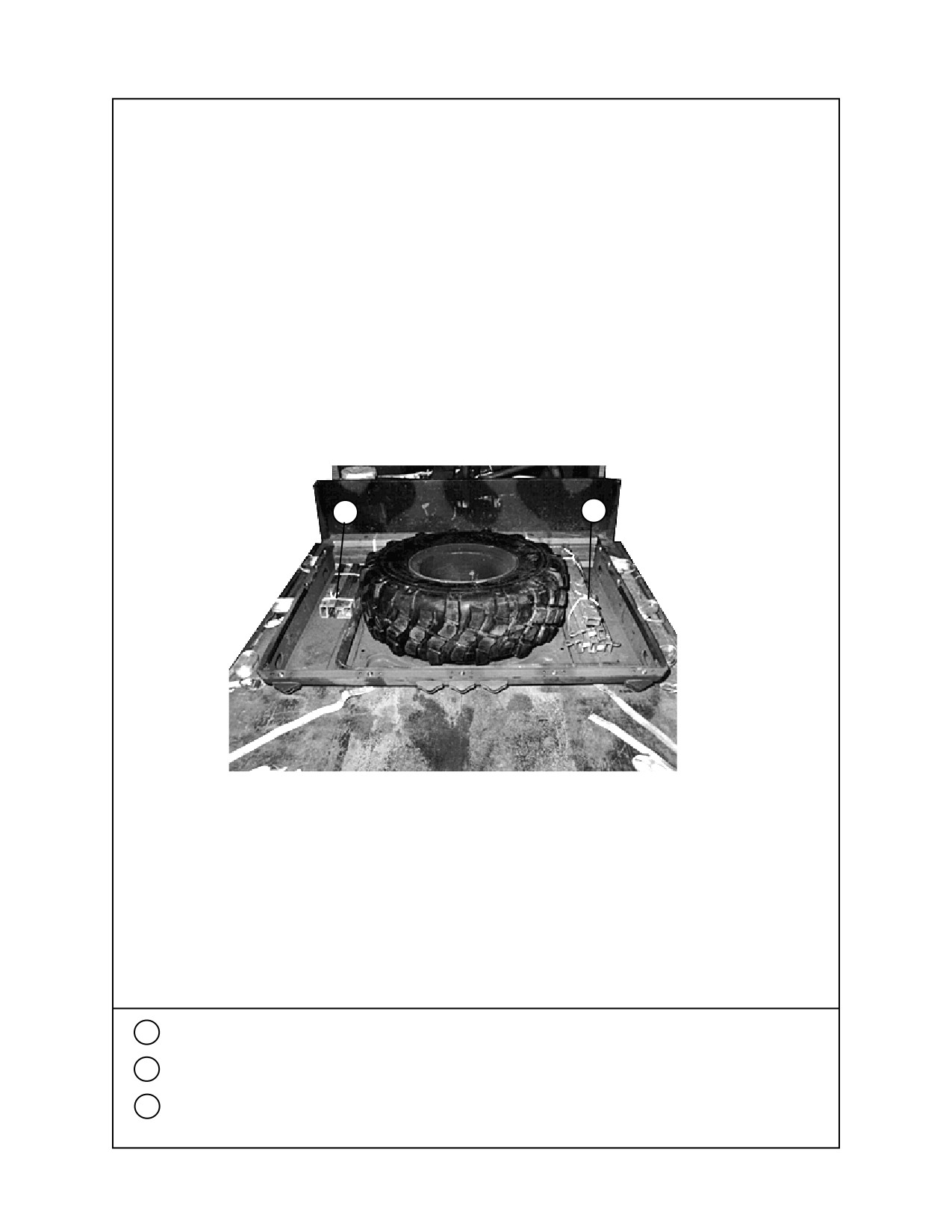
12
Place the seat bars inside the roof and to the right of the spare tire.
13
Place the bed stakes inside the roof and to the left of the spare tire.
14
Place the cargo/troop carrier cover poles in the pole holder in the front of the truck bed. (Not shown)
Figure 2-13. Basic load stowed (Continued)
2-44
FM 10-500-71/TO 13C7-6-141
15
16
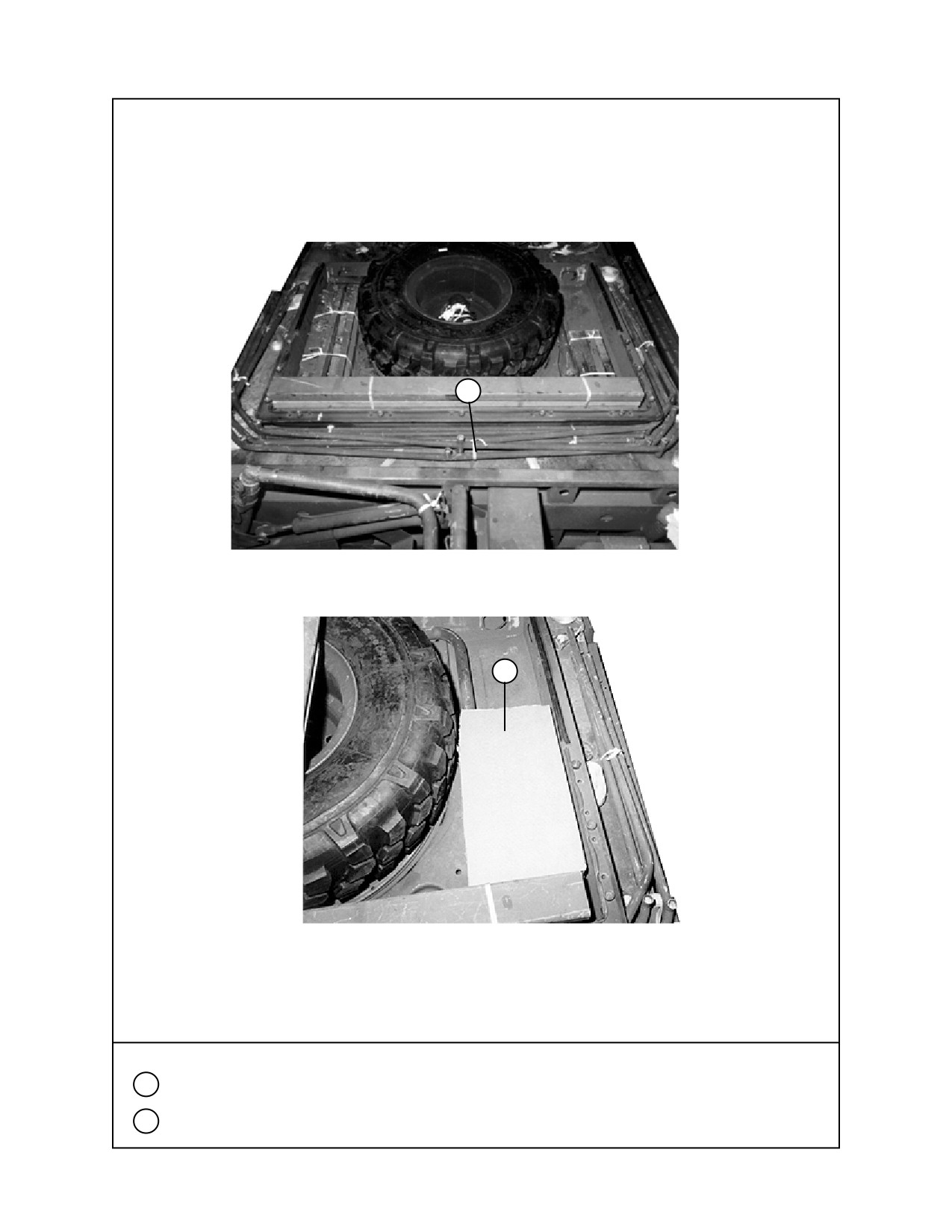
15
Position the bows in front and around the roof.
16
Position two pieces of honeycomb on the bed stakes to create a level surface.
Figure 2-13. Basic load stowed (Continued)
2-45
FM 10-500-71/TO 13C7-6-141
17
18
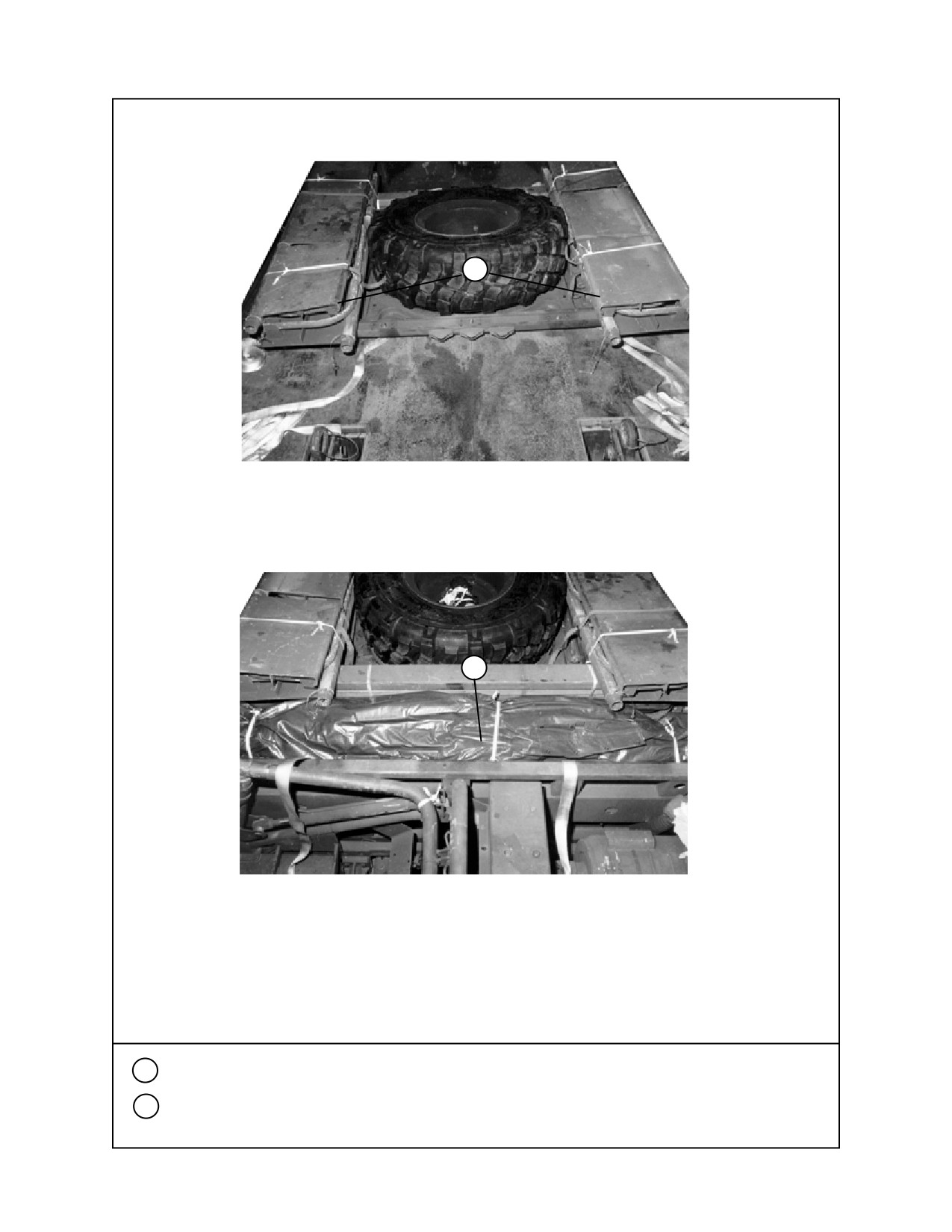
17
Position one set of the seats to the left side and one set to the right side of the spare tire.
18
Position the cargo/troop carrier cover to the front outside of the roof.
Figure 2-13. Basic load stowed (Continued)
2-46
FM 10-500-71/TO 13C7-6-141
19
20
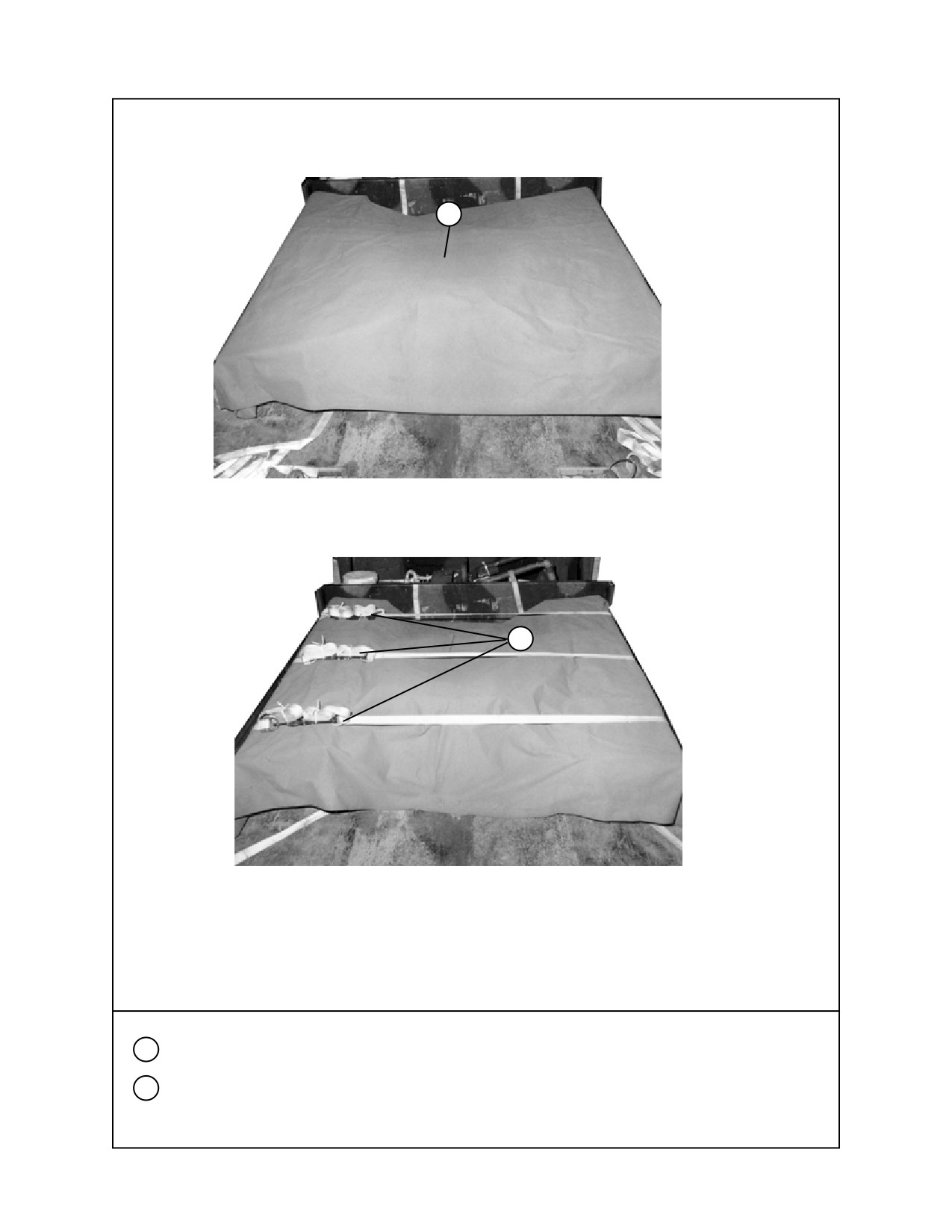
19
Position the canvas over the basic load.
20
Secure the lashings on top of the seats on the left side, lashing 1 to 1A, 2 to 2A, and 3 to 3A over the
load. (Ensure the bows are outside the lashings to prevent bending.)
Figure 2-13. Basic load stowed (Continued)
2-47
FM 10-500-71/TO 13C7-6-141
21
22
A
B
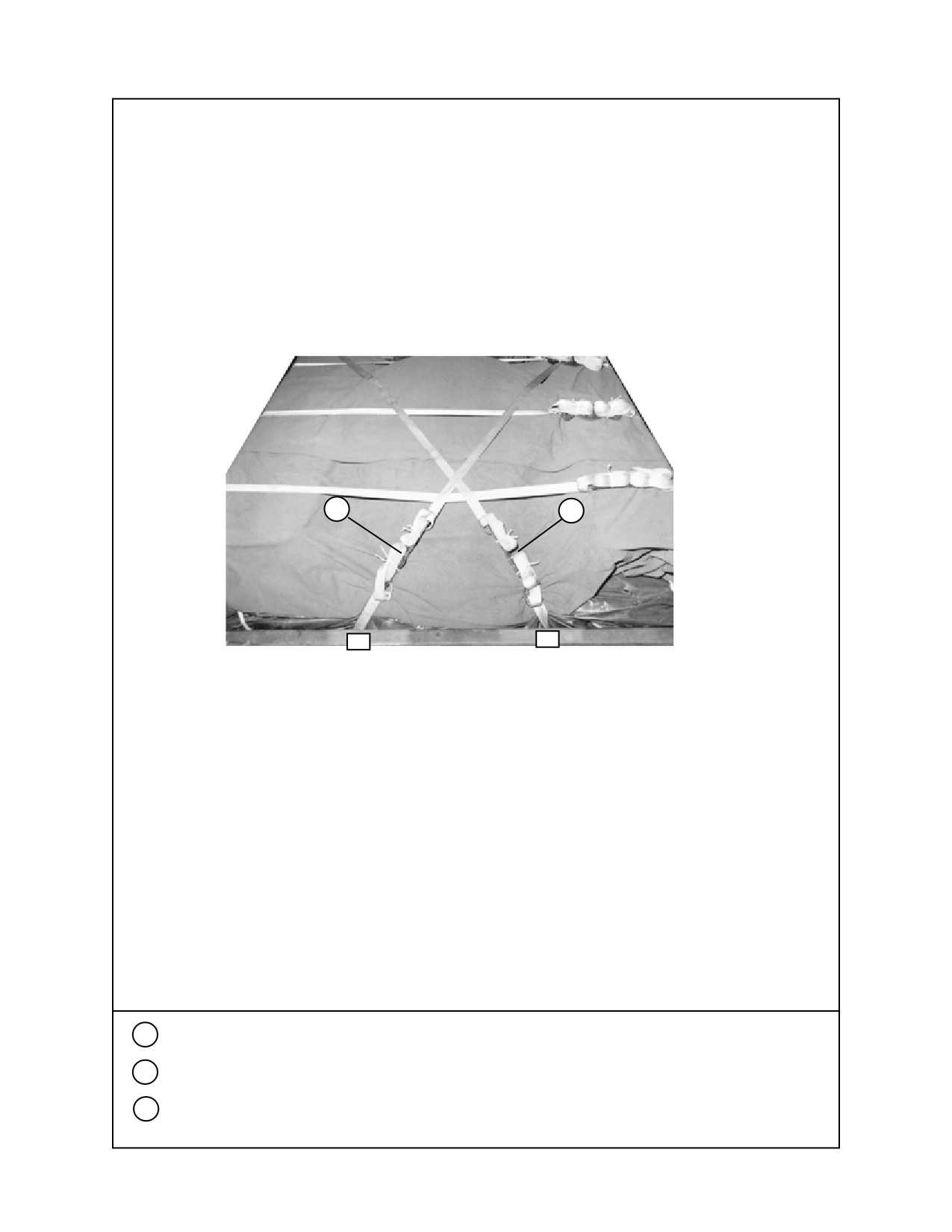
21
Secure the 30-foot lashing routed from truck bed center tiedown rings A to 4A.
22
Secure the 30-foot lashing routed from truck bed center tiedown rings B to 4.
23
Secure the bows to 2 and 2A with 1/2-inch tubular nylon webbing. (Not shown).
Figure 2-13. Basic load stowed (Continued)
2-48
FM 10-500-71/TO 13C7-6-141
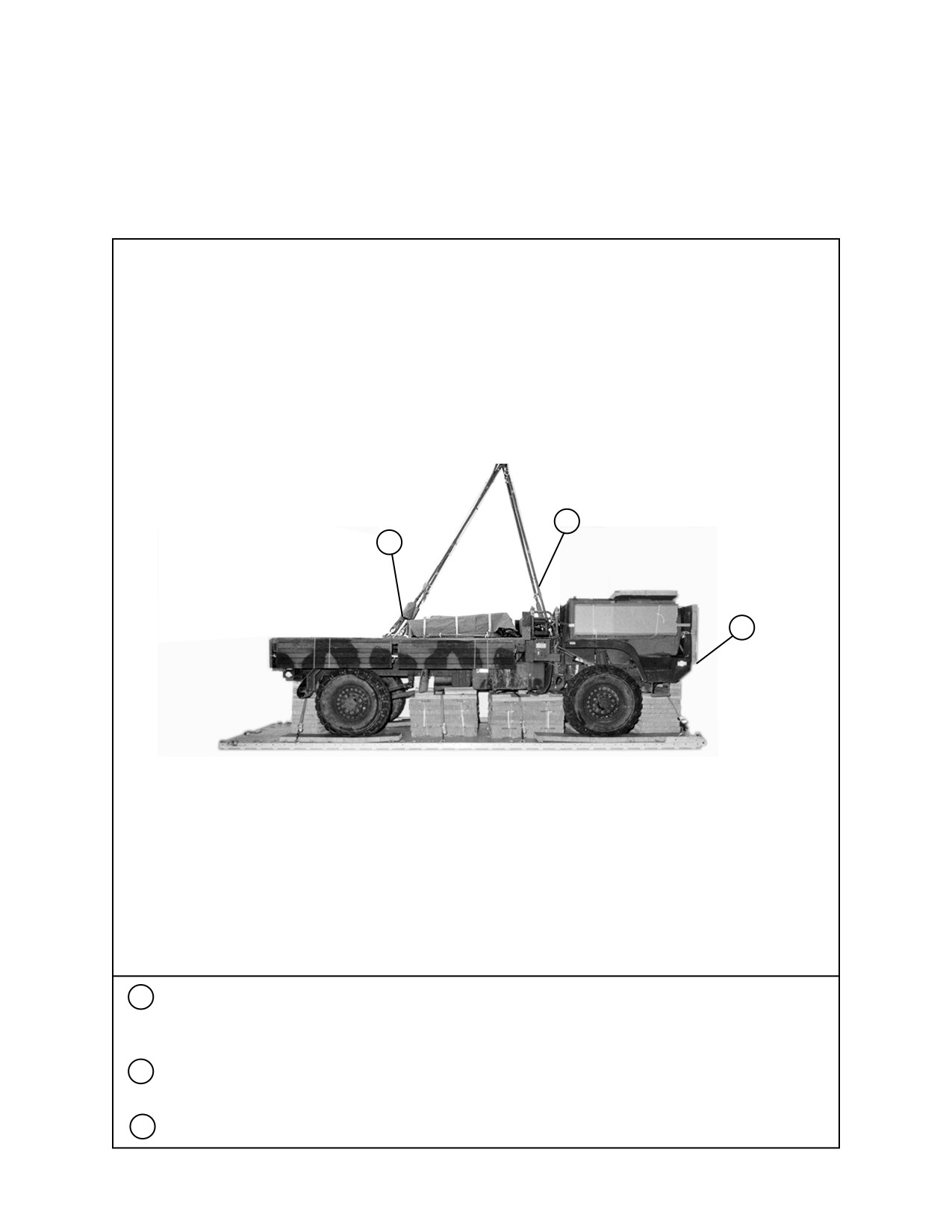
2-7. Lifting and Positioning Truck
Install lifting sling on the M1081 truck and
position the truck on the platform as shown in
Figure 2-14.
2
1
3
1
Attach a screw pin clevis to each rear lifting point. Pass a 3-foot (4-loop), type XXVI nylon webbing sling
through each screw pin clevis. Attach both running ends of the 3-foot (4-loop), type XXVI nylon webbing
sling to a large clevis 11-foot (4-loop), type XXVI nylon webbing sling to each of the large clevises.
2
Attach a 12-foot (4-loop), type XXVI nylon webbing sling to each of the truck’s front lifting points with a
screw pin clevis.
3
Position the truck on the platform so that the front of the truck is flush with the front edge of the platform.
Figure 2-14. Lifting slings installed and truck positioned on the platform
2-49
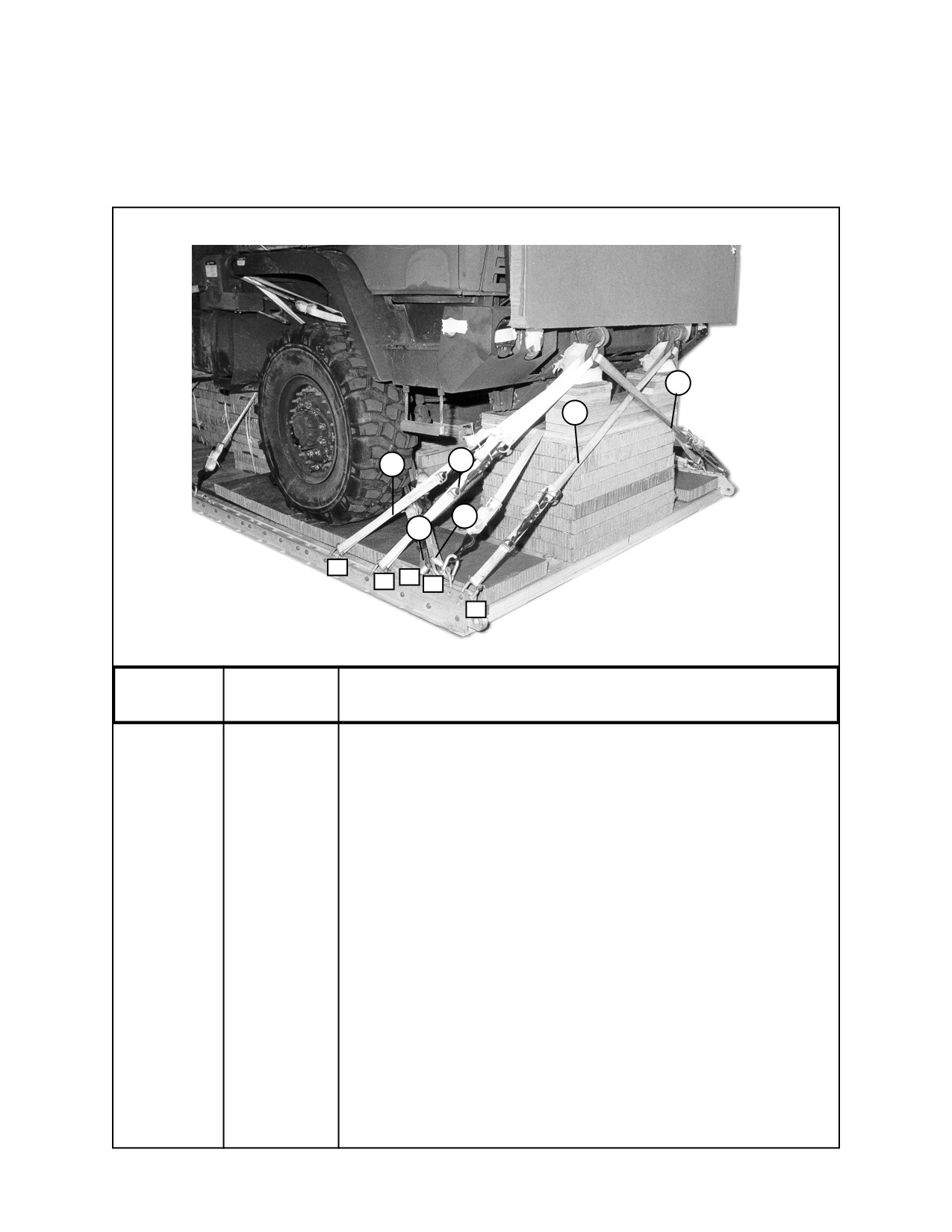
FM 10-500-71/TO 13C7-6-141
2-8. Installing Lashings
Lash the truck to the platform as shown in Figure 2-15.
Install the lashings according to FM 10-500-2/TO 13C7-1-5.
2
1
LEFT
7
9
3
5
6
RIGHT
5
4
3
1
Lashing
Clevis
Number
Number
Instructions
1
1
Route a 15-foot lashing through the front shackle on the left side.
2
1a
Route a 15-foot lashing through the front shackle on the right side.
3
3
Route a 15-foot lashing around the front axle, right side.
4
3a
Route a 15-foot lashing around the front axle, left side.
5
4
Route a 15-foot lashing around the front axle, right side.
6
4a
Route a 15-foot lashing around the front axle, left side.
7
5
Route a 15-foot lashing through the front shackle on the right side.
8
5a
Route a 15-foot lashing through the front shackle on the left side.
9
6
Route a 15-foot lashing through the front shackle on the right side.
10
6a
Route a 15-foot lashing through the front shackle on the left side.
Figure 2-15. Lashings installed
2-50
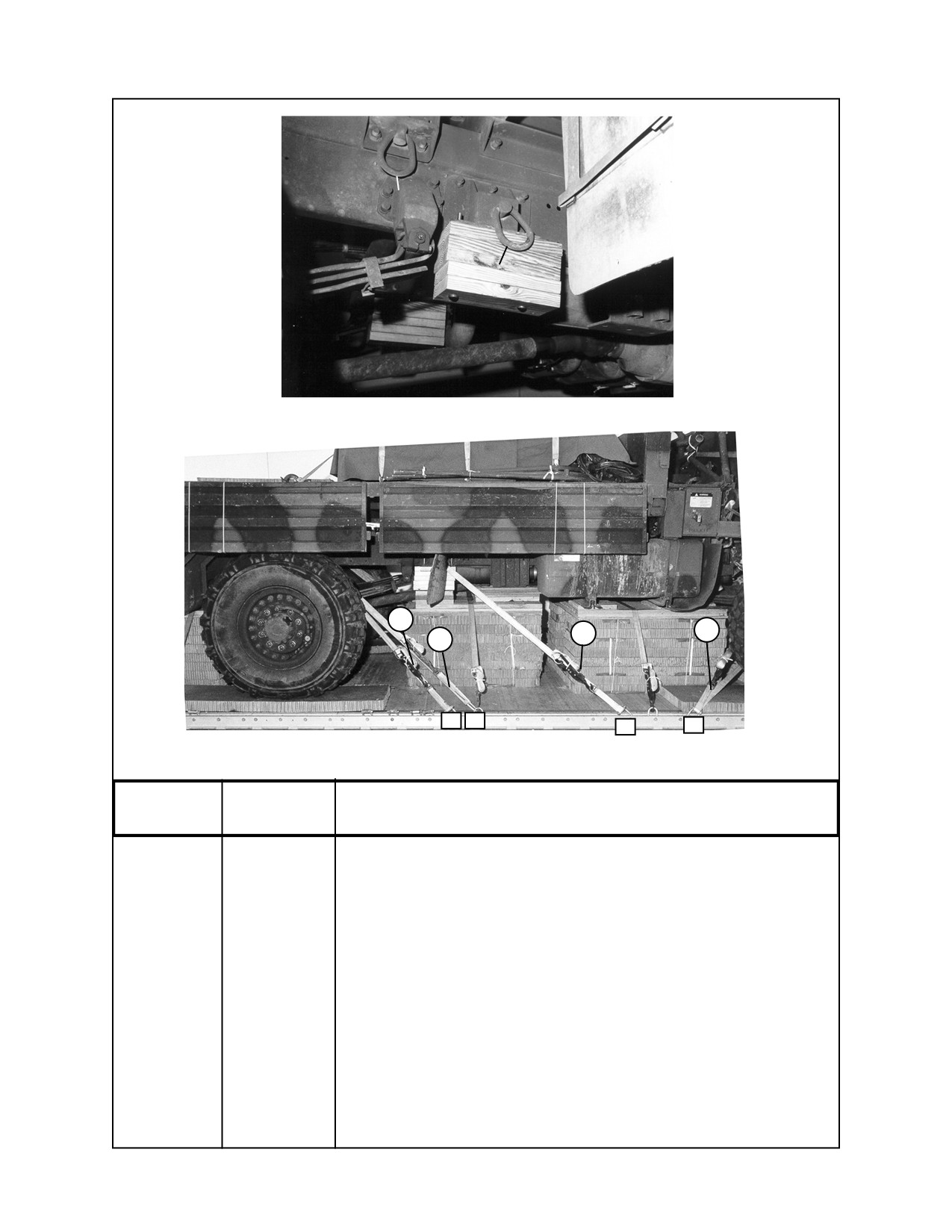
FM 10-500-71/TO 13C7-6-141
Tiedown point #2
Tiedown point #1
17
13
11
15
12
11
9
7
Lashing
Clevis
Instructions
Number
Number
11
7
Route a 15-foot lashing around the front axle, right side.
12
7a
Route a 15-foot lashing around the front axle, left side.
13
9
Route a 15-foot lashing through tiedown point #1 on the right side.
14
9a
Route a 15-foot lashing through tiedown point #1 on the left side.
15
11
Route a 15-foot lashing through tiedown point #3 on the right side.
16
11a
Route a 15-foot lashing through tiedown point #3 on the left side.
17
12
Route a 15-foot lashing through tiedown point #3 on the right side.
18
12a
Route a 15-foot lashing through tiedown point #3 on the left side.
Figure 2-15. Lashings installed (Continued)
2-51
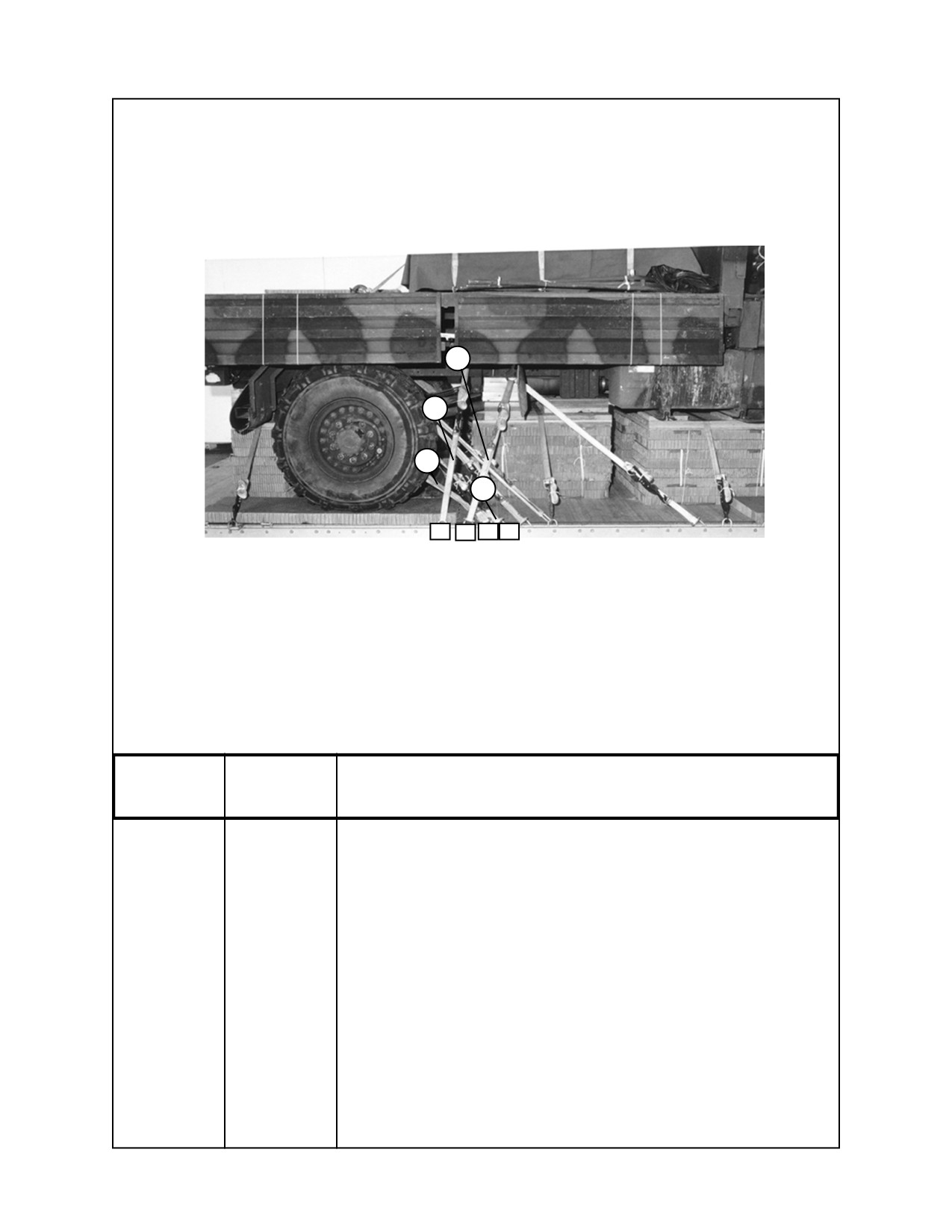
FM 10-500-71/TO 13C7-6-141
23
25
21
19
16
15
14
13
Lashing
Clevis
Number
Number
Instructions
19
13
Route a 15-foot lashing around the rear axle, right side.
20
13a
Route a 15-foot lashing around the rear axle, left side.
21
14
Route a 15-foot lashing around the rear axle, right side.
22
14a
Route a 15-foot lashing around the rear axle, left side.
23
15
Route a 15-foot lashing through tiedown point #1 on the right side.
24
15a
Route a 15-foot lashing through tiedown point #1 on the left side.
25
16
Route a 15-foot lashing through tiedown point #2 on the right side.
26
16a
Route a 15-foot lashing through tiedown point #2 on the left side.
Figure 2-15. Lashings installed (Continued)
2-52
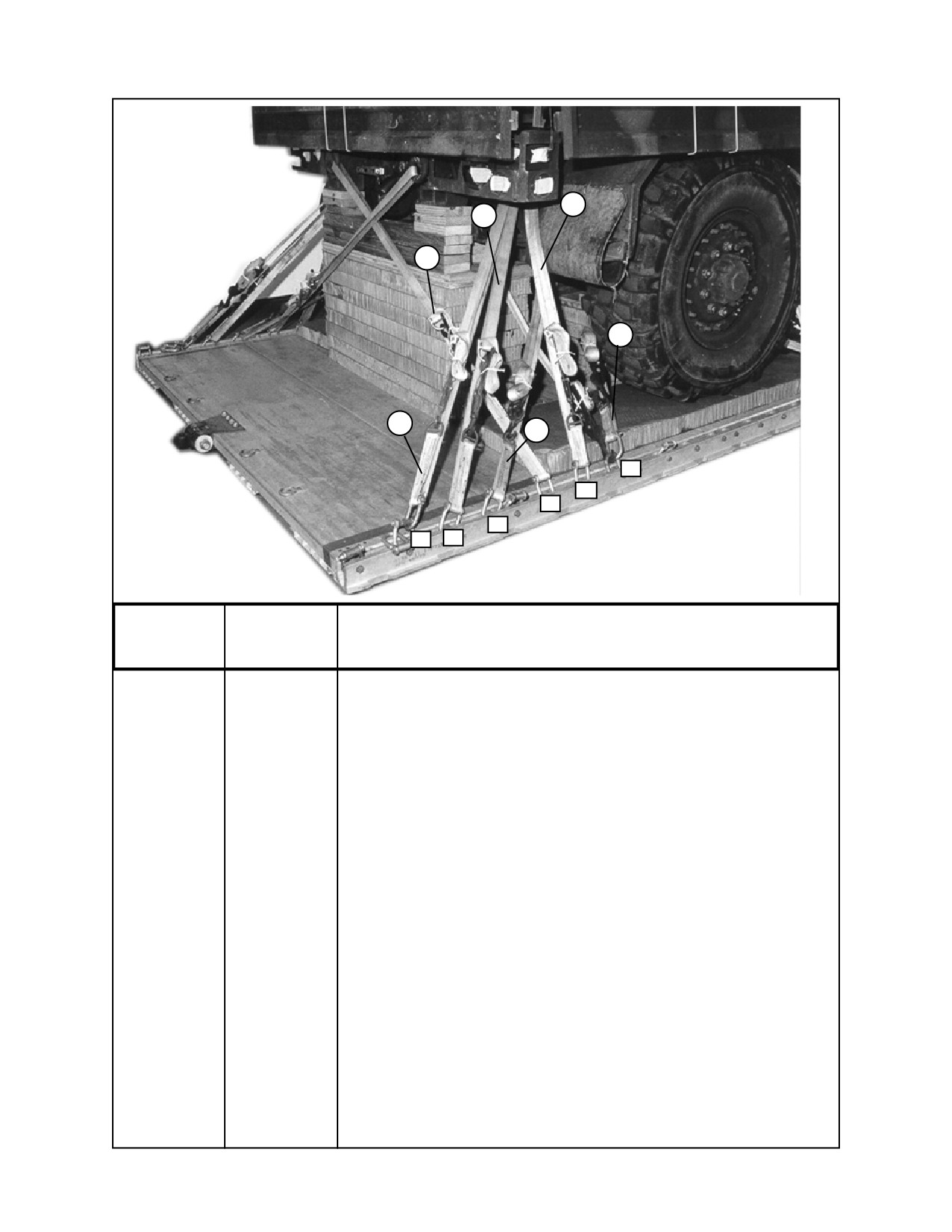
FM 10-500-71/TO 13C7-6-141
33
35
31
27
37
29
18
20
21
23
25
24
Lashing
Clevis
Instructions
Number
Number
27
18
Route a 15-foot lashing around the rear axle on the right side.
28
18a
Route a 15-foot lashing around the rear axle on the left side.
29
23
Route a 15-foot lashing around the rear axle stabilizer bar on the
right side.
30
23a
Route a 15-foot lashing around the rear axle stabilizer bar on the
left side.
31
21
Route a 15-foot lashing through the rear shackle on the left side.
32
21a
Route a 15-foot lashing through the rear shackle on the right side.
33
20
Route a 15-foot lashing through tiedown point #4 on the right side.
34
20a
Route a 15-foot lashing through tiedown point #4 on the right side.
35
24
Route a 15-foot lashing through tiedown point #4 on the right side.
36
24a
Route a 15-foot lashing through tiedown point #4 on the left side.
37
25
Route a 15-foot lashing through tiedown point #4 on the right side.
38
25a
Route a 15-foot lashing through tiedown point #4 on the left side.
Figure 2-15. Lashings installed (Continued)
2-53
FM 10-500-71/TO 13C7-6-141
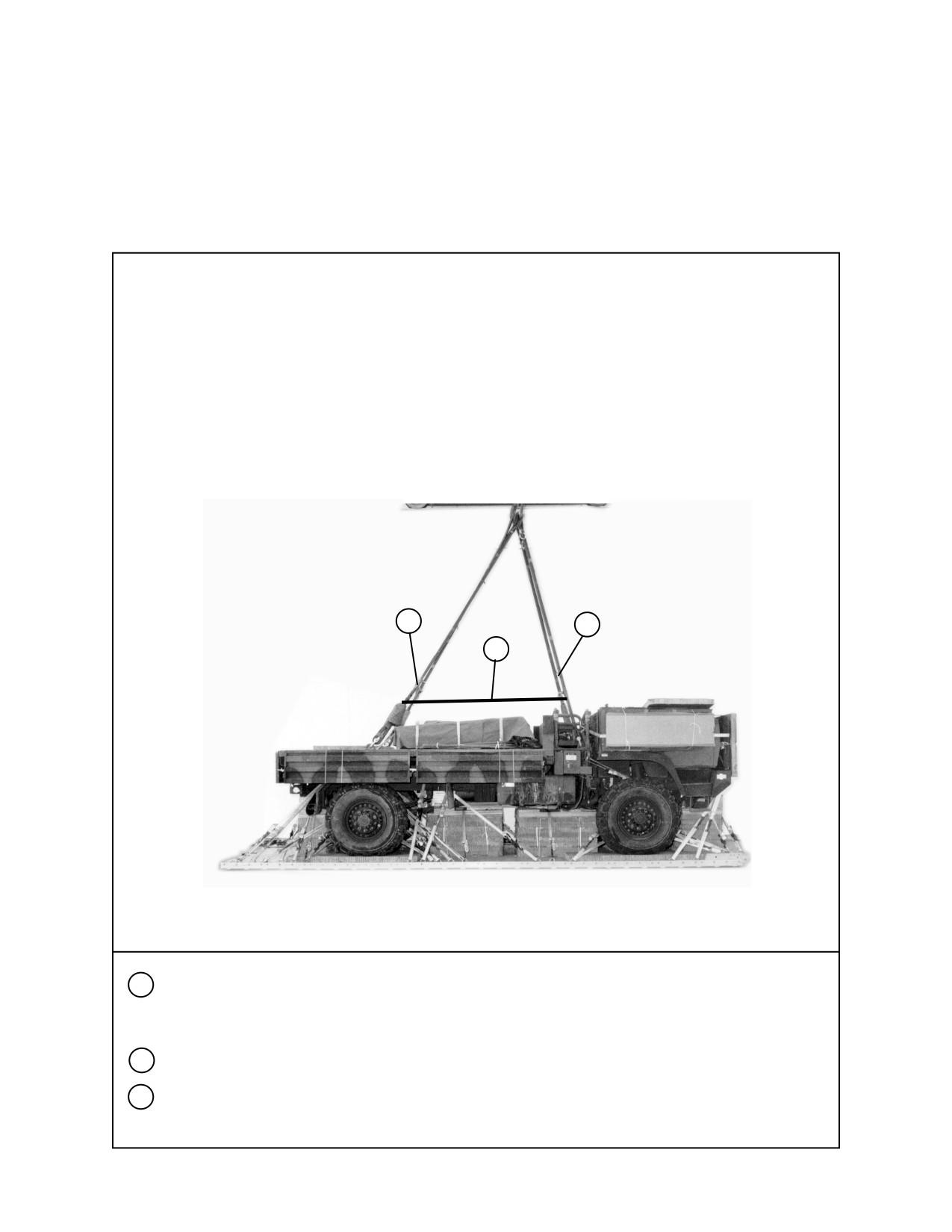
2-9. Installing and Safetying Suspension Slings
Install and safety two 11-foot (4-loop), two
3-foot (4-loop), type XXVI nylon slings and
two 12-foot (4-loop), type XXVI nylon slings
as shown in Figure 2-16.
1
2
3
1
Attach an 11-foot (4-loop), type XXVI sling to the rear lifting points with a screw pin clevis. Attach a 3-
foot (4-loop), type XXVI sling to each of the rear slings with a 5 1/2-inch two-point link.
Wrap with felt and tape the links.
2
Attach a 12-foot (4-loop), type XXVI sling to each of the front lifting points with a screw pin clevis.
3
Raise the slings and install the deadman’s tie according to FM 10-500-2/TO 13C7-1-5.
Figure 2-16. Suspension slings installed and safetied
2-54
FM 10-500-71/TO 13C7-6-141
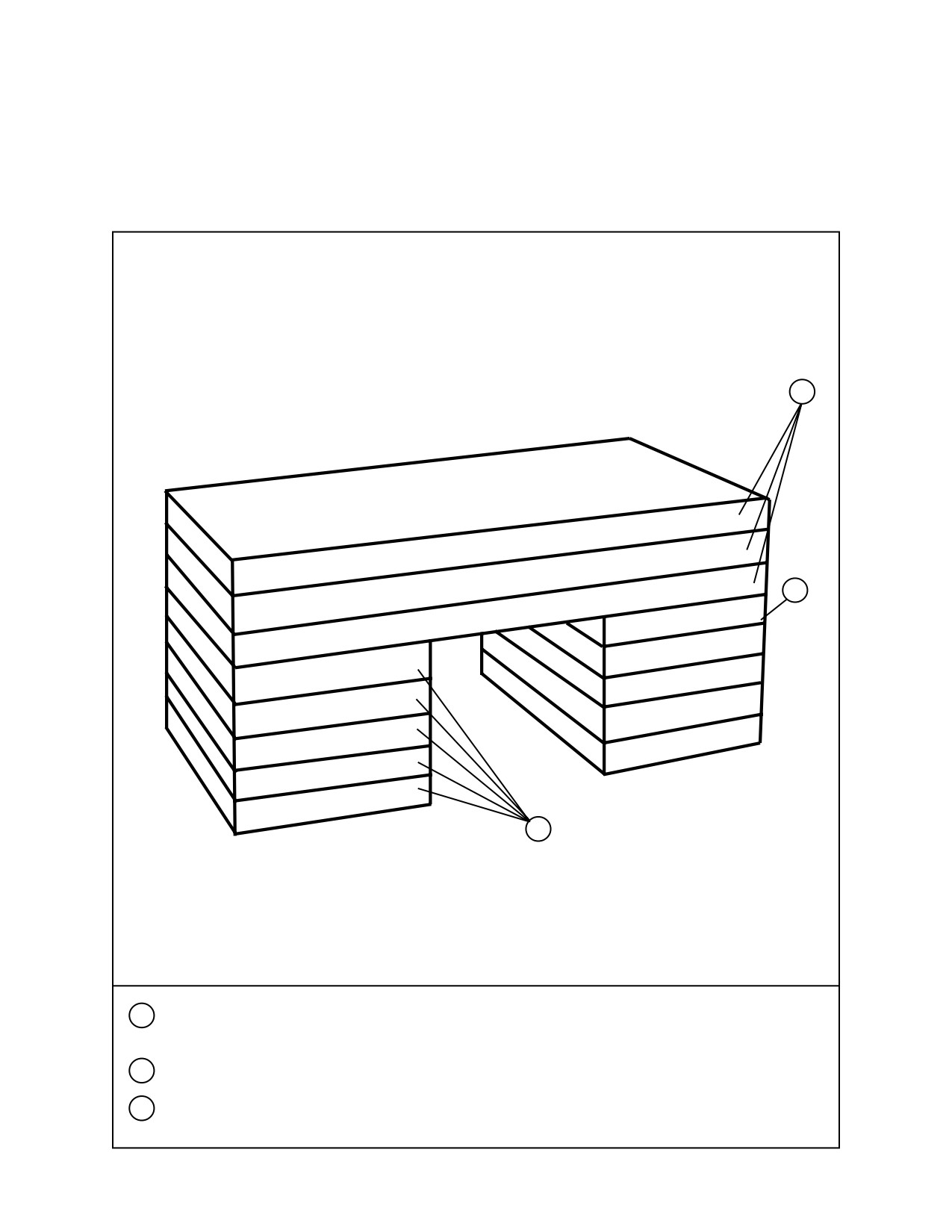
2-10. Building and Positioning the
Parachute Stowage Platform
Build and position the parachute stowage
platform as shown in Figure 2-17.
Note: This drawing is not drawn to scale.
3
2
1
1
Cut ten pieces of 24- by 36-inch honeycomb. Glue five layers of honeycomb together forming a stack.
Repeat forming the second stack.
2
Cut three pieces of 36- by 70-inch honeycomb. Glue honeycomb together forming a stack.
3
Glue one 24- by 36-inch honeycomb stack to the right side and 22 inches apart from the other honeycomb
stack on the left side of the 36- by 70-inch honeycomb stack.
Figure 2-17. Cargo stowage platform positioned
2-55
FM 10-500-71/TO 13C7-6-141
Note: This drawing is not drawn to scale.
2”
4
2”
2” x 6”x 85”
CENTERED
3/4” Plywood
48” x 96”
2” x 6” x 48”
5
7
6
22
26
4
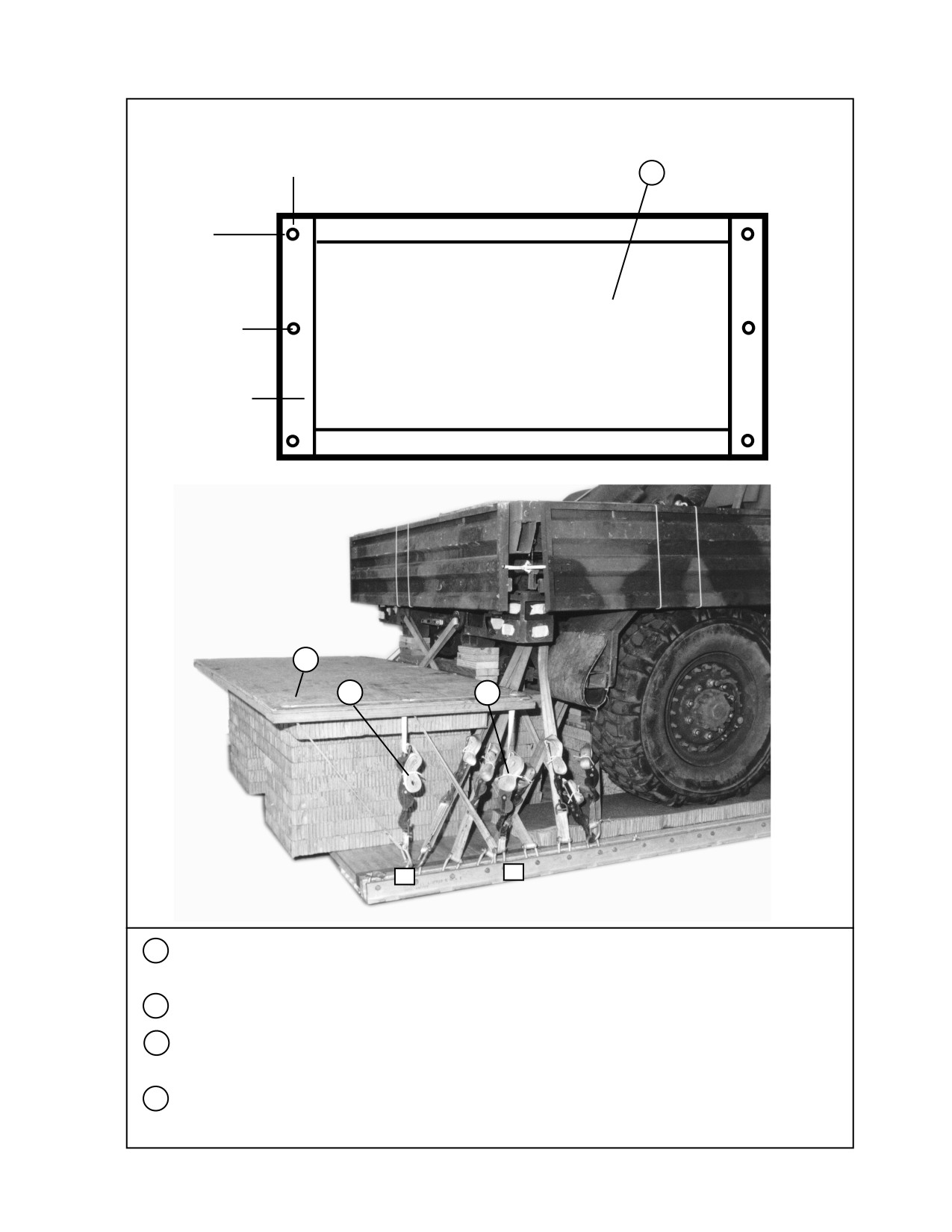
Construct a stowage platform as shown, using one sheet of 3/4-inch plywood. Glue two pieces of
36- by 84-inch honeycomb inside the stowage platform.
5
Center the stowage platform on the 36- by 70-inch honeycomb stack and flush against the lashings.
6
Route a lashing through clevis 22, through the front right hole in the stowage platform, and through the
center right hole. Secure with a loadbinder. Repeat using clevis 22A for the left side.
7
Route a lashing through clevis 26, through the center right hole in the stowage platform, and through the
rear right hole. Secure with a loadbinder. Repeat using clevis 26A for the left side.
Figure 2-17. Cargo stowage platform positioned (Continued)
2-56
FM 10-500-71/TO 13C7-6-141
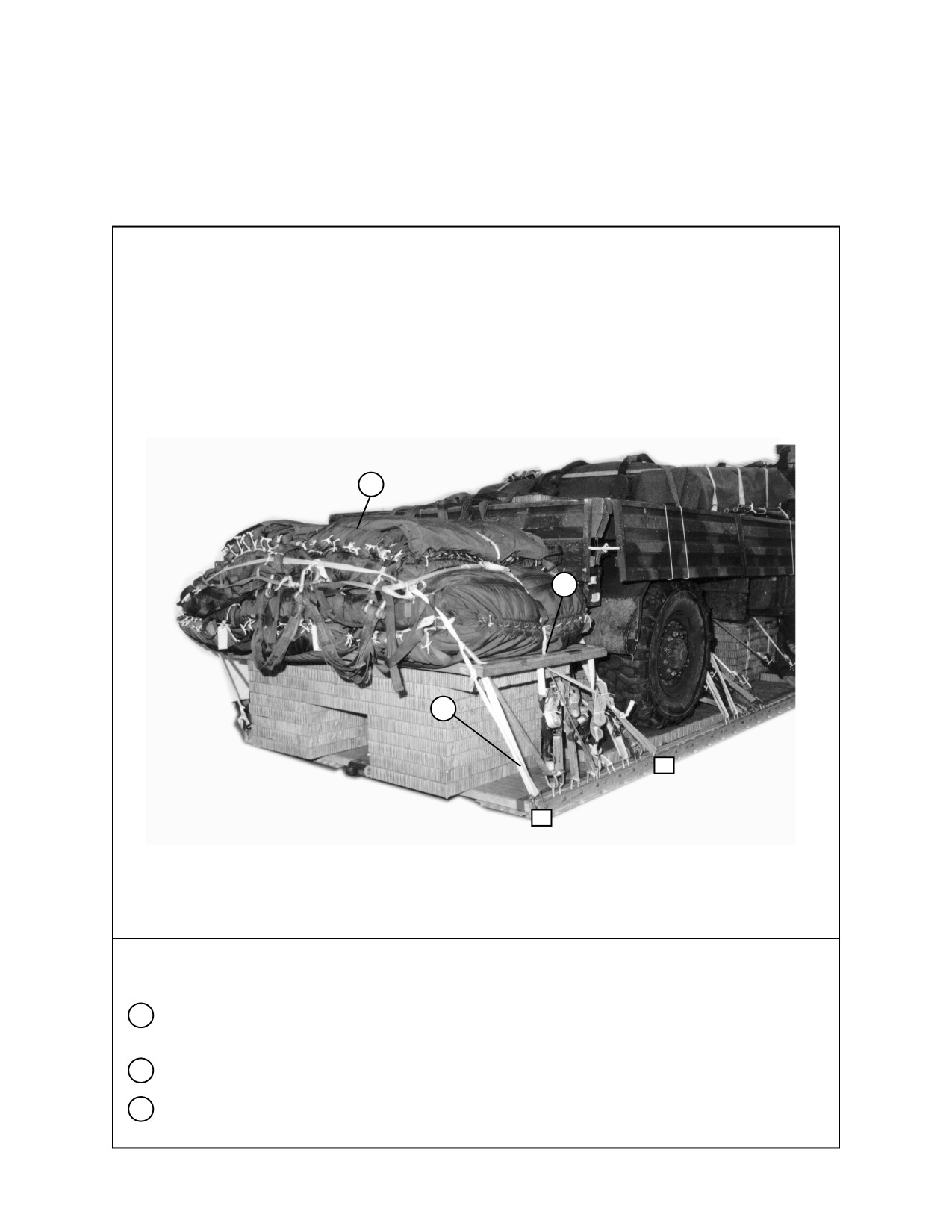
2-11. Stowing Cargo Parachutes
Stow five G-11 cargo parachutes as shown in Figure 2-18.
1
2
3
17
27
1
Prepare, cluster and place five G-11 parachutes on the parachute stowage platform according to FM 10-
500-2/TO 13C7-1-5. Install parachute restraints according to FM 10-500-2/TO 13C7-1-5.
2
Secure the aft restraint to clevis 17 right side. Repeat for the left side using clevis 17A.
3
Secure the rear restraint to clevis 27 right side. Repeat for the left side using clevis 27A.
Figure 2-18. Cargo parachutes stowed
2-57
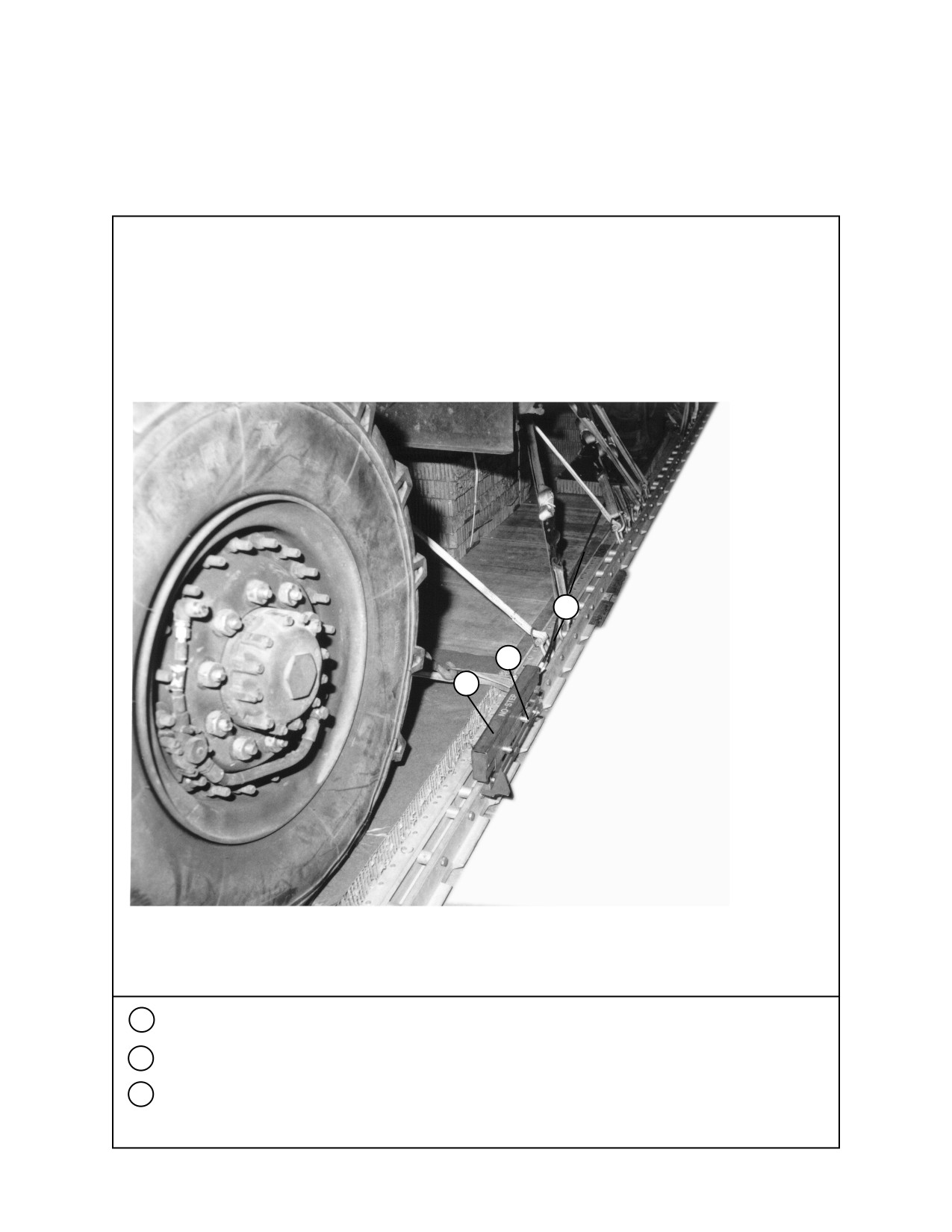
FM 10-500-71/TO 13C7-6-141
2-12. Installing Extraction System
Install the components of the extraction force transfer
coupling (EFTC) according to FM 10-500-2/TO 13C7-
1-5 and as shown in Figure 2-19.
3
2
1
1
Install the EFTC according to FM 10-500-2/TO 13C7-1-5.
2
Install the EFTC mounting brackets in the rear mounting holes in the left platform rail.
3
Attach a 20-foot release cable to the actuator. Install the actuator in the EFTC mounting bracket.
Figure 2-19. Extraction system installed
2-58
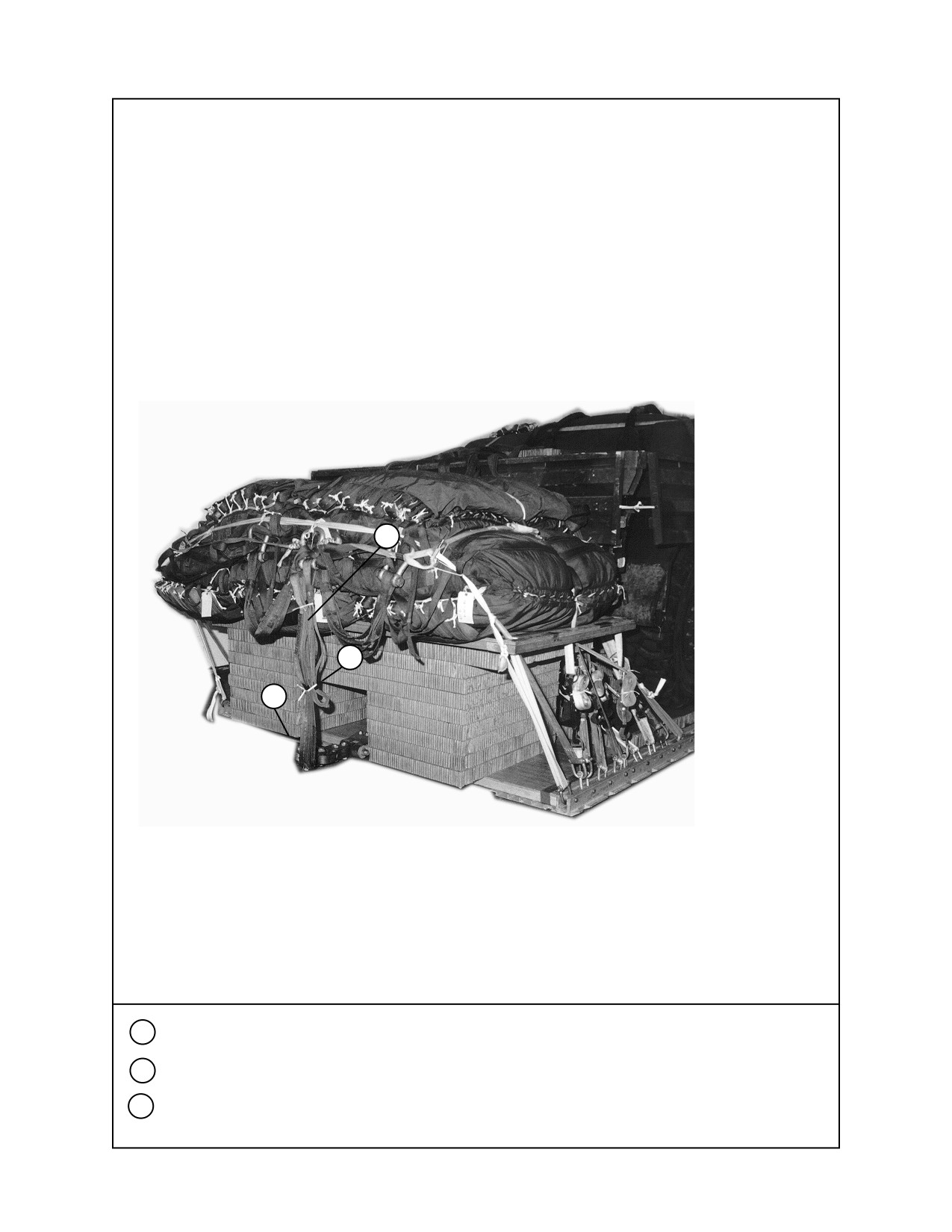
FM 10-500-71/TO 13C7-6-141
5
6
4
4
Safety the release cable with type I, 1/4-inch cotton webbing to the platform bushing or deck-rings.
5
Attach a 9-foot (2-loop), type XXXVI nylon sling, for use as a deployment line.
6
S-fold and secure the folds with type I, 1/4-inch cotton webbing according to FM 10-500-2/TO 13C7-1-5.
Figure 2-19. Extraction system installed (Continued)
2-59
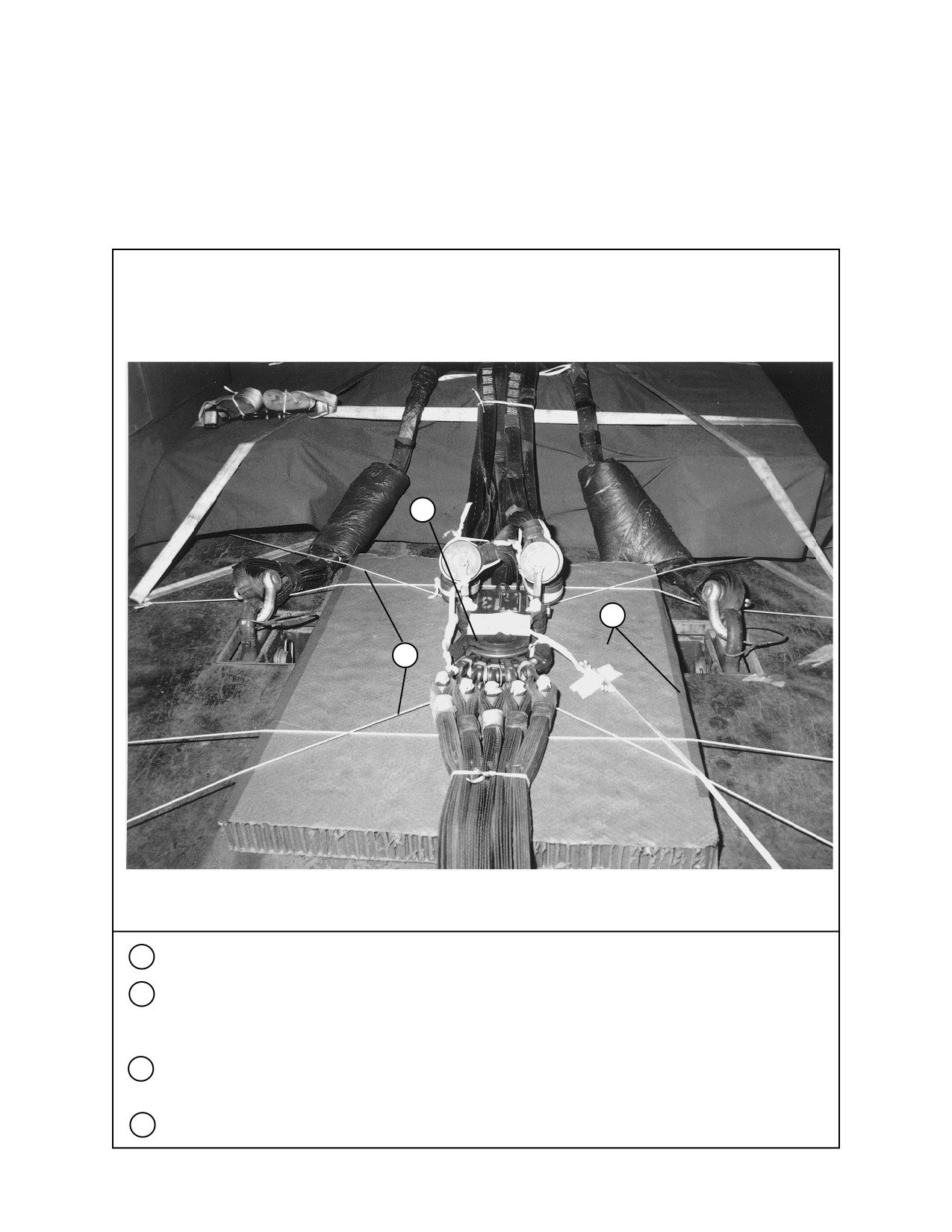
FM 10-500-71/TO 13C7-6-141
2-13. Installing Release System
Install an M-2 cargo parachute release according to FM
10-500-2/TO 13C7-1-5 and as shown in Figure 2-20.
1
2
3
1
Prepare an M-2 parachute release according to FM 10-500-2/TO 13C7-1-5.
2
Cut and tape the edges of a 45- by 36-inch piece of honeycomb. Place it on the top of the truck’s cargo
bed between the rear lifting points. Secure it using type III nylon cord tied to convenient places on the
load.
3
Position and safety the M-2 parachute release on top of the honeycomb. Secure it with type III nylon
cord to convenient points on the load.
4
Fold and tie any slack in the suspension slings with type III nylon cord. (Not shown)
Figure 2-20. Parachute release installed
2-60
FM 10-500-71/TO 13C7-6-141
2-14. Installing Provisions for Emergency Restraints
2-16. Marking the Rigged Load
Select and install provisions for emergency restraints ac-
Mark the rigged load according to FM 10-500-2/TO 13C7-
cording to the emergency restraint requirements table found
1-5 and as shown in Figure 2-21. Complete Shipper’s Dec-
in FM 10-500-2/TO 13C7-1-5.
laration for Dangerous Goods and affix to load. If the load
varies from the one shown, the weight, height, CB, tip-off
2-15. Placing Extraction Parachute
curve and parachute requirements must be recomputed.
Select the extraction parachute and extraction parachute
2-17. Equipment Required
line needed using the extraction parachute and extraction
line requirements table found in FM 10-500-2/TO 13C7-1-5. Use the equipment listed in Table 2-2 to rig this load.
2-61
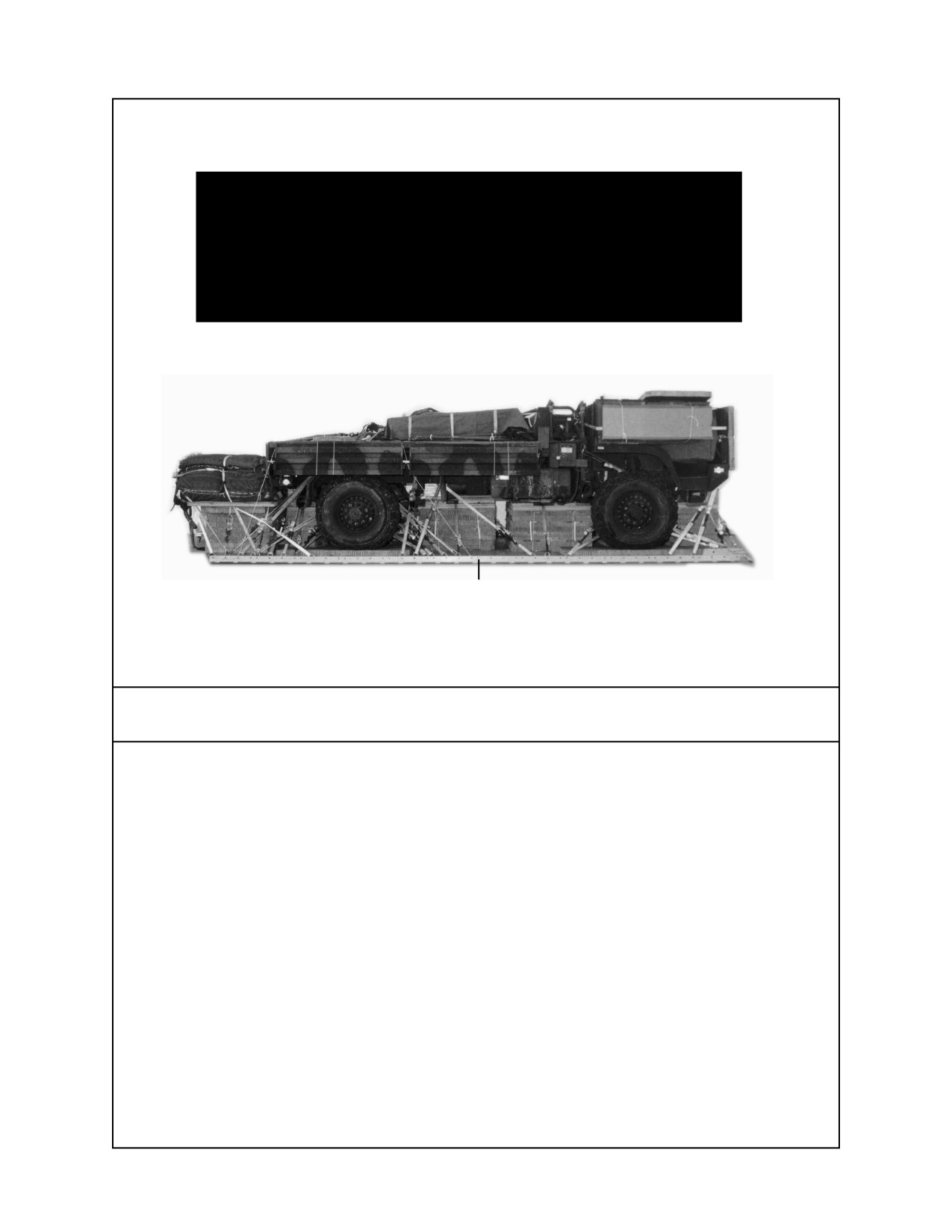
FM 10-500-71/TO 13C7-6-141
CAUTION
Make the final rigger inspection required by
FM 10-500-2/TO 13C7-1-5 before the load leaves the rigging site.
REAR
FRONT
CB
RIGGED LOAD DATA
Weight: Load shown
23,181 pounds
Minimum weight:
22,500 pounds
Maximum weight:
23,000 pounds
Height:
93 inches
Width:
108 inches
Length:
315 inches
Overhang:
Front:
0 inch
Rear:
27 inches
Center of Balance: (from the front edge of the platform)
135 inches
Extraction System
EFTC
Figure 2-21. M1081, 2 1/2-ton cargo truck rigged for low-velocity airdrop
2-62
FM 10-500-71/TO 13C7-6-141
Table 2-2. Equipment required for rigging the M1081, 2 1/2-ton cargo truck for low-velocity airdrop on a type V
platform
National Stock
Item
Quantity
Number
8040-00-273-8713
Adhesive, paste, 1-gal
As required
N/A
Bolts, (washers and nuts), 1/2- by 10-in
4
1670-01-035-6054
Bridle, extraction line bag
(Use with extraction line bag)
1
4030-00-432-2516
Clevis, screw pin
4
4030-00-090-5354
Clevis, suspension, 1-in (large)
3
8305-00-242-3593
Cloth, cotton duck, 60-in
As required
4020-00-240-2146
Cord, nylon, type III, 550-lb
As required
1670-00-434-5787
Coupling, airdrop extraction force transfer cable, 20-ft
1
1670-00-360-0328
Cover, clevis, large
3
8135-00-664-6958
Cushioning material, packaging,
(cellulose wadding)
As required
8305-00-958-3685
Felt, 1/2-in thick
As required
1670-01-183-2678
Leaf, extraction line, (line bag)
2
Line, extraction line, type XXVI nylon webbing:
1670-01-064-4452
60-ft (1-loop), drogue
1
1670-01-062-6313
60-ft (3-loop), type XXVI nylon webbing (for
C-130)
1
1670-01-107-7651
140-ft (3-loop), type XXVI nylon webbing (for
C-5, C-17, and C-141)
1
Truck preparation
Lumber:
5510-00-220-6146
2- by 4- by 6
2
5510-00-220-6148
2- by 6- by 6
3
2- by 6- by 13
1
5510-00-220-6274
4- by 4- by 6
2
4- by 4- by 15
2
5530-00-128-4981
Plywood, 3/4-in:
10- by 10-in
1
2-63
FM 10-500-71/TO 13C7-6-141
Table 2-2. Equipment required for rigging the M1081, 2 1/2-ton cargo truck for low-velocity airdrop on type V
platform (continued)
National Stock
Item
Quantity
Number
Link assembly:
1670-01-783-5988
Type IV
6
Two-point:
1
5303-00-435-8994
Bolt, 1-in diam, 4-in long
(2)
5310-00-232-5161
Nut, 1-in, hexagonal
(2)
1670-00-003-3454
Plate, side, 5 1/2-in
(2)
1670-00-007-3414
Spacer, large
(2)
1670-00-006-2752
Link, suspension tandem
2
Lumber:
1670-00-162-4981
2- by 6- by 48-in
2
2- by 6- by 85-in
2
Load spreader for honeycomb stack 1:
Lumber:
5305-00-435-8994
2- by 8- by 12-in
2
2- by 8- by 43-in
2
Plywood, 3/4-in:
1670-00-003-1954
7 1/2- by 12-in
2
5510-00-128-4981
14- by 7-in
2
5365-00-007-3414
24- by 43-in
2
2-64
FM 10-500-71/TO 13C7-6-141
Table 2-2. Equipment required for rigging the M1081, 2 1/2-ton cargo truck for low-velocity airdrop on a type V
platform (continued)
National Stock
Number
Item
Quantity
Load spreader for honeycomb stack 2:
5510-00-220-6148
Lumber, 2- by 6- by 18-in
2
5530-00-128-4981
Plywood, 3/4-in:
5 1/2- by 18-in
6
18- by 48-in
2
Load spreader for honeycomb stack 3:
5510-00-220-6246
Lumber, 2- by 8- by 26 1/2-in
2
5530-00-129-7777
Plywood, 1/2-in:
7 1/2- by 26 1/2-in
1
5510-00-128-4981
Plywood, 3/4-in:
6- by 8-in
1
7 1/2- by 8-in
2
8- by 16-in
1
10- by 10-in
1
12- by 14-in
4
46- by 48-in
4
Load spreader for honeycomb stack 4:
Lumber:
5510-00-220-6148
2- by 6- by 21-in
6
2- by 6- by 48-in
1
5510-00-220-6250
2- by12- by 12-in
6
2- by 12- by 34- in
2
5510-00-220-6448
Plywood 3/4-in:
44- by 48-in
3
2-65
FM 10-500-71/TO 13C7-6-141
Table 2-4. Equipment required for rigging the M1081, 2 1/2-ton cargo truck for low-velocity on type V airdrop
platform (continued)
National Stock
Item
Quantity
Number
Load spreader for honeycomb stack 5:
5510-00-220-6148
Lumber, 2- by 6- by 18-in
2
5530-00-128-4981
Plywood, 3/4-in:
5 1/2- by 18-in
6
18- by 60-in
2
Load spreader for honeycomb stack 6:
Lumber:
5510-00-220-6148
2- by 6- by 8-in
6
2- by 6- by 33-in
3
2- by 6- by 45-in
4
5530-00-128-4981
Plywood, 3/4-in:
18- by 48-in
3
Nail, steel wire, common:
5315-00-010-4659
8d
As required
5315-00-753-3885
16d
As required
1670-00-753-3928
Pad, energy-dissipating, honeycomb,
3- by 36- by 96-in:
39 sheets
4- by 6-in
1
12- by 30-in
1
12- by 31-in
12
18- by 44-in
24
18- by 48-in
13
18- by 60-in
2
24- by 34-in
4
36- by 44-in
4
36- by 80-in
1
36- by 96-in
10
43- by 20-in
5
43- by 30-in
2
74- by 18-in
2
96- by 18-in
2
2-66
FM 10-500-71/TO 13C7-6-141
Table 2-4. Equipment required for rigging the M1081, 2 1/2-ton cargo truck for low-velocity airdrop on a type V
platform (continued)
National Stock
Item
Quantity
Number
Parachute, cargo:
1670-01-016-7841
G-11C
5
Parachute, cargo extraction:
1670-00-040-8135
28-ft,
1
1670-01-063-3715
15-ft
1
Platform, AD, type V, 24-ft
1
1670-01-353-8425
Bracket assembly, coupling
(1)
1670-01-162-2372
Clevis, assembly (type V)
(58)
1670-01-353-8424
Extraction bracket assembly
(1)
1670-01-162-2381
Tandem link assembly (Multipurpose link)
(2)
1670-01-097-8817
Release, cargo parachute, M-2
1
Sling, cargo, airdrop:
For deployment line:
1670-01-062-6304
9-ft (2-loop), type XXVI nylon webbing
1
For lifting and suspension:
1670-01-062-6306
3-ft (4-loop), type XXVI nylon webbing
2
1670-01-062-6310
11-ft (2-loop), type XXVI nylon webbing
2
1670-01-062-6307
12-ft (4-loop), type XXVI nylon webbing
2
For riser extension:
1670-01-062-6302
20-ft (2-loop), type XXVI nylon webbing
5
2-67
FM 10-500-71/TO 13C7-6-141
Table 2-2. Equipment required for rigging the M1081, 2 1/2-ton cargo truck for low-velocity airdrop on a type V
platform (continued)
National Stock
Item
Quantity
Number
5340-00-040-8219
Strap, parachute release, multi-cut
with 3 knives
2
7510-00-266-5016
Tape, adhesive, 2-in (masking)
As required
7510-00-079-7906
Tape, pressure, 2-in (pressure sentitive)
As required
1670-00-937-0271
Tiedown assembly, 15-ft
79
Webbing:
8305-00-268-2411
Cotton, 80-lb
As required
8305-00-082-5752
Nylon, tubular, 1/2-in, 1,000-lb natural
As required
8305-00-263-3591
Type VIII
As required
2-68
FM 10-500-71/TO 13C7-6-141
Section II
RIGGING M1081, 2 1/2-TON CARGO TRUCK WITH ACCOMPANYING LOAD
2-18. Description of Load
The M1081, 2 1/2-ton cargo truck is rigged on a 24-foot,
The load consists of the M1081, 2 1/2-ton cargo truck
type V airdrop platform with six G-11cargo parachutes
and accompanying load of 42 boxes of 105mm ammuni-
and other items of airdrop equipment.
tion. This load is 97 inches in height, 108 inches in width,
315 inches in length and has a rigged weight of 28,014
pounds.
2-69
FM 10-500-71/TO 13C7-6-141
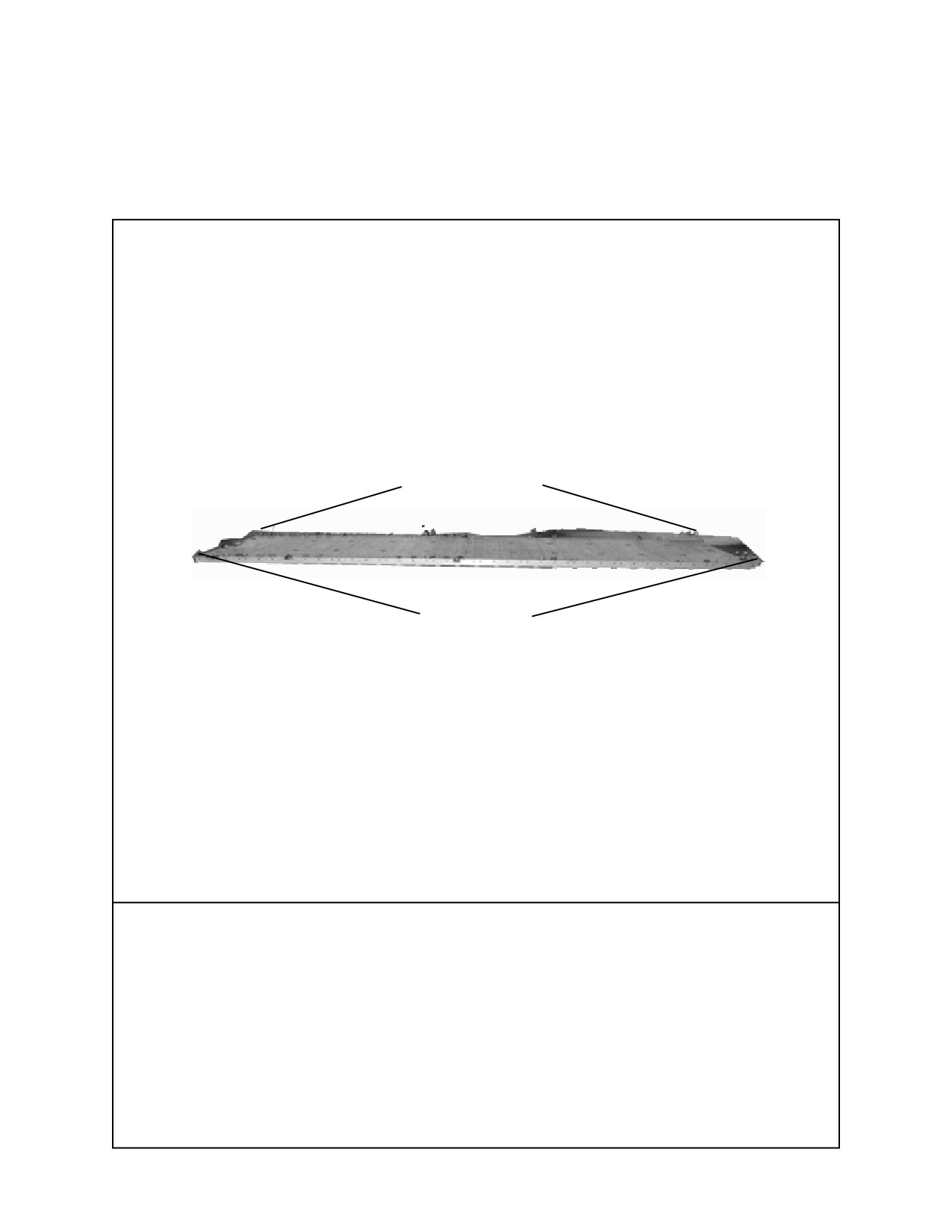
2-19. Preparing Platform
Prepare a 24-foot, type V platform
as shown in Figure 2-22.
NOTES:
1. The nose bumper may or may not be installed.
2. Measurements given in this section are from the front edge
of the platform NOT from the front edge of the nose bumper.
LEFT
28A Through 1A
REAR
FRONT
28 Through 1
RIGHT
Step:
1.
Inspect, or assemble and inspect, a 24-foot, type V airdrop platform as outlined in TM 10-1670-268-20&P/
TO 13C7-52-22.
2.
Install a tandem multi-purpose link to each platform side rail using holes 1, 2, and 3.
3.
Attach clevises to each tandem link using bushings 1, 2, (tripled), and 3.
4.
Starting at the front of each platform side rail, install clevises using bushings bolted to holes 5, 7, 16, 18,
19, 26 (doubled), 27, 28, 29, 30, 31, 38, 39, 41 (doubled), 42, 43, 44, 45, 46, 47, (tripled), and 48.
5.
Starting at the front of the platform, number the clevises 1 through 28 on the right side and 1A through
28A on the left side.
Figure 2-22. Platform prepared
2-70

FM 10-500-71/TO 13C7-6-141
2-20. Preparing Honeycomb Stacks
Use the material in Table 2-3 to prepare 10
honeycomb stacks as shown in Figures 2-23
through 2-30.
Table 2-3. Material needed to build honeycomb stacks.
Stack
Width
Length
Number
Pieces
(Inches)
(Inches)
Material
Instructions
1
8
43
24
Honeycomb
See Figure 2-23.
3
43
24
3/4-inch Plywood
3
2- by 8
43
Lumber
4
2- by 8
12
Lumber
4
12
7 1/2
3/4-inch Plywood
4
14
7
3/4-inch Plywood
2
5
48
18
Honeycomb
See Figure 2-24.
2
48
18
3/4-inch Plywood
2
2- by 6
18
Lumber
6
18
5 1/2
3/4-inch Plywood
3
2
36
46
Honeycomb
See Figure 2-25.
2
12
46
Honeycomb
12
18
46
Honeycomb
6
12
36
Honeycomb
4
48
46
3/4-inch Plywood
2
2- by 8
26 1/2
Lumber
1
7 1/2
26 1/2
1/2-inch Plywood
2
7 1/2
8
3/4-inch Plywood
1
8
16
3/4-inch Plywood
1
8
6
3/4-inch Plywood
1
10
10
3/4-inch Plywood
4
12
14
3/4-inch Plywood
4
2
36
44
Honeycomb
See Figure 2-26.
2
12
44
Honeycomb
12
18
44
Honeycomb
6
12
36
Honeycomb
3
48
44
3/4-inch Plywood
1
2- by 6
48
Lumber
2
2- by 12
34
Lumber
6
2- by 6
21
Lumber
4
2- by 12
12
Lumber
4
11 1/2
12
3/4-inch Plywood
2-71

FM 10-500-71/TO 13C7-6-141
Table 2-3. Material needed to build honeycomb stacks (continued).
Stack
Width
Length
Number
Pieces
(Inches)
(Inches)
Material
Instructions
5
5
60
18
Honeycomb
See Figure 2-27.
2
60
18
3/4-inch Plywood
2
2- by 6
18
Lumber
6
5 1/2
18
3/4-inch Plywood
6
8
48
18
Honeycomb
See Figure 2-28.
3
48
18
3/4-inch Plywood
4
2- by 6
45
Lumber
6
2- by 6
8
Lumber
3
2- by 6
33
Lumber
7
1
18
96
Honeycomb
See Figure 2-29
8
1
18
96
Honeycomb
See Figure 2-29.
9
1
18
74
Honeycomb
See Figure 2-30.
10
1
18
74
Honeycomb
See Figure 2-30.
NOTE: On all stacks the plywood must be cut to fit lumber. EXAMPLE: An 11 1/2- by 24 inch piece of plywood
sits on a 2- by 12- by 24-inch piece of lumber but hangs over a 1/2 inch on the 11 1/2 inch side. Cut it to 11 by 24
inches to insure it fits. This is not due to improper measurements but to the fact that lumber varies in true sizes.
2-72
FM 10-500-71/TO 13C7-6-141
5
FRONT
3
4
RIGHT
2
6
1
LEFT
REAR
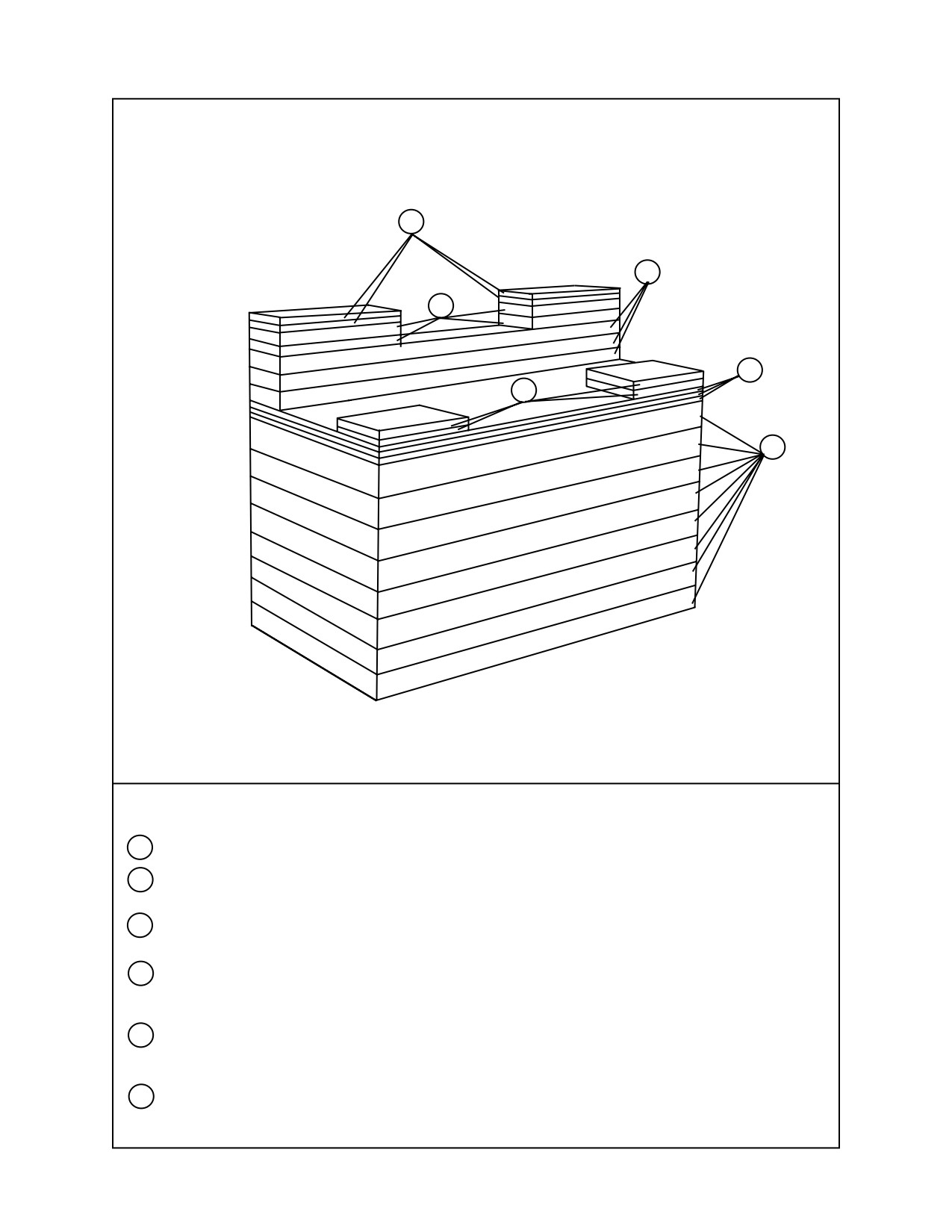
STACK 1
1
Glue eight 43- by 24-inch pieces of honeycomb together to form a base.
2
Glue and nail three 43- by 24-inch pieces of 3/4-inch plywood together. Glue the plywood to the top
of the base.
3
Glue and nail three 2- by 8- by 43-inch pieces of lumber together. Center and glue the lumber flush
with the front of base.
4
Glue and nail two 2- by 8- by 12-inch pieces of lumber together. Repeat with remaining two pieces,
forming two stacks. Glue and nail one stack to the right side, and the other stack to the left side of
previous 2- by 8- by 43-inch piece of lumber.
5
Glue and nail two 12- by 7 1/2- by 3/4-inch pieces of plywood together. Repeat with remaining two
pieces, forming two stacks. Glue and nail one stack to the right side, and the other stack to the left side
of previous 2- by 8- by 12-inch piece of lumber.
6
Glue and nail two 14- by 7- by 3/4-inch pieces of plywood together. Repeat with remaining two pieces,
forming two stacks. Glue one stack to the rear right side, and the other stack to the rear left side of base.
Figure 2-23. Stack 1 prepared
2-73