FM 4-20.112 AIRDROP OF SUPPLIES AND EQUIPMENT: RIGGING TYPICAL SUPPLY LOADS (February 2009) - page 1
*FM 4-20.112/ TO 13C7-1-8
Field Manual
Headquarters Department of the Army
No. 4-20.112
Department of the Air Force
Technical Order
No. 13C7-1-8
Washington, DC, 20 February 2009
AIRDROP OF SUPPLIES AND EQUIPMENT:
RIGGING TYPICAL SUPPLY LOADS
Contents
Page
PREFACE
viii
Scope
viii
User Information
viii
Chapter 1
GENERAL INFORMATION
1-1
Description of Items
1-1
Special Considerations
1-1
Air Force Unilateral Loads
1-1
Chapter 2
RIGGING SUPPLY LOADS ON AN 8-FOOT, TYPE V PLATFORM FOR LOW-
VELOCITY AIRDROP
2-1
SECTION I-RIGGING BULK SUPPLIES
2-1
Description of Load
2-1
Preparing Platform
2-1
Placing Honeycomb
2-3
Positioning and Securing Load
2-4
Constructing and Installing Endboards
2-6
Installing Lashings
2-8
Installing Parachute Stowage Platform
2-11
Installing Suspension Slings and Deadman’s Tie
2-12
Preparing and Stowing Cargo Parachutes
2-13
Installing the Release System
2-14
Installing Extraction System
2-15
Placing Extraction Parachute
2-16
Installing Provisions for Emergency Restraints
2-16
Distribution Restriction: Approved for public release; distribution is unlimited.
*This publication supersedes FM 4-20.112/TO 13C7-1-8, DATED 7 May 2004.
i
Contents
Marking Rigged Load
2-16
Equipment Required
2-16
SECTION II-RIGGING BULK SUPPLIES IN A-22 CARGO BAGS
2-20
Description of Load
2-20
Preparing Platform
2-20
Placing Honeycomb
2-20
Preparing, Stowing and Rigging Load
2-21
Positioning Load
2-21
Installing Lashings
2-22
Installing Suspension Slings and Deadman’s Tie
2-26
Installing Parachute Stowage Platform
2-27
Installing Parachutes
2-28
Installing the Release System
2-29
Installing the Extraction System
2-30
Placing Extraction Parachute
2-31
Installing Provisions for Emergency Restraints
2-31
Marking Rigged Load
2-31
Equipment Required
2-31
Chapter 3
RIGGING SUPPLY LOADS ON A 12-FOOT, TYPE V PLATFORM FOR LOW-
VELOCITY AIRDROP
3-1
Description of Load
3-1
Preparing Platform
3-1
Placing Honeycomb
3-3
Positioning and Securing Load
3-4
Constructing and Installing Endboards
3-6
Installing Lashings
3-8
Installing Suspension Slings and Deadman’s Tie
3-11
Installing Parachute Stowage Platform
3-12
Preparing and Stowing Cargo Parachutes
3-13
Installing the Release System
3-14
Installing the Extraction System
3-16
Placing Extraction Parachute
3-17
Installing Provisions for Emergency Restraints
3-17
Marking Rigged Load
3-17
Equipment Required
3-17
Chapter 4
RIGGING FORWARD AREA SURGICAL TEAM (FAST) EQUIPMENT ON A 12-
FOOT, TYPE V PLATFORM FOR LOW-VELOCITY AIRDROP
4-1
Description of Load
4-1
Preparing Platform
4-1
Positioning Lashings
4-3
Constructing and Forming Storage Box Components
4-5
Preparing Honeycomb Stacks
4-10
Positioning Honeycomb Stacks and Assembling Sides of Storage Box
4-11
Positioning Drop Items
4-12
Closing and Securing Box
4-12
Installing Lashings
4-15
Installing Suspension Slings and Deadman’s Tie
4-19
ii
FM 4-20.112/TO 13C7-1-8
20 February 2009
Contents
Preparing and Stowing Cargo Parachutes
4-20
Installing the Release System
4-21
Installing the Extraction System
4-22
Placing Extraction Parachute
4-23
Installing Provisions for Emergency Restraints
4-23
Marking Rigged Load
4-23
Equipment Required
4-23
Chapter 5
RIGGING SUPPLY LOADS ON A 16-FOOT, TYPE V PLATFORM FOR LOW-
VELOCITY AIRDROP
5-1
SECTION I-RIGGING 105-MILLIMETER (MM) AMMUNITION
5-1
Description of Load
5-1
Preparing Platform
5-1
Building Honeycomb Stacks and Placing First Stack
5-3
Positioning and Securing First Ammunition Stack
5-4
Constructing and Placing Endboards
5-7
Installing Lashings on First Ammunition Stack
5-8
Positioning and Securing Second Ammunition Stack
5-12
Installing Lashings on Second Ammunition Stack
5-14
Installing Load Cover, Suspension Slings and Deadman’s Tie
5-18
Installing Parachutes
5-19
Installing the Release System
5-20
Installing the Extraction System
5-21
Placing Extraction Parachute
5-22
Installing Provisions for Emergency Restraints
5-22
Marking Rigged Load
5-22
Equipment Required
5-22
SECTION II-RIGGING 155-MILLIMETER (MM) AMMUNITION
5-26
Description of Load
5-26
Preparing Platform
5-26
Building Honeycomb Stacks and Placing First Stack
5-28
Positioning and Securing First Ammunition Stack
5-29
Constructing Endboards
5-31
Installing Lashings on First Ammunition Stack and First and Second
Endboards
5-32
Positioning Second Ammunition Stack and Third and Fourth Endboards
5-35
Lashing Second Ammunition Stack and Third and Fourth Endboards
5-35
Installing Suspension Slings and Deadman’s Tie
5-38
Installing Parachutes
5-39
Installing the Release System
5-40
Installing the Extraction System
5-41
Placing Extraction Parachute
5-42
Installing Provisions for Emergency Restraints
5-42
Marking Rigged Load
5-42
Equipment Required
5-42
SECTION III-RIGGING 20-MILLIMETER (MM) AMMUNITION
5-46
Description of Load
5-46
Preparing Platform
5-46
20 February 2009
FM 4-20.112/TO 13C7-1-8
iii
Contents
Building Honeycomb Stacks and Placing First Stack
5-48
Positioning and Securing First Ammunition Stack
5-49
Constructing and Placing Endboards
5-50
Lashing First Ammunition Stack and First and Second Endboards
5-51
Positioning Endboards, Placing Second Ammunition Stack, and Pre-
Positioning Lashings
5-56
Lashing Second Ammunition Stack and Third and Fourth Endboards
5-58
Installing Load Cover, Suspension Slings and Deadman’s Tie
5-64
Installing Parachutes
5-66
Installing the Release System
5-67
Installing the Extraction System
5-68
Placing Extraction Parachute
5-69
Installing Provisions for Emergency Restraints
5-69
Marking Rigged Load
5-69
Equipment Required
5-69
SECTION IV-RIGGING MASS SUPPLY BOX
5-73
Description of Load
5-73
Preparing Platform
5-73
Placing Lashings on Platform
5-75
Constructing and Forming Storage Box Components
5-76
Loading and Closing the Boxes
5-80
Installing Lashings
5-81
Installing Load Cover, Suspension Slings and Deadman’s Tie
5-91
Installing Parachutes
5-92
Installing the Release System
5-93
Installing the Extraction System
5-94
Placing Extraction Parachute
5-95
Installing Provisions for Emergency Restraints
5-95
Marking Rigged Load
5-95
Equipment Required
5-95
Chapter 6
RIGGING MASS SUPPLY BOX ON A 20-FOOT, TYPE V PLATFORM FOR LOW-
VELOCITY AIRDROP
6-1
Description of Load
6-1
Preparing Platform
6-1
Placing Lashings on Platform
6-3
Constructing and Forming Storage Box Components
6-4
Loading and Closing the Boxes
6-8
Installing Lashings
6-8
Installing Load Cover, Suspension Slings and Deadman’s Tie
6-17
Installing Parachutes
6-18
Installing the Release System
6-19
Installing the Extraction System
6-20
Placing Extraction Parachute
6-21
Installing Provisions for Emergency Restraints
6-21
Marking Rigged Load
6-21
Equipment Required
6-21
iv
FM 4-20.112/TO 13C7-1-8
20 February 2009
Contents
Chapter 7
RIGGING PALLETIZED LOAD SYSTEM (PLS) ON A 24-FOOT, TYPE V
PLATFORM FOR LOW-VELOCITY AIRDROP
7-1
SECTION I-RIGGING 105-MILLIMETER (MM) AMMUNITION
7-1
Description of Load
7-1
Preparing Platform
7-1
Preparing and Positioning Honeycomb
7-3
Preparing PLS Pallet
7-7
Positioning PLS Pallet on Platform
7-9
Lashing PLS Pallet to Platform
7-10
Placing and Lashing the Load
7-13
Installing and Safetying Suspension Slings
7-21
Building Parachute Stowage Platform
7-23
Installing Cargo Parachutes
7-24
Installing the Release System
7-25
Installing the Extraction System
7-26
Placing Extraction Parachute
7-27
Installing Provisions for Emergency Restraints
7-27
Marking Rigged Load
7-27
Equipment Required
7-27
SECTION II-RIGGING A-22 CARGO BAGS
7-31
Description of Load
7-31
Preparing Platform
7-31
Preparing and Positioning Honeycomb
7-33
Preparing PLS Pallet
7-37
Positioning PLS Pallet on Platform
7-39
Lashing PLS Pallet to Platform
7-40
Placing and Lashing the Load
7-43
Installing and Safetying Suspension Slings
7-49
Building Parachute Stowage Platform and Installing Cargo Parachutes
7-51
Installing the Release System
7-53
Installing the Extraction System
7-54
Placing Extraction Parachute
7-55
Installing Provisions for Emergency Restraints
7-55
Marking Rigged Load
7-55
Equipment Required
7-55
Chapter 8
RIGGING 155-MILLIMETER (MM) AMMUNITION MODULAR ARTILLERY
CHARGE SYSTEM PACKAGE (MACS PAC) ON A TYPE V PLATFORM FOR
LOW-VELOCITY AIRDROP
8-1
Section I-Rigging the MACS PAC on an 8-Foot, Type V Platform
8-1
Description of Load
8-1
Preparing Platform
8-1
Building Honeycomb Stacks
8-3
Positioning Lashings on the Platform
8-5
Positioning the Honeycomb Stack on the Platform
8-6
Positioning and Securing the Ammunition Stack
8-7
Constructing the Front Endboard
8-14
Constructing the Rear Endboard
8-15
20 February 2009
FM 4-20.112/TO 13C7-1-8
v
Contents
Lashing the Ammunition Stack and the Endboards
8-16
Installing Suspension Slings and Deadman’s Tie
8-21
Preparing and Stowing Cargo Parachutes
8-22
Installing the Release System
8-24
Installing the Extraction System
8-25
Placing Extraction Parachute
8-26
Installing Provisions for Emergency Restraints
8-26
Marking Rigged Load
8-26
Equipment Required
8-26
Section II-Rigging the MACS PAC on a 12-Foot, Type V Platform
8-30
Description of Load
8-30
Preparing Platform
8-30
Building Honeycomb Stacks
8-32
Positioning Lashings on the Platform
8-36
Positioning the Honeycomb Stacks on the Platform
8-37
Positioning and Securing the Ammunition Stacks
8-39
Constructing the Front Endboard
8-53
Constructing the Rear Endboard
8-54
Lashing the Ammunition Stack and the Endboards
8-55
Installing Suspension Slings and Deadman’s Tie
8-60
Building and Positioning Parachute Stowage Platform
8-61
Preparing and Stowing Cargo Parachutes
8-62
Installing the Release System
8-63
Installing the Extraction System
8-64
Placing Extraction Parachute
8-65
Installing Provisions for Emergency Restraints
8-65
Marking Rigged Load
8-65
Equipment Required
8-65
SECTION III-RIGGING THE MACS PAC ON A 16-FOOT, TYPE V
PLATFORM
8-69
Description of Load
8-69
Preparing Platform
8-69
Building Honeycomb Stacks 1 and 2 and Positioning Stack 1
8-71
Positioning and Securing the First Ammunition Stack
8-72
Constructing Endboards
8-77
Lashing the First Ammunition Stack and Using the First And Second
Endboards
8-78
Positioning Stack 2 and Positioning and Securing the Second Ammunition
Stack
8-81
Lashing the Second Ammunition Stack and Using the Third And Fourth
Endboards
8-85
Installing Suspension Slings and Deadman’s Tie
8-88
Building and Positioning Parachute Stowage Platform
8-89
Preparing and Stowing Cargo Parachutes
8-90
Installing the Release System
8-91
Installing the Extraction System
8-92
Placing Extraction Parachute
8-93
vi
FM 4-20.112/TO 13C7-1-8
20 February 2009
Contents
Installing Provisions for Emergency Restraints
8-93
Marking Rigged Load
8-93
Equipment Required
8-93
SECTION IV-RIGGING THE MACS PAC ON A 20-FOOT, TYPE V
PLATFORM
8-97
Description of Load
8-97
Preparing Platform
8-97
Building and Positioning Honeycomb Stack 1
8-99
Positioning and Securing the First Ammunition Stack
8-100
Constructing Endboards
8-108
Lashing the First Ammunition Stack and Using the First And Second
Endboards
8-110
Building and Positioning Honeycomb Stack 2
8-115
Positioning and Securing the Second Ammunition Stack
8-116
Lashing the Second Ammunition Stack and Using the Third and Fourth
Endboards
8-120
Installing Suspension Slings and Deadman’s Tie
8-124
Preparing and Stowing Cargo Parachutes
8-125
Installing the Release System
8-126
Installing the Extraction System
8-127
Placing Extraction Parachute
8-128
Installing Provisions for Emergency Restraints
8-128
Marking Rigged Load
8-128
Equipment Required
8-128
GLOSSARY
Glossary-1
REFERENCES
References-3
INDEX
Index-1
20 February 2009
FM 4-20.112/TO 13C7-1-8
vii
Preface
SCOPE
This manual tells and shows how to prepare and rig mass supply loads. Procedures are given for
typical loads that can be contained by the methods shown. These procedures are meant as a
guide, and may be adapted to specific loads. Procedures are also given for some specific
ammunition loads. This manual is designed for all parachute riggers.
This publication applies to the Active Army, the Army National Guard (ARNG)/Army National Guard
of the United States (ARNGUS), and the United States Army Reserve (USAR) unless otherwise stated.
USER INFORMATION
The proponent of this publication is HQ TRADOC. You are encouraged to report any errors or omissions and
to suggest ways of making this a better manual. Army personnel, send your comments on DA Form 2028
directly to:
Director
Aerial Delivery and Field Services Department
USA Quartermaster Center and School
710 Adams Avenue
Fort Lee, Virginia 23801-1502
Air Force personnel, route your reports on AFTO Form 22 through your respective command Weapons and
Tactics to:
Headquarters
Air Mobility Command (AMC/A39T)
402 Scott Drive, Unit 3A1
Scott AFB, Illinois 62225-5302
viii
FM 4-20.112/TO 13C7-1-8
20 February 2009
Preface
HQ AMC/A39T will consolidate and forward changes to:
Director
Aerial Delivery and Field Services Department
USA Quartermaster Center and School
710 Adams Avenue
Fort Lee, Virginia 23801-1502
Also send information copy of AFTO Form 22 to:
584 CBSS/GBMUDE
380 Richard Ray Blvd
STE 104
Robins AFB, Georgia 31098-1640
Unless this publication states otherwise, masculine nouns and pronouns do not refer exclusively
to men.
20 February 2009
FM 4-20.112/TO 13C7-1-8
ix
Chapter 1
General Information
DESCRIPTION OF ITEMS
1-1. Bulk supplies consisting of rations, fuels, lubricants, ammunition, and various unit equipment can be rigged on
standard airdrop platforms using the procedures given in this manual. Items packaged in containers or units of the same
size, such as rations and ammunition are rigged using lashings and endboards. These procedures can be adapted for
loads that are different from the specific ammunition loads shown. Some items are more easily rigged in A-22
containers. Items of varying and irregular size can be padded, secured, and contained in mass supply boxes on 12, 16,
and 20-foot platforms. Additionally, items using endboards and A-22 containers are shown rigged using the palletized
load system (PLS).
CAUTION
The load weight may vary from the loads shown. Be sure that each
load weight, parachute requirements, CB, lashing effectiveness, and
tip-off curve computed according to FM
4-20.102/MCRP
4-
11.3J/NAVSEA SS400-AB-MMO-010/TO 13C7-1-5.
SPECIAL CONSIDERATIONS
1-2. Special considerations for this manual are given below.
• The loads covered in this manual may include hazardous materials as defined in AFMAN(I) 24-204/TM 38-
250. If included, the hazardous materials must be packaged, marked, and labeled as required by AFMAN(I)
24-204/TM 38-250.
CAUTION
Only ammunition listed in FM 4-20.153/MCRP 4-11.3B/TO 13C7-18-41
may be airdropped.
• A copy of this manual must be available to the joint airdrop inspectors during the before- and after-loading
inspection.
AIR FORCE UNILATERAL LOADS
1-3. Air Force unilateral loads are used to support wing airdrop proficiency requirements. The loads are designed as
an alternative to actual rigged loads, using the procedures for rigging mass supplies on an 8-foot, type V platform.
Ballast for the unilateral platform loads normally consists of railroad ties, lumber or ammo boxes filled with dirt or
rocks, however any material may be used as long as it is sufficiently restrained. The following exceptions to FM 4-
20.102/MCRP 4-11.3J/NAVSEA SS400-AB-MMO-010/TO 13C7-1-5 and this manual are authorized for Air Force
unilateral loads only:
20 February 2009
FM 4-20.112/TO 13C7-1-8
1-1
Chapter 1
CAUTION
The load weight may vary from the loads shown. Be sure that each
load weight, parachute requirements, CB, lashing effectiveness, and
tip-off curve computed according to FM
4-20.102/MCRP
4-
11.3J/NAVSEA SS400-AB-MMO-010/TO 13C7-1-5.
• Honeycomb is not required under the ballast; however, due to the lack of honeycomb, the life span of the
type V platform may be reduced. Units must inspect the platform for cracks, loose rivets, delaminating
panels, and general damage prior to each drop. All loads must be re-rigged and re-inspected after each
airdrop according to TM 10-1670-268-20&P/TO 13C7-52-22.
• Honeycomb or a suitable substitute (felt covered plywood) must be used to provide a flat and stable surface
for the parachutes and releases.
1-2
FM 4-20.112/TO 13C7-1-8
20 February 2009
Chapter 2
Rigging Supply Loads on an 8-Foot, Type V Platform for
Low-Velocity Airdrop
SECTION I-RIGGING BULK SUPPLIES
DESCRIPTION OF LOAD
2-1. Bulk supplies consisting of rations, equipment, fuel, ammunition, or other items of general supply
are rigged on an 8-foot, type V airdrop platform with G-11 cargo parachutes. Items packaged or configured
so that they can be restrained by endboards and lashings can be airdropped using these procedures.
Modifications to the honeycomb, endboards, and lashings may be necessary to allow for items of different
sizes and shapes from those shown. For extraction purposes, the rigged load must weigh at least 2,520
pounds. Refer to FM 4-20.102/MCRP 4-11.3J/NAVSEA SS400-AB-MMO-010/TO 13C7-1-5 for the
weight limitations for the number of parachutes to be used.
PREPARING PLATFORM
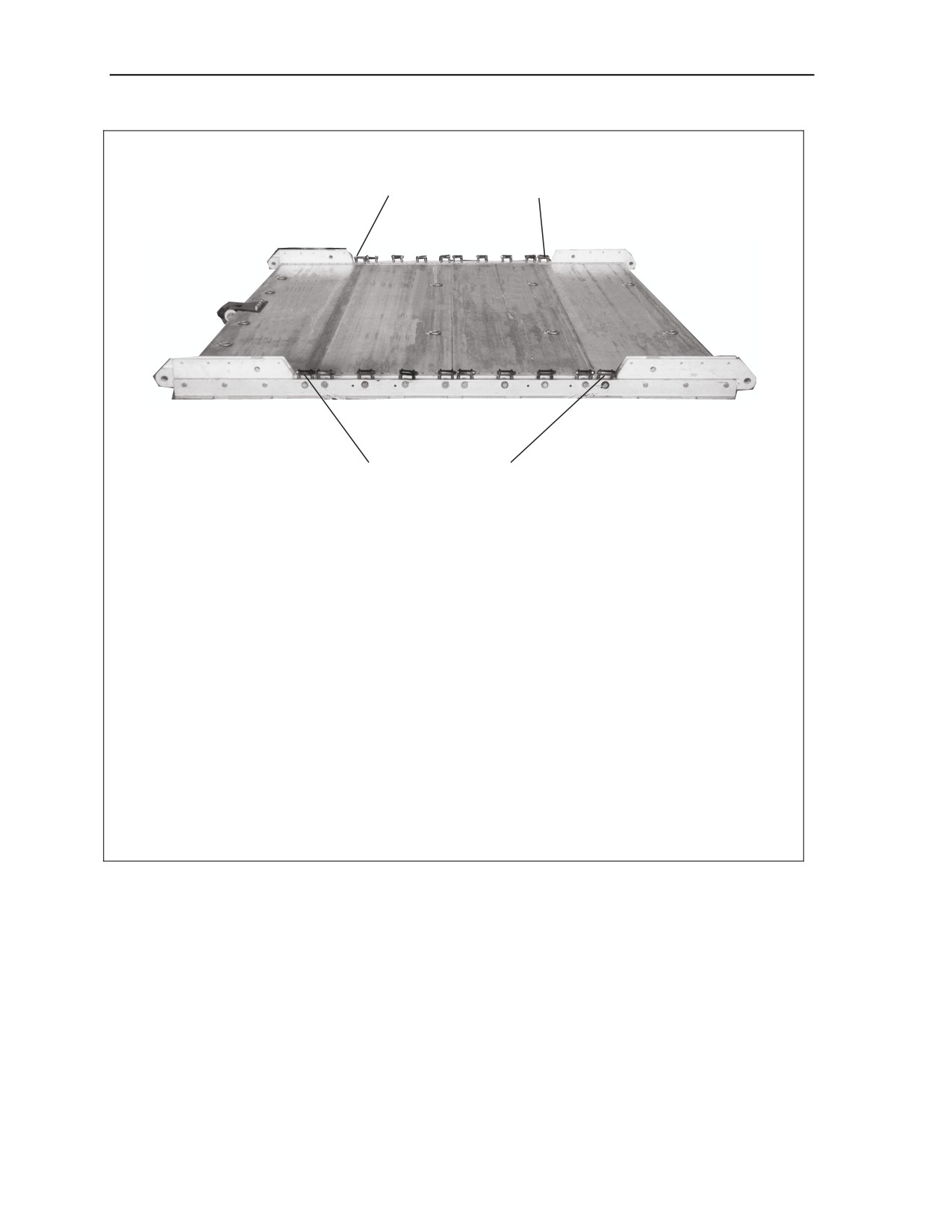
2-2. Prepare an 8-foot, type V platform as shown in Figure 2-1.
20 February 2009
FM 4-20.112/TO 13C7-1-8
2-1
Chapter 2
CLEVISES
10A THROUGH 1A
REAR
FRONT
RIGHT
CLEVISES
10 THROUGH 1
Step:
1. Inspect, or assemble and inspect, an 8-foot, type V platform as outlined in TM 10-
1670-268-20&P/TO 13C7-52-22.
2. Install a tandem link to the front of each platform side rail using holes 1, 2, and 3.
3. Install a tandem link to the rear of each platform side rail using holes 14, 15, and 16.
4. Starting at the front of each platform side rail, install clevises on the bushings bolted to
holes 4, 5, 6, 7, 8, 9, 10, 11, 12, and 13.
5. Starting at the front of the platform, number the clevises 1 through 10 on the right side,
and 1A through 10A on the left side.
6. Label the tiedown rings according to FM 4-20.102/MCRP 4-11.3J/NAVSEA SS400-AB-
MMO-010/TO 13C7-1-5.
Figure 2-1. Platform Prepared
2-2
FM 4-20.112/TO 13C7-1-8
20 February 2009
Rigging Supply Loads on an 8-Foot, Type V Platform for Low-Velocity Airdrop
PLACING HONEYCOMB
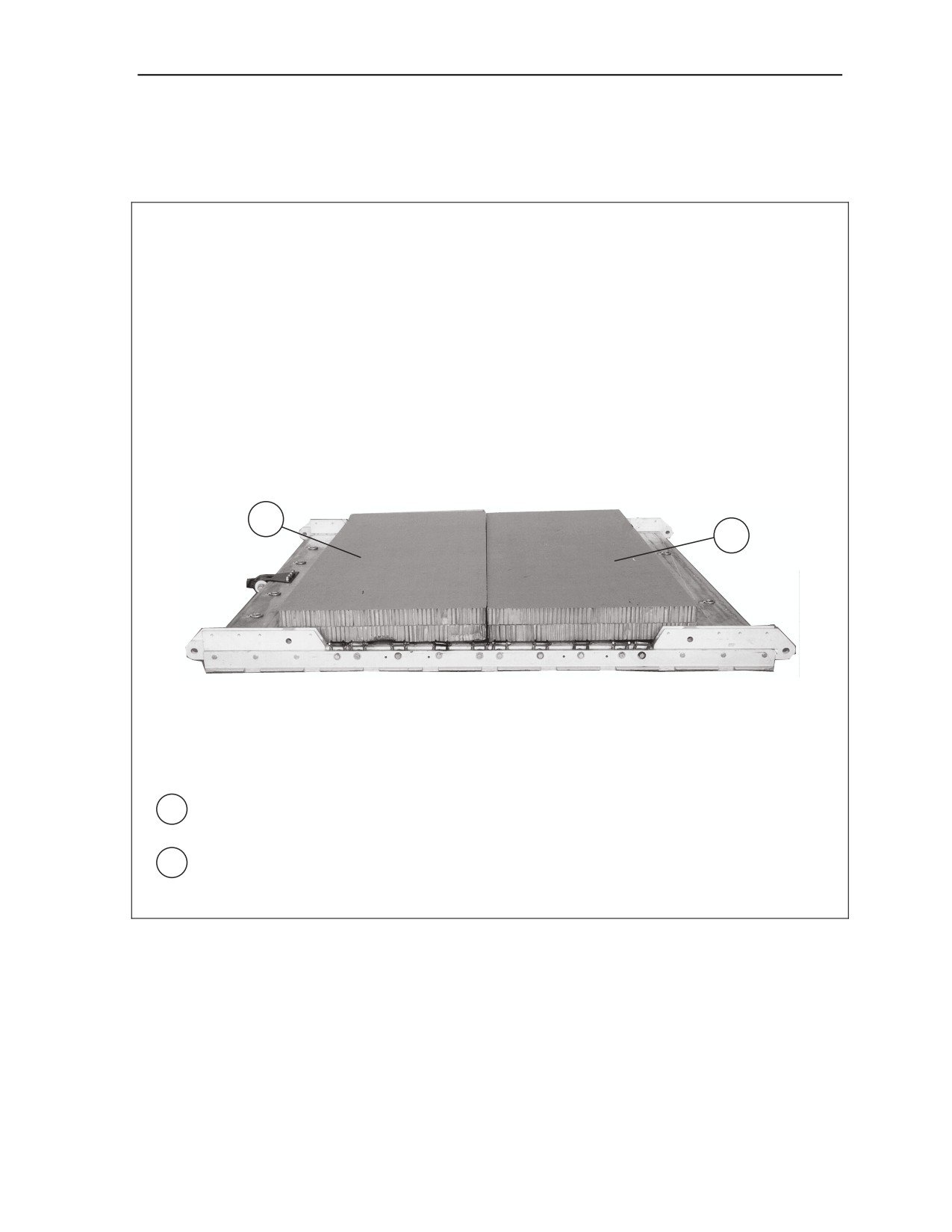
2-3. Place the honeycomb on the platform as shown in Figure 2-2.
Notes.
1. When ammunition is dropped, two layers of honeycomb are required.
2. When rigging this load for airdrop on a drop zone with ground elevation of 6,000 to 10,000
feet, add an additional layer of honeycomb.
3. Adjust the dimensions of the honeycomb to fit the items being dropped.
4. Do not cover the extraction bracket with honeycomb.
2
1
1 Glue two full 36- by 96-inch sheets of honeycomb together. Center them 12 inches from the
front edge of the platform.
2 Make a stack as in step 1 above and place it flush against the stack placed in step 1.
Figure 2-2. Honeycomb Placed
20 February 2009
FM 4-20.112/TO 13C7-1-8
2-3
Chapter 2
POSITIONING AND SECURING LOAD
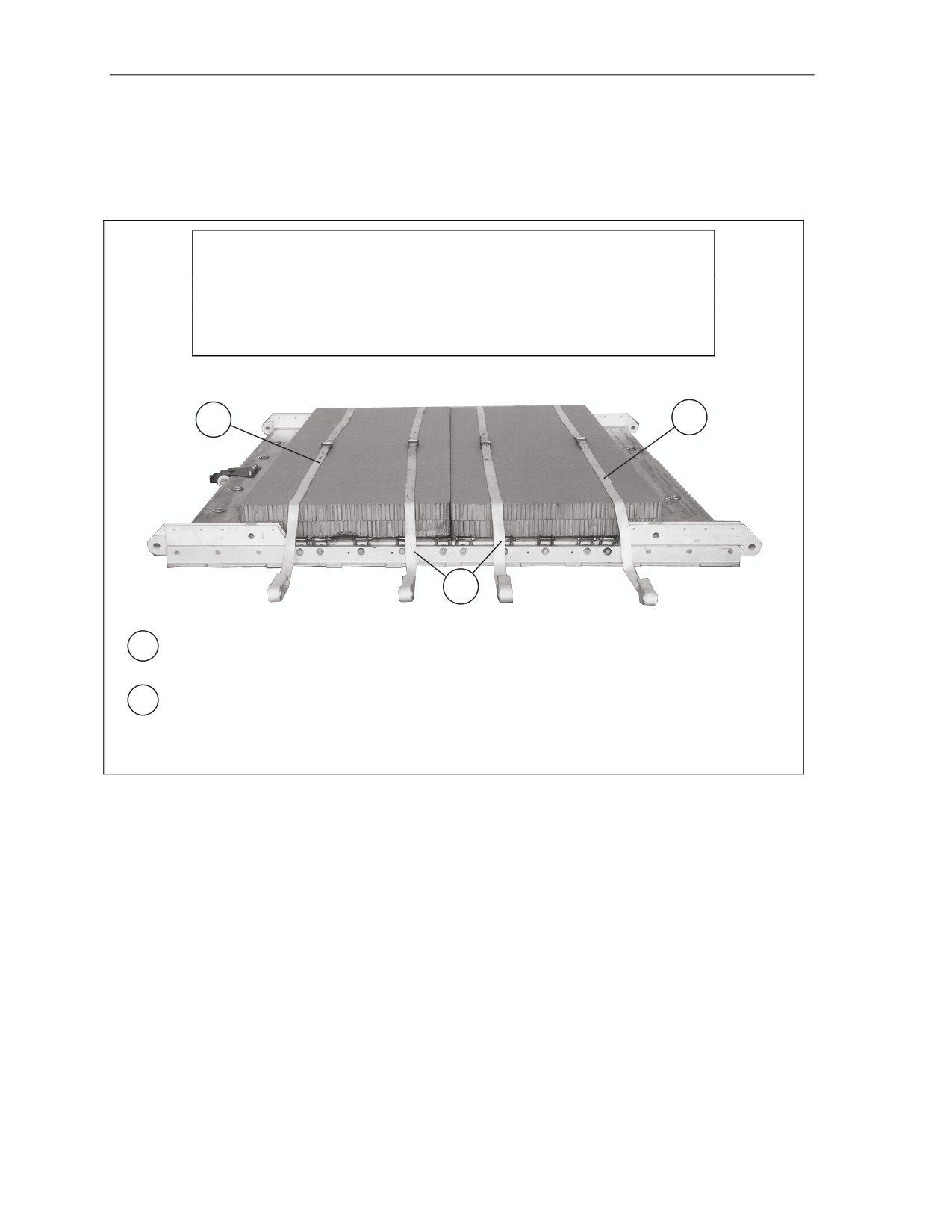
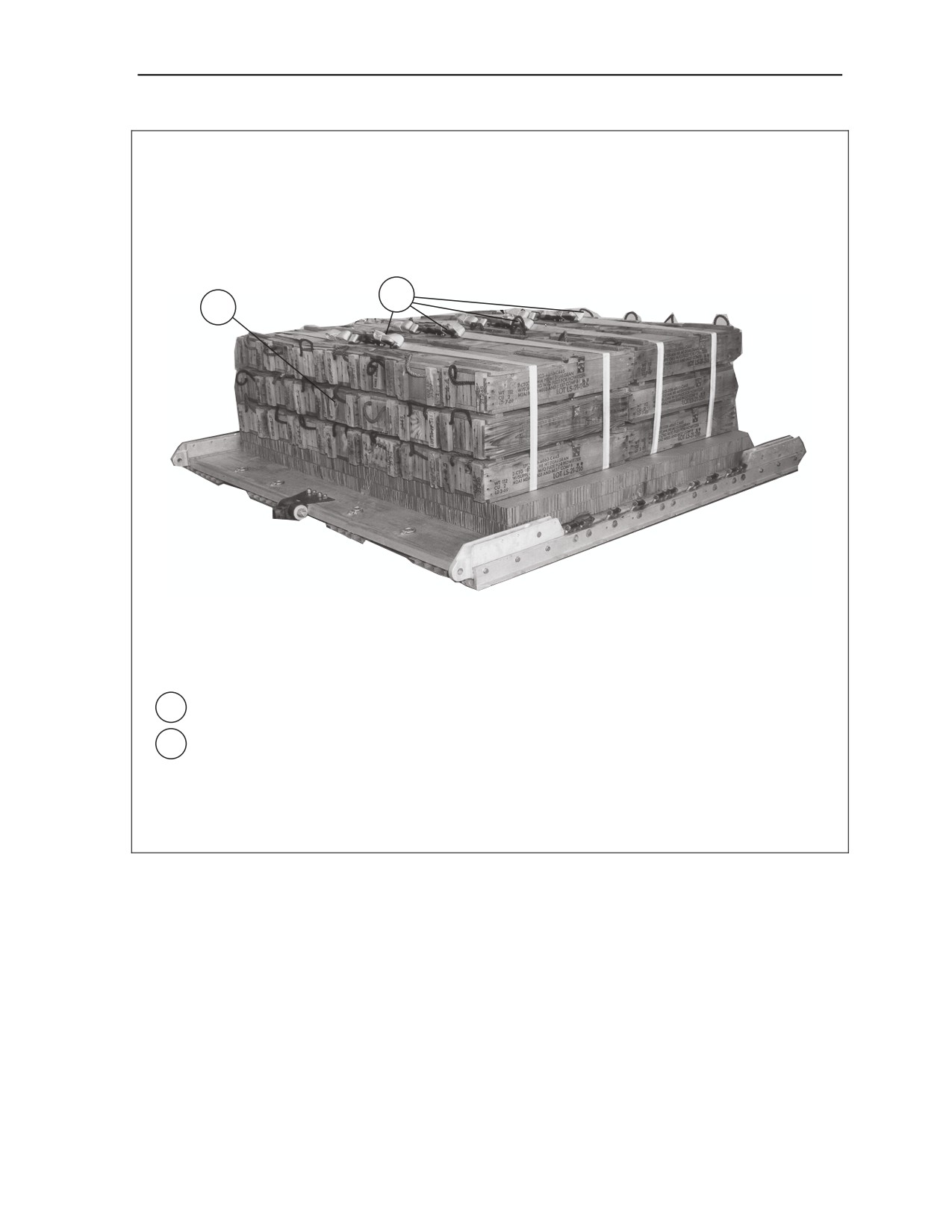
2-4. Place four 30-foot lashings on the honeycomb, place the load on the honeycomb, and secure the
lashings as shown in Figure 2-3. Adapt the procedures shown for loads configured differently.
CAUTION
Only ammunition listed in FM 4-20.153/MCRP 4-11.3B/TO 13C7-18-
41 may be airdropped. Hazardous material must be packaged,
marked, and labeled as required by AFMAN(I) 24-204/TM 38-250.
1
1
2
1 Form four 30-foot lashings according to FM 4-20.102/MCRP 4-11.3J/NAVSEA SS400-AB-
MMO-010/TO 13C7-1-5. Center a lashing across the honeycomb 6 inches from each end.
2 Center two lashings on the joint in the honeycomb, 12 inches apart.
Figure 2-3. Load Positioned and Secured
2-4
FM 4-20.112/TO 13C7-1-8
20 February 2009
Rigging Supply Loads on an 8-Foot, Type V Platform for Low-Velocity Airdrop
4
3
3 Position the load on the honeycomb with the weight evenly distributed.
4 Pass both ends of each lashing to the top of the load. Secure each lashing with two D-rings
and a load binder.
Figure 2-3. Load Positioned and Secured (Continued)
20 February 2009
FM 4-20.112/TO 13C7-1-8
2-5
Chapter 2
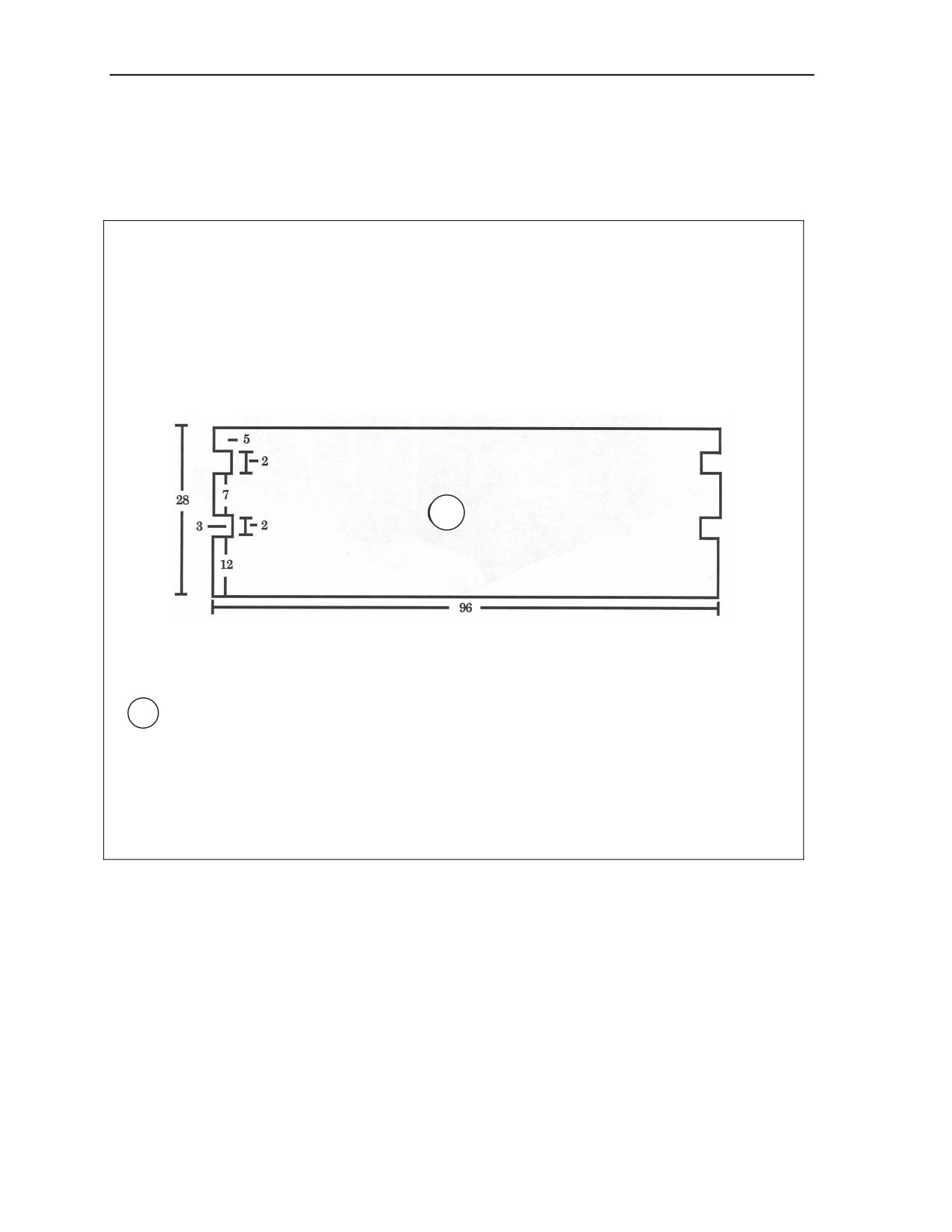
CONSTRUCTING AND INSTALLING ENDBOARDS
2-5. Construct the endboards and install them on the load as shown in Figure 2-4.
Notes.
1. This drawing is not to scale.
2. All dimensions are in inches.
3. The dimensions of the endboards will vary, depending on the load being rigged. The
endboards must be even with the top of the load.
1
1 Construct two endboards using one 3/4- by 28- by 96-inch piece of plywood for each
endboard. Make cutouts as shown.
Note. Tape or pad the cutouts in the endboards to protect the lashings from sharp edges.
Figure 2-4. Endboards Constructed and Installed
2-6
FM 4-20.112/TO 13C7-1-8
20 February 2009
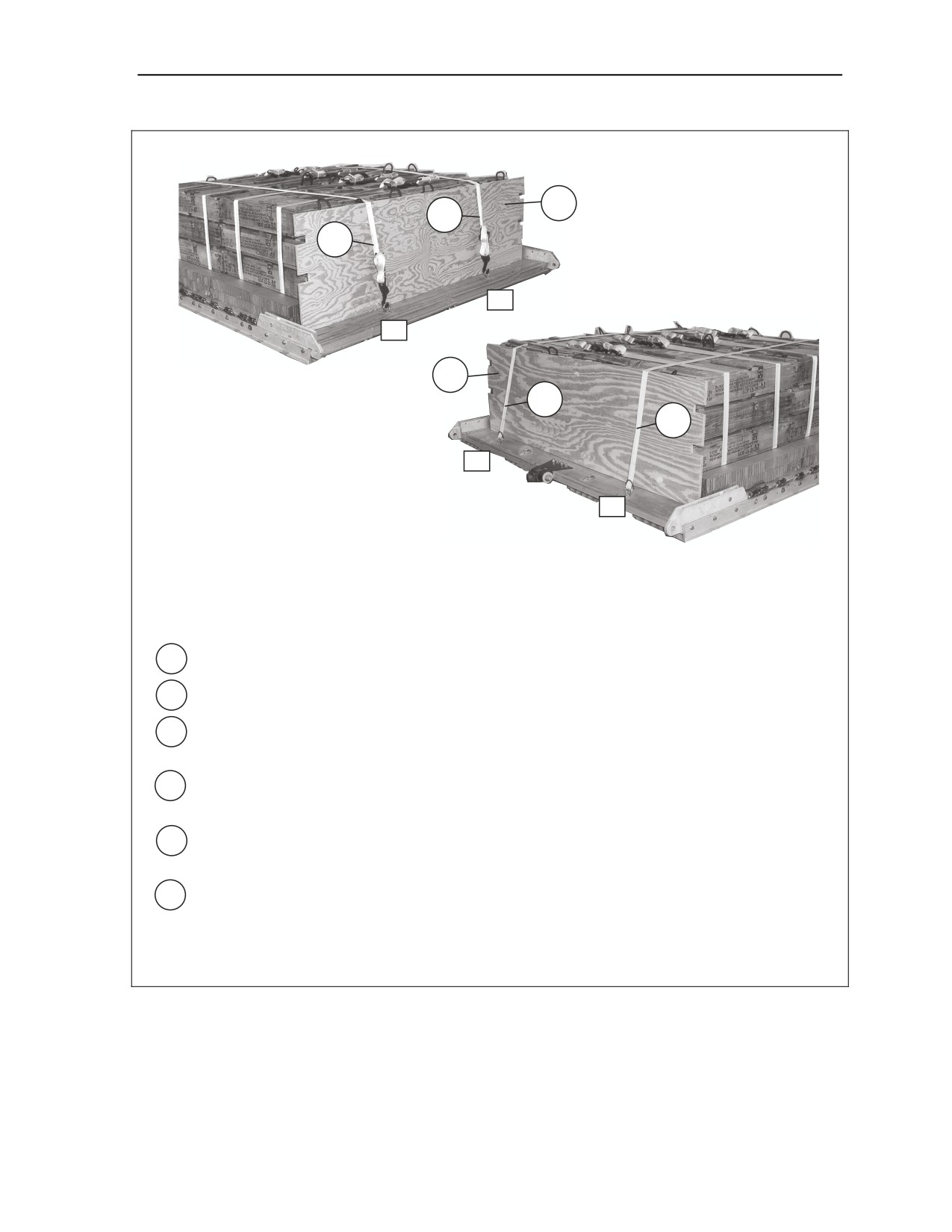
Rigging Supply Loads on an 8-Foot, Type V Platform for Low-Velocity Airdrop
2
7
6
B1
A1
3
5
4
D4
A4
Note. Loads longer than the one shown may be secured in this way, if the lashings are pre-
positioned under the honeycomb and endboards, and secured at both ends to the tiedown rings as
shown in steps 4 and 5. Do not cover the extraction bracket.
2 Place one endboard against the front of the load.
3 Place one endboard against the rear of the load.
4 Pass the free end of a 15-foot lashing through tiedown ring A4 and through its own D-ring.
Pull the free end of the lashing over the top of the load.
5 Pass the free end of a 15-foot lashing through tiedown ring D4 and through its own D-ring.
Pull the free end of the lashing over the top of the load.
6 Secure the end of the lashing positioned in step 4 to tiedown ring A1 with a D-ring and a load
binder.
7 Secure the end of the lashing positioned in step 5 to tiedown ring B1 with a D-ring and a load
binder.
Figure 2-4. Endboards Constructed and Installed (Continued)
20 February 2009
FM 4-20.112/TO 13C7-1-8
2-7
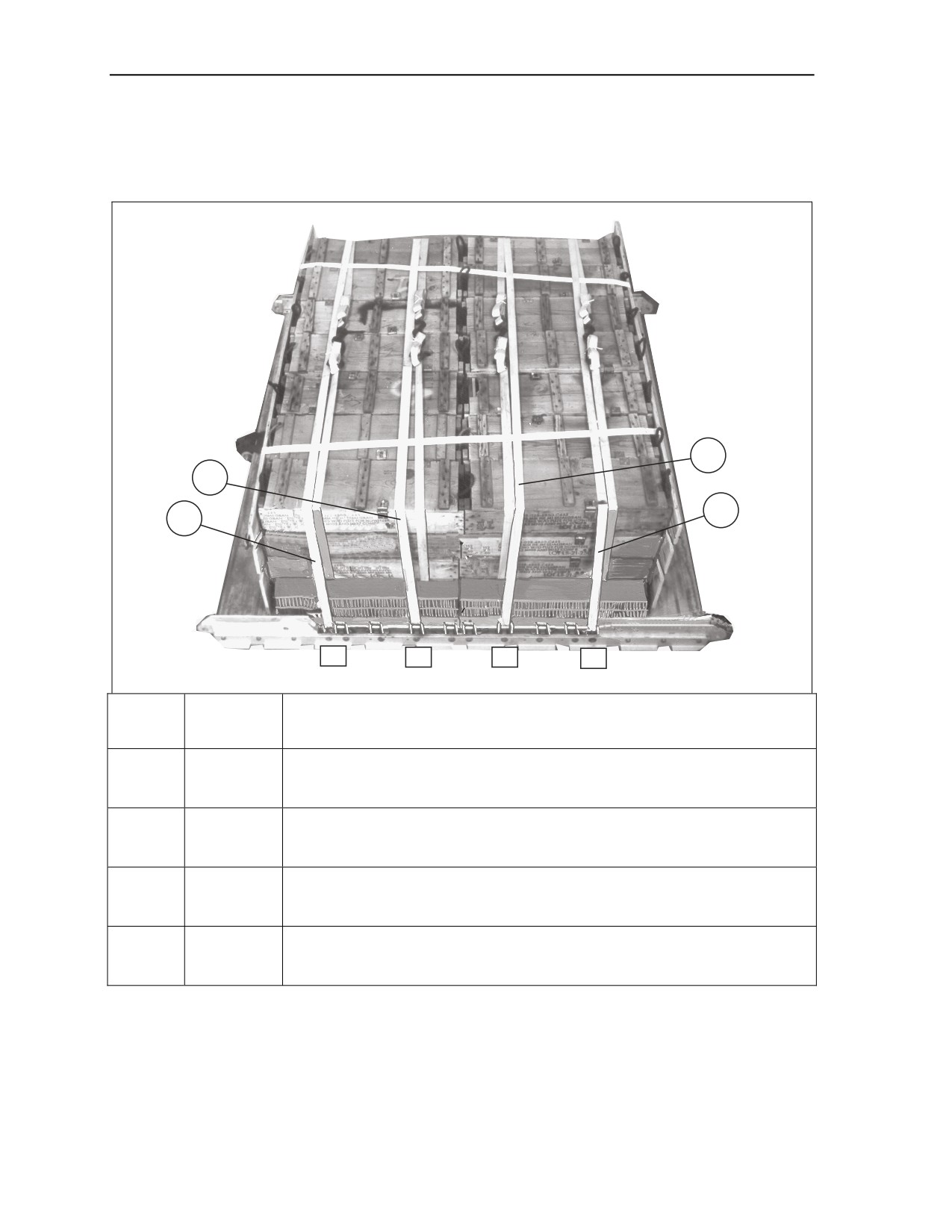
Chapter 2
INSTALLING LASHINGS
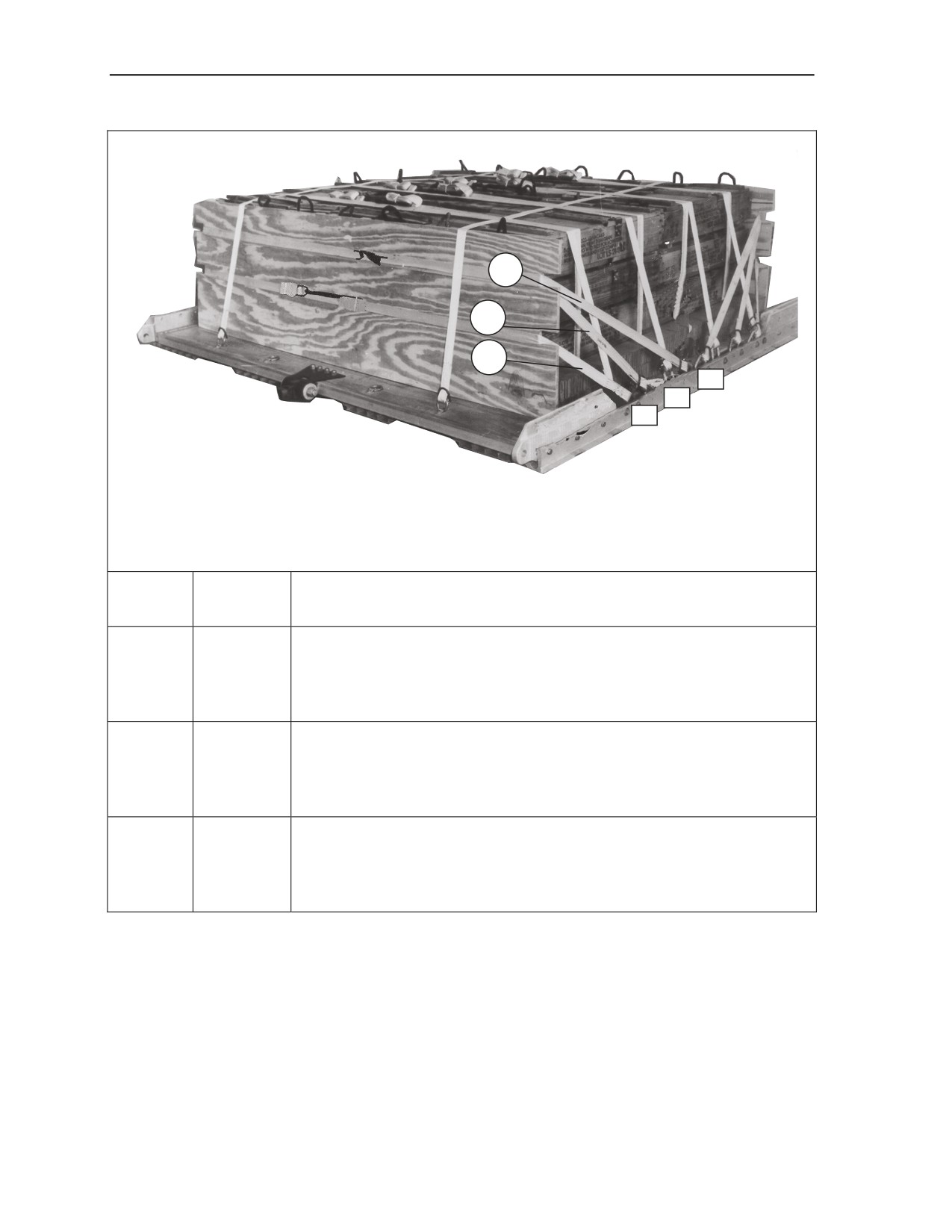
2-6. Lash the load to the platform according to FM 4-20.102/MCRP 4-11.3J/NAVSEA SS400-AB-
MMO-010/TO 13C7-1-5 and as shown in Figures 2-5 through 2-7.
2
3
1
4
10
7
4
1
Lashing
Tiedown
Instructions
Number
Clevis
Number
1
1 and 1A
Pass a lashing through clevis 1 and through its own D-ring, over the top of
the load, and to clevis 1A. Secure the lashing to clevis 1A with a D-ring
and a load binder.
2
4 and 4A
Pass a lashing through clevis 4 and through its own D-ring, over the top of
the load, and to clevis 4A. Secure the lashing to clevis 4A with a D-ring
and a load binder.
3
7 and 7A
Pass a lashing through clevis 7 and through its own D-ring, over the top of
the load, and to clevis 7A. Secure the lashing to clevis 7A with a D-ring
and a load binder.
4
10 and 10A
Pass a lashing through clevis 10 and through its own D-ring, over the top
of the load, and to clevis 10A. Secure the lashing to clevis 10A with a D-
ring and a load binder.
Figure 2-5. Lashings 1 Through 4 Installed
2-8
FM 4-20.112/TO 13C7-1-8
20 February 2009
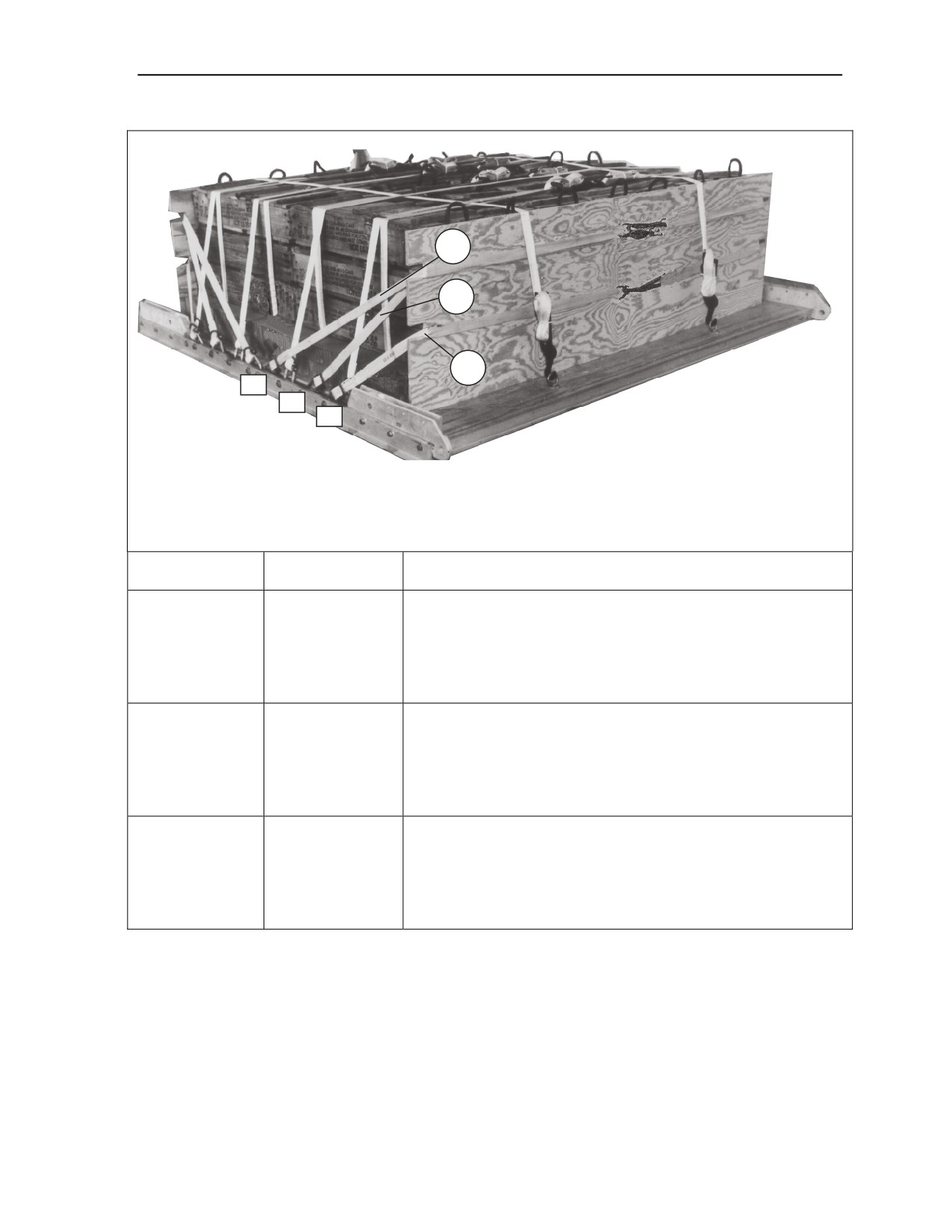
Rigging Supply Loads on an 8-Foot, Type V Platform for Low-Velocity Airdrop
7
6
5
5
3
2
Note. Position the load binders so that they will be accessible for retightening and inspection when the
load is fully rigged.
Lashing Number
Tiedown Clevis
Instructions
Number
5
2 and 2A
Pass a 15-foot lashing through clevis 2 and through its own D-
ring, and through the lower cutout in the front endboard. Pass
another lashing through clevis 2A and through its own D-ring,
and through the lower cutout in the front endboard. Secure the
lashings together in the middle of the front endboard with two
D-rings and a load binder.
6
3 and 3A
Pass a 15-foot lashing through clevis 3 and through its own D-
ring, and through the upper cutout in the front endboard. Pass
another lashing through clevis 3A and through its own D-ring,
and through the upper cutout in the front endboard. Secure the
lashings together in the middle of the front endboard with two
D-rings and a load binder.
7
5 and 5A
Pass a 15-foot lashing through clevis 5 and through its own D-
ring, and through the upper cutout in the front endboard. Pass
another lashing through clevis 5A and through its own D-ring,
and through the upper cutout in the front endboard. Secure the
lashings together in the middle of the front endboard with two
D-rings and a load binder.
Figure 2-6. Lashings 5 Through 7 Installed
20 February 2009
FM 4-20.112/TO 13C7-1-8
2-9
Chapter 2
10
9
8
6
8
9
Lashing
Tiedown
Instructions
Number
Clevis
Number
8
9 and 9A
Pass a 15-foot lashing through clevis 9 and through its own D-ring, and
through the lower cutout in the rear endboard. Pass another lashing
through clevis 9A and through its own D-ring, and through the lower
cutout in the rear endboard. Secure the lashings together in the middle of
the rear endboard with two D-rings and a load binder.
9
8 and 8A
Pass a 15-foot lashing through clevis 8 and through its own D-ring, and
through the upper cutout in the rear endboard. Pass another lashing
through clevis 8A and through its own D-ring, and through the upper
cutout in the rear endboard. Secure the lashings together in the middle of
the rear endboard with two D-rings and a load binder.
10
6 and 6A
Pass a 15-foot lashing through clevis 6 and through its own D-ring, and
through the upper cutout in the rear endboard. Pass another lashing
through clevis 6A and through its own D-ring, and through the upper
cutout in the rear endboard. Secure the lashings together in the middle of
the rear endboard with two D-rings and a load binder.
Figure 2-7. Lashings 8 Through 10 Installed
2-10
FM 4-20.112/TO 13C7-1-8
20 February 2009
Rigging Supply Loads on an 8-Foot, Type V Platform for Low-Velocity Airdrop
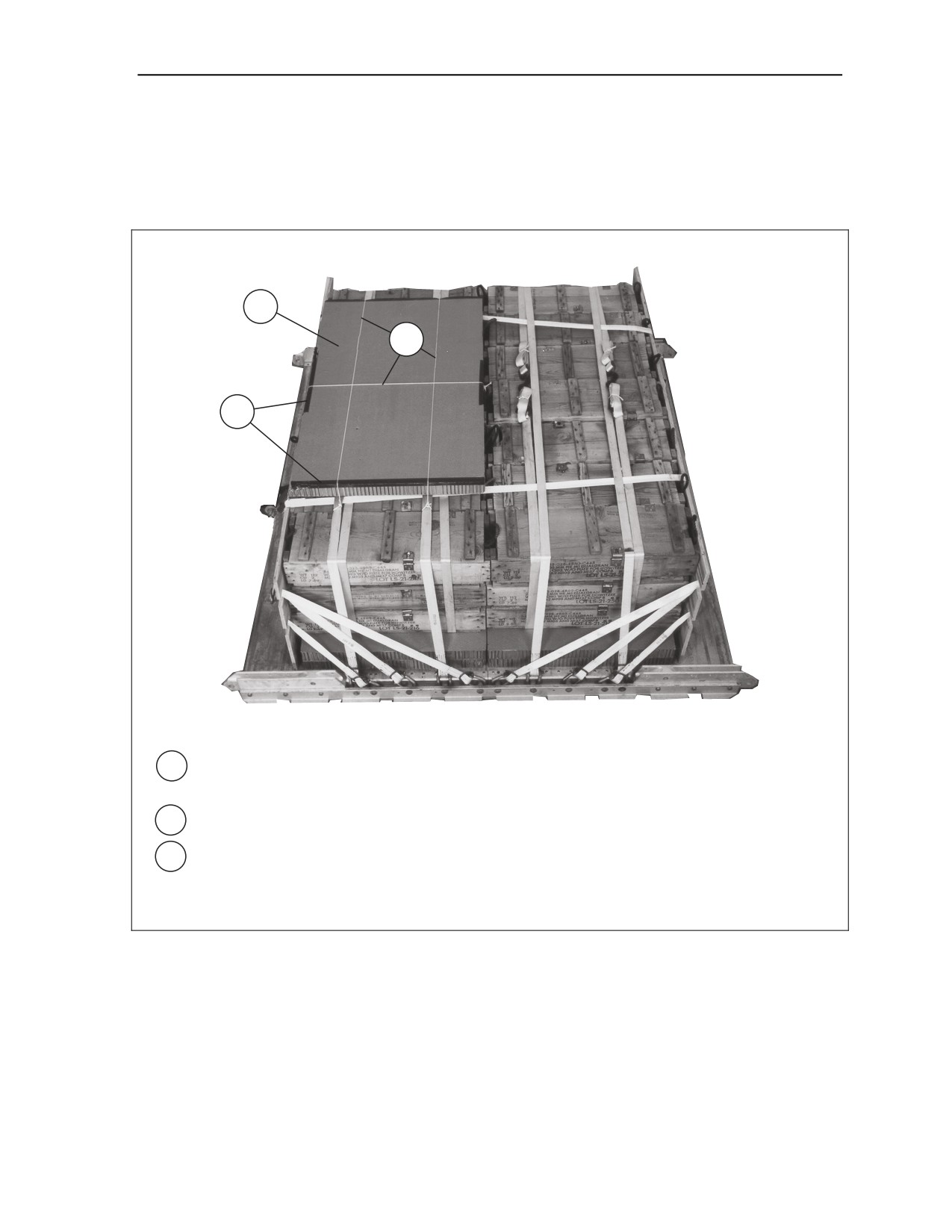
INSTALLING PARACHUTE STOWAGE PLATFORM
2-7. Install the parachute stowage platform as shown in Figure 2-8.
1
3
2
1 Position a 60- by 36-inch piece of honeycomb along the rear endboard so that it is centered
across the load and even with the rear endboard.
2 Tape the edges of the honeycomb.
3 Tie the honeycomb to the nearest lashings with three lengths of type III nylon cord.
Figure 2-8. Parachute Stowage Platform Installed
20 February 2009
FM 4-20.112/TO 13C7-1-8
2-11
Chapter 2
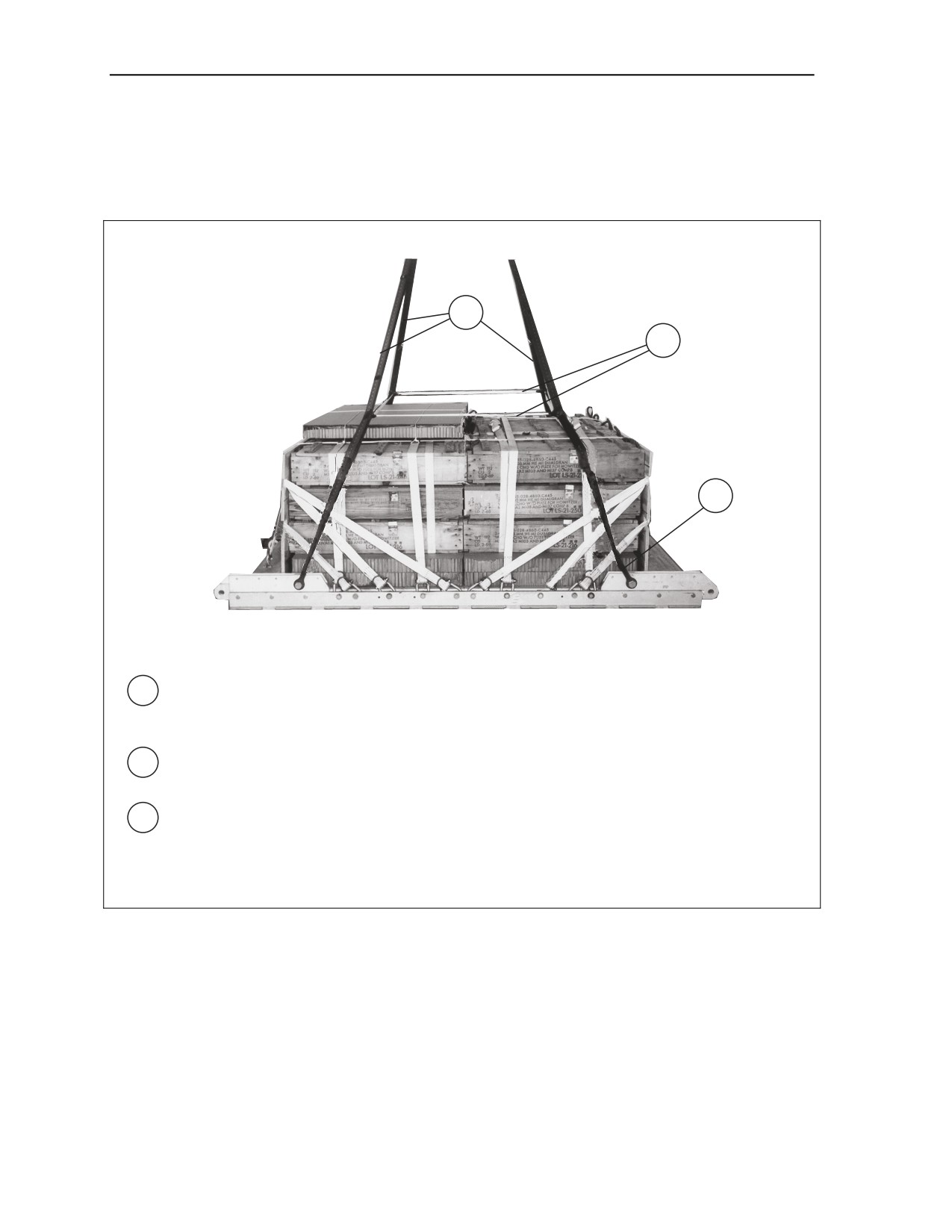
INSTALLING SUSPENSION SLINGS AND DEADMAN’S TIE
2-8. Install the suspension slings and deadman’s tie as shown in Figure 2-9.
2
3
1
1 Pass one end of an 11-foot (2-loop), type XXVI nylon suspension sling through the bell
portion of a large suspension clevis. Bolt the clevis to the suspension hole of the right front
tandem link.
2 Install on the left front tandem link and the right rear and left rear tandem links an 11-foot (2-
loop), type XXVI nylon suspension sling as in step 1.
3 Raise the slings and install the deadman's tie according to FM 4-20.102/MCRP 4-
11.3J/NAVSEA SS400-AB-MMO-010/TO 13C7-1-5.
Figure 2-9. Suspension Slings and Deadman’s Tie Installed
2-12
FM 4-20.112/TO 13C7-1-8
20 February 2009
Rigging Supply Loads on an 8-Foot, Type V Platform for Low-Velocity Airdrop
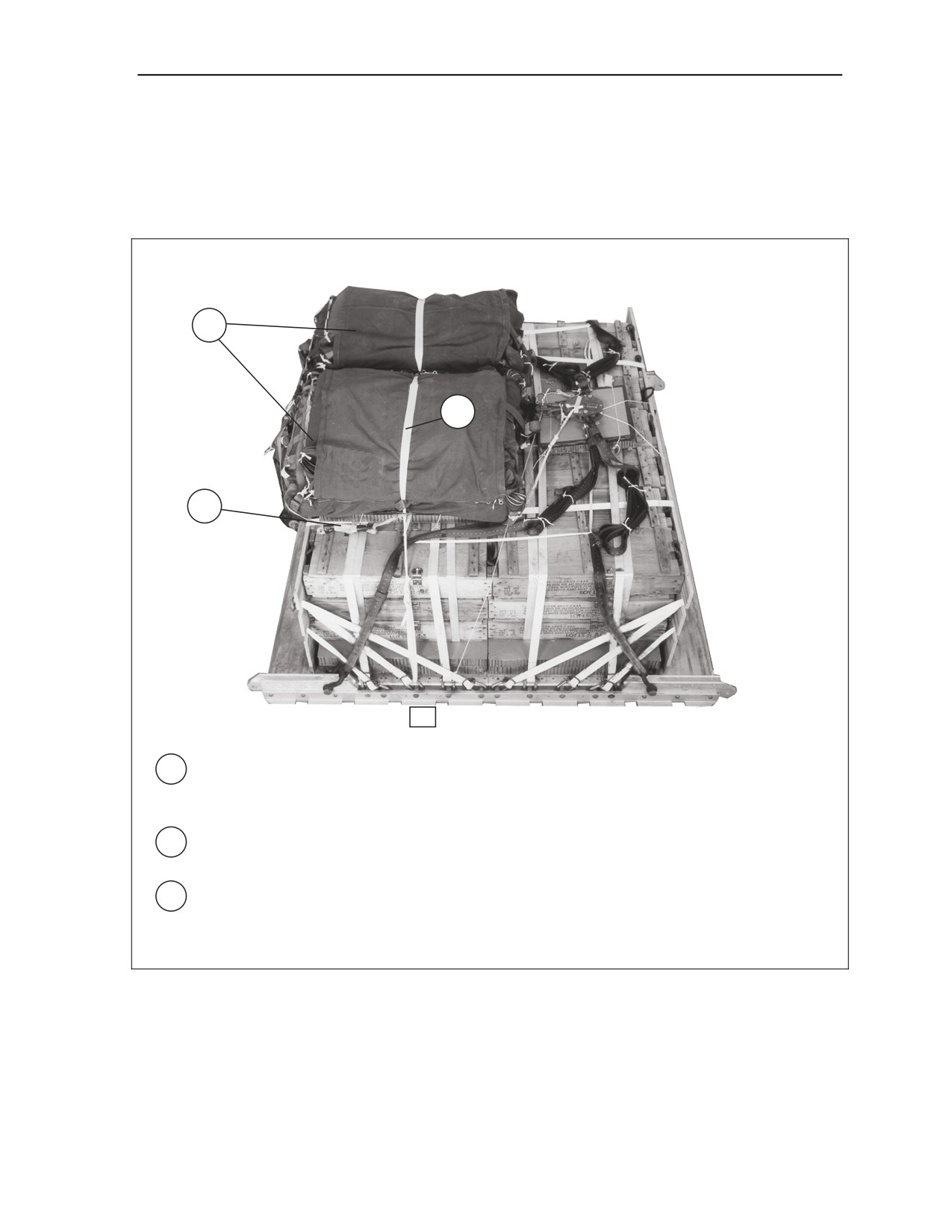
PREPARING AND STOWING CARGO PARACHUTES
2-9. Compute the parachute requirements for the load being rigged. Prepare and stow the cargo
parachutes as shown in Figure 2-10.
1
2
3
8
1 Prepare, position, and stow two G-11B cargo parachutes on top of the pre-positioned
honeycomb according to FM 4-20.102/MCRP 4-11.3J/NAVSEA SS400-AB-MMO-010/TO
13C7-1-5.
2 Install the cargo parachute restraints according to FM 4-20.102/MCRP 4-11.3J/NAVSEA
SS400-AB-MMO-010/TO 13C7-1-5 using type VIII nylon webbing to clevises 8 and 8A.
3 Install the parachute release strap according to FM 4-20.102/MCRP 4-11.3J/NAVSEA
SS400-AB-MMO-010/TO 13C7-1-5.
Figure 2-10. Cargo Parachutes Prepared and Stowed
20 February 2009
FM 4-20.112/TO 13C7-1-8
2-13
Chapter 2
INSTALLING THE RELEASE SYSTEM
2-10. Prepare, attach, and safety an M-1 cargo parachute release according to FM 4-20.102/MCRP 4-
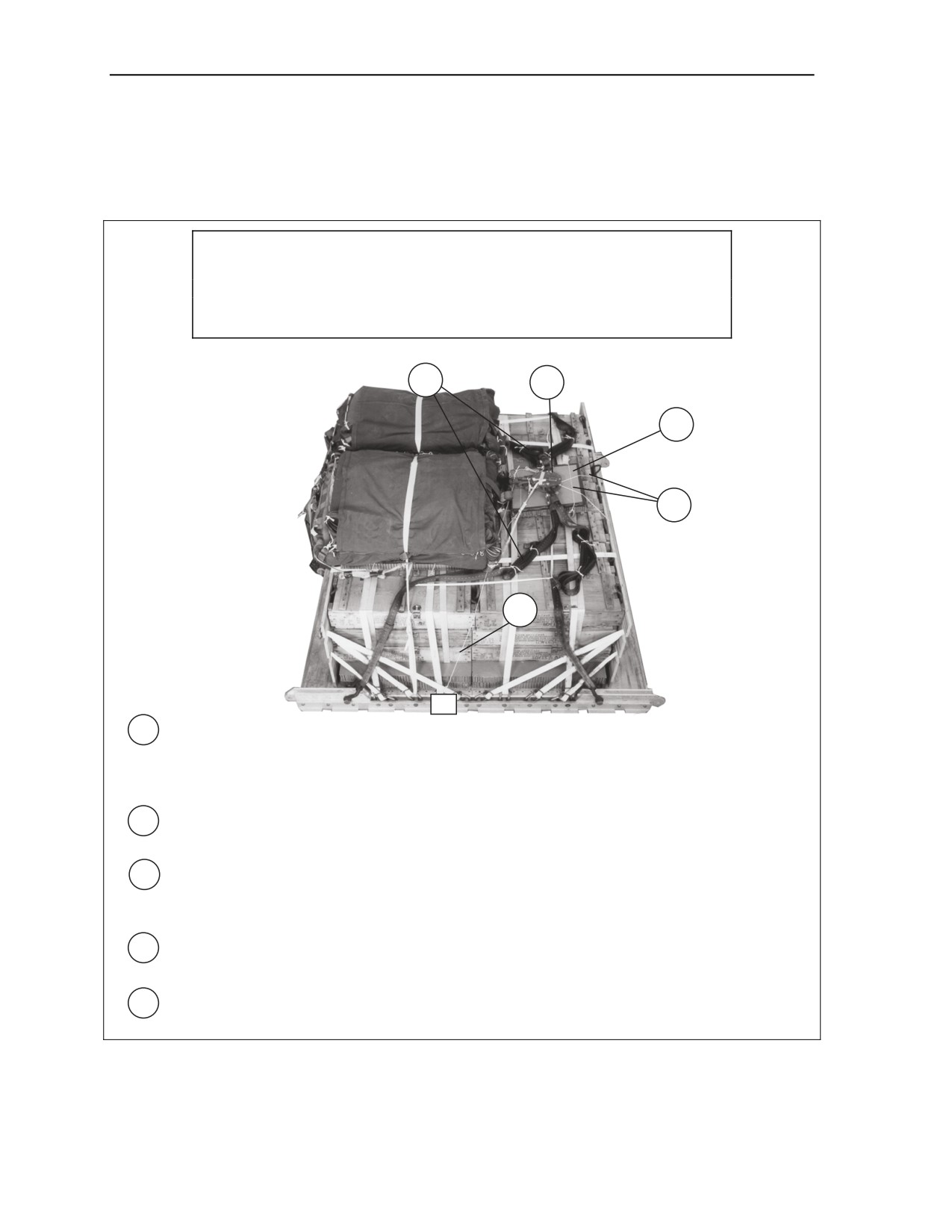
11.3J/NAVSEA SS400-AB-MMO-010/TO 13C7-1-5 and as shown in Figure 2-11.
CAUTION
When rigging a single parachute load, ensure the rear parachute
release safety tie is routed under the parachute securing ties.
5
2
1
3
4
7
1 Center an 18- by 20-inch piece of honeycomb between the front edge of the boxes and the
parachutes. Tape the edges of the honeycomb and secure it to the load with two lengths of
type III nylon cord.
Note. Do not cover the deadman’s tie with the release platform.
2 Prepare and install the M-1 cargo parachute release on the honeycomb release platform and
attach the suspension slings and riser extensions.
3 Safety the bottom of the release to a convenient point on the load with a length of type III
nylon cord according to FM 4-20.102/MCRP 4-11.3J/NAVSEA SS400-AB-MMO-010/TO
13C7-1-5.
4 Safety the top of the release assembly to clevises 7 and 7A with a length of type III nylon
cord according to FM 4-20.102/MCRP 4-11.3J/NAVSEA SS400-AB-MMO-010/TO 13C7-1-5.
5 S-fold and tie any excess suspension slings with one turn of type I, 1/4-inch cotton webbing.
Figure 2-11. M-1 Parachute Release Installed
2-14
FM 4-20.112/TO 13C7-1-8
20 February 2009
Rigging Supply Loads on an 8-Foot, Type V Platform for Low-Velocity Airdrop
INSTALLING EXTRACTION SYSTEM
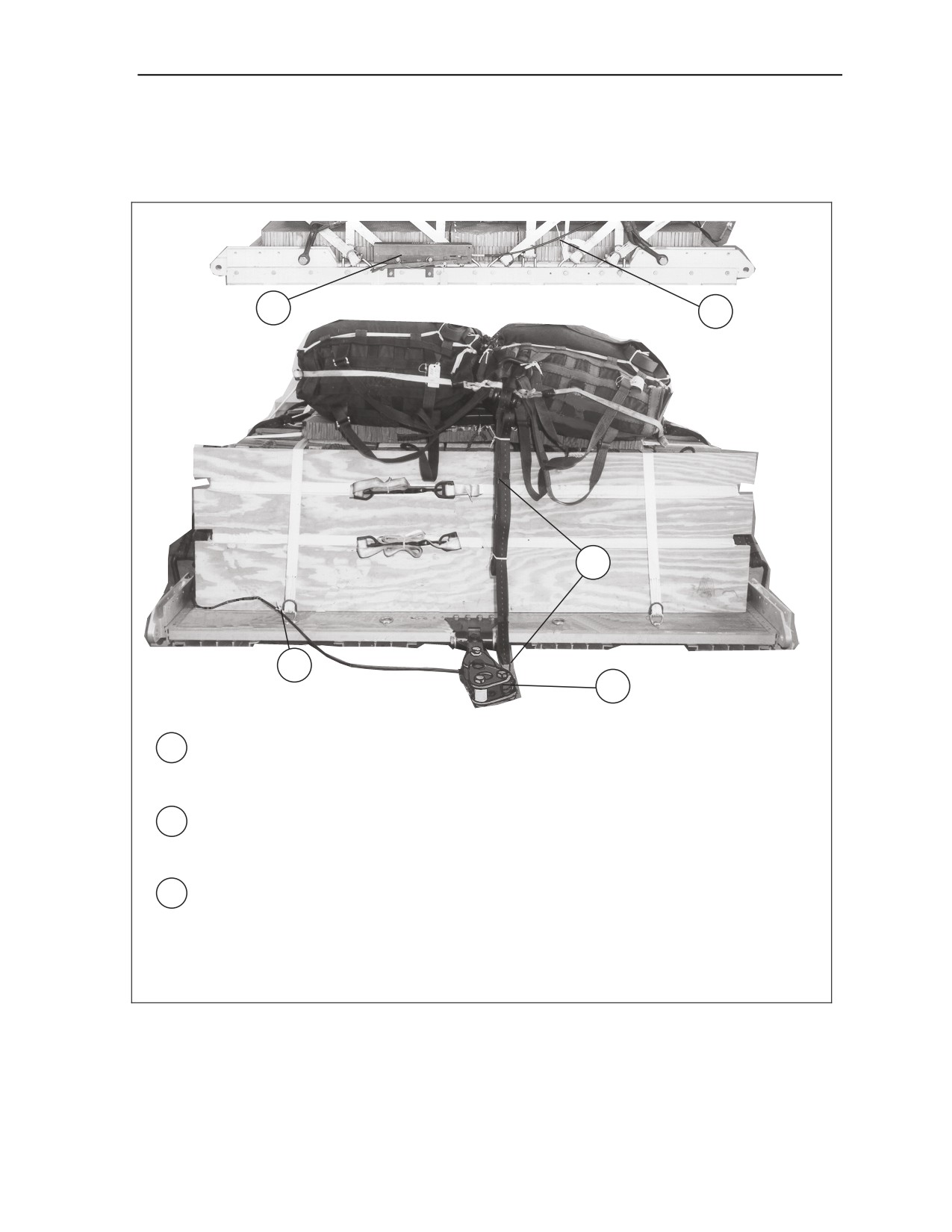
2-11. Install the extraction system as shown in Figure 2-12.
1
2
3
2
1
1 Install the components of the extraction force transfer coupling (EFTC) according to FM 4-
20.102/MCRP 4-11.3J/NAVSEA SS400-AB-MMO-010/TO 13C7-1-5. Use the front
mounting holes for the EFTC brackets.
2 Install a 12-foot EFTC cable according to FM 4-20.102/MCRP 4-11.3J/NAVSEA SS400-
AB-MMO-010/TO 13C7-1-5 and safety the cable to convenient places on the platform with
one turn of type I, 1/4-inch cotton webbing.
3 Attach a 9-foot (2-loop), type XXVI nylon sling according to FM 4-20.102/MCRP 4-
11.3J/NAVSEA SS400-AB-MMO-010/TO 13C7-1-5 to be used as a deployment line. S-fold
the excess and tie it in two places with type I, 1/4-inch cotton webbing.
Figure 2-12. Extraction System Installed
20 February 2009
FM 4-20.112/TO 13C7-1-8
2-15
Chapter 2
PLACING EXTRACTION PARACHUTE
2-12. Select the extraction parachute and extraction line needed using the extraction line requirements
table in FM 4-20.102/MCRP 4-11.3J/NAVSEA SS400-AB-MMO-010/TO 13C7-1-5. Place the extraction
parachute and line on the load for installation in the aircraft.
INSTALLING PROVISIONS FOR EMERGENCY RESTRAINTS
2-13. Select and install the provisions for the emergency aft restraints according to the emergency aft
restraint requirements table in FM 4-20.102/MCRP 4-11.3J/NAVSEA SS400-AB-MMO-010/TO 13C7-1-
5.
MARKING RIGGED LOAD
2-14. Mark the rigged load according to FM 4-20.102/MCRP 4-11.3J/NAVSEA SS400-AB-MMO-
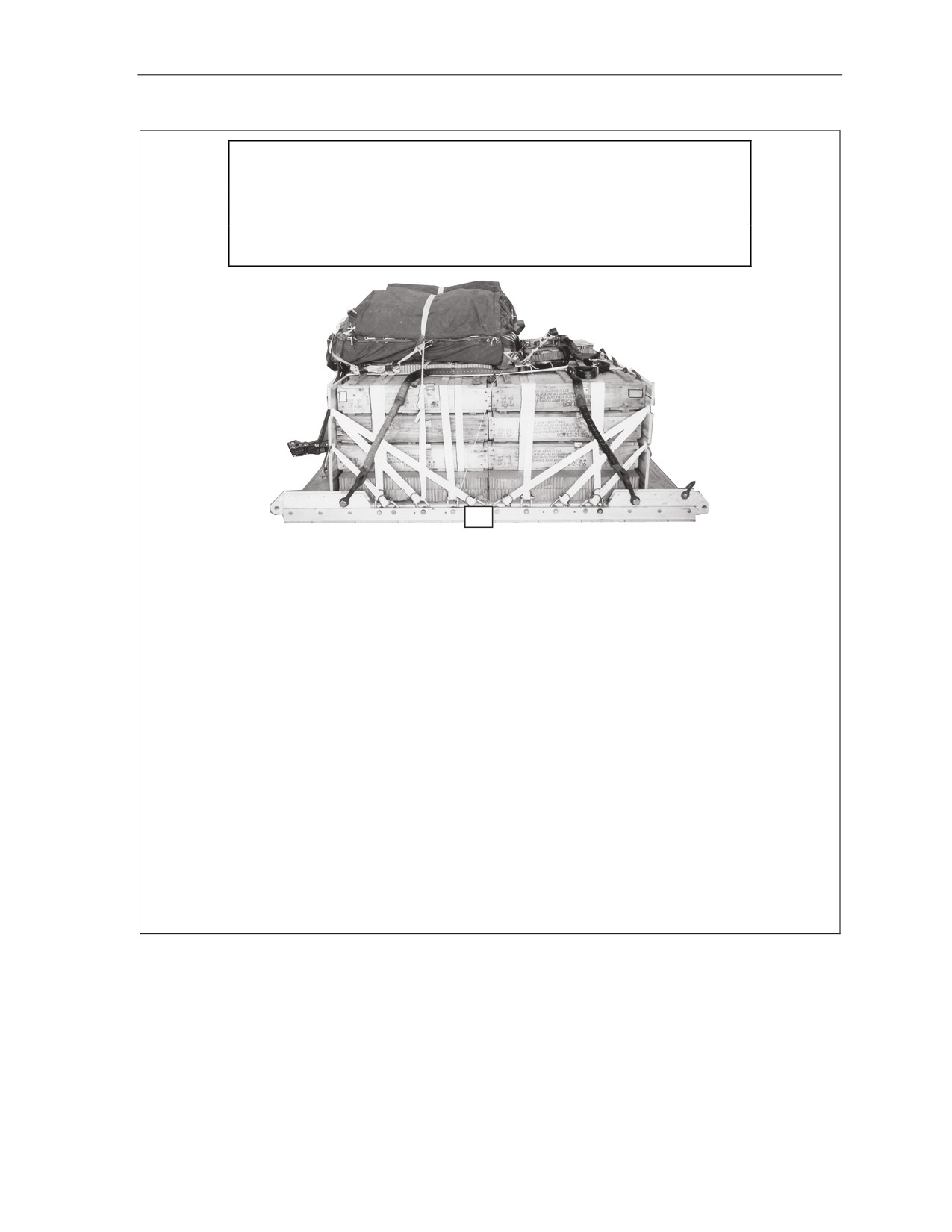
010/TO 13C7-1-5, and as shown in Figure 2-13. Complete Shipper’s Declaration for Dangerous Goods. If
the load varies from the one shown, the weight, height, CB, and parachute requirements must be
recomputed.
EQUIPMENT REQUIRED
2-15. Use the equipment listed in Table 2-1 to rig this load.
2-16
FM 4-20.112/TO 13C7-1-8
20 February 2009
Rigging Supply Loads on an 8-Foot, Type V Platform for Low-Velocity Airdrop
CAUTION
Make the final rigger inspection required by AR 59-4 and FM 4-
20.102/MCRP 4-11.3J/NAVSEA SS400-AB-MMO-010/TO 13C7-1-5
before the load leaves the rigging site.
CB
RIGGED LOAD DATA
Weight: Load shown
6,344 pounds
Maximum Suspended Weight
14,250 pounds
Height
56 inches
Width
108 inches
Overall Length
96 inches
Overhang: Front
0 inches
Rear
0 inches
Center of Balance (from front edge of the platform)
50 inches
Extraction System with 16-foot cable (adds 18 inches to length of platform)
EFTC
Figure 2-13. Bulk Supply Load Rigged on an 8-Foot, Type V Platform for Low-Velocity Airdrop
20 February 2009
FM 4-20.112/TO 13C7-1-8
2-17
Chapter 2
Table 2-1. Equipment Required for Rigging Bulk Supply on an 8-Foot, Type V Platform for
Low-Velocity Airdrop
National Stock Number
Item
Quantity
8040-00-273-8713
Adhesive, paste, 1-gallon
As required
Clevis, suspension:
4030-00-678-8562
3/4-inch (medium) emergency restraint
4
4030-00-090-5354
1-inch (large)
5
4020-00-240-2146
Cord, nylon, type III
As required
1670-00-434-5783
Coupling, airdrop, extraction force transfer with
1
12-foot cable
1670-00-360-0328
Cover, clevis, large
2
8135-00-664-6958
Cushioning material, packaging, cellulose wadding
As required
8305-00-191-1101
Felt, 1/2-inch thick
As required
1670-01-183-2678
Leaf, extraction line (line bag) (add 2 for C-17)
2
Line, extraction, type XXVI nylon webbing:
1670-01-064-4452
60-foot (1-loop), type XXVI or
1
1670-01-062-6313
60-foot (3-loop), type XXVI
1
1670-01-064-4452
60-foot (1-loop), type XXVI for C-17 drogue line
1
1670-01-493-6418
Link assembly, two-point:
1
5351-00-010-4659
Nail, steel wire, common 8d
As required
1670-00-753-3928
Pad, energy-dissipating, honeycomb
5 sheets
Parachute:
1670-01-016-7841
Cargo, G-11B
2
1670-01-063-3716
Cargo, extraction, 22-foot
1
1670-01-063-3715
Cargo, extraction, 15-foot for C-17
1
Platform, airdrop, type V, 8-foot
1670-01-353-8425
Bracket assembly, EFTC
1
1670-01-162-2372
Bracket assembly, extraction
1
1670-01-162-2376
Clevis assembly
20
1670-01-162-2381
Tandem link
4
5530-00-128-4981
Plywood, 3/4-inch
As required
1670-01-097-8816
Release, cargo parachute, M-1
1
2-18
FM 4-20.112/TO 13C7-1-8
20 February 2009
Rigging Supply Loads on an 8-Foot, Type V Platform for Low-Velocity Airdrop
Table 2-1. Equipment Required for Rigging Bulk Supply on an 8-Foot, Type V Platform for
Low-Velocity Airdrop (Continued)
National Stock Number
Item
Quantity
Sling, cargo airdrop:
1670-01-062-6304
9-foot (2-loop), type XXVI nylon webbing
1
1670-01-063-7760
11-foot (2-loop), type XXVI nylon webbing
4
5340-00-040-8219
Strap parachute release, multicut
2
7501-00-266-5016
Tape, adhesive, 2-inch
As required
7501-00-266-6710
Tape, masking
As required
1670-00-937-0271
Tiedown assembly, 15-foot
26
Webbing:
8305-00-268-2411
Cotton, 1/4-inch, type I
As required
Nylon:
8305-00-082-5752
Tubular, 1/2-inch
As required
8305-00-263-3591
Type VIII webbing
As required
20 February 2009
FM 4-20.112/TO 13C7-1-8
2-19
Chapter 2
SECTION II-RIGGING BULK SUPPLIES IN A-22 CARGO BAGS
DESCRIPTION OF LOAD
2-16. Bulk supplies consisting of rations, equipment, fuel, ammunition, or other items of general supply
are rigged on an 8-foot, type V airdrop platform with G-11 cargo parachutes. Items are packaged or
configured so that they can be contained in A-22 cargo bags and can be airdropped using these procedures.
For extraction purposes, the rigged load must weigh at least 2,520 pounds. Refer to FM 4-20.102/MCRP 4-
11.3J/NAVSEA SS400-AB-MMO-010/TO 13C7-1-5 for the weight limitations and for the number of
parachutes to be used.
PREPARING PLATFORM
2-17. Prepare an 8-foot, type V platform as described in paragraph 2-2 and as previously shown in Figure
2-1.
PLACING HONEYCOMB
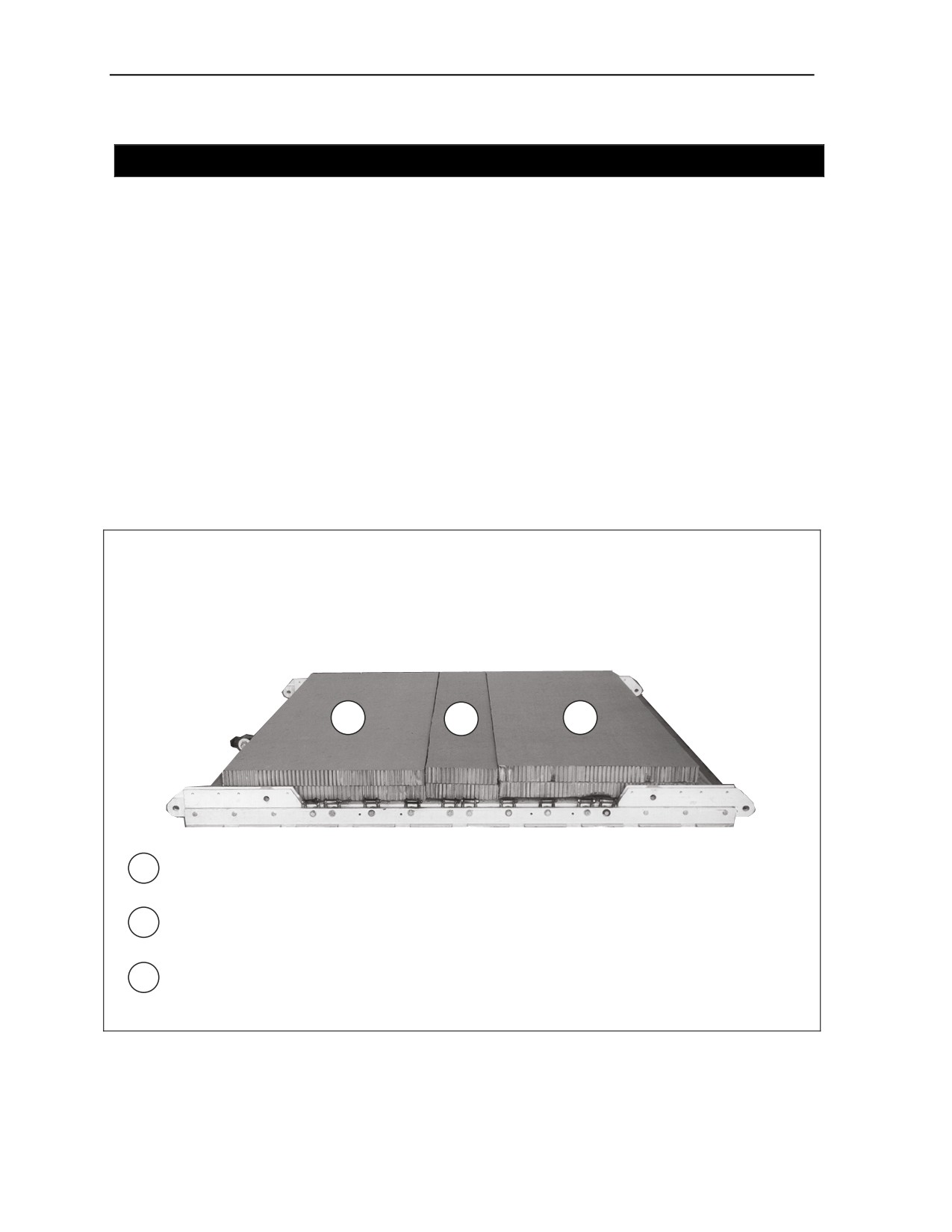
2-18. Place the honeycomb on the platform as shown in Figure 2-14.
Notes.
1. When ammunition is dropped, two layers of honeycomb are required.
2. When rigging this load for airdrop on a drop zone with ground elevation of 6,000 to 10,000
feet, add an additional layer of honeycomb.
3
2
1
1 Glue two full 36- by 96-inch sheets of honeycomb together. Center them 5 inches from the
front edge of the platform.
2 Glue two 96- by 13-inch pieces of honeycomb together. Center them to the rear of the
honeycomb placed in step 1.
3 Make a stack as in step 1 above and place it flush against the stack placed in step 2.
Figure 2-14. Honeycomb Placed
2-20
FM 4-20.112/TO 13C7-1-8
20 February 2009
Rigging Supply Loads on an 8-Foot, Type V Platform for Low-Velocity Airdrop
PREPARING, STOWING AND RIGGING LOAD
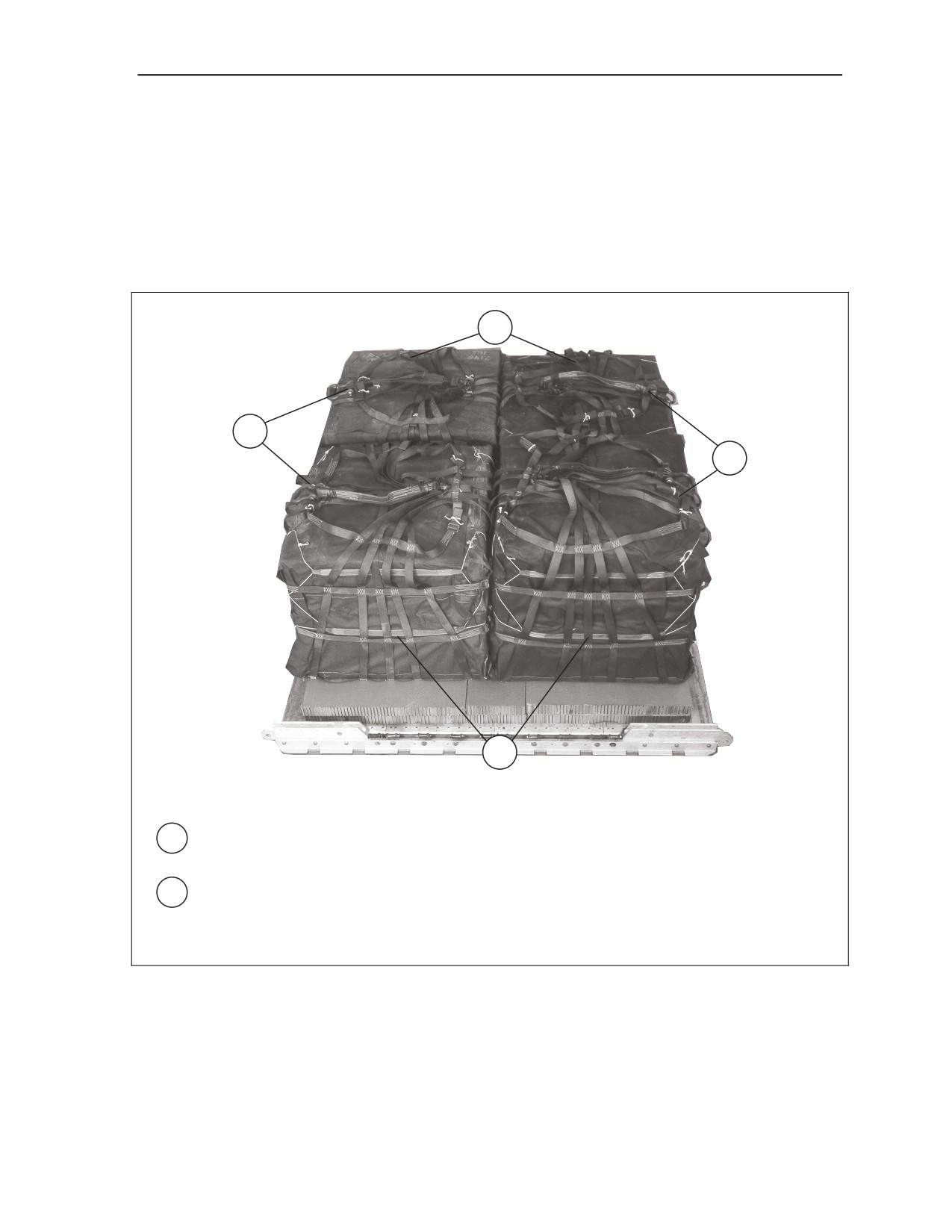
2-19. Prepare, stow, and rig the load in four A-22 cargo bags according to FM 4-20.103/MCRP 4-
11.3C/TO 13C7-1-11, paragraphs 9-5 through 9-7. Attach the suspension webs according to paragraph 9-9.
POSITIONING LOAD
2-20. Position the four A-22 cargo bags on the honeycomb as shown in Figure 2-15.
2
1
1
2
1 Bolt a medium cargo suspension clevis to the suspension webs of each A-22 cargo bag to
aid in de-rigging.
2 Center four A-22 cargo bags on the honeycomb.
Figure 2-15. Load Positioned
20 February 2009
FM 4-20.112/TO 13C7-1-8
2-21
Chapter 2
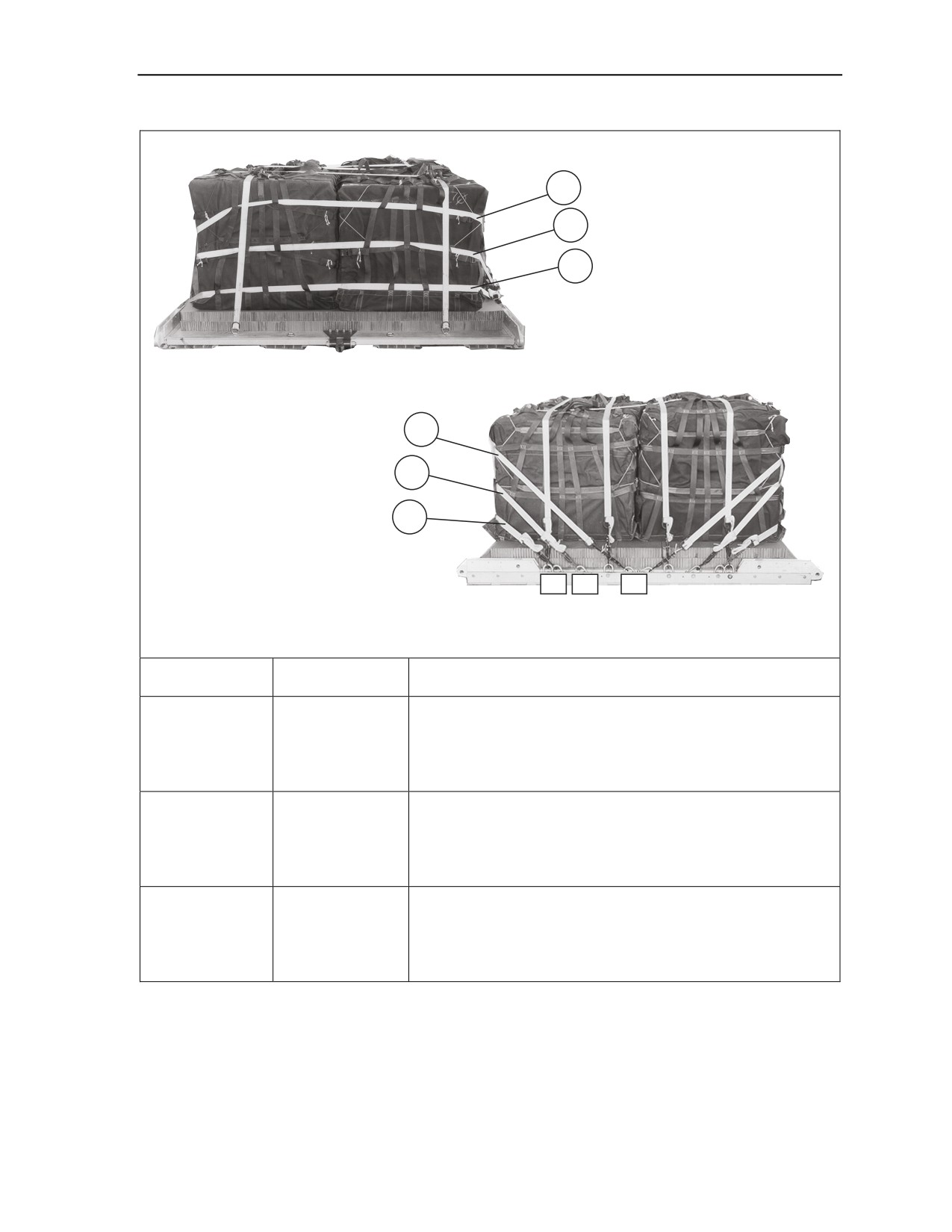
INSTALLING LASHINGS
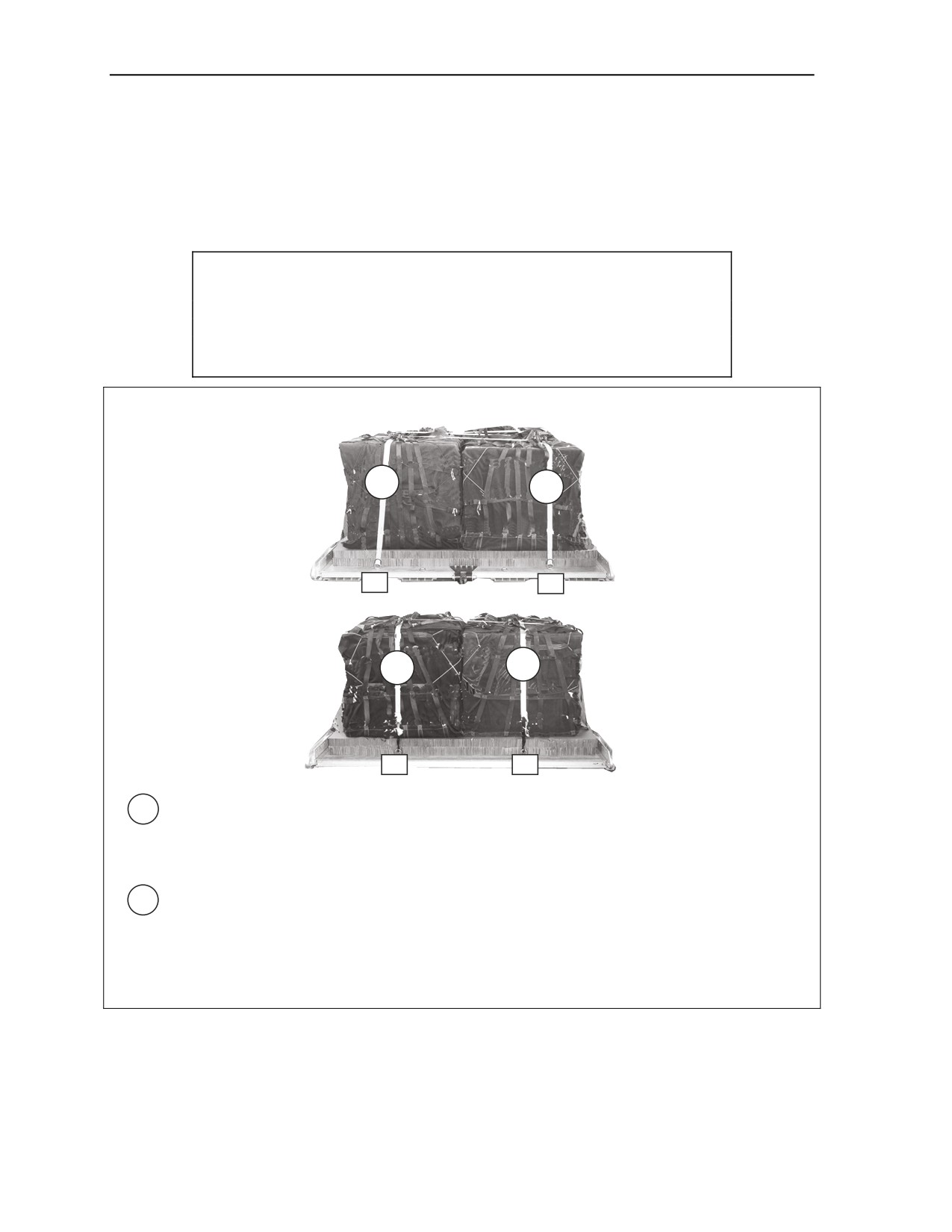
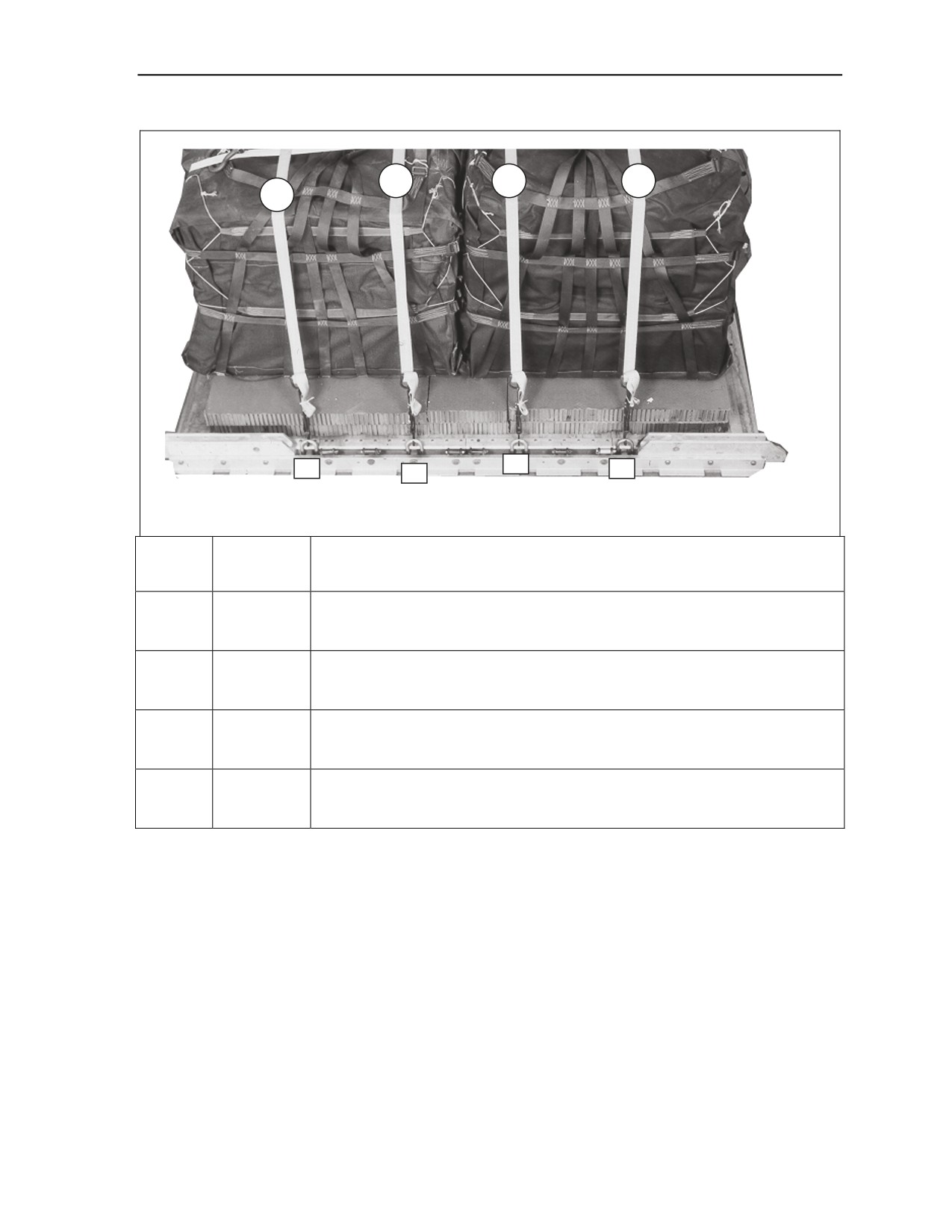
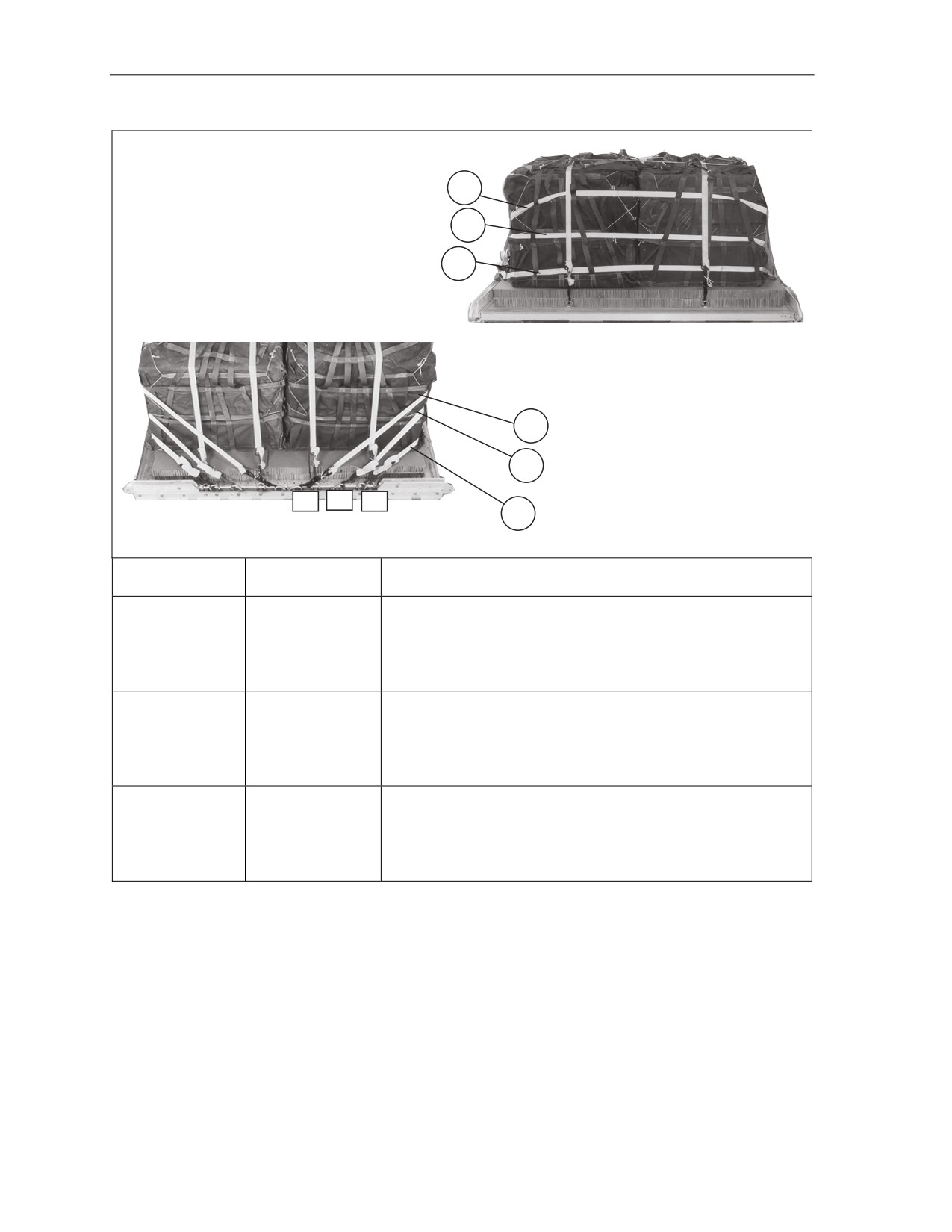
2-21. Use twelve 15-foot tie-down assemblies to lash the load to the platform. Install the lashings as shown
in Figures 2-16 through 2-19 and according to FM 4-20.102/MCRP 4-11.3J/NAVSEA SS400-AB-MMO-
010/TO 13C7-1-5.
CAUTION
Only ammunition listed in FM 4-20.153/MCRP 4-11.3B/TO 13C7-18-41
may be airdropped. Hazardous material must be packaged, marked,
and labeled as required by AFMAN(I) 24-204/TM 38-250.
2
1
D4
A4
REAR
1
2
A1
B1
FRONT
1 Pass the free end of a 15-foot lashing through tiedown ring A4 and through its own D-ring.
Pull the free end of the lashing over the top of the load, and through both of the suspension
clevises on the right side. Secure the free end of the lashing to tiedown ring A1 with a D-ring
and a load binder.
2 Pass the free end of a 15-foot lashing through tiedown ring D4 and through its own D-ring.
Pull the free end of the lashing over the top of the load, and through both of the suspension
clevises on the left side. Secure the free end of the lashing to tiedown ring B1 with a D-ring
and a load binder.
Figure 2-16. Lashings 1 and 2 Installed
2-22
FM 4-20.112/TO 13C7-1-8
20 February 2009
Rigging Supply Loads on an 8-Foot, Type V Platform for Low-Velocity Airdrop
5
4
3
6
4
10
1
7
Lashing
Tiedown
Instructions
Number
Clevis
Number
3
1A and 1
Pass a lashing through clevis 1A and through its own D-ring, over the top
of the load, and to clevis 1. Secure the lashing to clevis 1 with a D-ring and
a load binder.
4
4A and 4
Pass a lashing through clevis 4A and through its own D-ring, over the top
of the load, and to clevis 4. Secure the lashing to clevis 4 with a D-ring and
a load binder.
5
7A and 7
Pass a lashing through clevis 7A and through its own D-ring, over the top
of the load, and to clevis 7. Secure the lashing to clevis 7 with a D-ring and
a load binder.
6
10A to 10
Pass a lashing through clevis 10A and through its own D-ring, over the top
of the load, and to clevis 10. Secure the lashing to clevis 10 with a D-ring
and a load binder.
Figure 2-17. Lashings 3 Through 6 Installed
20 February 2009
FM 4-20.112/TO 13C7-1-8
2-23
Chapter 2
9
8
7
9
8
5
3
2
7
Lashing Number
Tiedown Clevis
Instructions
Number
7
2A and 2
Pass a lashing through clevis 2A and through its own D-
ring. Pass the free end of the lashing around the front of the
cargo bags and through the bag webbing just below the
lowest lateral band. Secure the free end of the lashing to
clevis 2 with a D-ring and a load binder.
8
3A and 3
Pass a lashing through clevis 3A and through its own D-
ring. Pass the free end of the lashing around the front of the
cargo bags and through the bag webbing just above the
lowest lateral band. Secure the free end of the lashing to
clevis 3 with a D-ring and a load binder.
9
5A and 5
Pass a lashing through clevis 5A and through its own D-
ring. Pass the free end of the lashing around the front of the
cargo bags and through the bag webbing just above the
next highest lateral band. Secure the free end of the lashing
to clevis 5 with a D-ring and a load binder.
Figure 2-18. Lashings 7 Through 9 Installed
2-24
FM 4-20.112/TO 13C7-1-8
20 February 2009
Rigging Supply Loads on an 8-Foot, Type V Platform for Low-Velocity Airdrop
10
11
12
10
11
12
9
8
6
Lashing Number
Tiedown Clevis
Instructions
Number
10
6A and 6
Pass a lashing through clevis 6A and through its own D-
ring. Pass the free end of the lashing around the rear of the
cargo bags and through the bag webbing just above the
highest lateral band. Secure the free end of the lashing to
clevis 6 with a D-ring and a load binder.
11
8A and 8
Pass a lashing through clevis 8A and through its own D-
ring. Pass the free end of the lashing around the rear of the
cargo bags and through the bag webbing just above the
next lowest lateral band. Secure the free end of the lashing
to clevis 8 with a D-ring and a load binder.
12
9A and 9
Pass a lashing through clevis 9A and through its own D-
ring. Pass the free end of the lashing around the rear of the
cargo bags and through the bag webbing just below the
next lowest lateral band. Secure the free end of the lashing
to clevis 9 with a D-ring and a load binder.
Figure 2-19. Lashings 10 Through 12 Installed
20 February 2009
FM 4-20.112/TO 13C7-1-8
2-25
Chapter 2
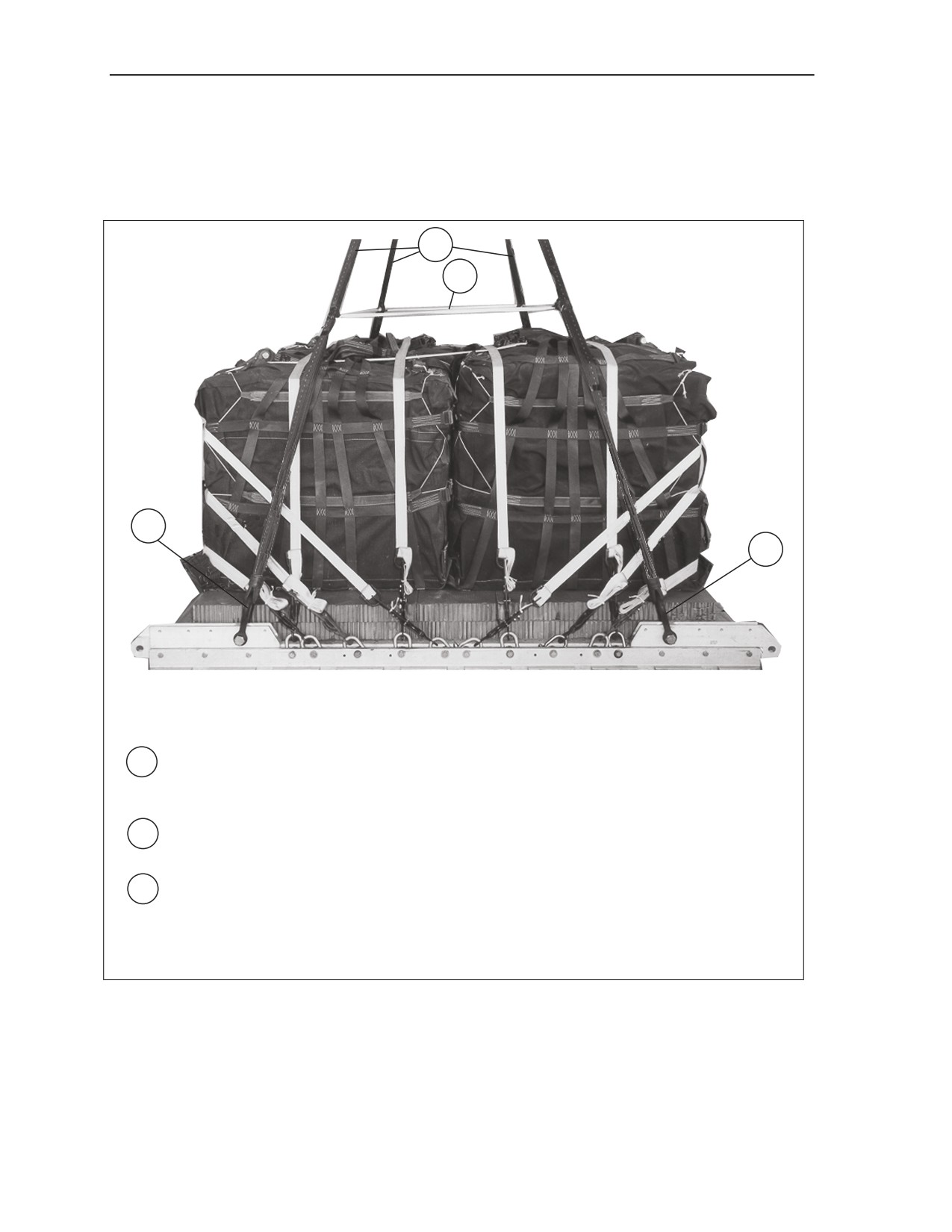
INSTALLING SUSPENSION SLINGS AND DEADMAN’S TIE
2-22. Install the suspension slings and deadman’s tie as shown in Figure 2-20.
2
3
2
1
1 Pass one end of an 11-foot (2-loop), type XXVI nylon suspension sling through the bell
portion of a large suspension clevis. Bolt the clevis to the suspension hole of the right front
tandem link.
2 Install on the left front tandem link and the right rear and left rear tandem links an 11-foot
(2-loop), type XXVI nylon suspension sling as in step 1.
3 Raise the slings and install the deadman's tie according to FM 4-20.102/MCRP 4-
11.3J/NAVSEA SS400-AB-MMO-010/TO 13C7-1-5.
Figure 2-20. Suspension Slings and Deadman’s Tie Installed
2-26
FM 4-20.112/TO 13C7-1-8
20 February 2009
Rigging Supply Loads on an 8-Foot, Type V Platform for Low-Velocity Airdrop
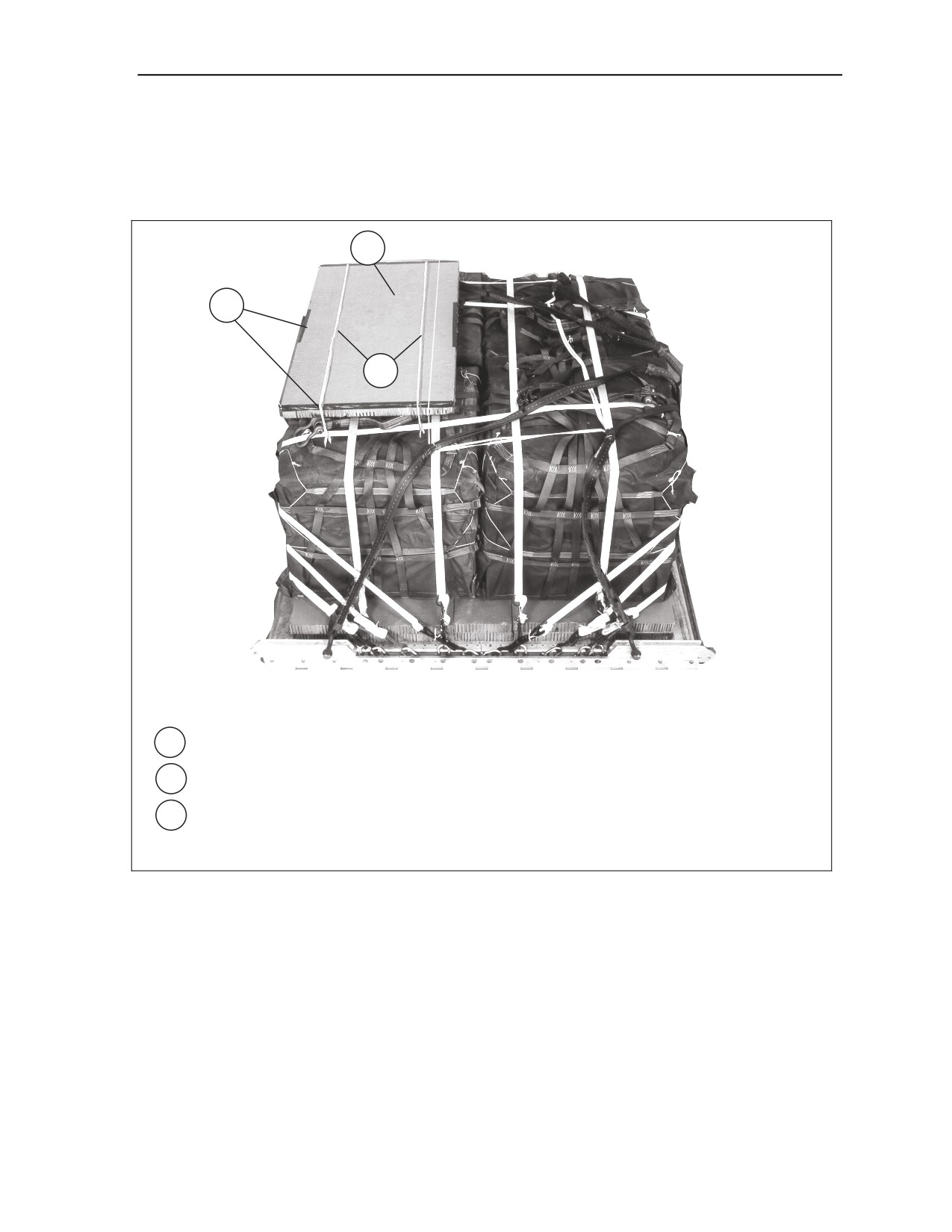
INSTALLING PARACHUTE STOWAGE PLATFORM
2-23. Install the parachute stowage as shown in Figure 2-21.
1
2
3
1 Center a 60- by 36-inch piece of honeycomb along the rear edge of the cargo bags.
2 Tape the edges of the honeycomb.
3 Tie the honeycomb to the nearest lashings with two lengths of type III nylon cord.
Figure 2-21. Parachute Stowage Platform Installed
20 February 2009
FM 4-20.112/TO 13C7-1-8
2-27
Chapter 2
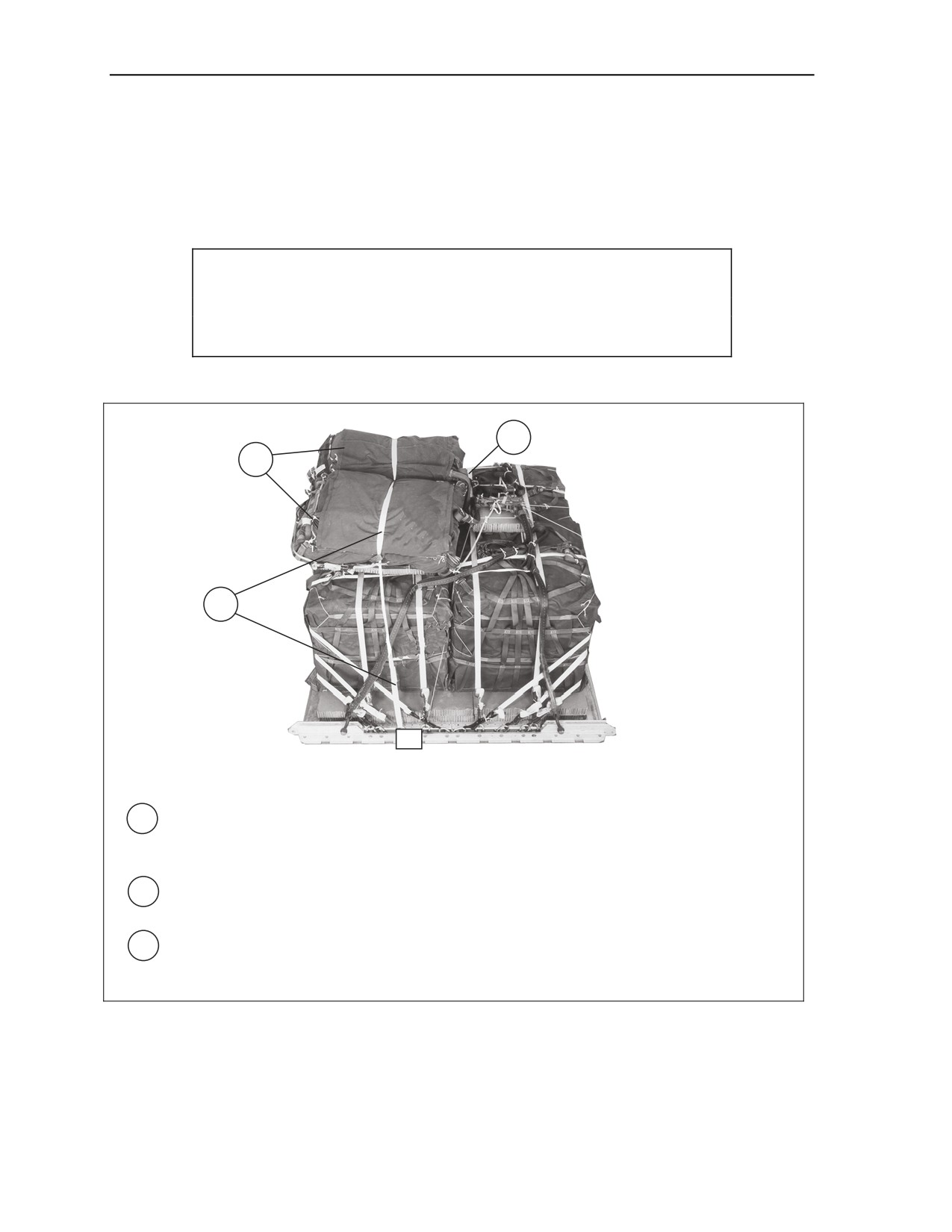
INSTALLING PARACHUTES
2-24. Compute the parachute requirements for the load being rigged. Prepare and install the cargo
parachutes according to FM 4-20.102/MCRP 4-11.3J/NAVSEA SS400-AB-MMO-010/TO 13C7-1-5 and
as shown in Figure 2-22.
CAUTION
When rigging a single parachute load, ensure the rear parachute release safety
tie is routed under the parachute securing ties.
3
1
2
8
1 Prepare, position, and stow two G-11B cargo parachutes on top of the parachute stowage
platform according to FM 4-20.102/MCRP 4-11.3J/NAVSEA SS400-AB-MMO-010/TO
13C7-1-5.
2 Install the cargo parachute restraints according to FM 4-20.102/MCRP 4-11.3J/NAVSEA
SS400-AB-MMO-010/TO 13C7-1-5 using type VIII nylon webbing to clevises 8 and 8A.
3 Install the parachute release strap according to FM 4-20.102/MCRP 4-11.3J/NAVSEA
SS400-AB-MMO-010/TO 13C7-1-5.
Figure 2-22. Cargo Parachutes Installed
2-28
FM 4-20.112/TO 13C7-1-8
20 February 2009
///////////////////////////////////////