FM 3-34.400 GENERAL ENGINEERING (December 2008) - page 1
*FM 3-34.400 (FM 5-104)
Field Manual
Headquarters
Department of the Army
No. 3-34.400 (5-104)
Washington, DC, 9 December 2008
General Engineering
Contents
Page
PREFACE
vii
INTRODUCTION
ix
PART ONE GENERAL ENGINEERING IN THE OPERATIONAL ENVIRONMENT
Chapter 1
GENERAL ENGINEERING AS AN ENGINEER FUNCTION
1-1
Full Spectrum General Engineering
1-1
Employment Considerations For General Engineering
1-6
Assured Mobility Integration
1-8
Full Spectrum Operations
1-9
Homeland Security Implications For General Engineering
1-12
Chapter 2
OPERATIONAL ENVIRONMENT
2-1
Operational Environment
2-1
Threat In The Operational Environment
2-1
Unified Action
2-2
Chapter 3
COMMAND AND CONTROL OF GENERAL ENGINEERING OPERATIONS 3-1
Joint Command and Control
3-1
Army Service Component Command and Control
3-2
General Engineering at the Theater Level
3-3
General Engineering at Operational and Tactical Levels
3-4
Command and Support Relationships
3-4
Engineer Work Line
3-6
Chapter 4
PLANNING CONSIDERATIONS AND TOOLS
4-1
Military Decision-Making Process
4-1
Joint General Engineering Planning Considerations
4-3
Unified Facilities Criteria
4-3
Operational and Tactical Planning Considerations
4-4
Field Force Engineering
4-12
DISTRIBUTION RESTRICTION: Approved for public release; distribution is unlimited.
*This publication supersedes FM 5-104, 12 November 1986.
i
Contents
PART TWO
LINES OF COMMUNICATION
Chapter 5
SEAPORTS OF DEBARKATION
5-1
Scope of Port Operations
5-2
Planning Factors
5-6
Port Construction
5-8
Port Repair and Maintenance
5-12
Logistics Over-the-Shore Operations
5-13
Chapter 6
AIRFIELDS AND HELIPORTS
6-1
Responsibilities
6-1
Planning
6-2
Construction
6-5
Airfield Damage Repair
6-8
Airfield Maintenance
6-10
Chapter 7
ROADS AND RAILROADS
7-1
Road Construction, Maintenance, and Repair Responsibilities
7-1
Road Construction, Maintenance, and Repair Planning
7-2
Road Construction
7-3
Upgrading Existing Roads
7-9
Road Maintenance and Repair
7-9
Railroad Responsibilities and Planning
7-11
Railroad Construction
7-13
Railroad Maintenance and Repair
7-14
Chapter 8
BRIDGING
8-1
Bridge Types and Categories
8-1
Bridge Site Selection
8-4
Bridge Classification
8-6
Existing Bridge Reinforcement and Repair
8-9
Detours and Bypasses
8-10
PART THREE
OTHER SUSTAINMENT OPERATIONS
Chapter 9
GENERAL ENGINEERING SUPPORT TO PROTECTION
9-1
Threat
9-2
Protection Considerations
9-2
Protective Measures and Techniques
9-3
Chapter 10
PROCUREMENT AND PRODUCTION OF CONSTRUCTION MATERIALS . 10-1
Methods of Construction
10-1
Procurement of Construction Materials
10-8
Production of Construction Materials
10-12
Chapter 11
BASE CAMPS AND FORCE BED-DOWN FACILITIES
11-1
Responsibilities
11-1
Factors
11-3
Standards
11-4
Base Camp Life Cycle
11-7
Base Camp Planning
11-7
Design and Planning Considerations
11-11
ii
FM 3-34.400
9 December 2008
Contents
Specific Facilities Within Base Camps
11-15
Other Administrative and Support Facilities Considerations
11-17
Chapter 12
SUPPORT AREA FACILITITES
12-1
Supply and Maintenance Facilities
12-1
Conversion of Existing Facilities
12-3
Ammunition Storage and Supply
12-4
Medical Treatment Facilities
12-6
Internment/Resettlement Facilities
12-8
Chapter 13
REAL ESTATE AND REAL PROPERTY MAINTENANCE ACTIVITIES
13-1
Objectives
13-1
Department of the Army Policies
13-2
Responsibility For Real Estate
13-2
Planning
13-4
Real Property Maintenance Activities
13-6
Operation of Utilities
13-7
Military Real Estate or Real Property Transfer
13-9
Chapter 14
POWER GENERATION AND DISTRIBUTION
14-1
Responsibilities and Capabilities
14-1
Planning
14-2
Electrical Power Systems
14-3
Power System Characteristics
14-4
Prime Power Operations
14-5
Chapter 15
PETROLEUM PIPELINE AND STORAGE FACILITIES
15-1
Responsibilities
15-1
Capabilities
15-2
Pipeline Construction and Maintenance
15-5
Chapter 16
WATER SUPPLY AND WELL DRILLING
16-1
Field Water Supply
16-1
Water Detection
16-2
Well-Drilling Operations
16-2
Appendix A
METRIC CONVERSION TABLE
A-1
Appendix B
REACHBACK TOOLS
B-1
Appendix C
INFRASTRUCTURE RATING
C-1
Appendix D
ENVIRONMENTAL CONSIDERATIONS
D-1
Appendix E
BASE CAMP ESTIMATING AND PLANNING CONSIDERATIONS
E-1
SOURCE NOTES
Source Notes-1
GLOSSARY
Glossary-1
REFERENCES
References-1
INDEX
Index-1
9 December 2008
FM 3-34.400
iii
Contents
Figures
Figure
1-1. GE in the AUTL
1-3
Figure
1-2. Contiguous, noncontiguous, and unassigned areas
1-5
Figure
1-3. Full spectrum operations
1-10
Figure
1-4. Operational descriptions of homeland security and mission areas
1-13
Figure
3-1. Division EWL in contiguous operations
3-7
Figure
3-2. Division EWL in noncontiguous operations
3-8
Figure
4-1. Project management process
4-5
Figure
4-2. The infrastructure assessment and survey model
4-6
Figure
5-1. Port construction command and coordination
5-4
Figure
5-2. DeLong pier
5-10
Figure
5-3. Typical LOTS operations
5-15
Figure
5-4. Field expedient matting
5-17
Figure
5-5. Container yard marshaling area
5-18
Figure
6.1. Airfield damage categories
6-9
Figure
7-1. Typical road cross section
7-5
Figure
7-2. Typical flexible pavement structure cross section
7-5
Figure
7-3. Horizontal curve types
7-6
Figure
7-4. Vertical curve types
7-6
Figure
8-1. Types and categories of bridging
8-2
Figure
8-2. Selected bridge types
8-7
Figure
10-1. Preexisting structure
10-2
Figure
10-2. General purpose (GP) medium tentage with wood floor
10-2
Figure
10-3. Tentage protected with HESCO Baston® revetments
10-3
Figure
10-4. Metal buildings constructed with the UBM in a contingency environment 10-4
Figure
10-5. Clamshell structure
10-5
Figure
10-6. Rubb fabric structure
10-5
Figure
10-7. Tension fabric structures located at Balad Air Base, Iraq
10-5
Figure
10-8. Containers used as life support areas at Camp Demi, Bosnia
10-6
Figure
10-9. Manufactured building
10-7
Figure
10-10. SEAhut cluster
10-7
Figure
10-11. CMU constructed fire station
10-8
Figure
10-12. Class IV requests and distribution in contiguous AOs
10-9
Figure
11-1. Camp Bondsteel, Kosovo, July 1999
11-2
Figure
11-2. Camp Bondsteel, Kosovo, October 1999
11-2
Figure
11-3. Force bed-down and base camp development
11-5
Figure
11-4. Base camp life cycle
11-7
Figure
11-5. Base camp development planning process
11-10
Figure
11-6. SEAhut company cluster
11-13
Figure
11-7. Standard life support area
11-16
iv
FM 3-34.400
9 December 2008
Contents
Figure 12-1. Sample detainee collection point
12-10
Figure 12-2. Sample detainee holding area
12-11
Figure 12-3. Sample field detention facility
12-12
Figure 12-4. Sample 500-man enclosure
12-13
Figure 12-5. Sample theater internment facility
12-14
Figure 14-1. The power continuum
14-6
Figure 15-1. Engineer support to POL facilities
15-2
Figure 15-2. Example bulk petroleum distribution system
15-3
Figure 16-1. 600-foot, well-drilling system and specifications
16-3
Figure B-1. The USACE reachback process
B-2
Figure B-2. Ike
B-3
Figure B-3. GATER
B-3
Figure B-4. TCMS online
B-7
Tables
Table 3-1. Command and support relationships
3-6
Table 4-1. GE in the MDMP
4-2
Table 4-2. Sample infrastructure assessment
4-9
Table 8-1. Span Construction Types
8-8
Table 10-1. Sample stockage level for engineer class IV point
10-10
Table 10-2. Pit and quarry classifications
10-13
Table 11-1. Contingency construction standards in theater
11-6
Table 11-2. Recommended square footage for personnel accommodations
11-13
Table 11-3. Minimum distances between facilities (in feet)
11-14
Table A-1. Metric conversion table
A-1
Table C-1. Status color coding of infrastructure categories
C-1
Table E-1. Summary table, base camp engineer construction effort
E-1
Table E-2. Summary table, base camp area, aggregate, and utilities requirements
E-2
Table E-3. Construction effort, site preparation requirements
E-2
Table E-4. Construction effort, facilities requirements (temporary to semipermanent
standard, temperate climate, or wood frame)
E-3
Table E-5. Motor park
E-4
Table E-6. Troop support facilities
E-4
Table E-7. Covered and open storage requirements for 14 days of stockage
E-4
Table E-8. Cold storage requirements for 14 days of stockage
E-5
Table E-9. Fuel storage
E-5
Table E-10. Troop housing
E-5
Table E-11. Quality-of-life standards for tentage
E-5
Table E-12. Selected tentage planning factors
E-5
Table E-13. General planning factors for potable and nonpotable water requirements . E-6
9 December 2008
FM 3-34.400
v
Contents
Table E-14. General planning factors for electrical power and distribution
requirements
E-6
Table E-15. Selected transportation information
E-7
Table E-16. Example of initial, temporary, and semipermanent facility standards
E-10
vi
FM 3-34.400
9 December 2008
Preface
Field Manual (FM) 3-34.400 is the primary implementing manual for the engineer function that bears its name
(the others being combat and geospatial engineering). This FM provides the linkage between the engineering
doctrine contained in FM 3-0, FM 3-34, and Joint Publication (JP) 3-34. It specifically draws from the material
presented in the Army’s keystone engineer manual (FM 3-34) and should always be used with an understanding
of its relationship to that manual and its role as the keystone engineer manual. As the implementing manual for
the engineer function of general engineering (GE), FM 3-34.400 describes the operational environment (OE)
and how to apply and integrate GE principles in support of full spectrum operations and the linkage of GE to
assured mobility. This FM focuses on the establishment and maintenance of lines of communications (LOCs)
and sustainment operations that support operational requirements throughout the area of operations (AO).
FM 3-34.400 is designed primarily to assist Army engineers at all echelons in planning and coordinating GE
operations at the strategic, operational, and tactical levels. It is also a resource applicable to Department of
Defense (DOD), joint, and other Army organizations and agencies that have a role in supporting, establishing,
and/or maintaining the infrastructure required to conduct and sustain military operations. It is the primary
manual to define the engineer function of GE.
FM 3-34.400 is applicable across full spectrum operations. This includes the four types of Army operations
(offense, defense, stability, and/or civil support) across the spectrum of conflict (peace, crisis, and war). This
FM recognizes the need for joint interdependence and the reality that operations will frequently be performed in
a joint, interagency, and multinational environment. This FM describes in detail how to apply the principles of
GE when planning and executing GE functions, and is broken down into the following three major parts:
• Part One defines GE in the OE. It provides the staff engineer with the basic concepts and
principals necessary to be successful in planning GE missions in support of joint, interagency,
and multinational operations.
• Part Two defines the roles and functions associated with gaining and maintaining LOC in
support of mobility. It details the responsibilities, planning, and construction/repair actions
necessary to assist the force commander in deploying, maneuvering, and redeploying the force.
• Part Three provides information on missions that empower engineers to support sustainment of
the force. It includes discussions on procurement of materials, protection support, facilities of
various types, base camps, power generation and distribution, well-drilling, and real estate
operations.
Although it may be helpful for units conducting construction projects on post, it is not intended to specifically
address or focus on the myriad of challenges associated with normal base operations in the continental United
States (CONUS) or permanent overseas locations.
The primary audience for FM 3-34.400 is the engineer planner at all echelons. This manual will assist the
planner in coordinating, integrating, and synchronizing GE tasks into military operations. GE tasks are part of
most military operations. The degree of Army engineer involvement in accomplishing these tasks will vary
based on the mission, situation, availability of engineer resources (all Services, host nations [HNs], and
contractors), and the commander’s intent.
9 December 2008
FM 3-34.400
vii
Preface
While a dual designated publication, it is intended to inform all Service components of the types of GE tasks,
planning considerations, the variety of units available to perform them, and the capabilities of Army engineers
to accomplish them. FM 3-34.400 is built directly on the doctrine articulated in—
• FM 3-0.
• FM 3-34.
• JP 3-34.
Planners must recognize that joint and Army transformation is rapidly changing the way we resource and
conduct operations, and the application of GE is no exception. The Army has always tailored engineer elements
and capabilities to support the force. The provisions of the future engineer force have provided additional
modularity into Army engineer organizations to facilitate the commitment of only the required engineer assets
into the theater of operations (TO). Enhancing the capabilities of those assets are the reachback capabilities that
minimize the footprint of engineers while optimizing the performance of those deployed elements. Planners
must apply these improvements and ensure that the GE effort is seamlessly woven into the commander’s plan in
a proactive fashion and accomplishes the commander’s intent.
Terms that have joint or Army definitions are identified in both the glossary and the text. Glossary
references: The glossary lists most terms used in FM 3-34.400 that have joint or Army definitions. Terms for
which FM 3-34.400 is the proponent FM (the authority) are indicated with an asterisk in the glossary. Text
references: Definitions for which FM 3-34.400 is the proponent FM are printed in boldface in the text. These
terms and their definitions will be incorporated into the next revision of FM 1-02. For other definitions in the
text, the term is italicized, and the number of the proponent FM follows the definition.
Appendix A complies with current Army directives which state that the metric system will be incorporated into
all new publications.
This publication applies to the Active Army, the Army National Guard (ARNG)/Army National Guard of the
United States (ARNGUS), and the United States Army Reserve (USAR) unless otherwise stated.
The proponent for this publication is the United States Army Training and Doctrine Command (TRADOC).
Send comments and recommendations on Department of the Army (DA) Form 2028 (Recommended Changes
to Publications and Blank Forms) directly to Commandant, United States Army Engineer School (USAES),
ATTN: ATZT-TDD-E, 320 MANSCEN Loop, Suite 220, Fort Leonard Wood, Missouri 64573-8929. Submit
an electronic DA Form 2028 or comments and recommendations in the DA Form 2028 format by e-mail to
<doctrine.engineer@wood.army.mil>.
Unless this publication states otherwise, masculine nouns and pronouns do not refer exclusively to men.
ACKNOWLEDGMENT
The copyright owners listed below have granted permission to reproduce material from their works. Other
sources of quotations, graphics, and material used in examples and vignettes are listed in the Source Notes.
Photograph of a Rubb fabric structure from Rubb Building Systems®. Permission given from the Director of
Marketing of Rubb, Inc., 1 Rubb Lane, Sanford, Maine 04073.
viii
FM 3-34.400
9 December 2008
Introduction
The three engineer functions are combat (mobility, countermobility, and survivability [M/CM/S]), general,
and geospatial engineering. Together, the three functions form the foundation of engineer doctrine,
providing the framework for the Engineer Regiment’s role in supporting the Army and joint, interagency,
and multinational operations. In the past, GE functions have been described almost exclusively as stability
operations in a sustainment area. In today’s complex OE, it is imperative that GE tasks occur throughout
the TO. Engineers must be prepared to perform a full array of GE missions while dealing with a wide range
of threats and influences. This FM focuses on engineer command and control (C2), planning, establishment
of LOC, and sustainment operations as they pertain to GE. It has applications for engineer leaders and
planners at all levels and in all types of engineer units (see FM 3-34 for the unit types and descriptions) that
may be conducting GE tasks. While selected GE tasks may be performed by combat engineer units, they
are typically performed by GE units (to include the United States Army Corps of Engineers [USACE],
other Services, HN, and civilian contactors). Combat engineers are limited from performing GE tasks by
their need to focus on combat engineering tasks, lack of organic equipment, and specific training
limitations for certain GE tasks.
As an engineer function, FM 3-34.400 is linked to several other manuals. In the joint realm, it is
specifically linked to JP 3-34. Within the Army, it is primarily linked to FM 3-34. Additionally, numerous
other FMs and technical manuals (TMs) subordinate to the engineer keystone manual provide more depth
and technical information concerning each of the discussed chapters (and appendixes) for those requiring
more details of the subject areas. As the keystone manual for the engineer function of GE,
FM 3-34.400 is the primary source manual for all engineer manuals dealing with the subordinate
disciplines, missions, and tasks associated with GE.
GE is the most diverse of the three engineer functions. It occurs throughout the AO, must be planned at all
levels of war, is executed during every type of military operation, and is performed by elements of the
engineer force from all Services. GE tasks—
• May include, but are not limited to, construction or repair of existing logistics-support facilities,
supply and LOC routes (including bridges and roads), airfields, ports, water wells, power
generation and distribution, water and fuel pipelines, and base camps/force bed-down.
Firefighting and engineer dive operations can be critical enablers to these tasks.
• May be performed by engineer elements of all Services or through the use of other organic means,
such as the USACE, Naval Facilities Engineering Command (NAVFAC), or the Air Force Civil
Engineering Support Agency (AFCESA).
• May be performed by a combination of joint engineer units, civilian contractors, and HN forces.
• Include the acquisition and disposal of real estate and real property.
• Usually require large amounts of construction materials, which must be planned and provided for
in a timely manner.
• May include the production of construction materials.
• Require the integration of environmental considerations. The area of environmental considerations
is a subtask under GE in the Army Universal Task List (AUTL).
• Are typically performed by general or construction engineers, but selected GE tasks may also be
performed by combat engineers and combat engineer units.
FM 3-34.400 is a significant revision from FM 5-104 in that it reflects the considerable changes that have
occurred over the 20 years since that manual was released. While many of the GE tasks have not changed,
the OE has shifted. The introduction of field force engineering (FFE) significantly enhanced reachback
capabilities and resources, the realities of operations often being joint, interagency, and multinational
9 December 2008
FM 3-34.400
ix
Introduction
operations; and the Army’s transitional reorganization and restructuring to a modular force has had an
impact on doctrine and operations. Changes that directly affect this manual include—
• The advent of the term assured mobility and its relationship to other doctrine. (See FM 3-34.)
• An acknowledgment of the importance of joint interdependence among the Services.
• The introduction of FFE, its relationship to primarily general and geospatial engineering, and the
increased integration of the USACE into the integrated support of deployed forces.
• The use of computer-aided planning and management tools.
• The introduction and formalization of a doctrinal process for infrastructure assessment and
infrastructure survey as a part of engineer reconnaissance.
• The formalization of a planning tool that supports the engineer staff running estimate known as
essential tasks for M/CM/S.
• The likelihood and acknowledgement that most operations conducted will be joint, interagency,
and multinational. The primary focus of joint engineer operations is to achieve the commander’s
intent by coordinating engineer support throughout the joint AO. All branches of Service possess
the organic capability to conduct GE. When available, units such as naval mobile construction
battalions (NMCBs) (Seabees), Air Force Rapid Engineers Deployable Heavy Operations Repair
Squadron, Engineers (RED HORSE), and Prime Base Engineer Emergency Force (Prime BEEF)
organizations can greatly increase the GE effort.
• The formalization of support requirements to homeland security. See FM 1, FM 3-07, and JP 3-
26.
• The frequency of contractors on the battlefield and their support for many of the GE tasks. (See
Army Regulation (AR) 715-9 and FM 3-100.21.)
• The resulting changes in the basic design and organizational structures and equipment of engineer
organizations to support the Army’s ongoing transformation.
• The acknowledged importance and the requirement to integrate environmental considerations into
all operations.
Finally, FM 3-34.400 is written with the acknowledgement that the OE is much more variable than what
doctrine was previously written against. Engineers must be prepared to go into any OE and perform its full
range of GE tasks while dealing with a wide range of threats and other influences. It builds on the
collective knowledge and wisdom gained through recent conduct of operations, numerous exercises, and
the deliberate processes of informed reasoning throughout the Army. It is rooted in time-tested principles
and fundamentals, while accommodating new technologies and diverse threats to national security.
x
FM 3-34.400
9 December 2008
PART ONE
General Engineering in the Operational
Environment
Part one of this manual discusses GE in the OE. It provides guidance for engineers
at all levels for integrating and synchronizing GE into the joint theater and maneuver
commander’s strategic, operational, and tactical plans. Chapter 1 discusses the
application of GE as one of the three engineer functions. Chapter 2 provides the
fundamentals for the OE in which GE will be applied. Chapters 3 and 4 discuss C2 of
engineer operations along with GE planning considerations, to provide a framework
to achieve synergy on the battlefield. These are the building blocks for applying GE
to the specific GE missions discussed in parts two and three.
Chapter 1
General Engineering as an Engineer Function
Although they were the size of David, engineers did the work of Goliath.
Assistant Division Commander, 101st Airborne Division (Air Assault), Operation Iraqi
Freedom After-Action Review
The three engineer functions are combat
(M/CM/S), general, and geospatial
engineering. As one of three engineer functions, planners integrate the full spectrum
of GE to support all warfighter functions at the strategic, operational, and tactical
levels. GE encompasses those engineer tasks that establish and maintain the
infrastructure required to conduct and sustain military operations. The nature of these
tasks requires planners to integrate environmental considerations into the process.
Such tasks are conducted in a joint, interagency, and multinational environment and
are integrated into the force commander’s plan. This force may be led by any one of
the Services and GE support may come from any or all Service engineers,
contractors, HN capabilities, or the engineers of other nations. This engineer function
occurs throughout the AO and across the spectrum of conflict. Past conflicts focused
GE on sustainment areas. This may no longer be the case, given the realities of
noncontiguous operations against both symmetric and asymmetric threats.
FULL SPECTRUM GENERAL ENGINEERING
1-1. The joint definition says that GE is those engineering capabilities and activities, other than combat
engineering, that modify, maintain, or protect the physical environment. Examples include construction,
repair, maintenance, and operation of infrastructure, facilities, LOCs and bases; terrain modification and
repair; and selected explosive hazards (EH) activities.
(JP 3-34) This manual serves as the primary
9 December 2008
FM 3-34.400
1-1
Chapter 1
reference for planning and executing GE as an engineer function at the Army level. It is directly linked to
FM 3-0 and FM 3-34.
1-2. GE is the most diverse of the three engineer functions and is typically the largest percentage of all
engineer support provided to an operation. Besides occurring throughout the AO, at all levels of war, and
being executed during every type of military operation, it may employ all 23 military occupational
specialties (MOSs) within the Engineer Regiment. GE tasks—
z
May include construction or repair of existing logistics-support facilities, supply and LOC
routes
(including bridges and roads), airfields, ports, water wells, power generation and
distribution, water and fuel pipelines, and base camps and force bed-down. Firefighting and
engineer diving operations are two aspects that may be critical enablers to these tasks.
z
May be performed by modified table of organization and equipment (MTOE) units or through
the USACE.
z
May also be performed by a combination of joint engineer units, civilian contractors, and HN
forces, or multinational engineer capabilities.
z
Incorporate FFE to leverage all capabilities throughout the Engineer Regiment. This includes the
linkages that facilitate engineer reachback (see appendix B).
z
May require various types of reconnaissance and assessments to be performed before, or early
on in, a particular mission (see FM 3-34.170).
z
Include disaster preparedness planning, response, and support to consequence management
(CM).
z
Include the acquisition and disposal of real estate and real property.
z
Include those engineer protection planning and construction tasks that are not considered
survivability tasks under combat engineering.
z
May include camouflage, concealment, and deception (CCD) tasks (see FM 20-3).
z
May include the performance of environmental support engineering missions.
z
May include base or area denial missions.
z
Usually require large amounts of construction materials, which must be planned and provided
for in a timely manner.
z
May include the production of construction materials.
z
Require the integration of environmental considerations.
1-3.
The Chairman of the Joint Chiefs of Staff Manual (CJCSM) 3500.04D contains a hierarchical listing
of tasks that are performed by a joint military force. It provides a common language and reference system
for joint commanders, staffs, planners, combat developers, and trainers. As applied to joint training, the
Universal Joint Task List (UJTL) is a key element of the requirements based mission for task analysis. It
contains strategic national and strategic theater tasks, operational tasks, and tactical tasks (theater Army
[TA]). Each task also contains measures of performance and criteria that support its definition. At the
tactical level, the UJTL links the operational tasks to tactical tasks by requiring Services to produce
Service-specific tactical task lists. For the Army this is codified in FM 7-15. Although an analysis of the
UJTL is important, most relevant links for GE tasks (since they are typically considered tactical tasks in
this hierarchy) are in the AUTL.
Note. The UJTL is a menu of capabilities (mission-derived tasks with associated conditions and
standards, such as the tools) that may be selected by a joint force commander
(JFC) to
accomplish the assigned mission. Once identified as essential to mission accomplishment, the
tasks are reflected within the command joint mission essential task list. (JP 3-33)
1-4. FM 7-15 outlines GE tasks that units may use as one of the sources to establish their mission-
essential task list
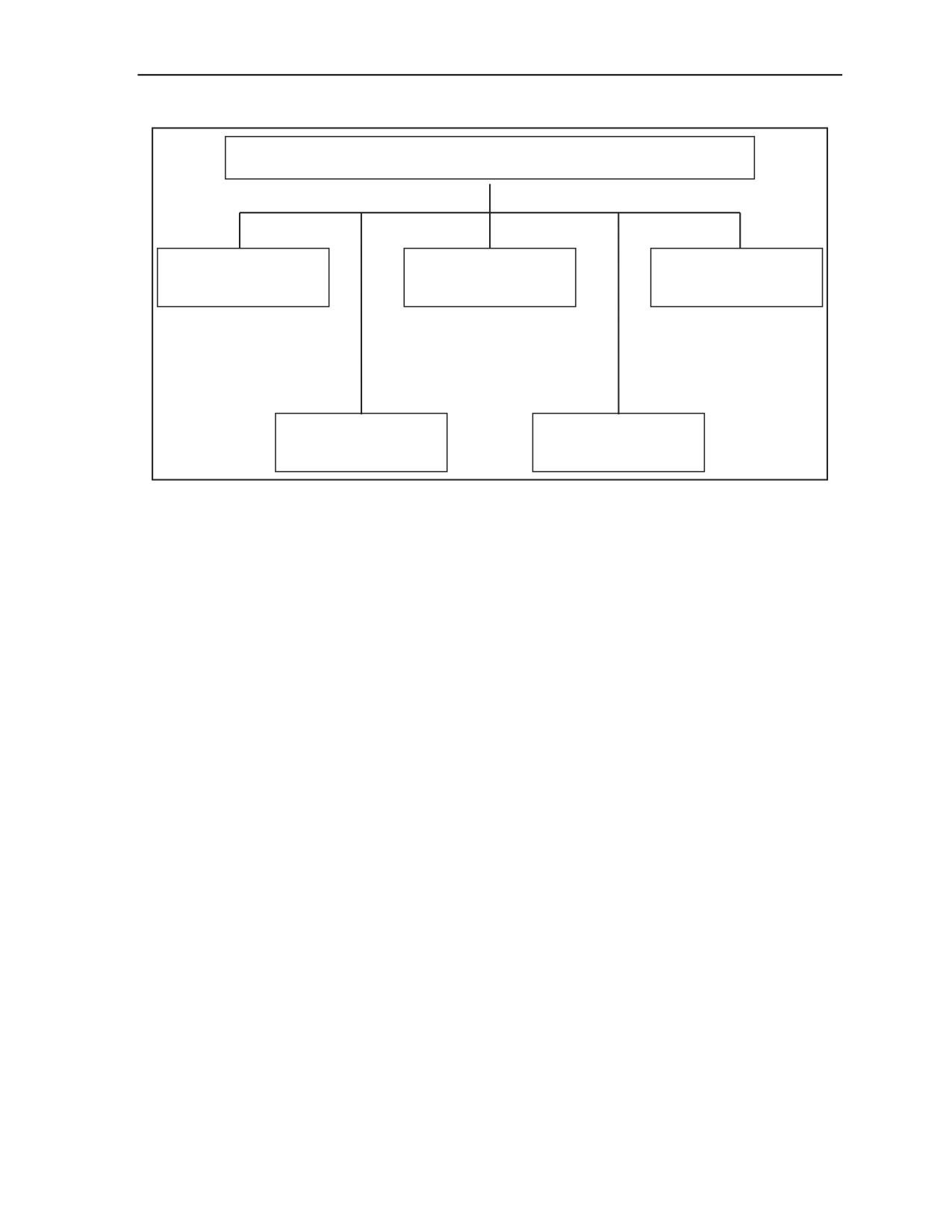
(METL). Figure1-1 highlights those Army tactical tasks that are subordinated to
providing GE support. While there may be examples of GE tasks not listed under Army tactical task
(Provide General Engineer Support), the vast majority are included in these subtasks.
1-2
FM 3-34.400
9 December 2008
General Engineering as an Engineer Function
Army Tactical Task
Provide GE support
Army Tactical Task
Army Tactical Task
Army Tactical Task
Restore damaged
Construct and maintain
Provide engineer
areas
sustainment LOCs
construction support
Army Tactical Task
Army Tactical Task
Supply mobile electric
Provide facilities
power
engineering support
Figure 1-1. GE in the AUTL
1-5. Engineers conduct GE tasks within the full spectrum of GE operations described in FM 3-0. Within
the AO, commanders delineate tasks into two all-encompassing categories of operations (decisive and
shaping), thus providing a common focus for all actions.
z
Decisive operations are those that directly accomplish the task assigned by the higher
commander and conclusively determine the outcome of major operations, battles, or
engagements.
z
Shaping operations create and preserve the conditions for success of decisive operations.
Shaping operations enable decisive operations by providing sustainment, sustainment area and
base security, movement control, terrain management, and infrastructure development.
1-6. Commanders organize forces according to purpose by determining whether each unit’s operation
will be decisive or shaping. GE is usually focused as a shaping operation; however, the commander’s intent
may dictate that it is at the heart of the decisive operation, particularly in stability or civil support
operations. An example of this is provided in the perspective on page 1-4. In the perspective an engineer-
led operation was a decisive (or shaping) operation in Afghanistan, with operational, and perhaps even
strategic, implications. See the following section for more discussion of GE in full spectrum operations.
During execution, the commander combines and directs decisive and shaping operations while preserving
opportunities. Ideally, decisive operations occur approximately as planned, while shaping operations create
and preserve opportunities and freedom of action to maintain momentum and exploit success.
9 December 2008
FM 3-34.400
1-3
Chapter 1
PERSPECTIVE
During Operation Enduring Freedom V and VI, the rugged, mountainous terrain of
Afghanistan’s Hindu Kush range became home to Army engineers. The mission was
to construct a new, two-lane, 123-kilometer road—a highway from Kandahar City
(roughly 25 kilometers northwest of Kandahar Airfield) to Tarin Kowt. Working seven
days a week for months in the extreme climate and terrain of Afghanistan, the
engineers completed the project ahead of schedule. While this mission was led by
engineers from the
528th and
864th Engineer Battalions, it involved an
unprecedented level of teamwork between the Army, U.S. government, Afghan
National Army, the Afghan government, and various international civilian
organizations. The completion of the road marked the end of geographical isolation
for hundreds of thousands of Afghan people and assisted the country in its transition
toward democracy. This action was more than just the building of a road.
Compilation of Articles
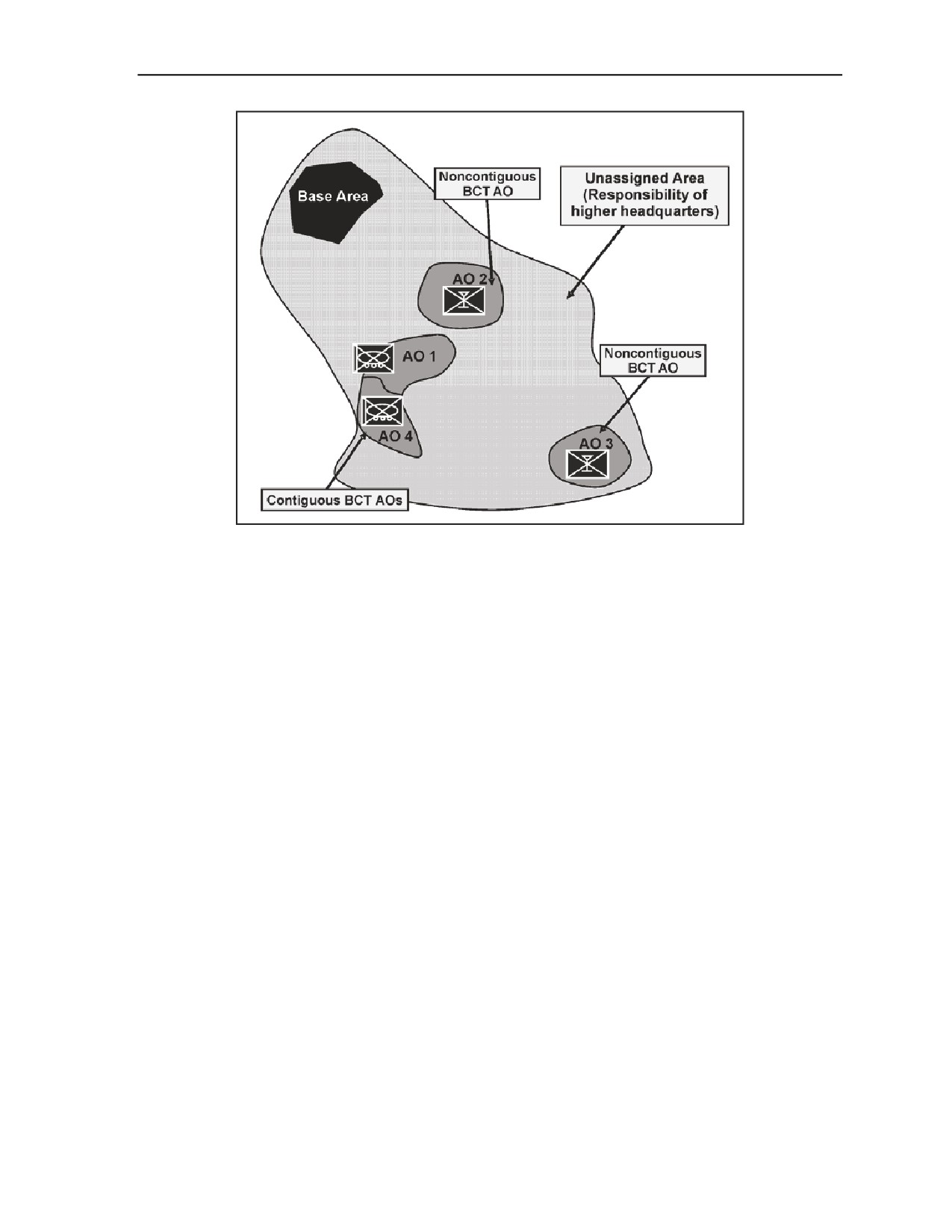
1-7. Commanders visualize their concept of operations and describe their intent. The circumstances may
lead the commander to describe their AO in spatial terms of unassigned area, close combat, and
sustainment area. These terms may be useful when operations are generally contiguous and against a
clearly defined symmetric enemy force. The OE will seldom allow the commander the luxury of describing
his AO in such terms. The OE will likely consist of noncontiguous operations against an asymmetric
adversary. Figure 1-2 graphically describes possible means by which the commander may visualize his
AO.
1-8. The combination of contiguous and noncontiguous operations that the commander uses will have a
major impact on the planning and execution of GE tasks. In a contiguous AO, GE tasks are typically
performed to the rear of division boundaries by engineer units assigned to higher echelon headquarters. As
the AO becomes less contiguous, GE tasks are required in forward areas in proximity to combat units.
Since GE assets are not organic to the brigade combat team (BCT), the BCT is normally augmented with
the necessary engineer assets to perform GE tasks within the BCT AO. The types of GE assets that will
augment the BCT are dependent on the types of missions to be accomplished and the availability of
engineers. Selected GE tasks may be performed by combat engineers. The impacts of the noncontiguous
battlefield on GE tasks are numerous. They include—
z
The need for increased work site security. Because units will perform GE near forward
elements, contact with the enemy is much more likely. Units conducting GE tasks must be
proficient in combat operations to provide for their own defense against such threats.
Commanders directing the performance of GE missions must treat these missions as they would
any combat operation and ensure the protection of their personnel. General engineers focused on
combat operations cannot be focused on performing their GE missions and tasks. It is in the
interest of the maneuver commander to keep general engineers out of close combat operations
and focused on their GE missions and tasks.
1-4
FM 3-34.400
9 December 2008
General Engineering as an Engineer Function
Figure 1-2. Contiguous, noncontiguous, and unassigned areas
z
The need to provide for general and local security. During contiguous operations, it is often
assumed that units receive general security from forward combat units and that only local
security is at issue. On the noncontiguous battlefield, units must assume that they will face the
same level of threat as maneuver units operating in the AO.
z
The increased number and length of LOCs and main supply routes (MSRs). With
construction and maintenance of these assets critical to sustainment operations, the
noncontiguous battlefield greatly expands the GE effort required. Engineer planners can expect
smaller-sized units to be spread over greater distances than during contiguous operations.
Security of personnel along those routes is an increased concern, and focused convoy security
measures will need to be implemented.
z
The need to increase facility construction effort. Because units will operate with more
autonomy within their own AO, they will each require facilities for deployment, supply,
maintenance, and other sustainment activities.
z
The increased possibility that combat engineer units may conduct additional GE tasks.
Maneuver commanders at the BCT and higher levels must be able to task their organic combat
engineer elements to conduct selected GE tasks. Some tasks can be performed without
augmentation. However, a conscious trade-off of potential combat engineering tasks that they
could be performing must be made in order to have them perform these tasks. Selected
additional GE tasks may be performed when combat engineer units are provided with additional
specialized equipment and expertise. Combat engineers will never be able to perform all GE
tasks.
z
The likelihood that GE assets will often be task-organized to a much lower level. Because
of the distances involved in a noncontiguous AO, engineer commanders may not be able to
effectively C2 the GE effort in a manner that is as responsive to the needs of the maneuver
commander without decentralization of authority. These assets may need to be placed in direct
support (DS) or attached to BCTs to provide timely and responsive GE support.
9 December 2008
FM 3-34.400
1-5
Chapter 1
EMPLOYMENT CONSIDERATIONS FOR GENERAL ENGINEERING
1-9. Key considerations for the application of GE in an AO include speed, economy, flexibility,
decentralization of authority, and establishment of priorities. Effective proactive planning and engineer
initiative combine to accomplish the challenges inherent in each of these considerations.
SPEED
1-10. Speed is fundamental to all activities in an AO. Given the tendency for GE tasks to be resource
intensive in terms of time, materials, manpower, and equipment, speed is often critical. Proper planning
and prioritization are essential to achieve the proper GE effect. Practices that support speed include—
z
Proper prior planning. Speed is a relative term if planning before the operation did not set the
conditions for real speed in terms of mission accomplishment. Speed requires good, broad and
inclusive, proactive, and synchronized planning across all staff sections and engineer
capabilities.
z
Existing facilities use. Engineer units must rapidly provide facilities that enable forces to
deliver maximum combat power forward. The use of existing facilities may contribute to the
essential element of speed by eliminating unnecessary construction support. Use of existing
ports, pipelines, warehouses, airfields, and roads during operations is critical. Commanders and
staffs must be capable of planning and conducting real estate and real property acquisition to
facilitate this effort. Often, the JFC must negotiate with the host government for host nation
support (HNS) to use existing facilities. In mature theaters, such as the Republic of Korea,
status-of-forces agreements (SOFAs) may dictate procedures for use of existing facilities.
z
Standardization. Standard materials and plans save time and construction effort. They permit
production line methods, including prefabrication of structural members. Standardized assembly
and erecting procedures increase the efficiency of work crews by reducing the number of
methods and techniques. This supports simplicity. Standardization between all Service engineers
is essential for success.
z
Simplification. Simplicity of design and construction is critical because manpower, materials
and time are in short supply. Simple methods and materials allow scarce resources to complete
installation in minimum time. They may also allow for the use of HN labor to support the
construction.
z
Bare-bones construction use. Military construction in an AO is characterized by concern for
only the minimum necessities by the temporary nature, when possible. The decision on
standards to be applied for construction must be decided by the theater commander early in the
planning process.
z
Construct in phases. Phased construction provides for the rapid completion of critical parts of
buildings or installations and their use of these parts for their intended purpose before the entire
project is complete. The use of the Gantt chart to plan and track progress is a useful tool.
ECONOMY
1-11. GE in an AO demands efficient use of personnel, equipment, and materials. Proper proactive
planning is the first step in any discussion of the application of economy.
z
Conserve manpower. Construction tasks are time-consuming and engineer commanders will
often find a shortage of engineers and construction workers. Conservation of labor is important
and every engineer must function at the peak of efficiency for long hours to accomplish the GE
mission. Careful planning and coordination of personnel is necessary. Missions must be well
organized and supervised and personnel carefully allocated for the task. Selected GE tasks may
also be performed by combat engineers, but this will involve a conscious decision by the
commander to trade off one set of engineer capabilities to further GE tasks.
z
Conserve equipment. Military construction equipment will likely be in short supply at the
beginning of a contingency operation. Operational capability of equipment may be impaired by
shortages in repair parts and maintenance personnel. Engineer commanders should consider
1-6
FM 3-34.400
9 December 2008
General Engineering as an Engineer Function
contracting for local equipment and repair parts to alleviate these shortages. Preventive
maintenance of equipment is essential to ensure that it is available for long-term use.
Commanders must ensure that time is allocated for scheduled services to optimize equipment
capabilities.
z
Conserve materials. The critical aspect of completing a GE task is often the availability of
appropriate materials. Although planners should make maximum use of local resources in the
area of responsibility (AOR) to maximum extent possible, they may not be available, or in short
supply. If this is the case, planners must anticipate the need to ship materials from outside the
AO, taking into consideration the long transit times that may be required. Conservation of
materials while executing GE tasks should always be a critical consideration.
z
Apply environmental considerations early in the process. While some situations require
putting aside risk associated with environmental considerations, it is generally true that the
earlier the risk is mitigated, the easier and less complex mitigation procedures will need to be
employed (and at the least cost). As the staff proponent for environmental issues, engineers must
be able to analyze environmental considerations and recommend appropriate courses of action
(COAs) to the commander. If an environmental baseline survey (EBS) and an environmental
health site assessment (EHSA) will be required, see that they are performed early in the process.
Note. An EBS is a coordinated boundary or phase line used to compartmentalize an AO to
indicate where specific engineer units have primary responsibility for the engineer effort. It may
be used at division level to discriminate between an AO supported by division engineer assets
and an AO supported by DS or general support (GS) corps engineer units. (FM 5-100)
z
Identify funding. The types of funding and considerations involved are identified in FM 3-34
and JP 3-34. Identifying appropriate funding and proper use of these funds is an important
application of economy.
FLEXIBILITY
1-12. The rapidly changing situation during operations requires that GE tasks in all stages be adaptable to
new conditions. To meet this requirement, use standard plans that allow for adjustment, expansion, and
contraction whenever possible. For example, a standard building plan may be easily adapted for use as an
office, barracks, hospital ward, or dining facility. Forward airfields should be designed and located so that
they can be expanded into more robust facilities capable of handling larger aircraft and a larger maximum
(aircraft) on ground (MOG) capacity. Standardization enhances flexibility.
1-13. Flexibility also implies versatility between Service engineers and within engineer organizations to
accomplish GE tasks. This may include providing selected technical expertise and equipment to a variety
of engineer organizations to perform GE missions that they are not specifically designed for or organized
to perform. Engineer units must display a multifunctional ability to perform engineer tasks outside of their
METL. An example of this might be the use of engineers that typically perform combat engineering tasks
to perform selected GE tasks. A decision like this would require a risk analysis and the approval of the
higher echelon commander to ensure that those engineers are not taken away from other more critical
missions in their role of providing support to movement and maneuver for BCTs and other combat forces.
1-14. The basic deployability of engineer organizations and the modularity built into their designs are
enablers of flexibility. Engineers must be ready to send only those assets specifically required to perform a
mission and establish functional high-performing teams from a variety of Army engineer units and
capabilities and from multiple Service engineer organizations. Integration of commercial engineer
equipment and flexibility of engineer C2 must support the consideration of decentralization of authority.
DECENTRALIZATION OF AUTHORITY
1-15. The wide dispersion of forces in the AO requires that engineer authority be decentralized as much as
possible. The engineer commander or engineer coordinator (ENCOORD) in charge of operations at a
9 December 2008
FM 3-34.400
1-7
Chapter 1
particular location must have authority consistent with his responsibilities. As noted before, this is essential
on the noncontiguous battlefield.
1-16. Decentralization of authority requires effective C2 and flexibility of its application to integrate the
variety of engineer capabilities that may be employed to accomplish selected GE tasks or missions. Service
engineers must be capable of nearly seamless integration between units and capabilities to meet the needs
of the joint or component commander.
ESTABLISHMENT OF PRIORITIES
1-17. It is essential to establish priorities to determine how much GE effort must be devoted to a single
task. While detailed priority systems are normally the concern of lower echelon commands, all levels
beginning with the JFC and Army service component commander
(ASCC) must issue directives
establishing broad priority systems to serve as a guide for detailed systems. Resources must initially be
assigned only to the highest priority tasks. Low priority tasks may be left undone while recognizing and
assessing the risk of doing so. At theater level, planners can assume general priorities for initial phases of
an operation and refine these priorities as the planning effort matures.
ASSURED MOBILITY INTEGRATION
1-18. While focused primarily on the warfighting functions of movement and maneuver, intelligence, and
protection, assured mobility has linkages to each of the warfighting functions and both enables and is
enabled by those functions. While the engineer has a primary staff role in assured mobility, other staff
members support its integration and have critical roles to play. The engineer plays an integrating role in
assured mobility that is similar to the role played by the intelligence officer in the intelligence preparation
of the battlefield (IPB) integrating process. Ultimately, assured mobility is the commander’s responsibility.
Other staff members also integrate M/CM/S tasks as a part of assured mobility. Examples include the
regulation of traffic in the maneuver space, the handling of displaced persons, and other M/CM/S tasks to
support the maneuver plan. Assured mobility is the integrating planning process within which
consideration of engineer; chemical, biological, radiological, and nuclear
(CBRN); and other
reconnaissance capabilities will occur.
1-19. The framework of assured mobility follows a continuous cycle of planning, preparing, and executing
decisive and shaping operations. Achieving assured mobility rests on applying six fundamentals that
sustain friendly maneuver, preclude the enemy’s ability to maneuver, and assist the protection of the force.
The fundamentals of assured mobility and some of the specific linkages to GE are to—
z
Predict. Engineers and other planners must accurately predict potential enemy impediments to
joint force mobility by analyzing the enemy’s tactics, techniques, procedures, capability, and
evolution. Prediction requires a constantly updated understanding of the OE. Applying GE,
planners must predict the impact of enemy operations and military operations on the
infrastructure required to maintain mobility and momentum. An example would be predicting
the damage to a MSR caused by the movement of a large mechanized force over a single route.
z
Detect. Using intelligence, surveillance, and reconnaissance (ISR) assets, engineers and other
planners identify early indicators for the location of natural and man-made obstacles,
preparations to create and emplace obstacles, and a potential means for obstacle creation. They
identify both actual and potential obstacles and propose solutions and alternate COAs to
minimize or eliminate their potential effects. For the GE function, planners must detect impacts
to strategic, operational, and tactical mobility that can be affected by engineering solutions.
z
Prevent. Engineers and other planners apply this fundamental by denying the enemy’s ability to
influence mobility. This is accomplished by forces acting proactively before the obstacles are
emplaced or activated. This may include aggressive action to destroy enemy assets and
capabilities before they can be used to create obstacles. Political considerations and rules of
engagement (ROE) may hinder the ability to apply the fundamental early in a contingency.
Commanders must apply the necessary GE assets in a timely manner to prevent mobility
impediments to the force. This may include such actions as construction of a bridge bypass
before a bridge becomes unusable.
1-8
FM 3-34.400
9 December 2008
General Engineering as an Engineer Function
z
Avoid. If prevention fails, the commander will maneuver forces to avoid impediments to
mobility if this is viable within the scheme of maneuver. GE may become an integral part of the
maneuver force’s ability to avoid such impediments. Engineers may be required to build roads
around natural or man-made obstacles, construct alternate airfields, and other actions that allow
maneuver elements to operate effectively.
z
Neutralize. Engineers and other planners plan to neutralize, reduce, or overcome obstacles and
impediments as soon as possible to allow unrestricted movement of forces. The breaching
tenents and fundamentals apply to the fundamental of “neutralize. Building a tactical or LOC
bridge may be an example of a GE task that neutralizes a river obstacle.
z
Protect. Engineers and other elements plan and implement survivability and other protection
measures that will deny the enemy the ability to inflict damage as joint forces maneuver. This
may include countermobility missions to deny the enemy maneuver and provide protection to
friendly maneuvering forces. Commanders can direct that GE efforts focus on survivability
support such as berms, bunkers, and hardened facilities. This is primarily focused on the
hardening aspect of survivability as described in FM 5-103.
Note. Survivability is the concept which includes all aspects of protecting personnel, weapons,
and supplies while simultaneously deceiving the enemy. Survivability tactics include building a
good defense; employing frequent movement; using concealment, deception, and camouflage;
and constructing fighting and protective positions for both individuals and equipment. The
Army definition adds, “Encompasses planning and locating position sites, designing adequate
overhead cover, analyzing terrain conditions and construction materials, selecting excavation
methods, and countering the effects of direct and indirect fire weapons.” See FM 5-103.
1-20. Assured mobility provides the broad framework of fundamentals that serve to retain the focus and
integrate M/CM/S within the combined arms team. Planners at all levels of the combined arms team rely
on this framework to ensure that adequate support is provided to the commander’s scheme of maneuver
and intent. Within the combined arms team planning staff, it is the assured mobility section at the BCT
level (and those same staff members at echelons above the BCT) that provides input for engineer, CBRN,
and similar specialized reconnaissance. The ENCOORD plans for the application of and coordinates the
integration of engineer reconnaissance across the engineer functions and spans the range from tactical to
technical capabilities.
1-21. GE facilitates the force’s ability to apply the fundamentals of assured mobility. As engineers plan
engineering support as part of an operation, they must integrate each engineer function, including GE, into
the operational context necessary to support assured mobility and the maneuver commander.
1-22. Engineer units with primarily a GE mission must be trained and prepared to execute all engineer
functions to support the maneuver commander. They must be able to use and integrate geospatial products
into their operations and conduct limited combat engineering functions to facilitate their GE mission. They
must also be well trained in small-unit tactics, to include convoy security, work site defenses, and limited
offensive operations.
FULL SPECTRUM OPERATIONS
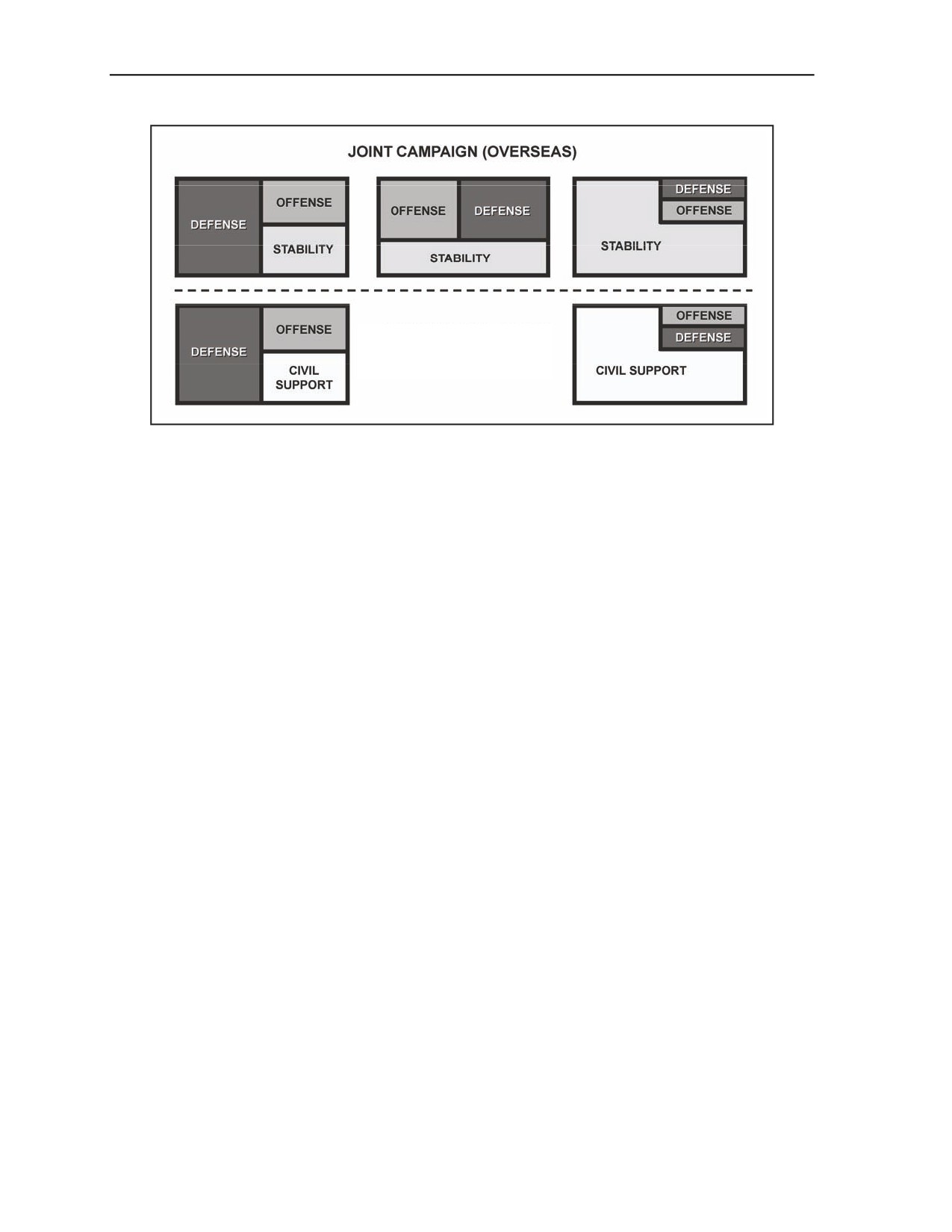
1-23. The Army’s operation concept is full spectrum operations (see figure 1-3, page 1-10, and FM 3-0).
Full spectrum operations are the purposeful, continuous, and simultaneous combinations of offense,
defense, and stability or civil support to dominate the military situation at operational and tactical levels. In
full spectrum operations, Army forces adapt to the requirements of the OE and conduct operations within it
using synchronized action, joint interdependent capabilities, and mission command. They defeat
adversaries on land using offensive and defensive operations, and operate with the populace and civil
authorities in the AOs using stability or civil support operations.
9 December 2008
FM 3-34.400
1-9
Chapter 1
HOMELAND SECURITY
(WITHIN THE
UNITED STATES)
Figure 1-3. Full spectrum operations
1-24. The Engineer Regiment is organized and equipped to respond to the broad range of full spectrum
operations. In spite of this, engineers can expect serious challenges in the OE when trying to execute GE
tasks. A lack of resources─to include equipment, personnel, and logistics─may severely impede the
commander from executing all necessary tasks, and careful prioritization must occur. Even more
challenging is that in the OE, units must be able to rapidly transition from the different types of operations.
Units supporting an offensive operation must be able to rapidly transition to defense or stability operations.
Likewise, a contingency that begins as a stability operation may rapidly move to defense or the offense.
This may occur at the strategic, operational, and tactical levels, and engineers apply the GE principle of
flexibility to facilitate this transition. This makes executing GE tasks all the more challenging in the OE
because of the long duration GE tasks often require.
1-25. To most effectively accomplish the tasks assigned to engineers, it is necessary that commanders
carefully consider augmentation requirements. GE units are very capable of accomplishing their assigned
tasks; however, they are designed to accomplish specific types of tasks. Therefore, it is imperative that
when task-organizing engineers, proper assets be allocated from the engineer force pool.
OFFENSIVE OPERATIONS
1-26. Offensive operations carry the fight to the enemy by closing with and destroying enemy forces,
seizing territory and vital resources, and imposing the commander’s will on the enemy. They are focused
on seizing, retaining, and exploiting the initiative. Assured mobility supports all the forms of offensive
maneuver including the envelopment, turning movement, penetration, infiltration, and frontal attack.
Executing the forms of maneuver translates into four types of offensive operations at the tactical level: the
movement to contact, attack, exploit, and pursuit. See FM 3-90 for an in-depth discussion of these forms
and types of offensive maneuver. The primary focus of the GE function is reinforcing combat engineer
support to operational and tactical maneuvers and infrastructure support focused on the creation and
sustainment of LOCs.
1-27. Although planners must anticipate actual requirements based on a thorough and continuous engineer
estimate, offensive operations will likely require the execution of many of the engineering missions below.
Several of these are combat engineering missions and tasks, but may be performed by units that most
typically perform GE tasks. They include—
z
Constructing and repairing roads and combat trails used as supply routes.
z
Ensuring theater access through the construction and upgrade of ports, airfields, and reception,
staging, onward movement, and integration (RSO&I) facilities.
1-10
FM 3-34.400
9 December 2008
General Engineering as an Engineer Function
z
Including the repair of paved, asphalt, and concrete runways and airfields as part of forward
aviation combat engineering.
z
Installing assets that prevent foreign object damage (FOD) to rotary wing aircraft.
z
Constructing tactical and LOC bridging.
z
Conducting area damage control (ADC) missions that support the mobility of the maneuver
force.
z
Constructing internment/resettlement (I/R) facilities.
DEFENSIVE OPERATIONS
1-28. Defensive operations defeat enemy attacks, buy time, economize forces, and develop conditions
favorable for offensive operations. Defensive operations alone cannot achieve a decisive victory. Their
purpose is to create conditions for a counteroffensive that will regain the initiative. There are three types of
defensive operations: area defense, mobile defense, and retrograde (see FM 3-90). Although the primary
focus for engineers is on combat engineering to enable combined arms obstacle integration and assured
mobility to friendly repositioning or counterattacking forces, GE tasks will still play an important role.
Examples of expected missions include—
z
Constructing hardened facilities that protect the force from enemy artillery and air attack.
z
Reinforcing combat engineer efforts in M/CM/S.
z
Constructing and repairing of routes that facilitate the repositioning of forces throughout the
AO.
z
Repairing ports, railroads, pipelines, and other assets critical to sustainment operations.
z
Constructing decontamination facilities.
STABILITY OPERATIONS
1-29. Stability operations promote and protect United States
(U.S.) national interests by influencing
diplomatic, civil, and military environments. They are conducted as a part of overseas operation. Army
forces support stability operations by sustaining and exploiting security and control over areas,
populations, and resources. They act as part of a joint force with the U.S. country team and the United
States Agency for International Development (USAID). GE tasks primarily focus on the reconstruction or
establishment of services that support the population in conjunction with civilian agencies in addition to
their normal support of U.S. forces. Engineers conducting missions provide resources to assist in disaster
or theater response in areas outside U.S. territory. Rapid and effectively emplaced sustainment operations
reduce human injuries and fatalities and harden infrastructure. Regional security is supported by a balanced
approach that simultaneously enhances regional stability and economic prosperity. FM 3-07 discusses the
types of operations that Army forces may conduct during stability operations. Engineers are focused on
assisting in stabilizing a region by improving the infrastructure and integrating with and supporting
maneuver forces in their missions. The majority of the overall engineer effort during stability operations is
likely to be through the GE function. Given the nature of stability operations, the risks associated with
environmental hazards may have a greater importance and impact on stability operations than on offensive
or defensive operations.
1-30. Stability operations tend to be a long duration compared to the other full spectrum operations. As
such, the GE level of effort is very high at the onset and gradually decreases as the theater matures. As the
AO matures, GE effort may transfer to civilian contractors, such as those that operate under the logistics
civilian augmentation program (Army). Because of the recognition that U.S. forces will likely remain long
term, the GE missions tend to focus on the long-term sustainment of the force. Likely missions include—
z
Base camp and force bed-down facility construction.
z
Survivability and other protection support.
z
Robust support area facilities.
z
Infrastructure support.
z
Power generation and distribution facilities that are reliable.
z
LOC construction, maintenance, and repair.
9 December 2008
FM 3-34.400
1-11
Chapter 1
1-31. Stability operations often include humanitarian and civic assistance (HCA). By law (Section 401,
Title 10, United States Code [USC], HCA is authorized by the secretary of state and appropriated in the
Army budget. In foreign humanitarian assistance operations, Army forces act as part of a joint force with
the U.S. country team and the USAID. A reconnaissance
(assessment and survey) of the local
infrastructure is an important part of stability operations and should complement the humanitarian effort.
This reconnaissance is one of the first steps in determining priorities for infrastructure improvement for the
local population (see chapter 4 and FM 3-34.170).
CIVIL SUPPORT OPERATIONS
1-32. Civil support operations provide essential services, assets, or specialized resources to assist civil
authorities dealing with situations, both natural and man-made, that are beyond their capabilities within the
United States and its territories. These operations often involve a variety of actions that directly provide
governmental agencies and nongovernmental organizations (NGOs) with support to operations to alleviate
hunger, disease, or other consequences of a man-made or natural disaster. A presidential declaration of a
national emergency is required in most instances for active duty forces to participate in civil support
operations. For additional information see FM 3-07.
1-33. Civil support operations are only performed within the United States and its territories. They, along
with offensive and defensive operations, are the three types of operations performed by Army forces in
support of homeland security (Figure 1-4). There are very few new or unique GE missions performed in
support of homeland security that are not performed during other operations. The difference is the context
in which they are performed.
1-34. The primary missions for engineers during civil support operations reside in the areas of protection,
CM, and community assistance (civil affairs [CA]) projects. The protection and potential mitigation and
recovery of defense critical infrastructure can include both DOD and non-DOD entities. This infrastructure
is defined as DOD and non-DOD cyber and physical assets and associated infrastructure essential to
project and support military forces worldwide. They could include selected civil and commercial
infrastructures that provide the power, communications, transportation, and other utilities that military
forces and DOD support organizations rely on to meet operational needs.
HOMELAND SECURITY IMPLICATIONS FOR GENERAL
ENGINEERING
1-35. Military forces conduct operations to accomplish missions in both war and peace. Within the United
States and its territories, Army forces support homeland security operations. Homeland security operations
provide the nation with strategic flexibility by protecting its citizens and infrastructure from conventional
and unconventional threats. Homeland security has two major components: homeland defense (primarily
offensive and defensive operations) and civil support (primarily domestic emergencies). The discussion
below articulates the parameters assigned to the military when performing homeland defense (figure 1-4).
1-12
FM 3-34.400
9 December 2008

General Engineering as an Engineer Function
Homeland Security
Homeland security, is defined a
concerted national effort to prevent
terrorist attacks within the U.S.; reduce
America’s vulnerability to terrorism, major
disasters, and other emergencies; and
minimize the damage and recover from
attacks, major disasters, and other
emergencies that occur. (JP 3-28)
Homeland Defense
Civil Support
Homeland defense is the protection of
Civil support is defined
U.S. sovereignty, territory, domestic
as DOD support to U.S.
population, and critical defense
civil authorities for
infrastructure against external threats
domestic emergencies,
and aggression (this definition was
and for designated law
shortened, and the complete definition is
enforcement and other
printed in the glossary). (JP 3-27)
activities. (JP 3-26)
Figure 1-4. Operational descriptions of homeland security and mission areas
1-36. Under extraordinary circumstances and when directed by the proper authority, military forces may
conduct offensive and defensive combat operations within the sovereign territory of the United States to
prevent, deter, preempt, and defeat an enemy attack.
1-37. Army forces conduct homeland security operations as directed as part of a JFC under the United
States Northern Command
(USNORTHCOM). JP 3-26 provides the fundamental principles and
overarching guidance for the armed forces in homeland defense. It describes the homeland security
framework and supporting missions, legal authorities, joint and interagency relationships, and C2. The
DOD is the lead federal agency and USACE is the DOD lead agent for the emergency support function of
public works and engineering.
1-38. Despite the doctrinal voids, engineers must still be capable of executing GE missions as part of
homeland defense. Careful mission analysis is critical to success during these operations. Engineer
planners must be aware of the statutes and regulations that restrict military interaction with other
government agencies and civilians. Statutory restrictions in the form of the Posse Commitatus and Stafford
Acts require commanders to seek legal advice from the Staff Judge Advocate (SJA) early in the planning
process.
1-39. Homeland defense may integrate GE to shape the AO. The primary supporting tasks fall into the
following three categories:
z
Prevent. Deny access and interdict territorial intrusion and specified illegal activities. Improve
physical security measures by constructing hardened facilities.
z
Protect. Enhance protection and antiterrorism
(AT) by restricting access to installations,
facilities, equipment, and material. Protection is a key enabler of prevention.
z
Respond. Engage populations and mitigate effects. GE assets may be used for debris removal,
utilities restoration, facilities repair, temporary shelter construction, and road and airfield repair.
9 December 2008
FM 3-34.400
1-13
Chapter 1
1-40. Engineers plan and execute GE tasks to support critical infrastructure defense and protection
missions as they are assigned in operational plans and orders. Security-related operations and protection
measures are the responsibility of all elements of the combined arms team.
1-41. The following items should be considered when establishing policy, formulating plans, or analyzing
sites in homeland defense:
z
Specific areas (facilities) and items to be secured.
z
Anticipated threat.
z
Degree of protection required.
z
Priority for preparation and execution.
z
Command channels that will apply for the specific site.
z
Assignment of planning and execution responsibility.
z
Assistance to be provided or desired for protecting the targets from enemy interference.
z
Safety and security measures to be followed.
z
Federal, state, and local environmental laws and regulations.
z
National policy restrictions.
z
Coordination required between military elements and civil authorities.
z
Allocations of available and local resources. Base camp planning board.
1-14
FM 3-34.400
9 December 2008
Chapter 2
Operational Environment
Above all, we must realize that no arsenal, or no weapon in the arsenals of the wicked
are so formidable as the will and moral courage of free men and women. It is a weapon
adversaries in today's world do not have.
Ronald Reagan
The OE is a composite of the conditions, circumstances, and influences that affect the
employment of military forces and bear on decisions of the commander (JP 3-0). FM
3-0 outlines the dimensions of the OE as the threat, political, unified action, land
combat operation, information, and technology. Commanders tailor forces, employ
diverse capabilities, and support different missions to succeed in this complex
environment. FM 3-34 further defines the OE in terms of how it affects the
employment of the Engineer Regiment’s capabilities. The purpose of this chapter is
not to repeat the information from FM 3-0 and FM 3-34 but to describe specifically
major areas of the OE and unified action that have distinct impacts of GE efforts;
warranting further discussion here.
OPERATIONAL ENVIRONMENT
2-1. Although the range of threats and conditions during this period extends from the small, low-
technology opponents using adaptive asymmetric methods to larger mechanized forces able to engage
deployed U.S. forces in symmetric manners, the OE is constantly evolving and is highly dependent on the
region and specific threat.
2-2. Engineers must continuously evaluate the OE to prepare for the requirements of full spectrum
operations. An examination of the operational variables that describe the OE is necessary to understand the
requirements. The Center for Army Lessons Learned (CALL) is responsible for maintaining the OE
handbooks, which outlines current prevailing thought. Engineers should analyze these OE handbooks
apply this information to training scenarios.
THREAT IN THE OPERATIONAL ENVIRONMENT
2-3. The threat is any specific foreign nation or organization with intentions and military capabilities that
suggest it could be adversarial or challenge the security interests of the United States, its friends, or its
allies. Any potential adversary of the United States can be defined as a threat.
2-4. In the OE, the threat is varied and diverse. It may involve participants that are nation states and non-
nation states. Nation states may consist of major powers, transition states, rogue nations, failed states, and
countries that rapidly change their status. Nation states that are adversarial may form coalitions that impact
the analysis of the threat. Non-nation actors include terrorist, drug-trafficking, and criminal organizations.
2-5. Engineers must carefully analyze how the threat tends to view the United States’ predominant views
today, including that the United States is—
z
A major power with overall technological advantages.
z
Reliant on air operations and standoff technology and will avoid direct fighting.
z
Dependent on information dominance.
9 December 2008
FM 3-34.400
2-1
Chapter 2
z
Unwilling to accept heavy losses.
z
Sensitive to domestic and world opinion and lacks commitment over time.
z
Lacking cultural awareness.
z
Predictable in conducting military operations.
z
Vulnerable because of our coalitions, force projection, dependence on robust logistics, reliance
on contractor support, and dependence on critical resources.
2-6. Engineers must carefully analyze the threat to adequately predict and plan the GE requirements for
an operational mission. Changes in the OE threat may impact how engineers equip and train units designed
to perform primarily GE missions. Planners should use their knowledge of the OE in a specific AO to
predict the level of GE effort by examining the state of the infrastructure, to include ports, roads, bridges,
airfields, and utilities. An examination of the physical environment, to include environmental
considerations impacting the mission, will assist in the determination of the level and type of requirements.
2-7. Recent operations have demonstrated how various threats have influenced the GE effort. In
Operation Iraqi Freedom, an enemy that is less capable of militarily confronting U.S. forces resorts to
attacking infrastructure to disrupt coalition efforts. This requires engineers to plan, resource, and execute
GE tasks across the OE that were not seriously envisioned in past operating environments.
UNIFIED ACTION
2-8. As part of the OE, unified action describes the wide scope of actions that take place within unified
commands, subunified commands, and joint task force (JTF) AORs to achieve national and military
objectives. Unified action is the term that describes the integration of joint, Service, interagency,
multinational, and nongovernmental efforts to achieve common purpose. Unified action is a recognition
that all resources available are brought to bear to achieve the combatant commander’s (CCDRs) objectives.
The ultimate objective of unified action is unity of effort among many diverse agencies in complex OEs.
2-9. Army forces do not fight alone; they fight as part of a joint team. A joint force is composed of forces
of two or more Services under a single JFC. Effective joint integration does not demand joint commands at
all echelons but does require an understanding of joint interdependence at all echelons. Joint
interdependence combines Army forces’ strengths with those of other Services. The combination of
multiple and diverse joint force capabilities creates military effects more potent than those produced by any
Service alone.
2-10. Joint interdependence reinforces and complements the effects of Army combined arms operations
and makes Army forces many times more effective than they would be otherwise. It provides capabilities
not available to any single Service, increasing the force’s speed, shock, surprise, depth, simultaneity, and
endurance, thereby enabling the Army’s operational concept and full spectrum operations as a whole. Joint
force capabilities provide additional mobility, intelligence, fires, protection, and logistics throughout the
land AO.
2-11. At the strategic level, joint interdependence allows each Service to divest itself of redundant
functions that another Service provides better. Doing this reduces unnecessary duplication of capabilities
among the Services. It achieves greater efficiency in all areas of expertise. Interdependence allows the
Army to focus on developing capabilities that only land forces can provide. Likewise, relying on the Army
for land-related capabilities allows the other Services to achieve greater efficiencies in their respective
domains.
2-12. Fundamentally, joint interdependence means that each Service depends on the others and on the joint
force for key capabilities. It is based on recognition that the Armed Forces fight as one team of joint
interagency and multinational partners. Joint interdependence extends combined arms synergy into the
joint realm. It is more than interoperability. It is the assurance that Service forces can work together
smoothly. It is even more than integration to improve their collective efficiency and effectiveness. Joint
interdependence purposefully combines Service capabilities to maximize their complementary and
reinforcing effects while minimizing their vulnerabilities. The challenges of the security environment,
complexity of unified action, and capabilities required to conduct full spectrum operations make joint
2-2
FM 3-34.400
9 December 2008
Operational Environment
interdependence imperative. This is especially true in the area of the GE function where each Service
provides both unique and reinforcing capabilities to enhance the efforts of other Service engineer efforts.
The Army has a number of unique capabilities not organic to the other Services.
2-13. Unified action for the GE effort is a complex process. The GE function supports the CCDR at the
strategic, operational, and tactical levels and must be integrated throughout. Engineers may find themselves
providing GE support as part of a multinational, joint, or Army command executing its responsibilities
under 10 USC. They may also find themselves supporting and coordinating in an interagency environment,
such as with the USAID or numerous NGOs. C2 of engineer units conducting GE functions in such
environments is discussed in chapter 3. Planning considerations for GE in the OE are discussed in chapter
4.
9 December 2008
FM 3-34.400
2-3
This page intentionally left blank.
Chapter 3
Command and Control of General Engineering Operations
Never tell people how to do things. Tell them what to do and they will surprise you with
their ingenuity.
General George Patton
C2 of the GE effort is particularly challenging in the OE. Rapid decisive operations,
complex joint and multinational environments, simultaneous full spectrum
operations, and asymmetric threats are a few of the factors that make effective C2
difficult. Careful consideration during planning and execution must be made in order
for C2 of the GE effort to maintain seamless support throughout the OE. This manual
will not unnecessarily repeat the overarching doctrine for C2 contained in capstone
doctrine, such as FM 3-0, FM 3-34, JP 3-0, or JP 3-34. Nor will it repeat the C2
doctrine in engineer implementing manuals, such as FM 5-116, FM 5-100-15, or FM
5-71-100 (all three of these manuals are scheduled to be incorporated into FM 3-
34.23 that will be titled Engineer Operations - Echelons Above Brigade). Instead it
will discuss the aspects of C2 that impact on GE missions and their implementation.
JOINT COMMAND AND CONTROL
3-1. The JFC will organize his forces so that they are adaptable and tailored to meet specific needs. The
JFC establishes his engineer staff to plan and synchronize combat, geospatial, and GE functions in a
manner that best supports his mission. In doing so, he may organize his engineer staff in the following
three ways:
z
As an engineer special staff element that typically reports through the Chief of Staff (COS) to
the commander while integrating across all staff sections. This typically occurs when engineer
requirements are balanced between combat and sustainment operations. This option provides the
greatest flexibility in orchestrating diverse engineer operations and all of the engineer functions,
providing the greatest visibility of engineer capabilities, requirements, and responsibilities
throughout the staff. The larger the engineer commitment to an operation, the more likely it is to
occur.
z
As an engineer staff section within the operations directorate (operations staff section [J-3]).
This is most likely to occur when the engineer effort focuses on supporting operational
movement, fires, and protection.
z
As an engineer staff section within the logistics directorate (logistics staff section [J-4]). This is
most likely to occur when the engineer effort predominantly supports sustainment operations, or
the majority of engineer issues tend to revolve around missions that support logistics operations.
3-2. In each of these staffing options, the joint engineer is likely to assign geospatial engineering assets to
the intelligence directorate (intelligence staff section [J-2]).
3-3. The Army engineer assigned as a joint engineer staff officer must be well trained to effectively plan
and synchronize joint GE operations as a member of a JFC staff. Action officers must be well versed in the
complex C2 of the joint force and the capabilities of all Service engineer forces to maximize their
capabilities. Army engineers must recognize that sister Service engineer forces organize and equip their
engineer forces for different functions and adapt their capabilities to meet specific needs. This is
particularly critical for GE where each Service has capabilities that must be understood to effectively
employ them. FM 3-34 and JP 3-34 provide the necessary baseline planning information for all Service
engineer capabilities.
9 December 2008
FM 3-34.400
3-1
Chapter 3
3-4. The JFC will organize his forces to most effectively use his resources. He has several options, each
of which will have specific implications on how the GE function is executed. These options include─
z
Service component command. This traditional relationship would have Army engineer forces
primarily assigned and under the operational control (OPCON) of the ASCC. The GE effort is
directed at providing assured mobility of Army forces from ports of debarkation (PODs) to
forward AOs.
z
Functional component command. Using this relationship, the JFC organizes his forces to
accomplish specific functional tasks or missions. Army forces are often part of the joint force
land component command (JFLCC) but because GE requirements exist across the joint
community, Army engineers will likely support air, maritime, or special operations components
as well.
z
Subordinate JTFs. The JFC may establish one or more JTFs to accomplish focused
missions/operations. The JTF will consist of assets from the Services as required to execute
specific tasks. The JFC may establish an engineer JTF when the situation dictates that engineer
tasks are predominant for a given mission or operation. This is most likely to occur during
stability operations or civil support operations where the primary focus is on relieving the
suffering from man-made or natural disasters. The Engineer Regiment’s 412th and 416th theater
engineer commands are examples of organizations that can provide JTF C2 structure. Theater
engineer commands should anticipate conducting extensive GE functions in such a situation.
3-5. The GE effort may be greatly impacted by various joint boards that assist the JFC or JTF commander
in establishing priorities and policies for the GE effort. Three typical boards may include the Joint Civil-
Military Engineering Board, Joint Facilities Utilization Board, and Joint Environmental Management
Board (JEMB). Other boards or cells may also be created. Each addresses a separate need within the joint
force and is described in detail in JP 3-34. The JFC tailors the scope, roles, and responsibilities of each
board to meet the specific operational needs. To adequately synchronize the GE effort, engineers must
understand the doctrinal aspects of the board and the theater-specific procedures.
ARMY SERVICE COMPONENT COMMAND AND CONTROL
3-6. Employment of Army engineer assets occurs in a joint environment through C2 exercised by the JFC
commander and his supporting engineer staff. The senior Army headquarters under the JTF serves as the
ASCC and maintains Army Title 10, USC responsibilities to provide and sustain forces assigned to the
AOR. Designated ASCCs, other numbered armies, and corps headquarters can serve as the base for Army
forces, joint force land components, and JTFs. Division headquarters may serve as the Army forces to a
JTF in small-scale contingencies. Note that an ASCC may simultaneously serve as a JFC or commander of
a JTF while still maintaining his responsibilities as an ASCC. Many of the 10 USC responsibilities required
of an ASCC are GE-intensive and must be assumed by the senior Army ENCOORD in the AOR. The 10
USC is the codification by subject matter of the general and permanent laws of the United States and is
divided into 50 titles. 10 USC is associated with the Armed Forces. The five subtitles of 10 USC include
Subtitle A, General Military Law; Subtitle B, Army; Subtitle C, Navy and Marine Corps; Subtitle D, Air
Force; and Subtitle E, Reserve Components (see FM 3-34 and JP 3-34 for more information).
3-7. An ENCOORD exists at each echelon to include the JFC, JTF, and ASCC to assist the commander
in executing and controlling engineer operations and planning future missions. When serving on a joint
staff, he is the joint ENCOORD. The ENCOORD often simultaneously serves as the senior engineer
commander of forces employed at that particular echelon. For example, the commander of the engineer
brigade may also serve as the ENCOORD for that division or corps headquarters which the engineer
brigade is supporting. To facilitate planning and synchronization at echelons above the BCT, the division
or corps ENCOORD has a staff focused primarily on synchronizing engineer operations within the higher
headquarters plan. ENCOORD responsibilities include—
z
Planning and controlling engineer functions.
z
Planning and coordinating with the Army component Assistant Chief of Staff, Operations and
Plans (G-3)/battalion or brigade operations staff officer
(S-3) and fire support coordinator
(FSCOORD) on integrating obstacles and fires.
z
Advising the commander on using all engineer assets.
3-2
FM 3-34.400
9 December 2008
Command and Control of General Engineering Operations
z
Advising the commander on employing and reducing obstacles.
z
Participating in targeting meetings.
z
Advising the commander on environmental issues, coordinating with other staff members to
determine the impact of operations on the environment, and helping the commander integrate
environmental considerations into decision making.
z
Providing a terrain visualization mission folder to determine the effects of terrain on friendly
and enemy operations.
z
Managing the digital terrain data storage device
(coordinating with the Army component
Assistant Chief of Staff, Intelligence [G-2]/battalion or brigade intelligence staff officer [S-2]
for planning and distribution).
z
Producing maps and terrain products
(coordinating with the G-2/S-2 for planning and
distribution).
z
Planning and supervising construction, maintenance, and repair of camps and facilities for
friendly forces and internees.
z
Planning and coordinating using the scatterable mines (with the FSCOORD).
z
Providing information on the status of engineer assets on hand.
z
Planning and coordinating environmental protection, critical areas, and protection levels.
z
Preparing and maintaining the running estimate in assisting the G-2/S-2 with IPB.
z
Recommending MSRs and logistic areas, based on technical information to the Army
component Assistant Chief of Staff, Logistics (G-4)/battalion or brigade logistics staff officer
(S-4).
z
Planning the reorganization of engineers to fight as infantry, when the commander deems their
emergency employment necessary.
z
Coordinating with interagency department engineers, such as the Federal Bureau of
Investigation engineer.
z
Advising the commander on fire protection and prevention issues, planning, and coordination
(with the G-3/S-3 and G-4/S-4).
GENERAL ENGINEERING AT THE THEATER LEVEL
3-8. Theater engineer commands and engineer brigades are the primary building blocks through which
the commander provides C2 for the theater strategic and operational level engineer effort. The ASCC who
may also serve as the JFC, JFLCC, or as JTF commander determines who will serve as the ENCOORD. It
may be the theater engineer command commander, an engineer brigade commander, or other permanently
assigned staff engineer (Deputy COS, Engineer). The theater level ENCOORD is responsible for—
z
Ensuring that adequate engineer assets are deployed to meet engineer requirements and assure
mobility to the theater to support the strategic and operational objectives of the JFLCC and
ASCC.
z
Integrating all engineer functions into operational plans.
z
Task-organizing engineer units to ensure seamless engineer support from the theater to tactical
levels.
z
Integrating and leveraging USACE capabilities into the operational plan.
z
Requesting and integrating joint and multinational engineer assets into the engineer plan. This is
particularly important for the GE effort as the U.S. Navy and Air Force have robust GE
capabilities.
z
Serving on joint engineer and targeting boards as required.
z
Coordinating, executing, and managing all GE tasks associated with RSO&I.
z
Establishing Class IV requirements and recommending priorities for distribution to the
commander.
9 December 2008
FM 3-34.400
3-3
Chapter 3
z
Recommending to the commander the establishment of theater engineer work lines (TEWLs) as
required and adjusting them throughout the plan.
z
Developing and recommending theater level quality of life standards to the commander.
z
Ensuring environmental compliance, as far as practicable within the confines of mission
accomplishment, with all applicable domestic environmental laws; relevant country-specific
final governing standards; the DOD Overseas Environmental Baseline Guidance Document;
relevant international agreements;
“Environmental Considerations” annexes or appendixes to
the relevant operation plan
(OPLAN), operation order (OPORD), and/or other operational
directives; and any other environmental requirements that apply to the operation (see the Judge
Advocate General for additional questions).
3-9. Due to the complexity and variety of operations at theater level, there is no specific task organization
that can be used under all situations. The ENCOORD must use a modular system to build the engineer
organizations required to meet theater needs. Modularizing the force required to conduct GE missions
leads to a more effective joint and expeditionary mind-set and has some of the following attributes:
z
Scalable.
z
Tailorable C2.
z
Projectable capabilities.
z
Reduced footprints.
z
Functional incremental employment.
z
Modular design of all systems and organizations.
3-10. This will ensure that the right mix of force structure is deployed and minimize the footprint of
deployed engineer forces. See FM 5-71.100 or FM 5-116 for more detail.
GENERAL ENGINEERING AT OPERATIONAL AND TACTICAL
LEVELS
3-11. The corps (and potentially the division) headquarters is usually the primary organization responsible
for translating theater level operational objectives into tactical objectives. Engineers assist in achieving
these tactical objectives by supporting the corps and division commander’s assured mobility needs at the
operational and tactical levels. The ENCOORD at these echelons are dual-hatted as an engineer brigade
commander. As such, the engineer brigade commander is responsible for task-organizing all engineers
within the corps or division AO to achieve operational and tactical GE effects. This includes engineer
resources that support the BCTs.
COMMAND AND SUPPORT RELATIONSHIPS
3-12. One of the most critical aspects of ensuring adequate GE support is assigning the proper command
and support relationship to subordinate units (Table 3-1, page 3-6). Further guidance for establishing
theater engineer command and support relationships is available in FM 3-0, FM 6-0, FM 3-34, and JP 3-34.
ENCOORDs must carefully examine the required GE effort when recommending command and support
relationships. Some specific considerations include—
z
The GE effort will often include units that have specialized or functional capabilities. Examples
of these types of modular units include dive teams, firefighting teams, prime power units, and
paving teams. ENCOORDs must ensure that these assets are available at the needed time and
place and ensure that they are provided with the necessary support to complement their very
limited organic support. These units are usually provided with a C2 relationship to a larger
engineer headquarters.
z
Units with GE capabilities often have low-density equipment with high maintenance
requirements. Requisition of repair parts is often difficult and the number of personnel trained
on maintenance of this sort of equipment is often limited.
3-4
FM 3-34.400
9 December 2008
Command and Control of General Engineering Operations
z
GE tasks often require large amounts of supply, such as lumber, gravel, concrete, and asphalt.
These can put a large strain on the supply system and units must have the capability to procure
such materials locally if possible.
z
The majority of the Engineer Regiment’s GE capability resides in the reserve components. This
means that the time necessary to prepare these units for employment may be longer than if they
were active Army units.
z
GE missions are often time intensive. Rapidly changing tactical conditions can affect the priority
of effort and affect the completion of GE missions.
z
Units with the required specific capabilities will almost always be in short supply. ENCOORDs
must carefully prioritize their efforts, then establish command and support relationships that
maximize the effectiveness of these units with specialized capabilities.
z
GE tasks occur throughout the OE from strategic through tactical levels. Different echelons have
very different needs for the type of GE support required and different abilities to logistically
support GE units.
z
The type of operation (offense, defense, stability, or civil support) that is being executed will
greatly influence where in the AO and at what echelon GE tasks tend to be accomplished.
z
The engineer work line (EWL) can be used as a means of describing unit responsibilities for GE
tasks. This must be tied to the command and support relationship being assigned (table 3-1, page
3-6).
9 December 2008
FM 3-34.400
3-5

Chapter 3
Table 3-1. Command and support relationships
Inherent Responsibilities
Gaining
Unit Can
IF
Has
Receives
May be
Establishes/
Has
Impose
Command
logistical
Assigned
RELATIONSHIP
Task-
Provides
Maintains
Priorities
Further
Relation-
support and
Position or
IS—
Organized
Liaison
Communi-
Establish-
Command
ship with
sustainment
AO by the—
by the—
cations
ed by—
or Support
the—
from the —
Relation-
ship of—
Attached:
As required by
With unit to
OPCON;
Attached
Gaining unit
Gaining unit
Gaining unit
Gaining unit
Gaining unit
gaining unit
which attached
TACON; GS;
GSR; R; DS
Parent unit and
gaining unit;
gaining unit
As required by
OPCON;
may pass
As required by
OPCON
Gaining unit
Parent unit
Gaining unit
gaining unit and
Gaining unit
TACON; GS;
OPCON to
gaining unit
parent unit
GSR; R; DS
lower
headquarters.
See Note 1
As required by
As required by
GS; GSR; R;
TACON
Gaining unit
Parent unit
Parent unit
Gaining unit
gaining unit and
Gaining unit
gaining unit
DS
parent unit
As required by
As required by
Not
Assigned
Parent unit
Parent unit
Parent unit
Gaining unit
Parent unit
parent unit
parent unit
applicable
DS
With parent
Supported
Parent unit
Parent unit
Parent unit
Supported unit
Supported unit
unit; supported
See Note 2
unit
unit
Reinforcing
With parent
Reinforced
Not
(R)
Parent unit
Parent unit
Parent unit
Reinforced unit
Reinforced unit
unit; reinforced
unit; then
applicable
unit
parent unit
GSR
With reinforced
Parent unit;
Reinforced unit
unit and as
then
Not
Parent unit
Parent unit
Parent unit
Parent unit
and as required
required by
reinforced
applicable
by parent unit
parent unit
unit
GS
As required by
As required by
Not
Parent unit
Parent unit
Parent unit
Parent unit
Parent unit
parent unit
parent unit
applicable
Notes.
1. In NATO, the gaining unit may not task-organize a multinational unit (see TACON).
2. Commanders of units in DS may further assign support relationships between their subordinate units and elements of the supported unit
after coordination with the supported commander.
ENGINEER WORK LINE
3-13. The EWL is a coordinated boundary or phase line used to compartmentalize an AO to indicate where
specific engineer units have primary responsibility for the engineer effort (the definition was shortened,
and the complete definition is printed in the glossary) (see FM 1-02 and FM 3-34). The EWL may also be
used as a boundary between engineer organizations but this should not be its primary purpose. It may or
may not follow maneuver unit boundaries. Traditionally, it is used at the division level to discriminate
between engineer assets assigned to the division level and higher echelon engineer units. It also serves as a
visualization tool for the ENCOORD for where the GE effort primarily occurs. Forward of the EWL is
focused on combat engineering functions and tasks with minimal GE being accomplished. It is behind the
EWL where the majority of resource-intensive GE tasks are performed.
3-14. Use of an EWL as a visualization tool and C2 measure as depicted in figure 3-1 is effective on the
contiguous battlefield. Use of this C2 measure in such a manner allows engineer units organic and
augmenting BCTs to focus on providing robust combat engineering and limited GE support forward of the
EWL. To the rear of the EWL, uncommitted echelons above BCT engineer units in a DS or GS role to the
division focus primarily on GE tasks that are part of the sustainment of the division.
3-6
FM 3-34.400
9 December 2008
Command and Control of General Engineering Operations
Such tasks may include MSR upgrade and repair, facilities construction, repair of field landing strips, LOC
bridging, and other sustainment of the force.
X
XX
XX
X
X
EWL
EWL
X
AA TANK
XX
XX
Figure 3-1. Division EWL in contiguous operations
3-15. Use of an EWL as a C2 measure must be carefully applied in the noncontiguous AO. Figure 3-2,
page 3-8, depicts an example of multiple EWLs to depict responsibilities between organic and augmenting
engineers to the BCTs and echelons above BCT engineer units. In this case, organic and augmenting BCT
engineers would focus on engineering tasks inside EWLs Dog, Cat, and Lion, while echelon above BCT
engineers would be responsible for GE tasks throughout the remainder of the division AO, to include the
intermediate staging base (ISB). This construct may be useful to the ENCOORD during the offense and
defense where the focus is providing support to the BCTs and combat engineering support to combat
maneuver forces. However, during stability operations or civil support operations, GE tasks will be
executed with echelons above BCT engineers operating throughout the AO.
9 December 2008
FM 3-34.400
3-7
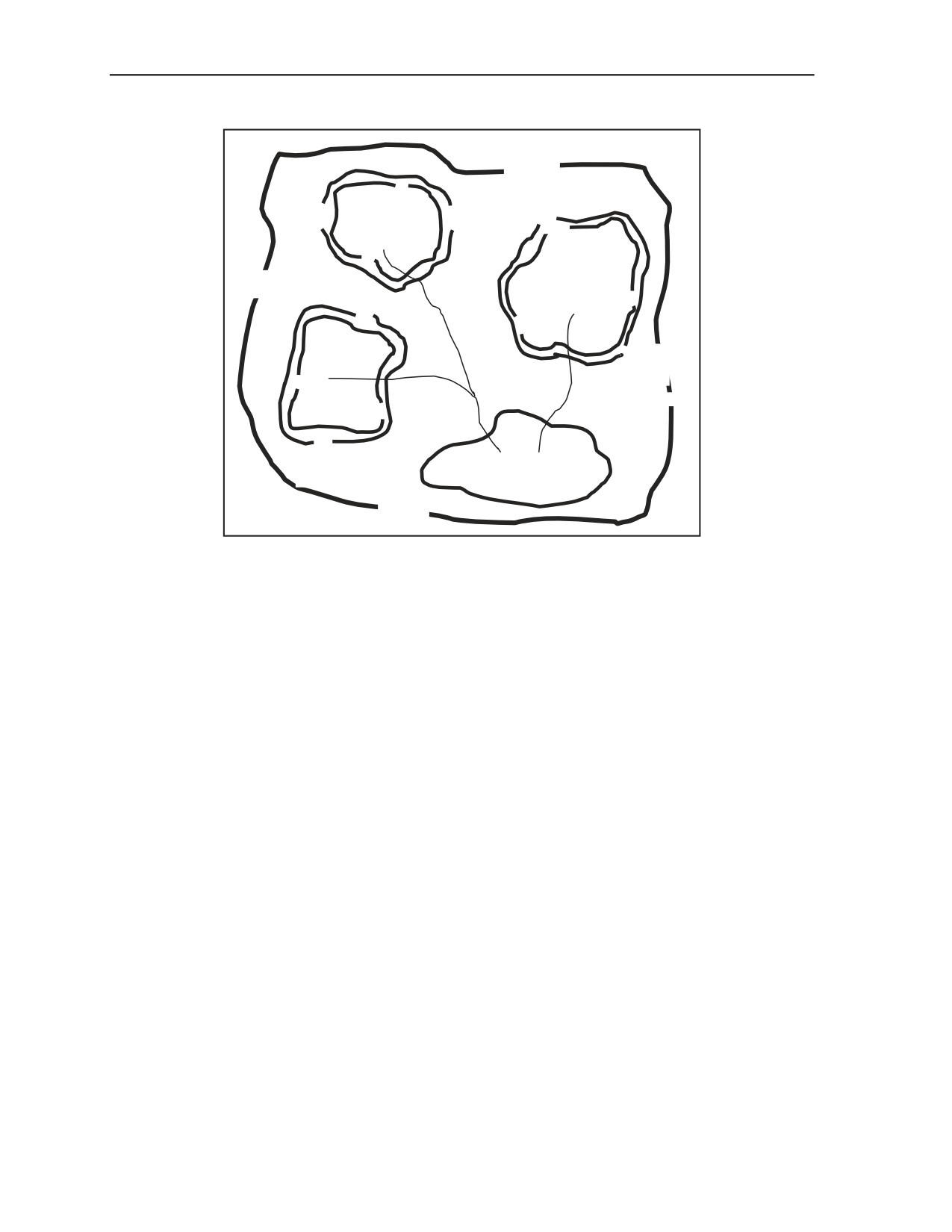
Chapter 3
XX
X
EWL
EWL
EWL
CAT
DOG
AO DOG
DOG
X
XX
AO CAT
EWL
X
LION
MSR CHEVY
X
AO LION
EWL
CAT
X
MSR FIAT
MSR FORD
XX
X
EWL
ISB
LION
XX
Figure 3-2. Division EWL in noncontiguous operations
3-16. At corps and theater levels, the ENCOORD for that echelon may establish a corps engineer work
line (CEWL) or TEWL in much the same manner as the division ENCOORD. The theater ENCOORD
augments subordinate echelons by assuming responsibility for specific support on a task basis forward to
the appropriate EWL, thus releasing the DS and GS GE units to engage in activities as far forward as
possible.
3-17. The ENCOORD that assigns the EWL to a particular area of operations is responsible for planning
and advising his commander on when to shift its location. This occurs after a careful analysis of the
ongoing operation, available GE assets, and future requirements. Early in a contingency, it may be very
difficult for the theater ENCOORD to shift the TEWL out of the theater staging base because of shortages
in GE assets.
3-8
FM 3-34.400
9 December 2008
Chapter 4
Planning Considerations and Tools
Seek first to understand, then to be understood.
Stephen R. Covey
Planning is the means by which the commander envisions a desired outcome, lays out
effective ways of achieving it, and communicates to his subordinates his vision,
intentions, and decisions, focusing on the results he expects to achieve. During the
conduct of the planning, commanders and staffs must understand that the types and
magnitude of GE tasks that can be accomplished will vary based on the type,
capability, and resources available to the engineer unit assigned the mission. It is
during the continuous refinement of the mission analysis in the military
decision-making process (MDMP) and the engineer estimate where it is determined if
the proper assets are available to accomplish all the tasks. The MDMP process
outlined in FM 5-0 is as sound for executing the GE function as it is for any other
military mission. There are particular considerations and tools for planning GE
missions that must be understood and integrated into the process to make them an
effective portion of the planning process. The intent of this chapter is to highlight
these considerations and tools.
MILITARY DECISION-MAKING PROCESS
4-1. The MDMP is well defined in FM 5-0. JP 5-0 provides the planning construct in a joint environment
in much the same manner. Many GE tasks have unique requirements that must be considered when
applying the MDMP to a specific mission. Table 4-1, page 4-2, lists some of the potentially unique aspects
of GE missions as they pertain to each step of the MDMP. Although not nearly all-inclusive of the
variations required of the GE effort, this list demonstrates that GE missions and tasks are often complex,
resource intensive, and require extensive and proactive coordination. Additionally, a successful GE effort
requires an understanding of all engineer requirements (combat, general, and geospatial) and their roles in
the concept of operations.
9 December 2008
FM 3-34.400
4-1

Chapter 4
Table 4-1. GE in the MDMP
Steps of the MDMP
GE Considerations
Review the joint operational order, particularly appendix 8, annex C;
appendix 15, annex C; appendix 16, annex C; appendix 5, annex D;
appendix 6, annex D; annex G; and annex L.
Receipt of the Mission
Receive higher headquarters construction directives.
Request geospatial and medical information about the AO.
Establish several potential engineer-related boards.
Determine availability of construction materials.
Review the availability of construction assets to include Army, joint,
multinational, HN, and contract.
Determine and review theater construction standards and base camp
master planning documentation if required.
Review UFC as required.
Mission Analysis
Review existing geospatial and medical data on potential sites, conduct site
reconnaissance (if possible), and determine the threat (to include
environmental and EH).
Obtain the necessary geologic, hydrologic, and climatic data.
Determine the level of interagency cooperation required.
Determine funding sources as required.
Produce different designs that meet the commander’s intent (use the
TCMS when the project is of sufficient size and scope).
COA Development
Determine alternate construction locations, methods, means, materials,
and timelines to give the commander options.
Determine the real property and real estate requirements.
Use the critical path method to determine the length of the different COAs
COA Analysis
and the ability to crash the project.
Determine the most feasible, acceptable, and suitable methods of
COA Comparison
completing the GE effort.
Determine and compare the risks of each GE COA.
Gain approval of the construction management plan, safety plan, security
COA Approval
plan, logistics plan, and environmental plan as required.
Produce construction directives as required.
Orders Production
Provide input to the appropriate plans and orders.
Ensure that all resources are properly allocated.
Conduct construction prebriefings.
Rehearsal
Conduct preinspections and construction meetings.
Synchronize the construction plan with local and adjacent units.
Conduct quality assurance and mid-project inspections.
Execution and
Participate in engineer-related boards.
Assessment
Maintain “as-built” and “red-line” drawings.
Project turnover activities.
4-2
FM 3-34.400
9 December 2008
Planning Considerations and Tools
JOINT GENERAL ENGINEERING PLANNING CONSIDERATIONS
4-2. The primary joint doctrinal publication for GE operations is JP
3-34. Army planners must
understand, however, that the Air Force and Navy have a narrower focus for the GE mission and often
refer to it as civil engineering (those sustainment activities that identify, design, construct, lease, or provide
facilities and which operate, maintain, and perform war damage repair and other engineering functions in
support of military operations [JP 1-02]). The Air Force and Navy consider general (civil) engineering to
be primarily a logistics function that is executed to sustain their forces in a contingency operation. Their
activities tend to focus on missions such as base camp and life support development, construction and
repair of seaports of debarkation (SPODs), aerial ports of embarkation (APOEs), and other facilities and
sites, and not focus on operational support to ground maneuver forces. GE contains an operational support
piece that, while different from combat engineering, does provide support to maneuver commanders and
facilitates their assured mobility, although this is typically at the operational level rather than the tactical
level.
4-3. The Engineer Support Plan (appendix 6, annex D) is produced by a joint staff for input to a joint
OPLAN as part of the deliberate planning process. It ensures that essential general (civil) engineering
capabilities are identified and will be provided at the required locations and times. It is the most critical
appendix for GE in a joint OPLAN. Other critical portions of a joint OPLAN for GE planning include—
z
Appendix 8, annex C: Air Base Operability.
z
Appendix 15, annex C: Force Protection.
z
Appendix 16, annex C: Critical Infrastructure Protection.
z
Appendix 5, annex D: Mobility and Transportation.
z
Annex G: CA.
z
Annex L: Environmental Considerations.
UNIFIED FACILITIES CRITERIA
4-4. Unified Facilities Criteria (UFC) provides facility planning, design, construction, operations, and
maintenance criteria for all DOD components. Individual UFC are developed by a single-discipline
working group and published after careful coordination. They are jointly developed and managed by the
USACE, the NAVFAC, and the Air Force Civil Engineering Support Agency. Although UFC are written
with long-term standards in mind, planners who are executing under contingency and enduring standards
for GE tasks will find them useful. Topics include pavement design, water supply systems, military
airfields, concrete design and repair, plumbing, electrical systems, and among others.
4-5. UFC are living documents and will be periodically reviewed, updated, and made available to users as
part of the Services’ responsibility for providing technical criteria for military construction. UFC are
effective upon issuance and are distributed only in electronic media from the following sources:
z
z
z
z
Construction Criteria Base (CCB) system maintained by the National Institute of Building
4-6. GE planners must consider all construction standards established by CCDRs and ASCCs for their
AOR. Specific examples of these are the United States European Command (USEUCOM) Red Book AOR
and United States Central Command (USCENTCOM) Sand Book. These constantly evolving guidebooks
specifically establish base camp standards that consider regional requirements for troop living conditions
and, therefore, have a major impact on projects, such as base camps and utilities. Because availability of
construction materials may vary greatly in various AORs, standards of construction may differ greatly
between them. CCDRs often establish standards for construction in OPORDs and fragmentary orders
(FRAGOs) that may take precedence over guidebooks. Planners must understand the expected life cycle of
9 December 2008
FM 3-34.400
4-3
///////////////////////////////////////