FM 3-21.38 Pathfinder Operations (APRIL 2006) - page 2
Air Traffic Control
Advisory Information
3-59.
See Table 3-7.
Type of Advisory
Information Included
FLIGHT
The enemy situation, if it presents a threat to the aircraft.
LANDING
Surface conditions on the landing site such as the presence of
sand, mud, or blowing snow.
DEPARTURE
Obstacles in the path of aircraft leaving the site (obstacles above
the obstacle departure lights).
Table 3-7. Information included in advisories.
Aircraft in Sight
3-60.
The following shows what the pilot and pathfinder say when an aircraft is in sight of the runway:
Pathfinder: BRAVO TWO SEVEN, THIS IS LIMA ONE SIX, I AM AT YOUR
TWELVE O'CLOCK, FIVE HUNDRED METERS, IDENTIFY SIGNAL,
OVER.
Pilot:
THIS IS BRAVO TWO SEVEN, I IDENTIFY GREEN SMOKE, OVER.
3-61.
At night, during specialized activities such as external load drop-off or pickup, or when unsafe
surface conditions require pathfinders to mark specific landing points, the flight leader must know all
arrangements. This allows him to organize the flight for landing. Pathfinders identify the site by flashing a
visible or infrared light source in a dot-dash sequence.
Pathfinder: THIS IS LIMA ONE SIX, VISUAL CONTACT (and, once the pilot
identifies the site), WIND THREE TWO FIVE AT EIGHT, CLEAR TO
LAND, OVER.
3-62.
Once the pilot identifies the site, the pathfinder issues final landing instructions. If the controller
already has other aircraft flying in a traffic pattern, he places the incoming aircraft into the traffic pattern at
a safe and convenient location. Then, he instructs the pilot to report base. When the pilot reports base, the
pathfinder issues final landing instructions. For special situations, instead of placing the aircraft in the
traffic pattern, the controller might tell the pilot to circle left or right. Then the controller will issue final
landing instructions.
Departure Instructions
3-63.
If the departure heading differs from the land heading, the controller gives the departure heading
as the first element of the departure instructions.
Pilot:
LIMA ONE SIX, THIS IS BRAVO TWO SEVEN, READY FOR
DEPARTURE, OVER.
Pathfinder: THIS IS LIMA ONE SIX, WIND THREE TWO FIVE AT EIGHT, CLEAR
TO DEPART, STATE INTENTIONS, REPORT CLEAR OF LANDING
ZONE, OVER.
Pilot:
THIS IS BRAVO TWO SEVEN, RIGHT BREAK, AFTER DEPARTURE,
OVER.
Pathfinder: THIS IS LIMA ONE SIX, ROGER, OVER.
Pilot:
THIS IS BRAVO TWO SEVEN, CLEAR TO THE WEST, OVER.
Pathfinder: THIS IS ALPHA ONE LIMA ONE SIX, ROGER, OUT.
25 April 2006
FM 3-21.38
3-15
Chapter 3
SITUATION 2, AIRCRAFT REPORTING FROM A CARDINAL DIRECTION AND DISTANCE
3-64.
Often, units conduct mutually-supporting helicopter operations to increase the security of an LZ
operation. For example, a team of observation and attack helicopters might screen the LZ
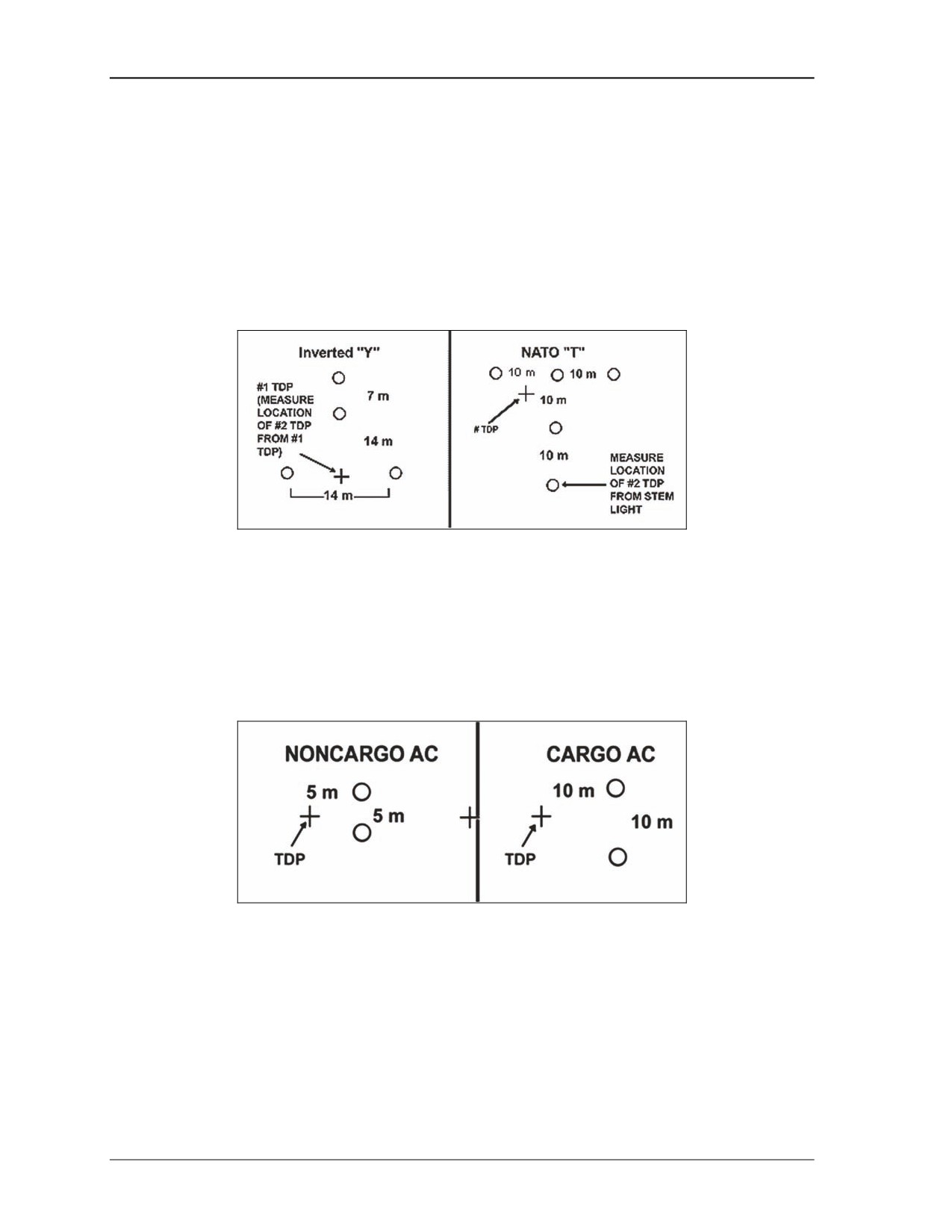
3-65.
Because no aircraft plan to land there, and because the utility or lift aircraft know the LZ and
screen team's location from communications over internal UHF or VHF radio nets, the screening
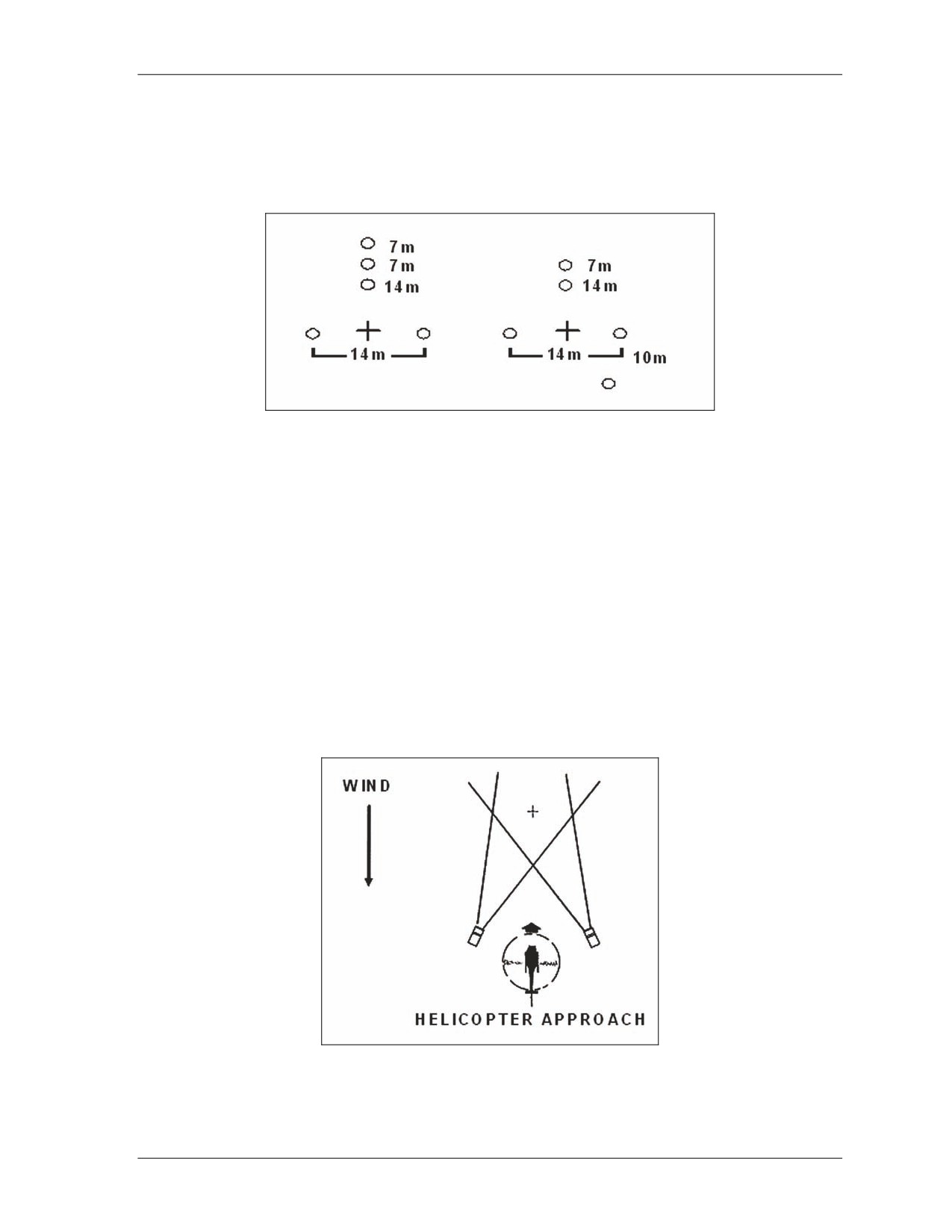
helicopters need not contact the pathfinder. However, if they learn an aircraft does need to land at the LZ,
the screening helicopter team responds differently to initial contact.
3-66.
Due to a possible conflict with aircraft departing the landing site in the same direction, the
pathfinder must track the inbound aircraft's course and advise mission aircraft of the unexpected arrival. To
accurately track the aircraft and control the situation, the pathfinder uses a commonly known point in the
direction of the aircraft. He can use a prominent terrain feature, a checkpoint, or an aerial control point
previously established by the ground unit for maneuver control. This situation matches Situation 1 exactly,
except that the controller does not give the aircraft's heading and distance.
SITUATION 3, AIRCRAFT WITH IN-FLIGHT EMERGENCY
3-67.
An in-flight emergency occurs when an aircraft develops a mechanical problem that challenges
the pilot's ability to maintain control. Because the pilot must focus on the problem with the aircraft, the
pathfinder helps by moving other air traffic away from the one having the problem, which has first priority.
If the emergency develops before initial contact, OPSEC requires a full information exchange, just like in a
standard transmission. After the pilot declares the emergency, the situation continues as follows:
Pilot:
ALPHA ONE LIMA ONE SIX (A1L16), THIS IS CHARLIE ZERO
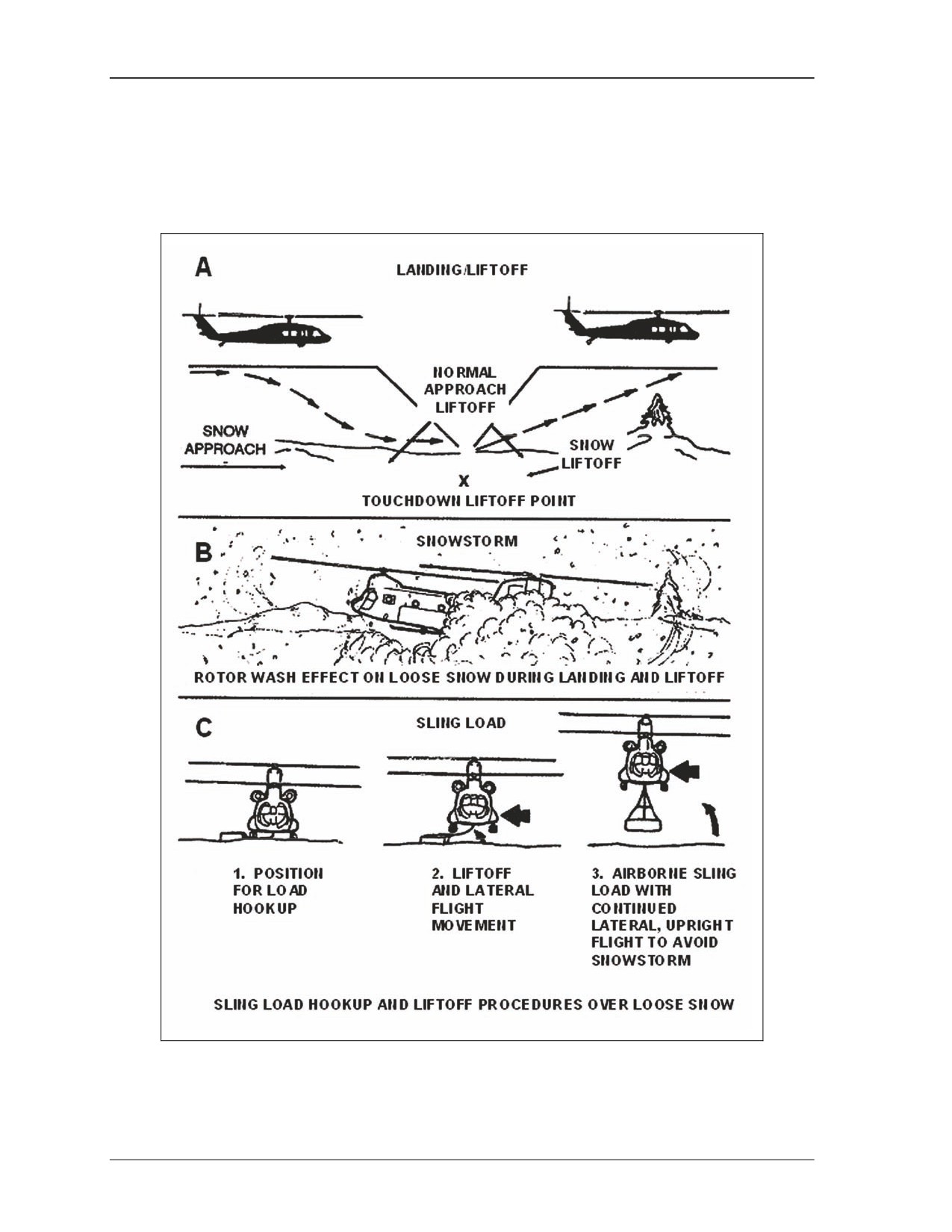
WHISKEY ZERO TWO (C0W02), IN-FLIGHT EMERGENCY
(MAYDAY), OVER.
Pathfinder: THIS IS LIMA ONE SIX, WIND ZERO THREE FIVE AT SIX, CLEAR TO
LAND, STATE INBOUND HEADING, OVER.
Pilot:
THIS IS WHISKEY ZERO TWO, HEADING TWO SIX ZERO, OVER.
Pathfinder: ALL STATIONS, THIS IS ALPHA ONE LIMA ONE SIX, BE ADVISED,
IN-FLIGHT EMERGENCY APPROACHING FROM THE EAST,
REMAIN CLEAR OF LANDING SITE AND MAINTAIN RADIO SILENCE
UNTIL EMERGENCY HAS BEEN TERMINATED - BREAK - WHISKEY
ZERO TWO, CAN I BE OF FURTHER ASSISTANCE, OVER.
Pilot:
THIS IS WHISKEY ZERO TWO, NEGATIVE, OVER.
Pathfinder: THIS IS LIMA ONE SIX, ROGER, OVER.
3-68.
The controller tells the emergency aircraft of any aircraft that remain on the landing site.
Pathfinder: WHISKEY ZERO TWO, BE ADVISED, TWO UNIFORM HOTEL ONES
ON NORTH END OF SITE.
3-16
FM 3-21.38
25 April 2006
Air Traffic Control
3-69.
Only the pilot who originally declared the emergency can terminate that same emergency. Once
the pilot does so, the pathfinder transmits a net call to inform all stations that normal operations
can continue.
Pathfinder: ALL STATIONS, THIS IS ALPHA ONE LIMA ONE SIX, EMERGENCY
HAS TERMINATED, I CAN ACCEPT TRAFFIC, OVER.
3-70.
Departure instructions are the same as those given for Situation 1.
SITUATION 4, DISORIENTED AIRCRAFT
3-71.
During limited visibility, adverse weather, in-flight emergencies or, when he has no map, a pilot
might not know the location of the LZ. Also, he might not see any easily-identifiable land point.
3-72.
In such cases, the pathfinder can help the pilot by directing him either to a known location or to
the LZ. At terrain flight altitudes, and in some environments, the pilot might experience disorientation of as
little as
200 meters. The pathfinder might hear but not see the aircraft. Pilots who have FM homing
equipment onboard might use that to orient themselves during the initial contact, without having to ask for
a long or short count. Because it requires the ground station to increase transmissions, FM homing risks
loss of signal security (SIGSEC).
3-73.
In this example, an aircraft at the CCP cannot establish voice communication with the pathfinder
due to low altitude or radio interference. Knowing the LZ location, but unsure of the exact location of the
landing site, the pilot continues his flight closer to the center of the zone.
Pilot:
ALPHA ONE LIMA ONE SIX (A1L16), THIS IS CHARLIE TWO ECHO
THREE FOUR (C2E34), OVER.
Pathfinder: CHARLIE TWO ECHO THREE FOUR, THIS IS ALPHA ONE LIMA
ONE SIX, OVER.
Pilot:
THIS IS ECHO THREE FOUR, FOUR UNIFORM HOTEL ONES
(UH-1s) ARE INBOUND FOR LANDING, REQUEST NAVIGATIONAL
ASSISTANCE, OVER.
Pathfinder: THIS IS LIMA ONE SIX, DO YOU HAVE FM HOMING CAPABILITY?
Pilot:
THIS IS ECHO THREE FOUR, AFFIRMATIVE, OVER.
Pathfinder: THIS IS LIMA ONE SIX, SHORT COUNT FOLLOWS:
1-2-3-4-5-5-4-3-2-1. END SHORT COUNT, STATE INBOUND
HEADING, OVER.
Pilot:
THIS IS ECHO THREE FOUR, SAY AGAIN, OVER.
Pathfinder: THIS IS LIMA ONE SIX, ROGER, ORBIT PRESENT LOCATION,
DESCRIBE PROMINENT TERRAIN FEATURES, STATE LAST
KNOWN LOCATION, HEADING, AND DISTANCE FLOWN, OVER.
Pilot:
THIS IS ECHO THREE FOUR, CCP HEADING THREE SIX ZERO,
TWO THOUSAND METERS, I SEE A THREE-ACRE POND WITH
DAM ON THE SOUTH, ORIENTED EAST-WEST, OVER.
Pathfinder:
(Plots the course correction and continues with the standard
transmission.) THIS IS LIMA ONE SIX, HEADING TWO NINE ZERO,
EIGHT HUNDRED METERS, (gives advisories if any), OVER.
3-74.
The standard ATC information continues as in Situation 1 and ends with—
Pathfinder: DESCRIBE PROMINENT TERRAIN FEATURES EN ROUTE, OVER.
25 April 2006
FM 3-21.38
3-17
This page intentionally left blank.
THIS CHAPTER IMPLEMENTS QSTAG 585 AND STANAGs 3281 AND 3619.
Chapter 4
Helicopter Landing Zones
Helicopter landing zones contain one or more helicopter landing sites. Each landing
site has a control center and, in most cases, a manned or unmanned release point
(STANAG 3619). Each landing site might have one or more specific landing points
for individual aircraft to touch down.
SECTION I. SELECTION OF LANDING SITES
The ground unit commander coordinates with the supporting aviation unit to select helicopter landing zones
that can support the ground tactical plan.
CONSIDERATIONS
4-1.
Tactical considerations are those that pertain to the actual mission of the supported ground unit.
These considerations are the responsibility of the ground unit commander and staff. The pathfinder must
understand the ground tactical plan to best support the ground unit and facilitate mission accomplishment.
TACTICAL CONSIDERATIONS
4-2.
These include—
An estimate of the situation based on METT-TC.
The location of the objective in relation to the tentative HLZ.
The size and type of unit being supported.
TECHNICAL CONSIDERATIONS
4-3.
These pertain to the technical aspect of the operation of a day or night HLZ. These are the
responsibility of the pathfinder. The minimum landing space requirements and minimum distance between
helicopters on the ground depend on many factors. If the aviation unit SOP fails to spell out these
requirements, the aviation unit commander works with the pathfinder leader. The final decision about
minimum landing requirements rests with the aviation unit commander. In selecting helicopter-landing
sites from maps, aerial photographs, and actual ground or aerial reconnaissance, the pathfinder considers
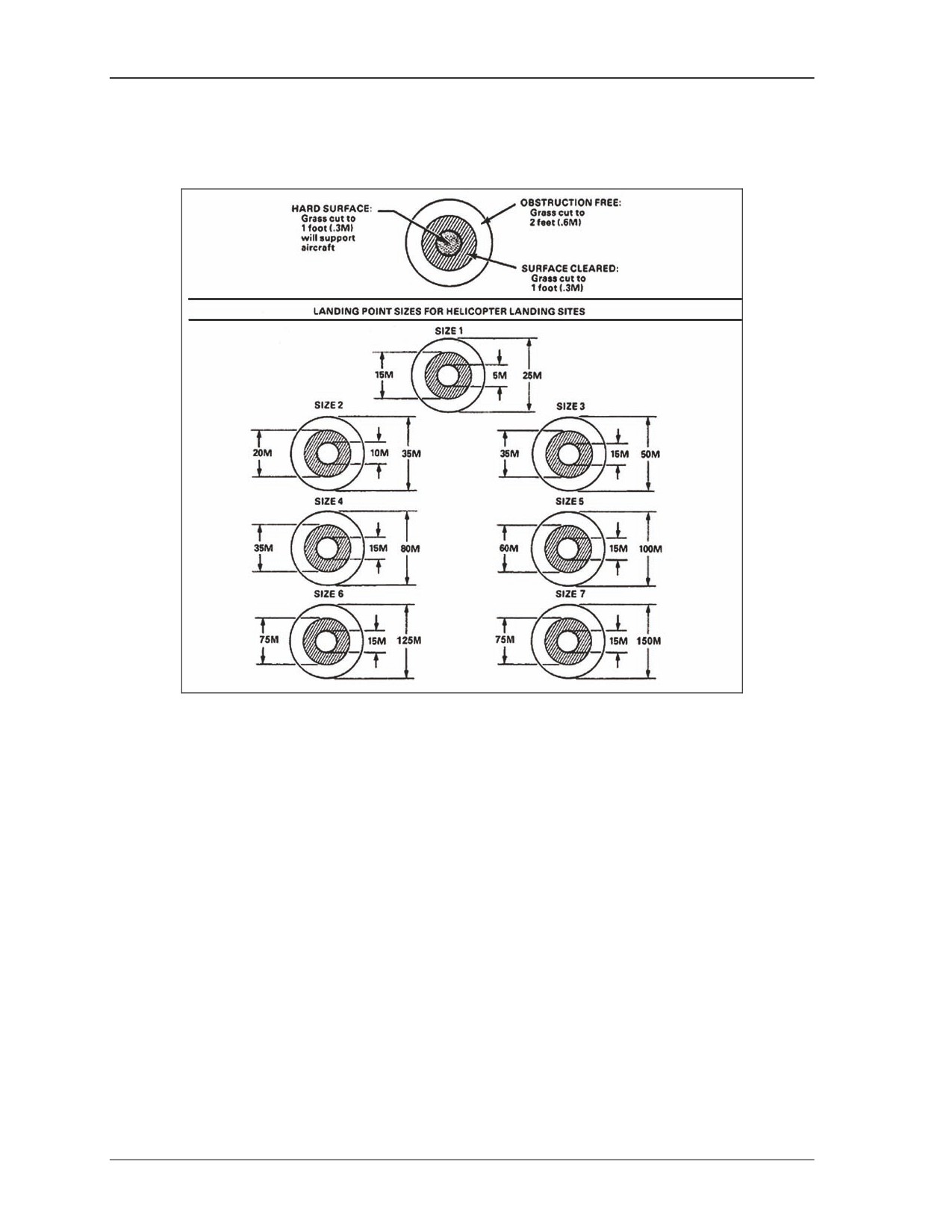
the following factors (Figure 4-1, page 4-2):
NUMBER AND TYPE(S) OF HELICOPTERS
4-4.
To land a large number of helicopters at the same time, the commander can provide another
landing site(s) nearby or he can have the helicopters land at the same site, but in successive lifts. A larger
site might also be required for cargo aircraft with external loads as compared to several utility aircraft. The
required size of the site is determined by the size and number of aircraft that will be required to land at a
given time. A landing point, or touchdown point (TDP), is the specific point on the ground for a specific
aircraft. The size of the landing point is determined by the aviation unit commander and is based on—
Pilot or unit proficiency.
Size and type of aircraft.
y Atmospheric conditions.
25 April 2006
FM 3-21.38
4-1
Chapter 4
Visibility (day/night).
Type of mission (insertion, extraction, resupply, slingload drop-off, forward area arming and
refuel point [FAARP], and so forth).
Figure 4-1. Landing point sizes.
4-5.
Standard landing point uses and types of aircraft are listed in Table 4-1. Standard landing point
sizes are listed in Table 4-1.
4-6.
In a landing site, pathfinders measure the minimum distances between landing points, from center
to center. When aircraft sizes vary, pathfinders separate landing points by the most generous measure,
allowing 100 meters for size 5; 125 meters for size 6; 150 meters for size 7, measured center to center on
the landing points.
4-7.
The aviation unit commander, during coordination, might have authorized pathfinders to reduce the
TDP by one size. Reducing TDP is a last-resort means to make an HLZ suitable to accomplish the mission.
TDP sizes are reduced in a deliberate manner after careful consideration of all factors. If mixed aircraft
types will use the TDP, the size should be reduced for utility (lighter) aircraft before slingload aircraft.
4-2
FM 3-21.38
25 April 2006

Helicopter Landing Zones
Landing
Minimum Diameter
Point
Of Landing Point
Type Of Helicopter/Operation
Size 1
80 ft (25 m)
Light observation helicopters such as the OH-6 and OH-58D.
Size 2
125 ft (35 m)
Light utility and attack helicopters such as the UH-1H, H-65, and
AH-1W.
Size 3
160 ft (50 m)
Medium utility and attack helicopters such as the UH-60, H-2, and
AH-64.
Size 4
265 ft (80 m)
Cargo helicopters such as the CH-47, H-3 and CH-53, or with prior
coordination
Size 5
328 ft (100 m)
Slingload helicopters and aircraft of an unknown origin.
Size 6
410 ft (125 m)
Slingload long-line operations.
Size 7
492 ft (1,505 m)
Slingload operations with night vision goggles (NVG).
Table 4-1. Landing point uses.
LANDING FORMATIONS
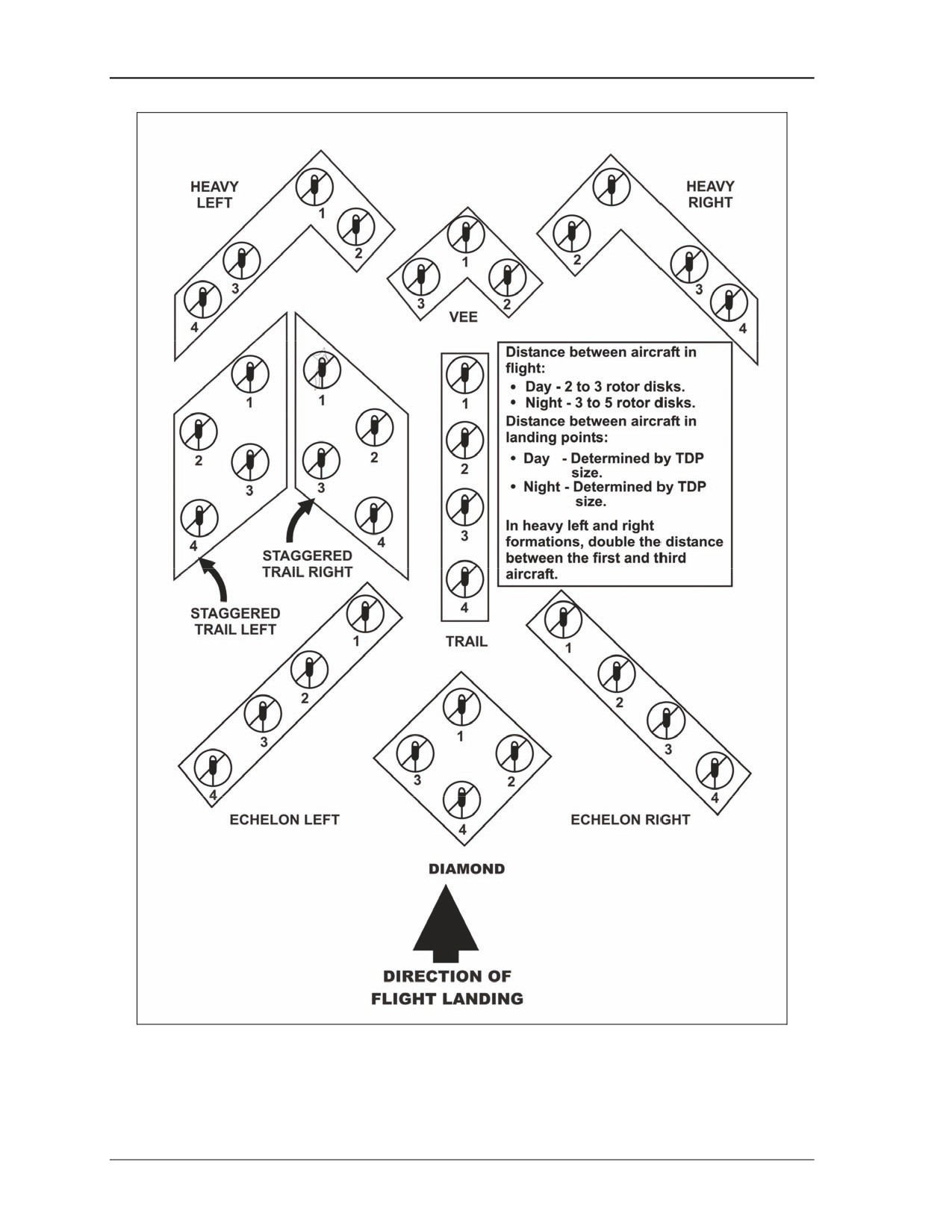
4-8. Helicopter pilots should try to match the landing formation to the flight formation. Pilots should have
to modify their formations no more than necessary to accommodate the restrictions of a landing site
(Figure 4-2, page 4-4), but it might be necessary to land in a restrictive area. TDPs are established in the
same order as indicated in the formation.
SURFACE CONDITIONS
4-9. Pathfinders choose landing sites that have firm surfaces; are free of dust, sand, and debris that might
create problems when disturbed by rotor wash; and are cleared of obstacles.
Choose a Hard Surface
4-10. Pathfinders choose a landing point with a hard surface to support the weight of the aircraft to
prevent helicopters from becoming mired, creating excessive dust, or blowing snow. The surface of the
landing point must allow a fully-loaded helicopter to land, restart, and leave again, all without sinking into
the ground. If the surface does not meet these conditions, an advisory must be given and the aircraft must
either terminate at a hover or touch down while under power. If the mission is one that requires the aircraft
to firmly land, such as an FAARP or unload an internal load, a new site must be selected.
Clear to Ground Level
4-11. Pathfinders must clear the entire landing point of any loose material that the rotors could blow up.
The term is “cleared to ground level.” Unless a fire risk exists, they need not clear grass less than 0.3 meter
(1 foot) high, as long as the field is level. They can cut down on dust by wetting down dry dirt. They can
reduce snow to reveal hazards, and then pack it down firm, which will also reduce the amount blowing
around. Rotor wash stirs up any loose dirt, sand (brownout), or snow (whiteout). This can obscure the
ground and other aircraft, especially at night. If a site must be used with obscuring conditions, pathfinders
note these conditions and provide advisories and radio guidance as required. Pathfinders also remove any
debris from landing points because airborne debris could damage the rotor blades or turbine engine(s).
25 April 2006
FM 3-21.38
4-3
Chapter 4
Figure 4-2. Standard flight and landing formations.
4-4
FM 3-21.38
25 April 2006
Helicopter Landing Zones
Clear Around Obstacles
4-12. Ground troops must do everything they can to improve landing point surfaces so aircraft can land.
In general, an obstacle is a stump, rock, hole, or other object, 18 inches or larger, that might damage the
aircraft or impede aircraft landing. No obstacles can be in a TDP in which an aircraft is going to land.
Note, however, that even if pathfinders cannot clear ground obstructions, they can perform some helicopter
operations without the helicopter landing. They must still clear and mark the area just as they would if the
helicopter were going to land. Helicopters are given an advisory and hover above the ground obstructions
that prevent them from landing.
GROUND SLOPE
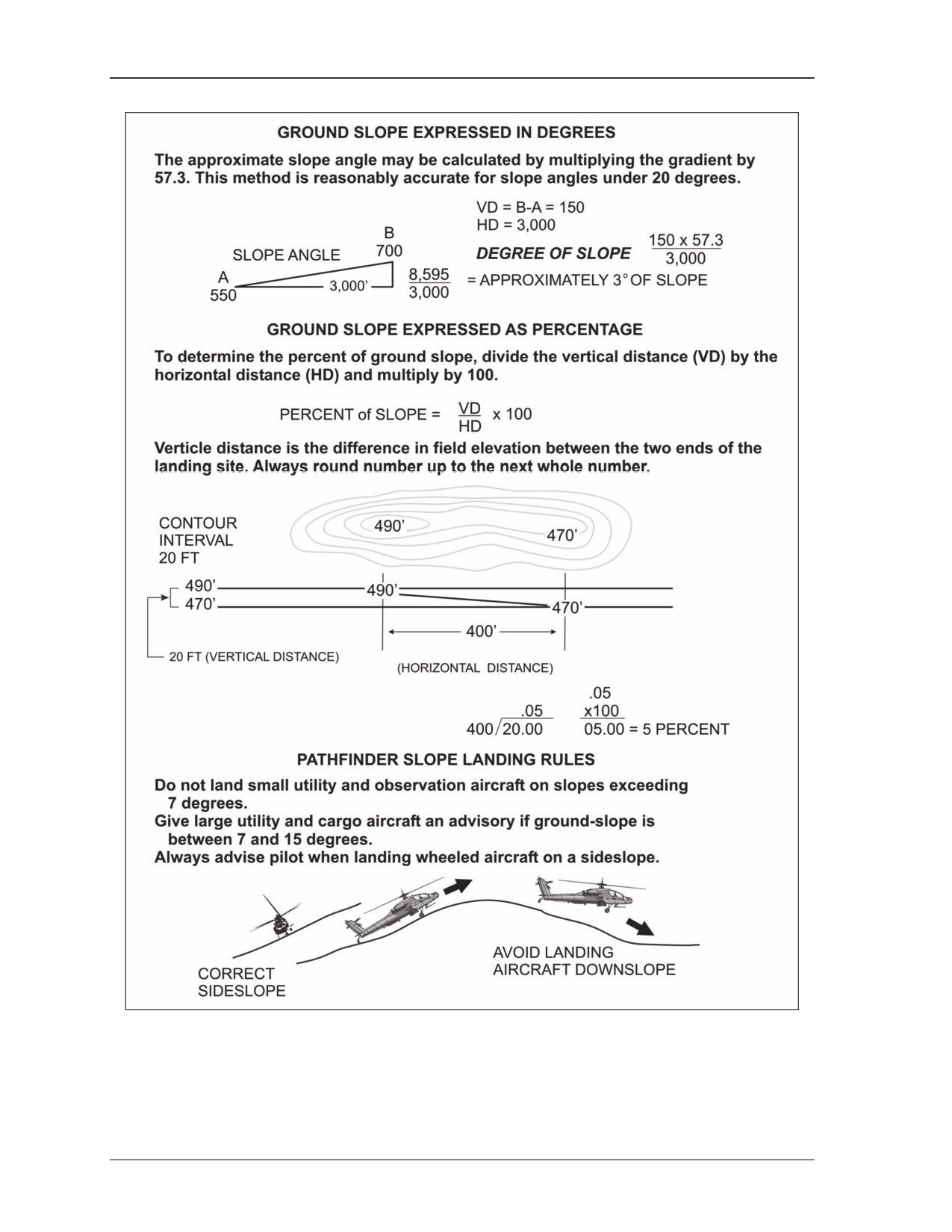
4-13. Pathfinders choose landing sites with relatively level ground. For the helicopter to land safely, the
slope should not exceed 7 degrees (Figure 4-3, page 4-6). Whenever possible, pilots should land upslope
rather than downslope. All helicopters can land where ground slope measures 7 degrees or less and no
advisory is required. When the slope exceeds 7 degrees, observation and utility helicopters that utilize
skids for landing must terminate at a hover to load or off-load personnel or supplies. When the slope
measures between 7 and 15 degrees, large utility and cargo helicopters that use wheels for landing are
issued an advisory, and they land upslope. When the slope exceeds 15 degrees, all helicopters must be
issued an advisory and terminate at a hover to load or off-load personnel or supplies.
Note: To determine slope in percentage or degrees, express all measurements in either feet or
meters, but not both. If the map sheet expresses elevation in meters, multiply by three to convert
into feet. If the map sheet expresses elevation in feet, divide by three to convert to meters.
CAUTION
Never land an aircraft facing downslope, if possible.
25 April 2006
FM 3-21.38
4-5
Chapter 4
Figure 4-3. Determination of ground slope.
4-6
FM 3-21.38
25 April 2006
Helicopter Landing Zones
APPROACH AND DEPARTURE DIRECTIONS
4-14. Ideally, to land or take off, especially at night, the helicopter pilot generally chooses the approach
or departure path facing into the wind, over the lowest obstacle, and along the long axis of the site. The
departure heading must be within 45 degrees left or right of land heading.
Prevailing Wind
4-15. Always attempt to land a helicopter facing into the wind. Wind direction within 45 degrees left or
right of land heading is considered a head wind. Depending on the helicopter's capabilities, if only one
direction offers a good approach, or to make the most of available landing area, the pilot might be able to
land with a crosswind of 0 to 9 knots or a tailwind of 0 to 5 knots. When wind speeds exceed 9 knots, the
pilot must land into the wind. The same considerations apply to departures from landing sites. Except when
the crosswind velocity exceeds 9 knots during a landing, the prevailing wind requires less attention than it
does on the approach and departure routes. The wind affects smaller aircraft more than larger, more
powerful ones.
Approach and Departure Obstacle Ratio
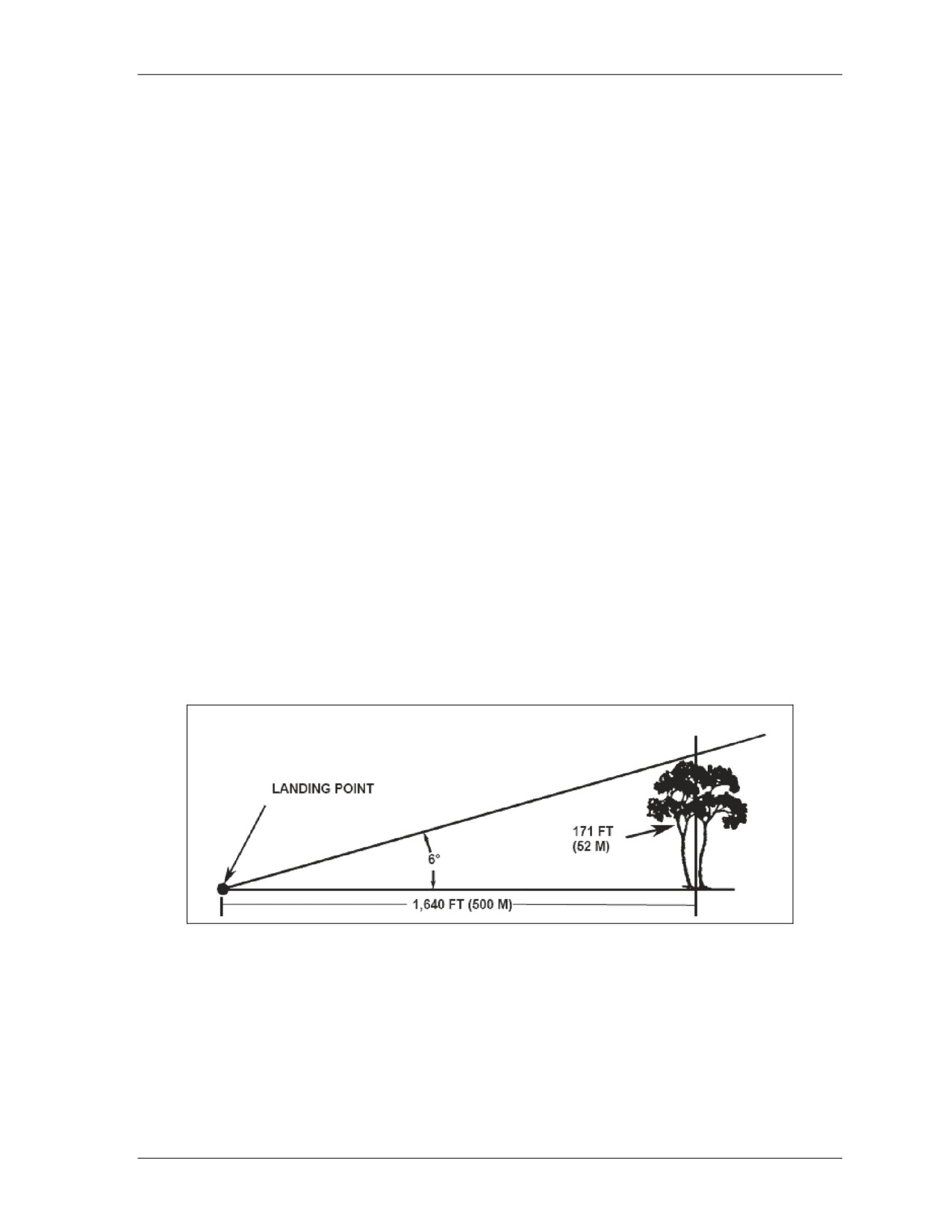
4-16. For HLZs that are bordered on the approach and departure ends by tall obstacles such as trees,
power lines, or steep mountains, planners figure on an obstacle ratio of 10 to 1. That is, if a helicopter must
approach or depart directly over a 10-foot tall tree, then the landing point must have 100 feet of horizontal
clearance. If they have coordinated with the aviation unit commander, qualified pathfinders might have the
authority to reduce the obstacle ratio to no less than 5 to 1. Reducing obstacle ratio is a last-resort means to
make an HLZ suitable to accomplish the mission, second only to reduction of TDP size. Obstacle ratios are
reduced in a deliberate manner after careful consideration of all factors, and only to the minimal reduction
possible. The obstacle ratio should first be reduced over the route that the helicopters will be the lightest.
For example, if the mission of the aviation unit is an insertion, they will be loaded on the approach and will
require the most power to ingress and land, needing the longest glide path possible. After the unloading of
troops and equipment, the aircraft will be lighter and will be able to use a shorter departure route. In this
case, the pathfinder would reduce the obstacle ratio on the departure end and maintain a 10 to 1 or greater
ratio on the approach end (Figure 4-4).
Figure 4-4. Maximum angle of approach (daylight).
25 April 2006
FM 3-21.38
4-7
Chapter 4
Night Approach
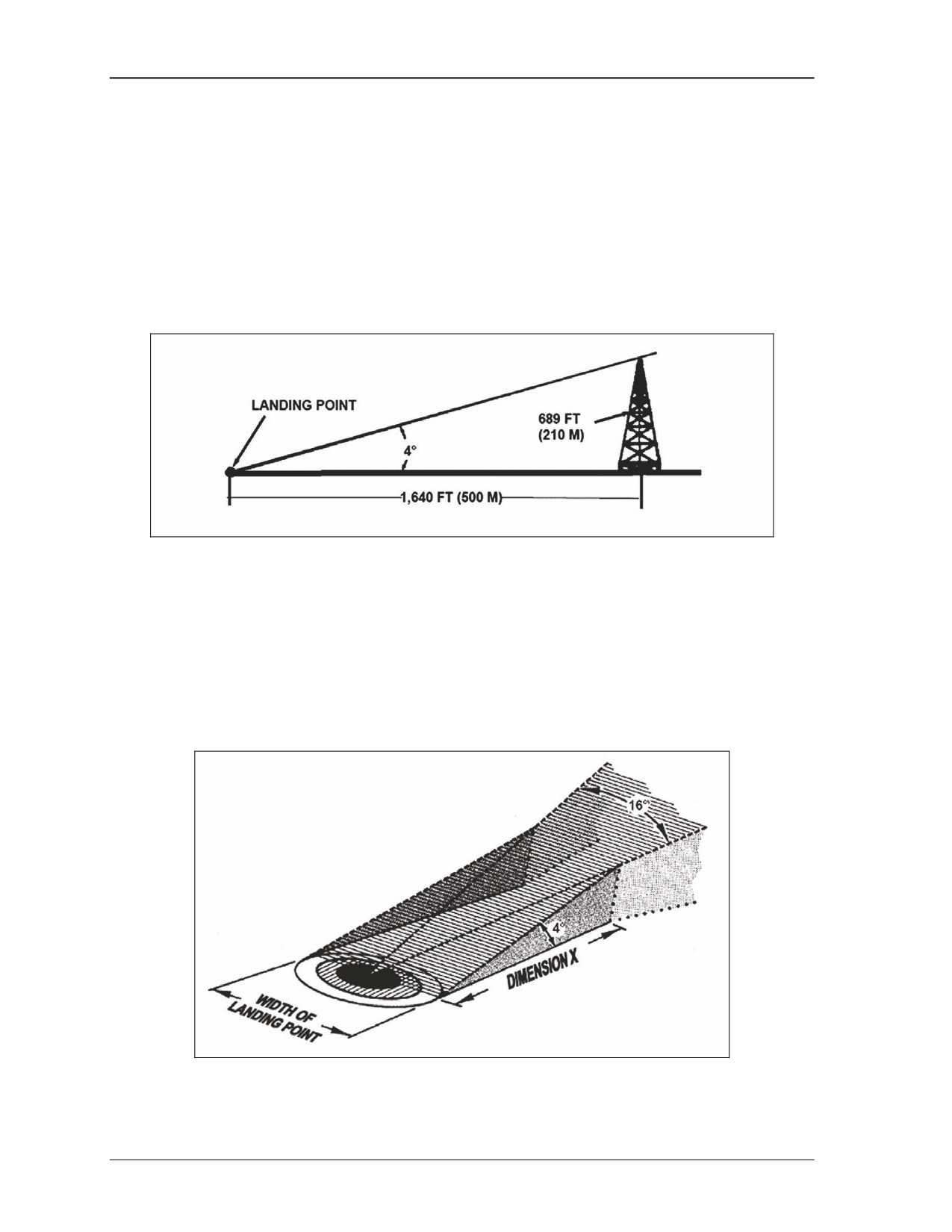
4-17. Within the night approach and exit path, the maximum obstruction angle should not exceed 4
degrees measured from the center of the landing point to a distance of
3,000 meters (9,843 feet,
Figure 4-5). The maximum obstacle height at 3,000 meters is 210 meters (689 feet). The field-expedient
formula is that for every meter of vertical obstacle, you must have 14 meters from the center of the landing
point to the obstacle. That is, a landing point must be 280 meters from a 20-meter tree if the helicopter
must approach or exit directly over the tree. Another night operation planning consideration is the
helicopter approach and exit path area and the maximum obstacle height within that area. These criteria
apply to both the approach path to the landing point as well as the exit path from the landing point. First,
we must define the area that is the approach and exit path.
Figure 4-5. Maximum angle of approach (night).
APPROACH AND EXIT PATH
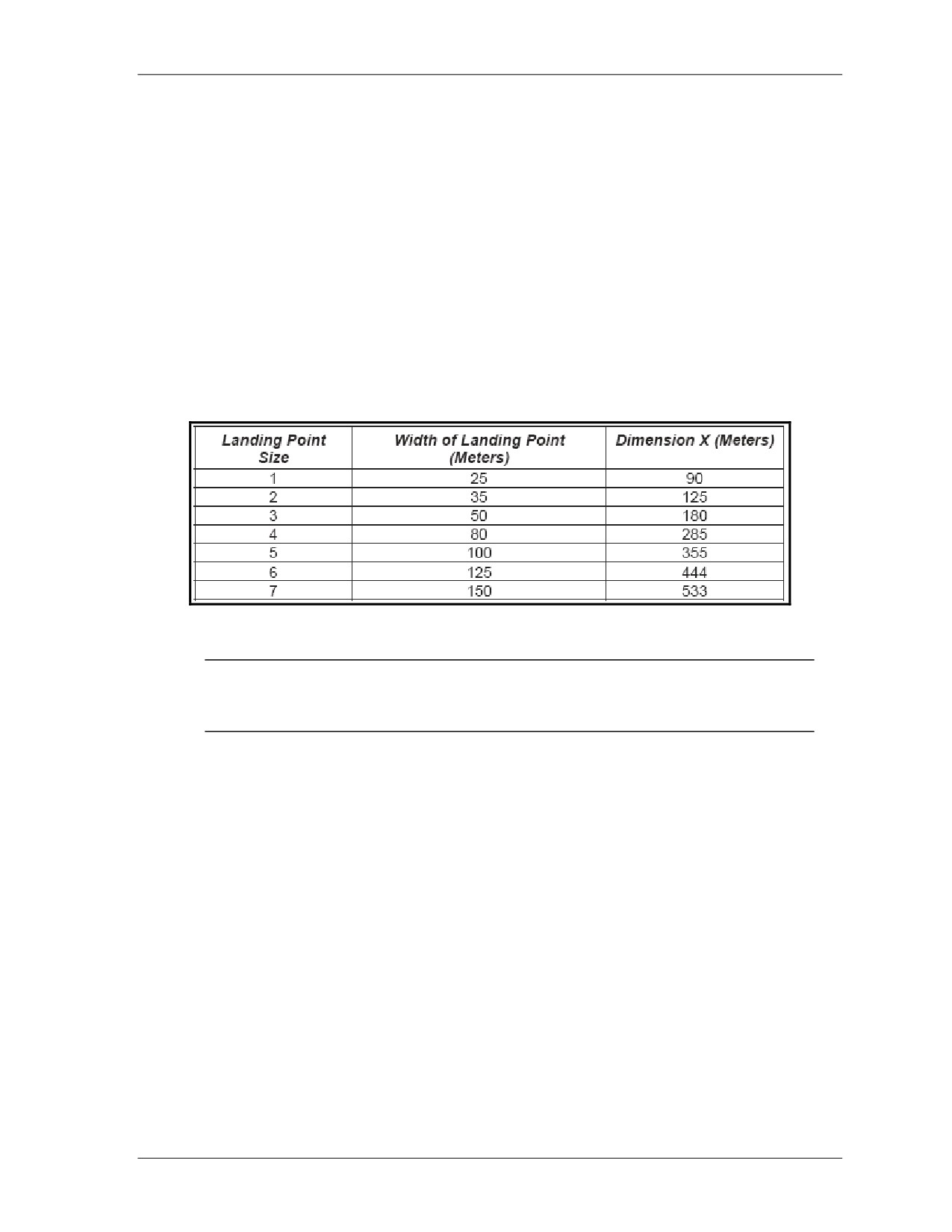
4-18. The approach and exit path is a 16-degree (277 mils) sector or arc extending outward and is
measured from the center of the landing point (Figure 4-6). The "V"-shaped approach and exit path is
shown by the dashed and dotted line in the illustration. The 4-degree maximum obstruction angle applies to
the entire area within the approach and exit path (both the dark and light shaded area) measured from the
landing point center to a distance of 3,000 meters.
Figure 4-6. Approach and exit path.
4-8
FM 3-21.38
25 April 2006
Helicopter Landing Zones
Night Operations
4-19. During night operations, as the pilot gets closer to the landing point, he needs a wider area for a
safe approach than just the 16-degree sector. Therefore, the minimum width of the approach and exit path,
illustrated by the darker shaded area, must be equal to or wider than the width of the landing point that
must be cleared to a maximum height of 2 feet (Figure 4-1). The length of the minimum width area,
dimension X, will vary depending on the size of the landing point (Table 4-2). Follow along as we use a
UH-60 Blackhawk as an example to help clarify the night approach and exit path criteria. Table 4-1
identified the UH-60 Blackhawk as a size 3 helicopter. Next, you must determine the landing point area
that must be free from obstructions and grass cut to maximum height of 2 feet. Figure 4-2 shows 50 meters
as the area needed for a size 3 landing point. Therefore, the minimum width of the night approach and exit
path is 50 m. The minimum width distance intersects the 16-degree V-shaped arc (night approach and exit
path) 180 meters from the center of the landing point. In other words, the night maximum obstruction angle
applies to the complete approach and exit path; both the rectangular-shaped wedge (dark shaded area of the
diagram) as well as the 16-degree "V"-shaped arc (light shaded area and dotted line).
Table 4-2. Length of minimum width area.
Note: The aviation unit commander makes the final decision on minimum landing requirements.
He bases his decision on the effects of air density, slope, and surface conditions. He explains
these requirements verbally during early mission planning.
Along the Long Axis
4-20. Allows the pilot a better opportunity to identify the TDP and obstacles, select the best flight path,
and prevent overflying the TDP. It also allows the pathfinder to maximize the space available in the site.
DENSITY ALTITUDE
4-21. Altitude, temperature, and humidity determine the density altitude. As each of these conditions
increase, aircraft lift capabilities decrease. Planners should try to remember that as the density altitude
increases, the size of the LZ also increases. This will also be a consideration for the aviation unit
commander when determining the authority for Pathfinders to reduce TDP size or obstacle ratio.
LOADS
4-22. When fully loaded, most helicopters can neither climb nor descend vertically. They need a larger
area and better approach or departure routes than when they carry lighter loads. Other load
considerations are—
Equipment or personnel.
Internal or external load.
25 April 2006
FM 3-21.38
4-9
Chapter 4
Insertion or extraction mission.
Weight.
OBSTACLES
4-23. These include any obstruction that might interfere with aircraft operation on the ground. Landing
zones should have no tall trees, power lines, or similar obstructions on the landing site. Pathfinders must
remove or reduce any obstacles within the landing site. This includes any rocks, stumps, holes, and thick
grass or brush that might hinder safe landing over 0.45 meters (18 inches). Obstacles that cannot be
removed or reduced must be marked (preferably in red) and an advisory given to the pilots. Marking will
be done as follows:
If the obstacle is on the approach route, both the near and far sides of the obstacle will
be marked.
If the obstacle is on the departure route, only the near side of the obstacle will be marked.
If the obstacle protrudes into the LZ, but not on the flight route, the near side of the obstacle
will be marked.
Large obstacles on the flight route and on the LZ will be marked on all sides of the obstacle. At
a minimum, one light is required on each of the four sides.
ALTERNATE SITES
4-24. Enemy action, unfavorable terrain, or changes in the tactical or logistical situation can require
alternate landing sites. The ground unit commander usually selects these to support the tactical plan. He (or
his representative) decides when to use them based on the recommendations of the aviation unit
commander and the pathfinder on the site. The commander uses the fastest means to get instructions for
using alternate sites to the pathfinders. Neither pathfinder nor aviation unit commanders can shift to an
alternate LZ(s) unless the supported ground unit commander has delegated that authority to them.
SECTION II. ORGANIZATION AND DUTIES
The commander task organizes the pathfinder element to set up and operate the installations required by the
supported unit's tactical plan. They might set these up within a single LZ or separate them widely throughout a
large AO. The pathfinder leader normally stays at the most important site. To set up and operate one helicopter
LZ, the commander task organizes the pathfinder element into two working parties: a reconnaissance party and
a marking party. Each site requires its own landing site party. The control center party and the release point
party provide the same function for LZs or DZs.
CONTROL CENTER
4-25. The control center (CC) coordinates aircraft in and around an LZ or DZ and promotes a safe,
orderly, and speedy flow of air traffic. Upon arrival in the area, the pathfinder leader selects the exact
location of the CC. He positions it to allow visual control of aircraft in and around the LZ or DZ.
4-26. For helicopter LZs, the most desirable CC location is along the aircraft flight route, but displaced
from the landing site. This helps prevent enemy EW assets from compromising the actual landing site
location, even if the tactical situation dictates that the pathfinder leader remain on the site for control
purposes. For an LZ with more than one landing site, or for any LZ during reduced visibility, the
pathfinder leader locates the CC where it can act as a manned RP or final approach fix to provide positive
navigational assistance to arriving aircraft.
4-27. The RP is an established traffic control checkpoint. It is the final navigational checkpoint for
aircraft approaching the landing site or approaching air-delivery facilities in an LZ or DZ.
4-28. During the air movement phase of an air assault operation, helicopter serials also use the RP as a
final coordination point for control of planned ground or aerial supporting fires in and around LZs. The air
4-10
FM 3-21.38
25 April 2006
Helicopter Landing Zones
movement commander staffs the RP only when he expects tough navigational problems. He tentatively
chooses its location from maps or from aerial photographic studies. He looks for an easily-identifiable
point on the planned flight route to the landing site. He looks for a location that will take advantage of
long-range electronic and visual navigation aids.
4-29. For single helicopter landing sites within a single LZ, the site itself offers the best location for
GTA communication. Especially at night, positioning here allows the pathfinder air traffic controller to
observe the final approach of helicopter formations. It helps him make sure pilots align correctly on the
required landing direction. It also helps him ensure that they clear any obstacles.
4-30. The pathfinder leader organizes the control center to meet mission requirements. The control center
can consist of a single pathfinder. This Soldier can operate the GTA radio for a limited period at a small
site, or the control center can consist of the following staff:
LZ OR DZ COMMANDER
4-31. He supervises aircraft landings and departures, airdrops, and other pathfinder activities in the LZ or
DZ. He might also serve as the GTA radio operator.
GTA RADIO OPERATOR
4-32. He operates the radio used to maintain communications with pilots. He also provides advisories for
his airspace as needed.
INTERNAL NET RECORDER
4-33. Some situations require pathfinders to set up an internal net to communicate with other pathfinder
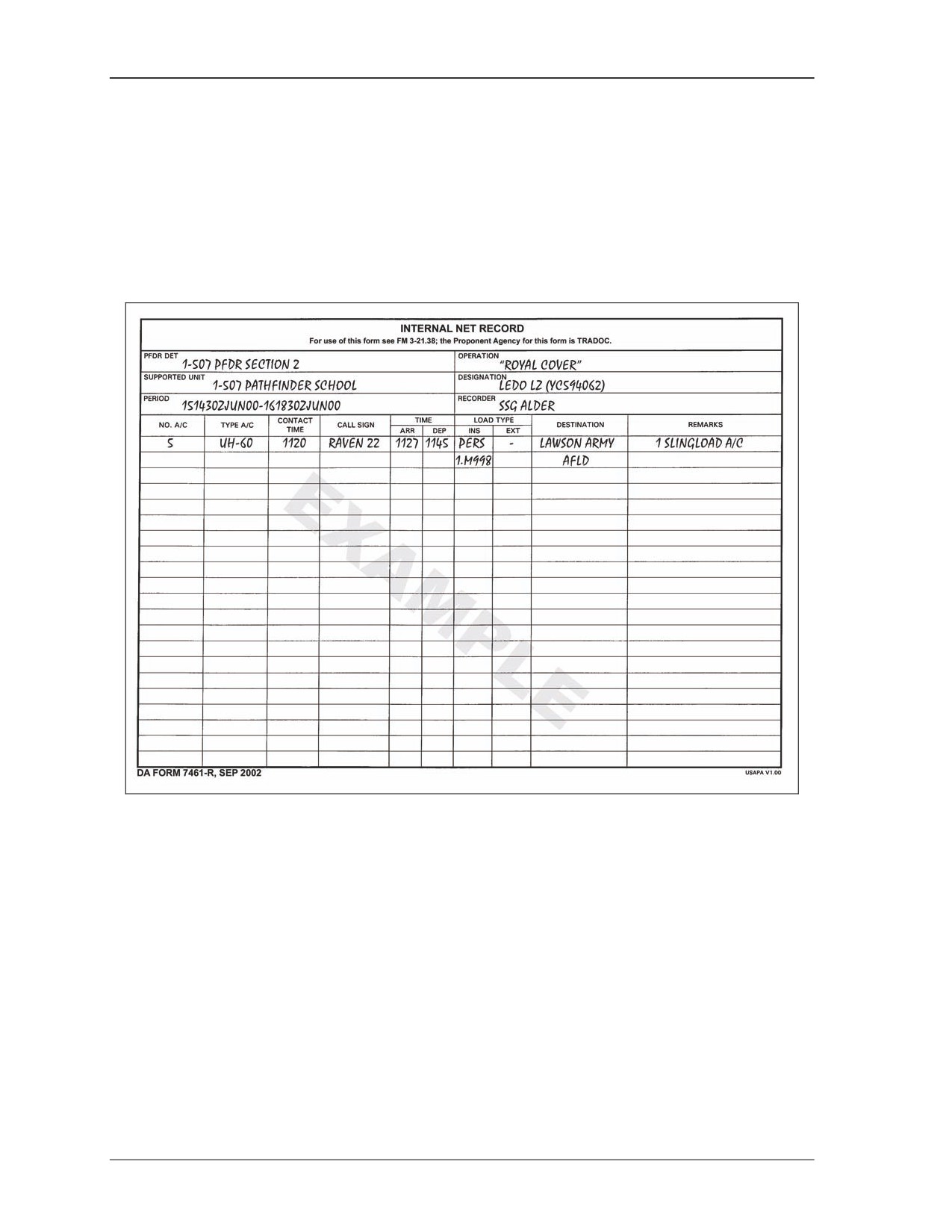
elements. An internal net recorder (INR) runs this net and helps control aircraft at his HLZ. He logs details
of all arrivals and departures on DA Form 7461-R, Internal Net Record, (Figure 4-7, page 4-12). If an
aircraft fails to arrive at its destination, search and rescue medical units check the DA Forms 7461-R so
they know where to focus their search. The recorder might copy the blank, reproducible form from the
back of this manual onto 8½ by 11-inch paper. He might also download it from http://www.usapa.army.mil
or copy it from the Army Electronic Library (AEL) CD-ROM (EM0001). Then he completes the form
as follows:
PFDR Det. Write the name of the pathfinder detachment operating the landing zone.
Supported Unit. Write the name of the supported unit.
Period (DTG). Write the date and time of the mission.
Operation. Write the name of the mission.
Designation. Write the name and location of the site.
Recorder. Write your name.
No. A/C. Write the number of aircraft in the formation.
Type A/C. Write the nomenclature of each type of aircraft in the formation.
Contact Time. Write the time of the initial contact with the flight commander.
Call Sign. Write the flight commander's call sign.
Time, Arr. Write what time the aircraft or formation inserted.
Time, Dep. Write what time the aircraft or formation extracted.
Load Type, Ins. Write what type of load the aircraft inserted.
Load Type, Ext. Write what type of load the aircraft extracted.
Destination. Write the name of the aircraft's or formation's destination on leaving.
Remarks. Write anything else here that you think you need to record.
25 April 2006
FM 3-21.38
4-11
Chapter 4
LANDING SITE PARTY
4-34. The landing site party consists of a site team leader and other pathfinders and attached personnel,
as required. A single pathfinder might establish and operate a small landing site for a limited time. He
maintains a record of all aircraft and their respective cargos on DA Form 7461-R, Internal Net Record.
Figure 4-7 shows an example of the completed form. A blank copy is provided in the back of this book for
local reproduction on 8 1/2- by 11-inch paper. The form may also be downloaded from the Internet at
Figure 4-7. Example completed DA Form 7461-R.
SITE TEAM LEADER
4-35. The site team leader reconnoiters, establishes, and operates the landing site. He supervises it and, at
any time, might supervise the GTA radio operator. Some of his responsibilities include the following:
Organizing at an objective rally point.
Reconnoitering to determine—
-- Long axis.
-- Usable area.
-- Ground slope (compute).
-- Land heading.
-- Best landing formation.
Designating sling-load point(s).
4-12
FM 3-21.38
25 April 2006
Helicopter Landing Zones
Emplacing and briefing the GTA radio operator.
Clearing touchdown and slingload points.
Organizing personnel and loads for air movement.
Clearing or marking obstacles.
Preparing for night and day missions.
Continuing to improve the site.
EXTRA PATHFINDERS
4-36. These Soldiers operate the GTA radio and the pathfinder internal radio net (if established), position
and operate navigation and assembly aids, and clear or mark obstacles. Four factors dictate the number of
extra pathfinders employed:
The size of the landing site.
The expected density of air traffic.
The number and type of visual and electronic aids used.
The tactical situation.
COMMANDER
4-37. The commander can attach other Soldiers from supported units to the landing site party. The
pathfinders brief and rehearse attached Soldiers. Only pathfinders reconnoiter actual landing areas, but
attached personnel can—
Reconnoiter other areas.
Provide security.
Help pathfinders set up and operate the landing site.
Reconnoiter and mark assembly areas.
Operate assembly aids.
SECTION III. LANDING SITE OPERATIONS
Before they can start using a landing site, pathfinders need only pick its location and set up communications
there. They continue marking and improving the site until it can support the ground tactical plan.
COMMUNICATIONS
4-38. As soon as they arrive at the landing site, pathfinders set up communications in the GTA net. If
needed, they also set up the pathfinder internal net. They monitor these radio nets continuously, unless
directed otherwise, until they complete operations at the site.
4-39. Tactical situation permitting, pathfinders locate each helicopter landing site within ground
communication range of the other sites and manned RPs. The range of available radios dictates whether
facilities within the LZ can communicate with each other.
4-40. The commander of the landing site for utility and cargo helicopters quickly reconnoiters the area to
determine the exact direction of landing. He calculates an intercept heading from the RP if necessary. He
selects the location of the landing point of the lead helicopter of each flight. Then he decides if the terrain
or situation dictates any change to the planned landing formation. The site commander has pathfinders or
other personnel compile landing instructions for transmittal to inbound helicopters. He also has them
remove or mark obstacles in or around the site.
25 April 2006
FM 3-21.38
4-13
Chapter 4
FLIGHT FORMATIONS
4-41. Ideally, all helicopters land at the same time in a planned flight formation. The landing site
commander includes this information in his landing instructions to the flight leader. Pathfinders lay out the
landing site in a location where helicopters will not fly directly over aircraft on the ground. The layout of
the site also depends on the landing space available, the number and type of obstacles, unit SOPs, and
prearranged flight formations.
LANDING ZONE AND OBSTACLE MARKINGS
4-42. For daylight operations, pathfinders use only panels or some other minimal identification means to
mark LZs (Figure 4-8 through Figure 4-11, pages 4-15 through 4-18). Smoke might also be used to
identify an LZ and assist the pilot in determining wind conditions. However, smoke is also easily identified
by the enemy. For daylight operations, mark the number one landing point using a single VS-17 panel,
with the international orange side visible. Other TDPs might be marked, as coordinated. Mar obstacles
using the cerise colored side of the panel. For night operations, they use chem-lights, lanterns, field
expedients, or other methods to show the direction of landing and to mark individual landing points
(Figure 4-12 and Figure 4-13, pages 4-19 and 4-20). For day and night air assault operations, they mark all
obstacles. (Section V provides detailed information about conducting night operations.)
4-43. At night, pathfinders can use lights of different colors (except red, which marks obstacles) to
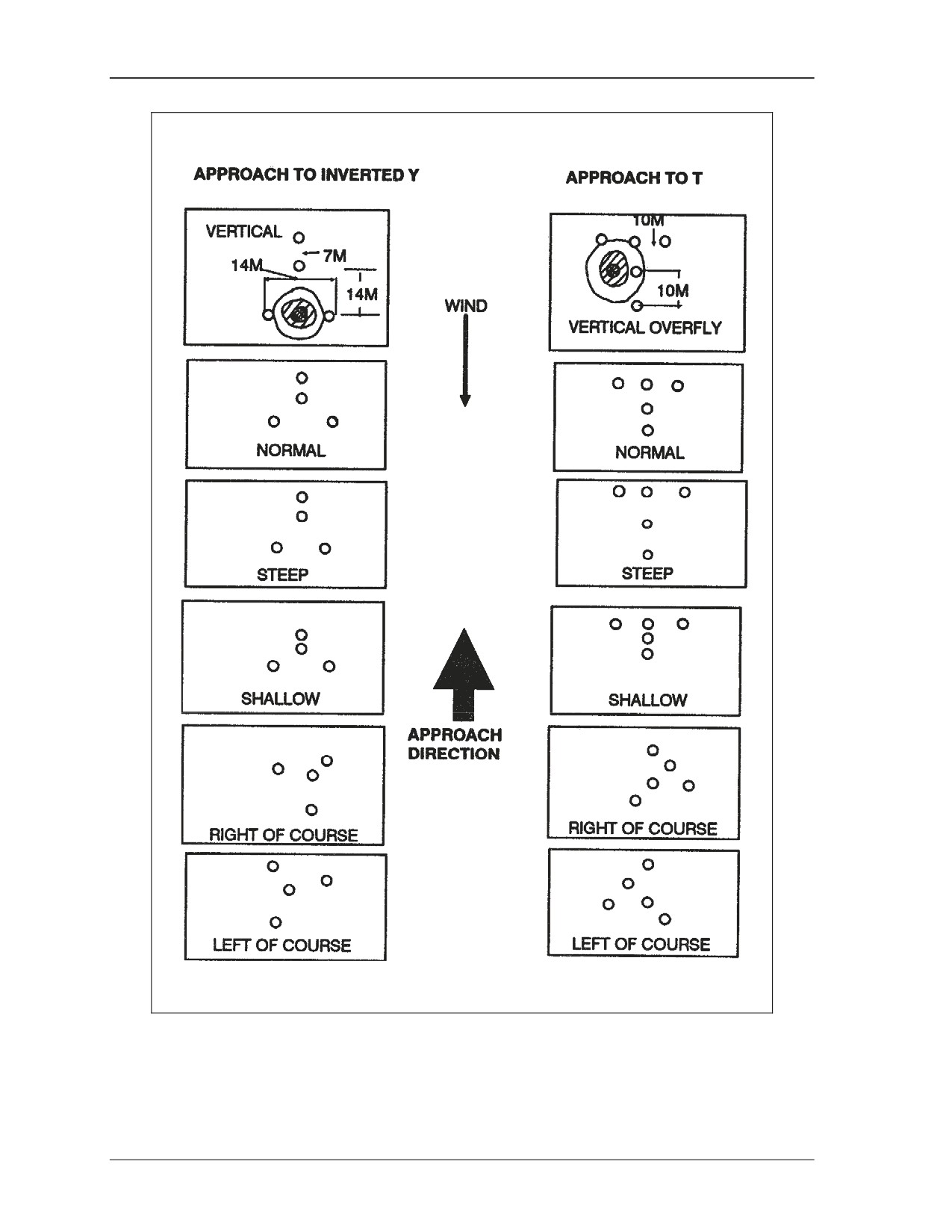
designate different helicopter sites or to separate flights within a larger formation. A lighted "T" or inverted
"Y" indicates both the landing point for the lead helicopter of each flight and the direction of approach
(Figure 4-14, page 4-21). Other lights mark touchdown points for the other helicopters in the flight. Each
helicopter should land with its right landing gear or its right skid 5 meters left of the lights. Large cargo
helicopters (CH-47) land 10 meters to the left of the lights.
4-44. For security, pathfinders and the ground unit turn off, cover, or turn all lights upside down until the
last practical moment before a helicopter arrives. Then they orient the lights in the direction from which the
lead helicopter is approaching, and a signalman directs its landing.
Note: Because the marking lights could be too bright for the aircrew member's NVGs, he might
have to look under it to distinguish the colors. Also, aircrew members wear NVGs with filtered
lenses. These filters do not allow the aircrews to see blue or green chem-lights. Colors such as
yellow, orange, red, and infrared can be seen by pilots wearing ANVIS.
AIR ASSAULTS
4-45. During daylight air assault operations, pathfinders use red-colored panels or other red,
easily-identifiable means to mark any hard-to-detect, impossible-to-remove obstacles such as wires, holes,
stumps, and rocks. During nighttime air assault operations, pathfinders use red lights to mark any obstacles
within the landing site that they cannot reduce or remove.
4-46. In most combat situations, the need for security keeps pathfinders from using red lights to mark
treetops on the departure end of a landing zone. However, in training or in a rear area landing site, they do
use red lights. If they cannot mark obstacles or hazards, they must fully advise aviators of existing
conditions by GTA radio. In any case, the pathfinder landing site leader makes sure that pathfinders mark
the most dangerous obstacles first and, if possible, that they remove them.
4-47. If required to do so by the supported unit, pathfinders can mark initial assembly points for troops,
equipment, and supplies. They should choose locations that help ensure the quick, efficient assembly and
clearing of the helicopter site. If the unit will use the assembly areas, the ground unit commander selects
their locations. If needed, supported ground unit Soldiers go with the pathfinders to reconnoiter and mark
the unit assembly areas, set up assembly aids, act as guides, and help with landing and unloading
4-14
FM 3-21.38
25 April 2006
Helicopter Landing Zones
operations. Having this help ensures that the pathfinders can rapidly clear troops, supplies, and equipment
from the landing points.
4-48. Pathfinders have a limited capability to secure a landing site. If they precede the initial assault
elements into a landing site, Soldiers from the supported ground unit can go with them for security.
25 April 2006
FM 3-21.38
4-15
Chapter 4
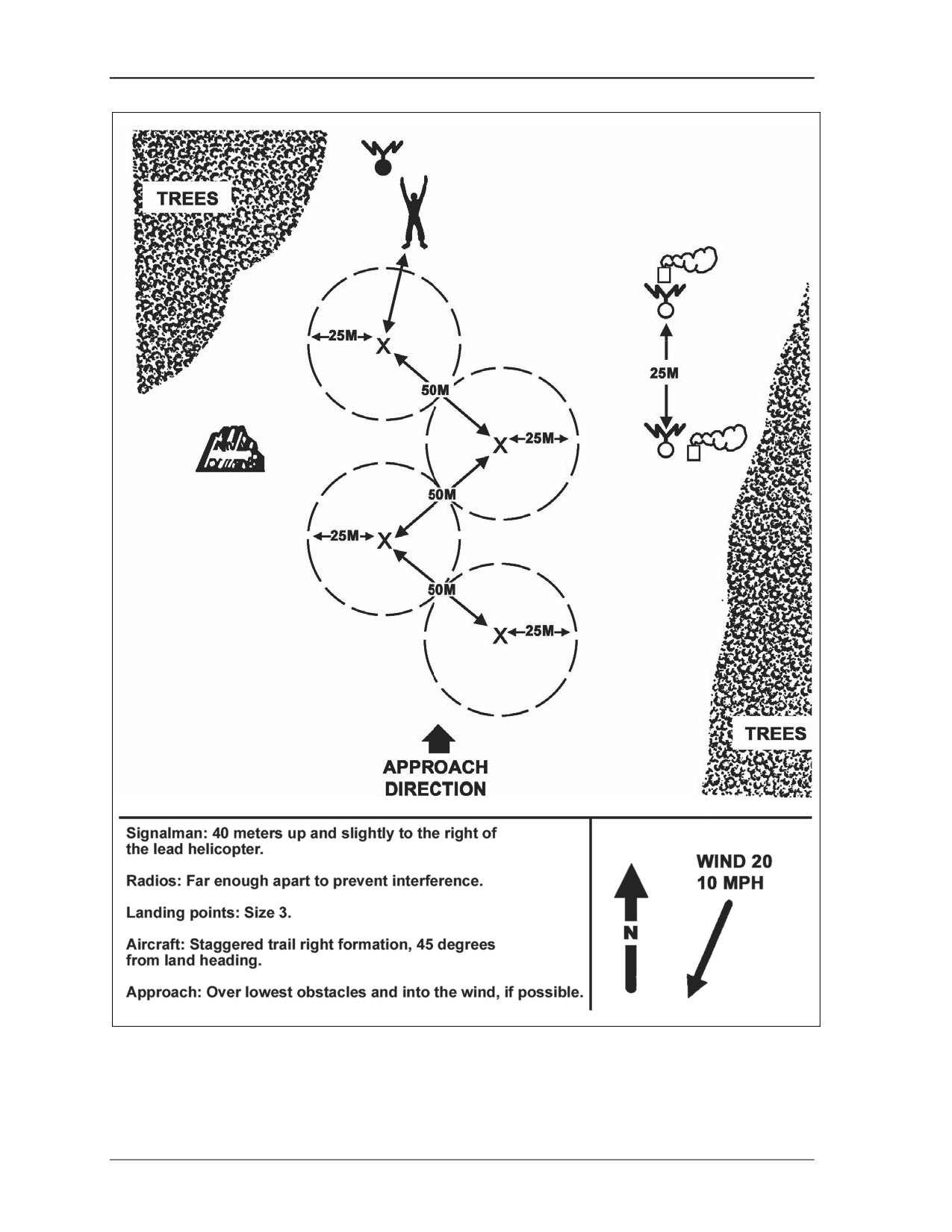
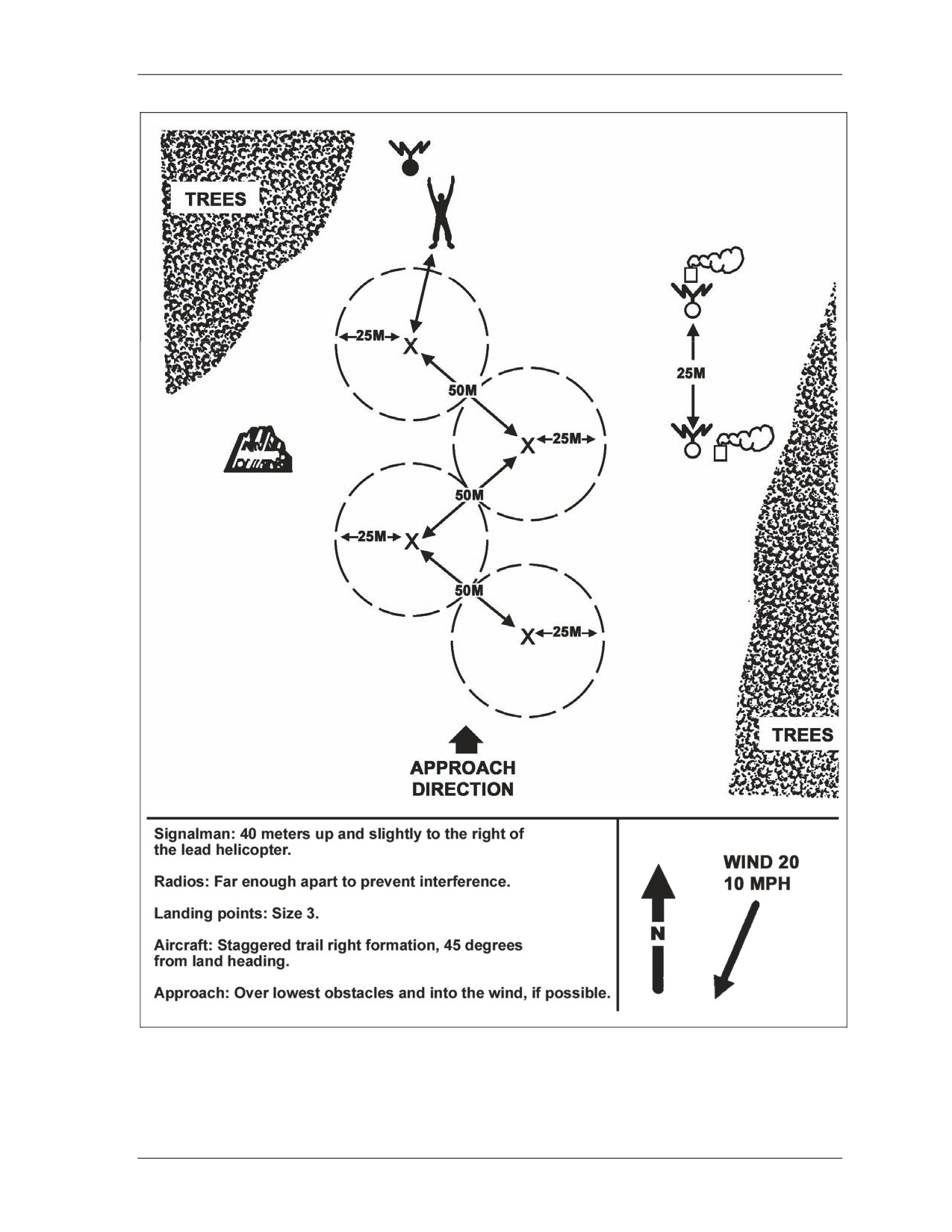
Figure 4-8. Helicopter day landing site, staggered trail-right formation.
4-16
FM 3-21.38
25 April 2006
Helicopter Landing Zones
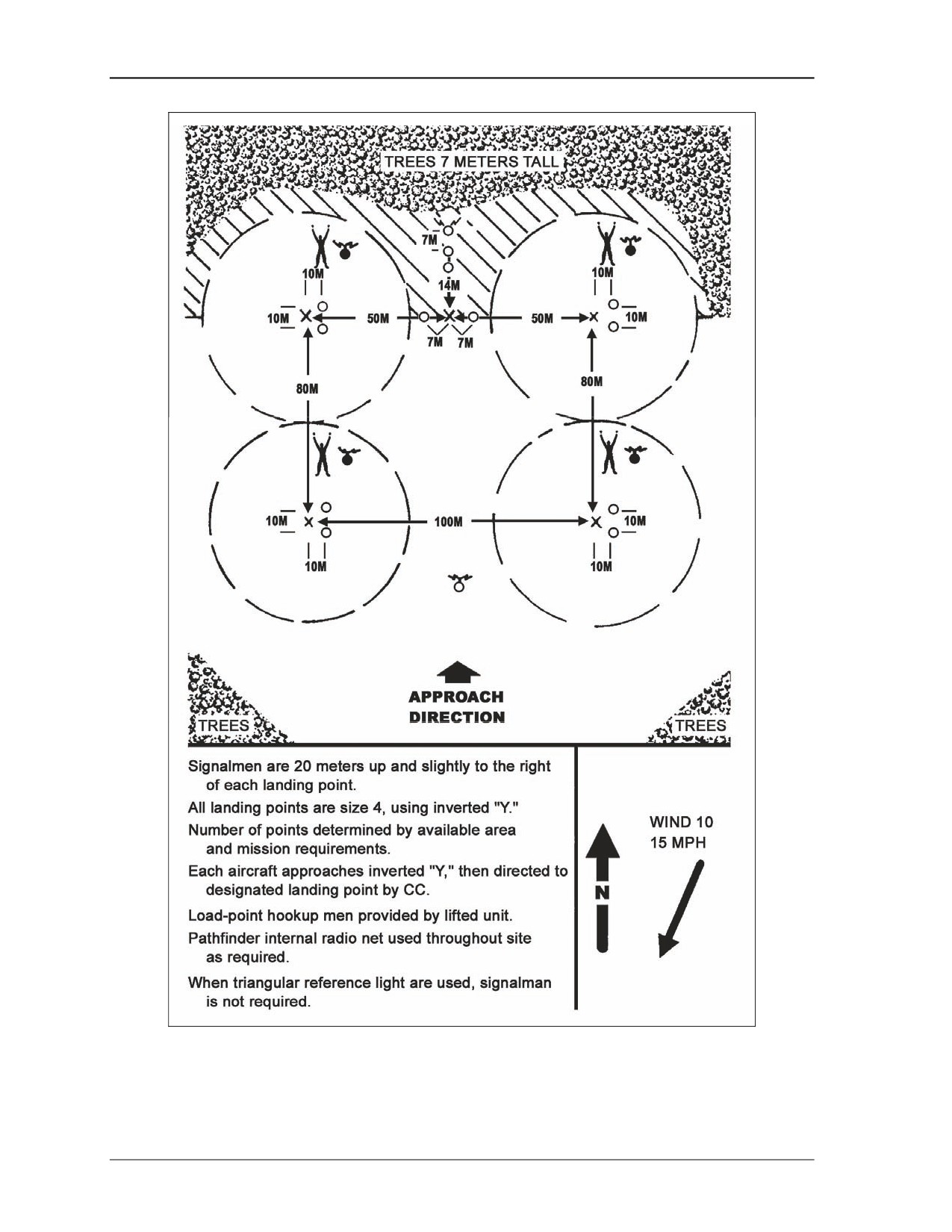
Figure 4-9. Helicopter day landing site, echelon right formation.
25 April 2006
FM 3-21.38
4-17
Chapter 4
Figure 4-10. Day or night slingload operation site.
4-18
FM 3-21.38
25 April 2006
Helicopter Landing Zones
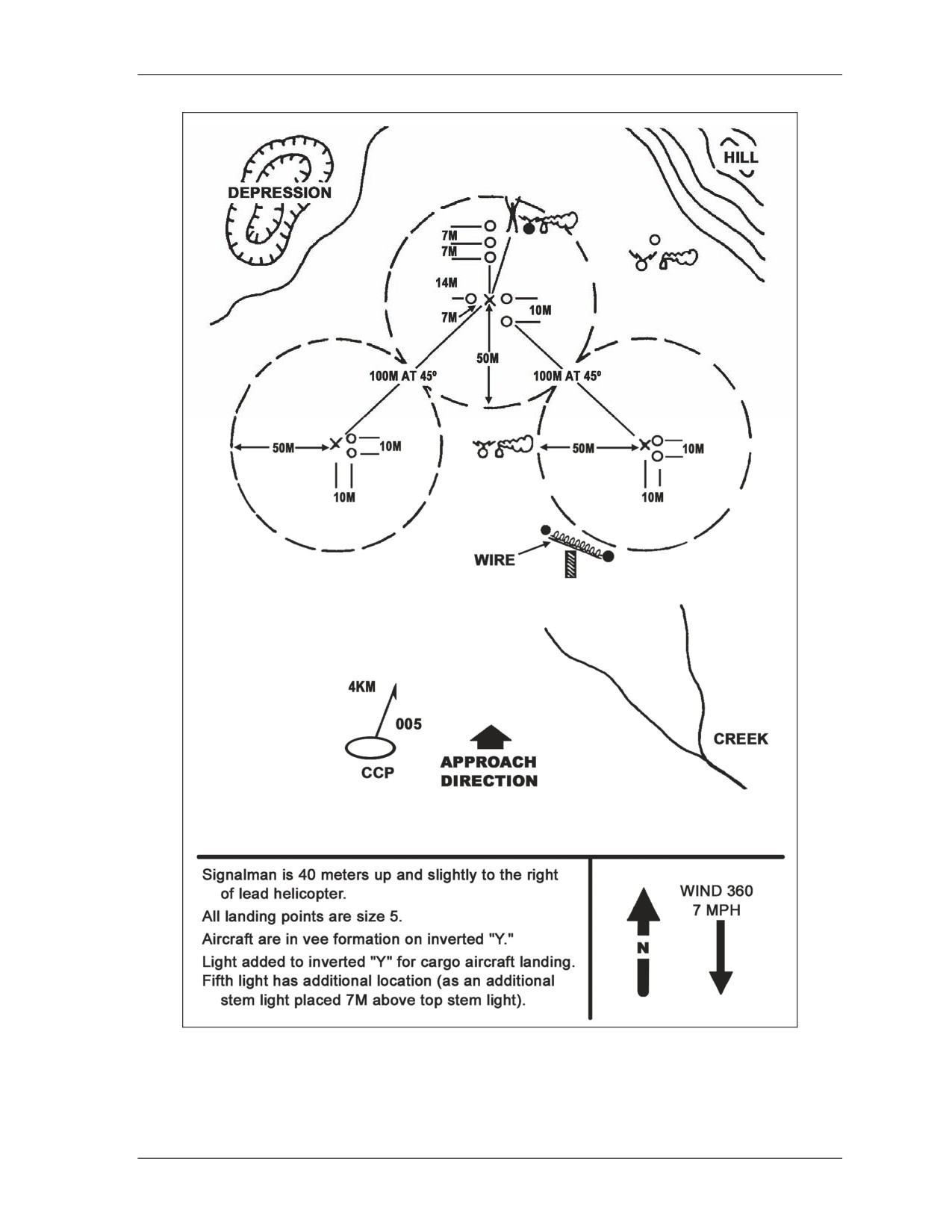
Figure 4-11. Day or night cargo landing site, "V" formation.
25 April 2006
FM 3-21.38
4-19
Chapter 4
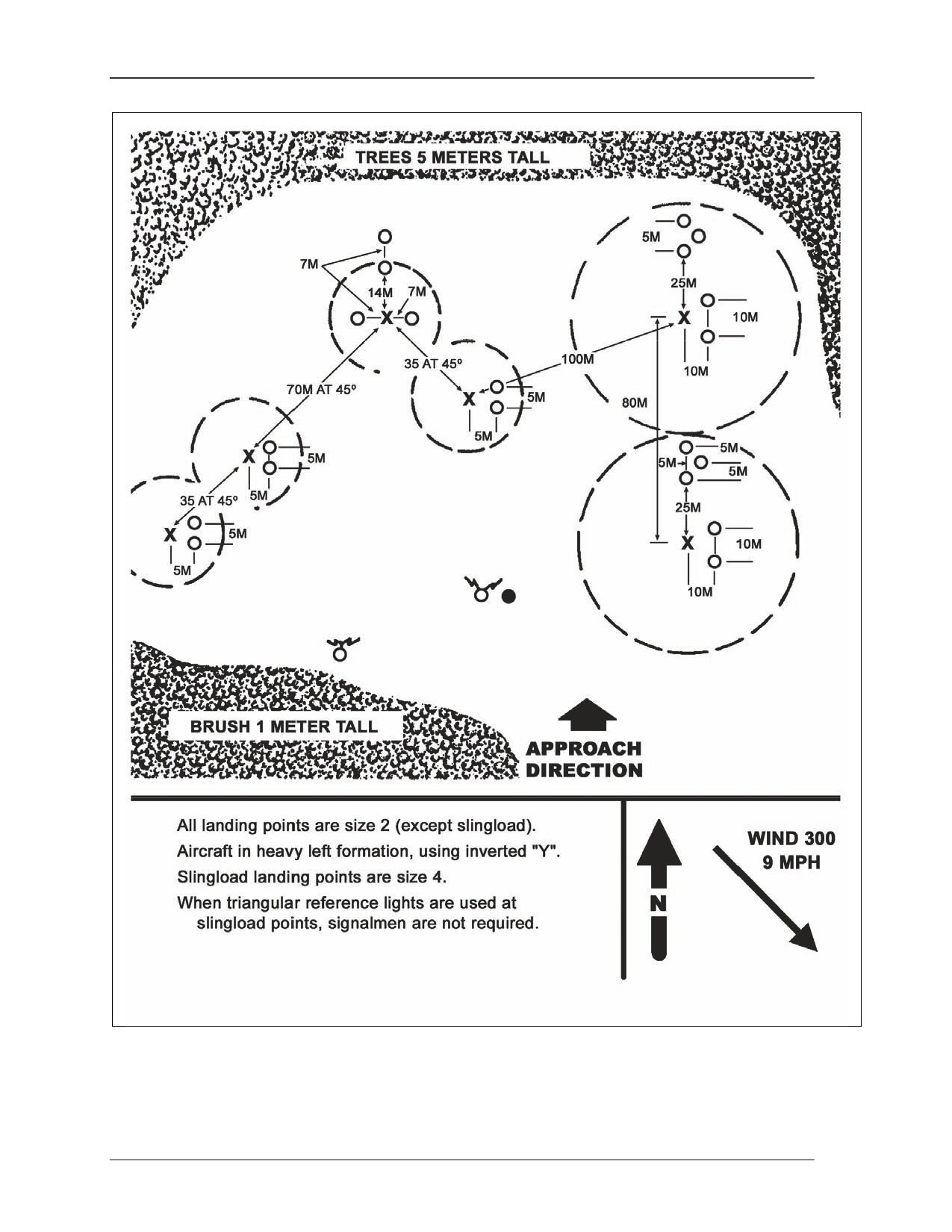
Figure 4-12. Night landing site with landing points
for aircraft and slingloads.
4-20
FM 3-21.38
25 April 2006
Helicopter Landing Zones
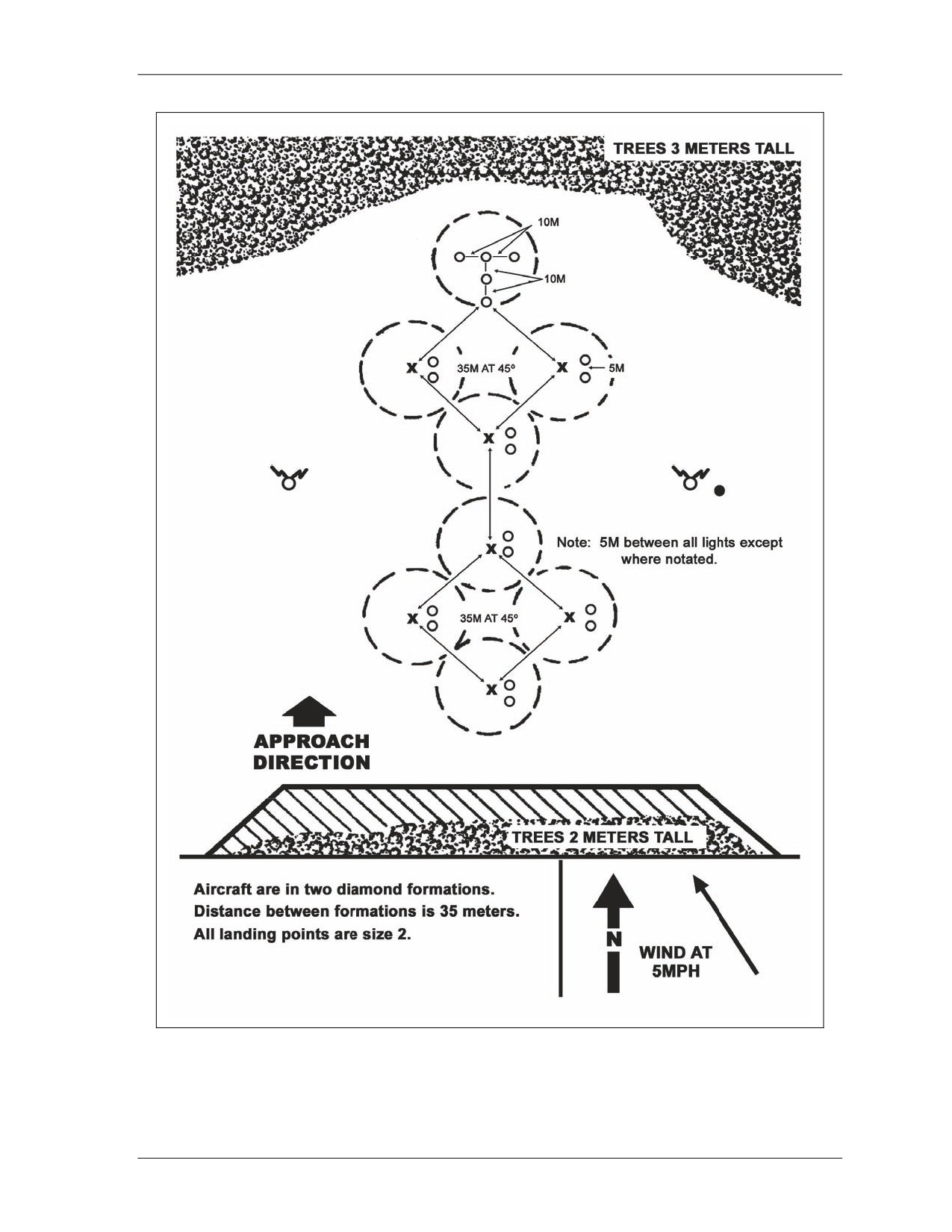
Figure 4-13. Utility helicopter night landing site, diamond formations.
25 April 2006
FM 3-21.38
4-21
Chapter 4
Figure 4-14. Lighted night landing symbols as the pilot would see them from different approach angles.
4-22
FM 3-21.38
25 April 2006
Helicopter Landing Zones
INTERCEPT HEADINGS
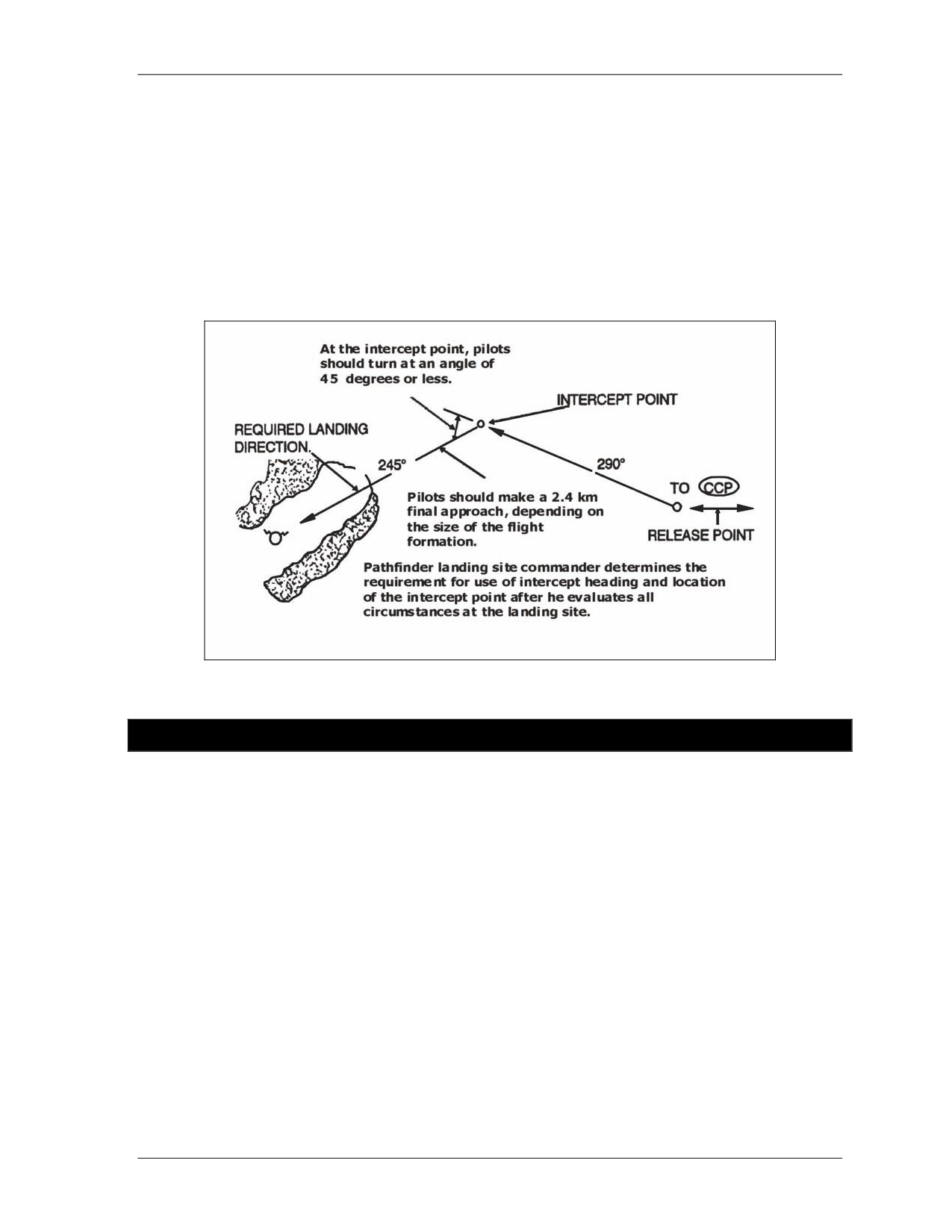
4-49. The heading from the RP (or from the CCP if the pathfinders do not use an RP) to the landing site
coincides as closely as possible with the landing direction to keep the helicopter from having to turn
sharply. The larger the formation, the more important this becomes. If a pilot cannot approach the landing
site straight on, pathfinders will set up an intercept heading (Figure 4-15). They choose an intercept point
far enough from touchdown to allow helicopters in formation a final approach of at least 1 to 2 miles.
Flight leaders might need visual steering commands, time and distance information, terrain features, and
electronic or visual navigation aids to help them determine the intercept point and the landing direction at
the landing site.
Figure 4-15. Intercept heading technique.
SECTION IV. LANDING ZONE OPERATIONS
Helicopters approach the LZ along a designated flight route. They normally travel in serials containing four or
five helicopters, but they sometimes travel as platoon-sized lifts. One serial might contain a flight for each
helicopter site. Flights of medium or heavy transport helicopters (CH-47) carrying artillery or other bulk cargo
often arrive at LZs one or two helicopters at a time (Figure 4-16). Later flights follow at the smallest time
intervals. These intervals depend on the number of helicopters in each flight, the configuration and conditions
of the landing site, and the nature of the cargo to be loaded or unloaded. During planning, the aviation unit
commander determines the time between successive flights. Once an operation starts, pathfinders at the site
recommend any changes needed to ensure helicopter safety or expedite operations. Night operations often
require more time and distance between formations.
COMMUNICATIONS CHECKPOINT
4-50. As each helicopter serial reaches the CCP on the flight route, the flight leader contacts the
appropriate helicopter landing site control center.
4-51. The CC then gives the flight leader the heading from the CCP to the landing site, the landing
direction, and other relevant and important information, as follows:
y Enemy situation.
y Friendly fires.
25 April 2006
FM 3-21.38
4-23
Chapter 4
y Field elevation.
y Landing formation.
y Terrain conditions.
y Traffic situation.
y Obstacles.
Availability of visual signals (smoke, light gun, and so forth).
Next reporting point.
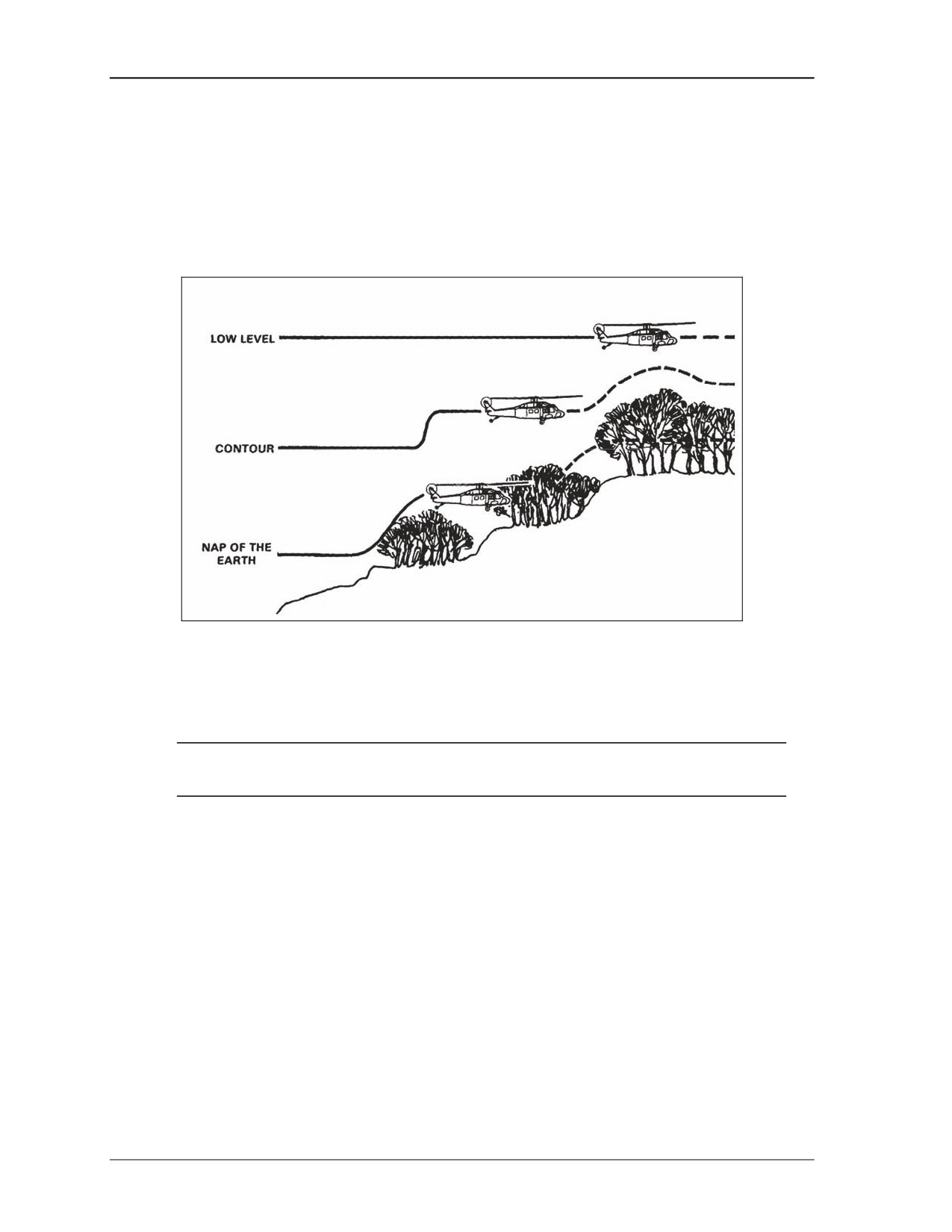
Figure 4-16. Terrain flight modes.
4-52. Before reaching the CCP, IAW instructions from the flight leader, all helicopters in a flight switch
to the pathfinder control frequency.
Note: Pathfinders must stay prepared to provide ATC and navigational aid to all aircraft in and
around the landing site in case those aircraft have no specified flight plan.
4-53. The helicopter formation continues along the flight route to the RP. The electronic and visual aids
at the RP (if manned) help pilots navigate. As each helicopter passes over or near the RP, its flight serial
leader reports this to the respective landing site CC. Then the helicopter flies directly to the assigned
landing site. The CC at the individual landing site uses visual signals, steering commands, or electronic
homing techniques to help any flight that cannot find its landing site.
Day Operation Signals
4-54. For daylight operations, you can use different smoke colors for each landing site. You can use the
same color more than once, just spread them out. Use smoke only if you have to, because the enemy can
see it, too. Try to use it only when the pilot asks for help locating his helicopter site.
Night Operation Signals
4-55. For night operations, IR strobe or other visual signals in lieu of smoke. As in daylight, red signals
mean "DO NOT LAND," but you can also use them to indicate other emergency conditions. All concerned
must plan and know emergency codes. Each flight lands at the assigned site according to CC messages and
4-24
FM 3-21.38
25 April 2006
Helicopter Landing Zones
the visual aids displayed. You can use arm-and-hand signals to help control the landing, hovering, and
parking of helicopters.
AIR CONTROL POINTS
4-56. Pathfinders might have to manage air control points (ACPs) to help aircraft en route to the LZ.
ACP PARTY RESPONSIBILITIES
4-57. The ACP party consists of two or three pathfinders, or at least one pathfinder and assistants. The
party positions and operates electronic navigation aids, visual navigation aids, or both. The party also
operates radios in the pathfinder internal net (if used) and the GTA net. The ACP party monitors the GTA
net so they can respond at once to any pilot's request for help finding an ACP.
NAVIGATION AID ORDER
4-58. The ACP party installs navigation aids as soon as it arrives at the site or as planned. They try to set
up all of the aids at the same time. However, if they cannot do this because they have too few people, or for
some other reason, then they set them up in the following order:
GTA Radio
4-59. The party sets this up first. Then, if the aviation unit commander has asked them to do so, they
install the electronic homing beacon. This beacon allows the party to offer long-range guidance. If they do
use the beacon, the party sets it up far enough away to prevent excessive radio interference. This also helps
keep the enemy from destroying the radios and the beacon at the same time.
Visual Navigation Aids
4-60. These navigation aids vary in number and type, depending on aviation unit SOPs and requirements
and on the need for security. The ACP party removes any grass or brush that masks their usage of these
aids, but they also plan a way to conceal the markings in case they sight enemy aircraft.
Internal Net Recorder
4-61. The pathfinder internal net recorder sets up communications with the landing zone CCs as fast as
he can. He immediately reports the state of ACP readiness and any information about the local enemy
situation, if any. Unless directed to operate a beacon on a definite time schedule, he constantly monitors
the radio.
Security Personnel
4-62. The ACP party can include attached personnel from the supported units. These personnel provide
security. They both move to their assigned locations and take up security positions, or they help set up and
operate navigation aids and communications equipment.
SECTION V. NIGHT OPERATIONS
Daytime visual references (checkpoints for positive identification) are difficult to see at night. Visual aids for
night navigation emit illumination. Having too few visual references can cause pilots to concentrate on a single
light or group of lights in a concentrated area. This can cause visual illusions, which can then cause vertigo. To
prevent this hazardous situation, pathfinders mark LZs with multiple lights and mark landing areas with two or
more widely separated lights.
25 April 2006
FM 3-21.38
4-25
Chapter 4
TACTICAL LANDING LIGHTS
4-63. The tactical landing light system provides visual cues for landing in a tactical landing site. When
the aircraft approaches from terrain flight altitudes, it should use the inverted "Y" system. Aircraft
normally approach a tactical landing site without the aid of the search landing light. The lighting for a
tactical LZ can consist of handheld flashlights or "beanbag" lights arranged on the ground.
4-64. Regardless of the type lighting device used, pathfinders identify the touchdown point with at least
two lights. At night, they can designate different helicopter sites with lights of different colors. They might
also use different colors to separate flights within a larger formation. A lighted (inverted) "Y" indicates the
landing point of the lead helicopter (Figure 4-17).
Figure 4-17. Placement of the inverted "Y" or NATO "T" at the number one touchdown point.
4-65. At night, all landing lights should be placed in directional holes that can only be seen from the
direction of approach and from above, but not from the ground. If this is not possible, the pathfinder turns
his hood upside down, or keeps all lights off for security purposes until the last practical moment.
4-66. At other touchdown points, helicopters land with the right landing gear or skid just to the left of the
light (Figure 4-18). They also place a signalman at a sling-load point. Then they beam the lights in the
direction from which the helicopters approach.
Figure 4-18. Placement of additional touchdown point markings for night use.
4-26
FM 3-21.38
25 April 2006
Helicopter Landing Zones
4-67. Pathfinders display an inverted "Y" for cargo aircraft. This marker consists of five lights.
Pathfinders place the fifth light IAW prior coordination with the supporting aviation unit (Figure 4-19).
The fifth light can go 7 meters from furthest stem light in the direction of landing, or 10 meters opposite
the landing direction (below) the right flank light.
Figure 4-19. Placement of fifth light using inverted "Y," when coordinated.
4-68. Pathfinders will display a NATO landing "T" if an aircraft approaches the LZ from at least 500
above ground level
(AGL), or anytime the pathfinders coordinate in advance with the supporting
aviation unit.
4-69. Noncargo aircraft require a 5-meter separation between touchdown point and lights, with a 5-meter
separation between lights.
4-70. Cargo aircraft require a 10-meter separation between touchdown point and lights, with a 10-meter
separation between the lights.
4-71. During darkness, helicopters approach slightly steeper and slower than they would in daylight.
4-72. Vehicle headlights offer one kind of emergency night lighting. Pathfinders place two vehicles
about 35 meters apart and 35 meters downwind of the landing point. They shine their headlights so that
their beams intersect at the center of the landing point (Figure 4-20). The helicopter approaches into the
wind, passes between the vehicles, and lands in the lighted area. This method does not work well for large
helicopters.
Figure 4-20. Emergency night lighting by vehicle headlights.
25 April 2006
FM 3-21.38
4-27
Chapter 4
CAUTION
When fully adapted to the night, the eyes grow extremely sensitive to
any light. Sudden exposure to a light source causes partial to complete
loss of night vision. Thus, take care to avoid exposing pilots to light
sources. Also, if pilots are using NVG, avoid shining a light directly at
the aircraft, or use light sources compatible with the NVG.
EXTERNAL LOADS
4-73. Employing external loads presents a challenge in the dark. Even so, the pathfinder can use one of
several methods. If he lacks sufficient signalmen, he marks the load by placing three reference lights 25
meters in front of the load landing and pickup point. He spaces them in a triangle, 5 meters apart. This
helps the flight crew during hookup, liftoff, and landing. On liftoff, the aircraft climbs vertically until the
load clears the ground. As the helicopter begins to move forward, the pilot applies enough power to
maintain a climb that allows the slingload to clear any obstacles on the liftoff path. The shorter the sling,
the less altitude is required to clear obstacles.
MULTIHELICOPTER OPERATIONS
4-74. Only by using NVG can pilots fly safely in formation in a complete blackout and at terrain flight
altitudes.
NIGHT VISION GOGGLES
4-75. To operate at terrain flight altitudes during low- or mid-light levels, pathfinders use night vision
goggles. If the lights used in the tactical lighting and marking are too bright for night vision goggles,
pathfinders must place a filter over the light cover, paint the light covers, cover them with plastic tape, or
use other means to reduce the intensity of the light. The night vision goggles commonly used by aviators
(AN/PVS-8) generally have a filter to prevent the cockpit instruments and lighting from blinding the
aircrew. However, these filters also prevent the aircrew from observing green and blue chem-lights. These
colors might be seen with the unaided eye if the aircrews adjust their goggles to look below them, but they
will not be able to see the light source through the NVDs.
WARNING
When your unit trains with or employs the tactical light set, wear
a filter over your night vision goggles to prevent eye injury. If you
do not have a filter, paint the lens cover or cover it with plastic
tape to reduce light intensity.
4-28
FM 3-21.38
25 April 2006
Helicopter Landing Zones
SECTION VI. ENVIRONMENTAL CONSIDERATIONS
The pathfinder unit can expect to support the aviation commander and ground unit commander in many
climates and types of terrain. The requirements for establishing a landing site or zone are similar. For aircraft to
land safely and quickly in challenging environments, pathfinders must choose and prepare LZs carefully.
PILOT INPUT
4-76. The pilot considers his experiences and his responsibilities to the crew and aircraft before
determining whether a proposed landing site is safe.
4-77. Challenging climatic and terrain environments include extreme hot and cold weather and jungle,
desert, and mountainous terrain. (For more detailed information on the climate, terrain, and operational
aspects of these areas, see FM 90-3, FM 90-5, and FM 3-97.6.)
4-78. Each area requires the pilot to know and follow special procedures. The pathfinder who also knows
these procedures can better advise and assist aviators and the supported ground unit.
COLD WEATHER
4-79. Many parts of the world experience cold weather. Extreme cold and blowing snow pose special
problems in ground operations and flight. Pathfinder mission planning includes considering the problems
presented by ice, snow, or rain. The pathfinder's knowledge of flight procedures helps him advise the pilot
about the existing surface conditions.
COMMUNICATIONS
4-80. Most locations allow generally-good radio communications. However, atmospheric electricity,
such as the aurora borealis, can disrupt them. These events could disturb or block some frequencies.
Mountainous terrain also restricts communications. Pathfinders might need to set up relay stations. "Radio
skipping" happens often in cold weather areas. Radio operators often hear long-distance radio traffic on
tactical FM networks.
NAVIGATION
4-81. In snow-covered areas with flat terrain, pilots might need marked and manned RPs. When aircraft
fly over loose snow, the air movement lifts the snow and circulates it into a snow cloud. This often
produces a zero-visibility condition known as "whiteout," through which the pilot must take off or land
blind (Figure 4-21). Whiteout conditions place extra demands on the landing site party.
SURFACE CONDITIONS
4-82. The pathfinder evaluates the surface of the ground to see whether aircraft can land without sinking
too deep into the snow. He can use a tactical vehicle to test the hardness of the surface. The landing site
party might also try to determine the degree of ground slope, and whether obstacles lie under the cover of
snow at each landing point.
Distance Between Aircraft
4-83. Pathfinders might need to increase the distance between aircraft to 100 meters and the size of the
landing point to 100 meters in diameter.
Landing Point Markings
4-84. Marking the landing points presents other problems. A pilot's depth perception is impaired in
snow-covered areas. A signalman on the ground provides a useful reference for estimating height. In
daytime, pathfinders mark touchdown points so the pilot can find a clear and safe landing area.
25 April 2006
FM 3-21.38
4-29
Chapter 4
Whiteouts
4-85. If the tactical situation permits, the GTA radio operator advises the pilot of the surface conditions
so the pilot can plan how to approach. Using the echelon left or right landing formation reduces the effect
of snow clouds (also called "whiteouts") on subsequent landings. The pathfinder plans to stagger aircraft
arrivals to let the snow clouds settle.
Figure 4-21. Lessening the effects of loose snow on the ground.
4-30
FM 3-21.38
25 April 2006
Helicopter Landing Zones
Multiple Landing Sites
4-86. Depending on the mission requirements, climatic conditions, and the expected times of the
landings, the pathfinder leader might decide to use multiple landing sites.
Night Approaches
4-87. Aircraft making night approaches to snow sites need a visual reference point on the ground such as
runway or tactical landing lights. These lights help the pilot judge the angle of descent and rate of closure.
He plans the approach to land short of the touchdown point. This ensures that he does not overshoot the
point and have to decelerate rapidly in the snow cloud produced by his own aircraft. Approaching short
allows the pilot to maintain airspeed after leveling off, and to keep the aircraft in front of the snow cloud
until touchdown.
Adjustment of Inverted "Y"
4-88. If he coordinates with the flight commander before the landing, the pathfinder can adjust his
inverted "Y" forward 10 meters in front of his designated Number 1 touchdown point. This way, the
landing site party takes advantage of all usable areas on the site.
SIGNALMAN
4-89. The pathfinder leader positions any extra personnel to act as signalmen for aircraft approaching
other touchdown points. While aircraft approach and land, he makes sure that signalmen remain in safe
areas. Other signalmen should also control the loading of personnel on the aircraft, as instructed by the
crew chief or the crew. The technique for landing on snow with a slingload resembles other types of
approach, but the pilot hovers at a higher altitude because of the load (A, Figure 4-21). He has a hard time
judging the height of the slingload (the height above the ground) as it nears the snow surface. He relies on
a signalman to keep him informed. To avoid building up a snow cloud, the pilot puts the load on the
ground as fast as he can (B, Figure 4-21).
SLINGLOAD OPERATIONS
4-90. The CH-47 requires a sling length of at least 50 feet. Other aircraft allow a shorter sling. Normally
an aircraft hovers during hookup and liftoff with a slingload. Doing this above snow produces a snow
cloud
(B, Figure 4-21). The pilot must expect this and plan for it. In fact, when operating over
snow-covered terrain, the pilot can use the most common technique—hovering the helicopter over the load
while the ground crew attaches the sling to the hook—or not.
4-91. The pilot can land to the left of the load, but close enough for hookup personnel to attach the
sling to it.
4-92. When ready for liftoff, the pilot starts a slow, vertical ascent, with enough lateral movement to
position the aircraft over the load (C, Figure 4-21). He keeps ascending until the load clears the ground,
and then he checks hover power, starts accelerating, and continues to climb.
WARNING
Rotor wash increases the risk of frostbite. Make sure you and
anyone else on the ground dresses for the conditions and keeps
or uses a face mask and goggles.
25 April 2006
FM 3-21.38
4-31
Chapter 4
STATIC ELECTRICITY
4-93. During cold weather, static electricity creates serious problems. Moving an aircraft through the air,
brushing snow and ice from an aircraft, or dragging steel cables over the snow can generate static
electricity. During external load operations, aviators key the FM radio just before load pickup. This
discharges the aircraft's static electrical charge. Because the charge rapidly builds up again, hookup
personnel use a grounding device to avoid electrical shock
(Chapter
5 says more about static
discharge wands).
SAFETY
4-94. Accumulated ice on aircraft structural and moving parts presents a danger to nearby ground
personnel. The aircraft can accumulate ice up to three-quarters of an inch thick during flight in
temperatures and altitudes where icing conditions exist. During flight at less extreme temperatures, this ice
begins to loosen and fall off. Ice might shed while the helicopter loses altitude during the landing approach
and during touchdown, and pieces of ice shed by the main rotor can fly outward as much as 300 feet.
Ground personnel should stay a safe distance away from helicopters during landing and shutdown (after
flight in icing conditions), and passengers should not exit until the rotor blades have stopped.
JUNGLE
4-95. Jungle areas impede military operations. Jungle areas promise heat, humidity, rainy seasons, and
other weather conditions that reduce aircraft performance.
COMMUNICATIONS
4-96. Jungle tends to obstruct military lines of communication. Thick vegetation, irregular terrain, and
adverse atmospheric conditions screen radio transmissions. The ground or supported might have to use
radio relays. They might also have to staff and mark the CCP. If communications are limited in range,
pathfinders might also have to provide GTA communications to advise and direct the pilot to the
landing site.
LANDING SITES
4-97. Jungle conditions mean small landing sites that can handle only a few aircraft at a time. Small
landing sites also mean a reduced allowable cargo load (ACL). Pathfinders evaluate surface conditions at
the landing site to make sure the aircraft will not sink or bog down in the soil. Then they survey the site for
vines, trees, and other obstructions in the approach path and near the touchdown point.
NAVIGATION
4-98. On an approach to a jungle landing site, the pilot avoids using a high rate of descent. He uses a
steep enough angle of descent to just clear any obstacles. He normally uses a ten-to-one obstacle ratio, but
for a jungle operation, he should reduce this ratio to no less than five to one. Due to density altitude
problems in tropical areas, the aircraft might not be able to develop enough lift to clear tall obstacles. So,
the pathfinder leader considers obstacle height on the approach and departure ends. When site size and
terrain conditions permit, the pilot might run the liftoffs and landings. However, the small size of a jungle
site, soft terrain, or obstacles can keep him from doing so.
LIGHTS
4-99. The tactical situation might restrict the use of lights in nighttime jungle LZ operations.
4-32
FM 3-21.38
25 April 2006
Helicopter Landing Zones
SECURITY
4-100. Success of the ground unit commander's mission relies on site security. Because jungle terrain
provides cover and concealment, landing site security presents a constant challenge. The pathfinder team
leader coordinates with the flight commander to set a specific time to light the site.
LIFTOFFS AND LANDINGS
4-101. The pathfinder orients the site to the direction of the wind. He keeps departure obstacle ratios low
due to climatic conditions, jungle vegetation, and helicopter's reduced lift capability. Because ground
effects reduce the aircraft's lift efficiency, the pilot hovers as low as possible and lingers no longer than
necessary.
DESERT
4-102. The typical desert is a dry, barren region, generally treeless and sandy. It has environmental
extremes, with violent and unpredictable weather changes. Its terrain conforms to no particular model.
Frequent clear days offer unequaled visibility and flight conditions, but a sudden sandstorm immediately
halts all operations. Successful desert operations require special training, acclimatization, and great
self-discipline.
COMMUNICATIONS
4-103. In desert operations, the radio offers the best way to communicate. The low, rolling terrain allows
good radio range. Due to the increased distances involved in military desert operations, FM radio
communications might prove inadequate, especially in the higher FM frequencies. Pathfinders, aircraft, and
ground crew must all have high-frequency radio equipment. Sand or dust in equipment or a poor electrical
ground cause most communication problems. Due to the increased distances between land force units
engaged in desert operations, helicopters might provide air or ground relay or help deploy ground radio
rebroadcast facilities.
NAVIGATION
4-104. Many of the conditions experienced in cold weather operations resemble those in desert operations.
Pathfinders and pilots find distances and altitudes hard to judge in the desert. The lack of definable terrain
features makes navigation difficult, especially at night and over long distances. Also, the sameness of the
terrain can influence a pilot to pay less attention to his surroundings. Pathfinders might have to mark and
man release points.
LANDING SITES
4-105. The climatic conditions in the desert profoundly affect the setup and operation of landing sites.
Most importantly, the pathfinder must consider density altitude, wind, and sand (dust). Sand on a landing
site can produce brownout conditions similar to those in snowy areas, so the same precautions apply. This
makes a rocky area a better landing site than a sandy hollow, depression, or valley.
WIND
4-106. Desert winds generally calm down for an hour or two around sundown. Another calm occurs
before sunrise. Other than those times, desert winds can drive dense clouds of dust and sand with hurricane
force. Strong winds naturally raise dense clouds of dust and sand, and rapid temperature changes often
follow strong winds. The pathfinder leader must consider what times of day the wind will allow him to
operate the landing site.
4-107. The extreme heat often experienced in the desert also affects the aircraft's ACL. When supporting a
ground unit, the pathfinder leader coordinates with the aviation element to determine the ACL for each
type of aircraft. Both the minimum distance between aircraft and the size of the landing point might
25 April 2006
FM 3-21.38
4-33
Chapter 4
increase in desert operations: 100 meters between aircraft, 100-meter-diameter landing points. In daylight
hours, ground-crew members mark the touchdown points. They paint sandbags a bright color or mark them
using some other quick method. Ideally, they use signalmen.
4-108. When establishing a landing site, the pathfinder leader considers taxi procedures. When an aircraft
must taxi, the pilot moves it into a vertical position as quickly as possible to reduce the amount of sand
(dust) the engine sucks in as well as to avoid a brownout. Pilots should avoid taxiing over the same area
repeatedly.
LIFTOFFS
4-109. Pilots will not try a normal liftoff in a sandstorm. Helicopters with wheels and airplanes should
make a running-type takeoff. Helicopters with skids should make a maximum performance liftoff.
LANDINGS
4-110. When they can, pilots should use a running-type landing to reduce sand intake. If a pilot can make
a running landing, he keeps the touchdown roll to a minimum to keep from overloading the landing gear. If
the terrain does not permit a running landing, the pilot lands at a greater-than-normal angle. He should
never land from a hover.
SAFETY
4-111. Ground crew personnel should wear clothing that will protect them against the sand blown around
by the rotor wash. Each person on the ground should take special care to keep the sand out of his eyes,
ears, nose, and mouth. Goggles, earplugs, and cloth masks provide adequate protection for facial areas.
Other ground crew procedures resemble those for cold weather operations.
MOUNTAINS
4-112. Mountains have rugged, divided terrain with steep slopes and few natural or man-made lines of
communication. Weather fluctuates seasonally from extreme cold, with ice and snow, to extreme heat.
Also, it can switch between the two extremes very quickly. This unpredictability greatly affects operations.
COMMUNICATIONS
4-113. Mountainous terrain often limits or restricts communications. To maintain communications within
the AO, aircraft might have to limit operations to the vicinity of the unit. Other aircraft can serve as radio
relay stations. Pathfinder units might also have to set up radio relays at the RP, CCP, or both.
4-114. Mountain conditions challenge aviators in pathfinder operations more than any other conditions.
For precise flying in mountainous areas, pilots need large-scale terrain maps.
4-115. Since intervening terrain degrades GTA communications, providing navigational aid and control
over extended ranges might prove difficult.
WIND
4-116. The main weather hazard in the mountains is wind. Even moderate winds (11 to 20 knots) can
produce significant turbulence over mountain ridges. Predicting wind conditions is difficult. The windward
side of a mountain maintains a steady direction of airflow, though the strength of the wind might vary. The
leeward side has turbulent winds with strong vertical currents. This turbulence might prevent assault
landings and require pilots to fly at higher altitudes. This naturally increases the risk of detection and
destruction.
4-34
FM 3-21.38
25 April 2006
Helicopter Landing Zones
DENSITY ALTITUDE
4-117. In the mountains, density altitude can vary a lot between PZs and LZs. It can also vary greatly from
one time of day to another. It normally peaks in the late afternoon, and drops to its lowest point at dawn.
NAVIGATION
4-118. In the mountains, the helicopter offers the best way to rapidly move forces. In the offense, air
assault operations can insert forces into the enemy's rear area and bypass or envelop his defenses. In the
defense, helicopters can move reinforcements and reserves rapidly.
LANDING SITES
4-119. Mountainous regions offer few, if any, airfields for fixed-wing aircraft, and few LZs suitable for
multiple helicopters.
4-120. If the enemy situation allows, pathfinders set up LZs on the windward side of the mountain
because that side offers more stable winds.
4-121. When they can only find LZs designed for single aircraft, planners increase in-flight spacing. This
places an extra load on each crew. When conducting multiship operations into a small LZ, the pathfinder
controller should allow sufficient time between liftoff and landing for the turbulent air generated during the
departure of the previous helicopter to stabilize. Otherwise, the pilot of the incoming craft will experience
that turbulence and lose lift.
4-122. A pilot must touch down very carefully on the typical small, rough, sloped mountain LZ.
Depending on the angle of the slope and on the aircraft's available torque, the pilot might be able to make a
normal slope landing. Pilots of larger craft, such as cargo helicopters, might have trouble positioning the
entire fuselage in the available area. Once the cockpit extends over the landing area, the pilot cannot see
the ground. He must rely on the crew chief and signalman to direct him.
4-123. During a mountain approach to an LZ surrounded by uneven terrain, the pilot has a hard time
determining the actual aircraft altitude and rate of closure. Where the terrain slopes up to the LZ, a visual
illusion occurs. The pilot might think he is flying too high and closing too slowly. If the terrain slopes
down to the LZ, he might feel he is flying too low and closing too fast. Employing a signalman on the
ground gives the pilot a visual reference to adjust his controls. He might need more than one signalman.
SITE ASSESSMENT
4-124. Pathfinders should determine the following information while reconnoitering and selecting a
mountain site:
The size, slope, amount of surface debris, and the area covered by shadows and obstacles in and
around the site.
The approximate direction, speed, and characteristics of the wind.
The inbound route, if necessary. When the pilot cannot land due to a steep slope, the aircraft
might terminate at a hover to off-load troops and supplies.
The departure route. Departure routes should orient into the wind and over the lowest obstacles.
SECTION VII. APPROACH PATH CONSIDERATIONS
Pilots should try to land their aircraft into the wind; however, the terrain and its effect on the wind might
require a crosswind landing. If so, the pilot for single-rotor helicopters should plan the approach so that the
wind blows from the left side of the aircraft. This helps the pilot overcome the effects of torque, reduces power
requirements, and helps him control the heading. Other considerations include vertical air currents, escape
routes, terrain contour and obstacles, and the position of the sun.
25 April 2006
FM 3-21.38
4-35
Chapter 4
VERTICAL AIR CURRENTS
4-125. Updrafts on the approach path make landing easier. However, severe vertical air currents (updrafts
or downdrafts) might require the pilot to approach downwind.
ESCAPE ROUTES
4-126. The pathfinders and pilots should plan one or more escape routes along the approach path for the
pilot to use if he must go around and try the approach again.
TERRAIN CONTOUR AND OBSTACLES
4-127. The height of terrain and obstacles along the approach path should permit the pilot to conduct a
shallow approach angle into the landing site. When possible, the pathfinders select a landing point on or
near the highest terrain feature.
POSITION OF THE SUN
4-128. Though the pilot first considers wind direction and nature of the terrain when choosing the
approach path, he must also consider the relative location of the sun and shade. To keep the pilot from
having to adjust from one light condition to another, the pathfinder makes sure that if the landing point
falls in a shaded spot, the whole approach path does as well. When the sun rises or falls to just above the
horizon, avoid using an approach path that faces directly into it.
4-36
FM 3-21.38
25 April 2006
Chapter 5
External Loads
Carrying cargo and equipment outside the helicopter eliminates many of the
problems that other modes of transportation have. Helicopters move cargo by
external slingload when—
The cargo compartment cannot hold the load.
The load exceeds the helicopter's internal load limitation.
The ground crew must load or unload the cargo at once.
Landing zone conditions prevent the aircraft from touching down.
Pathfinder-qualified Soldiers prepare to organize and control external load pickup or
drop-off sites as an integral part of LZ operations. The supported unit provides a
detailed load plan, to include rough weights and sequences of load movement. This
ensures the correct and rapid movement and placement of cargo.
LANDING POINTS
5-1.
Conditions such as a dusty surfaces, darkness, or obstacles often require pathfinders to increase
the minimum spacing between loads and landing points. This reduces the number of helicopters that can
safely operate at the site at the same time, the size of the mission that can be supported, and the overall
speed of the operation.
TYPES OF LOADS
5-2.
All external loads fall under one of three types: high density, low density, or aerodynamic. Each
exhibits unique characteristics in flight. Pathfinders determine the type, size, and weight of the load during
the planning phase of the operation.
HIGH DENSITY
5-3.
The high-density load offers the best stability.
LOW DENSITY
5-4.
The low-density load offers the least stability.
AERODYNAMIC
5-5.
The aerodynamic load lacks stability until the airstream stabilizes the load. The ACL depends on
the type of aircraft, the age of the airframe, the altitude above sea level, the temperature, the humidity, and
the aviation unit's SOP.
25 April 2006
FM 3-21.38
5-1
Chapter 5
UNIT RESPONSIBILITIES
5-6.
Most slingload operations involve four units. Each has pathfinders who perform specific
functions.
SUPPORTED UNIT
5-7.
The supported unit moves equipment and rigs the loads. Pathfinders in the supported unit check
the weight, rigging, and positioning of all external loads to ensure helicopter safety. Ideally, the supported
unit provides hookup personnel for individual loads. In the supported unit, pathfinders assist in—
Selecting, preparing, and controlling the PZ.
Coordinating in advance with the supporting unit.
Rigging the loads.
Furnishing slings, straps, clevises, and any other slingload equipment required for the move.
Checking for improper rigging and weight in excess of the aircraft's ACL.
AVIATION UNIT
5-8.
This is the aviation unit that will fly the loads. They—
Provide advice and technical help to the supported unit, as required.
Ensure that the loads fall within the transporting aircraft's ACL.
Provide assistance in the recovery and return of slingload equipment.
Advise the supported unit on load limitations.
Advise the supported and receiving units on the suitability of selected LZs and PZs.
Establish coordination with the supported and receiving units.
RECEIVING UNIT
5-9.
The receiving unit—
Selects, prepares, and controls the LZ.
Provides trained ground crews to guide the aircraft and de-rig the loads.
Coordinates with the supporting unit for the control and return of the slingload equipment.
Inspects the rigging of back loads.
PATHFINDER UNIT
5-10.
In the pathfinder unit, pathfinders—
Provide advice and aid to the supported, aviation, and receiving units.
Provide expertise in the planning and execution of both PZ and HLZ operations.
Supervise the rigging and inspection of all the loads.
Provide ground guidance and air traffic control during the slingload.
Ensure that the loads fall under the transporting aircraft's ACL.
EQUIPMENT
5-11.
Cargo nets and slings make up an essential part of the external load operation. During an
inspection, they require the same level of attention that the cargo receives. Any evidence of frayed or cut
webbing justifies replacement of the affected component. When they assemble slings, pathfinders should
avoid sewing up torn slings or substituting nonstandard parts in the field. Slings must meet the critical
5-2
FM 3-21.38
25 April 2006