FM 3-07 Stability Operations and Support Operations (FEBRUARY 2003) - page 1
FM 3-07 (FM 100-20)
Stability Operations
and
Support Operations
FEBRUARY 2003
HEADQUARTERS, DEPARTMENT OF THE ARMY
DISTRIBUTION RESTRICTION: Approved for public release; distribution is unlimited.
*FM 3-07 (FM 100-20)
Field Manual
Headquarters
No. 3-07
Department of the Army
Washington, DC, 20 February 2003
Stability Operations and Support Operations
Contents
Page
PREFACE
iv
Chapter 1
OVERVIEW
1-1
Stability Operations Overview
1-3
Support Operations Overview
1-5
Historical Context
1-7
Contemporary Situation
1-8
United States Policy
1-11
The Army Role
1-12
Battlefield Organization
1-13
Characteristics
1-15
Foundations
1-19
Chapter 2
PLANNING CONSIDERATIONS
2-1
Maneuver
2-1
Intelligence, Surveillance, and Reconnaissance
2-2
Fire Support
2-6
Air Defense
2-7
Mobility/Countermobility/Survivability
2-8
Logistics and Combat Service Support
2-10
Command and Control
2-12
Other Planning Considerations
2-13
Chapter 3
FOREIGN INTERNAL DEFENSE
3-0
Categories of FID Operations
3-1
Distribution Restriction: Approved for public release; distribution is unlimited.
_________
*This publication supercedes FM 100-20/AF Pam 3-20; 5 December 1990, FM 100-23; December 1994, FM 90-
29; 17 October 1994, and FM 100-19/FMFM 7-10; July 1993.
i
FM 3-07 __________________________________________________________________________________
The Nature of Counterinsurgency
3-3
Planning Considerations for FID
3-7
Chapter 4
PEACE OPERATIONS
4-1
Forms of Peace Operations
4-2
Peacekeeping
4-3
Peace Enforcement Operations
4-6
Operations in Support of Diplomatic Efforts
4-11
Concept of Employment
4-12
Fundamentals of Peace Operations
4-13
Command and Control
4-19
Intelligence
4-21
Information Operations
4-24
Civil Law and Order
4-26
Logistics
4-27
Force Protection
4-28
Chapter 5
ADDITIONAL STABILITY OPERATIONS
5-1
Security Assistance
5-1
Humanitarian and Civic Assistance
5-5
Support to Insurgency
5-6
Support to Counterdrug Operations
5-6
Combatting Terrorism
5-11
Noncombatant Evacuation Operations
5-13
Arms Control
5-16
Show of Force
5-17
Chapter 6
SUPPORT OPERATIONS
6-1
Domestic Support Operations
6-1
Foreign Humanitarian Assistance
6-8
Forms of Support Operations
6-9
Appendix A
INTERAGENCY COORDINATION
A-0
National Level
A-0
Domestic Relief Operations
A-1
Foreign Operations
A-3
Civil-Military Operations Center
A-15
Liaison
A-17
ii
_________________________________________________________________________________ Contents
Appendix B
THE LAW IN STABILITY OPERATIONS AND SUPPORT OPERATIONS
B-1
Applicable Bodies of Law
B-1
Legal and Regulatory Considerations
B-3
War Powers Resolution
B-7
Claims Administration
B-8
Use of Chemical Herbicides and Riot Control Agents
B-8
Appendix C
RULES OF ENGAGEMENT
C-1
Basis of ROE
C-2
Elements of Self Defense
C-2
Characteristics of Effective ROE
C-2
Standing Rules of Engagement
C-3
Interpret, Draft, Disseminate, Train Method
C-3
Appendix D
CHARACTERISTICS OF INSURGENCY
D-1
Leadership
D-1
Ideology
D-2
Objectives
D-3
Environment and Geography
D-3
External Support
D-5
Phasing and Timing
D-5
Organizational and Operational Patterns
D-6
Appendix E
NEGOTIATIONS
E-0
Considerations
E-0
Procedures
E-1
Training
E-5
Appendix F
REFUGEES AND DISPLACED PERSONS
F-0
Role of the UNHCR
F-0
US Army Internment and Resettlement Operations
F-1
Displaced Populations
F-1
Responsibilities of States
F-3
Nongovernmental Organizations
F-3
Population Movement
F-4
Special Considerations
F-4
GLOSSARY
Glossary-0
BIBLIOGRAPHY
Bibliography-1
INDEX
Index-1
iii
Preface
Field Manual (FM) 3-07, Stability Operations and Support Operations, is Tier 1
(principal) doctrine. This manual discusses distinct characteristics of stability
operations and support operations, together with doctrinal foundations that
facilitate their accomplishment. It amplifies FM 3-0 Chapters 9 and 10. FM 3-07
is conceptual, aiming more at broad understanding than at details of operations.
SCOPE
This manual provides the analytical tools needed to evaluate a stability
operation or a support operation. Chapter 1 broadly defines stability operations
and support operations. It gives historical examples and provides insight into the
contemporary situation. It describes both US policies relating to these actions
and the Army’s role in them. Chapter 2 discusses planning considerations.
Chapters
3 and
4 discuss foreign internal defense and peace operations
respectively. Chapter 5 covers additional stability operations not previously
discussed, to include counterdrug operations. Chapter 6 discusses the two types
and four forms of support operations.
APPLICABILITY
This manual applies to commanders and staffs at all echelons. It addresses the
tasks associated with conducting (planning, preparing, executing, and assessing)
stability operations and support operations. Tactics, techniques, and procedures
(TTP) for specific types of operations in peace and conflict and the application of
combined arms and services to them are found in other joint and Army public-
ations. Users should still consult JP 3-07 series of manuals for specific joint infor-
mation.
ADMINISTRATIVE INSTRUCTIONS
Cross-references use the new field manual numbering system. The bibliography
lists field manuals by new number followed by old number.
Unless this publication states otherwise, masculine nouns or pronouns do not
refer exclusively to men.
Within this manual, the United States is understood to refer to the United States
and its territories.
Within this manual, the term “president” refers to the president and his dele-
gated representatives.
Stability operations and support operations require soldiers to interact with the
populace in the area of operations to a greater extent than in offensive and defen-
sive operations. In a combat situation, most people can be classified as enemies
or noncombatants. However, during most support operations and many stability
operations, this classification is not precise enough. FM 3-07 uses several terms
to categorize people in the area of operations. Each term describes the relation-
ship between the individual or group and the Army force. Together, they provide
iv
__________________________________________________________________________________ Preface
a framework for leaders and soldiers to use in deciding how to handle situations
requiring interaction with people and organizations in the area of operations.
The following discussions are not intended to be definitions. They describe how
FM 3-07 uses each term. Commanders may define each term as appropriate to
the situation in which they are operating. All terms may apply to military, para-
military, and civilian personnel and groups.
Enemy describes a hostile individual or group that US forces engage—or have a
strong potential to engage—in combat. Within US doctrine, the term enemy is
used as the object or focus of operations throughout the operations process. In the
past, enemy was associated with opposing combat forces or individuals, whether
the forces were military, paramilitary, or civilians committing hostile acts. How-
ever, in some stability operations, especially peace operations, referring to one or
more factions as “the enemy” damages the perception of US impartiality and
hinders the ability to negotiate a peaceful settlement. Thus, the term is reserved
for individuals and groups engaging Army forces or their partners in combat
operations. In support operations conducted outside a combat zone, the term
enemy is inappropriate.
A belligerent is a group that is inclined, disposed, or eager to fight. It is likely to
have previously engaged in combat operations with other belligerents or against
Army forces or their partners. A belligerent is not classified as an enemy until it
engages Army forces or their partners in combat or has clear intent and capa-
bility to do so. Even then, political considerations may preclude designating the
group as enemy. For example, the Serbs, Muslims, and Croats were belligerents
in Bosnia-Herzegovina, but they are not considered the enemy by coalition forces.
An adversary is an individual or group that opposes another, especially with ani-
mosity. This opposition may be political, diplomatic, or military. An adversary
that uses military force against another group may be a belligerent. An adver-
sary that uses military force against Army forces or their partners may be
designated an enemy.
A faction is a group that forms a cohesive and contentious minority within a
larger group. Factions are often categorized along religious, political, or cultural
beliefs. The Kosovars are a faction within the population of greater Yugoslavia.
Factions can be adversaries or belligerents, irrespective of the category of the
group of which they are a faction.
The glossary lists most terms used in FM
3-07 that have joint or Army
definitions. Terms for which FM 3-07 is the proponent manual (the authority) are
indicated with an asterisk in the glossary. Definitions for which FM 3-07 is the
proponent manual are printed in boldface in the text. For other definitions in the
text, the term is italicized and the number of the proponent manual follows the
definition.
The proponent of this publication is Headquarters, TRADOC. Send comments
and recommendations on DA Form 2028 directly to Commander, US Army
Combined Arms Center and Fort Leavenworth, ATTN: ATZL-FD-CD, Fort
Leavenworth, Kansas 66027-6900.
v
Chapter 1
Overview
This chapter is a broad overview defining both stability operations and
support operations. It places them in historical context and provides
insight into the contemporary situation. It describes both United States
(US) policies relating to these actions and the Army’s role in them. It also
discusses distinct characteristics of these operations, together with doc-
trinal foundations that facilitate their accomplishment.
The Army conducts full spectrum operations to accomplish missions in
both war and military operations other than war (MOOTW). Full spec-
trum operations include offensive, defensive, stability, and support opera-
tions (see Figure 1-1 on page 1-2). Offensive and defensive operations
normally dominate military operations in war, as well as some smaller-
scale contingencies. On the other hand, stability operations and support
operations predominate in MOOTW that may include certain smaller-
scale contingencies and peacetime military engagements.
The characteristics that make our Army a premier warfighting organiza-
tion also serve it well in conducting stability operations and support oper-
ations. Army forces can quickly respond to conflict and disaster, foreign or
domestic, through strategic deployment, pre-positioning, or forward
deployment. The Army is versatile in its ability to task organize in size,
structure, and functions for widely varying disparate missions. The Army
CONTENTS
Stability Operations Overview
1-3
Decisive Operations
1-13
Purposes
1-3
Shaping Operations
1-14
Types
1-4
Sustaining Operations
1-15
Considerations
1-4
Characteristics
1-15
Support Operations Overview
1-5
Political Objectives
1-16
Purposes
1-6
Modified Concept of the Enemy
1-16
Types
1-6
Joint, Interagency, and Multinational
Considerations
1-7
Coordination
1-16
Historical Context
1-7
Risk of Mission Creep
1-17
Contemporary Situation
1-8
Noncombatants
1-17
Trends
1-8
Nongovernmental Organizations
1-17
Elements of Instability
1-9
Information Intensity
1-18
Complex and Uncertain Situations
1-10
Constraints
1-18
United States Policy
1-11
Cross-Cultural Interaction
1-18
The Army Role
1-12
Foundations
1-19
Legal Basis
1-12
Principles of War
1-19
Capabilities
1-12
Tenets of Army Operations
1-22
Battlefield Organization
1-13
1-1

FM 3-07 __________________________________________________________________________________
commands the respect of belligerents by the threat of force, or, if that
fails, the use of force to compel compliance. The Army is self-sustaining
and can provide critical services and supplies directly to the populace of in
support of multinational and interagency operations.
Stability operations promote and protect US national interests by influen-
cing the threat, political, and information dimensions of the operational
environment through a combination of peacetime developmental, coopera-
tive activities and coercive actions in response to crisis (FM 3-0). Army
forces accomplish stability goals through engagement and response. The
military activities that support stability operations are diverse, con-
tinuous, and often long-term. Their purpose is to promote and sustain
regional and global stability.
Support operations employ Army forces to assist civil authorities, foreign
or domestic, as they prepare for or respond to crisis and relieve suffering
(FM 3-0). The primary role of support operations is to meet the immediate
needs of designated groups, for a limited time, until civil authorities can
accomplish these tasks without military assistance. Support operations
also have two subordinate types: domestic support operations and foreign
humanitarian assistance.
TYPES OF
MILITARY
OFFENSE
DEFENSE
STABILITY
SUPPORT
OPERATIONS
Types of
Types of
Types of Stability
Types of Support
Offensive
Defensive
Operations
Operations
Operations
Operations
• Peace Operations
• Domestic Support
• Movement to
• Area Defense
• Foreign Internal
Operations
Contact
• Mobile Defense
Defense
• Foreign
• Attack
• Security Assistance
Humanitarian
• Retrograde
• Exploitation
• Humanitarian and
Assistance
Civic Assistance
• Pursuit
• Support to
Forms of
Insurgencies
• Support to Counter-
Maneuver
drug Operations
• Envelopment
• Combatting Terrorism
• Turning Movement
• Noncombatant
• Frontal Attack
Evacuation
• Penetration
Operations
• Infiltration
• Arms Control
• Show of Force
• Reconnaissance Operations
• River Crossing
TYPES OF TACTICAL
• Security Operations
• Relief in Place
ENABLING
• Troop Movement
• Passage of Lines
OPERATIONS
• Breach
• Information Operations
Figure 1-1. Stability Operations and Support Operations
US forces conduct stability operations and support operations to deter
war, resolve conflict, promote peace, strengthen democratic processes,
1-2
_________________________________________________________________________________ Overview
retain US influence or access abroad, assist US civil authorities, and sup-
port moral and legal imperatives. These actions include a range of activi-
ties. They provide policy makers with options to pursue national policy
objectives. As military operations, they can be applied to complement any
combination of the other elements of national power. It is difficult to
generalize about stability operations and support operations. They can be
long or short, unilateral or multinational, domestic or foreign, develop-
mental or coercive. They are often joint and interagency operations. Non-
governmental organizations (NGOs) add to the complexity of these opera-
tions. Like all operations, stability operations and support operations are
sensitive to political considerations and support national objectives. How-
ever, they may also have more restrictive rules of engagement than offen-
sive and defensive operations. FM 3-0 explains that stability operations
and support operations may be conducted during peacetime, conflict, or
war; at all echelons; and simultaneously or sequentially to accomplish
assigned missions. Figure 1-1 shows how stability operations and support
operations relate to offensive and defensive operations.
STABILITY OPERATIONS OVERVIEW
1-1.
Stability operations may complement and reinforce offensive, defensive,
and support operations, or they may be the decisive operation. They may take
place before, during, and after offensive, defensive, and support operations.
1-2.
During hostilities, stability operations help keep armed conflict from
spreading while assisting and encouraging committed partners. They seek to
secure the support of civil populations in unstable areas. Forces engaged in a
stability operation may have to conduct offensive and defensive operations to
defend themselves or destroy forces seeking to challenge the stability
mission. Following hostilities, forces may conduct stability operations to
provide a secure environment for civil authorities as they work to achieve
reconciliation, rebuild lost infrastructure, and resume vital services.
PURPOSES
1-3. Some of the many purposes for which Army forces are employed to con-
duct stability operations are to
• Protect national interests.
• Promote peace and deter aggression.
• Satisfy treaty obligations or enforce agreements and policies.
• Reassure allies, friendly governments, and agencies.
• Maintain or restore order.
• Protect life and property.
• Demonstrate resolve.
• Prevent, deter, or respond to terrorism.
• Reduce the threat of arms and weapons of mass destruction (WMD) to
regional security.
1-3
FM 3-07 __________________________________________________________________________________
• Promote sustainable and responsive institutions.
• Promote freedom from oppression, subversion, lawlessness, and insur-
gency.
TYPES
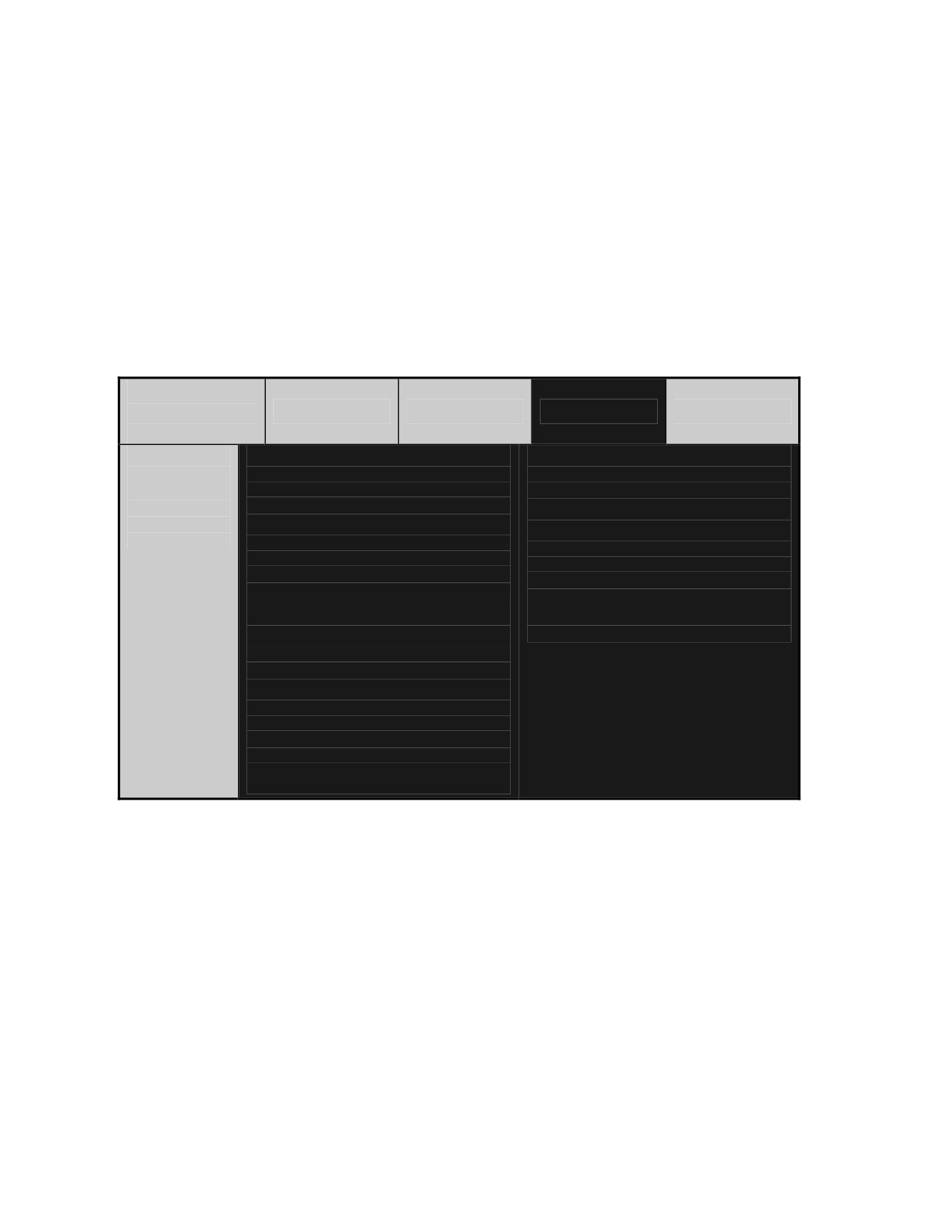
1-4. Stability operations typically fall into ten broad types that are neither
discrete nor mutually exclusive. For example, a force engaged in a peace
operation may also find itself conducting arms control or a show of force to
shape the conditions for achieving an end state. Figure 1-2 shows stability
operations.
TYPES OF
MILITARY
OFFENSE
DEFENSE
STABILITY
SUPPORT
OPERATIONS
TYPES OF
Peace Operations
Combatting Terrorism
STABILITY
• Peacekeeping
• Antiterrorism
OPERATIONS
• Peace Enforcement
• Counterterrorism
AND THEIR
• Operations in Support of Diplomatic Efforts
Noncombatant Evacuation Operations
SUBORDINATE
Foreign Internal Defense
Arms Control
FORMS
• Indirect Support
• Inspection
• Direct Support
• Protection
• Combat Operations
• Destruction
Security Assistance
Show of Force
Humanitarian and Civic Assistance
• Increased Force Visibility
• Exercises and Demonstrations
Support to Insurgencies
• Unconventional Warfare
• Conventional Combat Actions
Support to Counterdrug Operations
• Detection and Monitoring
• Host-Nation Support
• C4
• Intelligence, Planning, CSS, Training, and
Manpower Support
• Reconnaissance
Figure 1-2. Stability Operations
CONSIDERATIONS
1-5.
While each operation is unique, the considerations listed below help
forces conduct (plan, prepare, execute, and assess) stability operations.
1-6.
Leverage interagency, joint, and multinational cooperation. As
with all operations, unity of effort is fundamental to success. (See the discus-
sion of Unity of Command later in this chapter.)
1-7. Enhance the capabilities and legitimacy of a host nation. Army
forces consciously enhance host-nation credibility and legitimacy by demon-
strating the proper respect for the host-nation government, police, and mili-
tary forces. Within the restrictions of international law and US policy, com-
manders use host-nation forces and personnel for all possible activities. Within
its capabilities, a host nation should take the lead in both developmental and
security activities. When host-nation capabilities prove inadequate for the task,
1-4
_________________________________________________________________________________ Overview
Army forces enhance those capabilities through training, advice, and
assistance.
1-8.
Understand the potential for unintended consequences of indivi-
dual and small-unit actions. The actions of individuals and units can have
consequences disproportionate to the level of command. An individual’s
actions can even have strategic implications. Soldiers and leaders who are
disciplined, proficient, and knowledgeable in stability operations can create
the opportunity for disproportional positive consequences, while limiting the
risk for negative consequences.
1-9.
Display the capability to use force in a nonthreatening manner.
Army forces must be prepared for combat in stability operations. However,
that preparedness is shown so it does not provoke potential adversaries. The
force demonstrates strength and resolve without being perceived as
threatening. Consistent with mission constraints, units display preparedness
by routinely conducting demanding combined arms training in the area of
operations (AO). The force should convey to all parties the breadth and depth
of the resources available. To do so, it must be present in the communities
and ensure—consistent with the demands of operations security (OPSEC)
that the general public knows the rules of engagement (ROE) and associated
graduated response levels. Training should include challenging soldiers to react
to situations at all levels in the areas of weapons use, levels of force, and ROE.
1-10.
Act decisively to prevent escalation. The nature of stability opera-
tions ordinarily constrains forces in the ways and means available to accom-
plish military objectives. However, they are characterized by initiative,
speed, and determination when action is necessary. Units and individuals
pursue military objectives energetically and apply military power forcefully if
required. Army forces may act decisively to dominate a situation by force or
negotiate to settle disputes. Without hesitation, they ensure mission accom-
plishment as well as protection of themselves, the people, and facilities under
their charge. Decisiveness reassures allies and deters adversaries. Failure to
act decisively causes a loss of respect for the stability force. A loss of respect
for the capabilities or will of the force to accomplish its mission can embolden
adversaries and weaken the trust of the supported population making the
mission much more difficult.
1-11.
Apply force selectively and discriminately. Commanders ensure
that their units apply force consistent with assigned objectives and not exces-
sive. Combat power is applied selectively in accordance with assigned missions
and prescribed limitations. Excessive force can lead to the loss of sympathy
and support of local and international populations. Inadequate force may
jeopardize mission accomplishment and adversely impact the local populace
and domestic support. Ordinarily, the local commander is best qualified to
estimate the degree of force that must be used, consistent with established
ROE.
SUPPORT OPERATIONS OVERVIEW
1-12. Support operations may occur independently; however, more often they
complement offensive, defensive, and stability operations. Many offensive,
defensive, and stability operations often require complementary support
1-5
FM 3-07 __________________________________________________________________________________
operations before, during, or after execution. These may range from trans-
porting, feeding, and providing shelter for displaced persons to providing
medical care for people and livestock.
PURPOSES
1-13. Support operations are generally conducted to assist civil authorities in
response to emergencies (natural or man-made disasters) or specified illegal
activities, and to relieve or reduce suffering. Support operations meet the im-
mediate needs of civil authorities or designated groups for a limited time
until they can accomplish these tasks without military assistance. In extreme
or exceptional cases, Army forces may provide relief or assistance directly to
those in need.
TYPES
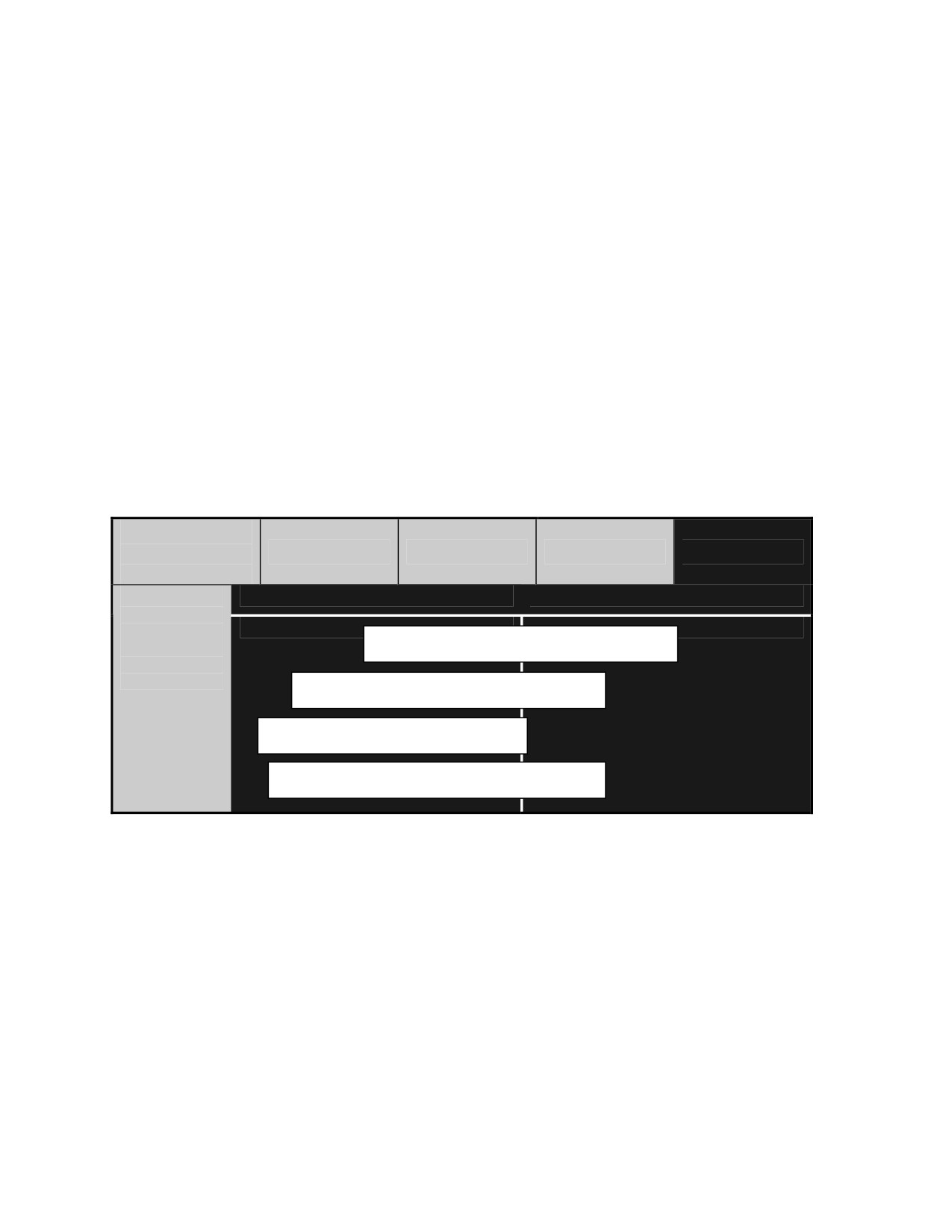
1-14. Two types of support operations exist: domestic support operations
(DSO) and foreign humanitarian assistance (FHA). Figure 1-3 shows the
types of support operations and their subordinate forms.
TYPES OF
MILITARY
OFFENSE
DEFENSE
STABILITY
SUPPORT
OPERATIONS
TYPES OF
Domestic Support Operations
Foreign Humanitarian Assistance
SUPPORT
OPERATIONS
AND THEIR
Relief Operations
SUBORDINATE
FORMS
Support to WMD Incidents
Support to Civil Law Enforcement
Community Assistance
Figure 1-3. Support Operations
1-15. DSO are usually conducted after the president declares an emergency.
However, a commander may also conduct them following a finding by the sec-
retary of defense, secretary of the Army, general officer, or an equivalent
civilian or as an immediate response to an emergency under imminently ser-
ious conditions. Domestic support operations supplement the efforts of civil
governments and voluntary organizations. The Army normally responds to
domestic emergencies in support of another federal agency.
1-16. FHA operations apply Army forces to supplement the efforts of the
host-nation civil authorities or agencies by conducting activities limited in
scope and duration. FHA relieves or reduces the impact of natural or
man-made disasters or other endemic conditionssuch as human pain,
disease, hunger, or privationthat might seriously threaten life or result in
great damage to or loss of property. Army forces participate in FHA
1-6
_________________________________________________________________________________ Overview
operations that may be unilateral, multinational, or coordinated by an
international organization such as the United Nations.
CONSIDERATIONS
1-17.
While each operation is unique, commanders and staff should weigh
some general considerations to help plan and execute support operations.
1-18.
Provide essential support to the largest number of people. The
principle of essential support to the greatest number guides prioritization
and allocation. Whenever feasible, Army forces simultaneously accomplish as
many tasks as possible. In some cases, it may be necessary to complete a
lower-priority task to accomplish a higher task. For example, the forces may
need to restore limited electric services (lower-priority task) to power hospital
emergency rooms and shelters (higher-priority task).
1-19.
Coordinate actions with other agencies. Coordination with other
agencies, especially the international lead agency, is critical in support
operations for two reasons. First, they tend to be conducted with joint,
interagency, or multinational participation. Second, the Army is often in
support of another agency. Achieving unity of effort requires constant
coordination. In addition, each participant will likely bring unique capa-
bilities that will be in constant demand. Effectively integrating these scarce
resources requires planning and coordination.
1-20.
Establish measures of effectiveness. In support operations, objective
standards for determining progress toward the end state are necessary and
are a critical aspect of mission handover. These measures of effectiveness
determine the degree to which a support operation is accomplishing estab-
lished objectives. Criteria of success in support operations focus primarily on
the condition and activity of those supported. In famine relief, for example,
the rate of decline in the mortality rate more accurately denotes success than
the amount of food delivered.
1-21.
Hand over to civilian agencies as soon as feasible. Support opera-
tions usually assist governmental and nongovernmental agencies in accom-
plishing their missions. The Army reinforces or complements their efforts.
While Army forces may play a lead role in some aspects or phases of the
operation, they should work to hand over responsibility to appropriate
civilian agencies at the earliest opportunity.
HISTORICAL CONTEXT
1-22. Stability operations and support operations are not new to the Army.
From the start of American history, the government has called on its armed
forces to pursue US strategy. The Army, as an instrument of national power,
promoted and protected national interests, and relieved human suffering.
The Army helped open the West. It conducted explorations, governed terri-
tories, guarded national parks, made maps, and built roads and canals. The
Army also provided disaster relief, quieted domestic disturbances, and
supported American foreign policy (for example, conducting stability opera-
tions in the Philippines from 1899-1904 and Haiti from 1915-1934).
1-7
FM 3-07 __________________________________________________________________________________
1-23.
While many of these operations occurred during peacetime, what the
Army now calls stability operations and support operations emerged during
the 20th century as a major contributor to the overall success of combat
operations. During World War II, for example, US forces assisted the local
governments and populace in reconstructing the civil infrastructures of
France, Belgium, Luxembourg, and the Netherlands. They fed starving
civilians, rebuilt bridges and roads, and demined extensive tracts of farmland
while full-scale combat operations continued to take place against conven-
tional enemies. During the Vietnam conflict, Army units conducted “pacifica-
tion,” which involved civil-military operations such as assistance to civil
authorities for security and administration. The Army has repeatedly been
called to respond to the nation’s requirements, both at home and overseas.
CONTEMPORARY SITUATION
1-24.
Many modern conflicts do not directly affect the interests of the United
States. Others, however, affect US humanitarian interests, access to markets
and materials, the safety of our citizens, and the stability necessary to sus-
tain democratic government. These threats to US national interests may
require stability operations or support operations in response.
1-25.
Analysis of current trends can help us describe the contemporary situa-
tion and prepare for stability operations and support operations. In addition
to trend analysis, examining the elements of instability can help describe the
contemporary situation.
TRENDS
1-26.
The current strategic environment is complex, dynamic, and uncertain.
Trends indicate that the demands placed on the Army to conduct operations
in the 21st century will be greater than ever. Army forces will be called to
prevent escalation of conflict and respond to more foreign or domestic crises
or emergencies that significantly impact on US national interests. Our
current national security strategy of engagement often requires Army forces
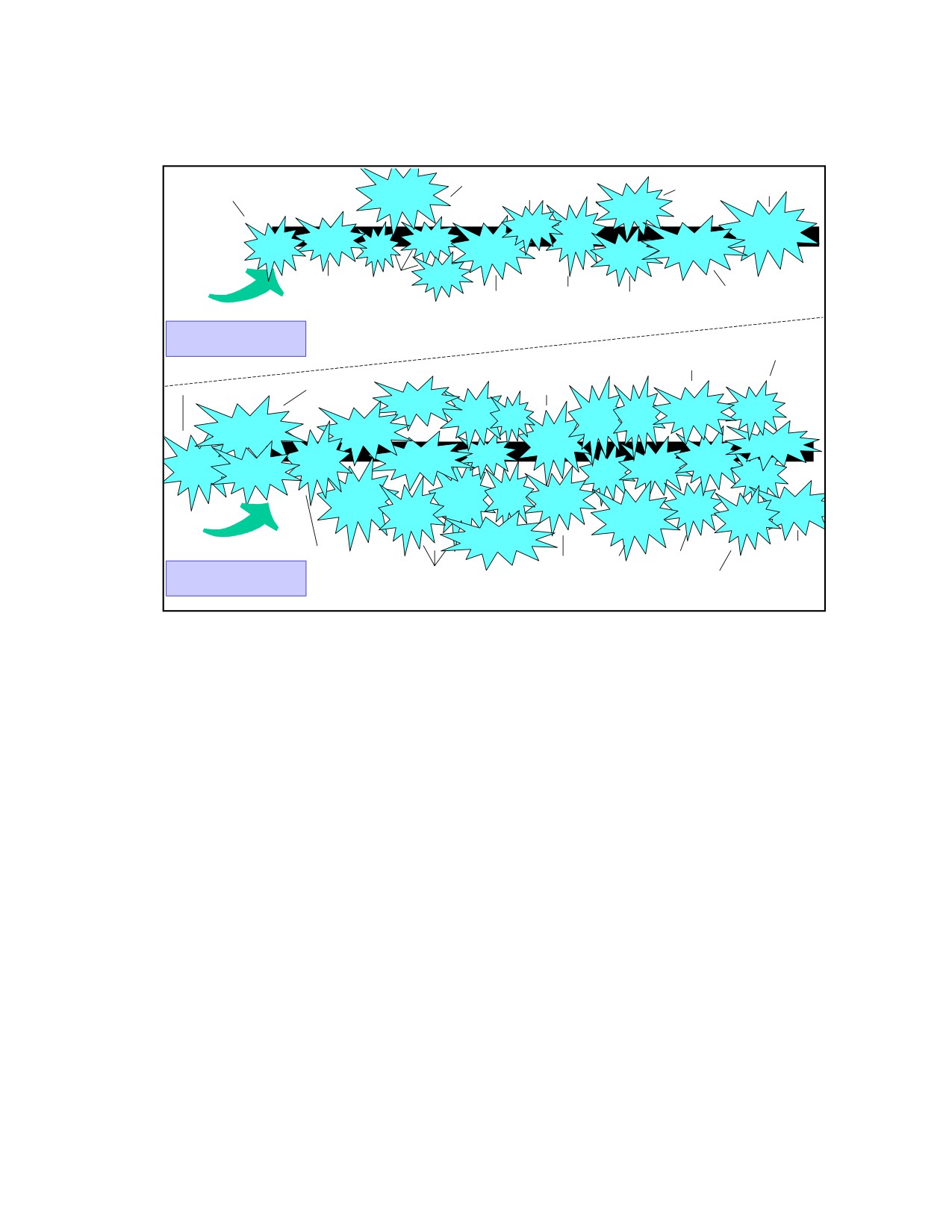
to be committed to secure those interests at home and abroad. Figure 1-4
depicts the increasing frequency of US military involvement and unantici-
pated contingencies that require stability operations and support operations.
1-27. Few states will have the resources, or the need, to attack the US
directly in the near future. However, many will challenge it for control or
dominance of a region. Potential adversaries may increasingly resort to asym-
metric means to threaten our national interests. Such methods include uncon-
ventional, unexpected, innovative, or disproportional means used to gain an
advantage. Adversaries may use inexpensive approaches that circumvent the
US strengths, exploit its vulnerabilities, or confront it in ways the US cannot
match in kind. Contemporary threats include terrorism; chemical, biological,
radiological, nuclear, and high-yield explosive (CBRNE) threats; information
operations; exploitation of commercial or space-based systems; denial of our
access to critical resources; and environmental sabotage.
1-8
_________________________________________________________________________________ Overview
Counter-
Counter-
International War
NEO
Strikes and Raids/
terrorism
terrorism
Regional Conflict
Dominican
Nation Assistance*
Republic
Grenada
Raids
1966
1983
Desert I
Sinai
Panama
Vietnam
Chicago
1980
MFO
Just Cause
Korea
Watts
1989-1990
1965-75
1967
Latin America
1982-?
Lebanon
Latin America
1950-53
1965
1960s /1980s
1983
1980s
Detroit
Support to
1967
Domestic
Counter-
Peace-
Support for
Support
Support to
keeping
Security
Counter-
insurgencies
Counter-
Operations Conducted
Assistance
drug Operations
insurgencies
1950-1989
Nation
40 Years
Foreign
Support for
Foreign
Counter-
Assistance*
Domestic
Humanitarian
Humanitarian
Assistance
drug Operations
Peace Operations Support
Assistance/
Defense
Peace Actions
Offense
Macedonia
L.A.
1992-?
Rwanda
Cuba
Demining
Riots
Inike
Support
Migrant
Latin America
1990s
Saudi Arabia
Bangladesh
1992
Hope
Opns
1990s
1992
1994-?
Desert Shield
Sea Angel
Somalia
1994
1990-91
1991
UNOSOM
Deliberate
Kuwait
Croatia
Andrew
Kuwait
Force 1995
Desert
1993
Vigilant
Sinai
Panama
Provide Promise
1992
Panama
MFO
Storm
Haiti
Safe Haven
Sentinel
Just Cause
1992-?
1995-?
Joint
1982-?
1991
1994-95
1989-90
Somalia
1994-?
Endeavor
Kuwait
Midwest
Western
Restore
Southern
Floods
Iraq
Hope
US Fires
Bosnia
Watch
Provide
1993
Kuwait
Kosovo
1991-?
1992-94
1994
1995-?
1999
Comfort
Vigilant
US Border
1991-?
Warrior
1994-?
1990s
Typhoon Omar
1992
Support to
Operations Conducted Offense/
Peace Actions
Support to
Domestic
Insurgencies
Nation
1990-Current
Foreign
Peace Actions
Insurgencies
Support
Assistance*/
Support for
30+ Deployments
Humanitarian
Counter-
Humanitarian
Assistance
Peace Actions
drug Operations
Relief
*Nation assistance is a joint term referring to civil and military assistance
Figure 1-4. Increasing Frequency of Operations
ELEMENTS OF INSTABILITY
Balance of Power
1-28. Nation states will continue to be the primary political unit for the fore-
seeable future. Yet the process of globalization is changing the nature of
state-to-state relations as the reach of nonstate actors, multinational
corporations, and international organizations increases. Shifting and
unstable power balances at the national and subnational levels in the
Balkans, Middle East, and throughout Africa and Asia threaten to engage
the vital interests of the United States.
Nationalism
1-29. Some forms of nationalism can cause inter- and intrastate conflict.
Nationalist movements arise from the belief that nations benefit from acting
independently rather than collectively, emphasizing national rather than in-
ternational goals. Many sources of nationalist identity exist, including ethnic,
religious, tribal, historical, or territorial. Such movements are replacing ideo-
logically based identities. In some cases, these movements are closely linked
to criminal organizations. These movements may also cause regional strife,
as one nation seeks to extend its authority over adjacent groups or territory.
1-9
FM 3-07 __________________________________________________________________________________
Clash of Cultures
1-30.
Some in the non-Western world reject Western political and cultural
values. In some instances, regimes that use Western political forms of
government are under attack by ethnic, religious, and nationalist groups
seeking to establish or reestablish their identity. As tribal, nationalist, or
religious movements compete with Western models of government, instability
can increase. This instability threatens not only Western interests within the
state, but often threatens to spill across borders.
Demographics
1-31.
Population growth, particularly in the less-developed world, is
straining the resources and social structures of the states affected. Because
much of the world’s population growth occurs in areas prone to natural
disasters and famine, such events can cause mass migrations.
Ungovernability
1-32.
The ability of governments to govern effectively is being eroded in much
of the world. The global economy can render economic policies and controls
ineffective; throughout the world, some governments fail to provide economic
stability and security for their populace. The collapse of some command econo-
mies has created problems of distribution and structural unemployment. Im-
mature government infrastructures in developing democracies can cause ex-
pectations to be unmet, often leading to conflict. Unsuccessful demobilization
and reintegration schemes, coupled with the widespread availability of wea-
pons, have contributed to increased crime in postconflict situations. Orga-
nized crime has taken advantage of such situations to subvert the
institutions of the state in many areas of the world.
Environmental Risks
1-33.
Conditions that pose serious environmental risks may add to future in-
stability. Natural disasters, climate changes, and degradation of the existing
natural environment can ruin a local economy, possibly creating a conflict
over scarce resources and large population movements. Man-made crises may
also cause tension. Cross-border pollution will cause tension, both within
regions and between developed and less developed nations. Additionally,
questions of securing or safely controlling nuclear or chemical facilities may
provoke military operations designed to secure both weapons and plants on
environmental as well as political grounds.
Propaganda
1-34.
Both governments and nonstate actors use propaganda to create
awareness and influence opinion. Increased public access to information and
the increased ability of various groups to manipulate the media challenge the
authority of major institutions and may even threaten the sovereignty of
some states.
COMPLEX AND UNCERTAIN SITUATIONS
1-35. Stability operations and support operations often take place in political,
military, and cultural situations that are highly fluid and dynamic.
1-10
_________________________________________________________________________________ Overview
Unresolved political issues, an unclear understanding or description of a
desired end state, or difficulty in gaining international consensus may cause
ambiguity. Complexity in these actions may also arise from
• Troops dispersed throughout the AO.
• Difficulty in discriminating between combatants and noncombatants or
between the many parties of a dispute.
• Undisciplined factions, uncontrolled by a central authority and unwill-
ing to consent to the agreement.
• Absence of basic law and order.
• Violations of human rights.
• Widespread destruction or decay of physical and social infrastructure
and institutions; collapse of civil infrastructure.
• Environmental damage.
• Threats of disease or epidemics.
• Presence of many displaced persons.
• Presence and involvement of nongovernmental organizations, media,
and other civilians.
1-36.
Presidential Decision Directive (PDD) 56 recognized the complexity of
future stability operations and support operations and the requirement for
detailed interagency planning and coordination. The Army’s response to
crises will have to address simultaneously several components, such as poli-
tical, diplomatic, humanitarian, economic, and security.
1-37.
These operations require that leaders and soldiers be familiar with the
area of operation and any complex ethnic and cultural issues. Commanders
strive to translate political direction into attainable military objectives.
Political objectives by their nature are not static and will change with the
situation. Commanders must anticipate these changes through situational
understanding and adapt as necessary.
UNITED STATES POLICY
1-38.
The Army is an essential player in pursuing US policy objectives. The
national political leadership uses all the instruments of national power to
pursue its policy objectives. The Army and the other military services make
up the military instrument of national power. The president outlines US sec-
urity policy in the national security strategy (NSS). The Chairman of the
Joint Chiefs of Staff is responsible for the national military strategy (NMS),
which implements presidential guidance and provides the strategic direction
of the armed forces.
1-39. Stability operations and support operations make an important contri-
bution to further the NSS and NMS. The worldwide participation of Army
forces in these operations demonstrates our commitment; improves interoper-
ability; reassures allies; promotes transparency; conveys democratic ideals;
deters aggression; and helps address sources of instability before they can
become military crises. Stability operations and support operations are
crucial to responding to crises by providing many options other than offense
and defense. Such options allow policy makers to apply military power selec-
tively to shape the security environment.
1-11
FM 3-07 __________________________________________________________________________________
1-40.
The combatant commander provides theater strategy. National security
strategy, national military strategy, and other policies shape theater strategy.
Theater strategy provides guidance to subordinate commands for executing
campaign plans and employing unified forces. Stability operations and
support operations are executed in accordance with theater strategy and are
often important elements in theater engagement planning. FM 3-93 details
the relationship between the NSS, NMS, and theater strategy.
1-41.
FM 1 discusses the framework within which the president uses employ-
ment considerations in deciding how to use military force to pursue strategic
or national objectives. Decision makers ask themselves a series of questions
that help them decide whether the mission is advisable. They determine if
the purpose for which the force is contemplated is attainable, and if it is likely
to be decisive. Is the military element of national power the appropriate ele-
ment to use? Do the American people, through their elected representatives,
support the employment of American military forces? What are the end state
criteria? A similar examination may be required to employ forces in stability
operations or support operations.
THE ARMY ROLE
1-42.
Army forces are employed worldwide in stability operations and sup-
port operations for two key reasons:
• Policy and legal bases for such activities exist.
• Army capabilities are often the best choice to meet the requirement.
LEGAL BASIS
1-43.
The legal basis for conducting stability operations and support opera-
tions is found in Title 10 (Armed Forces) and Title 32 (National Guard) of the
United States Code (USC). Title 10 states that, in addition to fighting and
winning America’s wars, the Army also has other important purposes. Fig-
ure 1-5 is an excerpt from Title 10 USC, section 3062.
1-44.
Department of Defense (DOD) Directive (DODD) 5100.1 specifies that
the DOD maintains forces to uphold and advance the national policies and
interests of the United States and safeguards its internal security. History
has shown that stability operations and support operations are an integral
part of the military contribution to those objectives.
CAPABILITIES
1-45. The Army is called on to respond to emergencies because it can rapidly
marshal and apply the required resources and capabilities to meet the
requirement. As discussed earlier, the Army has a rich history of participa-
tion in stability operations and support operations. The president has
repeatedly asked the Army to respond decisively to natural or man-made
emergencies. Certain capabilities stand out in the conduct of stability
operations and support operations. Among them is the Army’s ability to
• Task organize to tailor the force rapidly to meet varying requirements.
Army forces can communicate locally, regionally, and globally. Unity of
command allows pursuit of assigned objectives as a united team.
1-12
_________________________________________________________________________________ Overview
• Deploy or be employed anywhere in nearly any environment and oper-
ate in austere and undeveloped areas.
• Use logistic systems to facilitate sustainment capability across the
spectrum of conflict. Army forces are suited to react quickly when
called to provide logistic support for domestic and foreign, natural, or
man-made disasters. Strategic deployment requires both air and sea
lines of communications, while the Army maintains the structure and
expertise to develop, acquire, and supply the equipment and supplies
for conducting full spectrum operations on land.
• Control terrain and influence the population in the area of operations
to ensure freedom of action. Soldiers have the inherent capability to
protect themselves and the ability to protect others, if necessary.
It is the intent of Congress to provide an Army that is capable, in
conjunction with the other armed forces, of
(1) preserving the peace and security, and providing for the defense, of
the United States, the Territories, Commonwealths, and possessions, and
any areas occupied by the United States;
(2) supporting the national policies;
(3) implementing the national objectives; and
(4) overcoming any nations responsible for aggressive acts that imperil
the peace and security of the United States.
Figure 1-5. Excerpt from Title 10 USC, Section 3062
BATTLEFIELD ORGANIZATION
1-46. While each stability operation or support operation is unique, each is
designed and executed according to the framework established in FM 3-0.
Battlefield organization is the allocation of forces in the AO by purpose.
Commanders organize their forces according to their purpose for each unit by
determining whether the operations of each will be decisive, shaping, or sus-
taining. These decisions form the basis of a commander’s concept of opera-
tions. As in any operation, the military decision making process (MDMP)
found in FM 5-0 helps determine the specific decisive, shaping and sus-
taining operations. The MDMP is in accordance with the factors of mission,
enemy, terrain and weather, troops and support available, time available,
civil considerations (METT-TC).
DECISIVE OPERATIONS
1-47. Decisive operations are those that directly accomplish the task assigned
by the higher headquarters. Decisive operations conclusively determine the
outcome of major operations, battles, and engagements (FM 3-0). In stability
operations, decisive operations are usually those that achieve and maintain
stability, protect lives and property, or promote peace. Unlike decisive
operations in the offense or defense, decisive operations in stability
operations do not always have immediate impacts; sometimes results take
1-13
FM 3-07 __________________________________________________________________________________
years to achieve. Decisive operations could include disarming belligerents in
a conflict or assisting in the conduct of an election.
1-48.
In support operations, decisive operations normally prevent or mitigate
the effects of natural or man-made disasters. They relieve or reduce condi-
tions such as disease, hunger, or privation. Decisive to these operations could
be stabilizing areas by providing security for personnel, facilities, or capabili-
ties; rendering certain services to populations; or reestablishing critical infra-
structure. Figure 1-6 describes the infrastructure.
Efforts that focus on infrastructure may include
reestablishing or securing—
•
Vital human services: hospitals, water supplies, waste and hazardous material
storage and processing, emergency services (police, fire, rescue).
•
Civil administration: legislative, judicial, and administrative functions.
•
Communications and information: television, radio, telephone, Internet,
newspapers, magazines, and computer systems.
•
Transportation and distribution: highways, railways, ports, waterways, pipelines,
airports, mass transit and trucking companies.
•
Energy: production, storage, and distribution of electric power, oil, and natural gas.
•
Commerce: key industries and other business, banking, and finance.
Figure 1-6. The Elements of Infrastructure
1-49.
Stabilizing an area can be decisive in both stability operations and sup-
port operations. To protect people and necessary infrastructure, it is often
critical to establish order. In this situation, operations such as police support,
static area security, and security patrols may be decisive because they deter
criminal activity and reassure the population that they will be protected from
lawlessness or violence. In addition, providing for basic human needs such as
food, water, shelter, and medical care may also be decisive.
SHAPING OPERATIONS
1-50. Shaping operations at any echelon create and preserve conditions for
the success of the decisive operation (FM 3-0). In stability operations, shaping
operations often convert temporary gains into long-term political success. The
capabilities required to exploit stability often differ from those needed to
achieve stability. This may require such measures as rotating different types
of units in and out of the AO, as the operation progresses through different
stages. Shaping operations can aim to keep newly gained stability from being
undone. Shaping operations may focus on identifying and cooling potential
flash points that can occur after initial stabilization efforts. Typical flash
points include disarmament, repatriation, resettlement, elections, recovery of
remains, resource distribution, and prevention of retribution. Commanders
must consider local law and custom, as they must avoid unknowingly, or
without due consideration, favoring a particular group or faction in subse-
quent political contests. Examples of typical shaping operations include evac-
uating noncombatants to facilitate decisive operations, negotiating and medi-
ating to help settle a dispute, influencing targeted groups through offensive
1-14
_________________________________________________________________________________ Overview
information operations, and operating checkpoints to carry out a given man-
date.
1-51.
In support operations, shaping operations may include influencing per-
ceptions, ideas, and information as well as maintaining legitimacy. Civil-
military operations are shaping operations that gain favor with the local pop-
ulace and government and influence positive attitudes and perceptions.
Shaping operations will entail transferring tasks to civilian agencies or the
local government. As they do in all operations, commanders weigh how their
actions affect follow-on operations aimed at achieving long-term solutions.
SUSTAINING OPERATIONS
1-52.
Sustaining operations are operations at any echelon that enable
shaping and decisive operations by providing combat service support, rear
area and base security, movement control, terrain management, and infra-
structure development (FM 3-0). Commanders must actively and aggressively
protect the sustainment base of their operations. Often the base is the focal
point of the stability effort and an attractive target for antagonists. In many
stability operations and support operations, commanders operate from
various bases spread throughout the area of operations. In these instances,
sustaining operations must include measures to protect the lines of communi-
cations between the bases. They may also include actions taken in concert
with local authorities to protect local sources of essential supplies and
services. Supporting the friendly force through rest, recuperation, and refit
are also sustaining operations.
CHARACTERISTICS
1-53. Because units typically pre-
Characteristics
pare and train for offensive and
defensive operations, stability opera-
• Political objectives
tions and support operations often
• Modified concept of the enemy
not only require a mental adjust-
• Joint, interagency, and
ment, but also a requirement to be
multinational coordination
proficient in unfamiliar tasks and
• Risk of mission creep
missions. DODD
2000.13 requires
• Noncombatants
the Army to be able to conduct vari-
• Nongovernmental organizations
ous civil affairs activities, to include
• Information intensity
performing civilian sector functions
• Constraints
and exercising military control of the
• Cross-cultural interaction
civilian population in occupied or
Figure 1-7. Characteristics of Stability
liberated areas. Stability operations
Operations and Support Operations
and support operations differ from
the offense and defense in significant ways. Understanding their charac-
teristics helps units successfully adapt to the special requirements presented.
Figure 1-7 lists some common characteristics. Although not applicable in
every operation, these characteristics apply to many operations. Under-
standing them aids in the adjustment that units may be required to make
when conducting these types of actions.
1-15
FM 3-07 __________________________________________________________________________________
POLITICAL OBJECTIVES
1-54.
Political objectives influence stability operations and support operations
at every level from strategic to tactical. These operations are distinguished by
the degree that political objectives directly influence operations and tactics.
Two factors about political primacy stand out. First, all military personnel
should understand the political objectives and the potential impact of inap-
propriate actions. Having an understanding of the political objective helps
avoid actions that may have adverse political effects. In such operations, junior
leaders commonly make decisions that have significant political implications.
Second, political objectives can be fluid. Changing objectives may warrant a
change in military operations. Commanders should strive, through contin-
uing mission analysis, to detect subtle changes that may lead to disconnects
between political objectives and military operations. Failure to recognize
changes in political objectives may lead to ineffective or counterproductive
military operations.
1-55.
Political objectives can change due to unexpected events or decisions by
political leaders or groups. Changes in the political environment may render
a political objective obsolete. Commanders must strive to understand the
political objectives of all involved entities and their impacts on the mission.
Commanders must also inform political authorities as situations change.
1-56.
Political primacy applies in all kinds of stability operations and support
operations. For example, peace operations support diplomacy, the major tool
of the political instrument. Noncombatant evacuation operations support the
department of state. Foreign humanitarian assistance has nonmilitary objec-
tives. In all these and other operations, Army forces support executing
national policy. The political instrument of national power dominates every
aspect of operations.
MODIFIED CONCEPT OF THE ENEMY
1-57.
Stability operations and support operations require a modified under-
standing of who or what is the adversary. Commanders must take care to not
create an enemy where one does not exist. In situations where there is no
enemy, military capability may focus on overcoming obstacles and providing
support to other agencies.
1-58.
In some stability operations, such as peacekeeping, Army forces must
be impartial to preserve the legitimacy of their mission. Antagonism by the
parties can threaten to drag the peacekeeping force into the dispute. In such
situations, the peacekeeping force must resist the natural inclination to
designate antagonists, or those who fail to comply with an agreement or
accord, as the enemy.
JOINT, INTERAGENCY, AND MULTINATIONAL COORDINATION
1-59. Stability operations and support operations typically involve unified
action: joint, interagency, and multinational efforts. The increased number of
participants (military and nonmilitary) and their divergent missions and
methods create a coordination challenge. In this environment, the potential
exists for duplicating effort and working at cross-purposes. Achieving unity of
1-16
_________________________________________________________________________________ Overview
effort requires the greatest possible common purpose and direction among all
agencies.
RISK OF MISSION CREEP
1-60.
In many operation, deterring mission creep is difficult since civilian
agencies and US forces inherently desire to do more than is required,
especially when faced with human suffering. However, well-intentioned
actions can be especially dangerous in stability operations and support opera-
tions, where they can threaten impartiality as well as undermine long-term
programs.
1-61.
There are two types of mission creep. First is the type that occurs when
the unit receives shifting guidance or change in mission for which the unit is
not properly configured or resourced; or if it is beyond the legal remit of the
Army. An example would be a peacekeeping force required to perform peace
enforcement tasks without additional resources. The second type of mission
creep occurs when a unit attempts to do more than is allowed in the current
mandate and mission. An example would be if a commander directed execu-
tion of civil action projects that fall outside his authority. Rebuilding struc-
tures, training local nationals, and other activities may be good for the local
population, but they may be beyond the mandate and mission.
1-62.
Mission creep may develop from inadequate or false assumptions, mis-
interpreted intent, or unrealistic development of implied tasks in planning. It
can also derive from well-meaning but erroneous interpretation of law or reg-
ulation. Mission creep can be avoided by paying special attention to specified
and implied tasks in planning and to the desired end state during both plan-
ning and execution. Implied tasks especially are subject to interpretation and
require thorough examination to conform to higher-level intent.
1-63.
If the commander and staff have conducted a complete mission anal-
ysis, taking into account the interim and potential political end states, they
will have identified all the current and potential tasks the command might
perform. As the end state is clarified or matures, some of these potential
tasks may become reality. Mission creep should be a rare occurrence.
NONCOMBATANTS
1-64.
Noncombatants are a defining characteristic of most modern military
operations. Their presence is unavoidable because in most cases their welfare
is the reason for the operation. Noncombatants in stability operations and
support operations can create various challenges. Local populations may be
friendly, hostile, or indifferent to the presence of Army forces. In some cases,
Army forces may have difficulty differentiating between hostile and
nonhostile persons.
NONGOVERNMENTAL ORGANIZATIONS
1-65. The very conditions that may necessitate a stability operation or sup-
port operation—widespread human suffering, population movements, famine,
human rights violations, and civil war—are also the conditions that attract the
services of NGOs. Commanders must be prepared to coordinate their efforts
with a myriad array of international organizations and NGOs. Each
1-17
FM 3-07 __________________________________________________________________________________
organization or agency has a different mandate, set of capacities, organiza-
tional design, and cultural orientation. An operation’s success may depend on
how well the commander can forge productive working relationships will all
these disparate bodies.
INFORMATION INTENSITY
1-66.
All military operations are information intensive. In stability opera-
tions and support operations, this is further complicated by the numerous
governmental and nongovernmental agencies involved. The scope and scale of
required coordination and communication also complicate the operation. The
cascading effects of events and their global magnification through the media
further exacerbates this characteristic of the environment. Army forces can
master this environment, in part, by gaining and maintaining information
superiority through effective employment of information operations (IO). See
Chapter 2 and FM 3-13 for discussion of IO and its components.
1-67.
The presence of the media also impacts these operations. The news
media can greatly influence how the public perceives an operation. Army
forces must be prepared for contact with the media in their area. The media’s
need to disseminate as much accurate information as possible and to have
access to the places where news exists must be balanced with operations
security considerations.
CONSTRAINTS
1-68.
Constraints are present in all military operations; stability operations
and support operations are not an exception. Constraints may arise for many
reasons and may be imposed on military forces by the chain of command or
by the complex nature of the environment. Army forces in these actions must
typically contend with constraints such as force caps, restricted activities,
restricted areas, and specific ROE.
CROSS-CULTURAL INTERACTION
1-69.
Interacting with other cultures can create a significant challenge
during stability operations and support operations. Often, adjustments in
attitudes or methods must be made to accommodate different cultures. Eth-
nocentrism and cultural arrogance can damage relationships with other
forces, NGOs, or indigenous populations. The welfare and perceptions of in-
digenous populations are often central to the mission during stability opera-
tions and support operations. Army forces must establish good working rela-
tions with indigenous populations. Mutual trust and rapport increase the
chances for mission success.
1-70. Army personnel should understand the culture and history of the area.
Historical understanding helps soldiers comprehend the society, interact
with the people in that society, and adapt to cultural differences to facilitate
rather than impede mission accomplishment. Historical and cultural under-
standing help to determine the range of actions acceptable in solving the prob-
lem at hand. With this in mind, soldiers must receive cultural and historical
orientations to the people and the conflict. Civil affairs units produce area
studies that can provide this information. Interpreters, translators, and
linguists are also invaluable.
1-18
_________________________________________________________________________________ Overview
FOUNDATIONS
1-71.
Understanding the principles of war and tenets of Army operations is
fundamental to operating successfully across the range of military operations.
The principles of war and tenets of Army operations form the foundation of
the Army’s operational doctrine.
PRINCIPLES OF WAR
1-72.
As in all operations, the principles of war outlined in FM 3-0 apply to
stability operations and support operations. The situation determines their
degree of applicability.
Objective
1-73.
Direct every military operation toward a clearly defined and
attainable objective. Commanders in any operation direct efforts toward
clearly defined, decisive, and attainable objectives that will achieve the end
state. In stability operations and support operations, the military objectives
associate more directly with political objectives than is the case in offensive
and defensive operations. Political authorities do not relinquish active partici-
pation and continue to exert considerable influence on the daily execution of
the military campaign. Political objectives by their nature are not static and
will be modified in response to dynamic domestic and international realities.
Commanders must be adaptive and flexible to adjust their objectives. This
requires that commanders maintain situational understanding of the political
environment and participate in the process. Commanders must anticipate and
understand the strategic aims. They must set appropriate military objectives,
end states, and criteria for success. Commanders can achieve transparency
by ensuring that other governmental and nongovernmental agencies and the
local population understand the military objectives.
1-74.
In stability operations and support operations, the military objective
usually supports another agency. The selected course of action must align
with political constraints and contain an acceptable amount of risk. This type
of action may use military personnel and materiel to support a civilian agency
that has overall responsibility. This agency establishes priorities and deter-
mines how to use military resources. The combination of means to be used and
the role of each are political decisions. Changing political realities shape
military missions. See Political Objectives discussed earlier in this chapter.
1-75.
Military leaders cannot divorce objective from considerations of re-
straint and legitimacy. This is particularly true in stability operations and
support operations. The amount of force applied to obtain the objective must
be prudent and appropriate to the strategic aim. The military objective gener-
ally seeks to obtain the willing acceptance of a lawfully constituted agency,
group, or government by the population in the AO. Without restraint or legi-
timacy, support for military action deteriorates and the objective becomes
less obtainable. Legitimacy in peace operations is critical to achieving the
consent of the parties to the conflict. US forces must be accepted as acting
under the authority, and in the interest of, the accords or agreement.
1-76. To accomplish the mission, commanders persevere. Offensive and defen-
sive operations may swiftly create the conditions for short-term success, but
1-19
FM 3-07 __________________________________________________________________________________
protracted stability operations and support operations may be required to
cement lasting strategic objectives. Commanders must balance their natural
desire to enter the AO and accomplish the mission quickly with the need to
depart only after having achieved the national goals and objectives.
Offensive
1-77.
Seize, retain, and exploit the initiative. Diplomacy or political
power takes decisive action in peace and conflict from the economic, informa-
tional, and military instruments. At the strategic level, military operations
are usually defensive. They are intended to protect and assist political, eco-
nomic, and informational activities. Military forces engage in the offense to
accomplish a breakthrough in the political process, such as in peace enforce-
ment, strikes, and raids. The strategic offensive may also include military
actions intended to seize the initiative without necessarily resorting to
violence. These actions include increased states of alert, mobilization of
reserves, and strategic deployments. These actions may also make the threat
of retaliation more credible. At the tactical level, offensive operations accom-
plish short-term objectives. They are conducted as in war, but under more
restrictive ROE.
Mass
1-78.
Concentrate the effects of combat power at the decisive place
and time. Overwhelming combat power used as a show of force can prevent
a potential enemy from mobilizing against US and multinational forces. At
the tactical level, mass can quickly end violence. Mass may also apply to
using political, informational, and economic power to have a decisive effect.
Economy of Force
1-79.
Allocate minimum essential combat power to secondary efforts.
As in war, military forces in stability operations and support operations use
their capabilities in the most effective and economical way. In a strategic
sense, most stability operations and support operations constitute an
economy of force since they provide an alternative to war for promoting and
protecting American national interests.
Maneuver
1-80.
Place the enemy in a disadvantageous position through the
flexible application of combat power. At the tactical level, maneuver
applies in stability operations and support operations as it does in war. At the
operational and strategic levels, the psychological aspects of maneuver take
on greater importance. For example, in a peacekeeping operation, the timely
arrival of the reserve can defuse a dangerous situation. Maneuver is more
than just fire and movement. It includes the dynamic, flexible application of
leadership, firepower, information, and protection as well.
Unity of Command
1-81. For every objective, ensure unity of effort under one responsible
commander. The joint, multinational, and interagency nature of unified
action creates situations where the military commander does not directly
1-20
_________________________________________________________________________________ Overview
control all elements in the AO. In the absence of command authority, com-
manders cooperate, negotiate, and build consensus to achieve unity of effort.
1-82.
Stability operations and support operations require the combined ef-
forts of all the instruments of national power. Many agencies and armed
forces of the US and friendly foreign governments work together toward a
common end state. NGOs often possess unique and valuable capabilities that
can contribute to mission success. Commanders should try to ensure that all
these organizations work together, without wasteful redundancies. This
requires unity of effort, even when unity of command may not be achievable.
1-83.
Another agency may direct and coordinate the total national effort as
determined by the president. Decisive action is often in the hands of civilian
policy makers, with the armed forces in a secondary and supporting role.
During operations in which the Army is not the lead agent, operational and
tactical headquarters plan their operations to complement those of govern-
ment or private agencies. The challenge is to coordinate and integrate activi-
ties down to the lowest echelon possible. Consistent with OPSEC require-
ments, headquarters make their plans and actions clear to other agencies.
1-84.
Army forces facilitate unity of effort by providing liaison elements,
planning support, advisors, and technical experts. Additional personnel are
normally required in these operations to serve in positions such as coalition
support teams or liaison officers. Emphasis should be placed on the early
establishment of contact with key organizations, including existing interna-
tional organization and NGO coordination facilities and lead agencies of each
sector. By maintaining constant contact, commanders see where their objec-
tives and plans complement, or run counter to, those of other key agencies.
1-85.
Commanders should establish or participate in coordination or opera-
tions center activities. These activities take place with multinational partners
or nongovernmental organizations. These centers should ideally include repre-
sentatives from all major agencies or contingents involved. These centers
should be clearing houses to coordinate activities and resources to synchro-
nize the effort. Additionally, joint military commissions are bodies of individ-
uals representing the military force, various factions, and institutions in-
volved in the conflict or its resolution. Joint military commissions are useful
structures that solve problems at the lowest level. If available, a country
team may facilitate coordination at the host-nation level. (For additional
coordination considerations, see Appendix A, FM 3-16, and JP 3-08.)
1-86.
There is precedent for a single directive authority over civilian and
military organizations. The Civil Operations Revolutionary Development
Support (CORDS) organization of the Vietnam War was a successful grouping
of US civilian and military agencies under a single command. However,
CORDS was the exception. Usually, unity of effort requires cooperation,
negotiation, and consensus building. When the US effort is part of a
multinational coalition, unity of command is even more difficult to achieve.
Anytime the Army operates in negotiated coordination with an NGO, it does
so without having directive authority over that organization.
1-87. The Army must initiate cooperative efforts with participating civilian
agencies. It should determine their needs, offer its services, and provide
expert advice. It should explain its capabilities and limitations. In some
1-21
FM 3-07 __________________________________________________________________________________
situations, the Army must accept missions and priorities developed by
consensus. Primary coordination will occur at the combatant command or
joint task force level, but there is scope for negotiated support agreements
within policy guidelines even at the lowest tactical levels.
Security
1-88.
Never permit the enemy to acquire an unexpected advantage.
The environment of stability operations or support operations can appear
benign, especially in peacetime. When soldiers aim to help others and avoid
violence, they may be lulled into complacency. This is when terrorist attacks
or other forms of violence are most dangerous. Commanders must stay aware
of the constant possibility of attacks on soldiers and always maintain the
appropriate security posture. Force protection is an important command
responsibility at all levels (see discussion of Force Protection in Chapter 2). A
lapse of security in a tactical operation that results in casualties can signifi-
cantly affect strategy by influencing domestic populations and policy makers.
Keeping an impartial attitude while maintaining an appropriate defensive
posture enhances security.
Surprise
1-89.
Strike the enemy at a time, place, or in a manner for which he is
unprepared. As in warfighting, surprise in stability operations and support
operations consists of presenting an opponent with something he does not
expect. In stability operations and support operations, this may be an
ambush or raid. It may also be a political or informational initiative that
denies the opponent an important issue. Commanders must carefully
consider surprise when conducting peace operations. Transparency is a key
fundamental that could be compromised by the element of surprise.
Simplicity
1-90.
Prepare clear, uncomplicated plans and clear, concise orders to
ensure thorough understanding. As in all operations, the less complicated
the plan and the operation, the greater the likelihood of success. Overly com-
plex operations are an invitation for failure.
TENETS OF ARMY OPERATIONS
1-91.
The tenets of Army operations build on the principles of war. They fur-
ther describe the characteristics of successful operations and are as
applicable to stability operations and support operations as offensive and
defensive operations.
Initiative
1-92. Initiative is setting or dictating the terms of action throughout
the battle or operations
(FM 3-0). In stability operations, initiative
contributes to influence over factions. It establishes conditions conducive to
political solutions and disrupts illegal activities. For instance, commanders
may establish conditions under which belligerents can best achieve their
interests by remaining peaceful. Exercising initiative means defusing
1-22
_________________________________________________________________________________ Overview
complicated crises, recognizing inherent dangers, and resolving grievances
before they escalate.
1-93.
To gain and maintain the initiative in support operations, commanders
develop an understanding of the situation and anticipate requirements.
Doing these things allows massing of resources to mitigate and prevent the
effects of disasters. Commanders can then contribute to relieving suffering,
managing consequences, and providing essential services.
Agility
1-94.
Agility is the ability to move and adjust quickly and easily
(FM 3-0). Operational agility stems from the capability to deploy and employ
forces across the range of military operations. Army forces and Army com-
manders shift among offensive, defensive, stability, and support operations
as circumstances and missions dictate.
1-95.
Tactical agility is the ability of a friendly force to react faster than the
enemy does. In stability operations and support operations, the commander
must anticipate conditions and events so that preemptive or responsive
action may be taken.
1-96.
Stability operations and support operations can expand the range of
operations into unfamiliar areas. They often present the commander with
challenges for which there are no prescribed solutions. Success depends on
the ability of the commander and his force to adapt structures and methods
to accommodate new situations. Adaptability is meeting changing situations
with flexibility and initiative. Flexibility is the ability to avoid dogmatic re-
sponses and to “bend” as each situation demandsto be receptive and
responsivewithout losing orientation.
Depth
1-97.
Depth is the extension of operations in time, space, and
resources (FM 3-0). In stability operations and support operations, depth
extends the influence in time, space, purpose, and resources to affect the
environment and conditions. Intelligence, surveillance, and reconnaissance
combined with information operations allow commanders to understand the
motives of factions, identify centers of power, and shape the environment in
stability operations. In support operations, depth of resources, planning, and
time allows commanders to stop the suffering and prevent or slow the spread
of disease. In all offensive, defensive, stability, and support operations,
staying power depth of actioncomes from adequate resources.
Synchronization
1-98. Synchronization is arranging activities in time, space, and
purpose to mass maximum relative combat power at a decisive place
and time (FM 3-0). Synchronization concentrates effects. In stability
operations and support operations, synchronization allows the commander to
focus the effects of not only combat power, but resources as well. Synchroni-
zation can create a synergistic effect that affords the commander greater
legitimacy, influence, and control.
1-23
FM 3-07 __________________________________________________________________________________
Versatility
1-99. Versatility is the ability of Army forces to meet the global,
diverse mission requirements of full spectrum operations (FM 3-0).
Competence in various missions and skills allows Army forces to transition
from one type of operation to another, quickly and with minimal changes to
the deployed force structure. Versatility is a prerequisite of multifunctional
units. Military police, for example, can provide a mobile, lethal show of force,
restore civil order, process detainees, and support peacekeeping operations.
1-24
Chapter 2
Planning Considerations
The measure of a good plan is not whether execution transpires as
planned but whether the plan facilitates effective action in the face of
unforeseen events.
FM 3-0
Commanders plan for stability operations and support operations in a
manner like they plan for the offense and defense. The mission analysis
and command estimate processes outlined in FM 5-0 are equally as im-
portant in all types of operations. Analysis using the tactical task areas
outlined in FM 7-15 is helpful in focusing the planning effort. Many con-
siderations discussed in this chapter also apply to offensive and defensive
operations. However, they appear because the degree or manner in which
they apply in these operations differs.
MANUEVER
2-1. The possibility of combat may be remote in some types of stability opera-
tions and support operations. In other operations, such as peace enforcement,
combatting terrorism, noncombatant evacuation operations (NEOs), support
to insurgency, support to counterdrug operations, and foreign internal
defense—combat may be required. Commanders should always plan to have
CONTENTS
Maneuver
2-1
Combat Engineer Support
2-8
Intelligence, Surveillance, and
General Engineer Support
2-9
Reconnaissance
2-2
Chemical Units
2-9
Human Intelligence
2-3
Logistics and Combat Service Support.. 2-10
Counterintelligence Operations
2-4
Importance of Nonstandard
Surveillance and Reconnaissance
2-4
Logistics
2-10
Priority Intelligence Requirements
2-4
CSS to Other Agencies
2-11
Nontraditional Databases
2-5
Combat Health Service Support
2-11
Requirement to Continuously Monitor
Resource Management
2-11
Targets
2-5
Command and Control
2-12
Intelligence Synchronization
2-5
Command Relationships
2-12
Split-Based Operations
2-5
Information Management
2-12
Mapping
2-5
Other Planning Considerations
2-13
Fire Support
2-6
METT-TC Analysis
2-13
Lethal Capabilities
2-6
Civil-Military Operations
2-15
Nonlethal Capabilities
2-7
Protection
2-16
Air Defense
2-7
Information Operations
2-19
Mobility/Countermobility/Survivability
2-8
Deployment and Redeployment
2-20
2-1
FM 3-07 __________________________________________________________________________________
the right mix of forces available to quickly transition to combat operations or
evacuate. Additionally, when conducting these operations, commanders must
consider the feasibility and means of redeployment—possibly to another
theater—to conduct other operations.
2-2. These operations may involve a higher proportion of combat support
(CS) and combat service support (CSS) forces than are employed to support
offensive and defensive operations. In general, CS and CSS forces may have
an increased role because of their unique capabilities and the specific mission
requirements of these operations. CS and CSS elements may provide the base
force or be the only forces employed in some operations.
2-3. Maneuver warfare and the applications of direct fires in support of it do
not lend themselves to all forms of stability operations or support operations,
particularly peacekeeping, foreign humanitarian assistance, and support to
civil authorities. On the other hand, armored forces and attack helicopter
assets may play major roles in preventive deployments and peace enforce-
ment. These assets could be useful in other operations for force protection,
deterrence, and convoy escort; for personnel transport where threats exist; or
as a mobile reserve.
2-4. Mobility operations improve the movement of units, equipment, and sup-
plies. The friendly force must have freedom of movement in all types of opera-
tions. However, in stability operations and support operations, mobility
operations may allow civilian traffic and commerce to continue. Resuming the
normal civilian activity in an area can be an important objective in an opera-
tion. In stability operations, mobility focuses on keeping lines of communica-
tions (LOCs) open and on reducing the threat of mines and other unexploded
ordinance to soldiers and civilians. In support operations, mobility may focus
on removing storm debris or reducing obstacles placed during a civil distur-
bance.
2-5. Army commanders in stability operations and support operations main-
tain adequate reserves. The reserve is sufficiently armed, trained, equipped,
mobile, and positioned to accomplish its mission. A properly task-organized
reserve expands each commander’s ability to respond to unexpected successes
and reversals. They require forces and resources specifically earmarked and
available for contingencies. Maintaining reserves in these operations is often
difficult. Most policy makers and commanders at all levels reluctantly
commit more than the minimum to their reserve when conducting stability
operations and support operations. Nonetheless, commanders understand
that contingencies may arise that require using the reserve. The maintenance
of a reserve allows commanders to plan for worst-case scenarios, provides
flexibility, and conserves the force during long-term operations.
INTELLIGENCE, SURVEILLANCE, AND RECONNAISSANCE
2-6. Intelligence, surveillance, and reconnaissance
(ISR) operations allow
units to produce intelligence on hostile or neutral forces in the area of opera-
tions, as well as the environment (to include weather, terrain, and civil
considerations) necessary to make informed decisions. This intelligence
answers requirements developed throughout the military decision making
process and the execution phase of the operation. Timely and accurate
2-2
____________________________________________________________________Planning Considerations
intelligence encourages audacity and facilitates identifying and exploiting
opportunities. Normally, timely and accurate intelligence depends on aggres-
sive and continuous reconnaissance and surveillance.
2-7. Stability operations and support operations demand greater attention to
civil considerations—the political, social, economic, and cultural factors in an
area of operations (AO)—than do the more conventional offensive and defen-
sive operations. Commanders must expand intelligence preparation of the
battlefield beyond geographical and force capability considerations. The cen-
ters of gravity frequently are not military forces or terrain but may be
restoring basic services or influencing public support. Cultural information is
critical to gauge the potential reactions to the operation, to avoid misunder-
standings, and to improve the effectiveness of the operation. Changes in the
behavior of the populace may suggest a needed change in tactics or even
strategy. Biographic information and leadership analysis are key to under-
standing adversaries or potential adversaries, their methods of operation,
and how they interact with the environment. Knowledge of the ethnic and
religious factions in the AO and the historical background of the contingency
underlying the deployment are vital to mission success, preventing mission
creep, and ultimately achieving the objectives of the operation.
2-8. Stability operations and support operations require intelligence opera-
tions to focus on developing a clear definition, understanding, and apprecia-
tion of all potential threats, to include disease and injury. Success in these
operations requires multidisciplined, all-source, fused intelligence. A single-
source approach cannot support all requirements. Thorough mission analysis
allows commanders to tailor their intelligence capabilities to fit the mission’s
requirements. Commanders adapt tactically to select the intelligence capa-
bilities needed. They often use human intelligence (HUMINT) and counter-
intelligence.
HUMAN INTELLIGENCE
2-9. In stability operations and support operations conducted outside the
United States (US), HUMINT may provide the most useful source of informa-
tion. Interpreters, low-level source operations, debriefs of indigenous person-
nel, screening operations, and patrolling are primary sources for assessing
the economic and health needs, military capability, and political intent of
those receiving assistance who or are otherwise a party to the contingency.
Commanders should emphasize to all personnel the importance of always
being intelligence conscious and should provide basic guidelines to improve
their intelligence-gathering capability. Medical personnel must be aware of
the Geneva Convention restrictions against medical personnel collecting
information of intelligence value except that which is observed incidentally
while accomplishing their humanitarian duties.
2-10. HUMINT is particularly important in support for counterinsurgency,
counterterrorism, and counterdrug operations. FM 2-91.1 provides techniques
such as pattern and link analysis that aid in HUMINT analysis.
2-3
FM 3-07 __________________________________________________________________________________
COUNTERINTELLIGENCE OPERATIONS
2-11. Counterintelligence is active in stability operations and support opera-
tions even if no well-defined threat exists. Adversary HUMINT efforts focus
on gaining access to US military personnel and operations information by
providing services such as laundry and cooking. Or they may attempt to
exploit members of the local populace who interact with US forces. Counter-
intelligence (CI) personnel develop an estimate of the threat and recommend
appropriate actions. During multinational and interagency operations these
personnel establish procedures and safeguards for the protection, handling,
and release of classified or sensitive information to the forces of other nations
and to supported elements. Essential elements of friendly information must
be safeguarded to protect the force. During multinational operations, com-
manders must be alert that a coalition partner may conduct covert intelli-
gence operations against US forces. CI operations must deal with this possi-
bility in a sensitive way and, if possible, without offending partners.
SURVEILLANCE AND RECONNAISSANCE
2-12. Surveillance and reconnaissance may be employed to determine the dis-
position, activities, and intentions of civilian populations (hostile and neutral)
and uniformed or irregular threats. Reconnaissance for information collection
and security continues throughout the operation. Success requires inte-
grating all available information from civil and military sources. In foreign
humanitarian assistance operations, reconnaissance helps determine how
and where to effectively apply limited assets to benefit the most people. Units
conducting domestic support operations conduct reconnaissance to help deter-
mine when and where to apply manpower and resources. Forces conducting
domestic support operations must know the legal limitations when acquiring
information on civilians. (FM 3-55 further discusses reconnaissance.)
2-13. In many instances international organizations and nongovermental
organizations (NGOs) will have been in the area of operations long before US
forces. These organizations produce reports, have web sites, and maintain
databases of immense value. In the case of mines or unexploded ordnance,
there is often a global positioning system reference collection of minefield
survey data. US forces can access much of this information before deploying.
Although commanders may access this information using intelligence opera-
tions, sound civil-military coordination may be a more effective approach.
Nonmilitary organizations can provide valuable information; however, they
may resent being considered a source of intelligence. Because of the nature of
their work, some organizations must remain independent and nonaligned
with any military force. Commanders foster communications and share
valuable information with these organizations to become familiar with cul-
tures and sensitivities of the local population. Sharing relevant information is
an element of information management (see Command and Control later in
this chapter) and not ISR.
PRIORITY INTELLIGENCE REQUIREMENTS
2-14. Priority intelligence requirements (PIR) in stability operations and sup-
port operations may differ from those in offensive and defensive operations.
In combat operations, PIR focuses on the enemy’s military capability and
2-4
____________________________________________________________________Planning Considerations
intentions. However, intelligence collection in stability operations and sup-
port operations may adjust to the people and their cultures, politics, crime,
religion, economics, and related factors, and any variances within affected
groups of people.
2-15. Generally, in offensive and defensive operations, PIR are answered and
targets are attacked and destroyed. In stability operations and support opera-
tions, collection and production to answer PIR may be ongoing tasks. For
example, PIR related to treaty verification or force protection may continue
as long as the mission requires.
NONTRADITIONAL DATABASES
2-16. In addition to traditional databases, nontraditional databases may be
developed to address varied needs such as police checkpoints, storage sites,
license plates, personalities, treaty compliance, site declarations, and mass
gravesites. The staff updates databases daily. Databases also have enough
flexibility for commanders as well as others to use them rapidly.
REQUIREMENT TO CONTINUOUSLY MONITOR TARGETS
2-17. Targeting guidance may require developing targeting data on numer-
ous targets that may not be attacked but remain valid targets. The require-
ment to continuously monitor targets and update targeting data can create
large databases requiring major effort.
INTELLIGENCE SYNCHRONIZATION
2-18. In addition to their organic assets, collection managers must be able to
synchronize their collection efforts with a broad range of collection assets
operating in the AO over which they have no direct control. These assets may
include CI and HUMINT collection teams under control of another agency;
signals intelligence and imagery intelligence collectors under control of a
joint task force (JTF); and collectors under the control of friendly elements
such as the host nation or coalition.
SPLIT-BASED OPERATIONS
2-19. There is increased reliance on split-based intelligence operations in sta-
bility operations and support operations. They help overcome certain con-
straints that are often present, such as force caps and limited lift availability.
They allow commanders to deploy their force into an area and still receive
continuous, relevant, and timely intelligence and electronic warfare support
during all stages of the operation. Split-based operations use direct broadcast
technology from collection platforms, assured intelligence communications,
and small deployable intelligence support elements. Intelligence organiza-
tions outside the AO push intelligence forward and simultaneously receive
PIR and request information for collection and processing.
MAPPING
2-20. Map coverage can be a significant challenge in any operation. In these
operations, because they are often conducted in unanticipated areas with
multinational forces or nonmilitary agencies participating, standardized map
2-5
FM 3-07 __________________________________________________________________________________
coverage significantly aids in the planning and conduct of operations. The
accuracy, scale, and currency of foreign maps may vary widely from US
products. Consideration should be given to releasing US map data to other
agencies and organizations as soon as possible. Release of US mapping
materials may require foreign disclosure approval. (FM 2-91.1 includes tac-
tics, techniques, and procedures for the roles, responsibilities, and activities
of intelligence support in these operations.)
FIRE SUPPORT
LETHAL CAPABILITIES
2-21. Fire support assists commanders in carefully balancing deterrent force
with combat power to accomplish the stability operation or the support opera-
tion and to protect the force. Precision munitions provide the commander
with an important capability. Mortars, artillery, and special aircraft can pro-
vide illumination for demonstrating deterrent capability, for observing con-
gested areas, for supporting friendly base security, or in support of patrolling
maneuver forces.
2-22. Artillery fires, in particular rockets and rounds with ordnance (though
relatively selective and accurate), involve a significantly higher possibility of
collateral damage. In addition, unexploded ordnance can pose a safety hazard
to the indigenous population and provide a local combatant with the founda-
tion for an explosive device. Commanders should cautiously use conventional
artillery fires. They should also carefully select munitions to minimize
collateral damage and the threat to both friendly forces and local populations.
2-23. Field artillery howitzers and rocket systems provide both continuous
deterrents to hostile action and a destructive force multiplier for com-
manders. To deal with an indirect fire threat, the force may locate hostile
indirect fire systems using counterfire radars. The information generated can
be used to document violations of cease-fire agreements and fix responsibility
for damage and civilian casualties.
2-24. AC-130 aircraft, attack helicopters, and observation or scout helicopters
are important target acquisition, deterrent, and attack assets in stability
operations. Tactical air (TACAIR) can provide selective firepower, particu-
larly in employing precision-guided munitions. Collateral damage and unex-
ploded ordnance are significant planning factors when commanders consider
using TACAIR.
2-25. Fire support coordination, planning, and clearance demands special
arrangements with joint and multinational forces and local authorities. These
arrangements include communications and language requirements, liaison
personnel, and established procedures focused on interoperability. The North
Atlantic Treaty Organization
(NATO) standardization agreements
(STANAGs) provide excellent examples of coordinated fire support arrange-
ments. These provide participants with common terminology and procedures.
Rules of engagement (ROE) should provide guidelines for clearing indirect
fires (both lethal and nonlethal).
2-26. In general, commanders apply firepower with great restraint in these
operations and consider restrictive ROE developed to fit the situation.
2-6
____________________________________________________________________Planning Considerations
Specifically, with respect to fire support systems, even the most accurate of
these weapons have extensive killing power, can injure or kill noncombat-
ants, and may unnecessarily destroy property. Firepower is most often em-
ployed or displayed in operations that approach the threshold of war such as
shows of force, demonstrations, and peace enforcement.
NONLETHAL CAPABILITIES
2-27. Nonlethal capabilities extend the range of firepower options. They aug-
ment means of deadly force. They are particularly valuable in both stability
operations and support operations as they enhance the ability to apply force
in proportion to the threat and allow discrimination in its use. They expand
the number of options available to confront situations that do not warrant
using deadly force but require soldiers to use overwhelming, decisive power to
accomplish their missions. Many capabilities exist that create nonlethal
effects on personnel or materiel. Such capabilities include, but are not limited
to, irritants—such as CS, nonpenetrating projectiles, high-pressure water
devices, smoke, and obscurants—and military working dogs. Nonlethal capa-
bilities must show military necessity, must be used proportionally, and must
not result in unnecessary suffering. Additionally, using riot control agents to
counter domestic disturbances requires prior presidential approval.
(See
Appendix B for guidance on riot control agents.) The Military Police Corps is
the Army’s proponent on the training and employment of nonlethal muni-
tions. FM 3-19.15 and FM 3-19.40 detail the characteristics and use of
nonlethal munitions.
2-28. Military deception, psychological operations (PSYOP), electronic war-
fare, counterpropaganda, and computer network attack illustrate elements of
offensive information operations
(IO) that commanders use as nonlethal
means to target adversaries in stability operations and support operations.
(See Information Operations later in this chapter and FM 3-13.)
AIR DEFENSE
2-29. Stability operations require forces to be thoroughly trained on passive
and active air defense measures. Soldiers must train in aircraft recognition
and ROE since more than one of the forces involved may fly similar aircraft.
Air defense considerations are more important in peace enforcement opera-
tions that enforce sanctions or deny or guarantee movement.
2-30. Adversaries may use extensive measures such as cover and conceal-
ment, hand-held surface-to-air missiles, and light air defense artillery weap-
ons to protect themselves from air attack. Since many targets will be in
belligerent-controlled areas, commanders must weigh the potential loss rate
of aircraft against the returns that air interdiction missions might produce.
However, they should also consider that curtailing rotary and low-level, fixed-
wing operations may be one of the goals of the belligerent. Commanders must
also consider a belligerent’s use of unconventional air defense tactics, such as
using rocket-propelled grenades against helicopters.
2-31. Air and missile defense (AMD) forces protect US forces and installa-
tions from aerial threats and may be responsible for protecting the population
and facilities of the host nation, NGOs, and international organizations. AMD
2-7
FM 3-07 __________________________________________________________________________________
forces counter the aerial threat posed by helicopters; fixed-wing aircraft;
cruise missiles; and tactical, intermediate, and intercontinental ballistic
missiles. These threats may be used as the means to deliver chemical,
biological, radiological, nuclear, and high-yield explosive payloads.
2-32. AMD sensors, and command and control elements, provide early
warning against aerial attack, and they contribute to the common operational
picture. Air defense assets are ideally suited to distinguish between friendly
and belligerent aircraft over safe havens or in no-fly zones. Participation in
these operations by nations with different types of aircraft and communi-
cations capability can make discriminating friendly aircraft difficult. AMD
units may also assist in airspace control operations in stability operations
and support operations.
MOBILITY/COUNTERMOBILITY/SURVIVABILITY
2-33. Military police, engineer, and chemical forces provide essential support
during stability operations and support operations to ensure a mobile, survi-
vable force. Planners consider all available capabilities, to include other
services, multinational forces, contractors, and troop units (including reserve
components). The latter requires greater reaction time than active compo-
nents do. Planners consider the specific capability and availability of the
units when building the force, along with leasable facilities and the infra-
structure. The JTF contingency engineer manager normally provides staff
assistance to the JTF commander (who controls engineer assets). Similar con-
siderations apply to multinational forces.
2-34. Planners must consider interoperability to ensure that assets are com-
plimentary, if not compatible. Engineer planners also consider personnel or
materiel assets available through contracts, local sources, and private agen-
cies, including the logistics civilian augmentation program (LOGCAP).
2-35. Engineer operations require large amounts of construction materials
that may be acquired locally, regionally, and from the continental United
States. These materials may be obtained through military supply channels or
by contract. Engineers identify, prioritize, and requisition required construc-
tion material consistent with acquisition regulations. Supply units process
the requisition and acquire, receive, store, and transport construction
materials. This support may also be provided through a combination of engi-
neer unit Class IV acquisition and storage by LOGCAP contractor support.
COMBAT ENGINEER SUPPORT
2-36. Combat engineer support may be required in various stability opera-
tions, to include peace operations (PO), noncombatant evacuation operations,
and foreign internal defense. This type of support falls under the categories of
mobility, countermobility, and survivability, and includes such tasks as
• Constructing command posts and bunkers.
• Constructing force protection structures such as earth revetments, wire
obstacles, and fighting positions.
• Clearing fields of observation.
• Marking minefields, to include minefield fence maintenance.
2-8
____________________________________________________________________Planning Considerations
• Demolishing fortifications.
• Clearing mines and debris from roads.
• Conducting route reconnaissance to support LOCs.
• Clearing mines, unexploded ordnance, and booby traps from building,
vehicles, and other locations.
• Providing backup support for explosive and ordnance identification,
marking, removal, or demolition.
• Providing technical expertise to maneuver forces.
GENERAL ENGINEER SUPPORT
2-37. Overseas, general engineering missions can assist the host nation by
constructing facilities and supporting government or civil agencies. Engineers
may also teach basic skills to indigenous civilian and military personnel and
then work together on projects that support host nation institutional and
infrastructure development. Domestically, engineers are integral to relief and
recovery from disasters and emergencies. General engineering contributes to
relief by
• Assessing damages to structures, utilities, and so forth.
• Supporting search and rescue efforts with personnel and equipment.
• Clearing rubbled areas, mud, or snow.
• Restoring critical facilities, services, and utilities.
• Demolishing unsafe structures.
• Providing emergency power to critical facilities.
• Constructing temporary bridges.
• Providing expedient repair of critical distribution systems.
• Cutting fire breaks with equipment, chain saws, and hand tools.
2-38. Combat engineer elements can provide general engineering to the force;
however, most construction requires additional engineer units. The combat
heavy and other specialized engineer units are most important for developing
base camps, logistic facilities, roads, and airfields. Other examples of general
engineering missions include building temporary shelters, locating potable
water sources, drilling water wells, and repairing bridges.
CHEMICAL UNITS
2-39. Commanders must consider the requirement for chemical support if
evidence exists that belligerent forces or terrorists have employed agents or
have the potential for doing so. In addition, when authorized, riot control
agents may be selectively employed as an alternative to deadly force. A mix of
different units—decontamination units; nuclear, biological, and chemical
(NBC) reconnaissance elements; and smoke units—are often necessary to
properly balance capabilities. Additional capabilities include limited water
transfer, spray, and storage. Chemical staff officers participating in the intel-
ligence process advise the commander of commercial and industrial chemical
threats.
2-9
FM 3-07 __________________________________________________________________________________
LOGISTICS AND COMBAT SERVICE SUPPORT
2-40. Army CSS enables the commander to execute his mission and sustain
the force. This is true throughout the range of Army operations. CSS forces
may be employed in nonstandard tasks or in quantities disproportionate to
their normal roles. Like all other elements, they must be capable of self-
defense, particularly if they deploy alone or in advance of other Army forces.
Army CSS is discussed in FM 4-0.
2-41. Because the logistic requirements in stability operations and support
operations vary widely, mission analysis determines the proper CSS capabili-
ties required. CSS assets are allocated based on those requirements. For
example, it may be necessary to deploy additional materialsuch as tactical
bridging and water purification equipmentto restore critical services and
infrastructure. No standard arrangement fits all situations.
IMPORTANCE OF NONSTANDARD LOGISTICS
2-42. Host-nation support, contracting, and local purchases are force multi-
pliers in many of these operations. Situations that lack optimal sustaining
capabilities may require using nonstandard logistics. They may augment or
replace existing CSS capability. They can reduce dependence on the logistic
system, improve response time, and free airlift and sealift for other priority
needs. Contracting personnel should precede the main body of Army forces if
feasible. Nonstandard logistics may be employed for—
• Limited supplies such as Classes I, II, III, IV, and IX.
• Services such as catering, maintenance and repair, sanitation, and
laundry.
• Rental services such as mobile communications.
• Transportation.
2-43. The LOGCAP is advanced acquisition planning to use civilian contrac-
tors during wartime and unforeseen military emergencies augmenting the
Army combat support and combat service support capability. The LOGCAP
objective is to preplan for the use of contractors to perform selected services
to augment Army forces. See AR 700-137 for LOGCAP information.
2-44. Commanders can expect that contractors will be involved in stability
operations and support operations. The management and control of con-
tractors differs from the command and control of soldiers and Department of
the Army (DA) civilians. During military operations, soldiers and DA civil-
ians are under the direct command and control of the military chain of com-
mand. Commanders can direct soldier and DA civilian task assignment, spe-
cial recognition, and disciplinary action. However, they do not have the same
control over contractors. The terms and conditions of the contract establish
the relationship between the military and the contractor. See FM 3-100.21 for
specific considerations.
2-45. Commanders and staff planners must assess the need for providing
force protection to a contractor and designate forces to provide security when
appropriate. The mission of, threat to, and location of the contractor deter-
mines the degree of force protection needed. Protecting contractors involve
not only active protection through the use of armed military forces to provide
2-10
///////////////////////////////////////