FM 3-11.34 MULTISERVICE PROCEDURES FOR NUCLEAR, BIOLOGICAL, AND CHEMICAL (NBC) DEFENSE OF THEATER FIXED SITES, PORTS, AND AIRFIELDS (SEPTEMBER 2000) - page 1
FM 3-11.34
MCRP 3-37.5
NWP 3-11.23
AFTTP(I) 3-2.33
FM 3-11.34
US Army Training and Doctrine Command
Fort Monroe, Virginia
MCRP 3-37.5
Marine Corps Combat Development Command
Quantico, Virginia
NWP 3-11.23
Navy Warfare Development Command
Newport, Rhode Island
AFTTP(I) 3-2.33
Headquarters Air Force Doctrine Center
Maxwell Air Force Base, Alabama
August 2000
Multiservice Tactics, Techniques, and Procedures
for
NBC Defense of Theater Fixed Sites, Ports, and Airfields
TABLE OF CONTENTS
Page
EXECUTIVE SUMMARY
x
PROGRAM PARTICIPANTS
xiv
CHAPTER I
FIXED SITE NBC ENVIRONMENT
Introduction
I-1
Terminology
I-2
Operational Environment
I-3
Physical Environment
I-4
Military Environment
I-4
DISTRIBUTION RESTRICTION: Approved for public release; distribution is unlimited.
This publication supercedes FM 3-4-1, 16 Aug 89.
iv
Civil Environment
I-5
Threat Environment
I-5
CHAPTER II
FIXED SITE NBC VULNERABILITY
Overview
II-1
Fixed Site Vulnerability
II-1
Fixed Site Characteristics
II-2
Strategic and Operational Impacts
II-3
Vulnerability Analysis
II-4
Passive Defense Measures
II-8
CHAPTER III
FIXED SITE NBC DEFENSE RESPONSIBILITIES AND EXECUTION
Fixed Site NBC Defense Goals
III-1
Fixed Site NBC Defense Roles/Responsibilities
III-1
Resourcing, Deployment, and Execution Guidance
III-6
APPENDIX A
FIXED SITE NBC DEFENSE TASK LIST
Persian Gulf Illustration
A-1
Persian Gulf Example
A-2
APPENDIX B
NBC DEFENSE ASSETS
Department of Defense
B-1
Army
B-3
Air Force
B-10
Navy
B-13
Marine Corps
B-14
Coast Guard
B-17
Other Developments: Air Base/Port Biological Detection System
(Portal Shield)
B-18
Allied/Coalition Assets
B-19
Covers
B-26
Government/Nongovernment Organization Assets
B-27
HN Assets
B-28
APPENDIX C
VULNERABILITY ANALYSIS AND MITIGATION
Risk Assessment
C-1
Nuclear Vulnerability
C-5
Biological Vulnerability
C-6
Chemical Vulnerability
C-8
Vulnerability Assessment Tool (VAT) Example
C-13
APPENDIX D
FIXED SITE NBC DEFENSE PLANNING TOOLS
Mission Templates
D-1
NBC IPB Template
D-2
Site Survey NBC Defense Checklist
D-3
Beddown Priorities Checklist
D-10
NBC Reconnaissance Template
D-11
Biodetection Template
D-13
v
Detection Network Example
D-15
Decontamination Template
D-16
Fixed Site NBC Defense Planning
D-19
Fixed Site NBC Recon/Surveillance/Monitoring
D-32
APPENDIX E
FIXED SITE NBC DEFENSE EXECUTION TOOLS
NBC Execution Matrix
E-1
Blank Planning Matrix
E-1
APPENDIX F
HOST NATION AND CIVILIAN CONSIDERATIONS
Overview
F-1
Organization, Roles, and Responsibilities
F-1
APPENDIX G
TOXIC INDUSTRIAL MATERIALS
General Considerations
G-1
Planning Considerations
G-1
Determining Protective Action Zones
G-4
Vulnerability Mitigation
G-5
APPENDIX H
FIXED SITE DECONTAMINATION
Overview
H-1
Decontamination Decision Logic
H-1
Facility Decontamination
H-5
Terrain Decontamination
H-12
APPENDIX I
RETROGRADE OF EQUIPMENT WITH RESIDUAL NBC
CONTAMINATION
Objective
I-1
Overview
I-1
Concept of the Operation
I-3
JRAC and NBC Retrograde Support Element Procedures
I-13
Designated Transport Commander
I-20
Receiving Organizations
I-21
APPENDIX I,
ANNEX 1
LOW-LEVEL CHEMICAL AGENT DETECTORS
Low-Level Chemical Agent Detectors
I-1-1
Low-Level Chemical Agent Alarms
I-1-1
APPENDIX J
NBC PROTECTION OPTIONS
NBC Protection
J-1
NBC Collective Protection
J-3
Considerations for Applying Collective Protection
to Existing Buildings
J-4
Expedient NBC Protection
J-9
Collective Protection Examples
J-12
vi
REFERENCES
References-1
GLOSSARY
Glossary-1
INDEX
Index-1
FIGURES
I-1
Force Projection
I-1
II-1
Fixed Site NBC Threats
II-2
II-2
Basic Methodology
II-5
II-3
Chemical Vulnerability Analysis
II-7
II-4
NBC Defense Principles
II-8
II-5
Passive Defense Measures
II-9
III-1
JRAC and Base Cluster Influence
III-2
III-2
JRAC From JF HQs
III-2
C-1
Nuclear Risk Assessment
C-2
C-2
Biological Risk Assessment
C-3
C-3
Chemical Risk Assessment
C-4
D-1
NBC IPB Template Instructions
D-2
D-2
NBC IPB Template
D-3
D-3
NBC Reconnaissance Template Instructions
D-12
D-4
NBC Reconnaissance Template
D-13
D-5
Biodetection Template Instructions
D-14
D-6
Biodetection Template
D-15
D-7
Detection Network Example
D-16
D-8
Decontamination Template Instructions
D-17
D-9
Decontamination Template
D-18
D-10
NBC Defense Measures Support COA
D-23
D-11
Best COA
D-23
E-1
Example NBC Execution Matrix
E-2
E-2
Blank Matrix
E-3
G-1
Protective Action Zone
G-5
H-1
Decon Decisions
H-1
H-2
Personnel Decisions
H-2
H-3
Equipment Decisions
H-3
H-4
Facility Decisions
H-4
H-5
Terrain Decisions
H-5
I-1
Minimum Essential Tasks
I-3
I-2
NBC Retrograde Goals
I-3
I-3
Emergency Retrograde Concept
I-4
I-4
Nonemergency Retrograde Concept
I-7
I-5
General Roles and Responsibilities
I-8
I-6
JRAC Roles and Responsibilities
I-8
I-7
Roles and Responsibilities
I-9
I-8
Operator Procedures
I-10
I-9
Unit Procedures
I-11
vii
I-10
Example DA Form 2404
I-12
I-11
NBCRSE Tasks and Organization Options
I-14
I-12
Possible NBC Retrograde Site
I-15
I-13
Receiving Yard Detail
I-16
I-14
Decon Yard Operations
I-17
I-15
Monitoring Facility Detail
I-18
I-16
Weathering/Salvage Yard Detail
I-19
I-17
Site Support and Operations Detail
I-20
I-18
Pretransport Checklist
I-21
J-1
Suit, Contamination Avoidance and Liquid
Protective
J-1
J-2
Basic Shelter Design
J-2
J-3
M20 Simplified Collective Protections Equipment
(SCPE)
J-4
J-4
Modified Environmental Control Unit
J-5
J-5
Fabricated Airlock with Filter-Blower Unit
J-6
J-6
Tent Used as CCA
J-6
J-7
Example Shelter Checklist
J-8
J-8
Foam-In-Place
J-10
J-9
Survivable Collective Protection System-2 (SCPS-2)
J-12
J-10
Chemical Biological Protective Shelter (CBPS)
J-12
TABLES
Ex-1
Appendix Summary
xiii
I-1
Fixed Site Information and Equipment
Considerations
I-3
III-1
JRAC Specific Responsibilities
III-3
III-2
NBC Defense Requirements Example
III-7
A-1
UJTL Task Analysis Persian Gulf Example
A-3
B-1
NBC Defense Equipment
B-1
B-2
Chemical Company (Heavy Division)
Organic NBC Equipment
B-4
B-3
Chemical Company (Smoke/Decontamination)
Airborne/Air Assault Organic NBC Equipment
B-5
B-4
Chemical Company (Recon/Decon) ACR
Organic NBC Equipment
B-6
B-5
Chemical Company (Smoke/Decontamination/
Reconnaissance) ACR Organic NBC Equipment
B-6
B-6
Chemical Company (Smoke/Decon) Corps/ASCC
Organic NBC Equipment
B-7
B-7
Chemical Company (NBC Reconnaissance) Corps/ASCC
Organic NBC Defense Equipment
B-8
B-8
Chemical Company (Biological Detection) Corps Organic
NBC Defense Equipment
B-9
viii
B-9
Additional NBC Defense Equipment
From Other Army Units
B-10
B-10
Air Force NBC Defense Equipment and
Special Teams
B-11
B-11
Navy NBC Defense Equipment
B-13
B-12
CBIRF NBC Defense Equipment
B-15
B-13
PSU NBC Defense Equipment
B-17
B-14
NSF NBC Defense Equipment
B-18
B-15
Portal Shield Elements
B-18
B-16
NBC Defense Equipment: CANADA
B-19
B-17
NBC Defense Equipment: FRANCE
B-20
B-18
NBC Defense Equipment: GERMANY
B-21
B-19
NBC Defense Equipment: ITALY
B-24
B-20
NBC Defense Equipment: UNITED KINGDOM
B-24
B-21
NBC Defense Equipment: ISRAEL
B-25
B-22
NBC Defense Equipment: SWEDEN
B-26
B-23
NBC Defense Covers
B-27
C-1
Biological Vulnerability Matrix
C-7
C-2
GB Casualties
C-12
C-3
Thickened Soman (TGD) or VX Casualties
C-12
C-4
Blister Agent Casualties
C-12
C-5
Vulnerability Assessment Tool (Example)
C-14
D-1
Site Survey NBC Defense Checklist (Example)
D-4
D-2
Recommended NBC Defense Site Setup (Beddown)
Priorities Checklist
D-10
D-3
Mission Analysis (Example)
D-19
D-4
Factors Affecting NBC Defense Plans
D-21
G-1
Initial Isolation and Protective Action Distances
(Example from NAERG)
G-2
G-2
Example Hazard Response Guide
(Mixed Load/Unidentified Cargo)
G-3
H-1
Facilities Decontamination
H-6
H-2
Radiological Contamination Removal Methods
H-7
H-3
Radiological Decontamination Equipment
H-7
H-4
Radiological Decontamination—Fixed Site Facilities
H-7
H-5
Chemical Decontaminants for Biological Agents
H-9
H-6
Biological Agent Decontamination Methods
H-10
H-7
Decontaminants for Toxic Chemical Warfare
Agents
H-10
H-8
Chemical Contamination−Facilities Decontamination
H-11
H-9
Road/Surface Decontamination
H-12
I-1
Airborne Exposure Limits
I-2
I-1-1
Low-Level Chemical Agent Detectors, Sensitivities,
and Response Times
I-1-2
J-1
NBC Shelter Elements
J-9
J-2
Protection-In-Place Options
J-11
ix
EXECUTIVE SUMMARY
Multiservice Tactics, Techniques, and Procedures
for
Nuclear, Biological, and Chemical (NBC) Defense of
Theater Fixed Sites, Ports, and Airfields
• Discusses NBC Defense of Theater Fixed Sites, Ports, and Airfields
• Provides a Fixed Site Threat Overview
• Discusses Fixed Site Vulnerabilities and Mitigation
• Discusses Fixed Site NBC Defense Planning
• Provides Multiservice Tactics, Techniques, and Procedures (MTTP) for
NBC Defense Planners
COMMANDER’S OVERVIEW
Chapters provide broad overview.
This MTTP provides a comprehensive approach
Appendixes provide more specific
regarding NBC defense of fixed sites, ports, and airfields.
TTP.
Chapter 1 addresses the Fixed Site NBC Environment,
Chapter
2 identifies Fixed Site Vulnerability, and
Chapter 3 provides guidance on Fixed Site NBC Defense
Responsibilities and Execution. Appendixes A through J
support and supplement the chapters.
Chapter 1 introduces concerns such as NBC weapons
proliferation, lessons learned during Operations
DESERT SHIELD/DESERT STORM, Toxic Industrial
Materials (TIM), and worldwide terrorist activities; all
driving immediate considerations for fixed site NBC
defense.
The chapter highlights command
responsibilities for protecting the force in today’s and
tomorrow’s NBC environment.
x
Fixed Site: Developed real estate
Additionally, this chapter establishes standard
(facilities and supporting equipment)
terminology for fixed sites and defines the operational
required
to
accomplish
an
operational mission.
environment for fixed site operations.
Permanently Fixed Sites: Sites that
Fixed
sites
include
command,
control,
cannot move. In war or conflict, they
communications, computers, and intelligence (C4I) sites;
may be abandoned, but not moved.
ports/seaports of debarkation
(SPODs); airfields/aerial
ports of debarkation
(APODs); logistics bases
(war
Operationally Fixed Sites:
reserve sites, ammunition storage points/depots, supply
Transportable or mobile facilities not
moved due to ongoing operational
depots, maintenance sites, etc.), and medical facilities.
constraints. For example, movement
of
field
hospitals or critical
For planning considerations, the fixed site
communications nodes just prior to
commencing offensive operations.
operational environment discussion includes four
parameters:
Base:
A locality from which
operations
are
projected
or
supported.
An area or locality
•
Physical Environment. Conditions and terrain
containing
installations
which
which, in concert with weather, influence NBC
provide logistic or other support.
targeting, employment, and effects.
Base Cluster: In base defense
•
Military Environment.
Includes strategic
operations, a collection of bases,
geographically grouped for mutual
chokepoints, sustainment operations, complex C2
protection and ease of C2.
implications at fixed sites, and strategic centers of
gravity. Combined, these aspects translate fixed
Operational environment discussion
sites into high value targets.
is modeled on Chairman of the Joint
Chiefs of Staff Manual
(CJCSM)
3500.04, Universal Joint Task List,
•
Civil Environment. Cultural influences of religion,
Chapter
3, Conditions for Joint
nationalism, and ethnic makeup mold civic and
Tasks.
political
attitudes and economic influences.
Industrial and technological capabilities can create
During force projection operations,
and support overt or covert NBC proliferation.
APOD/SPOD pose
lucrative
strategic chokepoints inviting enemy
targeting.
•
Threat Environment. The NBC threat spans the
full spectrum of operations in peacetime and conflict.
As movement of cargo out of the
The NBC threat presents tactical, operational, and
APOD/SPOD decreases as a result
strategic implications requiring active and passive
of personnel degradation, logistics
countermeasures to address NBC hazards created by
throughput and operations are also
affected.
nations, terrorists, or by consequence.
Analysis
of
the
operational
environment is a critical part of an
Chapter
2 examines fixed site vulnerability,
IPB process supporting effective
intelligence preparation of the battlespace
(IPB),
decision-making.
analysis, and mitigation.
Avoidance.
Active and passive
measures for avoiding NBC
IPB supports the analytical process that allows
attacks/hazards.
commanders and staffs to disperse the
“fog” of the
operational environment and anticipate enemy actions
before they occur. IPB becomes the “glue” that connects
Chapters 1-3 and Appendixes A-J.
xi
Protection. Defensive measures to
The following characteristics contribute to fixed site
provide individual, collective, and
vulnerability: bottlenecks, large area targets, high value
materiel protection against NBC
hazards.
targets, limited defensive capabilities, and limited or no
mobility.
Decontamination.
Immediate,
operational,
and
thorough
decontamination techniques increase
Strategic and Operational Impacts. The minimum
survivability and restore combat
impact caused by NBC hazards entails a temporary
power by
“absorbing, destroying,
reduction in operational tempo (OPTEMPO) for targeted
neutralizing, making harmless, or
removing” contamination.
forces/operations. Under less ideal conditions, NBC
hazards may delay fixed site operations for hours or days
Vulnerability
Analysis.
A
continuous process of conducting
and result in changes of mission and/or mass casualty
IPB, NBC Risk Assessment, and
scenarios. Impacts will vary based on the functional
NBC Vulnerability
Analysis
mission of the fixed site.
procedures to identify specific
mitigation measures.
Vulnerability Analysis.
The basic methodology
Although this document focuses on
combines IPB, NBC risk
assessment, and NBC
passive defense measures, mitigation
vulnerability analysis procedures to identify specific
measures always include active
defense measures.
measures to avoid, protect against, or reduce the effects
of NBC weapons and hazards. Appendixes C and G
The amount of resources allocated to
provide information to supplement existing service
protect a fixed site should reflect the
value of the site to combat
procedures.
effectiveness.
Chapter 3 focuses on the three key measures to
Protect the Force
Sustain C2
accomplish fixed site NBC defense goals: protecting the
Sustain Combat Support
force, sustaining C2, and sustaining combat support.
This chapter’s two sections include Fixed Site NBC
This chapter relies heavily on JP3-
10, Doctrine for Joint Rear Area
Defense Roles/Responsibilities (who is responsible), and
Operations; JP3-10.1, Joint Tactics,
Resourcing, Deployment, and Execution Guidance
Techniques, and Procedures for Base
(making the plan work).
Defense; and the Joint Operation
Planning and Execution System.
The appendixes support the planning, resourcing,
organizing, and execution process by providing detailed
“how to” discussion and tools.
Table Ex-1 summarizes appendix contents.
xii

Table Ex-1. Appendix Summary
APPX
SUBJECT
SUMMATION
Demonstrates linkage of the Universal Task List at the
Fixed Site NBC
A
strategic, operational, and tactical levels and the integration of
Defense Task List
NBC considerations into planning.
A listing of Department of Defense (DOD), international, and
B
NBC Defense Assets
expedient NBC assets that may be available to support the
fixed site NBC defense plan.
A “how to” approach for risk assessment and a discussion on
Vulnerability Analysis
C
friendly vulnerability analysis supported by tables to assist in
and Mitigation
mitigation planning.
Fixed Site NBC
Focuses on preparation of NBC defense procedures,
D
Defense Planning Tools
considerations, and templates to support planning.
Fixed Site NBC
Provides examples and blank synchronization matrices for the
E
Defense Execution
execution of NBC defense tasks.
Tools
Host Nation and Civilian
Guides integration of host nation assets and non-combatant
F
Considerations
considerations and responsibilities into the NBC defense plan.
Toxic Industrial
Provides tables and templates to assist in situational hazard
G
Materials
mitigation planning with emphasis on individual safety.
Fixed Site
Provides decision aids and tables for rapidly addressing NBC
H
Decontamination
contamination and decontamination prioritization.
Retrograde of
Describes the need for protection from NBC hazards posed by
Equipment with
retrograde cargo and equipment. Tables contain available
I
Residual NBC
equipment detection sensitivities, maximum exposure limits,
Contamination
and proposed maintenance site controls.
Describes potential in-place materiel, procedures, and
J
NBC Protection Options
techniques for expedient protection.
xiii
PROGRAM PARTICIPANTS
The following commands and agencies participated in the development and review of
this publication.
Joint
United States Joint Forces Command, J532, Norfolk, VA 23551-2488.
United States Southern Command, SOOP-G, MacDill AFB, FL 33621.
Army
US Army Chemical School (USACMLS), Ft Leonard Wood, MO 65473-5000.
US Army Training and Doctrine Command, DCSDOC (ATDO-A), Ft Monroe, VA 23651.
Marine Corps
Marine Corps Combat Development Command, C-42, Quantico, VA 22134-5020.
Navy
Command in Chief, Pacific Fleet, N522, Pearl Harbor, HI 96860.
Navy Warfare Development Command, Newport, RI 02841-1207.
Office of the Chief of Naval Operations, N86, Washington D.C. 20350-2000.
Naval Facilities Engineering Command, Washington D.C. 20350-2000.
Air Force
Headquarters, Air Force Civil Engineer Support Agency, CEXR ,Tyndall AFB, FL 32403.
Headquarters Air Combat Command, CEXO, Langley AFB, VA 23665.
Headquarters Pacific Air Force, Hickam AFB, HI 96853-5412.
Headquarters Air Mobility Command, CEOX, Scott AFB, IL 62225-5022.
910th Airlift Wing, (757th Airlift Squadron), Youngstown ARS, OH 44473-0910.
Coast Guard
Unites States Coast Guard, Waterways Safety and Security, Washington D.C. 20593-0001.
xiv
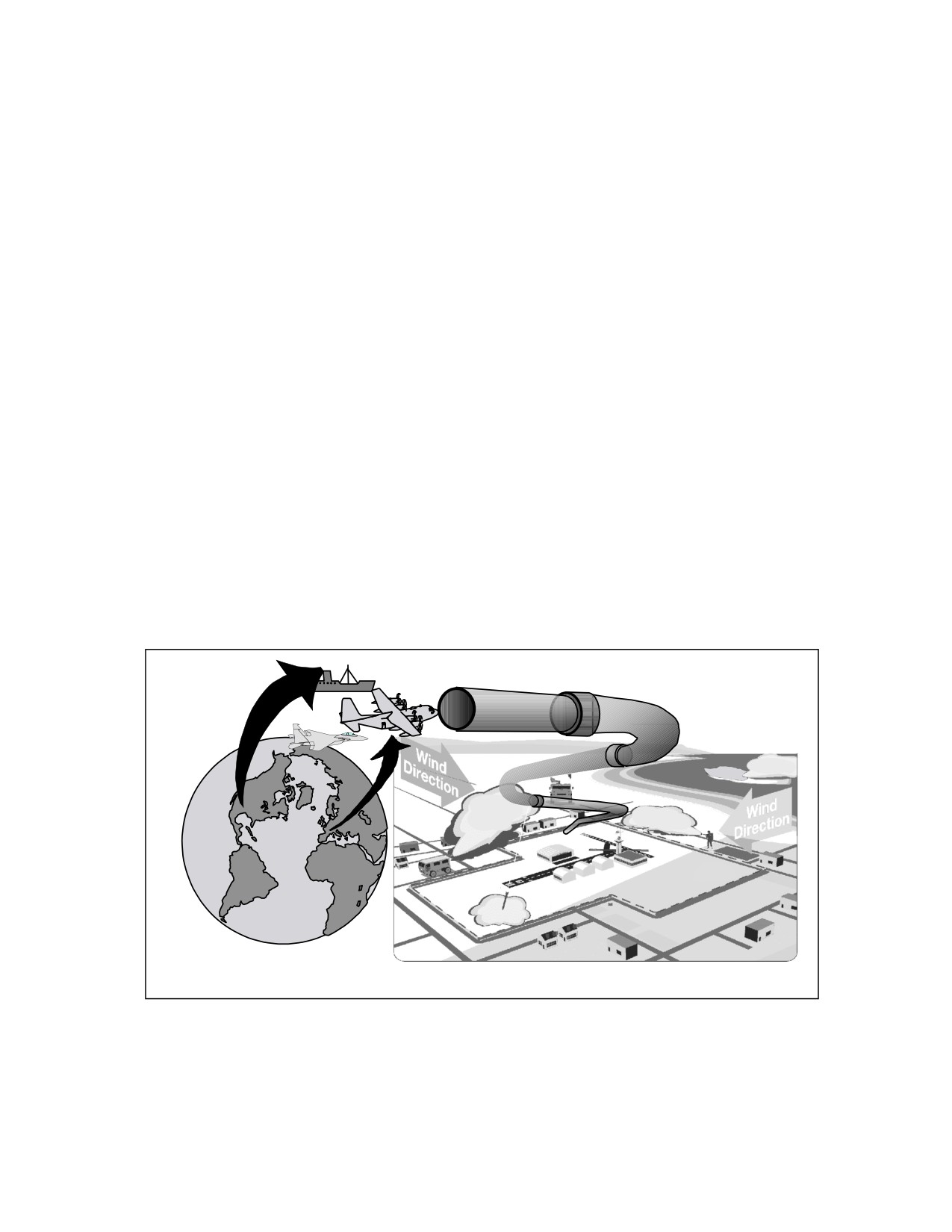
Chapter I
FIXED SITE NBC ENVIRONMENT
1.
Introduction
Significant national security concerns drive the immediate consideration of fixed site
NBC defense. These concerns include proliferation of NBC weapons and the lessons
learned during armed conflicts such as Operations DESERT SHIELD/DESERT STORM.
In addition, terrorist attacks such as the Khobar Towers incident (large conventional
explosives) and the Tokyo subway incidents (nerve agent) demonstrated potential
vulnerabilities that terrorists may exploit. Commanders must fully consider the
requirements for fixed site NBC defense. Our forces require protection from NBC weapons
as well as hazards from industrial facilities in our area of operations (AO).
a.
Commanders have direct responsibility for protecting their forces against these
threats. On future battlefields, failure to properly plan and execute NBC defenses for
crucial fixed sites may result in significant casualties, disruption of operations, and even
mission degradation. Further, commanders’ mission and execution plans must address the
implications of NBC weapons if used at critical force projection chokepoints, specifically
ports of embarkation and debarkation. Figure I-1 depicts the force projection chokepoints
and NBC challenges confronting a commander in a theater of operations. As forces enter
the theater, vulnerability concerns heighten significantly. Protecting the force is of equal
or greater concern during all entry operations as well as offensive or defensive operations.
Force Projection Pipeline
Projection
Base
Theater of Operations
Figure I-1. Force Projection
b.
Notice that the force projection pipeline generally originates from the
continental United States (CONUS) or from an ally (e.g., North Atlantic Treaty
Organization (NATO)). Although still vulnerable, ports of embarkation at the projection
I-1
base offer an advantage by allowing additional security, flexibility, and standoff.
Therefore, enemy NBC targeting efforts will likely focus on the more vulnerable ports of
debarkation (PODs). NBC weapons employed against these PODs as well as forces not yet
deployed to forward areas of operations can create significant casualties and bottlenecks in
the resource pipeline. As a result, during joint reception, staging, onward movement, and
integration (JRSOI) operations, combat power is extremely vulnerable around PODs, at the
initial marshalling/staging areas, and at the other reception nodes. Effective JRSOI
reduces vulnerability to enemy attacks by quickly moving forces away from fixed sites (see
JP 4-01.8, JTTP for Joint Reception, Staging, Onward Movement, and Integration).
However, fixed sites remain centers of gravity for sustaining, enhancing, and controlling
forward combat power; and therefore, they remain high value targets for NBC weapons. It
is in the context of this environment that Chapter I defines key fixed site terminology and
addresses the operational environment of fixed sites.
2.
Terminology
Common terminology is essential for establishing effective communication and
coordination, and maintaining focus on the scope of this manual. Specifically, the term
"fixed site” is defined as shown below and discussion is focused toward, but not limited to,
the subsequent points.
a.
Fixed Site. Developed real estate (facilities and supporting equipment)
required to accomplish an operational mission. Examples include C4I sites; SPODs;
airfields/APODs; logistics bases (e.g., pre-positioned storage facilities, ammunition storage
points/depots, supply depots, maintenance sites); and medical facilities.
Fixed sites can be further categorized as permanently or operationally fixed.
(1)
Permanently Fixed Sites. Facilities that cannot move. If war or conflict
comes to these facilities, they may be temporarily abandoned, but not moved. Additionally,
NBC hazards can make these facilities unusable, causing them to be abandoned until
transition to postconflict operations. These include existing facilities such as ports,
airfields, railheads, bridges, and hospitals.
(2)
Operationally Fixed Sites. Facilities transportable or mobile, but due to
ongoing operational constraints, they are not moved. Examples of operationally fixed sites
include transportable hospitals, critical mobile communications nodes just prior to
commencing offensive operations, and bridging operations.
b.
Base and Base Cluster. Related terms used in this manual.
(1)
Base. A locality from which operations are projected or supported. An
area or locality containing installations which provide logistic or other support. (JP 1-02)
(2)
Base Cluster. In base defense operations, a collection of bases,
geographically grouped for mutual protection and ease of C2. (JP 1-02)
I-2

The functions and services provided by the fixed sites noted above provide
critical C4I, force projection, and sustainment capabilities for the joint forces. Subsequent
discussions initially focus on APODs/SPODs during entry operations, and subsequently
address the joint rear area (JRA) as well as other critical fixed sites as the theater expands
and forces transition to operations.
3.
Operational Environment
a.
The NBC threat profile and operational constraints of fixed sites are
fundamentally different than those associated with mobile (nonfixed) units. Fixed sites in
the rear area will likely be targeted with persistent chemical agents and point- or line-
source-delivered biological agents, in addition to the possible use of radiological dispersal
weapons. Nonfixed units operating throughout the battle space may be exposed to the
range of radiological, chemical, and biological weapons, but gain advantages from their
mobility and dispersion. Fixed site operations are likely constrained to continuing
operations in a contaminated environment due to limited relocation options and impacts of
interrupting sustainment operations. This constraint to live, work, and operate in close
proximity or within contaminated areas drives requirements for extensive planning and
preparations. Table I-1 depicts fixed site information and equipment considerations in
relative terms of criticality and their importance to fixed site operations.
Table I-1. Fixed Site Information and Equipment Considerations
ITEM
REQUIREMENTS
REASON
Anticipated Specific Agents
High
Persistency and MOPP Considerations
Anticipated Agent Concentration
Critical
MOPP Considerations
Specific Persistency
Critical
Sustainment
Establishment of Specific Hazard
Detector Quantities
High
Footprint
Background Interference Areas
High
Accuracy
Integrated, Automated Detection CB
Speed in Establishment of Hazard
High
Networks
Footprint and Survivability
Specific Detector Layouts
Critical
Force Survivability and Sustainment
Hardwire Power at Detector Sites
High
Sustainment
Collective Protection
High
Sustainment
Contaminated Waste Disposal Areas
High
Sustainment and Survivability
Sustainment w/Limited Decon
Extensive Supply of Covers
High
Requirement
Specific Dispersion and Overhead
Limited Space Allocation - Can't Have
High
Cover Plans
Units Fighting for Same Space
Sustainment and Mission
Individually Issued Decon Materials
Critical
Accomplishment - entire fixed site
populace must be a decon team
Mission Effectiveness - Hazard Isn't
Division of Base Into "Sectors"
High
Same for All Areas
MOPP Levels Tailored to Sector
Critical
Sustainment
Hazards
Fixed Warning & Reporting System
Critical
Survivability
Redundant NBC C2 Operations
High
Sustainment
Interaction of Agents w/all Types of
Critical
Sustainment
Materials (concrete, soil, brick, wood)
b.
The fixed site operational setting is a diverse and complex environment. This
setting includes the physical, military, civil, and threat environment. First, by function,
I-3
fixed site operations cross each aspect of the physical battle space: land, sea, air, and
space. Secondly, fixed site operations are inherently joint and will likely include joint task
force (JTF) operations. Thirdly, in addition to the physical and military environments,
fixed site operations, especially aerial and port operations occur within the complex
framework of the host nation (HN) civilian environment. Commanders should consider
these four fixed site operational environment parameters in the following discussion for
inclusion in joint/multiservice plans and exercises.
4.
Physical Environment
The physical battle space directly impacts fixed site operations and the physical
environment directly influences the impact of NBC weapons and hazards. NBC weapons
can impact force projection and combat operations on land, at sea, or in the air. Further,
the nuclear component of NBC could also impact the space environment. Nuclear effects
severely degrade the C2 networks relying on this dimension. Still, the most notable
influences of the physical environment on fixed site NBC defense are weather and terrain.
a.
Weather. Weather conditions are the “uncontrollable wildcard” of NBC
employment and provide useful cues to probable times and places for NBC use (i.e.,
employment windows). Diligent tracking of weather conditions aids in the assessment of
risks to friendly forces from NBC weapons, as well as TIM hazards.
b.
Terrain. In concert with weather conditions, terrain influences where NBC
effects may concentrate (e.g., chemical agents in low lying areas); and in many cases, it
influences enemy NBC targeting (e.g., exploiting or creating chokepoints).
5.
Military Environment
The military environment of fixed sites includes strategic chokepoints, sustainment
operations, and C2 centers. With a limited number of PODs serving as the hub for a
commander’s sustainment and C2 operations, fixed sites may become a critical center of
gravity for joint, multinational, and HN personnel. As a result, they are high value targets
for the enemy. These are potential centers of gravity.
a.
Strategic Chokepoints. The strategic projection of combat power may require
air and sea ports of debarkation. Once forward deployed, these forces may require
operational sustainment through the same POD. A limited number of useable PODs
causes an unavoidable concentration of forces at these sites, thus creating an enticing NBC
target.
b.
Combat Power Sustainment. Continuity of support from fixed sites is the
lifeblood for sustaining a force’s combat power. NBC hazards can interrupt fixed site
operations and decrease our forces’ overall combat power. The intensity of combat
operations and fixed site activities varies; however, the fixed site OPTEMPO remains
constantly high. In addition to personnel casualties, an NBC weapon can be a very
efficient and effective means of quickly disrupting and/or halting the flow of information
and resources to or from the fixed site. The overall impact is a decrease in combat
capability.
I-4
c.
Complex C2. Multiple services, activities, and organizational structures (e.g.,
base clusters, airfield/port operations, and HN support) complicate fixed site C2.
Additionally, fixed site personnel (e.g., logistics, reserve, and HN/US civilians) may have
less training in passive defense measures and protective equipment than combat forces,
further complicating C2 in an NBC environment.
6.
Civil Environment
The cultural and economic aspects of the civil environment significantly influence
fixed site NBC defense considerations. These include religious, national, and ethnic values
as well as economic, industrial, and, technological capabilities.
a.
Cultural Influences. Commanders at fixed sites must consider cultural,
ethnic, and religious attitudes and behaviors that may impact operations within his area of
responsibility. At one extreme, cultural norms in the HN may dictate practices such as
religiously mandated wear of facial hair, thereby impeding a proper mask seal. This
practice will prove problematic as fixed site commanders attempt to ensure the safety of
civilian workers at their locations. At the other extreme, strict adherence to national or
religious calls to action may compel zealots to rationalize, embrace, and employ any
element of combat power (e.g., NBC) against a high profile target like a fixed site.
b.
Economic Influences. Industrial and technological capabilities can be a
double-edged sword. A nation's industrial base can support defensive strategies as well as
create the prolific environment supporting NBC production, stockpiles, and employment.
The HN with a developed economic infrastructure and industry can better support
redundant lines of communication (LOC) and/or provide protection and decon resources.
Conversely, a nation's economic capabilities could support overt or covert development and
production of NBC weapons or TIM. An economic climate such as this increases the
plausible threat against fixed sites.
7.
Threat Environment
The threat environment of today’s battle space could span the full range of operations
during a conflict. NBC weapons and hazards create tactical, operational, and strategic
implications for the commanders and their forces. Commanders must weigh the impact of
offensive action against enemy NBC production/storage facilities. For example, the
downwind hazard following target destruction must be considered. Additionally,
countermeasures must be prepared to negate the threat posed by industrial hazards, i.e.,
TIM and terrorists.
a.
Various countries are known to possess or are suspected of possessing NBC
capabilities. Any country with pharmaceutical, agricultural, and/or pesticide research
capabilities could easily disguise chemical and biological (CB) weapons development
programs. As countries seek to expand their own NBC programs, potential funding is
derived from sales of products and/or technologies to other countries or organizations. This
practice sustains the NBC proliferation process.
I-5
b.
Combine the proliferation of NBC weapons with the proliferation of ballistic and
cruise missile technology and the increasing threat to offshore assets, rear areas, and fixed
sites becomes even more apparent. Since ballistic missiles, smart munitions, or covert and
terrorist devices can deliver NBC weapons, the threat environment extends throughout the
depth of the battle space and continues to the force projection base.
c.
Industrial centers and weapons production/storage facilities can easily become
sources of hazards for our forces and their equipment. For example, over 15,000 civilians
died following a chemical accident in Bhopal, India. Deliberate targeting of industrial
facilities can produce toxic industrial hazards (radiological, biological, or chemical) as
lethal as any NBC arsenal. The same results may occur from collateral damage, accidents,
or covert/terrorist activity. Therefore, forces operating in or located near these facilities
incur higher risk and vulnerability. Not only are the industrial facilities potential hazard
producers, but also the transport vehicles used to move industrial products (e.g., phosgene,
chlorine), waste products, and munitions.
d.
The availability of technology to terrorist organizations provides them the
flexibility of using conventional weapons, NBC weapons, and/or exploitation of industrial
hazards to accomplish their objectives. As a high-leverage, low-risk form of warfare,
terrorism creates a breeding ground for the proliferation of NBC, especially for CB
weapons with their low cost per effect ratios. The Tokyo subway incident involving the
Aum Shinri Kyu cult’s use of the nerve agent sarin (GB) is a prime example of NBC
proliferation. The Aum Shinri Kyu cult in Japan was not only involved in chemical
weapons research, but also purchased large quantities of Clostridium botulinum, the
organism that produces the very lethal botulinum toxin. Additionally, in 1992, the cult
demonstrated an interest in the Ebola virus by sending a “medical” mission to Zaire.
I-6
Chapter II
FIXED SITE VULNERABILITY
1.
Overview
Fixed sites provide critical functions that support force projection and sustainment.
Discussions of the threat and operational environment always provide insight into friendly
vulnerabilities. This chapter specifically examines fixed site vulnerabilities, joint
intelligence preparation of the battle space (JIPB), vulnerability analysis, and vulnerability
mitigation.
a.
The projected force requires points of debarkation. Once projected, these forces
require sustainment from logistics bases that are primarily fixed sites. For a projected
force, these sites may become centers of gravity for joint, multinational, and HN mission-
critical operations. These sites are high value targets for possible use of enemy NBC
weapons.
b.
Worldwide NBC proliferation and the threatened use of NBC weapons, overt or
covert, require commanders and their staffs to have a working knowledge of NBC defense
principles, fixed site vulnerabilities, and mitigation techniques. Specifically, a JTF may be
established based on a geographical area or functional basis when the mission has a
specific limited objective. They are formed from different service assets supporting the
commander of a combatant command (CINC). JTFs require trained NBC personnel who
fully understand the threat and know how to assess and reduce NBC vulnerability.
Additionally, immediate operational requirements may result in the hasty establishment of
bases and base clusters within a matter of hours to days. In units without an organic NBC
staff, NBC defense experts may be attached after initial planning sessions. Therefore,
successful NBC defense planning and execution rely on commanders and their staffs
understanding the aspects of NBC defense.
2.
Fixed Site Vulnerability
a.
Forces are most vulnerable and operations are at the greatest risk during
marshalling, staging, and intratheater deployment conducted during force projection
operations. NBC protection is especially critical to mission success during this phase of
operations. When necessary and/or possible, commanders must ensure they consider and
evaluate numerous SPODs and APODs so they can deploy military forces from different
locations in case of NBC attack. This vulnerability is magnified when the enemy possesses
NBC weapons. Even during war termination and postconflict operations, NBC use could
occur and again increase risk to our forces. Protecting the force remains a key mission
throughout all operations.
II-1
b.
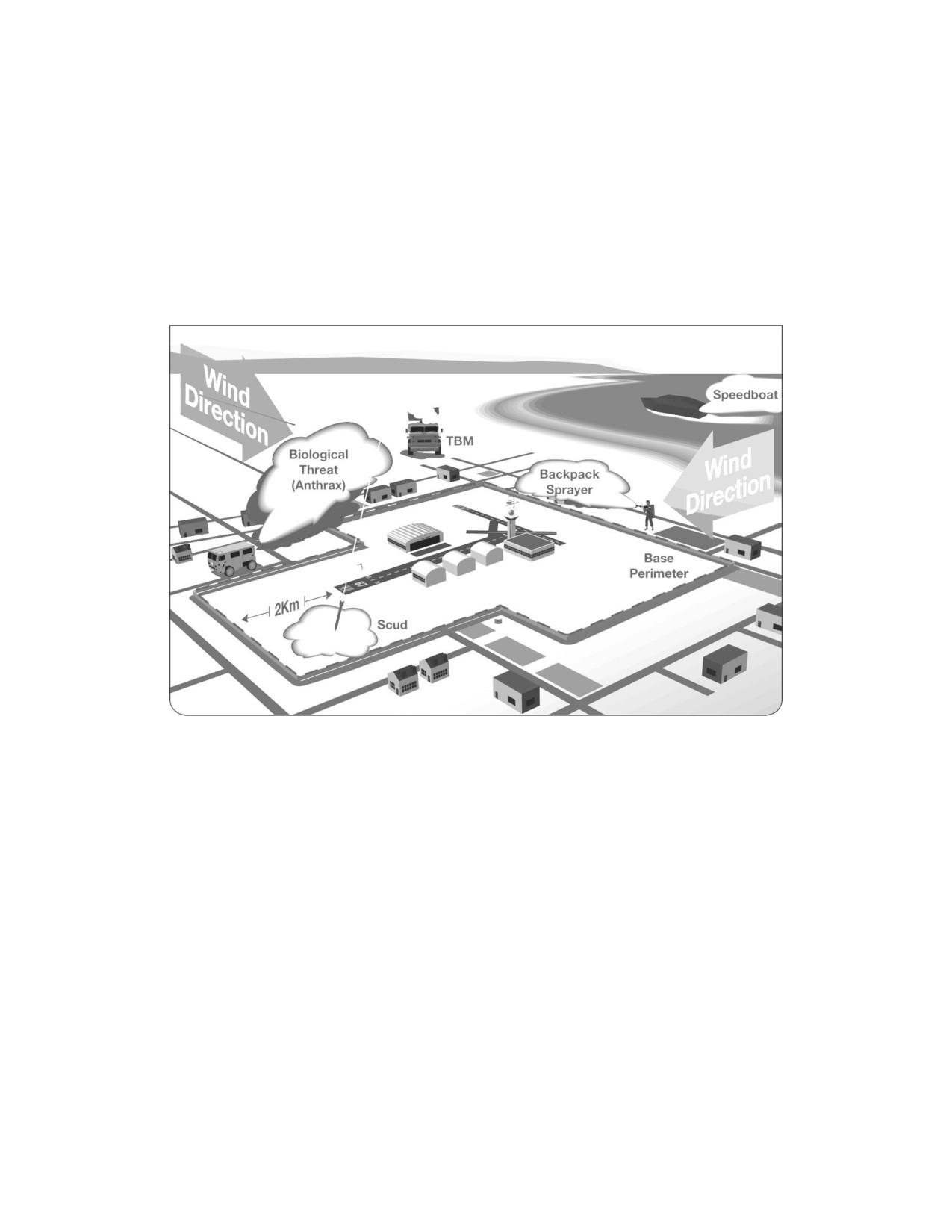
Special operations forces (SOF) and missile attacks are the most difficult to
profile, predict, or detect. Figure II-1 depicts how enemy NBC effects represent a full
spectrum threat, making vulnerability analysis more difficult. Vulnerability analysis plays
an increasingly important role in helping the commander focus limited NBC defense assets
against the most likely NBC delivery means. It is the enemy’s ability to deliver NBC
weapons and other existing NBC hazards (e.g., TIM hazards) that causes the commander
to assess unit and site vulnerability. However, before discussing vulnerability assessment
techniques and mitigation, it’s important to understand fixed site characteristics,
vulnerability, and the strategic and operational impact of NBC hazards to fixed sites.
Figure II-1. Fixed Site NBC Threats
3.
Fixed Site Characteristics
Commanders recognize that fixed site characteristics make them vulnerable, high
value targets. These characteristics include the following:
a.
Bottlenecks. Intertheater and intratheater movement of resources will burden
limited POD throughput capacities and create force and equipment concentrations.
Additionally, NBC use could cause civilian panic/flight and clog road networks surrounding
fixed sites. Therefore, commanders must consider and evaluate other transportation
avenues in case of NBC employment.
b.
Large Area Targets. Fixed sites such as base clusters may be dispersed over
large areas, helping to decrease the conventional theater missile attack risk. However,
this same dispersion increases physical security requirements, burdening limited
resources. It also encourages enemy selection of NBC weapons because of their large area
coverage characteristics. Large area targets are extremely vulnerable to unconventional
II-2
SOF attacks. These include CB agents employed from small manned or unmanned
aircraft, watercraft, or man-portable devices.
c.
High Value Targets. Fixed sites represent a series of critical, interrelated
functions and concentration of high priority activities. This makes the fixed site a
potential center of gravity. Additionally, fixed sites often provide one-of-a-kind critical
mission functions that have limited redundancy.
d.
Limited Defensive Capabilities. Long-range interdiction weapons are most
often organized to support combat operations, leaving limited range defensive weapons for
active theater missile defense (TMD) of fixed sites. Further, the fixed site operational
environment likely possesses limited defensive capabilities.
e.
Limited or No Mobility. It is easier for the enemy to target fixed sites vice
more mobile, tactical targets. Even with extensive camouflage, concealment, and deception
(CCD) efforts, the large area nature of fixed sites continues to make them lucrative NBC
targets.
f.
Limited Expertise. Finally, multiple activities, complex organizational
structures, and varying levels of expertise in passive defense measures combine to make
fixed site NBC defense a challenging, yet manageable task.
4.
Strategic and Operational Impacts
Assuming a thoroughly prepared and rehearsed NBC defense plan, the minimum
anticipated impact from NBC hazards is a temporary reduction in OPTEMPO for the
affected forces. Under less ideal conditions, NBC hazards may delay fixed site operations
for hours or days and result in changes of mission and/or mass casualty scenarios. With
little or no NBC defense equipment training, Civil Reserve Air Fleet (CRAF) and merchant
marine movement assets will be delayed or diverted to alternate PODs. This section is
designed to emphasize the strategic and operational impacts of NBC hazards at a specific
base/base cluster, namely C4I nodes, ports, airfields, and logistics bases. Subsequent
discussions will outline how to plan effectively.
a.
C4I Impacts. Information hubs such as command centers, communications
centers/sites, and intelligence collection sites are prime targets for NBC weapons.
Information flow drives decisions. Even temporary disruptions of this capability can force
modifications of plans and orders at both the strategic and operational levels. This could
lead to catastrophic consequences at the tactical level. Disrupting the C4I nodes through
use of NBC weapons will severely hinder a commander’s responsive and timely support for
mission operations; therefore, subordinate commanders must clearly understand the
strategic objectives and intent.
b.
Port Impacts. When NBC contamination is present, JRSOI operations,
terminal discharge, transfer, storage, and clearance operations are immediately
complicated or temporarily halted by increased protective posture, reduced HN and
contract support, and decontamination operations. Without plans for redundant facilities,
transportation assets, and/or logistics over-the-shore, the logistics flow decreases and over
II-3
time, results in decreased combat power. During port operations, NBC attacks may force a
heavier reliance on ports at a significant distance from established logistics nodes and
staging areas. This increase in distance will adversely affect transportation requirements
and the delivery time of supplies and personnel. Additionally, port support personnel must
be trained and equipped to operate in an NBC environment.
c.
Airfield Impacts. Short of a nuclear attack, the main NBC impact on airlift
and combat aircraft is decreased sortie rates and increased landing constraints. These
decreases result primarily from degradation of ground support crews in extended mission-
oriented protective posture (MOPP) levels. As cargo aircraft contamination control,
contaminated payload control area measures, and decon operations intensify, payload
throughput decreases.
Like ports, diversion of combat loads to alternate or redundant facilities may result in
significant delays in employment of combat forces or delivery of priority payloads.
Intertheater and intratheater airlift assets operate most effectively in uncontaminated
environments. Exposure of airlift assets to contamination may restrict use of that aircraft.
Contingency air planning must address procedures for using contaminated air facilities,
transload locations, and alternate sites to support continued air operations. This is
especially true for civil aircraft. Once contaminated, civil aircraft will not be flown again
due to legal concerns and the inability of civil aircrews to fly contaminated aircraft. The
inability to fly contaminated civil aircraft may also cause parking maximum on the ground
(MOG) problems if large numbers of civil aircraft are contaminated at the same airfield.
CRAF will not deliver cargo to contaminated airfields. Intratheater airlift to contaminated
areas is typically conducted for critical mission exceptions. In-flight refueling allows
combat aircraft to support from outside theater missile (TM) range for limited periods.
d.
Logistics Base Impacts. NBC hazards will primarily influence logistics base
transportation capabilities, exposed supply inventories, and work rates. Contamination of
vehicles or ground transport routes creates delays/detours at best and contaminates
transporters at worst. Contaminated uncovered supplies and ammunition create exposure
risks and work rates decrease as personnel operate in increased MOPP levels. Exposed
material which cannot be decontaminated may have to be replaced. This loss of supplies
may create an increased logistical burden.
e.
Medical Treatment Facility (MTF). NBC hazards will create an environment
in which an MTF without collective protection will be limited in its patient care
capabilities. The treatment facility can be provided a temporary level of protection using
techniques discussed in Appendix J and service specific guidance.
5.
Vulnerability Analysis
The basic methodology for vulnerability analysis is shown in Figure II-2. This section
expands on this basic methodology, while Appendix C provides detailed “how to”
instructions for risk assessment and analysis.
II-4
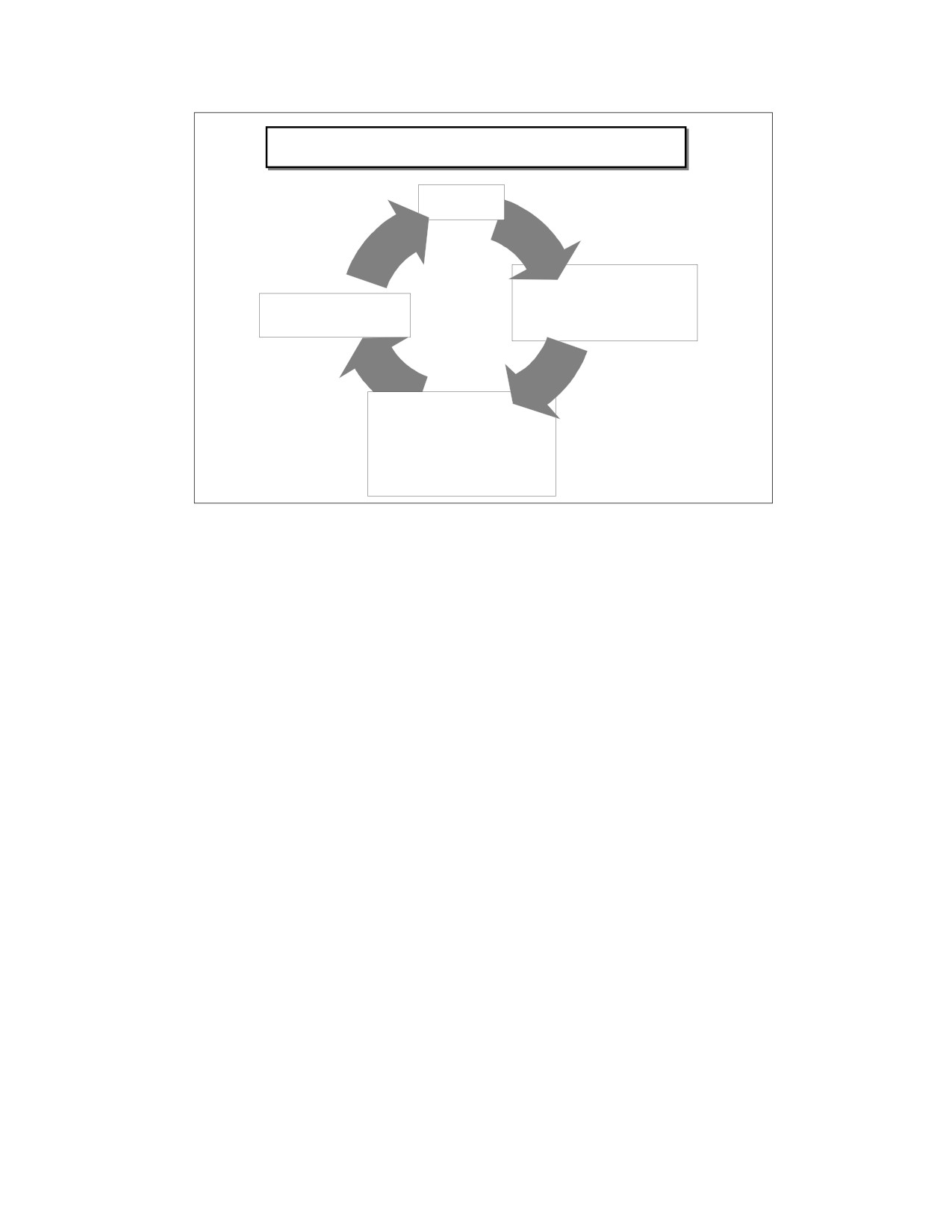
Vulnerability Analysis
JIPB
Risk
Mitigation
Assessment
NBC
Vulnerability
Assessment
Figure II-2. Basic Methodology
a.
Joint Intelligence Preparation of the Battle Space. JIPB is a systematic,
continuous process of analyzing the threat and environment in a specific geographic area to
support staff estimates and military decision-making. Every commander and staff
conducts JIPB to anticipate enemy actions. In other words, JIPB is overlaying facts and
assumptions about the operational environment with enemy information about a specific
operation. The JIPB process provides a logical procedure for predicting adversary courses
of action (COA) and their impact(s) on friendly operations. The four continuous steps of
JIPB are as follows:
(1)
Define the battle space environment.
(2)
Describe the battle space effects.
(3)
Evaluate the adversary.
(4)
Determine adversary COA.
These four steps form a continuous process integral to fixed site risk assessments and
vulnerability analysis. During friendly COA development, JIPB progresses to a
wargaming process helping the commander identify anticipated enemy actions and friendly
responses to minimize their impact. This wargaming is conducted in an “action/
counteraction” fashion (i.e., If this COA…then this response…with this potential impact.).
Refer to JP 2-0, Joint Doctrine for Intelligence Support to Operations, Appendix A for a
complete intelligence estimate.
II-5
b.
NBC Risk Assessment. NBC risk assessments allow commanders to identify
areas of NBC risk and potential mitigations for those risks. Appendix C furnishes detailed
NBC risk assessment guides. These guides include JIPB related questions concerning the
battle space and the threat environment. The answers to those questions impact risk
assessments that are associated with recommendations for various NBC defensive
measures.
NOTE: These guides are generic and other questions should be added or risk
levels upgraded based on unique situations.
c.
NBC Vulnerability Analysis.
(1)
Nuclear Vulnerability Analysis. Nuclear vulnerability analysis
addresses the impact(s) from blast (shock wave), thermal radiation (high intensity light
and heat), initial radiation (within first minute after detonation), residual radiation
(fallout and induced radiation), and electromagnetic pulse (EMP). The intensity of nuclear
explosion effects varies with the weapon yield and type of burst. The severity of their
impact on friendly operations is, in part, a function of defensive measures taken to reduce
vulnerability. Subsequent discussion and Appendix C address these defensive measures in
detail.
(2)
Biological Vulnerability. Biological vulnerability analysis relies heavily
on thorough intelligence to assist commanders with decision-support information for the
following considerations:
(a) Immunization levels/availability of prophylaxis (with respect to
anticipated agents).
(b) MOPP levels.
(c)
Detection posture (deployed biological detection capability).
(d) Maneuver (mobility) status (fixed sites are static).
(e) Hygiene practices.
(f)
General health of the population.
Using the biological vulnerability rating matrix in Appendix C provides a
subjective degree of vulnerability: high, medium, or low. Combined with assessments of
agent selection, employment “windows”, and medical intervention response times, the
matrix outlines a basic decision-related process that supports vulnerability reduction
measures for the commander.
(3)
Chemical Vulnerability Analysis. Chemical vulnerability analysis
focuses specifically on casualty estimates. Figure II-3 identifies the basic steps that are
addressed in Appendix C. The casualty estimate process relies on thorough JIPB, enemy
and physical environment assessments, and friendly mission analysis. The basic inputs for
II-6
determining chemical casualty effects are anticipated (or actual) friendly target size,
anticipated agent and delivery system, and weather. Additional considerations may
include individual and collective protection as well as specific response actions.
Chemical Vulnerability Analysis
• Estimate the Delivery Capability
Determine Risk Windows (Threat/Weather)
Estimate Delivery Capabilities
• Generate Effects Information
Casualty Effects
Downwind Effects
• Estimate Casualties/Sortie Production
Determine Target Size
Determine Probable Agent
Estimate Casualties
• Estimate Downwind Risk
Figure II-3. Chemical Vulnerability Analysis
It’s important to note that in many cases the enemy’s primary objective may not
be casualty generation. The primary objective may be target contamination and
degradation to our mission capabilities. When critical equipment, facilities, or terrain are
contaminated, OPTEMPO may slow dramatically. This is caused not only by casualties,
but from MOPP degradation, decon requirements, psychological impacts, and mission
adjustments in response to the attack or anticipated attacks.
(4)
TIM Vulnerability Analysis. TIM vulnerability analysis relies on
intelligence and observation to determine potential hazards. TIM location and amount of
material in and around the area of interest will determine the degree to which the fixed
site is vulnerable. Appendix G discusses TIM hazards in detail.
d.
Vulnerability Reduction (Mitigation). Fundamental to mitigating NBC
effects on fixed sites is understanding applicable principles of war such as security,
economy of force, unity of command, and objective. They are defined as:
(1)
Security. Enhance freedom of action by reducing vulnerability to hostile
acts. To be successful, fixed site commanders must take necessary protection and physical
security measures to preserve their capabilities.
(2)
Economy of Force. Ensure distribution of assets to accomplish assigned
missions while reducing the vulnerability of fixed sites through split-based operations, off-
shore operations, and/or maintaining mobility.
II-7

(3)
Unity of Command. The force is under one responsible commander with
the authority to direct required fixed site operations including TMD and NBC defense.
(4)
Objective. Mutual objectives at fixed sites are focused on key, common
goals such as protecting the force, C2, and combat sustainment.
At a more practical level, mitigating fixed site vulnerability includes active and
passive defense measures that reduce the probability of NBC attack and minimize their
effects. With the possible exception of a strategic or operational level C4I node, fixed site
commanders have limited or no direct control of active defense assets capable of
interdicting NBC delivery systems. However, active defense measures throughout the
battle space and their associated warnings should trigger passive defense responses.
Therefore, the remainder of this chapter will address fixed site considerations relative to
passive defense measures.
6.
Passive Defense Measures
The Joint Rear Area Coordinator (JRAC) and base cluster commanders recognize that
passive defense represents a critical aspect of NBC protection. Commanders integrate
intelligence and warning requirements into the total collection plan. This intelligence
support will provide early indications of possible NBC use in theater, allowing the JRAC
time to implement active defense measures. The JRAC and base cluster commanders
understand the relationship of NBC defense principles (shown in Figure II-4) to supporting
their overall passive defense plans. Figure II-5 summarizes the principal measures used to
accomplish passive defense.
CONDUCT DECONTAMINATION
TO RESTORE COMBAT POWER
DEGRADED BY CONTAMINATION
OF INDIVIDUALS, EQUIPMENT
NBC DEFENSE
OR MISSION-ESSENTIAL AREAS.
A
P
V
R
O
O
D
T
I
E
E
D
C
C
A
O
T
N
I
N
C
O
E
N
NBC BATTLE MANAGEMENT
APPLY INDIVIDUAL AND
COLLECTIVE PROTECTION TO
CONSERVE COMBAT POWER.
ANTICIPATE AND USE
SENSORS TO AVOID HAZARDS
BEFORE CONTAMINATION
INFLUENCES OPERATIONS.
Figure II-4. NBC Defense Principles
II-8
Passive Defense Measures
• Tactical Warning
• Reducing Targeting Effectiveness
• Mobility
• Training/Discipline
• Dispersion
• Hardening
• Covering Supplies/Equipment
• Limiting Exposure
• Preventing Contamination Spread
• Seeking Protection
• Functional Redundancy
Figure II-5. Passive Defense Measures
a.
Tactical Warning. Established warning procedures (e.g., preattack, attack,
and postattack) help commanders and staffs acquire, process, and disseminate warning
information that minimizes NBC impact. Timely warnings trigger critical individual and
collective protection actions as well as contamination avoidance activities. Warnings are
both general (missile launches are imminent or have occurred) and specific (specific units
or areas are in danger of attack), or provide notification of an all clear.
b.
Reducing Targeting Effectiveness. Communications security and signature
reduction deny enemy sensor and reconnaissance assets key data inputs for acquisition
and identification of friendly targets. Friendly measures include camouflage, emission
control, cover, concealment, smoke, and local unit security measures to deny enemy key
targeting data. Deception misleads enemies by manipulating, distorting, and falsifying
friendly actions. Use of decoys or false electronic signatures can also deny an enemy key
targeting information.
c.
Maintaining Mobility. Although fixed sites are essentially immobile,
commanders can sustain force mobility by maintaining flexibility in their operations plans
and orders. A theater commander may decide to use an alternate SPOD, APOD, or joint
logistics over-the-shore to maintain required throughput. Throughput and capacity
considerations may also drive pre-positioning mission-essential assets, thus keeping
resources mobile and containerized.
d.
Training/Discipline. DOD military personnel by training and ethic maintain
good order and discipline; however, many mission-essential civilian personnel (US and HN)
will require training and personal protective equipment in order to ensure a disciplined,
safe response to a crisis situation.
e.
Dispersion. Dispersion decreases concentration and makes a target less
lucrative. Commanders should consider physical security needs and the effect NBC
weapons could have on their area of operation. Difficult choices will confront them as they
consider mission requirements, available terrain, and dispersion requirements. For
II-9
example, site selection for mission-critical assets may result in split-based logistics
operations or support from remote areas.
f.
Hardening. Hardening reduces the effect of NBC attack. Careful site, terrain
selection, field fortification, and other field expedient or construction methods support
increased individual and collective protection.
g.
Covering Supplies and Equipment. COA considerations include identifying
what resources require protection and/or covering. Critical resources receive priority for
limited NBC covers specifically designed to prevent liquid agent contamination.
h. Limiting Exposure. Limiting exposure will require active leadership.
Networks of NBC detection and identification devices provide input as to what
assets/locations are or may become contaminated. If possible, curtail or limit operations in
these areas use other redundant capabilities or surge mission operations in other sectors to
sustain operations until the contamination levels are reduced.
i.
Preventing Contamination Spread. Effective mission orders, tactical
warning, and reporting may reduce and/or preclude the spread of contamination. The
integration of NBC detectors into the site’s reporting network provides key inputs to
prevent contamination. Control measures (e.g., traffic control points, barriers, markings)
serve to minimize inadvertent entry into contaminated areas or use of contaminated
resources. Additionally, the establishment and use of contamination control areas (CCAs)
and toxic-free areas (TFAs), along with their corresponding procedures, helps minimize the
spread of an agent. Both rotary and fixed wing aircraft movement (taxiing) at airfields
can cause contamination spread. Rotor-wash, prop-wash, and jet blast pick up dust, sand,
leaves, and other contaminated debris that can contaminate the exterior, and sometimes
the interior, of nearby aircraft.
j.
Seeking Protection. Planning identifies protection requirements for
personnel, equipment, and the assets available to meet those requirements. Take action to
identify and resource individual/collective protection equipment requirements, search for
terrain features or manmade structures for equipment protection, identify and request
support not immediately available in the AO.
k.
Functional Redundancy. Preserving capability may necessitate duplicating
functions that are particularly vulnerable.
l.
Postattack Recovery and Reconstitution. Following an attack, units
conduct area damage control measures using available resources to reestablish/reinforce
C2; reallocate or replace communications, personnel, supplies, or equipment; and repair
battle damage. This may also include operational and/or thorough decon operations. The
coordination and operations supporting area damage control at fixed sites includes joint
service involvement, HN participation, and third nation interaction.
All of these considerations are critical to fixed site NBC defense preparedness. These
factors must be incorporated into plans/orders, leveraged for requesting resources, and
used to identify mission-essential tasks.
II-10
Chapter III
FIXED SITE NBC DEFENSE RESPONSIBILITIES AND EXECUTION
The primary purpose of this chapter is to provide the doctrinal tools for planning and
executing NBC defense tasks to the JRAC, the base cluster/base commanders, and their
staffs. With this focus in mind, this three-section chapter outlines fixed site NBC defense
goals, fixed site NBC defense roles/responsibilities, and resourcing, deployment, and
execution guidance.
1.
Fixed Site NBC Defense Goals
Fixed site NBC defense supports three basic operational functions: NBC protection,
sustainment of C2, and combat support.
a.
NBC Protection. Protection is a priority at all levels of war; thus, the
supporting principles of NBC defense become a threat-driven priority at all levels and
across the full spectrum of operations from peacetime deployments to war. Commanders
direct MOPP procedures to provide individual NBC protection and establish collective
protection priorities.
b.
C2 Sustainment. Sustainment of C2 is imperative. The impact of NBC
weapons requires that C2 provide timely decision making and general/specific warnings to
mitigate and/or preclude NBC catastrophic effects.
c.
Combat Support Sustainment. Without sustained combat support, combat
force OPTEMPO grinds to a halt. Chapter 1, Figure I-1 depicts the deployment pipeline of
support and its associated chokepoints points. The implementation of fixed site NBC
defense plans reduces NBC weapons or TIM interruptions to the combat support effort.
2.
Fixed Site NBC Defense Roles/Responsibilities
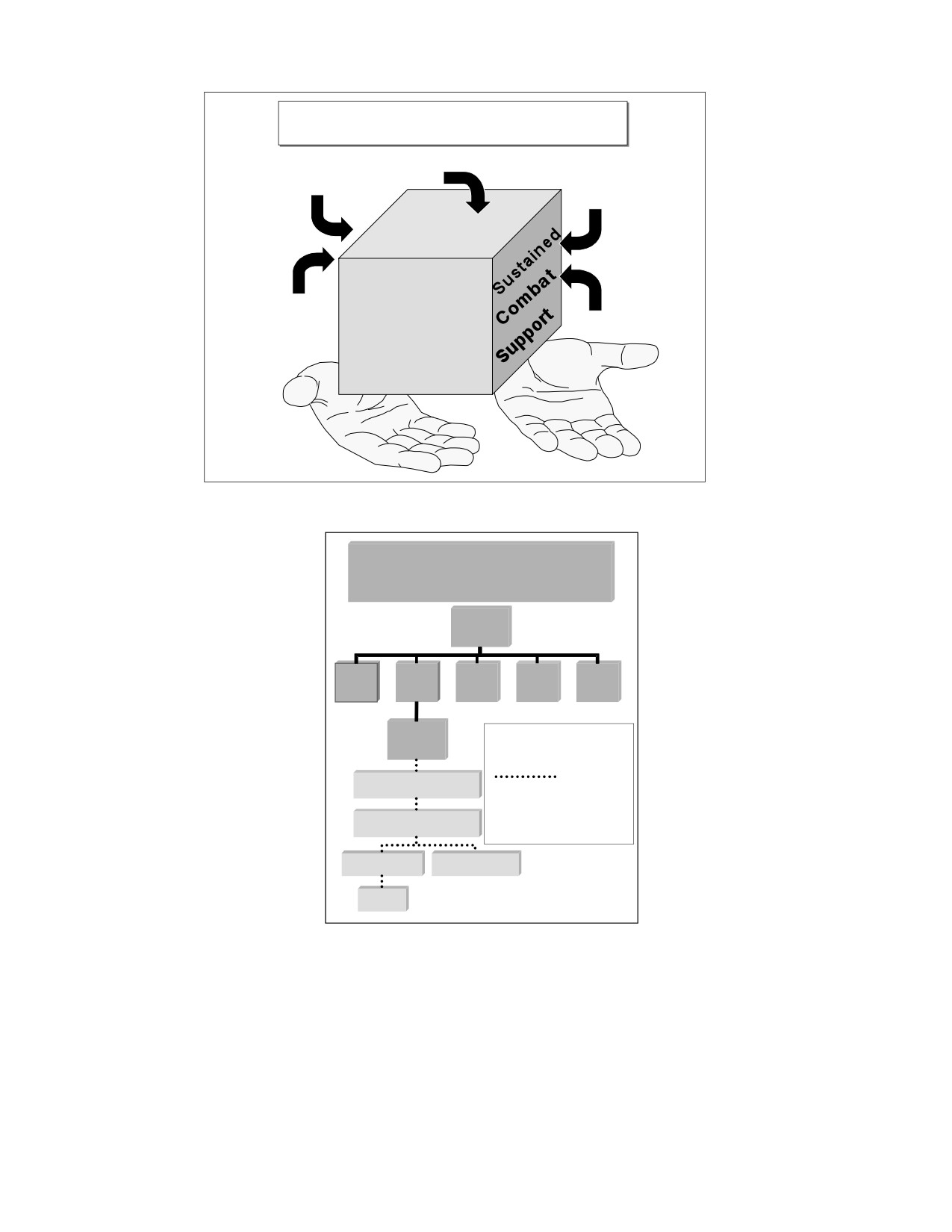
As shown in Figure III-1, many decision makers influence the planning and support
of fixed site NBC defense; however, primary execution of these plans relies heavily on the
JRAC and base cluster commanders. These responsibilities may change based on specific
command and/or mission requirements. Refer to JP 3-0, Doctrine for Joint Operations; JP
3-10, Joint Doctrine for Rear Area Operations, and JP 3-11, Joint Doctrine for Operating in
a Nuclear, Biological, and Chemical Environment for responsibilities of combatant
commanders, JFCs, and component commanders.
a.
Joint Rear Area Coordinator. The JRAC, as defined in JP 3-10, is
responsible for coordinating the overall security and area damage control efforts of the
JRA. Specifically, the JRAC incorporates provisions and procedures for NBC defense to
include warning and reporting procedures. Figure III-2 depicts a possible organizational
structure with the United States Air Force (USAF) component commander as the JRAC.
III-1
Fixed Site NBC Defense Goals
Component CINC
Maneuver
Cdrs
Cdrs
Sustained C2
Tenant
NBC
JFC
Cdrs
Protection
Ba se
Cluster
JRAC
Cdrs
Figure III-1. JRAC and Base Cluster Influence
Possible JRAC C2 Network With
Air Force Component Commander
As JRAC
JFC
USA
USAF
USMC
USN
JSOTF
1
1
1
1
1
1. JRAC Candidates
JRAC
2. May be intermediate
commands
Component Cmd
Coordinating authority
2
unless existing command
line or otherwise directed
Subordinate Cmd
by JFC
Base Cluster
Isolated Base
Base
Figure III-2. JRAC from JF HQs
(1)
General Coordination Responsibilities.
(a) Coordinates JRA security.
(b) Positions NBC protection assets:
III-2
•
Integrates security.
•
Conserves resources.
•
Prevents support degradation.
(c)
Establishes joint rear tactical operations center (if required) with joint
intelligence center interface.
(2)
Specific Coordination Responsibilities. The JRAC ensures that JRA
commanders and staffs incorporate appropriate NBC planning, exercises, equipment,
personnel decontamination measures, and preventive measures into overall security
planning and operations throughout the JRA. Table III-1 shows other specific
responsibilities. Component commanders should also ensure appropriate memorandum of
understanding (MOU) and interservice support agreements (ISSA) address NBC and force
protection matters including specific military unit responsibilities under varying
conditions. In addition, appropriate MOU and ISSA should be in place prior to actual
operations. Component commanders are also required to incorporate NBC defense
planning, exercises, equipment, personnel decontamination measures, and preventive
measures into the overall security planning and operations throughout the JRA.
Table III-1. JRAC Specific Responsibilities
•
Security Plan/Posture
•
Chain of Command (if granted)
•
Threat Estimates/Threat Response
•
Base Criticality and Vulnerability
Forces
Assessments
•
NBC Defense Plans/NBCWRS
•
Area Air Defense Commander
•
Unit and Facilities Positioning and
Coordination
Stationing
•
Infrastructure Development and
•
Multinational and HN Liaison
Positioning
•
Key LOC Security
•
US and HN Legal Guidelines
•
Prioritize Security for Key Operations
•
Additional Security Forces (as required)
•
Civil Affairs and Judge Advocate
•
Adjacent Force Coordination
Support
•
Tactical Combat Force
•
Intelligence, Counterintelligence, and
(if established)
Law Enforcement Networks
•
Liaison with Naval Coastal Warfare Commander
b.
Base Cluster/Base Commanders. Fixed sites will fall into a base or base
cluster category depending on geographical dispersion, activities, and functions. For
example, a port designated as a base cluster might consist of berthing, railhead, and
marshaling area bases; all part of a synchronized port NBC defense plan. In turn, the base
cluster commander controls and coordinates the base defense plans of separate base
commanders. Each base commander develops plans that include an NBC defense annex
and may also include a CCD or smoke annex. Further details on base defense are
addressed in JP 3-10 and JP 3-10.1, Joint Tactics, Techniques, and Procedures for Base
Defense.
(1)
Base Cluster Commander. When designated, the base cluster
commander is responsible for coordinating the defense of the bases within his base cluster
and integrating base defense plans into a base cluster defense plan. Unless specifically
III-3
delegated to him, the base cluster commander does not have tasking authority except as
provided during emergency situations addressed in JP 0-2, Unified Action Armed Forces.
The base cluster commander is specifically responsible for the following actions:
(a) Establishes a base cluster operations center (BCOC). A BCOC should
be established only if delegated authority to plan, direct, coordinate, integrate, and control
base cluster defense activities is granted. The BCOC becomes the primary focus for
controlling and coordinating base cluster NBC defense and for tracking NBC resource
status and task execution. A USAF wing operations center or a United States Navy (USN)
emergency operations center could also be designated as the BCOC.
(b) Establishes an alternate BCOC.
(c)
Maintains linkage with JRAC.
(d) Supports base liaisons.
(2)
Base Commander. In an emergency, the base commander is considered
an area commander with authority and command for execution of base defense actions to
include the employment of transient forces in the base area (JP 0-2, Unified Action Armed
Forces). The base commander also performs the following actions:
(a) Establishes a base defense operations center (BDOC) with linkage to
the base cluster commander and JRAC as required.
(b) Establishes an alternate BDOC.
(c)
Augments defenses with transient forces in the base area.
Fixed site operations are directly influenced by the speed at which NBC
reconnaissance is accomplished. Toward that end, the entire base populace should be
involved. Each individual is responsible for surveying their immediate work area. Shelter
management teams (SMTs) are responsible for checking pre-positioned NBC detection
assets (M8/M9 paper, automatic liquid agent detectors, etc.) in and around their facility.
Specialized teams or personnel complete preassigned reconnaissance.
c.
Transient Commanders. IAW JP 0-2, transient commanders in the vicinity of
fixed sites may be required to support base defense with their organic assets, including
NBC defense capabilities. In force projection operations, commanders quickly move
combat power away from the POD to reduce force vulnerability (e.g., dispersing rotary-
wing assets shortly after arrival at POD during Operation DESERT SHIELD). However,
since combat sustainment flows through the POD, the transient commander has a vested
interest in assisting with NBC defense emergencies.
d.
Tenant Commanders and Personnel. Tenant commanders of forces assigned
to a base cluster/base retain responsibility for unit protection and NBC defense. However,
tenant commanders may also be tasked to:
III-4
(1)
Help prepare/integrate base defense plans.
(2)
Conduct and/or support individual, unit, or US/HN civilian NBC defense
training.
(3)
Provide BDOC/BCOC staff with NBC expertise.
(4)
Provide NBC defense support.
(5)
Provide tenant-sector or base NBC emergency response teams (ERT) and
support (e.g., NBC survey and monitoring teams, NBC casualty collection points,
contamination control teams (CCTs), MOPP exchange points, and medical CB incident
response teams/emergency medical teams).
e.
NBC Defense Staff Planner. NBC staff planners are NBC defense trained
officers or noncommissioned officers (NCO) with either occupational specialty training or
additional duty familiarization training. As with other military duties, the experience level
required is directly related to the size and complexity of the staff and mission
requirements. For example, a less experienced staff planner might suffice for a small
single-function fixed site, such as a maintenance shop repairing contaminated equipment.
A more complex operation such as a port, airfield, or joint forces command headquarters
would likely require an officer or senior NCO trained and experienced in NBC functional
operations, planning and coordination. United States Army (USA) and United States
Marine Corps (USMC) NBC defense planners are chemical officers and NCO. United
States Navy (USN) base NBC defense planning functions are conducted by the disaster
preparedness officer (DPO). The USAF NBC defense planners are civil engineer readiness
personnel. NBC defense planners’ duties and responsibilities include:
(1)
Identifying and communicating the NBC threat in conjunction with the
intelligence community.
(2)
Incorporating the NBC threat into an operation plan (OPLAN)/operation
order (OPORD).
(3)
Identifying NBC defense requirements.
(4)
Conducting NBC risk and vulnerability assessments.
(5)
Developing and recommending NBC defense guidance.
(6)
Recommending appropriate personnel training.
(7)
Monitoring execution of NBC defense operations.
As the NBC functional specialist at the site or headquarters, the NBC planner
normally supports the plans and operations officer, but also has extensive interaction with
the surgeon, intelligence, and logistics staff officers as well. All of the staff officers track
III-5
the current and developing NBC situation for the commander and provide critical inputs
during the plans and orders process.
3.
Resourcing, Deployment, and Execution Guidance
With the OPLAN approved, staff officers then convert the plan into an effective
OPORD for crisis planning/execution. Critical staff tasks involve follow-up and supervision
to ensure mission support resources are deployed and synchronized to successfully execute
the NBC tasks identified in the OPLAN. Periodic reassessments of the JIPB, facts,
assumptions, and “details” such as unit/resource availability provide necessary updates for
improving the NBC defense annex(es) to the OPORD.
a.
Fixed Site NBC Defense Resources. This section focuses on NBC defense
resource considerations and deployment planning, including task organization techniques
and employing NBC defense assets for specific mission execution. Operational planners
track and maintain asset availability and visibility during planning, deployment, and
execution. Resourcing begins during COA development by recommending the best
combination of resources to support the mission and COA. As the situation develops,
planners identify required functions and recommendations for the time-phased force
deployment list (TPFDL) emerge. These recommendations should heed basic resource
considerations and should not be restricted by current task organization. Basic resource
considerations include mission requirements, resource capabilities, and resource
availability/visibility.
(1)
Mission Requirements. Specified, implied, and essential tasks require
force allocation and resource planning for task execution. NBC defense tasks require that
all forces maintain individual protection, detection, and decon capabilities.
(2)
Resource Capabilities. As planners develop force allocation and
resourcing plans, they assess force and equipment capabilities from a broad, practical,
expedient viewpoint versus a narrow definition of “published” capability. For example, 125
gallons per minute (gpm) pumps found in numerous fuel support units are not defined as
decon support equipment; however, adding a hose with fire fighting nozzle provides an
ability to support operational decon capability. This operational approach expands the
commander’s employment options and adds flexibility during mission execution.
(3)
Resource Availability/Visibility. Planning and execution of fixed site
defense measures involves all base/base cluster activities. Failure to provide prompt
support adversely impacts base defense activities. Total asset visibility (the near-real-time
knowledge of where assets are located and when they will reach the destination) is critical,
and this task is made especially difficult due to the many transient tenants found on or
near fixed sites. Command emphasis, staff planning/supervision/follow-up, and asset
visibility can help eliminate most resource availability issues such as—
(a) Deployment priorities.
(b) Mission priorities.
III-6

(c)
Time/space factors.
(d) Maintenance status.
(e) Inventory status.
(f)
Resupply rates.
(g) Requisition status.
Understanding force and resource capabilities, including those outside the
current task organization or DOD, provides operational planners with flexibility of NBC
defense support and available resources.
(4)
Resource Types and Sources. Primary sources of NBC defense assets
include DOD units and NBC defense equipment. Functionally, NBC defense equipment
can be classified IAW the NBC defense principles: avoidance, protection, and
decontamination. Since thorough decon requirements may exceed support capabilities,
these decon assets must be aggressively managed and prioritized. Additionally, fixed site
NBC defense resource needs may require international/coalition or HN support. Appendix
B provides detailed resourcing information and options for use during planning. It is
designed to address capabilities useful for fixed site NBC defense. The appendix does not
address all the specialized variations of some NBC defense equipment, (i.e. variations of
aircraft protective masks). Table III-2 provides an example operational status chart for
fixed site commanders to track NBC defense requirements.
Table III-2. NBC Defense Requirements Example
NBC
THREAT
REQUIREMENTS
(From Intelligence
STATUS
REMARKS
(Not Organic To
Assessment)
Organization)
Requested biological detection
High: Biological
Biodetection Capability
RED
support
Requested additional collective
Detector Networks
protection assistance to
Med: Chemical
AMBER
Collective Protection
accommodate surge in base
population
Low: Radiological
GREEN
b.
Fixed Site NBC Defense Execution. The fixed site environment requires
clear, concise mission guidance for effective NBC defense execution. However, a clear,
concise mission order does not guarantee successful mission execution. Certain measures
support critical preparation for the successful conduct of NBC defense, including the
following.
III-7
(1)
Anticipate Enemy COA. Wargame the NBC defense plan periodically.
Continue to “What if” the probable COA as new intelligence develops, and modify friendly
mission requirements appropriately. Just like friendly forces, the enemy desires the least
predictable COA that supports his objectives.
(2)
Evaluate the Plan. After evaluating your plan, ask another staff officer
of a different specialty or service to assess the NBC defense plan. If he were the enemy,
what weaknesses would he target? If he were a subordinate commander or tenant unit,
could he execute the plan without additional guidance?
(3)
Continuously Update Resource Status. Asset visibility is a critical
component of NBC defense. Locating resources following a NBC attack creates a reactive
environment supporting enemy intent. Implement proactive measures to ensure all base
personnel, including civilians, have personal NBC protection or have a nearby consolidated
issue point for quick distribution. Do not hesitate to seek command assistance with
stalemated issues.
(4)
Conduct Frequent Rehearsals and Exercises. Prior to deployment or
arrival in country, forces train to perform individual and collective NBC defense tasks as
units and joint forces. However, once alerted or mobilized for deployment, all training is a
rehearsal for executing assigned combat missions. Units will move in and out of the fixed
site, sometimes daily, creating new, unknown variables that may hinder successful
execution. HN civilians supporting base operations need frequent rehearsals and refresher
training.
(5)
Track the Battle. Appendixes D and E provide tools for implementing
the NBC defense plan and for synchronizing NBC defense actions based on identified
threat “triggers”, events, or decision points. These tools become ineffective for maintaining
a proactive NBC defense unless the NBC defense staff tracks the friendly and enemy
situation.
(6)
Plan and Execute Redeployment as Thoroughly as Deployment
Operations. NBC defense and environmental aspects of redeployment, retrograde of
personnel and equipment, and postconflict remediation are extensive and are addressed
separately in Appendix I.
(7)
Mission Focus. Frequently ask, “Does this support the mission?” and
“Will this support the commander’s intent and criteria for success?” Stay alert to
intelligence indicators reflecting possible changes in enemy objectives and anticipate their
mission implications. If the commander, chief of staff, plans officer, or operations officer is
deciding COA, be there to provide NBC defense recommendations or to determine current
NBC defense plan implications.
(8)
Other Considerations.
(a) HN language differences.
(b) HN/joint training levels.
III-8
(c)
Equipment differences.
(d) Tactics, techniques, and procedures (TTP) development.
(e) Quality of equipment and personnel.
(f)
Maintenance support.
Regardless of how well the plan has addressed enemy COA, our forces must respond
to NBC hazards quickly, precisely, and as a team. Referring to Operation DESERT
STORM, Joint Pub 1, Joint Warfare of the US Armed Forces, says, “...the most striking
feature of this campaign was the high degree of teamwork...for the cohesion and efficiency
in the components were blended into a higher order of trust and confidence in the joint
team
” This citation goes beyond command and support relationships established in
plans/orders and hinges on trust, cohesion, and common objectives.
III-9
Appendix A
FIXED SITE NBC DEFENSE TASK LIST
This appendix provides a common starting point for identifying requirements to
conduct fixed site NBC defense. Unique situations will generate unique mission
requirements that preclude a “text book” solution. However, the thought process in the
discussion and examples, combined with experience using the referenced documents,
should provide staff focus during operational planning.
The Universal Joint Task List (UJTL), Version 3.0, CJCSM 3500.04A provides an
interoperability tool for JFCs to communicate mission requirements in terms of joint tasks,
conditions, and standards. It also serves as a common language and reference system for
the JFC, operational planners, combat developers, and trainers. When synchronized with
service-specific universal task lists (UTL), the UJTL becomes a tool for ensuring
interoperability and integration down to the tactical level of task execution. UTLs allow
commanders to develop their mission-essential task list (METL) and help focus training
and mission requirements.
The following example demonstrates the application of the UJTL task analysis
process to derive specified and implied NBC defense tasks. These tasks become mission
requirements that must be resourced in subsequent plans/orders and supplemented with
thorough staff supervision and follow-up. Although not demonstrated, the same
fundamental approach carries through service UTL application as well.
1.
Persian Gulf Illustration
In the early hours of August 2, 1990, an Iraqi force of more than 100,000 personnel,
spearheaded by three armor divisions, invaded Kuwait. On August 7, the US National
Command Authority directed the deployment of US forces in response to Saudi Arabia’s
request for assistance. US Central Command responded rapidly, placing the first US
forces on the ground within 31 hours of the initial alert order.
Operation DESERT SHIELD was a two-phase operation. The first phase involved
the initial deployment of forces to deter further Iraqi aggression and to defend Saudi
Arabia. The second phase included the subsequent deployment of forces to resource a
coalition with a robust counteroffensive capability that could evict the Iraqi Army from
Kuwait. Although some units did not begin to deploy until late November, they were in
place and combat-ready by early February 1991.
The tailoring of a proper force mix for this operation required the mobilization of
thousands of guardsmen and reservists—the largest mobilization since World War II.
During this force-projection operation, the services deployed nearly a half-million
personnel, their supporting equipment, and 60 days of supplies from the US and Europe.
All this was pipelined through fixed sites, ports, and airfields within a period of six
months.
A-1
During this operation, the existing NBC threat influenced commanders’ selection of
mission-essential tasks.
The focus at each level of command was mission
accomplishment and protecting the force; however, the specific TTP used at the various
echelons differed.
2.
Persian Gulf Example
Using the Persian Gulf illustration, Table A-1 illustrates how application and use of
the NBC warning and reporting system (NBCWRS) varied from the strategic to the tactical
level.
a.
Tactical level NBCWRS used at the fixed sites emphasized reacting and
reporting key information.
b.
Operational level focus emphasized attack confirmation and/or issuance of
selective or general TMD warnings.
c. Strategic theater considerations emphasized establishment of—
(1)
Interoperable theater warning network.
(2)
Theater level assessments.
(3)
Forwarding of applicable national level intelligence.
d.
Strategic national concerns involved—
(1)
Providing forward deployed forces with requisite resources (e.g., personnel,
equipment, units).
(2)
Forwarding NBC related intelligence information.
(3)
Assessment of evaluated report information.
(4)
Political-military concerns with regard to targeting and/or potential
retaliatory strikes.
A-2

Table A-1. UJTL Task Analysis Persian Gulf Example
STRATEGIC
STRATEGIC
OPERATIONAL
TACTICAL
NATIONAL
THEATER
SN 3.4
ST 6.2.8
OP 6.2.8
TA 6.2
Protect Strategic
Establish NBC
Establish NBC
Protect Individuals
APPLICABLE
Forces & Means
Protection in Theater
Protection in Theater
and Systems
of Operations/JOA
TASKS
ST 6.1.5
Provide TMD
Example
Implement
Develop Passive TMD
Detect/Verify NBC
Warn Personnel &
SUPPORTING
NBCWRS
Hazard
Units of
OR IMPLIED
Maintain Situation
Contaminated
Awareness
Warn Units in Hazard
Areas
TASKS
Area
Provide Intel
Establish Theater
Confirm Attack
React/Report
Reports
Warning Network
Issue Selective/
ACTIONS
Evaluate NBC
Conduct
General TMD
Report Input
Interoperability
Warning
Assessments
A-3
///////////////////////////////////////